Chance to Succeed Act of 2003
A bill to amend part A of title IV of the Social Security Act to include efforts to address barriers to employment as a work activity under the temporary assistance to needy families program, and for other purposes.
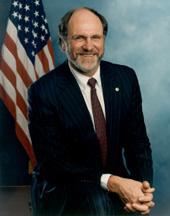 Sen. Jon S. Corzine (D-NJ)
Legislative Activity
Stay on top of the latest movement without scrolling through every action
Read twice and referred to the Committee on Finance. (text of measure as introduced: CR S1996-1998)
February 5, 2003
View full timeline
Introduced in Senate
February 5, 2003
Sponsor introductory remarks on measure. (CR S1996)
February 5, 2003
Read twice and referred to the Committee on Finance. (text of measure as introduced: CR S1996-1998)
February 5, 2003
Floor Debate
22 membersWhat members said about S. 316 on the floor
 +17
Floor Debate
22 membersWhat members said about S. 316 on the floor
Mr. President, I rise today to introduce legislation that, if enacted, could have a monumental impact on the lives of thousands of working men, women and families in America. Today, along with…
Mr. President, today I rise, along with Senator Breaux to introduce a bill to establish the Atchafalaya National Heritage Area in Louisiana. This legislation has particularly special meaning to those…
Mr. President, I am most pleased to be joined by our esteemed colleague, Senator Dodd of Connecticut, to introduce the Aeronautics Research and Development Revitalization Act. This legislation is the…
Mr. President, I am pleased to join Senators Rockefeller, Chafee and a bipartisan group of my colleagues in introducing a bill to restore funding which was previously allocated to the State…
Mr. President, I rise today to introduce the First Responders Partnership Grant Act of 2003. I thank the Democratic Leader, Senator Daschle, and Assistant Democratic Leader, Senator Reid, for joining…
Show 8 more

Mr. President, it is a privilege to join my colleagues in introducing a bipartisan bill to extend the availability of the unused funds in the Children's Health Insurance Program, so that hundreds of…
Mr. President, I rise today to introduce a bill that will make Medicare's Social Health Maintenance Organization, SHMO, demonstration a permanent part of the Medicare+Choice program. In this effort,…
Mr. President, I am pleased to join with my colleagues today in introducing our legislation restoring funding for the State Children's Health Insurance Program, SCHIP. I would like to thank my…

Mr. President, I am pleased to reintroduce legislation today that would increase the mileage reimbursement rate for volunteers. Under current law, when volunteers use their cars for charitable…

Mr. President, today, we need to address the impending crisis that may leave thousands of children in New York and around the country without health insurance or access to health care. The State…
Mr. President, the Tennessee Valley Authority has long served as an engine for economic development in my part of the country and has enjoyed widespread support for its efforts to provide power that…
Mr. President, I am pleased to introduce this legislation today with Senator Boxer to allow the National Park Service to extend the boundaries of the Golden Gate National Recreation Area, GGNRA, by…
Mr. President, I rise today, along with my friend and colleague from Ohio, Senator George Voinovich, to introduce a bill to name the Federal building and United States courthouse in Dayton, Ohio,…
Show 11 more
Mr. President, I am honored and pleased to introduce legislation today that Senator Kennedy and I introduced with Senator Wellstone in the 107th Congress. Today, Senator Kennedy and I reintroduce the…
Mr. President, I am honored and pleased to introduce legislation today that Senator Kennedy and I introduced with Senator Wellstone in the 107th Congress. Today, Senator Kennedy and I reintroduce the…
Mr. President, I am pleased to rise today to introduce the ``Seniors Mental Health Access Improvement Act of 2003'' with my distinguished colleague from Arkansas, Mrs. Lincoln. Specifically, the…
Mr. President, it is a privilege to join Senator Corzine in introducing the Chance to Succeed Act, which will benefit the most vulnerable families across the Nation. I'm concerned that the…

Mr. President, I rise today to introduce the Federal Employees Health Benefits Improvement Act of 2003 along with my colleague from Maryland, Senator Sarbanes. This bill would reduce the employee…

Mr. President, drought continues to be a serious problem for many States in this country, and I rise to re-introduce legislation to help small businesses that need disaster assistance but can't get…

Mr. President, today I am introducing a bill that could have a significant impact on reducing the threat of terrorism towards our commercial airlines. Last November, two shoulder-fired SA-7 missiles…
Mr. President, I rise to introduce a bill that would amend the Internal Revenue Code of 1986 to exempt certain sightseeing flights from the air transportation excise tax. A clarifying amendment to…

Mr. President, I am pleased to join my colleague Senator Craig Thomas today in introducing the ``Seniors Mental Health Access Improvement Act of 2003.'' This bill would expand Medicare coverage to…
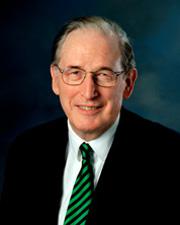
Mr. President, I rise today to introduce a bill that would promote the health and well- being of America's children by restoring funds to the Children's Health Insurance Program, known as CHIP. CHIP…
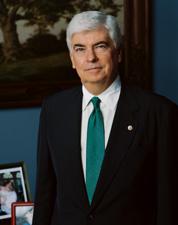
Mr. President, I am pleased to join with my colleagues Senator Kennedy, Senator Inouye, Senator Akaka, Senator Corzine, Senator Murray, and Senator Mikulski, to introduce the Family and Medical Leave…
Bill Text
Latest available legislative text
        [Congressional Bills 108th Congress]
[From the U.S. Government Publishing Office]
[S. 316 Introduced in Senate (IS)]

108th CONGRESS
1st Session
S. 316

To amend part A of title IV of the Social Security Act to include
efforts to address barriers to employment as a work activity under the
temporary assistance to needy families program, and for other purposes.

_______________________________________________________________________

IN THE SENATE OF THE UNITED STATES

February 5, 2003

Mr. Corzine (for himself and Mr. Kennedy) introduced the following
bill; which was read twice and referred to the Committee on Finance

_______________________________________________________________________

A BILL

To amend part A of title IV of the Social Security Act to include
efforts to address barriers to employment as a work activity under the
temporary assistance to needy families program, and for other purposes.

Be it enacted by the Senate and House of Representatives of the
United States of America in Congress assembled,

SECTION 1. SHORT TITLE.

This Act may be cited as the ``Chance to Succeed Act of 2003''.

SEC. 2. INCLUSION OF EFFORTS TO ADDRESS BARRIERS TO EMPLOYMENT AS A
WORK ACTIVITY UNDER TANF.

Section 407 of the Social Security Act (42 U.S.C. 607) is amended--
(1) in subparagraphs (A) and (B) of subsection (c), by
striking ``or (12)'' each place it appears and inserting
``(12), or (13)'';
(2) in subsection (d)--
(A) in paragraph (11), by striking ``and'' at the
end;
(B) in paragraph (12), by striking the period and
inserting ``; and''; and
(C) by adding at the end the following:
``(13) subject to subsection (j), 6 months of satisfactory
participation (as determined by the State) in services to
address barriers that are designed to improve future employment
opportunities, including substance abuse treatment,
occupational therapy, and physical rehabilitation, mental
health, and mental retardation and developmental disabilities
services.''; and
(3) by adding at the end the following:
``(j) State Option To Extend Period for Participation in Services
To Address Barriers.--
``(1) In general.--With respect to an individual, a State
may extend the 6-month period referred to in subsection (d)(13)
for an additional period determined by the State so long as the
State periodically reassesses the appropriateness of the
activities referred to in such subsection for the individual.
``(2) Rule of construction.--Nothing in paragraph (1) or
subsection (d)(13) shall be construed to limit the amount of
time an individual may require, or a State may provide,
services to address barriers that are designed to improve
future employment opportunities.''.

SEC. 3. CREATION OF A SCREENING, ASSESSMENT, AND SERVICES PROCESS TO
ADDRESS BARRIERS TO EMPLOYMENT.

(a) Assessments.--Section 408(b) of the Social Security Act (42
U.S.C. 608(b)) is amended--
(1) by striking paragraph (1) and inserting the following:
``(1) Assessment provided for each individual who receives
assistance.--
``(A) In general.--The State agency responsible for
administering the State program funded under this part
shall make an initial assessment of each adult
individual who receives assistance under the program
(and, in the case of a State program that requires an
individual who is a caretaker for an individual who
receives such assistance to engage in work, an initial
assessment of the caretaker individual) to determine
whether the individual has any barriers to employment
or program compliance.
``(B) 2-part process.--The assessment under
subparagraph (A) shall consist of the following 2
parts:
``(i) Initial screening.--
``(I) In general.--An initial
screening which shall evaluate an
individual's employability, educational
capacity, and other related
circumstances, such as the child
support status, housing needs, and
transportation needs of the individual
and the individual's family.
``(II) Required factors to be
assessed.--A trained caseworker shall
screen the individual for conditions
such as physical or mental impairments,
substance abuse, domestic or sexual
violence, learning disabilities,
limited English proficiency, limited
literacy in a primary language, and
need to care for a child with a
disability or health condition which
may interfere with work or other
program requirements.
``(III) Optional assessment of
child care needs.--At the option of the
individual, the State shall, before
assigning the individual to a work
activity under the State program funded
under this part, perform an assessment
of the individual's child care needs,
and guarantee safe, appropriate,
affordable quality child care to any
such individual who needs child care.
``(IV) Optional assessment of job
preparation.--At the option of the
individual, the State shall, before
assigning the individual to a work
activity under the State program funded
under this part, perform an individual
assessment for the preparation that
is needed for the individual to obtain and maintain a job at a monthly
wage that is at least 200 percent of the poverty line applicable to the
family of the individual.
``(ii) Comprehensive assessment.--If an
initial screening under clause (i) suggests the
existence of potential barriers to work or
program compliance, the individual may elect to
participate in a comprehensive assessment
conducted by a qualified professional to
confirm the existence of the barriers,
determine the extent of the barriers, and
develop recommendations about appropriate
services and activities for the individual.
``(C) Family members.--At the discretion of an
individual who receives assistance under the State
program funded under this part, a member of the
individual's family also may be afforded an assessment
in accordance with this paragraph.
``(D) Not considered a program requirement.--
Participation by an individual or by a member of the
individual's family in an assessment under this
paragraph shall not be considered a program requirement
for the individual or the individual's family.
``(E) Inclusion of caseworkers.--Nothing in
subparagraph (B)(ii) shall be construed as prohibiting
a caseworker from being a qualified professional for
purposes of that subparagraph if the caseworker
satisfies the requirements for being considered a
qualified professional.''; and
(2) by striking paragraph (4).
(b) Review and Conciliation Process.--Section 408(a) of the Social
Security Act (42 U.S.C. 608(a)) is amended by adding at the end the
following:
``(12) Review and conciliation process.--
``(A) In general.--A State to which a grant is made
under section 403 shall not impose a sanction against
an individual or family under the State program funded
under this part on the basis of noncompliance by an
individual or family with a program requirement, unless
the State satisfies the following requirements:
``(i) Notice.--The State has attempted, at
least twice (using at least 2 different
communication methods, 1 of which shall be in
writing) to notify the individual or family, in
the individual's or family's native language,
of--
``(I) the impending imposition of
the sanction;
``(II) the reason for the proposed
sanction;
``(III) the amount of the sanction;
``(IV) the length of time during
which the proposed sanction would be in
effect; and
``(V) the steps required to come
into compliance or to show good cause
for noncompliance.
``(ii) Review.--The State has afforded the
individual or family an opportunity to meet
with personnel outside the agency that
administers the State program funded under this
part who the State has contracted with to make
a determination regarding why the individual or
family did not comply with the program
requirement, that is to be the basis on which
the sanction is to be imposed, and that
includes--
``(I) consideration of whether
certain barriers to compliance exist
that contributed to the noncompliance
of the individual or family, such as a
physical or mental impairment,
including a mental health or substance
abuse disorder or mental retardation, a
learning disability, domestic or sexual
violence, limited proficiency in
English, limited literacy, or the need
to care for a child with a disability
or health condition;
``(II) consideration of whether the
individual or family has good cause for
failing to meet program requirements;
``(III) consideration of whether an
additional assessment would assist in
identifying reasons for noncompliance;
``(IV) consideration of whether
support services or changes to the
program requirements or activities to
which the individual or family has been
assigned are necessary in order for the
individual or family to comply with
program requirements; and
``(V) ensuring that the State's
sanction policies have been applied
properly.
``(B) Sanction limitations.--
``(i) Ban on imposition of sanction if
needed screening, assessment, or services were
unavailable.--A State may not impose a sanction
against an individual or family under the State
program funded under this part on the basis of
noncompliance by an individual or family with a
program requirement if the individual whose
conduct is the basis of the sanction is in the
process of being screened or assessed for a
mental health problem, disability, substance
abuse problem, or sexual or domestic violence
situation but the screening or assessment has
not been completed, or if services outlined in
the service plan developed for the individual
or family were not offered, available, and
accessible to the individual or family at the time of the
noncompliance.
``(ii) No ban on sanction if individual or
family fails to take advantage of assessment or
services and does not comply with work
requirements.--Nothing in this paragraph shall
be construed as prohibiting a State that has
complied with the requirements of this
paragraph and section 408(b)(1) from imposing a
sanction for noncompliance with work
requirements against an individual or family
who opts to not take full advantage of the
opportunity for assessment or the services and
supports made available to ensure that the
individual or family can comply with program
requirements if such an individual or family is
not complying with the State's work
requirements.
``(C) Sanction follow-up requirements.--
``(i) In general.--If a State imposes a
sanction on an individual or family for failing
to comply with program requirements, the State
shall--
``(I) provide, at the time the
sanction is imposed and periodically
thereafter for at least 6 months,
notice (in at least 2 different forms)
to the individual or family of the
reason for the sanction and the steps
the individual or family must take to
end the sanction;
``(II) reinstate the individual's
or family's full benefits if the
individual or family member who failed
to meet the program requirements that
led to the sanction complies with
program requirements for a reasonable
period of time and the individual or
family is otherwise eligible; and
``(III) if the sanction is time-
limited, notify the individual or
family at least 10 days before the
expiration of the sanction of the date
when the individual or family will no
longer be in sanction status and inform
the individual or family how assistance
will be reinstated.
``(ii) Outreach to individuals and families
sanctioned who have not resumed receiving cash
assistance.--If, during the 5-year period that
ended on the date of enactment of the Chance to
Succeed Act of 2003, a State imposed a sanction
against an individual or family that resulted
in the individual or family losing all cash
assistance under the State program funded under
this part, and the individual or family did not
resume receiving cash assistance at the end of
the sanction period, the State shall make
reasonable efforts to identify such individuals
and families and notify them, using at least 2
methods of communication, 1 of which is
written, of the assistance, services, and
support they may be eligible to receive.
``(D) Confidentiality.--The State, and any
individuals or entities acting as agents of the State,
shall not disclose any identifying information obtained
through any process or procedure instituted pursuant to
this paragraph unless required or permitted to do so by
law.
``(E) Development of standards, procedures,
training, and screening tools.--States and local
governments shall, in consultation with Federal, State,
tribal, or local experts in the different barriers to
employment, develop standards, procedures, training,
and screening tools for use in carrying out this
paragraph.''.
(c) Plan Requirements for Individual Responsibility Plans.--Section
408(b)(2)(A) of the Social Security Act (42 U.S.C. 608(b)(2)(A)) is
amended to read as follows:
``(A) Requirements.--
``(i) In general.--From the assessment
described in paragraph (1), the State, in
consultation with the individual who is the
subject of the assessment, shall develop a
personal responsibility plan, that--
``(I) sets forth an employment goal
to move the individual into stable
employment;
``(II) sets forth the obligations
of the individual that will help the
individual become and remain employed
in the private sector;
``(III) describes the individual's
long-term career goals and the specific
work experience, education, or training
needed to reach them; and
``(IV) identifies the services the
State will offer the individual's
family based upon the assessment and
evaluation described in this section.
``(ii) Modification.--If the State is
unable to provide needed services to the
individual or the individual's family, the
State shall modify the personal responsibility
plan to be consistent with the needs of the
individual, the family, and the capacity of the
State.''.
(d) Technical Assistance.--The Secretary shall coordinate with
Federal, State, and tribal experts and qualified professionals to
determine, develop, and disseminate to States, and provide technical
assistance with respect to, model practices, standards, and procedures
for screening, assessment, addressing barriers, including multiple
barriers, in a comprehensive manner, and moving individuals and
families with barriers into employment, as well as model training
materials for caseworkers.
(e) State Plan Requirement.--Section 402(a)(1)(A) of the Social
Security Act (42 U.S.C. 602(a)(1)(A)) is amended by adding at the end
the following:
``(vii) Identify and serve individuals and
families with barriers to employment as
described in section 408(b)(1).''.
(f) Coordinating Exemptions From Work Requirements.--Section
408(a)(7)(C) of the Social Security Act (42 U.S.C. 608(a)(7)(C)) is
amended by adding at the end the following:
``(iv) Families exempted from work
requirements by reason of barrier to work by
family member.--The State shall exempt a family
from the application of subparagraph (A) of
this paragraph if the State permits a member of
the family (or, in the case of a State that
requires a caretaker for an individual who
receives assistance to engage in work, a
caretaker) to engage in activities to address
barriers, pursuant to section 407(d)(13), so
long as the State determines that the
individual is satisfactorily participating in
such activities.''.
(g) Advisory Panel To Improve State Policies and Procedures for
Assisting Individuals and Families With Barriers To Work.--
(1) Membership; chair.--
(A) Membership.--Each State that receives a State
family assistance grant under section 403(a)(1) of the
Social Security Act (42 U.S.C. 603(a)(1)) shall
establish an advisory panel consisting of
representatives of the following:
(i) The State agency responsible for
administering the temporary assistance to needy
families program established under part A of
title IV of the Social Security Act (42 U.S.C.
601 et seq.) (in this subsection referred to as
the ``TANF program'').
(ii) Professionals from other State
agencies with expertise in barriers that
interfere with an individual's or family's
ability to work, such as physical or mental
impairments, substance abuse, domestic or
sexual violence, learning disabilities, limited
English proficiency, limited literacy in a
primary language, and need to care for a child
with a disability or health condition.
(iii) Organizations representing
individuals and families with such barriers.
(iv) Professionals with expertise in
designing and implementing policies and
programs to successfully serve individuals and
families with such barriers.
(v) Individuals and families with such
barriers who are recipients of cash assistance
or support services under the TANF program.
(B) Chair.--The chief executive officer of the
State shall appoint an individual who is not a State
employee to serve as chair of the advisory panel.
(2) Duties.--
(A) In general.--The advisory panel shall review
the efficacy of each program described in subparagraph
(B) to determine--
(i) the amount of funds spent on services
under the program;
(ii) the referral process for participation
in the program, including whether individuals
and families received referrals and services;
(iii) the effect services provided under
the program had on an individual's and family's
economic status; and
(iv) ways in which the State can improve
the effectiveness of its policies and
procedures to serve individuals and families
with barriers to work or program compliance.
(B) Programs described.--For purposes of
subparagraph (A), a program described in this
subparagraph, is a program that--
(i) is funded under the TANF program;
(ii) receives funding from amounts made
available under the State family assistance
grant made under section 403(a)(1) of the
Social Security Act (42 U.S.C. 603(a)(1)); or
(iii) is funded with qualified State
expenditures (as defined in section
409(a)(7)(B)(i) of such Act (42 U.S.C.
609(a)(7)(B)(i))).
(C) Development of mechanism for review and reports
by local units of government.--In the case of a State
in which significant policy or spending decisions are
made in the State with respect to a program described
in subparagraph (B) at the county or other local unit
of government, then the advisory panel shall develop a
mechanism that requires each county or other local unit
of government to--
(i) review its policies and procedures with
respect to that program and file a written
report with the advisory panel regarding how
the policies and procedures for the program are
designed to assist individuals and families
with barriers to work; and
(ii) respond to any other requests for
information from the advisory panel regarding
the TANF program.
(D) Additional authority.--In order to carry out
the duties described in this paragraph, the advisory
panel may hold such meetings (in addition to the
regular meetings required under paragraph (3)(C)) and
such public hearings, hire such staff, enter into the
contract required under paragraph (4)(B), and travel to such locations
of programs described in subparagraph (B), as the panel determines to
be appropriate.
(3) Duration; meetings.--
(A) Duration.--An advisory panel established in
accordance with this subsection shall remain in effect
for at least 3 years from the date of the initial
meeting of the panel.
(B) Deadline for initial meeting.--Not later than
the end of the first Federal fiscal year quarter that
begins on or after the date of enactment of this Act,
the advisory panel shall meet for its initial meeting.
(C) Regular meetings.--The advisory panel shall
meet on a regular basis.
(4) Reports.--
(A) In general.--Each advisory panel established in
accordance with this subsection shall file the
following reports with the Secretary of Health and
Human Services:
(i) Not later than 12 months after the
initial meeting of the advisory panel, an
interim report identifying areas where
improvement is needed with respect to State
policies and procedures to serve individuals
with barriers to work and the steps the State
is taking or plans to take to make those
improvements.
(ii) Not later than 24 months after such
initial meeting, a progress report on how the
improvements identified in the report required
under clause (i) are being made, whether
additional improvements are needed, including
plans to make those improvements, and that
includes the report of the independent
evaluation entity required under subparagraph
(B).
(iii) Not later than 36 months after such
initial meeting, a final report that describes
how the programs described in subparagraph (B)
have been improved to assist individuals and
families with barriers to work and identifies
ongoing work that will be needed to maintain
the improvements made.
(B) Requirements for progress report.--In
preparation for the progress report required under
subparagraph (A)(ii), the advisory panel shall hire an
independent evaluation entity to assess the State's
progress in meeting the goals set forth by the advisory
panel. In States described in paragraph (2)(C), the
independent evaluation entity shall also assess the
progress being made at the county level or appropriate
other unit of local government.
(C) Reports to congress.--The Secretary of Health
and Human Services shall compile the reports submitted
under subparagraph (A) and shall submit such
compilations to Congress as part of any annual report
to Congress on the TANF program.
(5) Public access.--
(A) In general.--All materials collected by or
provided to the advisory panel and all reports
submitted by the advisory panel to the State or the
Secretary of Health and Human Services shall be
publicly available.
(B) Opportunity for public comment.--The advisory
panel shall create opportunities to secure public
comments on a draft of each report to be submitted to
the State or the Secretary of Health and Human Services
and shall submit a summary of such comments with the
final draft of the report.
(6) Funding.--Out of funds made available to carry out this
subsection, the Secretary of Health and Human Services shall
pay each State that establishes an advisory panel in accordance
with this subsection, $1,500,000, for the period of fiscal
years 2004 through 2006.
(7) Rule of construction.--Nothing in this paragraph shall
be construed as authorizing an advisory review panel
established under this paragraph to resolve complaints filed by
individuals or entities related to possible violations of laws
protecting civil rights.
(8) Authorization of Appropriations.--There is authorized
to be appropriated to the Secretary of Health and Human
Services to carry out this subsection, such sums as are
necessary for each of fiscal years 2004 through 2007.
<all>