Southwest Forest Health and Wildfire Prevention Act of 2003
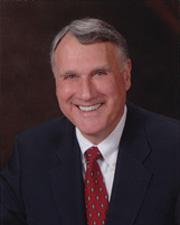 Sen. Jon Kyl (R-AZ)
Legislative Activity
Stay on top of the latest movement without scrolling through every action
Committee on Energy and Natural Resources Subcommittee on Public Lands and Forests. Hearings held. With printed Hearing: S.Hrg. 108-10.
February 27, 2003
View full timeline
Introduced in Senate
January 7, 2003
Read twice and referred to the Committee on Energy and Natural Resources.
January 7, 2003
Committee on Energy and Natural Resources Subcommittee on Public Lands and Forests. Hearings held. With printed Hearing: S.Hrg. 108-10.
February 27, 2003
Floor Debate
24 membersWhat members said about S. 32 on the floor
 +19
+19
Floor Debate
24 membersWhat members said about S. 32 on the floor
Mr. Speaker, I rise today to honor and pay tribute to Marine Sgt. Brian McGinnis of the Marine Light Attack Helicopter Squadron 169, who made the ultimate sacrifice for his country on March 30, 2004…
Mr. Speaker, today, I rise in support of our troops. I rise in support of all of our men and women serving in our armed forces, and especially the 300,000 brave men and women that have been serving…
Mr. Speaker, southwest Missouri learned early in the War on Terrorism of the sacrifices necessary to defend our way of life. Two men from the 7th Congressional District died in less than a week of…
Mr. Speaker, as we celebrate Memorial Day, 2004, we honor both the veterans who fought America's wars, and those who stand on the front lines of today's combat engagements. Each day it seems, news…
Mr. President, I ask unanimous consent that the Committee on Armed Services be authorized to meet during the session of the Senate on Thursday, February 27, 2003, at 9:30 a.m., in open session to…
Show 8 more
Mr. Speaker, this Memorial Day we recognize again not only the soldiers who have died for their country over the generations--but also the men and women serving in Iraq and Afghanistan. I am proud of…
Mr. Speaker, I rise today to honor three young men from my district who sacrificed their lives while serving in the Armed Forces in the war on terror. Jason Plite of Delta Township, Eaton County,…
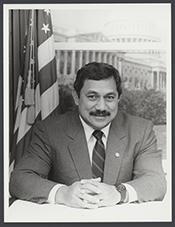
Mr. Speaker, I rise today to honor our fallen heroes and to pay tribute to our current military men and women who are serving our Nation in a time of war. I especially want to thank American Samoa's…

Mr. Speaker, Memorial Day is the unofficial start of summer: pools open, barbecues are held in local parks and in backyards, and families set out on car trips to take advantage of the long weekend.…
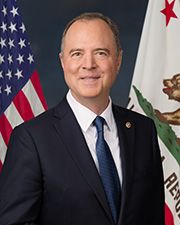
Mr. Speaker, almost three years ago, our nation was shocked by the sickening reality of global terrorism infiltrating our borders. Since September 11, 2001, the global war on terror has resulted in…
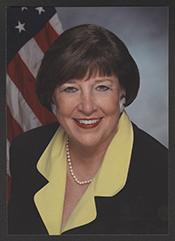
Mr. Speaker, in honor of Memorial Day, I rise today to pay tribute to the brave men and women who gallantly gave their lives so we may live in freedom. Throughout the history of our nation, valiant…
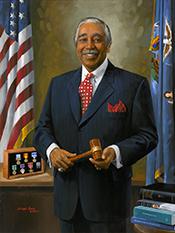
Mr. Speaker, I rise today to honor the brave soldiers who have given their lives while serving our great Nation during war. For 136 years American citizens have used Memorial Day as a special day to…
Mr. Speaker, I stood on the House floor on May 20, 2004, and observed a moment of silence to remember the brave men and women who fought and died for our freedom. During this time, images flashed in…
Show 11 more
Mr. Speaker, across this great Nation, Americans designate the last Monday in May to honor those who have fallen in battle protecting our freedom. Memorial Day this year is especially important as we…

Mr. Speaker, I rise today to honor three brave soldiers from the 28th Congressional District of New York who lost their lives while serving in Iraq. These three men, all from Buffalo, left loving…
Mr. Speaker. From the troops still in the field today in the deserts of Iraq and mountains of Afghanistan, to the scores of veterans who have served in different theaters and eras, Memorial Day is a…
Mr. Speaker, I rise today to join with my colleagues in paying tribute to all of our fallen citizens who have lost their lives defending freedom in the war against terror. I want to thank Jim Walsh…
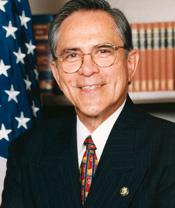
Mr. Speaker, today we are setting aside a special time to pay tribute to fallen heroes. My South Texas district is mourning the loss of three such heroes, Pfc. Dustin Sekula, Sgt. Christopher Ramirez…

Mr. Speaker, today, I pay special tribute to Army Specialist Jason Christopher Ford who was killed on March 13, 2004 in Tikrit, Iraq. Army Specialist Ford epitomized the duty, valor and sacrifice…
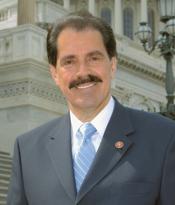
Mr. Speaker, as we approach Memorial Day, I want to pay special tribute to the thousands of men and women who gave their lives in defense of this nation even though they were never able to fully reap…
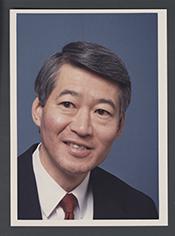
Mr. Speaker, I rise today to honor the brave men and women of our military personnel who have made the ultimate sacrifice and lost their lives in service to their country. To the families and friends…
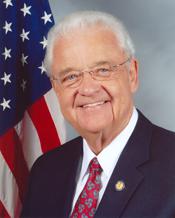
Mr. Speaker, at the close of business this week, we will journey back home to our districts. There, we will meet with our constituents and hear their concerns so that we may better serve them. We…

Mr. Speaker, as our nation mourns the loss of 2nd Lt. Leonard Cowherd, I rise today to honor this fallen son of Virginia. I would like to reflect on his honorable service and sacrifice to the United…
Mr. Speaker, as the House pauses to remember all the brave American men and women of our Armed Forces who have been lost in Iraq and Afghanistan, I am proud to honor the service and sacrifice of Sgt.…
Bill Text
Latest available legislative text
        [Congressional Bills 108th Congress]
[From the U.S. Government Publishing Office]
[S. 32 Introduced in Senate (IS)]

108th CONGRESS
1st Session
S. 32

To establish Institutes to conduct research on the prevention of, and
restoration from, wildfires in forest and woodland ecosystems of the
interior West.

_______________________________________________________________________

IN THE SENATE OF THE UNITED STATES

January 7, 2003

Mr. Kyl (for himself, Mr. Domenici, Mr. Allard, Mr. Campbell, and Mr.
Bingaman) introduced the following bill; which was read twice and
referred to the Committee on Energy and Natural Resources

_______________________________________________________________________

A BILL

To establish Institutes to conduct research on the prevention of, and
restoration from, wildfires in forest and woodland ecosystems of the
interior West.

Be it enacted by the Senate and House of Representatives of the
United States of America in Congress assembled,

SECTION 1. SHORT TITLE.

This Act may be cited as the ``The Southwest Forest Health and
Wildfire Prevention Act of 2003''.

SEC. 2. FINDINGS.

Congress finds that--
(1) there is an increasing threat of wildfire to millions
of acres of forest land and rangeland throughout the United
States;
(2) forest land and rangeland are degraded as a direct
consequence of land management practices (including practices
to control and prevent wildfires and the failure to harvest
subdominant trees from overstocked stands) that disrupt the
occurrence of frequent low-intensity fires that have
periodically removed flammable undergrowth;
(3) at least 39,000,000 acres of land of the National
Forest System in the interior West are at high risk of
wildfire;
(4) an average of 95 percent of the expenditures by the
Forest Service for wildfire suppression during fiscal years
1990 through 1994 were made to suppress wildfires in the
interior West;
(5) the number, size, and severity of wildfires in the
interior West are increasing;
(6) of the timberland in National Forests in the States of
Arizona and New Mexico, 59 percent of such land in Arizona, and
56 percent of such land in New Mexico, has an average diameter
of 9 to 12 inches diameter at breast height;
(7) the population of the interior West grew twice as fast
as the national average during the 1990s;
(8) efforts to prioritize forests and communities for
wildfire risk reduction have been inconsistent and insufficient
and have resulted in funding to areas that are not prone to
severe wildfires;
(9) catastrophic wildfires--
(A) endanger homes and communities;
(B) damage and destroy watersheds and soils; and
(C) pose a serious threat to the habitat of
threatened and endangered species;
(10) a 1994 assessment of forest health in the interior
West estimated that only a 15- to 30-year window of opportunity
exists for effective management intervention before damage from
uncontrollable wildfire becomes widespread, with 8 years having
already elapsed since the assessment;
(11) following a catastrophic wildfire, certain forests in
the interior West do not return to their former grandeur;
(12) healthy forest and woodland ecosystems--
(A) reduce the risk of wildfire to forests and
communities;
(B) improve wildlife habitat and biodiversity;
(C) increase tree, grass, forb, and shrub
productivity;
(D) enhance watershed values;
(E) improve the environment; and
(F) provide a basis in some areas for economically
and environmentally sustainable uses;
(13) sustaining the long-term ecological and economic
health of interior West forests and woodland, and their
dependent human communities, requires preventing severe
wildfires before the wildfires occur and permitting natural,
low-intensity ground fires;
(14) more natural fire regimes cannot be accomplished
without the reduction of excess fuels and thinning of
subdominant trees (which fuels and trees may be of commercial
value);
(15) ecologically-based forest and woodland ecosystem
restoration on a landscape scale will--
(A) improve long-term community protection;
(B) minimize the need for wildfire suppression;
(C) improve resource values;
(D) reduce rehabilitation costs;
(E) reduce loss of critical habitat; and
(F) protect forests for future generations;
(16) although the National Fire Plan, and the report
entitled ``Protecting People and Sustaining Resources in Fire-
Adapted Ecosystems--A Cohesive Strategy'' (65 Fed. Reg. 67480),
advocate a shift in wildfire policy from suppression to
prevention (including restoration and hazardous fuels
reduction), Federal land managers are not dedicating sufficient
attention and financial resources to restoration activities
that simultaneously restore forest health and reduce the risk
of severe wildfire;
(17) although landscape scale restoration is needed to
effectively reverse degradation, scientific understanding of
landscape scale treatments is limited;
(18) the Federal wildfire research program is funded at
approximately \1/3\ of the amount that is required to address
emerging wildfire problems, resulting in the lack of a cohesive
strategy to address the threat of catastrophic wildfires; and
(19) rigorous, understandable, and applied scientific
information is needed for--
(A) the design, implementation, and adaptation of
landscape scale restoration treatments and improvement
of wildfire management technology;
(B) the environmental review process; and
(C) affected entities that collaborate in the
development and implementation of wildfire treatment.

SEC. 3. PURPOSES.

The purposes of this Act are--
(1) to enhance the capacity to develop, transfer, apply,
and monitor practical science-based forest restoration
treatments that will reduce the risk of severe wildfires, and
improve forest and woodland health, in the interior West;
(2) to develop the practical scientific knowledge required
to implement forest and woodland restoration on a landscape
scale;
(3) to develop the interdisciplinary knowledge required to
understand the socioeconomic and environmental impacts of
wildfire control on ecosystems and landscapes;
(4) to require Federal agencies--
(A) to use ecological restoration treatments to
reverse declining forest health and reduce the risk of
severe wildfires across the forest landscape;
(B) to ensure that sufficient funds are dedicated
to wildfire prevention activities, including
restoration treatments; and
(C) to monitor and use wildfire treatments based on
the use of adaptive ecosystem management;
(5) to develop, transfer, and assist land managers in
treating acres with restoration-based treatments and use new
management technologies (including the transfer of
understandable information, assistance with environmental
review, and field and classroom training and collaboration) to
accomplish the goals identified in--
(A) the National Fire Plan;
(B) the report entitled ``Protecting People and
Sustaining Resources in Fire-Adapted Ecosystems--A
Cohesive Strategy'' (65 Fed. Reg. 67480); and
(C) the report entitled ``10-Year Comprehensive
Strategy: A Collaborative Approach for Reducing
Wildland Fire Risks to Communities and the
Environment'' of the Western Governors' Association;
and
(6) to provide technical assistance to collaborative
efforts by affected entities to develop, implement, and monitor
adaptive ecosystem management restoration treatments that are
ecologically sound, economically viable, and socially
responsible.

SEC. 4. DEFINITIONS.

In this Act:
(1) Adaptive ecosystem management.--The term ``adaptive
ecosystem management'' means a natural resource management
process under which planning, implementation, monitoring,
research, evaluation, and incorporation of new knowledge are
combined into a management approach that is--
(A) based on scientific findings and the needs of
society; and
(B) used to modify future management methods and
policy.
(2) Affected entities.--The term ``affected entities''
includes--
(A) land managers;
(B) stakeholders; and
(C) concerned citizens.
(3) Institute.--The term ``Institute'' means an Institute
established under section 5(a).
(4) Interior west.--The term ``interior West'' means the
States of Arizona, Colorado, Idaho, Nevada, New Mexico, and
Utah.
(5) Land manager.--
(A) In general.--The term ``land manager'' means a
person or entity that practices or guides natural
resource management.
(B) Inclusions.--The term ``land manager'' includes
a Federal, State, local, or tribal land management
agency.
(6) Restoration.--The term ``restoration'' means a process
undertaken to return an ecosystem or habitat toward--
(A) the original condition of the ecosystem or
habitat; or
(B) a condition that supports a related species,
natural function, or ecological process (including a
low intensity fire).
(7) Secretary.--The term ``Secretary'' means the Secretary
of Agriculture, acting through the Chief of the Forest Service.
(8) Secretaries.--The term ``Secretaries'' means--
(A) the Secretary of Agriculture, acting through
the Chief of the Forest Service; and
(B) the Secretary of the Interior.
(9) Stakeholder.--The term ``stakeholder'' means any person
interested in or affected by management of forest or woodland
ecosystems.

SEC. 5. ESTABLISHMENT OF INSTITUTES.

(a) In General.--The Secretary, in consultation with the Secretary
of the Interior, shall--
(1) not later than 180 days after the date of enactment of
this Act, establish 3 Institutes to promote the use of adaptive
ecosystem management to reduce the risk of wildfires, and
improve the health of forest and woodland ecosystems, in the
interior West; and
(2) provide assistance to the Institutes to promote the use
of adaptive ecosystem management in accordance with paragraph
(1).
(b) Location.--
(1) Existing institutes.--The Secretary may designate an
institute in existence on the date of enactment of this Act to
serve as an Institute established under this Act.
(2) States.--Of the Institutes established under this Act,
the Secretary shall establish 1 Institute in each of--
(A) the State of Arizona, to be located at Northern
Arizona University;
(B) the State of New Mexico; and
(C) the State of Colorado.
(c) Duties.--Each Institute shall--
(1) plan, conduct, or promote research on the use of
adaptive ecosystem management to reduce the risk of wildfires,
and improve the health of forest and woodland ecosystems, in
the interior West, including--
(A) research that assists in providing information
on the use of adaptive ecosystem management practices
to affected entities; and
(B) research that will be useful in the development
and implementation of practical, science-based,
ecological restoration treatments for forest and
woodland ecosystems affected by wildfires; and
(2) provide the results of research described in paragraph
(1) to affected entities.
(d) Cooperation.--To increase and accelerate efforts to restore
forest ecosystem health and abate unnatural and unwanted wildfires in
the interior West, each Institute shall cooperate with--
(1) researchers at colleges and universities in the States
of Arizona, New Mexico, and Colorado that have a demonstrated
capability to conduct research described in subsection (c); and
(2) other organizations and entities in the interior West
(such as the Western Governors' Association).
(e) Annual Work Plans.--As a condition of the receipt of funds made
available under this Act, for each fiscal year, each Institute shall
submit to the Secretary, for review by the Secretary, in consultation
with the Secretary of the Interior, an annual work plan that includes
assurances, satisfactory to the Secretaries, that the proposed work of
the Institute will serve the informational needs of affected entities.

SEC. 6. COOPERATION BETWEEN INSTITUTES AND FEDERAL AGENCIES.

In carrying out this Act, the Secretary, in consultation with the
Secretary of the Interior--
(1) shall ensure that adequate financial and technical
assistance is provided to the Institutes to enable the
Institutes to carry out the purposes of the Institutes under
section 5, including prevention activities and ecological
restoration for wildfires and affected ecosystems;
(2) shall use information and expertise provided by the
Institutes;
(3) shall encourage Federal agencies to use, on a
cooperative basis, information and expertise provided by the
Institutes;
(4) shall encourage cooperation and coordination between
Federal programs relating to--
(A) ecological restoration;
(B) wildfire risk reduction; and
(C) wildfire management technologies;
(5) notwithstanding chapter 63 of title 31, United States
Code, may--
(A) enter into contracts, cooperative agreements,
interagency personal agreements to carry out this Act;
and
(B) carry out other transactions under this Act;
(6) may accept funds from other Federal agencies to
supplement or fully fund grants made, and contracts entered
into, by the Secretaries;
(7) may support a program of internships for qualified
individuals at the undergraduate and graduate levels to carry
out the educational and training objectives of this Act;
(8) shall encourage professional education and public
information activities relating to the purposes of this Act;
and
(9) may promulgate such regulations as the Secretaries
determine are necessary to carry out this Act.

SEC. 7. MONITORING AND EVALUATION.

(a) In General.--Not later than 5 years after the date of enactment
of this Act, and every 5 years thereafter, the Secretary, in
consultation with the Secretary of Interior, shall complete and submit
to the appropriate committees of Congress a detailed evaluation of the
programs and activities of each Institute--
(1) to ensure, to the maximum extent practicable, that the
research, communication tools, and information transfer
activities of each Institute meet the needs of affected
entities; and
(2) to determine whether continued provision of Federal
assistance to each Institute is warranted.
(b) Termination of Assistance.--If, as a result of an evaluation
under subsection (a), the Secretary, in consultation with the Secretary
of the Interior, determines that an Institute does not qualify for
further Federal assistance under this Act, the Institute shall receive
no further Federal assistance under this Act until such time as the
qualifications of the Institute are reestablished to the satisfaction
of the Secretaries.

SEC. 8. AUTHORIZATION OF APPROPRIATIONS.

There is authorized to be appropriated to carry out this Act
$15,000,000 for each fiscal year.
<all>