A bill to amend the Office of Federal Procurement Policy Act to establish a governmentwide policy requiring competition in certain executive agency procurements.
Legislative Activity
Stay on top of the latest movement without scrolling through every action
Placed on Senate Legislative Calendar under General Orders. Calendar No. 807.
November 18, 2004
View full timeline
Introduced in Senate
February 11, 2003
Sponsor introductory remarks on measure. (CR S2205-2206)
February 11, 2003
Read twice and referred to the Committee on Governmental Affairs.
February 11, 2003
Committee on Governmental Affairs referred to Subcommittee on Financial Management, the Budget, and International Security.
September 24, 2003
Committee on Homeland Security and Governmental Affairs Subcommittee on Financial Management, the Budget, and International Security. Hearings held. With printed Hearing: S.Hrg. 108-697.
April 7, 2004
Committee on Governmental Affairs. Ordered to be reported with an amendment favorably.
June 2, 2004
Committee on Governmental Affairs. Reported by Senator Collins with an amendment. With written report No. 108-415. Minority views filed.
November 18, 2004
Placed on Senate Legislative Calendar under General Orders. Calendar No. 807.
November 18, 2004
Floor Debate
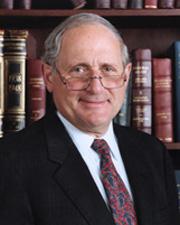
19 membersWhat members said about S. 346 on the floor
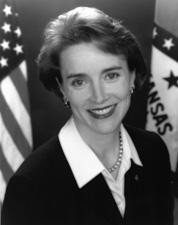 BLL
BLL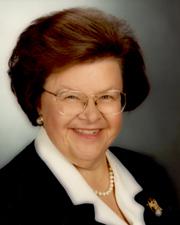 BAM
BAM JB
JB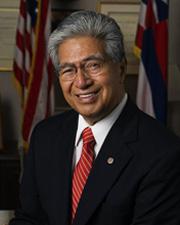 DKACL+14
Floor Debate
19 membersWhat members said about S. 346 on the floor
Mr. President, I rise today to introduce my package of alternative energy and energy efficiency bills. These bills all work in concert toward a single goal--promoting the use of cleaner, renewable…
Mr. President, I rise today to introduce my package of alternative energy and energy efficiency bills. These bills all work in concert toward a single goal--promoting the use of cleaner, renewable energy for this nation.
For several decades, the U.S. has relied on foreign sources of energy supply. Worldwide demand for energy has continued to increase, while our domestic resource base has decreased, leaving the country vulnerable in the event of foreign supply disruptions. This year, the U.S. will import 60 percent of its crude oil needs this year. The events of September 11th have focused attention on the need to develop a new energy policy that focuses on creating new domestic sources. Our Nation needs to explore and develop all possible domestic options as resources for our energy supply. To reduce our dependence on foreign imports, it is imperative that policy makers create incentives to promote technologies that can produce quality alternative products. Our national security demands that the government undertake programs which assure the implementation of real alternative fuel technologies.
It is in the best security interests of our Nation to reduce our reliance on foreign energy suppliers. We can no longer afford to be subject to the whims and manipulations of foreign cartels like OPEC. Added to these threats posed by OPEC and the instability of the Middle East are the even more sinister possibilities that we face in other parts of the world. Developments in many regions of the world where much of today's energy supplies are obtained--West Africa, the Caspian Sea, Indonesia, Venezuela, and so forth--clearly serve notice that our Nation cannot continue to depend on these areas for our future energy needs. These events make it more pressing than ever that we proceed forward with the development of our own domestic alternative energy resources.
In the last Congress, both the House and the Senate passed comprehensive energy bills that would have brought us closer to these goals. In the Senate bill, we were able to strike a delicate balance between using our resources for energy and preserving our environment for future generations. I was pleased with the Senate version of the Energy Policy Act of 2002, and was disappointed that conferees were unable to iron out differences with the House of Representatives before adjournment. We must make energy independence a national priority because it is now essential to our homeland security.
Looking ahead, I will continue my work to build a cohesive national energy policy that ultimately reduces our dependence on foreign oil. To accomplish this goal, we must provide access to more resources, transmit these resources to the consumer, and encourage industrial and individual consumers to use more renewable energy sources. These important steps will lead to greater reliability and lower energy costs for consumers.
We should all work again in the 108th Congress to adopt a comprehensive energy plan that sets America on the road to energy independence and assures consumers of a reliable and affordable energy supply.
The legislation I am introducing today will encourage production of biodiesel and its use in this country; to promote the manufacture of energy efficient home appliances; to encourage the use of fuels produced from animal and agricultural wastes; to encourage the use of our waste sources such as landfill gas and municipal solid waste to produce energy; and to spur the investment in delivering fuels to rural America. These incentives for production and use of clean and renewable fuels can help bridge the investment cost gap between production of petroleum and renewable energy.
Each of these bills were either included or debated in the Senate during last year's Senate consideration and passage of the energy bill. I look forward to their inclusion in the debate and inclusion in any energy bill to be passed by the Senate during the 108th Congress.
The first bill I am introducing today is the Biodiesel Promotion Act of 2003. I am pleased to be joined in introducing this bill by Senators Grassley, Hagel, Dayton, Harkin, Durbin, Coleman, and Johnson. This legislation will provide tax incentives for the production of biodiesel from agricultural oils, recycled oils, and animal fats and will ensure that biodiesel becomes a central component of this nation's automobile fuel market.
This legislation is identical to language authored by myself and Senator Grassley included in the last Congress's Energy Bill. It is intended to be a starting point for our debate and discussion as we draft an energy bill for consideration in this Congress.
This legislation will provide a partial exemption from the diesel excise tax for diesel blended with biodiesel. Specifically, the bill provides a one-cent reduction for every percent of biodiesel from virgin agricultural oils blended
with diesel up to 20 percent. The legislation will also provide a half- cent reduction for every percent of biodiesel from recycled agricultural oils or animal fats.
Also importantly, in the year that we are to reauthorize the Transportation Enhancement Act of 1996, the bill provides for reimbursing the Highway Trust Fund from the USDA Commodity Credit Corporation, CCC. This procedure will protect the Trust Fund from lost revenues due to the biodiesel incentive while providing a much-needed boost to our nation's biodiesel industry. The cost to the CCC would be offset at least initially by the savings under the marketing loan program.
Biodiesel, which can be made from just about any agricultural oil including oils from soybeans, cottonseed, or rice, is completely renewable, contains no petroleum, and can be easily blended with petroleum diesel. A biodiesel-diesel blend typically contains up to 20 percent renewable content. It can be added directly into the gas tank of a compression-ignition, diesel engine vehicle with no major modifications. Biodiesel is completely biodegradable and non-toxic, contains no sulfur, and it is the first and only alternative fuel to meet EPA's Tier I and II health effects testing standards. Biodiesel also stands ready to help us reach the EPA's new rule to reduce the sulfur content of highway diesel fuel by over 95 percent.
Even after years of research and market development, biodiesel is not yet cost-competitive with petroleum diesel. In order to be so, market support and tax incentives are needed. I believe the provisions provided in this bill will help in leveling the field for biodiesel blends and help jumpstart this new industry.
The time is right for this investment. It is right for our rural economy, for our environment, and for our national energy security and I encourage my colleagues to join us in supporting the Biodiesel Promotion Act of 2003.
The second component of my package is the EPACT Alternative Fuel Flexibility Act of 2003. I am pleased to be joined today by Senators Bond and Talent in introducing this legislation.
The purpose of this legislation is to place biodiesel fuel on equal footing with every other alternative motor fuel used in this nation.
The Energy Policy Act of 1992, EPACT, set a national objective to shift the focus of national energy demand away from imported oil toward renewable and domestically produced energy sources. When EPACT was passed in 1992, it recognized ethanol, natural gas, propane, electricity, and methanol as alternative fuels. The original list of alternative fuels did not include biodiesel because the technology had not been fully developed.
EPACT set a goal to replace 10 percent of petroleum-based fuels by 2000 and 30 percent by the year 2010. However, a GAO report issued in July of 2001 noted that ``limited progress has been made in increasing the numbers of alternative fuel vehicles, AFV, in the national vehicle fleet and the use of alternative fuels'' as compared to conventional vehicles and fuels.
We did not meet the original EPACT goals of replacing 10 percent of petroleum-based fuels by 2000. Today we are not on track to meet the goal of 30 percent by the year 2010. In fact, we haven't even come close, and that's partly a result of not allowing all alternative fuels to be used to meet the EPACT alternative fuel mandates.
This legislation will significantly increase the use of alternative fuels by allowing EPACT covered fleets to meet up to 100 percent of the EPACT purchase requirements through the use of biodiesel. Currently, covered fleets can only meet up to 50 percent of purchase requirements with biodiesel.
By offering an additional option for the use of alternative fuels, we will widen the possibilities for these fuels to be made more widely available. Fleets will continue to have the option to choose the complying vehicles and fuels that best meet their needs. This legislation is not expected to affect fleets that are currently using ethanol or natural gas. But this legislation does provide a further option for alternative fuel vehicles. Furthermore, it does not directly displace natural gas or ethanol sales, since biodiesel is used in medium- and heavy-duty trucks rather than light-duty vehicles.
By allowing fleets to meet 100 percent of their AFV requirement by using biodiesel, we'll take a positive step toward moving this country away from dependence on petroleum-based motor fuels and toward alternative motor fuels. I urge all of my colleagues to support this legislation.
The third bill I introduce today as part of my energy independence package is the Animal and Agricultural Waste Renewable Energy Production Act of 2003. I am pleased to be joined today by Senators Hagel, Bond, and Kerry in introducing this legislation.
This legislation would provide a credit under Section 29 of the tax code for the production of fuels from animal and agricultural wastes.
Thanks to new technological developments, we can now produce significant quantities of alternative fuels from agricultural and animal wastes in an environmentally friendly manner. Production incentives are needed to assure implementation and commercialization of this new generation of technology.
Section 29 was originally enacted to provide an incentive to produce alternative and hard-to-reach fuels that could compete with fossil fuels and hopefully reduce the nation's dependence on foreign oil. As originally enacted, a number of ``non-conventional fuels'' were eligible for the credit, including the following: oil from shale; oil from tar sands; natural gas from geo-pressured brine, coal seams, Devonian shale, or tight sands; liquid, gaseous or solid synthetic fuel from coal, including coke and coke by-products; gas from biomass, including wood; steam from solid agricultural by-products; and processed solid wood fuels.
Other biomass by-products, such as agricultural and animal oils and solids, also should qualify the same as liquid or gaseous synthetic fuels derived from coal.
New technological advances have been developed which will convert these biomass wastes efficiently to alternative fuels. The most readily available of these wastes are agricultural and animal wastes, municipal wastes, plastics, used tires, and forest product wastes. This production incentive opportunity would provide significant new annual quantities of alternative fuel to replace foreign imported oil and should be considered a government investment in the nation's future.
If these incentives are implemented, large marketable quantities of quality alternative fuel products can be produced as a replacement for foreign imported oil. These processes can achieve the desired results in an environmentally positive way that essentially converts all wastes to products and provides an answer for waste disposal problems. To achieve these results, financial incentives need be provided from the government. Section 29 should be extended to include alternative fuels produced from all biomass wastes and I encourage all of my colleagues to join us in supporting this legislation.
The fourth bill I am introducing today is the Capturing Landfill Gas for Energy Act of 2003. This legislation will provide a credit under either Section 29 or Section 45 of the tax code for the production of energy from landfill gas, LFG. It is designed to encourage additional collection and productive use of methane gas generated by garbage decomposing in America's landfills. LFG is a renewable fuel that can be used directly as an energy source for heating, as a clean burning vehicle fuel, as a hydrogen source for fuel cells. Furthermore, it can power generators to produce electricity.
Congress recognized the importance of LFG for energy diversity and national security by providing such a credit in 1980 and extending it for nearly two decades. With today's critical energy needs and emphasis on distributed generation, this incentive makes more sense than ever. Most of the 360 LFG projects that currently are operating were made economically feasible by the ``non-conventional-source fuel'' production tax credit under Section 29 of the tax code.
But since June 30, 1998, that credit to encourage construction of new LFG projects has been unavailable, and few have been constructed since that date. The U.S. Environmental Protection Agency estimates that 600- 700 more LFG projects could be constructed nationwide if there were sufficient economic incentives in place to foster
their development. With such incentives, it is likely that about 55 new projects would be brought on line each year. Just one medium-sized project could provide three megawatts of electrical power capacity-- enough to meet the electricity needs of 3,000 homes each year.
In addition to the value of LFG as an important contribution to our overall energy strategy, there are compelling environmental reasons to encourage these projects. Uncontrolled landfill gas can create fire hazards and odors and can impair air quality. The methane in landfill gas is 21 times more potent than carbon dioxide as a greenhouse gas. Even the large landfills that are required under the Clean Air Act to collect their gas and control non-methane organic compounds often find it more economic to simply flare or otherwise waste the gas rather than use the methane. Some smaller landfills are not required to collect the gas, and may continue to emit it for decades under the Clean Air Act. Thus, LFG projects not only reduce local and regional air pollution while yielding a renewable source of energy, they can also reduce the country's yearly emissions of greenhouse gases by a very substantial amount at a relatively small cost.
Unfortunately, the potential energy and environmental benefits of future LFG projects are substantial, but they will be lost without adequate LFG tax provisions to support project development. On average, the total capital cost of constructing an LFG-fueled electricity generating project is about $1 million per megawatt, and the annual operating and maintenance costs average another $150,000 per megawatt. The average capital cost of a new direct use fuel production and delivery project is about $2.5 million, with annual operation and maintenance costs of about $350,000.
My bill proposes sufficient, yet sensible, tax incentives to encourage these large investments, and I urge my colleagues to join me and support LFG tax credits.
Today I am also pleased to be joined by Senator Akaka in introducing the fifth component of my energy package--the Waste to Energy Utilization Act of 2003. This legislation will provide a credit under Section 45 of the tax code for new waste-to-energy facilities or new generating units at existing facilities. Such a tax credit encourages clean renewable electricity and promotes energy diversity, while helping cities meet the challenge of trash disposal.
Nearly 2000 communities nationwide rely on waste-to-energy facilities to safely dispose of trash and generate clean, renewable energy that meets the power need of more than two and a half million homes. The U.S. Conference of Mayors has repeatedly urged Congress to include provisions that promote waste-to-energy in tax legislation and they are joined by the National Association of Regulatory Utility Commissioners, the Business Council for Sustainable Energy, the U.S. Chamber of Commerce, and the International Brotherhood of Boilermakers.
Arkansas stands with other environmentally conscious States in understanding that waste-to-energy technology saves valuable land and significantly reduces the amount of greenhouse gases that would have been released into our atmosphere without its operation. The volume of waste is reduced by greater than 90 percent in a waste-to-energy facility, and EPA has confirmed that more than 33 million tons of greenhouse gases are avoided annually by the combustion of municipal solid waste. Municipal solid waste is a sustainable source of clean, renewable energy.
Local governments spent about $1 billion over the past five years on air pollution control equipment to comply with EPA's Maximum Achievable Control Technology, MACT, standards required under the Clean Air Act. These retrofits have made waste-to-energy one of the cleanest power generators in the country. In June, EPA announced that these facilities have shown ``outstanding performance'' resulting in ``dramatic decreases'' in emissions, resulting in reductions of mercury emissions of more than 95 percent from a decade ago. Communities with waste-to- energy facilities recycle 33 percent of their trash, on average, and historically have more successful recycling programs than cities without waste-to-energy plants.
We must sustain a level marketplace to achieve energy diversity and economic growth. I believe this Senate should pass tax legislation that includes production tax credits to spur energy generation, and I encourage all of my colleagues to join us and support this legislation.
The sixth bill I introduce today is the Resource Efficient Appliance Incentives Act of 2003. I am pleased to be joined in introducing this bill by Senators Allard, Grassley, Harkin, Stabenow, Hagel, Levin, and DeWine.
This legislation will provide a tax credit for the production of super energy-efficient clothes washers and refrigerators if those appliances exceed new Federal energy efficiency standards. The tax credit would only be available for five years and would be capped for each manufacturer.
In 2001, the Department of Energy issued new energy efficiency standards for clothes washers. This agreement accompanies rules for higher efficiency refrigerators issued by the department two years ago. The new rules are significant because clothes washers, clothes dryers, and refrigerators account for approximately 15 percent of all household energy consumed in the U.S. annually. The tax incentives contained in this legislation are constructed to encourage manufacturers not only to exceed these new efficiency requirements, but to exceed them by up to 35 percent.
Tax incentives are essential to accelerate the production and market penetration of leading-edge appliance technologies that create significant environmental benefits. The need for super energy-efficient appliances is greater this year than at any time in the past 20 years. Over the life of the appliances, over 200 trillion BTUs of energy will be saved. This is the equivalent of taking 2.3 million cars off the road or making available for other uses the energy of six coal-fired power plants for a year.
In addition, the clothes washers will reduce the amount of water necessary to wash clothes by 870 billion gallons, an amount equal to the needs of every household in a city the size of Phoenix, Arizona for two years. The water savings attributable to these new technology machines is not based on some computer generated model but an actual case study that gathered data in the small community of Bern, KS by the Dept. of Energy's esteemed Oak Ridge National Laboratory in 1998.
The Association of Home Appliance Manufacturers estimates these super energy-efficient appliances could save the average family $100 per year--or $1,400 per family over the lifetime of the appliance. This legislation will create the incentives necessary to increase the production and sale of these super energy-efficient appliances in the short term while passing along energy savings to the American consumer.
As a DOE analysis indicates, high efficiency washers and refrigerators are significantly more expensive to manufacture than those that simply meet existing federal standards. Further, market surveys of consumers indicate that they are generally not willing to pay more for high efficiency appliances, even when it can be demonstrated that high efficiency appliances will generate greater savings in utility costs over time. The tax credit will provide an incentive for manufacturers to develop a greater selection of super efficient models that will appeal to consumers at all price points. In addition, to assure increased sales of these appliances, manufacturers will be encouraged to redirect their marketing and advertising resources toward the high efficiency models. Enactment of this legislation will bring immediate, significant, and lasting environmental benefits to the nation, and I encourage all of my colleagues to join us in supporting in this effort.
The final bill I am introducing today is the Gas Distribution Infrastructure Investment Act of 2003. This legislation will amend the Internal Revenue Code to modify the depreciation of natural gas pipelines, equipment, and infrastructure assets from 20 to 10 years.
America's demand for energy is expected to grow by 32 percent during the next 20 years. Consumer demand for natural gas will grow at almost twice that rate, due to its economic, environmental, and operational benefits. That level of natural gas use is almost 60
percent greater than the highest recorded level. To satisfy this projected demand, we must substantially expand our existing gas infrastructure. This is especially true with respect to the delivery sector. Higher capacity utilization of existing infrastructure will meet some of this increased demand, but the delivery sector still will require capital investments of at least $123 billion for infrastructure enhancement and additions.
Shrinking the lifetime over which an asset is depreciated does not change the amount of expense a company is allowed to claim over the asset's useful life, but simply shortens the expensing period for tax purposes. This shortened tax life generates higher cash flows in terms of reduced tax liability during the asset's early useful lifetime. Conversely, the cash flows are decreased, relative to the longer depreciation life, during the later part of the asset's useful life. The overall impact is zero on a gross basis.
I urge my colleagues to support this important legislation. Infrastructure development and expansion is crucial if America's homes are to continue to rely on clean-burning natural gas to heat their homes and fuel their appliances.
I ask unanimous consent that each of the seven bills I am introducing today be printed in the Record.
Mr. President, I rise today to introduce the ``Clinical Social Work Medicare Equity Act of 2003.'' I am proud to sponsor this legislation that will include clinical social workers among other mental…
Mr. President, I rise today to introduce the ``Clinical Social Work Medicare Equity Act of 2003.'' I am proud to sponsor this legislation that will include clinical social workers among other mental health providers that are exempted from the Medicare Part B Prospective Payment System. This bill will ensure that clinical social workers can receive Medicare reimbursements for the mental health services they provide in skilled nursing facilities.
Since my first days in Congress, I have been fighting to protect and strengthen the safety for our Nation's seniors. Making sure that seniors have access to quality, affordable mental health care is an important part of this fight. I know that millions of seniors do not have access to, or are not receiving, the mental health services they need. For example, depression affects nearly 6 million seniors, but only one-tenth ever get treated. This is unacceptable. Clinical social workers
may also be the only mental health providers in some rural areas. Protecting seniors' access to clinical social workers can help make sure that our most vulnerable citizens get the quality, affordable mental health care they need.
Clinical social workers, much like psychologists and psychiatrists, treat and diagnose mental illnesses. In fact, clinical social workers are the primary mental health providers for nursing home residents. But unlike other mental health providers, clinical social workers cannot bill directly for the important services they provide to their patients. This bill will correct this inequity and make sure clinical social workers get the payments and respect they deserve.
Before the Balanced Budget Act of 1997, clinical social workers billed Medicare Part B directly for mental health services provided in nursing facilities to each patient they served. Under the Prospective Payment System, services provided by clinical social workers are lumped, or ``bundled,'' along with the services of other health care providers for the purposes of billing and payments. Psychologists and psychiatrists, who provide similar counseling, were exempted from this system and continue to bill Medicare directly. This bill would exempt clinical social workers, like their mental health colleagues, from the Prospective Payment System, and would make sure that clinical social workers are paid for the services they provide to patients in skilled nursing facilities. The Medicare, Medicaid, and SCHIP Benefits Improvement and Protection Act addressed some of these concerns, but this legislation would remove the final barrier to ensuring that clinical social workers are treated fairly and equitably for the care they provide.
This bill is about more than paperwork and payment procedures. This bill is about equal access to Medicare payments for the equal and important work done by clinical social workers. It is also about making sure our Nation's most vulnerable citizens have access to quality, affordable mental health care. Without clinical social workers, many nursing home residents may never get the counseling they need when faced with a life threatening illness or the loss of a loved one. I think we can do better by our nation's seniors, and I'm fighting to make sure we do.
The Clinical Social Work Medicare Equity Act of 2003 is strongly supported by the National Association of Social Workers. I ask unanimous consent that a letter of endorsement from the National Association of Social Workers be printed in the Record. I also want to thank Senators Johnson, Murray, Stabenow, Corzine, Inouye, and Bingaman for their cosponsorship of this bill. I look forward to working with my colleagues to enact this important legislation.
Mr. President, today, I rise to talk about an issue that is very important to me, very important to my constituents in Maryland and very important to the people of the United States of America.
For the fifth Congress in a row, I am joining in a bipartisan effort with my friend and colleague, Senator Olympia Snowe, to end an unfair policy of the Social Security System.
Senator Snowe and I are introducing the Social Security Family Protection Act. This bill addresses retirement security and family security. We want the middle class of this Nation to know that we are going to give help to those who practice self-help.
What is it I am talking about? I was shocked when I found out that Social Security does not pay benefits for the last month of life. If a Social Security retiree dies on the 18th of the month or even on the 30th of the month, the surviving spouse or family members must send back the Social Security check for that month.
I think that is a harsh and heartless rule. That individual worked for Social Security benefits, earned those benefits, and paid into the Social Security trust fund. The system should allow the surviving spouse or the estate of the family to use that Social Security check for the last month of life.
This legislation has an urgency. When a loved one dies, there are expenses that the family must take care of. People have called my office in tears. Very often it is a son or a daughter that is grieving the death of a parent. They are clearing up the paperwork for their mom or dad, and there is the Social Security check. And they say, ``Senator, the check says for the month of May. Mom died on May 28. Why do we have to send the Social Security check back? We have bills to pay. We have utility coverage that we need to wrap up, mom's rent, or her mortgage, or health expenses. Why is Social Security telling me, `Send the check back or we're going to come and get you'?''
With all the problems in our country today, we ought to be going after drug dealers and tax dodgers, not honest people who have paid into Social Security, and not the surviving spouse or the family who have been left with the bills for the last month of their loved one's life. They are absolutely right when they call me and say that Social Security was supposed to be there for them.
I've listened to my constituents and to the stories of their lives. What they say is this: ``Senator Mikulski, we don't want anything for free. But our family does want what our parents worked for. We do want what we feel we deserve and what has been paid for in the trust fund in our loved one's name. Please make sure that our family gets the Social Security check for the last month of our life.''
That is what our bill is going to do. That is why Senator Snowe and I are introducing the Family Social Security Protection Act. When we talk about retirement security, the most important part of that is income security. And the safety net for most Americans is Social Security.
We know that as Senators we have to make sure that Social Security remains solvent, and we are working to do that. We also don't want to create an undue administrative burden at the Social Security Administration--a burden that might affect today's retirees. But it is absolutely crucial that we provide a Social Security check for the last month of life.
How do we propose to do that? We have a very simple, straightforward way of dealing with this problem. Our legislation says that if you die before the 15th of the month, you will get a check for half the month. If you die after the 15th of the month, your surviving spouse or the family estate would get a check for the full month.
We think this bill is fundamentally fair. Senator Snowe and I are old-fashioned in our belief in family values. We believe you honor your father and your mother. We believe that it is not only a good religious and moral principle, but it is good public policy as well.
The way to honor your father and mother is to have a strong Social Security System and to make sure the system is fair in every way. That means fair for the retiree and fair for the
spouse and family. We strongly feel that the current system is an injustice to spouses and families across the Nation. Just because a beneficiary passes away, it does not mean that their bills can go unpaid. Join us to correct this policy and to ensure that families and recipients are protected during this difficult time. That is why we support making sure that the surviving spouse or family can keep the Social Security check for the last month of life.
We urge our colleagues to join us in this effort and support the Social Security Family Protection Act. I ask unanimous consent that the text of my bill be printed in the Record.
Mr. President, I rise today to talk about an issue that is very important to me, very important to my constituents in Maryland and very important to government workers and retirees across the Nation. I am reintroducing a bill to modify a cruel rule of government that is unfair and prevents current workers from enjoying the benefits of their hard work during retirement. My bill has bipartisan support and the House companion bill
had nearly 300 cosponsors last year. With this strong bipartisan support, I hope that we can correct this cruel rule of government this year.
Under current law, a Social Security spousal benefit is reduced or entirely eliminated if the surviving spouse is eligible for a pension from a local, State or Federal Government job that was not covered by Social Security. This policy is known as the Government Pension Offset.
This is how the current law works. Consider a surviving spouse who retires from government service and receives a government pension of $600 a month. She also qualifies for a Social Security spousal benefit of $645 a month. Because of the Pension Offset law, which reduces her Social Security benefit by 2/3 of her government pension, her spousal benefit is reduced to $245 a month. So instead of $1245, she will receive only $845 a month. That is $400 a month less to pay the rent, purchase a prescription medication, or buy groceries. I think that is wrong.
My bill does not repeal the government pension offset entirely, but it will allow retirees to keep more of what they deserve. It guarantees that those subject to the offset can keep at least $1200 a month in combined retirement income. With my modification, the 2/3 offset would apply only to the combined benefit that exceeds $1200 a month. So, in the example above, the surviving spouse would face only a $30 offset, allowing her to keep $1215 in monthly income.
Unfortunately, the current law disproportionately affects women. Women are more likely to receive Social Security spousal benefits and to have worked in low-paying or short-term government positions while they were raising families. It is also true that women receive smaller government pensions because of their lower earnings, and rely on Social Security benefits to a greater degree. My modification will allow these women who have contributed years of important government service and family service to rely on a larger amount of retirement income.
The last time Congress passed a bill significantly effecting Social Security benefits was in 1999. At that time, the Senate unanimously voted for and passed H.R. 5, The Senior Citizens' Freedom to Work Act of 1999. This legislation ensured that senior citizens who choose to work or who must work can earn income after retirement without losing a portion of their Social Security benefit. That law helps senior citizens who earn above $17,000 per year. In contrast, my bill specifically targets those with much lower retirement incomes around $13,000 per year and less. I believe that we must work to ensure a safety net for all of our seniors--including those retired federal employees who every day are forced to make difficult choices between rent, food, and prescription drugs due to the drastic effects of the government pension offset.
Why do we punish people who have committed a significant portion of their lives to government service? We are talking about workers who provide some of the most important services to our community--teachers, firefighters, and many others. Some have already retired. Others are currently working and looking forward to a deserved retirement. These individuals deserve better than the reduced monthly benefits that the Pension Offset currently requires.
Government employees work hard in service to our nation, and I work hard for them. I do not want to see them penalized simply because they have chosen to work in the public sector, rather than for a private employer, and often at lower salaries and sometimes fewer benefits. If a retired worker in the private sector received a pension, and also received a spousal Social Security benefit, they would not be subject to the Offset. I think we should be looking for ways to reward government service, not the other way around. I believe that people who work hard and play by the rules should not be penalized by arcane, legislative technicalities.
Frankly, I would like to repeal the offset all together. But, I realize that budget considerations make that unlikely. As a compromise, I hope we can agree that retirees who have worked hard all their lives should not have this offset applied until their combined monthly benefit, both government pension and Social Security spousal benefit, exceeds $1,200.
I also strongly believe that we should ensure that retirees buying power keeps up with the cost of living. That's why I have also included a provision in this legislation to index the $1,200 amount to inflation so retirees will see their minimum benefits increase along with the cost of living.
The Social Security Administration recently estimated that enacting the provisions contained in my bill will have a minimal long-term impact on the Social Security Trust Fund--about 0.01 percent of taxable payroll. Additionally, my bill is bipartisan and is strongly supported by CARE, the Coalition to Assure Retirement Equity with 43 member organizations including the National Association of Retired Federal Employees, NARFE, the American Federation of Federal State County and Municipal Employees, AFSCME, the National Education Association, NEA, and the National Treasury Employees Union, NTEU.
I urge my colleagues to join me in this effort and support my legislation to modify the Government Pension Offset. I ask unanimous consent that the text of my bill be printed in the Record.
Mr. President, I rise today to introduce legislation that I believe will go a long way in helping to reduce congestion and improve safety and security throughout the Nation's transportation network.…
Mr. President, I rise today to introduce legislation that I believe will go a long way in helping to reduce congestion and improve safety and security throughout the Nation's transportation network. Today I am introducing the National Transportation Modeling and Analysis Program Establishment Act, or NATMAP for short.
The purpose of this bill is to authorize the Secretary of Transportation to complete an advanced computer model that will simulate, in a single integrated system, traffic flows over every major transportation mode, including highways, air traffic, railways, inland waterways, seaports, pipelines, and other intermodal connections. The advanced model will simulate flows of both passenger and freight traffic.
Our transportation network is a central component of our economy and fundamental to our freedom and quality of life. America's mobility is the engine of our free market system. The food we eat, the clothes we wear, the materials for our homes and offices, and the energy to heat our homes and power our businesses all come to us over the Nation's vast transportation network. Originating with a producer in one region, materials and products may travel via any number of combinations of truck, rail, airplane, and barge before reaching their final destinations.
Today, the Internet connects the world electronically. But it is our transportation network that provides the vital links for the movement of both people and goods domestically and around the world. According to the latest statistics, our transportation industry carries over 11 billion tons of freight per year worth about $7 trillion. Of the 3.7 trillion ton-miles of freight carried in 1998, 1.4 trillion went by rail, 1 trillion by truck, 673 billion by domestic water transportation, 620 billion by pipeline, and 14 billion by air carrier.
Individuals also depend on our transportation system--be it passenger rail, commercial airline, intercity bus, or the family car--for business travel or simply to enjoy a family vacation. Excluding public transit, passengers on our highways traveled a total of 4.2 trillion passenger-miles in 1998. Airlines carried another 463 billion passenger-miles. Transit companies and rail lines carried 50 billion.
We are also interconnected to the world's transportation system, and, as I am sure every Senator well knows, foreign trade is an increasingly critical component of our economy. Our Nation's seaports, international airports, and border crossing with Canada and Mexico are the gateways through which passengers and cargo flow between America and the rest of the world. The smooth flow of trade, both imports and exports, would not be possible without a robust transportation network and the direct links it provides to our international ports of entry.
It should be clear that key to our continuing economic strength is a transportation system that is safe, secure and efficient. Today, we are fortunate to have one of the best transportation networks in the world, and I believe we need to keep it that way. However, we are starting to see signs of strain from the dramatic increase in traffic. For example, according to the Department of Transportation, from 1980 to 2000, highway travel alone increased a whopping 80 percent. Between 1993 and 1997, the total tons of freight activity grew by over 14 percent and truck activity grew by 21 percent. In the future, truck travel is expected to grow by more than 3 percent per year--nearly doubling by 2020. As a result of the increased highway traffic, the operational performance, a measure of congestion, has deteriorated dramatically. For example, FHWA estimates that a typical trip that would take 20 minutes in 1987 now takes over 30 minutes--a dramatic 50 percent increase.
Meanwhile, the strong growth in foreign trade is putting increased pressure on ports, airports, and border crossings, as well as contributing to congestion throughout the transportation network. According to DoT, U.S. international trade more than doubled between 1990 and 2000, rising from $891 billion to $2.2 trillion.
Congestion and delay inevitably result when traffic rates approach the capacity of a system to handle that traffic. I do believe increased congestion in our transportation system is a growing threat to the nation's economy. Delays in any part of the vast network lead to economic costs, wasted fuel, increased pollution, and a reduced quality of life. Moreover, in the future new security measures could also increase delays and disruptions in the flow of goods through our international gateways.
To deal with the ever-increasing loading of our transportation network we will need to find ways to improve system efficiency as well as to expand some critical elements of the system. However, in planning for any improvements, we must examine the impact on the whole transportation system that would result from a change in one part of the system That's exactly the goal of the bill I am introducing today.
By simulating the Nation's entire transportation infrastructure as a single, integrated system, the National Transportation Analysis and Modeling Program will allow policy makers at the State, regional, and national levels to evaluate the implications of new transportation policies and actions. To ensure that all possible interrelated impacts are included, the model must simulate individual carriers and the transportation infrastructure used by each of the carriers in an interdependent and dynamic system. The advantage of this simulation of individual carriers and shipments is that the nation's transportation system can be examined at any level of detail--from the path of an individual truck to national multi-modal traffic flows.
Some of the transportation planning issues that could be addressed with NATMAP include: What infrastructure improvements result in the greatest
gains to overall system security and efficiency? How would the network respond to shifts in population or trade flows? How would the system respond to major disruptions caused by a natural disaster or another unthinkable terrorist attack? What effect would system delays due to increased security measures have on traffic flow and congestion?
Preliminary work on an advanced transportation model has been underway for several years at Los Alamos National Laboratory. As I'm sure most senators know, Los Alamos has a long and impressive history in computer simulations of complex systems, including the recent completion of the TRANSIMS model of transportation systems in metropolitan areas. The development of TRANSIMS for FHWA was originally authorized in section 1210 of TEA-21. NATMAP builds on the original work at LANL on the TRANSIMS model.
The initial work at LANL on NATMAP, funded in part by DoT, DoD, and the lab's own internal research and development program, demonstrated the technical feasibility of building a nation-wide freight transportation model that can simulate the movement of millions of trucks across the nation's highway system. During this initial development phase, the model was called the National Transportation Network and Analysis Capability, or NTNAC for short. In 2001, with funding from the Federal Highway Administration, LANL further developed the model and completed an assessment of cargo flows resulting from trade between the U.S. and Latin America.
These preliminary studies have clearly demonstrated the value to the nation of a new comprehensive modeling system. I do believe that the computer model represents a leap ahead in transportation modeling and analysis capability. Indeed, Secretary of Transportation Norm Mineta, in a letter to me dated April 9 of this year, had this to say about the early simulations: ``The DOT agrees that NTNAC shows great promise of producing a tool that would be useful for analyzing the national transportation system as a single, integrated system. We agree that NTNAC would provide DOT with important new capabilities to assess and formulate critical policy and investment options and to help address homeland security and vulnerabilities in the nation's transportation network.''
I ask unanimous consent that a copy of Secretary Mineta's letter be printed in the Record.
The bill I am introducing today establishes a six-year program in the Office of the Secretary of Transportation to complete the development of the advanced transportation simulation model. The program will also support early deployment of computer software and graphics packages to federal agencies and states for national, regional, or statewide transportation planning. The bill authorizes a total of $50 million from the Highway Trust Fund for this effort. When completed, NATMAP will provide the nation a tool to help formulate and analyze critical transportation policy and investment options, including major infrastructure requirements and vulnerabilities within that infrastructure.
Congress will soon take up the reauthorization of TEA-21, the six- year transportation bill. I am introducing this bill today so my proposal can be fully considered by the Senate's Environment and Public Works Committee and by the Administration as the next authorization bill is being developed. I look forward to working with Senator Inhofe, the Chairman of the EPW Committee, and Senator Jeffords, the ranking member, as well as Senator Bond, the Chairman of the Transportation, Infrastructure, and Nuclear Safety Subcommittee and Senator Reid, the ranking member, to incorporate this bill in the reauthorization of TEA- 21.
I ask unanimous consent that the text of the bill be printed in the Record.
Mr. President, I rise today to introduce a bill with my friend and colleague, the senior Senator from Hawaii, Mr. Inouye, which would clarify the political relationship between Native Hawaiians and…
Mr. President, I rise today to introduce a bill with my friend and colleague, the senior Senator from Hawaii, Mr. Inouye, which would clarify the political relationship between Native Hawaiians and the United States. This measure would extend the Federal policy of self-determination and self-governance to Hawaii's indigenous, native peoples--Native Hawaiians, by providing a process for the reorganized Native Hawaiian governing entity to be recognized for the purposes of a government-to-government relationship with the United States.
The bill we introduce today is identical to legislation that was reported by the Senate Committee on Indian Affairs during the 107th Congress. This bill does three things. First if provides a process for Federal recognition of the Native Hawaiian governing entity. Second, it establishes an office within the Department of the Interior to focus on Native Hawaiian issues and to serve as a liaison between Native Hawaiians and the Federal Government. Finally, it establishes an interagency coordinating group to be composed of representatives of federal agencies which administer programs and implement policies impacting Native Hawaiians.
While Federal policies towards Native Hawaiians have paralleled that of Native American Indians and Alaska Natives, the Federal policy of self-determination and self-governance has not yet been extended to Native Hawaiians. This measure extends this policy to Native Hawaiians, thus furthering the process of reconciliation between Native Hawaiians and the United States, and providing parity in the Federal Government's interactions with American Indians, Alaska Natives, and Native Hawaiians.
This measure does not establish entitlements or special treatment for Native Hawaiians based on race. This measure focuses on the political relationship afforded to Native Hawaiians based on the United States' recognition of Native Hawaiians as the aboriginal, indigenous peoples of Hawaii. While the United States' history with its indigenous peoples has been dismal, in recent decades, the United States has engaged in a policy of self-determination and self-governance with its indigenous peoples. Government-to-government relationships provide indigenous peoples with the opportunity to work directly with the Federal Government on policies affecting their lands, natural resources and many other aspects of their well-being.
This measure does not impact program funding for American Indians and Alaska Natives. Federal programs for Native Hawaiian health, education, and housing are already administered by
the Departments of Health and Human Services, Education, and Housing and Urban Development. The bill I introduce today contains a provision which makes clear that this bill does not authorize new eligibility for participation in any programs and services provided by the Bureau of Indian Affairs. This bill does not authorize gaming in Hawaii. In fact, it clearly states that the Indian Gaming Regulatory Act, IGRA, does not apply to the Native Hawaiian governing entity.
Finally, this measure does not preclude Native Hawaiians from seeking alternatives in the international arena. This measure focuses on self- determination within the framework of Federal law and seeks to establish equality in the Federal policies extended towards American Indians, Alaska Natives and Native Hawaiians.
We introduced similar legislation during the 106th and 107th Congresses. A previous version of this legislation was passed by the House of Representatives during the 106th Congress. The legislation is widely supported by our indigenous brethren, American Indians and Alaska Natives. It is also supported by the Hawaii State Legislature which passed two resolutions supporting a government-to-government relationship between Native Hawaiians and the United States. Similar resolutions have been passed by the Alaska Federation of Natives, National Congress of American Indians, Japanese American Citizens' League, and the National Education Association.
The essence of Hawaii is captured not by the physical beauty of its islands, but by the beauty of its people. Those who have lived in Hawaii have a unique demeanor and attitude which is appropriately described as the ``aloha'' spirit. The people of Hawaii demonstrate the aloha spirit through their actions--through their generosity, through their appreciation of the environment and natural resources, through their willingness to care for each other, through their genuine friendliness.
The people of Hawaii share many ethnic backgrounds and cultures. This mix of culture and tradition is based on the unique history of Hawaii. The Aloha spirit is the legacy of the pride we all share in the culture and tradition of Hawaii's indigenous, native peoples, the Native Hawaiians. Hawaii's State motto, ``Ua mau ke'ea `o ka `aina i ka pono,'' which means ``the life of the land is perpetuated in righteousness,'' captures the culture of Native Hawaiians. Prior to western contact, Native Hawaiians lived in an advanced society, in distinct and structured communities steeped in science. The Native Hawaiians honored their `aina, land, and environment, and therefore developed methods of irrigation, agriculture, aquaculture, navigation, medicine, fishing and other forms of subsistence whereby the land and sea were efficiently used without waste or damage. Respect for the environment formed the basis of their culture and tradition. It is from this culture and tradition that the Aloha spirit, which is demonstrated throughout Hawaii, by all of its people, has endured and flourished.
Despite the overthrow of the Kingdom of Hawaii, Native Hawaiians never directly relinquished their inherent sovereignty as a people over their national lands, either through their government or through a plebiscite or referendum. Ever since the overthrow of their government, Native Hawaiians have sought to maintain political authority within their community. The Federal policy of self-governance and self- determination recognizes and provides for this inherent right within Federal law.
Throughout my service in the Congress and the Senate, I have worked to establish a proper foundation of reconciliation between the United States and Native Hawaiians to positively address longstanding issues of concern resulting from the overthrow. The legislation we introduce today to clarify the political relationship between Native Hawaiians and the United States proceeds from our efforts to promote reconciliation. This endeavor enjoys overwhelming support from Native Hawaiians and all the people of Hawaii.
In 1978, the people of Hawaii acted to preserve Native Hawaiian culture and tradition by amending Hawaii's State constitution to establish the Office of Hawaiian Affairs and to give expression to the right of self-determination and self-governance at the State level for Hawaii's indigenous peoples, Native Hawaiians. Starting with statehood, Hawaii endeavored to address and protect the rights and concerns of Hawaii's indigenous peoples in accordance with authority delegated under Federal policy. The constraints of this approach are evident. This bill extends the Federal policy of self-determination and self- governance to Native Hawaiians at the Federal level through a government-to-government relationship with the Native Hawaiian governing entity.
This measure is not being introduced to circumvent the 1999 United States Supreme Court decision in the case of Rice v. Cayeano. The Rice case was a voting rights case whereby the Supreme Court held that the State of Hawaii must allow all citizens of Hawaii to vote for the trustees of a quasi-State agency, the Office of Hawaiian Affairs. Nothing in this legislation would alter the eligibility of the electorate who votes for the Board of Trustees for the Office of Hawaiian Affairs.
This measure is critical to the people of Hawaii because it provides the structure necessary to address many longstanding issues facing Hawaii's indigenous peoples and the State of Hawaii. By addressing and resolving these matters, we continue our process of healing, a process of reconciliation not only within the United States, but within the State of Hawaii. The time has come for us to be able to address these deeply rooted issues in order for us to be able to move forward as one.
I cannot emphasize how important this issue is for the people of Hawaii. At the state level, I will continue to work with the Hawaii State Legislature which has expressed its support for this legislation. I will also be working with Governor Linda Lingle, Hawaii's newly elected Governor, who has expressed her support for Federal recognition for Native Hawaiians. I look forward to continuing my discussions with officials within the Federal Government to address issues related to this bill, and I continue to welcome input from the people of Hawaii as to how we should move forward as a State, and as a community, to address longstanding issues resulting from the overthrow of the Kingdom of Hawaii.
We have an established record of United States' commitment to reconciliation with Native Hawaiians. This legislation is another step forward to honoring that commitment. I ask all my colleagues to join me in enacting this critical measure for the people of Hawaii.
Mr. President, I ask unanimous consent that the text of this measure be printed in the Record.
Mr. President, I am pleased to join with Senator Craig Thomas in introducing the Federal Prison Industries Competition in Contracting Act. Our bill is based on a straightforward premise: it is unfair…
Mr. President, I am pleased to join with Senator Craig Thomas in introducing the Federal Prison Industries Competition in Contracting Act. Our bill is based on a straightforward premise: it is unfair for Federal Prison Industries to deny businesses in the private sector an opportunity to compete for sales to their own government.
I repeat: the bill that we are introducing today, it enacted, would do nothing more than permit private sector companies to compete for Federal contracts that are paid for with their dollars. It may seem incredible that they are denied this opportunity today, but that is the law, because if Federal Prison Industries says that it wants a contract, it gets that contract, regardless whether a company in the private sector may offer to provide the product better, cheaper, or faster.
We have made considerable progress on this issue since Senator Thomas and I introduced a similar bill in the 107th congress. Two years ago, the Senate voted 74-24 to end Federal Prison Industries' monopoly on Department of Defense contracts. Not only was that provision enacted into law, we were able to strengthen it with a second provision in last year's defense bill.
Despite this progress, much work remains to be done. As of today, Federal Prison Industries retains its monopoly on the contracts of every agency of the Federal Government, other than the Department of Defense. This means that all other Federal agencies, including the new Department of Homeland Security, may be required to purchase products from Federal Prison Industries. It also means that private sector companies may find it impossible to sell their products to their own government, even when their products outperform FPI products in terms of price, quality and time of delivery.
The bill that we are introducing today would not limit the ability of Federal Prison Industries to sell its products to Federal agencies. It would simply say that these sales should be made on a competitive, rather than a sole-source basis.
FPI starts with a significant advantage in any competition with the private sector, since FPI pays inmates less than two dollars an hour, far below the minimum wage and a small fraction of the wage paid to most private sector workers in competing industries. And of course, the taxpayers provide a direct subsidy to Federal Prison Industries products by picking up the cost of feeding, clothing, and housing the inmates who provide the labor. Given those advantages, there is no reason why we should still require Federal agencies to purchase products from FPI even when they are more expensive or of a lower quality than competing commercial items. I can think of no reason why private industry should be prohibited from competing for these federal agency contracts.
We have made several changes to this bill since it was introduced in the 107th Congress. The new bill has been harmonized with the provisions that we have already enacted for the Department of Defense, to ensure that we will have a single, government-wide procurement policy for agencies purchasing products available from Federal Prison industries. This government-wide policy would be codified in the Office of Federal Procurement Policy Act, which is the primary procurement statute that applies to both defense and non-defense agencies. I believe that these changes will strengthen the bill and reinforce its underlying intent.
Federal Prison Industries has repeatedly claimed that it provides a quality product at a price that is competitive with current market prices. Indeed, the Federal Prison Industries statute requires them to do so. That statute states that FPI may provide to Federal agencies products that ``meet their requirements'' at prices that do not ``exceed current market prices''.
Yet, FPI remains unwilling to compete with private sector businesses and their employees, or even to permit federal agencies to compare their products and prices with those available in the private sector. Indeed, FPI has tried to prohibit Federal agencies from conducting market research, as they would ordinarily do, to determine whether the price and quality or FPI products is comparable to what is available in the commercial marketplace. Instead, Federal agencies are directed to contact FPI, which acts as the sole arbiter of whether the product meets the agency's requirements.
The result is totally and understandably frustrating to private sector businesses and their employees who are denied an opportunity to compete for Federal business, as well as to the Federal agencies who are forced to buy FPI products. The frustration of these businesses comes through in a series of letters that were placed in the record of a House Small Business Committee hearing in the last Congress. One letter stated with regard to UNICOR--the trade name used by Federal Prison Industries:
Dear Mr. Chairman: My name is Billy Carroll; I am an
outside sales representatives with C&C Office Supply Co. in
Biloxi Mississippi. Our company has been in business for over
20 years and we employ 20 people.
During the course of our 20-year history we have done
considerable business with numerous governmental agencies and
military installations. Some of them being Naval Construction
Battalion in Gulfport, Mississippi; Air National Guard in
Gulfport; Keesler Air Force Base in Biloxi; Naval Station in
Pascagoula; and NASA in Stennis Space Center.
As a result of FPI's unfair monopolistic practices, we have
seen sales from these governmental agencies go from
$100,000.00 a month to less than $5,000 a month.
There are numerous horror stories we hear from our
customers who deal with UNICOR. The most recent one being
that a customer had to wait 5 months to get their furniture.
When the furniture finally arrived, it wasn't even what they
had ordered. This is something that would have been averted
had they been able to use our company or another dealer.
I could go on about how we could have sold the product much
cheaper, which would have saved taxpayers money, faster
delivery, which would have increased productivity, and
finally better service, but I won't. You get the picture.
Sincerely,
Billy Carroll,
C&C Office Supply Company, Biloxi, MS.
Other vendors expressed even greater frustration about FPI's unfair business practices:
Dear Mr. Chairman: During the past 5 years I have had
representatives from UNICOR tell my customers that they had
to turn over my proprietary designs to UNICOR, without
payment to the dealership. They have told my customers that
if they do not buy UNICOR, they will be `reported to
congress' and that there is no place else to go for
government furniture. They frighten young department of
defense officials with words like `illegal' when they ask
about waivers.
The UNICOR reps routinely refuse waivers on the first
approach. The answer is a standard `UNICOR has products which
will meet your needs.' No explanation. They refuse to answer
waiver requests in a timely fashion. I have had a $110,000
order for the Arizona Air National Guard in Tucson literally
taken away by UNICOR. The representative demanded the designs
and said that UNICOR would fill the request. There would be
no waiver and no discussion. And she was right. Despite the
fact that all of the programming phase had been completed by
my designers, at no cost to the federal government, this rep
insisted that she knew what was best for this customer. Of
course, the products arrived late, in poor condition, was
much more expensive than the budgeted GSA furniture--and the
reps have not been heard from. The answer is `a 10% discount'
or a `free chair.'
In Texas, my representative worked for 4 months with a
customer, completing designs and meeting all relevant
criteria. She proposed only products on GSA contract. UNICOR
unilaterally refused to waive the chairs, approximately
$50,000 worth, because their factories were not at capacity.
The fact that the UNICOR chairs do not meet the price point,
that UNICOR spent no time with the customers determining
function, color or other requirements has no meaning. The
seating portion of the order is lost. The remaining portion
would have been lost, as well, if the customer had not spent
approximately 30 days going from one appeal process to the
other attempting to get waivers. Very few customers will take
the time to do this. Of course, when the project finally
arrives, it will be late and missions will be compromised.
Sincerely,
Ruthanne S. Pitts,
Simmons Contract Furnishings,
Tucson, Arizona.
These letters are far from unique. In case after case, Federal Prison Industries insists on taking contracts away from private businesses, even where FPI's products are inferior, their prices are higher, and they are not prepared to deliver in a timely manner. This is wrong.
Avoiding competition is the easy way out, but it isn't the right way for FPI, it isn't the right way for the private sector workers whose jobs FPI is taking, and it isn't the right way for Federal agencies, which too often get stuck with the bill for inferior products that can't compete with private sector goods. Competition will be better for Federal agencies, better for the taxpayer, and better for working men and women around the country.
Show 8 more
Mr. President, I am pleased to join with Senator Craig Thomas in introducing the Federal Prison Industries Competition in Contracting Act. Our bill is based on a straightforward premise: it is unfair…
Mr. President, I am pleased to join with Senator Craig Thomas in introducing the Federal Prison Industries Competition in Contracting Act. Our bill is based on a straightforward premise: it is unfair for Federal Prison Industries to deny businesses in the private sector an opportunity to compete for sales to their own government.
I repeat: the bill that we are introducing today, it enacted, would do nothing more than permit private sector companies to compete for Federal contracts that are paid for with their dollars. It may seem incredible that they are denied this opportunity today, but that is the law, because if Federal Prison Industries says that it wants a contract, it gets that contract, regardless whether a company in the private sector may offer to provide the product better, cheaper, or faster.
We have made considerable progress on this issue since Senator Thomas and I introduced a similar bill in the 107th congress. Two years ago, the Senate voted 74-24 to end Federal Prison Industries' monopoly on Department of Defense contracts. Not only was that provision enacted into law, we were able to strengthen it with a second provision in last year's defense bill.
Despite this progress, much work remains to be done. As of today, Federal Prison Industries retains its monopoly on the contracts of every agency of the Federal Government, other than the Department of Defense. This means that all other Federal agencies, including the new Department of Homeland Security, may be required to purchase products from Federal Prison Industries. It also means that private sector companies may find it impossible to sell their products to their own government, even when their products outperform FPI products in terms of price, quality and time of delivery.
The bill that we are introducing today would not limit the ability of Federal Prison Industries to sell its products to Federal agencies. It would simply say that these sales should be made on a competitive, rather than a sole-source basis.
FPI starts with a significant advantage in any competition with the private sector, since FPI pays inmates less than two dollars an hour, far below the minimum wage and a small fraction of the wage paid to most private sector workers in competing industries. And of course, the taxpayers provide a direct subsidy to Federal Prison Industries products by picking up the cost of feeding, clothing, and housing the inmates who provide the labor. Given those advantages, there is no reason why we should still require Federal agencies to purchase products from FPI even when they are more expensive or of a lower quality than competing commercial items. I can think of no reason why private industry should be prohibited from competing for these federal agency contracts.
We have made several changes to this bill since it was introduced in the 107th Congress. The new bill has been harmonized with the provisions that we have already enacted for the Department of Defense, to ensure that we will have a single, government-wide procurement policy for agencies purchasing products available from Federal Prison industries. This government-wide policy would be codified in the Office of Federal Procurement Policy Act, which is the primary procurement statute that applies to both defense and non-defense agencies. I believe that these changes will strengthen the bill and reinforce its underlying intent.
Federal Prison Industries has repeatedly claimed that it provides a quality product at a price that is competitive with current market prices. Indeed, the Federal Prison Industries statute requires them to do so. That statute states that FPI may provide to Federal agencies products that ``meet their requirements'' at prices that do not ``exceed current market prices''.
Yet, FPI remains unwilling to compete with private sector businesses and their employees, or even to permit federal agencies to compare their products and prices with those available in the private sector. Indeed, FPI has tried to prohibit Federal agencies from conducting market research, as they would ordinarily do, to determine whether the price and quality or FPI products is comparable to what is available in the commercial marketplace. Instead, Federal agencies are directed to contact FPI, which acts as the sole arbiter of whether the product meets the agency's requirements.
The result is totally and understandably frustrating to private sector businesses and their employees who are denied an opportunity to compete for Federal business, as well as to the Federal agencies who are forced to buy FPI products. The frustration of these businesses comes through in a series of letters that were placed in the record of a House Small Business Committee hearing in the last Congress. One letter stated with regard to UNICOR--the trade name used by Federal Prison Industries:
Dear Mr. Chairman: My name is Billy Carroll; I am an
outside sales representatives with C&C Office Supply Co. in
Biloxi Mississippi. Our company has been in business for over
20 years and we employ 20 people.
During the course of our 20-year history we have done
considerable business with numerous governmental agencies and
military installations. Some of them being Naval Construction
Battalion in Gulfport, Mississippi; Air National Guard in
Gulfport; Keesler Air Force Base in Biloxi; Naval Station in
Pascagoula; and NASA in Stennis Space Center.
As a result of FPI's unfair monopolistic practices, we have
seen sales from these governmental agencies go from
$100,000.00 a month to less than $5,000 a month.
There are numerous horror stories we hear from our
customers who deal with UNICOR. The most recent one being
that a customer had to wait 5 months to get their furniture.
When the furniture finally arrived, it wasn't even what they
had ordered. This is something that would have been averted
had they been able to use our company or another dealer.
I could go on about how we could have sold the product much
cheaper, which would have saved taxpayers money, faster
delivery, which would have increased productivity, and
finally better service, but I won't. You get the picture.
Sincerely,
Billy Carroll,
C&C Office Supply Company, Biloxi, MS.
Other vendors expressed even greater frustration about FPI's unfair business practices:
Dear Mr. Chairman: During the past 5 years I have had
representatives from UNICOR tell my customers that they had
to turn over my proprietary designs to UNICOR, without
payment to the dealership. They have told my customers that
if they do not buy UNICOR, they will be `reported to
congress' and that there is no place else to go for
government furniture. They frighten young department of
defense officials with words like `illegal' when they ask
about waivers.
The UNICOR reps routinely refuse waivers on the first
approach. The answer is a standard `UNICOR has products which
will meet your needs.' No explanation. They refuse to answer
waiver requests in a timely fashion. I have had a $110,000
order for the Arizona Air National Guard in Tucson literally
taken away by UNICOR. The representative demanded the designs
and said that UNICOR would fill the request. There would be
no waiver and no discussion. And she was right. Despite the
fact that all of the programming phase had been completed by
my designers, at no cost to the federal government, this rep
insisted that she knew what was best for this customer. Of
course, the products arrived late, in poor condition, was
much more expensive than the budgeted GSA furniture--and the
reps have not been heard from. The answer is `a 10% discount'
or a `free chair.'
In Texas, my representative worked for 4 months with a
customer, completing designs and meeting all relevant
criteria. She proposed only products on GSA contract. UNICOR
unilaterally refused to waive the chairs, approximately
$50,000 worth, because their factories were not at capacity.
The fact that the UNICOR chairs do not meet the price point,
that UNICOR spent no time with the customers determining
function, color or other requirements has no meaning. The
seating portion of the order is lost. The remaining portion
would have been lost, as well, if the customer had not spent
approximately 30 days going from one appeal process to the
other attempting to get waivers. Very few customers will take
the time to do this. Of course, when the project finally
arrives, it will be late and missions will be compromised.
Sincerely,
Ruthanne S. Pitts,
Simmons Contract Furnishings,
Tucson, Arizona.
These letters are far from unique. In case after case, Federal Prison Industries insists on taking contracts away from private businesses, even where FPI's products are inferior, their prices are higher, and they are not prepared to deliver in a timely manner. This is wrong.
Avoiding competition is the easy way out, but it isn't the right way for FPI, it isn't the right way for the private sector workers whose jobs FPI is taking, and it isn't the right way for Federal agencies, which too often get stuck with the bill for inferior products that can't compete with private sector goods. Competition will be better for Federal agencies, better for the taxpayer, and better for working men and women around the country.
Mr. President, last year our Nation was stunned by a videotape of a mother beating her 4 year old daughter in the parking lot of a shopping center. Yet the unfortunate fact is that each year, behind…
Mr. President, last year our Nation was stunned by a videotape of a mother beating her 4 year old daughter in the parking lot of a shopping center. Yet the unfortunate fact is that each year, behind closed doors, close to one million children in the United States are abused or neglected and as a result, are in need of assistance and out-of-home care.
I am pleased today to be joined by Senators Kennedy, Dodd and Alexander, in introducing legislation aimed at reducing child abuse and neglect and mitigating its very damaging impact. The ``Keeping Children and Families Safe Act of 2003'' reauthorizes four key programs designed to do just that.
First, we reauthorize the Child Abuse Prevention and Treatment Act, CAPTA, which provides grants to States to improve child protection systems and to support community-based family resource and support services. CAPTA also authorizes research and demonstration projects aimed at preventing and treating child abuse and neglect.
The last reauthorization of CAPTA in 1996 made significant changes in this program to better target limited Federal resources and to enhance the ability of States to respond to the most serious cases of abuse and neglect. Unfortunately, the issues facing an overburdened child welfare system are seldom easily resolved. The Keeping Children and Families Safe Act will build upon previous changes to CAPTA, by enhancing the CPS workforce and continuing to ensure that children and families receive appropriate services and referrals.
The legislation my colleagues and I are introducing today encourages new training and better qualifications for child and family service workers. With this reauthorization, States can give additional training to CPS workers on how to best work with families from the time that the CPS worker walks through the door of a home to the point of treatment for the child and family.
In 2000, CPS workers nationwide investigated 1.7 million cases of reported Child Abuse and Neglect. The environments in which CPS workers conduct these investigations can vary greatly in level of safety. With this legislation, States will be able to use Federal dollars to provide some personal safety training for CPS workers for when they enter the home. Additionally, the rights of families are also addressed during the initial stages of investigation, by requiring CPS workers to inform individuals of child maltreatment allegations made against them.
During their investigations, CPS workers encounter a myriad of types of abuse. In 2000, approximately 63 percent of children who were victims of maltreatment suffered neglect, 19 percent suffered physical abuse, 10 percent suffered sexual abuse, and 8 percent suffered emotional maltreatment. In order to help insure that cases of abuse and neglect are properly identified, States would be able to provide cross- training for CPS workers to help them better recognize neglect, domestic violence or substance abuse in a family. This bill would also enhance linkages between child protection services and education, health, mental health, and judicial systems. Further, it would encourage greater collaboration with the juvenile justice system to ensure that children who move between these two systems do so smoothly and receive the proper services.
As a condition of receiving state grant money, we ask States to have policies and procedures, including referral to CPS, to address the needs of infants who have been prenatally exposed to illegal substances. We also require States to perform background checks on all adults in prospective foster care households. Current law only requires that checks be performed on the prospective foster care parent.
We have all heard the horrific accounts in the media of those children who slip through the cracks of the child protective system. It is our hope that with this reauthorization, which includes an increase in authorization to $200 million, we can help States to fill some of those cracks.
The second program we reauthorize is the Adoption Opportunities Act. This Act is intended to eliminate barriers to adoption and to provide permanent homes for children, particularly children who are hard to place, including children with special needs, older children, and disabled infants with life-threatening conditions.
With 131,000 children currently waiting for adoption, we must improve upon this program by seeking to further tear down barriers to adoption. Specifically--we are placing an increased emphasis on the elimination of inter-jurisdictional barriers to adoption.
This Act would require the Secretary of the Department of Health and Human Services to fund public or private entities, including States, to develop a uniform home-study standard and protocols for acceptance of home-studies between States and jurisdictions. The Secretary would also help to facilitate cross-jurisdictional placements by developing models of financing, expanding capacity of all adoption exchanges to serve increasing numbers of children, training social workers on preparing and moving children across State lines, and developing and supporting models for networking among agencies, adoption exchange, and parent support groups across jurisdictional boundaries.
Within one year of enactment, the bill would require the Department of Health and Human Services, in consultation with the General Accounting Office, to facilitate the inter-jurisdictional adoption of foster children. Additionally, the bill would also make inter- jurisdictional adoption issues--including financing and best practices--a part of a larger study HHS would be required to conduct on adoption placements. Current law generally allows HHS to fund services provided by public and nonprofit private agencies only. To help facilitate this process, we would double the current authorization for this title from $20 million to $40 million.
Third, the Keeping Children and Families Safe Act of 2003 reauthorizes the Abandoned Infants Assistance Act. This program authorizes demonstration grants to public and private nonprofit agencies for activities aimed at preventing the abandonment of infants, identifying and addressing the needs of abandoned infants, and recruiting and training foster families for abandoned children.
Currently, grant recipients must ensure that priority for their services is given to abandoned infants and young children who are HIV- infected, perinatally exposed to HIV, or perinatally drug-exposed. This legislation, which includes and increase in authorization to $45 million, would broaden priority for services to include abandoned infants and young children who have life threatening illnesses or other special medical needs.
Finally, we reauthorize the Family Violence Prevention and Services Act, FVPSA, which assists in efforts to increase public awareness about family violence and provide immediate shelter and related assistance to victims of family violence and their children.
This reauthorization increases the authorization for the National Domestic Violence Hotline to $5 million and establishes a National Domestic Violence Shelter Network to link domestic violence shelters and service providers and the National Domestic Violence Hotline on a confidential website. The website would provide a continuously updated list of shelter availability anywhere in the United States at any time and would provide comprehensive information describing the services each shelter provides such as medical, social and bilingual services. It would also provide internet access to shelters that do not have appropriate technology.
Domestic violence and child abuse affect thousands upon thousands of families each year, often with tragic results. In the year 2000 alone, 1200 children died as a consequence of child abuse and neglect, 85 percent of whom were under the age of 6. We must continue our efforts to stem the tide of abuse to prevent these dreadful results. This legislation reauthorizes four programs that address the needs of some of our most at-risk children and families, and I urge my colleagues' support.
I ask unanimous consent that the text of the bill be printed in the Record.

Mr. President, today I am pleased to introduce the ``Medical Malpractice Insurance Antitrust Act of 2003'' along with Senators Kennedy, Durbin, Edwards, Rockefeller, Reid, Boxer, Feingold, and…
Mr. President, today I am pleased to introduce the ``Medical Malpractice Insurance Antitrust Act of 2003'' along with Senators Kennedy, Durbin, Edwards, Rockefeller, Reid, Boxer, Feingold, and Corzine. In the deafening debate about medical malpractice, I believe this legislation is a clear and calm statement about fixing one significant part of the system that is broken--skyrocketing insurance premiums for medical malpractice.
Our health care system is in crisis. We have heard that statement so often that it has begun to lose the force of its truth, but that truth is one we must confront and the crisis is one we must abate.
Unfortunately, dramatically rising medical malpractice insurance rates are forcing some doctors to abandon their practices or to cross State lines to find more affordable situations. Patients who need care in high-risk specialties--like obstetrics--and patients in areas already under-served by health care providers--like many rural communities--are too often left without adequate care.
We are the richest and most powerful Nation on earth. We should be able to ensure access to quality health care to all our citizens and to assure the medical profession that its members will not be driven from their calling by the manipulations of the malpractice insurance industry.
The debate about the causes of this latest insurance crisis and the possible cures grows shrill. I hope today's hearing will be a calmer and more constructive discussion. My principal concerns are straightforward: That we ensure that our Nation's physicians are able to provide the high quality of medical care that our citizens deserve and for which the United States is world-renowned, and that in those instances where a doctor does harm a patient, that patient should be able to seek appropriate redress through our court system.
To be sure, different States have different experiences with medical malpractice insurance, and insurance remains a largely State-regulated industry. Each State should endeavor to develop its own solution to rising medical malpractice insurance rates because each State has its own unique problems. Some States--such as my own, Vermont--while experiencing problems, do not face as great a crisis as others. Vermont's legislature is at work to find the right answers for our State, and the same process is underway now in other States. To contrast, in States such as West Virginia, Pennsylvania, Florida, and New Jersey, doctors are walking out of work in protest over the exorbitant rates being extracted from them by their insurance carriers.
Thoughtful solutions to the situation will require creative thinking, a genuine effort to rectify the problem, and bipartisan consensus to achieve real reform. Unfortunately, these are not the characteristics of the Administration's proposal. Ignoring the central truth of this crisis--that it is a problem in the insurance industry, not the tort system--the Administration has proposed a plan that would cap non- economic damages at $250,000 in medical malpractice cases. The notion that such a one-size-fits-all scheme is the answer runs counter to the factual experience of the States.
Most importantly, the President's proposal does nothing to protect true victims of medical malpractice. A cap of $250,000 would arbitrarily limit compensation that the most seriously injured patients are able to receive. The medical malpractice reform debate too often ignores the men, women and children whose lives have been dramatically--and often permanently--altered by medical errors.
The President's proposal would prevent such individuals--even if they have successfully made their case in a court of law--from receiving adequate compensation. We are fortunate in this Nation to have many highly qualified medical professional, and this is especially true in my own home State of Vermont. Unfortunately, good doctors sometimes make errors. It is also unfortunate that some not-so-good doctors manage to make their way into the health care system as well. While we must do all that we can to support the men and women who commit their professional lives to caring for others, we must also ensure that patients have access to adequate remedies should they receive inadequate care.
High malpractice insurance premiums are not the result of malpractice lawsuit verdicts. They are the result of investment decisions by the insurance companies and of business models geared toward ever- increasing profits. But an insurer that has made a bad investment, or that has experienced the same disappointments from Wall Street that so many Americans have, should not be able to recoup its losses from the doctors it insures. The insurance company should have to bear the burdens of its own business model, just as the other businesses in the economy do.
But another fact of the insurance industry's business model requires a legislative correction--its blanket exemption from federal antitrust laws. Insurers have for years--too many years--enjoyed a benefit that is novel in our marketplace. The McCarran-Ferguson Act permits insurance companies to operate without being subject to most of the Federal antitrust laws, and our Nation's physicians and their patients have been the worse off for it. Using their exemption, insurers can collude to set rates, resulting in higher premiums than true competition would achieve--and because of this exemption, enforcement officials cannot investigate any such collusion. If Congress is serious about controlling rising premiums, we must objectively limit this broad exemption in the McCarran-Ferguson Act.
That is why today I introduce the ``Medical Malpractice Insurance Antitrust Act of 2003.'' I want to thank Senators Kennedy, Durbin, Edwards, Rockfeller, Reid, Boxer, Feingold, and Corzine for cosponsoring this essential legislation. Our bill modified
the McCarran-Ferguson Act with respect to medical malpractice insurance, and only for the most pernicious antitrust offenses: price fixing, bid rigging, and market allocations. Only those anticompetitive practices that most certainly will affect premiums are addressed. I am hard pressed to imagine that anyone could object to a prohibition on insurance carriers' fixing prices or dividing territories. After all, the rest of our Nation's industries manage either to abide by these laws or pay the consequences.
Many State insurance commissioners police the industry well within the power they are accorded in their own laws, and some States have antitrust laws of their own that could cover some anticompetitive activities in the insurance industry. Our legislation is a scalpel, not a saw. It would not affect regulation of insurance by State insurance commissioners and other State regulators. But there is no reason to continue a system in which the Federal enforcers are precluded from prosecuting the most harmful antitrust violations just because they are committed by insurance companies.
Our legislation is a carefully tailored solution to one critical aspect of the problem of excessive medical malpractice insurance rates. I hope that quick action by the Judiciary Committee and then by the full Senate, will ensure that this important step on the road to genuine reform is taken before too much more damage is done to the physicians of this country and to the patients they care for.
Only professional baseball has enjoyed an antitrust exemption comparable to that created for the insurance industry by the McCarran- Ferguson Act. Senator Hatch and I have joined forces several times in recent years to scale back that exemption for baseball, and in the Curt Flood Act of 1998 we successfully eliminated the exemption as it applied to employment relations. I hope we can work together again to create more competition in the insurance industry, just as we did with baseball.
If Congress is serious about controlling rising medical malpractice insurance premiums, then we must limit the broad exemption to Federal antitrust law and promote real competition in the insurance industry.

Mr. President, I am pleased to join with Senator Gregg, Senator Kennedy, and Senator Alexander in introducing the Keeping Children and Families Safe Act of 2003. The bill we are introducing today…
Mr. President, I am pleased to join with Senator Gregg, Senator Kennedy, and Senator Alexander in introducing the Keeping Children and Families Safe Act of 2003.
The bill we are introducing today would strengthen efforts to prevent child abuse and neglect, promote increased sharing of information and partnerships between child protective services and education, health, and juvenile justice systems, and encourage a variety of new training programs to improve child protection, particularly cross-training in recognizing domestic violence and substance abuse in addition to child abuse detection and protection training.
The Keeping Children and Families Safe Act of 2003 renews grants to States to improve child protection systems and increases to $200 million the
authorization for child abuse investigations, training of child protection service, CPS, workers, and community child abuse prevention programs. For States to receive funding, they must meet several new requirements: have triage procedures to provide appropriate referrals of a child ``not at risk of imminent harm'' to a community organization or for voluntary preventive services; have policies in place to address the needs of infants who are born and identified as having been physically affected by prenatal exposure to illegal drugs, which must include a safe plan of care for the child; have policies for improved training, retention, and supervision of caseworkers; and require criminal background record checks for prospective foster and adoptive parents and all other adults living in the household, not later than 2 years after the law's enactment.
Child abuse and neglect continue to be significant problems in the United States.
About 3 million referrals concerning the welfare of about 5 million children were made to Child Protection Services, CPS, agencies throughout the Nation in 2000. Of these referrals, about two-thirds, 62 percent, were ``screened-in'' for further assessment and investigation. Professionals, including teachers, law enforcement officers, social service workers, and physicians made more than half, 56 percent, of the screened-in reports. About 879,000 children were found to be victims of child maltreatment. About two-thirds, 63 percent, suffered neglect, including medical neglect; 19 percent were physically abused; 10 percent were sexually abused; and 8 percent were emotionally maltreated.
Many of these children fail to receive adequate protection and services. Nearly half, 45 percent, of these children failed to receive services.
The most tragic consequence of child maltreatment is death. The April maltreatment summary data released by the Department of Health and Human Services, HHS, shows that about 1,200 children died of abuse and neglect in 2000. Children younger than six years of age accounted for 85 percent of child fatalities and children younger than one year of age accounted for 44 percent of child fatalities.
Child abuse is not a new phenomenon. For more than a decade, numerous reports have called attention to the tragic abuse and neglect of children and the inadequacy of our Child Protection Services, CPS, systems to protect our children.
In 1990, the U.S. Advisory Board on Child Abuse and Neglect concluded that ``child abuse and neglect is a national emergency.'' In 1995, the U.S. Advisory Board on Child Abuse and Neglect reported that ``State and local CPS caseworkers are often overextended and cannot adequately function under their current caseloads.'' The report also stated that, ``in many jurisdictions, caseloads are so high that CPS response is limited to taking the complaint call, making a single visit to the home, and deciding whether or not the complaint is valid, often without any subsequent monitoring of the family.''
A 1997 General Accounting Office, GAO, report found, ``the CPS system is in crisis, plagued by difficult problems, such as growing caseloads, increasingly complex social problems and underlying child maltreatment, and ongoing systemic weaknesses in day-to-day operations.'' According to GAO, CPS weaknesses include ``difficulty in maintaining a skilled workforce; the inability to consistently follow key policies and procedures designed to protect children; developing useful case data and record-keeping systems, such as automated case management; and establishing good working relationships with the courts.''
According to the May 2001 ``Report from the Child Welfare Workforce Survey: State and County Data and Findings'' conducted by the American Public Human Services Association, APHSA, the Child Welfare League of America, CWLA, and the Alliance for Children and Families, annual staff turnover is high and morale is low among CPS workers. The report found that CPS workers had an annual turnover rate of 22 percent, 76 percent higher than the turnover rate for total agency staff. The ``preventable'' turnover rate was 67 percent, or two-thirds higher than the rate for all other direct service workers and total agency staff. In some States, 75 percent or more of staff turnovers were preventable.
States rated a number of retention issues as highly problematic. In descending order they are: workloads that are too high and/or demanding; caseloads that are too high; too much worker time spent on travel, paperwork, courts, and meetings; workers not feeling valued by the agency; low salaries; supervision problems; and insufficient resources for families and children.
To prevent turnover and retain quality CPS staff, some States have begun to increase in-service training, increase education opportunities, increase supervisory training, increase or improve orientation, increase worker safety, and offer flex-time or changes in office hours. Most States, however, continue to grapple with staff turnover and training issues.
Continued public criticism of CPS efforts, continued frustration by CPS staff and child welfare workers, and continued abuse and neglect, and death, of our nation's children, served as the backdrop as we put together the Child Abuse Prevention and Treatment Act, CAPTA, reauthorization bill this year.
The Child Protection System mission must focus on the safety of children. To ensure that the system works as intended, CPS needs to be appropriately staffed. The staff need to receive appropriate training and cross-training to better recognize substance abuse and domestic violence problems. The bill we are introducing today encourages triage approaches and differential response systems so that those reports where children are most at-risk of imminent harm can be prioritized. The bill specifically emphasizes collaborations in communities between CPS, health agencies, including mental health agencies, schools, and community-based groups to help strengthen families and provide better protection for children. The bill provides grants for prevention programs and activities to prevent child abuse and neglect for families at-risk to improve the likelihood that a child will grow up in a home without violence, abuse, or neglect.
Beyond the CAPTA title of this legislation, our bill reauthorizes the Family Violence Prevention and Services Act, including new efforts to address the needs of children who witness domestic violence, the Adoption Opportunities Act, and the Abandoned Infants Assistance Act.
Child protection ought not be a partisan issue. This bill will help ensure that it is not. I want to commend and thank my co-authors-- Chairman Gregg, Senator Kennedy and Senator Alexander--for their efforts to craft a bipartisan initiative that can help to prevent and alleviate suffering among our Nation's children. I urge my colleagues to join us in supporting this bill and to strengthen child protection laws early this year.

Mr. President, I am pleased to introduce this bill today to direct the Interior Secretary to conduct a study to evaluate the suitability and feasibility of expanding the Santa Monica National…
Mr. President, I am pleased to introduce this bill today to direct the Interior Secretary to conduct a study to evaluate the suitability and feasibility of expanding the Santa Monica National Recreation Area to include the Rim of the Valley Corridor.
The Rim of the Valley Corridor encircles the San Fernando Valley, La Crescenta, Simi, Santa Clarita, Conejo Valleys, consisting of parts of the Santa Monica Mountains, Santa Susanna Mountains, San Gabriel Mountains, Verdugo Mountains, San Rafael Hills and connects to the adjacent Los Padres and San Bernardino National Forests.
This parcel of land is unique because of its rare Mediterranean ecosystem and wildlife corridor that stretches north from the Santa Monicas. With the population growth forecasted to multiply exponentially over the next several decades, the need for parks to balance out the expected population growth has become critical in California.
Since the creation of the Santa Monica Recreation Area in 1978, Federal, State, and local authorities have worked successfully together to create and maintain the highly successful Santa Monica Mountains National Recreation Area, the world's largest urban park, hemmed in on all sides by development.
Park and recreational lands provide people with a vital refuge from urban life while preserving valuable habitat and wildlife. With the passage of this legislation, Congress will hold true to its original commitment to preserve the scenic, natural, and historic setting of the Santa Monica Mountains Recreation Area. With the inclusion of the Rim of the Valley Corridor in Santa Monica Mountains Recreation Area, greater ecological health and diversity will be promoted, particularly for larger animals like mountain lions, bobcats, and the golden eagle.
After the study called for in this bill is complete, the Secretary of the Interior and Congress will be in a key position to determine whether the Rim of the Valley warrants national park status.
This bill enjoys strong support from local and State officials and I hope that it will have as much strong bipartisan support this Congress, as it did last Congress. Congressman Adam Schiff plans to introduce companion legislation for this bill in the House and I applaud his commitment to this issue.
I urge my colleagues to support this legislation.
Mr. President, I rise today with my colleague, Senator Collins, to introduce legislation to repeal two provisions of current law that reduce earned Social Security benefits for teachers and other government pensioners--the Windfall Elimination, WEP, provision, and the Government Pension Offset, GPO, provision.
Under current law, public employees, whose salaries are often lower than those in the private sector to begin with, find that they are penalized and held to a different standard when it comes to retirement benefits. The unfair reduction in their benefits makes it more difficult to recruit teachers, police officers, and fire fighters.
The Social Security Windfall Elimination Provision reduces Social Security benefits for retirees who paid into Social Security and also receive a government pension, such as from a teacher retirement fund. Private sector retirees receive monthly Social Security checks equal to 90 percent of their first $561 in average monthly career earnings, plus 32 percent of monthly earnings up to $3,381 and 15 percent of earnings above $3,381. Government pensioners, however, are only allowed to receive 40 percent of the first $561 in career monthly earnings, a penalty of $280.50 per month.
To my mind it is simply unfair, especially at a time when we need to be doing all we can to attract qualified people to government service, and my legislation will allow government pensioners the chance to earn the same 90 percent to which non-government pension recipients are entitled.
The current Government Pension Offset provision reduces Social Security spousal benefits by an amount equal to two-thirds of the spouse's public employment civil service pension. This can have the effect of taking away, entirely, a spouse's benefits from Social Security.
It is beyond my understanding why we would want to discourage people from pursuing careers in public service by essentially saying that if you do enter public service, your family will suffer by not being able to receive the full retirement benefits they would otherwise be entitled to.
Record enrollments in public schools and the projected retirements of thousands of veteran teachers are driving an urgent need for teacher recruitment. Critical efforts to reduce class sizes also necessitate hiring additional teachers. It is estimated that schools will need to hire between 2.2 and 2.7 million new teachers nationwide by 2009.
California has 284,030 teachers currently, but will need to hire an additional 300,000 teachers by 2010 to keep up with California's rate of student enrollment, which is three times the national average. All in all, California has to hire 26,000 new teachers every year.
To combat the growing teacher shortage crisis, forty-five States and the District of Columbia now offer ``alternate routes'' for certification to teach in the Nation's public schools. It is a sad irony that policymakers are encouraging experienced people to change careers and enter the teaching profession at the same time that individuals who have worked in other careers are less likely to want to become teachers if doing so will affect Social Security benefits they worked so hard to earn.
Almost 300,000 government retirees nationwide are affected by the GPO and the WEP, but their impact is greatest in the 13 states that chose to keep their own public employee retirement systems, including California. According to the Congressional Budget Office, the GPO reduces benefits for some 200,000 individuals by more than $3,600 a year. The WEP causes already low-paid public employees outside the Social Security system, like teachers, firefighters and police officers, to lose up to sixty percent of the Social Security benefits to which they are entitled. Ironically, the loss of Social Security benefits may make these individuals eligible for more costly assistance, such as food stamps.
The reforms that led to the GPO and the WEP are almost 20 years old. At the time they were enacted, I'm sure they seemed like a good idea. Now that we are witnessing the practical effects of those reforms, I hope that Congress will pass legislation to address the unfair reduction of benefits that make it even more difficult to recruit and retain public employees.
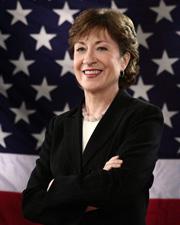
Mr. President, I am pleased to join with my colleague from California, Senator Feinstein, in introducing the Social Security Fairness Act, which repeals two provisions of current law--the windfall…
Mr. President, I am pleased to join with my colleague from California, Senator Feinstein, in introducing the Social Security Fairness Act, which repeals two provisions of current law--the windfall elimination provision, WEP, and the government pension offset, GPO-- that unfairly reduce earned Social Security benefits for many public employees. This legislation is of tremendous importance to Maine's teachers, police officers, firefighters and other public employees who currently are unfairly penalized for working in the private sector when the time comes for them to retire.
Despite their challenging, difficult and sometimes dangerous jobs, these invaluable public servants often receive far lower salaries than private sector employees. It is therefore doubly unfair to penalize them and hold them to a different standard when it comes to their Social Security retirement benefits.
Moreover, at a time when we should be doing all that we can to attract qualified people to public service, this unfair reduction in Social Security benefits makes it even more difficult for our communities to recruit and retain the teachers, police officers, firefighters, and other public employees who are so critical to the safety and well-being of our families.
The government pension offset and windfall elimination provisions affect government employees and retirees in virtually every State, but their effect is most acute in Maine and 14 other States where most public employees are not covered by Social Security. Nationwide, more than one-third of teachers and school employees, and more than one- fifth of other public employees, are not covered by Social Security. Approximately 250,000 retired Federal, State and local government employees across the country have already been adversely affected by these provisions. Thousands more stand to be affected in the future.
The Social Security windfall elimination provision reduces Social Security benefits for retirees who paid into Social Security and who also receive a government pension from work not covered under Social Security, such as pensions from the Maine State Retirement Fund. While private sector retirees receive monthly Social Security checks equal to 90 percent of their first $561 in average monthly career earnings, government pensioners are only allowed to receive 40 percent--a harsh and unjust penalty of $280.50 per month.
The government pension offset reduces an individual's survivor benefit under Social Security by two-thirds of the amount of his or her public pension. Estimates indicate that 9 out of 10 public employees affected by the GPO lose their entire spousal benefit, even though their deceased spouses paid Social Security taxes for many years.
This offset is, unfortunately, most harsh for those who can least afford the loss: lower-income women. According to the Congressional Budget Office, the GPO reduces benefits for some 200,000 individuals by more than $3,600 a year--an amount that can make the difference between a comfortable retirement and poverty.
This simply is not fair and not right. Our teachers and other public employees face difficult enough challenges in their day-to-day work. Individuals who have devoted their lives to public service should not have the added burden of worrying about their retirement, and these two onerous provisions should be repealed.
This is an issue that I have heard about at the grocery store, at my church, and even at my 30th high school class reunion from my many friends who have entered the teaching profession and who are committed to living and working in Maine. They love their jobs and the children they teach, but they worry about the future and about their financial security in retirement.
I also hear a lot about this issue in my constituent mail. Patricia Dupont, for example, of Orland, ME, wrote that, because she taught for 15 years under
Social Security in New Hampshire, she is living on a retirement income of less than $13,000 after 45 years of teaching. Since she also lost survivors' benefits from her husband's Social Security, she calculates that a repeal of the WEP and GPO would double her current retirement income.
Wendy Lessard, an English teacher at Mt. Desert Island High School, is an example of another unfortunate consequence of the laws. After 10 years of teaching, she is now considering whether or not to continue her career because of the Social Security penalties associated with her teacher's pension. She tells me that she has worked vacations in her summers and off-hours to be able to make a better wage and pay back her student loans. She is just the kind of teacher we want teaching our students, but is now contemplating leaving the profession because of her concerns about financial security in retirement.
Moreover, these provisions also penalize private sector employees who leave their jobs to become public school teachers. Ruth Wilson, a teacher from Otisfield, ME, wrote:
I entered the teaching profession two years ago, partly in
response to the nationwide pleas for educators. As the
current pool of educators near retirement in the next few
years, our schools face a crisis. Low wages and long hard
hours are not great selling points to young students when
selecting a career.
I love teaching and only regretted my decision when I found
out about the penalties I will unfairly suffer. In my former
life as a well-paid systems manager at State Street Bank in
Boston, I contributed the maximum to Social Security each
year. When I decided to become an educator, I figured that
because of my many years of maximum Social Security
contributions, I would still have a livable retirement
``wage.'' I was unaware that I would be penalized as an
educator in your State.
Maine, like many States, is currently facing a serious shortage of teachers, and we simply cannot afford to discourage people from pursuing important careers in public service in this way. I am therefore pleased to join Senator Feinstein in introducing this legislation to repeal these two unfair provisions, and I urge my colleagues to join us as cosponsors.
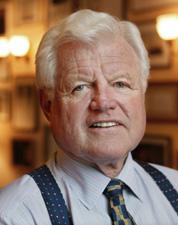
Mr. President, I am pleased to join my colleagues in introducing the Keeping Children and Families Safe Act of 2003. This Act continues our Federal commitment to ensuring that the Nation's most…
Mr. President, I am pleased to join my colleagues in introducing the Keeping Children and Families Safe Act of 2003. This Act continues our Federal commitment to ensuring that the Nation's most vulnerable children are protected and safe.
Recent cases of abuse and neglect have made national headlines as local authorities have failed to identify abused children. These failures have led to tragic consequences--the deaths of innocent and unprotected children.
Clearly, we must do better--at the national, State, and local levels. And the bill we introduce today will enhance the Federal partnership with local officials to bring greater protection to our children.
Since 1974, the Child Abuse Prevention and Treatment Act, or CAPTA, has been a great support in reaching the nearly 900,000 children who suffer abuse and neglect each year. This year's bipartisan reauthorization of CAPTA will continue and expand that support through FY 2008, and extend CAPTA's related programs, including the Abandoned Infants Assistance Act, the Adoption Opportunities Act, and the Family Violence Prevention and Services Act.
Child abuse and neglect continues to be a serious and daunting problem in our nation. In local communities, child protective services agencies bear the responsibility of receiving and investigating reports of child abuse and neglect. Each year those agencies respond to nearly 3 million reports of abuse. It is a tremendous challenge, and caseworkers in local agencies perform an admirable task worthy of our thanks.
But despite the hard work of child protective services, nearly half of all children in substantiated cases of abuse receive no follow-up services or support. In 2000, over 900 children under the age of 6 died of abuse and neglect. Those children in desperate circumstances need and deserve our help, and we must do better.
The Keeping Children and Families Safe Act will bring us closer toward our goal of responding more effectively to child abuse and neglect. Our bipartisan bill encourages better training and qualifications for child abuse caseworkers, creates linkages to better facilitate referrals for neglected children, and coordinates best practices to improve systems that currently serve and protect children.
Actions to prevent and address child abuse and neglect must be strengthened and expanded. This bill will improve current systems of child abuse treatment by coordinating information on best practices among child protective services agencies through the National Child Abuse Clearinghouse, and disseminating those practices that hold promise to improve systems. The bill will also ensure that local citizen review panels oversee, review, and bolster the practices of child protective services. Access to technical assistance and grants will also be broadened to private entities working to prevent and treat child abuse.
The identification and treatment of abused children cannot be improved without better preparation of those responsible for investigating abuse and neglect. By improving the training, retention, and supervision of child protective caseworkers, the bill will ensure that children receive the help they need. New training will help caseworkers become familiar with their legal duties and receive guidance on how to best work with families. Training will also be provided to protect the personal safety of caseworkers as they enter homes to investigate allegations of abuse.
More must also be done to ensure that abused children receive ongoing support and services. This bill will encourage states to adopt a comprehensive approach to treating and preventing abuse by linking child protective services and education, health, mental health, and judicial systems to more effectively follow-up with support and services to abused and neglected children. The bill will also promote partnerships between public agencies and community-based organizations to support child abuse prevention and treatment.
I am pleased that the Keeping Children and Families Safe Act continues the legacy of the late Senator Wellstone in combating domestic violence and addressing its impact on children. It is estimated that 10 million children witness physical abuse between their parents each year, damaging their emotional and physical well being, and causing difficulties later in life.
Under this Act, new grants will be awarded, once appropriations for the Family Violence Prevention and Services Act reach $150 million, to address the physical and emotional needs of children who witness violence in their homes. Those funds will support direct services and interventions for children who witness domestic violence, bringing together child welfare agencies, courts, law enforcement, and other appropriate entities.
This Act also supports a new electronic network to connect victims of domestic violence and support organizations and networks in local communities. This network will enhance the current national domestic violence hotline, which serves as a vital resource for victims of domestic abuse 24-hours-a-day, 365 days a year. The hotline currently provides support and assistance to 300 to 400 callers a day.
We must do more to help children and their families overcome the harmful effects of abuse, neglect, and violence. The Keeping Children and Families Safe Act of 2003 is a step in the right direction toward that goal, and I urge my colleagues to support this important legislation.

Mr. President, along with my colleagues, Senators Hatch, Miller, Bayh and Grassley, I am pleased to introduce the Archery Excise Tax Simplification Act of 2003. This bill will protect funding for the…
Mr. President, along with my colleagues, Senators Hatch, Miller, Bayh and Grassley, I am pleased to introduce the Archery Excise Tax Simplification Act of 2003. This bill will protect funding for the Wildlife Restoration Program, the Pittman-Robertson fund, by simplifying administration and compliance with the excise tax and closing an unintended loophole that allows arrows assembled outside the United States to avoid the excise tax imposed on domestic manufacturers.
The creation of the Wildlife Restoration Program is one of the great success stories of cooperation among America's sportsmen and women, State fish and wildlife agencies, and the sporting goods industry. Working together with Congress, Americans who enjoy the outdoors volunteered to pay an excise tax on sporting arms and ammunition to be used for hunter education programs, wildlife restoration, and habitat conservation.
Originally the archery industry did not participate in this program. However, the growth of bow hunting in the '60s and '70s led the archery industry to decide they would support the excise tax that funds State game agencies. As a result, the tax was extended to archery equipment in 1975. The tax on archery equipment was meant to parallel the tax that hunters were paying on firearms and ready-to-fire ammunition. The archery industry and bow hunters are pleased to contribute to the success of the Wildlife Restoration Program.
Because current law taxes components and not arrows, foreign manufacturers are selling arrows in the United States without paying the excise tax
that is imposed on arrows made in the United States. Not only are these untaxed imports unfair to American workers, they threaten the integrity of the Wildlife Restoration Fund.
This issue is important to companies in Montana. Mike Ellig, a manufacturer of archery products in Bozeman, MT, pays this tax. He supports the tax, but asks that it be fair. Mike's company, Montana Black Gold, and the archery industry want to support the Wildlife Restoration Program. But the way the tax works today, American manufacturers are at a competitive disadvantage. That is why the 800 members of the Montana Bowhunters Association support this measure.
This legislation will close the loophole that allows imported arrows to avoid the excise tax paid by domestic manufacturers. While keeping the current 12.4 percent tax on arrow components, the proposal will impose a tax of 12 percent on the first sale of an arrow assembled from untaxed components. U.S. manufacturers and foreign manufacturers will be treated equally.
Since this loophole was inadvertently created in 1997, archery imports, mostly finished arrows, increased from $430,000 in 1998, to $1.6 million in 1999, to $3.2 million in 2000, to $7.8 million in 2001 and to $11.0 million in 2002, through November. If Congress does not act quickly to close this loophole, domestic manufacturers will be forced to relocate outside of the United States. They simply cannot afford to lose market share for a fifth year to competitors who do not pay the same tax they pay. If a few more move overseas, the rest will follow. The result will be a catastrophic loss of revenue for the Federal Wildlife Restoration Fund.
Current law also taxes non-hunters, contrary to Congressional intent. To relieve non-hunters from the requirement to pay for wildlife management, the legislation would eliminate the current-law tax on bows with draw weights of less than 30 pounds. Those bows are not suitable or, in many states, legal for hunting. To preserve the revenue for the Wildlife Restoration Fund, the bill would retain the current tax on bows that are suitable for hunting.
The proposal would also clarify that broadheads are an accessory taxed at 11 percent rather than as an arrow component taxed at 12.4 percent. This will correct the ambiguity in the 1997 Act that led to the misclassification of broadheads.
In summary, the Arrow Excise Tax Simplification Act of 2001 would accomplish worthy objectives. It would close the loophole that allows foreign imported arrows to escape the tax and remove the tax on youth and recreational archery equipment that were never meant to be taxed. We will accomplish these goals while protecting the Wildlife Restoration Program by ensuring that there is no significant diminution of revenues collected by the archery excise tax. The Joint Committee on Taxation estimates the proposal will decrease revenues by $5 million over ten years resulting in small changes in outlays from the Federal Aid in Wildlife Fund. Failure to close the import loophole will eviscerate the archery tax base resulting in devastating losses to the Fund.
I ask unanimous consent that the text of the bill be printed in the Record.
Show 9 more
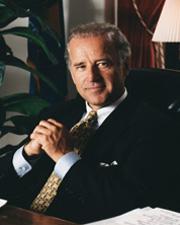
Mr. President, I am pleased once again to join my colleague from New York, Senator Schumer, to talk about a bill that will help American families afford their children's college tuition. The bill we…
Mr. President, I am pleased once again to join my colleague from New York, Senator Schumer, to talk about a bill that will help American families afford their children's college tuition. The bill we are reintroducing today, the Make College Affordable Act, will make up to $12,000 in college tuition tax deductible each year, while providing graduates with a tax credit to reduce the cost of their student loans.
With the average college graduate earning 80 percent more than the average non-college, high school graduate, it is abundantly clear that in today's economy a college degree is an absolute necessity. When I went to college, it cost about $1,000 a year. That meant, for a family making about $12,000 a year, the cost of college was about 6 or 7 percent of that family's income. Today the average cost of room, board and tuition at a four-year public college has jumped to over $9,000 a year. The average cost of room, board and tuition at a private four- year college has jumped to over $25,000. What does this mean? This means that hard working American families are spending a larger percentage of their income than ever before to send their children to school. To attend my alma mater, the University of Delaware, it costs nearly 20 percent of a Delaware family's average annual income to cover costs. If that same family wants to send their child to a private university, approximately 50 percent of their income is required. This means that the average American family is likely to spend just as much, if not more, on their child's tuition as they are to pay in annual mortgage payments.
I have said it before. How can we expect families to dream of a better and brighter future for their children, when the cost of attending even some public universities rivals their home mortgage payments? We can't.
That is why in 1995, I first offered an amendment to permit a $10,000 tuition tax deduction. That is why in 1996 and 1997, I introduced my GET AHEAD bill which would have provided students and their families with scholarships, tax deductions, and college savings plans. We've made some good progress. A number of initiatives were incorporated into the 1997 tax bill. Today families have available to them the Hope Scholarship--a tax credit of up to $1,500 for the first two years of college, and the Lifetime Learning Credit--which permits a 20 percent tax credit on up to $10,000 worth of higher education expenses. Students can also claim a tax deduction for interest on student loans, have the opportunity to consolidate their student loans at low interest rates and beginning in 2001, have had the chance to deduct up to $3,000 in tuition expenses from their Federal income tax.
And yet, we can and should do more to help qualified students attend the college of their dreams. This is why I introduced my Tuition Assistance for Families Act in January. This bill would expand current tuition tax credits, provide merit scholarships to graduating seniors, increase the maximum Pell Grant and raise the tuition tax deduction much like the bill before us today.
I join my friend from New York today to introduce the Make College Affordable Act because it will allow most taxpayers to take up to a $12,000 tax deduction each year for college tuition and fees. For some families this would amount to a tax savings of more than $3,000 each year--$3,000 that can go toward their children's doctor visits, retirement savings, child care costs and yes, toward their annual mortgage payment.
In addition to the tax deduction, the Schumer-Biden bill will provide a tax credit of up to $1,500 for the interest paid on student loans over the first five years of repayment. This credit will be available to individuals with incomes of up to $50,000, and families with incomes up to $100,000. When one considers that the average graduate is $16,928 in debt, you can imagine how quickly interest payments add up each year.
We are hearing a great deal these days about tax cuts. How we choose to provide them, and who we choose to provide them to, is a reflection of our nation's priorities and values. What greater priority could there be than providing our children with a first class education. Let's be smart about our investments when considering the tax proposals that come before us. Let's help families provide their children with a better life through the promise of a college education. And let's not forget that the Make College Affordable Act will not only ensure a brighter future for all our children, it will help to guarantee an educated and prosperous America down the road.
Mr. President, I ask unanimous consent that the Senate Committee on the Judiciary Subcommittee on Administrative Oversight and the Courts be authorized to meet to conduct a hearing on ``Improving the…
Mr. President, I ask unanimous consent that the Senate Committee on the Judiciary Subcommittee on Administrative Oversight and the Courts be authorized to meet to conduct a hearing on ``Improving the Administration of Justice: A Proposal to Split the Ninth Circuit'' on Wednesday, April 7, 2004, at 10 a.m. in room 226 of the Dirksen Senate Office building.
Witness List
Panel I: The Honorable Diarmuid F. O'Scannlain, U.S. Circuit Judge, U.S. Court of Appeals for the Ninth Circuit, Portland, OR; the Honorable Mary M. Schroeder, Chief U.S. Circuit Judge, U.S. Court of Appeals of the Ninth Circuit, Phoenix, AZ; the Honorable Richard C. Tallman, U.S. Circuit Judge, U.S. Court of Appeals for the Ninth Circuit, Seattle, WA; and the Honorable J. Clifford Wallace, Senior U.S. Circuit Judge, U.S. Court of Appeals for the Ninth Circuit, San Diego, CA.
Panel II: The Honorable Gerald B. Tjoflat, U.S. Circuit Judge, U.S. Court of Appeals for the Eleventh Circuit, Jackson, FL; and the Honorable John C. Coughenour, Chief U.S. District Judge, U.S. District Court for the Western District of Washington, Seattle, WA.
Mr. President, I ask unanimous consent that the Senate Committee on the Judiciary Subcommittee on Antitrust, Competition Policy and Consumer Rights be authorized to meet to conduct a hearing on ``Crude Oil: The Source of Higher Gas Prices?'' on Wednesday, April 7, 2004, at 2:30 p.m. in room 226 of the Dirksen Senate Office Building.
Witness List: Mr. William Kovacic, General Counsel, Federal Trade Commission; Dr. John Felmy, Chief Economist and Director, American Petroleum Institute; Dr. Justine Hastings, Assistant Professor, Yale University Department of Economics; Mr. George Bermann, Walter Gellhorn Professor of Law, Columbia University School of Law; and Dr. Mark Cooper, Director of Research, Consumer Federation of America.
Mr. President, I ask unanimous consent that the Committee on Governmental Affairs' Subcommittee on Financial Management, the Budget, and International Security be authorized to meet on Wednesday, April 7, 2004 at 2 p.m. for a hearing entitled, ``Legislative Hearing on S. 346, a Bill to Amend the Office of Federal Procurement Policy Act to Establish a Government-Wide Policy Requiring Competition in Certain Procurements from Federal Prison Industries.''
Mr. President, I ask unanimous consent that the Subcommittee on Fisheries, Wildlife, and Water be authorized to meet on Wednesday, April 7th at 2:30 p.m. to hold an oversight hearing on the detection of lead in the District of Columbia drinking water.
The business meeting will be held in S-128 (Appropriations) in the Capitol.
Mr. President, I ask unanimous consent that the Senate Committee on Commerce, Science, and Transportation, Subcommittee on Oceans, Fisheries, and Coast Guard, be authorized to meet on Wednesday, April 7, 2004, at 2 p.m., in SR-428A, for a hearing on Coast Guard oversight.
Mr. President, I ask unanimous consent that the Senate Committee on Commerce, Science, and Transportation, Subcommittee on Science, Technology, and Space, be authorized to meet on Wednesday, April 7, 2004, at 2:30 p.m., in SR-253, for a hearing on near earth objects.
Mr. President, I ask unanimous consent that the Subcommittee on Strategic Forces of the Committee on Armed Services be authorized to meet during the session of the Senate on April 7, 2004, at 10 a.m., in open and closed session to receive testimony on defense intelligence programs and lessons learned in recent military operations, in review of the Defense Authorization Request for fiscal year 2005.
Mr. President, today I am pleased to join Senator Levin in introducing a bill that will further my efforts to limit government competition with the private sector. Senator Levin and I propose to…
Mr. President, today I am pleased to join Senator Levin in introducing a bill that will further my efforts to limit government competition with the private sector. Senator Levin and I propose to eliminate the mandatory contracting requirement that Federal agencies are subject to when it comes to products made by the Federal Prison Industries, FPI. Under law, all Federal agencies, except the Department of Defense, are required to purchase products made by the FPI. Simply put, this bill will require the FPI to compete with the private sector for Federal contracts.
Currently, the FPI employs approximately 22,000 Federal prisoners or roughly 20 percent of all Federal prisoners. These prisoners are responsible for producing a diverse range of products for the FPI, ranging from office furniture to clothing. The remaining 80 percent of Federal prisoners, who work, do so in and around Federal prisons.
While Senator Levin and I believe that it is important to keep prisoners working, we do not believe that this effort should unduly harm or conflict with law-abiding businesses. This bill seeks to minimize the unfair competition that private sector companies face with the FPI.
The FPI's mandatory source requirement not only undercuts private business throughout America, but its mandatory source preference oftentimes costs American taxpayers more money. I believe American taxpayers would be alarmed to learn of the preferential treatment that the FPI enjoys when it comes to Federal contracts.
As I said before, Senator Levin and I support the goal of keeping prisoners busy while serving their time in prison. However, if we allow competition in Federal contracts, the FPI will be required to focus its efforts in product areas that don't unfairly compete with the private sector. Clearly, competitive bidding is a reasonable process that will ensure taxpayer's dollars are being spent justly.
Of particular note, our bill allows contracting officers, within each Federal agency, the ability to use competitive procedures for the procurement of products. This approach allows Federal agencies to select the FPI contracts if he/she believes that the FPI can meet that particularly agency's requirements and the product is offered at a fair and reasonable price. The above outlined provision in our bill seeks to place the control of government procurement in the hands of contracting officers, rather than in the hands of the FPI.
In addition to establishing a competitive procedure for the procurement of products, we include a provision that allows the Attorney General to grant a waiver to this process if a particular contract is deemed essential to the safety and effective administration of a particular prison.
I am confident that by allowing competition for government contracts our bill will save tax dollars. As Congress looks for additional cost saving practices, the elimination of the FPI's mandatory source preference will bring about numerous improvements, not just in cost savings, but also in streamlining of the FPI's products.
Mr. President, today I am pleased to join Senator Levin in introducing a bill that will further my efforts to limit government competition with the private sector. Senator Levin and I propose to…
Mr. President, today I am pleased to join Senator Levin in introducing a bill that will further my efforts to limit government competition with the private sector. Senator Levin and I propose to eliminate the mandatory contracting requirement that Federal agencies are subject to when it comes to products made by the Federal Prison Industries, FPI. Under law, all Federal agencies, except the Department of Defense, are required to purchase products made by the FPI. Simply put, this bill will require the FPI to compete with the private sector for Federal contracts.
Currently, the FPI employs approximately 22,000 Federal prisoners or roughly 20 percent of all Federal prisoners. These prisoners are responsible for producing a diverse range of products for the FPI, ranging from office furniture to clothing. The remaining 80 percent of Federal prisoners, who work, do so in and around Federal prisons.
While Senator Levin and I believe that it is important to keep prisoners working, we do not believe that this effort should unduly harm or conflict with law-abiding businesses. This bill seeks to minimize the unfair competition that private sector companies face with the FPI.
The FPI's mandatory source requirement not only undercuts private business throughout America, but its mandatory source preference oftentimes costs American taxpayers more money. I believe American taxpayers would be alarmed to learn of the preferential treatment that the FPI enjoys when it comes to Federal contracts.
As I said before, Senator Levin and I support the goal of keeping prisoners busy while serving their time in prison. However, if we allow competition in Federal contracts, the FPI will be required to focus its efforts in product areas that don't unfairly compete with the private sector. Clearly, competitive bidding is a reasonable process that will ensure taxpayer's dollars are being spent justly.
Of particular note, our bill allows contracting officers, within each Federal agency, the ability to use competitive procedures for the procurement of products. This approach allows Federal agencies to select the FPI contracts if he/she believes that the FPI can meet that particularly agency's requirements and the product is offered at a fair and reasonable price. The above outlined provision in our bill seeks to place the control of government procurement in the hands of contracting officers, rather than in the hands of the FPI.
In addition to establishing a competitive procedure for the procurement of products, we include a provision that allows the Attorney General to grant a waiver to this process if a particular contract is deemed essential to the safety and effective administration of a particular prison.
I am confident that by allowing competition for government contracts our bill will save tax dollars. As Congress looks for additional cost saving practices, the elimination of the FPI's mandatory source preference will bring about numerous improvements, not just in cost savings, but also in streamlining of the FPI's products.
Mr. President, today I am introducing legislation on behalf of Senator Tim Johnson and myself to name the Rapid City United States Courthouse and Federal Building in honor of Judge Andrew W. Bogue,…
Mr. President, today I am introducing legislation on behalf of Senator Tim Johnson and myself to name the Rapid City United States Courthouse and Federal Building in honor of Judge Andrew W. Bogue, Senior Judge of the U.S. District Court of the District of South Dakota.
The administration of justice in western South Dakota is nearly synonymous with the name of Judge Bogue. He is almost single-handedly responsible for establishing the Federal district court in Rapid City, and worked tirelessly to see the Courthouse and Federal Building constructed there to provide a new home for the administration of justice in the area.
Judge Bogue was the first resident judge in the western division of the U.S. District Court District of South Dakota. Before he came along, judges had to travel into the division from other parts of the State, and court was held in the ancient Deadwood Territorial Courthouse or in makeshift courtrooms throughout the 11-county region. Faced with the logistical hassles of court operations, attorneys were less likely to use the court system.
After Judge Bogue took the bench, he helped transform the justice system in western South Dakota. First, he oversaw the establishment of a new district seat in Rapid City, the population center. Then he worked alongside South Dakota's congressional delegation to secure funding for the construction of the Rapid City Federal Building and United States Courthouse.
During the course of his career as a Federal judge, Bogue has presided over many high-profile cases, including cases stemming from American Indian Movement, AIM, uprisings in the 1970s. He has maintained a reputation for being fair, objective, and compassionate.
Before rising to the U.S. District Court bench, Andrew Bogue was educated at South Dakota State University. After serving our Nation with the U.S. Army Signal Corps during World War II, he returned home to complete a law degree at the University of South Dakota and to marry his lovely wife Liz. He was admitted to the South Dakota Bar in 1947.
Andrew Bogue again answered the call to defend our country during the Korean War, serving in the U.S. Army's Judge Advocate General's corps. Upon his return, he practiced as a private attorney and a State's Attorney before becoming a South Dakota circuit court judge. He joined the Federal bench on May 1, 1970, and was elevated to Chief Judge in 1980. He took senior status in 1985.
It is right and fitting that the Rapid City Federal Building and Courthouse be named for the individual whose legacy pervades its halls. The legislation Senator Johnson and I introduce today began with an outpouring of support from Judge Bogue's colleagues. The Pennington County Bar Association and the Seventh Judicial Circuit Court Judges and Magistrate Judges have
passed resolutions supporting this initiative. I am proud to offer this legislation in honor of a great South Dakotan.
I ask unanimous consent that the text of this legislation be printed in the Record.

Mr. President, I rise today to introduce the Equal Access to Medicare Act to combat the growing practice of ``concierge care'' medical practices. As my colleagues may recall I introduced similar…
Mr. President, I rise today to introduce the Equal Access to Medicare Act to combat the growing practice of ``concierge care'' medical practices. As my colleagues may recall I introduced similar legislation last Congress to deal with the growing problem of doctors shutting down their practices and opening new ones, only accepting those patients willing to pay a membership fee. These fees range from $1,500 to $20,000 annually. By charging these dues, or requiring patients to purchase non-Medicare covered services, doctors have been able to shrink their patient load and maintain high profit margins while continuing to bill Medicare, all on the backs of low- and middle-income beneficiaries.
This is a dangerous model that causes significant disparities in the care available to Medicare beneficiaries. A doctor receiving Medicare reimbursement should not be allowed to turn away those Medicare beneficiaries who cannot, or choose not to pay a membership fee. My bill simply prevents Medicare from reimbursing doctors who charge membership fees or require the purchase of non-Medicare covered services as a condition for the provision of care.
Since the introduction of this bill in 2001, the practice has been rapidly expanding with versions in many states. As an increasing number of Medicare beneficiaries voice their concerns, it is time for Congress to act. I hope that as we debate Medicare modernization this year, Congress will agree to put an end to this egregious practice.
In addition to the concerns of seniors, health care advocacy groups have begun to weigh in as well. Both the American Academy of Family Physicians and the American Medical Association have expressed concern about the ``. . . risks associated with the spread of this model'', AMA, June 2002 report. Should this practice proliferate, a doctor shortage for low- and middle-income Medicare beneficiaries is likely, exacerbating an already ailing health care marketplace.
I must emphasize: this bill does not interfere with a doctor's ability to set up a practice with a limited number of patients while remaining adequately compensated. Nor would doctors who participate in Medicare be prevented from contracting privately with patients for non- Medicare covered services. It simply provides that doctors who participate in the Medicare program may not select patients based upon willingness or ability to pay a fee for other services. This is the same standard that private insurance companies apply to their providers.
I hope my colleagues will join me in helping Medicare keep its promise of accessibility to seniors who have paid a lifetime of ``premiums.''
I ask unanimous consent that the text of this legislation be printed in the Record.

Mr. President, I rise to voice my strong support for legislation introduced today by Senators Lincoln and Allard, entitled ``The Resource Efficient Appliance Incentive Act of 2003.'' I'm proud to be…
Mr. President, I rise to voice my strong support for legislation introduced today by Senators Lincoln and Allard, entitled ``The Resource Efficient Appliance Incentive Act of 2003.'' I'm proud to be an original cosponsor.
This legislation will provide a valuable incentive to accelerate and expand the production and market penetration of ultra energy-efficient appliances. By providing a tax credit for the development of super energy-efficient washing machines and refrigerators, this legislation creates the incentives necessary to increase the production and sale of these appliances in the short term and ultimately lead to a dramatic change in consumer purchasing decisions.
Under this proposal, manufacturers would be eligible to claim a credit of either $50 or $100, depending on efficiency level, for each super energy-efficient washing machine produced between 2003 and 2007. Likewise, manufacturers would be eligible to claim a credit of $50, $100, or $150, depending on efficiency level, for each super energy- efficient refrigerator produced between 2003 and 2007. It is estimated that this tax credit will increase the production and purchase of super energy-efficient washers by almost 200 percent and the purchase of super energy-efficient refrigerators by over 285 percent.
Equally important is the long-term environmental benefits of the expanded use of these appliances. Over the life of the appliances, over 200 trillion Btus of energy will be saved. This is the equivalent of taking 2.3 million cars off the road or closing 6 coal-fired power plants for a year. In addition, the clothes washers will reduce the amount of water necessary to wash clothes by 870 billion gallons, an amount equal to the needs of every household in a city the size of Phoenix, Arizona for two years. And, the benefits to consumers over the life of the washers and refrigerators from operational savings is estimated at nearly $1 billion.
In my home State of Iowa, this legislation would result in the production of 1.5 million super energy-efficient washers and refrigerators during the next five years. I also expect Iowans to save $11 million in operational costs over the life span of the appliances, and 9 billion gallons of water--enough to supply drinking water for the entire State for 30 years.
As Chairman of the Senate Finance Committee, I look forward to working with Senators Lincoln and Allard as we continue to promote energy conservation and efficiency.

Mr. President, I ask unanimous consent that the Committee on Armed Services be authorized to meet during the session of the Senate on June 2, 2004, at 10:15 a.m., in closed session to receive a…
Mr. President, I ask unanimous consent that the Committee on Armed Services be authorized to meet during the session of the Senate on June 2, 2004, at 10:15 a.m., in closed session to receive a briefing on the situation in Iraq.
Mr. President, I ask unanimous consent that the Committee on Banking, Housing, and Urban Affairs be authorized to meet during the session of the Senate on Wednesday, June 2, 2004, at 10 a.m., to conduct a hearing on ``The Role of State Securities Regulators in Protecting Investors.''
Mr. President, I ask unanimous consent that the Committee on Commerce,
Science, and Transportation be authorized to meet Wednesday, June 2, 2004, at 9:30 a.m. on fire fighting aircraft.
Mr. President, I ask unanimous consent that the Committee on Commerce, Science, and Transportation be authorized to meet Wednesday, June 2, 2004, at 2:30 p.m. on nominations.
Mr. President, I ask unanimous consent that the Committee on Foreign Relations be authorized to meet during the session of the Senate on Wednesday, June 2, 2003, at 9:30 a.m., to hold a hearing on the Greater Middle East Initiative.
Mr. President, I ask unanimous consent that the Committee on Governmental Affairs be authorized to meet on Wednesday, June 2, 2004 at 10 a.m. to hold a business meeting to consider pending Committee business.

Mr. President, I ask unanimous consent that the text of the bill be printed in the Record.
Mr. President, I ask unanimous consent that the text of the bill be printed in the Record.
Bill Text
2 versions available
        [Congressional Bills 108th Congress]
[From the U.S. Government Publishing Office]
[S. 346 Reported in Senate (RS)]

Calendar No. 807
108th CONGRESS
2d Session
S. 346

[Report No. 108-415]

To amend the Office of Federal Procurement Policy Act to establish a
governmentwide policy requiring competition in certain executive agency
procurements, and for other purposes.

_______________________________________________________________________

IN THE SENATE OF THE UNITED STATES

February 11, 2003

Mr. Levin (for himself, Mr. Thomas, Mr. Burns, Mr. Lugar, Mr. Grassley,
Mr. Shelby, Mrs. Dole, Ms. Stabenow, and Mr. Chambliss) introduced the
following bill; which was read twice and referred to the Committee on
Governmental Affairs

November 18, 2004

Reported by Ms. Collins, with an amendment
[Omit the part struck through and insert the part printed in italic]

_______________________________________________________________________

A BILL

To amend the Office of Federal Procurement Policy Act to establish a
governmentwide policy requiring competition in certain executive agency
procurements, and for other purposes.

Be it enacted by the Senate and House of Representatives of the
United States of America in Congress assembled,

SECTION 1. GOVERNMENTWIDE PROCUREMENT POLICY RELATING TO PURCHASES FROM
FEDERAL PRISON INDUSTRIES.

(a) Requirements.--The Office of Federal Procurement Policy Act (41
U.S.C. 403 et seq.) is amended by adding at the end the following new
section:

``SEC. 40. GOVERNMENTWIDE PROCUREMENT POLICY RELATING TO PURCHASES FROM
FEDERAL PRISON INDUSTRIES.

``(a) Competition Required.--In the procurement of any product that
is authorized to be offered for sale by Federal Prison Industries and
is listed in the catalog published and maintained by Federal Prison
Industries under section 4124(b) of title 18, United States Code, the
head of an executive agency shall, except as provided in subsection
(d)--
``(1) use competitive procedures for entering into a
contract for the procurement of such product, in accordance
with the requirements applicable to such executive agency under
sections 2304 and 2305 of title 10, United States Code, or
sections 303 through 303C of the Federal Property and
Administrative Services Act of 1949 (41 U.S.C. 253 through
253c); or
``(2) make an individual purchase under a multiple award
contract in accordance with competition requirements applicable
to such purchases.
``(b) Offers From Federal Prison Industries.--In conducting a
procurement pursuant to subsection (a), the head of an executive agency
shall--
``(1) notify Federal Prison Industries of the procurement
at the same time and in the same manner as other potential
offerors are notified; and
``(2) consider a timely offer from Federal Prison
Industries for award in the same manner as other offers
(regardless of whether Federal Prison Industries is a
contractor under an applicable multiple award contract).
``(c) Implementation by Agencies.--The head of each executive
agency shall ensure that--
``(1) the executive agency does not purchase a Federal
Prison Industries product or service unless a contracting
officer of the executive agency determines that the product or
service is comparable to products or services available from
the private sector that best meet the executive agency's needs
in terms of price, quality, and time of delivery; and
``(2) Federal Prison Industries performs its contractual
obligations to the executive agency to the same extent as any
other contractor for the executive agency.
``(d) Exception.--(1) The head of an executive agency may use
procedures other than competitive procedures to enter into a contract
with Federal Prison Industries only under the following circumstances:
``(A) The Attorney General personally determines in
accordance with paragraph (2), within 30 days after Federal
Prison Industries has been informed by the head of that
executive agency of an opportunity for award of a contract for
a product, that--
``(i) Federal Prison Industries cannot reasonably
expect fair consideration in the selection of an
offeror for award of the contract on a competitive
basis; and
``(ii) the award of the contract to Federal Prison
Industries for performance at a penal or correctional
facility is necessary to maintain work opportunities
not otherwise available at the penal or correctional
facility that prevent circumstances that could
reasonably be expected to significantly endanger the
safe and effective administration of such facility.
``(B) The product is available only from Federal Prison
Industries and the contract may be awarded under the authority
of section 2304(c)(1) of title 10, United States Code, or
section 303(c)(1) of the Federal Property and Administrative
Services Act of 1949 (41 U.S.C. 253(c)(1)), as may be
applicable, pursuant to the justification and approval
requirements relating to noncompetitive procurements specified
by law and the Federal Acquisition Regulation.
``(C) The head of the executive agency determines that the
product that would otherwise be furnished is to be produced, in
whole or in significant part, by prison labor outside the
United States.
``(2)(A) A determination made by the Attorney General regarding a
contract pursuant to paragraph (1)(A) shall be--
``(i) supported by specific findings by the warden of the
penal or correctional institution at which a Federal Prison
Industries workshop is scheduled to perform the contract;
``(ii) supported by specific findings by Federal Prison
Industries regarding the reasons that it does not expect to be
selected for award of the contract on a competitive basis; and
``(iii) made and reported in the same manner as a
determination made pursuant to section 303(c)(7) of the Federal
Property and Administrative Services Act of 1949 (41 U.S.C.
253(c)(7)).
``(B) The Attorney General may not delegate to any other official
authority to make a determination that is required under paragraph
(1)(A) to be made personally by the Attorney General.
``(e) Performance as a Subcontractor.--(1) A contractor or
potential contractor under a contract entered into by the head of an
executive agency may not be required to use Federal Prison Industries
as a subcontractor or supplier of products or provider of services for
the performance of the contract by any means, including means such as--
``(A) a provision in a solicitation of offers that requires
a contractor to offer to use or specify products or services of
Federal Prison Industries in the performance of the contract;
``(B) a contract clause that requires the contractor to use
or specify products or services (or classes of products or
services) offered by Federal Prison Industries in the
performance of the contract; or
``(C) any contract modification that requires the use of
products or services of Federal Prison Industries in the
performance of the contract.
``(2) A contractor using Federal Prison Industries as a
subcontractor or supplier in furnishing a commercial product pursuant
to a contract of an executive agency shall implement appropriate
management procedures to prevent an introduction of an inmate-produced
product into the commercial market.
``(3) In this subsection, the term `contractor', with respect to a
contract, includes a subcontractor at any tier under the contract.
``(f) Protection of Classified and Sensitive Information.--The head
of an executive agency may not enter into any contract with Federal
Prison Industries under which an inmate worker would have access to--
``(1) any data that is classified or will become classified
after being merged with other data;
``(2) any geographic data regarding the location of--
``(A) surface or subsurface infrastructure
providing communications or water or electrical power
distribution;
``(B) pipelines for the distribution of natural
gas, bulk petroleum products, or other commodities; or
``(C) other utilities; or
``(3) any personal or financial information about any
individual private citizen, including information relating to
such person's real property however described, without the
prior consent of the individual.''.
(b) Clerical Amendment.--The table of contents in section 1(b) of
such Act is amended by adding at the end the following new item:

``Sec. 40. Governmentwide procurement policy relating to purchases from
Federal Prison Industries.''.

SEC. 2. CONFORMING AMENDMENTS.

(a) Repeal of Inconsistent Requirements Applicable to Department of
Defense.--(1) Section 2410n of title 10, United States Code, is
repealed.
(2) The table of sections at the beginning of chapter 141 of such
title is amended by striking the item relating to section 2410n.
(b) Repeal of Inconsistent Requirements Applicable to Other
Agencies.--Section 4124 of title 18, United States Code, is amended--
(1) by striking subsections (a) and (b) and redesignating
subsections (c) and (d) as subsections (a) and (b),
respectively; and
(2) in subsection (a), as redesignated by paragraph (1), by
striking ``Federal department, agency, and institution subject
to the requirements of subsection (a)'' and inserting ``Federal
department and agency''.
(c) Other Laws.--(1) Section 3 of the Javits-Wagner-O'Day Act (41
U.S.C. 48) is amended by striking ``which, under section 4124 of such
title, is required'' and inserting ``which is required by law''.
(2) Section 31(b)(4) of the Small Business Act (15 U.S.C.
657a(b)(4)) is amended by striking ``a different source under section
4124 or 4125 of title 18, United States Code, or the Javits-Wagner-
O'Day Act (41 U.S.C. 46 et seq.)'' and inserting ``a different source
under the Javits-Wagner-O'Day Act (41 U.S.C. 46 et seq.) or Federal
Prison Industries under section 40(d) of the Office of Federal
Procurement Policy Act or section 4125 of title 18, United States
Code''.

<DELETED>SEC. 3. UNLAWFUL TRANSPORTATION OR IMPORTATION OF PRODUCTS,
SERVICES, OR MINERALS RESULTING FROM CONVICT
LABOR.</DELETED>

<DELETED>    Section 1761 of title 18, United States Code, is amended--
</DELETED>
<DELETED>    (1) in subsection (a), by inserting after ``any
goods, wares, or merchandise manufactured, produced, or mined,
wholly or in part by convicts or prisoners,'' the following:
``or sells in interstate commerce any services furnished wholly
or in part by convicts or prisoners,''; and</DELETED>
<DELETED>    (2) in subsection (c), by inserting ``, or
services furnished,'' after ``or mined'' in the matter
preceding paragraph (1).</DELETED>

SEC. 3. ADDITIONAL INMATE WORK OPPORTUNITIES THROUGH PUBLIC SERVICE
ACTIVITIES.

(a) Cooperation With Charitable Organizations.--Chapter 307 of
title 18, United States Code, is amended by adding at the end the
following new section:
``Sec. 4130. Cooperation with charitable organizations
``(a) Sale or Donation of Products or Services to Charitable
Entities.--Federal Prison Industries may, subject to subsection (b),
sell or donate products or services to an organization described in
section 501(c)(3) of the Internal Revenue Code of 1986 that is exempt
from taxation under section 501(a) of such Code. Products or services
sold or donated under this section may be donated or sold by the
charitable organization to low-income individuals who would otherwise
have difficulty purchasing such products or services.
``(b) Work Agreements With Charitable Organizations.--(1) Federal
Prison Industries may sell or donate products or services to a
charitable organization under subsection (a) only pursuant to a work
agreement with the charitable organization receiving such products or
services.
``(2) Federal Prison Industries may enter a work agreement relating
to products and services under paragraph (1) only if--
``(A) the Attorney General determines, in consultation with
the Secretary of Labor and the Secretary of Commerce, that the
product or services would not be available except for the
availability of inmate workers provided by Federal Prison
Industries; and
``(B) the work agreement is accompanied by a written
certification by the chief executive officer of the charitable
organization that--
``(i) no job of a noninmate employee or volunteer
of the charitable organization (or any affiliate of the
charitable organization) will be abolished, and no such
employee's or volunteer's work hours will be reduced,
as a result of the entity being authorized to utilize
inmate workers; and
``(ii) the work to be performed by the inmate
workers will not supplant work currently being
performed by a contractor of the charitable
organization.
``(3) The Attorney General may not delegate authority to make
determinations under paragraph (2)(A) to any person serving in a
position below the lowest level of positions that are filled by
appointment by the President, by and with the advice and consent of the
Senate.''.
(b) Clerical Amendment.--The table of sections at the beginning of
such chapter is amended by adding at the end the following new item:

``4130. Cooperation with charitable organizations.''.

SEC. 4. ADDITIONAL REHABILITATIVE OPPORTUNITIES FOR INMATES.

(a) Establishment of Program.--(1) Chapter 303 of title 18, United
States Code, is amended by adding at the end the following new section.
``Sec. 4049. Enhanced In-Prison Educational and Vocational Assessment
and Training Program
``There is hereby established the Enhanced In-Prison Educational
and Vocational Assessment and Training Program within the Federal
Bureau of Prisons. The program shall provide, at a minimum, a full
range of educational opportunities, vocational training and
apprenticeships, and comprehensive release-readiness preparation for
inmates in Federal prisons.''.
(2) The table of sections at the beginning of such chapter is
amended by adding at the end of the following new item:

``4049. Enhanced In-Prison Educational and Vocational Assessment and
Training Program.''.
(b) Implementation Objective.--It shall be the objective of the
Federal Bureau of Prisons to implement the program established under
section 4049 of title 18, United States Code (as added by subsection
(a)), in all Federal prisons not later than eight years after the date
of the enactment of this Act.

SEC. 5. NEW PRODUCTS AND EXPANDED PRODUCTION OF EXISTING PRODUCTS.

Federal Prison Industries shall, to the maximum extent practicable,
increase inmate employment by producing new products or expanding the
production of existing products for the public sector that would
otherwise be produced outside the United States.

SEC. 6. TRANSITIONAL PERSONNEL MANAGEMENT AUTHORITY.

Any correctional officer or other employee of Federal Prison
Industries being paid with nonappropriated funds who would be separated
from service because of a reduction in the net income of Federal Prison
Industries before the date that is five years after the date of the
enactment of this Act shall be--
(1) eligible for appointment (or reappointment) in the
competitive service in accordance with subpart B or part III of
title 5, United States Code;
(2) registered on a Bureau of Prisons reemployment priority
list; and
(3) given priority for any other position within the Bureau
of Prisons for which such employee is qualified.

SEC. <DELETED>4.</DELETED> 7. EFFECTIVE DATE.

The amendments made by this Act shall take effect 180 days after
the date of the enactment of this Act.

Calendar No. 807

108th CONGRESS

2d Session

S. 346

[Report No. 108-415]

_______________________________________________________________________

A BILL

To amend the Office of Federal Procurement Policy Act to establish a
governmentwide policy requiring competition in certain executive agency
procurements, and for other purposes.

_______________________________________________________________________

November 18, 2004

Reported with an amendment