Medicare Incentive Payment Program Improvement Act of 2003

Legislative Activity
Stay on top of the latest movement without scrolling through every action
Read twice and referred to the Committee on Finance. (text of measure as introduced: CR S2363)
February 12, 2003
View full timeline
Introduced in Senate
February 12, 2003
Sponsor introductory remarks on measure. (CR S2362-2363)
February 12, 2003
Read twice and referred to the Committee on Finance. (text of measure as introduced: CR S2363)
February 12, 2003
Floor Debate
20 membersWhat members said about S. 379 on the floor
 OJS
OJS JRBJB
JRBJB PSS
PSS CT+15
CT+15
Floor Debate
20 membersWhat members said about S. 379 on the floor
Mr. President, I rise to speak to the critical issue of State fiscal relief, which I believe adds tremendous value to this economic growth package. As I have discussed on numerous occasions, I…
Mr. President, I rise to speak to the critical issue of State fiscal relief, which I believe adds tremendous value to this economic growth package. As I have discussed on numerous occasions, I believe that one of the best stimulants for the economy is providing assistance to our State and local governments, which is why I have fought for its inclusion in this package.
Since December, when I first identified elements that I believed would stimulate the economy, I insisted on a State and local fiscal relief component. Today, I am pleased that the Senate is taking action through this floor amendment to further refine both the agreement and language that Senator Smith and I insisted must be included in the growth package as passed by the Senate Finance Committee.
The growth package that the Senate Finance Committee reported establishes a $20 billion trust fund in S. 1054, the Jobs and Growth Tax Relief Reconciliation Act of 2003, to provide critical, flexible relief for both State and local governments. Also, I would like to thank Chairman Grassley for his willingness to work with me to identify appropriate offsets that ensured this proposal would not increase the net cost of the growth package, and also that the relief provided was not only flexible, but helped to meet the challenges faced by our communities.
By securing support to include a $20 billion fiscal relief trust fund in this package, I was able to ensure that States and localities received the help they need in balancing their fiscal year 2004 budgets. Fiscal relief to State and local governments is vitally important to the health and strength of our economy, which is why I fought to ensure that half of the $20 billion would be modeled after my bill, S. 201, and would be flexible and divided between State and local governments with 40 percent going to localities and 60 percent to States.
The floor amendment under consideration will provide $20 billion in State and local aid to be distributed in fiscal years 2003 and 2004. Ten billion dollars in flexible funding will be distributed between state and local governments, with the remaining $10 billion provided to States through a temporary increase to the Federal Medical Assistance Percentage, known as FMAP, to help alleviate the short-term spike in Medicaid costs.
Because I thought it was important, we are providing $4 billion in flexible funding to local governments. While I know a number of my colleagues have questioned the necessity and importance of providing relief to local governments, I strongly believe that local governments have all the more pivotal and increasing responsibilities at a time such as this, when they face decreasing revenues. And a large percentage of this increased burden has come from unfunded federal mandates related to education, homeland security and election reform. By including $10 billion in flexible funding, distributed between state and local governments, we will ensure that essential government functions are performed.
As we all know, our states and local communities are struggling. For the past 3 years, while the economy has been in a downturn, they have worked to meet the needs of residents, while 49 out of 50 States including Maine are also required to balance their budgets. In fact, the National Conference of State Legislatures reports that since fiscal year 2001, the combined budget shortfall in states has totaled more than $200 billion. And the outlook for fiscal year 2004 is not proving different. In January, 36 states reported budget gaps totaling more than $68 billion for this year alone. In Maine, the Governor and Legislature were forced to trim $1.2 billion from their biennial budget in the wake of a $150 million shortfall in fiscal year 2003.
Some argue State budget shortfalls result from overspending--yet a report issued by the National Governors Association shows that State spending from 1995 to 2001 increased 6.5 percent per year, a rate identical to spending from
1979 to 2003. Rather, it has been a drop in the stock market and the economy concurrent with increased costs associated with necessities like elementary and secondary education, programs under the Individuals with Disabilities Education Act, or IDEA, homeland security, and Medicaid--that has been the real culprit in burdening State and local budgets.
The National Conference of State Legislatures has reported a substantial decline in projected revenue, including drops in income, sales and property tax receipts, and user fees. Indeed, data suggest that over three-fourths of the combined State budget shortfall is due to declines in State revenues. Again, unlike the Federal Government, States don't have the option of running deficits--and after 3 years, most practical belt-tightening measures have already taken effect.
On the spending side, the NCSL estimates that unfunded mandates for the policy areas I just mentioned account for up to $82 billion in increased expenses. And States rightly argue that the vast majority of their increased cost burden comes from the growing unfunded Federal mandate for providing care to the elderly and disabled. Medicaid provides access to health care for almost 43 million of America's poor, elderly and disabled citizens and it alone is a program for which costs have grown by 11.1 percent from 1990 to 2000.
Because of benefit shortfalls in the Medicare program--such as a prescription drug benefit--Medicaid ends up providing more vital services. Indeed, while seniors and the disabled represent only one- quarter of the Medicaid population, they account for almost three- fourths of all Medicaid expenses. For example, in fiscal year 2002 States provided $6.9 billion in prescription drug assistance to Medicare beneficiaries, and another $5.5 billion in copayment and premium assistance.
That is why providing fiscal relief is so critical--because while there is no question this population needs to be served, there should also be no doubt we can't leave States to be the last line of defense in footing the bill.
It is the same with issues like education--and that is why I also support providing flexible funding for States and localities to use as they see fit. In California 20,000 teachers are at risk of being laid off, in New York local districts are raising property taxes to offset the expected 4 percent cut in State education aid, and in Nebraska officials have told 1,000 students that their academic scholarships to state universities are being canceled and 431 college positions were eliminated. We are making such great advances in education--and we all know that education is the key to our future economic success. By providing fiscal relief, the Federal Government is continuing its commitment.
Of course, the level of assistance that Congress is providing would not eliminate any State or local governments' total budget shortfall. But it will provide vitally important assistance and has the support of the largest State and local associations that represent our country's local elected representatives and leaders. Moreover, providing this State and local fiscal assistance within the tax package is entirely in keeping with our efforts to stimulate the economy.
According to a recent Wall Street Journal article, ``Analysts at Goldman Sachs figure State and local belt-tightening will shave as much as a half-point from the economy's growth so that overall fiscal policy will be no more than neutral next year.'' After all, dollars spent on education, health care and transportation have an economic value today and tomorrow.
In fact, the U.S. Chamber of Commerce reports that for every $1 billion invested in transportation, 47,500 new jobs are created. And let us not forget that State and local governments account for more than 15 million jobs nationwide. As we take steps to put more money into the hands of consumers, we must also make sure that those who are employed by a State or local government, either directly or through a government service contract, are able to stay employed.
Providing short-term fiscal relief to help State and local governments balance their budgets is vitally important to the long-term viability of our economy. I thank Chairman Grassley for his leadership on this issue, and I urge my colleagues to support this amendment.
Mr. President, I rise today to speak regarding the jobs and growth package that was reported by the Senate Finance Committee and that has been considered on the Senate floor. It was a long and often arduous journey that brought the bill here for consideration, and I especially thank the majority leader and Finance Chairman Grassley for their extraordinary and tireless efforts in ensuring we were able to pass a package in committee and consider this economic stimulus bill in the full Senate.
Let us remember, this debate began when the President rightfully and forcefully made the case that we have an obligation to help jump-start an economy that was already in the doldrums even before the tragedy of September 11. Over the past few months--as we worked to pass a budget for the first time in 2 years and as the tax cut package moved through the respective House and Senate committees--some said the reductions should be smaller--some said larger--and others even believe that no cuts were warranted. Last week, the House passed a very different tax bill than the one the Senate is considering today, further reflecting the diversity of deeply held beliefs as to our appropriate course of action in Congress.
I have believed since last fall that the American people must know we are serious about creating jobs with a plan that can be effective now. We have lost 2.3 million jobs since March 2001, and with 48,000 jobs lost in April alone, we have reached the highest level of unemployment in 8 years at 6 percent. In the last quarter of 2002, the economy was growing at a languid 1.4 percent annual rate, and the Commerce Department's latest report showed the economy was still at a weak growth rate of 1.6 percent. Consumer spending has increased more slowly than at any time since the 2001 recession, and capacity at the Nation's factories is at a low of 72 percent--meaning that demand can and must be increased.
So the President is absolutely right to make passage of a robust growth package central to his agenda, and I applaud his unflagging leadership in rejuvenating our economy. At the same time, I have also held throughout this debate that to deficit-finance too high
a level of tax cuts would be to risk condemning future generations to the corrosive economic effects of unsustainable deficits--and tying hands of future Congresses in addressing our most pressing domestic challenges.
With a net $350 billion for stimulus, the package reported by the Finance Committee is consistent with these principles, and those that are embodied in a letter I signed along with Senators Voinovich, Baucus, and Breaux before consideration of the budget resolution. In that letter, we stated our belief that ``our nation would benefit from an economic growth package that would effectively and immediately create jobs and encourage investment.'' But we also expressed our belief that ``any growth package that is enacted through reconciliation this year must be limited to $350 billion in deficit financing over 10 years and any tax cuts beyond this level must be offset.''
So how did I arrive at 350? It was not by simply splitting the difference. It was by making a clear, bright-line distinction as to which measures were truly effective, short-term stimulus and which were not. The $350 billion package approved by the Finance Committee provides for all of the President's proposals that can truly have the immediate, stimulative effect our economy requires in their entirety. Indeed, as economist William Gale of the Brookings Institute has said, within that $350 billion figure, we would likely get most of the short- term job boost.
To pay for dividend tax cuts that could create long-term growth, the Finance Committee package employs genuine offsets. With all the provisions of the committee plan in effect for the full 10 years-- accelerating policy that was already passed by the Congress in 2001--it creates the kind of continuity and stability for both markets and consumers that is critical in making investment and spending strategies.
While some undoubtedly believe we should pass a significantly larger tax cut, let us remember that $350 billion in net tax cuts is by no means inconsequential. In fact, if enacted it may be the third largest tax cut in history--and is being considered just 2 years following the largest tax cut in history. Moreover, the Finance Committee bill is a responsible bill that recognizes the lessons learned from past debates on economic stimulus--that boosting both consumer purchasing power and business investment is vitally important to economic growth.
For example, the package would cut the marginal tax rates across the board--impacting workers' paychecks by increasing their take-home pay this year. The bill also accelerates tax relief for families with children, including a provision not in either the President's plan or the House bill to accelerate the increase in the amount of the child tax credit that is refundable for working families with low incomes-- building on my inclusion of refundability in the 2001 tax package. Married couples would also receive tax relief from the unfair marriage penalty through the expansion of the standard deduction and the 15 percent tax bracket.
To spur investment, the Finance Committee bill triples the amount a small business can write off for investments in new business assets-- and with small businesses representing 99 percent of all employers-- contributing to 51 percent of private-sector output--and providing about 75 percent of net new jobs, that is exactly the kind of policy that can help create jobs soon. It would also provide needed capital to small businesses by expanding the ability of pension plans and other tax-exempt entities to invest in the securities of Small Business Investment Companies. This provision alone is expected to create an additional 16,000 jobs due to the additional investment capital available for small businesses.
Furthermore, the State fiscal relief provision in the Finance Committee plan can provide additional economic stimulus. With States facing combined shortfalls of more than $68 billion in fiscal year 04, I thank Chairman Grassley for working to include a ``trust fund'' in the package of $20 billion in relief for the States and local governments to use as they see fit to address increasing Medicaid costs, transportation needs, homeland security infrastructure, education, and other critical functions.
I know some have argued State budget shortfalls result from overspending. Yet, as a report issued by the National Governors Association shows, State spending from 1995 to 2001 increased 6.5 percent per year, a rate identical to spending from 1979 to 2003, and I would like unanimous consent to print that report in the Record.
I also have here a letter from the heads of the Conference of State Legislators, the Council of State Governments, the U.S. Conference of Mayors, the National Association of Counties, the National League of Cities and the International City/County Management Association documenting that States and localities are experiencing their worst fiscal conditions since World War II. I ask unanimous consent this letter also be printed in the Record along with my statement.
Moreover, according to a recent Wall Street Journal article, ``Analysts at Goldman Sachs figure state and local belt-tightening (in their budgets) will shave as much as a half-point from the economy's growth. . .'' By providing State fiscal relief, we have the opportunity to return that half-point of growth to our economy. And let us remember, dollars spent on education, health care, and transportation have an economic value today and tomorrow.,
Indeed, should State decide to use a portion of the assistance on transportation, it is worth nothing that, according to the U.S. Chamber of Commerce, for every $1 billion invested in transportation, 47,500 new jobs are created. And let us not forget that State and local governments account for more than 15 million jobs nationwide. As we take steps to put more money into the hands of consumers, we must also make sure that those who are employed by a State or local government, either directly or through a government service contract, are able to remain employed.
On that note, I am pleased an amendment was included here on the floor to further refine the agreement and language that Senator Smith and I included in the growth package reported by the Senate Finance Committee.
After working to generate strong bipartisan support for this issue, the Senate Finance committee established a $20 billion trust fund in S. 1054, the Jobs and Growth Tax Relief Reconciliation Act of 2003, to provide critical, flexible relief for both State and local governments. I also want to thank Chairman Grassley again for his willingness to work with me to identify appropriate offsets that enured this proposal would not increase the net cost of the growth package.
By securing support in committee to include a $20 billion fiscal relief trust fund, I was able to ensure that States and localities receive the help they need in balancing their fiscal year 2004 budgets. The subsequent amendment we passed on the floor, with my support included my proposal which requires half of the $20 billion to be distributed between State and local governments--with States receiving $6 billion and localities receiving $4 billion. The remaining $10 billion goes to States through a temporary increase to the Federal Medical Assistance Percentage, known as FMAP, to help alleviate the short-term spike in Medicaid costs. The assistance would be distributed in fiscal years 2003 and 2004.
So, again, the Finance Committee bill fully provides for the appropriate range of short-term stimulus measures. At the same time, for me--as I have stated--the net $350 billion cost of that package strikes a balance in keeping with the requirements imposed by my allegiance to the principles of fiscal responsibility. Because I came to this debate as one deeply rooted in the idea that perhaps the issue that best demonstrates our commitment to the generation of tomorrow is balancing the Federal budget. I have said time and again that there is not goal more critical to the economic future of our Nation--and that is not just my view.
As Chairman Greenspan recently testified, ``(The deficit) does affect long-term interest rates, and it does have an impact on the economy.'' And he has also warned that, ``If . . . you get significant increases in deficits which induce a rise in long-term interest rates, you will be significantly undercutting the benefits'' of tax cuts. If you consider that the two sectors that are keeping the economy afloat right
now--housing and automobiles--are also two of the most interest rate sensitive--just imagine where we would be in the future with high unemployment and high interest rates.
And it is not just our future economy at stake--if that by itself isn't reason enough for fiscal prudence. I will recall the years we fought to arrive at balanced budgets and surpluses--and reaching that fiscal ``holy grail'' in the late 1990s was supposed to open a window of opportunity to address the domestic challenges of the coming decade--most significantly, strengthening Social Security and Medicare.
Yes, even then, many of us were mindful that projections of future surpluses were just that--projections. That is why even as I supported the tax cuts in 2001--to provide, in Chairman Greenspan's words--an ``insurance policy'' against the effects of a recession, and to provide relief at a time when Americans were suffering under the highest tax burden since World War II--I proposed and I championed a trigger linking the level of spending and taxes to the level of surpluses actually realized.
Of course, none of us could have foreseen that so many challenges would soon arrive, as the President has said, ``In a single season.'' September 11, the war on terrorism, and the necessity of disarming the Iraqi regime, the costs of bolstering our homeland security--all those shook an already fragile economy and sparked a return to deficits. In fact, CBO attributes fully 68 percent of the evaporated $5.6 trillion in surpluses to the recession and economic downturn.
So here we are, with CBO having projected just this month that the deficit will be $300 billion--which is 22 percent higher than their projection from only 3 months ago and about 92 percent more than last year! Keep in mind that is without accounting for the approval of additional tax cuts or additional costs of pressing national priorities like the war in Iraq, homeland security costs, and passing a Medicare prescription drug benefit. And Citigroup economic forecasters have recently predicted that the 2003 deficit could be as high as $500 billion.
Even optimist projections that assume higher-then-expected productivity growth anticipate substantial long-term deficits. And if growth remains just ``average'', the Nation will fact unsustainable budget deficits. Just this month, economists with Goldman Sachs expressed alarm about projections that Federal debate will grow from 33 to 49 percent of gross domestic product--a circumstance they say will undermine the economy, instead of spurring economic growth. And as we face a true cumulative deficit through 2013 projected to be nearly $4.5 trillion--not counting the $2.7 trillion in surpluses from Social Security that are currently being sued to mask the size of the deficit--we cannot tolerate the confluence of burgeoning deficits in perpetuity with the retirement of 77 million baby boomers beginning in 2013.
That is why it was critical that--in establishing a policy on the taxation of dividends that could be built on as we assess the reaction of, and overall impact on, the financial and business sectors--the Finance Committee package pays for it with offsets. As Chairman Greenspan has said, cutting taxes on dividends will ``bolster the economy's long-term ability to grow''--but they should also be paid for.
As reported by the Finance Committee, the bill includes real offsets, scored by the Joint Committee on Taxation, to fully compensate the approximately $80 billion cost of the provision. Moreover, in providing a capped exclusion of $500 for the taxation of dividends, with an additional exclusion for dividend amounts above $500 that goes from 10 percent to 20 percent over 10 years, the proposal would benefit all taxpayers who receive dividends, eliminating the tax entirely for 84.7 percent of all taxpayers.
One of the arguments that proponents of eliminating the tax on dividends use to tout the proposal's benefits is that it will reduce the cost of capital for business over the long term. I agree. However, cutting taxes on dividends affects the financial markets as well.
I am concerned that enacting a shorter term provision with a sunset would have negative consequences and potentially harm the economy. Kevin Hassett, a scholar at the American Enterprise Institute, has commented on such a dividend plan, saying that, ``Since the eliminate of dividend taxes is only temporary, investors must evaluate the risk that dividend taxes will come back. If they do, then the cash flows to investors from owing stock will plummet, as will the value of shares. Under such circumstances, it is undeniable that government policy significantly increases the fundamental risk of stocks. It would be hard to imaging that this would be good for the stock market or the economy.''
Moreover, the benefits of cutting taxes on dividends cannot be viewed in isolation--the effect on the budget must be factored in the analysis. A key point is that, as the Federal budget goes further in the red, the associated mounting Federal debt will ``crowd out'' private capital in the marketplace--having a damaging impact on the economy. This will become more and more evident as we approach the end of this decade, with the pressures of the very large increase in baby boomer retirements.
The bottom line is that, while deficits have supplanted surpluses due to war costs and the lingering effects of recession, we have a fundamental responsibility to ensure they are a temporary phenomenon-- not a perpetual cycle ``as far as the eye can see.'' The years of balanced budgets in the late 1990s should be no brief fiscal interlude, but rather the rule--so lowering taxes and containing deficits until we return to balanced budgets must not be mutually exclusive goals.
Again, the tax bill that was reported out by the Finance Committee provides the right balance of tax relief that would stimulate both consumption and investment. The fiscally responsible growth policies contained in that package meet the dual, critical challenges of immediate, stimulative economic growth without further inflating budget deficits and returning to a perpetuity of red ink. And, as I have said, the dividend plan in the Finance bill is a long-term policy that takes an important, but incremental step to eliminating that ax on dividends.
Regrettably, however, the temporary dividend proposals in the final bill, I believe, is not good long-term tax policy. If we assume a future Congress will extend this provision permanently, then the true cost would be over $300 billion--adding further to ballooning deficits well above the $350 billion net cost of the Finance Committee bill. On the other hand, if Congress does not extend the policy, it could have dire implications on the financial markets and companies.
Finally, it must be noted the way in which this provision is paid for dilutes the important benefits of the section 179 expensing by sunsetting its expansion and cutting short marriage penalty relief proposed by the President. Therefore, for the reasons I have just detailed, I regret I am unable to support the final package, as amended.
Mr. President, I ask unanimous consent that the letter I referred to earlier be printed in the Record.
Mr. President, I rise to speak in opposition to the amendment of the Senator from Arizona. This amendment would retroactively breach the contracts entered into by States and their attorneys, and the…
Mr. President, I rise to speak in opposition to the amendment of the Senator from Arizona. This amendment would retroactively breach the contracts entered into by States and their attorneys, and the settlement agreement reached in the tobacco-related Medicaid expenses litigation.
Let me remind my colleagues of the context in which this historic tobacco settlement came about. There were over 40 years of law suits brought against tobacco companies, occurring over three different time periods.
When these attorneys brought this litigation, cases against tobacco companies would go on for years and years, almost always with little or no favorable results. In order to catch the deception and subterfuge of these companies, these cases needed staying power. The attorneys bringing these cases needed the ability to withstand significant losses while they uncovered the facts needed to make the damning case that the tobacco companies had been hiding from the public.
The plaintiffs' attorneys undertook this riskiest of cases against daunting odds, with a high likelihood of never getting paid at all. In the first phase of tobacco litigation, no one was able to muster the resources needed to bring these cases. Then a group of attorneys in the public interest pooled over $100 million of their own money in order to withstand the onslaught put up by tobacco companies bent on hiding the truth from the public.
The tobacco companies spent approximately $700 million a year in legal fees to their lawyers during this period. Thanks to their tenacity, their legal skill, and the righteousness of their cause, in the end the attorneys who brought this action prevailed. They secured a settlement that returned $246 billion to the States. That is ``billion'' with a ``b.'' To put it in perspective, that is almost as large as our entire budget deficit.
Let me say that again the tobacco settlements resulted in a huge windfall for the States and for the American people. I daresay that, in this day and age when State budgets are more squeezed than ever as a result of Federal cuts and unfunded mandates, if the States were offered this deal again, including the attorney's fees, they would take the deal in a heartbeat. In a heartbeat.
And the money collected by the States under this settlement is only the beginning. The settlement funds a new public education program to reduce youth tobacco use; it provides money every year for tobacco- related research; it dissolves the organizations that have historically served as the tobacco companies' propaganda machines; and it prohibits tobacco advertising aimed at children, such as the use of cartoon characters.
Supporters of this amendment would have you believe that its provisions somehow make the existing system fairer. Nothing could be further from the truth.
The American way is to reward those who take a risk and succeed. We grant patents that protect inventions for 17 years. We give copyright owners exclusive rights to their works for their entire life, plus another 70 years. More importantly, we don't punish people who come up with a great idea and turn it into a success. To the contrary we let them keep the fruits of their labor. But under the logic of this amendment, we would seek to penalize Bill Gates' $40 billion net worth, simply because he started with little more than a great idea and a vision to make it happen, took the risk, and prevailed. Just like these attorneys who brought the tobacco cases.
Supporters of this bill would also have you believe that it is only the trial lawyers and their supporters who oppose this amendment. Nothing could be further from the truth. Among others, consumer advocates people who look out for the little guy strongly oppose this amendment.
I also find it ironic that this amendment, which would abrogate a settlement entered into by the States, is being offered by some of the very same Senators who have made a career of advocating for States rights. This amendment, which would abrogate the contractual rights of private parties, is being offered by some of the very same Senators who have made a career of upholding the right to enter into contracts without undue regulation.
Just to be clear my colleagues refuse to interfere in the right of States to send defendants to execution without competent counsel, but insist on interfering to undo an agreement where the States reap $246 billion from the tobacco companies. Quite simply, they have got their priorities backwards.
I might also remind my colleagues of one other historical fact: Some of the Senators who are pushing this amendment today are the same folks who, just a few years ago, were doing everything in their power to defeat Federal attempts to force the tobacco companies to pay for the huge damages they have inflicted on the American people. Fortunately for the American people, and for the 50 States, they failed. Now, however, they are trying to undo this successful settlement after the fact.
Ladies and gentlemen, this is America. We make deals and we stick to them. We do not go back on our word. I urge you to oppose this amendment.
amendment no. 594
Mr. President, our economy is in a slump unlike any in recent memory. In fact, we are experiencing a downturn with features unseen since the days of the Great Depression.
In the last 2 years, we have lost over 2.6 million jobs in the private sector. That is the longest continous decline in the number of jobs in over 50 years. It has almost doubled the number of Americans who are stuck in long-term unemployment--out of a job for over half a year.
The unemployment rate has just risen to 6 percent, with 8.8 million Americans out of work.
The stock market has lost value by more than ten percent each of the last 3 years. The last time that happened was, again, the Great Depression of the 1930's. A drop of almost 30 percent in the value of the stock market has decimated the retirement savings of millions of Americans, and drained over $5 trillion in wealth from their net worth.
That is why we are here today, to debate how to respond to this crisis. This crisis is real, it is affecting millions of families directly and indirectly across this country. In addition to the thousands of jobs lost with every new report, millions more families are concerned about the security of their own jobs.
In fact, the situation is so precarious that the Federal Reserve, under the leadership of Alan Greenspan, has shifted its historical concern about inflation to a worry we haven't seen since the 1930's-- deflation. Despite a series of 12 interest rate cuts in a row, that thave pushed interest rates to forty-year lows, the Federal Reserve's meetings are now focused on keeping us out of the kind of deflation trap that Japan has been stuck in for more than a decade.
When the Fed is more worried about deflation than inflation, you know you have a probiem.
And while we ended the last century with the Federal budget in balance for the first time in a generation, we now begin the new century facing deficits bigger that we have ever seen. The Congressional Budget Office has just raised its estimate of this year's deficit to $300 billion, and that doesn't even count this $350 billion tax cut before us today.
Wall Street analysts expected the actual deficit to be closer to $400 billion or even more for this year--the biggest dollar figure ever.
This kind of budget policy is the reason why we will soon be voting to raise the national debt ceiling--to allow us to borrow enough money to pay the bills we have already incurred.
This will be the single largest increase in the national debt in our history, adding almost a trillion dollars to the debt limit, raising it to over $6.7 trillion.
Just a few short years ago we were paying down the national debt.
We have gone from a projected surplus of $5.6 trillion to a $1.8 trillion deficit. This is a record of economic bad news that has not been equaled in most American's lifetimes.
Now we are piling up additional debt, and adding heavy new interest charges to the spiraling costs of this administration's irresponsible budget policy. Over the next 10 years, we will add an additional $1.7 trillion in interest costs on that Debt--$1.7 trillion that will not be available for homeland defense, for health care, for education, for law enforcement.
How well I remember. How the men and women in the business community would come to me in the decades of deficit and tell me, ``Balance the budget, stop borrowing money like nobody else needs it. Get the government out of the credit markets so we can invest and grow.''
Where are those voices we used to hear on the Senate floor, imploring us to reverse decades of borrowing and return to the straight and narrow of balanced budgets?
We need a strong dose of those principles now. We need an economic stimulus that works. And we need an economic policy that does not mortgage our future, that does not dump the bill on our children and grandchildren.
We need a plan that we can afford, that treats the very real, specific problems that average families in Delaware and around the country are facing today. Unfortunately, the bill before us is the wrong plan, at the wrong time, at the wrong price.
We need an economic policy that has an impact right now, in the very short term--an impact on consumer spending, on the demand side, to give employers a reason to bring those workers back.
That means tax cuts for the vast majority of American families who need some relief, and who can be counted on to go out and spend that money--to create demand for more products, create more jobs.
But in addition to the very real and very serious problems we are facing today, in the very near future, just around the corner, the retirement of the baby boom generation will stretch our Social Security system to the breaking point.
Just a decade from now, surpluses in the Social Security system-- extra funds that help to cover some of our current deficits--those surpluses will disappear. Then the drain on our resources will accelerate until--according to the Social Security System's trustees-- by 2030 Social Security and Medicare will be a third of every Federal income tax dollar, and by 2040, almost half of every Federal income tax dollar.
That is clearly an impossible situation that we cannot permit to occur. We must act now to makes sure that we have the resources to keep the promises we made to the millions of Americans who have paid their Social Security taxes over the years.
But every dime of the $350 billion tax cut before us today is borrowed from Social Security--it breaks our promise to those who depend on Social Security, and sends the bill to our children and grandchildren.
The solution we are seeking today, for the ongoing loss of millions of jobs, must not ignore the crisis in federal finances that is beginning now and crests just a decade away.
It is not just that it is unfair and irresponsible to put the burden of our choices off on our children. That should be reason enough to reject this policy out of hand.
But a moment's reflection tells us that if we borrow $350 billion, or $550 billion, or--if the President had his way, $726 billion--if we borrow that money from the same capital markets where our corporations and home buyers get their money, that policy is self-defeating.
It raises the cost of money, and slows the economy down, while handing out windfall tax breaks that people will get without any change in the behavior.
That policy is indeed unfair. It is irresponsible. And it is ineffective.
But a kick-start that gets people spending and businesses hiring--and that has a reasonable cost--that kind of policy can work.
First, we all know that the real price of this bill is not $350 billion. We have already heard that key members of the Republican leadership do not expect that the tax increases in this bill, that keep the cost of the tax cuts down, will survive a conference with the House. If those tax increases go, the cost of this bill goes up.
And key provisions in the bill--like the dividend exemption--phase in slowly and then are supposed to expire after ten years. Even if you buy the idea--which I don't--that giving a tax break to the small percentage of Americans who receive dividends can somehow turn the economy around, how can you expect that change to happen if businessmen know they should wait a few years until the exclusion is phased in?
And what kind of permanent change in corporate behavior can we expect
when we know that the door is going to slam shut on this deal 10 years out?
One answer is that they don't expect that door to close. They expect the dividend provision and others to be extended. Or more and more dividends could be excluded--that creeping expansion and acceleration has been the pattern since we passed the 2001 tax cuts.
Full exemption of dividends, if it were in place at the end of this decade, would cost $750 billion over the next 10 years.
For that and many other reasons, this tax cut, as big and irresponsible as it is, is just a place holder for even more reductions, and even more deficits, even more debt.
But designed this way, to get ten pounds of tax cuts into a five pound bag, so to speak, has resulted in a tax cut that even a conservative economist who supports the administration has called, and I quote from yesterday's Washington Post, ``one of the most patently absurd tax policies every proposed.''
But maybe if this bill offered the average American family some real tax relief, maybe if we could expect a little help for the millions of jobless men and women stuck in long-term unemployment, some of the cost would be worth it.
Tragically, there is no reason to expect this legislation to do anything to stimulate the economy this year or next. The way this tax cut is designed, there is no reason to expect any benefit to the economy, and every reason to believe that the deficits it creates will cause harm.
Estimates by Congressman Henry Waxman, who examined corporate statements, show that the top three executives at Fortune's largest 100 companies would get a tax cut of $118 million if dividends were totally excluded from taxation, the goal that administration officials admit is the real aim of the partial exclusion in this bill. Under full exclusion, twenty one executives would get a tax cut of $1 million.
That is for doing nothing. Just for doing what they already do. That is not corporate tax reform, it is simply a windfall. I trust that those men and women earn every dime they already make. But no one can argue that a $118 million personal windfall into the already large pay packages of those executives is going to create a single new job.
I you really wanted to fix the problem of dividend taxation, even Republican economists--indeed, especially Republican economists--will tell you that you should eliminate the tax at the corporate level. That at least has the potential of changing the behavior of firms that now must choose between borrowing that is not taxed and dividends that are taxed.
That could be part of an honest debate about tax reform and job creation.
And when Alan Greenspan endorsed the idea of reforming dividend taxes, he said it should be done in a way that does not add to the national debt, and that it should be part of a bigger plan of reform. This proposal flunks all of those tests.
Only 13 percent of the impact of this bill will be felt in this year, Mr. President--and less than half in its first 2 years. And the vast majority of the revenue losses come in the future, as the crisis in Social Security approaches. This plan turns economic logic on its head.
This is not designed to stimulate the economy--if it were, it would provide a quick, short-term boost to family incomes, and would give businesses incentives to act right now to increase investment and create jobs.
Under this bill, the one-tenth of one percent of Americans who have an income of over $1 million will receive an average tax cut of $64,000. But those Americans in the middle 20 percent of the income spectrum would get an average tax cut of $233.
That's right, the average American gets a tax cut of $233, under this bill.
That is not fair. But it is not good economic policy either. Those good men and women fortunate and hard-working enough to make over a million dollars a year are not going to change their behavior, they aren't going to create any new jobs, just because they get an additional $64,000.
But getting money to the families who will go out tomorrow and spend it, getting money to those who are about to lose long-term unemployment benefits, getting money to the states to prevent further state tax increases or spending cuts--that has the best hope of giving the economy the stimulus it needs.
The tax cut program that makes sense and that I supported would provide a tax cut for every American taxpayer--for example, $300 for every adult, $300 for the first two children. It increases the child tax credit to $700 this year and $800 next year. And for middle class and working families, this tax cut plan that I supported accelerates relief from the marriage penalty.
Altogether, a middle class family of four would have gotten a tax cut of $1630 this year under the Democratic tax cut plan.
And if you add to that my proposal to allow parents to deduct the cost of college tuition a family with kids in college could get an additional $3000 tax break. That is real help, for real families, to deal with a real problem, and frees up real money to stimulate the economy.
Incredibly, this so-called ``Jobs'' bill makes no provision to extend the life of the long term unemployment program that expires in just two weeks. With the number of long-term unemployed at record levels and growing, this bill simply ignores their needs.
Equally astounding, the bill provides almost nothing for the states whose fiscal crisis is dragging the economy down. State budget cuts in education, health care, law enforcement--even homeland security--slow the economy as workers lose jobs and businesses lose customers.
While there appears to be $20 billion in aid to the states in this bill, in reality, the reductions in federal dividend and income taxation will cut as much as $11 billion from state taxes based on those sources.
Under the tax cut plan I support, small businesses would get three times the tax write off for investments--$75,000 worth--this year, and a tax deduction for 50 percent of the cost of new equipment, along with help getting health insurance for their employees.
The tax cut I support would get $20 billion in real help to the states to confront the fiscal crisis that is compounding the national economic slump.
And the tax cut program I voted for would extend unemployment benefits to help those looking for work sustain that search in a time of record job losses.
Finally, the plan I supported is affordable. Its effects take place immediately, and it would not leave a hole in our finances for our children to repair.
That's the plan I supported, and it is the plan our country needs. I cannot vote for this bill that is now before us because it fails to do so.
Mr. President, on rollcall vote No. 162, I voted nay. It was my intention to vote yea. I ask unanimous consent that I be permitted to change my vote to yea, which was the Landrieu amendment, since it will not affect the outcome of the vote.
Mr. President, I rise today with my colleague, the distinguished senior Senator from Idaho, Senator Craig, to introduce the Rural Four-Lane Highway Safety and Development Act of 2003. We are pleased…
Mr. President, I rise today with my colleague, the distinguished senior Senator from Idaho, Senator Craig, to introduce the Rural Four-Lane Highway Safety and Development Act of 2003. We are pleased to be joined by Senators Lincoln and Cochran in sponsoring the bill.
The purpose of this bipartisan legislation is to ensure that States have the resources they need to upgrade major two-lane roads across the Nation to high-quality four-lane divided highways. The goals of this bill are to improve the safety of our most dangerous highways and to stimulate economic development in rural areas.
I think most Senators would agree that the Dwight D. Eisenhower National System of Interstate and Defense Highways is one of the transportation marvels of the 20th century. The system's 46,000 miles of divided highways interconnect virtually every major urban area in the Nation. The system represents one of the most efficient and safest highway systems in the world.
Unfortunately, when the Interstate System was planned, it left many rural communities and smaller urban areas without direct links to the high-quality transportation network that the interstate highways provide. Many of these smaller and rural communities continue to suffer economically because of the lack of high-quality four-lane highways.
To address this issue, in 1995 Congress developed the concept of a National Highway System as a way of extending the benefits of an efficient highway network to all areas of the country. Congress designated the National Highway System to help focus Federal resources on the Nation's most important roads.
Today there are about 160,000 miles on the National Highway System, including all of the interstate highways and all other routes that are important to the Nation's economy, defense, and general mobility. The NHS comprises only 4 percent of the Nation's roads, but carries more than 40 percent of all highway traffic, 75 percent of heavy truck traffic and 90 percent of tourist traffic.
The NHS reaches nearly every part of the Nation. According to the Federal Highway Administration, about 90 percent of America's population lives within 5 miles of an NHS route. All urban areas with a population of more than 50,000, and 93 percent with a population of between 5,000 and 50,000, are within 5 miles of the NHS. Counties with NHS highways have 99 percent of
all jobs, including 99 percent of all manufacturing jobs, 97 percent of mining jobs, and 93 percent of agricultural jobs.
The NHS is the critical transportation link for most of our Nation's rural areas. The Federal Highway Administration estimates that, of the 160,000 miles now on the National Highway System, fully 75 percent, or 119,000 miles, are in rural areas. Of the 1.2 trillion total vehicle miles traveled in 2000 on NHS roads, about 60 percent were in rural areas.
I hope all Senators will agree that improving highway safety should be our top priority. When it comes to highway safety, the fact is that travel on four-lane roads is safer than two-lane roads. This is especially true in rural areas. According to the Bureau of Transportation Statistics, in 1998 the rate of traffic fatalities on all rural roads was 2.39 per 100-million vehicle miles; however, the rate on rural interstate highways was half as high--only 1.23 per 100 million vehicle-miles.
The reason for the lower fatality rate on rural interstate highways should be obvious. When a road has only one lane in each direction, trucks and other slow-moving vehicles increase the hazard of passing. Vehicles turning on or off a two-lane road can also increase risk. A divided four-lane highway greatly reduces these perils.
Of the 119,000 miles of rural NHS roads, about 33,000 miles are interstates and another 28,000 miles have been upgraded to four or more lanes. The remaining 58,000 miles--more than half of this rural highway network--are still only two-lane roads with no central divider. These are the most dangerous roads on the National Highway System.
In my State of New Mexico, we have made some progress toward upgrading our rural two-lane highways to four lanes. In recent years, US550 from Bernalillo to Bloomfield, US285 from Interstate 40 to Carlsbad, and a key segment of US54 from El Paso to Alamogordo have been widened to four lanes. In addition, upgrading of US70 from Las Cruces to Clovis is nearly completed. But much more remains to be done.
New Mexico has 2,647 miles of rural roads in the NHS. Eight hundred and ninety-two of these NHS miles are interstates. Of the balance of New Mexico's NHS highways, 1,755 miles are in the rural parts of my State, especially Chaves, Colfax, Eddy, Lincoln, Guadalupe, Otero, Quay, San Juan, and Union Counties. And almost 70 percent--1,217 miles--of New Mexico's rural NHS highways remain only two-lane roads. These two-lane roads are major transportation routes with heavy truck and commercial traffic. In 2000, a total of 10.3 billion vehicle miles were traveled on New Mexico's NHS highways, and about one quarter, or 2.7 billion miles, were traveled on these rural NHS roads.
Unfortunately, there are only very limited funds available to upgrade the most important two-lane rural NHS roads to four-lane highways. According to a recent GAO study, over two-thirds of all Federal highway funding between 1992 and 2000 has gone either to roads in urban areas or to interstate highways. Consequently, there is a continuing shortfall in Federal highway funding needed to upgrade the most important rural two-lane roads. Our bill will help address the shortfall so that more rural segments of the NHS can be improved to four-lane divided highways.
As in many States, New Mexico's rural counties strongly believe their economic future depends on access to safe and efficient four-lane highways. Basic transportation infrastructure is one of the critical elements for companies choosing where to locate. Truck drivers and the traveling public prefer the safety and efficiency of a four-lane divided highway.
Thus one of the top priorities for rural cities and counties in my State is to complete the four-lane upgrade of such key routes as US54 from Tularosa to Nara Visa, US62/180 from Carlsbad to the Texas state line, US64/87 from Clayton to Raton, and US666 from north of Gallup to Shiprock. These two-lane rural routes in New Mexico not only bear some of the State's heaviest truck and automobile traffic, but also are some of the State's most dangerous roads. In fact, US666 is considered one of the most dangerous two-lane highways in the Nation.
New Mexico is not alone among western states in needing to upgrade two-lane roads on the National Highway System. For example, Texas has almost 3,500 miles of rural two-lane NHS roads. Montana has 2,469 miles, Kansas has 2,293, Nebraska 1,964, Wyoming 1,924, Minnesota 1,897, and Missouri 1,853 miles.
In the East, where States are smaller, many NHS routes remain only two lanes. In Vermont, 78 percent of rural NHS roads are only two lanes, in New Hampshire it's 84 percent and 99 percent in Maine.
I do believe it is time Congress took action to improve the safety of travelers on the highest priority rural two-lane roads. Last year, I secured nearly $1 million in Federal funding to begin the upgrade of US64/87 between Clayton and Raton, which is part of the Ports-to-Plains High Priority Corridor on the National Highway System.
In addition, last week Senator Roberts and I introduced S. 290, which designates U.S. Highway 54 from El Paso, Texas, through New Mexico, Texas, and Oklahoma to Wichita, Kansas, as the SPIRIT High Priority Corridor. Our bipartisan bill has four cosponsors. A high-priority corridor designation provides no additional Federal funding, but helps focus attention on the need to upgrade the nation's major two-lane routes.
The purpose of the bill we are introducing today, the Rural Four-Lane Highway Safety and Development Act of 2003, is to provide direct Federal funding to States to upgrade existing two-lane roads in rural areas to safe and efficient four-lane divided highways. The States would determine which two-lane roads they wanted to upgrade. To be eligible for funding, the highway must be on the National Highway System or a congressionally designated High Priority Corridor. Our bill gives funding priority to upgrading the most dangerous two-lane highways, routes most affected by increased traffic as a result of NAFTA, highways that have high levels of commercial traffic, and projects that will help stimulate regional economic growth. Total funding for six years is $1.8 billion from the highway trust fund.
My State bears a substantial burden in the maintenance and upgrading of its portion of critical national highways. New Mexico has 3.3 percent of the Nation's land area, but only 6 tenths of one percent of the population. We have 2.2 percent of all of the interstate highway miles and 1.7 percent of all other NHS miles. At the same time, as a border State, New Mexico is common route for trucks crossing the border with Mexico and heading to or coming from the east and west coasts. It is likely that the upgrading to four lanes of the most important NHS highways in New Mexico might not occur without the supplemental funding provided in my bill.
I continue to believe strongly in the important role of highway infrastructure to economic development. Even in this age of the so- called ``new'' economy and high-speed digital communications, roads continue to link our communities together and to carry the commercial goods and products our citizens need. Safe and efficient highways are especially important to citizens in the rural parts of our country.
I recognize that the funding level in this bill is inadequate to upgrade all of the remaining two-lane routes on the NHS in the next six years. Upgrading an existing two-lane road to a full four-lane divided highway can cost upward of one million dollars per mile.
Moreover, some of the existing two-lane roads probably don't have sufficient traffic to justify upgrading at this time. In addition, some two-lane NHS routes pass through scenic areas where it may not be appropriate to upgrade to four lanes. However, I do believe the funding in this bill will take us a long way toward ensuring the most critical projects are completed in the next six years.
This year Congress will take up the reauthorization of the comprehensive six-year transportation bill, TEA-21. We are introducing this bipartisan bill today to help ensure that the issue of the safety of rural two-lane NHS routes receives the attention it deserves as the debate on reauthorization begins. I look forward to working with the chairman of the Environment and Public Works Committee, Senator Inhofe, and Senator Jeffords, the ranking member, as well as Senators Bond and
Reid of the Transportation, Infrastructure and Nuclear Safety Subcommittee, to find a way to ensure additional federal resources are in place to hasten the work of upgrading rural two-lane NHS roads to safe, efficient four-lane divided highways.
I ask unanimous consent that the text of the bill be printed in the Record.
Mr. President, the legislation I am introducing today with Senators Thomas, Lincoln, and Johnson entitled ``The Medicare Incentive Payment Program Improvement Act of 2003'' is designed to improve the flow of needed bonus payments to physicians serving Medicare patients in Health Professions Shortage Areas, HPSA.
The Medicare Incentive Payment Program, MIPP, created by the Omnibus Budget Reconciliation Act of 1987, was meant to assist physicians in defraying the higher costs and burdens of serving Medicare patients in shortage areas. Rural areas are know to suffer from physician shortages, both primary care and specialty physicians. In fact, even though 20 percent of America lives in a rural area, less than 11 percent of physicians in the U.S., practice in rural areas.
In my own State, the ongoing loss of physicians from underserved areas has affected both primary care and in particular, specialty services. In many areas, the shortage of specialists exceeds that of the primary care physicians. The New Mexico Health Policy Commission reported in its year 2000 report that 22 percent of residents in Los Alamos and Santa Fe were unable to receive needed specialist care.
While the national ratio of physicians per population is 198 doctors per 100,000 persons, New Mexico ranks 33rd in the country with only 170 physicians per 100,000 population. We are not in a position to ``grow our own doctors'' either as New Mexico ranks 37th among the 46 States with medical schools in graduating physicians per capita.
New Mexico, like many other States with large numbers health profession shortage areas, or HPSAs, must rely on its ability to recruit and retain physicians in underserved areas to meet the health care needs of its citizens. It was the original intent of the MIPP to do this, by allowing for physicians in underserved areas to receive an additional 10 percent add-on in payments for services rendered. These 10 percent ``bonuses'' are meant to be an essential component in our ongoing effort to ensure Medicare beneficiaries access to medical services, particularly in underserved areas.
Unfortunately, the Medicare Incentive Payment Program has fared poorly, with few providers choosing to receive the payments. In fact, the total annual physician payments have never exceeded $100 million, because of a series of disincentives in the legislation.
The program requires a provider to do a number of things to obtain the bonus payments. First, providers must be aware that MIPP payments are available to them. Many providers are unaware of the program's existence. Next, physicians must find out if the patient's medical care occurred in a shortage area. Following this, a unique code must be attached to the Medicare claim, which is then forwarded to the carrier. Finally, after all these steps, providers are subjected to automatic Medicare audits, just for applying for the very payments for which they are eligible.
Providers committed to serving Medicare patients in underserved areas deserve the support assured by the original legislation's intent.
The Medicare Incentive Payment Improvement Act of 2003 addresses and improves shortcomings in the original legislation by: Placing the burden for determining the bonus eligibility on the Medicare carrier. Eliminating automatic provider audits. Directing the Center for Medicare and Medicaid Services to establish a Medicare Incentive Payment Program Educational Program for Providers. Establishing an ongoing analysis of the programs, ability to improve Medicare beneficiaries' access to physician services. Continue to provide the original 10 percent add-on bonus for Part B physician payments in Health Provider Shortage Areas.
Medicare carriers are the logical arbiters to determine whether physician services occurred in a shortage area. Physicians, already overworked, lack sufficient time, resources and training to research and determine whether a service was provided in a HPSA. By placing the responsibility on carriers, with their sophisticated information systems, the physician's administrative burdens will be reduced.
The automatic audits triggered by this program, which are costly, time intensive, and unwarranted, will be lifted under our legislation. By placing the responsibility on carriers to determine payment eligibility the need for provider audits is eliminated.
While the MIPP program is intended to improve beneficiaries' access to physician services, there is no measure of the program's effect on physician availability. The legislation offered today directs CMS to perform an ongoing analysis as to whether these payments actually do improve beneficiaries' access to physician services.
I believe these improvements, in addition to others listed above, will greatly improve patient's access to care.
The following organizations have expressed support for this legislation: American College of Physicians/American Society of Internal Medicine, and the National Rural Health Association.
I ask unanimous consent that the text of the bill be printed in the Record.
Mr. President, I too am concerned that the language of Section 333 could have unintended consequences. It was my understanding that Section 333 was intended to exclude certain payments. Mr.…
Mr. President, I too am concerned that the language of Section 333 could have unintended consequences. It was my understanding that Section 333 was intended to exclude certain payments.
Mr. President, I am in support of the Dorgan amendment to the reconciliation tax cut bill that would strike a provision in the bill to privatize tax collection by the Internal Revenue Service.
The proposal to privatize tax collection is misguided. Privatizing tax collection will hurt both Federal employees, by contracting out Federal jobs, and taxpayers, who could be subject to the abuse and mismanagement of a private company. Privatization of tax collection has already been tried by the IRS in a 1996 pilot project. The pilot project was such an extraordinary failure that a further 1997 pilot project was cancelled. The contractors who conducted the project did not protect the sensitive information of taxpayers, and the project ultimately did not save the Federal Government any money.
The proposal would allow private companies to engage in collection activities without providing adequate safeguards for taxpayers against abusive activities. It is my understanding that the Fair Debt Collections Practices Act, known as FDCPA, which provides the most important protections for consumers from abusive or unfair actions by debt collectors, would not fully apply to the activities of the private tax collectors. I am particularly concerned that a taxpayer's ability to recover certain damages from an abusive private tax collector may be severely limited under this proposal.
In addition, the privatization of tax collection is a major change to the way our Government works. To make such a change without holding any hearings on the matter, and without considering all aspects of the proposal, particularly the failed pilot project and whether or not the plan will actually save money, is irresponsible.
Mr. President, I rise today in opposition to the pending legislation, S. 1054.
Our economy today is in a precarious position. It was reported yesterday that retail sales in April fell. Initial unemployment claims remain well above 400,000, the level typically associated with a weak labor market. This morning we learned that industrial production decreased by one-half of 1 percent last month and that capacity utilization fell to 74.4 percent, and is now at the lowest level in 20 years. Our industrial base is producing less, we have more plants and equipment idle which has led to fewer jobs, reduced consumer spending and increased economic insecurity for the vast majority of Americans. The unemployment rate has risen to 6.0 percent, the highest level sine 1994 and our economy has grown only at rate of 1.5 percent over the past 6 months, far below its potential. This growth rate is far too slow to create enough jobs for the nearly 9 million unemployed American workers who want to find work but can not because there are not enough jobs to be had.
The facts indicate the serious nature of the problem facing the economy in the short run. Our economic growth is not strong enough to even maintain our job base, much less create the jobs needed for those who lost their jobs during the recession.
Unfortunately, the legislation before us today will not help solve these serious problems. The administration's proposal would create very little stimulus this year, when it is needed the most. Two economic consulting firms used by the administration reached this conclusion. One estimate, performed by Economy.com, calculated that the President's proposal will add only 0.4 percent to our gross domestic product this year. The President's proposal will not create enough jobs this year, when people are out of work and can not find a job because there are none to be had. Macroeconomic Advisers issued a report, entitled `A Preliminary Analysis of the President's Jobs and Growth Proposals' which concluded that the plan would create only 242,000 jobs by the end of this year. That is less than half the 525,000 jobs that we have already lost this year alone.
The President's proposal falls far short of what the economy truly needs. Instead the administration proposal focuses on large permanent structural tax reduction aim at providing the maximum benefit to the wealthiest few. This will have very little stimulative effect while costing a great deal in both the present and the future. Far from stimulating the economy, the President's tax cut will create a large structural deficit which will slow future economic growth and result in fewer jobs. That is not just my conclusion. The Committee for Economic Development, CED, found that the President's proposal, ``would raise the cumulative 2004-2013 deficit by about $920 billion (including interest) and raise the annual deficit ten years from now by about $100 billion.
Large structural deficits have real consequences. They reduce national savings and investment, raise real interest rates and reduce economic growth. The costs of the President's plan over the long run are so substantial that the President's plan would actually reduce future economic growth. Macroeconomic Advisers concluded that ``as interest rates rise, the initial increase in the stock market and decline in the cost of capital are reversed. Weakening investments leads to a sustained decline in labor productivity and hence potential GDP.'' They found that the President's plan will reduce economic growth in the long run. Economy.com reached a similar conclusion. It estimated that the President's plan would actually shrink the economy over the next 10 years.
In his April 26 radio address, the President stated: ``Some Members of Congress support tax relief but say my proposal is too big. Since they already agree that tax relief creates jobs, it doesn't make sense to provide less tax relief and, therefore, create fewer jobs.'' In regard to that statement, the Washington Post reported, ``Asked to evaluate Bush's new argument, one Republican economist with close administration ties quipped, `I suppose it matters whether you think economics matters.'' '
I believe that economics matter. I also believe that when you pursue economic policies based on ideology instead of sound economic principles you end up hurting the lives of millions of Americans and threatening our economic future and prosperity. Look at the record of this administration: Since the President took office, the economy has lost 2.7 million private sector jobs. That is the largest job loss under any one President since we began keeping such statistics. This administration is on track to become the first administration since the Great Depression to witness a decrease in the number of jobs in America. When the President took office, what he, in effect, inherited was a 10-year surplus estimated at $5.6 trillion. That was a projection out for 10 years: a surplus of $5.6 trillion. Now with the policies that he has enacted and the policies that he is proposing, in particular, of course, this very heavily weighted tax cut for the benefit of upper income people, we will go from projecting a $5.6 trillion surplus over the 10-year period to projecting a $2.1 trillion deficit. That is a seismic shift in our position.
Many of my colleagues in the Senate as well as the President have argued that these deficit estimates are inaccurate because they fail to take into account the so-called dynamic effects from the President's proposed tax cuts. In a recent speech the President said that, ``in order to get rid of the deficit, you boost revenues coming into the Treasury by encouraging economic growth and vitality'' through his proposed tax cut. Yet when the Congressional Budget Office analyzed these dynamic effects under nine different models, it found that these dynamic effects made little difference on net and that under five of the nine models theses effects actually increased the deficit. That is under all of the various assumptions used by the CBO the so-called dynamic effects that the President has argued would help the tax cut pay for itself will not only fail to deliver on that promise but may actually increased the deficit. This is yet another example of engaging in a policy driven by political ideology instead of sound economics.
This bill is modeled on the failed economic policy that this administration has advanced: vast tax cuts for the extremely wealthy. The administration's proposal as estimated by the Brookings Institution creates a tax giveaway of over $89,000 to the average millionaire while providing only $482 to the average family with an income of $50,000. This truly represents the priorities of `Leave No Millionaire Behind' instead of `Leave No Child Behind.'
This does not have to be the case. The Congress could enact sensible, prudent policies which provide a real, substantial boost to our economy, create many more jobs now when they are needed, maintain our economic strength and security over the long run. Senator Daschle presented an alternative that would create real jobs, grow the economy, help unemployed workers, and assist State and local governments that are facing their worst fiscal crisis since WWII. Extending unemployment insurance benefits serves to stimulate the economy immediately as those receiving the benefits
are almost by definition sure to turn around and spend what they receive. Providing aid to State and local governments will allow them to forestall cuts to vital programs or tax increases, either of which would only exacerbate our current economic problems.
Comparing the Democratic alternative and the administration's proposal, the conclusions are the same using almost any economic model: The Democratic plan would create over 1 million jobs at by the end of this year, which is twice as many jobs as the administration's own estimate of their plan; the Democratic plan would provide more stimulus to the economy this year leading to higher economic growth; and the Democratic plan is temporary and far less costly than the President's proposal.
Mr. President, I oppose this legislation and I urge my fellow colleagues to vote no on this bill.
Mr. President, I rise today to introduce the ``Listing and Delisting Reform Act of 2003.'' The Endangered Species Act has become one of the best examples of good intentions gone astray. Today, I am…
Mr. President, I rise today to introduce the ``Listing and Delisting Reform Act of 2003.'' The Endangered Species Act has become one of the best examples of good intentions gone astray. Today, I am taking one small step toward injecting some common sense into what has become a regulatory nightmare. It is my intention to start making the law more effective for local landowners, public land managers, communities and State governments who truly hold the key to any successful effort to conserve species. My legislation seeks to improve the listing, recovery planning and delisting processes so that recovery, the goal of the act, is easier to achieve.
In Wyoming, we have seen first hand the need to revise the listing and delisting processes of the Endangered Species Act. Listing should be a purely scientific decision. Listing should be based on credible data that has been peer-reviewed. In 1998, the Preble's Meadow Jumping Mouse was listed in the State of Wyoming. The listing process for this mouse demonstrates how the system has gone haywire, devoid of good science. One of the more significant shortcomings regarding the handling of the Preble Mouse has been the confusion between the ``known range'' as opposed to the alleged ``historical range'' of the mouse. Historical data and current knowledge do not support the high, short- grass, semi-arid plains of southeastern Wyoming as part of the mouse's historical habitat range. The U.S. Fish and Wildlife Service has even admitted to uncertainties regarding taxonomic distinctions and ranges. further, the State was not properly notified causing counties, commissioners, and landowners all to be caught off guard. Such poor practices do not foster the types of partnerships that are required if meaningful species conservation is to occur. Clearly, changes to the Endangered Species Act are desperately needed.
Not far behind the mouse in Wyoming, was the black tailed prairie dog. Petitions to list the prairie dog were filed with the U.S. Fish and Wildlife Service. I've lived in Wyoming most of my life, and I've logged a lot of miles on the roads and highways in my State over the years. I can tell you from experience that there is no shortage of prairie dogs in Wyoming. Any farmer or rancher will concur with that opinion. This petition, and countless other actions throughout the country, makes it painfully clear that some folks are intent on completely eliminating activity on public lands, no matter what the cost to individuals or local communities that rely on the land for economic survival.
My legislation will require the Secretary of the Interior to use scientific
or commercial data that is empirical, field tested and peer-reviewed. Right now, it's basically a ``postage stamp'' petition: any person who wants to start a listing process may petition a species with little or no scientific support. This legislation prevents this absurd practice by establishing minimum requirements for a listing petition that includes an analysis of the status of the species, its range, population trends and threats. The petition must also be peer reviewed. In order to list a species, the Secretary must determine if sufficient biological information exists in the petition to support a recovery plan. Under my proposal, States are made active participants in the process and the general public is provided a more substantial role.
This legislation requires explicit planning and forethought with regard to conservation and recovery at the time the species is listed. Let me be clear about the intent of this requirement. I do not question the basic premise that some species require the protection of the Endangered Species Act. However, listing a species can cause hardship on a community. For that reason, it is critically important and only reasonable that every listing be supported by sound science. We should be sure of the need for a listing before we ask the members of our communities and private landowners to make sacrifices.
In Wyoming, I have found that with several listings, the Secretary of the Interior was unable to tell me what measures were required to achieve species recovery. The Secretary could not tell me what acts or omissions we could expect to face as a consequence of listing. How can this be, if the Secretary is fully apprized of the status of the species? Conversely, if the Secretary cannot clearly describe how to reverse threatening acts to a species so that we can achieve recovery, how can we be sure that the species is, in fact, threatened?
This ambiguity has caused much undue frustration to the people of Wyoming. If the Secretary believes that certain farming or ranching practices, or a private citizen's development of their own property is the cause for a listing, then the Secretary should identify those activities that have to be curtailed or changed. If the Secretary does not have enough information to indicate what activities should be restricted, then why list a species? Why open producers and others to the burden of over-zealous enforcement and even litigation without being able to achieve the goal of recovering the species?
This legislation is ultimately designed to improve the quality of information used to support a listing. If the Secretary knows enough to list a species, that person should know enough to tell us what will be required for recovery. That should be the case under current law, and that is all that this provision would require.
Additionally, we need to revise the end of the process, the de- listing procedure. Recovery should be the goal of the Endangered Species Act. Yet, it is virtually impossible to de-list a species. There is no certainty in the process, and the State who has all the responsibility for managing the species once it is off the list are not true partners in that process. Once the recovery plan is met, the species should be de-listed.
Wyoming's experience with the Grizzly bear pinpoints some of the problems with the current de-listing process. The Interagency Grizzly Bear Committee set criteria for recovery and in the Yellowstone ecosystem, those targets have been met, but the bear has still not been removed from the list. We've been battling the U.S. Fish and Wildlife Service for years over this issue to no avail. Despite rebounded populations, we keep funneling money down a black hole.
The point is something needs to be done. People in Wyoming have grown weary of the Endangered Species Act and the efforts of a vocal minority to run roughshod over their lives and interests. It is imperative to the longevity of many species and our citizens in the West that we bring this Act to the snubbing post and gain control of the process. The changes I've suggested will have a significant affect on the quality of science, public participation, state involvement, speed in recovery and finally the delisting of a species. Species that truly need protection will be protected, but let's not lose sight of the real goal--recovery and delisting.
Mr. President, I rise today to introduce the ``State and Local Government Participation Act of 2003'' which would amend the National Environmental Policy Act, NEPA. This bill is designed to guarantee that Federal agencies identify State, county and local governments as cooperating agencies when fulfilling their environmental planning responsibilities under NEPA.
NEPA was designed to ensure that the environmental impacts of a proposed Federal action are considered and minimized by the federal agency taking that action. It was supposed to provide for adequate public participation in the decision making process on these Federal activities and document an agency's final conclusions with respect to the proposed action.
Although this sounds simple and quite reasonable, NEPA has become a real problem in Wyoming and many States throughout the Nation. A statute that was supposed to provide for additional public input in the federal land management process has instead become an unworkable and cumbersome law. Instead of clarifying and expediting the public planning process on Federal lands. NEPA now serves to delay action and shut-out local governments that depend on the proper use of these Federal lands for their existence.
The ``State and Local Government Participation Act'' is designed to provide for greater input from State and local governments in the NEPA process. This measure would simply guarantee that State, county and local agencies be identified as cooperating entities when preparing land management plans under NEPA. Although the law already provides for voluntary inclusion of state and local entities in the planning process, too often, the federal agencies choose to ignore local governments when preparing planning documents under NEPA. Unfortunately, many Federal agencies have become so engrossed in examining every environmental aspect of a proposed action on Federal land, they have forgotten to consult with the folks who actually live near and depend on these areas for their economic survival.
States and local communities must be consulted and included when proposed actions are being taken on Federal lands in their State. Too often, Federal land managers are more concerned about the comments of environmental organizations located in Washington, DC or New York City than the people who actually live in the State where the proposed action will take place. This is wrong. The concerns, comments and input of state and local communities are vital for the proper management of federal lands in the West. The ``State and Local Government Participation Act of 2003'' will begin to address this troubling problem and guarantee that local folks will be involved in proposed decision that will affect their lives.
I ask unanimous consent that the text of the bill be printed in the Record.
Show 8 more

Mr. President, I am proud to re-introduce a bill that reauthorizes the landmark welfare reform legislation passed in 1996. It is basically the same bill as I introduced in the last Congress and it is…
Mr. President, I am proud to re-introduce a bill that reauthorizes the landmark welfare reform legislation passed in 1996. It is basically the same bill as I introduced in the last Congress and it is designed to allow States to continue the important work to promote work and personal responsibility. This reauthorization bill is designed to allow States to continue to provide the flexible initiatives that have reduced national welfare caseloads by over 50 percent and moved millions of Americans from welfare to work.
Welfare reform was a bold experiment to dramatically change a major social program. In 1996, Congress ended the entitlement of eligible families with children to cash aid. The results five years later are impressive. Over two-thirds of the people who are leaving the welfare rolls have left for work.
Seven years ago, we agreed that the bipartisan goal of welfare reform should be to promote work and to protect children. We stood here together,
on unchartered ground, and endorsed significant policy changes that we believed would help families gain independence and economic self- sufficiency, while protecting the children. States began to revise welfare service delivery with guidance based on the new reforms. Each State designed and implemented programs that were unique and specific to their populations. While the results have been mixed, I believe that encouraging progress has been made. The challenge this year will be to continue to build on our foundation, and be sensitive to the current economic situation and the fiscal crisis States face today.
When we started welfare reform, we had a strong economy. Now, States are struggling and most of their reserves are gone. I believe we can continue the progress of welfare reform, but I strongly believe we must provide the key investments that help welfare parents make a successful transition from welfare to work, including increasing child care funding.
In West Virginia, welfare reform has brought bold changes. Parents on welfare get extra support as they face new responsibilities and obligations to make the transition from welfare to jobs. In 2001, I hosted a roundtable discussion to meet with individual West Virginians who were undergoing major life transitions. They told me that they were proud to be working, but that it was often still a struggle to make ends meet and do the best for their children. The goal of this legislation is to help those parents, and millions more, to promote the well-being of their children, even as they work.
Today, I am introducing the Personal Responsibility and Work Opportunity Reconciliation Act Amendments of 2003. States need help to continue making progress. We should continue to build on this foundation, and not reduce state flexibility. It is essential that we continue welfare reform, not unravel it, or restructure it.
This bill acknowledges that we must keep the focus on work, by both requiring and rewarding work. To ensure a real focus on helping parents leave welfare rolls for a job, this legislation gradually replaces the caseload reduction credit with an employment credit, designed by Senator Lincoln of Arkansas and Congressman Levin of Michigan. Under this important provision, States will only get a bonus toward their work participation requirement if parents move from welfare to a job. This credit will acknowledge the dignity of all work by providing a bonus for parents who get jobs, both full and part-time. A mother who has never worked in her life and then gets a part-time job has achieved a true accomplishment, and that deserves recognition. It is also the first step toward independence. It is an empowering approach to promoting work and sends the proper message to families who are striving to become self sufficient. I am pleased to incorporate their proposal into my bill, and I look forward to working with them closely throughout the welfare debates during this Congress to develop an employment credit that truly rewards work.
At this point, with a soft economy, I believe it is unwise to significantly change State TANF programs to impose drastically higher work participation rates requiring 40 hours per week of work and activities. Such changes, as suggested by the Administration, would double the work requirement for mothers with children under the age of 6, and that does not seem right. Increasing work requirement without new funding for child care, transportation, and job placement activities would be, plain and simple, an unfunded mandate. It could hinder state efforts to move parents into private sector jobs. It could undermine our progress.
State officials have testified before the Finance Committee that such changes would force states to restructure existing programs that are working and turn their focus away from those who need some assistance with child care or transportation, but are no longer dependent on a welfare check. We should not cut back on necessary child care and work supports for working families who are following the rules we set in 1996.
This comprehensive welfare reform bill makes the right investments. It invests $5.5 billion more in child care, which is the amount supported by the Finance Committee in a bipartisan vote last June.
This bill also increases funding for the basic TANF block grant by $2.5 billion because of state need. It provides full funding for the Social Services at $2.8 billion, which was promised to the states in 1996. My bill also would expand and increase the supplemental grants to help the states with high growth and high poverty deal with the challenges of welfare reform. With these new investments, states will be able to increase investment in the fundamental work supports like child care, transportation, and training, that help a parent succeed in moving from welfare to work. States would have flexibility in allocating the new resources, but I believe much of the funding can and will be directed into child care, which is a major priority.
This bill would continue the transitional Medicaid program so families can keep health care coverage for a year as they move from welfare to work. In 1996, I was proud to work with Senator Breaux and the late Senator John Chafee to protect access to health care for such vulnerable families. I have incorporated Senator Breaux's bipartisan bill to continue transitional Medicaid coverage, and I appreciate his leadership on this and other key issues. Our bill also gives states more flexibility and options to place parents in vocational training and English as a Second Language programs, so parents can get real jobs. In recognition of Maine's success with the Parents as Scholar program, States have the option to follow the Maine model for 5 percent of their caseload to combine work and education.
The bill also invests $200 million to create BusinessLink Grants, competitive grants to support public and private partnerships to help parents get jobs. The Welfare-to-Work Partnership is just one example of how nonprofits working with business leaders can make a real difference. The Partnership includes over 20,000 businesses that have provided more than 1 million jobs to parents moving from welfare to work. I have met with the board members of this group, and we should encourage such partnerships. I know that other groups, like the Salvation Army and Good Will, are doing important work on providing transitional job opportunities, and these organizations would be eligible for grants as well.
A job is the first step, but for welfare parents to make a successful transition to independence, they need a range of supports. To achieve this goal, the bill will create Pathways to Self-Sufficiency Grants to improve the support network for parents. These grants are intended to provide incentives and support to TANF caseworkers and nonprofit organizations to help improve the comprehensive network of supports for working families, including Medicaid, CHIP, child care, EITC, and a range of services. Working mothers deserve to know what type of support will be available so that they do not slip back into welfare.
Work is fundamental, but we also need to be concerned about important aspects of the lives of families and children. This legislation creates a Family Formation Fund to encourage healthy families, reduce teenage pregnancy, and improve child support and participation of parents in children's lives. The bill seeks to end certain discrimination and harsh rules for two-parent families in the current system. If our goal is to support marriage, we should not penalize married couples.
Our legislation also makes a simple, but important change. Under the current TANF program, each welfare parent has an Individual Responsibility Plan that serves as an assessment and work plan. In addition to having a responsibility to work, parents have a responsibility to protect their children's well-being. To emphasize this fundamental point, this bill adds language directing states to incorporate the concept of a child's well-being into each parent's Individual Responsibility Plan. States have great flexibility, but it is important to send a clear message that one of a parent's responsibilities is the well-being of their children.
This legislation builds on the foundation of the 1996 Personal Responsibility and Work Opportunity Reconciliation Act. My hope is that this framework will help promote bipartisan discussion about how we can make even more improvements in our welfare system,
while maintaining our partnership with the States, particularly at this time of severe fiscal problems in our States.

Mr. President, I am pleased to join Senator Jeffords in introducing the Clean Power Act of 2003. This bill will remove the loophole that has allowed the dirtiest, most polluting power plants in the…
Mr. President, I am pleased to join Senator Jeffords in introducing the Clean Power Act of 2003. This bill will remove the loophole that has allowed the dirtiest, most polluting power plants in the Nation to escape significant pollution controls for more than 30 years.
Maine is one of the most beautiful and pristine States in the Nation. It is also one of the most environmentally responsible States in the Nation. Maine has fewer emissions of the pollutants that cause smog and acid rain than all but a handful of states. Maine also has one of the lowest emissions of carbon dioxide nationwide.
Unfortunately, despite the collective environmental consciousness of both the citizens and industries of Maine, Maine still suffers from air pollution. Every lake, river, and stream in Maine is subject to a state mercury advisory that warns pregnant women and young children to limit consumption of fish caught in those waters. Even Acadia National Park, one of the most beautiful national parks in the Nation, experiences days in which visibility is obscured by smog.
Where does all this pollution come from? A large part of it comes from a relatively small number of mostly coal-fired power plants that use loopholes to escape the provisions of the Clean Air Act. Coal-fired power plants are the single largest source of air pollution, mercury contamination, and greenhouse gas emissions in the nation. A single coal-fired power plant can emit more of the pollutants that cause smog and acid rain than all of the cars, factories, and businesses in Maine combined.
As the easternmost State in the Nation, Maine is downwind of almost all power plants in the United States. Many of the pollutants emitted by these power plants--mercury, sulfur dioxide, nitrogen oxides, and carbon dioxide--end up in or over Maine. Airborne mercury falls into our lakes and
streams, contaminating freshwater fish and threatening our people's health. Carbon dioxide is causing climate change that threatens to alter Maine's delicate ecological balance. Sulfur dioxide and nitrogen oxides come to Maine in the form of acid rain and smog that damage the health of our people and the health of our environment.
A single power plant can emit nearly a ton of mercury in a single year. That's equivalent to incinerating over 1 million mercury thermometers and is enough to contaminate millions of acres of freshwater lakes. In contrast, Maine has zero power plant emissions of mercury. This bill would reduce mercury emissions from power plants by 90 percent by 2009.
I am pleased that there has been so much recognition recently of the problems that so many States are facing on clean air. President Bush has proposed a ``Clear Skies'' initiative that will reduce emissions of mercury, sulfur dioxide, and nitrogen oxides. Last year, Senators Carper, Chafee, Breaux, and Baucus also introduced legislation that would reduce these pollutants, as well as carbon dioxide.
There are important differences between these proposals. The Jeffords/Collins bill does more to reduce smog, acid rain, mercury pollution, and global warming than any other bill. Our bill provides more public health and environmental benefits than any other serious proposal, and it provides the benefits sooner. However, any step which reduces air pollution is a step in the right direction. Our parks and our people have waited far too long for clean air.
I think virtually everyone agrees that we need to reduce power plant pollution. I look forward to working with the Administration and my colleagues on both sides of the aisle to provide cleaner air.
Mr. President, today, I rise to offer to the Senate some good news for our mailers and, indeed, anyone who uses the United States Postal Service. The USPS, which has been losing significant amounts of money in recent years despite repeated increases in postage rates, has determined that its finances are in better order than previously thought. If Congress acts expeditiously on legislation that I am introducing today along with my colleague, Senator Carper, the Postal Service will avoid an imminent rate hike.
In recent years, the United States Postal Service has been raising postal rates at a rapid pace. When the USPS last raised rates in 2002, it was the third such rate increase during an 18-month period. Such steep, irregular rate increases make it very difficult for businesses to plan for their postal costs. This is a particular problem for
catalog companies and magazine publishers, which set their prices in advance based on assumptions about postal rates. Mailing costs for some smaller catalog businesses, I am told, now can exceed production costs.
In so many ways, postage rate increases have a significant economic impact. As rates increase, so do the costs Americans bear to send letters, mail packages, and pay their bills. Rate increases also raise the cost of goods, which, of course, reflect not only the cost to ship but also the cost to advertise by mail.
But rate increases reflect the price of maintaining an ever-expanding postal network and the infrastructure to sustain it. Each year, the Postal Service adds 1.7 million new addresses. This equates to 4,800 new letter carriers making deliveries to over 513 million new delivery stops each year, all while maintaining one of the lowest first-class letter rates in the world.
In addition to providing a critical service to individual postal patrons, the Postal Service is a powerful economic engine. The USPS is the eleventh largest enterprise in the Nation with $66 billion in annual revenue, more than Microsoft, McDonald's and Coca Cola combined. While the Postal Service itself employs more than 700,000 career employees, it is also the linchpin of a $900 billion mailing industry that employs nine million Americans in fields as diverse as direct mailing, printing and paper production.
That is why the deteriorating state of the United States Postal Service's finances has been a source of great concern to many of us. After several years of large losses, the USPS has been slowly approaching its statutory borrowing limit of $15 billion.
A few months ago, however, the Office of Personnel Management discovered that the USPS will dramatically over-fund its contributions to the Civil Service Retirement Fund unless the law is changed. After having based the Postal Service's annual contributions on the assumption that it had an actuarial deficit of $32 billion, OPM discovered instead that the USPS's CSRS deficit was actually only $5 billion. The difference is primarily due to higher than expected yields on pension investments by the Department of the Treasury. If the USPS continues to fund the CSRS at its current pace, it will over-fund its CSRS liability by $78 billion.
If Congress approves the changes to the payment schedule as my bill provides, the Postal Service's CSRS retirement expense would be reduced by $2.9 billion in fiscal year 2003 and another $2.8 billion in fiscal year 2004. The USPS would be able to reduce its debt by more than $3 billion in fiscal year 2003, and anticipated rate increases would be delayed until at least 2006, ushering in an era of stable and predictable postal rates.
My initial response upon hearing this good news was one of pleasant surprise but mixed, I admit, with a healthy dose of skepticism. As the old saying goes, ``if it sounds too good to be true, it probably is.'' However, the Office of Management and Budget, as well as the U.S. Treasury Department, have confirmed OPM's analysis. Further, having spoken with experts outside the government as well, I have become satisfied that this situation represents a rare exception to the rule.
That is why Senator Carper and I today introduce the Postal Civil Service Retirement System Funding Act of 2003. Our bill will correct the statutory funding mechanism for the Civil Service Retirement System, CSRS. This legislation is necessary to prevent the overpayment of retirement contributions by the U.S. Postal Service. Most important, this bill directs OPM to determine a new amortization schedule that will pay off the Postal Service's existing unfunded CSRS liability of $5 billion.
In addition, the legislation requires that the savings resulting from this Act be used to reduce the postal debt in a manner that the Secretary of Treasury shall specify. It also expresses the sense of Congress that the Postal Service should use these savings to fulfill its commitment to hold postal rates unchanged until at least 2006, to begin to pay a portion of their massive unfunded health care liabilities, and that the savings not be used to pay bonuses to Postal Service executives.
The USPS needs other changes as well, something acknowledged by everyone inside and outside the Postal Service. I was pleased that President Bush appointed a Commission on the U.S. Postal Service that is modeled along the principles outlined in legislation I introduced last year. I am hopeful that when the Commission reports this summer, it will provide us with a blueprint to ensure that our postal system is ready to serve twenty-first century America as ably as it has served us in the past. I look forward to receiving the Commission's report and any recommendations for legislation it may include.
I ask unanimous consent that the text of the bill be printed in the Record.

Mr. President, this Republican tax bill provides lavish support for the wealthy, but it gives only the back of its hand to America's senior citizens. This amendment changes those backward priorities.…
Mr. President, this Republican tax bill provides lavish support for the wealthy, but it gives only the back of its hand to America's senior citizens. This amendment changes those backward priorities. It eliminates the dividend tax cut and the cut in the top rate bracket, and uses the funds to pay for a Medicare prescription drug benefit for the elderly.
The two tax cuts my amendment eliminates will primarily benefit the rich. Prescription drug coverage under Medicare will benefit 40 million senior citizens and the disabled individuals, who are overwhelmingly of modest means and typically have high medical costs. These men and women have stood by our country through war and depression. Giving them the medical care they deserve is a higher priority than giving the wealthy even greater wealth. When Republicans side with the wealthy, they call it free enterprise. When senior citizens ask for fair treatment, Republicans call it class warfare.
Medicare is not class warfare. It's a solemn promise between government and the American people. It says, ``Play by the rules, contribute to the system during your working years, and you will have health security in your retirement years.'' Because of Medicare, the elderly have long had insurance for their hospital bills and their doctors bills. But the promise of health security at the core of Medicare is broken every day because Medicare does not cover the soaring price of prescription drugs.
Too many elderly citizens must choose between food on the table and the medicine they need. Too many elderly Americans are taking only half the drugs their doctor prescribes--or none at all--because they can't afford them. Today, the average senior citizen has an income of $14,000--and prescription drug bills of $1,500, and many senior citizens pay far more than that.
Every day, senior citizens face the harsh fact that prescription drug costs are going through the roof, while their incomes are stagnating. Over the last four years, prescription drug costs have gone up by 16 percent a year, while the Social Security benefits on which senior citizens depend have gone up only 2.3 percent a year. Hard-pressed employers are cutting back on retiree prescription drug coverage--and some retirees are losing their coverage altogether, because their former employers are now bankrupt.
While millionaires receive huge tax breaks they do not need under the Republican tax plan, the Republican budget shortchanges senior citizens who desperately need prescription drug coverage. Prescription drug spending for senior citizens will total $1.8 trillion over the next decade but the Republican budget allocates only $400 billion for Medicare.
Even worse, the Republican budget's $400 billion for Medicare isn't even reserved for prescription drug coverage. The President wants to spend tens of billions of this amount on so-called reforms to force senior citizens to give up Medicare and join HMOs or other private insurance plans. Relief for hard-pressed doctors, hospital, home health agencies, and nursing homes is also supposed to come out of this minimal allocation.
It is important for every Senator to understand who it is that Medicare protects--and who it is that the Bush administration would force into an HMO or other private insurance plan. The typical Medicare enrollee is a 75-year-old widow, living alone. Her total income is just $11,300 a year. She has at least one chronic condition and suffers from arthritis. In her younger years, she and her husband worked hard. They raised a family. They stood by this country through economic hard times, the Second World War, the Korean war, and the cold war. They sacrificed to protect and build a better country--not just for their children but for all of us.
This is the woman Republicans want to force to give up her doctor and join an HMO. This is the woman they say should give up her freedom to go to the physician and hospital of her choice, so that HMOs can profit. This is the woman who would be victimized if Congress allows the GOP plan for Medicare to become law.
Senior citizens deserve prescription drug coverage--no ifs, ands, or buts. Republicans say Medicare is a failed program--but millions of senior citizens know better. Republicans believe that the private sector does a better job of controlling costs than Medicare--but studies show the reserve is true. Republicans say senior citizens should be forced to give up the doctors they trust, so that HMOs and private insurance plans can enjoy higher profits--but the American people don't agree; and the U.S. Senate shouldn't agree either.
Senior citizens are faced with a deadly double whammy. Prescription drug costs are out of control, and private insurance coverage is drying up. Last year, prescription drug costs soared by a whopping 14 percent. They have shot up at double-digit rates in each of the last five years. Whether we are talking about employee retirement plans, Medigap coverage, or Medicare HMOs, prescription drug coverage is skyrocketing in cost, and becoming more and more out of reach by the elderly.
It used to be that the only seniors with reliable, adequate, affordable coverage were the very poor on Medicaid. Today, because of the state fiscal crisis created by the recession and the let-them-eat- cake attitude of the Republican party, even the poorest of the poor can no longer count on protection.
States are now facing the largest budget deficits in half a century--an estimated $26 billion this year, and $70 billion next year.
The result is that States are cutting back on prescription drug coverage for those least able to pay. Thirty-nine States expect to cut their Medicaid drug benefit this year. In Massachusetts, 80,000 senior citizens were about to lose their prescription drug coverage under the State's Senior Advantage program on July 1. Emergency action by the State legislature saved the program, but only after making substantial reductions in coverage.
Tax cuts in this Republican bill will make the States' fiscal situation even worse. Because State taxes are often pegged to the Federal system, the dividend tax cut alone will cost States $11 billion over the next 10 years.
Ten million of the elderly enjoy high quality, affordable retirement coverage through a former employer. But retiree coverage is plummeting too. In just 8 years--from 1994 to 2002--the number of firms offering retiree coverage fell by a massive 40 percent.
Medicare HMOs are also drastically cutting back. Since 1999, more than 2 million Medicare beneficiaries have been dropped by their Medicare HMOs. Of the HMOs that remain in the program, more than 70 percent limit drug coverage to a meager $500 a year or less, and more than half only pay for generic drugs. Medigap plans that offer drug coverage are priced out of reach for most seniors--and even the coverage offered is severely limited.
Thirteen million Medicare beneficiaries have no prescription drug coverage at all. Only half of all senior citizens have coverage throughout the year.
Previous Republican proposals have shown what happens to senior citizens when funds are inadequate. High deductibles, gaps in coverage, demeaning asset tests, and incentives for employers to drop retiree coverage are just some of the unacceptable features of programs that give crumbs to the elderly and plums to the wealthy.
This amendment strikes two provisions of the tax bill that primarily benefit the rich, in order to provide funds to give the elderly the prescription drug benefit they deserve. The first provision the amendment strikes speeds up the reduction of the top tax rate from 38.6 percent to 36 percent. Virtually all the benefits of this Republican tax rate reduction go to people earning more than $310,000 a year. People earning a million dollars a year or more will receive a tax cut of $60,000. I ask Members of the Senate: Do persons with a million dollars in income a year really need another $60,000 in tax cuts? Surely, our values and priorities have not become so warped that we think it is more important for millionaires to be richer than it is for senior citizens to have life-saving prescription drugs.
The second provision the amendment strikes is the dividend tax cut. That cut does virtually nothing for senior citizens and everything for the wealthy. The provision in the bill is only a partial elimination of the tax on dividends, but its intention is clearly to set the stage for full repeal of the tax. The full repeal would certainly be welcomed by millionaires. They will get an average tax break of $52,000. But a low- income elderly person with $8,600 in income will get a tax cut averaging $1. And the average elderly person with an income of $14,000 will get a tax cut of $26. Do the Members of the Senate really believe this is the right priority for our country?
The funds saved from this amendment--$115 billion over 10 years--will be used to provide a better prescription drug benefit than will be possible if this tax bill passes in its current form. Passing this amendment will be a clear statement by the Senate that mending the broken promise of Medicare is more important than lavishing unneeded and undeserved new tax breaks on millionaires.
Mr. President, I am pleased to cosponsor and support amendment No. 594 being offered by the chairman of the Finance Committee with respect to the Medicare Program. The amendment provides…
Mr. President, I am pleased to cosponsor and support amendment No. 594 being offered by the chairman of the Finance Committee with respect to the Medicare Program.
The amendment provides approximately $25 billion over 10 years to reduce the inequity in the Medicare Program between urban and rural areas and between the States that has so penalized health care providers in New Mexico and includes language from four bills that I have either introduced this year or introduced last year.
First, I am pleased the Grassley amendment includes the language from S. 379, the Medicare Incentive Payment Program Improvement Act of 2003, which I introduced with Senator Thomas and makes automatic the 10 percent bonus payment intended to physicians
in rural, medically underserved areas. Under current law, physicians must go through a cumbersome application process, if they even know they are eligible and can apply, and subject themselves to increased scrutiny for audits if they do apply. Consequently, few doctors are receiving the payment intended to provide physicians incentives to treat Medicare patients in medically underserved areas and to retain those doctors already providing services in those areas.
Second, the Grassley amendment includes language that significantly reduces the geographic inequities that are a part of the current Medicare physician payment system and disadvantages New Mexico physicians. This language is similar to that in S. 881, the Rural Equity Payment Index Reform, REPaIR, Act of 2003, which I introduced with Senator Cochran and is a companion bill to H.R. 33, introduced in the House of Representatives by Representative Bereuter. Reducing the inequity in just the work component of the physician payment schedule will increase payments to New Mexico physicians by an estimated $3 million annually.
Third, this amendment includes language from legislation I introduced late last year entitled the Medicare Hospital Outpatient Department Fair Payment Act with Senator Snowe to extend the hold harmless for rural hospitals in outpatient departments, and adds a 5 percent add-on payment for clinics and emergency room visits in rural hospitals.
And fourth, the amendment lifts the rural cap in the Medicare disproportionate share hospital, DSH, program, which comes from the Medicare Safety Net Hospital Improvement Act that I introduced last year with Senator Roberts. This provision will add an estimated $4 million annually to New Mexico rural hospitals.
In addition, I would like to applaud the chairman for including language from legislation, S. 816, introduced by Senator Conrad that I was an original cosponsor of and entitled the Health Care access and Rural Equity Act. Among other things, the language eliminates the disparity in hospital payments caused by the differential paid to rural and small urban hospitals compared to large urban hospitals and significantly reduces the disparity caused by the wage index in the hospital payment formula. Although rather arcane provisions in the hospital payment formula, they result in significant disparities in payments and the changes will have an important impact on hospitals throughout New Mexico.
Before closing, I would like to express profound concern with respect to the offsets used by the amendment, which include the addition of copayments for clinical services and the impact the change in payments for outpatient department prescription drugs will have on oncology physicians. However, Chairman Grassley has committed to work to address the need for a revision in payments to oncology doctors and we will work to change the language with respect to copayments for clinical laboratory services as this language moves forward.
Mr. President, I would like to thank the chairman and ranking member of the Finance Committee, Senators Grassley and Baucus, for agreeing to accept the language in the amendment being offered by me and Senators Enzi, Lincoln, Smith, and Nelson of Nebraska, that would increase the Federal allotment to States for Medicaid disproportionate share hospital, or DSH, payments to what are called ``extremely low-DSH States'' from 1 percent of overall Medicaid spending in each State to 3 percent. The language comes from legislation, S. 204, that I introduced with Senators Enzi, Lincoln, Baucus, Smith Harkin, Domenici, Johnson, Nelson of Nebraska, and Dayton, and was cosponsored by Senators Pryor, Dorgan, and Daschle, entitled the Medicaid Safety Net Improvement Act of 2003.
This amendment is important to the continued survival of many of our Nation's safety net hospitals that provide critical health care access to a number of our Nation's 41.2 million uninsured citizens, including 373,000 in New Mexico, through the Medicaid disproportionate share hospital, or DSH, program.
At a time of growing numbers of uninsured and increased financial strain on our Nations' safety net, we need to increase the ability of ``extremely low-DSH States' to address the problems facing their safety net and to reduce
the current inequity in funding among the States. In fact, many hospitals have resorted to cutting services or eliminating jobs to deal with the growing uncompensated care problem, and it threatens the health care safety net across this country.
At Memorial Medical Center in Las Cruces, NM, the hospital recently announced the elimination of its maternity and mental health care services due to the rapidly growing burden of uncompensated care. While the elimination of those services has been temporarily forestalled, the uncompensated care burden and bottom line deficits at that hospital remain and the personnel layoffs of over 100 staff members in that community has already occurred.
Indeed, the stories about the growing burden on hospital emergency rooms across the country are well known. This is completely and directly related to the economic recession facing our country and makes this amendment directly relevant to this legislation.
It is also why the amendment has the support of the American Association, the National Association of Public Hospitals and Health Systems, the National Association of Children's Hospitals, the Federation of American Hospitals, the Association of American Medical Colleges, and the Catholic Health Association of the United States. As they write, ``Today, safety net hospitals face a confluence of challenges--including increased uncompensated care as more Americans find themselves without health insurance--that put critical pressure on hospitals' ability to serve their entire communities.''
The 20 States that would benefit from this amendment include: Alaska, Arkansas, Delaware, Hawaii, Idaho, Iowa, Kansas, Maryland, Minnesota, Montana, Nebraska, New Mexico, North Dakota, Oklahoma, Oregon, South Dakota, Tennessee, Utah, Wisconsin, and Wyoming. I would add that the legislation does not impact the Federal DSH allotments in other States but only seeks to give ``extremely low-DSH States'' the ability to respond to the growing burdens of uncompensated care in their States.
I would note that Hawaii and Tennessee have been included in their amendment because their respective States currently do not have DSH programs and are prohibited from making such payments. The amendment provides them that authority under certain circumstances.
I would like to once again thank Senator Grassley and his staff members, Ted Totman, Colan Roskey, Jennifer Bell, and Leah Kegler, Senator Baucus and his staff members, Bill Dauster, Liz Fowler, Kate Kirchgraber, and Andrea Cohen, for their help in getting this amendment passed. In addition, this would have never come to fruition without the strong support by Senators Enzi, Lincoln, Smith, Nelson of Nebraska, and the other cosponsors of S. 204.
Amendment No. 666
Mr. President, I rise today to share my thoughts on the tax measure before us. Few issues touch more Americans than the economy. Now that hostilities with Iraq are winding down, we need to focus on…
Mr. President, I rise today to share my thoughts on the tax measure before us. Few issues touch more Americans than the economy. Now that hostilities with Iraq are winding down, we need to focus on our own economy. Economic discussions tend to take on an unfortunate partisan tone, and I know that this bitterness is on display on the floor of the Senate today as we debate the President's latest tax cut proposal.
Regrettably, we often forget that we share a common goal: Every single member on this committee wants America to succeed. We all want Americans to find good jobs, to have access to affordable health care, to educate our children, and to retire with dignity and comfort. While we have sharp divisions on how to achieve that common goal, I hope we can remember at the end of the day that all of our intentions are good.
Despite all of our best intentions, we are facing nothing short of a budget crisis in America. CBO has revised its deficit projections upward yet again to reflect an end-of-year deficit of $300 billion. Federal revenues are on track to fall to the lowest level since 1959, even without more tax cuts, and we are about to vote on whether to raise the debt ceiling by almost another $1 trillion.
At the same time, we must make good on our commitments to the Iraqi people to help rebuild that country. We need to follow through on commitments here at home: to fund education and water projects and transportation and veterans' programs. Let's not forget that we will run right through the Social Security trust fund without setting aside so much as a dime for the young men and women who are paying into that system today, nor have we
taken any steps to address the imminent Medicare crisis.
Now, I admit that I went to college quite some time ago, and I understand that economic theories come and go, but I do not believe that basic math has changed. If you spend more than you have, you run up a deficit.
Yesterday in the Banking Committee we considered the nomination of Dr. Gregory Mankiw to become chairman of the Council of Economic Advisors. Given the health of this economy, we are certainly in need of some good advice. On reviewing some of Dr. Mankiw's work, I was especially interested in a passage from his 1998 book ``Principles of Economics,'' which talks about the dangers of short-term policies: ``People on fad diets put their health at risk but rarely achieve the permanent weight loss they desire. Similarly, when politicians rely on the advice of charlatans and cranks, they rarely get the desirable results they anticipate. After Reagan's election, Congress passed the cut in tax rates that Reagan advocated but the tax cut did not cause revenue to rise. Instead, tax revenue fell. . . and the U.S. federal government began a long period of deficit spending.''
On several occasions, I have expressed concern that this administration is sacrificing the long-term health of this Nation for a popular, short-term political measure. And the President's own nominee for the Council of Economic Advisors appears to share my concern.
I voted in 2001 for the President's tax cut plan. While I would have preferred to see more of that $1.3 trillion go to working Americans, I nevertheless agreed with a majority of my colleagues that a projected surplus of $5.6 trillion over 10 years was too high, and that we needed to refund some of that money. We face a starkly different picture today, and I simply do not understand how my distinguished colleagues can reverse course so completely with respect to their long-standing stated principles.
For example, the majority leader of this body, Senator Bill Frist, said back in 1996 that ``we have a moral obligation to balance the budget.'' Senator Santorum, back in 1995, said that ``the American people are sick and tired of excuses for inaction to balance the budget. The public wants us to stay the course towards a balanced budget, and we take that obligation quite seriously.'' And Senator Lott, just last year, said that ``the most important thing really does involve . . . keeping a balanced budget, not dipping into Social Security, and continuing to reduce the national debt.''
I would like to focus on Majority Leader Frist's statement that running budget deficits is a moral issue. What he meant by that was that when we run a deficit, we defer the hard decisions for our children and grandchildren.
In February, a group of 10 Nobel Prize-winning economists spoke out against the President's latest plan: ``Passing these tax cuts will worsen the long-term budget outlook, adding to the nation's projected chronic deficits. This fiscal deterioration will reduce the capacity of the government to finance Social Security and Medicare benefits as well as investments in schools, health, infrastructure, and basic research. Moreover, the proposed tax cuts will generate further inequalities in after-tax income.''
And just a few weeks ago, Fed Chairman Greenspan appeared before the Banking Committee and said, in as many different ways as he possibly could, that tax cuts should only take place in the context of fiscal discipline. In other words, don't cut taxes if you can't pay for the cuts.
To quote once again from Dr. Mankiw: ``Prosperity tomorrow calls for sacrifice today. It is the rare politician that is willing to call for that.'' In a radio address on March 3, 2001, when we still had record surpluses and we were on a course to pay down the debt, President George W. Bush proclaimed, ``Future generations shouldn't be forced to pay back money that we have borrowed. We owe this kind of responsibility to our children and grandchildren.'' At the time, this was an easy statement to make. Now, however, fiscal discipline requires sacrifice, and we need President Bush to follow through on the promise of leadership through hard economic times. I call on President Bush to exercise leadership and put an end to this tax cut mania. No one likes to deliver hard messages, but that is the price of true leadership.
Every time I talk to someone from South Dakota, I hear the same thing: Our schools need more funding; our water projects need more funding; our veterans need more funding; the list goes on and on. But the simple fact is, we just don't have the money anymore. And we certainly won't have the money if we continue on this reckless course of tax cuts that will fill the pockets of those who already have more money than they can spend in a lifetime. I agree that we shouldn't let government grow too big. But we shouldn't destroy it either.

Mr. President, I see the distinguished majority leader, Senator Frist, and wonder if I could ask him to address a concern I and other Senators have about a provision entitled ``Limitation'' which is…
Mr. President, I see the distinguished majority leader, Senator Frist, and wonder if I could ask him to address a concern I and other Senators have about a provision entitled ``Limitation'' which is located on page 62, line 13 of the bill.
This provision says that no funds made available to carry out this act may be used to provide assistance to any group or organization that does not have a policy ``explicitly opposing'' prostitution and sex trafficking. On its face, this provision appears harmless. No one here supports prostitution or sex trafficking. In fact, we abhor these practices, which are demeaning and degrading towards women, and also extremely dangerous. The rate of HIV infection among prostitutes in Cambodia is estimated to be 40 percent. India is facing a similar catastrophe. It is no secret that commercial sex workers and sex trafficking are a major cause of HIV transmission in Asia and in parts of Africa. We all want to see these practices end.
But the reality is that they exist. Prostitution and sex trafficking are rampant, not only in parts of Africa and Asia, but in Eastern Europe and the former Soviet republics, the Caribbean, and parts of Latin America. Any effective strategy to combat HIV/AIDS must include programs to reduce its spread through prostitution and sex trafficking. As difficult as it is, this reality cannot be ignored.
There are organizations who work directly with commercial sex workers and women who have been the victims of trafficking, to educate them about HIV/AIDS, to counsel them to get tested, to help them escape if they are being held against their will, and to provide them with condoms to protect themselves from infection. This work is not easy. It can also be dangerous. It requires a relationship of trust between the organizations and the women who need protection.
I am concerned that this provision, which requires such organizations to explicitly oppose prostitution and sex trafficking, could impede their effectiveness. In fact, some or many of these organizations may refuse to condemn the behavior of the women who trust they need in order to convince them to protect themselves against HIV. I would ask the Majority Leader how we can avoid that result, because we need to be able to support these organizations.
I thank the majority leader. I think that is important, because we do not want to impose requirements which have the unintended result of impeding the ability of these organizations to do their work, or interfering with our ability to support them.
section 333
Mr. President, I rise today to oppose the tax reconciliation bill being considered by the Senate today. This tax cut bill is not fiscally responsible. When President Bush entered the White House our country enjoyed a record budget surplus. The fiscal irresponsibility of this administration quickly turned that surplus into record deficits. Now this bill will bring our country further into debt, cause more hard working Americans to lose their jobs, and put a greater share of the tax receipts in the pockets of our country's most privileged.
I have several concerns about the bill before us. First, these tax cuts are tilted even more heavily to the very wealthy than the tax cuts the President championed in 2001. Just look at the rate reductions. For three income brackets, rates would drop by 2 percentage points, but the top rate falls by 3.6 percentage points. While the 2001 bill calls for marriage penalty relief beginning in 2004, the Senate rejected an amendment offered by Senator Jeffords to provide immediate marriage penalty relief to those who qualify for the earned-income tax credit. Sadly, this administration has chosen to support tax policies where people making over $1 million will reap enormously, while working families will receive very little tax relief.
Second, these plans have taken tax gimmickry to a whole new level by pretending that most of the provisions will expire after just 3 years, at the end of 2005. By doing so, this bill attempts to jam in as much of the President's dividend tax proposal as they can into the Senate's $350 billion limit at the expense of more reasonable tax cut provisions aimed at low- and middle-income working families. It is obvious that proponents of these tax cuts have no intention of allowing any of these provisions to expire and in fact will come back to this floor again and again asking for them to be made permanent. Instead of acting in a fiscally responsible manner, they are masking from the American people the true, astronomical costs of this bill.
Third, these cuts will push our country deeper in debt. The nonpartisan
Congressional Budget Office has estimated that the President's full tax cut would add $2.7 trillion to the deficit through 2013. At the same time the administration is pushing for Congress to pass a $1 trillion increase in the Federal debt limit that does not account for additional tax cuts. I do not think we can afford another large tax cut at this time until we get our own fiscal house in order.
Clearly, this tax cut plan is not about growing the economy or creating jobs. It is about starving the Government and wooing some voters. In fact, leading economists have stated repeatedly that the elimination of taxes on dividends paid to investors--the centerpiece of the President's tax cut proposal--would do very little to spur economic growth or reduce the Nation's jobless rate.
In 2001, I voted against the Bush tax cut bill because it was too skewed toward the wealthiest Americans and too fiscally irresponsible. Since then, we have gone from record surpluses to record deficits, and the economy is still floundering. Passing another enormous tax cut this year will only continue this trend and increase the economic problems that our children and grandchildren will inherit.
Earlier this year, the President said we should not pass our fiscal problems onto future Presidents, Congresses, and generations. I agree with him. Unfortunately, this tax cut bill will drive us deeper into debt and will do exactly what the President says we should avoid, burden our children.
While the promise of another tax cut sounds great, I am not going to ask my children and grandchildren and everyone else's children and grandchildren to pay for it. It is not right. It is not fair. And it is not the American way.
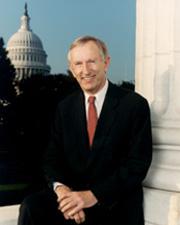
Mr. President, today I am pleased to introduce the Clean Power Act of 2003 along with 19 of my colleagues, Republicans and Democrats. That is a fifth of the Senate on record supporting a measure…
Mr. President, today I am pleased to introduce the Clean Power Act of 2003 along with 19 of my colleagues, Republicans and Democrats. That is a fifth of the Senate on record supporting a measure which dramatically reduces emissions of four pollutants coming from power plants--sulfur dioxide, nitrogen oxides, carbon dioxide and mercury.
These pollutants create or contribute to smog, soot, acid rain, mercury contamination and global warming. They cause death, disease, ecological degradation, birth defects, and increase the risk of abrupt and unwelcome climate changes.
The nation has made some impressive strides in reducing air pollution since 1990. But there is a lot of unfinished business, a fact confirmed every day by more and ever better science.
Power plants are still the nation's single largest source of air pollution, including greenhouse gases. They are responsible for 60 percent or more of national sulfur dioxide emissions, 25 percent of nitrogen oxides, 40 percent of carbon dioxide, and about 45 tons of mercury annually.
Fine particulate matter coming from power plants, mainly through SOX and NOX emissions, is causing or contributing to the premature deaths of approximately 30,000 people.
More than 130 million people are living in areas with unhealthy air. Ground-level ozone triggers over 6.2 million asthma attacks each summer in the eastern United States alone, and some studies show that it may actually cause asthma. Another 160,000 people are sent to emergency rooms due to smog-induced respiratory illness. Power plants are significant contributors to this air quality degradation, as well as causing major reductions in visibility in our national parks and wild places. The National Park Service posts air quality warning signs for hikers in the Great Smoky Mountains every other day on average during the high ozone season.
Acid rain continues to fall on the Northeast, and the Southeast, damaging sensitive ecosystems and acidifying lakes and streams. In my state of Vermont, the red spruce, the sugar maple, and other species are becoming more and more immune-compromised.
The Hubbard Brook Research Foundation says we must reduce sulfur dioxide emissions by 80 percent from current Clean Air Act requirements to begin biological recovery mid-century in the Northeastern U.S. That means bringing emissions way down now, not prolonging the wait for healthy trees and lakes.
Coal-fired power plants emit the bulk of the uncontrolled mercury emissions in the U.S. Mercury is a potent neurotoxic pollutant. It contaminates fish causing fish consumption warnings in 41 States. And mercury puts over 60,000 children at risk of negative developmental effects due to fetal exposure.
Despite our international commitment to reduce greenhouse gas emissions to 1990 levels through voluntary means, we have failed. In particular, power sector emissions of carbon dioxide, a major greenhouse gas, have increased by more than 25 percent since 1990. This failure increases the risks from global warming.
It is plainly obvious that we must make swift and major reductions in these pollutants for the sake of public health, the environment, and the world's climate. Without quick action, the nation's fleet of fossil power plants will continue to inefficiently belch out millions of tons of harmful pollutants.
The Clean Power Act of 2003 will mainly use the largely successful cap-and-trade system in the 1990 Clean Air Act Amendments to make quick and cost-effective reductions in these pollutants. At the same time, this bill does not abolish or eliminate any of the vital local and regional air quality protection programs in the Clean Air Act. Our bill reduces emissions of sulfur dioxide by 81 percent from 2000. Nitrogen oxides will be reduced by 71 percent from 2000. And carbon dioxide will be capped at 21 percent below 2000 levels. Mercury will be controlled to 90 percent below 1999 levels.
This bill has a hybrid allocation system for distributing the allowances for the three capped and tradable pollutants (NOX, SOX, CO2). Most allocations, about \2/3\, go to households and consumers. The rest go to renewable energy, energy efficiency, and other categories. This system rewards cleaner power producers and ensures that the public gets compensated for the polluters' use of the atmosphere.
Our bill is intended to save the lives that are now being lost prematurely to lung disease and other illnesses. We want to continue on the path set in 1990 of reducing acid rain.
We want certainty that mercury will no longer threaten unborn children and the future environment will be safer and cleaner for them when they are grown.
Certainty is a valuable commodity. Industry witnesses have testified that certainty is critical to their investment strategies. Our bill provides a
clear signal on exactly what is expected of pollution sources and when.
I want certainty that the promise of the Clean Air Act will be delivered to all Americans.
At the Environment and Public Works Committee, we have heard many times that technologies are readily available to meet the challenges in our bill. And that these challenges can be met in a cost-effective manner that allows our economy to prosper and improve public health.
We can't afford to slow down progress on achieving better air quality and we must start to make real progress in reducing greenhouse gas emissions. The voluntary approach has failed for 12 years now and we must do better.
As Senators may know, when I was Chairman of the Senate Environment and Public Works Committee, we approved a bill nearly identical to the bill that we are introducing today. The only significant difference is that the deadline for compliance with all the pollution caps except mercury have been moved later by one year. Mercury still follows the schedule in the consent decree which requires compliance by 2008.
I look forward to entering into serious discussions with the Administration on signing into law good, comprehensive four-pollutant legislation. However, their actions so far on air quality matters have not fostered an atmosphere of trust and cooperation.
I ask unanimous consent that a brief summary of the legislation and the text of the bill be printed in the Record.

Mr. President, is it in order to continue now on the growth package? Mr. President, I have a series of amendments that both sides have cleared. I send the amendments to the desk, ask that they be…
Mr. President, is it in order to continue now on the growth package?
Mr. President, I have a series of amendments that both sides have cleared. I send the amendments to the desk, ask that they be considered, as modified, ask that they be agreed to en bloc, and that the motion to reconsider be laid upon the table.
Mr. President, I ask unanimous consent to add Senator Murkowski as a cosponsor to amendment No. 594 on rural equity, and amendment number 596, the Collins amendment.
Mr. President, I thank my colleague from Pennsylvania for raising this issue. He is correct that my staff has been working with these organizations to obtain a fuller understanding of their transaction. We have learned that there is widespread abuse involving donations of patents and similar property. We made this provision effective May 7, 2003, so that abusive donations could not be rushed to completion if a later effective date was chosen.
We will continue our discussion with these organizations, and will objectively consider their concerns and whether further clarifications are appropriate as the bill moves to conference.
I appreciate the concern of the Senator from Alabama with respect to Section 333. It was not the Committee's intent to prohibit deductions for amounts paid by companies as a condition to their operation in a regulated industry.
The Senator from Maryland is correct. The Committee addressed this issue in its publication entitled: ``Technical Explanation of Provisions Approved by the Committee on May 8, 2003.'' Footnote 164 of this publication states:
The bill does not affect amounts paid or incurred in
performing routine audits or reviews such as annual audits
that are required of all organizations or individuals in a
similar business sector, or profession, as a requirement for
being allowed to conduct business. However, if the government
or regulator raised an issue of compliance and a payment is
required in settlement of such issue, the bill would affect
that payment.
It is my intention to amend and clarify Section 333 in the conference report in order to reflect the Senators' comments and to carve-out certain fees and expenses paid by companies operating in highly-regulated industries.
That is correct. The Senator from Oregon refers to a common form of financing transportation and other equipment that involves the production of numerous units, all subject to a common lease. We refer to this form of financing as ``syndication''.
I can assure the Senator from Oregon that I support the effort to clarify this situation in conference and ensure that the 2002 bonus depreciation provision is available to purchasers of equipment pursuant to this method of financing multi-unit sales of heavy equipment. I thank the Senator for bringing this inadvertent error in the original 2002 Act to my attention.
I appreciate the Senator from Oregon providing me with this information. This is a serious oversight in the original language and I will work closely with the Senator to ensure that this is corrected in conference with the House.
I am happy to confirm the understanding of the distinguished Senator from Louisiana. The provision was adopted to provide needed clarifications in order to eliminate the uncertainties that have arisen regarding the proper application of the income forecast method. I believe the disputes that have arisen regarding the mechanics of the income forecast formula are extremely unproductive and an inefficient use of both taxpayer and limited tax administration resources. By adopting these clarifications, I believe the committee intended to end any disputes and prevent any further waste of both taxpayer and Government resources in resolving these disputes. Any existing disputes should be resolved expeditiously in a manner consistent with the clarifications included in the bill.
I would echo the comments of my colleague from Oklahoma. I, too, will do all that I can in conference to ensure that States revenues are not reduced by any dividends provisions that are included in the final product.
If the Senator will yield, I would say to my distinguished colleague from Nevada that I share his concerns and that it may not properly reflect congressional intent for the IRS to separate an integrated hotel, restaurant, and casino business into different pieces subject to different depreciation treatment. Equipment, furniture, and similar personal property used in a such a business should be depreciable in accordance with the current law treatment of the hotel industry and the retail industry generally. I will be happy to work with the Senator to provide appropriate clarification for depreciation of assets used for gaming in the hospitality industry.
amendment no. 545
Mr. President. I commend my colleagues for their work on this important amendment, which injects much needed flexibility and funding for safety net hospitals that treat especially vulnerable populations. This amendment alleviates pressure on those hospitals and allows ``extremely low-DSH States'' to increase Medicaid DSH allotments to 3 percent in Fiscal Year 2004. Currently, Federal law restricts Medicaid DSH allotments to ``extremely low-DSH States'' to only 1 percent of Medicaid Program costs.
I thank Senators Bingaman and Domenici for their work and for their dogged commitment to the cause. I have supported low DSH improvement legislation in the past, and I am thankful for their leadership on this important issue this year.
Mr. President, it has come to my attention that certain provisions of S. 1054 have engendered concern in the equipment leasing industry. I recognize that assets used by vital American industries are often lease-financed. It is not the intention of the Senate or Committee on Finance to impede legitimate leasing transactions. I wish to assure the markets that in any final legislation, the tax incentives utilized in leases that are considered appropriate under current law will be maintained.
I move to reconsider the vote.
Mr. President, I ask unanimous consent that the order with respect to S. 1054 be modified to allow for the following conferees: Senators Grassley, Hatch, Nickles, Lott, Baucus, Rockefeller, and Breaux.
Show 11 more

Mr. President, I cannot support this fiscally irresponsible and unfair tax cut package. Our economy is struggling right now. Eight-and-a-half million Americans are out of work, and we now have about…
Mr. President, I cannot support this fiscally irresponsible and unfair tax cut package.
Our economy is struggling right now. Eight-and-a-half million Americans are out of work, and we now have about 2.7 million fewer private sector jobs than were in existence at the beginning of this administration. No President since the Great Depression has ended a term with fewer jobs than when his term began. Michigan has an unemployment rate of 6.7 percent, among the highest in the Nation. According to the Bureau of Labor Statistics, Michigan lost 17,700 jobs just last month, the most of any State in the country. That brings the total number of Michigan jobs lost since the Bush administration took office to over 178,000, and the total number of unemployed in Michigan to 344,000.
We are also back into a deep deficit ditch. As recently as January 2001, the Office of Management and Budget projected a 10-year surplus of $5.6 trillion. Now, under the recently passed budget resolution, we face an estimated deficit of $1.95 trillion over the same time period, including record deficits of over $300 billion for this year and the next. Federal Reserve Chairman Alan Greenspan recently reiterated that the bigger the deficits, the higher the long-term interest rates, which means higher home, car, college and credit card payments for us all.
Our economy needs a lift now. It needs real jobs and real growth now, not a rehash of the same policies that were tried and failed in the recent past.
Unfortunately, this bill only provides more of the same failed policies.
While the bill purports to cost $350 billion over 10 years--an amount which already is fiscally irresponsible given our current deficit--this number is arrived at by using a budget gimmick that masks the true cost of the bill, which in reality is upwards of $660 billion over 10 years. The bill would completely exclude dividend income from individual taxation in 2004 through 2006, a policy that is expensive, not very stimulative to our economy and sharply slanted towards upper income folks. But then the bill ``sunsets'' the dividend exclusion so that it disappears beginning in 2007. Not only is that bad policy, it is also disingenuous and deceptive to the American people.
This bill also is too generous to those who need it the least. The top 10 percent of taxpayers would receive well over 50 percent of the tax benefits, and in 2003, those with incomes above $1 million would receive an average tax cut of $64,400, while those in the middle of the income spectrum would receive an average tax cut of only $233. Providing large tax cuts to the wealthy in the hopes that the benefits will trickle down to everybody else hasn't worked before, and there is little reason to think that it will work now. Following the same approach that failed time and again just doesn't make sense.
This plan provides no unemployment benefits to any of our 8.7 million unemployed Americans. It is ironic that in a bill that is based on the President's so-called ``Jobs and Growth'' package, the Republican majority is not addressing the immediate need for job assistance for millions of Americans. It is elementary economics that providing additional unemployment benefits is an excellent way to jump start a stagnant economy. The money we are talking about is money that will be spent. According to a 1999 Department of Labor study, every $1 invested in unemployment insurance generates $2.15 in Gross Domestic Product. That is what our economy needs, not wildly expensive tax cuts that do little in the short term at a huge long-term cost.
While I am pleased that this bill contains funds to assist our struggling State and local governments, it does not do enough. Our States currently are facing their worst fiscal crisis in over 50 years, with many being forced to raise taxes or cut vital services like Medicaid in order to balance their budgets. Instead of doing all that we should to assist them, this bill includes a dividends exclusion provision that will actually strip States of revenues, something which will stimulate neither jobs nor growth.
I supported and voted for a tax package that was about creating jobs now, when we need it, in a way that did not mortgage our future.
The plan I supported was estimated to put more than 1 million people back to work by the end of 2004 at a fraction of this bill's costs. It would have cut taxes for every taxpaying American, providing a tax cut of $1,630 to a family of four through a wage credit, an acceleration of the child tax credit, and an elimination of the marriage penalty. It would have helped small businesses by providing them with a 50 percent tax credit to help employers maintain health coverage for their workers, and would have provided large and small companies with incentives to invest and create jobs by allowing small businesses to immediately write-off more investments and providing bonus depreciation to all companies. It also would have provided unemployment benefits for nearly 4 million laid-off workers, including those who have already exhausted their benefits. What our sagging economy needs right now is immediate jobs, growth, and stimulus, and that is what the plan I supported offered.
Instead, what passed is a package that is the wrong medicine for our ailing economy. It will create fewer jobs than what is needed. It will slight middle-class families in favor of the wealthy. And it will dramatically increase the deficit and national debt and drive up interest rates, which will make it more expensive to buy a house, pay for college, or pay off credit card debt. That is just not a plan that I can vote for.

Mr. President, I rise today, along with my colleague from New York, Senator Clinton, to introduce the Childhood Vaccine Supply Act--a bill that would help ensure that our nation's public health…
Mr. President, I rise today, along with my colleague from New York, Senator Clinton, to introduce the Childhood Vaccine Supply Act--a bill that would help ensure that our nation's public health system has an adequate vaccine supply.
Vaccinations are critical in our efforts to keep our population, particularly children and the elderly, healthy. They are key in protecting the elderly from influenza during flu season or protecting children from contracting polio or the mumps. They--vaccinations, inoculations, immunizations, whatever you want to call them--also help lessen the threat of bacterial or viral infections and potential disease outbreaks.
Currently, it is recommended that children receive 12 routine vaccinations against preventable diseases. These vaccinations are given in a series of shots and booster shots by the age of two, with an additional four doses later in life. This ends up being about 16 to 20 doses of vaccines for children. Yet, just last year, over half of the vaccines children need were in short supply.
That shortage of vaccines was not acceptable, and we should do all we can to prevent any future shortage and do all we can to protect our kids from illness and disease. As a Senator, and more importantly, as a father of eight and grandfather of eight, nothing is more important to parents than the health and safety of our children.
While we are not currently experiencing a shortage, we know that the vaccine market is unstable and unpredictable. According to the Centers for Disease Control's National Immunization Program, there were several reasons for the shortages last year. The CDC concluded and posted on its website that the ``reasons for these shortages were multi-factorial and included companies leaving the vaccine market, manufacturing or production problems, and insufficient stockpiles.'' The CDC did as good a job as it possibly could, especially considering the vaccine shortages our nation faced last year. The agency's website posted information about shortages and released revised vaccine schedules to keep our public informed and knowledgeable about vaccination shortages.
But, even with the strong efforts of the CDC, we can work toward preventing a future vaccine shortage. We can work toward a more permanent solution. The bill I am introducing with my colleague from New York will go a long way to do just that.
The bill we are introducing today--the Childhood Vaccine Supply Act-- would help bring some stability to our fragile vaccine supply. Unlike drug manufacturers, vaccine manufacturers do not have to give notice when they stop making a vaccine--whether the vaccine is withdrawn from the market intentionally or because the manufacturer is simply unable to continue making the vaccine. Essentially, these manufacturers leave the marketplace with no notice and no warning. Most doctors and hospitals--and more importantly parents and older adults--often have no idea that a vaccine is in short supply until they line up for a flu shot or go to the doctor for their child's immunizations.
Our bill would change this. It would require any manufacturer of a vaccine to give notice of discontinuance. By giving notice, the Centers for Disease Control, CDC, and the Food and Drug Administration, FDA, would be better able to ensure an adequate vaccine supply for our Nation's population. Additionally, our bill would require all drug and vaccine manufacturers to give notice when they withdraw from the market. This change would ensure that we have a better sense of who is making vaccines and drugs and would allow the CDC and FDA to monitor the manufacturer's production and release of vaccines. Let me explain why this is important.
Vaccines, or biological products, are difficult to develop and manufacture. They are more complex than drugs. Because of this, it takes longer for a biological product to reach the market.
For example, a pharmaceutical company that manufactured tetanus vaccine stopped producing it, leaving only one company to produce tetanus vaccine for the entire country. The remaining company increased production to accommodate all of the needs of the United States. Despite this, it still required about 11 months for the vaccine to be ready for release. In other words, it took 11 months for the company to ramp-up production to meet demand. Our bill would create a notification mechanism to capture those drugs and vaccines leaving the market so we can avoid future vaccine and drug shortages.
Our bill would take another important step toward ensuring an adequate vaccine supply. It would confirm the authority of the CDC to develop a plan for the purchase, storage, and rotation of a supply of vaccines sufficient to provide routinely recommended vaccinations for a six-month period for children and adults. Essentially, our bill would create a framework for the CDC to develop a national vaccine stockpile to ensure that childhood vaccine shortages simply do not occur.
Our children deserve timely vaccinations. When childhood vaccinations are in short supply or are unavailable, they do without, living unprotected against disease. That should never happen. Our bill is a step toward ensuring children get the vaccines they need and that they get them at the right time. I urge my colleagues to join us in support of this important public health legislation.
Mr. President, I ask unanimous consent that the text of the bill be printed in the Record.
Mr. President, I rise today to cosponsor Senator Jeffords' bill--as I did in the 106th and 107th Congresses--as I am dedicated to reducing power plant emissions that cause some of the Nation's--and…
Mr. President, I rise today to cosponsor Senator Jeffords' bill--as I did in the 106th and 107th Congresses--as I am dedicated to reducing power plant emissions that cause some of the Nation's--and Maine's--most serious public health and environmental problems.
For too many years, coal-burning power plants exempt from emissions standards under the Clean Air Act have created massive pollution problems for the Northeast because whatever spews out of their smokestacks in the Midwest, blows into the Northeast, including my State of Maine, giving it the dubious distinction of being at the ``end of the tailpipe'', so to speak.
The Jeffords' legislation calls for reductions of power plant emissions for pollutants that cause smog, soot, respiratory disease; acid rain that kills our forests; mercury that contaminates our lakes, rivers and streams; and climate variabilities that cause severe shifts in our weather patterns. Maine currently leads the Nation in asthma cases per capita, which is not a surprise, but which it can do little about when nearly 80 percent of the State's dirty air is not of their own making but is transported by winds blowing in from the Midwest and Southeast.
The bill will dramatically cut aggregate power plant emissions by 2009 of the four major power plant pollutants: nitrogen oxides NOX, the primary cause of smog, by 71 percent from 2000 levels; sulfur dioxide, SO2, that causes acid rain and respiratory disease, by 81 percent from 2000 levels; mercury, Hg, which poisons our lakes and rivers, causing fish to be unfit for human consumption, through a 90 percent reduction by 2008; and carbon dioxide, CO2, the greenhouse gas most directly linked to global climate variabilities, by 21 percent from 2000 levels. Of note, the NOX, SO2, and mercury reductions are set at levels that are known to be cost effective with available technology.
The bill will also eliminate the outdated coal-burning power plants that were grandfathered in the Clean Air Act unless they apply the best available pollution control technology by their 40th birthday or 2014, whichever is later. The thinking for the exemption in the Clean Air Act was based, at the time, on the assumption that the plants would not stay on line much longer. However, as energy has gotten more expensive, companies are keeping these older, dirtier plants up and running.
Furthermore, just as the Clean Air Act already provides tradable allowances for sulfur dioxide that causes acid rain, the Jeffords' legislation also allows for tradable allowances to control emissions for three other pollutants--NOX, SOX, CO2,--by using market-oriented mechanisms to meet emissions reduction requirements.
The tradable allowances would be distributed to five main categories, including 63 percent or more to households; six percent for transition assistance to affected communities and industries, which will decline over time; up to 20 percent to renewable energy generation, efficiency projects and clean energy sources, based on avoided pollution; 10 percent to existing electric generating facilities based on 2000 output; and up to 1.5 percent of the carbon dioxide allowances for biological and geological carbon sequestration. Of note, trading will not be allowed if it enables a power plant to pollute at a level that damages public health or the environment.
I realize that the Administration's Clear Skies Initiative does not address carbon dioxide as a pollutant nor does it address emissions reductions for CO2. While I recognize that the pollutants listed under the Clear Air Act have been to achieve healthier air for humans by cutting back on smog and soot, and also for mercury contamination, I believe it is long past due that carbon dioxide be recognized as a pollutant that is harming the health of the planet.
I am supporting the goal of CO2 emissions reduction in the Jeffords' bill in the hopes that the bill will be a rallying point to further the debate for reducing CO2 and at the same time, get our air cleaner on a quicker timeframe. In particular, Congress needs to develop a market mechanism approach for CO2 emissions trading--such as we now have for acid rain--to allow U.S. industries the flexibility and certainty to reduce CO2 emissions without the threat of higher energy production costs in the future that will be passed on to the consumer. I will continue to work with my colleagues, the White House and representatives from various industry groups, and environmental organizations to achieve this goal.
The bottom line is that we have the opportunity to raise the bar for cleaner domestic energy production in an economically effective manner. Solutions exist in available and developing technologies, and most of all in the entrepreneurial spirit of the American people who want a cleaner and healthier environment, including those in Maine who want to ensure that the State's pristine lakes and coast will remain clean and our forests healthy for generations to come. States like Maine are leading the way in trying to reduce CO2 emissions--and the Jeffords' legislation sends a powerful message to those who would pollute our air: your days are numbered.
I am optimistic that the Congress can come together with the President, industry and all those who want cleaner, healthier air to create a cohesive policy that is best suited for our nation, so I urge my colleagues to support the Jeffords' legislation.
Mr. President, the legislation I am introducing today with Senators Thomas, Lincoln, and Johnson entitled ``The Medicare Incentive Payment Program Improvement Act of 2003'' is designed to improve the…
Mr. President, the legislation I am introducing today with Senators Thomas, Lincoln, and Johnson entitled ``The Medicare Incentive Payment Program Improvement Act of 2003'' is designed to improve the flow of needed bonus payments to physicians serving Medicare patients in Health Professions Shortage Areas, HPSA.
The Medicare Incentive Payment Program, MIPP, created by the Omnibus Budget Reconciliation Act of 1987, was meant to assist physicians in defraying the higher costs and burdens of serving Medicare patients in shortage areas. Rural areas are know to suffer from physician shortages, both primary care and specialty physicians. In fact, even though 20 percent of America lives in a rural area, less than 11 percent of physicians in the U.S., practice in rural areas.
In my own State, the ongoing loss of physicians from underserved areas has affected both primary care and in particular, specialty services. In many areas, the shortage of specialists exceeds that of the primary care physicians. The New Mexico Health Policy Commission reported in its year 2000 report that 22 percent of residents in Los Alamos and Santa Fe were unable to receive needed specialist care.
While the national ratio of physicians per population is 198 doctors per 100,000 persons, New Mexico ranks 33rd in the country with only 170 physicians per 100,000 population. We are not in a position to ``grow our own doctors'' either as New Mexico ranks 37th among the 46 States with medical schools in graduating physicians per capita.
New Mexico, like many other States with large numbers health profession shortage areas, or HPSAs, must rely on its ability to recruit and retain physicians in underserved areas to meet the health care needs of its citizens. It was the original intent of the MIPP to do this, by allowing for physicians in underserved areas to receive an additional 10 percent add-on in payments for services rendered. These 10 percent ``bonuses'' are meant to be an essential component in our ongoing effort to ensure Medicare beneficiaries access to medical services, particularly in underserved areas.
Unfortunately, the Medicare Incentive Payment Program has fared poorly, with few providers choosing to receive the payments. In fact, the total annual physician payments have never exceeded $100 million, because of a series of disincentives in the legislation.
The program requires a provider to do a number of things to obtain the bonus payments. First, providers must be aware that MIPP payments are available to them. Many providers are unaware of the program's existence. Next, physicians must find out if the patient's medical care occurred in a shortage area. Following this, a unique code must be attached to the Medicare claim, which is then forwarded to the carrier. Finally, after all these steps, providers are subjected to automatic Medicare audits, just for applying for the very payments for which they are eligible.
Providers committed to serving Medicare patients in underserved areas deserve the support assured by the original legislation's intent.
The Medicare Incentive Payment Improvement Act of 2003 addresses and improves shortcomings in the original legislation by: Placing the burden for determining the bonus eligibility on the Medicare carrier. Eliminating automatic provider audits. Directing the Center for Medicare and Medicaid Services to establish a Medicare Incentive Payment Program Educational Program for Providers. Establishing an ongoing analysis of the programs, ability to improve Medicare beneficiaries' access to physician services. Continue to provide the original 10 percent add-on bonus for Part B physician payments in Health Provider Shortage Areas.
Medicare carriers are the logical arbiters to determine whether physician services occurred in a shortage area. Physicians, already overworked, lack sufficient time, resources and training to research and determine whether a service was provided in a HPSA. By placing the responsibility on carriers, with their sophisticated information systems, the physician's administrative burdens will be reduced.
The automatic audits triggered by this program, which are costly, time intensive, and unwarranted, will be lifted under our legislation. By placing the responsibility on carriers to determine payment eligibility the need for provider audits is eliminated.
While the MIPP program is intended to improve beneficiaries' access to physician services, there is no measure of the program's effect on physician availability. The legislation offered today directs CMS to perform an ongoing analysis as to whether these payments actually do improve beneficiaries' access to physician services.
I believe these improvements, in addition to others listed above, will greatly improve patient's access to care.
The following organizations have expressed support for this legislation: American College of Physicians/American Society of Internal Medicine, and the National Rural Health Association.
I ask unanimous consent that the text of the bill be printed in the Record.
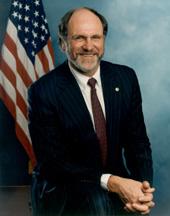
Mr. President, today I am introducing legislation to prohibit the use of taxpayer funds to advocate a position on the meaning of the Second Amendment that is inconsistent with existing Supreme Court…
Mr. President, today I am introducing legislation to prohibit the use of taxpayer funds to advocate a position on the meaning of the Second Amendment that is inconsistent with existing Supreme Court precedent, as expressed in the Supreme Court case of United States v. Miller.
This legislation responds to the Bush Administration's filing of two unprecedented briefs to the United States Supreme Court, which argued that the
Second Amendment establishes an individual right to possess firearms. In taking this position, the Justice Department directly contradicted the well-established precedents of the Supreme Court, as expressed in the seminal case of United States v. Miller. In that 1939 case, the Supreme Court found that the Second Amendment did not establish a private right of individuals to possess firearms, but rather was intended to ensure the effectiveness of groups of citizen-soldiers known at the time as the Militia.
The Court in United States v. Miller explained the historical background to the Second Amendment and issued its ruling clearly and unambiguously. That ruling has never been reversed, and the Court has followed it in every subsequent related case. Similarly, the precedent in United States v. Miller has been followed by every Justice Department over the past several decades, including the Justice Departments of Presidents Ronald Reagan, Richard Nixon and George H.W. Bush.
The meaning of the Second Amendment should not be a partisan issue. In fact, it should not be a political issue. It is a legal and constitutional issue. And the law on this question has been clearly established by the highest court in the land in case after case for a period of many decades.
Unfortunately, instead of following the law, as Attorney General promised to do during his confirmation hearing, the Bush Administration and the Justice Department have used their authority to file briefs as a means of pursuing a partisan political agenda that flies in the face of established Supreme Court precedents. This is wrong. And, in my view, it is a misuse of taxpayer dollars.
Congress should not have to pass a law to ensure that the Executive Branch follows the Constitution, as clearly interpreted by the Supreme Court. Unfortunately, in light of the Bush's Administration's latest actions, Congress must step in. After all, Congress's ultimate power is the power of the purse. And we have a responsibility to use that power, when necessary, to ensure that the Executive Branch complies with constitutional law.
This responsibility flows from Congress's obligation to preserve, protect and defend the Constitution. It also flows from our obligation to ensure that taxpayer dollars are not misused. The American people should not be forced to pay taxes to support an unreasonable interpretation of the Second Amendment that is not only inconsistent with constitutional law, but that threatens to undermine legislation needed to reduce gun violence and to save lives.
In 1998, more than 30,000 Americans died from firearm-related deaths. That is almost as many as the number of Americans who died in the entire Korean War. In my view, there is much that Congress needs to do to reduce these deaths, including enacting reasonable gun safety legislation. Yet if the Bush Administration prevails in its effort to radically revise the Second Amendment, such laws could well be undermined. The end result would be more death and more families losing loved ones to the scourge of gun violence.
I have asked the Congressional Research Service whether there are any constitutional precedents that would bar the Congress from adopting this legislation, and the answer was ``no.'' I also would note that there is precedent for Congress prohibiting the use of taxpayer dollars to advocate positions with which Congress disagrees. For example, Congress for many years prohibited the Justice Department from using appropriated money to overturn certain rules under our antitrust laws. This responded to the filing of a brief in the Supreme Court by the Justice Department urging a revision of its precedents on resale price maintenance, and the legislation effectively blocked the Department from filing similar briefs.
In conclusion, we should not allow taxpayer dollars to be used to misrepresent the meaning of the Second Amendment on behalf of a partisan, political agenda. We should defend the Constitution against such ideological attacks. We should protect taxpayers from being forced to subsidize ideological gambits. And we should ensure that the Constitution is not misused to undermine gun safety legislation that could save the lives of many innocent Americans.
I hope my colleagues will support the bill, and I ask unanimous consent that the text of the legislation be printed in the Record, along with some related materials about this matter.

Mr. President, I am voting against this bill because I came to the Senate to represent California families and this tax cut for the wealthy elite is not in their interest. It contradicts the basic…
Mr. President, I am voting against this bill because I came to the Senate to represent California families and this tax cut for the wealthy elite is not in their interest. It contradicts the basic American values of fairness, responsibility, and opportunity.
We are now in the longest period of continued job losses since the Great Depression. In the first 3 months of this year alone, America lost another half a million jobs. As result, 8.8 million people are unemployed today. That is 2.8 million more than when President Bush took office. Most troubling, 1.9 million of those workers have been out of work for more than a year and a half. But instead of targeting the majority of the benefits to a majority of the people, this bill targets its benefits to the very top.
There is not a single responsible economist I know who thinks this tax package will get us out of the terrible economic condition we are in. In fact, 11 Nobel laureate economists and hundreds of others have published an open letter saying that passing these tax cuts ``will worsen the long-term budget outlook, adding to the Nation's projected chronic deficits. This fiscal deterioration will reduce the capacity of the Government to finance Social Security and Medicare benefits as well as investments in schools, health, infrastructure, and basic research.''
Those Nobel laureates also added that the tax cuts would generate further inequalities in after-tax income. The reason for that is that this package is skewed to those who do not need it.
That kind of windfall for the wealthy is bad policy. That is why I supported the Democratic alternative and other amendments that would have spread the benefits of the bill to more Americans.
The Democratic Plan for Jobs, Opportunity and Prosperity would put over 1 million people back to work by the end of 2004. The Democratic plan would provide three times more economic boost right now than the Republican plan. At the same time, the Democratic plan would put us back on the path to fiscal responsibility.
The Democratic plan would have cut taxes for every working American, providing an average benefit of $1,630 to a family of four making $50,000 a year. And it would have provided real assistance to the 8.8 million Americans who are currently unemployed. Our plan would have created a new credit for every working American, which will provide $300 for each adult in a family and $300 for the first two children. We wanted to accelerate the refundability of the child tax credit, accelerate the elimination of the marriage penalty, and extend and expand unemployment insurance for those looking for work, including the 1 million people who have already exhausted their benefits.
Also, the Democratic plan would have sparked growth by helping the States sustain vital services during the economic downturn and encouraging small businesses to invest. As part of the Democratic proposal, we proposed a 50 percent tax credit in 2003, worth $8 billion, to help small businesses pay their share of insurance premiums. And very important for California, our plan would have provided $40 billion in immediate aid to State and local governments. We also proposed tripling the amount of investments small businesses can write off immediately from $25,000 to $75,000 in 2003.
I was deeply troubled that my colleagues cared so much for the elite few that they voted against a number of amendments that would have helped working Americans. They rejected an effort to cut taxes on social security benefits for middle-income seniors. They rejected expanding the child tax
credit. They supported raising taxes on Americans working abroad. They fought efforts to increase tax benefits to help families pay for higher education. And they fought every effort to get more meaningful assistance to the States in this time of crisis.
There were two bright spots during the Senate consideration of this legislation. First, the Senate passed the Invest in the USA Act amendment that Senator Ensign and I introduced. It will create a one- time incentive for U.S. companies to bring $140 billion dollars in funds earned abroad back to the U.S. for job creation, investment in plants and equipment, and for other economically stimulative uses.
The Senate also adopted an amendment offered to crack down on delinquent parents who do not pay child support. My amendment, which is based on bipartisan legislation that I introduced, penalizes those who do not pay the child support that they owe.
Despite these two improvements, the bill--and some destructive amendments, such as an expansion of the dividend exclusion--is deeply flawed, unfair, and fiscally dangerous--creating massive deficits, which will hurt economic growth.

Mr. President, I rise today to introduce a bill to address the growing problem of Canadian waste shipments to Michigan. In 2001, Michigan imported almost 3.6 million tons of municipal solid waste,…
Mr. President, I rise today to introduce a bill to address the growing problem of Canadian waste shipments to Michigan.
In 2001, Michigan imported almost 3.6 million tons of municipal solid waste, more than double the amount that was imported in 1999. This gives Michigan the unduly distinction of being the third largest dumping ground of waste in the United States.
My colleagues may be surprised to know that the biggest source of this waste was not another State, but our neighbor to north, Canada. More than half the waste that was shipped to Michigan in 2001 was from Ontario, Canada, and these imports are growing rapidly. On January 1, 2003, as another Ontario landfill closed its doors, the City of Toronto switched from shipping two-thirds of its trash, to shipping all of its trash--1.1 million tons--to a Michigan landfill. And this deal could last 20 years! Experts predict that soon there will be virtually no local disposal capacity in Ontario, which could mean even more waste being shipped across the border to Michigan.
Not only does this waste dramatically decrease Michigan's own landfill capacity, but it has a tremendous negative impact on Michigan's environment and the public health of citizens. Currently, Canadian municipal solid waste is sent to landfills in seven different Michigan counties--Genesee, Huron, Macomb, Monroe, Oakland, Washtenaw, and Wayne counties. Based on current usage statistics, the Michigan Department of Environmental Quality, DEQ, estimates that Michigan has capacity for 15-17 years of disposal in landfills. However, with the proposed dramatic increase in importation of waste, this capacity is less than 10 years. The Michigan DEQ estimates that for every five years of disposal of Canadian waste at the current usage volume, Michigan is losing a full year of landfill capacity. The Canadian waste also hampers the effectiveness of Michigan's State and local recycling efforts, since Ontario does not have a bottle law requiring recycling.
These Canadian waste shipments also present a threat to homeland security. Currently, 130 truckloads of waste come into Michigan each day from Canada. These trucks cross the Ambassador Bridge and Blue Water Bridge and travel through the busiest parts of Metro Detroit. In addition to causing traffic delays, and filling our air with the stench of exhaust and garbage, these trucks also present a security risk at our Michigan-Canadian border, since by their nature trucks full of garbage are harder for Customs agent to inspects then traditional cargo.
Last year, I joined with Senator Levin and Congressman Dingell to introduce legislation to enforce the protections that Michigan is already entitled to which are contained in an international agreement between the United States and Canada. I continue to be supportive of this bill and I was proud to join as an original co-sponsor when it was reintroduced last month. However, with the recent landfill closings in Ontario, this problem has spiraled out of control.
That is why today I am introducing ``the Canadian Waste Import Ban Act of 2003.'' This bill would stop these shipments by placing an immediate federal ban on the importation of Canadian municipal solid waste. The ban will be in place until the EPA enforces ``the Agreement Concerning the Transboundary Movement of Hazardous Waste.'' Under this existing agreement, the EPA is supposed to receive notification of Canadian waste shipments, and then would have 30 days to consent or object to the shipment. Not only have these notification provisions not been enforced, but the EPA has indicated that they would not object to the municipal waste shipments.
In addition, the bill requires the EPA to Michigan's or any State's consent before receiving any shipment of Canadian municipal solid waste. In enforcing the agreement, the EPA must obtain the consent of the receiving State, before consenting to a Canadian municipal solid waste shipment. The EPA must also consider the impact of the shipment on homeland security, the environment, and public health.
This legislation will stop the importation of Canadian trash until Michigan residents are given the voice they deserve in deciding whether or not this waste should be sent to their landfills. We need to give the states a real voice in these decisions and my bill guarantees that the states through the EPA will get to decide whether or not they want to receive this Canadian waste. Mr. President, I ask unanimous consent that the text of the bill be printed in the Record.

Mr. President, it is with great pleasure that I join my good friend and colleague, Senator Bunning today in introducing legislation that will repeal the Special Occupational Tax, (SOT), on taxpayers…
Mr. President, it is with great pleasure that I join my good friend and colleague, Senator Bunning today in introducing legislation that will repeal the Special Occupational Tax, (SOT), on taxpayers who manufacture, distribute, and sell alcoholic beverages. The special occupational tax is
not a tax on alcoholic products, but rather operates as a license fee on businesses. The tax is imposed on those engaged in the business of selling alcohol beverages. Believe it or not, this tax was originally established to help finance the Civil War. That war is over, and this inequitable tax has outlived its original purpose. Clearly an example of an anticipated approach to Federal taxation, repealing the SOT has an element of simplification in it.
The SOT on alcohol dramatically increased during the budget process in 1988 and has unfairly burdened business owners across the country since. From Thompson Falls to Sidney, from Chinook to Billings, small businesses are burdened with yet another tax in the form of the SOT. According to the ATF, there are 480,427 locations nationwide that pay SOT's every year, including 485,603 retailers. These retail establishments account for $114 million out of $126 million in SOT revenues.
In Montana, there are 3,378 locations, including 3,254 restaurants and 494 convenience stores, which pay nearly $2 million dollars in the SOT every year. Seasonal resorts in Whitefish and Yellowstone, ``mom and pop'' convenience stores in Butte, and allowing alleys, flower shops, and restaurants across Montana, and the United States, pay the Federal Government almost $100 million per year for the privilege of running businesses that sell beer, wine, or alcoholic beverages.
The SOT is extremely regressive. Retailers must annually pay $250 per location; wholesalers pay $500; vintners and distillers pay $1000. Because the SOT is levied on a per location basis, a sole proprietorship must pay the same amount as one of the Nation's largest retailers, and locally-owned chains having to pay per location, would have to pay as much as, if not more than, the Nation's largest single site brewery. In testimony before the Finance Committee last spring, a small business owner from Helena, MT who runs four convenience stores and three restaurants said it best. ``Whether it's a seasonal restaurant, an Elks Lodge or American Legion, a bowling center, campground, a florist who delivers gift baskets containing wine, or a convenience store operator, no one is spared from the tax.'' This is not what Congress had in mind 150 years ago, and I don't believe it's a situation we want today.
Repealing the SOT on alcohol is supported by a broad-based group of business organizations and enjoys wide-spread bipartisan support on Capital Hill. Similar legislation is being introduced in the House today, and a bill, identical to this one, was introduced in the previous Congress, but for one reason or another, the law was not enacted.
The legislation preserves ATF's record-keeping requirements, while removing the agency's enforcement burden, and will save up to $2 million per year. The GAO examined SOT efficacy several times, and found it fundamentally flawed. The Joint Committee on Taxation called for the elimination of SOT in its June 2001 simplification study.
More than 90 percent of all SOT revenue comes from retailers--a great majority of that number are small businesses. Recently, President Bush met with a group of small business owners and employees in St. Louis. He said, ``The best way to encourage job growth is to let [small businesses] keep more of their own money, so they can invest in their business and make it easier for somebody to find work.'' Repealing the SOT would provide an immediate and visible tax cut to small business owners.
Now, as the Federal Government considers ways to provide additional economic stimulus to the people who need it most, the time is right for us to move forward and enact this legislation to repeal the SOT an alcohol. We urge our colleagues to join us in this endeavor.
I ask unanimous consent that the text of the bill be printed in the Record.
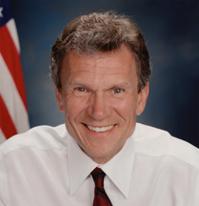
Mr. President, our tribal colleges and universities have come to play a critically important role in educating Native Americans across the country. For more than 30 years, these institutions have…
Mr. President, our tribal colleges and universities have come to play a critically important role in educating Native Americans across the country. For more than 30 years, these institutions have proven instrumental in providing a quality education for those who had previously been failed by our mainstream educational system. Before the tribal college movement began, only six or seven out of 100 Native American students attended college. Of those few, only one or two would graduate with a degree. Since these institutions have curricula that is culturally relevant and is often focused on a tribe's particular philosophy, culture, language and economic needs, they have a high success rate in educating Native American people.
I had the honor today of meeting with students, faculty and presidents from South Dakota's tribal colleges to talk about the educational needs of Native Americans and the role tribal colleges play in strengthening tribal communities. It, like so many of the meetings I have had with representatives of tribal colleges, was a fascinating conversation. I am consistently impressed by the enduring spirit, sense of community and hope for a better quality of life that these institutions support. After meeting these students and educators, I have no doubt that the future of Indian Country is in good hands.
The results of a tribal college education are impressive. Recent studies show that 91 percent of 1998 tribal college and university graduates are working or pursuing additional education one year after graduating. In addition, the unemployment rate of recently polled tribal college graduates was 15 percent, compared to 55 percent on many reservations overall.
While tribal colleges and universities have been highly successful in helping Native Americans obtain a higher education, many challenges remain to ensure the future success of these institutions. These schools rely heavily on Federal resources to provide educational opportunities for all students. As a result, I strongly support efforts to provide additional funding to these colleges through the Interior, Agriculture and Labor, Health and Human Services, and Education Appropriations bills.
In addition to resource constraints, administrators have expressed a particular frustration over the difficulty they experience in attracting qualified individuals to teach at tribal colleges. Geographic isolation and low faculty salaries have made recruitment and retention particularly difficult for many of these schools. This problem is increasing as enrollment rises.
That is why I am introducing the Tribal College and University Teacher Loan Forgiveness Act. This legislation will provide loan forgiveness to individuals who commit to teach for up to five years in one of the 34 tribal colleges nationwide. Individuals who have Perkins, Direct, or Guaranteed loans may qualify to receive up to $15,000 in loan forgiveness. This program will provide these schools extra help in attracting qualified teachers, and thus help ensure that deserving students receive a high quality education.
This measure will benefit individual students and their communities. By providing greater opportunities for Native American students to develop skills and expertise, this bill will spur economic growth and help bring prosperity and self-sufficiency to communities that desperately need it. Native Americans and the tribal college system deserve nothing less. I believe our responsibility was probably best summed up by one of my state's greatest leaders, Sitting Bull. He once said, ``Let us put our minds together and see what life we can make for our children.''
I am pleased that Senator's Baucus, Bingaman, Conrad, Johnson, and Kohl are original cosponsors of this bill, and I look forward to working with my colleagues to pass this important legislation.
I ask unanimous consent that the text of the Tribal College and University Teacher Loan Forgiveness Act be printed in the Record.
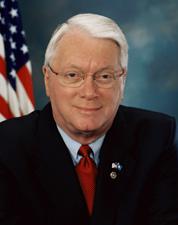
Mr. President, I am pleased that the manager's of the Jobs and Growth Tax Relief Reconciliation Act of 2003, Chairman Grassley and ranking member Baucus, have agreed to included in their manager's…
Mr. President, I am pleased that the manager's of the Jobs and Growth Tax Relief Reconciliation Act of 2003, Chairman Grassley and ranking member Baucus, have agreed to included in their manager's amendment my provision, which is supported by many members in this body, that addresses the issue of the tax burden that is faced by wholesalers of domestic distilled spirits.
I want to take this opportunity to express my support for this legislation and also to share my broader concern about how the current Federal Excise Tax, FET, system places an undue burden on distillers that must, at a minimum, not be increased to fund this legislation or for any other reason.
I introduced this amendment because I believe that the existing FET system for domestically produced distilled spirits penalizes spirits wholesalers across the nation. These are mostly family businesses that create high wage jobs. Yet spirits wholesalers often find themselves in the position of, in essence, having to float Uncle Sam a loan when they purchase U.S. made spirits from their distillers.
Let me briefly explain how this situation comes about in the marketplace. Under Federal law, spirits produced in the United States may not leave the distillery premises until the FET is collected. Thus, the cost of the FET is factored into the price of the goods that is paid when the wholesaler accepts possession from the distiller. The wholesale, in turn, may wind up having to warehouse these products for a considerable time before they are sold to a
retailer. The fundamental issue here is the time value of the FET-- valuable working capital for these businesses--while the wholesale warehouses products without realizing any income from their sale.
This amendment would create a tax credit available to the wholesalers in order to offset these FET carrying costs. I believe this is fundamentally fair and will help protect and create good jobs in the wine and spirits wholesale tier across the nation.
However, in introducing this amendment and supporting its inclusion in the Jobs and Growth Tax Relief Reconciliation Act of 2003, I want to make one thing perfectly clear. In supporting this bill, I want the Administration, and officials at the Treasury Department and the Bureau of Alcohol, Tobacco and Firearms to understand that by doing so I reject the connection that some have tried to make between this issue and Section 5010 of the tax code, the wine and flavors tax credit. In past years, the suggestion has been made that any revenue loss to the U.S. Treasury caused by the provisions of my amendment be offset by repealing Section 5010. I reject that notion because there is no logical link between the two issues.
Section 5010 is a component-based tax provision allowing distillers to claim a credit for wines and other flavoring components that are added to their products. Thus, a distiller will pay the full spirits FET for that portion of a product that is derived from distilled spirits. However, many products sold as spirits contain wine and other non-spirits flavorings, which are subject to tax at lower rates. Under Section 5010, the distiller is entitled to a credit for the difference between the wine and the spirits tax for that portion of the product that is not derived from spirits.
Section 5010 is important. It has the added policy virtues of being on the side of common sense, economic competitiveness and fundamental fairness. All of this is why I have fought hard to protect 5010 from several serious threats over the years.
I am pleased that, with the inclusion of my amendment in this bill, the Senate has once again shown its support for solving this problem which penalizes spirits wholesalers of domestically produced distilled spirits. I am also pleased that the Senate has seen fit to address this important issue without harming Section 5010 or otherwise increasing the tax burden on distillers.
I agree with the distinguished chairman of the Finance Committee, Senator Grassley. The disputes resulting from any uncertainty regarding the proper application of the income forecast method are…
I agree with the distinguished chairman of the Finance Committee, Senator Grassley. The disputes resulting from any uncertainty regarding the proper application of the income forecast method are extremely unproductive and wasteful. To avoid further waste, resolution of any disputes must be resolved in a manner consistent with the clarifications contained in the bill.
Mr. President, earlier today my colleague on the Finance Committee, Chairman Grassley, offered an amendment to S. 1054, the pending tax bill, to improve Medicare funding for rural patients and providers. I supported the amendment, which passed, 86-12.
Many of the Grassley amendment's provisions were taken from S. 3018, Medicare legislation Senator Grassley and I introduced legislation last year. Many of those provisions were also included in the Senate Rural Health Caucus bill, which I support. And several of the provisions have been recommended by the Medicare Payment Advisory Commission (MedPAC), which advises Congress on Medicare payment policy.
Taken together, these changes--including an equalization of the hospital base payment amount, changes to the Critical Access Hospital program, and language to improve access to physician care in rural areas--will go a long way toward ensuring greater geographic equity in Medicare reimbursement.
That said, I believe the way in which the Senate passed these provisions--as an amendment to tax legislation--is far from perfect. A Medicare bill, debated in the Finance Committee, is the proper vehicle for changes to the Medicare law, and I would have preferred that these provisions be considered in that manner.
A full debate in the Finance Committee will allow senators to exchange views and advocate changes they believe are important for Medicare. A debate in the Finance Committee will allow Medicare stakeholders an opportunity to share their views as well. Whether with respect to spending or offsets, the Committee should have the opportunity to consider all of those views fully.
For example, while the provisions in the Grassley amendment are important, they do not represent a full list of Medicare changes I would like to see. Most notably, the amendment does not address Medicare's most severe inadequacy: the lack of an outpatient drug benefit. Further, the amendment does not address many concerns facing Medicare's various payment systems, including payments for physicians, nursing homes, teaching hospitals and hospital outpatient departments, to name a few.
As for offsets, the Grassley amendment included three: a freeze in Medicare DME payments; establishment of copayments and deductibles for Medicare outpatient laboratory services; and reductions in payment for Medicare Part B-covered drugs. These offsets are not without controversy.
For example, while independent experts agree that Medicare overpays providers for Part B drugs, agreement is less apparent on the proper payment providers should receive for the administration of these drugs. And while it is true that lab services are nearly unique in not requiring coinsurance under Medicare, it's also true that lab services are less discretionary than many other Medicare-covered services.
Debate in the committee--as we recently had on the tax bill--is important to the legislative process. I urge Chairman Grassley to hold a markup on Medicare legislation, so that changes to Medicare-- including enactment of a Medicare drug benefit--can be considered in the appropriate manner.
Mr. President, I ask for the yeas and nays.
Bill Text
Latest available legislative text
        [Congressional Bills 108th Congress]
[From the U.S. Government Publishing Office]
[S. 379 Introduced in Senate (IS)]

108th CONGRESS
1st Session
S. 379

To amend title XVIII of the Social Security Act to improve the medicare
incentive payment program.

_______________________________________________________________________

IN THE SENATE OF THE UNITED STATES

February 12, 2003

Mr. Bingaman (for himself and Mr. Thomas) introduced the following
bill; which was read twice and referred to the Committee on Finance

_______________________________________________________________________

A BILL

To amend title XVIII of the Social Security Act to improve the medicare
incentive payment program.

Be it enacted by the Senate and House of Representatives of the
United States of America in Congress assembled,

SECTION 1. SHORT TITLE.

This Act may be cited as the ``Medicare Incentive Payment Program
Improvement Act of 2003''.

SEC. 2. PROCEDURES FOR SECRETARY, AND NOT PHYSICIANS, TO DETERMINE WHEN
BONUS PAYMENTS UNDER MEDICARE INCENTIVE PAYMENT PROGRAM
SHOULD BE MADE.

Section 1833(m) of the Social Security Act (42 U.S.C. 1395l(m)) is
amended--
(1) by inserting ``(1)'' after ``(m)''; and
(2) by adding at the end the following new paragraph:
``(2) The Secretary shall establish procedures under which the
Secretary, and not the physician furnishing the service, is responsible
for determining when a payment is required to be made under paragraph
(1).''.

SEC. 3. EDUCATIONAL PROGRAM REGARDING THE MEDICARE INCENTIVE PAYMENT
PROGRAM.

The Secretary of Health and Human Services shall establish and
implement an ongoing educational program to provide education to
physicians under the medicare program on the medicare incentive payment
program under section 1833(m) of the Social Security Act (42 U.S.C.
1395l(m)).

SEC. 4. ONGOING STUDY AND ANNUAL REPORT ON THE MEDICARE INCENTIVE
PAYMENT PROGRAM.

(a) Ongoing Study.--The Secretary of Health and Human Services
shall conduct an ongoing study on the medicare incentive payment
program under section 1833(m) of the Social Security Act (42 U.S.C.
1395l(m)). Such study shall focus on whether such program increases the
access of medicare beneficiaries who reside in an area that is
designated (under section 332(a)(1)(A) of the Public Health Service Act
(42 U.S.C. 254e(a)(1)(A))) as a health professional shortage area to
physicians' services under the medicare program.
(b) Annual Reports.--Not later than 1 year after the date of
enactment of this Act, and annually thereafter, the Secretary of Health
and Human Services shall submit to Congress a report on the study
conducted under subsection (a), together with recommendations for such
legislation and administrative actions as the Secretary considers
appropriate.
<all>