Retired Pay Restoration Act of 2003

Legislative Activity
Stay on top of the latest movement without scrolling through every action
Read twice and referred to the Committee on Armed Services. (text of measure as introduced: CR S2468)
February 13, 2003
View full timeline
Introduced in Senate
February 13, 2003
Sponsor introductory remarks on measure. (CR S2467-2468)
February 13, 2003
Read twice and referred to the Committee on Armed Services. (text of measure as introduced: CR S2468)
February 13, 2003
Floor Debate
22 membersWhat members said about S. 392 on the floor
 RDF
RDF JE
JE JB
JB MD
MD MB+17
MB+17
Floor Debate
22 membersWhat members said about S. 392 on the floor
Mr. President, today I introduce the Federal Death Penalty Abolition Act of 2003. This bill would abolish the death penalty at the Federal level. It would put an immediate halt to executions and…
Mr. President, today I introduce the Federal Death Penalty Abolition Act of 2003. This bill would abolish the death penalty at the Federal level. It would put an immediate
halt to executions and forbid the imposition of the death penalty as a sentence for violations of Federal law.
Since 1976, when the death penalty was reinstated by the Supreme Court, there have been 830 executions across the country, including two at the Federal level. At the same time, 103 people on death row were later found innocent and released from death row. Exonerated inmates are not only removed from death row, but they are usually released from prison altogether. Apparently, these people never should have been convicted in the first place. While death penalty proponents claim that the death penalty is fair, efficient, and a deterrent, the fact remains that our criminal justice system has failed and has resulted in at least 103 very grave mistakes.
Eight hundred and thirty executions, and 103 exonerations. Those are not good odds. It is an embarrassing statistic, one that should have us all questioning the use of capital punishment in this country.
Since January 25, 2001, when I last introduced this bill, the Federal Government resumed executions for the first time in almost 40 years, and 138 people have been executed nationwide. In this new year, we have begun our use of capital punishment at an alarming pace. We are only in the second week of February, and there have already been 10 executions this year. And yet this one-to-eight error rate looms. Is it possible that those 10 people are representative of the one-to-eight error rate that has plagued the death penalty since it was reinstated in 1976? Is it possible that in the last six weeks, as we have debated a war in Iraq, funding levels for Federal programs, and judicial nominations, our nation has killed an innocent person?
It is a difficult question to ask, but an even more difficult one to ignore.
While executions continue and the death row population grows, the national debate on the death penalty continues and has become even more vigorous. The number of voices joining in to express doubt about the use of capital punishment in America is growing. As evidence of the flaws in our system mounts, it has created an awareness that has not escaped the attention of the American people. Layer after layer of confidence in the death penalty system has been gradually peeling away, and the voices of those questioning its fairness are growing louder and louder. Now they can be heard from college campuses and court rooms and podiums across the Nation, to the Senate Judiciary Committee hearing room, to the Supreme Court. We must not ignore them.
That our society relies on killing as punishment is disturbing enough. Even more disturbing, however, is that the States' and Federal Government's use of the death penalty is often not consistent with principles of due process, fairness, and justice. These principles are the foundation of our criminal justice system. It is more clear than ever before that we have put innocent people on death row. In addition, statistics show that those States that have the death penalty are more likely to put people to death for killing white victims than for killing black victims.
After the death penalty was reinstated in 1976, the Federal Government first resumed death penalty prosecutions after enactment of a 1988 Federal law that provided for the death penalty for murder in the course of a drug-kingpin conspiracy. The Federal death penalty was then expanded significantly in 1994, when the omnibus crime bill allowed its use to apply to a total of some 60 Federal offenses. Since 1994, Federal prosecutions seeking the death penalty have now accelerated.
A survey on the Federal death penalty system from 1988 to early 2000 was released by the U.S. Department of Justice in September 2000. That report showed troubling racial and geographic disparities in the federal government's administration of the death penalty. In other words, who lives and who dies in the Federal system appears to relate to the color of the defendant's skin or the region of the country where the defendant is prosecuted. Attorney General Janet Reno was so disturbed by the results of that report that she ordered a further, in- depth study of the results. Attorney General John Ashcroft pledged to continue that study, but we still await the results of that further study. The Federal Government should do all that it can to ensure that no person is ever subject to harsher penalties, most importantly that of capital punishment, because of the color of the defendant's skin.
I am certain that not one of my colleagues here in the Senate, not a single one, would defend racial discrimination in this ultimate punishment. The most fundamental guarantee of our Constitution is equal justice under law, and equal protection of the laws.
While the Federal death penalty system is clearly plagued by flaws, there are 38 States across our Nation that also authorize the use of capital punishment. And like the Federal system, those systems are not free from error.
Over three years ago, Governor George Ryan took the historic step of placing a moratorium on executions in Illinois and creating an independent, blue ribbon commission to review the State's death penalty system. The Commission conducted an extensive study of the death penalty in Illinois and released a report with 85 recommendations for reform of the death penalty system. The Commission concluded that the death penalty system is not fair, and that the risk of executing the innocent is alarming real. Governor Ryan recently pardoned four death row inmates and commuted the sentences of all remaining Illinois death row inmates, after the State legislature failed to enact even one of the Commission's recommendations.
Illinois is not alone. Two years ago, then Governor Parris Glendening learned of suspected racial disparities in the administration of the death penalty in Maryland. Governor Glendening did not look the other way. He commissioned the University of Maryland to conduct the most exhaustive study of Maryland's application of the death penalty in history. Then last year, faced with the rapid approach of a scheduled execution, Governor Glendening acknowledged that it was unacceptable to allow executions to take place while the study he had ordered was not yet complete. So, in May 2002, he placed a moratorium on executions.
That study was released in January and the findings should startle us all. The study found that blacks accused of killing whites are simply more likely to receive a death sentence than blacks who kill blacks, or than white killers. According to the report, black offenders who kill whites are four times as likely to be sentenced to death as blacks who kill blacks, and twice as likely to get a death sentence as whites who kill whites.
Maryland and Illinois are not exceptions to a rule, nor anomalies in an otherwise perfect system. In fact, since reinstatement of the modern death penalty, 81 percent of capital cases across the country have involved white victims, even though only 50 percent of murder victims are white. Nationwide, more than half of the death row inmates are African Americans or Hispanic Americans.
There is evidence of racial disparities, inadequate counsel, prosecutorial misconduct, and false scientific evidence in death penalty systems across the country. While the research done in Maryland and Illinois has yielded shocking results, there are 36 other States that authorize the use of the death penalty, most of them far more frequently. Twenty-one of the 38 States that authorize capital punishment have executed more inmates than Maryland, and 13 of those States have carried out more executions than Illinois. So while we are closer to uncovering the unthinkable truth about the flaws in the Maryland and Illinois death penalty systems, there are 36 other states with systems that are most likely plagued with the same flaws. And yet, the killing continues.
At the beginning of 2003, at the beginning of a new century and millennium with hopes for great progress, I cannot help but believe that our progress has been tarnished by our Nation's not only continuing, but increasing use of the death penalty. We are a Nation that prides itself on the fundamental principles of justice, liberty, equality and due process. We are a Nation that scrutinizes the human rights records of other nations. We are one of the first nations to speak out against torture and killings by foreign governments. We should hold our own system of justice to the highest standard.
Over the last two years, some prominent voices in our country have done
just that. And they are not just voices of liberals, or of the faith community. They are the voices of Justice Sandra Day O'Connor, Reverend Pat Robertson, George Will, former FBI Director William Sessions, Republican Governor George Ryan, and Democratic Governor Parris Glending. The voices of those questioning our application of the death penalty are growing in number, and they are growing louder.
And while we examine the flaws in our death penalty system, we cannot help but note that our use of the death penalty stands in stark contrast to the majority of nations, which have abolished the death penalty in law or practice. There are now 111 countries that have abolished the death penalty in law or in practice. The European Union denies membership in the alliance to those nations that use the death penalty. In fact, it passed a resolution calling for the immediate and unconditional global abolition of the death penalty, and it specifically called on all states within the United States to abolish the death penalty. This is significant because it reflects the unanimous view of a group of nations with which the United States enjoys the closest of relationships.
On February 5, 2003, the International Court of Justice, ICJ, ruled unanimously that the United States must temporarily stay the execution of three Mexican citizens on death row in Texas and Oklahoma. There are currently 112 foreign nationals on death row in this country. Under Article 36 of the 1963 Vienna Convention on Consular Relations, local authorities are required to notify all detained foreigners ``without delay'' of their right to have their consulate informed of their detention. In most cases, this international law is not being followed. In fact, only seven cases of 152 reported death sentences have been identified as meeting complete compliance with Article 36 requirements. The purpose of this law is to ensure that foreign nationals are allowed time to secure adequate counsel during the critical stages of their cases. The February ruling of the ICJ was based on the need for an investigation into whether the foreign nationals on death row were ever given their right to legal assistance from their home governments.
What is even more troubling in the international context is that the United States is now one of only seven countries that imposes the death penalty for crimes committed by juveniles. So, while a May 2002 Gallup poll found that 69 percent of Americans oppose the death penalty for those under the age of 18, we are one of only seven nations on this earth that puts to death people who were under 18 years of age when they committed their crimes. The other are Iran, the Democratic Republican of the Congo, Pakistan, Nigeria, Saudi Arabia and Yemen. In the last decade, the United States has executed more juvenile offenders than all other nations combined, and in the last three years, only four nations have executed juvenile offenders: Iran, the Congo, Pakistan, and the United States.
Iran, the Congo, and Pakistan are countries that are often criticized for human rights abuses. We should remove any grounds for charges that human rights violations are taking place on our own soil by halting the execution of people who were not even adults when they committed the crimes for which they were sentenced to die. No one can reasonably argue that executing child offenders is a normal or acceptable practice in the world community. And I do not think that we should be proud that the United States is the world leader in the execution of child offenders.
As we begin a new year and another Congress, our society is still far from fully just. The continued use of the death penalty shames us. The penalty is at odds with our best traditions. It is wrong and it is immoral. The adage ``two wrongs do not make a right,'' applies here. Our nation has long ago done away with other barbaric punishments like whipping and cutting off the ears of suspected criminals. Just as our nation did away with these punishments as contrary to our humanity and ideals, it is time to abolish the death penalty as we seek justice in this new century. And it's not just a matter of morality. The continued viability of our justice system as a truly just system requires that we do so. And our Nation's striving to remain the leader and defender of freedom, liberty and equality demands that we do so.
Abolishing the death penalty will not be an easy task. It will take patience, persistence, and courage. As we work to move forward in a rapidly changing world, let us leave this archaic practice behind.
I ask my colleagues to join me in taking the first step in abolishing the death penalty in our great Nation. I also call on each State that authorizes the use of the death penalty to cease this practice. Let us step away from the culture of violence and restore fairness and integrity to our criminal justice system.
I ask unanimous consent that the text of the bill be printed in the Record.
Mr. President, I have previously given a statement and a speech on the floor of the Senate with regard to Mr. Estrada's nomination. I voted against him in the Judiciary Committee. The concerns I had…
Mr. President, I have previously given a statement and a speech on the floor of the Senate with regard to Mr. Estrada's nomination. I voted against him in the Judiciary Committee. The concerns I had included his not answering questions that were put to him, serious questions, in my judgment--issues about his record and his temperament.
Today, I wish to talk about homeland security. First, I will talk about the serious shortcomings in the administration's response, and then I will talk about six bills I have introduced in this Congress to improve our homeland security, including a bill today to overhaul the way we do intelligence work here at home.
The first responsibility of any government is to protect its people. Yet we live in a time when Americans feel extraordinary insecurity. We are at an elevated level of threat warning. The CIA Director says al- Qaida is ``resuming the offensive.'' The FBI Director says there are ``al-Qaida cells in the United States that we have not yet been able to identify.''
In other words, al-Qaida cells are operating here, but we do not know who they are, where they are, or what they are doing.
Americans are buying plastic sheeting and duct tape in record amounts. While they are doing everything they can to protect themselves, they have a right to know that those of us in Government are doing everything we can to protect them, their homes, their families, and their children. This is a dangerous time.
But a dangerous time calls for an honest response: This President is failing the test on homeland security. Homeland security has yielded to chemical companies that are holding back commonsense steps to secure chemical plants against horrific explosions. Homeland security is yielding to bureaucratic inertia that is defending old and outworn ways of fighting terror.
Today there are huge holes in our borders--one guard for every 5 miles on the Canadian border. There are huge holes at our ports--we are still inspecting only a fraction of all shipments into the United States, shipments that could carry nuclear or biological weapons. There are huge holes in our hometowns--where cops and firefighters do not have the equipment or the training that they need.
For all these holes, this President has vetoed billions for homeland security, he is withholding funds that first responders need today, and he has proposed funding homeland security this year at a level that even Republican experts like Warren Rudman say is totally inadequate.
We cannot cover the holes in our borders with plastic sheeting. Our cops and firefighters need reinforcements and new gear, not canned goods.
In 2000, the President's team talked about the dangers of a hollow military. At a time when the greatest dangers we face are here at home, this administration risks creating a hollow homeland defense.
This is happening for a very simple reason. The bare minimum of homeland security improvements we need--$10 billion more this year-- costs less than half of President Bush's tax cut just for 226,000 millionaires.
I believe it is time to say to this President: Mr. President, please put our security first. Please set aside $20 billion in tax breaks for 226,000 millionaires, and put homeland security for 290 million Americans first.
Let me talk a little bit about my work on homeland security since Congress came back into session. Back in December, I laid out a comprehensive plan for strengthening our domestic security, from stopping ID fraud to sharing more information with local police to improving our cybersecurity. And in the 6 weeks Congress has been in session so far, I have introduced six bills to strengthen our homeland security. Each of these bills would make a concrete, tangible difference in people's lives.
Two bills are focused on empowering people to play a greater role in homeland security.
First, until this week, most Americans have no better idea how to respond to a terrorist attack than on September 11. Now the administration has begun giving out useful information, but we still don't have enough. We are not being told, for example, how to respond to chemical or biological attacks. In addition, there is still a serious question whether people will get the information they need when they need it, particularly when they are sleeping. Obviously TV and radio won't help if you are asleep. So I have a bill, which I wrote with Senator Fritz Hollings, that will create an emergency warning system to reach everyone--for example, using special phone rings that could wake people up in the middle of the night.
Second, we want to encourage more people to contribute. People want to serve, but they feel like they haven't been asked. We should ask. One way is through the Neighborhood Watch program. Neighborhood Watches help prevent both terrorism and ordinary crime. We are going to increase support for these, encourage folks to get involved, with the goal--the realistic goal--of tripling the number of neighborhood watches.
Next, I have introduced two bills focused on hardening vulnerable targets--in other words, taking those targets we know terrorists want to attack, and transforming them so they will be less vulnerable.
One bill is to do research to enhance building security, to improve the quality of private security guards and make buildings more resistant to attack. We know that at the Oklahoma City bombing, 85 percent of the lives might have been saved if the building had been built with better materials, in a better way. We are still learning about the World Trade Center collapse. We know we need better construction and better security around buildings across America.
A fourth bill would require the Government to improve its cybersecurity. A few weeks ago, we had an attack that crippled a lot of Government computer systems. There are simple tests we could be doing to block computer attacks that we are not doing: to ``patch'' holes in the systems. We need to make that happen.
Fifth, I have introduced a bill to help local law enforcement by requiring the Government to give security clearances to more police officers, firefighters, and health officials. They need information to keep us safe, but too often they are not getting it. This bill would help make sure they do.
Finally, there is the bill I have introduced today, and that I want to talk about in some detail. This bill will make fundamental changes in the way
we protect Americans against international terrorists operating within our borders. This bill takes away from the FBI the responsibility to collect intelligence on foreign terrorist groups operating in America. And this bill gives that responsibility to a new Homeland Intelligence Agency. I believe this agency will do a better job protecting our safety and our basic freedoms. Let me briefly explain why.
There is no question that the FBI is full of dedicated professionals who are patriots, who serve their country with courage and conviction, who do all of us proud.
But there is also no question that the FBI made many serious mistakes before September 11. There was the Phoenix memorandum, a memorandum about suspicious behavior at flight schools that the FBI did not follow up on. There was the Moussaoui case, where the FBI had in its possession a computer full of critical information, yet did not access the information there. There were even two hijackers who the FBI knew were threats but did not track and stop.
It is true all this was before September 11. The other day, Director Mueller told me that my criticisms understated the extent of the FBI's reforms. Well, I respect Director Mueller, and I look forward to continuing to talk with him about FBI reform. I have only the best wishes for his reform efforts.
At the same time, it would be hard to understate the seriousness of the problems we have seen.
This is not just my view; it is the view of every objective panel to look at this issue. These panels have raised serious questions about the FBI's response to terrorism, and in some instances, about the FBI's capacity to respond to terrorism.
The Markle Task Force commented: ``. . . there is a resistance ingrained in the FBI ranks to sharing counter-terrorism information . . . the FBI has not prioritized intelligence analysis in the areas of counter-terrorism.''
The Joint Congressional Inquiry noted: The FBI has a ``history of repeated shortcomings within its current responsibility for domestic intelligence. . . .''
The Brookings Institution went further, stating that ``there are strong reasons to question whether the FBI is the right agency to conduct domestic intelligence collection and analysis.''
And finally, the Gilmore Commission recently said: ``the Bureau's long standing tradition and organizational culture persuade us that, even with the best of intentions, the FBI cannot soon be made over into an organization dedicated to detecting and preventing attacks rather than one dedicated to punishing them.''
I believe the Gilmore Commission reached the right conclusion.
Part of the problem is bureaucratic resistance at the FBI. The FBI is full of superb public servants. But the reality is that the FBI is also a bureaucracy, and it is the nature of a bureaucracy to resist change. That is just the reality. It was only in November that the New York Times reported the FBI's No. 2 official was ``amazed and astounded'' by the FBI's sluggish response to the terrorist threat.
Beyond the problem of bureaucratic resistance, there is a more fundamental problem with the FBI. That problem is the conflict at the base of the FBI's mission, which is a conflict between law enforcement and intelligence. These are fundamentally different functions.
Law enforcement is about building criminal cases and putting people in jail. Intelligence isn't about building a case; it is about gathering information and putting it together into a bigger picture.
The FBI has never been built for intelligence. It has always been an agency that hires people who want to be law enforcement officers, trains them to be law enforcement officers, and promotes them for succeeding as law enforcement officers.
Cases have been run by field offices with little of the central coordination that is essential to combat national networks of terrorists. The FBI has regularly kept intelligence within the agency's walls rather than sharing it with other key players.
Now, the FBI says all this is changing. But with all due respect, the FBI's reforms are too little and too late. They are not enough, and because of the nature of the FBI, they cannot ever be enough.
That is why I propose today to create a Homeland Intelligence Agency, one that would be responsible for collecting foreign intelligence inside the United States, analyzing that intelligence, and getting it to the policymakers or first responders who need it. This entity isn't in the new Department of Homeland Security. It isn't in the newly announced ``Terrorist Threat Integration Center.'' That's just about analysis. This is about collection, gathering the intelligence information to begin with.
I believe this agency will do a better job fighting terrorism because its sole focus will be intelligence gathering. The inherent conflict between law enforcement and intelligence will not get in the way of its work.
I also believe it will do a better job protecting our civil liberties. While we will not give the new agency any new authorities, we will place new checks on its ability to collect information about innocent people. Time and again, we have seen this administration overreach when it comes to civil liberties. That should stop, and this proposal will help stop it.
We will require judicial approval before the most secretive and invasive investigations of religious and political groups. We will require greater public reporting and more internal auditing. We will establish a new and independent office of civil liberties within the new agency that is dedicated to protecting the constitutional rights of innocent Americans. So at the end of the day, we will help to fulfill America's promise--that we are safe and free at the same time.
I believe this bill is an important step to making America safer, and I look forward to working on it with colleagues on both sides of the aisle in getting this legislation passed.
Madam President, I rise to introduce legislation that I believe will go a long way in helping to improve the safety and durability of the Nation's highway bridges. Today, with great pleasure I am…
Madam President, I rise to introduce legislation that I believe will go a long way in helping to improve the safety and durability of the Nation's highway bridges. Today, with great pleasure I am introducing the Southwest Bridge Research Center Establishment Act of 2003.
The purpose of this bill is to authorize the Secretary of Transportation to establish a new University Transportation Center focused on the safety of highway bridges. The new Southwest Bridge Research Center is a cooperative effort between New Mexico State University and the Oklahoma Transportation Center, comprising the University of Oklahoma and Oklahoma State University. The new center will lead the Nation in the research and development of technologies for bridge testing and monitoring, procedures for ensuring bridge safety and security, and training in methods of bridge inspection.
Our highway network is a central component of our economy and fundamental to our freedom and quality of life. America's mobility is the engine of our free market system. Transportation via cars, buses, and trucks plays a central role in our basic quality of life. Much of the food we eat, the clothes we wear, the materials for our homes and offices, comes to us over the 4 million miles of our road network.
One critical element of our highway network is the highway bridges that span streams, rivers, and canyons of our cities and rural areas. Bridges also help traffic flow smoothly by carrying one road over another.
Most highway bridges are easy to overlook. Notable exceptions are New England's covered bridges, the well-known Golden Gate Bridge, and the spectacular Rio Grande Gorge Bridge near Taos, New Mexico. The fact is, according to the Federal Highway Administration, we have about 590,000 highway bridges in this country that are more than 20-feet long. The total bridge-deck area of these 590,000 bridges is an amazing 120 square miles, or slightly smaller in area than the entire city limits of Albuquerque, New Mexico, roughly twice the size of the entire District of Columbia, or five times the area of New York's Manhattan Island. The State of Texas leads
the Nation with over 48,000 bridges, about ten percent of the total. Ohio is second with about 28,000 highway bridges.
A little known, and disturbing fact about these 590,000 highway bridges is that nearly 84,000, or 14 percent, are considered to be structurally deficient according to the most recent statistics from the FHWA. The percent of structurally deficient bridges varies widely among the 50 States. For example, this chart shows some of the States with some of the highest percentage of deficient bridges.
------------------------------------------------------------------------
Percent of
Number of structurally
State Number of structurally deficient
bridges deficient bridges (in
bridges percent) ------------------------------------------------------------------------ Oklahoma 22,708 7,605 33.5 Missouri 23,604 6,083 25.8 Rhode Island 749 187 25.0 Pennsylvania 22,092 5,418 24.5 South Dakota 6,001 1,398 23.3 Mississippi 16,825 3,694 22.0 Iowa 25,030 5,036 20.1 North Dakota 4,517 871 19.3 Michigan 10,631 2,012 18.9 Louisiana 13,426 2,425 18.1 Alabama 15,641 2,677 17.1 North Carolina 16,991 2,513 14.8 Kansas 25,638 3,465 13.5 Ohio 27,952 3,304 11.8 ------------------------------------------------------------------------ Source: FHWA National Bridge Inventory (NBI) System, December 2001.
Structurally deficient bridges are a particular concern in rural areas of our country. According to FHWA's 2002 edition of its Conditions and Performance Report to Congress, 16 percent of rural bridges are structurally deficient compared to only 10 percent of urban bridges. The report estimates the average cost required to maintain the existing 590,000 highway bridges is $7.3 billion per year.
Another surprising fact about our Nation's highway bridges is their age. About one-third of all highway bridges are more than 50 years old, and an amazing 10,000 bridges are at least 100 years old. About 4,000 of these century-old bridges are currently rated as structurally deficient.
I do believe the number of deficient bridges in this country should be a concern to all Senators. Ensuring that States and local communities have the funds they need to help correct these deficient bridges will be one of my priorities when Congress reauthorizes TEA-21. However, because there may not be sufficient Federal and State funding to address all of the deficient bridges, it will be important to identify the bridges that are most in need of replacement or rehabilitation.
To ensure the most efficient use of limited resources, Congress should also address the need for new technologies to help States monitor the condition of the Nation's 590,000 highway bridges and determine priorities for repair or replacement. Such monitoring technologies, or ``smart bridges,'' should be quick, efficient, and not damage the bridge in any way. I am very pleased that New Mexico State University is one of the Nation's pioneers in the development of non- destructive methods of determining the physical condition of highway bridges. Such smart bridges can record and transmit information on their current structural condition as well as on the traffic crossing them.
In 1998, NMSU installed 67 fiber-optic sensors on an existing steel bridge on Interstate 10 in Las Cruces. This award-winning project was the first application of fiber-optic sensors to highway bridges. More recently, in 2000, sensors were incorporated directly in a concrete bridge during construction to monitor the curing of the concrete; the bridge crosses the Rio Puerco on Interstate 40, west of Albuquerque. NMSU has an actual 40-foot ``bridge'' in a laboratory on campus to allow studies of instrumentation and data collection.
I ask unanimous consent that two articles describing NMSU's accomplishments on smart bridge technology be printed in the Record, exhibits one and two.
NMSU is also a leader in other areas of bridge inspection. It has provided training for bridge inspectors for over 30 years. It has also developed expertise in using a virtual reality approach to document a bridge's physical condition.
At the same time, Oklahoma State University leads the Nation in the development of the Geothermal Smart Bridge System, which uses energy stored in the earth itself to help keep bridges free of ice and snow. OSU is also performing cutting edge research on high-performance structural materials frequently used in bridges including concrete, steel, and timber.
At the University of Oklahoma, a multidisciplinary team of researchers is working to develop a ``smart'' vehicle-bridge system that is expected to reduce the impact of moving trucks on bridge structures, thereby increasing the lifespan of highway bridges. The UO team is also expert in the development of high-performance concrete and of sensors for non-destructive testing.
Of course, the Oklahoma Transportation Center was also heavily involved last year in the rebuilding of the Interstate 40 bridge over the Arkansas River near Webbers Falls, OK, after it collapsed when struck by a barge. The bridge was reopened to traffic only 64 days after the accident.
This is just a glimpse at the high quality bridge research at these three universities. All three institutions are widely recognized as national leaders in all aspects of bridge research and technology. I believe it is fully appropriate for these three nationally recognized universities to collaborate in operating the Southwest Bridge Research Center.
The bill I am introducing today authorizes the Secretary of Transportation to establish and operate the Southwest Bridge Research Center at New Mexico State University in collaboration with the Oklahoma Transportation Center. I do believe the three universities have earned this honor. In fact, in some ways, Congress has already recognized their fine work of the three centers. For example, the University of Oklahoma was allotted $3.5 million in TEA-21 for research work on intelligent stiffeners for bridge stress reduction and Oklahoma State received $3.5 million for work on the geothermal heat pump smart bridge program.
I am pleased to have also played a part. At my request, Congress provided $600,000 in 2001 for bridge research at New Mexico State University and an additional $250,000 in the current fiscal year.
The specific purpose of the Southwest Bridge Research Center will be to contribute to improving the performance of the nation's highway bridges. The center will emphasize five goals: 1. Increasing the number of skilled individuals entering the field of transportation; 2. improving the monitoring of the structural health of highway bridges; 3. developing innovative technologies for testing and assessment of bridges; 4. developing technologies and procedures for ensuring bridge safety, reliability, and security; and 5. providing training in the methods of bridge inspection and evaluation.
Building on the three universities' research work, the Southwest Bridge Research Center will develop a strong educational component, including degree opportunities in bridge engineering at both the undergraduate and graduate levels. In addition, the center will have a cooperative certificate program for training and professional development. Distance education technology and computer-based learning will allow programs to be offered at any of the universities.
The bill provides $3 million in funding from the Highway Trust Fund to operate the center.
New Mexico State University and the Oklahoma Transportation Center have applied their vast talents, tools, and techniques to solving technological problems with highway bridges for over 30 years. The team is well established and maintains cutting-edge expertise. The members of the team are recognized and respected at the national and international levels through accomplishments in bridge testing, monitoring, and evaluation.
I ask all senators to support the designation of a new Southwest Bridge Research Center. I look forward to working this year with the Chairman of the Environment and Public Works Committee, Senator Inhofe, and Senator Jeffords, the ranking member, to incorporate this bill into the full 6-year reauthorization of the transportation bill.
I ask unanimous consent that a letter of support from the three universities and a letter from Rhonda Faught, the Secretary of New Mexico's State Highway and Transportation Department be printed in the Record. I also ask unanimous consent that the text of the bill be printed in the Record.
Madam President, I join several of my colleagues today to introduce a series of bills related to the reauthorization of the Higher Education Act (HEA). These five bills emphasize a number of issues…
Madam President, I join several of my colleagues today to introduce a series of bills related to the reauthorization of the Higher Education Act (HEA). These five bills emphasize a number of issues that are vital to higher education, including teacher quality; loan forgiveness for social workers, family lawyers, and early childhood teachers; and the reduction of drug use and underage drinking at our colleges and universities.
The quality of a student's education is the direct result of the quality of that student's teachers. If we don't have well trained teachers, then future generations of our children will not be well educated. That is why I am introducing a bill that would provide $200 million in grants to our schools of education to partner with local schools to ensure that our teachers are receiving the best, most extensive training available before they enter the classroom.
The Secretary of Education's annual report on teacher quality reported that a majority of graduates of schools of education believe that the traditional teacher preparation program left them ill prepared for the challenges and rigors of the classroom. Part of the responsibility for this lies in the hands of our schools of education. However, Congress also has a responsibility to give our schools of education the tools they need to make necessary improvements. This new bill would create a competitive grant program for schools of education, which partner with low-income schools to create clinical programs to train teachers. Additionally, it would require schools of education to make internal changes by working with other departments at the university to ensure that teachers are receiving the highest quality education in core academic subjects. Finally, it would require the college or university to demonstrate a commitment to improving their schools of education by providing matching funds.
Another complex issue affecting the teaching force is the high percentage of disillusioned beginning teachers who leave the field. Our bill would help combat this issue, as well. Schools of education receiving these grants would be responsible for following their graduates and continuing to provide assistance after they enter the classroom. The more we invest in the education of teachers--especially once they have entered the profession--the more likely they will remain in the classroom.
Today, I also would like to introduce, along with Senator Dodd, the Early Care and Education Loan Forgiveness Act. Our dear friend and colleague, Senator Wellstone, and I had included this legislation in the last higher education reauthorization bill. We had been working on this legislation together before Paul's tragic death. I know he cared deeply about this issue and about making sure that all children receive a quality education. He was passionate about that. And, in his memory, I would like to rename our bill the Paul Wellstone Early Educator Loan Forgiveness Act.
This bill would expand the loan forgiveness program so that it benefits not just childcare workers, but also early childhood educators. This loan forgiveness program would serve as an incentive to keep those educators in the field for longer periods of time.
Paul Wellstone knew how important early learning programs are in preparing our children for kindergarten and beyond. Research shows that children who attend quality early childcare programs when they were three or four years old scored better on math, language arts, and social skills in early elementary school than children who attended poor quality childcare programs. In short, children in early learning programs with high quality teachers--teachers with a bachelor's degree or an associate's degree or higher--do substantially better.
When we examine the number and recent growth of pre-primary education programs, it becomes difficult to differentiate between early education and childcare settings because they are so often intertwined-- especially considering that 11.9 million children younger than age five spend part of their time with a care provider other than a parent and that demand for quality childcare and education is growing as more mothers enter the workforce.
Because this bill targets loan forgiveness to those educators working in low-income schools or childcare settings, we can make significant strides toward providing high quality education for all of our young children, regardless of socioeconomic status. The bill would serve a twofold function. First, it would reward professionals for their training. Second, it would encourage professionals to remain in the profession over longer periods of time, since more time in the profession leads to higher percentages of loans forgiveness. The bill would result in more educated individuals with more teaching experience and lower turnover rates, each of which enhance student performance.
I encourage my colleagues to join me in this effort to ensure that truly no children--especially our youngest children--are left behind.
I also am working on two bills with my friend and colleague from West Virginia, Senator Jay Rockefeller. These bills would provide loan forgiveness to students who dedicate their careers to working in the realm of child welfare, including social workers, who work for child protective services, and family law experts.
Currently, Mr. President, there aren't enough social workers to fill available jobs in child welfare today. Furthermore, the number of social work job openings is expected to increase faster than the average for all occupations through 2010. The need for highly qualified social workers in the child protective services is reaching crisis level.
We also need more qualified individuals focusing on family law. The wonderful thing about family law is its focus on rehabilitation--that is the rehabilitation of families by helping them through life's transitions, whether it is a family going through a divorce, a family dealing with their troubled teenager in the juvenile system, or a child getting adopted and becoming a member of a new family.
Across the United States, family, juvenile, and domestic relations courts are experiencing a shortage of qualified attorneys. As many of my colleagues and I know, law school is an expensive
investment. In the last 20 years, tuition has increased more than 200 percent. Currently, the average rate of law school debt is about $80,000 per graduate. To be sure, few law school graduates can afford to work in the public sector because debts prevent even the most dedicated public service lawyer from being able to take these low- paying jobs. This results in a shortage of family lawyers.
The shortage of family law attorneys also disproportionately impacts juveniles. The lack of available representation causes children to spend more time in foster care because cases are adjourned or postponed when they simply cannot find an attorney to represent their rights or those of the parent or guardian. Furthermore, the number of children involved in the court system is sharply increasing. We need to ensure that the interests of these children are taken care of by making certain they have an advocate--someone working solely on their behalf. By offering loan forgiveness to those willing to pursue careers in the child welfare field, we can increase the number of highly qualified and dedicated individuals who work in the realm of child welfare and family law.
Finally, I am introducing a bill today with my friend and colleague from Connecticut, Senator Lieberman, that would help address an epidemic--the epidemic of underage drinking, binge drinking, and drug- related problems on college and university campuses across the United States. Our bill would provide grants to states to establish statewide partnerships among colleges and universities and the surrounding communities to work together to reduce underage and binge drinking and illicit drug use by students.
According to a study by Boston University, over 1,400 students aged 18-24 died in 1998 from alcohol-related injuries, more than 600,000 students were assaulted by another student, and another 500,000 were injured unintentionally while under the influence of alcohol. According to a 1999 Harvard University study, 40 percent of college students are binge drinkers and according to the Department of Health and Human Services, nearly 10.5 million current drinkers were under the legal age of 21, and of these, over 5 million were binge drinkers.
Currently, 28 States, including my home State of Ohio, have coalitions that deal specifically with the culture of alcohol and drug abuse on our nation's college campuses. They work with the surrounding communities, including local residents, bar, restaurant and shop owners, and law enforcement officials, toward a goal of changing the pervasive culture of drug and alcohol abuse. They provide alternative alcohol-free events, as well as support groups for those who choose not to drink. They also educate students about the dangers of alcohol and drug-use.
Furthermore, the coalitions recognize that while it is important to promote an alcohol aware and drug-free campus community, if the community surrounding the campus does not promote these initiatives, there will be no long-term solutions. Therefore, these coalitions also have worked to establish regulations both on and off campus, which will help our nation's youth to stay healthy, alive, and get the most out of their time at college. Some of these regulations include the registration of kegs. This provides accountability for both the store and the student. This is just an example of one step that colleges, local communities, and organizations can take.
To help start the expansion of these coalitions, our bill would provide $50 million in grants. This is an important demonstration project that would help lead to positive effects for our young people. It is up to us to change the culture, which has been perpetuated by years of complacency and a dismissal tone of--``that's just the way it is in college.'' We must protect the health and education of our young people by changing this culture of abuse--and that is exactly what this bill would do.
Next year when we consider the reauthorization of the Higher Education Act, I encourage my colleagues to join in support of these initiatives.
Mr. President, I ask unanimous consent that the text of the bills be printing in the Record.
Mr. President, I am pleased to introduce the Gunsmith Excise Tax Simplification Act of 2003. This bill will protect funding for the Federal Aid to Wildlife Restoration Fund by simplifying…
Mr. President, I am pleased to introduce the Gunsmith Excise Tax Simplification Act of 2003. This bill will protect funding for the Federal Aid to Wildlife Restoration Fund by simplifying administration and compliance with the excise tax by eliminating the assessment of the tax against custom gunsmiths.
The creation of the Federal Aid to Wildlife Restoration Fund is one of the great success stories of cooperation among America's sportsmen and women, state fish and wildlife agencies, and the sporting goods industry. Working together with Congress, Americans who enjoy the outdoors volunteered to pay an excise tax on sporting arms and ammunition to be used for hunter education programs, wildlife restoration, and habitat conservation.
Under the tax code, all manufacturers of firearms must pay an excise tax of 10 percent or 11 percent of the retail price, depending on the type of firearm. For more than 25 years custom gunsmiths have sought to clarify that they were not intended to be subject to this tax. Many custom gunsmiths do not actually make new guns, rather they remodel or refurbish existing firearms. The proposal establishes an exemption from the excise tax for manufacturers of fewer than 50 firearms per year.
This issue is important to individuals in Montana. Steven Dodd Hughes, a custom gunmaker in Livingston, MT, pays this tax. He has a sole proprietorship, a one man shop. Steven's business is generated from outside of Montana and brings in much needed revenue to his community. He agrees with the tax as it was intended, on manufacturers. It was not intended to be applied to one man operations such as his. The American Custom Gunmakers Guild and the NRA agree with Mr. Hughes.
In summary, the Gunsmith Excise Tax Simplification Act of 2003 would accomplish two worthy objectives. First, this proposal will eliminate the assessment of the excise tax on custom gunmakers, which is fair. Second it eliminates the significant administrative burden placed on small businesses, such as determining who the manufacturer is and who is going to assess and collect the tax. These custom gunmakers rebuild and update the firearms, they don't administer tax laws. Last year, the Joint Committee on Taxation estimated the proposal will decrease revenues by less than $10 million over ten years, resulting in minimal reduction of the Federal Aid to Wildlife Restoration Fund.
I ask unanimous consent that the text of my bill entitled ``The Gunsmith Excise Tax Simplification Act of 2003'' be printed in the Record.
Madam President, I rise today to introduce the Free Trade with Cuba Act of 2003. This legislation presents an important step toward normalizing United States economic relations with Cuba and opening a dialog between our two nations. Perhaps more importantly, the bill promotes human rights and democracy in a nation that has suffered under totalitarian rule for more than 4 decades, an objective central to the same democratic principles that have driven our foreign policy since the end of the Second World War.
The Free Trade with Cuba Act contains three essential components. First, it lifts the trade embargo against Cuba and eliminates the travel ban that accompanies the embargo. Second, it graduates Cuba from Jackson-Vanik and authorizes the President to extend nondiscriminatory trade treatment to Cuba. Finally, it removes the restrictions on travel between our two countries.
This legislation is similar to the legislation I introduced in the last Congress, S. 400 and S. 401. That legislation was referred to the Finance Committee. I am hopeful the committee can pass favorably on this legislation quickly so we can bring it to the floor and pass it.
This legislation is long overdue. In 1962, the United States embargoed virtually all trade with Cuba as a response to the rise of the totalitarian regime and seizure of American property. Over the years, U.S. sanctions against Cuba were further tightened, culminating with restrictions on the rights of Americans to visit Cuba.
Within the context of the cold war, many of these sanctions seemed to make sense. Yet throughout that time the embargo appeared to have little, if any, effect on the Castro regime. Forty years of the embargo, 4 decades of disengagement, have simply not worked. It is time to try a new approach. It is time for engagement.
Supporters of the embargo throw out many arguments against the legislation. First, they will say that private property of U.S. citizens that was taken in the early days of the Castro regime compels us to refuse trade with Cuba until we get the property back. They point out horrendous treatment of Cuban citizens by Castro and denial of the most basic human rights is also a reason. Let us be clear. These are problems and they must be resolved. Yet, the debate is not whether these problems exist. They do exist, of course, they exist. That is not the issue. We all know that.
The question, rather, is how to solve it. Forty years of embargo have done nothing to regain private assets taken so long ago by Castro and 40 years of embargo have done nothing to improve the living conditions and prospects for democratic reform in Cuba.
I have been to Cuba and visited Cuba. The people are in terrible shape. If anything, the embargo has lessened the prospects for reform by giving Castro someone else to blame for the terrible economic plight of his people. This embargo, frankly, is something Castro loves. It is a foil. He can blame the United States for some of the ills of his citizens. It is working in the opposite direction. In other words, while the problems may seem complicated, the one thing we can say we do know for certain is this: Current policy is not the answer; the current policy is a failure.
We must look to alternatives. How would this legislation resolve these problems? First, as to expropriation, the legislation I am proposing today calls for the President to undertake negotiations with the government of Cuba to settle this issue and make sure those harmed by this expropriation are fairly compensated. Second, as to the crucial issues of human rights and democratic reform, the legislation simply reflects the commonsense truth that engagement between the American and Cuban peoples will do much more to open Cuban society and help Cuban people, as it has around the world for 200 years, than silence and neglect--so similar to the question we had of China not too many years ago.
What did we do with China? The answer was very simple: We engaged. We
engaged without losing. China is a country. We are a country. Let's engage again. The same is true for Cuba: They are a country, we are a country, let's start talking and figure out how to solve things.
We should not delude ourselves. Embargo is a word for neglect. By not engaging the Cuban people and opening our world and tradition to them, we are neglecting them.
Last year we worked hard to further trade liberalization, passing the Trade Act of 2002. When the President signed that bill he said this:
Free trade is also a proven strategy for building global
prosperity and adding to the momentum of political freedom.
Greater freedom for commerce across the borders eventually
leads to greater freedom for citizens within the borders.
I agree. This statement is as true for Cuba as it is for any other country.
Third, on the economics of this, sure, we are in tough times. The economy is flat. Our farmers and workers are hurting, but there is a market worth up to $1 billion a year we are shutting ourselves out, denying ourselves. It makes no sense. The embargo against Cuba accomplishes nothing, and hurts our farmers and workers and companies by excluding them from a great potential market. Meanwhile, the European Union, Japan, Mexico, Canada, dozens of other countries, are busy selling goods and building commercial relations in Cuba. We are not. They are. Ask me the rationale of that.
There is a final point regarding the basic rights of freedoms of the American people. It is a fundamental violation of the spirit of our democratic principles to tell the American people they cannot travel to Cuba. What a sad irony is trying to promote freedom and democracy in another country by restricting it in our own. It is time to get real about this. It is time to get real about promoting freedom and democracy, it is time to get real regarding economic expansion, and it is time to end the embargo.
Show 8 more
Madam President, today I am pleased to introduce the Geriatric Care Act of 2003, a bill to increase the number of geriatricians in our country through training incentives and Medicare reimbursement…
Madam President, today I am pleased to introduce the Geriatric Care Act of 2003, a bill to increase the number of geriatricians in our country through training incentives and Medicare reimbursement for geriatric care. I am proud to be joined in this effort today by Senators Reid, Snowe, Breaux, Graham, Bingaman, Landrieu, Murray, Mikulski, Sarbanes, Reed, Kennedy, and Collins.
Our country teeters on the brink of revolutionary demographic change as baby boomers begin to retire and Medicare begins to care for them.
As a member of the Finance Committee and the Special Committee on Aging, I have a special interest in preparing health care providers and Medicare for the inevitable ``aging of America.'' By improving access to geriatric care, the Geriatric Care Act of 2003 takes an important first step in modernizing Medicare for the 21st century.
By the year 2030, 70 million Americans will be 65 and older. The elderly will soon represent one-fifth of the United States population, the largest proportion of older persons in our Nation's history. Our Nation's health care system will face an unprecedented strain as our population grows older. Our Nation is simply ill-prepared for what lies ahead.
Demand for quality care will increase, and we will need physicians who understand the complex health problems that aging inevitably brings. As seniors live longer, they face much greater risks of disease and disability. Conditions such as heart disease, cancer, stroke, diabetes and Alzheimer's disease occur more frequently as people age.
The complex problems associated with aging require a supply of physicians with special training in geriatrics. Geriatricians are physicians who are first board certified in family practice or internal medicine and then complete additional training in geriatrics.
Geriatric medicine provides the most comprehensive health care for our most vulnerable seniors. Geriatrics promotes wellness and preventive care, helping to improve patients' overall quality of life by allowing them greater independence and preventing unnecessary and costly trips to the hospital or other institutions.
Geriatricians also have a heightened awareness of the effects of prescription drugs. Given our seniors' growing dependence on prescriptions, it is increasingly important that physicians know how, when, and in what dosages to prescribe medicines for seniors. That's because frequently, older patients respond to medications in different ways than younger patients.
In fact, 35 percent of Americans 65 years and older experience adverse drug reactions each year. According to the National Center for Health Statistics, medication problems may be involved in as many as 17 percent of all hospitalizations of seniors annually.
Care management provided by a geriatrician will not only provide better health care for our seniors, but will also save costs to Medicare in the long term by eliminating more costly medical care in hospitals and nursing homes.
Quite clearly, geriatrics is a vital thread in the fabric of our health care system, especially in light of our looming demographic changes.
Yet today, there are fewer than 9,000 certified geriatricians in the United States. Of the approximately 98,000 medical residency and fellowship positions supported by Medicare in 1998, only 324 were in geriatric medicine and geriatric psychiatry. Only three medical schools in the country, the University of Arkansas for Medical Sciences, UAMS, being one of them, has a Department of Geriatrics. This is incredible considering that all 125 medical schools in our country have departments of pediatrics.
As if that weren't alarming enough, the number of geriatricians is expected to decline dramatically in the next several years. In fact, most of these doctors will retire just as the Baby Boomer generation becomes eligible for Medicare. We must reverse this trend and provide incentives to increase the number of geriatricians in our country.
Unfortunately, there are barriers preventing physicians from entering geriatrics. These include insufficient Medicare reimbursements for the provision of geriatric care, inadequate training dollars, and too few positions for geriatricians.
Many practicing geriatricians find it increasingly difficult to focus their practice exclusively on older patients because of insufficient Medicare reimbursement. Unlike most other medical specialties, geriatricians depend almost entirely on Medicare revenues. A recent MedPAC report identified low Medicare reimbursement levels as a major stumbling block to recruiting new geriatricians.
Currently, the reimbursement rate for geriatricians is the same as it is for regular physicians. But the services geriatricians provide are fundamentally different.
Physicians who assess younger patients simply don't have to invest the same time that geriatricians must invest assessing the complex needs of elderly patients. Moreover, chronic illness and multiple medications make medical decision-making more complex and time consuming. Additionally, planning for health care needs becomes more complicated as geriatricians seek to include both patients and caregivers in the process.
We must modernize the Medicare fee schedule to acknowledge the importance of geriatric assessment and care coordination in providing health care for seniors. Geriatric practices cannot flourish and these trends will not improve until we adjust the system to reflect the realities of senior health care.
The Geriatric Care Act I am introducing today addresses these shortfalls. This bill provides Medicare coverage for the twin foundations of geriatric practice--geriatric assessment and care coordination.
The bill authorizes Medicare to cover these essential services for seniors, thereby allowing geriatricians to manage medications effectively, to work with other health care providers as a team, and to provide necessary support for caregivers.
The Geriatric Care Act also will remove the disincentive caused by the Graduate Medical Education cap established by the 1997 Balanced Budget Act. As a result of this cap, many hospitals have eliminated or reduced their geriatric training programs.
The Geriatric Care Act corrects this problem by allowing for additional geriatric training slots in hospitals. By allowing hospitals to exceed the cap placed on their training slots, this bill will help increase the number of residents in geriatric training programs.
Finally, the Geriatric Care Act contains a new provision that ensures Graduate Medical Education payments for the second year of geriatric fellowship training. A one-year fellowship may be adequate for training clinical geriatricans but a two-year fellowship is essential for training academic geriatricans who will teach geriatrics to primary care and specialty physicians-in-training. Academic geriatricians are critical in preparing the next generation of doctors to care for our growing elderly population.
My home State of Arkansas ranks sixth in the Nation in percentage of population 65 years and older. In a decade, we will rank third. In many ways, our population in Arkansas is a snapshot of what the rest of the United States will look like in the near future.
We are blessed in Arkansas to have the Donald W. Reynolds Department of Geriatrics and the Center on Aging at the University of Arkansas for Medical Sciences. It is my hope that the Geriatric Care Act will make it easier for our medical school and others across the country to train more physicians in geriatrics.
As our parents, grandparents, friends, and loved ones cope with the challenges that aging brings, we must ensure that physicians skilled in caring for their special needs are there to help them. I ask my colleagues to join me in support of this effort to modernize Medicare to support crucial geriatric services for our Nation's seniors.
I ask unanimous consent that following my statement there be a printed list of organizations that support the Geriatric Care Act of 2003.
Madam President, over the last several years, I have tried to correct a long-standing injustice impacting our Nation's veterans. Under a law that is now over 110 years old, most veterans who retire…
Madam President, over the last several years, I have tried to correct a long-standing injustice impacting our Nation's veterans. Under a law that is now over 110 years old, most veterans who retire with 20 years of honorable service, and who also have a service-related disability, cannot collect both their retirement and their disability pay.
In 2001, I was joined by 82 cosponsors in introducing S. 170, the ``Retired Pay Restoration Act of 2001.'' Our bill sought to lift the restrictions to allow veterans the ``concurrent receipt'' of both retirement compensation and disability benefits. Although we were successful in getting the language approved in the National Defense Authorization Act of 2002, now codified at 10 U.S.C. 1414, the authorization was made contingent upon the passage of further appropriations. No funds were ever appropriated and concurrent receipt remained another unfulfilled promise to our veterans.
In 2002, I introduced S. 2051, the ``Retired Pay Restoration Act of 2002'' to repeal the contingency language and make concurrent receipt a reality. The Senate again overwhelmingly passed this measure. Unfortunately, the White House threatened a veto of the National Defense Authorization Act of 2003, and therefore, the Conference Committee conceded to a compromise proposal, see Section 636 of Conference Report 107-772. This compromise was a much scaled-back version of concurrent receipt. Senator Warner correctly referred to it as a ``beachhead'', but we all acknowledged there was much work remaining.
Under last year's compromise, only a small number of veterans-- estimated to be between 15 to 30 thousand--would stand to benefit. The compromise left the contingency language for full concurrent receipt in place, but created a new category of special compensation, now codified at 10 U.S.C. 1413(a). In this new category, retirees that had at least a 60 percent disability rating that was a direct result of armed conflict, hazardous service, performance of duty under conditions simulating war, or through an instrumentality of war, would be eligible to collect both retirement compensation and disability benefits. Thus, the current law excludes approximately 500,000 disabled veterans who have served their country honorably. To exclude these veterans assumes that they are less deserving of fair compensation because they did not incur their injury in combat. The law also creates an unnecessary bureaucracy for the VA and the Department of Defense, which currently do not make distinctions based on the specific cause of a service- connected disability.
Therefore, I rise today with Mr. McCain, to introduce the ``Retired Pay Restoration Act of 2003'', along with our colleagues Mr. Akaka, Mr. Allard, Mr. Allen, Mr. Baucus, Mr. Biden, Mr. Bingaman, Ms. Boxer, Mr. Breaux, Mr. Brownback, Mr. Campbell, Ms. Cantwell, Mrs. Clinton, Mr. Corzine, Mr. Daschle, Mr. Dayton, Mr. Dorgan, Mr. Durbin, Ms. Feinstein, Mr. Grassley, Mr. Hagel, Mr. Inouye, Mr. Johnson, Ms. Landrieu, Mr. Leahy, Mr. Levin, Mr. Lieberman, Ms. Lincoln, Mr. Miller, Mr. Nelson of Nebraska, Mr. Nelson of Florida, Mr. Roberts, Mr. Rockefeller, Mr. Sarbanes, Mr. Smith, and Ms. Snowe, to correct this inequity for veterans who have retired from our Armed Forces with a service-connected disability.
Our bill removes the contingency language for full concurrent receipt currently found at 10 U.S.C 1414(a) and (f), and repeals the Special Compensation programs codified at 10 U.S.C. 1413 and 1413(a). The effect would be to finally implement full concurrent receipt, thereby ending the 110 year inequity.
Passage and implementation of this bill is long overdue. I am sure many of my colleagues would be interested to learn that Congress imposed these restrictions on concurrent receipt just after the Civil War, when the standing army of the United States was extremely limited. At that time, only a small portion of our armed forces consisted of career soldiers.
Today, nearly one and a half million Americans dedicate their lives to the
defense of our Nation. The United States' military force is unmatched in terms of power, training and ability. Our Nation's status as the world's only superpower is largely due to the sacrifices our veterans made during the last century. Rather than honoring their commitment and bravery by fulfilling our obligations, the federal government has chosen instead to perpetuate a longstanding injustice. Quite simply, this is disgraceful, and we must correct it.
Once again our Nation is calling upon the members of the Armed Forces to defend democracy and freedom in Afghanistan, in the Persian Gulf and throughout the world. We must send a signal to the men and women currently in uniform that our government takes care of those that make sacrifices for our Nation. We must demonstrate to veterans that we are thankful for their dedicated service.
Military retirement pay and disability compensation are earned and awarded for entirely different purposes. Current law ignores the distinction between these two entitlements. Military retired pay is earned compensation for the extraordinary demands and sacrifices inherent in a military career. It is a reward promised for serving two decades or more under conditions that most Americans find intolerable. Veterans' disability compensation, on the other hand, is paid to recompense pain, suffering, and lost future earning power caused by a service-connected illness or injury. Few retirees can afford to live on their retired pay alone, and a severe disability only makes the problem worse by limiting or denying any post-service working life.
Career military retired veterans are the only group of Federal retirees who are required to waive their retirement pay in order to receive VA disability benefits. All other Federal employees receive both their civil service retirement and VA disability with no offset. Simply put, the law discriminates against career military men and women. It assumes, in effect, that disabled military retirees neither need nor deserve the full compensation they earned for their 20 or more years served in uniform.
This inequity is absurd. How do we explain it to the men and women who sacrificed their own safety to protect this great nation? How do we explain this inequity to those members currently risking their lives to defeat terror?
We are currently losing over one thousand World War II veterans each day. Every day we delay acting on this legislation means continuing to deny fundamental fairness to thousands of men and women. They will never have the ability to enjoy their two well-deserved entitlements.
This bill represents an honest attempt to correct an injustice that has existed for far too long. Allowing disabled veterans to receive military retired pay and veterans disability compensation concurrently will restore fairness to Federal retirement policy.
This legislation is supported by numerous veterans' service organizations, including the Military Coalition, the National Military/ Veterans Alliance, the American Legion, the Disabled American Veterans, the Veterans of Foreign Wars, the Fleet Reservists Association, the Military Officer's Association, the Paralyzed Veterans of America and the Uniformed Services Disabled Retirees.
Passing this bill will finally eliminate a grossly inequitable 19th century law and ensure fairness within the Federal retirement policy. Our veterans have heard enough excuses. Now it is time for them to hear our gratitude. I urge my colleagues to join me in supporting this legislation to finally end this disservice to our retired military men and women.
Our veterans have earned this and now is our chance to honor their service to our Nation.
I ask unanimous consent that the text of this legislation be printed in the Record.
Madam President, over the last several years, I have tried to correct a long-standing injustice impacting our Nation's veterans. Under a law that is now over 110 years old, most veterans who retire…
Madam President, over the last several years, I have tried to correct a long-standing injustice impacting our Nation's veterans. Under a law that is now over 110 years old, most veterans who retire with 20 years of honorable service, and who also have a service-related disability, cannot collect both their retirement and their disability pay.
In 2001, I was joined by 82 cosponsors in introducing S. 170, the ``Retired Pay Restoration Act of 2001.'' Our bill sought to lift the restrictions to allow veterans the ``concurrent receipt'' of both retirement compensation and disability benefits. Although we were successful in getting the language approved in the National Defense Authorization Act of 2002, now codified at 10 U.S.C. 1414, the authorization was made contingent upon the passage of further appropriations. No funds were ever appropriated and concurrent receipt remained another unfulfilled promise to our veterans.
In 2002, I introduced S. 2051, the ``Retired Pay Restoration Act of 2002'' to repeal the contingency language and make concurrent receipt a reality. The Senate again overwhelmingly passed this measure. Unfortunately, the White House threatened a veto of the National Defense Authorization Act of 2003, and therefore, the Conference Committee conceded to a compromise proposal, see Section 636 of Conference Report 107-772. This compromise was a much scaled-back version of concurrent receipt. Senator Warner correctly referred to it as a ``beachhead'', but we all acknowledged there was much work remaining.
Under last year's compromise, only a small number of veterans-- estimated to be between 15 to 30 thousand--would stand to benefit. The compromise left the contingency language for full concurrent receipt in place, but created a new category of special compensation, now codified at 10 U.S.C. 1413(a). In this new category, retirees that had at least a 60 percent disability rating that was a direct result of armed conflict, hazardous service, performance of duty under conditions simulating war, or through an instrumentality of war, would be eligible to collect both retirement compensation and disability benefits. Thus, the current law excludes approximately 500,000 disabled veterans who have served their country honorably. To exclude these veterans assumes that they are less deserving of fair compensation because they did not incur their injury in combat. The law also creates an unnecessary bureaucracy for the VA and the Department of Defense, which currently do not make distinctions based on the specific cause of a service- connected disability.
Therefore, I rise today with Mr. McCain, to introduce the ``Retired Pay Restoration Act of 2003'', along with our colleagues Mr. Akaka, Mr. Allard, Mr. Allen, Mr. Baucus, Mr. Biden, Mr. Bingaman, Ms. Boxer, Mr. Breaux, Mr. Brownback, Mr. Campbell, Ms. Cantwell, Mrs. Clinton, Mr. Corzine, Mr. Daschle, Mr. Dayton, Mr. Dorgan, Mr. Durbin, Ms. Feinstein, Mr. Grassley, Mr. Hagel, Mr. Inouye, Mr. Johnson, Ms. Landrieu, Mr. Leahy, Mr. Levin, Mr. Lieberman, Ms. Lincoln, Mr. Miller, Mr. Nelson of Nebraska, Mr. Nelson of Florida, Mr. Roberts, Mr. Rockefeller, Mr. Sarbanes, Mr. Smith, and Ms. Snowe, to correct this inequity for veterans who have retired from our Armed Forces with a service-connected disability.
Our bill removes the contingency language for full concurrent receipt currently found at 10 U.S.C 1414(a) and (f), and repeals the Special Compensation programs codified at 10 U.S.C. 1413 and 1413(a). The effect would be to finally implement full concurrent receipt, thereby ending the 110 year inequity.
Passage and implementation of this bill is long overdue. I am sure many of my colleagues would be interested to learn that Congress imposed these restrictions on concurrent receipt just after the Civil War, when the standing army of the United States was extremely limited. At that time, only a small portion of our armed forces consisted of career soldiers.
Today, nearly one and a half million Americans dedicate their lives to the
defense of our Nation. The United States' military force is unmatched in terms of power, training and ability. Our Nation's status as the world's only superpower is largely due to the sacrifices our veterans made during the last century. Rather than honoring their commitment and bravery by fulfilling our obligations, the federal government has chosen instead to perpetuate a longstanding injustice. Quite simply, this is disgraceful, and we must correct it.
Once again our Nation is calling upon the members of the Armed Forces to defend democracy and freedom in Afghanistan, in the Persian Gulf and throughout the world. We must send a signal to the men and women currently in uniform that our government takes care of those that make sacrifices for our Nation. We must demonstrate to veterans that we are thankful for their dedicated service.
Military retirement pay and disability compensation are earned and awarded for entirely different purposes. Current law ignores the distinction between these two entitlements. Military retired pay is earned compensation for the extraordinary demands and sacrifices inherent in a military career. It is a reward promised for serving two decades or more under conditions that most Americans find intolerable. Veterans' disability compensation, on the other hand, is paid to recompense pain, suffering, and lost future earning power caused by a service-connected illness or injury. Few retirees can afford to live on their retired pay alone, and a severe disability only makes the problem worse by limiting or denying any post-service working life.
Career military retired veterans are the only group of Federal retirees who are required to waive their retirement pay in order to receive VA disability benefits. All other Federal employees receive both their civil service retirement and VA disability with no offset. Simply put, the law discriminates against career military men and women. It assumes, in effect, that disabled military retirees neither need nor deserve the full compensation they earned for their 20 or more years served in uniform.
This inequity is absurd. How do we explain it to the men and women who sacrificed their own safety to protect this great nation? How do we explain this inequity to those members currently risking their lives to defeat terror?
We are currently losing over one thousand World War II veterans each day. Every day we delay acting on this legislation means continuing to deny fundamental fairness to thousands of men and women. They will never have the ability to enjoy their two well-deserved entitlements.
This bill represents an honest attempt to correct an injustice that has existed for far too long. Allowing disabled veterans to receive military retired pay and veterans disability compensation concurrently will restore fairness to Federal retirement policy.
This legislation is supported by numerous veterans' service organizations, including the Military Coalition, the National Military/ Veterans Alliance, the American Legion, the Disabled American Veterans, the Veterans of Foreign Wars, the Fleet Reservists Association, the Military Officer's Association, the Paralyzed Veterans of America and the Uniformed Services Disabled Retirees.
Passing this bill will finally eliminate a grossly inequitable 19th century law and ensure fairness within the Federal retirement policy. Our veterans have heard enough excuses. Now it is time for them to hear our gratitude. I urge my colleagues to join me in supporting this legislation to finally end this disservice to our retired military men and women.
Our veterans have earned this and now is our chance to honor their service to our Nation.
I ask unanimous consent that the text of this legislation be printed in the Record.
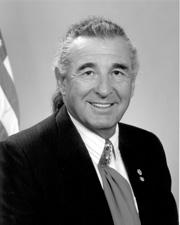
Madam President, today I introduce the ``Campus Classmate Offenders in Rehabilitation and Treatment Act of 2003.'' The legislation I am introducing today is based on legislation I previously…
Madam President, today I introduce the ``Campus Classmate Offenders in Rehabilitation and Treatment Act of 2003.''
The legislation I am introducing today is based on legislation I previously introduced toward the end of the 107th Congress.
The Campus Classmate Offenders in Rehabilitation and Treatment Act, which can also be referred to as the ``Campus CORT Act,'' directs the Department of Justice to establish a demonstration program to provide grants and training to help our Nation's universities and colleges establish new quasi-judicial systems. These systems aim at countering the serious drug and substance abuse related problems that are taking such a heavy toll on our institutions of higher learning and the students who attend them. The demonstration program, which would be administered by the Department of Justice's Office of Justice Programs, would be based on the valuable lessons and successes we have garnered from our Nation's innovative and expanding drug court system.
Specifically, this demonstration program legislation would authorize the establishment of up to five Campus CORTs each year for Fiscal Years 2004 through 2007. The bill authorizes the Office of Justice Programs to provide $2,000,000 in Federal funding during each of those years to help get five Campus CORTs well trained, soundly established and up and running. This new program's approach should be similar to how the Office of Justice Programs currently runs the ongoing drug court grant- making program, including providing an Internet-based application process.
There are plenty of good reasons to take the next step and establish a Campus CORTs program based on the drug court model. Since they first appeared in 1989, drug courts have rapidly spread all across the Nation. Rather than simply locking-up nonviolent drug offenders in prison along side violent criminals, drug courts provide the alternative of court-supervised treatment. Instead of simply punishing, drug courts help get people clean.
Drug courts' many successes are underscored both by the bipartisan support they have received in Congress and by the Bush Administration. For example, during a national conference hosted this last April by the National Association of Drug Court Professionals, both Office of National Drug Control Policy Director John Walters, our Nation's ``Drug Czar,'' and Drug Enforcement Agency Director Asa Hutchinson gave speeches in support of drug courts and the benefits they provide.
According to the latest statistics as reported by the Department of Justice's Office of Justice Programs, as of November 2002, 946 Drug Courts are operating all across the United States. This is an impressive increase of approximately 250 Drug Courts over the past year. This 946 Drug Courts includes 547 Adult Drug Courts, 245 Juvenile Drug Courts, 59 Family Drug Courts and 14 Combination Courts. Over 400 additional new Drug Courts are in the planning process.
The report goes on to state that approximately 300,000 adults and 12,000 juveniles have been enrolled in the drug court system to date. Of those participants, 73,000 adults and 4,500 juveniles have successfully graduated from Drug Courts.
The merits of the drug court system are well documented. Nationwide, drug courts have been instrumental in enabling more than 1,000 children to be born drug free, more than 3,500 parents to regain custody of their children, and 4,500 parents to resume making their child-support payments. The retention rate is over 70 percent with 73 percent of the participants managing to keep their jobs or successfully find new work. These are encouraging statistics, and not just for the individuals involved, but for society as a whole.
While it is not as easy to measure, we know that Drug Courts play a beneficial role in reducing criminal behavior since so much crime these days is drug related.
Drug Courts also help save up money. It is estimated that every dollar spent on Drug Courts saves our country and communities approximately ten dollars in reduced prison and other criminal justice costs.
These are the kind of successes we should be able to see once the drug court model is customized and applied through Campus CORTs as we work together to respond to the alcohol, drug and other substance abuse challenges facing our Nation's colleges and universities.
Just as drugs are deeply interconnected with crime on our streets, drugs and serious substance abuse are also interconnected with much of the academic failure that damages so many of our Nation's institutions of higher learning and their aspiring students seeking college degrees.
Our Nation's drug courts use a carrot and stick approach where offenders can either live at home and remain free to work under court supervised treatment or face the very real threat of hard jail time. Similarly, Campus CORTs will give troubled students the chance to get supervised treatment and stay clean or get kicked out of school and watch their futures get squandered away.
Instead of simply booting students with substance abuse problems directly out of school, as is currently happening at many universities and colleges all across the country, I believe we should instead help provide institutions of higher learning with new tools they can use to help students get and stay clean. Of course, just like it is with the existing drug courts, there will be some students who simply do not respond to Campus CORTs. While those students will have to face the fact that they may well be expelled from school, at least we will have been able to give them the opportunity to clean-up their act.
Since the new Campus CORTs would be established at colleges and universities, the legislation calls on the Office of Justice Programs, or OJP, to establish new ``quasi-judicial standards and procedures for disciplinary cases'' for institutions of higher learning that wish to participate in the new Federal program.
Today, I am pleased to highlight that one of the leading institutions of higher learning in my home State, Colorado State University, CSU, has already broken new ground as the Nation's first university to apply the drug court concept in a campus setting. The ``Day IV'' program, as it is known at CSU, has racked-up a successful record in helping keep students clean and in school.
Our Drug Court system is making a difference all across our Nation. In fact, a 2002 report issued by Columbia University's prestigious National Center on Addiction and Substance Abuse states that ``Drug Courts provide closer, more comprehensive supervision and much more frequent drug testing and monitoring during the program, than other forms of community supervision.'' The report underscores that ``drug use and criminal behavior are substantially reduced while offenders are participating in drug court'' and that ``criminal behavior is lower after participation, especially for graduates.''
Our Nation's Drug Court system is a good example of a viable and productive partnership between the Federal Government our State governments and local jurisdictions. Their collaboration is making a positive impact all across our country. I want to take this moment to thank the people of the OJP, the experts at the National Association of Drug Court Professionals and the state and local judges, prosecutors, law enforcement officers and other officials who have done so much to establish, build upon and continually improve our Nation's drug court system.
I also want to take a moment to thank Judge Karen Freeman Wilson, Chief Executive Officer of the National Association of Drug Court Professionals for her letter of support for the Campus CORT legislation I am introducing today. It is appreciated.
I ask unanimous consent that the letter of support and the text of the bill be printed in the Record.
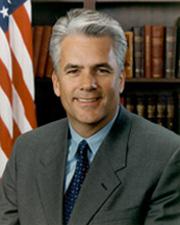
Mr. President, 194 years ago this week, a son was born to Nancy and Thomas Lincoln in Elizabethtown, Kentucky. That son, Abraham, would go on to become President of the United States at one of the…
Mr. President, 194 years ago this week, a son was born to Nancy and Thomas Lincoln in Elizabethtown, Kentucky. That son, Abraham, would go on to become President of the United States at one of the most defining times in our Nation's history.
President Lincoln is still revered today for his leadership and vision of a country in which all citizens have the opportunity to succeed. In 1864, when the outcomes of the war and his re-election were in question, he asked soldiers from Ohio's 66th regiment to stop at the White House on their way home so he could express his appreciation. President Lincoln shared with them the following:
``I beg you to remember this . . . I happen temporarily to occupy this big White House. I am a living witness that any one of your children may look to come here as my father's child has. It is in order that each of you may have through this free government which we have enjoyed, an open field and a fair chance for your industry, enterprise and intelligence; that you may all have equal privileges in the race of life, with all its desirable human aspirations. It is for this the struggle would be maintained, that we may not lose our birthright . . . The nation is worth fighting for, to secure such an inestimable jewel.''
That jewel--the American dream that should be within reach of all who grasp for it--has been the hope of generations in this nation. This Nation that elected Abraham Lincoln--born in a one-room log cabin and once a farmhand . . . This Nation that harvests in its children a yearning to soar beyond the earth's atmosphere . . . This Nation that preaches that education, hard work, and family bring success.
Unfortunately, making a living, raising a family, and educating ourselves and our children is becoming more and more difficult in America. And it's the
leaders of this nation that have made the obstacles to success higher to get over and wider to get around.
Here in Washington, we've built a wall of obstacles with one tax burden after another. Our Founding Fathers outlined exactly the powers they wanted Congress to have in Article I, Section 8 of the Constitution. Just because the first thing listed is the power to lay and collect taxes, doesn't mean it's the power we need to exercise the most.
Not only should we take the responsibility of stopping the building of this wall of tax burdens, we need to step up and start removing these burdens. We need to alleviate the tremendous stress that comes with having to work to pay so much of what we earn to the government.
Last year, the average taxpayer in my home State of Nevada did not finish paying taxes until April 27, which was also the average across the United States. Everything earned for the first 117 days of the year went to a government entity. In comparison, the average American spends only 106 days paying for food, clothing, and shelter combined.
That doesn't leave enough days to pay for a family vacation or to save for education or to pay medical bills or to save for retirement or to take a class to improve skills or to do whatever you want with your money--after all, it is your money.
In itself, our tax system is unfair because American families have to work harder to make more money only to pay greater taxes, and workers bear the burden of a government that continues to find ways to tax them into working even harder.
Whatever our individual thoughts are on tax relief, we must agree that, although being taxed has become a challenging part of life, the idea of being double taxed is truly the government stealing from working Americans. Double taxation is immoral. Think about it in terms of a parent teaching a child. I am a parent of three young children. Just as I would explain to my children that it is not all right to take a piece of candy that they have not paid for, I would also tell them it is absolutely not okay to charge someone for something they aren't getting. But that is exactly what our government is doing with the Social Security tax.
Time magazine recently called it ``The Really Unfair Tax.'' I call it the Social Security double dip. The take-home pay of 100 million Americans is fodder for this gutsy government scam. In very simple terms, this means that when a family pays income tax, the portion that is withheld for Social Security--money that they never see--is calculated into their personal income. The first dip is the tax that workers pay on wage income. The second dip is the icing on the cake for the government--taxing money that they are already taking anyway. Working Americans are forced to pay income tax on their Social Security tax. It is textbook double taxation, and if a business concocted such a scheme it would be shut down. How can we continue this policy if we would teach our children that it is wrong? This is only one reason why the tax is unfair.
Another example of the outrageousness of this tax is that while working families are double taxed, American businesses are not. You see, half the Social Security tax is paid by workers, but employers pay the other half. Businesses and corporations get to deduct what they pay in Social Security taxes--a savings that working families are not afforded. This tax discrimination is unacceptable.
We must eliminate this absolutely wrong tax policy that mocks our Constitution's goal to ``promote the general Welfare.'' I propose an above-the-line deduction for Social Security taxes so that an individual's Social Security taxes are not included in the calculation of income for income tax purposes. It's the right thing to do if we want to lead this Nation by example. Providing a Social Security tax deduction makes sense and will make a real difference to working families. About 100 million individuals and families would feel the savings--to the tune of around $2,000 each. Such savings translate into real growth and opportunity. Scholars predict that the Payroll Tax Deduction Act would mean 900,000 new jobs in this country, and it also means a Nation of workers who get to keep more of their hard-earned money.
When government takes money away from working families, it stifles growth and builds obstacles to success. Let's take this chance to provide relief to America's families, open the doors to opportunity, and let future generations know that the American dream--the jewel that inspired Abraham Lincoln--is well within the reach of all who truly desire it.
I ask unanimous consent that the text of the bill be printed in the Record.
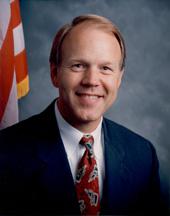
Mr. President, I rise today to introduce a bill and to speak about a litigation crisis affecting both the overall well-being of our nation and our ability to stimulate economic recovery. I'm speaking…
Mr. President, I rise today to introduce a bill and to speak about a litigation crisis affecting both the overall well-being of our nation and our ability to stimulate economic recovery. I'm speaking of the out-of-control explosion of asbestos litigation.
Asbestos litigation has become a disease in our economy. It threatens to drive scores of companies into bankruptcy. It discourages investment in companies under suit. It drives stock value down. It diverts funds away from expansion and growth. It results in job loss and, in short, it has become an obstacle to economic recovery.
The cost of asbestos litigation and burden on business has been devastating. Over 8,400 companies have been named as defendants in suits. At least $54 billion has been paid on more than 6000,000 claims. U.S. Insurers have paid over $22 billion. Insurers outside U.S. have paid $8-12. Defendant companies have already expended between $20-24 billion in claims and transaction costs associated with asbestos litigation.
The total cost of asbestos litigation could reach between $200-265 billion. This is revenue not invested in the economy, not invested in new jobs.
Some companies are hit with multiple suits involving thousands of plaintiffs. The weight of claims and settlements has resulted in an alarming increase in Chapter 11 bankruptcies. Over sixty companies have
filed Chapter 11 bankruptcy due to asbestos claims. This trend toward bankruptcy has had an alarming domino effect. As companies declare Chapter 11 reorganization, the litigation burden shifts to other defendant companies only encouraging them to declare bankruptcy as well.
At least 5 major companies have each spent more than $1 billion. Thirty-eight of the nations top 100 contractors to the DoD are now asbestos defendants. This crisis threatens to impact our national security industry at the worst possible time in our history. But it also prevents us from aggressively stimulating the economy. The bottom- line is: the cost of litigation and/or bankruptcy siphons away critical business revenue needed for growth and the creation of new jobs. What is frightening, is that only about half the number of potential claimants have come forward thus far. If left unchecked, we have only seen the tip of this crisis.
It's not only business that suffers. Employees of defendant companies suffer a great deal from a damaging ripple effect. The Rand Institute of Civil Justice estimates that 100,000 jobs were not created as a result of asbestos litigation. Bankruptcies related to asbestos litigation have led to 52,000-60,000 people losing their jobs, according to a SEBAGO study. It is estimated that each displaced worker will lose, on average, $25,000-$50,000 in wages before finding a job, or in reduced salary following finding a new job.
It does not stop there. Approximately 42 percent of displaced manufacturing workers participate in retraining programs, costing about $2,000-$3,000 per worker. Local communities also bear the brunt of job reductions due to asbestos-related lay-offs. It is estimated that there have been between $.6 and $2.1 billion in additional indirect local costs and loss. On average, there are eight additional jobs lost locally for every initial job lost. Additional multiplier effects include lowered property values, population decline and lost Federal and State tax revenue.
Those employees fortunate enough not to lose their jobs in asbestos- related cut-backs, also suffer due to the weakened position of their employer. Studies show that reduced stock value in defendant companies results in a 25 percent reduction in employees' 401(k) plan value. The average worker loses, on average $8,300 in pension devaluation.
This is a situation that has been exploited by the non-injured. Over 65 percent of plaintiffs, estimates as high as 90 percent, have no medical injury, but have filed suit on the basis that they ``may'' develop illness in the future. To date, most claims have been paid to non-injured claimants. Some plaintiffs' attorneys are signing up thousands of individual plaintiffs onto suits where there may be no evidence of injury or no evidence of exposure to asbestos products. The effect is that the largest portion of the claim pool is being paid to non-injured claimants. As a result, this adversely affects the ability of truly injured plaintiffs to collect damages. Claimants with malignant injuries are being lost in the stampede of those not injured. There is not only less money for those who really need it, the courts are swamped with a flood of questionable claims. It is not surprising that the U.S. Supreme Court has twice called out for Congress to find a solution.
Congress must indeed act. We must find a solution that both protects the economy and the legal rights of those truly injured by asbestos or who will develop asbestos-related injuries in the future. That is why today I introduce a bill that will not only introduce criteria to reassert some control over an out-of-control litigation process, but will come to the assistance of those truly injured and who need help. It is also intended to put a halt to the severe damage asbestos litigation has been wrecking on our economy, so that we can get on with the process of economic recovery.
My bill, entitled the Asbestos Claims Criteria and Compensation Act of 2003, establishes medical criteria that a claimant must meet prior to filing a suit. It will also toll the statute of limitations, so that those who develop an asbestos-related disease years down the road will still retain their right of legal action. It also will limit abusive venue shopping, but provides an exception of venue choice for those terminally-ill and facing a shortened life expectancy.
In conclusion, I believe this bill offers a reasonable approach to resolving this serious problem. I believe it offers a solid bipartisan approach that many of my colleagues on both sides of the aisle will come to support. If ever we hope to stimulate our economy into recovery and achieve sustained growth, we must also address and eliminate those factors that tend to drag the economy in the opposite direction. Asbestos litigation is one of those inhibitors of the economy, and this bill is a good step toward recovery. I encourage my colleagues to lend their support to this bill and I thank you, Mr. President. I ask unanimous consent that the text of the bill be printed in the Record.
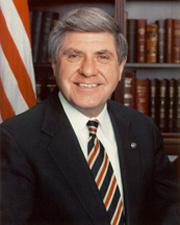
Madam President, I thank you for the opportunity to speak about what is clearly a bipartisan issue. I would like to add to what my colleague from Minnesota said about the Fuels Security Act offered…
Madam President, I thank you for the opportunity to speak about what is clearly a bipartisan issue. I would like to add to what my colleague from Minnesota said about the Fuels Security Act offered by Senators Daschle and Lugar on a bipartisan basis.
I am here today to support the Fuels Security Act of 2003. This important renewable fuels legislation is one of the pillars for economic development for rural--America one segment of the population that has lagged behind during the economic surge of the 1990's and is suffering under the combined effects of the current economic slowdown and a two-year devastating drought which I had the audacity to name ``Drought David.''
This legislation is important for rural America. Last year, we completed the farm bill--the first part of the economic revitalization plan for rural America. For the last several months, we have been struggling over the most important short-term economic stimulus plan for rural America--comprehensive drought assistance. Though I believe what the Senate passed and what we hear will be included in the omnibus is insufficient to adequately compensate for the drought, it might provide some initial assistance to farmers and ranchers.
In addition to the farm bill and disaster assistance, I believe we need to craft a comprehensive rural development plan that will spur investment in agri-business and promote economic activity in the agriculture center. We need to consider opening new markets like Cuba-- to ensure American products can be sold and farmers and ranchers can earn a living.
The Fuels Security Act of 2003, is the latest piece of the puzzle.
It is clear that use of ethanol, as part of a renewable fuels standard is a win-win-win situation: a win for farmers, a win for consumers, and a win for the environment. That is why I rise as an original co-sponsor and strong supporter this renewable fuels legislation.
If passed, the Fuels Security Act will establish a 2.3 billion gallon renewable fuels standard in 2004, growing every year until it reaches 5 billion gallons by 2012. There are many benefits to this legislation.
It will displace 1.6 billion barrels of oil over the next decade; reduce our trade deficit by $34.1 billion; increase new investment in rural communities by more than $5.3 billion; boost the demand for feed grains and soybeans by more than 1.5 billion bushels over the next decade; create more than 214,000 new jobs throughout the U.S. economy; and it will expand household income by an additional $51.7 billion over the next decade
It is quite apparent that increased use of ethanol will do much to boost a struggling U.S. agriculture economy, and will help establish a more sound national energy policy.
The greater production of ethanol will also be beneficial to the environment. Studies show ethanol reduces emissions of carbon monoxide and hydrocarbons by 20 percent and particulates by 40 percent in 1990 and newer vehicles. In 2001 ethanol reduced greenhouse gas emissions by 3.6 million tons, the equivalent of removing more than 520,000 vehicles from the road.
A choice for ethanol is a choice for America, and its energy consumers, its farmers, and its environment.
Enactment of the Fuel Security Act will help us to reverse our 100- year-old near total reliance on fossil fuels; a more pressing concern than ever given the possibility of military conflict in the Mid East and the continuing economic turmoil in Venezuela.
It was recently reported we are currently exporting about 80,000 gallons of fuel to Venezuela right now to help in their shortfall because of the turmoil in that part of our world.
I am unabashedly proud of what my home State has accomplished in this area. Within the State of Nebraska, during the period from 1991 to 2001, seven ethanol plants were constructed and several of these facilities were expanded more than once during the decade.
Specific benefits of the ethanol program in Nebraska include: $1.15 billion in new capital investment in ethanol processing plants. They include 1,005 permanent jobs at the ethanol facilities and 5,115 induced jobs directly related to plant construction, operation, and maintenance. The permanent jobs alone generate an annual payroll of $44 million. And more than 210 million bushels of corn and grain sorghum is processed at the plants annually. These economic benefits and others have increased each year during the past decade due to plant expansion, employment increases, and additional capital investment.
If each State produces 10 percent of its own domestic, renewable fuel, as Nebraska does, America will have turned the corner away from dependence on foreign sources of energy.
And it is possible because ethanol and biodiesel can be made from biomass from other than corn or sorghum or other row crops. It can be produced from garbage. It can be produced from switch grass and all kinds of other biomass.
When you take a hard look at the facts, you will see that this legislation is nothing but beneficial for America. The Fuels Security Act is balanced,
comprehensive, and is the result of the dedication of so many, especially Senator Daschle and Senator Lugar.
So now I ask my colleagues to join me in promoting new opportunities for the technologies that will put our Nation and the world's transportation fuels on solid, sustainable, and environmentally enhancing ground. We owe it to our country now--and to future generations--to pass this legislation without any further delay.
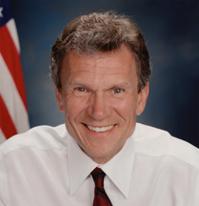
Madam President, headlines in daily papers all across the country underscore our economy's vulnerability to foreign oil. Today, a new generation is learning what many Americans have known since the…
Madam President, headlines in daily papers all across the country underscore our economy's vulnerability to foreign oil.
Today, a new generation is learning what many Americans have known since the 1970s--our economic security and our national security depend on our energy security.
Today I, along with a number of my colleagues, am introducing the Fuels Security Act of 2003.
This bill responds directly to our Nation's unhealthy reliance on imported oil by establishing greater flexibility in our gasoline regulations, and by tripling the use of domestic, renewable fuels over the next 10 years.
This legislation is identical to the fuels agreement included in last year's Senate-passed energy bill.
Based on the experience we have gained over the last seven years with the reformulated gasoline program, the Fuel Security Act bill makes a number of important changes in Federal law.
It bans MTBE in 4 years, authorizes funding to cleanup MTBE contamination and fix leaking underground tanks, allows the most polluted states to opt into the reformulated gasoline program, and provides all States with additional authority under the Clean Air Act to address air quality concerns.
It eliminates the oxygen requirement from the RFG program, a change that is very important to states that are planning to remove MTBE from their gasoline supplies in the near future.
To preserve the hard-fought air quality gains that have resulted from the implementation of that requirement, the bill creates a renewable fuels standard that will nearly triple the use of renewable fuels like ethanol and biodiesel over the next 10 years.
Finally, the bill also provides special encouragement to biomass- based ethanol, which holds great promise for converting a variety of organic materials into useful fuel, while substantially reducing greenhouse gas emissions.
Ethanol comes from American farmers and producers, passes through American refiners, and fuels American energy needs. No soldier has to fight overseas to protect it. And no international cartel could turn off the spigot.
For years, we talked about those benefits with a sense of resignation. After all, these aren't new arguments, and yet there were a lot of people who still saw ethanol as a boutique fuel, not a real answer to our energy problems.
With this legislation, we intend to change that preception--and get America moving toward energy independence.
The renewable fuels standard will be a win-win-win. It will help the environment, it will help the rural economies which are hurting right now, and it will help reduce America's dangerous dependence on foreign oil.
I believe we can make it law. During consideration of the Energy Bill last summer, the Senate endorsed the Renewable Fuels Standard package by a vote of 69 to 30.
Overall, this legislation is a careful balance of often disparate and competing interests--and a compromise in the finest tradition of the U.S. Senate.
Just look at some of the organizations whose active support is helping to make this legislation possible: The Northeast States Coordinated Air Use Management Agency, the American Petroleum Institute, the Clean Fuels Development Coalition, the American Lung Association, the American Coalition for Ethanol, the Renewable Fuels Association, the Governor's Ethanol Coalition, the National Farmers Union, the American Farm Bureau, the National Corn Growers Association, and the American Corn Growers Association.
That support across the political and ideological spectrum is reflected within the Senate as well.
I particularly want to thank Senator Lugar. The seeds for this comprehensive legislation were planted a few years ago when he and I first introduced legislation to establish a renewable fuels standard and provide flexibility in producing reformulated gasoline. Senator Lugar's enthusiastic support gave this idea needed momentum and helped lay the groundwork for agreement on this legislation last year.
In addition, Senators Tim Johnson and Chuck Hagel deserve enormous credit for legislation they introduced last year to establish a very ambitious renewable fuels standard, and for their work in promoting this concept.
And there are many others--Senators Ben Nelson, Tom Harkin, Chuck Grassley, Byron Dorgan, Mark Dayton, Dick Durbin, Max Baucus, Kit Bond, George Voinovich, and others--who all deserve recognition for the progress we have made on this issue.
Look at America's energy situation today: gasoline prices are high, farm income is low and America is importing close to 60 percent of the oil we use.
At the same time, our substantial appetite for energy continues to grow every year. Over the next ten years, the United States is expected to consume roughly 1.5 trillion gallons of gasoline. At the same time, we hold only three percent of the known world oil reserves.
It has been said that ``we are all continually faced with a series of great opportunities, brilliantly disguised as insolvable problems.''
Meeting our energy challenges is a difficult problem, but it is also a great opportunity to demonstrate American strength, and American ingenuity.
By increasing the use of renewable fuels, preserving clean air gains and moving us toward energy independence, that is what I believe this bill does.
Show 11 more
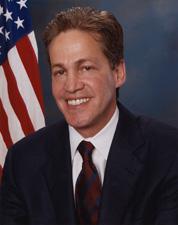
Madam President, if I may, in contrast to the very partisan tone of the Estrada filibuster and this partisan divide that is stopping us from moving forward, I want to spend a few minutes talking…
Madam President, if I may, in contrast to the very partisan tone of the Estrada filibuster and this partisan divide that is stopping us from moving forward, I want to spend a few minutes talking about an issue in which we come together and perhaps which should be a model.
I am pleased to join my distinguished colleagues, Senator Hagel and minority leader Daschle, as an original cosponsor of this landmark renewable fuels legislation.
Senator Daschle is from our neighboring State. We have mutual interests. We understand the needs of our farmers.
We are looking at working together, which I think is such a good thing.
The Minnesota AgriGrowth Council points out renewable fuels like ethanol and biodiesel promote the 3 E's: economic development, environmental protection, and energy independence.
Let me talk briefly about the economic development benefit first. I ran for the Senate on jobs. The best welfare program is a job. The best housing program is a job--creating jobs--and economic development. That is what mayors do. That is what they understand is important to moms and dads. We get results. There were 18,000 more jobs in St. Paul when I left than when I began.
The legislation we introduce today means economic development--it means jobs, revitalization, and new businesses--particularly for rural Minnesota.
Minnesota is a leader in renewable fuels. Not only do the people of my State make Minnesota the top 10 among States of nearly every agriculture commodity that can be produced in our climate, but Minnesota leads the way in renewable fuels, and I am proud of that.
Today, Minnesota has 14 ethanol plants in production--more than any other State in the Nation. Preliminary planning is underway for at least a couple of biodiesel production facilities in my State as well. So the importance of this legislation to my State and to the health of the people in my State and to the lives of our farmers and their economic opportunity is clear.
But, let's take a look nationally to see what every American has to gain through this legislation. According to at least one economic analysis, the renewable fuels standard we propose today would, over the next decade:
Reduce America's trade deficit by more than $34 billion;
increase America's Gross Domestic Product by $156 billion;
create more than 214,000 jobs throughout the entire economy, including places important to me like Little Falls and Winnebago, MN; and
increase net farm income by nearly $6 billion per year.
That the renewable fuels standard legislation we introduce today promotes the first ``E'' of the 3 ``Es''--economic development--is evident.
The second ``E'' I want to talk a little about is energy independence.
As a member of both the Governmental Affairs Committee and the Foreign Relations Committee, I have had the opportunity, in my first month in the Senate, to hear from a number of experts on homeland security and on conditions around the world that affect our security. And, with this experience as a backdrop, I can say I am not comfortable at all with America's level of reliance on oil imports--now at 56 percent of our supply, and expected to be about 70 percent by 2020 unless something is done to turn things around.
Back on September 19, 2001, former CIA Director James Woolsey, former Joint Chiefs of Staff Chairman Admiral Thomas Moorer, and former National Security Advisor Robert McFarlane all wrote the Senate on this very issue, stating:
One of the critical actions that must be taken now is to
advance America's energy security through transportation
fuels like ethanol [and] slow the dollars to the Middle East,
where too many of those dollars have been used to buy weapon
and fund terrorist activities.
The legislation we offer today takes to heart the admonition of Director Woolsey, Admiral Moorer, and Mr. McFarlane by advancing renewable fuels to reduce our dependence on foreign oil.
And, finally, but not least, is the ``E'' for environmental protection that got the whole reformulated gasoline ball rolling in the first place.
Ethanol is an important tool for improving air quality in America's cities by reducing carbon monoxide, hydrocarbons, NOX, toxics, and particulates.
Proof of ethanol's clear air benefits was seen in Chicago last year where exclusive use of ethanol reformulated gasoline helped the city attain federal ozone standards--the only area under such standards to see this kind of improvement.
What is more, ethanol continues to be the only liquid transportation fuel that can help to reduce global warming. In 2002 alone, ethanol use in the United States reduced greenhouse gas emissions by 4.3 million tons--the equivalent of removing more than 636,000 vehicles from the road.
These are the 3 ``Es''; economic development, energy independence, and environmental protection--all three worthy objectives furthered by the legislation we offer today.
Naturally, there are places here and there where this bill can and should be improved, and we can work on it. But, this is a good starting place. It is a bipartisan effort. I am pleased to be an original cosponsor.
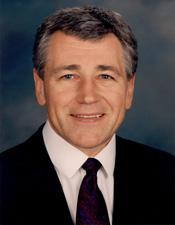
Madam President, I come to the floor this morning to speak briefly about an important, comprehensive fuels bill that I will introduce today, along with Senators Daschle, Lugar, Johnson, Voinovich,…
Madam President, I come to the floor this morning to speak briefly about an important, comprehensive fuels bill that I will introduce today, along with Senators Daschle, Lugar, Johnson, Voinovich, Grassley, and others. This bill aims to enhance air and water quality, reduce supply and distribution challengers in the gasoline market, and increase energy security by expanding the use of clean, domestically produced renewable fuels.
Specifically, our bill follows the advice of the EPA's Blue Ribbon Panel on Oxygenates by repealing the Federal oxygenate mandate and phasing out the use of MTBE nationwide. It also contains a reasonable Renewable Fuel Standard, RFS, which would gradually increase the nation's use of renewable fuel to 5 billion gallons a year by 2012. All of this while protecting the environmental gains already made by the reformulated gasoline program.
This legislation mirrors the bipartisan fuels agreement in last year's Senate energy bill, which gained the votes of 69 Senators. This year, we have worked to build an even broader, bipartisan coalition of cosponsors.
Much has happened since the Senate passed its energy bill last year. The renewable fuels industry has expanded considerably to meet growing demand. The ethanol industry opened 12 new plants last year, with 10 additional plants now under construction. Sixteen of these new plants are farmer-owned co-operatives. By the end of 2003, annual ethanol production capacity is expected to exceed 3 billion gallons. In December the ethanol industry wrapped up a record year--2.13 billion gallons in 2002, up by more than 20 percent over 2001.
Also, ChevronTexaco announced last month that it will switch from blending MTBE to blending ethanol in the southern California market-- making Chevron the last of the large California refiners to make the switch to ethanol. This means that more than 80 percent of California's federally-reformulated gasoline will be blended with ethanol by May 2003.
We should not forget that biodiesel, made primarily from soybeans and still a developing fuel technology, has grown enough that it is now used in more than 200 State and Federal automobile fleets--using a 20- percent blend or higher.
Today, 16 States have already banned MTBE. With State MTBE bans will come increased challenges to fuel distribution and supply. The national phase-down of MTBE proposed in this bill will help us meet these challenges.
And a national Renewable Fuels Standard with a credit and trading program will ensure that renewable fuels are used where they make the most sense. In fact, according to a recent analysis, enacting this fuels bill would even reduce refiner costs, .2 cents, per gallon compared to current law.
The Standard in our legislation is a fair and workable compromise new crafted nearly a year ago--after months of work the American Petroleum Institute, the environmental community, the Northeast air directors, agricultural groups, DOE, EPA and others. Senator Daschle and I helped facilitate those talks. We crafted the language of last year's fuels agreement--the same language in this bill.
This is not a per-gallon mandate. It will not force a specific level of compliance in places where compliance may be difficult.
Our Nation needs a broader, deeper and more diverse energy portfolio. Today, less than one percent of America's transportation fuel comes from renewable sources. Under this energy bill, renewable fuel use would increase to approximately 3 percent of our total transportation fuel supply--tripling the amount of renewable fuel we now use.
Today, America imports nearly sixty percent of the crude oil it consumes. This amount is estimated to climb to 70 percent by 2002. Almost a fourth of America's oil imports come from the Persian Gulf. Last year, the United States imported nearly half-a-million barrels of oil a day from Iraq. Overall, petroleum imports cost the United States more than $100 billion a year--around 25 percent of our trade deficit.
This country consumers more than 300 billion gallons of crude oil a year--of that, 165 billion gallons is refined into gasoline and diesel. Our legislation says that by 2012, not less then 5 billion gallons of that 165 billion gallons shall come from renewable sources. By enacting this legislation, we would replace 66 billion gallons of foreign crude oil by 2012; reduce foreign oil purchases by $34 billion; create more than 200,000 jobs nationwide; and boost U.S. farm income by more than $6 billion a year.
As the new Congress prepares to resume deliberations on a new national energy plan, I ask my colleagues to seriously consider this legislation--which will assist our efforts to modernize the Nation's transportation fuel system and address the environmental, energy and security concerns for today and tomorrow.
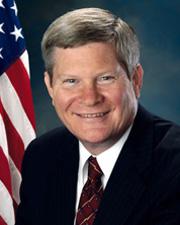
Madam President, I am pleased that we are reintroducing renewable fuels legislation and that we are taking time today to talk about the benefits and importance of this bill. I want to acknowledge the…
Madam President, I am pleased that we are reintroducing renewable fuels legislation and that we are taking time today to talk about the benefits and importance of this bill.
I want to acknowledge the extraordinary leadership of Senator Daschle and also Senator Byron Dorgan of North Dakota who was on the floor to speak to this issue but was called away for another critical responsibility and will not be able to be in the Chamber this morning.
There has been a great deal of discussion about the nation's energy situation. The increasing volatility in gasoline and diesel prices, the growing tension in the world from the terrorist attacks, and the possibility of war with Iraq have affected all of us. The more we depend on oil from the Middle East, the more our stability is inextricably tied to governments and factions in that region. There is a critical need for finding new sources of energy that will move the country away from dependence of a natural resource available in increasingly volatile regions of the world. Dependence on foreign oil in the unstable Middle East and South America makes us less stable. The use of domestic, clean, renewable energy sources can increase our energy security and increase the nation's security. It must be a critical part of our nation's energy strategy.
To this end, last year I introduced a bill with Sen. Chuck Hagel of Nebraska that would ensure future
growth for ethanol and biodiesel. The bill would create a new, renewable fuels content standard in all motor fuel produced and used in the United States. Last year, the Senate passed a comprehensive energy bill which included the framework of our legislation. Today, ethanol and biodiesel comprise less than one percent of all transportation fuel in the U.S. This consensus language would require that five billion gallons of transportation fuel be comprised of renewable fuel by 2012-- nearly a tripling of the current ethanol production.
The consensus language was agreed to last year after productive negotiations between the renewable fuels industry, farmers' groups, the oil industry and environmentalists. Unlike many of the disputes during consideration of the energy bill last year, this issue had a relatively wide range of agreement. The basis for this agreement is still viable, and it is under this framework that we are reintroducing the bill today.
The people of South Dakota and the neighboring states understand the benefits of ethanol to the economies of rural communities. Increased renewable fuel production lowers our dependence upon foreign oil, strengthens energy security, increases farm income and creates jobs. The growth of farmer-owned ethanol plants in South Dakota demonstrates the hard work and commitment needed to serve a growing market for clean domestic fuels.
Based on current projections, construction of new plants will generate $900 million in capital investment and tens of thousands of construction jobs to rural communities. For corn farmers, the price of corn would rise 20-30 cents per bushel.
Combine this with the provisions of the bill and the potential economic impact for rural states is tremendous. In South Dakota, seven ethanol plants are operating to produce approximately 156 million gallons per year. Three other ethanol projects are under construction, with a combined capacity to produce an additional 180 million gallons of ethanol annually. With the enactment of a renewable fuels standard, the production in South Dakota now could grow substantially, with at least 5000 farmers owning ethanol plants and producing over 500 million gallons of ethanol per year.
An important but under-emphasized fuel is biodiesel, which is chiefly produced from excess soybean oil. Soybean prices are hovering near historic lows. Biodiesel production is small but has been growing steadily. The renewable fuels standard would greatly increase the prospects for biodiesel production, benefitting soybean farmers from South Dakota and other states.
While the energy bill was not enacted last year, two-thirds of the Senate voted against amendments that would have weakened or eliminated the renewable fuels provision. For the first time in recent memory, Congress's actions reflect the knowledge that value-added agriculture and ethanol production are critical to the nation's energy needs and to the future of family-farm agriculture and rural America. The prospects for farmers in South Dakota and other rural states have brightened considerably. Moreover, we have a unique opportunity to help reduce our use of foreign oil and make our nation more stable. I am pleased that we are reintroducing the bill and urge its swift passage.
Mr. President, I am pleased and honored to join with my colleagues to introduce two pieces of legislation to help meet the child care challenges facing families around the Nation. These bills…
Mr. President, I am pleased and honored to join with my colleagues to introduce two pieces of legislation to help meet the child care challenges facing families around the Nation. These bills entitled the ``Caring for Children Act'' and ``A Boost for Child Care Act'', or the ABC's Act.
Child care, in the home when possible and outside the home when both parents work, goes right to the heart of keeping families strong. Unfortunately, finding quality, affordable child care is one of the most pressing problems for families in Kansas and around the country. It is estimated that quality child care can cost as much or more than college tuition in some areas.
The ``Caring for Children Act'' and `A Boost for Child Care Act'' take the first steps in addressing this challenge through a responsible approach. This legislation expands child care opportunities without increased government costs or intrusion in our lives. This legislation builds into the existing network adding more government intervention or mandates. This legislation will help families that have two working parents and families that have a stay-at-home parent. This legislation will help to increase the supply of quality child care.
First, in order to provide additional tax relief and increased affordability of child care, the ABC's Act expends the Dependent Care Tax Credit by raising the income level to $30,000 at which families become eligible for the maximum tax credit. This legislation also raises the maximum percentage of child care expenses that parents can deduct to 50 percent. These changes make the Dependent Care Tax Credit more realistic for families that face increasing child care costs. Additionally, the ABC's Act accelerates and makes permanent the child tax credit at $1,000 for qualifying taxpayers in order to further ease the financial burden on families.
Increasing the income level and the percentage of child care expenses that are deductible will help families where both parents work. But, we must also recognize that families who choose to have one parent remain at home have child care expenses as well. Therefore, this legislation extends eligibility for the Dependent Care Tax Credit to families with a stay-at-home parent. This provides greater options to more families and leaves child care choices where they should be--with the family. In order to target this credit to parents who need it the most and meet our fiscal responsibilities, the credit is phased out for higher income wage earners.
The ``Caring for Children Act'' recognizes that small businesses play a critical role in providing child care options to millions of working parents. Unfortunately, small businesses generally do not have the resources required to start up and support a child care center. This legislation includes a short-term flexible grant program to encourage small businesses to work together to provide child care services for employees. This program is more of a demonstration project that will sunset at the end of three years. In the meantime, small businesses will be eligible for grants up to $100,000 for start-up costs, training scholarships, or other related activities. Business must continue to meet state quality and health standards. Businesses will be required to match Federal funds to encourage self-sustaining facilities well into the future.
Parental access to child care information and technical assistance to child care providers both play a strong role in increasing the supply of quality child care. The Caring for Children Act includes a grant program to allow entities to develop and operate technology-based child care training infrastructures to enable child care providers to receive the training, education and support they need to improve the quality of child care. The legislation also provides funds for the Department of Health and Human Services to collect and disseminate state of the art information on topics related to child care health and safety, as well as early childhood development. This information could be distributed through brochures, the internet, a toll-free information hotline, or resource and referral organizations.
Child care is an issue that impacts each and every one of us. While parents continue to struggle to meet the constant demand of work and family, we must continue to do our part to expand child care options and protect our nation's most valuable resource, our children. I look forward to working with all of my colleagues in this important effort.
I ask unanimous consent that the text of the ``Caring for Children Act'' and ``A Boost for Child Care Act'' be printed in the Record.
Madam President, I am pleased to join my colleagues, Senator Daschle, as well as Senator Lugar, Senator Hagel, Senator Johnson and others in introducing this bipartisan piece of legislation today.…
Madam President, I am pleased to join my colleagues, Senator Daschle, as well as Senator Lugar, Senator Hagel, Senator Johnson and others in introducing this bipartisan piece of legislation today.
This bill is extremely important--from an environmental perspective and from an energy security perspective.
This bill increase the use of ethanol as an additive in gasoline. That means that we will be increasing the use of renewable sources in the fuel that we pump into our gas tanks. Transportation is the sector that uses the greatest amount of imported oil. By replacing some of the petroleum products in gasoline, we will help reduce our dependence on foreign oil. The White House recognizes that: ``America imports 55 percent of the oil it consumes; that is expected to grow to 68 percent by 2025. Nearly all of our cars and trucks run on gasoline, and they are the main reason America imports so much oil. Two-thirds of the 20 million barrels of oil Americans use each day is used for transportation.''
Let me point out the top countries from whom we import crude oil: our top supplier is Saudi Arabia. Almost one-third of our oil comes from the Middle East--and Iraq is our fifth largest supplier. Venezuela is our fourth largest supplier. Their country has been rocked by crisis for the last couple of years. So, it is in our best interest to reduce the amount of oil we import from these nations.
This bill is also important because it will phase-out MTBE nationally. MTBE has been shown to contaminate water supplies and to have the ability to cause potentially harmful side effects. This is important. We have attempted to do this here in Congress for several years. We should not be exposing ourselves and our children to such harmful contaminants. Now is the time to act to remove this from our gasoline and from our water supplies. No more delays. I urge may colleagues to work with me to move this important legislation in a timely manner.
Today, ethanol reduces the demand for oil and MTBE imports by 98,000 barrels per day. To me, this just makes good sense: take starch from corn or wheat, break it down into simple sugars, then ferment it to produce ethanol that can be used for energy. The byproducts can be used, too.
renewable fuels provision in the bill
The renewable fuels provision has been carefully negotiated over a period of months and years. Now, 20 groups, including the Nation Corn Growers Association, Renewable Fuels Association, American Farm Bureau Federation, and the National Farmers Union, have sent a letter expressing their support for this legislation. 1.8 billion gallons of pure ethanol are currently produced each year. This provision would add 3.2 billion new gallons over a period of years for a total of 5 billion gallons by 2012. And, this provision will ensure that the ethanol industry continues to grow.
This translates to a new market for 1.19 billion bushels of corn and other agricultural products. This also means new opportunities for farmers to invest in value-added processing of a product they're already growing. While we are seeing mergers and acquisitions in the petroleum and other industries, the ethanol industry is diversifying, as farmers invest in local processing.
north dakota
I am excited about the wide range of opportunities ethanol presents. One unique opportunity is being created in my home state of North Dakota. The aerospace program at the University of North Dakota and the Environment and Energy Research Center (EERC) are researching the potential for using ethanol as aviation fuel.
Aviation fuel is the last fuel in the U.S. that still contains lead. UND is now teaming up with South Dakota State University and the Federal Aviation Administration on a program to get ethanol approved and certified to help replace this lead-based aviation fuel.
And we are working on building E85 (blended ethanol fuel) stations in North Dakota.
economic benefits
According to some estimates, the ethanol industry is responsible for more than 40,000 direct and indirect jobs, creating more than $1.3 billion in increased household income annually, and more than $12.6 billion over the next five years.
During the past year, industry has built 12 new facilities. Ten new facilities are under construction, and dozens more are in the planning stages. The ethanol industry adds--directly and indirectly--more than than $6 billion to our economy each year.
I am excited by the opportunities this sector presents for my State, the region, and the entire Nation.

Mr. President, I rise today to introduce important tax legislation on behalf of myself and Senators Baucus, Conrad, Crapo, Breaux, Leahy, Harkin, Durbin, Craig, Johnson, Chafee, Snowe, and Kerry.…
Mr. President, I rise today to introduce important tax legislation on behalf of myself and Senators Baucus, Conrad, Crapo, Breaux, Leahy, Harkin, Durbin, Craig, Johnson, Chafee, Snowe, and Kerry.
This bill, entitled the ``Bipartisan Renewable Efficient Energy with Zero Effluent, BREEZE, Act,'' extends the production tax credit for electricity generated by wind for three years. The current tax credit is set to expire on January 1, 2004.
As the author of the Wind Energy Incentives Act of 1993, I sought to give this alternative energy source the ability to compete against traditional, finite energy sources. I strongly believe that the expansion and development of wind energy must be facilitated by this production tax credit.
Wind, unlike most energy sources, is an efficient and environmentally safe form of energy production. Wind energy makes valuable contributions to maintaining cleaner air and a cleaner environment. Every 10,000 megawatts of wind energy produced in the United States can reduce carbon monoxide emissions by 33 million metric tons by replacing the combustion of fossil fuels.
Since the inception of the wind energy production tax credit in 1993, more than 3,000 megawatts of generating capacity have been put online. This generating capacity powers nearly 900,000 homes.
Just last year, over 400 megawatts of new wind energy capacity was installed, bringing total capacity to more than 4,500 megawatts. Wind energy is currently serving the equivalent of more than 1.3 million average American homes in 27 states across the country.
During the past two decades, the price of wind energy has been reduced more than 80 percent, making it one of the least expensive sources of renewable energy. In order to continue this investment and development in America's energy future, we must extend the production tax credit.
From 1999 to 2001, wind energy capacity in Iowa grew by 33 percent, and while Iowa ranks tenth in the nation in terms of wind energy potential, Iowa currently ranks third nationally in wind development, with over 400 megawatts of generating capacity. Only California and Texas generate more electricity from wind than Iowa. And, the Iowa Department of Natural Resources estimates that Iowa has the potential to produce nearly 5 times its own annual electrical needs through wind power.
Wind energy also produces substantial economic benefits. For each wind turbine, a farmer or rancher can receive more than $2,000 per year for 20 years in direct lease payments. Iowa's major wind farms already pay more than $640,000 per year to landowners.
Equally important, wind energy increases our energy independence, thereby providing the United States with insulation from an oil supply dominated by the Middle East. Our national security is currently threatened by a heavy reliance on oil from abroad.
Unfortunately, due to the structure of the current tax incentive, a significant portion of the electricity industry is unable to take advantage of the credit. Rural electric cooperatives and municipal utilities provide power to nearly 25 percent of the Nation's consumers. To encourage a unified national energy plan, it's only fair to give cooperatives and other not-for-profit utilities the ability to use renewable tax incentives.
REC's and municipal utilities should be given a mechanism to utilize the tax incentives for renewable electricity generation. And, while the legislation I'm introducing today does not address this issue, I look forward to working with my colleagues on the Finance Committee to include such a mechanism in a comprehensive energy tax package.
Extending the wind energy tad credit would allow for even greater expansion and planning stability in the wind energy field. Wind is a domestically produced natural resource, found abundantly across the country. Because wind energy is homegrown, it cannot be controlled by any foreign power.
Wind energy can be harnessed without injury to our environment. Wind is a reliable form of power that is renewable and inextinguishable. This legislation ensures that wind energy does not fall by the wayside as a productive alternative energy source.
The Senate needs to extend this important incentive and I encourage my colleagues to join us in this effort.
I ask unanimous consent that the text of the bill be printed in the Record.
Madam President, I first introduced legislation on this issue all the way back in 1992. Then again in 1993, then again in 1994, then again in 1995. In 1999, I drafted legislation that became law--as…
Madam President, I first introduced legislation on this issue all the way back in 1992. Then again in 1993, then again in 1994, then again in 1995. In 1999, I drafted legislation that became law--as a compromise measure that paid special compensation pay for severely disabled military retirees with disabilities greater than 50 percent. Here we are in 2003 with an opportunity to finally rectify a problem that has plagued our veterans and to rectify it, once and for all, for all military retirees who have become disabled during their military service.
I know personally the character of Americans who take up arms to defend our Nation's interests and to advance our democratic values. I know of all the battles, all the grim tests of courage and character, that have made a legend of the Army, Navy, Marine Corps and Air Forces devotion to duty.
Let me remind this body of the grave sacrifice that our men and women who risk their lives for their country must endure. The United States has exerted military force more than 280 times since the end of World Ward II. We are even now engaged in an epic struggle against a new and hidden enemy that involves the men and women of our armed forces.
Once again our young men and women are defiantly heading into harms way with the understanding that we, as the lawmakers of this great Nation, will ensure they are taken care of as citizens and as veterans for their actions above and beyond the call of duty.
We now have an opportunity to show a measure of our gratitude to these brave men and women, and for the future men and women who continue to serve in this time of trial.
The existing law as it stands is simply discriminatory and wrong. ``Concurrent receipt'' is, at its core, a fairness issue, and present law simply discriminates against career military people who have been injured or disabled while in conduct of their duties while in defense of this great Nation. Retired veterans are the only group of federal retirees who are required to waive their retirement pay in order to receive VA disability compensation.
In my view, the two pays are for very different purposes; one for loyal and selfless service to our country. The other for physical or mental `pain and suffering' occurred in that service to country.
The Retired Pay Restoration Act has received strong bipartisan support in Congress for several years.
The Military Coalition, an organization of 33 prominent veterans' and retirees' advocacy groups, supports this legislation, as do many other veterans' service organizations, including the Veterans of Foreign Wars, American Legion and Disabled American Veterans.
For the brave men and women who have selected to make their career in the U.S. military, they face an unknown risk. If they are injured, they will be forced to forego their earned retired pay in order to receive their VA disability compensation. In effect, they will be paying for their own disability benefits from their retirement checks.
It is long overdue for us to redress the unfair practice of requiring disabled military retirees to fund their own disability compensation. Sixty percent is not enough! We need full funding for all military retirees. It is time to show our appreciation to the men and women who have sacrificed so much for our great Nation.
Therefore, I am proud to rise today with Mr. Reid, to introduce the ``Retired Pay Restoration Act of 2003'', along with our colleagues Mr. Akaka, Mr. Baucus, Mr. Bayh, Mr. Biden, Mr. Bingaman, Ms. Boxer, Mr. Breaux, Ms. Cantwell, Mr. Cochran, Mrs. Clinton, Mr. Corzine, Mr. Daschle, Mr. Dayton, Mr. Dorgan, Mr. Durbin, Ms. Feinstein, Mr. Inouye, Mr. Johnson, Ms. Landrieu, Mr. Leahy, Mr. Levin, Mr. Lieberman, Ms. Lincoln, Mr. Miller, Mr. Nelson of Nebraska, Mr. Nelson of Florida, Mr. Rockefeller, Mr. Sarbanes, Mr. Allard, Mr. Allen, Mr. Brownback, Mr. Campbell, Mr. Grassley, Mr. Hagel, Mr. Roberts, Mr. Smith, and Ms. Snowe, to correct this inequity for veterans who have retired from our Armed Forces with a service-connected disability.
I am thankful for the Senate's action to address this important issue today and I urge the Chairman and Ranking Member to carry this legislative provision through Conference and final passage.
Madam President, I first introduced legislation on this issue all the way back in 1992. Then again in 1993, then again in 1994, then again in 1995. In 1999, I drafted legislation that became law--as…
Madam President, I first introduced legislation on this issue all the way back in 1992. Then again in 1993, then again in 1994, then again in 1995. In 1999, I drafted legislation that became law--as a compromise measure that paid special compensation pay for severely disabled military retirees with disabilities greater than 50 percent. Here we are in 2003 with an opportunity to finally rectify a problem that has plagued our veterans and to rectify it, once and for all, for all military retirees who have become disabled during their military service.
I know personally the character of Americans who take up arms to defend our Nation's interests and to advance our democratic values. I know of all the battles, all the grim tests of courage and character, that have made a legend of the Army, Navy, Marine Corps and Air Forces devotion to duty.
Let me remind this body of the grave sacrifice that our men and women who risk their lives for their country must endure. The United States has exerted military force more than 280 times since the end of World Ward II. We are even now engaged in an epic struggle against a new and hidden enemy that involves the men and women of our armed forces.
Once again our young men and women are defiantly heading into harms way with the understanding that we, as the lawmakers of this great Nation, will ensure they are taken care of as citizens and as veterans for their actions above and beyond the call of duty.
We now have an opportunity to show a measure of our gratitude to these brave men and women, and for the future men and women who continue to serve in this time of trial.
The existing law as it stands is simply discriminatory and wrong. ``Concurrent receipt'' is, at its core, a fairness issue, and present law simply discriminates against career military people who have been injured or disabled while in conduct of their duties while in defense of this great Nation. Retired veterans are the only group of federal retirees who are required to waive their retirement pay in order to receive VA disability compensation.
In my view, the two pays are for very different purposes; one for loyal and selfless service to our country. The other for physical or mental `pain and suffering' occurred in that service to country.
The Retired Pay Restoration Act has received strong bipartisan support in Congress for several years.
The Military Coalition, an organization of 33 prominent veterans' and retirees' advocacy groups, supports this legislation, as do many other veterans' service organizations, including the Veterans of Foreign Wars, American Legion and Disabled American Veterans.
For the brave men and women who have selected to make their career in the U.S. military, they face an unknown risk. If they are injured, they will be forced to forego their earned retired pay in order to receive their VA disability compensation. In effect, they will be paying for their own disability benefits from their retirement checks.
It is long overdue for us to redress the unfair practice of requiring disabled military retirees to fund their own disability compensation. Sixty percent is not enough! We need full funding for all military retirees. It is time to show our appreciation to the men and women who have sacrificed so much for our great Nation.
Therefore, I am proud to rise today with Mr. Reid, to introduce the ``Retired Pay Restoration Act of 2003'', along with our colleagues Mr. Akaka, Mr. Baucus, Mr. Bayh, Mr. Biden, Mr. Bingaman, Ms. Boxer, Mr. Breaux, Ms. Cantwell, Mr. Cochran, Mrs. Clinton, Mr. Corzine, Mr. Daschle, Mr. Dayton, Mr. Dorgan, Mr. Durbin, Ms. Feinstein, Mr. Inouye, Mr. Johnson, Ms. Landrieu, Mr. Leahy, Mr. Levin, Mr. Lieberman, Ms. Lincoln, Mr. Miller, Mr. Nelson of Nebraska, Mr. Nelson of Florida, Mr. Rockefeller, Mr. Sarbanes, Mr. Allard, Mr. Allen, Mr. Brownback, Mr. Campbell, Mr. Grassley, Mr. Hagel, Mr. Roberts, Mr. Smith, and Ms. Snowe, to correct this inequity for veterans who have retired from our Armed Forces with a service-connected disability.
I am thankful for the Senate's action to address this important issue today and I urge the Chairman and Ranking Member to carry this legislative provision through Conference and final passage.
Madam President, I am pleased to join with my colleague, Senator Daschle, in reintroducing the Renewable Fuels Act. I am thankful for this opportunity to remind my colleagues about the importance of…
Madam President, I am pleased to join with my colleague, Senator Daschle, in reintroducing the Renewable Fuels Act. I am thankful for this opportunity to remind my colleagues about the importance of this legislation, and the benefits it brings to the American people.
In the 107th Congress, the Senate voted in favor of a comprehensive energy bill establishing a renewable fuels standard. This provision would triple the amount of renewable fuel America consumes, displacing nearly 600,000 barrels of oil per day. The bipartisan renewable fuels agreement is a culmination of years of effort and enjoys strong support from a broad spectrum. Regrettably, disagreements on other provisions in the comprehensive energy legislation stranded the renewable fuels provision in a House-Senate conference committee last year.
Senator Daschle and I first introduced a bill creating a renewable fuels standard three years ago. Like that earlier bill, this bill represents an important first step toward reducing our dependence on foreign oil and improving our nation's energy security. At the same time, this proposal goes far toward protecting the environment, stimulating rural economic development, and increasing the flexibility of the national fuel supply to reduce the impact of future price spikes.
This bill will also forms the basis for a solution to the MTBE problem that will be acceptable to all regions of the nation. MTBE, a carcinogen that contaminates drinking water, is on its way out. This proposal addresses public concerns regarding water pollution while considering all of the environmental and energy security issues involved. It requires the EPA Administrator to end the use of MTBE within four years in order to protect public health and the environment. And it establishes strict ``anti-backsliding'' provisions to capture all of the air quality benefits of MTBE and ethanol as MTBE is phased down and then phased out.
Those of us who recall the energy crises of the 1970s--and recognize the current political instability in oil-rich regions around the world--remain committed to the development of cheap, plentiful renewable sources of energy. For years, tax incentives supporting ethanol production have helped foster the creation of a strong domestic ethanol industry. But more needs to be done to reduce the cost of ethanol and make this plant-based commodity more competitive with fossil fuels.
Energy and agriculture are closely tied topics that have been of interest to me for several years. Since 1996, I have chaired five hearings in the Agriculture Committee regarding energy security and renewable fuels. These hearings were designed to inform the public that our reliance on imported oil is growing, making the U.S. and the world increasingly dependent on the unstable nations of the Persian Gulf and the Caspian Sea. At the same time, the hearings convinced many in Washington that a greater reliance on renewable fuels like ethanol could have major energy security, air quality and rural development benefits.
As we look to the future, major new scientific and technical breakthroughs are making ethanol more economical. As a result of the Biomass Research and Development Act, federal agencies are now coordinating research activities focused on making ethanol out of virtually any plant in the world. New biocatalysts--genetically engineered enzymes, yeasts, and bacteria--are reducing the cost of so- called cellulosic ethanol to the point where petroleum products may one day face vigorous competition.
The legislation we are introducing today will build on these efforts by offering an incentive to producers of cellulosic ethanol. Like our previous proposals, this bill gives a special credit to users of cellulosic ethanol for the purpose of fulfilling requirements of the renewable fuels standard.
This legislation will go far toward strengthening our national security, improving our rural communities, protecting our natural environment and, ultimately, substituting carbohydrates for hydrocarbons.
Thank you for joining me in supporting ethanol, a domestic form of clean, renewable energy.

Mr. President, I rise today to reflect on this year's Memorial Day commemorations and the importance of this holiday in American life. As I attend Memorial Day parades and commemorations, I'm struck…
Mr. President, I rise today to reflect on this year's Memorial Day commemorations and the importance of this holiday in American life.
As I attend Memorial Day parades and commemorations, I'm struck by the spirit of national unity on display because I know that across Michigan--and across our Nation--our fellow Americans are taking part in similar gatherings where we take the time to reflect on our history and the sacrifice that brought us to where we are today.
Memorial Day is unique among American holidays. On Memorial Day we do not honor a particular date or event--a battle or the end of a war. On Memorial Day we do not honor an individual leader--a president or a general. On Memorial Day we do not even honor ourselves--at least not in the present tense.
On Memorial Day we pay homage to the thousands and thousands of individual acts of bravery and sacrifice that stretch back to the battlefields of our Revolution and are on display today in the deserts of Iraq and the mountains of Afghanistan.
We honor the brave men and women who answered their Nation's call to duty. And--making that ultimate sacrifice--never returned to their families and loved ones.
As part of this year's Memorial Day commemorations, I have been paying special respects to our Korean war veterans because this July marks the 50th Anniversary of the armistice that ended that war.
Notice I said Korean war. I did not say ``the Korean Conflict.'' I did not call it a police action. I've met too many Korean war veterans. I've heard too many of their stories.
It was the Korean war.
About 2 million Americans served on active duty with the United States
Armed Forces during the Korean war. And nearly 55,000 never came home.
The Korean war is often called ``the forgotten war.'' Well, it is not forgotten by me. I've met too many Korean war veterans and heard the stories of the hardships they endured defending--in the words of the plaque at the Korean War Memorial--``a country they never knew, and a people they never met.''
So I think that one of the most fitting ways to pay homage to our fallen patriots is to treat their living comrades with the respect and honor they deserve.
Michigan is home to 875,000 veterans, and in personal conversations, letters, phone calls and e-mails I have heard from many who are not being treated fairly by the veterans' health care system or by present pension regulations.
Right now, we are underfunding veterans' health care by close to $2 billion. This means it can take months to see a doctor and delays of a year or longer for some surgical procedures.
I am cosponsoring the Veterans Health Care Funding Guarantee Act of 2003--S. 50--that would order a 20 percent increase in funding for the Veteran's Health Administration by 2005, and adjust the amount upwards every year after that to take into account new enrollees.
Also, antiquated laws have also created an unfair situation wherein a veteran's pension can be reduced by the amount of their disability payment for a service-related disability. In some cases the pension can be wiped out entirely.
This is unfair. Pension and disability payments are two separate and distinct benefits. Our veterans have earned their pensions. And if they also suffered a service-related disability that has cut their ability to earn money outside the military, they are entitled to a separate disability payment as well.
I am cosponsoring the Retired Pay Restoration Act of 2003--S. 392. This bill would require that veterans receive their full pension plus all disability payments to which they are entitled. This issue is also known as full concurrent receipt.
As we observe this holiday we call Memorial Day, let us remember the centuries of sacrifice by thousands and thousands of men and women that this day represents. And let's make sure that all who served with honor are honored in return.
Mr. President, I rise today with my colleagues, Senators Fitzgerald, Sarbanes, and Akaka to introduce the Education for Retirement Security Act of 2003. This bill will provide access to badly needed…
Mr. President, I rise today with my colleagues, Senators Fitzgerald, Sarbanes, and Akaka to introduce the Education for Retirement Security Act of 2003. This bill will provide access to badly needed financial and retirement education for millions of mid-life and older Americans whose retirement security is at stake.
Improving financial literacy has been a top priority for me in Congress. I believe it is a critical and complex task for Americans of all ages, but it is especially crucial for Americans as they approach retirement. In fact, low levels of savings and high levels of personal and real estate debt are serious problems for many households nearing retirement. Although today's older Americans are generally thought to be doing well, nearly one-out-of-five, 18 percent, were living below 125 percent of the poverty line in 1995, which was a year of tremendous economic prosperity in our Nation. And, only 53 percent of working Americans have any form of pension coverage. In addition, financial exploitation is the largest single category of abuse against older individuals, and this population comprises more than one-half of all telemarketing victims in the United States.
While education along cannot solve our Nation's retirement woes, financial education is vital to enabling individuals to avoid scams and bad investment, mortgage, and pension decisions, and to ensuring that they have access to the tools they need to make sound financial decisions and prepare appropriately for a secure future. Indeed, the more limited time frame that mid-life and older Americans have in which to assess the realities of their individual circumstances, recover from bad economic choices, and to benefit from more informed financial practices makes this education all the more critical. Financial literacy is also particularly important for older women, who are more likely to live in poverty and be dependent upon Social Security.
The Education for Retirement Security act would create a competitive grant program that would provide resources to State and area agencies on aging and nonprofit community based organizations to provide financial education programs to mid-life and older Americans. The goal of these programs is to enhance these individuals' financial and retirement knowledge and reduce their vulnerability to financial
abuse and fraud, including telemarketing, mortgage, and pension fraud.
My legislation also authorizes the creation of a national technical assistance program that would designate at least one national nonprofit organization that has substantial experience in the field of financial education to provide training and make available instructional materials and information that promotes financial education.
Over the next thirty years, the percentage of Americans aged 65 and older is expected to double, from 35 million to nearly 75 million. Ensuring that these individuals are better prepared for retirement and are more informed about the economic decisions they face during retirement will have an important impact on the long term economic and social well-being of our Nation.
I hope that as the Senate moves to address pension reform, my colleagues will work to address the issues outlined in this legislation. The recent rash of corporate and accounting scandals and the declining stock market have jeopardized the retirement savings of millions of Americans, making the need for financial literacy even more clear.
In closing, I would like to acknowledge the expertise and assistance that AARP, the Older Women's League, OWL, and the Women's Institute for a Secure Economic Retirement, WISER, offered to me in drafting this legislation.
I ask unanimous consent that the text of my legislation be printed in the Record.
Bill Text
Latest available legislative text
        [Congressional Bills 108th Congress]
[From the U.S. Government Publishing Office]
[S. 392 Introduced in Senate (IS)]

108th CONGRESS
1st Session
S. 392

To amend title 10, United States Code, to permit retired members of the
Armed Forces who have a service-connected disability to receive both
military retired pay by reason of their years of military service and
disability compensation from the Department of Veterans Affairs for
their disability.

_______________________________________________________________________

IN THE SENATE OF THE UNITED STATES

February 13, 2003

Mr. Reid (for himself, Mr. McCain, Mr. Akaka, Mr. Allard, Mr. Allen,
Mr. Baucus, Mr. Biden, Mr. Bingaman, Mrs. Boxer, Mr. Breaux, Mr.
Brownback, Ms. Cantwell, Mrs. Clinton, Mr. Corzine, Mr. Daschle, Mr.
Dayton, Mr. Dorgan, Mr. Durbin, Mrs. Feinstein, Mr. Grassley, Mr.
Hagel, Mr. Inouye, Mr. Johnson, Ms. Landrieu, Mr. Leahy, Mr. Levin,
Mrs. Lincoln, Mr. Miller, Mr. Nelson of Florida, Mr. Nelson of
Nebraska, Mr. Roberts, Mr. Rockefeller, Mr. Sarbanes, Mr. Smith, Ms.
Snowe, Mr. Campbell, Mr. Lieberman, and Mr. Cochran) introduced the
following bill; which was read twice and referred to the Committee on
Armed Services

_______________________________________________________________________

A BILL

To amend title 10, United States Code, to permit retired members of the
Armed Forces who have a service-connected disability to receive both
military retired pay by reason of their years of military service and
disability compensation from the Department of Veterans Affairs for
their disability.

Be it enacted by the Senate and House of Representatives of the
United States of America in Congress assembled,

SECTION 1. SHORT TITLE.

This Act may be cited as the ``Retired Pay Restoration Act of
2003''.

SEC. 2. FULL PAYMENT OF BOTH RETIRED PAY AND COMPENSATION TO DISABLED
MILITARY RETIREES.

(a) Restoration of Full Retired Pay Benefits.--Section 1414 of
title 10, United States Code, is amended to read as follows:
``Sec. 1414. Members eligible for retired pay who have service-
connected disabilities: payment of retired pay and
veterans' disability compensation
``(a) Payment of Both Retired Pay and Compensation.--Except as
provided in subsection (b), a member or former member of the uniformed
services who is entitled to retired pay (other than as specified in
subsection (c)) and who is also entitled to veterans' disability
compensation is entitled to be paid both without regard to sections
5304 and 5305 of title 38.
``(b) Special Rule for Chapter 61 Career Retirees.--The retired pay
of a member retired under chapter 61 of this title with 20 years or
more of service otherwise creditable under section 1405 of this title
at the time of the member's retirement is subject to reduction under
sections 5304 and 5305 of title 38, but only to the extent that the
amount of the member's retired pay under chapter 61 of this title
exceeds the amount of retired pay to which the member would have been
entitled under any other provision of law based upon the member's
service in the uniformed services if the member had not been retired
under chapter 61 of this title.
``(c) Exception.--Subsection (a) does not apply to a member retired
under chapter 61 of this title with less than 20 years of service
otherwise creditable under section 1405 of this title at the time of
the member's retirement.
``(d) Definitions.--In this section:
``(1) The term `retired pay' includes retainer pay,
emergency officers' retirement pay, and naval pension.
``(2) The term `veterans' disability compensation' has the
meaning given the term `compensation' in section 101(13) of
title 38.''.
(b) Repeal of Special Compensation Programs.--Sections 1413 and
1413a of such title are repealed.
(c) Clerical Amendment.--The table of sections at the beginning of
such chapter is amended by striking the items relating to sections
1413, 1413a, and 1414 and inserting the following:

``1414. Members eligible for retired pay who have service-connected
disabilities: payment of retired pay and
veterans' disability compensation.''.

SEC. 3. EFFECTIVE DATE; PROHIBITION ON RETROACTIVE BENEFITS.

(a) In General.--The amendments made by this Act shall take effect
on--
(1) the first day of the first month that begins after the
date of the enactment of this Act; or
(2) the first day of the fiscal year that begins in the
calendar year in which this Act is enacted, if later than the
date specified in paragraph (1).
(b) Retroactive Benefits.--No benefits may be paid to any person by
reason of section 1414 of title 10, United States Code, as amended by
section 2(a), for any period before the effective date applicable under
subsection (a).
<all>