A bill to amend the Higher Education Act of 1965 to provide loan forgiveness for attorneys who represent low-income families or individuals involved in the family or domestic relations court systems.

Legislative Activity
Stay on top of the latest movement without scrolling through every action
Read twice and referred to the Committee on Health, Education, Labor, and Pensions. (text of measure as introduced: CR S2483-2484)
February 13, 2003
View full timeline
Introduced in Senate
February 13, 2003
Sponsor introductory remarks on measure. (CR S2480-2481)
February 13, 2003
Read twice and referred to the Committee on Health, Education, Labor, and Pensions. (text of measure as introduced: CR S2483-2484)
February 13, 2003
Floor Debate
23 membersWhat members said about S. 407 on the floor
 JRB
JRB AS
AS TS
TS RCB
RCB BLD+18
Floor Debate
23 membersWhat members said about S. 407 on the floor
Madam President, I listened with great interest to my friend from Missouri. There is much that he had to say with which I agree. Except I wish we would, as they say in my home State--he was using…
Madam President, I listened with great interest to my friend from Missouri. There is much that he had to say with which I agree. Except I wish we would, as they say in my home State--he was using Missouri phrases--I wish he would get real and others would get real about the connection between the likelihood of America's being struck by another terrorist attack and our fighting in Baghdad.
I don't know one security expert who will tell you, including, as quoted by Senator Reid earlier today, General Abizaid, that the folks we are fighting in the streets of Baghdad and in Iraq are the ones most likely to strike the United States of America. That is not what our officials tell us.
General Abizaid said, and I am paraphrasing him, that any attack would be organized internationally. It will come from other places. As a matter of fact, the argument can be made, because of a requirement of being so preoccupied and having to devote so many resources to Iraq, we are unable to spend the money we need to spend on homeland security.
For example, we have 106 nuclear powerplants, none of which are secure, in the United States of America.
We have train tunnels in New York where 350,000 people today will ride through them sitting in a car. Those tunnels are not secured; there is no escape, no ventilation, and no lighting.
We are cutting the police program, so we are not going to supply money for local law enforcement. It is not going to be a special forces guy with night vision goggles who is going to come across a terrorist who is about to poison the reservoir in a city or about to plant a bomb in a movie theater or about to do anything else--it is going to be a local cop.
That is not the reason I rose to speak today, but I wish we would get it straight about terror. In the larger sense, we have to deal with the war on terror by dealing with the situation in the Middle East. I don't disagree with that.
As was said in an article written not too long ago by Timothy Ash and how the west could be won, I quote him:
To emerge ultimately the victorious against the war on
terrorism it is the peace we have to win first in Iraq and
then in the wider Middle East.
In the broad sense of the word, it is affected by what happens in Iraq. But the idea that because we are fighting in Baghdad, we are not likely to be attacked again in the subway, or an aircraft, or whatever, because they are preoccupied is as our British friends say, poppycock.
Many Members in this Chamber and millions of Americans did not support the war in Iraq. The same goes for the millions of people around the world. But I did. I voted to give President Bush the authority to use force in Iraq. For me, the question was not whether we had to deal with Saddam Hussein but when and how, and what we were going to do after we brought him down.
I believed then and I believe now it was the responsibility of the United States and the international community to enforce the solemn obligation Saddam Hussein made when he sued for peace in the gulf war in 1991. Those of us who understand the value of international institutions and rules must also understand that when rules and institutions are flouted, they must be defended, and by force if necessary. That was, in my view, the underlying rationale to go to war in Iraq, a rationale enhanced by the fact that the one flouting the rule was a homicidal tyrant who murdered hundreds of thousands of people and who, if left alone, would have eventually acquired weapons of
mass destruction, although he had none and there was no evidence he had any. But he would have gotten those weapons. That was the reason--not some idea of preemption. We didn't need a new doctrine of preemption to go after Saddam Hussein. He violated essentially a peace agreement he signed in 1991. Had it been 1919 when he was defeated in Kuwait, he would have been in Versailles, in France, signing a peace agreement. Instead, he was representing the United Nations and he signed on to United Nations resolutions, none of which he kept and I believe needed to be enforced.
But I also believed then, as I believe now, that this administration got the when and the how and the what we do the day after dangerously wrong in Iraq. This administration wrongly painted Iraq as an imminent threat to our society, something many of us at the time--not just now-- said was not the case. It hyped the intelligence most likely to raise alarm bells of the American people. In speech after speech, television appearance after television appearance, the most senior administration officials told us Iraq was on the verge of possessing a nuclear weapon.
Indeed, at the same time I was on a show, the Vice President on a similar show on a Sunday told us Iraq had reconstituted its nuclear weapons program. I didn't believe then, I don't believe now, and there is no evidence that that is true.
We are told that Iraq had UAVs--unmanned aerial vehicles--that could drop lethal payloads on our shores--payloads of chemical and biological weapons; that Iraq could weaponize its chemical and biological arsenal in just 45 minutes; that the regime had a clear and present tie to al- Qaida, and they implied that they were complicit in the events of 9/ 11--none of which I believe to be true. Yet I still voted to go into Iraq because it wasn't about if but when we dealt with this guy.
The administration stated each of these allegations as accepted facts when in fact there was deep debate on each and every one of them within our own intelligence community. I believe the administration did this to create a false sense of urgency about the need to act immediately and that as a result we went to war too soon.
There is no reason we could not have waited a month or even 6 months or whatever time it took to build a true international coalition without in any way jeopardizing American security. And we went to war without the rest of the world.
As many of us said at the time--and the record will reflect--we didn't believe we needed a single soldier from another country to win the war. I stood on this floor and said I thought we would win this war in terms of defeating Saddam's government in much less than a month and maybe as little as 2 weeks. I said it at the time. My fight was never with the need for other troops to help us fight the war. But it was absolutely clear from every expert we spoke to in my committee and folks on the Council on Foreign Relations, folks from Rand, folks from all over this country who are experts on foreign policy, that we were going to need other countries to win the peace--to win the peace--which was going to be considerably harder.
Just to put in perspective what we all know, we have had 313 men and women killed, 1,600 wounded--138 to win the war and 175 dead just starting to win the peace.
On this floor I said if we did not have the support of the international community, somewhere between 2 and 10 body bags a week would be coming home. But this unilateralism, this idea that we didn't need anybody else, was not only misplaced but, for some in the administration, arrogance.
So we went to war with the Brits and a coalition--a coalition which was the most anemic coalition with whom we have ever gone to war, after the Brits; the one without the rest of the world. And as many of us said at the time--and I wasn't the only one. Senator Lugar said it; Senator Hagel said it; a number of other Republicans said it--we didn't need a single soldier to win the war, but we needed tens of thousands of soldiers to secure the peace--tens of thousands.
The chief of the Army got sacked because he dared to suggest we were going to need a couple hundred thousand troops to secure the peace when Mr. Rumsfeld--or at least the administration--was implying we wouldn't need more than 30,000 folks and we would be out of there in 6 months.
Just as bad, we went without a plan for the day after.
Don't just take my word for this. Keep in mind that I have been supporting the President, and I will support this appropriation. But there was no serious planning. General Garner said he didn't begin planning and wasn't asked until January 6. I was chairman of the Foreign Relations Committee, and we held hearings in July of 2002. And witness after witness after witness--former Commanders of NATO, former Commanders of CENTCOM--said the plan for peace should be running parallel with the plan for war. During those hearings, we wanted to know what was going to happen not just the day after but the decade after.
The President, I am told, has told people and I have told people. He asked me in front of a half dozen of my colleagues in the Cabinet Room back in September why I wasn't with him enthusiastically about going in and why I was insisting on him going to the United Nations. I went in the Oval Office with him and said, Mr. President, I want to remind you there is a reason your father did not go to Baghdad. And he looked at me like I was going to insult his father, for whom I have great respect. I said, Mr. President, the reason your father didn't go to Baghdad, he didn't want to stay for 5 years. Are you ready to stay? Obviously, I did not say it in that tone to the President but I asked, Are you ready to stay, Mr. President?
What was the impression given to the American people? The impression was Johnny and Jane were going to come marching home by Christmas. Why are you National Guard folks so angry? Is it because you are not patriotic? Why are the reservists so angry? Is it because they are not patriotic? Heck, no, they are angry because they were led to believe it was not going to cost much, it was not going to take long, and we would be out of there.
I am happy to yield.
Reserving the right to object, I was told it would be 4:45. I've been waiting for 4 hours to speak and I have at least another 30 minutes to speak. If it is 3:45, I would object.
This is fine.
I don't think I will take this long, but so I don't get called on it, I will say half an hour.
Madam President, my committee, the Foreign Relations Committee, pleaded with the administration, month after month, beginning well over a year ago, to share with us plans for reconstruction. We got obfuscation upon obfuscation, a rosy scenario about oil revenues and being greeted as liberators, with most of our troops coming home by Christmas.
When we really pressed--a certain word has worked its way into the lexicon of this administration--we were told the answer was ``unknowable.'' I have never heard that word used as many times anywhere, let alone by the administration.
In fact, the problems and prescriptions of postwar Iraq were absolutely knowable. From the many hearings Senator Lugar and I convened over this year as well as the Armed Services Committee, and the work of our leading think tanks and policy experts from within the administration itself, thanks to the State Department Future of Iraq Project, whose detailed postwar plans were apparently ignored by the Department of Defense, much of this was knowable.
We are paying a very high price for those mistakes now. I share the widespread dismay at the miscalculations of this administration. I share the shock of many that the reason the administration says it took us to war, weapons of mass destruction, no longer is of any apparent interest to the most senior administration officials. I share the frustration of Members of Congress that because of the administration's many miscalculations leading up to war, the good options are gone and we are now left to find the least bad of the remaining options.
I understand the sticker shock many of my colleagues feel about the $87 billion. I suspect my friend from Oregon, who was on this committee, I know for my friend Senator Lugar, I know for my friend Senator Hagel, I know for my friend Senator McCain, it came as no shock, none whatever.
To be blunt, the reason there is such consternation in the Congress and the country at the moment is not about the $87 billion, notwithstanding that is an enormous amount. It is that we have lost faith in the President. It is that we lost our confidence in his ability to prosecute the peace. It is that we have great doubts since there were so many fundamental miscalculations made about what would happen after the regime fell. There is reason people are upset in the Senate. They doubt this administration has its act together.
My Republican friends will deny what the whole world knows publicly and privately acknowledge there is a giant rift in this administration as broad and as deep as the San Andreas Fault. On one side of the administration there is Mr. Cheney, a fine man, Mr. Rumsfeld, Mr. Wolfowitz, Mr. Feif; on the other side there is the State Department and the uniformed military.
Think about this one little piece, talking about the plan. What was the plan announced in great detail by Mr. Rumsfeld as to what would happen immediately after Saddam fell? There was guy named Jake Garner, a retired general, who was going to be dropped into Iraq along with a guy named Ahmed Chalabi, whom I know well, spent an hour with him alone in my office last night, the head of the Iraqi National Congress, that Garner announced when he hit the ground there would be elections within a couple of months and that he was going to run the show.
How long did it take the President to figure out that was a gigantic mistake? About 2 weeks. And he should be complimented for it.
All this malarkey about the planning, where is Garner? Where did he go? What happened to the election that was going to take place in a couple months?
The administration got on the ground and realized they did not have a plan. So they got a guy named Bremer, first-rate guy, diplomat. Guess what. That diplomat does not report to the Secretary of State; he reports to the Secretary of Defense. Isn't that kind of interesting?
Assume we have gone in and the planning post-Saddam was as successful as the planning to take down Saddam. Assume we had gone in and the international community was doing what they do in every other circumstance where we are building the peace: We usually supply 25 percent of the money, they supply 75 percent of the money--Bosnia, Kosovo, even Afghanistan, NATO is now in. Assume we were not losing Americans at the rate we are losing now. Assume this guy named Bremer, a former official at the State Department, former comptroller, sent to Iraq by the Secretary of Defense, did not come back and say the window of opportunity to win the peace is closing rapidly in Iraq. Assume he came back and said, the window is wide open. We have time and things are moving. Would people in the Senate be flyspecking the $87 billion? No.
My friend from Missouri has been in politics as long as I have. Presidents get pretty broad support when what they propose is working. What is happening here--and again, keep in mind, I'm for this money. But I am angry about what happened. I am angry about the refusal to listen. I am angry that we are there alone when we did not have to be.
The administrations's assumptions were dead wrong, and the President told the American people our mission was accomplished when he landed on that aircraft carrier. And it had not even begun. It has not even begun. And you wonder why the American people are mad. You wonder why, when you go home--and those of us who supported it going in are getting our brains kicked in at home--Democrat and Republican, we are wondering why the polls show--what?--57, 58, 60 percent of the American people say: Don't vote for this money.
The reason is, they were not leveled with. It seems to me that explains why there is so much concern on both sides of the aisle about this supplemental. That explains why it is so important that we do more than simply vote yea or nay on this $87 billion, why we need to have clear assurances from this administration that it understands--not acknowledges--just understands its mistakes to date and has a sensible plan to rectify them.
So for all the errors of the past, we must confront the reality of the present and the imperative of the future. The reality of the present is that the window of opportunity is closing on our ability to bring peace to Iraq.
As I said, that is not just my conclusion. It is the conclusion of the former Deputy Defense Secretary, John Hamre, who was sent there by the Defense Department. The imperative of the future is that we cannot afford to lose the peace in Iraq.
Losing the peace in Iraq is not about terror alone. It is so much bigger than that. Losing the peace in Iraq would condemn the United States to deal with the consequences of Iraq: chaos, not just in more terrorism but what will happen.
If we lose Iraq, Iran becomes an incredibly empowered nation; Syria becomes more emboldened; Turkey, an Islamic government, seeing a failed state on their border, becomes more radicalized; Iran, surrounded by the failed states of Iraq and Afghanistan, puts in jeopardy the very existence of Pakistan.
Doesn't it occur to you a little bit why all of a sudden the accusations are the ISI is cooperating with the Pastun warlords in southern Afghanistan? These guys have figured it out. They are hedging their bets. They are hedging their bets. And if the Musharraf falls in Pakistan, we are not talking about an Iraq, we are not talking about an Afghanistan, we are talking about a nuclear power that my friend on the Intelligence Committee knows, as well as I do, is seething--seething-- with terror. There is a whole province in northwestern Pakistan that is totally uncontrollable, where most people think bin Laden is and Omar is, that they will not go in and we cannot go in.
So I wish to heck we would stop this stuff about: We are fighting terror in Baghdad. We are, but it is so much bigger than that, and the American people have not been told it.
So we cannot afford to lose the peace.
I will make another outrageous prediction. If we lose the peace in Iraq, you will see at least two of the following countries fall-- Jordan, Egypt, or Saudi Arabia. How will King Hussein stand with Iraq in shambles? How will that happen? How will any voice of moderation be willing to speak up anywhere in the Middle East if Iraq falls? And you know why Iraq may fall, beyond our mistakes? Because we have not leveled with the American people, and they may very well say: Bring the boys home.
I know my colleagues think I am a broken record on the Senate floor saying this so many times, but the one thing we all learned from the Vietnam generation--no matter whether we were for or against it, went or did not--is that no foreign policy can be sustained without the informed consent of the American people, their informed consent before we act.
In short, losing the peace would reinforce the view held by the extremists in the Arab and Islamic world that while the United States can project
power, we have no staying power, and that all they have to do is wait us out.
It would confirm the concerns of many moderate Arab regimes expressed before we went to war with Iraq that we would not finish the job.
I think it is fair to say I met with every Arab head of state as chairman of the Foreign Relations Committee. I traveled to the region; I traveled to Afghanistan; I traveled to northern Iraq--all before the war. I did not meet one Arab leader who defended Saddam Hussein. Yet I did not meet a single one who said anything other than what I am about to paraphrase: If you go, make sure you finish the job because if you do not, I am dead.
Our credibility in Iraq and the region and across the globe will be at rock bottom if we do not successfully secure the peace. America and Americans will be far less secure to boot.
We have to show the wisdom and the commitment to help Iraq write a different future so we can have a different future. And this supplemental request is critical to that effort. We have to succeed in transforming Iraq into a stable, unified country, with a representative government. And success in that effort would begin the process of redrawing the strategic map of the region. It could boost the reformers in Iran, Saudi Arabia, Egypt, and elsewhere who have put Syria and its allies and Hezbollah on the defensive, and improve the climate of Israeli-Palestinian peace. It would deal a significant setback to those who argue that the only future for Arabs and Muslims is one of religious extremism, perpetual conflict, economic stagnation, and autocratic governments.
So we are faced with a real choice. I say to my colleagues who opposed the use of force in the first place, who believe there is nothing this administration can do to win the peace, and who have concluded that the dire consequences I have just predicted if we cut and run are outweighed by the consequences of being dragged down into a long, protracted war, I respect their vote to say no. I disagree with them, but I respect it.
I have concluded that the peace is winnable but not without a change of attitude and direction on the part of this administration.
I am convinced that winning the peace is possible if the President keeps to the new course he seemed to set two weeks ago when he finally addressed the American people.
He vowed to make Iraq the world's problem, not just our own, by going back to the U.N. and seeking support of its members for troops, police and money.
And the President began to level with American people about the hard road ahead to win the peace in terms of time, troops and treasure.
If he sticks to that course, tells us how we are going to pay for the $87 billion, and shows us a clear and coherent game plan, I believe we should give him, and all of us, one last chance to get it right in Iraq.
Since the President addressed the Nation, I have to admit I have been given many new reasons to be skeptical that the administration has genuinely changed course.
The President's speech to the U.N. missed a crucial opportunity to rally the world to our side, just as he missed opportunities to get the world with us before the war and in its immediate aftermath.
He should have made clear our willingness to bridge the differences with our allies on a new U.N. resolution and to grant the U.N. real authority. He should have laid our some specifics, and asked--asked-- for help.
So I am left questioning the sincerity of the President's midcourse correction.
If we want the world to share the burden, we have to share authority in Iraq in meaningful way.
The payers want to be players.
And I can't believe we can't find a compromise that meets our rightful concerns about the premature transfer of power. But that also empowers the U.N. and starts to put more power in the hands of the Iraqi people.
I am also skeptical that the President will continue to level with the American people about what it is going to take to win the peace. Being open and honest about the commitment we must make to Iraq is the only way to sustain public support. But the administration's approach to the supplemental concerns me on this account too.
The administration itself estimates the total cost of reconstruction in Iraq to be about $60 to $70 billion over the next 4 to 5 years. And I and others predict the final tab will be higher still.
The supplemental request covers $20 billion of that total. That begs a critical question: Where is the remaining $40 to $50 billion coming from? Will it come from the international community? Normally, that would be a reasonable expectation. The United States typically covers about 25 percent of postconflcit reconstruction costs. By that ratio, we could expect about $60 billion from the international community for Iraq.
But we so poisoned the well in the lead up to this war and in its aftermath that no one expects the international community to provide more than $2 to $3 billion at the donors conference next month. That is a terrible indictment of our foreign policy and a harsh example of the price of unilateralism.
Will the missing money be generated by Iraq's oil revenues? That is what the administration led the American people to believe, and unfortunately even some Members of Congress now believe that is true.
In fact, if we are lucky, oil exports will generate about $14 billion next year--just enough money to pay for the government's operating costs and salaries for public sector workers, the police and the army. Forget about oil paying for reconstruction.
Will the missing money be generated by others parts of the Iraqi economy? Secretary Rumsfeld recently promoted the potential of Iraq's tourism industry. The banks of the Tigris may replace the Outer Banks as a destination of choice someday, but not any day soon.
Or maybe the missing money will come from taxpayers when the administration comes back to Congress next year or the year after to ask for more. If that is the plan, tell us now.
For today, this Congress must deal with the money that is being requested.
Let me be clear, we must invest more in the effort to secure the peace in Iraq. I support the supplemental request. It is necessary and it is in our national security interest.
But that does not mean we should accept it on its face. The large number of proposed amendments to the supplemental are evidence that Republicans and Democrats alike don't have the confidence to take the administration at its word.
We need to build in strict reporting requirements--the kind Senator Lugar and I tried to add to the original congressional authorization to use force.
We need to know how the administration will pay for this supplemental. We need to know how the money will be spent. And we need to see a coherent, detailed plan for success.
The first critical question that must be answered is: How are we going to pay for this $87 billion? It seems to me there are three options: We can turn the money for reconstruction from a grant to a loan, to be recouped from Iraq when its economy gets going again. That sounds attractive. Why shouldn't the Iraqis pay for their own future.
But here's the problem. Iraq already owes the international community a crippling amount--some $200 billion in debt and compensation claims. Adding to that debt will add to the dead weight holding back Iraq's recovery.
The creditors are mostly European and Arab countries--the very countries we are encouraging to contribute more to Iraq's reconstruction. And we are lobbying them to forgive or reschedule the debt Iraq owes them.
How can we add to Iraq's debt, put ourselves first in line to be paid back, kick the other creditors out of line--and ask them to contribute more and assume our debt? It won't work.
Second, we can do what the President is proposing: add to the deficit, which is already close to $600 billion and pass along the bill to our children and grandchildren. That, to me, is unacceptable.
Or third, we can call on the patriotism of the American people, and ask them to help finance the $87 billion the President has asked for. The President was right in saying that success in Iraq requires all of us to sacrifice. But he
squandered the opportunity to rally the most fortunate among us to the cause to help provide for our troops and meet the goal of achieving security and stability in Iraq.
The bottom line is: The President doesn't seem to have a plan to pay for troop support and reconstruction in both Afghanistan and Iraq. After squandering an annual Federal budget surplus in excess of $200 billion upon taking office, and running up annual deficits estimated at nearly $500 billion in less than 3 years, it would be fiscally irresponsible for this administration to pass on the cost of our security to our children and grandchildren. That gets it exactly backwards.
We must step up to pay for our own security and that of future generations. In fact, as the President said in his State of the Union Address:
This country has many challenges.
We will not deny, we will not ignore, we will not pass
along our problems to other Congresses, to other presidents,
and other generations.
We will confront them with focus and clarity and courage.
In keeping with that view, the most obvious, fiscally responsible approach is to reconsider a small portion of the $690 billion tax cuts targeted for Americans with incomes in the top 2 percent--people with incomes exceeding $360,000 and averaging $980,000 per year.
Cutting taxes responsibly in the middle of a jobless recovery, especially for the middle class, makes good sense. But never has any administration summoned Americans to war and, at the same time, pushed through the biggest tax cuts in history, all in the face of already historically high deficits.
The result is a mixed message to the American people, who are left to wonder: How can we wage the fight against terrorism without paying any price? In fact, the administration's thinking reflects a woeful misunderstanding of the character of the American people.
I this post 9/11 period, Americans have been waiting to be asked to do great things for this Nation.
Two years after that dark day, we have yet to tap into the surge of patriotism deeply felt by every American. Imagine if the President's address to the Nation had included the following request:
To all of you in the top one percent--those fortunate
Americans whose average income is more than $1 million a year
. . .
I am asking you to forgo a small part of your tax cut.
Instead of getting $690 billion of cuts, you will have to
make do with only $600 billion in cuts so we can pay for
peace in Iraq, security in Afghanistan, and the war against
terrorism.
Would a single American watching on television have said: ``No way. That's not fair.'' Of course not.
Reducing a small part of the tax cuts for those in the top 1 percent of income will have no bearing on an economic recovery. But it would restore a sense of national purpose and unity that is our country's greatest strength.
I hope the President will support an amendment to do just that--a bipartisan amendment to the supplemental that Senator Kerry and I will offer, along with Senators Chafee, Corzine, and Feinstein.
I think Americans would support the idea of paying for this mission from the $1.8 trillion in tax cuts enacted in the last 3 years.
Let's look at the numbers. Americans in this bracket make, on average, $1 million a year. They are being asked to give up a single year's worth of their $690 billion 10-year tax cut, and do it gradually.
For example, in a single year, 2008, the tax cuts going to the top 1 percent will total $87.7 billion--virtually the same amount of money the President is requesting.
In my view, the most fortunate Americans surely would respond favorably to such an idea. What we are saying is: They are no less patriotic than anyone else. But also they have the best ability to contribute because their tax cut is so much greater than everyone else's.
The top 1 percent will get a cumulative 10-year tax cut of nearly $690 billion. What I am proposing leaves them with a $600 billion tax cut. That is clearly not punitive. If someone proposed today that the richest 1 percent get a tax cut of $600 billion, it would sound outrageous given the circumstances we now face, with growing deficits, and growing security needs.
In making this proposal, I am not arguing about the fairness of that distribution. I have already stated my position on that when I voted against the tax cuts. But, whatever one thinks of the fairness of the tax cuts themselves, it is clear which Americans are in the best position to give up a small part of what they are getting to pay for our mission in Iraq. And that, unfortunately, is the price we have to pay for the unilateral foreign policy and the missed opportunities of this administration.
If we give the administration the money it is seeking for Iraq's reconstruction, it must give us a clear and coherent plan for succeeding where it has failed so far.
The No. 1 priority must be to inject a sense of urgency to our efforts. I don't want to minimize how hard this is, nor do I want to minimize the successes we have already achieved: Standing up the Iraqi Governing Council, opening schools and hospitals, establishing local councils across the country. But all of this progress is jeopardized by our failure thus far to get it right in two fundamental areas: security and basic services.
If the Iraqi people do not soon see their living conditions improve, they will begin to turn against us. Once that happens, the insecurity we are seeing today will look mild by comparison.
In my judgment, there are five urgent priorities in Iraq.
We need a detailed gameplan to address them. And that plan should be developed in close consultation with the Iraqi Governing Council.
First, we must improve the security situation on the ground for our soldiers and for the Iraqi people. Over time, an Iraqi army can and should take the place of our troops. But it will take time to train such a force 1, 2, 3 years.
In the meantime, the best way to take some of the heat off of our forces is to bring other countries in on the deal.
That is one reason a new U.N. resolution is important. If we had done this right from the start, we would have been able to secure 60,000 or 70,000 foreign troops. I doubt we will get more than another 10,000. But every single foreign soldier helps.
For Iraqis, law and order has broken down in large parts of the country, especially in Baghdad and central Iraq. Murder, carjackings, theft, and rape are taking place at an alarming rate. Criminal gangs are organizing at a rate far faster than we are fielding trained Iraqi police.
We have heard a lot of talk about whether the number of foreign military forces on the ground is adequate. What does not receive nearly enough attention is the urgent need to recruit international police forces to train and work alongside the Iraqi police. Our own officials tell us that we urgently need over 5,000 international police to train and patrol with Iraqis. We should have deployed them over 5 months ago when Baghdad fell. We should have started recruiting them 12 months ago, just as President Clinton personally got on the phone to world leaders to recruit police months before we went into Haiti. Yet, to my knowledge, less than 10 percent of the international police forces we need are on the ground.
Only Iraqis can effectively police Iraq. They know their country better than any foreigner. But we also know that the police under Saddam were corrupt and sadistic. They maintained order through fear and coercion. We have to start from scratch in recruiting and training an Iraqi police force. But that effort can't occur on a large scale until we get trainers in from abroad. And we can if the President builds an effective coalition, if he reaches out to our allies, and recruits those forces.
The second priority is to restore basic services--particularly electricity, water, and telephone service.
Ambassador Bremer set the end of September as a deadline for restoring electricity to its prewar level of 4,400 megawatts. This is enough to meet about two-thirds of countrywide demand.
While falling temperatures will ease demand in coming weeks, toward the end of October, the month of fasting or Ramadan will begin. Iraqis will expect to have electricity available during the evening meal when they break their fast. If they don't, we should expect their discontent to grow. It will take huge investments to bring the electricity grid up to the level where it can
meet full demand countrywide. Ambassador Bremer estimates $13 billion. Another official in Baghdad puts the price tag at a total of $21 billion.
The third urgent priority is a strategic communications plan. The United States has the most advanced media industry in the world, yet we are being beaten on Iraqi airwaves by the likes of al-Jazeera and Iranian TV and radio. The messages these outlets are broadcasting do not cast the United States in a positive light.
The quality of our broadcasts in Iraq makes public access TV look good. It is hard to imagine succeeding in Iraq if we cannot succeed at getting our message out.
Few Iraqis have a sense of the priorities, plans, and progress of the United States. We need to communicate effectively and directly with them. They need to hear us acknowledge their problems. They need to hear us describe our plans for fixing them. They need to hear timetables. It is not that complicated.
Our fourth urgent priority is helping to rebuild Iraq's economy. The Iraqi economy is broken. It was destroyed by 35 years of mismanagement, wars, sanctions, and extensive looting that followed Iraq's liberation. It will take several years to recover.
Unemployment is over 60 percent. By contrast, at the height of the Great Depression, our unemployment was just over 25 percent. A hot, poor, unemployed, and well-armed population is not a good combination. We need to get people off the streets and involved in their country's reconstruction.
The final priority is to establish a clear timeline for handing power back to the Iraqis. There is a legitimate debate going on with the French over the pace of ``Iraqi-ization'' and the timing of elections. All of us want to see sovereignty restored to Iraq as quickly as possible. But none of us want a process that is so rushed that it ends in failure.
Today, the best organized forces in Iraq are extremist religious groups and ex-Baathists. They have the most to gain from early elections.
Building a strong, democratic center and the institutions of civil society will take time. We should seek a compromise at the U.N. that creates a representative--perhaps partially elected--body that would draft the new Iraqi constitution by early next year. That constitution should be put before the people of Iraq in a referendum, and elections should follow by next summer.
The administration should submit a detailed plan with specific benchmarks and timelines in each of these areas I have mentioned.
The administration also must show us that, in working toward these goals, it will spend the tax payers' money wisely. I have looked closely at the budget request, as have most of my colleagues. And we have a lot of questions. To cite just three examples:
Why does the administration propose to spend $33,000 apiece for pickup trucks when you can get a new pickup here in the U.S. for $14,000? Our Iraqi friends deserve AC--but not leather seats and a CD changer.
Why does the administration propose to spend $10,000 per student for a month-long business course--more than double the monthly cost of Harvard Business School?
Why does it propose to spend $50,000 per prison bed--double the average cost in the U.S.?
The bottom line is that we have an obligation to closely scrutinize the President's request, to ensure we spend taxpayer dollars wisely and effectively. But we must face up to our foreign policy and national security obligations as well. We cannot meet our national security needs on the cheap, or by playing off domestic constituencies against our need to get it right in Iraq.
The stakes are too high, and an entire region's future--one that is critical to America's security--is in the balance. Let's not take our eye off the ball. Let's do the difficult thing, but the right thing.
Madam President, I just sum up by telling you what is in my heart. We have three stark, basic choices. It is real simple. Given the facts-- the fact is, it is going to take years to build, not a democracy, just a representative republic in Iraq. Never in history--never in history-- even in countries with a tradition of western values and democracy, has a representative democratic government been built in a short amount of time--never. I challenge you to challenge your staffs to give me an example where that has occurred.
So, No. 1, it is going to take a long time. It is going to take tens of billions of dollars beyond this. Mr. Bremer has begun to level, and level first with us. He says after this $20 billion downpayment for reconstruction, it is a minimum of $50 to $75 billion more--more--over the next 4 years or so to do the essentials, to rebuild Iraq. Other think tanks have said it is $100 billion. The World Bank says $75 billion or so. That is another essential fact.
The third fact is this country has never been a country--never. It was the outgrowth of a deal made after World War I. So we are putting together not a Germany, which was heterogenous, not a France, not a defeated or victor in the last war, or big war; we are putting together a country that has never been a country, other than held together by a dictator or an autocrat or a colonial power. It is going to take a lot of time.
Here is where we are. It is very simple. It is going to cost-- everybody knows--billions of more dollars beyond this supplemental. It is going to take thousands of somebody's troops beyond those that are there. And it is going to take a long time.
The choices are clear. We continue in our unilateral ways to take 95 percent of the casualties, pay 99 percent of the bill. One of the things my colleagues know is that the Poles are being paid for by us. God love them, they are there; we are happy they are there. Those other 20 nations are being paid for by us, but for Great Britain. So we get 95 percent of the deaths. We pay 90 percent of the bill, and we take 99 percent of the responsibility. That is one option.
The second option is--and which I predict this administration will do if this does not go right--declare victory and leave and see chaos ensue. Some Democrats will suggest that. Some in the administration will suggest that.
Or there is a third option. We get someone else to pay the bill with us. We get someone else to pay.
There is a fourth option that is not a real option. The Iraqis could pay. Let's get this straight about Iraqi oil. No one before the war or after the war is predicting in the next 5 or 6 years there will be more than an excess of $5 to $10 billion a year to be able to pay for reconstruction after the cost of paying for the government. Read Bremer's report. So this is poppycock about Iraqi oil will pay our way out.
We are left with the last option: We get the rest of the world to jump in the tank with us. At the beginning of this process, the President tried to importune the Indian foreign minister to send a division. The Secretary of State and others said we are likely to get that. The Turks were talking about a division. We were looking for 50 to 60,000 troops. Guess what. They ain't coming, folks.
Here is the deal, and it is real simple. The President can genuinely internationalize this by sharing not only the responsibility but sharing the authority. We continue to act like Iraq is a prize we won. We continue to challenge the world to help us.
I went to the head of the European Union not long ago and I said: Javier, what do we have to do to get your help?
He looked at me, held my shoulders, and said: Joe, ask. Not demand, not challenge, ask. Ask. Ask.
There is not a major newspaper in America that didn't think the President of the United States blew that opportunity when he recently spoke to the United Nations. I am beginning to doubt--and I hope I am wrong--that the United States is genuinely sincere about the U-turn he has made and wanting to engage the international community. I pray he means that.
Surely.
I think you are quoting one of the most articulate men who has ever served in the Senate. I wonder who you are talking about?
I thought that is who you were talking about.
The Senator is absolutely right. If he wants to read the rest of the statement, he will point out we in fact should have continued to try to get the rest of the world to come along after the fact. Can you imagine if the President of the United States had said, the day after the statue of Saddam fell, if he went on national television and made the following speech: My fellow Americans, I tell you that our fighting men and women have bravely defeated the present government, but we have much to do. It will cost billions of dollars and take tens of thousands of troops for the foreseeable future. Toward that end, I am going to ask our valued allies who disagreed with us, whose democratic processes I respect but they disagreed with us, to now step in and help us, ask them to participate in rebuilding Iraq and share the responsibility of forming a new government and dealing with the aftermath of Saddam. Toward that end, I have convened a meeting with Mr. Chirac, Mr. Schroeder, the European Union, et cetera. What do you think would have happened?
But what did we say? We said the same thing we said in Afghanistan. When the French offered to send 5,000 of their marines, when Schroeder risked a vote of confidence by one vote, he succeeded in voting for sending 1,000 German marines to Afghanistan, Mr. Rumsfeld and company said: We don't need them. And they stiff-armed them.
Senator Lugar and I contacted the President and said: Please, please accept their forces.
We don't need them. We don't need them.
Technically we may not need them. But I would argue that is the nadir of diplomacy that I have witnessed in this body, and I am now the seventh most senior Member. The diplomacy has been so incredibly ham- handed that we have to continue this foolish response. We have hamstrung ourselves in a way that makes it almost impossible to do what everybody on this floor knows we need to do.
It is real simple. If you think we can secure the peace in Iraq all by ourselves without anybody else's help, then have at it. Go to it. I don't know any reason why Bremer should not be dual-hatted like we are in Bosnia. I don't know any reason why we should not be saying to the French, the Germans, the European Union, and the U.N., you help us form this government. I don't know any reason why we didn't have them in there in the first place, beginning the electoral process, why we stiff-armed them. I don't get it.
I do know the result. Whether you agree with me or not, somebody has to pay the bill. All my friends who don't like international institutions, all my unilateralist buddies who like to eat freedom fries and engage in their little pettiness, have fun, but go home and explain to your people why only Americans are dying. Go home and explain to your people why only American taxpayers are paying the bill. Go home and explain to your people why we have close to 200,000 troops in the region and 140,000 troops there. Bravo. Bravo. Aren't we tough.
It is about time we wake up. By the way, I will be seeking the floor later today with an amendment. This President has come along and said: We need $87 billion and, by the way, just add it to the deficit. Add it to our tab. Put it on the tab. Our kids will pay for our security.
So the budget deficit is going to approach $600 billion. Can anybody name a time for me in American history when a President took us to war and, after taking us to war, a war that I supported his going to, said: It is going to be a long sacrifice, and, by the way, here is the largest tax cut in the history of the United States of America, as we go?
Can anybody name any time in American history when that has ever happened? Isn't it kind of strange?
So, Madam President, I will not take the time to talk about how we should pay for this now. But I will suggest--is there any time left?
Madam President, to me, this is real basic. If we want people to share the burden, we have to be willing to have people share the responsibility. Why does the administration propose--by the way, we have every right to look at the details of this $87 billion.
Why does this administration propose to spend $33,000 apiece for pickup trucks when you can get a brand new pickup in the U.S. for $14,000? Our Iraqi friends deserve AC--but not leather seats and a CD changer.
Why does the administration propose to spend $10,000 per student for a month-long business course--more than double the monthly cost of the Harvard Business School?
Why does it propose to spend $50,000 per prison bed, which is double the average cost of a U.S. prison bed?
The bottom line is we have an obligation to closely scrutinize the President's request, to ensure that taxpayers' dollars are spent wisely and, most importantly, that this administration has changed its course because literally the future of our children is at stake if they don't get it right.
I thank my colleagues and I yield the floor.
Madam President, I ask unanimous consent that the order for the quorum call be rescinded.
Madam President, I ask unanimous consent that the pending amendment be temporarily laid aside so I may offer an amendment.
Madam President, I send an amendment to the desk and ask for its immediate consideration.
Madam President, I ask unanimous consent that the reading of the amendment be dispensed with.
Madam President, I promise I am not going to keep you long. I plan on speaking in more detail to this tomorrow, but I wanted to lay this amendment down tonight.
With the help of Senator Kerry, Senator Chafee, Senator Corzine, and Senator Feinstein, we have a simple and we believe a very commonsense amendment to pay for the President's request for funding the supplemental for the war in Iraq.
For my bona fides here, I want to make it clear at the outset, No. 1, I voted to give the President the authority to go to Iraq, and I believe it was the correct vote. I am not at all happy with the way the administration failed to plan for the fall of Saddam, notwithstanding the importuning on the part of myself and many others--Republicans and Democrats in the Congress--but nonetheless, I do not come at this as someone who is opposed to the idea the American public is going to be asked to spend more money to win the peace in Iraq. We are going to be asked to spend more money. It is inevitable.
I might add, even if we had every other nation in the world with us, our share would still be in the tens of billions of dollars to win the peace in Iraq. We would still have tens of thousands of American troops there.
I am, as I stated earlier today, very--I should not have said it probably--angry with the failure of this administration to abandon the assumptions they had which were dead wrong. It is understandable; we all make mistakes, but they were dead wrong what we would find in Iraq after Saddam fell.
My colleague from Maine knows a great deal about American foreign policy, both in her incarnation as a senior staff person and now as a serious United States Senator. She knows from her experience on the Armed Services Committee and she knows from her experience on intelligence matters of what I speak. I am not suggesting she agrees with me; I am just suggesting she knows how much is at stake in winning the peace in Iraq.
What I am about to say some will use an ad hominem argument and say the reason Biden is doing this is because he is against funding the peace in Iraq. Wrong. I want to amend what the President sent us. I want to refine it.
For example, I voted against the Byrd amendment. The Byrd amendment really was designed to say we should deal with getting the money to the troops right away and then let's talk about the remainder for rebuilding. I was likely to support that when it looked like we were not going to be allowed to offer any amendments. I will have amendments to this legislation.
For example, we are spending something like $50,000 or $55,000 for every prison bed we are going to build in Iraq. They need to build prisons. It is in our interest they do that. We spend half that in the United States. Why in the devil should we be spending twice as much in Iraq? One of three things: We either have not calculated correctly or we are padding contractors who are going to go in and do the job, or Bremer and others are looking for some cushion to have money to do other things. In any of the three cases, it is the wrong way to go about it.
I will be offering an amendment that says we are going to cut part of the money for rebuilding Iraq; that we are only going to pay $30,000 per prison bed like we do here. We are talking about spending on education programs twice what we pay a student to go to Harvard Business School. There are a lot of things in the supplemental that require accountability. I am going to try to hold the administration accountable--not accountable for their sins, accountable so the American public and we know what they are doing.
My friend from Maine--I do not want to get her in trouble, but I think she and her colleagues were empathetic at least to the initial proposal, the so-called Biden-Lugar amendment before the war as to what the conditions of going to war were. On the amendment, which we never got to, because Mr. Gephardt reached a deal with the President and the House of Representatives and rendered our efforts moot, we had, I am told, over 20 Republicans prepared to vote for it and 40 Democrats to vote for it.
What did that amendment have in it that the authorization we finally passed did not have? It had reporting requirements. The President was required to report on a regular basis what he was doing, how the war was going, whether or not we were doing the following things. So I think there should be reporting requirements tied to this $87 billion, and more. I will not bore you with what else.
The point I am trying to make is this is not a veiled attempt to somehow undercut or defeat the President's request for significant economic and military aid in Iraq. We have to do it, in my view.
The second point I want to make at the outset is I voted against the President's tax cuts. I think they were excessive. I think they were dangerous. I think they did not take into account the exigencies which we are facing. I said so at the time. And I think they massively contribute to the deficit. A lot of us disagree. Half a dozen of my Democratic friends voted for it and most of my Republican friends voted for it. I am not in any way impugning their vote with what I am about to try to do.
Further, the fact I was against the amendment--this is not a back- door way to try to rescind the tax cut. My colleagues at this point will have to take that on faith, and hopefully, as I debate my amendment, you will understand what I am trying to do. Some will say the Biden, Kerry, Chafee, et cetera, amendment is designed to rescind the President's tax cut. That is not what this is about.
I was listening to the President and, I might add, the President, I think, were he to be asked--and there is no reason why he would be--and the administration, including Dr. Rice and the Secretary of State, will tell you the last 6 months I have been saying to the President: Tell the American people what it is going to cost. Tell them it is going to be billions of dollars. Tell them it is going to take tens of thousands of troops for an extended period of time because, Mr. President, if you don't, you are going to lose their support. They are going to be angry when they find out Johnny and Jane are not going to be marching home by Christmastime. They are going to be angry when they find out we are going to have to devote billions of dollars--tens of billions of dollars--to prosecute the peace, as we have already spent tens of billions of dollars, over $70 billion, to prosecute ``the war.'' And the President was reluctant to do that. I think his failure to level with the American people early on is a serious mistake.
By the way, conservative senior Republicans, such as my friend Senator Domenici, have used words such as ``level with the American people,'' or ``the administration should level.'' Senator Lugar has been saying that for 6, 8, 10 months. So this is not a partisan attack on the President. This is just pointing out the President has to, to keep these folks in the deal so we don't leave our troops over there stranded, in effect, so we don't divide this Nation--the only similarity between this and Vietnam, in my view, is this has the potential to divide the Nation. Not in the sense it is a quagmire. It is in a sense that it will divide the Nation, and we cannot afford a divided Nation because if we lose the peace in Iraq--in a sense it is silly me saying this to you, Madam President, because you know this better than most--if we lose the peace in Iraq, we will significantly strengthen Iran.
We will significantly undermine the moderates in Iran. We will put incredible pressure on Musharraf in Pakistan, a nuclear power. We will put incredible pressure on the new Islamic party in Turkey that wants to become part of the European Union. We will probably cause every moderate and modernizing voice in the Middle East to shut down. That is a big problem well beyond terror.
If tonight the Lord Almighty came down and sat in this chair and said: I guarantee all of you Senators there will not be a single additional terrorist attack anywhere against American or American interests in the world for the next 10 years, does anybody think we still do not have a multibillion dollar problem in Iraq? Does anybody think we still do not have a multithousand troop problem in Iraq?
This is a country that has never been governed as a participatory republic, ever. This is a country that is not a country. This is not the old Babylon. This is not the Babylonian Empire. This is a polyglot of elements of the Middle East that were put together by the colonial powers, Mr. Churchill, after World War I. It has never been a country.
Look how long it took to rebuild Germany, a unified, ethnically coherent country--as a matter of fact, too ethnically coherent in a sense.
So this is going to take a long time. My effort is like that of Senator Reed of Rhode Island. We have to do more, not less. So this is not designed to undercut the effort to rebuild Iraq. Nor is it designed as a back-door way of eliminating the President's tax cut. Let me tell my colleagues what it is designed to do. It is designed to pay for what we need to do. There is the $87 billion we are about to--I believe, I predict--at least the bulk of that we will vote for. The President will sign it into law. The question is: What happens? How is that $87 billion, in effect, recorded on the books?
Well, the President's proposal is very simple and straightforward. It increases the deficit to almost $600 billion. Just add the $87 billion on top of the roughly $500 billion deficit for next year, and that is it.
Put another way, my granddaughters Naomi, Finnegan, and Roberta Mabel will pay for my security. They will pay for reconstructing Iraq. Now where I come from, I thought it was the other way around. I thought we were supposed to pay for our children's and our grandchildren's security.
It is really simple. This is not hyperbole. This is not some great insight. If it is added to the deficit, our children and grandchildren pay for it. The pages will pay for my security, if we succeed in Iraq.
So that is one thing we can do. We can do the President's proposal. The other way we can do it is some Members of both parties--I believe, although I am not certain, but I think the Senator from Texas still has the view and some colleagues on my side, Senator Dorgan and others, believe there is so much oil in Iraq we can have them pay us back for this $87 billion. So we can make it in the form of a loan.
There will be a vote on that. Someone will offer an amendment saying this is a loan, not a grant. That is going to be very appealing to everybody listening to this little talk of mine. All my folks back home are saying: Joe, why would you not be for that? That is just fair. They have all this money, all this oil. They should pay for the reconstruction. They should pay for us liberating them.
Well, if they could, they should, but the fact of the matter is Iraq already owes in hard debt and reparations well over $100 billion to the international community, debts accumulated under Saddam Hussein. People lent them money. There were claims against their assets by those who were hurt by the invasion into Kuwait. There are indemnification claims against them, almost $200 billion, we are told.
Everybody is big these days on using historical analogies, historical examples, and as hopefully a relatively informed student of history, I will use a comparison. We can either choose the World War I model of reconstruction or the World War II model. In World War I, the world defeated Germany and concluded at Versailles that the whole war
was Germany's fault and Germany should pay for its own reconstruction and Germany should pay reparations to France, England, and others for the damage they did.
So the new government came along and we said, have at it, establish a democracy, rebuild your economy but, by the way, pay this overwhelming debt first.
What happened? We ended up with Germany collapsing, the economy collapsing, people using wheelbarrows full of deutsche marks to buy bread, and Hitler, the demagog, racist, no good son of a gun, playing on the angers, fears, and frustrations of the Germans, and we had World War II.
We can use the World War II model. The World War II model, to vastly oversimplify it--thank God your mother and father and my mother and father were a lot smarter than their mothers and fathers--they came along and said, the leadership of Republicans like Vandenberg and Democrats like Truman, the World War I model did not work. If we try to set up a new government in Germany, and in other parts of Europe, and we say to them, first of all, you Germans caused 400,000 Americans to die and over a million to be wounded and the debt, all of which is accurate, and you have to pay us off for the war first, does anybody believe we would have a democratic republic in Germany now?
What did we do? We did the exact opposite. After over a year of debate, we did the exact opposite. A guy named Marshall made a speech at the university--he was a Secretary of State and former general--and we had the Marshall Plan. Some little bit of that was loans, but the vast majority was grants, to give this fledgling new democracy, with the Adenauers of the world, the opportunity to grow, because there has never been a place where democracy has been able to take root without economic growth. It has never happened.
So we did the opposite. We rebuilt Germany. Guess who benefited the most. The United States. It started the greatest economic expansion in the history of the United States of America.
There is a third model--a fourth model we can use. That is instead of indemnifying them, how do we go out and say to the rest of the world, look, here is the deal? The deal is we want you, the rest of the world, to come up with $50 or $60 billion over the next couple years. We want you to send 50,000 or 60,000 of your troops, which will cost other billions of dollars, to be in Iraq. We want you to forgive the debt the old Iraqi Government owes you, and, by the way, our $20 billion we are putting in, we are going to indemnify against Iraqi oil, but not you.
That is what they call in some parts of my State being a penny wise and a pound foolish. We may indemnify our $20 billion but we are sure not going to get anyone else to put in any money.
So this a very appealing bad idea. This is the ``painted, tainted rose'' of the song. This is not a good idea. This is the siren song. It sounds great.
I am going to have trouble explaining at home why I would not vote to have Iraq pay their way. The reason I won't is it will cost the American taxpayers more, because no one else will get in the game if we do it and we will have to do it all.
The last way we can do this is we can pay for it. The President himself used these words in the State of the Union. He said:
This country has many challenges. We will not deny, we will
not ignore, we will not pass along our problems to other
Congresses, other Presidents, or other generations.
This is a sentiment that is a principle we can all support with regard to Iraq. I would like to hold the President to his commitment. Mr. President, do not pass on to my children and grandchildren the cost of this war. Let us pay for it.
How do you pay for it? The amendment I have sent to the desk would take a small share, less than 5 percent of the $1.8 trillion tax cut we enacted in the last 3 years, to cover the $87 billion emergency supplemental for Iraq. That would put the burden of paying for our mission in Iraq on Americans today, not our grandchildren, which, despite the fine words I just quoted, is exactly what the President is doing.
This $87 billion request will be added to the mountains of debt we have already piled up. From a projected 10-year surplus of $5.6 trillion when the President came to office, this administration has, by a kind of reverse alchemy, turned gold into lead. We face a $480 billion deficit this year alone, and that is not counting the $164 billion we will borrow from Social Security. There is no one in this Chamber who is a better expert on Social Security than the Presiding Officer, so she knows the real deficit is actually $644 billion.
So what do I do? I believe the fair, equitable way to deal with paying for this is to say to the wealthiest Americans, the top .7 percent, instead of you getting a total tax cut of $690 billion over the term of this tax cut, you are only going to get $600 billion.
I tried this out on wealthy Americans, and wealthy Delawareans. Can you imagine if the President of the United States, when he announced this $87 billion supplemental, said: And because of this, I am going to ask the wealthiest 1 percent of you--which means you have to be making at least $360,000 to get into that category of income. The average person in that category makes $1 million per year--I am asking you to forgo 1 year of your tax cut; not the whole tax cut, just 1 year of the 10 years of the tax cut you are getting.
The reason this will have no impact on economic recovery, for those who say the tax cut is causing economic recovery, the way it works is, this will be paid from the year 2005 to 2010. It instructs the Commissioner of Internal Revenue to find this $87 billion from that category over a 5-year period. There is not a serious economist in the world who would say to you it would have any impact on recovery--none.
Do you know the interesting part about it? Wealthy people are prepared to do this. They know it is the right thing to do. They know it is the right thing to do. What frustrates me about some in your party and my party is, some in your party think only the wealthiest in the Nation have any brains, and some in my party think everything is class warfare.
The truth is, wealthy Americans are as patriotic as the poorest American, as patriotic as middle class Americans. They have not been asked to do anything yet. And to ask them to pay, give up 1 year of the 10 years of their tax cut, about which I will go into details tomorrow--for someone making $360,000 a year would be something like, what is it, $1,400 per year for 5 years. That is a sacrifice?
Some have said to me on the shows I have been on--the television shows--Why don't you do it for all Americans? The truth is, middle- class Americans need a tax break. Second, I am not taking away the tax break. Instead of getting 100 times what the middle-class American gets, you are only going to get 60 times.
Do you know what. I have not found a single wealthy American--I challenge anyone who is making in that .7 percent, making over $360,000, to write me a letter--this is on C-SPAN--telling me you don't think it is fair for you to give up 1 year of your tax cut out of 10, spread over 5 years.
I think the President vastly miscalculates the character of the American people and the character of the wealthiest people among us.
So tomorrow, when we actually bring this up for debate, I will have much more detail to say. I promised you I would not keep you long. But I believe--and I sincerely believe this--this is the right thing to do. The wealthiest people I am talking about I believe think it is the right thing to do. I hope we have the courage to do it.
I yield the floor. I suggest the absence of a quorum.
Mr. President, I ask unanimous consent that the order for the quorum call be rescinded. Mr. President, I spoke yesterday on the floor and also in the Appropriations Committee in support of having the…
Mr. President, I ask unanimous consent that the order for the quorum call be rescinded.
Mr. President, I spoke yesterday on the floor and also in the Appropriations Committee in support of having the $20 billion which the administration has asked for the reconstruction of Iraq to be in the form of loans or loan guarantees instead of grants. I have made that suggestion in an effort to be helpful to the administration.
I analogize the situation in Iraq to a company, an enterprise, an entity in bankruptcy. Iraq is supposed to have some $200 billion in obligations. By analogy to a bankruptcy proceeding, those obligations are to be discharged. General creditors come last in line and, in the absence of any assets, they receive nothing.
The situation for the United States in advancing funds for the reconstruction of Iraq, it seems to me, ought to be in loans or loan guarantees because Iraq has substantial potential for its oil revenues, sitting on the second largest pool of oil in the world. I reject the contention that this would discourage other donor nations from helping Iraq. It seems to me if the United States is to come in and make a gift, a grant, that just encourages other nations to say: Well, let's let the United States do it.
If we at least refrain from taking a position until the donors conference on October 23 in Madrid, then we might use our situation to leverage funds from other countries.
The argument has also been advanced that if we make a loan or a loan guarantee, it will confirm to the Arab nations the contention that we are just there for Iraq oil. But that is a specious contention because we are not taking the money for ourselves or our military operations but using it only for the rebuilding of Iraq which is for the benefit of the people of Iraq.
Since I made the statements yesterday, a very able staff member, my general counsel David Brog, has researched the subject and has found a Security Council resolution which is very relevant to this proposition, a resolution which was enacted on May 21 of this year. The resolution is No. 1483, and it provides that there is to be a fund created. And the fund, under the control of the United States and the United Kingdom, may be used to pay for the rebuilding of Iraq. So that when we are searching for multilateralism and when we are searching for United Nations approval, not just what the United States might want to do or the United States and Great Britain might want to do, this U.N. Resolution 1483 provides that authority.
It also is of substantial assistance in answering a legal question which I had raised yesterday, which posed some difficulty, and that is: To whom would the United States loan the money? Who would be the contract party when there is no government in Iraq at the present time?
The U.N. resolution which establishes this fund has a reference to U.N. participation, International Monetary Fund participation, World Bank participation, and auditing which is to be done by many countries, including Arab countries, so that the fund, in and of itself, it seems to me, as a legal proposition, has sufficient status as an entity to be a contracting party. So that when the revenues are realized from Iraqi oil, or they go into the fund, the United States may deal with the fund, with the other parties present--as I say, the World Bank, International Monetary Fund, the U.N., and auditing countries--having some status with the fund to give extra assurances of fairness that the contract is really in the interest of the Iraqi people.
Mr. President, I ask unanimous consent that the text of U.N. Resolution 1483 be printed in the Congressional Record following my statement.
Mr. President, I have further extracted an analysis of this U.N. resolution, which is hard to follow if you just pick up the resolution and read it. The analysis establishes the approach I have just summarized. One clause, which is denominated Roman numeral I-- first, I ask unanimous consent that this addendum be printed in the Record following my statement.
Roman numeral I is the clause which recognizes the United States and the United Kingdom as the authority.
Roman numeral II establishes the Development Fund for Iraq, including establishing the International Advisory and Monitoring Board to audit in the Development Fund.
Roman numeral III from the U.N. resolution gives the authority and power to disburse the funds in the Development Fund for Iraq.
Roman numeral IV establishes that the Development Fund for Iraq must be used, among other things, for the economic reconstruction and repair of Iraq's infrastructure.
Roman numeral V mandates that 95 percent of the proceeds received from export sales of petroleum, petroleum products, and natural gas must be deposited into the Development Fund for Iraq until an Iraqi government is properly constituted. The other 5 percent is to be deposited into the Compensation Fund, which was set up, per U.N. Resolution 687 in 1991, to compensate those who suffered losses or damages as a result of Iraq's invasion and occupation of Kuwait.
In effect, this Security Council resolution anticipates the precise issue which the Congress is now facing. It is necessary to have these funds for the rebuilding of Iraq, but there is no good reason it ought to be a grant or a gift. When Iraq has the resources--the oil--to pay for the reconstruction of Iraq and to take care of the rebuilding of
Iraq; and with the authority of the U.N. it eliminates any concern about the United States acting unilaterally or in conjunction with the United Kingdom--acting with the two countries unilaterally--because this has been sanctioned by the United Nations. Creating this fund, there is an entity to look to, to provide the repayment, as the U.N. resolution calls for 95 percent of the fund to be used for the rebuilding of Iraq.
There is significant concern in the Congress--I have heard it among my colleagues--as to how these funds are to be advanced. The administration has taken the position that they want grants or gifts. From my soundings in Pennsylvania and from what I hear from my colleagues in other States, the American people are very concerned about what is going on in Iraq generally, they are very concerned about the casualties and fatalities.
We honor and respect and praise the Armed Forces for the military victory which has been achieved. We are concerned about our military personnel there not really being police officials, hopeful that there will be U.N. assistance on other forces being there, looking for an Iraqi police force to be trained. But when it comes to the issue of the advancement of funds, this Security Council resolution sets parameters, sets the procedures, which authorizes and authenticates the propriety of having the loans made or loan guarantees so that the United States can be repaid.
I hear considerable concern among my constituents, and I hear it from my colleagues in the Senate, about the tightness of our budget, the difficulties of providing important discretionary funding. In September, I managed the bill on Labor, Health and Human Services, and Education. Notwithstanding that $136.6 billion is really insufficient funds to take care of all of our educational, health, and worker safety needs, I think it is appropriate and reassuring to the American people that where we can avoid adding to the deficit and to the national debt, we take steps to do just that.
Exhibit 1
Analysis of the UN Resolution 1484 as it pertains to the Development
Fund for Iraq
(adopted by the United Nations on May 21, 2003 by a vote of 14-0, with
Syria not participating)
i. the following clause recognizes the united states and the united
kingdom as the ``authority'' (un resolution 1484, pg. 2 para. 3)
Noting the letter of 8 May 2003 from the Permanent
Representatives of the United States of America and the
United Kingdom of Great Britain and Northern Ireland to the
President of the Security Council (S/2003/538) and
recognizing the specific authorities, responsibilities, and
obligations under applicable international law of these
states as occupying powers under unified command (the
``Authority''),
ii. the following clause establishes the development fund for iraq, including establishing the international advisory and monitoring board
to audit the development fund. (un resolution 1484, pg. 4, para. 12)
12. Notes the establishment of a Development Fund for Iraq
to be held by the Central Bank of Iraq and to be audited by
independent public accountants approved by the International
Advisory and Monitoring Board of the Development Fund for
Iraq and looks forward to the early meeting of that
International Advisory and Monitoring Board, whose members
shall include duly qualified representatives of the
Secretary-General, of the Managing Director of the
International Monetary Fund, of the Director-General of the
Arab Fund for Social and Economic Development, and of the
President of the World Bank;
iii. the following clause gives the ``authority'' the power to disburse the funds in the development fund for iraq. (un resolution 1484, pg. 4,
para. 13)
13. Notes further that the funds in the Development Fund
for Iraq shall be disbursed at the direction of the
Authority, in consultation with the Iraqi interim
administration, for the purposes set out in paragraph 14
below;
iv. the following clause establishes that the Development Fund for Iraq must be used, among other things, for the economic reconstruction and repair of the Iraq's infrastructure. (un resolution 1484, pg. 4, para.
14)
14. Underlines that the Development Fund for Iraq shall be
used in a transparent manner to meet the humanitarian needs
of the Iraqi people, for the economic reconstruction and
repair of Iraq's infrastructure, for the continued
disarmament of Iraq, and for the costs of Iraqi civilian
administration, and for other purposes benefiting the people
of Iraq;
v. the following clause mandates that 95% of the proceeds received from export sales of petroleum, petroleum products, and natural gas must be deposited into the development fund for iraq until an iraqi government
is properly constituted. (the other 5% will be deposited into the compensation fund, which was set up, per un resolution 687 (1991), to compensate those who suffered losses or damages as a result of iraq's invasion and occupation of kuwait). (un resolution 1484, pg. 6, para.
20)
20. Decides that all export sales of petroleum, petroleum
products, and natural gas from Iraq following the date of the
adoption of this resolution shall be made consistent with
prevailing international market best practices, to be audited
by independent public accountants reporting to the
International Advisory and Monitoring Board referred to in
paragraph 12 above in order to ensure transparency, and
decides further that, except as provided in paragraph 21
below, all proceeds from such sales shall be deposited into
the Development Fund for Iraq until such time as an
internationally recognized, representative government of Iraq
is properly constituted;
Exhibit 2
(From the United Nations Security Council, 21 May 2003.)
spain, united kingdom of great britain and northern ireland and united
states of america: draft resolution
The Security Council,
Recalling all its previous relevant resolutions,
Reaffirming the sovereignty and territorial integrity of
Iraq,
Reaffirming also the importance of the disarmament of Iraqi
weapons of mass destruction and of eventual confirmation of
the disarmament of Iraq,
Stressing the right of the Iraqi people freely to determine
their own political future and control their own natural
resources, welcoming the commitment of all parties concerned
to support the creation of an environment in which they may
do so as soon as possible, and expressing resolve that the
day when Iraqis govern themselves must come quickly,
Encouraging efforts by the people of Iraq to form a
representative government based on the rule of law that
affords equal rights and justice to all Iraqi citizens
without regard to ethnicity, religion, or gender, and, in
this connection, recalls resolution 1325 (2000) of 31 October
2000,
Welcoming the first steps of the Iraqi people in this
regard, and noting in this connection the 15 April 2003
Nasiriyah statement and the 28 April 2003 Baghdad statement,
Resolved that the United Nations should play a vital role
in humanitarian relief, the reconstruction of Iraq, and the
restoration and establishment of national and local
institutions for representative governance,
Noting the statement of 12 April 2003 by the Ministers of
Finance and Central Bank Governors of the Group of Seven
Industrialized Nations in which the members recognized the
need for a multilateral effort to help rebuild and develop
Iraq and for the need for assistance from the International
Monetary Fund and the World Bank in these efforts,
Welcoming also the resumption of humanitarian assistance
and the continuing efforts of the Secretary-General and the
specialized agencies to provide food and medicine to the
people of Iraq,
Welcoming the appointment by the Secretary-General of his
Special Adviser on Iraq,
Affirming the need for accountability for crimes and
atrocities committed by the previous Iraqi regime,
Stressing the need for respect for the archaelogical,
historical, cultural, and religious heritage of Iraq, and for
the continued protection of archaeological, historical,
cultural, and religious sites, museums, libraries, and
monuments.
Noting the letter of 8 May 2003 from the Permanent
Representatives of the United States of America and the
United Kingdom of Great Britain and Northern Ireland to the
President of the Security Council (S/2003/538) and
recognizing the specific authorities, responsibilities, and
obligations under applicable international law of these
states as occupying powers under unified command (the
``Authority''),
Noting further that other States are not occupying powers
are working now or in the future may work under the
Authority,
Welcoming further the willingness of Member States to
contribute to stability and security in Iraq by contributing
personnel, equipment, and other resources under the
Authority,
Concerned that many Kuwaitis and Third-State Nationals
still are not accounted for since 2 August 1990,
Determining that the situation in Iraq, although improved,
continues to constitute a threat to international peace and
security,
Acting under Chapter VII of the Charter of the United
Nations,
1. Appeals to Member States and concerned organizations to
assist the people of Iraq in their efforts to reform their
institutions and rebuild their country, and to contribute to
conditions of stability and security in Iraq in accordance
with this resolution;
2. Calls upon all Member States in a position to do so to
respond immediately to the
humanitarian appeals of the United Nations and other
international organizations for Iraq and to help meet the
humanitarian and other needs of the Iraqi people by providing
food, medical supplies, and resources necessary for
reconstruction and rehabilitation of Iraq's economic
infrastructure;
3. Appeals to Member States to deny safe haven to those
members of the previous Iraqi regime who are alleged to be
responsible for crimes and atrocities and to support actions
to bring them to justice;
4. Calls upon the Authority, consistent with the Charter of
the United Nations and other relevant international law, to
promote the welfare of the Iraqi people through the effective
administration of the territory, including in particular
working towards the restoration of conditions of security and
stability and the creation of conditions in which the Iraqi
people can freely determine their own political future;
5. Calls upon all concerned to comply fully with their
obligations under international law including in particular
the Geneva Conventions of 1949 and the Hague Regulations of
1907;
6. Calls upon the Authority and relevant organizations and
individuals to continue efforts to locate, identify, and
repatriate all Kuwaiti and Third-State Nationals or the
remains of those present in Iraq on or after 2 August 1990,
as well as the Kuwaiti archives, that the previous Iraqi
regime failed to undertake, and, in this regard, directs
the High-Level Coordinator, in consultation with the
International Committee of the Red Cross and the
Tripartite Commission and with the appropriate support of
the people of Iraq and in coordination with the Authority,
to take steps to fulfil his mandate with respect to the
fate of Kuwaiti and Third-State National missing persons
and property;
7. Decides that all Member States shall take appropriate
steps to facilitate the safe return to Iraqi institutions of
Iraqi cultural property and other items of archaeological,
historical, cultural, rare scientific, and religious
importance illegally removed from the Iraq National Museum,
the National Library, and other locations in Iraq since the
adoption of resolution 661 (1990) of 6 August 1990, including
by establishing a prohibition on trade in or transfer of such
items and items with respect to which reasonable suspicion
exists that they have been illegally removed, and calls upon
the United Nations Educational, Scientific, and Cultural
Organization, Interpol, and other international
organizations, as appropriate, to assist in the
implementation of this paragraph;
8. Requests the Secretary-General to appoint a Special
Representative for Iraq whose independent responsibilities
shall involve reporting regularly to the Council on his
activities under this resolution, coordinating activities of
the United Nations in post-conflict processes in Iraq,
coordinating among United Nations and international agencies
engaged in humanitarian assistance and reconstruction
activities in Iraq, and, in coordination with the Authority,
assisting the people of Iraq through:
(a) coordinating humanitarian and reconstruction assistance
by United Nations agencies and between United Nations
agencies and non-governmental organizations;
(b) promoting the safe, orderly, and voluntary return of
refugees and displaced persons;
(c) working intensively with the Authority, the people of
Iraq, and others concerned to advance efforts to restore and
establish national and local institutions for representative
governance, including by working together to facilitate a
process leading to an internationally recognized,
representative government of Iraq;
(d) facilitating the reconstruction of key infrastructure,
in cooperation with other international organizations;
(e) promoting economic reconstruction and the conditions
for sustainable development, including through coordination
with national and regional organizations, as appropriate,
civil society, donors, and the international financial
institutions;
(f) encouraging international efforts to contribute to
basic civilian administration functions;
(g) promoting the protection of human rights;
(h) encouraging international efforts to rebuild the
capacity of the Iraqi civilian police force; and
(i) encouraging international efforts to promote legal and
judicial reform;
9. Supports the formation, by the people of Iraq with the
help of the Authority and working with the Special
Representative, of an Iraqi interim administration as a
transitional administration run by Iraqis, until an
internationally recognized, representative government is
established by the people of Iraq and assumes the
responsibilities of the Authority;
10. Decides that, with the exception of prohibitions
related to the sale or supply to Iraq of arms and related
materiel other than those arms and related materiel required
by the Authority to serve the purposes of this and other
related resolutions, all prohibitions related to trade with
Iraq and the provision of financial or economic resources to
Iraq established by resolution 661 (1990) and subsequent
relevant resolutions, including resolution 778 (1992) of 2
October 1992, shall no longer apply;
11. Reaffirms that Iraq must meet its disarmament
obligations, encourages the United Kingdom of Great Britain
and Northern Ireland and the United States of America to keep
the Council informed of their activities in this regard, and
underlines the intention of the Council to revisit the
mandates of the United Nations Monitoring, Verification, and
Inspection Commission and the International Atomic Energy
Agency as set forth in resolutions 687 (1991) of 3 April
1991, 1284 (1999) of 17 December 1999, and 1441 (2002) of 8
November 2002;
12. Notes the establishment of a Development Fund for Iraq
to be held by the Central Bank of Iraq and to be audited by
independent public accountants approved by the International
Advisory and Monitoring Board of the Development Fund for
Iraq and looks forward to the early meeting of that
International Advisory and Monitoring Board, whose members
shall include duly qualified representatives of the
Secretary-General, of the Managing Director of the
International Monetary Fund, of the Director-General of the
Arab Fund for Social and Economic Development, and of the
President of the World Bank;
13. Notes further that the funds in the Development Fund
for Iraq shall be disbursed at the direction of the
Authority, in consultation with the Iraqi interim
administration, for the purposes set out in paragraph 14
below;
14. Underlines that the Development Fund for Iraq shall be
used in a transparent manner to meet the humanitarian needs
of the Iraqi people, for the economic reconstruction and
repair of Iraq's infrastructure, for the continued
disarmament of Iraq, and for the costs of Iraqi civilian
administration, and for other purposes benefiting the people
of Iraq;
15. Calls upon the international financial institutions to
assist the people of Iraq in the reconstruction and
development of their economy and to facilitate assistance by
the broader donor community, and welcomes the readiness of
creditors, including those of the Paris Club, to seek a
solution to Iraq's sovereign debt problems;
16. Requests also that the Secretary-General, in
coordination with the Authority, continue the exercise of his
responsibilities under Security Council resolution 1472
(2003) of 28 March 2003 and 1476 (2003) of 24 April 2003, for
a period of six months following the adoption of this
resolution, and terminate within this time period, in the
most cost effective manner, the ongoing operations of the
``Oil-for-Food'' Programme (the ``Programme''), both at
headquarters level and in the field, transferring
responsibility for the administration of any remaining
activity under the Programme to the Authority, including by
taking the following necessary measures:
(a) to facilitate as soon as possible the shipment and
authenticated delivery of priority civilian goods as
identified by the Secretary-General and representatives
designated by him, in coordination with the Authority and the
Iraqi interim administration, under approved and funded
contracts previously concluded by the previous Government of
Iraq, for the humanitarian relief of the people of Iraq,
including, as necessary, negotiating adjustments in the terms
or conditions of these contracts and respective letters of
credit as set forth in paragraph 4(d) of resolution 1472
(2003);
(b) to review, in light of changed circumstances, in
coordination with the Authority and the Iraqi interim
administration, the relative utility of each approved and
funded contract with a view to determining whether such
contracts contain items required to meet the needs of the
people of Iraq both now and during reconstruction, and to
postpone action on those contracts determined to be of
questionable utility and the respective letters of credit
until an internationally recognized, representative
government of Iraq is in a position to make its own
determination as to whether such contracts shall be
fulfilled;
(c) to provide the Security Council within 21 days
following the adoption of this resolution, for the Security
Council's review and consideration, an estimated operating
budget based on funds already set aside in the account
established pursuant to paragraph 8(d) of resolution 986
(1995) of 14 April 1995, identifying:
(i) all known and projected costs to the United Nations
required to ensure the continued functioning of the
activities associated with implementation of the present
resolution, including operating and administrative expenses
associated with the relevant United Nations agencies and
programmes responsible for the implementation of the
Programme both at Headquarters and in the field;
(ii) all known and projected costs associated with
termination of the Programme;
(iii) all known and projected costs associated with
restoring Government of Iraq funds that were provided by
Member States to the Secretary-General as requested in
paragraph 1 of resolution 778 (1992); and
(iv) all known and projected costs associated with the
Special Representative and the qualified representative of
the Secretary-General identified to serve on the
International Advisory and Monitoring Board, for the six
month time period defined above, following which these costs
shall be borne by the United Nations;
(d) to consolidate into a single fund the accounts
established pursuant to paragraphs 8(a) and 8(b) of
resolution 986 (1995);
(e) to fulfill all remaining obligations related to the
termination of the Programme, including negotiating, in the
most cost effective manner, any necessary settlement
payments, which shall be made from the escrow
accounts established pursuant to paragraphs 8(a) and 8(b) of
resolution 986 (1995), with those parties that previously
have entered into contractual obligations with the Secretary-
General under the Programme, and to determine, in
coordination with the Authority and the Iraqi interim
administration, the future status of contracts undertaken
by the United Nations and related United Nations agencies
under the accounts established pursuant to paragraphs 8
(b) and 8 (d) of resolution 986 (1995);
(f) to provide the Security Council, 30 days prior to the
termination of the Programme, with a comprehensive strategy
developed in close coordination with the Authority and the
Iraqi interim administration that would lead to the delivery
of all relevant documentation and the transfer of all
operational responsibility of the Programme to the Authority;
17. Requests further that the Secretary-General transfer as
soon as possible to the Development Fund for Iraq 1 billion
United States dollars from unencumbered funds in the accounts
established pursuant to paragraphs 8 (a) and 8 (b) of
resolution 986 (1995), restore Government of Iraq funds that
were provided by Member States to the Secretary-General as
requested in paragraph 1 of resolution 778 (1992), and
decides that, after deducting all relevant United Nations
expenses associated with the shipment of authorized contracts
and costs to the Programme outlined in paragraph 16 (c)
above, including residual obligations, all surplus funds in
the escrow accounts established pursuant to paragraphs 8 (a),
8 (b), 8 (d), and 8 (f) of resolution 986 (1995) shall be
transferred at the earliest possible time to the Development
Fund for Iraq;
18. Decides to terminate effective on the adoption of this
resolution the functions related to the observation and
monitoring activities undertaken by the Secretary-General
under the Programme, including the monitoring of the export
of petroleum and petroleum products from Iraq;
19. Decides to terminate the Committee established pursuant
to paragraph 6 of resolution 661 (1990) at the conclusion of
the six month period called for in paragraph 16 above and
further decides that the Committee shall identify individuals
and entities referred to in paragraph 23 below;
20. Decides that all export sales of petroleum, petroleum
products, and natural gas from Iraq following the date of the
adoption of this resolution shall be made consistent with
prevailing international market best practices, to be audited
by independent public accountants reporting to the
International Advisory and Monitoring Board referred to in
paragraph 12 above in order to ensure transparency, and
decides further that, except as provided in paragraph 21
below, all proceeds from such sales shall be deposited into
the Development Fund for Iraq until such time as an
internationally recognized, representative government of Iraq
is properly constituted;
21. Decides further that 5 percent of the proceeds referred
to in paragraph 20 above shall be deposited into the
Compensation Fund established in accordance with resolution
687 (1991) and subsequent relevant resolutions and that,
unless an internationally recognized, representative
government of Iraq and the Governing Council of the United
Nations Compensation Commission, in the exercise of its
authority over methods of ensuring that payments are made
into the Compensation Fund, decide otherwise, this
requirement shall be binding on a properly constituted,
internationally recognized, representative government of Iraq
and any successor thereto;
22. Noting the relevance of the establishment of an
internationally recognized, representative government of Iraq
and the desirability of prompt completion of the
restructuring of Iraq's debt as referred to in paragraph 15
above, further decides that, until December 31, 2007, unless
the Council decides otherwise, petroleum products, and
natural gas originating in Iraq shall be immune, until title
passes to the initial purchaser from legal proceedings
against them and not be subject to any form of attachment,
garnishment, or execution, and that all States shall take any
steps that may be necessary under their respective domestic
legal systems to assure this protection, and that proceeds
and obligations arising from sales thereof, as well as the
Development Fund for Iraq, shall enjoy privileges and
immunities equivalent to those enjoyed by the United Nations
except that the above-mentioned privileges and immunities
will not apply with respect to any legal proceeding in which
recourse to such proceeds or obligations is necessary to
satisfy liability for damages assessed in connection with an
ecological accident, including an oil spill, that occurs
after the date of adoption of this resolution;
23. Decides that all Member States in which there are:
(a) funds or other financial assets or economic resources
of the previous Government of Iraq or its state bodies,
corporations, or agencies, located outside Iraq as of the
date of this resolution, or
(b) funds or other financial assets or economic resources
that have been removed from Iraq, or acquired, by Saddam
Hussein or other senior officials of the former Iraqi regime
and their immediate family members, including entities owned
or controlled, directly or indirectly, by them or by persons
acting on behalf or at their direction,
shall freeze without delay these funds or other financial
assets or economic resources and, unless these funds or other
financial assets or economic resources are themselves the
subject of a prior judicial, administrative, or arbitral lien
or judgment, immediately shall cause their transfer to the
Development Fund for Iraq, it being understood that, unless
otherwise addressed, claims made by private individuals or
non-government entities on those transferred funds or other
financial assets may be presented to the internationally
recognized, representative government of Iraq; and decides
further that all such funds or other financial assets or
economic resources shall enjoy the same privileges,
immunities, and protections as provided under paragraph 22;
24. Requests the Secretary-General to report to the Council
at regular intervals on the work of the Special
Representative with respect to the implementation of this
resolution and on the work of the International Advisory and
Monitoring Board and encourages, the United Kingdom of Great
Britain and Northern Ireland and the United States of America
to inform the Council at regular intervals of their efforts
under this resolution;
25. Decides to review the implementation of this resolution
within twelve months of adoption and to consider further
steps that might be necessary.
26. Calls upon Member States and international and regional
organizations to contribute to the implementation of this
resolution;
27. Decides to remain seized of this matter.
Allegations of White House Leaks
Mr. President, a considerable controversy has arisen as to the allegations of leaks from the White House with respect to the identification of a CIA operative, or a CIA agent, and there have been calls for special counsel to be appointed by the Attorney General.
The Attorney General has taken the position that the investigation can be appropriately carried out by the professionals in the Department of Justice and the professionals in the FBI.
I think it is curious that the call for a special counsel has come only after the issue has become a cause celebre with the publication by the Washington Post of the front page story on Sunday. This investigation had been pending for a protracted period of time. It came to light in a newspaper column back in July. But until it had attained notoriety and attracted public attention, nobody came forward to make a suggestion that there ought to be special counsel.
The Congress of the United States decided to allow the independent counsel statute to lapse. We considered it in 1999 in the Governmental Affairs Committee. Legislation was introduced by Senator Collins and myself on the Republican side, and Senators Levin and Lieberman on behalf of the Democrats. But there was no interest in having the independent counsel statute continued.
I favored the independent counsel because it established a specific procedure as to when there ought to be independent counsel in the event of a prospective conflict of interest, or appearance of conflict; it provided for judicial appointment of independent counsel. But that was rejected by the Congress. And it is interesting to know that of all those on the other side of the aisle among the Democratic Senators, none of them had cosponsored the legislation or, to my knowledge, had spoken in favor of the legislation--except, as I have noted, Senator Levin and Senator Lieberman.
In rejecting a call to renew independent counsel, what we had was the judgment of the Congress that the existing institutions were sufficient. That is having it in the Department of Justice and having the procedures established by the Attorney General who was in office during the Clinton administration.
I suggest having decided that, we ought to give the existing institutions an opportunity to function. I think it is important to note that it wasn't the Attorney General who started the investigation, it was one of his subordinates. The matter is being handled by Mr. John Dion, who is a career professional. I had considerable contact with Mr. Dion during the course of the Judiciary Committee oversight when Independent Counsel Starr was in operation.
The matter is being investigated by the FBI and is being kept at the headquarters level to assure greater involvement and control by Director Robert Mueller. It ought to be noted Director Mueller has a 10-year term. His term will not expire for 2\1/2\ years after a prospective second term of President Bush. FBI Directors have
been known to be independent and professional. Former FBI Director Louis Freeh had considerable disagreements with President Clinton and refused to give information to the White House at a time when Director Freeh concluded there was a criminal investigation which might involve President Clinton. So we have a standard for professionalism by the Federal Bureau of Investigation, and we have a standard of professionalism by the career people in the Department of Justice.
There is also the oversight by the Judiciary Committee. This is a matter where we took considerable interest in what Independent Counsel Ken Starr did. It is worth noting that there are many members of the Judiciary Committee who have experience as prosecuting attorneys with the attendant responsibilities for investigation.
I was district attorney of Philadelphia for some 8 years. We have on the committee staff other former DAs, attorneys general, U.S. attorneys, so that the Judiciary Committee is in a position to have oversight, our constitutional responsibility, to see to it that the investigation is appropriately carried out.
There may come a time when special counsel would be warranted, but it seems to me that at this stage, there ought not to be politicization of the matter, although I understand the ways of Washington, but it is anomalous that those who are now calling for special counsel had no interest in institutionalizing the independent counsel except, as I say, for Senator Lieberman and Senator Levin.
I thank the Chair and yield the floor.
Mr. President, I agree with the Senator from Nevada that this is a serious matter. When he quotes the poll, I would say it would go beyond losing jobs. If someone has violated the law, there is a very substantial jail sentence which is proposed. But my comments I do not think constituted legal jargon at all. I think they were taking a look at the fact that the Congress has decided we would not have an independent counsel procedure when we did not renew the law. I fought hard to have that done as a principal position, regardless of which party is involved.
Now there is an immediate call for special counsel only after this matter becomes highly publicized, only after it becomes an opportunity for political gain--only then. This matter was pending since July when the CIA and part of the administration asked the Department of Justice for an investigation, and the investigation was going forward. Now it has been the subject of a demand for a special prosecutor by people who were indifferent to the institution of Government when independent counsel was considered for renewal.
We have a Department of Justice with professionals. We have an FBI with a Director who has a 10-year term. To repeat, his term will not expire until 2\1/2\ years after the end of the prospective second term for President Bush. So far, we have allegations, and they are serious allegations, and they ought to be investigated in due course without an immediate attempt for politicization, once it becomes a matter of high visibility as it has been since last Sunday. It only took until Monday to have a call for the independent counsel, and here we are on Wednesday.
Mr. President, I have been asked to handle the wrapup material on behalf of the majority leader as the sole remaining standing Republican present on the Senate floor.
Amendment No. 1795, As Modified
Mr. President, I ask unanimous consent that amendment No. 1795 be modified with the language at the desk.
Mr. President, I ask unanimous consent that when the Senate resumes consideration of the Iraq supplemental, the Senate then resume consideration of the McConnell amendment, as modified, with the technical changes at the desk; provided further, that there then be 40 minutes equally divided in the usual form; further, that following the use or yielding back of time, the Senate proceed to a vote on or in relation to the amendment, with no amendments in order to the amendment prior to the vote.
Agreed.
Madam President, if I might respond, the bill will be subject to amendment at any time. We are hopeful there will be amendments. Neither Senator Byrd nor I have spoken on the bill yet. Once Senator…
Madam President, if I might respond, the bill will be subject to amendment at any time. We are hopeful there will be amendments. Neither Senator Byrd nor I have spoken on the bill yet.
Once Senator Byrd has finished his comments, we will be back on the bill. Of course the Senator could speak at any time.
Madam President, I think at this time I should point out what we are doing because we have brought to the floor the President's emergency supplemental request for Iraq. Last evening, the President signed the 2004 Defense Appropriations Committee bill. At the request of the Congress, specifically the Senate, the President did not include in that bill any funding for the war in Iraq or Afghanistan, and the funding for that and the global war on terrorism is in the supplemental that is before us now.
Many have asked for a great many things in connection with this supplemental that is before us. I think it is good to review history because we have had the history studied by the Congressional Research Service, and I am informed that no President before has asked, in advance, for money to conduct a war. This President did that. He had a supplemental before that carried us through fiscal year 2003. And this bill is theoretically to pick up on October 4 and carry forward the activities in Iraq and Afghanistan and the war on global terrorism following that time.
The bill does contain a substantial amount of money for the intelligence community, which is classified. This afternoon we will hold a hearing in our classified hearing room in the Capitol to explore some of the ramifications of that. We have closed out the hearings we held on this bill. I might say, in and of themselves, they are unique because I know of no hearing on a supplemental request of this type during my time in the Senate. The request was made for hearings by my good friend from West Virginia, and we have accommodated that. I know he wishes we would have more hearings, but I believe we have explored the proposals that have been presented to us as a Special Emergency Supplemental by the President, under these circumstances, as much as is possible because we have some time frames involved. The moneys for defense activities in Iraq are in this bill. We have an enormous number of people involved in this activity now, and this bill asks for about $66 billion to continue those activities through the fiscal year of 2004; that is, until September 30, 2004.
We have had presented to us, in addition to that Defense supplemental, the request for $20.3 billion to carry out the activities of our Government in connection with the reconstruction and rehabilitation of Iraq during this period ahead of us. Many will ask-- demand that the money in this second category be strictly loans.
There is no government of Iraq yet. There is no one we can really have obligated to repay it. We are exploring mechanisms that might be possible to set up ways in which a portion of the money would be required to be repaid. But the testimony before our committee was that these two sums are inextricably entwined. They represent the best effort of the military department, our Department of Defense, and of our State Department and other Departments of the executive branch to present to Congress an approach to try to move through the process of having an army of occupation in Iraq and move to establishing a new form of
government in Iraq, supported by their people, and provide the security for that government, provide the security for the people who will be running the oilfields, as have been mentioned here, with the power stations, and the schools and other activities that are still subject to some opposition by terrorists in Iraq.
I believe Ambassador Bremer and his people have presented a coherent outline of what we are going to do. But the demand is to know in advance what is going to happen, almost on a daily basis: What are you going to do? Really, the contingencies in advance of us, now, of our Government, are unique.
If you look at Germany or look at Japan, we had a military government of occupation. We provided the complete security. We provided the complete government in the past when we ended the war. We did that to a great extent in other places, too, where we helped in Kosovo, Bosnia, and other areas. We were, for several years, involved in both of those areas.
We have been involved in this area less than a year. The proposal now is to carry into the next year a plan, which was presented to us in the Senate, in our security room, in July. Some people didn't get a copy of that. That is unfortunate. But it was being presented to us during our hearings. That plan clearly sets forth the plan that was developed by Ambassador Bremer and by the State Department and our Department of Defense, to proceed now and not have an army in occupation, that we do not want to be an occupier.
We want to continue our work to secure the area for the purpose of building this new government, but we have actually had some of our military people withdrawn from the areas of Iraq which have been completely pacified now and are normally operating. The local police are maintaining security. A portion of their new army is behind them, securing those areas. Still, it is a very volatile area and that is primarily the area of concern.
It is that area that depends so much on the money that is in the second part of this bill. Ambassador Bremer personally told me a number of times the oil pipelines have been bombed, sabotaged. While they are repairing those oil lines, the power stations have been brought back into operation. As oil lines were completely restored, the power stations were blown up. As they are trying to bring both of them back, then there are sniper activities in the Baghdad area, destabilizing the situation as far as restoring tranquility in this country.
This is a time and a place that the forces of the United States, both military and civilian, need guidance on a daily basis by the Commander in Chief and his representatives. This bill contains a sizable amount of money and the discretion to use that money to accomplish the objectives they have set out. I, for one, endorse those objectives wholly because I believe they will bring our people home sooner and have us have a friendly Iraq, rebuilding itself out of its oil income, once we are able to stop this terrorist activity that is impeding the flow of oil.
The Senator from North Dakota mentioned the amount of oil we were told will be there next July. That is true. It will be there unless the pipelines are blown up again. It will be there unless the power stations are blown up again. It takes power to run these pipelines. The power stations are there. They have been blown up also.
The problem with stability in this area is a very acute one. We have been warned of that. I think the plan they have presented, in the judgment of majority of the Senate Appropriations Committee, is such that we should give the President's people this discretion. It is a lot of money. No one questions it is a lot of money. In the first place, we separate the $66 billion for defense. I don't argue about that amount in terms of carrying forth our commitment to our men and women in uniform to see to it they have the supplies, the materials, the backup, the rest and recreation, all of the things that are in this bill, to assure them we are with them and that we support them in every way possible to get this job done. But the main thing we want to do for them is to get them home. The way to get them home is to assure that Iraq once more can run its own affairs, defend itself, and can have reasonable success in dealing with terrorism. We can't eliminate terrorism completely from Iraq any more than we can completely eliminate terrorism right now. We face terrorism at home. But the real problem is how soon can they know they have the capability of meeting terrorism and trying to deal with it as they try to impede the reconstruction and rehabilitation of that country. We are going to have some differences of opinion. There are differences really in philosophy, as far as I am concerned.
I think we ought to listen more to the generals who are over there in uniform, as I have yet to hear complaints from any of the people who have gone over there and who have been part of this tremendous success militarily. They report they are proud of what they have done, and they believe we are right, that we should as soon as possible have the Iraqis run this country. That is the goal.
We have had this monstrous success militarily. Normally, any country before in history has sent in an occupation force, set up a government, tried to find out who should be the new leaders of the government, worked with them for a number of years, and then eventually withdrawn their forces. Of course, as I think the world knows, we have yet to withdraw all of our forces from Europe from World War II. They started and became part of a permanent force over there almost, although I do think we ought to reexamine that, and we will in the near future. The future for this area is not to have an occupation force. We still have forces in Kosovo and we still have forces in Bosnia. That is not the goal of this activity. The goal of this activity is to liberate Iraq and give it the ability to restore its government under a concept of free men and women determining their own future.
That means to me that we respond to the request of the President of the United States and give his people the discretion to use this money to the extent it is necessary.
I believe it is now time that we call up the bill. Is it pending?
Madam President, I would like to address my friend. I don't believe we need control of time now, if the Senator agrees. I will finish my remarks and then yield to Senator Byrd, if that is agreeable. Is there any pending motion which I should make?
Madam President, I will close.
It is my hope the Senate will also realize the request we have made-- I have made it to the leadership on both sides--to take the defense portion of this bill first. The House has not acted upon this bill yet. We will go on recess on Friday. While we are gone, the House will act on it. It is my opinion that the House should know how we feel about the defense side, the $66 billion. We should await their action on the $20.3 billion.
That is to me sort of a division of labor, you might say. We have worked very hard on the defense side of the bill. I believe we have a general agreement of where we are going to come out with it. We presented what we call the chairman's mark in the bill that is before the Senate today. It will be subject to some amendments. I hope Members will cooperate by looking at that portion of the bill first. We will deal with the $20.3 billion when we believe we have completed that review.
I would like to be able to tell the House that we have finished the defense portion and we await your consideration of what you think we should do with the $20.3 billion. They have had some substantial hearings on that side, too. The House held hearings on both portions of this request from the President.
I believe this is a new approach to funding this kind of an operation. It is a new operation. We would be wise to proceed, and when we come back from our recess to have before us then the House bill, to look at what the House bill has done and present our portion of the bill pertaining to the $20.3 billion. Some people may disagree, and some people think we should separate the bill--I know there is that feeling--and delete from the consideration anything that is not strictly defense. I disagree with that.
General Abizaid, who is our commander in chief there in the region,
stated very clearly that he needs both portions of this bill. If we don't have the money for the people of Iraq to proceed to establish their own security, their own military, and deal with their own reconstruction problems immediately, we will need more money to send more troops in there to protect ourselves and to protect the Iraqis. This is a transitional phase which we have in the $20.3 billion. As I have said publicly, it is risky. The President has taken a great risk. There are terrorists loose there. We have to remember Saddam Hussein let loose all of the prisoners from the jails--all of them. He opened the borders of Iraq to terrorists. Those are the people now who are raising havoc in that country. Many of them have been apprehended, but many are still at large. The $20.3 billion is aimed at providing a security base for the Iraqi government to come into being, to deal with security, to deal with antiterrorism, and to deal with restoring the productive capacity of their major resource; that is, the oil.
If it is successful, as has been indicated, by July, we will probably see that Iraq could produce oil somewhere near 3 million barrels a day.
I say parenthetically, Madam President, that in our State, we have produced about 2.1 million barrels a day in the past. We don't produce that now because of the obstruction against us in terms of going into areas where we know we could obtain oil to restore the daily output of our production facilities. We could be back up to 2.1 million barrels a day very quickly, too. The Iraqis are predicted to have even more reserves. I am not sure this is the case. They might get up as high as 6 million barrels a day. I hope for the sake of the world they do. But I am reminded of the fact that when we first started producing oil from Prudhoe Bay in Alaska, the estimate was we had approximately 1 billion barrels of oil. This last year, as the occupant of the Chair knows, we produced our 14th billion barrel of oil. Estimates are estimates. Sometimes they are high and sometimes they are low. But the estimates are that Iraq will be a major producer in the future. I hope that is so because they will have a stable government. They will have a free government. They will have the ability to determine their own future.
We have a chance to explain to them how we treat some of our oil income and how we have created our permanent fund that produces income for every person in Alaska once a year--the shareholders of public development of resources. Prudhoe Bay oil is produced from State lands. The oil in Iraq is produced from the Iraqi-owned government and Iraqi government land. They have a rosy future if they wisely manage their money as they reconstruct their country, and if they have some concept of trying to save part of it and use the earnings to benefit all of their people. That is what we have done in Alaska. It has been very successful. I hope they will be able to do that.
The problem right now is how we get from where we are with substantial force. They are still subject to severe security requirements because of the terrorism. Should we put in more antiterrorist people of the United States in uniform, or from our intelligence services, or should we help the Iraqis get to the point where they can feel they can start to protect themselves, particularly in the areas of the remaining intensity of terrorists?
This bill should pass. We should give the President's people the greatest flexibility possible, much more than we have in the past, because it is for a short period of time. It is for the remainder of fiscal year 2004, for the period of time after the bill becomes law, sometime in October, until the following September. We will know during that period whether their approach will succeed.
One thing is very clear: this Congress will not walk away from Iraq. This President will not walk away from Iraq. We will not withdraw our people from Iraq and leave chaos in Iraq. Clearly, we have the obligation to finish what we started. This is the plan to finish what we started.
Some people want a roadmap, a daily report, with every single aspect of what is going on, producing another request for another report. Do you know what happens to the reports? They get filed in some filing cabinet somewhere, some computer, and no one pays any attention to them.
I will oppose a great many of these reports because we have provided in the bill for quarterly reports, we provided in the bill for continuation of the reports requested in the supplemental for 2003. That is sufficient. To my knowledge, no one raised an objection to what we received so far. I don't know why we should add to that number of reports we require from the people who represent us in both military and civilian agencies in Iraq.
I look forward to debate. It has been strenuous so far. I expect it to get a little more strenuous. Clearly, it is a turning point in the history of the United States. We have followed the pattern of the Caesars. We have gone in and been a liberator and then occupied area and stayed there. Look at Germany, how long we stayed there, and Japan, how long we stayed there: 4 years after the war was over in Japan. Do we want to do that in Iraq? We believe we can reduce that time our military people are there if we follow the proposals before the Senate from Ambassador Bremer who funnels both the recommendations of the State Department and the Department of Defense to the Congress through the President's request in the supplemental.
I remind Members of the Senate Appropriations Committee there will be a hearing in S. 407 at 5 p.m. and we do expect amendments to be offered. I hope there will be an opportunity to have a vote on some of them today although that may not be possible. The President of the United States is signing the Homeland Security bill within an hour to hour and a half. Many of the Members of Congress have been invited to be present. It is my intention to ask the Senate to withhold voting while they are gone. They are at the new Department of Homeland Security. We expect to have a vote sometime around 3:30, between that and the time of our hearing in S. 407. We would not object to a vote during that hearing. We are just right upstairs. From 5 p.m. we will be in the hearing. I will not request we have no votes during that time.
We will not have votes too late because we have an understanding with our colleagues from the Democratic Party who have an event tonight that we have agreed we will not have votes during the time they are at that dinner.
Again, I am asking people to come forward and offer amendments. I urge Members to present amendments to the defense side first, if at all possible. We are prepared, however, for any amendments offered.
I yield to my friend from West Virginia.
Mr. President, we have a Senator who is on the way now to offer an amendment. I will be happy to receive that.
In response to my good friend, our senior Member of the Senate, I understand his position fully and I appreciate that he understands mine.
Having been involved in my lifetime in service overseas, I have, since I have been in the Senate, traveled many places in the world to talk to our men and women in uniform. I find that today's group of young men and women who represent us in our military service are the finest I have ever known. I think the job they did in Iraq was outstanding.
I have been privileged to read a whole series of letters that have been written to families by those young men and women. As I have said before today, I have not seen one that indicated any doubt about the work they have done or lack of any sense of real commitment to that job. They have just been really tremendous letters.
It is a different experience to go overseas now and visit these people. They have the Internet. They have tents or buildings where they can literally attend college during part of their days. They have telephone service. They have mail service quite frequently--I am sure not as frequently as they would like.
Going back to my day, I didn't have a telephone call from the time I left home until the time I got back to Hawaii, having spent the better part of 2 years roaming the world. We didn't have the Internet, obviously. We didn't have much mail. Yet we came back with the belief that what we had done was the right thing.
I think these people, when they come home, will tell us that. I think the world will see a new generation of Americans, a different group, educated in a new age, in terms of war, knowing what they are capable of and knowing the horrors of war.
The impact of those people in the future is going to have a great deal to do with our foreign policy. I do believe they know now what it takes to follow on after a war. I can tell you, since I was coming home, I am sure most people from my generation would say the same thing: We didn't think about who was going to rule Germany, or we didn't think about terrorists in Germany or who was going to run Japan; we knew the military was going to do it. They were sending military replacements at the time.
This is not that world. This is a different world now. Those kids of ours are going to come home when we have replaced them with Iraqis who are capable of defending themselves. We are going to move into that age, a rapid reconstruction of that country. This is the way to do it.
It is a lot of money, no question about it. But the supplemental we put up before was primarily for defense. Two-thirds of this money is for defense. I don't know any argument about really the total amount of this. We didn't have arguments in terms of providing for our men and women who were dispatched to win the war. The problem is too often people talking about the whole amount as being the whole amount for reconstruction of Iraq.
That is not true. The major portion of our spending has been because we rely upon a volunteer Army, Navy, Air Force, Marines, and Coast Guard. We have promised them we will go to every degree to support them, to provide them their needs, to see their families are cared for, and particularly to give them the kind of weaponry which will permit them to survive.
As I said in the committee and before the press, in World War I, manpower was expendable. In World War II, manpower was expendable. Even in Korea, manpower was expendable. We do not do that now. We do not have that philosophy as a Government, as a people. We put people in the field to win wars and come home at tremendous cost. We pay that cost, and this bill is for that cost--$66 billion for defense expenditures.
I don't expect to hear too many questions about those defense expenditures because they are necessary to maintain this force. History will show it is probably the most superb military operation in history, keeping in mind how it had to be changed when we no longer could use Turkey for access to the northern part of Iraq, the way it shifted, the command worked--I think the commanders have been sheer military geniuses, and they have done a good job under Secretary Rumsfeld. I believe we should support them, we should take them further, and we should do our best to make certain everything we do is designed to do one thing: to bring those people home; to give them a chance to come home and tell us what they did and, above all, not going into a period of military occupation of this country.
That was not our mission, and I do believe the American people, once they realize what we are doing, will understand why it costs money to fight wars the way we fought this one and to fight for the peace with this supplemental money when it is provided to the administration.
I am informed the Senator who was going to come to the Chamber will not come for another 25 minutes.
I yield the floor. I see the Senator from Illinois wishes to speak.
Will the Senator yield?
This Senator is a little confused. I understand the Senator from Illinois to say he is fully in support of the defense money. Yet when he talks about the money he is unwilling to support, he includes it in the total $87 billion.
Are we talking about the $20.3 billion or are we talking about the $87 billion? Certainly the $87 billion, if the Senator from Illinois is consistent, includes the $66 billion which he will support. It would come from borrowed moneys from Social Security trust funds and other funds, that is true.
I think the American public out there is going to be confused about this business, the $66 billion. Is the Senator from Illinois talking about $66 billion? I thought he said he was going to support that.
Why does the Senator mention $87 billion?
Mr. President, reserving the right to object, I wish to state the Senator from West Virginia did offer this amendment. It would have the impact of splitting these two portions of our programs that deal with Iraq and leaving just a portion of the money. As I understand, it would leave $5-plus billion in the fund from the $20.3 billion.
So I really am compelled to tell the Senator that I don't think we can be for the troops, be for helping the troops, and be against the $20.3 billion. So I am compelled to object, and I do object.
I do withhold the objection. I am happy to have a dialog on this matter.
Mr. President, again reserving the right to object, I think the Senator's explanation and the presentation of the Senator from Illinois demonstrates the problem. The poll the Senator has mentioned by the Washington Post polled $87 billion. Yet there is no relevant objection to $66 billion of that money. Why didn't they poll the $20.3 billion? I don't think the American public has been told that $20.3 billion is part of the process that will eventually reduce the military expense and bring our people back.
We have taken the position of a single package--a fund for the military operation, and a fund for reconstruction and restoration of Iraq going on concomitantly so we don't have to go into a period of military occupation.
I think the Senator's amendment is sort of a dangerous thing because it says go ahead with the military operation but we won't give you any money to help to stand up the Iraqi army, or to stand up the Iraqi security force, or to take action to assure the powerplants are working and the oil pipelines are working because we think we ought to wait until there is a government. You cannot get a new government without some reconstruction and without some security and without some mechanism to assist our forces so our forces can draw back and not take over the whole job.
I object to the Senator's request.
Mr. President, there are Senators who are at the signing ceremony. Can we get an agreement on a time to vote on the Senator's amendment? I would like to see us vote on the Senator's amendment sometime around 4 o'clock. Is that possible?
I thank the Senator.
Mr. President, I thank the Senator from West Virginia for his courtesy in
bringing this amendment forward. It is one of the key issues of this bill. The Senator has offered an amendment. As I understand, it would leave the defense money before the Senate and would strike all but $5.136 billion for the public safety and national security requirements of the proposal presented by the President in the emergency supplemental bill.
In my judgment, this tries to separate just a portion of the problem. The problem that has been brought before our committee is the problem of thousands of Iraqi people who do not have jobs because the economy is not functioning in this triangle where terrorists are. They do not have security. This maintains the money for the security and public safety, but it does not maintain the money for restoring the jails. All the jails were destroyed and all the prisoners were let go. It does not restore the money necessary to proceed with the development of the systems that will lead to restoration of the economy and it does not cover the balance of the money in the plan for this fiscal year. We believe it carries beyond the July period when, hopefully by that time, Iraqi oil money will be flowing at a rate where they can pick up and do the reconstruction and rehabilitation of Iraq.
I am compelled to say I oppose this amendment. It is my hope we can get an early vote on it. It is a significant portion of the problem. Many people came to me as chairman and asked, why don't you take the defense portions separately and take the rest in a separate bill? That is what Senator Byrd tried to do in his previous unanimous consent request. We conferred at length with Ambassador Bremer, with Secretary Rumsfeld, with General Abizaid. They were all before our committee. They all said this process is one of tying together the reconstruction and rehabilitation with our continued military operations with the hope that as the reconstruction moves forward, our people can move out and we can start the process of withdrawing as soon as it starts. That has already occurred. General Pace testified some of our people have already been withdrawn from the areas where we think there has been peace and stability restored. Although those areas do not have a national government, they have local governments that are now functioning. We are providing some security in the background there, that is true. They need that for a little while more.
I firmly believe that if we can get this plan going and have the reconstruction funds go forward with the military operations, there is support for our soldiers there now and assurance that we will go into a period where there comes a time we can withdraw more and more of our forces. The plan the President has presented is a plan that could work. I am not here to say I know it will work; it could work. If it worked, it would be the first time in history this has been done. But there is a substantial chance it will work.
There is another greater question ahead, a question of whether a portion of the moneys should be repaid. We will have to address that question in the near future. I thank the Senator for raising this issue. It is the key issue he attached to a unanimous consent agreement and I opposed.
For those who support the concept, you cannot be for the troops and against the money. We need to assure the troops have the support they should have coming out of the Iraqi people and out of the restoration of their ability to defend themselves and to police for themselves and set up their own new government.
This is the intertwining of these two proposals. I tell my friend I must oppose this. I will ask for the vote to occur sometime soon, I hope, because we ought to get this subject behind us as quickly as possible.
I don't know if the Senator is willing to talk of a time certain. Because of the problem of the signing ceremony for the Homeland Security bill, it will not be possible to have the vote before 4, but I am happy to have the vote at any time after 4 if the Senator is willing to call for a vote.
How long would the Senator from Rhode Island like to speak?
He is not speaking on the Senator's amendment, but has his own statement?
That can be accommodated with a time limit we are thinking about. Senator McConnell has a sense-of-the-Senate resolution. I hope we establish a procedure where we have an amendment from one side, the other side, and work on a basis of comity when that time comes.
I am happy to yield the floor. I hope we have the dialog as to when the vote will take place in the near future.
Reserving the right to object, that is on the Byrd pending amendment?
To occur now?
Mr. President, I assume this will be an up-or-down vote. I am pleased to make my statement first and let the Senator close. That would put people on notice that we should be voting in 15 minutes.
I have said repeatedly that the President's supplemental must be considered as a complete package. This is one of the key votes on this bill. If we try to separate even a portion of the package of the $20.3 billion, we will delay the return of our troops.
We are in a situation where the quicker the Iraqi people can get control of their own affairs--or even greater control of their own affairs, I should say--the better off we will be and the sooner we will start bringing our forces home.
Support for our forces is directly linked to the funds for security, infrastructure repair, and freedom in Iraq. All of the witnesses who appeared before us from the military, the State Department, and Ambassador Bremer,
representing both in Iraq, have indicated to us there is no question that the safety of our people is linked to these funds for reconstruction and restoration of Iraq.
Our colleagues have said they support the military money, but the military money must be increased greatly if the forces are not forthcoming from the Iraqi people to provide security and police. They can provide their own people at much less cost than we can. To provide security in a military concept will mean bringing a great many more military people to Iraq to provide the security that is necessary to deal with the situation, particularly in the triangle around Baghdad.
Our troops on the ground become greater targets the more the dissidents increase their control over the Iraqi people. The dissidents really are those who are unhappy about their own lack of necessities, their own security, their own lack of fuel and electric power.
These costs for reconstruction are high, there is no question about it. If we compare it to other engagements we have had in the world, they are not high on a per capita basis. We are dealing with many more people in Iraq than we were in Bosnia, and many more than we were in Kosovo. In both of those countries, we ended up with a period of long occupation that would have been unnecessary if we had moved into the concept of aiding the people there to provide their own government and their own security and their own basic future.
I do hope the Senate will vote against the Byrd amendment. It is the first test really of the intention of this Senate to approve the request of the President of the United States, which has been supported by every person who is in authority in our Government today.
I wish I had with me some of the letters I have received, that have been read to me, from our military people in Iraq. Those who are serving there have done a magnificent job, and they know it. They are writing their parents and telling them how proud they are of what they have done and how proud they are to be helping these people have permanent freedom in their own country.
I urge that this amendment be defeated.
I do want to point out that what we are dealing with is the question of splitting this supplemental. The supplemental is in two parts. One is military, and one is for reconstruction and restoration of the Iraqi people. To split off any part of it is to defeat the purpose of the administration and to defeat the goals we sought to achieve by committing our forces to the cause of liberating Iraq.
I yield the remainder of my time.
I ask for the yeas and nays.
Mr. President, I move to reconsider the vote.
Madam President, the Senate today takes up the President's $87 billion Iraq war supplemental. This is a massive spending bill that holds vast implications for America's long-term foreign policy…
Madam President, the Senate today takes up the President's $87 billion Iraq war supplemental. This is a massive spending bill that holds vast implications for America's long-term foreign policy objective. It will have an enormous impact on American taxpayers for years to come.
It is a measure that deserves our full attention, our thoughtful consideration, our thorough scrutiny. This is not an issue to be measured by the standard of party loyalty. This is a matter that cries out for solemn deliberation, personal integrity, and intellectual honesty.
I remain concerned that the Senate is acting with unnecessary haste in calling up this bill today, less than 24 hours since it was reported out of the committee, but I compliment the leaders and especially the chairman of the Appropriations Committee, Senator Stevens, for responding to concerns that I and other Senators have raised. In fact, there is no need for the Senate to act too quickly. The House has not yet even taken up its version of the supplemental. While it is not a constitutional requirement the House act first, it has been customary for many years that the House of Representatives act first. It is smoother and more thorough. It is more reasonable to go about legislating if the Senate lets the House act first so the House bill can be before Senators for their debate and amendment.
The House has not taken up its version of the supplemental. Senators are being asked to legislate on this massive spending bill without the benefit of a committee report, without the benefit of printed committee hearing, without the benefit of the input by other committees such as the Armed
Services Committee, the Intelligence Committee, and the Foreign Relations Committee. The Senate ought to have the printed hearings of the Senate Appropriations Committee. We ought to have the printed hearings containing the testimony of Ambassador Bremer, containing the testimony of Secretary of Defense Rumsfeld, containing the testimony of other witnesses. Why do we spend all of our time in Senate hearings if we do not intend to make those printed hearings available to our colleagues and to ourselves as we go forward with Senate debate? That is one of the tremendous benefits in having hearings so that they will be printed. Why have them? Because they will be printed then, for our colleagues to scrutinize and to help bring back memories of those Members on the Senate Appropriations Committee as to what the testimony was, what the answers were to the questions that were asked.
But here we have been rushed. We have had hearings--some hearings. I asked for more hearings, more than once, more than twice. Several times I asked for more hearings. But even with the hearings that we had, we do not have printed copies of hearings before us.
No, there has been a rush, a mad rush to move forward on this bill. There was some talk about even having the final action on the bill by the end of this week. Fortunately, with the aid of the distinguished chairman, and others, that press for action by the end of this week is no longer upon us. That was an unreasonable expectation. It did not measure up to common sense. And it certainly was not the best thing. Fortunately, that is no longer the goal of the party in control here.
There are many aspects of this bill that trouble me, but what concerns me as much as anything else, or perhaps most, is the fundamental reason that this measure is before the Senate today. American taxpayers have been presented with an $87 billion bill for the military occupation and reconstruction of Iraq. That is a big, big bill--$87 billion. That is $87 for every minute since Jesus Christ was born, $87 for every minute since the water was changed into wine, $87 for every minute since Jesus Christ was born.
That is a lot of money. That is more than $3,000 for every Iraqi man, woman, boy, and girl. Now, think about that. The taxpayers are being asked--the taxpayers of this country are being asked--to shell out more than $3,000 for every Iraqi man, woman, boy, and girl. That is what this bill does.
There are roughly 25 million, we will say, Iraqis. One thousand dollars per each Iraqi is $25 billion. Pretty easy to compute. So $75 billion would be $3,000 per every Iraqi. And $87 billion is roughly, let's say, $3,500 for every Iraqi--every man, woman, boy, and girl.
Now, this is $87 billion on top of the $79 billion which was appropriated in the fiscal year 2003 supplemental passed by the Senate in April of this year.
We are putting upon the American taxpayers a load. This administration, in this bill that we are being asked to pass, is asking the American taxpayers to shell out--in this bill--over $3,000 per Iraqi man, woman, boy, and girl, on top of the $79 billion in the fiscal year 2003 supplemental.
So when you add both of these together, this year we will have--if we pass this bill hook, line, and sinker--we will, in the Senate, have passed legislation requiring the American taxpayers to shell out $6,600 per Iraqi--$6,600 per Iraqi.
Well, the American taxpayers have been presented with an $87 billion bill for the military occupation and reconstruction of Iraq. Why? Because the President decided 6 months ago to launch a preemptive strike on Iraq in the face of very shaky evidence and worldwide opposition--strong worldwide opposition.
We have seen the lengths to which some in this administration will go. Now we learn of retribution efforts aimed at those who tried to correct the zealous propaganda which drove this Nation into war. Now the taxpayer is asked to pay the piper--pay the piper. It is a steep price, indeed, in treasure and in blood.
Much has been made of the fact that we must pass this bill quickly and without question to show our support for the troops. I do not agree. ``Support the Troops'' is a bumper sticker. ``Support the Troops'' is a bumper sticker, a bumper sticker. That is what it is: ``Support the Troops''--a bumper sticker. It is not a foreign policy.
Rubberstamping this bill is not--N-O-T--an expression of support for our troops except in the most simplistic of ways. Rubberstamping this bill merely means that thousands of American soldiers will be sentenced to another year in Iraq, without the Senate even demanding to know why so many United States soldiers need to remain there, how long they are going to be there, or why this President has failed to persuade more nations to send troops to help.
Are we to ask our troops to shoulder this burden alone for another year? Are we to ask our troops to shoulder this burden alone for years to come? When is this administration going to face the fact that we need international help? We want to help our troops. Let's get other nations to send their troops there and, thus, help our troops and help us to bring our troops home. We are certainly not serving the long-term interests of the military by rushing to embrace this bill.
The headline in yesterday's USA Today newspaper sums up the situation succinctly: ``Army Reserve Fears Troop Exodus.'' That was the headline: ``Army Reserve Fears Troop Exodus.'' According to the article in yesterday's USA Today, the chief of the Army Reserves is concerned that the excessive demands on the Guard and Reserves as a result of the war in Iraq could wreak havoc on military retention rates. That is a serious matter.
Last week, another report documented a sharp drop in National Guard recruiting rates. The military decisions this administration is making in Iraq today will have serious long-term consequences on the viability of America's All-Volunteer Armed Forces in the future, not to mention our ability to counter future threats to our own national security.
It is time to face these facts. We are stretched thin. We are stretched thin, and a long United States occupation in Iraq is not wise. Moreover, how are we to exercise proper oversight of $87 billion?
The Wall Street Journal of September 26 states:
Without a United Nations imprimatur, the Administration has
constructed its so-called coalition of the willing in
piecemeal fashion, cutting open-ended, individual deals with
each country that is willing to send troops--save Britain,
which is picking up its own tab. Officials who have seen
these agreements acknowledge the deals are notably short on
specifics. In most cases, the U.S. will foot the bill for
transporting, equipping and feeding troops during their
service in Iraq, with no dollar figures mentioned and no cap
on costs.
It is not in our Nation's interest to rush this bill through the Senate. By rushing to war based on inadequate, incorrect, or unsubstantiated intelligence, without developing an international consensus, President Bush has undermined the credibility of our Nation. We need to make sure we do not compound that error by hustling this bill through the Senate without adequate scrutiny and consideration.
The $20.3 billion contained in the spending bill for Iraq reconstruction is equally troubling. For months, top administration officials assured the American people that Iraq, sitting atop the second--and possibly the largest--supply of oil in the world, could finance its own reconstruction. Only now do we learn how woefully off the mark the administration was on this count. Only now do we learn that $20.3 billion is just a downpayment--hear me out there--just a downpayment, and that the reconstruction of Iraq will cost as much as $60 or $70 billion or more.
Last week, Ambassador Paul Bremer, the head of the Coalition Provisional Authority in Iraq, told the Senate Appropriations Committee that Iraq could not finance its own reconstruction because it was overburdened with Saddam Hussein's debts to France, Germany, Russia, Japan, Saudi Arabia, and Kuwait. Ambassador Bremer conveniently ignored the debt the United States is incurring in this spending package. The debt the United States is incurring, the additional burden that will be brought to bear upon the American taxpayer by this legislation, Ambassador Bremer ignored that.
The President is insisting we pay for the war in Iraq and the reconstruction
of that nation by plunging our own country deeper into debt. Every dollar we spend in Iraq to avoid increasing Iraq's debt is an IOU we are passing on to our children. Think of it. We are writing a $20.3 billion IOU for this year alone for building a massive new infrastructure in Iraq.
The money the President wants to borrow for Iraq will come directly out of American taxpayers' wallets in the form of Medicare and Social Security surplus receipts. That is your money. We have collected that money from the pockets of American workers, the American workers who gave their sweat in the factories, in the mines, in the fields, on the oceans--the American workers. No one told them they were paying to rebuild Iraq. We don't even know how much of the $20 billion in reconstruction funds will flow to government contractors in Iraq. Estimates range from one-third of the reconstruction funds to almost all of them. Whatever the amount is, we know that the size and the scope of the profits being made will be enormous.
Former Bush administration officials are even setting up consulting firms. Listen to that. Former Bush administration officials are even setting up consulting firms to act as middlemen for contractors hoping to take part in the Iraq bonanza. Are we turning the U.S. Treasury into a grab bag for favorite campaign contributors to be financed at taxpayer expense? Is that why the administration is so reluctant to make concessions that would bring other countries on board?
Instead of redoubling our efforts to spread the burden of rebuilding Iraq among the international community, the President appears content to simply present the bill to the American taxpayers, and to their children.
The stability of Iraq is of concern to nations other than the United States. Could they be resisting helping out because they resent the President's highhanded decision to spurn the United Nations and attack Iraq on his own terms with only meager international support?
There is a donors conference in Madrid later this month. Could we be overbilling the American taxpayers by rushing this package through the Senate now and signing up for $20.3 billion in debt before we even try to make the real accommodations which would encourage other nations to reach into their own pockets?
The package before the Senate goes far beyond asking the Senate to write a check on the taxpayers' account for $87 billion. The package before us asks the Senate to underwrite the long-term democratization of Iraq as some sort of catalyst for triggering the democratization of the entire Middle East. One cannot help but wonder how the United States can single-handedly precipitate the democratization of the entire Middle East when, with all our will and all our might, we cannot even budge the stalled Israeli-Palestinian peace process. How are we going to do it? Where is the muscle?
I expect there will be a number of amendments offered to this supplemental package. I have several I intend to offer. If they are adopted, they will, in my opinion, improve this bill. Whether they will improve it enough to win my endorsement remains to be seen.
I was opposed to the President's war in Iraq before it began. I am strongly opposed to the doctrine of preemption on which the war in Iraq was predicated--the doctrine of preemption, unilateralism, preemption, strike-first, invade first.
I support unconditionally the men and the women in uniform and their families--they are bearing the most direct burden of the war in Iraq-- but I remain unconvinced that this bill is the best way to offer those troops our support. I, frankly, think our most meaningful support would be to take the diplomatic steps needed to get help from other nations which will result in getting our troops out of the quicksands of Iraq. That is the way to support the troops. Get other nations in. This bill does not do that.
This bill, in my opinion, sets the United States up for what could well be a prolonged military and financial investment in Iraq. It ignores the hard realities of democratization of totally different cultures. It ignores the religious divisions which inflame the Middle East.
Again, I thank Senator Stevens for his willingness to accommodate me and others who have expressed concerns with this bill. I appreciate the difficult conditions under which he is working. I look forward to a full and robust debate. I encourage all Senators to focus closely on this bill, listen carefully to the debate, and draw their own conclusions in the fullness of time based on a dispassionate evaluation of the merits of individual amendments.
I will have more to say at a later time. For now, I ask my colleagues to consider carefully the implications of the policies implied in the funding of the bill before us and to give this measure the full time and attention it deserves.
Mr. President, I yield the floor.
In response to the Senator, if I may say, the first action by the Senate was in April of this year when the Congress passed the 2003 supplemental appropriations bill. That appropriated $79 billion. The Senate is now being asked to enact an $87 billion 2004 supplemental appropriation. That is before the Senate today.
It is indeed.
Mr. President, I sought, in the Appropriations Committee on yesterday, to sever the title that involves the reconstruction money for Iraq and send to the Senate two bills, one dealing with the military funding and one dealing with the reconstruction. I failed on a party line vote.
I am trying, at this time, to do virtually the same thing. I ask unanimous consent that the bill be divided into two freestanding bills, the first including funds for our military in Iraq and Afghanistan and the funds for rebuilding the Iraqi security forces and the emergency designation included in title III, the second bill including the funds for Iraq's reconstruction and the emergency designation included in title III, and that the second bill be laid aside to be considered immediately upon the disposition of the first bill dealing with the funds for our military.
Would the Senator withhold his objection temporarily?
I thank the manager of the bill and chairman of the committee.
Mr. President, the President has asked Congress to appropriate a great deal of money for the occupation and reconstruction of Iraq. But the American people have not yet been convinced that spending this money is the right thing to do. One poll conducted by the Washington Post found that 61 percent opposed spending $87 billion for Iraq and that 85 percent were concerned about our country becoming bogged down in a long and costly peacekeeping mission.
One of the most contentious parts of the President's request is $20.3 billion in reconstruction aid for Iraq. The more details that come out about this aid, the more the American people are uncomfortable with this spending. They are seeking important answers to fair questions. Why can't our allies bear some of the cost? How much money will the administration seek for Iraq after this aid package? What about our needs for reconstruction here at home?
In the 14 days we have had in which to examine the President's supplemental appropriations package, I do not think anyone has come up with the answers to those questions. What we do know is that this reconstruction money will not cover all that is needed to be done in Iraq. Ambassador Bremer, in his testimony to the Appropriations Committee, stated there are $60 billion to $70 billion in reconstruction needs in Iraq over the next 4 to 5 years. Spending $20.3 billion now could leave us on the hook to spend billions more later.
Before we commit our country to this path, we would be wise to seek a consensus and common understanding of the appropriate roles for the United States, our allies, and the Iraqi people in rebuilding that country.
I am offering a unanimous consent request to divide the bill that is before the Senate so we may give close scrutiny to the two distinct issues that are addressed in this bill, the $65.6 billion in defense funding that is contained in title I, plus the $5.1 billion for Iraq's security forces; and the remaining $15.2 billion in foreign aid spending in title
II for Iraqi reconstruction. Each of these elements is deserving of debate on its own right.
The administration is sure to oppose dividing the content of this bill so that the Senate may consider independently the issues of military funding and reconstruction funds. But, why? Perhaps the White House is afraid that its $15.2 billion for Iraqi reconstruction cannot withstand the scrutiny of the full Senate unless it is wrapped up in the guise of support for our troops.
But that has not been administration's argument. We have heard again and again from Ambassador Bremer and Secretary Rumsfeld that the administration views this reconstruction money as every bit as important as the military portion of the bill.
If they are confident in their case, let the Senate divide the bill. Perhaps the administration's arguments will carry the day. But the American people know this is really two bills wrapped into one.
In just a few days, the Senate will go into a week-long recess and our constituents will ask Senators what they are doing to scrutinize the huge amount of reconstruction spending in the bill. The American people want us to deal with reconstruction spending differently than with military spending. We owe it to them to consider the two components of this bill in the most reasonable manner possible by dividing the bill and giving each part the scrutiny it is due.
The task of rebuilding Iraq will be enormous. The American people are beginning to understand this. The United States can hardly afford to bear the costs of reconstruction by ourselves. For this reason alone, we should debate the issue of reconstruction separately from the request the President has made for our armed services. My unanimous consent request is a commonsense approach to proceeding with this debate in the Senate.
Let me again repeat my request.
Mr. President, I ask unanimous consent that the bill be divided into two freestanding bills, the first including the funds for our military in Iraq and Afghanistan and the funds for rebuilding the Iraqi security forces and the emergency designation included in title III; the second including the funds for Iraq reconstruction and the emergency designation included in title III, and that the second bill be laid aside to be considered immediately upon the disposition of the first bill dealing with the funds for our military.
Mr. President, I respect my colleague greatly, and I respect his reasons for objecting to my unanimous consent request.
I have already offered the unanimous consent request to divide the President's supplemental request into portions, one on the $71.5 billion for our military and for Iraq's own security force, and one for $15.2 billion in reconstruction aid. Although there was objection to my request, the American people understand why the issue of security is not the same as the issue of reconstruction. The amendment that I will now offer would strike $15.2 billion in reconstruction aid from the supplemental appropriations bill. This would allow the Senate to proceed with its consideration of $70.7 billion in security-related funding for Iraq, $5.6 billion for the Department of Defense, $5.1 billion for building the new Iraqi army and a national police force, and $1 billion for aid to Afghanistan, and State Department operations. Adopting my amendment would allow the Senate to return to the issue of reconstruction after completing action on the President's request for security-related funding.
In the meantime, the Senate should give more careful consideration to the administration's plan for rebuilding Iraq. We should take a closer look at the plan for postwar Iraq. The plan distributed by Ambassador Bremer to the Appropriations Committee on September 22 adds but 28 pages. The plan provides few details, and it only looks out on the next 5 months of our occupation. However, in the same hearing, Ambassador Bremer said he had a plan that ran to 98 pages and containing 300 or 400 individual action items. That does not sound like the plan he gave to the Appropriations Committee. It sounds as if the Senate does not even have the full version of the administration's plan for the reconstruction for Iraq.
Surely if we are to commit the United States to spending $15.2 billion over the next 12 months, Congress should be able to see the full plan for the rebuilding of Iraq. If it is indeed just the 28 pages that were given to the Appropriations Committee, I think we are in trouble.
If Congress is going to pay for the activities that are called for in the plan to reconstruct Iraq, we should also have a say on formulating that plan. By waiting to approve the $15.2 billion in reconstruction funding, Congress could take advantage of that time to debate the proper role of the United States, our allies, and the Iraqi people in sharing the cost of reconstruction.
The cost of acting without a solid plan for rebuilding Iraq could be very high--well beyond the $15.2 billion in reconstruction funds the President has requested for the next year. We could end up wasting billions of dollars more and losing even greater numbers of American troops. In the words of Publius Cyrus, nothing can be done at once hastily and prudently.
I urge my colleagues to vote to give Congress more time to consider this $15.2 billion in rebuilding aid, and I urge my colleagues to support the amendment.
Amendment No. 1794
Mr. President, I send my amendment to the desk.
I am not in a position at the moment to respond to that request, I say most respectfully.
How much time do I have?
I thank the Chair.
Mr. President, first I thank my colleague, Senator Stevens, for his courtesy. I want to tell him again that my association with him is not so fragile as to be injured by any differences we may have between us on this amendment or any other question.
The American people have only recently been exposed to some of the details of the $15.2 billion in funds that the President has requested for the reconstruction of Iraq. The more the public learns about this request, the more the people will want Congress to take a closer look at this request.
My amendment would strike $15.2 billion in reconstruction funding for Iraq. But it does not touch 1 cent of the security-related funding in this $87 billion appropriations bill. My amendment would allow the Senate to go back to the drawing board and consider an entirely new bill that would only contain funds for rebuilding Iraq.
A vote for the Byrd amendment is a vote for taking a fresh look at $15.2 billion in Iraqi reconstruction spending. A vote for the Byrd amendment is a vote for more hearings, more hearings about why these funds are needed, more hearings about your money. I have heard that expression so much when it has been used by our friends on the other side, talking about the tax cuts, saying: It is your money. It is your money. It is the people's money that we are talking about here. A vote for the Byrd amendment is a vote for more hearings about why these funds are needed.
Are there reasons to vote against my amendment? There sure are. There sure are reasons to vote against my amendment. If Senators want to spend $10 million to hire 48 bureaucrats for Iraq at the cost of $208,333 per pencil pusher, that is a good reason to vote against my amendment.
If Senators want to support $9 million for creating new ZIP Codes in Iraq, vote against my amendment. That is a good reason. That is a dandy reason to vote against it.
Let me say that again. If Senators want to support $9 million for creating new ZIP Codes in Iraq, vote against my amendment. Go to it.
If Senators want to buy 80 pickup trucks at $33,000 when pickup trucks at a car dealership in any town in the USA start at just $14,000, vote against my amendment. Go to it. Vote against my amendment.
A vote against the Byrd amendment to strike $15.2 billion in aid to Iraq is a vote for a padded bill. Go to it. A padded bill. The questionable items funded by this bill go on and on and on.
The President's request contains $3.6 million for 600 radios and telephones at $6,000 each. How about that? According to the Business Week of May 12, Iraqi merchants sold satellite phones during the war for $900 each.
This bill has $20 million to send Iraqis to a 4-week business school course at a cost of $10,000 per month. How about that? That must be a great education. That must be a great education because tuition at Harvard Business School is less than $4,000 per month.
As long as we are talking about education, the administration also wants to spend $30 million for English classes, at a cost of $1,500 per student. How about that? Thirty million dollars for English classes at a cost of $1,500 per student. Similar English programs in the United States reportedly cost just $500 to $1,000 per student. And there is more. There is more.
There are more reasons to vote against my amendment. For example, there is also $2 million for museums and memorials. Is this money really an emergency? Is it? Some Iraqis don't think so. On September 29, USA Today quoted a car dealer in Iraq as saying about this money:
OK, garbage collection I can understand, but statues? After
Saddam, we are fed up with statues.
If Senators support this kind of excessive spending, then vote against the Byrd amendment. But I think the Senate must take a new look at the $15.2 billion in reconstruction spending proposed by the administration. Interestingly, just yesterday, members Of the Iraqi Governing Council told the leadership of the Senate that they had not been consulted in putting together this budget request for the reconstruction of Iraq. We need to make sure there is a coherent plan for how this money is to be spent.
I do not yet have any confidence that the administration has a solid plan for how it plans to spend this money, and the lack of a plan could leave working Americans on the hook for billions of dollars more for many years.
I also do not yet have confidence that the administration has a plan for bringing in the international community to the occupation and reconstruction effort in Iraq. Some have argued that, if this reconstruction spending is delayed, it will result in increased danger to the troops. I simply don't understand how creating new ZIP Codes in Iraq, how hiring more bureaucrats for Iraq, how purchasing more pickup trucks for Iraq will make American troops any safer. What they need is a plan and an exit strategy, which includes getting troops and money from the international community.
Vote for the Byrd amendment to strike this $15.2 billion and let the Senate take a new look at how we can share the cost of this reconstruction spending with the international community.
I yield the floor.
Madam President, I ask unanimous consent that the order for the quorum call be rescinded. Madam President, we are debating the emergency supplemental bill that deals with the request for funds for…
Madam President, I ask unanimous consent that the order for the quorum call be rescinded.
Madam President, we are debating the emergency supplemental bill that deals with the request for funds for our military, as well as for reconstruction in the country of Iraq.
I believe it is necessary to provide the funding that is requested for our military, and I believe the President will find wide support for that on the Senate floor. I believe it is also necessary for reconstruction to occur in Iraq. I don't disagree with that issue at all. However, I disagree as to where the funding should come for this reconstruction.
I agree with my colleague who talked about this being an important time and that there are very important questions for the Senate to confront. These are serious questions and need to be dealt with in a serious way. I expect this debate will be respectful, even though we have some disagreements.
I think there is more agreement than disagreement on most of these questions. I mentioned that when the President requests funding for our Defense Department and our soldiers who are on a mission this country has asked them to undertake, we have an obligation to provide the necessary funding for them to complete their mission. America cannot ask its sons and daughters to go to war and then withhold anything that is necessary for them to complete their mission. That which is needed in the Defense Department, that which those who are commanding our soldiers say they need to finish this job, we must provide and, in my judgment, will provide.
This appropriations request, however, includes not only resources for our military, but also resources for the reconstruction of Iraq. I want to talk about that for a bit because we had a long debate in the Senate Appropriations Committee yesterday and had several votes. The votes turned out to be one-vote margins. I want to talk about that.
First, let me say I believe that, while I have not visited Iraq, there are many important and positive things happening in the country of Iraq. Yesterday one of my colleagues asked the question: Why are those positive developments not being reported? I expect, based on talking to folks who have visited there, and from Ambassador Bremer's testimony, and others, including colleagues who have visited there, that there are things happening in that country which are very positive. I agree with that. Those who ask the question ``why are they not being reported'' might watch the television news in Washington, DC, tonight and see what is reported. What is reported is negative. It is not just with what is happening in Iraq, it is what is happening everywhere. That is the way the business works. Turn on the television tonight in Washington, DC, and see what the lead story will be. It will be a murder, or a kidnapping, or a robbery, or an accident. That is just the way it works.
That is what is happening in Iraq. The media is reporting the bad news. That is what they will report tonight here in Washington, DC. There is an old saying, ``bad news travels halfway around the world before good news gets its shoes on.'' Never is that manifested more relentlessly than in our media. I understand that. It is not just happening with Iraq.
But from eyewitnesses and those who have been on the ground in Iraq, we know that there are positive things happening there.
Having said that, we cannot dismiss the fact there are some significant problems and challenges in Iraq as well. It is not ordinary and normal, and it is not something we should ever become accustomed to, to wake up in the morning and turn on the news and hear of another American soldier who was killed, or more American soldiers wounded. That is not something we can become accustomed to in this country.
I also believe, as I indicated, that as we consider a piece of legislation with a price tag of $87 billion to support the troops and provide the resources necessary for the troops and also to provide for the reconstruction of Iraq, it is an appropriate and important time to ask some questions about especially the portion dealing with reconstruction. That is what I focused on yesterday in the Appropriations Committee.
Let me talk about this reconstruction. This is a new subject that is offered us by the President--reconstruction. We understood what the President planned to do with respect to the campaign called shock and awe, which was a military campaign, would be devastating in its consequences to the Iraqi troops, but not devastating to the country of Iraq in terms of infrastructure, because we deliberately did not target the infrastructure there. We did not target their electric grid, their powerplants, their dams, their roads, or their bridges. We deliberately did not do that and we were successful in avoiding that. So then what is the requirement for reconstruction?
The requirement for reconstruction, by and large, stems from a long- term deterioration of the assets of Iraq under Saddam Hussein, No. 1; and No. 2, from a type of guerrilla activity by insurgents inside the country of Iraq--Iraqis themselves, among others--to destroy property and infrastructure in Iraq. That is what caused this administration to ask us for nearly $21 billion to reconstruct the country of Iraq.
Let me say that the request for the reconstruction of Iraq is a request for grants, where we will take the money from our Treasury--or borrow the money, as will be the case, because we are very deeply in debt in this country at this point and our annual budget deficit is roughly in the $475 billion range. We will borrow money to provide it to the Iraqis for reconstruction. Let me go back to some things and indicate why some of us are surprised by a request for nearly $21 billion to reconstruct Iraq.
Deputy Secretary of Defense Paul Wolfowitz said this on March 27 of this year:
And on a rough recollection, oil revenues of that country
could bring in between $50 and $100 billion over the course
of the next two or three years. We're dealing with a country
that can really finance its own reconstruction, and
relatively soon.
Again, Mr. Wolfowitz, Deputy Secretary of Defense, said just 5 months ago:
We're dealing with a country that can really finance its
own reconstruction, and relatively soon.
Richard Armitage, Assistant Secretary of State, said:
When we approach the question of Iraq, we realize here is a
country which has a resource. And it's obvious, it's oil. And
it can bring in and does bring in a certain amount of revenue
each year, it could--$10, $15, even $18 billion.
So this is not a broke country, first of all. He is describing the resources the country of Iraq has.
Vice President Cheney in March of this year said:
There are estimates out there.
Talking about Iraq.
It's important, though, to recognize that we've got a
different set of circumstances than we've had in Afghanistan.
In Afghanistan you've got a nation without significant
resources. In Iraq you've got a nation that's got the second-
largest oil reserves in the world, second only to Saudi
Arabia. It will generate billions of dollars a year in cash
flow if they get back to their production of roughly three
million barrels of oil a day, in the relatively near
future. And that flow of resources obviously belongs to
the Iraqi people and needs to be put to use by the Iraqi
people for the Iraqi people, and that will be one of our
major objectives.
That was Vice President Cheney.
So we have Richard Armitage, Assistant Secretary of State, saying Iraq can be reconstructed with Iraq oil; Paul Wolfowitz, Assistant Secretary of Defense, saying Iraq can finance its own reconstruction; Secretary Rumsfeld, on March 27 of this year, said: I don't believe the United States has the responsibility for reconstruction, in a sense. Those funds can come from those various funds I mentioned--frozen assets, oil revenues, and a variety of other things, including Oil for Food which has a substantial number of billions of dollars in it.
We have the Secretary of Defense, the Assistant Secretary of Defense, the Assistant Secretary of State, and the Vice President.
Let me read quotes from Mr. Natsios who runs USAID, which is the agency in the State Department involved in reconstruction.
On April 23 on Ted Koppel's ``Nightline'' program, Ted Koppel says:
I mean, when you talk about 1.7, you're not suggesting that
the rebuilding of Iraq is going to be done for $1.7 billion?
Mr. Natsios, who runs this program for the administration, says:
Well, in terms of the American taxpayers' contribution, I
do, this is it for the U.S. The rest of the rebuilding of
Iraq will be done by
other countries who already made pledges, Britain, Germany,
Norway, Japan, Canada, and Iraqi oil revenues . . .
Will be used eventually in several years when it is up and running and when a new government, democratically elected, will finish the job with new revenues.
They are going to get $20 billion a year in oil revenues.
But the American part of this will be $1.7 billion. We have
no plans for any further on funding for this.
This is 5 months ago from the point person in this administration with respect to Iraq's reconstruction, saying $1.7 billion.
Ted Koppel comes back to him again on the same program and says:
You're saying the, the top cost for the U.S. taxpayer will
be $1.7 billion. No more than that?
Mr. Natsios: For the reconstruction. . . .
Ted Koppel: But as far as the reconstruction goes, the
American taxpayer will not be hit by more than $1.7 billion
no matter how long the process takes?
Mr. Natsios: That is our plan and that is our intention.
And these figures . . . I have to say, there's a little bit
of hoopla involved in this.
I guess he was referring to something else. There sure isn't a lot of hoopla involved in his figures.
Later in the program, Mr. Natsios says, responding to Ted Koppel:
That's correct, $1.7 billion is the limit on reconstruction
for Iraq.
That was 5 months ago from the point person on reconstruction in this administration. Five months later, we are asked for $21 billion--$21 billion. How did things change so quickly? Why did they change so quickly? Why was it decided that the obligation for the reconstruction of this country--not an impoverished country, I might say, a country with the second largest reserves of oil in the entire world--why was it decided the American taxpayers should bear this burden exclusively?
Ambassador Bremer testified before our Appropriations Committee. I asked him about this issue.
I said: Mr. Ambassador, Iraq has very substantial oil reserves. They have liquid gold under that sand. They have the capability of pumping a lot of oil.
He said: Yes.
In fact, when I asked about how much they would pump, he said: By July of next year, we expect Iraq will be pumping 3 million barrels of oil a day and, using their figures, we expect, when you take out of that the amount necessary to be used in Iraq by Iraqis, the amount of money that they will sell on the export market will produce $16 billion a year of revenue--$16 billion a year.
Yesterday, members of the Iraqi Governing Council were in town, and they said they are going to be producing 6 million barrels of oil-- double that. Let's use the more conservative figure of 3 million barrels of oil produced a day by next July. This then is a country that has the capability of producing $160 billion in 10 years from oil revenue exports only or $320 billion in 20 years. Securitizing that oil production would be relatively easy for Iraq in order to raise the funds to reconstruct what is needed to be reconstructed in Iraq.
I asked Ambassador Bremer, why then would you not propose that Iraqi oil be used to reconstruct Iraq? He said: Because Iraq has substantial foreign indebtedness, they will not be able to encumber their oil revenue; they will have to repay foreign indebtedness first.
I asked Ambassador Bremer to whom Iraq owed money. He said, France--I believe he said Russia first--Russia, France, Germany.
Following that hearing, I began to do some research on Iraq's indebtedness. It turns out that the largest of Iraq's creditors are Saudi Arabia and Kuwait. The best estimates are that Iraq owes somewhere close to $25 billion to Saudi Arabia. And they owe somewhere close to $25 billion to Kuwait. They owe somewhere between $20 billion and $30 billion to the other gulf states. They owe between $4 billion and $8 billion to France, $4 billion to Germany, and somewhere between $9 billion and $12 billion to Russia. But as one can see, the largest creditors of the country of Iraq are Kuwait and Saudi Arabia.
Now, I find it strange that anyone would suggest that the debts of Saddam's regime must be honored, but that the current Iraqi Governing Council is not able to incur debts.
Some make the point that the Iraqi Governing Council has not been democratically elected. Well, does anyone think that Saddam Hussein was duly elected? Let's just remember the last couple of elections. In 1995, Saddam Hussein ran for President of Iraq. He ran unopposed and won 99.96 percent of the vote.
Out of 8 million ballots, supposedly only 3,000 people voted against Saddam Hussein.
Then in August of 2000, they had another election in Iraq and Saddam Hussein ran again for President. He again ran unopposed. This time, the official election count was better, actually. With a 100 percent voter turnout, Saddam Hussein received 100 percent of the vote. That was actually the official count.
They provided no real polling booths. Voters were required to parade down a gallery containing 28 portraits of Saddam Hussein. They were required to hold their ballots over their head as they walked down this gallery so that everyone could see how they voted. Before the election, the Iraq phone company rigged their telephones so when a person picked up the phone to make a phone call, they heard the message that they had a requirement to go out and vote for Saddam Hussein.
The fact is, there is very little tradition of democracy in Iraq, as we know. The Saddam Hussein regime, which obligated the people of Iraq, apparently, to $150 billion to $200 billion in foreign debt, was certainly no more duly constituted a government than the current Iraqi coalition authority or provisional authority.
I believe Iraq does need reconstruction funding, but I believe very strongly that that ought not be the burden of the American people. I believe the result would be perverse if the American taxpayer was required to bear the burden of that $21 billion in expenditures, while Iraq pumped its oil, sold it on the open market, and used the revenues to ship suitcases full of cash to Saudi Arabia and Kuwait and, yes, Russia and France and Germany. I do not understand how anyone thinks that is in our interest.
I will briefly describe what we are told is urgently necessary for reconstruction in Iraq. I think some items are urgent, some are not, in order to advance the Iraq economy and in order to provide the Iraq people with an expanded set of opportunities and hope for the future.
The $21 billion includes, for example, reengineering business practices of the Iraq postal service, including instituting ZIP Codes. Well, that is not part of an urgent supplemental, in my judgment.
Then there is $54 million for a comprehensive consulting technical study for the Iraqi postal system. That is not urgent, in my judgment.
Restoring marshlands; two 4,000-bed prisons at $50,000 a bed; garbage trucks at $50,000 apiece; creating best business practice and training courses and opening job centers, and so on. I think some of this is likely urgent, some of it not, but all of it can and should be paid for with Iraqi oil.
I will describe how that could work and how it should work.
I offered an amendment in committee yesterday that would create an Iraq Reconstruction Finance Agency. I lost that amendment by one vote. Following that, I offered a second amendment, which is a choice I do not particularly favor but one that is better than a series of grants. That amendment would provide that instead of grants, we extend loans.
Both amendments were defeated in the committee, and I will offer both on the Senate floor as we proceed to have a debate about the reconstruction portion of this package.
The Iraqi Governing Council, I believe, has ample authority to create an Iraq Reconstruction Finance Authority and do so in a way that obligates future oil revenues of Iraq through some securitization, by which they would sell securities against future oil revenues and raise the money for reconstruction of Iraq. As one of my colleagues earlier today suggested, that is not in some way having the United States get their hands on Iraq oil. It is nothing of the sort. This is the people in Iraq making use of their resources, by securitizing their future oil reserves. Understand, they have the second largest reserves in the world. This is not an impoverished country. They
have dramatic and valuable resources. This is about Iraq citizens using Iraqi oil to reconstruct the country of Iraq.
Why would someone choose the alternative of saying, let's have the American taxpayer pay for the reconstruction of Iraq so that Iraq can pump oil to pay for the past debts it owes to Saudi Arabia and Kuwait?
Ambassador Bremer told me they were not recommending the use of Iraq oil for reconstruction because of the foreign debt that Iraq had and that it had to resolve. I think it ought to be resolved this way: I believe Ambassador Bremer and the Iraq authority ought to go to the donor conference and ought to be involved in bilateral and multilateral talks in which they seek debt forgiveness. After all, Saddam Hussein should not have been able to obligate the Iraq people and to mortgage their future. Saddam Hussein is gone. His government does not exist. Why do we believe that loans from the Saudis to Iraq back in the 1980s ought to be repaid now when those loans were made to Saddam Hussein? Let Saddam Hussein repay those loans, not the Iraqi people.
This was not a duly constituted government in the first instance. I just described the mechanism by which he was in power.
This is not a case, as my colleague earlier suggested, of just treating this in a nonserious way, believing that somehow the money is not needed for Iraq. I believe the military appropriations that the President has requested for our troops are related to reconstruction, but I believe very strongly that much of what is requested for reconstruction is, A, not urgent and, B, certainly not reconstruction that ought to be paid for by the American people.
Let me come again to this point: we were told time and time again that the U.S. taxpayer would have, at most, a minimal financial burden in terms of reconstruction.
The representations to us all along, all year, have been that Iraq oil would bear the burden for reconstruction. Vice President Cheney said on March 16 of this year--I am quoting directly:
In Iraq, you've got a nation that's got the second largest
oil reserves in the world, second only to Saudi Arabia. It
will generate billions of dollars a year in cash flow.
Ari Fleischer at the White House said:
Iraq, unlike Afghanistan, is a rather wealthy country. It
has tremendous resources that belong to the Iraqi people.
He is talking about Iraq has to be able to shoulder much of the burden for their own reconstruction.
Paul Wolfowitz, Deputy Secretary of Defense, said:
On a rough recollection, the oil revenues of that country
could bring between $50 billion to $100 billion over the
course of the next few years. We're dealing with a country
that can really finance its own reconstruction, and
relatively soon.
Donald Rumsfeld, Secretary of Defense, on March 27, said:
I don't believe that the United States has the
responsibility for reconstruction, in a sense . . . And the
funds can come from those various sources I mentioned: frozen
assets, oil revenues, and a variety of other things.
The fact is, just months ago we were told by Secretary Rumsfeld, by Deputy Secretary Wolfowitz, by Vice President Cheney, and many others that the U.S. taxpayer would not have to foot the bill.
We have not had anyone come to us to explain to us the reason for the change.
We had Ambassador Bremer explain to us why he believes the proceeds from Iraqi oil are going to have to be committed to repay Iraq's foreign debt. Translated to the language from my hometown, it would be: Iraqi oil should produce some revenue so the Iraqi people can pay off Saddam's debts to some of the richest countries in the world, Saudi Arabia and Kuwait.
But nobody came forward to say, we did tell you all these things 4 or 5 months ago, and did tell the American people and tell you in Congress you are not going to have to pay for reconstruction of Iraq because Iraqi oil is going to pay for it--no one has come forward to say, I was wrong then, or I have changed my mind.
The question is, Has the Vice President changed his mind? I am guessing so. Has Secretary Rumsfeld changed his mind? Has Mr. Wolfowitz changed his mind? Has Mr. Armitage changed his mind?
I think it is important to ask the question.
Madam President, are we under a time limit at this point? Could I have explained to me the time on the floor?
This time for debate was apparently evenly divided until 12:30; is that correct?
What will be the circumstances of the floor this afternoon, could I ask the manager?
I thank the Senator.
Show 8 more

Mr. President, I ask unanimous consent that the order for the quorum call be rescinded. Mr. President, just over 2 years ago, our lives were forever changed when terrorists attacked the World Trade…
Mr. President, I ask unanimous consent that the order for the quorum call be rescinded.
Mr. President, just over 2 years ago, our lives were forever changed when terrorists attacked the World Trade Center and the Pentagon, claiming the lives of nearly 3,000 Americans and declaring war on freedom and democracy everywhere.
In the aftermath of the tragic events of September 11, it became very clear that we would be engaged in a war against terrorism that would span
years rather than months and require the full attention of the United States and our allies.
On September 12, 2001, I spoke on the Senate floor regarding the challenge before America. I said:
Our determination to winning the war on terrorism must have
the same high priority that we gave to winning World War II,
and we must engage our allies in this war. We should make the
same preparations that we made for D-day and the world's
entry into the Persian Gulf war.
I also said:
Our actions must be ongoing and relentless, and be
dedicated to excising the cancer of terrorism wherever it
raises its ugly head. Our efforts cannot be another catharsis
after a national tragedy, and they must not fade away with
time and business as usual. We owe it to yesterday's victims
and their families, especially their children and
grandchildren, most of all we owe it to the American people
and the world community, to bring an end to terrorism
everywhere and forever.
Exactly one year ago this week, I spoke in the Senate as we considered a resolution authorizing the President to use military force to disarm Saddam Hussein and liberate the Iraqi people should our diplomatic efforts fail. At that time, I said:
Saddam Hussein poses a clear threat to peace in the world,
to America and our interests, to regional stability and to
his own people.
That is why I voted in favor of a resolution expressing the conviction of Congress that the United States should exhaust all diplomatic options first, but if Iraq resisted diplomatic solutions the President would be authorized to use all necessary means to enforce U.N. Security Council resolutions in Iraq.
Though we all hoped and prayed the growing crisis would not have to be settled with military action, Iraq's 12-year defiance of the world community ultimately left no other action. Joined by members of the international community, a United States-led coalition engaged in a campaign against the Iraqi dictator, and as I stand before you 12 months later, the reign of terror of Saddam Hussein is no more. People in Iraq and people in the world can breathe easier now that Iraq is rid of a tyrant who used weapons of mass destruction to kill thousands of his own people, an enemy of humanity who shunned democracy and balked at the rule of law. Saddam Hussein was a dangerous threat to his own people, his regional neighbors, and the international community.
In an effort to perpetuate the fear on which his power was based, he used his own people as test subjects for the development of weapons of mass destruction. He depended on torture chambers as a method of coercion. Operation Iraqi Freedom has annihilated this vile oppression. This is significant not only for the well-being of the Iraqi people, but it is also crucial for our national security and the future of our children and grandchildren.
This is as much about us, and our war against terrorism, and the security of the American people, as it is about Iraq. I repeat: This is as much about us, our war against terrorism and the security of the American people, as it is about Iraq.
We now have a chance of a lifetime to create a new paradigm of democracy in the Middle East and to do for this part of the world what we did for Germany and Japan in the aftermath of World War II. Today, 58 years after the Second World War, Japan is a strong ally in Asia, and Germany is no longer a threat but instead our partner in NATO and partners with its neighbors in the European Union.
We spent billions of dollars during the Cold War in anticipation that one day our brothers and sisters behind the Iron Curtain and the Berlin Wall would enjoy the freedom we have now enjoyed. Now the Wall is down, the Curtain is torn, and we see democracy growing in that part of the world. Many of us believed it would never happen.
Today we find ourselves with another historic opportunity to promote a new era of peace, stability, and democracy in Iraq and the Middle East. As Ken Pollack writes in his book ``The Threatening Storm":
This is our one opportunity to create a stable, prosperous,
self-sufficient Arab state that could serve as a model for
the region. This is our one opportunity to turn Iraq from a
malignant growth helping to poison the Middle East into an
engine for change for the entire region, and we must not
let it slip away from us.
I could not agree more. We have a chance to cultivate an important friendship in the Middle East. By helping Iraq, we send an important message not only to those who seek to undermine stability in Iraq but to the entire world. By extending support to help stabilize and strengthen a new democratic Iraq, our actions will demonstrate more than any rhetoric could that we are genuinely interested in supporting humane reconstruction in Iraq as we did following World War II. It will show that we will take the necessary steps and devote the resources required to secure a bright future for Iraq, especially for the young people, and stabilize that part of the world.
Today we begin discussion of the President's critical request for an additional $87 billion to support ongoing military operations and reconstruction efforts in Iraq and Afghanistan. In testimony before both Houses of Congress last week, the head of the coalition provisional authority, Ambassador Bremer, outlined the resources that will be required to enhance security and restore essential services in Iraq, which total of $20.3 billion. Secretary of Defense Donald Rumsfeld also testified regarding the funding that is required to support ongoing military operations in Iraq and Afghanistan and other parts of the world, which totals roughly $66 billion, nearly two-thirds of the total request.
The funding is urgently needed, both for military operations and reconstruction. The portion to sustain military operations will support the nearly 130,000 American soldiers on the ground, and it goes hand and glove with the $20.3 billion requested for reconstruction in Iraq. It is imperative that we act now to restore essential services, build infrastructure, and improve life for the Iraqi people.
As Ambassador Bremer remarked last week:
Early progress on restoring basic infrastructure gives us
an edge against the terrorists.
Ambassador Bremer also said if we fail to act soon, ``the consequences for American troops and American interests will be severe.''
What I am saying is that the $20.3 billion they are asking for infrastructure is just as important to the safety of our men and women in harm's way as the $69 billion that has been called for in the rest of the request.
This investment will also support our troops. The sooner Iraq is up and running on its own, the sooner our troops will be able to come home. United States-led coalition forces on the ground continue to encounter on a daily basis those who seek to undermine our efforts to ensure a free and democratic future for Iraq. We saw this last weekend when facilities used by U.N. officials and other members of the international community came under attack. There are those who would like to see us fail, and they are working to undermine our efforts with the expectation that our resolve is weak and that with enough violence we will leave. That is why we must act now.
This is a considerable sum of money, and Congress has an obligation to carefully consider this spending request in the broader context of other domestic needs. I understand while Iraq is in need of funding for security and infrastructure projects, we also have urgent spending needs here at home. Congress and the administration should address these priorities for the State of Ohio, my State, and cities and towns across America and make a renewed commitment to invest in our Nation's critical infrastructure, including our highways, bridges, drinking water, wastewater treatment facilities, and other water resources.
As a member of the Senate, I believe Congress should work to move critical infrastructure bills such as reauthorization of the surface transportation program, water infrastructure funding legislation, the Water Resources Development Act.
I have also urged the administration to create an emergency jobs bill much like the emergency jobs bill that President Reagan created in 1983 while I was mayor of the city of Cleveland and lobbying the Reagan administration to help my city, county, and State.
But while action on these items is important, it should not keep us from doing what we need to do to finish the
job in Iraq. We must address the spending request before us today as a separate issue. They are disconnected.
From the very beginning, it has been my belief that it will take a considerable amount of time, manpower, and money to do what must be done to truly secure a better future for the Iraqi people.
Again, I just want to mention, the money we spent in Japan, the money we spent in Germany after World War II, and the money that we spent during the Cold War--we spent billions of dollars. These were grants; these were not loans. We did it because we thought it was important to our national security. And we did it because we thought it was important for world peace.
Our military campaign to topple the Iraqi regime was accomplished swiftly and successfully. However, much of our work, as I said, has just begun, and it is not going to be done overnight, nor is it best done alone.
In February, prior to the onset of military action to disarm Saddam Hussein, I raised this point as a member of the Foreign Relations Committee with Under Secretary of State Marc Grossman and Under Secretary of Defense Doug Feith when they testified before our committee. I said then, and I believe now, if we are going to be successful in our efforts in Iraq, it will require not only the long- term commitment of the United States but our partners in the United Nations and other members of the international community.
At that time, I underscored the importance of building the broadest international coalition possible, and I urged the administration to lay the groundwork with the American people regarding the number of troops that would be required to win the peace in the aftermath of a military campaign, how long they might be needed, and what this would cost the U.S. taxpayers.
The answers to these questions are becoming even more critical as we find ourselves assessing the resources that will be required now to finish the job in Iraq. Our men and women in uniform are serving their country proudly, but they are spending increasing amounts of time away from their families. We must do everything we can to give them the tools they need to do what we have asked them to do, and then bring them home as quickly as possible.
One of the ways we can do that is to improve the Iraqi civil defense operations themselves. We have some 55,000 people in place, and we are trying to train another 20,000, I think, as Paul Wolfowitz said to us. They are now taking over the border patrol and other civil and security functions in Iraq. We need to move on that. Part of the funding included in the $20.3 billion is to be used for that purpose.
I am pleased President Bush addressed the United Nations General Assembly last week, and it is my sincere hope Secretary of State Colin Powell will be successful in securing a U.N. resolution that will allow for enhanced support from other countries, both in terms of military forces and financial resources to help build Iraq.
In order to achieve our goals in Iraq and take care of important needs here at home, it is essential we do all we can to make our efforts in Iraq a shared responsibility, calling on other countries and international organizations to invest in a free and democratic future for Iraq. Our human and financial resources will stretch further when they are supplemented by funds from our friends and allies abroad.
This was evident during the Persian Gulf War in 1991, when other countries made significant contributions to the war and the reconstruction effort. It has been estimated the Gulf War cost between $60 and $80 billion. Members of the international community contributed approximately $70 billion to aid in the gulf war. The largest donations came from Saudi Arabia, Kuwait, Japan, Germany, and a smaller one from the United Arab Emirates.
In all, approximately 40 countries contributed either financial or military resources. In addition to the countries I have just listed, another 35 countries together contributed an additional $10 billion to the effort. We need a similar commitment right now.
Like many of my colleagues, I strongly believe we should provide the resources necessary to restore essential services in Iraq. The funding for reconstruction requested by the President and reflected in this spending bill is an important part of the process. However, Ambassador Bremer has indicated it will take considerably more than $20 billion, perhaps as much as $70 billion, to meet Iraq's infrastructure needs in the years ahead. Therefore, I believe it is particularly important to step up our efforts to secure contributions from our friends and allies and build the economy of Iraq as soon as possible so they can use their resources to rebuild their own country.
As we look to increase contributions from the international community, I think this funding must be in the form of a grant and not a loan. While I initially thought this should be a loan, after carefully considering the situation and listening to the points raised by Ambassador Bremer and our colleagues, I have concluded this funding must be in the form of a grant. It is important for several reasons.
No. 1, if we tell the American people we are going to loan this money and that it is going to be paid back somewhere down the road, many of them will be very cynical about whether or not we will get the money back. I think we ought to level with them and say, this initial grant is a grant.
Second, it should be a grant in an effort to encourage other countries to make financial commitments for the reconstruction of Iraq. How can we ask them to come forward with money if we say that we are going to loan that $20.3 billion to Iraq? We will be going to the Donors' Conference in Madrid later this month. If we make U.S. funds for infrastructure projects contingent upon a loan, I do not think they are going to be willing to come to the table and support money for Iraq.
Third, Iraq's debt is already mountainous, totaling nearly $200 billion in debts and reparations. As Ambassador Bremer has pointed out, Iraq can hardly service its existing debt, let alone take on more. As a matter of fact, as one member of the Iraqi Governing Council has said, in his opinion, those loans are morally repugnant to the Iraqi people because they were made to a dictator who killed thousands of their brothers and sisters and who made them live under a 35-year reign of terror.
I would suggest to those who have made loans to the former regime in Iraq that they step up quickly and waive those loans because I believe it would be the smartest thing for them to do in terms of reaching out rather than waiting until later on to have a new Iraq government say to them: You know what, folks, we are not going to honor those loans you made to Saddam Hussein.
Fourth, as we encourage other countries to eliminate their debt, we should not saddle Iraq with any more loans. Countries that chose to do business with Saddam should, as I said, eliminate that debt as a way to share in the task of rebuilding a democratic Iraq.
In the past, the United States has also engaged in efforts to help ease the debt burden incurred by rogue regimes. This was the case in the former Yugoslavia, as the U.S. Government worked with the Paris Club to reduce the amount of debt the Federal Republic of Yugoslavia, now Serbia and Montenegro, owed to its creditors after Slobodan Milosevic was removed from power. We did everything we could to work with the World Bank, and with the IMF and the Paris Club, and we said: Get the debt off the back of Yugoslavia--Serbia and Montenegro--because we want them to get back on their feet, and this debt is killing them. This was an important and necessary step as the country attempted to move forward with democratic reforms after years of authoritative rule.
Finally, providing assistance to Iraq at this time in the form of a grant is the right thing to do. We must contribute all necessary resources to finish the job that has been started, while working together with our friends and allies.
I submit to the desk an amendment that would encourage the administration to step up efforts to gain support from the international community, call on other countries to eliminate debt that was incurred during Saddam Hussein's regime, and examine the feasibility of repayment of funds spent on infrastructure projects. I submit the amendment and will call it up later.
I thank the Chair.
Specifically, this amendment would require the President to report to Congress within 4 months on the following items:
First, the amendment calls for an assessment of U.S. efforts to enhance financial contributions from other countries and international organizations to assist in the reconstruction of Iraq, including a list of those countries contributing and the amount of their contribution. As we move forward with our efforts, additional support from other countries and organizations would be extremely helpful.
Second, the amendment requires an assessment of the impact that debt incurred by the regime of Saddam Hussein has on the country's ability to move forward with efforts to rebuild infrastructure and restore essential services such as health care and education. It also calls for an analysis of the impact that forgiveness of such debt would have on Iraq's ability to move forward with reform, and it would require a detailed list of countries that have eliminated their debt and the amounts.
Finally, my amendment calls for an assessment of the feasibility of Iraq's ability to repay the United States for a portion of American funds spent on infrastructure projects in Iraq. Although I think we must now provide funds in the form of a grant, we should look at the possibility of any further help in terms of possible repayment.
I urge my colleagues to join me in support of this amendment which underscores the importance of working together with our friends and allies abroad to promote security and improve the quality of life for the Iraqi people. While I believe we should encourage support from foreign countries and international organizations as we move forward in Iraq, I support the funding requested by the President, both the military portion and the funds for reconstruction in Iraq and Afghanistan.
We have a golden opportunity to guarantee a new era of freedom and democracy for the people in Iraq. It is one we cannot afford to miss. This is an investment in a better future for Iraq, the Middle East, and the world at large. It is an investment for our children and our grandchildren. I believe it is the right thing to do. I hope this body has the courage to rise to the occasion and take advantage of this wonderful opportunity that could ensure that our children and grandchildren are going to live in a peaceful world and not be threatened by terrorism, the cancer that has newly appeared on the face of the world.
I suggest the absence of a quorum.

Madam President, I rise to make some remarks about the supplemental appropriations measure before us. I was struck by the concerns of my colleague from Massachusetts about how bad things are in Iraq.…
Madam President, I rise to make some remarks about the supplemental appropriations measure before us.
I was struck by the concerns of my colleague from Massachusetts about how bad things are in Iraq. In case some of my colleagues missed it, there was a very telling op-ed piece in this morning's Washington Post by Representative Jim Marshall, a freshman Democrat from the Third District of Georgia. He went to Princeton and left to go to Vietnam. He was awarded the Bronze Star and the Purple Heart as a Ranger. He attended Boston University Law School and in 1995 was mayor of Macon, GA. He is in the House. He had a very urgent plea.
He said: ``Don't play politics on Iraq,'' directed at his Democratic colleagues. He said he had heard all of these political charges, using the words and phrases such as ``quagmire,'' ``our failure in Iraq,'' ``just another Vietnam,'' or ``the Bush administration has no plan.''
He said:
I went to Iraq a couple weeks ago to resolve for myself the
recent contrast between gloomy news coverage and optimistic
Pentagon reports of our progress. My trip left no doubt that
the Pentagon's version is far closer to reality. Our news
coverage disproportionately dwells on the deaths, mistakes
and setbacks suffered by coalition forces.
I think this op-ed is worth reading. Madam President, I ask unanimous consent that this op-ed be printed in the Record after my remarks for the edification and elucidation of my colleagues.
Madam President, I just came from a very interesting luncheon meeting where we listened to Dr. Chalabi, a member of the Iraqi Governing Council. He had almost the same thing to say. He said: What President Bush has done is magnificent. Our people are victorious; they are not vanquished. Our failure is that the media is not carrying the stories. The antiwar folks who opposed the war from the beginning are talking about the problems of liberation rather than the success of a free people.
He would like to have a chance to tell his story more widely, and I hope he is listened to. He said there are large areas of Iraq where marines are withdrawing, turning the area over to coalition forces from other countries, Macedonia and Spain. He said the Iraqis are in the process of being trained and equipped to go out as police and as military. With the backup of U.S. troops, they will be able to take on more of the responsibilities of defending against armed paramilitary groups and maintaining peace and order.
He said this is a tremendous development. They are setting up a free market in Iraq. They are cutting customs rates and tax rates. I would like some of my colleagues to hear what he says about the need for lower taxes. I think that is important as well.
It is clear we are in a debate. I gather my colleagues on the other side of the aisle, while we all recognize that $87 billion is a lot of money, they are willing to support the $66 billion to support our troops in Iraq. It costs us more than $4 billion a month to maintain our troops in Iraq, and we cannot, as was just said by my colleague from Massachusetts, cut and run.
So what are we going to do to make sure we do not continue to have areas where terrorists are harbored in hostile, tyrannical, authoritarian governments in the Middle East? Well, we are on the path to helping the Iraqis establish a free country. Their ideas of freedom may be different than ours, but basically Iraqis governing Iraqis, providing security for Iraq, and helping us weed out the criminals, the thugs, the paramilitary groups and the terrorists who live over there.
Now, $21 billion of the President's request is proposed as a grant to help the Iraqis get on their feet. This is a very
important investment. It is a lot of money, but when we look at the costs of 9/11, the cost was horrifying in human terms. Over 3,000 people killed, some of them horrible deaths. It is a day and a picture that none of us will ever forget and we never should forget. These terrorists operated out of safe havens, in countries which were ruled by authoritarian tyrants. We are wiping out those governments. Under President Bush's leadership, we wiped the Taliban out of Afghanistan. Afghanistan is no longer a safe haven for terrorists. By a vote of 77 to 23, we said clean out the terrorists in Iraq, get rid of the Saddam Hussein government. That is the most important step.
Some people want to go back and fight the war. If we want to get back into it and say, why did we go, we can go back into that, but I think it is time we started looking ahead to see what we do. The $21 billion is absolutely essential to give the Iraqis the startup funds, the seed money to build that free and safe country.
What do we gain from it? Some of my colleagues say it ought to be in the form of loans or we should not spend that much. Well, what we get for it is the opportunity to bring our troops home sooner, to make sure our troops have the ability to work with Iraqi military and police, so we can use the Iraqi people who understand the country and know the language and know what is going on there as our allies.
As I understand it, the pending amendment leaves money in for the troops, but it does not leave money in to restore the electricity, to provide clean water, or to clean up the sewage.
There is a lot that has been done in the country already. I hear carping voices saying we did not have any plans for the peace. Well, we had a lot of plans. We had plans to take out Saddam Hussein's Republican Guard and his elite forces before they used gas or biological weapons. We did it. They had plans to protect the oil wells so they could not turn Iraq into a blazing inferno, and we did that. We had plans to help the Iraqis get on their feet. In less than 5 months, virtually all major Iraqi hospitals and universities have been reopened.
We cleaned out the weapons caches that were there. There are now 70,000 Iraqis being armed and trained. The first ones are graduating the end of this week. It took 14 months to establish a police force in post-war Germany, 10 years to begin training a new German army. We are way ahead.
Commerce is opening up. Five thousand Iraqi small businesses have been opened since liberation. The independent central bank has a new currency announced in just 2 months. Here is a 5 dinar note from the Central Bank of Iraq. The reason I can read it, it is in English. The other side, I will just have to take their word for it. This is the currency they have put out. It took them 3 years in Germany to do it.
The Iraqi Governing Council is making decisions. We listened to Dr. Chalabi tell us what they plan to do, how they want to move forward, and how the participation by the United States in this next step is vitally important.
To date, our coalition has provided some 8,000 civil affairs projects with their assistance, and we are making progress towards showing the Iraqis and the people in the neighboring countries that there is a better way to do it than to have a Saddam Hussein regime.
The issue before us in this pending amendment is whether we cut reconstruction funds by two-thirds. This was similar to an amendment we debated yesterday in the Appropriations Committee. That amendment just cut out two-thirds of the reconstruction funds, left one-third of the reconstruction funds. We defeated that. This one cuts out all of the reconstruction funds.
The arguments made there, and I guess I will let the people who want to cut out the reconstruction funds make their arguments here, but they say we ought to go to the donors conference and let the donors decide.
What kind of leadership is it for us, on the Senate floor, to take the President's proposal for a $21 billion reconstruction fund and cut it to $5 billion? That is leadership? Is that going to cause other countries to step forward and say we are going to make grants?
We want to see a strong, independent, free Iraq. We have to turn on the power. We have to turn on the lights. As of yesterday, I believe we were back up to the power generation of the pre-war era, 4,400 megawatts. That still only supplies about 60 percent of Iraq. We are trying to get the power restored. We are trying to get the water clean so people do not get sick. We are trying to get the sewage cleaned up so they can go about the business of building a civilized government.
Some are saying we can use the oil revenues to collateralize. Well, that does not really work because there is no government in Iraq that can sign a loan. They cannot take out a loan at the World Bank. They have not established a constitution, which is a necessary precedent for making an international loan. If we called it a loan, Ambassador Bremer, our representative on the provisional governing authority, would have to sign it. It would be our loan. We would be making that loan.
They have over $200 billion of debts outstanding that I hope they will never pay. The interest on those loans would be more than swallowed up by the projected oil revenues. So they are in a position where there is no practical way that they can repay that.
Once we get them up and started and they get a government, then they can go to the World Bank and get loans pledged against future oil revenue, and they can get the capital, but we have to get them over that first hump. Unless and until we do that, there is no government, there is no security. The Iraqis are not controlling their destiny. We cannot expect them to carry new burdens of debt. They are going to have enough trouble as it is. And we hope to get the oil production up--6 million barrels a day. That is what Dr. Chalabi said. But it is going to require $38 billion of new investment to do it. That is where the collateral will be pledged to get the Iraqi oil production up.
Do we want to go in and say the reason we came to Iraq was for your oil? That is not why we went. That is not why we went. We went to stop the production of weapons of mass destruction.
The previous administration, President Clinton's administration, and our colleagues on the Democratic side of the aisle, said that, time after time. We went in to stop weapons of mass destruction, to bring some order out of a country that had been terrorized by a ruthless tyrant over the years. Do we want to go in now and tell the people of the Middle East that it really was about oil? We want a claim on your oil?
That would be extremely shortsighted. That is not a sound investment in peace.
When you take a look at the cost of our maintaining troops over there, the cost of another terrorist attack, the cost we are going to have to face if we do not bring peace and stability to a couple of major countries in the Middle East--Afghanistan and Iraq--we are going to spend a lot more time and shed a lot more American blood before we can see an end to this terrorist war.
President Bush said the war against terrorism will be a long one. Unfortunately, he was correct. We are going to have to ``bear any burden, pay any price.'' I believe a well-known Democratic President once said that; I think he was from Massachusetts.
We have to carry on the battle to show the people of the Middle East that there is a better way to protect our people from terrorist attacks.
There is no question that the battle against terrorism is being fought in Baghdad. There are a lot of questions about what went on before. There will be a report coming out of our Intelligence Committee on that. I can't go into it, will not go into that until a report is issued. But I can tell you right now, when you apply the ``show me'' test that we take in Missouri, the battle against terrorism is going on in Baghdad.
It is like a roach motel. All the terrorists are coming into Baghdad. We have our best trained, we have our best equipped, we have our best prepared troops. We are working to get the best intelligence possible so we can destroy the terrorist cells, kill the terrorists, capture them as many as we can.
We are fighting the battle in Baghdad rather than Boston or Boise or Baldwin, MO, or Burlington, NC.
This is unfortunate, where we have to continue the battle on terrorism. But we are doing it on their territory and our terms. They started this war
on our territory on their terms. This is a mark of genius. This is tremendous leadership that this administration has shown. I am proud that three-quarters of this body supported the President when he said we needed to go in and clean out this nest of vipers, this fountainhead of weapons of mass destruction with the potential of nuclear weapons.
We have won the war against Hussein's government. Now we need to win the peace. I am convinced we can win the peace. But I believe, as Ambassador Bremer said to us in the Appropriations Committee, as Secretary Rumsfeld said, this $21 billion is the best hope we have of assuring we win the peace in Iraq. Winning the peace in Iraq is vitally important.
We can't walk away now and leave Iraq to fester and let the Baath Party back in again, the remnants of the Republican Guard, the terrorist organizations who threatened their neighbors, oppressed their own people, and threatened our well-being and safety over the years. We cannot let them back in. This $21 billion is the best investment we can make to bring our troops home, to win the peace.
I hope we will have a strong vote not to try to cut the peace element out of the appropriations bill, moneys that are necessary to make sure we can have our troops there, protect our troops, and maintain order against the terrorists who are in Iraq.
I yield the floor.
Exhibit 1
[From the Washington Post, Oct. 1, 2003]
Don't Play Politics On Iraq
(By Jim Marshall)
My first trip to a combat zone occurred in 1969. I was a
21-year-old staff sergeant, naive as hell, a freshly trained
Army Ranger who had left Princeton University to volunteer
for ground combat in Vietnam. I vividly recall feeling way
out of step with my Ivy League colleagues.
Well, that same out-of-step feeling is back. But this time
it's about Iraq and involves some of my professional
colleagues, political leaders and activists who are
carelessly using words and phrases such as ``quagmire,''
``our failure in Iraq,'' ``this is just another Vietnam,'' or
``the Bush administration has no plan.''
I went to Iraq a couple of weeks ago to resolve for myself
the recent contrast between gloomy news coverage and
optimistic Pentagon reports of our progress. My trip left no
doubt that the Pentagon's version is far closer to reality.
Our news coverage disproportionately dwells on the deaths,
mistakes and setbacks suffered by coalition forces. Some will
attribute this to a grand left-wing conspiracy, but a more
plausible explanation is simply the tendency of our news
media to focus on bad news. It sells. Few Americans think
local news coverage fairly captures the essence of daily life
and progress in their hometowns. Coverage from Iraq is no
different.
Falsely bleak Iraq news circulating in the United States is
a serious problem for coalition forces because it discourages
Iraqi cooperation, the key to our ultimate success or
failure, a daily determinant of life or death for American
soldiers. As one example, coalition forces are now
discovering nearly 50 percent of the improvised explosive
devices through tips. Guess how they discover the rest.
We not only need Iraqi tips and intelligence, we need
fighting by our side and eventually assuming full
responsibility for their internal security. But Iraqis have
not forgotten the 1991 Gulf War. America encouraged the
Shiites to rebel, then abandoned them to be slaughtered. I
visited one of the mass graves, mute testimony to the wisdom
of being cautious about relying on American politicians to
live up to their commitments.
For Iraqis, news of America's resolve is critical to any
decision to cooperate with coalition forces, a decision that
can lead to death. Newspaper start-up ventures and sales of
satellite dishes absolutely exploded following the collapse
of Saddam Hussein's regime. With this on top of the Internet,
Iraqis do get the picture from America--literally.
Many in Washington view the contest for the presidency and
control of Congress as a zero-sum game without external costs
or benefits. Politicians and activists in each party
reflexively celebrate, spread and embellish news that is bad
for the opposition. But to do that now with regard to Iraq
harms our troops and our effort. Concerning Iraq, this normal
political tripe can impose a heavy external cost.
It is too soon to determine whether Iraqis will step
forward to secure their own freedom. For now, responsible
Democrats should carefully avoid using the language of
failure. It is false. It endangers our troops and our effort.
It can be unforgivably self-fulfilling.
Democratic candidates for the presidency should repeatedly
hammer home their support, if elected, for helping the Iraqi
people secure their own freedom. It is fine for each to
contend that he or she is a better choice for securing
victory in Iraq. But in making this argument, care should be
taken not to dwell on perceived failures of the current team
or plan. Americans, with help from commentators and others,
will decide this for themselves.
Instead of being negative about Iraq, Democratic
presidential candidates should emphasize the positive aspects
of their own plans for Iraq. Save the negative attacks for
the issues of jobs and the economy. Iraqis are far less
likely to support the coalition effort if they think America
might withdraw following the 2004 election.
Finally, no better signal of our commitment to this effort
could currently be provided than for Congress to quickly
approve, with little dissent or dithering, the president's
request for an additional $87 billion for Iraq and
Afghanistan. Of course no one wants to spend such a sum. But
it is well worth it if it leads to a stable, secular
representative government in Iraq, something that could
immeasurably improve our future national security.
May I ask if the distinguished Senator from Delaware will yield for a unanimous consent request?
I ask unanimous consent the vote in relation to the Byrd amendment No. 1794 occur at 3:45 today; provided that no amendments be in order to the amendment prior to the vote; provided further that following the vote, Senator McConnell be recognized to offer an amendment. I further ask consent that following the disposition of the McConnell amendment, the next amendment in order to the bill be offered by Senator Biden.
Madam President, I so amend the request.
Will the Senator from Delaware yield for a question.
I am taken with the world view and the view of the peace by the Senator from Delaware, but when he talks about the United Nations, as a member of the Foreign Relations Committee, I wonder if he recalls this discussion with the Secretary of State: Last week you engaged in tireless diplomatic efforts to seek such unity against Iraq. Oddly, other members of the Security Council continue to indulge the fantasy that Saddam would suddenly begin listening to reason.
Members of Congress do not share that delusion. We look forward to receiving the President's recommendations with regard to the need to use force to contain, if not destroy, Iraq's capability to produce weapons of mass destruction.
Is my colleague familiar with that?
I am referring to the distinguished Senator from Delaware--
Who I understood made this statement to the Foreign Relations Committee.

Mr. President, I thank the chairman. I am happy to come to the floor and speak on the bill which we considered yesterday in the Appropriations Committee, and that is the administration's request for…
Mr. President, I thank the chairman. I am happy to come to the floor and speak on the bill which we considered yesterday in the Appropriations Committee, and that is the administration's request for $87 billion for Iraq and Afghanistan.
First, there are items in this bill which I think are very valuable. We were all shocked to learn the Department of Defense had a policy which required those soldiers who were gravely injured and returned to the United States for medical treatment would be charged on a per diem, daily basis for the food they ate at the hospital.
It is my understanding this bill, among other things, eliminates that requirement. Thank goodness. I cannot believe it existed, and it is certainly unconscionable that men and women who have been gravely injured and are going through medical treatment and rehabilitation would be charged extra for the food they are served. I am glad that requirement is removed.
I also salute my chairman, Senator Stevens from Alaska, for stopping the administration from changing compensation for the military which would have created a very great inequity and a disservice for so many active soldiers and activated guardsmen and reservists who are assigned to locations other than Iraq and Afghanistan.
The administration proposal originally would have resulted in the family separation allowance--the money which we would give them so families can get through this tough time--being eliminated for those serving outside of the Iraq and Afghan theaters. This bill changes that provision. So two Department of Defense policies which did not help our soldiers and, in fact, I think were unfair to them, have been corrected by this bill. I salute the chairman and members of the committee for joining in making certain that happened.
Let me also add, this bill includes about $67 billion for the maintenance of our military in Iraq and Afghanistan. I totally support that effort. I came to the floor last October and voted against the use-of-force resolution, but I feel today, as I did shortly thereafter, that with the beginning of the hostilities, that vote, frankly, should be set aside and we should focus on making certain the men and women serving this country have everything they need to not only accomplish their missions but come home safely. The request from the administration for some $67 billion for that purpose is money that I think should be made available through this Congress, and I totally endorse it.
Of course, there is another portion of this bill, and that other portion relates to the so-called reconstruction of Iraq. That, of course, raises other questions, questions which I don't believe have been adequately addressed by this Congress.
It strikes me as unusual that we are pushing through this $87 billion supplemental appropriations bill on such an expedited schedule that we have not taken the time to ask the hard questions. Keep in mind the $87 billion included in this bill is a sum total of taxpayer spending over and above the total we spend each year on Federal aid to education and foreign aid. So we are putting in this one bill $87 billion and bringing it for consideration by the Senate in a matter of days, when these other items--foreign aid and education--take weeks and months of review and preparation before they come to the floor.
Of course, Senator Byrd has led our side in asking the question: Why do we have to do this with such an abbreviated schedule where we don't take the time to ask the hard questions? When Ambassador Bremer, who serves our country in Iraq at this time, came to speak before the Senators' luncheon 2 weeks ago, I asked him a series of questions about the reconstruction effort.
The first question I asked him was this: If we didn't appropriate a penny, if we didn't give you anything, when would you run out of money for the reconstruction effort?
He said: December 1, maybe January 1, but somewhere in that range.
Clearly, a matter of a week or more to ask hard questions about the reconstruction of Iraq would not create any disadvantage to the efforts of Ambassador Bremer and the efforts on the ground in Iraq. But the administration, the White House, is hellbent on moving this appropriations bill through as quickly as possible.
I went on to ask Ambassador Bremer: If we are putting $20 billion into the reconstruction of Iraq, what is the total cost? What would be the total commitment necessary for us to reconstruct Iraq as you see it? I asked him this question 2 weeks ago.
He said: $60 billion is the total cost. That is the estimate given to us by the World Bank, $60 billion.
I said: The difference, obviously, of $40 billion is unresolved at this moment. Where will it come from?
Ambassador Bremer told us it would come from donor countries that would give money to this effort to rebuild Iraq.
I have to tell you in all candor, as I said to him, all of the coalition of the willing, all of the countries in the world have pledged less than $2 billion. Where are you going to find the remainder?
He said we have to work on that.
Again, we find the Bush administration without a real plan and a real budget for the reconstruction of Iraq. I said to Ambassador Bremer at this point: Can you give me your word and the word of this administration that you will not come back to us and ask for more money than the $20 billion being requested for reconstruction in this appropriations?
He said: That's it, $20 billion; that's it. That is all the United States needs to come up with.
It doesn't add up. You can't put together $20 billion in this bill, $2 billion for the rest of the world and total $60 billion. This could be a bait-and-switch situation, and I think Senator Byrd has raised that point. Once we have invested the first $20 billion, are we likely to leave? The next argument would be: Come on, you don't want to stop. You can't change horses in midstream. Let's finish it out. Let's finish the job, which means more demands on the American people.
I hope you understand the skepticism that many of us bring to this debate is based primarily on actual statements made by the Bush administration about the reconstruction of Iraq.
Do my colleagues recall last year, when economic adviser at the White House Lawrence Lindsey, on September 15, said he estimated that the cost of the war, military and reconstruction, would be between $100 billion and $200 billion? Remember when he said that? As a result of that statement, he was admonished by Mitch Daniels, then Budget Director, who said:
$100 billion to $200 billion is likely very, very high, if
it's meant to apply to the cost to taxpayers.
So Mitch Daniels was sent out to admonish Larry Lindsey to not use figures like $100 billion to $200 billion.
I would ask Senator Byrd: If I am not mistaken, did we not first appropriate $79 billion in a supplemental appropriation for Iraq and now we are coming back with the second supplemental request of $87 billion and more to follow? Are we not talking already over $160 billion that is being spent through these supplemental appropriations?
At the moment, the sum total of those bills, if I am not mistaken, if this turns out to be $87 billion, is somewhere in the range of $166 billion?
I thank the Senator, our Democratic leader and ranking member on the Appropriations Committee, because it turns out that Lawrence Lindsey was right. He said it was going to cost about $100 billion to $200 billion. He lost his job over that statement. He was asked to leave the administration.
Mitch Daniels, then Director of the Office of Management and Budget, was quoted on December 31, 2002, in the New York Times, as having said then:
The administration's top budget official estimated today
that the cost of a war with Iraq could be in the range of $50
billion to $60 billion.
Well, we have blown past that, clearly. As I have noted, we are at $166 billion and counting. The ultimate cost of reconstruction, if it is $60 billion, means another $40 billion has to be found, and there are not many coalition donors willing to step forward with real money, and that is the reality.
The other thing that troubles many of us is that this administration, in justifying the invasion of Iraq, said many things. They said, No. 1, Saddam Hussein is a tyrant who should be replaced. No one argued with that. Everyone agreed. He was a dictator who was cruel to his own people, a threat to the region, and potentially a threat beyond. But then when they started building the case of why we had to do it quickly, before we built a coalition of support, before we brought in the United Nations behind us, the administration said we cannot wait; we have to go it alone; we have to create our own coalition; we have to go outside the United Nations for the following reasons: First, they said Saddam Hussein is developing nuclear weapons. Well, guess what. There is no evidence of that. That was the first thing they told us was the reason for the urgency, to get in there and stop the development of these nuclear weapons. Here we are more than 5 months after the end of military hostilities with no evidence whatsoever. In fact, the statements by the President about this uranium, this yellowcake, coming in from Africa to Iraq, that he made in his State of the Union Address, he has had to say within the last few weeks were just wrong; that evidence was not there. There was no reason to make that statement.
Then they went on to say there is immediacy for this invasion because of the chemical and biological weapons. In fact, it has now been declassified that we had identified 550 suspected sites of weapons of mass destruction, chemical and biological weapons, in Iraq. We are 5 months after the fact, and after thousands of our inspectors have combed all of those sites and others, they have come up empty. Now, Mr. Kay may find some evidence of something, but in the 550 sites of weapons of mass destruction they just were not discovered.
Then there was the argument that not only did they have those weapons but they could launch them in 45 minutes--the word ``launch'' was used--as a threat to the region, as a threat to the United States. That was repeated by Prime Minister Tony Blair as well as this administration, and in fact there is no evidence whatsoever that is the case.
Then the argument was made, wait a minute, keep in mind that Saddam Hussein was part of this grand terrorist conspiracy that struck the United States on September 11, 2001, in concert with al-Qaida. Just 2 weeks ago, the President had to come forward, after Vice President Cheney had said something very similar, and correct the record and say, no, we have no evidence of linkage between Saddam Hussein and al-Qaida. So here we have a case that is being built for the invasion of Iraq without a coalition that is global, without the support of the United Nations, and we find that the rationale, the arguments for it, have all broken down and fallen apart.
Others raised the question at the time, well, after we win in Iraq, after we have deposed Saddam Hussein, they asked President Bush and his administration, how will we rebuild it? What is the future of Iraq? And that is where the statements started pouring out that are relevant to this debate.
Vice President Cheney on ``Meet the Press,'' March 16, 2003:
In Iraq, you've got a nation that's got the second-largest
oil reserves in the world, second only to Saudi Arabia. It
will generate billions of dollars a year in cash flow if they
get back to their production of roughly three million barrels
of oil a day. . . .
That was Vice President Cheney pointing to the oil reserves of Iraq as the way they will rebuild their nation.
Paul Wolfowitz, Assistant Secretary of the Department of Defense, the man who is credited with being the architect of this Iraq strategy, the man who was pushing harder than most for the invasion of Iraq even if the United States had to go it alone, stated on March 27, 2003, when asked about the cost of reconstruction:
And on a rough recollection, the oil revenues of that
country could bring between $50 and $100 billion over the
course of the next two or three years. . . . We're dealing
with a country that can really finance its own
reconstruction, and relatively soon.
Six months ago, the leaders in this administration were telling the American people they would not have to bear this burden; the Iraqis with their oil revenues will be the ones to bear the burden.
Quoting Secretary of Defense Donald Rumsfeld from March 27, 2003:
I don't believe that the United States has the
responsibility for reconstruction, in a sense. . . . And the
funds can come from those various sources I mentioned: frozen
assets, oil revenues and a variety of other things, including
the Oil for Food, which has a very substantial number of
billions of dollars in it.
So here we have the leaders in the administration who were categorical in saying that this day would never come, that we would not be on the Senate floor saying to the American people we need billions of dollars for Iraq, saying to the American people we need to add to the deficit of this Nation at the expense of spending for America's schools and America's health care, saying that we need to add to our Nation's deficit and money being taken out of the Social Security trust fund. The administration told us time and time again this day would never come. Yet here we are a few days after, 2 weeks after, and the President tells us this is the only way we can end our commitment to Iraq, the only way we can bring the troops home, to spend literally billions of dollars for the reconstruction of this nation.
Let me give one other quote from USAID Administration Natsios. He works in the Department of State. Mr. Natsios is responsible for the agency that does reconstruction, redevelopment, and rebuilding around the world. That is what that agency does.
The date is April 23 of this year, 6 months ago. He appeared on ``Nightline'' with Ted Koppel. Ted Koppel said to him:
I think you'll agree, this is a much bigger project--
Referring to Iraq--
than any that's been talked about. Indeed, I understand that
more money is expected to be spent on this than was spent on
the entire Marshall Plan for the rebuilding of Europe after
World War II.
Natsios replied:
No, no. This doesn't even compare remotely with the size of
the Marshall Plan.
Koppel:
The Marshall Plan was $97 billion.
Natsios:
This is $1.7 billion--
Not $97 billion. Natsios corrects him and says this is $1.7 billion for Iraq.
Koppel says:
All right, this is the first. I mean, when you talk about
1.7, you're not suggesting that the rebuilding of Iraq is
gonna be done for $1.7 billion?
Natsios replied:
Well, in terms of the American taxpayer's contribution, I
do, this is it for the US. The rest of the rebuilding of Iraq
will be done by other countries who have already made
pledges, Britain, Germany, Norway, Japan, Canada, and Iraqi
oil revenues, eventually in several years, when it's up and
running and there's a new government that's been
democratically elected, will finish the job with their own
revenues. They're going to get in $20 billion a year in oil
revenues. But the American part of this will be $1.7 billion.
We have no plans for any further-on funding for this.
Six months ago, the Department of State USAID Administrator tells you the sum total of America's responsibility for Iraq is $1.7 billion. And we come today with a bill on the floor that is 20 times that--not quite 20 times that; it is $20 billion to be accurate.
Koppel couldn't believe it:
And we're back once again with Andrew Natsios,
administrator for the Agency for International Development. I
want to be sure I understood you correctly. You're saying the
. . . top cost for the U.S. taxpayer will be $1.7 billion. No
more than that?
Natsios says:
For the reconstruction.
That is it. Those are the commitments made by the administration that led us up to this moment in the debate, and it is that point we have reached where we are now debating on the floor a reconstruction bill far in excess of what we ever anticipated.
Because it is in excess, many of us believe we need to step back and acknowledge the obvious. Though the administration and the military may have had an excellent plan for the military conquest of Iraq, they did not have a plan to rebuild that nation. They had no idea what it would cost, and they come to the American people today asking for more money than was ever imagined even 6 months ago by the leaders of this same administration.
I am going to yield the floor at this point because I know Senator Byrd wants to offer an amendment.
I thank the Senator for asking that question, allowing me to clarify, because I want to make it clear, as I thought I had.
When it comes to the money to support the troops, I am there for every dollar. That is why I think Senator Byrd's amendment is so important, so we can--
That is the total cost of this bill, if I am not mistaken. The difference, of course, the $20.3 billion, or $21 billion, for reconstruction. I concede we have to add to our deficit and borrow from the trust fund to support the troops. I will do that and go home and defend it. But when it comes to the $20 billion for reconstruction, this administration is asking 15 or 16 times more than they were asking 6 months ago.
So let's be very clear to the American people. The reconstruction of Iraq, with a total cost of $60 billion, is just getting started with this bill. We are in for the long haul, if we pass this bill as written.
Senator Byrd has an appropriate amendment he offered in committee. Let's separate it. Let's vote for the support of troops. Let's make that clear and get it done. But then, to go on beyond that and the reconstruction, let's address that in the specific terms it deserves.
I yield the floor.
I will use about 20 minutes. I will make a statement and also concur with the amendment of the Senator from West Virginia. I rise to indicate my support for the approach adopted by the Senator from…
I will use about 20 minutes.
I will make a statement and also concur with the amendment of the Senator from West Virginia.
I rise to indicate my support for the approach adopted by the Senator from West Virginia. It is clear to everyone in this chamber and to the American public that we will fund our forces in the field. In fact, I am prepared in the next day or so to bring forth amendments to increase the resources going to our troops in Iraq and Afghanistan. It is absolutely essential.
It is also essential we are given the time and the opportunity to look carefully at the reconstruction funds. The Senator from West Virginia has an amendment that allows that. I concur with his amendment.
I will take a broader view at this time of the process before the Senate. As we debate the administration's request for a supplemental appropriation of $87 billion for operations in Iraq, a salient fact emerges. We are committing ourselves to a long-term, expensive involvement in Iraq. We should realistically assume that significant military forces will be committed to Iraq for at least 10 years. The cost of maintaining the forces will not become negligible. Indeed, they are likely to spike even higher at times based on the level of violence and instability.
This reality should also shape our views on force structure. The nature of this insurgency places significant demands on the Army. Without the contribution of additional international forces, the strain on our military forces, but particularly the Army, will be serious. These strains will be reflected in unsustainable operations tempo and heightened demands for military police rather than conventional combat forces. Ultimately, these stresses could seriously erode recruitment and retention.
The administration is increasingly aware of these problems. Last week, Secretary Rumsfeld indicated the Pentagon was preparing for the callup of a large number of Army Reserves and National Guard. This is only a short-term solution at best. Today, the Rhode Island National Guard is in the thick of a fight in the Sunni triangle. The 115th military police company, the 119th military police company, and the 118th police battalion have performed with distinction and sadly have already sustained three soldiers killed in action along with several wounded in action. These are proud and patriotic soldiers who will continue to do their duty.
However, in the face of the probability of repeated callups over the next several years, I am concerned many of these soldiers will leave the Guard rather than face the prospects of repeatedly leaving their families.
Given the escalating costs in both lives and national resources, it is incumbent upon us to ask whether we have blundered into a strategic mistake of the first magnitude.
The first principle of war is: ``Objective.'' In the words of the Army field manual:
direct every military operation toward a clearly defined,
decisive and attainable objective.
The evolving rationale for a preemptive attack began with the assertion that the Saddam Hussein regime had weapons of mass destruction of immediate concern to the United States.
In addition, the administration consistently implied and, at times, overtly asserted that there was a ``terrorist link'' with Iraq. The larger implication was this ``terrorist link'' was tied directly to al- Qaida. Both of these assertions have been proven to be exaggerated.
Now the administration claims we must stay and rebuild Iraq because to
withdraw would be a grievous blow to our power and prestige. This point has merit. But the kaleidoscope of rationales for our operations are anything but ``clearly defined.''
Secondly, our actions should be focused on a decisive outcome. The greatest danger facing the United States is another terrorist attack on our homeland with weapons of mass destruction. One must ask whether our actions in Iraq are decisive in blunting this threat.
Contrary to the President's assertion, Iraq is not the center of the war on terrorism. Indeed, one of the vexing aspects of the war on terror is the lack of a clearly defined center. The al-Qaida threat is international. But, if one were to look for a more lucrative place to strike at al-Qaida, it would be the Afghan-Pakistan border where bin Laden dwells, not Iraq under Saddam Hussein.
When Secretary Wolfowitz testified before the Armed Services Committee, he displayed for the cameras entry documents for jihadists killed in Iraq. He was, once again, trying to make the terrorist connection. However, all of these documents showed that the individuals entered Iraq after March 19, the date hostilities commenced. Now a new rationale may be emerging from the administration: Our operations in Iraq are a giant trap to lure in Islamic terrorists so that they can be destroyed. But this logic misses the point. The jihadists racing to engage us in Iraq are not necessarily the same people who are plotting to strike us here at home. In fact, our actions may have fermented new legions of jihadists with ready access to Iraq. I posed the following question to General Abizaid when he appeared before the Armed Services Committee last week: If there is another terrorist attack against the United States, is it more likely to emanate from Baghdad or from the Afghan-Pakistan border? His answer is instructive:
Senator, if there is another attack on the United States,
it would be organized, planned, and executed through a
worldwide network of connections that are borderless. It
would be difficult to say where its geographic center would
be. There are certainly places on the Afghan/Pakistan border
that are semi-havens for terrorists, in the Waziristan area,
that the Pakistanis are working to clean up. There are other
ungoverned spaces where this is also possible. It is possible
that a terrorist group working in Baghdad, or New York for
that matter, could organize the attack, so there is no
geographic center that I would point to other than to say
we've got a lot of cells in a lot of locations that require
careful, difficult work to uncover and destroy.
We are in the midst of a global war, but we are disproportionately concentrating our effort in Iraq. Now, I do understand there are significant resources here for Afghanistan, and that is appropriate, because Afghanistan today is in a very precarious position. But a disproportionate concentration of resources are being directed in Iraq when the real existential threat to the United States--a threat that could mean a catastrophic attack upon the United States--is worldwide, diffuse, and disbursed. And one has to question that logic.
While we focus on Iraq, both the North Koreans and the Iranians are marching toward nuclear futures. If these nations obtain nuclear weapons, then the barriers against proliferation will slip even further. Once again, if the greatest threat facing us is nuclear armed terrorists, is our strategic fixation with Iraq justified?
A third aspect of proper military objective is that the outcome must be ascertainable. The administration's stated goal today is to transform Iraq into a market economy and constitutional democracy. Some doubt whether this goal can ever be achieved. It certainly cannot be achieved quickly and at low cost.
The administration has placed us in a predicament where we cannot afford to lose, but winning may have a negligible effect on the existential threat to the Nation, an event with a catastrophic impact on the United States. This could be a textbook definition of poor strategy.
Now the administration comes before us promoting this appropriations bill as a Marshall plan for Iraq. Many of my colleagues have pointed out that this is revisionist history, a term that is frequently used in Washington today. The Marshall plan was not whisked through Congress in a few weeks. It was subject to what the Congressional Research Service described as ``perhaps the most thorough examination prior to launching of any program.'' The CRS added that President Truman ``closely consulted with Congress.'' The authorization was for 1 year, allowing the Congress, again, as described by CRS:
ample opportunity to oversee the Plan's implementation and
consider additional funding. Three more times during the life
of the Plan, Congress would be required to authorize and
appropriate funds. In each year, Congress held hearings,
debated, and further amended the legislation.
I think this comment is in the spirit of the Byrd amendment because the Byrd amendment will allow us at least a small opportunity for that implementation, that oversight, that review that was so present in the Marshall plan.
The Marshall plan differed in significant details from the proposal we have before us. The Marshall plan required a dollar-per-dollar match by the recipient. It was not an unconditional grant from the Treasury of the United States. About 10 percent of the aid was in the form of loans that required repayment. The Marshall plan was based on transparency, not secret contracts to companies favored by the administration.
But it is not just revisionist history; it is highly selective history. If a Marshall plan is the proper economic tonic for Iraq, why aren't our occupation policies after World War II the right security policy?
Former Ambassador James Dobbins and his associates at Rand conducted a careful review of nation-building efforts since World War II. Ambassador Dobbins was President Bush's special envoy to Afghanistan after the defeat of the Taliban. Prior to that service, he oversaw postwar efforts in Kosovo, Bosnia, Haiti, and Somalia. This report points out:
On V-E day, General Dwight D. Eisenhower had 61 U.S.
divisions (1,622,000 men) in Germany out of a total of
3,077,000 men in Europe. These soldiers became the occupation
force for the U.S. sector. They manned border crossings,
maintained checkpoints at road junctions, and conducted
patrols throughout the sector. The occupation was
comprehensive and demonstrated the scope of the German
defeat.
Our occupation in Iraq is anything but comprehensive and has yet to demonstrate to significant sectors in Iraq the scope of the defeat of the Saddam Hussein regime.
Pressures in 1945 to shift forces to the Pacific theater and to ``bring the boys home'' led to a reduction of our forces in Germany. Nevertheless, we maintained a robust military presence in Germany compared to our current deployment in Iraq.
This chart is illustrative of the comparison of what our forces would look like if we adopted the same policies in terms of troops to population that we did in 1945.
This chart projects the experience in several different nation- building scenarios on the present situation in Iraq. In other words, it takes the ratio of the troops we used then versus population to the current population of Iraq. And it is instructive.
The first blue bar shows the kind of forces we would have if we were adopting anything close to the German approach after World War II. It is literally off the charts. This shown here is the 600,000 troop level. Our troop level is here--this red line--about 142,000 troops.
The next column, in the red, is Japan. It is slightly less than the present troop level in Iraq, but there was a unique feature in Japan. Rather than changing the regime in Japan, as we have in Iraq, we basically co-opted the regime, keeping Hirohito in power, and his presence was a decisive factor in limiting the troops we needed. The next column is the Somalia level. Again, this is a situation in which many would argue insufficient troops caused a tactical defeat on the ground and a strategic retreat which was embarrassing for the United States. It is certainly not the model for peacekeeping.
The next column is Haiti, a situation in which our entry into the country was unopposed. There was very little violence. It was a small country, even though it had a significant population for its size. We turned over our efforts to the United Nations within 2 years.
Instructive are the next two columns: Bosnia and Kosovo. In these two countries, under the Clinton administration, we went in with robust forces.
As a result, there was none of the violence that we anticipated. We have actually made progress, limited I would add, to ensure that there is at least a growing economy and a growing civic culture in these countries--a remarkable difference between the force levels relative to those we have in Iraq.
The final column is Afghanistan, another situation in which the administration has deliberately kept our forces low. Again, we are reaping some of those costs today as we see heightened terror, a rebounding Taliban, the largest increase in production of opium and heroin in the world, at least getting to those proportions, and that is another example.
We can see throughout the course of the next 3 years projected forward where these troops sizes are significant. It raises the question: If the economic policy is the right policy, if this is a Marshall plan, where is the Marshall-like support in terms of troops on the ground?
The administration repeatedly makes the point that stability and reconstruction go hand in hand. They have seized on the Marshall plan to justify this request for billions of dollars but ignore the reality that stability is hard to come by with insufficient forces.
For example, the New York Times reported just yesterday ``that as much as 650,000 tons of ammunition remains at thousands of sites used by the former Iraqi security forces and that much of it has not been secured and will take years to destroy. Meanwhile, insurgents are obtaining huge amounts of weapons and explosives to attack our troops each day. While we wait for international forces or Iraqi security forces, these attacks go on.
Indeed, in the same article, General Abizaid sounded a cautionary note about reliance on Iraqi security. He said:
There's probably places where we have put Iraqi guards that
may be vulnerable to people that would come in and bribe the
guards.
There are respected voices that say we do not need more American troops. They say we need better intelligence and international reinforcements to change the appearance of the occupation. But while we wait for our intelligence apparatus to mature and for the arrival of international reinforcements, who will secure the ammunition dumps and the pipelines? Efforts to train Iraqis are underway, but the availability and reliability of these troops is today uncertain.
The administration is quick to brandish the Marshall plan to justify this appropriation. But it is not a Marshall Plan, it is a belated attempt to provide resources for a thinly stretched occupation force while throwing huge amounts of money at reconstruction with the hope that some of it will stick. And this appropriation is the second payment. Congress has already appropriated $74.8 billion in emergency funds for Iraq this year. The demands in Iraq will be significant and persistent. There are more payments to come.
The real question before us is not whether this legislation will pass. The real question is whether the United States can sustain this effort in Iraq over many years. The United States must set a defined, decisive, and obtainable objective in Iraq. Then we must sustain the effort to achieve that objective. To sustain such an objective and such an effort, we must move more aggressively and quickly to secure international support, both military and financial support. This means giving the United Nations a meaningful role in Iraq without ceding our leadership. Without such a development, our attempt to obtain significant military and financial assistance from the world community will be futile.
To sustain such an effort, we must expand our military forces, particularly our Army, so that we can guarantee a predictable rotation of our troops into and out of Iraq and so that we can lessen our reliance on Reserve and National Guard troops. The strain on our ground forces is severe. And because of our reliance on Reserve and National Guard, this strain is transmitted to every town in America. The support of the American people will be continually tested as they see their neighbors serve and sacrifice without relief and with uncertain results.
To sustain such an effort, we must pay for it. It is simply irresponsible to run huge deficits to pay for the operation in Iraq. The cost to our economy in the inevitable rise of interest rates and the dampening of growth and the cost to our society in the deterioration of social investment will not go unnoticed and will be particularly resented if scarce American resources are strengthening the Iraqi economy and improving the quality of life of the Iraqi people.
If we fail in these tasks, money alone, the money in this bill, will not allow us to stay the course.
Finally, we must place the objective and effort in Iraq in context. We must recognize that the existential threats to America are not in Iraq. They are worldwide. Al-Qaida has global reach, and we have not yet finished hunting down and destroying their operatives. The proliferation of nuclear weapons is a worldwide problem with both Iran and North Korea on the precipice. We have yet to develop an effective strategy to counter their nuclear ambitions.
The protection of our homeland is an ongoing challenge. The title of a recent report of the Council on Foreign Relations actively conveyed these challenges: ``Emergency Responders: Drastically Underfunded, Dangerously Unprepared.'' The bill for these dangers still must be paid regardless of what we do with this legislation. We must be mindful of this as we go forward, and we must be honest and candid with the American people. To sustain this effort, we must follow through on the tasks I have suggested. This bill is just part of that effort.
I yield the floor.
After the Senator from Rhode Island, I would like to speak on the Byrd amendment for 15 minutes. I am happy to accommodate the floor managers if we want to rotate back and forth. Madam President,…
After the Senator from Rhode Island, I would like to speak on the Byrd amendment for 15 minutes. I am happy to accommodate the floor managers if we want to rotate back and forth.
Madam President, today, as has been stated by my colleagues, starts one of the most important debates that we will have in this Congress or any Congress, I believe. And the decision that is going to be made over the next 2 weeks will, in all consequence, be as important as the decision that was made in October a year ago when this body voted to grant the authority to the President to bring us to war, a resolution which I voted against.
At the outset, I want to speak briefly to the amendment before the Senate; that is, the amendment of the Senator from West Virginia separating those items that could be considered reconstruction and rehabilitation, and those items which are directly related to the support of our troops and say why I believe this is so important. That is because we do not have a good idea about what the administration's policy is on the issues of rehabilitation and the reconstruction in Iraq. We don't have the plan of the administration.
I don't say that lightly. I am a member of the Armed Services Committee. Just a week ago we had Ambassador Bremer before us. The members of our committee were sent this document which is called the ``Coalition Provisional Authority, Achieving the Vision to Restore Full Sovereignty to the Iraqi People.'' It is 28 pages long. The cover page says:
A working document of July 23.
We are now on the 1st of October. We had hearings a week ago. We were given the working document of July 23, these 28 pages. If you review this document about our strategy in Iraq, you will find out on the various pages--take page 9--we will, on the issues of security and giving the goals, August to October, they say in item 4 on that page, locate, secure, and eliminate weapons of mass destruction, from August to October. From November to January, continue to locate and eliminate the weapons of mass destruction. Then, February on, it says continue to locate and secure and eliminate the weapons of mass destruction.
That is the plan. This program is full of those kinds of platitudinous, empty statements and is basically an insult to our troops and to our Congress. During the course of that hearing, the Senator from Michigan asked Mr. Bremer when we would have a more comprehensive document as to what the plan is on the reconstruction and rehabilitation of Iraq. This is his quote on September 25:
I will keep you informed, but I want to keep my hands free
as to how I do that.
That was an answer to Senator Levin, the ranking minority member of the Armed Services Committee, when he asked Ambassador Bremer: You have submitted this document to us, which is a working document, July 23. When is this going to be updated? When are we going to get the plan?
He said:
I will keep you informed, but I want to keep my hands free
as to how I do that.
And we have not had anything since that time. We had one document and that is the 58 or 59 pages that lists the items requested. It is not a plan; it is a budget. It is a budget on various items that are going to be necessary, but no plan.
The administration and the military knew how to win the war. That was never going to be the challenge or the question. But they have had no plan on how to win the peace. They still don't have a plan to win the peace. The Byrd amendment is trying to separate what is called for in terms of the support for our troops to this rehabilitation and reconstruction, to try to get the administration prior to the time we are going to have a final vote to say what is the plan on rehabilitation, what is the plan in terms of reconstruction. But we have not had that. We have not had it in the Armed Services Committee.
We have the long list of items, some of which I will refer to in my comments, but we still don't have the plan. The fact is, it is being made up every single day over in Iraq. As we consider those reports we all see every evening or morning on the Americans who lose their lives over there, we also haven't got a real understanding of what security is like in the major populated areas of that community. As we are reminded in the excellent study that has been done by Mr. Dobbins and RAND, it talks about how historically those individuals who are subject to occupation view those who occupy their country. Perhaps some start off and support them as liberators, but others will never forgive them for occupying their country.
But there is one powerful factor and force, and that is the issue of security. It is security not just out in the streets and the highways between various communities, but it is what is happening in downtown Baghdad every single day and night. The number of people who are getting killed, the numbers who are coming into the morgues, the break- ins taking place in people's houses, and the rapes taking place in those communities have given a sense of insecurity to the people in Baghdad and many other communities. We don't have a plan about how we are going to deal with this. We are told we are training the police-- 40-some-odd-thousand police--who were there under Saddam Hussein, the great majority of whom were torturers and exterminators. But we have a new view and we are retraining them in some particular way.
I talked with some extraordinarily impressive young Americans who just came from Faluja. I talked with them in Massachusetts, and they pointed out that the Iraqi police trained in their area won't leave the barracks. They are frightened that if they are seen leaving the barracks, something will happen to them or their families.
As we know, as the very important Dobbins document points out, whether you are talking about Algeria, Northern Ireland, or Malaysia in 1958, or the West Bank, or Kosovo--any of these areas--what you need to do is start to train a disciplined police force, and it takes 12 to 15 months--a new force adequately trained and highly motivated and that can move toward the security issues. That is not the case. We are asked to pour billions of dollars in taxpayers' funds into Iraq.
I think any fair reading of these requests would have to say the overall strategy--whatever it is--is a top-down strategy, not a bottom- up one. What we are seeing in the initial reports coming from Iraq is the areas where they are having the greatest progress is where the stakeholders are buying into the efforts in these local communities. Most of the positive reports are coming as a result of the leadership of the military, many of whom have gone through the campaigns in Kosovo and other parts of the world, where they have seen what can work and what is necessary.
So it is appropriate that we have some opportunity to talk about and ask about this amount of resources that are being requested to go to Iraq. There are a number of questions, obviously, that are going to be raised, such as the whole issue of contracting and who is getting the contracting. What are the circumstances of those contracts? What kind of transparency is there over there? Are we taking these contracts with single-bid contracts, with those who have a questionable record in terms of the performance, and overcharging the Defense Department? Are we giving opportunities for contracts to other countries around the world who have had a relationship and know how to be able to reconstruct and rebuild? Are we excluding them? What are the circumstances of this?
These issues are going to be raised, as they should be. It is not clear from what is coming out from the Appropriations Committee that many of these issues have been addressed. I know they will be by my colleagues. It is not just about the administration's policy and its conduct in Iraq. It is about the way we pursue American interests in a dangerous world, about the way our Government makes one of the most important decisions, whether to send young men and women to war.
It is wrong to put American lives on the line for a dubious cause. Many of us continue to believe the war in Iraq was the wrong war at the wrong time. There were alternatives short of a premature rush to a unilateral war, alternatives that could have accomplished our goals in Iraq with far fewer casualties and far less damage to our goals in the war against terrorism.
I commend my friend and colleague, the Senator from Rhode Island, for once again reminding us what Mr. Tenet, who was head of the CIA, reminded the Armed Services Committee time in and time out--all of last year, up until the period of August--that the greatest threat to the United States was terrorism and, obviously, the increasing concern that all of us have about North Korea, Iran, and the deterioration and spiraling violence in the Middle East.
Our troops deserve a plan that will bring in adequate foreign forces immediately to share the burden of restoring the security and involve the international community in building a new democracy for the future of Iraq.
There is no question the Senate owes it to our men and women in uniform to provide the support they need, to bring the day closer when our troops can come home with dignity and honor, and Iraq will truly be free.
The $87 billion cannot be a blank check. That is why I support the Byrd amendment. Congress must hold the administration accountable. The American people deserve to know how the money will be spent. Things are out of control in Iraq. We need to stop the downward spiral, protect our interests, and protect the lives of American soldiers.
The administration must tell the country in much greater detail what it intends to do with the $87 billion and its plans for sharing the burden with our allies and the United Nations to achieve our goals. The American people are entitled to know whether, with all the current difficulties, the administration has a plausible plan for the future instead of digging the current hole even deeper.
Our soldiers' lives are constantly at stake. Patriotism is not the issue. The safety of our 140,000 American service men and women serving in Iraq today is the immediate issue. It is our solemn responsibility to question, and question vigorously, the administration's current request for funds. So far, the administration has failed utterly to provide a plausible plan for the future of Iraq and ensure the safety of our troops.
In its rush to war, the administration failed to recognize the danger and the complexity of the occupation. They repeatedly underestimated the likely cost of this enormous undertaking. Opposing voices in the administration were ignored.
Last September, the chief Presidential economic adviser, Lawrence Lindsey, said that the total cost of the Iraqi involvement might be as much as $200 billion. His estimate was quickly rejected by White House Budget Director Mitch Daniels who said Mr. Lindsey's estimate was ``very, very high'' and suggested the cost to be a more manageable $50 billion or $60 billion.
I raise this history because in many instances the people who are making the recommendations on the rehabilitation of Iraq are the same ones who miscalculated and misdirected the policy for months in the past. If we are going to take a look at this policy
today, it is only appropriate to see what they had suggested over the past months.
As I mentioned, when Mr. Lindsey was corrected by Mitch Daniels who said Mr. Lindsey's estimate was ``very, very high'' and suggested the cost would be a more manageable $50 billion or $60 billion, the independent analysis indicated the cost might approach $300 billion, and Secretary of Defense Rumsfeld called that ``baloney.''
I say that against the background of what Ambassador Bremer, when he was asked, when he was before the Armed Services Committee, about this $21 billion or $23 billion, whether we could expect they would be back before the appropriators and asking for more billions of dollars, and said: Don't count us out; don't count us out.
The American people ought to understand this is a downpayment for the administration. This isn't the beginning and the end. This is just the downpayment. We have to ask ourselves, What is the policy?
Last spring, as part of a broader coalition in an effort to win the support of the American people for the military, the administration began to argue that Iraq can pay for its own reconstruction. The war might be costly, we were told, but it would be quick and decisive. The financial obligation of the United States would be limited because the liberated Iraqi people would use their extraordinary wealth from the world's second largest reserves of oil to finance the reconstruction.
What the Nation heard from the Bush administration was clear: Don't worry about the cost. Iraq can pay for their own reconstruction.
Here they are a few weeks later with the $23 billion request. People ought to ask: Is this the beginning, the middle, or the end? What is the plan?
As the Congress debates the administration's request, we should be looking for better answers from the administration, insisting on at least minimal accountability. Before the war, the administration said, ``Trust us,'' and Congress did. We should have followed President Reagan's wise counsel from years ago: ``Trust but verify.'' Hopefully, it is not too late to verify.
Until this month, no one in the administration, other than Larry Lindsey, who is no longer in the administration, said the war with Iraq and its aftermath would be expensive. The administration's numbers were worse than fuzzy math, and the American people have a right to be furious about the gross disparity with the true costs. And they will be even more furious as they learn more and more about what we are being asked to fund.
The administration, obviously, did at least have one clearly thought- out plan--they didn't have a plan for peace. They want $400 million for maximum security prisons. That is $50,000 a bed.
They want $800 million for international police training for 1,500 officers. That is $530,000 per officer. Ask any mayor what it costs them to train a police officer in their community.
They want a fund for consultants at $200,000 a year. That is double normal pay. They want $1.4 billion to reimburse cooperating nations for support provided to U.S. military operations. I would love to find out how that money is going to be spent. For what is that $1.4 billion intended?
The Bush administration went to the United Nations for help last week, hat in hand and wallet open. But so far the response from other nations has been: Why should we help clean up America's mess in Iraq?
Presumably, the negotiating is still continuing over how much authority the U.N. will have, how many contracts other nations will receive, and how many troops they will send. Could this be the most embarrassing week the United States has ever had at the United Nations?
Trust but verify. That is why Congress has to stop writing a blank check for Iraq. That is why Congress needs better answers. That is why we need accountability. Credibility on the war is in tatters both at home and in the United Nations, and our troops are paying for it with their lives.
Our action on this legislation may well be a defining moment for the war on Iraq, for the war on terrorism, for America's role in the world. Cut and run is not an option. Hopefully, a concerned Congress and a chastened administration can work together to set things right on Iraq and right with other nations.
If there is any silver lining to this crisis, let us hope it is that the administration's go-it-alone policy toward the rest of the world is history and we are back on a better and less dangerous course for the future.
Madam President, I yield the floor.
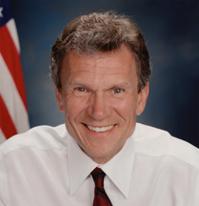
Mr. President, today we begin the most consequential national security debate in a generation. At stake is more than just the fate of $87 billion in spending. This debate will speak to the lives of…
Mr. President, today we begin the most consequential national security debate in a generation.
At stake is more than just the fate of $87 billion in spending.
This debate will speak to the lives of hundreds of thousands of our men and women in uniform, who are being asked to risk everything for their country.
It will speak to America's taxpayers who are being asked to shoulder the burden of the administration's Iraq policy with little or no help from our friends and allies around the globe. And it will speak to our Nation's responsibilities and its role in the world today and for years to come.
Let me begin, though, by talking specifically about what this debate is not about.
Democrats and Republicans are united in our support for all our brave service men and women.
They continue to bring honor to their country. Inspired by their performance of duty to us, we pledge to live up to our duty to them.
Democrats will do everything in our power to ensure that our troops have every tool and resource necessary to do the job we are asking of them. Democrats and Republicans are also united in our commitment to a free, stable,
and secure Iraq. Terror must not be the successor to tyranny.
Therefore, Democrats are committed to doing everything possible to keep Saddam Hussein from returning to power and to keep terrorists from exploiting Iraq as a base of operations.
Our mission in Iraq will remain unfinished until Iraqis are governed by a constitutional government, defended by their own security forces, protected by their own police and judicial system, and provided for by a functioning infrastructure financed with Iraqi resources.
The United States must not and will not prematurely abrogate its responsibility to a fully liberated and self-sufficient Iraq.
In short, this debate is not about whether or not we should run from our obligations to our troops and to rebuild Iraq. We will not.
Simply, this debate is about how to ensure our objectives for Iraq are met successfully and our troops brought home to their loved ones as safely and quickly as possible.
Day after day, we receive more evidence of the inadequacy of the administration's plan for the stabilization and reconstruction of Iraq.
Yesterday, the New York Times reported that 650,000 tons of Iraqi munitions lie unprotected. There is evidence the 500 pound bomb that terrorists used to destroy the U.N. headquarters in Baghdad may in fact have been stolen from one of Saddam's old munitions depots. This news comes to us 3 weeks after the Pentagon assured us that all known weapons sites had already been secured.
In spite of these concerns, the administration continues to say that its pre-war planning was adequate to the task, and that it has the right prescriptions for Iraq's future.
But an objective look at the record indicates that the White House's plan for post-Saddam Iraq was either inadequate or altogether non- existent.
In its post-combat report, the Joint Chiefs of Staff concluded that the post-war plan was not sufficient to some of the most critical challenges we face in post-Saddam Iraq.
I quote from that report:
Late formation of [post-conflict] organizations limited
time available for the development of detailed plans and pre-
deployment coordination. . . . Weapons of mass destruction
(WMD) elimination and exploitation planning efforts did not
occur early enough in the process to allow CentCom to
effectively execute the mission.'' It concludes, ``The extent
of the planning required was underestimated.''
Just yesterday I learned from Iraq's Governing Council that the administration had failed to consult them when putting together its proposal to rebuild Iraq.
Think about that. At the same time the administration professes its desire to put Iraqis in charge of Iraq, it failed to seek their counsel about Iraq's most urgent needs. Instead, the administration chose to have Ambassador Bremer and its experts here in Washington determine what was best for the citizens of Baghdad and Basra.
The administration's inadequate post-Saddam planning continues to have gravest consequences.
On a daily basis, our soldiers follow orders that place them in mortal danger because they understand their work serves a greater purpose and a larger strategy. But when we place them in situations where there is no effective strategy or plan, this danger is greatly increased.
Sadly, this is a lesson our Nation has had several opportunities to learn. Retired General Anthony Zinni put it best. He said in a recent speech:
[Our troops] should never be put on a battlefield without a
strategic plan, not only for the fighting--our generals will
take care of that--but for the aftermath and winning that
war.
Where are we, the American people, if we accept this, if we
accept this level of sacrifice without that level of
planning? Almost everyone in this room, of my
contemporaries--our feelings and our sensitivities were
forged on the battlefields of Vietnam; where we heard the
garbage and the lies, and we saw the sacrifice.
We swore never again would we do that. We swore never again
would we allow it to happen. And I ask you, is it happening
again? And you're going to have to answer that question, just
like the American people are.
And remember, everyone of those young men and women that do
not come back is not only a personal tragedy, it's a national
tragedy.
By asking the right questions and making the right changes to the administration's supplemental request, the Senate can act to correct these mistakes and ensure success in Iraq. But time is running short-- in Iraq and here at home.
As Iraqis become accustomed to terrorism as a daily fact of life, they are looking to U.S. leadership for reasons to be hopeful.
They want to work with us to build a better future for themselves, but they need to know that we are committed to that future. At the same time, Americans are growing impatient. The costs of success, both in lives and in money, appear without end.
For both Iraqis and Americans, the window to demonstrate a clear plan for Iraq's future is closing.
The next 3 months are crucial to turning around the security situation, which is volatile in key parts of the country.
Iraqis, Americans, and the entire world are watching closely to see how resolutely the coalition will handle this challenge. The Iraqi population has high expectations, and the window for cooperation may close rapidly if they do not see progress on delivering security, basic services, opportunities for broad political involvement, and economic opportunity.
The ``hearts and minds'' of key segments of the Sunni and Shi'a communities are in play and can be won, but only if the Coalition Provisional Authority--CPA--and new Iraqi authorities deliver in short order.
To do so, the CPA will have to dramatically and expeditiously augment its operational capacity throughout the country, so that civilian- led rebuilding can proceed while there are still significant numbers of coalition forces in Iraq to provide maximum leverage over those who seek to thwart the process.
We believe the greatest opportunity for success lies in internationalizing the effort to stabilize and rebuild Iraq.
It reduces the risk to U.S. service men and women and the cost to U.S. taxpayers. It increases the international legitimacy of the post- Saddam effort. It makes Iraq the world's challenge and the world's responsibility.
This can be accomplished through two simple steps. First, the President needs to make obtaining greater cooperation among our allies his top national security priority and be willing to do what is reasonable to obtain their support.
It is not enough for the President to make speeches or insist on resolutions at the United Nations that essentially restate policy positions that to date have left us working largely alone.
Second, the administration needs to produce a clear plan that demonstrates both to our Armed Forces and to our taxpayers precisely what sacrifices will be expected of them, both now and in the future, in order to accomplish our objectives.
This supplemental budget request does not take either of those steps.
Before the Senate is one bill, but in truth, there are two separate and distinct requests. First, is the $67 billion requested to equip our troops to do their job. Democrats have no objection to this request and we would be willing to approve this funding this very day.
Alongside funding to support our troops stands an additional $20 billion to aid in the rebuilding of Iraq. As I said earlier, Democrats remain committed to doing whatever it takes to provide Iraq with the tools and resources necessary to join the community of nations as a safe, responsible, self-sufficient member.
But a supplemental request is not a plan. And we have serious misgivings about providing the funds requested until we have confidence they will be used in service to a plan that will successfully achieve our objectives in Iraq.
That confidence is undermined when Americans read reports that firms with close personal and financial ties to the White House are winning no-bid contracts, raising the appearance of impropriety and cronyism.
That confidence is further eroded when Americans learn that many of the items within this supplemental request seem grossly inflated or dubious. The American taxpayer is being asked to pick up the cost of 600 radios and telephones at the cost of $6,000 apiece, pickup trucks at $33,000 a piece. Iraqi prisoners will be incarcerated at $50,000 per year, more than twice the cost in
American prisons. And Iraqi entrepreneurs will receive business training costing $10,000 per month, more than two-and-a-half times the cost of an education at the Harvard Business School.
To be sure, many investments within this bill are worthwhile. But we should bring the same vigilance to control unnecessary spending that we bring to spending here at home. That is the root of the questions we will ask and the amendments we will offer.
We have sought to raise important questions such as these since the very beginning of the Iraqi conflict. Unfortunately, upon each occasion, Republicans opted to question our motives and in some cases, even our patriotism.
Senate Armed Forces Committee Chairman John Warner said last week of our soldiers, ``Their fathers, their uncles, their grandfathers have served in previous military conflicts, and they look upon the Congress as that bastion that safeguards those that are put in harm's way. I ask, do these comments constitute embracing, as we should, those families, those children? Is that safeguarding those put in harm's way? I say no.''
Senate Intelligence Chairman Roberts even suggested that the posing of questions put the lives of our soldiers at risk. ``I'm very concerned that if the criticism is so harsh as to create the impression of lack of resolve, I wonder what goes through the minds of . . . not only our men and women serving in uniform, but the very terrorists who are killing our troops and their fellow Iraqis.''
These comments represent a low-point in the Senate's proud tradition of deliberation and debate. The right to question our leaders is the foundation of our democracy.
Demanding answers in a time of war strengthens our democracy, rather than weakening it. President Teddy Roosevelt once said, ``To announce that there must be no criticism of the President or that we are to stand by the President right or wrong is not only unpatriotic and servile but it is also morally treasonable to the American public.''
As American citizens, we are obligated to ask these questions. And as Senators, we are not only obligated but empowered by our Constitution to demand answers. That is precisely what we will do during this debate.
As this debate proceeds, Democrats will offer a series of proposals that are designed to win back the trust of the Nation and the support of the world for our Iraq policy.
First, the White House must develop and inform Congress and American people about plans for success before gaining access to reconstruction funds. Second, the President should increase efforts to gain international involvement, both in terms of financial support and commitment of troops.
Third, those who have benefitted most from our Nation's prosperity should help pay their fair share for its defense. By rolling back the President's tax cut for the wealthiest one percent of Americans for just 1 year, we can pay for the full cost of this request without increasing the national debt.
Fourth, we need to ensure fair, open competition for contracts.
Finally, the White House should to transfer control of the reconstruction of Iraq from the Defense Department to the State Department, which has expertise and experience in nation building.
History will remember what we say in this debate, because it will shape not just the fate of this spending request but the fate of Iraq, the Middle East, and America's foreign policy for years to come.
I am confident that the Senate will live up to its responsibility to our troops and provide them with the support they need and have earned.
I am hopeful that Republicans will join Democrats in insisting that the White House offer a clear plan to go along with the unprecedented level of funding we have been asked to provide.
When our armed forces toppled Saddam Hussein's regime, Americans became bound to the Iraqi people and responsible for their fate.
We are committed to fulfilling that responsibility by providing the resources and support they need to become fully independent members in the community of nations.
But our vision cannot be clouded by false optimism or blinded by stubborn pride.
It is not too late to change course and bring a real plan and real cooperation, to the American rebuilding of Iraq. This opportunity will not last much longer.
We can't afford to let it, and the future of a secure Middle East, slip through our fingers.
The cost of success is great; the cost of failure is even greater.

Mr. President, today I introduce the Federal Death Penalty Abolition Act of 2003. This bill would abolish the death penalty at the Federal level. It would put an immediate halt to executions and…
Mr. President, today I introduce the Federal Death Penalty Abolition Act of 2003. This bill would abolish the death penalty at the Federal level. It would put an immediate
halt to executions and forbid the imposition of the death penalty as a sentence for violations of Federal law.
Since 1976, when the death penalty was reinstated by the Supreme Court, there have been 830 executions across the country, including two at the Federal level. At the same time, 103 people on death row were later found innocent and released from death row. Exonerated inmates are not only removed from death row, but they are usually released from prison altogether. Apparently, these people never should have been convicted in the first place. While death penalty proponents claim that the death penalty is fair, efficient, and a deterrent, the fact remains that our criminal justice system has failed and has resulted in at least 103 very grave mistakes.
Eight hundred and thirty executions, and 103 exonerations. Those are not good odds. It is an embarrassing statistic, one that should have us all questioning the use of capital punishment in this country.
Since January 25, 2001, when I last introduced this bill, the Federal Government resumed executions for the first time in almost 40 years, and 138 people have been executed nationwide. In this new year, we have begun our use of capital punishment at an alarming pace. We are only in the second week of February, and there have already been 10 executions this year. And yet this one-to-eight error rate looms. Is it possible that those 10 people are representative of the one-to-eight error rate that has plagued the death penalty since it was reinstated in 1976? Is it possible that in the last six weeks, as we have debated a war in Iraq, funding levels for Federal programs, and judicial nominations, our nation has killed an innocent person?
It is a difficult question to ask, but an even more difficult one to ignore.
While executions continue and the death row population grows, the national debate on the death penalty continues and has become even more vigorous. The number of voices joining in to express doubt about the use of capital punishment in America is growing. As evidence of the flaws in our system mounts, it has created an awareness that has not escaped the attention of the American people. Layer after layer of confidence in the death penalty system has been gradually peeling away, and the voices of those questioning its fairness are growing louder and louder. Now they can be heard from college campuses and court rooms and podiums across the Nation, to the Senate Judiciary Committee hearing room, to the Supreme Court. We must not ignore them.
That our society relies on killing as punishment is disturbing enough. Even more disturbing, however, is that the States' and Federal Government's use of the death penalty is often not consistent with principles of due process, fairness, and justice. These principles are the foundation of our criminal justice system. It is more clear than ever before that we have put innocent people on death row. In addition, statistics show that those States that have the death penalty are more likely to put people to death for killing white victims than for killing black victims.
After the death penalty was reinstated in 1976, the Federal Government first resumed death penalty prosecutions after enactment of a 1988 Federal law that provided for the death penalty for murder in the course of a drug-kingpin conspiracy. The Federal death penalty was then expanded significantly in 1994, when the omnibus crime bill allowed its use to apply to a total of some 60 Federal offenses. Since 1994, Federal prosecutions seeking the death penalty have now accelerated.
A survey on the Federal death penalty system from 1988 to early 2000 was released by the U.S. Department of Justice in September 2000. That report showed troubling racial and geographic disparities in the federal government's administration of the death penalty. In other words, who lives and who dies in the Federal system appears to relate to the color of the defendant's skin or the region of the country where the defendant is prosecuted. Attorney General Janet Reno was so disturbed by the results of that report that she ordered a further, in- depth study of the results. Attorney General John Ashcroft pledged to continue that study, but we still await the results of that further study. The Federal Government should do all that it can to ensure that no person is ever subject to harsher penalties, most importantly that of capital punishment, because of the color of the defendant's skin.
I am certain that not one of my colleagues here in the Senate, not a single one, would defend racial discrimination in this ultimate punishment. The most fundamental guarantee of our Constitution is equal justice under law, and equal protection of the laws.
While the Federal death penalty system is clearly plagued by flaws, there are 38 States across our Nation that also authorize the use of capital punishment. And like the Federal system, those systems are not free from error.
Over three years ago, Governor George Ryan took the historic step of placing a moratorium on executions in Illinois and creating an independent, blue ribbon commission to review the State's death penalty system. The Commission conducted an extensive study of the death penalty in Illinois and released a report with 85 recommendations for reform of the death penalty system. The Commission concluded that the death penalty system is not fair, and that the risk of executing the innocent is alarming real. Governor Ryan recently pardoned four death row inmates and commuted the sentences of all remaining Illinois death row inmates, after the State legislature failed to enact even one of the Commission's recommendations.
Illinois is not alone. Two years ago, then Governor Parris Glendening learned of suspected racial disparities in the administration of the death penalty in Maryland. Governor Glendening did not look the other way. He commissioned the University of Maryland to conduct the most exhaustive study of Maryland's application of the death penalty in history. Then last year, faced with the rapid approach of a scheduled execution, Governor Glendening acknowledged that it was unacceptable to allow executions to take place while the study he had ordered was not yet complete. So, in May 2002, he placed a moratorium on executions.
That study was released in January and the findings should startle us all. The study found that blacks accused of killing whites are simply more likely to receive a death sentence than blacks who kill blacks, or than white killers. According to the report, black offenders who kill whites are four times as likely to be sentenced to death as blacks who kill blacks, and twice as likely to get a death sentence as whites who kill whites.
Maryland and Illinois are not exceptions to a rule, nor anomalies in an otherwise perfect system. In fact, since reinstatement of the modern death penalty, 81 percent of capital cases across the country have involved white victims, even though only 50 percent of murder victims are white. Nationwide, more than half of the death row inmates are African Americans or Hispanic Americans.
There is evidence of racial disparities, inadequate counsel, prosecutorial misconduct, and false scientific evidence in death penalty systems across the country. While the research done in Maryland and Illinois has yielded shocking results, there are 36 other States that authorize the use of the death penalty, most of them far more frequently. Twenty-one of the 38 States that authorize capital punishment have executed more inmates than Maryland, and 13 of those States have carried out more executions than Illinois. So while we are closer to uncovering the unthinkable truth about the flaws in the Maryland and Illinois death penalty systems, there are 36 other states with systems that are most likely plagued with the same flaws. And yet, the killing continues.
At the beginning of 2003, at the beginning of a new century and millennium with hopes for great progress, I cannot help but believe that our progress has been tarnished by our Nation's not only continuing, but increasing use of the death penalty. We are a Nation that prides itself on the fundamental principles of justice, liberty, equality and due process. We are a Nation that scrutinizes the human rights records of other nations. We are one of the first nations to speak out against torture and killings by foreign governments. We should hold our own system of justice to the highest standard.
Over the last two years, some prominent voices in our country have done
just that. And they are not just voices of liberals, or of the faith community. They are the voices of Justice Sandra Day O'Connor, Reverend Pat Robertson, George Will, former FBI Director William Sessions, Republican Governor George Ryan, and Democratic Governor Parris Glending. The voices of those questioning our application of the death penalty are growing in number, and they are growing louder.
And while we examine the flaws in our death penalty system, we cannot help but note that our use of the death penalty stands in stark contrast to the majority of nations, which have abolished the death penalty in law or practice. There are now 111 countries that have abolished the death penalty in law or in practice. The European Union denies membership in the alliance to those nations that use the death penalty. In fact, it passed a resolution calling for the immediate and unconditional global abolition of the death penalty, and it specifically called on all states within the United States to abolish the death penalty. This is significant because it reflects the unanimous view of a group of nations with which the United States enjoys the closest of relationships.
On February 5, 2003, the International Court of Justice, ICJ, ruled unanimously that the United States must temporarily stay the execution of three Mexican citizens on death row in Texas and Oklahoma. There are currently 112 foreign nationals on death row in this country. Under Article 36 of the 1963 Vienna Convention on Consular Relations, local authorities are required to notify all detained foreigners ``without delay'' of their right to have their consulate informed of their detention. In most cases, this international law is not being followed. In fact, only seven cases of 152 reported death sentences have been identified as meeting complete compliance with Article 36 requirements. The purpose of this law is to ensure that foreign nationals are allowed time to secure adequate counsel during the critical stages of their cases. The February ruling of the ICJ was based on the need for an investigation into whether the foreign nationals on death row were ever given their right to legal assistance from their home governments.
What is even more troubling in the international context is that the United States is now one of only seven countries that imposes the death penalty for crimes committed by juveniles. So, while a May 2002 Gallup poll found that 69 percent of Americans oppose the death penalty for those under the age of 18, we are one of only seven nations on this earth that puts to death people who were under 18 years of age when they committed their crimes. The other are Iran, the Democratic Republican of the Congo, Pakistan, Nigeria, Saudi Arabia and Yemen. In the last decade, the United States has executed more juvenile offenders than all other nations combined, and in the last three years, only four nations have executed juvenile offenders: Iran, the Congo, Pakistan, and the United States.
Iran, the Congo, and Pakistan are countries that are often criticized for human rights abuses. We should remove any grounds for charges that human rights violations are taking place on our own soil by halting the execution of people who were not even adults when they committed the crimes for which they were sentenced to die. No one can reasonably argue that executing child offenders is a normal or acceptable practice in the world community. And I do not think that we should be proud that the United States is the world leader in the execution of child offenders.
As we begin a new year and another Congress, our society is still far from fully just. The continued use of the death penalty shames us. The penalty is at odds with our best traditions. It is wrong and it is immoral. The adage ``two wrongs do not make a right,'' applies here. Our nation has long ago done away with other barbaric punishments like whipping and cutting off the ears of suspected criminals. Just as our nation did away with these punishments as contrary to our humanity and ideals, it is time to abolish the death penalty as we seek justice in this new century. And it's not just a matter of morality. The continued viability of our justice system as a truly just system requires that we do so. And our Nation's striving to remain the leader and defender of freedom, liberty and equality demands that we do so.
Abolishing the death penalty will not be an easy task. It will take patience, persistence, and courage. As we work to move forward in a rapidly changing world, let us leave this archaic practice behind.
I ask my colleagues to join me in taking the first step in abolishing the death penalty in our great Nation. I also call on each State that authorizes the use of the death penalty to cease this practice. Let us step away from the culture of violence and restore fairness and integrity to our criminal justice system.
I ask unanimous consent that the text of the bill be printed in the Record.

Mr. President, I have previously given a statement and a speech on the floor of the Senate with regard to Mr. Estrada's nomination. I voted against him in the Judiciary Committee. The concerns I had…
Mr. President, I have previously given a statement and a speech on the floor of the Senate with regard to Mr. Estrada's nomination. I voted against him in the Judiciary Committee. The concerns I had included his not answering questions that were put to him, serious questions, in my judgment--issues about his record and his temperament.
Today, I wish to talk about homeland security. First, I will talk about the serious shortcomings in the administration's response, and then I will talk about six bills I have introduced in this Congress to improve our homeland security, including a bill today to overhaul the way we do intelligence work here at home.
The first responsibility of any government is to protect its people. Yet we live in a time when Americans feel extraordinary insecurity. We are at an elevated level of threat warning. The CIA Director says al- Qaida is ``resuming the offensive.'' The FBI Director says there are ``al-Qaida cells in the United States that we have not yet been able to identify.''
In other words, al-Qaida cells are operating here, but we do not know who they are, where they are, or what they are doing.
Americans are buying plastic sheeting and duct tape in record amounts. While they are doing everything they can to protect themselves, they have a right to know that those of us in Government are doing everything we can to protect them, their homes, their families, and their children. This is a dangerous time.
But a dangerous time calls for an honest response: This President is failing the test on homeland security. Homeland security has yielded to chemical companies that are holding back commonsense steps to secure chemical plants against horrific explosions. Homeland security is yielding to bureaucratic inertia that is defending old and outworn ways of fighting terror.
Today there are huge holes in our borders--one guard for every 5 miles on the Canadian border. There are huge holes at our ports--we are still inspecting only a fraction of all shipments into the United States, shipments that could carry nuclear or biological weapons. There are huge holes in our hometowns--where cops and firefighters do not have the equipment or the training that they need.
For all these holes, this President has vetoed billions for homeland security, he is withholding funds that first responders need today, and he has proposed funding homeland security this year at a level that even Republican experts like Warren Rudman say is totally inadequate.
We cannot cover the holes in our borders with plastic sheeting. Our cops and firefighters need reinforcements and new gear, not canned goods.
In 2000, the President's team talked about the dangers of a hollow military. At a time when the greatest dangers we face are here at home, this administration risks creating a hollow homeland defense.
This is happening for a very simple reason. The bare minimum of homeland security improvements we need--$10 billion more this year-- costs less than half of President Bush's tax cut just for 226,000 millionaires.
I believe it is time to say to this President: Mr. President, please put our security first. Please set aside $20 billion in tax breaks for 226,000 millionaires, and put homeland security for 290 million Americans first.
Let me talk a little bit about my work on homeland security since Congress came back into session. Back in December, I laid out a comprehensive plan for strengthening our domestic security, from stopping ID fraud to sharing more information with local police to improving our cybersecurity. And in the 6 weeks Congress has been in session so far, I have introduced six bills to strengthen our homeland security. Each of these bills would make a concrete, tangible difference in people's lives.
Two bills are focused on empowering people to play a greater role in homeland security.
First, until this week, most Americans have no better idea how to respond to a terrorist attack than on September 11. Now the administration has begun giving out useful information, but we still don't have enough. We are not being told, for example, how to respond to chemical or biological attacks. In addition, there is still a serious question whether people will get the information they need when they need it, particularly when they are sleeping. Obviously TV and radio won't help if you are asleep. So I have a bill, which I wrote with Senator Fritz Hollings, that will create an emergency warning system to reach everyone--for example, using special phone rings that could wake people up in the middle of the night.
Second, we want to encourage more people to contribute. People want to serve, but they feel like they haven't been asked. We should ask. One way is through the Neighborhood Watch program. Neighborhood Watches help prevent both terrorism and ordinary crime. We are going to increase support for these, encourage folks to get involved, with the goal--the realistic goal--of tripling the number of neighborhood watches.
Next, I have introduced two bills focused on hardening vulnerable targets--in other words, taking those targets we know terrorists want to attack, and transforming them so they will be less vulnerable.
One bill is to do research to enhance building security, to improve the quality of private security guards and make buildings more resistant to attack. We know that at the Oklahoma City bombing, 85 percent of the lives might have been saved if the building had been built with better materials, in a better way. We are still learning about the World Trade Center collapse. We know we need better construction and better security around buildings across America.
A fourth bill would require the Government to improve its cybersecurity. A few weeks ago, we had an attack that crippled a lot of Government computer systems. There are simple tests we could be doing to block computer attacks that we are not doing: to ``patch'' holes in the systems. We need to make that happen.
Fifth, I have introduced a bill to help local law enforcement by requiring the Government to give security clearances to more police officers, firefighters, and health officials. They need information to keep us safe, but too often they are not getting it. This bill would help make sure they do.
Finally, there is the bill I have introduced today, and that I want to talk about in some detail. This bill will make fundamental changes in the way
we protect Americans against international terrorists operating within our borders. This bill takes away from the FBI the responsibility to collect intelligence on foreign terrorist groups operating in America. And this bill gives that responsibility to a new Homeland Intelligence Agency. I believe this agency will do a better job protecting our safety and our basic freedoms. Let me briefly explain why.
There is no question that the FBI is full of dedicated professionals who are patriots, who serve their country with courage and conviction, who do all of us proud.
But there is also no question that the FBI made many serious mistakes before September 11. There was the Phoenix memorandum, a memorandum about suspicious behavior at flight schools that the FBI did not follow up on. There was the Moussaoui case, where the FBI had in its possession a computer full of critical information, yet did not access the information there. There were even two hijackers who the FBI knew were threats but did not track and stop.
It is true all this was before September 11. The other day, Director Mueller told me that my criticisms understated the extent of the FBI's reforms. Well, I respect Director Mueller, and I look forward to continuing to talk with him about FBI reform. I have only the best wishes for his reform efforts.
At the same time, it would be hard to understate the seriousness of the problems we have seen.
This is not just my view; it is the view of every objective panel to look at this issue. These panels have raised serious questions about the FBI's response to terrorism, and in some instances, about the FBI's capacity to respond to terrorism.
The Markle Task Force commented: ``. . . there is a resistance ingrained in the FBI ranks to sharing counter-terrorism information . . . the FBI has not prioritized intelligence analysis in the areas of counter-terrorism.''
The Joint Congressional Inquiry noted: The FBI has a ``history of repeated shortcomings within its current responsibility for domestic intelligence. . . .''
The Brookings Institution went further, stating that ``there are strong reasons to question whether the FBI is the right agency to conduct domestic intelligence collection and analysis.''
And finally, the Gilmore Commission recently said: ``the Bureau's long standing tradition and organizational culture persuade us that, even with the best of intentions, the FBI cannot soon be made over into an organization dedicated to detecting and preventing attacks rather than one dedicated to punishing them.''
I believe the Gilmore Commission reached the right conclusion.
Part of the problem is bureaucratic resistance at the FBI. The FBI is full of superb public servants. But the reality is that the FBI is also a bureaucracy, and it is the nature of a bureaucracy to resist change. That is just the reality. It was only in November that the New York Times reported the FBI's No. 2 official was ``amazed and astounded'' by the FBI's sluggish response to the terrorist threat.
Beyond the problem of bureaucratic resistance, there is a more fundamental problem with the FBI. That problem is the conflict at the base of the FBI's mission, which is a conflict between law enforcement and intelligence. These are fundamentally different functions.
Law enforcement is about building criminal cases and putting people in jail. Intelligence isn't about building a case; it is about gathering information and putting it together into a bigger picture.
The FBI has never been built for intelligence. It has always been an agency that hires people who want to be law enforcement officers, trains them to be law enforcement officers, and promotes them for succeeding as law enforcement officers.
Cases have been run by field offices with little of the central coordination that is essential to combat national networks of terrorists. The FBI has regularly kept intelligence within the agency's walls rather than sharing it with other key players.
Now, the FBI says all this is changing. But with all due respect, the FBI's reforms are too little and too late. They are not enough, and because of the nature of the FBI, they cannot ever be enough.
That is why I propose today to create a Homeland Intelligence Agency, one that would be responsible for collecting foreign intelligence inside the United States, analyzing that intelligence, and getting it to the policymakers or first responders who need it. This entity isn't in the new Department of Homeland Security. It isn't in the newly announced ``Terrorist Threat Integration Center.'' That's just about analysis. This is about collection, gathering the intelligence information to begin with.
I believe this agency will do a better job fighting terrorism because its sole focus will be intelligence gathering. The inherent conflict between law enforcement and intelligence will not get in the way of its work.
I also believe it will do a better job protecting our civil liberties. While we will not give the new agency any new authorities, we will place new checks on its ability to collect information about innocent people. Time and again, we have seen this administration overreach when it comes to civil liberties. That should stop, and this proposal will help stop it.
We will require judicial approval before the most secretive and invasive investigations of religious and political groups. We will require greater public reporting and more internal auditing. We will establish a new and independent office of civil liberties within the new agency that is dedicated to protecting the constitutional rights of innocent Americans. So at the end of the day, we will help to fulfill America's promise--that we are safe and free at the same time.
I believe this bill is an important step to making America safer, and I look forward to working on it with colleagues on both sides of the aisle in getting this legislation passed.
Show 11 more
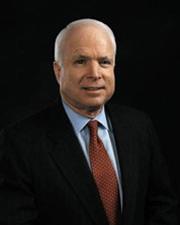
I ask my friend from Wisconsin how long he will be. I ask unanimous consent the Senator from Wisconsin be recognized for 10 minutes, and I be recognized for 15 minutes following that. I thank my…
I ask my friend from Wisconsin how long he will be.
I ask unanimous consent the Senator from Wisconsin be recognized for 10 minutes, and I be recognized for 15 minutes following that.
I thank my friend from Wisconsin who was here before me.
Mr. President, we have begun a debate that may ultimately be more consequential than the war debate we had in this Chamber last October, which culminated in the votes of 77 Senators authorizing the President of the United States to go to war against Saddam Hussein's Iraq. A negative Senate vote last fall, before our country was committed to liberating and reconstructing Iraq, would have weakened the President's leadership and made America less secure. But a vote against reconstructing Iraq now, with 130,000 American forces on the ground, American credibility before our friends and enemies at stake, and the enormous responsibility of helping the Iraqi people rebuild their country now on our shoulders, would doom Iraq's transformation to failure, with grave consequences for the entire Middle East, and devastate American leadership in a dangerous world.
An extraordinary allied military campaign in Iraq overthrew, in 3 weeks, a Baathist regime that had ruled for three decades. Americans were rightly proud not only of our military's exemplary performance, but of the cause for which they fought: ending the threat posed by Saddam Hussein's regime and liberating the Iraqi people from his tyrannical rule. With their liberation came an obligation: to help them restore their devastated and demoralized country until it is stable, and secure, and free, and therefore, no longer poses a threat to its people or its neighbors. That job is not close to being done. We have not yet won the peace. And we do not have time to spare.
If we do not meaningfully improve services and security in Iraq over the next few months, it may be too late. The danger is that our failure to improve daily life, security, and Iraqis' participation in their own governance will erode their patience and fuel a minority's appeal for insurrection. We will risk an irreversible loss of Iraqi confidence and reinforce the efforts of extremists who seek our defeat and threaten Iraq's democratic future. That is why we have to pass this supplemental spending bill, urgently.
There are two fundamental errors we could make in postwar Iraq. We could stay too long, denying Iraqi sovereignty to a proud and talented people who have the human and material resources to build a progressive and modern Arab state. We cannot repeat in Iraq the example of the Balkans, where Bosnia and Kosovo remain U.N. protectorates years after our just military intervention. Few things would inflame Iraqi and Arab opinion more than a long-term United States occupation of Iraq. But America is not an imperial nation. We will leave Iraq when our job is done, and we will leave behind an Iraq that is whole, free, and at peace.
The other danger, and the greater risk, is that we leave too soon-- before basic Iraqi services are up and running, before law and order are restored, and before there is a competent, representative Iraqi government in place to answer to the Iraqi people. They key to a
timely United States withdrawal from Iraq, and for the quickest restoration of Iraqi sovereignty, is to maximize our commitment now to providing the security and services that will allow the fragile institutions of democracy to take root. A serious United States investment in Iraq's future is the only way we can leave the Iraqi people and their leaders with a functioning, progressive state that will be an example for the region and a future partner and ally of the United States.
Some of my colleagues on both sides of the aisle accept that Iraq requires substantial and immediate reconstruction funding, but would provide that funding in the form of loans to be repaid to the United States or international financial institutions when the Iraqi economy is up and running again. This would gravely damage America's reputation and our support within Iraq. Asseting our claim to Iraq's oil revenues over the next 10 or 20 years would confirm the propaganda of our enemies and the suspicions of skeptics across the Arab world and closer to home: that this was a war for oil. It would also make it impossible for us to encourage countries like Russia, France, and Germany, which hold enormous levels of Iraqi debt from Saddam Hussein's era, to write off some of that debt in order to life its burden from the Iraqi people.
Seeking control, whether directly or indirectly, over Iraq's future oil revenues would condemn Iraq to be another ward of the international community by denying the Iraqi people the key to their future prosperity. By making a claim that would prevent future oil revenues from being spent by a representative Iraqi government to meet the needs of the Iraqi people, we would impede the economic development that will be key to a moderate, progressive Iraqi politics. We would make our immediate task of reconstructing and securing Iraq much more difficult, because collateralizing Iraqi oil revenues would encourage more Iraqis to believe the message of the Baathists and terrorists who oppose us: that we are in Iraq not to help the Iraqi people build a better future but to serve our own narrow ends, at their expense. Ironically, we would also make it more difficult for American forces to leave Iraq by handicapping Iraqis' ability to reconstruct their country and govern themselves. Providing reconstruction monies in the form of a loan would seriously undermine American national interests in the Middle East.
We will also debate the question of whether to divide this spending bill into military and reconstruction components. Proponents of this approach would substantially trim or vote down reconstruction funding, as if we should pay only for our troop presence in Iraq but spend little to nothing on what our troops are actually there to do: create basic security and enable restoration of services so the Iraqis can govern themselves. The reconstruction and military components of this spending request are inextricably linked. Part of the answer to the security challenges we face in Iraq is restoring basic services and empowering Iraqis to play a greater role in their own security. Voting against reconstruction funds will seriously degrade the security environment as greater numbers of frustrated Iraqis fall prey to the extremists' appeals to oppose our presence, putting our troops in greater danger and imperiling their core mission of stabilizing Iraq.
At a Senate Armed Services Committee hearing last week, I asked Ambassador Paul Bremer what would happen if Congress did not pass the reconstruction portion of the President's supplemental spending request. Here is his response: ``Well, it would be directly contrary to American's interest--obviously, it would be contrary to the Iraqi people's interest, but it would be contrary to our interest, because it would create a situation of much greater insecurity. I think we would find more of the population turning against us. I think we would find more attacks on coalition forces. Eventually, Iraq would . . . recede into a situation of chaos, not dissimilar from what was experienced in Lebanon in the 1970s and 1980s, and we would find another breeding ground for terrorists. So I think it's a rather grim outlook.''
I would encourage my colleagues who may be considering efforts to split this bill into military and reconstruction components in order to decrease or vote down reconstruction funding to contemplate the prospect of the kind of state collapse and civil war that destroyed Lebanon happening in Iraq as a result of our own shortsightedness.
The Senate will also consider proposals to reduce tax cuts for the wealthy in order to pay for Iraqi reconstruction. I voted against the President's tax cut package in 2003, in part because the costs of this war and its aftermath were unknown at the time. But given what is at stake for the Iraqi people and for America's national interest, I cannot support proposals to raise taxes to fund our mission in Iraq. Such proposals, if not linked to the Iraq supplemental, would have merit, but were they to pass as part of this package they would endanger its passage, transforming a domestic political dispute into what would quickly become a foreign policy defeat. Our success in Iraq is too important to take that chance.
This bill is not perfect. I intend to offer an amendment to provide for regular auditing of the Coalition Provisional authority's budget, and I suspect the Senate will add additional reporting requirements to better inform us about how reconstruction money is being spent. But given the urgency of our mission in Iraq, I intend to strongly support the President's budget request, oppose all amendments that could endanger its passage, and do everything I can to see that the United States honors the commitment we have entered into to help the Iraqi people stand up a legitimate, representative government that does not threaten them or their neighbors, and that is a force for good in a dangerous region.
Every so often in this Chamber, we deal with an issue of such gravity that it transcends partisan divisions. Providing for Iraq's democratic future should be such an issue. I encourage my colleagues to gauge carefully the broader national interest, as we conduct what I hope is a civilized and high-minded debate. To a large extent, or choices will determine the success or failure of what I believe to be the most important foreign policy challenge in a generation.
Failure to make the necessary political and financial commitment to build the new Iraq could endanger American leadership in the world, empower our enemies, and condemn Iraqis to renewed tyranny. We must act urgently to transform our military success into political victory. Passage of these supplemental funds will move us meaningfully towards that goal. Stripping reconstruction aid or providing it in the form of a loan that will incite Iraqi and Arab hostility against us will only make the job of our service men and women in Iraq harder and could doom them to failure. After all their sacrifice, and in light of the potential a free and stable Iraq holds for the future of the Middle east and America's position in the world, it would be disgraceful to turn our backs now.
Iraq's transformation into a progressive Arab state could set the region that produced Saddam Hussein, the Taliban, and al-Qaida on a new course in which democratic expression and economic prosperity, rather than a radicalizing mix of humiliation, poverty, and repression, define a new modernity in the Muslim world that does not express itself in ways that threaten its people or other nations. Conversely, a forced United States retreat from Iraq would be the most serious American defeat on the global stage since Vietnam. I don't make that statement lightly. I repeat: A forced United States retreat from Iraq would be the most serious American defeat on the global stage since Vietnam.
Our mission in Iraq is too important to fail. But it is winnable, because an Iraqi majority shares our vision of a free and progressive Iraq. Our national interest demands that we help them realize this goal.
I yield the floor and suggest the absence of a quorum.
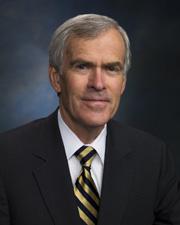
Madam President, I rise to introduce legislation that I believe will go a long way in helping to improve the safety and durability of the Nation's highway bridges. Today, with great pleasure I am…
Madam President, I rise to introduce legislation that I believe will go a long way in helping to improve the safety and durability of the Nation's highway bridges. Today, with great pleasure I am introducing the Southwest Bridge Research Center Establishment Act of 2003.
The purpose of this bill is to authorize the Secretary of Transportation to establish a new University Transportation Center focused on the safety of highway bridges. The new Southwest Bridge Research Center is a cooperative effort between New Mexico State University and the Oklahoma Transportation Center, comprising the University of Oklahoma and Oklahoma State University. The new center will lead the Nation in the research and development of technologies for bridge testing and monitoring, procedures for ensuring bridge safety and security, and training in methods of bridge inspection.
Our highway network is a central component of our economy and fundamental to our freedom and quality of life. America's mobility is the engine of our free market system. Transportation via cars, buses, and trucks plays a central role in our basic quality of life. Much of the food we eat, the clothes we wear, the materials for our homes and offices, comes to us over the 4 million miles of our road network.
One critical element of our highway network is the highway bridges that span streams, rivers, and canyons of our cities and rural areas. Bridges also help traffic flow smoothly by carrying one road over another.
Most highway bridges are easy to overlook. Notable exceptions are New England's covered bridges, the well-known Golden Gate Bridge, and the spectacular Rio Grande Gorge Bridge near Taos, New Mexico. The fact is, according to the Federal Highway Administration, we have about 590,000 highway bridges in this country that are more than 20-feet long. The total bridge-deck area of these 590,000 bridges is an amazing 120 square miles, or slightly smaller in area than the entire city limits of Albuquerque, New Mexico, roughly twice the size of the entire District of Columbia, or five times the area of New York's Manhattan Island. The State of Texas leads
the Nation with over 48,000 bridges, about ten percent of the total. Ohio is second with about 28,000 highway bridges.
A little known, and disturbing fact about these 590,000 highway bridges is that nearly 84,000, or 14 percent, are considered to be structurally deficient according to the most recent statistics from the FHWA. The percent of structurally deficient bridges varies widely among the 50 States. For example, this chart shows some of the States with some of the highest percentage of deficient bridges.
------------------------------------------------------------------------
Percent of
Number of structurally
State Number of structurally deficient
bridges deficient bridges (in
bridges percent) ------------------------------------------------------------------------ Oklahoma 22,708 7,605 33.5 Missouri 23,604 6,083 25.8 Rhode Island 749 187 25.0 Pennsylvania 22,092 5,418 24.5 South Dakota 6,001 1,398 23.3 Mississippi 16,825 3,694 22.0 Iowa 25,030 5,036 20.1 North Dakota 4,517 871 19.3 Michigan 10,631 2,012 18.9 Louisiana 13,426 2,425 18.1 Alabama 15,641 2,677 17.1 North Carolina 16,991 2,513 14.8 Kansas 25,638 3,465 13.5 Ohio 27,952 3,304 11.8 ------------------------------------------------------------------------ Source: FHWA National Bridge Inventory (NBI) System, December 2001.
Structurally deficient bridges are a particular concern in rural areas of our country. According to FHWA's 2002 edition of its Conditions and Performance Report to Congress, 16 percent of rural bridges are structurally deficient compared to only 10 percent of urban bridges. The report estimates the average cost required to maintain the existing 590,000 highway bridges is $7.3 billion per year.
Another surprising fact about our Nation's highway bridges is their age. About one-third of all highway bridges are more than 50 years old, and an amazing 10,000 bridges are at least 100 years old. About 4,000 of these century-old bridges are currently rated as structurally deficient.
I do believe the number of deficient bridges in this country should be a concern to all Senators. Ensuring that States and local communities have the funds they need to help correct these deficient bridges will be one of my priorities when Congress reauthorizes TEA-21. However, because there may not be sufficient Federal and State funding to address all of the deficient bridges, it will be important to identify the bridges that are most in need of replacement or rehabilitation.
To ensure the most efficient use of limited resources, Congress should also address the need for new technologies to help States monitor the condition of the Nation's 590,000 highway bridges and determine priorities for repair or replacement. Such monitoring technologies, or ``smart bridges,'' should be quick, efficient, and not damage the bridge in any way. I am very pleased that New Mexico State University is one of the Nation's pioneers in the development of non- destructive methods of determining the physical condition of highway bridges. Such smart bridges can record and transmit information on their current structural condition as well as on the traffic crossing them.
In 1998, NMSU installed 67 fiber-optic sensors on an existing steel bridge on Interstate 10 in Las Cruces. This award-winning project was the first application of fiber-optic sensors to highway bridges. More recently, in 2000, sensors were incorporated directly in a concrete bridge during construction to monitor the curing of the concrete; the bridge crosses the Rio Puerco on Interstate 40, west of Albuquerque. NMSU has an actual 40-foot ``bridge'' in a laboratory on campus to allow studies of instrumentation and data collection.
I ask unanimous consent that two articles describing NMSU's accomplishments on smart bridge technology be printed in the Record, exhibits one and two.
NMSU is also a leader in other areas of bridge inspection. It has provided training for bridge inspectors for over 30 years. It has also developed expertise in using a virtual reality approach to document a bridge's physical condition.
At the same time, Oklahoma State University leads the Nation in the development of the Geothermal Smart Bridge System, which uses energy stored in the earth itself to help keep bridges free of ice and snow. OSU is also performing cutting edge research on high-performance structural materials frequently used in bridges including concrete, steel, and timber.
At the University of Oklahoma, a multidisciplinary team of researchers is working to develop a ``smart'' vehicle-bridge system that is expected to reduce the impact of moving trucks on bridge structures, thereby increasing the lifespan of highway bridges. The UO team is also expert in the development of high-performance concrete and of sensors for non-destructive testing.
Of course, the Oklahoma Transportation Center was also heavily involved last year in the rebuilding of the Interstate 40 bridge over the Arkansas River near Webbers Falls, OK, after it collapsed when struck by a barge. The bridge was reopened to traffic only 64 days after the accident.
This is just a glimpse at the high quality bridge research at these three universities. All three institutions are widely recognized as national leaders in all aspects of bridge research and technology. I believe it is fully appropriate for these three nationally recognized universities to collaborate in operating the Southwest Bridge Research Center.
The bill I am introducing today authorizes the Secretary of Transportation to establish and operate the Southwest Bridge Research Center at New Mexico State University in collaboration with the Oklahoma Transportation Center. I do believe the three universities have earned this honor. In fact, in some ways, Congress has already recognized their fine work of the three centers. For example, the University of Oklahoma was allotted $3.5 million in TEA-21 for research work on intelligent stiffeners for bridge stress reduction and Oklahoma State received $3.5 million for work on the geothermal heat pump smart bridge program.
I am pleased to have also played a part. At my request, Congress provided $600,000 in 2001 for bridge research at New Mexico State University and an additional $250,000 in the current fiscal year.
The specific purpose of the Southwest Bridge Research Center will be to contribute to improving the performance of the nation's highway bridges. The center will emphasize five goals: 1. Increasing the number of skilled individuals entering the field of transportation; 2. improving the monitoring of the structural health of highway bridges; 3. developing innovative technologies for testing and assessment of bridges; 4. developing technologies and procedures for ensuring bridge safety, reliability, and security; and 5. providing training in the methods of bridge inspection and evaluation.
Building on the three universities' research work, the Southwest Bridge Research Center will develop a strong educational component, including degree opportunities in bridge engineering at both the undergraduate and graduate levels. In addition, the center will have a cooperative certificate program for training and professional development. Distance education technology and computer-based learning will allow programs to be offered at any of the universities.
The bill provides $3 million in funding from the Highway Trust Fund to operate the center.
New Mexico State University and the Oklahoma Transportation Center have applied their vast talents, tools, and techniques to solving technological problems with highway bridges for over 30 years. The team is well established and maintains cutting-edge expertise. The members of the team are recognized and respected at the national and international levels through accomplishments in bridge testing, monitoring, and evaluation.
I ask all senators to support the designation of a new Southwest Bridge Research Center. I look forward to working this year with the Chairman of the Environment and Public Works Committee, Senator Inhofe, and Senator Jeffords, the ranking member, to incorporate this bill into the full 6-year reauthorization of the transportation bill.
I ask unanimous consent that a letter of support from the three universities and a letter from Rhonda Faught, the Secretary of New Mexico's State Highway and Transportation Department be printed in the Record. I also ask unanimous consent that the text of the bill be printed in the Record.
Madam President, I join several of my colleagues today to introduce a series of bills related to the reauthorization of the Higher Education Act (HEA). These five bills emphasize a number of issues…
Madam President, I join several of my colleagues today to introduce a series of bills related to the reauthorization of the Higher Education Act (HEA). These five bills emphasize a number of issues that are vital to higher education, including teacher quality; loan forgiveness for social workers, family lawyers, and early childhood teachers; and the reduction of drug use and underage drinking at our colleges and universities.
The quality of a student's education is the direct result of the quality of that student's teachers. If we don't have well trained teachers, then future generations of our children will not be well educated. That is why I am introducing a bill that would provide $200 million in grants to our schools of education to partner with local schools to ensure that our teachers are receiving the best, most extensive training available before they enter the classroom.
The Secretary of Education's annual report on teacher quality reported that a majority of graduates of schools of education believe that the traditional teacher preparation program left them ill prepared for the challenges and rigors of the classroom. Part of the responsibility for this lies in the hands of our schools of education. However, Congress also has a responsibility to give our schools of education the tools they need to make necessary improvements. This new bill would create a competitive grant program for schools of education, which partner with low-income schools to create clinical programs to train teachers. Additionally, it would require schools of education to make internal changes by working with other departments at the university to ensure that teachers are receiving the highest quality education in core academic subjects. Finally, it would require the college or university to demonstrate a commitment to improving their schools of education by providing matching funds.
Another complex issue affecting the teaching force is the high percentage of disillusioned beginning teachers who leave the field. Our bill would help combat this issue, as well. Schools of education receiving these grants would be responsible for following their graduates and continuing to provide assistance after they enter the classroom. The more we invest in the education of teachers--especially once they have entered the profession--the more likely they will remain in the classroom.
Today, I also would like to introduce, along with Senator Dodd, the Early Care and Education Loan Forgiveness Act. Our dear friend and colleague, Senator Wellstone, and I had included this legislation in the last higher education reauthorization bill. We had been working on this legislation together before Paul's tragic death. I know he cared deeply about this issue and about making sure that all children receive a quality education. He was passionate about that. And, in his memory, I would like to rename our bill the Paul Wellstone Early Educator Loan Forgiveness Act.
This bill would expand the loan forgiveness program so that it benefits not just childcare workers, but also early childhood educators. This loan forgiveness program would serve as an incentive to keep those educators in the field for longer periods of time.
Paul Wellstone knew how important early learning programs are in preparing our children for kindergarten and beyond. Research shows that children who attend quality early childcare programs when they were three or four years old scored better on math, language arts, and social skills in early elementary school than children who attended poor quality childcare programs. In short, children in early learning programs with high quality teachers--teachers with a bachelor's degree or an associate's degree or higher--do substantially better.
When we examine the number and recent growth of pre-primary education programs, it becomes difficult to differentiate between early education and childcare settings because they are so often intertwined-- especially considering that 11.9 million children younger than age five spend part of their time with a care provider other than a parent and that demand for quality childcare and education is growing as more mothers enter the workforce.
Because this bill targets loan forgiveness to those educators working in low-income schools or childcare settings, we can make significant strides toward providing high quality education for all of our young children, regardless of socioeconomic status. The bill would serve a twofold function. First, it would reward professionals for their training. Second, it would encourage professionals to remain in the profession over longer periods of time, since more time in the profession leads to higher percentages of loans forgiveness. The bill would result in more educated individuals with more teaching experience and lower turnover rates, each of which enhance student performance.
I encourage my colleagues to join me in this effort to ensure that truly no children--especially our youngest children--are left behind.
I also am working on two bills with my friend and colleague from West Virginia, Senator Jay Rockefeller. These bills would provide loan forgiveness to students who dedicate their careers to working in the realm of child welfare, including social workers, who work for child protective services, and family law experts.
Currently, Mr. President, there aren't enough social workers to fill available jobs in child welfare today. Furthermore, the number of social work job openings is expected to increase faster than the average for all occupations through 2010. The need for highly qualified social workers in the child protective services is reaching crisis level.
We also need more qualified individuals focusing on family law. The wonderful thing about family law is its focus on rehabilitation--that is the rehabilitation of families by helping them through life's transitions, whether it is a family going through a divorce, a family dealing with their troubled teenager in the juvenile system, or a child getting adopted and becoming a member of a new family.
Across the United States, family, juvenile, and domestic relations courts are experiencing a shortage of qualified attorneys. As many of my colleagues and I know, law school is an expensive
investment. In the last 20 years, tuition has increased more than 200 percent. Currently, the average rate of law school debt is about $80,000 per graduate. To be sure, few law school graduates can afford to work in the public sector because debts prevent even the most dedicated public service lawyer from being able to take these low- paying jobs. This results in a shortage of family lawyers.
The shortage of family law attorneys also disproportionately impacts juveniles. The lack of available representation causes children to spend more time in foster care because cases are adjourned or postponed when they simply cannot find an attorney to represent their rights or those of the parent or guardian. Furthermore, the number of children involved in the court system is sharply increasing. We need to ensure that the interests of these children are taken care of by making certain they have an advocate--someone working solely on their behalf. By offering loan forgiveness to those willing to pursue careers in the child welfare field, we can increase the number of highly qualified and dedicated individuals who work in the realm of child welfare and family law.
Finally, I am introducing a bill today with my friend and colleague from Connecticut, Senator Lieberman, that would help address an epidemic--the epidemic of underage drinking, binge drinking, and drug- related problems on college and university campuses across the United States. Our bill would provide grants to states to establish statewide partnerships among colleges and universities and the surrounding communities to work together to reduce underage and binge drinking and illicit drug use by students.
According to a study by Boston University, over 1,400 students aged 18-24 died in 1998 from alcohol-related injuries, more than 600,000 students were assaulted by another student, and another 500,000 were injured unintentionally while under the influence of alcohol. According to a 1999 Harvard University study, 40 percent of college students are binge drinkers and according to the Department of Health and Human Services, nearly 10.5 million current drinkers were under the legal age of 21, and of these, over 5 million were binge drinkers.
Currently, 28 States, including my home State of Ohio, have coalitions that deal specifically with the culture of alcohol and drug abuse on our nation's college campuses. They work with the surrounding communities, including local residents, bar, restaurant and shop owners, and law enforcement officials, toward a goal of changing the pervasive culture of drug and alcohol abuse. They provide alternative alcohol-free events, as well as support groups for those who choose not to drink. They also educate students about the dangers of alcohol and drug-use.
Furthermore, the coalitions recognize that while it is important to promote an alcohol aware and drug-free campus community, if the community surrounding the campus does not promote these initiatives, there will be no long-term solutions. Therefore, these coalitions also have worked to establish regulations both on and off campus, which will help our nation's youth to stay healthy, alive, and get the most out of their time at college. Some of these regulations include the registration of kegs. This provides accountability for both the store and the student. This is just an example of one step that colleges, local communities, and organizations can take.
To help start the expansion of these coalitions, our bill would provide $50 million in grants. This is an important demonstration project that would help lead to positive effects for our young people. It is up to us to change the culture, which has been perpetuated by years of complacency and a dismissal tone of--``that's just the way it is in college.'' We must protect the health and education of our young people by changing this culture of abuse--and that is exactly what this bill would do.
Next year when we consider the reauthorization of the Higher Education Act, I encourage my colleagues to join in support of these initiatives.
Mr. President, I ask unanimous consent that the text of the bills be printing in the Record.

Mr. President, I am pleased to introduce the Gunsmith Excise Tax Simplification Act of 2003. This bill will protect funding for the Federal Aid to Wildlife Restoration Fund by simplifying…
Mr. President, I am pleased to introduce the Gunsmith Excise Tax Simplification Act of 2003. This bill will protect funding for the Federal Aid to Wildlife Restoration Fund by simplifying administration and compliance with the excise tax by eliminating the assessment of the tax against custom gunsmiths.
The creation of the Federal Aid to Wildlife Restoration Fund is one of the great success stories of cooperation among America's sportsmen and women, state fish and wildlife agencies, and the sporting goods industry. Working together with Congress, Americans who enjoy the outdoors volunteered to pay an excise tax on sporting arms and ammunition to be used for hunter education programs, wildlife restoration, and habitat conservation.
Under the tax code, all manufacturers of firearms must pay an excise tax of 10 percent or 11 percent of the retail price, depending on the type of firearm. For more than 25 years custom gunsmiths have sought to clarify that they were not intended to be subject to this tax. Many custom gunsmiths do not actually make new guns, rather they remodel or refurbish existing firearms. The proposal establishes an exemption from the excise tax for manufacturers of fewer than 50 firearms per year.
This issue is important to individuals in Montana. Steven Dodd Hughes, a custom gunmaker in Livingston, MT, pays this tax. He has a sole proprietorship, a one man shop. Steven's business is generated from outside of Montana and brings in much needed revenue to his community. He agrees with the tax as it was intended, on manufacturers. It was not intended to be applied to one man operations such as his. The American Custom Gunmakers Guild and the NRA agree with Mr. Hughes.
In summary, the Gunsmith Excise Tax Simplification Act of 2003 would accomplish two worthy objectives. First, this proposal will eliminate the assessment of the excise tax on custom gunmakers, which is fair. Second it eliminates the significant administrative burden placed on small businesses, such as determining who the manufacturer is and who is going to assess and collect the tax. These custom gunmakers rebuild and update the firearms, they don't administer tax laws. Last year, the Joint Committee on Taxation estimated the proposal will decrease revenues by less than $10 million over ten years, resulting in minimal reduction of the Federal Aid to Wildlife Restoration Fund.
I ask unanimous consent that the text of my bill entitled ``The Gunsmith Excise Tax Simplification Act of 2003'' be printed in the Record.
Madam President, I rise today to introduce the Free Trade with Cuba Act of 2003. This legislation presents an important step toward normalizing United States economic relations with Cuba and opening a dialog between our two nations. Perhaps more importantly, the bill promotes human rights and democracy in a nation that has suffered under totalitarian rule for more than 4 decades, an objective central to the same democratic principles that have driven our foreign policy since the end of the Second World War.
The Free Trade with Cuba Act contains three essential components. First, it lifts the trade embargo against Cuba and eliminates the travel ban that accompanies the embargo. Second, it graduates Cuba from Jackson-Vanik and authorizes the President to extend nondiscriminatory trade treatment to Cuba. Finally, it removes the restrictions on travel between our two countries.
This legislation is similar to the legislation I introduced in the last Congress, S. 400 and S. 401. That legislation was referred to the Finance Committee. I am hopeful the committee can pass favorably on this legislation quickly so we can bring it to the floor and pass it.
This legislation is long overdue. In 1962, the United States embargoed virtually all trade with Cuba as a response to the rise of the totalitarian regime and seizure of American property. Over the years, U.S. sanctions against Cuba were further tightened, culminating with restrictions on the rights of Americans to visit Cuba.
Within the context of the cold war, many of these sanctions seemed to make sense. Yet throughout that time the embargo appeared to have little, if any, effect on the Castro regime. Forty years of the embargo, 4 decades of disengagement, have simply not worked. It is time to try a new approach. It is time for engagement.
Supporters of the embargo throw out many arguments against the legislation. First, they will say that private property of U.S. citizens that was taken in the early days of the Castro regime compels us to refuse trade with Cuba until we get the property back. They point out horrendous treatment of Cuban citizens by Castro and denial of the most basic human rights is also a reason. Let us be clear. These are problems and they must be resolved. Yet, the debate is not whether these problems exist. They do exist, of course, they exist. That is not the issue. We all know that.
The question, rather, is how to solve it. Forty years of embargo have done nothing to regain private assets taken so long ago by Castro and 40 years of embargo have done nothing to improve the living conditions and prospects for democratic reform in Cuba.
I have been to Cuba and visited Cuba. The people are in terrible shape. If anything, the embargo has lessened the prospects for reform by giving Castro someone else to blame for the terrible economic plight of his people. This embargo, frankly, is something Castro loves. It is a foil. He can blame the United States for some of the ills of his citizens. It is working in the opposite direction. In other words, while the problems may seem complicated, the one thing we can say we do know for certain is this: Current policy is not the answer; the current policy is a failure.
We must look to alternatives. How would this legislation resolve these problems? First, as to expropriation, the legislation I am proposing today calls for the President to undertake negotiations with the government of Cuba to settle this issue and make sure those harmed by this expropriation are fairly compensated. Second, as to the crucial issues of human rights and democratic reform, the legislation simply reflects the commonsense truth that engagement between the American and Cuban peoples will do much more to open Cuban society and help Cuban people, as it has around the world for 200 years, than silence and neglect--so similar to the question we had of China not too many years ago.
What did we do with China? The answer was very simple: We engaged. We
engaged without losing. China is a country. We are a country. Let's engage again. The same is true for Cuba: They are a country, we are a country, let's start talking and figure out how to solve things.
We should not delude ourselves. Embargo is a word for neglect. By not engaging the Cuban people and opening our world and tradition to them, we are neglecting them.
Last year we worked hard to further trade liberalization, passing the Trade Act of 2002. When the President signed that bill he said this:
Free trade is also a proven strategy for building global
prosperity and adding to the momentum of political freedom.
Greater freedom for commerce across the borders eventually
leads to greater freedom for citizens within the borders.
I agree. This statement is as true for Cuba as it is for any other country.
Third, on the economics of this, sure, we are in tough times. The economy is flat. Our farmers and workers are hurting, but there is a market worth up to $1 billion a year we are shutting ourselves out, denying ourselves. It makes no sense. The embargo against Cuba accomplishes nothing, and hurts our farmers and workers and companies by excluding them from a great potential market. Meanwhile, the European Union, Japan, Mexico, Canada, dozens of other countries, are busy selling goods and building commercial relations in Cuba. We are not. They are. Ask me the rationale of that.
There is a final point regarding the basic rights of freedoms of the American people. It is a fundamental violation of the spirit of our democratic principles to tell the American people they cannot travel to Cuba. What a sad irony is trying to promote freedom and democracy in another country by restricting it in our own. It is time to get real about this. It is time to get real about promoting freedom and democracy, it is time to get real regarding economic expansion, and it is time to end the embargo.

Mr. President, I thank my colleague. It is because I prize America's leadership in the world that I will be proudly supporting Senator Byrd's amendment because Senator Byrd's amendment will allow us…
Mr. President, I thank my colleague. It is because I prize America's leadership in the world that I will be proudly supporting Senator Byrd's amendment because Senator Byrd's amendment will allow us to really look at what we are doing in Iraq. It is because I also prize this country and I respect and honor the needs of our people that I am supporting Senator Byrd's amendment.
If we look at what we spend in a year on items most important to the people in this country, and we compare it to what they are about to spend in Iraq reconstruction which we were told would never fall to American taxpayers, we will see that our people are being shortchanged.
Senator Byrd's amendment allows the funds for the military to move forward and even $5 billion of reconstruction for the Iraqi police to move forward, but it withholds the $15 billion because he prizes America's leadership, because he doesn't want us to look
foolish, because he as well as I and many others are tired of reading in the newspaper comments from the Iraqis.
For example, this is one from USA Today. It tells of an Iraqi businessman who was surprised to see the $100 million estimate to build a complex that will house more than 3,000 people. He said: I could build this for $10 million.
If someone comes to the floor and says Senator Byrd is turning his back on America's place in the world because Senator Byrd wants to protect the people of this country and their taxpayer dollars so that when and if we do build housing or shopping malls in Iraq, it is done in the right way, I say the people who question him are on the wrong track.
I have another quote. A member of the Iraqi Governing Council-- appointed by this administration, I might say--saying to Waxman staff over on the House side that non-Iraqi contractors had charged about $25 million to refurbish 20 police stations in Basra, a job that he said Iraqis could have done for $5 million. This is a disaster.
My friend talked about President Roosevelt. Let me tell you what FDR said about this during World War II:
I don't want to see a single war millionaire created in the
U.S. as a result of this world disaster.
He was talking about war profiteering. Maybe my colleagues are sanguine about the scandals we have already seen with no big contracts in the back room to firms that have connections to the Vice President of the United States. I am not sanguine.
The Byrd amendment is saving us from the embarrassments that will flow, because they will flow. I have been in the area of military procurement reform for a very long time. I served in the House for 10 years. I served on the Armed Services Committee. I discovered a lot of problems with military procurement, and you ain't seen nothing yet when you already have Iraqis saying we are charging so much.
What Senator Byrd is saying to us is, before we send hard-earned American tax dollars over there for a rebuilding, if you will-- actually, it is not even a rebuilding; it is a building because a lot of the things they never had before--before we do that, we need to look at this situation.
When I see that the administration, the President, is asking for $33,000 apiece for 80 pickup trucks when here they cost $14,000, I say thank you, Senator Byrd.
When I see a $3.6 million request for satellite phones at an average cost of $6,000 and we are told by the Iraqis that they paid on May 12 $900 each, I say thank you, Senator Byrd.
And $2 million for museums and memorials when the Iraqis say they are tired of memorials. That is all Saddam ever gave them. They don't want more memorials. I say thank you, Senator Byrd, for calling attention to the fact that they want to build two prisons at a cost of $50,000 per prison bed where in America it cost $25,000 per prison bed.
Others have talked about the cost of a 4-week business course in Iraq at a cost of $10,000 per student when in Harvard it is $4,000. I say thank you, Senator Byrd.
Where is the money going? Into somebody's pocket where it doesn't belong over there or over here? It doesn't matter; it is taxpayers' dollars.
Look at what we spend one year on drug enforcement, $1.6 billion, and our kids are dying of overdoses, and we don't have the money, and this administration won't give us the money for education.
This President cut afterschool programs in half, throwing 1 million kids out on the street. Thank goodness we restored some of it. I say thank you, Senator Byrd.
You can make the most lofty statements you want about America's leadership. America's leadership doesn't move forward one iota when we are not careful and we don't look at what we are doing.
I think it is extraordinary: $9 million for a state-of-the-art Iraqi postal service. Per capita, this amount is greater than the Federal Government spends on the U.S. Postal Service. Tell that to our constituents who are told they may not get Saturday mail deliveries.
My constituents are perplexed by this request. The President will not pay for it. He is adding to an already overblown deficit. If we do not count the Social Security trust fund, it is up to $700 billion. He will not pay for it. The numbers do not add up. They do not make sense.
My people want us to do our share to help the Iraq people, but they were told a different story from this administration. Press Secretary Ari Fleischer:
Iraq has tremendous resources that belong to the Iraqi
people. And so there are a variety of means that Iraq has to
be able to shoulder much of the burden for their own
reconstruction.
Ari Fleischer, the spokesman for the President, said that in February of this year. In March of this year, Deputy Defense Secretary Paul Wolfowitz:
There's a lot of money to pay for this that doesn't have to
be U.S. taxpayer money, and it starts with the assets of the
Iraqi people.
He also said:
We're dealing with a country that can really finance its
own reconstruction, and relatively soon.
This is what my constituents were told, and now they are told they are supposed to blink their eye at tens of billions of dollars going for things that cost half the price in this country.
How about Secretary Rumsfeld, the leader of this war:
I don't believe that the United States has the
responsibility for reconstruction.
Let me say that again. The top person in the Defense Department, Secretary Donald Rumsfeld:
I don't believe that the United States has the
responsibility for reconstruction.
That is not Barbara Boxer speaking. That is not Robert Byrd speaking. That is not Senator Murray speaking or Senator Stabenow.
This is what the American people were told, and Senator Byrd is saying to this administration that they did not tell us the truth about this.
It goes deeper than that. This administration has been wrong down the line on this policy, and suddenly we are supposed to write this enormous check for this reconstruction. I look at it as a blank check-- when one sees the numbers they have put forward. They were wrong on the weapons of mass destruction. They were wrong on what would happen after the war. They were wrong when they failed to predict that the terrorists would move in and fill the void. They were wrong on what the rebuilding would cost. They were wrong on the state of Iraq's ability to recover economically. They were wrong on how many troops would be needed. They were wrong on the oil revenues. They were wrong on how much other countries would contribute.
I know it is hard to listen to this. I know some of my colleagues on the other side do not really want to listen to this, but these are the facts. We are not operating from a lack of experience. What Senator Byrd is saying--and he is making a plea to colleagues on both sides of the aisle--is that we need to take a further look at these requests, especially at a point in time when we are told by this administration that they cannot even meet our homeland defense needs.
I have an amendment to try to protect commercial aircraft from shoulder-fired missiles. Let's support Senator Byrd. He is doing the right thing for America.
I yield the floor.

Madam President, today I am pleased to introduce the Geriatric Care Act of 2003, a bill to increase the number of geriatricians in our country through training incentives and Medicare reimbursement…
Madam President, today I am pleased to introduce the Geriatric Care Act of 2003, a bill to increase the number of geriatricians in our country through training incentives and Medicare reimbursement for geriatric care. I am proud to be joined in this effort today by Senators Reid, Snowe, Breaux, Graham, Bingaman, Landrieu, Murray, Mikulski, Sarbanes, Reed, Kennedy, and Collins.
Our country teeters on the brink of revolutionary demographic change as baby boomers begin to retire and Medicare begins to care for them.
As a member of the Finance Committee and the Special Committee on Aging, I have a special interest in preparing health care providers and Medicare for the inevitable ``aging of America.'' By improving access to geriatric care, the Geriatric Care Act of 2003 takes an important first step in modernizing Medicare for the 21st century.
By the year 2030, 70 million Americans will be 65 and older. The elderly will soon represent one-fifth of the United States population, the largest proportion of older persons in our Nation's history. Our Nation's health care system will face an unprecedented strain as our population grows older. Our Nation is simply ill-prepared for what lies ahead.
Demand for quality care will increase, and we will need physicians who understand the complex health problems that aging inevitably brings. As seniors live longer, they face much greater risks of disease and disability. Conditions such as heart disease, cancer, stroke, diabetes and Alzheimer's disease occur more frequently as people age.
The complex problems associated with aging require a supply of physicians with special training in geriatrics. Geriatricians are physicians who are first board certified in family practice or internal medicine and then complete additional training in geriatrics.
Geriatric medicine provides the most comprehensive health care for our most vulnerable seniors. Geriatrics promotes wellness and preventive care, helping to improve patients' overall quality of life by allowing them greater independence and preventing unnecessary and costly trips to the hospital or other institutions.
Geriatricians also have a heightened awareness of the effects of prescription drugs. Given our seniors' growing dependence on prescriptions, it is increasingly important that physicians know how, when, and in what dosages to prescribe medicines for seniors. That's because frequently, older patients respond to medications in different ways than younger patients.
In fact, 35 percent of Americans 65 years and older experience adverse drug reactions each year. According to the National Center for Health Statistics, medication problems may be involved in as many as 17 percent of all hospitalizations of seniors annually.
Care management provided by a geriatrician will not only provide better health care for our seniors, but will also save costs to Medicare in the long term by eliminating more costly medical care in hospitals and nursing homes.
Quite clearly, geriatrics is a vital thread in the fabric of our health care system, especially in light of our looming demographic changes.
Yet today, there are fewer than 9,000 certified geriatricians in the United States. Of the approximately 98,000 medical residency and fellowship positions supported by Medicare in 1998, only 324 were in geriatric medicine and geriatric psychiatry. Only three medical schools in the country, the University of Arkansas for Medical Sciences, UAMS, being one of them, has a Department of Geriatrics. This is incredible considering that all 125 medical schools in our country have departments of pediatrics.
As if that weren't alarming enough, the number of geriatricians is expected to decline dramatically in the next several years. In fact, most of these doctors will retire just as the Baby Boomer generation becomes eligible for Medicare. We must reverse this trend and provide incentives to increase the number of geriatricians in our country.
Unfortunately, there are barriers preventing physicians from entering geriatrics. These include insufficient Medicare reimbursements for the provision of geriatric care, inadequate training dollars, and too few positions for geriatricians.
Many practicing geriatricians find it increasingly difficult to focus their practice exclusively on older patients because of insufficient Medicare reimbursement. Unlike most other medical specialties, geriatricians depend almost entirely on Medicare revenues. A recent MedPAC report identified low Medicare reimbursement levels as a major stumbling block to recruiting new geriatricians.
Currently, the reimbursement rate for geriatricians is the same as it is for regular physicians. But the services geriatricians provide are fundamentally different.
Physicians who assess younger patients simply don't have to invest the same time that geriatricians must invest assessing the complex needs of elderly patients. Moreover, chronic illness and multiple medications make medical decision-making more complex and time consuming. Additionally, planning for health care needs becomes more complicated as geriatricians seek to include both patients and caregivers in the process.
We must modernize the Medicare fee schedule to acknowledge the importance of geriatric assessment and care coordination in providing health care for seniors. Geriatric practices cannot flourish and these trends will not improve until we adjust the system to reflect the realities of senior health care.
The Geriatric Care Act I am introducing today addresses these shortfalls. This bill provides Medicare coverage for the twin foundations of geriatric practice--geriatric assessment and care coordination.
The bill authorizes Medicare to cover these essential services for seniors, thereby allowing geriatricians to manage medications effectively, to work with other health care providers as a team, and to provide necessary support for caregivers.
The Geriatric Care Act also will remove the disincentive caused by the Graduate Medical Education cap established by the 1997 Balanced Budget Act. As a result of this cap, many hospitals have eliminated or reduced their geriatric training programs.
The Geriatric Care Act corrects this problem by allowing for additional geriatric training slots in hospitals. By allowing hospitals to exceed the cap placed on their training slots, this bill will help increase the number of residents in geriatric training programs.
Finally, the Geriatric Care Act contains a new provision that ensures Graduate Medical Education payments for the second year of geriatric fellowship training. A one-year fellowship may be adequate for training clinical geriatricans but a two-year fellowship is essential for training academic geriatricans who will teach geriatrics to primary care and specialty physicians-in-training. Academic geriatricians are critical in preparing the next generation of doctors to care for our growing elderly population.
My home State of Arkansas ranks sixth in the Nation in percentage of population 65 years and older. In a decade, we will rank third. In many ways, our population in Arkansas is a snapshot of what the rest of the United States will look like in the near future.
We are blessed in Arkansas to have the Donald W. Reynolds Department of Geriatrics and the Center on Aging at the University of Arkansas for Medical Sciences. It is my hope that the Geriatric Care Act will make it easier for our medical school and others across the country to train more physicians in geriatrics.
As our parents, grandparents, friends, and loved ones cope with the challenges that aging brings, we must ensure that physicians skilled in caring for their special needs are there to help them. I ask my colleagues to join me in support of this effort to modernize Medicare to support crucial geriatric services for our Nation's seniors.
I ask unanimous consent that following my statement there be a printed list of organizations that support the Geriatric Care Act of 2003.

Madam President, over the last several years, I have tried to correct a long-standing injustice impacting our Nation's veterans. Under a law that is now over 110 years old, most veterans who retire…
Madam President, over the last several years, I have tried to correct a long-standing injustice impacting our Nation's veterans. Under a law that is now over 110 years old, most veterans who retire with 20 years of honorable service, and who also have a service-related disability, cannot collect both their retirement and their disability pay.
In 2001, I was joined by 82 cosponsors in introducing S. 170, the ``Retired Pay Restoration Act of 2001.'' Our bill sought to lift the restrictions to allow veterans the ``concurrent receipt'' of both retirement compensation and disability benefits. Although we were successful in getting the language approved in the National Defense Authorization Act of 2002, now codified at 10 U.S.C. 1414, the authorization was made contingent upon the passage of further appropriations. No funds were ever appropriated and concurrent receipt remained another unfulfilled promise to our veterans.
In 2002, I introduced S. 2051, the ``Retired Pay Restoration Act of 2002'' to repeal the contingency language and make concurrent receipt a reality. The Senate again overwhelmingly passed this measure. Unfortunately, the White House threatened a veto of the National Defense Authorization Act of 2003, and therefore, the Conference Committee conceded to a compromise proposal, see Section 636 of Conference Report 107-772. This compromise was a much scaled-back version of concurrent receipt. Senator Warner correctly referred to it as a ``beachhead'', but we all acknowledged there was much work remaining.
Under last year's compromise, only a small number of veterans-- estimated to be between 15 to 30 thousand--would stand to benefit. The compromise left the contingency language for full concurrent receipt in place, but created a new category of special compensation, now codified at 10 U.S.C. 1413(a). In this new category, retirees that had at least a 60 percent disability rating that was a direct result of armed conflict, hazardous service, performance of duty under conditions simulating war, or through an instrumentality of war, would be eligible to collect both retirement compensation and disability benefits. Thus, the current law excludes approximately 500,000 disabled veterans who have served their country honorably. To exclude these veterans assumes that they are less deserving of fair compensation because they did not incur their injury in combat. The law also creates an unnecessary bureaucracy for the VA and the Department of Defense, which currently do not make distinctions based on the specific cause of a service- connected disability.
Therefore, I rise today with Mr. McCain, to introduce the ``Retired Pay Restoration Act of 2003'', along with our colleagues Mr. Akaka, Mr. Allard, Mr. Allen, Mr. Baucus, Mr. Biden, Mr. Bingaman, Ms. Boxer, Mr. Breaux, Mr. Brownback, Mr. Campbell, Ms. Cantwell, Mrs. Clinton, Mr. Corzine, Mr. Daschle, Mr. Dayton, Mr. Dorgan, Mr. Durbin, Ms. Feinstein, Mr. Grassley, Mr. Hagel, Mr. Inouye, Mr. Johnson, Ms. Landrieu, Mr. Leahy, Mr. Levin, Mr. Lieberman, Ms. Lincoln, Mr. Miller, Mr. Nelson of Nebraska, Mr. Nelson of Florida, Mr. Roberts, Mr. Rockefeller, Mr. Sarbanes, Mr. Smith, and Ms. Snowe, to correct this inequity for veterans who have retired from our Armed Forces with a service-connected disability.
Our bill removes the contingency language for full concurrent receipt currently found at 10 U.S.C 1414(a) and (f), and repeals the Special Compensation programs codified at 10 U.S.C. 1413 and 1413(a). The effect would be to finally implement full concurrent receipt, thereby ending the 110 year inequity.
Passage and implementation of this bill is long overdue. I am sure many of my colleagues would be interested to learn that Congress imposed these restrictions on concurrent receipt just after the Civil War, when the standing army of the United States was extremely limited. At that time, only a small portion of our armed forces consisted of career soldiers.
Today, nearly one and a half million Americans dedicate their lives to the
defense of our Nation. The United States' military force is unmatched in terms of power, training and ability. Our Nation's status as the world's only superpower is largely due to the sacrifices our veterans made during the last century. Rather than honoring their commitment and bravery by fulfilling our obligations, the federal government has chosen instead to perpetuate a longstanding injustice. Quite simply, this is disgraceful, and we must correct it.
Once again our Nation is calling upon the members of the Armed Forces to defend democracy and freedom in Afghanistan, in the Persian Gulf and throughout the world. We must send a signal to the men and women currently in uniform that our government takes care of those that make sacrifices for our Nation. We must demonstrate to veterans that we are thankful for their dedicated service.
Military retirement pay and disability compensation are earned and awarded for entirely different purposes. Current law ignores the distinction between these two entitlements. Military retired pay is earned compensation for the extraordinary demands and sacrifices inherent in a military career. It is a reward promised for serving two decades or more under conditions that most Americans find intolerable. Veterans' disability compensation, on the other hand, is paid to recompense pain, suffering, and lost future earning power caused by a service-connected illness or injury. Few retirees can afford to live on their retired pay alone, and a severe disability only makes the problem worse by limiting or denying any post-service working life.
Career military retired veterans are the only group of Federal retirees who are required to waive their retirement pay in order to receive VA disability benefits. All other Federal employees receive both their civil service retirement and VA disability with no offset. Simply put, the law discriminates against career military men and women. It assumes, in effect, that disabled military retirees neither need nor deserve the full compensation they earned for their 20 or more years served in uniform.
This inequity is absurd. How do we explain it to the men and women who sacrificed their own safety to protect this great nation? How do we explain this inequity to those members currently risking their lives to defeat terror?
We are currently losing over one thousand World War II veterans each day. Every day we delay acting on this legislation means continuing to deny fundamental fairness to thousands of men and women. They will never have the ability to enjoy their two well-deserved entitlements.
This bill represents an honest attempt to correct an injustice that has existed for far too long. Allowing disabled veterans to receive military retired pay and veterans disability compensation concurrently will restore fairness to Federal retirement policy.
This legislation is supported by numerous veterans' service organizations, including the Military Coalition, the National Military/ Veterans Alliance, the American Legion, the Disabled American Veterans, the Veterans of Foreign Wars, the Fleet Reservists Association, the Military Officer's Association, the Paralyzed Veterans of America and the Uniformed Services Disabled Retirees.
Passing this bill will finally eliminate a grossly inequitable 19th century law and ensure fairness within the Federal retirement policy. Our veterans have heard enough excuses. Now it is time for them to hear our gratitude. I urge my colleagues to join me in supporting this legislation to finally end this disservice to our retired military men and women.
Our veterans have earned this and now is our chance to honor their service to our Nation.
I ask unanimous consent that the text of this legislation be printed in the Record.
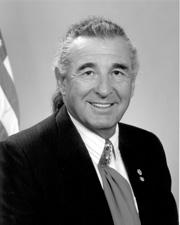
Madam President, today I introduce the ``Campus Classmate Offenders in Rehabilitation and Treatment Act of 2003.'' The legislation I am introducing today is based on legislation I previously…
Madam President, today I introduce the ``Campus Classmate Offenders in Rehabilitation and Treatment Act of 2003.''
The legislation I am introducing today is based on legislation I previously introduced toward the end of the 107th Congress.
The Campus Classmate Offenders in Rehabilitation and Treatment Act, which can also be referred to as the ``Campus CORT Act,'' directs the Department of Justice to establish a demonstration program to provide grants and training to help our Nation's universities and colleges establish new quasi-judicial systems. These systems aim at countering the serious drug and substance abuse related problems that are taking such a heavy toll on our institutions of higher learning and the students who attend them. The demonstration program, which would be administered by the Department of Justice's Office of Justice Programs, would be based on the valuable lessons and successes we have garnered from our Nation's innovative and expanding drug court system.
Specifically, this demonstration program legislation would authorize the establishment of up to five Campus CORTs each year for Fiscal Years 2004 through 2007. The bill authorizes the Office of Justice Programs to provide $2,000,000 in Federal funding during each of those years to help get five Campus CORTs well trained, soundly established and up and running. This new program's approach should be similar to how the Office of Justice Programs currently runs the ongoing drug court grant- making program, including providing an Internet-based application process.
There are plenty of good reasons to take the next step and establish a Campus CORTs program based on the drug court model. Since they first appeared in 1989, drug courts have rapidly spread all across the Nation. Rather than simply locking-up nonviolent drug offenders in prison along side violent criminals, drug courts provide the alternative of court-supervised treatment. Instead of simply punishing, drug courts help get people clean.
Drug courts' many successes are underscored both by the bipartisan support they have received in Congress and by the Bush Administration. For example, during a national conference hosted this last April by the National Association of Drug Court Professionals, both Office of National Drug Control Policy Director John Walters, our Nation's ``Drug Czar,'' and Drug Enforcement Agency Director Asa Hutchinson gave speeches in support of drug courts and the benefits they provide.
According to the latest statistics as reported by the Department of Justice's Office of Justice Programs, as of November 2002, 946 Drug Courts are operating all across the United States. This is an impressive increase of approximately 250 Drug Courts over the past year. This 946 Drug Courts includes 547 Adult Drug Courts, 245 Juvenile Drug Courts, 59 Family Drug Courts and 14 Combination Courts. Over 400 additional new Drug Courts are in the planning process.
The report goes on to state that approximately 300,000 adults and 12,000 juveniles have been enrolled in the drug court system to date. Of those participants, 73,000 adults and 4,500 juveniles have successfully graduated from Drug Courts.
The merits of the drug court system are well documented. Nationwide, drug courts have been instrumental in enabling more than 1,000 children to be born drug free, more than 3,500 parents to regain custody of their children, and 4,500 parents to resume making their child-support payments. The retention rate is over 70 percent with 73 percent of the participants managing to keep their jobs or successfully find new work. These are encouraging statistics, and not just for the individuals involved, but for society as a whole.
While it is not as easy to measure, we know that Drug Courts play a beneficial role in reducing criminal behavior since so much crime these days is drug related.
Drug Courts also help save up money. It is estimated that every dollar spent on Drug Courts saves our country and communities approximately ten dollars in reduced prison and other criminal justice costs.
These are the kind of successes we should be able to see once the drug court model is customized and applied through Campus CORTs as we work together to respond to the alcohol, drug and other substance abuse challenges facing our Nation's colleges and universities.
Just as drugs are deeply interconnected with crime on our streets, drugs and serious substance abuse are also interconnected with much of the academic failure that damages so many of our Nation's institutions of higher learning and their aspiring students seeking college degrees.
Our Nation's drug courts use a carrot and stick approach where offenders can either live at home and remain free to work under court supervised treatment or face the very real threat of hard jail time. Similarly, Campus CORTs will give troubled students the chance to get supervised treatment and stay clean or get kicked out of school and watch their futures get squandered away.
Instead of simply booting students with substance abuse problems directly out of school, as is currently happening at many universities and colleges all across the country, I believe we should instead help provide institutions of higher learning with new tools they can use to help students get and stay clean. Of course, just like it is with the existing drug courts, there will be some students who simply do not respond to Campus CORTs. While those students will have to face the fact that they may well be expelled from school, at least we will have been able to give them the opportunity to clean-up their act.
Since the new Campus CORTs would be established at colleges and universities, the legislation calls on the Office of Justice Programs, or OJP, to establish new ``quasi-judicial standards and procedures for disciplinary cases'' for institutions of higher learning that wish to participate in the new Federal program.
Today, I am pleased to highlight that one of the leading institutions of higher learning in my home State, Colorado State University, CSU, has already broken new ground as the Nation's first university to apply the drug court concept in a campus setting. The ``Day IV'' program, as it is known at CSU, has racked-up a successful record in helping keep students clean and in school.
Our Drug Court system is making a difference all across our Nation. In fact, a 2002 report issued by Columbia University's prestigious National Center on Addiction and Substance Abuse states that ``Drug Courts provide closer, more comprehensive supervision and much more frequent drug testing and monitoring during the program, than other forms of community supervision.'' The report underscores that ``drug use and criminal behavior are substantially reduced while offenders are participating in drug court'' and that ``criminal behavior is lower after participation, especially for graduates.''
Our Nation's Drug Court system is a good example of a viable and productive partnership between the Federal Government our State governments and local jurisdictions. Their collaboration is making a positive impact all across our country. I want to take this moment to thank the people of the OJP, the experts at the National Association of Drug Court Professionals and the state and local judges, prosecutors, law enforcement officers and other officials who have done so much to establish, build upon and continually improve our Nation's drug court system.
I also want to take a moment to thank Judge Karen Freeman Wilson, Chief Executive Officer of the National Association of Drug Court Professionals for her letter of support for the Campus CORT legislation I am introducing today. It is appreciated.
I ask unanimous consent that the letter of support and the text of the bill be printed in the Record.

Before the Senator from Texas leaves the floor, I do not know where she got hold of that poster, but I have said ever since the invasion started, and the assault towards Baghdad, our greatest…
Before the Senator from Texas leaves the floor, I do not know where she got hold of that poster, but I have said ever since the invasion started, and the assault towards Baghdad, our greatest ambassadors, who are on the ground and are still there today, are our warriors. The effects of our action in Iraq will not really be felt for another 10 years or so. When the young folks seen in that poster become adult age, they will remember that warrior who walked up to them, dusty, sandy, dirty, greasy, ladened with armor, weapons and goggles on his helmet; yet they reached out the hand of friendship in the form of a bottle of water or a candy bar.
One must remember these young folks were hunkered down in their homes and told how evil this Army was that was approaching their area. When the Army arrived, they found out those things they had been deprived of, the bare essentials to survive the last few days, were available and had come from the hand of an American soldier or marine. That is why we hear so many of our military on the ground today telling us to rebuild the infrastructure, bring back the central services so these people can live, improve their quality of life, and rebuild their own country.
To a man, all the military people I have visited with who have come home have said that.
That is the genius of our country, when we look at it. We have always lived for the next generation. Our mothers and fathers wanted us to be educated better than they were.
I was raised on a small farm in the Midwest before I went to Montana when I was 18. The generation before us wanted us to be educated better than they were. They wanted us to start up the economic ladder a little bit better than they started. I was a product of the Great Depression in the 1930s. In doing that in the family unit, of living for the next generation, this system has afforded the highest quality of life and standard of living for more of its citizens than any other society that has been developed on the face of this planet. That is what makes this particular mission in Iraq, in the Middle East, very important. Those young people who met and have a very positive view of Americans, who are the young ages of 8, 9, 10, 11, 12--the most impressionable years of a young person's life--will never forget that. That will be burned in their brains. There might be a lot of propaganda flying around, but they know. They shook the hand of and met our best ambassadors.
We didn't start this fight. We didn't start this fight. Because if 9/ 11 of the year '01 doesn't mean anything else, it should carry the same significance as Pearl Harbor or any other devastating attack that has been carried out against this country. We didn't start this fight, but they brought the fight to the wrong people and the wrong country because of our values and because what we really believe in is that freedom equals opportunity, opportunity means choices, and choices have consequences.
It is this warrior who cleared the way. The polls now say the majority of the people in Iraq believe they are now better off than they were under the tyrant Saddam Hussein.
Why is $21 billion important? Saddam Hussein had a knack of controlling his people. He did it through the rationing of central services, the very basics of our community. He only had about 60 percent or 70 percent capacity to produce as much electricity for his country as he needed. So if he didn't like you, or you made him mad, or you came from the wrong side of the creek, you didn't get electricity. If anybody wanted centrally controlled health care? He had it. He rationed it. He used it to control. Water, whatever the central services, his infrastructure was in complete disarray. But he liked it like that. So he had to go, that tyrant--mass graves, history of gassing people, killing people, raiding his neighbors.
So we didn't start this fight. We are sure going to conclude it. We are sure going to develop a country of people who desire to be free and to live, to educate and to raise their kids in a free society. Representative government has already taken over in Iraq.
The overwhelming majority of these funds, of course, go to our military in this particular piece of supplemental funds for Iraq and Afghanistan.
But those who would deny them freedoms and opportunities, and control them through fear, understand what this is about. It is about people who are in charge of their own destiny and are not afraid to stand for freedom or die for the next generation. That is what it is all about. That is what this President envisioned when we were hit on 9/11. He didn't ask for those planes to fly into the World Trade Center or hit the Pentagon or the plane that crashed in Pennsylvania. He didn't ask for the first attack on the World Trade Center. He didn't ask for the attacks on the USS Cole, Khobar Towers, our embassies around the world.
There is no negotiating with folks who use fear to control. For, if we fail here, the battle line is probably our own country. Since the Civil War, not a shot has been fired here. We have always carried the fight to the enemy's ground. That is what it is all about.
Representative government in small towns and political bounds and political units in Iraq have already taken hold. We are already establishing an interim government in Baghdad and it will not be long before they have a constitution, they will have elections.
Our interest there is in the generation of school kids because it is an investment. Is it an investment? Yes, but it is an investment in human lives, in human endeavors. Sure, it is a lot of money, but money is a tool. Money is a tool that can bring good or it can be evil, and we have chosen to use ours in the name of good.
Yesterday in committee we had some very good ideas on how we should help these people get on their own feet and prosper, how we can help. Yes, the $20 or $21 billion in this will do that. But how to administer that, what should it go for? What should it do? Because it is America's hand. It is not our hand of Congress, it is the people of America reaching out because the people of the United States know what is at stake. There were some very good ideas. Some were premature. Some will be considered here on the floor of the Senate and they will be argued on their own merits.
But when we take a look at the overall package, it is a pretty solid package that we extend toward these people who now stand in harm's way, who now risk some disdain from their neighbors for joining a police force or a militia that will stand for good. It takes some bravery to do that, in a land where terrorism and death and destruction have been commonplace for the last 2 decades.
We will be that steel in their backbone. But we also have to give them the funds with which to build. They have made the decision. There are polls which indicate that. They have made the decision to stand for good and right and freedom. That is what this bill is all about. It may be characterized in many ways, but I think it is America's best hour. To establish another democracy in the Middle East where basically there is only one, to expand those freedoms now to the other side of the river, it is a noble and just thing to do.
I thank the Chair for the time to express my views about the importance of this legislation. Their values are not much different than ours: Their families, their kids, their country. Our ability to fix irrigation systems and communication systems so they can talk, and a system within which they can feed themselves, and have something to say about their own destiny, that is a noble cause. That is an American cause. That is what we are all about.
I yield the floor.
Ten minutes. Mr. President, before my friend Senator Biden leaves the floor, I tell him that I think he is on the wrong side of short-term politics, but he is on the right side of history to support…
Ten minutes.
Mr. President, before my friend Senator Biden leaves the floor, I tell him that I think he is on the wrong
side of short-term politics, but he is on the right side of history to support the President's request for $87 billion. He has made many points where the administration could have done this or that better. Some of them are valid.
I think it is important that we remind ourselves what this is really all about. What are the bigger issues at play here? I have believed throughout my life as a child of the cold war that American foreign policy is something to be proud of. Born in the early 1950s, I remember the nuclear bomb drills, where we would get under our desks and practice how to survive a nuclear bomb. I remember great leaders such as Eisenhower, Kennedy, Nixon, and then Reagan, standing up for the principles of the American Constitution at home and abroad.
I ask myself, what are the values of the American foreign policy? I believe they are the spread of democracy. I believe they are the defense of human rights. I believe they are the expansion of prosperity and engaging in trade. The world doesn't need to fear the United States of America as long as those values are intact. I believe they are very much intact. When I came to this body in 1997, I was privileged to serve on the Foreign Relations Committee with Senator Biden. I remember during the Clinton administration a feeling that our foreign policy was very well intentioned, but there was uncertainty about what to do with it. We were attacked at the World Trade Center; we were attacked at the Khobar Towers; we were attacked in our ship in a port in Yemen; our embassies were blown up. In each case, our response was to hit them with a cruise missile, but not the commitment to actually go get them.
I joined Senator Biden and others on the Democratic side in supporting President Clinton in Kosovo, believing that the defense of human rights included stopping genocide on a massive scale in Bosnia. I remember when many Republicans criticized President Clinton for not coming with a plan--planning for peace, having every jot and tittle accounted for in the expenditures in Kosovo.
I suspect if we look up what we have spent in Kosovo on a per-capita basis, it is about the same as President Bush is proposing to spend in Iraq. As important as Kosovo was in terms of our strategic interests, Iraq is infinitely more important.
Now I believe America's best days are still ahead. I believe our role in world leadership is more important now than ever before. I believe after the Second World War America was laden with debt and our people wanted to go home, and President Truman came to this place and said we have to have a Marshall Plan to save Europe. It was one of the most beneficent acts ever by a government over a continent that had been conquered and suffered much tyranny.
I believe that Roosevelt, Truman, Eisenhower, MacArthur, and other leaders helped to save the free world in that act. But if you added it up at the time, as many did, and tried to make sense of it, it didn't make sense. But as I say, Joe Biden is on the right side of history because America has been called to a new sphere of responsibility, just like our parents were in Europe and in Asia.
I talked about the spread of democracy being one of the pillars of American foreign policy. Democracy is setting its roots everywhere on the planet except in Arabia. The Arab peoples have suffered mightily because of its absence, not having the rule of law. All you have to do is go look at the mass graves in Iraq to understand that. All you have to do is look at his people and his neighbors, the Iranians, who have suffered the effects of weapons of mass destruction from Saddam Hussein to understand his danger. All you have to do is understand where Hamas got its money to blow up the people of Israel; they got it from Saddam Hussein.
I believed this President when he came to us and asked for our support. He said the threat was not imminent, but after 9/11 we could no longer wait until it is imminent when we are dealing with a madman like Saddam Hussein.
Many of my colleagues criticize President Bush for not planning for the peace. Well, frankly, we, the Republicans, criticized President Clinton for not planning sufficiently for the peace in Kosovo. I am not sure how well you can plan for the peace, but I know every time a chief executive, Republican or Democrat, comes here and says I have a plan for the peace, we have many of our colleagues simply say we cannot pay for the peace. We can pay to win a war, but we want to go home when it is time to win the peace.
The American people, I know, are tired of paying, but world leadership and American interests in relationship to that are priceless, and sometimes we cannot tote it all up. But I ask you what kind of a world we will live in if we succeed in this vision of establishing a democracy in Iraq. Think what that means to Arabia, to Israel; think what that means to our country if we can avoid a future 9/11.
It will make the pricetag for peace in Iraq look like a good price, and it will mean that while some will complain we have created a breeding ground for terrorists in Iraq, in the Middle East, we can answer, yes, we have, but the ground is there; it is not here. That is what I think President Bush is trying to do.
So when we criticize our leaders for bold vision, just as Republicans criticized Roosevelt for Yalta, understand Roosevelt tilted the ship of state in the right direction so we could ultimately win. Understand that Truman laid the groundwork for democracy in Europe so we are not constantly fighting between Germans and French. And understand that what President Bush is now saying is, after 9/11, no more of them. If they want to fight, it is there, not here, and we have to go and win the peace. It falls to us now to pay for it.
I say Joe Biden is on the wrong side of short-term politics but Joe Biden is on the right side of history, just as Republicans were when they supported Truman with the Marshall plan. We are being asked to do something that is historic. If the time of the Americans is over with the cold war, vote no. If the time of the Americans and American leadership is still present, vote yes, for this appropriation. Vote against the amendments that would gut it because I believe our place in the world, democracy's future on this planet, is in large measure determined by what leadership we give to the world.
I wish I had more confidence in international organizations. I think we should stay in them, but I don't believe we should ever have our interests and our values subordinated to the veto of the Security Council of the United Nations. That would be a mistake. And if we had ever done that, we would never have defended Europe in the cold war, we would never have defended our allies in Asia, because we never could have gotten support of the Security Council for such things. So it does require American leadership, and sometimes, with allies such as the British, we have to go it nearly alone.
I believe the time of the Americans is still now, and I think we need to support this President because I think the peace of the world and the spread of democracy are dependent upon it.
I thank the Chair.
Madam President, we can't afford to put either Iraq or North Korea on the back burner. Both need our immediate and sustained attention. But the crisis on the Korean peninsula, and it is a crisis-- is…
Madam President, we can't afford to put either Iraq or North Korea on the back burner. Both need our immediate and sustained attention. But the crisis on the Korean peninsula, and it is a crisis-- is our most urgent priority.
The situation in North Korea has gone from bad to worse. They've thrown out the international inspectors. They've turned off cameras that tracked thousands of canisters of weapons grade plutonium. They've withdrawn from the Nuclear Non-Proliferation Treaty.
The irony here is that the very rationale some in the administration cite for regime change in Iraq is an emerging reality in North Korea: A rogue regime and one of the world's worst proliferators is on the verge of becoming a plutonium factory. It will sell anything it develops to the highest bidder.
We know it doesn't take much plutonium to make a nuclear threat real. You only need something the size of the bottom of a water glass, about an eighth of an inch thick, two pieces. With a crude operation to ram it together at high speed, you have a 1 kiloton bomb in a homemade nuclear device.
My colleagues from New York will remember this: our national laboratories produced what could be a homemade nuclear weapon. They made it off the shelf with easily obtainable materials. Everything except the plutonium. I asked Senators Clinton and Schumer to bring that homemade weapon up to S. 407 and they walked it right in.
The threat of proliferation exists in North Korea as we speak, right now, not tomorrow or next week or next month or next year, but right now.
And by the way, if President Clinton had not completed the Agreed Framework, North Korea would already have material for dozens of nuclear weapons.
If North Korea continues down this path, we also risk an arms race in Asia. Think about it. North Korea, South Korea, Japan. And if that happens, China will build up its nuclear weapons arsenal, India will get nervous and do the same, and Pakistan will follow suit. Everything we've been working to present for decades--a nuclear arms race in Asia and beyond--will become a reality. And that could have a terrible impact on economic stability, too.
The regime in Pyongyang is first and foremost to blame for this crisis. But frankly, two years of policy incoherence on our part has not helped matters. We have see-sawed back and forth between engagement and name-calling.
And the last two weeks of taking options off the table--especially talking--has made matters worse. It tied our own hands and added tension to our already strained relationship with a key ally, South Korea. We need a clear--and clear eyed--strategy for dealing with this danger.
I'm pleased the administration now seems to be on the right track. As several of us have argued for weeks, direct talks are the best way out of this impasse.
Some claim that talking is appeasement. Well, we know that not talking could result in North Korea having the material to build up to a half dozen nuclear weapons in six months--and dozens more in the months and years to follow.
We know that taking out North Korea's plutonium program must be a course of very last resort. Pyongyang has more than 10,000 heavily protected artillery pieces just miles from Seoul--it could devastate the city, its inhabitants and many of our troops before we could respond.
We know that for additional sanctions to bite, we would need the participation of South Korea and China, neither of whom so far, wants to pursue that path.
And we know that talking is not appeasement. It is the most effective way to tell North Korea what it must do if it wants more normal relations with us. In fact, in dealing with an isolated regime and a closed-off leader, talking clearly and directly is critical if we want to avoid miscommunication and miscalculation.
We cannot and should not buy the same carpet twice. We won't if we insist on getting more from North Korea than we got last time. This should include giving up the plutonium and spent fuel it already has produced and forsaking the production of plutonium and uranium in the future--all of this verified by international inspectors and monitoring.
In turn, we should hold out the prospect of a more normal relationship, including energy assistance, food aid and a ``no hostility pledge.''
iraq
As we contend with Korea, we also must deal with Iraq. The administration was mistaken to suggest North Korea could be put on the back burner. But so are those who suggest Iraq is not a major problem. It is, and we must continue to deal with it on its own merits, but on our own timetable.
It's no secret that the State Department, the Defense Department, and the Joint Chiefs of are at odds on the best course of action in Iraq.
We have Hans Blix and the IAEA saying that the inspectors need more time to accomplish their mission--that they will have to stay in Iraq much longer to get the job done.
Secretary Rumsfeld is saying, if we get ourselves locked in for four more months we will lose our weather window and be forced to wait until the fall.
Secretary Powell is saying, look, we must make it a priority to maintain the support of the French and the Germans and everyone else, not to mention the American people. The President was right to make Iraq the world's problem, not just our own. Let's keep it that way.
In my view, the President has shown restraint on Iraq. He has gone to the United Nations. He has allowed inspectors to begin. Now he must allow them to take their course. I would say to the President, keep it going. In the eyes of the world, you're doing it right.
Inspectors are not a permanent solution and neither is our massive troop presence. But so long as the inspectors are doing their work in Iraq, backed up by the threat of our forces, it is highly unlikely Iraq could pursue a nuclear program undetected or would run the risk of selling chemical or biological weapons to terrorists. And we will sustain international support. Meanwhile, the pressure will build on Saddam. Unlike in North Korea, times is on our side, not his.
Of course, this massive deployment is costly and hard on our men and women in uniform. But going to war would be far more costly in terms of troops and treasure. It must remain a last resort.
If we do go to war, we better be absolutely certain that our friends and allies are all in the game at the outset.
Not because we cannot prevail against Saddam Hussein without them. We can--though it certainly makes sense to spread the risk and share the cost. But because without the support of other nations, we will be left with a political, financial, and, potentially, a regionally destabilizing burden after we take down Saddam. We will have to deal with the ``day after'' Saddam--or more accurately the decade after--on our own.
In the weeks ahead, if we move to war, I hope the President will tell the American people what he has not yet told them: How much will the war cost? How will the balance his guns and butter rhetoric with the bottom-line budget realities we face? How many troops will have to stay in Iraq after Saddam and for how long? How much will it cost to rebuild Iraq? Who will help us foot the bill? The American people deserve answers to these and other key questions?
Bill Text
Latest available legislative text
        [Congressional Bills 108th Congress]
[From the U.S. Government Publishing Office]
[S. 407 Introduced in Senate (IS)]

108th CONGRESS
1st Session
S. 407

To amend the Higher Education Act of 1965 to provide loan forgiveness
for attorneys who represent low-income families or individuals involved
in the family or domestic relations court systems.

_______________________________________________________________________

IN THE SENATE OF THE UNITED STATES

February 13, 2003

Mr. DeWine (for himself and Mr. Rockefeller) introduced the following
bill; which was read twice and referred to the Committee on Health,
Education, Labor, and Pensions

_______________________________________________________________________

A BILL

To amend the Higher Education Act of 1965 to provide loan forgiveness
for attorneys who represent low-income families or individuals involved
in the family or domestic relations court systems.

Be it enacted by the Senate and House of Representatives of the
United States of America in Congress assembled,

SECTION 1. FINDINGS.

Congress makes the following findings:
(1) Across the United States, family, juvenile, and
domestic relations courts experience shortages of qualified
attorneys to represent the interests of men, women, and
children involved in their court systems.
(2) The Constitution of the United States provides that
everyone charged with a crime is entitled to adequate counsel.
(3) In 1967, the Supreme Court held, for the first time,
that children were persons under the provisions of the 14th
amendment to the Constitution relating to due process, and
entitled to certain constitutional rights.
(4) In the case of In re Gault (387 U.S. 1), the Supreme
Court held that juveniles are entitled to notice of the charges
against them, legal counsel, questioning of witnesses, and
protection against self-incrimination in a hearing that could
result in commitment to an institution.
(5) Studies have indicated that many juveniles do not
receive the due process protections to which they are entitled.
More importantly, they frequently do not receive effective
assistance of legal counsel.
(6) Lawyers who represent juveniles often labor under
enormous caseloads with little training or support staff.
(7) Public defenders who represent juveniles have, on
average, more than 500 cases per year, with more than 300 of
those cases being juvenile cases.
(8) Public defenders often lack specialized training in
representing juveniles. Approximately one-half of public
defender offices do not even have a section devoted to juvenile
delinquency practice in their office training manuals.
(9) Due to relatively low wages, there is a nationwide
shortage of family law attorneys willing to represent
juveniles.
(10) The shortage of family law attorneys results in a
severe, disproportionate, and negative impact upon children,
impoverished parents, and victims of domestic violence.
(11) Children involved in family court cases are assigned
attorneys to protect their interests. Adults are entitled to
representation by attorneys. The lack of available
representation by family law attorneys causes children to spend
more time in foster care because cases are adjourned or
postponed due to lack of appropriate representation. Victims of
domestic violence seeking protection from their abusers often
will remain in the abusive situation, choose to represent
themselves, or wait until an attorney becomes available, all of
which risk their personal safety.
(12) In 1995, 3,100,000 children were reported to child
protection agencies as being abused or neglected, which is
about double the number reported in 1984. Of these, 996,000
children were confirmed after investigation to be abused or
neglected. A 1996 study by the Department of Health and Human
Services found that the number of children seriously injured
nearly quadrupled between 1986 and 1993 from 141,700 to
565,000.
(13) As of 1995 year-end, about 494,000 children were in
foster care, a considerable rise from the estimated 280,000
children in foster care at the end of 1986. Most of these
children are in foster care because of abuse, neglect, or
abandonment by their parents. Many are also placed in foster
care due to a court order during a child protection case.
(14) Some estimates suggest that in 70 percent of homes
where there is domestic violence, there is also child abuse.
(15) Children who witness domestic violence can also
develop posttraumatic stress disorder, low self-esteem,
anxiety, depression, eating disorders, and destructive behavior
that can last through adulthood, limiting an individual's
ability to achieve academically, socially, and on the job.
However, early intervention and education can help prevent
further danger to children.
(16) Continued adjournment forces victims to repeatedly
confront their abusers in court. This not only increases the
risk of retribution, but also the chance that the victim will
abandon the process because of the burden.
(17) Between 1984 and 1994 there was a 65 percent increase
in domestic relations cases and a 59 percent increase in the
number of juvenile cases.
(18) The caseload for child abuse in New York State alone
has increased by more than 300 percent between 1984 and 1988.
(19) Judges in Chicago hear on average 1,700 delinquency
cases per month, and in Los Angeles judges for juvenile cases
have about 10 minutes to devote to each case.

SEC. 2. PURPOSE.

The purposes of this Act are--
(1) to encourage attorneys to enter the field of family
law, juvenile law, or domestic relations law;
(2) to increase the number of attorneys who will represent
low-income families and individuals, and who are trained and
educated in such field; and
(3) to keep more highly trained family law, juvenile law,
and domestic relations attorneys in this field of law for
longer periods of time.

SEC. 3. LOAN FORGIVENESS.

Part B of title IV of the Higher Education Act of 1965 (20 U.S.C.
1071 et seq.) is amended by inserting after section 428K (20 U.S.C.
1078-11) the following:

``SEC. 428L. LOAN FORGIVENESS FOR FAMILY LAW, JUVENILE LAW, AND
DOMESTIC RELATIONS ATTORNEYS WHO WORK IN THE DEFENSE OF
LOW-INCOME FAMILIES, INDIVIDUALS, OR CHILDREN.

``(a) Definitions.--In this section:
``(1) Eligible loan.--The term `eligible loan' means a loan
made, insured, or guaranteed under this part or part D
(excluding loans made under section 428B or 428C, or comparable
loans made under part D) for attendance at a law school.
``(2) Family law or domestic relations attorney.--The term
`family law or domestic relations attorney' means an attorney
who works in the field of family law or domestic relations,
including juvenile justice, truancy, child abuse or neglect,
adoption, domestic relations, child support, paternity, and
other areas which fall under the field of family law or
domestic relations law as determined by State law.
``(3) Highly qualified attorney.--The term `highly
qualified attorney' means an attorney who has at least 2
consecutive years of experience in the field of family or
domestic relations law serving as a representative of low-
income families or minors.
``(b) Demonstration Program.--
``(1) In general.--The Secretary may carry out a
demonstration program of assuming the obligation to repay
eligible loans for any new borrower after the date of enactment
of this section, who--
``(A) obtains a Juris Doctorate (JD), and takes at
least 1 law school class in family law, juvenile law,
domestic relations law, or some other class that the
Secretary determines equivalent to any such class
pursuant to regulations prescribed by the Secretary;
and
``(B) has worked full-time for a State or local
government entity, or a nonprofit private entity, as a
family law or domestic relations attorney on behalf of
low-income individuals in the family or domestic
relations court system for 2 consecutive years
immediately preceding the year for which the
determination was made.
``(2) Award basis.--Loan repayment under this section shall
be on a first-come, first-served basis and subject to the
availability of appropriations.
``(3) Priority.--The Secretary shall give priority in
providing loan repayment under this section for a fiscal year
to student borrowers who received loan repayment under this
section for the preceding fiscal year.
``(4) Regulations.--The Secretary is authorized to
prescribe such regulations as may be necessary to carry out the
provisions of this section.
``(c) Loan Repayment.--
``(1) In general.--The Secretary shall assume the
obligation to repay--
``(A) after the third consecutive year of
employment described in subparagraph (B) of subsection
(b)(1), 20 percent of the total amount of all eligible
loans;
``(B) after the fourth consecutive year of such
employment, 30 percent of the total amount of all
eligible loans; and
``(C) after the fifth consecutive year of such
employment, 50 percent of the total amount of all
eligible loans.
``(2) Construction.--Nothing in this section shall be
construed to authorize any refunding of any repayment of a loan
made under this part or part D.
``(3) Interest.--If a portion of a loan is repaid by the
Secretary under this section for any year, the proportionate
amount of interest on such loan which accrues for such year
shall be repaid by the Secretary.
``(4) Ineligibility of national service award recipients.--
No student borrower may, for the same service, receive a
benefit under both this section and subtitle D of title I of
the National and Community Service Act of 1990 (42 U.S.C. 12601
et seq.).
``(d) Repayment to Eligible Lenders.--The Secretary shall pay to
each eligible lender or holder for each fiscal year an amount equal to
the aggregate amount of eligible loans which are subject to repayment
pursuant to this section for such year.
``(e) Application for Repayment.--
``(1) In general.--Each eligible individual desiring loan
repayment under this section shall submit a complete and
accurate application to the Secretary at such time, in such
manner, and containing such information as the Secretary may
require.
``(2) Conditions.--An eligible individual may apply for
loan repayment under this section after completing each year of
qualifying employment. The borrower shall receive forbearance
while engaged in qualifying employment unless the borrower is
in deferment while so engaged.
``(f) Evaluation.--
``(1) In general.--The Secretary shall conduct, by grant or
contract, an independent national evaluation of the impact of
the demonstration program assisted under this section on the
field of family and domestic relations law.
``(2) Competitive basis.--The grant or contract described
in this section shall be awarded on a competitive basis.
``(3) Contents.--The evaluation described in this
subsection shall determine whether the loan forgiveness program
assisted under this section--
``(A) has increased the number of highly qualified
attorneys;
``(B) has contributed to increased time on the job
for family law or domestic relations attorneys, as
measured by--
``(i) the length of time family law or
domestic relations attorneys receiving loan
forgiveness under this section have worked in
the family law or domestic relations field; and
``(ii) the length of time family law or
domestic relations attorneys continue to work
in such field after the attorneys meet the
requirements for loan forgiveness under this
section;
``(C) has increased the experience and the quality
of family law and domestic relations attorneys; and
``(D) has contributed to better family outcomes, as
determined after consultation with the Secretary of
Health and Human Services and the Attorney General.
``(4) Interim and final evaluation reports.--The Secretary
shall prepare and submit to the President and Congress such
interim reports regarding the evaluation described in this
section as the Secretary determines appropriate, and shall
prepare and so submit a final report regarding the evaluation
by September 30, 2005.
``(g) Authorization of Appropriations.--There are authorized to be
appropriated to carry out this section $20,000,000 for fiscal year
2004, and such sums as may be necessary for each of the 4 succeeding
fiscal years.''.
<all>