Democracy for Dairy Producers Act of 2003

Legislative Activity
Stay on top of the latest movement without scrolling through every action
Read twice and referred to the Committee on Agriculture, Nutrition, and Forestry.
January 7, 2003
View full timeline
Introduced in Senate
January 7, 2003
Sponsor introductory remarks on measure. (CR S48)
January 7, 2003
Read twice and referred to the Committee on Agriculture, Nutrition, and Forestry.
January 7, 2003
Floor Debate
22 membersWhat members said about S. 43 on the floor
RDF DKI
DKI GGM
GGM JIL
JIL BF+17
BF+17
Floor Debate
22 membersWhat members said about S. 43 on the floor
Mr. President, I rise today to join with my colleagues from Maine to introduce legislation to restore fairness to the Medicare program. This package of legislation will reduce regional inequalities…
Mr. President, I rise today to join with my colleagues from Maine to introduce legislation to restore fairness to the Medicare program. This package of legislation will reduce regional inequalities in Medicare spending and support providers of high-quality, low-cost Medicare services.
The high cost of health care in Wisconsin is skyrocketing: A survey issued a few days ago found that the cost of health care benefits for employees in this State rose 14.8 percent this year, to an average of $6,940 per employee. That's 20 percent high than the national average of $5,758 for workers in businesses with 500 or more employees.
These costs are hitting our State hard, they are burdening businesses and employees, hurting health care providers, and preventing seniors from getting full access to the care that they deserve.
One of the major contributing factors to the high cost in our state is the inherent unfairness of the Medicare Program.
With the guidance and support of people across our State who are fighting for Medicare fairness. I have proposed this legislation to address Medicare's discrimination against Wisconsin's seniors, employers and health care providers. The Medicare program should encourage the kind of high-quality, cost-effective Medicare services that we have in Wisconsin. But as many in Wisconsin know, that's not the case.
To give an idea of how inequitable the distribution of Medicare dollars is, imagine identical twins over the age of 65. Both twins worked at the same company all their lives, at the same salary, and paid the same amount to the Federal Government in payroll taxes, the tax that goes into the Medicare Trust Fund.
But if one twin retired to New Orleans, Louisiana, and the other retired to Eau Claire, Wisconsin, they would have vastly different health options under the Medicare system. The twin in Louisiana would get much more.
For example, in most parts of Louisiana, the first twin would have more options under Medicare. The high Medicare payments in those areas allow Medicare beneficiaries to choose between an HMO or traditional fee-for-service plan, and, because area health care providers are reimbursed at such a high rate, those providers can afford to offer seniors a broad range of health care services. The twin in Eau Claire does not have the same access to care, there are no options to choose from in terms of Medicare HMOs, and sometimes fewer health care agencies that can afford to provide care under the traditional fee-for- service plan.
How can two people with identical backgrounds, who paid the same amount in payroll taxes, have such different options under Medicare? They can because the distribution of Medicare dollars among the 50 States is grossly unfair to Wisconsin, and much of the Upper Midwest. Wisconsinites pay payroll taxes just like every American taxpayer, but the Medicare funds we get in return are lower than those received in many other states.
My legislation will take us a step in the right direction by reducing the inequities in Medicare payments to Wisconsin's hospitals, physicians, and skilled nursing facilities.
Last year, with the introduction my Medicare fairness legislation along with the efforts of many other Senators, we put Medicare fairness issues front and center in Congress. The Senate Budget Committee approved my amendment to promote Medicare fairness in any Medicare reform package. A wide range of Senators from both parties endorsed my proposal to create a Medicare fairness coalition. The House passed a number of Medicare fairness provisions that were a result of these successes, and both House and Senate leadership endorsed Medicare fairness issues. Now that we have finally brought these issues the attention that they deserve, we need to build on that momentum to pass Medicare fairness provisions into law.
My legislation demands Medicare fairness for Wisconsin and other affected States, plain and simple. Medicare shouldn't penalize high- quality providers of Medicare services, most of all. Medicare should stop penalizing seniors who depend on the program for their health care. They have worked had and paid into the program all their lives, and in return they deserve full access to the wide range of benefits that Medicare has to offer.
I look forward to working with my colleagues to move this legislation forward. I believe that we can re-balance the budget, while at the same time encouraging efficient, quality enhancing services, and that's what my legislation sets out to do.
Mr. President, I rise today with my colleague from Maine to introduce legislation to help businesses form group-purchasing cooperatives to obtain enhanced benefits, to reduce health care rates, and to improve quality for their employees' health care.
High health care costs are burdening businesses and employees across the Nation. These costs are digging into profits and preventing access to affordable health care. Too many patients feel trapped by the system, with decisions about their health dictated by costs rather than by what they need.
The cost of health care in Wisconsin is skyrocketing: A recent survey found that the cost of health benefits for employees in Wisconsin rose 14.8 percent this year, to an average of $6,940 per employee. That's 20 percent higher than the national average of $5,758 for workers in businesses with 500 or more employees.
We must curb these rapidly-increasing health care premiums. I strongly support initiatives to ensure that everyone has access to health care. It is crucial that we support successful local initiatives to reduce health care premiums and to improve the quality of employees' health care.
By using group purchasing to obtain rate discounts, some employers have been able to reduce the cost of health care premiums for their employees. According to the National Business Coalition on Health, there are more than 90 employer-led coalitions across the United States that collectively purchase health care. Through these pools, businesses are able to proactively challenge high costs and inefficient delivery of health care and share information on quality. These coalitions represent over 7,000 employers and approximately 34 million employees Nationwide.
Improving the quality of health care will also lower the cost of care. By investing in the delivery of quality health care, we will be able to lower long term health care costs. Effective care, such as quality preventive services, can reduce overall health care expenditures. Health purchasing coalitions help promote these services and act as an employer forum for networking and education on health care cost containment strategies. They can help foster a dialogue with health care providers, insurers, and local HMOs.
Health care markets are local. Problems with cost, quality, and access to health care are felt most intensely in the local markets. Health care coalitions can function best when they are formed and implemented locally. Local employers of large and small businesses have formed health care coalitions to track health care trends, create a demand for quality and safety, and encourage group purchasing.
In Wisconsin, there have been various successful initiatives that have formed health care purchasing cooperatives to improve quality of care and to reduce cost. For example, the Employer Health Care Alliance Cooperative, an employer-owned and employer-directed not-for-profit cooperative, has developed a network of health care providers in Dane County and 12 surrounding counties on behalf of its 170 member employers. Through this pooling effort, employers are able to obtain affordable, high-quality health care for their 110,000 employees and dependents.
This legislation seeks to build on successful local initiatives, such as the Alliance, that help businesses to join together to increase access to affordable and high-quality health care.
The Promoting Health Care Purchasing Cooperatives Act would authorize grants to a group of businesses so that they could form group- purchasing cooperatives to obtain enhanced benefits, reduce health care rates, and improve quality.
This legislation offers two separate grant programs to help different types of businesses pool their resources and bargaining power. Both programs would aid businesses to form cooperatives. The first program would help large businesses that sponsor their own health plans, while the second program would help small businesses that purchase their health insurance.
My bill would enable larger businesses to form cost-effective cooperatives that could offer quality health care through several ways. First, they could obtain health services through pooled purchasing from physicians, hospitals, home health agencies, and others. By pooling their experience and interests, employers involved in a coalition could better attack the essential issues, such as rising health insurance rates and the lack of comparable health care quality data. They would be able to share information regarding the quality of these services and to partner with these health care providers to meet the needs of their employees.
For smaller businesses that purchase their health insurance, the formation of cooperatives would allow them to buy health insurance at lower prices through pooled purchasing.
Also, the communication within these cooperatives would provide employees of small businesses with better information about the health care options that are available to them. Finally, coalitions would serve to promote quality improvements by facilitating partnerships between their group and the health care providers.
By working together, the group could develop better quality insurance plans and negotiate better rates.
Past health purchasing pool initiatives have focused only on cost and have tried to be all things for all people. My legislation creates an incentive to join the pools by giving grants to a group of similar businesses to form group-purchasing cooperatives. The pool are also given flexibility to find innovative ways to lower costs, such as enhancing benefits, for example, more preventive care, and improving quality. Finally, the cooperative structure is a proven model, which creates an incentive for businesses to remain in the pool because they will be invested in the organization.
We must reform health care in America and give employers and employees more options. This legislation, by providing for the formation of cost-effective coalitions that will also improve the quality of care, contributes to this essential reform process. I urge my colleagues to join me in cosponsoring this proposal to improve the quality and costs of health care.
Mr. President, I am pleased to re-introduce the Quality Cheese Act of 2003. This legislation will protect the consumer, save taxpayer dollars and provide support to America's dairy farmers, who have taken a beating in the marketplace in recent years.
When Wisconsin consumers have the choice, they will choose natural Wisconsin cheese. But the Food and Drug Administration, FDA, and the U.S. Department of Agriculture, USDA, may change current law, and consumers won't know whether cheese is really all natural or not.
If the Federal Government creates a loophole for imitation cheese ingredients to be used in U.S. cheese vats, some cheese labels saying ``domestic'' and ``natural'' will no longer be truly accurate.
If USDA and FDA allow a change in Federal rules, imitation milk proteins known as milk protein concentrate, casein, or dry ultra filtered milk could be used to make cheese in place of the wholesome natural milk produced by cows in Wisconsin or other part of the U.S.
I am deeply concerned by recent efforts to change America's natural cheese standard. This effort to allow milk protein concentrate and casein into natural cheese products flies in the face of logic and could create a loophole that could allow unlimited amounts of substandard imported milk proteins to enter U.S. cheese vats.
My legislation would close this loophole and ensure that consumers could be confident that they were buying natural cheese when they saw the natural label.
Over the past decade, cheese consumption has risen at a strong pace due in part to promotional and marketing efforts and investments by dairy farmers across the country. Year after year, per capita cheese consumption has risen at a steady rate.
Recent proposals to change to our natural cheese standards, however, could decrease consumption of natural cheese. These declines could result from concerns about the origin of casein and milk protein concentrate.
The addition of this kind of milk could significantly tarnish the wholesome reputation of natural cheese in the eyes of the consumer.
This change could seriously compromise decades of work by America's dairy farmers to build up domestic cheese consumption levels. It is simply not fair to America's farmers!
Consumers have a right to know if the cheese that they buy is unnatural. And by allowing milk protein concentrate milk into cheese, we are denying consumers the entire picture.
This legislation will require that labels paint the entire picture for the consumer, and allow them enough information to select cheese made from truly natural ingredients.
Allowing MPCs or dry ultra-filtered milk into natural cheeses would also harm dairy producers throughout the United States. Some estimate that the annual effect of the change on the dairy farm sector of the economy could be more than $100 million.
The proposed change to our natural cheese standard would also harm the American taxpayer. If we allow MPCs to be used in cheese, we will effectively permit unrestricted importation of these ingredients into the United States. Because there are no tariffs and quotas on these ingredients, these heavily-subsidized products would displace natural domestic dairy ingredients.
These unnatural domestic dairy products would enter our domestic cheese market and might further depress dairy prices paid to American dairy producers. Low dairy prices result in increased costs to the dairy price support program. So, at the same time that U.S. dairy farmers would receive lower prices, the U.S. taxpayer would pay more for the dairy price support program.
This change does not benefit the dairy farmer, consumer or taxpayer. Who then is it good for?
It would benefit only unscrupulous foreign MPC producers out to make a fast buck at the expense of Americans.
This legislation addresses the concerns of farmers, consumers and taxpayers by prohibiting dry ultra-filtered milk from being included in America's natural cheese standard.
Congress must shut the door on any backdoor efforts to stack the deck against America's dairy farmers. And we must pass my legislation that prevents a loophole that would allow changes that hurt the consumer, taxpayer, and dairy farmer.
Mr. President, I rise today to offer a measure which could serve as a first step towards eliminating the inequities borne by the dairy farmers of Wisconsin and the upper Midwest under the Federal Milk Marketing Order system.
The Federal Milk Marketing Order system, created nearly 60 years ago, establishes minimum prices for milk paid to producers throughout various marketing areas in the U.S. For sixty years, this system has discriminated against producers in the Upper Midwest by awarding a higher price to dairy farmers in proportion to the distance of their farms from Eau Claire, Wisconsin.
My legislation is very simple. It identifies the single most harmful and unjust feature of the current system, and corrects it. Under the current archaic law, the price for fluid milk increases depending on the distance from Eau Claire, Wisconsin, even though most local milk markets do not receive any milk from Wisconsin.
The bill I introduce today would prohibit the Secretary of Agriculture from using distance or transportation costs from any location as the basis for pricing milk, unless significant quantities of milk are actually transported from that location into the recipient market. The Secretary will have to comply with the statutory requirement that supply and demand factors be considered as specified in the Agricultural Marketing Agreement Act when setting milk prices in marketing orders. The fact remains that single-basing-point pricing simply cannot be justified based on supply and demand for milk both in local and national markets.
This bill also requires the Secretary to report to Congress on specifically which criteria are used to set milk prices. Finally, the Secretary will have to certify to Congress that the criteria used by the Department do not in any way attempt to circumvent the prohibition on using distance or transportation cost as basis for pricing milk.
This one change is so crucial to Upper Midwest producers, because the current system has penalized them for many years. The current system provides disparate profits for producers in other parts of the country and creating artificial economic incentives for milk production. As a result, Wisconsin producers have seen national surpluses rise, and milk prices fall. Rather than providing adequate supplies of fluid milk, the prices have led to excess production.
The prices have provided production incentives beyond those needed to ensure a local supply of fluid milk in some regions, leading to an increase in manufactured products in those marketing orders. Those manufactured products directly compete with Wisconsin's processed products, eroding our markets and driving national prices down.
The perverse nature of this system is further illustrated by the fact that since 1995 some regions of the U.S., notably the Central states and the Southwest, are producing so much milk that they are actually shipping fluid milk north to the Upper Midwest. The high fluid milk prices have generated so much excess production, that these markets distant from Eau Claire are now encroaching upon not only our manufactured markets, but also our markets for fluid milk, further eroding prices in Wisconsin.
The market-distorting effects of the fluid price differentials in Federal orders are manifest in the Congressional Budget Office estimate that eliminating the orders would save $669 million over five years. Government outlays would fall, CBO concludes, because production would fall in response to lower milk prices and there would be fewer government purchases of surplus milk. The regions that would gain and lose in this scenario illustrate the discrimination inherent to the current system. Economic analyses show that farm revenues in a market undisturbed by Federal orders would actually increase in the Upper Midwest and fall in most other milk-producing regions.
While this system has been around since 1937, the practice of basing fluid milk price differentials on the distance from Eau Claire was formalized in the 1960's, when the Upper Midwest arguably was the primary reserve for additional supplies of milk. The idea was to encourage local supplies of fluid milk in areas of the country that did not traditionally produce enough fluid milk to meet their own needs.
That is no longer the case. The Upper Midwest is not the primary source of reserve supplies of milk. Unfortunately, the prices didn't adjust with changing economic conditions, most notably the shift of the dairy industry away from the Upper Midwest and towards the Southwest, and specifically California, which now leads the Nation in milk production.
The result of this antiquated system has been a decline in the Upper Midwest dairy industry, not because it can't produce a product that can compete in the market place, but because the system discriminates against it. Today, Wisconsin loses dairy farmers at a rate of more than 5 per day. The Upper Midwest, with the lowest fluid milk prices, is shrinking as a dairy region despite the dairy-friendly climate
of the region. Other regions with higher fluid milk prices are growing rapidly.
In an free market with a level playing field, these shifts in production might be fair. But in a market where the government is setting the prices and providing that artificial advantage to regions outside the Upper Midwest, the current system is unconscionable.
I urge my colleagues to do the right thing and bring reform to this out dated system and work to eliminate the inequities in the current milk marketing order pricing system.
Mr. President, I rise to re-introduce a measure that will begin to restore democracy for dairy farmers throughout the Nation.
When dairy farmers across the country voted on a referendum four years ago, perhaps the most significant change in dairy policy in sixty years, they didn't actually get to vote. Instead, their dairy marketing cooperatives cast their votes for them.
This procedure is called ``bloc voting'' and it is used all the time. Basically, a Cooperative's Board of Directors decides that, in the interest of time, bloc voting will be implemented for that particular vote. It may serve the interest of time, but not always in the interest of their producer owner-members.
I do think that bloc voting can be a useful tool in some circumstances, but I have serious concerns about its use in every circumstance. Farmers in Wisconsin and in other states tell me that they do not agree with their Cooperative's view on every vote. Yet, they have no way to preserve their right to make their single vote count.
After speaking to farmers and officials at USDA, I have learned that if a Cooperative bloc votes, individual members simply have no opportunity to voice opinions separately. That seems unfair when you consider what significant issues may be at stake. Coops and their members do not always have identical interests. We shouldn't ask farmers to ignore that fact.
The Democracy for Dairy Producers Act of 2003 is simple and fair. It provides that a cooperative cannot deny any of its members a ballot if one or two or ten or all of the members chose to vote on their own.
This will in no way slow down the process at USDA; implementation of any rule or regulation would proceed on schedule. Also, I do not expect that this would often change the final outcome of any given vote. Coops could still cast votes for their members who do not exercise their right to vote individually. And to the extent that coops represent farmers interest, farmers are likely to vote along with the coops, but whether they join the coops or not, farmers deserve the right to vote according to their own views.
I urge my colleagues to return the democratic process to America's farmers, by supporting the Democracy for Dairy Producers Act.
Mr. President, today I am reintroducing legislation to eliminate from the Federal Tax Code percentage depletion allowances for hardrock minerals mined on Federal public lands. I am pleased that the Senator from Washington, Ms. Cantwell, is joining me as an original cosponsor.
President Clinton proposed the elimination of the percentage depletion allowance on public lands in his FY 2001 budget. President Clinton's FY 2001 budget estimated that, under this legislation, income to the Federal treasury from the elimination of percentage depletion allowances for hardrock mining on public lands would total $487 million over 5 years and $1.20 billion over 10 years. The Joint Committee on Taxation estimated that it would save $410 million over 5 years and $823 million over 10 years. These savings are calculated as the excess amount of Federal revenues above what would be collected if depletion allowances were limited to sunk costs in capital investments. Percentage depletion allowances are contained in the tax code for extracted fuel, minerals, metal and other mined commodities. These allowances have a combined value, according to estimates by the Joint Committee on Taxation, of $4.8 billion.
These percentage depletion allowances were initiated by the Corporation Excise Act of 1909. That's right, these allowances were initiated nearly one hundred years ago. Provisions for a depletion allowance based on the value of the mine were made under a 1912 Treasury Department regulation, but difficulty in applying this accounting principle to mineral production led to the initial codification of the mineral depletion allowance in the Tariff Act of 1913. The Revenue Act of 1926 established percentage depletion much in its present form for oil and gas. The percentage depletion allowance was then extended to metal mines, coal, and other hardrock minerals by the Revenue Act of 1932, and has been adjusted several times since.
Percentage depletion allowances were historically placed in the Tax Code to reduce the effective tax rates in the mineral and extraction industries far below tax rates on other industries, providing incentives to increase investment, exploration and output. Percentage depletion also makes it possible, however, to recover many times the amount of the original investment.
There are two methods of calculating a deduction to allow a firm to recover the costs of its capital investment: cost depletion, and percentage depletion. Cost depletion allows for the recovery of the actual capital investment, the costs of discovering, purchasing, and developing a mineral reserve, over the period during which the reserve produces income. Using cost depletion, a company would deduct a portion of its original capital investment minus any previous deductions, in an amount that is equal to the fraction of the remaining recoverable reserves. Under this method, the total deductions cannot exceed the original capital investment.
Under percentage depletion, however, the deduction for recovery of a company's investment is a fixed percentage of ``gross income,'' namely, sales revenue--from the sale of the mineral. Under this method, total deductions typically exceed, let me be clear on that point, exceed the capital that the company invested.
The rates for percentage depletion are quite significant. Section 613 of the U.S. Code contains depletion allowances for more than 70 metals and minerals, at rates ranging from 10 to 22 percent.
In addition to repealing the percentage depletion allowances for minerals mined on public lands, my bill would also create a new fund, called the Abandoned Mine Reclamation Fund. One fourth of the revenue raised by the bill, or approximately $120 million dollars, would be deposited into an interest bearing fund in the Treasury to be used to clean up abandoned hardrock mines in states that are subject to the 1872 Mining Law. The Mineral Policy Center estimates that there are 557,650 abandoned hardrock mine sites nationwide and the cost of clearing them up will range from $32.7 billion to $71.5 billion.
There are currently no comprehensive Federal or State programs to address the need to clean up old mine sites. Reclaiming these sites requires the enactment of a program with explicit authority to clean up abandoned mine sites and the resources to do it. My legislation is a first step toward providing the needed authority and resources.
In today's budget climate we are faced with the question of who should bear the costs of exploration, development, and production of natural resources: all taxpayers, or the users and producers of the resource? For more than a century, the mining industry has been paying next to nothing for the privilege of extracting minerals from public lands and then abandoning its mines. Now those mines are adding to the nation's environmental and financial burdens. We face serious budget choices this fiscal year, yet these subsidies remain persistent tax expenditures that raise the deficit for all citizens or shift a greater tax burden to
other taxpayers to compensate for the special tax breaks provided to the mining industry.
The measure I am introducing is fairly straightforward. It eliminates the percentage depletion allowance for hardrock minerals mined on public lands while continuing to allow companies to recover reasonable cost depletion.
Though at one time, there may have been an appropriate role for a government-driven incentive for enhanced mineral production, there is now sufficient reason to adopt a more reasonable depletion allowance that is consistent with depreciation rates given to other businesses.
The time has come for the Federal Government to get out of the business of subsidizing one business over another. We can no longer afford its costs in dollars or its cost to the health of our citizens. This legislation is one step toward the goal of ending these corporate welfare subsidies.
I ask unanimous consent the text of the legislation be printed in the Record.
Mr. President I rise today with my colleague from Maine to introduce legislation to help first responders do what they do so well, protect our communities in an emergency.
The Department of Homeland Security will create a massive shift in the Federal Government. Nobody will feel the impact of this shift more than the brave men and women who work in law enforcement, as firefighters, as rescue workers, as emergency medical service providers, and in capacities as first responders.
We must make sure that these first responders have the resources that they need.
While I commend the Administration for raising the funding dedicated to first responders in the President's budget, I am concerned that new layers of bureaucracy and reorganization could reduce these funding levels, or just as harmful, put up barriers to first responders actually receiving these funds.
The Federal agencies in the proposed Department of Homeland Security must listen to the priorities of our communities. After all, the needs of first responders vary between regions, as well as between rural and urban communities. In Wisconsin, I have heard needs ranging from training to equipment to more emergency personnel in the field, just to name a few.
My legislation would promote effective coordination among Federal agencies under the Department of Homeland Security and ensure that our first responders, our firefighters, law enforcement, rescue, and EMS providers, can help Federal agencies and the new Department of Homeland Security to improve existing programs and future initiatives.
It would first establish a Federal Liaison on Homeland Security in each state and coordinate between the Department of Homeland Security and state and local first responders.
This office would serve not only as an avenue to exchange ideas, but also as a resource to ensure that the funding and programs are effective.
For example, my hope is that the Homeland Security Department will make programs such as the Fire Act a high priority. The Fire Act provides grants directly to fire departments across our nation for training and equipment needs. I recently visited one excellent example of this program in West Allis, Wisconsin, where the Department received a grant in 2001 to implement a wellness and fitness program for their firefighters. I am told that it is one of the first departments in the State to meet the goals of this program, and I commend the department for its efforts.
My legislation would also direct the agencies within the Department of Homeland Security to coordinate and prioritize their activities that support first responders, and at the same time, ensure effective use of taxpayer dollars.
As part of this coordination, the First Responders Support Act establishes a new advisory committee of those in the first responder community to identify and streamline effective programs.
Last year, both the original Senate and House homeland security bills lacked the provisions needed to ensure that the new Department of Homeland Security communicates and coordinates effectively with first responders.
During the Senate Governmental Affairs Committee mark-up of the Homeland Security bill, the Committee added our First Responders Support Act to the legislation. They did so knowing that we would have to reconcile the overlap between our legislation and the language in the Chairman's mark creating an office for state and local government coordination. Our amendment, which was approved by the full Senate, did just that. Unfortunately, our proposal was dropped from the final bill during backroom negotiations.
Because of this omission, I promised to make enacting this legislation one of our top priorities this Congress. That's why we are re-introducing this legislation today.
We must be aggressive in seeking the advice of our first responders, and helping them get the resources that they need to provide effective services. They are on the front lines, and deserve our strong support.
In almost any disaster, the local first responders and health care providers play an indispensable role. If the Department of Homeland Security is to be effective, we need to ensure that the resources are delivered to the front line personnel in an effective and coordinated manner. I urge my colleagues to join me in cosponsoring this proposal and support our first responders.
Mr. President, today I am reintroducing legislation that would terminate the operation of the Navy's Extremely Low Frequency communications system, Project ELF, which is located in Clam Lake, WI, and Republic, MI.
I would like to thank the senior Senator from Wisconsin, Mr. Kohl, and the Senator from Oregon, Mr. Wyden, for cosponsoring this bill.
Project ELF is a Cold War relic that was designed to send short one- way messages to ballistic and attack submarines that are submerged in deep waters. The bill that I am introducing today would terminate operations at Project ELF, while maintaining the infrastructure in Wisconsin and Michigan in the event that a resumption in operations becomes necessary.
Project ELF is ineffective and unnecessary in the post-Cold War era. This antiquated system does not facilitate the rapid mobilization that our military says it needs to respond to current threats from weapons of mass destruction. The horrific attacks of September 11, 2001, emphasized the need for rapid, reliable two-way communications. Since ELF cannot transmit detailed messages, it serves as an expensive ``beeper'' system to tell submarines to come to the surface to receive messages from other sources, and the subs cannot send a return message to ELF in the event of an emergency. It takes ELF four minutes to send a three-letter message to a deeply submerged submarine.
With the end of the Cold War, Project ELF becomes harder and harder to justify. Our submarines no longer need to take that extra precaution against Soviet nuclear forces. They can now surface on a regular basis with less danger of detection or attack. They can also receive more complicated messages through very low frequency, VLF, radio waves or lengthier messages through satellite systems. Taxpayers should not be asked to continue to pay for what amounts to a beeper system that tells our submarines to come to the surface to receive orders from another, more sophisticated source.
Further, continued operation of this facility is opposed by most residents in my state. The members of the Wisconsin delegation have fought hard for years to close down Project ELF. I have introduced legislation during each Congress since taking office in 1993 to terminate it, and I have recommended it for closure to the Base Realignment and Closure Commission.
Project ELF has had a turbulent history. Since the idea for ELF was first proposed in 1958, the project has been changed or canceled several times. Residents of Wisconsin have opposed ELF since its inception, but for years we were told that the national security considerations of the Cold War outweighed our concerns about this installation in our State. Ironically, this system became fully operational in 1989, the same year the tide of democracy began to sweep across Eastern Europe and the Soviet Union. Now, fourteen years later, the hammer and sickle has fallen and the Russian submarine fleet is in disarray. But Project ELF still remains as a constant, expensive reminder to the people of my State that many at the Department of Defense remain focused on the past.
There also continue to be a number of public health and environmental concerns associated with Project ELF. For almost two decades, we have received inconclusive data on this project's effects on Wisconsin and Michigan residents. In 1984, a U.S. District Court ordered that ELF be shut down because the Navy paid inadequate attention to the system's possible health effects and violated the National Environmental Policy Act. Interestingly, that decision was overturned because U.S. national security, at the time, prevailed over public health and environmental concerns.
Numerous medical studies point to a possible link between exposure to extremely low frequency electromagnetic fields and a variety of human health effects and abnormalities in both animal and plant species.
In 1999, after six years of research, the National Institute of Environmental Health Sciences released a report that did not prove conclusively a link between electromagnetic fields and cancer, but the report did not disprove it, either. Serious questions remain, and many of my constituents are rightly concerned about this issue.
In addition, I have heard from a number of dairy farmers who are convinced that the stray voltage associated with ELF transmitters has demonstrably reduced milk production. As we continue our efforts to return to a sustainable balanced federal budget, and as the Department of Defense continues to struggle to address readiness and other concerns, it is clear that outdated programs such as Project ELF should be closed down.
I ask unanimous consent that the text of this bill be printed in the Record.
Mr. President, I am pleased to reintroduce legislation that would put an end to automatic cost-of-living adjustments for Congressional pay.
As my Colleagues are aware, it is an unusual thing to have the power to raise our own pay. Few people have that ability. Most of our constituents do not have that power. And that this power is so unusual is good reason for the Congress to exercise that power openly, and to exercise it subject to regular procedures that include debate, amendment, and a vote on the record.
Regrettably, current law permits Members to avoid such an open procedure. All that is necessary for Congress to get a pay raise is that nothing be done to stop it. Unless Congress affirmatively acts, the annual pay raise takes effect.
This stealth pay raise technique began with a change Congress enacted in the Ethics Reform Act of 1989. In section 704 of that Act, Members of Congress voted to make themselves entitled to an annual raise equal to half a percentage point less than the employment cost index, one measure of inflation.
On occasion, Congress has voted to deny itself the raise. Traditionally, this has been done on the Treasury-Postal appropriations bill. But that vehicle is not always made available to those who want a public debate and vote on the matter. In one instance, the Treasury- Postal bill was slipped into the conference report on the Legislative Branch appropriations bill, and thus completely shielded from amendment. And during 2002, the Senate did not consider the Treasury- Postal bill at all.
This makes getting a vote on the annual congressional pay raise a haphazard affair at best. And it should not be that way. No one should have to force a debate and public vote on the pay raise. On the contrary, Congress should have to act if it decides to award itself a hike in pay. This process of pay raises without accountability must end.
The question of how and whether Members of Congress can raise their own pay was one that our Founders considered from the beginning of our Nation. In August of 1789, as part of the package of 12 amendments advocated
by James Madison that included what has become our Bill of Rights, the House of Representatives passed an amendment to the Constitution providing that Congress could not raise its pay without an intervening election. Almost 214 years ago, on September 9, 1789, the Senate passed that amendment. In late September of 1789, Congress submitted the amendments to the States.
Although the amendment on pay raises languished for two centuries, in the 1980s, a campaign began to ratify it. While I was a member of the Wisconsin State Senate, I was proud to help ratify the amendment. Its approval by the Michigan legislature on May 7, 1992, gave it the needed approval by three-fourths of the States.
The 27th Amendment to the Constitution now states: `No law, varying the compensation for the services of the senators and representatives, shall take effect, until an election of representatives shall have intervened.''
I try to honor that limitation in my own practices. In my own case, throughout my 6-year term, I accept only the rate of pay that Senators receive on the date on which I was sworn in as a Senator. And I return to the Treasury any additional income Senators get, whether from a cost-of-living adjustment or a pay raise we vote for ourselves. I don't take a raise until my bosses, the people of Wisconsin, give me one at the ballot box. That is the spirit of the 27th Amendment. The stealth pay raises like the one that Congress allowed last year, at a minimum, certainly violate the spirit of that amendment.
This practice must end. To address it, I am reintroducing this bill to end the automatic cost-of-living adjustment for Congressional pay. Senators and Congressmen should have to vote up-or-down to raise Congressional pay. My bill would simply require us to vote in the open. We owe our constituents no less.
I ask unanimous consent that the text of the bill be printed in the Record.
Mr. President, today I am introducing a measure aimed at curbing wasteful spending. In the face of our return to Federal deficits, we must prioritize and eliminate programs that can no longer be sustained with limited Federal dollars, or where a more cost- effective means of fulfilling those functions can be substituted. The measure that I introduce today eliminates or modifies three Federal programs: it establishes a means test for large agribusinesses receiving subsidized water from the Bureau of Reclamation, it terminates the Uniformed Services University of the Health Sciences, USUHS, a medical school run by the Department of Defense, and it ends the future production of submarine launched D5 missiles, commonly known as the Trident II missiles. Eliminating or reforming these three programs would save the taxpayers in excess of $8 billion over ten years.
The irrigation means test provision is drawn from legislation that I that have sponsored in previous Congresses to reduce the amount of Federal irrigation subsidies received by large agribusiness interests. I believe that reforming Federal water pricing policy by reducing subsidies is important as a means to achieve our broader objectives of achieving a truly balanced budget. This legislation is also needed to curb fundamental abuses of reclamation law that cost the taxpayer millions of dollars every year.
In 1901, President Theodore Roosevelt proposed legislation, which came to be known as the Reclamation Act of 1902, to encourage development of family farms throughout the western United States. The idea was to provide needed water for areas that were otherwise dry and give small farms, those no larger than 160 acres, a chance, with a helping hand from the Federal Government, to establish themselves. According to a 1996 General Accounting Office report, since the passage of the Reclamation Act, the Federal Government has spent $21.8 billion to construct 133 water projects in the west which provide water for irrigation. Agribusinesses, and other project beneficiaries, are required under the law to repay to the Federal Government their allocated share of the costs of constructing these projects.
As a result of the subsidized financing provided by the Federal Government, however, some of the beneficiaries of Federal water projects repay considerably less than their full share of these costs. According to the 1996 GAO report, agribusinesses generally receive the largest amount of Federal financial assistance. Since the initiation of the irrigation program in 1902, construction costs associated with irrigation have been repaid without interest. The GAO further found, in reviewing the Bureau of Reclamation's financial reports, that $16.9 billion, or 78 percent, of the $21.8 billion of Federal investment in water projects is considered to be reimbursable. Of the reimbursable costs, the largest share, $7.1 billion, is allocated to irrigation interests. GAO also found that the Bureau of Reclamation will likely shift $3.4 billion of the debt owed by agribusinesses to other users of the water projects for repayment.
There are several reasons why large agribusinesses continue to receive such significant subsidies. Under the Reclamation Reform Act of 1982, Congress acted to expand the size of the farms that could receive subsidized water from 160 acres to 960 acres. The RRA of 1982 expressly prohibits farms that exceed 960 acres in size from receiving federally- subsidized water. These restrictions were added to the Reclamation law to close loopholes through which Federal subsidies were flowing to large agribusinesses rather than the small family farmers that Reclamation projects were designed to serve. Agribusinesses were expected to pay full cost for all water received on land in excess of their 960 acre entitlement.
Despite the express mandate of Congress, regulations promulgated under the Reclamation Reform Act of 1982 have failed to keep big agricultural water users from receiving Federal subsidies. The General Accounting Office and the Inspector General of the Department of the Interior continue to find that the acreage limits established in law are circumvented through the creation of arrangements such as farming trusts. These trusts, which in total acreage well exceed the 960 acre limit, are comprised of smaller units that are not subject to the reclamation acreage cap. These smaller units are farmed under a single management agreement often through a combination of leasing and ownership.
The Department of the Interior has acknowledged that these trusts do exist. Interior published a final rulemaking in 1998 to require farm operators who provide services to more than 960 nonexempt acres westwide, held by a single trust or legal entity or any combination of trusts and legal entities to submit RRA forms to the district(s) where such land is located. Water districts are now required to provide specific information about farm operators to Interior annually. This information is an important step toward enforcing the legislation that I am reintroducing today.
My legislation combines various elements of proposals introduced by other members of Congress to close loopholes in the 1982 legislation and to impose a $500,000 means-test. This new approach limits the amount of subsidized irrigation water delivered to any operation in excess of the 960 acre limit which claimed $500,000 or more in gross income, as reported on its most recent IRS tax form. If the $500,000 threshold were exceeded, an income ratio would
be used to determine how much of the water should be delivered to the user at the full-cost rate, and how much at the below-cost rate. For example, if a 961 acre operation earned $1 million dollars, a ratio of $500,000, the means-test value, divided by its gross income would determine the full cost rate. Thus the water user would pay the full cost rate on half of their acreage and the below-cost rate on the remaining half.
This means-testing proposal was featured in the 2000 Green Scissors report. This report is compiled annually by Friends of the Earth and Taxpayers for Common Sense and supported by a number of environmental, consumer and taxpayer groups. The premise of the report is that there are a number of subsidies and projects that could be cut to both reduce the deficit and benefit the environment. The Green Scissors recommendation on means-testing water subsidies indicates that if a test is successful in reducing subsidy payments to the highest grossing 10 percent of farms, then the Federal Government would recover between $440 million and $1.1 billion per year, or at least $2.2 billion over five years.
When countless Federal programs are subjected to various types of means-tests to limit benefits to those who truly need assistance, it makes little sense to continue to allow large business interests to dip into a program intended to help small entities struggling to survive. Taxpayers have legitimate concerns when they learn that their hard- earned tax dollars are being expended to assist large corporate interests in select regions of the country, particularly in tight budgetary times.
The second element of my bill will help our Armed Services obtain physician services at a more reasonable cost by terminating the Uniformed Services University of the Health Sciences, USUHS. The measure is one I proposed when I ran for the U.S. Senate, and was part of a larger, 82-point plan to reduce the Federal budget deficit. The most recent estimates of the Congressional Budget Office, CBO, project that terminating the school would save $273 million over the next five years, and when completely phased-out, would generate $450 million in savings over five years.
USUHS was created in 1972 to meet an expected shortage of military medical personnel. Today, however, USUHS accounts for only a small fraction of the military's new physicians, less than 12 percent in 1994, according to CBO. This contrasts dramatically with the military's scholarship program, which provided over 80 percent of the military's new physicians in that year.
What is even more troubling is that USUHS is also the single most costly source of new physicians for the military. CBO reports that based on figures from 1995, each USUHS trained physician costs the military $615,000. By comparison, the scholarship program cost about $125,000 per doctor, with other sources providing new physicians at a cost of $60,000. As CBO has noted, even adjusting for the lengthier service commitment required of USUHS trained physicians, the cost of training them is still higher than that of training physicians from other sources, an assessment shared by the Pentagon itself. Indeed, CBO's estimate of the savings generated by this measure also includes the cost of obtaining physicians from other sources.
The House of Representatives has voted to terminate this program on several occasions, joining others, ranging from the Grace Commission to the CBO, in raising the question of whether this medical school, which graduated its first class in 1980, should be closed because it is so much more costly than alternative sources of physicians for the military.
The real issue we must address is whether USUHS is essential to the needs of today's military structure, or if we can do without this costly program. The proponents of USUHS frequently cite the higher retention rates of USUHS graduates over physicians obtained from other sources as a justification for continuation of this program, but while a greater percentage of USUHS trained physicians may remain in the military longer than those from other sources, the Pentagon indicates that the alternative sources already provide an appropriate mix of retention rates. Testimony by the Department of Defense before the Subcommittee on Force Requirements and Personnel noted that the military's scholarship program meets the retention needs of the services.
And while USUHS provides only a small fraction of the military's new physicians, relying primarily on these other sources has not compromised the ability of military physicians to meet the needs of the Pentagon. According to the Office of Management and Budget, of the approximately 2,000 physicians serving in Desert Storm, only 103, about 5 percent, were USUHS trained.
USUHS has some dedicated supporters in the U.S. Senate, and I realize that there are legitimate arguments that those supporters have made in defense of this institution. The problem, however, is that the Federal Government cannot afford to continue every program that provides some useful function, especially when such services can be procured elsewhere.
The final provision of my legislation terminates another wasteful defense program, the continued production of new Trident II submarine- launched ballistic missiles. Trident submarines, and the deadly submarine-launched ballistic missiles they carry, were designed specifically to attack targets inside the Soviet Union from waters off the continental United States.
Let me say at the outset that this provision would in no way prevent the Navy from maintaining the current arsenal of Trident II missiles. Nor would it affect those Trident II missiles that are currently in production.
The Navy currently has ten Trident II submarines, each of which carries 24 Trident II, D5, missiles. Each of these missiles contains eight independently targetable nuclear warheads, for a total of 192 warheads per submarine. Each warhead packs between 300 to 450 kilotons of explosive power.
By way of comparison, the first atomic bomb that the United States dropped on Hiroshima generated 15 kilotons of force. Let's do the math for just one fully-equipped Trident II submarine. Each warhead can generate up to 450 kilotons of force. Each missile has eight warheads, and each submarine has 24 missiles. That equals 86.4 megatons of force per submarine. That means that each Trident II submarine carries the power to deliver devastation which is the equivalent of 5,760 Hiroshimas.
And that is just one fully equipped submarine. As I noted earlier, the Navy currently has ten such submarines.
Through fiscal year 2003, the Navy will have been authorized to purchase 408 Trident II missiles for these submarines. Even taking into account the 86 Trident II missiles that have been expended in testing through calendar year 2002, the Navy will still have 322 missiles in stock once those authorized to be purchased during FY2003 are completed.
The Navy needs 240 missiles to fully equip ten Trident II submarines with 24 missiles each. That leaves 82 ``extra'' missiles in the Navy's inventory. And the Navy still plans to buy at least 132 more missiles over the next two years, for a total purchase of 540 missiles. My bill would terminate production of these missiles after the currently authorized 408, saving taxpayers $6.6 billion over the next ten years.
The tragic events of September 11, 2001, and the recent resumption of nuclear activities by North Korea, serve as chilling reminders that there is still a potential threat from rogue states, and from independent operators such as al-Qaeda, who seek to acquire ballistic missiles and other weapons of mass destruction. I also recognize that our submarine fleet and our arsenal of strategic nuclear weapons still have an important role to play in warding off these threats. Their role, however, has diminished dramatically from what it was at the height of the Cold War. Our missile procurement decisions should reflect that change and should reflect the realities of the post-Cold War world.
Our current ballistic missile capability is far superior to that of any other county on the globe. And the capability of the Russian military, the very force which these missiles were designed to counter, is seriously degraded.
We should not be buying more Trident II missiles at a time when the governments of the United States and Russia have signed the Moscow Treaty, which calls for deep reductions in our nuclear forces. To spend scarce resources on building more missiles now
is short-sighted and could seriously undermine our efforts to negotiate further arms reductions with Russia.
In conclusion, the time has come to rethink our Federal budget priorities, and to redirect needed funds appropriately. Eliminating or reforming these three programs will go a long way to doing just that, and I urge Congress to act swiftly to save money for the taxpayers. I ask unanimous consent that the text of this legislation be printed in the Record.
Mr. President, today I am introducing a private relief bill on behalf of Donald C. Pence of Stanford, NC, for compensation for the failure of the Department of Veterans Affairs to pay dependency and…
Mr. President, today I am introducing a private relief bill on behalf of Donald C. Pence of Stanford, NC, for compensation for the failure of the Department of Veterans Affairs to pay dependency and indemnity compensation to Kathryn E. Box, the now-deceased mother of Donald C. Pence. It is rare that a Federal agency admits a mistake. In this case, the Department of Veterans Affairs has admitted that a mistake was made and explored ways to permit payment under the law, including equitable relief, but has found no provisions authorizing the Department to release the remaining benefits that were unpaid to Mrs. Box at the time of her death. My bill would correct this injustice, and I urge my colleagues to support this measure.
I ask unanimous consent that the text of my bill be printed in the Record.
Mr. President, today I rise to introduce legislation which would amend the Internal Revenue Code of 1986 to allow Cooperative Housing Corporations, co-ops, to convert to condominium forms of ownership.
Under current law, a conversion from a cooperative shareholding to condominium ownership is taxable at a corporate level as well as an individual level. The conversion is treated as a corporate liquidation, and therefore taxed accordingly. In addition, a capital gains tax is levied on any increase between the owner's basis in the co-op share pre-conversion and the market value of the condominium interest post- conversion. This double taxation dissuades condominium conversion because the owner is being taxed on the transaction which is nothing more than a change in the form of ownership. While the Internal Revenue Service concedes that there are no discernable advantages to society of the cooperative form of ownership, they do not view Federal tax statutes as providing sufficient flexibility with which to address the obstacles of conversion.
Cooperative housing organizes the ownership structure into a corporation, with shares of stock for each apartment unit, which are sold to buyers. The corporation then issues a proprietary lease entitling the owner of the stock to the use of the unit in perpetuity. Because the investment is in the form of a share of stock, investors sometimes lose their entire investment as a result of debt incurred by the corporation in construction and development. In addition, due to the structure of a cooperative housing corporation, a prospective purchaser of shares in the corporation from an existing tenant- stockholders has difficulty obtaining mortgage financing for the purchase. Furthermore, tenant-stockholders of cooperative housing also encounter difficulties in securing bank loans for the full value of their investment.
As a result, owners of cooperative housing are increasingly looking toward conversion to the condominium structure of ownership. Condominium ownership permits the owner of a unit to own the unit itself, eliminating the cooperative housing dilemma of corporate debt that supersedes the investment of cooperative housing share owners, and other financial concerns.
The legislation I introduce today will remove the penalty of double taxation from the conversion of cooperative housing to condominium ownership, and will greatly benefit co-op owners across the nation. The bill does not apply to cooperatives which have been or are now being financed by any Federal, State, or local programs for the purpose of assisting in the construction of affordable housing cooperatives or the conversion of rental units to affordable housing cooperatives. I urge my colleagues' consideration of and support for this measure.
I ask unanimous consent that the text of this bill be printed in the Record.
Mr. President, today I am reintroducing a bill which is of great importance to a group of patriotic Americans. This legislation is designed to extend space-available travel privileges on military aircraft to those who have been totally disabled in the service of our country.
Currently, retired members of the Armed Forces are permitted to travel
on a space-available basis on non-scheduled military flights within the continental United States, and on scheduled overseas flights operated by the Military Airlift Command. My bill would provide the same benefits for veterans with 100 percent service-connected disabilities.
We owe these heroic men and women who have given so much to our country a debt of gratitude. Of course, we can never repay them for the sacrifices they have made on behalf of our Nation, but we can surely try to make their lives more pleasant and fulfilling. One way in which we can help is to extend military travel privileges to these distinguished American veterans. I have received numerous letters from all over the country attesting to the importance attached to this issue by veterans. Therefore, I ask that my colleagues show their concern and join me in saying ``thank you'' by supporting this legislation.
I ask unanimous consent that the text of my bill be printed in the Record.
Mr. President, today I am reintroducing legislation to enable those former prisoners of war who have been separated honorably from their respective services and who have been rated as having a 30 percent service-connected disability to have the use of both the military commissary and post exchange privileges. While I realize it is impossible to adequately compensate one who has endured long periods of incarceration at the hands of our Nation's enemies, I do feel this gesture is both meaningful and important to those concerned because it serves as a reminder that our Nation has not forgotten their sacrifices.
I ask unanimous consent that the text of my bill be printed in the Record.
Mr. President, today I rise to introduce the Physical and Occupational Therapy Education Act of 2003. This legislation will increase educational opportunities for physical therapy and occupational therapy practitioners in order to meet the growing demand for the valuable services they provide in our communities.
Several factors contribute to the present need for federal support in this area. The rapid aging of our Nation's population, the demands of the AIDS crisis, increasing emphasis on health promotion and disease prevention, and the growth of home health care has increased the demand for physical and occupational therapy services. This demand has exceeded our ability to educate an adequate number of physical therapists and occupational therapists. In addition, technological advances are allowing injured and disabled individuals to survive conditions that would have proven fatal in past years.
An inadequate number of physical therapists has led to an increased reliance on foreign-educated, non-immigrant temporary workers who enter the U.S. as H-1B visa holders. The U.S. Commission on Immigration Reform has identified physical therapy and occupational therapy as having the highest number of H-1B visa holders in the United States, second only to computer specialists.
In addition to the shortage of practitioners, a shortage of faculty impedes the expansion of established education programs. The critical shortage of doctoral-prepared occupational therapists and physical therapists has resulted in a depleted pool of potential faculty. This bill would assist in the development of qualified faculty by giving preference to grant applicants seeking to develop and expand post- professional programs for the advanced training of physical and occupational therapists.
The legislation I introduce today would provide necessary assistance to physical and occupational therapy programs throughout the country. The investment we make will help reduce America's dependence on foreign labor and create highly-skilled, high-wage employment opportunities for American citizens.
I ask unanimous consent that the text of this bill be printed in the Record.
Mr. President, today I introduce legislation to authorize the autonomous functioning of clinical psychologists and clinical social workers within the Medicare comprehensive outpatient rehabilitation facility program.
In my judgment, it is unfortunate that Medicare requires clinical supervision of the services provided by certain health professionals and does not allow them to function to the full extent of their State practice licenses. Those who need the services of outpatient rehabilitation facilities should have access to a wide range of social and behavioral science expertise. Clinical psychologists and clinical social workers are recognized as independent providers of mental health care services under the Federal Employee Health Benefits Program, the Civilian Health and Medical Program of the Uniformed Services, the Medicare, Part B, Program, and numerous private insurance plans. This legislation will ensure that these qualified professionals achieve the same recognition under the Medicare comprehensive outpatient rehabilitation facility program.
I ask unanimous consent that the text of this bill be printed in the Record.
Mr. President, today I introduce the Nursing School Clinics Act of 2003. This measure builds on our concerted efforts to provide access to quality health care for all Americans by offering grants and incentives for nursing schools to establish primary care clinics in underserved areas where additional medical services are most needed. In addition, this measure provides the opportunity for nursing schools to enhance the scope of student training and education by providing firsthand clinical experience in primary care facilities.
Primary care clinics administered by nursing schools are university or nonprofit primary care centers developed mainly in collaboration with university schools of nursing and the communities they serve. These centers are staffed by faculty and staff who are nurse practitioners and public health nurses. Students supplement patient care while receiving preceptorships provided by college of nursing faculty and primary care physicians, often associated with academic institutions, who serve as collaborators with nurse practitioners. To date, the comprehensive models of care provided by nursing clinics have yielded excellent results, including significantly fewer emergency room visits, fewer hospital inpatient days, and less use of specialists, as compared to conventional primary health care.
This bill reinforces the principle of combining health care delivery in underserved areas with the education of advanced practices nurses. To accomplish these objectives, Title XIX of the Social Security Act would be amended to designate that the services provided in these nursing school clinics are reimbursable under Medicaid. The combination of grants and the provision of Medicaid reimbursement furnishes the financial incentives for clinic operators to establish the clinics.
In order to meet the increasing challenges of bringing cost-effective and quality health care to all Americans, we must consider a wide range of proposals, both large and small. Most importantly, we must approach the issue of health care with creativity and determination, ensuring that all reasonable avenues are pursued. Nurses have always been an integral part of health care delivery. The Nursing School Clinics Act of 2003 recognizes the central role nurses can perform as care givers to the medically underserved.
I ask unanimous consent that the text of this bill be printed in the Record.
Mr. President, today I am introducing legislation to amend Title XVIII of the Social Security Act to correct discrepancies in the reimbursement of clinical social workers covered through Medicare, Part B. The three proposed changes contained in this legislation clarify the current payment process for clinical social workers and establish a reimbursement methodology for the profession that is similar to other health care professionals reimbursed through the Medicare program.
First, this legislation sets payment for clinical social worker services according to a fee schedule established by the Secretary. Second, it explicitly states that services and supplies furnished by a clinical social worker are a covered Medicare expense, just as these services are covered for other mental health professionals in Medicare. Third, the bill allows clinical social workers to be reimbursed for services provided to a client who is hospitalized.
Clinical social workers are valued members of our health care provider network. They are legally regulated in every state of the nation and are recognized as independent providers of mental health care throughout the health care system. It is time to correct the disparate reimbursement treatment of this profession under Medicare.
I ask unanimous consent that the text of this bill be printed in the Record.
Mr. President, I am introducing legislation today to amend Title VII of the Public Health Service Act to establish a psychology post-doctoral program.
Psychologists have made a unique contribution in reaching out to the Nation's medically underserved populations. Expertise in behavioral science is useful in addressing grave concerns such as violence, addiction, mental illness, adolescent and child behavioral disorders, and family disruption. Establishment of a psychology post-doctoral program could be an effective way to find solutions to these issues.
Similar programs supporting additional, specialized training in traditionally underserved settings have been successful in retaining participants to serve the same populations. For example, mental health professionals who have participated in these specialized federally funded programs have tended not only to meet their repayment obligations, but have continued to work in the public sector or with the underserved.
While a doctorate in psychology provides broad-based knowledge and mastery in a wide variety of clinical skills, specialized post-doctoral fellowship programs help to develop particular diagnostic and treatment skills required to respond effectively to underserved populations. For example, what appears to be poor academic motivation in a child recently relocated from Southeast Asia might actually reflect a cultural value of reserve rather than a disinterest in academic learning. Specialized assessment skills enable the clinician to initiate effective treatment.
Domestic violence poses a significant public health problem and is not just a problem for the criminal justice system. Violence against women results in thousands of hospitalizations a year. Rates of child and spouse abuse in rural areas are particularly high, as are the rates of alcohol abuse and depression in adolescents. A post-doctoral fellowship program in the psychology of the rural populations could be of special benefit in addressing these problems.
Given the demonstrated success and effectiveness of specialized training programs, it is incumbent upon us to encourage participation in post-doctoral fellowships that respond to the needs of the nation's underserved.
I ask unanimous consent that the text of this bill be printed in the Record.
Mr. President, all too often we find that our Nation's civilian employees of the Federal Government who have been forcibly detained or interred by a hostile government do not receive the recognition they deserve. My bill would correct this inequity and provide a prisoner of war medal for such citizens.
I ask unanimous consent that the text of my bill be printed in the Record.
Mr. President, today I am introducing a private relief bill on behalf of Jim K. Yoshida, to obtain recognition of his service with the U.S. military in Korea so that he may obtain veteran's status.
I ask unanimous consent that the text of my bill be printed in the Record.
Mr. President, I rise to introduce the Filipino Veterans' Benefits Improvement Act of 2003 to give our country the opportunity to right a wrong committed decades ago by providing Philippine-born veterans of World War II, who served in the United States Armed Forces, their hard-earned, due compensation.
The Philippines became a United States possession in 1898, when it was ceded from Spain following the Spanish-American War. In 1934, the Congress enacted the Philippine Independence Act, Public Law 73-127, which provided a 10-year time frame for the independence of the Philippines. Between 1934 and final independence in 1946, the United States retained certain powers over the Philippines, including the right to call all military forces organized by the newly-formed Commonwealth government into the service of the United States Armed Forces.
On July 26, 1941, President Roosevelt issued an Executive Order calling members of the Philippine Commonwealth Army into the service of the United States Armed Forces of the Far East. Under this order, Filipinos were entitled to full veterans' benefits. More than 100,000 Filipinos volunteered for the Philippine Commonwealth Army and fought alongside the United States Armed Forces.
Shortly after Japan's surrender, Congress enacted the Armed Forces Voluntary Recruitment Act of 1945 for the purpose of sending American troops to occupy enemy lands, and to oversee military installations at various overseas locations.
A provision included in the Recruitment Act called for the enlistment of Philippine citizens to constitute a new body of scouts. The New Philippine Scouts were authorized to receive pay and allowances for services performed throughout the Western Pacific. Although hostilities had ceased, wartime service of the New Philippine Scouts continued as a matter of law until the end of 1946.
Despite their sacrifices, on February 18, 1946, Congress betrayed these veterans by enacting the Rescission Act of 1946 and declaring the service performed by the Philippine Commonwealth Army veterans as not ``active service,'' thus denying many benefits to which these veterans were entitled.
On May 27, 1946, the Congress enacted the Second Supplemental Surplus Appropriations Rescission Act, which included a provision to limit veterans' benefits provided to Filipinos. This provision duplicated the language that had eliminated veterans' benefits under the First Rescission Act, and placed similar restrictions on veterans of the New Philippine Scouts. Thus, the Filipino veterans who fought in the service of the United States during World War II were precluded from receiving most veterans' benefits that had been available to them before 1946, and that are available to all other veterans of our armed forces regardless of race, national origin, or citizenship status.
The Congress tried to rectify the wrong committed against the Filipino veterans of World War II by amending the Nationality Act of 1940, to grant the veterans the privilege of becoming United States citizens for having served in the United States Armed Forces of the Far East. The law expired at the end of 1946, but not before the United States had withdrawn its sole naturalization examiner from the Philippines for a nine-month period. This
effectively denied Filipino veterans the opportunity to become citizens during this nine-month window. Forty-five years later, under the Immigration Act of 1990, certain Filipino veterans who had served during World War II became eligible for United States citizenship. Between November, 1990, and February, 1995, approximately 24,000 veterans took advantage of this opportunity and became United States citizens.
Although progress has been made, we must, as a nation, correct fully the injustice caused by the Rescission Acts by providing equal treatment for the service and sacrifice by these brave men. The Filipino Veterans' Benefits Improvement Act of 2003 will compensate eligible veterans by providing a number of needed benefits: Dependency and Indeminity Compensation to surviving widows of service-connected veterans living in the United States; a payment increase to New Philippine Scouts and survivors residing in the United States from 50 percent to the full dollar amount for service-connected disability compensation; authorization of non-service connected disability pensions for veterans residing in the Philippines, but at a rate of $100 per month, which matches the amount of the veterans' pension received by them from the Philippine government; access to veterans hospitals for non-service connected disabled veterans in the same manner as United States veterans; and $500,000 per year to the Outpatient Clinic in Manila.
Heroes should never be forgotten or ignored, so let us not turn our backs on those who sacrificed so much. Many of the Filipinos who fought so hard for our nation have been honored with American citizenship, but let us now work to repay all of these brave men for their sacrifices by providing them the veterans' benefits they have earned.
I ask unanimous consent that the text of the bill be printed in the Record.
Madam Speaker, I move to suspend the rules and concur in the Senate concurrent resolution (S. Con. Res. 43) expressing the sense of Congress that Congress should participate in and support activities…
Madam Speaker, I move to suspend the rules and concur in the Senate concurrent resolution (S. Con. Res. 43) expressing the sense of Congress that Congress should participate in and support activities to provide decent homes for the people of the United States.
Madam Speaker, I ask unanimous consent that all Members may have 5 legislative days within which to revise and extend their remarks and include extraneous material on this legislation.
Madam Speaker, I yield myself such time as I may consume.
I rise in strong support of this resolution expressing support for Congress Building America and for increased affordable home ownership opportunities.
This country is home to people of many different origins, but everyone seems to have the same dream, to own their own home. This dream means many things: Independence, financial security, geographic stability, the ability to accumulate personal wealth, a place to raise a family, or simply a place to go after a long day's work and find peace.
As a homebuilder for over 30 years, I enjoyed watching many people achieve this dream. One could always see the excitement and anticipation in the face of a home buyer. The Congress Building America program will offer every Member of Congress this opportunity to experience how the dream of homeownership builds hope in their communities and across the Nation.
I feel very strongly about this issue, because homeownership is the key to personal wealth in our country. When someone buys a home, they purchase an asset which will grow over time.
I started the Building a Better America Caucus, BABAC, when I arrived in Congress 4\1/2\ years ago, because I thought it was important to provide a forum for us to start addressing issues that impact homeownership. One of the objectives of BABAC is to help cultivate an environment where more Americans turn the dream of homeownership into reality.
When I first started my business, I had an old van that used more oil than gas and a cardboard box which held every tool I owned. I started small. Over 30 years, my business grew, but with each passing year, I saw the impact of government on the housing industry. With each year came government laws and regulations making it harder to build homes. The red tape kept increasing costs. In business, these costs are passed on to consumers. Homes kept getting more expensive.
It is very important that Congress start talking about how the government is impacting home prices. In some parts of the country, my district in southern California is one of them, the heavy burden of Federal, State and local mandates is creating a generation of people who cannot afford to live in the communities where they work and grew up. I call these people the new homeless.
Exactly who are these new homeless? In my district, it might be a couple. The husband is a firefighter and the wife is a teacher. They have a good job and they make a good living, but the combined income does not enable them to purchase a median priced home in southern California which costs over $300,000 today. This is a national problem, and Congress must work expeditiously to address it.
I encourage all my colleagues to become active members of BABAC so we can do something about the housing affordable crisis in this country.
BABAC provides Members a forum where we can discuss ways Congress can increase homeownership in America. The Congress Building America program provides Members the opportunity to personally help make homeownership a reality for a family in their district.
The Congress Building America program will give every Member of Congress a chance to express their commitment to affordable homeownership by picking up a hammer and nails and building alongside Habitat for Humanity families to make the American Dream of homeownership a reality.
The goal of this resolution is to encourage Members of Congress to participate in Congress Building America events with Habitat homeowner families and local Habitat affiliates in their districts or States during the 108th and 109th Congress. This new initiative is a partnership program between Habitat for Humanity International, the United States Congress, the Department of Housing and Urban Development, and national corporate sponsors.
I urge each Member to support this resolution and to personally join with the Habitat for Humanity affiliates in their districts to help low-income families realize the American Dream of homeownership.
Madam Speaker, I reserve the balance of my time.
Madam Speaker, I yield 4 minutes to the gentleman from New York (Mr. Walsh), the author of this resolution.
Madam Speaker, I reserve the balance of my time.
Mr. Speaker, I yield 1 minute to the gentleman from North Carolina (Mr. Watt).
Mr. Speaker, I reserve the balance of my time.
Mr. Speaker, I yield myself such time as I may consume.
I enjoyed the one comment: ``This resolution is here so Republicans can just talk about affordable housing.'' The gentleman from Massachusetts and I, we do agree on one major issue: there is a huge shortage of affordable housing in this country. I believe we both have a passion in common to try to resolve this problem. Earlier this year, I brought a bill up before our committee on brownfields. Brownfields are contaminated sites within inner cities where the infrastructure is in place and the need for affordable housing is there. The gentleman from Massachusetts has worked hand in hand with me to bring this to the floor; but because of a lack of agreement on his side of the aisle, none to his blame, we are unable to do that because one Member wants to define brownfields using an EPA definition. The gentleman from Massachusetts and I realize that if you do that you eliminate petroleum sites which are 50 percent of the half million sites in this country. So he and I have worked to resolve something and others are giving lip service to this issue.
There has been much talk about subsidies. We deal with section 8 housing and the need for section 8 housing. We come to an agreement that there is a need for that. But in Los Angeles County, we had the housing authority here, I asked them the question of what is your occupancy rate in California, in L.A. County? They said, we are 97 percent occupied. That means 3 percent of the units that are not occupied are under renovation. Basically, they are 100 percent full. They have no available section 8 housing for people to go to. We can increase section 8 vouchers causing more money to chase no product, and all it does is increase the cost of the product.
But there have been things that have been said here today. We need subsidies which we do provide some. The President has come up with a great idea. He said, let us allow people to take section 8 vouchers, up to 12, and apply them as a down payment to buy a home. That is a great idea. I hope the appropriators this year will fund that program. What we are saying is people who have been locked into section 8 housing can now take the money they would have received in 12 months and put it as a down payment to buy a home, so 10 years, 15 or 20 years from now their payment is the same as it is today, not rising as it does in rental housing. We need to create homeownership rather than just create renters in this country.
There has been a comment made about we need a housing production program. We have that in this program. It is called the Building Industry Association. But government does everything it can to stop builders from providing affordable homes in this country. We have so many mandates on builders. I remember 30 years ago when I entered the industry, you could go out within a matter of 2 months and make application on a tract map to build a tract of homes, whether it be five, 10 or 15; and in 60 days you had entitlements, yes or no. They had to do it because on day 59 you were approved by law. I talk to builders today that have been 3, 4, 5, 8, 10 years processing subdivisions trying to provide affordable housing for the people of this country and they cannot get through the process.
I spend more time helping builders with Fish and Wildlife and Army Corps of Engineers issues. One thing I wish the other side of the aisle would agree to do and that is reform the Endangered Species Act. In Colton, California, there is one project that has 3,000 homes on 3,000 acres. They are only wanting to develop about 300-and-something of those acres, but they happen to have a rat on that property. It is called the San Bernardino kangaroo rat. It is becoming extinct. People who love rats want to set aside habitat for these rats, but they always want to set the habitat aside on privately owned property. That means somebody who owns a piece of land, all of a sudden the government determines that they own habitat that this rat should live on. The problem with the San Bernardino kangaroo rat is it only lives in washes, which means every time it rains during the winter, the little critters drown and the reason they are becoming extinct is the little critters are too stupid to get out of the wash that they are drowning in and go somewhere else. So no matter what we do, those little critters year after year after year are going to continue to be less in population than they are today because they are too stupid to move out of a wash.
There is another great one in California called the Delhi sand-loving fly. I remember years ago when our parents ran this country, we used to swat flies and poison rats. Now we set aside habitat for them on privately owned property. Something is wrong with this country. I think it is incumbent upon us to change it. It is nice to give lip service about affordable housing, and I believe many of my colleagues who spoke today are genuine about a passion; but this resolution allows Members of Congress to actually do something besides give lip service, lean over and pound some nails, finish some concrete, hang some dry wall, put some roofing material on, put some plumbing in, run finish on electrical, paint, hang doors, run casing and base.
We can actually do something besides talk about it. Yes, it is a small gesture; but if you look at the problems we have caused because of the stupid laws and regulations we have placed on the building industry today, anything we do, even if it is small, will help. If we are really talking about helping people get into affordable housing, let us do something genuine about it. More government is not going to solve anything. Yes, more government has created a problem and some believe that government money now should resolve that problem and that is wrong.
If we would just step back at the Federal, State and local level and say, how do we reduce the regulations placed upon the building industry so a person can go out and reasonably buy a piece of property and in a given span of time can build homes instead of 3, 4, 5, 10 years of process. When you take 3 years to get an entitlement, it is costing somebody a lot of money to buy the property and hold it and pay all these consultants to work on the property.
In California, we require builders to go through title 24. That is energy efficiency, which means a home must be airtight, no air infiltration. They even limit it in most fireplaces you can put in that are man-made because they do not want air infiltration in a home. When you have water and no air infiltration, what do you get? Mold. One of the problems we are facing in this country is that insurance companies do not want to write policies because of mold. If we did not have the policies we have today dealing with energy efficiency, perhaps we would not have some of the mold problems we have in this country.
When we talk about affordable housing, let us talk about it in reality. If you are going to have section 8 housing that is available, you have got to have an affordable move-up marketplace, and it is not there today. People in section 8 housing receiving government assistance cannot afford to move out of that house because there is not an affordable unit for them to move into. So if we really want to help people be able to get out of section 8 housing, to actually attain the rights that we believe they should have of homeownership and the luxury that goes along with that, with building assets and everything else, if we really want to do that, then let us look at the structure we have created. Let us pass a law that says any regulation at the State level or the city level that has any negative impact on the cost of housing must have a cost-benefit analysis and you must be able to determine that it is really beneficial to do that, not just something that makes people hug each other and feel good and pat each other on the back. Let us change the way we do business in this country.
I yield to the gentleman from Massachusetts.
I take back my time. What I said is a cost-benefit analysis. If you can do something and determine that there is a benefit in the regulations you are placing on affordable housing, that is fine. But for us to sit here and say, oh, we need to have more government programs and more government funding and yet we do not get to the core problem of affordability, you have to get to the core problem of affordability. There is no difference from us saying, let us, the Federal Government, fund housing but you have got to have everybody in agreement we are even going to put it there.
The problem you have with section 8 housing, and the gentleman from Massachusetts knows this to be a fact himself, is you go to many communities and you say you are going to build low-income housing and the whole community is in an uproar because they do not want it in their community because they start saying, you are going to have gang violence, you are going to have problems, you are going to have transients. They do not want it in their communities.
I am not saying that it is bad; I am saying that is just a fact. It is this NIMBY, not in my backyard attitude. That is a problem we face in this country, unless you will change the laws to where a builder has a reasonable time
to process a subdivision. Yes, let us look at the environmental impact that might be placed on the community of a project; let us look at the environment, if there are any species that are going to be harmed there. But let us do it in a reasonable span of time, not 3, 5, 10 years. I told the gentleman from Massachusetts of a project I owned for 12 years that I finally ended up selling to the city because nobody wanted it built, yet there was not a bit of flora or fauna that was in any way impacted, nor was there a species out there that was on the endangered species list. Let us look at the problem and let us work together to see that we are not overturning local rights, but let us work with the local communities.
Reclaiming my time, if we look prior to 1948, the tax revenues in this country generally went to cities. It started to change after 1948. The State started taking more and the Federal Government started taking more. About 1972, it got so bad that locals were being deprived of so much money they could no longer afford to put the streets and the sewers and the storm drains in necessary to build homes. Why? Because the Federal Government and the State government got greedy and started taking the money from the people who need it, the cities. What we have done is create a situation where now the tax dollars are not put in the infrastructure; the builder puts in the infrastructure. Plus he pays for all the local mitigation and impacts that the community might face in some fashion, even if it is a signal 5 miles down the road that might be impacted in some fashion because this tract of 80 people living in it might impact that intersection.
But we have got to look at what government has done. Government has changed to such a degree that we have taken the money, become greedy; and now we do not want to address the problems we can address.
Mr. Speaker, on that I demand the yeas and nays.
Mr. President, I rise today to introduce a bill on behalf of myself and Senator Daschle to remedy some problems in landmark legislation passed at the end of the last Congress, and signed into law by…
Mr. President, I rise today to introduce a bill on behalf of myself and Senator Daschle to remedy some problems in landmark legislation passed at the end of the last Congress, and signed into law by President Bush, to establish a Department of Homeland Security. The legislation we are offering today would strike seven extraneous special interest provisions inserted into the Homeland Security Act by Republican leadership in the bill's waning hours, provisions that are contrary to the bipartisan spirit in which the Homeland Security Act was conceived.
Since the days following September 11, 2001, when terrorists viciously took the lives of 3,000 of our friends, family and fellow Americans, I have advocated establishing a Department of Homeland Security to beat the terrorist threat. Senator Arlen Specter, and I initially proposed creating a new department in October 2001. Our measure was not just bipartisan. It was in fact intended to be nonpartisan.
Unfortunately, some partisan battles did ensue, primarily regarding longstanding civil service protections for homeland security workers, and I remain very concerned about the potential impact of these provisions. Nevertheless, the final bill was, for the most part, a critical, well-constructed piece of legislation that incorporated the majority of the provisions approved by the Governmental Affairs Committee, and which an overwhelming majority of the Senate embraced.
In some very specific ways, however, the bill was flawed. In the final stages of passing the bill, the Republican leadership hastily inserted several special interest provisions that had no place in this measure. Most of these provisions had never been in any version of the legislation before the Senate before they were presented in a take-it- or-leave-it package by Republicans, and several had not been considered by either chamber. The method and spirit in which these provisions found their way into what should have been a consensus piece of legislation was utterly objectionable and Senator Daschle and I made an effort to remove them at the time. That effort narrowly failed, but not before news of these special interest provisions had created great consternation for Democrats and the public, and even for some Republicans. Indeed, according to numerous published reports, the Republican leadership was able to muster the votes to preserve the provisions only after promising to revisit at least some of the most egregious additions during this session of Congress.
I believe that the seven extraneous provisions my legislation targets hurt the Homeland Security Act as it was finally passed by the Congress and signed by the President. And I believe that, by attaching these measures to what could have and should have been a common cause, the Republican leadership all but admitted that the provisions cannot withstand independent scrutiny. Following are the provisions my bill would strike.
First, perhaps the most egregious add-on to the Homeland Security Act
was a provision that dramatically alters the way certain vaccine preservatives are treated for liability purposes under the law. To quickly summarize this very complicated issue, children who are hurt by childhood vaccines generally may not go directly to court to hold vaccine manufacturers liable. Instead, they have to go first to what's called the Federal Vaccine Injury Compensation Program, which offers compensation for some of these claims. Parents argued, however, that the bar on lawsuits didn't use to apply to claims regarding faulty vaccine additives.
These seemingly arcane legal distinctions were particularly important to a large number of parents of autistic children who have attributed their children's autism to thimerosal, a mercury-based preservative that used to be in some childhood vaccines. These parents sued the manufacturers of both vaccines and thimerosal, and they had many lawsuits pending in the courts as of last Fall.
If you are wondering what any of this has to do with Homeland Security, you are doing exactly what we all did last November when in the waning days of debate on the Homeland Security bill, a provision addressing this issue appeared for the very first time in any version of the bill. That provision fundamentally altered the way vaccine additive claims would be treated from then on. With the swoop of a pen, the pending additive lawsuits against both vaccine and additive manufacturers were thrown out of court and, the provision's supporters alleged, sent into the compensation fund.
As I said last Fall, I don't know whether there is any relationship between thimerosal and autism. I also don't know whether these cases really should be resolved in court or through the compensation fund. But I do know that figuring out where and how to resolve these claims is a very contentious, complex and challenging task, and is just one part of addressing broader problems with the vaccine compensation system. For example, the vaccine compensation fund's viability may be affected by the addition of claims regarding these additives. I also know that it is an issue that the committees of jurisdiction had been struggling with for a long time and that they should have been left to resolve. And I certainly know that a last second addition to the Homeland Security Act was absolutely the wrong way to deal with this issue and the wrong bill to use to take so many injured parents' and children's legal rights away. Indeed, we know that even more now, as it has become clear that while the provision closed the courthouse door to autistic children, it apparently didn't open the compensation fund window as its supporters said it would--because it didn't make the changes to either the fund's statute of limitations or to governing tax code provisions that would be necessary to obtain access to the fund for these cases.
The bottom line is that this was a wrong and poorly conceived provision to put in the Homeland Security bill--something I thought even the Republican leadership acknowledged when they were forced to make promises to get rid of this provision in order to save their bill. We should scrap it now, and let the committee of jurisdiction undertake a careful review and, I hope, get it right this time.
My legislation would also strike from the Act a measure that requires the Transportation Security Oversight Board to ratify within 90 days emergency security regulations issued by the Transportation Security Agency. If the oversight board does not ratify the regulations, they would automatically lapse. Despite the TSA having decided that they are necessary, 90 days later, lacking the board's approval, they'd disappear.
This doesn't make any sense. In the current climate, shouldn't we be trying to find new ways to expedite and implement TSA rules, not always to disrupt and derail them? This provision is contrary to new procedures that the Senate passed in 2001 in the aviation security bill. Under that law, regulations go into effect and remain in effect unless they are affirmatively disapproved by the Board. I think that's a better system.
Another provision would extend liability protection to companies that provided passenger and baggage screening in airports on September 11.
But we in the Senate decided against extending such liability protection in at least two different contexts. First, the airline bailout bill limited the liability of the airlines, but not of the security screeners, due to ongoing concerns about their role leading up to September 11. Then, the conference report on the Transportation Security bill extended the liability limitations to others who might have been the target of lawsuits, such as aircraft manufacturers and airport operators, but again not to the baggage and passenger screeners.
Like that little mole you hit with the mallet in a whack-a-mole game, somehow this provision reappeared in the Homeland Security Act. We must strike it.
Another unnecessary and overreaching provision I seek to strike gives the Secretary of the new department broad authority to designate certain technologies as so-called ``qualified antiterrorism technologies.'' His granting of this designation, which appears to be unilateral, and probably not subject to review by anyone, would entitle companies selling that technology to broad liability protection from any claim arising out of, relating to, or resulting from an act of terrorism, no matter how negligently, or even wantonly and willfully, the company acted.
This provision seems to say that in many cases, the plaintiff can't recover anything from the seller unless an injured plaintiff can prove that the seller of the product that injured him or her acted fraudulently or with willful misconduct in submitting information to the Secretary when the Secretary was deciding whether to certify the product.
Even in cases where a seller isn't entitled to the benefit of that protection, the company still isn't fully, or in many cases even partially, responsible for its actions, even if it knew there was something terribly wrong with its product. Perhaps worst of all, this measure caps the seller's liability at the limits of its insurance policy. In other words, if injured people were lucky enough to get through the first hurdle and even hold a faulty seller liable, they still could go completely uncompensated even if a liable seller has more than enough money to compensate them.
The Homeland Security Act unwisely and unnecessarily allows the Secretary to exempt the new department's advisory committees from the open meetings requirements and other requirements of the Federal Advisory Committee Act, FACA.
Agencies throughout government make use of advisory committees that function under these open meetings requirements. Existing law is careful to protect discussions and documents that involve sensitive information, in fact, the FACA law currently applies successfully to the Department of Defense, the Department of Justice, the State Department, even the secretive National Security Agency.
So why should the Department of Homeland Security be allowed to exempt its advisory committees from its requirements? Why should its advisory committees be allowed to meet in total secret with no public knowledge?
We all say that we're for ``good government,'' for openness, integrity, and accountability. But as it now stands, few of us will be able to say with confidence that the new department's advisory committees are designed to be as independent, balanced, and transparent as possible. I know full well that the Homeland Security Department will deal with sensitive information involving life and death, but so does the National Security Agency. So does the FBI. So does the Department of Defense. Their advisory committees aren't allowed to hide themselves away from the public.
Finally, our legislation would alter a provision in the Act creating a university-based homeland security research center. Now, I have nothing against creating a university research center focused on homeland security.
But there's a problem with this particular provision as it is written. The research center that it would create is described so narrowly, through 15 specific criteria, that it appears Texas A&M University has the inside track, to say the least, to get the funding and house the center.
Science in this country has thrived over the years because, by and large,
Congress has refused to intervene in science decisions. Science has thrived through peer review and competition over the best proposals-- which are fundamentals of federal science policy. We are violating them here. This is nothing short of ``science pork.''
When it comes to making these research funding decisions, we need a playing field that's truly level, not one that only looks level when you tilt your head.
Our legislation keeps the university-based science center program. However, it removes the highly-specific criteria that appear to direct it to a particular university. That's the way we'll get the best science, not by making Congressional allocations to particular institutions.
I'm extremely pleased we have created a Department of Homeland Security and plan to do everything I can to help ensure its success. But these flaws are real. They are serious. And they are utterly unnecessary. I ask unanimous consent that the text of the bill be printed in the Record.
Madam Speaker, I yield myself such time as I may consume. Madam Speaker, this resolution is really record-setting. I have not in all my years here seen so much wind up and so little pitch. This goes…
Madam Speaker, I yield myself such time as I may consume.
Madam Speaker, this resolution is really record-setting. I have not in all my years here seen so much wind up and so little pitch. This goes on quite eloquently and quite accurately about the importance of homeownership, and it talks about the need for affordable housing. It says, ``Whereas an integral element of a strong community is a sufficient supply of affordable housing.'' It says, on the next page, ``Whereas affordable housing may be provided in traditional and nontraditional forms.'' It talks a very good game about the importance of housing, and particularly affordable housing; and it delivers virtually nothing.
I have been lamenting for some time the opposition of my Republican colleagues to a housing production program in this country. In many parts of this country you will not get affordable housing, as we define that, that is housing for lower-income working people, middle-income people in some areas, unless there is some element of subsidy. We are not talking about the Federal Government simply building the housing. We are talking about a whole range of cooperative programs, many of them private-public cooperations. But it is clearly the case that unless the Federal Government contributes something, you will not get affordable housing.
Now, my Republican colleagues have been strongly against most production programs, but I see now they have come up with one. It is in this resolution, which I am going to vote for, because I am all in favor of good wishes. I think we should all, at all times, be in favor of things that we should be in favor of. And this resolution is clearly in favor of a lot of things that we should be in favor of. It just does not do anything about them. Does not make them worse. And it does have a production program.
I call Members' attention to page 3, paragraph 3. It says, ``During the years of the 108th and 109th sessions of Congress, Members of the Senate and the House should sponsor and construct two homes in the Washington, D.C. metropolitan area.''
Now, the legislative draftsmanship is perhaps not perfect. I will read that as being two homes each. I assume this does not mean that we should all of us build two homes. And I hope not, because there are people here that I would not want to be near them when they had a hammer or a saw or a drill. So I would not want to have to be in a joint effort to build some of these homes.
So we are talking about two homes each for 4 years. Now, there are 535 Members of Congress. Two homes apiece would be 1,070 homes a year for 4 years. So we now have the affordable housing program of the Republican Party for production: 4,280 homes over the next 4 years in the metropolitan Washington area, D.C. and Fairfax County, although they probably would not get that many, Alexandria, Arlington, parts of Montgomery and maybe more in Prince George's.
Now, 4,280 houses is better than nothing, although I have to say I am willing to do my part; and I have to say this, we are not often sufficiently modest around here, and each of us is supposed to build two houses, but, Madam Speaker, I would not want to live in a house I built. There are some things I think I am good at, some things I am not so good at. The notion of all of us building houses is an interesting one.
Actually, this is motivated both by a desire to do affordable housing, but it also carries out the Republican approach to unions. Because their entire production program would be built by overwhelmingly nonunion labor. There are a couple of Members here who are members of unions, although it is rarely the building trades. My colleague from Boston, the gentleman from Massachusetts, was an iron worker; but he can only do so much. And I do not know how many of the houses would be made out of iron or structural steel or whatever anyway.
So here they have a housing production program, 4,280 houses for the entirety of America, built almost exclusively by nonunion labor, without a penny of Federal Government contribution. Unless we built them during work hours. I suppose if we built them during working hours, when we were getting paid, it would be some Federal contribution. I assume the position is that we do not.
Now, I guess I am a little ambivalent about the notion of unleashing every Member of the House and the Senate to build two houses. I know you cannot comment on Senators, I understand that, Madam Speaker; but I think you can comment on past Senators, and I guess I can say that I am pleased Strom Thurmond will no longer be covered by this. It is a lucky thing we did not pass this last year, because Strom Thurmond would have been charged with building two houses somewhere, and I would want to live in those even less than the ones I would build.
But the problem is not so much with what it says, but with what it does not say. We have not for some time had a program in this country to have Federal resources go for housing production. And in the absence of a housing production program, families will have a hard time getting affordable housing. We have some programs that help. We have the programs that help build housing for the elderly and for the disabled. We have the low-income tax credit, which does a good job; but it is limited. We have the section 8 voucher program which works well in a lot of areas, but the section 8 program does not contribute to production, particularly when we have rulings now that say you can only use a voucher 1 year at a time. No one can build a house on a year-by- year commitment.
So I am all in favor of the goals of this resolution. I just wish it did something other than asking this workforce to go out and build a couple of houses a year to carry it out. We have a terrible crisis in this country with regard to affordable housing. And let me just say, Madam Speaker, that one of the arguments we have when some of us talk about the need for the Federal Government to participate in doing things that are important for the quality of our lives, we are told we should not worry about it, the private economy will take care of it.
The private economy does a great deal. The private economy supplies many of our needs, and a private sector is something we should all work for. But there are some things it will not do. And with the very prosperity of the 1990s, which was so important in helping people achieve so many goals, for many people it made the housing situation worse. Because prosperity is obviously not uniformly distributed. Under the policies now in power, it is even less uniformly distributed than ever, as a conscious choice. But even at its best, prosperity will be uneven.
And many people in this country, in the greater Boston area, in the area around San Francisco, in Chicago, in many of our great metropolitan areas people whose incomes were somewhat fixed, many of them public employees, teachers, firefighters, police officers, and social workers, and public works people, people on relatively fixed incomes found themselves worse off in the housing market because prosperity drove up the value of many properties, and some people benefited enormously, and some were left behind.
We are told, well, a rising tide will lift all boats. But if you are too poor to afford a boat, the rising tide will go over your head and drown you. And that happened to many people. The very prosperity of the 1990s that were so welcome nationally exacerbated the housing crisis.
That does not mean the government building all the housing is the answer. It does mean that a sensible, well-funded production program, where the government contributes along with the private sector an element of subsidy so that new housing can be built in many parts of the country, is the only way this resolution will be more than just empty rhetoric.
So at this point we only have this resolution. But we will later in the year have a chance to address this, I hope. I hope the committee which brought this out, the Committee on Financial Services, which has jurisdiction over housing, will be allowed by the leadership of this House to formulate a sensible production program and bring it forward. And if we do, we may be able to rescue this resolution from the charge of being just empty rhetoric.
Madam Speaker, I reserve the balance of my time.
Madam Speaker, I yield myself 30 seconds.
I notice on page 4 it says each Congress Building America house should be constructed primarily by Members of the Senate and House, their families and staff. Now, presumably, if we do this, it is voluntarily. But if we pass a bill like this and our staffs do it, it might not be voluntary. We might need an interpretation from you, Madam Speaker, under the bill you have been sponsoring. If our staffs show up to build housing and they have to work overtime, would we pay them overtime or would they get comp time?
So I think we will have to have further interpretation when our staffs report for home building, which some of them probably did not sign up for.
Madam Speaker, I yield 3 minutes to the gentleman from Vermont (Mr. Sanders), a very active leader in the fight for affordable housing in our committee.
Madam Speaker, I yield 3 minutes to the gentleman from Illinois (Mr. Davis).
Mr. Speaker, I yield 3 minutes to the gentlewoman from California (Ms. Waters) who is the ranking member of the Subcommittee on Housing and Community Opportunity of the Committee on Financial Services, and a great leader in this field.
Mr. Speaker, I yield 1 minute to the gentleman from North Carolina (Mr. Watt).
Mr. Speaker, I yield 2\1/2\ minutes to the gentlewoman from California (Ms. Lee).
Mr. Speaker, will the gentleman yield?
I just want to make sure I understand. The gentleman is proposing that we pass a Federal statute that would say that no local zoning regulation could go into effect?
If the gentleman will yield further, I think the gentleman, however, is being inconsistent. I have been critical of the use of local zoning in many cases to block housing proposals, but I do want to be clear. These are local and State laws. The Endangered Species Act is Federal. But most of what the gentleman talked about are local and State laws, and I am asking the gentleman, is he proposing that at the Federal level we pass statutes that regulate and restrict and limit what form local zoning can take, saying that it has to have a cost-benefit analysis, et cetera? I might be interested in joining that, if that is what the gentleman is advocating.
Show 8 more
Mr. President, officially, the Congress that ended in December was the 107th Congress. But history will almost surely record it as the September 11th Congress. From the moment the first plane hit the…
Mr. President, officially, the Congress that ended in December was the 107th Congress. But history will almost surely record it as the September 11th Congress. From the moment the first plane hit the first tower until the last moments of the lameduck session, helping America recover from that horrific day, bringing its plotters to justice and making changes to protect America from future terrorist attacks dominated the Senate's agenda.
We continued that work--even as we confronted unprecedented challenges in the Senate: anthrax, the rise of new threats to our Nation, and the loss of our friend and colleague, Paul Wellstone.
Through tragic and historic events, the 107th Senate under Democratic control produced a number of important legislative accomplishments: aviation security and counterterrorism legislation; the toughest corporate accountability law since the SEC was created in 1934; the most far-reaching campaign finance reforms since Watergate; the most significant overhaul of Federal education policies since 1965; and a new farm bill to replace the failed Freedom to Farm Act.
However, other important legislation fell victim to special-interest arm-twisting, and the other party's unwillingness to compromise on their proposals, or even consider ours. We saw that on proposals to dedicate greater resources to homeland security, a Medicare prescription drug benefit, and a real, enforceable patients' bill of rights.
The proposals we are introducing today recognize that the American people have real concerns about their security, and that Republicans and the Bush administration have not done enough to address those concerns.
But they also recognize that security means more than national security, and homeland security. It means economic security, retirement security, and the security of knowing that our children are getting a good education, and that, if you get sick, health care is available and affordable. It means giving people who work fulltime the security of knowing they can earn a decent wage--whether they work on a farm, in a factory, or at a fast-food restaurant. It is the security of knowing that our air is safe to breathe and our water is safe to drink, that America is living up to its commitment to civil rights, and that we are keeping our promises to our veterans.
Democrats are committed to tackling terrorism abroad, and making our country more secure.
One of our first priorities will be to make Americans safer by enhancing protections for our ports, borders, food and water supplies, and chemical and nuclear plants.
We are introducing a bill to commit real resources to doing all of those things, and to hiring more police and first responders and providing them the tools and training to do the difficult jobs we are now asking them to do.
We also recognize that national strength also depends on economic strength, and in the last 2 years, America's economy has weakened. In the coming weeks, we will put forward our ideas for how best to stimulate the economy in the short term.
But, in the long term, one of the most important things we can do is give people greater confidence that their private pensions will be there for them. That is why another of our leadership bills is one to strengthen pension protections, expand pension coverage, and crack down on rogue corporations.
It has been said that almost every problem any society faces can be solved with two things: good health, and a good education--and we have bills in each of those areas.
The Right Start for Children Act makes Head Start fully available for 4- and 5-year-olds, and increases availability for infants and toddlers. It will help improve childcare quality, make childcare more affordable for 1 million additional children, and strengthen child nutrition programs to reduce child hunger.
The Educational Excellence for All Learners Act builds on that foundation by improving education every step of the way--from kindergarten, to college, to lifelong learning. It makes sure that we match the real reforms we passed last year with the real resources they demand. It will help us recruit, hire, and train qualified teachers, build new schools, and make college and job training more affordable and more available.
President Bush pledged to leave no child behind, and then proposed more than a billion dollars of education cuts. We are proposing to put our money where the Republicans' mouths are--and help secure a good start, a good education, and good prospects for all Americans.
When it comes to health care, it was an outrage that 40 million Americans were uninsured 2 years ago. In the past year, over 1 million more Americans have lost health insurance. And those who are lucky enough to have health insurance are seeing their premiums skyrocket.
With the Health Care Coverage Expansion and Quality Improvement Act, we hope to reduce the number of uninsured by making health care coverage more available to small businesses, parents of children eligible for
CHIP and Medicaid, pregnant women, and others.
We also want to improve the quality of care people receive by overcoming Republican resistance to a real, enforceable, patients' bill of rights.
We will also insist that mental illness be treated like any other illness--something that will not only honor Paul Wellstone's legacy, but also help millions of families.
We are also committed to passing a prescription drug benefit under Medicare, and lowering the price of prescription drugs for all Americans. Last year, we passed a bill to lower the price of generic drugs, but the House refused to take it up. And we had 52 Senators support our Medicare prescription drug benefit--but it was blocked on a procedural motion.
The high cost of prescription drugs--combined with the increasing need for such drugs--is destroying the life savings--and threatening the dignity--of millions of older Americans. And that is simply unacceptable.
A couple of months ago in elections all across the country, and in words spoken here in the Senate, we have seen that when it comes to protecting equal rights, we still have a lot of work to do in changing hearts, minds, and laws.
That is why we are introducing The Equal Rights and Equal Dignity for Americans Act. This bill will enforce employment nondiscrimination, fund the election-reform measures we passed last year, outlaw hate crimes, and take other steps to see that as a nation, we live up to the promise of equal rights.
I hope those Republicans who have recently expressed their support for civil rights will join us in expressing their support for this legislation. I also hope they will join us in supporting our bill to combat drug and gun violence, to crack down on new crimes like identity theft, and to protect against and prevent crimes against children and seniors.
We also need to ensure greater dignity for our minimum wage workers, our farmers, and our veterans. The purchasing power of the minimum wage is now the lowest it has been in more than 30 years. And a full-time minimum wage income won't get you over the poverty line. If we can afford over a trillion dollars in tax cuts for those at the top of the income scale, we can afford a dollar fifty more an hour for those at the bottom.
We need to help our rural economy, and help those impacted by a drought and other natural disasters that are being called among the costliest for agricultural producers in our Nation's history.
And we need to maintain our commitment to those currently serving, and keep our promises to our veterans. One way we do that is by allowing our wounded veterans to receive both their full disability and retirement benefits. Another way is by addressing the current crisis in veterans' health care. With each of these proposals--we stand with the leading veterans organizations, and for those who served our country.
Finally, we are committed to stopping what is adding up to an all-out assault on our environment. By unilaterally abandoning the Kyoto process, the Bush administration took us out of position to lead the world on the issue of climate change. The Global Climate Security Act will help America reassert our position of world leadership on this vital issue of world health.
Each of these things is relevant, not revolutionary. If they seem familiar, it is because most of what is in them has been introduced before.
But they are not law, despite the support of the American people and, in some cases, a bipartisan majority of Senators.
They have been opposed by an extreme few, and their special interest supporters. And while those bills have languished, we have seen the rise of more threats to our country; more people have lost their jobs and their health care; and more of our national challenges have gone unmet.
These are our priorities. In the last couple of days, the President has made clear his priorities--more tax cuts for those who need them least.
The President's plan won't help middle income families. It won't contribute to economic growth; it won't make our homeland more secure; it won't expand educational opportunity for the young, or strengthen health care for the elderly.
Instead--by putting us deeper into deficit and debt--it makes all of these things, and all of our other goals, harder to achieve.
Our bills will help us create an America that is stronger, safer, and better for all Americans--and I hope my colleagues will join me in supporting them.

Mr. President, I am pleased to join my colleagues from New York and Arizona in introducing the Greater Access to Affordable Pharmaceuticals Act, which will make prescription drugs more affordable by…
Mr. President, I am pleased to join my colleagues from New York and Arizona in introducing the Greater Access to Affordable Pharmaceuticals Act, which will make prescription drugs more affordable by promoting completion in the pharmaceutical industry and increasing access to lower-priced generic drugs. The bipartisan bill that we are introducing today is identical to the compromise legislation that overwhelmingly passed the Senate last July by a vote of 78 to 21. That compromise was based on an amendment I Offered in the Health, Education, Labor and Pensions Committee with my colleague form North Carolina, Senator Edwards.
Prescription drug spending in the United States has increased by 92 percent over the past 5 years to almost $120 million. These soaring costs are a particular burden for the millions of uninsured Americans, as well as those seniors on Medicare who lack prescription drug coverage. Many of these individuals are simply priced out of the market, or forced to choose between paying the bills or buying the pills that keep them healthy.
Skyrocketing prescription drug costs are also putting the squeeze on our Nation's employers who are struggling in the face of double-digit annual premium increases to provide health care coverage for their workers. And they are exacerbating the Medicaid funding crisis that all of us are hearing about from our Governors back home as they struggle to bridge growing shortfalls in their State budgets.
The legislation that we are introducing today will make prescription drugs more affordable for all Americans. The nonpartisan Congressional Budget Office estimates that are bill will cut our Nation's drug costs by $60 billion over the next 10 years. That is why the legislation is supported by coalitions representing the Governors, insurers, businesses, organized labor, senior groups, and individual consumers who are footing the bill for these expensive drugs and whose costs for popular drugs like Cardizem CD, Cipro, Prilosec, and Zantac could be cut in half if generic alternatives were available.
The 1984 Hatch-Waxman Act made significant changes in our patent laws that were intended to encourage pharmaceutical companies to make the investments necessary to develop new drug products, while simultaneously enabling their competitors to bring lower-cost, generic alternatives to the market. To that end, the legislation has succeeded to a large degree. Prior to Hatch-Waxman, it took 3 to 5 years for generics to enter the market after a brand-name patent had expired. Today, lower-cost generics often enter the market immediately upon the expiration of the patent. As a consequence, consumers are saving anywhere from $8 to 10 billion a year by purchasing generic drugs.
Moreover, there are even greater potential savings on the horizon. Within the next 4 years, the patents on brand name drugs with combined sales of $20 billion are set to expire. If Hatch-Waxman were to work as it was intended, consumers could expect to save between 50 and 60 percent on these drugs as lower cost generic alternatives become available as these patents expire.
Despite its past success, however,it is becoming increasingly apparent that the Hatch-Waxman Act has been subject to abuse. While many pharmaceutical companies have acted in good faith, there is mounting evidence that some brand name generic drug manufacturers have attempted to ``game'' the system by exploiting legal loopholes in the current law.
Too many pharmaceutical companies have maximized their profits at the expense of consumers by filing frivolous patents that have delayed access to lower priced generic drugs. Currently, brand-name companies can delay a generic drug from going to market for years. A ``new'' patent for an existing drug can be awarded for merely changing the color of a pill or its packaging. For example, Bristol Myers-Squibb delayed generic competition on Platinol, a cancer treatment, by filing a patent on the brown bottle that it came in.
Another example cited by the Chairman of the Federal Trade Commission, Timothy Muris, in testimony before the Senate Commerce Commission, involved the producer of the heart medication Cardizem CD, which brought a lawsuit for patent and trademark infringement against the generic manufacturer in early 1996. Instead of asking the generic company to pay damages, however, the brand name manufacturer offered a settlement to pay the generic company more than $80 million in return for keeping the generic drug off the market. Meanwhile, users of Cardizem--which treats high blood pressure, chest pains and heart disease--were paying about $73 a month when the generic would have cost about $32 a month.
Last July, the Federal Trade Commission released a long-awaited report that found that brand-name drug manufacturers have misused legal loopholes to delay the entry of lower-cost generics into the market. The FTC found that these tactics have led to delays of between four and 40 months--
over and above the first 30-month stay provided under Hatch-Waxman--for generic competitors of at least eight drugs since 1992. Moreover, six of the eight delays have occurred since 1998.
The FTC report points to two specific provisions of the Hatch-Waxman Act--the automatic 30-month stay and the 180-day market exclusivity for the first generic to file a patent challenge--as being susceptible to strategies that could delay the entry of lower-cost generics into the market. According to the report, these loopholes ``continue to have the potential for abuse,'' and, if left unchanged, ``may have more significance in the future.'' These are the very loopholes that the legislation we are introducing today would close.
The original Hatch-Waxman Act was a carefully constructed compromise that balanced an expedited FDA approval process to speed the entry of lower-cost generic drugs into the market with additional patent protections to ensure continuing innovation. The bipartisan bill that we are introducing today restores that balance by closing the loopholes that have reduced the original law's effectiveness in bringing lower- cost generic drugs to market more quickly, and I urge all of my colleagues to join us as cosponsors.
Mr. President, I am pleased to introduce a package of three bills I hope will be the starting point for a long overdue discussion on reducing taxes on investment income, particularly dividends. The…
Mr. President, I am pleased to introduce a package of three bills I hope will be the starting point for a long overdue discussion on reducing taxes on investment income, particularly dividends. The first bill would completely eliminate taxes on dividends. The second bill would reduce the tax on dividends to the capital gains rate. The third bill would lower the tax to the capital gains rate on dividends and interest income. These bills would not only stimulate the economy, but also correct long-term problems with the tax code.
The economy is currently on the way to recovery but faces significant bottlenecks along the way. Following a mild recession, we are experiencing moderate growth. Many believe we will continue on a slow yet steady pace, but we are not yet in the clear. We must take aggressive steps to create jobs and ensure the economy gets moving again.
The most effective tool government has for promoting growth is the tax code. By lowering taxes we allow people to keep more of their money and spend it more effectively than the government ever could.
Lowering the taxes on investment income would stimulate the economy on several levels. First, we would leave more money in the pockets of families to spend. Second, lowering taxes on dividends would encourage investors to re-enter the stock market and realize higher returns since the government would be taking less. The increased demand for stocks would stabilize the market and encourage economic growth. Third, these tax cuts would ultimately help to reduce the deficit as tax revenues increase from higher economic growth and increased capital gains revenue.
A tax cut on investment income would particularly help the elderly and others who rely on fixed incomes. A third of seniors received dividend income and more than half of dividends go to seniors. With such pressures as the rising cost of healthcare, it is critical that we let them keep as much of their money as possible. Also, these tax cuts would help a broad cross-section of Americans. For example, almost half of those who receive dividends have income of less than $50,000.
One of the problems with our tax code is the double taxation of dividends. People have already paid taxes on the money they use to invest. Then they must pay taxes on their investment income. This is not fair and discourages savings.
Also, companies must use after-tax dollars to pay dividends. Investors then have to pay taxes on their dividend income at the ordinary income tax rates. This leads to two unintended consequences.
First, it encourages investors to focus on returns through stock price appreciation, which are taxed at the lower capital gains rate. People are encouraged to invest in higher growth, but often in riskier companies, rather than more stable, dividend-paying companies. As anyone can see from the collapse of stock prices in high-growth sectors over the past two years, the current incentives in the tax code may
not lead to the best decisions for investors.
Second, the double taxation of dividends encourages companies to raise capital by loading up on debt rather than issuing stock, because interest expense on debt can lower a company's taxes while dividend payments do not. This leads to an increase in highly leveraged companies that are at greater financial risk when the economy slows.
Whether investors should invest in growth stocks is a decision that must be left to individuals. Likewise, the issuance of debt is best decided by the company in question. By lowering the tax rates on dividends and interest income, we would reduce the influence of taxes on these decisions.
Increasingly, America is a Nation of investors. Today, half of U.S. households own stock. The number of shareholders has increased more than 60 percent since 1989. Thus, it is critical to ensure our tax laws lead to rational decisionmaking; decisions based on the best investment choices, not guided by tax inequities. Let's take tax rates out of the capital allocation decision process. People should make investment decisions based on what is the best investment.
I call on the Senate to bolster the economy, help senior citizens meet their financial needs, and level the way we tax investment gains by lowering taxes on investment income. Today, I offer three alternatives I hope will lead to a constructive discussion and action to achieve these goals.
I ask unanimous consent the text of the bills be printed in the Record.
Mr. Speaker, I rise in support of S. Con. Res. 43, which expresses the sense of Congress that this legislature should participate in and support activities to provide decent homes for the people of…
Mr. Speaker, I rise in support of S. Con. Res. 43, which expresses the sense of Congress that this legislature should participate in and support activities to provide decent homes for the people of the United States.
The goal of this resolution is to encourage members of Congress to participate in Congress Building America build events with Habitat homeowner families and local Habitat affiliates in their districts or states during the 108th and 109th Congress, and I urge each member's support of this resolution and to personally join with the Habitat for Humanity affiliates in their districts to help low-income families realize the American dream of homeownership.
I urge my colleagues to endorse this resolution that will not only express the sense of Congress in support of increased affordable homeownership opportunities, but will result in the building of hundreds of new homes for low-income and minority families across the country.
The fact that June is National Homeownership Month makes the scheduling of this concurrent resolution especially appropriate. For the vast majority of families, homeownership serves as an engine of social mobility and the path to prosperity. We are blessed to live in a country where every citizen--regardless of race, creed, color, or place of birth--has the opportunity to own a home of their own. And, new homeowners can create wealth for their families for generations to come, while also helping transform neighborhoods and communities.
The home has long held a place of mythic stature in the hearts and minds of Americans, as many of this country's forebears considered homeownership a key component of a democratic society. Homeownership creates stakeholders within a community and inspires civic responsibility. It offers children a stable living environment that influences their personal development in many positive ways--including improving their performance in school. Studies by housing experts show a clear link between an increase in homeownership and a decrease in crime rates.
In the Subcommittee on Housing and Community Opportunity this year, I plan to continue working hard to explore new ways to put people on the path to homeownership, so they can realize its many benefits. The Financial Services Committee already marked-up three housing bills last month by voice vote: H.R. 23, The Tornado Shelters Act, H.R. 1614, the HOPE VI Program Reauthorization and Small Community Main Street Rejuvenation and Housing Action of 2003, and H.R. 1276, The American Dream Downpayment Act.
The American Dream Downpayment Act, introduced by Katherine Harris of Florida, is a vital initiative in the creation of new homeowners. This bill would provide $200 million in grants to help homebuyers with the downpayment and closing costs. This has the potential of assisting 40,000 families annually achieve the dream of homeownership and would make available subsidy assistance, averaging $5,000, to help low- income, first-time home buying families.
In addition to moving these important pieces of legislation, the Subcommittee is in the midst of holding a series of hearings examining the current operation and administration of the Section 8 Housing Choice voucher program, which provides rental assistance to more than 1.8 million families. While the concept of the program remains sound, the program has often been criticized for its inefficiency. More than a billion dollars are recaptured from the program every year, despite long waiting lists for vouchers in many communities. The rising cost of the Section 8 program and some of the administrative concerns have caused many in congress and the Administration to conclude that the program is in need of reform. In the coming months, I look forward to hearing the different perspectives from our many distinguished witnesses as we continue to discuss ways to improve America's communities and strengthen housing opportunities for all citizens.
Congress Building America will enable Members of Congress to express their commitment to affordable homeownership by picking up hammers and nails and building alongside Habitat for Humanity families to make the American dream of homeownership a reality. This initiative is a hands- on approach to making affordable homeownership a reality, one family at a time, one community at a time.
Madam Speaker, I thank the gentleman from California for yielding me this time, and I thank the House for considering Senate Concurrent Resolution 43. Just to depart briefly from my prepared…
Madam Speaker, I thank the gentleman from California for yielding me this time, and I thank the House for considering Senate Concurrent Resolution 43.
Just to depart briefly from my prepared comments, I listened to the gentleman from Massachusetts rail against this legislation. It is just absolute proof that no good deed goes unpunished. This is a good idea. This is an idea that is very successful. It is an idea that gives individuals the opportunity to volunteer to help their neighbors to build a home. I suspect even if he may be a ham-handed carpenter that with a good foreman on the job he could learn how to pound nails.
But the point really is this is not about mass-production housing. It is about creating homeownership. Earlier this week, I had the privilege of joining a handful of my neighbors at the home of Nyoka Williams, a participant in the Syracuse Neighborhood Initiative. The Syracuse Neighborhood Initiative is a city-wide effort to expand homeownership opportunities and improve quality of life in Syracuse, my hometown.
We gathered to celebrate the success of the Mini-Grant program, which provides city families with grants and loans to improve their owner- occupied homes. At the ceremony, Ms. Williams reflected on her own hard-fought struggle to purchase a home. This program creates homeowners.
Now, not everybody in this country can afford to own a home, but we ought to be doing everything we can to make that possible, and this program goes a long way.
With Syracuse Neighborhood Initiative's assistance and her hard work, her previously vacant home is now a showcase on the block. And after years of renting substandard apartments, she is thrilled to be able to take care of her aging mother and entertain her multiple grandchildren in her very own home. Ms. Williams told me that homeownership has not only provided her with a quality place to live and to spend time with her family, but has given her a renewed sense of pride in herself and a new level of confidence that she can meet any challenge.
And I can tell you that Ms. Williams wears that sense of pride and accomplishment in a big beautiful smile whenever she talks about her good fortune and her very own home.
Madam Speaker, for many years now, Habitat for Humanity has been working to offer the same level of accomplishment and that sense of pride to thousands of families the world over. By making homeownership affordable and accessible, Habitat has coordinated the construction of thousands of new homes across the United States, relying upon a great deal of donated goods and utilizing a volunteer labor force.
Now, those volunteers can be labor union members or nonlabor union members. The good news is it does not matter. If they are willing to donate their time and hammer, or carry some lumber, or lay some concrete, God bless them. Nobody is going to tell them they cannot do it.
This program has made 50,000 Americans homeowners. I am proud to be a veteran of previous Habitat builds back home in Syracuse, in my home town and here in Washington, where I worked with Members of the House and Senate on two different houses in the Washington, D.C. area. Some of us were more handy than others, but the good news is we worked together. Even in Belfast, Northern Ireland, people of both communities came together, and the Habitat house build provided a vehicle to bring people together. And it does that here too.
It is our hope that every Member of Congress will build a house, all 535 of us, in their districts, through this program. Habitat for Humanity provides affordable quality homes for those currently struggling to achieve the dream of homeownership. There are millions of Americans who could become homeowners if we helped them through this program and the many other programs provided through the housing agency,
through HUD. They support renewed investment efforts in America's cities, and they allow for a better quality of life for all involved.
I urge my colleagues to support S. Con. Res. 43 and encourage their active involvement in the Congress Building America program in the 108th and 109th sessions of Congress. Prideful smiles like Ms. Williams demonstrate just how rewarding homeownership efforts like Habitat for Humanity really are.
Mr. Speaker, I rise in support of S. Con. Res. 43, which expresses the sense that Congress should participate in and support activities to provide decent homes for the people of the United States. I…
Mr. Speaker, I rise in support of S. Con. Res. 43, which expresses the sense that Congress should participate in and support activities to provide decent homes for the people of the United States. I urge my colleagues to not only join me in supporting this resolution, but to also join the thousands of Americans who volunteer their time to provide for those less fortunate.
This resolution calls upon Congress to support activities to provide decent homes for Americans and recognizes an organization that has been working towards improving housing conditions for over 27 years now. Of course, I'm talking about Habitat for Humanity, an organization that has built nearly 150,000 affordable houses for families worldwide and is planning to complete another 50,000 homes by 2005. In fact, Habitat for Humanity just dedicated two homes in my district in Mansfield, Ohio on Father's Day and more houses are being dedicated all over Ohio on an ongoing basis. Several local businesses and charitable organizations also help support the building of these homes. This kind of effort provides a great example of what we can accomplish when communities come together to assist their residents.
The resolution outlines a plan for a new initiative called Congress Building America, which calls upon the Members of Congress to demonstrate the importance of volunteer work by working with Habitat for Humanity and other contributing organizations to construct homes across the nation. This simple, but adequate, housing for less fortunate families, symbolizes the self-help approach to homeownership. Under this model, homeowners contribute sweat equity toward their new home, building it alongside trained volunteers. The new homeowner then has the opportunity to buy the home with a no interest mortgage. The average cost of these homes is $53,000 with a monthly payment of around $266. In most cases, the payment is even lower than what they were paying for substandard rental units.
Beyond the obvious benefit to the new homeowner, Habitat's work to provide safe, decent and affordable shelter for thousands of needy families adds to the national economy because it spurs the production and sale of goods and services, generates new jobs, encourages savings and investment, promotes economic and civic responsibility, and enhances the financial security of all Americans.
One of the greatest attributes of organizations such as Habitat is that the benefits of service go both ways. Not only are families in need of housing receiving benefits, but volunteers often find their service extremely rewarding as well. It is great to see so many young
people serving their fellow citizens by volunteering to help those less fortunate. Over 10,000 students have signed up to help Habitat for Humanity build houses through their Collegiate Challenge program breaking down barriers to homeownership and breaking down the stereotype of a typical college kid on spring break at the same time.
Clearly, there is still much work to be done. We are focusing our efforts to increase the availability of affordable housing in communities across the country. Today we are here to reaffirm that commitment and recognize all the hard work that has already been done. I would therefore like to take this opportunity during National Homeownership Month to thank those organizations, such as Habitat for Humanity, that work to help families achieve the dream of homeownership.
I would also like to commend the Housing Subcommittee, chaired by Representative Bob Ney, today for its hard work to break down the barriers to homeownership faced by too many Americans. By the end of this week the subcommittee will have held 11 hearings as part of its effort to pursue an aggressive legislative agenda. At the top of that list is the American Dream Downpayment Act which will provide $200 million in grant funds assisting approximately 40,000 low-income families with down payment and closing costs on their first homes.
I encourage my colleagues to join me in participating in the Congress Building America program and look forward to the many continued efforts which will build communities across the nation and help thousands of American families buy homes.

Mr. President, the goal of the farm bill was to improve the economic condition of America's farmers over the next few years. However one of the many shortcomings of the new law is that it fails to…
Mr. President, the goal of the farm bill was to improve the economic condition of America's farmers over the next few years. However one of the many shortcomings of the new law is that it fails to protect family farmers and independent livestock producers from vertical integration in the livestock industry.
In recent years, family farmers from across Iowa have contacted me to express their fears about the threat they fell from concentration in the livestock industry. They fear that if the trend toward increased concentration continues, they may be unable to compete effectively and will not be able to get a fair price for their livestock in the marketplace.
The bill I am introducing would prevent meat packers from assuming complete control of the meat supply by preventing packers from owning livestock.
This bill would make it unlawful for a packer to own or feed livestock intended for slaughter. Single pack entities and packs too small to participate in the Mandatory Price Reporting program would be excluded from the limitation. In addition, farmer cooperatives in which the members own, feed, or control the livestock themselves would be exempt under this new bill.
We have tightened down the limitations in this new version of the packer ban. The last version provided an exemption to plants that killed less than 2 percent of the Nation's livestock, per commodity. That meant plants that killed less than 1.9 million pigs or approximately 725,000 cattle were excluded under the old version. We have changed the standard to be consistent with the Mandatory Price Reporting law and other legislation I've introduced. That means the new limit will be 125,000 for cattle and 100,000 for swine.
It's also important to realize that this is not the original version I co-sponsored with Senator Johnson. Instead, this is the version I successfully offered on the floor during the debate on the farm bill that removed the word ``control'' so that the packers couldn't attack us with a red-herring argument.
It's important for our colleagues to remember that family farmers ultimately derive their income from the agricultural marketplace, not the farm bill. Family farmers have unfortunately been in a position of weakness in selling their product to large processors and in buying their inputs from large suppliers.
Today, the position of the family has become weaker as consolidation in agribusiness has reached all time highs. Farmers have fewer buyers and suppliers than ever before. The result is an increasing loss of family farms and the smallest farm share of the consumer dollar in history.
One hundred years ago, this Nation reacted appropriately to citizen concerns about large, powerful companies by establishing rules constraining such businesses when they achieved a level of market power that harmed, or risked harming, the public interest, trade and commerce. The United State Congress enacted the first competition laws in the world to make commerce more free and fair. These competition laws include the Sherman Act, Clayton Act, Federal Trade Commission Act and Packers & Stockyards Act.
Since that time, many countries in the world have followed this U.S. example to constrain undue market power in their domestic economies.
Unfortunately, competition policy has been severely weakened in this country, especially in agriculture, due to Federal case law, underfunded enforcement, and unfounded reliance on efficiency claims. The result has been a significant degradation of the domestic agricultural market infrastructure. The current situation reflects a tremendous mis-allocation of resources across the food chain. Congress must strengthen competition policy within the farm sector to reclaim a properly operating marketplace.
While this legislation does not accomplish all that we need to do in this area, it's an important first step toward remedying the biggest problem facing farmers today, the problem of concentration.
I ask unanimous consent that the text of the bill be printed in the Record.
There being no object, the bill was ordered to be printed in the Record, as follows:
Madam Speaker, I thank the gentleman for yielding me this time and applaud the gentleman for all of the work he has done on affordable housing for this country. Today we are considering legislation…
Madam Speaker, I thank the gentleman for yielding me this time and applaud the gentleman for all of the work he has done on affordable housing for this country.
Today we are considering legislation which encourages Members of Congress ``to participate in and support activities to provide decent homes for the people of the United States.''
I have no problem with this legislation. It would be very nice if Members of Congress worked together to build a few hundred units of affordable housing. The problem is that in the United States of America today, we have a housing crisis, and we do not need a few hundred units of new housing, we need hundreds of thousands of units of new housing. It is not acceptable for people to say it is so nice, we are volunteering our efforts.
Madam Speaker, we have children sleeping out in the street all over America. We have working families working 40 hours a week living in their cars, and Members of Congress building a few hundred housing units might make for good press releases and photos in newspapers, but it does nothing to address the housing crisis in this country.
While the affordable housing crisis in this country deepens, President Bush's proposed housing budget is 63 percent less than it was in 1976 during the last year of the Ford administration. While more than 3 million Americans will experience homelessness this year, including 1.3 million children, President Bush proposes to eliminate a $574 million a year program to revitalize public housing and recently refused to fully fund public housing operating expenses. While 4.9 million American families pay more than 50 percent of their limited incomes on housing, President Bush has proposed to block grant the Federal section 8 rental assistance program which would raise rents and jeopardize rental assistance for tens of thousands of families.
While President Bush says he supports expanding homeownership, the reality is that his initiatives have not produced a single home buyer in 2.5 years, and since the President took office, housing foreclosures have increased by 39 percent and home loan delinquencies have increased by 26 percent.
Last year the Bush administration care so much about affordable housing that they worked to defeat legislation that I introduced to provide the tools necessary to construct, rehabilitate and preserve at least 1.5 million affordable housing rental units over the last decade through a national affordable housing trust fund.
Madam Speaker, we are not going to give up. Just a few months ago, I reduced the National Affordable Housing Trust Fund, a proposal that would not only provide real solutions to the affordable housing crisis, but would also lead to the creation of some 1.8 million new jobs and nearly $50 billion in wages. This legislation currently has 200 tripartisan cosponsors, including 11 Republicans.
This bill currently has 200 tri-partisan co-sponsors, including 11 Republicans, and has been endorsed by over 4,000 groups representing labor unions, business leaders, religious organizations, environmental groups, bankers and affordable housing advocates.
At a time when 4.9 million Americans families are paying more than 50 percent of their limited incomes on housing and at least 800,000 people, including 200,000 children, are homeless on any given night, the federal government has a responsibility to correct this crisis.
If the Republican leadership and the Bush Administration truly wanted to ``participate in and support activities to provide decent homes for the people of the United States'' they would join me in supporting a National Affordable Housing Trust Fund and get this bill signed into law as soon as possible.
Show 9 more
Mr. President, I rise today to introduce legislation to add Kentucky to the list of States that are permitted to offer ``divided retirement'' plans under the Social Security Act. Last year, I was…
Mr. President, I rise today to introduce legislation to add Kentucky to the list of States that are permitted to offer ``divided retirement'' plans under the Social Security Act.
Last year, I was contacted by Brian James, President of the Louisville Fraternal Order of Police, FOP, and Tony Cobaugh, President of the Jefferson County FOP. These two law enforcement leaders called my attention to a problem that could jeopardize the retirement security of many of our community's police, fire, and emergency personnel.
In November of 2000, the citizens of Jefferson County and the City of Louisville, Kentucky voted to merge their communities and respective governments into a single entity, which will be known as Greater Louisville. As one might expect, combining two large metropolitan governments in such a short time frame cannot be done without encountering a few difficulties along the way. Jefferson County and the City of Louisville currently operate two very different retirement programs for their police officers. When these two governments merge today, current federal law will require the new government to offer a single retirement plan that could dramatically increase the cost of retirement for both our dedicated public safety officers and the new Greater Louisville government.
Thankfully, when the FOP's leaders called this problem to my attention, they also suggested a simple solution, let the police officers and firefighters choose for themselves the retirement system which best meets their needs.
I rise today to offer legislation that will provide retirement stability to our public safety officers by allowing Kentucky to operate what is known as a ``divided retirement system.''
With passage of my legislation and legislation already passed by the Kentucky General Assembly, Louisville's and Jefferson County's police officers would decide whether or not they want to participate in Social Security or remain in their traditional retirement plan. While future employees will be automatically enrolled in Social Security, no current officers would be forced into a new retirement system as a result of the merger without their approval.
Current Federal law allows twenty-one States the option of offering divided retirement systems. Unfortunately, Kentucky is not one of these twenty-one states. The legislation I am offering today would change that by adding Kentucky to list of states designated in the Social Security Act.
The language I introduce today was included in legislation, H.R. 4070, that passed both the House and the Senate in the 107th Congress. Unfortunately, there were differences in the House and Senate versions of H.R. 4070, unrelated to the Louisville language, that were resolved only shortly prior to the adjournment of the 107th Congress. Unfortunately, the 107th Congress adjourned sine die before this compromise version of H.R. 4070 could be considered by both bodies of Congress.
It is critical that the Senate provide this retirement stability to the brave men and women who protect the citizens of Louisville and Jefferson County everyday. There is extensive precedent for granting Kentucky this authority, and my legislation enjoys the broad, bipartisan support of policemen, firefighters, local and state officials, and the Social Security Administration.
I ask unanimous consent that the text of the bill be printed in the Record.

Mr. Speaker, I rise in respect for and in support of this resolution. Habitat for Humanity is a wonderful organization, with 1,655 affiliates in all 50 States. Habitat for Humanity has built nearly…
Mr. Speaker, I rise in respect for and in support of this resolution. Habitat for Humanity is a wonderful organization, with 1,655 affiliates in all 50 States. Habitat for Humanity has built nearly 150,000 houses worldwide, and it has an ambitious goal of building another 50,000 homes by 2005. So I certainly support their efforts, and I am pleased the House and Senate staff and Members will join Habitat for Humanity in building a couple of homes right here in Washington, D.C.
Yet, even as I congratulate Habitat for Humanity for all of its work, I believe that all of us need to take a broader look at the issues of affordable housing and housing policy generally. We are falling very short of where we need to be in order to make the goal of affordable housing a goal that is obtainable for all Americans. Much more work needs to be done.
The unfortunate reality is that the Bush administration's homeownership record is one of feel-good rhetoric and photo opportunities, not one of substance. When it comes to creating affordable housing and helping to revitalize sustainable community development, the Bush administration is simply missing in action. Only 47.1 percent of African American and Latino communities respectively are homeowners.
Where is the administration's plan to improve percentages to those of other populations?
We need to put a stop to predatory lending to vulnerable consumers. Where is the administration's plan to eliminate predatory lending to consumers who are new to the homeownership process? As Members know, predatory lending is the making of unethical and abusive mortgage loans that include excessive fees, inflated rates and such practices as making loans that the borrower cannot repay. The predatory lending industry has grown significantly over the past 10 years.
The Federal Government has a responsibility to protect homeowners who are subject to predatory practices. Predatory lending affects borrowers of all races and income levels, but such lenders often target elderly homeowners and people of color. For example, borrowers 65 and older are 3 times more likely to hold subprime mortgages than borrowers 35 years of age. Simply put, when it comes to housing, there is much more we need to be doing than just commending Habitat for Humanity for building some housing. For example, we need to adopt legislation that ensures that consumers will pay no penalties when prepaying all or part of a mortgage credit loan balance. We should be working to ensure that there is no financing of credit, life, disability or unemployment insurance on a single premium basis. We also need to protect anyone from knowingly engaging in the practice of flipping a mortgage loan or extension of credit.
We also need policies and practices that will nullify any mortgage or loan contract that does not contain all the written terms of the contract or has blank spaces for such terms to be filled in after the contract is signed.
Mr. Speaker, increasing the supply of affordable housing, protecting consumers from predatory lending and predatory mortgage servicing. This is the housing agenda we need to be pursuing. I urge the Bush administration to join us in this effort.
I commend Habitat for Humanity for its tremendous work and urge all my Colleagues to support this Resolution.
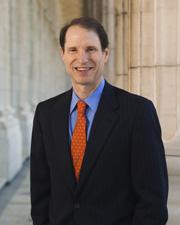
Mr. President, predictions that the Internet Tax Freedom Act would topple Western Civilization have not come to pass. Since the moratorium on taxation of out-of-State, online sales was first enacted…
Mr. President, predictions that the Internet Tax Freedom Act would topple Western Civilization have not come to pass. Since the moratorium on taxation of out-of-State, online sales was first enacted in October 1998, not a single community, county or state has come forward to prove it is being injured by its inability to impose discriminatory taxes on electronic commerce. There is simply no evidence that States have lost revenue by technology-driven commerce. On the contrary, the technology sector itself has been pounded as hard as any sector by the economic downturn.
Across the country States are facing tremendous budget pressures. My own State of Oregon is facing a nearly 20 percent budget shortfall, and Oregon has the highest unemployment rate in the Nation. The shift from black ink to red is the result of this Administration's failed economic policies, not the inability of States to impose discriminatory taxes on Internet sales.
Adding new taxes on the backs of consumers is not the way to salvage weakened State and local economies. Sales taxes are among the most regressive revenue measures, and imposing new sales taxes at this time could actually make a bad economic situation worse. A number of States seem to be arguing that their economic future is tied to taxing technology entrepreneurs located thousands of miles away with no physical presence in their jurisdiction. I don't share this view. The reason States don't tax remote sellers, as former Massachusetts Governor Celluci has testified before the Senate, is they don't want the political heat. Few of the 45 States that could collect a use tax on all items their residents have purchased out-of-State actually do so. Most States simply chose not to enforce their own laws, preferring to export their tax burden to out of state businesses who get no benefit from the taxing state.
Congress will soon be asked again by the Streamlined Sales Tax Project States to take the political heat for new sales taxes. The U.S. Senate has voted three times in recent years on whether to overturn Quill to require remote sellers with no nexus to serve the States as their tax collectors. Every time the Senate has rejected the notion. On January 19, 1995, the Senate voted 73-25 to table the amendment; on October 2, 1998, the Senate voted 66-29 to table the amendment; and most recently, on November 15, 2001, the Senate voted 57-43 to table the amendment.
As Congress revisits this issue again this year, we should remember what the Supreme Court said in Quill: ``Congress is . . . free to decide whether, when and to what extent the States may burden mail- order concerns with a duty to collect use taxes.'' The authority the Constitution vests in Congress to regulate interstate commerce--online or otherwise--is an enormous power that must be exercised with great care and caution. I believe the moratorium should be extended indefinitely, and that is what the legislation I introduce today would do. I am pleased to be joined once again in this effort by Representative Chris Cox, and ask unanimous consent that the text of the bill be printed in the Record.
Mr. Speaker, I thank the gentleman for yielding me this time. As I read this resolution, I really did think I was reading the fundamental arguments for the establishment of a national affordable…
Mr. Speaker, I thank the gentleman for yielding me this time.
As I read this resolution, I really did think I was reading the fundamental arguments for the establishment of a national affordable housing trust fund which has been sponsored by over 200 members of this body. So I would like to read just a couple of whereas clauses which explain why I think this resolution sounds like the provisions of the National Housing Trust Fund.
Whereas establishing a housing infrastructure strengthens neighborhoods and local economies and nurtures the families who reside in them; whereas homeownership is a cornerstone of the national economy because it spurs the production and sale of goods and services, generates new jobs, encourages savings and investment, promotes economic and civic responsibility and enhances the financial security of all people in the United States.
That is some of what this resolution says. I fully support and appreciate the efforts of Habitat for Humanity and really agree that they should be applauded and supported. However, this resolution is just another vehicle for Republicans to talk about their nonexistent housing agenda. This Congress must allow us to debate and vote on significant housing legislation.
My frustration with my Republican colleagues for failing to bring significant housing legislation to the floor and for ignoring the dismal housing and economic outlook in this country is really only compounded by the Republican attempts to clock weak homeowner initiatives by pretending to support the American dream of homeownership.
While the nationwide homeownership rate is approaching 70 percent, the African American and Latino homeownership rate pale in comparison, to about 46 percent; and in the administration's Homeownership Downpayment Assistance Program, they would not even support foreclosure assistance to help these homeowners keep their homes and protect taxpayer investment.
Of the 3.9 million low-income households to be considered working poor, over two-thirds pay 30 percent or more of their income for housing costs, with one-quarter paying over half their incomes. In 39 States, 40 percent or more of renters cannot afford fair market for a 2-bedroom unit, and that is why creating more affordable housing and homeownership should be our focus.
Consistently since the Bush administration has drafted budgets, they seem to negate the promise of homeownership, community investment, and fair, quality housing. This administration continues to cut the HUD budget and fight successful programs such as HOPE VI, section 8, the public housing drug elimination program and the creation of a national affordable housing production program.
I will vote for this resolution, I support it; but I encourage the other side to bring some real housing bills to the floor very soon.
Mr. President, today I am introducing legislation to name the Federal building located at 1244 Speer Boulevard, Denver CO, as the ``Cesar E. Chavez Memorial Building.'' Cesar E. Chavez was an…
Mr. President, today I am introducing legislation to name the Federal building located at 1244 Speer Boulevard, Denver CO, as the ``Cesar E. Chavez Memorial Building.''
Cesar E. Chavez was an ordinary American who left behind an extraordinary legacy of commitment and accomplishment.
Born on March 31, 1927 in Yuma, AZ on a farm his grandfather homesteaded in the 1880's, he began his life as a migrant farm worker at the age of 10 when the family lost the farm during the Great Depression. Those were desperate years for the Chavez family as they joined the thousands of displaced people who were forced to migrate throughout the country to labor in the fields and vineyards.
Motivated by the poverty and harsh working conditions, he began to follow his dream of establishing an organization dedicated to helping these farm workers. In 1962 he founded the National Farm Workers Association which would eventually evolve into the United Farm Workers of America.
Over the next three decades with an unwavering commitment to democratic principals and a philosophy of non-violence he struggled to secure a living wage, health benefits and safe working conditions for arguably the most exploited work force in our country, that they might enjoy the basic protections and worker's right to which all Americans aspire.
In 1945, at the age of 18 Cesar Chavez joined the U.S. Navy and served his country for two years. He was the recipient of the Martin Luther King Jr.
Peace Prize as well as the Presidential Medal of Freedom, the highest award this country can bestow upon a civilian.
Chavez's efforts brought dignity and respect to this country's farm workers and in doing so became a hero, role model and inspiration to people engaged in human rights struggles throughout the world.
The naming of this building will keep alive the memory of his sacrifice and commitment for the millions of people whose lives he touched.
I ask unanimous consent that the text of the bill be printed in the Record.

Mr. Speaker, I thank the gentlemen for yielding me this time to give me an opportunity to express myself on this resolution. We obviously are all supportive of the resolution dealing with Habitat for…
Mr. Speaker, I thank the gentlemen for yielding me this time to give me an opportunity to express myself on this resolution.
We obviously are all supportive of the resolution dealing with Habitat for Humanity and encouraging our colleagues to participate in the effort here in the District of Columbia. We are supportive of anything that does decent and affordable housing for people in this country.
Mr. Speaker, it is for that reason that we are so perplexed by the President's decision not to go forward with the Hope VI project by zeroing out Hope VI and saying that Hope VI has apparently served its purpose in this country.
I just came from a meeting with a group of students, one of whom was Ms. Audrey Evans who is a student at North Carolina A&T State University, and without knowing I was coming here, she said I want to commend you on the Hope VI program. She said she was raised in public housing, and our commitment to Hope VI helped to change her life because putting public housing in communities and allowing her to be exposed to people around her who are interested in succeeding educationally and economically and personally is something that has meant so much to her.
Throughout America, we have heard these stories about how successful Hope VI has been. On a bipartisan basis in our committee, just like both of these gentlemen have yielded me time, we are perplexed as to why such a successful program, which coincidentally was a Republican program instituted by Secretary Kemp when he was Secretary of Housing and Urban Development, how could we terminate such a program as this?
We are supportive of this resolution, but we also want this administration to be committed to housing in general in this country.
Madam Speaker, I want to associate myself with the comments that the gentleman from Massachusetts (Mr. Frank) and the gentleman from Vermont (Mr. Sanders) have made. While I stand in strong support…
Madam Speaker, I want to associate myself with the comments that the gentleman from Massachusetts (Mr. Frank) and the gentleman from Vermont (Mr. Sanders) have made. While I stand in strong support of this resolution, and it is a great resolution, great ideas about what need to be done, but in reality, we need to get serious about the business of doing it.
The Congressional Black Caucus has a program called WOW, With Ownership Wealth, and in my congressional district, we have been going around promoting the purchase of homes by African Americans. We find that many people, once they reach the point where homeownership is in their mind, there is not the availability of homes that they can purchase. When we start talking about incomes of $25,000 and $30,000, people cannot purchase a $250,000 home. There must be affordable homes built.
Just recently a study was done that the gentlewoman from Illinois (Mrs. Biggert) is associated with the organization, pointed out there are 850,000 individuals at the Chicago metropolitan area who live at or near the level of poverty. If these individuals are going to be able to purchase a home, not only must there be mortgage money available, but there also has to be the affordability of a house that they can buy.
Madam Speaker, I support this resolution, strongly suggest that we find ways to implement the concepts of it and make real the idea that people can live in their house by the side of the road, and the only way we will do it is have affordable housing that they are able to purchase.
Mr. Speaker, I urge my colleagues to vote for the passage of Senate Concurrent Resolution 43, the resolution that expresses the Congress's support for the Habitat For Humanity and the good work this…
Mr. Speaker, I urge my colleagues to vote for the passage of Senate Concurrent Resolution 43, the resolution that expresses the Congress's support for the Habitat For Humanity and the good work this great organization does for American families throughout the Nation.
I am proud to say that this wonderful institution was born in Americus, GA, within the district that I am so privileged to represent. Since its inception, this model of compassion and commitment to humanity has spawned similar groups, and has changed the way many Americans view the problem of homelessness and derelict housing. At this very moment somewhere in America, a home is being built by the Habitat For Humanity. The number of volunteers now exceeds 200,000 and is growing. More than 100,000 homes have been built and renovated, and more are being completed across the country at a rate of 1,000 per month. But we can do even more.
This resolution encourages Members of Congress to participate in ``Congress Building America'' events with local Habitat For Humanity affiliates in their home districts that will continue and increase the homebuilding effort all across America.
Mr. Speaker, Habitat For Humanity works. What seemed like a dream to those who had the vision in Americus so many years ago, is now becoming a reality. Decent housing for every American--thanks to Habitat For Humanity, this is an idea whose time has come.
Mr. President, I ask unanimous consent that the test of the bill be printed in the Record.
Mr. President, I ask unanimous consent that the test of the bill be printed in the Record.
Bill Text
Latest available legislative text
        [Congressional Bills 108th Congress]
[From the U.S. Government Publishing Office]
[S. 43 Introduced in Senate (IS)]

108th CONGRESS
1st Session
S. 43

To allow modified bloc voting by cooperative associations of milk
producers in connection with a referendum on Federal Milk Marketing
Order reform.

_______________________________________________________________________

IN THE SENATE OF THE UNITED STATES

January 7, 2003

Mr. Feingold introduced the following bill; which was read twice and
referred to the Committee on Agriculture, Nutrition, and Forestry

_______________________________________________________________________

A BILL

To allow modified bloc voting by cooperative associations of milk
producers in connection with a referendum on Federal Milk Marketing
Order reform.

Be it enacted by the Senate and House of Representatives of the
United States of America in Congress assembled,

SECTION 1. SHORT TITLE.

The Act may be cited as the ``Democracy for Dairy Producers Act of
2003''.

SEC. 2. MODIFIED BLOC VOTING.

(a) In General.--Notwithstanding paragraph (12) of section 8c of
the Agricultural Adjustment Act (7 U.S.C. 608c), reenacted with
amendments by the Agricultural Marketing Agreement Act of 1937, in the
case of the referendum conducted as part of the consolidation of
Federal milk marketing orders and related reforms under section 143 of
the Agricultural Market Transition Act (7 U.S.C. 7253), if a
cooperative association of milk producers elects to hold a vote on
behalf of its members as authorized by that paragraph, the cooperative
association shall provide to each producer, on behalf of which the
cooperative association is expressing approval or disapproval, written
notice containing--
(1) a description of the questions presented in the
referendum;
(2) a statement of the manner in which the cooperative
association intends to cast its vote on behalf of the
membership; and
(3) information regarding the procedures by which a
producer may cast an individual ballot.
(b) Tabulation of Ballots.--At the time at which ballots from a
vote under subsection (a) are tabulated by the Secretary of
Agriculture, the Secretary shall adjust the vote of a cooperative
association to reflect individual votes submitted by producers that are
members of, stockholders in, or under contract with, the cooperative
association.
<all>