A bill to extend the authority for the construction of a memorial to Martin Luther King, Jr.
Legislative Activity
Stay on top of the latest movement without scrolling through every action
Became Public Law No: 108-125.
November 11, 2003
View full timeline
Introduced in Senate
February 27, 2003
Sponsor introductory remarks on measure. (CR S2927)
February 27, 2003
Read twice and referred to the Committee on Energy and Natural Resources. (text of measure as introduced: CR S2927)
February 27, 2003
Committee on Energy and Natural Resources Subcommittee on National Parks. Hearings held. With printed Hearing: S.Hrg. 108-65.
June 3, 2003
Committee on Energy and Natural Resources. Ordered to be reported with an amendment in the nature of a substitute favorably.
June 25, 2003
Committee on Energy and Natural Resources. Reported by Senator Domenici with an amendment in the nature of a substitute. With written report No. 108-90.
July 11, 2003
Placed on Senate Legislative Calendar under General Orders. Calendar No. 198.
July 11, 2003
Passed Senate with an amendment by Unanimous Consent. (consideration: CR S9605-9618; text as passed Senate: CR S9606; text of measure as reported in Senate: CR S9606)
July 17, 2003
Received in the House.
July 18, 2003 • 9:05 AM
Message on Senate action sent to the House.
July 18, 2003
Held at the desk.
July 18, 2003 • 4:14 PM
Mr. Saxton moved to suspend the rules and pass the bill.
October 28, 2003 • 4:16 PM
Considered under suspension of the rules. (consideration: CR H9841-9843)
October 28, 2003 • 4:16 PM
DEBATE - The House proceeded with forty minutes of debate on S. 470.
October 28, 2003 • 4:16 PM
Passed/agreed to in House: On motion to suspend the rules and pass the bill Agreed to by voice vote.(text: CR H9841-9842)
October 28, 2003 • 4:26 PM
On motion to suspend the rules and pass the bill Agreed to by voice vote. (text: CR H9841-9842)
October 28, 2003 • 4:26 PM
Motion to reconsider laid on the table Agreed to without objection.
October 28, 2003 • 4:26 PM
Presented to President.
October 30, 2003
Signed by President.
November 11, 2003
Became Public Law No: 108-125.
November 11, 2003
Floor Debate
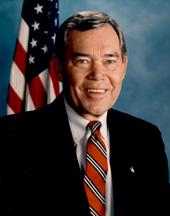
21 membersWhat members said about S. 470 on the floor
 CT
CT SMC
SMC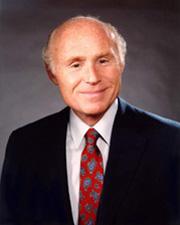 HK
HK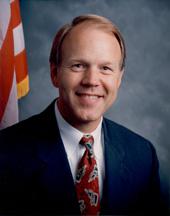 DN
DN RDF+16
Floor Debate
21 membersWhat members said about S. 470 on the floor
Mr. President, I come to the floor to talk about one of the things that is so important. Obviously, items connected with terrorism, the war in Iraq have to be dealt with. We have to deal with…
Mr. President, I come to the floor to talk about one of the things that is so important. Obviously, items connected with terrorism, the war in Iraq have to be dealt with. We have to deal with heightened homeland security and related issues. Health care is an area we need to talk about. Prescription drugs is in the process of this.
One issue that is particularly important is an energy policy. I don't think there has ever been a time when it has been more apparent and more important to deal with energy policy. We have an economy, prices with gas and energy that are high. We have uncertainty, certainly, in the Middle East. We have had a Venezuelan problem. We had a very cold winter. We cannot seem to come together to put together a policy that will allow us to move forward, an aggressive energy policy. I would like to talk briefly about a component of that which I think is very important, and that is an electric component.
I rise today to introduce the Electric Transmission Reliability and Enhancement Act of 2003. It is my intention to build on a changing wholesale, competitive, open access market and to suggest that we build that into a policy. Things have changed in the way energy is generated, the way energy is transmitted, the way energy is sold. We need to change our policy, as well.
Very simply, what we have is: In years past, there was a generator that generated for their own distribution area. That was pretty simple. Prices were controlled. It was a simple technique. Now we have more and more merchant generators, people who do not have a constituency or distribution system of their own but they sell into the marketplace. This is good. There is competition. And we will see more and more of that. But to do that, we have to update our laws and we have to update the regulations that go with that. My legislation would extend and improve open nondiscriminatory access policies. Access to transmission would remove antiquated Federal barriers that stand in the way of competitive wholesale markets. Wholesale markets that are competitive are new. We have to change to meet those needs. We have to encourage increased investments in our transmission system and establish reliability standards.
We saw what happened in California 2 years ago. If there is no reliability, we cannot depend upon getting that energy to people's homes, to businesses, and then we have a very difficult situation.
Particularly what has changed now is it is interstate. For years we grew up with the fact that in your State the State controlled both the generation and the distribution, and that worked well. Now we go across interstate lines and there needs to be something different.
Legislatively we have to pare down our wish list so we get to the bare essentials and keep those things that are necessary.
It seems clear, if we are going to have a truly wholesale market, we need to ensure that all the industry participants play by the same rules. Only Congress can give FERC, the Federal Energy Regulatory Commission, the tools it needs to ensure that all participants get treated fairly in a competitive marketplace. Under the Federal law, currently FERC has no jurisdiction or authority over transmission owned by public power agencies, municipals, cooperatives, yet they want to participate and need to participate and should participate. Many of them--most--are willing to participate.
These nonregulated utilities represent 52 percent of the total, so we do not want to move forward with FERC's so-called market plan. I think it goes too far getting into the authority of the States. But there are some changes that need to be made, and we would like to do that.
We also need to protect those cooperatives. I grew up in a area of cooperatives and spent much of my life working with cooperatives. So we have given that break. Those that sell less than 4 million megawatt hours per year are entirely exempt. We think that is as it should be.
We would repeal the Public Utility Holding Company Act, PUHCA, because it needs to be restructured and the deployment of capital in this industry needs to go where it is desperately needed. We need to do that. There is ample regulation over those investments now in the existing business. We want to make it easier for people to be able to invest, produce competitively, and go into the marketplace.
The Department of Justice, Federal Trade Commission, and the State commissions would still be able to monitor rates and prevent cross- subsidies. So my legislation would prospectively eliminate mandatory purchase and sales obligations of PURPA, one that was put in a very long time ago. Despite the State administering it, it causes favoritism to many utilities and changes things.
Over the years the grid has been protected through voluntary standards and that is exactly right. But what we are now faced with is to have RTOs, regional transportation organizations, where they can make those decisions within the RTO. There would be a Western one, a Midwestern one, a New England one, and so on. But then connecting with those will be an interstate, like an interstate highway. That has to, of course, be organized and controlled by a national group because it serves all these different ones.
So what we need is to modernize our system so we can accommodate things that have changed. Reliability organizations must be run by market participants and be overseen by FERC. Reliability organizations must be made up of representatives of everyone who is affected: residential, commercial, industrial. That can be done, and this provides an opportunity to do that.
During our discussions last year, we were made to address some of the more egregious behavior and found a great deal of issues that needed to be dealt with--market manipulation, those kinds of things. This is very complex. I believe we can address these issues with regulatory agencies, things that truly can exist.
So my legislation would provide a greater price in the transmission of availability of information and outlaw the practice of roundtrip trading. In the past we found some trading where they went around, got it back, made a profit on the sale, and served no one.
We prohibit the reporting of false information for the purpose of manipulating price indices. Again, we go back a little bit to the California situation, where there obviously is a great need to do some opening up so there is visibility of what is happening. That is what we are seeking to do. It would increase civil and criminal penalties for the violation of the Federal Power Act and would accelerate the effective dates of refunds and so on.
In the end, it is about consumers, it is about serving consumers, it is about competition, it is about reliability, it is about keeping the lights on--the part of energy that probably affects more people and more businesses than any other. It is my hope that the Electric Transmission Reliability Enhancement Act of 2003 will produce a more reliable, efficient transmission system, a more dependable and more affordable product for the end user, and perhaps more than anything else, bring our system and our oversight into the modern time of electric generation and transmission.
Things change. We need to change. Now is the time. We will have an energy bill. It needs to have an energy component.
Mr. President, any comprehensive energy bill must contain an electric component. That is why, today, I rise to introduce the ``Electric Transmission and Reliability Enhancement Act of 2003.'' It is my intention to build on the competitive wholesale open access policies adopted by the Congress in the 1992 Energy Policy Act. My legislation would extend and improve these open, non-discriminatory access policies; remove antiquated federal statutory barriers that stand in the way of competitive wholesale markets; encourage increased investment in our transmission system and establish enforceable reliability standards to help ensure the continued reliability of the interstate transmission system.
The state of the industry is far weaker financially than it has been in years. Billions of dollars of shareholder value has evaporated. Access to capital is becoming an important issue for large segments of the industry that are fighting for survival. In addition, the Federal Energy Regulatory Commission, FERC, policy regarding wholesale markets seems to be in a state of constant change. The Standard Market Design, SMD, Notice of Proposed Rulemaking, NOPR, has divided regulators and industry participants in a way that may be unprecedented, threatening more years of rulemakings, litigation and regulatory uncertainty.
If we are to legislate successfully, we will have to par down our wish list to the bare essentials, plus those issues necessary for the electric industry to attract the capital it needs to keep our lights on. Last year, the Enron fallout dominated the debate. By being on the defensive most of last year, it was not possible to successfully advance those issues most important to consumers and the industry that serves them.
It seems clear that if truly competitive wholesale markets are to exist, there is a need to ensure that all industry participants play by the same rules. While FERC has tried to ensure this, the Commission's tools are limited. Only Congress can give FERC the tools it needs to ensure that all industry participants in competitive wholesale markets play by the same rules.
The Wyoming State commissioners wrote that ``under present Federal law the FERC has no jurisdiction or authority over transmission facilities owned by public power agencies, municipalities and cooperatives. In the West these types of entities own a substantial portion, perhaps as much as half of the interstate electric transmission system.'' As a matter of fact, in the Western Electric Coordinating Council, an area that encompasses all or part of 11 Western States and parts of Canada, non-FERC jurisdictional facilities account for 52 percent of transmission miles.
The Wyoming commissioners claim that, ``without the full participation of all of those who own transmission in the West, the FERC's wholesale market initiative will fail to provide the full spectrum of benefits Congress expected when it created wholesale electricity markets. System optimization requires that bulk power be able to move freely throughout the interconnected system without regard to who owns the facilities over which the power travels. Removing the institutional impediments to the free movement of bulk power is also requisite to identifying the physical constraints that exist in the western system. Proper planning for the relief of such constraints depends on properly identifying and quantifying them, absent other economic and institutional constraints.''
They go on to say that such a vision for the future of wholesale power markets makes a compelling case for the inclusion of all facilities which can be used to move bulk power across the West, regardless of ownership. Anything less than 100 percent participation by transmission owning entities will simply perpetuate some level of inefficiency in the system and will continue to afford those who do not participate the ability to favor their own generation resources.
My legislation would permit FERC to require certain nonregulated utilities to offer transmission serviced at comparable rates to those they charge themselves, and on terms and conditions comparable to those applicable to jurisdictional public utilities. Currently nonregulated transmitting utilities would not be subject to the full panoply of FERC regulation under this provision. Instead, a ``light handed'' form of regulation would apply and small nonregulated entities, such as those that sell less than 4,000,000 MW/h per year, would be entirely exempt from these nondiscrimination requirements.
It also seems clear that the Public Utility Holding Company Act PUHCA, is hindering necessary restructuring of the industry and the deployment of capital into an industry that desperately needs it. Investors are deterred simply because they do not want to deal with the PUHCA rules and restrictions. If repealed, utility securities will continue to be regulated by the Securities and Exchange Commission, SEC, FERC and most state commissions. Mergers and acquisitions of jurisdictional assets would still require FERC and state commission approval and review by Department of Justice, DOJ, and the Federal Trade Commission, FTC. FERC and State commissions would still be able to monitor rates and prevent cross-subsidies.
Despite State progress in administering the Public Utility Regulatory Policies Act of 1978, PURPA, more in-tune with markets, it is clear that PURPA continues to provide special privileges to certain favored generators at the expense of utilities and their customers. Like PUHCA, PURPA is no longer needed in today's competitive wholesale markets. My legislation prospectively eliminates the mandatory purchase and sell obligations of PURPA.
Over the years the grid has been well protected through voluntary standards established by the North American Electric Reliability Council, NERC, NERC's voluntary reliability standards--which are not enforceable--have generally been complied with by the electric power industry. But with the opening of the wholesale power market to competition, our transmission grid is being used in ways for which it was not designed. New system strains are also being created by the breakup of vertically integrated utilities and by the emergence of new market structures and participants. The results of these changes have been an increase in the number and severity of violations of NERC's voluntary rules.
My legislation converts the existing NERC voluntary reliability system into a mandatory reliability system. A nation-wide organization would have the authority to establish and enforce reliability standards, and take into account regional differences. The new reliability organization will be run by market participants, and will be overseen by the FERC in the U.S. The reliability organization will be made up of representatives of everyone who is affected--residential, commercial and industrial consumers; state public utility commissions; independent power producers; electric utilities and others. There is no question that we need a new system to safeguard the integrity of our electric grid. My legislation would do this, using language that was effectively agreed upon last fall by House and Senate conferees for the energy bill.
During discussions last year, efforts were made to address some of the more egregious behavior and attempted market manipulation through legislation. While this area is obviously very complex, I believe that we need to address this issue if regulatory gaps truly do exist. I realize my attempt might not be perfect, but I wanted to intimate discussion on this very important topic if, in fact, regulatory agencies do need additional authority to police and monitor the industry.
My legislation will provide greater price and transmission availability information, outlaw the practice of round trip trading and prohibit reporting of false information for the purpose of manipulating price indices. In addition, I've included authority the FERC has requested and that would increase civil and criminal penalties for violation of the Federal Power Act and accelerate the refund effective date to the date of filing of a complaint.
In the end it's about the consumer. It is my hope and vision that the ``Electric Transmission and Reliability and Enhancement Act of 2003'' I am introducing today will produce a more reliable and efficient transmission system and that these improvements will result in a more dependable and affordable product for the end user. This legislation is the best solution to move forward with a better product for all classes of consumers and the industry as a whole.
I ask unanimous consent that the text of the bill be printed in the Record.
Mr. President, I rise today to introduce two pieces of legislation that will improve the lives of our Nation's fishermen who are struggling to make a living on the sea. Fishing is more than just a…
Mr. President, I rise today to introduce two pieces of legislation that will improve the lives of our Nation's fishermen who are struggling to make a living on the sea.
Fishing is more than just a profession in New England. Fishing is a culture and a way of life. This way of life is being threatened, however, by excessive regulation and unnecessary litigation. Despite scientific evidence of a rebound in fish stocks, New England's fishermen are suffering under ever more burdensome restrictions. Everyday, I hear from fishermen who struggle to support their families because they have been deprived of their right to make an honest living on the seas. The ``working waterfronts'' of our communities are in danger if disappearing, likely to be replaced by development. When that happens, a part of Maine's heritage is lost forever.
Today, I am introducing a package of amendments to the Magnuson- Stevens Act that will deliver a resource management strategy that is balanced, responsive, and sensible. It recognizes the fishermen's strong commitment to conserving the stocks, and acknowledges fishermen as partners in fisheries management.
The Fisheries Science and Management Improvement Act of 2003 will address much needed improvements in the science and regulatory standards of fisheries management. The Nation's fisheries management system, as it is currently designed, is broken. If anyone doubts this is the case, I want to point out that more than 100 lawsuits are currently pending against the Department of Commerce involving fisheries management plans.
Litigation is no way to manage one of our Nation's most important ecological and economic resources. The fact is, the courts are simply not well-suited to making biological and regulatory decisions. Fisheries management is best left to those who know the subject best: the fishermen, scientists, and regulators working together cooperatively.
No one in the country knows this better than New England groundfishermen. Over the last two years, a court case has thrown New England's groundfishing industry into a crisis. The case ended when a Federal judge ordered severe restrictions on groundfishing, including a 20-percent
cut in Days-at-Sea. The effect of this court order has been simply catastrophic for New England's groundfishing industry--an industry made up of small, independently-owned, and often family-owned, businesses.
These severe restrictions were ordered despite the fact that the science clearly demonstrates that the biomass for New England groundfish has increased every year since 1996. If the biomass is increasing, and the stock is clearly rebuilding, it makes no sense to enforce an arbitrarily structured and unscientifically based timeframe on the rebuilding process. This is especially true when the survival of a culture is at stake.
My legislation would inject consistency and common-sense standards into the fisheries management process: it addresses the importance of solid and reliable science in fisheries management. It strengthens the definition of ``best scientific information available'' and requires scientific data, including all stock assessments, to be peer-reviewed and to include the consideration of anecdotal information gathered from the people who know fishing best--the fishermen themselves. My bill ensures that the process of rebuilding stocks is based on rational and comprehensive science. Under current law, when fisheries are classified as overfished, the Councils are required to implement rebuilding plans to attain a historic high level of abundance within ten years, regardless of whether or not the current state of the marine environment can sustain such an abundance level. My bill redefines the concept of ``overfishing'' to take into consideration natural fluctuations in the marine environment. It also eliminates the ten-year rebuilding requirement--a requirement that has no foundation in science--and requires rebuilding periods to take into consideration the biology of the fish stock and the economic impact on fishing communities.
The legislation also addresses problems with the current conception of Essential Fish Habitat. Currently, the entire Exclusive Economic Zone has been defined as Essential Fish Habitat instead of more discrete units of habitat as originally conceived. Further, current law allows the Councils to regulate the impacts of fishing activity on Essential Fish Habitat, while the Councils cannot regulate other commercial activities--such as mining and coastal development and the laying of telecommunications cables--that affect these areas. My bill focuses the management of these areas on ``Habitat Areas of Particular Concern''--more discrete units of fish habitat that are more consistent with the congressional intent behind the Essential Fish Habitat concept.
My proposal treats the fishing industry as a legitimate interest in fisheries management by acknowledging the important role that commercial fishing plays in food security and healthy food consumption. My bill also ensures that the cumulative economic and social impacts of fisheries management decisions are considered, rather than assessed in isolation from one another.
Finally, the legislation would reduce the litigation burden on the fisheries management system. My proposal ensures that fishery management plans are pre-determined to be compliant with NEPA requirements, thereby preventing NEPA law from being used in an incorrect way to regulate fisheries. It would still require fishery management plans to meet all the other conservation provisions, including those governing rebuilding of overfished stocks, set out in the law. The Nation's Councils have asked for this protection from lawsuits so they may resume their proper role as a regulatory body.
I want to acknowledge the important role that my colleagues Senators Snowe and Kerry, Chair and Ranking Member of the Oceans and Fisheries Subcommittee, are playing in addressing the problems of Magnuson- Stevens. My hope is that my proposal will help propel a discussion in the upcoming months as their committee moves forward with their own ideas.
The second piece of legislation I am offering is the Commercial Fishermen Safety Act of 2003, a bill to help fishermen purchase the life-saving safety equipment they need to survive when disaster strikes. I am pleased to be joined by my good friend from Massachusetts, Senator Kerry, in introducing this legislation. Senator Kerry has been a leader in the effort to sustain our fisheries and to maintain the proud fishing tradition that exists in his state and throughout the country.
The release of the movie The Perfect Storm provided millions of Americans with a glimpse of the challenges and dangers associated with earning a living in the fishing industry. While based on a true story, the movie merely scratches the surface of what it is like to be a modern-day fisherman. Everyday, members of our fishing communities struggle to cope with the pressures of running a small business, complying with extensive regulations, and maintaining their vessels and equipment. Added to these challenges are the dangers associated with fishing, where disaster can strike in conditions that are far less extreme than those depicted by the movie.
Year-in and year-out, commercial fishing is among the nation's most dangerous occupations. According to data compiled by the Coast Guard and the Bureau of Labor Statistics, 536 fishermen have lost their lives at sea since 1994. In fact, with an annual fatality rate of about 150 deaths per 100,000 workers, fishing is 30 times more dangerous than the average occupation.
The year 2000 will always be remembered in Maine's fishing communities as a year marked by tragedy. All told, nine commercial fishermen lost their lives off the coast of Maine in the year 2000, exceeding the combined casualties of the three previous years.
Yet as tragic as the year was, it could have been worse. Heroic acts by the Coast Guard and other fishermen resulted in the rescue of 13 commercial fishermen off the coast of Maine in the year 2000. In most of these circumstances, these fishermen were returned to their families because they had access to safety equipment that made the difference between life and death.
Coast Guard regulations require all fishing vessels to carry safety equipment. The requirements vary depending on factors such as the size of the vessel, the temperature of the water, and the distance the vessel travels from shore to fish.
When an emergency arises, safety equipment is priceless. At all other times, the cost of purchasing or maintaining this equipment must compete with other expenses such as loan payments, fuel, wages, maintenance, and insurance. Meeting all of these obligations is made more difficult by a regulatory framework that uses measures such as trip limits, days at sea, and gear alterations to manage our marine resources.
The Commercial Fishermen Safety Act of 2003 lends a hand to fishermen attempting to prepare in case disaster strikes. My bill provides a tax credit equal to 75 percent of the amount paid by fishermen to purchase or maintain required safety equipment. The tax credit is capped at $1500. Items such as EPIRBs and immersion suits cost hundreds of dollars, while life rafts can reach into the thousands. The tax credit will make life-saving equipment more affordable for more fishermen, who currently face limited options under the federal tax code.
I believe these two bills will assist our Nation's fishermen as they struggle to make their living on the seas. Fishing is a legitimate profession that deserves to be treated with the common-sense and consistency that we treat other professions. The legislation I am introducing gives these communities the tools they need to safely make their living in a way that still protects the resource.
Mr. President, I rise today with my colleagues Senator DeWine, Senator Feinstein, Senator Schumer, Senator Reed, Senator Mikulski, Senator Corzine, and Senator Levin to reintroduce the…
Mr. President, I rise today with my colleagues Senator DeWine, Senator Feinstein, Senator Schumer, Senator Reed, Senator Mikulski, Senator Corzine, and Senator Levin to reintroduce the ``Technological Resource to Assist Criminal Enforcement'' ``TRACE'' Act, a bill to require ballistics testing of all firearms manufactured or imported in the United States.
The science of ballistics testing has given police the ability to solve multiple crimes simply by comparing bullets and shell casings found at the scene of a crime to a gun seized in a seemingly unrelated incident. This comparison is possible because every gun has a unique ``fingerprint'' it leaves on spent shell casings and bullets after it is fired. Just as human fingerprints can be grouped into general classifications such as loops and whorls, but still possess individual characteristics and then analyzed for its unique characteristics, firearms evidence can be similarly grouped and then analyzed by trained technicians for unique identifying characteristics.
Let me explain more specifically how this technology works. Today, ballistics technology equipment allows firearms technicians to acquire digital images of the images of the markings made by a firearm on bullets and cartridge casings; the images then undergo an automated initial comparison. If a high confidence match emerges, experts compare the original evidence to confirm a match. Once a match is found, law enforcement can begin tracing that weapon from its original sale to the person who used it to commit the crime.
Microscopic comparison of bullets and shell casings has been in practice for many years, even before formal databases were established. However, in the past 15 years, through the use of computer databases, ballistics technology described above has developed into a systematic tool for law enforcement to solve gun crimes. Since the early 1990's, more than 250 crime labs and law enforcement agencies in more than 40 States have been operating independent ballistics systems maintained by either the Bureau of Alcohol, Tobacco, Firearms, and Explosives ``ATFE'', or the Federal Bureau of Investigation. Together, ATFE's Integrated Ballistics Identification System, ``IBIS'', and the FBI's DRUGFIRE system have been responsible for linking 5,700 guns to two or more crimes where corroborating evidence was otherwise lacking. These links have helped law enforcement and prosecutors bring thousands of dangerous criminals to justice.
Never before have the tremendous law enforcement benefits of ballistics testing been so apparent. I would like to take the opportunity to describe a few instances where ballistics technology helped solve otherwise unsolvable crimes.
Last fall, law enforcement officials used ballistics testing to match the bullets and shell casings found at the scenes of the sniper shootings in the Nation's Capital region, and later to other deadly shootings across the country. The bullets and casings were also linked to the gun that the accused assailants had in their possession when they were arrested. This ballistics information has provided vital evidence to prosecutors and will help keep the snipers behind bars.
In another example, the only evidence at the scene of a brutal homicide in Milwaukee was 9 millimeter cartridge casings--there were no other clues. But 4 months later, when a teenage male was arrested on an unrelated charge, he was found to be in possession of the firearm that had discharged those casings. Ballistics linked the two cases. Prosecutors successfully prosecuted three adult suspects for the homicide and convicted the teen in juvenile court.
On September 9, 2000, several suspects were arrested in Boston for the illegal possession of three handguns. Each of the guns was test fired, and the ballistics information was compared to evidence found at other crime scenes. The police quickly found that the three guns were used in the commission of 15 felonies in Massachusetts and Rhode Island. This routine arrest for illegal possession of firearms provided police with new leads in the investigation of 15 unsolved crimes. Without the ballistics testing, these crimes would not have been linked and might have never been solved.
As you can see, ballistics technology helps law enforcement exponentially in their efforts to solve gun crimes. But while success stories are increasingly frequent, the full potential of ballistics
testing is still untapped. One way that the Bureau of Alcohol, Tobacco, Firearms and Explosives is making ballistics testing more accessible to state and local law enforcement is through the installation of a new network of ballistics imaging machines. The final introduction of the machines across the country is almost complete and, once it is, the computers will be able to access each other and search for a greater number of images. The National Integrated Ballistics Information Network, better know as ``NIBIN,'' will be a regional network of databases that will permit law enforcement in one locality access to information stored in other gun crime databases around the entire country. According to the ATFE, ``the NIBIN program is a key element to ATFE's efforts [to remove violent offenders from America's streets].''
But ballistics testing is only as useful as the number of images in the database. Today, almost all jurisdictions are limited to images of bullets and cartridge casings that come from guns used in crimes. The TRACE Act would dramatically expand the scope of that database by mandating that all guns manufactured or imported be test fired before being placed into the stream of commerce. The images collected from the test firing would then be collected and accessible to law enforcement-- and law enforcement only--for the purpose of investigating and prosecuting gun crimes.
Recently, studies done about ballistics testing and ballistics databases have been in the news. Concern has been expressed by some about the size and practicality of a large database. However, it is important to point out that this bill would merely expand upon the existing network of 16 multi-state regional databases, rather than create a single large national database. In addition, accusations that systems would be log-jammed with too many entries has been refuted by ATFE ballistics experts. Since its inception, the speed and efficiency of ballistics databases has substantially increased. For example, from 1994 to 1999 the IBIS correlation speed for cartridge casings dropped from 35 seconds to 1.7 seconds, and correlation speed for bullets dropped from 4 seconds to 0.3 seconds. The conversion to NIBIN is expected to yield an even faster return of correlation results, regardless of an increase in entries.
Of course no investigative tool is perfect or effective in every single situation, not even fingerprints. However, ATFE maintains that the availability of an open-case file of many thousands of exhibits, searchable within minutes, provides invaluable information to law enforcement authorities. TRACE would enhance the current ballistics databases by giving federal, state, and local law enforcement access to even more evidence that will help them solve more gun crimes and make our communities safer.
Today, police can find out more about a human being than they can about a gun used in a crime. Law enforcement can use DNA testing, take fingerprints and blood samples, search a person's health records, peruse bank records and credit card statements, obtain phone records and get a list of book purchases to link a suspect to a crime. Yet, the bullets found at the scene of a crime often cannot be traced back to the gun used because our ballistics images database is not comprehensive. Many of those on the front lines of the fight against crime are in favor of ballistics testing. In fact, in my home state of Wisconsin, over 75 percent of police chiefs surveyed are supportive of the use of ballistics technology.
The burden on manufacturers is minimal--we authorize funds to underwrite the cost of testing--and the assistance to law enforcement is considerable. And don't take our word for it, ask the gun manufacturers and the police. Listen to what Paul Januzzo, the vice- president of the gun manufacturer Glock, said in reference to ballistics testing, ``Our mantra has been that the issue is crime control, not gun control . . . it would be two-faced of us not to want this.'' In their agreement with the Department of Housing and Urban Development, Smith & Wesson agreed to perform ballistics testing on all new handguns. And Ben Wilson, the chief of the firearms section at ATFE, emphasized the importance of ballistics testing as a investigative device, ``This [ballistics] allows you literally to find a needle in a haystack.''
To be sure, we are sensitive to the notion that law abiding hunters and sportsmen need to be protected from any misuse of the ballistics database by government. The TRACE Act explicitly prohibits ballistics information from being used for any purpose unless it is necessary for the investigation of a gun crime.
The TRACE Act will enhance a revolutionary new technology that helps solve crime. The technology is becoming more and more advanced to accommodate high volume-usage, and it is expected to continue to get better and better. Ballistics testing will help solve more gun crimes, prosecute more criminals, and ensure that more communities are protected from violence. TRACE is a worthwhile piece of crime control legislation and I hope that the Senate will move quickly to pass it.
I ask unanimous consent that the text of the legislation be printed in the Record.
Mr. President, today I am sending to the desk a bill by myself and Senator Miller to amend the IRS Code. It is a bill to provide jobs and economic growth for our country. Mr. President, this bill…
Mr. President, today I am sending to the desk a bill by myself and Senator Miller to amend the IRS Code. It is a bill to provide jobs and economic growth for our country.
Mr. President, this bill Senator Miller and I are introducing is the President's economic and growth package. This is a package the President has put together that would help American families. This is a package that is profamilial and progrowth. It is a bill that will create jobs. It is a bill that will create an incentive to invest. It is a bill to eliminate unfair punitive taxes on corporate earnings that are distributed to the owners of the corporation. It is a bill that will help stimulate and grow our economy.
I compliment the President for his work in proposing this. I am happy to introduce it. Let me talk about a couple of the provisions of the bill.
This bill will expand the 10-percent bracket. This is to help people of all incomes. But the lowest income people will be the true beneficiaries of this package. It will accelerate reductions in the individual income tax rates that were passed in 2001. You might remember the 2001 tax bill that we passed which had individual rate reductions phased in over the years. There was a 1 percent reduction in most of the rates in 2004, and another percent reduction in 2006. These are accelerated to 2003.
It means that the maximum personal income tax bracket would be 35 percent instead of the present 38.6 percent. It means that individuals would not have to pay taxes at rates greater than corporations. The bulk of the benefit of this will come to individuals who are self- employed, individuals who are sole proprietors, and individuals who own or operate their own business. They will receive the bulk of the benefit of this rate reduction. Some people may want to demagog some of the estimates that benefit primarily the wealthy. I disagree.
We also might keep in perspective that when President Clinton was elected, the maximum rate was 31 percent. He increased it to 39.4 percent. When we totally implement President Bush's tax reduction, the maximum rate will be 35 percent, which is still significantly higher than the 31 percent just 10 years ago.
The President's proposal that we are introducing today would also accelerate the reduction in the marriage penalty. This is a very big item to help married couples reduce their taxes. The net impact of this is it would double the 15-percent bracket that individuals have for couples.
To give you an example, individuals presently pay 15 percent, I believe, on income up to about $28,000. But couples have to start paying a 28-percent or 27-percent bracket when they have income above $47,000. We say that instead of paying 27 percent for taxable income above $47,000, no, that should be double the individual amount. So couples don't have to pay above the 15-percent bracket unless their income exceeds $56,000.
It is not very complicated. Couples should have for the 15-percent bracket twice what individuals have. Individuals pay 15 percent up to $28,000. So we doubled that amount for couples. The net impact of that is you pay 15 percent instead of 27 percent for a total of about $9,000. It saves couples a total of $1,022. If the couples have two children, they would get additional child credit. We increase the child credit, which is presently $600, to $1,000. That is an increase of $400 per child. If you have two children, that is $800 of tax credit--not deductions, tax credit. It reduces your tax bill by $800.
If you have a taxable income of $56,000, you also get the $1,122 of marriage penalty relief. You get $100 savings from the 10-percent bracket expansion. Total tax relief for a family that has taxable income of $56,800 totals over $2,000. Actually, it is $2,022. That is about a 22-percent tax cut for middle-income families. That will help thousands--millions--of families all across the country.
Also, this bill would eliminate the double taxation on corporate earnings. Presently, in the United States, unfortunately, unbelievably, we tax corporate earnings that are distributed to the owners more than almost any other country in the world. Only one country, Japan, taxes corporate earnings distributed to the owners higher than the United States.
Our combined tax rate of 35 percent corporate and the individual tax percentage, depending on the individual's income tax bracket--it could be 15 percent, it could be 30 percent, it could be 38.6 percent--if you add the 38.6 percent plus the 35 percent, it is over 70 percent. If it is 30 percent for the individual rate, and the corporation rate is 35, it is 65 percent. So for a corporation that makes $1,000 and wants to distribute that to the owners, the Federal Government gets 65 percent; and the beneficiary, the owner of the company, gets 35 percent. That is absurd. That is embarrassing. That is indefensible. And countless people--economists, the President, candidates and others--said we should eliminate this unfair double taxation of dividends.
The President has come up with a proposal to do that. I am happy to introduce it for him. I urge my colleagues--before they demagog it, before they castigate it--to look at the facts.
Does it really make sense for us to be taxing corporate distributions to all owners--incidently, the majority of owners are senior citizens-- does it really make sense for us to be taxing these proceeds higher than any other country in the world but one? It makes no sense.
Does it really make sense to have the Tax Code skewed to where it really is beneficial to go into debt because you can expense your interest expense? But, oh, yes, if you go the equity route, you have to pay taxes on anything that is generated in the company. And the individual who receives the benefits pays taxes, so the Government gets two-thirds of the money, two-thirds of the distribution. That does not make sense. It discourages investment. It encourages debt. Not a good corporate policy.
Present law encourages a lot of corporate shenanigans and corporate games trying to get around taxes when they realize that such a great percentage of the distribution to owners is going to be paid in taxes-- ``Let's figure out other ways.'' Maybe they do it through bonuses, but they might do it through all kinds of schemes. And we have seen some of those.
This would be great corporate reform, very positive, well-needed reform, and long overdue--long overdue.
In this package that the President has proposed, it also has something I am very much in favor of: expensing for small business. I used to have a small business. But it triples the amount a small businessperson can expense from $25,000 to $75,000. In other words, if they write a check for that amount, they can expense it in the year that the check is written. That
will greatly encourage investment because they get to recoup the investment that is made in the same year the check is written--a very positive, progrowth proposal. Most jobs are created in small businesses, and this is a good, positive small business provision that will create jobs.
So we reduce taxes on business owners, sole proprietors. They would not have to pay taxes more than corporations. We would reduce taxes on married couples. We would discontinue the present policy of penalizing them for being married and filing joint returns. We would allow them to keep more of their own money. We would allow them to keep more of their own money if they have kids.
Certainly, if you have kids, it costs a lot of money to raise them. We say you should have a $1,000 tax credit per child. So for every child you have, you get to save $1,000 in taxes. I have four kids, so that is $4,000 per year. A couple with four kids would get to save $4,000 per year. That is significant. That is profamily. That is positive. That allows people who really need the money raising families to keep it.
One, we eliminate the marriage penalty, and, two, we allow them to keep more for their own kids. Very significant benefits. When you add all the benefits together, it really makes the income tax even more progressive.
The upper income groups would still pay a greater percentage of income tax, even after we pass this proposal. I can just envision people saying: Well, this is class warfare. I hope they do not play those arguments because this is very family friendly and also investment friendly and will create jobs.
We need to do some things. Revenues have been declining for the last 2 years. We need to figure out ways to get revenues to grow. That means a growing economy. It means the stock market needs to move up instead of down.
This proposal will do that. This proposal is investment friendly. And the main beneficiaries will not be just the owners, it will be the people who get a job because the investment was not going to be made without it.
So let's do some things that will create an incentive for investment, for expensing, for people to go to work, and for people who are working to be able to keep more of their own money so they can take care of their families.
That is what the President's proposal is all about. So I am delighted to introduce this today with my colleague and friend, Senator Zell Miller of Georgia.
I ask unanimous consent to have printed in the Record two charts to further explain the breakout of this proposal.
I urge my colleagues to seriously consider this proposal. And I welcome their support of it.
I yield the floor.
Mr. President, today I am introducing important legislation to affirm Federal jurisdiction over the waters of the United States. I am pleased to have three members of the Environment and Public Works…
Mr. President, today I am introducing important legislation to affirm Federal jurisdiction over the waters of the United States. I am pleased to have three members of the Environment and Public Works Committee, the Senator from California, Mrs. Boxer, the Senator from Vermont, Mr. Jeffords, and the Senator from Connecticut, Mr. Lieberman, as original cosponsors of this bill.
In the U.S. Supreme Court's January 2001 decision, Solid Waste Agency of Northern Cook County versus the Army Corps of Engineers, a 5 to 4 majority limited the authority of Federal agencies to use the so-called migratory bird rule as the basis for asserting Clean Water Act jurisdiction over non-navigable, intrastate, isolated wetlands, streams, ponds, and other bodies of water.
This decision, known as the SWANCC decision, means that the Environmental Protection Agency and Army Corps of Engineers can no longer enforce Federal Clean Water Act protection mechanisms to protect a waterway solely on the basis that it is used as habitat for migratory birds.
In its discussion of the case, the Court went beyond the issue of the migratory bird rule and questioned whether Congress intended the Clean Water Act to provide protection for isolated ponds, streams, wetlands and other waters, as it had been interpreted to provide for most of the last 30 years. While not the legal holding of the case, the Court's discussion has resulted in a wide variety of interpretations by EPA and Corps officials that jeopardize protection for wetlands, and other waters.
The wetlands at risk include prairie potholes and bogs, familiar to many in Wisconsin, and many other types of wetlands.
In effect, the Court's decision removed much of the Clean Water Act protection for between 30 percent to 60 percent of the Nation's wetlands. An estimate from my home state of Wisconsin suggested that more than 60 percent of the wetlands in my state lost federal protection. Wisconsin is not alone. The National Association of State Wetland Managers has been collecting data from states across the country. For example, Nebraska estimates that it will lose protection for more than 40 percent of its wetlands. Indiana estimates they will lose 31 percent of total wetland acreage and 74 percent of the total number of wetlands. Delaware estimates the loss of protection for 33 percent or more of their freshwater wetlands.
These wetlands absorb floodwaters, prevent pollution from reaching our rivers and streams, and provide crucial habitat for most of the nations ducks and other waterfowl, as well as hundreds of other bird, fish, shellfish and amphibian species. Loss of these waters would have a devastating effect on our environment.
In addition, by narrowing the water and wetland areas subject to Federal regulation, the decision also shifts more of the economic burden for regulating wetlands to State and local governments. My home State of Wisconsin has passed legislation to assume the regulation of isolated waters, but many other States have not. This patchwork of regulation means that the standards for protection of wetlands nationwide is unclear, confusing, and jeopardizes the migratory birds and other wildlife that depend on these wetlands.
Since 2001, the confusion over the interpretation of the SWANCC decision is growing. On January 15, 2003, the EPA and Army Corps of Engineers published in the Federal Register an Advanced Notice of Proposed Rulemaking raising questions about the jurisdiction of the Clean Water Act. Simultaneously, they released a guidance memo to their field staff regarding Clean Water Act jurisdiction.
The agencies claim these actions are necessary because of the SWANCC case. But both the guidance memo and the proposed rulemaking go far beyond the holding in SWANCC. The guidance took effect right away and has had an immediate impact. It tells the Corps and EPA staff to stop asserting jurisdiction over isolated waters without first obtaining permission from headquarters. Based on this guidance, waters that the EPA and Corps judge to be outside the Clean Water Act can be filled, dredged, and polluted without a permit or any other long-standing Clean Water Act safeguard.
The rulemaking announces the Administration's intention to consider even broader changes to Clean Water Act coverage for our waters. Specifically, the agencies are questioning whether there is any basis for asserting Clean Water Act jurisdiction over additional waters, like intermittent streams. The possibility for a redefinition of our waters is troubling because there is only one definition of the term ``water'' in the Clean Water Act. The wetlands program, the point source program which stops the dumping of pollution, and the non-point program governing polluted runoff all depend on this definition.
If we don't protect a category of waters from being filled under the wetlands program, we also fail to protect them from having trash or raw sewage dumped in them, or having other activities that violate the Clean Water Act conducted in them as well.
Congress needs to re-establish the common understanding of the Clean Water Act's jurisdiction to protect all waters of the U.S.--the understanding that Congress held when the Act was adopted in 1972--as reflected in the law, legislative history, and longstanding regulations, practice, and judicial interpretations prior to the SWANCC decision.
The proposed legislation does three things, and it is a very simple bill. It adopts a statutory definition of ``waters of the United States'' based on a longstanding definition of waters in the EPA and Corps of Engineers' regulations. Second, it deletes the term navigable from the Act to clarify that Congress's primary concern in 1972 was to protect the nation's waters from pollution, rather than just sustain the navigability of waterways, and to reinforce that original intent. Finally, it includes a set of findings that explain the factual basis for Congress to assert its constitutional authority over waters and wetlands on all relevant Constitutional grounds, including the Commerce Clause, the Property Clause, the Treaty Clause, and Necessary and Proper Clause.
In conclusion, I am very pleased to have the support of so many environmental and conservation groups, and well as organizations that represent those who regulate and manage our country's wetlands, such as: the Natural Resources Defense Council, Earthjustice, the National Wildlife Federation, Sierra Club, American Rivers, the National Audubon Society, U.S. Public Interest Research Group, Defenders of Wildlife, the Ocean Conservancy, Trout Unlimited, the Izaac Walton League, and the Association of State Floodplain Managers. They know, as I do, that we need to re-affirm the federal government's role in protecting our water. This legislation is a first step in doing just that.
I ask unanimous consent that the text of the legislation be printed in the Record.
Mr. President, I rise today to introduce legislation on behalf of Wisconsin's seniors and taxpayers whose wallets are being gauged by certain pharmaceutical companies. My legislation is in response to certain pharmaceutical companies' decision to target seniors who are crossing into Canada to get more affordable prescription drugs for their own use.
If these pharmaceutical companies are going to price gauge seniors's wallets, they don't deserve the taxpayers' support.
A growing number of American seniors are obtaining their prescription drugs from Canada for personal use.
Unfortunately, many of these seniors who are crossing the boarder to access more affordable prescription drugs for their personal use are being targeted by the very pharmaceutical companies that receive millions in tax breaks.
I recently received a call from seniors in my state that Glaxo Smith Klein had decided to stop supplying Canadian pharmacies that resell its drugs to Americans, thereby preventing them from receiving the same benefits these pharmacies provide to Canadians.
The Seniors in my State were not the only ones who took notice of this action. On February 21st of this month, Seniors groups from 12 States, including Wisconsin, sent Glaxo a message by launching a boycott of nonprescription products of Glaxo-Smith-Kline.
Congress should also send all pharmaceutical companies a message that this practice simply is unacceptable.
I think the single most important step we can take is to modernize Medicare and make it better is to eliminate the current inequities in the Medicare system and provide the prescription drug coverage senior citizens need.
At the same time Congress should pass legislation, that Senators Schumer, McCain, and I introduced that would bring lower-cost generic drugs to the market faster and lower the cost of prescription drugs by $60 billion.
Until we pass a comprehensive prescription drug benefit, we must ensure that seniors are not targeted by pharmaceutical companies. If these drug companies actively discriminate against American seniors, we should not provide them tax breaks.
That's why my legislation would deny tax breaks to drug companies who discriminate against Canadian pharmacies that provide Americans the same discount that they provide to Canadians.
I urge my colleagues to join me in cosponsoring this legislation.
Show 8 more
Mr. President, I ask unanimous consent that the Committee on Armed Services be authorized to meet during the session of the Senate on Wednesday, June 25, 2003, at 9:30 a.m., in open session to…
Mr. President, I ask unanimous consent that the Committee on Armed Services be authorized to meet during the session of the Senate on Wednesday, June 25, 2003, at 9:30 a.m., in open session to consider the nomination of Lieutenant General John P. Abizaid, USA, for appointment to the grade of General and to be commander, United States Central Command.
Mr. President, I ask unanimous consent that the Committee on Energy and Natural Resources be authorized to meet during the session of the Senate, on Wednesday, June 25 at 10:00 a.m. to consider pending calendar business.
On Wednesday, June 25, at 10:00 a.m., the Committee will hold a Business Meeting in Room SD-366 to consider the following items on the Agenda:
Agenda Item #3: S. 470--A bill to extend the authority for the construction of a memorial to Martin Luther King, Jr.
Agenda Item #4: S. 490--A bill to direct the Secretary of Agriculture to convey certain land in the Lake Tahoe Basin Management Unit, Nevada, to the Secretary of the Interior, in trust for the Washoe Indian Tribe of Nevada and California.
Agenda Item #6: S. 546--A bill to provide for the protection of paleontological resources on Federal lands, and for other purposes.
Agenda Item #7: S. 643--A bill to authorize the Secretary of the Interior, in cooperation with the University of New Mexico, to construct and occupy a portion of the Hibben Center for Archaeological Research at the University of New Mexico.
Agenda Item #8: S. 651--A bill to amend the National Trails System Act to clarify Federal authority relating to land acquisition from willing sellers for the majority of the trails in the System, and for other purposes.
Agenda Item #9: S. 677--A bill to revise the boundary of the Black Canyon of the Gunnison National Park and Gunnison Gorge National Conservation Area in the State of Colorado, and for other purposes.
Agenda Item #10: S. 924--A bill to authorize the exchange of lands between an Alaska Native Village Corporation and the Department of the Interior, and for other purposes.
Agenda Item #13: S. 1076--A bill to authorize construction of an education center at or near the Vietnam Veterans Memorial.
Agenda Item #14: H.R. 255--To authorize the Secretary of the Interior to grant an easement to facilitate access to the Lewis and Clark Interpretative Center in Nebraska City, Nebraska.
Agenda Item #15: H.R. 1577--To designate the visitor center in Organ Pipe National Monument in Arizona as the ``Kris Eggle Visitor Center'', and for other purposes.
In addition, the Committee may turn to any other measures that are ready for consideration.
Mr. President, I ask unanimous consent that the Committee on Foreign Relations be authorized to meet during the session of the Senate on Wednesday, June 25, 2003 at 9:30 a.m. to hold a hearing on The African Growth and Opportunity Act.
Mr. President, I ask unanimous consent that the Committee on Foreign Relations be authorized to meet during the session of the Senate on Wednesday, June 25, 2003 at 2:00 p.m. to hold a hearing on Constitutionalism, Human Rights and the Rule of Law in the Nation of Iraq.
Mr. President, I ask unanimous consent that the Committee on Foreign Relations be authorized to meet during the session of the Senate on Wednesday, June 25, 2003, at 2:30 p.m. to hold a hearing on The Successor States to Pre-1991 Yugoslavia: Progress & Challenges.
Mr. President, I ask unanimous consent that the Committee on Governmental Affairs be authorized to meet on Wednesday, June 25, 2003, at 9:30 a.m. to consider the nomination of the Joshua B. Bolton to be Director of the Office of Management and Budget.
Mr. President, I ask unanimous consent that the Committee on Health, Education, Labor, and Pensions be authorized to meet in Executive Session during the session of the Senate on Wednesday, June 25, 2003. The following agenda will be considered:
Agenda
S. 1248, Individuals with Disabilities Education Improvement Act of 2003.
Any nominees that have been cleared for action.
Mr. President, I ask unanimous consent that the Committee on the Judiciary be authorized to meet to conduct a hearing on ``Oversight Hearing: Lessons Learned--The Inspector General's Report on the 9/11 Detainees'' on Wednesday, June 25, 2003, at 10:00 a.m. in the Dirksen Senate Office Building Room 226.
Tentative Witness List
Panel I: The Honorable Glenn A. Fine, Inspector General, Department of Justice, Washington, DC.
Panel II: Harley G. Lappin, Director, Federal Bureau of Prisons, Department of Justice, Washington, DC; Michael E. Rolince, Assistant Director in Charge, Washington Field Office, Federal Bureau of Investigation, Washington, DC; and David Nahmias, Counsel to the Assistant Attorney General, Criminal Division, Department of Justice, Washington, DC.
THE PRESIDING OFFICER. Without objection, it is so ordered.
Committee on the Judiciary
Mr. President, I ask unanimous consent that the Committee on the Judiciary be authorized to meet to conduct a hearing on ``Department of Justice and Judicial Nominations'' on Wednesday, June 25, 2003, at 2:00 p.m. in the Dirksen Senate Office Building Room 215 [Finance Committee Hearing Room].
Revised Tentative Agenda
Panel I: Senators.
Panel II: Allyson K. Duncan to be United States Circuit Judge for the Fourth Circuit.
Panel III: Robert C. Brack to be United States District Judge for the District of New Mexico; Samuel Der-Yeghiayan to be United States District Judge for the Northern District of Illinois; Louise W. Flanagan to be United States District Judge for the Eastern District of North Carolina; Lonny R. Suko to be United States District Judge for the Eastern District of Washington; and Earl Leroy Yeakel III to be United States District Judge for the Western District of Texas.
Panel IV: Karen P. Tandy to be Administrator of the Drug Enforcement Administration, United States Department of Justice; and Christopher A. Wray to be Assistant Attorney General for the Criminal Division, United States Department of Justice.
THE PRESIDING OFFICER. Without objection, it is so ordered.
subcommittee on the constitution, civil rights, and property rights
subcommittee on near eastern and south Asian affairs
Mr. President, I ask unanimous consent that the Committee on the Judiciary Subcommittee on the Constitution, Civil Rights and Property Rights and the Senate Foreign Relations Subcommittee on Near Eastern and South Asian Affairs be authorized to meet to conduct a joint hearing on ``Constitutionalism, Human Rights and the Rule of Law in Iraq,'' on Wednesday, June 25, 2003, at 2:00 p.m. in SD226.
Tentative Witness List
Panel I: Mr. Sermid Al-Sarraf, Iraqi Jurists Association, Los Angeles, CA; Dr. Khaled Abou El Fadl, Professor of Law, The Omar and Azmeralda Alfi Distinguished Fellow in Islamic Law, UCLA School of Law, Los Angeles, CA; Mr. Bernard Haykel, Assistant Professor of Middle Eastern Studies and History, New York University, New York, NY; Dr. Kenneth M. Pollack, Director of Research, Saban Center for Middle East Policy, Brookings Institution, Washington, DC; and Ms. Zainab Salbi, President and Founder, Women for Women International, Washington, DC.
Panel II: Mr. Naoyuki Agawa, Former Professor of Constitutional Law, Keio University, Minister and Director of the Japan Information and Culture Center, Embassy of Japan, Washington, DC; Mr. A. E. Dick Howard, White Burkett Miller Professor of Law and Public Affairs, Roy L. and Rosamond Woodruff Morgan Research Professor, University of Virginia School of Law, Charlottesville, VA; Dr. Donald P. Kommers, Joseph and Elizabeth Robbie Professor of Government and International Studies, University of Notre Dame, Professor of Law, Notre Dame Law School, Notre Dame, IN; Mr. Neil J. Kritz, Director, Rule of Law Program, U.S. Institute of Peace, Washington, DC; and Mr. John C. Yoo, Professor of Law, Boalt Hall School of Law, University of California at Berkeley, Visiting Fellow, American Enterprise Institute, Washington,
Mr. President, I ask unanimous consent that the subcommittee on economic policy of the committee on banking, housing, and urban affairs be authorized to meet during the session of the Senate on June 25, 2003, at 2:00 p.m. to conduct a hearing on ``Jumpstarting the Economy: Rural America.''
Mr. President, I ask unanimous consent that the Subcommittee on Fisheries, Wildlife, and Water be authorized to meet on Wednesday, June 25th at 9:30 am to examine the consulting process required by Section 7 of the Endangered Species Act.
The hearing will take place in SD 406 (Hearing Room).
subcommittee on public lands and forests
Mr. President, I ask unanimous consent that the subcommittee on public lands and forests of the committee on energy and natural resources be authorized to meet during the session of the Senate on Wednesday, June 25, at 2:30 p.m. in room SD-366. The purpose of this oversight hearing is to gain an understanding of the grazing programs of the Bureau of Land Management and the United States Forest Service. The subcommittee will receive testimony on grazing permit renewal, BLM's potential changes to grazing regulations, range monitoring, drought and other grazing issues.
Mr. President, I rise today with my friend Senator Kennedy to introduce the ``Senator Paul Wellstone Mental Health Equitable Treatment Act of 2003.'' I have mixed emotions today, because, while we…
Mr. President, I rise today with my friend Senator Kennedy to introduce the ``Senator Paul Wellstone Mental Health Equitable Treatment Act of 2003.''
I have mixed emotions today, because, while we are once again fighting for parity, my long time partner, Paul Wellstone is not standing across the aisle from me. Unfortunately, my colleagues are to aware of Senator Wellstone's tragic passing last year. So, while I feel a profound sense of sadness, I also have a renewed determination to win a parity victory for the millions of Americans affected by these dreaded diseases.
The time has come to end this blatant pattern of discrimination against people merely because they suffer from a mental illness. The human brain is the organ of the mind and just like the other organs of our body, it is subject to illness. And just as we must treat illnesses to our other organs, we must also treat illnesses of the brain.
Building upon that, I would ask the following question: what if forty years ago our Nation had decided to exclude heart disease from health insurance coverage? Think about some of the wonderful things we would not be doing today like angioplasty, bypasses, and valve replacements and the millions of people helped because insurance covers these procedures.
I would submit these medical advances have occurred because insurance dollars have followed the patient through the health care system. The presence of insurance dollars has provided an enticing incentive to treat those individuals suffering from heart disease. But sadly, those suffering from a mental illness do not enjoy those same benefits of treatment and medical advances because all too often insurance discriminates against illnesses of the brain.
Individuals suffering from a mental illness face this discrimination even though medical science is in an era where we can accurately diagnosis mental illnesses and treat those afflicted so they can be productive. I simply do not understand, why with this evidence would we not cover these individuals and treat their illnesses like any other disease? There simply should not be a difference in the coverage provided by insurance companies for mental health benefits and medical benefits, merely because an individual suffers from a mental illness.
The introduction of our Bill marks a historic opportunity for us to take the next step towards mental health parity. The timing of our Bill is even more important because the second consecutive one year extension of the landmark Mental Health Parity Act of 1996 will sunset later this year.
As my colleagues know, this is an issue I have a long involvement with
and I would like to begin with a few observations.
I believe that we have made great strides in providing parity for the coverage of mental illness. However, mental illness continues to exact a heavy toll on many, many lives.
Even though we know so much more about mental illness, it can still bring devastating consequences to those it touches; their families, their friends, and their loved ones. These individuals and families not only deal with the societal prejudices and suspicions hanging on from the past, but they also must contend with unequal insurance coverage.
I would submit the Mental Health Parity Act of 1996 is a good first start, but the Act is also not working. While there may adherence to the letter of the law, there are certainly violations of the spirit of the law. For instance, ways are being found around the law by placing limits on the number of covered hospital days and outpatient visits.
That is why I believe it is time for a change.
Some will immediately say we cannot afford it or that inclusion of this treatment will cost too much. But, the facts simply do not support that conclusion. First, I would direct them to the Congressional Budget Office's, CBO, score of the bill. CBO scored the cost of the bill as 0.9 percent or less than one percent. Second, I would point out the Mental Health Parity Act of 1996 contains a provision allowing companies to no longer comply with the law if their costs increase by more than one percent. And do you know how many companies have opted out because their costs have increased by more than one percent? Less than ten companies throughout our entire country.
With that in mind I would like to share a couple of facts about mental illness with my colleagues: within the developed world, including the United States, 4 of the 10 leading causes of disability for individuals over the age of five are mental disorders; in the order of prevalence the disorders are major depression, schizophrenia, bipolar disorder, and obsessive compulsive disorder; one in every five people--more than 40 million adults--in this Nation will be afflicted by some type of mental illness; and schizophrenia alone is 50 times more common than cystic fibrosis, 60 times more common than muscular dystrophy and will strike between 2 and 3 million Americans.
Let us also look at the efficacy of treatment for individuals suffering from certain mental illnesses, especially when compared with the success rates of treatments for other physical ailments. For a long time, many who are in this field--especially on the insurance side-- have behaved as if you get far better results for angioplasty than you do for treatments for bipolar illness.
Treatment for bipolar disorders--that is, those disorders characterized by extreme lows and extreme highs--have an 80 percent success rate if you get treatment, both medicine and care. Schizophrenia, the most dreaded of mental illnesses, has a 60-percent success rate in the United States today if treated properly. Major depression has a 65 percent success rate.
Let's compare those success rates to several important surgical procedures that everybody thinks we ought to be doing: Angioplasty has a 41-percent success rate and Atherectomy has a 52-percent success rate.
I would now like to take a minute to discuss the Senator Paul Wellstone Mental Health Equitable Treatment Act of 2003. The Bill seeks a very simple goal: provide the same mental health benefits already enjoyed by Federal employees.
The Bill is modeled after the mental health benefits provided through the Federal Employees Health Benefits Program, FEHBP, and expands the Mental Health Parity Act of 1996 to prohibit a group health plan from imposing treatment limitations or financial requirements on the coverage of mental health benefits unless comparable limitations are imposed on medical and surgical benefits.
Our Bill provides full parity for all categories of mental health conditions listed in the Diagnostic and Statistical Manual of Mental Disorders, Fourth Edition, DSM IV, with coverage being contingent on the mental health condition being included in an authorized treatment plan, the treatment plan is in accordance with standard protocols, and the treatment plan meets medical necessity determination criteria.
Like the Mental Health Parity Act of 1996, the Bill does not require a health plan to provide coverage for alcohol and substance abuse benefits. Moreover, the Bill does not mandate the coverage of mental health benefits, but rather the Bill only applies if the plan already provides coverage for mental health benefits.
In conclusion, the Bill provides mental heath benefits on par with those already enjoyed by Federal employees and members of Congress and I would urge my colleagues to support this important piece of legislation.
I ask unanimous consent that the text of the Bill be printed in the Record.
Mr. President, I am pleased to join today with Senators Warner, Lugar, Mikulski and Durbin in introducing legislation that would extend the legislative authority for the Martin Luther King, Jr.…
Mr. President, I am pleased to join today with Senators Warner, Lugar, Mikulski and Durbin in introducing legislation that would extend the legislative authority for the Martin Luther King, Jr. Memorial for an additional three years. The monument to Martin Luther King, Jr., which will be built on the Mall, will honor one of this Nation's most treasured citizens. Dr. King challenged us to live by the principles set forth at this Nation's inception, and forever changed the fabric of this country.
Despite the enormous dedication of the Martin Luther King, Jr. National Memorial Project Foundation, Inc., additional time is necessary for the Foundation to erect a fitting tribute to Dr. King. The Commemorative Works Act currently requires that construction of the Memorial begin by November 2003. However, meeting the administrative procedures and fundraising requirements of the Act has been a very slow process.
On November 12, 1996, legislation was enacted authorizing construction of the Memorial within a seven-year period. It then took Congress another two years to pass legislation authorizing placement of the Memorial in Area I of the Capital. Then the Foundation worked with the National Capital Planning Commission and the Commission for Fine Arts for over a year to locate an appropriate site for the Memorial within Area I. As a result, the Foundation was unable to select a design for the Memorial until September 2000.
This consultative process has been challenging, but it has resulted in a design for a Memorial on the Tidal Basin that will fittingly reflect the legacy of the greatest civil rights leader of our time. Initial estimates indicate that the construction costs of the Memorial alone could be as much as $60 million, and the Foundation is actively engaged in fundraising for the Memorial. However, it does not expect to have the necessary funds to receive the construction permit by the deadline of November 2003 as dictated by the Commemorative Works Act. One hundred percent of the funding must be privately financed, and the total cost of the project could near $100 million. Our legislation would give the Foundation an additional three years to raise the necessary funds to obtain the construction permit, and would ensure that work on the Memorial is completed. This extension of legislative authority has been done before for other memorials, given the length of time it usually takes to embark on a project of this magnitude, and it should be done for the Martin Luther King, Jr. Memorial.
Dr. King serves as a reminder that change is brought about most powerfully when it is done by non-violent means. This country owes much to Dr. King, most notably his legacy of non-violent protest that has informed and influenced subsequent rights campaigns in our nation. Visitors will come to the Memorial from every part of this country and indeed the world, to be inspired anew by Dr. King's words and deeds, and the extraordinary story of his life. Mr. President, I ask my colleagues to support this important legislation and grant the Foundation the additional time it needs to complete this significant monument.
I ask unanimous consent that the text of the legislation be printed in the Record.
Mr. President, today I am once again introducing legislation together with Senators Warner, Campbell, Murray, Clinton, Sessions, Hutchison and Miller which would grant a Federal Charter to the Korean War Veterans Association, Incorporated. This legislation, which has passed the Senate in the past two Congresses, recognizes and honors the 5.7 million Americans who fought and served during the Korean War for their struggles and sacrifices on behalf of freedom and the principles and ideals of our nation.
For the past three years, under the direction of Public Law 105-85, we have been marking the 50th Anniversary of the events of the Korean War--beginning with the events of June 1950 when the North Korea People's Army swept across the 38th Parallel to occupy Seoul, South Korea. Members of our Armed Forces--including many from the State of Maryland--immediately answered the call of the U.N. to repel this forceful invasion. Without hesitation, these soldiers traveled to an unfamiliar corner of the world to join an unprecedented multi-national force comprised of 22 countries and risked their lives to protect freedom. The Americans who led this international effort were true patriots who fought with remarkable courage.
In battles such as Pork Chop Hill, the Inchon Landing and the frozen Chosin Reservoir, which was fought in temperatures as low as fifty- seven degrees below zero, they faced some of the most brutal combat in history. This year, on July 27, we will commemorate the 50th Anniversary of the signing of the Military Armistice Agreement which officially ended armed hostilities. By the time the fighting had ended, 8,177 Americans were listed as missing or prisoners of war--some of whom are still missing--and over 36,000 Americans had died. One hundred and thirty-one Korean War Veterans were awarded the nation's highest commendation for combat bravery, the Medal of Honor. Ninety-four of these soldiers gave their lives in the process.
There is an engraving on the Korean War Veterans Memorial which reflects these losses and how brutal a war this was. It reads, ``Freedom is not Free.'' Yet, as a Nation, we have done little more than establish this memorial to publicly acknowledge the bravery of those who fought in the Korean War. The Korean War has been termed by many as the ``Forgotten War.'' Freedom is not free. We owe our Korean War Veterans a debt of gratitude. Granting this Federal charter--at no cost to the government--is a small expression of appreciation that we as a Nation can offer to these men and women, one which will enable them to work as a unified front to ensure that the ``Forgotten War'' is forgotten no more.
The Korean War Veterans Association was originally incorporated on June 25, 1985. Since its first annual reunion and memorial service in Arlington, Virginia, where its members decided to develop a national focus and strong commitment to service, the association has grown substantially to a membership of approximately 19,000. A Federal charter would allow the Association to continue and grow its mission and further its charitable and benevolent causes. Specifically, it will afford the Korean War Veterans' Association the same status as other major veterans organizations and allow it to participate as part of select committees with other congressionally chartered veterans and military groups. A Federal charter will also accelerate the Association's ``accreditation'' with the Department of Veterans Affairs which will enable its members to assist in processing veterans' claims.
The Korean War Veterans have asked for very little in return for their service and sacrifice. I urge my colleagues to join me in supporting this legislation and ask that the text of the measure be printed in the Record.

Mr. President, faced with uncertainties in electricity energy markets, turmoil in the Mideast, the need to cut back on the fossil fuel emissions linked to global warming, air pollution that…
Mr. President, faced with uncertainties in electricity energy markets, turmoil in the Mideast, the need to cut back on the fossil fuel emissions linked to global warming, air pollution that contributes to high rates of asthma and fills even our national parks with smog, the United States must diversify its energy supply by promoting the growth of renewable energy.
Since 1999, Las Vegas electricity rates have increased by 60 percent. In the same period, natural gas prices across Nevada have doubled. We need to change the energy equation. We need to diversify the Nation's energy supply to reduce volatility and ensure a stable supply of electricity. We must harness the brilliance of the sun, the strength of the wind, and the heat of the Earth to provide clean, renewable energy for our nation.
I rise today to introduce a bill with Senators Smith, Snowe, Cantwell, Harkin, Liberman, Feinstein, Jeffords, and Wyden expands the existing Section 45 production tax credit for renewable energy resources to cover all renewable energy resources. Our legislation accomplishes this by adding geothermal, incremental geothermal, solar, open-loop biomass, incremental hydropower, landfill gas, and animal waste to the list of renewable energy resources that would quality for a production tax credit.
Our legislation also makes the production tax credit permanent to signal America's long-term commitment to renewable energy resources. The existing production tax credit that covers wind energy, poultry waste, and closed-look biomass will expire at the end of 2003! Since it inception in 1992, the production tax credit has expired and been renewed twice; in 1999 and 2001. Development of wind energy has closely mirrored these renewal cycles. Clearly, the private investment necessary to develop renewable energy resources requires the business certainly afforded a long-term extension of the production tax credit.
Our bill allows for co-production credits to encourage blending of renewable energy with traditional fuels and provides a credit for renewable facilities on native American and native Alaskan lands. In northern Nevada, the Pyramid Lake Paiute Tribe is working with Advanced Thermal Systems to develop geothermal resources on Indian lands that will spur economic development by creating business opportunities and jobs for tribal members.
This legislation also provides production incentives to not-for- profit public power utilities and rural electric cooperatives, which serve 25 percent of the Nation's power customers, by allowing them to transfer of their credits to taxable entities.
The good news is that the production tax credit for renewable energy resources really works to promote the growth of renewable energy. In 1990, the cost of wind energy was 22.5 cents per kilowatt hour and, today, with new technology and the help of a modest
production tax credit, wind is a competitive energy source at 3 to 4 cents per kilowatt hour. In the last 5 years, wind energy has experience a 30 percent growth rate. This year, Nevada utilities have signed contracts for more then 130 MW of wind energy.
The production tax credit provides 1.8 cents for every kilowatt-hour of electricity produced. Similar to wind energy, this credit will allow geothermal energy, incremental hydropower, and landfill gas to immediately compete with fossil fuels, while biomass will follow closely behind. The Department of Energy estimates that we would increase our geothermal energy production almost ten fold, supplying ten percent of the energy needs of the West. As fantastic as it sounds, enough sunlight falls on a 100 mile by 100 miles of southern Nevada that--if covered with solar panels--could power the entire Nation.
Let's never lose sight of the fact that renewable energy resources are domestic sources of energy, and using them instead of foreign sources contributes to our energy security. Renewables provide fuel diversify and price stability. After all, the fuel--the wind, the sun, heat from the core of the earth--costs nothing. And they provide jobs, especially in rural areas that have been largely left out of American recent economic growth.
The production tax credit for renewable energy resources is a powerful, fast acting stimulus to the economy. According to the Western Government Association, the Department of Energy's Initiative to deploy 1,000 MWs of concentrated solar power in the Southwestern area of the United States by the year 2006 would create approximately 10,0000 jobs and estimated expenditures of more than 3.7 billion over 14 years. Nevada has already developed 200 Megawatts of geothermal power, with a longer-term potential of more than 2,500 Megawatts. This development will provide billions of private investment and create thousands of jobs. Our production tax credit means immediate economic development and jobs!
In the U.S. today, we get less than 3 percent of our electricity from renewable energy sources like wind, solar, geothermal, and biomass. But the potential for much greater supply is here. For example, Nevada is considered the Saudi Arabia of geothermal. My state could use geothermal energy to meet one-third of its electricity needs, but today this source of energy only supplies 2.3 percent. I'm proud to say that Nevada has adopted one of the most aggressive Renewable Portfolio Standard in the Nation, requiring that 5 percent of the State's electricity needs be met by renewable energy resources in 2003, which then grows to 15 percent by 2013.
After pouring billions of dollars into oil and gas, we need to invest in a clean energy future. Fossil fuel plants pump over 11 million tons of pollutants into our air each year. Federal energy policy must promote reductions in greenhouse gas emissions. By including landfill gas in this legislation, we systematically reduce the largest single human source of methane emissions in the United States, effectively eliminating the greenhouse gas equivalent of 223 million tons of carbon dioxide.
An article in The Journal of the American Medical Association revealed an alarming link between soot particles from power plants and motor vehicles and lung cancer and heart disease. The adverse health effects of power plant and vehicle emissions cost Americans billions of dollars in medical care, and our cost in human suffering is immeasurable. Simply put, the human cost of dirty air is staggering. If we factor in environmental and health effects, the real cost of energy becomes apparent, and renewable energy become the fuel of choice.
America's abundant and untapped renewable resources can fuel our journey into a more prosperous and safer tomorrow without compromising air and water quality.
Renewable energy is the cornerstone of a successful, forward looking, and secure energy policy for the 21st Century.
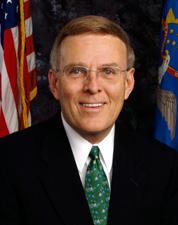
Mr. President, today, I am joined by Senators Breaux, Durbin, Leahy, Harkin and Johnson in introducing legislation to extend the current federal wind energy production tax credit, PTC, for an…
Mr. President, today, I am joined by Senators Breaux, Durbin, Leahy, Harkin and Johnson in introducing legislation to extend the current federal wind energy production tax credit, PTC, for an additional five years. This tax credit is scheduled to expire at the end of the year. A long-term extension of the credit will give wind energy developers the certainty they need to grow this important domestic industry with its seemingly limitless energy potential.
One of the most promising alternative energy sources on this country's horizon comes from one of nature's most abundant assets: the wind. Over 2,000 megawatts of new wind energy capacity has been added to the nation's electricity grid in just the last 2 years. This new wind generation has pumped over $2 billion into the struggling economy.
Congress has helped promote wind energy by making significant financial investments in Federal research and private-sector development over the last decade. Among other things, Congress has provided a Federal income tax credit for facilities that produce electricity from wind, which allows them to bring state-of-the-art wind turbines to the marketplace at a competitive rate.
More and more utilities that have produced electricity from traditional fossil fuels are now looking to wind energy and other alternative energy sources to meet a larger share of this country's future energy demands. Soaring oil and natural gas prices also remind us of the importance of reducing our reliance on foreign energy sources and keeping a diverse energy supply here at home.
However, despite broad bipartisan congressional support for the wind energy production tax credit, its fate remains cloudy. As I mentioned, the wind energy tax credit is scheduled to expire at the end of the year. Congress will surely extend the credit. But we can't wait until the last day of the session--or even later--to do so.
Unfortunately, this is not merely polemics. Congress has twice allowed the PTC to expire. First, Congress allowed it to expire in July 1999 and failed to reinstate it until December 1999. As a result, wind energy investments plummeted from 661 megawatts installed in 1999 to only 53 megawatts in 2000. Inexplicably, the Congress let the PTC expire a second time--at the end of 2001--and did not reinstate the credit until March of the following year. This failure contributed to another major drop in wind investments dropping from 1696 megawatts installed in 2001 to just 410 megawatts in 2002.
Today, wind energy industry officials tell me that if we do not extend the production tax credit by mid-year, thousands of jobs and billions of dollars in economic activity would be lost. And this shouldn't come as a surprise to my Senate colleagues. For many years, wind energy developers have told us that one of the major stumbling blocks to greater deployment of new wind technologies is the continued uncertainty surrounding the availability of the wind energy production tax credit. Even so, we still provided for just another short-term extension of the tax credit last March. A few short months from now, financial lenders will stop providing needed capital to new wind initiatives. As a result, projects already underway will quickly come to a halt, while new projects will be shelved. Many developers will simply be unable to build and purchase equipment and secure the financing that is needed to bring wind turbine generators on-line by year's end.
When the tax credit last expired, I heard from manufacturers in my state and across the nation about impending layoffs, because of the lack of certainty at that time. A tower developer in my state of North Dakota has again laid off 17 workers, because of the uncertainty this industry still faces, due to the soon-to-expire tax credit. We can help eliminate this uncertainty by extending the production tax credit for a longer term.
If we fail to act promptly to extend the tax credit this time around, North Dakota's wind energy industry would suffer another serious economic blow. I am told that DMI Industries, a major producer of wind turbine towers in North Dakota, would experience a 40-percent drop in business activity, resulting in some $15 million in lost revenue. The company's plan to expand its operation by 75 employees in 2004 would also be derailed. Delay in extending the production tax credit would mean that 100-125 new jobs would not be created in the coming year by LM Glasfiber, which is a major blade manufacturer in Grand Forks.
There is a great deal of discussion in Washington, D.C. about passing a stimulus package to provide a needed boost to our ailing economy. This very effort would be needlessly undermined if we fail to extend the wind energy production tax credit in a timely manner and make it available over the long term.
In North Dakota, we put up several wind turbines last year and launched an 80-megawatt project for North Dakota and South Dakota. At a time when this industry is just beginning to ramp up in the Great Plains, it would be foolish to thwart these efforts by failing to extend this wind energy production tax credit for sufficient time to get substantial new projects off the design boards and up and running.
Again, the bill I'm introducing today would extend the current production tax credit for qualifying wind facilities that are placed in service on or before December 31, 2008. The wind energy production tax credit has enjoyed strong bipartisan support in both the Senate and the House of Representatives in previous years, so we should be able to pass this legislation quickly this year.
I urge my Senate colleagues to cosponsor this legislation and work with me to get it enacted into law as soon as
possible. If we fail to act promptly, many new wind energy initiatives will come to a halt at a time when this country can least afford it.
Mr. President, this year marks the 40th anniversary of the March on Washington--a turning point in the struggle for civil rights for all Americans--and I am pleased that the Senate today has passed…
Mr. President, this year marks the 40th anniversary of the March on Washington--a turning point in the struggle for civil rights for all Americans--and I am pleased that the Senate today has passed S. 470, a bill I introduced on February 27, 2003. This important legislation extends the authority for the memorial to Dr. Martin Luther King, Jr., to be constructed in the District of Columbia close to the spot from which Dr. King delivered his moving ``I Have a Dream'' speech at the March on Washington. I would like to thank the Senate for moving so expeditiously on S. 470--legislation that is crucial to ensure a fitting tribute to our Nation's greatest civil rights leader.
In the 104th Congress, Congress passed a bill that I sponsored authorizing the creation of a memorial to Dr. King as part of the omnibus parks legislation. The Alpha Phi Alpha Fraternity, of which Dr. King was a member, was designed to coordinate the design and funding of the memorial. The legislation provides that the monument be established entirely with private contributions. The Department of Interior, in consultation with the National Capital Park and Planning Commission and the Commission on Fine Arts, has approved the site of the memorial pursuant to this legislation. A design has been selected and the Alpha Phi Alpha National Memorial Project Foundation is in the process of getting that design approved by the Department of the Interior.
Pursuant to the Commemorative Works Act, there is a 7-year period of legislative authority in which the National Memorial Project Foundation must acquire a construction permit for the memorial. This 7-year period will expire in November of this year. Despite the enormous dedication of the National Memorial Project Foundation, additional time is necessary for the Foundation to erect a fitting tribute to Dr. King. Meeting the administrative procedures and fundraising requirements of the act has been a slow process. Therefore, the foundation requires more time in which to complete the process and acquire a construction permit.
That is why I and Congresswoman Diane Watson in the House of Representatives introduced this legislation to extend the period of legislative authority for an additional 3 years. This legislation gives the foundation additional time to raise the necessary funds to obtain the construction permit and will ensure that work on the memorial is completed. This extension of legislative authority has been done before for numerous other memorials, such as the World War II Memorial and the U.S. Air Force Memorial, given the length of time it usually takes to embark on a project of this magnitude, and I am pleased that it will be done for the Martin Luther King, Jr. Memorial.
Since 1955, when in Montgomery, AL, Dr. King became a national hero and an acknowledged leader in the civil rights struggle, until his tragic death in Memphis, TN in 1968, Martin Luther King, Jr. made an extraordinary contribution to the evolving history of our Nation. His courageous stands and unyielding belief in the tenet of nonviolence reawakened our Nation to the injustice and discrimination that continued to exist 100 years after the Emancipation Proclamation and the enactment of the guarantees of the thirteenth, fourteenth, and fifteenth amendments to the Constitution.
A memorial to Dr. King erected in the Nation's Capital will provide continuing inspiration to all who view it, and particularly to the thousands of students and young people who visit Washington, DC every year. While these young people may have no personal memory of the condition of civil rights in America before Dr. King, nor of the struggle in which he was the major figure, they do understand that there is more that needs to be done in this critical area.
Martin Luther King, Jr. dedicated his life to achieving equal treatment and enfranchisement for all Americans through nonviolent means. It is my hope that the young people who visit this monument will come to understand that it represents not only the enormous contribution of this great leader, but also two very basic principles necessary for the effective functioning of our society. The first is that change, even very fundamental change, is to be achieved through nonviolent means; that this is the path down which we should go as a Nation in resolving some of our most difficult problems. The other basic principle is that the reconciliation of the races, the inclusion into the mainstream of American life of all its people, is essential to the fundamental health of our Nation.
Forty years ago Dr. King declared ``I have a dream that my four children will one day live in a nation where they will not be judged by the color of their skin but by the content of their character. I have a dream today.'' We must not let future generations forget the power of these words, and the importance of Dr. King's dream. The passage of S. 470 will ensure that work on the Martin Luther King, Jr. Memorial is completed, and that Dr. King's legacy will live on.
The committee amendment, in the nature of a substitute, was agreed to.
The bill (S. 470), as amended, was read the third time and passed.

Mr. President, I rise today as the lead cosponsor of Senator Leahy's Omnibus Mercury Reduction Act of 2003 to ask support for our continued efforts to dramatically reduce mercury pollution that has…
Mr. President, I rise today as the lead cosponsor of Senator Leahy's Omnibus Mercury Reduction Act of 2003 to ask support for our continued efforts to dramatically reduce mercury pollution that has been shown to pose serious health risks, especially for pregnant women, and can cause irreversible nerve damage in young children.
This legislation responds to the Environmental Protection Agency's just released report on ``America's Children and the Environment: Measures of Contaminants, Body Burdens, and Illnesses'', which states that EPA remains concerned about children potentially exposed to mercury in the womb.
Mercury is among the least-controlled and most dangerous toxins threatening pregnant women and children from mercury exposure through the air and water in America today, and we need to continue the fight to pass a national approach to better control its use. Because mercury pollution knows no State borders, a national initiative is necessary to control it and better understand its health effects.
The Omnibus Mercury Emissions Reduction Act of 2003 would require the U.S. Environmental Protection Agency, EPA, to impose new restrictions on mercury emissions by utility power plants, coal and oil-fired commercial boilers, solid waste incinerators, and other sources of emissions. According to the EPA, an estimated 30 tons of mercury emissions per year come from municipal waste combustors because of the presence of mercury-containing items such as fluorescent lamps, fever thermometers, thermostats, and switches.
Our bill requires utility power plants and commercial boilers to reduce mercury emissions by 95 percent in five years, and requires the EPA to publish a list of mercury-containing items that need to be separated and removed from the waste streams that feed solid waste management facilities. The most effective way to reduce mercury emissions from incinerators is to reduce the volume of mercury- containing items before they reach the incinerator.
The bill would also expand research on the effects of mercury on sensitive subpopulations such as pregnant women and children, and it directs the EPA to work with the States to improve the quality and dissemination of State fish consumption advisories.
Even in Maine, where great efforts have been made to preserve clean air and water, mercury arrives as an unseen threat, carried in the air from hundreds of miles away and deposited in our lakes, rivers and coastal regions through rain and snowfall. This bill complements the steps Maine has taken to reduce mercury emissions, and by addressing what happens outside our borders, it also can ensure that Maine's actions will not be in vain.
Mercury is a dangerous toxin present in coal, which is burned to produce 65 percent of the nation's electricity, other fossil fuels, and various household and industrial products. When mercury is burned, fine particles are released and carried by precipitation back to earth, contaminating water bodies, fish, and wildlife, and ultimately posing a threat to humans. Nationwide, 39 States have issued warnings about eating certain fish in more than 50,000 bodies of water, up from 27 States in 1993.
While Maine ranks 49th among the least-polluting States in terms of mercury emissions, nearly all of its lakes are under health advisories due to airborne mercury pollution transported in air currents from other States. Because mercury is an element and cannot be destroyed, it cycles endlessly through the environment, necessitating control of the toxin at the source.
With the technology and resources available, we can and must find creative ways to substantially reduce mercury pollution, and this bill kicks that process into gear and will go a very long way toward removing this harmful toxin as a threat to human health and the environment.
In partnership with the Omnibus mercury bill, I am also a cosponsor of Senator Jeffords' Clean Power Act that calls for a 90 percent reduction of mercury from coal burning power plants by 2008. By 2009, the Jeffords bill also dramatically cuts aggregate power plant emissions of the three other major power plant pollutants: nitrogen oxides, NOx, the primary cause of smog, by 71 percent from 2000 levels; sulfur dioxide, SO2, that causes acid rain and respiratory disease, by 81 percent from 2000 levels; and carbon dioxide, CO2, the greenhouse gas most directly linked to global climate variabilities, by 21 percent from 2000 levels. Of note, the NOx, SO2, and mercury reductions are set at levels that are known to be cost effective with available technology.
I hope to work with my colleagues in the 108th Congress to see that provisions in these two bills are fully debated and policy is passed to protect our environment and our population from the ravages of these major air pollutants. We must move forward for the health of the unborn, the American public and the entire planet.
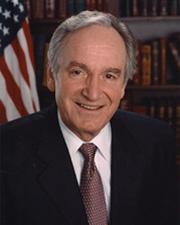
Mr. President, today I am introducing legislation, the Training for Realtime Writers Act of 2003, on behalf of myself and my colleagues, Senators Grassley, Kennedy, Cochran, Lincoln, Kerry, Bingaman,…
Mr. President, today I am introducing legislation, the Training for Realtime Writers Act of 2003, on behalf of myself and my colleagues, Senators Grassley, Kennedy, Cochran, Lincoln, Kerry, Bingaman, Dodd, and Baucus. The 1996 Telecom Act required that all television broadcasts were to be captioned by 2006. This was a much needed reform that has helped millions of deaf and hard-of-hearing Americans to be able to take full advantage of television programing. As of today, it is estimated that 3,000 captioners will be needed to fulfill this requirement, and that number continues to increase as more and more broadband stations come online. Unfortunately, the United States only has 300 captioners. If our country expects to have media fully captioned by 2006, something must be done.
This is an issue that I feel very strongly about because my late brother, Frank, was deaf. I know personally that access to culture, news, and other media was important to him and to others in achieving a better quality of life. More than 28 million Americans, or 8 percent of the population, are considered deaf or hard of hearing and many requires captioning services to participate in mainstream activities. In 1990, I authored legislation that required all television sets to be equipped with a computer chip to decode closed captioning. This bill completes the promise of that technology, affording deaf and hard of hearing Americans the same equality and access that captioning provides.
Though we don't necessarily think about it, on the morning of September 11 was a perfect example of the need for captioners. Holli Miller of Ankeny, IA, was captioning for Fox News. She was supposed to do her three and a half hour shift ending at 8:00 a.m. but as we all know, disaster struck. Despite the fact that she had already worked most of her shift and had two small children to care for, Holli Miller stayed right where she was and for nearly five more hours and continued to caption. Without even the ability to take bathroom breaks, Holli Miller made sure that deaf and hard of hearing people got the same news the rest of us got on September 11. I want to personnally say thank you to Holli Miller and all the many captioners and other people across the country that made sure all Americans were alert and informed on that tragic day.
But let me emphasize that the deaf and hard of hearing population is only one of a number of groups that will benefit from the legislation. The audience for captioning also includes individuals seeking to acquire or improve literacy skills, including approximately 27 million functionally illiterate adults, 3 to 4 million immigrants learning English as a second language, and 18 million children learning to read in grades kindergarten through 3. In addition, I see people using closed captioning to stay informed everywhere--from the gym to the airport. Captioning helps people educate themselves and helps all of us stay informed and entertained when audio isn't the most appropriate medium.
Although we have a few years to go until the deadline given by the 1996 Telecom Act, our nation is facing a serious shortage of captioners. Over the past five years, student enrollment in programs that train court reporters to become realtime writers has decreased significantly, causing such programs to close on many campuses. Yet the need for these skills continues to rise. That is why my colleagues and I are introducing this vital piece of legislation. The Training for Realtime Writers Act of 2003 would establish competitive grants to be used toward training real time captioners. This is necessary to ensure that we meet our goal set by the 1996 Telecom Act.
I urge my colleagues to review this legislation and I hope they will join us in support and join us in our effort to win its passage. I ask unanimous consent that the text of the bill be printed in the Record.
Show 11 more
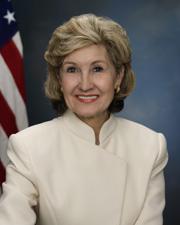
Mr. President, I am pleased to introduce a bill to correct an injustice in the tax code that harms citizens in every state of this great Nation. State and local governments have various alternatives…
Mr. President, I am pleased to introduce a bill to correct an injustice in the tax code that harms citizens in every state of this great Nation.
State and local governments have various alternatives for raising revenue. Some levy income taxes, some use sales taxes, and others use a combination of the two. The citizens who pay State and local income taxes are able to offset some of what they pay by receiving a deduction on their Federal taxes. Before 1986, taxpayers also had the ability to deduct their sales taxes.
The philosophy behind these deductions is simple: people should not have to pay taxes on their taxes. The money that people must give to one level of government should not also be taxed by another level of government.
Unfortunately, these common sense deductions have slowly been eroded over the years. First, the deduction for State and local sales tax was eliminated in the 1986 tax reform legislation. Second, the alternative minimum tax has reduced the benefit of the income tax deduction for many.
The elimination of the sales tax deduction discriminates against those living in states, such as my home State of Texas, with no income taxes. It is important to remember the lack of an income tax does not mean citizens in these States do not pay State taxes; revenues are simply collected differently.
It is unfair to give citizens from some States a deduction for the revenue they provide their State and local governments, while not doing the same for citizens from other States. Federal tax law should not treat people differently on the basis of State residence and differing tax collection methods.
This discrepancy has a significant impact on Texas. According to the Texas Comptroller, if taxpayers could deduct their sales taxes, more than $700 million would stay in the hands of Texans. This could lead to the creation of more than 16,000 new jobs and add almost $900 million in economic activity. The impact of this growth would be particularly beneficial during this period when many States are facing record- breaking deficits. At the same time, such a tax change would cost the Federal Government less than one percent of what the current State and local income tax deduction costs.
For those in states with income taxes, their tax deduction benefit has been diminished by the alternative minimum tax, AMT. People can deduct their state and local income taxes when calculating their regular taxes, but not when determining the AMT. The difference often is the reason people must pay the higher alternative tax.
In fact, state and local taxes account for 54 percent of the difference between the AMT and the regular tax calculation. This particularly hurts the 60 percent of AMT payers who are from states with higher income tax rates. Eliminating this discrepancy would go a long way toward reducing the number of people affected by the AMT.
The legislation I am offering today will fix these problems. First, it will provide all taxpayers with the option of deducting State and local sales taxes, instead of income taxes, when calculating their Federal tax. This will end the discrimination suffered by my fellow Texans and citizens of other states who do not have the option of an income tax deduction. It will also allow people from states with both a sales and an income tax to choose the most advantageous deduction.
My bill will also provide for a State and local income and sales tax deduction in the AMT. This is an important step in reducing the ballooning growth of the AMT, which will impact almost a third of all taxpayers by 2010.
The legislation I am introducing today is about reestablishing equity to the tax code and defending the important principle of eliminating taxes on taxes. I hope my fellow Senators will support this effort.
Mr. President, I ask unanimous consent that the text of the bill be printed in the Record.

Mr. President, I am pleased to once again be the lead Republican cosponsor of the ``Training for Realtime Writers Act''. This legislation that Senator Harkin and I are introducing today will provide…
Mr. President, I am pleased to once again be the lead Republican cosponsor of the ``Training for Realtime Writers Act''. This legislation that Senator Harkin and I are introducing today will provide grants for the training of realtime reporters and captioners. While we ran out of time to address this matter in the 107th Congress, I would remind Senators of the looming problem related to a shortage of what are called ``realtime writers''. Realtime writers are essentially trained court reporters, much like the Official Reporters of Debates here in the Senate, who use a combination of additional specialized training and technology to transform words into text as they are spoken. This can allow deaf and hard of hearing individuals to understand live television as well as follow proceedings at a civic function or in a classroom.
In the Telecommunications Act of 1996, Congress mandated that most television programming be fully captioned by 2006 in order to allow the 28 million Americans who are deaf or had of hearing to have access to the same news and information that many of us take for granted. Information provides a vital link to the outside world. Americans receive a large amount of their information about what is happening in the world and right in their communities from television. Whether it is an international crisis or a weather warning, information is necessary to fully participate in our society. In order for those who are deaf and hard of hearing to receive the same information as it is broadcast on live television, groups of captions must work around the clock transcribing words as they are spoken.
Currently, video-programming distributers must provide an average of at least 900 hours of captioned programming. Starting in 2005, this will increase to 1350 hours. By 2006, 100 percent of new nonexempt programming must be provided with captions. At the same time, student enrollment in programs that provide essential training in captioning has decreased significantly, with programs closing on many campuses. In order to meet the growing demand for realtime writers caused by this mandate, we must do everything we can to increase the number of individuals receiving this very specialized training.
Our bill will help address the shortage of individuals trained as realtime writers by providing grants to accredited court reporting programs to promote the training and placement of individuals as realtime writers. Specifically, court reporting programs could use these grants for item like recruitment of students for realtime writing programs, need-based scholarships, distance learning, education and training, job placement assistance, the encouragement of individuals with disabilities to pursue a career as a realtime writer, and personnel costs.
The expansion of distance learning opportunities in particular will have an enormous impact by making training accessible to individuals who want to become realtime writers but do not live in metropolitan areas. Also, need based scholarships offered using these grants funds would be subject to an agreement with the National Telecommunications and Information Administration to provide realtime writing services for a period of time.
We must act quickly because the shortage of individuals trained as realtime writers will only grow more severe as the captioning mandate in the 1996 Telecommunications Act continues to take effect. Failure to act could leave the 28 million deaf or hard of hearing Americans without the ability to fully participate in many of the professional, educational, and civic activities that other Americans enjoy. Congress was not able to complete work on this urgent matter before the end of the 107th Congress, so we must redouble our efforts. I would urge all senators to support the swift passage of this legislation.
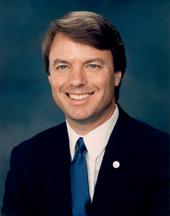
Mr. President, I rise today to introduce the Protect America Scholarships Act of 2003. The Act will draw talented young people into professions that are vital to America's security and that are…
Mr. President, I rise today to introduce the Protect America Scholarships Act of 2003. The Act will draw talented young people into professions that are vital to America's security and that are critically short of expertise. It offers college students a simple deal: If you'll serve for five years, we'll pay for your college.
The reason for this law is simple. Our country continues to have tremendous homeland security needs. We have thousands of important jobs that we aren't filling because we don't have the qualified people. And we have thousands of young people who are looking to serve their country, and who are also looking for ways to pay for college.
So this bill puts together the needs of our country and the idealism of our young people. It says that young people who commit to meeting priority homeland security needs will get money for college in return.
Let me give three examples of professions where this bill can make a real difference.
First, our public health system suffers from a shortage of trained professionals who can contribute to the fight against terrorism. Too few medical professionals are trained to diagnose and treat diseases caused by biological agents. Public health laboratories don't have the capacity to test all the specimens suspected of being biological agents. Local governments need as many as 15,000 new public health preparedness employees. And despite the central role of nurses in responding should terrorists attack with chemical or biological weapons, there are more than 126,000 unfilled nursing positions today. There are special roles in all of these professions that trained young people could fill in important ways.
Second, the federal government faces a critical shortage of policymakers and intelligence analysts with expertise in foreign languages and cultures. The General Accounting Office has reported that the FBI's efforts to combat terrorism have been impeded by a lack of qualified translators. Thousands of hours of audiotapes and pages of written material have not been reviewed or translated. Similarly, the U.S. Department of State reports that lack of language fluency has weakened its fight against international terrorism and drug trafficking.
A third area where we need more people is fighting cyberterrorism. We now live in a world where a terrorist can do as much damage with a keyboard and a modem as with a gun or a bomb. By exploiting computer vulnerabilities, terrorists might be able to shut down power for entire cities for extended periods; disrupt our phones; poison our water; erase financial records; paralyze our police, firefighters, and ambulances; and stop all traffic on the Internet. Yet our workforce specializing in cybersecurity remains inadequate. The federal government has especially serious shortages. These vulnerabilities leave our Federal agencies exposed to hackers, system shutdowns, and cyberterrorists.
By offering up to $10,000 in college tuition, the Protect America Scholarships Act will harness the patriotism and determination of a new generation of Americans to urgent national priorities. The federal government and a growing number of states, including North Carolina, use similar programs to recruit teachers successfully. The recent Hart- Rudman report identified student loan debt burdens as a particular obstacle to attracting young adults into public service.
The safety of the American people depends on the millions of people working to protect them. Today's bill will help recruit more talented Americans to professions needed to defend our nation. I hope it will earn the support of my colleagues.
I request unanimous consent that the text of the bill be printed in the Record.
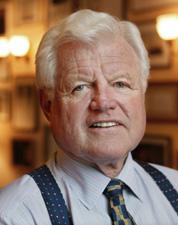
Mr. President, it is an honor to be here today with Senator Domenici to renew the battle in the Senate to end one of the most shameful forms of discrimination in our society discrimination against…
Mr. President, it is an honor to be here today with Senator Domenici to renew the battle in the Senate to end one of the most shameful forms of discrimination in our society discrimination against mental illness. We renew the battle in the name of our friend and colleague Paul Wellstone who did so much to advance this cause we share and whom we miss so dearly now.
Senator Pete Domenici and Senator Paul Wellstone led us with great skill in the Senate in this bipartisan battle in the past, and I'm proud to join Senator Domenici today to carry on this very important effort in the Senate.
This bill brings first class medicine to millions of Americans who have been second class patients for too long.
We know that millions of Americans across the country with mental illness faced stigma and misunderstanding. Even worse, they have been denied treatment that can cure or ease their cruel afflictions. Too often, they are the victims of discrimination by health insurance companies. It is unacceptable that the nation continues to tolerate actions by insurers that deny medical care for mental illnesses even though the very same insurers fully cover the treatment of physical illnesses that are often more costly, less debilitating and less curable. Mental illnesses are treatable and curable, and
it's high time to bring relief to those who experience them.
Equal treatment of the mentally ill is not just an insurance issue, it is a civil rights issue. At its heart, mental health parity is a question of simple justice.
The need is clear. One in five Americans will suffer some form of mental illness this year--but only one-third of them will receive treatment. According to a report of the Surgeon General, at least 4 million children suffer from a major mental illness that results in significant impairments at home, at school, and with their peers. Families must often make painful choices about how to pay for the care their child needs to live a normal life.
The cost is low. As we have seen in state after state and in the Federal Employees Health Benefits Program, insurance parity does not cause soaring insurance premiums. When parity for both mental health coverage and substance abuse coverage was provided for federal employees, they paid only $1 a month more for individual coverage and $2 for family coverage. The Congressional Budget Office has estimated that this bill will raise insurance rates by less than one percent a small cost that will bring health care and financial security to many families.
It is tragic when a child is diagnosed with any illness. It is heart wrenching for parents to watch their children suffer. The tragedy is even greater when an insurance company denies treatment for a child solely because the illness is a mental illness. It's wrong for insurance companies to promote modern medicine for physical diseases, but leave mental health in the dark ages.
It is wrong to force parents to choose between the care their child needs and the other financial needs of the family. I have heard countless stories from mothers and fathers whose children desperately needed the care that their insurance companies refused to provide.
There is hope for the future. Today we were presented with 30,000 petitions signed by young people asking Congress to provide affordable coverage for mental health services. The petitions were signed in concerts held across the country to raise awareness for suicide prevention. Pete Domenici and I are here today to bring hope to these parents and to these young people. It is long past time to end insurance discrimination, and guarantee all people with mental illnesses the coverage they deserve.
Mr. President, I would like to announce for the information of the Senate and the public that the following hearing has been scheduled before the Subcommittee on National Parks of the Committee on…
Mr. President, I would like to announce for the information of the Senate and the public that the following hearing has been scheduled before the Subcommittee on National Parks of the Committee on Energy and Natural Resources:
June 3, 2003 at 2:30 p.m. in room SD-366 of the Dirksen Senate Office Building in Washington, DC. The purpose of the hearing is to receive testimony on the following bills: S. 268, authorizes the Pyramid of Remembrance Foundation to establish a memorial in the District of Columbia and its environs to honor members of the Armed Forces of the United States who have lost their lives during peacekeeping operations, humanitarian efforts, training, terrorist attacks, or covert operations; S. 296, to require the Secretary of Defense to report to Congress regarding the requirements applicable to the inscription of veterans' names on the memorial wall of the Vietnam Veterans Memorial; S. 470, to extend the authority for the construction of a memorial to Martin Luther King, Jr.; and S. 1076, to authorize construction of an education center at or near the Vietnam Veterans Memorial.
Because of the limited time available for the hearings, witnesses may testify by invitation only. However, those wishing to submit written testimony for the hearing record should send two copies of their testimony to the Committee on Energy and Natural Resources, United States Senate, SD-364 Dirksen Senate Office Building, Washington, DC 20510-6150.
For further information, please contact: Tom Lillie at (202) 224-5161 or Pete Lucero at (202) 224-6293.
committee on indian affairs
Mr. President, I would like to announce for the information of the Senate and the public that the following hearing has been scheduled before the Subcommittee on National Parks of the Committee on Energy and Natural Resources.
June 10, 2003 at 2:30 p.m. in room SD-366 of the Dirksen Senate Office Building in Washington, DC. The purpose of the hearing is to receive testimony on the following bills: S. 499, to authorize the American Battle Monuments Commission to establish in the State of Louisiana a memorial to honor the Buffalo Soldiers; S. 546, to provide for the protection of paleontological resources on Federal lands, and for other purposes; S. 643, to authorize the Secretary of the Interior, in cooperation with the University of New Mexico, to construct and occupy a portion of the Hibben Center for Archaeological Research at the University of New Mexico, and for other purposes; S. 677, to revise the boundary of the Black Canyon of the Gunnison National Park and Gunnison Gorge National Conservation Area in the State of Colorado, and for other purposes; S. 1060 and H.R. 1577, to designate the visitors' center at Organ Pipe Cactus National Monument, Arizona, as the ``Kris Eggle Visitors' Center''; H.R. 255, to authorize the Secretary of the Interior to grant an easement to facilitate access to the Lewis and Clark Interpretive Center in Nebraska City, Nebraska; and H.R. 1012, to establish the Carter G. Woodson Home National Historic Site in the District of Columbia, and for other purposes.
Because of the limited time available for the hearings, witnesses may testify
by invitation only. However, those wishing to submit written testimony for the hearing record should send two copies of their testimony to the Committee on Energy and Natural Resources, United States Senate, SD-364 Dirksen Senate Office Building, Washington, DC 20510-6150.
For further information, please contact Tom Lillie at (202) 224-5161 or Pete Lucero at (202) 224-6293.
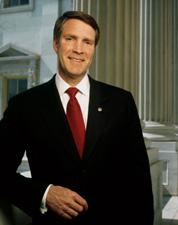
Mr. President, today the Senate will be in a period of morning business until 1:30 p.m. At 1:30, the Senate will begin consideration of the Homeland Security appropriations bill. As I mentioned--I…
Mr. President, today the Senate will be in a period of morning business until 1:30 p.m. At 1:30, the Senate will begin consideration of the Homeland Security appropriations bill. As I mentioned--I think it was Thursday night of last week--this appropriations bill will for the first time be considered on this floor. So this is a new initiative for us. I look forward to handling that expeditiously this week in a thoughtful and deliberate way. These are very important issues before this body.
I announced previously we will not have rollcall votes today. Having said that, I encourage Members to come to the floor and proceed with their opening statements on the Homeland Security bill. Any amendment that is offered today can be debated throughout the day with a vote to occur during Tuesday's session at a time determined later.
Once again, I encourage Members who desire to offer amendments to the Homeland Security bill to contact Senator Cochran or the ranking member. I hope we can pass this legislation early this week and then continue with the other appropriations bills. With only 2 weeks remaining prior to the scheduled recess, we need to address as many of the appropriations bills as possible this week. As previously stated, during the last week, which is next week, we will be addressing and completing action on the Energy bill.
Last week, I discussed with the other side of the aisle the possibility of having a filing deadline for amendments to the Energy bill. I continue to hope that the objection on the Democratic side will be lifted and that we can allow Chairman Domenici and the ranking member to look at the legislative language of these amendments.
We first brought Energy to the floor now several months ago. It was May 6. We have had 12 days on the floor. We have a list of amendments by title. Now is the time to narrow that list, to look at the legislative language.
One of the purposes of setting aside this week at the end of this month so far in advance was that those actions and deliberations could be taken by our colleagues so we could best use the time on the floor of the Senate in a focused way and in a way that respects people's time broadly but allows adequate discussion, debate, amendment, and completion of this bill.
I do want to take a moment to congratulate the chairman of the Appropriations Committee. Last week, he made significant progress on the appropriations process, but obviously there is a lot of work to be done. I am confident that Senator Stevens will continue along this road. He is clearly up to the task and will complete these bills in a timely fashion.
In addition to the three appropriations bills that the Senate passed last week, we were also able to continue to
work on a number of other important issues. Senator McConnell helped in ensuring that the Senate passed H.R. 2330, the Burma sanctions bill. That bill has now been cleared for the President's signature.
The Senate also passed S. 764, Senator Campbell's bill to extend the authority for the Bulletproof Vest Partnership Grant Program.
The Senate was also able to act on a number of Energy Committee bills, including S. 470, which extended the authority for the construction of a memorial for Martin Luther King, Jr.
I look forward to a productive couple of weeks before our recess as we address the appropriations bills, energy bills, and other legislative and executive items that can be cleared.
Mr. President, I am pleased to join today with Senators Warner, Lugar, Mikulski and Durbin in introducing legislation that would extend the legislative authority for the Martin Luther King, Jr.…
Mr. President, I am pleased to join today with Senators Warner, Lugar, Mikulski and Durbin in introducing legislation that would extend the legislative authority for the Martin Luther King, Jr. Memorial for an additional three years. The monument to Martin Luther King, Jr., which will be built on the Mall, will honor one of this Nation's most treasured citizens. Dr. King challenged us to live by the principles set forth at this Nation's inception, and forever changed the fabric of this country.
Despite the enormous dedication of the Martin Luther King, Jr. National Memorial Project Foundation, Inc., additional time is necessary for the Foundation to erect a fitting tribute to Dr. King. The Commemorative Works Act currently requires that construction of the Memorial begin by November 2003. However, meeting the administrative procedures and fundraising requirements of the Act has been a very slow process.
On November 12, 1996, legislation was enacted authorizing construction of the Memorial within a seven-year period. It then took Congress another two years to pass legislation authorizing placement of the Memorial in Area I of the Capital. Then the Foundation worked with the National Capital Planning Commission and the Commission for Fine Arts for over a year to locate an appropriate site for the Memorial within Area I. As a result, the Foundation was unable to select a design for the Memorial until September 2000.
This consultative process has been challenging, but it has resulted in a design for a Memorial on the Tidal Basin that will fittingly reflect the legacy of the greatest civil rights leader of our time. Initial estimates indicate that the construction costs of the Memorial alone could be as much as $60 million, and the Foundation is actively engaged in fundraising for the Memorial. However, it does not expect to have the necessary funds to receive the construction permit by the deadline of November 2003 as dictated by the Commemorative Works Act. One hundred percent of the funding must be privately financed, and the total cost of the project could near $100 million. Our legislation would give the Foundation an additional three years to raise the necessary funds to obtain the construction permit, and would ensure that work on the Memorial is completed. This extension of legislative authority has been done before for other memorials, given the length of time it usually takes to embark on a project of this magnitude, and it should be done for the Martin Luther King, Jr. Memorial.
Dr. King serves as a reminder that change is brought about most powerfully when it is done by non-violent means. This country owes much to Dr. King, most notably his legacy of non-violent protest that has informed and influenced subsequent rights campaigns in our nation. Visitors will come to the Memorial from every part of this country and indeed the world, to be inspired anew by Dr. King's words and deeds, and the extraordinary story of his life. Mr. President, I ask my colleagues to support this important legislation and grant the Foundation the additional time it needs to complete this significant monument.
I ask unanimous consent that the text of the legislation be printed in the Record.
Madam Speaker, I want to thank the gentlewoman from the Virgin Islands for yielding me this time. As a member of Alpha Phi Alpha fraternity, I also want to commend my brothers for the tremendous work…
Madam Speaker, I want to thank the gentlewoman from the Virgin Islands for yielding me this time. As a member of Alpha Phi Alpha fraternity, I also want to commend my brothers for the tremendous work they have done on this project. I also want to thank the Committee on Resources for bringing this bill to the floor.
Every year, millions of Americans and visitors from across the world visit our Nation's capital. They visit the national Mall where symbols of our Nation's history and ideals stand tall and strong. In classrooms across the Nation as they study the history of the 20th century, besides our involvement in wars, the civil rights movement is the most influential stage in the development and evolution of our society. Yet besides the bust of Dr. Martin Luther King, Jr., in the Rotunda of the Capitol building, there are no tributes recognizing the significance of the movement to our Nation's history. I am in support of S. 470 because I believe that a memorial to Dr. Martin Luther King, Jr., would be fitting to not only remember this remarkable man but the civil rights movement itself, over 200 years of struggle for equality and to remind our citizens what great success can be achieved with nonviolent resistance.
Dr. King, as many of us know, was the most visible and effective advocate of nonviolence and direct action as methods of social change. In 1956, Dr. King became the president of the newly formed Montgomery Improvement Association, where he gained national attention for his and the association's role in the Montgomery bus boycott.
He encouraged black college students to continue their sit-in protests and freedom rides. In 1963, Dr. King led mass demonstrations in Birmingham, Alabama, where the demonstrators were met with violent opposition, getting the interest and attention of then-President John F. Kennedy who responded, and the Civil Rights Act of 1964 was passed. Dr. King became Time Magazine's Man of the Year in 1963 and the recipient of the Nobel Peace Prize in 1964. In 1967, he also initiated a poor people's campaign designed to confront economic problems that were not addressed under the Civil Rights Act of 1964. Dr. King's life of peace and change was suddenly ended on April 4, 1968, as he was assassinated in Memphis, Tennessee.
Mr. Speaker, our Nation's capital makes history alive. Without having a memorial to Dr. King and the civil rights movement, it sends the message that this part of history is not still alive. As Dr. King once told his children, ``I'm going to work and do everything that I can do to see that you get a good education. I don't ever want you to forget that there are millions of God's children who will not and cannot get a good education, and I don't want you feeling that you are better than they are. For you will never be what you ought to be until they are what they ought to be.'' Our country will never be what it ought to be until we value and adequately display the contributions of African Americans who have made tremendous contributions to our history; and, of course, a tribute to Dr. King on the Mall would go a long ways in that direction.
Madam Speaker, I thank the gentlewoman from the Virgin Islands for yielding me this time and the chairman who is managing the bill on the other side, the gentleman from New Jersey (Mr. Saxton), for…
Madam Speaker, I thank the gentlewoman from the Virgin Islands for yielding me this time and the chairman who is managing the bill on the other side, the gentleman from New Jersey (Mr. Saxton), for their good and hard work on this bill and for bringing it to the floor before the deadline.
I appreciate that this bill was authorized in 1996 and that the Congress understood it to be an important matter, that Martin Luther King, who has been honored all over the world, has never been sufficiently honored until he is honored by the Congress of the United States in the Nation's capital. Site selection and other processes on the memorial, however, were not completed until the year 2000. So although authorized in 1996, the Congress is aware that the District has the most elaborate process for monuments in the country. You do not hear me complaining. I am a strong supporter of those processes. It is one Mall; it is priceless. We already are in danger of filling it up and not paying enough attention to it. I am working on a conservancy bill because it is deteriorating. We have to make sure that everything that goes on that Mall which is, after all, our real crown jewel, goes through each and every process and is exactly right.
And so it took some time to find the right space on the Mall. We do not just put things anywhere on the Mall anymore. This is a plot of land meant to last in perpetuity. It is already greatly endangered. But if you do not know precisely where the memorial is going to go until almost 4 years after Congress has authorized it, it is very difficult to do all of the fundraising because it is when the site is chosen that people recognize that the monument is going to happen and they come forward more easily to, in fact, contribute. It eases the process tremendously after that point.
I want to commend Alpha Phi Alpha for what they have done so far. It is herculean to do what they have done. It is a $100 million memorial, no Federal funds, one lone fraternity, the fraternity that Martin Luther King himself belonged to. They have the entire burden of raising the funds for this memorial. This bill will help them to continue the process; yet it is only 3 more years.
I believe every Member of this body and of the other body appreciates the singular place of Martin Luther King in our country's history. His reconciling, nonviolent approach was critical. Otherwise, we need only look around the world and we need only consider that we had legal discrimination in this country for 100 years after the Civil War to appreciate what this man did. All over the world in order to settle such disputes there are conflagrations going on. As I speak, in our country we have still not gotten over the Civil War. We are much further along the way, however, after the nonviolent revolution that began in the 1960s. The man most responsible for the character of that revolution is Martin Luther King, Jr., himself. It loses the Congress nothing and gives it much to simply extend the time for Alpha Phi Alpha to gather the funds necessary for a memorial for this great American.
Mr. President, I rise today to introduce a bill to fairly assist injured Federal employees. This legislation will adjust Federal employees retirement computations to offset reductions in their…
Mr. President, I rise today to introduce a bill to fairly assist injured Federal employees. This legislation will adjust Federal employees retirement computations to offset reductions in their retirement arising from on-the-job injuries covered by the Workers Compensation program. I introduced similar legislation last session that was passed by the Senate. I would like to thank my colleague Senator Warner the senior Senator from Virginia, for his valuable support in cosponsoring this important effort.
This bill addresses a problem in the retirement program for Federal employees that has been recognized but unresolved since 1986 when the current retirement system was established. Unfortunately, complications arising from the Tax Code and the Workers Rehabilitation Act of 1973 have blocked any solution.
My resolve to address this problem was inspired by Ms. Louise Kurtz, a Federal employee from Virginia who was severely injured in the September 11 attack on the pentagon. She suffered burns over 70 percent of her body and lost all of her fingers. She has had many painful surgeries and faces additional surgeries in the future. She continues to endure rehabilitation over a year after suffering her injuries, yet still hopes to return to work some day. Current law, however, does not allow Mrs. Kurtz to contribute to her retirement program while she is recuperating and receiving Workers' Compensation disability payments. As a result, after returning to work and eventually retiring, she will find herself inadequately prepared and unable to afford to retire because of the lack of contributions during her recuperation.
As Ms. Kurt's situation reveals, Federal employee under the Federal Employees Retirement System who have sustained an on-the-job injury and are receiving disability compensation from the Department of Labor's Office of Worker's Compensation Programs are unable to make contributions or payments into Social Security or the Thrift Savings Plan. Therefore, the future retirement benefits from both sources are reduced.
This legislation offsets the reductions in Social Security and Thrift savings Plan retirement benefits by increasing the Federal Employees Retirement System Direct Benefit calculation by one percentage point for extended periods of disability.
The passage of this bill ensures that the pensions of our hard- working federal employees will be kept whole during a period of injury and recuperations, especially now that many of them are on the frontlines of protecting our homeland security in this new war on terror. By protecting the retirement security of injured Federal employee, we have provided an incentive for them to return to work and increased our ability to retain our most dedicated and experienced Federal workers. This is a reasonable and fair approach in which the whole Senate acted in a logical and compassionate manner last fall. Let us do so again.
I ask unanimous consent that the text of the bill be printed in the Record.

Mr. President, the risks and health effects of mercury contamination continue to be serious and immediate. We have known about mercury pollution for many years. It remains one of, if not the last of,…
Mr. President, the risks and health effects of mercury contamination continue to be serious and immediate. We have known about mercury pollution for many years. It remains one of, if not the last of, the
major toxic pollutants without a comprehensive plan to control its spread. We know where the sources contributing to mercury contamination are, we have a pretty good idea where it goes, and we definitely know what harm it causes to people and to wildlife. Yet, serious contamination continues. That is why I am reintroducing important legislation today to confront this problem directly.
The most serious threat of mercury pollution is to our children. Just this week, the Environmental Protection Agency finally released their report, ``American's Children and the Environment: Measures of Contaminants, Body Burdens and Illnesses.'' The report should alarm all of us. It highlights the neurological harm that can come to children exposed to elevated mercury levels while in the womb and during the first years of their lives. As more mercury is dumped into our environment, more children will be at risk. Today, according to the Centers for Disease Control, 1 in 12 women of childbearing age has mercury levels above the safe health threshold established by EPA.
Although the report comes nine months late, it does highlight a serious gap between the Administration's ``Clear Skies'' proposal and the Leahy/Snowe bill when it comes to reducing mercury levels. The only thing clear about the Administration's proposal is that it won't protect Vermont's children from the pollution spewing out of power plants in the Midwest. The Administration's Clear Skies proposal will actually relax current mercury emissions law.
Our bill will reduce mercury emission from coal-fired power plants by 90 percent. The Clear Skies proposal would only reduce emissions by 50 percent in the near future and 70 percent over the next 15 years. Not only does this fall far short of our proposal, but it also falls short of current law and the Administration's previous position. In 2001, EPA Administrator Christie Todd Whitman said the EPA had initiated strict ``maximum achievable control technology'' MACT, standards for oil- and coal-fired electric utility units as required under section 112 of the Clean Air Act. At that time, Whitman said that mercury reductions are ``necessary now, not decades from now.''
Administrator Whitman was right then and wrong now. With industry's vigorous opposition to tighter mercury controls and the Bush administration's record to date rolling back environmental legislation regulation, especially the Clean Air Act, I worry that more children will be put at risk as the Administration continues to delay the MACT standards and other policies. The delays and rollbacks make you ask whose interests the Administration is putting first--children, or the big powerplant companies?
I ask for unanimous consent that a summary of the bill be printed in the Record.
Bill Text
5 versions available
        [Congressional Bills 108th Congress]
[From the U.S. Government Publishing Office]
[S. 470 Enrolled Bill (ENR)]

S.470

One Hundred Eighth Congress

of the

United States of America

AT THE FIRST SESSION

Begun and held at the City of Washington on Tuesday,
the seventh day of January, two thousand and three

An Act

To extend the authority for the construction of a memorial to
Martin Luther King, Jr.

Be it enacted by the Senate and House of Representatives of the
United States of America in Congress assembled,

SECTION 1. MEMORIAL TO MARTIN LUTHER KING, JR.

Section 508(b) of the Omnibus Parks and Public Lands Management Act
of 1996 (Public Law 104-333), as amended, is amended to read as
follows:
``(b) Compliance With Standards for Commemorative Works.--(1)
Except as provided in paragraph (2), the establishment of the memorial
shall be in accordance with chapter 89 of title 40, United States Code.
``(2) Notwithstanding section 8903(e) of title 40, United States
Code, the authority provided by this section terminates on November 12,
2006.''.

Speaker of the House of Representatives.

Vice President of the United States and
President of the Senate.