Comprehensive Homeland Security Act of 2003
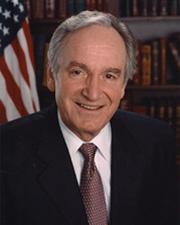
 Sen. Thomas A. Daschle (D-SD)
Legislative Activity
Stay on top of the latest movement without scrolling through every action
Read twice and referred to the Committee on the Judiciary.
January 7, 2003
View full timeline
Introduced in Senate
January 7, 2003
Sponsor introductory remarks on measure. (CR 1/9/2003 S134)
January 7, 2003
Read twice and referred to the Committee on the Judiciary.
January 7, 2003
Floor Debate
23 membersWhat members said about S. 6 on the floor




 +18
+18
Floor Debate
23 membersWhat members said about S. 6 on the floor
I thank the Senator. Go ahead. Mr. President, I begin my speaking with reference to my colleague, Ted Stevens. He is a beacon of reasoning. I was saying to my staff last night--or this morning, I…
Mr. President, I yield myself such time as I may consume. I do intend to yield to my distinguished friend from West Virginia anytime he wishes to start discussing his amendment. The amendment pending…
Mr. President, I commend my colleague from West Virginia for his leadership in providing the resources needed to enhance our national security. One of the most important aspects of the Byrd amendment…
I yield myself such time as I may consume. I appreciate the concerns of the Senator from West Virginia. We all admire his commitment to the issue as we all try to make sure we as a nation have…
I simply ask for 1 minute, or 2, I say to the distinguished Senator. Mr. President, I came to the floor last night to give extensive remarks about the tremendous importance of the amendment that has…
Show 8 more
Mr. President, first, I thank the Senator from Massachusetts for his great leadership on this specific item, but also his great leadership on all issues concerning education, both in this Congress…

Mr. President, we did have a meeting with the President yesterday. It was one where we talked about the things that need to be done. The people who were at the meeting are experienced and understand…
Mr. President, I will use leader time that I have under the order of the day. Let me begin by congratulating the distinguished Senator from West Virginia for his eloquence and for his leadership on…

Mr. President, I rise today in strong support of the amendment proposed by Senator Byrd, which would restore a portion of the devastating cuts to this year's Senate-passed appropriations measures…

If it is all right with the Senator, 6 minutes. I thank my colleague. Mr. President, I stand here to back up our leader, the Senator from West Virginia, who has waged a long fight. First, I wish to…

Mr. President, I note the presence of several of my colleagues. I will not take long. I commend our friend and colleague from Massachusetts for offering this amendment. He mentioned at the close of…

Mr. President, I am pleased today to strongly support the amendment by the Senior Senator from West Virginia to restore funds approved by the Senate Appropriations Committee last year to enhance our…

Mr. President, I am deeply troubled that the Bush administration has not done more since September 11, 2001, to close major gaps that remain in our domestic security. Senators Gary Hart and Warren…
Show 11 more

Mr. President, I also want to speak in favor of the amendment my colleague from Massachusetts, Senator Kennedy, has offered. I commend him and Senator Harkin, in particular, for the leadership they…

Mr. President, I thank the distinguished Senator from West Virginia for yielding 5 minutes to me. I also share his great respect and admiration for the Senator and the processes in which he is…

Mr. President, I strongly support Senator Byrd's amendment to increase funding for homeland security. A little over a year ago, we experienced the worst terrorist attack in U.S. history. As a result,…
Will the Senator yield for a question? I have listened to this debate, and it appears, with the remarks from the distinguished Senator from New Hampshire, that these amounts in this amendment which…

Mr. President, there is nothing more important than America's homeland security. I support Senator Byrd's amendment because it provides essential funds for hometown security. It will improve our…

Mr. President, I rise today to correct some inaccuracies that were stated by my colleague from Nevada during last night's session regarding nuclear security and Senator Byrd's amendment to increase…

Mr. President, I support Senator Byrd's amendment to add $5 billion in homeland security funding to the omnibus appropriations bill for fiscal year 2003. I cannot be here for the vote, but if I were,…

Mr. President, once again Senator Byrd has taken up the fight to fund adequately our homeland security needs. I supported his efforts last year, I voted with him today, and I will continue to back…

Will the Senator yield? I thank the Senator from West Virginia. One of my favorite historians, William Manchester, in writing his volumes concerning the life of a great man named Winston Churchill,…

Mr. President, I announce for the information of all Senators it would be our intent to yield back the balance of the time at 12:30 so the vote can commence at that time. I suggest the absence of a…

Mr. President, I move to reconsider the vote. Mr. President, I ask unanimous consent that Senator Kennedy be recognized in order to offer an amendment relating to education; provided further that…
Bill Text
Latest available legislative text
        [Congressional Bills 108th Congress]
[From the U.S. Government Publishing Office]
[S. 6 Introduced in Senate (IS)]

108th CONGRESS
1st Session
S. 6

To enhance homeland security and for other purposes.

_______________________________________________________________________

IN THE SENATE OF THE UNITED STATES

January 7, 2003

Mr. Daschle (for himself, Mr. Kennedy, Mr. Biden, Mr. Leahy, Mr. Levin,
Mr. Rockefeller, Mr. Lieberman, Mr. Akaka, Mrs. Murray, Mr. Durbin, Mr.
Schumer, Mrs. Clinton, Mr. Corzine, Ms. Stabenow, Mr. Jeffords, and Mr.
Reid) introduced the following bill; which was read twice and referred
to the Committee on the Judiciary

_______________________________________________________________________

A BILL

To enhance homeland security and for other purposes.

Be it enacted by the Senate and House of Representatives of the
United States of America in Congress assembled,

SECTION 1. SHORT TITLE; TABLE OF CONTENTS.

(a) Short Title.--This Act may be cited as the ``Comprehensive
Homeland Security Act of 2003''.
(b) Table of Contents.--The table of contents of this Act is as
follows:

Sec. 1. Short title; table of contents.
TITLE I--FIRST RESPONDER TERRORISM PREPAREDNESS

Sec. 1001. Short title; table of contents.
Sec. 1002. Purpose.
Sec. 1003. Definitions.
Sec. 1004. First Responders Partnership Grant Program for Public Safety
Officers.
Sec. 1005. Applications.
Sec. 1006. Authorization of appropriations.
TITLE II--STAFFING FOR ADEQUATE FIRE AND EMERGENCY RESPONSE

Sec. 2001. Staffing for adequate fire and emergency response.
Sec. 2002. Conforming amendment.
TITLE III--SENSITIVE NUCLEAR FACILITIES

Sec. 3001. Short title.
Sec. 3002. Definitions.
Sec. 3003. Nuclear facility security.
Sec. 3004. Office of nuclear security and incident response.
Sec. 3005. Carrying of weapons by licensee employees.
Sec. 3006. Sensitive radioactive material security.
Sec. 3007. Unauthorized introduction of dangerous weapons.
Sec. 3008. Sabotage of nuclear facilities or fuel.
Sec. 3009. Evaluation of adequacy of enforcement provisions.
Sec. 3010. Protection of whistleblowers.
Sec. 3011. Technical and conforming amendment.
Sec. 3012. Authorization of appropriations.
TITLE IV--RAIL SECURITY ACT

Sec. 4001. Short title.
Sec. 4002. Emergency Amtrak assistance.
Sec. 4003. Rail security.
Sec. 4004. Rail transportation security risk assessment.
TITLE V--WATER INFRASTRUCTURE SECURITY AND RESEARCH DEVELOPMENT

Sec. 5001. Short title.
Sec. 5002. Protection from terrorist and other harmful intentional
acts.
Sec. 5003. Research and review.
Sec. 5004. Refinement of vulnerability assessment tools for publicly
owned treatment works.
TITLE VI--ENHANCING BORDER SECURITY

Subtitle A--Immigration and Naturalization Service

Sec. 6101. Additional personnel at the Immigration and Naturalization
Service.
Sec. 6102. Technological improvements by the INS to improve border
security.
Subtitle B--United States Customs Service

Sec. 6201. Additional personnel at the United States Customs Service.
Sec. 6202. Technological improvements by the Customs Service to improve
border security.
Subtitle C--Bureau of Border Security

Sec. 6301. Additional personnel at the Bureau of Border Security.
Sec. 6302. Technological improvements by the Bureau of Border Security
to improve border security.
TITLE VII--PUBLIC HEALTH SECURITY AND BIOTERRORISM PREPAREDNESS

Sec. 7001. Sense of Congress on smallpox vaccination.
Sec. 7002. Aid to States for smallpox vaccination programs.
Sec. 7003. Smallpox vaccine injury compensation program.
Sec. 7004. Increase in authorizations for bioterrorism security and
preparedness.
TITLE VIII--INFORMATION SECURITY

Subtitle A--Information Technology Fund to Enhance Homeland Defense,
Information Security, and Defenses Against Other Threats

Sec. 8101. Establishment of fund.
Sec. 8102. Selection procedures.
Sec. 8103. Administration of fund.
Sec. 8104. Report to Congress.
Sec. 8105. Authorization of appropriations.
Subtitle B--Protection of Voluntarily Furnished Confidential
Information

Sec. 8201. Definitions.
Sec. 8202. Protection of confidential information.
Sec. 8203. Report to Congress.
Sec. 8204. Amendments to Homeland Security Act of 2002.
Subtitle C--Interoperability of Information Systems

Sec. 8301. Interoperability of information systems.
TITLE IX--WEAPONS OF MASS DESTRUCTION

Sec. 9001. Security of certain radiological and nuclear materials.
Sec. 9002. Assistance for International Atomic Energy Agency regarding
safeguard and inspection of nuclear
facilities abroad.
Sec. 9003. Assistance for International Atomic Energy Agency to counter
nuclear terrorism.
Sec. 9004. Acceleration and expansion of materials protection, control,
and accounting program.
Sec. 9005. Border security and export control.
Sec. 9006. Reuse of Russian nuclear facilities.
Sec. 9007. Research and development involving alternative use of
weapons of mass destruction expertise.
Sec. 9008. Expansion initiatives for proliferation prevention program.
Sec. 9009. Acceleration of highly enriched uranium disposition program.
Sec. 9010. Acceleration of destruction of chemical weapons facilities
and infrastructure.
Sec. 9011. Acceleration of biological materials protection, control,
and accounting program.
Sec. 9012. Russian tactical nuclear weapons.
Sec. 9013. Authorization of use of cooperative threat reduction funds
for projects and activities outside the
former Soviet Union.
Sec. 9014. Repeal of certain limitations on uses of funds.
TITLE X--INTELLIGENCE

Subtitle A--Intelligence Community Leadership

Sec. 10001. Short title.
Sec. 10002. Reorganization and improvement of management of
intelligence community.
Sec. 10003. Ten-year term of service for the Director of National
Intelligence.
Sec. 10004. Executive schedule matters.
Sec. 10005. Conforming and clerical amendments.
Subtitle B--Other Matters

Sec. 10011. Discharge of certain intelligence activities by the
Department of Homeland Security.
TITLE XI--CHEMICAL SECURITY

Sec. 11001. Short title.
Sec. 11002. Findings.
Sec. 11003. Definitions.
Sec. 11004. Designation of and requirements for high priority
categories.
Sec. 11005. Enforcement.
Sec. 11006. Recordkeeping and entry.
Sec. 11007. Penalties.
Sec. 11008. No effect on requirements under other law.
Sec. 11009. Authorization of appropriations.
TITLE XII--HOME SECURITY FUNDING

Sec. 12001. Homeland security funding.
TITLE XIII--SUPPORT FOR LAW ENFORCEMENT

Sec. 13001. Short title.
Sec. 13002. Authorizations.
Sec. 13003. Rural law enforcement retention grant program.
Sec. 13004. Rural law enforcement technology grant program.
Sec. 13005. Rural 9-1-1 service.

TITLE I--FIRST RESPONDER TERRORISM PREPAREDNESS

SEC. 1001. SHORT TITLE.

This title may be cited as the ``First Responders Partnership Grant
Act of 2003''.

SEC. 1002. PURPOSE.

The purpose of this Act is to support first responders to
protect homeland security and prevent and respond to acts of
terrorism.

SEC. 1003. DEFINITIONS.

In this title:
(1) Indian tribe.--The term ``Indian tribe'' has the same
meaning as in section 4(e) of the Indian Self-Determination and
Education Assistance Act (25 U.S.C. 450b(e)).
(2) Law enforcement officer.--The term ``law enforcement
officer'' means any officer, agent, or employee of a State,
unit of local government, or Indian tribe authorized by law or
by a government agency to engage in or supervise the
prevention, detection, or investigation of any violation of
criminal law, or authorized by law to supervise sentenced
criminal offenders.
(3) Public safety officer.--The term ``public safety
officer'' means any person serving a public agency with or
without compensation as a law enforcement officer, as a firefighter, or
as a member of a rescue squad or ambulance crew.
(4) State.--The term ``State'' means each of the 50 States,
the District of Columbia, the Commonwealth of Puerto Rico, the
United States Virgin Islands, American Samoa, Guam, and the
Northern Mariana Islands.
(5) Unit of local government.--The term ``unit of local
government'' means a county, municipality, town, township,
village, parish, borough, or other unit of general government
below the State level.

SEC. 1004. FIRST RESPONDERS PARTNERSHIP GRANT PROGRAM FOR PUBLIC SAFETY
OFFICERS.

(a) In General.--The Director of the Bureau of Justice Assistance
is authorized to make grants to States, units of local government, and
Indian tribes to support public safety officers in their efforts to
protect homeland security and prevent and respond to acts of terrorism.
(b) Uses of Funds.--Grants awarded under this section shall be--
(1) distributed directly to the State, unit of local
government, or Indian tribe; and
(2) used to fund equipment, training, and facilities to
support public safety officers in their efforts to protect
homeland security and prevent and respond to acts of terrorism.
(c) Minimum Amount.--Unless all eligible applications submitted by
any State or unit of local government within such State for a grant
under this section have been funded, such State, together with grantees
within the State (other than Indian tribes), shall be allocated in each
fiscal year under this section not less than 0.75 percent of the total
amount appropriated in the fiscal year for grants pursuant to this
section, except that the United States Virgin Islands, American Samoa,
Guam, and the Northern Mariana Islands shall each be allocated 0.25
percent.
(d) Maximum Amount.--A qualifying State, unit of local government,
or Indian tribe may not receive more than 5 percent of the total amount
appropriated in each fiscal year for grants under this section, except
that a State, together with the grantees within the State may not
receive more than 20 percent of the total amount appropriated in each
fiscal year for grants under this section.
(e) Matching Funds.--The portion of the costs of a program provided
by a grant under subsection (a) may not exceed 90 percent. Any funds
appropriated by Congress for the activities of any agency of an Indian
tribal government or the Bureau of Indian Affairs performing law
enforcement functions on any Indian lands may be used to provide the
non-Federal share of a matching requirement funded under this
subsection.

SEC. 1005. APPLICATIONS.

(a) In General.--To request a grant under this title, the chief
executive of a State, unit of local government, or Indian tribe shall
submit an application to the Director of the Bureau of Justice
Assistance in such form and containing such information as the Director
may reasonably require.
(b) Regulations.--Not later than 90 days after the date of
enactment of this Act, the Director of the Bureau of Justice Assistance
shall promulgate regulations to implement this section (including the
information that must be included and the requirements that the States,
units of local government, and Indian tribes must meet) in submitting
the applications required under this section.

SEC. 1006. AUTHORIZATION OF APPROPRIATIONS.

There are authorized to be appropriated to carry out this title,
$4,000,000,000 for each of the fiscal years 2003 through 2005.

TITLE II--STAFFING FOR ADEQUATE FIRE AND EMERGENCY RESPONSE

SEC. 2001. STAFFING FOR ADEQUATE FIRE AND EMERGENCY RESPONSE.

Title III of the Workforce Investment Act of 1998 (Public Law 105-
220; 112 Stat. 1080) is amended by adding at the end the following:

``Subtitle E--Staffing for Adequate Fire and Emergency Response

``SEC. 351. SHORT TITLE.

``This subtitle may be cited as the `Staffing for Adequate Fire and
Emergency Response Act of 2003' or as the `SAFER Act of 2003'.

``SEC. 352. PURPOSES.

``The purposes of this subtitle are--
``(1) to expand on the firefighter assistance grant program
under section 33 of the Federal Fire Prevention and Control Act
of 1974 (15 U.S.C. 2229), in order to ensure adequate funding
to increase the number of firefighting personnel throughout the
Nation;
``(2) to substantially increase the hiring of firefighters
so that communities can--
``(A) meet industry minimum standards for providing
adequate protection from acts of terrorism and hazards;
and
``(B) enhance the ability of firefighter units to
save lives, save property, and effectively respond to
all types of emergencies; and
``(3) to promote that substantial increase in hiring by
establishing a program of grants, authorized for 7 years, to
provide direct funding to States, units of local government,
and Indian tribal organizations for firefighter salaries and
benefits.

``SEC. 353. DEFINITIONS.

``In this subtitle:
``(1) Eligible entity.--The term `eligible entity' means--
``(A) a State, a unit of local government, a tribal
organization, or another public entity; or
``(B) a multi-jurisdictional or regional consortia
of entities described in subparagraph (A).
``(2) Firefighter.--The term `firefighter' has the meaning
given the term `employee in fire protection activities' in
section 3 of the Fair Labor Standards Act of 1938 (29 U.S.C.
203).
``(3) Indian tribe; tribal organization.--The terms `Indian
tribe' and `tribal organization' have the meanings given the
terms in section 4 of the Indian Self-Determination and
Education Assistance Act (25 U.S.C. 450b).
``(4) Secretary.--The term `Secretary' means the Secretary
of Labor, acting after consultation with the Director of the
Federal Emergency Management Agency.
``(5) State.--The term `State' means each of the several
States of the United States, the District of Columbia, the
Commonwealth of Puerto Rico, the United States Virgin Islands,
Guam, American Samoa, and the Commonwealth of the Northern
Mariana Islands.

``SEC. 354. AUTHORITY TO MAKE GRANTS.

``(a) Definition.--In this section, the term `qualifying entity',
used with respect to a fiscal year, means any eligible entity
(including a State) that has submitted an application under section 355
for the fiscal year that meets the requirements of this subtitle and
such additional requirements as the Secretary may prescribe.
``(b) Grant Authorization.--The Secretary may make grants to
eligible entities to pay for the Federal share of the cost of carrying
out projects to hire firefighters.
``(c) Minimum Amount.--
``(1) Amount.--For any fiscal year, the Secretary shall
ensure that the qualifying entities in each State shall
receive, through grants made under this section, a total amount
that is not less than \1/2\ of 1 percent of the amount
appropriated under section 362 for the fiscal year.
``(2) Exception.--Paragraph (1) shall not apply for a
fiscal year if the Secretary makes a grant under this section
to every qualifying entity for the fiscal year.
``(d) Grant Periods.--The Secretary may make grants under this
section for periods of 3 years.
``(e) Federal Share.--
``(1) In general.--The Federal share of the cost of
carrying out a project to hire firefighters under this subtitle
shall be not more than 75 percent.
``(2) Non-federal share.--The non-Federal share shall be
provided--
``(A) in cash;
``(B) in the case of a State or unit of local
government, from assets received through an asset
forfeiture program; or
``(C) in the case of a tribal organization or the
Bureau of Indian Affairs, from any Federal funds made
available for firefighting functions to assist an
Indian tribe.
``(3) Waiver.--The Secretary may waive the requirements of
paragraphs (1) and (2) for an eligible entity.

``SEC. 355. APPLICATIONS.

``(a) In General.--To be eligible to receive a grant under this
subtitle, an entity shall submit an application to the Secretary at
such time, in such manner, and containing such information as the
Secretary may prescribe.
``(b) Contents.--Each such application shall--
``(1) include a long-term strategy and detailed
implementation plan, for the hiring to be conducted under the
grant, that reflects consultation with community groups and
appropriate private and public agencies and reflects
consideration of a statewide strategy for such hiring;
``(2) specify the reasons why the entity is unable to hire
sufficient firefighters to address the entity's needs, without
Federal assistance;
``(3)(A) specify the average number of firefighters
employed by the entity during the fiscal year prior to the
fiscal year for which the application is submitted; and
``(B) outline the initial and planned level of community
support for implementing the strategy and plan, including the
level of financial and in-kind contributions or other tangible
commitments;
``(4)(A) specify plans for obtaining necessary support and
continuing the employment of a greater number of firefighters
than the number specified under paragraph (3)(A), following the
conclusion of Federal assistance under this subtitle; and
``(B) include an assurance that the entity will continue
the employment of firefighters hired with funds made available
through the grant for at least 1 year after the end of the
grant period; and
``(5) include assurances that the entity will, to the
extent practicable, seek, recruit, and hire members of racial
and ethnic minority groups and women in order to increase the
ranks of minorities and women within the entity's firefighter
units.
``(c) Small Jurisdictions.--Notwithstanding any other provision of
this subtitle, the Secretary may waive 1 or more of the requirements of
subsection (b), and may make special provisions to facilitate the
expedited submission, processing, and approval of an application under
this section, for an eligible entity that is a unit of local
government, or an eligible entity serving a fire district, that has
jurisdiction over an area with a population of less than 50,000.
``(d) Preference.--In awarding grants under this subtitle, the
Secretary--
``(1) shall give preference to a unit of local government;
and
``(2) may give preference, where feasible, to an eligible
entity that submits an application containing a plan that--
``(A) provides for hiring (including rehiring)
career firefighters; and
``(B) requires the entity to contribute a non-
Federal share of more than 25 percent of the cost of
carrying out a project to hire the firefighters.
``(e) State and Local Applications.--If a unit of local government
for a community, and the State in which the community is located,
submit applications under this section for a fiscal year to carry out a
project in a community, and the unit of local government and State are
qualifying entities under section 354(a), the Secretary--
``(1) shall make a grant under this subtitle to the unit of
local government for that year; and
``(2) shall not make a grant under this subtitle to the
State to carry out a project in that community for that year.

``SEC. 356. USE OF FUNDS.

``(a) In General.--An eligible entity that receives a grant under
this subtitle shall use the funds made available through the grant to
hire career firefighters. The funds may only be used to increase the
number of firefighters employed by the agency from the number specified
under section 355(b)(3)(A). The funds may be used for salaries and
benefits for the firefighters.
``(b) Hiring Costs.--
``(1) Fiscal year 2003.--For fiscal year 2003, in hiring
any 1 firefighter, the entity may not use more than $90,000 of
such funds.
``(2) Subsequent years.--For each subsequent fiscal year,
in hiring any 1 firefighter, the entity may not use more than
$90,000 of such funds, increased or decreased by the same
percentage as the percentage by which the Consumer Price Index
for All Urban Consumers (United States city average), published
by the Secretary of Labor, has increased or decreased by
September of the preceding fiscal year from such Index for
September 2002.
``(3) Waivers.--The Secretary may waive the requirements of
paragraph (1) or (2) for an eligible entity.
``(c) Supplement, not Supplant.--Funds appropriated pursuant to the
authority of this subtitle shall be used to supplement and not supplant
other Federal, State, and local public funds expended to hire
firefighters.

``SEC. 357. TECHNICAL ASSISTANCE.

``The Secretary may provide technical assistance to eligible
entities to further the purposes of this Act.

``SEC. 358. MONITORING AND EVALUATIONS.

``(a) Monitoring Components.--Each project funded through a grant
made under this subtitle shall contain a monitoring component,
developed pursuant to regulations established by the Secretary. The
monitoring required by this subsection shall include systematic
identification and collection of data about the project throughout the
period of the project and presentation of such data in a usable form.
``(b) Evaluation Components.--The Secretary may require that
selected grant recipients under this subtitle conduct local evaluations
or participate in a national evaluation, pursuant to regulations
established by the Secretary. Such local or national evaluations may
include assessments of the implementation of different projects. The
Secretary may require selected grant recipients under this subtitle to
conduct local outcome evaluations to determine the effectiveness of
projects under this subtitle.
``(c) Periodic Reports.--The Secretary may require a grant
recipient under this subtitle to submit to the Secretary the results of
the monitoring and evaluations required under subsections (a) and (b)
and such other data and information as the Secretary determines to be
reasonably necessary.
``(d) Revocation or Suspension of Funding.--If the Secretary
determines, as a result of the monitoring or evaluations required by
this section, or otherwise, that a grant recipient under this subtitle
is not in substantial compliance with the terms and requirements of an
approved grant application submitted under section 355, the Secretary
may revoke the grant or suspend part or all of the funding provided
under the grant.

``SEC. 359. ACCESS TO DOCUMENTS.

``For the purpose of conducting an audit or examination of a grant
recipient that carries out a project under this subtitle, the Secretary
and the Comptroller General of the United States shall have access to
any pertinent books, documents, papers, or records of the grant
recipient and any State or local government, person, business, or other
entity, that is involved in the project.

``SEC. 360. REPORT TO CONGRESS.

``Not later than September 30, 2009, the Secretary shall submit a
report to Congress concerning the experiences of eligible entities in
carrying out projects under this subtitle, and the effects of the
grants made under this subtitle. The report may include recommendations
for such legislation as the Secretary may consider to be appropriate,
which may include reauthorization of this subtitle.

``SEC. 361. REGULATIONS.

``The Secretary may issue regulations to carry out this subtitle.

``SEC. 362. AUTHORIZATION OF APPROPRIATIONS.

``(a) In General.--There is authorized to be appropriated to carry
out this subtitle--
``(1) $1,000,000,000 for fiscal year 2003;
``(2) $1,030,000,000 for fiscal year 2004;
``(3) $1,061,000,000 for fiscal year 2005;
``(4) $1,093,000,000 for fiscal year 2006;
``(5) $1,126,000,000 for fiscal year 2007;
``(6) $1,159,000,000 for fiscal year 2008; and
``(7) $1,194,000,000 for fiscal year 2009.
``(b) Availability.--Funds appropriated under subsection (a) for a
fiscal year shall remain available until the end of the second
succeeding fiscal year.''.

SEC. 2002. CONFORMING AMENDMENT.

The table of contents in section 1(b) of the Workforce Investment
Act of 1998 (Public Law 105-220; 112 Stat. 936) is amended, in the
items relating to title III, by adding at the end the following:

``Subtitle E--Staffing for Adequate Fire and Emergency Response

``Sec. 351. Short title.
``Sec. 352. Purposes.
``Sec. 353. Definitions.
``Sec. 354. Authority to make grants.
``Sec. 355. Applications.
``Sec. 356. Use of funds.
``Sec. 357. Technical assistance.
``Sec. 358. Monitoring and evaluations.
``Sec. 359. Access to documents.
``Sec. 360. Report to Congress.
``Sec. 361. Regulations.
``Sec. 362. Authorization of appropriations.''.

TITLE III--SENSITIVE NUCLEAR FACILITIES

SECTION 3001. SHORT TITLE.

This title may be cited as the ``Nuclear Security Act of 2003''.

SEC. 3002. DEFINITIONS.

Section 11 of the Atomic Energy Act of 1954 (42 U.S.C. 2014) is
amended--
(1) by redesignating subsection jj. as subsection ii.; and
(2) by adding at the end the following:
``(jj) Homeland Security Officer.--The term `Homeland Security
Officer' means a Federal official with responsibility for coordinating
efforts to maintain homeland security against acts of terrorism, and
designated by the President to perform the duties of the Homeland
Security Officer under this Act.
``(kk) Private Security Force.--The term `private security force',
with respect to a sensitive nuclear facility, means personnel hired or
contracted by the licensee of the sensitive nuclear facility to provide
security at the sensitive nuclear facility.
``(ll) Sensitive Nuclear Facility.--
``(1) In general.--The term `sensitive nuclear facility'
means a facility licensed by the Commission (or the portion of
a facility used in the conduct of an activity licensed by the
Commission).
``(2) Inclusions.--The term `sensitive nuclear facility'
includes--
``(A) an operating commercial nuclear power plant;
``(B) an independent spent fuel storage facility;
``(C) a commercial nuclear power plant that is
being decommissioned or a portion of a commercial
nuclear power plant that contains material licensed by
the Commission;
``(D) a category I fuel cycle facility; and
``(E) a gaseous diffusion plant.''.

SEC. 3003. NUCLEAR FACILITY SECURITY.

(a) In General.--Chapter 14 of the Atomic Energy Act of 1954 (42
U.S.C. 2201 et seq.) is amended by adding at the end the following:

``SEC. 170C. PROTECTION OF SENSITIVE NUCLEAR FACILITIES.

``(a) Definitions.--In this section:
``(1) Antiterrorism team.--The term `antiterrorism team'
means the Nuclear Infrastructure Antiterrorism Team established
under subsection (h).
``(2) Federal security coordinator.--The term `Federal
security coordinator' means the Federal security coordinator
assigned to a sensitive nuclear facility under subsection (k).
``(3) Task force.--The term `task force' means the task
force on nuclear infrastructure security established by
subsection (b).
``(4) Threat.--The term `threat' means a threat identified
under subsection (c).
``(5) Threat level.--The term `threat level' means a threat
level determined under subsection (d).
``(b) Task Force on Nuclear Infrastructure Security.--
``(1) Establishment.--There is established a task force on
nuclear infrastructure security.
``(2) Membership.--The task force shall be comprised of--
``(A) the chairman of the Commission, who shall
serve as chairperson of the task force;
``(B) the Secretary of Defense;
``(C) the Secretary of Transportation;
``(D) the Administrator of the Environmental
Protection Agency;
``(E) the Attorney General;
``(F) the Secretary of State;
``(G) the Director of the Central Intelligence
Agency;
``(H) the Secretary of Health and Human Services;
``(I) the Director of the Federal Emergency
Management Agency; and
``(J) the Homeland Security Officer.
``(3) Duties.--
``(A) In general.--The task force, in consultation
with other Federal, State, and local agencies,
stakeholders, and members of the public, as
appropriate, shall examine the protection of sensitive
nuclear facilities from potential terrorist threats.
``(B) Security review.--
``(i) In general.--The task force shall
examine--
``(I) the classification of threats
as--
``(aa) an act--

``(AA) by an enemy
of the United States
(whether a foreign
government or other
person); or

``(BB) otherwise
falling under the
responsibilities of the
Federal Government; or

``(bb) an act involving a
type of risk that the licensees
of the Commission should be
responsible for guarding
against;
``(II) coordination of Federal,
State, and local security efforts for
protection of land, water, and ground
access to sensitive nuclear facilities
in the event of a terrorist attack or
attempted terrorist attack;
``(III) the adequacy of existing
emergency planning zones to protect the
public health and safety in the event
of a terrorist attack against a
sensitive nuclear facility;
``(IV) the adequacy and
coordination of Federal, State, and
local emergency planning, evacuation,
and other measures to protect the
public health and safety in the event
of a terrorist attack against a
sensitive nuclear facility;
``(V) the threats that sensitive
nuclear facilities must protect against
to prevent acts of radiological
sabotage and theft of special nuclear
material;
``(VI) the system of threat levels,
consistent with the Homeland Security
Advisory System, used to categorize the
threats against a sensitive nuclear
facility, including--
``(aa) procedures to ensure
coordinated Federal, State, and
local responses to changing
threat levels for sensitive
nuclear facilities;
``(bb) monitoring of
threats against sensitive
nuclear facilities; and
``(cc) procedures to notify
licensees of a sensitive
nuclear facility of changes in
threat levels;
``(VII) the development,
implementation, and revision of
security plans for sensitive nuclear
facilities;
``(VIII) the establishment of the
antiterrorism team under subsection
(h);
``(IX) the hiring and training
standards for members of private
security forces at sensitive nuclear
facilities, in accordance with
subsection (i);
``(X) the coordination of Federal
resources to expedite and improve the
process of performing background checks
on employees with access to sensitive
nuclear facilities; and
``(XI) the creation of a program to
provide technical assistance and
training for the national guard, State
law enforcement agencies, and local law
enforcement agencies to respond, as
appropriate, to threats against a
sensitive nuclear facility, including
recommendations for the establishment
of a grant program for State and local
governments to carry out any
recommended requirements under this
section.
``(ii) Threats.--The threats to be examined
include--
``(I) threats comparable to the
events of September 11, 2001;
``(II) cyber or biochemical
threats;
``(III) attacks on a sensitive
nuclear facility by multiple
coordinated teams of a large number of
individuals;
``(IV) attacks from several persons
employed at the sensitive nuclear
facility, some of whom may have
sophisticated knowledge of the
operations of the sensitive nuclear
facility;
``(V) attacks from individuals
willing to commit suicide to carry out
the attacks;
``(VI) water-based and air-based
attacks;
``(VII) attacks using explosive
devises of considerable size and modern
weaponry;
``(VIII) fire, especially fire of
long duration; and
``(IX) any combination of those
threats.
``(4) Report.--
``(A) In general.--Not later than 120 days after
the date of enactment of this section, the task force
shall submit to the President and Congress, in
classified form and unclassified form, a report with
recommendations and findings.
``(B) Revision.--The task force shall revise the
recommendations periodically, but not less than once
every 3 years.
``(c) Threats to Sensitive Nuclear Facilities.--
``(1) In general.--Not later than 150 days after the task
force submits the report under subsection (b)(4), the
Commission shall promulgate regulations, based on and
consistent with the findings and recommendations of the task
force, identifying the threats that sensitive nuclear
facilities must protect against to prevent acts of radiological
sabotage and the theft of special nuclear material at sensitive
nuclear facilities.
``(2) Protection of safeguards information.--In
promulgating regulations under this subsection, the Commission
shall ensure protection of safeguards information in accordance
with section 147.
``(d) Threat Levels.--Not later than 150 days after the task force
submits the report under subsection (b)(4), the Commission shall
promulgate regulations, based on and consistent with the findings and
recommendations of the task force, establishing a system for the
determination of multiple threat levels to describe the threat
conditions at sensitive nuclear facilities.
``(e) Security Plans.--
``(1) In general.--Not later than 1 year after the date on
which the Commission establishes the threats under subsection
(c), the Commission shall review, based on and consistent with
the findings and recommendations of the task force, the
security plan for each sensitive nuclear facility to ensure
that each sensitive nuclear facility protects against those
threats.
``(2) Aspects of review.--The Commission shall ensure that
the security plan provides for--
``(A) the deployment and capabilities of the
private security force at the sensitive nuclear
facility for each threat level;
``(B) coordination between the private security
force and the antiterrorism team for the sensitive
nuclear facility, as appropriate for each threat level;
``(C) secure operation of vital equipment, such as
control room equipment and backup warning systems;
``(D) access restrictions;
``(E) security cameras, fire protection barriers,
and other physical security measures;
``(F) protection of spent fuel, including options
such as placement of spent fuel in dry cask storage;
``(G) background security checks for employees and
prospective employees; and
``(H) coordination among licensees of sensitive
nuclear facilities and appropriate Federal, state, and
local emergency response personnel.
``(3) Schedule.--The Commission shall establish a priority
schedule for conducting reviews of security plans based on the
vulnerability of each sensitive nuclear facility and the
proximity of the sensitive nuclear facility to large population
areas.
``(4) Findings.--
``(A) In general.--Not later than 30 days after the
review of each security plan, the Commission shall
submit to Congress and the licensee of each sensitive
nuclear facility recommendations, findings, and a
schedule for implementation of changes to security that
shall be made not later than 18 months after completion
of the review of the security plan.
``(B) Form.--The report submitted to Congress under
subparagraph (A) shall be submitted in classified and
unclassified form.
``(5) Upgrades to security plan.--Not later than 30 days
after the review of each security plan, the Commission shall
ensure that the licensee of each sensitive nuclear facility
revises, as necessary, its security plan consistent with the
findings under paragraph (4).
``(6) Upgrades to security.--The Commission shall ensure
that the licensee of each sensitive nuclear facility makes any
changes to security required by the security plan according to
the Commission schedule.
``(f) Emergency Response Plans.--
``(1) In general.--Not later than 150 days after the task
force submits the report under subsection (b)(4), the
Commission shall review, based on and consistent with the
findings and recommendations of the task force, the emergency
response plans for each sensitive nuclear facility to ensure
that each emergency response plan provides protection for
persons living in the emergency response planning zones.
``(2) Aspects of review.--The Commission shall ensure that
each emergency response plan provides for--
``(A) the protection of public health and safety,
including the ability to implement protective measures;
``(B) clear definition and assignment of
responsibilities of emergency response personnel;
``(C) notification procedures;
``(D) communication and coordination among
emergency response personnel;
``(E) dissemination of information to the public,
including both pre-emergency education and in the event
of a radiological emergency;
``(F) adequate emergency facilities and equipment
at and around the sensitive nuclear facility;
``(G) the use of methods, systems, and equipment
for assessing and monitoring actual or potential
impacts of a radiological emergency;
``(H) appropriate evacuation and sheltering and the
prophylactic use of potassium iodide;
``(I) means for controlling radiological exposures;
``(J) appropriate medical services;
``(K) plans for recovery and reentry; and
``(L) radiological emergency response training.
``(3) Schedule.--The Commission shall establish a priority
schedule for conducting reviews of emergency response plans for
sensitive nuclear facilities based on the relative degrees of
vulnerability of sensitive nuclear facilities and the proximity
of sensitive nuclear facilities to large population areas.
``(4) Findings.--
``(A) In general.--Not later than 30 days after the
review of each emergency response plan, the Commission
shall submit to Congress and the licensee of each
sensitive nuclear facility recommendations and
findings.
``(B) Form.--The report submitted to Congress under
subparagraph (A) shall be submitted in classified and
unclassified form.
``(5) Upgrades to emergency response plan.--Not later than
30 days after completion of the review of each emergency
response plan, the Commission shall ensure that the licensee of
each sensitive nuclear facility revises, as necessary, the
emergency response plan for the sensitive nuclear facility
consistent with the findings under paragraph (4).
``(g) Federal Coordination.--Not later than 90 days after the task
force submits the report under subsection (b)(4), the Commission shall
promulgate regulations, based on and consistent with the findings and
recommendations of the task force, establishing the circumstances under
which the Commission shall request the President to--
``(1) deploy the Coast Guard to a sensitive nuclear
facility;
``(2) provide for the protection of air space in the
vicinity of a sensitive nuclear facility; or
``(3) deploy the antiterrorism team.
``(h) Nuclear Infrastructure Antiterrorism Team.--
``(1) Establishment.--Not later than 1 year after the task
force submits the report under subsection (b)(4), the President
shall establish, based on and consistent with the findings and
recommendations of the task force, the Nuclear Infrastructure
Antiterrorism Team.
``(2) Purpose.--The purpose of the antiterrorism team shall
be to provide protection for the perimeter of sensitive nuclear
facilities against the threats identified under subsection (c),
in coordination with other Federal, State, local, and private
entities, as appropriate, consistent with the security plan for
each sensitive nuclear facility.
``(i) Training Program.--
``(1) In general.--Not later than 180 days after the task
force submits the report under subsection (b)(4)(B), the
President shall establish, based on and consistent with
findings and recommendations of the task force, a program to
provide technical assistance and training for the National
Guard and State and local law enforcement agencies in
responding to threats against a sensitive nuclear facility.
``(2) Grants.--The President may provide grants, consistent
with the findings and recommendations of the task force, to
State and local governments to assist in carrying out this
section.
``(3) Authorization of appropriations.--There are
authorized to be appropriated such sums as are necessary to
carry out this subsection.
``(j) Employee Security.--
``(1) Review.--Not later than 90 days after the task force
submits the report under subsection (b)(4), the Commission,
taking into consideration recommendations of the task force,
shall review and update the hiring and training standards for
employees of a sensitive nuclear facility.
``(2) Criminal and security background checks.--The
Commission shall require that--
``(A) each employee at a sensitive nuclear facility
pass a criminal and security background check; and
``(B) criminal and security background checks be
updated on a periodic basis, as appropriate.
``(3) Disqualification of individuals who present national
security risks.--The Commission, based on and consistent with
the findings and recommendations of the task force, shall
establish qualifications and procedures, in addition to any
criminal and security background check conducted under
paragraph (2), to ensure that no individual who presents a
threat to national security is employed at a sensitive nuclear
facility.
``(k) Federal Security Coordinators.--
``(1) In general.--Not later than 120 days after the task
force submits the report under subsection (b)(4), the
Commission, based on and consistent with findings and
recommendations of the  task force, shall promulgate
regulations for the hiring and training of Federal security
coordinators.
``(2) Assignment of federal security coordinators.--Not
later than 60 days after the Commission promulgates regulations
under paragraph (1), the Commission shall assign a Federal
security coordinator, under the employment of the Commission,
at each sensitive nuclear facility.
``(3) Responsibilities.--The Federal security coordinator
shall be responsible for--
``(A) communicating with the Commission and other
Federal, State, and local authorities concerning
threats, including threats against the sensitive
nuclear facility;
``(B) ensuring that the sensitive nuclear facility
maintains security consistent with the security plan in
accordance with the appropriate threat level; and
``(C) ensuring full and active coordination of
security measures among--
``(i) the private security force at the
sensitive nuclear facility;
``(ii) the antiterrorism team; and
``(iii) other Federal, State, and local
authorities, as appropriate.
``(l) Classified Information.--Nothing in this section shall be
construed to supersede any existing law (including a regulation)
governing the disclosure of classified information or safeguards
information.''.

SEC. 3004. OFFICE OF NUCLEAR SECURITY AND INCIDENT RESPONSE.

(a) In General.--Title II of the Energy Reorganization Act of 1974
(42 U.S.C. 5841 et seq.) is amended by adding at the end the following:

``SEC. 212. OFFICE OF NUCLEAR SECURITY AND INCIDENT RESPONSE.

``(a) Definitions.--In this section:
``(1) Antiterrorism team.--The term `antiterrorism team'
has the meaning given the term in section 170C(a) of the Atomic
Energy Act of 1954.
``(2) Assistant director.--The term `Assistant Director'
means the Assistant Director for Security Response.
``(3) Director.--The term `Director' means the Director of
Nuclear Security and Incident Response appointed under
subsection (c).
``(4) Mock terrorist team.--The term `mock terrorist team'
means the mock terrorist team described in subsection (d)(3).
``(5) Office.--The term `Office' means the Office of
Nuclear Security and Incident Response established by
subsection (b).
``(6) Sensitive nuclear facility.--The term `sensitive
nuclear facility' has the meaning given the term in section 11
of the Atomic Energy Act of 1954 (42 U.S.C. 2014).
``(7) Threat.--The term `threat' has the meaning given the
term in section 170C(a) of the Atomic Energy Act of 1954.
``(8) Unit.--The term `Unit' means the Security Response
Unit established under subsection (d)(1).
``(b) Establishment of Office.--There is established in the
Commission the Office of Nuclear Security and Incident Response.
``(c) Director.--
``(1) Appointment.--The Commission may appoint and
terminate a Director of Nuclear Security and Incident Response
to head the Office.
``(2) Duties.--The Director shall perform any duties
delegated by the Commission to the Director, including--
``(A) carrying out security, safeguards, and
incident responses relating to--
``(i) any facility owned or operated by a
Commission licensee or certificate holder;
``(ii) any property owned or in the
possession of a Commission licensee or
certificate holder that--
``(I) is significant to the common
defense and security; or
``(II) is being transported to or
from a facility described in clause
(i); and
``(iii) performing any other activity of a
Commission licensee or certificate holder that
is significant to the common defense and
security;
``(B) for a facility or material licensed or
certified under the Atomic Energy Act of 1954 (42
U.S.C. 2011 et seq.)--
``(i) developing contingency plans for
dealing with threats, thefts, and sabotage; and
``(ii) monitoring, reviewing, and
evaluating security and safeguards;
``(C) recommending upgrades to internal accounting
systems for special nuclear and other materials
licensed or certified under the Atomic Energy Act of
1954 (42 U.S.C. 2011 et seq.);
``(D) developing and recommending standards and
amendments to the standards of the Commission relating
to the duties described in subparagraphs (A) through
(C); and
``(E) carrying out any other safeguards and
physical security functions that the Commission
determines to be appropriate.
``(3) Consultation.--In carrying out the duties under
paragraph (2), the Director shall, to the maximum extent
practicable, consult and coordinate with--
``(A) other officers of the Commission; and
``(B) other Federal agencies.
``(d) Security Response Unit.--
``(1) Establishment.--There is established in the Office
the Security Response Unit.
``(2) Head of unit.--The Unit shall be headed by an
Assistant Director for Security Response.
``(3) Mock terrorist team.--The personnel of the Unit shall
include a mock terrorist team comprised of--
``(A) a number of individuals, consistent with the
threat, who have advanced knowledge of special weapons
and tactics comparable to special operations forces of
the Armed Forces;
``(B) nuclear engineers, as appropriate;
``(C) individuals with knowledge of the operations
of the sensitive nuclear facility who are capable of
actively disrupting the normal operations of the
sensitive nuclear facility; and
``(D) any other individual that the Commission
determines should be a member of the mock terrorist
team.
``(4) Security response evaluations.--
``(A) In general.--Not later than 1 year after the
date of enactment of this section, the Commission shall
establish a security response evaluation program to
assess the ability of each sensitive nuclear facility
to defend against the threats in accordance with the
security plan for the sensitive nuclear facility.
``(B) Frequency of evaluations.--Not less than once
every 3 years, the Commission shall conduct and
document security response evaluations at each
sensitive nuclear facility to assess the ability of the
private security force, in cooperation with the
antiterrorism team, at  the sensitive nuclear facility
to defend against the threat.
``(C) Security exemption.--The Commission may
suspend activities under this section if the Commission
determines that the security response evaluations would
compromise security at any sensitive nuclear facility
in accordance with a heightened threat level.
``(D) Activities.--The security response evaluation
shall include force-on-force exercises by the mock
terrorist team against the sensitive nuclear facility
that simulate air, water, and land assaults, as
appropriate.
``(E) Performance criteria.--The Commission shall
establish performance criteria for judging the security
response evaluations.
``(F) Corrective action.--
``(i) In general.--When any of the
performance criteria established under
subparagraph (E) are not satisfied--
``(I) the licensee shall promptly
correct any defects in performance
identified by the Commission in the
security response evaluation; and
``(II) the Commission shall conduct
an additional security response
evaluation within 6 months to confirm
that the licensee satisfies the
performance criteria established under
subparagraph (E).
``(ii) 2 consecutive failures to satisfy
all performance criteria.--
``(I) In general.--If a sensitive
nuclear facility fails to satisfy all
of the performance criteria established
under subparagraph (E) in 2 consecutive
security response evaluations, the
Commission shall issue an order
specifying the corrective actions that
must be taken by the licensee of the
sensitive nuclear facility.
``(II) Failure to take corrective
action.--If the licensee of a sensitive
nuclear facility does not take the
corrective action specified by the
Commission within 30 days after the
date of issuance of an order under
subclause (I), the Commission shall
assess a civil penalty under section
234.
``(G) Reports.--Not less often than once every
year, the Commission shall submit to Congress and the
President a report, in classified form and unclassified
form, that describes the results of each security
response evaluation under this paragraph for the
previous year.
``(e) Emergency Response Exercises.--
``(1) In general.--Not less than once every 2 years, the
Commission, in coordination with the Director of the Federal
Emergency Management Agency, shall conduct emergency response
exercises to evaluate the ability of Federal, State, and local
emergency response personnel to respond to a radiological
emergency at the sensitive nuclear facility in accordance with
the emergency response plans.
``(2) Activities.--The emergency response exercises shall
evaluate--
``(A) the response capabilities, response times,
and coordination and communication capabilities of the
response personnel;
``(B) the effectiveness and adequacy of emergency
response and evacuation plans; and
``(C) the availability of potassium iodide or other
prophylactic medicines.
``(3) Revision of emergency response plans.--The Commission
shall ensure that the emergency response plan for a sensitive
nuclear facility is revised to correct for any deficiencies
identified by an evaluation under this subsection.
``(4) Reports.--Not less than once every year, the
Commission shall submit to the President and Congress a report,
in classified form and unclassified form, that describes--
``(A) the results of each emergency response
exercise under this subsection conducted in the
previous year; and
``(B) each revision of an emergency response plan
made under paragraph (3) for the previous year.
``(f) Effect.--Nothing in this section limits any authority of the
Department of Energy relating to the safe operation of facilities under
the jurisdiction of the Department.''.
(b) Conforming Amendments.--Title II of the Energy Reorganization
Act of 1974 is amended--
(1) in section 203(b) (42 U.S.C. 5843(b))--
(A) in paragraph (1), by striking ``licensing and
regulation involving'' and inserting ``licensing,
regulation, and, except as otherwise provided under
section 212, carrying out safety reviews, safeguards,
and physical security of''; and
(B) in paragraph (2), by striking ``and
safeguards''; and
(2) in section 204(b) (42 U.S.C. 5844(b))--
(A) in paragraph (1)--
(i) by striking ``including'' and inserting
``not including''; and
(ii) by striking ``and materials.'' and
inserting ``and materials, to the extent that
the safeguards and security functions are
delegated to the Office of Nuclear Security and
Incident Response under section 212.''; and
(B) in paragraph (2)--
(i) by striking ``and safeguards''; and
(ii) by striking ``, as amended,'' and all
that follows through the period and inserting
``(42 U.S.C. 2011 et seq.)''.

SEC. 3005. CARRYING OF WEAPONS BY LICENSEE EMPLOYEES.

Chapter 14 of title I of the Atomic Energy Act of 1954 (42 U.S.C.
2201 et seq.) (as amended by section 3003(a)) is amended--
(1) in section 161, by striking subsection k. and inserting
the following:
``k. authorize--
``(1) to carry a firearm in the performance of official
duties such of its members, officers, and employees, such of
the employees of its contractors and subcontractors (at any
tier) engaged in the protection of property under the
jurisdiction of the United States located at facilities owned
by or contracted to the United States or being transported to
or from such facilities, and such of the employees of persons
licensed or certified by the Commission (including employees of
contractors of licensees or certificate holders) engaged in the
protection of facilities owned or operated by a Commission
licensee or certificate holder that are designated by the
Commission or in the protection of property of significance to
the common defense and security located at facilities owned or
operated by a Commission licensee or certificate holder or
being transported to or from such facilities, as the Commission
considers necessary, in view  of site-specific conditions, in
the interest of the common defense and security; and
``(2) to carry and use any other weapons, devices, or
ammunition in the performance of officials duties, any
employees of persons licensed or certified by the Commission
(including employees of contractors of licensees or certificate
holders) who are trained and qualified as guards and whose duty
is the protection of facilities or property described in
paragraph (1), regardless of whether the employees are Federal,
State, or local law enforcement officers;'' and
(2) by adding at the end the following:

``SEC. 170D. CARRYING OF WEAPONS.

``(a) Authority To Make Arrest.--
``(1) In general.--A person authorized under section 161k.
to carry a firearm, other weapon, device, or ammunition may,
while in the performance of, and in connection with, official
duties, detain or arrest an individual without a warrant for
any offense against the United States committed in the presence
of the person or for any felony under the laws of the United
States if the person has a reasonable ground to believe that
the individual has committed or is committing such a felony.
``(2) Limitation.--An employee of a contractor or
subcontractor or of a Commission licensee or certificate holder
(or a contractor of a licensee or certificate holder)
authorized to make an arrest under paragraph (1) may make an
arrest only after the Commission, licensee, or certificate
holder has applied for and been granted authorization from the
Commission--
``(A) when the individual is within, or is in
flight directly from, the area in which the offense was
committed; and
``(B) in the enforcement of--
``(i) a law regarding the property of the
United States in the custody of the Department
of Energy, the Commission, or a contractor of
the Department of Energy or Commission or a
licensee or certificate holder of the
Commission;
``(ii) a law applicable to facilities owned
or operated by a Commission licensee or
certificate holder that are designated by the
Commission under section 161k.;
``(iii) a law applicable to property of
significance to the common defense and security
that is in the custody of a licensee or
certificate holder or a contractor of a
licensee or certificate holder of the
Commission; or
``(iv) any provision of this Act that
subjects an offender to a fine, imprisonment,
or both.
``(3) Other authority.--The arrest authority conferred by
this section is in addition to any arrest authority under other
law.
``(4) Guidelines.--
``(A) In general.--The Secretary and the
Commission, with the approval of the Attorney General,
shall issue guidelines to implement section 161k. and
this subsection.
``(B) Effective date.--The authority to carry and
use weapons, devices, or ammunition provided to
employees described in section 161k.(2) and the
authority provided to those employees under this
subsection shall not be effective until the date on
which guidelines issued under subparagraph (A) become
effective.''.

SEC. 3006. SENSITIVE RADIOACTIVE MATERIAL SECURITY.

(a) Amendment.--Chapter 14 of the Atomic Energy Act of 1954 (42
U.S.C. 2201 et seq.) (as amended by section 3006) is amended by adding
at the end the following:

``SEC. 170E. SENSITIVE RADIOACTIVE MATERIAL SECURITY.

``(a) Definitions.--In this section:
``(1) Sensitive radioactive material.--
``(A) In general.--The term `sensitive radioactive
material' means--
``(i) a material--
``(I) that is a source material,
byproduct material, or special nuclear
material; and
``(II) that is any other
radioactive material (regardless of
whether the material is or has been
licensed or otherwise regulated under
this Act) produced or made radioactive
before or after the date of enactment
of this section; and
``(ii) that is in such a form or quantity
or concentration that the Commission
determines, based on and consistent with the
recommendations of the task force, should be
classified as `sensitive radioactive material'
that warrants improved security and protection
against loss, theft, or sabotage.
``(B) Exclusion.--The term `sensitive radioactive
material' does not include nuclear fuel or spent
nuclear fuel.
``(2) Security threat.--The term `security threat' means--
``(A) a threat of sabotage or theft of sensitive
radioactive material;
``(B) a threat of use of sensitive radioactive
material in a radiological dispersal device; and
``(C) any other threat of terrorist or other
criminal activity involving sensitive radioactive
material that could harm the health or safety of the
public due primarily to radiological properties of the
sensitive radioactive material, as determined by the
Commission based on and consistent with the
recommendations of the task force.
``(3) Task force.--The term `task force' has the meaning
given the term in section 170C(a).
``(b) Duties.--
``(1) In general.--The task force shall--
``(A) evaluate the security of sensitive
radioactive material against security threats; and
``(B) recommend administrative and legislative
actions to be taken to provide the maximum practicable
degree of security against security threats.
``(2) Considerations.--In carrying out paragraph (1), the
task force shall make recommendations to--
``(A) determine the radioactive materials that
should be classified as sensitive radioactive
materials;
``(B) develop a classification system for sensitive
radioactive materials that--
``(i) is based on the potential for use by
terrorists of sensitive radioactive material
and the extent of the threat to public health
and safety posed by that potential; and
``(ii) takes into account--
``(I) radioactivity levels of
sensitive radioactive material;
``(II) the dispersibility of
sensitive radioactive material;
``(III) the chemical and material
form of sensitive radioactive material;
and
``(IV) other appropriate factors;
``(C) develop a national system for recovery of
sensitive radioactive material that is lost or stolen,
taking into account the classification system
established under subparagraph (B);
``(D) provide for the storage of sensitive
radioactive material that is not currently in use in a
safe and secure manner;
``(E) develop a national tracking system for
sensitive radioactive material, taking into account the
classification system established under subparagraph
(B);
``(F) develop methods to ensure the return or
proper disposal of sensitive radioactive material;
``(G) modify current export controls on sensitive
radioactive materials so that, to the extent feasible,
exports from the United States of sensitive radioactive
materials are made only to foreign recipients that are
willing and able to control the sensitive radioactive
materials in the same manner as recipients in the
United States; and
``(H) establish procedures to improve the security
of sensitive radioactive material in use,
transportation, and storage.
``(3) Procedures to improve security.--The procedures to
improve the security of sensitive radioactive material under
paragraph (2)(H) may include--
``(A) periodic audits or inspections by the
Commission to ensure that sensitive radioactive
material is properly secured and can be fully accounted
for;
``(B) evaluation by the Commission of security
measures taken by persons that possess sensitive
radioactive material;
``(C) imposition of increased fines for violations
of regulations relating to security and safety measures
applicable to licensees that possess sensitive
radioactive material;
``(D) conduct of background checks on individuals
with access to sensitive radioactive material;
``(E) measures to ensure the physical security of
facilities in which sensitive radioactive material is
stored; and
``(F) screening of shipments of sensitive
radioactive material to facilities that are
particularly at risk for sabotage to ensure that the
shipments do not contain explosives.
``(c) Report.--Not later than 90 days after the date of enactment
of this section, and not less frequently than once every 3 years
thereafter, the task force shall submit to the President and Congress a
report in unclassified form (with a classified annex, if necessary)
describing the administrative and legislative actions recommended under
subsection (b)(1).
``(d) Administrative Action.--Not later than 60 days after the date
of submission of the report under subsection (b), the Commission shall,
based on and consistent with the recommendations of the task force,
take such actions as are appropriate to--
``(1) revise the system for licensing sensitive radioactive
materials based on and consistent with the recommendations of
the task force; and
``(2) ensure that States that have entered into an
agreement under section 274b. establish compatible programs in
a timely manner.''.

SEC. 3007. UNAUTHORIZED INTRODUCTION OF DANGEROUS WEAPONS.

Section 229a. of the Atomic Energy Act of 1954 (42 U.S.C. 2278a(a))
is amended in the first sentence by inserting ``or subject to the
licensing authority of the Commission or to certification by the
Commission under this Act or any other Act'' before the period at the
end.

SEC. 3008. SABOTAGE OF NUCLEAR FACILITIES OR FUEL.

Section 236a. of the Atomic Energy Act of 1954 (42 U.S.C. 2284(a))
is amended--
(1) in the first sentence, by striking ``or who
intentionally and willfully attempts'' and inserting ``or who
attempts or conspires'';
(2) in paragraph (2), by striking ``storage facility'' and
inserting ``storage, treatment, or disposal facility'';
(3) in paragraph (3)--
(A) by striking ``such a utilization facility'' and
inserting ``a utilization facility licensed under this
Act''; and
(B) by striking ``or'' at the end;
(4) in paragraph (4)--
(A) by striking ``facility licensed'' and inserting
``or nuclear fuel fabrication facility licensed or
certified''; and
(B) by striking the period at the end and inserting
``; or''; and
(5) by inserting after paragraph (4) the following:
``(5) any production, utilization, waste storage, waste
treatment, waste disposal, uranium enrichment, or nuclear fuel
fabrication facility subject to licensing or certification
under this Act during construction of the facility, if the
destruction or damage caused or attempted to be caused could
adversely affect public health and safety during the operation
of the facility;''.

SEC. 3009. EVALUATION OF ADEQUACY OF ENFORCEMENT PROVISIONS.

Not later than 90 days after the date of enactment of this Act, the
Attorney General and the Nuclear Regulatory Commission shall submit to
Congress a report that assesses the adequacy of the criminal
enforcement provisions in chapter 18 of the Atomic Energy Act of 1954
(42 U.S.C. 221 et seq.).

SEC. 3010. PROTECTION OF WHISTLEBLOWERS.

Section 211(a)(2) of the Energy Reorganization Act (42 U.S.C. 5851)
is amended--
(1) in subparagraph (C), by striking ``and'' at the end;
(2) in subparagraph (D), by striking the period at the end
and inserting ``; and''; and
(3) by adding at the end the following:
``(E) a contractor or subcontractor of the
Commission.''.

SEC. 3011. TECHNICAL AND CONFORMING AMENDMENT.

The table of contents of the Atomic Energy Act of 1954 (42 U.S.C.
prec. 2011) is amended--
(1) by inserting after the item relating to section 149
the following:

``Sec. 149A. Access to nuclear facilities.'';
and
(2) by adding at the end of the item relating to chapter 14
the following:

``Sec. 170B. Uranium supply.
``Sec. 170C. Protection of sensitive nuclear facilities.
``Sec. 170D. Carrying of weapons.
``Sec. 170E. Sensitive Radioactive Material Security.''.

SEC. 3012. AUTHORIZATION OF APPROPRIATIONS.

There are authorized to be appropriated such sums as are necessary
to carry out this title.

TITLE IV--RAIL SECURITY ACT

SEC. 4001. SHORT TITLE.

This title may be cited as the ``Rail Security Act of 2003''.

SEC. 4002. EMERGENCY AMTRAK ASSISTANCE.

(a) In General.--There are authorized to be appropriated to the
Secretary of Transportation for the use of Amtrak--
(1) $515,000,000 for systemwide security upgrades,
including the reimbursement of extraordinary security-related
costs determined by the Secretary to have been incurred by
Amtrak since September 11, 2001, and including the hiring and
training additional police officers, canine-assisted security
units, and surveillance equipment;
(2) $777,000,000 to be used to complete New York tunnel
life safety projects and rehabilitate tunnels in Washington,
D.C., and Baltimore, Maryland; and
(3) $101,000,000 to be used for increasing the
accessibility of Penn Station, New York City.
(b) Availability of Appropriated Funds.--Amounts appropriated
pursuant to subsection (a) shall remain available until expended.
(c) Plan Required.--The Secretary may not make amounts available to
Amtrak for obligation or expenditure under subsection (a)--
(1) for implementing systemwide security upgrades until
Amtrak has submitted to the Secretary, and the Secretary has
approved, a plan for such upgrades;
(2) for completing the tunnel life safety and
rehabilitation projects until Amtrak has submitted to the
Secretary, and the Secretary has approved, an engineering and
financial plan for such projects;
(3) for completing the projects described in subsection
(a)(3) until Amtrak has submitted to the Secretary and the
Secretary has approved, a plan for such projects; and
(4) Amtrak has submitted to the Secretary such additional
information as the Secretary may require in order to ensure
full accountability for the obligation or expenditure of
amounts made available to Amtrak for the purpose for which the
funds are provided.
(d) 50 Percent To Be Spent Outside the Northeast Corridor.--The
Secretary shall ensure that up to 50 percent of the amounts
appropriated pursuant to subsection (a)(1) is obligated or expended for
projects outside the Northeast Corridor.
(e) Assessments by DOT Inspector General.--
(1) Initial assessment.--Within 60 days after the date of
enactment of this Act, the Inspector General of the Department
of Transportation shall transmit to the Senate Committee on
Commerce, Science, and Transportation and the House of
Representatives Committee on Transportation and Infrastructure
a report--
(A) identifying any overlap between capital
projects for which funds are provided under such
funding documents, procedures, or arrangements and
capital projects included in Amtrak's 20-year capital
plan; and
(B) indicating any adjustments that need to be made
in that plan to exclude projects for which funds are
appropriated pursuant to subsection (a).
(2) Overlap review.--The Inspector General shall, as part
of the Department's annual assessment of Amtrak's financial
status and capital funding requirements review the obligation
and expenditure of funds under each such funding document,
procedure, or arrangement to ensure that the expenditure and
obligation of those funds are consistent with the purposes for
which they are provided under this Act.
(f) Coordination With Existing Law.--Amounts made available to
Amtrak under this section shall not be considered to be Federal
assistance for purposes of part C of subtitle V of title 49, United
States Code.

SEC. 4003. RAIL SECURITY.

(a) Secretary of Transportation.--Section 20103(a) of title 49,
United States Code, is amended by striking ``safety'' and inserting
``safety, including the security of railroad operations,''.
(b) Rail Police Officers.--Section 28101 of title 49, United States
Code, is amended by striking ``the rail carrier'' each place it appears
and inserting ``any rail carrier''.
(c) Review of Rail Regulations.--Within 180 days after the date of
enactment of this Act, the Secretary of Transportation, in consultation
with the Federal Railroad Administration's Rail Safety Advisory
Committee, shall review existing rail regulations of the Department of
Transportation for the purpose of identifying areas in which those
regulations need to be revised to improve rail safety and security.

SEC. 4004. RAIL TRANSPORTATION SECURITY RISK ASSESSMENT.

(a) In General.--
(1) In general.--The Secretary of Transportation shall
assess the security risks associated with  rail transportation
and develop prioritized recommendations for--
(A) improving the security of rail tunnels, rail
bridges, rail switching areas, and other areas
identified by the Secretary as posing significant rail-
related risks to public safety and the movement of
interstate commerce, taking into account the impact
that any proposed security measure might have on the
provision of rail service; and
(B) dealing with the immediate and long-term
economic impact of measures that may be required to
address those risks.
(2) Existing private and public sector efforts.--The
assessment shall include a review of any actions already taken
to address identified security issues by both public and
private entities.
(b) Consultation; Use of Existing Resources.--In carrying out the
assessment required by subsection (a), the Secretary shall--
(1) consult with rail management, rail labor, and public
safety officials (including officials responsible for
responding to emergencies); and
(2) utilize, to the maximum extent feasible, the resources
and assistance of--
(A) the Federal Railroad Administration's Rail
Safety Advisory Committee; and
(B) the Transportation Research Board of the
National Academy of Sciences.
(c) Report.--
(1) Contents.--Within 180 days after the date of enactment
of this Act, the Secretary shall transmit to the Senate
Committee on Commerce, Science, and Transportation and the
House of Representatives Committee on Transportation and
Infrastructure a report, without compromising national
security, containing--
(A) the assessment and prioritized recommendations
required by subsection (a); and
(B) any proposals the Secretary deems appropriate
for providing Federal financial, technological, or
research and development assistance to railroads to
assist the railroads in reducing the likelihood,
severity, and consequences of deliberate acts of crime
or terrorism toward rail employees, rail passengers,
rail shipments, or rail property.
(2) Format.--The Secretary may submit the report in both
classified and redacted formats if the Secretary determines
that such action is appropriate or necessary.

TITLE V--WATER INFRASTRUCTURE SECURITY AND RESEARCH DEVELOPMENT

SEC. 5001. SHORT TITLE.

This title may be cited as the ``Wastewater Treatment Works
Security and Safety Act''.

SEC. 5002. PROTECTION FROM TERRORIST AND OTHER HARMFUL INTENTIONAL
ACTS.

Title II of the Federal Water Pollution Control Act (33 U.S.C. 1281
et seq.) is amended by adding at the end the following:

``SEC. 222. PROTECTION FROM TERRORIST AND OTHER HARMFUL INTENTIONAL
ACTS.

``(a) Definitions.--In this section:
``(1) Covered treatment works.--
``(A) In general.--The term `covered treatment
works' means a treatment works that--
``(i) serves at least 25,000 individuals;
or
``(ii) as determined by the Administrator
before March 1, 2003, based on the factors
described in subparagraph (B), presents a
sufficient security risk to remain subject to
this section.
``(B) Factors for inclusion of treatment works.--
The factors referred to in subparagraph (A) are--
``(i) the likelihood that the treatment
works will be the target of a harmful
intentional act;
``(ii) the consequences that would result
if the treatment works were the target of a
harmful intentional act; and
``(iii) such other security factors as the
Administrator determines to be necessary to
protect--
``(I) public health, safety, and
welfare;
``(II) critical infrastructure; and
``(III) national security.
``(2) Emergency response plan.--The term `emergency
response plan' means a plan that a covered treatment works is
required to prepare or revise, and submit to the Administrator,
under subsection (c).
``(3) Harmful intentional act.--The term `harmful
intentional act' means a terrorist attack or other intentional
act carried out with respect to a covered treatment works that
is intended--
``(A) to substantially disrupt the ability of the
covered treatment works to provide safe and reliable--
``(i) conveyance and treatment of
wastewater; and
``(ii) disposal of effluent;
``(B) to damage critical infrastructure;
``(C) to have an adverse effect on the environment;
or
``(D) to otherwise pose a significant threat to
public health or safety.
``(4) Vulnerability assessment.--The term `vulnerability
assessment' means an assessment that a covered treatment works
is required to conduct and submit to the Administrator under
subsection (b)(1).
``(b) Vulnerability Assessments.--
``(1) Covered treatment works.--
``(A) In general.--Using appropriate tools (such as
available vulnerability self-assessment tools), each
covered treatment works shall conduct and submit to the
Administrator an assessment of the vulnerability of the
covered treatment works to a harmful intentional act.
``(B) Deadline for submission.--Each covered
treatment works shall submit a vulnerability assessment
to the Administrator--
``(i) in the case of a covered treatment
works described in subsection (a)(1)(A)(i), by
not later than July 1, 2003; and
``(ii) in the case of a covered treatment
works described in subsection (a)(1)(A)(ii), by
such date as shall be determined by the
Administrator.
``(2) Required elements.--At a minimum, a vulnerability
assessment shall consist of a review of--
``(A) the pipes and constructed conveyances,
physical barriers, treatment, storage, and disposal
facilities, and electronic, computer, and other
automated systems, that are used by the covered
treatment works;
``(B) the use, storage, or handling of various
chemicals at the covered treatment works;
``(C) plans and procedures of the covered treatment
works, to ensure, to the maximum extent practicable,
continued provision of service; and
``(D) critical records and documents of the covered
treatment works.
``(c) Emergency Response Plan.--
``(1) In general.--Not later than 180 days after a covered
treatment works completes a vulnerability assessment in
accordance with subsection (b), the covered treatment works
shall prepare or revise, as necessary, and submit to the
Administrator, an emergency response plan that incorporates the
results of the vulnerability assessment.
``(2) Required elements.--The emergency response plan shall
include plans, procedures, identification of equipment, and
other activities that can--
``(A) be implemented or used in the event of a
harmful intentional act carried out with respect to the
covered treatment works; and
``(B) reduce or significantly lessen the impacts of
a harmful intentional act carried out with respect to
the covered treatment works.
``(3) Coordination with local emergency plans.--In
preparing or revising emergency response plans under this
subsection, a covered treatment works shall, to the maximum
extent practicable, coordinate with local emergency plans.
``(4) Record maintenance.--Each covered treatment works
shall maintain a copy of the emergency response plan prepared
or revised under paragraph (1), and any additional revisions to
such a plan completed after the date referred to in paragraph
(1), for a period of not less than 5 years after the date on
which the plan or revisions are submitted to the Administrator.
``(d) Requirements Relating to Vulnerability Assessments and
Emergency Response Plans.--
``(1) Provision of vulnerability assessments to state and
local governments.--No covered treatment works shall be
required under State or local law to provide a vulnerability
assessment or emergency response plan to any State, regional,
or local governmental entity unless the State or local
government has in effect a law that requires submission of such
an assessment or plan to the State, regional, or local
governmental entity.
``(2) Exemption of information from disclosure.--
``(A) In general.--Except as provided in
subparagraph (B), all information provided to the
Administrator under subsections (b) and (c), and all
information derived from that information, shall be
exempt from disclosure under section 552 of title 5,
United States Code.
``(B) No exception.--Subparagraph (A) does not
apply to information contained in a vulnerability
assessment or emergency response plan that identifies--
``(i) the covered treatment works
submitting the vulnerability assessment or
emergency response plan; or
``(ii) the date of completion of the
vulnerability assessment or emergency response
plan.
``(3) Protocols to protect vulnerability assessments and
emergency response plans from unauthorized disclosure.--
``(A) In general.--Not later than March 1, 2003,
the Administrator, in consultation with appropriate
Federal law enforcement and intelligence officials,
shall develop such protocols as are necessary to
protect vulnerability assessments and emergency
response plans from unauthorized disclosure.
``(B) Protocols.--The protocols shall ensure that--
``(i) each copy of a vulnerability
assessment or emergency response plan, and all
information contained in or derived from the
vulnerability assessment or emergency response
plan, is kept in a secure location;
``(ii) only individuals designated by the
Administrator have access to the copies of the
vulnerability assessments and emergency
response plans; and
``(iii) no copy of a vulnerability
assessment, part of a vulnerability assessment
or emergency response plan, or information
contained in or derived from a vulnerability
assessment or emergency response plan, is
available to any individual other than an
individual designated by the Administrator
under clause (ii).
``(4) Criminal penalties for unauthorized disclosure.--
``(A) In general.--Except as provided in
subparagraph (B), any individual referred to in
paragraph (3)(B)(ii) who acquires a copy of a
vulnerability assessment or emergency response plan, a
part of a vulnerability assessment or emergency
response plan, or any information contained in or
derived from a vulnerability assessment or emergency
response plan, and who knowingly or recklessly reveals
the copy, part, or information (other than in
accordance with subparagraph (B)) shall--
``(i) be imprisoned not more than 1 year,
fined in accordance with chapter 227 of title
18, United States Code (applicable to class A
misdemeanors), or both; and
``(ii) if employed by the Federal
Government, be removed from Federal employment
for the lifetime of the individual.
``(B) Exceptions.--Any individual referred to in
paragraph (3)(B)(ii)--
``(i) may disclose a copy, a part, or
information referred to in subparagraph (A)--
``(I) to any individual designated
by the Administrator under paragraph
(3)(B)(ii); or
``(II) for use under seal in any
administrative or judicial proceeding
relating to imposition of a penalty for
failure to comply with this section; or
``(ii) if the individual is an officer or
employee of the United States, may discuss the
contents of a vulnerability assessment or
emergency response plan with a State or local
official who the Administrator determines needs
to know those contents.
``(5) Provision of information to congress.--Nothing in
this subsection authorizes any person to withhold any
information from Congress or from any committee or subcommittee
of Congress.
``(e) Grants for Compliance and Basic Security Enhancements.--
``(1) In general.--The Administrator, in coordination with
State and local governments, may make grants to covered
treatment works--
``(A) to assist in compliance with subsections (b)
and (c); and
``(B) to pay the costs of implementing basic
security enhancements of critical importance, and
otherwise addressing significant threats of harmful
intentional acts, identified under a vulnerability
assessment.
``(2) Types of basic security enhancements.--The basic
security enhancements referred to in paragraph (1)(B) are--
``(A) purchase and installation of equipment for
detection of intruders;
``(B) purchase and installation of fencing, gating,
lighting, or security cameras;
``(C) tamperproofing of manhole covers, fire
hydrants, and valve boxes;
``(D) rekeying of doors and locks;
``(E) improvements to electronic, computer, and
other automated systems and remote security systems;
``(F) participation in training programs, and
purchase of training manuals and guidance materials,
relating to security against harmful intentional acts;
``(G) improvements in the use, storage, or handling
of chemicals;
``(H) security screening of employees of the
covered treatment works or employees of contractor
support services; and
``(I) such other equipment and activities as the
Administrator determines to be appropriate.
``(3) Prohibited expenditures.--The basic security
enhancements referred to in paragraph (1)(B) do not include
expenditures for--
``(A) personnel costs; or
``(B) monitoring, operation, or maintenance of
facilities, equipment, or systems.
``(f) Grants To Address Immediate and Urgent Security Needs.--The
Administrator may make grants to covered treatment works to assist in
responding to and alleviating any vulnerability to a harmful
intentional act that the Administrator determines presents an immediate
and urgent security need.
``(g) Assistance to Small Covered Treatment Works.--
``(1) Guidance.--The Administrator shall provide guidance
to covered treatment works serving a population of fewer than
10,000 individuals on how--
``(A) to conduct vulnerability assessments;
``(B) to prepare emergency response plans; and
``(C) to address threats posed by harmful
intentional acts.
``(2) Grants.--The Administrator may make grants to covered
treatment works described in paragraph (1) to carry out
activities in accordance with the guidance provided under
paragraph (1).
``(h) Authorization of Appropriations.--There is authorized to be
appropriated to carry out this section $185,000,000 for the period of
fiscal years 2003 through 2007, of which not more than--
``(1) $125,000,000 for fiscal year 2003, and such sums as
are necessary for each of fiscal years 2004 through 2007, may
be used to carry out subsection (e);
``(2) $20,000,000 for the period of fiscal years 2003 and
2004 may be used to carry out subsection (f); and
``(3) $15,000,000 for fiscal year 2003 and such sums as are
necessary for each of fiscal years 2004 through 2007, may be
used to carry out subsection (g)(2).''.

SEC. 5003. RESEARCH AND REVIEW.

Title II of the Federal Water Pollution Control Act (33 U.S.C. 1281
et seq.) (as amended by section 5002) is amended by adding at the end
the following:

``SEC. 223. RESEARCH AND REVIEW.

``(a) Definitions.--In this section, the terms `covered treatment
works' and `harmful intentional act' have the meanings given the terms
in section 222(a).
``(b) Review by Administrator.--Not later than 2 years after the
date of enactment of this section, the Administrator, in coordination
with appropriate Federal agencies, shall research and review (or enter
into a contract or cooperative agreement to provide for research and
review of)--
``(1) means by which terrorists or other individuals or
groups could carry out harmful intentional acts; and
``(2) means by which alternative processes of conveying,
treating, and disposing of wastewater could be provided in the
event of the destruction, impairment, or disruption of covered
treatment works as the result of harmful intentional acts.
``(c) Means of Carrying Out Harmful Intentional Acts.--Means
referred to in subsection (b)(1) include--
``(1) means by which pipes and other constructed
conveyances used in covered treatment works could be destroyed
or otherwise prevented from providing adequate conveyance,
pretreatment, treatment, and disposal of wastewater meeting
applicable public health standards;
``(2) means by which conveyance, pretreatment, treatment,
storage, and disposal facilities used by, or in connection
with, covered treatment works could be destroyed or otherwise
prevented from providing adequate treatment of wastewater
meeting applicable public health standards;
``(3) means by which pipes, constructed conveyances,
pretreatment, treatment, storage, and disposal systems that are
used in connection with treatment works could be altered or
affected so as to pose a threat to public health, public
safety, or the environment;
``(4) means by which pipes, constructed conveyances,
pretreatment, treatment, storage, and disposal systems that are
used in connection with covered treatment works could be
reasonably protected from harmful intentional acts;
``(5) means by which pipes, constructed conveyances,
pretreatment, treatment, storage, and disposal systems could be
reasonably secured from use as a means of transportation by
terrorists or other individuals or groups who intend to
threaten public health or safety; and
``(6) means by which information systems, including process
controls and supervisory control, data acquisition, and cyber
systems, at covered treatment works could be disrupted by
terrorists or other individuals or groups.
``(d) Considerations.--In carrying out the review under this
section, the Administrator--
``(1) shall ensure that the review reflects the needs of
covered treatment works of various sizes and various geographic
areas of the United States; and
``(2) may consider the vulnerability of, or potential for
forced interruption of service for, a region or service area,
including the National Capital Area.
``(e) Information Sharing.--As soon as practicable after the review
carried out under this section has been evaluated by the Administrator,
the Administrator shall disseminate to covered treatment works
information on the results of the review through the Information
Sharing and Analysis Center or other appropriate means.
``(f) Funding.--There is authorized to be appropriated to carry out
this section $15,000,000 for the period of fiscal years 2003 through
2007.''.

SEC. 5004. REFINEMENT OF VULNERABILITY ASSESSMENT TOOLS FOR PUBLICLY
OWNED TREATMENT WORKS.

Title II of the Federal Water Pollution Control Act (33 U.S.C. 1281
et seq.) (as amended by section 5003) is amended by adding at the end
the following:

``SEC. 224. REFINEMENT OF VULNERABILITY ASSESSMENT TOOLS FOR PUBLICLY
OWNED TREATMENT WORKS.

``(a) Grants.--The Administrator may make grants to 1 or more
nonprofit organizations for the improvement of vulnerability self-
assessment tools for publicly owned treatment works.
``(b) Eligible Activities.--
``(1) In general.--Grants provided under this section may
be used for--
``(A) developing and distributing vulnerability
self-assessment software upgrades;
``(B) improving and enhancing critical technical
and user support functions;
``(C) expanding libraries of information addressing
both threats and countermeasures; and
``(D) implementing user training initiatives.
``(2) Services.--Services described in paragraph (1) shall
be provided at no cost to recipients.
``(c) Authorization of Appropriations.--There is authorized to be
appropriated to carry out this section $500,000 for each of fiscal
years 2003 through 2007, to remain available until expended.''.

TITLE VI--ENHANCING BORDER SECURITY

Subtitle A--Immigration and Naturalization Service

SEC. 6101. ADDITIONAL PERSONNEL AT THE IMMIGRATION AND NATURALIZATION
SERVICE.

(a) INS Inspectors.--Subject to the availability of appropriations,
during each of the fiscal years 2003 through 2006, the Attorney General
shall increase the number of inspectors and associated support staff in
the Immigration and Naturalization Service by the equivalent of not
less than 250 full-time employees over the number of inspectors and
associated support staff in the Immigration and Naturalization Service
authorized by the Uniting and Strengthening America by Providing
Appropriate Tools Required to Intercept and Obstruct Terrorism (USA
PATRIOT ACT) Act of 2001 (Public Law 107-56) and the Enhanced Border
Security and Visa Entry Reform Act of 2002 (Public Law 107-173).
(b) INS Investigative Personnel.--Subject to the availability of
appropriations, during each of the fiscal years 2003 through 2006, the
Attorney General shall increase the number of investigative and
associated support staff of the Immigration and Naturalization Service
by the equivalent of not less than 250 full-time employees over the
number of investigators and associated support staff in the Immigration
and Naturalization Service authorized by the Uniting and Strengthening
America by Providing Appropriate Tools Required to Intercept and
Obstruct Terrorism (USA PATRIOT ACT) Act of 2001 (Public Law 107-56)
and the Enhanced Border Security and Visa Entry Reform Act of 2002
(Public Law 107-173).
(c) Authorization of Appropriations.--There are authorized to be
appropriated such sums as may be necessary to carry out this section,
including such sums as may be necessary to provide facilities, attorney
personnel, support staff, and other resources needed to support the
increased number of inspectors, investigative staff, and associated
support staff.

SEC. 6102. TECHNOLOGICAL IMPROVEMENTS BY THE INS TO IMPROVE BORDER
SECURITY.

(a) In General.--The Immigration and Naturalization Service shall
improve border security by--
(1) making improvements in technology (including
infrastructure support, computer security, and information
technology development) relating to border security;
(2) expanding, utilizing, and improving technology relating
to border security; and
(3) facilitating the flow of commerce and persons at ports
of entry, including improving and expanding programs for
preenrollment and preclearance.
(b) Waiver of Fees.--
(1) In general.--Federal agencies involved in border
security may waive all or part of enrollment fees for
technology-based programs to encourage participation by United
States citizens and aliens in such programs.
(2) Modification of other fees.--Any agency that waives any
fee under paragraph (1) may modify its fees for other services
to enable the agency to recover the amounts waived from other
entities.
(c) Authorization of Appropriations.--In addition to funds
otherwise available for such purposes, there are authorized to be
appropriated $250,000,000 for each of the fiscal years 2003 through
2006 to the Immigration and Naturalization Service to carry out the
provisions under subsection (a).

Subtitle B--United States Customs Service

SEC. 6201. ADDITIONAL PERSONNEL AT THE UNITED STATES CUSTOMS SERVICE.

(a) In General.--Subject to the availability of appropriations,
during each of the fiscal years 2003 through 2006, the Secretary of
Homeland Security shall increase the number of personnel in the United
States Customs Service by the equivalent of not less than 250 full-time
employees over the number of personnel in the United States Customs
Service as of January 24, 2003.
(b) Authorization of Appropriations.--There are authorized to be
appropriated such sums as may be necessary to carry out this section,
including such sums as may be necessary to provide facilities, attorney
personnel, support staff, and other resources needed to support the
increased number of personnel in the United States Customs Service.

SEC. 6202. TECHNOLOGICAL IMPROVEMENTS BY THE CUSTOMS SERVICE TO IMPROVE
BORDER SECURITY.

(a) In General.--The United States Customs Service shall improve
border security by--
(1) making improvements in technology (including
infrastructure support, computer security, and information
technology development) relating to border security;
(2) expanding, utilizing, and improving technology relating
to border security; and
(3) facilitating the flow of commerce and persons at ports
of entry, including improving and expanding programs for
preenrollment and preclearance.
(b) Authorization of Appropriations.--In addition to funds
otherwise available for such purposes, there are authorized to be
appropriated $250,000,000 for each of the fiscal years 2003 through
2006 to the Department of Homeland Security to carry out the provisions
under subsection (a).

Subtitle C--Bureau of Border Security

SEC. 6301. ADDITIONAL PERSONNEL AT THE BUREAU OF BORDER SECURITY.

(a) In General.--Subject to the availability of appropriations,
during each of the fiscal years 2003 through 2006, the Secretary of
Homeland Security shall increase the number of personnel in the Bureau
of Border Security by the equivalent of not less than 250 full-time
employees over the number of personnel in the Bureau of Border Security
as of January 24, 2003.
(b) Authorization of Appropriations.--There are authorized to be
appropriated such sums as may be necessary to carry out this section,
including such sums as may be necessary to provide facilities, attorney
personnel, support staff, and other resources needed to support the
increased number of personnel in the Bureau of Border Security.

SEC. 6302. TECHNOLOGICAL IMPROVEMENTS BY THE BUREAU OF BORDER SECURITY
TO IMPROVE BORDER SECURITY.

(a) In General.--The Bureau of Border Security, of the Department
of Homeland Security, shall improve border security by--
(1) making improvements in technology (including
infrastructure support, computer security, and information
technology development) relating to border security;
(2) expanding, utilizing, and improving technology relating
to border security; and
(3) facilitating the flow of commerce and persons at ports
of entry, including improving and expanding programs for
preenrollment and preclearance.
(b) Authorization of Appropriations.--In addition to funds
otherwise available for such purposes, there are authorized to be
appropriated $250,000,000 for each of the fiscal years 2003 through
2006 to the Department of Homeland Security to carry out the functions
under subsection (a).

TITLE VII--PUBLIC HEALTH SECURITY AND BIOTERRORISM PREPAREDNESS

SEC. 7001. SENSE OF CONGRESS ON SMALLPOX VACCINATION.

The sense of Congress is as follows:
(1) The President has determined that to protect Americans
against the threat of a smallpox attack, there is a need for a
program for smallpox vaccination announced December 13, 2002.
The plan is to vaccinate military personnel, civilians, and
smallpox response teams. Smallpox response teams will include
health care workers and first responders.
(2) Military vaccination has already begun. Civilian
vaccination is scheduled to begin January 24, 2003.
(3) As part of the program for smallpox vaccination, the
President should--
(A) guarantee medical care, compensation for
injuries, and other protections for individuals who are
vaccinated; and
(B) provide adequate resources for States and
hospitals to administer the program fairly, safely, and
without adverse consequences to other critical public
health needs.
(4) The facts about smallpox vaccine are as follows:
(A) Smallpox was eradicated in 1980. The United
States stopped routine vaccinations in 1972.
(B) The President has determined that the threat of
an attack using smallpox warrants a National Smallpox
Vaccination Program.
(C) Smallpox vaccine contains a live virus called
vaccinia, which is similar to the smallpox virus and
can spread to another part of the body or to other
people from the vaccine site.
(D) Past experience indicates that for every
1,000,000 vaccinated, between 15 and 52 people will
suffer life-threatening consequences, and 1 or 2 will
die.
(E) Pregnant women, babies, and people with eczema
or weakened immune systems should not receive the
vaccine, making proper medical screening of candidates
for the vaccine critical.
(F) In a recent trial of 200 healthy, young adults
who received the vaccine, one-third of participants
missed at least 1 day of work or school, 75 had high
fevers, and several took antibiotics.
(G) Administration of the smallpox vaccine is
different from administration of other vaccines and
many health professionals have never administered the
vaccine.
(5) To administer the President's smallpox vaccination
program, there is an urgent need--
(A) for emergency appropriations to States for
purposes including administering the vaccine, education
about the vaccine, medical screening of candidates for
the vaccine, medical surveillance of vaccine
recipients, medical treatment of those injured directly
or indirectly by the vaccine, efforts to mitigate the
impact of lost productivity due to individuals' adverse
reactions to the vaccine, and planning, coordination,
and evaluation of smallpox vaccine activities;
(B) to ensure that those who are injured from the
vaccine (whether directly or indirectly) have access to
and compensation for the health care they need;
(C) to set up effective safeguards for
administering the vaccine, including education for
those administering the vaccine, education for
prospective recipients of the vaccine, proper medical
screening and confidentiality protections for medical
information, education for vaccine recipients on how to
prevent accidental transmission, post-vaccination
medical surveillance and treatment, the supply of safe
needles for vaccine administration, the provision of
adequate vaccinia immune globulin (VIG) to treat
adverse reactions, and mandatory centralized reporting
of adverse consequences;
(D) to protect civilian workers from disclosure of
medical information, from discrimination in the
workplace if they refuse to be vaccinated, and from
lost wages and benefits, adverse employment
consequences, or other losses if they miss work as a
result of the vaccine; and
(E) to ensure that adequate protocols for
protecting vulnerable patients from exposure to
accidental transmission from a health care worker who
has been vaccinated are followed.
(6) The Homeland Security Act of 2002 shielded from
liability those who manufacture or administer smallpox vaccine
under that Act. Individuals who are harmed by the vaccine or
their survivors must sue the Federal Government for
compensation for their injuries under the Federal Tort Claims
Act. Under that Act, individuals who are injured are required
to prove negligence in order to be compensated. Since smallpox
vaccination may cause injuries even without negligence, many of
those harmed by the vaccine may be unable to collect any
compensation under this stringent standard and thus will never
receive compensation for their injuries. To provide a fairer
and more complete system for those who are vaccinated,
including workers who voluntarily put themselves at risk to
protect America, Congress should establish, in addition to the
tort claims system, a system to compensate those injured by the
vaccine, including those who are injured by contact with
someone who has received the vaccine. The compensation system
should be adequately funded. It should include both a no-fault
component for those individuals who experience foreseeable
adverse reactions already known to be associated with the
vaccine, and a mechanism for proving causation for those
individuals who suffer unforeseen consequences from the
vaccine.
(7) The Homeland Security Act of 2002 failed to protect
from liability a vaccinated person who transmits vaccinia
accidentally. This section should be amended to protect these
people from liability. The section also failed to protect
hospitals that did not administer the vaccine, but employ
vaccinated health workers. The section should be amended to
clarify which hospitals are covered.
(8) Implementation of the President's smallpox vaccination
program depends upon significant State and local government
participation. The President should provide resources to those
entities to accomplish his smallpox vaccination goals. To
assist State and local governments with this burden, Congress
should establish emergency grants for carrying out smallpox
vaccinations pursuant to the President's plan.

SEC. 7002. AID TO STATES FOR SMALLPOX VACCINATION PROGRAMS.

Part B of title III of the Public Health Service Act (42 U.S.C. 243
et seq.) is amended by inserting after section 319C-2 the following:

``SEC. 319C-3. AID TO STATES FOR SMALLPOX VACCINATION PROGRAMS.

``(a) In General.--The Secretary shall award grants to eligible
entities to enable such entities to carry out activities under the
National Smallpox Vaccination Program.
``(b) Eligible Entities.--To be eligible to receive a grant under
subsection (a), an entity shall--
``(1) be a State or political subdivision of a State (as
provided for in subsection (e)); and
``(2) prepare and submit to the Secretary an application at
such time, and in such manner, and containing such information
as the Secretary may require.
``(c) Use of Funds.--An entity shall use amounts received under a
grant under subsection (a) to carry out activities under the National
Smallpox Vaccination Program, including--
``(1) administering vaccines to individuals;
``(2) providing educational services and materials
concerning vaccinations;
``(3) providing for the medical screening of proposed
candidates for a vaccine;
``(4) providing for the medical surveillance of vaccine
recipients;
``(5) providing medical treatment to address the immediate
medical needs of individuals who suffer illness or injury,
directly or indirectly, as a result of the vaccine;
``(6) providing assistance for individuals who lose wages
and benefits as a result of the smallpox vaccine and to
entities that suffer lost productivity as a result of employees
injured by such vaccine;
``(7) planning, coordination, and evaluation of smallpox
vaccine activities; and
``(8) other activities determined appropriate by the
Secretary.
``(d) Amount of Grant.--
``(1) In general.--For each fiscal year for which amounts
are appropriated under subsection (f), the Secretary shall, in
an amount determined in accordance with paragraphs (2) through
(4), make an award under subsection (a) to each eligible
entity.
``(2) Base amount.--In determining the amount of an award
pursuant to paragraph (1), the Secretary shall first determine
an amount the Secretary considers appropriate for the entity
(referred to in this paragraph as the `base amount'), except
that such amount may not be greater than the minimum amount
determined under paragraph (4).
``(3) Increase on basis of population.--After determining
the base amount for an entity under paragraph (2), the
Secretary shall increase the base amount by an amount equal to
the product of--
``(A) the amount appropriated under subsection (f)
for the fiscal year, less an amount equal to the sum of
all base amounts determined for the entities under
paragraph (2), and less the amount, if any, reserved by
the Secretary under subsection (e); and
``(B) subject to subsection (e)(3), the percentage
constituted by the ratio of an amount equal to the
population of the entity over an amount equal to the
total population of the entities (as indicated by the
most recent data collected by the Bureau of the
Census).
``(4) Minimum amount.--Subject to the amount appropriated
under subsection (f), an award pursuant to paragraph (1) for an
entity shall be the greater of the base amount as increased
under paragraph (3), or the minimum amount under this
paragraph. The minimum amount under this paragraph is--
``(A) in the case of each of the several States,
the District of Columbia, and the Commonwealth of
Puerto Rico, an amount equal to the lesser of--
``(i) $5,000,000; or
``(ii) if the amount appropriated under
subsection (f) is less than $667,000,000, an
amount equal to 0.75 percent of the amount
appropriated under such subsection, less the
amount, if any, reserved by the Secretary under
subsection (e); or
``(B) in the case of each of American Samoa, Guam,
the Commonwealth of the Northern Mariana Islands, and
the Virgin Islands, an amount determined by the
Secretary to be appropriate, except that such amount
may not exceed the amount determined under subparagraph
(A).
``(e) Political Subdivisions.--
``(1) In general.--The Secretary may, before making awards
pursuant to subsection (d), reserve from the amount
appropriated under subsection (f) for a fiscal year an amount
determined necessary by the Secretary to make awards under
subsection (a) to political subdivisions that have a
substantial number of residents, have a substantial local
infrastructure for responding to public health emergencies, and
face a high degree of risk from bioterrorist attacks or other
public health emergencies. Not more than three political
subdivisions may receive awards pursuant to this paragraph.
``(2) Relationship to formula grants.--In the case of a
State that will receive an award pursuant to subsection (d),
and in which there is located a political subdivision that will
receive an award pursuant to paragraph (1), the Secretary
shall, in determining the amount under subsection (d)(3) for
the State, subtract from the population of the State an amount
equal to the population of such political subdivision.
``(3) Continuity of funding.--In determining whether to
make an award pursuant to paragraph (1) to a political
subdivision, the Secretary may consider, as a factor indicating
that the award should be made, that the political subdivision
received public health funding from the Secretary for fiscal
year 2002.
``(f) Authorization of Appropriations.--There are authorized to be
appropriated to provide grants under subsection (a), $1,000,000,000 for
fiscal year 2004, and such sums as may be necessary for each of fiscal
years 2005 and 2006.
``(g) Definition.--In this section, the term `National Smallpox
Vaccination Program' means the program to vaccinate health care
workers, first responders, military personnel, and the public as
announced by the President on December 13, 2002, including any future
modifications to such program.''.

SEC. 7003. SMALLPOX VACCINE INJURY COMPENSATION PROGRAM.

``To provide compensation to individuals who suffer illness or
injury, directly or indirectly, as a result of the administration of a
vaccine under the National Smallpox Vaccination Program (as defined in
section 7002(g)), there are authorized to be appropriated $750,000,000
for fiscal year 2004, and such sums as may be necessary for each of
fiscal years 2005 and 2006.

SEC. 7004. INCREASE IN AUTHORIZATIONS FOR BIOTERRORISM SECURITY AND
PREPAREDNESS.

(a) Planning and Coordination.--Section 2811(h) of the Public
Health Service Act (42 U.S.C. 300hh-11(h)) is amended by striking
``through 2006'' and inserting ``and 2003, $150,000,000 for fiscal year
2004, and such sums as may be necessary for each of fiscal years 2005
and 2006''.
(b) CDC Laboratories and Personnel.--Section 319D(c)(1)(B) of the
Public Health Service Act (42 U.S.C. 247d-4(c)(1)(B)) is amended by
striking ``through 2006'' and inserting ``and 2003, $379,000,000 for
fiscal year 2004, and such sums as may be necessary for each of fiscal
years 2005 and 2006''.
(c) Curriculum Development for Health Care Personnel.--Section
319F(g)(3) of the Public Health Service Act (42 U.S.C. 247d-6(g)(3)) is
amended--
(1) by striking ``In carrying'' and inserting the
following:
``(A) In general.--In carrying''; and
(2) by adding at the end the following:
``(B) Authorization of appropriations.--There are
authorized to be appropriated for grants, contracts,
and cooperative agreements under this paragraph,
$100,000,000 for fiscal year 2004, and such sums as may
be necessary for each of fiscal years 2005 and 2006.''.
(d) Strategic National Stockpile.--Section 121(e) of the Public
Health Security and Bioterrorism Preparedness and Response Act of 2002
(42 U.S.C. 300hh-12(e)) is amended--
(1) in paragraph (1), by striking ``and such sums'' and all
that follows and inserting ``, such sums as may be necessary
for fiscal year 2003, $350,000,000 for fiscal year 2004, and
such sums as may be necessary for each of fiscal years 2005 and
2006.''; and
(2) by adding at the end the following:
``(3) Anthrax vaccine evaluation and procurement.--For the
purpose of enabling the Secretary to conduct an evaluation on
the need to procure an anthrax vaccination and for such
procurement, there are authorized to be appropriated
$350,000,000 for fiscal year 2004, and such sums as may be
necessary for each of fiscal years 2005 and 2006.''.
(e) Countermeasure Research and Development.--Section 319F of the
Public Health Service Act (42 U.S.C. 247d-6) is amended by adding at
the end the following:
``(k) Authorization of Appropriations for NIH Research.--There are
authorized to be appropriated--
``(1) for research conducted by the National Institutes of
Health under this section, $1,500,000,000 for fiscal year 2004,
and such sums as may be necessary for each of fiscal years 2005
and 2006; and
``(2) for buildings and facilities improvement activities,
$521,000,000 for fiscal year 2004, and such sums as may be
necessary for each of fiscal years 2005 and 2006.
The Secretary shall consult with the Secretary of Homeland Security in
prioritizing the research to be conducted with amounts appropriated
under this subsection.''.
(f) Grants to Improve State, Local, and Hospital Preparedness and
Response.--Section 319C-1(j) of the Public Health Service Act (42
U.S.C. 247d-3a(j)) is amended--
(1) in paragraph (1)--
(A) by redesignating subparagraph (B) as
subparagraph (C); and
(B) by inserting after subparagraph (A), the
following:
``(B) Fiscal year 2004.--
``(i) Authorizations.--For the purpose of
carrying out this section, there is authorized
to be appropriated $1,500,000,000 for fiscal
year 2004, of which $1,500,000,000 is
authorized to be appropriated for awards
pursuant to paragraph (3) (subject to the
authority of the Secretary to make awards
pursuant to paragraphs (4) and (5)).
``(ii) Contingent additional
authorization.--If a significant change in
circumstances warrants an increase in the
amount authorized to be appropriated under
clause (i) for fiscal year 2004, there are
authorized to be appropriated such sums as may
be necessary for such year for carrying out
this section, in addition to the amount
authorized in clause (i).''; and
(C) in subparagraph (C), as so redesignated, by
striking ``2004 through'' and inserting ``2005 and'';
(2) in paragraph (3)--
(A) in the paragraph heading, by striking ``for
fiscal year 2003''; and
(B) in subparagraph (A), by striking ``fiscal year
2003'' and inserting ``each of fiscal years 2003 and
2004'';
(3) in paragraph (4)(A), by striking ``fiscal year 2003''
and inserting ``each of fiscal years 2003 and 2004'';
(4) in paragraph (5)(A), by striking ``fiscal year 2003''
and inserting ``each of fiscal years 2003 and 2004''; and
(5) in paragraph (6), by striking ``fiscal year 2003'' and
inserting ``each of fiscal years 2003 and 2004''.
(g) Partnerships for Community and Hospital Preparedness.--Section
319C-2(i) of the Public Health Service Act (42 U.S.C. 247d-3b(i)) is
amended by striking ``such sums'' and all that follows and inserting
``$2,000,000,000 for fiscal year 2004, and such sums as may be
necessary for each of fiscal years 2005 and 2006.''.
(h) Protection Against Adulteration of Food.--Section 302(f) of the
Public Health Security and Bioterrorism Preparedness and Response Act
of 2002 (21 U.S.C. 321 note) is amended by striking ``and such sums''
and all that follows and inserting ``such sums as may be necessary for
fiscal year 2003, $200,000,000 for fiscal year 2004, and such sums as
may be necessary for each of fiscal years 2005 and 2006''.
(i) Other Food and Drug Administration Related Provisions.--
Subtitle B of title V of the Public Health Security and Bioterrorism
Preparedness and Response Act of 2002 (Public Law 107-188) is amended
by adding at the end the following:

``SEC. 524. BIOTERRORISM VACCINE REVIEW.

``To enable the Secretary of Health and Human Services, acting
through the Commissioner of Food and Drugs, to conduct reviews of the
safety and efficacy of existing or proposed bioterrorism vaccines,
there are authorized to be appropriated $100,000,000 for fiscal year
2004, and such sums as may be necessary for each of fiscal years 2005
and 2006.

``SEC. 525. ENHANCED SECURITY.

``To provide for additional security for facilities and operations
of the Food and Drug Administration, there are authorized to be
appropriated $7,000,000 for fiscal year 2004, and such sums as may be
necessary for each of fiscal years 2005 and 2006.''.

TITLE VIII--INFORMATION SECURITY

Subtitle A--Information Technology Fund to Enhance Homeland Defense,
Information Security, and Defenses Against Other Threats

SEC. 8101. ESTABLISHMENT OF FUND.

(a) In General.--There is established in the Treasury of the United
States an Information Technology Fund (referred to in this subtitle as
the ``Fund'').
(b) Purpose.--The Fund is established to provide expenditures for
information technology and related services for Federal agencies.
(c) Project Examples.--Projects approved under section 8103 may
include efforts--
(1) to improve the information security systems of the
Federal Government;
(2) to protect critical infrastructure;
(3) to provide stronger defenses against natural and man-
made threats to the Nation; and
(4) to enable Federal agencies to take advantage of
information technology in sharing information and conducting
transactions with each other and with State and local
governments in furtherance of the goals described in paragraphs
(1) through (3).

SEC. 8102. SELECTION PROCEDURES.

(a) In General.--The Director of the Office of Management and
Budget (referred to in this subtitle as ``the Director'') shall
establish procedures for accepting and reviewing proposals for funding
under this subtitle.
(b) Consultation.--In establishing procedures and reviewing
proposals under this subtitle, the Director shall consult with
interagency councils, including--
(1) the Chief Information Officers Council;
(2) the Chief Financial Officers Council; and
(3) procurement councils.
(c) Proposal Requirements.--When reviewing proposals and managing
the Fund, the Director shall observe and incorporate the following
procedures:
(1) A project requiring substantial involvement or funding
from a department must be approved by a senior official with
agency-wide authority on behalf of the Secretary or agency
head, who shall report directly to the Secretary or agency
head.
(2) Agencies must demonstrate measurable mission benefits
commensurate with the proposed costs.
(3) Funded projects must adhere to fundamental capital
planning and processes.
(4) Agencies must assess the results of funded projects.
(5) Proposals shall identify resource commitments from
other agencies and shall include plans for continuing the
project after all funds made available from the Fund have been
exhausted.
(6) After considering the recommendations of the
interagency councils, the Director shall have sole discretion
to determine which of the projects shall receive financial
assistance from the Fund.
(d) Selection Criteria.--In evaluating each proposal requesting
funding, the Director shall consider the extent to which--
(1) the proposal ensures proper security and protects
privacy; and
(2) the proposal has performance objectives that tie to
agency missions and strategic goals.
(e) Additional Criteria.--The Director shall select projects for
funding that satisfy 1 or more of the following criteria:
(1) The proposal improves the Federal Government's
information security systems.
(2) The proposal will improve the protection of the
Nation's critical infrastructure.
(3) The proposal will aid in the defense of the Nation
against natural and man-made threats.
(4) The proposal will enable Federal agencies to take
advantage of information technology in sharing information and
conducting transactions with each other and with State and
local governments in furtherance of the goals under paragraphs
(1) through (3).

SEC. 8103. ADMINISTRATION OF FUND.

(a) In General.--The Administrator of the General Services
Administration shall administer the Fund to support agency spending
projects approved by the Director that will improve the Nation's
defenses through enhanced information technology.
(b) Limitation on Transfers From Fund.--An agency may not receive a
transfer from the Fund until not less than 15 days after the Director
has submitted the notification under subsection (c) to--
(1) the Committees on Appropriations of the Senate and the
House of Representatives;
(2) the Committee on Governmental Affairs of the Senate;
(3) the Committee on Government Reform of the House of
Representatives; and
(4) the appropriate authorizing committees of the Senate
and the House of Representatives.
(c) Contents of Notification.--The notification under subsection
(b) shall describe--
(1) how the funds to be expended by the recipient agency
are to be allocated; and
(2) how the expenditures will further the purposes of this
section.
(d) Use of Funds.--The Administrator of the General Services
Administration may use amounts from the Fund to pay--
(1) the salaries of up to 10 Federal employees to
administer the Fund; and
(2) other expenses necessary to administer the Fund.

SEC. 8104. REPORT TO CONGRESS.

(a) In General.--The Director shall report annually to Congress on
the operation of the Fund.
(b) Contents.--The report under subsection (a) shall describe--
(1) all projects which the Director has approved for
funding from the Fund; and
(2) the results achieved to date for the projects under
paragraph (1).

SEC. 8105. AUTHORIZATION OF APPROPRIATIONS.

There are authorized to be appropriated to the Fund $1,000,000,000
for fiscal year 2003, which shall remain available until September 30,
2004.

Subtitle B--Protection of Voluntarily Furnished Confidential
Information

SEC. 8201. DEFINITIONS.

In this subtitle, the following definitions shall apply:
(1) Critical infrastructure.--The term ``critical
infrastructure'' has the meaning given that term in section
1016(e) of the USA PATRIOT ACT of 2001 (42 U.S.C. 5195(e)).
(2) Department.--The term ``Department'' means the
Department of Homeland Security.
(3) Furnished voluntarily.--
(A) Definition.--The term ``furnished voluntarily''
means a submission of a record that--
(i) is made to the Department in the
absence of authority of the Department
requiring that record to be submitted; and
(ii) is not submitted or used to satisfy
any legal requirement or obligation or to
obtain any grant, permit, benefit (such as
agency forbearance, loans, or reduction or
modifications of agency penalties or rulings),
or other approval from the Government.
(B) Benefit.--In this paragraph, the term
``benefit'' does not include any warning, alert, or
other risk analysis by the Department.

SEC. 8202. PROTECTION OF CONFIDENTIAL INFORMATION.

(a) In General.--A record pertaining to the vulnerability of and
threats to critical infrastructure (such as attacks, response, and
recovery efforts) that is furnished voluntarily to the Department shall
not be made available under section 552 of title 5, United States Code,
if--
(1) the provider would not customarily make the record
available to the public; and
(2) the record is designated and certified by the provider,
in a manner specified by the Department, as confidential and
not customarily made available to the public.
(b) Records Shared With Other Agencies.--
(1) In general.--
(A) Response to request.--An agency in receipt of a
record that was furnished voluntarily to the Department
and subsequently shared with the agency shall, upon
receipt of a request under section 552 of title 5,
United States Code, for the record--
(i) not make the record available; and
(ii) refer the request to the Department
for processing and response in accordance with
this section.
(B) Segregable portion of record.--Any reasonably
segregable portion of a record shall be provided to the
person requesting the record after deletion of any
portion which is exempt under this section.
(2) Disclosure of independently furnished records.--
Notwithstanding paragraph (1), nothing in this section shall
prohibit an agency from making available under section 552 of
title 5, United States Code, any record that the agency
receives independently of the Department, regardless of whether
or not the Department has a similar or identical record.
(c) Withdrawal of Confidential Designation.--The provider of a
record that is furnished voluntarily to the Department under subsection
(a) may at any time withdraw, in a manner specified by the Department,
the confidential designation.
(d) Procedures.--The Secretary shall prescribe procedures for--
(1) the acknowledgement of receipt of records furnished
voluntarily;
(2) the designation, certification, and marking of records
furnished voluntarily as confidential and not customarily made
available to the public;
(3) the care and storage of records furnished voluntarily;
(4) the protection and maintenance of the confidentiality
of records furnished voluntarily; and
(5) the withdrawal of the confidential designation of
records under subsection (c).
(e) Effect on State and Local Law.--Nothing in this section shall
be construed as preempting or otherwise modifying State or local law
concerning the disclosure of any information that a State or local
government receives independently of the Department.

SEC. 8203. REPORT TO CONGRESS.

(a) In General.--Not later than 18 months after the date of the
enactment of this Act, the Comptroller General of the United States
shall submit to the committees of Congress specified in subsection (b)
a report on the implementation of this subtitle, including--
(1) the number of persons in the private sector, and the
number of State and local agencies, that furnished voluntarily
records to the Department under this section;
(2) the number of requests for access to records granted or
denied under this section; and
(3) such recommendations as the Comptroller General
considers appropriate regarding improvements in the collection
and analysis of sensitive information held by persons in the
private sector, or by State and local agencies, relating to
vulnerabilities of and threats to critical infrastructure,
including the response to such vulnerabilities and threats.
(b) Committees of Congress.--The committees of Congress specified
in this paragraph are--
(1) the Committees on the Judiciary and Governmental
Affairs of the Senate; and
(2) the Committees on the Judiciary and Government Reform
and Oversight of the House of Representatives.
(c) Form.--The report required under subsection (a) shall be
submitted in unclassified form, but may include a classified annex.

SEC. 8204. AMENDMENTS TO HOMELAND SECURITY ACT OF 2002.

The Homeland Security Act of 2002 (Public Law 107-296) is amended--
(1) by striking section 214;
(2) in section 232(b)(2), by striking ``(which shall be
exempt from the provisions of the Federal Advisory Committee
Act (5 U.S.C. App.))'';
(3) in section 311, by striking subsection (i), and
redesignating subsection (j) as subsection (i); and
(4) by striking section 871.

Subtitle C--Interoperability of Information Systems

SEC. 8301. INTEROPERABILITY OF INFORMATION SYSTEMS.

(a) Definitions.--In this section, the following definitions shall
apply:
(1) Director.--The term ``Director'' means the Director of
the Office of Management and Budget.
(2) Enterprise architecture.--The term ``enterprise
architecture''--
(A) means--
(i) a strategic information asset base,
which defines the mission;
(ii) the information necessary to perform
the mission;
(iii) the technologies necessary to perform
the mission; and
(iv) the transitional processes for
implementing new technologies in response to
changing mission needs; and
(B) includes--
(i) a baseline architecture;
(ii) a target architecture; and
(iii) a sequencing plan.
(2) Secretary.--The term ``Secretary'' means the Secretary
of the Department of Homeland Security.
(b) Responsibilities of Secretary.--The Secretary shall--
(1) endeavor to make the information technology systems of
the Department of Homeland Security, including communications
systems, effective, efficient, secure, and appropriately
interoperable;
(2) in furtherance of paragraph (1), oversee and ensure the
development and implementation of an enterprise architecture
for Department-wide information technology, with timetables for
implementation;
(3) as the Secretary considers necessary, oversee and
ensure the development and implementation of updated versions
of the enterprise architecture under paragraph (2); and
(4) report to Congress on the development and
implementation of the enterprise architecture under paragraph
(2) in--
(A) each implementation progress report required
under the Homeland Security Act of 2002; and
(B) each biennial report required under the
Homeland Security Act of 2002.
(c) Responsibilities of Director of Office of Management and
Budget.--
(1) In general.--The Director, in consultation with the
Secretary and affected entities, shall develop--
(A) a comprehensive enterprise architecture for
information systems, including communications systems,
to achieve interoperability between and among
information systems of agencies with responsibility for
homeland security; and
(B) a plan to achieve interoperability between and
among information systems, including communications
systems, of agencies with responsibility for homeland
security and those of State and local agencies with
responsibility for homeland security.
(2) Timetables.--The Director, in consultation with the
Secretary and affected entities, shall establish timetables for
development and implementation of the enterprise architecture
and plan under paragraph (1).
(3) Implementation.--The Director, in consultation with the
Secretary and acting under the responsibilities of the Director
under law (including the Clinger-Cohen Act of 1996), shall--
(A) ensure the implementation of the enterprise
architecture developed under paragraph (1)(A); and
(B) coordinate, oversee, and evaluate the
management and acquisition of information technology by
agencies with responsibility for homeland security to
ensure interoperability consistent with the enterprise
architecture developed under subsection (1)(A).
(4) Updated versions.--The Director, in consultation with
the Secretary, shall oversee and ensure the development of
updated versions of the enterprise architecture and plan
developed under paragraph (1), as necessary.
(5) Report.--The Director, in consultation with the
Secretary, shall annually report to Congress on the development
and implementation of the enterprise architecture and plan
under paragraph (1).
(6) Consultation.--The Director shall consult with
information systems management experts in the public and
private sectors, in the development and implementation of the
enterprise architecture and plan under paragraph (1).
(7) Principal officer.--The Director shall designate, with
the approval of the President, a principal officer in the
Office of Management and Budget, whose primary responsibility
shall be to carry out the duties of the Director under this
subsection.
(d) Agency Cooperation.--The head of each agency with
responsibility for homeland security shall fully cooperate with the
Director in the development of a comprehensive enterprise architecture
for information systems and in the management and acquisition of
information technology consistent with the comprehensive enterprise
architecture developed under subsection (c).
(e) Content.--The enterprise architecture developed under
subsection (c), and the information systems  managed and acquired under
the enterprise architecture, shall possess the characteristics of--
(1) rapid deployment;
(2) a highly secure environment, providing data access only
to authorized users; and
(3) the capability for continuous system upgrades to
benefit from advances in technology while preserving the
integrity of stored data.

TITLE IX--WEAPONS OF MASS DESTRUCTION

SEC. 9001. SECURITY OF CERTAIN RADIOLOGICAL AND NUCLEAR MATERIALS.

(a) Sense of Congress.--It is the sense of Congress that--
(1) a potential threat is posed by radiological and nuclear
materials and waste, other than highly enriched uranium and
weapons grade plutonium, in use or storage around the world;
and
(2) the President should, in consultation with the Group of
8 nations--
(A) develop a program to study and identify the
threats posed by such materials and waste; and
(B) carry out a program to undertake such actions
as are appropriate to minimize such threats.
(b) Program Required.--(1) The Secretary of State shall, in
consultation with the Secretary of Energy and the Nuclear Regulatory
Commission, carry out a program to secure and consolidate, or
eliminate, as appropriate, radiological and nuclear materials and waste
referred to in subsection (a) that are located outside the United
States and are determined to present a potential threat.
(2) The program shall include elements as follows:
(A) An identification of the categories of radiological and
nuclear materials and waste covered by the program, including
an order of priority for securing each category of such
materials and waste.
(B) An estimate of the number of sites at which such
materials and waste are present.
(C) An assessment of the effort required to secure and
consolidate, or eliminate, as appropriate, such materials and
waste at each such site.
(D) An assessment of the nature of the threat presented by
such materials and waste.
(c) Report.--Not later than one year after the date of enactment of
this Act, the Secretary of State shall submit to Congress a report on
the status of the program required by subsection (b). The report shall
set forth--
(1) a description of the funds required to assist countries
in carrying out the program; and
(2) a description of the participation of the Group of 8
countries in the development or implementation of the program,
including any commitment of any such country to provide
financial assistance to carry out the program.
(d) Authorization of Appropriations.--(1) There is authorized to be
appropriated for the Department of State, $50,000,000 to carry out the
program required by subsection (b), of which--
(A) $10,000,000 shall be available to develop the program;
and
(B) $40,000,000 shall be available to implement and carry
out the program.
(2) There is authorized to be appropriated for the Department of
Energy $10,000,000 to provide technical assistance to the Secretary of
State in developing and carrying out the program required by subsection
(b).
(3) There is authorized to be appropriated for the Nuclear
Regulatory Commission $10,000,000 to provide technical assistance to
the Secretary of State in developing and carrying out the program
required by subsection (b).
(4) Subject to paragraph (5), the amounts authorized to be
appropriated by paragraphs (1), (2), and (3) shall remain available
until expended.
(5) Not more than 50 percent of the amount authorized to be
appropriated by paragraph (1)(B) that remains available as of the
commencement of the second year of the program required by subsection
(b) may be available for the program in that year until the Secretary
of State secures a commitment from the international community to
provide at least 50 percent of the costs of the program in that year.

SEC. 9002. ASSISTANCE FOR INTERNATIONAL ATOMIC ENERGY AGENCY REGARDING
SAFEGUARD AND INSPECTION OF NUCLEAR FACILITIES ABROAD.

(a) Department of State.--There is authorized to be appropriated
for the Department of State, $40,000,000 to provide assistance to the
International Atomic Energy Agency for improving safeguard activities
at nuclear facilities abroad, including increased inspection and
monitoring of such facilities to ensure compliance with the Nuclear
Nonproliferation Treaty and any relevant resolutions of the United
Nations.
(b) Department of Energy.--There is authorized to be appropriated
for the Department of Energy for the National Nuclear Security
Administration, $35,000,000 to provide technical and other assistance
to the International Atomic Energy Agency to support increased
safeguard and inspection activities at nuclear facilities abroad.
(c) Availability.--The amounts authorized to be appropriated by
subsections (a) and (b) shall remain available until expended.
(d) Report.--Not later than 10 days after the date of obligation of
any funds authorized to be appropriated by subsection (a) or (b), the
Secretary of State or the Administrator for Nuclear Security, as the
case may be, shall submit to Congress a report on the obligation.
(e) Nuclear Nonproliferation Treaty Defined.--In this section, the
term ``Nuclear Nonproliferation Treaty'' means the Treaty on the
Nonproliferation of Nuclear Weapons, as opened for signature July 1,
1968.

SEC. 9003. ASSISTANCE FOR INTERNATIONAL ATOMIC ENERGY AGENCY TO COUNTER
NUCLEAR TERRORISM.

(a) Findings.--Congress makes the following findings:
(1) The International Atomic Energy Agency (IAEA) is in a
unique position to address and encourage increased security at
nuclear facilities abroad.
(2) The IAEA has adopted a standard, known as The Physical
Protection of Nuclear Material and Facilities (INFCIRC/225/
Rev.4), relating to the security of highly enriched uranium
(HEU) and plutonium (Pu).
(b) Implementation of Standard.--(1) The Secretary of State shall,
in conjunction with the Secretary of Defense, the Secretary of Energy,
and the Nuclear Regulatory Commission, work with the International
Atomic Energy Agency and the Group of 8 countries to carry out a
program to implement the standard of the International Atomic Energy
Agency known as The Physical Protection of Nuclear Material and
Facilities (INFCIRC/225/Rev.4), relating to the security of highly
enriched uranium and plutonium, or an equivalent standard.
(2) Activities under the program under paragraph (1) may include
specific, targeted incentives intended to encourage countries that
cannot undertake the expense of conforming to the standard referred to
in that paragraph to relinquish their highly enriched uranium or
plutonium, including incentives in which a country, group of countries,
or international body--
(A) purchase such materials and provide for their security
(including by removal to another location);
(B) undertake the costs of decommissioning facilities that
house such materials;
(C) in the case of research reactors, convert such reactors
to low-enriched uranium reactors; or
(D) upgrade the security of facilities that house such
materials in order to meet stringent security standards that
are established for purposes of the program based upon agreed
best practices.
(c) Authorization of Appropriations.--(1) There is authorized to be
appropriated for the Department of State, $60,000,000 to provide
assistance to the International Atomic Energy Agency to carry out the
program under subsection (b), including the provision of incentives
referred to in paragraph (2) of that subsection under the program.
(2) Subject to paragraph (3), the amount authorized to be
appropriated by paragraph (1) shall remain available until expended.
(3) Not more than $30,000,000 of the amount authorized to be
appropriated by paragraph (1) may be used by the International Atomic
Energy Agency to provide incentives under the program under subsection
(b) until the Agency obtains a commitment from the international
community to provide at least $30,000,000 for purposes of such
incentives or to otherwise implement the standard referred to in
subsection (b)(1), or an equivalent standard.

SEC. 9004. ACCELERATION AND EXPANSION OF MATERIALS PROTECTION, CONTROL,
AND ACCOUNTING PROGRAM.

(a) In General.--The Administrator for Nuclear Security shall use
amounts authorized to be appropriated by subsection (b) to accelerate
and expand the International Materials Protection, Control, and
Accounting program of the National Nuclear Security Administration for
the purpose of achieving one or more of the following:
(1) Acceleration of such ongoing projects under the program
as the Administrator considers appropriate.
(2) Response to unforseen or emergency circumstances under
the program.
(3) Implementation of initiatives program-wide to ensure
that the security upgrades and technologies provided under the
program are maintained and sustained on a long-term basis by
the countries receiving such upgrades and technologies,
including training and manufacturing initiatives.
(4) Facilitation of cooperative development of new
technologies or methodologies to improve permanent or interim
security at sites covered by the program.
(b) Authorization of Appropriations.--(1) There is authorized to be
appropriated for the Department of Energy for the National Nuclear
Security Administration, $20,000,000 to carry out this section.
(2) The amount authorized to be appropriated by paragraph (1) shall
remain available until expended.

SEC. 9005. BORDER SECURITY AND EXPORT CONTROL.

(a) Program Required.--The President shall carry out a program to
improve border security and strengthen export controls in Russia, the
states of the former Soviet Union, and Eastern Europe, and in any other
country or region that the President considers appropriate, in order to
decrease the potential for the spread of weapons of mass destruction
and related materials and equipment.
(b) Commencement Deadline.--The program required by subsection (a)
shall commence not later than 60 days after the date of the enactment
of this Act.
(c) Participation of Federal Agencies.--The President shall ensure
the participation in the program required by subsection (a) of
appropriate personnel of the Department of State, the Department of
Defense, the Department of Energy, the Bureau of Customs, and such
other Federal agencies having an expertise in border security or export
controls as the President considers appropriate.
(d) Coordination.--(1) The Secretary of State shall have primary
responsibility for coordinating the implementation of the program
required by subsection (a).
(2) The Secretary shall carry out the responsibility under
paragraph (1) through a coordinating council established by the
Secretary from among senior officials of the Federal agencies referred
to in subsection (c).
(3) The coordinating council shall be chaired by an official
designated by the Secretary from among the officials comprising the
coordinating council.
(e) Program Plan.--(1) The program required by subsection (a) shall
be carried out in accordance with a program plan developed by the
Secretary of State, in consultation with the National Security Council
and the coordinating council established under subsection (d)(2).
(2) The program plan under paragraph (1) shall--
(A) specify the responsibilities under the program of each
Federal agency participating in the program; and
(B) identify the budgetary requirements of each such agency
for such participation.
(3) The program plan shall, to the maximum extent practicable,
avoid duplication in activities and responsibilities under the program
among the Federal agencies participating in the program.
(f) Budgeting.--The Secretary of State shall submit to Congress
each year, together with the budget of the President for the fiscal
year beginning in such year under section 1105 of title 31, United
States Code, a separate statement of the amounts required during such
fiscal year by each Federal agency participating in the program
required by subsection (a) for its participation in the program during
such fiscal year.
(g) Authorization of Appropriations.--(1) There is authorized to be
appropriated for the Department of State, $50,000,000 to carry out the
program required by subsection (a).
(2) Except as provided in paragraph (3), the amount authorized to
be appropriated by paragraph (1) shall remain available until expended.
(3) The Secretary may transfer funds authorized to be appropriated
by paragraph (1) to the head of any Federal agency participating in the
program in order to defray the costs of such Federal agency in
participating in the program. Amounts transferred under this paragraph
shall be merged with amounts authorized to be appropriated to the
recipient agency for the costs concerned, and shall be available for
the same purposes, and for the same period, as amounts with which
merged.

SEC. 9006. REUSE OF RUSSIAN NUCLEAR FACILITIES.

(a) In General.--The Secretary of Energy shall work with the
Minister of Atomic Energy of Russia to carry out a program to shut-down
or convert to non-defense work one or more nuclear weapons assembly and
disassembly facilities in Russia.
(b) Designation of Facilities.--The Secretary of Energy and
Minister of Atomic Energy of Russia shall jointly designate each
facility to be covered by the program under subsection (a).
(c) Advice and Recommendations.--(1) Not later than two months
after the designation of a facility under subsection (b), the Secretary
of Energy shall establish a commission to provide advice and
recommendations on the shut-down or conversion of the facility to non-
defense work.
(2) Each commission under paragraph (1) shall consist of such
personnel, including Russian nationals, as the Secretary considers
appropriate for its work. The names of each member of each commission
shall be made public upon designation under this paragraph.
(3)(A) Each member of a commission under paragraph (1) who is not
an officer or employee of the Federal Government shall be compensated
at a rate equal to the daily equivalent of the annual rate of basic pay
prescribed for level IV of the Executive Schedule under section 5315 of
title 5, United States Code, for each day (including travel time)
during which such member is engaged in the performance of the duties of
such commission. All members of a commission who are officers or
employees of the United States shall serve without compensation in
addition to that received for their services as officers or employees
of the United States.
(B) The members of a commission shall be allowed travel expenses,
including per diem in lieu of subsistence, at rates authorized for
employees of agencies under subchapter I of chapter 57 of title 5,
United States Code, while away from their homes or regular places of
business in the performance of services for such commission.
(4) The Federal Advisory Committee Act (5 U.S.C. App.) shall not
apply to any activities of a commission under paragraph (1).
(5) The meetings of any commission under paragraph (1) shall, to
the maximum extent practicable, be open to the public.
(d) Proposed Facility Reuse Plan.--(1) Not later than six months
after the designation of a facility under subsection (b), the
commission for the facility under subsection (c) shall submit to the
Secretary of Energy and the Minister of Atomic Energy of Russia a
proposed plan on the shut-down or conversion of the facility to non-
defense work.
(2) A proposed plan under paragraph (1) may include one or more of
the elements specified in subsection (f).
(3) Any proposed plan submitted under paragraph (1) shall be made
public upon its submittal.
(e) Final Facility Reuse Plan.--(1) Not later than nine months
after receiving a proposed plan for a facility under subsection (d),
the Secretary of Energy and the Minister of Atomic Energy of Russia
shall jointly develop a final plan on the shut-down or conversion of
the facility to non-defense work.
(2) A final plan for a facility under paragraph (1) shall include
the following:
(A) Any of the elements specified in subsection (f).
(B) Assurances of access to the facility necessary to carry
out the final plan.
(C) Resolution of any matters relating to liability and
taxation.
(D) An estimate of the costs of the United States, and of
Russia, under the final plan.
(E) The commitment of Russia to pay at least 15 percent of
the costs of the final plan.
(F) Milestones for the final plan, including a deadline for
the shut-down or conversion of the facility to non-defense
work.
(G) Appropriate auditing and accounting mechanisms.
(f) Plan Elements.--The plan for a facility under subsection (d) or
(e) may include one or more of the following elements:
(1) A retraining program for facility employees.
(2) Economic incentives to attract and facilitate
commercial ventures in connection with the facility.
(3) A site preparation plan.
(4) Technical exchange and training programs.
(5) The participation of a redevelopment manager and of
business, legal, financial, or other appropriate experts.
(6) Promotional or marketing plans.
(7) Provision for startup funds, loans, or grants, or other
venture capital or financing.
(g) Limitation on Availability of Funds.--No amount authorized to
be appropriated by subsection (h) may be available for a facility under
the program under subsection (a) unless the deadlines for the
preparation of the proposed facility reuse plan for the facility under
subsection (d) and for the preparation of the final facility reuse plan
for the facility under subsection (e) are both met.
(h) Authorization of Appropriations.--(1) There is authorized to be
appropriated to the Department of Energy, $60,000,000 to carry out this
section, of which not more than $4,000,000 may be available to any
particular commission under subsection (c).
(2) The amount authorized to be appropriated by paragraph (1) shall
remain available until expended.

SEC. 9007. RESEARCH AND DEVELOPMENT INVOLVING ALTERNATIVE USE OF
WEAPONS OF MASS DESTRUCTION EXPERTISE.

(a) Authority To Use Funds.--Notwithstanding any other provision of
law and subject to subsection (c), any funds available to a department
or agency of the Federal Government may be used to conduct non-defense
research and development in Russia and the states of the former Soviet
Union on technologies specified in subsection (b) utilizing scientists
in Russia and the states of the former Soviet Union who have an
expertise in--
(1) nuclear weapons; or
(2) chemical or biological weapons, but only if such
scientists no longer engage, or have never engaged, in
activities relating to such weapons.
(b) Technologies.--The technologies specified in this subsection
are technologies on the following:
(1) Environmental restoration and monitoring.
(2) Proliferation detection.
(3) Health and medicine, including research.
(4) Energy.
(c) Limitation.--Funds may not be used under subsection (a) for
research and development if the Secretary of State, in consultation
with the Secretary of Defense and the Secretary of Energy, determines
that such research and development will--
(1) pose a threat to the security interests of the United
States; or
(2) further materially any defense technology.
(d) Authorization of Appropriations.--(1) There is authorized to be
appropriated to the Department of State, $20,000,000 for the following
purposes:
(A) To make determinations under subsection (c).
(B) To defray any increase in costs incurred by the
Department, or any other department or agency of the Federal
Government, for research and development, or demonstration, as
a result of research and development conducted under this
section.
(2) The amount authorized to be appropriated by paragraph (1) shall
remain available until expended.
(3) Any amount transferred to a department or agency of the Federal
Government pursuant to paragraph (1)(B) shall be merged with amounts
available to such department or agency to cover the costs concerned,
and shall be available for the same purposes, and for the same period,
as amounts with which merged.

SEC. 9008. EXPANSION INITIATIVES FOR PROLIFERATION PREVENTION PROGRAM.

(a) Use of Funds for Expansion Authorized.--The Administrator for
Nuclear Security may use amounts authorized to be appropriated by
subsection (b) to carry out activities under the Initiatives for
Proliferation Prevention program at facilities designated for shut-down
or conversion to non-defense work under section 9006(b).
(b) Authorization of Appropriations.--(1) There is authorized to be
appropriated for the Department of Energy for the National Nuclear
Security Administration for the Initiatives for Proliferation
Prevention program, $25,000,000 for use authorized by subsection (a).
(2) The amount authorized to be appropriated by paragraph (1) shall
remain available until expended.

SEC. 9009. ACCELERATION OF HIGHLY ENRICHED URANIUM DISPOSITION PROGRAM.

(a) Use of Funds for Acceleration Authorized.--The Secretary of
Energy may use amounts authorized to be appropriated by subsection (b)
to accelerate the program to accelerate the disposition of highly
enriched uranium authorized by section 3157 of the National Defense
Authorization Act for Fiscal Year 2003 (Public Law 107-314).
(b) Authorization of Appropriations.--(1) There is authorized to be
appropriated for the Department of Energy for the National Nuclear
Security Administration for defense nuclear nonproliferation,
$40,000,000 for use authorized by subsection (a).
(2) The amount authorized to be appropriated by paragraph (1) shall
remain available until expended.

SEC. 9010. ACCELERATION OF DESTRUCTION OF CHEMICAL WEAPONS FACILITIES
AND INFRASTRUCTURE.

(a) Use of Funds for Acceleration of Destruction.--Notwithstanding
any limitation under section 1302 of the National Defense Authorization
Act for Fiscal Year 2003 (Public Law 107-314), the Secretary of Defense
shall use amounts authorized to be appropriated by subsection (b) to
accelerate the program to secure and destroy former chemical weapons
facilities and infrastructure in the states of the former Soviet Union.
(b) Authorization of Appropriations.--(1) There is authorized to be
appropriated for the Department of Defense for operation and
maintenance for Cooperative Threat Reduction programs, $15,000,000 to
carry out subsection (a).
(2) The amount authorized to be appropriated by paragraph (1) is in
addition to any other amounts authorized to be appropriated for fiscal
year 2003 for the Department of Defense for operation and maintenance
for Cooperative Threat Reduction programs.

SEC. 9011. ACCELERATION OF BIOLOGICAL MATERIALS PROTECTION, CONTROL,
AND ACCOUNTING PROGRAM.

(a) Use of Funds for Acceleration of Program.--Notwithstanding any
limitation under section 1302 of the National Defense Authorization Act
for Fiscal Year 2003 (Public Law 107-314), the Secretary of Defense
shall use amounts authorized to be appropriated by subsection (c) to
accelerate the program to account for, secure, consolidate, and destroy
biological materials in Russia and the states of the former Soviet
Union.
(b) Agreements Authorized.--In carrying out activities pursuant to
subsection (a), the Secretary may enter into cooperative agreements on
non-defense research with scientists and institutes formerly engaged in
biological weapons activities.
(c) Authorization of Appropriations.--(1) There is authorized to be
appropriated for the Department of Defense for operation and
maintenance for Cooperative Threat Reduction programs, $25,000,000 to
carry out subsection (a).
(2) The amount authorized to be appropriated by paragraph (1) is in
addition to any other amounts authorized to be appropriated for fiscal
year 2003 for the Department of Defense for operation and maintenance
for Cooperative Threat Reduction programs.

SEC. 9012. RUSSIAN TACTICAL NUCLEAR WEAPONS.

(a) Report Required.--Not later than six months after the date of
the enactment of this Act, the President shall submit to Congress a
report setting forth the following:
(1) A description of the number, location, condition, and
security of Russian tactical nuclear weapons.
(2) An assessment of the threat posed by the theft of
Russian tactical nuclear weapons.
(3) A plan for developing with Russia a cooperative program
to secure, consolidate, and dismantle, as appropriate, Russian
tactical nuclear weapons.
(b) Program.--The Secretary of Defense and the Secretary of Energy
shall jointly work with Russia to establish a cooperative program,
based on the report under subsection (a), to secure, consolidate, and
dismantle, as appropriate, Russian tactical nuclear weapons in order to
achieve reductions in the total number of Russian tactical nuclear
weapons.
(c) Authorization of Appropriations.--(1) There is authorized to be
appropriated for the Department of Defense, $25,000,000 to carry out
this section.
(2) There is authorized to be appropriated for the Department of
Energy, $25,000,000 to carry out this section.

SEC. 9013. AUTHORIZATION OF USE OF COOPERATIVE THREAT REDUCTION FUNDS
FOR PROJECTS AND ACTIVITIES OUTSIDE THE FORMER SOVIET
UNION.

(a) Cooperative Threat Reduction Programs and Funds.--For purposes
of this section:
(1) Cooperative Threat Reduction programs are--
(A) the programs specified in section 1501(b) of
the National Defense Authorization Act for Fiscal Year
1997 (Public Law 104-201; 110 Stat. 2731; 50 U.S.C.
2362 note); and
(B) any other similar programs, as designated by
the Secretary of Defense, to address critical emerging
proliferation threats in the states of the former
Soviet Union that jeopardize United States national
security.
(2) Cooperative Threat Reduction funds, for a fiscal year,
are the funds authorized to be appropriated for Cooperative
Threat Reduction programs for that fiscal year.
(b) Authorization of Use of CTR Funds for Threat Reduction
Activities Outside the Former Soviet Union.--(1) Notwithstanding any
other provision of law and subject to the succeeding provisions of this
section, the Secretary of Defense may obligate and expend Cooperative
Threat Reduction funds for fiscal year 2003, or Cooperative Threat
Reduction funds for a fiscal year before fiscal year 2003 that remain
available for obligation as of the date of the enactment of this Act,
for proliferation threat reduction projects and activities outside the
states of the former Soviet Union if the Secretary determines that such
projects and activities will--
(A) assist the United States in the resolution of critical
emerging proliferation threats; or
(B) permit the United States to take advantage of
opportunities to achieve long-standing United States
nonproliferation goals.
(2) The amount that may be obligated under paragraph (1) in any
fiscal year for projects and activities described in that paragraph may
not exceed $50,000,000.
(c) Authorized Uses of Funds.--The authority under subsection (b)
to obligate and expend Cooperative Threat Reduction funds for a project
or activity includes authority to provide equipment, goods, and
services for the project or activity, but does not include authority to
provide cash directly to the project or activity.
(d) Source and Replacement of Funds Used.--(1) The Secretary shall,
to the maximum extent practicable, ensure that funds for projects and
activities under subsection (b) are derived from funds that would
otherwise be obligated for a range of Cooperative Threat Reduction
programs, so that no particular Cooperative Threat Reduction program is
the exclusive or predominant source of funds for such projects and
activities.
(2) If the Secretary obligates Cooperative Threat Reduction funds
under subsection (b) in a fiscal year, the first budget of the
President that is submitted under section 1105(a) of title 31, United
States Code, after such fiscal year shall set forth, in addition to any
other amounts requested for Cooperative Threat Reduction programs in
the fiscal year covered by such budget, a request for Cooperative
Threat Reduction funds in the fiscal year covered by such budget in an
amount equal to the amount so obligated. The request shall also set
forth the Cooperative Threat Reduction program or programs for which
such funds would otherwise have been obligated, but for obligation
under subsection (b).
(3) Amounts authorized to be appropriated pursuant to a request
under paragraph (2) shall be available for the Cooperative Threat
Reduction program or programs set forth in the request under the second
sentence of that paragraph.
(e) Limitation on Obligation of Funds.--Except as provided in
subsection (f), the Secretary may not obligate and expend Cooperative
Threat Reduction funds for a project or activity under subsection (b)
until 30 days after the date on which the Secretary submits to the
congressional defense committees a report on the purpose for which the
funds will be obligated and expended, and the amount of the funds to be
obligated and expended.
(f) Exception.--(1) The Secretary may obligate and expend
Cooperative Threat Reduction funds for a project or activity under
subsection (b) without regard to subsection (e) if the Secretary
determines that a critical emerging proliferation threat warrants
immediate obligation and expenditure of such funds.
(2) Not later than 72 hours after first obligating funds for a
project or activity under paragraph (1), the Secretary shall submit to
the congressional defense committees a report containing a detailed
justification for the obligation of funds. The report on a project or
activity shall include the following:
(A) A description of the critical emerging proliferation
threat to be addressed, or the long-standing United States
nonproliferation goal to be achieved, by the project or
activity.
(B) A description of the agreement, if any, under which the
funds will be used, including whether or not the agreement
provides that the funds will not be used for purposes contrary
to the national security interests of the United States.
(C) A description of the contracting process, if any, that
will be used in the implementation of the project or activity.
(D) An analysis of the effect of the obligation of funds
for the project or activity on ongoing Cooperative Threat
Reduction programs.
(E) An analysis of the need for additional or follow-up
threat reduction assistance, including whether or not the need
for such assistance justifies the establishment of a new
cooperative threat reduction program or programs to account for
such assistance.
(F) A description of the mechanisms to be used by the
Secretary to assure that proper audits and examinations of the
project or activity are carried out.
(g) Report on Establishment of New Cooperative Threat Reduction
Programs.--(1) If the Secretary employs the authority in subsection (b)
in any two fiscal years, the Secretary shall submit to Congress a
report on the advisability of establishing one or more new cooperative
threat reduction programs to account for projects and activities funded
using such authority.
(2) The report required by paragraph (1) shall be submitted along
with the budget justification materials in support of the Department of
Defense budget (as submitted with the budget of the President under
section 1105(a) of title 31, United States Code) in the first budget
submitted after the end of the two consecutive fiscal years referred to
in that paragraph.

SEC. 9014. REPEAL OF CERTAIN LIMITATIONS ON USES OF FUNDS.

The following provisions are repealed:
(1) Section 1203(d) of the Cooperative Threat Reduction Act
of 1993 (title XII of Public Law 103-160; 107 Stat. 1778; 22
U.S.C. 5952).
(2) Section 502 of the FREEDOM Support Act (Public Law 102-
522; 106 Stat. 3338; 22 U.S.C. 5852).
(3) Section 1305(1) of the National Defense Authorization
Act for Fiscal Year 2000 (22 U.S.C. 5952 note).

TITLE X--INTELLIGENCE

Subtitle A--Intelligence Community Leadership

SEC. 10001. SHORT TITLE.

This subtitle may be cited as the ``Intelligence Community
Leadership Act of 2003''.

SEC. 10002. REORGANIZATION AND IMPROVEMENT OF MANAGEMENT OF
INTELLIGENCE COMMUNITY.

(a) In General.--Title I of the National Security Act of 1947 (50
U.S.C. 402 et seq.) is amended by striking sections 102 through 104 and
inserting the following new sections:

``office of the director of national intelligence

``Sec. 102. (a) Office of Director of National Intelligence.--(1)
There is an Office of the Director of National Intelligence. The
function of the Office is to assist the Director of National
Intelligence in carrying out the duties and responsibilities of the
Director under this Act and to carry out such other duties as may be
prescribed by law.
``(2) The Office of the Director of National Intelligence is
composed of the following:
``(A) The Director of National Intelligence.
``(B) The Deputy Director of National Intelligence.
``(C) The Deputy Director of National Intelligence for
Community Management.
``(D) The National Intelligence Council.
``(E) The Assistant Director of National Intelligence for
Collection.
``(F) The Assistant Director of National Intelligence for
Analysis and Production.
``(G) The Assistant Director of National Intelligence for
Administration.
``(H) The General Counsel to the Director of National
Intelligence.
``(I) The Inspector General of the Intelligence Community.
``(J) The Office of the National Counterintelligence
Executive.
``(K) Such other offices and officials as may be
established by law or the Director of National Intelligence may
establish or designate in the Office.
``(3) To assist the Director in fulfilling the responsibilities of
the Director as head of the intelligence community, the Director shall
employ and utilize in the Office of the Director of National
Intelligence a professional staff having an expertise in matters
relating to such responsibilities, and may establish permanent
positions and appropriate rates of pay with respect to that staff.
``(b) Director of National Intelligence.--(1) There is a Director
of National Intelligence who shall be appointed by the President, by
and with the advice and consent of the Senate.
``(2) Any individual nominated for appointment as Director of
National Intelligence shall have extensive national security expertise.
``(3) The Director of National Intelligence shall--
``(A) serve as head of the United States intelligence
community; and
``(B) act as the principal adviser to the President for
intelligence matters related to the national security.
``(c) Deputy Director of National Intelligence.--(1) There is a
Deputy Director of National Intelligence who shall be appointed by the
President, by and with the advice and consent of the Senate.
``(2) Any individual nominated for appointment as Deputy Director
of National Intelligence shall have extensive national security
expertise.
``(3) The Deputy Director of National Intelligence shall assist the
Director of National Intelligence in carrying out the Director's
responsibilities under this Act.
``(4) The Deputy Director of National Intelligence shall act for,
and exercise the powers of, the Director of National Intelligence
during the Director's absence or disability or during a vacancy in the
position of the Director of National Intelligence.
``(5) The Deputy Director of National Intelligence takes precedence
in the Office of the Director of National Intelligence immediately
after the Director of National Intelligence.
``(d) Deputy Director of National Intelligence for Community
Management.--(1) There is a Deputy Director of National Intelligence
for Community Management who shall be appointed by the President, by
and with the advice and consent of the Senate.
``(2) Any individual nominated for appointment as Deputy Director
of National Intelligence for Community Management shall have extensive
national security expertise.
``(3) The Deputy Director of National Intelligence for Community
Management shall, subject to the direction of the Director of National
Intelligence, be responsible for the following:
``(A) Directing the operations of the Community Management
Staff.
``(B) Through the Assistant Director of National
Intelligence for Collection, ensuring the efficient and
effective collection of national intelligence using technical
means and human sources.
``(C) Through the Assistant Director of National
Intelligence for Analysis and Production, conducting oversight
of the analysis and production of intelligence by elements of
the intelligence community.
``(D) Through the Assistant Director of National
Intelligence for Administration, performing community-wide
management functions of the intelligence community, including
the management of personnel and resources.
``(4) The Deputy Director of National Intelligence for Community
Management takes precedence in the Office of the Director of National
Intelligence immediately after the Deputy Director of National
Intelligence.
``(e) Military Status of Director and Deputy Directors.--(1) Not
more than one of the individuals serving in the positions specified in
paragraph (2) may be a commissioned officer of the Armed Forces,
whether in active or retired status.
``(2) The positions referred to in this paragraph are the
following:
``(A) The Director of National Intelligence.
``(B) The Deputy Director of National Intelligence.
``(C) The Deputy Director of National Intelligence for
Community Management.
``(3) It is the sense of Congress that, under ordinary
circumstances, it is desirable that one of the individuals serving in
the positions specified in paragraph (2)--
``(A) be a commissioned officer of the Armed Forces,
whether in active or retired status; or
``(B) have, by training or experience, an appreciation of
military intelligence activities and requirements.
``(4) A commissioned officer of the Armed Forces, while serving in
a position specified in paragraph (2)--
``(A) shall not be subject to supervision or control by the
Secretary of Defense or by any officer or employee of the
Department of Defense;
``(B) shall not exercise, by reason of the officer's status
as a commissioned officer, any supervision or control with
respect to any of the military or civilian personnel of the
Department of Defense except as otherwise authorized by law;
and
``(C) shall not be counted against the numbers and
percentages of commissioned officers of the rank and grade of
such officer authorized for the military department of that
officer.
``(5) Except as provided in subparagraph (A) or (B) of paragraph
(4), the appointment of an officer of the Armed Forces to a position
specified in paragraph (2) shall not affect the status, position, rank,
or grade of such officer in the Armed Forces, or any emolument,
perquisite, right, privilege, or benefit incident to or arising out of
such status, position, rank, or grade.
``(6) A commissioned officer of the Armed Forces on active duty who
is appointed to a position specified in paragraph (2), while serving in
such position and while remaining on active duty, shall continue to
receive military pay and allowances and shall not receive the pay
prescribed for such position. Funds from which such pay and allowances
are paid shall be reimbursed from funds available to the Director of
National Intelligence.
``(f) National Intelligence Council.--(1) There is a National
Intelligence Council.
``(2)(A) The Council shall be composed of senior analysts within
the intelligence community and substantive experts from the public and
private sector, who shall be appointed by, report to, and serve at the
pleasure of the Director of National Intelligence.
``(B) The Director shall prescribe appropriate security
requirements for personnel appointed from the private sector as a
condition of service on the Council, or as contractors of the Council
or employees of such contractors, to ensure the protection of
intelligence sources and methods while avoiding, wherever possible,
unduly intrusive requirements which the Director considers to be
unnecessary for this purpose.
``(3) The Council shall--
``(A) produce national intelligence estimates for the
Government, including, whenever the Council considers
appropriate, alternative views held by elements of the
intelligence community;
``(B) evaluate community-wide collection and production of
intelligence by the intelligence community and the requirements
and resources of such collection and production; and
``(C) otherwise assist the Director in carrying out the
responsibilities described in section 103(a).
``(4) Within their respective areas of expertise and under the
direction of the Director, the members of the Council shall constitute
the senior intelligence advisers of the intelligence community for
purposes of representing the views of the intelligence community within
the Government.
``(5) Subject to the direction and control of the Director, the
Council may carry out its responsibilities under this subsection by
contract, including contracts for substantive experts necessary to
assist the Council with particular assessments under this subsection.
``(6) The Director shall make available to the Council such staff
as may be necessary to permit the Council to carry out its
responsibilities under this subsection, and shall take appropriate
measures to ensure that the Council and its staff satisfy the needs of
policymaking officials and other consumers of intelligence.
``(7) The Council shall be readily accessible to policymaking
officials and other appropriate individuals not otherwise associated
with the intelligence community.
``(8) The heads of elements within the intelligence community
shall, as appropriate, furnish such support to the Council, including
the preparation of intelligence analyses, as may be required by the
Director.
``(g) Assistant Director of National Intelligence for Collection.--
(1) There is an Assistant Director of National Intelligence for
Collection who shall be appointed by the President, by and with the
advice and consent of the Senate.
``(2) The Assistant Director for Collection shall assist the
Director of National Intelligence in carrying out the Director's
collection responsibilities in order to ensure the efficient and
effective collection of national intelligence.
``(h) Assistant Director of National Intelligence for Analysis and
Production.--(1) There is an Assistant Director of National
Intelligence for Analysis and Production who shall be appointed by the
President, by and with the advice and consent of the Senate.
``(2) The Assistant Director for Analysis and Production shall--
``(A) oversee the analysis and production of intelligence
by the elements of the intelligence community;
``(B) establish standards and priorities relating to the
analysis and production of intelligence by such elements;
``(C) monitor the allocation of resources for the analysis
and production of intelligence in order to identify unnecessary
duplication in the analysis and production of intelligence;
``(D) direct competitive analysis of analytical products
having National importance;
``(E) identify intelligence to be collected for purposes of
the Assistant Director of National Intelligence for Collection;
and
``(F) provide such additional analysis and production of
intelligence as the President and the National Security Council
may require.
``(i) Assistant Director of National Intelligence for
Administration.--(1) There is an Assistant Director of National
Intelligence for Administration who shall be appointed by the
President, by and with the advice and consent of the Senate.
``(2) The Assistant Director for Administration shall manage such
activities relating to the administration of the intelligence community
as the Director of National Intelligence shall require.
``(j) General Counsel to Director of National Intelligence.--(1)
There is a General Counsel to the Director of National Intelligence who
shall be appointed from civilian life by the President, by and with the
advice and consent of the Senate.
``(2) The individual serving in the position of General Counsel to
the Director of National Intelligence may not, while so serving, also
serve as the General Counsel of the Central Intelligence Agency.
``(3) The General Counsel to the Director of National Intelligence
is the chief legal officer for the Director of National Intelligence.
``(4) The General Counsel to the Director of National Intelligence
shall perform such functions as the Director of National Intelligence
may prescribe.
``(k) Inspector General of Intelligence Community.--(1) There shall
be an Inspector General of the Intelligence Community who is appointed
as provided in section 3 of the Inspector General Act of 1978 (5 U.S.C.
App. 3).
``(2) The Inspector General of the Intelligence Community shall
report to and be under the general supervision of the Director of
National Intelligence.
``(3) The Inspector General of the Intelligence Community shall,
with respect to the intelligence community as a whole and each element
of the intelligence community, perform such duties, have such
responsibilities, and exercise such powers specified in the Inspector
General Act of 1978 as the Director of National Intelligence shall
prescribe.
``(4) Each inspector general of an element of the intelligence
community shall cooperate fully with the Inspector General of the
Intelligence Community in the performance of any duty or function by
the Inspector General of the Intelligence Community under this
subsection regarding such element.
``(5) The performance by the Inspector General of the Intelligence
Community of any duty or function regarding an element of the
intelligence community may not be construed to modify or affect the
responsibility of any other inspector general having responsibilities
regarding the element of the intelligence community.

``responsibilities of director of national intelligence

Sec. 103. (a) Provision of Intelligence.--(1) Under the direction
of the National Security Council, the Director of National Intelligence
shall be responsible for providing national intelligence--
``(A) to the President;
``(B) to the heads of departments and agencies of the
executive branch;
``(C) to the Chairman of the Joint Chiefs of Staff and
senior military commanders; and
``(D) where appropriate, to the Senate and House of
Representatives and the committees thereof.
``(2) Such national intelligence should be timely, objective,
independent of political considerations, and based upon all sources
available to the intelligence community.
``(b) Responsibilities of Director of National Intelligence.--The
Director of National Intelligence shall--
``(1) develop an annual budget for intelligence and
intelligence-related activities of the United States by--
``(A) developing and presenting to the President an
annual budget for the National Foreign Intelligence
Program, including review, approval, and modification
of the execution of intelligence community budgets, and
personnel and resource allocation in furtherance of
such annual budget;
``(B) participating in the development by the
Secretary of Defense of the annual budgets for the
Joint Military Intelligence Program and the Tactical Intelligence and
Related Activities Program; and
``(C) managing and overseeing the execution and, if
necessary, the modification of the annual budget for
the National Foreign Intelligence Program, including
directing the transfer of funds or personnel between
elements of the intelligence community;
``(D) setting, monitoring, and enforcing consistent
policy for the intelligence community;
``(E) reviewing, approving, modifying, and
exercising primary management and oversight of the
research and development efforts of the intelligence
community;
``(F) reviewing, approving, and coordinating
relationships between elements of the intelligence
community and foreign intelligence, law enforcement,
and security services;
``(G) insuring that the elements of the
intelligence community comply fully with policies,
guidance, and authorities applicable to the
intelligence community on management, administration,
and law;
``(2) establish the requirements and priorities to govern
the collection of national intelligence by elements of the
intelligence community;
``(3) approve, establish, and enforce collection
processing, and dissemination requirements, determine
collection priorities, and resolve conflicts in collection
priorities levied on national collection assets, except as
otherwise agreed with the Secretary of Defense pursuant to the
direction of the President;
``(4) promote and evaluate the utility of national
intelligence to consumers within the Government;
``(5) eliminate waste and unnecessary duplication within
the intelligence community;
``(6) establish requirements and priorities for foreign
intelligence information to be collected under the Foreign
Intelligence Surveillance Act of 1978 (50 U.S.C. 1801 et seq.),
and provide assistance to the Attorney General to ensure that
information derived from electronic surveillance or physical
searches under that Act is disseminated so it may be used
efficiently and effectively for foreign intelligence purposes,
except that the Director shall have no authority to direct,
manage, or undertake electronic surveillance or physical search
operations pursuant to that Act unless otherwise authorized by
statute or Executive order;
``(7) protect intelligence sources and methods from
unauthorized disclosure; and
``(8) perform such other functions as the President or the
National Security Council may direct.

``authorities of director of national intelligence

``Sec. 103A. (a) Access to Intelligence.--To the extent recommended
by the National Security Council and approved by the President, the
Director of National Intelligence shall have access to all intelligence
related to the national security which is collected by any department,
agency, or other entity of the United States.
``(b) Approval of Budgets.--The Director of National Intelligence
shall supervise the elements of the intelligence community in the
preparation of their annual budgets, and shall approve such budgets
before their incorporation in the National Foreign Intelligence
Program.
``(c) Reprogramming.--(1) No funds made available under the
National Foreign Intelligence Program may be reprogrammed by any
element of the intelligence community without the prior approval of the
Director of National Intelligence except in accordance with procedures
issued by the Director.
``(2) The Secretary of Defense shall consult with the Director
before reprogramming funds made available under the Joint Military
Intelligence Program.
``(d) Transfer of Funds or Personnel Within National Foreign
Intelligence Program.--(1)(A) In addition to any other authorities
available under law for such purposes, the Director of National
Intelligence may, with the approval of the Director of the Office of
Management and Budget, transfer funds appropriated for a program within
the National Foreign Intelligence Program to another such program and,
in accordance with procedures to be developed by the Director, may
transfer personnel authorized for an element of the intelligence
community to another such element for periods up to a year.
``(B) The Director may only delegate a duty or authority given the
Director under this subsection to the Deputy Director of National
Intelligence for Community Management.
``(2) A transfer of funds or personnel may be made under this
subsection only if--
``(A) the funds or personnel are being transferred to an
activity that is a higher priority intelligence activity;
``(B) the need for funds or personnel for such activity is
based on unforeseen requirements; and
``(C) the transfer does not involve a transfer of funds to
the Reserve for Contingencies of the Central Intelligence
Agency.
``(3) Funds transferred under this subsection shall remain
available for the same period as the appropriations account to which
transferred.
``(4)(A) Any transfer of funds under this subsection shall be
carried out in accordance with existing procedures applicable to
reprogramming notifications for the appropriate congressional
committees.
``(B) Any proposed transfer for which notice is given to the
appropriate congressional committees shall be accompanied by a report
explaining the nature of the proposed transfer and how it satisfies the
requirements of this subsection. In addition, the congressional
intelligence committees shall be promptly notified of any transfer of
funds made pursuant to this subsection in any case in which the
transfer would not have otherwise required reprogramming notification
under procedures in effect as of October 24, 1992.
``(5) The Director shall promptly submit to the congressional
intelligence committees and, in the case of the transfer of personnel
to or from the Department of Defense, the Committee on Armed Services
of the Senate and the Committee on Armed Services of the House of
Representatives, a report on any transfer of personnel made pursuant to
this subsection. The Director shall include in any such report an
explanation of the nature of the transfer and how it satisfies the
requirements of this subsection.
``(e) Coordination With Foreign Governments.--Under the direction
of the National Security Council and in a manner consistent with
section 207 of the Foreign Service Act of 1980 (22 U.S.C. 3927), the
Director of National Intelligence shall coordinate the relationships
between elements of the intelligence community and the intelligence or
security services of foreign governments on all matters involving
intelligence related to the national security or involving intelligence
acquired through clandestine means.
``(f) Use of Personnel.--The Director of National Intelligence
shall, in coordination with the heads of departments and agencies with
elements in the intelligence community, institute policies and programs
within the intelligence community--
``(1) to provide for the rotation of personnel between the
elements of the intelligence community, where appropriate, and
to make such rotated service a factor to be considered for
promotion to senior positions; and
``(2) to consolidate, wherever possible, personnel,
administrative, and security programs to reduce the overall
costs of these activities within the intelligence community.
``(g) Standards and Qualifications for Performance of Intelligence
Activities.--The Director of National Intelligence shall, in
consultation with the heads of effected agencies, develop standards and
qualifications for persons engaged in the performance of intelligence
activities within the intelligence community.

``central intelligence agency

``Sec. 104. (a) In General.--There is a Central Intelligence
Agency.
``(b) Function.--The function of the Agency shall be to assist the
Director of the Central Intelligence Agency in carrying out the
responsibilities of the Director under section 104A(d).

``director of the central intelligence agency

``Sec. 104A. (a) Director of Central Intelligence Agency.--There is
a Director of the Central Intelligence Agency who shall be appointed by
the President, by and with the advice and consent of the Senate.
``(b) Head of Central Intelligence Agency.--The Director of the
Central Intelligence Agency shall be the head of the Central
Intelligence Agency.
``(c) Prohibition on Simultaneous Service as Director of National
Intelligence.--The individual serving in the position of Director of
the Central Intelligence Agency shall not, while so serving, also serve
as the Director of National Intelligence.
``(d) General Responsibilities.--As head of the Central
Intelligence Agency, the Director of the Central Intelligence Agency
shall--
``(1) collect intelligence through human sources and by
other appropriate means, except that the Agency shall have no
police, subpoena, or law enforcement powers or internal
security functions;
``(2) provide overall direction for the collection of
national intelligence through human sources by elements of the
intelligence community authorized to undertake such collection
and, in coordination with other agencies of the Government
which are authorized to undertake such collection, ensure that
the most effective use is made of resources and that the risks
to the United States and those involved in such collection are
minimized;
``(3) correlate and evaluate intelligence related to the
national security and provide appropriate dissemination of such
intelligence;
``(4) perform such additional services as are of common
concern to the elements of the intelligence community, which
services the Director of National Intelligence determines can
be more efficiently accomplished centrally; and
``(5) perform such other functions and duties related to
intelligence affecting the national security as the President
or the National Security Council may direct.
``(e) Termination of Employment of CIA Employees.--(1)
Notwithstanding any other provision of law, the Director of the Central
Intelligence Agency may, in the Director's discretion, terminate the
employment of any officer or employee of the Central Intelligence
Agency whenever the Director considers such termination necessary or
advisable in the interests of the United States.
``(2) Termination under paragraph (1) shall not affect the right of
the officer or employee terminated to seek or accept employment in any
other department or agency of the Government if declared eligible for
such employment by the Office of Personnel Management.''.
(b) Sense of Congress on Cabinet-Level Status of Director of
National Intelligence.--It is the sense of Congress that the Director
of National Intelligence should be a cabinet-level officer of the
United States Government.
(c) General References.--(1) Any reference to the Director of
Central Intelligence in the Director's capacity as the head of the
intelligence community in any law, regulation, document, paper, or
other record of the United States shall be deemed to be a reference to
the Director of National Intelligence.
(2) Any reference to the Director of Central Intelligence in the
Director's capacity as the head of the Central Intelligence Agency in
any law, regulation, document, paper, or other record of the United
States shall be deemed to be a reference to the Director of the Central
Intelligence Agency.
(3) Any reference to the Deputy Director of Central Intelligence in
the Deputy Director's capacity as deputy to the head of the
intelligence community in any law, regulation, document, paper, or
other record of the United States shall be deemed to be a reference to
the Deputy Director of National Intelligence.
(4) Any reference to the Deputy Director of Central Intelligence
for Community Management in any law, regulation, document, paper, or
other record of the United States shall be deemed to be a reference to
the Deputy Director of National Intelligence for Community Management.
(5) Any reference to the Assistant Director of Central Intelligence
for Collection in any law, regulation, document, paper, or other record
of the United States shall be deemed to be a reference to the Assistant
Director of National Intelligence for Collection.
(6) Any reference to the Assistant Director of Central Intelligence
for Analysis and Production in any law, regulation, document, paper, or
other record of the United States shall be deemed to be a reference to
the Assistant Director of National Intelligence for Analysis and
Production.
(7) Any reference to the Assistant Director of Central Intelligence
for Administration in any law, regulation, document, paper, or other
record of the United States shall be deemed to be a reference to the
Assistant Director of National Intelligence for Administration.

SEC. 10003. TEN-YEAR TERM OF SERVICE FOR THE DIRECTOR OF NATIONAL
INTELLIGENCE.

(a) Term of Service.--The term of service of the Director of
National Intelligence shall be ten years.
(b) Applicability.--(1) Subsection (a) shall apply with respect to
any individual appointed as Director of National Intelligence on or
after the date of the enactment of this Act.
(2) For purposes of paragraph (1), the redesignation of the
position of Director of Central Intelligence as the position of
Director of National Intelligence in the amendment to the National
Security Act of 1947 made by section 10002(a) of this Act shall not be
treated as creating a vacancy in the position of Director of National
Intelligence for which appointment is required under section 102(b) of
the National Security Act of 1947, as so amended.

SEC. 10004. EXECUTIVE SCHEDULE MATTERS.

(a) Executive Schedule Level II.--Section 5313 of title 5, United
States Code, is amended by striking the item relating to the Director
of Central Intelligence and inserting the following new items:
``Director of National Intelligence.
``Director of the Central Intelligence Agency.''.
(b) Executive Schedule Level III.--Section 5314 of title 5, United
States Code, is amended by striking the item relating to the Deputy
Directors of Central Intelligence and inserting the following new item:
``Deputy Directors of National Intelligence (2).''.
(c) Executive Schedule Level IV.--Section 5315 of title 5, United
States Code, is amended--
(1) by striking the item relating to the Assistant
Directors of Central Intelligence and inserting the following
new item:
``Assistant Directors of National Intelligence (3).'';
(2) by striking the item relating to the Inspector General
of the Central Intelligence Agency and inserting the following
new items:
``Inspector General, Central Intelligence Agency.
``Inspector General, Intelligence Community.''; and
(3) by inserting after the item relating to the General
Counsel of the Central Intelligence Agency the following new
item:
``General Counsel to the Director of National
Intelligence.''.

SEC. 10005. CONFORMING AND CLERICAL AMENDMENTS.

(a) National Security Act of 1947.--(1) The National Security Act
of 1947 (50 U.S.C. 401 et seq.) is amended by striking ``Director of
Central Intelligence'' and inserting ``Director of National
Intelligence'' each place it appears in the following provisions:
(A) Section 3(4)(A) (50 U.S.C. 401a(4)(A)), both places it
appears.
(B) Section 3(4)(J) (50 U.S.C. 401a(4)(J)).
(C) Section 3(5)(B) (50 U.S.C. 401a(5)(B)).
(D) Section 3(6) (50 U.S.C. 401a(6)).
(E) Section 101(h)(2)(A) (50 U.S.C. 402(h)(2)(A)).
(F) Section 101(h)(5) (50 U.S.C. 402(h)(5)).
(G) Section 101(i)(2)(A) (50 U.S.C. 402(i)(2)(A)).
(H) Section 101(j) (50 U.S.C. 402(j)), both places it
appears.
(I) Section 105(a) (50 U.S.C. 403-5(a)).
(J) Section 105(a)(2) (50 U.S.C. 403-5(a)(2)).
(K) Section 105(b)(6)(A) (50 U.S.C. 403-5(b)(6)(A)).
(L) Section 105B(a)(1) (50 U.S.C. 403-5b(a)(1)).
(M) Section 105B(a)(2) (50 U.S.C. 403-5b(a)(2)).
(N) Section 105B(b) (50 U.S.C. 403-5b(b)), both places it
appears.
(O) Section 105C(a)(6)(B)(viii) (50 U.S.C. 403-
5c(a)(6)(B)(viii)).
(P) Section 105C(b) (50 U.S.C. 403-5c(b)), both places it
appears.
(Q) Section 105D(b), as added by section 502 of the
Intelligence Authorization Act for Fiscal Year 2003 (Public Law
107-306), both places it appears.
(R) Section 106(a)(1) (50 U.S.C. 403-6(a)(1)).
(S) Section 106(b)(1) (50 U.S.C. 403-6(b)(1)).
(T) Section 106(b)(3) (50 U.S.C. 403-6(b)(3)).
(U) Section 110(b) (50 U.S.C. 404e(b)).
(V) Section 110(c) (50 U.S.C. 404e(c)).
(W) Section 111 (50 U.S.C. 404f).
(X) Section 112(a)(1) (50 U.S.C. 404g(a)(1)).
(Y) Section 112(d)(1) (50 U.S.C. 404g(d)(1)).
(Z) Section 113(b)(2)(A) (50 U.S.C. 404h(b)(2)(A)).
(AA) Section 113(c) (50 U.S.C. 404h(c)).
(BB) Section 114(a)(1) (50 U.S.C. 404i(a)(1)).
(CC) Section 114(b)(1) (50 U.S.C. 404i(b)(1)).
(DD) Section 114(c)(1), as amended by section 324 of the
Intelligence Authorization Act for Fiscal Year 2003.
(EE) Section 115(a)(1) (50 U.S.C. 404j(a)(1)).
(FF) Section 115(b) (50 U.S.C. 404j(b)).
(GG) Section 115(c)(1)(B) (50 U.S.C. 404j(c)(1)(B)).
(HH) Section 116(a) (50 U.S.C. 404k(a)).
(II) Section 116(b) (50 U.S.C. 404k(b)).
(JJ) Section 117(a)(1) (50 U.S.C. 404l(a)(1)).
(KK) Section 303(a) (50 U.S.C. 405(a)), both places it
appears.
(LL) Section 501(d) (50 U.S.C. 413(d)).
(MM) Section 502(a) (50 U.S.C. 413a(a)).
(NN) Section 502(c) (50 U.S.C. 413a(c)).
(OO) Section 503(b) (50 U.S.C. 413b(b)).
(PP) Section 504(d)(2) (50 U.S.C. 414(d)(2)).
(QQ) Section 506(b), as added by section 311 of the
Intelligence Authorization Act for Fiscal Year 2003.
(RR) Section 603(a) (50 U.S.C. 423(a)).
(SS) Section 1001(a), as amended by section 331 of the
Intelligence Authorization Act for Fiscal Year 2003.
(2) The National Security Act of 1947 is further amended by
striking ``Director of Central Intelligence'' and inserting ``Director
of the Central Intelligence Agency'' each place it appears in the
following provisions:
(A) Section 504(a)(2) (50 U.S.C. 414(a)(2)).
(B) Section 504(a)(3)(C) (50 U.S.C. 414(a)(3)(C)).
(C) Section 701(a) (50 U.S.C. 431(a)).
(D) Section 702(a) (50 U.S.C. 432(a)).
(3) Section 3(4)(A) of that Act (50 U.S.C. 401a(4)(A)) is further
amended--
(A) by striking ``as provided in section 105(b)(3)'' and
inserting ``as provided in section 102(f)''; and
(B) by striking ``the Director may'' and inserting ``the
Director of National Intelligence may''.
(4) Section 105(b) of that Act (50 U.S.C. 403-5(b)) is further
amended by striking ``sections 103 and 104'' and inserting ``sections
103, 103A, and 104A''.
(5) Section 112(d) of that Act (50 U.S.C. 404g(d)) is further
amended--
(A) in paragraph (1), by striking ``section 103(c)(6) of
this Act'' and inserting ``section 103(b)(7)''; and
(B) in paragraph (2), by striking ``of this Act''.
(6) Section 701(c)(3) of that Act (50 U.S.C. 431(c)(3)) is amended
by striking ``or the Office of the Director of Central Intelligence''
and inserting ``the Office of the Director of National Intelligence, or
the Office of the Director of the Central Intelligence Agency''.
(7) Section 1001(b) of that Act, as amended by section 331 of the
Intelligence Authorization Act for Fiscal Year 2003, is further amended
by striking ``Assistant Director of Central Intelligence for
Administration'' and inserting ``Assistant Director of National
Intelligence for Administration''.
(8) The subsection caption of section 105(d) of that Act (50 U.S.C.
403-5(d)) is amended by striking ``the Director of Central
Intelligence'' and inserting ``Director of National Intelligence''.
(9) Section 106 of that Act (50 U.S.C. 403-6) is further amended--
(A) in the subsection caption for subsection (a), by
striking ``DCI'' and inserting ``DNI''; and
(B) in the subsection caption for subsection (b), by
striking ``DCI'' and inserting ``DNI''.
(10) The heading for section 114 of that Act (50 U.S.C. 404i) is
amended to read as follows:

``additional annual reports from the director of national
intelligence''.

(11) The table of sections for that Act is amended--
(A) by striking the items relating to sections 102 through
104 and inserting the following new items:

``Sec. 102. Office of the Director of Central Intelligence.
``Sec. 103. Responsibilities of Director of National Intelligence.
``Sec. 103A. Authorities of Director of National Intelligence.
``Sec. 104. Central Intelligence Agency.
``Sec. 104A. Director of the Central Intelligence Agency.''; and
(B) by striking the item relating to section 114 and
inserting the following new item:

``Sec. 114. Additional annual reports from the Director of National
Intelligence.''.
(b) Central Intelligence Agency Act of 1949.--(1) Section 1 of the
Central Intelligence Agency Act of 1949 (50 U.S.C. 403a) is amended--
(A) by redesignating paragraphs (a) and (c) as paragraphs
(1) and (3), respectively; and
(B) by striking paragraph (b) and inserting the following
new paragraph (2):
``(2) `Director' means the Director of the Central
Intelligence Agency; and''.
(2) Section 6 of that Act (50 U.S.C. 403g) is amended--
(A) by striking ``Director of Central Intelligence'' and
inserting ``Director of National Intelligence''; and
(B) by striking ``section 103(c)(6) of the National
Security Act of 1947 (50 U.S.C. 403-3(c)(6))'' and inserting
``section 103(b)(7) of the National Security Act of 1947''.
(3) That Act is further amended by striking ``Director of Central
Intelligence'' each place it appears in the following provisions and
inserting ``Director of the Central Intelligence Agency'':
(A) Section 14(b) (50 U.S.C. 403n(b)).
(B) Section 16(b)(2) (50 U.S.C. 403p(b)(2)).
(C) Section 16(b)(3) (50 U.S.C. 403p(b)(3)), both places it
appears.
(D) Section 20(g)(3)(B) (50 U.S.C. 403u(g)(3)(B)).
(E) Section 20(h)(1) (50 U.S.C. 403u(h)(1)).
(F) Section 20(h)(2) (50 U.S.C. 403u(h)(2)).
(4) That Act is further amended by striking ``of Central
Intelligence'' in each of the following provisions:
(A) Section 16(c)(1)(B) (50 U.S.C. 403p(c)(1)(B)).
(B) Section 17(d)(1) (50 U.S.C. 403q(d)(1)).
(C) Section 17(f) (50 U.S.C. 403q(f)), both places it
appears.
(D) Section 20(c) (50 U.S.C. 403t(c)).
(c) Central Intelligence Agency Retirement Act.--(1) Section 101 of
the Central Intelligence Agency Retirement Act (50 U.S.C. 2001) is
amended by striking paragraph (2) and inserting the following new
paragraph (2):
``(2) Director.--The term `Director' means the Director of
the Central Intelligence Agency.''.
(2) Section 201(c) of that Act (50 U.S.C. 2011) is amended by
striking ``paragraph (6) of section 103(c) of the National Security Act
of 1947 (50 U.S.C. 403-3(c)) that the Director of Central
Intelligence'' and inserting ``section 103(b)(7) of the National
Security Act of 1947 that the Director of the National Intelligence''.
(d) CIA Voluntary Separation Pay Act.--Subsection (a)(1) of section
2 of the Central Intelligence Agency Voluntary Separation Pay Act (50
U.S.C. 2001 note) is amended to read as follows:
``(1) the term `Director' means the Director of the Central
Intelligence Agency;''.
(e) Inspector General Act of 1978.--Section 8H(a)(1)(C) of the
Inspector General Act of 1978 (5 U.S.C. App. 8H(a)(1)(C)) is amended by
inserting before the period at the end the following: ``or to the
Inspector General of the Intelligence Community''.
(f) Foreign Intelligence Surveillance Act of 1978.--The Foreign
Intelligence Surveillance Act of 1978 (50 U.S.C. 1801 et seq.) is
amended by striking ``Director of Central Intelligence'' each place it
appears and inserting ``Director of National Intelligence''.
(g) Classified Information Procedures Act.--Section 9(a) of the
Classified Information Procedures Act (5 U.S.C. App.) is amended by
striking ``Director of Central Intelligence'' and inserting ``Director
of National Intelligence''.
(h) Intelligence Authorization Acts.--
(1) Public law 103-359.--Section 811(c)(6)(C) of the
Counterintelligence and Security Enhancements Act of 1994
(title VIII of Public Law 103-359) is amended by striking
``Director of Central Intelligence'' and inserting ``Director
of National Intelligence''.
(2) Public law 107-306.--(A) Section 313(a) of the
Intelligence Authorization Act for Fiscal Year 2003 (Public Law
107-306) is amended by striking ``Director of Central
Intelligence, acting as the head of the intelligence
community,'' and inserting ``Director of National
Intelligence''.
(B) Section 341 of that Act is amended by striking
``Director of Central Intelligence, acting as the head of the
intelligence community, shall establish in the Central
Intelligence Agency'' and inserting ``Director of National
Intelligence shall establish within the intelligence
community''.
(C) Section 343 of that Act is amended--
(i) in subsection (a)(1), by striking ``Director of
Central Intelligence, acting as the head of the
Intelligence Community,'' and inserting ``Director of
National Intelligence'';
(ii) in subsection (c), by striking ``section
103(c)(6) of the National Security Act of 1947 (50
U.S.C. 403-3(c)(6))'' and inserting ``section 103(b)(7)
of the National Security Act of 1947''; and
(iii) in subsection (e)(2), by striking ``section
103(c)(6)'' and inserting ``section 103(b)(7)''.
(D) Section 352(b) of that Act is amended by inserting ``of
National Intelligence'' after ``The Director''.
(E) That Act is further amended by striking ``Director of
Central Intelligence'' each place it appears in the following
provisions and inserting ``Director of National Intelligence'':
(i) Section 902(a)(2).
(ii) Section 904(e)(4).
(iii) Section 904(e)(5).
(iv) Section 904(h)(1).
(F) That Act is further amended by striking ``Office of the
Director of Central Intelligence'' each place it appears in the
following provisions and inserting ``Office of the Director of
National Intelligence'':
(i) Section 904(c).
(ii) Section 904(l).
(G) Section 904(m) of that Act is amended by inserting
``the Director of National Intelligence,'' before ``the
Director of Central Intelligence''.
(i) USA PATRIOT Act of 2001.--The USA PATRIOT Act of 2001 (Public
Law 107-56) is amended by striking ``Director of Central Intelligence''
and inserting ``Director of National Intelligence'' each place it
appears in the following provisions:
(1) Section 203(d)(1) (50 U.S.C. 403-5d(d)(1)), as amended
by section 897(a) of the Homeland Security Act of 2002 (Public
Law 107-296), both places it appears.
(2) Section 908(a) (115 Stat. 391).
(3) Section 1006(b) (115 Stat. 394).
(j) Homeland Security Act of 2002.--The Homeland Security Act of
2002 (Public Law 107-296) is amended by striking ``Director of Central
Intelligence'' and inserting ``Director of National Intelligence'' each
place it appears in the following provisions:
(1) Section 201(d)(10).
(2) Section 201(d)(12)(B).
(3) Section 202(c).
(4) Section 202(d)(2).
(5) Section 601(c)(6).
(6) Section 601(e).
(7) Section 601(f).
(8) Section 892(b)(7).
(9) Section 1001(c)(1)(A).
(k) Title 18, United States Code.--(1) Section 2517(8) of title 18,
United States Code, as amended by section 896 of the Homeland Security
Act of 2002 (Public Law 107-296), is further amended by striking
``Director of Central Intelligence'' and inserting ``Director of
National Intelligence''.
(2) Subsections (d)(7)(B)(iv) and (i)(5)(B)(iv) of such title, as
amended by section 1123 of such Act, are further amended by striking
``Director of Central Intelligence'' and inserting ``Director of
National Intelligence, or the head of another element of the
intelligence community''.
(l) Title 44, United States Code.--Section 3535(g)(3) of title 44,
United States Code, as added by section 1001 of the Federal Information
Security Management Act of 2002 (title X of Public Law 107-296), is
further amended by striking ``Director of Central Intelligence'' and
inserting ``Director of National Intelligence''.
(m) Federal Rules of Criminal Procedure.--Paragraphs (2) and (3) of
section 6(e) of the Federal Rules of Criminal Procedure, as amended by
section 895 of the Homeland Security Act of 2002 (Public Law 107-296),
are further amended by striking ``Director of Central Intelligence''
and inserting ``Director of National Intelligence''.

Subtitle B--Other Matters

SEC. 10011. DISCHARGE OF CERTAIN INTELLIGENCE ACTIVITIES BY THE
DEPARTMENT OF HOMELAND SECURITY.

(a) Discharge by Directorate for Information Analysis and
Infrastructure Protection.--The Directorate for Information Analysis
and Infrastructure Protection of the Department of Homeland Security
shall be the element within the Department responsible for receiving
and analyzing law enforcement and other information from agencies of
the Federal Government, State and local government agencies (including
law enforcement agencies), and private sector entities, and fusing such
information and analysis with analytical products, assessments, and
warnings relating to foreign intelligence from the Director of Central
Intelligence's Counterterrorist Center in order to--
(1) identify and assess the nature and scope of threats to
the homeland; and
(2) detect and identify threats of terrorism against the
United States and other threats to homeland security.
(b) Provision of Information to Counterterrorist Center.--In order
to ensure that the Directorate for Information Analysis and
Infrastructure Protection is provided for purposes of subsection (a)
with appropriate analytical products, assessments, and warnings
relating to threats of terrorism against the United States and other
threats to homeland security, the Director of National Intelligence,
the Attorney General, and the heads of other agencies of the Federal
Government shall ensure that all intelligence and other information
relating to international terrorism is provided to the Counterterrorist
Center.
(c) Analysis of Information.--The Director of Central Intelligence
shall ensure the analysis by the Counterterrorist Center of all
intelligence and other information provided the Counterterrorist Center
under subsection (b).
(d) Analysis of Foreign Intelligence.--(1) The Counterterrorist
Center shall have primary responsibility for the analysis of foreign
intelligence relating to international terrorism.
(2) Nothing in paragraph (1) shall be construed to prohibit the
Directorate for Information Analysis and Infrastructure Protection from
conducting for purposes of subsection (a) supplemental analysis of
foreign intelligence relating to threats of terrorism against the
United States and other threats to homeland security.
(d) Provision by Counterterrorist Center of Terrorism Analysis to
Directorate.--The Director of Central Intelligence shall ensure the
provision by the Counterterrorist Center to the Directorate for
Information Analysis and Infrastructure Protection of all analytical
products, assessments, and warnings relating to threats of terrorism
against the United States and other threats to homeland security that
are produced by the Counterterrorist Center pursuant to the analysis
under subsection (c).
(e) Definitions.--In this section, the terms ``intelligence'' and
``foreign intelligence'' have the meanings given such terms in section
3 of the National Security Act of 1947 (50 U.S.C. 401a).

TITLE XI--CHEMICAL SECURITY

SEC. 11001. SHORT TITLE.

This title may be cited as the ``Chemical Security Act of 2003''.

SEC. 11002. FINDINGS.

Congress finds that--
(1) the chemical industry is a crucial part of the critical
infrastructure of the United States--
(A) in its own right; and
(B) because that industry supplies resources
essential to the functioning of other critical
infrastructures;
(2) the possibility of terrorist and criminal attacks on
chemical sources (such as industrial facilities) poses a
serious threat to public health, safety, and welfare, critical
infrastructure, national security, and the environment;
(3) the possibility of theft of dangerous chemicals from
chemical sources for use in terrorist attacks poses a further
threat to public health, safety, and welfare, critical
infrastructure, national security, and the environment; and
(4) there are significant opportunities to prevent theft
from, and criminal attack on, chemical sources and reduce the
harm that such acts would produce by--
(A)(i) reducing usage and storage of chemicals by
changing production methods and processes; and
(ii) employing inherently safer technologies in the
manufacture, transport, and use of chemicals;
(B) enhancing secondary containment and other
existing mitigation measures; and
(C) improving security.

SEC. 11003. DEFINITIONS.

In this title:
(1) Administrator.--The term ``Administrator'' means the
Administrator of the Environmental Protection Agency.
(2) Chemical source.--The term ``chemical source'' means a
stationary source (as defined in section 112(r)(2) of the Clean
Air Act (42 U.S.C. 7412(r)(2))) that contains a substance of
concern.
(3) Covered substance of concern.--The term ``covered
substance of concern'' means a substance of concern that, in
combination with a chemical source and other factors, is
designated as a high priority category by the Administrator
under section 11004(a)(1).
(4) Employee.--The term ``employee'' means--
(A) a duly recognized collective bargaining
representative at a chemical source; or
(B) in the absence of such a representative, other
appropriate personnel.
(5) Head of the office.--The term ``head of the Office''
means the head of the Office of Homeland Security (or a
successor agency).
(6) Safer design and maintenance.--The term ``safer design
and maintenance'' includes, with respect to a chemical source
that is within a high priority category designated under
section 11004(a)(1), implementation, to the extent practicable,
of the practices of--
(A) preventing or reducing the vulnerability of the
chemical source to a release of a covered substance of
concern through use of inherently safer technology;
(B) reducing any vulnerability of the chemical
source to a release of a covered substance of concern
through use of well-maintained secondary containment,
control, or mitigation equipment;
(C) reducing any vulnerability of the chemical
source to a release of a covered substance of concern
by implementing security measures; and
(D) reducing the potential consequences of any
vulnerability of the chemical source to a release of a
covered substance of concern through the use of buffer
zones between the chemical source and surrounding
populations (including buffer zones between the
chemical source and residences, schools, hospitals,
senior centers, shopping centers and malls, sports and
entertainment arenas, public roads and transportation
routes, and other population centers).
(7) Security measure.--
(A) In general.--The term ``security measure''
means an action carried out to increase the security of
a chemical source.
(B) Inclusions.--The term ``security measure'',
with respect to a chemical source, includes--
(i) employee training and background
checks;
(ii) the limitation and prevention of
access to controls of the chemical source;
(iii) protection of the perimeter of the
chemical source;
(iv) the installation and operation of an
intrusion detection sensor; and
(v) a measure to increase computer or
computer network security.
(8) Substance of concern.--The term ``substance of
concern'' means--
(A) any regulated substance (as defined in section
112(r) of the Clean Air Act (42 U.S.C. 7412(r))); and
(B) any substance designated by the Administrator
under section 11004(a).
(9) Unauthorized release.--The term ``unauthorized
release'' means--
(A) a release from a chemical source into the
environment of a covered substance of concern that is
caused, in whole or in part, by a criminal act;
(B) a release into the environment of a covered
substance of concern that has been removed from a
chemical source, in whole or in part, by a criminal
act; and
(C) a release or removal from a chemical source of
a covered substance of concern that is unauthorized by
the owner or operator of the chemical source.
(10) Use of inherently safer technology.--
(A) In general.--The term ``use of inherently safer
technology'', with respect to a chemical source, means
use of a technology, product, raw material, or practice
that, as compared with the technologies, products, raw
materials, or practices currently in use--
(i) reduces or eliminates the possibility
of a release of a substance of concern from the
chemical source prior to secondary containment,
control, or mitigation; and
(ii) reduces or eliminates the threats to
public health and the environment associated
with a release or potential release of a
substance of concern from the chemical source.
(B) Inclusions.--The term ``use of inherently safer
technology'' includes input substitution, catalyst or
carrier substitution, process redesign (including reuse
or recycling of a substance of concern), product
reformulation, procedure simplification, and technology
modification so as to--
(i) use less hazardous substances or benign
substances;
(ii) use a smaller quantity of covered
substances of concern;
(iii) reduce hazardous pressures or
temperatures;
(iv) reduce the possibility and potential
consequences of equipment failure and human
error;
(v) improve inventory control and chemical
use efficiency; and
(vi) reduce or eliminate storage,
transportation, handling, disposal, and
discharge of substances of concern.

SEC. 11004. DESIGNATION OF AND REQUIREMENTS FOR HIGH PRIORITY
CATEGORIES.

(a) Designation and Regulation of High Priority Categories by the
Administrator.--
(1) In general.--Not later than 1 year after the date of
enactment of this Act, the Administrator, in consultation with
the head of the Office and State and local agencies responsible
for planning for and responding to unauthorized releases and providing
emergency health care, shall promulgate regulations to designate
certain combinations of chemical sources and substances of concern as
high priority categories based on the severity of the threat posed by
an unauthorized release from the chemical sources.
(2) Factors to be considered.--In designating high priority
categories under paragraph (1), the Administrator, in
consultation with the head of the Office, shall consider--
(A) the severity of the harm that could be caused
by an unauthorized release;
(B) the proximity to population centers;
(C) the threats to national security;
(D) the threats to critical infrastructure;
(E) threshold quantities of substances of concern
that pose a serious threat; and
(F) such other safety or security factors as the
Administrator, in consultation with the head of the
Office, determines to be appropriate.
(3) Requirements for high priority categories.--
(A) In general.--Not later than 1 year after the
date of enactment of this Act, the Administrator, in
consultation with the head of the Office, the United
States Chemical Safety and Hazard Investigation Board,
and State and local agencies described in paragraph
(1), shall promulgate regulations to require each owner
and each operator of a chemical source that is within a
high priority category designated under paragraph (1),
in consultation with local law enforcement, first
responders, and employees, to--
(i) conduct an assessment of the
vulnerability of the chemical source to a
terrorist attack or other unauthorized release;
(ii) using appropriate hazard assessment
techniques, identify hazards that may result
from an unauthorized release of a covered
substance of concern; and
(iii) prepare a prevention, preparedness,
and response plan that incorporates the results
of those vulnerability and hazard assessments.
(B) Actions and procedures.--A prevention,
preparedness, and response plan required under
subparagraph (A)(iii) shall include actions and
procedures, including safer design and maintenance of
the chemical source, to eliminate or significantly
lessen the potential consequences of an unauthorized
release of a covered substance of concern.
(C) Threat information.--To the maximum extent
permitted by applicable authorities and the interests
of national security, the head of the Office, in
consultation with the Administrator, shall provide
owners and operators of chemical sources with threat
information relevant to the assessments and plans
required under subsection (b).
(4) Review and revisions.--Not later than 5 years after the
date of promulgation of regulations under each of paragraphs
(1) and (3), the Administrator, in consultation with the head
of the Office, shall review the regulations and make any
necessary revisions.
(5) Addition of substances of concern.--For the purpose of
designating high priority categories under paragraph (1) or any
subsequent revision of the regulations promulgated under
paragraph (1), the Administrator, in consultation with the head
of the Office, may designate additional substances that pose a
serious threat as substances of concern.
(b) Certification.--
(1) Vulnerability and hazard assessments.--Not later than 1
year after the date of promulgation of regulations under
subsection (a)(3), each owner and each operator of a chemical
source that is within a high priority category designated under
subsection (a)(1) shall--
(A) certify to the Administrator that the chemical
source has conducted assessments in accordance with the
regulations; and
(B) submit to the Administrator written copies of
the assessments.
(2) Prevention, preparedness, and response plans.--Not
later than 18 months after the date of promulgation of
regulations under subsection (a)(3), the owner or operator
shall--
(A) certify to the Administrator that the chemical
source has completed a prevention, preparedness, and
response plan that incorporates the results of the
assessments and complies with the regulations; and
(B) submit to the Administrator a written copy of
the plan.
(3) 5-year review.--Not later than 5 years after each of
the date of submission of a copy of an assessment under
paragraph (1) and a plan under paragraph (2), and not less
often than every 3 years thereafter, the owner or operator of
the chemical source covered by the assessment or plan, in
coordination with local law enforcement and first responders,
shall--
(A) review the adequacy of the assessment or plan,
as the case may be; and
(B)(i) certify to the Administrator that the
chemical source has completed the review; and
(ii) as appropriate, submit to the Administrator
any changes to the assessment or plan.
(4) Protection of information.--
(A) Disclosure exemption.--Except with respect to
certifications specified in paragraphs (1) through (3)
of this subsection and section 11005(a), all
information provided to the Administrator under this
subsection, and all information derived from that
information, shall be exempt from disclosure under
section 552 of title 5, United States Code.
(B) Development of protocols.--
(i) In general.--The Administrator, in
consultation with the head of the Office, shall
develop such protocols as are necessary to
protect the copies of the assessments and plans
required to be submitted under this subsection
(including the information contained in those
assessments and plans) from unauthorized
disclosure.
(ii) Requirements.--The protocols developed
under clause (i) shall ensure that--
(I) each copy of an assessment or
plan, and all information contained in
or derived from the assessment or plan,
is maintained in a secure location;
(II) except as provided in
subparagraph (C), only individuals
designated by the Administrator may
have access to the copies of the
assessments and plans; and
(III) no copy of an assessment or
plan or any portion of an assessment or
plan, and no information contained in
or derived from an assessment or plan,
shall be available to any person other than an individual designated by
the Administrator.
(iii) Deadline.--As soon as practicable,
but not later than 1 year after the date of
enactment of this Act, the Administrator shall
complete the development of protocols under
clause (i) so as to ensure that the protocols
are in place before the date on which the
Administrator receives any assessment or plan
under this subsection.
(C) Federal officers and employees.--An individual
referred to in subparagraph (B)(ii) who is an officer
or employee of the United States may discuss with a
State or local official the contents of an assessment
or plan described in that subparagraph.

SEC. 11005. ENFORCEMENT.

(a) Review of Plans.--
(1) In general.--The Administrator, in consultation with
the head of the Office, shall review each assessment and plan
submitted under section 11004(b) to determine the compliance of
the chemical source covered by the assessment or plan with
regulations promulgated under paragraphs (1) and (3) of section
11004(a).
(2) Certification of compliance.--
(A) In general.--The Administrator shall certify in
writing each determination of the Administrator under
paragraph (1).
(B) Inclusions.--A certification of the
Administrator shall include a checklist indicating
consideration by a chemical source of the use of 4
elements of safer design and maintenance described in
subparagraphs (A) through (D) of section 11003(6).
(C) Early compliance.--
(i) In general.--The Administrator, in
consultation with the head of the Office,
shall--
(I) before the date of publication
of proposed regulations under section
11004(a)(3), review each assessment or
plan submitted to the Administrator
under section 11004(b); and
(II) before the date of
promulgation of final regulations under
section 11004(a)(3), determine whether
each such assessment or plan meets the
consultation, planning, and assessment
requirements applicable to high
priority categories under section
11004(a)(3).
(ii) Affirmative determination.--If the
Administrator, in consultation with the head of
the Office, makes an affirmative determination
under clause (i)(II), the Administrator shall
certify compliance of an assessment or plan
described in that clause without requiring any
revision of the assessment or plan.
(D) Schedule for review and certification.--
(i) In general.--The Administrator, after
taking into consideration the factors described
in section 11004(a)(2), shall establish a
schedule for the review and certification of
assessments and plans submitted under section
11004(b).
(ii) Deadline for completion.--Not later
than 3 years after the deadlines for the
submission of assessments and plans under
paragraph (1) or (2), respectively, of section
11004(b), the Administrator shall complete the
review and certification of all assessments and
plans submitted under those sections.
(b) Compliance Assistance.--
(1) Definition of determination.--In this subsection, the
term ``determination'' means a determination by the
Administrator that, with respect to an assessment or plan
described in section 11004(b)--
(A) the assessment or plan does not comply with
regulations promulgated under paragraphs (1) and (3) of
section 11004(a); or
(B)(i) a threat exists beyond the scope of the
submitted plan; or
(ii) current implementation of the plan is
insufficient to address--
(I) the results of an assessment of a
source; or
(II) a threat described in clause (i).
(2) Determination by administrator.--If the Administrator,
after consultation with the head of the Office, makes a
determination, the Administrator shall--
(A) notify the chemical source of the
determination; and
(B) provide such advice and technical assistance,
in coordination with the head of the Office and the
United States Chemical Safety and Hazard Investigation
Board, as is appropriate--
(i) to bring the assessment or plan of a
chemical source described in section 11004(b)
into compliance; or
(ii) to address any threat described in
clause (i) or (ii) of paragraph (1)(B).
(c) Compliance Orders.--
(1) In general.--If, after the date that is 30 days after
the later of the date on which the Administrator first provides
assistance, or a chemical source receives notice, under
subsection (b)(2)(B), a chemical source has not brought an
assessment or plan for which the assistance is provided into
compliance with regulations promulgated under paragraphs (1)
and (3) of section 11004(a), or the chemical source has not
complied with an entry or information request under section
11006, the Administrator may issue an order directing
compliance by the chemical source.
(2) Notice and opportunity for hearing.--An order under
paragraph (1) may be issued only after notice and opportunity
for a hearing.
(d) Abatement Action.--
(1) In general.--Notwithstanding a certification under
section 11005(a)(2), if the head of the Office, in consultation
with local law enforcement officials and first responders,
determines that a threat of a terrorist attack exists that is
beyond the scope of a submitted prevention, preparedness, and
response plan of 1 or more chemical sources, or current
implementation of the plan is insufficient to address the
results of an assessment of a source or a threat described in
subsection (b)(1)(B)(i), the head of the Office shall notify
each chemical source of the elevated threat.
(2) Insufficient response.--If the head of the Office
determines that a chemical source has not taken appropriate
action in response to a notification under paragraph (1), the
head of the Office shall notify the chemical source, the
Administrator, and the Attorney General that actions taken by
the chemical source in response to the notification are
insufficient.
(3) Relief.--
(A) In general.--On receipt of a notification under
paragraph (2), the Administrator or the Attorney
General may secure such relief as is necessary to abate
a threat described in paragraph (1), including such
orders as are necessary to protect public health or
welfare.
(B) Jurisdiction.--The district court of the United
States for the district in which a threat described in
paragraph (1) occurs shall have jurisdiction to grant
such relief as the Administrator or Attorney General
requests under subparagraph (A).

SEC. 11006. RECORDKEEPING AND ENTRY.

(a) Records Maintenance.--A chemical source that is required to
certify to the Administrator assessments and plans under section 11004
shall maintain on the premises of the chemical source a current copy of
those assessments and plans.
(b) Right of Entry.--In carrying out this title, the Administrator
(or an authorized representative of the Administrator), on presentation
of credentials--
(1) shall have a right of entry to, on, or through any
premises of an owner or operator of a chemical source described
in subsection (a) or any premises in which any records required
to be maintained under subsection (a) are located; and
(2) may at reasonable times have access to, and may copy,
any records, reports, or other information described in
subsection (a).
(c) Information Requests.--In carrying out this title, the
Administrator may require any chemical source to provide such
information as is necessary to--
(1) enforce this title; and
(2) promulgate or enforce regulations under this title.

SEC. 11007. PENALTIES.

(a) Civil Penalties.--Any owner or operator of a chemical source
that violates, or fails to comply with, any order issued may, in an
action brought in United States district court, be subject to a civil
penalty of not more than $25,000 for each day in which such violation
occurs or such failure to comply continues.
(b) Criminal Penalties.--Any owner or operator of a chemical source
that knowingly violates, or fails to comply with, any order issued
shall--
(1) in the case of a first violation or failure to comply,
be fined not less than $2,500 nor more than $25,000 per day of
violation, imprisoned not more than 1 year, or both; and
(2) in the case of a subsequent violation or failure to
comply, be fined not more than $50,000 per day of violation,
imprisoned not more than 2 years, or both.
(c) Administrative Penalties.--
(1) Penalty orders.--If the amount of a civil penalty
determined under subsection (a) does not exceed $125,000, the
penalty may be assessed in an order issued by the
Administrator.
(2) Notice and hearing.--Before issuing an order described
in paragraph (1), the Administrator shall provide to the person
against which the penalty is to be assessed--
(A) written notice of the proposed order; and
(B) the opportunity to request, not later than 30
days after the date on which the notice is received by
the person, a hearing on the proposed order.

SEC. 11008. NO EFFECT ON REQUIREMENTS UNDER OTHER LAW.

Nothing in this title affects any duty or other requirement imposed
under any other Federal or State law.

SEC. 11009. AUTHORIZATION OF APPROPRIATIONS.

There are authorized to be appropriated such sums as are necessary
to carry out this title.

TITLE XII--HOME SECURITY FUNDING

SEC. 12001. HOMELAND SECURITY FUNDING.

Section 1404 of the 2002 Supplemental Appropriations Act for
Further Recovery From and Response to Terrorist Attacks on the United
States (Public Law 107-206) is amended--
(1) by striking ``Any amount appropriated in this Act'' and
inserting the following:
``(a) Any amount appropriated in this Act for homeland defense'';
(2) by striking ``within 30 days of enactment of this
Act,'' and inserting ``by February 2, 2003,''; and
(3) by adding at the end the following:
``(b) As used in subsection (a), the term `any amount appropriated
in this Act for homeland defense' means amounts not yet designated for
the following accounts:
``(1) Department of Agriculture Office of the Secretary.
``(2) Agricultural Research Service Salaries and Expenses.
``(3) Cooperative State Research, Education, and Extension
Service Extension Activities.
``(4) Animal and Plant Health Inspection Service Salaries
and Expenses.
``(5) Food Safety and Inspection Service.
``(6) Rural Development Rural Community Advancement
Program.
``(7) Food and Drug Administration Salaries and Expenses.
``(8) Office of the United States Trade Representative
Salaries and Expenses.
``(9) National Institute of Standards and Technology
Scientific and Technical Research and Services.
``(10) National Oceanic and Atmospheric Administration
Operations, Research, and Facilities.
``(11) National Oceanic and Atmospheric Administration
Procurement, Acquisition, and Construction.
``(12) Department of Justice General Administration
Salaries and Expenses.
``(13) Salaries and Expenses, United States Marshals
Service.
``(14) Federal Bureau of Investigation Salaries and
Expenses.
``(15) Immigration and Naturalization Service Salaries and
Expenses.
``(16) Immigration and Naturalization Service Construction.
``(17) Office of Justice Programs Justice Assistance.
``(18) Community Oriented Policing Services.
``(19) The Judiciary Court of Appeals' District Courts, and
Other Judicial Services.
``(20) Accounts under the heading District of Columbia
Federal Funds.
``(21) Corps of Engineers Civil Operation and Maintenance,
General.
``(22) Department of Energy Energy Programs Science.
``(23) Atomic Energy Defense Activities National Nuclear
Security Administration Weapons Activities.
``(24) National Nuclear Security Administration Office of
the Administrator.
``(25) Environmental and Other Defense Activities Defense
Environmental Restoration and Waste Management.
``(26) Defense Facilities Closure Projects.
``(27) Bureau of Land Management Management of Lands and
Resources.
``(28) United States Fish and Wildlife Service Resource
Management.
``(29) United States Fish and Wildlife Service
Construction.
``(30) National Park Service Operation of the National Park
System.
``(31) National Park Service Construction.
``(32) United States Geological Survey Surveys,
Investigations, and Research.
``(33) Bureau of Indian Affairs Operation of Indian
Programs.
``(34) Department of the Interior Departmental Offices
Departmental Management.
``(35) Department of Agriculture Forest Service Capital
Improvement and Maintenance.
``(36) Smithsonian Institution Salaries and Expenses.
``(37) Centers for Disease Control and Prevention.
``(38) Administration for Children and Families Children
and Families Services and Programs.
``(39) Department of Health and Human Services Office of
the Secretary Public Health and Social Services Emergency Fund.
``(40) Transportation Security Administration.
``(41) United States Coast Guard Operating Expenses.
``(42) United States Coast Guard Acquisition, Construction,
and Improvements.
``(43) Federal Aviation Administration Operations.
``(44) Federal Aviation Administration Facilities and
Equipment.
``(45) Federal Aviation Administration Grants-In-Aid For
Airports.
``(46) Federal Motor Carrier Safety Administration
Hazardous Materials Security.
``(47) Department of the Treasury Federal Law Enforcement
Training Center.
``(48) United States Customs Service Salaries and Expenses.
``(49) United States Secret Service Salaries and Expenses.
``(50) National Institutes of Health National Institute of
Environmental Health Sciences.
``(51) Agency for Toxic Substances and Disease Registry.
``(52) Environmental Protection Agency Science and
Technology.
``(53) Federal Emergency Management Agency Disaster
Assistance for Unmet Needs.
``(54) Federal Emergency Management Agency Emergency
Management Planning and Assistance.''.

TITLE XIII--SUPPORT FOR LAW ENFORCEMENT

SEC. 13001. SHORT TITLE.

This title may be cited as the ``Providing Reliable Officers,
Technology, Education, Community Prosecutors, and Training in Our
Neighborhoods Act of 2003'' or ``PROTECTION Act''.

SEC. 13002. AUTHORIZATIONS.

(a) COPS Program.--Section 1701(a) of title I of the Omnibus Crime
Control and Safe Streets Act of 1968 (42 U.S.C. 3796dd(a)) is amended
by--
(1) inserting ``and prosecutor'' after ``increase police'';
and
(2) inserting ``to enhance law enforcement access to new
technologies, and'' after ``presence,''.
(b) Hiring and Redeployment Grant Projects.--Section 1701(b) of
title I of the Omnibus Crime Control and Safe Streets Act of 1968 (42
U.S.C. 3796dd(b)) is amended--
(1) in paragraph (1)--
(A) in subparagraph (B)--
(i) by inserting after ``Nation'' the
following: ``, or pay overtime to existing
career law enforcement officers to the extent
that such overtime is devoted to community
policing efforts''; and
(ii) by striking ``and'' at the end;
(B) in subparagraph (C), by--
(i) striking ``or pay overtime''; and
(ii) striking the period at the end and
inserting ``; and''; and
(C) by adding at the end the following:
``(D) promote higher education among in-service
State and local law enforcement officers by reimbursing
them for the costs associated with seeking a college or
graduate school education.''; and
(2) in paragraph (2) by striking all that follows Support
Systems.--'' and inserting ``Grants pursuant to--
``(A) paragraph (1)(B) for overtime may not exceed
25 percent of the funds available for grants pursuant
to this subsection for any fiscal year;
``(B) paragraph (1)(C) may not exceed 20 percent of
the funds available for grants pursuant to this
subsection in any fiscal year; and
``(C) paragraph (1)(D) may not exceed 5 percent of
the funds available for grants pursuant to this
subsection for any fiscal year.''.
(c) Additional Grant Projects.--Section 1701(d) of title I of the
Omnibus Crime Control and Safe Streets Act of 1968 (42 U.S.C.
3796dd(d)) is amended--
(1) in paragraph (2)--
(A) by inserting ``integrity and ethics'' after
``specialized''; and
(B) by inserting ``and'' after ``enforcement
officers'';
(2) in paragraph (7) by inserting ``school officials,
religiously-affiliated organizations,'' after ``enforcement
officers'';
(3) by striking paragraph (8) and inserting the following:
``(8) establish school-based partnerships between local law
enforcement agencies and local school systems, by using school
resource officers who operate in and around elementary and
secondary schools to serve as a law enforcement liaison with
other Federal, State, and local law enforcement and regulatory
agencies, combat school-related crime and disorder problems,
gang membership and criminal activity, firearms and explosives-
related incidents, illegal use and possession of alcohol, and
the illegal possession, use, and distribution of drugs;'';
(4) in paragraph (10) by striking ``and'' at the end;
(5) in paragraph (11) by striking the period that appears
at the end and inserting ``; and''; and
(6) by adding at the end the following:
``(12) develop and implement innovative programs (such as
the TRIAD program) that bring together a community's sheriff,
chief of police, and elderly residents to address the public
safety concerns of older citizens.''.
(d) Technical Assistance.--Section 1701(f) of title I of the
Omnibus Crime Control and Safe Streets Act of 1968 (42 U.S.C.
3796dd(f)) is amended--
(1) in paragraph (1)--
(A) by inserting ``use up to 5 percent of the funds
appropriated under subsection (a) to'' after ``The
Attorney General may'';
(B) by inserting at the end the following: ``In
addition, the Attorney General may use up to 5 percent
of the funds appropriated under subsections (d), (e),
and (f) for technical assistance and training to
States, units of local government, Indian tribal
governments, and to other public and private entities
for those respective purposes.'';
(2) in paragraph (2) by inserting ``under subsection (a)''
after ``the Attorney General''; and
(3) in paragraph (3)--
(A) by striking ``the Attorney General may'' and
inserting ``the Attorney General shall'';
(B) by inserting ``regional community policing
institutes'' after ``operation of''; and
(C) by inserting ``representatives of police labor
and management organizations, community residents,''
after ``supervisors,''.
(e) Technology and Prosecution Programs.--Section 1701 of title I
of the Omnibus Crime Control and Safe Streets Act of 1968 (42 U.S.C.
3796dd) is amended by--
(1) striking subsection (k);
(2) redesignating subsections (f) through (j) as
subsections (g) through (k), respectively; and
(3) striking subsection (e) and inserting the following:
``(e) Law Enforcement Technology Program.--Grants made under
subsection (a) may be used to assist police departments, in employing
professional, scientific, and technological advancements that will help
them--
``(1) improve police communications through the use of
wireless communications, computers, software, videocams,
databases and other hardware and software that allow law
enforcement agencies to communicate more effectively across
jurisdictional boundaries and effectuate interoperability;
``(2) develop and improve access to crime solving
technologies, including DNA analysis, photo enhancement, voice
recognition, and other forensic capabilities; and
``(3) promote comprehensive crime analysis by utilizing new
techniques and technologies, such as crime mapping, that allow
law enforcement agencies to use real-time crime and arrest data
and other related information--including non-criminal justice
data--to improve their ability to analyze, predict, and respond
pro-actively to local crime and disorder problems, as well as
to engage in regional crime analysis.
``(f) Community-Based Prosecution Program.--Grants made under
subsection (a) may be used to assist State, local or tribal
prosecutors' offices in the implementation of community-based
prosecution programs that build on local community policing efforts.
Funds made available under this subsection may be used to--
``(1) hire additional prosecutors who will be assigned to
community prosecution programs, including programs that assign
prosecutors to handle cases from specific geographic areas, to
address specific violent crime and other local crime problems
(including intensive illegal gang, gun and drug enforcement
projects and quality of life initiatives), and to address
localized violent and other crime problems based on needs
identified by local law enforcement agencies, community
organizations, and others;
``(2) redeploy existing prosecutors to community
prosecution programs as described in paragraph (1) of this
section by hiring victim and witness coordinators, paralegals,
community outreach, and other such personnel; and
``(3) establish programs to assist local prosecutors'
offices in the implementation of programs that help them
identify and respond to priority crime problems in a community
with specifically tailored solutions.
At least 75 percent of the funds made available under this subsection
shall be reserved for grants under paragraphs (1) and (2) and of those
amounts no more than 10 percent may be used for grants under paragraph
(2) and at least 25 percent of the funds shall be reserved for grants
under paragraphs (1) and (2) to units of local government with a
population of less than 50,000.''.
(f) Retention Grants.--Section 1703 of title I of the Omnibus Crime
Control and Safe Streets Act of 1968 (42 U.S.C. 3796dd-2) is amended by
inserting at the end the following:
``(d) Retention Grants.--The Attorney General may use no more than
50 percent of the funds under subsection (a) to award grants targeted
specifically for retention of police officers to grantees in good
standing, with preference to those that demonstrate financial hardship
or severe budget constraint that impacts the entire local budget and
may result in the termination of employment for police officers funded
under subsection (b)(1).''.
(g) Definitions.--
(1) Career law enforcement officer.--Section 1709(1) of
title I of the Omnibus Crime Control and Safe Streets Act of
1968 (42 U.S.C. 3796dd-8) is amended by inserting after
``criminal laws'' the following: ``including sheriffs deputies
charged with supervising offenders who are released into the
community but also engaged in local community policing
efforts.''.
(2) School resource officer.--Section 1709(4) of title I of
the Omnibus Crime Control and Safe Streets Act of 1968 (42
U.S.C. 3796dd-8) is amended--
(A) by striking subparagraph (A) and inserting the
following:
``(A) to serve as a law enforcement liaison with
other Federal, State, and local law enforcement and
regulatory agencies, to address and document crime and
disorder problems including gangs and drug activities,
firearms and explosives-related incidents, and the
illegal use and possession of alcohol affecting or
occurring in or around an elementary or secondary
school;'';
(B) by striking subparagraph (E) and inserting the
following:
``(E) to train students in conflict resolution,
restorative justice, and crime awareness, and to
provide assistance to and coordinate with other
officers, mental health professionals, and youth
counselors who are responsible for the implementation
of prevention/intervention programs within the
schools;''; and
(C) by adding at the end the following:
``(H) to work with school administrators, members
of the local parent teacher associations, community
organizers, law enforcement, fire departments, and
emergency medical personnel in the creation, review,
and implementation of a school violence prevention
plan;
``(I) to assist in documenting the full description
of all firearms found or taken into custody on school
property and to initiate a firearms trace and
ballistics examination for each firearm with the local
office of the Bureau of Alcohol, Tobacco, and Firearms;
``(J) to document the full description of all
explosives or explosive devices found or taken into
custody on school property and report to the local
office of the Bureau of Alcohol, Tobacco, and Firearms;
and
``(K) to assist school administrators with the
preparation of the Department of Education, Annual
Report on State Implementation of the Gun-Free Schools
Act which tracks the number of students expelled per
year for bringing a weapon, firearm, or explosive to
school.''.
(h) Authorization of Appropriations.--Section 1001(a)(11) of title
I of the Omnibus Crime Control and Safe Streets Act of 1968 (42 U.S.C.
3793(a)(11)) is amended--
(1) by amending subparagraph (A) to read as follows:
``(A) There are authorized to be appropriated to
carry out part Q, to remain available until expended--
``(i) $1,150,000,000 for fiscal year 2003;
``(ii) $1,150,000,000 for fiscal year 2004;
``(iii) $1,150,000,000 for fiscal year
2005;
``(iv) $1,150,000,000 for fiscal year 2006;
``(v) $1,150,000,000 for fiscal year 2007;
and
``(vi) $1,150,000,000 for fiscal year
2008.''; and
(2) in subparagraph (B)--
(A) by striking ``3 percent'' and inserting ``5
percent'';
(B) by striking ``1701(f)'' and inserting
``1701(g)'';
(C) by striking the second sentence and inserting
``Of the remaining funds, if there is a demand for 50
percent of appropriated hiring funds, as determined by
eligible hiring applications from law enforcement
agencies having jurisdiction over areas with
populations exceeding 150,000, no less than 50 percent
shall be allocated for grants pursuant to applications
submitted by units of local government or law
enforcement agencies having jurisdiction over areas
with populations exceeding 150,000 or by public and
private entities that serve areas with populations
exceeding 150,000, and no less than 50 percent shall be
allocated for grants pursuant to applications submitted
by units of local government or law enforcement
agencies having jurisdiction over areas with
populations less than 150,000 or by public and private
entities that serve areas with populations less than
150,000.'';
(D) by striking ``85 percent'' and inserting
``$600,000,000''; and
(E) by striking ``1701(b),'' and all that follows
through ``of part Q'' and inserting the following:
``1701 (b) and (c), $350,000,000 to grants for the
purposes specified in section 1701(e), and $200,000,000
to grants for the purposes specified in section
1701(f).''.

SEC. 13003. RURAL LAW ENFORCEMENT RETENTION GRANT PROGRAM.

Section 1703 of title I of the Omnibus Crime Control and Safe
Streets Act of 1968 (42 U.S.C. 3796dd-2) is amended by adding at the
end the following:
``(d) Retention Grants.--
``(1) In general.--The Attorney General may make grants to
units of local government and tribal governments located
outside a Standard Metropolitan Statistical Area, which grants
shall be targeted specifically for the retention for 1
additional year of police officers funded through the COPS
Universal Hiring Program, the COPS FAST Program, the Tribal
Resources Grant Program-Hiring, or the COPS in Schools Program.
``(2) Preference.--In making grants under this subsection,
the Attorney General shall give preference to grantees that
demonstrate financial hardship or severe budget constraint that
impacts the entire local budget and may result in the
termination of employment for police officers described in
paragraph (1).
``(3) Limit on grant amounts.--The total amount of a grant
made under this subsection shall not exceed 20 percent of the
original grant to the grantee.
``(4) Authorization of appropriations.--
``(A) In general.--There are authorized to be
appropriated to carry out this subsection $15,000,000
for each of fiscal years 2003 through 2007.
``(B) Set-aside.--Of the amount made available for
grants under this subsection for each fiscal year, 10
percent shall be awarded to tribal governments.''.

SEC. 13004. RURAL LAW ENFORCEMENT TECHNOLOGY GRANT PROGRAM.

Section 1701 of title I of the Omnibus Crime Control and Safe
Streets Act of 1968 (42 U.S.C. 3796dd) is amended by striking
subsection (k) and inserting the following:
``(k) Law Enforcement Technology Program.--
``(1) In general.--Grants made under subsection (a) may be
used to assist the police departments of units of local
government and tribal governments located outside a Standard
Metropolitan Statistical Area, in employing professional,
scientific, and technological advancements that will help those
police departments to--
``(A) improve police communications through the use
of wireless communications, computers, software,
videocams, databases and other hardware and software
that allow law enforcement agencies to communicate and
operate more effectively; and
``(B) develop and improve access to crime solving
technologies, including DNA analysis, photo
enhancement, voice recognition, and other forensic
capabilities.
``(2) Cost share requirement.--A recipient of a grant made
under subsection (a) and used in accordance with this
subsection shall provide matching funds from non-Federal
sources in an amount equal to not less than 10 percent of the
total amount of the grant made under this subsection, subject
to a waiver by the Attorney General for extreme hardship.
``(3) Administration.--The COPS Office shall administer the
grant program under this subsection.
``(4) No supplanting.--Federal funds provided under this
subsection shall be used to supplement and not to supplant
local funds allocated to technology.
``(5) Authorization of appropriations.--
``(A) In general.--There are authorized to be
appropriated $40,000,000 for each of fiscal years 2003
through 2007 to carry out this subsection.
``(B) Set-aside.--Of the amount made available for
grants under this subsection for each fiscal year, 10
percent shall be awarded to tribal governments.''.

SEC. 13005. RURAL 9-1-1 SERVICE.

(a) Purpose.--The purpose of this section is to provide access to,
and improve a communications infrastructure that will ensure a reliable
and seamless communication between law enforcement, fire, and emergency
medical service providers in units of local government and tribal
governments located outside a Standard Metropolitan Statistical Area
and in States.
(b) Authority To Make Grants.--The Office of Justice Programs of
the Department of Justice shall make grants, in accordance with such
regulations as the Attorney General may prescribe, to units of local
government and tribal governments located outside a Standard
Metropolitan Statistical Area for the purpose of establishing or
improving 9-1-1 service in those communities. Priority in making grants
under this section shall be given to communities that do not have 9-1-1
service.
(c) Definition.--In this section, the term ``9-1-1 service'' refers
to telephone service that has designated 9-1-1 as a universal emergency
telephone number in the community served for reporting an emergency to
appropriate authorities and requesting assistance.
(d) Limit on Grant Amount.--The total amount of a grant made under
this section shall not exceed $250,000.
(e) Funding.--
(1) In general.--There are authorized to be appropriated to
carry out this section $25,000,000 for fiscal years 2003 and
2004, to remain available until expended.
(2) Set-aside.--Of the amount made available for grants
under this section, 10 percent shall be awarded to tribal
governments.
<all>