A bill to amend the Internal Revenue Code of 1986 to allow Federal civilian and military retirees to pay health insurance premiums on a pretax basis and to allow a deduction for TRICARE supplemental premiums.

Legislative Activity
Stay on top of the latest movement without scrolling through every action
Read twice and referred to the Committee on Finance. (text of measure as introduced: CR S3742)
March 13, 2003
View full timeline
Introduced in Senate
March 13, 2003
Sponsor introductory remarks on measure. (CR S3742)
March 13, 2003
Read twice and referred to the Committee on Finance. (text of measure as introduced: CR S3742)
March 13, 2003
Floor Debate
16 membersWhat members said about S. 623 on the floor
 RDF
RDF RS
RS HR
HR JB
JB DY+11
DY+11
Floor Debate
16 membersWhat members said about S. 623 on the floor
Mr. President, today I introduce a Senate companion to a joint resolution already introduced in the House by Congressman Sherrod Brown of Ohio. This resolution is quite simple. It requires the…
Mr. President, today I introduce a Senate companion to a joint resolution already introduced in the House by Congressman Sherrod Brown of Ohio.
This resolution is quite simple. It requires the President to report to Congress on the potential costs and consequences of military action in Iraq before ordering the United States Armed Forces to war in Iraq. This is a resolution that simply requires that this country know what it is we are getting into before, not after, war breaks out.
Of course, it is my hope, and I very much believe the President when he asserts that it is his hope, that there will be no war. But judging from the administration's statements and Iraq's behavior, with each passing day it becomes more and more likely that the United States will engage in a major military operation in Iraq. It is entirely possible that we will undertake this operation without a great deal of international support. And while I have no doubt in my mind that our admirable men and women in uniform will be successful in any military engagement, I do have doubts about whether or not the American people truly understand the magnitude of the task the country is setting for itself--not only with regard to the military engagement itself, but with regard to occupation and reconstruction.
I do not believe that Americans have been told much about what the future holds beyond the most optimistic of scenarios, and frankly I do not believe that Congress has heard much about the full range of potential scenarios either.
This resolution would require that the President provide that information before ordering our men and women in uniform to war in Iraq.
The resolution asks for a full accounting of the implications for homeland security of initiating military action against Iraq. It asks for an accounting of the implications for the fight against terrorism. It asks for an accounting of the implications for regional stability in the Middle East, and for an accounting of the implications of war in Iraq for the proliferation of weapons of mass destruction.
This resolution recognizes that there may be positive and negative implications to consider. It does not pre-judge these issues. But it does acknowledge that Members of Congress, the elected representatives of the people, should be privy to the thinking of our experts and leaders in the executive branch about the effect of war in Iraq on all of these issues. It is our responsibility to weigh these questions, to weigh the consequences of starting a war.
And, while I do not doubt for a moment the skills and competence of our brave service men and women, I do know that their efforts alone are not enough to ensure a lasting victory. It is crucial to the ultimate success of U.S. policy, that the American people understand the potential risks and the potential rewards of this national undertaking. We are considering the American military occupation of a major Middle Eastern country, and we are considering this in a very dangerous time. This country must have its eyes open before we move forward.
This resolution also requires that the administration explain to Congress the steps that the United States and our allies will take to ensure that any and all weapons of mass destruction will be safeguarded from dispersal to other rogue states or international terrorist organizations. If the goal is disarmament, then defeating Saddam Hussein's forces is not going to accomplish the mission at hand. Do we know where the WMD sites are? One would assume that we would share that information with the inspectors if we had it. But if we do not, how will we ensure that WMD and the means to make them are not dispersed across Iraq's borders, or sold off to the highest bidder, in the event of invasion. Saddam Huessein's order is despicable and dangerous. But disorder is dangerous too. Again, we need to understand the risks, and we need to understand the plan.
This resolution requires the Administration to explain the plan for stabilization and reconstruction. Earlier this week the Senate Foreign Relations Committee held a hearing on reconstruction in Iraq. We had hoped to get answers to some of the basic questions that senior officials from the State and Defense Departments were utterly unable to respond to as recently as February. But the Administration canceled the appearance of General Jay Garner, the director for the Pentagon's Office of Reconstruction and Humanitarian Assistance, who was slated to come before the committee. And so the Foreign Relations Committee of the United States Senate is left scanning the newspapers to get a sense of Administration plans, extrapolating from tidbits in the press to understand potential costs, and quizzing very capable experts--but experts not privy to Administration planning--about the universe of possibilities. This is simply unacceptable.
This resolution calls for the Administration to clearly report to Congress on the nature and extent of the international support for military action against Iraq and the impact of military action against Iraq on allied support for the broader war on terrorism. I believe that this is the single most important issue before us. I know that I disagree with some of my colleagues on the wisdom of the Administration's policy in Iraq. But I am certain that none of us disagree on the proposition that the first priority of all of us in government must be the fight against terrorism. And we all know that we cannot fight terrorism alone. But I have heard directly from foreign officials who are telling me that it will be more difficult for them to be strong supporters of the fight against terrorism if the U.S. acts in Iraq without the United Nations' approval.
This resolution calls on the Administration to explain clearly the steps that it will take to protect United States soldiers, allied forces, and Iraqi civilians from any known or suspected environmental hazards resulting from military operations. Everyone in this body has heard from veterans of the Gulf War who suffer and struggle even today, long after their period of sacrifice for their country should have ended. Based on what we know from these veterans, it is entirely reasonable to demand a plan now, not after the fact.
The resolution also calls for the Administration to provide estimates of the American and allied military casualties, Iraqi military casualties, and Iraqi civilian casualties resulting from military action against Iraq, and measures that will be taken to prevent civilian casualties and adhere to international humanitarian law. I know that America is a resilient society and a resolute society. But I am not at all
sure that Americans have been prepared for anything but the best-case scenario, and that is a disservice to the American people and a disservice to our military.
This resolution calls for an estimate of the full costs associated with military action against Iraq, including, but not limited to, providing humanitarian aid to the Iraqi people and to neighboring nations in light of possible refugee flows, reconstructing Iraq with or without allied support, and securing long-term political stability in Iraq and the region insofar as it is affected by such military action. I can tell you that right now in the Budget committee, we are flying blind, trying to make fiscally responsible decisions for the future while the Administration remains unwilling to provide an honest accounting of what this war will cost, or what it will cost to meet the humanitarian needs of Iraq, or what the long process of reconstruction will cost. We know that these are not small figures. And unfortunately, it looks as though we will be proceeding without a great deal of international support, meaning less burden-sharing and more shouldering of this cost on our own. And that is why this resolution also calls for an accounting of the anticipated short and long term effects of military action on the United States economy and the Federal budget.
I feel strongly that we should have demanded this information long ago. But we continue to ask, because Congress continues to have constitutional responsibilities. And I continue to hear from a tremendous number of my constituents who are deeply concerned about the prospect of a war with Iraq. The sources of their concern and their views on the issue vary, but in virtually all cases, they want to understand the range of options before us, and they are demanding more information about the costs and commitments they will incur as a result of decisions that we make here. They are right to insist on that information, to insist that we exercise some foresight here and wrestle honestly with the consequences that may follow from taking military action. Without such a discussion, we cannot hope to answer the most important question before us--will a given course of action make the U.S. more or less secure in the end.
I urge my colleagues to support this resolution, and to insist that the Administration provide this information before war breaks out. I voted against the resolution authorizing the use of force in Iraq last fall, because I was uncomfortable with the Administration's shifting justifications for war, dissatisfied with the vague answers available at the time relating to our plans for dealing with weapons of mass destruction and reconstruction in Iraq, and most of all, because I was concerned that this action would actually alienate key allies in the fight against terrorism. But even those who voted differently surely must believe that we have a responsibility to anwser these questions now, and to share the answers with our constituents, so that this great country is operating not on wishful thinking or simple ignorance, but with an understanding of the facts before us, and the awesome task ahead.
Mr. President, today, I am pleased to introduce, along with my colleague Senator Miller, the bipartisan Teacher Paperwork Reduction Act of 2003. During the 107th Congress, we were successful in…
Mr. President, today, I am pleased to introduce, along with my colleague Senator Miller, the bipartisan Teacher Paperwork Reduction Act of 2003. During the 107th Congress, we were successful in legislating sweeping reforms in education with the passage of the No Child Left Behind Act. This year we hope to complete reauthorization of another important federal education initiative--the reauthorization of the Individuals with Disabilities Education Act, IDEA, this year. As we consider this legislation, our greatest responsibility is to improve the quality of the education that students with special needs receive.
One of the problems fostered by the current system, which stands in direct contrast to our purpose, is the excessive paperwork burden imposed on our special education teachers. This burden takes valuable time away from classroom instruction and is a source of ongoing frustration for the special education teachers working on the frontlines. As a result, this undermines the goal of providing the best quality education possible to all children. The Teacher Paperwork Reduction Act addresses this problem and seeks to offer solutions that will benefit special education teachers and most importantly the children they instruct.
This bipartisan legislation includes four main provisions to correct the problem of burdensome paperwork. First, the Department of Education, in cooperation with state and local educational agencies, would be required to reduce the amount of paperwork by 50 percent within 18 months of enactment of the legislation and would be encouraged to make additional reductions. Second, the General Accounting Office, GAO, would conduct a study to determine how much of the paperwork burden is caused by Federal regulations compared to State and local regulations; the number of mediations that have been conducted since mediations were required to be made available under the 1997 IDEA amendments; the use of technology in reducing the paperwork burden; and GAO would make recommendations on steps that Congress, the U.S. Department of Education, and the States and local districts can take to reduce this burden within six months of the passage of this legislation.
Third, mediation would be mandatory for all legal disputes related to Individual Education Programs, IEPs, to better empower parents and schools to focus resources on a quality education for children rather than unnecessary litigation within one year of enactment of this legislation. Fourth, the Department of Education is directed to conduct research to determine best practices for successful mediation, including training practices, that can help contribute to the effort to reduce paperwork, improve student outcomes, and free up teacher resources for teaching. The Department would also provide mediation training support services to support state and local efforts. The resources to fund these requirements would come from money appropriated through Part D of IDEA.
The Council for Exceptional Children, CEO, states, ``No barrier is so irksome to special educators as the paperwork that keeps them from teaching.'' According to a CEC report, concerns about paperwork ranked third among special education teachers, out of a list of 10 issues. The CEC also reports that special education teachers are leaving the profession at almost twice the rate of general educators. Statistics concerning the amount of time special education teachers spend completing paperwork are telling. 53 percent of special education teachers report that routine duties and paperwork interfere with their job to a great extent. They spend an average of five hours per week on paperwork, compared to general education teachers who spend an average of two hours per week. More than 60 percent of special education teachers spend a half to one and a half days a week completing paperwork. One of the biggest sources of paperwork, the individualized education program, IEP, averages between 8 and 16 pages long, and 83 percent of special education teachers report spending from a half to one and a half days each week in IEP-relating meetings.
One special education teacher expressed her frustration with excessive paperwork to me. ``I began my professional career as a lawyer, but found that I had a passion for interacting with and helping students and became a teacher. However, I decided last year that I could no longer work with special education students from my district. I came this decision reluctantly and solely on the basis of the increasing and burdensome amount of paperwork required for special education summer services. As a teacher, your job is to interact, teach, and participate in a student's learning experience, in particular that of a student of special needs. As a result of the paperwork and fear of lawsuits by school districts, I am no longer able to interact with my students.''
There are three primary factors associated with burdensome paperwork. The first factor is federal regulations. The 1997 IDEA regulations set forth the necessary components of the IEP and require teachers to complete an array of paperwork in addition to the IEP. According to the National School Boards Association, NSBA, ``These requirements result in consuming substantial hours per child and cumulatively are having a negative impact on special educators and their function.'' Second, there are misconceptions at the state and local levels regarding Federal regulations that result in additional requirements imposed by the States and local school districts. The U.S. Department of Education compiled a sample IEP with all the necessary components, and it is five pages long. However, most IEPs are much longer. The third factor is litigation and the threat of litigation. In order to be prepared for due process hearings and court proceedings, school district officials often require extensive documentation so that they are able to prove that a free appropriate public education, FAPE, was provided to the special education student.
A key provision of the bill makes mediation mandatory for all legal disputes related to IEPs. There are several benefits to using mediation as an
alternative to due process hearings and court proceedings. According to the Consortium for Appropriate Dispute Resolution in Special Education, CADRE, mediation is a constructive option for children, parents, and teachers and allows families to maintain a positive relationship with teachers and service providers. Parents have the benefit of working together with educator and service providers as partners instead of as adversaries. If an agreement cannot be reached as a result of mediation, parties to the dispute would retain existing due process and legal options.
Mediation is also a much less costly, less time consuming alternative for all parties concerned. Parents do not have to pay for mediation sessions, because under the 1997 IDEA amendments, States are required to bear the cost for mediation. States and local districts save a lot of money as well. According to the Michigan Special Education Mediation Program, MSEMP, the average hearing cost to the state is $40,000; it pays approximately $700 per mediation session. The NSBA reports that attorney fees for school districts average between $10,000 to $25,000. In contrast, the Pennsylvania Bureau of Education says that it pays mediators $250 per session. The cost effectiveness of mediation is apparent. Not only does mediation save money, it saves time as well. According to the Washington State Department of Education, a mediation session may generally be scheduled within 14 days of a parental request, whereas it may take up to a year to secure a court date.
Most importantly, mediation is a successful alternative to due process hearings. At least some form of agreement is reached in 80 percent of sessions nationwide. In Pennsylvania, 85 percent of voluntary special education mediations end in agreement in which both parties are satisfied. According to the New York State Dispute Resolution Association, mediation ending in resolution of the conflict occurs for 75 percent of referrals, and in Wisconsin, approximately 84 percent of those who chose mediation would use it again.
The Teacher Paperwork Reduction Act is meant to alleviate a serious problem that causes frustration and discouragement among dedicated special education teachers who expend energy and countless hours in order to give students with disabilities an equal opportunity to learn. It is only fair and right to find ways to reduce paperwork in order to give teachers more time to spend educating our students and changing their lives, and less time wading through stacks of paper. I would invite my colleagues to join us in cosponsoring this legislation to help teachers, schools, and parents provide a better education for all students so that no child is left behind.
Mr. President, last Congress, I introduced the Fair Treatment for Precious Metals Investors Act to correct a flawed capital gains tax definition, which includes precious metals investments as…
Mr. President, last Congress, I introduced the Fair Treatment for Precious Metals Investors Act to correct a flawed capital gains tax definition, which includes precious metals investments as ``collectibles.'' This simple flaw in the tax code has discouraged investments in gold and other precious metals for nearly fifteen years. I rise today to reintroduce the Fair Treatment for Precious Metals Investors Act to correct this problem.
My State, Nevada, is the third largest producer of gold in the world behind Australia and South Africa. Largely because of Nevada's exports, America enjoys a good trade surplus of more than $1 billion. U.S. gold is purchased around the world in financial markets from London to Zurich to Hong Kong.
Historically, precious metals investments derived their value from their rarity. Today, however, precious metals coins and bars are specifically designed and produced by governments to be used as an investment vehicle for those commodities similar to stocks and bonds. My legislation will correct the outdated tax classification of precious metal bullion and apply to precious metals holdings the same capital gains tax treatment as stocks, bonds, and mutual funds.
In 1997 and 1998, The Taxpayer Relief Act and the Internal Revenue Service Restructuring and Reform Act set two basic types of capital gains tax rates: short-term capital gains, which are taxed at between 15 and 39.6 percent, and long-term capital gains which are taxed at a maximum rate of 20 percent. Long-term capital gains attributable to investments defined as ``collectibles'', (vintage wines, rare coins, and the like), however, are taxed at a maximum rate of 28 percent. Although precious metal bullion coins are intended to be used as investments in the precious metals they contain, they are still classified as ``collectibles'', and are taxed at the 28 percent maximum rate. The Taxpayer Relief Act allowed precious metal bullion coins held in IRA accounts to be taxed at the same rate as stocks and other capital assets. The bill I introduce today would treat all precious metal investments with the same tax equity.
I ask unanimous consent that the text of the bill be printed in the Record.
Mr. President, I rise today for myself and Senator Ensign to reintroduce the Western Shoshone Claims Distribution Act. Last year the Senate unanimously passed this bill, which will at last release funds the United States has held in trust for the Western Shoshone people for over 24 years. Unfortunately the House was unable to complete its consideration of the bill before the last Congress adjourned.
Historically, the Western Shoshone people have resided on land within the central portion of Nevada and parts of California, Idaho, and Utah. For more than a hundred years, the Western Shoshone have not received a fair compensation for the loss of their tribal land and resources. In 1946 the Indian Claims Commission was established to compensate Indians for lands and resources taken from them by the United States. In 1962 the commission determined that the Western Shoshone land had been taken through ``gradual encroachment.'' In 1977 the commission awarded the tribe in excess of $26 million dollars. The United States Supreme Court has upheld the commission's award. It was not until 1979 that the United States appropriated over $26 million dollars to reimburse the descendents of these tribes for their loss.
The Western Shoshone are not a wealthy people. A third of the tribal members are unemployed; for many of those who do have jobs, it is a struggle to live from paycheck to the next. Wood stoves often provide the only source of heat in their aging homes. Like other American Indians, the Western Shoshone continue to be disproportionately affected by poverty and low educational attainment. The high school completion rate for Indian people between the ages of 20 and 24 is dismally low. American Indians have a drop-out rate that is 12.5 percent higher than the rest of the National. For the Western Shoshone, the money contained in the settlement funds could lead to drastic lifestyle improvements.
After 24 years the judgment funds still remain in the United States Treasury. The Western Shoshone have not received a single penny of this money which is rightfully theirs. In those twenty-four years, the original trust fund has grown to well over $121 million dollars. It is the past time that this money should be delivered into the hands of its owners. The Western Shoshone Steering Committee has officially requested that Congress enact legislation to affect this distribution. It has become increasingly apparent in recent years that the vast majority of those who qualify to receive these funds support an immediate distribution of their money.
This Act will provide payments to eligible Western Shoshone tribal members and ensure that future generations of Western Shoshone will be able to enjoy the benefit of the distribution in perpetuity. Through the establishment of a tribally controlled grant trust fund, individual members of the Western Shoshone will be able to apply for money for education and other needs within limits set by a self-appointed committee of tribal members. I will continue my ongoing work with the members of the Western Shoshone and the Department of Interior to help resolve any current land issues.
It is clear that the Western Shoshone want the funds from their claim distributed without further delay. They have already voted twice to firmly and decisively voice their interests. Members of the Western Shoshone gathered in Fallon and Elko, NV in May of 1998. They cast a vote overwhelmingly in favor of distributing the funds. 1,230 supported the distribution in the statewide vote; only 53 were opposed. Again on June 2002 they cast a vote overwhelmingly in support of the distribution of the judgment funds at a rate of 100 percent per capita. 1,647 Western Shoshone voted in favor of the distribution of the funds; only 156 opposed. I rise today in support and recognition of their decision. The final distribution of this fund has lingered for more than twenty years. During the 107th Congress, the Indian Affairs Committee approved and the full Senate unanimously passed this bill. It is clear that the best interests of the Tribe will not be served by prolonging their wait. Twenty-four years has been more than long enough. I ask unanimous consent that the full text of the bill be printed in the Record.
Mr. President, I rise today to introduce legislation with Senators Jeffords, Murray, Leahy, and Cantwell entitled the ``Children's Health Equity Act of 2003.'' This bill addresses an inequity that…
Mr. President, I rise today to introduce legislation with Senators Jeffords, Murray, Leahy, and Cantwell entitled the ``Children's Health Equity Act of 2003.'' This bill addresses an inequity that was created during the establishment of the State Children's Health Insurance Program, CHIP, that unfairly penalized certain States that had done the right thing and had expanded Medicaid coverage to children prior to the enactment of the bill.
While the Congress recognized this fact for some States and ``grandfathered'' in their expansions so those States could use the new CHIP funding for the children of their respective States, the legislation failed to do so for others, including New Mexico, Vermont, and Washington, among others. This had the effect of penalizing a certain group of States for having done the right thing.
The ``Children's Health Equity Act of 2003'' addresses this inequity by allowing those States, which had expanded coverage to children up to 185 percent of poverty by April 15, 1997, before the enactment of CHIP, to be allowed to also utilize their CHIP allotments for coverage of those children covered by Medicaid above 133 percent of poverty-- putting them on a more level field with all other States in the country.
As you know, in 1997 Congress and President Clinton agreed to establish the State Children's Health Insurance Program, CHIP, and provide $48 billion over ten years as an incentive to States to provide health care coverage to uninsured, low-income children up 200 percent of poverty or beyond.
During the negotiations of the Balanced Budget Act, BBA, of 1997, Congress and the Administration properly recognized that certain States were already undertaking Medicaid or separate State-run expansions of coverage to children up to 185 percent of poverty or above and that they would be allowed to use the new CHIP funding for those purposes. The final bill specifically allowed the States of Florida, New York, and Pennsylvania to convert their separate State-run programs into CHIP expansions and States that had expanded coverage to children through Medicaid after March 31, 1997, were also allowed to use CHIP funding for their expansions.
Unfortunately, New Mexico and other States that had enacted similar expansions prior to March 1997 were denied the use of CHIP funding for their expansions. This created an inequity among the States where some were allowed to have their prior programs ``grandfathered'' into CHIP and others were denied. Therefore, our bill addresses this inequity.
New Mexico has a strong record of attempting to expand coverage to children through the Medicaid program. In 1995, prior to the enactment of CHIP, New Mexico expanded coverage to for all children through age 18 through the Medicaid program up to 185 percent of poverty. After CHIP was passed, New Mexico further expanded its coverage up to 235 percent of poverty--above the level of the vast majority of states across the country.
Due to the inequity caused by CHIP, New Mexico has been allocated $266 million from CHIP between fiscal years 1998 and 2002, and yet, has only been able to spend slightly over $26 million as of the end of last fiscal year. In other words, New Mexico has been allowed to spend less than 10 percent of its federal CHIP allocations.
New Mexico is unable to spend its funding because it had enacted its expansion of coverage to children up to 185 percent of poverty prior to the enactment of CHIP and our State was not ``grandfathered'' into CHIP as other comparable states were.
The consequences for the children of New Mexico are enormous. According to the Census Bureau, New Mexico has an estimated 114,000 uninsured children. In other words, almost 21 percent of all the children in New Mexico are uninsured, despite the fact the State has expanded coverage up to 235 percent of poverty. This is the second highest rate of uninsured children in the country.
This is a result of the fact that an estimated 80 percent of the uninsured children in New Mexico are below 200 percent of poverty. These children are, consequently, often eligible for Medicaid but currently unenrolled. With the exception of those few children between 185 and 200 percent of poverty who are eligible for CHIP funding, all of the remaining uninsured children below 185 percent of poverty in New Mexico are denied CHIP funding despite their need.
Exacerbating this inequity is the fact that many States are accessing their CHIP allotments to cover kids at poverty levels far below New Mexico's current or past eligibility levels. The children in those States are certainly no more worthy of health insurance coverage than the children of New Mexico.
As the health policy statement by the National Governors' Association reads, ``The Governors believe that it is critical that innovative states not be penalized for having expanded coverage to children before the enactment of S-CHIP, which provides enhanced funding to meet these goals. To this end, the Governors support providing additional funding flexibility to states that had already significantly expanded coverage to the majority of uninsured children in their states.''
Consequently, the bill I am introducing today corrects this inequity. The bill reflects a carefully-crated response to the unintended consequences of CHIP and brings much needed assistance to children currently uninsured in my State and other similarly situated States, including Washington and Vermont.
Rather than simply changing the effective date included in the BBA that helped a smaller subset of States, this initiative includes strong maintenance of effort language as well as incentives for our State to conduct outreach and enrollment efforts and program simplification to find and enroll uninsured kids because we feel strongly that they must receive the health coverage for which they are eligible.
The bill does not take money from other States' CHIP allotments. It simply allows our States to spend our States' specific CHIP allotments from the Federal Government on our uninsured children--just as other states across the country are doing.
I ask unanimous consent that the text of the bill be printed in the Record.
Mr. Speaker, I rise today to recognize a most distinguished public servant, Mr. David E. Schaffer, Senior Counsel on the Transportation Committee's Aviation Subcommittee. Mr. Schaffer is retiring…
Mr. Speaker, I rise today to recognize a most distinguished public servant, Mr. David E. Schaffer, Senior Counsel on the Transportation Committee's Aviation Subcommittee. Mr. Schaffer is retiring after twenty-six years of Federal service, including the past 20 years with the Committee. His unmatched knowledge in the field of aviation, as well as his engaging personality, will be sorely missed in the halls of Congress. David's work stands as a prime example of the good that can be accomplished through public service. The American people have been quite fortunate to have Mr. Schaffer's expertise and guidance throughout his career. Every single aviation law passed in the last two decades is marked with David's creative ideas and approaches. As an attachment to my remarks, a list of all aviation laws passed during David's tenure is included.
David's ability to work with people on both sides of the aisle serves as a major reason for the overwhelming bipartisan support aviation legislation has gathered over the last twenty years. His evenhanded and steady demeanor, as well as his thoughtful approach to a matter ensures that all ideas are heard, and that every opinion is considered. The relationships that David has cultivated among both government and industry officials has allowed for a free exchange of ideas on a wide variety of issues. Such exchanges have helped foster the growth of our nation's aviation industry. He has earned an immeasurable amount of respect from everyone with whom he has worked, including Members of Congress, staff, and those in the transportation community.
David began his career in public service in 1978, when he joined the Office of General Counsel of the Civil Aeronautics Board as an attorney, specializing in rules, legislation, and litigation involving small community air service, international air service, consumer protection, and charters. In 1984, he began work with the Aviation Subcommittee as an Assistant Minority Counsel, becoming the Chief Minority Counsel in 1992, and Majority Counsel in 1995. Throughout his tenure with the Aviation Subcommittee, he has been involved in all aspects of aviation legislation, including safety, security, airline competition, international air service, the Airport Improvement Program, air traffic control modernization, Federal Aviation Administration reform, and oversight of the Federal Aviation Administration, Transportation Security Administration, and the National Transportation Safety Board.
David's leadership proved critical in the weeks following the events of September 11, 2001. His experience played an essential role in creating the Aviation and Transportation Security Act, which helped restore confidence to the flying public. In a most precarious time for our nation, we were extremely fortunate to have someone like David Schaffer assisting us. Most recently, his assistance led to the successful passage of Vision 100, the FAA Reauthorization Act, which will have a lasting effect on the aviation industry for years to come.
Mr. Speaker, I ask all of my colleagues to join me in celebrating the retirement of David Schaffer, and wish him well in whatever venture he seeks next. I would also like to offer an extended note of gratitude on behalf of the previous Chairmen of the Transportation Committee and Aviation Subcommittee whom David has served with great distinction. We wish you good luck and again say thank you for all you have done for both the Congress as well as the American people.
Aviation Laws Passed During David Schaffer's Tenure
108th Congress
H.R. 2115, Vision 100--Century of Aviation Reauthorization
Act
S. 579, National Transportation Safety Board
Reauthorization Act of 2003
107th Congress
H.R. 2926, Air Transportation Safety and System
Stabilization Act
S. 1447, Aviation and Transportation Security Act
106th Congress
H.R. 1000, Wendell H. Ford Aviation Investment and Reform
Act for the 21st Century
S. 2440, Airport Security Improvement Act of 2000
105th Congress
H.R. 2476, To amend title 49, United States Code, to
require the National Transportation Safety Board and
individual foreign air carriers to address the needs of
families of passengers involved in aircraft accidents
involving foreign air carriers.
H.R. 2626, To make clarifications to the Pilot Records
Improvement Act of 1996, and for other purposes.
H.R. 2843, Aviation Medical Assistance Act of 1998
104th Congress
H.R. 3159, National Transportation Safety Board Amendments
of 1996
H.R. 3539, Federal Aviation Authorization Act of 1996
103rd Congress
H.R. 904, To amend the Airport and Airway Safety, Capacity,
Noise Improvement, and Inter-nodal Transportation Act of 1992
with respect to the establishment of the National Commission
to Ensure a Strong Competitive Airline Industry.
H.R. 2440, Independent Safety Board Act Amendments of 1994
H.R. 2739, Federal Aviation Administration Authorization
Act of 1994
S. 1458, General Aviation Revitalization Authorization Act
of 1994
102nd Congress
H.R. 5481, FAA Civil Penalty Administrative Assessment Act
of 1992
H.R. 6168, Airport and Airway Safety, Capacity, Noise
Improvement, and Intermodal Transportation Act of 1992
101st Congress
H.R. 968, Noise Reduction Reimbursement Act of 1989
H.R. 5732, Aviation Security Improvement Act of 1990
H.R. 3671, To amend the Federal Aviation Act of 1958 to
extend the civil penalty assessment demonstration program.
H.R. 5131, To amend the Federal Aviation Act of 1958 to
extend the civil penalty assessment demonstration program,
and for other purposes.
100th Congress
H.R. 2310, Airport and Airway Improvement Amendments of
1987
S. 623, Independent Safety Board Act Amendments of 1987
S. 1628, An original bill to extend the Aviation Insurance
Program for 5 years
99th Congress
S. 2703, Air Carrier Access Act of 1986
98th Congress
H.R. 5297, Civil Aeronautics Board Sunset Act of 1984
S. 197, A bill to direct the Secretary of the Department of
Transportation to conduct an independent study to determine
the adequacy of certain industry practices and Federal
Aviation Administration rules and regulations, and for other
purposes.
S. 1146, Aviation Drug-Trafficking Control Act
Show 8 more

Mr. President, I rise today to introduce the Mercury Reduction Act of 2003. I am pleased that my colleagues, Senators Jeffords, Chafee, Kerry, Hutchison, Reed, Lieberman, Voinovich, Dorgan, and Leahy…
Mr. President, I rise today to introduce the Mercury Reduction Act of 2003. I am pleased that my colleagues, Senators Jeffords,
Chafee, Kerry, Hutchison, Reed, Lieberman, Voinovich, Dorgan, and Leahy have joined me in this initiative. Our legislation addresses the very serious problems of mercury in the environment and mercury disposal. It takes special aim at one of the most common and widely distributed sources of mercury mercury fever thermometers while also for the first time creating a nationwide policy for dealing with surplus mercury.
Mercury is a potent neurotoxin that is widespread in the environment and particularly harmful to developing children. In fact, according to a draft report recently released by the EPA, approximately 5 million American women of childbearing age have mercury levels in their bloodstream above safe levels. Tragically, the children of these women will have an elevated risk of birth defects.
When mercury enters the environment, it takes on a highly toxic organic form known as methylmercury. Methylmercury is almost completely absorbed into the blood and distributed to all tissues including the brain. This organic mercury can accumulate in the food chain and become concentrated in some species of fish, posing a health threat to some people who consume them. For this reason, 40 States have issued freshwater fish advisories that warn certain individuals to restrict or avoid consuming fish from affected bodies of water.
One prevalent source of mercury in the environment is from mercury fever thermometers. Many of us know from personal experience that they are easily broken. In fact, in 1998 the American Poison Control Center received 18,000 phone calls from consumers who had broken mercury thermometers.
One mercury thermometer contains a little under one gram of mercury. Despite its small size, the mercury in one thermometer, if it were released annually into the environment, is enough to contaminate all the fish in a 20-acre lake.
The bill we are introducing today calls for a nationwide ban on the sale of mercury fever thermometers. It would also provide grants for swap programs to help consumers exchange mercury thermometers for digital or other alternatives.
Our legislation would allow millions of consumers across the Nation to receive free digital thermometers in exchange for their mercury thermometers. By bringing mercury thermometers in for proper disposal, consumers will ensure the mercury from their thermometers does not end up polluting our lakes and threatening our health. It will also reduce the risk of breakage and contamination inside the home.
An important component of our bill is the safe disposal of the mercury collected from thermometer exchange programs, which are increasingly popular in communities throughout our country. I want to make sure that we are actually removing surplus mercury from the environment and from commerce, rather than simply recycling it. It obviously does little good to collect all this mercury from thermometer exchange programs if it is going to be recycled into new products and put back into commerce and eventually into our environment. This bill directs the EPA to ensure that the mercury is properly collected and stored in order to keep it out of the environment and out of commerce. Once the mercury is collected, my intention is it will never again be able to pose a threat to the health of our children.
The mercury collected from thermometer exchange programs is only part of the problem. There is a bigger problem, and that is the global circulation of mercury. Let me give an example. When the HoltraChem manufacturing plant in Orrington, ME, shut down a few years ago, the plant was left with over 100 tons of unwanted mercury and no known way to permanently and safely dispose of it. In total, about 3,000 tons of mercury is held at similar plants across the country.
Yet despite this surplus mercury, large amounts of mercury are still being mined around the world. In addition, the Department of Defense currently has a stockpile of over 4,000 tons of surplus mercury it does not know what to do with and for which it does not have any use.
In view of these facts, why are Algeria and other countries still mining huge amounts of an element that is a known neurotoxin, when the United States and other countries are doing their best to remove this extremely toxic element from the environment? How will the United States dispose of the huge amounts of mercury at chlor-alkali plants and other sources that no longer are understood?
Our bill would create an interchange task force to address these very questions. The task force would be chaired by the Administrator of the Environmental Protection Agency and would be comprised of members from other Federal agencies involved with mercury. Our legislation directs this task force to find ways to reduce the mercury threat to humans and to our environment, to identify long-term means of disposing of mercury safely and properly, and to address the excess mercury problems from mines as well as industrial sources. This task force would also be directed to identify comprehensive solutions to the global mercury problem. One year from the creation of this task force, it would be required to submit its recommendations to the Congress for permanently disposing of mercury and for reducing the amount of new mercury mined every year.
In the meantime, this legislation would make significant progress toward reducing one of the most widespread sources of mercury contamination in the environment, a source that is found in many of our homes; that is, the mercury thermometer. Perhaps even more important, this legislation would, for the first time ever, establish a national policy, which is what we need to deal with surplus mercury in order to protect our environment in the long term, as well as our health, and particularly the health of developing children, from this highly toxic element.
I hope many more of my colleagues will join me in cosponsoring this legislation and that it will be signed into law this year.
Mr. President, I rise today along with my colleagues Mr. Lautenburg and Mr. Levin to re-introduce the College Fire Prevention Act. This measure would provide Federal matching grants for the…
Mr. President, I rise today along with my colleagues Mr. Lautenburg and Mr. Levin to re-introduce the College Fire Prevention Act. This measure would provide Federal matching grants for the installation of fire sprinkler systems in college and university dormitories and fraternity and sorority houses. I believe the time is now to address the sad situation of deadly fires that occur in our children's college living facilities.
The tragic fire that occurred at Seton Hall University on Wednesday, January 19th, 2000, will not be forgotten. Three freshmen, all 18 years old, died. Fifty-four students, two South Orange firefighters and two South Orange police officers were injured. The dormitory, Boland Hall, was a six-story, 350-room structure built in 1952 that housed approximately 600 students. Astonishingly, the fire was contained to the third floor lounge of Boland Hall. This dormitory was equipped with smoke alarms but no sprinkler system.
Unfortunately, the Boland Hall fire was not the first of its kind. And it reminded many people in North Carolina of their own tragic experience with dorm fires. In 1996, on Mother's Day and Graduation Day, a fire in the Phi Gamma Delta fraternity house at the University of North Carolina at Chapel Hill killed five college juniors and injured three others. The three-story fraternity house was 70 years old. The National Fire Protection Association identified several factors that contributed to the tragic fire, including the lack of fire sprinkler protection.
Sadly, dorm fires are not rare. On December 9, 1997, a student died in a dormitory fire at Greenville College in Greenville, IL. The dormitory, Kinney Hall, was built in the 1960s and had no fire sprinkler system. On January 10, 1997, a student died at the University of Tennessee at Martin. The dormitory, Ellington Hall, had no fire sprinkler system. On January 3, 1997, a student died in a dormitory fire at Central Missouri State University in Warrensburg, MO. On October 21, 1994, five students died in a fraternity house fire in Bloomsburg, PA. The list goes on and on. In a typical year between 1980 and 1998, the National Fire Protection Association estimates there were an average of 1,800 fires at dormitories, fraternities, and sororities, involving one death, 70 injuries, and $8 million in property damage.
So now we must ask, what can be done? What can we do to curtail these tragic fires from taking the lives of our children, our young adults? We should focus our attention on the lack of fire sprinklers in college dormitories and fraternity and sorority houses. Sprinklers save lives.
Despite the clear benefits of sprinklers, many college dorms do not have them. New dormitories are generally required to have advanced safety systems such as fire sprinklers. But such requirements are rarely imposed retroactively on existing buildings. In 1998, 93 percent of the campus building fires reported to fire departments occurred in buildings where there were smoke alarms present. However, only 34 percent of them had fire sprinklers present.
At my State's flagship university at Chapel Hill, for example, only 14 of the 33 residence halls have sprinklers. Only 3 of 9 dorms at North Carolina Central University are equipped with the life-saving devices, and there are sprinklers in 4 of the 18 dorms at the University of North Carolina at Greensboro.
The legislation I introduce today authorizes the Secretary of Education, in consultation with the United States Fire Administration, to award grants to States, private or public colleges or universities, fraternities, or sororities to assist them in providing fire sprinkler systems for their student housing and dormitories. These entities would be required to produce matching funds equal to one-half of the cost of the project. This legislation authorizes $80 million for fiscal years 2004 through 2008.
In North Carolina, we decided to initiate a drive to install sprinklers in our public college and university dorms. The overall cost is estimated at $57.5 million. Given how much it is going to cost North Carolina's public colleges and universities to install sprinklers, I think it's clear that the $100 million that this measure authorizes is just a drop in the bucket. But my hope is that by providing this small incentive we can encourage more colleges to institute a comprehensive review of their dorm's fire safety and to install sprinklers. All they need is a helping hand. With this modest measure of prevention, we can help prevent the needless and tragic loss of young lives.
Parents should not have to worry about their children living in fire traps. When we send our children away to college, we are sending them to a home away from home where hundreds of other students eat, sleep, burn candles, use electric appliances and smoke. We must not compromise on their safety. As the Fire Chief from Chapel Hill wrote me: ``Every year, parents send their children off to college seeking an education unaware that one of the greatest dangers facing their children is the fire hazards associated with dormitories, fraternity and sorority houses and other forms of student housing . . . The only complete answer to making student-housing safe is to install fire sprinkler systems.'' In short, the best way to ensure the protection of our college students is to install fire sprinklers in our college dormitories and fraternity and sorority houses. My proposal has been endorsed by the National Fire Protection Association. I ask all of my colleagues to join me in supporting this important legislation. Thank you.
I ask unanimous consent that the text of the legislation and the letters of support be printed in the Record.
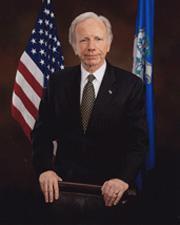
Mr. President, I rise today to introduce the No Taxation Without Representation Act of 2003 legislation that will right an ongoing injustice experienced by 600,000 American citizens--the citizens of…
Mr. President, I rise today to introduce the No Taxation Without Representation Act of 2003 legislation that will right an ongoing injustice experienced by 600,000 American citizens--the citizens of the District of Columbia--who have historically been denied voting representation in Congress.
This injustice is felt directly by District residents, but it is also a stain on the fabric of our democracy for the Nation as a whole. By now, we should all understand that the vote is a civic entitlement of every American citizen. It is democracy's most essential right, our most useful tool.
I am proud to be the chief Senate sponsor of this bill, which Congresswoman Norton is also today introducing in the House. I am delighted that Senator Feingold, who has worked with me for two years on this legislation, is joining me again as an original sponsor, as are Senators Daschle, Durbin, Mikulski, Schumer, Kennedy, Dodd, Landrieu and Kerry. The aim of the legislation is simple: It would provide full voting representation in Congress--through two senators and a member of the House--to citizens of the District, providing to them the same rights to participate in our democracy as citizens in the 50 States. Despite this bill's title, it would not exempt residents of the District from paying income taxes.
Last year, the Governmental Affairs Committee, which I then chaired, held a hearing on this issue in May. It was the first time since 1994 that Congress had held a hearing on the issue. Five months later, in October, the Committee reported out legislation identical to the bill we introduce today. I am proud that we progressed as far as we did last year. Unfortunately it was not far enough.
Today, I think it is particularly ironic--though painfully so--that we are introducing this legislation as the Nation stands on the brink of a decision
about war with Iraq to protect our national security. If war does come, citizens of Washington D.C. will serve their fellow Americans with pride, as they have in every previous war. In fact, the District suffered more casualties in Vietnam than the citizens of 10 states. Furthermore, over 1,000 Army and Air National Guardsmen and women from the District have already been called upon to help in the war on terrorism. Yet--to our shame--D.C. citizens cannot choose representatives to the legislature that governs them. There is something wrong with this picture.
The people of this city have also been the direct target of terrorists, and yet citizens of the District have no one who can cast a vote in Congress on policies to protect their homeland security. Citizens of Washington, D.C., pay income taxes just like everyone else. Actually, they pay more. Per capita, District residents have the second highest Federal tax obligation. And yet they have no say in how high those taxes will be or how their tax dollars will be spent.
They fight and die and pay for our democracy, but they cannot participate fully in it. How can we countenance this? How can we promote democracy abroad effectively while denying it to hundreds of thousands of citizens in our Nation's Capital?
The citizens who live in our Nation's Capital deserve more than a nonvoting delegate
in the House. Notwithstanding the strong service of the Honorable Congresswoman Eleanor Holmes Norton and her ability to vote in committee, a representative without the power to vote on the floor of the House simply isn't good enough.
Prior to the District's establishment in 1790, residents of the area who were eligible to vote had full representation in Congress. When the framers of the Constitution placed our Capital under the jurisdiction of the Congress, they placed with Congress the responsibility of ensuring that D.C. citizens' rights would be protected in the future, just as Congress should protect the rights of all citizens throughout the land. For more than 200 years, Congress has failed to meet this obligation. And I, for one, am not prepared to make D.C. citizens wait another 200 years.
Today, no other democratic nation denies the residents of its capital representation in the national legislature. What must visitors from around the world think when they come to see our beautiful landmarks, our monuments, and our Capitol dome--proud symbols of the world's leading democracy--only to learn that the citizens of this city have no voice in Congress? What would we do if the residents of Boston, Nashville, Denver, Seattle, or El Paso had no voting rights? All those cities are roughly the same size as Washington, D.C.--and I know we as a Nation wouldn't let their citizens go voiceless in the Congress.
Incredibly, the vast majority of Americans already believe that D.C. residents have voting representation in the Congress. When they are informed that they don't, 80 percent of Americans, according to one poll, say that they should. That is overwhelming support and by righting this wrong, we will be following the will of the American people.
The people of the District of Columbia have been without this key right for far too long. I urge all of my colleagues to support this legislation.

Mr. President, it is an honor to join my colleague Senator Grassley today in re-introducing the Family Opportunity Act of--so that once and for all, we can remove the health care barriers for…
Mr. President, it is an honor to join my colleague Senator Grassley today in re-introducing the Family Opportunity Act of--so that once and for all, we can remove the health care barriers for children with disabilities that so often prevent families from staying together and staying employed, and that so often prevent their children from growing up to live independent lives and become fully contributing members of their communities.
More than 9 percent of children in this country have significant disabilities, many of whom do not have access to the basic health services they need to maintain their health status, let alone prevent its continuing deterioration. To obtain theses health services for their children, families are being forced to become poor, stay poor, put their children in institutions or ever give up custody of their children--all so that their children can qualify for the health coverage available under Medicaid.
In a recent survey of 20 States, families of special needs children report they are turning down jobs, turning down raises, turning down overtime, and unable even to save money for the future of their children and family--all so that their child can stay eligible for Medicaid through the Social Security Income Program. The lack of adequate health care in our country today continues to force these families into poverty in order to obtain the care they need for their disabled children.
The legislation we are reintroducing will close the health care gap for the nation's most vulnerable population, and enable families of disabled children to be equal partners in the American dream.
In the words of President George Bush in his ``New Freedom Initiative,'' ``To many Americans with disabilities remain trapped in bureaucracies of dependence, and are denied the access
necessary for success--and we need to tear down these barriers.
The Family Opportunity. Act will do just that. It will tear down the unfair barriers to needed health care that so many disabled and special needs children are denied. It will make health insurance coverage more widely available for children with significant disabilities, through opportunities to buy-in to Medicaid at an affordable rate. States will have greater flexibility to enable children with metal health disabilities to obtain the health services they need in order to live at home and in their communities. It will establish Family to Family Information Centers in each state to assist families with special needs children.
The passage of Work Incentives Improvement Act in 1999 demonstrated the nation's commitment to give adults with disabilities the right to lead independent and productive lives without giving up their health care. It is time for Congress to show the same commitment to children with disabilities.
We came very close to passing the Family Opportunity Act in the last Congress. I look forward to working members of this new Congress to enact this important legislation, and give disabled children and their families their rightful opportunity to fulfill their dreams and participate fully in the life of our nation.
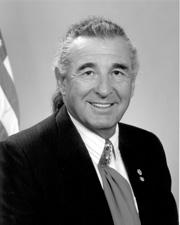
Mr. President, today I am introducing a bill to facilitate the move of the Denver Veterans Affairs Medical Center, DVAMC, from its present site in Denver to the former Fitzsimons Army Medical Center…
Mr. President, today I am introducing a bill to facilitate the move of the Denver Veterans Affairs Medical Center, DVAMC, from its present site in Denver to the former Fitzsimons Army Medical Center in Aurora, Colorado. I am pleased to be joined in this effort by my friend and colleague Senator Allard as an original co- sponsor.
The bill would authorize the Secretary of Veterans Affairs to construct, lease or modify major medical facilities at the site of the former Fitzsimons Army Medical Center. It instructs the Secretary to work with the Department of Defense in planning a joint Federal project that would serve the health care needs of active duty Air Force and the VA. It would also require the Secretary to submit a report to the Committees on Appropriations and the Committees on Veterans Affairs of the Senate and the House of Representatives. This report would detail the options selected by the Secretary and any information on further planning needed to carry out the move.
The relocation of the DVAMC to the former Fitzsimons site offers a unique opportunity to provide the highest quality medical care for our veterans and certain members of our military. The University of Colorado Health Sciences Center, UCHSC, is moving its facilities from its overcrowded location near downtown Denver to the Fitzsimons site, a decommissioned Army base. The UCHSC and the DVAMC have long operated on adjacent campuses and have shared faculty, medical residents, and access to equipment. A DVAMC move to the new location in conjunction with the DOD would allow such cost-effective cooperation to continue, for the benefit of our veterans, active duty Air Force members and all taxpayers.
The need to move is pressing. A recent VA study concludes that the Colorado State veterans' population will experience one of the highest percent increases nationally in veterans age 65 and over between 1990 and 2020. The present VA hospital was built in the 1950's. While still able to provide service, the core facilities are approaching the end of their useful lives and many of the patient care units have fallen horribly out of date. Studies indicate that co-location with the University on a state-of-the-art medical campus would be a cost effective way to give veterans and active duty Air Force members in the region the highest quality of care. The move would also provide a tremendous opportunity to showcase a nationwide model of cooperation between the University, the Department of Veterans Affairs, VA, and the Department of Defense.
The VA needs to move quickly. Assisting our veterans with their medical needs is a promise we, as a country, made long ago.
The savings we can realize by approving the timely transfer of our veterans' medical treatment facilities in the Denver region compels me to urge my colleagues to act quickly on this bill. We must not miss out on this opportunity to serve America's veterans and their families by ensuring that they receive the excellent medical care they deserve.
I ask unanimous consent that the text of the bill be printed in the Record.

Mr. President, Senator Kennedy and I are happy to announce the introduction of the Family Opportunity Act of 2003, a bill to promote family, work, and opportunity. Every day, across the country,…
Mr. President, Senator Kennedy and I are happy to announce the introduction of the Family Opportunity Act of 2003, a bill to promote family, work, and opportunity. Every day, across the country, thousands of families struggle to obtain affordable and appropriate health care coverage for children with special health care needs, including children with conditions such as autism, mental retardation, cerebral palsy, developmental delays, or mental illness.
Low and middle income parents who have employer sponsored family health care coverage often find that their private insurance doesn't adequately cover the array of services that are critical to their child's well-being, such as mental health services, personal care services, durable medical equipment, special nutritional supplements, and respite care. Because Medicaid, our nation's health care program for low-income individuals, offers the type of comprehensive care that best meets the needs of children with disabilities, it can become a lifeline on which many parents depend.
Yet, Medicaid is a safety net program and one must be impoverished in order to be eligible. This presents a terrible choice for many low and middle income families who have a child with special health care needs: they must choose between work or impoverishment. Or, in the worst cases, parents consider the devastating choice of relinquishing custody for an out-of-home placement so their child can obtain services they so desperately need. Truly, there is nothing more heartbreaking for a parent than to be unable to provide for a child in need.
Consider the following example: Mr. and Mrs. Jones have two daughters, Heather and Hannah. Hannah was born with cerebral palsy. The family earns $29,000 a year and is insured through employer sponsored health insurance. Mr. Jones recently lost his job because of down- sizing. Last year, even with insurance, the family spent nearly $9,000 on out-of-pocket medical expenses. Mr. Jones has found a new job; unfortunately, the family's insurance premium has risen to $200 a month and does not cover essential occupational and physical therapy. The family dipped into their 401K when Hannah was born. The family's earnings minus the health care premiums, minus out of pocket expenses puts this family at an annual income of $17,600. The federal poverty level for a family of four is $18,400. This hard-working family is being impoverished because of their commitment to care for their disabled child.
Over the past three years, I have worked with Senator Kennedy and Representative Pete Sessions to advance this important legislation on behalf of thousands of families who need our help. Each year, more than 70 Senators have signed on as co-sponsors of the legislation. I understand the many pressing challenges facing our nation's health care system, but I urge the Senate to show its support for helping these families and pass the Family Opportunity Act this year.
I ask unanimous consent that the text of the bill be printed in the Record.

Mr. President, I rise today to introduce the ``Glen Canyon National Recreation Area Boundary Revision Act.'' This legislation will revise the total acreage within the National Recreation Area's, NRA,…
Mr. President, I rise today to introduce the ``Glen Canyon National Recreation Area Boundary Revision Act.''
This legislation will revise the total acreage within the National Recreation Area's, NRA, boundary to reflect the actual acreage within the NRA, and it will also do much to protect the scenic view of Lake Powell as seen by those traveling along U.S. Highway Route 89.
As enacted into law, the enabling legislation for the Glen Canyon National Recreation Area, inaccurately reflected the acreage within the NRA boundary. This legislation would correct the acreage ceiling by estimating the acreage within the NRA to be 1,256,000 instead of 1,236,880.
Secondly, this bill would authorize the Secretary of the Interior, to exchange 320 NRA acres for 152 acres of privately owned land in Kane County, UT. Currently, Page One L.L.C. owns 152 acres between U.S. Highway 89 and the southwestern shore of Lake Powell. This private land provides a breathtaking view of Lake Powell from Highway 89, which is the main viewshed corridor between the highway and the lake. This land also encompasses three highway access rights-of-way and a developed culinary water well. In an effort to protect this viewshed and better manage its boundaries along its most visited entrance, the National Park
Service, NPS, has been negotiating with Page One to exchange 370 acres of NRA lands for these 152 acres. The approximate value of the NRA lands is $480,000 whereas the private land's appraised value is $856,000. Page One has agreed to donate the balance of appraised value to the NPS.
By authorizing this land exchange, this bill will allow the NPS to preserve and better manage the corridor between the park and Highway 89, which affords such a scenic view of Lake Powell. This boundary change would not add any facilities, increase operating costs, or require additional staff and as such, it will not add to the NPS maintenance backlog.
Because of the common interest in preserving this scenic corridor from development, this legislation has garnered the support of the administration, the Kane County Planning and Zoning Commission, the National Parks Conservation Association, and the Southern Utah Planning Advisory Council. In light of the benefits provided by and community support for this proposal, I look forward to working with my Senate colleagues and the administration to pass this legislation this year.
Mr. President, today I am introducing legislation to provide some relief for our Nation's retired Federal employees from the severe increases in Federal Employee Health Benefit, FEHB, program…
Mr. President, today I am introducing legislation to provide some relief for our Nation's retired Federal employees from the severe increases in Federal Employee Health Benefit, FEHB, program premiums. This measure extends premium conversion to federal and military retirees, allowing them to pay their health insurance premiums with pre-tax dollars.
Over 9 million Federal employees, retirees and their families are covered under FEHBP. In 2003 premiums are expected to rise an average of 11 percent, the third year in a row the average increase has exceeded 10 percent.
The increasing cost of health care is a critical issue, especially to retirees living on a fixed income. The 2003 Cost of Living Adjustment, COLA, for Federal civil service annuitants is only 1.4 percent, the lowest since a 1.3 percent increase in 1999. The modest COLA is completely diminished by increased health care costs.
In the fall of 2000 premium conversion became available to current federal employees who participate in the Federal Employees Health Benefits Program. It is a benefit already available to many private sector employees. While premium conversion does not directly affect the amount of the FEHBP premium, it helps to offset some of the increase by reducing an individual's federal tax liability.
Extending this benefit to federal retirees requires a change in the tax law, specifically Section 125 of the Internal Revenue Code. This legislation makes the necessary change in the tax code.
Under the legislation, the benefit is concurrently afforded to our Nation's military retirees as well to assist with increasing health care costs.
A number of organizations representing Federal and military retirees are strongly behind this initiative, including the National Association of Retired Federal Employees, the Military Coalition, the Fleet Reserve Association, and the Association of the U.S. Army.
I encourage my colleagues to support this critical legislation and show their support for our Nation's dedicated Federal civilian and military retirees. I ask unanimous consent that the text of the bill be printed in the Record.
Show 4 more
Mr. President, today I am introducing legislation to provide some relief for our Nation's retired Federal employees from the severe increases in Federal Employee Health Benefit, FEHB, program…
Mr. President, today I am introducing legislation to provide some relief for our Nation's retired Federal employees from the severe increases in Federal Employee Health Benefit, FEHB, program premiums. This measure extends premium conversion to federal and military retirees, allowing them to pay their health insurance premiums with pre-tax dollars.
Over 9 million Federal employees, retirees and their families are covered under FEHBP. In 2003 premiums are expected to rise an average of 11 percent, the third year in a row the average increase has exceeded 10 percent.
The increasing cost of health care is a critical issue, especially to retirees living on a fixed income. The 2003 Cost of Living Adjustment, COLA, for Federal civil service annuitants is only 1.4 percent, the lowest since a 1.3 percent increase in 1999. The modest COLA is completely diminished by increased health care costs.
In the fall of 2000 premium conversion became available to current federal employees who participate in the Federal Employees Health Benefits Program. It is a benefit already available to many private sector employees. While premium conversion does not directly affect the amount of the FEHBP premium, it helps to offset some of the increase by reducing an individual's federal tax liability.
Extending this benefit to federal retirees requires a change in the tax law, specifically Section 125 of the Internal Revenue Code. This legislation makes the necessary change in the tax code.
Under the legislation, the benefit is concurrently afforded to our Nation's military retirees as well to assist with increasing health care costs.
A number of organizations representing Federal and military retirees are strongly behind this initiative, including the National Association of Retired Federal Employees, the Military Coalition, the Fleet Reserve Association, and the Association of the U.S. Army.
I encourage my colleagues to support this critical legislation and show their support for our Nation's dedicated Federal civilian and military retirees. I ask unanimous consent that the text of the bill be printed in the Record.
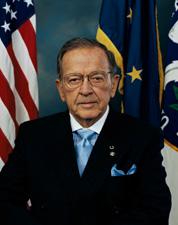
Madam President, on February 1, 2003, the Space Shuttle Columbia was lost during re-entry into Earth's atmosphere. We all mourn that tragic loss. But although our hearts have been filled with sorrow,…
Madam President, on February 1, 2003, the Space Shuttle Columbia was lost during re-entry into Earth's atmosphere. We all mourn that tragic loss. But although our hearts have been filled with sorrow, we have also taken comfort in the knowledge that there was so much about these heroic astronauts for us to be grateful for.
They were, indeed, remarkable people for they truly represented the best of the human spirit. As such, it is only fitting that we endeavor to remember them for their outstanding contributions.
Today, along with Senators Bond and Mikulski, I introduce legislation to construct a memorial to the crew of the Columbia Orbiter at Arlington National Cemetery.
This memorial would be located in close proximity to the memorial to the crew of the Challenger Orbiter at Arlington Cemetery and that the design
of the Columbia Memorial is intended to be consistent with the artistic sensibilities of the Challenger Memorial.
This legislation would authorize the Secretary of the Army, in consultation with NASA, to place the Columbia Memorial at Arlington and would make available $500,000 from funds already appropriated in the Fiscal Year 2003 DOD Appropriations Act for the Memorial.
The bill also authorizes NASA to collect gifts and donations for the Columbia Memorial at Arlington Cemetery or for another appropriate memorial or monument. This authority to collect donations and gifts expires after 5 years.
We will never forget the wonderful legacy of the Columbia astronauts. They have been an inspiration to us all.
Lastly, I take this opportunity to invite any Senator to join with me in cosponsoring this legislation to establish this memorial to these outstanding individuals.
I ask unanimous consent that the bill be held at the desk until the close of business Wednesday, March 19, so that such Senators will be shown as original cosponsors of this legislation. It is my further hope that this bill will be speedily cleared on each side of the aisle so that it may be sent to the House next week, if at all possible. I send the bill to the desk, Madam President.
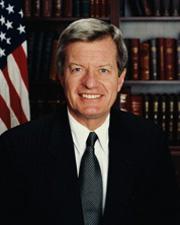
Mr. President, I rise today to introduce the U.S.-Russia Trade Act of 2003. This legislation would grant Permanent Normal Trade Relations to Russia. However--and I want to be very clear about this…
Mr. President, I rise today to introduce the U.S.-Russia Trade Act of 2003.
This legislation would grant Permanent Normal Trade Relations to Russia. However--and I want to be very clear about this point--this legislation would also ensure that Congress retains proper oversight of negotiations to bring Russia into the World Trade Organization.
Congress typically grants PNTR to a Jackson-Vanik country only when that country is about to join the WTO. This is, for example, exactly what Congress did when China joined the WTO.
The Administration and some of my colleagues have suggested that Congress should grant PNTR to Russia
prior to their joining the WTO. If we are going to do down this path, we must ensure that there is adequate Congressional oversight.
This legislation would ensure Congressional involvement in the following way: after negotiations are completed, Congress would be guaranteed a vote on a resolution to disapprove of Russia's joining the WTO, if such a resolution is introduced.
Congress has a key role to play in negotiating an agreement on Russia's entering the WTO. China's WTO accession demonstrates this. The Administration was able to obtain a better deal with China because of Congressional involvement.
And there are some real concerns with Russia. The Russian government has announced that it plans to add additional restrictions on imports of U.S. agricultural products, including poultry, pork, and beef. That's unacceptable, and it is behavior that should not be rewarded.
I look forward to working with my colleagues to ensure that Congress continues to have an important role in Russia's accession to the WTO.
I ask unanimous consent that the text of the legislation be printed in the Record.
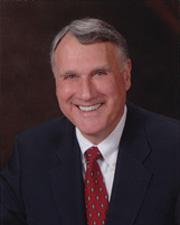
Mr. President, I ask unanimous consent that the text of the bill be printed in the Record.
Mr. President, I ask unanimous consent that the text of the bill be printed in the Record.
Bill Text
Latest available legislative text
        [Congressional Bills 108th Congress]
[From the U.S. Government Publishing Office]
[S. 623 Introduced in Senate (IS)]

108th CONGRESS
1st Session
S. 623

To amend the Internal Revenue Code of 1986 to allow Federal civilian
and military retirees to pay health insurance premiums on a pretax
basis and to allow a deduction for TRICARE supplemental premiums.

_______________________________________________________________________

IN THE SENATE OF THE UNITED STATES

March 13, 2003

Mr. Warner (for himself and Ms. Collins) introduced the following bill;
which was read twice and referred to the Committee on Finance

_______________________________________________________________________

A BILL

To amend the Internal Revenue Code of 1986 to allow Federal civilian
and military retirees to pay health insurance premiums on a pretax
basis and to allow a deduction for TRICARE supplemental premiums.

Be it enacted by the Senate and House of Representatives of the
United States of America in Congress assembled,

SECTION 1. PRETAX PAYMENT OF HEALTH INSURANCE PREMIUMS BY FEDERAL
CIVILIAN AND MILITARY RETIREES.

(a) In General.--Subsection (g) of section 125 of the Internal
Revenue Code of 1986 (relating to cafeteria plans) is amended by adding
at the end the following new paragraph:
``(5) Health insurance premiums of federal civilian and
military retirees.--
``(A) FEHBP premiums.--Nothing in this section
shall prevent the benefits of this section from being
allowed to an annuitant, as defined in paragraph (3) of
section 8901, title 5, United States Code, with respect
to a choice between the annuity or compensation
referred to in such paragraph and benefits under the
health benefits program established by chapter 89 of
such title 5.
``(B) TRICARE premiums.--Nothing in this section
shall prevent the benefits of this section from being
allowed to an individual receiving retired or retainer
pay by reason of being a member or former member of the
uniformed services of the United States with respect to
a choice between such pay and benefits under the health
benefits programs established by chapter 55 of title
10, United States Code.''
(b) Effective Date.--The amendment made by this section shall apply
to taxable years beginning after the date of the enactment of this Act.

SEC. 2. DEDUCTION FOR TRICARE SUPPLEMENTAL PREMIUMS.

(a) In General.--Part VII of subchapter B of chapter 1 of the
Internal Revenue Code of 1986 (relating to additional itemized
deductions for individuals) is amended by redesignating section 223 as
section 224 and by inserting after section 222 the following new
section:

``SEC. 223. TRICARE SUPPLEMENTAL PREMIUMS OR ENROLLMENT FEES.

``(a) Allowance of Deduction.--In the case of an individual, there
shall be allowed as a deduction the amounts paid during the taxable
year by the taxpayer for insurance purchased as supplemental coverage
to the health benefits programs established by chapter 55 of title 10,
United States Code, for the taxpayer and the taxpayer's spouse and
dependents.
``(b) Coordination With Medical Deduction.--Any amount allowed as a
deduction under subsection (a) shall not be taken into account in
computing the amount allowable to the taxpayer as a deduction under
section 213(a).''
(b) Deduction Allowed Whether or Not Individual Itemizes Other
Deductions.--Subsection (a) of section 62 of such Code is amended by
inserting after paragraph (18) the following new paragraph:
``(19) Tricare supplemental premiums or enrollment fees.--
The deduction allowed by section 223.''
(c) Clerical Amendment.--The table of sections for part VII of
subchapter B of chapter 1 of such Code is amended by striking the last
item and inserting the following new items:

``Sec. 223. TRICARE supplemental premiums
or enrollment fees.
``Sec. 224. Cross reference.''
(d) Effective Date.--The amendments made by this section shall
apply to taxable years beginning after the date of the enactment of
this Act.

SEC. 3. IMPLEMENTATION.

(a) FEHBP Premium Conversion Option for Federal Civilian
Retirees.--The Director of the Office of Personnel Management shall
take such actions as the Director considers necessary so that the
option made possible by section 125(g)(5)(A) of the Internal Revenue
Code of 1986 shall be offered beginning with the first open enrollment
period, afforded under section 8905(g)(1) of title 5, United States
Code, which begins not less than 90 days after the date of the
enactment of this Act.
(b) TRICARE Premium Conversion Option for Military Retirees.--The
Secretary of Defense, after consulting with the other administering
Secretaries (as specified in section 1073 of title 10, United States
Code), shall take such actions as the Secretary considers necessary so
that the option made possible by section 125(g)(5)(B) of the Internal
Revenue Code of 1986 shall be offered beginning with the first open
enrollment period afforded under health benefits programs established
under chapter 55 of such title, which begins not less than 90 days
after the date of the enactment of this Act.
<all>