A bill to authorize the extension of nondiscriminatory treatment (normal trade relations treatment) to the products of the Russian Federation, and for other purposes.
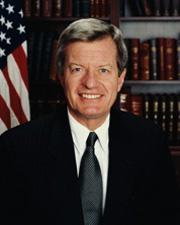 Sen. Max Baucus (D-MT)
Legislative Activity
Stay on top of the latest movement without scrolling through every action
Read twice and referred to the Committee on Finance. (text of measure as introduced: CR S3643-3744)
March 13, 2003
View full timeline
Introduced in Senate
March 13, 2003
Sponsor introductory remarks on measure. (CR S3742-3743)
March 13, 2003
Read twice and referred to the Committee on Finance. (text of measure as introduced: CR S3643-3744)
March 13, 2003
Floor Debate
15 membersWhat members said about S. 624 on the floor

 +10
Floor Debate
15 membersWhat members said about S. 624 on the floor
Mr. President, today I introduce a Senate companion to a joint resolution already introduced in the House by Congressman Sherrod Brown of Ohio. This resolution is quite simple. It requires the…
Mr. President, today, I am pleased to introduce, along with my colleague Senator Miller, the bipartisan Teacher Paperwork Reduction Act of 2003. During the 107th Congress, we were successful in…
Mr. President, last Congress, I introduced the Fair Treatment for Precious Metals Investors Act to correct a flawed capital gains tax definition, which includes precious metals investments as…
Mr. President, I rise today to introduce legislation with Senators Jeffords, Murray, Leahy, and Cantwell entitled the ``Children's Health Equity Act of 2003.'' This bill addresses an inequity that…
Mr. President, I rise today to introduce the Mercury Reduction Act of 2003. I am pleased that my colleagues, Senators Jeffords, Chafee, Kerry, Hutchison, Reed, Lieberman, Voinovich, Dorgan, and Leahy…
Show 8 more

Mr. President, I rise today along with my colleagues Mr. Lautenburg and Mr. Levin to re-introduce the College Fire Prevention Act. This measure would provide Federal matching grants for the…
Mr. President, I rise today to introduce the No Taxation Without Representation Act of 2003 legislation that will right an ongoing injustice experienced by 600,000 American citizens--the citizens of…
Mr. President, it is an honor to join my colleague Senator Grassley today in re-introducing the Family Opportunity Act of--so that once and for all, we can remove the health care barriers for…
Mr. President, today I am introducing a bill to facilitate the move of the Denver Veterans Affairs Medical Center, DVAMC, from its present site in Denver to the former Fitzsimons Army Medical Center…

Mr. President, Senator Kennedy and I are happy to announce the introduction of the Family Opportunity Act of 2003, a bill to promote family, work, and opportunity. Every day, across the country,…

Mr. President, I rise today to introduce the ``Glen Canyon National Recreation Area Boundary Revision Act.'' This legislation will revise the total acreage within the National Recreation Area's, NRA,…

Mr. President, today I am introducing legislation to provide some relief for our Nation's retired Federal employees from the severe increases in Federal Employee Health Benefit, FEHB, program…
Madam President, on February 1, 2003, the Space Shuttle Columbia was lost during re-entry into Earth's atmosphere. We all mourn that tragic loss. But although our hearts have been filled with sorrow,…
Show 3 more
Mr. President, I rise today to introduce the U.S.-Russia Trade Act of 2003. This legislation would grant Permanent Normal Trade Relations to Russia. However--and I want to be very clear about this…
Mr. President, I rise today to introduce the U.S.-Russia Trade Act of 2003. This legislation would grant Permanent Normal Trade Relations to Russia. However--and I want to be very clear about this…

Mr. President, I ask unanimous consent that the text of the bill be printed in the Record.
Bill Text
Latest available legislative text
        [Congressional Bills 108th Congress]
[From the U.S. Government Publishing Office]
[S. 624 Introduced in Senate (IS)]

108th CONGRESS
1st Session
S. 624

To authorize the extension of nondiscriminatory treatment (normal trade
relations treatment) to the products of the Russian Federation, and for
other purposes.

_______________________________________________________________________

IN THE SENATE OF THE UNITED STATES

March 13, 2003

Mr. Baucus (for himself and Mr. Levin) introduced the following bill;
which was read twice and referred to the Committee on Finance

_______________________________________________________________________

A BILL

To authorize the extension of nondiscriminatory treatment (normal trade
relations treatment) to the products of the Russian Federation, and for
other purposes.

Be it enacted by the Senate and House of Representatives of the
United States of America in Congress assembled,

SECTION 1. FINDINGS.

The Congress finds that--
(1) the Russian Federation has adopted constitutional
protections and statutory and administrative procedures that
accord its citizens the right and opportunity to emigrate, free
of anything more than a nominal tax on emigration or on the
visas or other documents required for emigration and free of
any tax, levy, fine, fee, or other charge on any citizens as a
consequence of the desire of such citizens to emigrate to the
country of their choice or to return to the Russian Federation;
(2) the Russian Federation has been found to be in full
compliance with the freedom of emigration requirements under
title IV of the Trade Act of 1974 since 1994;
(3) the Russian Federation has taken important steps toward
the creation of democratic institutions and a free-market
economy and, as a participating state of the Organization for
Security and Cooperation in Europe (in this Act referred to as
the ``OSCE''), is committed to developing a system of
governance in accordance with the principles regarding human
rights and humanitarian affairs that are set forth in the Final
Act of the Conference on Security and Cooperation in Europe
(also known as the ``Helsinki Final Act'') and successive
documents;
(4) the Russian Federation is committed to addressing
issues relating to its national and religious minorities as a
participating state of the OSCE, to adopting measures to ensure
that persons belonging to national minorities have full
equality both individually and communally, and to respecting
the independence of minority religious communities, although
problems still exist regarding the registration of religious
groups, visa, and immigration requirements, and other laws,
regulations, and practices that interfere with the activities
or internal affairs of minority religious communities;
(5) the Russian Federation has enacted legislation
providing protection against discrimination or incitement to
violence against persons or groups based on national, racial,
ethnic, or religious discrimination, including anti-Semitism;
(6) the Russian Federation has committed itself, including
through exchanges of letters, to ensuring freedom of religion,
equal treatment of all religious groups, and combating racial,
ethnic, and religious intolerance and hatred, including anti-
Semitism;
(7) the Russian Federation has engaged in efforts to combat
ethnic and religious intolerance by cooperating with various
United States nongovernmental organizations;
(8) the Russian Federation is continuing the restitution of
religious properties, including religious and communal
properties confiscated from national and religious minorities
during the Soviet era, facilitating the reemergence of these
minority groups in the national life of the Russian Federation,
and has committed itself, including through exchanges of letters, to
continue the restitution of such properties;
(9) the Russian Federation has received normal trade
relations treatment since concluding a bilateral trade
agreement with the United States that entered into force on
June 17, 1992;
(10) the Russian Federation is making progress toward
accession to the World Trade Organization, recognizing that
many central issues remain to be resolved, including removal of
unjustified restrictions on agricultural products of the United
States, commitments relating to tariff reductions for goods,
trade in services, protection of intellectual property rights,
reform of the industrial energy sector, elimination of export
incentives for industrial goods, reform of customs procedures
and technical, sanitary, and phytosanitary measures, and
inclusion of trade remedy provisions;
(11) the Russian Federation has enacted some protections
reflecting internationally recognized labor rights, but serious
gaps remain both in the country's legal regime and its
enforcement record;
(12) the Russian Federation has provided constitutional
guarantees of freedom of the press, although infringements of
this freedom continue to occur; and
(13) the Russian Federation has demonstrated a strong
desire to build a friendly and cooperative relationship with
the United States.

SEC. 2. TERMINATION OF APPLICATION OF TITLE IV OF THE TRADE ACT OF 1974
TO THE RUSSIAN FEDERATION.

(a) Presidential Determinations and Extensions of Nondiscriminatory
Treatment.--Notwithstanding any provision of title IV of the Trade Act
of 1974 (19 U.S.C. 2431 et seq.), the President may--
(1) determine that such title should no longer apply to the
Russian Federation; and
(2) after making a determination under paragraph (1) with
respect to the Russian Federation, proclaim the extension of
nondiscriminatory treatment (normal trade relations treatment)
to the products of that country.
(b) Termination of Application of Title IV.--On and after the
effective date of the extension under subsection (a)(2) of
nondiscriminatory treatment to the products of the Russian Federation,
chapter 1 of title IV of the Trade Act of 1974 shall cease to apply to
that country.

SEC. 3. POLICY OF THE UNITED STATES.

It is the policy of the United States to remain fully committed to
a multifaceted engagement with the Russian Federation, including by--
(1) urging the Russian Federation to ensure that its
national, regional, and local laws, regulations, practices, and
policies fully, and in conformity with the standards of the
OSCE--
(A) provide for the free emigration of its
citizens;
(B) safeguard religious liberty throughout the
Russian Federation, including by ensuring that the
registration of religious groups, visa and immigration
requirements, and other laws, regulations, and
practices are not used to interfere with the activities
or internal affairs of minority religious communities;
(C) enforce and enhance existing Russian laws at
the national and local levels to combat ethnic,
religious, and racial discrimination and related
violence;
(D) expand the restitution of religious and
communal properties, including by establishing a legal
framework for the timely completion of such
restitution; and
(E) respect fully freedom of the press;
(2) working with the Russian Federation, including through
the Secretary of Labor and other appropriate executive branch
officials, to address the issues described in section 1(11);
and
(3) continuing rigorous monitoring by the United States of
human rights issues in the Russian Federation, including the
issues described in paragraphs (1) and (2), providing
assistance to nongovernmental organizations and human rights
groups involved in human rights activities in the Russian
Federation, and promoting annual discussions and ongoing dialog
with the Russian Federation regarding those issues, including
the participation of United States and Russian nongovernmental
organizations in such discussions.

SEC. 4. REPORTING REQUIREMENT.

The reports required by sections 102(b) and 203 of the
International Religious Freedom Act of 1998 (22 U.S.C. 6412(b) and
6433) shall include an assessment of the status of the issues described
in subparagraphs (A) through (D) of section 3(1).

SEC. 5. CONTINUED ENJOYMENT OF RIGHTS UNDER THE JUNE 17, 1992,
BILATERAL TRADE AGREEMENT.

(a) Finding.--The Congress finds that the trade agreement between
the United States and the Russian Federation that entered into force on
June 17, 1992, remains in force between the 2 countries and provides
the United States with important rights, including the right to use
specific safeguard rules to respond to import surges from the Russian
Federation.
(b) Applicability of Safeguard.--Section 421 of the Trade Act of
1974 (19 U.S.C. 2451) shall apply to the Russian Federation to the same
extent as such section applies to the People's Republic of China.

SEC. 6. EXERCISE OF CONGRESSIONAL OVERSIGHT OVER WTO ACCESSION
NEGOTIATIONS.

(a) Notice of Agreement on Accession to WTO by Russian
Federation.--Not later than 5 days after the date on which the United
States has entered into a bilateral agreement with the Russian
Federation on the terms of accession by the Russian Federation to the
World Trade Organization, the President shall so notify the Congress,
and the President shall transmit to the Congress, not later than 15
days after that agreement is entered into, a report that sets forth the
provisions of that agreement.
(b) Resolution of Disapproval.--
(1) Introduction.--If a resolution of disapproval is
introduced in the House of Representatives or the Senate during
the 30-day period (not counting any day which is excluded under
section 154(b) of the Trade Act of 1974 (19 U.S.C. 2194(b)),
beginning on the date on which the President first notifies the
Congress under subsection (a) of the agreement referred to in
that subsection, that resolution of disapproval shall be
considered in accordance with this subsection.
(2) Resolution of disapproval.--In this subsection, the
term ``resolution of disapproval'' means only a joint
resolution of the two Houses of the Congress, the matter after
the resolving clause of which is as follows: ``That the
Congress does not approve the agreement between the United
States and the Russian Federation on the terms of accession by
the Russian Federation to the World Trade Organization, of
which Congress was notified on ____.'', with the blank space
being filled with the appropriate date.
(3) Procedures for considering resolutions.--
(A) Introduction and referral.--Resolutions of
disapproval--
(i) in the House of Representatives--
(I) may be introduced by any Member
of the House;
(II) shall be referred to the
Committee on Ways and Means and, in
addition, to the Committee on Rules;
and
(III) may not be amended by either
Committee; and
(ii) in the Senate--
(I) may be introduced by any Member
of the Senate;
(II) shall be referred to the
Committee on Finance; and
(III) may not be amended.
(B) Committee discharge and floor consideration.--
The provisions of subsections (c) through (f) of
section 152 of the Trade Act of 1974 (19 U.S.C. 2192(c)
through (f)) (relating to committee discharge and floor
consideration of certain resolutions in the House and
Senate) apply to a resolution of disapproval to the
same extent as such subsections apply to resolutions
under such section.
(c) Rules of House of Representatives and Senate.--Subsection (b)
is enacted by the Congress--
(1) as an exercise of the rulemaking power of the House of
Representatives and the Senate, respectively, and as such are
deemed a part of the rules of each House, respectively, and
such procedures supersede other rules only to the extent that
they are inconsistent with such other rules; and
(2) with the full recognition of the constitutional right
of either House to change the rules (so far as relating to the
procedures of that House) at any time, in the same manner, and
to the same extent as any other rule of that House.
<all>