Postmasters Equity Act of 2003
Legislative Activity
Stay on top of the latest movement without scrolling through every action
Became Public Law No: 108-86.
September 30, 2003
View full timeline
Introduced in Senate
March 20, 2003
Sponsor introductory remarks on measure. (CR S4175-4176)
March 20, 2003
Read twice and referred to the Committee on Governmental Affairs. (text of measure as introduced: CR S4176-4177)
March 20, 2003
Committee on Governmental Affairs. Ordered to be reported with an amendment favorably.
June 17, 2003
Committee on Governmental Affairs. Reported by Senator Collins with an amendment in the nature of a substitute. With written report No. 108-112.
July 25, 2003
Placed on Senate Legislative Calendar under General Orders. Calendar No. 235.
July 25, 2003
Passed Senate with an amendment by Unanimous Consent. (consideration: CR S10167-10168; text as reported in Senate: CR S10167-10168; text as passed Senate: CR S10168)
July 29, 2003
Message on Senate action sent to the House.
September 3, 2003
Received in the House.
September 3, 2003 • 2:05 PM
Held at the desk.
September 3, 2003 • 9:38 PM
Mr. Burton (IN) moved to suspend the rules and pass the bill.
September 16, 2003 • 3:20 PM
Considered under suspension of the rules. (consideration: CR H8239-8240)
September 16, 2003 • 3:20 PM
DEBATE - The House proceeded with forty minutes of debate on S. 678.
September 16, 2003 • 3:20 PM
At the conclusion of debate, the Yeas and Nays were demanded and ordered. Pursuant to the provisions of clause 8, rule XX, the Chair announced that further proceedings on the motion would be postponed.
September 16, 2003 • 3:26 PM
Considered as unfinished business. (consideration: CR H8256-8257)
September 16, 2003 • 7:09 PM
Passed/agreed to in House: On motion to suspend the rules and pass the bill Agreed to by the Yeas and Nays: (2/3 required): 426 - 0 (Roll no. 505).(text: CR H8239)
September 16, 2003 • 7:29 PM
On motion to suspend the rules and pass the bill Agreed to by the Yeas and Nays: (2/3 required): 426 - 0 (Roll no. 505). (text: CR H8239)
September 16, 2003 • 7:29 PM
Motion to reconsider laid on the table Agreed to without objection.
September 16, 2003 • 7:29 PM
Presented to President.
September 18, 2003
Signed by President.
September 30, 2003
Became Public Law No: 108-86.
September 30, 2003
Voting History
1 vote recorded • Roll call available
Floor Debate
17 membersWhat members said about S. 678 on the floor
 CSB
CSB JE
JE JRB
JRB RFB
RFB OGH+12
Floor Debate
17 membersWhat members said about S. 678 on the floor
Mr. President, I rise today to introduce an important piece of new legislation to help an essential part of our health care safety net--our Nation's health centers--serve the uninsured and medically-…
Mr. President, I rise today to introduce an important piece of new legislation to help an essential part of our health care safety net--our Nation's health centers--serve the uninsured and medically- underserved.
The Building Better Health Centers Act will promote health centers' mission of providing care to anyone who needs it by getting rid of an artificial distinction existing in current law. Right now, federal grant dollars to health centers can be used for most things a health center needs to do--including salaries, supplies, and basic upkeep. But federal grants to health centers cannot be used for one of the most critical and expensive needs a health center, or any business or nonprofit organizations, will ever face--capital improvements.
Unless we correct this silly distinction, many of our health centers are destined to be shackled to slowly deteriorating facilities. Over time, this will sap their ability to provide care. If we are serious about maximizing health centers' ability to deal with our health care access needs, we must allow Federal grant dollars to be used to meet our health centers' capital needs.
I've been down here on the Senate floor many times to talk about health centers, but let me cover the basics once again. Health centers--which include community health centers, migrant health centers, homeless health centers, and public housing health centers-- address the health care access problem by providing primary care service in thousands of rural and urban medically-underserved communities throughout the United States.
And as we all know, the health care access problem remains a serious issue in our country. Many health care experts believe that Americans' lack of access to basic health services is our single most pressing health care problem. Nearly 50 million Americans do not have access to a primary care provider, whether they are insured or not. In addition, over 41 million Americans lack health insurance and have difficulty accessing care due to the inability to pay.
Health centers help fill part of this void. More than 3,400 health center clinics nationwide provide basic health care services to more than 12 million Americans, almost 8 million minorities, nearly 850,000 farmworkers, and almost 750,000 homeless individuals each year. The care they provide has been repeatedly shown by studies to be high- quality and cost-effective. In fact, health centers are one of the best health care bargains around--the average yearly cost for a health center patient is just over one dollar per day.
I believe that one of the most effective ways to address our health care access problem is by dramatically expanding access to health centers. And I am pleased to report a strong consensus is developing to do exactly that. The Senate has voted in support of a proposal I have made with Sen. Hollings to double access to health centers by doubling funding over a five-year period. In addition, President Bush has proposed that we double the number of people that health centers care in the years ahead.
But over the next few years, as we hopefully see additional resources flow to health centers, we will increasingly encounter problems that stem from an artificial distinction we see in current law. As I mentioned, Federal health center grants are currently allowed to be used for most purposes--including salaries for health professionals and administrators, medical supplies, basic upkeep of clinic facilities, even lease payments if the health center rents. But they simply cannot be used for capital improvements.
This means that unless health centers can find some other way to finance their capital needs--and I will talk in a moment about the significant barriers they face in doing this--major projects that could provide substantial benefit to patients will never happen.
It means that an urban community health center that has been slowly expanding staff and services over many years until it's bursting at the seams of its modest two-story building will have to continue to find ways to cope, even if that prevents additionally-needed expansion or even if upkeep costs on the old building begin to spiral out-of- control.
It means that a rural community health center in an area desperately in need of dental services may not be able to expand the facility and purchase dental chairs, X-ray machines and other major dental equipment needed for the desired expansion into dental services.
It means that even if Federal Government is willing to commit grant funds to open a new health center in one of the hundreds of underserved communities nationwide which lacks any health care professionals for miles around, the new center may never come to be due to lack of funding for a facility in which to house it.
This is more than theory--the evidence shows that many existing health centers operate in facilities that desperately need renovation or modernization. Approximately one of every three health centers reside in a building more than 30 years old, and one of every eight operate out of a facility more than half a century old.
Moreover, a recent survey of health centers in 12 states showed that more than two-thirds of health centers had a specifically-identified need to renovate, expand, or replace their current facility. The average cost of a needed capital project was $1.8 million, and the needs ranged from ``small'' projects of $400,000 to major $5 million efforts. The survey demonstrates that there may be as much as $1.2 billion in unmet capital needs in our nation's health centers.
And that is just for existing health centers. As I mentioned, hundreds of
medically-underserved areas lack--and could desperately use--the services of a health center. This further shows the need for new facilities--and more capital--as we expand access to new communities.
So what about possible sources of capital? There are plenty of ways-- in theory--that health centers might be able to get money for capital improvements. Businesses--large and small--do it all the time. So do other nonprofit organizations like universities and hospitals. They use built-up equity. They take out loans. They float bonds. They raise money through private donations as part of a capital campaign.
But unfortunately, health centers just aren't quite like most other businesses or nonprofits, and many times these options are unrealistic as a way to provide the entire cost of a major project.
Health centers simply don't have loads of cash in the bank. The revenue these clinics are able to cobble together from federal grants, low-income patients, Medicaid, private donations, and other health insurers is typically all put back into to patient care.
Health centers already work hard to maximize the money they can raise through private donations and non-Federal grant sources. In fact, an average of 9 percent of health center revenue comes from these sources. Most of this private and public funding is used to meet operating expenses, and it is difficult to go back to the same sources to request further donations for capital needs. In fundraising, health centers also face a huge disadvantage compared to nonprofit organizations like universities and hospitals because health centers lack a natural middle- and upper-class donor base. And raising private funds is particularly hard in isolated rural areas that are often quite poor and which can have the most dire health care access problems.
Finally, health centers have difficulties obtaining private loans for capital needs for a variety of reasons. The high number of uninsured patients health centers treat and the poor reimbursement rates received from most Medicaid programs mean health centers rarely have significant operating margins. Without these margins, banks are leery about loans because they don't feel assured that a health center will have sufficient cash flow to successfully manage loan payments. Banks are made even more nervous by the high proportion of health center revenue that comes from sometimes-unreliable government sources--such as the health centers' grant funding and Medicine and Medicaid reimbursements.
So what should we do? This isn't exactly rocket science. We have a need--many health centers require significant help to build or maintain adequate facilities because they can't raise the money or obtain the loans themselves. And we have an existing law that prevents the federal government from using health center funding to do exactly that.
We simply need to get rid of the artificial distinction we have right now and allow our health center grant dollars to go to further the health center mission in the best way possible--and that is going to mean at times that we should support some new construction or major renovation projects. If a crumbling building is constantly in need of repair, is soaking up money, and is reducing the number of patients a health center can reach out to, the Federal Government should help with the major renovation or the new construction needed.
The Building Better Health Centers Act authorizes the Federal Government to make grants to health centers for facility construction, modernization, replacement, and major equipment purchases. If our goal is to help health centers provide high-quality care to as many uninsured and medically-underserved people as possible, we need to get rid of barriers to doing that, including capital barriers.
Behond just the possibility of grant funding, the bill goes further and permits the Federal Government to guarantee loans made by a bank or another private lender to a health center to construct, replace, modernize, or expand a health center facility. This loan guarantee is an additional tool that will help allay the fears of banks and other private lenders by limiting their exposure if a health center defaults on a loan. An additional advantage of loan guarantees is that you can stretch funds farther. When guaranteeing a $1 million loan, the Federal Government need only set aside a much smaller amount of appropriated money--perhaps only a twelfth to a tenth of the loan total--to insure against that loan's possible default. This multiplier factor means that for every dollar appropriated for this purpose, many dollars worth of loans can be guaranteed.
There is actually tremendous potential for these two new options--the facility grants and the facility loan guarantees--to work together. Sharing in up-front costs through grant funding, and helping further by guaranteeing a loan that covers the remainder of a project's cost may well be the best approach. This will balance the need to make sure specific projects get enough grant funding to make them realistic and the need to spread capital assistance among as many projects as possible.
Let my try to respond in advance to a few potential criticism of this legislation. First, to those who simply think on principle that the government should stay out of private-sector bricks and mortar projects, I would say we're already at least halfway pregnant. In just about every appropriations bill, we have dozens if not hundreds of specific projects earmarked for major building or renovation projects.
Some might worry that the potential large costs of construction projects could get out of hand and squeeze out funding actually used for patient care. But let me point out that we limit capital assistance to five percent of all health center funding. Based on this year's funding level, this would mean up to $75 million for facility grants and loan guarantees. Because the loan guarantee program would allow some of this money to be stretched, this level of support could easily mean help for more than $200 million in health center capital projects. But the main point is that capital projects are absolutely limited to five-percent of health center funding, which prevents any possible runaway spending.
Finally, we should ask ourselves whether or not Federal assistance is going to give a free pass to communities, which really should be expected to help out with public-minded projects like the construction or renovation of a health center. In my bill, local communities are expected to help. No more than 90 percent of the total costs of a major project can come from Federal sources--and this is the absolute upper limit. Much more likely are evenly-shared costs or situations in which federal support represents a minority of the capital investment. This bill does not give local areas a free ride.
The quick rationale for this bill is simple. Many health centers are hampered in their efforts to provide health care to the medically- underserved by inadequate facilities. It doesn't make sense to help these vital community clinics only with day-to-day expenses if their building is literally crumbling around them.
I urge my colleagues to join me in supporting this legislation. I look forward to working with my colleagues in the Senate and on the Health, Education, Labor, and Pensions Committee to aggressively help our nation's health centers meet their dire capital needs by making this bill law.
Mr. President, I rise today to introduce the Mandatory Prisoner Work and Drug Testing Act of 2003. This legislation is the continuation of work I did while in the House of Representatives to rein in…
Mr. President, I rise today to introduce the Mandatory Prisoner Work and Drug Testing Act of 2003. This legislation is the continuation of work I did while in the House of Representatives to rein in the undeserved privileges that are currently given to Federal prisoners.
Today's criminal justice system is failing, partly because of what happens, or more specifically, doesn't happen, once convicted criminals arrive in prison. What prisoners are doing is watching cable television, getting high on drugs, lifting weights, and learning to be better criminals. What they are not doing is working and paying back their victims. That's not justice.
The purpose of the Mandatory Prisoner Work and Drug Testing Act is to help establish a Federal prison system that provides discipline and rehabilitation for our Nation's prisoners and requires that they make restitution to their victims.
First, this legislation requires that all Federal prison inmates have a 50-hour work week. Job training, educational and life skills preparation study will also be mandated under this provision. Current federal law does not mandate a minimum work week for the 100,000 inmates in the Federal prison system. Sadly, the average workday for a prisoner in the United States is 6.8 hours. This is absolutely unacceptable. American taxpayers should not have to work full-time to provide rest and relaxation for our nation's prisoners.
Federal prisoners would be paid for the work they do, but their pay would be divided and dispersed in the following manner: 25 percent would offset the cost of prisoner incarceration, 25 percent would go to victim restitution, 25 percent would be made available to the inmate for necessary costs of incarceration, 10 percent would be placed in a non-interest bearing account to be paid to the inmate upon release, and the remaining 15 percent would go to states and local jurisdictions that operate correctional facilities which have similar programs.
Second, this legislation requires the Bureau of Prisons to establish a zero-tolerance policy for the use or possession of illegal contraband. A drug-free environment is essential to any hopes of rehabilitation for our federal prison inmates. Under these provisions, inmates would be subject to random searches and inspections for drugs not less than 12 times each year. Federal prisons would be required to offer residential drug treatment for all inmates. And finally, any employee hired to work in a federal prison would undergo a mandatory drug test, and all employees would be subject to random testing at least twice each year.
I understand that many State and local prisons would also be interested in starting programs to get a drug-free prison, and for that reason have included a new grant program. Any State or unit of local government may apply for grants if they meet the same drug-testing requirements that are mandated for federal prisons under this legislation.
Third, the Mandatory Prisoner Work and Drug Treatment Act includes a requirement that all inmates in the Federal prison system participate in a boot camp for not less than four weeks. This boot camp program would include strict discipline, physical training, and hard labor to deter crime and promote successful integration or reintegration of the offender into the prison community. Those prisoners that choose not to participate or are physically unable to participate are required to be confined to their cells for not less than 23 hours per day during the duration that they would otherwise be spending in this program and be allowed only those privileges that are granted under Federal law.
These boot camps work. In fact, the Federal Bureau of Prisons already supports two such programs, one for men and one for women. These programs place inmates in highly structured, spartan environments where they undergo physical training and labor-intensive work assignments, coupled
with education and vocational training, substance abuse treatment, and life skills programs. They focus on promoting positive changes in inmates' behavior, including responsible decision-making, self- direction and positive self-image. In fact, boot camps have worked so well that over 30 states now have them in place.
Finally, this legislation will further restrict inmates' activities and possessions. Under this legislation inmates would not be allowed to possess or smoke tobacco, view or read pornographic or sexually explicit material, or view cable television that is not educational in nature. Inmates would not be allowed to possess microwave ovens, hot plates, toaster ovens, televisions, or VCRs. They would not be allowed to listen to music that contains lyrics that are violent, vulgar, sexually explicit, glamorize gang membership or activities, demean women, or disrespect law enforcement. We have to remember that these individuals are in Federal prison to be punished for a crime they committed. There is no reason for inmates to be given the same, or better, privileges than law-abiding citizens have. No one can tell me that an inmate has to have cable television when many law-abiding, taxpaying families cannot afford such a perk.
We need to work to ensure that our nation's criminals understand the gravity of the crimes they committed. I understand that many of our nation's jails and prisons use activities like weight lifting as rewards for their inmates. My legislation does not restrict that kind of activity. This legislation simply states that it is no longer acceptable for our nation's inmates to leisurely go about their day instead of working to pay for the crimes they committed. It is time that our government send a clear message to the victims of these crimes that these criminals will pay, and that restitution, to the maximum extent possible, will be made.
Quite simply, we need to stop the revolving doors of our prison system. A study released in June, 2002, by the U.S. Department of Justice found that among nearly 300,000 prisoners released in 15 states in 1994, 67.5 percent were rearrested within three years. It is my hope that if Federal prisoners were required to work and given drug treatment, instead of perks like cable television and weight training time, these individuals would be deterred from committing another crime and returning to prison.
I hope that my colleagues will support this legislation and help me in getting it passed this year.
Mr. President, I rise today to introduce legislation to instruct the Joint Committee on Taxation and the Congressional Budget Office to employ dynamic scoring models, alongside static scoring when estimating the fiscal effect of tax policy changes.
For too long, Congress has debated tax changes without considering how those changes might affect the economy.
The current method, static scoring, assumes tax cuts or tax hikes have no effect on how taxpayers work, save and invest their money. Not surprisingly, experience shows this assumption is completely off-base. The idea that tax relief and investment incentives strengthen our economy is not new to the 21st Century.
On April 15, 1986, President Reagan talked about the positive effect of tax relief on economic growth. He stated:
Whatever you want to call it, supply side economics or
incentive economics . . . it's launching the American economy
into a new era of growth and opportunity . . . Our basic
ingredients for a tax package have not changed: tax rate
reductions, thresholds high enough so hard-working Americans
aren't pushed relentlessly into higher brackets, some long-
overdue tax relief for America's families, and investment
incentives for business. . .
What President Reagan stated so eloquently in 1986 holds true today. Economic growth is more easily achieved in an atmosphere where more Americans are able to save and invest their money. Tax relief provides economic growth, and when we draft legislation, we should understand not just the cost of tax relief to the Federal budget, but also the benefits that tax relief provides to the economy and the long-term increase in revenues to the federal government that tax relief can provide.
The current static estimates that we use imply that tax policy changes have no effect on our economy, never produce higher or lower revenues and never cause resources to shift within our federal budget. This is simply incorrect. Tax policy changes can have a huge impact on our economy.
The belief that tax policy changes directly impact our economy is not just a Republican ideal.
In 1962, President John F. Kennedy remarked:
It is increasingly clear that no matter what party is in
power, so long as our national security needs keep rising, an
economy hampered by restrictive tax rates will never produce
enough jobs or enough profits.
Tax relief provides jobs and profits, no matter who is in the White House and no matter who holds the majority in Congress. It is time that Congress looks at the real world implications of our tax policy before we decide the overall cost and how much relief we can afford to give to American families.
The debate on dynamic versus static scoring may sound like an inside- the-Beltway squabble, but as I have said today, the decision on how to estimate revenues does have important real world implications.
For example, better revenue estimating methods would make it easier to implement tax rate reductions. This would put more money into the pockets of taxpayers, which would have a very real positive affect on our economy.
Another example, shifting to a more simple, fair tax code would be less difficult if revenue estimators were allowed to consider the positive impact of tax reform on economic performance. Clearly a simplified tax code would affect each and every tax paying American.
American families face the challenge of paying their tax burden; providing food, clothing and shelter for their children; and must work even harder to have money leftover so they can afford to pay their medical bills, enjoy a family vacation, save for education costs, or put money away for retirement.
We know that when government takes money away from working families, it stifles growth. We also know that when the government gives money back to the working families that earned it, we encourage growth.
I should clarify that this legislation does not negate the Congress' use of the currently used static scoring model. This bill simply directs OMB and the Joint Tax Committee to use both static and dynamic scoring.
This will create a system that will allow Congress a slide-by-slide analysis of both scoring methods. In a Washington Post editorial on January 31, it was suggested that dynamic scoring could be useful as a way to present tax or spending policies as an additional alternative scenario. The editorial states that it would do no harm to the traditional way that CBO goes about its job to set up a dual scoring method. This is not, as some of my colleagues on the other side of the aisle have suggested, ``fantasyland scoring.''
By using both static and dynamic scoring methods, Mr. President, through time we will all understand which approach is more realistic, and only then, I believe, can we then confidently do away with the antiquated, unrealistic static model we use today.
I ask unanimous consent that the text of the bill be printed in the Record.
Mr. President, I rise today to introduce legislation to reauthorize the COPS program through 2009. Since September 11, our local police have been asked to do more for their communities than ever…
Mr. President, I rise today to introduce legislation to reauthorize the COPS program through 2009.
Since September 11, our local police have been asked to do more for their communities than ever before. Walk the beat. Be on guard against terrorists. Secure critical infrastructures. And gather intelligence on future terrorist acts when possible. Washington has a role in securing the homeland, but the burdens fall heaviest on our local communities.
There are more than 700,000 police officers and sheriffs in the country, compared with nearly 11,000 FBI agents. It is our local police chiefs and sheriffs who are called upon more and more to protect us against the new threats from abroad. We had a sobering reminder this week. As President Bush braced the Nation for war in Iraq, Homeland Security Director Tom Ridge ratcheted our alert level back up to orange and called all 50 governors to request that they provide an increased police presence at airports.
Our mayors and police chiefs are hurting. Local budgets are incredibly tight--some communities have been forced to lay officers off, or to consider freeing criminals before their sentences are up, to cut costs. Even before 9/11, it was clear that the crime drop of the nineties was coming to a close. Last winter, the FBI reported that crime jumped for the second straight year. The FBI has had to necessarily refocus its resources. Recently, the Washington Post reported that the FBI has plans to ``mobilize as many as 5,000 agents to guard against terrorist attacks'' during hostilities with Iraq. The FBI's criminal surveillance operations ``would be temporarily suspended.'' Local police will be called upon to pick up the slack once the FBI is forced to pull almost half of its agents out of traditional crime-fighting work.
The fight to secure our streets does not end with preventing terrorism. Crime is up again. The newest figures tell us the historic crime drop the nation experienced during the 1990s is over. Property crimes--offenses that tend to jump in a week economy--are rising particularly fast. The FBI recently reported a 4 percent hike in burglaries and motor vehicle thefts last year alone. Where fighting violent crime and bank robberies used to be among the FBI's highest priorities, the FBI is now focused on counter- terrorism efforts. Increasingly, local police departments, statewide crimefighting task forces and drug-fighting projects are being told by the Bush administration that they are on their own when it comes to fighting crime.
What's worse, all of this is happening during a time of unprecedented economic hardship in our cities and States. States are facing dramatic budgetary shortfalls. A new report finds that budget gaps for State governments soared by nearly 50 percent in the past three months and state legislatures face a minimum $68.5 billion budget shortfall for the coming fiscal year. Mayors nationwide report that cities spent $2.6 billion through the end of last year on new security costs.
The response of the administration to these concerns has been disappointing. This year, for the second budget cycle in a row, the President proposes to eliminate the COPS hiring program. COPS is the only initiative in the entire Federal Government that targets its resources directly towards police. There is no middleman. There is very little red tape. Police chiefs report they have never worked with such a responsive, effective Federal program. And yet the administration wants to shut it down.
Since we created COPS as part of the 1994 Crime Bill, the program has awarded grants to hire and redeploy 117,000 police officers to the streets. 87,300 are on the beat. In the most recent year of hiring grants, 2002, 4,400 officers were hired or redeployed.
The President's budget gives several justifications for shutting down COPS. First, the administration claims the program doesn't work, that it hasn't cut crime. That is a curious assertion. Crime dropped for seven straight years after COPS resources began to be put to use in cities and towns. There was a 28 percent drop in crime from 1994 to 2000.
Two studies support the assertion that COPS grants help cut crime. One, released just this past November by the American Society of Criminology, found that COPS hiring grants have ``resulted in significant reductions in local crime rates.'' In 2000, the urban Institute concluded that COPS has had a ``broad national impact'' on the levels and styles of policing, and that it provided ``significant support for the adoption of community policing around the country.''
It's not just criminologists and think tanks who agree with me that COPS works. Leading law enforcement officials share the view. Last year, our friend and former colleague Attorney General Ashcroft called COPS a ``miraculous sort of success.'' He said, ``it's one of those things that Congress hopes will happen when it sets up a program.'' At a conference last July, the Attorney General endorsed the theory that COPS cuts crime. ``Since law enforcement agencies began partnering with citizens through community policing, we've seen significant drops in crime rates,'' he noted.
The administration offers a second reason for wanting to eliminate COPS: The disparity between ``officers hired'' and ``officers funded''. Because COPS has funded 117,000 cops, but only 87,000 are on the street, the President argues, the program is not accountable. That assertion overlooks the operations of the Office of community Policing Services. Few Federal programs operate with as much oversight and internal review as does COPS. The disparity that seems to so concern the Administration is simple to explain: It takes time to hire a new cop. Once COPS awards a hiring grant, it can take anywhere from six to eighteen months to find, hire, train and deploy the new officer. There is no accounting problem. It is good public policy for police departments to take the appropriate amount of time to find suitable candidates for new community policing positions, and this discrepancy between officers funded and officers hired is the result.
Post 9/11, COPS is about much more than fighting crime. It's about homeland security. The Attorney General again said it best last July when he noted that ``COPS provides resources that reflect our national priority of terrorism prevention.'' The new assistant director at the FBI in charge of coordinating with local law enforcement agreed: ``The FBI fully understands that our success in the fight against terrorism is directly related to the strength of our relationship with our State and local partners.'' These aren't my words. They're the words of the top cops.
COPS does not just hire new officers. It requires these officers to practice community policing. Community policing is a philosophy that gives more power to line officers. They get assigned to fixed geographic areas. This decision-making power and neighborhood familiarity can be invaluable in a crisis, when relationships with community residents and the ability to make quick decisions is critical. Community relationships that come from COPS can also help unearth intelligence about potential terrorist actions.
By taking cops out of their cars and having them walk the streets, police
officers get to know the residents of the neighborhood where they're assigned. This has proven extremely effective at building trust and partnership between local police and the residents they protect. Community residents consistently sing the praises of community policing. It pays dividends by creating a climate in which neighborhood residents partner with police, not only providing police with valuable information about criminal activity in their neighborhood, but restoring overall confidence in the criminal justice system.
We need to continue the COPS program. The Justice Department reports that for the past several grant-making cycles, demand for new police hiring grants has outstripped available funds by a factor of almost three to one. To meet this need, the legislation I introduce today authorizes $600 million per year over the next 6 years, enough to hire up to 50,000 more officers. We have made this portion of the program more flexible: up to half of these hiring dollars can be used to help police departments retain those community police officers currently on payroll. In another change from current law, a portion of these funds can be used for officer training and education.
We make a key change to the current COPS program in the bill I introduce today. In response to the needs of first responders across the country, the bill authorizes a new, permanent COPS Overtime Program. This initiative, funded at up to $150 million per year for 6 years, will help ease the homeland security burdens faced by police departments across the country by reimbursing local police departments for the homeland security overtime expenses they incur. I was pleased that the Appropriations Committee included a 1-year, $60 million version of this program in the recently-passed omnibus appropriations bill. The permanent COPS Overtime Program in this bill builds on that appropriations provision.
The legislation also provides funding for new technologies, so law enforcement can have access to the latest high-tech crime fighting equipment to keep pace with today's sophisticated criminals. Also included are funds to help local district attorneys hire more community prosecutors. These prosecutors will expand the community justice concept and engage the entire community in preventing and fighting crime. The statistics we have on community prosecutions are quite promising, and we should increase the funds available to local prosecutors, a piece of our criminal justice puzzle that has too often gone overlooked.
I would like to thank the men and women of law enforcement for their service and heroism during these difficult times. They are up to the challenge, but we should support them any way we can. The bill I introduced today gives local police the support they deserve. I look forward to working with my colleagues to continue the COPS program.
Mr. President, I ask unanimous consent that the Committee on Finance be authorized to meet during the session on Tuesday, June 17, 2003, at 10:00 a.m., to hear testimony on the ``Implementation of…
Mr. President, I ask unanimous consent that the Committee on Finance be authorized to meet during the session on Tuesday, June 17, 2003, at 10:00 a.m., to hear testimony on the ``Implementation of U.S. Bilateral Free Trade Agreements with Singapore and Chile.''
committee on foreign relations
Mr. President, I ask unanimous consent that the Committee on Foreign Relations be authorized to meet during the session of the Senate on Tuesday, June 17, 2003, at 9:30 a.m., to hold a hearing on ``Treaties Related to Aviation and the Environment.''
committee on governmental affairs
Mr. President, I ask unanimous consent that the Committee on Governmental Affairs be authorized to meet on Tuesday, June 17, 2003, at 10:00 a.m., to hold a business meeting to consider pending Committee business.
Agenda
Legislation: S. 481, the Kurtz Bill; S. 589, Homeland Security Workforce Act; S. 610, NASA Workforce Flexibility Act of 2003; S. 678, Postmasters Equity Act of 2003; S. 908, United States Consensus Council; S. 910, Non-Homeland Security Mission Performance Act of 2003; S. 926, Federal Employee Student Loan Assistance Act; S. 1166, National Security Personnel System Act; and S. 1245, Homeland Security Grant Enhancement Act.
Post Office Naming Bills: S. 508, a bill to designate the facility of the United States Postal Service located at 1830 South Lake Drive in Lexington, South Carolina, as the ``Floyd Spence Post Office Building''; S. 708, a bill to redesignate the facility of the United States Postal Service located at 7401 West 100th Place in Bridgeview, Illinois, as the ``Michael J. Healy Post Office Building''; S. 867, a bill to designate the facility of the United States Postal Service located at 710 Wicks Lane in Billings, Montana, as the ``Ronald Reagan Post Office Building''; S. 1145, a bill to designate the facility of the United States Postal Service located at 120 Baldwin Avenue in Paia, Maui, Hawaii, as the ``Patsy Takemoto Mink Post Office Building''; S. 1207, a bill to redesignate the facility of the United States Postal Service located at 120 East Ritchie Avenue in Marceline, Missouri, as the ``Walt Disney Post Office Building''; H.R. 825, an act to redesignate the facility of the United States Postal Service located at 7401 West 100th Place in Bridgeview, Illinois, as the ``Michael J. Healy Post Office Building''; H.R. 917, an act to designate the facility of the United States Postal Service located at 1830 South
Lake Drive in Lexington, South Carolina, as the ``Floyd Spence Post Office Building''; H.R. 925, an act to designate the facility of the United States Postal Service located at 1859 South Ashland Avenue in Chicago, Illinois, as the ``Cesar Chavez Post Office''; H.R. 981, an act to designate the facility of the United States Postal Service located at 141 Erie Street in Linesville, Pennsylvania, as the ``James R. Merry Post Office''; H.R. 985, an act to designate the facility of the United States Postal Service located at 111 West Washington Street in Bowling Green, Ohio, as the ``Delbert L. Latta Post Office Building''; H.R. 1055, an act to designate the facility of the United States Postal Service located at 1901 West Evans Street in Florence, South Carolina, as the ``Dr. Roswell N. Beck Post Office Building''; H.R. 1368, an act to designate the facility of the United States Postal Service located at 7554 Pacific Avenue in Stockton, California, as the ``Norman D. Shumway Post Office Building''; H.R. 1465, an act to designate the facility of the United States Postal Service located at 4832 East Highway 27 in Iron Station, North Carolina, as the ``General Charles Gabriel Post Office''; H.R. 1596, an act to designate the facility of the United States Postal Service located at 2318 Woodson Road in St. Louis, Missouri, as the ``Timothy Michael Gaffney Post Office Building''; H.R. 1609, an act to redesignate the facility of the United States Postal Service located at 201 West Boston Street in Brookfield, Missouri, as the ``Admiral Donald Davis Post Office Building''; H.R. 1740, an act to designate the facility of the United States Postal Service located at 1502 East Kiest Boulevard in Dallas, Texas, as the ``Dr. Caesar A.W. Clark, Sr. Post Office Building''; and H.R. 2030, an act to designate the facility of the United States Postal Service located at 120 Baldwin Avenue in Paia, Maui, Hawaii, as the ``Patsy Takemoto Mink Post Office Building.''
Nominations: Michael J. Garcia to be Assistant Secretary for Immigration and Customs Enforcement, Department of Homeland Security; C. Steward Verdery, Jr. to be an Assistant Secretary of Homeland Security; Susanne Marshall to be Chairman of the Merit Systems Protection Board; Neil McPhie to be a Member of the Merit Systems Protection Board; Terrence A. Duffy to be a Member of the Federal Retirement Thrift Investment Board; Peter Eide to be General Counsel for the Federal Labor Relations Authority; Albert Casey to be a Governor for the United States Postal Service; and James C. Miller, III to be a Governor for the United States Postal Service.
Mr. President, I ask unanimous consent that the Committee on the Judiciary be authorized to meet to conduct a hearing on ``The Dark Side of a Bright Idea: Could Personal and National Security Risks Compromise the Potential of Peer-to-Peer Fine-Sharing Networks?'' on Tuesday, June 17, 2003, at 2:00 p.m., in the Dirksen Senate Office Building Room 226.
Tentative Witness List
Panel I: The Honorable Dianne Feinstein, U.S. Senator, [D-CA]; The Honorable Tom M. Davis, III, U.S. Representative, [D-VA, 11th District], Chairman, House Committee on Government Reform.
Panel II: Nathaniel S. Good, Graduate Student, School of Information Science, University of California at Berkeley, Berkeley, CA; Aaron Krekelberg, Lead Web Developer, University of Minnesota, Minneapolis, MN; Randy Saaf, MediaDefender, Inc., Los Angeles, CA; Alan Morris, Executive Vice President, Sharman Networks, Ltd., London, England; Chris Murray, Esq., Legislative Counsel, Consumers Union, Washington,
Mr. President, I ask unanimous consent that the Committee on Rules and Administration be authorized to meet during the session of the Senate on Tuesday, June 17, 2003, at 9:30 a.m., to conduct a hearing on Senate Resolution 151, requiring public disclosure of notices of objections, holds, to proceedings to motions or measures in the Senate.
Mr. President, I ask unanimous consent that the Committee on Veterans' Affairs be authorized to meet during the session of the Senate on Tuesday, June 17, 2003, for a hearing to consider the nominations of Mr. Alan G. Lance, Sr., and Mr. Lawrence B. Hagel, to be Judges, U.S. Court of Appeals for Veterans' Claims. The hearing will take place in room 418 of the Russell Senate Office Building at 2:30 p.m.
Mr. President, I ask unanimous consent that the Select Committee on Intelligence be authorized to meet during the session of the Senate on Tuesday, June 17, 2003, at 2:30 p.m. to hold an open confirmation hearing on Frank Libutti to be Under Secretary for Information Analysis and Infrastructure Protection, Department of Homeland Security.
Mr. President, I ask unanimous consent that the Special Committee on Aging be authorized to meet on June 17, 2003, from 10 a.m.-12 p.m. in Dirksen 628 for the purpose of conducting a hearing.
Mr. President, I ask unanimous consent that the Subcommittee on Consumer Affairs and Product Liability be authorized to meet on Tuesday, June 17, 2003, from 2:30 pm on Reauthorization of the Consumer Product Safety Commission.
Mr. President, I ask unanimous consent that the Subcommittee on Fisheries, Wildlife, and Water be authorized to meet on Tuesday, June 17 at 9:30 am to conduct a hearing to receive testimony on S. 525, the National Aquatic Invasive Species Act at 2003, a bill to reauthorize the nonindigenous Aquatic Nuisance Prevention and Control Act. The hearing will take place in SD 406, Hearing Room.
Mr. President, I rise today to introduce legislation designed to clarify and enhance the charitable contribution tax deduction for donations of excess book inventory for educational purposes. This…
Mr. President, I rise today to introduce legislation designed to clarify and enhance the charitable contribution tax deduction for donations of excess book inventory for educational purposes. This proposal would simplify a complex area of the current law and eliminate significant roadblocks that now stand in the way of businesses with excess book inventory to donating those books to schools, libraries, and literacy programs, where they are much needed.
Unfortunately, our current tax law contains a major flaw when it comes to the donation of books that are excess inventory for publishers or booksellers. The tax benefits for donating such books to schools or libraries are often no greater than those of sending the books to the landfill. And, since it is generally cheaper and faster for a company to simply send the books to the dump, rather than go through the trouble and cost of finding donees, and of packing, storing, and shipping the books, it often ends up being more cost effective and easier for companies to truck the books to a landfill or recycling center.
While there are provisions in the current law where a larger deduction is available for the donation of excess books, many companies have found that the complexity and uncertainty of dealing with the requirements, regulations, and possible Internal Revenue Service challenges of the higher deduction serve as a real disincentive to making a contribution.
This is a sad situation, when one considers that many, if not most, of these books would be warmly welcomed by schools, libraries, and literacy programs.
The heart of the problem is that under the current law, the higher deduction requires that the donated books be used only for the care of the needy, the sick, or infants. This requirement makes it difficult for schools to qualify as donees and also frequently prohibits libraries and adult literacy programs from receiving such deductions. This is because these schools, libraries, and literacy programs often serve those who are not needy or are over the age of 18. Further complicating the issue, the valuation of donated book inventory has been the subject of ongoing disputes between taxpayers and the IRS. The tax code should not contain obstacles that provide disincentives to charitable donations of books that can enhance learning.
The bill I am introducing today addresses the obstacles of donating excess book inventory by providing a simple and clear rule whereby any donation of book inventory to a qualified school, library, or literacy program is eligible for the enhanced deduction. This means that booksellers and publishers would receive a higher tax benefit for donating the books rather than throwing them away and would thus be encouraged to go to the extra trouble and expense of seeking out qualified donees and making the contributions.
My home State of Utah, like the rest of the Nation, has a problem with illiteracy. According to the National Institute for Literacy, between 21 and 23 percent of the adult population of the United States, about 44 million people, are only at Level 1 literacy, meaning they can read a little but not well enough to fill out an application, read a food label, or read a simple story to a child. Another 25 to 28 percent of the adult population, or between 45 and 50 million people, are estimated to be at Level 2 literacy, meaning they can usually can perform more complex tasks such as comparing, contrasting, or integrating pieces of information but usually not higher level reading and problem-solving skills. Literacy experts tell us that adults with skills at Levels 1 and 2 lack a sufficient foundation of basic skills to function successfully in our society.
While this bill is not a cure-all for the tragedy of illiteracy, it will increase access to books, both for adults and for children. Our tax code should not encourage the destruction of perfectly good books while schools, libraries, and literacy programs go begging for them.
The Senate is already on record in unanimous support of this bill. During the floor debate on the Economic Growth and Tax Relief Reconciliation Act of 2001, I offered this proposal as an amendment, which was accepted without opposition. Unfortunately, the provision was dropped in the conference with the House. Moreover, the Finance Committee has also approved this provision, having included it in S. 476, the CARE Act, which is currently pending on the Senate calendar.
The Joint Committee on Taxation estimates this provision would decrease revenues to the Treasury by $283 million over a ten-year period. This estimate helps demonstrate the extent of the value of the books that are currently being discarded that could be utilized to help America's adults and children.
I hope our colleagues will join us in supporting this bill. It is wrong for our tax code to encourage book publishers to send books to the landfill instead of to the library. Let's correct this problem.
I ask unanimous consent that the text of the bill be printed in the Record.
Show 8 more
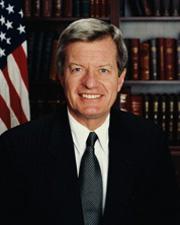
Mr. President, I rise today to offer, along with Senator Craig, much needed trade legislation. I also want to thank Senators Bayh and Rockefeller for their support for this legislation. The bill that…
Mr. President, I rise today to offer, along with Senator Craig, much needed trade legislation. I also want to thank Senators Bayh and Rockefeller for their support for this legislation.
The bill that we are introducing would create a Commission to review decisions of the World Trade Organization.
Why is this legislation necessary? Simply put--we must ensure that the United States is getting the benefit of the agreements we negotiated.
WTO panels have handed down several decisions recently that go well beyond the scope of their authority. These decisions have had a wide- ranging impact, undermining our ability to use antidumping and safeguard laws and calling major portions of the U.S. tax code into question.
Most recently, the WTO ruled that the so-called ``Byrd Amendment'' violates WTO rules. In fact, the Byrd Amendment simply takes duties collected on unfairly traded products out of the U.S. Treasury and redistributes them to companies and workers hurt by that unfair trade.
The Byrd Amendment adds no burden whatsoever on imports. But despite this, a WTO panel has inexplicably ruled that this law imposes an impermissible penalty for dumping.
I would note here that the Administration has proposed repealing the Byrd Amendment. I strongly oppose that. And so does an overwhelming majority of the Senate.
In fact, last month 70 Senators sent a letter to the President in support of this important law.
Another area that I have great concerns about involves the softwood lumber dispute. The WTO currently found that Canada subsidizes its lumber industry, and I applaud that decision.
But then the WTO undercut the benefits of that decision. They ruled that when determining a market price, Commerce must use the subsidy- distorted Canadian timber prices rather than the market-based U.S. prices. This practice is wholly inconsistent with previous WTO practice.
We need to start seriously examining why it is that we are losing these and other cases.
In my view, it is because WTO panels have ceased intepreting our trade agreements and have begun legislating. Instead of following the rules, they are flouting the rules. And they are substituting their own judgment in place of carefully negotiated principles.
In the process, they are eroding U.S. trade laws, taking away rights the U.S. bargained for, and imposing new obligations we never agreed to accept.
Just as troubling, they are doing so mostly under the radar of Congress and the American public.
The purpose of the legislation Senator Craig and I are proposing is to open the performance of WTO panels to public debate.
Under the legislation, the President, in consultation with Congress, would create a Commission by appointing 5 retired federal appellate judges to serve 5-year terms.
The Commission would review WTO decisions adverse to the United States to examine whether the panelists have exceeded their authority. The Commissioners would then report their findings to Congress.
Increasing the transparency of the WTO in this manner is entirely consistent with the Administration's stated objectives. It would also allow us to discuss openly and fairly whether the WTO is working as it should.
The legislation offers something for everyone. If the Commission finds that the WTO is applying the rules properly it will silence critics--and perhaps earn converts.
But if the WTO is in fact straying beyond the carefully negotiated boundaries of our trade agreements, Congress needs to have the oversight in place so that we can remedy the situation.
I understand and support the need for a global trading system. But we need to ensure that the WTO is respecting the limits of its authority and honestly applying the rules under which it operates.
I hope that my colleagues will join me in helping to pass this important legislation.
I ask unanimous consent that the text bill be printed in the Record.

Mr. Speaker, I move to suspend the rules and pass the bill (H.R. 2249) to amend chapter 10 of title 39, United States Code, to include postmasters and postmasters' organizations in the process for…
Mr. Speaker, I move to suspend the rules and pass the bill (H.R. 2249) to amend chapter 10 of title 39, United States Code, to include postmasters and postmasters' organizations in the process for the development and planning of certain personnel policies, schedules, and programs of the United States Postal Service, and for other purposes.
Mr. Speaker, I ask unanimous consent that all Members may have 5 legislative days within which to revise and extend their remarks on the bill under consideration.
Mr. Speaker, I yield myself such time as I may consume.
Mr. Speaker, H.R. 2249, the Postmasters Equity Act, was introduced by my colleague, the gentleman from New York (Mr. McHugh). The gentleman chairs the Committee on Government Reform's Special Panel on Postal Reform and Oversight and has been a leader in Congress on postal issues. I am proud to support this legislation along with the members of this special panel, as well as the chairman and ranking member of the full committee, the gentleman from Virginia (Mr. Tom Davis) and the gentleman from California (Mr. Waxman).
Mr. Speaker, H.R. 2249 affords postmasters the same options given to postal supervisors when negotiating pay and benefits with the U.S. Postal Service. This bill would extend to postmasters and nonunion postal employees the fact-finding procedures already established under current law for postal supervisors. The fact-finding process allows for an unbiased review of issues in dispute during negotiations, as well as the ability to issue nonbinding recommendations to resolve those issues. Currently, without this right, postmasters lack any form of recourse when pay talks under the consultation process fail.
Mr. Speaker, this bill is a matter of fairness. Postmasters deserve the same option available to postal supervisors, and the bill would produce an improved and fair consultation process. Frankly, I think it is a change most of us feel is long overdue.
The Committee on Government Reform believes adding a fact-finding option to the consultation process for postmasters will help strengthen their role in improving the quality of mail service for postal patrons and also in managing local post offices. Their role has been eroded over the years, especially for postmasters at small- and medium-sized post offices who serve as front line managers.
The Nation's two postmasters' organizations, the National League of Postmasters and the National Association of Postmasters of the United States, support this legislation.
The Postal Service Reorganization Act of 1970 created a consultative process for postmasters and other nonunion postal employees to negotiate pay and benefits but did not include postmasters in a fact- finding process subsequently provided to other management. Postmasters are often the heart and soul of the community. In many cases, they are the community's only link to the Federal Government.
Mr. Speaker, it is important that we do what we can to support their work in the 38,000 post offices across the country. I am pleased that the House is considering this bill today.
Therefore, Mr. Speaker, I commend the gentleman from New York for introducing H.R. 2249 and urge its passage, and I would also obviously commend the gentlewoman from the District of Columbia (Ms. Norton), who is a very active person on issues dealing with labor and management issues.
Mr. Speaker, I reserve the balance of my time.
Mr. Speaker, I also yield back the balance of my time.
Mr. President, I rise today to introduce the Postmasters Equity Act of 2003, and I am pleased to have Senators Collins, Daschle, Jeffords, Inouye, Mikulski, and Sarbanes join me as original…
Mr. President, I rise today to introduce the Postmasters Equity Act of 2003, and I am pleased to have Senators Collins, Daschle, Jeffords, Inouye, Mikulski, and Sarbanes join me as original cosponsors. Our bill modifies legislation I offered in the 107th Congress. That bill, S. 177, the Postmasters Fairness Act, enjoyed the bipartisan support of 49 members of the U.S. Senate. Its House companion bill, H.R. 250, had 291 cosponsors.
The measure I introduce today differs from its predecessor in that it provides postmasters the option of fact finding rather than binding arbitration if the postmasters management associations and the Postal Service are unable to reach agreement on specific issues. Fact finding would allow for an unbiased review of the issues in dispute and the issuance of non-binding recommendations. The measure would also define the term postmaster for the first time.
Extending the option of fact finding to postmasters will enable them to take a more active and constructive role in managing their individual post offices and discussing compensation issues with the Postal Service. The Postal Reorganization Act of 1970 created a consultative process for postmasters and other non-union postal
employees to negotiate pay and benefits. However, under the current system, postmasters have seen an erosion of their role in improving the quality of mail services to postal patrons and managing their local post offices. This has been particularly true for postmasters responsible for small and medium sized post offices where they serve as front line managers. These circumstances are among factors contributing to the decline in the number of postmasters since the reorganization of the Postal Service over three decades ago.
At the present time, postmasters lack recourse when consultation fails, and my bill extends to our Nation's postmasters what is currently enjoyed by postal supervisors. While postal supervisors have the same consultation process as postmasters, the supervisors also have fact finding, which provides them with greater ability to negotiate with USPS management.
The Postal Service estimates that each day seven million customers transact business at post offices. We expect timely delivery of the mail, six days a week, and the Postal Service does not disappoint us. Given the regularity of mail delivery and the number of Americans visiting post offices daily, it is no wonder that we have come to view our neighborhood post offices as cornerstones of our communities. In fact, many of our towns and cities have developed around a post office where the postmaster served as the town's only link to the federal government.
Our Nation's postmasters are on the front line to ensure that the mail gets delivered in a timely manner, and they help fuel the infrastructure that continues to boost the performance ratings of the Postal Service. Postmasters have enabled us to communicate with one another since the dawn of this great republic. I urge my colleagues to join me in showing their support for our Nation's postmasters by cosponsoring this legislation.
I ask unanimous consent that the text of the bill be printed in the Record.
Mr. President, I rise today to introduce the Postmasters Equity Act of 2003, and I am pleased to have Senators Collins, Daschle, Jeffords, Inouye, Mikulski, and Sarbanes join me as original…
Mr. President, I rise today to introduce the Postmasters Equity Act of 2003, and I am pleased to have Senators Collins, Daschle, Jeffords, Inouye, Mikulski, and Sarbanes join me as original cosponsors. Our bill modifies legislation I offered in the 107th Congress. That bill, S. 177, the Postmasters Fairness Act, enjoyed the bipartisan support of 49 members of the U.S. Senate. Its House companion bill, H.R. 250, had 291 cosponsors.
The measure I introduce today differs from its predecessor in that it provides postmasters the option of fact finding rather than binding arbitration if the postmasters management associations and the Postal Service are unable to reach agreement on specific issues. Fact finding would allow for an unbiased review of the issues in dispute and the issuance of non-binding recommendations. The measure would also define the term postmaster for the first time.
Extending the option of fact finding to postmasters will enable them to take a more active and constructive role in managing their individual post offices and discussing compensation issues with the Postal Service. The Postal Reorganization Act of 1970 created a consultative process for postmasters and other non-union postal
employees to negotiate pay and benefits. However, under the current system, postmasters have seen an erosion of their role in improving the quality of mail services to postal patrons and managing their local post offices. This has been particularly true for postmasters responsible for small and medium sized post offices where they serve as front line managers. These circumstances are among factors contributing to the decline in the number of postmasters since the reorganization of the Postal Service over three decades ago.
At the present time, postmasters lack recourse when consultation fails, and my bill extends to our Nation's postmasters what is currently enjoyed by postal supervisors. While postal supervisors have the same consultation process as postmasters, the supervisors also have fact finding, which provides them with greater ability to negotiate with USPS management.
The Postal Service estimates that each day seven million customers transact business at post offices. We expect timely delivery of the mail, six days a week, and the Postal Service does not disappoint us. Given the regularity of mail delivery and the number of Americans visiting post offices daily, it is no wonder that we have come to view our neighborhood post offices as cornerstones of our communities. In fact, many of our towns and cities have developed around a post office where the postmaster served as the town's only link to the federal government.
Our Nation's postmasters are on the front line to ensure that the mail gets delivered in a timely manner, and they help fuel the infrastructure that continues to boost the performance ratings of the Postal Service. Postmasters have enabled us to communicate with one another since the dawn of this great republic. I urge my colleagues to join me in showing their support for our Nation's postmasters by cosponsoring this legislation.
I ask unanimous consent that the text of the bill be printed in the Record.
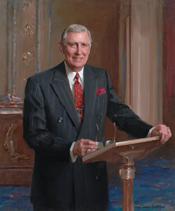
Mr. Speaker, I move to suspend the rules and pass the Senate bill (S. 678) to amend chapter 10 of title 39, United States Code, to include postmasters and postmasters organizations in the process for…
Mr. Speaker, I move to suspend the rules and pass the Senate bill (S. 678) to amend chapter 10 of title 39, United States Code, to include postmasters and postmasters organizations in the process for the development and planning of certain policies, schedules, and programs, and for other purposes.
Mr. Speaker, I ask unanimous consent that all Members may have 5 legislative days within which to revise and extend their remarks on S. 678.
I yield myself such time as I may consume.
Mr. Speaker, S. 678, the Postmasters Equity Act, was introduced by the distinguished Senator from Hawaii, Senator Daniel Akaka, and it gives our Nation's most valued postmasters the same options available to postal supervisors when negotiating pay and benefits with the U.S. Postal Service. My colleague on the Committee on Government Reform, the gentleman from New York (Mr. McHugh), who is the chairman of the special panel on Postal Reform and Oversight, introduced an identical bill, H.R. 2249, which passed this House back in July; and I am proud to be a cosponsor of that bill, and I am pleased the House is considering the Senate version of that bill today.
This legislation extends to postmasters and other nonunion postal employees the fact-finding procedures already established under current law for postal supervisors. This process allows for an unbiased review of issues in dispute during negotiations, as well as the ability to issue nonbinding recommendations to resolve those issues. Currently, without this right, postmasters lack any form of recourse when pay talks under the consultation process fail.
Based on the 38,000 post offices across the country, postmasters provide an essential link to the Federal Government and to other nations' citizens. This bill provides essential fairness to postmasters, and this legislation has already unanimously passed the Senate
and unanimously passed the House in its House version. I am very pleased that this legislation will soon be on the President's desk and enacted into law, and I want to commend the Senator from Hawaii and the gentleman from New York (Mr. McHugh) for their diligence on the Postmasters Equity Act and for their support. I urge all Members to support its passage.
Mr. Speaker, I reserve the balance of my time.
Mr. Speaker, I yield myself such time as I may consume.
Mr. Speaker, I would like to congratulate the gentleman from Illinois (Mr. Davis) for cosponsoring this bill and for all of the hard work he has put in on this and a lot of other pieces of legislation before the committee.
Mr. Speaker, I thank Senator Akaka for introducing this important bill and the gentleman from New York (Mr. McHugh) for his hard work. I urge all Members to support the passage of Senate bill 678.
Mr. Speaker, I yield back the balance of my time.
Mr. Speaker, on that I demand the yeas and nays.
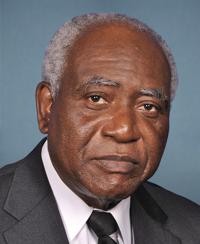
Mr. Speaker, I yield myself such time as I may consume. Mr. Speaker, as a member of the Committee on Government Reform, I am pleased to join my colleague, the gentleman from Indiana (Mr. Burton), in…
Mr. Speaker, I yield myself such time as I may consume.
Mr. Speaker, as a member of the Committee on Government Reform, I am pleased to join my colleague, the gentleman from Indiana (Mr. Burton), in consideration of S. 678, the Postmasters Equity Act of 2003.
S. 678 was introduced on March 20, 2003, by Senator Daniel Akaka. This measure would amend chapter 10 of title 39 to include postmasters and postmasters' organizations in the process for the development and planning of pay policies and benefits.
S. 678 is cosponsored by 39 Senators, including the chairman and the ranking member of the Senate Government Affairs Committee, Senator Susan Collins and Senator Joseph Lieberman. On July 25, the Senate Governmental Affairs Committee unanimously approved S. 678, the Postmasters Equity Act of 2003.
The bill was amended to substitute the language of the House bill, H.R. 2249, sponsored by me and the gentleman from New York (Mr. McHugh). H.R. 2249 had been reported earlier out of the Committee on Government Reform by voice vote. During the 1996 Congress, President Carter signed into law legislation creating a fact-finding process for resolving disputes over pay and benefits and to make recommendations to the Postal Service. It did not provide for arbitration of the disputes, and the recommendations were not binding on the Postmaster General. However, the law only applied to postal supervisors, not postmasters.
S. 678, like its House counterpart, H.R. 2249, would extend to the postmaster the option of a fact-finding panel to make nonbinding recommendations to the Postal Service. Currently, when pay and benefit discussions between the Postal Service and postmasters fail, postmasters have no recourse and have to accept what is offered by the Postal Service. Passage of S. 678 would bring consistency in the manner by which the two categories of postal managers negotiate with the Postal Service over pay and benefits.
Mr. Speaker, I am proud to have been a sponsor of this legislation. I urge swift adoption of this bill and commend Senator Akaka for all of his hard work on behalf of postmasters.
Mr. Speaker, I yield back the balance of my time.
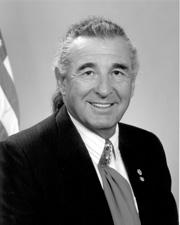
Mr. President, today I introduce the ``Black Canyon of the Gunnison National Park and Gunnison Gorge National Conservation Area Boundary Revision Act of 2003.'' I introduced a similar bill in the…
Mr. President, today I introduce the ``Black Canyon of the Gunnison National Park and Gunnison Gorge National Conservation Area Boundary Revision Act of 2003.'' I introduced a similar bill in the 107th Congress. I am confident that the 108th Congress will quickly pass this bill on to the President for his signature so
that we can continue to celebrate this special place.
My bill improves upon my earlier efforts designating the park.
The Black Canyon of the Gunnison Gorge is a national treasure to be enjoyed by all. The park's combination of geological wonders and diverse wildlife make it one of the most unique natural areas in North America.
The first person to survey the canyon, Abraham Lincoln Fellows, noted in 1901, ``our surroundings were of the wildest possible description. The roar of the water . . . was constantly in our ears, and the walls of the canyon, towering half mile in height above us, were seemingly vertical.'' Similarly, today, visitors can enjoy hiking the deep gorge to the Gunnison River raging below, or look overhead to marvel at eagles and peregrine falcons soaring in the sky.
This bill modifies the legislative boundary of the Gunnison Gorge National Conservation Area allowing even greater access to the park's many recreational opportunities including boating, fishing, and hiking.
This important legislation would expand the National Park by 2,725 acres, for a total of 33,025 acres. The Conservation area will be increased by 5,700 acres, for a total of 63,425 acres. In total this bill adds approximately 8,400 acres to provide habitat for several listed, threatened, endangered and BLM sensitive species including, the Bald Eagle, the River Otter, Delta Lomation, and Clay-Loving Buckwheat.
Furthermore, I have added specific language to ensure that the Bureau of Reclamation retains its traditional jurisdiction over water and water delivery systems.
This legislation helps preserve a unique national resource and a source of national pride.
I urge quick passage of this important bill. I ask unanimous consent that the text of the bill be printed in the Record.

Mr. President, I am pleased to be introducing America's National Maritime Museum Designation Act of 2003. This legislation would designate an additional 19 maritime museums as ``America's National…
Mr. President, I am pleased to be introducing America's National Maritime Museum Designation Act of 2003. This legislation would designate an additional 19 maritime museums as ``America's National Maritime Museums'' nationwide. Maritime Museums are dedicated to advancing maritime and nautical science by fostering the exchange of maritime information and experience and by promoting advances in nautical education.
The America's National Maritime Museum designation would include a
commitment on the part of each institution toward accomplishing a coordinated education initiative, resources management program, awareness campaign, and heritage grants program. Maritime museums in America are dedicated to illuminating humankind's experience with the sea and the events that shaped the course and progress of civilization.
Museum collections are composed of hundreds of thousands of maritime items, including ship models, scrimshaw, maritime paintings, decorative arts, intricately carved figureheads, working steam engines, and much more. Maritime museums offer a variety of learning experiences for children and adults through hands-on workshops and programs that focus on maritime history.
Maritime lecture series offer an opportunity to learn about the history and lore of the sea from some of the Nation's leading maritime experts. Visitors learn the broad concept of sea power--the historic and modern importance of the sea in matters commercial, military, economic, political, artistic, and social.
The legislation that I am proposing would help museums better interpret maritime and social history to the public using their extensive collections of artifacts, exhibits and expertise. These programs and facilities are used by schools, civic organizations, genealogists, maritime scholars, and the visiting public, thus, serving students of all ages.
I urge all members of the Senate to join me in support of The America's National Maritime Museum Designation Act of 2003.
Show 5 more
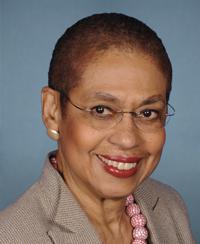
Mr. Speaker, I yield myself such time as I may consume. I want to thank my good friend, the gentleman from Connecticut (Mr. Shays), for the work he has done on this bipartisan bill. It is an…
Mr. Speaker, I yield myself such time as I may consume.
I want to thank my good friend, the gentleman from Connecticut (Mr.
Shays), for the work he has done on this bipartisan bill. It is an important and good bill that encourages the kinds of problem-solving and labor management relations that I am sure the whole House would want to embrace.
H.R. 2249 was introduced on May 22, 2003, by the gentleman from New York (Mr. McHugh) and the gentleman from Illinois (Mr. Davis). This measure would amend chapter 10 of title 39, U.S.C., to include postmasters and postmasters; organizations in the process for the development and planning of pay policies and benefits.
H.R. 2249 is cosponsored by the entire Committee on Government Reform Special Panel on Postal Reform and Oversight. On June 17, the Senate Government Affairs Committee unanimously approved S. 678, the Postmasters Equity Act of 2003, and on June 19, the House Committee on Government Reform reported H.R. 2249 out of committee on a voice vote.
During the 96th Congress, President Carter signed into law legislation creating a fact-finding process for resolving disputes over pay and benefits and to make recommendations to the postal service. It did not provide for arbitration of the disputes and the recommendations were not binding on the Postmaster General. However, the law only applied to postal supervisors, not postmasters.
H.R. 2249 would extend to the postmasters the option of a fact- finding panel to make nonbinding recommendations to the postal service. Currently, when pay and benefit discussions between the postal service and postmasters fail, postmasters have no recourse and have to accept what is offered by the postal service. Passage of H.R. 2249 would bring consistency in the manner by which two categories of postal managers negotiate with the postal service over pay and benefits.
Mr. Speaker, I urge swift adoption of this bill.
Mr. Speaker, I yield back the balance of my time.

Mr. President, I am re-introducing legislation today to name the courthouse at 95 Seventh Street in San Francisco, California, as the ``James R. Browning United States Courthouse.'' Judge Browning…
Mr. President, I am re-introducing legislation today to name the courthouse at 95 Seventh Street in San Francisco, California, as the ``James R. Browning United States Courthouse.''
Judge Browning was appointed to the court by President Kennedy and has spent 40 years as a circuit judge on the Court of Appeals for the Ninth Circuit. For twelve of those years, he served as Chief Judge. As chief judge, Judge Browning reorganized and modernized the administration of the Ninth Circuit. Now, he is on Senior Status.
He is originally from Montana and graduated from Montana State University in 1938 and from Montana University Law School in 1941, achieving the highest scholastic record in his class and serving as editor-in-chief of the law review. Before being appointed to the Court, Judge Browning served in the U.S. Army and worked for Department of Justice and in private practice.
I can think of no more appropriate honor for Judge Browning than to place his name on the courthouse building where he has worked for 40 years.
Mr. President, I ask unanimous consent that the Senate proceed to the immediate consideration of Calendar No. 235, S. 678. Mr. President, I ask unanimous consent that the committee amendment be…
Mr. President, I ask unanimous consent that the Senate proceed to the immediate consideration of Calendar No. 235, S. 678.
Mr. President, I ask unanimous consent that the committee amendment be agreed to, that the bill, as amended, be read a third time and passed, and that the motion to reconsider be laid upon the table; and that any statements relating to the bill be printed in the Record.
Mr. Speaker, pursuant to clause 12 of rule XXII, I move that meetings of the conference between the House and the Senate on H.R. 2658 be closed to the public at such times as classified national…
Mr. Speaker, pursuant to clause 12 of rule XXII, I move that meetings of the conference between the House and the Senate on H.R. 2658 be closed to the public at such times as classified national security information may be broached, providing that any sitting Member of Congress shall be entitled to attend any meeting of the conference.
Mr. Speaker, I was unavoidably detained on rollcall vote 503 on H.R. 2658, the motion to close the conference. Had I been present, I would have voted ``aye.''
Mr. Speaker, I was unavoidably detained on rollcall vote 503 on H.R. 2658, the motion to close the conference. Had I been present, I would have voted ``aye.''
Bill Text
5 versions available
        [Congressional Bills 108th Congress]
[From the U.S. Government Publishing Office]
[S. 678 Enrolled Bill (ENR)]

S.678

One Hundred Eighth Congress

of the

United States of America

AT THE FIRST SESSION

Begun and held at the City of Washington on Tuesday,
the seventh day of January, two thousand and three

An Act

To amend chapter 10 of title 39, United States Code, to include
postmasters and postmasters' organizations in the process for the
development and planning of certain policies, schedules, and programs,
and for other purposes.

Be it enacted by the Senate and House of Representatives of the
United States of America in Congress assembled,

SECTION 1. SHORT TITLE.

This Act may be cited as the ``Postmasters Equity Act of 2003''.

SEC. 2. POSTMASTERS AND POSTMASTERS' ORGANIZATIONS.

(a) Percentage Representation Requirement.--The second sentence of
section 1004(b) of title 39, United States Code, is amended--
(1) by inserting ``that an organization (other than an
organization representing supervisors) represents at least 20
percent of postmasters,'' after ``majority of supervisors,''; and
(2) by striking ``supervisors)'' and inserting ``supervisors or
postmasters)''.
(b) Consultation and Other Rights.--Section 1004 of title 39,
United States Code, is amended--
(1) by redesignating subsection (h) as subsection (i); and
(2) by inserting after subsection (g) the following:
``(h)(1) In order to ensure that postmasters and postmasters'
organizations are afforded the same rights under this section as are
afforded to supervisors and the supervisors' organization, subsections
(c) through (g) shall be applied with respect to postmasters and
postmasters' organizations--
``(A) by substituting `postmasters' organization' for
`supervisors' organization' each place it appears; and
``(B) if 2 or more postmasters' organizations exist, by
treating such organizations as if they constituted a single
organization, in accordance with such arrangements as such
organizations shall mutually agree to.
``(2) If 2 or more postmasters' organizations exist, such
organizations shall, in the case of any factfinding panel convened at
the request of such organizations (in accordance with paragraph
(1)(B)), be jointly and severally liable for the cost of such panel,
apart from the portion to be borne by the Postal Service (as determined
under subsection (f)(4)).''.
(c) Definitions.--Subsection (i) of section 1004 of title 39,
United States Code (as so redesignated by subsection (b)(1)) is
amended--
(1) in paragraph (1), by striking ``and'' after the semicolon;
(2) in paragraph (2), by striking the period and inserting a
semicolon; and
(3) by adding after paragraph (2) the following:
``(3) `postmaster' means an individual who is the manager in
charge of the operations of a post office, with or without the
assistance of subordinate managers or supervisors;
``(4) `postmasters' organization' means an organization
recognized by the Postal Service under subsection (b) as
representing at least 20 percent of postmasters; and
``(5) `members of the postmasters' organization' shall be
considered to mean employees of the Postal Service who are
recognized under an agreement--
``(A) between the Postal Service and the postmasters'
organization as represented by the organization; or
``(B) in the circumstance described in subsection
(h)(1)(B), between the Postal Service and the postmasters'
organizations (acting in concert) as represented by either or
any of the postmasters' organizations involved.''.
(d) Thrift Advisory Council Not To Be Affected.--For purposes of
section 8473(b)(4) of title 5, United States Code--
(1) each of the 2 or more organizations referred to in section
1004(h)(1)(B) of title 39, United States Code (as amended by
subsection (b)) shall be treated as a separate organization; and
(2) any determination of the number of individuals represented
by each of those respective organizations shall be made in a manner
consistent with the purposes of this subsection.

SEC. 3. EFFECTIVE DATE.

The amendments made by this section shall take effect 60 days after
the date of the enactment of this Act.

Speaker of the House of Representatives.

Vice President of the United States and
President of the Senate.