A bill to amend title 10, United States Code, to increase the amount of the death gratuity payable with respect to deceased members of the Armed Forces.

Legislative Activity
Stay on top of the latest movement without scrolling through every action
Referred to the Subcommittee on Total Force.
April 8, 2003
View full timeline
Introduced in Senate
March 25, 2003
Sponsor introductory remarks on measure. (CR S4381)
March 25, 2003
Read twice and referred to the Committee on Armed Services.
March 25, 2003
Senate Committee on Armed Services discharged by Unanimous Consent.
April 1, 2003
Passed Senate without amendment by Unanimous Consent. (consideration: CR S4648; text as passed Senate: CR S4648)
April 1, 2003
Message on Senate action sent to the House.
April 2, 2003
Received in the House.
April 2, 2003 • 10:02 AM
Referred to the House Committee on Armed Services.
April 2, 2003
Referred to the Subcommittee on Total Force.
April 8, 2003
Floor Debate
17 membersWhat members said about S. 704 on the floor
 JW
JW EMK
EMK CLSMC
CLSMC MB+12
MB+12
Floor Debate
17 membersWhat members said about S. 704 on the floor
Mr. President, I ask unanimous consent that William Buhrow, a legislative fellow in the office of Senator George Allen, be granted the privilege of the floor during consideration of S. 1050. Mr.…
Mr. President, I ask unanimous consent that William Buhrow, a legislative fellow in the office of Senator George Allen, be granted the privilege of the floor during consideration of S. 1050.
Mr. President, I ask unanimous consent that Jason Hamm, of the staff of the Committee on Foreign Relations, be granted the privilege of the floor for the duration of the debate on the fiscal year 2004 defense authorization.
Mr. President, I ask unanimous consent that the staff members of the Committee on Armed Services, majority and minority, appearing on the list I send to the desk be granted the privilege of the floor during consideration of S. 1050.
Mr. President, I ask unanimous consent that Senator McCain's legislative fellow, Navy Commander Edward Cowan, be granted privilege of the floor during consideration of S. 1050.
Mr. President, I see the distinguished Senator from Michigan on the floor. I advise my good friend and partner on this venture that I will proceed for some 10 minutes and then yield the floor, on the assumption that he will proceed, and then I will resume with the remainder of my statement.
On behalf of the Armed Services Committee, I am pleased and honored to bring the National Defense Authorization Act for Fiscal Year 2004 to the Senate for consideration. The bill was reported out of the committee with overwhelming bipartisan support. I may say, as a tribute to excellent staff work and excellent work by the chairman and ranking members of the subcommittees and, indeed, by the full cooperation of my distinguished colleague, the ranking member, we achieved this markup in what is regarded to be record time. I didn't keep the time, but I certainly recognize that we did it in a very brief period; basically over a 2-day period, where many times heretofore it has been 3, 4, and 5 days for markup.
I think the committee, both members and staff, were aware of the tremendous support across this Nation by the people for the men and women of the Armed Forces today and a recognition of the responsibilities of the Congress of the United States--in this case the Senate--to provide for those men and women of the Armed Forces.
Having said that, I believe that contributed to the swift action we had on our bill in committee markup, and I anticipate--I say this respectfully--in the Chamber a number of amendments will come forth, but I believe we will be able to complete this bill in a relatively short period of time, owing again to the support in the Chamber for the men and women of the Armed Forces and the desire to have a strong bill in place to go to conference with the House.
As we stand here beginning the debate on this bill today, over 300,000 soldiers, sailors, airmen and marines, Active Guard and Reserve, and countless civilians who support them, are serving bravely in not just the Persian Gulf region but Afghanistan.
It is remarkable. I want to mention the civilians. I recently said to the Secretary of Defense, Mr. Rumsfeld, when we talked about the total force concept, I remembered so well that that concept was originated when Melvin Laird was Secretary of Defense and I was privileged to serve as the Secretary of the Navy during the Vietnam war. I said to Mr. Rumsfeld recently that we really ought to broaden the term ``total force'' now to incorporate the many civilians who quite often are in positions of personal risk and other situations not unlike those of the men and women of the Armed Forces, right up on the point of the spear of military action.
In my judgment, they are just as much a part of the total force as the uniformed contingent, and I think the uniformed contingent would want me
to state that. This total force is there to secure peace and freedom for the people, specifically of Afghanistan and Iraq. Other men and women in the Armed Forces, as we all fully recognize, are serving in outposts and at sea across this world. How proud we are of our forces who are deployed throughout the world. Some of those personnel are assuming personal risks as great as those who have been fighting in Afghanistan and in the Persian Gulf. All Americans are proud of the Armed Forces of the United States.
We also want to pay recognition to the various nations that have joined us in these military operations in Afghanistan and Iraq and around the world and that stand guard with us to enforce the principles of freedom throughout this globe.
We are engaged in an international war on terrorism. The principal battlefronts are Afghanistan and Iraq, but indeed there is no less of a challenge in many other parts of the world away. Therefore, we are very thankful to all those who make possible this total force in the cause of not only combating terrorism but other military objectives we have to fulfill in the cause of freedom throughout the world.
I will pause now a moment to reflect on perhaps the most serious consequence of military life. I went back in history and gathered a few statistics. We will, throughout the course of this deliberation in the Senate, as we go about our daily responsibilities, have in mind those who paid the ultimate sacrifice with their loss of life and those who were wounded in the course of serving the cause of freedom in Afghanistan, Iraq, and other places in the world. I went back in history, and I would like to recite the following figures:
The total casualties in the Iraq campaign thus far have been approximately 612, of whom 117 were killed in direct combat and 495 were wounded. A total of 151 have lost their lives as part of operation Iraqi Freedom. In Afghanistan: Total casualties, 252, of whom 31 lost their lives and 221 suffered wounds. I think it is important to bear those casualty figures in mind as we think with reference to previous engagements. Vietnam: 211,000 casualties, 58,000 killed, 153,000 wounded. Korea: 139,000 total casualties, 36,000 killed, 103,000 wounded. World War II: 1,077,000 casualties, 405,000 killed, 671,000 wounded. We still have missing. I know the Korean conflict alone has some 8,000 American individuals who remain unaccounted for.
Whatever we do, we all join in mourning their loss and resolve to forever remember their service. We care for their families as best we can. We are blessed truly as a nation to have this new generation of great Americans, those who have recently suffered as casualties in the Afghanistan and Iraq operations, and indeed many others throughout the world in other actions. This new generation of great Americans is so committed to the traditions, mindful of the sacrifices of their forebears, and they have performed their services in exemplary fashion in keeping with the tradition of the military men and women who have gone before them--indeed, their values and their ideals and likewise the suffering of the families.
I will bet all of us here in the last few days have attended graduations and spoken at them. I have been privileged to do them myself. Each time I look at these young graduates, I say the casualties in Afghanistan and Iraq and elsewhere around the world are young men and young women of the same age basically--from the years 18 through 24. Some are older, but basically those generations graduating today, looking upon the joys of their college or university careers, should pause for a moment to reflect on those who are elsewhere in the world enabling them to achieve their goals and their respective graduations.
The stunning and very swift military success we had in Operation Iraqi Freedom, achieving the military goals laid out in the plan devised by the Commander, U.S. Central Command, General Tommy Franks and the Joint Chiefs of Staff, in consultation with the joint staffs of the coalition nations, and in approval with that of the President and the Secretary of Defense primarily, and I expect to some extent the Secretary of State--those achievements are a testament to the dedication and professionalism of the men and women in the Armed Forces. The precision and the skill with which recent operations have been conducted are a tribute not only to their bravery and commitment, and indeed their sacrifice, but also to the industrial base of America, which is providing the weaponry, providing the means by which they pass through each day, and the requirements for human existence and human protection. So we pay tribute to that industrial base today, for the American technology and ingenuity, which has made a definite contribution to the welfare and the survival of the men and women in the Armed Forces.
Those statistics I gave about earlier military engagements--obviously high in contrast to the current losses--tell a story of how high-tech weaponry can save lives--not just the smart bombs and smart ordnance but indeed the very uniforms and protection devices the Armed Forces wear today. We had, in the course of our update briefings, a visit by several soldiers who came in and showed us the armored vests, the night vision, the special scopes on their weapons. It is far different from what this humble person witnessed in Korea, in World War II, and in training commands. Today's weapons bear little resemblance to the basic weapons that fought through the battles of World War II and Korea and, to a lesser extent, Vietnam, because we had a transition of the basic weapon in Vietnam. This is a magnificent tribute to the industrial base of this country that has provided this weaponry. That is what this bill is about: the need to have ever-changing technology to afford even greater protection to the men and women of the Armed Forces as we face the uncertain, unchartered, and unknown threats that face us in this century.
Military strategists and historians will study the Afghanistan and Iraqi military campaigns for years to come and will recognize them as a total new chapter in military history in many ways. Without a doubt, the U.S. military is the most capable military force in the world today, a model of excellence and the standard by which others are measured.
Senator Levin and I visited Afghanistan on Thanksgiving almost two years ago, as those operations were just beginning to get underway. We witnessed how small units, anywhere from 15 to 25 individuals, would get in their helicopters and go in to the darkness of night, all enlisted, save one officer, and perform extraordinary feats of heroism and professional courage in achieving their objectives.
We witnessed it again, just weeks before the start of military operations in Iraq, in its full measure, when we both visited Qatar and Kuwait in February of this year.
It is precisely for this reason we must send a strong message of support to our men and women in uniform by passing this important bill this week. This bill contains much deserved pay raises and benefits for our military personnel, for their families, needed increases in family housing and quality of life projects on military installations, as well as prudent investments in the equipment and technology our military needs to deal with the future in uncertain and ever-changing threats.
I urge my colleagues to participate in the debate of this bill to the fullest measure desired, to come forward with such amendments that they may have to improve and strengthen this bill, and hopefully to gather together and support the final and swift passage of this bill.
The President's budget request for defense for fiscal year 2004 continues the momentum of recent years in making real increases in defense spending to sustain readiness and enhance the quality of life for our military personnel and their families, and to modernize and transform the U.S. Armed Forces to meet current and future threats.
The bill before us would provide $400.5 billion for defense, an increase of $17.9 billion, or 3.2 percent in real terms, over the amount appropriated for fiscal year 2003.
Since the beginning of the 108th Congress, the Armed Services Committee has conducted 44 hearings and received numerous policy and operational briefings on the President's budget request for fiscal year 2004 and related defense
issues. As a result of these deliberations, we identified six priorities to guide our work on the National Defense Authorization Act for Fiscal Year 2004.
First, to enhance the ability of the Department of Defense to fulfill its homeland defense responsibilities by providing the resources and the authorities necessary for the department to assist in protecting this Nation against all current and anticipated forms of attack, primarily terrorist attacks, at home.
I mention at home, and I will repeat it several times because it is so important, because our President has quite wisely put as his top priority homeland defense. The Congress, and most particularly the Senate, went through long debates about the creation of the Department of Homeland Security which is now up and running.
Homeland defense, however, in my humble judgment, does not start here at home. It starts on the farflung outposts of the world on land and at sea where the men and women of the Armed Forces are serving. To the extent they can deter, interdict, and defeat imminent threats to the U.S., especially terrorist operations, it lessens the chances of that operation finding its way to homeland USA--right here at home.
That is my definition of homeland defense, and this bill is constructed to do everything we can to equip and protect those men and women of the Armed Forces in their role of homeland defense beyond our shores and, indeed, their role in homeland defense, those who are stationed in the continental limits of the United States, Hawaii, and Alaska.
Second, to continue our committee's commitment to improving the quality of life for the men and women of the Armed Forces--Active, Reserve, Guard, Retired--and their families.
Third, to provide the men and women in uniform with the resources, training, technology, and equipment they need to safely and successfully perform their missions both now and in the future.
Fourth, to sustain the readiness of our Armed Forces to conduct the full spectrum of military operations against all current and anticipated threats.
Fifth, to support the Department of Defense efforts to build the innovative capabilities necessary to continue the transformation of the Armed Forces to enable them to successfully confront future threats, particularly by enhancing technological advances in areas such as unmanned systems. That is an initiative on which this committee has placed great emphasis for some several years now.
Sixth, and final, to improve the efficiency of the Department's programs and operations to reduce the cost and time required to develop and acquire the new capabilities and needed services in the entirety of this bill.
I will yield the floor. This is a suitable point at which I can return to my opening remarks. I assume my colleague from Michigan will seek recognition.
I thank my colleague, Mr. President, for all his hard work, not only on this bill but for the now quarter of a century we have been together working on this committee. How many times we have been on the floor together on our respective bills.
Mr. President, I thank the distinguished Senator from Michigan for his very fine statement, for his kind reference to the chairman.
The committee's first priority was to enhance the Department of Defense to fulfill its homeland defense responsibilities to combat terrorism both at home and abroad. In these areas, this bill authorized an increase of $400 million over the budget request, including $88.4 million for 12 additional civil support teams. Now, these are the teams that join with the first responders should we have the misfortune of a weapon of mass destruction, be it chemical, biological, or fissionable, utilized in the United States. That is a very important initiative that this committee has taken over several years now and the inclusion of this in the budget represents our strong unequivocal support of this program particularly by adding 12 additional teams, to get us closer to the goal of a team in every State and territory.
Likewise, we added $181 million for the development and fielding of chemical and biological agent detection and protection technology. In addition, the committee supports the President's request of $9.1 billion for missile defense, a key component of homeland defense.
As we all know, our most valuable military asset is our people. We will always fulfill our commitment to improve the quality of life of the men and women in uniform and their families. This bill authorizes a 3.7-percent across-the-board pay increase for all uniformed service personnel as well as a targeted pay raise of up to 6.25 percent for certain senior noncommissioned officers and midcareer personnel. Those provisions are necessary in order for the Armed Forces to compete with the pay scales and the job opportunities in the private sector.
This bill also contains several key provisions to recognize unique sacrifices of the members of the Armed Forces and their families, including increases in the family separation allowance and hostile fire pay, designation of assignment incentive pay for those stationed in Korea, and approval of a ``high tempo'' allowance for those service members deployed away from home for extended periods of time. We have experienced this, particularly in the Navy.
I hope these provisions are acceptable to the Department of Defense. We are still working our way through that at this particular time.
The services all try very hard to limit the time of deployment away from home, particularly unaccompanied tours, for our service members, but there are isolated cases where you simply go beyond those times. One was recent, with a carrier setting one of the longest records in contemporary history for the away-from-home deployment of a carrier and its crew.
The administration requested $9 billion for military construction and family housing due to pending realignments of overseas bases. This bill contains adjustments to the administration program which resulted in increased investment in installations in the United States and a reduced but prudent investment in overseas locations that will be of long-term value to the United States.
This bill contains an overall increase of approximately $400 million in military construction, including increases of over $200 million in quality-of-life projects such as barracks, family housing, and child development centers.
Over the past several years, my colleagues and I have encouraged the Department to increase procurement spending to a level that could sustain the timely recapitalization, modernization, and transformation of the Armed Forces. This year, the bill before the Senate authorizes $75.6 billion in procurement funding, a $1.1 billion increase over the budget request. Key procurement items include over $12 billion in shipbuilding and conversions which will fund seven new ships just for the year 2004. That is in keeping with the Chief of Naval Operations's commitment to this body last year
that he, in conjunction with the whole Navy Secretariat, would increase the number of ships--not a very large number, but it is an increase over the past.
Further, we have the continued investment in aircraft programs, such as $3.5 billion for 20 F/A-22 Raptor aircraft and over $2 billion for 11 additional C-17 lift aircraft; and over $1 billion for the Army's lighter, high-mobility stryker combat vehicle.
Additionally, it is critical we invest in future capability. This bill authorizes $63.2 billion for research and development, test and evaluation, activities, an increase of over $1.3 billion over the President's budget request. Key R&D funding items include $1.7 billion for the future combat system, the Army's centerpiece of transformation, $5.8 billion for development of various tactical aircraft, including $4.4 billion for the continued development of the joint strike fighter, and $10.7 billion for advanced science and technology initiatives, an increase of over $500 million over the budget request.
This committee has strongly encouraged the Department to invest in unmanned systems. This bill fully funds the budget request of $1.7 billion for major unmanned aerial vehicle programs and adds $130 billion to enhance unmanned technologies.
Together, the investments in procurement necessary to sustain current capabilities and research and development needed to transform to a more capable force would give the men and women of the Armed Forces the equipment they need to deter threats, and if deterrence fails, to prevail across the full spectrum of military operations both now and in the future.
The sustained readiness of the Armed Forces is what protects America. The success of recent military operations represents the real return on added investments made by the Congress in recent years in training, munitions, maintenance, and spare parts. As the force reconstitutes after operations in Afghanistan and Iraq, we must closely monitor whether additional funds are needed for those items not covered by supplemental funding to pay for these operations and to ensure the overall readiness of the Armed Forces.
Readiness accounts funds were increased to address currently identified shortfalls such as equipment maintenance and testing, depot maintenance, technical assistance, corrosion control, and systems testing as well as additional funding for Active and Reserve Forces to accelerate fielding and replacing personal and field equipment.
Transformation of the Department of Defense will depend on effective management and stewardship of DOD resources. This bill contains numerous legislative provisions to improve the management of the Department. Some of these provisions will streamline the acquisition process, provide for greater personnel flexibility to manage the acquisition workforce, and ensure that joint requirements can be more rapidly achieved. Acquisition authorities to facilitate the war on terrorism, and support contingency operations were extended, and proposed new authorities will give State and local governments rapid access to antiterrorism technologies and services available to the Department. Again, that is another very important contribution to homeland defense.
The Department of Defense and the Congress have been and must continue to be good stewards of the environment. Military readiness and prudent conservation can and must be complementary principles. This bill assures access to military training ranges in a way that safeguards the protection of endangered species and contributes to the readiness of the Armed Forces.
Some will argue we have not covered all the subjects that were brought before the committee. Indeed, the committee did delete a number of items from the President's request, but that is the judgment that the committee must render. We are an independent but coequal branch of the Federal Government. While we have great respect for the President's budget, some of those provisions were deleted from his budget and not incorporated in this bill.
While I am proud of this legislation and the remarkable spirit of bipartisanship that enabled our committee to move this bill to the floor, we did have areas of disagreement within the committee, which will be revisited during the floor debate.
With our Armed Forces poised on distant battlefields and countless others standing watch at home, we are committed to providing the resources needed for the men and women of the armed forces, and their families. The Congress's past support for increased defense spending has proven to be a wise investment. There is no greater evidence than the successes witnessed on the battlefield of Iraq.
I strongly believe that this National Defense Authorization Act for Fiscal Year 2004 builds on the advances made in recent years. I urge my colleagues to join me in sending a strong message of bipartisan support for our troops at home and abroad: we honor your service, and we stand with you now, and in the future.
Madam President, on behalf of the whole committee, I express appreciation to our colleague from Maine. She no longer will be subcommittee chairman on our committee because she is the full chairman now of one of the major subcommittees of the Senate as a whole, but she is very active.
I wonder if I might ask the distinguished Senator from Maine, the issue of transformation by the Secretary of Defense was addressed in the House and to some extent addressed by our committee. But basically, the committee over which the distinguished Senator from Maine is chairman has the primary oversight responsibilities. In the course of the debate on the floor, I hope--if not now at some point--she will give some guidance to me as to how this committee can address such amendments as may be brought up in the context of responsibilities of our committee. If she could find some time to consult with me on that, I would be very appreciative, as will the Senator from Michigan.
Madam President, I thank our colleague on this point. But bear in mind that there are some in the House bill. We will have to deal with them in conference.
To the extent we can have any interlocking on this bill with those provisions of the House bill, which the Senator's committee and our committee and the Senate as a whole feels should be incorporated into the bill, it would be helpful to do that.
I think in general the Secretary of Defense is on the right track in the sense that when you stop to think, today's military is so different than it was 2 or 3 years or even a decade ago.
As I mentioned earlier, before the Senator from Maine joined us on the floor, the total force today is not only the uniformed men and women of the Armed Forces, they are very much part of the civilian force. There are thousands of civilians over in the Iraqi situation and in Afghanistan right now taking risks commensurate with those of uniformed personnel and performing services to give infrastructure to the military to do their missions.
The Secretary of Defense has to have some flexibility in how he assigns and reassigns civilian personnel. I hope we could achieve some measure commensurate with what the wisdom of the Congress enabled the Secretary of Homeland Defense to have. It seems to me that is sort of the bar at which we ought to look.
Might I inquire, does the Senator share views similar to the Senator from Virginia?
Mr. President, I thank both my colleagues. But before we conclude this very valuable and important colloquy, I ask the Senator from Maine, who speaks with such conviction if we are going try to do something on this bill or is the thought that it is just not achievable? Because we have an issue with the House right now.
And the question is, are we going to address that issue in part-- maybe not all, but in part--in such a way that we can do constructive advancements in this field to assist the Secretary and the administration in this enormous Department with a diversity of responsibilities? Can we conclude we are going to give it a try, and that would move it along pretty quickly? Because hopefully this bill will be voted on early this week.
I will have one more word, but I yield--not necessarily yield--to my colleague from Michigan if he wishes to reply to the Senator from Maine.
Right.
Do you think the provisions the Congress provided for in the Department of Homeland Security offer certain precedents we should achieve in this legislation?
Well, as both my colleagues recognize, this will be, for the distinguished Senator from Michigan and myself, our 25th conference, and we know full well at this stage of deliberations on this bill we cannot predict what is going to come out of conference, nor can we take a stance that not one single one of these provisions which are in the House bill will not survive the conference. So having said that, time is of the essence, I hope, in the reconciliation of views.
Mr. President, I ask unanimous consent that the order for the quorum call be rescinded.
It is my understanding that the Senate, at the hour of 5 o'clock, will proceed to a rollcall vote and that the vote will be held open for the period of 1 hour, until 6 o'clock; is that correct?
My distinguished colleague, the ranking member, and I hope Members could come up to see either of us, if we are here--and if we are not here, both staffs will be here--and indicate the possibility that they may have amendments that will be forthcoming and the time, say tomorrow, that would be convenient for them to bring up those amendments.
Tonight we will be addressing some amendments after 6 o'clock. We will resume with amendments in the morning. We have gotten excellent cooperation from those desiring to offer amendments. But by midday tomorrow, we should, at our respective caucuses, be able to give the Senate some idea during the caucuses of the progress of this bill and the likelihood of when final passage could be achieved. Am I not correct on that, I ask my colleague?
In any event, Mr. President, there have been some rumors to that effect.
There is nothing in the Record as to post-6 o'clock as to further votes tonight. That is the case until we hear from the majority leader; is that correct?
I yield the floor.
I thank our distinguished assistant leader.
With respect to amendments, I urge colleagues to look at the daily calendar in which the reference is made, on the covering page, to the order with regard to this bill and the proviso:
Provided, That all first degree amendments be relevant and
that any second degree amendment be relevant to the first
degree amendment to which it is offered.
There are restrictions on the subject matter. We want to cooperate with our colleagues. But it is very clear that this is the order that has been adopted by the Senate.
I yield the floor.
Mr. President, I listened carefully to the comments in the exchange between the Senator from Maine and our chairman and ranking member. I have heard through the outreaches of the Senator from Maine…
Mr. President, I listened carefully to the comments in the exchange between the Senator from Maine and our chairman and ranking member. I have heard through the outreaches of the Senator from Maine there has been a good-faith effort to try to deal with this issue. I am not carefully briefed on the various proposals, but at least there has been an outreach by the Senator from Maine to try to develop some common ground in this area. So I think this is important.
I think the seriousness with which she is addressing this issue, as well as the chairman and the ranking member, is, of course, of enormous importance because basically we are talking about the 650,000 to 700,000 civilians who work in the Defense Department. The basic concept was the development of the civil service so that we were going to have highly skilled, highly motivated, highly trained individuals who were going to work for all Americans and not be working for political parties, so to speak, not finding out, every time there is a change in administration, there could be a change in the way they are compensated for their work.
This is enormously important work. We are finding individuals who are going to be involved in the selection of various weapons systems in the whole areas of the development of command and control, communication, and intelligence. The jobs of many of these civilians are enormously important in terms of the security interests of this country.
So the caution which has been expressed by our chairman and ranking member, as well as by the Senator from Maine, is entirely appropriate. It is certainly reasonable to always try to find ways of strengthening and improving the system. But we do come back to the question that this was developed initially with all the kinds of challenges it is facing now, with the concept that we would have highly motivated, highly trained individuals, who would serve whatever administration was going to be successful at the polls. I think that basic and fundamental view is still a commendable one.
But I just want to indicate to the Senator, my friend from Maine, that she has approached this as she does all issues, with an openness and commitment and determination to try to make a very constructive contribution, and she has certainly been reaching out to the Members. So I am thankful for those efforts.
I am also concerned about contracting out, and that we are going to find those with the best lobbying opportunities are going to be able to get these contracts that are important and require high-quality work.
Mr. President, as we begin considering the fiscal year 2004 defense authorization bill, I, too, congratulate Chairman Warner and Senator Levin for their skillful leadership in preparing this bill. It does reflect a thoughtful response to the ongoing and changing needs of our military in these difficult years for our country, and it clearly provides a strong national defense.
I also thank and commend Senator Talent for his leadership on the seapower portions of the bill in his first year as the chairman of the Seapower Subcommittee. It is a privilege to work with him on that subcommittee, and I look forward to continuing that work in the years ahead to make sure we are going to keep our Navy strong, and, of course, the Marines strong as well.
In particular, this legislation contains numerous provisions to give additional support to the men and women who serve the Nation so well in the Armed Forces. Without their courage and their commitment, we could never achieve the brilliant military successes of the war in Iraq.
First, and most important, this bill is intended to improve the quality-of-life programs our soldiers and sailors and marines and members of the Air Force deserve in the areas of pay and allowance. It recognizes the special sacrifice military service often requires from the service members and their families.
For service members who are repeatedly deployed to assignments far from their home bases, including Reservists and Guard personnel, the bill authorizes a high deployment allowance, up to $1,000 a month in additional compensation for the hardships imposed on them and their families. The bill also continues support for the significant progress made in the past 4 years in reducing out-of-pocket housing expenses by improving the basic allowance for housing, and the bill also provides for strong national defense in the years ahead by investing in transformational technologies while ensuring that our military capabilities do not suffer any gap during the needed modernization that must take place in our forces.
My principal concern with this legislation involves the provisions that authorize the fateful change of course in our longstanding policy on nuclear weapons. Of all challenges our country has faced over the past half century, the prevention of nuclear war is by far the most important. It is no accident that in all the years and the half century since World War II, no nuclear weapon has ever been used in any of the conflicts that have taken place anywhere on Earth. Few in 1945 would have predicted that extraordinary success, and few today would disagree that the effective world leadership of the United States under Presidents of both political parties on nuclear arms control throughout those years has been primarily responsible for that success.
The danger today is that with the passing of the World War II generation in our own country and nations throughout the world, a new generation of leaders has been rising to power who did not live through the dawn of the nuclear age themselves and for whom the mushroom clouds over Hiroshima and Nagasaki are images from history, not vivid recollections from their own lives. Greater vigilance is clearly needed to continue the success of our nuclear arms control policy since 1945 and ensure that nuclear weapons are not used by any nation in the future.
Preventing the proliferation of nuclear weapons and other nuclear materials to other nations and to terrorists is the most urgent aspect of that challenge today. We all pray the Bush administration will be successful in the current negotiations with North Korea and that the tenuous progress made in recent weeks will improve so a successful conclusion can be achieved.
Many of us are increasingly concerned, however, that with Congress and the Nation preoccupied over the past year with the war against terrorism and the war in Iraq that the administration has been quietly laying the groundwork for a far-reaching and highly dangerous U turn in our longstanding policy against the first use of nuclear weapons.
Because of their unique and massive destructive power, nuclear weapons have always been kept separate from other weapons as part of our strong commitment to do all we can to see they are never used again. The Bush administration's proposal to veer away from that commitment should have been a wake-up call for Congress and the Nation many months ago.
In the decade after the first two nuclear bombs were used in World War II and the nuclear arms race began with the Soviet Union, nations and peoples throughout the world began to realize both the danger posed by the use of nuclear weapons and the danger from the testing of nuclear weapons. To deal with those dangers, a remarkable series of international treaties was proposed, negotiated, and approved that had broad support in the world community, restrained the nuclear arms race between the United States and the Soviet Union, and dramatically reduced the spread of nuclear weapons to other nations.
An excellent chronology of the many significant events in the history of nuclear weapons, beginning with the discovery of radioactivity in 1896, is available on the Web sites of the Global Security Institute which was founded by our former colleague Senator Alan Cranston to enhance our understanding of these issues. I urge Members of the Senate to consult with it.
One of the landmark achievements in reducing the spread of nuclear weapons was the Nuclear Nonproliferation Treaty which came into effect in 1968 and under which nuclear and nonnuclear nations alike agreed to halt the development of these weapons. Currently 185 nations have signed the extension of the NPT. The reason the Nuclear Nonproliferation Treaty has been so successful is the presumption that nuclear weapons will not be used by the principal nuclear powers except in the most extreme circumstances. For 25 years Republican and Democratic administrations alike have emphasized our commitment not to use nuclear weapons against nonnuclear nations. This assurance to other nations that nuclear weapons will not be used against them has been a major factor in avoiding nuclear war, slowing the nuclear arms race, and preventing the proliferation of these weapons to other countries and to terrorists.
Control of current nuclear stockpiles is especially critical. The danger is very real that terrorists may be able to acquire nuclear material or even nuclear warheads. Even before 9/11, Congress and the administration had recognized this significant threat and, under the leadership of our former colleague Senator Nunn and our colleague Senator Lugar, we enacted a threat reduction program in 1991 to safeguard and reduce the nuclear arsenals of Russia and other former Soviet states. The Nunn-Lugar program has been effective in deactivating or destroying literally thousands of nuclear warheads and intercontinental ballistic missiles and hundreds of tons of fissionable material. Nevertheless, we have done far from enough to prevent the proliferation of these weapons.
Shortly before President Bush's inauguration, a task force reported that the most urgent national security threat to the United States today is the danger that weapons of mass destruction or weapons-usable material in Russia could be stolen, sold to terrorists, or
hostile nation states, and used against American troops abroad or citizens at home. The 9/11 terrorists clearly demonstrated their willingness and ability to cause catastrophic damage to America. Yet the Bush administration continues to spend less on the Nunn-Lugar program than we did before 2001.
In January of 2002, the administration released a nuclear posture review that could take us in a new and far more dangerous direction. The review blurs the line between conventional and nuclear weapons. It suggests that certain events might compel the United States to use nuclear weapons first, even against nonnuclear nations. It also relies much more heavily on a nuclear threat by America in dealing with the difficult challenges we face in the world. The administration has even indicated it might use nuclear weapons in response to a chemical or biological attack. There is no justification for that kind of escalation. Our conventional weapons are more than adequate to deal with that threat. We gain no greater deterrence by threatening to go nuclear. It makes no sense to break down the firewall we have always maintained between nuclear weapons and other weapons and that has succeeded so well for so long in preventing nuclear war. Other nations have complied with this basic principle, too. A nuclear weapon is not just another item in our arsenal, and it is wrong to treat it as if it were. In fact, the Nuclear Posture Review specifically discusses circumstances in which the United States might engage in the first use of nuclear weapons, such as a North Korean attack on South Korea, or a military confrontation over the status of Taiwan.
The administration also appeared to be considering the use of nuclear weapons against Libya, Syria, Iraq, and Iran. We reap what we sow. If we brandish our own nuclear weapons, we only encourage other nations to do all they can to develop their own.
It is ominous as well that the administration is asking the Nation's weapons laboratories to consider the possibility of resuming nuclear testing in order to protect our current stockpile and meet new requirements in the future. They want funds in the budget to be used to prepare for testing new nuclear weapons and to cut in half the time needed to do so. They have asked the Department to consider global strike capabilities with new nuclear weapons, which would have to be tested as well. It makes no sense to abandon our moratorium on nuclear testing. That moratorium has stood for over a decade, and it has served us well.
The pending bill continues this dangerous shift in other ways as well. Last year, the administration received $15 billion. The current bill proposes another $15 billion this year to study the feasibility of modifying existing warheads to create what they call a robust nuclear earth penetrator, a bunker buster, with 10 times the size of the Hiroshima blast, to be used to destroy hardened enemy targets buried deeply underground. It is difficult to believe that any administration in its right mind would propose such a weapon. A nuclear explosion in a bunker could spew tons of radioactive waste into the atmosphere, with a devastating plume that could poison huge areas in its path. Surely, if there is any need for such a weapon, we can develop a conventional weapon to achieve the purpose of the bunker buster.
In yet another far-out nuclear proposal, the Bush administration has proposed to lift the current statutory ban on low-yield nuclear weapons, which now prevents the development of weapons with yields under 5 kilotons--about half the size of the Hiroshima blast. The precision-guided conventional munitions and standoff weapons we have today make these many nukes unnecessary. They would be no more effective than conventional munitions and would be far more dangerous to our troops and to our planet.
In the debate in recent weeks on tax policy, President Bush has criticized the Senate and come out strongly against what he called ``iddy-biddy'' tax cuts. What we should be really against is iddy-biddy nukes.
The hardliners in the Bush administration seem to believe that the longstanding firewall between nuclear and conventional weapons is obsolete and is making us more vulnerable to nuclear blackmail. They claim that lowering the threshold for using nuclear weapons will make our own nuclear threat a stronger and more credible deterrent. That is the last thing we need.
The clear and present danger of the administration's change in nuclear policy is that it will encourage other nations to develop nuclear deterrents of their own. The entire world will be at greater risk that these weapons will be used--and used against us.
Unfortunately, the real debate on these all-important issues of nuclear policy is only just beginning. Certainly, these issues demand far more attention than Congress and the country have been giving them. They have been eclipsed for too long by the war on terrorism and the war against Iraq. We can ignore them no longer. We have an obligation to our Nation and our people, and to all nations and all peoples, to see that nuclear weapons are never used again.
In the debate in the coming days, I intend to offer an amendment to maintain the firewall between conventional and nuclear weapons. It strikes the provision repealing the prohibition on low-yield nuclear weapons that was put in place in the 1994 National Defense Authorization Act. That act prohibits research, testing, and development on low-yield nuclear weapons, and there is no reason to weaken it.
Some suggest we should compromise and allow at least a little research. I say to the Senate, don't let the administration even start down that road. Don't feed the nuclear addiction. It is essential to continue to prohibit even the research on any such weapons. We do not want our descendents, surveying a devastated planet, to say that in this legislation the United States breached this firewall and took the decisive, shameful step that led to nuclear war.
Unanimous Consent Request S. 923
Mr. President, our men and women in uniform are committed to protecting the security of our Nation. They work hard and make sacrifices every day. And they are willing to give their lives for the country.
As many begin to return from Iraq and other places abroad, we owe it to them to protect their economic security and the economic security of our Nation.
These heroes are coming home to a failing economy--and for too many a loss of jobs. Today, more than 18,000 veterans are out of work. These are our Nation's fighting men and women, returning from Iraq, or who fought in the last gulf war. We owe it to them to protect them and their families' livelihood.
President Bush claims that tax cuts for the rich will create the jobs these former service men and women need. But we tried the Bush administration's approach in 2001, and we lost 2.5 million jobs. Surely, we can do better for our returning troops who are now trying to rejoin civilian life. We can do better for all Americans who are without jobs in this recession.
Today, nearly 9 million Americans are unemployed--2.8 million more than when President Bush first took office. This widespread unemployment has touched so many American lives, and it often seems the biggest in the face of those who have served their Nation in the Armed Forces.
There is good news for some. The law requires employers to take back reservists after their deployments. Many of the men and women currently in or returning from Iraq will continue their service in our Armed Forces. But too many recently discharged service members are facing the same fate as millions of other Americans--they just cannot find jobs.
We have an opportunity to extend the benefits for these brave Americans. We have an opportunity to make sure those ex-service members who still cannot find work after 9 months--the long-suffering and long- term unemployed--are not left without a safety net. They put years of their lives into serving their country. Now unemployed after only 9 months, we are going to say: Sorry, you have been out of work too long. We are going to stop your unemployment checks.
We must not, and we cannot, do that to these workers. We must ensure that those long-term unemployed continue to receive unemployment checks so they can meet their mortgages, put food on the table, and take care of their children.
The American people understand fairness. They understand that with
one hand we are providing billions of dollars to the wealthiest individuals in this country, and we ought to extend the other hand to our hard-working men and women who played by the rules, worked all their lives, and paid into the unemployment compensation fund. They need that assistance now.
For 80,000 workers a week, unemployment checks will stop coming at the end of this month if we take no action whatsoever--80,000 who have paid into the unemployment compensation fund, which currently has in it over $20 billion.
Unemployment benefits are a lifeline available for millions of hard- working Americans. I urge my colleagues to put aside partisan politics and join to assist the unemployed--just as we have during recession for the past 50 years. We know the extension of unemployment compensation has been supported by President Reagan, President Nixon, President Eisenhower, as well as President Kennedy, President Clinton, President Bush, and President Ford--all of them. In the 5 years in the 1990s when we extended it, it had strong bipartisan support. Four of those votes were in excess of 90 votes. We want to take that same kind of action. We want to take it this evening before we go off for a Memorial Day recess.
Mr. President, I ask unanimous consent that the Finance Committee be discharged from further consideration of S. 923, a bill to provide for a 6-month extension of unemployment compensation, including 13 weeks of benefits for the long-term unemployed--exhaus- tees--and that the Senate then proceed to its immediate consideration; that the amendment that is at the desk to remove the temporary enhanced regular unemployment compensation provisions be considered and agreed to; that the bill, as amended, be read three times, passed, and the motion to reconsider be laid upon the table, without intervening action or debate.
Mr. President, I hear the objection on the other side. Action is needed in these several days. Some 80,000 of our fellow citizens starting next week will begin to lose all of their coverage, for which they have paid into the fund.
This is a deplorable situation certainly for those Americans, and I think for all Americans. We are going to continue this battle throughout this week and beyond. I have heard an objection voiced.
Mr. President, I yield the floor.
Mr. President, I look forward to many more times. Mr. President, first, I congratulate Senator Warner for shepherding the Defense authorization bill to the floor again. I do not know how many times…
Mr. President, I look forward to many more times.
Mr. President, first, I congratulate Senator Warner for shepherding the Defense authorization bill to the floor again. I do not know how many times he has led the effort--I lost count--but each time he has handled the very difficult duties with great fairness and, I think, timely, perhaps with record dispatch. He is always efficient and, it seems to me--and I agree with Senator Warner--this may set a record in the committee, for many of the reasons our chairman mentioned, including the determination that we be together totally as a body in support of the men and women in the Armed Forces who are in so many dangerous places in the world as we speak.
I also join Chairman Warner in commending all of the committee members for their hard work; our staffs, for the long hours they put in to produce this bill. As always, it is a complicated bill, a detailed bill and, more than ever perhaps, a critically important bill.
As we begin the consideration of this bill this afternoon, our men and women of the U.S. Armed Forces, both Active and Reserve who are deployed in harm's way in many areas of the globe, are being subjected almost daily to armed attack in Afghanistan and Iraq.
Our Armed Forces have demonstrated extraordinary military prowess. Their success is a tribute first and foremost to their own skill, dedication, and professionalism, and to the skill of their leaders. It is also the result of the investments in national defense that many administrations and Congresses have made over the years.
Our success on the battlefields of the future will depend on the investments we make today to prepare, train, and equip our military. The bill provides our Armed Forces with the means they need to meet today's challenges and it makes the investments that will be needed to respond to the challenges of this century.
It also continues the increases in compensation and quality of life for our service men and women and their families.
Chairman Warner has described in some detail what is contained in the bill, and I will not attempt to duplicate his summary, but I would like to make a few general comments and point out a couple of matters where there is a divergence of view within the committee.
This is a good bill. It is a balanced bill. It is balanced for many reasons. It equips the Armed Forces to deal with today's threats and it makes the investments necessary to transform our forces to meet the threats of the future. It is balanced in that it does not prematurely seek to apply lessons some may believe have been learned from Iraq even before the Department of Defense has had an opportunity to study and analyze that conflict and to report to us on what lessons they believe have been learned.
In his briefing of Senators in S-407 on May 8, General Franks specifically noted that it would take some time to identify the lessons learned from Operation Iraqi Freedom, and we could do harm to our national defense if we sought to apply the wrong lessons from those operations or if we too speedily determined what, in fact, were the lessons learned.
The bill is also balanced in that it seeks to incorporate those provisions of the Department of Defense's transformation proposals that provide appropriate flexibility for the operation of the Department in a manner that preserves congressional oversight responsibilities. For example, the bill contains provisions that would repeal dozens of reporting requirements, establishes a new defense modernization account to fund life cycle cost reduction initiatives. It authorizes a pilot program to test new procedures for conducting public/private competitions. It provides the Department with special pay authority to help it fill critical positions.
It is also balanced because of the provisions it does not include. The bill before us does not include provisions that would undermine the ability of the uniformed military to provide independent advice to the civilian chain of command, and to the Congress. It does not include provisions which would undermine congressional oversight by repealing the requirement that the Department of Defense provide us with basic information on the costs, schedule, and performance of major weapons programs.
The bill before us does not authorize the reorganization of the Department of Defense without regard to statutory requirements or establish a foreign military assistance program to be conducted by the Department of Defense rather than by the Department of State. The bill does not authorize the Department to move money from one program to another without congressional authorization.
Perhaps the most pointed evidence of the balanced nature of this bill is that it was reported out of committee with the unanimous support of all of the members of the Senate Armed Services Committee, a tribute to the balance of the bill but also to the leadership of our chairman.
That does not mean there are not any provisions in the bill on which there is disagreement, because there are. There are a number of areas that are troublesome and on which I expect there will
be significant debate this week. For example, there are provisions in report language that move us in the direction of developing new nuclear weapons and modifications of current nuclear weapons. Current U.S. law bans research and development of new nuclear weapons that could lead to their production. The specific weapons covered by the ban are so-called low yield nuclear weapons which have a nuclear explosive yield of 5 kilotons or less. Five kilotons is roughly a third the size of the nuclear bomb that was used at Hiroshima which immediately killed an estimated 140,000 people and left many more injured. The administration has asked this ban be repealed. If the ban is repealed, the purpose is to make nuclear weapons more usable.
As stated by Linton Brooks, the administrator of the National Nuclear Security Administration, in testimony before the Subcommittee on Strategic Forces of the Senate Armed Services Committee:
I have a bias in favor of the lowest usable yield because I
have the bias in favor of something that is the minimum
destruction. . . . I have a bias in favor of things that
might be usable.
The language approved by the majority of the Armed Services Committee would repeal the ban on the development of low yield nuclear weapons. Without this ban, there is no impediment in law to research, development, testing, production, or deployment of new low yield nuclear weapons.
The bill also provides the National Nuclear Security Administration with funds the administration requested to continue work on a robust nuclear earth penetrator. This effort would modify one of two existing high yield nuclear weapons to create a nuclear weapon that will penetrate rock. Both weapons being looked at for possible modification are high yield nuclear weapons with yields approximating 30 and 70 times the nuclear explosive power of the Hiroshima bomb.
Without a requirement that that nuclear earth penetrator weapon be authorized by Congress, there is no legal impediment to its development, testing, production, or deployment.
At a time when the United States is trying to dissuade other countries from going forward with nuclear weapons development, when we strongly oppose North Korea pulling out of the nuclear nonproliferation treaty, and when we suggest that indeed we may use military force to prevent North Korea from acquiring nuclear weapons, when we are spending billions of dollars to prevent the spread of nuclear weapons, materials, and technology, these proposed actions by the administration would send the opposite message we are trying to give to the world. We are telling others not to go down the road to nuclear weapons, but instead of being a leader in the effort to prevent the proliferation of nuclear weapons, we are recklessly driving down that same road.
The United States should not follow a policy that we do not tolerate in others.
In the area of ballistic missile defense, one of the problems lies in what is not in the bill rather than what is in the bill. The missile defense program continues to move along, spending billions of dollars without performance criteria. Moreover, the Department of Defense has cancelled plans for 9 of the 20 ground-based midcourse interceptors that have been planned from 2003 to 2007. Surely we have an obligation to test the limited ballistic missile defense and to understand the extent to which it will or will not work. Yet one of the key tests the Department proposed to cancel is the most significant test. It was scheduled before the end of the fiscal year 2004. We restored that funding in committee.
If we want a missile defense system that actually works, rather than one that sits on the ground and soaks up money, we should not be cancelling tests. The administration actually requested that operational testing not be required on a limited missile defense system. We refused that request and we struck the language the administration had proposed. Again, thankfully, our bill restores an intercept test with a missile defense program in 2004. More needs to be done to assure that this system is tested adequately and proven to really work. The rest of the canceled tests should be restored. There will be debate on these and other areas relating to the Department of Defense authorization bill.
I conclude by stating, again, the bill the committee has reported out under the leadership of Chairman Warner is a good bill. His leadership made it happen. I commend him.
I know the Senator from Massachusetts wished to speak. Is Senator Collins ready to go? Perhaps the Chair could recognize whoever is ready to go.
Madam President, will the Senator yield before yielding the floor just for a question?
First of all, I join my good friend from Virginia in commending the Senator from Maine for her great work in both our committee and also as chair of the Governmental Affairs Committee where she is doing an absolutely superb job. Part of that job is to take a look at proposals that are as far-reaching as the one that was very suddenly dropped upon us by the Department of Defense.
This is a far-reaching proposal. We have had very little time, as these matters go, to look at it. This Senate is a body which deliberates over these kinds of changes. I would hope that we would, No. 1, try to fashion a draft for consideration which would give greater flexibility--and I know Senator Collins is working extremely hard to do just that--but I also commend her for her caution, it seems to me, in saying that we are going to put together a draft and then we are going to propose it. Because there are some procedures which really should be followed here to protect the men and women in our civilian force, just the way we have those procedures for our uniformed forces.
The quality of life, which we talk about all the time and we try to protect, is important, surely, for our uniformed men and women, but it is also important for the civilians, and they are entitled to have a proposal which they can look at, which they can comment on, and not one which is just suddenly sprung upon them by the Congress, whether it is the House, which acted very quickly on this far-ranging proposal, or by the Senate.
So I want to just suggest that we try to arrive at something which does give greater flexibility, but we do so in a way which shows the kind of deliberation and the kind of consideration which this body has been renowned for and which I know both my colleagues have been very supportive of throughout their careers.
I think one of the important words in the question asked by the Senator from Virginia is the word ``constructively.'' I would just add the word ``fairly.'' So if we can do something that is constructive and fair for the people impacted----
It seems to me we ought to give it a try. Those are important conditions, in my book.
There were precedents of many varieties, some good, some not so good.
I have no objection whatsoever. I am curious as to whether we are under time limits.
That is fine with me. I am happy to yield. How much time does my friend need?
That makes two of us. So I am happy to yield some additional time.
The Senator from Virginia is, of course, correct.
I join with him in asking Senators to share with us or our staffs at the 5 to 6 o'clock hour what amendment they would expect to be offering either tonight or tomorrow.
I also point out, I believe--I want to make sure I am correct--the vote that occurs at 5 will be the only vote today. I ask the Chair, is that correct?
I thought that had already been agreed to. Am I incorrect on that?
I withdraw that. I thought an announcement had been made and it would be, of course, inappropriate for anyone other than the majority leader to make that announcement.
The distinguished whip came to the floor just in time to save my reputation. I very much appreciate that.
I was trying to defer to my more senior colleague but, of course, I would be delighted to have the opportunity to proceed. Madam President, I thank the Senator from Massachusetts, who, as always, is…
I was trying to defer to my more senior colleague but, of course, I would be delighted to have the opportunity to proceed.
Madam President, I thank the Senator from Massachusetts, who, as always, is extremely gracious, and the Senator from Michigan, for allowing me to proceed, and the chairman of our distinguished committee.
Madam President, I rise today in support of the Fiscal Year 2004 National Defense Authorization Act. As a member of the Senate Armed Services Committee, I would like to begin by expressing my appreciation to the chairman and the ranking member for their extraordinary efforts in producing this bill. The mark-up of this legislation was conducted in a true spirit of cooperation. While certain portions of this bill engendered spirited debate, the points of controversy are relatively few. It is tribute to both Senator Warner and Senator Levin that we completed our mark-up in a remarkably short period of time.
This legislation includes authorization for the vital resources that the young men and women in our military require in defending our Nation. With terrorist attacks continuing across the globe, and our troops helping the Iraqi people to rebuild their country, this legislation will ensure that our military has the tools necessary to fight, and ultimately win, the war against terrorism.
Since joining the Armed Services Committee, I have been a member of the Personnel Subcommittee, which has jurisdiction over military pay, housing, and health care. In recent years, we have made tremendous progress in improving the quality of life not just for our soldiers, sailors, airmen, and marines, but also for their families. That is important. The old saying goes: we recruit the soldier but we retain the family. When our troops deploy, it's important that they have the peace of mind that comes from the knowledge that their families have good housing, quality health care, and a support network to help address any problems.
I am proud that the legislation before us builds on the efforts that we have made in previous years to ensure that our troops are the best paid, best housed, and best equipped in the world. It includes a 3.7 percent across-the-board pay raise for all uniformed personnel, and incorporates a targeted pay raise ranging from 5.25 percent to 6.25 percent for mid-career service members. We want to make an extra effort to retain their expertise. It also authorizes a significant increase in the rate of family separation allowance, from $100 per month to $250 per month.
There are two provisions affecting pay and benefits that I believe are particularly important. Last month, along with the majority leader and a number of my colleagues, I traveled to South Korea to meet with our troops at Osan Air Force Base and in the Demilitarized Zone. I was privileged to speak with two of my constituents, SS Jennifer Meuth of Thomaston and MS Jay Mason of China. As I always do when I meet with our troops, I asked if there was anything that the Congress could do to support them. Without hesitation, both of them asked me to support the establishment of Assignment
Pay for troops stationed in Korea. Our troops endure many hardships as part of their service in Korea. Most are separated from their families, the housing is often substandard, and they live under the constant threat of North Korean aggression.
I am proud to say that the legislation before us mandates the payment of $100 per month in assignment incentive pay to the brave men and women serving our Nation in Korea. It is a tribute to the leadership of Senator Saxby Chambliss and Senator Ben Nelson, who lead the Personnel Subcommittee. Most of all, I want to thank Sergeants Meuth and Mason for bringing this important issue to my attention.
The second provision that I want to highlight is a bill that I introduced this year calling for an increase in what is called the military death gratuity. Currently, when a servicemember is killed while on active duty, his or her family receives a payment of $6,000, usually within days after the death. While other long-term financial assistance is provided to support the family, this payment helps the survivors cover any short term expenses.
The bill I introduced earlier this year, S. 704, would increase this amount to $12,000 and make it retroactive to September 11, 2001. So the families of those troops killed in Afghanistan will receive this additional benefit. The last time the Congress raised the death gratuity was during that last gulf war over a decade ago. Recognizing the importance of this issue, the Senate moved very quickly earlier this year to pass my legislation as a free-standing bill. The House, however, has not yet acted upon it. I am grateful to the Chairman of the Personnel Subcommittee, Senator Chambliss, for incorporating this increase in the death gratuity in the Defense Authorization bill.
I would also like to express my congratulations to Senator Talent, the new Chairman of the Seapower Subcommittee. The shipbuilding portion of this year's Defense Authorization represents a significant turning point. In previous years, the budget for ship construction proposed by the Department of Defense has been inadequate to sustain a large enough fleet to meet our Nation's requirements. The legislation before us today recognizes the challenge, and provides critically needed increases in shipbuilding funds.
It authorizes the construction of seven new ships, including three DDG-51 destroyers. I am pleased to report that two of those destroyers will be built at the world famous Bath Iron Works in my home State of Maine. Certainly, it will take more than 1 year's progress to address years of funding shortfalls. But this bill surely represents significant progress.
The committee also recognized the importance of modernizing the DDG- 51 destroyers currently in the fleet. At my request, $20 million has been allocated for a DDG-51 modernization program. This funding will be used to examine ways to improve the effectiveness of these ships, while at the same time reducing their manpower requirements. That in turn will lead to lifetime savings for these ships. It will allow the Bath Iron Works to explore initiatives aimed at ensuring that these destroyers continue to be the backbone of our surface combatant fleet.
The seapower portion of the bill also includes $248 million for the refueling and overhaul of the USS Jacksonville, a nuclear submarine that had been scheduled to be decommissioned by the Navy. If this were allowed to occur, the problem is that our submarine force would fall below the levels recommended by the 2001 Quadrennial Defense Review. Today, the requirements for submarines is increasing, especially given the growing role that they play in intelligence gathering. This refueling, which will take place at the Kittery-Portsmouth Naval Shipyard, will add years of useful life to the Jacksonville. It is good news for the Navy, and it is good news for the skilled workers at the shipyard.
Without question, some aspects of the bill reported from the Armed Services Committee are somewhat controversial, and I expect that they will be debated fully here on the Senate floor. But the overwhelming majority of this bill is the product of bipartisan consensus. There is an agreement that we should spare no resources in ensuring that the brave young men and women who proudly wear the uniform have the highest quality training available, the most advanced equipment in the world, and receive the best benefits we can offer. I am proud to say this bill accomplishes those goals.
Again, I express my appreciation to our chairman and our ranking member for their hard work and for their dedicated leadership. I am very proud to serve with them.
Madam President, if I could respond to the inquiry of the distinguished chairman of the committee, during the past several weeks, since the Secretary sent his plan to the Hill, my staff, in close cooperation with other staff members on the Committee on Governmental Affairs, including Senator Levin's committee staff and others, have been working to see if we could reach consensus on a proposal. Frankly, I believe the Secretary's initial proposal goes too far. It is overreaching.
But there are certain authorities that would be extremely helpful to the Secretary as he attempts to make sure we can reward civilian employees with higher pay and streamline the personnel process. We came up with a proposal. We are still assessing the import that the proposal might have. In addition, there may be some procedural barriers in our ability to bring forward the amendments. So we are continuing to work closely to see if we can come up with a consensus. I hope to have an answer shortly for the chairman.
I do. The Senator from Virginia has put it very well, and I am eager to craft legislation--and believe we have done so--that would give the Secretary the flexibility he needs for the Department to have an efficient,
effective, and fair personnel system for the civilian employees. I note, however, that the Department has some 700,000 civilian employees. So we need to make sure we are doing this in an appropriate manner. Some of the provisions submitted by the Secretary go far beyond the authority that we gave to the new Secretary of Homeland Security.
So we are looking at it, and we have come up with draft legislation language that we are sharing and have been sharing with the staff of the Senator from Virginia and with other interested parties. My hope-- it may be a vague hope--is that we could have a consensus document that would provide bipartisan support and the support of some of the employee organizations. I don't know whether that is going to be the case. But that certainly is my hope.
If I might make one other point, I simply point out the obvious to all of us--that this legislation is the train moving through at this point in time. The probability of its passage by the Chamber is quite high. These provisions, as the Senator says, are of great concern to those groups, whether they are union or other groups, that act on behalf of the very courageous and wonderful cadre of civilians without which we couldn't have a defense.
The likelihood of a separate bill moving forward at a later point in this session has a question mark, which is obvious to my colleague from Maine and my colleague from Michigan. To the extent we can reach some consensus and attach it to this bill is the extent to which maybe we can make some progress at this point in a timely likelihood of making progress at this point in time.
I yield the floor.
Mr. President, if I could respond to the Senator from Virginia, the chairman of the committee, we have been working for many weeks. We do have a draft. We have had come forth from the other side of the aisle some additional suggestions we are looking at and eager to incorporate. I personally think it would be good to add something to this bill because I think it would be good for the Senate to go on record with its own version which differs from what was done in the House.
So I think it strengthens the position of the Senate in conference for us to put forth our own proposal since, as the Senator points out, this issue is going to arise in conference given the House provisions. So it is not as if it is going to be left to another day. We have legislative language drafted. We have been meeting extensively during the last few weeks. On Friday we received some additional suggestions which we are looking at right now. I cannot predict for certain--I realize time is short--whether there will be bipartisan support for the final version, but there will be a version I am happy with. I do not know if that will be sufficient, however.
I thank the chairman. And again I thank the Senator from Massachusetts.
Mr. President, I rise today in support of this amendment to the Fallen Patriots Tax Benefit Act of 2003. The bill that we received from the House includes two important provisions that the Senate has…
Mr. President, I rise today in support of this amendment to the Fallen Patriots Tax Benefit Act of 2003. The bill that we received from the House includes two important provisions that the Senate has already approved this year. However, it does not include the numerous other provisions that the Senate has passed to ensure equity for military personnel. This amendment would add these important provisions.
First, the House bill doubles the amount of the death gratuity payments for members of our military. Under current law, the families of military personnel receive a death gratuity benefit of $6,000. This bill would increase that amount to $12,000. The Senate included this provision in the defense authorization bill that is currently in conference.
Second, the House bill ensures that these payments will not be subject to taxation. Under current law, death gratuity benefits are excludable from income only to the extent they were as of September 9, 1986, which was $3,000.
In 1991, the benefit was increased to $6,000, but the Tax Code was never adjusted to exclude the additional $3,000 from income. Because of this oversight, the U.S. Government has been taxing families for the death of a family member who died in combat.
The House bill would make the entire $12,000 death gratuity benefit tax-free, and ensure that families are not hit with a tax bill during their most difficult hour. This provision was included in the Senate passed Armed Forces Tax Fairness Act.
That is what this bill does. Now let me talk about what the House bill does not do.
This bill does not include the numerous other provisions for military personnel that were included in the Armed Forces Tax Fairness Act of 2003, which was passed by the Senate in May. These provisions are vital to ensuring tax equity for our active duty military and reservists.
Let me explain these provisions.
First, the House bill does not include the exclusion of gain on the sale of a principal residence.
In 1997, Congress passed legislation revising the taxation of capital gains on the sale of a person's principal residence.
The new law provides that up to $250,000--or $500,000 for a married couple--is excluded on the sale of a principal residence if the individual has lived in the house for at least 2 of the previous 5 years.
However, when enacted, Congress failed to provide a special rule for military and Foreign Service personnel who are required to move either within the U.S. or abroad.
Our proposal in the Armed Forces Tax Fairness Act would permit service personnel and members of the Foreign Service to suspend the 5- year period while away on assignment. That means that those years would not count toward either the 2 years or the 5-year periods. Senators McCain, Graham, and Lincoln proposed a bill in the last session to correct this.
Second, the House bill does not allow for the exclusion from taxable income of amounts received under the Military Housing Assistance Program. The Department of Defense provides payments to members of the Armed Services to offset diminution in housing values due to military base realignment or closure.
For example, if a house near a base was worth $140,000 prior to the base closure and $100,000 after the base closure, DOD may provide the owner with a payment to offset some, but not all, of the $40,000 diminution in value. Under current law, those amounts are taxable as compensation.
We should ensure that those men and women losing value in their homes due to a Federal Government decision are not adversely affected financially.
The proposal in the Armed Forces Tax Fairness Act would provide that payments for this type of lost value are not includible into income.
Third, the House bill does not expand the combat zone filing rules to include contingency operations. Under current law, military personnel in a combat zone are afforded an extended period for filing tax returns.
However, this does not apply to contingency operations. This proposal in the Armed Forces Taxes Fairness Act would extend the same benefits to military personnel assigned to contingency operations.
It cannot be easy trying to figure out our complicated tax system while you are overseas and protecting our nation's freedom. Those men and women who are sent to uphold democracy and freedom in other countries are confronted with the same filing complications as combat zone personnel.
Contingency operations are just as demanding as combat zone deployment, although not always in the same manner. For example, in our current war on terrorism, this proposal would help members of our Special Forces in the Philippines supporting Operation Enduring Freedom. These troops are just as focused on accomplishing their critical mission as our troops in the Iraqi combat zone.
Fourth, the House bill does not provide an above-the-line deduction for overnight travel expenses of National Guard and Reserve members. Some reservists who travel one weekend per month and two weeks in the summer for Reserve duty incur significant travel and lodging expenses.
For the most part, these expenses are not reimbursed. Under current law, these are deductible as itemized deductions but must exceed 2 percent of adjusted gross income.
For lower income reservists, this deduction does not provide a benefit, because they do not itemize. For higher income reservists, the 2 percent floor limits the amount of the benefit of the deductions.
In my home State of Montana, we have approximately 3,500 reservists-- 800 of whom travel each month across the State for their training. These 800 reservists pay travel and lodging expenses out of their own pocket.
Montana ranks 48th in the Nation for per capita personal income. So that $200 expense for Reserve duty every month means a lot to the Montana reservist. Yet, they continue selflessly to provide their services to our country at their own expense. For those reservists who travel out of State for their training, this expense is even higher.
The proposal in the Armed Forces Tax Fairness Act would provide an above the line deduction for overnight travel costs and would be available for all reservists and members of the National Guard.
Fifth, the House bill does not expand the rules to qualify for membership of veterans organizations. Currently, qualified veterans organizations under section 501(c)(19) of the tax code both tax-exempt and contributions to the organization are tax deductible.
In order to qualify under 501(c)(19), the organization must meet several tests. For example, 75 percent of the members must be current or former military, and substantially all of the other members must be either spouses, widows, or widowers of current or former military.
The proposal in the Armed Forces Tax Fairness Act would permit lineal descendants and ancestors to qualify as eligible members of these important groups.
It is important that our veterans organizations continue the good work that they do. But, as the organizations age, they are in danger of losing tax-exempt status. The Armed Forces Tax Fairness Act helps ensure the vitality of these organizations.
Sixth, the House bill does not clarify the tax treatment of childcare subsidies. I want to ensure that parents in the military can continue their dedicated service with the knowledge that their children are well taken care of.
The military provides extensive childcare benefits to its employees. Employees at DoD-owned facilities provide childcare services while other areas with non-DoD owned facilities contract out their childcare.
When Congress passed the Tax Reform Act of 1986, we included a provision stating that qualified military benefits are excluded from income. It is not absolutely clear whether childcare provisions are covered under this provision.
The proposal in the Armed Forces Tax Fairness Act would clarify that any childcare benefit provided to military personnel would be excludable from income.
Seventh, the House bill does not allow students at the Service Academies to use their education savings account funds. In contrast, the Armed Forces Tax Fairness Act does permit penalty-free withdrawals from education savings accounts and qualified tuition programs made on account of the attendance of the account holder or beneficiary at any of the Service Academies. The amount of the funds that can be withdrawn penalty-free is limited to the costs of advanced education in that calendar year.
Eighth, the House does not allow the IRS to suspend the tax-exempt status of terrorist organizations. Under current law, there is no procedure for the IRS to suspend the tax-exempt status of an organization.
The Armed Forces Tax Fairness Act would allow the suspension of the tax-exempt status of an organization for any period during which the organization is designated or identified by Executive Order as a terrorist organization.
Ninth, the House bill does not provide tax relief for families of those killed in the Space Shuttle Columbia. Current law provides for income tax, estate tax, and death benefit relief to soldiers who are killed in a combat zone, victims of the September 11 attacks, the Oklahoma City bombing victims, and the victims of the anthrax attacks.
The crew of the Space Shuttle Columbia was heroic in every sense of the word. We have a duty to those who lost their lives for the advancement of science and increasing our knowledge of the world we live in. The Armed Forces Tax Fairness Act would make all of the above benefits available to the families of the Columbia crew.
The tenth and final difference between the House bill before us and the Armed Forces Tax Fairness Act is that the bill before us is not offset. In contrast, the Armed Forces Tax Fairness Act is completely offset by strengthening the collection of taxes from people who have renounced their U.S. citizenship in order to avoid U.S. taxes.
However, some of our colleagues in the House have objected to this provision. So in the interest of enacting these important military tax provisions as quickly as possible, the Senate changed the offset to a simple extension of the present law customs user fees.
The Senate amendment to the House bill would add these very important nine provisions. In addition, it would add an offset that the House has not opposed this offset in the past. We hope that this compromise on our part will allow them to pass the provisions from the Armed Forces Tax Fairness Act that we have included in this amendment.
The passage of the death gratuity payments provision is an important first step. However, there are thousands of men and women in uniform that are depending on us to pass the other ten provisions included in the Armed Forces Tax Fairness Act.
Simply put, there is absolutely no excuse if Congress fails to pass the Armed Forces Tax Fairness Act this year.
Everyday, our military men and women fight for our freedom and the freedom of every American. Their sacrifices are great. Passing the other ten provisions included in the Armed Forces Tax Fairness Act is not a lot for them to ask of Congress.
I urge my colleagues in the House to pass the Senate amendment to the Fallen Patriots Act of 2003.
Show 8 more

I object. We have only had a few moments to consider this Mr. President. We did not know the request was going to be offered. I register an objection. Mr. President, I thank the Chair and look…
I object. We have only had a few moments to consider this Mr. President. We did not know the request was going to be offered. I register an objection.
Mr. President, I thank the Chair and look forward to making some comments on the Defense bill. In previous years, I have been honored to work with Senator Kennedy on the Seapower Subcommittee when he was chairman, and when I was able to chair the subcommittee. I will admit, he remained on message. We are on the Defense bill and somehow we segued into unemployment benefits. I think we would do well to stay on this Defense bill.
Briefly, Mr. President, we did talk about the nuclear posture of the United States. President Bush has proposed a reduction in nuclear weapons that is, in fact, reducing American nuclear weapons by one- half. That is a good direction.
Oddly, we remain the only nuclear power in the world that does not have the capacity at this point to build another nuclear weapon. Other nations are either building nuclear weapons or have the capability and have not eliminated it. First of all it would be unwise, in my view, to freeze ourselves at a low number and never be able to increase it, which simply sets out a target that any nation in the world, if they could reach that number, would then be a nuclear power on parity with the United States. We do not need to do that.
I think the President is wise to not renounce unequivocally that he would never use a nuclear weapon before it has been used on us, particularly when people have the ability to threaten us with biological and chemical weapons that could cause even more loss of life than a single nuclear weapon. We need to keep our poise here. The President is reducing nuclear weapons. He is not expanding our number of nuclear weapons. The Defense Department and the President have not allowed the politically correct crowd or other groups to pressure him into saying we would never use a weapon before it is used on us.
I believe this is a very good Defense bill. I remember when I came to the Senate a little over 6 years ago, the defense budget was somewhere around $290 billion. In 1991, our defense budget was $329 billion. We went from $329 billion to $278 billion in the mid-nineties, a huge reduction. We edged up only slightly in the last few years of the last decade of the century. We were not where we needed to be.
I remember when we passed a budget a few years ago that topped $329 billion, the first time we had exceeded the defense budget in the early 1990s. During that period, we did two dramatic things; We reduced personnel in the Department of Defense by 40 percent and delayed confronting the bow wave of unmet recapitalization needs for our ships, aging aircraft, and other equipment. We delayed doing that, as we paired down our budget after the fall of the wall. It probably went too far. Not probably, we did go too far. Had we maintained just a few percentage points more of spending, we could have carried on the recapitalization program that would have left us in a lot better position than we are today.
One of President Clinton's Service Secretaries used that phrase, ``a bow wave of unmet needs,'' needs that we were pushing off, which we knew we had to address and we should have been addressing along the way but which is building in front of us. Now we have to address those needs, and I believe we are making progress.
This bill authorizes an expenditure of $400.5 billion in defense spending. It is $17.9 billion more than last year. That is in real terms, adjusted terms, a 3.2 percent increase. It is not a huge increase, but it is a significant increase, and I think it has been planned for and being managed by the Defense Department pretty well.
It includes some badly needed benefits for our service men and women. The family separation allowance is up. Incentive pay for places such as Korea are going to be up. Frankly, we did not do enough on Korea. It is a special case that is unfairly impacting the finances, the careers, and the lives of families when a person gets an assignment to Korea. We can do better, and we need to do better. I am continuing to look at that issue along with other Members such as Senator Dayton and others in this body.
There is an increase in hostile fire pay. We increase the death benefit for all personnel. We double it to $12,000. We should, and I will be offering legislation to do a much better job of providing a death benefit for the soldiers who represent the United States of America in a hostile environment and who lose their lives in combat. We have seen those who were victims of terrorist attacks receive a million or more dollars in benefits. It is embarrassing how little the families of our soldiers who answer the call to go into harm's way, who put their lives at risk for our freedoms, get in benefits from the Federal Government. The situation is better as far as the money.
We have demonstrated in the last conflicts in Iraq and Afghanistan that our military has modernized itself and is capable of innovation and creatively utilizing advanced technologies to apply the maximum pressure on our enemy, minimizing the risk to our own forces and minimizing the risk to civilians and to the basic infrastructure of the enemy nations that we are facing. It is a tremendous achievement.
I have pushed for transformation, and I think Secretary of Defense Rumsfeld is correct. We have to push and push to have the transformation we want in our Department of Defense. It will not occur if it is not being pushed from the top.
With regard to the Army, for example, we have made some tremendous progress. Part of that progress is the quality of the leadership we have in the military today. Those who watched the briefings and saw the interviews of our men and women, the leaders in the military, saw the high education level,
the technical expertise, and the leadership skill they have.
Our military officers do not just have undergraduate degrees today. They have masters degrees in business, engineering, and technology. They have management specialties. They have Ph.D.s. They are the finest kind of leaders one would find in any business or any other competitive enterprise in the country.
They do things such as study what happened previously. They call it ``lessons learned.'' That is a healthy thing in America. We are quick to study our mistakes, and we learn from those mistakes.
I recall the book ``Black Hawk Down,'' the movie that was made about the Somalian conflict, the mistakes that were made and the courage that was shown. That report has been studied. That event has been studied over and over again. It has gotten down to the most junior possible officers in our entire military. They know that story. They know what happened. They know the good things and they know the bad things.
Some might think that the author who wrote the book that was being critical--I did not really think so. I thought it was truthful and tried to be helpful. He has been invited to lecture our military forces time and again on his insights as an outsider into what happened to them. So we have an open and creative military. I believe that is the strength of it.
One of our leaders said we do not want a war; we want to resist a war, we want to avoid it at all possible costs, but when it can no longer be avoided, we want to fight it with violence, we want to fight it effectively, and we do not want it to be a fair fight. We want our enemies to know beforehand we do not want it to be a fair fight. We want to bring that force that we have to bear to win the war decisively and quickly, for this is the best way to create a safe environment afterwards and to preserve the lives of our service men and women. So we are working on that. This is not easy. We utilize the incredible technology that America develops. We utilize the management skills that Americans possess, and they are utilized routinely in this country.
It is not easy to develop highly effective technology and, more importantly, apply that technology effectively on the battlefield. We have to make sure our 19-year-old Privates understand the capabilities they are dealing with and be able to apply it, even though they may have been in the military a year or less even. It is a tremendous managerial task.
I ask unanimous consent that I be allowed 2 minutes to wrap up.
A couple of minutes would be fine. I did not know I was on a time limit.
I close by saying how proud I am of the troops and our defense capability. As one writer for the British magazine, The Economist, said, not only do Americans spend more money on defense than their European allies, they spend it more wisely. That is the reason they are so capable in matters of defense. He also added that if the Europeans were so afraid of the United States, why did they not spend more on defense?
I will be speaking later on a few more issues such as the Airland Subcommittee agenda, which I chair.
At this time, I express my appreciation to Senator John Warner, the chairman of our committee, for his superb leadership, his understanding of this country, his understanding of the defense needs of this country, and his willingness to work for it.
I, likewise, express my appreciation to Senator Levin, the ranking member. He is as capable, intelligent, and articulate as any Member of this body. He understands these issues. Although we talk at times about having differences of opinion, overwhelmingly the matters that went through our committee went through with bipartisan support and unanimous support.
I thank the Senator from Michigan for allowing me the extra time.
I yield the floor and suggest the absence of a quorum.
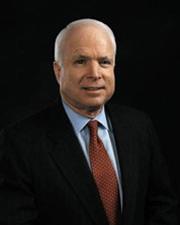
Madam President, I ask unanimous consent that the Senate proceed to the consideration of S. 718, the Troops Phone Home Free Act of 2003; that the only amendment in order be a McCain substitute…
Madam President, I ask unanimous consent that the Senate proceed to the consideration of S. 718, the Troops Phone Home Free Act of 2003; that the only amendment in order be a McCain substitute amendment; further, that there be 1 hour of debate equally divided between Senator McCain and the Democratic leader or his designee; that at the expiration or yielding back of time, the amendment be adopted, the bill, as amended, be read a third time and passed, without intervening action or debate.
I ask unanimous consent that the McCain substitute be adopted at this time for consideration.
Just to be clear, at the expiration or yielding back of time, the amendment is adopted, and the bill, as amended, will be read a third time and passed, without intervening action or debate?
I thank the Chair.
This legislation, introduced on behalf of Senators Allen, Chambliss, Lindsey Graham, Craig, Miller, and others, would improve the ability of American service personnel fighting overseas to communicate with their loved ones at home. It provides a monthly allotment of free telephone calling time to members of the Armed Forces outside of the United States who are directly supporting or involved in military operations in Iraq or Afghanistan for such period of time as the conflict continues in both areas.
I have discussed this issue with the Department of Defense and at this time they have not gotten back to me. I spoke to the Deputy Secretary of Defense. She supports the idea. There may be some changes proposed by the Department of Defense, but I am confident of their support.
This legislation would direct the Secretary of Defense to provide these troops with the financial ability to call home by providing a prepaid calling card or equivalent telecommunications benefit up to $40 every month. The bill would also direct the Secretary to work with telecommunications providers to facilitate the deployment of additional telephones for use by our troops. Our military mission must remain a priority of the Department of Defense. Therefore, the bill makes clear that the Secretary shall not take any action to implement the bill that would compromise our overall military objectives. Moreover, the bill gives the Secretary complete discretion on how best to implement it. If it is simply impractical to provide the benefit to certain soldiers, then the Secretary may refrain, obviously, from providing it. If the cost of providing the service to one branch of the military or the other is more costly, then the Secretary can determine the most equitable method of distributing the benefit.
The bill also directs the Secretary to maximize the use of all resources to fulfill the goals of the act and, thus, he may use existing programs, private support programs, or offers from private entities to make telephone service available to our troops. For example, I received a generous offer today from Joseph Wright, CEO of PanAmSat Corporation. In his letter he said:
[This bill] is a terrific idea and I would like to support
it. . . .We would be willing to provide satellite services
free to support your initiative.
The only intended beneficiaries of this bill are the troops serving this country. It is not intended to benefit any particular provider. Thus the bill urges the Secretary to implement the bill in a manner that is consistent with the timely provision of the benefits but also in a manner that allows for competition in the provision of such benefits.
All of us are aware of the importance of communicating with one's family and friends, particularly when you are in a time of crisis and combat. This is a modest attempt to try and help these men and women who are serving. Some of them have already been there for a very long time. The USS Abraham Lincoln has been at sea in the area for more than 300 days. Communications with their loved ones at home is obviously a very important aspect of preserving family and also communicating with friends as well. Modern technology enables our service personnel to communicate with their loved ones by phone, and these real-time discussions can provide significant emotional and psychological support to both the soldier and the family.
Unfortunately, for some the cost of placing these calls can be prohibitively expensive. On March 18, 2003, USA Today reported on the high cost of telephone calls from bases in Kuwait:
It cost one soldier $35 to make two quick phone calls home
to his wife.
Likewise, my office was recently told the story of a Marine corporal who didn't have enough money to call his son in the States on his birthday.
Last Friday, I asked the country's telephone companies to commit to ensure that families of service personnel don't have their telephone lines disconnected due to a short-term inability to pay the costs incurred for calls from troops overseas. I also asked for a commitment to implement special reduced rates where feasible for telephone calls with members of the Armed Forces overseas.
Madam President, the response has been overwhelming. From the smallest companies serving a few hundred customers to the largest of companies, around 60 companies have agreed to make these commitments. I wish to quote from a few of these letters and I will have many printed in the Record at the appropriate time. Some of them are extremely touching, believe it or not.
One that especially got my attention was from the Andrew Telephone Company in Andrew, IA. They will not disconnect service from servicemen's families for the duration of the war. They write:
We don't offer long distance, but we will assist
subscribers to find the best rates possible. Andrew is a
community of 450 and we have 19 young men and women serving
at this time. Yours, Mil Cornelius, President.
Remarkable. Andrew, IA, a community of 450 and they have 19 young men and women serving at this time. That is a very wonderful commitment.
We have commitments from small companies from Andrew Telephone Company to Quest, Southern Bell, SBC, Verizon, AT&T, MCI, Sprint. All the major corporations in America have also made these commitments. I am extremely grateful to them. More importantly, I am sure the service men and women and their families all over America are grateful as well.
Just a couple more: William P. Heaston, vice president of PrairieWave Communications in Sioux Falls, SD, wrote:
I am a retired Army officer, who served in Vietnam and
other remote areas. I can assure you that PrairieWave fully
appreciates the benefit to morale and military service that
the ability to communicate with loved ones brings.
William E. Morrow, CEO of Grande Communications in San Marcos, TX, writes:
We are proud of our troops and know their families are in
need of our support during these difficult times. This is the
least we can do in light of their great sacrifice for our
country.
All of them make statements along those lines.
OmniTel Communications:
We will also be providing cash credits as a donation on the
billing, which have yet to be determined, of these families
later this year to help defray other costs they may have
incurred.
OmniTel Communications supports our Armed Forces in its
critical action and wish the very best to all Americans who
have to make very serious decisions for the future of our
great country.
Ronald Laudner, CEO, OmniTel Communications, Nora Springs,
Mr. President, I yield such time as she may consume to the Senator from Maine.
Mr. President, I ask unanimous consent the order for the quorum call be rescinded.
Mr. President, I ask unanimous consent that all time be yielded back and we move to consideration of the legislation, S. 718.
Mr. President, I move to reconsider the vote and I move to lay that motion on the table.
The motion to lay on the table was agreed to.
Mr. President, I suggest the absence of a quorum.

Madam President, first, I very much commend Senator McCain for his leadership in introducing this very important, thoughtful, and considerate measure, S. 718. I am proud to be a cosponsor of it with…
Madam President, first, I very much commend Senator McCain for his leadership in introducing this very important, thoughtful, and considerate measure, S. 718. I am proud to be a cosponsor of it with him, Senator Chambliss, and others.
The purpose of this bill is to support the morale of the brave men and women of the U.S. armed services who are stationed outside the United States, directly supporting military operations in Afghanistan or Iraq, by giving them the ability to call their loved ones without an expense to them.
When you look at the findings, they all make very good sense, especially that
telephone contact with family and friends provides
significant emotional and psychological support to them and
helps to sustain and improve morale.
As you read the language of the bill, it all makes great sense as a matter of legislation. To give you an idea how it might have an impact on real people and real lives, and also the lives that have been lost, I will refer to an article today in The Washington Post, where a young man from Virginia lost his life. This young man's name is SGT Donald C. May, Jr. His father had fought in Vietnam. Young Mr. May joined the Marines as soon as he graduated from high school at Meadowbrook High School in Chesterfield County, VA. He reenlisted and eventually became a tank commander. His father received two Purple Hearts as a tank commander in Vietnam. Unfortunately, his father died in a boating accident while fishing a few years back.
At any rate, SGT May moved and bounced around for several years. He went to North Carolina, where he met his wife Deborah, and eventually they went off to California where he was stationed. He left in January for the Middle East, and it was then, in January, that his mother last talked to him on the phone. As his mother recalled in this article, he said, ``Mom, this is what I have trained for all my life. This is what I am meant to do. I am ready.''
He talked a bit later with his wife and he told her that he had decided not to reenlist because he wanted to be home more with his two children, Mariah, almost 7, and Jack, almost 2. His wife Deborah is pregnant with their third child, a son, to be named William. Mrs. May, the mother, said her daughter-in-law was treated twice in the last few days for premature labor. The baby is due in mid-May.
Brenda May's last communication with her son arrived a week ago. It was a letter dated March 3.
So when you think of this story of this brave, courageous hero, who made the ultimate sacrifice for our country, for our safety, for our freedom, for our security, and to liberate the people of Iraq, what a gift he has given to this country--his life, his future, to be holding his baby boy William, to be with his children as they grow up. That is the greatest gift he could give to this country, and I surely hope the people of Iraq, when liberated, will also get down on their knees and thank God for people of this man's courage.
When you listen to the story of him last talking on the telephone to his mother and wife in January, the last communication in a letter dated March 3, the reality is that was his last communication.
I know that you, Madam President, and all Americans can readily understand how this measure would have had an impact. If he could get to a telephone to actually have his mother, to have his wife, hear his voice and have him hear their voices, to tell him that they love him, for them to tell him how proud they are for what he is doing. Obviously, they would be asking him to stay safe. But there would have been the ending on that telephone call undoubtedly where his mother, his wife, and his children would have said: I love you.
While this measure looks like $40 a month and a telephone call, in some cases that may be the last contact. That is why this measure is so important, and I commend Senator McCain and all of my colleagues for introducing it. I urge my colleagues to pass it very shortly.
I am also hopeful that later this week we can take up S. 721. This is a measure I have introduced with Senators McCain, Chambliss, Graham of South Carolina, Warner, Burns, Miller, and Stevens to expand the combat zone exclusions and to provide tax exclusions to personnel serving in Cuba and the Horn of Africa in support of Operation Enduring Freedom.
This legislation will help expand the combat zone tax exclusion to include the period in transit to qualified combat zones and to provide full income tax exclusion to other personnel. The pay for these personnel would not be, with the passage of this bill, subject to Federal or State taxes for any month in which they serve in one of these areas. The legislation also provides tax breaks for individuals serving in Operation Enduring Freedom, the global
war on terrorism, in Guantanamo Bay, Cuba, and the Horn of Africa. If this measure were to pass, the pay for these personnel would not be subject to Federal or State taxes for any month in which they serve in one of these areas.
As a matter of past precedent, in 1995, Congress passed legislation designating Bosnia-Herzegovina, Croatia, and Macedonia as comprising qualified hazardous duty areas. Military personnel serving there on peacekeeping duties are eligible for the same tax exclusion as personnel serving in combat zones.
I also point out that officers do not receive a full income tax exclusion. Any income above the level of the highest enlisted rank is subject to Federal and State taxes. This makes absolutely no sense to me whatsoever, and I know that Senator Chambliss has another measure that will provide parity between officers serving in the Guard and Reserve.
The other point of this matter is that the pay of personnel in transit to a combat zone is subject to income taxes until they actually cross into the combat zone area.
What we are seeing is some of the ships are steaming at full speed when otherwise not necessary in an effort to give personnel as much tax-excluded income as possible. My view is that as soon as those battleship groups leave the ports, whether it is Wilmington, Norfolk, or San Diego, that is when the combat zone exclusion ought to apply. I think this is a commonsense, equitable matter. I think we should not be having our families back home worried about paying taxes when their brave loved one--whether that may be their husband, wife, son, daughter, mother or father--is leaving home. They should not be having to worry about paying taxes when they are serving, whether they are Reserves, Guard, or active military, in these areas supporting this operation for our security and also to liberate Iraq.
I urge my colleagues to pass S. 718, the Troops Phone Home Free Act of 2003. It is the proper and compassionate thing to do. It also expresses our gratitude and appreciation not just to the troops but the loved ones home who need to have that reassurance and the pleasure of hearing their loved one's voice.
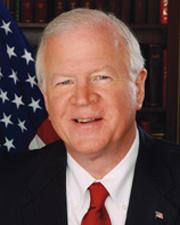
Mr. President, I rise today in support of the Troops Phone Home Free Act introduced by my colleague from Arizona, Senator McCain. This legislation would allow troops who are on the front lines in…
Mr. President, I rise today in support of the Troops Phone Home Free Act introduced by my colleague from Arizona, Senator McCain. This legislation would allow troops who are on the front lines in Operation Iraqi Freedom and Enduring Freedom to place phone calls to their loved ones without cost to them or their families. It would provide prepaid phone cards for the soldiers and provide more phones in the Middle East and in Afghanistan so our troops can have more flexibility to communicate with their families.
This is an important measure not only for the morale of our brave men and women who are overseas fighting in a war but also to their families and loved ones who are sacrificing dearly for their country.
There is nobody in this great body that we serve in who has a greater appreciation for a soldier to have the ability to pick up the phone and call his or her family than Senator McCain. I admire and respect him for his service to our country, and I am very pleased to be in support of his bill to make sure that every member of our Armed Forces serving in Iraq today, in Enduring Freedom in Afghanistan, has the opportunity to communicate with their families.
We think of our brave men and women and the great job they are doing--which they are and I am so proud of all of them--but we have to also remember they have families back home. They have friends and loved ones here who are making just as big a sacrifice as they are making by serving our country. I think it is only right and fair that we give them as many benefits as we possibly can, and this is simply one more way of saying we appreciate the great work they are doing.
I also rise in support of S. 721, which is Senator Allen's bill to extend the combat zone where our men and women are serving. Again, from a Guard and Reserve standpoint, we are calling up these men and women on a much more regular basis today than ever before, and it is extremely important that we show support for all of our men and women serving in combat, active duty, Guard, and Reserve. This provides some equity in the payment to all of those men and women who are serving in combat in any part of the world to which they are called. So I do rise in strong support of Senator Allen's bill.
I also rise to introduce legislation, along with my colleagues Senator McCain, Senator Graham of South Carolina as well as Senator Allen, that I believe will be a positive step in assisting commanders in the Reserve and the National Guard. The men and women who serve our country in the Reserve and National Guard make up a critical component of an All-Volunteer Force and have chosen to put their lives on the line for the freedom of their families and their country, and we thank them. We continue to be on our knees in prayer for their continued safety and for their families as they serve around the world. The legislation I bring to the floor today represents a small step in recognizing the sacrifices that specifically the commanding officers in the Reserve and the National Guard are making as we speak. This initiative will provide a well-deserved benefit to at least 500 reservists and 1,500 National Guardsmen. Currently, National Guard and Reserve commanders are not entitled to command responsibility pay, even though they serve in a similar capacity to their active duty counterparts. This bill will allow for an added benefit of $50 per month for junior officers, $100 a month for mid-level officers, and $150 a month for Guard and Reserve senior officers who serve as commanders. This pay will apply whether they are full-time wing commanders of a Reserve component airlift wing or whether they are serving as a commander in an inactive duty training capacity. The purpose of this bill is to create further equity between our active and Reserve components. The amount of money involved is relatively small, but this measure serves as a powerful symbol that we value the contribution and sacrifice of our citizen soldiers stationed around the world serving the United States of America and the cause of freedom.
There is one special story about which I would like to speak very briefly. It is a story on the front page of virtually every major newspaper in America this morning. It is a story about CPT Chris Carter in the United States Army, a young captain from Watkinsville, GA, of whom I am so extremely proud, a story about Captain Carter who risked his life on a bridge over the Euphrates River, which was under siege, a bridge which they were seeking to have explosives removed from so we could take that bridge to make sure our troops ultimately got safely across the bridge. It is a story of CPT Chris Carter who, during the midst of a firefight, saw some innocent civilians, Iraqi civilians, crossing that bridge, coming over to the side he and his troops were on. He saw innocent civilians being caught in that firefight and one man being killed and a woman, an Iraqi woman, bleeding and pleading for help. Captain Carter got off of his vehicle, rushed to the bridge, behind his vehicle so that he could have some cover, until he got behind an iron post on that bridge. After he got behind the iron post on that bridge and under fierce fire coming from the other side, he risked his own life to go to that Iraqi woman and to pull her to safety and secure medication for her and ultimately have her transported to a medical facility where she is being treated.
I am so proud of every one of our men and women who are fighting in Operation Iraqi Freedom today. But it is men and women like Chris Carter of whom I am especially proud. He is not just a great Georgian, he is a great American and a great member of the United States Army.
I had a great conversation with his father this morning. His father obviously is extremely proud of him. He is one of those young men who will be able to take advantage of these benefits we have been talking about here today, Senator McCain, Senator Allen, and myself. He is one of the young men who will be able to take that phone card under Senator McCain's bill and call home to his family to tell them exactly what did happen and let them have an opportunity to tell him how very proud of him they are.
Again, I commend Senator McCain. I appreciate very much the strong support of Senator Allen and Senator Graham as we introduce these measures to try to make life a little more pleasant for our troops as they are separated from their families, and also to make sure their families have the opportunity to communicate with them, and have the financial resources to continue to provide for their families while they are serving in combat areas so that they can concentrate on doing the job they are sent to do and know that their families are being well taken care of, and know they are going to have the ability to communicate by telephone with their families on a regular basis.
I yield the floor.
Mr. President, as Co-Chairman of the Commission on Security and Cooperation in Europe, I have closely monitored developments in the Republic of Belarus and informed my Senate colleagues of disturbing…
Mr. President, as Co-Chairman of the Commission on Security and Cooperation in Europe, I have closely monitored developments in the Republic of Belarus and informed my Senate colleagues of disturbing trends in that nation. I have met with members of this fledgling democratic opposition who, at great personal risk, dare to speak out against the repressive regime led by Alexander Lukashenka. I have met with the courageous wives whose husbands disappeared because they stood up to the regime and would not be silent. Against the backdrop of this climate of fear, the powers of the state have been brought to bear against independent journalists, trade unionists, and other voices of dissent.
Increasingly, Belarus has been driven into self-imposed isolation under Lukashenka devoid of legitimate leadership or accountability. A little over a year ago I addressed the Senate to voice concern over reported arms deals between the regime and rouge states, including Iraq. It appears that such sales have taken on greater importance as the Belarusian economy spirals downward.
While some might be tempted to dismiss Belarus as an anomaly, the stakes are too high and the costs too great to ignore. Accordingly, today, I am introducing the Belarus Democracy Act of 2003, which is designed to help put an end to repression and human rights violations in Belarus and to promote Belarus' entry into a democratic Euro- Atlantic community of nations.
As a participating State in the Organization for Security and Cooperation in Europe, OSCE, Belarus has accepted a series of norms in the areas of democracy, human rights and the rule of law. As Europe's last dictator, Lukashenka continues to brashly trample the fundamental rights of his own people and their culture.
As I alluded to earlier, independent media, non-governmental organizations, trade unions and the democratic opposition have had to operate under extremely difficult conditions, often facing serious mistreatment and an orchestrated campaign of harassment. Despite the repressions there are courageous individuals who support democracy have not been silenced. Two weeks ago, for example, Alexander Yarashuk, the leader of the Belarusian Congress of Democratic Trade Unions, called on Lukashenka to immediately cease backing Saddam. Moreover, just last week, on March 12, thousands gathered peacefully in a central Minsk square to protest deteriorating economic and social conditions in Belarus. Four of the rally's organizers--Andrei Sannikov, Ludmila Gryaznova, Dmitry Bondarenko and Leonid Malakhov--were given 15 day jail sentences for ``participation in unauthorized mass actions.''
Despite calls for change within Belarus, and considerable prodding from the international community, Lukashenka has shown no desire to deviate from his path of authoritarianism and personal profit at the expense of his own people. A few months ago, Lukashenka, who effectively controls the Belarusisn parliament, signed into law a new, repressive religion law. Local elections held earlier this month followed the pattern of Belarus' 2000 parliamentary and 2001 presidential elections--they were a joke. Control of election commissions, denials of registration for opposition candidates, ``early voting'' and outright falsifications were the norm.
The Belarus Democracy Act of 2003 would authorize additional assistance for democracy-building activities such as support for NGOs, independent media, including radio and television broadcasting to Belarus, and international exchanges. It also encourages free and fair parliamentary elections, which have been notably absent in Belarus. This bill would also deny high-ranking officials of the Lukashenka regime entry into the United States. Additionally, strategic exports to the Belarusian Government would be prohibited, as well as U.S. Government financing except for humanitarian goods and agricultural or medical products. The U.S. executive directors of the international financial institutions would be encouraged to vote against financial assistance to the Government of Belarus except for loans and assistance for humanitarian needs. The bill would also require reports from the President concerning the sale of delivery of weapons or weapons-related technologies from Belarus to rouge states, including Iraq and North Korea.
I am very pleased that the Ranking Member of the Committee on Foreign Relations, Senator Biden, is an original cosponsor of this measure. His support will ensure that we proceed on a bipartisan basis as we work to ensure the timely adoption and implementation of this legislation.
The goal of the Belarus Democracy Act is to assist Belarus in becoming a genuine European state, in which respect for human rights and democracy is the norm and in which the long-suffering Belarusian people are able to overcome the legacy of dictatorship--past and present. Adoption and implementation of the Belarus Democracy Act will offer a ray of hope that the current period of political, economic and social stagnation will indeed end. The people of Belarus deserve a chance for a brighter future free of repression and fear.
I ask unanimous consent that the text of the Belarus Democracy Act be printed in the Record.
Mr. President, I commend the Senator from Arizona for his initiative. I ask unanimous consent I be added as a cosponsor of his legislation, the Troops Phone Home Free Act. I think it is a wonderful…
Mr. President, I commend the Senator from Arizona for his initiative.
I ask unanimous consent I be added as a cosponsor of his legislation, the Troops Phone Home Free Act. I think it is a wonderful initiative.
I also commend the Senator from Georgia, who heads the Personnel Subcommittee on the Armed Services Committee, with whom I am very privileged to serve. He brings great leadership to the effort. I am proud to be a member of his subcommittee.
Death Gratuity
Later tonight I am hopeful the Senate will consider legislation, S. 704, which I introduced last week with my colleagues on the Armed Services Committee, the chairman, Senator John Warner, and my colleague, Senator John McCain. I recognize the contributions and cosponsorship of Senators Ben Nelson and George Allen. The legislation we have introduced will send an important message to our troops who are engaged in combat, even as we speak, that our Nation is so grateful for their service.
Our bill would raise the amount paid to the families of military personnel killed while on active duty. It would increase it from $6,000 to $12,000. This payment, which is known as the death gratuity, would be paid retroactive to September 11, 2001, so that the troops who have been killed in the battle against terrorism would also be eligible for this doubled benefit.
As are all of my colleagues, I am very saddened by the loss of American life in Operation Iraqi Freedom. The young men and women of our military represent the very best our Nation has to offer. They do not join the military for monetary gain nor to have a comfortable lifestyle. They serve our Nation out of a sense of patriotism that should make each and every American proud. The mercy they are showing even today to Iraqi prisoners of war is testament to the strength of character that is the core of our military values. In many cases, we ask our own troops to take additional risks in order to avoid injuring or killing innocent civilians. That they do this without question or regret speaks well not only of our military but of our Nation.
When the Commander in Chief sends our troops into harm's way, we hope and pray each and every one of them will come back home unharmed. While we know this will not be possible, that knowledge does not lessen our shock and our sadness when we learn of the loss of lives.
My State of Maine has experienced two such losses since the war began. Last Saturday, I attended a memorial mass in Windsor, ME, in honor of the life and sacrifice of CPT Jay Aubin. CPT Jay Aubin and CPL Brian Kennedy, both proud members of the United States Marine Corps, perished in a helicopter crash in the Kuwaiti desert in the very first few days of the conflict. I met with the parents of both these brave marines, both of whom were present at this memorial mass last Saturday. Hundreds of Mainers gathered to pay tribute to the sacrifice of these brave marines and their families.
As I stand on the floor of the Senate, I once again want to assure their families we honor and recognize their service and their sacrifice. When we send a young man or woman into harm's way, our Nation has in return a sacred obligation to them and to their families. We must ensure they go forth with the utter and complete confidence, should the worst happen, should they be called upon to make the ultimate sacrifice, that their country will care for their families and honor their service. The death gratuity is a small token, but it assists the grieving families with their immediate financial needs. There are a variety of other programs that provide for longer term support, but in the initial hours and days after a family has endured such a terrible loss, these funds help to alleviate monetary concerns. This benefit is commonly provided within 72 hours to the family of the service member who is killed while on active duty.
The last time the death gratuity was raised was in 1991 during the period of the gulf war when it was doubled from $3,000 to $6,000. With more than a decade having passed, it is time for Congress to move forward and increase this sum in recognition of those who are today fighting in Operation Iraqi Freedom and in the war against terrorism. It is the least we can do to honor their sacrifice. I offer this legislation in tribute to the families of those whose loved ones are today engaged in combat in the Persian Gulf. Too often we forget the sacrifices they make so that their loved one, their husband, wife, father, mother, brother, or sister, can serve our Nation. They are asked to accept long deployments and frequent moves while at the same time providing their loved one with the support they need to do their jobs.
Truly, what these families do is heroic. Passage of this legislation will send a clear and strong message to them that this Congress and this Nation is grateful for their sacrifice. Again, it is my hope we will pass this legislation by unanimous consent later this evening. In the meantime, my thoughts are with our troops as they fight in the battles in Iraq, in Afghanistan, in the war against terrorism, and I pray they will soon return home in victory.
Mr. President, I yield the floor and I suggest the absence of a quorum.
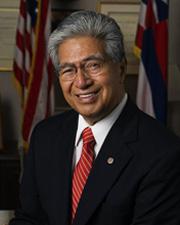
Mr. President, I ask unanimous consent that the order for the quorum call be rescinded. Mr. President, I rise today in support of the Fiscal Year 2004 National Defense Authorization Act. As ranking…
Mr. President, I ask unanimous consent that the order for the quorum call be rescinded.
Mr. President, I rise today in support of the Fiscal Year 2004 National Defense Authorization Act. As ranking member of the Readiness Subcommittee, I have greatly enjoyed working with the new subcommittee chairman, Senator Ensign, and I especially appreciate the efforts that the Senator from Nevada has made to work through some of this year's very difficult issues in a balanced and fair manner.
The readiness subcommittee is responsible for two areas that have the potential to be extremely controversial, and I believe both have been handled well.
First, we spent a fair amount of time in our committee reviewing Department of Defense outsourcing policies. I continue to be troubled by the administration's insistence on outsourcing quotas, arbitrary timelines for conducting public-private competitions, and the use of direct conversions in place of competitive processes.
Nonetheless, I support the provision in the bill which would authorize a pilot program under which the Department of Defense could test a new approach to public-private competition. The provision would also require that any deadlines for public-private competitions conducted by the Department of Defense be based on the resources actually available to the department of conduct such competitions. I believe that this provision strikes an appropriate balance.
Second, our subcommittee held two hearings on environmental issues impacting military training and readiness. The administration has offered a series of legislative proposals to exempt the Department of Defense from some of our most important environmental statutes. I believe that these proposals go much farther than is needed to address the legitimate concerns of the military, and could do some real harm to the environment.
The bill includes one provision on these issues, which would exempt military lands from critical habitat designation if those lands are covered by an Integrated Natural Resources Management Plan, or INRMP. I am disappointed that the majority of the committee rejected my amendment to this provision, which would have established a more workable and precise test for the adequacy of INRMPs to address endangered species. Nonetheless, I appreciate the thoughtful manner in which Senator Ensign considered this issue and attempted to address my concerns. While I do not support the provision that was included in the bill, I believe that it is a significant improvement over the administration's proposal.
I also have some reservations about the reductions that we have taken in the operation and maintenance accounts, especially in the working capital funds. I am particularly concerned about the changes we have made within the Air Force working capital fund--as I understand it, the transfer of funds included in the markup package may actually create shortfalls of spare parts and harm readiness. I obviously hope that this does not come to pass, and I hope that we may be able to reverse some of these reductions as the bill progresses.
As always, this bill continues to support military construction and family housing needs that are so critical to quality of life for our service men and women. I believe that the package we have before us today is a positive step toward this goal. I am concerned, however, that our actions with respect to overseas facilities in particular may be out of step with ongoing initiatives by the Department of Defense. The reductions in this bill, which go beyond
those that the department itself recently proposed, undermine planned efficiencies that would improve both quality of life and training for Army forces who will remain in Germany. Currently, the department and the combatant commanders are working closely to create a comprehensive, integrated presence and basing strategy and to identify a new set of military construction requirements for the next decade. Moving forward, we must ensure that our decisions regarding military construction overseas support these future requirements so that we continue to support our servicemen and women to the best of our abilities.
Mr. President, I believe that the bill we have before us makes some positive steps toward improving the readiness of our Armed Forces, and I commend it to my colleagues.
I suggest the absence of a quorum.

Mr. President, we are tonight adopting long overdue legislation to rectify a number of inequities faced by members of our Nation's armed services. Since the terrorist attacks of September 11, these…
Mr. President, we are tonight adopting long overdue legislation to rectify a number of inequities faced by members of our Nation's armed services.
Since the terrorist attacks of September 11, these brave men and women have been called upon to make terrific sacrifices. They have left their families and friends behind for months at a time to willingly cast themselves into harm's way. Whether in Afghanistan, Iraq, or on whatever battlefield the war against terrorism must be fought, these courageous patriots have put their lives on the line to defend our freedoms.
While I realize that we could never begin to fully repay these fine young Americans--not to mention the loved ones they leave behind--the Senate has an opportunity tonight to show our gratitude for their sacrifices.
The legislation before us, which the Finance Committee first developed during the 107th Congress, will ensure that members of the uniformed services, the National Guard, and the foreign service are treated fairly in all aspects of the tax code.
First, this legislation ensures that the families of military personnel called into active duty are not disadvantaged under the home sale exclusion. Unlike most Americans, military personnel who are called to active duty or asked to relocate often lack the flexibility to meet residency requirements under the exclusion and are adversely impacted by these rules. This legislation would suspend the residency test for periods of active duty aggregating no more than 10 years.
We should not punish members of our military and their families who are asked to relocate in the name of service to their country.
This legislation also clarifies that dependent care benefits provided to families of the uniformed services will not be treated as taxable compensation. The provision of affordable childcare is an important function of the military during peacetime; but it is never more critical than during periods of conflict--families.
We must also not forget about the increasing role that Reserve and National Guard members fulfill in our Nation's defense. Currently, more than 157,000 reservists and National Guard are on active duty status-- most assisting in Operation Iraqi Freedom. We have begun to rely increasingly on these service personnel to defend our borders and to serve and protect in other areas of the world.
This legislation will allow an above-the-line deduction for travel expenses that these men and women incur related to training assignments. This provision will at least partially reimburse national guard members and reservists for the expenses they incur when they travel for weekend drills.
The Armed Forces Tax Fairness Act also ensures that military personnel serving in Secretary of Defense designated ``contingency operations'' receive appropriate relief from the administrative burdens of our tax laws during participation in those operations.
What's more, this legislation is completely offset. All of the military tax fairness provisions in this legislation are fully funded by extending Customs user fees.
As we consider this legislation tonight, the men and women of our armed forces remain in hostile situations, battling terrorism wherever that battle may lead. At the same time, their loved ones--wives, husbands, parents, children--remain at home, making equally demanding sacrifices as they struggle to make ends meet. It is deeply regrettable that Congress has delayed so long to enact this commonsense legislation.
We must delay no longer. I urge my colleagues to support this legislation to provide the tax relief that our military personnel need and deserve.
Show 11 more
Mr. President, today I re-introduced the Rural Heritage Conservation Act, along with my good friend Senator Grassley from Iowa. I would like to say a few words about why this bill is so important to…
Mr. President, today I re-introduced the Rural Heritage Conservation Act, along with my good friend Senator Grassley from Iowa. I would like to say a few words about why this bill is so important to my home state of Montana and to the Nation.
We are losing precious agricultural and ranch lands at a record pace. Farming and ranching are the backbone of my state, comprising the largest sector of my state's economy. Not only do these farms and ranches provide Montana and the Nation with the highest quality food and fiber, they also provide wildlife habitat, open space and peace of mind. It is imperative that we help our hard-working farmers and ranchers preserve this precious heritage and their way-of-life.
Conservation easements have been tremendously successful in preserving open space and wildlife habitat. Unfortunately, the way current tax law is structured makes it difficult for farmers and ranchers, who generally don't have much income, to take advantage of the tax benefits associated with donating conservation easements. They've been left behind by this important conservation tool. That's why I introduced the Rural Heritage Conservation Act. My bill will provide targeted income tax relief to small farmers and ranchers who wish to make a charitable contribution of a qualified conservation easement.
The Rural Heritage Conservation Act would allow eligible farmers and ranchers to increase the amounts of deduction that may be taken currently for charitable contributions of qualified conservation easements by raising the Adjusted Gross Income limitations to 100 percent and extending the carryover period from 5 years to 15 years. In the case of all of the landowners, the AGI limitation would be raised from 30 percent to 50 percent.
This is a win-win situation--farmers and ranchers will be able to preserve their important agricultural and ranching lands for future generations, while continuing to operate their businesses and stay on their land. It's a purely voluntary, incentive-based way to promote conservation. It will allow us to bring people together. Landowners, conservationists, the federal government, and local communities all can work together to preserve our precious natural resources.
This legislation is vitally important to Montana, and to every other state in
the Nation where important agricultural or ranching lands are being lost to rapid development, and a way-of-life is disappearing. I ask my colleagues to join with me and Senator Grassley to pass this bill as soon as possible and send it to the President's desk. We have to act now.
Mr. President, I rise today to introduce legislation on behalf of my self and Senator Warner that will provide increased support for the families of those brave men and women in the armed forces who…
Mr. President, I rise today to introduce legislation on behalf of my self and Senator Warner that will provide increased support for the families of those brave men and women in the armed forces who make the ultimate sacrifice in service to our Nation. The bill I introduce will raise the amount paid to the next-of-kin of military personnel killed while on active duty from $6,000 to $12,000. Further, it makes this increase retroactive to September 11, 2001.
Like all Americans, I have been greatly saddened by the loss of life in recent days during our operations in Iraq. While all of us understand the dangers whenever the Commander-in-Chief sends our troops into harm's way, that does not lessen the shock and sadness we all have felt as we learn of the loss of lives and see the cruel video of American POWs held in Iraq.
In the initial days of the war, two Marines with ties to Main lost heir lives. Both Captain Jay Aubin and Corporal Brian Kennedy, who perished in a helicopter crash in the Kuwaiti desert, have parents living in Maine. I came to this floor yesterday to express my condolences to their families, and declare my commitment to ensuring that their sacrifice is remembered.
I can think of no better way to honor their memories, and the memories of other Americans who have given their lives, than to ensure that their loved ones receive the care that they need and deserve. The last time that the death gratuity was raise was in 1991, during the period of the last Gulf War. At that time, it was increased from $3,000 to 6,000. It well past time for the Congress to move forward and increase this amount to better recognize the sacrifices of these families.
The death gratuity is commonly provided within 72 hours to the family of the servicemember who is killed while on active duty. This amount, while a small solace to a grieving family, assist them with their immediate financial needs. It is our obligation as a Nation to ensure that those families receive every support we can provide during such a terrible time. Just as important, as our troops enter into combat they need to be confident that, should the worst occur, that their family will have the support they need.
We can never fully repay the debt of our Nation to those who have laid down their lives for our Nation. The best we can do is honor their memory, ensure that their sacrifice is not in vain, and help provide for their families. The bill I have introduced will send a message to our brave young men and women that their Nation if grateful for their service.
Mr. President, I rise today to introduce legislation on behalf of my self and Senator Warner that will provide increased support for the families of those brave men and women in the armed forces who…
Mr. President, I rise today to introduce legislation on behalf of my self and Senator Warner that will provide increased support for the families of those brave men and women in the armed forces who make the ultimate sacrifice in service to our Nation. The bill I introduce will raise the amount paid to the next-of-kin of military personnel killed while on active duty from $6,000 to $12,000. Further, it makes this increase retroactive to September 11, 2001.
Like all Americans, I have been greatly saddened by the loss of life in recent days during our operations in Iraq. While all of us understand the dangers whenever the Commander-in-Chief sends our troops into harm's way, that does not lessen the shock and sadness we all have felt as we learn of the loss of lives and see the cruel video of American POWs held in Iraq.
In the initial days of the war, two Marines with ties to Main lost heir lives. Both Captain Jay Aubin and Corporal Brian Kennedy, who perished in a helicopter crash in the Kuwaiti desert, have parents living in Maine. I came to this floor yesterday to express my condolences to their families, and declare my commitment to ensuring that their sacrifice is remembered.
I can think of no better way to honor their memories, and the memories of other Americans who have given their lives, than to ensure that their loved ones receive the care that they need and deserve. The last time that the death gratuity was raise was in 1991, during the period of the last Gulf War. At that time, it was increased from $3,000 to 6,000. It well past time for the Congress to move forward and increase this amount to better recognize the sacrifices of these families.
The death gratuity is commonly provided within 72 hours to the family of the servicemember who is killed while on active duty. This amount, while a small solace to a grieving family, assist them with their immediate financial needs. It is our obligation as a Nation to ensure that those families receive every support we can provide during such a terrible time. Just as important, as our troops enter into combat they need to be confident that, should the worst occur, that their family will have the support they need.
We can never fully repay the debt of our Nation to those who have laid down their lives for our Nation. The best we can do is honor their memory, ensure that their sacrifice is not in vain, and help provide for their families. The bill I have introduced will send a message to our brave young men and women that their Nation if grateful for their service.
Mr. President, I rise today to introduce a bill of critical importance to the over 90,000 participants and beneficiaries of the YMCA pension plan. This issue affects the 656 hard-working YMCA…
Mr. President, I rise today to introduce a bill of critical importance to the over 90,000 participants and beneficiaries of the YMCA pension plan. This issue affects the 656 hard-working YMCA employees in Kentucky that initially brought this problem to my attention.
With its presence felt in more than 10,000 communities nationwide, YMCA is the Nation's largest community service organization. Each year YMCA employees deliver important health and social services to over 17.9 million Americans. The YMCA mission to ``put Christian principles in practice through programs that build healthy spirit for mind, body, for all'' is indeed a very noble endeavor. YMCAs serve people of all faiths, incomes, ages, and race. This generous organization never turns people away for inability to pay.
YMCA's strength is in both its dedicated employees and the people they bring together through its service. Each local YMCA is tailored to the specific needs of the community in which it serves. The employees of the YMCA do God's work each day. This bill ensures that they will continue to receive the pensions they have earned and deserve.
With over $3 billion in assets, the YMCA pension plan has been in place for over 80 years. The plan has always been considered as a ``church pension plan.'' There are no problems with the operation of the plan and the IRS has said it is in full compliance--with one possible exception.
Generally, in order to be considered a ``church plan'' the sponsoring organization must be affiliated with a specific church. Traditionally, the YMCA has not affiliated with any one church, but has instead identified with a ``Christian affiliation.'' This bill would clarify that the plan will continue to be a ``church plan'' despite the fact that the YMCA is not limited to one specific church or religious denomination. It is important that Congress clarifies this technicality to ensure that the beneficiaries of the YMCA pension plan receive the benefits they have earned and deserve.

Mr. President, I rise today to introduce a bill to reauthorize the Native Hawaiian Health Care Improvement Act. Senator Akaka joins me in sponsoring this measure. The Native Hawaiian Health Care…
Mr. President, I rise today to introduce a bill to reauthorize the Native Hawaiian Health Care Improvement Act. Senator Akaka joins me in sponsoring this measure.
The Native Hawaiian Health Care Improvement Act was enacted into law in 1988, and has been reauthorized every four years since that time.
The Act provides authority for a range of programs and services designed to improve the health care status of the Native people of Hawaii.
With the enactment of the Native Hawaiian Health Care Improvement Act and the establishment of Native Hawaiian health care systems on most of the islands that make up the State of Hawaii, we have witnessed significant improvements in the health status of Native Hawaiians, but as the findings of unmet needs and health disparities set forth in this bill make clear, we still have a long way to go.
For instance, Native Hawaiians have the highest cancer mortality rates in the State of Hawaii--rates that are 21 percent higher than the rate for the total State male population and 64 percent higher than the rate for the total State female population. Nationally, Native Hawaiians have the third highest mortality rate as a result of breast cancer.
With respect to diabetes, in 2000, Native Hawaiians had the highest mortality rate associated with diabetes in the State--a rate which is 138 percent higher than the statewide rate for all racial groups.
When it comes to heart disease, the mortality rate of Native Hawaiians associated with heart disease is 68 percent higher than the rate for the entire State, and the mortality rate for hypertension is 84 percent higher than that for the entire State.
These statistics on the health status of Native Hawaiians are but a small part of the long list of data that makes clear that our objective of assuring that the Native people of Hawaii attain some parity of good health comparable to that of the larger U.S. population has not yet been achieved.
Mr. President, I want to express my full support for the passage of H.R. 3365, the Fallen Patriots Tax Relief Act. Earlier this year, the Senate passed S. 704, introduced by myself, Senator Warner,…
Mr. President, I want to express my full support for the passage of H.R. 3365, the Fallen Patriots Tax Relief Act. Earlier this year, the Senate passed S. 704, introduced by myself, Senator Warner, Senator McCain, Senator Allen, and Senator Ben Nelson, which would have increased the death gratuity paid to the survivors of deceased members of our military from $6,000 to $12,000. Further, it would make this increase retroactive to September 11, 2001. I am pleased that H.R. 3365 incorporates this legislation.
There is no better way to honor the memories of fallen soldiers than to ensure that their loved ones receive the support they deserve. The death gratuity is provided within days to the family of the servicemember killed while on active duty. These funds help the family to deal with immediate needs during this difficult time. Given the sacrifices of our troops currently in Iraq. I believe that this increase in assistance is far past due.
H.R. 3365 also ensures that the death gratuity is tax free. I fully support this legislation, and believe that it sends a strong message of support to our troops. As the brave men and women of our military continue to go in harm's way in defense of our Nation, it is crucial that they do so with the confidence that their families will have our full support should tragedy occur.

Mr. President, I ask unanimous consent that the Senate proceed to the immediate consideration of H.R. 3365. Mr. President, I ask unanimous consent that the McCain-Baucus-Grassley amendment, which is…
Mr. President, I ask unanimous consent that the Senate proceed to the immediate consideration of H.R. 3365.
Mr. President, I ask unanimous consent that the McCain-Baucus-Grassley amendment, which is at the desk, be agreed to; that the bill, as amended, be read a third time and passed; that the title amendment be agreed to; that the motions to reconsider be laid upon the table, en bloc; and that any statements relating to the bill be printed in the Record.

Mr. President, I ask unanimous consent that the Armed Services Committee be discharged from further consideration of S. 704 and that the Senate proceed to its immediate consideration. Mr. President,…
Mr. President, I ask unanimous consent that the Armed Services Committee be discharged from further consideration of S. 704 and that the Senate proceed to its immediate consideration.
Mr. President, I ask unanimous consent that the bill be read a third time and passed; that the motion to reconsider be laid upon the table; and that any statements relating to the bill be printed in the Record.
Mr. President, let me confirm the vote that will be between 5 and 6 is the only vote tonight.
Mr. President, let me confirm the vote that will be between 5 and 6 is the only vote tonight.
Mr. President, I ask unanimous consent that the text of the bill be printed in the Record.
Mr. President, I ask unanimous consent that the text of the bill be printed in the Record.
Mr. President, I ask unanimous consent that the text of the bill be printed in the Record.
Mr. President, I ask unanimous consent that the text of the bill be printed in the Record.
Bill Text
3 versions available
        [Congressional Bills 108th Congress]
[From the U.S. Government Publishing Office]
[S. 704 Referred in House (RFH)]

1st Session
S. 704

_______________________________________________________________________

IN THE HOUSE OF REPRESENTATIVES

April 2, 2003

Referred to the Committee on Armed Services

_______________________________________________________________________

AN ACT

To amend title 10, United States Code, to increase the amount of the
death gratuity payable with respect to deceased members of the Armed
Forces.

Be it enacted by the Senate and House of Representatives of the
United States of America in Congress assembled,

SECTION 1. INCREASE IN DEATH GRATUITY PAYABLE WITH RESPECT TO DECEASED
MEMBERS OF THE ARMED FORCES.

(a) Increase in Death Gratuity.--Section 1478(a) of title 10,
United States Code, is amended by striking ``$6,000'' and inserting
``$12,000''.
(b) Effective Date.--The amendment made by subsection (a) shall
take effect on September 11, 2001, and shall apply with respect to
deaths occurring on or after that date.

Passed the Senate April 1, 2003.

Attest:

EMILY J. REYNOLDS,

Secretary.