Wastewater Treatment Works Security and Safety Act
A bill to amend the Federal Water Pollution Control Act to improve protection of treatment works from terrorist and other harmful and intentional acts, and for other purposes.
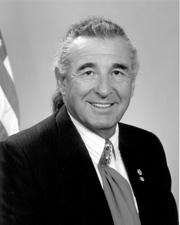
 Sen. James M. Jeffords (I-VT)
Legislative Activity
Stay on top of the latest movement without scrolling through every action
Sponsor introductory remarks on measure. (CR S8662)
July 22, 2004
View full timeline
Introduced in Senate
April 3, 2003
Sponsor introductory remarks on measure. (CR S4834-4835)
April 3, 2003
Read twice and referred to the Committee on Environment and Public Works.
April 3, 2003
Sponsor introductory remarks on measure. (CR S8662)
July 22, 2004
Floor Debate
13 membersWhat members said about S. 779 on the floor



 +8
Floor Debate
13 membersWhat members said about S. 779 on the floor
Mr. President, I rise today in opposition to the Wastewater Treatment Works Security Act of 2003. In the wake of September 11, 2001, I believe that it is imperative that the Nation takes every…
Mr. President, I rise today to join my friend and colleague Senator Inhofe in introducing a bill that will make a real difference in schools on or near military bases, Indian reservations, and other…
Mr. President, I rise today with Senators Lautenberg, Graham of Florida, and Lieberman to introduce the Wastewater Treatment Works Security and Safety Act. This legislation provides for the safety…
Mr. President, I rise today with Senators Lautenberg, Graham of Florida, and Lieberman to introduce the Wastewater Treatment Works Security and Safety Act. This legislation provides for the safety…
Mr. President, Senator Kerry and I are pleased to introduce the ``Fair and Independent Judiciary Act of 2003.'' This legislation arises from our belief that we must remain steadfast in our commitment…
Show 8 more
Mr. President, I rise today to address a crucial issue that is affecting our competitiveness in the world economy. Since that first flight in 1903 when the Wright brothers took off on our great…
Mr. President, I rise today to introduce the Business Links Act, on behalf of myself, Senator Rockefeller and Senator Breaux. The Business Links Act is a companion bill to the Education Works Act,…

Mr. President, I rise to introduce legislation to authorize expansion of the Petrified Forest National Park in Arizona. I'm pleased that Representative Rick Renzi will introduce companion legislation…
Mr. President, today I am introducing legislation that would amend Title V of the United States Code. It authorizes the Office of Personnel Management, OPM, to make payments to a disability trust or…

Mr. President, I rise today to once again introduce legislation to simplify and restore fairness to the tax accounting rules under which our six major U.S. naval shipyards determine their tax…

Mr. President, I rise today to introduce a bill that would allow private, non-profit medical facilities which service industry-specific clients to be eligible for hazard mitigation and disaster…

Mr. President, the Dividend Allocation Rule, DAR, is the result of several old court cases and subsequent IRS interpretation that applies only to cooperatives which are corporations. When a non…

Mr. President, I rise today to introduce a bill to make the Impact Aid Program a Federal entitlement. Impact Aid is one of the oldest Federal education programs, dating from the 1950's, and is meant…
Show 2 more

Mr. President, by request, I introduce for appropriate reference a bill entitled the Foreign Relations Authorization Act, Fiscal Years 2004 and 2005. This proposed legislation has been requested by…

Mr. President, I ask unanimous consent that the text of the bill be printed in the Record.
Bill Text
Latest available legislative text
        [Congressional Bills 108th Congress]
[From the U.S. Government Publishing Office]
[S. 779 Introduced in Senate (IS)]

108th CONGRESS
1st Session
S. 779

To amend the Federal Water Pollution Control Act to improve protection
of treatment works from terrorist and other harmful intentional acts,
and for other purposes.

_______________________________________________________________________

IN THE SENATE OF THE UNITED STATES

April 3, 2003

Mr. Jeffords (for himself, Mr. Lautenberg, Mr. Graham of Florida, and
Mr. Lieberman) introduced the following bill; which was read
twice and referred to the Committee on Environment and Public
WorksYYYYYYYYYYYYYYYYYYYYYYYYYYYYYYYYYYYYYYYYYYYYYYYYYYYYYYYYYY

_______________________________________________________________________

A BILL

To amend the Federal Water Pollution Control Act to improve protection
of treatment works from terrorist and other harmful intentional acts,
and for other purposes.

Be it enacted by the Senate and House of Representatives of the
United States of America in Congress assembled,

SECTION 1. SHORT TITLE.

This Act may be cited as the ``Wastewater Treatment Works Security
and Safety Act''.

SEC. 2. PROTECTION FROM TERRORIST AND OTHER HARMFUL INTENTIONAL ACTS.

Title II of the Federal Water Pollution Control Act (33 U.S.C. 1281
et seq.) is amended by adding at the end the following:

``SEC. 222. PROTECTION FROM TERRORIST AND OTHER HARMFUL INTENTIONAL
ACTS.

``(a) Definitions.--In this section:
``(1) Covered treatment works.--
``(A) In general.--The term `covered treatment
works' means a treatment works that--
``(i) serves at least 25,000 individuals;
or
``(ii) as determined by the Administrator
before October 1, 2003, based on the factors
described in subparagraph (B), presents a
sufficient security risk to remain subject to
this section.
``(B) Factors for inclusion of treatment works.--
The factors referred to in subparagraph (A)(ii) are--
``(i) the likelihood that the treatment
works will be the target of a harmful
intentional act;
``(ii) the consequences that would result
if the treatment works were the target of a
harmful intentional act; and
``(iii) such other security factors as the
Administrator determines to be necessary to
protect--
``(I) public health, safety, and
welfare;
``(II) critical infrastructure; and
``(III) national security.
``(2) Emergency response plan.--The term `emergency
response plan' means a plan that a covered treatment works is
required to prepare or revise, and submit to the Administrator,
under subsection (c).
``(3) Harmful intentional act.--The term `harmful
intentional act' means a terrorist attack or other intentional
act carried out with respect to a covered treatment works that
is intended--
``(A) to substantially disrupt the ability of the
covered treatment works to provide safe and reliable--
``(i) conveyance and treatment of
wastewater;
``(ii) disposal of effluent; or
``(iii) storage of a potentially hazardous
chemical used to treat wastewater;
``(B) to damage critical infrastructure;
``(C) to have an adverse effect on the environment;
or
``(D) to otherwise pose a significant threat to
public health or safety.
``(4) Vulnerability assessment.--The term `vulnerability
assessment' means an assessment that a covered treatment works
is required to conduct and submit to the Administrator under
subsection (b)(1).
``(b) Vulnerability Assessments.--
``(1) Covered treatment works.--
``(A) In general.--Using appropriate tools (such as
available vulnerability self-assessment tools), each
covered treatment works shall conduct and submit to the
Administrator an assessment of the vulnerability of the
covered treatment works to a harmful intentional act.
``(B) Deadline for submission.--Each covered
treatment works shall submit a vulnerability assessment
to the Administrator--
``(i) in the case of a covered treatment
works described in subsection (a)(1)(A)(i), by
not later than April 1, 2004; and
``(ii) in the case of the covered treatment
works described in subsection (a)(1)(A)(ii), by
such date as shall be determined by the
Administrator, but not later than December 1,
2004.
``(2) Required elements.--At a minimum, the vulnerability
assessment shall consist of a review of--
``(A) the pipes and constructed conveyances,
physical barriers, treatment, storage, and disposal
facilities, and electronic, computer, and other
automated systems, that are used by the covered
treatment works;
``(B) the use, storage, or handling of various
chemicals at the covered treatment works;
``(C) plans and procedures of the covered treatment
works, to ensure, to the maximum extent practicable,
continued provision of service; and
``(D) critical records and documents of the covered
treatment works.
``(c) Emergency Response Plan.--
``(1) In general.--Not later than 180 days after a covered
treatment works completes a vulnerability assessment in
accordance with subsection (b), the covered treatment works
shall prepare or revise, as necessary, and submit to the
Administrator, an emergency response plan that incorporates the
results of the vulnerability assessment.
``(2) Required elements.--The emergency response plan shall
include plans, procedures, identification of equipment, and
other activities that can--
``(A) be implemented or used in the event of a
harmful intentional act carried out with respect to the
covered treatment works; and
``(B) reduce or significantly lessen the impacts of
a harmful intentional act carried out with respect to
the covered treatment works.
``(3) Coordination with local emergency plans.--In
preparing or revising emergency response plans under this
subsection, a covered treatment works shall, to the maximum
extent practicable, coordinate with local emergency plans.
``(4) Record maintenance.--Each covered treatment works
shall maintain a copy of the emergency response plan prepared
or revised under paragraph (1), and any additional revisions to
such a plan completed after the date referred to in paragraph
(1), for a period of not less than 5 years after the date on
which the plan or revisions are submitted to the Administrator.
``(d) Requirements Relating to Vulnerability Assessments and
Emergency Response Plans.--
``(1) Provision of vulnerability assessments to state and
local governments.--No covered treatment works shall be
required under State or local law to provide a vulnerability
assessment or emergency response plan to any State, regional,
or local governmental entity unless the State or local
government has in effect a law that requires submission of such
an assessment or plan to the State, regional, or local
governmental entity.
``(2) Exemption of information from disclosure.--
``(A) In general.--Except as provided in
subparagraph (B), all information provided to the
Administrator under subsections (b) and (c), and all
information derived from that information, shall be
exempt from disclosure under section 552 of title 5,
United States Code.
``(B) No exception.--Subparagraph (A) does not
apply to information contained in a vulnerability
assessment or emergency response plan that identifies--
``(i) the covered treatment works
submitting the vulnerability assessment or
emergency response plan; or
``(ii) the date of completion of the
vulnerability assessment or emergency response
plan.
``(3) Protocols to protect vulnerability assessments and
emergency response plans from unauthorized disclosure.--
``(A) In general.--Not later than April 1, 2004,
the Administrator, in consultation with appropriate
Federal law enforcement and intelligence officials,
shall develop such protocols as are necessary to
protect vulnerability assessments and emergency
response plans from unauthorized disclosure.
``(B) Protocols.--The protocols shall ensure that--
``(i) each copy of a vulnerability
assessment or emergency response plan, and all
information contained in or derived from the
vulnerability assessment or emergency response
plan, is kept in a secure location;
``(ii) only individuals designated by the
Administrator have access to the copies of the
vulnerability assessments and emergency
response plans; and
``(iii) no copy of a vulnerability
assessment or emergency response plan is
available to any individual other than an
individual designated by the Administrator
under clause (ii).
``(C) Exceptions.--Any individual referred to in
subparagraph (B)(ii)--
``(i) may disclose a copy of a
vulnerability assessment or emergency response
plan--
``(I) to any individual designated
by the Administrator under paragraph
(3)(B)(ii); or
``(II) for use under seal in any
administrative or judicial proceeding
relating to imposition of a penalty for
failure to comply with this section; or
``(ii) if the individual is an officer or
employee of the United States, may discuss the
contents of a vulnerability assessment or
emergency response plan with a State or local
official who the Administrator determines needs
to know those contents.
``(4) Recordkeeping; entry.--
``(A) Recordkeeping.--A covered treatment works
that is required to submit to the Administrator
information under subsection (b) or (c) shall maintain
on the premises of the treatment works a current copy
of that information.
``(B) Entry.--In carrying out this section, the
Administrator (or an authorized representative of the
Administrator), on presentation of credentials--
``(i) shall have a right of entry to, on,
or through any premises of an owner or operator
of a covered treatment works, or any premises
on which any records required to be maintained
under subparagraph (A) are located; and
``(ii) may at reasonable times have access
to, and may copy, any records, reports, or
other information described in subparagraph
(A).
``(5) 5-year review.--Not later than 5 years after the date
of submission of an emergency response plan by a covered
treatment works under subsection (c), and not less often than
every 3 years thereafter, the owner or operator of the covered
treatment works, in coordination with local law enforcement and
first responders, shall--
``(A) review the adequacy of the emergency response
plan; and
``(B)(i) certify to the Administrator that the
covered treatment works has implemented the emergency
response plan; and
``(ii) as appropriate, submit to the Administrator
any changes to the emergency response plan.
``(6) Provision of information to congress.--Nothing in
this subsection authorizes any person to withhold any
information from Congress or from any committee or subcommittee
of Congress.
``(e) Abatement Action.--
``(1) In general.--If the Administrator, in consultation
with local law enforcement officials and first responders,
determines that a threat of a terrorist attack exists that is
beyond the scope of a submitted emergency response plan, or
that current implementation of an emergency response plan is
insufficient to address the results of an assessment of a
treatment works or the threat of a harmful intentional act, the
Administrator shall notify each treatment works of the elevated
threat.
``(2) Insufficient response.--If the Administrator
determines that a treatment works has not taken appropriate
action in response to a notification under paragraph (1), the
Administrator shall notify the treatment works and the Attorney
General that actions taken by the treatment works in response
to the notification are insufficient.
``(3) Relief.--
``(A) In general.--On submission of a notification
under paragraph (2), the Administrator or the Attorney
General may secure such relief as is necessary to abate
a threat described in paragraph (1), including such
orders as are necessary to protect public health or
welfare.
``(B) Jurisdiction.--The district court of the
United States for the district in which a threat
described in paragraph (1) occurs shall have
jurisdiction to grant such relief as the Administrator
or Attorney General requests under subparagraph (A).
``(f) Grants for Compliance and Basic Security Enhancements.--
``(1) In general.--The Administrator, in coordination with
State and local governments, may make grants to covered
treatment works--
``(A) to assist in compliance with subsections (b)
and (c); and
``(B) to pay the costs of implementing basic
security enhancements of critical importance, and
otherwise addressing significant threats of harmful
intentional acts, identified under a vulnerability
assessment.
``(2) Types of basic security enhancements.--The basic
security enhancements referred to in paragraph (1)(B) are--
``(A) purchase and installation of equipment for
detection of intruders;
``(B) purchase and installation of fencing, gating,
lighting, or security cameras;
``(C) tamperproofing of manhole covers and valve
boxes;
``(D) rekeying of doors and locks;
``(E) improvements to electronic, computer, and
other automated systems and remote security systems;
``(F) participation in training programs, and
purchase of training manuals and guidance materials,
relating to security against harmful intentional acts;
``(G) improvements in the use, storage, or handling
of chemicals;
``(H) security screening of employees of the
covered treatment works or employees of contractor
support services; and
``(I) such other equipment and activities as the
Administrator determines to be appropriate.
``(3) Prohibited expenditures.--The basic security
enhancements referred to in paragraph (1)(B) do not include
expenditures for--
``(A) personnel costs; or
``(B) monitoring, operation, or maintenance of
facilities, equipment, or systems.
``(g) Grants To Address Immediate and Urgent Security Needs.--The
Administrator may make grants to covered treatment works to assist in
responding to and alleviating any vulnerability to a harmful
intentional act that the Administrator determines presents an immediate
and urgent security need.
``(h) Assistance to Small Covered Treatment Works.--
``(1) Guidance.--The Administrator shall provide guidance
to covered treatment works serving a population of fewer than
10,000 individuals on how--
``(A) to conduct vulnerability assessments;
``(B) to prepare emergency response plans; and
``(C) to address threats posed by harmful
intentional acts.
``(2) Grants.--The Administrator may make grants to covered
treatment works described in paragraph (1) to carry out
activities in accordance with the guidance provided under
paragraph (1).
``(i) Authorization of Appropriations.--There is authorized to be
appropriated to carry out this section $180,000,000 for the period of
fiscal years 2004 through 2008, of which not more than--
``(1) $125,000,000 for fiscal year 2004, and such sums as
are necessary for each of fiscal years 2005 through 2008, may
be used to carry out subsection (f);
``(2) $20,000,000 for the period of fiscal years 2004 and
2005 may be used to carry out subsection (g); and
``(3) $15,000,000 for fiscal year 2004 and such sums as are
necessary for each of fiscal years 2005 through 2008, may be
used to carry out subsection (h)(2).''.

SEC. 3. RESEARCH AND REVIEW.

Title II of the Federal Water Pollution Control Act (33 U.S.C. 1281
et seq.) (as amended by section 2) is amended by adding at the end the
following:

``SEC. 223. RESEARCH AND REVIEW.

``(a) Definitions.--In this section, the terms `covered treatment
works' and `harmful intentional act' have the meanings given the terms
in section 222(a).
``(b) Review by Administrator.--Not later than 2 years after the
date of enactment of this section, the Administrator, in coordination
with appropriate Federal agencies, shall research and review (or enter
into a contract or cooperative agreement to provide for research and
review of)--
``(1) means by which terrorists or other individuals or
groups could carry out harmful intentional acts; and
``(2) means by which alternative processes of conveying,
treating, and disposing of wastewater could be provided in the
event of the destruction, impairment, or disruption of covered
treatment works as the result of harmful intentional acts.
``(c) Means of Carrying Out Harmful Intentional Acts.--Means
referred to in subsection (b)(1) include--
``(1) means by which pipes and other constructed
conveyances used in covered treatment works could be destroyed
or otherwise prevented from providing adequate conveyance,
pretreatment, treatment, and disposal of wastewater meeting
applicable public health standards;
``(2) means by which conveyance, pretreatment, treatment,
storage, and disposal facilities used by, or in connection
with, covered treatment works could be destroyed or otherwise
prevented from providing adequate treatment of wastewater
meeting applicable public health standards;
``(3) means by which pipes, constructed conveyances,
pretreatment, treatment, storage, and disposal systems that are
used in connection with treatment works could be altered or
affected so as to pose a threat to public health, public
safety, or the environment;
``(4) means by which pipes, constructed conveyances,
pretreatment, treatment, storage, and disposal systems that are
used in connection with covered treatment works could be
reasonably protected from harmful intentional acts;
``(5) means by which pipes, constructed conveyances,
pretreatment, treatment, storage, and disposal systems could be
reasonably secured from use as a means of transportation by
terrorists or other individuals or groups who intend to
threaten public health or safety; and
``(6) means by which information systems, including process
controls and supervisory control, data acquisition, and cyber
systems, at covered treatment works could be disrupted by
terrorists or other individuals or groups.
``(d) Considerations.--In carrying out the review under this
section, the Administrator--
``(1) shall ensure that the review reflects the needs of
covered treatment works of various sizes and various geographic
areas of the United States; and
``(2) may consider the vulnerability of, or potential for
forced interruption of service for, a region or service area,
including the National Capital Area.
``(e) Information Sharing.--As soon as practicable after the review
carried out under this section has been evaluated by the Administrator,
the Administrator shall disseminate to covered treatment works
information on the results of the review through the Information
Sharing and Analysis Center or other appropriate means.
``(f) Funding.--There is authorized to be appropriated to carry out
this section $15,000,000 for the period of fiscal years 2004 through
2008.''.

SEC. 4. REFINEMENT OF VULNERABILITY ASSESSMENT TOOLS FOR PUBLICLY OWNED
TREATMENT WORKS.

Title II of the Federal Water Pollution Control Act (33 U.S.C. 1281
et seq.) (as amended by section 3) is amended by adding at the end the
following:

``SEC. 224. REFINEMENT OF VULNERABILITY ASSESSMENT TOOLS FOR PUBLICLY
OWNED TREATMENT WORKS.

``(a) Grants.--The Administrator may make grants to 1 or more
nonprofit organizations for the improvement of vulnerability self-
assessment tools for publicly owned treatment works.
``(b) Eligible Activities.--
``(1) In general.--Grants provided under this section may
be used for--
``(A) developing and distributing vulnerability
self-assessment software upgrades;
``(B) improving and enhancing critical technical
and user support functions;
``(C) expanding libraries of information addressing
both threats and countermeasures; and
``(D) implementing user training initiatives.
``(2) Services.--Services described in paragraph (1) shall
be provided at no cost to recipients.
``(c) Authorization of Appropriations.--There is authorized to be
appropriated to carry out this section $500,000 for each of fiscal
years 2004 through 2008, to remain available until expended.''.
<all>