Business Links Act of 2003
 Sen. Jeff Bingaman (D-NM)
Legislative Activity
Stay on top of the latest movement without scrolling through every action
Read twice and referred to the Committee on Finance. (text of measure as introduced: CR S4838-4839)
April 3, 2003
View full timeline
Introduced in Senate
April 3, 2003
Sponsor introductory remarks on measure. (CR S4837)
April 3, 2003
Read twice and referred to the Committee on Finance. (text of measure as introduced: CR S4838-4839)
April 3, 2003
Floor Debate
14 membersWhat members said about S. 786 on the floor
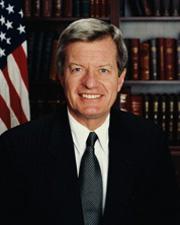


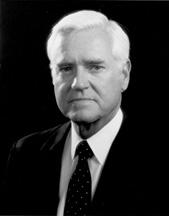
 +9
+9
Floor Debate
14 membersWhat members said about S. 786 on the floor
Mr. President, I rise today to join my friend and colleague Senator Inhofe in introducing a bill that will make a real difference in schools on or near military bases, Indian reservations, and other…
Mr. President, I rise today with Senators Lautenberg, Graham of Florida, and Lieberman to introduce the Wastewater Treatment Works Security and Safety Act. This legislation provides for the safety…
Mr. President, Senator Kerry and I are pleased to introduce the ``Fair and Independent Judiciary Act of 2003.'' This legislation arises from our belief that we must remain steadfast in our commitment…
Mr. President, I rise today to address a crucial issue that is affecting our competitiveness in the world economy. Since that first flight in 1903 when the Wright brothers took off on our great…
Mr. Speaker, today I am introducing a bill, the Business Links Act of 2003, that would provide needed resources to parents facing serious barriers to employment. The bill would provide grants for…
Show 8 more
Mr. President, I rise today to introduce the Business Links Act, on behalf of myself, Senator Rockefeller and Senator Breaux. The Business Links Act is a companion bill to the Education Works Act,…
Mr. President, I rise today to introduce the Business Links Act, on behalf of myself, Senator Rockefeller and Senator Breaux. The Business Links Act is a companion bill to the Education Works Act,…
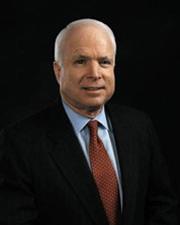
Mr. President, I rise to introduce legislation to authorize expansion of the Petrified Forest National Park in Arizona. I'm pleased that Representative Rick Renzi will introduce companion legislation…
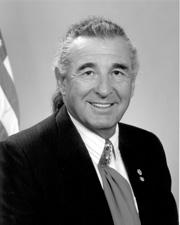
Mr. President, today I am introducing legislation that would amend Title V of the United States Code. It authorizes the Office of Personnel Management, OPM, to make payments to a disability trust or…

Mr. President, I rise today to once again introduce legislation to simplify and restore fairness to the tax accounting rules under which our six major U.S. naval shipyards determine their tax…

Mr. President, I rise today to introduce a bill that would allow private, non-profit medical facilities which service industry-specific clients to be eligible for hazard mitigation and disaster…

Mr. President, the Dividend Allocation Rule, DAR, is the result of several old court cases and subsequent IRS interpretation that applies only to cooperatives which are corporations. When a non…

Mr. President, I rise today to introduce a bill to make the Impact Aid Program a Federal entitlement. Impact Aid is one of the oldest Federal education programs, dating from the 1950's, and is meant…
Show 2 more
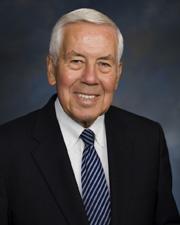
Mr. President, by request, I introduce for appropriate reference a bill entitled the Foreign Relations Authorization Act, Fiscal Years 2004 and 2005. This proposed legislation has been requested by…
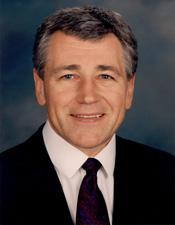
Mr. President, I ask unanimous consent that the text of the bill be printed in the Record.
Bill Text
Latest available legislative text
        [Congressional Bills 108th Congress]
[From the U.S. Government Publishing Office]
[S. 786 Introduced in Senate (IS)]

108th CONGRESS
1st Session
S. 786

To amend the temporary assistance to needy families program under part
A of title IV of the Social Security Act to provide grants for
transitional jobs programs, and for other purposes.

_______________________________________________________________________

IN THE SENATE OF THE UNITED STATES

April 3, 2003

Mr. Bingaman (for himself, Mr. Rockefeller, and Mr. Breaux) introduced
the following bill; which was read twice and referred to the
Committee on FinanceYYYYYYYYYYYYYYYYYYYYYYYYYYYYYYYYYYYYYYYYYYY

_______________________________________________________________________

A BILL

To amend the temporary assistance to needy families program under part
A of title IV of the Social Security Act to provide grants for
transitional jobs programs, and for other purposes.

Be it enacted by the Senate and House of Representatives of the
United States of America in Congress assembled,

SECTION 1. SHORT TITLE.

This Act may be cited as the ``Business Links Act of 2003''.

SEC. 2. TRANSITIONAL JOBS GRANTS.

(a) In General.--Section 403(a)(4) of the Social Security Act (42
U.S.C. 603(a)(4)) is amended to read as follows:
``(4) Innovative business link partnership grants.--
``(A) In general.--The Secretary and the Secretary
of Labor (in this paragraph referred to as the
``Secretaries'') jointly shall award grants in
accordance with this paragraph for projects proposed by
eligible applicants based on the following:
``(i) The potential effectiveness of the
proposed project in carrying out the activities
described in subparagraph (E).
``(ii) Evidence of the ability of the
eligible applicant to leverage private, State,
and local resources.
``(iii) Evidence of the ability of the
eligible applicant to coordinate with other
organizations at the State and local level.
``(B) Definition of eligible applicant.--
``(i) In general.--In this paragraph, the
term `eligible applicant' means a nonprofit
organization, a local workforce investment
board established under section 117 of the
Workforce Investment Act of 1998 (29 U.S.C.
2832), a State, a political subdivision of a
State, or an Indian tribe.
``(ii) Grants to promote business
linkages.--
``(I) Additional eligible
applicant.--Only for purposes of grants
to carry out the activities described
in subparagraph (E)(i), the term
`eligible applicant' includes an
employer.
``(II) Additional requirement.--In
order to qualify as an eligible
applicant for purposes of subparagraph
(E)(i), the applicant must provide
evidence that the application has been
developed by and will be implemented by
a local or regional consortium that
includes, at minimum, employers or
employer associations, and education
and training providers, in consultation
with local labor organizations and
social service providers that work with
low-income families or individuals with
disabilities.
``(C) Requirements.--
``(i) In general.--In awarding grants under
this paragraph, the Secretaries shall--
``(I) consider the needs of rural
areas and cities with large
concentrations of residents with an
income that is less than 150 percent of
the poverty line; and
``(II) ensure that--
``(aa) all of the funds
made available under this
paragraph (other than funds
reserved for use by the
Secretaries under subparagraph
(J)) shall be used for
activities described in
subparagraph (E);
``(bb) not less than 40
percent of the funds made
available under this paragraph
(other than funds so reserved)
shall be used for activities
described in subparagraph
(E)(i); and
``(cc) not less than 40
percent of the funds made
available under this paragraph
(other than funds so reserved)
shall be used for the
activities described in
subparagraph (E)(ii).
``(ii) Continuation of availability.--If
any portion of the funds required to be used
for activities referred to in item (bb) or (cc)
of clause (i)(II) are not awarded in a fiscal
year, such portion shall continue to be
available in the subsequent fiscal year for the
same activity, in addition to other amounts
that may be available for such activities for
that subsequent fiscal year.
``(D) Determination of grant amount.--
``(i) In general.--Subject to clause (ii),
in determining the amount of a grant to be
awarded under this paragraph for a project
proposed by an eligible applicant, the
Secretaries shall provide the eligible
applicant with an amount sufficient to ensure
that the project has a reasonable opportunity
to be successful, taking into account--
``(I) the number and
characteristics of the individuals to
be served by the project;
``(II) the level of unemployment in
the area to be served by the project;
``(III) the job opportunities and
job growth in such area;
``(IV) the poverty rate for such
area; and
``(V) such other factors as the
Secretary deems appropriate in such
area.
``(ii) Maximum award for grants to promote
business linkages or provide transitional jobs
programs.--
``(I) In general.--In the case of a
grant to carry out activities described
in clause (i) or (ii) of subparagraph
(E), an eligible applicant awarded a
grant under this paragraph may not
receive more than $10,000,000 per
fiscal year under the grant.
``(II) Rule of construction.--
Nothing in subclause (I) shall be
construed as precluding an otherwise
eligible applicant from receiving
separate grants to carry out activities
described in clause (i) or (ii) of
subparagraph (E).
``(iii) Grant period.--The period in which
a grant awarded under this paragraph may be
used shall be specified for a period of not
less than 36 months and not more than 60
months.
``(E) Allowable activities.--An eligible applicant
awarded a grant under this paragraph shall use funds
provided under the grant to do the following:
``(i) Promote business linkages.--
``(I) In general.--To promote
business linkages in which funds shall
be used to fund new or expanded
programs that are designed to--
``(aa) substantially
increase the wages of eligible
individuals (as defined in
subparagraph (F)), whether
employed or unemployed, who
have limited English
proficiency or other barriers
to employment by creating or
upgrading job and related
skills in partnership with
employers, especially by
providing supports and services
at or near work sites; and
``(bb) identify and
strengthen career pathways by
expanding and linking work and
training opportunities for such
individuals in collaboration
with employers.
``(II) Consideration of in-kind,
in-cash resources.--In determining
which programs to fund under this
clause, an eligible applicant awarded a
grant under this paragraph shall
consider the ability of a consortium to
provide funds in-kind or in-cash
(including employer-provided, paid
release time) to help support the
programs for which funding is sought.
``(III) Priority.--In determining
which programs to fund under this
clause, an eligible applicant awarded a
grant under this paragraph shall give
priority to programs that include
education or training for which
participants receive credit toward a
recognized credential, such as an
occupational certificate or license.
``(IV) Use of funds.--
``(aa) In general.--Funds
provided to a program under
this clause may be used for a
comprehensive set of employment
and training benefits and
services, including job
development, job matching,
workplace supports and
accommodations, curricula
development, wage subsidies,
retention services, and such
other benefits or services as
the program deems necessary to
achieve the overall objectives
of this clause.
``(bb) Provision of
services.--So long as a program
is principally designed to
assist eligible individuals,
(as defined in subparagraph
(F)), funds may be provided to
a program under this clause
that also serves low-earning
employees of 1 or more
employers even if such
individuals are not within the
definition of eligible
individual (as so defined).
``(ii) Provide for transitional jobs
programs.--
``(I) In general.--To provide for
wage-paying transitional jobs programs
which combine time-limited employment
in the public or nonprofit private
sector that is subsidized with public
funds with skill development and
activities to remove barriers to
employment, pursuant to an
individualized plan (or, in the case of
an eligible individual described in
subparagraph (F)(i), an individual
responsibility plan developed for an
individual under section 408(b)). Such
programs also shall provide job
development and placement assistance to
individual participants to help them
move from subsidized employment in
transitional jobs into unsubsidized
employment, as well as retention
services after the transition to
unsubsidized employment.
``(II) Eligible participants.--The
Secretary shall ensure that individuals
who participate in transitional jobs
programs funded under a grant made
under this paragraph shall be
individuals who have been unemployed
because of limited skills, experience,
or other barriers to employment, and
who are eligible individuals (as
defined in subparagraph (F)), provided
that so long as a program is designed
to, and principally serves, eligible
individuals (as so defined), a limited
number of individuals who are
unemployed because of limited skills,
experience, or other barriers to
employment, and who have an income
below 100 percent of the Federal
poverty line but who do not satisfy the
definition of eligible individual (as
so defined) may be served in the
program to the extent the Secretaries
determine that the inclusion of such
individuals in the program is
appropriate.
``(III) Use of funds.--Funds
provided to a program under this clause
may only be used in accordance with the
following:
``(aa) To create subsidized
transitional jobs in which work
shall be performed directly for
the program operator or at
other public and non profit
organizations (in this
subclause referred to as
`worksite employers') in the
community, and in which 100
percent of the wages shall be
subsidized, except as described
in item (ff) regarding
placements in the private, for
profit sector.
``(bb) Participants shall
be paid at the rate paid to
unsubsidized employees of the
worksite employer who perform
comparable work at the
worksite where the individual is placed. If no other employees perform
the same or comparable work then wages shall be set, at a minimum, at
50 percent of the Lower Living Standard Income Level (commonly referred
to as the `LLSIL'), as determined under section 101(24) of the
Workforce Investment Act of 1998 (29 U.S.C. 2801(24)), for a family of
3 based on 35 hours per week.
``(cc) Transitional jobs
shall be limited to not less
than 6 months and not more than
24 months, however, nothing
shall preclude a participant
from moving into unsubsidized
employment at a point prior to
the maximum duration of the
transitional job placement.
Participants shall be paid
wages based on a workweek of
not less than 30 hours per week
or more than 40 hours per week,
except that a parent of a child
under the age of 6, a child who
is disabled, or a child with
other special needs, or an
individual who for other
reasons cannot successfully
participate for 30 to 40 hours
per week, may be allowed to
participate for more limited
hours, but not less than 20
hours per week. In any work
week, 50 percent to 80 percent
of hours shall be spent in the
transitional job and 20 percent
to 50 percent of hours shall be
spent in education or training,
or other services designed to
reduce or eliminate any
barriers.
``(dd) Program operators
shall provide case management
services and ensure access to
appropriate education,
training, and other services,
including job accommodation,
work supports, and supported
employment, as appropriate and
consistent with an individual
plan that is based on the
individual's strengths,
resources, priorities,
concerns, abilities,
capabilities, career interests,
and informed choice and that is
developed with each
participant. The goal of each
participant's plan shall focus
on preparation for unsubsidized
jobs in demand in the local
economy which offer the
potential for advancement and
growth. Services shall also
include job placement
assistance and retention
services, which may include
coaching and work place
supports, for 12 months after
entry into unsubsidized
placement. Participants shall
also receive support services
such as subsidized child care
and transportation, on the same
basis as those services are
made available to recipients of
assistance under the State
program funded under this part
who are engaged in work-related
activities.
``(ee) Providers shall work
with individual recipients to
determine eligibility for other
employment-related supports
which may include (but are not
limited to) supported
employment, other vocational
rehabilitation services, and
programs or services available
under the Workforce Investment
Act of 1998 (29 U.S.C. 2801 et
seq.), or the ticket to work
and self-sufficiency program
established under section 1148,
and, to the extent possible,
shall provide transitional
employment in collaboration
with entities providing, or
arranging for the provision of,
such other supports.
``(ff) Not more than 20
percent of the placements for a
grantee shall be with a private
for-profit company, except that
such 20 percent limit may be
waived by the Secretary for
programs in rural areas when
the grantee can demonstrate
insufficient public and non-
profit worksites. When a
placement is made at a private
for-profit company, the company
shall pay 50 percent of program
costs (including wages) for
each participant, and the
company shall agree, in
writing, to hire each
participant into an
unsubsidized position at the
completion of the agreed upon
subsidized placement, or
sooner, provided that the
participant's job performance
has been satisfactory. Not more
than 5 percent of the workforce
of a private for-profit company
may be composed of transitional
jobs participants.
``(IV) Definition of transitional
jobs program.--In this clause, the term
`transitional jobs program' means a
program that is intended to serve
current and former recipients of
assistance under a State or tribal
program funded under this part and
other low-income individuals who have
been unable to secure employment
through job search or other employment-
related services because of limited
skills, experience, or other barriers
to employment.
``(iii) Capitalization.--To develop
capitalization procedures for the delivery of
self-sustainable social services.
``(iv) Administrative expenditures.--Not
more than 5 percent of the funds awarded to an
eligible applicant under this paragraph may be
used for administrative expenditures incurred
in carrying out the activities described in
clause (i), (ii), or (iii) or for expenditures
related to carrying out the assessments and
reports required under subparagraph (H).
``(F) Definition of eligible individual.--In this
paragraph, the term `eligible individual' means--
``(i) an individual who is a parent who is
a recipient of assistance under a State or
tribal program funded under this part;
``(ii) an individual who is a parent who
has ceased to receive assistance under such a
State or tribal program;
``(iii) an individual who is at risk of
receiving assistance under a State or tribal
program funded under this part;
``(iv) an individual with a disability; or
``(v) a noncustodial parent who is
unemployed, or is having difficulty in paying
child support obligations, including such a
parent who is a former criminal offender.
``(G) Application.--Each eligible applicant
desiring a grant under this paragraph shall submit an
application to the Secretaries at such time, in such
manner, and accompanied by such information as the
Secretaries may require.
``(H) Assessments and reports by grantees.--
``(i) In general.--An eligible applicant
that receives a grant under this paragraph
shall assess and report on the outcomes of
programs funded under the grant, including the
identity of each program operator, demographic
information about each participant, including
education level, literacy level, prior work
experience and identified barriers to
employment, the nature of education, training,
or other services received by the participant,
the reason for the participant's leaving the
program, and outcomes related to the placement
of the participant in an unsubsidized job,
including 1-year employment retention, wage at
placement, benefits, and earnings progression,
as specified by the Secretaries.
``(ii) Assistance.--The Secretaries shall--
``(I) assist grantees in conducting
the assessment required under clause
(i) by making available where
practicable low-cost means of tracking
the labor market outcomes of
participants; and
``(II) encourage States to provide
such assistance.
``(I) Application to requirements of the state
program.--
``(i) Work participation requirements.--
With respect to any month in which a recipient
of assistance under a State or tribal program
funded under this part who satisfactorily
participates in a business linkage or
transitional jobs program described in
subparagraph (E) that is paid for with funds
made available under a grant made under this
paragraph, such participation shall be
considered to satisfy the work participation
requirements of section 407 and be included for
purposes of determining monthly participation
rates under subsection (b)(1)(B)(i) of that
section.
``(ii) Participation not considered
assistance.--A benefit or service provided with
funds made available under a grant made under
this paragraph shall not be considered
assistance for any purpose under a State or
tribal program funded under this part.
``(J) Assessments by the secretaries.--
``(i) Reservation of funds.--Of the amount
appropriated under subparagraph (L) for each of
fiscal years 2004 and 2005, $3,000,000 of such
amount for each such fiscal year is reserved
for use by the Secretaries to prepare an
interim and final report summarizing and
synthesizing outcomes and lessons learned from
the programs funded through grants awarded
under this paragraph.
``(ii) Interim and final assessments.--With
respect to the reports prepared under clause
(i), the Secretaries shall submit--
``(I) the interim report not later
than 4 years after the date of
enactment of the Business Links Act of
2003; and
``(II) the final report not later
than 6 years after such date of
enactment.
``(K) Evaluations.--
``(i) Reservation of funds.--Of the amount
appropriated under subparagraph (L) for a
fiscal year, an amount equal to 1.5 percent of
such amount for each such fiscal year shall be
reserved for use by the Secretaries to conduct
evaluations in accordance with the requirements
of clause (ii).
``(ii) Requirements.--The Secretaries--
``(I) shall develop a plan to
evaluate the extent to which programs
funded under grants made under this
paragraph have been effective in
promoting sustained, unsubsidized
employment for each group of eligible
participants, and in improving the
skills and wages of participants in
comparison to the participants' skills
and wages prior to participation in the
programs;
``(II) may evaluate the use of such
a grant by a grantee, as the
Secretaries deem appropriate, in
accordance with an agreement entered
into with the grantee after good-faith
negotiations; and
``(III) shall include, as
appropriate, the following outcome
measures in the evaluation plan
developed under subclause (I):
``(aa) Placements in
unsubsidized employment.
``(bb) Retention in
unsubsidized employment 6
months and 12 months after
initial placement.
``(cc) Earnings of
individuals at the time of
placement in unsubsidized
employment.
``(dd) Earnings of
individuals 12 months after
placement in unsubsidized
employment.
``(ee) The extent to which
unsubsidized job placements
include access to affordable
employer-sponsored health
insurance and paid leave
benefits.
``(ff) Comparison of pre-
and post-program wage rates of
participants.
``(gg) Comparison of pre-
and post-program skill levels
of participants.
``(hh) Wage growth and
employment retention in
relation to occupations and
industries at initial placement
in unsubsidized employment and
over the first 12 months after
initial placement.
``(ii) Recipient of cash
assistance under the State
program funded under this part.
``(jj) Average expenditures
per participant.
``(iii) Reports to congress.--The
Secretaries shall submit to Congress the
following reports on the evaluations of
programs funded under grants made under this
paragraph:
``(I) Interim report.--An interim
report not later than 4 years after the
date of enactment of the Business Links
Act of 2003.
``(II) Final report.--A final
report not later than 6 years after
such date of enactment.
``(L) Appropriation.--
``(i) In general.--Out of any money in the
Treasury of the United States not otherwise
appropriated, there is appropriated for grants
under this section, $200,000,000 for each of
fiscal years 2004 through 2008.
``(ii) Availability.--Amounts appropriated
under clause (i) for a fiscal year shall remain
available for obligation for 5 fiscal years
after the fiscal year in which the amount is
appropriated.''.
(b) Effective Date.--The amendment made by subsection (a) shall
take effect on October 1, 2003.
<all>