Renewable Fuels Act
 Sen. James M. Inhofe (R-OK)
Legislative Activity
Stay on top of the latest movement without scrolling through every action
Placed on Senate Legislative Calendar under General Orders. Calendar No. 119.
June 3, 2003
View full timeline
Introduced in Senate
April 3, 2003
Read twice and referred to the Committee on Environment and Public Works.
April 3, 2003
Committee on Environment and Public Works. Ordered to be reported with amendments favorably.
April 9, 2003
Committee on Environment and Public Works. Reported by Senator Inhofe with an amendment in the nature of a substitute. With written report No. 108-57. Additional views filed.
June 3, 2003
Placed on Senate Legislative Calendar under General Orders. Calendar No. 119.
June 3, 2003
Floor Debate
18 membersWhat members said about S. 791 on the floor




 +13
+13
Floor Debate
18 membersWhat members said about S. 791 on the floor
Mr. President, I ask unanimous consent that the order for the quorum call be rescinded. Mr. President, I suggest the absence of a quorum. I ask unanimous consent that the order for the quorum call be…
Mr. President, I very much respect the Senator from Ohio. He has been both a distinguished mayor and a distinguished Governor of his State. I hate to disagree with him, but in this case I find the…
Mr. President, we have arrived at a time and a defined period for debate on the Wyden amendment to subtitle B of this act. I think it is critical that we bring this issue to the forefront and make a…
Mr. President, I thank the Senator from New Mexico for this opportunity to speak in favor of the ethanol amendment, No. 539. This amendment has been offered by the distinguished majority leader and…
Mr. President, I ask unanimous consent that the order for the quorum call be rescinded. Mr. President, I note the presence of the Senator from California who has just offered an amendment which…
Show 8 more

Mr. President, I ask unanimous consent that the order for the quorum call be rescinded. Mr. President, at this point I want to talk to the general subject of the two second-degree amendments offered…
Mr. President, I want to take this opportunity to make a few comments as a member of the Energy Committee on the energy bill that is on the floor and which will be subject to amendment tomorrow…
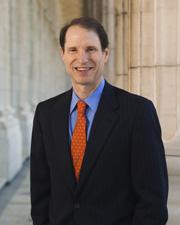
Mr. President, if I could just respond, Senator Sununu and I will be in the Chamber talking in a bit more detail. I always appreciate the graciousness of the chairman of the committee in working with…

Mr. President, I ask unanimous consent that the order for the quorum call be rescinded. Mr. President, what is the business before the Senate? What is the pending question before the Senate, Mr.…
Mr. President, I rise to speak on behalf of the ethanol amendment and to comment upon several of the remarks that were made by my colleagues. One of the items that was mentioned by the junior Senator…

I was going to suggest that to the Senator from New Mexico and the Chair. Mr. President, I thank my colleague from Missouri for his kind comments. It is a great pleasure to be here today to talk on…

Mr. President, I first want to commend the chairman of the Energy Committee for his strong statement in support and for his leadership on this and on so many of the issues pertaining to energy. I…

Mr. President, first, I compliment my colleagues, the chairman and ranking member of the Energy Committee, for doing such an incredible job on an Energy bill that is so needed in this great country.…
Show 11 more
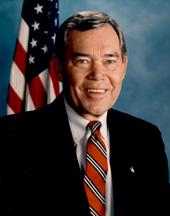
Mr. President, I ask unanimous consent that the order for the quorum call be rescinded. Mr. President, I understand we are on energy. We need to talk a little bit about energy. I think that is what…

I am happy to accommodate my colleague. Mr. President, I thank my colleague for his fine statement. Really, the fact that we are here today in a bipartisan effort reflects the good work that has gone…
Mr. President, I want to speak briefly on the renewable fuels standard that is the subject of the Frist-Daschle amendment, and specifically with regard to a report released today by the National Corn…
Mr. President, I rise to support the amendment by my colleague from California to strke the so-called ``safe harbor provision'' in the amendment offered by the majority leader that would shield…

Mr. President, I first want to recognize the comments of the distinguished chairman of the Energy Committee. He is far too generous, but that is usually his nature. And I appreciate very much his…
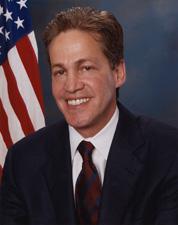
Mr. President, I want to add my voice in support of the renewable fuels standard amendment that has been offered by the majority leader and the Democratic leader. This may be a bit unconventional for…
Mr. President, may I ask my good friend if he would mention my name in that list? Mr. President, I thank my friend from New Mexico and I appreciate his kindness, and also my colleagues from Missouri…
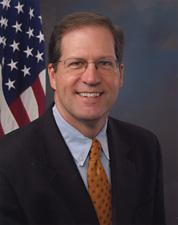
Mr. President, I ask unanimous consent that the order for the quorum call be rescinded. Mr. President, I wish to take a few moments in this debate on the Energy bill to talk about an amendment that…

Mr. President, I thank my colleague from California for her hard work on this amendment. I am glad to join Senator Lugar and Senator Boxer as a cosponsor of this amendment. Senator Boxer has spent an…
Mr. President, I rise today in support of S. 14, the comprehensive energy bill. The chairman and all the members of the Energy and Natural Resources Committee worked hard to produce a comprehensive…
Mr. President, I ask unanimous consent that the order for the quorum call be rescinded. Mr. President, I know we will be voting at 4:30 on the Feinstein amendments. Both amendments attempt to provide…
Bill Text
2 versions available
        [Congressional Bills 108th Congress]
[From the U.S. Government Publishing Office]
[S. 791 Reported in Senate (RS)]

Calendar No. 119
108th CONGRESS
1st Session
S. 791

[Report No. 108-57]

To amend the Clean Air Act to eliminate methyl tertiary butyl ether
from the United States fuel supply, to increase production and use of
renewable fuel, and to increase the Nation's energy independence, and
for other purposes.

_______________________________________________________________________

IN THE SENATE OF THE UNITED STATES

April 3, 2003

Mr. Inhofe (for himself, Mr. Voinovich, Mr. Talent, and Mr. Hagel)
introduced the following bill; which was read twice and referred to the
Committee on Environment and Public Works

June 3, 2003

Reported by Mr. Inhofe, with an amendment
[Strike out all after the enacting clause and insert the part printed
in italic]

_______________________________________________________________________

A BILL

To amend the Clean Air Act to eliminate methyl tertiary butyl ether
from the United States fuel supply, to increase production and use of
renewable fuel, and to increase the Nation's energy independence, and
for other purposes.

Be it enacted by the Senate and House of Representatives of the
United States of America in Congress assembled,

<DELETED>SECTION 1. SHORT TITLE; TABLE OF CONTENTS.</DELETED>

<DELETED>    (a) Short Title.--This Act may be cited as the ``Reliable
Fuels Act''.</DELETED>
<DELETED>    (b) Table of Contents.--The table of contents of this Act
is as follows:</DELETED>

<DELETED>Sec. 1. Short title; table of contents.
<DELETED>TITLE I--GENERAL PROVISIONS

<DELETED>Sec. 101. Renewable content of gasoline.
<DELETED>Sec. 102. Survey of renewable fuels consumption.
<DELETED>TITLE II--FEDERAL REFORMULATED FUELS

<DELETED>Sec. 201. Short title.
<DELETED>Sec. 202. Leaking underground storage tanks.
<DELETED>Sec. 203. Restrictions on the use of MTBE.
<DELETED>Sec. 204. Elimination of oxygen content requirement for
reformulated gasoline.
<DELETED>Sec. 205. Public health and environmental impacts of fuels and
fuel additives.
<DELETED>Sec. 206. Analyses of motor vehicle fuel changes.
<DELETED>Sec. 207. Additional opt-in areas under reformulated gasoline
program.
<DELETED>Sec. 208. Federal enforcement of State fuels requirements.
<DELETED>Sec. 209. Fuel system requirements harmonization study.

<DELETED>TITLE I--GENERAL PROVISIONS</DELETED>

<DELETED>SEC. 101. RENEWABLE CONTENT OF GASOLINE.</DELETED>

<DELETED>    (a) In General.--Section 211 of the Clean Air Act (42
U.S.C. 7545) is amended--</DELETED>
<DELETED>    (1) by redesignating subsection (o) as subsection
(r); and</DELETED>
<DELETED>    (2) by inserting after subsection (n) the
following:</DELETED>
<DELETED>    ``(o) Renewable Fuel Program.--</DELETED>
<DELETED>    ``(1) Definitions.--In this section:</DELETED>
<DELETED>    ``(A) Cellulosic biomass ethanol.--The
term `cellulosic biomass ethanol' means ethanol derived
from any lignocellulosic or hemicellulosic matter that
is available on a renewable or recurring basis,
including--</DELETED>
<DELETED>    ``(i) dedicated energy crops and
trees;</DELETED>
<DELETED>    ``(ii) wood and wood
residues;</DELETED>
<DELETED>    ``(iii) plants;</DELETED>
<DELETED>    ``(iv) grasses;</DELETED>
<DELETED>    ``(v) agricultural
residues;</DELETED>
<DELETED>    ``(vi) fibers;</DELETED>
<DELETED>    ``(vii) animal wastes and other
waste materials; and</DELETED>
<DELETED>    ``(viii) municipal solid
waste.</DELETED>
<DELETED>    ``(B) Renewable fuel.--</DELETED>
<DELETED>    ``(i) In general.--The term
`renewable fuel' means motor vehicle fuel
that--</DELETED>
<DELETED>    ``(I)(aa) is produced from
grain, starch, oilseeds, or other
biomass; or</DELETED>
<DELETED>    ``(bb) is natural gas
produced from a biogas source,
including a landfill, sewage waste
treatment plant, feedlot, or other
place where decaying organic material
is found; and</DELETED>
<DELETED>    ``(II) is used to replace
or reduce the quantity of fossil fuel
present in a fuel mixture used to
operate a motor vehicle.</DELETED>
<DELETED>    ``(ii) Inclusion.--The term
`renewable fuel' includes--</DELETED>
<DELETED>    ``(I) cellulosic biomass
ethanol; and</DELETED>
<DELETED>    ``(II) biodiesel (as
defined in section 312(f) of the Energy
Policy Act of 1992 (42 U.S.C.
13220(f))).</DELETED>
<DELETED>    ``(C) Small refinery.--The term `small
refinery' means a refinery for which the average
aggregate daily crude oil throughput for a calendar
year (as determined by dividing the aggregate
throughput for the calendar year by the number of days
in the calendar year) does not exceed 75,000
barrels.</DELETED>
<DELETED>    ``(2) Renewable fuel program.--</DELETED>
<DELETED>    ``(A) Regulations.--</DELETED>
<DELETED>    ``(i) In general.--Not later than
1 year after the date of enactment of this
paragraph, the Administrator shall promulgate
regulations to ensure that gasoline sold or
introduced into commerce in the United States,
on an annual average basis, contains the
applicable volume of renewable fuel determined
in accordance with subparagraph (B).</DELETED>
<DELETED>    ``(ii) Provisions of
regulations.--Regardless of the date of
promulgation, the regulations promulgated under
clause (i)--</DELETED>
<DELETED>    ``(I) shall contain
compliance provisions applicable to
refineries, blenders, distributors, and
importers, as appropriate, to ensure
that the requirements of this paragraph
are met; but</DELETED>
<DELETED>    ``(II) shall not--
</DELETED>
<DELETED>    ``(aa) restrict
cases in which renewable fuel
may be used; or</DELETED>
<DELETED>    ``(bb) impose any
per-gallon obligation for the
use of renewable
fuel.</DELETED>
<DELETED>    ``(iii) Requirement in case of
failure to promulgate regulations.--If the
Administrator does not promulgate regulations
under clause (i), the percentage of renewable
fuel in gasoline sold or dispensed to consumers
in the United States, on a volume basis, shall
be 1.8 percent for calendar year
2005.</DELETED>
<DELETED>    ``(B) Applicable volume.--</DELETED>
<DELETED>    ``(i) Calendar years 2004 through
2012.--For the purpose of subparagraph (A), the
applicable volume for any of calendar years
2005 through 2012 shall be determined in
accordance with the following table:</DELETED>

Applicable volume of
<DELETED>``Calendar year:                                renewable fuel
(in billions of gallons):
<DELETED>2005.................................                 2.6
<DELETED>2006.................................                 2.9
<DELETED>2007.................................                 3.2
<DELETED>2008.................................                 3.5
<DELETED>2009.................................                 3.9
<DELETED>2010.................................                 4.3
<DELETED>2011.................................                 4.7
<DELETED>2012.................................                 5.0.
<DELETED>    ``(ii) Calendar year 2013 and
thereafter.--For the purpose of subparagraph
(A), the applicable volume for calendar year
2013 and each calendar year thereafter shall be
equal to the product obtained by multiplying--
</DELETED>
<DELETED>    ``(I) the number of
gallons of gasoline that the
Administrator estimates will be sold or
introduced into commerce in the
calendar year; and</DELETED>
<DELETED>    ``(II) the ratio that--
</DELETED>
<DELETED>    ``(aa)
5,000,000,000 gallons of
renewable fuel; bears
to</DELETED>
<DELETED>    ``(bb) the number
of gallons of gasoline sold or
introduced into commerce in
calendar year 2012.</DELETED>
<DELETED>    ``(3) Applicable percentages.--</DELETED>
<DELETED>    ``(A) Provision of estimate of volumes of
gasoline sales.--Not later than October 31 of each of
calendar years 2003 through 2011, the Administrator of
the Energy Information Administration shall provide to
the Administrator of the Environmental Protection
Agency an estimate of the volumes of gasoline sold or
introduced into commerce in the United States during
the following calendar year.</DELETED>
<DELETED>    ``(B) Determination of applicable
percentages.--</DELETED>
<DELETED>    ``(i) In general.--Not later than
November 30 of each of calendar years 2004
through 2011, based on the estimate provided
under subparagraph (A), the Administrator of
the Environmental Protection Agency shall
determine and publish in the Federal Register,
with respect to the following calendar year,
the renewable fuel obligation that ensures that
the requirements of paragraph (2) are
met.</DELETED>
<DELETED>    ``(ii) Required elements.--The
renewable fuel obligation determined for a
calendar year under clause (i) shall--
</DELETED>
<DELETED>    ``(I) be applicable to
refineries, blenders, and importers, as
appropriate;</DELETED>
<DELETED>    ``(II) be expressed in
terms of a volume percentage of
gasoline; and</DELETED>
<DELETED>    ``(III) subject to
subparagraph (C)(i), consist of a
single applicable percentage that
applies to all categories of persons
specified in subclause (I).</DELETED>
<DELETED>    ``(C) Adjustments.--In determining the
applicable percentage for a calendar year, the
Administrator shall make adjustments--</DELETED>
<DELETED>    ``(i) to prevent the imposition of
redundant obligations on any person specified
in subparagraph (B)(ii)(I); and</DELETED>
<DELETED>    ``(ii) to account for the use of
renewable fuel during the previous calendar
year by small refineries that are exempt under
paragraph (9).</DELETED>
<DELETED>    ``(4) Cellulosic biomass ethanol.--For the purpose
of paragraph (2), 1 gallon of cellulosic biomass ethanol shall
be considered to be the equivalent of 1.5 gallons of renewable
fuel.</DELETED>
<DELETED>    ``(5) Credit program.--</DELETED>
<DELETED>    ``(A) In general.--The regulations
promulgated under paragraph (2)(A) shall provide--
</DELETED>
<DELETED>    ``(i) for the generation of an
appropriate amount of credits by any person
that refines, blends, or imports gasoline that
contains a quantity of renewable fuel that is
greater than the quantity required under
paragraph (2);</DELETED>
<DELETED>    ``(ii) for the generation of an
appropriate amount of credits for biodiesel;
and</DELETED>
<DELETED>    ``(iii) for the generation of
credits by small refineries in accordance with
paragraph (9)(C).</DELETED>
<DELETED>    ``(B) Use of credits.--A person that
generates credits under subparagraph (A) may use the
credits, or transfer all or a portion of the credits to
another person, for the purpose of complying with
paragraph (2).</DELETED>
<DELETED>    ``(C) Duration of credits.--A credit
generated under this paragraph shall be valid to show
compliance--</DELETED>
<DELETED>    ``(i) subject to clause (ii), for
the calendar year in which the credit was
generated or the following calendar year;
or</DELETED>
<DELETED>    ``(ii) if the Administrator
promulgates regulations under paragraph (6),
for the calendar year in which the credit was
generated or any of the following 2 calendar
years.</DELETED>
<DELETED>    ``(D) Inability to generate or purchase
sufficient credits.--The regulations promulgated under
paragraph (2)(A) shall include provisions allowing any
person that is unable to generate or purchase
sufficient credits to meet the requirements of
paragraph (2) to carry forward a renewable fuel deficit
on condition that the person, in the calendar year
following the year in which the renewable fuel deficit
is created--</DELETED>
<DELETED>    ``(i) achieves compliance with the
renewable fuel requirement under paragraph (2);
and</DELETED>
<DELETED>    ``(ii) generates or purchases
additional renewable fuel credits to offset the
renewable fuel deficit of the previous
year.</DELETED>
<DELETED>    ``(6) Seasonal variations in renewable fuel use.--
</DELETED>
<DELETED>    ``(A) Study.--For each of calendar years
2005 through 2012, the Administrator of the Energy
Information Administration shall conduct a study of
renewable fuel blending to determine whether there are
excessive seasonal variations in the use of renewable
fuel.</DELETED>
<DELETED>    ``(B) Regulation of excessive seasonal
variations.--If, for any calendar year, the
Administrator of the Energy Information Administration,
based on the study under subparagraph (A), makes the
determinations specified in subparagraph (C), the
Administrator of the Environmental Protection Agency
shall promulgate regulations to ensure that 35 percent
or more of the quantity of renewable fuel necessary to
meet the requirements of paragraph (2) is used during
each of the 2 periods specified in subparagraph (D) of
each subsequent calendar year.</DELETED>
<DELETED>    ``(C) Determinations.--The determinations
referred to in subparagraph (B) are that--</DELETED>
<DELETED>    ``(i) less than 35 percent of the
quantity of renewable fuel necessary to meet
the requirements of paragraph (2) has been used
during 1 of the 2 periods specified in
subparagraph (D) of the calendar year;
and</DELETED>
<DELETED>    ``(ii) a pattern of excessive
seasonal variation described in clause (i) will
continue in subsequent calendar
years.</DELETED>
<DELETED>    ``(D) Periods.--The 2 periods referred to
in this paragraph are--</DELETED>
<DELETED>    ``(i) April through September;
and</DELETED>
<DELETED>    ``(ii) January through March and
October through December.</DELETED>
<DELETED>    ``(E) Exclusion.--Renewable fuel blended
or consumed in calendar year 2005 in a State that has
received a waiver under section 209(b) shall not be
included in the study under subparagraph (A).</DELETED>
<DELETED>    ``(7) Waivers.--</DELETED>
<DELETED>    ``(A) In general.--The Administrator, in
consultation with the Secretary of Agriculture and the
Secretary of Energy, may waive the requirements of
paragraph (2) in whole or in part on petition by 1 or
more States by reducing the national quantity of
renewable fuel required under paragraph (2)--</DELETED>
<DELETED>    ``(i) based on a determination by
the Administrator, after public notice and
opportunity for comment, that implementation of
the requirement would severely harm the economy
or environment of a State, a region, or the
United States; or</DELETED>
<DELETED>    ``(ii) based on a determination by
the Administrator, after public notice and
opportunity for comment, that there is an
inadequate domestic supply or distribution
capacity to meet the requirement.</DELETED>
<DELETED>    ``(B) Petitions for waivers.--The
Administrator, in consultation with the Secretary of
Agriculture and the Secretary of Energy, shall approve
or disapprove a State petition for a waiver of the
requirements of paragraph (2) within 90 days after the
date on which the petition is received by the
Administrator.</DELETED>
<DELETED>    ``(C) Termination of waivers.--A waiver
granted under subparagraph (A) shall terminate after 1
year, but may be renewed by the Administrator after
consultation with the Secretary of Agriculture and the
Secretary of Energy.</DELETED>
<DELETED>    ``(8) Study and waiver for initial year of
program.--</DELETED>
<DELETED>    ``(A) In general.--Not later than 180 days
after the date of enactment of this paragraph, the
Secretary of Energy shall conduct for the Administrator
a study assessing whether the renewable fuel
requirement under paragraph (2) will likely result in
significant adverse impacts on consumers in 2005, on a
national, regional, or State basis.</DELETED>
<DELETED>    ``(B) Required evaluations.--The study
shall evaluate renewable fuel--</DELETED>
<DELETED>    ``(i) supplies and
prices;</DELETED>
<DELETED>    ``(ii) blendstock supplies;
and</DELETED>
<DELETED>    ``(iii) supply and distribution
system capabilities.</DELETED>
<DELETED>    ``(C) Recommendations by the secretary.--
Based on the results of the study, the Secretary of
Energy shall make specific recommendations to the
Administrator concerning waiver of the requirements of
paragraph (2), in whole or in part, to prevent any
adverse impacts described in subparagraph
(A).</DELETED>
<DELETED>    ``(D) Waiver.--</DELETED>
<DELETED>    ``(i) In general.--Not later than
270 days after the date of enactment of this
paragraph, the Administrator shall, if and to
the extent recommended by the Secretary of
Energy under subparagraph (C), waive, in whole
or in part, the renewable fuel requirement
under paragraph (2) by reducing the national
quantity of renewable fuel required under
paragraph (2) in calendar 2005.</DELETED>
<DELETED>    ``(ii) No effect on waiver
authority.--Clause (i) does not limit the
authority of the Administrator to waive the
requirements of paragraph (2) in whole, or in
part, under paragraph (7).</DELETED>
<DELETED>    ``(9) Small refineries.--</DELETED>
<DELETED>    ``(A) Temporary exemption.--</DELETED>
<DELETED>    ``(i) In general.--The
requirements of paragraph (2) shall not apply
to small refineries until calendar year
2011.</DELETED>
<DELETED>    ``(ii) Extension of exemption.--
</DELETED>
<DELETED>    ``(I) Study by secretary
of energy.--Not later than December 31,
2007, the Secretary of Energy shall
conduct for the Administrator a study
to determine whether compliance with
the requirements of paragraph (2) would
impose a disproportionate economic
hardship on small refineries.</DELETED>
<DELETED>    ``(II) Extension of
exemption.--In the case of a small
refinery that the Secretary of Energy
determines under subclause (I) would be
subject to a disproportionate economic
hardship if required to comply with
paragraph (2), the Administrator shall
extend the exemption under clause (i)
for the small refinery for a period of
not less than 2 additional
years.</DELETED>
<DELETED>    ``(B) Petitions based on disproportionate
economic hardship.--</DELETED>
<DELETED>    ``(i) Extension of exemption.--A
small refinery may at any time petition the
Administrator for an extension of the exemption
under subparagraph (A) for the reason of
disproportionate economic hardship.</DELETED>
<DELETED>    ``(ii) Evaluation of petitions.--
In evaluating a petition under clause (i), the
Administrator, in consultation with the
Secretary of Energy, shall consider the
findings of the study under subparagraph
(A)(ii) and other economic factors.</DELETED>
<DELETED>    ``(iii) Deadline for action on
petitions.--The Administrator shall act on any
petition submitted by a small refinery for a
hardship exemption not later than 90 days after
the date of receipt of the petition.</DELETED>
<DELETED>    ``(C) Credit program.--If a small refinery
notifies the Administrator that the small refinery
waives the exemption under subparagraph (A), the
regulations promulgated under paragraph (2)(A) shall
provide for the generation of credits by the small
refinery under paragraph (5) beginning in the calendar
year following the date of notification.</DELETED>
<DELETED>    ``(D) Opt-in for small refineries.--A
small refinery shall be subject to the requirements of
paragraph (2) if the small refinery notifies the
Administrator that the small refinery waives the
exemption under subparagraph (A).</DELETED>
<DELETED>    ``(p) Renewable Fuel Safe Harbor.--</DELETED>
<DELETED>    ``(1) In general.--</DELETED>
<DELETED>    ``(A) Safe harbor.--Notwithstanding any
other provision of Federal or State law, no renewable
fuel (as defined in subsection (o)(1)) used or intended
to be used as a motor vehicle fuel, nor any motor
vehicle fuel containing renewable fuel, shall be deemed
to be defective in design or manufacture by reason of
the fact that the fuel is, or contains, renewable fuel,
if--</DELETED>
<DELETED>    ``(i) the fuel does not violate a
control or prohibition imposed by the
Administrator under this section; and</DELETED>
<DELETED>    ``(ii) the manufacturer of the
fuel is in compliance with all requests for
information under subsection (b).</DELETED>
<DELETED>    ``(B) Safe harbor not applicable.--In any
case in which subparagraph (A) does not apply to a
quantity of fuel, the existence of a design defect or
manufacturing defect with respect to the fuel shall be
determined under otherwise applicable law.</DELETED>
<DELETED>    ``(2) Exception.--This subsection does not apply
to ethers.</DELETED>
<DELETED>    ``(3) Applicability.--This subsection applies with
respect to all claims filed on or after the date of enactment
of this subsection.''.</DELETED>
<DELETED>    (b) Penalties and Enforcement.--Section 211(d) of the
Clean Air Act (42 U.S.C. 7545(d)) is amended--</DELETED>
<DELETED>    (1) in paragraph (1)--</DELETED>
<DELETED>    (A) in the first sentence, by striking
``or (n)'' each place it appears and inserting ``(n),
or (o)''; and</DELETED>
<DELETED>    (B) in the second sentence, by striking
``or (m)'' and inserting ``(m), or (o)''; and</DELETED>
<DELETED>    (2) in the first sentence of paragraph (2), by
striking ``and (n)'' each place it appears and inserting ``(n),
and (o)''.</DELETED>
<DELETED>    (c) Exclusion From Ethanol Waiver.--Section 211(h) of the
Clean Air Act (42 U.S.C. 7545(h)) is amended--</DELETED>
<DELETED>    (1) by redesignating paragraph (5) as paragraph
(6); and</DELETED>
<DELETED>    (2) by inserting after paragraph (4) the
following:</DELETED>
<DELETED>``(5) Exclusion from ethanol waiver.--</DELETED>
<DELETED>    ``(A) Promulgation of regulations.--Upon
notification, accompanied by supporting documentation,
from the Governor of a State that the Reid vapor
pressure limitation established by paragraph (4) will
increase emissions that contribute to air pollution in
any area in the State, the Administrator shall, by
regulation, apply, in lieu of the Reid vapor pressure
limitation established by paragraph (4), the Reid vapor
pressure limitation established by paragraph (1) to all
fuel blends containing gasoline and 10 percent
denatured anhydrous ethanol that are sold, offered for
sale, dispensed, supplied, offered for supply,
transported, or introduced into commerce in the area
during the high ozone season.</DELETED>
<DELETED>    ``(B) Deadline for promulgation.--The
Administrator shall promulgate regulations under
subparagraph (A) not later than 90 days after the date
of receipt of a notification from a Governor under that
subparagraph.</DELETED>
<DELETED>    ``(C) Effective date.--</DELETED>
<DELETED>    ``(i) In general.--With respect to
an area in a State for which the Governor
submits a notification under subparagraph (A),
the regulations under that subparagraph shall
take effect on the later of--</DELETED>
<DELETED>    ``(I) the first day of the
first high ozone season for the area
that begins after the date of receipt
of the notification; or</DELETED>
<DELETED>    ``(II) 1 year after the
date of receipt of the
notification.</DELETED>
<DELETED>    ``(ii) Extension of effective date
based on determination of insufficient
supply.--</DELETED>
<DELETED>    ``(I) In general.--If,
after receipt of a notification with
respect to an area from a Governor of a
State under subparagraph (A), the
Administrator determines, on the
Administrator's own motion or on
petition of any person and after
consultation with the Secretary of
Energy, that the promulgation of
regulations described in subparagraph
(A) would result in an insufficient
supply of gasoline in the State, the
Administrator, by regulation--
</DELETED>
<DELETED>    ``(aa) shall
extend the effective date of
the regulations under clause
(i) with respect to the area
for not more than 1 year;
and</DELETED>
<DELETED>    ``(bb) may renew
the extension under item (aa)
for 2 additional periods, each
of which shall not exceed 1
year.</DELETED>
<DELETED>    ``(II) Deadline for action
on petitions.--The Administrator shall
act on any petition submitted under
subclause (I) not later than 180 days
after the date of receipt of the
petition.''.</DELETED>
<DELETED>    (d) Survey of Renewable Fuel Market.--</DELETED>
<DELETED>    (1) Survey and report.--Not later than December 1,
2006, and annually thereafter, the Administrator of the
Environmental Protection Agency shall--</DELETED>
<DELETED>    (A) conduct, with respect to each
conventional gasoline use area and each reformulated
gasoline use area in each State, a survey to determine
the market shares of--</DELETED>
<DELETED>    (i) conventional gasoline
containing ethanol;</DELETED>
<DELETED>    (ii) reformulated gasoline
containing ethanol;</DELETED>
<DELETED>    (iii) conventional gasoline
containing renewable fuel; and</DELETED>
<DELETED>    (iv) reformulated gasoline
containing renewable fuel; and</DELETED>
<DELETED>    (B) submit to Congress, and make publicly
available, a report on the results of the survey under
subparagraph (A).</DELETED>
<DELETED>    (2) Recordkeeping and reporting requirements.--
</DELETED>
<DELETED>    (A) In general.--The Administrator may
require any refiner, blender, or importer to keep such
records and make such reports as are necessary to
ensure that the survey conducted under paragraph (1) is
accurate.</DELETED>
<DELETED>    (B) Reliance on existing requirements.--To
avoid duplicative requirements, in carrying out
subparagraph (A), the Administrator shall rely, to the
maximum extent practicable, on reporting and
recordkeeping requirements in effect on the date of
enactment of this Act.</DELETED>
<DELETED>    (3) Confidentiality.--Activities carried out under
this subsection shall be conducted in a manner designed to
protect confidentiality of individual responses.</DELETED>
<DELETED>    (f) Authorization of Appropriations for Resource Center.--
There is authorized to be appropriated, for a resource center to
further develop bioconversion technology using low-cost biomass for the
production of ethanol at the Center for Biomass-Based Energy at the
University of Mississippi and the University of Oklahoma, $4,000,000
for each of fiscal years 2004 through 2006.</DELETED>

<DELETED>SEC. 102. SURVEY OF RENEWABLE FUELS CONSUMPTION.</DELETED>

<DELETED>    Section 205 of the Department of Energy Organization Act
(42 U.S.C. 7135) is amended by adding at the end the
following:</DELETED>
<DELETED>    ``(m) Survey of Renewable Fuels Consumption.--</DELETED>
<DELETED>    ``(1) In general.--In order to improve the ability
to evaluate the effectiveness of the Nation's renewable fuels
mandate, the Administrator shall conduct and publish the
results of a survey of renewable fuels consumption in the motor
vehicle fuels market in the United States monthly, and in a
manner designed to protect the confidentiality of individual
responses.</DELETED>
<DELETED>    ``(2) Elements of survey.--In conducting the
survey, the Administrator shall collect information
retrospectively to 1998, on a national basis and a regional
basis, including--</DELETED>
<DELETED>    ``(A) the quantity of renewable fuels
produced;</DELETED>
<DELETED>    ``(B) the cost of production;</DELETED>
<DELETED>    ``(C) the cost of blending and
marketing;</DELETED>
<DELETED>    ``(D) the quantity of renewable fuels
blended;</DELETED>
<DELETED>    ``(E) the quantity of renewable fuels
imported; and</DELETED>
<DELETED>    ``(F) market price data.''.</DELETED>

<DELETED>TITLE II--FEDERAL REFORMULATED FUELS</DELETED>

<DELETED>SEC. 201. SHORT TITLE.</DELETED>

<DELETED>    This subtitle may be cited as the ``Federal Reformulated
Fuels Act of 2003''.</DELETED>

<DELETED>SEC. 202. LEAKING UNDERGROUND STORAGE TANKS.</DELETED>

<DELETED>    (a) Use of LUST Funds for Remediation of Contamination
From Ether Fuel Additives.--Section 9003(h) of the Solid Waste Disposal
Act (42 U.S.C. 6991b(h)) is amended--</DELETED>
<DELETED>    (1) in paragraph (7)(A)--</DELETED>
<DELETED>    (A) by striking ``paragraphs (1) and (2)
of this subsection'' and inserting ``paragraphs (1),
(2), and (12)''; and</DELETED>
<DELETED>    (B) by inserting ``and section 9010''
before ``if''; and</DELETED>
<DELETED>    (2) by adding at the end the following:</DELETED>
<DELETED>    ``(12) Remediation of contamination from ether
fuel additives.--</DELETED>
<DELETED>    ``(A) In general.--The Administrator and
the States may use funds made available under section
9013(1) to carry out corrective actions with respect to
a release of methyl tertiary butyl ether or other ether
fuel additive that presents a threat to human health,
welfare, or the environment.</DELETED>
<DELETED>    ``(B) Applicable authority.--Subparagraph
(A) shall be carried out--</DELETED>
<DELETED>    ``(i) in accordance with paragraph
(2), except that a release with respect to
which a corrective action is carried out under
subparagraph (A) shall not be required to be
from an underground storage tank; and</DELETED>
<DELETED>    ``(ii) in the case of a State, in
accordance with a cooperative agreement entered
into by the Administrator and the State under
paragraph (7).''.</DELETED>
<DELETED>    (b) Release Prevention and Compliance.--Subtitle I of the
Solid Waste Disposal Act (42 U.S.C. 6991 et seq.) is amended by
striking section 9010 and inserting the following:</DELETED>

<DELETED>``SEC. 9010. RELEASE PREVENTION AND COMPLIANCE.</DELETED>

<DELETED>    ``Funds made available under section 9013(2) from the
Leaking Underground Storage Tank Trust Fund may be used for conducting
inspections, or for issuing orders or bringing actions under this
subtitle--</DELETED>
<DELETED>    ``(1) by a State (pursuant to section 9003(h)(7))
acting under--</DELETED>
<DELETED>    ``(A) a program approved under section
9004; or</DELETED>
<DELETED>    ``(B) State requirements regulating
underground storage tanks that are similar or identical
to this subtitle, as determined by the Administrator;
and</DELETED>
<DELETED>    ``(2) by the Administrator, acting under this
subtitle or a State program approved under section
9004.</DELETED>

<DELETED>``SEC. 9011. AUTHORIZATION OF APPROPRIATIONS.</DELETED>

<DELETED>    ``In addition to amounts made available under section
2007(f), there are authorized to be appropriated from the Leaking
Underground Storage Tank Trust Fund, notwithstanding section 9508(c)(1)
of the Internal Revenue Code of 1986--</DELETED>
<DELETED>    ``(1) to carry out section 9003(h)(12),
$200,000,000 for fiscal year 2003, to remain available until
expended; and</DELETED>
<DELETED>    ``(2) to carry out section 9010--</DELETED>
<DELETED>    ``(A) $50,000,000 for fiscal year 2003;
and</DELETED>
<DELETED>    ``(B) $30,000,000 for each of fiscal years
2004 through 2008.''.</DELETED>
<DELETED>    (c) Technical Amendments.--(1) Section 1001 of the Solid
Waste Disposal Act (42 U.S.C. prec. 6901) is amended by striking the
item relating to section 9010 and inserting the following:</DELETED>

<DELETED>``Sec. 9010. Release prevention and compliance.
<DELETED>``Sec. 9011. Authorization of appropriations.''.
<DELETED>    (2) Section 9001(3)(A) of the Solid Waste Disposal Act (42
U.S.C. 6991(3)(A)) is amended by striking ``sustances'' and inserting
``substances''.</DELETED>
<DELETED>    (3) Section 9003(f)(1) of the Solid Waste Disposal Act (42
U.S.C. 6991b(f)(1)) is amended by striking ``subsection (c) and (d) of
this section'' and inserting ``subsections (c) and (d)''.</DELETED>
<DELETED>    (4) Section 9004(a) of the Solid Waste Disposal Act (42
U.S.C. 6991c(a)) is amended in the second sentence by striking
``referred to'' and all that follows and inserting ``referred to in
subparagraph (A) or (B), or both, of section 9001(2).''.</DELETED>
<DELETED>    (5) Section 9005 of the Solid Waste Disposal Act (42
U.S.C. 6991d) is amended--</DELETED>
<DELETED>    (A) in subsection (a), by striking ``study
taking'' and inserting ``study, taking'';</DELETED>
<DELETED>    (B) in subsection (b)(1), by striking ``relevent''
and inserting ``relevant''; and</DELETED>
<DELETED>    (C) in subsection (b)(4), by striking
``Evironmental'' and inserting ``Environmental''.</DELETED>

<DELETED>SEC. 203. RESTRICTIONS ON THE USE OF MTBE.</DELETED>

<DELETED>    (a) Findings.--Congress finds that--</DELETED>
<DELETED>    (1) since 1979, methyl tertiary butyl ether
(referred to in this section as ``MTBE'') has been used
nationwide at low levels in gasoline to replace lead as an
octane booster or anti-knocking agent;</DELETED>
<DELETED>    (2) Public Law 101-549 (commonly known as the
``Clean Air Act Amendments of 1990'') (42 U.S.C. 7401 et seq.)
established a fuel oxygenate standard under which reformulated
gasoline must contain at least 2 percent oxygen by
weight;</DELETED>
<DELETED>    (3) at the time of the adoption of the fuel
oxygenate standard, Congress was aware that--</DELETED>
<DELETED>    (A) significant use of MTBE could result
from the adoption of that standard; and</DELETED>
<DELETED>    (B) the use of MTBE would likely be
important to the cost-effective implementation of that
standard;</DELETED>
<DELETED>    (4) Congress is aware that gasoline and its
component additives have leaked from storage tanks, with
consequences for water quality;</DELETED>
<DELETED>    (5) the fuel industry responded to the fuel
oxygenate standard established by Public Law 101-549 by making
substantial investments in--</DELETED>
<DELETED>    (A) MTBE production capacity;
and</DELETED>
<DELETED>    (B) systems to deliver MTBE-containing
gasoline to the marketplace;</DELETED>
<DELETED>    (6) when leaked or spilled into the environment,
MTBE may cause serious problems of drinking water
quality;</DELETED>
<DELETED>    (7) in recent years, MTBE has been detected in
water sources throughout the United States;</DELETED>
<DELETED>    (8) MTBE can be detected by smell and taste at low
concentrations;</DELETED>
<DELETED>    (9) while small quantities of MTBE can render
water supplies unpalatable, the precise human health effects of
MTBE consumption at low levels are yet unknown as of the date
of enactment of this Act;</DELETED>
<DELETED>    (10) in the report entitled ``Achieving Clean Air
and Clean Water: The Report of the Blue Ribbon Panel on
Oxygenates in Gasoline'' and dated September 1999, Congress was
urged--</DELETED>
<DELETED>    (A) to eliminate the fuel oxygenate
standard;</DELETED>
<DELETED>    (B) to greatly reduce use of MTBE;
and</DELETED>
<DELETED>    (C) to maintain the environmental
performance of reformulated gasoline;</DELETED>
<DELETED>    (11) Congress has--</DELETED>
<DELETED>    (A) reconsidered the relative value of
MTBE in gasoline; and</DELETED>
<DELETED>    (B) decided to eliminate use of MTBE as a
fuel additive;</DELETED>
<DELETED>    (12) the timeline for elimination of use of MTBE
as a fuel additive must be established in a manner that
achieves an appropriate balance among the goals of--</DELETED>
<DELETED>    (A) environmental protection;</DELETED>
<DELETED>    (B) adequate energy supply; and</DELETED>
<DELETED>    (C) reasonable fuel prices; and</DELETED>
<DELETED>    (13) it is appropriate for Congress to provide
some limited transition assistance--</DELETED>
<DELETED>    (A) to merchant producers of MTBE who
produced MTBE in response to a market created by the
oxygenate requirement contained in the Clean Air Act
(42 U.S.C. 7401 et seq.); and</DELETED>
<DELETED>    (B) for the purpose of mitigating any fuel
supply problems that may result from elimination of a
widely-used fuel additive.</DELETED>
<DELETED>    (b) Purposes.--The purposes of this section are--
</DELETED>
<DELETED>    (1) to eliminate use of MTBE as a fuel oxygenate;
and</DELETED>
<DELETED>    (2) to provide assistance to merchant producers of
MTBE in making the transition from producing MTBE to producing
other fuel additives.</DELETED>
<DELETED>    (c) Authority for Water Quality Protection From Fuels.--
Section 211(c) of the Clean Air Act (42 U.S.C. 7545(c)) is amended--
</DELETED>
<DELETED>    (1) in paragraph (1)(A)--</DELETED>
<DELETED>    (A) by inserting ``fuel or fuel additive
or'' after ``Administrator any''; and</DELETED>
<DELETED>    (B) by striking ``air pollution which''
and inserting ``air pollution, or water pollution,
that'';</DELETED>
<DELETED>    (2) in paragraph (4)(B), by inserting ``or water
quality protection,'' after ``emission control,'';
and</DELETED>
<DELETED>    (3) by adding at the end the following:</DELETED>
<DELETED>    ``(5) Restrictions on use of mtbe.--</DELETED>
<DELETED>    ``(A) In general.--Subject to subparagraph
(E), not later than 4 years after the date of enactment
of this paragraph, the use of methyl tertiary butyl
ether in motor vehicle fuel in any State other than a
State described in subparagraph (C) is
prohibited.</DELETED>
<DELETED>    ``(B) Regulations.--The Administrator
shall promulgate regulations to effect the prohibition
in subparagraph (A).</DELETED>
<DELETED>    ``(C) States that authorize use.--A State
described in this subparagraph is a State that submits
to the Administrator a notice that the State authorizes
use of methyl tertiary butyl ether in motor vehicle
fuel sold or used in the State.</DELETED>
<DELETED>    ``(D) Publication of notice.--The
Administrator shall publish in the Federal Register
each notice submitted by a State under subparagraph
(C).</DELETED>
<DELETED>    ``(E) Trace quantities.--In carrying out
subparagraph (A), the Administrator may allow trace
quantities of methyl tertiary butyl ether, not to
exceed 0.5 percent by volume, to be present in motor
vehicle fuel in cases that the Administrator determines
to be appropriate.</DELETED>
<DELETED>    ``(6) MTBE merchant producer conversion
assistance.--</DELETED>
<DELETED>    ``(A) In general.--</DELETED>
<DELETED>    ``(i) Grants.--The Secretary of
Energy, in consultation with the Administrator,
may make grants to merchant producers of methyl
tertiary butyl ether in the United States to
assist the producers in the conversion of
eligible production facilities described in
subparagraph (C) to the production of--
</DELETED>
<DELETED>    ``(i) iso-octane or alkylates,
unless the Administrator, in consultation with
the Secretary of Energy, determines that
transition assistance for the production of
iso-octane or alkylates is inconsistent with
the criteria specified in subparagraph (B);
and</DELETED>
<DELETED>    ``(ii) any other fuel additive
that meets the criteria specified in
subparagraph (B).</DELETED>
<DELETED>    ``(B) Criteria.--The criteria referred to
in subparagraph (A) are that--</DELETED>
<DELETED>    ``(i) use of the fuel additive is
consistent with this subsection;</DELETED>
<DELETED>    ``(ii) the Administrator has not
determined that the fuel additive may
reasonably be anticipated to endanger public
health or the environment;</DELETED>
<DELETED>    ``(iii) the fuel additive has been
registered and tested, or is being tested, in
accordance with the requirements of this
section; and</DELETED>
<DELETED>    ``(iv) the fuel additive will
contribute to replacing quantities of motor
vehicle fuel rendered unavailable as a result
of paragraph (5).</DELETED>
<DELETED>    ``(C) Eligible production facilities.--A
production facility shall be eligible to receive a
grant under this paragraph if the production facility--
</DELETED>
<DELETED>    ``(i) is located in the United
States; and</DELETED>
<DELETED>    ``(ii) produced methyl tertiary
butyl ether for consumption in nonattainment
areas during the period--</DELETED>
<DELETED>    ``(I) beginning on the
date of enactment of this paragraph;
and</DELETED>
<DELETED>    ``(II) ending on the
effective date of the prohibition on
the use of methyl tertiary butyl ether
under paragraph (5).</DELETED>
<DELETED>    ``(D) Authorization of appropriations.--
There is authorized to be appropriated to carry out
this paragraph $250,000,000 for each of fiscal years
2004 through 2007.''.</DELETED>
<DELETED>    (d) No Effect on Law Concerning State Authority.--The
amendments made by subsection (c) have no effect on the law in effect
on the day before the date of enactment of this Act concerning the
authority of States to limit the use of methyl tertiary butyl ether in
motor vehicle fuel.</DELETED>

<DELETED>SEC. 204. ELIMINATION OF OXYGEN CONTENT REQUIREMENT FOR
REFORMULATED GASOLINE.</DELETED>

<DELETED>    (a) Elimination.--</DELETED>
<DELETED>    (1) In general.--Section 211(k) of the Clean Air
Act (42 U.S.C. 7545(k)) is amended--</DELETED>
<DELETED>    (A) in paragraph (2)--</DELETED>
<DELETED>    (i) in the second sentence of
subparagraph (A), by striking ``(including the
oxygen content requirement contained in
subparagraph (B))'';</DELETED>
<DELETED>    (ii) by striking subparagraph (B);
and</DELETED>
<DELETED>    (iii) by redesignating
subparagraphs (C) and (D) as subparagraphs (B)
and (C), respectively;</DELETED>
<DELETED>    (B) in paragraph (3)(A), by striking
clause (v); and</DELETED>
<DELETED>    (C) in paragraph (7)--</DELETED>
<DELETED>    (i) in subparagraph (A)--
</DELETED>
<DELETED>    (I) by striking clause
(i); and</DELETED>
<DELETED>    (II) by redesignating
clauses (ii) and (iii) as clauses (i)
and (ii), respectively; and</DELETED>
<DELETED>    (ii) in subparagraph (C)--
</DELETED>
<DELETED>    (I) by striking clause
(ii); and</DELETED>
<DELETED>    (II) by redesignating
clause (iii) as clause (ii).</DELETED>
<DELETED>    (2) Applicability.--The amendments made by
paragraph (1) apply--</DELETED>
<DELETED>    (A) in the case of a State that has
received a waiver under section 209(b) of the Clean Air
Act (42 U.S.C. 7543(b)), beginning on the date of
enactment of this Act; and</DELETED>
<DELETED>    (B) in the case of any other State,
beginning 270 days after the date of enactment of this
Act.</DELETED>
<DELETED>    (b) Maintenance of Toxic Air Pollutant Emission
Reductions.--Section 211(k)(1) of the Clean Air Act (42 U.S.C.
7545(k)(1)) is amended--</DELETED>
<DELETED>    (1) by striking ``Within 1 year after the
enactment of the Clean Air Act Amendments of 1990,'' and
inserting the following:</DELETED>
<DELETED>    ``(A) In general.--Not later than November
15, 1991,''; and</DELETED>
<DELETED>    (2) by adding at the end the following:</DELETED>
<DELETED>    ``(B) Maintenance of toxic air pollutant
emissions reductions from reformulated gasoline.--
</DELETED>
<DELETED>    ``(i) Definition of padd.--In this
subparagraph the term `PADD' means a Petroleum
Administration for Defense District.</DELETED>
<DELETED>    ``(ii) Regulations concerning
emissions of toxic air pollutants.--Not later
than 270 days after the date of enactment of
this subparagraph, the Administrator shall
establish, for each refinery or importer (other
than a refiner or importer in a State that has
received a waiver under section 209(b) with
respect to gasoline produced for use in that
State), standards for toxic air pollutants from
use of the reformulated gasoline produced or
distributed by the refiner or importer that
maintain the reduction of the average annual
aggregate emissions of toxic air pollutants for
reformulated gasoline produced or distributed
by the refiner or importer during calendar
years 1999 and 2000 (as determined on the basis
of data collected by the Administrator with
respect to the refiner or importer).</DELETED>
<DELETED>    ``(iii) Standards applicable to
specific refineries or importers.--</DELETED>
<DELETED>    ``(I) Applicability of
standards.--For any calendar year, the
standards applicable to a refiner or
importer under clause (ii) shall apply
to the quantity of gasoline produced or
distributed by the refiner or importer
in the calendar year only to the extent
that the quantity is less than or equal
to the average annual quantity of
reformulated gasoline produced or
distributed by the refiner or importer
during calendar years 1999 and
2000.</DELETED>
<DELETED>    ``(II) Applicability of
other standards.--For any calendar
year, the quantity of gasoline produced
or distributed by a refiner or importer
that is in excess of the quantity
subject to subclause (I) shall be
subject to standards for emissions of
toxic air pollutants promulgated under
subparagraph (A) and paragraph
(3)(B).</DELETED>
<DELETED>    ``(iv) Credit program.--The
Administrator shall provide for the granting
and use of credits for emissions of toxic air
pollutants in the same manner as provided in
paragraph (7).</DELETED>
<DELETED>    ``(v) Regional protection of
toxics reduction baselines.--</DELETED>
<DELETED>    ``(I) In general.--Not
later than 60 days after the date of
enactment of this subparagraph, and not
later than April 1 of each calendar
year that begins after that date of
enactment, the Administrator shall
publish in the Federal Register a
report that specifies, with respect to
the previous calendar year--</DELETED>
<DELETED>    ``(aa) the
quantity of reformulated
gasoline produced that is in
excess of the average annual
quantity of reformulated
gasoline produced in 1999 and
2000; and</DELETED>
<DELETED>    ``(bb) the
reduction of the average annual
aggregate emissions of toxic
air pollutants in each PADD,
based on retail survey data or
data from other appropriate
sources.</DELETED>
<DELETED>    ``(II) Effect of failure
to maintain aggregate toxics
reductions.--If, in any calendar year,
the reduction of the average annual
aggregate emissions of toxic air
pollutants in a PADD fails to meet or
exceed the reduction of the average
annual aggregate emissions of toxic air
pollutants in the PADD in calendar
years 1999 and 2000, the Administrator,
not later than 90 days after the date
of publication of the report for the
calendar year under subclause (I),
shall--</DELETED>
<DELETED>    ``(aa) identify,
to the maximum extent
practicable, the reasons for
the failure, including the
sources, volumes, and
characteristics of reformulated
gasoline that contributed to
the failure; and</DELETED>
<DELETED>    ``(bb) promulgate
revisions to the regulations
promulgated under clause (ii),
to take effect not earlier than
180 days but not later than 270
days after the date of
promulgation, to provide that,
notwithstanding clause
(iii)(II), all reformulated
gasoline produced or
distributed at each refiner or
importer shall meet the
standards applicable under
clause (iii)(I) beginning not
later than April 1 of the
calendar year following
publication of the report under
subclause (I) and in each
calendar year
thereafter.</DELETED>
<DELETED>    ``(vi) Regulations to control
hazardous air pollutants from motor vehicles
and motor vehicle fuels.--Not later than July
1, 2004, the Administrator shall promulgate
final regulations to control hazardous air
pollutants from motor vehicles and motor
vehicle fuels, as provided for in section
80.1045 of title 40, Code of Federal
Regulations (as in effect on the date of
enactment of this subparagraph).''.</DELETED>
<DELETED>    (c) Commingling.--</DELETED>
<DELETED>    (1) In general.--Section 211(k) of the Clean Air
Act (42 U.S.C. 7545(k)) is amended by adding at the end the
following:</DELETED>
<DELETED>    ``(11) Commingling.--The regulations under
paragraph (1) shall permit the commingling at a retail station
of reformulated gasoline containing ethanol and reformulated
gasoline that does not contain ethanol if, each time such
commingling occurs--</DELETED>
<DELETED>    ``(A) the retailer notifies the
Administrator before the commingling, identifying the
exact location of the retail station and the specific
tank in which the commingling will take place;
and</DELETED>
<DELETED>    ``(B) the retailer certifies that the
reformulated gasoline resulting from the commingling
will meet all applicable requirements for reformulated
gasoline, including content and emission performance
standards.</DELETED>
<DELETED>    (d) Consolidation in Reformulated Gasoline Regulations.--
Not later than 180 days after the date of enactment of this Act, the
Administrator of the Environmental Protection Agency shall revise the
reformulated gasoline regulations under subpart D of part 80 of title
40, Code of Federal Regulations, to consolidate the regulations
applicable to VOC-Control Regions 1 and 2 under section 80.41 of that
title by eliminating the less stringent requirements applicable to
gasoline designated for VOC-Control Region 2 and instead applying the
more stringent requirements applicable to gasoline designated for VOC-
Control Region 1.</DELETED>
<DELETED>    (e) Savings Clause.--</DELETED>
<DELETED>    (1) In general.--Nothing in this section or any
amendment made by this section affects or prejudices any legal
claim or action with respect to regulations promulgated by the
Administrator before the date of enactment of this Act
regarding--</DELETED>
<DELETED>    (A) emissions of toxic air pollutants from
motor vehicles; or</DELETED>
<DELETED>    (B) the adjustment of standards applicable
to a specific refinery or importer made under those
regulations.</DELETED>
<DELETED>    (2) Adjustment of standards.--</DELETED>
<DELETED>    (A) Applicability.--The Administrator may
apply any adjustments to the standards applicable to a
refinery or importer under subparagraph (B)(iii)(I) of
section 211(k)(1) of the Clean Air Act (as added by
subsection (b)(2)), except that--</DELETED>
<DELETED>    (i) the Administrator shall revise
the adjustments to be based only on calendar
years 1999 and 2000;</DELETED>
<DELETED>    (ii) any such adjustment shall not
be made at a level below the average percentage
of reductions of emissions of toxic air
pollutants for reformulated gasoline supplied
to PADD I during calendar years 1999 and 2000;
and</DELETED>
<DELETED>    (iii) in the case of an adjustment
based on toxic air pollutant emissions from
reformulated gasoline significantly below the
national annual average emissions of toxic air
pollutants from all reformulated gasoline--
</DELETED>
<DELETED>    (I) the Administrator may
revise the adjustment to take account
of the scope of the prohibition on
methyl tertiary butyl ether imposed by
paragraph (5) of section 211(c) of the
Clean Air Act (as added by section
203(c)); and</DELETED>
<DELETED>    (II) any such adjustment
shall require the refiner or importer,
to the maximum extent practicable, to
maintain the reduction achieved during
calendar years 1999 and 2000 in the
average annual aggregate emissions of
toxic air pollutants from reformulated
gasoline produced or distributed by the
refiner or importer.</DELETED>

<DELETED>SEC. 205. PUBLIC HEALTH AND ENVIRONMENTAL IMPACTS OF FUELS AND
FUEL ADDITIVES.</DELETED>

<DELETED>    Section 211(b) of the Clean Air Act (42 U.S.C. 7545(b)) is
amended--</DELETED>
<DELETED>    (1) in paragraph (2)--</DELETED>
<DELETED>    (A) by striking ``may also'' and inserting
``shall, on a regular basis,''; and</DELETED>
<DELETED>    (B) by striking subparagraph (A) and
inserting the following:</DELETED>
<DELETED>    ``(A) to conduct tests to determine
potential public health and environmental effects of
the fuel or additive (including carcinogenic,
teratogenic, or mutagenic effects); and'';
and</DELETED>
<DELETED>    (2) by adding at the end the following:</DELETED>
<DELETED>    ``(4) Study on certain fuel additives and
blendstocks.--</DELETED>
<DELETED>    ``(A) In general.--Not later than 2 years
after the date of enactment of this paragraph, the
Administrator shall--</DELETED>
<DELETED>    ``(i) conduct a study on the
effects on public health, air quality, and
water resources of increased use of, and the
feasibility of using as substitutes for methyl
tertiary butyl ether in gasoline--</DELETED>
<DELETED>    ``(I) ethyl tertiary butyl
ether;</DELETED>
<DELETED>    ``(II) tertiary amyl
methyl ether;</DELETED>
<DELETED>    ``(III) di-isopropyl
ether;</DELETED>
<DELETED>    ``(IV) tertiary butyl
alcohol;</DELETED>
<DELETED>    ``(V) other ethers and
heavy alcohols, as determined by then
Administrator;</DELETED>
<DELETED>    ``(VI) ethanol;</DELETED>
<DELETED>    ``(VII) iso-octane;
and</DELETED>
<DELETED>    ``(VIII) alkylates;
and</DELETED>
<DELETED>    ``(ii) conduct a study on the
effects on public health, air quality, and
water resources of the adjustment for ethanol-
blended reformulated gasoline to the volatile
organic compounds performance requirements that
are applicable under paragraphs (1) and (3) of
section 211(k); and</DELETED>
<DELETED>    ``(iii) submit to the Committee on
Environment and Public Works of the Senate and
the Committee on Energy and Commerce of the
House of Representatives a report describing
the results of the studies under clauses (i)
and (ii).</DELETED>
<DELETED>    ``(B) Contracts for study.--In carrying
out this paragraph, the Administrator may enter into 1
or more contracts with nongovernmental entities such
as--</DELETED>
<DELETED>    ``(i) the national energy laboratories;
and</DELETED>
<DELETED>    ``(ii) institutions of higher education
(as defined in section 101 of the Higher Education Act
of 1965 (20 U.S.C. 1001)).''.</DELETED>

<DELETED>SEC. 206. ANALYSES OF MOTOR VEHICLE FUEL CHANGES.</DELETED>

<DELETED>    Section 211 of the Clean Air Act (42 U.S.C. 7545) (as
amended by section 101(a)) is amended by inserting after subsection (o)
the following:</DELETED>
<DELETED>    ``(q) Analyses of Motor Vehicle Fuel Changes and Emissions
Model.--</DELETED>
<DELETED>    ``(1) Anti-backsliding analysis.--</DELETED>
<DELETED>    ``(A) Draft analysis.--Not later than 4
years after the date of enactment of this paragraph,
the Administrator shall publish for public comment a
draft analysis of the changes in emissions of air
pollutants and air quality due to the use of motor
vehicle fuel and fuel additives resulting from
implementation of the amendments made by the Federal
Reformulated Fuels Act of 2002.</DELETED>
<DELETED>    ``(B) Final analysis.--After providing a
reasonable opportunity for comment but not later than 5
years after the date of enactment of this paragraph,
the Administrator shall publish the analysis in final
form.</DELETED>
<DELETED>    ``(2) Emissions model.--For the purposes of this
subsection, as soon as the necessary data are available, the
Administrator shall develop and finalize an emissions model
that reasonably reflects the effects of gasoline
characteristics or components on emissions from vehicles in the
motor vehicle fleet during calendar year 2006.''.</DELETED>

<DELETED>SEC. 207. ADDITIONAL OPT-IN AREAS UNDER REFORMULATED GASOLINE
PROGRAM.</DELETED>

<DELETED>    Section 211(k)(6) of the Clean Air Act (42 U.S.C.
7545(k)(6)) is amended--</DELETED>
<DELETED>    (1) by striking ``(6) Opt-in areas.--(A) Upon''
and inserting the following:</DELETED>
<DELETED>    ``(6) Opt-in areas.--</DELETED>
<DELETED>    ``(A) Classified areas.--</DELETED>
<DELETED>    ``(i) In general.--
Upon'';</DELETED>
<DELETED>    (2) in subparagraph (B), by striking ``(B) If''
and inserting the following:</DELETED>
<DELETED>    ``(ii) Effect of insufficient
domestic capacity to produce reformulated
gasoline.--If'';</DELETED>
<DELETED>    (3) in subparagraph (A)(ii) (as redesignated by
paragraph (2))--</DELETED>
<DELETED>    (A) in the first sentence, by striking
``subparagraph (A)'' and inserting ``clause (i)'';
and</DELETED>
<DELETED>    (B) in the second sentence, by striking
``this paragraph'' and inserting ``this subparagraph'';
and</DELETED>
<DELETED>    (4) by adding at the end the following:</DELETED>
<DELETED>    ``(B) Ozone transport region.--</DELETED>
<DELETED>    ``(i) Application of
prohibition.--</DELETED>
<DELETED>    ``(I) In general.--On
application of the Governor of a State
in the ozone transport region
established by section 184(a), the
Administrator, not later than 180 days
after the date of receipt of the
application, shall apply the
prohibition specified in paragraph (5)
to any area in the State (other than an
area classified as a marginal,
moderate, serious, or severe ozone
nonattainment area under subpart 2 of
part D of title I) unless the
Administrator determines under clause
(iii) that there is insufficient
capacity to supply reformulated
gasoline.</DELETED>
<DELETED>    ``(II) Publication of
application.--As soon as practicable
after the date of receipt of an
application under subclause (I), the
Administrator shall publish the
application in the Federal
Register.</DELETED>
<DELETED>    ``(ii) Period of applicability.--
Under clause (i), the prohibition specified in
paragraph (5) shall apply in a State--
</DELETED>
<DELETED>    ``(I) commencing as soon
as practicable but not later than 2
years after the date of approval by the
Administrator of the application of the
Governor of the State; and</DELETED>
<DELETED>    ``(II) ending not earlier
than 4 years after the commencement
date determined under subclause
(I).</DELETED>
<DELETED>    ``(iii) Extension of commencement
date based on insufficient capacity.--
</DELETED>
<DELETED>    ``(I) In general.--If,
after receipt of an application from a
Governor of a State under clause (i),
the Administrator determines, on the
Administrator's own motion or on
petition of any person, after
consultation with the Secretary of
Energy, that there is insufficient
capacity to supply reformulated
gasoline, the Administrator, by
regulation--</DELETED>
<DELETED>    ``(aa) shall
extend the commencement date
with respect to the State under
clause (ii)(I) for not more
than 1 year; and</DELETED>
<DELETED>    ``(bb) may renew
the extension under item (aa)
for 2 additional periods, each
of which shall not exceed 1
year.</DELETED>
<DELETED>    ``(II) Deadline for action
on petitions.--The Administrator shall
act on any petition submitted under
subclause (I) not later than 180 days
after the date of receipt of the
petition.''.</DELETED>

<DELETED>SEC. 208. FEDERAL ENFORCEMENT OF STATE FUELS
REQUIREMENTS.</DELETED>

<DELETED>    Section 211(c)(4)(C) of the Clean Air Act (42 U.S.C.
7545(c)(4)(C)) is amended--</DELETED>
<DELETED>    (1) by striking ``(C) A State'' and inserting the
following:</DELETED>
<DELETED>    ``(C) Authority of state to control fuels
and fuel additives for reasons of necessity.--
</DELETED>
<DELETED>    ``(i) In general.--A State'';
and</DELETED>
<DELETED>    (2) by adding at the end the following:</DELETED>
<DELETED>    ``(ii) Enforcement by the
administrator.--In any case in which a State
prescribes and enforces a control or
prohibition under clause (i), the
Administrator, at the request of the State,
shall enforce the control or prohibition as if
the control or prohibition had been adopted
under the other provisions of this
section.''.</DELETED>

<DELETED>SEC. 209. FUEL SYSTEM REQUIREMENTS HARMONIZATION
STUDY.</DELETED>

<DELETED>    (a) Study.--</DELETED>
<DELETED>    (1) In general.--The Administrator of the
Environmental Protection Agency and the Secretary of Energy
shall jointly conduct a study of Federal, State, and local
requirements concerning motor vehicle fuels, including--
</DELETED>
<DELETED>    (A) requirements relating to reformulated
gasoline, volatility (measured in Reid vapor pressure),
oxygenated fuel, and diesel fuel; and</DELETED>
<DELETED>    (B) other requirements that vary from
State to State, region to region, or locality to
locality.</DELETED>
<DELETED>    (2) Required elements.--The study shall assess--
</DELETED>
<DELETED>    (A) the effect of the variety of
requirements described in paragraph (1) on the supply,
quality, and price of motor vehicle fuels available to
the consumer;</DELETED>
<DELETED>    (B) the effect of the requirements
described in paragraph (1) on achievement of--
</DELETED>
<DELETED>    (i) national, regional, and local
air quality standards and goals; and</DELETED>
<DELETED>    (ii) related environmental and
public health protection standards and
goals;</DELETED>
<DELETED>    (C) the effect of Federal, State, and
local motor vehicle fuel regulations, including
multiple motor vehicle fuel requirements, on--
</DELETED>
<DELETED>    (i) domestic refiners;</DELETED>
<DELETED>    (ii) the fuel distribution system;
and</DELETED>
<DELETED>    (iii) industry investment in new
capacity;</DELETED>
<DELETED>    (D) the effect of the requirements
described in paragraph (1) on emissions from vehicles,
refiners, and fuel handling facilities;</DELETED>
<DELETED>    (E) the feasibility of developing national
or regional motor vehicle fuel slates for the 48
contiguous States that, while protecting and improving
air quality at the national, regional, and local
levels, could--</DELETED>
<DELETED>    (i) enhance flexibility in the
fuel distribution infrastructure and improve
fuel fungibility;</DELETED>
<DELETED>    (ii) reduce price volatility and
costs to consumers and producers;</DELETED>
<DELETED>    (iii) provide increased liquidity
to the gasoline market; and</DELETED>
<DELETED>    (iv) enhance fuel quality,
consistency, and supply; and</DELETED>
<DELETED>    (F) the feasibility of providing
incentives, and the need for the development of
national standards necessary, to promote cleaner
burning motor vehicle fuel.</DELETED>
<DELETED>    (b) Report.--</DELETED>
<DELETED>    (1) In general.--Not later than June 1, 2007, the
Administrator of the Environmental Protection Agency and the
Secretary of Energy shall submit to Congress a report on the
results of the study conducted under subsection (a).</DELETED>
<DELETED>    (2) Recommendations.--</DELETED>
<DELETED>    (A) In general.--The report shall contain
recommendations for legislative and administrative
actions that may be taken--</DELETED>
<DELETED>    (i) to improve air
quality;</DELETED>
<DELETED>    (ii) to reduce costs to consumers
and producers; and</DELETED>
<DELETED>    (iii) to increase supply
liquidity.</DELETED>
<DELETED>    (B) Required considerations.--The
recommendations under subparagraph (A) shall take into
account the need to provide advance notice of required
modifications to refinery and fuel distribution systems
in order to ensure an adequate supply of motor vehicle
fuel in all States.</DELETED>
<DELETED>    (3) Consultation.--In developing the report, the
Administrator of the Environmental Protection Agency and the
Secretary of Energy shall consult with--</DELETED>
<DELETED>    (A) the Governors of the States;</DELETED>
<DELETED>    (B) automobile manufacturers;</DELETED>
<DELETED>    (C) motor vehicle fuel producers and
distributors; and</DELETED>
<DELETED>    (D) the public.</DELETED>

SECTION 1. SHORT TITLE; TABLE OF CONTENTS.

(a) Short Title.--This Act may be cited as the ``Reliable Fuels
Act''.
(b) Table of Contents.--The table of contents of this Act is as
follows:

Sec. 1. Short title; table of contents.

TITLE I--GENERAL PROVISIONS

Sec. 101. Renewable content of gasoline.
Sec. 102. Renewable fuel.
Sec. 103. Survey of renewable fuels consumption.

TITLE II--FEDERAL REFORMULATED FUELS

Sec. 201. Short title.
Sec. 202. Leaking underground storage tanks.
Sec. 203. Restrictions on the use of MTBE.
Sec. 204. Elimination of oxygen content requirement for reformulated
gasoline.
Sec. 205. Public health and environmental impacts of fuels and fuel
additives.
Sec. 206. Analyses of motor vehicle fuel changes.
Sec. 207. Additional opt-in areas under reformulated gasoline program.
Sec. 208. Federal enforcement of State fuels requirements.
Sec. 209. Fuel system requirements harmonization study.

TITLE I--GENERAL PROVISIONS

SEC. 101. RENEWABLE CONTENT OF GASOLINE.

(a) In General.--Section 211 of the Clean Air Act (42 U.S.C. 7545)
is amended--
(1) by redesignating subsection (o) as subsection (r); and
(2) by inserting after subsection (n) the following:
``(o) Renewable Fuel Program.--
``(1) Definitions.--In this section:
``(A) Cellulosic biomass ethanol.--The term
`cellulosic biomass ethanol' means ethanol derived from
any lignocellulosic or hemicellulosic matter that is
available on a renewable or recurring basis,
including--
``(i) dedicated energy crops and trees;
``(ii) wood and wood residues;
``(iii) plants;
``(iv) grasses;
``(v) agricultural residues;
``(vi) fibers;
``(vii) animal wastes and other waste
materials; and
``(viii) municipal solid waste.
``(B) Renewable fuel.--
``(i) In general.--The term `renewable
fuel' means motor vehicle fuel that--
``(I)(aa) is produced from grain,
starch, oilseeds, or other biomass; or
``(bb) is natural gas produced from
a biogas source, including a landfill,
sewage waste treatment plant, feedlot,
or other place where decaying organic
material is found; and
``(II) is used to replace or reduce
the quantity of fossil fuel present in
a fuel mixture used to operate a motor
vehicle.
``(ii) Inclusion.--The term `renewable
fuel' includes--
``(I) cellulosic biomass ethanol;
and
``(II) biodiesel (as defined in
section 312(f) of the Energy Policy Act
of 1992 (42 U.S.C. 13220(f))).
``(C) Small refinery.--The term `small refinery'
means a refinery for which the average aggregate daily
crude oil throughput for a calendar year (as determined
by dividing the aggregate throughput for the calendar
year by the number of days in the calendar year) does
not exceed 75,000 barrels.
``(2) Renewable fuel program.--
``(A) Regulations.--
``(i) In general.--Not later than 1 year
after the date of enactment of this paragraph,
the Administrator shall promulgate regulations
to ensure that gasoline sold or introduced into
commerce in the United States (except in Alaska
and Hawaii), on an annual average basis,
contains the applicable volume of renewable
fuel determined in accordance with subparagraph
(B).
``(ii) Provisions of regulations.--
Regardless of the date of promulgation, the
regulations promulgated under clause (i)--
``(I) shall contain compliance
provisions applicable to refineries,
blenders, distributors, and importers,
as appropriate, to ensure that the
requirements of this paragraph are met;
but
``(II) shall not--
``(aa) restrict cases in
which renewable fuel may be
used; or
``(bb) impose any per-
gallon obligation for the use
of renewable fuel.
``(iii) Requirement in case of failure to
promulgate regulations.--If the Administrator
does not promulgate regulations under clause
(i), the percentage of renewable fuel in
gasoline sold or dispensed to consumers in the
United States, on a volume basis, shall be 1.8
percent for calendar year 2005.
``(B) Applicable volume.--
``(i) Calendar years 2005 through 2012.--
For the purpose of subparagraph (A), the
applicable volume for any of calendar years
2005 through 2012 shall be determined in
accordance with the following table:
Applicable volume of
``Calendar year:                                         renewable fuel
(in billions of gallons):
2005..........................................                 2.6
2006..........................................                 2.9
2007..........................................                 3.2
2008..........................................                 3.5
2009..........................................                 3.9
2010..........................................                 4.3
2011..........................................                 4.7
2012..........................................                 5.0.
``(ii) Calendar year 2013 and thereafter.--
For the purpose of subparagraph (A), the
applicable volume for calendar year 2013 and
each calendar year thereafter shall be equal to
the product obtained by multiplying--
``(I) the number of gallons of
gasoline that the Administrator
estimates will be sold or introduced
into commerce in the calendar year; and
``(II) the ratio that--
``(aa) 5,000,000,000
gallons of renewable fuel;
bears to
``(bb) the number of
gallons of gasoline sold or
introduced into commerce in
calendar year 2012.
``(3) Applicable percentages.--
``(A) Provision of estimate of volumes of gasoline
sales.--Not later than October 31 of each of calendar
years 2003 through 2011, the Administrator of the
Energy Information Administration shall provide to the
Administrator of the Environmental Protection Agency an
estimate of the volumes of gasoline sold or introduced
into commerce in the United States during the following
calendar year.
``(B) Determination of applicable percentages.--
``(i) In general.--Not later than November
30 of each of calendar years 2005 through 2012,
based on the estimate provided under
subparagraph (A), the Administrator of the
Environmental Protection Agency shall determine
and publish in the Federal Register, with
respect to the following calendar year, the
renewable fuel obligation that ensures that the
requirements of paragraph (2) are met.
``(ii) Required elements.--The renewable
fuel obligation determined for a calendar year
under clause (i) shall--
``(I) be applicable to refineries,
blenders, and importers, as
appropriate;
``(II) be expressed in terms of a
volume percentage of gasoline; and
``(III) subject to subparagraph
(C)(i), consist of a single applicable
percentage that applies to all
categories of persons specified in
subclause (I).
``(C) Adjustments.--In determining the applicable
percentage for a calendar year, the Administrator shall
make adjustments--
``(i) to prevent the imposition of
redundant obligations on any person specified
in subparagraph (B)(ii)(I); and
``(ii) to account for the use of renewable
fuel during the previous calendar year by small
refineries that are exempt under paragraph (9).
``(4) Cellulosic biomass ethanol.--For the purpose of
paragraph (2), 1 gallon of cellulosic biomass ethanol shall be
considered to be the equivalent of 1.5 gallons of renewable
fuel.
``(5) Credit program.--
``(A) In general.--The regulations promulgated
under paragraph (2)(A) shall provide--
``(i) for the generation of an appropriate
amount of credits by any person that refines,
blends, or imports gasoline that contains a
quantity of renewable fuel that is greater than
the quantity required under paragraph (2);
``(ii) for the generation of an appropriate
amount of credits for biodiesel; and
``(iii) for the generation of credits by
small refineries in accordance with paragraph
(9)(C).
``(B) Use of credits.--A person that generates
credits under subparagraph (A) may use the credits, or
transfer all or a portion of the credits to another
person, for the purpose of complying with paragraph
(2).
``(C) Duration of credits.--A credit generated
under this paragraph shall be valid to show
compliance--
``(i) subject to clause (ii), for the
calendar year in which the credit was generated
or the following calendar year; or
``(ii) if the Administrator promulgates
regulations under paragraph (6), for the
calendar year in which the credit was generated
or any of the following 2 calendar years.
``(D) Inability to generate or purchase sufficient
credits.--The regulations promulgated under paragraph
(2)(A) shall include provisions allowing any person
that is unable to generate or purchase sufficient
credits to meet the requirements of paragraph (2) to
carry forward a renewable fuel deficit on condition
that the person, in the calendar year following the
year in which the renewable fuel deficit is created--
``(i) achieves compliance with the
renewable fuel requirement under paragraph (2);
and
``(ii) generates or purchases additional
renewable fuel credits to offset the renewable
fuel deficit of the previous year.
``(6) Seasonal variations in renewable fuel use.--
``(A) Study.--For each of calendar years 2005
through 2012, the Administrator of the Energy
Information Administration shall conduct a study of
renewable fuel blending to determine whether there are
excessive seasonal variations in the use of renewable
fuel.
``(B) Regulation of excessive seasonal
variations.--If, for any calendar year, the
Administrator of the Energy Information Administration,
based on the study under subparagraph (A), makes the
determinations specified in subparagraph (C), the
Administrator of the Environmental Protection Agency
shall promulgate regulations to ensure that 35 percent
or more of the quantity of renewable fuel necessary to
meet the requirements of paragraph (2) is used during
each of the 2 periods specified in subparagraph (D) of
each subsequent calendar year.
``(C) Determinations.--The determinations referred
to in subparagraph (B) are that--
``(i) less than 35 percent of the quantity
of renewable fuel necessary to meet the
requirements of paragraph (2) has been used
during 1 of the 2 periods specified in
subparagraph (D) of the calendar year; and
``(ii) a pattern of excessive seasonal
variation described in clause (i) will continue
in subsequent calendar years.
``(D) Periods.--The 2 periods referred to in this
paragraph are--
``(i) April through September; and
``(ii) January through March and October
through December.
``(E) Exclusion.--Renewable fuel blended or
consumed in calendar year 2005 in a State that has
received a waiver under section 209(b) shall not be
included in the study under subparagraph (A).
``(7) Waivers.--
``(A) In general.--The Administrator, in
consultation with the Secretary of Agriculture and the
Secretary of Energy, may waive the requirements of
paragraph (2) in whole or in part on petition by 1 or
more States by reducing the national quantity of
renewable fuel required under paragraph (2)--
``(i) based on a determination by the
Administrator, after public notice and
opportunity for comment, that implementation of
the requirement would severely harm the economy
or environment of a State, a region, or the
United States; or
``(ii) based on a determination by the
Administrator, after public notice and
opportunity for comment, that there is an
inadequate domestic supply or distribution
capacity to meet the requirement.
``(B) Petitions for waivers.--The Administrator, in
consultation with the Secretary of Agriculture and the
Secretary of Energy, shall approve or disapprove a
State petition for a waiver of the requirements of
paragraph (2) within 90 days after the date on which
the petition is received by the Administrator.
``(C) Termination of waivers.--A waiver granted
under subparagraph (A) shall terminate after 1 year,
but may be renewed by the Administrator after
consultation with the Secretary of Agriculture and the
Secretary of Energy.
``(8) Study and waiver for initial year of program.--
``(A) In general.--Not later than 180 days after
the date of enactment of this paragraph, the Secretary
of Energy shall conduct for the Administrator a study
assessing whether the renewable fuel requirement under
paragraph (2) will likely result in significant adverse
impacts on consumers in 2005, on a national, regional,
or State basis.
``(B) Required evaluations.--The study shall
evaluate renewable fuel--
``(i) supplies and prices;
``(ii) blendstock supplies; and
``(iii) supply and distribution system
capabilities.
``(C) Recommendations by the secretary.--Based on
the results of the study, the Secretary of Energy shall
make specific recommendations to the Administrator
concerning waiver of the requirements of paragraph (2),
in whole or in part, to prevent any adverse impacts
described in subparagraph (A).
``(D) Waiver.--
``(i) In general.--Not later than 270 days
after the date of enactment of this paragraph,
the Administrator shall, if and to the extent
recommended by the Secretary of Energy under
subparagraph (C), waive, in whole or in part,
the renewable fuel requirement under paragraph
(2) by reducing the national quantity of
renewable fuel required under paragraph (2) in
calendar 2005.
``(ii) No effect on waiver authority.--
Clause (i) does not limit the authority of the
Administrator to waive the requirements of
paragraph (2) in whole, or in part, under
paragraph (7).
``(9) Small refineries.--
``(A) Temporary exemption.--
``(i) In general.--The requirements of
paragraph (2) shall not apply to small
refineries until calendar year 2011.
``(ii) Extension of exemption.--
``(I) Study by secretary of
energy.--Not later than December 31,
2007, the Secretary of Energy shall
conduct for the Administrator a study
to determine whether compliance with
the requirements of paragraph (2) would
impose a disproportionate economic
hardship on small refineries.
``(II) Extension of exemption.--In
the case of a small refinery that the
Secretary of Energy determines under
subclause (I) would be subject to a
disproportionate economic hardship if
required to comply with paragraph (2),
the Administrator shall extend the
exemption under clause (i) for the
small refinery for a period of not less
than 2 additional years.
``(B) Petitions based on disproportionate economic
hardship.--
``(i) Extension of exemption.--A small
refinery may at any time petition the
Administrator for an extension of the exemption
under subparagraph (A) for the reason of
disproportionate economic hardship.
``(ii) Evaluation of petitions.--In
evaluating a petition under clause (i), the
Administrator, in consultation with the
Secretary of Energy, shall consider the
findings of the study under subparagraph
(A)(ii) and other economic factors.
``(iii) Deadline for action on petitions.--
The Administrator shall act on any petition
submitted by a small refinery for a hardship
exemption not later than 90 days after the date
of receipt of the petition.
``(C) Credit program.--If a small refinery notifies
the Administrator that the small refinery waives the
exemption under subparagraph (A), the regulations
promulgated under paragraph (2)(A) shall provide for
the generation of credits by the small refinery under
paragraph (5) beginning in the calendar year following
the date of notification.
``(D) Opt-in for small refineries.--A small
refinery shall be subject to the requirements of
paragraph (2) if the small refinery notifies the
Administrator that the small refinery waives the
exemption under subparagraph (A).
``(10) Ethanol market concentration analysis.--
``(A) Analysis.--
``(i) In general.--Not later than 180 days
after the date of enactment of this paragraph,
and annually thereafter, the Federal Trade
Commission shall perform a market concentration
analysis of the ethanol production industry
using the Herfindahl-Hirschman Index to
determine whether there is sufficient
competition among industry participants to
avoid price-setting and other anticompetitive
behavior.
``(ii) Scoring.--For the purpose of scoring
under clause (i) using the Herfindahl-Hirschman
Index, all marketing arrangements among
industry participants shall be considered.
``(B) Report.--Not later than December 1, 2004, and
annually thereafter, the Federal Trade Commission shall
submit to Congress and the Administrator a report on
the results of the market concentration analysis
performed under subparagraph (A)(i).
``(p) Renewable Fuel Safe Harbor.--
``(1) In general.--
``(A) Safe harbor.--Notwithstanding any other
provision of Federal or State law, no renewable fuel
(as defined in subsection (o)(1)) used or intended to
be used as a motor vehicle fuel, nor any motor vehicle
fuel containing renewable fuel, shall be deemed to be
defective in design or manufacture by reason of the
fact that the fuel is, or contains, renewable fuel,
if--
``(i) the fuel does not violate a control
or prohibition imposed by the Administrator
under this section; and
``(ii) the manufacturer of the fuel is in
compliance with all requests for information
under subsection (b).
``(B) Safe harbor not applicable.--In any case in
which subparagraph (A) does not apply to a quantity of
fuel, the existence of a design defect or manufacturing
defect with respect to the fuel shall be determined
under otherwise applicable law.
``(2) Exception.--This subsection does not apply to ethers.
``(3) Applicability.--This subsection applies with respect
to all claims filed on or after the date of enactment of this
subsection.''.
(b) Penalties and Enforcement.--Section 211(d) of the Clean Air Act
(42 U.S.C. 7545(d)) is amended--
(1) in paragraph (1)--
(A) in the first sentence, by striking ``or (n)''
each place it appears and inserting ``(n), or (o)'';
and
(B) in the second sentence, by striking ``or (m)''
and inserting ``(m), or (o)''; and
(2) in the first sentence of paragraph (2), by striking
``and (n)'' each place it appears and inserting ``(n), and
(o)''.
(c) Exclusion From Ethanol Waiver.--Section 211(h) of the Clean Air
Act (42 U.S.C. 7545(h)) is amended--
(1) by redesignating paragraph (5) as paragraph (6); and
(2) by inserting after paragraph (4) the following:
``(5) Exclusion from ethanol waiver.--
``(A) Promulgation of regulations.--Upon
notification, accompanied by supporting documentation,
from the Governor of a State that the Reid vapor
pressure limitation established by paragraph (4) will
increase emissions that contribute to air pollution in
any area in the State, the Administrator shall, by
regulation, apply, in lieu of the Reid vapor pressure
limitation established by paragraph (4), the Reid vapor
pressure limitation established by paragraph (1) to all
fuel blends containing gasoline and 10 percent
denatured anhydrous ethanol that are sold, offered for
sale, dispensed, supplied, offered for supply,
transported, or introduced into commerce in the area
during the high ozone season.
``(B) Deadline for promulgation.--The Administrator
shall promulgate regulations under subparagraph (A) not
later than 90 days after the date of receipt of a
notification from a Governor under that subparagraph.
``(C) Effective date.--
``(i) In general.--With respect to an area
in a State for which the Governor submits a
notification under subparagraph (A), the
regulations under that subparagraph shall take
effect on the later of--
``(I) the first day of the first
high ozone season for the area that
begins after the date of receipt of the
notification; or
``(II) 1 year after the date of
receipt of the notification.
``(ii) Extension of effective date based on
determination of insufficient supply.--
``(I) In general.--If, after
receipt of a notification with respect
to an area from a Governor of a State
under subparagraph (A), the
Administrator determines, on the
Administrator's own motion or on
petition of any person and after
consultation with the Secretary of
Energy, that the promulgation of
regulations described in subparagraph
(A) would result in an insufficient
supply of gasoline in the State, the
Administrator, by regulation--
``(aa) shall extend the
effective date of the
regulations under clause (i)
with respect to the area for
not more than 1 year; and
``(bb) may renew the
extension under item (aa) for 2
additional periods, each of
which shall not exceed 1 year.
``(II) Deadline for action on
petitions.--The Administrator shall act
on any petition submitted under
subclause (I) not later than 180 days
after the date of receipt of the
petition.''.

SEC. 102. RENEWABLE FUEL.

(a) In General.--The Clean Air Act is amended by inserting after
section 211 (42 U.S.C. 7411) the following:

``SEC. 212. RENEWABLE FUEL.

``(a) Definitions.--In this section:
``(1) Municipal solid waste.--The term `municipal solid
waste' has the meaning given the term `solid waste' in section
1004 of the Solid Waste Disposal Act (42 U.S.C. 6903).
``(2) RFG state.--The term `RFG State' means a State in
which is located 1 or more covered areas (as defined in section
211(k)(10)(D)).
``(3) Secretary.--The term `Secretary' means the Secretary
of Energy.
``(b) Survey of Renewable Fuel Market.--
``(1) Survey and report.--Not later than December 1, 2006,
and annually thereafter, the Administrator shall--
``(A) conduct, with respect to each conventional
gasoline use area and each reformulated gasoline use
area in each State, a survey to determine the market
shares of--
``(i) conventional gasoline containing
ethanol;
``(ii) reformulated gasoline containing
ethanol;
``(iii) conventional gasoline containing
renewable fuel; and
``(iv) reformulated gasoline containing
renewable fuel; and
``(B) submit to Congress, and make publicly
available, a report on the results of the survey under
subparagraph (A).
``(2) Recordkeeping and reporting requirements.--
``(A) In general.--The Administrator may require
any refiner, blender, or importer to keep such records
and make such reports as are necessary to ensure that
the survey conducted under paragraph (1) is accurate.
``(B) Reliance on existing requirements.--To avoid
duplicative requirements, in carrying out subparagraph
(A), the Administrator shall rely, to the maximum
extent practicable, on reporting and recordkeeping
requirements in effect on the date of enactment of this
section.
``(3) Confidentiality.--Activities carried out under this
subsection shall be conducted in a manner designed to protect
confidentiality of individual responses.
``(c) Commercial Byproducts From Municipal Solid Waste Loan
Guarantee Program.--
``(1) Establishment of program.--The Secretary shall
establish a program to provide guarantees of loans by private
institutions for the construction of facilities for the
processing and conversion of municipal solid waste into fuel
ethanol and other commercial byproducts.
``(2) Requirements.--The Secretary may provide a loan
guarantee under paragraph (1) to an applicant if--
``(A) without a loan guarantee, credit is not
available to the applicant under reasonable terms or
conditions sufficient to finance the construction of a
facility described in paragraph (1);
``(B) the prospective earning power of the
applicant and the character and value of the security
pledged provide a reasonable assurance of repayment of
the loan to be guaranteed in accordance with the terms
of the loan; and
``(C) the loan bears interest at a rate determined
by the Secretary to be reasonable, taking into account
the current average yield on outstanding obligations of
the United States with remaining periods of maturity
comparable to the maturity of the loan.
``(3) Criteria.--In selecting recipients of loan guarantees
from among applicants, the Secretary shall give preference to
proposals that--
``(A) meet all applicable Federal and State
permitting requirements;
``(B) are most likely to be successful; and
``(C) are located in local markets that have the
greatest need for the facility because of--
``(i) the limited availability of land for
waste disposal; or
``(ii) a high level of demand for fuel
ethanol or other commercial byproducts of the
facility.
``(4) Maturity.--A loan guaranteed under paragraph (1)
shall have a maturity of not more than 20 years.
``(5) Terms and conditions.--The loan agreement for a loan
guaranteed under paragraph (1) shall provide that no provision
of the loan agreement may be amended or waived without the
consent of the Secretary.
``(6) Assurance of repayment.--The Secretary shall require
that an applicant for a loan guarantee under paragraph (1)
provide an assurance of repayment in the form of a performance
bond, insurance, collateral, or other means acceptable to the
Secretary in an amount equal to not less than 20 percent of the
amount of the loan.
``(7) Guarantee fee.--The recipient of a loan guarantee
under paragraph (1) shall pay the Secretary an amount
determined by the Secretary to be sufficient to cover the
administrative costs of the Secretary relating to the loan
guarantee.
``(8) Full faith and credit.--
``(A) In general.--The full faith and credit the
United States is pledged to the payment of all
guarantees made under this subsection.
``(B) Conclusive evidence.--Any guarantee made by
the Secretary under this subsection shall be conclusive
evidence of the eligibility of the loan for the
guarantee with respect to principal and interest.
``(C) Validity.--The validity of the guarantee
shall be incontestable in the hands of a holder of the
guaranteed loan.
``(9) Reports.--Until each guaranteed loan under this
subsection has been repaid in full, the Secretary shall
annually submit to Congress a report on the activities of the
Secretary under this subsection.
``(10) Authorization of appropriations.--There are
authorized to be appropriated such sums as are necessary to
carry out this subsection.
``(11) Termination of authority.--The authority of the
Secretary to issue a new loan guarantee under paragraph (1)
terminates on the date that is 10 years after the date of
enactment of this section.
``(d) Authorization of Appropriations for Resource Center.--There
is authorized to be appropriated, for a resource center to further
develop bioconversion technology using low-cost biomass for the
production of ethanol at the Center for Biomass-Based Energy at the
University of Mississippi and the University of Oklahoma, $4,000,000
for each of fiscal years 2004 through 2006.
``(e) Renewable Fuel Production Research and Development Grants.--
``(1) In general.--The Administrator shall provide grants
for the research into, and development and implementation of,
renewable fuel production technologies in RFG States with low
rates of ethanol production, including low rates of production
of cellulosic biomass ethanol.
``(2) Eligibility.--
``(A) In general.--The entities eligible to receive
a grant under this subsection are academic institutions
in RFG States, and consortia made up of combinations of
academic institutions, industry, State government
agencies, or local government agencies in RFG States,
that have proven experience and capabilities with relevant
technologies.
``(B) Application.--To be eligible to receive a
grant under this subsection, an eligible entity shall
submit to the Administrator an application in such
manner and form, and accompanied by such information,
as the Administrator may specify.
``(3) Authorization of appropriations.--There is authorized
to be appropriated to carry out this subsection $25,000,000 for
each of fiscal years 2004 through 2008.
``(f) Cellulosic Biomass Ethanol Conversion Assistance--
``(1) In general.--The Secretary may provide grants to
merchant producers of cellulosic biomass ethanol in the United
States to assist the producers in building eligible production
facilities described in paragraph (2) for the production of
cellulosic biomass ethanol.
``(2) Eligible production facilities.--A production
facility shall be eligible to receive a grant under this
subsection if the production facility--
``(A) is located in the United States; and
``(B) uses cellulosic biomass feedstocks derived
from agricultural residues or municipal solid waste.
``(3) Authorization of appropriations.--There is authorized
to be appropriated to carry out this subsection--
``(A) $100,000,000 for fiscal year 2004;
``(B) $250,000,000 for fiscal year 2005; and
``(C) $400,000,000 for fiscal year 2006.''.
(b) Conforming Amendment.--The table of contents for the Clean Air
Act (42 U.S.C. 7401 prec.) is amended by inserting after the item
relating to section 211 the following:

``212. Renewable fuels.''.

SEC. 103. SURVEY OF RENEWABLE FUELS CONSUMPTION.

Section 205 of the Department of Energy Organization Act (42 U.S.C.
7135) is amended by adding at the end the following:
``(m) Survey of Renewable Fuels Consumption.--
``(1) In general.--In order to improve the ability to
evaluate the effectiveness of the Nation's renewable fuels
mandate, the Administrator shall conduct and publish the
results of a survey of renewable fuels consumption in the motor
vehicle fuels market in the United States monthly, and in a
manner designed to protect the confidentiality of individual
responses.
``(2) Elements of survey.--In conducting the survey, the
Administrator shall collect information retrospectively to
1998, on a national basis and a regional basis, including--
``(A) the quantity of renewable fuels produced;
``(B) the cost of production;
``(C) the cost of blending and marketing;
``(D) the quantity of renewable fuels blended;
``(E) the quantity of renewable fuels imported; and
``(F) market price data.''.

TITLE II--FEDERAL REFORMULATED FUELS

SEC. 201. SHORT TITLE.

This subtitle may be cited as the ``Federal Reformulated Fuels Act
of 2003''.

SEC. 202. LEAKING UNDERGROUND STORAGE TANKS.

(a) Use of LUST Funds for Remediation of Contamination From Ether
Fuel Additives.--Section 9003(h) of the Solid Waste Disposal Act (42
U.S.C. 6991b(h)) is amended--
(1) in paragraph (7)(A)--
(A) by striking ``paragraphs (1) and (2) of this
subsection'' and inserting ``paragraphs (1), (2), and
(12)''; and
(B) by inserting ``and section 9010'' before
``if''; and
(2) by adding at the end the following:
``(12) Remediation of contamination from ether fuel
additives.--
``(A) In general.--The Administrator and the States
may use funds made available under section 9013(1) to
carry out corrective actions with respect to a release
of methyl tertiary butyl ether or other ether fuel
additive that presents a threat to human health,
welfare, or the environment.
``(B) Applicable authority.--Subparagraph (A) shall
be carried out--
``(i) in accordance with paragraph (2),
except that a release with respect to which a
corrective action is carried out under
subparagraph (A) shall not be required to be
from an underground storage tank; and
``(ii) in the case of a State, in
accordance with a cooperative agreement entered
into by the Administrator and the State under
paragraph (7).''.
(b) Release Prevention and Compliance.--Subtitle I of the Solid
Waste Disposal Act (42 U.S.C. 6991 et seq.) is amended by striking
section 9010 and inserting the following:

``SEC. 9010. RELEASE PREVENTION AND COMPLIANCE.

``Funds made available under section 9013(2) from the Leaking
Underground Storage Tank Trust Fund may be used for conducting
inspections, or for issuing orders or bringing actions under this
subtitle--
``(1) by a State (pursuant to section 9003(h)(7)) acting
under--
``(A) a program approved under section 9004; or
``(B) State requirements regulating underground
storage tanks that are similar or identical to this
subtitle, as determined by the Administrator; and
``(2) by the Administrator, acting under this subtitle or a
State program approved under section 9004.

``SEC. 9011. AUTHORIZATION OF APPROPRIATIONS.

``In addition to amounts made available under section 2007(f),
there are authorized to be appropriated from the Leaking Underground
Storage Tank Trust Fund, notwithstanding section 9508(c)(1) of the
Internal Revenue Code of 1986--
``(1) to carry out section 9003(h)(12), $200,000,000 for
fiscal year 2003, to remain available until expended; and
``(2) to carry out section 9010--
``(A) $50,000,000 for fiscal year 2003; and
``(B) $30,000,000 for each of fiscal years 2004
through 2008.''.
(c) Technical Amendments.--(1) Section 1001 of the Solid Waste
Disposal Act (42 U.S.C. prec. 6901) is amended by striking the item
relating to section 9010 and inserting the following:

``Sec. 9010. Release prevention and compliance.
``Sec. 9011. Authorization of appropriations.''.
(2) Section 9001(3)(A) of the Solid Waste Disposal Act (42 U.S.C.
6991(3)(A)) is amended by striking ``sustances'' and inserting
``substances''.
(3) Section 9003(f)(1) of the Solid Waste Disposal Act (42 U.S.C.
6991b(f)(1)) is amended by striking ``subsection (c) and (d) of this
section'' and inserting ``subsections (c) and (d)''.
(4) Section 9004(a) of the Solid Waste Disposal Act (42 U.S.C.
6991c(a)) is amended in the second sentence by striking ``referred to''
and all that follows and inserting ``referred to in subparagraph (A) or
(B), or both, of section 9001(2).''.
(5) Section 9005 of the Solid Waste Disposal Act (42 U.S.C. 6991d)
is amended--
(A) in subsection (a), by striking ``study taking'' and
inserting ``study, taking'';
(B) in subsection (b)(1), by striking ``relevent'' and
inserting ``relevant''; and
(C) in subsection (b)(4), by striking ``Evironmental'' and
inserting ``Environmental''.

SEC. 203. RESTRICTIONS ON THE USE OF MTBE.

(a) Findings.--Congress finds that--
(1) since 1979, methyl tertiary butyl ether (referred to in
this section as ``MTBE'') has been used nationwide at low
levels in gasoline to replace lead as an octane booster or
anti-knocking agent;
(2) Public Law 101-549 (commonly known as the ``Clean Air
Act Amendments of 1990'') (42 U.S.C. 7401 et seq.) established
a fuel oxygenate standard under which reformulated gasoline
must contain at least 2 percent oxygen by weight;
(3) at the time of the adoption of the fuel oxygenate
standard, Congress was aware that--
(A) significant use of MTBE could result from the
adoption of that standard; and
(B) the use of MTBE would likely be important to
the cost-effective implementation of that standard;
(4) Congress is aware that gasoline and its component
additives have leaked from storage tanks, with consequences for
water quality;
(5) the fuel industry responded to the fuel oxygenate
standard established by Public Law 101-549 by making
substantial investments in--
(A) MTBE production capacity; and
(B) systems to deliver MTBE-containing gasoline to
the marketplace;
(6) when leaked or spilled into the environment, MTBE may
cause serious problems of drinking water quality;
(7) in recent years, MTBE has been detected in water
sources throughout the United States;
(8) MTBE can be detected by smell and taste at low
concentrations;
(9) while small quantities of MTBE can render water
supplies unpalatable, the precise human health effects of MTBE
consumption at low levels are yet unknown as of the date of
enactment of this Act;
(10) in the report entitled ``Achieving Clean Air and Clean
Water: The Report of the Blue Ribbon Panel on Oxygenates in
Gasoline'' and dated September 1999, Congress was urged--
(A) to eliminate the fuel oxygenate standard;
(B) to greatly reduce use of MTBE; and
(C) to maintain the environmental performance of
reformulated gasoline;
(11) Congress has--
(A) reconsidered the relative value of MTBE in
gasoline; and
(B) decided to eliminate use of MTBE as a fuel
additive;
(12) the timeline for elimination of use of MTBE as a fuel
additive must be established in a manner that achieves an
appropriate balance among the goals of--
(A) environmental protection;
(B) adequate energy supply; and
(C) reasonable fuel prices; and
(13) it is appropriate for Congress to provide some limited
transition assistance--
(A) to merchant producers of MTBE who produced MTBE
in response to a market created by the oxygenate
requirement contained in the Clean Air Act (42 U.S.C.
7401 et seq.); and
(B) for the purpose of mitigating any fuel supply
problems that may result from elimination of a widely-
used fuel additive.
(b) Purposes.--The purposes of this section are--
(1) to eliminate use of MTBE as a fuel oxygenate; and
(2) to provide assistance to merchant producers of MTBE in
making the transition from producing MTBE to producing other
fuel additives.
(c) Authority for Water Quality Protection From Fuels.--Section
211(c) of the Clean Air Act (42 U.S.C. 7545(c)) is amended--
(1) in paragraph (1)(A)--
(A) by inserting ``fuel or fuel additive or'' after
``Administrator any''; and
(B) by striking ``air pollution which'' and
inserting ``air pollution, or water pollution, that'';
(2) in paragraph (4)(B), by inserting ``or water quality
protection,'' after ``emission control,''; and
(3) by adding at the end the following:
``(5) Restrictions on use of mtbe.--
``(A) In general.--Subject to subparagraph (E), not
later than 4 years after the date of enactment of this
paragraph, the use of methyl tertiary butyl ether in
motor vehicle fuel in any State other than a State described in
subparagraph (C) is prohibited.
``(B) Regulations.--The Administrator shall
promulgate regulations to effect the prohibition in
subparagraph (A).
``(C) States that authorize use.--A State described
in this subparagraph is a State that submits to the
Administrator a notice that the State authorizes use of
methyl tertiary butyl ether in motor vehicle fuel sold
or used in the State.
``(D) Publication of notice.--The Administrator
shall publish in the Federal Register each notice
submitted by a State under subparagraph (C).
``(E) Trace quantities.--In carrying out
subparagraph (A), the Administrator may allow trace
quantities of methyl tertiary butyl ether, not to
exceed 0.5 percent by volume, to be present in motor
vehicle fuel in cases that the Administrator determines
to be appropriate.
``(6) MTBE merchant producer conversion assistance.--
``(A) In general.--
``(i) Grants.--The Secretary of Energy, in
consultation with the Administrator, may make
grants to merchant producers of methyl tertiary
butyl ether in the United States to assist the
producers in the conversion of eligible
production facilities described in subparagraph
(C) to the production of--
``(I) iso-octane or alkylates,
unless the Administrator, in
consultation with the Secretary of
Energy, determines that transition
assistance for the production of iso-
octane or alkylates is inconsistent
with the criteria specified in
subparagraph (B); and
``(II) any other fuel additive that
meets the criteria specified in
subparagraph (B).
``(B) Criteria.--The criteria referred to in
subparagraph (A) are that--
``(i) use of the fuel additive is
consistent with this subsection;
``(ii) the Administrator has not determined
that the fuel additive may reasonably be
anticipated to endanger public health or the
environment;
``(iii) the fuel additive has been
registered and tested, or is being tested, in
accordance with the requirements of this
section; and
``(iv) the fuel additive will contribute to
replacing quantities of motor vehicle fuel
rendered unavailable as a result of paragraph
(5).
``(C) Eligible production facilities.--A production
facility shall be eligible to receive a grant under
this paragraph if the production facility--
``(i) is located in the United States; and
``(ii) produced methyl tertiary butyl ether
for consumption in nonattainment areas during
the period--
``(I) beginning on the date of
enactment of this paragraph; and
``(II) ending on the effective date
of the prohibition on the use of methyl
tertiary butyl ether under paragraph
(5).
``(D) Authorization of appropriations.--There is
authorized to be appropriated to carry out this
paragraph $250,000,000 for each of fiscal years 2004
through 2007.''.
(d) No Effect on Law Concerning State Authority.--The amendments
made by subsection (c) have no effect on the law in effect on the day
before the date of enactment of this Act concerning the authority of
States to limit the use of methyl tertiary butyl ether in motor vehicle
fuel.

SEC. 204. ELIMINATION OF OXYGEN CONTENT REQUIREMENT FOR REFORMULATED
GASOLINE.

(a) Elimination.--
(1) In general.--Section 211(k) of the Clean Air Act (42
U.S.C. 7545(k)) is amended--
(A) in paragraph (2)--
(i) in the second sentence of subparagraph
(A), by striking ``(including the oxygen
content requirement contained in subparagraph
(B))'';
(ii) by striking subparagraph (B); and
(iii) by redesignating subparagraphs (C)
and (D) as subparagraphs (B) and (C),
respectively;
(B) in paragraph (3)(A), by striking clause (v);
and
(C) in paragraph (7)--
(i) in subparagraph (A)--
(I) by striking clause (i); and
(II) by redesignating clauses (ii)
and (iii) as clauses (i) and (ii),
respectively; and
(ii) in subparagraph (C)--
(I) by striking clause (ii); and
(II) by redesignating clause (iii)
as clause (ii).
(2) Applicability.--The amendments made by paragraph (1)
apply--
(A) in the case of a State that has received a
waiver under section 209(b) of the Clean Air Act (42
U.S.C. 7543(b)), beginning on the date of enactment of
this Act; and
(B) in the case of any other State, beginning 270
days after the date of enactment of this Act.
(b) Maintenance of Toxic Air Pollutant Emission Reductions.--
Section 211(k)(1) of the Clean Air Act (42 U.S.C. 7545(k)(1)) is
amended--
(1) by striking ``Within 1 year after the enactment of the
Clean Air Act Amendments of 1990,'' and inserting the
following:
``(A) In general.--Not later than November 15,
1991,''; and
(2) by adding at the end the following:
``(B) Maintenance of toxic air pollutant emissions
reductions from reformulated gasoline.--
``(i) Definition of padd.--In this
subparagraph the term `PADD' means a Petroleum
Administration for Defense District.
``(ii) Regulations concerning emissions of
toxic air pollutants.--Not later than 270 days
after the date of enactment of this
subparagraph, the Administrator shall establish
by regulation, for each refinery or importer
(other than a refiner or importer in a State
that has received a waiver under section 209(b)
with respect to gasoline produced for use in
that State), standards for toxic air pollutants
from use of the reformulated gasoline produced
or distributed by the refiner or importer that
maintain the reduction of the average annual
aggregate emissions of toxic air pollutants for
reformulated gasoline produced or distributed
by the refiner or importer during calendar
years 1999 and 2000 (as determined on the basis
of data collected by the Administrator with
respect to the refiner or importer).
``(iii) Standards applicable to specific
refineries or importers.--
``(I) Applicability of standards.--
For any calendar year, the standards
applicable to a refiner or importer
under clause (ii) shall apply to the
quantity of gasoline produced or
distributed by the refiner or importer
in the calendar year only to the extent
that the quantity is less than or equal
to the average annual quantity of
reformulated gasoline produced or
distributed by the refiner or importer
during calendar years 1999 and 2000.
``(II) Applicability of other
standards.--For any calendar year, the
quantity of gasoline produced or
distributed by a refiner or importer
that is in excess of the quantity
subject to subclause (I) shall be
subject to standards for emissions of
toxic air pollutants promulgated under
subparagraph (A) and paragraph (3)(B).
``(iv) Credit program.--The Administrator
shall provide for the granting and use of
credits for emissions of toxic air pollutants
in the same manner as provided in paragraph
(7).
``(v) Regional protection of toxics
reduction baselines.--
``(I) In general.--Not later than
60 days after the date of enactment of
this subparagraph, and not later than
April 1 of each calendar year that
begins after that date of enactment,
the Administrator shall publish in the
Federal Register a report that
specifies, with respect to the previous
calendar year--
``(aa) the quantity of
reformulated gasoline produced
that is in excess of the
average annual quantity of
reformulated gasoline produced
in 1999 and 2000; and
``(bb) the reduction of the
average annual aggregate
emissions of toxic air
pollutants in each PADD, based
on retail survey data or data
from other appropriate sources.
``(II) Effect of failure to
maintain aggregate toxics reductions.--
If, in any calendar year, the reduction
of the average annual aggregate
emissions of toxic air pollutants in a
PADD fails to meet or exceed the
reduction of the average annual
aggregate emissions of toxic air
pollutants in the PADD in calendar
years 1999 and 2000, the Administrator,
not later than 90 days after the date
of publication of the report for the
calendar year under subclause (I),
shall--
``(aa) identify, to the
maximum extent practicable, the
reasons for the failure,
including the sources, volumes,
and characteristics of
reformulated gasoline that
contributed to the failure; and
``(bb) promulgate revisions
to the regulations promulgated
under clause (ii), to take
effect not earlier than 180
days but not later than 270
days after the date of
promulgation, to provide that,
notwithstanding clause
(iii)(II), all reformulated
gasoline produced or
distributed at each refiner or
importer shall meet the
standards applicable under
clause (iii)(I) beginning not
later than April 1 of the
calendar year following
publication of the report under
subclause (I) and in each
calendar year thereafter.
``(vi) Regulations to control hazardous air
pollutants from motor vehicles and motor
vehicle fuels.--Not later than July 1, 2004,
the Administrator shall promulgate final
regulations to control hazardous air pollutants
from motor vehicles and motor vehicle fuels, as
provided for in section 80.1045 of title 40,
Code of Federal Regulations (as in effect on
the date of enactment of this subparagraph).''.
(c) Commingling.--
(1) In general.--Section 211(k) of the Clean Air Act (42
U.S.C. 7545(k)) is amended by adding at the end the following:
``(11) Commingling.--The regulations under paragraph (1)
shall permit the commingling at a retail station of
reformulated gasoline containing ethanol and reformulated
gasoline that does not contain ethanol if, each time such
commingling occurs--
``(A) the retailer notifies the Administrator
before the commingling, identifying the exact location
of the retail station and the specific tank in which
the commingling will take place; and
``(B) the retailer certifies that the reformulated
gasoline resulting from the commingling will meet all
applicable requirements for reformulated gasoline,
including content and emission performance
standards.''.
(d) Consolidation in Reformulated Gasoline Regulations.--Not later
than 180 days after the date of enactment of this Act, the
Administrator of the Environmental Protection Agency shall revise the
reformulated gasoline regulations under subpart D of part 80 of title
40, Code of Federal Regulations, to consolidate the regulations
applicable to VOC-Control Regions 1 and 2 under section 80.41 of that
title by eliminating the less stringent requirements applicable to
gasoline designated for VOC-Control Region 2 and instead applying the
more stringent requirements applicable to gasoline designated for VOC-
Control Region 1.
(e) Savings Clause.--
(1) In general.--Nothing in this section or any amendment
made by this section affects or prejudices any legal claim or
action with respect to regulations promulgated by the
Administrator before the date of enactment of this Act
regarding--
(A) emissions of toxic air pollutants from motor
vehicles; or
(B) the adjustment of standards applicable to a
specific refinery or importer made under those
regulations.
(2) Adjustment of standards.--
(A) Applicability.--The Administrator may apply any
adjustments to the standards applicable to a refinery
or importer under subparagraph (B)(iii)(I) of section
211(k)(1) of the Clean Air Act (as added by subsection
(b)(2)), except that--
(i) the Administrator shall revise the
adjustments to be based only on calendar years
1999 and 2000;
(ii) any such adjustment shall not be made
at a level below the average percentage of
reductions of emissions of toxic air pollutants
for reformulated gasoline supplied to PADD I
during calendar years 1999 and 2000; and
(iii) in the case of an adjustment based on
toxic air pollutant emissions from reformulated
gasoline significantly below the national
annual average emissions of toxic air
pollutants from all reformulated gasoline--
(I) the Administrator may revise
the adjustment to take account of the
scope of the prohibition on methyl
tertiary butyl ether imposed by
paragraph (5) of section 211(c) of the
Clean Air Act (as added by section
203(c)); and
(II) any such adjustment shall
require the refiner or importer, to the
maximum extent practicable, to maintain
the reduction achieved during calendar
years 1999 and 2000 in the average
annual aggregate emissions of toxic air
pollutants from reformulated gasoline
produced or distributed by the refiner
or importer.

SEC. 205. PUBLIC HEALTH AND ENVIRONMENTAL IMPACTS OF FUELS AND FUEL
ADDITIVES.

Section 211(b) of the Clean Air Act (42 U.S.C. 7545(b)) is
amended--
(1) in paragraph (2)--
(A) by striking ``may also'' and inserting ``shall,
on a regular basis,''; and
(B) by striking subparagraph (A) and inserting the
following:
``(A) to conduct tests to determine potential
public health and environmental effects of the fuel or
additive (including carcinogenic, teratogenic, or
mutagenic effects); and''; and
(2) by adding at the end the following:
``(4) Study on certain fuel additives and blendstocks.--
``(A) In general.--Not later than 2 years after the
date of enactment of this paragraph, the Administrator
shall--
``(i) conduct a study on the effects on
public health (including the effects on
children, pregnant women, minority or low-
income communities, and other sensitive
populations), air quality, and water resources
of increased use of, and the feasibility of
using as substitutes for methyl tertiary butyl
ether in gasoline--
``(I) ethyl tertiary butyl ether;
``(II) tertiary amyl methyl ether;
``(III) di-isopropyl ether;
``(IV) tertiary butyl alcohol;
``(V) other ethers and heavy
alcohols, as determined by then
Administrator;
``(VI) ethanol;
``(VII) iso-octane; and
``(VIII) alkylates; and
``(ii) conduct a study on the effects on
public health (including the effects on
children, pregnant women, minority or low-
income communities, and other sensitive
populations), air quality, and water resources
of the adjustment for ethanol-blended
reformulated gasoline to the volatile organic
compounds performance requirements that are
applicable under paragraphs (1) and (3) of
section 211(k); and
``(iii) submit to the Committee on
Environment and Public Works of the Senate and
the Committee on Energy and Commerce of the
House of Representatives a report describing
the results of the studies under clauses (i)
and (ii).
``(B) Contracts for study.--In carrying out this
paragraph, the Administrator may enter into 1 or more
contracts with nongovernmental entities such as--
``(i) the national energy laboratories; and
``(ii) institutions of higher education (as
defined in section 101 of the Higher Education
Act of 1965 (20 U.S.C. 1001)).''.

SEC. 206. ANALYSES OF MOTOR VEHICLE FUEL CHANGES.

Section 211 of the Clean Air Act (42 U.S.C. 7545) (as amended by
section 101(a)) is amended by inserting after subsection (p) the
following:
``(q) Analyses of Motor Vehicle Fuel Changes and Emissions Model.--
``(1) Anti-backsliding analysis.--
``(A) Draft analysis.--Not later than 4 years after
the date of enactment of this paragraph, the
Administrator shall publish for public comment a draft
analysis of the changes in emissions of air pollutants
and air quality due to the use of motor vehicle fuel
and fuel additives resulting from implementation of the
amendments made by the Reliable Fuels Act.
``(B) Final analysis.--After providing a reasonable
opportunity for comment but not later than 5 years
after the date of enactment of this paragraph, the
Administrator shall publish the analysis in final form.
``(2) Emissions model.--For the purposes of this
subsection, as soon as the necessary data are available, the
Administrator shall develop and finalize an emissions model
that reasonably reflects the effects of gasoline
characteristics or components on emissions from vehicles in the
motor vehicle fleet during calendar year 2006.''.

SEC. 207. ADDITIONAL OPT-IN AREAS UNDER REFORMULATED GASOLINE PROGRAM.

Section 211(k)(6) of the Clean Air Act (42 U.S.C. 7545(k)(6)) is
amended--
(1) by striking ``(6) Opt-in areas.--(A) Upon'' and
inserting the following:
``(6) Opt-in areas.--
``(A) Classified areas.--
``(i) In general.--Upon'';
(2) in subparagraph (B), by striking ``(B) If'' and
inserting the following:
``(ii) Effect of insufficient domestic
capacity to produce reformulated gasoline.--
If'';
(3) in subparagraph (A)(ii) (as redesignated by paragraph
(2))--
(A) in the first sentence, by striking
``subparagraph (A)'' and inserting ``clause (i)''; and
(B) in the second sentence, by striking ``this
paragraph'' and inserting ``this subparagraph''; and
(4) by adding at the end the following:
``(B) Ozone transport region.--
``(i) Application of prohibition.--
``(I) In general.--On application
of the Governor of a State in the ozone
transport region established by section
184(a), the Administrator, not later
than 180 days after the date of receipt
of the application, shall apply the
prohibition specified in paragraph (5)
to any area in the State (other than an
area classified as a marginal,
moderate, serious, or severe ozone
nonattainment area under subpart 2 of
part D of title I) unless the
Administrator determines under clause
(iii) that there is insufficient
capacity to supply reformulated
gasoline.
``(II) Publication of
application.--As soon as practicable
after the date of receipt of an
application under subclause (I), the
Administrator shall publish the
application in the Federal Register.
``(ii) Period of applicability.--Under
clause (i), the prohibition specified in
paragraph (5) shall apply in a State--
``(I) commencing as soon as
practicable but not later than 2 years
after the date of approval by the
Administrator of the application of the
Governor of the State; and
``(II) ending not earlier than 4
years after the commencement date
determined under subclause (I).
``(iii) Extension of commencement date
based on insufficient capacity.--
``(I) In general.--If, after
receipt of an application from a
Governor of a State under clause (i),
the Administrator determines, on the
Administrator's own motion or on
petition of any person, after
consultation with the Secretary of
Energy, that there is insufficient
capacity to supply reformulated
gasoline, the Administrator, by
regulation--
``(aa) shall extend the
commencement date with respect
to the State under clause
(ii)(I) for not more than 1
year; and
``(bb) may renew the
extension under item (aa) for 2
additional periods, each of
which shall not exceed 1 year.
``(II) Deadline for action on
petitions.--The Administrator shall act
on any petition submitted under
subclause (I) not later than 180 days
after the date of receipt of the
petition.''.

SEC. 208. FEDERAL ENFORCEMENT OF STATE FUELS REQUIREMENTS.

Section 211(c)(4)(C) of the Clean Air Act (42 U.S.C. 7545(c)(4)(C))
is amended--
(1) by striking ``(C) A State'' and inserting the
following:
``(C) Authority of state to control fuels and fuel
additives for reasons of necessity.--
``(i) In general.--A State''; and
(2) by adding at the end the following:
``(ii) Enforcement by the administrator.--
In any case in which a State prescribes and
enforces a control or prohibition under clause
(i), the Administrator, at the request of the
State, shall enforce the control or prohibition
as if the control or prohibition had been
adopted under the other provisions of this
section.''.

SEC. 209. FUEL SYSTEM REQUIREMENTS HARMONIZATION STUDY.

(a) Study.--
(1) In general.--The Administrator of the Environmental
Protection Agency and the Secretary of Energy shall jointly
conduct a study of Federal, State, and local requirements
concerning motor vehicle fuels, including--
(A) requirements relating to reformulated gasoline,
volatility (measured in Reid vapor pressure),
oxygenated fuel, and diesel fuel; and
(B) other requirements that vary from State to
State, region to region, or locality to locality.
(2) Required elements.--The study shall assess--
(A) the effect of the variety of requirements
described in paragraph (1) on the supply, quality, and
price of motor vehicle fuels available to the consumer;
(B) the effect of the requirements described in
paragraph (1) on achievement of--
(i) national, regional, and local air
quality standards and goals; and
(ii) related environmental and public
health protection standards and goals
(including the protection of children, pregnant
women, minority or low-income communities, and
other sensitive populations);
(C) the effect of Federal, State, and local motor
vehicle fuel regulations, including multiple motor
vehicle fuel requirements, on--
(i) domestic refiners;
(ii) the fuel distribution system; and
(iii) industry investment in new capacity;
(D) the effect of the requirements described in
paragraph (1) on emissions from vehicles, refiners, and
fuel handling facilities;
(E) the feasibility of developing national or
regional motor vehicle fuel slates for the 48
contiguous States that, while protecting and improving
air quality at the national, regional, and local
levels, could--
(i) enhance flexibility in the fuel
distribution infrastructure and improve fuel
fungibility;
(ii) reduce price volatility and costs to
consumers and producers;
(iii) provide increased liquidity to the
gasoline market; and
(iv) enhance fuel quality, consistency, and
supply; and
(F) the feasibility of providing incentives, and
the need for the development of national standards
necessary, to promote cleaner burning motor vehicle
fuel.
(b) Report.--
(1) In general.--Not later than June 1, 2007, the
Administrator of the Environmental Protection Agency and the
Secretary of Energy shall submit to Congress a report on the
results of the study conducted under subsection (a).
(2) Recommendations.--
(A) In general.--The report shall contain
recommendations for legislative and administrative
actions that may be taken--
(i) to improve air quality;
(ii) to reduce costs to consumers and
producers; and
(iii) to increase supply liquidity.
(B) Required considerations.--The recommendations
under subparagraph (A) shall take into account the need
to provide advance notice of required modifications to
refinery and fuel distribution systems in order to
ensure an adequate supply of motor vehicle fuel in all
States.
(3) Consultation.--In developing the report, the
Administrator of the Environmental Protection Agency and the
Secretary of Energy shall consult with--
(A) the Governors of the States;
(B) automobile manufacturers;
(C) State and local air pollution control
regulators;
(D) public health experts;
(E) motor vehicle fuel producers and distributors;
and
(F) the public.

Calendar No. 119

108th CONGRESS

1st Session

S. 791

[Report No. 108-57]

_______________________________________________________________________

A BILL

To amend the Clean Air Act to eliminate methyl tertiary butyl ether
from the United States fuel supply, to increase production and use of
renewable fuel, and to increase the Nation's energy independence, and
for other purposes.

_______________________________________________________________________

June 3, 2003

Reported with an amendment