Health Care Access and Rural Equity Act of 2003
Legislative Activity
Stay on top of the latest movement without scrolling through every action
Read twice and referred to the Committee on Finance.
April 8, 2003
View full timeline
Introduced in Senate
April 8, 2003
Sponsor introductory remarks on measure. (CR S4962-4963)
April 8, 2003
Read twice and referred to the Committee on Finance.
April 8, 2003
Floor Debate
21 membersWhat members said about S. 816 on the floor
 OJS
OJS BLL
BLL JRB
JRB TH
TH JFK+16
Floor Debate
21 membersWhat members said about S. 816 on the floor
Mr. President, I rise to speak to the critical issue of State fiscal relief, which I believe adds tremendous value to this economic growth package. As I have discussed on numerous occasions, I…
Mr. President, I rise to speak to the critical issue of State fiscal relief, which I believe adds tremendous value to this economic growth package. As I have discussed on numerous occasions, I believe that one of the best stimulants for the economy is providing assistance to our State and local governments, which is why I have fought for its inclusion in this package.
Since December, when I first identified elements that I believed would stimulate the economy, I insisted on a State and local fiscal relief component. Today, I am pleased that the Senate is taking action through this floor amendment to further refine both the agreement and language that Senator Smith and I insisted must be included in the growth package as passed by the Senate Finance Committee.
The growth package that the Senate Finance Committee reported establishes a $20 billion trust fund in S. 1054, the Jobs and Growth Tax Relief Reconciliation Act of 2003, to provide critical, flexible relief for both State and local governments. Also, I would like to thank Chairman Grassley for his willingness to work with me to identify appropriate offsets that ensured this proposal would not increase the net cost of the growth package, and also that the relief provided was not only flexible, but helped to meet the challenges faced by our communities.
By securing support to include a $20 billion fiscal relief trust fund in this package, I was able to ensure that States and localities received the help they need in balancing their fiscal year 2004 budgets. Fiscal relief to State and local governments is vitally important to the health and strength of our economy, which is why I fought to ensure that half of the $20 billion would be modeled after my bill, S. 201, and would be flexible and divided between State and local governments with 40 percent going to localities and 60 percent to States.
The floor amendment under consideration will provide $20 billion in State and local aid to be distributed in fiscal years 2003 and 2004. Ten billion dollars in flexible funding will be distributed between state and local governments, with the remaining $10 billion provided to States through a temporary increase to the Federal Medical Assistance Percentage, known as FMAP, to help alleviate the short-term spike in Medicaid costs.
Because I thought it was important, we are providing $4 billion in flexible funding to local governments. While I know a number of my colleagues have questioned the necessity and importance of providing relief to local governments, I strongly believe that local governments have all the more pivotal and increasing responsibilities at a time such as this, when they face decreasing revenues. And a large percentage of this increased burden has come from unfunded federal mandates related to education, homeland security and election reform. By including $10 billion in flexible funding, distributed between state and local governments, we will ensure that essential government functions are performed.
As we all know, our states and local communities are struggling. For the past 3 years, while the economy has been in a downturn, they have worked to meet the needs of residents, while 49 out of 50 States including Maine are also required to balance their budgets. In fact, the National Conference of State Legislatures reports that since fiscal year 2001, the combined budget shortfall in states has totaled more than $200 billion. And the outlook for fiscal year 2004 is not proving different. In January, 36 states reported budget gaps totaling more than $68 billion for this year alone. In Maine, the Governor and Legislature were forced to trim $1.2 billion from their biennial budget in the wake of a $150 million shortfall in fiscal year 2003.
Some argue State budget shortfalls result from overspending--yet a report issued by the National Governors Association shows that State spending from 1995 to 2001 increased 6.5 percent per year, a rate identical to spending from
1979 to 2003. Rather, it has been a drop in the stock market and the economy concurrent with increased costs associated with necessities like elementary and secondary education, programs under the Individuals with Disabilities Education Act, or IDEA, homeland security, and Medicaid--that has been the real culprit in burdening State and local budgets.
The National Conference of State Legislatures has reported a substantial decline in projected revenue, including drops in income, sales and property tax receipts, and user fees. Indeed, data suggest that over three-fourths of the combined State budget shortfall is due to declines in State revenues. Again, unlike the Federal Government, States don't have the option of running deficits--and after 3 years, most practical belt-tightening measures have already taken effect.
On the spending side, the NCSL estimates that unfunded mandates for the policy areas I just mentioned account for up to $82 billion in increased expenses. And States rightly argue that the vast majority of their increased cost burden comes from the growing unfunded Federal mandate for providing care to the elderly and disabled. Medicaid provides access to health care for almost 43 million of America's poor, elderly and disabled citizens and it alone is a program for which costs have grown by 11.1 percent from 1990 to 2000.
Because of benefit shortfalls in the Medicare program--such as a prescription drug benefit--Medicaid ends up providing more vital services. Indeed, while seniors and the disabled represent only one- quarter of the Medicaid population, they account for almost three- fourths of all Medicaid expenses. For example, in fiscal year 2002 States provided $6.9 billion in prescription drug assistance to Medicare beneficiaries, and another $5.5 billion in copayment and premium assistance.
That is why providing fiscal relief is so critical--because while there is no question this population needs to be served, there should also be no doubt we can't leave States to be the last line of defense in footing the bill.
It is the same with issues like education--and that is why I also support providing flexible funding for States and localities to use as they see fit. In California 20,000 teachers are at risk of being laid off, in New York local districts are raising property taxes to offset the expected 4 percent cut in State education aid, and in Nebraska officials have told 1,000 students that their academic scholarships to state universities are being canceled and 431 college positions were eliminated. We are making such great advances in education--and we all know that education is the key to our future economic success. By providing fiscal relief, the Federal Government is continuing its commitment.
Of course, the level of assistance that Congress is providing would not eliminate any State or local governments' total budget shortfall. But it will provide vitally important assistance and has the support of the largest State and local associations that represent our country's local elected representatives and leaders. Moreover, providing this State and local fiscal assistance within the tax package is entirely in keeping with our efforts to stimulate the economy.
According to a recent Wall Street Journal article, ``Analysts at Goldman Sachs figure State and local belt-tightening will shave as much as a half-point from the economy's growth so that overall fiscal policy will be no more than neutral next year.'' After all, dollars spent on education, health care and transportation have an economic value today and tomorrow.
In fact, the U.S. Chamber of Commerce reports that for every $1 billion invested in transportation, 47,500 new jobs are created. And let us not forget that State and local governments account for more than 15 million jobs nationwide. As we take steps to put more money into the hands of consumers, we must also make sure that those who are employed by a State or local government, either directly or through a government service contract, are able to stay employed.
Providing short-term fiscal relief to help State and local governments balance their budgets is vitally important to the long-term viability of our economy. I thank Chairman Grassley for his leadership on this issue, and I urge my colleagues to support this amendment.
Mr. President, I rise today to speak regarding the jobs and growth package that was reported by the Senate Finance Committee and that has been considered on the Senate floor. It was a long and often arduous journey that brought the bill here for consideration, and I especially thank the majority leader and Finance Chairman Grassley for their extraordinary and tireless efforts in ensuring we were able to pass a package in committee and consider this economic stimulus bill in the full Senate.
Let us remember, this debate began when the President rightfully and forcefully made the case that we have an obligation to help jump-start an economy that was already in the doldrums even before the tragedy of September 11. Over the past few months--as we worked to pass a budget for the first time in 2 years and as the tax cut package moved through the respective House and Senate committees--some said the reductions should be smaller--some said larger--and others even believe that no cuts were warranted. Last week, the House passed a very different tax bill than the one the Senate is considering today, further reflecting the diversity of deeply held beliefs as to our appropriate course of action in Congress.
I have believed since last fall that the American people must know we are serious about creating jobs with a plan that can be effective now. We have lost 2.3 million jobs since March 2001, and with 48,000 jobs lost in April alone, we have reached the highest level of unemployment in 8 years at 6 percent. In the last quarter of 2002, the economy was growing at a languid 1.4 percent annual rate, and the Commerce Department's latest report showed the economy was still at a weak growth rate of 1.6 percent. Consumer spending has increased more slowly than at any time since the 2001 recession, and capacity at the Nation's factories is at a low of 72 percent--meaning that demand can and must be increased.
So the President is absolutely right to make passage of a robust growth package central to his agenda, and I applaud his unflagging leadership in rejuvenating our economy. At the same time, I have also held throughout this debate that to deficit-finance too high
a level of tax cuts would be to risk condemning future generations to the corrosive economic effects of unsustainable deficits--and tying hands of future Congresses in addressing our most pressing domestic challenges.
With a net $350 billion for stimulus, the package reported by the Finance Committee is consistent with these principles, and those that are embodied in a letter I signed along with Senators Voinovich, Baucus, and Breaux before consideration of the budget resolution. In that letter, we stated our belief that ``our nation would benefit from an economic growth package that would effectively and immediately create jobs and encourage investment.'' But we also expressed our belief that ``any growth package that is enacted through reconciliation this year must be limited to $350 billion in deficit financing over 10 years and any tax cuts beyond this level must be offset.''
So how did I arrive at 350? It was not by simply splitting the difference. It was by making a clear, bright-line distinction as to which measures were truly effective, short-term stimulus and which were not. The $350 billion package approved by the Finance Committee provides for all of the President's proposals that can truly have the immediate, stimulative effect our economy requires in their entirety. Indeed, as economist William Gale of the Brookings Institute has said, within that $350 billion figure, we would likely get most of the short- term job boost.
To pay for dividend tax cuts that could create long-term growth, the Finance Committee package employs genuine offsets. With all the provisions of the committee plan in effect for the full 10 years-- accelerating policy that was already passed by the Congress in 2001--it creates the kind of continuity and stability for both markets and consumers that is critical in making investment and spending strategies.
While some undoubtedly believe we should pass a significantly larger tax cut, let us remember that $350 billion in net tax cuts is by no means inconsequential. In fact, if enacted it may be the third largest tax cut in history--and is being considered just 2 years following the largest tax cut in history. Moreover, the Finance Committee bill is a responsible bill that recognizes the lessons learned from past debates on economic stimulus--that boosting both consumer purchasing power and business investment is vitally important to economic growth.
For example, the package would cut the marginal tax rates across the board--impacting workers' paychecks by increasing their take-home pay this year. The bill also accelerates tax relief for families with children, including a provision not in either the President's plan or the House bill to accelerate the increase in the amount of the child tax credit that is refundable for working families with low incomes-- building on my inclusion of refundability in the 2001 tax package. Married couples would also receive tax relief from the unfair marriage penalty through the expansion of the standard deduction and the 15 percent tax bracket.
To spur investment, the Finance Committee bill triples the amount a small business can write off for investments in new business assets-- and with small businesses representing 99 percent of all employers-- contributing to 51 percent of private-sector output--and providing about 75 percent of net new jobs, that is exactly the kind of policy that can help create jobs soon. It would also provide needed capital to small businesses by expanding the ability of pension plans and other tax-exempt entities to invest in the securities of Small Business Investment Companies. This provision alone is expected to create an additional 16,000 jobs due to the additional investment capital available for small businesses.
Furthermore, the State fiscal relief provision in the Finance Committee plan can provide additional economic stimulus. With States facing combined shortfalls of more than $68 billion in fiscal year 04, I thank Chairman Grassley for working to include a ``trust fund'' in the package of $20 billion in relief for the States and local governments to use as they see fit to address increasing Medicaid costs, transportation needs, homeland security infrastructure, education, and other critical functions.
I know some have argued State budget shortfalls result from overspending. Yet, as a report issued by the National Governors Association shows, State spending from 1995 to 2001 increased 6.5 percent per year, a rate identical to spending from 1979 to 2003, and I would like unanimous consent to print that report in the Record.
I also have here a letter from the heads of the Conference of State Legislators, the Council of State Governments, the U.S. Conference of Mayors, the National Association of Counties, the National League of Cities and the International City/County Management Association documenting that States and localities are experiencing their worst fiscal conditions since World War II. I ask unanimous consent this letter also be printed in the Record along with my statement.
Moreover, according to a recent Wall Street Journal article, ``Analysts at Goldman Sachs figure state and local belt-tightening (in their budgets) will shave as much as a half-point from the economy's growth. . .'' By providing State fiscal relief, we have the opportunity to return that half-point of growth to our economy. And let us remember, dollars spent on education, health care, and transportation have an economic value today and tomorrow.,
Indeed, should State decide to use a portion of the assistance on transportation, it is worth nothing that, according to the U.S. Chamber of Commerce, for every $1 billion invested in transportation, 47,500 new jobs are created. And let us not forget that State and local governments account for more than 15 million jobs nationwide. As we take steps to put more money into the hands of consumers, we must also make sure that those who are employed by a State or local government, either directly or through a government service contract, are able to remain employed.
On that note, I am pleased an amendment was included here on the floor to further refine the agreement and language that Senator Smith and I included in the growth package reported by the Senate Finance Committee.
After working to generate strong bipartisan support for this issue, the Senate Finance committee established a $20 billion trust fund in S. 1054, the Jobs and Growth Tax Relief Reconciliation Act of 2003, to provide critical, flexible relief for both State and local governments. I also want to thank Chairman Grassley again for his willingness to work with me to identify appropriate offsets that enured this proposal would not increase the net cost of the growth package.
By securing support in committee to include a $20 billion fiscal relief trust fund, I was able to ensure that States and localities receive the help they need in balancing their fiscal year 2004 budgets. The subsequent amendment we passed on the floor, with my support included my proposal which requires half of the $20 billion to be distributed between State and local governments--with States receiving $6 billion and localities receiving $4 billion. The remaining $10 billion goes to States through a temporary increase to the Federal Medical Assistance Percentage, known as FMAP, to help alleviate the short-term spike in Medicaid costs. The assistance would be distributed in fiscal years 2003 and 2004.
So, again, the Finance Committee bill fully provides for the appropriate range of short-term stimulus measures. At the same time, for me--as I have stated--the net $350 billion cost of that package strikes a balance in keeping with the requirements imposed by my allegiance to the principles of fiscal responsibility. Because I came to this debate as one deeply rooted in the idea that perhaps the issue that best demonstrates our commitment to the generation of tomorrow is balancing the Federal budget. I have said time and again that there is not goal more critical to the economic future of our Nation--and that is not just my view.
As Chairman Greenspan recently testified, ``(The deficit) does affect long-term interest rates, and it does have an impact on the economy.'' And he has also warned that, ``If . . . you get significant increases in deficits which induce a rise in long-term interest rates, you will be significantly undercutting the benefits'' of tax cuts. If you consider that the two sectors that are keeping the economy afloat right
now--housing and automobiles--are also two of the most interest rate sensitive--just imagine where we would be in the future with high unemployment and high interest rates.
And it is not just our future economy at stake--if that by itself isn't reason enough for fiscal prudence. I will recall the years we fought to arrive at balanced budgets and surpluses--and reaching that fiscal ``holy grail'' in the late 1990s was supposed to open a window of opportunity to address the domestic challenges of the coming decade--most significantly, strengthening Social Security and Medicare.
Yes, even then, many of us were mindful that projections of future surpluses were just that--projections. That is why even as I supported the tax cuts in 2001--to provide, in Chairman Greenspan's words--an ``insurance policy'' against the effects of a recession, and to provide relief at a time when Americans were suffering under the highest tax burden since World War II--I proposed and I championed a trigger linking the level of spending and taxes to the level of surpluses actually realized.
Of course, none of us could have foreseen that so many challenges would soon arrive, as the President has said, ``In a single season.'' September 11, the war on terrorism, and the necessity of disarming the Iraqi regime, the costs of bolstering our homeland security--all those shook an already fragile economy and sparked a return to deficits. In fact, CBO attributes fully 68 percent of the evaporated $5.6 trillion in surpluses to the recession and economic downturn.
So here we are, with CBO having projected just this month that the deficit will be $300 billion--which is 22 percent higher than their projection from only 3 months ago and about 92 percent more than last year! Keep in mind that is without accounting for the approval of additional tax cuts or additional costs of pressing national priorities like the war in Iraq, homeland security costs, and passing a Medicare prescription drug benefit. And Citigroup economic forecasters have recently predicted that the 2003 deficit could be as high as $500 billion.
Even optimist projections that assume higher-then-expected productivity growth anticipate substantial long-term deficits. And if growth remains just ``average'', the Nation will fact unsustainable budget deficits. Just this month, economists with Goldman Sachs expressed alarm about projections that Federal debate will grow from 33 to 49 percent of gross domestic product--a circumstance they say will undermine the economy, instead of spurring economic growth. And as we face a true cumulative deficit through 2013 projected to be nearly $4.5 trillion--not counting the $2.7 trillion in surpluses from Social Security that are currently being sued to mask the size of the deficit--we cannot tolerate the confluence of burgeoning deficits in perpetuity with the retirement of 77 million baby boomers beginning in 2013.
That is why it was critical that--in establishing a policy on the taxation of dividends that could be built on as we assess the reaction of, and overall impact on, the financial and business sectors--the Finance Committee package pays for it with offsets. As Chairman Greenspan has said, cutting taxes on dividends will ``bolster the economy's long-term ability to grow''--but they should also be paid for.
As reported by the Finance Committee, the bill includes real offsets, scored by the Joint Committee on Taxation, to fully compensate the approximately $80 billion cost of the provision. Moreover, in providing a capped exclusion of $500 for the taxation of dividends, with an additional exclusion for dividend amounts above $500 that goes from 10 percent to 20 percent over 10 years, the proposal would benefit all taxpayers who receive dividends, eliminating the tax entirely for 84.7 percent of all taxpayers.
One of the arguments that proponents of eliminating the tax on dividends use to tout the proposal's benefits is that it will reduce the cost of capital for business over the long term. I agree. However, cutting taxes on dividends affects the financial markets as well.
I am concerned that enacting a shorter term provision with a sunset would have negative consequences and potentially harm the economy. Kevin Hassett, a scholar at the American Enterprise Institute, has commented on such a dividend plan, saying that, ``Since the eliminate of dividend taxes is only temporary, investors must evaluate the risk that dividend taxes will come back. If they do, then the cash flows to investors from owing stock will plummet, as will the value of shares. Under such circumstances, it is undeniable that government policy significantly increases the fundamental risk of stocks. It would be hard to imaging that this would be good for the stock market or the economy.''
Moreover, the benefits of cutting taxes on dividends cannot be viewed in isolation--the effect on the budget must be factored in the analysis. A key point is that, as the Federal budget goes further in the red, the associated mounting Federal debt will ``crowd out'' private capital in the marketplace--having a damaging impact on the economy. This will become more and more evident as we approach the end of this decade, with the pressures of the very large increase in baby boomer retirements.
The bottom line is that, while deficits have supplanted surpluses due to war costs and the lingering effects of recession, we have a fundamental responsibility to ensure they are a temporary phenomenon-- not a perpetual cycle ``as far as the eye can see.'' The years of balanced budgets in the late 1990s should be no brief fiscal interlude, but rather the rule--so lowering taxes and containing deficits until we return to balanced budgets must not be mutually exclusive goals.
Again, the tax bill that was reported out by the Finance Committee provides the right balance of tax relief that would stimulate both consumption and investment. The fiscally responsible growth policies contained in that package meet the dual, critical challenges of immediate, stimulative economic growth without further inflating budget deficits and returning to a perpetuity of red ink. And, as I have said, the dividend plan in the Finance bill is a long-term policy that takes an important, but incremental step to eliminating that ax on dividends.
Regrettably, however, the temporary dividend proposals in the final bill, I believe, is not good long-term tax policy. If we assume a future Congress will extend this provision permanently, then the true cost would be over $300 billion--adding further to ballooning deficits well above the $350 billion net cost of the Finance Committee bill. On the other hand, if Congress does not extend the policy, it could have dire implications on the financial markets and companies.
Finally, it must be noted the way in which this provision is paid for dilutes the important benefits of the section 179 expensing by sunsetting its expansion and cutting short marriage penalty relief proposed by the President. Therefore, for the reasons I have just detailed, I regret I am unable to support the final package, as amended.
Mr. President, I ask unanimous consent that the letter I referred to earlier be printed in the Record.
Mr. President, I rise today to reflect on the recently passed Prescription Drug and Medicare Improvement Act of 2003, S.1. I am pleased to support this bipartisan effort both in the Senate Finance…
Mr. President, I rise today to reflect on the recently passed Prescription Drug and Medicare Improvement Act of 2003, S.1. I am pleased to support this bipartisan effort both in the Senate Finance Committee and here on the floor. I believe this bill represents a positive compromise and a good start for America's senior citizens and individuals with disabilities who have relied on the Medicare Program for generations. I hope that the conferees act deliberately and fairly in the coming weeks to embrace what is good about this bill and to retain its bipartisan spirit. This process has been a long road for many of us who have worked on this issue for years but it has been an even longer road for America's seniors, who have watched drug prices escalate while Washington failed to act. Like all legislative products, this bill is not perfect. I have worked to improve this bill for Arkansas seniors in many ways, and I am committed to correcting any problems with it as it is implemented.
Despite its shortcomings, which I will detail later, S. 1 is much better for Arkansans than the plan President Bush proposed earlier this year. First and foremost, S. 1 gives all Medicare beneficiaries access to a prescription drug benefit. Under President Bush's
proposal, Arkansas seniors who wanted a drug benefit would have been forced to drop out of traditional Medicare and enroll in a private HMO instead, even though such a plan may not have been available in their area. Under the President's plan, seniors who remained in traditional Medicare would have received nominal discounts on prescriptions and a limited catastrophic benefit if they had extremely high drug expenses. I have said all along that it is simply unfair to deny a prescription drug benefit to beneficiaries in traditional Medicare. All 442,000 Medicare beneficiaries in Arkansas are currently enrolled in traditional Medicare with no access to Medicare + Choice because private insurance companies found the profit margin of health care insurance in rural areas to be too small. That is why Medicare needs to be there as a safety net. That is why prescription drug coverage must be a part of traditional Medicare. That is why the guarantee in S. 1 that traditional Medicare will pick up the slack where private insurers decline to operate needs to remain in the final version of this new policy.
Second, I helped ensure that S. 1 provides special assistance to our State's most vulnerable seniors--those with low incomes. Over 40 percent of Medicare beneficiaries in Arkansas have incomes below 160 percent of the Federal Poverty Level--in 2003, $14,368 for a single and $19,392 for a couple--and simply cannot afford to fill their prescriptions. These are the seniors who struggle to pay for food, heat, and other necessities in order to afford their lifesaving drugs, and I hear from them often. I fought in the Senate Finance Committee to ensure that seniors under 160 percent of poverty would get special assistance with their premiums, deductibles, and cost-sharing. Those with very low incomes who also qualify for an assets test would receive more generous help. I helped improve the low-income provisions even more on the Senate floor by working with Senators Bingaman and Domenici to increase the asset test levels from $4,000 to $10,000, adjust these levels yearly for inflation, and reduce the paperwork burden for eligible seniors. Because this amendment passed, many more seniors in Arkansas will receive help with the cost-sharing imposed under this bill. Today, lower income seniors only fill about 20 prescriptions per year, compared to an average of 32 for those with prescription drug insurance. These provisions will help ensure that lower-income beneficiaries will be able to afford to fill their prescriptions, keeping them healthier and helping them live longer.
I succeeded in including in S. 1 a number of other provisions that will improve the Medicare Program for Arkansans for many years to come. Two such provisions are based on legislation I introduced earlier this year, the Geriatric Care Act, S. 387. My first provision would provide for a 3-year demonstration project in Arkansas and five other sites on complex, chronic care management. Once this demonstration project is completed, S. 1 allows the Secretary of Health and Human Services, HHS, to use its findings to add this service as a part of traditional Medicare from 2009 to 2013 as long as it costs no more than $6 billion.
More than 80 percent of Medicare dollars are spent on Medicare beneficiaries with three or more chronic conditions like Alzheimer's disease, cancer, or diabetes. Better care management for these seniors should improve patients' overall quality of life and reduce the need for expensive hospitalizations for chronic conditions. It is my hope that this further, more extensive study of chronic care management provided by geriatricians and their health care teams will prove this. We in Arkansas are blessed to have the Donald W. Reynolds Department of Geriatrics and the Center on Aging at the University of Arkansas for Medical Sciences, whose geriatric specialists have vastly improved the care for seniors across our State. These provisions will make it easier for our medical school and others across the country to better care for patients with chronic conditions while also training more physicians in geriatrics. The other provision included in S. 1 provides the Secretary of HHS with the authority to clarify that geriatric training programs are eligible for 2 years of fellowship support under Medicare. This change would help maintain incentives for fellows to continue into second-year training, a critical pathway to careers in academics and geriatric research.
S. 1 also allows the Secretary of HHS to cover preventive benefits that aren't currently covered under traditional Medicare between the years 2009 to 2013. I have long fought to add new preventive services to Medicare, such as cholesterol screening, medical nutrition therapy services for beneficiaries with cardiovascular disease, counseling for cessation of tobacco use, and diabetes screening. These benefits are especially important for women, who are the majority of Medicare recipients and who make up 71 percent of the Medicare population over 85 years of age. By encouraging women to get screened for diseases like heart disease, osteoporosis, and breast cancer, we can save and improve lives.
I also succeeded in including my legislation, S. 1114, to provide Medicare coverage for kidney disease education services. Each year, some 80,000 people are diagnosed with chronic kidney failure--also known as end-stage renal disease (ESRD). Patients with ESRD require regular kidney dialysis treatments or a transplant to survive, and most are entitled to have this care paid for by the Medicare Program. Unfortunately, many of these renal patients are never informed that, prior to kidney failure, there are a number of steps they can take to improve their chances of having better outcomes with dialysis. Medicare currently requires that ESRD patients receive education on treatment options--but not until after the patient is already under the care of a dialysis clinic. Unfortunately, by then it is essentially too late to take advantage of much of the information. My provision makes counseling available to patients before dialysis is initiated to help patients understand all the therapies available for the treatment of ESRD. My amendment will save money and improve patient care.
I also succeeded in including an important amendment to ensure Medicare coverage for insulin syringes. Before my amendment, S. 1 provided no coverage for insulin syringes although it did provide coverage for insulin. Roughly 40 percent of the senior population with diabetes, or 1.8 million seniors, use syringes to inject insulin into their bodies to control their diabetes every day. Without coverage, syringe purchases--which can be especially expensive for seniors on fixed incomes--would not count towards cost-sharing and yearly maximum out-of-pocket expenses. My amendment changed that. Now, the bill ensures coverage for syringes and other necessary medical supplies associated with administering insulin as determined by HHS. Providing coverage for insulin syringes will help diabetic seniors who take insulin keep their disease under control. Syringe coverage will help seniors manage or prevent long-term complications of diabetes like kidney failure, blindness, and amputations by helping to keep blood glucose levels in a normal range.
I was also able to include a 3-year, 5-site demonstration project to determine the merits of allowing Medicare beneficiaries direct access to physical therapists' services within the Medicare Program, as authorized by State law. Currently, some 37 States, including Arkansas, allow direct access to physical therapist services. While non-Medicare patients can directly access such services in these States, Medicare beneficiaries are restricted from such access by the requirement that they obtain a referral from another practitioner. Requiring a referral is unnecessary and limits access to timely and medically necessary physical therapist services. This demonstration, which is designed to be budget neutral, will determine if direct access does in fact improve patient care and save Medicare money.
I also worked with Senator Craig Thomas to include a bill we sponsored together, S. 310, to provide Medicare coverage of licensed professional counselors and marriage and family therapist services. Although the rate of suicide among seniors is higher than for any other age group, fewer than 3 percent of seniors report seeing mental health professionals for treatment. Lack of access to mental health providers is one of the primary reasons why older Americans don't get the
mental health treatment they need. Not surprisingly, this problem is exacerbated in rural areas. Licensed professional counselors are often the only mental health specialists available in rural communities. This is true in Arkansas, where 91 percent of Arkansans reside in a mental health professional shortage area. This provision will significantly increase the number of Medicare-eligible mental health providers in Arkansas, providing better access for patients.
I was successful in working with Senator Cantwell on an amendment that will restrict pharmacy benefit managers (PBMs), and require the Department of Justice and the Health and Human Services Inspector General to review PBM financial practices for any potential collusion between PBMs and drug manufacturers on drug pricing and availability. I also supported an amendment with Senator Enzi to ensure that pharmacists have the option of offering 90-day prescriptions when they are also offered by mail order.
I sponsored an amendment with Senator John Ensign to repeal the $1,590 cap on outpatient physical therapy, occupational therapy, and speech-language pathology. The current therapy cap discriminates against the most vulnerable of Medicare beneficiaries. While the majority of enrollees will not exceed an annual $1,590 limitation on rehabilitation services, approximately 13 percent of seniors and individuals with disabilities covered by Medicare will be forced to pay for medically necessary services out of pocket. This is a particularly burdensome situation for beneficiaries living in rural communities. Most likely to be harmed are beneficiaries who have experienced a stroke or hip fracture or who have Parkinson's disease or other conditions that require extensive rehabilitation following injury or illness. Before Senator Ensign and I withdrew our amendment to repeal this cap, we discussed the amendment on the floor with the chairman of the Finance Committee, Senator Grassley, who promised to work in the conference committee to enact a moratorium on the therapy cap.
I also succeeded in including a number of my amendments during debate of the bill in the Senate Finance Committee. The committee adopted my amendment to waive temporarily the late enrollment penalty for military retirees and their spouses who sign up for Medicare Part B and to permit year-round enrollment so that retirees can access the new benefits immediately. Currently, military retirees and their spouses who do not join Medicare Part B when initially eligible can only do so during the annual open enrollment season. This amendment was needed because many retired beneficiaries previously saw no value in enrolling in Medicare Part B because they believed they were promised lifetime health care in military treatment facilities, many of which were subsequently closed due to base realignment and closure.
The committee also adopted my amendment to establish an adult day services demonstration project for home health beneficiaries. A bill I introduced earlier this year, S. 1238, would give Medicare beneficiaries the option to receive their Medicare home health services in an adult day setting. This would be a substitution, not an expansion, of services and is designed to be budget neutral. The option of Medicare home health services in an adult day location has a number of important advantages for beneficiaries and their families, including: increased social interaction, therapeutic activities, nutrition, health monitoring, medication management, and enabling family caregivers to continue working, since care would be provided all day. More than 22 million families nationwide, or nearly one in four families, serve as caregivers for aging seniors, providing close to 80 percent of the care to individuals requiring long-term care. Nearly 75 percent of people providing care for aging family members are women who also maintain other responsibilities, such as working outside of the home and raising young children. The average loss of income to these caregivers has been shown to be over $650,000 in wages, pension, and Social Security benefits. The loss of productivity in U.S. businesses ranges from $11 to $29 billion a year. The services offered in adult day care facilities provide continuity of care and an important sense of community for both the senior and the caregiver. This important demonstration project will benefit women of all ages.
The bill also includes my amendment to ensure that Medicare Quality Improvement Organizations (QIOs), can assist providers, practitioners, benefit administrators and plans to improve the quality of care under the new Medicare drug benefit system. This will be consistent with the role that QIOs already play in ensuring quality health care.
These initiatives, among others, will dramatically improve the Medicare Program. I am also pleased that S. 1 includes a number of provisions that I have cosponsored over several years that will significantly help rural health care providers in Arkansas keep their doors open to Medicare beneficiaries. By correcting a disparity in the way the Medicare physician fee schedule values physician work, practice expenses, and professional liability insurance, Medicare will pay rural physicians more fairly for treating Medicare patients. Also, the bill contains several provisions contained in my bill with Senators Conrad and Thomas, S. 816, to correct the disparities in Medicare payments to rural hospitals. Rural physicians and hospitals in Arkansas will receive millions of dollars of extra Medicare reimbursements under this bill.
And now that I have discussed some of the positive aspects of this bill, I would like to focus on some of my concerns regarding other provisions.
I am concerned that private, drug-only plans may not provide the stability or predictability that seniors want and need. The insurance companies have told me they don't want to offer a prescription drug- only plan. The administrator of the Centers for Medicare and Medicaid Services has said such a plan ``doesn't exist in nature.'' And, quite frankly, I believe we have proven through the Medicare, Medicaid, and Veteran's program that the Government can do it in a more cost- effective manner.
That is why I am glad the bill contains a Medicare guaranteed drug plan--or safety net--called the fallback. However, the fallback is that it is available for seniors for only 1 year at a time. That means if private insurers decide to test whether they want to offer the benefit in a community, seniors lose access to the fallback plan, even if the new plan is significantly more expensive for them or more restrictive. I offered an amendment to S. 1 that would have provided more stability for seniors by giving the fallback a 2-year contract instead of one. This would prevent seniors from having to switch plans from year to year with no end in sight. Although my amendment failed on a narrow margin, I will continue to try to improve the stability of the drug benefit by enacting this small, but important change to the fallback before the benefit starts in 2006.
I am also concerned about the fact that drug plans will vary throughout the country, meaning that seniors in Arkansas may have different premiums, cost-sharing, and formularies than seniors in other States. And, even worse, these plans can change their premiums, cost- sharing, and formularies every other year. I voted for many amendments to make the prescription drug benefit less volatile for seniors. For example, to reduce the variance in premiums across the country, I supported an amendment to limit variations in the amount seniors have to pay in premiums to only 10 percent above the national average, no matter where they live. I felt that we should give seniors some assurance that their premiums will not vary or increase unreasonably. Currently, all Medicare beneficiaries pay a $58.70 premium for physician services no matter where they live. Seniors should have this same stability in the drug benefit. I am concerned that under S.1, seniors in rural areas, who are often older and sicker, will pay higher premiums than seniors in urban areas. Unfortunately, this amendment to stabilize the premium was defeated. However, I succeeded in the Senate Finance Committee in passing an amendment with Senator Snowe to encourage the Secretary of Health and Human Services to geographically adjust payments to plans to account for differences in drug utilization across service areas so that premiums wouldn't vary as much.
I voted for many other amendments to strengthen the drug benefit in this bill but they failed. I voted to make the drug benefit more attractive to seniors by closing the ``coverage gap'' that exists in S. 1. This gap may penalize sick seniors. Once a senior's total drug spending reaches $4,500 for the year, the benefit shuts down until her total drug expenditures reach at least $5,813, unless the senior qualifies for low-income protections. I voted to allow employer- sponsored retiree health plans contributions to count in this gap. I voted to eliminate the coverage gap altogether. I voted to prevent seniors from paying premiums when they are in the coverage gap. Unfortunately, all these amendments were defeated. I will seek to work with my colleagues to close this coverage gap before the benefit starts.
I also voted for amendments to contain the skyrocketing costs of prescription drugs. One measure that I supported, which passed, seeks to increase access to more affordable and equally effective generic drugs. I also voted for an amendment, which failed, to help consumers better compare the cost-effectiveness of prescription drugs. Finally, I voted for a successful amendment to allow wholesalers and pharmacists to import prescription drugs from Canada, which will provide substantial savings to consumers while ensuring their safety.
Another concern I have about S. 1 is its $6 billion experiment that starts in 2009 to test whether private insurance plans are more efficient and less costly than Medicare. To me and many others, the evidence we have already speaks to the fact that Medicare is more efficient. The Congressional Budget Office, the General Accounting Office, and outside experts all agree that private, preferred provider organizations and managed care plans cannot achieve the efficiencies Medicare can due to their need to make profits. Given these findings, I wonder how much of the ``savings'' this demonstration project seeks to achieve will come from privatization and how much will come from shifting more costs to seniors and health care providers? More importantly, I wonder why we couldn't have used the $6 billion to reduce drug costs to seniors by making the benefit better?
Medicare provides health care for a special population of Americans-- millions of seniors, individuals with disabilities, and people with kidney failure--those who are uninsurable in the private market. Congress created Medicare in the first place because private insurance plans were failing to provide affordable health care coverage for this high-risk population. I wonder why we must turn back the clock and commit billions of taxpayer dollars to again test whether the private insurance market wants to insure this population.
In conclusion, much has been accomplished but more needs to be done. I look forward to the deliberations of the conference committee and urge my colleagues to engage with me and others in the Senate who are eager to get a good bill signed into law. I hope my friends on the conference committee will retain the Senate low-income assistance provisions, for they are far superior to those in the House bill. This low-income assistance is of special importance to our nation's older women. Of the 19.5 million female Medicare beneficiaries over age 65, 12.4 percent or 2.4 million enrollees live on incomes that are below 100 percent of the Federal Poverty Level. Another 3.2 million, 16 percent, live on incomes between 100 percent and 150 percent of poverty. Of senior men, on the other hand, only 7 percent are below poverty and another 11 percent are between 100 percent and 150 percent of poverty. Medicare seniors are disproportionately women and disproportionately poor, and will be far better served by the Senate's low-income provisions.
Our parents and grandparents are depending on us, and we must not let them down once again. I hope that partisan politics do not stand in the way of a drug benefit that is available to all seniors under traditional Medicare.
Mr. President, I rise to speak in opposition to the amendment of the Senator from Arizona. This amendment would retroactively breach the contracts entered into by States and their attorneys, and the…
Mr. President, I rise to speak in opposition to the amendment of the Senator from Arizona. This amendment would retroactively breach the contracts entered into by States and their attorneys, and the settlement agreement reached in the tobacco-related Medicaid expenses litigation.
Let me remind my colleagues of the context in which this historic tobacco settlement came about. There were over 40 years of law suits brought against tobacco companies, occurring over three different time periods.
When these attorneys brought this litigation, cases against tobacco companies would go on for years and years, almost always with little or no favorable results. In order to catch the deception and subterfuge of these companies, these cases needed staying power. The attorneys bringing these cases needed the ability to withstand significant losses while they uncovered the facts needed to make the damning case that the tobacco companies had been hiding from the public.
The plaintiffs' attorneys undertook this riskiest of cases against daunting odds, with a high likelihood of never getting paid at all. In the first phase of tobacco litigation, no one was able to muster the resources needed to bring these cases. Then a group of attorneys in the public interest pooled over $100 million of their own money in order to withstand the onslaught put up by tobacco companies bent on hiding the truth from the public.
The tobacco companies spent approximately $700 million a year in legal fees to their lawyers during this period. Thanks to their tenacity, their legal skill, and the righteousness of their cause, in the end the attorneys who brought this action prevailed. They secured a settlement that returned $246 billion to the States. That is ``billion'' with a ``b.'' To put it in perspective, that is almost as large as our entire budget deficit.
Let me say that again the tobacco settlements resulted in a huge windfall for the States and for the American people. I daresay that, in this day and age when State budgets are more squeezed than ever as a result of Federal cuts and unfunded mandates, if the States were offered this deal again, including the attorney's fees, they would take the deal in a heartbeat. In a heartbeat.
And the money collected by the States under this settlement is only the beginning. The settlement funds a new public education program to reduce youth tobacco use; it provides money every year for tobacco- related research; it dissolves the organizations that have historically served as the tobacco companies' propaganda machines; and it prohibits tobacco advertising aimed at children, such as the use of cartoon characters.
Supporters of this amendment would have you believe that its provisions somehow make the existing system fairer. Nothing could be further from the truth.
The American way is to reward those who take a risk and succeed. We grant patents that protect inventions for 17 years. We give copyright owners exclusive rights to their works for their entire life, plus another 70 years. More importantly, we don't punish people who come up with a great idea and turn it into a success. To the contrary we let them keep the fruits of their labor. But under the logic of this amendment, we would seek to penalize Bill Gates' $40 billion net worth, simply because he started with little more than a great idea and a vision to make it happen, took the risk, and prevailed. Just like these attorneys who brought the tobacco cases.
Supporters of this bill would also have you believe that it is only the trial lawyers and their supporters who oppose this amendment. Nothing could be further from the truth. Among others, consumer advocates people who look out for the little guy strongly oppose this amendment.
I also find it ironic that this amendment, which would abrogate a settlement entered into by the States, is being offered by some of the very same Senators who have made a career of advocating for States rights. This amendment, which would abrogate the contractual rights of private parties, is being offered by some of the very same Senators who have made a career of upholding the right to enter into contracts without undue regulation.
Just to be clear my colleagues refuse to interfere in the right of States to send defendants to execution without competent counsel, but insist on interfering to undo an agreement where the States reap $246 billion from the tobacco companies. Quite simply, they have got their priorities backwards.
I might also remind my colleagues of one other historical fact: Some of the Senators who are pushing this amendment today are the same folks who, just a few years ago, were doing everything in their power to defeat Federal attempts to force the tobacco companies to pay for the huge damages they have inflicted on the American people. Fortunately for the American people, and for the 50 States, they failed. Now, however, they are trying to undo this successful settlement after the fact.
Ladies and gentlemen, this is America. We make deals and we stick to them. We do not go back on our word. I urge you to oppose this amendment.
amendment no. 594
Mr. President, our economy is in a slump unlike any in recent memory. In fact, we are experiencing a downturn with features unseen since the days of the Great Depression.
In the last 2 years, we have lost over 2.6 million jobs in the private sector. That is the longest continous decline in the number of jobs in over 50 years. It has almost doubled the number of Americans who are stuck in long-term unemployment--out of a job for over half a year.
The unemployment rate has just risen to 6 percent, with 8.8 million Americans out of work.
The stock market has lost value by more than ten percent each of the last 3 years. The last time that happened was, again, the Great Depression of the 1930's. A drop of almost 30 percent in the value of the stock market has decimated the retirement savings of millions of Americans, and drained over $5 trillion in wealth from their net worth.
That is why we are here today, to debate how to respond to this crisis. This crisis is real, it is affecting millions of families directly and indirectly across this country. In addition to the thousands of jobs lost with every new report, millions more families are concerned about the security of their own jobs.
In fact, the situation is so precarious that the Federal Reserve, under the leadership of Alan Greenspan, has shifted its historical concern about inflation to a worry we haven't seen since the 1930's-- deflation. Despite a series of 12 interest rate cuts in a row, that thave pushed interest rates to forty-year lows, the Federal Reserve's meetings are now focused on keeping us out of the kind of deflation trap that Japan has been stuck in for more than a decade.
When the Fed is more worried about deflation than inflation, you know you have a probiem.
And while we ended the last century with the Federal budget in balance for the first time in a generation, we now begin the new century facing deficits bigger that we have ever seen. The Congressional Budget Office has just raised its estimate of this year's deficit to $300 billion, and that doesn't even count this $350 billion tax cut before us today.
Wall Street analysts expected the actual deficit to be closer to $400 billion or even more for this year--the biggest dollar figure ever.
This kind of budget policy is the reason why we will soon be voting to raise the national debt ceiling--to allow us to borrow enough money to pay the bills we have already incurred.
This will be the single largest increase in the national debt in our history, adding almost a trillion dollars to the debt limit, raising it to over $6.7 trillion.
Just a few short years ago we were paying down the national debt.
We have gone from a projected surplus of $5.6 trillion to a $1.8 trillion deficit. This is a record of economic bad news that has not been equaled in most American's lifetimes.
Now we are piling up additional debt, and adding heavy new interest charges to the spiraling costs of this administration's irresponsible budget policy. Over the next 10 years, we will add an additional $1.7 trillion in interest costs on that Debt--$1.7 trillion that will not be available for homeland defense, for health care, for education, for law enforcement.
How well I remember. How the men and women in the business community would come to me in the decades of deficit and tell me, ``Balance the budget, stop borrowing money like nobody else needs it. Get the government out of the credit markets so we can invest and grow.''
Where are those voices we used to hear on the Senate floor, imploring us to reverse decades of borrowing and return to the straight and narrow of balanced budgets?
We need a strong dose of those principles now. We need an economic stimulus that works. And we need an economic policy that does not mortgage our future, that does not dump the bill on our children and grandchildren.
We need a plan that we can afford, that treats the very real, specific problems that average families in Delaware and around the country are facing today. Unfortunately, the bill before us is the wrong plan, at the wrong time, at the wrong price.
We need an economic policy that has an impact right now, in the very short term--an impact on consumer spending, on the demand side, to give employers a reason to bring those workers back.
That means tax cuts for the vast majority of American families who need some relief, and who can be counted on to go out and spend that money--to create demand for more products, create more jobs.
But in addition to the very real and very serious problems we are facing today, in the very near future, just around the corner, the retirement of the baby boom generation will stretch our Social Security system to the breaking point.
Just a decade from now, surpluses in the Social Security system-- extra funds that help to cover some of our current deficits--those surpluses will disappear. Then the drain on our resources will accelerate until--according to the Social Security System's trustees-- by 2030 Social Security and Medicare will be a third of every Federal income tax dollar, and by 2040, almost half of every Federal income tax dollar.
That is clearly an impossible situation that we cannot permit to occur. We must act now to makes sure that we have the resources to keep the promises we made to the millions of Americans who have paid their Social Security taxes over the years.
But every dime of the $350 billion tax cut before us today is borrowed from Social Security--it breaks our promise to those who depend on Social Security, and sends the bill to our children and grandchildren.
The solution we are seeking today, for the ongoing loss of millions of jobs, must not ignore the crisis in federal finances that is beginning now and crests just a decade away.
It is not just that it is unfair and irresponsible to put the burden of our choices off on our children. That should be reason enough to reject this policy out of hand.
But a moment's reflection tells us that if we borrow $350 billion, or $550 billion, or--if the President had his way, $726 billion--if we borrow that money from the same capital markets where our corporations and home buyers get their money, that policy is self-defeating.
It raises the cost of money, and slows the economy down, while handing out windfall tax breaks that people will get without any change in the behavior.
That policy is indeed unfair. It is irresponsible. And it is ineffective.
But a kick-start that gets people spending and businesses hiring--and that has a reasonable cost--that kind of policy can work.
First, we all know that the real price of this bill is not $350 billion. We have already heard that key members of the Republican leadership do not expect that the tax increases in this bill, that keep the cost of the tax cuts down, will survive a conference with the House. If those tax increases go, the cost of this bill goes up.
And key provisions in the bill--like the dividend exemption--phase in slowly and then are supposed to expire after ten years. Even if you buy the idea--which I don't--that giving a tax break to the small percentage of Americans who receive dividends can somehow turn the economy around, how can you expect that change to happen if businessmen know they should wait a few years until the exclusion is phased in?
And what kind of permanent change in corporate behavior can we expect
when we know that the door is going to slam shut on this deal 10 years out?
One answer is that they don't expect that door to close. They expect the dividend provision and others to be extended. Or more and more dividends could be excluded--that creeping expansion and acceleration has been the pattern since we passed the 2001 tax cuts.
Full exemption of dividends, if it were in place at the end of this decade, would cost $750 billion over the next 10 years.
For that and many other reasons, this tax cut, as big and irresponsible as it is, is just a place holder for even more reductions, and even more deficits, even more debt.
But designed this way, to get ten pounds of tax cuts into a five pound bag, so to speak, has resulted in a tax cut that even a conservative economist who supports the administration has called, and I quote from yesterday's Washington Post, ``one of the most patently absurd tax policies every proposed.''
But maybe if this bill offered the average American family some real tax relief, maybe if we could expect a little help for the millions of jobless men and women stuck in long-term unemployment, some of the cost would be worth it.
Tragically, there is no reason to expect this legislation to do anything to stimulate the economy this year or next. The way this tax cut is designed, there is no reason to expect any benefit to the economy, and every reason to believe that the deficits it creates will cause harm.
Estimates by Congressman Henry Waxman, who examined corporate statements, show that the top three executives at Fortune's largest 100 companies would get a tax cut of $118 million if dividends were totally excluded from taxation, the goal that administration officials admit is the real aim of the partial exclusion in this bill. Under full exclusion, twenty one executives would get a tax cut of $1 million.
That is for doing nothing. Just for doing what they already do. That is not corporate tax reform, it is simply a windfall. I trust that those men and women earn every dime they already make. But no one can argue that a $118 million personal windfall into the already large pay packages of those executives is going to create a single new job.
I you really wanted to fix the problem of dividend taxation, even Republican economists--indeed, especially Republican economists--will tell you that you should eliminate the tax at the corporate level. That at least has the potential of changing the behavior of firms that now must choose between borrowing that is not taxed and dividends that are taxed.
That could be part of an honest debate about tax reform and job creation.
And when Alan Greenspan endorsed the idea of reforming dividend taxes, he said it should be done in a way that does not add to the national debt, and that it should be part of a bigger plan of reform. This proposal flunks all of those tests.
Only 13 percent of the impact of this bill will be felt in this year, Mr. President--and less than half in its first 2 years. And the vast majority of the revenue losses come in the future, as the crisis in Social Security approaches. This plan turns economic logic on its head.
This is not designed to stimulate the economy--if it were, it would provide a quick, short-term boost to family incomes, and would give businesses incentives to act right now to increase investment and create jobs.
Under this bill, the one-tenth of one percent of Americans who have an income of over $1 million will receive an average tax cut of $64,000. But those Americans in the middle 20 percent of the income spectrum would get an average tax cut of $233.
That's right, the average American gets a tax cut of $233, under this bill.
That is not fair. But it is not good economic policy either. Those good men and women fortunate and hard-working enough to make over a million dollars a year are not going to change their behavior, they aren't going to create any new jobs, just because they get an additional $64,000.
But getting money to the families who will go out tomorrow and spend it, getting money to those who are about to lose long-term unemployment benefits, getting money to the states to prevent further state tax increases or spending cuts--that has the best hope of giving the economy the stimulus it needs.
The tax cut program that makes sense and that I supported would provide a tax cut for every American taxpayer--for example, $300 for every adult, $300 for the first two children. It increases the child tax credit to $700 this year and $800 next year. And for middle class and working families, this tax cut plan that I supported accelerates relief from the marriage penalty.
Altogether, a middle class family of four would have gotten a tax cut of $1630 this year under the Democratic tax cut plan.
And if you add to that my proposal to allow parents to deduct the cost of college tuition a family with kids in college could get an additional $3000 tax break. That is real help, for real families, to deal with a real problem, and frees up real money to stimulate the economy.
Incredibly, this so-called ``Jobs'' bill makes no provision to extend the life of the long term unemployment program that expires in just two weeks. With the number of long-term unemployed at record levels and growing, this bill simply ignores their needs.
Equally astounding, the bill provides almost nothing for the states whose fiscal crisis is dragging the economy down. State budget cuts in education, health care, law enforcement--even homeland security--slow the economy as workers lose jobs and businesses lose customers.
While there appears to be $20 billion in aid to the states in this bill, in reality, the reductions in federal dividend and income taxation will cut as much as $11 billion from state taxes based on those sources.
Under the tax cut plan I support, small businesses would get three times the tax write off for investments--$75,000 worth--this year, and a tax deduction for 50 percent of the cost of new equipment, along with help getting health insurance for their employees.
The tax cut I support would get $20 billion in real help to the states to confront the fiscal crisis that is compounding the national economic slump.
And the tax cut program I voted for would extend unemployment benefits to help those looking for work sustain that search in a time of record job losses.
Finally, the plan I supported is affordable. Its effects take place immediately, and it would not leave a hole in our finances for our children to repair.
That's the plan I supported, and it is the plan our country needs. I cannot vote for this bill that is now before us because it fails to do so.
Mr. President, on rollcall vote No. 162, I voted nay. It was my intention to vote yea. I ask unanimous consent that I be permitted to change my vote to yea, which was the Landrieu amendment, since it will not affect the outcome of the vote.
Mr. President, imagine a world with cars that spew out no smog, no toxic emissions, and no greenhouse gases. The only thing that would come out of the tailpipe would be water pure enough to drink.…
Mr. President, imagine a world with cars that spew out no smog, no toxic emissions, and no greenhouse gases. The only thing that would come out of the tailpipe would be water pure enough to drink.
Imagine a world in which we don't import a drop of Mideast oil, because clean, domestic, renewable energy sources meet all of our needs.
Imagine a world in which we don't need to worry about a terrorist strike on our large nuclear power plants, or a storm causing a blackout over a large region, because we get all of our electricity from small distributed generators on farms and in buildings throughout the country.
Sound too good to be true? The technology to do this, using hydrogen energy and fuel cells, is out of the labs and being tested on our streets and in our buildings today. For those of us who have been working for many years to bring this vision into reality, that is very exciting. But we still need a major effort to bring the costs down and commercialize the technology.
And there is remarkable bipartisan agreement on the need for government action. A couple years ago we were fighting for scraps of funding. Now the President has proposed $1.7 billion over 5 years toward getting hydrogen fuel cell vehicles on the road. The Senate energy bill last year, before it died in conference, included tax incentives for stationary fuel cells, fuel cell vehicles, hydrogen vehicles, hydrogen fueling infrastructure, and hydrogen fuel.
But we are still too timid to bring about the fundamental shift to the hydrogen economy. The Department of Energy is working toward a go- no go decision by the car companies by 2015, and mass production of vehicles by 2020. But the car companies themselves have been talking about commercial vehicles by 2010.
We need a bolder, more comprehensive plan. That's why I am introducing the Hydrogen and Fuel Cell Energy Act of 2003. This bill addresses three critical requirements to bringing hydrogen energy and fuel cells into commerce, and start gaining their environmental and security benefits, as soon as technically feasible.
First we need a technological push. We need better fuel cell stack components to reduce costs and improve longevity. We need lighter, more efficient ways to store hydrogen on-board vehicles. In the long term, we need cheaper ways of converting renewable energy to hydrogen fuel.
This bill reauthorizes the Matsunaga Act, which established the Federal hydrogen energy research program. It updates the language and sets clearer priorities. It expands the authorization to cover fuel cell research and development as well, to reflect the technical and bureaucratic reality that research on fuel cells--the most efficient, flexible, and cleanest way to use hydrogen energy--has become inextricably linked to research on hydrogen energy. It supports work on domestic and international codes and standards, to work through a major regulatory barrier to working with combustible hydrogen and to making all the infrastructure pieces fit together. It includes a specific mandate to do public education on hydrogen and fuel cells and to do university training in critical skills needed in the industry. And it increases funding levels over the next few years to accelerate progress in pre-commercial technologies.
Second, and perhaps most important right now, we need a near-term demand pull. As long as the fuel cells and hydrogen appliances are made by hand, they will remain very expensive. But it's also expensive to build the factories to build them more cheaply. We need support to get industry over that initial cost hump.
The first step is large demonstration programs that serve a dual purpose: they provide a realistic test of how the laboratory technologies work in the real world, and they provide funding for pre- commercial prototypes of the technologies, including starting to build a hydrogen fueling infrastructure.
The Hydrogen and Fuel Cell Energy Act authorizes several new, large demonstration programs:
The main demostration program would provide over $1 billion over 7 years for demonstrations of the full range of fuel cell applications and associated hydrogen infrastructure. These demonstrations would include fleets of fuel cell passenger vehicles, fuel cell buses and farm vehicles, stationary fuel cells in houses and commercial buildings, and portable fuel cells such as auxiliary power units in trucks.
A second, closely related program, would provide hydrogen fueling infrastructure over major transportation corridors and entire regions, and then demonstrate hydrogen-powered vehicles that are not tethered to a single pump. Early demonstrations, at least, would likely use vehicles that burn hydrogen; these are similar to gas-electric hybrids that you can buy today, but run on hydrogen rather than gasoline. These vehicles provide most of the benefits of fuel cell vehicles at a fraction of the current cost. They are not as good as fuel cell vehicles in the long term, they are less efficient, less flexible, and produce a little pollution, but would move us a long way toward the goal and would provide a good large-scale test of a hydrogen fueling system.
A third program would demonstrate hydrogen and fuel cell technologies in foreign countries. Hydrogen energy could have an early application in places where a competing fossil fuel infrastructure is not already well-developed. And assisting this application is in our national interest in order to promote global development without causing global warming and other harmful environmental effects, and to increase the global market for American hydrogen and fuel cell technologies.
The last program would focus on emerging technologies for production of hydrogen from renewable resources. Two approaches show particular promise for clean, efficient production of hydrogen at this time. Biorefineries make hydrogen and other products from biomass. And in ``electrofarming'' the hydrogen is produced and used on the same farm. The hydrogen might be made by growing and reforming biomass, from wind energy, or from farm waste; it could be used in farm vehicles and equipment and for heat and electricity in farm buildings.
All these demonstration programs would be conducted using competitive merit review of funding proposals from a wide variety of companies and organizations, and they would require cost-sharing from awardees.
Third, we need to show there will be a market for commercial hydrogen and fuel cell technologies in the long term. The Federal Government can do this by buying early commercial products and by providing incentives to others to do so, in recognition of their public benefits.
The bill includes Federal purchase requirements for both zero emission vehicles and stationary fuel cells. The vehicle requirements are similar to Federal fleet requirements for purchase of alternative fuel vehicles. They would require zero emission vehicles, most likely hydrogen fuel cell vehicles, to make up an increasing percentage of Federal fleet vehicle purchases up to 75 percent. Alternative fuel vehicles with very low emissions, such as hydrogen hybrid vehicles, would get partial credit. For stationary fuel cells, the bill
would require modifying energy efficiency regulations for Federal buildings to presume use of fuel cells to power new Federal buildings and to encourage their use in older buildings.
The bill also provides a broad array of tax incentives for stationary and portable fuel cells, hydrogen and fuel cell vehicles, hydrogen fueling infrastructure, and hydrogen fuel. These incentives are similar to those that have been proposed in the CLEAR Act on alternative fuel vehicles, in previous bills on stationary fuel cells, and in last year's energy bill. However, this bill makes some important changes. It makes all the tax credits tradable so that government agencies and non- profit organizations can use them as well as consumers and private companies. It increases the credit for hydrogen fueling infrastructure to recognize the cost of making the hydrogen on-site, not just pumping it. It adds an additional incentive for hydrogen from renewable resources to encourage a transition to a sustainable hydrogen system. And most importantly, it extends the tax credits so the industry will know the incentives will be there when they are needed--when real commercial products are available.
Finally, the bill ensures effective coordination and oversight of the expanded Federal hydrogen and fuel cell energy activities, with a new interagency task force to coordinate activities, a revamped technical advisory panel, and periodic outside review by the National Academies.
These measures will require a significant Federal investment in our energy future. But with these measures we can use hydrogen and fuel cell technologies to turn into reality a vision of cars that don't pollute, of power that won't go out, and of feeling less dependent on an area of the world where we are fighting the second war in recent years. It is time to take these steps now.
Mr. President, in the early 1990s, a large number of U.S. companies began a process of switching their defined benefit pension plans to cash balance plans. Many of the employees whose pension plans were to be altered drastically weren't told and didn't notice that they were essentially going to be working for years without earning any more benefits. Their not knowing was viewed as a key benefit by management. And the retirees were furious.
As Keith Williams with Watson Wyatt Worldwide and Amy Viener with William Mercer, two firms that put together these plans in 1998 said at an Actuaries conference:
Mr. Williams: I've been involved in cash balance plans five
or six years down the road and what I have found is that
while employees understand it, it is not until they are
actually ready to retire that they understand how little they
are actually getting.
Ms. Viener: Right, but they're happy while they're
employed.
One of the most abusive practices in cash balance conversions is known as ``wear away.'' Older workers see nothing added to their pensions as the value of the pensions is frozen, often for many years, until it reaches the lower value of the new pension plan. At the same time younger workers are getting their pensions increased. In my view, this is clearly age discrimination and bad pension policy. In 1999, I introduced a bill to make it illegal for corporations wear away the benefits of older workers during conversions to cash balance plans. I offered my bill as an amendment. Forty-eight Senators, including 3 Republicans, voted to waive the budget point of order so we could consider this amendment. We did not have enough votes then, but I believe the tide is turning.
After that vote, more and more stories came out about how many workers were losing their pensions. In September of 1999, the Secretary of the Treasury put a moratorium on conversions from defined benefit plans to cash balance plans. That moratorium has been in effect now for over three years. In April of 2000, I offered a sense-of-the-Senate resolution to stop this practice, and it passed the Senate unanimously.
But last December, the Treasury decided to end that moratorium. The Department proposed a regulation that will allow hundreds of companies, many employing thousands of workers each to go forward with conversions that will allow for the wear-away of the current benefits of people across the country. This plan is breathtaking in its audacity. In a time when people have lost their life savings to market downturns and corporate duplicity, they are looking at changing the rules so that employers can once again bolster their bottom line by shifting funds from the pensions they promised their workers. I will not stand by and let it happen.
There are over 800 age discrimination complaints currently pending before the EEOC based on cash balance conversions. How many more will there be if we again start allowing companies to make these abusive conversions?
I want to make it very clear: I am not opposed to all cash balance plans. Some cash balance plans can be very good. What I oppose is the unilateral decision of a company being able to change their plans and stop contributing to older employees' pensions while benefits are given to newer employees.
That is what this issue is all about. It is fairness. It is equity. I know discussion of pension law can become very convoluted. But in essence, what some of these companies have been doing to these workers is nothing less than sheer thievery. They are able to save millions, in some cases hundreds of millions of dollars, by converting their plans, robbing workers who have been loyal and hard working, robbing them of their rightful claims on future benefits, It is not right. It is not fair.
There is one thing that has distinguished the American workplace from others around the world. We have valued loyalty. At least we used to. That is one of the reasons pension plans exist--the longer you work somewhere, the more you earn in your pension program. Obviously, the longer you work someplace, the better you do your job, the more you learn about it, the more productive you are. We should value that loyalty.
If companies are able to wear away the benefits of the longest serving workers, what kind of a signal does that send to the workers? It tells workers they are fools if they are loyal because if you put in 20 to 25 years, the boss can just change the rules of the game, and break their promise. It tells younger workers that it would be crazy to work for a company for a long time, that it's best to hedge your bets and move on as soon as it is convenient.
This destroys the kind of work ethic we have come to value and that we know built this country. But some of these cash balance conversions counter all of that. Her is an analogy. Imagine I hire someone for five years with a promise of a $50,000 bonus at the end of five years of service. At the end of three years, however, I renege on the $50,000 bonus. But the employee has three years invested. Had they known that the deal was going to be off, perhaps they would not have gone to work for me. They could have gone to work someplace else for a total higher compensation package. Is that the way we want to treat workers in this country, where the employer has all the cards and employees have none, and employers can make whatever deal they want, but can change the rules at any time?
That is why I am introducing this legislation. It is simple. It says that you have to give older, longer serving employees a choice, at retirement, when their pension plan is converted to a cash balance plan to get the benefits earned in the old plan instead. It also says that employers must start counting the new cash balance benefits where the old defined benefit plan left off, instead of starting the cash balance
plan at a lower level than an employee had already earned.
In the March 3, 2002 issue of Fortune magazine, Janice Revell said of the possible impending flood of cash balances conversions: ``Brace yourself for a very un-fairy-tale ending to this tory. Millions of American workers are sure to see a large slice of their retirement income go up in smoke. It may not happen right away, but the groundwork is being laid right now.''
I urge my colleagues in the Senate to join me in cosponsoring this measure, so that we can stop the flood before it starts.
Mr. President, I am pleased to join with my friend and colleague, Chairwoman of the Senate Committee on Small Business and Entrepreneurship, Olympia Snowe, in reintroducing the ``Independent Office…
Mr. President, I am pleased to join with my friend and colleague, Chairwoman of the Senate Committee on Small Business and Entrepreneurship, Olympia Snowe, in reintroducing the ``Independent Office of Advocacy Act'', which our Committee and the full Senate endorsed unanimously last Congress. This legislation will help ensure the Small Business Administration's, SBA, Office of Advocacy has the necessary autonomy to remain an independent voice for America's small businesses. I would like to thank Senator Snowe and her staff for working with me and my staff to make the necessary changes to this legislation to garner bipartisan support.
The independent Office of Advocacy Act rewrites the law that created the Small Business Administration's Office of Advocacy to allow for increased autonomy. It reaffirms the Office's statutory and financial independence by creating a separate funding account for the Office from the General Fund of the Treasury instead of being allocated through the SBA's annual appropriation.
At its heart, this legislation will allow the Office of Advocacy to better represent small business interests before Congress, Federal agencies, and the Federal Government without fear of reprisal for disagreeing with the position of any current Administration.
For those of my colleagues without an intimate knowledge of the critical role the Office of Advocacy and its Chief Counsel play in protecting and promoting America's small businesses, I will briefly elaborate its important functions and achievements. From studying the role of small business in the U.S. economy, to promoting small business exports, to advocating for the best interests of small business in a myriad of areas, to lightening the regulatory burden of small businesses through the Regulatory Flexibility Act, RFA, and the Small Business Regulatory Enforcement Fairness Act, SBREFA, the Office of Advocacy has a wide scope of authority and responsibility.
The U.S. Congress created the Office of Advocacy, headed by a Chief Counsel to be appointed by the President from the private sector and confirmed by the Senate, in June of 1976. The rationale was to give small businesses a louder voice in the councils of government.
Each year, the Office of Advocacy advises Congress and the executive branch regarding policy issues affecting small businesses, brings together
small business people with members of Congress, congressional staff and executive branch officials to resolve issues affecting small business, publishes numerous studies and reports, compiles vast amounts of data and successfully lightens the regulatory burden on America's small businesses. In the area of contracting, the Office of Advocacy developed PRO-Net, a database of small businesses used by Federal contracting officers to find small business interests interested in selling to the Federal Government.
The U.S. Congress, the Administration, and, of course, small businesses have all benefited from the work of the Office of Advocacy. In October 2001, an Advocacy research study titled, The Impact of Regulatory Costs on Small Business, established that small businesses with less than 20 employees spend nearly $7,000 each year, per employee just to comply with Federal regulations and mandates. By working with Federal agencies to implement the Regulatory Flexibility Act, the Office of Advocacy in 2002 saved small businesses over $21 billion in foregone regulatory costs that can now be used to create jobs, buy equipment and expand access to health care for millions of Americans.
Small businesses remain the backbone of the U.S. economy. According to a study conducted by the Small business Administration Office of Economic Research and released in January 2003, small businesses account for approximately 99 percent of all employers, account for 51 percent of private-sector output, represent 52 percent of GDP and, in 2002, provided two-thirds of all net new jobs.
Small businesses have also taken the lead in moving people from welfare to work and an increasing number of women and minorities are turning to small business ownership as a means to gain economic self- sufficiency. Put simply, small businesses represent what is best in the United States economy, providing innovation, competition and entrepreneurship.
Their interests are vast, their activities divergent, and the difficulties they face to stay in business are numerous. To provide the necessary support to help them, SBA's Office of Advocacy needs our support.
The responsibility and authority given the Office of Advocacy and the Chief Counsel are crucial to their ability to be an effective independent voice in the Federal Government for small businesses. This bill has been endorsed by the U.S. Chamber of Commerce, the Small Business Legislative Council and the National Federation of Independent Businesses. Small businesses are asking us to do everything we can to protect and strengthen this essential office. I believe this legislation accomplishes that important goal.
I have always been a strong supporter of the Office of Advocacy and I am pleased to join with Chairwoman Snowe in introducing this legislation, which will ensure that the Office of Advocacy remains an independent and effective voice representing America's small businesses.
Mr. President, with most of the country's attention focused on the war in Iraq, important issues at home are falling through the cracks. Today I rise to talk about one of the needs of working moms and dads and their children--child care. We have a shortage of childcare in this country, and it is a problem for our families, a problem for our businesses, and a problem for our economy. The Census Bureau estimates that there are approximately 24 million school age children with parents who are in the workforce or pursuing education, and the numbers are growing. There has been a 43 percent increase in dual-earner families and single parent families over the last half a century. As parents leave the home for work and education, the need for quality child care in America continues to increase.
As the Ranking Democrat of the Committee on Small Business and Entrepreneurship, I think we can foster the establishment and expansion of existing child care businesses through the Small Business Administration, SBA. Today with Senators Harkin, Landrieu, Pryor, Lieberman, Daschle, Bingaman, and Johnson. I am introducing the Child Care Lending Pilot Act of 2003, a bill to create a three-year pilot that allows small, non-profit child care providers to access financing through SBA's 504 loans.
There is a real need to help finance the purchase of buildings, to expand existing facilities and improve the conditions of established centers to meet the demand for child care. It is appropriate to provide financing through the 504 program because it was created to spur economic development and rebuild communities, and child care is critical to businesses and their employees. Financing through 504 could spur the establishment and growth of child care businesses because the program requires the borrower to put down only between 10 and 20 percent of the loan, making the investment more affordable. Another advantage of 504 loans is that they have terms of up to 20 years, with fixed interest rates, allowing small businesses to keep their monthly payments low and predictable.
As anyone with children knows, quality childcare comes at a very high cost to a family, and it is especially burdensome to low-income families. The Children's Defense Fund has estimated that child care for a 4-year-old in a child care center averages $4,000 to $6,000 per year in cities and states around the Nation. In all but one state, the average annual cost of child care in urban area child care centers is more than the average annual cost of public college tuition.
These high costs make access to child care all but non-existent for low-income families. While some states have made efforts to provide grants and loans to assist childcare businesses, more must be done to increase the supply of childcare and improve the quality of programs for low-income families. According to the Child Care Bureau, state and federal funds are so insufficient that only one out of 10 children in low-income working families who are eligible for assistance under federal law receives it.
For parts of the country, when affordable child care is available, it is provided through non-profit child care businesses. I formed a task force in my home state of Massachusetts to study the state of child care, and of the many important findings, we discovered that more than 60 percent of the child care providers are non-profit and that there is a real need to help them finance the purchase of buildings or expand their existing space. Child care in general is not a high-earning industry, and the owners don't have spare money lying around. Asking centers to charge less or cut back on employees is not the way to make child care more affordable for families and does not serve the children well. An adequate staff is needed to make sure children receive proper supervision and support. Furthermore, if centers are asked to lower their operating costs in order to lower costs to families, the safety and quality of the child care provided would be in jeopardy.
I urge my colleagues to join us in supporting this legislation so non-profit childcare providers can access funds to start new centers or expand and improve upon existing centers. As we have done in Massachusetts, Senators could bring together 504 lenders, childcare providers not for-profit and non-profit--and the state department of child welfare to facilitate the increase of childcare providers in their states.
As common sense tells us, and the child advocates if we listen, there is no magic bullet to addressing the shortage of safe and affordable child care in this country--it takes coordinated and complementary efforts to make a real difference. This is as much a child welfare issue as a workforce issue, and it makes sense to leverage one of SBA's effective resources to try and contribute to making a positive difference. I argue--we argue--that allowing non-profit child care centers to receive SBA loans can increase the availability of child care in the United States. Non-profit child care centers provide the same quality of care as the for-profit centers, and non-profit centers often serve our nation's neediest communities. I hope that my colleagues will recognize the vital role that early education plays in the development of fine minds and productive citizens and realize that in this great nation, child care should be available to all families in all income brackets.
I ask unanimous consent that several letters of support be printed in the Record. These letters demonstrate that this is a good investment and good for our country.
Show 8 more
Mr. President, I too am concerned that the language of Section 333 could have unintended consequences. It was my understanding that Section 333 was intended to exclude certain payments. Mr.…
Mr. President, I too am concerned that the language of Section 333 could have unintended consequences. It was my understanding that Section 333 was intended to exclude certain payments.
Mr. President, I am in support of the Dorgan amendment to the reconciliation tax cut bill that would strike a provision in the bill to privatize tax collection by the Internal Revenue Service.
The proposal to privatize tax collection is misguided. Privatizing tax collection will hurt both Federal employees, by contracting out Federal jobs, and taxpayers, who could be subject to the abuse and mismanagement of a private company. Privatization of tax collection has already been tried by the IRS in a 1996 pilot project. The pilot project was such an extraordinary failure that a further 1997 pilot project was cancelled. The contractors who conducted the project did not protect the sensitive information of taxpayers, and the project ultimately did not save the Federal Government any money.
The proposal would allow private companies to engage in collection activities without providing adequate safeguards for taxpayers against abusive activities. It is my understanding that the Fair Debt Collections Practices Act, known as FDCPA, which provides the most important protections for consumers from abusive or unfair actions by debt collectors, would not fully apply to the activities of the private tax collectors. I am particularly concerned that a taxpayer's ability to recover certain damages from an abusive private tax collector may be severely limited under this proposal.
In addition, the privatization of tax collection is a major change to the way our Government works. To make such a change without holding any hearings on the matter, and without considering all aspects of the proposal, particularly the failed pilot project and whether or not the plan will actually save money, is irresponsible.
Mr. President, I rise today in opposition to the pending legislation, S. 1054.
Our economy today is in a precarious position. It was reported yesterday that retail sales in April fell. Initial unemployment claims remain well above 400,000, the level typically associated with a weak labor market. This morning we learned that industrial production decreased by one-half of 1 percent last month and that capacity utilization fell to 74.4 percent, and is now at the lowest level in 20 years. Our industrial base is producing less, we have more plants and equipment idle which has led to fewer jobs, reduced consumer spending and increased economic insecurity for the vast majority of Americans. The unemployment rate has risen to 6.0 percent, the highest level sine 1994 and our economy has grown only at rate of 1.5 percent over the past 6 months, far below its potential. This growth rate is far too slow to create enough jobs for the nearly 9 million unemployed American workers who want to find work but can not because there are not enough jobs to be had.
The facts indicate the serious nature of the problem facing the economy in the short run. Our economic growth is not strong enough to even maintain our job base, much less create the jobs needed for those who lost their jobs during the recession.
Unfortunately, the legislation before us today will not help solve these serious problems. The administration's proposal would create very little stimulus this year, when it is needed the most. Two economic consulting firms used by the administration reached this conclusion. One estimate, performed by Economy.com, calculated that the President's proposal will add only 0.4 percent to our gross domestic product this year. The President's proposal will not create enough jobs this year, when people are out of work and can not find a job because there are none to be had. Macroeconomic Advisers issued a report, entitled `A Preliminary Analysis of the President's Jobs and Growth Proposals' which concluded that the plan would create only 242,000 jobs by the end of this year. That is less than half the 525,000 jobs that we have already lost this year alone.
The President's proposal falls far short of what the economy truly needs. Instead the administration proposal focuses on large permanent structural tax reduction aim at providing the maximum benefit to the wealthiest few. This will have very little stimulative effect while costing a great deal in both the present and the future. Far from stimulating the economy, the President's tax cut will create a large structural deficit which will slow future economic growth and result in fewer jobs. That is not just my conclusion. The Committee for Economic Development, CED, found that the President's proposal, ``would raise the cumulative 2004-2013 deficit by about $920 billion (including interest) and raise the annual deficit ten years from now by about $100 billion.
Large structural deficits have real consequences. They reduce national savings and investment, raise real interest rates and reduce economic growth. The costs of the President's plan over the long run are so substantial that the President's plan would actually reduce future economic growth. Macroeconomic Advisers concluded that ``as interest rates rise, the initial increase in the stock market and decline in the cost of capital are reversed. Weakening investments leads to a sustained decline in labor productivity and hence potential GDP.'' They found that the President's plan will reduce economic growth in the long run. Economy.com reached a similar conclusion. It estimated that the President's plan would actually shrink the economy over the next 10 years.
In his April 26 radio address, the President stated: ``Some Members of Congress support tax relief but say my proposal is too big. Since they already agree that tax relief creates jobs, it doesn't make sense to provide less tax relief and, therefore, create fewer jobs.'' In regard to that statement, the Washington Post reported, ``Asked to evaluate Bush's new argument, one Republican economist with close administration ties quipped, `I suppose it matters whether you think economics matters.'' '
I believe that economics matter. I also believe that when you pursue economic policies based on ideology instead of sound economic principles you end up hurting the lives of millions of Americans and threatening our economic future and prosperity. Look at the record of this administration: Since the President took office, the economy has lost 2.7 million private sector jobs. That is the largest job loss under any one President since we began keeping such statistics. This administration is on track to become the first administration since the Great Depression to witness a decrease in the number of jobs in America. When the President took office, what he, in effect, inherited was a 10-year surplus estimated at $5.6 trillion. That was a projection out for 10 years: a surplus of $5.6 trillion. Now with the policies that he has enacted and the policies that he is proposing, in particular, of course, this very heavily weighted tax cut for the benefit of upper income people, we will go from projecting a $5.6 trillion surplus over the 10-year period to projecting a $2.1 trillion deficit. That is a seismic shift in our position.
Many of my colleagues in the Senate as well as the President have argued that these deficit estimates are inaccurate because they fail to take into account the so-called dynamic effects from the President's proposed tax cuts. In a recent speech the President said that, ``in order to get rid of the deficit, you boost revenues coming into the Treasury by encouraging economic growth and vitality'' through his proposed tax cut. Yet when the Congressional Budget Office analyzed these dynamic effects under nine different models, it found that these dynamic effects made little difference on net and that under five of the nine models theses effects actually increased the deficit. That is under all of the various assumptions used by the CBO the so-called dynamic effects that the President has argued would help the tax cut pay for itself will not only fail to deliver on that promise but may actually increased the deficit. This is yet another example of engaging in a policy driven by political ideology instead of sound economics.
This bill is modeled on the failed economic policy that this administration has advanced: vast tax cuts for the extremely wealthy. The administration's proposal as estimated by the Brookings Institution creates a tax giveaway of over $89,000 to the average millionaire while providing only $482 to the average family with an income of $50,000. This truly represents the priorities of `Leave No Millionaire Behind' instead of `Leave No Child Behind.'
This does not have to be the case. The Congress could enact sensible, prudent policies which provide a real, substantial boost to our economy, create many more jobs now when they are needed, maintain our economic strength and security over the long run. Senator Daschle presented an alternative that would create real jobs, grow the economy, help unemployed workers, and assist State and local governments that are facing their worst fiscal crisis since WWII. Extending unemployment insurance benefits serves to stimulate the economy immediately as those receiving the benefits
are almost by definition sure to turn around and spend what they receive. Providing aid to State and local governments will allow them to forestall cuts to vital programs or tax increases, either of which would only exacerbate our current economic problems.
Comparing the Democratic alternative and the administration's proposal, the conclusions are the same using almost any economic model: The Democratic plan would create over 1 million jobs at by the end of this year, which is twice as many jobs as the administration's own estimate of their plan; the Democratic plan would provide more stimulus to the economy this year leading to higher economic growth; and the Democratic plan is temporary and far less costly than the President's proposal.
Mr. President, I oppose this legislation and I urge my fellow colleagues to vote no on this bill.

Mr. President, this Republican tax bill provides lavish support for the wealthy, but it gives only the back of its hand to America's senior citizens. This amendment changes those backward priorities.…
Mr. President, this Republican tax bill provides lavish support for the wealthy, but it gives only the back of its hand to America's senior citizens. This amendment changes those backward priorities. It eliminates the dividend tax cut and the cut in the top rate bracket, and uses the funds to pay for a Medicare prescription drug benefit for the elderly.
The two tax cuts my amendment eliminates will primarily benefit the rich. Prescription drug coverage under Medicare will benefit 40 million senior citizens and the disabled individuals, who are overwhelmingly of modest means and typically have high medical costs. These men and women have stood by our country through war and depression. Giving them the medical care they deserve is a higher priority than giving the wealthy even greater wealth. When Republicans side with the wealthy, they call it free enterprise. When senior citizens ask for fair treatment, Republicans call it class warfare.
Medicare is not class warfare. It's a solemn promise between government and the American people. It says, ``Play by the rules, contribute to the system during your working years, and you will have health security in your retirement years.'' Because of Medicare, the elderly have long had insurance for their hospital bills and their doctors bills. But the promise of health security at the core of Medicare is broken every day because Medicare does not cover the soaring price of prescription drugs.
Too many elderly citizens must choose between food on the table and the medicine they need. Too many elderly Americans are taking only half the drugs their doctor prescribes--or none at all--because they can't afford them. Today, the average senior citizen has an income of $14,000--and prescription drug bills of $1,500, and many senior citizens pay far more than that.
Every day, senior citizens face the harsh fact that prescription drug costs are going through the roof, while their incomes are stagnating. Over the last four years, prescription drug costs have gone up by 16 percent a year, while the Social Security benefits on which senior citizens depend have gone up only 2.3 percent a year. Hard-pressed employers are cutting back on retiree prescription drug coverage--and some retirees are losing their coverage altogether, because their former employers are now bankrupt.
While millionaires receive huge tax breaks they do not need under the Republican tax plan, the Republican budget shortchanges senior citizens who desperately need prescription drug coverage. Prescription drug spending for senior citizens will total $1.8 trillion over the next decade but the Republican budget allocates only $400 billion for Medicare.
Even worse, the Republican budget's $400 billion for Medicare isn't even reserved for prescription drug coverage. The President wants to spend tens of billions of this amount on so-called reforms to force senior citizens to give up Medicare and join HMOs or other private insurance plans. Relief for hard-pressed doctors, hospital, home health agencies, and nursing homes is also supposed to come out of this minimal allocation.
It is important for every Senator to understand who it is that Medicare protects--and who it is that the Bush administration would force into an HMO or other private insurance plan. The typical Medicare enrollee is a 75-year-old widow, living alone. Her total income is just $11,300 a year. She has at least one chronic condition and suffers from arthritis. In her younger years, she and her husband worked hard. They raised a family. They stood by this country through economic hard times, the Second World War, the Korean war, and the cold war. They sacrificed to protect and build a better country--not just for their children but for all of us.
This is the woman Republicans want to force to give up her doctor and join an HMO. This is the woman they say should give up her freedom to go to the physician and hospital of her choice, so that HMOs can profit. This is the woman who would be victimized if Congress allows the GOP plan for Medicare to become law.
Senior citizens deserve prescription drug coverage--no ifs, ands, or buts. Republicans say Medicare is a failed program--but millions of senior citizens know better. Republicans believe that the private sector does a better job of controlling costs than Medicare--but studies show the reserve is true. Republicans say senior citizens should be forced to give up the doctors they trust, so that HMOs and private insurance plans can enjoy higher profits--but the American people don't agree; and the U.S. Senate shouldn't agree either.
Senior citizens are faced with a deadly double whammy. Prescription drug costs are out of control, and private insurance coverage is drying up. Last year, prescription drug costs soared by a whopping 14 percent. They have shot up at double-digit rates in each of the last five years. Whether we are talking about employee retirement plans, Medigap coverage, or Medicare HMOs, prescription drug coverage is skyrocketing in cost, and becoming more and more out of reach by the elderly.
It used to be that the only seniors with reliable, adequate, affordable coverage were the very poor on Medicaid. Today, because of the state fiscal crisis created by the recession and the let-them-eat- cake attitude of the Republican party, even the poorest of the poor can no longer count on protection.
States are now facing the largest budget deficits in half a century--an estimated $26 billion this year, and $70 billion next year.
The result is that States are cutting back on prescription drug coverage for those least able to pay. Thirty-nine States expect to cut their Medicaid drug benefit this year. In Massachusetts, 80,000 senior citizens were about to lose their prescription drug coverage under the State's Senior Advantage program on July 1. Emergency action by the State legislature saved the program, but only after making substantial reductions in coverage.
Tax cuts in this Republican bill will make the States' fiscal situation even worse. Because State taxes are often pegged to the Federal system, the dividend tax cut alone will cost States $11 billion over the next 10 years.
Ten million of the elderly enjoy high quality, affordable retirement coverage through a former employer. But retiree coverage is plummeting too. In just 8 years--from 1994 to 2002--the number of firms offering retiree coverage fell by a massive 40 percent.
Medicare HMOs are also drastically cutting back. Since 1999, more than 2 million Medicare beneficiaries have been dropped by their Medicare HMOs. Of the HMOs that remain in the program, more than 70 percent limit drug coverage to a meager $500 a year or less, and more than half only pay for generic drugs. Medigap plans that offer drug coverage are priced out of reach for most seniors--and even the coverage offered is severely limited.
Thirteen million Medicare beneficiaries have no prescription drug coverage at all. Only half of all senior citizens have coverage throughout the year.
Previous Republican proposals have shown what happens to senior citizens when funds are inadequate. High deductibles, gaps in coverage, demeaning asset tests, and incentives for employers to drop retiree coverage are just some of the unacceptable features of programs that give crumbs to the elderly and plums to the wealthy.
This amendment strikes two provisions of the tax bill that primarily benefit the rich, in order to provide funds to give the elderly the prescription drug benefit they deserve. The first provision the amendment strikes speeds up the reduction of the top tax rate from 38.6 percent to 36 percent. Virtually all the benefits of this Republican tax rate reduction go to people earning more than $310,000 a year. People earning a million dollars a year or more will receive a tax cut of $60,000. I ask Members of the Senate: Do persons with a million dollars in income a year really need another $60,000 in tax cuts? Surely, our values and priorities have not become so warped that we think it is more important for millionaires to be richer than it is for senior citizens to have life-saving prescription drugs.
The second provision the amendment strikes is the dividend tax cut. That cut does virtually nothing for senior citizens and everything for the wealthy. The provision in the bill is only a partial elimination of the tax on dividends, but its intention is clearly to set the stage for full repeal of the tax. The full repeal would certainly be welcomed by millionaires. They will get an average tax break of $52,000. But a low- income elderly person with $8,600 in income will get a tax cut averaging $1. And the average elderly person with an income of $14,000 will get a tax cut of $26. Do the Members of the Senate really believe this is the right priority for our country?
The funds saved from this amendment--$115 billion over 10 years--will be used to provide a better prescription drug benefit than will be possible if this tax bill passes in its current form. Passing this amendment will be a clear statement by the Senate that mending the broken promise of Medicare is more important than lavishing unneeded and undeserved new tax breaks on millionaires.

Mr. President, there was a lot of hysteria a short time ago about the flu vaccine and the fact it was not available to a lot of people. There are several problems. One, the flu vaccine production…
Mr. President, there was a lot of hysteria a short time ago about the flu vaccine and the fact it was not available to a lot of people. There are several problems. One, the flu vaccine production currently takes approximately 6 months. I am introducing a bill that will expedite that and will have the sense of the Senate to steer the NIH research dollars toward the development of faster technology. They are using egg cultures to grow this vaccine when it can be done through the cells of silk moths. It will take more research to get there and we will encourage them to do that.
Second, the bill removes price controls for the purchasing of the flu vaccine. This happened during the Clinton administration. We should have learned during the Nixon administration that price controls in reality do not work. The result of this has been that we do not have many companies now that are willing to get in there and take the risk and develop and manufacture these vaccines. As soon as they do, they find out there is no profit at the other end because of price controls.
Lastly, we allow investment tax credits.
I have long been dedicated to quality healthcare for my constituents in Oklahoma and across America. I supported the Medicare bill of 2003 to give a voluntary prescription drug benefit to seniors. I have championed the rural health care providers, who received some of the greatest benefits of the Medicare bill. In 1997, I was one of few Republicans to vote against the Balanced Budget Act because of its lack of support for rural hospitals. Back then, I made a commitment to not allow our rural hospitals to be closed, and I am pleased we finally addressed that important issue in the Medicare legislation. I also cosponsored S. 816, the Health Care Access and Rural Equity Act, to protect and preserve access of Medicare beneficiaries to health care in rural regions.
I am a strong advocate of medical liability reform and am an original cosponsor of S. 11, the Patients First Act, to protect patients' access to quality and affordable health care by reducing the effects of excessive liability costs. There are solutions to alleviate the burden placed on physicians and patients by excessive medical malpractice lawsuits, and I am committed to this vital reform.
I have also worked with officials from the Center for Medicare and Medicaid Services to expand access to life-saving Implantable Cardiac Defibrillators. I supported legislation to increase the supply of pancreative islet cells for research and cosponsored a bill to take the abortion pill RU-486 off the market in the United States.
The federal government invests in improving hospitals and healthcare initiatives, and I have fought hard to ensure that Oklahoma gets its fair share. Specifically, over the past three years, I have helped to secure $5.2 million in funding for the Oklahoma Medical Research Foundation, the Oklahoma State Department of Health planning initiative for a rural telemedicine system, the INTEGRIS Healthcare System, the University of Oklahoma Health Sciences Center, the Oklahoma Center for the Advancement of Science and Technology, St. Anthony's Heart Hospital, the Hillcrest Healthcare System, and the Morton Health Center.
The unexpected influenza, flu, vaccine shortage beginning last month highlights the need to encourage the production of flu vaccine in America. As you know, on October 5th, Chiron, a California-based biotechnology company, notified U.S. health officials that its plant in Liverpool, England had been shut down due to vaccine contamination. Almost 50,000 doses of flu vaccine were thrown away, which created a severe shortage for Americans just as the flu season began.
In light of the current shortage, I have examined why America found itself unable to accommodate the public demand for the flu vaccine. As we have seen, once a vaccine shortage strikes, a rapid response is difficult and often impossible. Thirty years ago, more than a dozen American companies were in the flu vaccine business. Today only two companies make the vaccine for America, and only one in an America- based company. This is no coincidence. High liability costs, tedious production, price caps, and the complicated United States tax code have kept the market bare.
In October, President Bush signed the JOBS bill, which curbed the billion-dollar lawsuits that have crippled the flu vaccine industry. By adding flu vaccine to the list of vaccines protected by the National Vaccine Injury Compensation Program, VICP, a no-fault alternative must be used for resolving vaccine injury claims. I am encouraged with this progress, but more can be done to prevent a shortage in the future.
My bill supports allocating a greater percentage of the National Institutes of Health budget to develop faster and safer vaccine production technology. The ever-changing nature of the flu virus results in a complicated production process. The dominant strain of the flu virus mutates each year, requiring a different vaccine for every flu
season. Because harvesting the flu vaccine currently takes at least six months and requires tens of thousands of fertilized eggs susceptible to contamination, this process must begin nearly a year before the flu season begins.
Research should be focused on developing new technologies to allow us to produce more vaccine--in the same season--when we encounter a shortage. A company in Connecticut is developing a flu vaccine relying on cell lines from silk moths. This type of innovative research promises to shave at least one month off of production time and significantly reduce cost.
My bill includes a sense of the Senate on the importance of allocating a greater percentage of the National Institutes of Health, NIH, research dollars to developing new technology in flu vaccine production. The encouragement of safer and faster flu vaccine production technology is a prudent use of existing Federal research dollars through the National Institutes of Health.
Furthermore, my bill removes the suffocating price controls that have discouraged companies from producing the flu vaccine. The Vaccines For Children program, VFC, enacted under the Clinton administration, imposed a price cap on all vaccines purchased through Federal contracts. From a shortsighted perspective, these regulated prices may expand access to vaccines. However, in the long run this policy devastates the vaccine production industry and decreases the availability of vaccines. This occurred in 1998 when manufacturers of tetanus diphtheria vaccine refused to bid on Government contracts. Consequently, this vaccine is no longer available to children through the VFC program.
Similarly, the CDC purchased nearly 12 percent of the flu vaccine this season, and significant quantities were purchased through the Department of Defense, the Veteran's Administration and Medicare. The price controls imposed from Federal government purchasing create a high-risk, low-reward business market. Price controls destroy any profit incentive. Manufacturers avoid this artificial environment and will continue to as long as the government over steps its bounds.
The harmful effect of government price controls is especially pronounced in the flu vaccine market because the vaccine has a single- season shelf life. The difficulty of predicting the demand for vaccines each year exposes companies great risk. A slight drop in demand can force them out of the market. Financial losses--from 7 million extra doses in 2002 and 4.5 million extra in 2003--compelled Wyeth Pharmaceutical Company to end its flu vaccine manufacturing.
In addition to lifting price controls, the government can loosen its grip on the flu vaccine market by reforming its complicated tax code. Fortunately, the JOBS bill made headway in simplifying the current United States international tax rules. To further offset the heavy penalties within the United States tax code, my bill gives a tax credit to companies, new and old, that construct facilities to manufacture flu vaccine.
Currently, ten American companies produce the 47 FDA-approved vaccines. An investment tax credit will encourage these existing companies to expand their production to cover the flu vaccine and will invite start-up companies to join the industry. This will better equip the United States market to prevent and deal with a shortage in the future.
Scientific experts consider vaccination to be the most effective medical intervention, and we live in an age of unprecedented vaccine development and implementation. We cannot continue to overregulate the flu vaccine industry and hope companies will hang on and produce vaccines regardless of profit. The current national flu vaccine shortage reveals the need to act.
My bill would steer NIH research dollars towards cutting-edge technology, remove suffocating price controls, and free American companies to enter the flu vaccine industry with an investment tax credit. I urge my colleagues to stand with me in supporting this vital legislation.
Mr. President, I rise to introduce the ``Independent Office of Advocacy Act of 2003.'' The SBA's Office of Advocacy is, unfortunately, one of our government's best kept secrets, and in many cases,…
Mr. President, I rise to introduce the ``Independent Office of Advocacy Act of 2003.'' The SBA's Office of Advocacy is, unfortunately, one of our government's best kept secrets, and in many cases, the best hope for small businesses faced with over burdensome Federal regulations. The Office of Advocacy serves two critical roles: 1. it represents small business' interests before the Federal government in regulatory matters--taking advantage of its statutorily granted independence to argue against regulatory actions that impose too great a burden on small businesses to our economy and the forces that have an effect on them.
This bill is designed to build on the success achieved by the Office of Advocacy over the past 26 years and to strengthen that foundation by making the Office of Advocacy a stronger, more effective advocate for all small businesses throughout the United States. This bill was approved unanimously by the Senate during the 106th and 107th Congresses. However, regrettably, the House failed to act in both cases.
The Office of Advocacy, headed by the Chief Counsel for Advocacy, is a unique office with the Federal government. It is part of the SBA, and the Chief Counsel for Advocacy is nominated by the President and confirmed by the Senate. At the same time, the Office is also intended to be the independent voice for small business within the Federal Government. It is supposed to develop proposals for changing government policies to help small businesses, and it is supposed to represent the views and interests of small businesses before other Federal agencies in rulemaking activities. These roles can sometimes come into conflict.
The ``Independent Office of Advocacy Act of 2003'' resolves such conflicts in favor of the small businesses that rely on the Chief Counsel and the Office of Advocacy to be a fully independent advocate within the Executive Branch acting on their behalf. The bill would establish a clear mandate that the Office of Advocacy must fight on behalf of small businesses, regardless of the position taken on critical issues by the President and his or her Administration.
The Office of Advocacy, under the direction of the Chief Counsel, as envisioned by the ``Independent Office of Advocacy Act of 2003'', would be a wide-ranging advocate, free to take positions contrary to the Administration's policies and to advocate change in government programs and attitudes as they affect small businesses. During its consideration of the bill in 1999, the Committee on Small Business adopted unanimously an amendment to require the Chief Counsel to be appointed ``from civilian life.'' This qualification is intended to emphasize that the person nominated to serve in this important role should have a strong small business background.
In 1976, Congress established the Office of Advocacy in the SBA to be the eyes, ears and voice for small business within the Federal government. Since then, the Office of Advocacy has become the ``independent'' voice for small business. Unfortunately, in certain cases, the Office has not been as independent as necessary to do the job for small business.
For example, funding for the Office of Advocacy currently comes from the Salaries and Expense Account of the SBA's budget. Staffing is allocated by the SBA Administrator to the Office of Advocacy from the overall staff allocation for the Agency. In 1990, there were 70 full- time employees working on behalf of small businesses in the Office of Advocacy. The current allocation of staff is 49, and fewer are actually on-board as the result of the long-standing hiring freeze at the SBA. The independence of the Office is diminished when the Office of Advocacy staff is reduced to allow for increased staffing for new programs and additional initiatives in other areas of SBA, at the discretion of the Administrator.
To address this problem, the ``Independent Office of Advocacy Act of 2003'' builds a firewall to prevent political intrusion into the management of day-to-day operations of the Office of Advocacy similar to the one that protects Inspectors General. The bill would require the Federal budget to include a separate account for the Office of Advocacy drawn directly from General Fund of the Treasury. No longer would its funds come from the general operating account of the SBA. This will free the Chief Counsel for Advocacy from having to seek approval from the SBA Administrator to hire staff for the Office of Advocacy.
Additionally, the bill provides that any funds appropriated will remain available without fiscal year limitation until expended. This will give the Chief Counsel the flexibility to use these funds as necessary instead of being forced to spend them, perhaps prematurely, because of the coming end of a fiscal year.
The bill would leave unchanged current law that allows the Chief Counsel to hire individuals critical to the mission of the Office of advocacy without going through the normal competitive procedures directed by Federal law and the Office of Personnel Management, OPM. This long-standing special hiring authority, which is limited only to employees within the Office of Advocacy, is beneficial because it allows the Chief Counsel to hire quickly those persons who can best assist the Office in responding to changing issues and problems confronting small businesses.
As the New Chair of the Senate Committee on Small Business and Entrepreneurship, I have heard repeatedly about the importance of the Office of Advocacy and the vital role it plays for small enterprises and the self employed across the nation. With these comments in mind, I am committed to ensuring the complete independence of the Office of Advocacy in all matters, at all times, for the continued benefit of all small businesses. However, so long as any administration controls the budget allocated to the Office of Advocacy, the independence of the Office may be in jeopardy. We must correct this situation, and the sooner we do it, the better it will be for the small business community.
In addition to resolving the critical funding issues, the ``Independent Office of Advocacy Act of 2003'' would direct the Chief Counsel to submit an annual report on Federal agency compliance with the Regulatory Flexibility Act, RFA, to the President, the Senate Committee on Small Business and Entrepreneurship, House Committee on Small Business, the Senate Committee on Governmental Affairs, the House Committee on Government Reform, and the Senate and House Committees on the Judiciary.
The RFA is a very important weapon in the war against the over- regulation of small businesses. It requires agencies to analyze their regulations to determine their impact on small businesses before they are proposed and to explore alternatives to reduce the regulatory burden. In August, 2002, President Bush issued Executive Order 13272, which requires Federal agencies to establish plans detailing how they will handle their obligations under the Regulatory Flexibility Act and directs the Office of Advocacy to work with the agencies in developing these plans. In addition, the Executive Order directs the agencies to respond to comments from the Office of Advocacy regarding the agencies' analyses. Thus, there is even more reason today to have the Chief Counsel report to the President and Congress on how Federal agencies are complying with the Regulatory Flexibility Act than there was when this bill was introduced in previous Congresses.
The ``Independent Office of Advocacy Act of 2003'' is a sound bill. It is the product of a great deal of thoughtful, objective review and consideration by me; the former Chairman of the Committee on Small Business and Entrepreneurship, Senator Bond; staff of the Committee; representatives of the small business community; former Chief Counsels for Advocacy and many others. In short, this bill has been thoroughly vetted in my Committee and has been approved unanimously by the Senate in 1999 and 2001. It is time we see this bill enacted into law, and I urge my colleagues to support this important legislation for America's small businesses and entrepreneurs. I look forward to moving this bill through the Senate again, and hope that the third time will lead to the President's desk.
I ask unanimous consent that the text of the bill be printed in the Record.

Mr. President, I am pleased to cosponsor and support amendment No. 594 being offered by the chairman of the Finance Committee with respect to the Medicare Program. The amendment provides…
Mr. President, I am pleased to cosponsor and support amendment No. 594 being offered by the chairman of the Finance Committee with respect to the Medicare Program.
The amendment provides approximately $25 billion over 10 years to reduce the inequity in the Medicare Program between urban and rural areas and between the States that has so penalized health care providers in New Mexico and includes language from four bills that I have either introduced this year or introduced last year.
First, I am pleased the Grassley amendment includes the language from S. 379, the Medicare Incentive Payment Program Improvement Act of 2003, which I introduced with Senator Thomas and makes automatic the 10 percent bonus payment intended to physicians
in rural, medically underserved areas. Under current law, physicians must go through a cumbersome application process, if they even know they are eligible and can apply, and subject themselves to increased scrutiny for audits if they do apply. Consequently, few doctors are receiving the payment intended to provide physicians incentives to treat Medicare patients in medically underserved areas and to retain those doctors already providing services in those areas.
Second, the Grassley amendment includes language that significantly reduces the geographic inequities that are a part of the current Medicare physician payment system and disadvantages New Mexico physicians. This language is similar to that in S. 881, the Rural Equity Payment Index Reform, REPaIR, Act of 2003, which I introduced with Senator Cochran and is a companion bill to H.R. 33, introduced in the House of Representatives by Representative Bereuter. Reducing the inequity in just the work component of the physician payment schedule will increase payments to New Mexico physicians by an estimated $3 million annually.
Third, this amendment includes language from legislation I introduced late last year entitled the Medicare Hospital Outpatient Department Fair Payment Act with Senator Snowe to extend the hold harmless for rural hospitals in outpatient departments, and adds a 5 percent add-on payment for clinics and emergency room visits in rural hospitals.
And fourth, the amendment lifts the rural cap in the Medicare disproportionate share hospital, DSH, program, which comes from the Medicare Safety Net Hospital Improvement Act that I introduced last year with Senator Roberts. This provision will add an estimated $4 million annually to New Mexico rural hospitals.
In addition, I would like to applaud the chairman for including language from legislation, S. 816, introduced by Senator Conrad that I was an original cosponsor of and entitled the Health Care access and Rural Equity Act. Among other things, the language eliminates the disparity in hospital payments caused by the differential paid to rural and small urban hospitals compared to large urban hospitals and significantly reduces the disparity caused by the wage index in the hospital payment formula. Although rather arcane provisions in the hospital payment formula, they result in significant disparities in payments and the changes will have an important impact on hospitals throughout New Mexico.
Before closing, I would like to express profound concern with respect to the offsets used by the amendment, which include the addition of copayments for clinical services and the impact the change in payments for outpatient department prescription drugs will have on oncology physicians. However, Chairman Grassley has committed to work to address the need for a revision in payments to oncology doctors and we will work to change the language with respect to copayments for clinical laboratory services as this language moves forward.
Mr. President, I would like to thank the chairman and ranking member of the Finance Committee, Senators Grassley and Baucus, for agreeing to accept the language in the amendment being offered by me and Senators Enzi, Lincoln, Smith, and Nelson of Nebraska, that would increase the Federal allotment to States for Medicaid disproportionate share hospital, or DSH, payments to what are called ``extremely low-DSH States'' from 1 percent of overall Medicaid spending in each State to 3 percent. The language comes from legislation, S. 204, that I introduced with Senators Enzi, Lincoln, Baucus, Smith Harkin, Domenici, Johnson, Nelson of Nebraska, and Dayton, and was cosponsored by Senators Pryor, Dorgan, and Daschle, entitled the Medicaid Safety Net Improvement Act of 2003.
This amendment is important to the continued survival of many of our Nation's safety net hospitals that provide critical health care access to a number of our Nation's 41.2 million uninsured citizens, including 373,000 in New Mexico, through the Medicaid disproportionate share hospital, or DSH, program.
At a time of growing numbers of uninsured and increased financial strain on our Nations' safety net, we need to increase the ability of ``extremely low-DSH States' to address the problems facing their safety net and to reduce
the current inequity in funding among the States. In fact, many hospitals have resorted to cutting services or eliminating jobs to deal with the growing uncompensated care problem, and it threatens the health care safety net across this country.
At Memorial Medical Center in Las Cruces, NM, the hospital recently announced the elimination of its maternity and mental health care services due to the rapidly growing burden of uncompensated care. While the elimination of those services has been temporarily forestalled, the uncompensated care burden and bottom line deficits at that hospital remain and the personnel layoffs of over 100 staff members in that community has already occurred.
Indeed, the stories about the growing burden on hospital emergency rooms across the country are well known. This is completely and directly related to the economic recession facing our country and makes this amendment directly relevant to this legislation.
It is also why the amendment has the support of the American Association, the National Association of Public Hospitals and Health Systems, the National Association of Children's Hospitals, the Federation of American Hospitals, the Association of American Medical Colleges, and the Catholic Health Association of the United States. As they write, ``Today, safety net hospitals face a confluence of challenges--including increased uncompensated care as more Americans find themselves without health insurance--that put critical pressure on hospitals' ability to serve their entire communities.''
The 20 States that would benefit from this amendment include: Alaska, Arkansas, Delaware, Hawaii, Idaho, Iowa, Kansas, Maryland, Minnesota, Montana, Nebraska, New Mexico, North Dakota, Oklahoma, Oregon, South Dakota, Tennessee, Utah, Wisconsin, and Wyoming. I would add that the legislation does not impact the Federal DSH allotments in other States but only seeks to give ``extremely low-DSH States'' the ability to respond to the growing burdens of uncompensated care in their States.
I would note that Hawaii and Tennessee have been included in their amendment because their respective States currently do not have DSH programs and are prohibited from making such payments. The amendment provides them that authority under certain circumstances.
I would like to once again thank Senator Grassley and his staff members, Ted Totman, Colan Roskey, Jennifer Bell, and Leah Kegler, Senator Baucus and his staff members, Bill Dauster, Liz Fowler, Kate Kirchgraber, and Andrea Cohen, for their help in getting this amendment passed. In addition, this would have never come to fruition without the strong support by Senators Enzi, Lincoln, Smith, Nelson of Nebraska, and the other cosponsors of S. 204.
Amendment No. 666
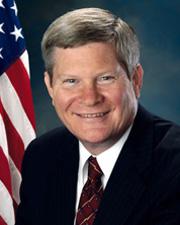
Mr. President, I rise today to share my thoughts on the tax measure before us. Few issues touch more Americans than the economy. Now that hostilities with Iraq are winding down, we need to focus on…
Mr. President, I rise today to share my thoughts on the tax measure before us. Few issues touch more Americans than the economy. Now that hostilities with Iraq are winding down, we need to focus on our own economy. Economic discussions tend to take on an unfortunate partisan tone, and I know that this bitterness is on display on the floor of the Senate today as we debate the President's latest tax cut proposal.
Regrettably, we often forget that we share a common goal: Every single member on this committee wants America to succeed. We all want Americans to find good jobs, to have access to affordable health care, to educate our children, and to retire with dignity and comfort. While we have sharp divisions on how to achieve that common goal, I hope we can remember at the end of the day that all of our intentions are good.
Despite all of our best intentions, we are facing nothing short of a budget crisis in America. CBO has revised its deficit projections upward yet again to reflect an end-of-year deficit of $300 billion. Federal revenues are on track to fall to the lowest level since 1959, even without more tax cuts, and we are about to vote on whether to raise the debt ceiling by almost another $1 trillion.
At the same time, we must make good on our commitments to the Iraqi people to help rebuild that country. We need to follow through on commitments here at home: to fund education and water projects and transportation and veterans' programs. Let's not forget that we will run right through the Social Security trust fund without setting aside so much as a dime for the young men and women who are paying into that system today, nor have we
taken any steps to address the imminent Medicare crisis.
Now, I admit that I went to college quite some time ago, and I understand that economic theories come and go, but I do not believe that basic math has changed. If you spend more than you have, you run up a deficit.
Yesterday in the Banking Committee we considered the nomination of Dr. Gregory Mankiw to become chairman of the Council of Economic Advisors. Given the health of this economy, we are certainly in need of some good advice. On reviewing some of Dr. Mankiw's work, I was especially interested in a passage from his 1998 book ``Principles of Economics,'' which talks about the dangers of short-term policies: ``People on fad diets put their health at risk but rarely achieve the permanent weight loss they desire. Similarly, when politicians rely on the advice of charlatans and cranks, they rarely get the desirable results they anticipate. After Reagan's election, Congress passed the cut in tax rates that Reagan advocated but the tax cut did not cause revenue to rise. Instead, tax revenue fell. . . and the U.S. federal government began a long period of deficit spending.''
On several occasions, I have expressed concern that this administration is sacrificing the long-term health of this Nation for a popular, short-term political measure. And the President's own nominee for the Council of Economic Advisors appears to share my concern.
I voted in 2001 for the President's tax cut plan. While I would have preferred to see more of that $1.3 trillion go to working Americans, I nevertheless agreed with a majority of my colleagues that a projected surplus of $5.6 trillion over 10 years was too high, and that we needed to refund some of that money. We face a starkly different picture today, and I simply do not understand how my distinguished colleagues can reverse course so completely with respect to their long-standing stated principles.
For example, the majority leader of this body, Senator Bill Frist, said back in 1996 that ``we have a moral obligation to balance the budget.'' Senator Santorum, back in 1995, said that ``the American people are sick and tired of excuses for inaction to balance the budget. The public wants us to stay the course towards a balanced budget, and we take that obligation quite seriously.'' And Senator Lott, just last year, said that ``the most important thing really does involve . . . keeping a balanced budget, not dipping into Social Security, and continuing to reduce the national debt.''
I would like to focus on Majority Leader Frist's statement that running budget deficits is a moral issue. What he meant by that was that when we run a deficit, we defer the hard decisions for our children and grandchildren.
In February, a group of 10 Nobel Prize-winning economists spoke out against the President's latest plan: ``Passing these tax cuts will worsen the long-term budget outlook, adding to the nation's projected chronic deficits. This fiscal deterioration will reduce the capacity of the government to finance Social Security and Medicare benefits as well as investments in schools, health, infrastructure, and basic research. Moreover, the proposed tax cuts will generate further inequalities in after-tax income.''
And just a few weeks ago, Fed Chairman Greenspan appeared before the Banking Committee and said, in as many different ways as he possibly could, that tax cuts should only take place in the context of fiscal discipline. In other words, don't cut taxes if you can't pay for the cuts.
To quote once again from Dr. Mankiw: ``Prosperity tomorrow calls for sacrifice today. It is the rare politician that is willing to call for that.'' In a radio address on March 3, 2001, when we still had record surpluses and we were on a course to pay down the debt, President George W. Bush proclaimed, ``Future generations shouldn't be forced to pay back money that we have borrowed. We owe this kind of responsibility to our children and grandchildren.'' At the time, this was an easy statement to make. Now, however, fiscal discipline requires sacrifice, and we need President Bush to follow through on the promise of leadership through hard economic times. I call on President Bush to exercise leadership and put an end to this tax cut mania. No one likes to deliver hard messages, but that is the price of true leadership.
Every time I talk to someone from South Dakota, I hear the same thing: Our schools need more funding; our water projects need more funding; our veterans need more funding; the list goes on and on. But the simple fact is, we just don't have the money anymore. And we certainly won't have the money if we continue on this reckless course of tax cuts that will fill the pockets of those who already have more money than they can spend in a lifetime. I agree that we shouldn't let government grow too big. But we shouldn't destroy it either.
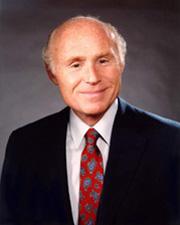
Mr. President, I rise today to introduce the Sunshine in Litigation Act of 2003, a measure to address the abuse of secrecy orders issued by federal courts. All too often, courts sign off on secret…
Mr. President, I rise today to introduce the Sunshine in Litigation Act of 2003, a measure to address the abuse of secrecy orders issued by federal courts. All too often, courts sign off on secret settlements that shield important public health and safety information from the public view from mothers and fathers and children whose lives are potentially at stake, and from public officials we have asked to protect our health and safety.
The problem is a simple one and has been recurring for decades. An individual brings a cause of action against a manufacturer for an injury or fatality resulting from a product defect. The plaintiff, often reticent to continue the litigation process because of grief or lack of resources, settles the lawsuit quickly. In exchange, the defendant insists that the plaintiff agree to the inclusion of a confidentiality clause. This mechanism prevents either party from disclosing information revealed during the process of litigation. Both of the parties to the lawsuit believe that they have ``won'': the plaintiff won a satisfactory financial settlement, and the defendant won the right to conceal ``smoking gun'' documents.
But not everybody wins. Future victims of injuries or fatalities resulting from the same product defect lose, because they or their families must ``re-invent the wheel'' as they litigate virtually the same case. Even worse, the American public loses with this outcome, because they remain unaware of the critical public health and safety information which could prevent harm and save lives.
Currently, judges have broad discretion in granting protective orders when ``good cause'' is shown. But these protective orders are being misused. Tobacco companies, automobile manufacturers and pharmaceutical companies have settled with victims and used the legal system to hide information which, if it became public, could protect the American public but endanger their business or reputation. We can all agree that the only appropriate use for such orders is to protect trade secrets and other truly confidential company information and our legislation makes sure it is protected. But protective orders are certainly not supposed to be used to hide public safety information from the public, especially when such information is neither trade secret nor proprietary.
There are no records kept of the number of confidentiality orders accepted by state or federal courts. However, anecdotal evidence suggests that court secrecy and confidential settlements are prevalent. Let me share some examples that illustrate the dangerous and often deadly consequences
that result from protective orders: Although an internal memo suggests that General Motors, ``GM'', was aware of the risk of fire deaths from crashes of pickup trucks with ``side saddle'' fuel tanks, an estimated 750 people were killed in fires involving these fuel tanks. When victims sued, GM disclosed documents only under protective orders and settled these cases only on the condition that these documents remained secret. This type of fuel tank was installed for 15 years before being discontinued.
Sixteen month-old Michael Bancroft was buckled into a Kolcraft booster-style safety seat in his mother's car when the car was involved in an accident. Due to a defect in product design, however, the seat did not protect him from a broken neck and paralysis. Kolcraft and the Bancrofts settled for $4.25 million and signed a confidentiality agreement that concealed the product's defect. Because this information remained a secret, countless parents continued to feel a false sense of safety when securing their children in Kolcraft safety seats.
From 1992-2000, tread separation of certain Bridgestone and Firestone tires caused a great number of car accidents, many involving serious injuries or fatalities. Bridgestone/Firestone quietly settled dozens of lawsuits resulting from faulty tire crashes, most of which included secrecy agreements. It was only in 1999, when a Houston public television broke the story, that the company admitted the defect and recalled 6.5 million tires.
Some States have been proactive in dealing with this problem. Florida, for example, has in place a Sunshine in Litigation law that severely limits the ability of parties to conceal information that effects public health and safety. Michigan has a rule that requires that secret settlements be unsealed two years after they are approved. And just last year, the judges of the United States District Court for the District of South Carolina unanimously agreed not to accept any secret settlements at all.
While these steps indicate movement in the right direction, we still have a long way to go. It is time to initiate a federal solution for this problem. The Sunshine in Litigation Act is a modest proposal that would require Federal judges to perform a simple balancing test to ensure that the defendant's interest in secrecy truly outweighs the public interest in information related to public health and safety. Specifically, prior to making any portion of a case confidential or sealed, a judge would have to determine by making a particularized finding of fact--that doing so would not restrict the disclosure of information relevant to public health and safety. Moreover, all courts, both Federal and State, would be prohibited from issuing protective orders that prevent disclosure to relevant regulatory agencies.
And don't just take it from me. During his confirmation hearings before the Judiciary Committee in January 2001, Attorney General John Ashcroft voiced his support for this legislation, saying, ``I think unnecessarily hiding or otherwise concealing from the public those [public health and safety hazards] would be against the interests of the people . . . I think there's great danger in not providing public information.''
This legislation does not prohibit secrecy agreements across the board. It does not place an undue burden on judges or our courts. It simply states that where the public interest in disclosure outweighs legitimate interests in secrecy, courts should not shield important health and safety information from the public and from regulators. This is an entirely reasonable balancing test. It is time to eliminate the dark dangers of court secrecy and bring matters of public health and safety into the light, where they belong.

Mr. President, I see the distinguished majority leader, Senator Frist, and wonder if I could ask him to address a concern I and other Senators have about a provision entitled ``Limitation'' which is…
Mr. President, I see the distinguished majority leader, Senator Frist, and wonder if I could ask him to address a concern I and other Senators have about a provision entitled ``Limitation'' which is located on page 62, line 13 of the bill.
This provision says that no funds made available to carry out this act may be used to provide assistance to any group or organization that does not have a policy ``explicitly opposing'' prostitution and sex trafficking. On its face, this provision appears harmless. No one here supports prostitution or sex trafficking. In fact, we abhor these practices, which are demeaning and degrading towards women, and also extremely dangerous. The rate of HIV infection among prostitutes in Cambodia is estimated to be 40 percent. India is facing a similar catastrophe. It is no secret that commercial sex workers and sex trafficking are a major cause of HIV transmission in Asia and in parts of Africa. We all want to see these practices end.
But the reality is that they exist. Prostitution and sex trafficking are rampant, not only in parts of Africa and Asia, but in Eastern Europe and the former Soviet republics, the Caribbean, and parts of Latin America. Any effective strategy to combat HIV/AIDS must include programs to reduce its spread through prostitution and sex trafficking. As difficult as it is, this reality cannot be ignored.
There are organizations who work directly with commercial sex workers and women who have been the victims of trafficking, to educate them about HIV/AIDS, to counsel them to get tested, to help them escape if they are being held against their will, and to provide them with condoms to protect themselves from infection. This work is not easy. It can also be dangerous. It requires a relationship of trust between the organizations and the women who need protection.
I am concerned that this provision, which requires such organizations to explicitly oppose prostitution and sex trafficking, could impede their effectiveness. In fact, some or many of these organizations may refuse to condemn the behavior of the women who trust they need in order to convince them to protect themselves against HIV. I would ask the Majority Leader how we can avoid that result, because we need to be able to support these organizations.
I thank the majority leader. I think that is important, because we do not want to impose requirements which have the unintended result of impeding the ability of these organizations to do their work, or interfering with our ability to support them.
section 333
Mr. President, I rise today to oppose the tax reconciliation bill being considered by the Senate today. This tax cut bill is not fiscally responsible. When President Bush entered the White House our country enjoyed a record budget surplus. The fiscal irresponsibility of this administration quickly turned that surplus into record deficits. Now this bill will bring our country further into debt, cause more hard working Americans to lose their jobs, and put a greater share of the tax receipts in the pockets of our country's most privileged.
I have several concerns about the bill before us. First, these tax cuts are tilted even more heavily to the very wealthy than the tax cuts the President championed in 2001. Just look at the rate reductions. For three income brackets, rates would drop by 2 percentage points, but the top rate falls by 3.6 percentage points. While the 2001 bill calls for marriage penalty relief beginning in 2004, the Senate rejected an amendment offered by Senator Jeffords to provide immediate marriage penalty relief to those who qualify for the earned-income tax credit. Sadly, this administration has chosen to support tax policies where people making over $1 million will reap enormously, while working families will receive very little tax relief.
Second, these plans have taken tax gimmickry to a whole new level by pretending that most of the provisions will expire after just 3 years, at the end of 2005. By doing so, this bill attempts to jam in as much of the President's dividend tax proposal as they can into the Senate's $350 billion limit at the expense of more reasonable tax cut provisions aimed at low- and middle-income working families. It is obvious that proponents of these tax cuts have no intention of allowing any of these provisions to expire and in fact will come back to this floor again and again asking for them to be made permanent. Instead of acting in a fiscally responsible manner, they are masking from the American people the true, astronomical costs of this bill.
Third, these cuts will push our country deeper in debt. The nonpartisan
Congressional Budget Office has estimated that the President's full tax cut would add $2.7 trillion to the deficit through 2013. At the same time the administration is pushing for Congress to pass a $1 trillion increase in the Federal debt limit that does not account for additional tax cuts. I do not think we can afford another large tax cut at this time until we get our own fiscal house in order.
Clearly, this tax cut plan is not about growing the economy or creating jobs. It is about starving the Government and wooing some voters. In fact, leading economists have stated repeatedly that the elimination of taxes on dividends paid to investors--the centerpiece of the President's tax cut proposal--would do very little to spur economic growth or reduce the Nation's jobless rate.
In 2001, I voted against the Bush tax cut bill because it was too skewed toward the wealthiest Americans and too fiscally irresponsible. Since then, we have gone from record surpluses to record deficits, and the economy is still floundering. Passing another enormous tax cut this year will only continue this trend and increase the economic problems that our children and grandchildren will inherit.
Earlier this year, the President said we should not pass our fiscal problems onto future Presidents, Congresses, and generations. I agree with him. Unfortunately, this tax cut bill will drive us deeper into debt and will do exactly what the President says we should avoid, burden our children.
While the promise of another tax cut sounds great, I am not going to ask my children and grandchildren and everyone else's children and grandchildren to pay for it. It is not right. It is not fair. And it is not the American way.
Show 11 more

Mr. President, is it in order to continue now on the growth package? Mr. President, I have a series of amendments that both sides have cleared. I send the amendments to the desk, ask that they be…
Mr. President, is it in order to continue now on the growth package?
Mr. President, I have a series of amendments that both sides have cleared. I send the amendments to the desk, ask that they be considered, as modified, ask that they be agreed to en bloc, and that the motion to reconsider be laid upon the table.
Mr. President, I ask unanimous consent to add Senator Murkowski as a cosponsor to amendment No. 594 on rural equity, and amendment number 596, the Collins amendment.
Mr. President, I thank my colleague from Pennsylvania for raising this issue. He is correct that my staff has been working with these organizations to obtain a fuller understanding of their transaction. We have learned that there is widespread abuse involving donations of patents and similar property. We made this provision effective May 7, 2003, so that abusive donations could not be rushed to completion if a later effective date was chosen.
We will continue our discussion with these organizations, and will objectively consider their concerns and whether further clarifications are appropriate as the bill moves to conference.
I appreciate the concern of the Senator from Alabama with respect to Section 333. It was not the Committee's intent to prohibit deductions for amounts paid by companies as a condition to their operation in a regulated industry.
The Senator from Maryland is correct. The Committee addressed this issue in its publication entitled: ``Technical Explanation of Provisions Approved by the Committee on May 8, 2003.'' Footnote 164 of this publication states:
The bill does not affect amounts paid or incurred in
performing routine audits or reviews such as annual audits
that are required of all organizations or individuals in a
similar business sector, or profession, as a requirement for
being allowed to conduct business. However, if the government
or regulator raised an issue of compliance and a payment is
required in settlement of such issue, the bill would affect
that payment.
It is my intention to amend and clarify Section 333 in the conference report in order to reflect the Senators' comments and to carve-out certain fees and expenses paid by companies operating in highly-regulated industries.
That is correct. The Senator from Oregon refers to a common form of financing transportation and other equipment that involves the production of numerous units, all subject to a common lease. We refer to this form of financing as ``syndication''.
I can assure the Senator from Oregon that I support the effort to clarify this situation in conference and ensure that the 2002 bonus depreciation provision is available to purchasers of equipment pursuant to this method of financing multi-unit sales of heavy equipment. I thank the Senator for bringing this inadvertent error in the original 2002 Act to my attention.
I appreciate the Senator from Oregon providing me with this information. This is a serious oversight in the original language and I will work closely with the Senator to ensure that this is corrected in conference with the House.
I am happy to confirm the understanding of the distinguished Senator from Louisiana. The provision was adopted to provide needed clarifications in order to eliminate the uncertainties that have arisen regarding the proper application of the income forecast method. I believe the disputes that have arisen regarding the mechanics of the income forecast formula are extremely unproductive and an inefficient use of both taxpayer and limited tax administration resources. By adopting these clarifications, I believe the committee intended to end any disputes and prevent any further waste of both taxpayer and Government resources in resolving these disputes. Any existing disputes should be resolved expeditiously in a manner consistent with the clarifications included in the bill.
I would echo the comments of my colleague from Oklahoma. I, too, will do all that I can in conference to ensure that States revenues are not reduced by any dividends provisions that are included in the final product.
If the Senator will yield, I would say to my distinguished colleague from Nevada that I share his concerns and that it may not properly reflect congressional intent for the IRS to separate an integrated hotel, restaurant, and casino business into different pieces subject to different depreciation treatment. Equipment, furniture, and similar personal property used in a such a business should be depreciable in accordance with the current law treatment of the hotel industry and the retail industry generally. I will be happy to work with the Senator to provide appropriate clarification for depreciation of assets used for gaming in the hospitality industry.
amendment no. 545
Mr. President. I commend my colleagues for their work on this important amendment, which injects much needed flexibility and funding for safety net hospitals that treat especially vulnerable populations. This amendment alleviates pressure on those hospitals and allows ``extremely low-DSH States'' to increase Medicaid DSH allotments to 3 percent in Fiscal Year 2004. Currently, Federal law restricts Medicaid DSH allotments to ``extremely low-DSH States'' to only 1 percent of Medicaid Program costs.
I thank Senators Bingaman and Domenici for their work and for their dogged commitment to the cause. I have supported low DSH improvement legislation in the past, and I am thankful for their leadership on this important issue this year.
Mr. President, it has come to my attention that certain provisions of S. 1054 have engendered concern in the equipment leasing industry. I recognize that assets used by vital American industries are often lease-financed. It is not the intention of the Senate or Committee on Finance to impede legitimate leasing transactions. I wish to assure the markets that in any final legislation, the tax incentives utilized in leases that are considered appropriate under current law will be maintained.
I move to reconsider the vote.
Mr. President, I ask unanimous consent that the order with respect to S. 1054 be modified to allow for the following conferees: Senators Grassley, Hatch, Nickles, Lott, Baucus, Rockefeller, and Breaux.
Mr. President, today, Senator Thomas and I would like to introduce the Health Care Access and Rural Equity, (H-CARE), Act of 2003. This proposal is the result of a tripartisan and Bicameral effort.…
Mr. President, today, Senator Thomas and I would like to introduce the Health Care Access and Rural Equity, (H-CARE), Act of 2003.
This proposal is the result of a tripartisan and Bicameral effort. We are proud to be joined by 24 Members who also support the bill, including--Senators Harkin, Grassley, Roberts, Daschle, Dorgan, Smith, Johnson, Lincoln, Domenici, Rockefeller, Burns, Bingaman, Jeffords, Cochran, Levin, Talent, Edwards, Bond, Pryor, Dayton, Snowe, Cantwell and Murray. I would also like to thank our House companions, led by Representatives Moran (R-KS), and Pomeroy.
Working together, I believe we are taking important steps toward improving access to health care in our rural communities.
In addition, I would like to thank the National Rural Health Association, the Federation of American Hospitals, the American Hospital Association, Premier Hospital Alliance and the Coalition representing Sole Community Hospitals for their support of this effort.
As my colleagues may know, rural health care providers are often forced to operate with significantly less resources that larger, urban facilities. In my State of North Dakota, rural hospitals often receive only half the reimbursement of their urban counterparts--for treating the same patient. For example, a rural facility in North Dakota receives approximately $4,200 for treating pneumona, while a hospital in New York City can receive more than $8,500.
This funding disparity is simply unfair and has placed many rural providers on shaky ground. Continued funding shortfalls have resulted in rural providers having much tighter inpatient cost margins than their urban counterparts--today, the average rural hospital operates with a slim 3.9 percent cost margin compared to 11.3 percent for urban providers). This situation has resulted in more than 43 percent of rural hospitals operating in the red.
When you look at overall cost margins, the situation is even more bleak--rural providers are working with an average negative 2.9 percent Medicare margin, compared to 6.3 percent for urban hospitals). Our rural facilities cannot continue to provide high quality services if they lose nearly 3 percent on every Medicare patient they serve.
To address these problems, the bill we are introducing today would take many important steps to improve the rural health care system.
First, it would provide a much-needed low-volume adjustment payment. Today, it is nearly impossible for rural hospitals to take advantage of economies of scale realized by facilities located in larger communities. This situation has resulted in the majority of small facilities losing money. To address this problem, our bill would provide a new, extra payment to hospitals serving less than 2,000 patients per year. This provision would provide up to 25 percent in additional funding to help rural providers cover inpatient hospital services.
Second, H-CARE would close the gap in payments hospitals receive for serving low-income patients. It would do this by allowing rural hospitals to receive the same level of special ``Disproportionate Share--or DISH Payments'' currently available to urban providers.
Third, our legislation would take steps to permanently equalize the ``base payment amount,'' which has been 1.6 times higher for urban facilities. The recent Omnibus bill temporarily fixed this problem--but only until the end of FY03. Our bill finishes the job.
Fourth, this legislation would help hospitals better meet labor costs by making some needed improvements to the Medicare ``wage index'' calculation. Across the Nation, rural hospitals have reported that the wage index does not accurately account for labor costs in their area. Our bill takes steps to address this problem.
Fifth, our bill would ensure that rural hospitals continue to be paid fairly for outpatient services. It does this by extending a provision in current law that protects these hospitals against losses under the current Medicare payment system. It also includes measures to protect rural hospitals' access to lab services.
I am happy to say that this set of proposals would go a long way toward placing rural facilities on much sounder financial footing. Let me provide some examples.
Today, the average small hospital located in the Midwest receives $3,926 as an average payment for inpatient services. If all the changes laid out in our bill are enacted, this will improve payments to smaller rural hospitals by about 25 percent.
If you look at a more specific service--such as treating pneumonia-- this same hospital would see payments increase from about $4,326 to $5,405. These increases are clearly big improvements, which will bring reimbursements for rural hospitals more in line with their costs.
Before I close, I'd also like to mention that this bill would establish a new grant program to help rural hospitals repair crumbling buildings. Under this program, rural providers
could apply for up to $5m in loan assistance. It is my hope these resources will help strengthen the infrastructure of our Nation's rural hospitals.
Finally, our bill includes a set of provisions that will make small-- but important--changes to the Critical Access Hospital, CAH, program. These include measures to ensure CAHs have 24-hour emergency on-call providers and to ensure they can afford to provide quality ambulance care.
In total, the changes laid out in our bill will bring more than $72 million in new resources to my State of North Dakota over the next ten years. The bill will provide similar benefits to other rural States.
Thank you again to my Senate and House colleagues, as well as the organizations who worked with us, for your cooperation in developing this important health care proposal. It is my hope that this legislation will help to strengthen and sustain our Nation's rural health care system.
Mr. President, today, Senator Thomas and I would like to introduce the Health Care Access and Rural Equity, (H-CARE), Act of 2003. This proposal is the result of a tripartisan and Bicameral effort.…
Mr. President, today, Senator Thomas and I would like to introduce the Health Care Access and Rural Equity, (H-CARE), Act of 2003.
This proposal is the result of a tripartisan and Bicameral effort. We are proud to be joined by 24 Members who also support the bill, including--Senators Harkin, Grassley, Roberts, Daschle, Dorgan, Smith, Johnson, Lincoln, Domenici, Rockefeller, Burns, Bingaman, Jeffords, Cochran, Levin, Talent, Edwards, Bond, Pryor, Dayton, Snowe, Cantwell and Murray. I would also like to thank our House companions, led by Representatives Moran (R-KS), and Pomeroy.
Working together, I believe we are taking important steps toward improving access to health care in our rural communities.
In addition, I would like to thank the National Rural Health Association, the Federation of American Hospitals, the American Hospital Association, Premier Hospital Alliance and the Coalition representing Sole Community Hospitals for their support of this effort.
As my colleagues may know, rural health care providers are often forced to operate with significantly less resources that larger, urban facilities. In my State of North Dakota, rural hospitals often receive only half the reimbursement of their urban counterparts--for treating the same patient. For example, a rural facility in North Dakota receives approximately $4,200 for treating pneumona, while a hospital in New York City can receive more than $8,500.
This funding disparity is simply unfair and has placed many rural providers on shaky ground. Continued funding shortfalls have resulted in rural providers having much tighter inpatient cost margins than their urban counterparts--today, the average rural hospital operates with a slim 3.9 percent cost margin compared to 11.3 percent for urban providers). This situation has resulted in more than 43 percent of rural hospitals operating in the red.
When you look at overall cost margins, the situation is even more bleak--rural providers are working with an average negative 2.9 percent Medicare margin, compared to 6.3 percent for urban hospitals). Our rural facilities cannot continue to provide high quality services if they lose nearly 3 percent on every Medicare patient they serve.
To address these problems, the bill we are introducing today would take many important steps to improve the rural health care system.
First, it would provide a much-needed low-volume adjustment payment. Today, it is nearly impossible for rural hospitals to take advantage of economies of scale realized by facilities located in larger communities. This situation has resulted in the majority of small facilities losing money. To address this problem, our bill would provide a new, extra payment to hospitals serving less than 2,000 patients per year. This provision would provide up to 25 percent in additional funding to help rural providers cover inpatient hospital services.
Second, H-CARE would close the gap in payments hospitals receive for serving low-income patients. It would do this by allowing rural hospitals to receive the same level of special ``Disproportionate Share--or DISH Payments'' currently available to urban providers.
Third, our legislation would take steps to permanently equalize the ``base payment amount,'' which has been 1.6 times higher for urban facilities. The recent Omnibus bill temporarily fixed this problem--but only until the end of FY03. Our bill finishes the job.
Fourth, this legislation would help hospitals better meet labor costs by making some needed improvements to the Medicare ``wage index'' calculation. Across the Nation, rural hospitals have reported that the wage index does not accurately account for labor costs in their area. Our bill takes steps to address this problem.
Fifth, our bill would ensure that rural hospitals continue to be paid fairly for outpatient services. It does this by extending a provision in current law that protects these hospitals against losses under the current Medicare payment system. It also includes measures to protect rural hospitals' access to lab services.
I am happy to say that this set of proposals would go a long way toward placing rural facilities on much sounder financial footing. Let me provide some examples.
Today, the average small hospital located in the Midwest receives $3,926 as an average payment for inpatient services. If all the changes laid out in our bill are enacted, this will improve payments to smaller rural hospitals by about 25 percent.
If you look at a more specific service--such as treating pneumonia-- this same hospital would see payments increase from about $4,326 to $5,405. These increases are clearly big improvements, which will bring reimbursements for rural hospitals more in line with their costs.
Before I close, I'd also like to mention that this bill would establish a new grant program to help rural hospitals repair crumbling buildings. Under this program, rural providers
could apply for up to $5m in loan assistance. It is my hope these resources will help strengthen the infrastructure of our Nation's rural hospitals.
Finally, our bill includes a set of provisions that will make small-- but important--changes to the Critical Access Hospital, CAH, program. These include measures to ensure CAHs have 24-hour emergency on-call providers and to ensure they can afford to provide quality ambulance care.
In total, the changes laid out in our bill will bring more than $72 million in new resources to my State of North Dakota over the next ten years. The bill will provide similar benefits to other rural States.
Thank you again to my Senate and House colleagues, as well as the organizations who worked with us, for your cooperation in developing this important health care proposal. It is my hope that this legislation will help to strengthen and sustain our Nation's rural health care system.

Mr. President, I cannot support this fiscally irresponsible and unfair tax cut package. Our economy is struggling right now. Eight-and-a-half million Americans are out of work, and we now have about…
Mr. President, I cannot support this fiscally irresponsible and unfair tax cut package.
Our economy is struggling right now. Eight-and-a-half million Americans are out of work, and we now have about 2.7 million fewer private sector jobs than were in existence at the beginning of this administration. No President since the Great Depression has ended a term with fewer jobs than when his term began. Michigan has an unemployment rate of 6.7 percent, among the highest in the Nation. According to the Bureau of Labor Statistics, Michigan lost 17,700 jobs just last month, the most of any State in the country. That brings the total number of Michigan jobs lost since the Bush administration took office to over 178,000, and the total number of unemployed in Michigan to 344,000.
We are also back into a deep deficit ditch. As recently as January 2001, the Office of Management and Budget projected a 10-year surplus of $5.6 trillion. Now, under the recently passed budget resolution, we face an estimated deficit of $1.95 trillion over the same time period, including record deficits of over $300 billion for this year and the next. Federal Reserve Chairman Alan Greenspan recently reiterated that the bigger the deficits, the higher the long-term interest rates, which means higher home, car, college and credit card payments for us all.
Our economy needs a lift now. It needs real jobs and real growth now, not a rehash of the same policies that were tried and failed in the recent past.
Unfortunately, this bill only provides more of the same failed policies.
While the bill purports to cost $350 billion over 10 years--an amount which already is fiscally irresponsible given our current deficit--this number is arrived at by using a budget gimmick that masks the true cost of the bill, which in reality is upwards of $660 billion over 10 years. The bill would completely exclude dividend income from individual taxation in 2004 through 2006, a policy that is expensive, not very stimulative to our economy and sharply slanted towards upper income folks. But then the bill ``sunsets'' the dividend exclusion so that it disappears beginning in 2007. Not only is that bad policy, it is also disingenuous and deceptive to the American people.
This bill also is too generous to those who need it the least. The top 10 percent of taxpayers would receive well over 50 percent of the tax benefits, and in 2003, those with incomes above $1 million would receive an average tax cut of $64,400, while those in the middle of the income spectrum would receive an average tax cut of only $233. Providing large tax cuts to the wealthy in the hopes that the benefits will trickle down to everybody else hasn't worked before, and there is little reason to think that it will work now. Following the same approach that failed time and again just doesn't make sense.
This plan provides no unemployment benefits to any of our 8.7 million unemployed Americans. It is ironic that in a bill that is based on the President's so-called ``Jobs and Growth'' package, the Republican majority is not addressing the immediate need for job assistance for millions of Americans. It is elementary economics that providing additional unemployment benefits is an excellent way to jump start a stagnant economy. The money we are talking about is money that will be spent. According to a 1999 Department of Labor study, every $1 invested in unemployment insurance generates $2.15 in Gross Domestic Product. That is what our economy needs, not wildly expensive tax cuts that do little in the short term at a huge long-term cost.
While I am pleased that this bill contains funds to assist our struggling State and local governments, it does not do enough. Our States currently are facing their worst fiscal crisis in over 50 years, with many being forced to raise taxes or cut vital services like Medicaid in order to balance their budgets. Instead of doing all that we should to assist them, this bill includes a dividends exclusion provision that will actually strip States of revenues, something which will stimulate neither jobs nor growth.
I supported and voted for a tax package that was about creating jobs now, when we need it, in a way that did not mortgage our future.
The plan I supported was estimated to put more than 1 million people back to work by the end of 2004 at a fraction of this bill's costs. It would have cut taxes for every taxpaying American, providing a tax cut of $1,630 to a family of four through a wage credit, an acceleration of the child tax credit, and an elimination of the marriage penalty. It would have helped small businesses by providing them with a 50 percent tax credit to help employers maintain health coverage for their workers, and would have provided large and small companies with incentives to invest and create jobs by allowing small businesses to immediately write-off more investments and providing bonus depreciation to all companies. It also would have provided unemployment benefits for nearly 4 million laid-off workers, including those who have already exhausted their benefits. What our sagging economy needs right now is immediate jobs, growth, and stimulus, and that is what the plan I supported offered.
Instead, what passed is a package that is the wrong medicine for our ailing economy. It will create fewer jobs than what is needed. It will slight middle-class families in favor of the wealthy. And it will dramatically increase the deficit and national debt and drive up interest rates, which will make it more expensive to buy a house, pay for college, or pay off credit card debt. That is just not a plan that I can vote for.

Mr. President, at a time when our men and women in uniform are fighting valiantly to bring peace and opportunity to an oppressed people and ensure the security of our homeland, I am pleased to…
Mr. President, at a time when our men and women in uniform are fighting valiantly to bring peace and opportunity to an oppressed people and ensure the security of our homeland, I am pleased to introduce the Selected Reserve Educational Assistance Act of 2003 to extend the opportunity of higher education to many of those very same men and women in uniform. This legislation provides our National Guard and Reserve personnel, hundreds of thousands of whom are currently mobilized, deployed, and fighting around the globe, with educational opportunities as intended by the Montgomery GI bill. I am pleased that my colleagues, Senators Tom Daschle, Tim Johnson, and Bill Nelson, have joined as cosponsors.
Through this legislation, we week to promote both service to country and education in a way that is both logical and fair. Members of our National Guard and Reserve are members of our communities. The skills they learn from military service are reflected in the positions of leadership they assume among us. These citizen-soldiers have demonstrated their commitment to serve and as members of the ``total force'' deserve opportunities to further improve themselves through the civilian educational opportunities the Montgomery GI bill promotes. Service and education are prerequisites of a strong, vibrant democracy. This legislation seeks to further this combined effort.
The original GI bill, known as the Servicemen's Readjustment Act, was enacted in 1944. That bill provided a $500 annual education stipend as well as a $50 subsistence allowance. As a result of this initiative, 7.8 million World War II veterans were able to take advantage of post- service education and training opportunities, including more than 2.2 million veterans who went on to college. My own father was among those veterans who volunteered for the war, fought bravely, and then returned to college with assistance from the GI bill.
Since the 1940's various versions of servicemen's education assistance have allowed millions of veterans to take advantage of educational opportunities. Over time, however, inflation and the escalating costs of higher education have eroded the value of those educational benefits. During the 107th Congress with the enactment of Public Law 107-103 Senator Johnson and I, along with many of our colleagues, made great strides returning value to educational assistance benefits available for active component service members and veterans. More remains to be done.
The United States military is an all volunteer force. In times of peace and prosperity and in times of trial, we rely on young men and women to come forward of their own accord to stand up for our collective defense. Though service to country and patriotism, particularly in times of crisis, factor into recruiting this all volunteer force, benefits still do and ought to matter. We must remain vigilant, as we are constantly recruiting new members of our armed forces, ensuring the benefits these individuals receive from military service are commensurate with the service they render to this nation.
At its inception in 1985, the Reserve Montgomery GI bill program, had been pegged at 47 percent of basic active component Montgomery GI bill benefits. During the ensuing 18 years, the parity of the reserve program with its active duty counterpart has slipped. At present the Chapter 1606 program, Selected Reserve Montgomery GI bill, is only about 28 percent of the Chapter 30 program. This legislation attempts to bring the reserve program back in line with the active component benefit.
In each of the last three years over 75,000 National Guard and Reserve members have taken advantage of Veterans Administration educational benefits for pursuing their educational or vocational objectives. While those citizen-soldiers currently mobilized may become eligible for veterans benefits, we must correct the disparity between the active and reserve Montgomery GI bill programs. Only two benefit increases have been legislated in the reserve program since its inception in 1985, other than cost-of-living increases. The reserve Montgomery GI bill benefit for full-time study stands at $276 compared to $985 per month for the Title 38 program. This legislation will bring the reserve Montgomery GI bill benefit to $428 per month in fiscal year 2004 and $473 per month in fiscal year 2005 and continue out-year increases in accordance with advances in the consumer price index.
The Military Coalition comprised of 33 member organizations representing over 5.5 million veterans and family members endorses rate increases and funds for the reserve Montgomery GI bill program so that National Guard and Reserve service members can reap an educational return on their voluntary service to country.
It is time to return reserve educational assistance benefits to the level intended by the original drafting of the Reserve Montgomery GI Bill. Coupling and reinforcing service with higher education will pay dividends for our future security, strength and prosperity. This legislation fulfills the promise made to our Nation's service members, helps with recruiting and retention, strengthens the economy, and partly offsets the increasing costs of higher education.
I urge all Members of the Senate to join me in support of the Selected Reserve Educational Assistance Act of 2003 and quickly pass this legislation.
I ask unanimous consent that the text of the bill be printed in the Record.

Mr. President, I am voting against this bill because I came to the Senate to represent California families and this tax cut for the wealthy elite is not in their interest. It contradicts the basic…
Mr. President, I am voting against this bill because I came to the Senate to represent California families and this tax cut for the wealthy elite is not in their interest. It contradicts the basic American values of fairness, responsibility, and opportunity.
We are now in the longest period of continued job losses since the Great Depression. In the first 3 months of this year alone, America lost another half a million jobs. As result, 8.8 million people are unemployed today. That is 2.8 million more than when President Bush took office. Most troubling, 1.9 million of those workers have been out of work for more than a year and a half. But instead of targeting the majority of the benefits to a majority of the people, this bill targets its benefits to the very top.
There is not a single responsible economist I know who thinks this tax package will get us out of the terrible economic condition we are in. In fact, 11 Nobel laureate economists and hundreds of others have published an open letter saying that passing these tax cuts ``will worsen the long-term budget outlook, adding to the Nation's projected chronic deficits. This fiscal deterioration will reduce the capacity of the Government to finance Social Security and Medicare benefits as well as investments in schools, health, infrastructure, and basic research.''
Those Nobel laureates also added that the tax cuts would generate further inequalities in after-tax income. The reason for that is that this package is skewed to those who do not need it.
That kind of windfall for the wealthy is bad policy. That is why I supported the Democratic alternative and other amendments that would have spread the benefits of the bill to more Americans.
The Democratic Plan for Jobs, Opportunity and Prosperity would put over 1 million people back to work by the end of 2004. The Democratic plan would provide three times more economic boost right now than the Republican plan. At the same time, the Democratic plan would put us back on the path to fiscal responsibility.
The Democratic plan would have cut taxes for every working American, providing an average benefit of $1,630 to a family of four making $50,000 a year. And it would have provided real assistance to the 8.8 million Americans who are currently unemployed. Our plan would have created a new credit for every working American, which will provide $300 for each adult in a family and $300 for the first two children. We wanted to accelerate the refundability of the child tax credit, accelerate the elimination of the marriage penalty, and extend and expand unemployment insurance for those looking for work, including the 1 million people who have already exhausted their benefits.
Also, the Democratic plan would have sparked growth by helping the States sustain vital services during the economic downturn and encouraging small businesses to invest. As part of the Democratic proposal, we proposed a 50 percent tax credit in 2003, worth $8 billion, to help small businesses pay their share of insurance premiums. And very important for California, our plan would have provided $40 billion in immediate aid to State and local governments. We also proposed tripling the amount of investments small businesses can write off immediately from $25,000 to $75,000 in 2003.
I was deeply troubled that my colleagues cared so much for the elite few that they voted against a number of amendments that would have helped working Americans. They rejected an effort to cut taxes on social security benefits for middle-income seniors. They rejected expanding the child tax
credit. They supported raising taxes on Americans working abroad. They fought efforts to increase tax benefits to help families pay for higher education. And they fought every effort to get more meaningful assistance to the States in this time of crisis.
There were two bright spots during the Senate consideration of this legislation. First, the Senate passed the Invest in the USA Act amendment that Senator Ensign and I introduced. It will create a one- time incentive for U.S. companies to bring $140 billion dollars in funds earned abroad back to the U.S. for job creation, investment in plants and equipment, and for other economically stimulative uses.
The Senate also adopted an amendment offered to crack down on delinquent parents who do not pay child support. My amendment, which is based on bipartisan legislation that I introduced, penalizes those who do not pay the child support that they owe.
Despite these two improvements, the bill--and some destructive amendments, such as an expansion of the dividend exclusion--is deeply flawed, unfair, and fiscally dangerous--creating massive deficits, which will hurt economic growth.
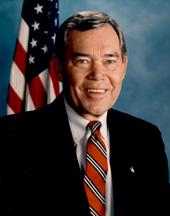
Mr. President, I am pleased to rise today to introduce the ``Health Care Access and Rural Equity Act (H-CARE) of 2003'' with Senator Conrad and fellow Senate Rural Health Caucus members, Senators…
Mr. President, I am pleased to rise today to introduce the ``Health Care Access and Rural Equity Act (H-CARE) of 2003'' with Senator Conrad and fellow Senate Rural Health Caucus members, Senators Harkin, Grassley, Johnson, Roberts, Domenici, Daschle, Bingaman, Bond, Lincoln, Cochran, Burns, Rockefeller, Jeffords, Talent, Levin, Smith, Dayton, Snowe, Edwards, Cantwell, Dorgan, Coleman and Murray. As always, it is important to note that rural health care legislation has a long history of bipartisan and bicameral collaboration and cooperation.
The ``Health Care Access and Rural Equity Act of 2003'' will go a long way in addressing current inequities in the Medicare payment system that continually place rural providers at a disadvantage. This legislation recognizes the unique needs of rural hospitals and levels the playing field between them and their urban counterparts.
Rural hospitals are more dependent on Medicare payments as part of their total revenue. In fact, Medicare accounts for almost 70 percent of total revenue for small, rural hospitals. Rural hospitals have lower patient volumes, but must compete nationally to recruit providers due to the nursing and other health professional workforce shortages.
Additional burdens are placed on rural hospitals because of higher uninsured rates in rural America. Also, seniors living in rural areas tend to be poorer and have more chronic conditions than their urban and suburban counterparts.
H-CARE recognizes the special circumstances faced by rural hospitals and addresses these issues by equalizing Medicare Disproportionate Share Hospital, DSH, payments. These add-on payments help hospitals cover the costs of serving a high proportion of low income and uninsured patients. Current law allows urban facilities to receive unlimited add-ons based on the percentage of these types of patients served. However, small, rural hospital add-on payments are capped at 10 percent. H-CARE eliminates the Sole Community Hospital and small rural hospital caps, bringing their payments in line with the benefits urban facilities received.
This legislation permanently closes the gap between urban and rural `'standardized payment'' levels. Inpatient hospital payments are calculated by multiplying several different factors, including a standardized payment amount. The fiscal year 2003 appropriations bill corrected the 1.6 percent disparity, but the provision expires at the end of the fiscal year.
Our bill also acknowledges that low-volume hospitals have a higher cost per case, which results in negative operation margins. To alleviate this problem, H-CARE creates a low-volume inpatient payment adjustment for hospitals that have less than 2,000 annual discharges per year and are located more than 15 miles from another hospital. This provision will improve payments for more than one-third of all rural hospitals. Almost two-thirds of Wyoming hospitals would qualify for the low-volume provisions in H-CARE, which would result in $26.5 million in increased payments over 10 years.
Rural hospitals have long sought changes to the wage index which adjusts hospital inpatient payments to reflect the effect of their labor costs. Currently, the labor-related share of hospital inpatient payments is set nationally at 71 percent. As rural hospitals generally have a lower wage index than their urban counterparts, their inpatient payment is adjusted downward. H-CARE would lower the labor-related percent from 71 percent to 62 percent, which will increase payments to rural hospitals.
There are now more than 700 hospitals nationwide that have converted to Critical Access Hospital status. This program was created in the Balanced Budget Act of 1997 and allows our smallest communities crucial access to 24 hour emergency services and some hospital care in their home towns. Almost 25 percent of my State's hospitals have downsized to Critical Access Hospital status. H-CARE contains several provisions to strengthen this important rural hospital program.
It is time for the Federal Government to recognize that rural hospitals are long overdue for a fair shake from the Medicare program. Rural providers care for patients under different circumstances than urban hospitals and H-CARE ensures that rural hospitals are paid accurately and fairly. I strongly encourage all my colleagues with an interest in rural health to cosponsor this legislation.
I also want to thank the American Hospital Association, the Federation of American Hospitals, Premier and the National Rural Health Association for their work and support in this effort.
Mr. President, I am pleased to rise today to introduce the ``Health Care Access and Rural Equity Act (H-CARE) of 2003'' with Senator Conrad and fellow Senate Rural Health Caucus members, Senators…
Mr. President, I am pleased to rise today to introduce the ``Health Care Access and Rural Equity Act (H-CARE) of 2003'' with Senator Conrad and fellow Senate Rural Health Caucus members, Senators Harkin, Grassley, Johnson, Roberts, Domenici, Daschle, Bingaman, Bond, Lincoln, Cochran, Burns, Rockefeller, Jeffords, Talent, Levin, Smith, Dayton, Snowe, Edwards, Cantwell, Dorgan, Coleman and Murray. As always, it is important to note that rural health care legislation has a long history of bipartisan and bicameral collaboration and cooperation.
The ``Health Care Access and Rural Equity Act of 2003'' will go a long way in addressing current inequities in the Medicare payment system that continually place rural providers at a disadvantage. This legislation recognizes the unique needs of rural hospitals and levels the playing field between them and their urban counterparts.
Rural hospitals are more dependent on Medicare payments as part of their total revenue. In fact, Medicare accounts for almost 70 percent of total revenue for small, rural hospitals. Rural hospitals have lower patient volumes, but must compete nationally to recruit providers due to the nursing and other health professional workforce shortages.
Additional burdens are placed on rural hospitals because of higher uninsured rates in rural America. Also, seniors living in rural areas tend to be poorer and have more chronic conditions than their urban and suburban counterparts.
H-CARE recognizes the special circumstances faced by rural hospitals and addresses these issues by equalizing Medicare Disproportionate Share Hospital, DSH, payments. These add-on payments help hospitals cover the costs of serving a high proportion of low income and uninsured patients. Current law allows urban facilities to receive unlimited add-ons based on the percentage of these types of patients served. However, small, rural hospital add-on payments are capped at 10 percent. H-CARE eliminates the Sole Community Hospital and small rural hospital caps, bringing their payments in line with the benefits urban facilities received.
This legislation permanently closes the gap between urban and rural `'standardized payment'' levels. Inpatient hospital payments are calculated by multiplying several different factors, including a standardized payment amount. The fiscal year 2003 appropriations bill corrected the 1.6 percent disparity, but the provision expires at the end of the fiscal year.
Our bill also acknowledges that low-volume hospitals have a higher cost per case, which results in negative operation margins. To alleviate this problem, H-CARE creates a low-volume inpatient payment adjustment for hospitals that have less than 2,000 annual discharges per year and are located more than 15 miles from another hospital. This provision will improve payments for more than one-third of all rural hospitals. Almost two-thirds of Wyoming hospitals would qualify for the low-volume provisions in H-CARE, which would result in $26.5 million in increased payments over 10 years.
Rural hospitals have long sought changes to the wage index which adjusts hospital inpatient payments to reflect the effect of their labor costs. Currently, the labor-related share of hospital inpatient payments is set nationally at 71 percent. As rural hospitals generally have a lower wage index than their urban counterparts, their inpatient payment is adjusted downward. H-CARE would lower the labor-related percent from 71 percent to 62 percent, which will increase payments to rural hospitals.
There are now more than 700 hospitals nationwide that have converted to Critical Access Hospital status. This program was created in the Balanced Budget Act of 1997 and allows our smallest communities crucial access to 24 hour emergency services and some hospital care in their home towns. Almost 25 percent of my State's hospitals have downsized to Critical Access Hospital status. H-CARE contains several provisions to strengthen this important rural hospital program.
It is time for the Federal Government to recognize that rural hospitals are long overdue for a fair shake from the Medicare program. Rural providers care for patients under different circumstances than urban hospitals and H-CARE ensures that rural hospitals are paid accurately and fairly. I strongly encourage all my colleagues with an interest in rural health to cosponsor this legislation.
I also want to thank the American Hospital Association, the Federation of American Hospitals, Premier and the National Rural Health Association for their work and support in this effort.

Mr. President, I rise today to introduce the Law Enforcement Officers Retirement Equity act of 2003. I am proud to be joined on this bill by my colleagues, Senators Sarbanes, Leahy and Campbell. This…
Mr. President, I rise today to introduce the Law Enforcement Officers Retirement Equity act of 2003. I am proud to be joined on this bill by my colleagues, Senators Sarbanes, Leahy and Campbell. This legislation will ensure that all Federal law enforcement officers have the same retirement options and that their pay and benefits conform with the Federal law enforcement retirement system.
Under current law, most Federal law enforcement officers and firefighters are eligible to retire at age 50 with 20 years of Federal service. But, some Federal law enforcement personnel, such as customs and immigration inspectors at the Department of Homeland Security or police officers at Veterans Affairs, are not eligible for these same benefits. This legislation will amend current law and grant the same pay and 20-year retirement to all law enforcement officers.
We must honor our Federal law enforcement personnel. The names of Federal law enforcement officials who have died in the line of duty are engraved on the Law Enforcement Memorial. We include the names of the officers from Homeland Security and Veterans Affairs. We honor them when they die, but we don't recognize them when they are living.
We need to make sure that all Federal law enforcement officers earn the pay and benefits that they deserve. These brave men and women are the country's first line of defense against terrorism and the smuggling of illegal drugs at our borders. They have the same law enforcement training as all other law enforcement personnel, and face the same risks and challenges.
For example, U.S. Customs inspectors are responsible for the most arrests performed by Customs Service employees. Yet, they do not qualify for law enforcement officer status. Along with U.S. customs agents, uniformed U.S. Customs inspectors are helping provide additional security at the Nation's airports and help enforce U.S. customs laws. They were among the first to respond to the tragedy at the World Trade Center. After September 11, Customs inspectors are playing a critical role in ensuring that terrorists don't get their hands on weapons of mass destruction and smuggle them into the country.
In 2002, the U.S. Custom Service impounded over 4,100 pounds of heroin and 167,000 pounds of cocaine, and confiscated over 39,000 firearms and 6.4 million rounds of ammunition. In fact, on a typical day, employees of the Customs Service inspect over 57,000 trucks and containers. Customers inspectors are vital in winning the war on drugs and keeping America safe from terrorism.
Like customs inspectors, immigration inspectors at the Department of Homeland Security are also on the front lines of defense against terrorism. Immigration inspectors enforce the Nation's immigration laws at more than 300 ports of entry. In the normal course of their duties, they enforce criminal law, make arrests, interrogate applicants for entry, search persons and effects, and seize evidence. Inspector's responsibilities have become increasing complex as political, economic and social unrest has increased globally. The threat of terrorism only increases these responsibilities.
These immigration inspectors help secure our borders. In FY 2001, over 510 million inspections were performed by these inspectors with 700,000 individuals denied entry, and approximately 71,000 criminal aliens were removed from the country.
This legislation is cost effective. Any cost that is created by this act is more than offset by savings in training costs and increased revenue collection. A 20-year retirement bill for these critical employees will reduce turnover, increase productivity, decrease employee recruitment and development costs, and enhance the retention of a well-trained and experienced work force. These vital Federal employees bear the same risks and work under similar conditions to other law enforcement officials and deserve to receive the same level of benefits.
This bill will improve the effectiveness of our inspector and revenue officer work force to ensure the integrity of our borders and proper collection of the taxes and duties owed to the Federal Government. This bill is supported by the Fraternal Orders of Police and the National Treasury Employees Union. I urge my colleagues to join me again in this Congress in expressing support for this bill and finally getting it enacted.
I ask unanimous consent that the text of the bill be printed in the Record.
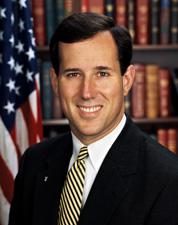
Mr. President, I am pleased to join today with my colleague, Senator Blanche Lincoln, as well as Senators Jeffords, Kyl, Coleman and Clinton, in introducing the Medicare Innovation Responsiveness Act…
Mr. President, I am pleased to join today with my colleague, Senator Blanche Lincoln, as well as Senators Jeffords, Kyl, Coleman and Clinton, in introducing the Medicare Innovation Responsiveness Act of 2003.
Given all that is going on in the world today, it is sometimes difficult to focus on issues related to Medicare coverage, coding and payment procedures. But we must, because every day there are seniors and people with disabilities in need of lifesaving and life-enhancing medical treatments and technologies.
And every day, there are creative people in Pennsylvania, Arkansas, and all across our great country developing new ways to prevent and treat illness and save lives. Medicare patients should not be denied access to these new procedures and technologies because the Medicare program is slow to respond to innovations in medical care and the changing needs of patients.
Congress passed legislation with strong bipartisan support in 1999 and in 2000 to try to address these problems. Unfortunately, however, Medicare has failed to deliver on key commitments in the legislation and these barriers persist.
That is why we are here today--to introduce legislation that will finally make timely access to lifesaving advanced medical tests and treatments for Medicare patients a reality. Our bill builds on constructive approaches the Centers for Medicare and Medicaid Services, CMS, has taken recently to help Medicare keep up with advancements in treating patients.
For example, CMS recently took proactive, unprecedented steps to address one of the newest innovations in minimally invasive cardiology that will soon be available for patients: drug-eluting stents. These tiny medal scaffolds, long-used to reopen blocked heart arteries, can be more effective now that researchers have combined them with time- released drugs to prevent the growth of unwanted cells. The Agency established new hospital inpatient codes and reimbursements for the new stints because it recognized that the technology will quickly become the standard of care when approved by
FDA in the coming weeks. The Agency understood the potential the stents hold to transform patient care and health care delivery--and acted in a timely fashion.
This forward-looking approach should be the rule, not the exception, in dealing with new treatment breakthroughs. And that is what our legislation today seeks to achieve.
At an event where Senator Lincoln and I spoke to underscore the need for this legislation, we were pleased to be joined by medical professionals from our respective states, people who took time out of their busy schedules to come to Washington, DC and help us explain the importance of some of the provisions in the bill we are introducing today.
For example, three years after a mandate from Congress, Medicare has yet to provide special transitional payments for any new medical device used in the inpatient setting. As a result, Medicare will continue to take anywhere from 15 months to five years to integrate a new medical technology into the inpatient setting--and that is after it has already been approved as safe and effective by the FDA. Dr. Mark Wholey from Pittsburgh is involved in research on carotid stenting, and he commented today on the promise of this new treatment option and the importance of reducing barriers to Medicare patient access for new and innovative technologies.
In another area of coverage policy, Medicare discourages development of breakthrough devices like heart assist devices because it does not cover the routine costs of clinical trials for many innovative technologies. Dr. Walter Pae, Professor of Surgery at Penn State University, also came to Washington today to share some details of the pioneering work he is doing at Hershey Medical Center and to reinforce the importance of patient access to these promising clinical trials.
These reforms are reasonable and bipartisan. Most importantly, they are critical to patients in need of new and breakthrough technologies. I look forward to working with Senator Lincoln and my colleagues on the Finance Committee in moving these important reforms in Committee and the Senate this year.
Mr. President, I am pleased that the manager's of the Jobs and Growth Tax Relief Reconciliation Act of 2003, Chairman Grassley and ranking member Baucus, have agreed to included in their manager's…
Mr. President, I am pleased that the manager's of the Jobs and Growth Tax Relief Reconciliation Act of 2003, Chairman Grassley and ranking member Baucus, have agreed to included in their manager's amendment my provision, which is supported by many members in this body, that addresses the issue of the tax burden that is faced by wholesalers of domestic distilled spirits.
I want to take this opportunity to express my support for this legislation and also to share my broader concern about how the current Federal Excise Tax, FET, system places an undue burden on distillers that must, at a minimum, not be increased to fund this legislation or for any other reason.
I introduced this amendment because I believe that the existing FET system for domestically produced distilled spirits penalizes spirits wholesalers across the nation. These are mostly family businesses that create high wage jobs. Yet spirits wholesalers often find themselves in the position of, in essence, having to float Uncle Sam a loan when they purchase U.S. made spirits from their distillers.
Let me briefly explain how this situation comes about in the marketplace. Under Federal law, spirits produced in the United States may not leave the distillery premises until the FET is collected. Thus, the cost of the FET is factored into the price of the goods that is paid when the wholesaler accepts possession from the distiller. The wholesale, in turn, may wind up having to warehouse these products for a considerable time before they are sold to a
retailer. The fundamental issue here is the time value of the FET-- valuable working capital for these businesses--while the wholesale warehouses products without realizing any income from their sale.
This amendment would create a tax credit available to the wholesalers in order to offset these FET carrying costs. I believe this is fundamentally fair and will help protect and create good jobs in the wine and spirits wholesale tier across the nation.
However, in introducing this amendment and supporting its inclusion in the Jobs and Growth Tax Relief Reconciliation Act of 2003, I want to make one thing perfectly clear. In supporting this bill, I want the Administration, and officials at the Treasury Department and the Bureau of Alcohol, Tobacco and Firearms to understand that by doing so I reject the connection that some have tried to make between this issue and Section 5010 of the tax code, the wine and flavors tax credit. In past years, the suggestion has been made that any revenue loss to the U.S. Treasury caused by the provisions of my amendment be offset by repealing Section 5010. I reject that notion because there is no logical link between the two issues.
Section 5010 is a component-based tax provision allowing distillers to claim a credit for wines and other flavoring components that are added to their products. Thus, a distiller will pay the full spirits FET for that portion of a product that is derived from distilled spirits. However, many products sold as spirits contain wine and other non-spirits flavorings, which are subject to tax at lower rates. Under Section 5010, the distiller is entitled to a credit for the difference between the wine and the spirits tax for that portion of the product that is not derived from spirits.
Section 5010 is important. It has the added policy virtues of being on the side of common sense, economic competitiveness and fundamental fairness. All of this is why I have fought hard to protect 5010 from several serious threats over the years.
I am pleased that, with the inclusion of my amendment in this bill, the Senate has once again shown its support for solving this problem which penalizes spirits wholesalers of domestically produced distilled spirits. I am also pleased that the Senate has seen fit to address this important issue without harming Section 5010 or otherwise increasing the tax burden on distillers.
Bill Text
Latest available legislative text
        [Congressional Bills 108th Congress]
[From the U.S. Government Publishing Office]
[S. 816 Introduced in Senate (IS)]

108th CONGRESS
1st Session
S. 816

To amend title XVIII of the Social Security Act to protect and preserve
access of medicare beneficiaries to health care provided by hospitals
in rural areas, and for other purposes.

_______________________________________________________________________

IN THE SENATE OF THE UNITED STATES

April 8, 2003

Mr. Conrad (for himself, Mr. Thomas, Mr. Harkin, Mr. Grassley, Mr.
Smith, Mr. Rockefeller, Mr. Roberts, Mr. Daschle, Mr. Dorgan,
Mr. Domenici, Mrs. Lincoln, Mr. Burns, Mr. Bingaman, Mr.
Jeffords, Mr. Johnson, Mr. Levin, Mr. Talent, Mr. Dayton, Mr.
Bond, Mr. Edwards, Mr. Cochran, Mr. Pryor, Mrs. Murray, Ms.
Snowe, Mr. Coleman, and Ms. Cantwell) introduced the following
bill; which was read twice and referred to the Committee on
FinanceYYYYYYYYYYYYYYYYYYYYYYYYYYYYYYYYYYYYYYYYYYYYYYYYYYYYYYYY

_______________________________________________________________________

A BILL

To amend title XVIII of the Social Security Act to protect and preserve
access of medicare beneficiaries to health care provided by hospitals
in rural areas, and for other purposes.

Be it enacted by the Senate and House of Representatives of the
United States of America in Congress assembled,

SECTION 1. SHORT TITLE; AMENDMENTS TO SOCIAL SECURITY ACT; REFERENCES
TO BIPA; TABLE OF CONTENTS.

(a) Short Title.--This Act may be cited as the ``Health Care Access
and Rural Equity Act of 2003''.
(b) Amendments to Social Security Act.--Except as otherwise
specifically provided, whenever in this Act an amendment is expressed
in terms of an amendment to or repeal of a section or other provision,
the reference shall be considered to be made to that section or other
provision of the Social Security Act.
(c) References to BIPA.--In this Act, the term ``BIPA'' means the
Medicare, Medicaid, and SCHIP Benefits Improvement and Protection Act
of 2000, as enacted into law by section 1(a)(6) of Public Law 106-554
(114 Stat. 2763).
(d) Table of Contents.--The table of contents of this Act is as
follows:

Sec. 1. Short title; table of contents.
TITLE I--MEDICARE RURAL HEALTH CARE IMPROVEMENTS

Sec. 101. Equalizing urban and rural standardized payment amounts under
the medicare inpatient hospital prospective
payment system.
Sec. 102. Fairness in the medicare disproportionate share hospital
(DSH) adjustment for rural hospitals.
Sec. 103. Medicare inpatient hospital payment adjustment for low-volume
hospitals.
Sec. 104. Adjustment to the medicare inpatient hospital PPS wage index
to revise the labor-related share of such
index.
Sec. 105. Establishment of alternative guidelines for geographic
reclassification of certain hospitals
located in sparsely populated States.
Sec. 106. One-year extension of hold harmless provisions for small
rural hospitals and temporary treatment of
certain sole community hospitals to limit
decline in payment under the OPD PPS.
Sec. 107. Critical access hospital (CAH) improvements.
Sec. 108. Permanent treatment of certain physician pathology services
under medicare.
TITLE II--OTHER RURAL HOSPITAL REFORMS

Sec. 201. Capital infrastructure revolving loan program.
Sec. 202. Five-year extension of the authorization for appropriations
for certain medicare rural grants.

TITLE I--MEDICARE RURAL HEALTH CARE IMPROVEMENTS

SEC. 101. EQUALIZING URBAN AND RURAL STANDARDIZED PAYMENT AMOUNTS UNDER
THE MEDICARE INPATIENT HOSPITAL PROSPECTIVE PAYMENT
SYSTEM.

(a) In General.--Section 1886(d)(3)(A)(iv) (42 U.S.C.
1395ww(d)(3)(A)(iv)) is amended--
(1) by striking ``(iv) For discharges'' and inserting
``(iv)(I) Subject to subclause (II), for discharges''; and
(2) by adding at the end the following new subclause:
``(II) For discharges occurring in a fiscal year beginning
with fiscal year 2004, the Secretary shall compute a
standardized amount for hospitals located in any area within
the United States and within each region equal to the
standardized amount computed for the previous fiscal year under
this subparagraph for hospitals located in a large urban area
(or, beginning with fiscal year 2005, for hospitals located in
any area) increased by the applicable percentage increase under
subsection (b)(3)(B)(i) for the fiscal year involved.''.
(b) Conforming Amendments.--
(1) Computing drg-specific rates.--Section 1886(d)(3)(D)
(42 U.S.C. 1395ww(d)(3)(D)) is amended--
(A) in the heading, by striking ``in different
areas'';
(B) in the matter preceding clause (i), by striking
``, each of'';
(C) in clause (i)--
(i) in the matter preceding subclause (I),
by inserting ``for fiscal years before fiscal
year 2004,'' before ``for hospitals''; and
(ii) in subclause (II), by striking ``and''
after the semicolon at the end;
(D) in clause (ii)--
(i) in the matter preceding subclause (I),
by inserting ``for fiscal years before fiscal
year 2004,'' before ``for hospitals''; and
(ii) in subclause (II), by striking the
period at the end and inserting ``; and''; and
(E) by adding at the end the following new clause:
``(iii) for a fiscal year beginning after fiscal
year 2003, for hospitals located in all areas, to the
product of--
``(I) the applicable standardized amount
(computed under subparagraph (A)), reduced
under subparagraph (B), and adjusted or reduced
under subparagraph (C) for the fiscal year; and
``(II) the weighting factor (determined
under paragraph (4)(B)) for that diagnosis-
related group.''.
(2) Technical conforming sunset.--Section 1886(d)(3) (42
U.S.C. 1395ww(d)(3)) is amended--
(A) in the matter preceding subparagraph (A), by
inserting ``, for fiscal years before fiscal year
1997,'' before ``a regional adjusted DRG prospective
payment rate''; and
(B) in subparagraph (D), in the matter preceding
clause (i), by inserting ``, for fiscal years before
fiscal year 1997,'' before ``a regional DRG prospective
payment rate for each region,''.

SEC. 102. FAIRNESS IN THE MEDICARE DISPROPORTIONATE SHARE HOSPITAL
(DSH) ADJUSTMENT FOR RURAL HOSPITALS.

(a) Equalizing DSH Payment Amounts.--
(1) In general.--Section 1886(d)(5)(F)(vii) (42 U.S.C.
1395ww(d)(5)(F)(vii)) is amended by inserting ``, and, after
October 1, 2003, for any other hospital described in clause
(iv),'' after ``clause (iv)(I)'' in the matter preceding
subclause (I).
(2) Conforming amendments.--Section 1886(d)(5)(F) (42
U.S.C. 1395ww(d)(5)(F)) is amended--
(A) in clause (iv)--
(i) in subclause (II)--
(I) by inserting ``and before
October 1, 2003,'' after ``April 1,
2001,''; and
(II) by inserting ``or, for
discharges occurring on or after
October 1, 2003, is equal to the
percent determined in accordance with
the applicable formula described in
clause (vii)'' after ``clause (xiii)'';
(ii) in subclause (III)--
(I) by inserting ``and before
October 1, 2003,'' after ``April 1,
2001,''; and
(II) by inserting ``or, for
discharges occurring on or after
October 1, 2003, is equal to the
percent determined in accordance with
the applicable formula described in
clause (vii)'' after ``clause (xii)'';
(iii) in subclause (IV)--
(I) by inserting ``and before
October 1, 2003,'' after ``April 1,
2001,''; and
(II) by inserting ``or, for
discharges occurring on or after
October 1, 2003, is equal to the
percent determined in accordance with
the applicable formula described in
clause (vii)'' after ``clause (x) or
(xi)'';
(iv) in subclause (V)--
(I) by inserting ``and before
October 1, 2003,'' after ``April 1,
2001,''; and
(II) by inserting ``or, for
discharges occurring on or after
October 1, 2003, is equal to the
percent determined in accordance with
the applicable formula described in
clause (vii)'' after ``clause (xi)'';
and
(v) in subclause (VI)--
(I) by inserting ``and before
October 1, 2003,'' after ``April 1,
2001,''; and
(II) by inserting ``or, for
discharges occurring on or after
October 1, 2003, is equal to the
percent determined in accordance with
the applicable formula described in
clause (vii)'' after ``clause (x)'';
(B) in clause (viii), by striking ``The formula''
and inserting ``For discharges occurring before October
1, 2003, the formula''; and
(C) in each of clauses (x), (xi), (xii), and
(xiii), by striking ``For purposes'' and inserting
``With respect to discharges occurring before October
1, 2003, for purposes''.
(b) Effective Date.--The amendments made by this section shall
apply with respect to discharges occurring on or after October 1, 2003.

SEC. 103. MEDICARE INPATIENT HOSPITAL PAYMENT ADJUSTMENT FOR LOW-VOLUME
HOSPITALS.

Section 1886(d) (42 U.S.C. 1395ww(d)) is amended by adding at the
end the following new paragraph:
``(12) Payment adjustment for low-volume hospitals.--
``(A) Payment adjustment.--
``(i) In general.--Notwithstanding any
other provision of this section, for each cost
reporting period (beginning with the cost
reporting period that begins in fiscal year
2005), the Secretary shall provide for an
additional payment amount to each low-volume
hospital (as defined in clause (iii)) for
discharges occurring during that cost reporting
period to increase the amount paid to such
hospital under this section for such discharges
by the applicable percentage increase
determined under clause (ii).
``(ii) Applicable percentage increase.--The
Secretary shall determine a percentage increase
applicable under this paragraph that ensures
that--
``(I) no percentage increase in
payments under this paragraph exceeds
25 percent of the amount of payment
that would otherwise be made to a low-
volume hospital under this section for
each discharge (but for this
paragraph);
``(II) low-volume hospitals that
have the lowest number of discharges
during a cost reporting period receive
the highest percentage increase in
payments due to the application of this
paragraph; and
``(III) the percentage increase in
payments due to the application of this
paragraph is reduced as the number of
discharges per cost reporting period
increases.
``(iii) Low-volume hospital defined.--For
purposes of this paragraph, the term `low-
volume hospital' means, for a cost reporting
period, a subsection (d) hospital (as defined
in paragraph (1)(B)) other than a critical
access hospital (as defined in section
1861(mm)(1)) that--
``(I) the Secretary determines had
an average of less than 2,000
discharges (determined with respect to
all patients and not just individuals
receiving benefits under this title)
during the 3 most recent cost reporting
periods for which data are available
that precede the cost reporting period
to which this paragraph applies; and
``(II) is located at least 15 miles
from a similar hospital (or is deemed
by the Secretary to be so located by
reason of such factors as the Secretary
determines appropriate, including the
time required for an individual to
travel to the nearest alternative
source of appropriate inpatient care
(taking into account the location of
such alternative source of inpatient
care and any weather or travel
conditions that may affect such travel
time)).
``(B) Prohibiting certain reductions.--
Notwithstanding subsection (e), the Secretary shall not
reduce the payment amounts under this section to offset
the increase in payments resulting from the application
of subparagraph (A).''.

SEC. 104. ADJUSTMENT TO THE MEDICARE INPATIENT HOSPITAL PPS WAGE INDEX
TO REVISE THE LABOR-RELATED SHARE OF SUCH INDEX.

(a) In General.--Section 1886(d)(3)(E) (42 U.S.C. 1395ww(d)(3)(E))
is amended--
(1) by striking ``wage levels.--The Secretary'' and
inserting ``wage levels.--
``(i) In general.--Except as provided in clause
(ii), the Secretary''; and
(2) by adding at the end the following new clause:
``(ii) Alternative proportion to be adjusted
beginning in fiscal year 2004.--
``(I) In general.--Except as provided in
subclause (II), for discharges occurring on or
after October 1, 2003, the Secretary shall
substitute `62 percent' for the proportion
described in the first sentence of clause (i).
``(II) Hold harmless for certain
hospitals.--If the application of subclause (I)
would result in lower payments to a hospital
than would otherwise be made, then this
subparagraph shall be applied as if this clause
had not been enacted.''.
(b) Waiving Budget Neutrality.--Section 1886(d)(3)(E) (42 U.S.C.
1395ww(d)(3)(E)), as amended by subsection (a), is amended by adding at
the end of clause (i) the following new sentence: ``The Secretary shall
apply the previous sentence for any period as if the amendments made by
section 104(a) of the Health Care Access and Rural Equity Act of 2003
had not been enacted.''.

SEC. 105. ESTABLISHMENT OF ALTERNATIVE GUIDELINES FOR GEOGRAPHIC
RECLASSIFICATION OF CERTAIN HOSPITALS LOCATED IN SPARSELY
POPULATED STATES.

(a) Alternative Guidelines for Reclassification.--Notwithstanding
the guidelines published under section 1886(d)(10)(D)(i)(I) of the
Social Security Act (42 U.S.C. 1395ww(d)(10)(D)(i)(I)), the Secretary
of Health and Human Services shall publish and use alternative
guidelines under which--
(1) a hospital or a group of hospitals described in
subsection (b) qualifies for geographic reclassification under
such section for a fiscal year beginning with fiscal year 2005
for the purposes of using the other area's standardized amount
for inpatient operating costs, wage index value, or both, or,
in the case of a group of hospitals, for the purposes of using
both the other area's standardized amount for inpatient
operating costs and wage index value; and
(2) a hospital or group of hospitals seeking to be
reclassified is required to demonstrate that the hospital meets
the criteria to be reclassified to the area to which such
hospital seeks to be reclassified, except that, in the case of
an individual hospital, the hospital does not meet the
proximity criteria applicable with respect to such area, or, in
the case of a group of hospitals, the group does not meet the
adjacency criteria applicable with respect to such area.
(b) Hospitals Covered.--A hospital or a group of hospitals
described in this subsection is a hospital or group of hospitals that--
(1) is located in a State with less than 20 people per
square mile (as determined by the Secretary); and
(2) seeks to be reclassified to an area within the State in
which such hospital or group is located.

SEC. 106. ONE-YEAR EXTENSION OF HOLD HARMLESS PROVISIONS FOR SMALL
RURAL HOSPITALS AND TEMPORARY TREATMENT OF CERTAIN SOLE
COMMUNITY HOSPITALS TO LIMIT DECLINE IN PAYMENT UNDER THE
OPD PPS.

(a) Hold Harmless Provision.--Section 1833(t)(7)(D)(i) (42 U.S.C.
1395l(t)(7)(D)(i)) is amended--
(1) in the heading, by striking ``small'' and inserting
``certain'';
(2) by inserting ``or a sole community hospital (as defined
in section 1886(d)(5)(D)(iii)) located in a rural area'' after
``100 beds''; and
(3) by striking ``2004'' and inserting ``2005''.
(b) Effective Date.--The amendment made by subsection (a)(2) shall
apply with respect to payment for OPD services furnished on and after
January 1, 2004.

SEC. 107. CRITICAL ACCESS HOSPITAL (CAH) IMPROVEMENTS.

(a) Permitting Hospitals To Allocate Swing Beds and Acute Care
Inpatient Beds Subject to a Total Limit of 25 Beds.--
(1) In general.--Section 1820(c)(2)(B)(iii) (42 U.S.C.
1395i-4(c)(2)(B)(iii)) is amended to read as follows:
``(iii) provides not more than a total of
25 extended care service beds (pursuant to an
agreement under subsection (f)) or acute care
inpatient beds (meeting such standards as the
Secretary may establish) for providing
inpatient care for a period that does not
exceed, as determined on an annual, average
basis, 96 hours per patient;''.
(2) Conforming amendment.--Section 1820(f) (42 U.S.C.
1395i-4(f)) is amended by striking ``and the number of beds
used at any time for acute care inpatient services does not
exceed 15 beds''.
(b) Elimination of the Isolation Test for Cost-Based CAH Ambulance
Services.--
(1) In general.--Section 1834(l)(8) (42 U.S.C. 1395m(l)),
as added by section 205(a) of BIPA (114 Stat. 2763A-482), is
amended by striking the comma at the end of subparagraph (B)
and all that follows and inserting a period.
(2) Technical correction.--Section 1834(l) (42 U.S.C.
1395m(l)) is amended by redesignating paragraph (8), as added
by section 221(a) of BIPA (114 Stat. 2763A-486), as paragraph
(9).
(c) Coverage of Costs for Certain Emergency Room On-Call
Providers.--
(1) In general.--Section 1834(g)(5) (42 U.S.C. 1395m(g)(5))
is amended--
(A) in the heading--
(i) by inserting ``certain'' before
``emergency''; and
(ii) by striking ``physicians'' and
inserting ``providers'';
(B) by striking ``emergency room physicians who are
on-call (as defined by the Secretary)'' and inserting
``physicians, physician assistants, nurse
practitioners, and clinical nurse specialists who are
on-call (as defined by the Secretary) to provide
emergency services''; and
(C) by striking ``physicians' services'' and
inserting ``services covered under this title''.
(2) Effective date.--The amendment made by paragraph (1)
shall apply with respect to costs incurred for services
provided on or after January 1, 2004.
(d) Authorization of Periodic Interim Payment (PIP).--
(1) In general.--Section 1815(e)(2) (42 U.S.C. 1395g(e)(2))
is amended--
(A) in subparagraph (C), by striking ``and'' after
the semicolon at the end;
(B) in subparagraph (D), by adding ``and'' after
the semicolon at the end; and
(C) by inserting after subparagraph (D) the
following new subparagraph:
``(E) inpatient critical access hospital services,''.
(2) Effective date.--The amendments made by paragraph (1)
shall apply with respect to payments for inpatient critical
access hospital services furnished on or after January 1, 2004.
(e) Exclusion of New CAHs From PPS Hospital Wage Index
Calculation.--Section 1886(d)(3)(E)(i) (42 U.S.C. 1395ww(d)(3)(E)(i)),
as amended by section 104, is amended by inserting after the first
sentence the following new sentence: ``In calculating the hospital wage
levels under the preceding sentence applicable with respect to cost
reporting periods beginning on or after January 1, 2004, the Secretary
shall exclude the wage levels of any hospital that became a critical
access hospital prior to the cost reporting period for which such
hospital wage levels are calculated.''.

SEC. 108. PERMANENT TREATMENT OF CERTAIN PHYSICIAN PATHOLOGY SERVICES
UNDER MEDICARE.

(a) In General.--Section 1848(i) (42 U.S.C. 1395w-4(i)) is amended
by adding at the end the following new paragraph:
``(4) Treatment of certain physician pathology services.--
``(A) In general.--With respect to services
furnished on or after January 1, 2001, if an
independent laboratory furnishes the technical
component of a physician pathology service to a fee-
for-service medicare beneficiary who is an inpatient or
outpatient of a covered hospital, the Secretary shall
treat such component as a service for which payment
shall be made to the laboratory under this section and
not as an inpatient hospital service for which payment
is made to the hospital under section 1886(d) or as a
hospital outpatient service for which payment is made
to the hospital under section 1833(t).
``(B) Definitions.--In this paragraph:
``(i) Covered hospital.--
``(I) In general.--The term
`covered hospital' means, with
respect to an inpatient or outpatient, a hospital that had an
arrangement with an independent laboratory that was in effect as of
July 22, 1999, under which a laboratory furnished the technical
component of physician pathology services to fee-for-service medicare
beneficiaries who were hospital inpatients or outpatients,
respectively, and submitted claims for payment for such component to a
carrier with a contract under section 1842 and not to the hospital.
``(II) Change in ownership does not
affect determination.--A change in
ownership with respect to a hospital on
or after the date referred to in
subclause (I) shall not affect the
determination of whether such hospital
is a covered hospital for purposes of
such subclause.
``(ii) Fee-for-service medicare
beneficiary.--The term `fee-for-service
medicare beneficiary' means an individual who
is entitled to (or enrolled for) benefits under
part A, or enrolled under this part, or both,
but who is not enrolled in any of the
following:
``(I) A Medicare+Choice plan under
part C.
``(II) A plan offered by an
eligible organization under section
1876.
``(III) A program of all-inclusive
care for the elderly (PACE) under
section 1894.
``(IV) A social health maintenance
organization (SHMO) demonstration
project established under section
4018(b) of the Omnibus Budget
Reconciliation Act of 1987 (Public Law
100-203).''.
(b) Conforming Amendment.--Section 542 of BIPA (114 Stat. 2763A-
550) is repealed.
(c) Effective Dates.--The amendments made by this section shall
take effect as if included in the enactment of the Medicare, Medicaid,
and SCHIP Benefits Improvement and Protection Act of 2000 (114 Stat.
2763A-463 et seq.), as enacted into law by section 1(a)(6) of Public
Law 106-554.

TITLE II--OTHER RURAL HOSPITAL REFORMS

SEC. 201. CAPITAL INFRASTRUCTURE REVOLVING LOAN PROGRAM.

(a) In General.--Part A of title XVI of the Public Health Service
Act (42 U.S.C. 300q et seq.) is amended by adding at the end the
following new section:

``capital infrastructure revolving loan program

``Sec. 1603. (a) Authority To Make and Guarantee Loans.--
``(1) Authority to make loans.--The Secretary may make
loans from the fund established under section 1602(d) to any
rural entity for projects for capital improvements, including--
``(A) the acquisition of land necessary for the
capital improvements;
``(B) the renovation or modernization of any
building;
``(C) the acquisition or repair of fixed or major
movable equipment; and
``(D) such other project expenses as the Secretary
determines appropriate.
``(2) Authority to guarantee loans.--
``(A) In general.--The Secretary may guarantee the
payment of principal and interest  for loans made to
rural entities for projects for any capital improvement described in
paragraph (1) to any non-Federal lender.
``(B) Interest subsidies.--In the case of a
guarantee of any loan made to a rural entity under
subparagraph (A), the Secretary may pay to the holder
of such loan, for and on behalf of the project for
which the loan was made, amounts sufficient to reduce
(by not more than 3 percent) the net effective interest
rate otherwise payable on such loan.
``(b) Amount of Loan.--The principal amount of a loan directly made
or guaranteed under subsection (a) for a project for capital
improvement may not exceed $5,000,000.
``(c) Funding Limitations.--
``(1) Government credit subsidy exposure.--The total of the
Government credit subsidy exposure under the Credit Reform Act
of 1990 scoring protocol with respect to the loans outstanding
at any time with respect to which guarantees have been issued,
or which have been directly made, under subsection (a) may not
exceed $50,000,000 per year.
``(2) Total amounts.--Subject to paragraph (1), the total
of the principal amount of all loans directly made or
guaranteed under subsection (a) may not exceed $250,000,000 per
year.
``(d) Capital Assessment and Planning Grants.--
``(1) Nonrepayable grants.--Subject to paragraph (2), the
Secretary may make a grant to a rural entity, in an amount not
to exceed $50,000, for purposes of capital assessment and
business planning.
``(2) Limitation.--The cumulative total of grants awarded
under this subsection may not exceed $2,500,000 per year.
``(e) Termination of Authority.--The Secretary may not directly
make or guarantee any loan under subsection (a) or make a grant under
subsection (d) after September 30, 2008.''.
(b) Rural Entity Defined.--Section 1624 of the Public Health
Service Act (42 U.S.C. 300s-3) is amended by adding at the end the
following new paragraph:
``(14)(A) The term `rural entity' includes--
``(i) a rural health clinic, as defined in section
1861(aa)(2) of the Social Security Act;
``(ii) any medical facility with at least 1 bed,
but with less than 50 beds, that is located in--
``(I) a county that is not part of a
metropolitan statistical area; or
``(II) a rural census tract of a
metropolitan statistical area (as determined
under the most recent modification of the
Goldsmith Modification, originally published in
the Federal Register on February 27, 1992 (57
Fed. Reg. 6725));
``(iii) a hospital that is classified as a rural,
regional, or national referral center under section
1886(d)(5)(C) of the Social Security Act; and
``(iv) a hospital that is a sole community hospital
(as defined in section 1886(d)(5)(D)(iii) of the Social
Security Act).
``(B) For purposes of subparagraph (A), the fact that a
clinic, facility, or hospital has been geographically
reclassified under the medicare program under title XVIII of
the Social Security Act shall not preclude a hospital from
being considered a rural entity under clause (i) or (ii) of
subparagraph (A).''.
(c) Conforming Amendments.--Section 1602 of the Public Health
Service Act (42 U.S.C. 300q-2) is amended--
(1) in subsection (b)(2)(D), by inserting ``or
1603(a)(2)(B)'' after ``1601(a)(2)(B)''; and
(2) in subsection (d)--
(A) in paragraph (1)(C), by striking ``section
1601(a)(2)(B)'' and inserting ``sections 1601(a)(2)(B)
and 1603(a)(2)(B)''; and
(B) in paragraph (2)(A), by inserting ``or
1603(a)(2)(B)'' after ``1601(a)(2)(B)''.

SEC. 202. FIVE-YEAR EXTENSION OF THE AUTHORIZATION FOR APPROPRIATIONS
FOR CERTAIN MEDICARE RURAL GRANTS.

Section 1820(j) (42 U.S.C. 1395i-4(j)) is amended by striking
``subsection (g)'' and all that follows and inserting ``subsection
(g)--
``(1) $25,000,000 in each of the fiscal years 1998 through
2003; and
``(2) $40,000,000 in each of the fiscal years 2004 through
2008.''.
<all>