Federal Employee Student Loan Assistance Act
Legislative Activity
Stay on top of the latest movement without scrolling through every action
Became Public Law No: 108-123.
November 11, 2003
View full timeline
Introduced in Senate
April 28, 2003
Read twice and referred to the Committee on Governmental Affairs. (text of measure as introduced: CR S5435)
April 28, 2003
Committee on Governmental Affairs referred to Subcommittee on Oversight of Government Management, the Federal Workforce, and the District of Columbia.
April 30, 2003
Committee on Governmental Affairs. Ordered to be reported without amendment favorably.
June 17, 2003
Committee on Governmental Affairs. Reported by Senator Collins without amendment. With written report No. 108-109. Additional views filed.
July 21, 2003
Placed on Senate Legislative Calendar under General Orders. Calendar No. 220.
July 21, 2003
Passed Senate without amendment by Unanimous Consent. (consideration: CR 7/31/2003 S10451; text as passed Senate: CR 7/31/2003 S10451)
July 30, 2003
Message on Senate action sent to the House.
September 3, 2003
Received in the House.
September 3, 2003 • 2:05 PM
Referred to the House Committee on Government Reform.
September 3, 2003
Referred to the Subcommittee on Civil Service and Agency Organization.
September 16, 2003
Mrs. Davis, Jo Ann moved to suspend the rules and pass the bill.
October 28, 2003 • 3:23 PM
Considered under suspension of the rules. (consideration: CR H9835-9836)
October 28, 2003 • 3:23 PM
DEBATE - The House proceeded with forty minutes of debate on S. 926.
October 28, 2003 • 3:23 PM
Passed/agreed to in House: On motion to suspend the rules and pass the bill Agreed to by voice vote.(text: CR H9835)
October 28, 2003 • 3:29 PM
On motion to suspend the rules and pass the bill Agreed to by voice vote. (text: CR H9835)
October 28, 2003 • 3:29 PM
Motion to reconsider laid on the table Agreed to without objection.
October 28, 2003 • 3:29 PM
Presented to President.
October 30, 2003
Signed by President.
November 11, 2003
Became Public Law No: 108-123.
November 11, 2003
Floor Debate
21 membersWhat members said about S. 926 on the floor
 TH
TH MM
MM KC
KC RFBGVV+16
Floor Debate
21 membersWhat members said about S. 926 on the floor
Mr. President, I ask unanimous consent that the order for the quorum call be rescinded. I do not mind. I thought I had half an hour under the rule. I do not care when I take my half hour. I can take…
Mr. President, I ask unanimous consent that the order for the quorum call be rescinded.
I do not mind. I thought I had half an hour under the rule. I do not care when I take my half hour. I can take it now or I will take it whenever. It does not make any difference to me.
I do not have to take it now if the Senator wants to do something else.
Mr. President, I understand I have a half hour of time yielded to me. I may have to yield it to another Senator, but I will take some time right now.
Natural Disaster Relief
Mr. President, the resolution I have offered is very straightforward. It simply reiterates the policy that this Senate and this Congress has endorsed repeatedly over the decades. It basically is that agricultural disaster assistance should be designated as emergency spending and not taken out of other farm programs. This is the way we have done this going back 50 years or more. In fact, I have looked and I have only found one instance in the last 50 years where we have offset, as they say, disaster assistance with some other money from the same program.
That was 2 years ago and that was corrected right away. We are now about to do the same thing.
Mr. President, one of the few uncertainties about agriculture is the uncertainty of the weather. And that is true whether it is farming or ranching, growing orchard crops or growing any other type of agricultural production. Even when a farmer has used his best practices, taken prudent steps to produce a crop, severe weather events can destroy years of work and threaten their livelihood.
Let me just quote from the USDA Web site:
Natural disaster is a constant threat to America's farmers
and ranchers. From drought to flood, freeze, tornadoes, or
other calamity, natural events can severely hurt even the
best run agricultural operation.
We have responded to these disasters through emergency legislation in the past because we believed it was essential to respond to natural disasters to lessen the financial hardship involved. We do have programs in place such as crop insurance, loans, and so forth. However, major disasters can easily overwhelm these programs, and that is why Congress has consistently responded to natural disasters by providing emergency assistance. This emergency assistance usually covers crop losses, forages--that is hay and things like that--pasture losses for livestock producers, funding for tree assistance programs, and again there is some misconception that this disaster money makes the producer whole, puts the producer where he would be if the disaster never happened. That is just not true.
Let me give you an example. It is only available, first of all, if you have over 35 percent loss of your expected production. So if you have a loss under 35 percent, you don't get anything anyway. But let's take an example of a Kansas farmer who, in a normal year, produces 100 bushels of grain sorghum per acre. Now he only harvests 80 bushels. Well, if the grain sorghum is worth $2.30 a bushel, that farmer will have an income shortfall of $46 an acre, but he will not be eligible for any disaster assistance because he only had a 20-percent loss, so he gets nothing. If the yield is only 50 percent, that means he has a 50-percent loss. His income shortfall is $115 an acre. Now the farmer is eligible for disaster assistance for 15 bushels of that loss--at a low payment rate. So, again, it is only a small fraction of what he gets. He loses $115, and receives only about $20. So some people think disaster assistance puts you back where you were if you were whole. No, it does not. It basically just kind of keeps you going, and that is about it.
Now, you will hear a lot of reference to drought relief or a drought bill or drought emergency assistance. Well, that is a misconception. It has been a misconception all along. While that may be the most common problem, disaster legislation covers the whole range of weather-related losses. The bill language covers losses ``due to damaging weather or related conditions.''
In addition to drought, the regulations that carry out disaster assistance include hurricanes, hail, floods, fires, freezes, tornadoes, mud slides, pest infestation, and other calamities--in short, just about anything Mother Nature can throw agriculture's way. It doesn't matter what weather event causes the loss. It doesn't matter if it is part of a hurricane that has a name or just a plain old ordinary storm that strikes the Midwest. It doesn't matter whether the crop loss happens in a catastrophic afternoon storm or whether it is the result of a drought that lasts 9 or 10 or 12 months. We have always included those in disaster assistance and treated them alike. That is what we passed in the Senate a few weeks ago. We passed an amendment unanimously on a voice vote to cover all types of weather-related disaster losses across the country and treated them the same.
That is basically what my resolution says. The White House and the House of Representatives decided to take a different approach. President Bush sent Congress the disaster assistance proposal that included agricultural disaster payments only for losses caused by hurricanes and left out assistance for a whole range of other disaster losses across the country. Furthermore, this hurricane disaster assistance would be designated emergency spending, meaning that it would not be
taken away from other programs. The President was adamant that if Congress is going to respond to any other disasters across the country, then the cost has to be offset from the farm bill, and that is what the House measure did. It is interesting, the States included in the House hurricane package are Florida, Alabama, Mississippi, Louisiana, South Carolina, North Carolina, Georgia, Virginia, and Pennsylvania. So if you are a farmer in those States and you have a hurricane-related loss, your losses are covered without offsets. You get the emergency spending measure assistance. Here is the interesting wrinkle, Mr. President, in the President's package. If you are a farmer in one of those hurricane States that I just mentioned, but your loss was not from the hurricane--let's say you had a hailstorm. Let's say you had high wind damage from a severe storm in May. Let's say you had a pest infestation or something like that. Guess what. You get no assistance. In the House, in what the President proposed, if you suffer loss from a hurricane, your payments are under emergency spending. But if you are in a hurricane State and you have another disaster caused by a hailstorm, well, then the cost of your assistance comes out of the farm bill.
What kind of nonsense is that?
A sugarcane farmer, God bless him, in Florida lost his crop because of the hurricane. That farmer gets compensated out of the emergency package. Let's say you are a corn farmer in Ohio and your crop was knocked down by a tornado. Guess what. You are not in. Whatever assistance you get has to come out of the farm bill. So why is it, why is it that if you got hit by a hurricane, you are treated one way; if you get hit by a tornado or a hailstorm or a fire or a drought, you are treated another way. It absolutely makes no sense. So, again, we draw these artificial lines. The President has drawn them. Why discriminate against certain farmers? If you are a farmer and you lose your crop, as I said, to a tornado or high winds in Ohio or Wisconsin or Iowa or Minnesota or Missouri, well, guess what. They are going to take it out of one pocket and put it into your other pocket. But if you are a farmer down in Florida, they don't take it out of your pocket. The whole country, all of us, help pay for those disasters as we have done for the last 50 years.
Now the President wants to take the money out of the Conservation Security Program. That program covers the entire United States of America. Why would you want to take money out of a State such as Pennsylvania that uses conservation money or Ohio or Wisconsin or Minnesota or Iowa or Missouri, taking money out of those States to send to Texas or Oklahoma or Wyoming or Colorado to help the farmers who had a drought? That doesn't make sense. It seems if you are going to have a disaster assistance package, the whole country ought to pay for it, all of it. When you have an earthquake in Alaska, do we take the money out of one State, just one State, and pay for that--or two States--or do we just take it out of a State that maybe--we take it out of California because they have an earthquake and we send it to Alaska? No.
The entire United States of America, all of our people contribute to make sure that anyone who is hurt by an earthquake in Alaska or California or a flood in Iowa gets compensated and gets help. We had a flood in Iowa in 1993 that devastated our State. We didn't take money out of South Dakota or we didn't take out of Missouri or another State, out of what they get. The whole country came to our assistance.
As I said, I feel sorry for the people who have been hit by hurricanes, and we should help them, but we ought to do it on a national basis and not try to take it out of one pocket, one part to help another. That is not right. It is not right to discriminate against farmers.
One last thing I will say before I yield the floor. We don't take away a community's Federal funds for highways or housing or hospitals to fund civil disaster assistance. In other words, if we have a civil disaster, why should we take the money out of the highway money? If we are going to help Florida out, why don't we take it out of Florida's highway money? Take it out of their housing money? Take it out of their hospital money to pay for their civil disaster? We don't do that. So why should we do it in agriculture, on farmers? Why should we take it out of the farmers' pockets to pay for a disaster? Why don't we take the money out of the highway money going to Florida to pay for the hurricane? Take it out of their hospital money? Take it out of their housing money? We don't do that. We don't do it because it is not the right thing to do. We should not take it from the farm bill either.
I realize those of us who represent farmers and farm States, we get hit often because they say farmers get this and that. I want to point out, as I have pointed out time and time again, since we passed the farm bill in 2002 and the President signed it in May of 2002, we have saved the taxpayers of this country over $15 billion in less commodity program spending. I think that is a pretty healthy contribution by our farmers and our ranchers to help reduce the deficit of this country. Now they want to take more money out of agriculture to pay for a disaster. It is wrong. That is why I have offered this resolution which basically says:
It is the sense of the Senate that the 108th Congress
should provide the necessary funds to make disaster
assistance available for all customarily eligible
agricultural producers as emergency spending and not funded
by cuts to the farmer.
It is very simple and straightforward.
Madam President, how much time do I have remaining?
Madam President, I don't know if anyone wants any time. I will be glad to yield to my friend from North Dakota.
How much time do I have remaining?
We all need leaders to organize us, to inspire us, to get us moving in the right direction. Our distinguished leader, Senator Daschle from South Dakota, was kind enough to say good things about me with regard to the Agriculture bill, but we would never have gotten it together had it not been for his leadership. We, on this side of the aisle, all rely on his inspiration and his leadership, pulling us together. Nowhere is that more evident than our fight for farmers and ranchers and people who live in small towns and communities all over America.
I thank my good friend and my leader from South Dakota for what he has done for the people who live in the little towns such as my home town, Cummings, IA, with 150 people, for the farmers and ranchers of Iowa, South Dakota, and all over this country. Senator Daschle has been their voice and their leader, as he has been our leader. I daresay we wouldn't have half of the things we have for agriculture today had it not been for Senator Daschle, in making sure we had a good farm bill 2 years ago.
As Members can tell today, his passion is still there. I thank the good farmers and ranchers and rural people of South Dakota for having him here and having him as our leader.
Madam President, I ask that an editorial from the Des Moines Register of October 9 be printed at the conclusion of my remarks.
I will read one sentence from the editorial:
"The reality of the situation is that there will be no
disaster money before we go home unless we provide budget
offsets,'' said the chairman of the House Agriculture
Committee, Rep. Bob Goodlatte, R-Va.
Easy for him to say; farmers in his State are covered by the hurricane disaster assistance package. He doesn't have to worry about whether it is emergency money.
What kind of selfishness is that around here? If you are from a State where you get the hurricane disaster assistance, to heck with everybody else?
The Des Moines Register editorial said:
Cutting farm programs to pay for the assistance would
amount to taking money from growers in the Midwest and giving
it to producers in drought-stricken areas of Montana, the
Dakotas and other Plains states.
I want to help those farmers. They should be helped. But as Senator Daschle said, they should not take it out of one pocket and put it in another.
I also ask that a letter from a number of different farm groups opposing the using of farm bill conservation money for disaster assistance be printed in the Record following my remarks. This is in opposition to the President's position.
I ask that a letter from a number of conservation groups be printed in the Record at the conclusion of my remarks, asking that money not be taken out of the conservation title.
I ask unanimous consent that at the conclusion of my remarks a letter to a number of Representatives on the House side from a number of conservation groups also be printed at the conclusion of my remarks.
Lastly, I have heard the argument that drought is long term; there is some kind of climate change, but for the western part of the United States, which has had droughts for the last 4 or 5 years, we cannot continue to give disaster money if it is going to be a drought one year after another.
Guess what. Florida sits in hurricane alley. They have had hurricanes going back for 100 years. Guess what. Hurricanes are going to hit Florida next year and the year after and the year after. Should we say we cannot give disaster money to Florida because this is a long-term type thing? That is what I heard about drought assistance because we have had it for 5 years. Because we have been hit by 5 years of drought, that is long term and therefore we cannot help you?
Maybe we ought to take a look at hurricane alley. Maybe they shouldn't get help because they will get hit by another hurricane next year or the year after. We don't get hit by hurricanes in Iowa. They do not bother us. But we get hit by things such as tornados and hail damage and drought and, yes, floods.
Lastly, this bill, in helping the drought-stricken farmers--and my friend from North Dakota knows this very well--it only covers 1 year. We have had a drought for 4, 5, or 6 years. Farmers who suffered crop losses in both 2003 and 2004 will get to pick 1 year, either 2003 or 2004, you pick one, that is all the disaster assistance you get. It does not cover 7 years; it covers 1 year.
I wanted to clear this up. I hear rumors and misconceptions around here. I wanted to make the record clear that, yes, we have had some problems--such as tornados. Oklahoma gets hit by tornados, and Kansas and Nebraska and Iowa. We have had a lot. We will next summer because we are in tornado alley. Does that mean if a tornado strikes we should not get any disaster money because we get hit by tornados every year? No. Neither should the farmers in the Dakotas or Montana or places that have a drought right now, nor should they be penalized because they have been hit by some dry weather for a few years.
Exhibit 1
[From the Des Moines Register, Oct. 9, 2004]
Midwest Farmers May Lose Out With Disaster Aid
Washington, DC.--Farmers hit by a succession of crop losses
hoped an election year would bring some extra cash from the
government.
However, House Republicans are pushing for cuts in farm
programs to pay for a $3 billion package of farm-disaster
assistance, and agriculture groups may drop their support for
the aid.
Cutting farm programs to pay for the assistance would
amount to taking money from growers in the Midwest and giving
it to producers in drought-stricken areas of Montana, the
Dakotas and other Plains states. The prime target for the
cuts is the popular Conservation Security Program written by
Sen. Tom Harkin.
``If disaster assistance comes out of the farm bill, then
we oppose disaster assistance,'' said Mary Kay Thatcher, a
lobbyist for the American Farm Bureau Federation.
Democrats accused Republicans of hypocrisy. The White House
is pushing Congress to pass special emergency assistance for
Florida hurricane victims, including farmers there, without
demanding spending cuts. Florida is a key state in the
presidential race. ``It is not right to treat farmers in one
part of this country different than farmers in another,''
Harkin said.
The House passed legislation earlier in the week that would
pay for the drought assistance by capping the cost of the
Conservation Security Program.
``The reality of the situation is that there will be no
disaster money before we go home unless we provide budget
offsets,'' said the chairman of the House Agriculture
Committee, Rep. Bob Goodlatte, R-Va. Friday, lawmakers were
looking into trimming things other than the Conservation
Security Program because of technical problems with targeting
the conservation payments, congressional aides said. Harkin,
a Democrat, pledged to slow some must-pass bills unless
Republicans backed off making the cuts. Friday afternoon, he
blocked the Senate from considering amendments to an
intelligence-reform bill.
The Senate passed a version of the drought aid paid for by
adding to the federal budget deficit. Farmers could get
payments for losses in either 2003 or 2004.
Iowa farmers would likely receive about $200 million to
$250 million in disaster payments, primarily to cover damage
to soybean fields, according to Harkin's staff. The Iowa Farm
Bureau has estimated damage from the 2003 drought at $750
million.
The Conservation Security Program is designed to reward
farmers for practices that prevent soil erosion and other
environmental problems.
Some 2,188 farms, including 290 in Iowa, were signed up for
the program this year. Enrollment was limited to 18
watersheds, or river drainage areas. The National Corn
Growers Association never endorsed the disaster aid package,
partly out of concern that it mean reductions in other farm
spending, said Jon Doggett, a lobbyist for the group.
How much time is remaining?
Whatever time I have remaining I would be glad to yield.
Madam President, the situation in Burma is indeed dire and requires our immediate response. We will make that response within the next hour. S. 1215, which is now the pending business in the Senate,…
Madam President, the situation in Burma is indeed dire and requires our immediate response. We will make that response within the next hour.
S. 1215, which is now the pending business in the Senate, has 56 cosponsors. I particularly want to thank Senator Feinstein, who will be speaking on this measure, and Senator McCain, who have had a particular interest in this subject for quite some time.
Until yesterday, Aung San Suu Kyi and other democracy activists have been held incommunicado by the repressive State Peace and Development Council, SPDC, following an ambush on her convoy several hundred kilometers north of Rangoon. Scores are feared murdered and injured in this blatant assault on democracy in Burma.
In the 11th hour of his trip to Rangoon, the SPDC finally allowed U.N. Special Envoy Razali Ismail a 15-minute meeting with Suu Kyi. We are all relieved that his initial statements indicate that she is alive and unharmed, but the fate of other activists arrested remains unknown.
But simply seeing is not freeing. Razali's meeting with Suu Kyi was not a private one and she remains under the total control of SPDC thugs. Her continued silence in the wake of this bloodshed could not be more deafening, nor--despite Razali's brief visit--her predicament more pressing.
Horrific details of the attack continue to emerge and heighten the need for a swift and decisive response to the SPDC's brutality.
According to Monday's front-page article in the Washington Post, in the ``pitch dark amid the rice paddies'' thugs posing as Buddhist monks stopped Suu Kyi's car. Soon after, a crowd ``set upon her convey, attacking the entourage with wooden clubs and bamboo spikes. . . . Several hundred more assailants ambushed the motorcade from the rear.''
This is no simple act of harassment or intimidation. It was an act of terrorism against innocent civilians who simply believe in democracy and the rule of law in Burma.
The free world and free press have been quick to condemn the SPDC. But strong words from foreign capitals must be matched by stronger actions.
Last week, I introduced the Burmese Freedom and Democracy Act of 2003, along with Senators Feinstein and McCain. As I indicated earlier, we now have 56 cosponsors. I ask unanimous consent that the list be printed in the Record.
Madam President, this bill, among other sanctions, imposes a ban on imports from Burma.
I am pleased that many of my colleagues--including the majority and minority leaders of the Senate and the chairmen and ranking members of the Senate Foreign Relations and Finance Committees--are cosponsors of this important legislation.
Let me share with my colleagues some of the feedback we have gotten from around the country on the act:
An editorial in today's Los Angeles Times stated:
[Burma's] trading partners, other countries in the region
and aid givers like Japan need to get tougher by imposing
sanctions and aid suspensions to push the country toward
democracy; that's the outcome Myanmar's citizens show they
favor every time they get the chance.
By the way, they haven't gotten a chance since 1990.
A Washington Post editorial yesterday advised that because Burmese dictators ``control the nation' economy, an import ban would affect those most responsible for Burma's repression, and senators supportive of democracy in Asia should vote for the bill without conditions or expiration dates.''
Deputy Secretary of State Rich Armitage recently wrote:
. . . we support the goal and intent of this legislation and
agree on the need for many similar measures. . . . We are
also considering an import ban, as proposed in your
legislation.
A June 6 editorial in the Washington Post suggested that:
While the [Burmese Freedom and Democracy Act] moves through
Congress, Mr. Bush could implement many of its provisions by
executive order. He could find no better way to demonstrate
his commitment to democracy and his revulsion at a brutal
dictatorship.
A New York Times editorial endorsed the import ban and recommended that:
Europe . . . should now block Myanmar's exports as well.
The junta has had a year to demonstrate that its opening was
genuine. Now all ambiguity is gone, and the world's response
must be equally decisive.
A Boston Globe editorial stated that President Bush:
. . . could and should issue an executive order that would
swiftly accomplish [an import ban]. This is not a partisan
matter. The great lesson that ought to have been learned in
the last century is that free democrats betray their unfree
brothers and sisters when they seek to appease dictatorships.
Dallas Morning News editor at large Rena Pederson, who also penned a superb article on this topic in the Weekly Standard, wrote in an op-ed:
The strongest possible pressure must be turned on the
Burmese generals, who apparently calculated their opposition
could be decapitated while the world was preoccupied with
events in the Middle East. They shouldn't be allowed to get
away with such a cowardly fast one. The Bush administration
should support tougher sanctions now. Senator Mitch
McConnell, R-KY., is pushing for increased sanctions.
That is the bill we have before us.
``He will need help . . .''
And we obviously are going to have help with 56 cosponsors, and I hope a very overwhelming vote shortly.
``He will need help, or the Bush administration could accomplish the same thing by executive order.''
A Baltimore Sun editorial rightly concluded: ``. . . this regime ought to be treated somewhat like North Korea, from which imports have long been barred.''
Finally, in endorsing the act, the American Apparel and Footwear Association called upon ``the rest of Congress for the swift and immediate passage of such import legislation.''
The idea of a ban on imports from Burma is not a new one to this body. In he 107th Congress, S. 926 sought to impose such restrictions and was cosponsored by 21 Senators. I would offer that the need for an important ban has only become more urgent in the wake of the May 30 attack on democracy in Burma.
Supporters of a free Burma want America to take the lead in defending democracy in that country.
Supporters of a free Burma believe that serving the cause of freedom is America's challenge and obligation. We should not abandon the people of Burma during the greatest moments of need. The people of Burma have made their aspirations known, and the regime has not silenced them into submission. They have not stilled their hearts for political change and they will not succeed in stemming our collective resolve.
Supporters of a free Burma agree with President Bush that:
Men and women in every culture need liberty like they need
food and water and air. Everywhere that freedom arrives,
humanity rejoices: and everywhere that freedom stirs, let
tyrants fear.
It's time for tyrants to fear in Burma.
I ask unanimous consent that the following items be printed in the Record: a Washington Post article dated June 9; a letter from Under Secretary of State Rich Armitage; editorials from the Los Angeles Times, and the Baltimore Sun, and a Rena Pederson article in the Weekly Standard.
Madam President, I note that Senator Feinstein is here. I yield the floor and retain the remainder of my time.
Madam President, I ask unanimous consent that Senator Kohl be added as a cosponsor.
Madam President, I say to my friend from California, as she was describing the provisions of the bill, the way it is now structured, we will have an annual debate about whether or not these sanctions should be lifted. It will be reminiscent of the most favored nation debates that we had annually regarding the People's Republic of China, which has now graduated to a new status.
But if ever there were a regime that deserved an annual review by those of us here in the Congress, this is a regime that deserves that. So I think that is a debate we are going to look forward to having.
Would you not agree, I say to my friend from California?
Madam President, I first introduced a bill on this subject back in 1993. It is one of these issues that, I must regretfully say, you take an interest in and follow over a period of time and never see anything change. There is never any progress that could be measured--until a year or so ago when the junta led Aung San Suu Kyi basically out of house arrest. We were supposed to applaud that as some kind of remarkable step in the direction of recognizing the outcome of the election in 1998 in which she and her party got 80 percent of the vote. She won the Nobel Peace Prize in 1991 while she was essentially incarcerated. She remained under house arrest--except for about a year or so--ever since.
Various strategies have been tried. The Thai Prime Minister, who was in town yesterday--some of us talked with him, and I know he met with the President--this new Prime Minister in Thailand decided to engage in what he called ``constructive engagement.'' Obviously, constructive engagement doesn't work. What this regime needs is to be isolated. I know there are some skeptics even in this body with regard to the ability of sanctions to have a real impact.
Let me tell you, if there is one place in the world where sanctions worked, it was South Africa. The reason it worked there is because everybody participated and they were truly isolated. They became a pariah regime throughout the world, and that led to the dramatic changes that brought Nelson Mandela to power after decades in jail.
That can happen here. The United States needs to lead. Secretary Powell is going out to the ASEAN regional forum in Phnom Penh on June 18 and 19 next week. This is an opportunity for him to put it at the top of the agenda.
I said to the Thai Prime Minister that I thought constructive engagement wasn't working and they needed to join with us and help us lead the other ASEAN countries in the direction of a sanctions regime, on a multilateral basis, that could shut these people down. Some would say, well, if you have effective economic sanctions, it hurts the people. It doesn't hurt the people in Burma because the regime takes all profits off of the exports. They make money on the exports and the drug traffic, which they are quite good at.
So this regime needs to be squeezed by the entire world, isolated, and that is a strategy that we hope to begin today with the passage of this legislation in the next 30 or 45 minutes.
I know on our side, Senator McCain wants to speak, Kay Hutchison wants to speak, and, I believe, Senator Brownback wants to speak. How much time remains?
Madam President, there is a substitute amendment at the desk. I ask for its consideration.
Madam President, I ask unanimous consent that further reading of the amendment be dispensed with.
Madam President, there is a technical amendment to the substitute at the desk, and I ask for its consideration.
I ask unanimous consent that further reading of the amendment be dispensed with.
Madam President, I ask unanimous consent that the substitute amendment be agreed to.
I ask unanimous consent that the technical amendment to amendment No. 882 be agreed to.
Madam President, I will retain the remainder of my time, if I may.
Madam President, I am glad the Senator from California mentioned those important corporations. Obviously, they could conceivably benefit from low-cost imports but they are choosing not to allow the regime to make a profit off of these American corporations. They deserve our commendation.
I reserve the remainder of my time, and I suggest the absence of a quorum.
Madam President, I thank my friend, the ranking member of the Foreign Relations Committee, for his contributions to the debate. I very much appreciate it.
I yield 8 minutes to the Senator from Arizona.
I thank my good friend from Vermont for his important contribution in this debate and his kind words about how we got to this point. Ultimately, I guess we will all be judged by whether or not this is effective, I say to my friend from Vermont. For these sanctions to be truly effective, we have to lead and the rest of the world has to join us in sanctions of a regime that truly operates on a multilateral basis like those that worked in South Africa.
I ask unanimous consent that Senator Campbell be added as a cosponsor to this bill.
How much time do I have remaining?
I reserve the remainder of my time, and I suggest the absence of a quorum.
Mr. President, I ask unanimous consent that the order for the quorum call be rescinded.
Mr. President, I believe I have about 5 minutes remaining.
How much time remains on the other side?
Maybe we could get some time on the other side. I yield the remainder of my time to the Senator from Kansas.
Mr. President, I thank the Senator from Kansas for his contribution. I am not aware of any more speakers on this side.
Therefore, I ask unanimous consent all time be yielded back.
I ask for the yeas and nays.
Madam President, I rise today to support the ranking member on the Senate Agriculture Committee in what he is saying. I am in my 18th year in the Senate. Only once before in that entire time have we…
Madam President, I rise today to support the ranking member on the Senate Agriculture Committee in what he is saying. I am in my 18th year in the Senate. Only once before in that entire time have we taken money from other farmers to provide the funds to cover a natural disaster for others. That is just wrong. That is not the way we have operated. We have always dealt with natural disasters through emergency funding because none of us can know who is going to get hit by a natural disaster. None of us can know who is going to have a hurricane or a drought or a freeze.
In my State we have had three of the four. We didn't have hurricanes. We don't get hurricanes in North Dakota. But we have had drought in the southwestern part of the State. I have just taken a drought tour, and it looks like a moonscape. Nothing is growing. It is disastrous. The corn crop is about a foot high. There are no ears in the corn crop.
I go to the northern part of my State, and it is flooded. It is unbelievable. We have a lake in north central North Dakota called Devils Lake. That lake has risen 25 feet in the last 7 years. That lake is now 2\1/2\ times the size of the District of Columbia, and it has risen 25 vertical feet, taking up hundreds of thousands of acres.
We, as a Federal Government, have already had to buy out the entire town of Church's Ferry. We have had other towns that are on the brink of being swallowed up. We have spent tens of millions of dollars protecting the town of Devils Lake. We have moved over 600 structures.
All across the northern tier of North Dakota, something very unusual is happening. We have had extraordinarily wet conditions over a prolonged period. The result is 2 million acres they could not even plant this year--2 million acres. That is bigger than the size of the State of Delaware--land that couldn't be planted.
The land that could be planted is now so wet they can't drive the equipment in to harvest the crop. So you drive by the road and it looks like a fabulous crop, like there is a tremendous barley crop out there. It looks like 90- to 100-bushel barley. But you can't get into the land to take it off because the ground is soaked.
I was just at a farmer's home and he pointed up to the top of the rafters in his barn. He said: Senator, that is where the water is going to be 6 months from now, according to the State water commission, because the whole area is flooding.
In the midst of that we had a freeze in early August. Drought, flood, freeze--I have lived in North Dakota all my life, and I have never seen such
a collection of natural disasters. So while I have great sympathy for the people of Florida and Southeastern United States who have suffered hurricanes, and I am prepared with my vote to help them, we would expect the same in return. They are not the only ones who have been hurt. I have tens of thousands of farm families who are wondering now, Is Washington going to help or is Washington going to turn its back?
We have not been on the news. The networks haven't been out there covering this drought. They have not covered this flooding because this is a slow-motion disaster. This is not the kind of thing that makes good television, as the water rises in North Dakota. That doesn't make good television. It is a slow-motion disaster, but it is a disaster nonetheless. People's lives are being devastated.
Always before we have had emergency funding--with one exception in the 18 years I have been here. Always before, when an area suffered natural disasters, we have voted emergency funding to give them some help.
Let me make clear to my colleagues--I have heard some say: If you would have had preventive planning, you wouldn't have any losses because you didn't have to plant the crop. That is not the way it works. You still have your land payment, you still have all your management expenses, and in most cases people put on fertilizer in anticipation of being able to plant. This idea that they don't have expenses is just wrong.
Then I have heard they will get more help than what they have lost. That is just wrong. People have said: They have crop insurance. Crop insurance will make them whole. No.
Crop insurance will not come anywhere close to making them whole; nowhere close. First of all, you have to have a 35-percent loss before you get anything. Then you only get a percentage of your loss over 35 percent. That is not going to make people anywhere close to whole-- nowhere close. Even if you take disaster assistance and crop insurance, you are nowhere close to whole. You still have significant losses. That is the fact of the matter.
The disaster assistance we pass in the Senate is desperately needed, and it should not be taken away from other farmers in order to pay for it. We shouldn't take from what they need in order to try to provide assistance for those who have suffered natural disasters. That is not right. It is not fair. It has not been done before, with one exception in the 18 years I have been in the Senate. I had my staff go back and research the whole history. We have never done things that way with one exception.
We should not go down this path of turning our back on people who have suffered natural disasters, whether it is a hurricane, whether it is a flood, whether it is a drought, whether it is a freeze, or some horrific outbreak of disease. We need to stand ready to reach out with a helping hand.
I thank the ranking member from the State of Iowa, Senator Harkin, for standing up, fighting back and being very clear about what is at stake here; and to our leader, Senator Daschle. The truth is without Senator Daschle as our leader, we wouldn't have a prayer of getting the assistance our area desperately needs. That is a fact.
Mr. President, first of all, I thank the Senator in Nevada for his comments. He is exactly right. For anybody to suggest Governmental Affairs has had their jurisdiction reduced here, I mean, come on. Governmental Affairs has had their jurisdiction dramatically increased.
Mr. President, I rise today to speak on behalf of the amendment from the chairman of the Budget Committee, Senator Nickles.
Mr. President, the Senator from Ohio just got it wrong, what the amendment of the Senator who is the chairman of the Budget Committee does. We do not take the jurisdiction of Governmental Affairs on management issues at all, not at all. That is not what the amendment does.
What the amendment does do is end the duplication of the jurisdiction of the committees on budget process issues. I would submit to my colleagues, it does not make any sense any longer, after 30 years, for Governmental Affairs and Budget to have joint jurisdiction on budget process issues.
The reason they have that joint jurisdiction is because Governmental Affairs wrote the Budget Act. There was no Budget Committee, so at that time they had expertise that the Budget Committee simply did not have, so they were included on jurisdiction on budget process issues.
Well, 30 years have passed. The expertise on these issues is on the Budget Committee. It makes no sense in any management sense to have joint jurisdiction on budget process issues--not on the management issues. The management issues are retained by Governmental Affairs, as they should be. But budget process issues, as the chairman of the Budget Committee has suggested in his amendment, ought to be the jurisdiction of the Budget Committee.
Second, it makes no earthly sense for the nominee to be the Budget Director only to go before the Governmental Affairs Committee. That is what happens now. I think my colleagues would be stunned--I must say, I was very surprised, serving on the Budget Committee--that the Director of the Budget does not come before the Budget Committee. What sense does that make?
The amendment of the chairman of the Senate Budget Committee, Senator Nickles of Oklahoma, does not expand the jurisdiction of the Senate Budget Committee. It simply eliminates the overlap in jurisdiction between the two committees on the narrow issue of budget process issues.
The expertise on budget process issues, on pay-go, on discretionary caps, on oversight of budget agreements, does not reside with the Committee on Governmental Affairs; it resides in the Budget Committee. We ought to clean up this overlap that has existed for 30 years that started for a good reason--because the Committee on Governmental Affairs wrote the Budget Act because there was no Budget Committee. But now there is a Budget Committee. It has been in existence 30 years. It ought to have jurisdiction over budget process issues. That just makes common sense.
Who could possibly defend the notion that a Budget Director should not come before the Budget Committee for confirmation? It makes no earthly sense.
The amendment of the Senator from Oklahoma is entirely reasonable. It is rational. It improves the operations of both committees. It does not take jurisdiction to the Budget Committee; it simply reduces the common jurisdiction that currently exists between Governmental Affairs and the Budget Committee on the narrow issue of budget process.
I would be happy to yield after this statement.
And it gives to the Budget Committee the right to hear from the Office of Management and Budget, the man who is named or the woman who is named Budget Director in the confirmation process. That just makes common sense.
I would be happy to yield.
I believe the answer simply has to be yes. It makes no earthly sense for the person who is named to be the budget director of the United States not to come before the Budget Committee. What sense could that possibly make?
Mr. President, I ask unanimous consent that the Committee on Finance be authorized to meet during the session on Tuesday, June 17, 2003, at 10:00 a.m., to hear testimony on the ``Implementation of…
Mr. President, I ask unanimous consent that the Committee on Finance be authorized to meet during the session on Tuesday, June 17, 2003, at 10:00 a.m., to hear testimony on the ``Implementation of U.S. Bilateral Free Trade Agreements with Singapore and Chile.''
committee on foreign relations
Mr. President, I ask unanimous consent that the Committee on Foreign Relations be authorized to meet during the session of the Senate on Tuesday, June 17, 2003, at 9:30 a.m., to hold a hearing on ``Treaties Related to Aviation and the Environment.''
committee on governmental affairs
Mr. President, I ask unanimous consent that the Committee on Governmental Affairs be authorized to meet on Tuesday, June 17, 2003, at 10:00 a.m., to hold a business meeting to consider pending Committee business.
Agenda
Legislation: S. 481, the Kurtz Bill; S. 589, Homeland Security Workforce Act; S. 610, NASA Workforce Flexibility Act of 2003; S. 678, Postmasters Equity Act of 2003; S. 908, United States Consensus Council; S. 910, Non-Homeland Security Mission Performance Act of 2003; S. 926, Federal Employee Student Loan Assistance Act; S. 1166, National Security Personnel System Act; and S. 1245, Homeland Security Grant Enhancement Act.
Post Office Naming Bills: S. 508, a bill to designate the facility of the United States Postal Service located at 1830 South Lake Drive in Lexington, South Carolina, as the ``Floyd Spence Post Office Building''; S. 708, a bill to redesignate the facility of the United States Postal Service located at 7401 West 100th Place in Bridgeview, Illinois, as the ``Michael J. Healy Post Office Building''; S. 867, a bill to designate the facility of the United States Postal Service located at 710 Wicks Lane in Billings, Montana, as the ``Ronald Reagan Post Office Building''; S. 1145, a bill to designate the facility of the United States Postal Service located at 120 Baldwin Avenue in Paia, Maui, Hawaii, as the ``Patsy Takemoto Mink Post Office Building''; S. 1207, a bill to redesignate the facility of the United States Postal Service located at 120 East Ritchie Avenue in Marceline, Missouri, as the ``Walt Disney Post Office Building''; H.R. 825, an act to redesignate the facility of the United States Postal Service located at 7401 West 100th Place in Bridgeview, Illinois, as the ``Michael J. Healy Post Office Building''; H.R. 917, an act to designate the facility of the United States Postal Service located at 1830 South
Lake Drive in Lexington, South Carolina, as the ``Floyd Spence Post Office Building''; H.R. 925, an act to designate the facility of the United States Postal Service located at 1859 South Ashland Avenue in Chicago, Illinois, as the ``Cesar Chavez Post Office''; H.R. 981, an act to designate the facility of the United States Postal Service located at 141 Erie Street in Linesville, Pennsylvania, as the ``James R. Merry Post Office''; H.R. 985, an act to designate the facility of the United States Postal Service located at 111 West Washington Street in Bowling Green, Ohio, as the ``Delbert L. Latta Post Office Building''; H.R. 1055, an act to designate the facility of the United States Postal Service located at 1901 West Evans Street in Florence, South Carolina, as the ``Dr. Roswell N. Beck Post Office Building''; H.R. 1368, an act to designate the facility of the United States Postal Service located at 7554 Pacific Avenue in Stockton, California, as the ``Norman D. Shumway Post Office Building''; H.R. 1465, an act to designate the facility of the United States Postal Service located at 4832 East Highway 27 in Iron Station, North Carolina, as the ``General Charles Gabriel Post Office''; H.R. 1596, an act to designate the facility of the United States Postal Service located at 2318 Woodson Road in St. Louis, Missouri, as the ``Timothy Michael Gaffney Post Office Building''; H.R. 1609, an act to redesignate the facility of the United States Postal Service located at 201 West Boston Street in Brookfield, Missouri, as the ``Admiral Donald Davis Post Office Building''; H.R. 1740, an act to designate the facility of the United States Postal Service located at 1502 East Kiest Boulevard in Dallas, Texas, as the ``Dr. Caesar A.W. Clark, Sr. Post Office Building''; and H.R. 2030, an act to designate the facility of the United States Postal Service located at 120 Baldwin Avenue in Paia, Maui, Hawaii, as the ``Patsy Takemoto Mink Post Office Building.''
Nominations: Michael J. Garcia to be Assistant Secretary for Immigration and Customs Enforcement, Department of Homeland Security; C. Steward Verdery, Jr. to be an Assistant Secretary of Homeland Security; Susanne Marshall to be Chairman of the Merit Systems Protection Board; Neil McPhie to be a Member of the Merit Systems Protection Board; Terrence A. Duffy to be a Member of the Federal Retirement Thrift Investment Board; Peter Eide to be General Counsel for the Federal Labor Relations Authority; Albert Casey to be a Governor for the United States Postal Service; and James C. Miller, III to be a Governor for the United States Postal Service.
Mr. President, I ask unanimous consent that the Committee on the Judiciary be authorized to meet to conduct a hearing on ``The Dark Side of a Bright Idea: Could Personal and National Security Risks Compromise the Potential of Peer-to-Peer Fine-Sharing Networks?'' on Tuesday, June 17, 2003, at 2:00 p.m., in the Dirksen Senate Office Building Room 226.
Tentative Witness List
Panel I: The Honorable Dianne Feinstein, U.S. Senator, [D-CA]; The Honorable Tom M. Davis, III, U.S. Representative, [D-VA, 11th District], Chairman, House Committee on Government Reform.
Panel II: Nathaniel S. Good, Graduate Student, School of Information Science, University of California at Berkeley, Berkeley, CA; Aaron Krekelberg, Lead Web Developer, University of Minnesota, Minneapolis, MN; Randy Saaf, MediaDefender, Inc., Los Angeles, CA; Alan Morris, Executive Vice President, Sharman Networks, Ltd., London, England; Chris Murray, Esq., Legislative Counsel, Consumers Union, Washington,
Mr. President, I ask unanimous consent that the Committee on Rules and Administration be authorized to meet during the session of the Senate on Tuesday, June 17, 2003, at 9:30 a.m., to conduct a hearing on Senate Resolution 151, requiring public disclosure of notices of objections, holds, to proceedings to motions or measures in the Senate.
Mr. President, I ask unanimous consent that the Committee on Veterans' Affairs be authorized to meet during the session of the Senate on Tuesday, June 17, 2003, for a hearing to consider the nominations of Mr. Alan G. Lance, Sr., and Mr. Lawrence B. Hagel, to be Judges, U.S. Court of Appeals for Veterans' Claims. The hearing will take place in room 418 of the Russell Senate Office Building at 2:30 p.m.
Mr. President, I ask unanimous consent that the Select Committee on Intelligence be authorized to meet during the session of the Senate on Tuesday, June 17, 2003, at 2:30 p.m. to hold an open confirmation hearing on Frank Libutti to be Under Secretary for Information Analysis and Infrastructure Protection, Department of Homeland Security.
Mr. President, I ask unanimous consent that the Special Committee on Aging be authorized to meet on June 17, 2003, from 10 a.m.-12 p.m. in Dirksen 628 for the purpose of conducting a hearing.
Mr. President, I ask unanimous consent that the Subcommittee on Consumer Affairs and Product Liability be authorized to meet on Tuesday, June 17, 2003, from 2:30 pm on Reauthorization of the Consumer Product Safety Commission.
Mr. President, I ask unanimous consent that the Subcommittee on Fisheries, Wildlife, and Water be authorized to meet on Tuesday, June 17 at 9:30 am to conduct a hearing to receive testimony on S. 525, the National Aquatic Invasive Species Act at 2003, a bill to reauthorize the nonindigenous Aquatic Nuisance Prevention and Control Act. The hearing will take place in SD 406, Hearing Room.
Madam President, later on today we will be discussing an amendment submitted by Senator Nickles. The amendment's alleged purpose is to clarify the shared jurisdiction of the congressional budget…
Madam President, later on today we will be discussing an amendment submitted by Senator Nickles. The amendment's alleged purpose is to clarify the shared jurisdiction of the congressional budget process between Governmental Affairs and the budget situation that grew out of the Budget Committee and the modern budget process of 1974.
Senate committees rarely share jurisdiction, and joint referral of legislation is accomplished by unanimous consent. Today, anything that deals with the budget either coming out of the Governmental Affairs Committee or coming out of Budget has to be referred to the Governmental Affairs Committee and within 30 days some action has to be taken so there is a joint referral.
This amendment would eliminate that and say that all of the budgetary process is within the jurisdiction only of the Budget Committee and would also require that instead of the nominations for the Director of the Office of Management and Budget and the deputy director being the sole jurisdiction of the Governmental Affairs Committee, that would be a joint jurisdiction. In other words, the Presidential appointee to Director of Budget and Management, Deputy Director, and other people, would have to come to the Governmental Affairs Committee and also go to the Budget Committee for their approval.
I think one of the things we are trying to do here is to streamline that whole process, that we have too many people who are being, frankly, nominated, and too much advice and consent.
One of the things in an amendment to the Homeland Security Act that we were able to get done was the provision that says we are going to ask the administration to come back with recommendations on how they can reduce the number of people who are sent to the Senate for advice and consent to streamline the process.
This amendment would make this Presidential appointment process in regard to the Director of Budget and Management and the Deputy Director much more complicated than it is today. I would also argue--with due respect to the expertise that is on the Budget Committee--that this process has not been looked at since 1974.
As a member of the Governmental Affairs Committee and the oversight of Government management in the Federal workforce, I have been concerned that we have not looked at that process since 1974--that we have discussed the feasibility of going to a 2-year budget. There are many things, in my opinion, that this body should be doing, and if it were solely within the jurisdiction of the Budget Committee, it might not get done. The Governmental Affairs Committee looks at the big picture.
I would also argue that too often in the Office of Budget and Management, there is no ``M'' in OMB. I am pleased to say that this administration has undertaken some very aggressive management responsibilities. I, quite frankly, think they would not have undertaken those management responsibilities had it not been for the fact that they had to be confirmed by the Governmental Affairs Committee of the U.S. Senate.
I know the relationships that I have built personally with the Director of the Office of Budget and Management; Sean O'Keefe, who was the Deputy Director, and now Director Josh Bolten, have really accrued to the benefit of our country in terms of improving the management of Government.
So what I am trying to say is the budget process is important not only to the Budget Committee but the budget process is important to the entire country and to the operation of Government because it has such a large impact on the whole operation of Government.
I respect the chairman of the Budget Committee, but as one who has been concerned about modernizing our procedures, I believe this would not promote what is in the best interest of the Senate or, for that matter, our country.
I ask unanimous consent to have printed in the Record the human capital changes that have occurred since 1999 that have come out of the Governmental Affairs Committee.
I would like to emphasize for my colleagues how important it is that this jurisdiction in terms of the Director of Budget and Management and the Deputy Director remains in the Governmental Affairs Committee.
I would like to make one other point; that point is, the jurisdiction of our committee has been stripped out for the last couple of days. So I just urge my colleagues--I am going to ask for a vote. I think it is important to the management of our country.
I appreciate the opportunity to speak and yield the floor.
Will the Senator yield for a question?
The question I would like to ask is, Has the procedure that we now have in terms of the appointment--and this has been for 30 years--diminished the effectiveness of the Budget Committee, because of the fact that they have not participated in the nomination of the Budget Director?
Mr. President, I would just like to emphasize again that the current situation is one that is working. Unless one can show that it is not working in terms of the authority or the jurisdiction of the Governmental Affairs Committee, I would argue, why change it.
Secondly, this amendment would then subject the appointees of the Director of the Office of Management and Budget, the Deputy Director, and other people to jurisdictions in two committees, which would make the appointment process longer than it is today in an area that is particularly important to the President. What he wants to do immediately is to get his director of budget on board.
Secondly, I think we need to point out that the budget process is not just the jurisdiction of the Budget Committee. Under this amendment, if I want to put a bill in, for example, to reform the budget process to 2-year budgets, to require that the budget include a presentation on the accrued liabilities of the United States and, for that matter, go back and look at the Budget Act of 1974, which should be updated, that bill would have to go to the Budget Committee. If the members of that committee were unhappy with that, if they like the process of 1-year budgets because of the fact that they like to take a bite out of the apple each year, that bill would be dead.
Under the current situation, if someone has an idea of improving the budget process that impacts not only the budget but the entire operation of Government, they can bring it to the Governmental Affairs Committee. We could handle that legislation, and then that legislation would have to be referred to the Budget Committee for their consideration. The fact is, this is too large a responsibility just to put it within the jurisdiction of the Budget Committee. I argue that it makes a lot of sense to leave the situation as it is unless somebody can tell me that it is not working.
I will say one other thing: Our Government's biggest problem today is management. Having jurisdiction of the Office of Management and Budget in Governmental Affairs has given this Senator a lot of leverage to get this administration to do some things that are important for the country.
I thank the Chair.
Show 8 more

I thank the Chair, and I also thank the distinguished Senator from Kentucky for his leadership on this issue. I am very proud to join with him. Madam President, in 1996, Senator William Cohen and I…
I thank the Chair, and I also thank the distinguished Senator from Kentucky for his leadership on this issue. I am very proud to join with him.
Madam President, in 1996, Senator William Cohen and I introduced a sanctions bill on Bumra. It passed in 1996, and was signed by the President. In 1997, the sanctions were exercised.
We had a brief period of hope during that time, and the ASEAN nations were going to be helpful. It looked like the military junta was going to be receptive. Then, recently, for a brief period, Aung San Suu Kyi, the democratic leader of Burma, was released, and discussions took place. Well, that was short lived and this diabolical attack took place on Aung San Suu Kyi.
According to reports, her motorcade was met by 100 to 200 people at a bridge near Mandalay in northern Burma. Most of these people were disguised as monks. Another 400 people--convicts and other militia recruits who were also disguised as monks--blocked the convoy from the rear. Both groups then discarded their costumes and attacked the entourage with bamboo sticks and wooden clubs, smashing vehicles and beating up their targets. Officially, four people were killed and 50 injured. Witnesses contend that as many as 70 may have been killed and many more injured.
This is outrageous. The level of coordination, the deception, and the brutality of the crimes cannot go unanswered. They really demand a forceful and a substantive response that makes clear the United States will not deal with this junta and will not tolerate such blatant disregard for common human decency.
This legislation sends a message. It says: We will not import their products. And those Burmese exports to the United States are about 25 percent of what Burma exports. So it is a considerable message. It has to be remembered, Aung San Suu Kyi is the democratic leader of Burma. She has never been permitted to serve. Her people have been arrested. Members of the Parliament have been arrested and held in custody. Over 1,300 political prisoners are still in jail, many of them elected parliamentarians. The practice of rape as a form of repression has been sanctioned by the Burmese military. The use of forced labor is widespread. Trafficking in young boys and girls as sex slaves is rampant, and the government engages in the production and distribution of opium and methamphetamine. So the United States must act. Now, in general, I do not support trade embargoes as an effective instrument of foreign policy. However, there are certain circumstances--South Africa was one of them, largely because of the world response, and the world saying enough is enough--where there must be change, and where we are prepared to carry out these sanctions together to effect that change. I hope in this sense the United States will lead the way to enact these sanctions in a meaningful way in which other nations will follow.
Our legislation imposes a complete ban on all imports until the President determines and certifies to Congress that Burma has made substantial and measurable progress on a number of democracy and human rights issues.
As Senator McConnell will indicate, there is a provision in the legislation, similar to the most favored nation status for China, that will allow an annual review of this to assess progress. It allows the President to waive the ban should he determine and notify Congress that it is in the national security interest of the United States to do this. It would freeze the assets of the Burmese regime in the United States. It directs United States executive directors at international financial institutions to vote against loans to Burma. It expands the visa ban against past and present leadership of the junta, and it encourages the Secretary of State to highlight the abysmal record of the junta in the international community.
Now, Senator McConnell mentioned that both business and labor are united in support of this legislation. He said the American Apparel and Footware Association, which represents apparel, footware, and sewn products companies and their suppliers, has called for this ban. The president and CEO has stated--and I think this is worth being in the Record--``The government of Burma continues to abuse its citizens through force and intimidation, and refuses to respect the basic human rights of its people. AAFA believes this unacceptable behavior should be met with condemnation from not only the international public community, but from private industry as well.''
So well said.
A number of stores, including Saks, Macy's, Bloomingdales, Ames, and The Gap have already voluntarily stopped importing or selling goods from Burma. The AFL-CIO and other labor groups also support this legislation.
In addition, the International Labor Organization, for the first time in its history, called on all ILO members to impose sanctions on Burma.
Such diversity in support of this legislation speaks volumes about the brutality of this military junta and its single-minded unwillingness to take even a modest step toward democracy and national reconciliation.
And to add to it, Aung San Suu Kyi, the democratic leader, is once again being held in custody. This is unacceptable.
The military junta knows full well they do not enjoy the popular support of the Burmese people. That is why they resort to such actions.
As Aung San Suu Kyi traveled the country, and thousands turned out to hear her speak, the junta realized that after years of house arrest and repression, they had failed to curb the power of her message of democracy, of human rights, and the rule of law. They realized that the Burmese people were determined to see the democratic elections of 1990 fully implemented without delay. So in a cowardly and despicable manner they took this action.
Now we must take action. We must take a stand on the side of the people of Burma and on the side of the values we cherish the most.
I urge support and I hope it will be unanimous.
Thank you very much, Madam President. I yield the floor.
I certainly agree, I say to the Senator through the Chair. I think it would be very useful. And I think when the recalcitrance, the repression, is on the floor of this Senate every year, hopefully it will be helpful in changing the minds of this military junta.
Madam President, I will just use a quick minute. I mentioned some of the retail establishments supporting this but I left out a couple. I mentioned Saks Fifth Avenue, and there is also Macy's, the Gap, Bloomingdale's, Ames, Williams Sonoma, IKEA, Wal-Mart, Nautica, and Pottery Barn. I am very proud of these retail establishments for standing up and joining us. I wanted to recognize that on the floor.
Mr. President, I thank my colleagues for allowing me to speak on this legislation. The weekend before last, the military junta in Burma, ironically going by the name of the State Peace and…
Mr. President, I thank my colleagues for allowing me to speak on this legislation.
The weekend before last, the military junta in Burma, ironically going by the name of the State Peace and Development Council, staged a violent clash between a government-supported militia called the United Solidarity and Development Association and activists of the National League for Democracy, the NLD.
As reported in the press, during the ensuing assault on the NLD, these thugs attacked the caravan of supporters led by Nobel Peace Prize laureate and democratic activist Aung San Suu Kyi and subsequently detained her and 19 members of the NLD, killed scores of NLD activists and, in the aftermath, closed down universities and NLD offices in the country. This is intolerable. Today I hope this institution can stand tall by roundly condemning this thieving, bantam tyranny that is taking place in Burma.
The regime claims they are detaining her, a Nobel Peace Prize winner, and NLD supporters for their safety. They accuse her of causing unrest and violence and claim she is in danger because of inflammatory speeches she has been giving on her tour of northern Burma.
I find this accusation to be absolutely ridiculous, but nevertheless, a common refrain coming from a government known for flaunting its human rights abuses which include slave labor, rape and forced prostitution, pressing children into the military, all a carefully constructed campaign to terrorize the people of Burma and consolidate the petty kleptocracy.
Aung San Suu Kyi's whereabouts are now known; the UN Secretary General's envoy Mr. Razali Ishmail is in Rangoon working to negotiate her release. I cannot bring myself to believe a word of what the SPDC says. It was reported in the press that she has a serious head injury; however, today I hear that Mr. Razali has seen her and that she is unharmed. My colleague from Kentucky and I do not believe it. And the regime has done nothing to reassure any member of the international community of their intentions. Aung San Suu Kyi is not free, Burma is not free.
In fact, this is part of a clear pattern of continually thwarting the advance of democracy and freedom in Burma--something for which Aung San Suu Kyi is the living symbol. More than that, she has recruited some of the most talented and most dedicated young people to her cause.
As reported by yesterday's Washington Post, one of those young people was a young man by the name of Toe Lwin. This young man, and many others in NLD like him, dedicated every once of his being to the cause. Bringing change to Burma and protecting Aung San Suu Kyi were the things for which he was willing to die.
This young man died trying to protect her. I am told that she sees all of these dedicated, inspiring young people as her children. I am sure that it breaks her heart to know that blood has been spilt in this effort.
We cannot seek a better tribute to this young man's life than by aiding the cause of democracy by passing this bill.
The SPDC seems like a bunch of bush-league autocrats. But what I want my colleagues to know is that this group of thugs is not just some common banana republic or petty dictatorship.
In 1988, the then-called State Law and Order Restoration Council, SLORC, took power and began its repression of pro-democracy demonstrations. After National Assembly elections in 1990, which were poised to overwhelmingly bring to power Aung San Suu Kyi and the NLD, SLORC annulled the elections, began jailing thousands of democracy activists, suppressed all political liberties, and periodically placed Aung San Suu Kyi under house arrest.
And this is just the opening line of the story. These thugs conscript thousands of their citizens, including children, into the military to serve as porters and to work on state development projects. In addition, narcotics is a big business for the ruling Burmese generals; however, there are some who will claim that we are getting full cooperation in combatting Burma's trade in heroin and amphetamines.
The most recent International Narcotics Control Strategy Report published by the Department of State reads, ``Burma is the world's second largest producer of illicit opium.'' It continues stating ``. . . no Burma Army Officer over the rank of full Colonel has ever been prosecuted for drug offenses in Burma. This fact, the prominent role in Burma of the family of notorious narcotics traffickers, and the continuance of large-scale narcotics trafficking over the years of intrusive military rule have given rise to speculation that some senior military leaders protect or are otherwise involved with narcotics traffickers.''
Yet I understand there was an active effort by some embedded bureaucrats to give the junta a free pass on drug certification. We are not dealing with the boy scouts of Southeast Asia.
I think that is the wrong approach to dealing with the problem of the SPDC's
brutal rule. If today's paper is accurate, then it looks as if our government is beginning to take the correct steps to respond to the situation. We have put eleven countries on notice, notably Thailand and China, for their support of Burma.
This may be the mortal blow that weakens the regime. That is why next Wednesday I have planned hearings to discuss the support for the SPDC coming from key players in the region. Some of these countries need to give us some private assurances about their willingness to forgo continued support of the regime. Others need to be put on notice for the degree and nature of support for the SPDC junta.
Singapore, North Korea, Russia, and Malaysia have all been in cooperation or given assistance in the political, economic or military spheres. I will be inviting members of the administration and the NGO community to give their knowledge of on-the-ground support for the
Madam President, I thank the distinguished Senator from North Dakota for his very kind words. There are a number of people who deserve great credit, beginning, of course, with our distinguished…
Madam President, I thank the distinguished Senator from North Dakota for his very kind words. There are a number of people who deserve great credit, beginning, of course, with our distinguished ranking member on the Senate Agriculture Committee. He has been the most forceful, the most passionate, the most articulate voice for agriculture and I am proud to call him my leader.
He and I were in the room when we wrote this a couple of years ago. I remember so vividly. It was in the room across the hall. This legislation wouldn't even exist were it not for what Senator Harkin did in the room across the hall as we negotiated these issues and got the commitment from this administration and from our Republican friends that this conservation program would be fully funded. We got a commitment. Almost before the ink was dry, that commitment withered away. It disappeared.
I can understand the frustration of the distinguished Senator, the anger and the disappointment that after being given the commitment over and over again it was virtually the last thing we decided. Only because he held out as aggressively as he did, we finally said yes. OK. If this means getting the farm bill, we will agree to this and we will commit to funding. I was there in the room. I heard it myself, and here we are.
This isn't the first time. This is now the second time he has had to come to the floor.
I know a lot of Senators are inconvenienced, but I must say nobody is more inconvenienced by the doubletalk and the lack of commitment and the willingness to keep their word than our ranchers and farmers who are so desperate for the help Senator Conrad and Senator Harkin have so eloquently described.
Senator Johnson and I have the same situation in South Dakota. I talked to a rancher in the southwest near Edgemont. He broke down in tears, telling me that he is now going to be forced to sell his herd--a herd he has had all of his life. He said, I have never seen anything like this. His lips curled and he choked up. I felt so sorry for him. He said, But I am not alone. I am at the end of my career.
I worry about those young farmers and ranchers who are just getting started. What are they going to do?
This assistance is critical. But the double standard is so outrageous that I can understand why Member after Member representing farmer and rancher after farmer and rancher is coming to the floor to express their outrage and indignation.
You talk about heroes. I thank my colleague from South Dakota for making the effort he did so gallantly. Senator Johnson offered an amendment to say let's treat this disaster assistance the way we are treating all other disaster assistance. I understand it is about $11 billion. Let us treat it exactly the same. He made a passionate defense of that argument and lost on a 6-to-5 vote, as I understand it. It was a party-line vote.
I would be happy to yield for a question from the Senator from South Dakota.
I thank my dear friend from South Dakota for his question and for his kind words.
I simply say there is no logical conclusion one can draw from this except
that there are those in the administration and apparently here in Congress who believe farmers and ranchers ought to be subject to a double standard; that they aren't as poor as other victims and the other people who have experienced disasters of other kinds.
For some reason, this administration has minimized the losses in agriculture almost from the beginning. As the Senator so well knows, because he was right in the middle of the fight 2 years ago, we tried to persuade the administration to help farmers and ranchers with $6 billion disaster assistance. That was actually passed here on the Senate floor. They sat on it. They stalled it. They did everything they could to prevent it. Ultimately, all we got before the end of the year was about $1 billion--$5 billion less. It is no surprise. This isn't something new for this administration or some of our colleagues in the Congress.
This is yet another illustration and pattern of demonstration of how minimally they are prepared to support agriculture and our farmers and ranchers. It is a double standard. It is a shell game. They are telling farmers and ranchers we are going to take money out of your right-hand pocket and put it in your left-hand pocket, and we want you to feel good about it. There is no net additional revenue to be provided to agriculture as a result of this disaster relief. We are simply taking it out of their right pocket and putting it in their left pocket.
I can't imagine--and Senator Conrad and others have noted how a rancher or a farmer could be anything but offended--that somebody would insist farmers and ranchers pay for their own grass and drought assistance, disaster assistance and flood assistance, when at the very same time, simultaneously, we are providing meaningful new assistance to the victims of hurricanes, which we all support.
The double standard, the shell game, the extraordinary intransigence on the part of those who are opposing the Johnson amendment and opposing our efforts to make farmers and ranchers whole is inexplicable. There is no logic. I appreciate very much his words.
I yield the floor.
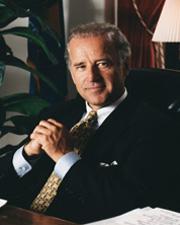
Madam President, I ask unanimous consent that the order for the quorum call be rescinded. Madam President, I ask unanimous consent to be able to proceed on the time controlled by Senator Feinstein.…
Madam President, I ask unanimous consent that the order for the quorum call be rescinded.
Madam President, I ask unanimous consent to be able to proceed on the time controlled by Senator Feinstein.
Madam President, I rise in support of the efforts of Senator McConnell and Senator Feinstein and acknowledge the leadership of Senator Baucus, as well, in working this out. Senator McConnell has been tireless in his efforts to promote democracy in Burma and has been an acknowledged leader in this area. I thank him for not relenting.
I think it is to state the obvious that it is vital for us to express our concern for the freedom of Aung San Suu Kyi, leader of the National League for Democracy and a winner of the Nobel Peace Prize. On May 30, Government-affiliated thugs ambushed an automobile convoy carrying the leader and many of her supporters. Dozens of people were reportedly killed and injured in the crash. She was detained by Government authorities, who also ordered the NLD offices closed nationwide.
Aung San Suu Kyi remains under arrest, and the Government has refused to allow supporters or members of the diplomatic community to meet with her.
When Burma's military rulers freed Aung San Suu Kyi of house arrest last year, they claimed her release was unconditional and they pledged to continue the U.N.-facilitated dialog, which led to her freedom. With last month's premeditated attack and her current detention, the junta has abrogated all of its commitments and warrants no more time.
It is not hard to discern the motives of the junta.
They are scared. They are scared the people of Burma will rally and remove them from power, and they are right to be afraid. As Aung San Suu Kyi has toured schools, hospitals, businesses, and government organizations around Burma, she has been met by joyous crowds, and it is obvious to all observers that she remains as loved by the people of Burma as the military junta is reviled. It is time for the present military oligarchy to fade into history.
Burma's transition to democracy would be a most welcome development for all of Southeast Asia.
Despite pledges to crack down on narcotics production, the military continues to collaborate with heroin and methamphetamine traffickers. It has failed to address the legitimate demands of ethnic minorities for significant regional autonomy within a federal state, preferring military pressure to political accommodation.
The generals have enriched themselves while bankrupting the country. They have dismantled Burma's education system and ignored the growing threat to public health posed by AIDS, malaria, and tuberculosis. As the State Department notes with characteristic understatement in its most recent human rights report:
The quality of life in Burma continues to deteriorate.
That may be the understatement of the month. It is well past time for the generals to do what they said they would do; namely, begin a process that would eventually transfer the reins to a representative civilian government that would enjoy domestic and international legitimacy.
Unfortunately, there are few indications that the regime intends to step down. Indeed, they apparently had high hopes the United States Government, taking note of Aung San Suu Kyi's release last year, would take steps to lift the many sanctions imposed when the army brutally suppressed Burma's democracy movement in 1988. The regime spent $450,000 to retain the services of a prominent Washington lobbying firm to help push the President and Congress to normalize relations, restore access to international financial institutions, and resume foreign aid.
They were willing to spend $450,000 to improve their image, but last year the officials operating the government spent less than $40,000 nationwide on HIV/AIDS care and prevention. Each of the nation's 35,000 primary schools receives on average less than $1 from the central government each year; $35,000 for the national education budget; $450,000 for lobbying in Washington.
No amount of money can hide the character of the Burmese military rulers. As the United States people stood with Nelson Mandela in his bid for freedom and democracy for the people of South Africa, so we should now stand with those who are moving Burma toward a free and open society and the National League for Democracy as they try through peaceful means to end the tyrannical, brutal rule of Burma's military rulers.
Again, I thank Senators McConnell and Feinstein for their leadership in this area, and I am confident we will win wide support of our colleagues. It is time that we are clearly standing on the right side of this issue.

Mr. President, we have a number of amendments that are still outstanding. We disposed of the Frist amendment this morning, and we still have Collins, Nickles, Hutchison, Bingaman, and Rockefeller…
Mr. President, we have a number of amendments that are still outstanding. We disposed of the Frist amendment this morning, and we still have Collins, Nickles, Hutchison, Bingaman, and Rockefeller that are in order. I don't know if they are going to offer all of those amendments, but we have 1 hour and 5 minutes until we start voting. Everyone should understand, as I understand the order entered, a half hour over the next 65 minutes is for Senator Harkin. So we have 35 minutes to debate these amendments. If they are not debated, we will start voting on them.
I think it would be unfortunate if people had to act on amendments without hearing something from someone. I hope they will either withdraw the amendments or present them. It puts Senator McConnell and me in an awkward position when the amendments are in order and nobody is here to offer them. It is not fair to the Senate that there is not someone who lets us know whether they are going to be withdrawn or be offered, because some of the subject matter of the amendments is not very clear, as least to this Senator.
I have been told the Rockefeller amendment is not going to be offered.
The Collins amendment is withdrawn?
It is not pending, so I ask that it be deleted from our list because it is on the list of amendments that was entered into last night. So we still have the Nickles, Hutchison, and Bingaman amendments.
On behalf of Senator Bingaman, I ask permission to withdraw from the list the Bingaman-Domenici amendment as listed.
Mr. President, for my friend to say the jurisdiction of the committee has been stripped out in the last few days, he should come in contact with reality. It simply is not true. How many times people come and say that does not make it true. The governmental affairs/homeland security committee is going to be one of most powerful committees in the Congress. Last year, as I understand, they had about 900 bills referred to them. This next year, it will probably be 3,000 bills referred to them. They have jurisdiction over wide-ranging matters. A few little things have been taken from Governmental Affairs, but they have been given a truckload of stuff.
I yield 5 minutes to the Senator from North Dakota.
I object.
Mr. President, I ask unanimous consent to speak for 2 minutes in opposition to the amendment offered by the Senator from Texas.
Mr. President, I serve on the Appropriations Committee with the distinguished Senator from Texas. She certainly is one of the finest Senators here. But on this issue I disagree with her. In the underlying legislation before the Senate, there has been a consolidation of Defense appropriations and Military Construction. This certainly makes sense. The subject matter is related to the same players, same departments, military, same basis. It does not make sense to make the artificial divide for Construction. I have served as chairman of the Military Construction Subcommittee, and I enjoyed it, but I always wondered why it was a separate subcommittee.
It does, however, make sense to pull intelligence from defense and make it a separate subcommittee. That is what we have done. We have talked to experts, and we think this is the best way to do it. We should keep this plan intact. It is the right thing to do.
The legislation we now have before the Senate is a good package. I don't think it should be splintered with trying to have the Committee on Appropriations rearrange what we have done.
Mr. President, I would like the record to reflect that when I spoke regarding Senator Voinovich earlier, I said there were approximately 900 bills referred to the Governmental Operations Committee. I misspoke. It is 300. I want the record to reflect the proper number.
Mr. President, I believe we need the yeas and nays on the Nickles amendment.
I ask for the yeas and nays.
I announce that the Senator from Indiana (Mr. Bayh), the Senator from California (Mrs. Boxer), the Senator from Louisiana (Mr. Breaux), the Senator from North Carolina (Mr. Edwards), the Senator from South Carolina (Mr. Hollings), the Senator from Massachusetts (Mr. Kerry), the Senator from Georgia (Mr. Miller), and the Senator from Maryland (Mr. Sarbanes) are necessarily absent.
I am sorry, I couldn't hear that.
I ask the Senator to modify his request to allow 1 minute on each side prior to voting on the Hutchison amendment.
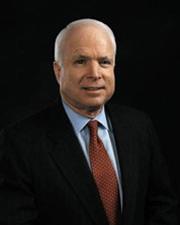
Madam President, I thank my colleague from Kentucky, Senator McConnell, for his leadership, and I thank the Senator from California, Mrs. Feinstein. I thank Senator McConnell for his longstanding…
Madam President, I thank my colleague from Kentucky, Senator McConnell, for his leadership, and I thank the Senator from California, Mrs. Feinstein. I thank Senator McConnell for his longstanding support of this brave and heroic person and the movement she leads.
Several years ago, I happened to visit Myanmar, which I will refer to from now on as Burma. I had the great honor--one of the great honors of my life--to meet this incredible hero, this incredible leader, this incredible person who has spent her life under duress, under punishment, under pressure, under house arrest, even to the point of physical mistreatment at the hands of this gang of thugs that runs and has ruined this country.
I will never forget the day I met her. I will never forget the grace, the dignity, and the heroism that was clearly radiating from every part of this incredible person who very appropriately has been recognized with the Nobel Peace Prize.
I remind my colleagues that she has been kept under house arrest for many years. She was released in 1995 finally, and then she was again confined to house arrest in 2000. Just a few days ago, as a motorcade of about 250 people drove through, about 500 armed soldiers, members of the military-backed Union Solidarity and Development Association, and an unknown number of convicts recruited from Mandalay prison with the promise of reward and freedom rushed and attacked it.
In the ensuing melee, which lasted about an hour, the attackers beat up NLD members, shot them with catapults, soldiers opening and firing, killing and wounding a large number of NLD members.
Aung San Suu Kyi was taken into custody in an unknown place. Apparently, thank God, according to the U.N. envoy, Mr. Ishmael, she is in good physical condition.
This junta has ruined the country. It has deprived the people of their fundamental freedoms. This gang of thugs has mistreated this great person in the most disgraceful fashion. She should be free. She should be free to lead her country as was already endorsed by one free and fair election overwhelmingly.
Why did they do that this time? Because everyplace Aung San Suu Kyi went, the people welcomed her by the thousands, and the junta could not stand it. So they had to kill her people, her supporters, and they had to throw her back into prison.
What did one of the leaders who is supposed to be a moderate, whom I also met when I was in Burma, GEN Khin Nyunt--remember that name--say? He said:
Everyone needs to abide by the rules and regulations to be
observed everywhere.
Adding:
It is to be noted that the basic human rights would not
protect those who violate an existing law.
What existing law? What existing law that would ever be judged a legitimate law in any court in the world was Aung San Suu Kyi in violation of when they killed her supporters, mistreated her, and put her back into prison?
I do not know why the Japanese, the Thais, the Chinese, and the ASEAN nations, that ostensibly are supposed to
be standing up for freedom and democracy, are not doing everything possible to punish this regime, free this incredible person, and let the people of Burma have a free and fair election.
I thank, again, Senator McConnell. I point out that we should be taking every single measure possible, and I do not believe the Secretary of State should attend the ASEAN gathering in Phnom Penh, Cambodia, unless Aung San Suu Kyi and the situation in Burma are No. 1 on the agenda of ASEAN. Are we going to sit by and watch the brutalization of a people, the imprisonment of a Nobel Peace Prize winner, and the repression and devastation of a nation be carried out by a gang of thugs that call themselves generals? I hope not.
I hope the message today in the legislation we are considering, thanks to the Senator from Kentucky, is a message that this is the beginning--this is the beginning--of our efforts to free this person and to free the people of Burma.
I yield the floor.
Mr. President, I am pleased to be joined today by Senators Hollings, Hutchison, Lautenberg, Smith, and Snowe in introducing the Over-the-Road Bus Security and Safety Act of 2003. The purpose of the…
Mr. President, I am pleased to be joined today by Senators Hollings, Hutchison, Lautenberg, Smith, and Snowe in introducing the Over-the-Road Bus Security and Safety Act of 2003. The purpose of the bill is to provide funding assistance for security improvements to the intercity bus industry. The legislation is the bipartisan product of work that occurred during the last Congress under the leadership of Senator Max Cleland.
Since the terrorist attacks on September 11, 2001, Congress and the Administration have taken extraordinary steps to improve security. We have enacted the Homeland Security Act, which consolidated 22 agencies in a new Department of Homeland Security. We also have enacted the Aviation and Transportation Security Act, ATSA, which closed security gaps at our nation's airports and largely transferred the responsibilities of the security of air transportation to the federal government. In addition, we've enacted the Maritime Transportation Security Act, MTSA, which, for the first time ever, established a framework for security at our nation's maritime ports. Yet, much remains to be done as we work to identify and close security gaps.
As we have witnessed in other countries, bus transportation can be the target of terrorist attacks. This is further evidenced by the fact that terminals that have already implemented a passenger screening process have seen a rise in discarded weapons in bus stations. In our view, facility improvements and baggage screening efforts
would be a significant step to improving bus security.
Therefore, the bill we are introducing today authorizes $35 million for fiscal year 2003 and $99 million for fiscal year 2004 to fund an intercity bus security grant program that would be administered by the Secretary of Transportation. It would include a matching requirement that recipients of federal grants fund 10 percent of the security improvement expenses.
Already, $15 million was appropriated for bus security grants in the fiscal year 2002 Supplemental Appropriations Act and another $10 million was appropriated in the fiscal year 2003 Omnibus Appropriations Act. This bill, if enacted, will authorize the funding already appropriated, along with an authorization of $99 million for fiscal year 2004 and, in turn, give Congress time to further study existing and future needs for bus transportation security and determine what, if any, changes should be made to the program.
The bill will help improve bus security by authorizing grants for security improvements at terminals; for the installation of surveillance equipment; for improvements to protect or isolate the driver; and for other specified improvements. The legislation also would require the Department of Transportation to complete a preliminary report assessing the adequacy of over-the-road bus security and determine what, if any, additional steps should be taken to improve bus security.
There have been several well-publicized bus accidents since September 11, 2001, including an accident on October 3, 2001, that involved an attack on the driver and claimed seven lives. Passing this measure will allow Congress to take short-term action that will have a beneficial effect on the security of the bus industry and does not preclude consideration of longer-term security policy considerations.
Efforts to pass similar legislation is also underway in the House of Representatives, where the House Committee on Transportation and Infrastructure, under Chairman Young's leadership, has already reported legislation to be considered by the full House.
I want to thank Senators Hollings, Hutchison, Breaux, Lautenberg, Smith, and Snowe for joining me in this effort. I look forward to working with all members to move this legislation forward.
I ask unanimous consent that the text of the bill be printed in the Record.

Madam President, I strongly support the Burmese Freedom and Democracy Act of 2002 that has been introduced by Senators McConnell and Feinstein. The legislation, as was said, seeks to pressure the…
Madam President, I strongly support the Burmese Freedom and Democracy Act of 2002 that has been introduced by Senators McConnell and Feinstein. The legislation, as was said, seeks to pressure the military junta in Burma to release Aung San Suu Kyi, and to help bring democracy and human rights to Burma.
Several days last week--in fact, time and time again--Senator McConnell came to the floor to speak on this issue. I want to commend my colleague, the senior Senator from Kentucky, for his steadfast leadership. I associate myself gladly with his remarks. I have also joined him as an original cosponsor of this legislation.
The message the legislation sends to the ruling junta in Burma is clear: Its behavior is outrageous. By any standard anywhere in the world, its behavior is outrageous. Aung San Suu Kyi is the rightful and democratically elected leader of Burma. It is that simple. Aung San Suu Kyi is the rightful, elected leader of Burma, and the ruling junta does not want her to take office because they know that their days of repression, corruption, torture, and murder would be over. She and her fellow opposition leaders must be immediately released.
This legislation also sends a clear signal to the administration, to ASEAN members, and to the international community that we need to turn up the heat on this illegitimate regime.
The efforts of Senators McConnell and Feinstein are already having an impact. On June 5, 2003, our State Department issued a strong statement, which reads:
The continued detention in isolation of Aung San Suu Kyi
and other members of her political party is outrageous and
unacceptable.
I agree. But we all know that U.S. actions can only go so far. Bringing democracy and human rights to Burma is going to require active pressure from Burma's neighbors in Southeast Asia, particularly Thailand, Japan, and China. I hope they apply the pressure for human rights and democracy that many of them profess to support. They should disavow the failed policies of engagement.
I am pleased to see that the McConnell-Feinstein legislation attempts to trigger a process to ratchet up the regional pressure on the Burmese Government. I am glad to see that the United States has demarched every government in Southeast Asia on this issue. I agree with the Bush administration on this very much. We have to bring this kind of pressure. As Senator McConnell has pointed out, the administration could, on its own initiative, impose many of the sanctions called for in this legislation.
All of us were relieved yesterday when the U.N. envoy in Burma was finally able to see Aung San Suu Kyi. According to CNN, the U.N. envoy said that she shows no sign of injury following clashes with the pro- government group. His exact words were:
She did not have a scratch on her and was feisty as usual.
That is indeed good.
I was also glad to see the U.N. envoy calling on the members of the ASEAN to drop the organization's policy of nonintervention. He stated:
ASEAN has to break through the straitjacket and start
dealing with this issue. . . .The situation in Burma can only
be changed if regional actors take their positions to act on
it.
I agree. The international community has the responsibility to act together to pressure the SPDC. The time, if there ever was a time, for appeasement is over. It is always a time for democracy to flourish. Democracy has spoken. It is being held back by the junta in Burma. It is time for them to step aside.
I see the distinguished senior Senator from Kentucky in the Chamber. I again commend him for his leadership, and I yield the floor.
Nor on this side. I am willing to yield back the remainder of the time.
Show 11 more

Mr. President, I rise today to echo the condemnations of the military rulers of Burma that my colleagues have so forcefully offered. Burma should by all rights be a prosperous country. It has over 50…
Mr. President, I rise today to echo the condemnations of the military rulers of Burma that my colleagues have so forcefully offered.
Burma should by all rights be a prosperous country. It has over 50 million people, abundant natural resources, and a population hungry for democracy.
Instead, it is an international outcast, ruled by a few military men who finance their country through drug trafficking and forced labor.
Perhaps most egregious is the failure of the military rulers to recognize the results of a free and fair election in which the Burmese people overwhelmingly chose Aung San Suu Kyi as their leader. Rather than sitting at the head of a democratic Burmese Government, she is sitting in a Burmese jail, a prisoner of the military rulers.
The existence of a democratically elected government-in-waiting makes Burma unique, but that is not all that makes Burma unique.
Suu Kyi has consistently supported sanctions against the military rulers of Burma, and 3 years ago, the International Labor Organization, for the first time in its 82-year history, urged the world to impose sanctions against those rulers.
The bill we consider today will send a strong message to the illegitimate military regime in Burma that their recent actions in attacking Suu Kyi and her followers and imprisoning Suu Kyi are intolerable. A unanimous passage would send that signal loud and clear.
These sanctions would be most effective if the whole world joined us. Unilateral sanctions can send a strong message, but they are rarely effective. In fact, they can even end up unintentionally adding further misery to an already oppressed people while leaving their rulers unscathed.
Multilateral sanctions, on the other hand, can have a dramatic effect. I know that others are considering sanctions, including the European Union. I applaud their attention to this issue and urge them to act as we have acted.
I also urge the administration to work with our allies, particularly those in the region, to create a united front of sanctions against the military rulers of Burma. We must work toward multilateral support.
Importantly, this bill ensures that Burma will never fade from congressional minds. We will not simply impose sanctions now and then forget all about Burma.
Every year, we will vote on renewing sanctions. Every year, we will be talking about Burma and how best we can work to aid those working for democratic change in that country.
The military rulers of Burma should know that their crimes against Suu Kyi, her followers, and the Burmese people will be neither forgiven nor forgotten.
I appreciate the leadership of Senators McConnell and Feinstein on this issue. They deserve our thanks for consistently bringing the important issue of human suffering in Burma to the attention of this body.
I would also like to thank Senator Grassley. He and I worked hard to make changes to this bill that, in my view, make it better.
I urge my colleagues to pass this bill unanimously today, and I urge the House of Representatives and the President to act soon to pass this bill into law. Let's send the strongest signal possible to the illegitimate regime in Burma.
Mr. Speaker, I move to suspend the rules and pass the Senate bill (S. 926) to amend section 5379 of title 5, United States Code, to increase the annual and aggregate limits on student loan repayments…
Mr. Speaker, I move to suspend the rules and pass the Senate bill (S. 926) to amend section 5379 of title 5, United States Code, to increase the annual and aggregate limits on student loan repayments by Federal agencies
Mr. Speaker, I ask unanimous consent that all Members may have 5 legislative days within which to revise and extend their remarks on S. 926.
Mr. Speaker, I yield myself such time as I may consume.
Mr. Speaker, I rise today to speak in favor of S. 926, a bill introduced by my colleague, Senator Voinovich, to increase the annual and total limits of student loan repayments by executive branch agencies.
This is identical to a bill that I introduced on the House side, H.R. 3080. We are considering the Senate version of this bill, the Federal Employee Student Loan Assistance Act, which has already passed that Chamber in an effort to speed up approval of this important piece of legislation.
I want to thank the leadership for bringing this matter to the floor today. As the chairwoman of the Subcommittee on Civil Service, Census and Agency Organization of the Committee on Government Reform, I have raised the same questions at many of our hearings this year: How do we attract the most qualified people to government service and how do we keep them once they have started?
Recruiting, retraining, and rewarding talented and hardworking individuals are at the very core of making our civil service the best that it can be. Very clearly, having the ability to tell potential recruits, come work for the United States Government and we can help you repay your student loans, is an extremely valuable tool.
All of us are surely aware of how expensive a college or graduate- level education is. And it is the prospect of these daunting student loans, $50,000, $75,000, or even more than $100,000, that can prevent public service-minded people from coming to work for the government. They simply cannot afford it.
Student loan repayment is at the top of the list for newly graduated students looking for jobs. To keep up with the higher salaries of the private sector and nonprofit organizations, the Federal Government must have an effective student loan repayment program. This legislation before us today raises the annual maximum amount that agencies could give towards student loan repayment, from $6,000 a year to $10,000 a year. It also raises the total amount an agency can contribute toward an individual's loan, from $40,000 to $60,000. These changes reflect the increases in annual college tuition costs since the Federal Government's original Student Loan Repayment Bill was enacted in 1991.
All funds to pay for the repayment program come out of the agencies' own budgets, so this legislation has no negative impact on the current budget. It is the right thing to do and something that we must do in order to remain competitive in the job market. I strongly urge my colleagues to pass the Federal Employee Student Loan Assistance Act before us today.
Mr. Speaker, I reserve the balance of my time.
Mr. Speaker, I have no further requests for time, and I yield back the balance of my time.
Mr. President, I call up amendment No. 4015. Mr. President, I ask unanimous consent that reading of the amendment be dispensed with. Mr. President, I call up a second-degree amendment No. 4042. Mr.…
Mr. President, I call up amendment No. 4015.
Mr. President, I ask unanimous consent that reading of the amendment be dispensed with.
Mr. President, I call up a second-degree amendment No. 4042.
Mr. President, I ask unanimous consent for adoption of the second-degree amendment.
Mr. President, I ask unanimous consent that the second-degree amendment be agreed to.
Mr. President, my amendment simply keeps what the Senate has said it wants, and that is an intelligence subcommittee on Appropriations, and it keeps the 13 subcommittees of Appropriations. It says the Appropriations Committee will organize into 13 subcommittees with the intelligence subcommittee as soon as possible after the convening of the 109th Congress.
All my amendment does is keep the Appropriations subcommittees at the same number, making sure there is one intelligence subcommittee, but it does not require the merging of Defense and Military Construction.
It may be that when the Appropriations Committee looks at all of the options for the making of 13 subcommittees, that that will happen, but I think the Appropriations Committee should be the one that makes the recommendations to the Senate. We do not have to rush to make this decision for the Appropriations Committee.
According to the CRS, eliminating a subcommittee through a measure on the Senate floor is unprecedented. In more than 200 years, the CRS says, the Senate has never eliminated a subcommittee through floor action without the committee bringing it to the floor. The Senate has created subcommittees, as with the Governmental Affairs Subcommittee on Investigations in 1952, but not eliminated subcommittees. Merging subcommittees to create room for the new one may be the right thing to do, but the floor is the wrong place to do it.
What is proposed today will set a precedent that could impact every committee by pulling the ability of the committee to organize itself and having that agreed to by the Senate. This is a precedent that should concern every committee. It should concern the majority and the minority. There is no reason to make this decision now.
Also, these changes must be made in conjunction with the House. The House Appropriations subcommittees and the Senate Appropriations subcommittees should match so that when we conference, we will have a finite subcommittee that deals with the same issues; otherwise, there could be many problems with the appropriations process that would complicate an already complicated process.
The House has not made any decisions about reorganizing itself on the Appropriations Committee. The wise thing for the Senate to do would be to create the new intelligence subcommittee of the Appropriations Committee, determine that there will be 13 subcommittees but require the Appropriations Committee to do the reorganization, after which the Senate would
be asked to agree. That is all my amendment does.
Mr. President, I ask for the yeas and nays on the amendment.
Mr. President, the amendment I am offering today with my ranking member, Senator Conrad, would consolidate jurisdiction for the congressional budget process within the Senate Committee on the Budget…
Mr. President, the amendment I am offering today with my ranking member, Senator Conrad, would consolidate jurisdiction for the congressional budget process within the Senate Committee on the Budget and establish shared jurisdiction with the new Committee on Homeland Security and Governmental Affairs over the nomination and confirmation of the Director of the Office of Management and Budget. The amendment would preserve the Government Affairs Committee's jurisdiction over management and accounting measures.
Under current Senate rules, jurisdiction over budget process matters is shared with the Committee on Governmental Affairs, a situation that grew out of the creation of the Budget Committee and the modern budget process in 1974.
This shared jurisdiction is unique in the Senate, where committees rarely share jurisdiction, and where joint referral of legislation is only accomplished by unanimous consent.
Since 1977, the Budget and Governmental Affairs Committees have received joint referral for legislation affecting the budget process pursuant to a unanimous-consent agreement. Under that UC, if one committee acts on a bill the other committee must act within 30 days or be automatically discharged. Our amendment would supercede this consent agreement.
We all know the Federal budget process is very complicated. The expertise on this subject clearly resides in the Budget Committee, and Senator Conrad and I believe that is where these issues should be addressed.
Over the years, the Governmental Affairs Committee has done little work on the budget process. Although the current jurisdictional situation has not necessarily created significant problems, we believe it is simply unnecessary to have two committees involved in these issues.
The Governmental Affairs Committee has a very broad and expansive jurisdiction which the resolution being considered would expand even further to matters of homeland security.
Senator Conrad and I believe consolidating jurisdiction over budget process issues within the Budget Committee would eliminate confusion and guarantee that this work is performed by those with the expertise.
I encourage my colleagues to support our amendment.
Mr. President, I move to reconsider the vote and I move to lay that motion on the table.
The motion to lay on the table was agreed to.
I will not object.
Mr. President, I thank our colleagues for the vote on the last amendment. I especially thank my colleague and friend, Senator Conrad, for his eloquent debate on it, as well as for his support and cosponsorship of the amendment.
I think it is a good amendment. I think it helps the budget process. Also, I compliment my friend. It has been a pleasure to work with him on the Budget Committee. This was a good, positive budget change. I thank him for his leadership on this amendment.
Mr. President, floor staff also informs me that the Collins amendment will not be offered. As Senator Reid indicated, we hope to hear from others who are on the list as to what their intentions might…
Mr. President, floor staff also informs me that the Collins amendment will not be offered.
As Senator Reid indicated, we hope to hear from others who are on the list as to what their intentions might be. If they want to offer their amendment, now would be a good time to come and explain it.
It is not pending.
I have been informed that Senator Nickles does intend to offer his amendment.
Amendment No. 4027 to Amendment No. 3981, and Amendment No. 4041 to
Amendment No. 4027, en bloc
Mr. President, I call up amendment No. 4027 by Senator Nickles and also a second-degree amendment by Senator Nickles, No. 4041. As I indicated, Senator Nickles will be here to debate that amendment later.
I suggest the absence of a quorum.
Mr. President, I say to the Senator from Iowa, we have a few amendments that may be offered. I am concerned that the offerors will have no time at all to explain their amendments prior to the votes at 11:15. I am wondering if the Senator from Iowa would object if we have Senators who want to offer amendments on our list, which they are entitled to do, prior to the vote at 11:15, how we could accommodate them and give them an opportunity to explain what the amendment was about.
Mr. President, his half hour is unrelated to the underlying bill.
I yield 5 minutes to the distinguished Senator from Ohio.
Mr. President, I apologize to the Senator from Ohio. We are running out of time, and the distinguished senior Senator from Texas has an amendment she needs to be able to describe.
Amendment No. 4015 to Amendment No. 3981
Mr. President, how much time do I have remaining?
I yield the remaining time that I have to the Senator from Ohio.
Amendment No. 4027
Mr. President, I ask unanimous consent that the first vote occur on the Nickles amendment, to be followed by a vote on the Hutchison amendment.
Vote On Amendment No. 4041
I announce that the Senator from Colorado (Mr. Campbell), the Senator from Georgia (Mr. Chambliss), the Senator from Texas (Mr. Cornyn), the Senator from Idaho (Mr. Craig), the Senator from South Carolina (Mr. Graham), the Senator from Pennsylvania (Mr. Specter), and the Senator from New Hampshire (Mr. Sununu) are necessarily absent.
I further announce that, if present and voting, the Senator from Texas (Mr. Cornyn) would vote ``yea.''.
Mr. President, Senator Hatch and Senator Leahy have a crime bill that has been agreed to on both sides. I ask unanimous consent that they be allowed to bring up that bill, with debate time limited to 1 minute on each side.
Also, just prior to that, I ask consent that Senator Nickles have 1 minute to speak on the amendment just voted on.
One minute to speak on the amendment just voted on by Senator Nickles, followed by 2 minutes equally divided by Senator Hatch and Senator Leahy.
Mr. President, I stand today in support of S. 1182, introduced by Senator McConnell that I am cosponsoring. This bill answers the rising concern that democracy cannot begin to take its first…
Mr. President, I stand today in support of S. 1182, introduced by Senator McConnell that I am cosponsoring. This bill answers the rising concern that democracy cannot begin to take its first promising steps in Burma. The news in the last few days clearly indicates that democracy in Burma is in serious trouble again.
On Friday, May 30, in its latest crackdown against the National League of Democracy, Burma's military regime detained Aung San Suu Kyi, a popular prodemocracy activist,
and other leaders of her political party. There are reports that her car had been hit by gunfire, and conflicting reports whether she had been hurt.
The clash came in a town 400 miles north of the capital city of Rangoon. She was transported to Rangoon where she remains under house arrest. It took nearly 2 weeks of constant international pressure on Burma's military regime for a United Nation's envoy to visit her yesterday. The envoy reported she is in good spirits and had not been hurt in the clash that resulted in her detention, but Burmese officials still refuse to give a timetable for her release.
When Aung San Suu Kyi was detained, the Burmese Government closed the offices of the National League of Democracy and arrested some of its provincial leaders. They also closed all university and college campuses. The Burmese military government is acting with renegade abandon.
The detention of Aung San Suu Kyi follows a clear pattern by the ruling military over the past decade to prevent her and her political party from assuming power, despite the democratic election they won by a landslide in 1990. Barely a year ago, the Burmese Government released her from 19 months of house arrest, but only after intense international pressure.
Aung San Suu Kyi captured the world's attention as a leader in the prodemocracy movement in her country after her Government refused to let her party take office. She received the Nobel Peace Prize in 1991 for her nonviolent efforts to promote democracy. Today, the military rule in Burma has shackled Aung Sun Suu Kyi again, but the world has not lost notice.
It is time to isolate this oppressive regime and demand the release of those it is holding for doing nothing more than seeking democracy for their nation.
Senator McConnell's bill will sanction the ruling Burmese military junta, strengthen Burma's democratic forces, and support and recognize the National League of Democracy as the legitimate representative of the Burmese people. It is time to increase the pressure on those who seek to snuff out the flame of democracy in a nation whose people clearly support it.

Mr. President, 13 years ago, Aung San Suu Kyi and her party, the National League for Democracy, won an election in Burma with 82 percent of the vote. It was a clear sign that the Burmese people had…
Mr. President, 13 years ago, Aung San Suu Kyi and her party, the National League for Democracy, won an election in Burma with 82 percent of the vote.
It was a clear sign that the Burmese people had rejected its military rulers that had been in place since 1962. Unfortunately, the people of Burma were denied its true leader when the military regime arrested Suu Kyi and thousands of her supporters.
For the past 13 years, Suu Kyi has courageously pushed for democratic reform in Burma through nonviolent means even through she spent a great deal of this time under house arrest. For her bravery and dedication to freedom and democracy, she was awarded the Nobel Peace Prize in 1991.
Last year, the military rulers of Burma released Suu Kyi from house arrest. But, apparently, the strong support Suu Kyi continues to receive from the Burmese people was too much for the ruling military regime.
On May 30, in a northern Burmese town 400 miles from Rangoon, supporters of the military regime attacked Suu Kyi's convoy and had her arrested. Suu Kyi and thousands of her supporters were reportedly injured in the attack. Scores of Suu Kyi supporters were reportedly killed.
The international community must not let this act of brutality stand. That is why I am pleased to cosponsor and support Senator McConnell's legislation to increase sanctions on Burma.
This legislation will impose a total import ban on Burmese goods, freeze the military regime's assets in the United States, tighten the visa ban on Burmese Government officials, and make it U.S. policy to oppose any new international loans to Burma's current leaders.
This is an important step. It is also important to make sure that the international community and regional powers do their part to provide real and sustained pressure on Burma's illegitimate rulers.
I was pleased to see that the United States has sent formal diplomatic requests to 11 nations in the region asking them to pressure the Burmese Government on the release of Suu Kyi.
I also sent a letter to the Japanese Ambassador asking his nation to put more pressure on Burma's military rules after Japan's Foreign Minister indicated that this incident would not set back democratization efforts in Burma. I know our Japanese friends will help us in this important issue of human rights and provide a stronger condemnation of the attack on Suu Kyi.
All nations, the international community, and regional organizations must take a stand against this outrage carried out by Burma's military leaders. We must do our part to support this brave woman and her followers.
Mr. President, I rise today to support S. 1215 and to express my dismay about the current human rights situation in Burma. On May 30, opposition leader Aung San Suu Kyi and at least 17 officials of…
Mr. President, I rise today to support S. 1215 and to express my dismay about the current human rights situation in Burma.
On May 30, opposition leader Aung San Suu Kyi and at least 17 officials of
her party were detained after a violent clash with members of the Union Solidarity Development Association, a government-created organization that has increasingly taken on paramilitary activities.
The military junta that rules Burma has stated that ``only'' four died in the violence.
But the National League for Democracy, Suu Kyi's party, has put the death toll at 75. Furthermore, it is likely the Burmese Government deliberately provoked the clashes to justify cracking down on opposition leaders and closing down universities.
Since May 30, the junta has kept Suu Kyi, who is the 1991 Nobel Peace Prize recipient, in an undisclosed location.
We have recently received word from a U.N. envoy that Suu Kyi is safe, and members of the Burmese Government have promised that they will release her expeditiously.
I join with my colleagues in this body, and with the American people, in demanding that the Burmese regime fulfill this promise immediately. The Government must also find those responsible for the violence and hold them accountable.
The bill we have before us today addresses the serious human rights situation in Burma. The recent violence and detainment of opposition leaders exemplify Government repression conducted on a systematic and frequent basis.
S. 1215 would punish Burma's dictators, who have a chokehold on the nation's economic life, by barring the import into the United States of goods manufactured in Burma and by freezing the U.S. assets of the regime's leading generals. These are targeted sanctions that would punish the military dictators in Burma, those who are directly responsible for suppressing human rights there.
Nearly 55 years after the Universal Declaration of Human Rights, and only weeks after fighting a war to liberate 24 million Iraqis, the U.S. Senate must remain steadfast in its resolve to preserve the freedom of peoples throughout the world.
As a strong advocate for human rights and democratic governance in Southeast Asia, I call on this body to stand up to the military junta of Burma by passing this important legislation. We need to send a message to these thugs that their brutal reign of oppression and terror does not go unnoticed and will not last.
Mr. Speaker, I yield myself such time as I may consume. Mr. Speaker, rising tuition rates force families to borrow thousands of dollars to fund their children's college education. The debt that these…
Mr. Speaker, I yield myself such time as I may consume.
Mr. Speaker, rising tuition rates force families to borrow thousands of dollars to fund their children's college education. The debt that these families and new graduates face after graduation is daunting. The majority of college students today will have more loans over $20,000 by the time they graduate. Public and private employees who administer programs that could help employees reduce their college loan costs have a valuable recruitment and retention tool. The Federal Student Loan Program permits Federal agencies to repay federally insured student loans as a tool to attract or retain highly qualified employees.
Under current law, agencies may authorize a student loan repayment of up to $6,000 for an employee in any year and up to a lifetime limit of $40,000. An employee receiving this benefit must sign a service agreement to remain in the service of the paying agency for at least 3 years. If an employee leaves the agency before that time, he or she must reimburse the agency for the loan repayment. S. 926, the Federal Employee Student Loan Assistance Act, will increase the allowed annual loan repayment from $6,000 to $10,000 and the allowed life-time loan repayment allowed from $40,000 to $60,000. The increases reflect the rising college tuition costs since enactment of the original statute in 1991.
Several agencies have reported that the use of program has helped them achieve their recruitment and retention goals. However, the program is generally underutilized due to lack of agency funding caused by limited budgets. If government service is to become a viable and attractive option for college graduates and talented employees, the Federal Government must use all the tools and resources at its disposal to attract and retain these individuals. S. 926 is a step in the right direction; but without funding and without aggressive use of this and similar programs to promote Federal civil service,
the Federal Government will be left behind in the competition for top talents.
Mr. Speaker, I strongly support this legislation.
Mr. Speaker, I yield back the balance of my time.
Madam President, may I direct a question to my colleague? I want to report to the body that I have just come from the Military Construction Subcommittee conference markup. Oddly enough, military…
Madam President, may I direct a question to my colleague?
I want to report to the body that I have just come from the Military Construction Subcommittee conference markup. Oddly enough, military construction--the way things work around here--is now the vehicle for bringing up disaster relief to Florida and on the Northern Plains. We were able to obtain nearly a $3 billion drought relief package on that bill, thanks to Senator Daschle in large part, and Senator Harkin, of course, with his leadership. But I don't believe it would be on the floor at all were it not for Senator Daschle's leadership.
That drought relief passed with a unanimous bipartisan vote in the Senate earlier this year. Yet when it came back to the Military Construction Subcommittee as part of this disaster aid we are adding, it had this very convoluted offset that is stretched out for over 10 years.
I have to ask the leader, Senator Daschle, who has been through this and has championed agriculture for so many years as an extraordinary representative and as a leader on rural and agricultural issues, if there is any logic the leader can discern why disaster relief for hurricane victims is emergency funding, and disaster relief as it turns out now for farmers and ranchers suffering from drought is cannibalized out of the agriculture budget for the rest of the decade. What logic is there to that? What fairness is there to that kind of approach to this disaster relief bill that is now likely to pass? We are grateful for disaster relief, but this uneven treatment between farmers and hurricane victims strikes me as sadly peculiar and an unfortunate precedent that rural people will suffer from for years to come.
I would be interested in any response, given the great experience and leadership Senator Daschle has afforded rural America for all of these years, whether he sees any logic to this kind of separate treatment of farmers versus others in America today.
Mr. Speaker, I rise today in support of S. 926, the ``Federal Employee Student Loan Assistance Act,'' which will increase the annual and aggregate limits on student loan repayments by Federal…
Mr. Speaker, I rise today in support of S. 926, the ``Federal Employee Student Loan Assistance Act,'' which will increase the annual and aggregate limits on student loan repayments by Federal agencies.
Many federal employees have undergraduate and graduate degrees, and due to the rising cost of higher education, most of these employees have incurred student loans with hefty payments. Many talented graduates are interested in federal employment, but due to loan repayment burdens, they are unable to seriously consider federal employment. In order to remain competitive with private agencies that offer higher salaries, the federal government must continue to offer additional incentives, such as loan repayment programs.
As tuition costs continue to rise yearly, we must factor this into the existing loan repayment program for federal employees. This bill, which will cost less than $500,000 per year, will have a significant impact on both current and potential federal employees who are burdened with outstanding student loans. Increasing the yearly and total amounts of loan repayment allotted to individual federal employees helps the federal government to attract the best and the brightest employees, those who might otherwise opt out for higher salaries in the private sector.
This is a good bill, and I urge all of my colleagues to support S. 926, the ``Federal Employee Student Loan Assistance Act,'' which will not only help to recruit quality federal employees, but will also encourage longevity and retention of these very same employees. These programs also serve as an excellent model for all employers, both public and private.
Bill Text
6 versions available
        [Congressional Bills 108th Congress]
[From the U.S. Government Publishing Office]
[S. 926 Enrolled Bill (ENR)]

S.926

One Hundred Eighth Congress

of the

United States of America

AT THE FIRST SESSION

Begun and held at the City of Washington on Tuesday,
the seventh day of January, two thousand and three

An Act

To amend section 5379 of title 5, United States Code, to increase the
annual and aggregate limits on student loan repayments by Federal
agencies.

Be it enacted by the Senate and House of Representatives of the
United States of America in Congress assembled,

SECTION 1. SHORT TITLE.

This Act may be cited as the ``Federal Employee Student Loan
Assistance Act''.

SEC. 2. STUDENT LOAN REPAYMENTS.

Section 5379(b)(2) of title 5, United States Code, is amended--
(1) in subparagraph (A), by striking ``$6,000'' and inserting
``$10,000''; and
(2) in subparagraph (B), by striking ``$40,000'' and inserting
``$60,000''.

Speaker of the House of Representatives.

Vice President of the United States and
President of the Senate.