Government Settlement Transparency Act of 2003
Legislative Activity
Stay on top of the latest movement without scrolling through every action
Read twice and referred to the Committee on Finance. (text of measure as introduced: CR S5488)
April 29, 2003
View full timeline
Introduced in Senate
April 29, 2003
Sponsor introductory remarks on measure. (CR S5487-5488)
April 29, 2003
Read twice and referred to the Committee on Finance. (text of measure as introduced: CR S5488)
April 29, 2003
Floor Debate
17 membersWhat members said about S. 936 on the floor
 TL
TL JMJ
JMJ THMB
THMB JBB+12
Floor Debate
17 membersWhat members said about S. 936 on the floor
Mr. President, as we look at the situation in America and in the world today, we face serious challenges. Obviously, the war on terrorism is one of the most serious challenges we have had in many…
Mr. President, as we look at the situation in America and in the world today, we face serious challenges. Obviously, the war on terrorism is one of the most serious challenges we have had in many decades, one that is different because there are no specific battles that are won or lost. There may not be a moment when we say it is over. Because we are dealing with a moving, shadowy element that uses the most dastardly types of attacks on individuals, innocent men, women, and children.
We have seen the situation in Florida, where the people there have been hit repeatedly by hurricanes and disasters. I guess you could say in many respects these are times that try men and women's souls.
We are under attack in a lot of ways. But, also, these are the times that require a certain trumpet. We cannot have uncertainty in terms of leadership. We cannot have an uncertain trumpet. We have to have direction, strong leadership, and courage to take a stand and follow it through. That is why I am very much worried about what I see in Senator Kerry and the positions he has taken, first on one side and then the other.
I was greatly distressed last week when we had the Prime Minister of Iraq here. He is a man who is showing strength, leadership, and great courage because his life is on the line every day with repeated assassination attempts directed at him. He came here. He said: Thank you, America. He said: We are going to have elections. We are going to have peace and freedom and democracy. We chose justice and the rule of law rather than chaos and anarchy. He did a magnificent job. I was inspired by what he is doing and by his speech.
Yet Senator Kerry attacked his speech before he even left town. Where are the basic courtesies that we have in the past extended to leaders of other countries?
President Bush, on the other hand, has shown strength, leadership, and courage. He is dealing with the issues of security. People see in him and hear in his voice a determination, a commitment, that will get us through this. But Senator Kerry has been flip-flopping back and forth on Iraq for not just the campaign but actually for years, going back to 2002 where he took one position and where now, in 2003 and 2004, he has taken a different position.
On September 20, 2004, he said that our most important task is to win the war on terrorism. On March 6, 2004, he balked at calling the war on terror an actual ``war.''
On September 20 he said Iraq was a ``diversion from'' the war on terror. Yet back in December of 2003 he said that Iraq is ``critical'' to the success of the war on terror.
In September of 2004 he said the evil of Saddam was enough to justify the war. Yet before that he agreed with the administration's goal of regime change. He also said that Saddam's ``breach of international values'' was a sufficient cause of war.
In 2004 he said Saddam's ``downfall . . . has left America less secure.'' Yet in December of 2003 he questioned the judgment of those claiming Saddam's capture doesn't help American security.
The list goes on and on. I ask unanimous consent this list be printed in the Record.
But it goes beyond just the war on Iraq. What worries me is there is a pattern here, across the board, not only in that area that threatens our very security and our lives, the war on terrorism, but in area after area, issue after issue.
For instance, in 1991 Senator Kerry supported most-favored trade status for China and now he criticizes the Bush administration for trading with China.
Which is it? You cannot be for it and against it when you talk about international trade. Trade is good. America can compete. We do need to enlarge the pie. We need to make sure we have fair trade. But you cannot vote one way on trade and then be critical of it on the other side.
In October 2003, Senator Kerry called the fence that is being built in Israel for security purposes a ``barrier to peace.'' He was critical of it. Yet in February of 2004, he calls the fence a ``legitimate act of self-defense.'' You can't get into a very dangerous and sensitive situation like this and say one thing and then the other. What is it? Which is it? An uncertain trumpet takes lives.
Even in the case of eliminating the marriage penalty for the middle class, Senator Kerry said he will fight to keep the tax relief for married couples. He said Democrats fought to end the marriage penalty tax. Yet in 1998, he voted against eliminating the marriage penalty relief for married taxpayers with a combined income of less than $50,000 a year. Last week when we actually extended the elimination of that marriage penalty tax, of course, he didn't vote.
He even flip-flopped on the PATRIOT Act. The PATRIOT Act is a favorite punching bag now.
I was here when the death debate occurred. I remember the broad unanimous support involved in passing that legislation. We needed to do some things to give our law enforcement people the ability to deal with these terrorists. If you look at what has transpired since then, this great fear of having your library card checked or a ``knock in the night'' is not occurring. So he voted for it, and now he attacks the PATRIOT Act. He said:
We are a nation of laws, and liberties, not of a knock in
the night. So it is time to end the era of John Ashcroft.
I think that is an unfair shot at our former colleague, the Attorney General of the United States. Again, Senator Kerry was for the Patriot Act and now he is against it.
On the gay marriage amendment, in 2002, Senator Kerry signed a letter urging the Massachusetts legislature to reject a constitutional amendment banning gay marriage. Yet now in 2004 he won't rule out supporting a similar amendment. Which is it? Is it one thing in Massachusetts and another here in Washington?
Also, I think when you get into other issues like the death penalty for terrorists, these are relevant issues we can't take the wrong position on. Yet, in 1996, he attacked Governor Weld of Massachusetts for supporting the death penalty for terrorists. But now he said he might support the death penalty for terrorists.
On the No Child Left Behind Act, he voted for it, and now he attacks it as a ``mockery.'' He trashed it as an ``unfunded mandate'' with ``laudable goals.''
Let me tell you that I am a son of a schoolteacher. I was in public education all my life. I didn't go to some elite school. I went to public education. I stay in touch with teachers and administrators. And they tell me it is making a difference. We have goals and challenges. Teachers are doing better, students are doing better, and the money has been going up every year.
On issue after issue, he has flip-flopped.
I ask unanimous consent that the remainder of this lengthy list be printed in the Record.
Mr. President, I rise today to introduce, along with Senators Durbin, Reid, and Kerry, the ``Renewable Energy Investment Act of 2003.'' This legislation will guarantee that by the year 2020, twenty…
Mr. President, I rise today to introduce, along with Senators Durbin, Reid, and Kerry, the ``Renewable Energy Investment Act of 2003.''
This legislation will guarantee that by the year 2020, twenty percent of our electricity will be produced from renewable energy resources. These resources include wind, biomass, solar, ocean, geothermal and landfill gas.
Again and again, I have heard members come to this floor and say how important renewable energy is to our environment, to our national security, and to our domestic economic stability. I agree. But if we want to achieve these great benefits, we must, as they say, ``put our money where our mouth is.'' It is time to pass realistic, achievable standards to guarantee that renewable energy is produced.
The Renewable Energy Investment Act of 2003 is a very important step in that direction. It will create a renewable portfolio standard or ``RPS'' under which utilities and others who supply electricity to retail consumers will be required to ensure that by the year 2020, twenty percent of our domestic electricity is generated from renewable energy sources. The RPS in this legislation provides a flexible, market-driven system of tradeable credits by which utilities can readily achieve these renewable energy requirements.
Why twenty percent by 2020? Because the U.S. Department of Energy, through its Energy Information Administration, has repeatedly indicated that requiring that twenty percent of our electricity come from renewable energy by the year 2020 will actually lower overall consumer energy costs, while at the same time achieving tremendous environmental benefits.
According to the most recent estimates derived from the Department of Energy, consumer electricity prices under a twenty percent renewable portfolio standard would be largely the same as without one. According to the Department of Energy, retail electricity costs by the year 2020 without an RPS would be 6.5 cents per kilowatt hour. If a 20 percent RPS is in effect, retail electricity costs would be approximately 6.7 cents per kilowatt hour.
However, the Department of Energy studies also indicate that because an RPS creates a more diverse and competitive market for energy supply, overall domestic consumer energy costs will actually decrease by almost nine percent.
Equally important, shifting to greater renewable energy production will have dramatic impacts on human health and the environment. The Department of Energy has found that, as demand for energy grows, without changes to Federal law U.S. carbon emissions will increase forty seven percent above the 1990 level by 2020. However, with a twenty percent renewables standard, U.S. carbon dioxide emissions will decrease by more than eighteen percent by 2020.
Electricity production, primarily from burning coal, is the source of an estimated sixty six percent of sulfur oxide, SOx, emissions. These chemicals are the main cause of acid rain, which kills rivers and lakes, and damages crops and buildings. Burning fossil fuels to produce electricity also emits nitrogen oxides, NOx, which cause health-damaging smog. Ground-level ozone caused by nitrogen oxide contributes to asthma, bronchitis and other respiratory problems.
Electricity produced from nuclear power, while not responsible for the emissions associated with burning of fossil fuels, results in highly toxic, and essentially permanent wastes for which no complete disposal option currently exists.
Switching to renewable resources virtually eliminates these concerns. The Renewable Energy Investment Act of 2003 will help reduce emissions of carbon dioxide, sulfur dioxide, nitrogen dioxide, mercury and particulate matter, without creation of toxic wastes.
The twenty percent RPS established in this legislation will also create thousands of new, high quality jobs and bring significant new investment to rural communities. It will create an estimated $80 million in new capitol investment, and result in more than $5 billion in new property tax revenues.
It will bring increased diversity to our energy sector, creating greater market stability and reducing the price spikes that so often plague our domestic natural gas markets.
Greater diversity also reduces the vulnerability of our energy infrastructure to terrorist threats.
In a letter to Congress shortly after the attacks of September 11, 2001, several national security experts endorsed congressional passage of an RPS. The letter, signed by former CIA director James Woolsey; former National Security Advisor to President Reagan, Robert McFarlane; and former Chairman of the Joint Chiefs of Staff, Thomas Moorer, stated that a strong RPS is an important component of addressing the significant challenges to America's new energy security.
Rapidly increasing the production of renewable energy is vital to America's future. We must be willing to take the steps necessary to make that happen. The Renewable Energy Investment Act of 2003 is an essential part of that goal and I urge my colleagues to join with me in supporting this important legislation.
I ask unanimous consent that the text of the bill be printed in the Record.
Mr. President, today, Senator Hagel and I, and others introduce ``The IDEA Full Funding Act of 2003.'' This bill will provide increased mandatory funding for the Individuals with Disabilities…
Mr. President, today, Senator Hagel and I, and others introduce ``The IDEA Full Funding Act of 2003.'' This bill will provide increased mandatory funding for the Individuals with Disabilities Education Act, IDEA, and meet the Federal Government's commitment to pay 40 percent of the average per pupil expenditures. These additional funds will ensure that every child with a disability gets a free, appropriate public education.
In 1975, when the IDEA was passed in the House and Senate, there was an agreement made by negotiators based on the understanding that the Federal Government's goal would be to provide 40 percent of the average per pupil expenditures in each local education area. There was no time frame placed on this goal, but since that time it has been understood that ``full funding'' for IDEA means reaching that 40 percent goal.
For the past 28 years, we have put additional resources into IDEA but we have not come close to full funding. This bill will put our money where our mouth is and say that the federal government will be full partners with states and local governments in meeting the needs of children with disabilities.
This bill fully funds the IDEA. It appropriates funds for the next 10 years, gradually increasing the percentage of funds which are mandatory and increasing the amounts so that in year 8 we are at the level projected to equal 40 percent of the average per pupil expenditure. While we have seen welcome increases in IDEA spending over the past few years, past year increases do not guarantee future increases. This bill guarantees full funding, phased in over 8 years.
This bill does not create a new entitlement program. It provides advanced appropriations for the next 10 years, but it has a set amount for each year, not an open-ended figure.
This bill also provides incentive for compliance with the requirements of IDEA. If all of the IDEA-eligible children are getting the services that they are entitled to, then local property taxpayers get relief.
Last year, the Senate passed an amendment to the reauthorization of the Elementary and Secondary Education Act which would have required full funding of IDEA. The full funding provision was not in the final conference report. Prior to that amendment, there have been 22 separate bills and resolutions in the House and Senate calling for full funding.
This year, the time has come for full funding to make it into law. It has been 28 years since the Federal Government agreed to pay a share of IDEA and it is time to meet that goal.
The IDEA has been remarkably successful. In 1975, only \1/5\ of children with disabilities received a formal education and several States had laws specifically excluding many children with disabilities, including those who were blind, deaf, or had mental health needs from receiving such an education. The most recent data on the number of children served under IDEA indicates that over 6 million children are currently benefiting from the law.
Although IDEA has been successful, there is more work to be done. Every time I speak to school districts in Iowa, they tell me that the costs of special education are very difficult for them to manage. Some parents of children with disabilities also complain that their children are not getting the education promised by IDEA.
This bill will provide significant additional resources. In 2003, we are funding $17.6 percent of the cost at 8.8 billion dollars. Under our bill, this number rises steeply to 22 percent of the cost and 10.8 billion dollars in 2004. The increases continue until 2011, when we reach 40 percent and an expenditure of 24.6 billion. Iowa sees its funding rise from 96 million in 2003 to 278.3 million in 2011. We are more than doubling the resources going to special education in Iowa and elsewhere.
I want to thank Senator Hagel for his ongoing leadership on this issue and for his work in achieving bipartisan support for this bill. I also want to thank Senators Kennedy, Jeffords and Dodd for their longstanding commitment to fully funding IDEA. In addition, I want to acknowledge all of the co-sponsors of this bill, who are joining me today in leading the way for Congress to finally pass full funding into law.
This is a win-win-win bill. With this advance appropriations, students with disabilities will get the public education they have a right to, school districts will be able to provide services without cutting into their general education budgets, and in cases where all IDEA-eligible children are getting the services they are entitled to, property taxpayers get relief.
Mr. President, today, we are introducing the ``Government Settlement Transparency Act of 2003.'' Over the past several months, we have become increasingly concerned about the approval of various…
Mr. President, today, we are introducing the ``Government Settlement Transparency Act of 2003.'' Over the past several months, we have become increasingly concerned about the approval of various settlements that allow penalty payments made to the government in settlement of a violation or potential violation of the law to be tax deductible. This payment structure shifts the tax burden from the wrongdoer onto the backs of the American people. This is unacceptable.
The issue of tax deductibility is particularly relevant in the settlement of various SEC investigations into violations or potential violations of the securities laws. The corporate meltdown of the past two years has caused investors to lose confidence in the stock market. To address investors' loss of faith, Congress passed the Sarbanes-Oxley Act last July. However, Sarbanes-Oxley begins to address only part of the corporate reform problem, as it applies solely to future corporate activity. To more fully restore confidence in the markets, America's State and Federal regulators are also working to hold accountable the corporate executives and others in corporate America responsible for damaging investor confidence. With these efforts to achieve greater accountability in the business community and ensure the integrity of our financial markets, it is important that the rules governing the appropriate tax treatment of settlements be clear and adhered to by taxpayers.
Section 162(f) of the Internal Revenue Code provides that no deduction is allowed as a trade or business expense under section 162(a) for the payment of a fine or penalty to a government for violation of any law. The enactment of section 162(f) in 1969 codified existing case law that denied the deductibility of fines and penalties as ordinary and necessary business expenses on the grounds that ``allowance of the deduction would frustrate sharply defined national or state policies proscribing the particular types of conduct evidenced by some governmental declaration thereof.'' Treasury regulations provide that fine or penalty includes an amount paid in settlement of the taxpayer's actual or potential liability for a fine or penalty.
The legislation introduced today modifies the rules regarding the determination of whether payments are nondeductible payments of fines of penalties under section 162(f). In particular, the bill generally provides that amounts paid or incurred, whether by suit, agreement, or otherwise to, or at the direction of, a government in relation to the violation of any law or the investigation or inquiry into the potential violation of any law are nondeductible. The bill applies to deny a deduction for any payment, including those where there is no admission of guilt or liability and those made for the purpose of avoiding further investigation or litigation.
An exception applies to payments that the taxpayer establishes are restitution. It is intended that a payment will be treated as restitution only if the payment is required to be paid to the specific persons, or in relation to the specific property, actually harmed by the conduct of the taxpayer that resulted in the payment. Thus, a payment to or with respect to a class broader than the specific persons or property that were actually harmed, for example, to class including similarly situated persons or property, does
not qualify as restitution. Restitution is limited to the amount that bears a substantial quantitative relationship to the harm caused by the past conduct or actions of the taxpayer that resulted in the payment in question. If the party harmed is a government, then restitution includes payment to such harmed government, provided the payment bears a substantial quantitative relationship to the harm. However, restitution does not include reimbursement of government investigative or litigation costs, or do payments to whistleblowers.
The bill would be effective for amounts paid or incurred on or after April 28th, 2003, except that it would not apply to amounts paid or incurred under any binding order or agreement entered into before such date.
We ask unanimous consent that the text of the bill be printed in the Record.
Mr. President, today, we are introducing the ``Government Settlement Transparency Act of 2003.'' Over the past several months, we have become increasingly concerned about the approval of various…
Mr. President, today, we are introducing the ``Government Settlement Transparency Act of 2003.'' Over the past several months, we have become increasingly concerned about the approval of various settlements that allow penalty payments made to the government in settlement of a violation or potential violation of the law to be tax deductible. This payment structure shifts the tax burden from the wrongdoer onto the backs of the American people. This is unacceptable.
The issue of tax deductibility is particularly relevant in the settlement of various SEC investigations into violations or potential violations of the securities laws. The corporate meltdown of the past two years has caused investors to lose confidence in the stock market. To address investors' loss of faith, Congress passed the Sarbanes-Oxley Act last July. However, Sarbanes-Oxley begins to address only part of the corporate reform problem, as it applies solely to future corporate activity. To more fully restore confidence in the markets, America's State and Federal regulators are also working to hold accountable the corporate executives and others in corporate America responsible for damaging investor confidence. With these efforts to achieve greater accountability in the business community and ensure the integrity of our financial markets, it is important that the rules governing the appropriate tax treatment of settlements be clear and adhered to by taxpayers.
Section 162(f) of the Internal Revenue Code provides that no deduction is allowed as a trade or business expense under section 162(a) for the payment of a fine or penalty to a government for violation of any law. The enactment of section 162(f) in 1969 codified existing case law that denied the deductibility of fines and penalties as ordinary and necessary business expenses on the grounds that ``allowance of the deduction would frustrate sharply defined national or state policies proscribing the particular types of conduct evidenced by some governmental declaration thereof.'' Treasury regulations provide that fine or penalty includes an amount paid in settlement of the taxpayer's actual or potential liability for a fine or penalty.
The legislation introduced today modifies the rules regarding the determination of whether payments are nondeductible payments of fines of penalties under section 162(f). In particular, the bill generally provides that amounts paid or incurred, whether by suit, agreement, or otherwise to, or at the direction of, a government in relation to the violation of any law or the investigation or inquiry into the potential violation of any law are nondeductible. The bill applies to deny a deduction for any payment, including those where there is no admission of guilt or liability and those made for the purpose of avoiding further investigation or litigation.
An exception applies to payments that the taxpayer establishes are restitution. It is intended that a payment will be treated as restitution only if the payment is required to be paid to the specific persons, or in relation to the specific property, actually harmed by the conduct of the taxpayer that resulted in the payment. Thus, a payment to or with respect to a class broader than the specific persons or property that were actually harmed, for example, to class including similarly situated persons or property, does
not qualify as restitution. Restitution is limited to the amount that bears a substantial quantitative relationship to the harm caused by the past conduct or actions of the taxpayer that resulted in the payment in question. If the party harmed is a government, then restitution includes payment to such harmed government, provided the payment bears a substantial quantitative relationship to the harm. However, restitution does not include reimbursement of government investigative or litigation costs, or do payments to whistleblowers.
The bill would be effective for amounts paid or incurred on or after April 28th, 2003, except that it would not apply to amounts paid or incurred under any binding order or agreement entered into before such date.
We ask unanimous consent that the text of the bill be printed in the Record.
Show 8 more
Mr. President, today I rise to introduce the Fuel Tax Equalization Credit for Substantial Power Takeoff Vehicles Act. This bill upholds a long-held principle in the application of the Federal fuels…
Mr. President, today I rise to introduce the Fuel Tax Equalization Credit for Substantial Power Takeoff Vehicles Act. This bill upholds a long-held principle in the application of the Federal fuels excise tax, and restores this principle for certain single engine ``dual-use'' vehicles.
This long-held principle is simple: fuel consumed for the purpose of moving vehicles over the road is taxed, while fuel consumed for ``off- road'' purposes is not taxed. The tax is designed to compensate for the wear and tear impacts on roads. Fuel used for a non-propulsion ``off- road'' purpose has no impact on the roads. It should not be taxed as if it does. This bill is based on this principle, and it remedies a problem created by IRS regulations that control the application of the federal fuels excise tax to ``dual-use'' vehicles.
Duel-use vehicles are vehicles that use fuel both to propel the vehicle on the road, and also to operate separate, on-board equipment. The two prominent examples of duel-use vehicles are concrete mixers, which use fuel to rotate the mixing drum, and sanitation trucks, which use fuel to operate the compactor. Both of these trucks move over the road, but at the same time, a substantial portion of their fuel use is attributable to the non-propulsion function.
The current problem developed because progress in technology has outstripped the regulatory process. In the past, duel-use vehicles commonly had two engines, IRS regulations, written in the 1950's, specifically exempt the portion of fuel used by the separate engine that operates special equipment such as a mixing drum or a trash compactor. These IRS regulations reflect the principle that fuel consumed for non-propulsion purposes is not taxed.
Today, however, typical duel-use vehicles use only one engine. The single engine both propels the vehicle over the road and powers the non-propulsion function through ``power takeoff.'' a major reason for the growth of these single-engine, power takeoff vehicles is that they use less fuel. And a major benefit for everyone is that they are better for the environment.
Power takeoff was not in widespread use when the IRS regulations were drafted, and the regulations deny an exemption for fuel used in single- engine, duel-use vehicles. The IRS defends its distinction between one- engine and two-engine, vehicles based on possible administrative problems if vehicle owners were permitted to allocate fuel between the propulsion and non-propulsion functions.
Our bill is designed to address the administrative concerns expressed by the
IRS, but at the same time, restore tax fairness for fuel-use vehicles with one engine. The bill does this by establishing an annual tax credit available for taxpayers that own a licensed and insured concrete mixer or sanitation truck with a compactor. The amount of the credit is $250 and is a conservative estimate of the excise taxes actually paid, based on information compiled on typical sanitation trucks and concrete mixers.
In sum, as a fixed income tax credit, no audit or administrative issue will arise about the amount of fuel used for the off-road purpose. At the same time, the credit provides a rough justice method to make sure these taxpayers are not required to pay tax on fuels that they shouldn't be paying. Also, as an income tax credit, the proposal would have no effect on the highway trust fund.
I would like to stress that I believe the IRS' interpretation of the law is not consistent with long-held principles under the tax law, despite their administrative concerns. Quite simply, the law should not condone a situation where taxpayers are required to pay the excise tax on fuel attributable to non-propulsion functions. This bill corrects an unfair tax that should have never been imposed in the first place, I urge my colleagues to cosponsor this important piece of legislation.
I ask unanimous consent that the text of the bill be printed in the Record.

Mr. President, last November, the Drug Competition Act passed the Senate by unanimous consent. This morning, I am proud to join Senator Grassley, along with Senators Durbin, Feingold, Kohl and…
Mr. President, last November, the Drug Competition Act passed the Senate by unanimous consent. This morning, I am proud to join Senator Grassley, along with Senators Durbin, Feingold, Kohl and Schumer in re-introducing this important bill, I hope that in this Congress it is actually enacted into law. Prescription drug prices are rapidly increasing, and are a source of considerable concern to many Americans, especially senior citizens and families. Generic drug prices can be as much as 80 percent lower than the comparable brand name version.
While the Drug Competition Act is small in terms of length, it is large in terms of impact. It will ensure that law enforcement agencies can take quick and decisive action against companies that are driven more by greed than by good sense. It gives the Federal Trade Commission and the Justice Department access to information about secret deals between drug companies that keep generic drugs off the market. This is a practice that hurts American families, particularly senior citizens, by denying them access to low-cost generic drugs, and further inflating medical costs.
Last fall, the Federal Trade Commission released a comprehensive report on barriers the entry of generic drugs into the pharmaceutical marketplace. The FTC had two recommendations to improve the current situation and to close the loopholes in the law that allow drug manufacturers to manipulate the timing of generics' introduction to the market. One of those recommendations was simply to enact our bill, as the most effective solution to the problem of ``sweetheart'' deals between brand name and generic drug manufacturers that keep generic drugs off the market, thus depriving consumers of the benefits of quality drugs at lower prices. In short, this bill enjoys the unqualified endorsement of the current FTC, which follows on the support by the Clinton Administration's FTC during the initial stages of our formulation of this bill. We can all have every confidence in the common sense approach that our bill takes to ensuring that our law enforcement agencies have the information they need to take quick action, if necessary, to protect consumers from drug companies that abuse the law.
Under current law, the first generic manufacturer that gets permission to sell a generic drug before the patent on the brand-name drug expires, enjoys protection from competition for 180
days--a headstart on other generic companies. That was a good idea--but the unfortunate loophole exploited by a few is that secret deals can be made that allow the manufacturer of the generic drug to claim the 180- day grace period--to block other generic drugs from entering the market--while, at the same time, getting paid by the brand-name manufacturer not to sell the generic drug.
Our legislation closes this loophole for those who want to cheat the public, but keeps the system the same for companies engaged in true competition. I think it is important for Congress not to overreact and throw out the good with the bad. Most generic companies want to take advantage of this 180-day provision and deliver quality generic drugs at much lower costs for consumers. We should not eliminate the incentive for them. Instead, we should let the FTC and Justice look at every deal that could lead to abuse, so that only the deals that are consistent with the intent of that law will be allowed to stand. The Drug Competition Act accomplishes precisely that goal, and helps ensure effective and timely access to generic pharmaceuticals that can lower the cost of prescription drugs for seniors, for families, and for all of us.
I regret that some in the Senate stalled action on this worthwhile measure until very late in the last Congress and that the House chose not to act at all, and I hope that the growing need for more cost- effective health care solutions will serve as a catalyst for quick action on this needed legislation.

Mr. President, I am pleased to join Senator Leahy today in introducing the Drug Competition Act of 2003. This bill will help Federal regulators ensure that there is full and unfettered access to…
Mr. President, I am pleased to join Senator Leahy today in introducing the Drug Competition Act of 2003. This bill will help Federal regulators ensure that there is full and unfettered access to competition for prescription drugs under the law. As the past Chairman of the Special Committee on Aging and now as the Chairman of the Finance Committee, I want to make sure that American consumers-- especially our seniors--are able to get the life-saving drugs they need in a competitive manner.
Our patent laws provide drug companies with incentives to invest in research and development of new drugs. But the law also provides that generic drug companies have the ability to get their own drugs on the market so that there can be price competition and lower prices for prescription drugs. We have a legal system in place that provides for such a balance--the Hatch-Waxman law. Ultimately, we want consumers and seniors to have more choices and to get drugs at lower prices.
So, I was concerned when I heard reports that the Federal Trade Commission had brought enforcement actions against brand-name and generic drug manufacturers that had entered into anti-competitive agreements, resulting in the delay of the introduction of lower priced drugs. This bill targets that problem.
Under the Hatch-Waxman Act, manufacturers of generic drugs are encouraged to challenge weak or invalid patents on brand-name drugs so consumers can benefit from lower generic drug prices. Current law gives temporary protection from competition to the first generic drug manufacturer that gets exclusive permission to sell a generic drug before the patent on the brand-name drug expires. This gives the generic firm a 180-day head start on other generic companies.
However, the FTC discovered that some companies were exploiting this law by entering into secret deals, which allowed the generic drug makers to claim the 180-day grace period and to block other generic drugs from entering the market, while at the same time getting paid by the brand-name manufacturer for withholding sales of the generic version of the drug. This meant that consumers continued to pay high prices for drugs, rather than benefiting from more competitive and lower prices. So the FTC brought enforcement actions against these companies.
In addition, the FTC conducted a comprehensive review of agreements that impacted the 180-day exclusivity period. The FTC found that there are competition problems with some of these agreements that potentially delayed generic drug entry into the market. The FTC recommended:
Given this history, we believe that notification of such
agreements to the Federal Trade Commission and the U.S.
Department of Justice is warranted. We support the Drug
Competition Act of 2001, S. 754, introduced by Senator Leahy,
as reported by the Committee on the Judiciary.
The Drug Competition Act is a simple solution to the 180-day exclusivity problems that the FTC has identified. The bill would require drug companies that enter agreements relating to the 180-day period to file those documents with the FTC and DOJ. It would impose sanctions on companies who do not provide timely notification. This process would facilitate agency review of the agreements to determine whether they have anti-competitive effects.
The Drug Competition Act will ensure that consumers are not hurt by secret, anti-competitive contracts, so that consumers can get competition and lower drug prices as soon as possible. I urge my colleagues to support this bill.

Mr. President, I rise in support of the IDEA Full Funding Act of 2003. I'm so proud to cosponsor this important legislation. This bill provides mandatory increases for IDEA funding each year, so that…
Mr. President, I rise in support of the IDEA Full Funding Act of 2003. I'm so proud to cosponsor this important legislation. This bill provides mandatory increases for IDEA funding each year, so that the Federal Government will be paying its full share of the cost of special education by 2011. This legislation is long overdue. I think it's shocking that the President is fighting for tax breaks for zillionaires while delaying help for those who need it most--the children with special needs and their parents and teachers. We must fully fund IDEA to ensure that children with disabilities are receiving the services they need to succeed with their classmates in public schools.
In 1975, Congress promised to pay 40 percent of the cost of special education when it passed the Individuals with Disabilities Education Act. Yet it has never paid more than 17.5 percent. That means local districts must make up the difference, either by cutting from other education programs or by raising taxes. I don't want to force States and local school districts to forage for funds, cut back on teacher training, or delay school repairs because the Federal Government has failed to live up to its commitment to special education. That's why fully funding IDEA is one of my top priorities.
Everywhere I go in Maryland, I hear about IDEA. I hear about it in urban, rural, and suburban communities, from Democrats and Republicans, and from parents and teachers. They tell me that the Federal Government is not living up to its promise, that special education costs about 18 percent of the average school budget, that schools are suffering, and the parents are worried.
Parents today are under a lot of stress--sometimes working two jobs just to make ends meet, trying to find day care for their kids, and elder care for their own parents. The Federal Government shouldn't add to their worries by not living up to its obligations. With the Federal Government not paying its share of special ed these parents have real questions in their minds: Will my child will have a good teacher? Will the classes have up-to-date textbooks? Will they be learning what they need to know?
Parents of disabled children face such a tough burden already. School should not be one of the many things they have to worry about, particularly when the laws are already on the books to guarantee their child a public school education. The bottom line is that the Federal Government is shortchanging these parents by not paying its share of special ed costs.
This bill will give local governments the resources they need to improve education for all children. It will free up money in local budgets for hiring more teachers, buying new textbooks and technology, and repairing old school buildings. It will help the teachers who struggle with teaching the toughest students. It will help students with disabilities and their families by providing enough funding for special education programs so parents can have one less thing to worry about, and students get the opportunities they deserve.
Full funding of IDEA is essential. It will give disabled children a chance to succeed in school and in life without
shortchanging other vital education programs. It will give parents peace of mind about their children's education. Let's pass this bill as soon as possible.
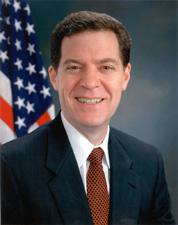
Mr. President, rural America has been depopulating at an alarming rate. The same is true for the rural counties in Kansas. In fact, over half of the counties in the State are losing population. We…
Mr. President, rural America has been depopulating at an alarming rate. The same is true for the rural counties in Kansas. In fact, over half of the counties in the State are losing population.
We are going to stop that trend.
Senators, like Ben Nelson and I, who grew up in small towns know a little secret. Rural America is a great place to live. However, for rural towns to compete with urban areas for talented young people, they have to be able to provide the basics--like high quality health care.
For the hospitals represented here today to be able to provide high quality health care for rural America, they have to be able to count on Medicare for fair reimbursement. For quite a few hospitals in Kansas, 70 and 80 percent of their caseload is paid for by Medicare. For the communities these hospitals serve, fair Medicare reimbursement is vitally important.
Unfortunately, much of the regulation that comes out of CMS is based on economics of scale. The actuaries and accountants in Baltimore produce payment systems and formulas for reimbursement. The assumption is that the hospitals that are the most efficient will be the most successful. Unfortunately, efficiency is often a product of volume. If you treat 5,000 stroke patients in a year, you are probably going to be more efficient than if you treat only 5.
Efficiency is a laudable goal, but it shouldn't be the only goal of Medicare. Particularly, when it comes to providing health care in a hospital with fewer than 50 beds.
That is why Senator Nelson and I are introducing the ``Rural Community Hospital Assistance Act of 2003.'' Rather than rely on formulas calculated by CMS bureaucrats in Baltimore, the hospitals covered under our bill will rely on cost-based reimbursement. In addition, the bill recognizes that these hospitals don't have the volume to cover bad debt from patients and to keep up with growing demands for new technology and infrastructure.
This bill will create a new Rural Community Hospital designation within Medicare for rural hospitals with fewer than 50 beds.
These hospitals will be eligible for cost-based reimbursement for impatient and outpatient services; a technology and infrastructure add on; cost based reimbursement for home health services where the provider is isolated; cost based reimbursement for ambulance services; and the restoration of Medicare bad debt payments at 100 percent.
And the cost of the bill, which we believe with stabilize health care in rural America, is less than \1/2\ of 1 percent of annual Medicare expenditures.
This is an important bill for rural hospitals; and I don't think you can overestimate the importance of rural hospitals to the communities they serve.
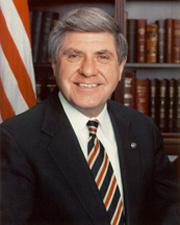
Mr. President, today I join Senator Brownback in introducing the Rural Community Hospital Assistance Act. This legislation is intended to ensure the future of small rural hospitals by restructuring…
Mr. President, today I join Senator Brownback in introducing the Rural Community Hospital Assistance Act. This legislation is intended to ensure the future of small rural hospitals by restructuring the way they are reimbursed for Medicare services by basing the reimbursements on actual costs instead of the current pre- set cost structure.
Current law allows for very small hospitals--designated Critical Access Hospitals, CAH, to receive cost-based Medicare reimbursements. To qualify as a CAH the facility must have no more than 15 acute care beds.
In rural communities, hospital facilities that are slightly larger than the 15 bed limit share with Critical Access Hospitals the same economic conditions, the same treatment challenges, the same disparity in coverage area but do not share the same reimbursement arrangement. These rural hospitals have to compete with larger urban-based hospitals that can perform the same services at drastically reduced costs. They are also discouraged from investing in technology and other methods to improve the quality of care in their communities because those investments are not supported by Medicare reimbursement procedures.
The legislation would provide cost-based Medicare reimbursement by creating a new ``rural'' designation under the Medicare reimbursement system. This new designation would benefit seven Nebraska hospitals. Hospitals in McCook, Alliance, Broken Bow, Beatrice, Columbus, Holdrege and Lexington would fall under this new designation, and would have similar benefits provided to nearly sixty other Nebraska hospitals classified under the CAH system.
The legislation would also improve the hospitals with critical access status. Nearly sixty existing CAH facilities in Nebraska already receive cost-based reimbursements for inpatient and outpatient services. The legislation would further assist these existing CAH facilities by allowing them a return on equity for technology and infrastructure investments and by extending the cost-based reimbursement to certain post-acute services.
Rural hospitals cannot continue to provide these services without having Medicare cover the costs. If something
is not done, the larger hospitals may be forced to cut back on the number of beds they keep--and the number of people they care for, and others may be forced to close their doors. These hospitals provide jobs, good wages, health care and economic development opportunity for these communities. Without access to these hospitals, these communities would not survive. The Rural Community Hospital Assistance Act will ensure that the community has access to high quality health care that is affordable to the patient and the provider.

Mr. President, I am proud to sponsor the Military Pay Comparability Act of 2003. In 1999, the Committee on Armed Services passed landmark legislation providing significant benefits to the entire…
Mr. President, I am proud to sponsor the Military Pay Comparability Act of 2003. In 1999, the Committee on Armed Services passed landmark legislation providing significant benefits to the entire Total Force. I believe we must improve upon this legislation so that we not only eliminate ``pay comparability gap,'' but ensure that we do not recreate one in the future.
Under the 1999 legislation, military raises will exceed growth in the ECI by one-half percent per year through fiscal year 2006. However, starting in 2007, military raises will revert to being capped one-half percentage point below the ECI.
As a former ranking member and long-time member on the Personnel Subcommittee when Senator John Glenn was the chairman, my experience with capping military raises below ECI during the last three decades shows that such caps inevitably lead to significant retention problems among second-term and career service members.
Those retention problems cost our Nation more in the long run in terms of lost military experience, decreased readiness, and increased training costs. Since military pay was last comparable with private sector pay in 1982, military pay raises have lagged a cumulative 6.4 percent behind private sector wage growth--although recent efforts of the executive and legislative branches have reduced the gap significantly from its peak of 13.5 percent in 1999. Our efforts in 1999 increased pay raises, reformed the pay tables, took nearly 12,000 service members off of food stamps, and established a military Thrift Savings Plan.
We have to improve upon the 1999 law to ensure future raises track to civilian pay growth so we don't fall back into pay caps that will get us back in the negative retention/readiness cycle. Subsequent raises after 2006 must sustain full comparability with increases in the ECI. A key principal of the all volunteer force, AVF, is that military pay raises must match private sector pay growth, as measured by ECI. Our action in this area will send a strong message of support to our service men and women and their families that will continue to promote high morale, better quality-of-life, and a more ready military force.
I ask unanimous consent that the text of the legislation be printed in the Record.
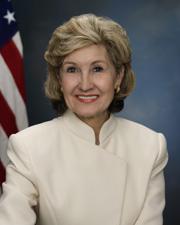
Mr. President, today Senator Feinstein and I are introducing the ``Overseas Military Facility Structure Review Act'' to establish a congressional panel to conduct a detailed study of U.S. military…
Mr. President, today Senator Feinstein and I are introducing the ``Overseas Military Facility Structure Review Act'' to establish a congressional panel to conduct a detailed study of U.S. military facilities overseas. This bill creates a bipartisan congressional commission charged with undertaking an objective and thorough review of our overseas basing structure. The commission will consider a host of criteria to determine whether our overseas bases are prepared to meet our needs in the 21st Century. The commission will be comprised of national security and foreign affairs experts who will present their findings to the 2005 domestic Base Realignment and Closure, BRAC, Commission, providing a comprehensive analysis of our worldwide base and force structure.
We believe it is important to determine our overseas basing requirements, assess training constraints, and provide recommendations on future realignments. As a result, we are proposing legislation that would create a congressional Overseas Basing Commission to review our basing strategy to ensure that it is consistent with both our short- and long-term national security objectives. We believe the time is right to move forward with a more structured approach to reviewing these overseas bases.
Such a review is timely. The 2005 BRAC is just around the corner and some in the Pentagon have suggested it could result in the closure of nearly one out of every four domestic bases. Before we close stateside military bases, we must first analyze our overseas infrastructure. If we reduce our overseas presence, we need stateside bases to station returning troops. It is senseless to close bases on U.S. soil in 2005 only to determine a few years later that we made a costly, irrevocable mistake. A painful lesson we learned in the last rounds of closures.
Though our military force structure has decreased since the Cold War, the responsibilities placed upon our service members have significantly increased. While operational effectiveness is paramount, it would be irresponsible to build on an inefficient, obsolete overseas base structure, as we face new strategic threats in the 21st century, taking valuable dollars needed elsewhere.
Show 5 more
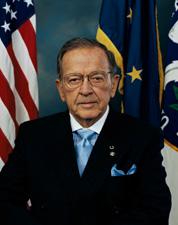
Mr. President, today I introduce, with Senators Campbell, Domenici, Hatch, Inouye, and Murkowski, the Federal Land Recreational Visitor Protection Act of 2003. Across our State of Alaska, Western…
Mr. President, today I introduce, with Senators Campbell, Domenici, Hatch, Inouye, and Murkowski, the Federal Land Recreational Visitor Protection Act of 2003.
Across our State of Alaska, Western States, and areas of the Northeast, local governments and businesses struggle each year to remove potential avalanches or recover form the disastrous effects of avalanches. The West Wide Avalanche Network calculated avalanche damage totals for the Western U.S. between $600 thousand and $800 thousand annually. These costs do not include the economic losses from town cut- off by avalanches. In our state alone, the Safety Center estimates upwards of $18 million in direct damages both to private property and economic losses over the past 5 years.
While such damage can bring hardships to many local communities, none can compare with the loss of a friend or family member. The U.S. averages 30 deaths a year from avalanches, a majority of which are results of recreational activities in unmitigated avalanche areas. Some States set aside money for rescues prior to the winter season, knowing that the resources required to clear all avalanche threats are not at hand.
This bill brings those resources to the entities that need them the most, enabling us to significantly reduce the effects of avalanches on visitors, recreational users, transportation corridors, and our local communities.

Mr. President, do I have 20 minutes? I ask the Chair to remind me when I have 4 minutes left.
Mr. President, do I have 20 minutes?
I ask the Chair to remind me when I have 4 minutes left.
Mr. President, I ask unanimous consent that the text of the bill be printed in the Record.
Mr. President, I ask unanimous consent that the text of the bill be printed in the Record.

Mr. President, I ask unanimous consent that the text of the bill be printed in the Record.
Mr. President, I ask unanimous consent that the text of the bill be printed in the Record.

Mr. President, I ask unanimous consent that the text of the bill be printed in the Record.
Mr. President, I ask unanimous consent that the text of the bill be printed in the Record.
Bill Text
Latest available legislative text
        [Congressional Bills 108th Congress]
[From the U.S. Government Publishing Office]
[S. 936 Introduced in Senate (IS)]

108th CONGRESS
1st Session
S. 936

To amend the Internal Revenue Code of 1986 to deny any deduction for
certain fines, penalties, and other amounts.

_______________________________________________________________________

IN THE SENATE OF THE UNITED STATES

April 29, 2003

Mr. Baucus (for himself, Mr. Grassley, and Mr. McCain) introduced the
following bill; which was read twice and referred to the Committee on
Finance

_______________________________________________________________________

A BILL

To amend the Internal Revenue Code of 1986 to deny any deduction for
certain fines, penalties, and other amounts.

Be it enacted by the Senate and House of Representatives of the
United States of America in Congress assembled,

SECTION 1. SHORT TITLE.

This Act may be cited as the ``Government Settlement Transparency
Act of 2003''.

SEC. 2. DENIAL OF DEDUCTION FOR CERTAIN FINES, PENALTIES, AND OTHER
AMOUNTS.

(a) In General.--Subsection (f) of section 162 of the Internal
Revenue Code of 1986 (relating to trade or business expenses) is
amended to read as follows:
``(f) Fines, Penalties, and Other Amounts.--
``(1) In general.--Except as provided in paragraph (2), no
deduction otherwise allowable shall be allowed under this
chapter for any amount paid or incurred (whether by suit,
agreement, or otherwise) to, or at the direction of, a
government in relation to the violation of any law or the
investigation or inquiry into the potential violation of any
law.
``(2) Exception for amounts constituting restitution.--
Paragraph (1) shall not apply to any amount which the taxpayer
establishes constitutes restitution for damage or harm caused
by the violation of any law or the potential violation of any
law. This paragraph shall not apply to any amount paid or
incurred as reimbursement to the government for the costs of
any investigation or litigation.
``(3) Treatment of certain nongovernmental regulatory
entities.--For purposes of paragraph (1), amounts paid or
incurred to, or at the direction of, the following
nongovernmental entities shall be treated as amounts paid or
incurred to, or at the direction of, a government:
``(A) Any nongovernmental entity which exercises
self-regulatory powers (including imposing sanctions)
in connection with a qualified board or exchange (as
defined in section 1256(g)(7)).
``(B) To the extent provided in regulations, any
nongovernmental entity which exercises self-regulatory
powers (including imposing sanctions) as part of
performing an essential governmental function.''.
(b) Effective Date.--The amendment made by this section shall apply
to amounts paid or incurred after April 27, 2003, except that such
amendment shall not apply to amounts paid or incurred under any binding
order or agreement entered into on or before April 27, 2003. Such
exception shall not apply to an order or agreement requiring court
approval unless the approval was obtained on or before April 27, 2003.
<all>