Renewable Energy Investment Act of 2003
A bill to enhance national security, environmental quality, and economic stability by increasing the production of clean, domestically produced renewable energy as a fuel source for the national electric system.
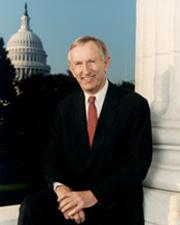 Sen. James M. Jeffords (I-VT)
Legislative Activity
Stay on top of the latest movement without scrolling through every action
Read twice and referred to the Committee on Energy and Natural Resources. (text of measure as introduced: CR S5491-5492)
April 29, 2003
View full timeline
Introduced in Senate
April 29, 2003
Sponsor introductory remarks on measure. (CR S5491)
April 29, 2003
Read twice and referred to the Committee on Energy and Natural Resources. (text of measure as introduced: CR S5491-5492)
April 29, 2003
Floor Debate
15 membersWhat members said about S. 944 on the floor
 +10
Floor Debate
15 membersWhat members said about S. 944 on the floor
Mr. President, I rise today to introduce, along with Senators Durbin, Reid, and Kerry, the ``Renewable Energy Investment Act of 2003.'' This legislation will guarantee that by the year 2020, twenty…
Mr. President, I rise today to introduce, along with Senators Durbin, Reid, and Kerry, the ``Renewable Energy Investment Act of 2003.'' This legislation will guarantee that by the year 2020, twenty…
Mr. President, today, Senator Hagel and I, and others introduce ``The IDEA Full Funding Act of 2003.'' This bill will provide increased mandatory funding for the Individuals with Disabilities…
Mr. President, today, we are introducing the ``Government Settlement Transparency Act of 2003.'' Over the past several months, we have become increasingly concerned about the approval of various…
Mr. President, today I rise to introduce the Fuel Tax Equalization Credit for Substantial Power Takeoff Vehicles Act. This bill upholds a long-held principle in the application of the Federal fuels…
Show 8 more
Mr. President, last November, the Drug Competition Act passed the Senate by unanimous consent. This morning, I am proud to join Senator Grassley, along with Senators Durbin, Feingold, Kohl and…

Mr. President, I am pleased to join Senator Leahy today in introducing the Drug Competition Act of 2003. This bill will help Federal regulators ensure that there is full and unfettered access to…

Mr. President, I rise in support of the IDEA Full Funding Act of 2003. I'm so proud to cosponsor this important legislation. This bill provides mandatory increases for IDEA funding each year, so that…
Mr. President, rural America has been depopulating at an alarming rate. The same is true for the rural counties in Kansas. In fact, over half of the counties in the State are losing population. We…
Mr. President, today I join Senator Brownback in introducing the Rural Community Hospital Assistance Act. This legislation is intended to ensure the future of small rural hospitals by restructuring…
Mr. President, I am proud to sponsor the Military Pay Comparability Act of 2003. In 1999, the Committee on Armed Services passed landmark legislation providing significant benefits to the entire…

Mr. President, today Senator Feinstein and I are introducing the ``Overseas Military Facility Structure Review Act'' to establish a congressional panel to conduct a detailed study of U.S. military…

Mr. President, today I introduce, with Senators Campbell, Domenici, Hatch, Inouye, and Murkowski, the Federal Land Recreational Visitor Protection Act of 2003. Across our State of Alaska, Western…
Show 3 more
Mr. President, I ask unanimous consent that the text of the bill be printed in the Record.

Mr. President, I ask unanimous consent that the text of the bill be printed in the Record.
Mr. President, I ask unanimous consent that the text of the bill be printed in the Record.
Bill Text
Latest available legislative text
        [Congressional Bills 108th Congress]
[From the U.S. Government Publishing Office]
[S. 944 Introduced in Senate (IS)]

108th CONGRESS
1st Session
S. 944

To enhance national security, environmental quality, and economic
stability by increasing the production of clean, domestically produced
renewable energy as a fuel source for the national electric system.

_______________________________________________________________________

IN THE SENATE OF THE UNITED STATES

April 29, 2003

Mr. Jeffords (for himself, Mr. Durbin, Mr. Reid, and Mr. Kerry)
introduced the following bill; which was read twice and referred to the
Committee on Energy and Natural Resources

_______________________________________________________________________

A BILL

To enhance national security, environmental quality, and economic
stability by increasing the production of clean, domestically produced
renewable energy as a fuel source for the national electric system.

Be it enacted by the Senate and House of Representatives of the
United States of America in Congress assembled,

SECTION 1. SHORT TITLE.

This Act may be cited as the ``Renewable Energy Investment Act of
2003.''

SEC. 2. DEFINITIONS.

In this Act:
(1) Biomass.--
(A) In general.--The term ``biomass'' means--
(i) organic material from a plant that is
planted for the purpose of being used to
produce energy;
(ii) nonhazardous, cellulosic or
agricultural waste material that is segregated
from other waste materials and is derived
from--
(I) a forest-related resource,
including--
(aa) mill and harvesting
residue;
(bb) precommercial
thinnings;
(cc) slash; and
(dd) brush;
(II) an agricultural resource,
including--
(aa) orchard tree crops;
(bb) vineyards;
(cc) grains;
(dd) legumes;
(ee) sugar; and
(ff) other crop byproducts
or residues; or
(III) miscellaneous waste such as--
(aa) waste pallet;
(bb) crate; and
(cc) landscape or right-of-
way tree trimmings; and
(iii) animal waste that is converted to a
fuel rather than directly combusted, the
residue of which is converted to a biological
fertilizer, oil, or activated carbon.
(B) Exclusions.--The term ``biomass'' does not
include--
(i) incineration of municipal solid waste;
(ii) recyclable postconsumer waste paper;
(iii) painted, treated, or pressurized
wood;
(iv) wood contaminated with plastic or
metal; or
(v) tires.
(2) Distributed generation.--The term ``distributed
generation'' means reduced electricity consumption from the
electric grid due to use by a customer of renewable energy
generated at a customer site.
(3) Incremental hydropower.--The term ``incremental
hydropower'' means additional generation achieved from
increased efficiency after January 1, 2003, at a hydroelectric
dam that was placed in service before January 1, 2003.
(4) Landfill gas.--The term ``landfill gas'' means gas
generated from the decomposition of household solid waste,
commercial solid waste, or industrial solid waste disposed of
in a municipal solid waste landfill unit (as those terms are
defined in regulations promulgated under subtitle D of the
Solid Waste Disposal Act (42 U.S.C. 6941 et seq.)).
(5) Renewable energy.--The term ``renewable energy'' means
electricity generated from--
(A) a renewable energy source; or
(B) hydrogen that is produced from a renewable
energy source.
(6) Renewable energy source.--The term ``renewable energy
source'' means--
(A) wind;
(B) ocean waves;
(C) biomass;
(D) solar sources;
(E) landfill gas;
(F) incremental hydropower; or
(G) a geothermal source.
(7) Retail electric supplier.--The term ``retail electric
supplier'', with respect to any calendar year, means a person
or entity that--
(A) sells retail electricity to consumers; and
(B) sold not less than 500,000 megawatt-hours of
electric energy to consumers for purposes other than
resale during the preceding calendar year.
(8) Secretary.--The term ``Secretary'' means the Secretary
of Energy.

SEC. 3. RENEWABLE ENERGY GENERATION STANDARDS.

(a) Renewable Energy Credits.--
(1) In general.--For each calendar year beginning in
calendar year 2006, each retail electric supplier shall submit
to the Secretary, not later than April 30 of each year,
renewable energy credits in an amount equal to the required
annual percentage of the retail electric supplier's total
amount of kilowatt-hours of nonhydropower electricity sold to
consumers during the previous calendar year.
(2) Carryover of renewable energy credits.--A renewable
energy credit for any year that is not used to satisfy the
minimum requirement for that year may be carried over for use
within the next 2 years.
(b) Required Annual Percentage.--Of the total amount of
nonhydropower electricity sold by each retail electric supplier during
a calendar year, the amount generated by renewable energy sources shall
be not less than the percentage specified below:

Calendar year:                      Percentage of Renewable energy each
year:
2006-2009.....................................                   5
2010-2014.....................................                  10
2015-2019.....................................                  15
2020 and subsequent years.....................                  20.
(c) Submission of Renewable Energy Credits.--
(1) In general.--To meet the requirements under subsection
(a), a retail electric supplier shall submit to the Secretary--
(A) renewable energy credits issued to the retail
electric supplier under subsection (e);
(B) renewable energy credits obtained by purchase
or exchange under subsection (f);
(C) renewable energy credits purchased from the
United States under subsection (g); or
(D) any combination of renewable energy credits
obtained under subsections (e), (f), and (g).
(2) No double counting.--A renewable energy credit may be
counted toward compliance with subsection (a) only once.
(d) Renewable Energy Credit Program.--Not later than 1 year after
the date of enactment of this Act, the Secretary shall establish a
program to issue, monitor the sale or exchange of, and track renewable
energy credits.
(e) Issuance of Renewable Energy Credits.--
(1) Application.--
(A) In general.--Under the program established
under subsection (d), an entity that generates electric
energy through the use of a renewable energy resource
may apply to the Secretary for the issuance of
renewable energy credits.
(B) Contents.--An application under subparagraph
(A) shall indicate--
(i) the type of renewable energy resource
used to produce the electric energy;
(ii) the State in which the electric energy
was produced; and
(iii) any other information that the
Secretary determines to be appropriate.
(2) Issuances.--
(A) In general.--Except as provided in subparagraph
(C), the Secretary shall issue to an entity applying
under this subsection 1 renewable energy credit for
each kilowatt-hour of renewable energy generated in any
State from the date of enactment of this Act and in
each subsequent calendar year.
(B) Vesting.--A renewable energy credit will vest
with the owner of the system or facility that generates
the renewable energy unless the owner explicitly
transfers the renewable energy credit.
(C) Amount.--The Secretary shall issue 3 renewable
energy credits for each kilowatt-hour of distributed
generation.
(3) Eligibility.--
(A) In general.--To be eligible for a renewable
energy credit, the unit of electricity generated
through the use of a renewable energy resource shall be
sold for retail consumption or used by the generator.
(B) Energy generated from a combination of
sources.--If both a renewable energy resource and a
nonrenewable energy resource are used to generate the
electric energy, the Secretary shall issue renewable
energy credits based on the proportion of the renewable
energy resource used.
(C) Identification of type and date.--The Secretary
shall identify renewable energy credits by the type and
date of generation.
(4) Sale under contract under purpa.--In a case in which a
generator sells electric energy generated through the use of a
renewable energy resource to a retail electric supplier under a
contract subject to section 210 of the Public Utilities
Regulatory Policies Act of 1978 (16 U.S.C. 824a-3), the retail
electric supplier shall be treated as the generator of the
electric energy for the purposes of this Act for the duration
of the contract.
(f) Sale or Exchange of Renwable Energy Credits.--
(1) In general.--A renewable energy credit may be sold or
exchanged by the entity issued the renewable energy credit or
by any other entity that acquires the renewable energy credit.
(2) Manner of sale.--A renewable energy credit may be sold
or exchanged in any manner not in conflict with existing law,
including on the spot market or by contractual arrangements of
any duration.
(g) Purchase From the United States.--
(1) In general.--The Secretary shall offer renewable energy
credits for sale at the lesser of 3 cents per kilowatt-hour or
110 percent of the average market value of renewable energy
credits for the applicable compliance period.
(2) Adjustment for inflation.--On January 1 of each year
following calendar year 2006, the Secretary shall adjust for
inflation the price charged per renewable energy credit for the
calendar year.
(h) State Programs.--Nothing in this section precludes any State
from requiring additional renewable energy generation in the State
under any renewable energy program conducted by the State not in
conflict with this Act.
(i) Consumer Allocation.--
(1) Rates.--The rates charged to classes of consumers by a
retail electric supplier shall reflect a proportional
percentage of the cost of generating or acquiring the required
annual percentage of renewable energy under subsection (a).
(2) Representations to customers.--A retail electric
supplier shall not represent to any customer or prospective
customer that any product contains more than the percentage of
eligible resources if the additional amount of eligible
resources is being used to satisfy the renewable generation
requirement under subsection (a).
(j) Enforcement.--
(1) In general.--A retail electric supplier that does not
submit renewable energy credits as required under subsection
(a) shall be liable for the payment of a civil penalty.
(2) Amount.--The amount of a civil penalty under paragraph
(1) shall be calculated on the basis of the number of renewable
energy credits not submitted, multiplied by the lesser of 4.5
cents or 300 percent of the average market value of renewable
energy credits for the compliance period.
(k) Information Collection.--The Secretary may collect the
information necessary to verify and audit--
(1) the annual electric energy generation and renewable
energy generation of any entity applying for renewable energy
credits under this section;
(2) the validity of renewable energy credits submitted by a
retail electric supplier to the Secretary; and
(3) the quantity of electricity sales of all retail
electric suppliers.
(l) Voluntary Participation.--The Secretary may issue a renewable
energy credit under subsection (e) to any entity not subject to the
requirements of this Act only if the entity applying for the renewable
energy credit meets the terms and conditions of this Act to the same
extent as entities subject to this Act.

SEC. 4. STATE RENEWABLE ENERGY GRANT PROGRAM.

(a) Distribution of Amounts.--The Secretary shall distribute
amounts received from sales under subsection 3(h) and from amounts
received under subsection 3(k) to States to be used for the purposes of
this section.
(b) Program.--
(1) In general.--Not later than 1 year after the date of
enactment of this Act, the Secretary shall establish a program
to promote State renewable energy production and use.
(2) Use of funds.--The Secretary shall make funds available
under this section to State energy agencies for grant programs
for--
(A) renewable energy research and development;
(B) loan guarantees to encourage construction of
renewable energy facilities;
(C) consumer rebate or other programs to offset
costs of small residential or small commercial
renewable energy systems including solar hot water; or
(D) promotion of distributed generation.
(c) Preference.--In allocating funds under the program, the
Secretary shall give preference to--
(1) States that have a disproportionately small share of
economically sustainable renewable energy generation capacity;
and
(2) State grant programs that are most likely to stimulate
or enhance innovative renewable energy technologies.
<all>