Older Americans Prescription Drug Tax Relief Act

Legislative Activity
Stay on top of the latest movement without scrolling through every action
Read twice and referred to the Committee on Finance.
April 30, 2003
View full timeline
Introduced in Senate
April 30, 2003
Sponsor introductory remarks on measure. (CR S5597)
April 30, 2003
Read twice and referred to the Committee on Finance.
April 30, 2003
Floor Debate
18 membersWhat members said about S. 951 on the floor
 JDR
JDR RDF
RDF MD
MD MBEJW+13
Floor Debate
18 membersWhat members said about S. 951 on the floor
Mr. President, I am pleased to cosponsor legislation being introduced today that will dramatically improve the child tax credit. I thank my friend and colleague, Senator Lincoln, for her hard work on…
Mr. President, I am pleased to cosponsor legislation being introduced today that will dramatically improve the child tax credit. I thank my friend and colleague, Senator Lincoln, for her hard work on behalf of our Nation's working families.
In the 6 years since the child tax credit was first enacted, it has provided important tax relief to families across the country. Income taxes can be particularly burdensome to moderate income families who are facing increased costs for food, housing, medicine, education, and other basic needs for their children. Indeed, almost half of the benefits of this credit are enjoyed by families with taxable income under $50,000 per year. This is important in States like mine; in West Virginia, almost 80 percent of the taxpayers have annual incomes below $50,000.
While the current child tax credit is excellent--it could be even better. The $600 credit, which is available only for children under the age of 17, does not truly recognize the costs that face many families raising children. Moreover, many working families do not have enough income to qualify for the credit. Make no mistake, I am talking about hard-working parents who go to
their jobs every day and take their responsibilities to their children very seriously. These parents are paying payroll taxes, but cannot provide for some of the basic needs of their children. The legislation introduced today would improve the law so that a greater portion of the child tax credit could be refunded to these admirable parents.
Specifically, this legislation includes two important improvements to the current child tax credit that will benefit all families who claim the credit. First, the legislation would increase the amount of the tax credit from $600 to $1,000 immediately. Second, the bill increases the age of children who are eligible for the credit from 16 to 18. We know that 17- and 18-year-old children are facing enormous educational expenses in order to attend college or technical school. We ought to help parents pay for this education by allowing them to continue to receive the child tax credit until their child is a legal adult. The bill also includes two important improvements to the eligibility criteria for the refundable credit. By lowering the income threshold for the refundable credit and increasing the percentage of income eligible for the refundable credit, we can ensure that more of the families most in need of assistance can benefit from this credit.
The child tax credit is one of the most important ways that Congress can demonstrate its support for America's families. And I hope that my colleagues will support this legislation which would dramatically improve the child tax credit.
Mr. President, the continuing economic crisis facing the U.S. airline industry also imperils the future of hundreds of small and rural communities across our country as air carriers drastically reduce service to small and rural communities. While small and rural communities have long had to cope with limited and unreliable service, these problems have been exacerbated by the weakened financial condition of most major U.S. airlines.
Faced with declining revenues brought on by the Nation's economic downturn, the events of September 11, 2001 and the war in Iraq most carriers have substantially reduced or eliminated service to many communities. In the last month, United Air Lines, US Airways and Continental Airlines announced significant service cuts to West Virginia.
Last month, this Congress provided $3.5 billion in direct and indirect benefits to the Nation's airlines. I strongly supported this package because our economy requires a strong and vibrant airline industry. In my own aviation relief package, I had provided resources to the airlines to continue to provide air service to small and rural communities. Even in the best of times, these communities face a difficult time maintaining and developing new air service options. Today, their challenge is preventing the complete loss of air service. In these difficult economic and uncertain times, I strongly believe that the Federal Government must continue to assist our most vulnerable communities stay connected to the Nation's aviation network--a network paid for by all Americans.
The reduction or elimination of air service had a devastating effect on the economy of a community. Having adequate air service is not just a matter of convenience, but a matter of economic survival. Without access to reliable air service, no business is willing to locate their operations in these areas of the country no matter how attractive the quality of life. Airports are economic engines that attract critical new development opportunities and jobs.
West Virginia has been able to attract firms from around the world because corporate executives know they can visit their operations with ease. Rural and small town America must continue to be adequately linked to the Nation's air transportation network if its people and businesses are to compete economically with larger urban areas in this country and around the world.
In the Aviation Investment and Reform Act for the 21st Century, we began to address the need to improve air service in small and rural communities. I, along with many of my colleagues, supported the creation of the Small Community Air Service Development Pilot Program, a competitive grant program to provide communities with the resources they needed to attract new air service to their communities. The program is an enormous success. Over 180 communities applied for 40 grants in the first year funds were available. The Department of Transportation has announced the next round of funding.
In West Virginia, Charleston received money under the program and has used it to successfully attract a new service connection to Houston, an important gateway to the markets of Latin America. This program gave local communities the ability and flexibility to meet local air transportation needs.
The Aviation Investment and Revitalization Vision Act, cosponsored by myself and Senator Lott, reauthorizes the expands the successful Small Community Air Service Development Program. The bill authorizes the participation of 120 communities over 3 years.
Many of our most isolated and vulnerable communities whose only service is through the Essential Air Service Program have indicated that they would like to develop innovative and flexible programs that communities who received Small Community Air Service Development grants to improve the quality of their air service.
It is for this reason that I, along with Senator Lott, have introduced the Small Community and Rural Air Service Revitalization Act of 2003. The legislation reauthorizes the Department of Transportation's Essential Air Service, EAS, program and creates a series of pilot programs for EAS communities to participate to stimulate passenger demand for air service in their communities.
Under the bill, communities are given the option on continuing their EAS as is or they may apply to participate in new incentive programs to help them develop new and innovative solutions to increasing local demand for air
service. The EAS Marketing and Community Flexibility Programs would provide communities new resources and tools to implement locally developed plans to improve their air service. By providing communities the ability to design their own air service proposals, a community has the ability to develop a plan that meets it locally determined needs, improves air service choices, and gives the community a greater stake in the EAS program.
Specifically, these new EAS pilot programs include authorization for the use of smaller planes to decrease cost or increase frequency, communities to cost-share for service above base EAS subsidy level, alternative service at up to 3 EAS points if a community applies, an opt out of the EAS program with a one-time infusion of funding to assist in transition out of the program, and DOT to mandate multiple code-sharing arrangements for EAS providers.
A pilot program added at the request of Senator Lott would allow DOT to require a cost-share for up to 10 communities within 100 miles of a hub. I have significant reservations about forcing communities to pay for a service the Federal Government promised them.
In addition, the communities that participate in EAS are small and isolated and have lower than average per captia incomes than urban or suburban communities. Cash-strapped communities will have to provide anywhere between $50,000 and $120,000 in local funds to continue their EAS service. I worked with Senator Lott to make sure DOT considers a variety of relevant factors when selecting communities, to provide communities appeal rights, and to make sure they have access to all other pro-active pilot programs. I will monitor DOT's implementation of this pilot program closely.
Small and rural communities are the first to bear the brunt of bad economic times and the last to see the benefits of good times. The general economic downturn and the dire straits of the aviation industry have placed exceptional burdens on air service to our most isolated communities. The Federal Government must provide additional resources and tools for small communities to help themselves attract adequate air service. The Federal Government must make sure that our most vulnerable towns and cities are linked to the rest of the Nation. My legislation builds on existing programs and strengthens them. If these bills are enacted, our constituents will have the tools and resources necessary to attract air service, related economic development, and most importantly expand their connections to the national and global economy.
Mr. President, as millions of public school students and teachers around the country prepare to complete their first school year under the No Child Left Behind Act, NCLB, I am introducing a bill that…
Mr. President, as millions of public school students and teachers around the country prepare to complete their first school year under the No Child Left Behind Act, NCLB, I am introducing a bill that would help to return a measure of local control that was taken from school districts and States by its enactment last year.
I am pleased to be joined in this effort by Senators Jeffords, Dayton, and Leahy.
I have heard a lot of concern from my constituents about various aspects of the President's education bill. Following the enactment of the bill last year, the drumbeat of concern has continued to reverberate throughout my
State, and has gotten even louder, as students, teachers, parents, administrators, school counselors and social workers, and others are learning first-hand about the effect of the NCLB.
I strongly support maintaining local control over decisions affecting our children's day-to-day classroom experiences. I also believe that the Federal Government has an important role to play in supporting our State educational agencies and local school districts as they carry out their most important responsibility--the education of our children.
I voted against the President's education bill in large part because of the new annual testing mandate for students in grades 3-8. While I agree that there should be a strong accountability system in place to ensure that public school students are making progress, I strongly oppose over-testing students in our public schools. I agree that some tests are needed to ensure that our children are keeping pace, but taking time to test students has to take a back seat to taking the time to teach students in the first place.
I have heard a lot about these new annual tests from the people of Wisconsin, and their response has been almost universally negative. My constituents are concerned about this additional layer of testing for many reasons, including the cost of developing and implementing these tests, the loss of teaching time every year to prepare for and take the tests, and the extra pressure that the tests will place on students, teachers, schools, and school districts.
I share my constituents' concerns about this new Federal mandate. I find it interesting that proponents of the NCLB say that it will return more control to the States and local school districts. In my view, however, this massive new Federal testing mandate runs counter to the idea of local control.
Many States and local school districts around the country, including Wisconsin, already have comprehensive testing programs in place. The Federal Government should leave decisions about the frequency of using high quality assessments to measure and increase student academic achievement up to the States and local school districts that bear the responsibility for educating our children. Every State and every school district is different. A uniform testing policy may not be the best approach.
I have heard from many education professionals in my State that this new testing requirement is a waste of money and a waste of time. These people are dedicated professionals who are committed to educating Wisconsin's children, and they don't oppose testing. I think we can all agree that testing has its place. What they oppose is the magnitude of testing that is required by this law.
Beginning in the 2005-2006 school year, the NCLB will pile more tests on our Nation's public school students. And of course, when those tests are piled on students, they burden our teachers as well, because teachers must spend more and more time preparing students to take these exams.
This kind of teaching, sometimes called ``teaching to the test,'' is becoming more and more prevalent in our schools as testing has become increasingly common. The dedicated teachers in our classrooms will now be constrained by teaching to yet more tests, instead of being able to use their own judgment about what subject areas the class needs to spend extra time studying. This additional testing time could also reduce the opportunity for teachers to create and implement innovative learning experiences for their students.
Teachers in my State are concerned about the amount of time that they will have to spend preparing their students to take the tests and administering the tests. They are concerned that these additional tests will disrupt the flow of education in their classrooms. One teacher said the preparation for the tests Wisconsin already requires in grades 3, 4, 8, and 10 can take up to a month, and the administration of the test takes another week. That is five weeks out of the school year. And now the Federal Government is requiring teachers to take a huge chunk out of instruction time each year in grades 3-8. In my view, and in the view of the people of my state, this time can be better spent on regular classroom instruction.
The legislation that I am introducing today, the Student Testing Flexibility Act of 2003, would give States and local school districts that have demonstrated academic success the flexibility to apply to waive the new annual testing requirements in the NCLB. States and school districts with waivers would still be required to administer high quality tests to students in, at a minimum, reading or language arts and mathematics at least once in grades 3-5, 6-9, and 10-12 as required under the law.
This bill would allow States and school districts that meet the same specific accountability criteria outlined for school-level excellence under the State Academic Achievement Award Program to apply to the Secretary of Education for a waiver from the new annual reading or language arts and mathematics tests for students in grades 3-8. The waiver would be for a period of three years and would be renewable, so long as the state or school district meets the criteria.
To qualify for the waiver, the State or school district must have significantly closed the achievement gap among a number of subgroups of students as required under Title I, or must have exceeded their adequate yearly progress, AYP, goals for two or more consecutive years. The bill would require the Secretary to grant waivers to states or school districts that meet these criteria and apply for the waiver. Individual districts in states that have waivers would not be required to apply for a separate waiver.
The Federal Government should not impose an additional layer of testing on states that are succeeding in meeting or exceeding their AYP goals or on closing the achievement gap. Instead, we should allow those States that have demonstrated academic success to use their share of Federal testing money to help those schools that need it the most.
The bill I am introducing today would do just that by allowing states with waivers to retain their share of the Federal funding appropriated to develop and implement the new annual tests. These important dollars would be used for activities that these States deem appropriate for improving student achievement at individual public elementary and secondary schools that have failed to make AYP.
I am pleased that this legislation is supported by the American Association of School Administrators, the National PTA, the National Association of Elementary School Principals, the National Association of Secondary School Principals, the School Social Work Association of America, the Wisconsin Department of Public Instruction, the Wisconsin Education Association Council, the Wisconsin Association of School Boards, the Milwaukee Teachers' Education Association, and the Wisconsin School Administrators Alliance, which includes the Association of Wisconsin School Administrators, the Wisconsin Association of School District Administrators, the Wisconsin Association of School Business Officials, and the Wisconsin Council for Administrators of Special Services.
While this bill focuses on the over-testing of students in our public schools, I would like to note that my constituents have raised a number of other concerns about the NCLB that I hope will be addressed by Congress. My constituents are concerned about, among other things, the new AYP requirements, the effect that the Act will have on rural school districts, and about finding the funding necessary to implement all of these provisions of this new law. I share these concerns.
I regret that, for the second year in a row, the President's budget request did not fully fund NCLB requirements and failed to provide any funding to crucial programs such as rural education and school counseling. If we are to truly leave no child behind, we must provide adequate funding for programs such as Title I, special education and professional development in order to ensure that all students have the means to succeed. To do less sets up some of our most vulnerable students for failure.
I hope that my bill, the Student Testing Flexibility Act, will help to focus attention on the perhaps unintended consequences of the ongoing implementation of the President's education bill for states, school districts, and individual schools, teachers, and students.
I ask unanimous consent that the text of the bill be printed in the Record.
Mr. President, I want to share some of my experiences over the last 2 weeks as part of a bipartisan delegation of Senators who traveled to Japan, Taiwan, South Korea, and China. Upon my return to…
Mr. President, I want to share some of my experiences over the last 2 weeks as part of a bipartisan delegation of Senators who traveled to Japan, Taiwan, South Korea, and China. Upon my return to Minnesota last week, directly from Beijing, I never had so many inquiries from people meeting with me as to my health and well-being. Fortunately, I assured them I was not carrying SARS, which is something to be taken obviously very seriously.
The trip was led by our Senate majority leader Bill Frist, and was led extraordinarily well by him. I cannot say enough to reflect my respect and admiration for his demeanor, his leadership, his poise, and his presence when facing the heads of state when we had these meetings in China, South Korea, and Taiwan.
We may be Republicans and Democrats, but occasionally we need to be reminded that at our core all of us are Americans. Ultimately, we all succeed or we do not succeed together, and that was certainly the spirit of this bipartisan delegation of five Republican Senators and three Democratic Senators. We got along very well. I do not think there was a cross word among us. We enjoyed very much the privilege of representing the United States of America as we did, and I believe under Senator Frist's leadership we did so responsibly and hopefully honorably.
After careful consideration, at the end of our trip, the principal reason we decided to go through with our plans to go to China was the opportunity it presented to meet with the new Chinese leadership and particularly to discuss the situation concerning North Korea's nuclear weapons program. We certainly carefully considered and Senator Frist, of course, being a doctor, was in the forefront of considering very carefully the exposure we would have, the risks that would be entailed in regard to SARS. We took every possible precaution. I washed my hands and face more in 2 and a half days in Beijing than I usually do in about 2 weeks in Minnesota. So far, knock on wood, it seems to have been effective.
As I said, we believed the opportunity to converse directly with the new President of China, President Hu Jintao, as well as the other new Chinese leadership, and to press upon them the urgency we felt about resolving the nuclear situation in North Korea was worth that trip, and it proved to be. I was pleasantly surprised to learn that, in fact, China shares our goal, as their leadership expressed several times, to bring about a nuclear-free Korean peninsula, and that position which was stated by them was corroborated by our Ambassador, Clark T. Randt, Jr., who apparently was a classmate of the President who appointed him, President Bush. Both of them, it turns out, were fraternity brothers of mine back in college.
I had a chance to reminisce with him. He reassured all of us that the Chinese Government had been very influential in bringing North Korea to the negotiating table last week, the trilateral talks that commenced in Beijing. They could have been more timely but at least they are underway. Hopefully, they will continue actively with the top-level attention they certainly need.
It was a signal of a great opportunity to work in partnership with the new Chinese Government to reach the shared objective of ridding North Korea of its nuclear weapons and to create a nuclear-free Korean peninsula. What a great way to build a partnership for the next 10, 20 years, which is what this Government in China now professes it wants with the United States. President Hu said himself their primary objective for the next two decades is to increase and expand the economic progress that has been made in their country, to raise the standard of living of more and more of their citizens through the United States and other foreign investment through additional trade and economic growth there which has been staggering in the last 10 to 15 years. As they pointed out, especially in the middle and western parts of the country, so much more needs to be done to bring those areas up to the eastern seaboard, mainland of China.
That, hopefully, will be their priority and one that will serve to increase the likelihood of peace and economic and international security throughout the world. There would be nothing we could do that would be any more beneficial to our national interests than to encourage their economic progress and to build a relationship that is economic, that is cultural and social after they have resolved their current health crisis, and also provide the strong influence of both countries for peaceful resolution of the situation in North Korea and others that will arise inevitably in that part of the world.
They also stressed, as did the South Korean and Taiwanese Governments, the importance of peacefully resolving the situation in North Korea. Anyone who believes a military resolution would be advisable should go over and meet with the leaders of those three respective countries--South Korea, China, and Taiwan, and even in Japan, as well. From the leadership with whom we met there, there is no one in that part of the world in responsible positions who wants to see a military threat or military action initiated there.
There has been a great deal of economic progress in the areas of South Korea and Taiwan. While claiming to suffer from the worldwide economic slowdown, the rates of economic growth they are realizing in those countries, from 3.5- to 5-percent growth annually, is something that certainly this country and other nations in the world would be delighted to achieve. For them, that is a slowdown, creating unemployment they have not had heretofore and economic and social problems and welfare and safety net problems they have not had to deal with for the last decade.
They also have a vital stake in having North Korea's nuclear program eliminated, as the President has said properly so, but continued so in a way that does not threaten the security and the stability of that region of the world.
We also had the opportunity to travel to the demilitarized zone between North Korea and South Korea and had dinner with the 2nd Army Division--``second to none'' is one of their mottos, and appropriately so. They are second to none in their dedication and courage and commitment for being there. We stood right there on the DMZ and looked, as they do night after night, across the border. Another motto of theirs is ``fight tonight.'' They are in a constant State of readiness and alert, and all Americans should be mindful and respectful and enormously grateful to those brave men and women who put their lives on the line day and night, one after the other, without the kind of recognition their compatriots get in other parts of the globe--just as well trained, just as well prepared, every bit as willing to stand and defend the beacon of freedom in Korea as our forces have done so outstandingly in Iraq and previously in Afghanistan and anywhere else in the world.
That is a reminder, once again, that freedom is priceless, but it is not free. It has to be won and preserved through dedication of the brave men and women in the 2nd Army Division. And to all of them, and their leader, GEN Leon LaPorte, commander of the United States forces in Korea, we all have the utmost respect and admiration.
It reminded me why I introduced, along with Senator Sessions last year,
legislation that would provide for financial incentive for troops involved, particularly those who reenlist in areas of the world such as Korea where they are separated from their families for long periods of time. It is one of the most difficult places in the military, we are told by the commanders, in which to recruit and especially re-recruit men and women to serve terms of duty because of the hardships, because of the additional costs that have to be borne because usually their families are left behind and that involves two parallel tracks of expenses--separation and phone bills. Senator Sessions and I proposed an income tax exemption for troops who serve in far-flung areas of the world such as Korea. I will renew my efforts this year to see that legislation enacted because it is the least we can do and the least that is deserved by these brave men and women.
The commanders in those areas have asserted it would be invaluable in recruiting efforts.
I see the real leader and the commander of the Senate when it comes to the Armed Services, my very distinguished chairman of the committee on which I am proud to serve, the chairman of the Senate Armed Services Committee, the Senator from Virginia.
I yield the floor.
Mr. President, today I offer a bill that will make a very small change in our Cuba policy. It deals only with travel provisions to Cuba. I have been watching Cuba since the 1960s. I went to George…
Mr. President, today I offer a bill that will make a very small change in our Cuba policy. It deals only with travel provisions to Cuba.
I have been watching Cuba since the 1960s. I went to George Washington University, and I was there at the time of the Cuban missile crisis. I have had the opportunity to watch what has happened with Cuba throughout the years. I am reminded of something my dad used to say, which was that if you keep on doing what you always have been doing, you are going to wind up getting what you already got. That is kind of the situation with Cuba. We have been trying the same thing for over 40 years, and it hasn't worked.
I am suggesting just a small change to maybe get a few more people in there to increase conversation with people who understand the way the United States works and the way Cuba works and how they ought to drift more rapidly toward where we are.
In recent weeks, as we shared the joy of the Iraqi people as they were liberated from the ruthless regime of Saddam Hussein, we also felt the pain of those in Cuba who had dared to speak out in a vain but valiant effort to demand those same freedoms for themselves. As they did, 75 Cuban citizens were arrested and received harsh sentences--some for more than 20 years--all for the crime of yearning to be free. Once again, Castro has shown himself to be his own worst enemy when it comes to Cuba's image overseas, and so, when faced with an outcry from around the world about his actions, he quickly tried to blame the United States for his own actions. It was a hard sell at best, and, given the reactions we've seen from all sides of this issue, I don't think anyone is buying it.
Still, Castro's cruelty might tempt us to tighten the already strong restrictions on the relations between our two countries, but I hope we will not do that. If we increase the diplomatic pressure on the Cuban government that is now emanating from every corner of the world, we might be successful in bringing about a better way of life for the Cuban people.
If, however, we stop Cuban-Americans from bringing financial assistance to their families in Cuba, and end the people to people exchanges that have been so successful, and stop the sale of agricultural and medicinal products to Cuba, we will not be hurting the Cuban government nearly as badly as we will be hurting the Cuban people by diminishing their faith and trust in the United States and reducing the strength of the ties that bind the people of our two countries.
If we allow more and freer travel to Cuba, if we increase trade and dialogue, we take away Castro's ability to blame the hardships of the Cuban people on the United States. In a very real sense, the better we try to make things for the Cuban people, the more we will reduce the level and the tone of the rhetoric used against us by Fidel Castro.
I have often heard it said that it is foolish to do the same thing over and over again and expect different results. In a way, that is what we are doing in Cuba. We are continuing to try to exert pressure from our side and, as we do, we are giving Castro a scapegoat to blame for the poor living conditions in his country in the process. It's time for a different policy, one that goes further than embargoes and replaces a restrictive and confusing travel policy with a new one that will more effectively help us to achieve our goals in that country.
Today, Senators Dorgan, Baucus, and Bingaman and I are introducing the Freedom to Travel to Cuba Act.
Our bill is very straightfoward. It states that the President shall not prohibit, either directly or indirectly, travel to or from Cuba by United States citizens or transactions incident to such travel.
In 1958 the Supreme Court affirmed or Constitutional right to travel, but the U.S. government then prohibited Americans from spending money in Cuba. We simply said, okay, you have a right to travel, but try traveling without spending a dime.
Most of us know that certain people can and do continue to travel to Cuba. Cuban Americans can apply for a license to travel for humanitarian reasons to visit ailing family members and such, but not always conveniently.
The way I got involved in this whole process was a Cuban American from Jackson, WY, who had been in Cuba visiting his family, doing his one visit a year. As he left and was on the plane coming back to Wyoming, one of his
parents died. He could not go back there for a year. That is not a good situation for any family.
Educational groups can apply for licenses to travel for scholarly reasons, for educational opportunities and conferences. Members of the U.S. Government can travel for fact-finding reasons, but for the average American, that process is too complicated.
Even with the proper licenses, the regulations on where you can go and whom you can talk to are confusing, misleading, and frustrating. Each year the Office of Foreign Assets Control levies fines on travelers who followed the law to the best of their ability. Fines and punishments were imposed without guidelines and seemingly at the whim of a nameless bureaucrat.
I must ask my colleagues, why are we continuing to support a policy that was basically implemented 40 years ago? Why are we supporting a policy that has had little effect on the Government we oppose? Why do we not improve our policy so that it will improve conditions for the Cuban people and their image of the United States?
The bill we are introducing today makes real change in our policy toward Cuba that will lead to a real change for the people of Cuba. What better way to let the Cuban people know of our concern for their plight than for them to hear it from their friends and their extended family in the United States, or let them hear it from the American people who will go there?
The people of this country are our best ambassadors, and we should let them show the people of Cuba what we as a nation are all about. One thing we should not do is to play into Castro's hand by enacting stricter and more stringent regulations and create a situation where the United States is easy to blame for the problems in Cuba. Unilateral sanctions will not improve human rights for Cuban citizens. The rest of the world is not doing what we are doing. Cuba is being supplied by the rest of the world with everything they need.
Open dialog and exchange of ideas and commerce can move a country toward democracy. What better way to share the rewards of democracy than through people-to-people exchanges? We cannot stop that program. If the United States Government continues on its current course to put an economic stranglehold on the Cuban Government, the people of Cuba will suffer. Unilateral sanctions stop not just the flow of goods but the flow of ideas. Ideas of freedom and democracy are the keys to change in any nation.
Some may ask why we want to increase dialog right now, why open the door to Cuba when Castro is behaving so poorly? No one is denying that the actions of Castro and his government are deplorable, as is his refusal to provide basic human rights to his people. But if we truly believe Castro is a dictator with no good intentions, how can we say we should wait for him to behave before we engage? He controls the entire media in Cuba. The entire message that is coming out, unless we have people interacting, is his message. Keeping the door closed and hollering at Castro on the other side does not do anything.
Mr. President, I rise today to introduce this morning a bill on which my distinguished colleagues from Minnesota and Maine and I have collaborated. That is the Older Americans Prescription Drug Tax…
Mr. President, I rise today to introduce this morning a bill on which my distinguished colleagues from Minnesota and Maine and I have collaborated. That is the Older Americans Prescription Drug Tax Relief Act. I will speak a minute or two on it, then should the Senator from Minnesota desire to speak to this, I will yield to the Senator and then resume the balance of my statement.
By way of introduction, all Members of this body have heard the tragic stories about older Americans who must choose between paying for their groceries and paying for their medicines. Many older Americans are forced into this choice because, unbelievably, the Medicare program still lacks an outpatient prescription drug benefit. America's seniors deserve much better.
Our President, the House of Representatives, and every single Member of this Senate, all 100 Members, share the common goal of enacting a comprehensive Medicare prescription drug benefit. Over the years, we worked diligently to achieve those goals but have yet not reached what I would consider, and I think others would consider, success. We have all worked in support of this vitally important goal, but, again, success has alluded us. Unfortunately, we have not been able to reach a consensus.
I hope this bill might be a new initiative that would merit the attention of my colleagues, and that it might provide a basis for that consensus. As we here in the Nation's Capital debate how best to add a Medicare prescription drug benefit and continue to debate the specifics of such benefits such as premiums, co-pays, deductibles, formularies, and whether to run the program through the existing Medicare system or through a public-private partnership, our seniors continue to suffer. Medicare beneficiaries have waited far too long for Congress to provide some sort of relief for their prescription drug costs.
I remain committed, as are my distinguished colleagues from Minnesota and Maine, to working with our colleagues on creating a comprehensive prescription drug benefit in the Medicare program. I believe we must act now, however, to provide some relief at this point in time. We cannot defer this decision any longer. The Warner-Dayton-Collins proposal will provide real relief to Medicare beneficiaries. The legislation is simple and can be described in three points.
I thank my distinguished colleague for responding. I wish to emphasize a very important point the Senator from Minnesota made.
This may not be the final resolution of this complex set of issues. But given the desperate circumstances of so many who have to make the choice between food and drugs, I think it is a very carefully crafted interim step that could be enacted into law and later quickly superseded should that hoped-for event occur in the future of a more comprehensive piece of legislation.
I think the emphasis on that is very important.
I would say, all of us here in the Senate benefit greatly by professional staff. On my staff, Chris Yianilos really worked diligently to bring this legislation into being and he collaborated with a distinguished member of your staff, Mr. Bob Hall. I also thank Priscilla Hanley, who worked with Senator Collins on the legislation.
The first is that the Warner-Dayton-Collins bill provides Medicare beneficiaries with a refundable--I repeat--a refundable tax credit of 50 cents on every dollar of out-of-pocket prescription drug costs. Whether you actually pay income taxes or not, you are eligible to get the benefit of this tax credit.
The benefit is capped at $500 for the expenses of an individual senior. Married seniors would be eligible for a credit up to $1,000. The cap is based on a recent study by the Kaiser Family Foundation that estimates that the average senior's out-of-pocket prescription drug costs is almost $1,000. Thus the proposal will cover 50 percent of the out-of-pocket drug costs for the average senior.
To take advantage of this refundable tax credit, Medicare beneficiaries will not have to worry about whether their drug is covered under some formulary. In addition, there are no premiums, no deductibles. Medicare beneficiaries will simply take their prescriptions, get them filled, and then apply for their refundable tax credit.
Second, in recognition that a generous but necessary refundable tax credit such as this can be costly, we have imposed a responsible income phase-out on older Americans who can benefit from this tax credit. The phase-out level begins for individuals who earn $75,000 per year. Married Medicare beneficiaries begin to phase-out of the benefit at $150,000 a year. This cost containment mechanism will affect less than 10 percent of all Medicare beneficiaries but allows us to responsibly provide a refundable tax credit that will cover about 50 percent of the average Medicare beneficiary's out-of-pocket drug costs.
Again 90 percent of all Medicare beneficiaries will not be affected by the phase-out. In other words, they are beneath the phase-out caps. Only those individuals who are blessed with a larger income among America's seniors, who can afford in large measure to pay for their prescription drugs, will be phased-out.
Third, the legislation will sunset once a comprehensive Medicare prescription drug benefit is signed into law. Again, as my colleague from Minnesota mentioned, and others, this is an interim proposal. Therefore, it can be superseded by a more comprehensive bill.
We wholeheartedly agree this legislation is not a substitute for a comprehensive prescription drug Medicare benefit, and we will continue to work with the President and our colleagues from both sides of the aisle in the Senate who support a more comprehensive piece of legislation. But as I stated earlier, America's seniors cannot wait any longer for relief, and this proposal provides a real benefit to America's seniors.
I am pleased to be joined by Senator Dayton and Senator Collins in introducing the Older Americans Prescription Drug Tax Relief Act. I urge my colleagues to give this matter consideration and, hopefully, it can be enacted into law.
Let us do something. Let us open the door and talk to the Cuban people.
Travel and other policies that deal with Cuba will continue to be a top priority for those of us in the newly formed Senate Cuba Working Group. The working group members have expressed their support for changes in our policies toward Cuba, and we will continue to be a part of the dialogue. I do encourage all of my colleagues to join us in that effort.
I encourage all of my colleagues to take a look at this bill that has been introduced today. I know there are people looking at it. I expect a lot more cosponsors on it. This is the most reasonable provision dealing with Cuba that has been presented during the 6 years I have been here. We have tried some bigger bites at the apple. They have not worked. So we are moving back to the travel restrictions, a bill that is very limited. It allows one to travel and to have those things that are necessary for travel. For instance, the right to take baggage to Cuba cannot be cut off. That is another way the law can be subverted. So it is a very straightforward travel policy that will get Americans into Cuba to talk to Cubans to promote the ideas we believe in. I ask my colleagues to join me in this effort.
Show 8 more
Mr. President, I rise today to introduce this morning a bill on which my distinguished colleagues from Minnesota and Maine and I have collaborated. That is the Older Americans Prescription Drug Tax…
Mr. President, I rise today to introduce this morning a bill on which my distinguished colleagues from Minnesota and Maine and I have collaborated. That is the Older Americans Prescription Drug Tax Relief Act. I will speak a minute or two on it, then should the Senator from Minnesota desire to speak to this, I will yield to the Senator and then resume the balance of my statement.
By way of introduction, all Members of this body have heard the tragic stories about older Americans who must choose between paying for their groceries and paying for their medicines. Many older Americans are forced into this choice because, unbelievably, the Medicare program still lacks an outpatient prescription drug benefit. America's seniors deserve much better.
Our President, the House of Representatives, and every single Member of this Senate, all 100 Members, share the common goal of enacting a comprehensive Medicare prescription drug benefit. Over the years, we worked diligently to achieve those goals but have yet not reached what I would consider, and I think others would consider, success. We have all worked in support of this vitally important goal, but, again, success has alluded us. Unfortunately, we have not been able to reach a consensus.
I hope this bill might be a new initiative that would merit the attention of my colleagues, and that it might provide a basis for that consensus. As we here in the Nation's Capital debate how best to add a Medicare prescription drug benefit and continue to debate the specifics of such benefits such as premiums, co-pays, deductibles, formularies, and whether to run the program through the existing Medicare system or through a public-private partnership, our seniors continue to suffer. Medicare beneficiaries have waited far too long for Congress to provide some sort of relief for their prescription drug costs.
I remain committed, as are my distinguished colleagues from Minnesota and Maine, to working with our colleagues on creating a comprehensive prescription drug benefit in the Medicare program. I believe we must act now, however, to provide some relief at this point in time. We cannot defer this decision any longer. The Warner-Dayton-Collins proposal will provide real relief to Medicare beneficiaries. The legislation is simple and can be described in three points.
I thank my distinguished colleague for responding. I wish to emphasize a very important point the Senator from Minnesota made.
This may not be the final resolution of this complex set of issues. But given the desperate circumstances of so many who have to make the choice between food and drugs, I think it is a very carefully crafted interim step that could be enacted into law and later quickly superseded should that hoped-for event occur in the future of a more comprehensive piece of legislation.
I think the emphasis on that is very important.
I would say, all of us here in the Senate benefit greatly by professional staff. On my staff, Chris Yianilos really worked diligently to bring this legislation into being and he collaborated with a distinguished member of your staff, Mr. Bob Hall. I also thank Priscilla Hanley, who worked with Senator Collins on the legislation.
The first is that the Warner-Dayton-Collins bill provides Medicare beneficiaries with a refundable--I repeat--a refundable tax credit of 50 cents on every dollar of out-of-pocket prescription drug costs. Whether you actually pay income taxes or not, you are eligible to get the benefit of this tax credit.
The benefit is capped at $500 for the expenses of an individual senior. Married seniors would be eligible for a credit up to $1,000. The cap is based on a recent study by the Kaiser Family Foundation that estimates that the average senior's out-of-pocket prescription drug costs is almost $1,000. Thus the proposal will cover 50 percent of the out-of-pocket drug costs for the average senior.
To take advantage of this refundable tax credit, Medicare beneficiaries will not have to worry about whether their drug is covered under some formulary. In addition, there are no premiums, no deductibles. Medicare beneficiaries will simply take their prescriptions, get them filled, and then apply for their refundable tax credit.
Second, in recognition that a generous but necessary refundable tax credit such as this can be costly, we have imposed a responsible income phase-out on older Americans who can benefit from this tax credit. The phase-out level begins for individuals who earn $75,000 per year. Married Medicare beneficiaries begin to phase-out of the benefit at $150,000 a year. This cost containment mechanism will affect less than 10 percent of all Medicare beneficiaries but allows us to responsibly provide a refundable tax credit that will cover about 50 percent of the average Medicare beneficiary's out-of-pocket drug costs.
Again 90 percent of all Medicare beneficiaries will not be affected by the phase-out. In other words, they are beneath the phase-out caps. Only those individuals who are blessed with a larger income among America's seniors, who can afford in large measure to pay for their prescription drugs, will be phased-out.
Third, the legislation will sunset once a comprehensive Medicare prescription drug benefit is signed into law. Again, as my colleague from Minnesota mentioned, and others, this is an interim proposal. Therefore, it can be superseded by a more comprehensive bill.
We wholeheartedly agree this legislation is not a substitute for a comprehensive prescription drug Medicare benefit, and we will continue to work with the President and our colleagues from both sides of the aisle in the Senate who support a more comprehensive piece of legislation. But as I stated earlier, America's seniors cannot wait any longer for relief, and this proposal provides a real benefit to America's seniors.
I am pleased to be joined by Senator Dayton and Senator Collins in introducing the Older Americans Prescription Drug Tax Relief Act. I urge my colleagues to give this matter consideration and, hopefully, it can be enacted into law.
Let us do something. Let us open the door and talk to the Cuban people.
Travel and other policies that deal with Cuba will continue to be a top priority for those of us in the newly formed Senate Cuba Working Group. The working group members have expressed their support for changes in our policies toward Cuba, and we will continue to be a part of the dialogue. I do encourage all of my colleagues to join us in that effort.
I encourage all of my colleagues to take a look at this bill that has been introduced today. I know there are people looking at it. I expect a lot more cosponsors on it. This is the most reasonable provision dealing with Cuba that has been presented during the 6 years I have been here. We have tried some bigger bites at the apple. They have not worked. So we are moving back to the travel restrictions, a bill that is very limited. It allows one to travel and to have those things that are necessary for travel. For instance, the right to take baggage to Cuba cannot be cut off. That is another way the law can be subverted. So it is a very straightforward travel policy that will get Americans into Cuba to talk to Cubans to promote the ideas we believe in. I ask my colleagues to join me in this effort.
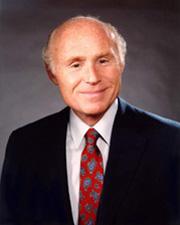
Mr. President, I rise today to reintroduce the Patient Abuse Prevention Act, which will go a long way in protecting patients in long-term care from abuse and neglect. This legislation will establish…
Mr. President, I rise today to reintroduce the Patient Abuse Prevention Act, which will go a long way in protecting patients in long-term care from abuse and neglect. This legislation will establish a National Registry of abusive long-term care workers and require criminal background checks for potential employees. It is necessary so we can ensure that people with violent and abusive backgrounds cannot find work in nursing homes and home health and prey on our elderly relatives. After many years of refinement so that the background checks will run smoothly, and with the strong support of both patient advocates and the American Association of Homes and Services for the Aging, I sincerely hope that this is the year when we will finally take action and enact these common-sense protections.
There is absolutely no excuse for abuse or neglect of the elderly and disabled at the hands of those who are supposed to care for them. Our parents and grandparents made our country what it is today, and they deserve to live with dignity and the highest quality care.
Unfortunately, this is not always the case. We know that the majority of caregivers are dedicated, professional, and do their best under difficult circumstances. But it only takes a few abusive staff to cast a dark shadow over what should be a healing environment.
Current State and national safeguards are inadequate to screen out abusive workers. All States are required to maintain registries of abusive nurse aides. But nurse aides are not the only workers involved in abuse, and other workers are not tracked at all. Even worse, there is no system to coordinate information about abusive nurse aides between States. A known abuser in Iowa would have little trouble moving to Wisconsin and continuing to work with patients there.
In addition, there is no Federal requirement that long-term care facilities conduct criminal background checks on prospective employees. People with violent criminal backgrounds--people who have already been
convicted of murder, rape, and assault--could easily get a job in a nursing home or other health care setting without their past ever being discovered.
Our legislation will go a long way toward solving this problem. First, it will create a National Registry of abusive long-term care employees. States will be required to submit information from their current State registries to the National Registry. Facilities will be required to check the National Registry before hiring a prospective worker. Any worker with a substantiated finding of patient abuse will be prohibited from working in long-term care.
Second, the bill provides a second line of defense to protect patients from violent criminals. If the National Registry does not contain information about a prospective worker, the facility is then required to initiate an FBI background check. Any conviction for patient abuse or a relevant violent crime would bar that applicant from working with patients.
A disturbing number of cases have been reported where workers with criminal backgrounds have been cleared to work in direct patient care, and have subsequently abused patients in their care. Unfortunately, these news reports have tragically become commonplace over the years. In 1997, the Milwaukee Journal-Sentinel ran a series of articles describing this problem, including a Green Bay employee who was convicted of sexually assaulting a disabled woman, an Oshkosh employee who physically and emotionally abused nursing home residents, and a Milwaukee employee who charged more than $2,000 on a home health client's credit card. All had prior criminal convictions. A 1999 Bergen Record study of home health workers found that in nearly every county, criminals were working in the homes of the elderly and infirm. Many aides had committed offenses against patients in their care, but they were still listed as certified and eligible for work in State records. Most recently, the Chicago Sun-Times ran an article on November 1, 2002, in which a home care aide beat his disabled client to death with a hammer. That caregiver had previously been convicted of shooting a man in the face.
In 1998, at my request, the Senate Special Committee on Aging held a hearing that focused on how easy it is for known abusers to find work in long-term care and continue to prey on patients. At that hearing, the HHS Inspector General presented a report which found that, in the two States they studied, between 5 to 10 percent of employees currently working in nursing homes had serious criminal convictions in their past. They also found that among aides who had abused patients, 15 to 20 percent of them had at least one conviction in their past.
In 1998, I offered an amendment which became law that allowed long- term care providers to voluntarily use the FBI system for background checks. So far, 7 percent of those checks have come back with criminal convictions, including rape and kidnapping.
And on July 30, 2001, the House Government Reform Committee's Special Investigations Division of the Minority staff issued a report which found that in the past two years, over 30 percent of nursing homes in the U.S. were cited for a physical, sexual, or verbal abuse violation that had the potential to harm residents. Even more striking, the report found that nearly 10 percent of nursing homes had violations that caused actual harm to residents.
Let me say again that despite this evidence, I know that the vast majority of caregivers in nursing homes and home health care do an excellent job and have their patients' best interests at heart. But clearly, a national background check system is a critical tool that all long-term care providers should have--after all, they don't want abusive caregivers working for them any more than families do. I am pleased that the nursing home industry has worked with me over the years to refine this legislation, and I greatly appreciate their continued support of the bill. This bill reflects their input and will help ensure a smooth transition to an efficient, accurate background check system. This is a common-sense, cost-effective step we can and should take to protect patients by helping long-term care providers thoroughly screen potential caregivers.
I realize that this legislation will not solve all instances of abuse. We still need to do more to stop abuse from occurring in the first place. But this bill will ensure that those who have already abused an elderly or disabled patient, and those who have committed violent crimes against people in the past, are kept away from vulnerable patients.
I want to repeat again that I strongly believe that most long-term care providers and their staff work hard to deliver the highest quality care. However, it is imperative that Congress act immediately to get rid of those that don't.
This bill is the product of collaboration and input from the health care industry, patient and employee advocates--who all have the same goal I do: protecting patients in long-term care. I look forward to continuing to work with my colleagues, the Administration, and the health care industry in this effort. Protecting our nation's seniors and disabled deserves our full attention.
I ask unanimous consent that the text of the bill be printed in the Record.
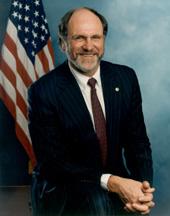
Mr. President, I rise today to reintroduce my legislation, the Patient and Physician Safety and Protection Act of 2003, to limit medical resident work hours to 80 hours a week and to provide real…
Mr. President, I rise today to reintroduce my legislation, the Patient and Physician Safety and Protection Act of 2003, to limit medical resident work hours to 80 hours a week and to provide real protections for patients and resident physicians who are negatively affected by excessive work hours. I feel strongly that as Congress begins to consider proposals to reduce medical malpractice premiums and improve quality of care, we must consider the role that excessive work hours play in exacerbating medical liability problems and reducing quality of care.
It is very troubling that hospitals across the Nation are requiring young doctors to work 36 hour shifts and as many as 120 hours a week in order to complete their residency programs. These long hours lead to a deterioration of cognitive function similar to the effects of blood alcohol levels of 0.1 percent. This is a level of cognitive impairment that would make these doctors unsafe to drive--yet these physicians are not only allowed but in fact are required to care for patients and perform procedures on patients under these conditions.
The Patient and Physician Safety and Protection Act of 2003 will limit medical resident work hours to 80 hours a week. Not 40 hours or 60 hours. 80 hours a week. It is hard to argue that this standard is excessively strict. In fact, it is unconscionable that we now have resident physicians, or any physicians for that matter, caring for very sick patients 120 hours a week and 36 hours straight with fewer than 10 hours between shifts. This is an outrageous violation of a patient's right to quality care.
In addition to limiting work hours to 80 hours a week, my bill limits the length of any one shift to 24 consecutive hours, while allowing for up to three hours of patient transition time, and limits the length of an emergency room shift to 12 hours. The bill also ensures that residents have at least one
out of seven days off and ``on-call'' shifts no more often that every third night.
Since I first introduced the Patient and Physician Safety and Protection Act in the 107th Congress, the medical community and the Accreditation Council for Graduate Medical Education, ACGME, specifically have taken critical steps to address the problem of excessive work hours. The ACGME's recommendations to reduce resident work hours are commendable. If appropriately enforced, these new work hour guidelines will go a long way toward reducing the number of hours that residents must work, thereby improving the health of our Nation's medical residents and ensuring the safety of the patients.
Despite the medical community's best intentions to reduce work hours, however, I am very concerned that the ACGME's policy lacks the enforcement mechanisms that are essential to ensure compliance with the new work hour rules. Too many hospitals failed to comply with previous work hour requirements mandated by the ACGME because there was insufficient oversight and enforcement. While the new policy establishes more stringent work hours reductions, it fails to create effective enforcement and oversight tools. These rules are meaningless without enforcement.
That is why Federal legislation is necessary. The Patient and Physician Safety and Protection Act of 2003 not only recognizes the problem of excessive work hours, but also creates strong enforcement mechanisms. The bill also provides funding support to teaching hospitals to implement new work hour standards. Without enforcement and financial support efforts to reduce work hours are not likely to be successful.
Finally, my legislation provides meaningful enforcement mechanisms that will protect the identity of resident physicians who file complaints about work hour violations. The ACGME's guidelines do not contain any whistleblower protections for residents that seek to report program violations. Without this important protection, residents will be reluctant to report these violations, which in turn will weaken enforcement.
My legislation also makes compliance with these work hour requirements a condition of Medicare participation. Each year, Congress provides $8 billion to teaching hospitals to train new physicians. While Congress must continue to vigorously support adequate funding so that teaching hospitals are able to carry out this important public service, these hospitals must also make a commitment to ensuring safe working conditions for these physicians and providing the highest quality of care to the patients they treat.
In closing I would like to read a quote from an Orthopedic Surgery Resident from Northern California, which I think illustrates why we need this legislation.
I quote, ``I was operating post-call after being up for over 36 hours and was holding retractors. I literally fell asleep standing up and nearly face-planted into the wound. My upper arm hit the side of the gurney, and I caught myself before I fell to the floor. I nearly put my face in the open wound, which would have contaminated the entire field and could have resulted in an infection for the patient.''
This is a very serious problem that must be addressed before medical errors like this occur. I hope every member of the Senate will consider this legislation and the potential it has to reduce medical errors, improve patient care, and create a safer working environment for the backbone of our Nation's health system.
I ask unanimous consent that the text of the bill be printed in the Record.

Mr. President, this morning, my colleague from Wyoming, Senator Enzi, has introduced a piece of legislation I am an original cosponsor of. I want to make a point about the legislation. The…
Mr. President, this morning, my colleague from Wyoming, Senator Enzi, has introduced a piece of legislation I am an original cosponsor of. I want to make a point about the legislation.
The legislation deals with the freedom of the American people to travel in the country of Cuba. I want to talk about that just for a moment. I support that legislation. The legislation has nothing to do with supporting Fidel Castro. We do not support Fidel Castro. It has nothing to do with making life easier for Fidel Castro. This issue is not about Fidel Castro; it is about the American people.
Ninety miles off our shores sits a country ruled by communists, a communist government run by Fidel Castro. We have a communist government in the country of China, with 1.3 billion people half way around the globe. We have a communist government in the country of Vietnam. I have visited both.
In both of those countries, we have an American Chamber of Commerce. They are doing business in those countries. We have engaged in trade and tourism. People travel there. People do business there. Why? Because our country thinks engagement is the right way to move these communist countries in the right direction toward greater personal freedom and greater liberty for the people of China and Vietnam.
But Cuba is 90 miles off the coast of Florida, and we are told that Cuba is different. Instead of engagement being constructive for Cuba, we are told a 40-year embargo, which has not worked, should be retained. That embargo includes not only an embargo on trade with Cuba, but it also includes a restriction on the American people's ability to travel to Cuba. And the restriction is so absurd and so byzantine, here is what it has provoked.
I had a hearing on this about a year and a half ago. We have people down in the Treasury Department who are spending their days, with taxpayers' money, tracking Americans who have traveled to Cuba, so they can levy a civil fine on those Americans.
Let me tell you of one: A retired school teacher in Illinois. She is a cyclist, loves to bicycle. She answered an ad in a cycling magazine and signed up for a 10-day cycling trip in Cuba. This retired school teacher--I hope she won't mind me saying, a little, old, retired schoolteacher--from Illinois, bicycles in Cuba for 10 days with a cycling group, organized by a Canadian cycling company, and she gets back to this country only to receive in the mail a notice by the U.S. Treasury Department that she has been fined $9,600 for traveling in Cuba.
She would not be fined for traveling in China, a communist country. She would not be fined for traveling in Vietnam, a communist country. But she is fined for traveling in Cuba.
Or do you want one better? How about the guy whose dad died, who was a Cuban citizen who came to this country, and the last thing he wanted was for his ashes to be taken back to Cuba and spread on Cuban soil. So his son did that. But guess what? That son gets caught in the net of the U.S. Treasury Department, because at a time when we are worried about terrorism, we have people down at the Treasury Department who are chasing retired school teachers and sons of deceased American citizens who used to live in Cuba who want to take their parents' ashes back to Cuba.
We have people down there spending the taxpayers' dollars and their time, their effort, and energy to see if we can't levy a civil fine against Americans who travel in Cuba. My colleague, Senator Enzi, has introduced legislation, with myself and others, to say it is not hurting Fidel Castro by limiting the freedom and choice of the American people to travel in Cuba. Cuba and the Cuban people would be much better off with additional travel by Americans and expanded trade. The same circumstances that lead people to believe that engagement with China and Vietnam is helpful ought to understand that it would be helpful with Cuba as well.
I have been to Cuba. I have visited with the dissidents. Frankly, they believe the embargo is counterproductive, and they believe lifting the embargo and the travel restrictions would be helpful to their cause.
Fidel Castro is a Communist and a dictator. What he has done in recent weeks is appalling to me. He has thrown people in jail, dissidents, for what they have said and what they think. He has executed several people in recent weeks who attempted to allow others to escape. Shame on him. But it makes no sense for us to continue a policy that is counterproductive.
Again, talk to the dissidents in Cuba and they will tell you that allowing people to travel to Cuba and allowing our family farmers to sell grain to Cuba is constructive.
We are finally for the first time able to sell some products into the Cuban marketplace because I and then former Senator John Ashcroft, now Attorney General, offered legislation that opened that embargo of 40 years that did not work, and for the first time in 40 years, 22 train carloads of dried peas left North Dakota to go to the Cuban market, purchased by the Cubans.
Our farmers for the first time in 42 years sold some food to Cuba. That makes good sense. We should never use food as a weapon. Travel is the same circumstance. Limiting the freedom of the American people makes no sense to me.
The Enzi bill, which I am proud to cosponsor, moves in the direction of eliminating that limitation on travel by the American people.
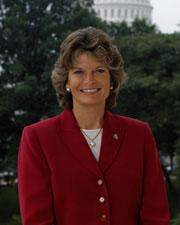
Mr. President, I rise today to introduce legislation to correct an inequity in the HUBzone contracting program administered by the Small Business Administration, SBA. This bill amends the criteria by…
Mr. President, I rise today to introduce legislation to correct an inequity in the HUBzone contracting program administered by the Small Business Administration, SBA. This bill amends the criteria by which areas are designated as HUBzone under the Small Business Act by adding a new category designated as ``Difficult Development Areas.'' These ``Difficult Development Areas'' are already recognized by the Internal Revenue Service and the Department of Housing and Urban Development. For reasons I will explain, the businesses and people in the community of Ketchikan, AK have been wrongly denied participation in the HUBzone program. This bill will take care of that problem.
The current HUBzone qualifications have two tiers. The first is that the county in which a business seeking to participate in the program must not be located in a Metropolitan Statistical Area, MSA. The second level has three separate criteria. If an area meets any one of the second level criteria, it qualifies as a HUBzone area. One of the criteria simply relates to whether a business is located in an Indian Reservation. The other two are correlated to the characteristics of the resident population.
The first of the characteristic is that the area is not located in a metropolitan statistical area at the time of the most recent census. the second criterion is that the unemployment rate in the area is not less than 140 percent of the statewide average unemployment. In the case of Ketchikan, the community is not located in a metropolitan statistical area. In February of this year the Alaska statewide unemployment rate was 7.1 percent almost 2 percent higher than the national average. But Ketchian's preliminary unemployment rate for February is 11 percent and the reviewed rate for January was 11.9 percent. The Ketchikan figure currently exceeds the requirement. In June of 2002 the rate was 8.6 percent in the Ketchikan Gateway Borough in comparison to 7.4 percent statewide at that same time. But because of the timing of the compiling of the information by the Census Bureau, Ketchikan has been denied participation in the program although it routinely exceeds the statewide rate. The anomaly is that for a few short months in the summer Ketchikan does not exceed 140 percent of the statewide average due to the influx of workers from the area related to the tourism industry.
The SBA has the best intentions and understands the problems. However, the SBA has stated to me that nothing short of a legislative change can fix the problem. Part of the problem as I understand it is that the SBA's current use of the median income and unemployment rate criteria makes the assumption that the populations are relatively immobile. Further, the SBA criterion assumes that the area in question has a fully developed labor market. The criteria assume a community model more closely aligned to the traditional urban areas.
In Alaska, our largest community, Anchorage is rightfully not considered a HUBzone area. But the SBA's criteria based on the use of the Census Bureau statistics fails to accurately reflect the true unemployment and labor market in one place in particular in Alaska-- Ketchikan. The program now uses a Qualified Census Tract.
Ketchikan is a small coastal community that was highly dependent on the timber industry which has been shut down as a result of changes in Federal policies and activities of the U.S. Forest Service. As a result, the population has become highly dependent on the tourism industry. Further, the labor pool is highly transient and leaves to collect unemployment after the summer tourist season is over.
The Census Bureau data taken when the summer population is higher and more fully employed does not reflect the reality of the area. As a result the Ketchikan Gateway Borough is not considered a HUBzone. There is a dry-dock and ship repair facility located in Ketchikan that could provide year round employment. But it cannot compete for government vessel repair contracts offered by the U.S. Coast Guard and the NOAA that have been set aside for HUBzone. These vessels operate in Alaska and could be better repaired near where they operate. Now they must leave the State and perhaps be out of service longer.
The bill adds a fourth area to qualify as a HUBzone. The Deptartment of Housing and Urban Development already has a program that recognizes not only the Qualified Census Tracts but also denotes a ``Non- metropolitan Difficult Development Area.'' The amendment simply adds this Difficult Development Area. Many of these areas already qualify as HUBzones under the prior three criteria. I have asked the SBA to advise me how much this would expand their program but in reality I expect the addition to be only a minor expansion of the HUBzone program. However small the change is, the change will be significant to the people and businesses located in Ketchikan, AK.
Mr. President, I ask unanimous consent that a copy of the bill be printed in the Record.
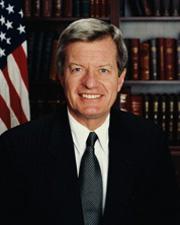
Madam President, I rise today to offer legislation, along with my colleagues Senator Enzi and Senator Dorgan, that would end the restrictions placed on travel to Cuba. I understand our colleagues in…
Madam President, I rise today to offer legislation, along with my colleagues Senator Enzi and Senator Dorgan, that would end the restrictions placed on travel to Cuba.
I understand our colleagues in the House will introduce companion legislation in the coming weeks. I look forward to working with my colleagues in both chambers, and on both sides of the aisle, as we move forward.
With this legislation, we are undertaking a serious cause. Repeal of the travel ban is long overdue.
There are numerous reasons to introduce this legislation, but I want to focus today on just two: first, the current situation in Cuba; and second, our troubled economy here at home.
Introduction of this legislation comes at a crucial time in U.S.-Cuba relations. Last month, nearly 80 Cuban dissidents were arrested. All of them have been sentenced to an average of almost 20 years in prison.
Democratic governments around the world, as well as human rights organizations and others, including myself and my colleagues in the Senate and House Cuba Working Groups, have harshly criticized the Castro regime for these appalling acts of repression. Yet, throughout all of this, the Castro regime has remained defiant and undaunted.
Why? In my view it is because Castro wants the embargo to continue. Observers have noted an emerging pattern: every time we get close to more open relations, Castro shuts the process down with some repressive act, designed to have a chilling effect on U.S.-Cuban relations.
Castro fears an end to the embargo. He knows the day the embargo falls is the day he runs out of excuses. Without the embargo, Castro would have no one to blame for the failing Cuban economy.
Nor would his way of governing be able to survive the influx of Americans and democratic ideas that would flood his island if the embargo were lifted.
Now, some Cuba watchers have predicted that the dissident arrests and the resulting decline of U.S.-Cuba relations are a death knell to the engagement debate in Washington.
I strongly disagree. And I think now, more than ever, a genuine, honest debate about the merits of the embargo is needed.
Some people seem to think tightening the embargo is a rational response to the Castro regime. I guess if you think an embargo can hurt Castro without hurting the Cuban people, then tightening the embargo might make some sense.
But it does not work that way. The embargo actually hurts the Cuban people much more than it hurts Castro.
This is why many Cuban dissidents, including Oswaldo Paya, the founder of the Varela Project, oppose our embargo and support engagement.
Indeed, after 43 years, it ought to be clear to everyone that the embargo has failed to weaken Castro. A better approach is to reach out to the Cuban people. Ending the travel ban is the first and best way to do this.
If Castro fears contact between the Cuban people and the American people, the rational American response is to send more Americans, not fewer.
Of course, ending the travel ban would have benefits not only for the Cuban people, but also for Americans. Ending the travel ban would have an immediate and direct economic impact, beyond even the immediate travel sector.
Most importantly for my home state of Montana, ending the travel ban would help farmers and ranchers.
Americans are currently allowed to sell food and medicine to Cuba on a cash basis. But there is a lot of red tape thrown in their way. And without the ability to travel to Cuba and develop the business contacts, the full potential of these sales is not realized.
In fact, one study has suggested that lifting the travel ban could result in an additional quarter billion dollars of agricultural sales, and create thousands of new jobs.
Ending the travel ban would bring benefits to both Cubans and to Americans. And that, after all, is what this debate should be about. Supporters of the embargo are so focused on hurting Castro that they actually strengthen him--at the expense of the Cuban people, and at the expense of our own economy.
I hope my colleagues will join me in co-sponsoring this important legislation. I believe it is the best way to show that we truly care about the Cuban people
And indeed, if we truly care about democracy, then let us send Cuba exactly that. Let us travel to Cuba and show them democracy in action.
I yield the floor.
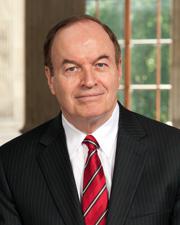
Mr. President, on July 31, 2002, the Federal Energy Regulatory Commission, FERC, issued a notice of proposed rulemaking to create a one-size-fits-all template for electric markets referred to as…
Mr. President, on July 31, 2002, the Federal Energy Regulatory Commission, FERC, issued a notice of proposed rulemaking to create a one-size-fits-all template for electric markets referred to as ``standard market design,'' SMD.
The SMD rule would bring about numerous sweeping changes, the degree and consequences of which are still being assessed. The proposed rule would require customers to pay for transmission facility upgrades caused by new generators, even if the customer does not need or use the power from those generators.
FERC's proposal would also usurp State authority to obligate utilities to serve customers, set generation reserve margins, centrally control generation dispatch, and set rates for retail transmission service. FERC's proposed rulemaking will effectively eliminate a State's ability to make decisions on issues specific to their State. Such sweeping changes to the energy industry should only be made after careful consideration of all potential consequences. After hearing these concerns, FERC promised a white paper to speak to the many concerns of myself and many others.
On April 28, the Federal Energy Regulatory Commission released its long-awaited white paper on Wholesale Power Markets and Standard Market Design. I and others had hoped that the release of that paper would signal a shift in the approach that the Commission has been taking with respect to the ``federalization'' of electricity regulation and markets. Disappointingly, despite some modest changes in approach, the Commission and Chairman Pat Wood have decided to move away from a partnership with the States toward Federal domination of the electricity system and electricity regulation.
In the document, the Commission reasserts its authority to regulate the terms and conditions of retail transmission, mandates the formation of Regional Transmission Organizations, and limits State authority to protect existing native load customers from the loss of transmission rights. The paper promises more ``technical conferences'' and consultation with the States, but does not change the premise upon which the Commission's Standard Market Design, ``SMD'', Notice of Proposed Rulemaking rests--that the States and regions serve only as adjuncts to the Commission as it devises new wholesale market rules that directly impinge upon retail markets.
In light of the Commission's white paper and the Senate's intention of quickly addressing energy policy, my colleagues and I present legislation today to ensure the concerns of my constituents and the constituents of my colleagues are addressed. This crucial legislation will ensure that States maintain their jurisdiction over retail utilities, that native load customers can be assured of reliability of service, that customers are not forced to socialize the cost of new transmission developed in their area but intended for other regions, and finally the legislation will prohibit the FERC from implementing its current SMD rule nor any rule that is of similar substance.
Mr. President, I rise today to speak on behalf of a bill I am introducing to turn the historic United States Coast Guard Cutter Bramble, into a floating maritime museum in Port Huron, MI, after she…
Mr. President, I rise today to speak on behalf of a bill I am introducing to turn the historic United States Coast Guard Cutter Bramble, into a floating maritime museum in Port Huron, MI, after she is decommissioned later this year.
Once you hear the history of the Bramble, I am sure you will all agree that not only should she be preserved, but the Port Huron Museum of Arts and History will be able to provide the ideal home.
The Bramble has been part of many important missions since it was first launched on October 23, 1943.
But--along with her sister ships, Spar and Storis--the Bramble is best known for being part of the first mission by United States vessels to steam from the Pacific Ocean to the Atlantic Ocean via the Northwest Passage. Upon completing this mission, Bramble and her sister ships went on to become the first to circumnavigate the North American continent--a dream of sailors for more than 400 years.
The Bramble set out on this historic mission from Miami, Florida, on May 24, 1957. Steaming through the Panama Canal to the Pacific Ocean, the Bramble then headed to Seattle.
On July 1, 1957, the Bramble left Seattle and headed toward the Atlantic Ocean via the Bering Straights and the Arctic Ocean. Sixty- four days and 4,500 miles later, the Bramble and her sister ships reached the Atlantic and on December 2, 1957, she tied up again in Miami--completing the first circumnavigation of the North American continent.
For that reason alone, the Bramble would be worth saving as a museum of maritime history.
But over her 60 year history, the Bramble has seized tons of illegal drugs, saved hundreds of lives in search and rescue missions, helped train maritime police in 10 Caribbean nations, maintained buoys and other aids to navigation, performed icebreaking duties in the Great Lakes and been the recipient of numerous awards, service ribbons and commendations.
The Bramble also has a long history with Michigan and Port Huron and that is why I believe my State would make an excellent home once this historic ship is retired.
The Bramble first came to Detroit, MI, in 1962, where she performed search and rescue, icebreaking, law enforcement and navigation missions throughout the Great Lakes.
Since 1975, the Bramble's homeport has been Port Huron. And that is where I think she should stay after she is decommissioned.
The Coast Guard motto is Semper Paratus--or Always Ready.
For 60 years the Bramble has been there--always ready to serve our country in waters close to home and far away.
And I believe that as a museum of maritime history, she can continue serving us for years to come--still Semper Paratus--still Always Ready.
I ask unanimous consent that the text of this legislation be printed in the Record.
Show 9 more
Mr. President, I rise today to introduce legislation to authorize three important water reclamation projects in the State of Hawaii. In addition, this bill increases the amount authorized for the…
Mr. President, I rise today to introduce legislation to authorize three important water reclamation projects in the State of Hawaii. In addition, this bill increases the amount authorized for the Federal share of the activities under P.L. 106-566, the Hawaii Water Resources Act of 2000.
The Hawaii Water Resources Act of 2000 was an important first step in addressing Hawaii's irrigation and water delivery systems. It allowed the Bureau of Reclamation to survey irrigation and water delivery systems in Hawaii. It also instructed the Bureau to identify new opportunities for reclamation and reuse of water and wastewater for agriculture and non-agricultural purposes. In addition, the Act included Hawaii in the Bureau of Reclamation's wastewater reclamation program and extended drought relief programs to Hawaii. While this was an important beginning, more needs to be done, particularly since the Honolulu Board of Water Supply predicts that even with improved conservation methods, the island of Oahu will run out of potable water by 2018. This means that the use rate exceeds the recharge rate and Oahu residents and visitors will be ``mining'' for water. Even more disconcerting is the fact that Oahu will run out of fresh water by 2018. It is vitally important for the State of Hawaii to begin working on water reclamation projects.
This legislation authorizes three water reclamation projects. The first project, in Honolulu, will provide reliable potable water through resource diversification to meet existing and future demands, particularly in the Ewa area of Oahu where water demands are outpacing the availability of drinking water. The second project, in North Kona, will address the issue of effluent being discharged into a temporary disposal sump from the Kealakehe Wastewater Treatment Plant. The third project, in Lahaina, will reduce the use of potable water by extending the County of Maui's main recycled water pipeline. The legislation also authorizes an additional $1.7 million for the Bureau of Reclamation to complete its study of Hawaii's irrigation and water delivery systems. This is a challenging task as the Bureau is reviewing the water systems in the State.
I urge my colleagues to support this legislation which is vital to the people of Hawaii.
I commend my colleague from Wyoming and his leadership in relationship to Cuba, which is of strong interest to businesses and farmers in my home State of Minnesota. I ask unanimous consent to be…
I commend my colleague from Wyoming and his leadership in relationship to Cuba, which is of strong interest to businesses and farmers in my home State of Minnesota. I ask unanimous consent to be added as a cosponsor to his legislation. I look forward to working with him as part of his caucus to further those relationships. I again commend the Senator for his leadership in this important area and look forward to working with him.
Mr. President, I thank the senior Senator from Virginia, a leader on this measure. I will be brief because I am scheduled to meet in my office in just a few moments with the nominee for the new superintendent of the Air Force Academy, which is a matter on which the Senator from Virginia has also exhibited great leadership on behalf of this country.
I am very proud to join with Senator Warner in sponsoring this legislation. I agree and associate myself with everything the Senator has said regarding this matter.
I came to the Senate a little over 2 years ago, believing the most urgent matter facing our country in the area of social legislation was to provide prescription drug coverage for all of our elderly. I have been dismayed at our inability--all of us--to reach necessary agreements so such legislation could be enacted.
I could not agree more with the Senator from Virginia that this is something I hope our colleagues will consider. If there is a better approach that we can all agree on this year, then so be it. But in the absence of that, as there has been that failure during the last 2 years, I hope our colleagues will look at this as a very feeling alternative. Even if long-term legislation is enacted, I believe it will be at least a year or two before that is available to our senior citizens, before that program is set up. This is an approach that could be implemented very swiftly, could be available almost immediately, and could provide, on an interim basis if not a long-term basis, the financial assistance our elderly citizens desperately need.
I thank the senior Senator from Virginia. I am proud to associate myself with this legislation.
I yield the floor.
Mr. President, as the Senate's only commercially licensed pilot, I rise today, along with my colleagues, Senator Kyl, Senator Burns, Senator Thomas and Senator Grassley, to introduce a bill that will…
Mr. President, as the Senate's only commercially licensed pilot, I rise today, along with my colleagues, Senator Kyl, Senator Burns, Senator Thomas and Senator Grassley, to introduce a bill that will help end age discrimination among airline pilots.
This bill will abolish the Federal Aviation Administration's, FAA, Age 60 Rule--the regulation that for 43 years has forced the retirement of airline pilots the day they turn 60--and replace it with a rational plan that raises the retirement age to 63 immediately and then incrementally increases the age limit to 65.
Most nations have abolished mandatory age 60 retirement rules. The United States is one of only two countries in the Joint Aviation Authorities that requires its commercial pilots to retire at the age of 60. Some countries, including Canada, Australia, and New Zealand have no upper age limit at all.
The Age 60 Rule has no basis in science or safety and never did. FAA data shows that pilots over age 60 are as safe as, and in some cases safer than, their younger colleagues. In 1981, the National Institute of Aging stated that ``the Age 60 Rule appears indefensible on medical grounds'' and ``there is no convincing medical evidence to support age 60, or any other specific age, for mandatory pilot retirement.''
This bill will allow our most experienced pilots--demonstrably healthy, and fit for duty--to retain their jobs, a step that will benefit pilots, the financially burdened airlines, and most importantly, passengers. Now, more than ever before, we need to keep our best pilots flying.
Again, there is no scientific justification for requiring pilots to retire at age 60. Our pilots, our airlines, and our passengers deserve our consideration. I urge the rest of my colleagues to support this important legislation.
Mr. President, I ask unanimous consent that the text of the bill be printed in the Record.

Mr. President, I am pleased to introduce the ``Flight Attendant Certification Act.'' Since September 11, flight attendants have become a last line of defense against terrorist attacks. As we all…
Mr. President, I am pleased to introduce the ``Flight Attendant Certification Act.''
Since September 11, flight attendants have become a last line of defense against terrorist attacks. As we all know, the terrorists hijacked four commercial jets--all of which were heading to California. That day forever changed air travel in this country, and in turn forever changed the security functions of flight attendants.
No one can forget that it was a flight attendant who discovered that Richard Reid was trying to ignite a bomb on his shoe. If not for the aware flight attendant, the bomb could have gone off over the Atlantic and all the passengers and crew would have been lost.
Today, I can say with certainty that air travel is more secure than it was a year and a half ago. But that does not mean that more should not be done. We must continue to take the appropriate steps to ensure that we are doing everything in our power to prevent terrorist attacks and protect the American people. That is why I am proud to offer this legislation.
This bill would make American air travel safer by requiring that flight attendants be certified by the Federal Aviation Administration, FAA. Currently, flight attendants are not required to receive formal certification even though they have the responsibility for safety, security, and emergency response.
In addition, the legislation would close the growing gap in the quality and content of training programs between airlines by creating a single training standard across the industry. This bill would require uniform training standards and establish a central approval process for certification of flight attendants at the FAA.
The FAA already recognizes the training of other airline personnel by issuing certification to pilots, mechanics, air-traffic controllers and others. Flight attendants deserve the same recognition and certification.
Mr. President, I thank the senior Senator from Virginia, a leader on this measure. I will be brief because I am scheduled to meet in my office in just a few moments with the nominee for the new…
Mr. President, I thank the senior Senator from Virginia, a leader on this measure. I will be brief because I am scheduled to meet in my office in just a few moments with the nominee for the new superintendent of the Air Force Academy, which is a matter on which the Senator from Virginia has also exhibited great leadership on behalf of this country.
I am very proud to join with Senator Warner in sponsoring this legislation. I agree and associate myself with everything the Senator has said regarding this matter.
I came to the Senate a little over 2 years ago, believing the most urgent matter facing our country in the area of social legislation was to provide prescription drug coverage for all of our elderly. I have been dismayed at our inability--all of us--to reach necessary agreements so such legislation could be enacted.
I could not agree more with the Senator from Virginia that this is something I hope our colleagues will consider. If there is a better approach that we can all agree on this year, then so be it. But in the absence of that, as there has been that failure during the last 2 years, I hope our colleagues will look at this as a very feeling alternative. Even if long-term legislation is enacted, I believe it will be at least a year or two before that is available to our senior citizens, before that program is set up. This is an approach that could be implemented very swiftly, could be available almost immediately, and could provide, on an interim basis if not a long-term basis, the financial assistance our elderly citizens desperately need.
I thank the senior Senator from Virginia. I am proud to associate myself with this legislation.
I yield the floor.
Before my colleague departs, I commend him for the interest the Senator has taken in the men and women of the Armed Forces, the national security policy of this country as a Member of the Senate…
Before my colleague departs, I commend him for the interest the Senator has taken in the men and women of the Armed Forces, the national security policy of this country as a Member of the Senate Armed Services Committee. Well done, sir.
I have been privileged to be on that committee now, this being my 25th year in the Senate, and the personal rewards from it for the association that the Senator has as a member of the committee with the men and women in uniform is beyond expectation. I thank the Senator for his service.
(The remarks of Mr. Warner and Mr. Dayton pertaining to the introduction of S. 951 are located in today's Record under ``Statements on Introduced Bills and Joint Resolutions.'')
I thank the Presiding Officer for his courtesies, and I suggest the absence of a quorum.
Mr. President, I ask unanimous consent that the text of the bill be printed in the Record.
Mr. President, I ask unanimous consent that the text of the bill be printed in the Record.
Mr. President, I ask unanimous consent that the text of the bill be printed in the Record.
Mr. President, I ask unanimous consent that the text of the bill be printed in the Record.
Mr. President, I ask unanimous consent that the order for the quorum call be rescinded.
Mr. President, I ask unanimous consent that the order for the quorum call be rescinded.
Bill Text
Latest available legislative text
        [Congressional Bills 108th Congress]
[From the U.S. Government Publishing Office]
[S. 951 Introduced in Senate (IS)]

108th CONGRESS
1st Session
S. 951

To amend the Internal Revenue Code of 1986 to allow medicare
beneficiaries a refundable credit against income tax for the purchase
of outpatient prescription drugs.

_______________________________________________________________________

IN THE SENATE OF THE UNITED STATES

April 30, 2003

Mr. Warner (for himself, Mr. Dayton, and Ms. Collins) introduced the
following bill; which was read twice and referred to the Committee on
Finance

_______________________________________________________________________

A BILL

To amend the Internal Revenue Code of 1986 to allow medicare
beneficiaries a refundable credit against income tax for the purchase
of outpatient prescription drugs.

Be it enacted by the Senate and House of Representatives of the
United States of America in Congress assembled,

SECTION 1. SHORT TITLE.

This Act may be cited as the ``Older Americans Prescription Drug
Tax Relief Act''.

SEC. 2. REFUNDABLE CREDIT FOR OUTPATIENT PRESCRIPTION DRUGS FOR
MEDICARE BENEFICIARIES.

(a) In General.--Subpart C of part IV of subchapter A of chapter 1
of the Internal Revenue Code of 1986 (relating to refundable credits)
is amended by redesignating section 36 as section 37 and by inserting
after section 35 the following new section:

``SEC. 36. OUTPATIENT PRESCRIPTION DRUGS FOR MEDICARE BENEFICIARIES.

``(a) In General.--In the case of an eligible individual, there
shall be allowed as a credit against the tax imposed by this subtitle
an amount equal to 50 percent of the amount paid during the taxable
year, not compensated for by insurance or otherwise, for qualified
outpatient prescription drugs for such individual.
``(b) Limitations.--
``(1) Dollar limitation.--The amount paid for qualified
outpatient prescription drugs which may be taken into account
under subsection (a) for any taxable year with respect to any
eligible individual shall not exceed $1,000.
``(2) Income limitation.--The amount allowable as a credit
under subsection (a) for any taxable year shall be reduced (but
not below zero) by $100 for each $1,000 (or fraction thereof)
by which the taxpayer's adjusted gross income for the taxable
year exceeds $75,000 ($150,000 in the case of a joint return).
``(c) Eligible Individual.--For purposes of this section, the term
`eligible individual' means, with respect to any taxable year, any
individual entitled to any benefits under title XVIII of the Social
Security Act during such taxable year.
``(d) Qualified Outpatient Prescription Drugs.--For purposes of
this section, the term `qualified outpatient prescription drugs' means,
with respect to any taxable year, any prescription drug other than a
prescription drug any portion of the cost of which is covered under
title XVIII of the Social Security Act during such taxable year.
``(e) Coordination With Medical Expense Deduction.--The amount
which would (but for this paragraph) be taken into account by the
taxpayer under section 162(l) or 213 for the taxable year shall be
reduced by the credit (if any) allowed by this section to the taxpayer
for such year.''.
(b) Conforming Amendments.--
(1) Paragraph (2) of section 1324(b) of title 31, United
States Code, is amended by inserting before the period ``, or
from section 36 of such Code''.
(2) The table of sections for subpart C of part IV of
subchapter A of chapter 1 of the Internal Revenue Code of 1986
is amended by striking the last item and inserting the
following new items:

``Sec. 36. Outpatient prescription drugs
for medicare beneficiaries.
``Sec. 37. Overpayments of tax.''.
(c) Effective Date.--The amendments made by this section shall
apply to taxable years beginning after December 31, 2002.
<all>