A concurrent resolution condemning the punishment of execution by stoning as a gross violation of human rights, and for other purposes.
Legislative Activity
Stay on top of the latest movement without scrolling through every action
Held at the desk.
May 9, 2003 • 2:11 PM
View full timeline
Introduced in Senate
March 20, 2003
Sponsor introductory remarks on measure. (CR S4181)
March 20, 2003
Referred to the Committee on Foreign Relations. (text of measure as introduced: CR S4180-4181)
March 20, 2003
Committee on Foreign Relations. Ordered to be reported without amendment favorably.
April 30, 2003
Committee on Foreign Relations. Reported by Senator Lugar without amendment and with a preamble. Without written report.
April 30, 2003
Placed on Senate Legislative Calendar under General Orders. Calendar No. 78.
April 30, 2003
Resolution agreed to in Senate without amendment and with a preamble by Unanimous Consent. (consideration: CR S5977-5978; text as passed Senate: CR S5978)
May 8, 2003
Message on Senate action sent to the House.
May 9, 2003
Received in the House.
May 9, 2003 • 9:46 AM
Held at the desk.
May 9, 2003 • 2:11 PM
Floor Debate
24 membersWhat members said about S.Con.Res. 26 on the floor
 JW
JW MBE
MBE CL
CL JDR
JDR HR+19
HR+19
Floor Debate
24 membersWhat members said about S.Con.Res. 26 on the floor
Mr. President, before our distinguished leaders depart the floor, I wish to say as one Senator, I am very proud that the differences have been reconciled and that this resolution bears both of your…
Mr. President, before our distinguished leaders depart the floor, I wish to say as one Senator, I am very proud that the differences have been reconciled and that this resolution bears both of your distinguished names and that we will strive to have unity in this Chamber and to have a very constructive and clear debate as a message to the men and women of the armed forces, their families and, indeed, the whole world.
Mr. President, I ask unanimous consent to proceed under the time allocated to the distinguished majority leader, which I am privileged to manager.
Mr. President, I recognize that I have the opportunity to work on this debate with my distinguished colleague, Senator Levin. We have served together, now, this is our 25th year on the Senate Armed Services Committee. I say to my colleague, I know of no debate of greater significance than the one we are about to undertake at a critical hour not only in the history of the United States but the history of the world.
It would be helpful if I were to undertake to read the resolution that is at the desk that hopefully will be voted on by the Senate in a very short period of time after all Senators have had the opportunity to express themselves.
The resolution is entitled ``Commending the President and the Armed Forces of the United States of America,'' submitted by Senators Frist, Daschle, Warner and Levin.
Whereas Saddam Hussein has failed to comply with United
Nations Security Council resolutions 678, 686, 687, 688, 707,
715, 949, 1051, 1060, 1115, 1134, 1137, 1154, 1194, 1205,
1284, and 1441;
The most historic of all, in my judgment, resolution 1441, which received the unanimous vote of all Security Council members, 15--
Whereas the military action now underway against Iraq is
lawful and fully authorized by the Congress in Sec. 3(a) of
Public Law 107-243, which passed the Senate on October 10,
2002, by a vote of 77-23, and which passed the House of
Representatives on that same date by a vote of 296-133;
Whereas more than 225,000 men and women of the United
States Armed Forces are now involved in conflict against
Iraq;
Whereas over 200,000 members of the Reserves and National
Guard have been called to active duty for the conflict
against Iraq and other purposes; and
Whereas the Congress and the American people have the
greatest pride in the men and women of the United States
Armed Forces, and the civilian personnel supporting them, and
strongly support them in their efforts;
Now therefore be it Resolved by the Senate and House of
Representatives of the United States of America in Congress
assembled, that Congress--
(1) commends and supports the efforts and leadership of the
President, as Commander in Chief, in the conflict against
Iraq;
(2) commends, and expenses the gratitude of the Nation to
all members of the United States Armed Forces (whether on
active duty, in the National Guard, or in the Reserves) and
the civilian employees who support their efforts, as well as
the men and women of civilian national security agencies who
are participating in the military operations in the Persian
Gulf region, for their professional excellence, dedicated
patriotism and exemplary bravery;
(3) commends and expresses the gratitude of the Nation to
the family members of soldiers, sailors, airmen, Marines and
civilians serving in operations against Iraq who have borne
the burden of sacrifice and separation from their loved ones;
(4) expresses its deep condolences to the families of brave
Americans who have lost their lives in this noble
undertaking, over many years, against Iraq;
(5) joins all Americans in remembering those who lost their
lives during Operation Desert Shield and Operation Desert
Storm in 1991, those still missing from that conflict,
including Captain Scott Speicher, USN, and the thousands of
Americans who have lost their lives in terrorist attacks over
the years, and in the Global War in Terrorism; and
(6) expresses sincere gratitude to British Prime Minister
Tony Blair and his government for their courageous and
steadfast support, as well as gratitude to other allied
nations for their military support, logistical support, and
other assistance in the campaign against Saddam Hussein's
regime.
Mr. President, today in Iraq, in Afghanistan, on the high seas, at the far corners of the world, and here at home, our forces, active duty and reserve components alike, are confronting the oppression, tyranny, and terrorism that plagues and threatens the world and our Nation. I am so enormously proud of our military and their leaders who fashioned a force unlike any the world has ever known, a force capable of delivering overwhelming might anytime, anywhere, if necessary.
Just weeks ago my distinguished colleague, Senator Levin, and I, together with Senator Roberts and Senator Rockefeller, were privileged to visit many of these troops in that region, Qatar, Kuwait, and other areas. A disciplined force this is, able to employ measured steps in an honorable and decent manner to ensure that everything possible is done to provide for the humanitarian and security needs of an innocent people, the people of Iraq. Truly the force has never seen an opportunity such as this, and it is under the command not only of our President but of officers of the United States, Great Britain, Australia, and indeed more.
A decision to commit our sons and daughters to combat is never an easy one. Clearly, our President anguished over this decision. I was privileged to meet with him, with the leadership here just days ago. Clearly, he showed his steadfastness, his courage, his wisdom, his very balanced thinking, as he conducted himself with the advice of others, to reach this decision, which he did last night.
We in the Congress debated this solemn responsibility to authorize the use of force last October. We took our constitutional responsibility seriously. We thoroughly examined the circumstances and voted overwhelmingly, 77 to 23, to authorize the Commander in Chief to use military force if, and only if, he determined that all diplomatic efforts to peacefully disarm Saddam Hussein's Iraqi regime had been fulfilled. I personally think he did that and did it brilliantly.
Those efforts, unfortunately, did not result in a Security Council resolution of unity, as it did with 15 votes in October.
The Security Council became deadlocked for reasons we all know. It is important to note, however, that our President expended extraordinary efforts to bring this clear and growing threat to the attention of the United Nations and to try to build that consensus for a unified way to proceed.
The United Nations was unable to step up to its responsibilities of enforcing its own mandates largely because of the intransigence of a very few nations to block any form of meaningful enforcement of these U.N. Security Council resolutions. The failure of the United Nations to step up to its responsibilities is most unfortunate, for the United Nations at this time in its long history of over 50 years is facing a challenge unlike any before, with the proliferation of weapons of mass destruction, particularly those of nuclear weapons on the Korean peninsula, Iran, and other areas of the world. This could have been their finest hour.
Our President has stepped up to his responsibilities to protect the American people from a grave and growing threat to our national security. Ultimately, the President's constitutional responsibility is to the American people. He made the determination that Saddam Hussein, armed with weapons of mass destruction, is an imminent threat to the security of the people of this Nation and, indeed, other nations.
His most sacred responsibility is to protect the American people. The Congress, as a coequal branch of Government, has fulfilled, in my judgment, its constitutional responsibilities by giving the President the authority he needs to do so.
Now the effort has begun to liberate Iraq, restore a secure environment, and ultimately bring a lasting peace with justice and representative democratic principles to a land that has known little peace throughout its history. Our forces are capable of helping Iraqis realize this dream. I have no doubt our forces will conduct themselves in a very responsible way. Our forces, supported by countless civilian employees and by families and loved ones back home, and joined by forces and support from many other nations--over 30, Mr. President--as a coalition to liberate Iraq, will prevail.
We are all hopeful that this operation can be conducted with minimum loss of life, with minimum casualties, with minimum destruction and hardship. We must await that outcome. We must be prepared, however, for a broad and concerted effort that may take longer and involve more sacrifice than some have predicted. We cannot and will not waiver from our resolve to bring freedom and hope to this troubled Nation and to rid the world of this threat to regional and global security.
I, again, salute our men and women in uniform, their families, and those who support them in this noble effort. I yield the floor.
Mr. President, will the Senator yield a moment? I remember so well when we had last year's authorization bill on the floor. The distinguished Senator from Michigan and I time and again sought Senator Reid's assistance to keep that bill going, to reconcile issues such as health care, current receipts, the BRAC process, and other very strong issues. So the Senator has been a full honorary member of the Armed Services Committee.
Mr. President, I yield such time as he may consume to the Senator from Pennsylvania.
Mr. President, I yield such time as our distinguished colleague from Oklahoma may require.
I might also say Senators Ensign, Burns, the Presiding Officer Senator Alexander, Senator Kay Bailey Hutchison, and Senator Allard, we are looking forward to their coming to the floor, in that sequence, on our side. We will alternate with my colleague. I alert my colleagues, this debate is moving right along and we are anxious to keep it going.
At this time I yield as much time to Senator Ensign as he may require.
Mr. President, I thank the Senator from Nevada for his remarks, most particularly the concluding remarks about that period during Vietnam. It was my privilege to serve along with the men and women in that period as Secretary of the Navy. I remember so well how they were received back home, in sharp contrast to the generation in which I had a modest association in World War II. With open arms were they welcomed home. I share your sentiments.
I yield the floor.
On my time, Mr. President, I commend my colleague, a strong member of the Senate Armed Services Committee, and Senator Pat Roberts, likewise, who is on our committee, and Senator Smith, a former member of the committee.
These three Senators have involved our committee in this as well. And, I think, heretofore, the Intelligence Committee has taken a very active role.
Senator Levin and I are both appreciative of their efforts on this issue on behalf of the committee. We thank them.
I yield such time to the Senator from Montana as he may require.
Mr. President, the hour of 4 o'clock, at which time the votes begin on the budget resolution, is fast approaching. I have several Senators indicating a desire to speak on my side. I ask them to limit their remarks now to about 3\1/2\ minutes, thereabouts. I think the Senator from Massachusetts should be recognized.
Mr. President, I yield to the Senator from Tennessee.
I ask the Senator if he could limit his remarks to about 3\1/2\ minutes.
Mr. President, first, may I inquire of the Presiding Officer the amount of time in control of the Senator from Virginia and the amount of time in control of the Senator from Michigan?
Senator Levin and I have now sought to advise our leadership on the ever-growing number of Senators anxious to speak. They, I presume, will consider how we will add more time to this debate now or during another period. I wish to put Senators on notice that we have the Senator from Texas, Mrs. Hutchison, awaiting recognition, followed by the Senator from Colorado, Mr. Allard, and then the Senator from Arizona, Mr. McCain.
I am going to do the very best I can to get the time to accommodate these Senators, and I see other Senators present on my side.
The Senator from Texas is to be recognized next.
I have to ask it be on your time.
I join in that request. I also have Senator Coleman, Senator Hatch, the Senator from Alaska, the Senator from North Carolina, and the number is growing.
Yes.
Mr. President, I say to our distinguished colleague from West Virginia, both Senator Levin and I have put that to our respective leadership.
Mr. President, I anticipate that we will soon have a unanimous consent request about timing, but until that is finished might I suggest that the Senator from Michigan recognize another of his speakers.
Mr. President, I have before me a proposed unanimous consent request. I will now make that request.
I ask unanimous consent that the vote on the adoption of this resolution occur at the hour of 5 today; provided further that debate between 4 and 5 be equally divided as provided earlier. Further, I ask that the previously scheduled stacked votes occur beginning immediately following the vote on the adoption of this resolution, S. Con. Res. 26, with no amendments in order to the resolution or preamble.
Reserving the right to object, I will recommend that the distinguished Democratic leader's unanimous consent be accepted, but I would like to speak with my leader before agreeing to it.
Mr. President, I wish to announce that on my side, the following Senators have indicated the desire to speak. I will be in the Chamber to accommodate them as best I can within the 30 minutes that I have remaining: Senators Allard, McCain, Coleman, Hatch, Stevens, Dole, Domenici.
I yield 3 minutes to the Senator from Colorado.
Mr. President, I yield 3\1/2\ minutes to the Senator from Minnesota.
I yield 4\1/2\ minutes to the Senator from Arizona.
We go to the other side.
Mr. President, may I address the Senate with regard to the remaining speakers on my side of the aisle to alert them? We have next the Senator from Alaska, Mr. Stevens, followed by the Senator from Utah, Mr. Hatch, the Senator from New Mexico, Mr. Domenici, the Senator from Arizona, Mr. Kyl, the Senator from North Carolina, Mrs. Dole, and the Senator from Texas, Mr. Cornyn.
Mr. President, I yield 2 to 3 minutes to our distinguished colleague from Alaska.
Mr. President, will the Senator yield for a minute for purposes of recognition of the Senator from Mississippi, who wishes to put a statement in the Record?
Mr. President, I thank the Senator from Mississippi and the Senator from Montana.
I ask unanimous consent that the Senator from Alaska, Mr. Stevens, be added as a cosponsor of the pending resolution.
Mr. President, I ask unanimous consent that the pending resolution be considered as a Senate resolution.
Mr. President, I recognize the distinguished Senator from New Mexico for a period of 3 minutes.
Mr. President, may I also join my colleague and express how grateful we are he came to the floor with a great sense of emotion and humility and, the final sentence with which he concluded, his pride in his son. I commend the Senator.
I should note that the son of a member of the senior staff of the Senate Armed Services Committee, COL Chuck Alsup, who is with me in the Chamber, leaves today as a military man to join the forces in the gulf.
We will have the Senator from North Carolina address us for 2\1/2\ minutes.
I grant the Senator from Utah 2 minutes.
Mr. President, following the distinguished Senator from West Virginia, the Senator from Virginia will recognize Senator Kyl for 2 minutes and then in rotation the Senator from Georgia, Mr. Chambliss, for 2 minutes. That results in all the time under my control being expired.
I yield 2 minutes to the Senator from Arizona.
Mr. President, I yield to the distinguished Senator from Georgia, and I understand the Senator desires to speak and will yield to the Senator from South Carolina.
Mr. President, I ask for the yeas and nays.
Mr. President, this has been a historic debate, fully participated in by many Senators. I am privileged to be a part of that debate. I again salute the distinguished majority leader and the Democratic leader for drawing up this resolution. The Senate has spoken.
As we conclude this historic debate, which conclusively states the support of the Senate behind our President, our men and women in uniform and their families, I believe it is appropriate to include as part of this record the speech given to the British Parliament on March 18, 2003 requesting authority to use British forces alongside American forces in the liberation of the people of Iraq, by the Prime Minister, the Honorable Tony Blair, whom I and others view as Churchill II. My colleagues will recall that Prime Minister Blair was specifically mentioned in the text of this resolution I read earlier. This was a purposeful reflection of our great esteem for this courageous leader who has stood so firm arm-in-arm with America. His request to use force was not a popular motion, but he prevailed. The following is the text of his speech and I commend it to my colleagues. I ask unanimous consent to print the speech in the Record.
Mr. President, resolutions, such as the one before us, are not possible without a dedicated, bi-partisan effort. Our staffs have worked hard and well together over the past few days to help members craft this resolution. I want to especially recognize and thank Steve Biegun of the Majority Leader's Office, Dennis McDonough of the Democratic Leader's Office, and Judy Ansley, Rick DeBobes and Chuck Alsup of the Armed Services Committee staff, for their efforts in helping draft this important resolution.
I specifically ask the Senator from New Mexico be added as a cosponsor.
Mr. President, On Monday, March 17, the attention of the world was focused on Washington, DC and the White House. The President was about to speak to the Nation about Saddam Hussein and the refusal…
Mr. President, On Monday, March 17, the attention of the world was focused on Washington, DC and the White House. The President was about to speak to the Nation about Saddam Hussein and the refusal of the Government of Iraq to live up to its signed agreements and the resolutions of the United Nations to eliminate their stock of weapons of mass destruction. In the 15 or so minutes that followed, our President made clear his determination to take action and resolve the situation in Iraq. He said he was going to end forever the evil presence of a dictator in Iraq who had done nothing during his reign but abuse his power as he pursued his dreams of glory and increased power and prestige while showing little regard for the health and welfare of his own people.
As the President spoke with passion and conviction on the need to rid the world of Hussein's dictatorship, he cut through the rhetoric and the misleading positions and promises that had been so often heard during the past few years. He made it clear that this was an ultimatum of more than words--action was sure to follow if his words were left unheeded. He did everything he could to make it abundantly clear to Saddam Hussein and the people of the world that such evil would not be allowed to stand. He stated a final deadline.
Soon after he spoke, the movement of our troops intensified as an international coalition took up their positions surrounding Iraq as we all waited for Saddam Hussein's response. There could be only one acceptable response to the President's message. Saddam had to leave Iraq, relinquish his power, and take his sons and family with him. Anything less would be unacceptable.
Now we have our answer. A deadline has been set which has come and gone. In response our troops are now advancing into Iraq and heading for its capital of Baghdad. A series of events that began years ago with our defense of Kuwait will now end where it must--with the removal of Saddam Hussein and an end to his brutal dictatorship.
As our troops head further into Iraq, they will be heading into unknown dangers and trouble that cannot be accurately predicted, though they have been trained and will be prepared for it.
Will Saddam Hussein try to use chemical weapons to prolong his hold on power? What has he hidden from the team of inspectors that he may now want to unleash? These and so many other questions will be in the minds of our troops as they come closer and closer to Iraq's capital city. The rewards that will come with our success will be great. But, as we know from our past experiences, the sacrifices that may lie ahead may be equally as great.
War is a very dangerous business and Wyoming is no stranger to the kind of sacrifice it sometimes requires from those who serve in our military. Down through the years, the people of Wyoming have always answered the call to protect and preserve the peace and answer the threat of any enemy of our Nation, wherever it has led them. Many paid the ultimate price.
In 1991, when Saddam Hussein decided to attack Kuwait and drain that country of its supplies and resources, our Armed Forces were there to respond to the cry for help that came from Kuwait.
Joining in as part of that effort was one of Wyoming's own, Manuel Davila. Manuel was a brave young man, a father, and a nice guy who had a kind word for everyone he met. He was the kind of person you would want on your side if there were tough times ahead. There were tough times on the horizon as this battle began and we were fortunate to have brave men and women like Manuel on our side.
I watched Manuel grow up because he came from my home town. He loved his life and he loved Wyoming. But he loved freedom more. When he was called on to bring the freedoms he loved to people he had never met, he did not hesitate. He traded his beloved blue skies and mountaintops of Wyoming for the flat dessert and skies darkened by Saddam Hussein's desperate attempts to delay the end of his occupation by setting every oil well he could on fire. He traded the sweet smell of Wyoming's clean mountain air for the use of a gas mask and the threat of exposure to the Iraqi war machine's stock of gas and chemical weapons.
Sadly, he was one who didn't come home from that war. But he did leave behind a legacy of standing up for what you believe in, keeping your word, and never allowing evil to win by failing to act or by doing so little in response it was as if you did nothing at all.
Then came September 11, and another round of attacks by a madman fueled by hatred and a mad desire for power. Once again we looked to our sons and daughters to respond and to end the threat of terrorism once and for all. The bravest and best of Wyoming and many other States were soon on the front lines, ready to put their training into action. As they did, one of the first lost was Jonn J. Edmunds, a young man from Cheyenne, who was killed as our Nation took action against those who supported and planned the terrorist attacks of that terrible day.
Now, as we stand here together in prayerful support of our Armed Forces, I have no doubt that Manuel and Jonn and all the others who have served so bravely in our military over the years would be proud of their comrades and their liberation of Iraq which is finally at hand.
Soon Iraq will be welcomed back into the family of nations and the rights so cherished by our Nation and our people will be part of the daily routine in Iraq, too. By our actions we are showing the world that the rights with which we are endowed by our Creator, the rights to life, liberty, and the pursuit of happiness, which are a part of our own Declaration of Independence, were intended to be claimed not just by the people of our own Nation. They are to be rightfully claimed by people all over the world as well.
As we wait for today's news from Iraq, we are fully aware of the seriousness of the challenge that lies before us--its difficulty and its magnitude. For the first time since I was a young boy we are facing an enemy who is faceless and nameless and may have operatives who sympathize with him who may strike us on our own soil. With the exception of Pearl Harbor, we have never faced that kind of a threat in our lives. September 11 changed that and we must now all be more vigilant for in a very real sense we are all part of the war effort-- just as we were in the days of World War II.
As the effort to remove the tyranny of Saddam Hussein continues, the fate of both our nations hangs in the balance. The degree of our success in what we set out to do and the aftermath as we work to bring a lasting peace to Iraq will speak volumes to the world about our ability to walk our talk.
When this war is over and Iraq is free, we will have sent a message to all those who would deny their people the basic rights of human existence. The world will no longer tolerate their abuse of power and their refusal to acknowledge or respond to the needs of their people. We will also have ended the regime of a dictator and eliminated his stock of weapons of mass destruction. We will have taken a strong, decisive action which will help to increase the security of our Nation and the world.
Ronald Reagan once said that ``Some people live an entire lifetime and wonder if they have ever made a difference in the world. The marines don't have that problem.''
Neither does the Army, the Navy, the Air Force, the Coast Guard or the Merchant Marine. Through their brave and courageous actions on behalf of the people of Iraq, they will do for that country what they did for the people of Kuwait. They will give them their country and their lives back. They will give them the chance to dream again about a better future for their children. They will give those who live under oppression around the world a real reason to hope that someday things will be better for them in their own country.
We all know what brave, remarkable people our soldiers are. They don't see any limits to what they can do because they will never quit until the job is done and the war is won. We owe them
each a debt we will never be able to repay. We can never forget that it is because of them--and not us--that the rights enumerated in our Constitution are guaranteed. Whether it is freedom of religion, the press, or freedom of speech, it has always been the efforts of our soldiers that have provided us with a platform from which to speak, and the ability to exercise these and all our rights. Even those who have spoken out against their efforts have our soldiers to thank for their right to do.
Tonight, when we spend those last few minutes tucking our children into bed, I hope we all take a moment to comfort our children and our grandchildren, and to assure them that things will be all right someday soon. Make sure they know they can sleep peacefully tonight and in the nights to come, because the brave men and women of this Nation, our sons and daughters--and perhaps their own sisters and brothers--are ever vigilant, on guard and have taken a stand on our behalf. We can take a great deal of pride in them all.
As a member of the Senate, I have always been very proud of the way we come together whenever we are faced by a threat, or forced to use our nation's military to answer an attack or address a wrong. As our young men and women head into battle, I know I won't be the only one who will bow his head to pray.
May God bless and protect the men and women of our Armed Forces. May He watch over the Iraqi people and keep them safe from harm as we fight to liberate their country and bring them freedom and peace--a just peace that will recognize their rights and ensure that they have food, medicine, and the essentials of life that have been denied them for too long. May our victory be swift so their wait for relief will not be long. And may all our loved ones return home safely, and in peace.
If the Senator from Virginia will yield, I want to add a similar thought. I wish all of our troops could see the two of you standing together here. I had no doubt we would unite in support of our…
If the Senator from Virginia will yield, I want to add a similar thought. I wish all of our troops could see the two of you standing together here. I had no doubt we would unite in support of our troops when the time came, and that is exactly what is happening. This picture is a very eloquent statement about the unity of the Congress once we are committed to combat.
Mr. President, I yield as much time as Senator Reid needs.
Before the Senator from Nevada leaves, I add my thanks to him not just for his very kind words but, as Senator Warner said, for his absolutely invaluable leadership on this floor year after year. We were able to get a bill passed last year, in good measure, because of his ability to get us to the point where we could resolve differences among Members to get to votes. One particular instance that I hope the Senator will always be remembered for--at least he will in our minds, I know--is his leadership to make sure that the veterans who are disabled are able to get a disability pension, particularly if they are severely disabled, at the same time they get a retirement benefit.
The absurd result that we had veterans who were severely disabled who lost their disability benefit at the same time their pension became available to them was wrong. It was corrected by this Senate, in large measure because of the leadership of Senator Reid. That is one of the many monuments to his leadership that hopefully will be remembered.
I yield myself 4 minutes.
Mr. President, last month a number of us were fortunate enough to visit our troops in Kuwait, Qatar, and other places in the area. As Senator Warner said, he, Senator Roberts, Senator Rockefeller, and I had that opportunity. What an extraordinarily dedicated, and motivated professional group of men and women they are; what representatives of America and the values that we stand for they are; how well trained and equipped they are; how extraordinarily high their morale was and is; and how determined this Congress is, I know now, to give them our total support.
In the course of that visit, I met with a group of about 20 Marines from Michigan at Camp Commando. One young Marine asked me what was going on back home with the antiwar demonstrations. I could tell by the demeanor of the other Marines, both men and women, that this was a matter on the minds of a number of them.
I told them that those demonstrating back home were carrying out and exercising a right which is something we all cherish. As a matter of fact, they were exercising the very freedoms that our Armed Forces have protected throughout our history. I told them we had a vigorous debate in the Senate last fall about the wisdom of initiating an attack against Saddam Hussein if we were unable to persuade the world community, acting through the United Nations, to authorize and support such an attack. I told them that, in the end, a majority of both Houses of the Congress voted to authorize the President to use military force with or without that explicit authority of the United Nations.
I told them that our democracy functions through debate and decision, and that the decision to give the President this authority was democratically arrived at. Finally and most importantly, I told these Marines I was confident that, after the debate in Congress about the wisdom of instituting an attack without the support of the world community through the United Nations, if hostilities should start, those who have such different views will come together and will rally behind them and give them the full support hey deserve.
My prediction that we would come together if hostilities ever began, despite differences over the wisdom of the policy of proceeding without U.N. authority, has now come true.
We stand here together, shoulder to shoulder, whichever side of that particular issue we voted on, to support the men and women who are now in harm's way. We saw just a very visual and visible example of that a few minutes ago when the majority and Democratic leaders literally stood shoulder to shoulder here in the well of the Senate as they both presented a resolution of support of our troops and then indicated they were going to work hard for its passage.
The visit we had was quite an extraordinary visit. The men and women we visited understood fully what we were telling them about the nobility of this system of government of ours and how they represented that nobility by putting their lives on the line. I am pleased to have helped draft this resolution. I am pleased to add my voice and my vote to it.
The hostilities have begun. The democratic debate has occurred. The men and women of our Armed Forces have the unified support of the Nation they love and for which they willingly serve and for which they risk their all. To them I can only say they are in the prayers of every American and that we all hope for a speedy conclusion to this war with the minimal number of casualties and that they return home to their loved ones as soon as possible.
I yield the floor.
I similarly indicate Senator Bingaman and then Senator Bill Nelson would be recognized on this side.
I yield 3 minutes to Senator Bingaman.
I yield 5 minutes to Senator Bill Nelson.
Mr. President, I wonder if the Senator will yield, just for a unanimous consent request.
I ask unanimous consent that after the Senator has concluded, Senator Kennedy then be recognized for 6 minutes.
Let me add my thanks also to Senator Nelson of Florida for the incredible tenacity he has shown supporting Captain Speicher.
Mr. President, I yield 5 minutes to the Senator from New York.
Will the Senator from Virginia--has the Senator been yielded to already?
Will the Senator from Texas yield for an inquiry?
On my time. I have the following Senators on our side who are here and indicated they wish to speak: Senator Dorgan, Senator Dayton, Senator Reed who is in the cloakroom, Senator Boxer, Senator Baucus, Senator Byrd. So there is no way we are going to be able to complete even the people who are here, much less additional people who wish to speak and who come to the floor, and still have a vote on this resolution immediately after the three votes that are currently scheduled.
So I join my good friend from Virginia in asking the leadership as to how they wish us to address this problem at this time.
I have 19 minutes left before 4 o'clock--how many minutes?
Seventeen minutes. If I talk longer, it will be 16 minutes. I have 17 minutes before the first vote begins, but there is no time set on the resolution itself we are debating; am I correct?
If the leadership can give us guidance in how they want to handle this.
Mr. President, I will read the list of Senators on this side so that everyone will know who will be speaking before the vote on the resolution under the unanimous consent that was just adopted, and then who would come afterwards with their statements on the resolution being put in the Record before that: Senator Dorgan would be recognized for 5 minutes, Senator Dayton for 5 minutes, Senator Jack Reed for 5 minutes, Senator Boxer for 6 minutes, Senator Baucus for 7 minutes, Senator Byrd for 15 minutes. If my math is correct, all of those could be accommodated prior to the vote at 5.
I notice the Parliamentarian has been adding up those numbers, and I am wondering if my math is correct.
After the vote, if my math is correct, Senator Landrieu and Senator Biden would then be recognized on this side, and any other Democrats who wish to speak can come after the resolution, after those two Senators.
Is the Senator correct that all of those I named up to Senator Byrd could be accommodated with the times indicated prior to the vote at 5?
I yield 5 minutes to the Senator from North Dakota.
I yield 5 minutes to Senator Dayton.
Mr. President, I yield 5 minutes to Senator Reed.
Mr. President, I yield 6 minutes to the Senator from California.
Mr. President, I yield the Senator 15 additional seconds.
Mr. President, I yield 7 minutes to Senator Baucus.
If the Senator from New Mexico would yield for a request, I ask unanimous consent that after the Senator from New Mexico has completed, Senator Byrd then be recognized for 15 minutes.
Mr. President, Senator Byrd graciously agreed to yield 2 of his 15 minutes to the Senator from South Dakota. It will be very clear to the body as to why that was such an important and gracious act on the part of Senator Byrd.
Mr. President, I can think of no one in this body who is more appropriate to bring this debate to a close, or near to a close, than Senator Johnson of South Dakota whose son is serving with such honor and distinction and who brings such pride to his family. I thank the Senator for sharing with us the emotions I know he feels at this very moment as a father.
Mr. President, I yield 13 minutes to the Senator from West Virginia.
How much time remains?
I yield 2 minutes to the Senator from Washington.
I yield 1 minute to Senator Landrieu and 1 minute to Senator Stabenow.
Mr. President, is there any time remaining?
The men and women we have now placed in harm's way are carrying the prayers of every single Member of this body and every single man, woman, and child in this Nation. They are carrying on in the greatest traditions of the American military. We thank them.
May I make a unanimous consent request.
I ask unanimous consent Senator Landrieu be added as a cosponsor, and every Member of the Senate who chooses to, who wants their name added, be allowed to do so, and even though it comes after the vote, that it appear that it occurred before the vote.
The President has announced that military operations to disarm and liberate Iraq have begun. For those of us who have taken an oath to uphold and defend the Constitution, entering into war is one of…
The President has announced that military operations to disarm and liberate Iraq have begun. For those of us who have taken an oath to uphold and defend the Constitution, entering into war is one of the most somber moments we face.
When the President sends our troops to battle, the stakes are unmistakably clear: our courageous troops are preparing to risk everything so that our society can continue to live in freedom. At a time like this, our Nation should come together as one to support our troops in battle, and to support the Commander in Chief.
This military action responds to the growing threat to America and our allies posed by Saddam Hussein and his weapons of mass destruction. Here at home and around the world, we have debated how best to disarm Saddam. After 12 years of diplomacy, and 17 different U.N. resolutions, Saddam remains a serious threat to the peace and stability of the region, and to the safety of Americans and our allies.
I, like most of my colleagues, believed we could not live with this threat to America's security. And so I voted last October to give the President authority to make one final attempt to disarm Saddam through the U.N.--to give diplomacy one last chance to work--and to resort to forcible disarmament if that failed.
Five months after we passed our congressional resolution, and 4 months after the U.N. Security Council unanimously passed resolution 1441, Saddam has still refused to disarm.
Now the President has decided, drawing on the authority granted him by the Constitution, by the Congress, and by a series of U.N. resolutions, to send our troops into battle--to forcibly disarm Iraq, end Saddam's rule of terror, and allow the oppressed Iraqi people to have a better life.
And it is our responsibility, here in America, to come together to show our troops, who are fighting to protect our freedoms, that they have all our support, and that we are praying for a quick and successful campaign.
I had the opportunity to visit our troops last month in Kuwait, Qatar, and Afghanistan, and had the privilege to meet our fine young West Virginians serving there. I am always impressed by the commitment and professionalism of our Armed Forces--the brave enlisted men and women who have dedicated their skills and energy to safeguarding America's vital national interests, the officer crops who have honed the most awesome fighting machine the world has ever seen, and the reservists and national guardsmen who willingly disrupt their civilian lives when their country needs them.
To witness their dedication and skill, and their willingness to risk everything to defend the greater good of our Nation, is to be reminded, just as we learned on that fateful September 11, that heroes still walk among us. The Americans who have volunteered to serve in our Nation's Armed Forces are some of the finest individuals our society produces, and we are all in their debt.
We West Virginians have always been particularly proud that while we are a small State, we contribute a significant share of America's Armed Forces. I have here a list of the West Virginia Reserve and National Guard units that have been called up for service overseas in the past 2 years. I realize I can't read the entire list, but I would like to note that it encompasses 28 units based in West Virginia and nearly 2500 servicemembers, as well as thousands of Active Duty servicemembers who hail from West Virginia. I ask unanimous consent to have this list printed in the Record.
A war will always involve risk and uncertainty. That is especially the case when we are dealing with a dangerous dictator like Saddam Hussein, who has used illegal; weapons before, and who knows that in this instance, war will not end until he is removed.
We should never be over-confident, and must go into this knowing that our troops will face real risks. But we can take heart that never, in the history of mankind, have there been Armed Forces better prepared to meet the challenges that come their way.
In skill, in technological sophistication, and in fighting spirit, our troops continue to set new benchmarks the world has never seen. Never in modern history has there been a fighting force so clearly superior to all its competitors.
We now stand at an important threshold in our Nation's history, and our national security. The proliferation of weapons of mass destruction has altered America's security forever. Before 2001, we believed that we could only be threatened by another superpower--and the demise of the Soviet Union made us think that threats to America's homeland had more or less vanished. On September 11, we learned how wrong we were.
In the coming years, the spread of weapons of mass destruction--to rogue governments, and to terrorist groups in the developing world-- will be America's most important national security challenge. And increasingly, the focus of our diplomacy and defense alliances will shift away from our traditional focus on Europe to respond to these emerging threats from developing countries in Asia, in Africa, and even in Latin America.
Indeed, that is already the case today: besides Iraq, the biggest security threats currently facing America aren't major power rivalries but illegal proliferation of weapons of mass destruction by states such as North Korea and Iran. This threat isn't unique to the United States--but our global leadership role makes us a particularly tempting target for the disaffected and resentful.
We cannot allow foreign terrorist or rogue states to threaten our society
with weapons of mass destruction. Terrorism and proliferation can be stopped, but to do so will require a concerted, sustained strategy, rather than ad hoc, relative efforts.
And it will require broad international support--the kind that helped us win the cold war--rather than working alone, or begin dismissive of our allies because they haven't yet recognized the magnitude of the shared threat.
War is always a tragedy. To put human lives at risk--both military and civilian--can only be considered when all other reasonable options have failed.
And in that regard, the significance of this conflict is not just in disarming Iraq. While that is the primary goal, this mission also demonstrates to the world that the spread of weapons of mass destruction is such a grave threat to our security that we Americans are prepared to use the full force of our militry--our fine and brave men and women in uniform--to stop it.
And we are joined in that understanding by the British, and the Australians, and the poles, and many, many allies around the world.
Perhaps some other countries haven't reached that understanding yet. Or they continue to believe the diplomatic processes developed for a cold war environment must be maintained at all costs. But this new threat must be addressed.
If our troops find chemicals or biological weapons in Iraq--and I am confident they will--it will demonstrate to the skeptics around the world that we were right about the threat, and that we had to take action before these illegal weapons were used. And I hold out great hope that a swift victory in Iraq will pave the way for the U.S. and our allies to come together around a strategy to deal with the spread of weapons of mass destruction elsewhere.
I hope, too, that a swift victory in Iraq will provide an opportunity for the U.S. and our allies to come together to support the reconstruction and rehabilitation of Iraq. As the President has said, we bear no ill-will to the Iraqi people, only to the brutal and corrupt regime that governs them. The reconstruction of Iraq will be a long, costly complicated task, but a vital one--for it will ensure that Iraqis, now and in the future, will understand that America and its allies have come as liberators, not conquerors.
Those are longer-term concerns, and we will have to attend to them. For now, though, we must focus on the task at hand, which is the prompt, safe and humane execution of the military operation the President has commenced.
I join my fellow West Virginians in telling our troops they have our support, our gratitude, and our prayers. They represent the best of our society, and we know they will perform in a manner that makes us all proud.
Mr. President, today in the Senate--it does not happen very often--we speak with one voice. Now that the military effort to disarm Saddam Hussein and remove his brutal regime from power has started,…
Mr. President, today in the Senate--it does not happen very often--we speak with one voice. Now that the military effort to disarm Saddam Hussein and remove his brutal regime from power has started, it is important that we, the Senate, Democrats and Republicans, express our unified support for our troops.
I personally am very proud of the Nevada sons and daughters who have been deployed to the Middle East as part of Operation Iraqi Freedom. Nevada has, I believe, the finest military aviation training facilities in the world. That is not something that is just provincial in nature. We have the great Nellis Air Force Base and the Fallon Naval Air Station, plus we have the Indian Springs Air Force Base where the drones are kept, where people train with those unmanned vehicles.
Nellis Air Force Base has a special place in my heart because Bill Nellis was from my hometown of Searchlight, NV, a very small town in size and the number of people who live there. Bill Nellis served in World War II and became a hero. His body now lies in a military cemetery in Belgium, but all of us in Nevada know where Nellis Air Force Base got its name. His family is still there and very proud of the fact that this great training facility for the Air Force is named after Bill Nellis of Searchlight.
The Fallon Naval Air Station is also where we train aviators. These two bases--to show the size of the State of Nevada--are 400 miles apart. One is the premier training facility for our Air Force, and the other, Fallon naval air training facility, is a premier training facility for our naval pilots--Top Gun. It is a rural community 65 miles out of Reno, NV.
These pilots--hundreds from Nellis and other personnel critical to our mission in Iraq--are right now serving on the front lines. Hundreds who trained at Fallon are there also.
When I see those Navy fighters taking off on carriers in the gulf, as I did this morning before I came to work, there is no question in my mind that they were trained at Fallon.
Nevada's Guard and Reserve troops are also playing a significant role, more than 1,000 from Nevada's Guard and Reserve. Nevada's percentage of Guard and Reserve callups and deployments is one of the highest in the Nation. This is, of course, a hardship to the communities, the cities, and the towns from where they come. It is a hardship on the employers and families they leave behind.
I also recognize the honor that is associated with this hardship and this sacrifice. Our Guard units, for example, have a specially train unit to handle prisoners of war. They have been called up. They also have one of the only Blackhawk-equipped medical evacuation teams. It is understandable why they have been called up. There are many other specialities that are needed in the gulf, and Secretary Rumsfeld has called them up. They are heroes. They are talented.
There are other heroes in Nevada, and they are the families who remain behind. Children who are going to school in Nevada have mothers, fathers, brothers, and sisters half a world away and hoping and praying they come home but not really knowing if that, in fact, will happen.
The sacrifice that many of these families are making so our forces will prevail cannot be overstated. In many cases, the lead income earner or main caretaker is in the desert right now either pursuing Saddam Hussein or maybe even trying to track down al-Qaida operatives.
I try but I am not sure I fully understand the hardship the families are enduring. This Congress and communities all over America stand with the families and will help in any way we can until their loved ones return. We pray for the safe and speedy return of our soldiers, sailors, airmen, and marines.
We understand as a Congress that war entails risk; that the American military is the best fighting force ever assembled.
I have to take a pause here and commend and applaud the chairman and ranking member of the Armed Services Committee who have worked together as partners for many years now developing the military that is now serving in the Middle East. They are two fine Senators. There are no two men in the Senate for whom I have more respect than the distinguished Senator from Virginia and my longtime friend, the Senator from Michigan. I had the pleasure and honor of coming to Congress with his brother. I have said this to Senator Levin on a number of occasions. The first time I ever met Carl Levin, I said: I came to Washington with your brother, Sandy.
He said: Yes, Sandy is my brother, but he is also my best friend.
This is the kind of man we have working with us in the minority. I again commend and applaud the two of them.
I thank my friend from Virginia. As I said, we in Congress understand the risks that war entails. The American military, as I have said before--parting a little off the subject by complimenting my two friends--is the best fighting force ever assembled. We owe a lot of that to these two men. I am confident that the men and women of our armed services, with the help of British and Australian soldiers, will bring about a decisive victory. Let us hope this can be achieved swiftly and with minimal casualties.
Mr. President, I will do everything in my power to ensure that Congress fully funds and supports the needs of our troops as this conflict proceeds.
As American troops are engaged in war in Iraq, as well as elsewhere around the world, in our ongoing war against terrorists, and defending our interests and allies, we think also of previous generations who served our Nation faithfully and proudly to protect American lives, liberties and values. To all of our veterans, in Nevada and around the country, I say, ``Thank you for your service.'' And I reassure you that I will continue to make sure our Nation honors our commitment to you.
We are so fortunate to live in a Nation that promises fundamental freedom like the freedom of speech and freedom of belief. Those who have served in the United States Armed Forces in past years and those who serve today have fought to guarantee the rights we hold dear. Thanks to their service and sacrifice, Americans can express opinions even if they disagree with the Government without fear of being harassed, arrested, tortured or murdered. This is a fundamental difference that separates our American democracy from regimes like the Taliban which we ousted from Afghanistan or dictators like Saddam Hussein whom we will remove from Iraq.
So we all appreciate, value and will fight to defend the right of all of us--American citizens and those of us in public service--to speak freely. Regardless of whether Americans agree or disagree with the decision to go to war or how the administration has conducted its foreign policy, we share patriotic feelings. That is what patriotism is about. And I want our troops to know that we all support them completely.
Americans also stand united with our Commander-in-Chief, President George Bush, as he leads the Nation through this difficult period. I will continue to support his efforts to build and strengthen our coalition to assist with post-war reconstruction in Iraq.
But today let me re-emphasize that we stand united, and we speak with one voice, in supporting our troops and working for the swift and decisive defeat of Saddam Hussein. I am confident more peaceful times lie ahead. Certainly, peace and freedom lie on the horizon for the Iraqi people.
I announce that the Senator from Georgia (Mr. Miller) is necesarily absent due to a family medical matter.
I further announce that, if present and voting, the Senator from Georgia (Mr. Miller) would vote ``aye''.
Show 8 more
Mr. President, I thank my esteemed colleague and leader, Senator Carl Levin. With the first shots fired last night, I rise today to talk about the need to support our troops now fighting in the gulf,…
Mr. President, I thank my esteemed colleague and leader, Senator Carl Levin.
With the first shots fired last night, I rise today to talk about the need to support our troops now fighting in the gulf, as well as those on duty around the world.
From that freezing winter in Valley Forge to the baking heat and swirling dust storms of the gulf today, our men and women in uniform have shown over and over the hardships they are ready to endure in service to their country.
They are all in our thoughts and prayers. And we pray this ends quickly and with little loss of life.
I have met with many of these men and women and their commanders and have been impressed with their professionalism, training, and sense of duty and sacrifice.
From my home State of Michigan, the men and women of the 127th Air National Guard Wing in Selfridge, the 110th Fighter Wing in Battle Creek and the Combat Readiness Training Center in Alpena have been mobilized and deployed to bases around the world, including Kuwait, Saudi Arabia, the United Arab Emirates, South West Asia, and Turkey.
Army National Guard and Reserve unites from Owosso, Taylor, Grand Ledge, Grayling, Sault Ste. Marie, Midland, Pontiac, Three Rivers, Augusta, Selfridge, and Ypsilanti have all been mobilized and are awaiting their deployment orders.
Many of these men and women leave families and well-paying jobs behind, creating hardships for themselves and their family just so they can serve their Nation.
As the sole remaining superpower, we are asking a tremendous amount of our Armed Forces today. When we look around the globe, the numbers are staggering.
Right now about 225,000 troops are deployed in the Mideast--with more on the way.
But, again, as the sole remaining superpower we still have responsibilities around the globe.
We still have 38,000 Active Duty troops in Korea, nearly 40,000 in Japan, more than 100,00 permanently stationed in Europe, and about 50,000 sailors and soldiers afloat on ships in foreign waters.
In fact, according to the Department of Defense, the U.S. military is operating in more places around the globe than at any time in its history, including World War II, with a military presence in about 140 nations.
These men and women in uniform need to know their Nation will do everything in its power to give them the support they need to do their jobs--and also that gratitude for their sacrifice they will have our support when they come home as well.
General George C. Marshall, who oversaw the movement of forces in Europe and the Pacific in World War II, knew that the morale of the troops is crucial if the Armed Forces are to be effective. He once said:
It is not enough to fight. It is the spirit which we bring
to the fight that decides the issue. It is morale that wins
victories.
I agree.
And I believe one of the things we must do in this Congress to ensure high morale among our 2.3 million men and women in uniform, including Active, Reserve and Guard units, is to show them we are treating the 25 million veterans who came before them, including about 875,000 from Michigan, with the respect a grateful nation owes them.
One thing I would like to see is a change of policy so that our 600,000 disabled men and women who wore their country's uniform could collect both full pensions and disability benefits.
I also want to make sure our veterans have access to the best possible health care by fully funding the Veterans Affairs health care system.
If you cared enough to wear the uniform, you should be guaranteed high-quality, uniform care.
We also need to eliminate bottlenecks at the Veterans Administration for veterans who need prescription drugs.
Finally, we need to pass legislation creating tax fairness for military personnel.
We need to send to the President S. 351 that would address long- overdue tax reforms for National Guard and Reserve personnel.
We also need to remember that in the world after 9-11, our first responders are now also a crucial part of our national security, and they need our full support as well.
They were then, and remain now, on the front lines of hometown defense in this new war against terrorism.
For the past several months I have been traveling throughout Michigan meeting with the public safety officials who have been given the mission of trying to prevent an attack--or be first on the scene to save lives if one occurs.
In nine meetings from Michigan's Upper Peninsula to Detroit, I heard the same message over and over:
Help us get the training, personnel and equipment we need
to protect the people we need to protect, and help us meet
our obligations in the face of these new threats to our
communities.
Mr. President, I hope we will do just that as soon as possible.
This Sunday I will participate in a special ceremony that puts this all in perspective for me. This Sunday I meet with an American hero of World War II to present him a long overdue and richly deserved Bronze Star.
His name is Sergeant Herbert Munford and his story is inspiring.
Sergeant Munford had already earned a Silver Star at the Battle of the Bulge. Of the 385 men in his company when the battle began, only 18 were standing at the end--the rest killed, captured, or wounded.
Months later, SGT Munford's platoon was scouting along the Rhine, looking for a place to cross in advance of General George S. Patton's 3rd Army.
A German machine gun nest opened up on the platoon. SGT Munford made a run for some tall grass, hoping to hide himself while he circled around behind the machine gun.
He was shot in the hip as he was making his run out in the open. But he still managed to make it into the tall grass, circle behind the machine gun nest and take it out.
And what does SGT Munford say today about his heroic act. Well, he jokes about it. He called being shot in the hip his ``million dollar wound.''
Why? Well, in his own words SGT Munford says:
I can't swim. I didn't know how I was going to get across
the Rhine in the first place. I was sent back to be treated
for my wound and when I got back about two days later, Patton
had taken the Rhine and built a bridge so I could just walk
across.
What modesty! And keep in mind, that German bullet is still lodged in his hip today.
And his story doesn't end there. SGT Munford went on to win an Oak Leaf Cluster for his Bronze Star for bravery under fire in Korea.
I tell this story, because I think SGT Munford's story, like the stories of so many of our veterans, shows the great patriotic tradition of our Nation--a tradition that is on display today in the gulf and around the world.
And when I meet with SGT Munford on Sunday--and he's standing there with his family and fellow veterans--I want to be able to look each and every one of them in the eye and tell them in this time of conflict this Nation is doing all it can to support our present military personnel serving in the gulf and other duty stations around the globe. And that we stand behind our veterans of past wars as well.
I want them to know that we are committed to the proposition that those who answered the call to duty will never need to call out for help due to indifference.
I want them to know that those who sacrifice for their country will return to a country ready to sacrifice for them as well.
And I want them to know that those who wear the uniform of this Nation with honor, will themselves be honored long after that uniform has been put away and the guns gone silent.
Will the distinguished Senator yield for a question? Would it be possible to move the 4 o'clock vote, say, to 4:30 in order to get these speeches ahead of the vote? It could be included in the series…
Will the distinguished Senator yield for a question?
Would it be possible to move the 4 o'clock vote, say, to 4:30 in order to get these speeches ahead of the vote? It could be included in the series of votes.
I thank the Senator.
Mr. President, I thank the very distinguished Senator from Michigan, Mr. Levin, for his courtesy, his characteristic accommodative spirit. I also thank the distinguished Senator from Virginia for his characteristic courtesy always. I thank those who have written this resolution.
Months of uncertainty over the fate of Iraq ended with the first U.S. air strikes on Baghdad. Today, regardless of where any of us stand on the decision to go to war, we are all Americans, and our thoughts and prayers go out to the men and women of the U.S. military who have been called to battle in a foreign land.
Few doubt the outcome of this war. The fate of Iraq is sealed. The United States, with its awesome military might, is virtually certain to prevail decisively. But the fate of the individual soldiers, sailors, airmen, Marines, and Coast Guardsmen who will carry the battle to Iraq is far less certain. We pray that every man and woman engaged in the war will return home safely and soon.
Our troops will face intense dangers as the mission to unseat Saddam Hussein proceeds. When our airplanes penetrate the sky above Iraq to deliver computer-guided bombs to their targets, and our ground troops begin their armored charge through the deserts of Iraq, our men and women in uniform surely know that one unlucky shot could send their families into mourning for a fallen patriot.
There are unknown perils as well. We do not know if Iraqi civilians will unite to repel a foreign enemy from their homes. We do not know if Iraq's military will lure us into bloody, house-to-house fighting. We do not know if Saddam Hussein will use chemical or biological weapons against our forces. I pray that the sons and daughters of the United States will never face these grave risks to their safety.
More than 225,000 U.S. troops are now involved. True to its traditions of service to our country, West Virginia continues to have the highest per capita rates of participation in our armed forces. Thousands of West Virginians are now carrying out missions to defeat Saddam Hussein, protect our homeland, and root out terrorists in Afghanistan.
Thirty-three different units of the National Guard and military reserves based in the Mountain State are now activated. The 459th Engineer Company, based in Bridgeport, must now be readying to bridge the ancient Tigris and Euphrates Rivers. The 1092nd Engineer Battalion, based in Parkersburg, has been called to duty and might soon join in that effort. The 130th and 167th Airlift Wings are using their cargo aircraft to move men and materiel to where they are needed. West Virginians attached to the 363rd, 157th, and 304th Military Police Companies, out of Grafton, Martinsburg, and Bluefield, stand ready to maintain law and order in places far distant from their homes and families. These are but a few of the multitude of tasks now being carried out by West Virginia mountaineers in service to our country.
The men and women of these military units, like the rest of our troops, did not join the armed forces to fight Saddam Hussein. They did not ask to be sent to the harsh climes of the Arabian desert. Our troops volunteered to serve our country and uphold our Constitution. They are to be commended for their dedication to our country.
I stand foursquare behind our soldiers, sailors, airmen and Marines. I urge every American to pray for our troops, and pray that they will return safely from those faraway sands, to the loving arms of their families. I will do everything in my power as a member of the Appropriations Committee, and as a member of the Armed Services Committee to provide our troops with the funds that are needed to ensure their safety.
I do not agree with every word of this resolution. I have strong reservations that the new doctrine of preemption does not meet the test of international law. I have strong reservations about the assertion that the Congress has ``fully authorized'' this war against Iraq. I do not believe that Congress can cede its constitutional power to declare war to the President of the United States.
I have questions about our long-term strategy for the reconstruction of Iraq, the plans to democratize the Middle East, and the application of the pre-emptive doctrine that has led the United States to war in 2003.
But I have no question about the ability of our military to deliver a crushing blow to whatever army might stand in their way in Iraq. I have no question that our armed forces will carry out their mission with honor and resolve. I have no question that our Nation has the obligation to finish the job and destroy whatever chemical, biological, and radiological weapons that Saddam Hussein possess.
Last night, in his address to the Nation, the President said that ``our forces will be coming home as soon as their work is done.'' I support these words by the President, for they speak to the millions of Americans who now wonder when their loved ones might return home. This is the ultimate measure of support that our Government can give to our military servicemen and women.
We do not know how long this war might last, or how long our troops might occupy Iraq after our victory. We should not rule out the possibility that Saddam Hussein could flee at anytime during the course of the battle, precluding further carnage. In the coming days, the television news is sure to show pictures of smart bombs dropping on targets, and perhaps grainy, night-time images of our troops moving to take their objectives. These sanitized images do not reflect the true cost of war. They cannot hope to convey the perils that our military will encounter as the war continues. But I hope the words spoken on the floor of the Senate today will convey the deep and abiding support of every Member of this body for the men and women of the United States military serving in the Persian Gulf.
I close by referring to those words by Longfellow in ``The Building of the Ship'':
Thou, too, sail, on, O Ship of State!
Sail on, O Union, strong and great!
Humanity with all its fears,
With all the hopes of future years,
Is hanging breathless on thy fate!
We know what Master laid thy keel,
What workmen wrought thy ribs of steel,
Who made each mast, and sail, and rope,
What anvils rang, what hammers beat,
In what forge and what a heat
Were shaped the anchors of thy hope!
Fear not each sudden sound and shock,
'Tis of the wave and not the rock;
'Tis but the flapping of the sail,
And not a rent made by the gale!
In spite of rock and tempest's roar,
In spite of false lights on the shore,
Sail on, nor fear to breast the sea!
Our hearts, our hopes, are all with thee,
Our hearts, our hopes, our prayers, our tears,
Our faith triumphant o'er our fears,
Are all with three,--are all with thee!
Mr. President, I rise to express my support for the tens of thousands of brave Americans who are risking their lives at this very hour in a distant land to try to bring some peace and stability to a…
Mr. President, I rise to express my support for the tens of thousands of brave Americans who are risking their lives at this very hour in a distant land to try to bring some peace and stability to a nation that has been ravaged by a dictator.
Late last night the President of the United States ordered United States
forces to begin attacks on Iraqi installations. There are currently almost 300,000 American service men and women in the Persian Gulf region. Several thousand are from my State of Connecticut, and they are doing their part. There are 1,500 members of the Connecticut National Guard, of which I was a member. It seems like hundreds of years ago, but I was a member of that National Guard in my home State. There are 750 deployed to the Middle East, and another 750 activated to participate in homeland security and related responsibilities. The results are 530 sons and daughters serving in the Army who are active members and reservists, 310 in the Air Force, and dozens of police officers and firefighters called to active duty, putting additional pressures on the homeland security issues.
I thank each and every one of them for their service to our State, to our country, and for freedom. I say to them I am proud and honored to represent them in the Senate.
As is always the case, these young men and women stand ready to obey the orders of the Commander in Chief to take up arms and risk their lives in the defense of all Americans and the values of freedom, liberty, and democracy. I greatly admire the courage and professionalism of our service men and women who are now engaged in this dangerous conflict far away from their homes and their loved ones.
Americans stand as one in support of these brave individuals. I express my gratitude to the family members of our soldiers, sailors, marines, and members of the Coast Guard. They, more than anyone, understand the sacrifices involved in the service of our Nation.
War is a treacherous endeavor and we all pray for their safe return. I am confident in the days and weeks ahead America and the U.S. Congress will continue to provide our service men and women the support they deserve and they may need.
Last fall, I supported President Bush's decision to go to the United Nations and seek the support of the U.N. members to resolve the threat posed by Iraqi weapons of mass destruction and supported the deployment of U.S. weapons inspectors to Iraq to verify peaceful disarmament. I wanted the diplomatic efforts to succeed. I believe President Bush did, as well. Unfortunately, Saddam Hussein obviously did not.
While there may have been differing opinions on some aspects of our policy toward Iraq, there has been no disagreement that Saddam Hussein is anything but a cruel and murderous tyrant. At a very critical juncture Saddam Hussein chose to impede the work of the inspectors and at every fork of the road he squandered opportunities for peaceful disarmament presented by the international community. Time has run out and we thus find ourselves in this situation.
My hope is as we begin the reconstruction process, it will be a sense of cooperation internationally on reconstruction. We cannot do this alone. We have to reach out even to those we have had disagreements with to help rebuild Iraq and build the peace and stability of the region. That is critically important for America's security for the 21st century.
I regret we did not have more time to discuss this and express our views and thoughts. I do not minimize the importance of the budget debate, but this discussion would trump any discussion of a budget issue. Unfortunately, that time is not allocated.
Saddam Hussein must bear full responsibility for what is about to befall him. He brought it upon himself. I have no sympathy for his plight. The real tragedy is that others may have to suffer for his sins although I am confident that American soldiers will make every effort, use every means of intelligence, and employ all available technology to minimize civilian casualties.
Would that Saddam Hussein had shown the same regard for his people that our forces will. His record has been the opposite. This murderous tyrant has routinely had his own people tortured, raped, beaten, and executed. In 1988, he ordered the use of chemical weapons against the Iraqi people, killing 5,000 men, women, and children in a single day. Now, he may be ordering his elite troops to use the city of Baghdad as a fortress a human fortress endangering the lives of countless Iraqi civilians.
It is my hope that United States military action will not only free the world of the dangers posed by Saddam Hussein's weapons of mass destruction, but provide an opportunity for the Iraqi people to free themselves from 30 years of tyranny and oppression, to begin a new chapter in the history of their country.
The current military action may only last a few days or a few weeks. But in the end, I have no doubt that our American service men and women will prevail in this conflict. However, after we emerge successfully from our military conflict with Saddam Hussein, another challenge will face us the task of establishing a free and stable Iraq. In many ways this is an even more important battle than the one currently ongoing in the deserts of Iraq. And it is a battle that we should not ``wage'' alone. An international coalition of friends, allies, and U.N. humanitarian organizations must be mobilized to share the costs and responsibility for providing humanitarian relief to the Iraqi people, and the larger and more complex reconstruction of Iraqi society.
The United States is not the only nation that has a stake in rebuilding Iraq. The entire world has a huge stake in getting this right. For only an Iraq that is strong, free, and democratic--only an Iraq that respects the rights of all its citizens only an Iraq that respects the territorial integrity of its neighbors can be counted on to contribute to building a Middle East that is stable and prosperous. That is why I am confident that whatever our past differences may have been, our friends and allies at the United Nations will join with us in this effort.
Once again let me express my thanks to the American men and women who have put themselves at risk for each one of us. Let me also thank the service members from other nations who have joined with our forces in this endeavor. And let me offer one more prayer for their swift and safe return home once their mission is complete.
Mr. Speaker, reserving the right to object, the gentleman from Illinois (Mr. Hastert), the Speaker of the House, has rightly reminded us tonight of the events of 9/11. I think all of us remember the…
Mr. Speaker, reserving the right to object, the gentleman from Illinois (Mr. Hastert), the Speaker of the House, has rightly reminded us tonight of the events of 9/11. I think all of us remember the time that we stood together singing ``God bless America'' on the steps of this Capitol, unified in recognizing that what is involved here is bigger than us as individuals or as political parties, and how we joined with near unanimity in supporting the President on the war on terrorism.
Thanks to the good efforts of the gentleman from California (Mr. Hunter), we did this once again about 10 days ago, when he offered his resolution, H.J. Res. 27, ``commending the continuing dedication, selfless service, and commitment of members of the Armed Forces and their families during the Global War on Terrorism.'' At that time I rose, along with many colleagues, to support that resolution honoring our service members and to commend the gentleman from California (Mr. Hunter) for an effort that brought us together, rather than splitting us apart.
I doubt that we can offer too many resolutions for our servicemen and servicewomen, so I understand the gentleman's interest in offering a further resolution tonight. I would like nothing more than to see a similar unanimous vote in support of that resolution.
I would ask the gentleman under my reservation, since we have not yet even had this resolution printed for our review, if he is familiar with a resolution commending our troops that was authored by Senators Frist and Warner and Senators Daschle and Levin, and which was passed unanimously today in the United States Senate?
I yield to the gentleman from California.
Yes.
Is it correct that the gentleman's resolution is not the same as resolution S. Con. Res. 26?
I believe the gentleman's resolution omits clause 5 of Senate resolution S. Con. Res. 26, which says that the Congress ``joins all Americans in remembering those who lost their lives during Operation Desert Shield and Operation Desert Storm in 1991, and those still missing from that conflict, including Captain Scott Speicher of the United States Navy''.
Would the gentleman be open to amending his resolution to include that language from clause 5 of the Senate Con. Res. 26?
The gentleman would be open to including that language?
Mr. Speaker, I ask unanimous consent to add clause 5 of the Senate version, S. Con. Res. 26.
Let me just ask, and then I will be very brief, because I know it is late and the gentleman wishes to proceed.
The Senate, I am sure, acted, and not every word did I agree with, but they did act unanimously. It was good enough for the majority leader, Senator Frist and Senator Warner, chairman of the Armed Services Committee. Could we not dispense with this debate and simply take up, with the gentleman's approval, the entire Senate resolution and adopt it, and have every one of us saying not only the same thing in this House chamber but saying the same thing throughout the Capitol, that with one voice, we, the House and Senate, approve and applaud and support our troops?
Mr. Speaker, I respect the gentleman. Continuing under my reservation very briefly, it just seems to me we have heard so much about the need for us to speak with one voice that we could speak with one voice and do it promptly by taking verbatim what was good enough for Senators Frist and Warner.
But let me ask the gentleman one other question, since he talks about acting with unanimity. The gentleman has three enacting clauses in his resolution. Clause two commends the Members of the United States Armed Forces; Clause three commends their families. I think there is unanimous agreement for both of these.
Would the gentleman be open under his unanimous consent agreement to our proceeding now by unanimous consent to approve those two clauses, so that we could concentrate our debate in the only area that we have any difference, which are the words that the gentleman uses to approve the President's action with his first-strike policy in clause one?
Just one final question. The draft of this resolution, and I know there have been changes going on all night, but the draft that we Democrats were asked to approve late this afternoon was a little like the President's recent budget on Afghanistan, which he forgot to fund. The resolution draft we were offered as praising the troops largely forgot the troops.
I was wondering if the gentleman would have any objection to my putting into the Record the resolution draft that we were given this afternoon and asked to approve, which did not include in the ``whereas'' clauses much of anything about our servicemembers other than the first and last paragraphs. Most all of it seems to be about the President.
Added at our request, for the troops.
Mr. Speaker, I thank the gentleman. I will save the rest of my remarks for the debate.
I ask unanimous consent to include in the Record, Mr. Speaker, this type of unanimous consent request, which seeks only to place in the Record the draft of the resolution we Democrats were asked to concur in this afternoon, that it might be made part of the record so all could see it.
Mr. Speaker, it being apparent that the decision of 99 Members of the United States Senate is inadequate for some in this House, that they will not accept even placing in the Record at this point, at a very appropriate and proper point, the resolution they offered us, which treated the troops almost as an afterthought, since the goal was not to applaud the troops but the President; and recognizing their refusal to let us approve now unanimously what we all agreed to, that the Members of the Armed Forces and their families deserve commendation, even if we disagree with the civilian, political decision to institute a new first-strike policy, which will actually endanger our families, I recognize little ability to reach unanimity; and I will raise the rest of my concerns about the Administration's unfortunate new policy, which places so many in harm's way, in the course of the debate.
Mr. Speaker, I withdraw my reservation of objection.
Mr. President, for a moment let me build on something the distinguished Senator from Michigan said talking about our troops. Having been on the Senate Armed Services Committee and having been…
Mr. President, for a moment let me build on something the distinguished Senator from Michigan said talking about our troops. Having been on the Senate Armed Services Committee and having been chairman of the Senate Armed Services Subcommittee on Readiness for a number of years, I have had a chance to talk to troops all over the world in all kinds of circumstances. Never have I seen such a commitment as is out there right now by these young troops.
I remember not long ago I was at a hospital where they were sending injured from Afghanistan. Without exception, each one of the injured troops--some sailors, some marines, some airmen, some Army--all said they were anxious to get back to their units. One young lady, whose name was Stennis--I remember her name because she was on the USS Stennis--a young sailor, she who got tangled up in a refueling line. It pulled her off to a free fall all the way down into the ocean, crushing both of her lungs. She was a very small person. She made it. She lived. She was in the hospital. Her words were these: I want to get well to get back to my units, and I want to make a career out of the U.S. Navy.
When I look at our distinguished chairman of the committee, Senator Warner, who was Secretary of the Navy, I can assure you we have never had sailors more committed than we have today. That is what is happening right now.
I am pleased we are beyond the point of talking about objections. There are three major objections that various individuals are trying to voice. One was: We cannot do anything without allies. We are glad to realize we have allies. We have some 45 nations supporting us in this effort to get rid of this terrorist, Saddam Hussein. But even if we weren't, we remember Grenada, Panama, we remember 1986 when Ronald Reagan was President and when Qadhafi had blown up a building, killing some of our soldiers. We did not have overflight permission, and President Reagan sent in F-111s and pounded Libya, and we have not heard from Qadhafi since.
The smoking gun argument, we all understand that what we are faced with, with Saddam Hussein--not Iraq, but Saddam Hussein--is an ability to do things that would not maybe kill 100 or 200 people but maybe a million people. Rich Butler, probably the most revered of the former weapons inspectors, said one warhead like they have in Iraq filled with 140 liters of VX gas could kill a million people. We have to reprogram ourselves and think in those terms.
If you did need a smoking gun--which we did not have to have--if you did, last night we learned there are smoking guns. He had denied he had the very missiles he sent over and used last night.
The last argument was there had to be a link with Osama bin Laden. We have to again reprogram ourselves because what we are dealing with now is a terrorist. This is not a war on Iraq, it is a liberation of the Iraqi people who have been oppressed and tortured for decades. There is a war involved. It is not a war on Iraq, it is a war against terrorism. This war was declared by our President at 8:30 in the evening on the fateful September 11. He said this is a war on terrorism. You go after the biggest terrorists.
A lot of people do not think of Saddam Hussein as a terrorist, but if you measure the severity of terrorism by the number of people someone has tortured or murdered, certainly no one can hold a candle to Saddam Hussein. In 1983, Human Rights Watch and Amnesty International documented that he executed 8,000 of his own Kurdish citizens aged 13 and older. In 1985, it is reported they executed 315 children between the ages of 8 and 17. In 1988--we all remember this very well because that is when he set a record. We believe it is an all-time record that holds to this day. He murdered, in one day, 5,000 of his own citizens using a chemical that produces the most torturous kind of death, where your eyeballs are fried and your lungs are actually fried. There was mustard gas and other chemicals. That was in 1988. Then they talked about the 60 villages--Human Rights Watch--attacked with mustard gas. Women, children, it did not make any difference.
In 1990, Amnesty International listed 38 new methods of torture used by Saddam Hussein including mock execution, piercing of the hands with electric drills, electric shocks, sexual abuse, lowering the victims into baths of acid.
Then in 1999, at a peaceful demonstration, security forces fired into a crowd of protesters, killing hundreds of civilians, including women and children. In the year 2000, they were looking for a new way to punish those who might be suspected of saying something about Saddam Hussein. They had been sending them into prison, but the prisons were full, so the new method was to pull the tongue out and tear the tongue off.
In 1991, with a person I think very highly of, we made the first trip into Kuwait. It was so close after the war was over that they did not know the war was over and the fires were still going in the oil fields. The guns were still being fired. Alexander Haig, I, and a guy named Sauda Saba who was the Ambassador from Kuwait to the United States of America, we went in there to see what it was like. Sauda Saba had his 7-year-old daughter with him. He was of royalty. We went to their house where we found out that Saddam Hussein had used his house as one of the headquarters. We went through the house and found that the young 7- year-old girl's bedroom had been used as a torture chamber. We found body parts and hair stuck to the walls.
I don't believe there is a terrorist anywhere who could be more dangerous than Saddam Hussein. That is what this is all about. This is not a war on Iraq, it is the liberation of the people of Iraq. I honestly believe the dancing in the streets after Afghanistan will not hold a candle to the dancing in the streets we will see not just in Baghdad, but in all the oppressed surrounding nations.
I yield the floor.

Will the Senator yield for a question? I thank my friend for working to accommodate as many Senators who would like to speak. I do not think it is necessary for us to make long speeches--3, 4, 5…
Will the Senator yield for a question?
I thank my friend for working to accommodate as many Senators who would like to speak. I do not think it is necessary for us to make long speeches--3, 4, 5 minutes--but I do believe it is very important and we have a responsibility to do so. To the extent the Senator from Virginia and the Senator from Michigan can work together to add some time, it would be most appreciated.
Mr. President, as military action begins in Iraq, I send my strong support, as a Senator, as a mother, as a grandmother, to our sons and daughters who are carrying out the mission asked of them.
Military personnel from my State of California are a lead contributor in this effort. They include marines from Camp Pendleton and Twentynine Palms, carrier groups from San Diego, and Air Force personnel from Travis Air Force Base.
There are many more soldiers, sailors, airmen, and marines from throughout California serving us today, including 6,100 Guard and reservists who have recently been activated. Thousands of California families are impacted.
From my seat on the Senate Foreign Relations Committee, I have followed the issue of Iraq very closely. And for the past several months, my view was that we should build a worldwide coalition to disarm Iraq, a worldwide coalition that would truly be partners in name, in action, and in cost-sharing. That is why I was so proud to support Senator Levin's resolution to authorize force with the backing of the United Nations. While this amendment was defeated in the Senate, I believe it called attention to the importance of working with a large coalition of allies.
As one who has recently voted twice to give a President--a Republican President and a Democratic President--the right to use force, I believe war should always be the last resort. I voted to give President Bush the authority to go to war against al-Qaida, and for President Clinton to use military force against Slobodan Milosevic.
In this case, in Iraq, I supported intrusive inspections backed by a united coalition as the best way to achieve Iraqi disarmament. While the U.N. inspectors asked to continue their work, that was not to be. So that debate is behind us. I do want to say, the need to work with our allies in postwar Iraq is very important because we want to lift-- we want to lift--the physical burden off the shoulders of our men and women and share that burden. And we want to, of course, try to share the cost burden as well.
Like all Americans, I hope and I pray that hostilities end soon and that casualties are minimal. And like all Americans, I very much hope that democracy in Iraq will take root. Last night, I saw an interview with a young man who is a soldier in the Army, and he was as eloquent on this same point as any statement I had ever heard, eloquent in his simplicity, in expressing his hope for this mission.
Congress is supporting our troops from the minute they went in. I believe one way we can demonstrate that is to ensure that the lives of both parents of dual-military families with small children are not unnecessarily put at risk. I raised this issue with the Secretary of Defense in February, and I am awaiting a response from him. Senator Ben Nelson is also working on this issue as well as other quality-of-life issues for our military. We must be mindful of the impact on a child when both parents are put in harm's way. I believe we can make sure they are not both placed in harm's way. I will work to make sure of that.
I also intend to work to provide additional funding for four important programs.
First, we need to increase funding for impact aid programs to help school districts with military families. Our children of military families need attention now. They must have attention now. And we are not fulfilling our responsibility to our military families if those children do not get help.
Gandhi once said: If there is to be peace in the world, it must begin with the children. So we must never, ever forget the children. We have heard from many military families struggling to pay for daycare and other expenses who have one family member deployed from home. We have heard from them that they are having a very hard time.
Next, I think we need to help with homeland defense. Clearly, everyone has told us--from the CIA to the FBI to Secretary Ridge--that the probability has now greatly increased that we will be facing more problems here at home. That is why I am supporting the Schumer amendment, when we get back to the budget, to reimburse our States for this burden.
Mr. President, I ask unanimous consent to have printed in the Record a letter from the Governor of California, pointing out these incredible expenses the States are having because of firefighters and police and emergency workers working overtime.
And last, Mr. President, I hope we will be able to work on the development of a missile defense system for our airplanes, our commercial airplanes, which are facing the danger of shoulder-fired missiles.
Many people throughout California have asked me, what can they do to
support our troops? The Department of Defense has provided some excellent ideas that can be accessed on the official DOD Web site, DefenseLINK. I think it would be good for those who want to do something now to get on that Web site. We have a link on our Web site as well. The ideas are there on how to send a virtual thank-you card to our troops, how to provide them with telephone calling cards. These are things that will make their lives much better.
Mr. President, I ask for 15 seconds, if I might.
Mr. President, let's do everything we can for our troops and everything we can to protect our homeland. And let us all pray for our men and women in uniform, and for their families, and for wisdom for all those who send them forward into battle.

Mr. President, I am pleased to stand here and support our young men and women in the Middle East and the efforts they are making to defend our Nation and, of course, defend against terrorism and to…
Mr. President, I am pleased to stand here and support our young men and women in the Middle East and the efforts they are making to defend our Nation and, of course, defend against terrorism and to end the intolerant behavior and leadership of Saddam Hussein.
Last night we began a war that will end Saddam Hussein's threat to his own people, to the Middle East, and to this country. It was a time we chose, and a historic moment for the United States, the Middle East, and the world.
Today, as we vote in support of S. Res. 95, our prayers go with our brave soldiers, marines, airmen, and sailors. I am proud to say that this includes over 3,000 of my fellow Utahns.
Every attempt was made to find a diplomatic way to disarm Iraq, to make Iraq comply with commitments it began to violate shortly after the first gulf war in 1991. And so, in many ways, the war with Iraq never ended in 1991. A condition of ending the conflict was full and transparent disarmament, and Saddam Hussein has never--never--complied with that condition. Iraq never complied, over a decade of insistence by the international community, over a decade of frustrated inspections regimes, over a decade of resolutions by the United Nations, all of which have been ignored by Iraq. All of them. Throughout this time, the United States has worked with the United Nations. We supported all 17 resolutions. We supported not just what was written, but was intended. We supported not just the words, but the actions they demanded. We wanted resolutions with resolve.
As I said, I believe this administration made every attempt to find a solution without resorting to force. Every attempt, that is, except a commitment to perpetuating the dangerous belief that force would never be an option. Another nation, France, declared that it would veto any resolution requiring the use of force now. That nation did so, arguing it rejected the ``logic of war.'' I have read the history of Saddam Hussein and his dictatorship in Iraq. I have concluded that Saddam Hussein has never--never-- changed his behavior unless confronted with the threat of force. For France to reject the ``logic of war'' in trying to compel
Saddam Hussein's disarmament, it was willfully ignoring this fundamental fact of Saddam Hussein. France is ignoring history; it is ignoring logic.
President Bush said on Monday night that ``we are now acting because the risks of inaction would be far greater.'' I support the President, and I support this rationale.
In Saddam Hussein's Iraq, there remain unaccounted vast amounts of chemical and biological weapons. This is a fact documented, not by some hawks in or out of the U.S. Government but by the international community. In Saddam Hussein, there is a long and established history of association with, and support for, terrorists. All those within reach of a television or newspaper saw, within the past weeks, Palestinian terrorist groups doling out Saddam's largesse. Saddam has trained terrorists, funded suicide operations, and allowed members of al-Qaida to live in his tightly controlled Iraq.
Some opponents of the President's policy have suggested that he failed to make the case that Saddam Hussein caused the attacks on September 11. These critics are disingenuous: The administration has never made this claim. It has asserted, and I believe them, that elements of al-Qaida have been in Iraq since September 11. As we learn more, I also believe that the history of al-Qaida will reveal a long association with Saddam Hussein's Iraq, going back years, and being developed in Iraq, Sudan and Pakistan.
I have said this before. Association is not causation, I know. But when it comes to regimes hiding weapons of mass destruction and harboring terrorist organizations dedicated to our doom, I say this: Association is reason enough for alarm, reason enough for action. The President said it clearly last on Monday night:
Responding to such enemies only after they have struck
first is not self-defense, it is suicide.
I commend his administration for searching for every possible solution short of war. That this was not possible does not mean they did not work earnestly and assiduously to avoid conflict. The effort does not guarantee the result. It does not guarantee support of the U.N. Security Council.
On that Security Council, China would rather see a nuclear Korean peninsula than a passive U.S. presence in South Korea. I have seen how Russia would rather see genocide in the Balkans--and Chechnya--than NATO success there. France would rather reject the ``logic of war'' in responding to a dictator who has never been motivated by anything other than the threat of force. These countries have their own self-interest, whether we like it or not. They stand down when outlaw regimes stand defiant with their illicit weapons of mass murder.
I thank God for the patience, wisdom and courage of this administration. I believe I join all my colleagues as we offer our thoughts and prayers for the members of the American military, their families, our allies, and the people of Iraq, who will soon be free of a despicable, murderous regime that has kept the world fearful for far too long. And last night, I prayed to God that our mission in Iraq is blessed with providence and His protection. To our brave military I say: Godspeed and safe home.
This is a solemn day for our Nation. I rise today to add my voice to the chorus of support and prayers that are being sent from this Chamber to our brave and heroic troops in the deserts of Iraq. The…
This is a solemn day for our Nation. I rise today to add my voice to the chorus of support and prayers that are being sent from this Chamber to our brave and heroic troops in the deserts of Iraq. The men and women who are serving the country on the front lines are sons and daughters, brothers and sisters, and mothers and fathers. Their heroic military service is helping bring an end to a brutal regime and reducing terrorist threats by stopping those who provide assistance to terrorist operations. I know they will be successful in their mission.
While many differences of opinion were expressed about the way this war came to be, the time for debate has ended. We now remain steadfast in support of our troops. And we must look to tomorrow and the massive rebuilding that will be needed following military actions. It is important that we continue to work with our allies to build a stronger coalition of support. We will need our friends in the coming days and weeks.
And we must also focus on providing our troops with all the assistance and
resources they need. With that in mind, I would like to take a moment to urge support of the ``Armed Forces Tax Fairness Act of 2003.'' The House passed this important bill today. And it passed smoothly out of the Finance Committee weeks ago. It very much ties in with the remarks of the Senator from Alaska, that our valiant men and women overseas don't get overtime pay. And the very least we can do is voluntary work and other ways to help our troops this bill fits into that suggestion.
In this time of war, I can think of nothing more appropriate than passing a bill that is dedicated to providing assistance to those who serve in our armed forces. In addition, our bill encourages more women and men across the country to join our armed forces.
There are many, many brave men and women from my state of Montana who are playing a pivotal role in Iraq. Following the events of September 11, members of the 120th Fighter Wing of the Montana Air National Guard were called to secure the skies of the no-fly zone over Iraq. Their bravery will once again be seen in the current operation.
I want to help members of 120th Fighter Wing, and every other member of our armed forces. We can do this by passing the Armed Forces Tax Fairness Act.
Let me describe some of the key provisions.
Under our current tax code, if a member of the armed forces dies while on active duty, the federal government pays the surviving spouse a small death benefit of $6,000. The entire amount should be excluded from taxable income. However, because of a glitch in the law, only half is excluded. Our legislation corrects this by excluding the entire $6,000 payment.
Just last week, one of our soldiers from Montana, Private First Class Stryder Stoutenburg, was tragically killed during a Blackhawk helicopter crash. A native of Missoula, Private First Class Stoutenburg was only 18 years old. His mother will receive the death benefit payment, but will be taxed on half of it. She has already lost so much. It is unfair to also take away part of the small compensation she is receiving.
Another provision of this bill would ensure that military members who are frequently required to move from town to town and country to country, are not punished with capital gains taxes when they sell their homes. Under current law, an individual must live in their house for 2 of 5 years in order to qualify for capital gains taxes exclusion. This isn't feasible for many in the armed forces and our bill would eliminate the 2-year requirement.
A third provision seeks to take a financial burden off of our men and women who serve in the National Guard and the Reserves. Many reservists must travel away from home for weekend drills and wind up spending a substantial amount of money for overnight travel and lodging.
In fact, for many of our younger, more junior reservists, the expenses exceed their take home pay for the weekend. Our bill would allow them to deduct these expenses from their taxes, even if the expenses do not exceed the 2 percent floor.
In addition to providing financial assistance, this bill will not add to the deficit since it's completely offset in two ways. First, we improve the collection of unpaid taxes from people who have renounced their American citizenship in order to avoid future U.S. taxes. Second, we extend certain IRS user fees. These are modest, sensible changes. In fact, in the case of expatriates, the offset seems especially timely.
There is no better time than today to pass legislation that will allow our military personnel to fight for our country, not have to fight the tax code. I know that the thoughts of every single Member of Congress go out to the troops who are risking their lives. We pray for their fast and safe return home. I'm hopeful for quick passage of this bill that will provide needed tax relief for our troops.
I thank Members who contributed to the development of the bill: Senators Levin and Warner of the Armed Services Committee, Senator Landrieu, Senator Johnson, Senator Harkin. And especially I thank Chairman Grassley of the Fiance Committee who I have enjoyed working with and who, once again, in this case has helped us to develop an important piece of bipartisan tax legislation.
I yield the floor.
I make that request.
Show 11 more
Mr. President, I commend the distinguished majority leader for his remarks and for the leadership he has shown as we have come to the floor on this historic occasion. Last night, the President…
Mr. President, I commend the distinguished majority leader for his remarks and for the leadership he has shown as we have come to the floor on this historic occasion.
Last night, the President announced to the Nation that the disarmament campaign against Iraq had begun.
It is the duty of the Senate to address our most solemn decisions now as a nation. As a veteran, I know there is no more important or grave decision than whether we send our sons and daughters into armed conflict.
Once our President makes the decision to commit to the use of force, the Congress has always come together to speak with one voice, for one purpose: to support the efforts of our troops, and to pray for their courage, their success, and their safe and quick return home.
With pride and resolve, we do so again today.
We may have had differences of opinion about what brought us to this point, but the President of the United States is the Commander in Chief, and today we unite behind him as well.
Saddam Hussein is a menace to his own people, and a threat to the peace and stability of the entire region.
As our soldiers risk their own lives to secure the lives and liberty of others, we pledge to repay their courage by guaranteeing that we will spare no resource and no effort to ensure that nothing stands between them and victory.
Recently, within the last couple of weeks, I visited Sturgis, SD, the home of the members of the 109th Engineering Battalion. Its members had just been mobilized and sent to the Persian Gulf.
As American families have done since the birth of our Nation when our country has been called to war, fathers and mothers said goodbye to their children in uniform, and sons and daughters watched as their parents left home for battlefields.
Once again, the families of our troops are left with prayers, and hopes, and the pride that the men and women they love are serving their country and serving the cause of peace and liberty.
One thousand members of the 28th Bomb Wing from Ellsworth Air Force Base in my home State are engaged in the Persian Gulf today. Several thousand more South Dakotans have been activated in what is now the most robust callup in our State's history. We are proud to have one of the highest proportions of deployed troops in the country. It makes sense that so many South Dakotans have volunteered to serve. We are a State of small towns and old neighbors. And when you grow up in a small town, you learn early that your future is bound to those around you. You learn early that if you do not do your part, someone else has to pick up the slack. And you learn early that all we value about our homes and our lives cannot be created or maintained by leaving the work to someone else.
Soldiers and sailors, airmen and marines, go into battle today driven by that wisdom. As they begin the dangerous work of disarming Saddam Hussein and liberating the people of Iraq, their courage rides on the values of small towns and old neighbors. Our country--generation after generation--has been defended by the same willingness to sacrifice.
Today, our bravest men and women are called upon to carry forward the proud tradition of the American Armed Forces. They are making a more peaceful world for all children--for their own and for the children of Iraq.
History will long remember their service. They have our support, our devotion, and our gratitude.
I yield the floor.
Mr. President, I announce that the ranking member of the Armed Services Committee, Senator Levin, will be our manager. I ask unanimous consent that the time between now and the time the votes are cast on the amendments pending be divided equally.
If I could just interject.
Perhaps I can at least describe what we are anticipating as the unanimous consent request. I think we are about ready to propound it. There have been a number of Senators who have indicated to the two managers that they wish to address the resolution. We are prepared to accommodate all of those requests. We would then ask for unanimous consent that the votes that are currently scheduled for 4 be moved back to 5 to accommodate the additional time allocated for discussion of the resolution. At that point, we would then vote on the amendments, in addition to the resolution.
Following those votes, we would still allow Senators to speak, either to the resolution in support of the troops or to the resolution relating to the budget in both amendment as well as in general comment, so that throughout the evening Senators could still be accommodated to speak to the resolutions, either one.
I hope that we could entertain a unanimous consent request that all those speeches which are made on the resolution in support of the troops appear in the Record prior to the vote so that the Record will read appropriately. That would be our intent, and I would hope that all Senators would be prepared to accommodate that request.
Mr. President, I ask unanimous consent that following the votes Senators be recognized for purposes of making additional statements; that the time throughout the evening be equally divided and that their speeches appear in the Record prior to the vote cast on the resolution.
Mr. President, last night, President Bush ordered America's military to disarm Saddam Hussein, eliminate his weapons of mass destination, and liberate the oppressed people of Iraq. The American…
Mr. President, last night, President Bush ordered America's military to disarm Saddam Hussein, eliminate his weapons of mass destination, and liberate the oppressed people of Iraq. The American people stand united behind the Commander-in-Chief and the men and women who defend our Nation.
For 12 years, the United States and a broad coalition of nations exhausted diplomatic means to contain and undermine Saddam Hussein's dangerous and tyrannical regime in order to end the threat posed by his pursuit of weapons of mass destruction. For 12 years, patient diplomacy yielded only persistent Iraqi intransigence and disobedience of international law. For 12 years, Saddam Hussein flagrantly violated United Nations Security Council Resolutions, making a mockery of that body by feverishly continuing his pursuit of chemical, biological, and nuclear weapons.
We have made every effort to avoid war, but diplomacy has finally run its course. Those who suggest that the United States is to balance for the failure of diplomatic efforts to disarm Hussein could not be further from the truth. The responsibility for this war rests squarely on the shoulders of Saddam Hussein, a ruthless tyrant whose disregard for the edicts of the United Nations is matched only by his disregard for the lives and interests of his own people.
It is clear that Saddam Hussein does not understand the language of diplomacy, but only the language of military force. What the United Nations failed to accomplish with 12 years of toothless diplomacy, the United States and a broad coalition of allied nations must now accomplish with just application of military force. On Monday, President Bush noted succinctly: ``The United Nations Security Council has not lived up to its responsibilities, so we will rise to ours.''
Truly, we must not let the world's most dangerous dictators acquire the world's most dangerous weapons. Unless tyrants like Hussein are disarmed, deterred, or destroyed, the use of weapons of mass murder against the United States and our allies is not a question of if, but of when. As President Bush said to the Nation last night, ``We will meet that threat now with our Army, Air Force, Navy, Coast Guard and Marines, so that we do not have to meet it later with armies of firefighters and police and doctors on the streets of our cities.''
From Afghanistan and Albania to the United Kingdom and Uzbekistan, governments throughout the world have publicly committed to providing substantive support, military and otherwise, to our efforts to disarm Hussein by force. Many other nations have quietly offered material support for our efforts to liberate the oppressed people of Iraq. Indeed, this multilateral coalition is larger than that formed in support of Operation Desert Storm during the 1991 Persian Gulf War. The members of this broad coalition, many of which have suffered under oppressive authorization rule in the past, understand the danger of living at the mercy of tyrannical regimes that threaten peace and stability with weapons of mass murder.
Like all Americans, I hope and pray for the safety of our troops who fight so that we may remain free. I am proud to represent tens of thousands of Kentuckians who will participate in military operations overseas, as well as the thousands of Kentuckians in the National Guard and Reserves who have been activated to play critical roles in defending our homeland. My thoughts and prayers are with them and their families. These Kentuckians, led by the 101st Airborne, Air Assault, division based at Fort Campbell, KY, will defend our freedom and security with honor and dignity.
Just as our ongoing operations in the war against terrorism will require patience and perseverance, so too will this effort to liberate the Iraqi people. But we are resolved as a nation to carry out our mission in support of peace, stability, and freedom. We are certain that our cause is just, and necessary. As our military fights to protect America, to disarm Hussein, and to provide security in an unstable region, the liberation of the people of Iraq draws near. Unique in its place in the world, the United States does not fight wars of empire and expansionism. Rather, we fight for the protection of our liberty, and for the liberty of others. And just as in France in 1944, or Afghanistan in 2001, long-oppressed civilians--who have suffered under the brutal reign of Saddam Hussein--will soon experience the benevolence of the American people and their own inalienable right to live in freedom.
I am grateful for President Bush's steady leadership as Commander-in- Chief, and I have no doubt that our military men and women are the finest in the world and will defend our Nation with skill, precision, courage, and honor. May God bless America. And may He bless our soldiers in harm's way.

Mr. President, the best of America--our men and women in uniform--are now in harm's way in a distant land. Our prayers go with them in the skies and mountains and deserts and cities of Iraq. Fathers…
Mr. President, the best of America--our men and women in uniform--are now in harm's way in a
distant land. Our prayers go with them in the skies and mountains and deserts and cities of Iraq. Fathers and sons--mothers and daughters-- brothers and sisters--friends and neighbors and fellow Americans--they are all our heroes. So many are still in the dawn of life as they risk their lives for our country and our ideals. We pray for the success of their mission and their quick and safe return to their families and to a proud and to a grateful nation.
Many Americans, including many of us in Congress, opposed this war. But today and throughout this conflict, we are united in support of the men and women of our Armed Forces. We pledge to do all we can to support them.
We honor them for their patriotism, their courage, their willingness to endure hardship and sacrifice and to give the last full measure of devotion to the country they love and the country that loves them. In the eloquent words of the Navy Hymn:
O Trinity of love and power!
Our brethren shield in danger's hour;
From rock to tempest, fire and foe,
Protect them wheresoe'er they go.
Our thoughts and our heartfelt prayers are also with our President, as he makes the difficult decisions that will determine the course and success of the war that now begins. May God's wisdom guide our President and protect him in the days that lie ahead.
In Massachusetts, we especially honor and remember the thousands of men and women on active duty from communities throughout our state who are now at war, and the thousands as well who have been activated from the Reserve and the National Guard--from the Barnes and The Otis Air National Guard Bases, from the Westover Air Reserve Base, from Camp Edwards, from the Devens Reserve Forces Training Area, from so many other places in our State. We pray for them all, and we admire them for their dedication to our country and their brave service.
President Bush spoke for all Americans last night in expressing support for our forces. He is right to prepare our country for what may be a long and difficult struggle, and he is right to do his best to safeguard the innocent people of Iraq. We join our President in pledging our commitment to victory--to disarm Saddam and to bring freedom and opportunity to all the people of Iraq.
In Congress, we will do all we can to give our servicemen and women the complete and full support they must have in order to prevail in this war and come safely home. We will do all we can to care for their families while they are apart. We will do all we can to protect the American people on the home front. We will do all we can to help the people of Iraq, and enable them to rebuild and renew their ancient land and rejoin the family of nations. And we will continue in the years to come to do all we can here at home to uphold the same great fundamental values for which our troops are now risking their lives--for opportunity and hope--for liberty and justice for all.
In his great poem, ``Abraham Lincoln Walks at Midnight,'' Vachel Lindsay wrote:
It is portentous, and a thing of state,
That here at midnight, in our little town
A mourning figure walks, and will not rest,
Near the old court-house pacing up and down,
Or by his homestead, or in shadowed yards
He lingers where his children used to play,
Or through the market, on the well-worn stones
He stalks until the dawn-stars burn away.
A bronzed, lank man! His suit of ancient black,
A famous high top-hat and plain worn shawl
Make him the quaint great figure that men love,
The prairie-lawyer, master of us all.
He cannot sleep upon his hillside now.
He is among us--as in times before!
And we who toss and lie awake for long
Breathe deep, and start, to see him pass the door.
His head is bowed. He thinks on men and kings.
Yea, when the sick world cries, how can he sleep?
Too many peasants fight, they know not why,
Too many homesteads in black terror weep.
The sins of all the war-lords burn his heart.
He sees the dreadnaughts scouring every main.
He carries on his shawl-wrapped shoulders now
The bitterness, the folly and the pain.
He cannot rest until a spirit-dawn
Shall come--the shining hope of Europe free:
The league of sober folk, the Workers' Earth,
Bringing long peace to Cornland, Alp and Sea.
It breaks his heart that kings must murder still.
That all his hours of travail here for men
Seem yet in vain. And who will bring white peace
That he may sleep upon his hill again?
I withhold the remainder of my time.
Mr. President, with that, I ask unanimous consent that the Senate now proceed to the consideration of the resolution which is at the desk. Mr. President, I will keep my opening remarks short, as…
Mr. President, with that, I ask unanimous consent that the Senate now proceed to the consideration of the resolution which is at the desk.
Mr. President, I will keep my opening remarks short, as well, to restate the support that the resolution addresses very directly, which is, support for the President of the United States as Commander in Chief, for our troops, for the military families, for the civilian families, in support of our military.
The President has ordered the first salvos in Operation Iraqi Freedom. It was a moment that all of us had hoped to be able to avoid. We prayed for peace. We worked for peace. But the Iraqi regime chose a different destiny.
Now our mission is clear: to use the full might of the American military to disarm Saddam Hussein and liberate the Iraqi people from his oppressive rule.
American warships and planes have been employed to attack enemy targets throughout Iraq, and hundreds of thousands of American troops are fighting their way across the Iraqi border. Our men and women in uniform are in harm's way. They are engaged in battle as we speak. We all pray for their safety and for their success.
I am confident of their victory, and I am confident it will come at the earliest possible moment. Ours is the best equipped, the best trained military in the world. They know they have a job to do. They know how to do it, and they know how to do it with extraordinary skill. And as they do, they have the full support of this body and the American people behind them.
I also applaud the President of the United States, who has shown bold leadership and strong leadership and visionary leadership over the last several months. Our prayers are with him. Through tremendous diplomacy, he has assembled more than 30 countries to join us in this cause. We are grateful for his leadership and the support of our allies.
And to the families of our men and women in uniform, I know they are concerned about the safety of their loved ones. The President and Congress are concerned, too. We are doing all we can to ensure your loved ones return home as quickly and as safely as possible. America is grateful for your sacrifice.
This war is justified by our own laws, by international laws, and by the laws of nature, which state all people are created equal and with a right to live in liberty.
Let there be no mistake, we are defending our own liberty. We have already seen what terrorists can do with the combined power of only three jet aircraft. We are now at war so we will not ever see what terrorists will do if supplied with weapons of mass destruction by Saddam Hussein.
We also fight to liberate the Iraqi people. For those in Iraq who have suffered daily terror from this oppressive tyrant, for those who have survived torture and imprisonment, for those who have watched family members die in agony from chemical weapons, their moment of freedom is near.
For those who will defend this dying regime, the moment of reckoning has come.
Mr. President, I welcome the strong bipartisan support that this resolution has and will receive. It is an honor to stand here side by side with my colleague, the Democratic leader, to send a clear message to those brave Americans who are risking their lives for us
on the battlefield: Our prayers are with you. Godspeed toward victory.
Mr. President, I ask unanimous consent that the time on our side be managed by Senator Warner.
Has all time expired?
I will close on leader time.
Mr. President, I welcome the strong bipartisan support and the bipartisan spirit in which this debate has been conducted today, the bipartisan support over the last several hours of remarks. American soldiers, American sailors, and airmen are fighting to end the regime of one of the world's worst tyrants.
Our men and women in uniform are in harm's way. They are engaged in battle as we speak. Let us pray for their safety and their success.
I am confident of their victory, and I am confident that it will occur at the earliest possible moment. In passing this resolution, the Senate says to the men and women who wear our Nation's uniform and to their families: We are grateful for your sacrifice.
As they act to free the Iraqi people from Saddam Hussein's oppressive regime, let there be no mistake--they are defending our own liberty as well.
Again I ask in this vote we send a clear message to those brave Americans who are risking their lives for us on the battlefield. Our prayers are with you. Godspeed toward victory.
I yield the floor.
Mr. President, the war to disarm Saddam Hussein and liberate the Iraqi people has begun. Many Americans feel we have waited a long time for this just war to come; many feel we haven't waited long…
Mr. President, the war to disarm Saddam Hussein and liberate the Iraqi people has begun. Many Americans feel we have waited a long time for this just war to come; many feel we haven't waited long enough. But the Iraqi people have waited for far too long, suffered for far too long and the world has for too long failed to come to grips with the consequences of Saddam Hussein's acquisition of an arsenal of terror. The wait is over; the liberation of the Iraqi people is underway; and the world is witnessing the end of one of the most horrible regimes in modern history, and with it the end of the threat Iraq has for too long posed to its people, its neighbors, and the world.
There has been no rush to war. That the United States exhausted diplomacy is evident in both the 12-year history of our dealings with Iraq since the first Gulf War and the 6 month effort at the Security Council to build consensus on the need to disarm Iraq. There will be plenty of time to discuss the American diplomatic campaign that preceded the war once military action is over. There is no cause to do so today. We stand united in our support for our armed forces and confident in the swift victory that we pray will be theirs.
One of America's finest traditions is our ability to draw together in support of our men and women in uniform when they are actively engaged in the defense of our freedom. American forces in the Iraq theater fight not for narrow interests or for reasons of national pride. American soldiers, sailors, airmen, and Marines are engaged in combat today so that our people do not live in a world in which tyrants armed with weapons of horror hold free nations hostage, and in doing so threaten freedom itself.
Our armed forces fight to disarm and destroy a regime that has proven not only that it will continue to stockpile weapons of mass destruction, but that it will use them. Our military fights to uphold the demands of the United Nations Security Council for Iraq's disarmament, even though some in that body shirk their own obligations to hold Iraq to account for its defiance. Our men and women fight so that the Iraqi people no longer live in terror but have cause to believe, as Americans believe, that liberty's blessings are not the prerogative of a lucky few, but the inalienable right of all mankind.
The liberty we cherish, and in which we want all people to share, has a price. Young Americans are paying it tonight in Iraq--not out of any grand design for empire, not for oil, not out of dislike for the Iraqi people, but for love--love of America, love for her founding principles, love for her way of life, and love for the greatness that history has judged to be hers not because of riches or power, but because of her abiding commitment to the cause of human freedom.
America is great not because of what she has done for herself, but because of what she has done for others. In another age, we helped liberate Europe from Hitler's tyranny, and ended Japanese imperialism in Asia. In extraordinary acts of generosity, we helped rebuild Europe and Japan and transform
former enemies into the closest of allies. I believe the liberation of Iraq will be judged by history to be of similar nobility.
Many of us remember parents and grandparents who served in the Second World War as our ``greatest generation.'' Another generation of heroes is being forged from the ruins of the attacks of September 11th. Just as Pearl Harbor opened the eyes of America to the grave peril beyond her shores, so have the terrorists who attacked us roused in America the conviction that we will never again suffer such infamy.
Nearly a century ago, President Woodrow Wilson issued a rousing call to make the world safe for democracy. Americans, and the world, did not rise to the challenge, and the bloodiest century in the history of humanity ensued. The President has ordered American forces into action in Iraq to help make America, and the world, safe from another such century, when tyrants are empowered by technology to inflict the sort of devastation from which free nations might not recover--a capability that puts freedom itself in peril. America, the greatest of free nations, will not take that risk.
I wish American forces in Iraq every hope for rapid victory. They fight for love of freedom--a love which is invincible. The world is better for their courage and dedication. Victory will be ours--and all honor will be theirs. God bless them and may humanity honor their sacrifice.
Mr. President, I thank the distinguished chairman of the Armed Services Committee for yielding time. I appreciate his great service to this country leading that important committee. I rise today to…
Mr. President, I thank the distinguished chairman of the Armed Services Committee for yielding time. I appreciate his great service to this country leading that important committee.
I rise today to talk about the situation in Iraq. There are some people to pay tribute to. It is important that we as Senators show our troops what they mean to us. It is important that all Americans show the people in uniform how much we appreciate what they are doing, and also to show their families how much we appreciate what they are doing.
I want to start by sharing a thought about a great leader who has shown what it means, in the face of adversity, to lead our country through a difficult time. That leader is our President, George W. Bush. I am very proud that he is, indeed, our Commander-in-Chief at this time. I have heard from so many service men and women how proud they are right now, not only to be Americans, but proud that he is our Commander-in-Chief during this difficult time--not only for the war on Iraq, but for the global war on terrorism, which we are still engaged in and probably will be for some time.
I also want to say thank you as an American to a great friend; somebody who is defining what it means to be a statesman. That is Tony Blair from Great Britain. Tony Blair obviously leads the equivalent of what would be a different party than mine. But Tony Blair has shown, in the face of incredible public opposition, and especially opposition within his own party, what it means to stand up and be a leader. Leaders are expected to lead, and Tony Blair and George W. Bush are doing exactly that right now.
I also thank and take pride in Nellis Air Force Base and the people stationed there, and the people stationed at Fallon Naval Air Station, and also the Nevada National Guard, all of whom have sent people to the Middle East to engage in this conflict. We as Nevadans say thank you for their service, and take great pride in that they are over there, serving our country and protecting our people.
I also think it is appropriate for us, whenever possible, as Americans, to adopt the families of our service men and women. Back in 1991 my brother-in-law was sent over to the Persian Gulf. He was stationed in Bahrain during the Persian Gulf war. I remember it was a very stressful time for my sister because she could not have any contact with him. She had no idea where he was, what he was doing. It was incredibly difficult for her, as it was for many other families. That is what a lot of families of our service men and women are going through right now, the uncertainty of whether their loved ones are going to be coming home or not. We all in this country need to wrap our arms around them and also lift them up in prayer, when we rise in the morning or go to bed at night, when we get on our knees and look to the Almighty.
There is no question that America has the finest military in the entire world. Nobody's military might is anywhere close to what we have today. But I remind all Americans that no matter how strong our military is, without divine providence--as the entire history of our country has recognized--without divine providence, it doesn't matter how superior your military is. That is not enough to prevail in a war. As Abraham Lincoln said during the Civil War, when asked which side of the conflict God was on, he replied: I don't know. I just want to try to be on God's side.
I think it would be easy for us as Americans to be arrogant and proud and boastful about how great we are and how right we think we are. I think the appropriate approach is for us to go and pray we are right, and look to what the morals are that we stand for and the principles on which this country was founded. If we apply those principles, those principles that I believe were handed down by the Almighty, then we will be on His side.
I believe we are in a just cause. It is time we stand up and support the men and women in uniform and do everything we can as individuals to let them know, while they are there, that they are in our thoughts and our prayers. And then, when they come home, we should never, ever again allow what happened in this country when our troops came home from Vietnam. Whenever our troops come home from now on, they should be celebrated, held high as heroes, because we owe our very freedoms to the sacrifices they are willing to make.
I stand with other Senators today to say to our troops: Thank you. Godspeed. And God bless.
I yield the floor.

Mr. President, I come to the floor this afternoon to express, on behalf of Washington State, our prayers and thoughts for the men and women of the United States armed forces that have now been called…
Mr. President, I come to the floor this afternoon to express, on behalf of Washington State, our prayers and thoughts for the men and women of the United States armed forces that have now been called to duty in service of their country.
I am proud to join my colleagues in the Senate and Americans throughout the country to come together to support our troops and pray that their mission is completed quickly, effectively, and with minimal casualties.
America's deepest hope is for a swift conclusion to this war to liberate Iraq and protect the world from its weapons of mass destruction.
In Washington State, we are proud to be the home to thousands of troops from our State that are currently serving our country in this conflict.
The men and women of the U.S.S. Abraham Lincoln, homeported in Everett, WA, have been deployed in the region since last summer and are a critical element of our efforts as a launching stage for air operations, including 50 missions over Southern Iraq just yesterday.
Air operations will depend heavily on tanker aircraft, many of which are based in Spokane, WA's Fairchild Air Force Base. And almost all air missions will be dependent upon the critical support of EA-6 radar jammers and P-3 aircraft, many of which are based in Naval Air Station Whidbey Island in Oak Harbor, WA.
In the ground operations, troops from Fort Lewis, near Tacoma, WA, will be providing critical infantry support. And cargo planes from McChord Air Force Base, also near Tacoma, have and will continue to be crucial in providing transportation support.
We also recognize the important sacrifices being made by the National Guard and reserve units in our State that have been activated, leaving jobs and livelihoods behind to serve the call to duty.
And let us not forget the parents, wives, husbands, friends and children of the men and women of our armed forces, whose support--in the face of fear and anxiety--is admirable and inspirational.
We are enormously proud of our fellow Washingtonians that are serving the Nation. Along with men and women from all 50 States serving in the military, these brave and courageous Americans have volunteered to put their lives on the line to defend the security of our country and the stability of our world.
Our prayers are with them, and we look forward to their speedy success and return home.
I have tremendous confidence in the men and women of our armed services to bring this conflict to a successful conclusion.
Yet, this support for the effort is accompanied by a deep sense of anxiety and concern.
Nobody wants war.
The death, destruction and misery of war are things that we should never ignore and we cannot forget. When our troops are called to defend our Nation and international peace, we do so with a heavy heart but strong confidence that we will prevail.
In reaching our objective of disarmament, we must not forget the plight of the Iraqi people.
Iraqi civilians have been victims of a brutal, harsh and inhumane dictator that has not only stripped away political liberty and free expression, but has combined the tactics of torture, deprivation and murder to maintain his terrible regime.
We must soberly recognize that the Iraqi people will be innocent victims of this conflict, and we must remain dedicated to doing everything in our power to ensure their safety and, ultimately, liberation.
Importantly, this dedication must extend beyond military success. We, in this Chamber, must recognize that the prospect of creating a stable, post-Saddam Iraq will be a huge, expensive and politically volatile endeavor.
This will not be easy, especially given the historic rivalries among Iraq's Kurdish, Shiite and Sunni population.
However, whatever the costs and whatever the commitment, we owe it to ourselves and the world to ensure that the liberation of Iraq our troops are fighting for is not wasted away by a failed post-war strategy.
Our troops are answering the call of duty.
As our hearts go out to their families and loved ones, we are a Nation that is profoundly grateful for their courage, dedication and sense of mission.
We know that our troops will meet the challenge that they have been given.
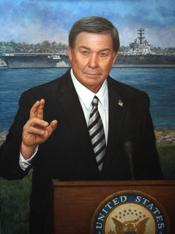
Mr. Speaker, I offer a concurrent resolution (H. Con. Res. 104) expressing the support and appreciation of the Nation for the President and the members of the Armed Forces who are participating in…
Mr. Speaker, I offer a concurrent resolution (H. Con. Res. 104) expressing the support and appreciation of the Nation for the President and the members of the Armed Forces who are participating in Operation Iraqi Freedom, and ask unanimous consent for its immediate consideration pursuant to the following order:
Debate on the concurrent resolution shall be limited to 2 hours, equally divided and controlled by myself and the gentleman from Missouri (Mr. Skelton), and the previous question shall be considered as ordered on the concurrent resolution to final adoption, without intervening motion or demand for a division of the question.
Mr. Speaker, will the gentleman yield?
Mr. Speaker, is the gentleman asking me if I am aware that the other body passed a resolution?
Yes.
That is true.
If the gentleman will yield further, yes, we would be open to including it.
Mr. Speaker, I would retract that and tell the gentleman that I would not be open to that. Would the gentleman yield further?
If the gentleman will continue to yield, Mr. Speaker, I just want to advise the gentleman that I read not only the resolution that was offered by the other body in 1991, but
also our resolution. We had a different resolution at that point, also.
I would just say to the gentleman that I think that the Members of this body have made a very fine statement, a very heartfelt statement commending our troops. I think it says the right thing. I applaud the gentleman for other things that he would like to see in a resolution. I think reasonable minds can differ.
I would hope that the gentleman would, in the spirit of bipartisan support for people that wear the uniform of the United States, not ask us to have precisely the same words as the other body, and simply spend a few minutes and go home. I would hope the gentleman would allow us to have our own resolution to express our own heartfelt support for those people, and let this body work its will.
No.
If the gentleman will continue to yield, Mr. Speaker, let me just say to the gentleman that we have some excellent commendations in this particular resolution.
Let me finish my statement, if I might.
We commend the President as Commander in Chief. That is something we did in 1991. Under the Constitution, he leads this military force. We commend the Members of the United States Armed Forces. We commend the families. We give them our sincere gratitude and appreciation.
I would think that any Member reading this resolution, and I would ask all Members to read it since the gentleman has called it into question, would agree that this resolution is an excellent resolution, and that it does all the things that we want to do. It would lead us all to wonder why the gentleman somehow wants it to say something else or follow some other example. It does not make a lot of sense.
I will look forward to that.
Mr. Speaker, I just want to say to the gentleman and to the gentleman who just spoke, there are hundreds of thousands of Americans in uniform putting themselves in very difficult positions for our freedom tonight. If they are watching this procedure, they are probably wondering, what in the heck are those guys doing? We have a commending vehicle.
I guess what I am saying is the answer is no to the gentleman from Ohio.
If the gentleman will continue to yield, Mr. Speaker, first, that restates the President's letter.
Second, a second point I would make to the gentleman is that we have been working, Democrats and Republicans, to put this resolution together. My colleague, the ranking member of the Committee on Armed Services, has been working on it. The gentleman's leadership has been working on it. The product that we have before us is a product of both sides.
I would just say to the gentleman if he has a disagreement with it and he thinks that it does not state his position, I would urge the gentleman to take time in this debate in the next several hours and explain his position; but nonetheless, let the rest of us in this House work our will and give our commendation to the troops. Obviously, we would all write it differently.
I look forward to the gentleman's statement.

Mr. President, I rise today to express my strong and unconditional support for our troops currently engaged in disarming Iraq. As the war continues to progress, I have every confidence in their…
Mr. President, I rise today to express my strong and unconditional support for our troops currently engaged in disarming Iraq. As the war continues to progress, I have every confidence in their capabilities, their courage, and their patriotism. I am pleased to support the resolution before us, and believe it will send a message to all the world that the Congress is united in support of our young men and women in the Gulf.
On many occasions in recent months, this institution has debated the threat posed by Saddam Hussein and Iraq's weapons of mass destruction. Individual Senators have made honest arguments expressing widely differing points of view on this issue. Now that our troops are engaged against the forces of Saddam Hussein, however, we must speak with one voice.
It is my hope and expectation that this war will be short, and that our victory will be decisive. Our military is the best-equipped and best-trained force that the world has ever seen. As Maine's representative on the Senate Armed Services Committee, it has been my privilege to work side-by-side with military leaders to ensure that this is the case. If there is any message we could send to members of the Iraqi military, it would be to express the futility of resistance. The President has been clear, that we come not as conquerors, but as liberators. Our military superiority is overwhelming, and our forces will not stop until Iraq is disarmed.
Of course, there is very little certainty in combat. In the fog of war, there are innumerable factors that might affect the course of battle. Our leadership has worked to anticipate and prepare for whatever eventualities might develop. I suspect in the coming days we will be receiving conflicting reports, confusing media accounts, and distorted descriptions of the battlefield. However, one thing should be unmistakable . . . our troops will receive whatever support they need to bring this conflict to a rapid and successful end.
We also need to send a message to other forces in this world that seek to do us harm. They might believe that, because so many of our forces are engaged in the Middle East, we have left ourselves vulnerable. The administration has moved the Homeland Security Advisory to Orange, indicating that we are at high risk of terrorist attack. Gordon England, the Deputy Secretary of Homeland Security, has assured me that our Nation is taking almost unprecedented steps to protect our critical infrastructure, to identify potential terrorist threats, and to secure potential targets. Certainly, we do have some difficult days ahead.
However, we are working to deter, detect, and, if necessary, respond decisively to any terrorist attack.
I also want to say a word to the families of those men and women currently in harm's way in the Middle East. They truly carry a heavy burden, and I want to express my personal and heartfelt appreciation for the sacrifices that they make. No war comes without cost. While our military leaders will do everything they can to minimize the danger our troops will face, there is still much risk and danger. To the wives, husbands, children, and parents of troops, I thank you for your bravery and your strength. You and your loved ones deserve our admiration, our respect, and our appreciation.
When I came to the Senate over 6 years ago, I could not have imagined this moment. We lived in a different world then. In the coming months, we will debate how we came to this conflict, and how we need to proceed. Historians will study this period in our history every closely. There will be time to place this war in its proper context. Today, however, as our troops stand in harm's way, I only want to show my unwavering support for our troops, thank them for their service, and express my hope for their safe return.
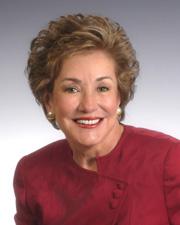
I thank the Chair. To date, nearly 40,000 men and women from North Carolina's military bases have been deployed for duty in Operation Iraqi Freedom. Last month, as a new member of the Senate Armed…
I thank the Chair. To date, nearly 40,000 men and women from North Carolina's military bases have been deployed for duty in Operation Iraqi Freedom.
Last month, as a new member of the Senate Armed Services Committee, I visited three of our military installations in North Carolina. I have always had the greatest respect and admiration for the brave men and women who dedicate their lives to defending our freedoms. It was particularly important to me to visit our armed forces personnel at this critical moment in our history and to tell them how much I appreciate what they do for us, for our country, each and every day.
At Seymour Johnson Air Force Base, at Cherry Point Marine Corps Air Station, and at Fort Bragg, I was moved by the dedication, the commitment, the patriotism of the members of our armed forces and their families. They make me proud and thankful to be an American.
In a recent interview, my husband, Bob, was asked about his service in World War II--about being part of ``the Greatest Generation.'' He responded that it is the men and women of our military today who are the greatest generation. I agree with him completely. We have the best equipped, most capable, most courageous military force in the world.
I remember my first day, 12 years ago, as president of the American Red Cross, walking into my new office to find a letter from Colin Powell, then-Chairman of the Joint Chiefs of Staff. One of the oldest Red Cross assistance programs, the Armed Forces Emergency Services, was in jeopardy due to a lack of donor interest. I promised Colin Powell right then and there that we would do whatever it took to preserve that program for our men and women in uniform--and we did.
Many people do not realize that wherever our military goes, the Red Cross goes with them to provide support and services, delivering 4,000 emergency messages a day to our military men and women. On that first day on my job, during the Persian Gulf war, our thoughts and prayers were with the Red Cross and our armed forces.
Shortly after the war ended, I traveled to the Persian Gulf to thank the Red Crossers for their work and to deliver humanitarian aid to Kuwait. Even now, I can clearly recall the horror of Saddam Hussein's occupation of that country--oil fields burning, a hospital where scores of children had died because doctors and nurses fled the country to escape the horrors of Saddam Hussein and his forces. I put a call out, right then and there, for doctors and nurses to come to Kuwait through Red Cross sponsorship--and about 50 American medical personnel responded immediately.
Saddam Hussein is a dangerous man who continues to pose a threat to the region's stability, to his own people, and to the American people through his sponsorship of terror. Right now, he's passing weapons of mass destruction to Iraqi troops--weapons he claimed not to have. He would gladly pass these weapons to terrorists to use against America.
President Bush exhausted every option before resorting to military force.
It is time to free the people of Iraq from Saddam Hussein's terror, to remove his weapons of mass destruction, to help Iraq establish democracy.
I have the highest confidence in our Armed Forces, and I know they will complete the mission they are called to accomplish. As we go forward, my thoughts and prayers will constantly be with our Commander in Chief, with these men and women and their families, with the Iraqi people, and with all those on the front lines of this war.
May God bless them all, and may God bless this great land of the free and home of the brave--America.
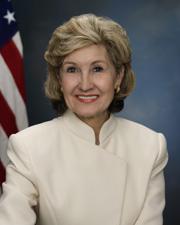
Mr. President, this resolution we are talking about today is for those brave men and women who are in harms way as we speak, close to midnight their time, far across the oceans. America's thoughts…
Mr. President, this resolution we are talking about today is for those brave men and women who are in harms way as we speak, close to midnight their time, far across the oceans. America's thoughts and prayers are with each and every one of them--Active Duty, Reserve, Guard, Americans, and our loyal allies.
September 11, 2001, was a brutal wake-up call for our Nation, one that our President refuses to ignore. By disarming and liberating Iraq, these troops are working to prevent a 9/11 with a weapon of mass destruction. Today we are entering a new phase in the campaign to root out terrorism wherever it is bred.
How did we get to this point? In 1993, terrorists bombed the World Trade Center, killing 6 people, wounding more than 1,000.
In 1996, terrorists bombed the U.S. military living quarters at Khobar Towers, Saudi Arabia, killing 19 brave Americans and wounding scores more.
In 1998, followers of Osama bin Laden attacked U.S. embassies in Kenya and Tanzania, killing and wounding hundreds.
In 2000, bin Laden followers attacked the USS Cole in a harbor in Yemen, killing 17 sailors and wounding 39 more.
But sadly, it took 4 hijacked airplanes being turned into weapons of mass destruction and the loss of nearly 3,000 lives for us to respond, and this time the terrorists and those who harbor them will know the United States of America is resolved to preserve our freedom.
Our President will not waiver. Congress will not waiver in our support of our President and our troops.
There are those in this world who hate America and what it stands for. They despise our love for freedom, our passion for democracy, and our tolerance of other religions and beliefs. Their hatred led them to recklessly kill thousands of innocent civilians in our country and abroad.
September 11 brought a sea change in our national security strategy. We now know that deterrence alone is not enough. Our new strategy in this new kind of war articulates a policy of preemption. It is when we fail to act or fail to lead that our enemies strike.
The President has said we will not give Saddam Hussein the opportunity to attack. The Iraqi dictator seeks to make weapons of mass destruction, and those weapons would find their way into the hands of terrorists. So coalition forces from our allied nations are on the ground with us in Iraq, and we commend them for their bravery and their unwavering loyalty to our Nation and their pursuit of freedom.
For 12 long years, Saddam Hussein has treated the world with lies and contempt. Diplomacy, sanctions, and 17 U.N. resolutions failed to do the job. His brutal campaign for decades against his neighbors, his own people, and the world is coming to an end as we speak because brave men and women are doing the job for us.
The men and women on the front lines in Iraq, the anxious families waiting back home, and the thousands of National Guard and Reserve forces who have been called to duty must count on the American public to stand by their side until the very end. We will not fail them.
In Congress, we must ensure our Armed Forces have every resource necessary for a swift and successful campaign. We will not fail to provide. It is our duty, as the beacon of freedom for the world, to ensure that Saddam Hussein's brutal reign comes to an end. This is our tribute to those in the past who fought for the liberty we enjoy, and it is our commitment to pass the torch of freedom to future generations.
I yield the floor.
Bill Text
3 versions available
        [Congressional Bills 108th Congress]
[From the U.S. Government Publishing Office]
[S. Con. Res. 26 Engrossed in Senate (ES)]

1st Session
S. CON. RES. 26

_______________________________________________________________________

CONCURRENT RESOLUTION

Whereas execution by stoning is an exceptionally cruel form of punishment that
violates internationally accepted standards of human rights, including
those set forth in the Universal Declaration of Human Rights, the
International Covenant on Civil and Political Rights, and the Convention
Against Torture and Other Cruel, Inhuman or Degrading Treatment or
Punishment;
Whereas women around the world continue to be targeted disproportionately for
cruel, discriminatory, and inhuman punishments by governments that
refuse to protect equally the rights of all their citizens;
Whereas the brutal sentence of execution by stoning is pronounced in many
countries on women who have been accused of adultery, a charge that is
brought even against victims of coerced prostitution or rape;
Whereas in some places execution by stoning has been invoked as punishment for
``blasphemy,'' thereby suppressing religious freedom and diversity and
stifling political dissent;
Whereas, in July 2002, Amnesty International referred to execution by stoning as
``a method specifically designed to increase the victim's suffering'';
Whereas, in 2002, the European Union, the Secretary General of the Council of
Europe, the Government of Australia, the Minister of Foreign Affairs and
Trade of New Zealand, the President of Mexico, the Congress of Deputies
of Spain, and other world leaders all condemned execution by stoning and
called for clemency for individuals sentenced to stoning; and
Whereas, according to the Country Reports on Human Rights Practices of the
Department of State, the sentence of execution by stoning continues to
be imposed in several countries: Now, therefore, be it
Resolved by the Senate (the House of Representatives concurring),
That Congress--
(1) condemns the practice of execution by stoning as a
gross violation of human rights and appeals to the
international community to end the practice;
(2) requests the President formally to communicate this
resolution to governments that permit this cruel punishment and
to urge the termination of execution by stoning; and
(3) requests the President to direct the Secretary of State
to work with the international community to promote adherence
to international standards of human rights and repeal laws that
permit execution by stoning.

Passed the Senate May 8, 2003.

Attest:

Secretary.
108th CONGRESS

1st Session

S. CON. RES. 26

_______________________________________________________________________

CONCURRENT RESOLUTION

Condemning the punishment of execution by stoning as a gross violation
of human rights, and for other purposes.