A concurrent resolution promoting the establishment of a democracy caucus within the United Nations.
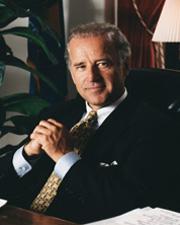 Sen. Joseph R. Biden Jr. (D-DE)
Legislative Activity
Stay on top of the latest movement without scrolling through every action
Referred to the House Committee on International Relations.
June 25, 2004
View full timeline
Introduced in Senate
November 18, 2003
Sponsor introductory remarks on measure. (CR S15083-15084)
November 18, 2003
Referred to the Committee on Foreign Relations. (text of measure as introduced: CR S15083)
November 18, 2003
Senate Committee on Foreign Relations discharged by Unanimous Consent.
June 24, 2004
Resolution agreed to in Senate without amendment and with a preamble by Unanimous Consent. (consideration: CR 6/25/2004 S7494-7495; text as passed Senate: CR 6/25/2004 S7495)
June 24, 2004
Received in the House.
June 25, 2004 • 9:02 AM
Message on Senate action sent to the House.
June 25, 2004
Referred to the House Committee on International Relations.
June 25, 2004
Floor Debate
5 membersWhat members said about S.Con.Res. 83 on the floor
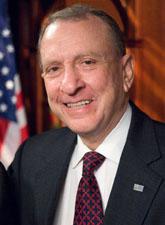
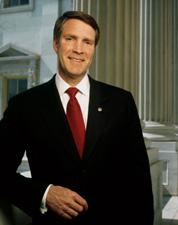

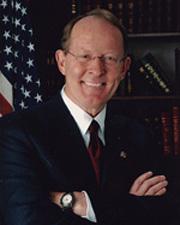
Floor Debate
5 membersWhat members said about S.Con.Res. 83 on the floor
Mr. President, today I rise to support a United Nations Democracy Caucus to address questions that underlie a countless number of our foreign policy decisions, particularly in today's climate: How…
Madam President, I rise today to congratulate French President Jacques Chirac for having taken resolute steps to stop attacks on Jewish sites in France and, more broadly, to address some of the…
Mr. President, I thank my colleagues for their support of S. Con. Res. 83, a resolution that I introduced in support of the establishment of a Democracy Caucus within the United Nations. In…
Madam President, I ask unanimous consent that the order for the quorum call be rescinded. I thank the Chair. (The remarks of Mr. Specter pertaining to the introduction of S. 1888 are located in…
Mr. President, I ask unanimous consent that the Foreign Relations Committee be discharged from further consideration of S. Con. Res. 83, and the Senate proceed to its immediate consideration. Mr.…
Show 2 more
Madam President, before the Senator from Delaware leaves the floor, I commend him for his arduous effort here on behalf of reminding the French Government that anti-Semitism is antithetical to a…
Mr. President, I ask unanimous consent that the order for the quorum call be rescinded. I ask unanimous consent that I be allowed to speak as in morning business for as long as I may require.
Bill Text
3 versions available
        [Congressional Bills 108th Congress]
[From the U.S. Government Publishing Office]
[S. Con. Res. 83 Referred in House (RFH)]

2d Session
S. CON. RES. 83

_______________________________________________________________________

IN THE HOUSE OF REPRESENTATIVES

June 25, 2004

Referred to the Committee on International Relations

_______________________________________________________________________

CONCURRENT RESOLUTION

Whereas a survey conducted by Freedom House in 2003, entitled ``Freedom in the
World'', found that of the 192 governments of nations of the world, 121
(or 63 percent) of such governments have an electoral democracy form of
government;
Whereas the Community of Democracies, an association of democratic nations
committed to promoting democratic principles and practices, held its
First Ministerial Conference in Warsaw, Poland, in June 2000;
Whereas in a speech at that Conference, Kofi Annan, the Secretary-General of the
United Nations, stated that ``when the United Nations can truly call
itself a community of democracies, the [United Nations] Charter's noble
ideals of protecting human rights and promoting `social progress in
larger freedoms' will have been brought much closer'', that
``democratically governed states rarely if ever make war on one
another'', and that ``in this era of intra-state wars, is the fact that
democratic governance--by protecting minorities, encouraging pluralism,
and upholding the rule of law--can channel internal dissent peacefully,
and thus help avert civil wars'';
Whereas a report by an Independent Task Force cosponsored by the Council on
Foreign Relations and Freedom House in 2002, entitled ``Enhancing U.S.
Leadership at the United Nations'', concluded that ``the United States
is frequently outmaneuvered and outmatched at the [United Nations]''
because the 115 members of the nonaligned movement ``cooperate on
substantive and procedural votes, binding the organization's many
democratic nations to the objectives and blocking tactics of its
remaining tyrannies'';
Whereas at the First Ministerial Conference of the Community of Democracies, the
representatives of the participating governments agreed to ``collaborate
on democracy-related issues in existing international and regional
institutions, forming coalitions and caucuses to support resolutions and
other international activities aimed at the promotion of democratic
governance''; and
Whereas that agreement was reaffirmed at the Second Ministerial Conference of
the Community of Democracies in Seoul, Korea, in November 2002: Now,
therefore, be it
Resolved by the Senate (the House of Representatives concurring),

SECTION 1. PROMOTION OF A DEMOCRACY CAUCUS WITHIN THE UNITED NATIONS.

Congress urges the President to instruct any representative of the
United States to a body of the United Nations to use the voice and vote
of the United States to seek to establish a democracy caucus within the
United Nations as described in this Resolution.

SEC. 2. PURPOSE OF THE DEMOCRACY CAUCUS.

The purpose of the democracy caucus referred to in section 1 should
be to advance the interests of the United States and other nations that
are committed to promoting democratic norms and practices by--
(1) supporting common objectives, including bolstering
democracy and democratic principles, advancing human rights,
and fighting terrorism in accordance with the rule of law;
(2) forging common positions on matters of concern that are
brought before the United Nations or any of the bodies of the
United Nations;
(3) working within and across regional lines to promote the
positions of the democracy caucus;
(4) encouraging democratic states to assume leadership
positions in the bodies of the United Nations; and
(5) advocating that states that permit gross violations of
human rights, sponsor terrorist activities, or that are the
subject of sanctions imposed by the United Nations Security
Council are not elected--
(A) to leadership positions in the United Nations
General Assembly; or
(B) to membership or leadership positions in the
Commission on Human Rights, the Security Council, or
any other body of the United Nations.

SEC. 3. CRITERIA FOR PARTICIPATION IN THE DEMOCRACY CAUCUS.

Participation in the democracy caucus referred to in section 1
should be limited to countries that--
(1) are qualified to participate in the Community of
Democracies, an association of democratic nations committed to
promoting democratic principles and practices; and
(2) have demonstrated a commitment--
(A) to the core democratic principles and practices
set out in the Final Warsaw Declaration of the
Community of Democracies, adopted at Warsaw June 27,
2000; and
(B) to the democratic principles set forth in--
(i) the United Nations Charter;
(ii) the Universal Declaration of Human
Rights; and
(iii) the International Covenant on Civil
and Political Rights.

SEC. 4. ANNUAL MEETING.

The members of the democracy caucus referred to in section 1 should
hold a ministerial-level meeting at least once each year to coordinate
policies and positions of the caucus.

Passed the Senate June 24, 2004.

Attest:

EMILY J. REYNOLDS,

Secretary.