A joint resolution expressing support for freedom in Hong Kong.
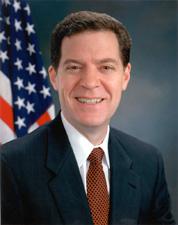 Sen. Sam Brownback (R-KS)
Legislative Activity
Stay on top of the latest movement without scrolling through every action
Read twice and referred to the Committee on Foreign Relations. (text of measure as introduced: CR S8864-8865)
June 27, 2003
View full timeline
Introduced in Senate
June 27, 2003
Read twice and referred to the Committee on Foreign Relations. (text of measure as introduced: CR S8864-8865)
June 27, 2003
Floor Debate
2 membersWhat members said about S.J.Res. 14 on the floor
Floor Debate
2 membersWhat members said about S.J.Res. 14 on the floor
Mr. President, I rise to introduce a joint resolution for myself and Senator Kyl regarding the United States' commitment to preserving freedom in Hong Kong. It is not simply the responsibility of the…
Mr. President, I rise to introduce a joint resolution for myself and Senator Kyl regarding the United States' commitment to preserving freedom in Hong Kong. It is not simply the responsibility of the…
Madam President, joined by a number of my colleagues in the Senate, I am today introducing legislation, S. 1368, that will authorize the President to award a Congressional Gold Medal to Reverend…
Bill Text
Latest available legislative text
        [Congressional Bills 108th Congress]
[From the U.S. Government Publishing Office]
[S.J. Res. 14 Introduced in Senate (IS)]

108th CONGRESS
1st Session
S. J. RES. 14

Expressing support for freedom in Hong Kong.

_______________________________________________________________________

IN THE SENATE OF THE UNITED STATES

June 27, 2003

Mr. Brownback (for himself and Mr. Kyl) introduced the following joint
resolution; which was read twice and referred to the Committee on
Foreign Relations

_______________________________________________________________________

JOINT RESOLUTION

Expressing support for freedom in Hong Kong.

Whereas Hong Kong has long been the freest economy in the world, renowned for
its rule of law and its zealous protection of civil rights and civil
liberties;
Whereas the Agreement between the Government of the United Kingdom of Great
Britain and Northern Ireland and the Government of the People's Republic
of China on the Question of Hong Kong, done at Beijing December 19, 1984
(the Sino-British Joint Declaration of 1984) explicitly guarantees that
all of Hong Kong's freedoms, including freedom of the press, religious
freedom, and freedom of association, will continue for at least 50 years
after the transfer of Hong Kong's sovereignty from the United Kingdom to
the People's Republic of China on July 1, 1997;
Whereas in the 6 years since the transfer of the territory, the citizens of Hong
Kong have enjoyed a certain degree of individual liberty, religious
freedom, freedom of the press and freedom of speech, which keep it both
politically vibrant and stable;
Whereas the People's Republic of China has increasingly interfered in Hong
Kong's independent judiciary, intimidated the media to induce self-
censorship, and excluded visitors who disagree with the policies of the
Chinese Communist Party;
Whereas the Government of the Hong Kong Special Administrative Region (SAR),
encouraged by the Government of the People's Republic of China, has
eroded Hong Kong's political independence, international prestige, and
appeal as a business and financial hub of Asia;
Whereas the freedoms cherished by the people of Hong Kong serve as a constant
reminder to the world and to the Government of the People's Republic of
China that such freedoms could, but do not, prevail on mainland China;
Whereas the traditional liberties of Hong Kong's 7,000,000 people are now
immediately threatened by a new national security bill proposed by the
SAR Government that would revise Hong Kong's laws regarding sedition,
treason, subversion, and theft of state secrets;
Whereas the national security bill, as now drafted, is vague and overly broad in
its definitions of subversion, sedition, and official secrets, weakens
existing due process protections in the Societies Ordinance, and gives
dangerous new powers to the police to make searches without warrant;
Whereas the proposed legislation would give the Hong Kong SAR Secretary for
Security, an appointee of the Government of the People's Republic of
China, broad authority to ban organizations not approved by Beijing,
thereby threatening religious organizations such as the Falun Gong and
the Roman Catholic Church;
Whereas, under the proposed legislation, such basic and fundamental procedural
rights as notice and opportunity to be heard could be waived by the
Secretary for Security if honoring these rights ``would not be
practicable'';
Whereas the proposed legislation provides for the imprisonment of individuals
accused of ``unauthorized disclosure of protected information,'' making
it possible for the Hong Kong SAR Government to prosecute members of the
news media for publishing any information relevant to relations between
the People's Republic of China and Hong Kong;
Whereas similar subversion laws in the People's Republic of China are regularly
used to convict and imprison journalists, labor activists, Internet
entrepreneurs, and academics;
Whereas the members of Hong Kong's Legislative Council who have been elected by
universal suffrage oppose the proposed legislation, but are powerless as
a minority to block the votes controlled directly and indirectly by the
Government of the People's Republic of China;
Whereas the clear majority of people in Hong Kong have expressed strong concerns
about, and opposition to, the proposed legislation;
Whereas the scheduled consideration of these proposals to restrict Hong Kong's
freedoms in the Legislative Council on July 9, 2003, makes the threat to
the people of Hong Kong clear and imminent; and
Whereas the United States has consistently supported the desire of the people of
Hong Kong to be free, and, as Congress declared in the United States-
Hong Kong Policy Act of 1992 (22 U.S.C. 5701 et seq.): ``The human
rights of the people of Hong Kong are of great importance to the United
States and are directly relevant to United States interests in Hong
Kong. Human rights also serve as a basis for Hong Kong's continued
economic prosperity'': Now, therefore, be it
Resolved by the Senate and House of Representatives of the United
States of America in Congress assembled, That Congress--
(1) declares that restrictions on freedom of thought,
expression, and association in Hong Kong are limits on the
fundamental rights of the people of Hong Kong;
(2) declares that the national security bill would
undermine freedom of the press and access to information, both
of which are fundamentally important to the economic and
commercial success of Hong Kong;
(3) calls upon the SAR Government to--
(A) avoid implementing any law that restricts the
basic human freedoms of thought and expression,
including the proposed implementation of Article 23 of
the Basic Law of the Hong Kong Special Administrative
Region of the People's Republic of China (the Basic
Law); and
(B) immediately schedule and conduct elections for
the Legislative Council of the Hong Kong SAR according
to rules approved by the people of Hong Kong through an
election law convention, by referendum, or both; and
(4) calls upon the President of the United States to--
(A) urge the Government of Hong Kong, including
Hong Kong Chief Executive Tung Chee Hwa and the
Legislative Council, not to implement any law,
including any law established pursuant to the proposed
implementation of Article 23 of the Basic Law, that
restricts the basic human right to freedom of thought
and expression;
(B) call upon the People's Republic of China, the
National People's Congress, and any groups appointed by
the Government of the People's Republic of China to
leave all revisions of Hong Kong law to a
democratically-elected legislature;
(C) call upon the Government of the People's
Republic of China to fully respect the autonomy and
independence of the Independent Commission Against
Corruption and the chief executive, civil service,
judiciary, and police of Hong Kong;
(D) declare that the continued lack of an elected
legislature in Hong Kong constitutes a violation of the
Sino-British Joint Declaration of 1984; and
(E) call upon the Government of the People's
Republic of China to honor its treaty obligations under
the Sino-British Joint Declaration of 1984.

<all>