A resolution expressing the sense of the Senate regarding the temporary entry provisions in the Chile and Singapore Free Trade Agreements.
Legislative Activity
Stay on top of the latest movement without scrolling through every action
Submitted in the Senate, considered, and agreed to without amendment and with a preamble by Unanimous Consent. (consideration: CR 8/1/2003 S10589; text as passed Senate: CR 8/1/2003 S10589; text of measure as introduced: CR 8/1/2003 S10690)
July 31, 2003
View full timeline
Introduced in Senate
July 31, 2003
Submitted in the Senate, considered, and agreed to without amendment and with a preamble by Unanimous Consent. (consideration: CR 8/1/2003 S10589; text as passed Senate: CR 8/1/2003 S10589; text of measure as introduced: CR 8/1/2003 S10690)
July 31, 2003
Floor Debate
8 membersWhat members said about S.Res. 211 on the floor
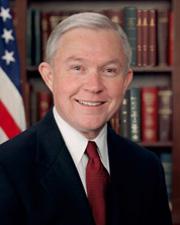
 OGH
OGH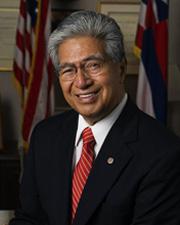 DKA
DKA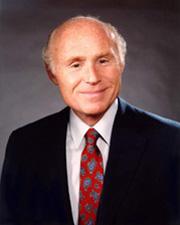 HK
HK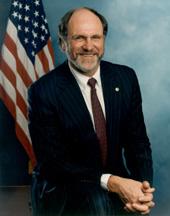 JSC
JSC JBB+3
JBB+3
Floor Debate
8 membersWhat members said about S.Res. 211 on the floor
Mr. President, I rise today in support of S. Res. 210, which would proclaim the month of October as ``National Work and Family Month.'' In Congress, we talk a lot about the importance of productivity…
Mr. President, I rise today in support of S. Res. 210, which would proclaim the month of October as ``National Work and Family Month.''
In Congress, we talk a lot about the importance of productivity in the workplace. We've all heard it many times: When workers are more productive, their wages and their living standards increase. American workers are just about the most productive in the world, and that's the reason we have the highest living standard of any large country. But this abstract idea we call productivity doesn't really capture what makes modern life so much more comfortable than life in the old days. And for most Americans, the days have gotten a lot nicer over the decades, and that includes the time that Americans spend at work.
In my lifetime, the workplace has changed so much that it is unrecognizable. Work in America is a lot less backbreaking than it used to be, it involves a lot more thinking and typing on average and a lot less lifting and hauling and welding and soldering. It involves a balance, a balance between business and personal activities, and between giving and receiving. That's a great thing. In just about every way imaginable, most Americans work in places that are far more family- friendly than in the past.
Flexible work schedules are becoming much more common, too. In 1985, just 14 percent of workers were on flexible schedules, but now 28 percent of workers are. Flexible schedules make it easier to balance work and family. And the workweek is getting shorter, too. In 1890, the average workweek was 60 hours; by 1950 it was down to 40, and now it's down to 35 hours a week for factory workers.
The major reason for these changes is the constantly innovating free- market economy. As any employer can tell you, the competition for workers is usually just as cutthroat as the competition for customers. Very few employees in the U.S. today would put up with 1950s style working conditions, let alone 1890s style work conditions. In most cases, if employers treat their workers wrong for very long, those workers will find something else to do with their time. Every day in every State across this Nation, people quit jobs they hate so they can look for something better. Stacks of business magazines extol the virtues of the worker-friendly, family friendly workplace, and study after study points out that in many cases, a family-friendly workplace more than pays for itself.
But in too many cases, our Nation's laws haven't kept up with changes in the real-world workplace. We have laws from an industrial era that have lagged far behind changes in the economy. And more importantly, our laws have lagged behind changes in people's personal lives. Yes, we've made some progress over the years, but there's still a lot to be done, such as in the areas of early childhood education and elder care, two areas that I have worked on in the past, and where I know we need to do more work in the future.
Today I'd like to focus on one area where we are on the cusp of making a lot more progress, and that is the area of flex time for America's workers. Right now, millions of employees in both the public and private sectors enjoy flexible work schedules. But our industrial- era laws completely shut millions of hourly wage-earners out of the world of flex-time. Over the last few Congresses, a number of proposals have been offered, by President Clinton, by President Bush, and by many members of Congress, to give hourly workers in the private sector the same job flexibility that government workers already enjoy.
Right now, federal law decrees that any hourly wage-earner who works more than forty hours per week must be paid overtime at time-and-one- half. But these rules, which I admit sound quite sensible at first, mean that hourly workers in the private sector can't have the ``nine- nines'' workweek that so many federal and state government employees take advantage of.
Under the nine-nines workweek, a worker works for nine hours per day for eight days, then works for eight hours on the ninth day, and then the worker can take every other Friday or every other Monday off as a holiday. This adds up to eighty hours over two weeks, but it turns every other weekend into a three-day weekend.
Millions of hourly wage-earners would love to be able to have this kind
of work schedule, but our industrial-age rules make it impossible for companies to do that without paying overtime wages. It's illegal. If we can amend Federal law to change the standard work period from forty hours every week to eighty hours every two weeks, that would be a great help to America's hourly workers. And it would make it easier for millions of workers to take more weekend trips with the kids, to make doctor's appointments without taking time off of work, and to just live a life that is a little bit less hectic. And that's what family- friendly business policies are all about.
Right now, we're seeing a fair amount of controversy over another family-friendly work proposal that goes by the name of comp-time legislation. This is another idea that has been around here for too long, and it's time for it to become law.
Comp time would allow workers who work overtime a choice: either they could receive overtime pay in the form of time-and-one-half in cash, or they could receive their pay as time-and-a-half in the form of paid time off. Ten hours of overtime this week could mean fifteen hours off next week, all of it paid time off. This would be unbelievably valuable for workers who would appreciate some extra time with their families. And despite some of the false claims made about comp time, the law would let unionized workers negotiate comp-time agreements through their unions, so it would completely respect worker's rights to organize.
As I said earlier, the flex-time and comp-time proposals would provide private sector employees the same opportunities that Federal employees currently have. These proposals would help husbands and wives balance the demands of work and family. This is the kind of legislation that Congress should be enacting to bring our laws into the 21st century. I keep hearing from working parents who struggle to balance the worlds of work and family, and I'm convinced that changing our industrial-era wages and hours laws will give them the flexibility they so desire.
I would like to say a little bit more about what Congress can do in the critical area of elder care. I come from a state with a large proportion of elderly citizens, and I know that this is an issue that weighs heavily on the minds of a lot of working families. Our society often overlooks the importance of caring for elderly parents, but I know how hard it is for a husband or a wife to concentrate on work when they have to be concerned about a frail parent. I've sponsored legislation to help our medical system help our nation's frail elderly. One of the major benefits of this kind of reform is that adult children won't have to live in fear of whether or not their parents will be cared for. The Medicare Improvements for Special Needs Beneficiaries Act, which I introduced in the 107th Congress, would be a big help to elderly Americans who have complex, long-term care needs. And it would be a great relief to their adult children.
There is a joy in giving the gift of our skills at work, at giving ourselves to the task at hand so thoroughly that we accomplish a task and can say to ourselves, ``well done.'' Fortunately, most working Americans also have the reassurance that they can draw a healthy line, a healthy boundary, between their family and their job, caring for both their loved ones and their work. The rise of flex-time in salaried jobs is a great example of this. When people are able to find a job where they can draw this line, we are happier and more content individuals. I hope that Congress can remove some of the legal barriers that stand between the American people and their ability to draw that line where they see fit.
For all of these reasons, I urge my colleagues to join with Senator Kennedy and myself to bring attention to the need for a family-friendly work environment. I urge them to cosponsor this resolution. Our industrial-era labor laws and labor regulations are a barrier to a healthy work environment, and they need serious reform. As I said, I've been working on this along with my old friend Senator Kennedy, and I'm also grateful to have the help of Senator Dodd and Senator Alexander. The four of us may not always see eye to eye on the precise way to help the private sector to build a family-friendly workplace, but I know we agree on the goal: A better life for American families.
Mr. President, I rise to submit a sense of the Senate resolution that the Senate supports improving American defenses against the spread of infectious diseases from abroad. The United States and…
Mr. President, I rise to submit a sense of the Senate resolution that the Senate supports improving American defenses against the spread of infectious diseases from abroad. The United States and other nations have a serious global problem in confronting the natural outbreak or deliberate spread of infectious diseases. The Central Intelligence Agency's January 2000 National Intelligence Estimate, NIE, The Global Infectious Disease Threat and Its Implications for the United States found that infectious diseases are a leading cause of death worldwide and that ``New and reemerging infectious diseases will pose a rising global health threat and will complicate U.S. and global security over the next 20 years.''
I have been concerned about the bioterrorist threat to this country for some time. In 2001, as chairman of the Senate Governmental Affairs Subcommittee on International Security, Proliferation, and Federal Services, I chaired hearings that addressed the Nation's preparedness to respond to a bioterrorist attack. Sadly, the SARS outbreak demonstrated that naturally occurring diseases can be spread extraordinarily quickly through international air travel. This raises questions over our Nation's ability to counter a bioterrorist attack and protect our public health in general. Preparations that organize our health care network against a naturally occurring disease outbreak can also help guard Americans against a bioterrorist attack. Our first line of defense must be pushed beyond the borders of the United States to countries overseas. We should help stop the spread of a disease at its source before tens or hundreds of air-travelers inadvertently spread it around the globe.
The World Health Organization, WHO, World Health Report 2002 estimates that infectious diseases accounted for more than 11 million deaths in 2001. Most of these infectious disease deaths occurred in the developing world, where they imposed a terrible burden on societies whose public health systems were already stretched beyond their limits. Infectious diseases, however, pose a threat to people in all parts of the world. Diseases easily spread beyond national borders.
The NIE noted that many infectious diseases come from outside U.S. borders and are introduced by international travelers, immigrants, returning U.S. military personnel, or imported animals or foodstuffs. The report states the increase in international air travel and trade will ``dramatically increase the prospects,'' that infectious diseases will ``spread quickly around the globe, often in less time than the incubation period of most diseases.''
Diseases that originated overseas, such as HIV/AIDS, have had a serious impact on the health and welfare of U.S. population. For example, according to the Centers for Disease Control and Prevention, CDC, since the beginning of the HIV/AIDS epidemic, there have been almost 450,000 deaths. There are an estimated 800,000 to 900,000 people currently living with human immunodeficiency virus in the United States with approximately 40,000 new human immunodeficiency virus infections occurring in the U.S. every year.
SARS and the West Nile virus have also had an impact in the United States.
The danger of an outbreak of a deadly disease overseas affecting the United States is increasing. The NIE found that war, natural disasters, economic collapse, and human complacency around the world are causing a breakdown in health care delivery and helping the emergence or reemergence of infectious diseases.
To be forewarned is to be forearmed. The early warning of a disease outbreak is key to its identification; the quick application of countermeasures; and the development of cures. The General Accounting Office, GAO, noted in its August 2001 report, Global Health: Challenges in Improving Infectious Disease Surveillance Systems, that ``disease surveillance provides national and international public health authorities with information they need to plan and manage to control these diseases.''
The next disease to strike the United States, like SARS, may be an unrecognized pathogen. As of July 2003, the SARS virus has sickened more than 8,000 people, including over 35 in the United States. The disease has killed more than 800 since the outbreak began in southern China, and has had severe economic repercussions in the countries beset by the outbreak. Although the disease appears to be under control for the moment, many fear there will be resurgence of SARS in the fall when the general flu and cold season begins. We have to do a better job next time, and by helping others we will help ourselves to do so. We need to strengthen our ability to detect foreign diseases before they cross our borders. The CDC has played a significant role in foreign disease surveillance for many years. Its Field Epidemiology Training Programs is an important program that strengthens global disease surveillance by training foreign specialists in modern epidemiology. FETPs have existed for almost 20 years and involve working with ministries of health around the world and the World Health Organization. Currently FETPs are in 30 countries throughout the world, supporting disease detection efforts and providing an essential link in global surveillance. The work of the FETPs is critical to establishing a first line of defense overseas to protect the health of local populations and of American citizens from the spread of deadly infectious diseases. This work is more timely and necessary than ever. As Dr. James Hughes, Director of the National Center for Infectious Diseases at the CDC told the Governmental Affairs Committee's Permanent Subcommittee on Investigations on July 30th, the lessons learned from the SARS outbreak show, ``The SARS experience reinforces the importance of global surveillance,'' as well as having prompt reporting and a strong laboratory capability.
We need to ensure that the CDC work in this area, which is at times heroic, is given the funding it requires. We also need to keep this question prominently on our national agenda. We need attention focused on infectious diseases on an annual basis. We need to understand better the political and economic implications of the spread of infectious diseases for foreign countries and the United States, and we need to know what are likely future trends depending on the level of intervention to address this problem. I suggest that a NIE on infectious diseases should be produced each year so that we have a comprehensive analysis of worldwide infectious disease and health developments.
The G-8 group of leading industrialized nations is playing a role on global health issues. At the 2003 Evian summit, the G-8 made a commitment to fight against the so-called big three diseases of AIDS, tuberculosis, and malaria. But the G-8 recognized the spread of SARS demonstrated ``the importance of global collaboration, including global disease surveillance.'' These words need to be backed by vigorous, coordinated actions. I urge the President to work with the G-8 to create regional FETP programs so that every part of the world can be covered by a strong public health disease surveillance system.
Moreover, we should support the World Health Organization, whose work provides a critical underpinning to the efforts of the global public health community. The World Health Organization's regular budget has been more or less flat since the mid-1990s in nominal terms, around $420 million a year. In real terms, some estimate this means it has been reduced by 25 percent or more. WHO receives additional extra budgetary funding of several hundred million dollars a year. But most of this is project specific and does not directly support the basic public health activities of WHO and is not a substitute for funding core WHO activities. WHO global surveillance activities have been built with very modest extra budgetary contributions on top of a modest amount of core resources. But WHO's global disease surveillance work is underfunded and is being conducted in an overall context of declining real WHO core funding.
The rapid and easy transport of diseases to and throughout the United States underscores that Americans are now part of a global public health system. I have been impressed by the commendable effort that the Bill and Melinda Gates Foundation has made to improve health in the developing world. The foundation has spent over $3 billion for this goal. Such visionary leadership should not only exist in the world of philanthropy. This country should take a stronger lead in improving public health and disease surveillance systems overseas.
Mr. President, I rise today to explain my opposition to the Chile and Singapore Free Trade Agreements. As a former businessman, I understand that trade has always been an important part of our…
Mr. President, I rise today to explain my opposition to the Chile and Singapore Free Trade Agreements. As a former businessman, I understand that trade has always been an important part of our economy. American workers are so productive that access to foreign markets is key to their prosperity. Last year alone the State of Wisconsin exported $10.6 billion worth of goods around the world. Unfortunately, because the Administration chose to abuse the fast track process and include unrelated immigration issues in these agreements, I was not able to support these agreements.
My opposition to these agreements is not based on the tariff reductions and market access measures included in the bills. Agreements between the U.S. and these countries make good economic sense. Canada and Europe already have free trade agreements with Chile and it has hurt our access to that market. While U.S. products face a 10 percent tariff, the same products from other countries do not. In Wisconsin we sell large mining equipment and bulldozers to Chile, but since 2000 our sales of mining equipment has tailed off. There may be many reasons for this reduction in commerce, but the fact that we face a 10 percent tariff, while our competitors from Europe do not, is not helping. This agreement will go far toward giving U.S. companies a fair and even playing field.
That said, our trade policy with other countries has been far from an unqualified success. Since 2000 Wisconsin has lost 70,000 manufacturing jobs. Almost one out of every eight jobs in the state in manufacturing has disappeared. Some of this job loss is a result of the recession. Some of these jobs have been moved to Mexico, and some of these have been unable to compete with low wages in China. Most damaging, however, may be the currency manipulation of the Chinese Government. Some experts believe the Chinese may be artificially keeping their currency undervalued by as much as 50 percent. This means products from China are 50 percent cheaper than they would normally be. This is on top of low wages and almost no environmental regulations, which also work to depress prices.
Trade can only work when countries obey the rules and follow the law. I supported bringing China into the WTO because that would make it harder for them to cheat on their agreements. However, this administration has proven unwilling to press this currency issue with the Chinese. They have allowed the problem to fester unchecked, and our manufacturing base is paying the price.
The agreements before us now, however, are not with countries that have a history of avoiding their commitments, or that do not enforce their labor laws, or with countries that are ruled by dictatorships. Singapore and Chile are responsible democracies with solid labor laws and labor unions. In the case of Singapore, the wage rates are comparable, although not the same, as the United States. Chile and Singapore have little in common with China, and should not be painted with the same broad brush. These countries also represent a significantly smaller portion of our foreign trade. Singapore represents 1.7 percent, and Chile represents 0.3 percent of total U.S. Trade, exports and imports combined and opening our market to them will have much less impact on our economy than our opening to China.
Many have criticized these agreements because the labor provisions attached to the agreement are not strong enough. A recent United States-Jordan Free Trade Agreement had much stronger labor provisions than the agreements before us now. That agreement had real accountability and real consequences if Jordan failed to keep up its side of the bargain. The administration argues that Chile and Singapore have responsible laws that are adequately enforced, and so do not need the highly prescriptive language that was included in the Jordan agreement. I agree with their arguments.
Let me be clear about the following. While these labor provisions may be adequate for Chile and Singapore, countries with good records, they should not be used as a model for future multilateral agreements in the region. The Free Trade Area of the Americas, and the Central American Free Trade Agreement will need substantially stricter labor and environmental provisions than these to get my vote. Large multilateral agreements with countries that are only fledgling democracies and have poor records of protecting workers cannot be treated in the same manner as Chile and Singapore.
Even though these agreements had problems and were not perfect, I was inclined to support them because I generally vote to support free trade. I felt these countries would be good partners and these agreements would be unlikely to have any significant negative impact on our economy. But the administration pushed the envelope of fast track too far when immigration provisions were included in the implementing legislation.
Both trade agreements contain provisions which create a new visa category for the temporary entry of business professionals. These provisions were negotiated as part of the larger trade agreement by the United States Trade Representative, USTR, which has no specific authority to implement new visa categories or make modifications to our temporary entry system. Further, these provisions were negotiated without the direction of Congress, which has traditionally debated and decided upon our Nation's immigration policy. These actions by the USTR set a dangerous precedent for immigration policy to be negotiated behind closed doors without a complete debate. Both our Nation's security and its diversity depend on well-considered immigration policy.
Second, the administration transmitted the implementing language for these trade agreements to the Senate before responding to concerns expressed at a Judiciary Committee hearing. This language is unamendable once transmitted, so it is critical that Congress be consulted fully on implementing language before transmission. Immigration policy lies squarely in the jurisdiction of the Judiciary Committee; for the administration to finalize immigration language before the Judiciary Committee has had a chance to analyze a draft and improve the language is an unacceptable way to do business.
These agreements I have decided to oppose will undoubtedly pass. Chile and Singapore have shown they are willing to play by the rules, and have democracies who will hold them accountable if they undermine their own labor and environmental laws. I expect there will be disputes in the future, there always are between partners, but Chile and Singapore will work with us to settle those disagreements when they come around. However, future agreements with countries with lower standards will have to do more to secure labor and environmental rights before I will support them. We need to move back toward the United States-Jordan model, back toward more accountability in trade agreements before this administration can expect my vote in favor of FTAA or CAFTA.
This undermining of the fast-track procedure, however, cannot be repeated. I voted for fast track, and support it as a way to give the President the ability to negotiate with other countries in good faith, but it should not be used for issues that are not trade related. Future agreements that carry unrelated provisions will not get my vote. I hope the administration hears this message and gets back to the business of focusing on our trade agenda, and leaving the immigration issues to the Congress where they belong.
Mr. President, I will vote against the free-trade agreements, and I want to take a few minutes to explain why. Having spent many years in the financial world, I understand the tremendous value of…
Mr. President, I will vote against the free-trade agreements, and I want to take a few minutes to explain why.
Having spent many years in the financial world, I understand the tremendous value of trade to America and to nations around the world. Free and open trade can enhance prosperity, create jobs, and increase opportunity. That is why I supported the North American Free Trade Agreement before I came to the Senate. And it is why I supported the free-trade agreement with Jordan. Measures like these held the promise of greater economic growth to the benefit of citizens in all countries involved and represented a growing movement toward freer trade around the globe.
Yet in recent years, we have seen a serious deterioration of the trade situation here in the United States, and our Nation's trade deficit has grown dramatically. The current account deficit in the first quarter of this year increased to more than $136 billion, and many project that it will surpass $500 billion this year. That means that every day, we are being forced to borrow nearly $2 billion because of our trade imbalance. That is a serious problem, and it is simply unsustainable. Something is not right with our ability to export American goods and services, but particularly manufactured products.
Beyond the enormity of the trade deficit, American businesses increasingly are shipping jobs overseas. Not just low-skilled jobs, but professional, highly skilled and well paid jobs. That is one reason the so-called economic recovery touted by the Bush administration has widely been characterized as a jobless recovery. In fact, it is worse than a jobless recovery, it is a job-killing recovery. And while workers in this country are losing jobs, our trade policy is helping to create jobs overseas. Today, many American firms are outsourcing high- technology jobs to low-wage environments to the detriment of American workers.
Sadly, this troubling trend has not received enough attention here in Washington. It is a matter affecting millions of Americans who are looking for work--well-paying, upwardly mobile work. And, I believe, it requires a serious rethinking of our Nation's whole approach to trade.
Unfortunately, the trade agreements considered last night failed to address this problem, and I have many concerns about them.
For example, I am quite concerned about provisions in the agreements that effectively overturn U.S. immigration laws and allow thousands of foreigners to enter our country to take what will often be highly paid positions. These people will take jobs away from Americans who want them and need them. And it is especially disturbing that such a significant change in immigration laws is being included in a trade agreement. As I see it, immigration is the type of matter that deserves close attention here in the Congress, with a full opportunity for debate. It is not something that should be rammed through without any meaningful opportunity for amendment or public input.
I also am concerned about the inadequacy of the labor protections, included in thee agreements.
Mr. President, I supported the Jordan Free Trade Agreement in part because it recognized the importance of protecting worker rights. That agreement ensured that both nations adhere to internationally recognized worker protection standards, and that worker rights could be enforced. It also ensured that labor standards were subject to the same procedural protections as the other provisions of the agreement. The Chilean and Singapore agreements fail to meet that standard.
To the contrary, the labor protections in these agreements are not only much more narrowly defined--essentially dependent on the laws of the respective countries--but enforcement of those protections is much more limited, as well. For example, not all violations of labor laws could be enforced through the agreements--only those that are ``sustained.'' Also, there are strict limits on the amount of fines and sanctions that are authorized in the case of labor violations, unlike violations of other provisions in the agreement. This disparity in the treatment of labor and commercial violations, in my view is wrong.
Mr. President, I am concerned that the labor provisions in these agreements, and other similar provisions relating to environmental protection, will serve as a template for other trade agreements already under discussion. As I see it, the Administration would be making a serious mistake if it uses these provisions as a model for future agreements. I hope that will not happened.
Mr. President, the types of commercial, labor and environmental issues addressed in these agreements are critical to the future of our nation, our economy, and millions of American workers. Yet, again, we are debating these agreements under expedited procedures that allow for every little debate and no amendments. In effect, while jobs continue to be sent abroad and millions struggle unsuccessfully to find work, the American people are being shut out of the process. In my view, that is not the right way to conduct the people's business.
Mr. President, I recognize that these agreements have, in fact been approved. But I would urge my colleagues, before we continue along the same theme path as we develop other similar agreements, let us take a step back and rethink our nation's whole approach to trade, Something is seriously wrong when America is hemorrhaging dollors and hemorrhaging jobs. We need to change course. And continuing blindly with a failed approach would be a dereliction of our responsibility to protect America's economy and America's workers.
I look forward to working with all of my colleagues to address these issues in the months and years ahead.
Mr. President, I strongly support the Singapore and Chile Free Trade Agreements and believe they will promote domestic growth in manufacturing and exports. I look forward to seeing these agreements…
Mr. President, I strongly support the Singapore and Chile Free Trade Agreements and believe they will promote domestic growth in manufacturing and exports. I look forward to seeing these agreements enacted into law. However, I am concerned about the current U.S. negotiating objective of restricting, limiting or otherwise eliminating drawback and duty deferral rights for U.S. manufacturers and exporters in free trade agreements, FTA. The administration's current policy places U.S. companies at a significant competitive disadvantage in the global market.
Free trade agreements should include no language that eliminates or otherwise restricts the application of duty drawback and duty deferral programs to U.S. manufacturers and exporters. The language in the United States-Singapore and United States-Israel FTAs, for example, have no such restrictive language and we should model future agreements after these FTAs. This issue is of significant importance to many U.S. manufacturers and exporters, including those in my home state of Louisiana.
Duty drawback and duty deferral programs reduce production and operating costs by allowing our manufacturers and exporters to recover duties that were paid on imported materials when the same or similar materials are exported either whole or as a component part of a finished product. Duty drawback positively affects nearly $16 billion of U.S. exports each year. Additionally, nearly 300,000 U.S. jobs are directly related to exported goods that benefit from drawback, and these high quality jobs could be adversely affected by eliminating or restricting drawback. In my own home state of Louisiana, drawback and duty deferral programs provide substantial benefits to local industries, allowing them to compete on a level playing field in the global market.
Drawback makes a significant difference to U.S. companies at the margin when exporting to our FTA partners where they compete against foreign producers that either have substantially lower costs of production or enjoy low or zero import duty rates. This export promotion program is one of the last WTO-sanctioned programs' which provides a substantial advantage to U.S. companies participating in the export market. The application of these programs to U.S. manufactures and exporters should not be restricted in future free trade agreements that we negotiate with our trading partners.
We need to work hard to complete free trade agreements that provide as many competitive advantages as we can to U.S. manufacturers competing in the global market, encourage growth in U.S. exports, and create U.S. jobs.
Show 3 more
Mr. President, I rise to submit a resolution honoring Hiram Powers, a 19th Century American sculptor. He was born in Woodstock, VT in 1805 and chose a career in sculpting that bolstered the image of…
Mr. President, I rise to submit a resolution honoring Hiram Powers, a 19th Century American sculptor. He was born in Woodstock, VT in 1805 and chose a career in sculpting that bolstered the image of the United States in the world of art.
I invite all of my colleagues to join me in this effort by cosponsoring this resolution.
I realize many people have never head of Hiram Powers, but we have all seen his work. Just outside the Senate Chamber's doors, stands an 8-foot-tall marble statute of Benjamin Franklin. Hiram Powers made the statue in 1862.
On the House side, stands a similar statue of Thomas Jefferson. Hiram
Powers also made that statue. In the Old Supreme Court Chamber, sits the bust of one of the Supreme Court's greatest Chief Justices, John Marshall, yes, Hiram Powers made that one too.
In fact, in 1836, when Congress passed a resolution calling for the creation of a marble bust for John Marshall, Congress wanted it to be prepared by ``an artist of merit and reputation.'' Congress decided that Hiram Powers was that artist.
His work is not limited to the U.S. Capitol. He also created a bust of Andrew Jackson for the White House. This work is widely considered one of the noblest examples of portraiture ever created by an American sculptor.
Perhaps his most well known work is not of a famous historical figure, but a symbol representing the most tragic episode in our country's history.
In the years prior to the Civil War, Hiram Powers was an outspoken abolitionist, and in 1844 he created his first rendition of the ``Greek Slave,'' a neoclassical statue of a young woman wearing contemporary American manacles. This work can be seen in the Corcoran Gallery of Art.
Congress paid Hiram Powers a commission for the works he created over 160 years ago. I believe it is now time for Congress to thank Hiram Powers, an artist of merit and reputation, for his work that continues to inspire us to this day, and for generations to come.
Mr. President, I encourage all of my colleagues to join me in cosponsoring this resolution that I send to the desk.

Mr. President, it is a privilege to join my colleagues, Senators Hatch, Alexander and Dodd, in introducing this Senate resolution to declare October National Work-Family Month. Eighty-five percent of…
Mr. President, it is a privilege to join my colleagues, Senators Hatch, Alexander and Dodd, in introducing this Senate resolution to declare October National Work-Family Month.
Eighty-five percent of Americans have day-to-day family responsibilities. Many care for children, a spouse or partner, or another family member. As our population ages, an increasing number must care for their own parents. Numerous studies have shown that in addition to increased personal responsibilities, these hard-working men and women are also spending more and more time on the job putting in longer and longer hours. As a result, many employees suffer from burnout, fatigue, or even serious illness.
These concerns affect us all. Parents say their biggest daily challenge is balancing their work and their family responsibilities. It is clear that sick children recover more quickly when cared for by a parent. Senior citizens are relying more and more on their working adult children to care for them when they are ill. In fact, a study by the Kaiser Foundation in 2000 found that 34 percent of women and 24 percent of men say they have missed work as a result of caring for an aging parent.
The Family and Medical Leave Act has been a significant first step in dealing with this issue but it is far from enough. The resolution to declare October National Work-Family Month will bring new attention to this important issue.

Mr. President, I rise in strong support of S. Res. 211. I join my colleagues to speak out against the administration using these trade agreements to implement immigration policy without the authority…
Mr. President, I rise in strong support of S. Res. 211. I join my colleagues to speak out against the administration using these trade agreements to implement immigration policy without the authority or direction to do so from Congress. It is the function of the Congress to set policy on the immigration laws of this country, and in this case, the USTR overstepped its bounds. This resolution sends a message to the administration that the USTR has overreached its negotiative authority by including immigration provisions in the FTA, and in the future, they must consult with Congress before implementing new policy, and I strongly support it.
I am a strong free-trader whose State has benefited from free-trade agreements. I do have some concerns, however, about the enforcement of trade laws and I have expressed those concerns to the administration. Free trade must also be fair and I will continue to pay close attention to our trade agreements and their enforcement to make sure that American workers are not hurt by unfair trade.
Bill Text
Latest available legislative text
        [Congressional Bills 108th Congress]
[From the U.S. Government Publishing Office]
[S. Res. 211 Agreed to Senate (ATS)]

108th CONGRESS
1st Session
S. RES. 211

Expressing the sense of the Senate regarding the temporary entry
provisions in the Chile and Singapore Free Trade Agreements.

_______________________________________________________________________

IN THE SENATE OF THE UNITED STATES

July 31 (legislative day, July 21), 2003

Mr. Sessions (for himself, Mr. Kyl, Mrs. Feinstein, Mr. Craig, Mr.
Graham of South Carolina, Mr. Chambliss, Mr. Feingold, Mr. Byrd, Mr.
Dorgan, Mr. Kohl, Mr. Dayton, and Ms. Mikulski) submitted the following
resolution; which was considered and agreed to

_______________________________________________________________________

RESOLUTION

Expressing the sense of the Senate regarding the temporary entry
provisions in the Chile and Singapore Free Trade Agreements.

Whereas the transmittal of the legislation implementing the Chile and Singapore
Free Trade Agreements to the Senate on July 15, 2003, was preceded by
debate over whether temporary entry provisions in both the underlying
language of the Chile and Singapore Free Trade Agreements and in the
implementing legislation should be included;
Whereas article I, section 8, clause 3 of the Constitution authorizes Congress
``to regulate Commerce with foreign Nations, and among the several
States'', and article I, section 8, clause 4 of the Constitution
provides that Congress shall have power to ``establish an uniform Rule
of Naturalization'';
Whereas the Supreme Court has long interpreted these provisions of the
Constitution to grant Congress plenary power over immigration policy;
Whereas members of the Senate often disagree about immigration policy, but agree
that the formulation of immigration policy belongs to Congress; and
Whereas the practice of negotiating temporary entry provisions in the context of
bilateral or multilateral trade agreements curtails the ability of
Congress to regulate the Nation's immigration policies, including the
admission of foreign nationals: Now, therefore, be it
Resolved, That it is the sense of the Senate that--
(1) trade agreements are not the appropriate vehicle for
enacting immigration-related laws or modifying current
immigration policy; and
(2) future trade agreements to which the United States is a
party and the legislation implementing the agreements should
not contain immigration-related provisions.
<all>