A resolution expressing the sense of the Senate on the transition of Iraq to a constitutionally elected government.
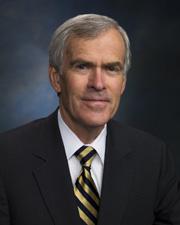
 Sen. William H. Frist (R-TN)
Legislative Activity
Stay on top of the latest movement without scrolling through every action
Submitted in the Senate, considered, and agreed to without amendment and with a preamble by Unanimous Consent. (consideration: CR 6/25/2004 S7497-7499; text as passed Senate: CR 6/25/2004 S7498; text of measure as introduced: CR 6/25/2004 S7486-7487)
June 24, 2004
View full timeline
Introduced in Senate
June 24, 2004
Submitted in the Senate, considered, and agreed to without amendment and with a preamble by Unanimous Consent. (consideration: CR 6/25/2004 S7497-7499; text as passed Senate: CR 6/25/2004 S7498; text of measure as introduced: CR 6/25/2004 S7486-7487)
June 24, 2004
Floor Debate
4 membersWhat members said about S.Res. 397 on the floor


Floor Debate
4 membersWhat members said about S.Res. 397 on the floor
Mr. President, I rise today with my colleagues Senators Hutchison and Landrieu to submit a resolution to convey the deepest sympathy of the Senate to the families of the young women who have been…
Mr. President, I ask unanimous consent that the Senate proceed to the immediate consideration of S. Res. 397, which was submitted earlier today by Senators Frist and Daschle. Mr. President, I ask…
Mr. President, last week my colleague Senator Jay Rockefeller and I had the privilege of introducing the Advanced Directives Improvement and Education Act of 2004, which would improve an individual's…
If the distinguished majority leader will yield, following the meeting with the President this morning, which I had the good fortune of being able to attend, the one message that came out of the…
Bill Text
Latest available legislative text
        [Congressional Bills 108th Congress]
[From the U.S. Government Publishing Office]
[S. Res. 397 Agreed to Senate (ATS)]

108th CONGRESS
2d Session
S. RES. 397

Expressing the sense of the Senate on the transition of Iraq to a
constitutionally elected government.

_______________________________________________________________________

IN THE SENATE OF THE UNITED STATES

June 24, 2004

Mr. Frist (for himself, Mr. Daschle, Mr. Lugar, Mr. Sessions, Mr.
Lieberman, Mr. Graham of South Carolina, and Mr. Biden) submitted the
following resolution; which was considered and agreed to

_______________________________________________________________________

RESOLUTION

Expressing the sense of the Senate on the transition of Iraq to a
constitutionally elected government.

Whereas June 30, 2004, marks Iraq's assumption of sovereignty and the beginning
of the transition of Iraq to a free and constitutionally elected
government, which is to be established by December 31, 2005;
Whereas the Senate congratulates the Iraqi people, expresses its appreciation to
the Iraqi Interim Government, and reaffirms the United States desire for
the people of Iraq to live in peace and freedom;
Whereas the successful transition of Iraq to a constitutionally elected
government requires that Iraq develop the capacity to provide security
to its citizens, defend its borders, deliver essential services, create
a transparent and credible political process, and set the conditions for
economic prosperity;
Whereas the people of Iraq have a long tradition of cultural and technological
achievement and a talented and dedicated population;
Whereas the United States desires peace and prosperity for the citizens of Iraq;
Whereas more than three decades of dictatorial rule have deprived the people of
Iraq of the benefits of that tradition and history, caused extraordinary
personal suffering, and robbed the people of Iraq of the opportunity to
reach their full potential;
Whereas establishing security is a prerequisite to the successful transition to
democracy and reconstruction of Iraq;
Whereas providing security to the people of Iraq will require a well-trained and
well-equipped police force, a professional military accountable to
civilian leadership, the disbanding of militias, and a fair and
efficient judicial system;
Whereas the current program to train and equip Iraq security services could
benefit from better vetting of candidates, expanded training time,
follow-on field training with experienced police and military
professionals, and the accelerated provision of equipment and resources;
Whereas the administration of the institutions of government and the delivery of
essential services in Iraq will require technical expertise and training
not yet fully developed in Iraq;
Whereas Iraq faces a shortage of essential services, including sanitation, safe
water, and a reliable supply of electricity;
Whereas economic prosperity in Iraq will require viable financial institutions,
conditions that encourage private investment, and the significant
reduction of foreign debt incurred by the regime of Saddam Hussein;
Whereas the people of Iraq were the victims of three decades of economic
mismanagement under the regime of Saddam Hussein, and have inherited
$120,000,000,000 in debt incurred by that regime;
Whereas Prime Minister Allawi has requested assistance from the international
community to aid in the rebuilding and security of Iraq, including
assistance from the neighbors of Iraq to improve intelligence-sharing
and to tighten controls of the borders with Iraq in order to prevent the
infiltration of terrorists and illicit goods, and assistance from the
North Atlantic Treaty Organization (NATO) to train and equip Iraqi
Security Forces;
Whereas the international community, through a unanimous vote of the United
Nations Security Council in Resolution 1546 (2004), called on United
Nations member states and international and regional organizations to
contribute to a multinational force in Iraq and a dedicated force to
provide security for the United Nations presence in Iraq, to help Iraq
build the capability of its security forces and governing institutions,
to aid in rebuilding the capacity for governance in Iraq, and to commit
additional resources to reconstruct and develop the economy of Iraq;
Whereas since the adoption of United Nations Security Council Resolution 1546,
some members of the international community who have long expressed
concern for the plight of the people of Iraq, and who voted for the
adoption of the Resolution in the Security Council, have failed to
respond to the urgent needs of the people of Iraq;
Whereas improved security in Iraq and the increased capacity of the people of
Iraq to provide essential services will reduce the burdens on United
States military personnel in the region;
Whereas the United States supports the determination of the Iraqi Interim
Government to defeat the loyalists to Saddam Hussein, radical militias,
common criminals, and terrorists who make up the insurgency in Iraq;
Whereas the United States is committed to assisting Iraq in reasserting its full
sovereignty, consistent with United Nations Security Council Resolution
1546;
Whereas the Senate acknowledges the efforts and sacrifices of the Armed Forces,
other employees of the United States Government, contractors, and their
counterparts in the coalition to promote Iraq's security, recovery, and
transition; and
Whereas the United States and other members of the international community have
a profound stake in the success of the transition of Iraq to a
constitutionally elected government: Now, therefore, be it
Resolved, That it is the sense of the Senate that--
(1) the members of the Armed Forces and their families have
performed courageously and nobly and have earned the deep
gratitude of the people of the United States;
(2) success in Iraq is a global priority and therefore
demands cooperation from all states and international
organizations;
(3) states and international organizations should fulfill
their commitments to contribute what resources and skills they
can to the establishment and security of an independent Iraq
with a constitutionally elected government;
(4) states and international organizations should fulfill
the financial commitments they have already made to the
reconstruction of Iraq;
(5) the international community should establish, to the
highest standards, additional police training academies inside
and outside of Iraq, contribute additional trainers to those
academies, and dedicate experienced police to train Iraq police
officers in the field;
(6) the North Atlantic Treaty Organization (NATO) is
uniquely qualified to respond to the call for assistance in
United Nations Security Council Resolution 1546 (2004) to meet
the needs of the people of Iraq for security and stability,
including by assisting in training the Iraq military, providing
security for elections in Iraq, and helping secure the borders
of Iraq and should, therefore, respond positively to the
request of Interim Iraqi Prime Minister Allawi to provide
training, equipment, and other forms of technical assistance
that his government determines is appropriate to help Iraq's
security forces defeat terrorism and reduce Iraq's reliance on
foreign forces;
(7) in order to ensure that the United Nations can play the
leading role called for by United Nations Security Council
Resolution 1546, member states should contribute additional
military and security forces, and other resources as
appropriate, to provide security for a United Nations presence
in Iraq;
(8) countries unable to contribute security personnel to
help stabilize Iraq should contribute to the transition of Iraq
in other ways, including by providing technical experts, civil
engineers, municipal management advisers, and to fill other
needs requested by the Iraqi government;
(9) countries holding debt incurred under the Saddam
Hussein regime should meaningfully reduce amounts of that debt;
(10) the United States is committed to a free and peaceful
Iraq; and
(11) it is appropriate to thank coalition partners and
other countries that have helped promote security, stability,
reconstruction, and democracy in Iraq.
<all>