A resolution recognizing the 2004 Congressional Awards Gold Medal Recipients.

Legislative Activity
Stay on top of the latest movement without scrolling through every action
Resolution agreed to in Senate without amendment and with a preamble by Unanimous Consent. (text: CR S8805)
July 22, 2004
View full timeline
Introduced in Senate
July 7, 2004
Referred to the Committee on Governmental Affairs. (text of measure as introduced: CR S7756)
July 7, 2004
Senate Committee on Governmental Affairs discharged by Unanimous Consent.(consideration: CR S8804-8805)
July 22, 2004
Senate Committee on Governmental Affairs discharged by Unanimous Consent. (consideration: CR S8804-8805)
July 22, 2004
Resolution agreed to in Senate without amendment and with a preamble by Unanimous Consent. (text: CR S8805)
July 22, 2004
Floor Debate
17 membersWhat members said about S.Res. 400 on the floor
 DF
DF MC
MC CL
CL HR
HR TS+12
TS+12
Floor Debate
17 membersWhat members said about S.Res. 400 on the floor
Thank you very much, Mr. President. Amendment No. 2083 (Purpose: To improve the operation of energy markets) On behalf of Senators Lugar, Levin, Harkin, Cantwell, Boxer, Leahy, Wyden, Durbin, and…
Thank you very much, Mr. President.
Amendment No. 2083
(Purpose: To improve the operation of energy markets)
On behalf of Senators Lugar, Levin, Harkin, Cantwell, Boxer, Leahy, Wyden, Durbin, and Hollings, I send an amendment to the desk.
I ask unanimous consent that reading of the amendment be dispensed with.
Mr. President, this amendment has to do with providing some regulatory oversight over energy trading. It has to do with closing the Enron loophole. It has to do with providing transparency. Energy trades today are not subject to the 2000-passed Commodity Modernization Act. Rather, these energy trades take place electronically, take place in secret, without transparency, with no records kept, with no audit trail available, and with no regulatory oversight to prevent fraud and manipulation in energy trading.
I would like, first of all, from the Derivatives Study Center, to indicate and read a couple of paragraphs from the letter they have sent, which I think defines the issue very well.
I quote:
This regulatory assistance comes at a critical time.
According to the Federal Energy Regulatory Commission's
Director of the Office of Market Oversight, ``energy markets
are in severe financial distress.'' Along with the decline in
credit quality in these markets, the loss of confidence and
trust has led to a ruin in the liquidity and depth of these
markets. This legislation will go a long way to address this
problem.
Then he defines what derivatives are. This is important for Members to know. It is complicated. We went through this once before. I would like to give you this definition because it is a good one:
Derivatives are highly leveraged financial transactions,
allowing investors to potentially take a large position in
the market without committing an equivalent amount of
capital. Moreover, derivatives traded in over-the-counter
markets are devoid of the transparency that characterizes
exchange-traded derivatives, such as futures, and this lack
of transparency introduces a greater potential for abuse
through fraud and manipulation.
That is exactly what happened. He goes on to say:
Derivatives are often combined into highly complex,
structured transactions that are difficult, even for the
seasoned securities trader and finance professionals, to
understand and price in the market. Enron used such over-the-
counter derivatives extensively in order to hide the nature
of their activities from investors. The failure of Enron and
the demise of other energy derivatives dealers has had a
devastating impact on the level of trust in energy markets.
That is a good definition of what we are trying to do, why we are trying to do it, and what we are trying to involve.
Now I would like to read into the Record a portion of a letter from Eliot Spitzer. Mr. Spitzer is the attorney general of the State of New York. That is the place where many of these cases are now coming to trial.
He says:
I firmly support your efforts to make energy markets
competitive and protect those markets from fraud and
manipulation. The bill sponsored by Senators Feinstein,
Levin, and Lugar, and under consideration as an amendment to
the proposed 2004 agricultural appropriations bill, is a
major step toward both goals.
He goes on to say:
The amendment makes a major contribution to competitive
energy markets by initiating an electronic information system
to be operated through the Federal Energy Regulatory
Commission. This system will provide open access to
comprehensive, timely, and reliable wholesale electricity and
transmission, price and supply data, greatly expanding the
choices of both buyers and sellers. In addition, the
reliability of market information would be markedly improved
by the amendment's general prohibition on manipulation of the
purchase or sale of electricity or the transmission services
needed to deliver electricity, and by specific prohibition of
the round-trip trading manipulation used so effectively to
inflate electricity prices to the public's injury.
This is a letter from the attorney general of the State of New York. As such, it places an imprimatur of correctness, of need, and of value on the amendment that we introduce today.
Now, what is in that amendment? Specifically, the amendment would improve price transparency in wholesale electricity markets. The amendment directs the Federal Energy Regulatory Commission to do just what Mr. Spitzer said it would do: to establish an electronic system to provide information about the price and availability of wholesale electricity to buyers, to sellers, and to the public. This provision is actually similar to the transparency provision offered by my colleague from New Mexico, Senator Domenici, in the Energy bill.
Secondly, this legislation would prohibit round-trip electricity trades. What is a round-trip trade? It is the simultaneous buying and selling of the same quantity of electricity at the same price, in the same location, with no financial gain or loss. In other words, no commodity ever changes hands. Again, this is similar to a provision that Senator Domenici offered during consideration of the Energy bill. Round-trip or wash trades are bogus trades. No electricity changes hands but the profits from the trades enrich the bottom line of a company's financial report.
In fact, I think we had one company--I believe it was CMS--say that 80 percent of their balance sheet in a given year was from bogus trades. And there is nothing we can do about it? Does anyone believe that is right? I think not. I don't think the American people do, and that is one of the reasons these markets are so decimated.
Next we would increase penalties for violations of the Federal Power Act and the Natural Gas Act. Maximum fines for violations of the Federal Power Act would be increased from $5,000--that is nothing to a big company--to $1 million. And maximum sentences are increased from 2 to 5 years. Remember, these rip-offs were tremendous. Just look at the people plea-bargaining from Enron, look at what they did, look at the amounts of money they fraudulently compromised.
This language is identical to section 209 of the Senate-passed Energy bill. Current fines are extraordinarily low and, therefore, provide no deterrence to illegal activity.
We also amend the Natural Gas Act to do essentially the same thing. Senator Domenici, in his substitute electricity title to the Energy bill, increased the fines in the Gas Act but he did not do so in the Federal Power Act. We would do both in this amendment.
Next the amendment would prohibit manipulation in electricity markets. Manipulation is prohibited in the wholesale electricity markets, and FERC is given discretionary authority to revoke market- based rates for violators.
Strangely enough, manipulation of energy markets is not prohibited in current law. Can you believe that? Manipulation of energy markets is not prohibited in current law. This would add language to part 2 of the Federal Power Act to do just that.
Most importantly, this bill would repeal the Enron exemption and allow the Commodities Futures Trading Commission, which has oversight over virtually all other trading, to monitor the over-the-counter energy market.
This would repeal what happened in 2000 when Enron pushed the Commodities Futures Modernization Act exemption for large traders in energy commodities. And it would apply antimanipulation and antifraud provisions of the Commodities Exchange Act to all over-the-counter trades in energy commodities and derivatives.
In my view, when Congress exempted energy from the Commodities Futures Modernization Act of 2000, it created the playing field for the western energy crisis of 2000 and 2001. The western energy crisis cost millions of people millions of dollars in my home State of California. So this is a charge I am making. When this Congress permitted
the Enron loophole to exist in the Commodities Modernization Act, they created the loophole for the playing field that Enron and others used to manipulate the western energy markets.
Next, our bill would provide the Commodity Futures Trading Commission the tools to monitor over-the-counter energy markets. Over-the-counter energy trade in energy commodities and derivatives performs a significant price discovery function, including trade on electronic trading facilities. Our amendment requires large, sophisticated traders to keep records and report large trades to the Commodity Futures Trading Commission. This doesn't change the law. It only applies the law that exists for futures contracts to over-the-counter trades in energy markets.
We would limit the use of data. This requires the CFTC to seek the information that is necessary for the limited purpose of detecting and preventing manipulations in the futures and over-the-counter markets for energy, to keep proprietary business data confidential, except when used for law enforcement purposes. This does not require the real-time publication of proprietary data. It does not.
This would have no effect on nonenergy commodities or derivatives. The amendment would not alter or affect the regulation of futures markets, financial derivatives, or metals. We have specifically stated on page 20 the following:
The amendments by this title have no effect on the
regulation of excluded commodities under the Commodity
Exchange Act.
In addition, we state:
The amendments made by this title have no effect on the
regulation of metals under the Commodity Exchange Act.
Mr. President, my colleagues may be asking themselves why I continue to press this cause. Here I note that Senator Levin has come to the floor. I want the Senate to know how helpful the Senator from Michigan has been in working on this complicated issue. He has spent hours and hours of his time. His staff has worked with my staff in evolving this measure. We have carefully vetted it. I believe we really know what we are doing here.
The energy crisis in the West demonstrated that, without Federal oversight, a business becomes solely concerned with its bottom line and not with any sense of ethical behavior; and arrests and convictions to date have clearly documented this to be the case.
Californians are still paying the price of this unethical behavior. I make the point that we are not talking about one bad player in the California market. This goes way beyond Enron. It extends to others as well--to Reliant, Dynegy, Williams, AEP, CMS, El Paso Merchant Energy, Duke, Mirant, Coral, Sempra Energy Trading--unfortunately, in my own State--Aquila, the City of Redding, Morgan Stanley Capital Group, Pacificorps, and to the Puget Sound Energy.
We believe California was duped out of $9 billion. The Federal Energy Regulatory Commission has illustrated its inability to refund California the money it is owed by recently recommending settlements that in no way, shape, or form reflect the damage that was caused to both consumers and the economy of the largest State in the Union. In fact, FERC settled with Reliant on August 29, allowed them not to admit wrongdoing, and fined them $836,000. That was $836,000 for rules of conduct that cost the State $13 million--hardly fair.
This disproportionately low fine gives credibility to the fact that the price one would have to pay in penalties, if caught manipulating the market, is worth the risk since the benefits of not getting caught far outweigh any penalty that may be levied upon a company.
I think it is pretty clear that this disproportionately low fine gives credibility to the fact that the price one would have to pay in penalties, if caught manipulating in the market today, is worth the risk. There is no deterrence, since the benefits of not getting caught far outweigh any penalties that may be levied on a company. That is what we are trying to change.
If I left any doubt in my colleagues' minds about the widespread manipulation that took place during the western energy crisis, let me point out some recent examples of a case that was brought by the Securities and Exchange Commission against David Delaney, a former chief executive with two of the most prominent divisions of Enron.
On October 30, 2002, Delaney pled guilty to insider trading. The SEC brought charges against him for selling millions of dollars in Enron stock at a time he knew it was being manipulated. While these charges appear to be financial in nature, the underlying facts of the case were that Enron was engaged in manipulative business practices, especially in California.
In March of 2003, the FERC staff report on price manipulation in western markets: Investigators said they suspected Enron was using price information obtained in regulated deals to manipulate trades in unregulated energy derivative markets.
In one instance, Enron manipulated the price of physical gas, upward, then downward. Although the price change in the physical markets was only 10 cents per million Btus, Enron profited due to the effect that this small change in the physical price had on its large financial position. Enron earned more than $3 million in the unregulated over- the-counter markets, while losing only $86,000 on the physical sale of natural gas.
I think it is important to note that the FERC report also states:
Enron's corporate culture fostered a disregard for the
American energy customer. The success of the company's
trading strategies, while temporary, demonstrates the need
for explicit prohibitions on harmful and fraudulent market
behavior and for aggressive market monitoring and
enforcement.
That is what we are trying to provide in this amendment. That is what FERC says is missing.
Our amendment would provide greater oversight over these markets so that fraudulent and manipulative behavior could be prevented. It would increase the penalties if, in fact, a company engaged in fraudulent or manipulative behavior, and it would outlaw all types of manipulation including round-trip trading, wash trades, false reporting, churning, and deliberately withholding generation. All of the Enron trading strategies, such as Ricochet, Death Star, Get Shorty, Fat Boy, Non-Firm Export, Load Shift, Wheel Out, Black Widow, Red Congo, and Cuddly Bear: these are euphemisms for fraud and manipulation and our amendment would cover them all.
It is not clear to me why energy derivatives are not regulated while the Federal Government oversees some physical energy transactions. In other words, if I buy natural gas, and it is delivered to me, then that transaction is overseen by FERC, which has the authority to ensure that this transaction is both transparent and reasonably priced.
But a giant loophole is opened where there is no Government oversight, when transactions are carried out in electronic exchanges. As a result, if I sell natural gas to you, and you sell it to someone else who sells it to another person who then sells it again, none of these transactions are covered by FERC or the CFTC. Because of that, what we saw in the western energy crisis is that this particular loophole allowed energy companies to manipulate prices and to escape any investigation or prosecution by any regulatory agency.
Our amendment will close the loophole, as Senator Levin said, created in 2000 when Congress passed the Commodities Futures Modernization Act.
The loophole exempted energy trading from regulatory oversight, and it excluded it completely if the trade was done electronically. At the time, Enron was the main force behind getting this exemption in this act. By closing this loophole, the amendment will prohibit fraud and price manipulation in all over-the-counter energy commodity transactions and provide the CFTC the authority it needs to investigate and prosecute allegations of fraud and manipulation.
Opponents of this amendment have questioned why we need to explicitly give the CFTC this authority. The answer is we need to give the Commodities Futures Trading Commission this authority because we learned during the western energy crisis that there was, in fact, pervasive manipulation and fraud in energy markets, and that FERC and the CFTC were either unable or unwilling to use the authority they
had to intervene. I think Mr. Delaney's plea bargain is eloquent testimony to that.
We need to give the CFTC this authority because we need regulators to protect consumers and make sure they are not taken advantage of. We need to give the CFTC this authority because, when there are inadequate regulations, consumers are ripped off. Let me be clear. Our amendment will provide the same protections to consumers in energy markets as these same consumers have in all other commodity markets such as the New York Merchantile Exchange or the Chicago Merchantile Exchange. Our amendment does not provide more regulation or greater oversight than what currently exists for other commodity markets, merely the same protections: Protections which are currently lacking.
In fact, in an effort to avoid onerous or complicated requirements, Senator Levin, Senator Lugar, and I have worked together to make sure the recordkeeping and reporting requirements are very clear. Our amendment only requires traders to keep records of over-the-counter trades in energy commodities and derivatives that perform a significant price discovery function. In other words, these are the trades that affect the pricing for everyone. These are the big trades, and these are the trades where there needs to be transparency because they affect the market.
If I am a large company and I sell you 1,000 decatherms of natural gas in a typical transaction on the spot market, this is a price discovery transaction because the prices of these transactions are usually covered and reported by the press and will affect prices of subsequent transactions. Trades on electronic markets serve, by their very nature, as price discovery functions. They should be available for everyone to see because they will very likely influence what price the next trader will buy or sell at in an open and transparent fashion.
Our amendment would require traders to keep records of their trades and to maintain an audit trail. This requirement would simply regulate energy trading in the same way other finite commodities are handled. Why should pork bellies or frozen concentrated orange juice have more protection for consumers than electricity?
There is nothing in this amendment that should be burdensome for traders in any way. I would think responsible traders would already be keeping records and maintaining an audit trail for their own protection in this world. In fact, the amendment only allows the CFTC to seek information to investigate allegations of wrongdoing.
We have worked for almost 3 years to craft this provision. It has had hearings in the committee. It has been discussed on the floor. We have met with dozens of people. We understand there are those who do not want to support it. But in not supporting it, what they are doing is condoning a marketplace that has practiced deep fraud and deep manipulation and for the most part gotten away with it.
I don't think we do our job as Senators if we can't protect an unsuspecting public. As the Derivative Center pointed out, these markets are in disarray now. Why are these markets in disarray? They are in disarray because people do not have confidence in them. They are in disarray because there is no transparency because there are hidden markets, and when they explode, they explode big time.
Why should Mrs. Smith from Texas or Mr. Jones from Pennsylvania or Mr. Cornyn from Texas invest in these markets? Why should he? He wouldn't have confidence in them. He would have no transparency. He would have no ability to know what is going on.
What we are trying to do is put that confidence back in the marketplace by providing some prudent, commonsense, antifraud, antimanipulation oversight by saying: If you trade this way, you must keep a record of the trade. You must keep an audit trail. And these trades must be transparent so that the Smiths, the Jones, and the Cornyns, if they so desire, can find out what in fact is going on.
Let me stress that this does not impact financial derivatives in any way whatsoever. We have clarified that. Our opponents persist in using the argument that financial derivatives are affected. They are not. Look at page 20, lines 17 to 20, if you want to see it in black and white. Nothing in this provision affects the authority of the Federal Energy Regulatory Commission. We don't change it in any way.
To respond to concerns about trading platforms that only match buyers and sellers, there is no capital requirement. Let me repeat that because people are going around saying there is. To respond to concerns about trading platforms that only match buyers and sellers, there is no capital requirement.
Bottom line: Our amendment merely gives back to the CFTC most of the authority it had before Congress passed the Commodity Futures Exchange Act.
I note that Senator Levin is in the Chamber. I wonder if it would be appropriate for him, if other Members would agree, to make some comments at this time.
If I might respond, I believe Senator Levin will speak, Senator Lugar wishes to speak, and Senator Cantwell wishes to speak. So on our side of this issue, I believe it will be at least an hour and a half.
It may not be. I will try to move it rapidly along. These Senators have indicated they wish to come to the floor.
I thank the Senator from Michigan. More than just thank him, I thank him for his brilliance and for his willingness to be part of this effort. I think Senator Levin is really one of the fine minds in this Senate. It has been a great delight for me to have the opportunity to work with him. I think he has helped us make this a much better bill. I thank him so much.
Mr. President, at this point I would like to read into the Record a colloquy between the two leaders, Senators Frist and Daschle, which makes clear the parameters of this and why we are on the floor on this bill. If I may:
Senator Daschle: Mr. President, Senator Feinstein has a
market manipulation amendment that she was seeking a vote on.
It is my understanding that the agricultural appropriations
bill would be the appropriate bill for that amendment. I
would inquire of the majority leader, should she offer her
amendment to that bill, would she be assured of a vote on or
in relation to her amendment with no second-degree
amendments, prior to such vote?
The majority leader responds:
The Democratic leader is correct. If Senator Feinstein
offers her amendment to that bill, she will get a vote on or
in relation to it.
I just offer that to clarify the present legal situation.
Mr. President, I thank the Senator from Indiana. He has taken a position based on extraordinary knowledge, having served on that committee for 27 years, having been its chair, having seen what happened with the Commodity Futures Oversight Act.
In resisting, as he termed it, the movement just to have anything go, let anything go, if they are not regulated, let it go that way, he realizes the American people are not well served and the investment community is not well served when every day you pick up a newspaper and someone else is being arrested for fraud or manipulation. Our laws can prevent that from happening.
I thank the Senator very much. You have been terrific. Your support is very meaningful to us.
I have stated in the Senate numerous times it is the duty of this Congress to make sure our regulators have all the authority they need to prevent fraud and manipulation in the energy markets. Simply put, this is what our amendment does.
Enron remains the perfect example of how the systems were so easily gamed. After Enron successfully lobbied for an exemption to the Commodity Futures Modernization Act in 2000, they and others in the energy sector quickly took advantage of this new freedom by trading energy derivatives absent any transparency and regulatory oversight. In other words, in secret. Thus, after the 2000 legislation was enacted, Enron began to trade energy derivatives literally without being subject to proper regulatory oversight. That is how all these schemes came about. Some hot-shot trader, sitting in front of his computer, found a way to evolve a strategy for the fraudulent and manipulative action of the marketplace. They let these various strategies play out.
Unlike the NASDAQ, from which timely electronic trade reports are available to the public, even prior to its transparency-enhanced reforms in 1997--in 1997, the NASDAQ reformed itself to make their traders more transparent--EnronOnline did not offer timely reporting of executions. This means EnronOnline provided no data regarding recently executed transactions. Consequently, even after the trades, basic market information was not provided to market participants.
It should not surprise anyone that without basic transparency, without the ability to see what is happening, prices would soar. What interests me is they did and yet there is still resistance to this legislation.
In 2 years, Enron's derivatives business had been a stand-alone company. It would have been the 256th largest company in America. That year, according to author Robert Bryce, Enron claimed it made more money from its derivatives business, $7.23 billion, than Tyson made from selling chickens. That is huge, if you think about it. Think what that means. This segment of the market in one year made $7 billion and nobody knew how. No one knew what the trades were. They were all in secret. Nothing was registered. There was no audit trail. There was no antifraud, antimanipulation oversight. Boom. It happened.
EnronOnline rapidly became the biggest platform for electronic energy trading. But unlike the regulated exchanges, such as the New York Mercantile Exchange, the Chicago Mercantile Exchange, and the Chicago Board of Trade, EnronOnline was not registered with the CFTC. So Enron set its own standards. In other words, it had a very secure, quiet, protected niche on the market.
Others have tried to replicate that. The banks, for example, Senator Levin said, devised something called the IntercontinentalExchange so they could do the same thing Enron has done. It is wrong.
Traders and others in the energy sector came to rely on EnronOnline for pricing information. Yet the company's control over this information and its ability to manipulate it was tremendous. As author Robert Bryce went on to describe--and this is very colorful and true-- Enron did not just own the casino. On any given deal, Enron could be the house, the dealer, the oddsmaker, and the guy across the table you are trying to beat in diesel fuel futures, gas futures, or the California electricity market. You tell me that is a good situation?
You tell me this Senate and this Congress should let that happen. We should not. That is just plain wrong. Those who want to protect this secret niche are just dead wrong. It is not in the American people's interest to have a secret trading niche that can be an empire for fraud and manipulation. We need to protect consumers from future Enron-like scams because they are going to happen.
Now, was Enron and its energy derivative trading arm, Enron Online, the sole reason California and the West had an energy crisis? Absolutely not. Was it a continuing factor to the crisis? I certainly believe that evidence has shown it was.
Unfortunately, because of the energy exemptions in the 2000 Commodity Futures Modernization Act, which took away the CFTC's authority to investigate, we may never know for sure. In other words, quite purposely, this Congress, in 2000, let this secret world be created and said: We are going to take energy and metals out of the entire trading regulatory structure and we are going to let them go ``on operating'' on their own, without the proper oversight. That is exactly what happened. It is just plain wrong.
I repeat, once again, the amendment we offer will subject electronic exchanges such as EnronOnline to the same oversight as other commodity exchanges, such as the Chicago Mercantile Exchange, the New York Mercantile Exchange, and the Chicago Board of Trade--no more, no less. Without this type of legislation, there is insufficient authority to investigate and prevent fraud and price manipulations since parties making the trade are not required to keep a record.
This amendment is not going to do anything to change what happened in California and the West. That is done. But it does provide the necessary authority for the CFTC to protect other parts of this country against this kind of thing happening again. And it well could happen.
Nobody thought we would ever see the kind of event that blacked out most of the east coast and the Midwest, but we did. Nobody thought we would ever see what happened in the West, but we did. Nobody ever thought anybody would come up with schemes like ``Ricochet,'' ``Death Star,'' ``Get Shorty,'' ``Fat Boy,'' but they did. Nobody thought they could use them to commit a manipulation of the market, but they did.
I will leave you with one fact: The total cost of electricity in California in 2000 was $7 billion. The cost the next year was $28 billion. Does anyone believe that market forces--namely, supply and demand--could account for a 400-percent increase in the cost of electricity in a year? The answer has to be no. The answer has to be that bad things were done.
So we have worked on this amendment. I sit on the Energy Committee. I have tried to pay a great deal of attention to these matters, to follow this, and I am absolutely convinced that America and the business climate of America is much better off when things are transparent, when there are records kept, when there is a regulatory authority that can say: Whoa. Something may be going haywire. Let's take a look at it. That is all we do--no more and no less than for any commodity.
I wish to say one other thing. A financial derivative is not like an energy derivative. For people to confuse this and say it affects financial derivatives is not right. Energy is a finite commodity. There is a beginning and there is an end, and it is different from a financial derivative.
Mr. President, may I ask how much time our side has remaining?
Thank you. I retain the remainder of my time.
I yield the floor.
Is this meant to be an amendment to my amendment?
Correct.
Will the Senator be quick? I want to address some of the comments that have been made.
Mr. President, I would like to try to respond to some of the comments that have been made.
I believe the CFTC has antifraud and antimanipulation oversight on futures exchanges but not on over-the-counter energy trades. That is the difference here. We would cover over-the-counter energy trades and particularly those trades that are electronic.
I also want to show where existing law is inadequate. There is a case that has just been brought to my attention which I think shows that the existing law is inadequate, and this is what we are trying to fix.
Two energy traders from the energy firms Dynegy and El Paso were charged by the U.S. Government with reporting false information on a number of trades--at least 48 trades. They falsely reported the number and the prices used in trades they conducted involving natural gas in an attempt to influence the natural gas spot price indices.
The Federal indictment charged them, among other matters, with wire fraud and violation of the Commodity Exchange Act, which is what we are talking about, provisions prohibiting price manipulation and dissemination of false information about energy commodity rates.
The Federal court allowed the wire fraud charges, but it dismissed the Commodity Exchange Act charges on the ground that the wording of the act failed to prohibit persons from knowingly providing false information. While the CEA used the word ``knowingly'' in an earlier part of the provision, the court ruled that the word had to be repeated in the section prohibiting false information.
The Feinstein-Lugar-Levin amendment would clarify the wording of the CEA provision to resolve the problem identified by this Federal district court in the case of the United States of America v. Michelle Valencia, Criminal Action No. 8-03-024.
That is a pretty clear indication of where present law is not adequate. These were bogus trades. These trades never took place. There were totally bogus, and yet the wording in the Commodity Exchange Act, which we are trying to fix, was judged by the court as too vague to take any action.
Second, I want to make this point: What we are trying to do is prevent fraud and manipulation. We are trying to prevent it and deter it from happening. The soft penalties we have now don't prevent it. That should be very clear. We toughen the penalties in the Electricity Act and in the National Gas Act. Clearly, a number of these schemes that Enron practiced, whether it was Death Star, Ricochet, or Black Widow, or any of these other terrible schemes, took place. Our bill would specifically prevent them.
We are trying to prevent and deter, and the way we do that is by strengthening the law.
I am really puzzled by the administration's position. I am really puzzled because it seems to me they should be on the side of the American people, not on the side of the traders and those who want to get rich quick from this open marketplace.
Additionally, it is interesting to me that the President's working group, when it came out in 1999, specifically said:
``Due to the characteristics of markets for nonfinancial commodities with finite supplies''--that is energy--``however, the working group is unanimously recommending that the exclusion''--the exclusion from the bill--``not be extended to agreements involving such commodities.''
So beginning in the year 2000, they have done a total switch and I do not understand why, particularly after the events of 2000 and 2001, where we know fraud and manipulation was explicit. Now when the Government tries to go after two companies for bogus trades, a court finds the Commodities Exchange Act is inadequate; it is vague.
Why would people oppose what we are trying to do? I think we are on the side of the angels.
Let me quickly go over some points. Why do we need this legislation? We need it because companies are now permitted to trade large amounts of energy in virtually unregulated markets, which makes it easier for unscrupulous companies such as Enron to manipulate the price of energy. The bill would close the Enron loophole that allows this unregulated trading.
Secondly, do we have any examples of how these markets have been manipulated? FERC recently released a 1-inch thick report on how the markets for electricity and natural gas in the western United States were manipulated in 2000 and 2001. So we know it happened. The FERC found Enron and other companies lied about the prices of their trades, reported fictitious trades to drive up prices, did wash trades with each other, and engaged in rapid trading to drive prices up and then back down, reaping millions of dollars of profits in the process and costing customers billions of dollars in unjustified energy costs. That is according to FERC. That is a finding in their study. Yet people still oppose this legislation. Unbelievable.
Would this legislation have prevented these manipulations? Under current law, the CFTC is totally in the dark about what goes on in the over-the-counter markets. Under this legislation, manipulation in these markets would be a felony and the CFTC would get reports about large trades in the over-the-counter markets, so it would be able to monitor these markets, something it cannot do now. Should anybody be able to escape from ongoing monitoring of what they do in these markets, big traders? I do not think so. Yet they are in this little loophole that was created. That was the purpose of the loophole, to prevent anybody from looking; keep no records. Therefore, they are not going to be able to catch us, and there will be a weak law so it will not be sustained in court when they try to bring a case.
Another question: Enron is bankrupt. A number of traders have been fined and energy trading is back on the rise. The marketplace seems to be correcting itself. Why is this legislation needed?
It is needed to avoid more problems like we have just had. Although everything mentioned in the question I just asked may be true, there is one other significant fact. The consumers and businesses that paid higher prices have only recovered a small fraction of their losses. It is better to prevent the manipulation and the losses from happening than try to make up for them after they take place. That is the point. What our agencies have shown is there is, up to this point at least, no way for an aggrieved marketplace to recover its losses from fraud and any manipulation. Therefore, it should be our job to see the laws are accurate and in place to prevent this kind of activity from taking place in the beginning. That is where increasing the penalties comes in.
Imagine, a $2,000 penalty for doing this. That is nothing. That is not even a slap on the wrist for multibillion-dollar companies.
How does one respond to the concerns that this legislation will increase costs and uncertainty and scare off investment in the energy markets? It will not. The regulated U.S. commodities
markets are the most successful and reliable in the world. Ever since the agricultural exchanges were first regulated, we have heard dire predictions from commodities traders that regulation will drive business overseas. In fact, the opposite has happened. We have seen a flight to quality as investors seek safe and reliable markets. That is a fact. This helps the market.
Many traders and energy companies have said the actual cost of compliance with this legislation will be minimal.
The final question: Why should energy derivatives be regulated differently or more stringently than financial derivatives? Because we do not touch financial derivatives. Mr. Greenspan, please know that.
The price of energy derivatives can be manipulated by manipulating the supply of the underlying energy commodity. The price of financial derivatives is very difficult to manipulate because it is difficult to manipulate the price of financial measures underlying the instruments, which generally are not commodities but abstract financial measures such as interest rates and currency exchange rates.
Then again, in 1999, the President's working group saw this. They recommended they not put energy into the loophole. The Congress saw differently and put energy into this loophole, and the never-never land of secrecy went on. These bogus trades were enabled. These bogus trades took place.
There are cases being brought, and we are even finding that the law is inadequate because a court has said it is too vague. We correct that.
I think this is really an important amendment. I do not think I could live with myself if I did not try to do it. If we lose today, believe me, I will come back again and again, because we saw what happened. We know there was massive fraud and manipulation. We know the loophole was there. We know there is no transparency, no record, no audit trail, and no antifraud and antimanipulation oversight for any over-the-counter energy trade. That is what we are trying to do.
My colleagues have referred to futures exchanges rather than over- the-counter energy trades, and that is what we are referring to in this bill. Please, I know back here people look at the West and they say, aha, it is not us, but what I say to them is some day it could be them. Do they not want the law right? Do they not want to be protected? Do they not want a record kept so the regulatory agency can look at it? I really hope the answer is yes, and I hope this Senate will vote for this amendment.
If there are no further comments, I will yield the remainder of my time. If there are, I reserve the remainder of my time.
I thank the Senator. I will do that.
Madam President, I would like to respond to the Senator. I think this discussion is constructive and I am pleased to partake in this exchange with my good friend from Idaho.
This is a report entitled ``The Over-the-Counter Derivatives Market in the Commodity Exchange Act'' which was written by the President's working group on financial markets in 1999.
On page 16 of that report, it goes on to say--and I want to read it in its context:
Due to the characteristics of markets for nonfinancial
commodities with finite supplies--
Which energy would be one--
the working group is unanimously recommending that the
exclusion--
In other words, the loophole--
not be extended to agreements involving such commodities. For
example, in the case of agricultural commodities, production
is seasonal and volatile and the underlying commodity is
perishable, factors that make the markets for these products
susceptible to supply and pricing distortions and to
manipulation. There have also been several well known efforts
to manipulate the prices of certain metals by attempting to
corner the cash or futures markets. Moreover, the cash market
for many nonfinancial commodities is dependent on the futures
market for price discovery. The CFTC, however, should retain
its authority to grant exemptions for derivatives involving
nonfinancial commodities as it did in 1993 for energy
products, where exemptions are in the public interest and
otherwise consistent with the Commodities Exchange Act.
Then the loophole was promulgated. The section of the Commodities Exchange Act which contains that loophole is section 2(g) and is titled, ``Excluded Swap Transactions.''
The section reads, No provision of this Act (other than section 5a (to the extent provided in sections 5a(g)), 5b, 5d, or 12(e)(2) shall apply to or govern any agreement, contract or transaction in a commodity other than an agricultural commodity if agreement, contract or transaction is . . .
And then it goes on.
This section in the Commodities Exchange Act is what creates the loophole, and that is the problem that we are trying to correct in this legislation. I believe we do correct it.
Again, it is very hard for me--and this might have something to do with the fact we went thorough it the west--to understand why we would not want to deter this activity and strengthen the rules to prohibit such manipulation from happening in the future.
We want to be very certain that with all of this kind of trading, including over the counter trades and electronic trades, that the records are kept and there is an audit trail clearly exists and there is an opportunity for the Commodity Futures Trading Commission to note something may be wrong and hold the proper investigation. This is no more and no less than what exists on the exchange today.
Why should this secret world of trading be allowed to exist? I know people get rich through it. This secret trading world allows people to get rich by engaging in fraudulent trades, as was seen during the Western energy crisis. It is this type of manipulative behavior that we are trying to stop.
I can't understand why the administration would not want to support this. When Mr. Greenspan came in and talked to me a few years ago when we first proposed this legislation, his main concern was financial derivatives. This is why we made certain, as I have said in my comments, that this legislation does not concern financial derivatives. He may well have expanded his view to all kinds of over-the-counter trades since then, but at the time I sat down and met with him, that was not his position.
Regardless, we are talking about public policy. We are talking about protecting the people of America. We are talking about strengthening the law so that what happened on the west coast can never happen in the Midwest or on the east coast or any part of the nation.
I mentioned what the attorney general of the State of New York--the attorney general, not a deputy--Mr. Spitzer, has written. Once again, let me read what he said. He is the one who prosecutes many of these cases and I really think his views in this area should make a difference.
He says:
I urge your amendment's adoption. In addition to providing
wholesale electricity markets, the transparency vital to
effective competition, the amendment closes loopholes used to
manipulate energy markets. It improves the ability to detect
fraud and other manipulation, and it deters manipulation by
establishing substantive penalties.
This is the attorney general of the State of New York who is going to be prosecuting many of these cases. He says it is a wise thing to do, it is a prudent thing to do, and you should do it.
He also says that this amendment makes a major contribution to competitive energy markets by initiating an electronic information system to be operated through the Federal Energy Regulatory Commission. I have already talked about this. Earlier, I said how this legislation will provide open access to comprehensive, timely, and reliable wholesale electricity and transmission prices. The attorney general repeats that. He says:
The reliability of market information would be markedly
improved by the amendment's--
Don't we want that? I think so--
general prohibition on manipulation of the purchase or sale
of electricity, or the transmission services needed to
deliver electricity and by the specific prohibition of the
round trip trading manipulation used so effectively to
inflate electricity prices to the public's injury.
This is the prosecutor in one of the main States that would have this kind of litigation.
Then he goes on to say:
Enforcement of the law and regulation safeguarding our
energy markets would be greatly aided by other reforms the
amendment provides. The amendment would repeal the so-called
Enron exemption which shields large energy traders from
oversight.
Once again, I want to iterate that this is the attorney general of New York speaking.
In addition, the amendment would apply to anti-manipulation
and anti-fraud provisions of the Commodity Exchange Act--
I just read to this provision to you. Clearly this section of the Act is inadequate by anybody's reading to effectively regulate all energy transactions--
Our legislation would improve the Federal Energy Regulatory
Commission's ability to
address complaints, and it would lift the restriction on the
Federal Energy Regulatory Commission's authority to order
refunds. These reforms will make accountable parties, which
are currently beyond the law's reach accountable for their
actions and will increase recovery of overcharges.
Once again, I ask, don't we want to do this? Do we really want to protect these people who are willing to do such harmful things to the American people?
I am shocked at the administration's letter. I thought they were there to protect the public.
I thank the Chair. I reserve the remainder of my time.
I would be very happy to yield my 2 minutes to the ranking member if I might have 3 minutes to conclude.
Madam President, there really is a difference of opinion. I would like to have the time to read part of the transcript in a hearing on the Committee on Agriculture on July 10. A question that Senator Crapo asks to Mr. Newsome of the CFTC.
Senator Crapo: I know we have been over this before but I
want to be sure that I have it right. As I listened to the
testimony of both of you it seems to me that there is
actually a lot more agreement than disagreement with respect
to what we ought to be doing and where we ought to be. The
disagreement, as I understand it, is over whether 2G excludes
from the fraud and manipulation provision swap transactions.
Now, swap transactions are the dominant majority of what goes over the over-the-counter market.
I am correct about that. Would the two of you agree that is
the core of the disagreement between your testimony?
Mr. Newsome: 2G certainly does exclude swap transactions.
That is my point. And he is testifying to it in this committee that this is not covered by the CFTC.
It goes on.
Senator Crapo: It excludes them from fraud and manipulation
protections.
Mr. Newsome: 2G excludes them from jurisdictions of the
I ask unanimous consent for 1 minute to permit Senator Cantwell to speak.
Madam President, I have a copy of a colloquy between the leaders that we would have an up-or-down vote on the amendment.
Madam President, the extraordinary courtesy of the Senator is appreciated because he is actually correct. It did say ``in relation to.'' But I quickly accept his offer to have an up-or-down vote.
Mr. President, I rise to address the Feinstein amendment, as the Senator from Mississippi has indicated, for the third occasion that we have debated this issue in this Congress. It is important to…
Mr. President, I rise to address the Feinstein amendment, as the Senator from Mississippi has indicated, for the third occasion that we have debated this issue in this Congress. It is important to note that each time this amendment has been raised, it has been defeated. Each time the amendment has been raised, it has been opposed by those in the regulatory community--again as has been indicated by the Senator from Mississippi--whether it be the CFTC, the Department of the Treasury, the Board
of Governors of the Federal Reserve, or others. The fact is that consistently those who are in charge of regulating, overseeing, and managing our economy and our financial markets have been opposed to this amendment. The question that we must ask ourselves is, Why?
To do so it is important to go back over the history of this act. The Commodity Futures Modernization Act that we are debating is one with which we have had a long history of dealing in this Congress. In fact, before 2000, when President Clinton was in office, a President's working group was established which brought together experts from across the industry, not only those who were in the financial industries, but those who were regulating the financial industries, those we have already mentioned. The Secretary of the Treasury, the Commodity Futures Trading Commission, the Board of the Federal Reserve, and others were a part of this Presidential working group. Those who were involved in this Presidential working group looked at all the different commodities that we deal with, the different types of manners in which we deal with these commodities, and came up with an approach to how we should reform and modernize our law to best take advantage of the types of trading contexts or trading ideas that were utilized in the management and trading of commodities.
It is a difficult subject to talk about because it is so complicated. The bottom line is that this act was then put forward. It was brought forward on a bipartisan basis in Congress, studied extensively by congressional committees after the Presidential committee brought forward its recommendations. And in the year 2000, reforms of the act were implemented.
The amendment seeks to change the structure of regulation that this act established. The first time this challenge to the act was brought forward, we had occasion to have Mr. Greenspan before the Banking Committee. Mr. Greenspan was asked in his testimony what the proposed amendment would mean and what this concept of derivatives, that most people in America don't really get very engaged with, meant to our economy. I was the one who asked the question at that time.
Mr. Greenspan's answer is very illuminating. He said, in his opinion, increasing the regulation and changing the scheme for regulating the management and the trading in derivatives from that which had been put together by the President's working group and approved by Congress would actually increase the threat to our economy. In fact, he pointed out that a very simple way to understand derivatives is that they are a tool by which sophisticated participants in the market are able to allocate risk so that those who are better able to bear it can pick it up, and that by being an instrument or a tool through which we allocate risk in our economy, the American economy actually was able to respond more quickly, more resiliently, and more effectively to the threats that have faced it over the last few years.
Had we not had the capacity for derivatives transactions between sophisticated buyers, had that been regulated and diminished or pushed offshore because the United States chose to regulate it so aggressively, we would not have had the resilience and the response in our economy that we had.
We would have had a deeper trough and a more difficult recovery. Again, this amendment seeks to change that regulatory system Congress and the President and his working group so carefully put together.
How did that act work? Well, the act created three different categories of derivatives transactions. The first category that was fully covered and is on an exchange--regulated exchange--where the first category was the category of agricultural transactions. Those transactions are fully regulated and fully covered under the act.
The act identified certain types of transactions that should not be covered at all and should have no regulatory impact. Those were called financial derivatives. They include things such as treasury bonds, foreign exchange, or interest rates--those types of transactions that occur in the financial markets, and it was concluded they should not have any regulation. They were simply excluded from the act.
A middle category was created for all other kinds of transactions. We have, on the one hand, agricultural transactions, which are fully covered. On the other hand, we have financial transactions, which are fully excluded and, in the middle, all other types of commodities, where the energy transactions fall. It has been argued today that these energy transactions simply are not covered. In fact, the phrase that has been used is one that would imply those engaged in energy derivatives transactions simply don't have any regulatory coverage at all. The phrase ``let anything go'' has been used, or it has been said there is literally no antifraud or antimanipulation provision or protection in the law regarding these types of transactions. That simply is not the case. This middle type of transaction was not put on an exchange because these are not the kinds of transactions that general investors in the market get involved with. These are highly sophisticated transactions, detailed negotiations between very sophisticated buyers and sellers, accomplishing this result which I talked about earlier of trading and exchanging risk. It is done in such a way that it doesn't effectively work on an exchange. That is why in this middle category the exchange was not included, but regulation for price reporting, antiprice manipulation, antimarket manipulation, and antifraud protection was included. So it is simply not correct to say those engaged in energy transactions--derivatives transactions--are not subjected to antifraud, antimanipulation, or price-reporting requirements. They are, which brings to bear the question of why we need to change this system of regulation.
Again, on the floor today, as has been the case in the past each time we have debated it, the argument has been made that the Enron transaction or the Enron problem would not have been a problem had we had the aggressive kind of antifraud and antimanipulation this amendment proposes to create. Well, again, when we have had experts before us, and as has been said on the floor already by others, the Agriculture Committee and other committees have studied this very carefully. The experts have said to us there is no indication the lack of regulatory authority, if such exists, was any cause for what happened with Enron, and the lack of having regulated derivatives transactions, in terms of putting them on an exchange, or failure to have further fraud or antiprice manipulation and enforcement authority, was the cause of what happened with regard to the Enron transaction.
As a matter of fact, I asked that same question, when this issue first came up, to Alan Greenspan. He, among many others, has indicated there is no evidence the failure to have more rigorous regulatory schemes in place on derivatives transactions would have stopped Enron from doing exactly what it did.
Nobody is saying Enron did not violate the market, that Enron did not engage in price manipulation, that Enron did not engage in these wash transactions, that Enron did not engage in fraudulent behavior. The fact is, Enron did engage in these types of activities. The fact is the CFTC is currently investigating and enforcing its antifraud and antimanipulation enforcement authority against Enron and others in the market who might engage in these types of activities.
The point is, as we proceed, we must understand whether what happened in terms of the Enron circumstance was as a result of the law not being strong enough or was simply the result of the fact that Enron violated the law. The fact is Enron did violate the law, those violations are being identified, and something over $90 million in fines and penalties against Enron and other market violators have already been enforced.
Again, the point is enforcement is occurring. Why should we be concerned about adding a further regulatory scheme on top of that which is already in place? It gets back to the point Alan Greenspan made in that first hearing, where I first asked him about the issue; that is, we have a need in this country for resilience in our marketplace, in terms of allocation of risk.
Our management of derivatives is critical in terms of how well we
achieve that objective. If we want to increase the regulatory burden and increase the potential of diminishing our ability in the market to have the benefit of these very important types of transactions, then we better have a very good reason for doing so. If we want to have the benefit of a resilient marketplace, where derivatives transactions can occur between sophisticated buyers and sellers, then we want to be very careful about how we regulate it or overregulate it.
I agree with anybody who says we want to make sure there should be antiprice manipulation or antifraud provisions in place. We should have those kinds of protections in place. But we should be very careful that, as we implement this type of regulatory scheme, we don't drive offshore derivatives transactions or cause a loss of resilience in our marketplace because we overregulate these important transactions.
I note the chairman is looking to perhaps intervene here to conduct other business. I will reserve the remainder of my time.
Order of Procedure
I do. I will need 3 or 4 or 5 minutes.
Mr. President, I want to conclude by once again going over the material that has already been put into the record by Senator Cochran from Mississippi.
As I indicated, as we have gone through this battle--now the third time--and the debate over whether we should change the manner in which we address derivatives transactions in this country, each time those who are charged with regulating and overseeing these types of concerns have weighed in in opposition to this amendment. I simply want to go through some of the points they have made from the materials. Again, they are already a part of the record.
The first time we debated this amendment, back in September, a letter was submitted by Alan Greenspan, Chairman of the Board of Governors of the Federal Reserve System, Paul O'Neill from the Department of Treasury, Mr. Harvey Pitt, Chairman of the U.S. Security and Exchange Commission, and James E. Newsome, Chairman of the CFTC.
In their letter at that time, they pointed out that this proposal would subject market participants to disclosure of proprietary trading information and new capital requirements.
The capital requirements, I understand, have been dropped in this amendment. But as they go forward, they explain they don't believe a case exists in public policy to justify this increased level of Government intervention.
The OTC markets, they state, trade a wide variety of instruments. Many of them are idiosyncratic in nature. They are customized markets and do not generally serve a significant price discovery function for nonparticipants, nor do they permit retail investors to participate.
Again, this is not a market in which general investors participate. Highly sophisticated investors engage in these transactions. There has been some debate they have actually created the market through wash transactions and other activity. My point is that type of manipulation, either through manipulating a price or through other activities, such as wash trades, is already regulatable and being addressed by the CFTC.
They go on to make the point: The trading of these instruments arbitrages away the inefficiencies that exist in all financial and commodities markets, and that we should not cause increased regulatory burdens on those important functions in our economy.
Then again in June, when we addressed this issue last, the same group responded again to the same proposal. They wanted to point out then that with regard to the argument there was all of this bad activity taking place and we needed to pass new laws to stop this bad activity, the same group of regulators--the Treasury, the Federal Reserve System, the Securities and Exchange Commission, and the CFTC--stated they have brought formal actions against Enron, Dynegy, and El Paso for market manipulation, wash or roundtrip trades, false reporting of prices, and operation of illegal markets, and these actions have already resulted in substantial monetary penalties and other sanctions.
Again, the point there is, as I made earlier, that we are enforcing the existing regime.
Lastly, if there is still concern that we don't have enough protection in the law, our current chairman of the Energy Committee, Senator Pete Domenici, and those who are working with him from the Agriculture Committee, and others are beefing up those protections in the current law.
A letter which, again, the Senator from Mississippi has already put in the Record, coming from Senator Cochran, myself, Senator Domenici, and Senator Miller, explains that the Energy Policy Act, which we are now working through in conference, will contain increased protection against fraud and price manipulation which addresses the EnronOnline problems that have been raised by the Senator from California.
Even if the current situation in the law was not already satisfactory, we are increasing the antifraud and antimanipulation provisions to make certain that any concerns about this possibility occurring again are addressed as we focus the regulation without trying to do something to our derivatives markets that would cause a reduction in the resiliency of U.S. markets.
Mr. President, I reserve the remainder of my time.
Mr. President, I would like to respond to some of the points my colleague from California has made and try to further clarify some of these issues. It appears there may be a difference of understanding between us as to just what the CFTC actually has jurisdictional authority over. My colleague from California has indicated that the antifraud and antimanipulation provisions in the Commodities Futures Modernization Act do not apply to over-the-counter trades. My understanding is very different from that. In fact, it is my understanding that the CFTC has antimanipulation authority that allows the Commission to obtain books and records from any market participant when the CFTC believes the prices are being manipulated. In fact, as I had indicated in my previous comments, enforcement authority with regard to market manipulation and price manipulation is being undertaken with regard to Enron.
The question here is whether there is a standardized set of books and records that are required of each participant. In that case, that is correct; the act does not put the full level of regulation onto those in the energy derivatives markets, only on agricultural commodities. So that might be the difference we are talking about. But the fact is, the distinction here is whether there is an exchange type of document disclosure as opposed to simply the type of document disclosure that the CFTC can ask for if it is investigating alleged price manipulation.
Second, the Senator from California indicated that she believed the penalties were too soft, and her legislation addressed that issue. I suppose there is not a lot of disagreement. I have not really talked with other Members of the Senate about it. I don't know if there is a lot of disagreement in strengthening the penalties, but that is not really all this amendment does. In fact, it is not really the focus of this amendment. What this amendment does, as I said before, is it increases and creates an entirely new regulatory regime for the management of derivatives transactions in energy.
I think this next point is a very critical point that we need to address. The Senator from California said in 1999 the working group said that energy transactions should not be excluded from the act. I am not familiar with the exact quotation or document that is being referred to there. But if the word ``excluded'' is the word the President's working group used, then that makes sense because, as I said earlier in my remarks, the act that we established after the President's working group went through its analysis created three different categories: Those that were included, those that were excluded, and those that were exempted. Why they use the word ``exempted'' as opposed to some other category, I don't know. But there is a real distinction in this law between the word ``excluded,'' which means they are not covered, and the word ``exempted,'' which means they are not required to be registered on an exchange.
Those that are in the exempted category are not excluded, which is what the 1999 working group apparently recommended for energy. Energy transactions in derivatives are not excluded, they are exempted, which means they, along with every other commodity transaction except for agricultural and financial transactions, are required to be subject to the reporting and investigatory antifraud and antimanipulation provisions of the act. That is what we are debating here.
Finally, the Senator from California mentioned a case where the court did say there was a sufficient lack of clarity in the act that it could not be enforced against knowing and willful conduct. That is correct. That case, to my knowledge, is one of the only, if not the only, case in the country where there has ever been a court ruling that did not give the CFTC the authority it needs to go after this type of conduct.
As I indicated in my earlier remarks, the Energy bill, which we are now putting together in the Energy conference, is correcting the problem that came up with that case. I actually have the language in front of me that is being changed in the law to address the concern raised by that case.
So because there is a case where the court said the language needs to be tightened up a little bit, that does not mean we then need to create a whole new regulatory regime for the management of derivatives. What it means is we need to correct that problem that the case law pointed out in the statute to be sure that the antifraud and antimanipulation language is able to be enforced as we intended it to be. That is exactly what the chairman of the Energy Committee and the others of us who submitted this letter have stated is being corrected in the Energy bill.
Then just one final comment. There was some question as to whether Mr. Greenspan or those of us on this side were making a distinction between financial derivatives or energy derivatives. I can assure those who were involved in the debate on all sides that Chairman Greenspan, as well as the rest of us, understand that we are talking about different types of derivatives when we talk about financial derivatives or energy derivatives or agricultural derivatives or other types of transactions in these commodities. The fact is, whether it is agriculture or energy or financial or other types of commodities, the manner in which we regulate them has incredible impacts on the way in which the markets operate.
I will conclude my remarks at this time by asking unanimous consent to have printed in the Record a letter which was delivered to me today, again by Alan Greenspan, responding this third time to the issue, and discussing the reasons our market needs to retain its resilience as we deal with the management of different types of very sophisticated transactions like these derivatives transactions.
I ask unanimous consent this letter be printed in the Record.
With that, I withhold my further remarks. I suspect we may need to get into a little bit of debate on these issues, and that may help us to bring focus on what the differences and concerns we have are. But I withhold further remarks at this time.
Thank you very much, Madam President. I will try to be brief.
I wish to respond to what really has become the one focal point in the discussion we have been having over the last few minutes; that is, whether the Commodity Futures Trading Act applies and provides tools to protect against over-the-counter trades and derivatives. There isn't any difference between us in regard to that.
The Senator from California said: Would we want to protect people who would do all of these bad things? She indicated from the letter she read from the attorney general of New York that we were shielding large over-the-counter trades from oversight. I will simply say again that this is not the way the laws have been interpreted by the authorities of the government who administer this act, and it is not the way the law has been interpreted by those who were involved in writing the act. Frankly, with the exception of one case of a word change correction in the energy conference bill to address the issue--with the exception of that one case, to my knowledge, there is no indication that the CFTC does not have authority to regulate these trades.
Let me go on. I will go back to the letter of June 11. This is a letter from the Department of the Treasury, the Board of Governors of the Federal Reserve System, the U.S. Securities and Exchange Commission, and the Commodity Futures Trading Commission in which they state they were aware that one of the arguments was they do not have the authority or that adequate regulation is not taking place.
This is a letter written to me and to Senator Zell Miller, whom I commend for his efforts in this matter. They state in the letter:
As you know, the Commodity Futures Trading Commission has
brought formal actions against Enron, Dynegy, and El Paso for
market manipulation, wash--roundtrip--trades, false reporting
of prices, and operation of illegal markets.
If they don't have the authority under the act to regulate price manipulation or other market manipulations, then how could they have brought formal actions to enforce it? Not only do they bring formal actions but the Securities and Exchange Commission, the Federal Energy Regulatory Commission, and the Department of Justice have also initiated formal actions in the energy sector.
At the time of this letter, which was last June, they indicated:
Some of these actions have already resulted in substantial
monetary penalties and other sanctions. These initial actions
alone make clear that wrongdoers in the energy markets are
fully subject to the existing enforcement authority of
Federal regulators.
We can debate about whether we should increase the penalties or add more regulations on top of this, but the fact is that under the Commodity Futures Trading Act, anti-price-manipulation and other antifraud provisions are enforceable.
I wish to go back also to one other comment the Senator from California made. She read to us out of the 1999 report of the President's working group. I listened very carefully to the words she was reading because it is important to understand the usage of words by the President's working group.
I will go back again to when the President's working group recommended how to create this statutory system. When Congress adopted that recommendation and made it law, we created three categories-- included, exempted, and excluded. What this working group language which was read to us said was that due to the characteristics of nonfinancial commodities, exclusion was not intended or not recommended.
That is exactly, in fact, what we did in the law. We did not exclude the energy sector. We put it in the middle category, which is exactly where their working report said it should go. It said they should have authority to be exempted. It was put in the ``exempted'' category which, again, although that exempted word makes it sound as if they are excluded, is not the way the wording of the statute works. The exempted category is fully subject to antifraud and antiprice manipulation protections and to record-reporting requirements imposed by the CFTC.
Again, we may have a difference of opinion on where the reach of the law is, but the bottom line is the agencies involved in administering these and other laws are fully enforcing the law.
I conclude by reading one further letter sent to the Honorable Bill Frist and Tom Daschle yesterday by a number of associations. I will read the names of the associations. These are not just energy companies but companies, associations, and groups involved with the management of our economy from many different perspectives. They point out that the President's working group's approach, which we have been debating today, has been applied and that enforcement actions are taking place. In their words:
These actions make it clear that wrongdoers in the energy
markets are fully subject to the significant authority of
federal and state authorities.
Again, in their words:
Led by the CFTC, federal and state authorities are
currently investigating 32 companies and since last year the
Commission has entered into six settlements collecting a
total of $96 million in civil penalties from energy companies
and power merchants for attempting to manipulate energy
prices.
Again, if they do not have the authority to regulate, they are certainly doing a good job of regulating. They have collected over $96 million in civil penalties and continue to enforce the act.
Signers of this letter are: the American Bankers Association, the ABA Securities Association, the Association for Financial Professionals, the Bond Market Association, EMTA, the Financial Services Roundtable, the Foreign Exchange Committee, the Futures Industry Association, the International Swap and Derivatives Association, the Managed Funds Association, the National Mining Association, and the Securities Industry Association.
I bring that up simply to point out that not only are those agencies in our Government--such as the Department of the Treasury and the CFTC and the Federal Reserve and others--concerned about this, but those in the industry, those operating in our financial industries are concerned about what this will do to our economy and the resilience of our ability to manage risk in our economy.
One of the factors that gives us the ability to have the strongest economy in the world is our ability to utilize these types of transactional authorities to allocate risk in a way that gives us the resiliency to defend against the kinds of threats against our economy we faced over the last few years.
I yield back the remainder of my time.
Mr. President, first let me thank Senator Feinstein for her leadership on this issue and for her typical courtesy in interrupting her statement so I may give mine at this time. It is most…
Mr. President, first let me thank Senator Feinstein for her leadership on this issue and for her typical courtesy in interrupting her statement so I may give mine at this time. It is most appreciated. More important, I thank her for her leadership and Senator Lugar's leadership in bringing this amendment to the floor.
Recent highly negative events in our energy markets show that there is an urgent need to prevent price manipulation in those markets, improve the transparency of energy markets, and to strengthen the ability of State and Federal agencies to enforce the rules governing the operation of those markets.
Widespread price manipulation and falsification of price information in the electricity and natural gas markets in the last few years have inflicted billions of dollars in extra costs on energy consumers and businesses and have been a severe blow to our economy.
The corruption and manipulation of these markets by Enron and other companies fueled the collapse of some energy markets in the United States, the bankruptcy of some energy companies, and a huge decline in investment and trading in the energy markets.
The bipartisan amendment of Senators Feinstein, Lugar, myself, and others would close these ``Enron loopholes.'' Enron used these loopholes, and other companies joined with them, to manipulate energy markets at the public's expense. Our amendment would strengthen prohibitions on fraud and manipulation and give both the Federal Energy Regulatory Commission, FERC, and the Commodity Futures Trading Commission, CFTC, the necessary tools to monitor the energy markets, to prevent manipulation, and ensure that prices are fairly and competitively arrived at.
This legislation is needed because companies such as Enron are now permitted to trade large amounts of energy in virtually unregulated markets, making those unregulated markets and
the resulting price of the energy we use vulnerable to fraud and manipulation.
FERC's recent report on manipulation in the western energy market provides some stunning examples of how the energy markets can be manipulated.
FERC found that Enron, through an unregulated electronics trading center called EnronOnline, ``manipulated the price of physical gas upward and downward,'' earning huge amounts of illegal profits. FERC determined that Enron often ``invited counterparties to wash trades, and these trades created a false sense of liquidity, which can distort prices. Enron also manipulated prices on the EOL by having affiliates on both sides of certain wash-like trades. This created artificial price volatility and raised prices.''
The report by FERC concluded that ``large-volume, rapid-fire trading by [Enron] . . . substantially increased natural gas prices in California.'' FERC found ``significant market manipulation'' in the ``inextricably linked'' natural gas and electricity markets, and that ``dysfunctions in each fed off one another'' during the energy crisis in California.
According to FERC:
Spot gas prices rose to extraordinary levels, facilitating
the unprecedented price increase in the electricity market.
Dysfunctions in the natural gas market appeared to stem, at
least in part, from efforts to manipulate price indices
compiled by trade publications. Reporting of false data and
wash trading are examples of efforts to manipulate published
price indices.
Finally, the report found:
The widespread false reporting led staff to conclude that
reported prices did not reliably reflect market activity.
I would like to give one specific example on how one day, January 31, 2002, Enron used an unregulated, nontransparent Internet trading system to manipulate the natural gas market in California.
In August of 2002, the FERC staff issued an investigatory report finding that out of a total of 227 trades on that day, January 31, 2002, 174, or more than two-thirds of the trades on that day, involved Enron and a single unnamed party. Most of these trades took place during the last hour of trading with two parties buying huge amounts of natural gas from each other in numerous transactions.
FERC determined that the trades took place at ``higher prices,'' in their words, than other trades that day, and resulted in a steep price increase over the last hour of trading. FERC described this trading activity as ``difficult to rationalize as a normal or standard business practice'' and noted:
[O]nly Enron and possibly the counter party could have
known that so much of the trading was going on between
themselves, because parties looking at EOL's screens could
only see the bid and ask prices; they could not know who the
counter party was on any particular trade.
The FERC report indicated that EnronOnline's prices were routinely used to prepare published reports on natural gas prices, which meant that the Enron price data was not just affecting Enron trades but also causing higher natural gas prices industry-wide. The report concluded that Enron had ``significant ability and incentive to manipulate the price data published by the reporting firms.''
This spring, FERC issued a number of recommendations to fix the problems in the energy markets. FERC recommended new policies and procedures for the oversight of commodity trades and prices and a system of market surveillance to detect and prevent manipulation.
In March of this year, following a year-long investigation, I released a Permanent Subcommittee on Investigations staff report into the operation of crude oil markets. The report describes the regulated and unregulated markets for buying and selling crude oil and explains how crude oil prices are set and how they affect the price of critical oil commodities, such as gasoline, home heating fuel, jet fuel, and diesel fuel.
The report describes the vulnerability of unregulated commodity markets to price manipulation and the need for and beneficial effects of U.S. commodity regulation. The report also explains how the over- the-counter markets are virtually unregulated and, therefore, vulnerable to manipulation.
The report recommends that traders in over-the-counter markets be required to ``provide the CFTC with routine information on large positions in crude oil and energy contracts and derivatives, as well as other information that would aid the CFTC in detecting, preventing, and halting commodity market manipulation.''
So we have two reports reaching the same conclusions about the need for more market transparency and strengthened oversight to detect and prevent fraud and manipulation in energy markets.
How did we get to this position where companies, such as Enron, are permitted to manipulate prices in our energy markets? The answer lies in how the energy markets and the Federal regulations have evolved over the last 20 years.
Billions of dollars' worth of contracts for the future delivery of energy are now traded every day. These contracts are called energy derivatives because they derive their price from the price of the energy commodity in the contract.
There are two basic types of energy derivatives. Energy derivatives that are traded on futures exchanges are called futures contracts. The trading of futures contracts on futures exchanges is regulated by the Commodity Futures Trading Commission under the Commodity Exchange Act.
The other type of energy derivatives, which are not traded on futures exchanges, are called over-the-counter energy derivatives. These derivatives may be traded by fax, by phone, in face-to-face meetings, or over the Internet. The trading of these derivatives is virtually unregulated.
Both the futures markets and the over-the-counter markets perform identical economic functions. Both markets enable traders to buy and sell commodities at fixed prices, disseminate information about commodity prices, and provide a way for buyers and sellers to hedge against changes in the price of these commodities. Commodity traders routinely use both the futures markets and the over-the-counter markets for price discovery and hedging.
Today, the types of contracts traded in the futures markets and the over-the-counter markets are virtually identical. As an indication of how indistinguishable these contracts really are, the NYMEX even calls some of the contracts that it offers on its over-the-counter electronic market ``futures contracts.''
This is an example of what is shown on the NYMEX boards. This is the way the NYMEX advertises: Light Louisiana sweet crude oil futures-- futures. Futures are supposed to be bought and sold on futures markets, not over-the-counter markets, but this is an over-the-counter sale and offer.
This is a picture the New York Mercantile projects over the Internet for the purchase and sale of over-the-counter contracts. Notice it says: Trading venue is over the counter, and yet it calls that over- the-counter offer ``futures.'' If they were really futures, they would be regulated as futures contracts are by the Commodity Futures Trading Commission. But these are over-the-counter sales. These are unregulated, and yet they are characterized as futures. The language used here is interchangeable. The economic function is interchangeable. The only difference--and it is a critical difference--is that futures contracts are regulated by the Commission and over-the-counter contracts are not. And they should be. They perform the same economic function. The language used is exactly the same and yet there is one group of contracts unregulated. The other group of contracts is regulated. It is the unregulated contracts which got us into so much trouble, the lack of transparency which got us into so much trouble.
Let me give another example. The largest over-the-counter electronic trading facility is the Intercon- tinentalExchange, known as ICE, in Atlanta. It trades contracts that it calls futures, and yet these are not futures; these are over-the- counter transactions, described by the ICE as futures. It says you can trade futures from your desktop. Yet these are over-the-counter transactions.
Here is what they say on their Web site:
IntercontinentalExchange brings parallel trading in IPE
Brent crude of futures to the ICE platform. Electronic
futures trading sessions operate in parallel with the regular
open-outcry session on the IPE floor in London.
Now, that open-outcry session, as they phrase it, is the futures trading session that occurs at the exchanges. So they are treating them the same. They are saying, one can trade in futures electronically. The language now has become the same, the economic function is the same, but there is one key difference, and it is a deadly difference in terms of consumers and in terms of manipulation of prices. That difference is that futures contracts are in fact regulated and must be disclosed and are in fact transparent, whereas the over-the-counter trades are not. They are now dealt with interchangeably by the largest exchange, the largest over-the-counter electronic trading facility in the country, the IntercontinentalExchange in Atlanta.
Only real futures markets are regulated to prevent price manipulation. That is a fact. The over-the-counter market is not. That is what has got us in the hole we are in. That is what permitted Enron to dig us deeper into the hole we are in and to cause the loss of huge amounts of money to our consumers and to many customers. No disclosure, take care of these trades over the market. If the market were a regulated market, such as the futures market is, it would have been regulated. It could have been transparent. We would not have seen the Enron disaster and the manipulation that we saw in Enron and by other companies.
The Commodity Exchange Act regulates the futures exchanges so that they cannot be artificially manipulated. This regulation and transparency has bolstered the confidence of traders in the integrity of these markets and it has helped to propel our country into the leading marketplace for many commodities.
For example, the New York Mercantile Exchange, NYMEX, is the world's leading exchange for futures contracts, for energy products such as natural gas, crude oil, gasoline, and home heating oil. The CEA makes it a felony to manipulate the price of any commodity, and it contains a number of provisions to enable the futures exchanges and the CFTC to detect and prevent price manipulation. The CEA requires the regulated futures exchanges to ensure that trading is orderly and to detect and prevent price manipulation. The CEA directs the CFTC to oversee the operations of the futures exchanges and to itself perform market oversight and ensure that trading is orderly.
According to a former CFTC Chairman:
The job of preventing price distortion is performed today
by regulatory and self-regulatory rules operating before
the fact and by threats of private lawsuits and
disciplinary proceedings after the fact. Both elements are
essential.
According to the CFTC:
The heart of the commission's direct market surveillance is
a large-trader reporting system, under which [the futures
exchanges and brokers] electronically file daily reports with
the commission. These reports contain the futures and option
positions of traders that hold positions above specific
reporting levels set by the CFTC regulations.
There are no protections against manipulation in the over-the-counter markets. Unlike the futures markets, the over-the-counter markets are not required to monitor trading to detect and deter fraud and price manipulation. Information that is routinely reported to the futures exchanges and the CFTC is not available to the over-the-counter exchanges or to the CFTC. Traders do not have to report large trades. There are no position limits or daily price limits. The over-the- counter markets lack all of the critical features of an effective program to detect and prevent price manipulation.
Over-the-counter energy derivatives are unregulated because of a provision that was added to a conference report at the last minute in an amendment to the Commodity Exchange Act in an omnibus appropriations bill at the end of the Congress in the year 2000. The Commodity Futures Modernization Act of 2000 was intended to clarify the regulation of financial instruments. Most of the provisions in the CFMA were based upon the recommendations contained in the Report of the President's Working Group on Financial Markets, Over-the-Counter Derivatives Markets and the Commodity Exchange Act, which was jointly issued in November 1999 by the Treasury Department, the Federal Reserve, the SEC, and the CFTC.
The working group recommended that financial derivatives be excluded from regulation under the CEA but that derivatives involving nonfinancial commodities with a limited supply, such as energy commodities, not be excluded.
The working group stated:
Due to the characteristics of markets for nonfinancial
commodities with finite supplies, however, the working group
is unanimously recommending that the exclusion not be
extended to agreements involving such commodities.
A unanimous recommendation of the working group and the House and Senate bills leading up to that conference in fact did not extend the exclusion to commodities transactions. Yet the exemption in the current law for trades in over-the-counter energy derivatives, the Enron exemption, somehow or another got inserted in that law at the eleventh hour during a House-Senate conference. This exemption was never considered by any committee. It was never discussed at any hearing. It was never commented on by interested parties. It was simply inserted in the conference report at the last minute. It is one of the reasons for the Enron mess that we have had to clean up after.
This amendment would correct that situation. It is essential we have this kind of transparency regulation in the commodities markets. I hope this amendment, which is a bipartisan amendment, will be adopted by this body and close the Enron loophole which was created in the dark of night, without any debate in this body, without any knowledge of this body, in a bill which this body had passed without such an exemption, in a bill which the House had passed without such an exemption, and yet the exemption showed up nonetheless in a conference report and helped to create the Enron disaster and mess which we have been trying to clean up ever since.
Exempting energy commodity trades from the CEA did not make sense when it happened in 2000. It would be irresponsible to continue it now, especially after we have seen how it facilitated the market fraud and manipulation by Enron and others.
The amendment before us would return the commodities law to the way it was for decades prior to the passage of the Enron exemption. It would ensure that fraud and price manipulation would be a felony, and it would remove ``the Enron exemption'' as a shield against regulation and prosecution. It would authorize the CFTC to establish recordkeeping requirements to enforce the anti-fraud and anti-manipulation prohibitions in the CEA.
This amendment also contains important provisions to improve FERC's ability to ensure the transparency and integrity of wholesale energy prices. It would direct FERC to establish an electronic price reporting system, strengthen the penalties for violations of the Federal Power Act and the Natural Gas Act, prohibit wash trading and other collusive and manipulative practices in wholesale energy markets, and clarify FERC's authority to fashion appropriate remedies in cases of wholesale price manipulation.
There is a great deal of support for this legislation.
Governor Jennifer Granholm, of my home State of Michigan, writes that, in the aftermath of the massive electricity blackouts that struck Michigan and large areas of the midwest and northwest this past summer, ``all necessary steps should be taken to bolster business and consumer confidence in the Nation's energy markets and promote additional investment in reliable energy delivery at a fair price.'' Governor Granholm says our language ``would improve energy price transparency in wholesale electricity markets, greatly increase criminal and civil penalties for trading violations, prohibit market manipulation and fraud in all energy market sectors, and strengthen day-to-day energy market oversight, including over-the-counter market transactions that significantly affect energy prices.''
The American Public Gas Association supports the amendment because ``it will improve market transparency and provide the essential regulatory oversight to detect and prevent manipulation and improve the efficiency of energy markets.''
Attorney General Eliot Spitzer, from the State of New York, urges swift
adoption of the amendment, writing that ``the amendment closes loopholes used to manipulate energy markets, improves the ability to detect fraud and other manipulation, and deters manipulation by establishing substantive penalties.''
The North American Securities Administrators Association, the association representing the securities administrators of the 50 States, supports this amendment because it ``would provide more transparency to the wholesale electricity markets, supply the CFTC with the authority to detect fraud and manipulation, and help to deter wrongdoing by significantly increasing the penalties for violations of the Federal Power Act.''
Consumers Union, the Consumer Federation of America, Public Citizen, and the U.S. Public Interest Research Group support this amendment. They state it ``would go a long way towards addressing the serious problems plaguing the Nation's energy markets.''
The Derivatives Study Center comments that ``this important legislation will assure that [energy commodities] will be covered by Federal prohibitions or fraud and manipulation. . . . It will subject [energy] derivatives to some of the same regulations that apply to securities, banking, exchange-traded futures and options and other sectors of U.S. financial markets.''
The National Association of State Utility Consumer Advocates writes that this legislation ``will help fix broken energy markets and given regulators the tools needed to protect consumers from market manipulators.''
One hundred and fifty years of history of our commodity markets demonstrates that market integrity and investor confidence will not magically spring up in markets that have been tainted by manipulation. That same history shows that fair and efficient markets do not emerge by themselves. Rather, regulation and oversight are necessary to ensure that markets are fair and efficient. Without fair and efficient, and that means transparent, energy markets consumers will pay higher prices for energy products, capital will be misallocated, and out national economy and energy security will be harmed.
This history also shows that a legal prohibition against commodity market manipulation, without more, does not deter or prevent manipulation. Continuous market disclosure and oversight are essential to halt manipulation before economic damage is inflicted upon the market and the public. This is why a major portion of the CFTC's budget and resources is devoted to oversight of the futures markets.
Although some enforcement actions have been brought following the manipulation of the western markets, these enforcement actions will do little to make whole the consumers and businesses that suffered billions of dollars in losses from those misdeeds. It would be far better to ensure that such abuses do not occur in the first place, rather than rely on the hope that a few of the manipulators are caught after the fact.
We cannot afford to have more Enrons, more manipulations, more frauds, and more flight of capital in the energy sector. It is imperative that we restore the integrity and credibility of our energy markets.
Our bipartisan amendment will help create fair and transparent energy markets that investors can trust.
Mr. President, I thank the Senator from California for her tenacity on this and so many other issues. But in this matter she and her State have suffered firsthand probably more than any other State as a result of this Enron loophole which she is so heroically and determinedly trying to close this afternoon.
Will the Senator withhold for a unanimous consent request?
Madam President, while that is being considered, I ask unanimous consent that a statement of the American Public Gas Association, supporting the amendment; a statement of Attorney General Eliot Spitzer, supporting the amendment; a statement of the North American Securities Administrators Association, supporting the amendment; a statement from the Consumers Union, Consumer Federation of America, U.S. Public Interest Research Group, and Public Citizen, supporting the amendment; and a statement from the Derivatives Study Center be printed in the Record.
Mr. President, I call up amendment No. 537. Mr. President, I ask unanimous consent that reading of the amendment be dispensed with. Mr. President, I rise to offer a substitute amendment to S. 113,…
Mr. President, I call up amendment No. 537.
Mr. President, I ask unanimous consent that reading of the amendment be dispensed with.
Mr. President, I rise to offer a substitute amendment to S. 113, the Kyl-Schumer FISA bill. I ask you to bear with me because the explanation goes on for a while.
I am also pleased that Senator Rockefeller, the ranking member on the Intelligence Committee, and Senator Leahy, the ranking member of the Judiciary Committee, are cosponsors of this amendment. I am pleased to also acknowledge that Senators Dodd, Edwards, Feingold, Boxer, and Wyden are also cosponsors of the amendment.
Let me try to briefly describe the difference between current law, S. 113, and my amendment.
S. 113 is the Kyl-Schumer FISA amendment. First, the Kyl-Schumer amendment only applies to non-U.S. persons. I want to make clear that it does not cover green card holders under that amendment.
Under current law, the FISA court may only grant a FISA application against a non-U.S. person if the Government can show probable cause that the target is working on behalf of a foreign power or a terrorist group. The Government also has to certify that it is seeking foreign intelligence information that can't be obtained by any other means.
As I understand the Kyl-Schumer bill, it drops a primary requirement for FISA warrants; that is, the individual or the target be agents of a foreign power. Under Kyl-Schumer, this prerequisite is gone. That is what the so-called lone wolf deals with.
This would then give the FISA court no discretion to deny applications for FISA orders against a true so-called lone wolf. These are alleged international terrorists operating completely on their own. This is confusing. In other words, current law gives the FISA court no discretion to grant FISA orders in closed cases. But S. 113--Kyl- Schumer--gives judges no discretion to deny FISA the FISA court application in closed cases. Both of these circumstances raise certain problems.
My amendment is essentially a compromise. It grants the court a presumption. So the FISA court may presume that a target is an agent of a foreign power, or the court may choose not to invoke that presumption. The bottom line is the court is given some discretion.
In other words, the court may choose to grant a FISA order despite a lack of evidence that a target is working on behalf of a foreign power. Similarly, the court may choose to deny an order against a true lone wolf. It is up to the court.Federal judges in title III criminal cases have similar discretion. Although the standard there is about whether the Government can show probable cause that a person has committed a crime or will commit a crime, that is a very different standard than under FISA. Federal judges have not abused that discretion and, in fact, in rare cases have been able to act as a check on the Government to prevent overreaching and abuse.
Why do the sponsors of S. 113 show less trust for FISA judges in the FISA content? In fact, such trust is even more warranted in the FISA content. Not only is the FISA process secret and hard to keep accountable, but the FISA court has only denied one FISA application in its 25-year history.
Such a lack of trust is even less necessary given the fact that even if the Government is unable to get a FISA order against a target, it remains completely free to use all the tools of the criminal process under title III to get search and wiretap orders against the target.
The bottom line is, our amendment preserves FISA's agent-of-a- foreign-power requirement without jeopardizing our security. Our amendment allows the Government to get FISA orders against suspected international terrorists even in close cases where the Government cannot show the target is working on behalf of a foreign power or terrorist group. However, unlike S. 113, the amendment also ensures the FISA court is more than a rubberstamp and has discretion to deny a FISA application if the Government overreaches by attempting to use FISA authority.
I now would like to discuss the issue in somewhat greater detail.
Mr. President, at times of crisis, it is possible the Government can overreach in both legislative and executive decisionmaking with respect to our criminal and intelligence laws. That can have unfortunate consequences for both our security and individual rights.
The Foreign Intelligence Surveillance Act, or FISA, was passed in 1978. It was the first statute ever passed in
the United States to provide a statutory procedure for the authorization of clandestine activities of our Government to obtain foreign intelligence.
Before it passed, then-Attorney General Griffin Bell testified in favor of the bill before Congress. He noted the ``delicate balance'' that needed to be struck between ``adequate intelligence to guarantee our Nation's security on the one hand and preservation of basic human rights on the other.''
He stated:
In my view this bill strikes the balance, sacrifices
neither our security nor our civil liberties, and assures
that the abuses of the past will remain in the past. . . .
Now, what does he mean by ``abuses of the past''? Decades earlier, America saw what happened in World War II with Japanese Americans who were removed from their homes, their businesses, and their schools, and placed in interment camps in violation of their rights. We do not want that to happen ever again in this country.
I am not saying this is an identically similar situation. I am concerned, however, about zealousness and overreach because now we are engaged in a global war on terror. In conducting this war, we must be careful that we not overreach when the temptations are so great.
This kind of war is unprecedented for the United States. It is unprecedented and unbelievable that anybody could fly four big planes, three into buildings, and kill 3,000 people. This is beyond our ken. America and Americans want to protect our homeland and our individuals, notwithstanding this is an entirely secret process and, as such, the laws that govern it must be balanced, must be carefully crafted, and must prevent it, lest someone use them to overreach. It has happened in the past, so you can assume it could well happen in the future. This is especially true, as I said, with FISA.
I supported reporting S. 113, the Kyl-Schumer FISA bill we are debating, in the Judiciary Committee. I agree with my colleagues--there is a clear problem here, needing a solution; namely, the potential difficulty the Government may have in obtaining FISA orders against certain international terrorist so-called ``lone wolves.'' These are people who have no affiliation with a terrorist group, no affiliation as an agent of a foreign power.
Under FISA, a ``foreign power'' is simply defined as ``two people conspiring,'' so it is a very easy goal and target. A problem arises in cases where the Government knows of a foreign individual who may be involved in terrorism but cannot yet prove a connection to foreign groups or governments. This problem stems from the proof requirement under FISA in current law.
To get a FISA order against a foreign visitor to the United States under current law, the Government needs to show two key things:
First, that the individual is a foreign power or an agent of a foreign power. Again, that is defined as two people working together. A foreign power could be a foreign government or an international terrorist group as defined.
And second, that it is seeking ``foreign intelligence information'' that cannot be obtained by other means.
This symbolizes the very purpose of FISA: to gather foreign intelligence. Criminal courts are for criminal cases, and the FISA court was set up specially to deal with cases where the Government wishes to obtain information or intelligence about the activities of foreign powers.
The problem is this: Under this current standard, it may well be difficult for the Government to meet the foreign power requirement if the Government does not yet have enough evidence of a connection to a foreign group, entity, or power. Some have described this problem as the ``false lone wolf'' problem, where you have an individual who may appear at first to be operating as a ``lone wolf,'' even though that individual is really an agent of a larger group.
That was one of the alleged problems with the pre-September 11 investigation into Zacarias Moussaoui. The FBI did not learn until after September 11 that Moussaoui had links to al-Qaida and may have been the intended 20th hijacker.
As a result, the Government may have been reluctant to request a FISA warrant because they did not think the intelligence they had could connect Moussaoui to an international group or government.
So there is no question in my mind that we need to amend FISA to fix this problem. And I applaud my colleagues, Senators Kyl and Schumer, for working so diligently to solve it. But the Kyl-Schumer bill also redefines ``agent of a foreign power'' to include any non-U.S. individual preparing to engage in international terrorism. In other words, it essentially eliminates the foreign power requirement altogether.
This change would allow the Government to get a FISA search or wiretap order against any foreign individual in the United States who is preparing to engage in international terrorism, regardless of whether the person is really an agent of a foreign government or terror group, and regardless of whether there is any potential to gather foreign intelligence.
Again, it is this foreign intelligence component that defines the very purpose of FISA. As a result, I believe this change goes too far.
Under S. 113, for the first time ever, the Government will be able to use FISA against any non-U.S. citizen preparing to engage in international terrorism--even individuals whom the Government knows have no connection at all to anyone else engaged in international terrorism.
There would be no check at all on the Government's use of FISA against many common criminals who just happen to be noncitizens and, therefore, the Government might be able to use this secret FISA court to obtain warrants that: (A) are easier to get; (B) last longer; and (C) are less subject to normal judicial scrutiny than criminal warrants under title III or regular criminal statutes.
FISA wiretap orders, for instance, are good for 4 times longer than normal criminal warrants--120 days versus 30 days--giving the Government a clear incentive to use this process even against common criminals. These orders can be reauthorized indefinitely each year for 1-year periods. The same is true for physical search orders under FISA, although these are good for 90 days, and 1-year extensions are subject to the requirement in current law that the judge find ``probable cause to believe that no property of any United States person will be acquired during the period.''
Under FISA, as modified by S. 113, the Government must show by probable cause only that a foreign national is engaged in international terrorism or preparation thereof. You might listen to that and you might think: What is wrong with that? We all want that. I want it, too. But in many instances, this probable cause standard will be easier to meet than the traditional criminal probable cause standard.
For example, for a title III wiretap, the Government must show that there is probable cause to believe an individual is about to commit or has committed an enumerated crime. To get a search order, the Government must show probable cause that the search will result in the discovery of offending items connected with the criminal activity. However, under S. 113, the Government need only show probable cause that the person is engaging in ``activities in preparation'' for international terrorism. Many ``activities in preparation'' for international terrorism are not crimes.
For example, a foreign visitor who bought a one-way airline ticket and a box cutter would arguably qualify as a person engaging in activities in preparation for international terrorism, even in the absence of other evidence that he or she might be an international terrorist.
However, these two activities, taken alone, would clearly not demonstrate probable cause that the person would commit a crime. These activities may be entirely innocent. As a result--and I don't believe this is anyone's intent--S. 113 could easily serve as a clarion call to all aggressive prosecutors who want to listen in on or search the homes of targets of investigation without ever having to prove that any crime may be committed or that foreign intelligence may be gathered.
By allowing FISA to be used against all solo suspected international terrorists, S. 113 runs counter to the whole purpose of FISA, which is to allow the Government to get foreign intelligence by searching and wiretapping people
working for other countries and groups against U.S. interests.
S. 113 essentially eliminates any discretion the FISA court has to turn down a case--this is my big problem with it--thus enabling the Government to overreach. I am not saying that it will overreach. But because it is a secret process, the laws we pass have to prevent that overreach.
By nullifying the requirement that the target of an investigation has some connection, any connection, to a foreign entity or government, this legislation essentially makes the FISA court a rubberstamp. The court will be required to grant a FISA order, even if there is no probable cause to indicate a connection to a foreign power; indeed, even if there is clear evidence that the individual is operating completely on their own. In fact, even if the Government admits that the terrorist is operating alone and that there is no foreign intelligence to be gathered, the FISA court must still grant the order under S. 113.
That is not what FISA is meant to be. Put simply: The legislation goes too far.
Let me be clear: We who are sponsoring this amendment are not trying to protect international terrorists, and our amendment does nothing to protect them. The vast resources of the Federal Government and the powerful tools of the criminal process remain available to target and investigate any terrorist against whom the Government is unable to get a FISA order.
What our amendment will do is retain the original purpose of FISA-- the seeking of foreign intelligence. S. 113 would not.
Our amendment is simple. Rather than simply eliminating the foreign power requirement altogether, our amendment would allow the FISA court judge to presume that a foreign terrorist is also an agent of a foreign power, even if there is no evidence supporting that presumption. On the other hand, under our amendment, the FISA court could also refuse to presume this connection in troubling cases of Government overreach. Thus, a FISA court judge would have some discretion.
What does this mean? In the Moussaoui case, for instance, even though the Government did not yet have evidence that Moussaoui was acting as an agent of a foreign power, both our amendment and S. 113 would allow the Government to get a warrant. The only difference is that our amendment would allow the judge to carefully look at the case and, if the court determined Moussaoui was clearly acting alone, the warrant could be denied.
I know some will argue that this casts too much doubt upon the outcome of cases and that, as a result, FISA orders will be too hard to obtain. But in most cases, if you think about it, the outcome will be exactly the same, whether under our amendment or the underlying bill.
Others may argue that this amendment might give liberal judges too much power to deny FISA orders in every case or, as Senator Schumer put it today, ``inject gray into the statute.'' But in reality, I believe these judges should have some discretion. This is an entirely secret process. By providing this presumption, we give judges that discretion. That is, in fact, a good thing.
Liberal judges can always find ways to deny a FISA order, even under S. 113, if they are determined to do so. For instance, a judge could simply decide there is no probable cause showing that an individual is engaged in international terrorism. That is a requirement in both S. 113 and our amendment.
The bottom line is that we can and should preserve the foreign power requirement of FISA without jeopardizing our security. Under either approach, the Government will be able to get FISA orders against international terrorists, even if the Government cannot meet the foreign power requirement.
Bottom line, again: The only difference between the two approaches is that our amendment preserves some limited discretion so the FISA court could stop the Government from overreaching against those individuals who have no connection to a foreign conspiracy. Let me say, if they have no connection to a foreign conspiracy, you can get the title III criminal warrant.
I urge my colleagues to support the amendment and, therefore, support the underlying purposes of FISA.
I yield the floor.
I yield such time as the Senator from Vermont, the ranking member of the Judiciary Committee, requires.
I am happy to yield as much time as the Senator requires.
Mr. President, I thank the distinguished Senator from Arizona for his personal comments. He knows I have thoroughly enjoyed working with him. It is unusual--as a matter of fact, I cannot remember in all these years when we have ever been on opposite sides of one of these questions.
Let me state to the Senator my great fear. We all forget beneath the surface this Government has tremendous power. When that power is exercised against a person in this country, alone as a visitor, has no rights, it is enormous what can happen. What my deep concern is that overzealous prosecutors will use this where they should use title III and get a criminal warrant instead of a FISA warrant because of the removal of the agent of the foreign power. We keep the connection with the basics of the FISA statute which is surveillance related to an agent of the foreign power. We keep that. That is the justification for FISA. We give the judge the ability to make that as a presumption-- ergo, giving the judge some discretion not to make it, and therefore the individual seeks the warrant--an FBI agent or whoever it is--goes to title III and gets a criminal warrant.
Once you get a FISA warrant, the benefits from the law enforcement side of the FISA warrant are much greater than the title III warrant.
It is a small protection. I don't believe, in my heart of hearts--and if this were to pass and the Senator from Arizona showed me that it did in any way prevent the FISA court from exercising its discretion just as you want it to, I will change it. I would be the first one to come back.
It prevents this misuse of a prosecutor who should be getting a title III warrant, who will come to the FISA court instead because the FISA court will be a rubberstamp, and because myself, a visiting Indian, Pakistani, Muslim, Frenchman, Italian, anybody in Los Angeles who happens to have in their pocket a one-way ticket and maybe a pocket knife--a box cutter may be out of date--and somebody has a suspicion, they do not have to prove anything. And they can surveil me, they can wiretap me, they can exert all of the surveillance powers that are used under FISA. They do not know whether I am going to commit a criminal act and they have no evidence of anything else. That is what title III is for. Title III has a little heavier cause burden, but as the Senator said, there is probable cause in both.
But the benefits of the FISA warrant are superior to the benefits of the title III warrant in their duration. So you can do all this to somebody for 90 days instead of 30 days and you do not have to come back and renew the warrant once every year. That is my concern.
As I read your legislation, there is no discretion. That is the problem I have with it. This is such a slight change, it is kind of a little tweak that a judge can say, hey, now, let's wait and see what you are doing here.
If the Senator would like to respond, I am happy to yield.
The presumption would be that the target or the individual would be an agent of a foreign power. Otherwise, you could have this against the Unabomber, Oklahoma City. Of course, they are American citizens, so I understand that does not apply, but that same kind of situation.
What I don't understand is why you do not want to give the judge that small bit of discretion with a presumption. The judge can presume it. We both know the history and the history is 100 percent if you include the appeal of FISA judges in granting warrants. So there will not be a problem there.
I am concerned about the overreach. I am concerned about the misuse. And the only way we could figure to counter that was to keep the agent a foreign power, provide this presumption that a judge could use in that one case.
Senator, neither you nor Senator Feingold nor I would ever know if there was an overreach. That is what makes this far more dangerous, the fact that it is so secret.
I will yield time, Mr. President, and I will be very happy to have Senator Feingold in this.
I think this is really the kind of discussion that we should be having. I welcome the free flow.
If I knew a better way of solving the problem Senator Kyl mentioned, I would do it. But my view and what Intelligence staff and others have said to me is that the way it is worded creates a rubberstamp out of a FISA judge, once you take out that agent of a foreign power connection. I guess the reason they believe that is that it puts them into the other side, the title III side.
If I could think of another way, I would. But it is one added guarantee against an overreach. You and I have both known zealous prosecutors. You and I have both known people who would misuse this. The question comes, How do we prevent misuse from happening?
I am happy to yield to Senator Feingold.
Mr. President, I suggest the absence of a quorum. I know Senator Rockefeller is on his way.
Mr. President, I ask unanimous consent that the order for the quorum call be rescinded.
Through the Chair, I think we can yield back the remainder of our time, I say to the Senator, and hold the vote, if everybody so desires.
I ask for the yeas and nays.
Mr. President, I suggest the absence of a quorum. Mr. President, I, first, extend my appreciation to Senator McConnell. Senator McConnell and I were given a task and we have done the best we can. I…
Mr. President, I suggest the absence of a quorum.
Mr. President, I, first, extend my appreciation to Senator McConnell. Senator McConnell and I were given a task and we have done the best we can. I have served in the Congress now for 22 years. This is one of the hardest things I have ever had to do, if not the hardest. It has been a very difficult 3 or 4 weeks that Senator McConnell and I have spent working with Members.
I have known Mitch McConnell for many years, the senior Senator from Kentucky, but as happens when one is thrown into a situation of stress, working closely together, one develops a different relationship, and the bond Senator Mitch McConnell and I have formed over this last month is one that will be with us forever.
I appreciate his willingness to allow me to drop in his office unannounced and call on him all times of the night and day. He has a fine staff and he has worked extremely well with my staff. Without belaboring the point, I appreciate all he has done to get us to this point. Without him, we could not be where we are now.
I have five children. My oldest child is a girl. I have one girl, my daughter Lana. I can remember as if it were yesterday, my little girl was going away to school, to college. I can still remember I cried that day, I felt so sad that my little girl was going to go away. I still feel some emotion when I think about it.
The reason I mention that is my daughter leaving to go to college is only an example of how difficult change is. Why did I feel bad? Because of change. I had been with my little girl for 18 years, and suddenly she was going to leave. Change in our lives is always very difficult. Change in the life of the Senate is difficult. What Senator McConnell and I have brought before the Senate is a change. I repeat, I only give the example of my daughter for illustrative purposes. But change here for 98 Senators with whom we have been working is difficult. It is not the same as sending a daughter to school, but it is still a change. Any time you change, it is difficult. That is what this has been about.
We have been considering ways to reform the executive branch of Government for 2 weeks. It is now done. Now it is time to turn the focus on reform of the Senate. A lot of change is taking place here in the waning days of this Congress, important changes brought about as a result of more than 3,000 Americans being killed through a terrorist act. That is why we are doing this.
A commission was appointed, led by long-time Congressman Lee Hamilton and former Governor of New Jersey Thomas Kean. They had members who worked very hard for a year. They had 80 full-time staff. They came to us with recommendations as to how we had to change the executive branch of Government. We have done the best we can in
that regard. We have changed, as far as the Senate sees it, the executive branch of Government. It has been painful. It has been painful for a lot of Senators. But we did it because we had to do it.
I will elaborate on that a little bit later, but the Commission said doing one without the other is doing nothing. If we walked away from this body now, as some have suggested, and said we have done our job, we have done the executive improvement, we may not have done everything, but we have done all we have time to do--we cannot leave here without having done this.
What we do tonight and tomorrow is nothing the President has to sign. The bill that passed here earlier this evening by a vote of 96 to 2 is something the President has to sign. He does not have to sign this. This is something the Senate is doing on its own. We are doing it because the Commission said you cannot have one without the other.
As I said, some have said, Why do this? Some have said, Maybe the House isn't going to do anything; why does the Senate have to tackle this issue?
We can't maintain the status quo after 9/11. We have to look at every facet of our Government. We did this: The homeland security functions, our intelligence functions, and our congressional oversight.
I extend my appreciation to Senators Roberts and Rockefeller. They have, during the most difficult times in the history of the Intelligence Committee, been asked to guide this country through these perilous times, and they did it without having much to do it with. The Intelligence Committee, as indicated by the 9/11 Commission, is weak and toothless. So I appreciate very much the work of these two very wise men. Being able to work together--it wasn't easy. They had a difficult time. The members of the Intelligence Committee also worked well.
But, as the 9/11 Commission indicated, we need to give the Intelligence Committee more authority and power. That is what we are in the process of doing. We, in effect, said, Can we do better? Can we do better for Rockefeller and Roberts and others, not only today but in the years to come? We have found, under the leadership of the 9/11 Commission, that oversight of the intelligence community is not strong enough--not enough power, not enough resources, not enough muscle.
As my friend Senator McConnell has indicated, the homeland security oversight is now splintered among 88 committees and subcommittees--not 8 in the Senate, not 8 in the House--Governor Ridge and I came together in 1982, each as a Member of Congress. I don't know the exact number of times he has come here, but I think it was 164 times so far this year. Think about it. We can do better.
We do not need these weak and fractionalized subcommittees and committees, all wanting a piece of the Secretary of Homeland Security. We are not going to make a tweak here and a tweak there. As the 9/11 Commission found:
Tinkering with the existing committee structure is not
sufficient. The United States needs a strong, stable and
capable committee structure to give America's national
intelligence agencies oversight, support and leadership.
We can't make all these changes in the executive branch which we did in this bill we just passed and not put our own house in order. The 9/ 11 Commission made that point very clear:
The other reforms suggested, such as the National
Counterterrorism Center and a National Intelligence Director,
will not work if Congressional oversight does not change too.
It has not been easy. We have taken 10 standing committees and taken jurisdiction from each of the 10 and given them to this new committee that will be formed from the Governmental Affairs Committee. It will now be the Homeland Security/Governmental Affairs.
People have had to give things up. Some have given them up graciously. Some have given them up kicking and screaming. There will be amendments offered here to reverse some of the changes we have recommended in the amendment that is now before the Senate. Senator McConnell and I recognize that should be a fair, open process. We are not infallible. Maybe we made some mistakes, but we certainly tried not to.
The Commission made the point clear that it will not work if congressional oversight does not change also. So here we are, with a resolution encompassing some of the most important recommendations of the 9/11 Commission--no doubt the most difficult. Obviously we would not be here without the fine work of the 9/11 Commission that I boasted about more than once, and without the urging of many brave families whose lives were shaken by the tragedy of 9/11.
I served in the House of Representatives with Lee Hamilton. I served under his leadership on the Foreign Affairs Committee in the House of Representatives. He is a fine man. He was a mentor to me. He and Governor Kean have made their mark upon the country with their excellent report. We are also here on the verge of landmark reform because of the strong partisan interest of our colleagues in reforming this institution. There may be different opinions about some of the details, but I believe the consensus is very strong about bringing much-needed reform to the intelligence and homeland security functions.
As I started my statement using an example of my dear daughter Lana, I said change is hard. I understand that. I am a member of committees. The committees on which I serve have given up things to make this work.
I also want to extend my grudging appreciation to the two leaders, Senators Daschle and Frist. The next time they have one of these nice things to pass out, they will think of someone else. This has been very hard for Senator McConnell and me, but they have stood with us. They are fine leaders. And if we get this done--and I am hopeful and confident we will--it all goes directly to their leadership. Both of these men are so busy that they look to their assistants. I am the assistant Democratic leader, the whip. Senator McConnell is the assistant Republican leader, the whip. We have done our best representing our caucuses. We run separate and apart from our two leaders. I run elected on my own, as does Senator McConnell. But we believe this was the time when without any question the two leaders were doing absolutely the right thing. That is why we have spent so much of our time, energy, and effort in carrying out what they have directed us to do.
I jokingly said I grudgingly send my appreciation. I really don't do that. I am happy Senator Daschle had enough confidence in me to allow me to go forward on this noble experiment.
I have spoken to members of the 9/11 Commission on quite a few occasions in conference calls and personal meetings, and I appreciate their time. The time is up for this Commission, but they are still devoting large blocks of time to people like me who come to them for direction, guidance, and understanding. They wanted first of all to know what we were doing was nonpartisan. I think Senator McConnell and I proved to them time and time again that it was.
Let us talk about the specifics.
The so-called task force recommended that the Senate inplement virtually all of the congressional reform recommendations made by the 9/11 Commission. I will go over what we have done. There are three basic areas we looked at. One is to reform the Intelligence Committee process. The other is to create a different, new committee on homeland security, which I have talked about, and the other is to make sure the appropriations process was part of this.
What we have done to strengthen collection of intelligence is eliminate term limits. We have to ensure that the majority has no more than a one-member advantage. This came directly from the 9/11 Commission. We maintain apportioned slots for these committees. The chairman and ranking member of Armed Services. I will offer an amendment because I heard directly from the Intelligence Committee itself that they also wanted in addition to the Armed Services Committee members of the Foreign Relations Committee doing that. In this instance, it will be Senator Lugar, chairman of the committee, and Senator Biden, ranking member, who will serve as ex officio members. I will offer an amendment at a subsequent time, and elevate the status, as I heard Senator McConnell talk about, from B to A.
We have maintained the majority and minority leaders' ability to appoint all committee members. Members not appointed will serve without term limits.
This is so important. Frankly, this is not anything that the 9/11 Commission recommended, but it came from Senator Warner in meetings we had with Senator McConnell and me. Senator Warner has been here a long time. I have served with him from the day after I came here as a member of the Environment and Public Works Committee. He has been so easy to work with. If there were ever a stereotype of a southern gentleman, it is John Warner. And John Warner in his typical gentlemanly fashion suggested to us that for a committee which is important, the chairman and ranking member should serve at the pleasure of the two leaders.
The reason for this is what I refer to as the ``Wilbur Mills problem.'' Wilbur Mills was a long-time Member of Congress and became chairman of the powerful Ways and Means Committee. This was a man who never had a problem in the world as far as anything dealing with ethics and morality. Suddenly, for whatever reason, Wilbur Mills--this distinguished Member of Congress who served 30 years--started doing a lot of things very publicly that were an embarrassment to this institution. He was there based on seniority and there was no way he could be disposed of. We don't want that. It is something that probably would never happen, but we need that protection. The people who are representing and leading this Intelligence Committee have to be above reproach ethically and morally. The two leaders should have the ability to do that.
That is why Senator McConnell and I, along with Senator Warner--that is where this came from. We believe that committees around here are too large. One of the things we set out to do was not have more committees. We wanted to do what we could to make the committees smaller. We did this. We reduced the size of the committee from 17 to 15. That may not sound like much, but it was a step forward. We have followed our philosophy and reduced the size of the committee. This is something the 9/11 Commission recommended. The staff positions for each member-- maintain nonpartisan professional staff, give the Intelligence Committee a stronger role in reviewing civilian intelligence nominees. This is something else the 9/11 Commission recommended.
That is one of the things they recommended in intelligence. We have done that. But we have gone a step further, and said not only that but the Intelligence Committee should be able to form whatever subcommittee they feel would help that committee perform the functions they have for the country.
Maintain committee subpoena authority; require the committee to make regular reports to the full Senate.
For the purpose of showing how much we did related to the recommendations of the of 9/11 Commission, all we have to do is look right here. We have done what they have recommended, and more.
If you look here, the committee conducts ongoing oversight, checked off; create subcommittee dedicated to oversight, another check; ensure committee has subpoena authority, check that off; ensure majority has not more than one-member advantage, check that off; ensure apportioned members slots for Armed Services, Appropriations, Foreign Relations and Judiciary; one-year term limit; reduce the size of the Intelligence Committee; ensure the Intelligence Committee has a nonpartisan professional staff.
I think we have done that. It is good work. It was not easy, but good.
We have talked about the operations committee, which recommended 14 specific measures to give the committee greater stature and power.
We believe the proposed measures such as elevating the committee from B to A, ending term limits, and creating a subcommittee on oversight will give the committee muscle and that will be oversight of the intelligence agencies.
I have talked about the need for the Appropriations subcommittee to focus on investigations. We have done that.
What I have not talked about is Senator Bob Graham. Bob Graham was chairman of the Intelligence Committee, ranking member, served in a very good way, former Governor of Florida, served in the Senate for 18 years. He is leaving now. He is retiring. When someone suggested to him that you should put the function of the appropriations and authorization all in one committee, he said it would concentrate power in too small a number of people and it would be devastatingly wrong for the intelligence community. So what we came up with, we feel, is something better than that; that is, as one distinguished Senator said, if we can have an Appropriations subcommittee for the District of Columbia, for agriculture, and the legislative branch of Government, we ought to have one for intelligence. It is simply too important, and we agree. Senator McConnell and I agree.
Therefore, we have now merged the Military Construction Subcommittee, which I chaired for a Congress or two, with Defense--again, we don't want to create more subcommittees or more committees--leaving 12 subcommittees for Appropriations. We have created another one on intelligence.
There has been a lot of complaints that the monetary function of the Intelligence Committee was hidden in the Defense Subcommittee on Appropriations. That won't be the case anymore. It will have chairmen selected based on seniority. I am sure it will be one of the senior members of the Senate. That is about all you have on the Appropriations Committee, and I think it would do well. This is a significant development.
We will increase the number of members and staff who oversee the intelligence community spending and finally shed light on programs that have been tucked away far too long.
Governor Kean was asked at a recent Select Committee on Intelligence hearing about the creation of an appropriations subcommittee on intelligence. Governor Kean said:
I think [an intelligence appropriations subcommittee] would
be very much in my mind, be within the spirit of our
recommendations.
I have spoken to Congressman Hamilton and indicated to him what we were going to do. He feels the same as Governor Kean about this.
Now, an appropriations subcommittee on intelligence is exactly the kind of conforming change that is required now that we have passed the Collins-Lieberman bill, where centralization and coordination of the intelligence community is achieved through the establishment of a national intelligence director.
Some Members suggest a joint authorizing and appropriating committee, but there are very strong feelings that creates too much power and too much secrecy for a handful of members, so it actually results in fewer checks and balances and much weaker oversight.
There was a broad consensus to consolidate the oversight of the Department of Homeland Security. Without any question, we should not have to have the director or his assistants appear before 88 committees and subcommittees of the Congress. We ought to have a single homeland security authorizing committee. This would match the Homeland Security Appropriations Subcommittee we created last year.
With this we achieve the much-needed consolidation by replacing homeland security oversight in the Governmental Affairs Committee and renaming the committee Homeland Security and Governmental Affairs.
What we have now before the Senate is significant and sweeping reform. This resolution with the amendment we placed therein, though it might not be perfect, and Senator McConnell and I would never say it was, is extremely powerful and makes the required structural changes at the same time it sends a clear message to the American people that the Senate understands the problems, and we are ready to make changes that will help keep our country safe.
Let's end what the Commission calls a ``dysfunctional'' oversight process. It is the right thing to do. This is the right time to do it.
We welcome anyone who wants to offer amendments. We do recognize, however, as the two leaders mentioned earlier, that it is almost 7 o'clock tonight, and we are supposed to leave Friday. We need to finish this legislation. People cannot wait us out. If
Members do not come tonight and tomorrow to offer amendments, we are going to go to third reading. We are not going to wait around while people do other things. This is not January or March or April or May or September. It is just a few days until the leaders have said we are going to go home. At the very best, it will be difficult to get out of here late Friday or even Saturday.
The two leaders are absolutely right in saying we want everyone to have an opportunity to review this resolution. The amendment was filed last night, and everyone has had more than 24 hours to read it, to study it, to prepare their amendments. It is not a 400-page amendment. It is a few pages in length, very simple and direct, and is something we are doing to change this body. It is a significant change, and we recognize that, but a most important change.
Members offering extraneous matters on this--and that is always possible--should understand they are doing it in the face of what the 9/11 Commission said: we have to do this. I hope Members would not come and offer amendments relating to extraneous matters.
If there is something wrong with the amendment Senator McConnell and I sent to the desk, let us know. We have worked with a lot of folks. But we cannot go back to the way things were before. We cannot have a committee called the Department of Homeland Security and not have anything that deals with homeland security. We have to have a committee on homeland security that has the ability to oversee what is going on and have more homeland security for our country.
The time is here. It seems logical that there will not be any votes tonight, but that is up to the leaders to announce. I repeat: This cannot go on forever. There has to come a time when people offer amendments. I hope that would happen before too long. We are here for business, Senator McConnell and I.
I suggest the absence of a quorum.
Show 8 more
Madam President, because of the circumstances, I really don't have a prepared statement. I wish to outline for the Senate how we intend to proceed. We have been working for some time trying to obtain…
Madam President, because of the circumstances, I really don't have a prepared statement. I wish to outline for the Senate how we intend to proceed. We have been working for some time trying to obtain a process by which we could proceed to act on the 11 appropriations bills for the fiscal year 2003 which were not completed by the end of the last Congress.
I commend my good friend from West Virginia and his staff for assistance in working with us to work out this procedure. These bills that will soon be included in an omnibus amendment to
this continuing resolution are familiar to the Senate. We worked on them throughout the last year. And I wish to say that to the best of my knowledge the components of this bill, except for one portion, were worked on on a bipartisan basis by the staffs of the 11 subcommittees that handled these 11 bills. I can't say that there has been total agreement on the part of anybody as to what we have done, but we have proceeded to reduce the 11 bills that were involved to the amount of the President's request, which was $750.5 billion, plus an amount that is represented by a budget request for the fire items that are included in the bill of $825 million. In doing so, we come down considerably in many of these bills.
But I point out to the Senate that the Government has been operating under the CRs that have been passed since October 1. All of the agencies affected by these bills have been operating on the basis of the 2002 appropriations level--the enacted level of funds for those agencies. If we do not finish these bills now, they will continue to act under the 2002 level until obviously we do something to take us down to the end of this fiscal year.
I have taken the position that the sooner we can enact these 11 bills the better off all the agencies are, and the better off the Congress is because our job is to turn to the requirements of the law to deal with the fiscal year 2004 bills through the budget process and through the consideration of the 13 bills that we have in the Appropriations Committee through the individual subcommittees and get them done this year--God willing--according to the normal schedule and before September 30. We cannot do that if we labor over these bills intensively for a period of time.
I am pleased to say that everyone concerned has been very cooperative, and, above all, the members of the Appropriations Committee on both sides of the aisle have worked hard to get us where we are today.
The amendment that I will soon present contains not only that portion that I mentioned in terms of a series of bills but it contains the Agriculture, Rural Development, Food and Drug Administration, and Related Agencies appropriations for fiscal year 2003. It provides budget authority for Agriculture, rural development, and the nutritional programs.
There is in this bill $670.4 million--more than the President's request--and more than $1.1 billion more than 2002.
I have a whole series of highlights on this bill. I don't want to take the time of the Senate to outline the individual ones. We will do that as we proceed on the bill. There are definitely needs for the programs for each of these items.
The second bill we have is the Commerce, State, Justice and related agencies appropriations bill. Again, this is the recommendation of the subcommittee as adjusted by the process I just outlined. It is approximately $2.5 billion above the 2002 enacted funding level.
These, of course, are a series of highlights. I may later ask to put them all in the Record as part of my opening statement. I want to review these outlines later. I do not make that request now.
We also have the District of Columbia appropriations bill. It makes appropriations for the District of Columbia. It is an item that is substantially higher than the President's request. It is a total of $512 million in discretionary budget authority for the District of Columbia.
We have the energy and water appropriations bill. It recommends $26.164 billion for 2003. It exceeds the President's request by $649 million, and it exceeds the 2002 level by $900 million.
We have the foreign operations bill among the 11 included in this amendment. This bill is $221 million below the President's request. It is also below the fiscal year 2002 level by $73.5 million.
The Department of the Interior bill provides $19.18 billion in total discretionary budget authority--an increase of $641 million over the enacted level of 2002. It is $36 million over the President's budget request for 2003.
The Labor-Health and Human Services bill deals with the President's request, which was $131.9 billion. This bill as recommended by my amendment will be $131.3 billion. The details will be in the items that I will put in the Record.
On the Department of Transportation and related agencies, we recommend $64.6 billion for 2003. This is $9.4 billion more than the President's request of $55.2 billion. I do not have a figure above the 2002 level. I will put it in the Record later.
We have the Treasury and general government appropriations bill. This provision is in the bill at $34.5 billion. The President's request was $34.2 billion, and the 2002 level was $32.8 billion. This is another area where it is above the President's request.
The last section is the section that deals with items that have been added to the 13 bills. One is to fund the election reform bill that was enacted in the last Congress. The maximum authorized level for that program for 12 months for fiscal 2003 was $2.35 billion. For the remainder of the bill, this amendment that I offer will fund election reform at $1.5 billion.
For drought relief, we have set a target of $3.1 billion. The provisions of the bill as presented by the Agriculture Committee and others will adjust the mandatory programs in order to provide relief for the drought that has occurred.
We also have a provision dealing with Medicare adjustments, dealing with physicians' payments and payments for rural hospitals. The total amount would be $1.6 billion. These items would be offset by a 1.6- percent across-the-board cut on the other 11 bills.
We have done our best to present to the Senate--I have, working with the members of the committee and their staffs--a bill to meet the requirements of the administration, to meet the requirements of the agencies, and to present a bill that can be taken to conference and worked out with the House in conference.
Madam President, I point out, the House has not passed any bills. The House has passed this continuing resolution, to give us a House-passed bill, to return this bill to the House for their consideration. We are hopeful that the House will enact its own version and send it to conference. As has been outlined already by the unanimous consent agreement that is in place, we will seek a conference with the House at the earliest possible time.
I urge Senators to consider the problem we face, and that is the problem of catching up with the bills we should have enacted last year. I point no fingers as to reasons we did not. The Senate Appropriations Committee, under the chairmanship of Senator Byrd, did report out all the bills. We were prepared to act, but circumstances at that time made it impossible for us to pass those bills.
Under the circumstances now, we cannot afford the process of passing separate bills, facing vetoes or veto threats, and having bills go back and forth between the Houses. If we are going to catch up and start the process of dealing with the 2004 appropriations, as is our duty in this new Congress, we must put these requests of the past, for the remainder of this fiscal year, in place. We must pass this amendment or something similar to it as soon as is possible, as soon as the Congress can agree and the President will concur with our actions.
I will say, I have discussed this at length with the Office of Management and Budget. I cannot say they approve of what we are doing, but I can say they approve of the fact that we are doing something. So that is what I am asking the Senate to do tonight, to start the process of doing something on these accumulated items that must be faced by this Congress as quickly as possible.
Madam President, I ask unanimous consent to have printed in the Record summaries from which I read partially.
Madam President, again, I thank my friend from West Virginia for his courtesy. I know that while I have been working on these other matters, my friend has had a very erudite statement prepared, and I am prepared to listen to it.
I thank the Chair.
Mr. President, I believe under the unanimous consent request that now is the time for me to offer my amendment.
Amendment No. 1
Mr. President, there is an amendment at the desk.
Mr. President, I ask unanimous consent that further reading of the amendment be dispensed with.
The Senator from West Virginia has an amendment to offer. I thank him for his comments. We are in substantial agreement, except in the conclusion. We both feel that the Government of the United States should not operate under a continuing resolution. What it means is that our agencies are not moving forward in 2003 at the rate actually requested by the President in 2001 for the fiscal year 2002.
Times have changed. They have changed considerably. Each of these agencies are subject to new laws that were passed both in 2001 and 2002 with regard to the programs that they administer. They cannot do those new programs without new money.
As the Senator from West Virginia said, they are currently operating on autopilot. I am an old pilot and autopilot is a wonderful thing to have, but it doesn't know how to change course unless someone turns the dials. Autopilot cannot take you off or land you. It only continues on the course that it is on. It will fly right into a mountain if you don't change the course. There is a mountain ahead of us, which is the mountain of unfulfilled commitments in the Federal Government, which both the President and Congress have made and changes that were made since the President first conceived the budget of 2002.
I do believe that the Senator is right. I would have joined him last year in proceeding as we did with the bill as reported. But it is different now. We are ready to start a new Congress. We, hopefully, will have our organization resolution soon, and we will be working toward complying with the laws that we work under--the Budget Act--and the requirement that we pass 13 appropriations bills for 2004.
We cannot get there if we pass these bills separately. As I said before, we
will face the prospect of disagreement with the House and endless conferences on 11 bills, and possibilities of vetoes and motions to override, and all the time it will take. Mr. President, it will be June before we get down to the business of this Congress if we do not follow the recommendation to proceed that has been made now by me on behalf of the President and on behalf, I believe, of all the members of our committee.
We have differences on what should be in the bill, but the main thing is that we should proceed. I await the offering of the Senator's amendment. I know pretty well what is in it, and I regret that I cannot join him this year in supporting it.
Is the amendment now pending before the Senate, Mr. President?
I yield to the Senator from West Virginia.
Amendment No. 2
Mr. President, I suggest the absence of a quorum.
Mr. President, I ask unanimous consent that the order for the quorum call be rescinded.
Mr. President, the distinguished Senator from West Virginia, Mr. Byrd, presented a chart showing the major elements of the $5 billion homeland security package. Eventually, this homeland security money, since it is money that people involved in that area want, we will address not only this year, in this 2003 bill, not only in the 2004 bill, but out into 2005. This Homeland Security Department has not even formed yet, as we know. There are several components in the existing Government that will be transferred into homeland security, and they have funding in this amendment I have offered.
For instance, Senator Byrd wants to add to this amendment I have offered $1.4 billion for State and local assistance to combat terrorism, but we already have spread throughout the 11 bills $2.2 billion to deal with the same concepts. We have money for first responder radio equipment. We have money for emergency planning and training.
Last year, I supported this money that Senator Byrd wants in his amendment for this bill--in a series of bills, as a matter of fact. The problem we face now is, should we continue to operate at the 2002 level until we can find an agreement with the President as to the amounts Senator Byrd wants to add to the President's request or should we move forward through the way we allocated money in the bill for the various elements of homeland security in the existing Departments? The money we put in the existing Departments will be transferred to Homeland Security as that Department is formed.
Senator Byrd wants to put up an additional $1.8 billion for border security. Again, in the period ahead we will spend money like that, but in these bills already is a total of $4.3 billion, and we are looking at a period of less than 8 months to spend that money.
I have presented the amendment that is before the Senate now because we want to find a way to work with the President to close the books on the 2003 appropriations. We cannot do that if we continue to battle with the administration and try to give them money beyond what they believe is necessary.
At the time we were looking at this last year, we thought the Homeland Security Department would have been created before September 30 of last year. We wanted to put up money so it would be there for the Homeland Security Department to be transferred to start spending in October. This money would be started to be spent in late February or March.
I am trying to make a point. Take airport security; Senator Byrd wants an additional $720 million. We have already appropriated substantial monies that are in the supplemental from last year for airport security. We have tried to fund the needs of the Transportation Security Administration. We already have an additional $374 million in these separate portions of the amendment I have offered.
I am trying to emphasize the fact that we do not need to give this Department of Homeland Security more money beyond what has been asked.
On nuclear and energy security, I do not disagree with the statements that have been made about the needs for additional money. In this amendment I have offered is $1.650 billion for that function. Senator Byrd wants to add another $296 million. I understand he is trying to fully fund the estimated needs of homeland security for the future, which is a laudable goal, but we are trying to stay within some sort of budget constraint.
As I said, let's finish the job of getting the books closed on how much the agencies have to spend in the remainder of fiscal year 2003.
On Federal law enforcement with the FBI, Senator Byrd wants to add $212 million to the $1.2 billion already in the bill. I am urging the Senate to listen in terms of the concepts we have worked out. Stop this battle with the President over how much is needed for the agency that has not even been established yet. The various components of that agency, the Homeland Security Department, will have enough money coming into this new Department to fully fund whatever they can do by the time they get organized as a Department.
I urge the Senate to oppose the amendment offered by the Senator from West Virginia--not because he is not right at estimating the future needs of homeland security--because we believe we are right in saying, let's fund now the money that can be spent before the end of this fiscal year, be spent before September 30. I am confident we have sufficient moneys in this amendment that we have offered in the 11 separate sections which would normally be separate appropriations bills, enough money to deal with the problems of homeland security.
Beyond that, I remind the Senate the President still has some money left from the $20 billion we gave him after 9/11. If there are any defects here, he has more than $5 billion in that account and can allocate it if it is necessary to establish Homeland Security so long as it is working toward establishing the facilities and entities we need to prevent further repetition of the catastrophe of September 11.
I hope the Senate will listen. To adopt the Byrd amendment will be to prolong the conference. If it was in a bill that would go to the President, he would veto it. Then where are we? Maybe I am too pragmatic about this, but it is time to get this job done. The amendment I have offered will get the job done. There will still be some differences with the House. As a matter of fact, there will still be some differences with the administration because we have increased some items that they do not want to see increased and we have decreased some they do not want decreased. But overall, we are within the total limit and parameters of the requests of the President.
I hope tomorrow the Senate will be looking at this. There will be further debate tomorrow morning. The leader will, of course, state what the procedure will be. We expect a vote sometime around noon or soon thereafter on the Byrd amendment. I am hopeful that the Senate will work with us to try and understand my job now is to get this amendment to conference.
As I told the Senate Members, the House has not passed any of these bills. It passed some of them last year. We did not act on them. We passed some last year and they did not act on them. We are trying to restart the 2003 conference and there will be an overall conference on all 11 bills at one time if the Senate will give us the support to pass this bill and take it to conference.
There will be individual differences as far as amendments are concerned. As a matter of fact, there are some things in this amendment I personally would change, but they have been brought here by the work of the subcommittee chairmen and ranking Members of the individual areas covered by these bills. I think it is the best course to follow, to take this amendment to conference, to go to the House and say, let's get these 11 bills finished so the agencies will know for certain the money they have. Even the homeland security bill was not passed when we originally contemplated passing the appropriations to fund it.
I am confident we have done the best we can under the circumstance. Again, I do not criticize Senator Byrd. Eventually, we will spend more than $5 billion in addition to what we have in the amendment before the Senate. However, we do not need it now. I sat through all the hearings that have been mentioned, that Senator Byrd had on the needs for homeland security across the Nation. I remember going to small towns in my State when the mayor told me they needed a new fire truck. They needed a new fire truck? They have never had a fire truck. There is not anyone in the country that does not want some of this homeland security money. The question is, what is needed now to go on with the job and protect the country. I believe our amendment does it.
I send to the desk a statement prepared by the individual subcommittees that goes along with 11 components of this bill. Had we had the meetings of
the separate subcommittees and reported separate bills, we would have prepared 11 reports. Instead, I am submitting for the Record to be printed the overview and summary of each of the components so there will be no question in the future of what is intended by the provisions of the amendment I have offered if it is enacted. I ask unanimous consent it be printed in the Record.
Madam President, I thank the chairman of the Intelligence Committee for his remarks. I think he well and ably set out the structure of what we are doing. I also thank Senator Lott for his remarks,…
Madam President, I thank the chairman of the Intelligence Committee for his remarks. I think he well and ably set out the structure of what we are doing.
I also thank Senator Lott for his remarks, particularly the remarks that said we should work together. That has been one of the problems. I want to go into that.
But before I do, I would like particularly to thank the Senator from Florida, the former chairman of the Senate Select Committee on Intelligence, for his three speeches. I had the privilege of previewing these. I think he delivered them eloquently and forcefully. I want him to know I very much appreciate his careful scholarship and his reasoned approach, which mark not only his remarks here but also his tenure as chairman of the Intelligence Committee. He has presided over what continues to be one of the most difficult chapters in the history of our intelligence community.
Senator Lott has just said, with considerable spark, that we should work together. I could not agree more.
Second, the committee has been prevented from examining the use of intelligence by policymakers. This I believe is a real problem. Our own resolution sets out that we should be able to examine the use of intelligence by policymakers and administration officials. To a great extent this is the reason we are here today creating an independent commission which will have more authority than the elected officials of this Government have.
I learned this morning that the independent commission that is functioning today has access to the President's daily intelligence briefs. The Intelligence Committee of the Senate does not have access to the President's daily intelligence briefs, nor have we had, to the best of my knowledge, through this investigation.
I was very pleased to see that over the past weekend the President has apparently reversed course, accepting the recommendations from Dr. Kay, from Members of the Senate, and from a host of experts to the effect that only a full and outside investigation will be able to be both credible and acceptable to the world at large.
I did not believe so before. I voted against the Corzine resolution when it came up before. I changed my mind because if we, the elected representatives, are not permitted to look into the use of intelligence as provided by S. Res. 400, and it has to be an outside committee that will have that right, so be it. But I find it to be really idiosyncratic, because I believe the full power should be vested in the officials of our Government, of which the Senate plays a very major role, not necessarily always an independent committee, as it appears to be happening.
Such a commission, though, will be able to remove some of the partisanship that has infected this issue and, I hope, provide a reasoned, careful, and credible assessment. I am concerned that the President has let it be known he intends to appoint all of the members of the commission and carry this out through Executive Order. This I believe will adversely affect the commission's independence.
Let me give you an example. Many believe the handling of the National Commission on Terrorist Attacks on the United States--that is a Commission now functioning--headed by Gov. Thomas Keane and Congressman Lee Hamilton, is a case in point. There have been many reports that chronic delays in providing documents and foot dragging in arranging interviews have frustrated the efforts of this Commission to complete its work within the timeline the White House insisted upon.
The Commission is asking for an extension of time and Senators McCain and Lieberman have introduced legislation to do so. I understand the President yesterday agreed to extend this timetable to July 26 of this year. I strongly believe the Commission should be given whatever time it needs to complete its examination and we, in fact, should pass the McCain-Lieberman bill.
Nevertheless, it is my hope that a commission, whether it is created by Executive order or by statute, will be able to answer four questions.
The first is: Were the prewar intelligence assessments of the dangers posed by Saddam Hussein's regime wrong? This is not as simple a question as it seems, for in the months prior to the invasion of Iraq these assessments had two separate, equally important parts. The first is whether Iraq had the capability to place the United States in such danger as to warrant the unprecedented step of a unilateral preemptive invasion of another sovereign nation. Just two days ago Secretary Powell, asked if he would have recommended an invasion knowing Iraq had no prohibited weapons, replied: ``I don't know because it was the stockpile that presented the final little piece that made it more of a real and present danger and threat to the region and to the world.'' He added: ``The absence of a stockpile changes the political calculus; it changes the answer you get.''
Second, was such a threat imminent or was it grave and growing? Critical to this debate during the Summer and Fall of 2002 was the immediacy of the threat which supported the argument that we needed to attack quickly, could not wait to bring traditional allies aboard or to try other options short of invasion.
The second question is: Whether the intelligence assessments were bad as well as wrong.
This requires a fine distinction between an intelligence assessment that is wrong, and one that is bad. Intelligence assessments are often wrong, for by their nature they are an assessment of the probability that a future event will take place. But wrong does not always mean bad. Sometimes an intelligence assessment follows the right logic and fairly assesses the amount, credibility and meaning of collected data, and still is wrong. What the independent commission needs to do is to separate these two different, but related, issues.
The third question is to determine--if the intelligence assessment was both bad and wrong--to what degree and why?
Did the intelligence community negligently depart from accepted standards of professional competence in performing its collection and analytic tasks?
Was the intelligence community subject to pressures, personal or structural, which caused it to reach a wrong result through bad analysis?
Were the ordinary internal procedures by which intelligence is subject to peer review properly carried out?
A commission must delve deeply into the mechanisms of intelligence analysis to reach these answers.
The fourth and final question is whether the intelligence assessments reached by the intelligence community, whether right or wrong, good or bad, were fairly represented to the Congress and to the American people. Did administration officials speaking in open and closed session to members of Congress accurately represent the intelligence product that they were relying upon? Were public statements, speeches and press releases, fair and accurate? This is the cauldron boiling below the surface.
This final question is particularly grave, because it touches upon the constitutionally critical link between the executive and legislative branches. The Founders knew what they were doing
when they developed a shared responsibility for war making--only Congress can declare war, with the President, as Commander in Chief, conducting it--and the need is vital for Members of Congress to have fairly presented, timely and accurate intelligence when they consider whether to invest the President with the authority as Commander in Chief to put American lives, as well as those of innocent civilians, at risk.
My vote, in particular, was based largely on intelligence, and statements about that intelligence, related to Saddam's certain possession of chemical and biological weapons and the probability or likelihood, that he had both weaponized and deployed them. Also, the fact that he had violated the U.N. missile restrictions and possessed a delivery system for a chemical or biological warhead, and could deliver that warhead 600 miles, threatening other Middle Eastern nations or perhaps, from offshore, the United States.
There were many statements made by the administration that when combined with the intelligence created an overwhelming case, I think particularly for me and for many others. I don't think there would have been 77 votes in the Senate to authorize use of force had these statements not been made.
Let me give just five examples of such statements:
Secretary of State Powell, on September 8, 2002, said on Fox News Sunday: ``There is no doubt that he has chemical weapons stocks.'' He also said: ``With respect to biological weapons, we are confident that he has some stocks of those weapons, and he is probably continuing to try to develop more.''
President Bush, on September 12, 2002, said in his address to the U.N. General Assembly: ``Right now, Iraq is expanding and improving facilities that were used for the production of biological weapons.''
President Bush, in his October 7, 2002, address also said: ``We know that the regime has produced thousands of tons of chemical agents, including mustard gas, sarin nerve gas, and VX nerve gas.''
Secretary Powell, again in his February 5, 2003, address to the U.N. Security Council, said:
Our conservative estimate is that Iraq today has a
stockpile of between 100 and 500 tons of chemical weapons
agent. That is enough agent to fill 16,000 battlefield
rockets. Even the low end of 100 tons of agent would enable
Saddam Hussein to cause mass casualties across more than 100
square miles of territory, an area nearly 5 times the size of
Manhattan . . . when will we see the rest of the submerged
iceberg? Saddam Hussein has chemical weapons. Saddam Hussein
has used such weapons. And Saddam Hussein has no compunction
about using them again, against his neighbors and against his
own people.
What a strong statement--a statement that has to be backed up with almost certain facts.
President Bush said, on October 2, 2002, in Cincinnati: ``Facing clear evidence of peril, we cannot wait for the final proof, the smoking gun that may come in the form of a mushroom cloud.''
I remember hearing this speech, which made a deep impression upon me.
The President of the United States said this. Members of the Intelligence Committee are looking at intelligence. When combined with the President's statements, the statements of the Secretary of State and the statements of the Vice President, how can you not believe them? That is why this committee's investigation into the use of intelligence which we have been prohibited from entering into is so important that we do. We are the official people's representatives on this Committee on Intelligence, and to cut us out from one part of an investigation that our own resolutions say we should look at, I think, is unconscionable.
When all of this is combined with the intelligence provided to Congress, the aerial photographs of what was believed to be chemical weapons plants, and the National Intelligence Estimate of October 2002, this information created an overwhelming belief that there was an imminent threat to our Nation, and a dominant majority of the Senate of the United States voted for the resolution authorizing the use of force.
You can imagine my surprise that after more than 1,500 sites--top priority sites--have been searched and millions of dollars spent on Dr. Kay's special investigation, no weapons have been found. And Dr. Kay submits to us that he does not believe any will be found.
So the reality of what has been learned in Iraq versus the intelligence presented to us causes enormous concern.
Again, I truly believe that had it not been for the strength of the intelligence and statements made to Congress, including the Senate Select Committee on Intelligence, a vote for regime change alone, without the belief of an imminent threat, would not have had the majority it did, may well not have passed, and if it did, most likely would have passed with a bare majority.
These statements and the intelligence upon which they were based now appear to be unsupported by the available evidence, and have been contradicted by Dr. Kay's findings. A commission must look closely at these and other similar statements.
Even as the commission moves forward, I believe Congress should undertake two related tasks. The first is to carefully review the implications of the President's so-called preemption doctrine. I have strongly criticized this policy since its inception. Although, clearly, the United States will always retain the right to defend itself in specific circumstances from a real, imminent threat, preemption as a doctrine departs from core American values. We must be strong in defense but not allow this country to become an aggressive nation of conquest.
I also believe the doctrine runs counter to 50 years of bipartisan American foreign policy, which is based on the belief that international law, multilateral agreements, and diplomacy are also effective means to promote and to protect American security.
Finally, and on a more fundamental and practical level, the doctrine requires a faith in the perfectibility of intelligence analysis that is simply not attainable. Preemption inherently requires us to be right every time on the nature and imminence of threats.
Unfortunately, as every senior intelligence official to whom I have spoken tells me, intelligence is rarely going to be that accurate, for the very reason I have mentioned earlier it is, at its heart, probability analysis.
This past weekend, Dr. Kay spoke to this issue, saying, and I quote, ``if you cannot rely on good, accurate intelligence that is credible to the American people and to others abroad, you certainly can't have a policy of preemption.''
The preemptive concept bets everything on one roll of the dice and we had better be right every time.
I spoke about this when the doctrine was announced and offered the hypothetical of a preemptive attack based on intelligence that was wrong, that results in destruction and death, and undermines American credibility and our position around the world. The hypothetical, so far, at least, is true in Iraq.
I hope the President and his advisers will reconsider the ill-advised adoption of preemption in light of what we have already learned from its first exercise.
The second thing the Congress should do, and do now, is begin the process of restructuring the intelligence community and begin by taking a single, critical step: Pass legislation creating a Director of National Intelligence and change from the current situation where a single man is both head of the entire intelligence community--with its 15 departments and agencies--and the head of the Central Intelligence Agency. It is an impossible job with insufficient authority.
I have introduced legislation that would accomplish this in both the 107th and 108th Congresses. Each time I stood on this floor to urge its passage and each time I expressed my belief that the current structure could result in a colossal intelligence failure.
In June of 2002, I said: ``This legislation creates the Director of National Intelligence to lead a true intelligence community and to coordinate our intelligence and anti-terrorism efforts and help assure the sort of communication problems that prevented the various elements of our intelligence community from working together effectively before September 11 never happen again.''
I fear it has happened again. Once more, I stand in the Senate to urge the passage of the legislation.
It has to be pointed out that our present intelligence structure for the most part is based on a post-World War II, cold-war environment. It is not suited for the new challenges of asymmetric threats and non- state entities, as well as quite possibly from states also involved in terrorism. We have a Soviet-era intelligence community in a post-Soviet world.
We need to have a Director of National Intelligence now more than ever and we should not wait any longer for the results of another commission. I remind my colleagues that creating a Director of National Intelligence was the very first recommendation of the bipartisan Joint Inquiry into the Attacks on September 11, a recommendation contained in a report signed by every member of the Intelligence Committees of the Senate and the House. Senator Graham spoke earlier about this provision, and I agree with his explanation of the pressing need for the change.
Such a position, if created today, would provide substantial improvement in the function and quite possibly the restructuring of the more than one dozen agencies and departments. It would give one person, appointed by the President for a 10-year term, the statutory authority to determine strategies across the board, to set priorities, and to assign staff and dollars across departments and agencies.
It is my understanding the Senate Select Committee on Intelligence will take up this legislation in 2004, I am told, in April. It is my hope that working together we can include this legislation as part of the Intelligence Authorization Act for fiscal year 2005 and make it law this Spring.
As I have said earlier, the so-called ``bipartisan'' investigation by the Senate Select Committee on Intelligence has had little effective participation by Democratic Senators, or their staffs. In fact, in many ways had the Intelligence Committee been able to carry out its responsibilities, as set for in Senate Resolution 400, much of the debate on the floor on this issue would be unnecessary. Nonetheless, I look forward to this afternoon when the report will be made available to committee members.
I deeply believe that the Senate Select Committee on Intelligence should turn its attention to its core responsibilities--conducting vigorous oversight of the intelligence community, and carefully considering legislation to make necessary changes. To that end I urge Chairman Roberts to take up legislation restructuring the Intelligence Community, including, but not limited to, my bill to create a Director of National Intelligence, hold comprehensive hearings on these proposals, and report out legislation in time for inclusion in this year's Intelligence Authorization bill.
As I have said earlier, my vote in favor of the resolution to authorize the use of force in Iraq was perhaps the most difficult, and consequential, vote of my career. It was a decision based on hours of intelligence briefings from administration and intelligence officials, plus the classified and unclassified versions of the National Intelligence Estimates. My decision was in part based on my trust that this intelligence was the best our Nation's intelligence services could offer, untainted by bias, and fairly presented. It was a decision made because I was convinced that the threat from Iraq was not only grave but imminent.
Because of my vote, and the votes of the 76 other Senators who voted for the resolution, our troops are stuck in Iraq, under fire, and taking casualties. Our armed forces are stretched thin; we have antagonized our enemies and alienated many of our closest allies.
In the post-9/11 world, a world where we confront asymmetric threats every day, intelligence plays a key role informing the policy-making process. The administration bears primary responsibility for our intelligence apparatus--ensuring that it works well, is honest, and is properly focused. The administration is also responsible for honestly and fairly presenting the results of the intelligence process to the Congress, informing, for instance our vote on the resolution to authorize force.
I now fear that the threat was not imminent, that there were other policy options, short of war, that would have effectively met the threat posed by Saddam Hussein.
And that is why a full investigation of the prewar intelligence is so critical.
Mr. President, I rise today with some degree of reluctance, I might say, to discuss the apparent disagreement and the difference of opinion within the Select Committee on Intelligence with regard to…
Mr. President, I rise today with some degree of reluctance, I might say, to discuss the apparent disagreement and the difference of opinion within the Select Committee on Intelligence with regard to staffing. This is the kind of disagreement that is obviously taking place in many of the committees in the Senate. We have heard a lot about this. We probably heard too much about it, to the point this whole business is now at the leadership level and is holding up the appointment of committee chairmen, not to mention the business of the Senate. This is not only regrettable but, as this drags on, I think this really represents the kind of sandbox silliness--that is my term-- that prompts folks outside the beltway to wonder if this body is the Senate or a partisan romper room.
Given the importance of our Select Committee on Intelligence and our obligations and our responsibilities during this time of vital national security threat--and I am talking about the war on terrorism, I am talking about Iraq, I am talking about North Korea, not to mention any number of other national security threats by state and nonstate terrorists--and given the committee's 26 years of history of bipartisanship--that means no majority, no minority, no Republican, no Democrat approach or viewpoint--we should not be having this dispute. The Select Committee on Intelligence is very different from any other committee in the Senate. In fact, it is a committee that serves the entire Senate; it is your committee, my colleagues, and the leadership, and given its importance at this particular time in our history this committee, above all others, should be spared this kind of public spat.
Senator Rockefeller, our very distinguished vice-chairman-to-be, myself, the incoming chairman--I hope, I hope we can get past this--our leadership and the entire Senate should not be party or bystanders to what has been going on in the Senate for the last week or so. It is untoward. That is the nice way of saying it. In Dodge City, KS, we would say we should not be part of this hell-for-leather ride down a partisan trail of obstructionism like a herd of cattle milling about in confusion and delay in a box canyon. That is about what it looks like in my hometown.
But here we are, and the leadership tells me the Intelligence Committee, the Senate's select committee, the committee that really belongs to us all, is at loggerheads. I don't know that because I have not been part of the negotiations. But the leadership tells me this is now a separate issue.
In saying this, I don't question the intent of the distinguished Senator from West Virginia. I want to point out he is a good man. He is a good Senator. He is a personal friend. I look forward to working with Vice Chairman Rockefeller. We have already discussed mutual goals, possible long-term structural reform within the intelligence community, not to mention the regular business of the committee with regard to our oversight responsibilities--and they are pressing responsibilities. We should be meeting this week.
The truth of it is we simply have a different--an apparent difference of opinion on how the Intelligence Committee should be organized. So here I am on the floor of the Senate, making one of those ``I had not intended to make a speech'' speeches.
The larger issue is whether or not the duly elected majority will be able to run the Senate. We should not be laying down organizational demands, demands for more space--this space, that space; different rules on how this body will consider the confirmation of judges. The next thing you know, it is going to be majority and minority restrooms. That is about where we have come to.
But I believe the issue involving the organization of the Select Committee on Intelligence is important because of what is at stake, and what is at stake is our national security. The difference, as I understand it--and as I say again, this has been at the leadership level for about a week now, and I think it can be summarized quite easily. We should preserve the committee's 26-year history of bipartisanship. We should preserve our Intelligence Committee staff as a single unified staff that works for the committee as a whole under the supervision of the chairman and the vice chairman. Let me repeat that, the chairman and the vice chairman.
The minority--or I guess we should call them the temporary majority, I hope it is temporary--apparently wishes to divide the committee staff for the first time in history into a majority/minority or partisan camps. To the contrary, we should preserve the committee's 26-year history of nonpartisanship by keeping to a minimum
those staff who are designated as partisan. The minority apparently wishes to increase the ranks of partisan staff.
We should structure the committee staff in accordance with the committee's rules and custom and practice. We should not repeal the committee's rules and ignore our custom and practice of working together with one single staff.
As I said before, the Select Committee on Intelligence has been a unique institution in the Senate and was envisioned from the start to operate under different rules than any other committee. The Intelligence Committee was created by S. Res. 400 over 25 years ago. The resolution actually grew out of the intelligence abuses of the 1970s which were highlighted by the Church Committee.
There were a number of proposals for the creation of the Intelligence Committee--numerous hearings, lengthy debate and multiple amendments. In the end, the Senate agreed to create a bipartisan committee with--I underscore this--a permanent professional nonpartisan staff to serve the committee as a whole.
The intent was to limit sharply the number of designated partisan staff. In fact, our rules really contemplate only two positions to be wholly partisan. This is not well understood apparently by those who have a difference of opinion.
The only positions that are wholly partisan are the minority staff director and the minority counsel. The rest of the staff works for the ``committee as a whole.''
That is a quote from S. Res. 400--under the direct supervision and control of the staff director on behalf of the chairman and the vice chairman--both of us.
The Senate report accompanying S. Res. 400 emphasizes the bipartisan nature of the committee. I am quoting here:
The unique importance and nature of the matters [of] the
committee will make such bipartisanship essential. The
existence of trust and confidence between the executive
branch and the committee will enable the committee to
exercise more effective oversight. This trust and confidence
will only be achieved if the committee does act in a fully
bipartisan manner.
That comes from the Senate Report 94-675.
In order to ensure the committee would act in this fully bipartisan manner, committee rules provide for a single unified staff that works for the committee as a whole under the supervision of the chairman and the vice chairman. No other committee is advised by a nonpartisan and also integrated staff.
Committee rules also provide the minority extraordinary powers through the vice chairman. Our rules emphasize and confirm the unique authorities of the minority and the bipartisan nature of the Intelligence Committee and its distinction from the other committees of the Senate. Let me give you some examples.
Rule 2 of the committee's Rules of Procedure permits the vice chairman to preside over the committee.
Rule 2 also permits meetings to occur without the presence of a majority member of the committee.
Rule 6 actually permits the vice chairman to authorize a committee investigation.
Rule 7 actually permits the vice chairman to issue a subpoena.
Rule 8 actually permits the vice chairman to authorize witness interrogation by committee staff.
Rule 9 requires that both the chairman and the vice chairman agree to authorize disclosure of or access to committee information. That means both the majority and the minority are made aware of requests by any member of the Senate to review any committee document, and either can prevent it.
Rule 10 requires all staff work for the committee as a whole. Thus the chairman or the vice chairman may direct any professional staff action through the staff director.
Rule 10 requires all staff assist the minority in the writing of any minority or additional views.
I know. I have had them help me when we were in the minority; more especially in a report on the USS Cole.
Rule 11 requires staff members brief both majority and minority members, which means there are no secrets from the minority.
These authorities and privileges enjoyed by the vice chairman illustrate clearly the unique nature of this committee and the importance of these authorities in maintaining its nonpartisan nature.
Some have argued this structure has not worked in the past. And I would argue that it has worked--and it has worked well--when the chairman and the vice chairman want it to work. It requires cooperation, and one cannot foster a spirit of cooperation by proposing to fire all of our current professional staff, split the committee's staff in two, and rehire on a partisan basis. The unique bipartisan nature of this committee is its greatest strength and is essential to the ability of the committee to develop a consensus product and to avoid all of the politics of our Nation's intelligence activities. That would not serve our Nation well, and that could occur.
The legislative record reflects that the Senators who really created the Intelligence Committee believed--this is so important--that the less partisan nature of the committee would serve to make the intelligence community more willing to keep the Congress fully and currently informed of highly sensitive intelligence activity. For a quarter of a century, this has permitted the committee to fulfill its primary responsibility: Oversight of the intelligence activities of the United States Government. My 6 years on the committee tell me that is absolutely true.
I remember the years when Dick Shelby was chairman, Richard Bryan was vice chairman, and Bob Kerrey was vice chairman. We got along well. It isn't that we didn't have any differences of opinion, but we acted in a nonpartisan, bipartisan way in the interests of the United States.
The incoming vice chairman has argued that under our rules the vice chairman has access to only two staff, and the chairman, which would be myself, would control the rest. That is not true. That is absolutely incorrect. Under our rules, the entire staff works for the chairman and the vice chairman jointly.
I do not know how many times I have to say this. In fact, the vice chairman actually controls the committee's only truly partisan staff because everybody else works for the committee as a whole.
That is the concept that is hard, I guess, for some people to understand. He has two minority staff. Those are the only partisan staff. The rest of the entire committee works for the committee as a whole, including myself and the vice chairman.
It is about the eighth time I have had to repeat that. I hope it finally sinks in.
My advice to my good and excellent friend from West Virginia is you should never take to ``sawin' '' on the branch that is ``supportin' '' you unless you are going to be hung from it.
We are not hanging anybody. This is not Judge Bean. We have promised a bipartisan approach to all issues on the Intelligence Committee.
You have my word that will be the case. As chairman, I have no staff which works exclusively for me. I cannot understand how one can argue the minority is unsupported when the entire staff, excluding the designated minority staff, works for the vice chairman as well, and his designated staff works exclusively for him.
The proposal, as I understand it, is to split the staff into a majority-minority camp. That is contrary to the 26-year precedent for the operation of the committee, the bipartisan spirit of the committee's enabling legislation, S. Res. 400, the rules of the Intelligence Committee for the management of the staff, and the intent of the Senate.
Other than that, it is a heck of a good idea.
I believe the committee has worked well and effectively with the professional nonpartisan staff as originally intended and should continue to do so.
I have faith. I am an optimist. I have faith that the incoming vice chairman, Senator Rockefeller, and I can continue a long tradition of cooperation personally and that has been taking place on the committee between the chairman and vice chairman in this unique and valuable institution. Once we get past this tiff, this spat, these differences of opinion--what shouldn't be but is now a big piece in this hole, or whatever we are into here--I would call it obstructionism, and I think any proposal to split the committee or increase the numbers of strictly partisan
staff would represent a break with tradition. I think it would not be in the best interests of the committee, of the Senate, or of our national security.
I want to say one other thing not related to Senator Rockefeller and our difference of opinion but something that is of great concern. It is becoming apparent in statements from some of my colleagues across the aisle over the past several days and weeks that there is a growing campaign of criticism aimed at the President, the war against terrorism, and what may be a necessary military confrontation with Iraq and Saddam Hussein, not to mention now the entire business with North Korea. It would appear to me as an individual Senator on the Armed Services Committee and on the Intelligence Committee that any criticism on foreign policy does not stop at the water's edge. It also appears now that is true of national security as well.
In this regard, I don't question any Member's honest intent or difference of opinion relative to our national security, not to mention their patriotism. That is not what I am talking about. We need healthy debate. We have strong differences of opinion. That is our obligation as Senators.
But when we hear statements that this Nation is no better prepared, intelligence-wise, than we were prior to 9/11, that is not right. Nothing hurts the truth so much as stretching it. And, boy, that is a stretch. That is not only not true but it borders on the politics of opportunism.
Our job on the Intelligence Committee is to conduct serious, tough, proactive, and vigorous oversight, and to hold the intelligence community accountable, as well, I think, as being a champion for their mission and enabling the community to safeguard our Nation. That is why we should not allow the Intelligence Committee to split into partisan camps during these perilous times.
Finally, in regard to this whole business of holding up the chairmanships and transfer of power and the Senate's business, we all ran through partisan gauntlets of sorts to gain the privilege of being here--some more than others. Yet the special fabric that binds this institution in purpose and in achievement is bipartisan.
I am the first to admit that no political party has an exclusive patent on common sense or can lay claim to what is absolutely right. Personally, I try very hard to work with my good Democrat colleagues and friends. And, yes, they are my friends. Now, to be sure, we have our differences, but for the most part we work together, and we try on the other fellow's boots. Sometimes they pinch--sometimes they pinch really hard--but we get the foot to fit and we get something done.
I try to be the best Member I know how to be. That is tempered by over 30 years of public service as a staffer and a House and Senate Member. I am a piece of old furniture around here.
But to my friends now in the minority and acting as if you are in the majority, that is the rub. Part of what we are is what the other side allows us to be. And during these past 8 or 9 days, you have had us on short reins--in fact, no reins at all. And I know this: If this obstructionism keeps up--the space, the staffing, the ratios, the blue slips, the rules on judges, and Lord knows what is next--you will tear that special fabric that holds us together as the Senate of the United States.
If we do not end this business and get to the business of the Nation, and understand there is a majority and a minority and that the majority rules, we will open up a wound further that will not heal without significant price and scar, not to mention public ridicule for our institution.
The sad thing is, I say to my colleagues, we did not have to go down this road.
Mr. President, I always figure it is a good thing to be a little bit nicer than is called for. I do not think too many Members would call me too nice. But in trying to be a little bit nicer than is called for, you shouldn't take too much guff.
My colleagues across the aisle, it is time to end the guff.
I yield the floor.
I thank the Senator from Kentucky.
Mr. President, first let me address Senator Feingold. He is correct about the misstatement I made this morning. I do recall making this statement that the Feinstein amendment would apply generally to…
Mr. President, first let me address Senator Feingold. He is correct about the misstatement I made this morning. I do recall making this statement that the Feinstein amendment would apply generally to the section of law rather than just S. 113. The Senator from Wisconsin is correct. What I said was in error. It does not detract from my primary argument, but that is correct, and I appreciate him pointing that out.
I wish to respond to the three primary arguments we have heard. First
of all, Senator Leahy primarily was making the point that we should see if the Patriot Act is working before we make the changes that Senator Schumer and I and others are trying to make.
First, I note that the vote in the Judiciary Committee was 16 to 0. It was unanimous. I appreciate the bipartisan support from people such as Senator Leahy and would note that we have had that kind of bipartisan support from the very day that Senator--in fact, 2 years ago it was Schumer-Kyl, now it is Kyl-Schumer, for obvious reasons.
Secondly, this has nothing to do with the PATRIOT Act. The FISA law was put into effect in 1978, I believe it was. So this is a law that has been in effect for a long time. The problem with it is that a significant change has occurred on the international stage. As has been pointed out, the law was originally intended to deal with Soviet spies, foreign powers, or international terrorist organizations such as the Red Brigade, the Baader-Meinhof gang and people like that.
In that day, it was a tight-knit group of people who actually worked as a terrorist organization. But today, as the testimony before the Intelligence Committee went into in detail, it is now a worldwide Islamic jihadist movement. It is about a cause rather than an organization.
The FBI Director, whose testimony I read this morning, went into a great deal about how, therefore, the people who work in this international cause are very different from the old members of the gangs or the Soviet spy network, and to try to pigeon hole a FISA warrant against these individual people into the provisions of the law as it was originally drafted is really not possible. That is why the FBI would not go after a warrant for Zacarias Moussaoui. It is why Agent Rowley was very upset about it. But at the end of the day, headquarters was probably right not to try to make out the case that Zacarias Moussaoui was somehow connected to an international terrorist organization. They found some tenuous connections with some Chechen rebels but at the stage that the warrant was corrected they could never tie it into an international terrorist organization. We now know subsequent to the issuance of the warrant that there were some ties to al-Qaida, but he may be a good example of the lone-wolf terrorist.
So that is why times have changed. The law has to change to keep up with this. Otherwise, we would not be suggesting this rather modest change in the law.
The people against whom we are now directing our surveillance with respect to international terrorism are a very different group of people. Much of the time they do not act in concert and sometimes they enact as lone wolves.
That gets me to the next point. As I understand it, Senator Feingold's primary argument is that we should have this kind of surveillance against agents of foreign powers, but that we should not have it against lone wolves. Of course, the Feinstein amendment provides a presumption that the lone wolf is an agent of a foreign power.
That is not our point. We are not trying to prove the lone wolf is an agent of a foreign power. I do not want to have a presumption in there that presumes something that we are not even alleging. Sometimes our U.S. Government is going to say, we do not have any reason to believe this person is connected to an international terrorist organization or a foreign power, country. We are not alleging that. We are alleging that he is a person engaged in or about to engage in a terrorist action, we have probable cause to believe that. That standard remains the same and, therefore, we want to, what, prosecute him? No, get a warrant to see what else he is doing.
So this amendment does not match up with what we are trying to do. We are not trying to prove that they are agents of a foreign power. We are providing the court with evidence that a non-U.S. person is engaging in or about to engage in activities involving terrorism against the United States and, therefore, the court is warranted in allowing us to investigate it further. We do not want the presumption because in many cases that is not what we are trying to prove.
The important point is a point I would like to make in response to Senator Feingold and that is that there still has to be international terrorism involved. It is not as if we are going after people because we do not like their nationality or something of that sort. We are dealing with a very sophisticated court that is not a kangaroo court; it is the FISA court, and they have not turned down warrants because the Justice Department has been very careful to make sure they have all the evidence that is needed.
I will tell my great friend Senator Feinstein and just make a footnote--I said it this morning but I will say it again--I cannot remember a time that she and I disagreed on a matter involving intelligence or law enforcement activities. It just does not happen except this one time. I guess the exception proves the rule. There is nobody in the Senate with whom I have enjoyed working more on these matters. Witness the fact that Senator Feinstein and I have been the chairman and ranking member alternately of the Terrorism, Technology, and Homeland Security Subcommittee of the Judiciary Committee ever since I came to the Senate. It has been a wonderful relationship, and there is nobody in this body that I admire more.
So I want to answer this question very specifically, because if I understood one of her arguments, it was that we have changed the probable cause standard, and we have absolutely not done that. In fact, in response, I think to a suggestion of one of our Democratic colleagues, we had the language exactly tracked in the statute, and I will read it precisely. This is in 50 United States Code, section 1801, the definitions section under foreign power. I will not read the whole thing, but No. 4 is ``a group engaged in international terrorism or activities in preparation therefor.''
Then, under ``agent of foreign power''--and, remember, this is where we have the definition of a non-U.S. person. We had the third category. We tracked the language precisely--``engages in international terrorism or activities in preparation therefor.'' It is the exact same language.
So the probable cause standard remains identical. In very simple terms, this is what the U.S. attorney would have to say: Judge, here is my affidavit and what it says is that Joe Blow is a non-U.S. citizen. Here is the documentation for that, and here are the activities that we have probable cause to believe he is engaging in.
So it is the probable cause standard. What would satisfy that test? Let me be very precise in the order that I present this.
Under this section of definitions--and our bill is the same as S. 2568, which the Justice Department was referring to when it made this comment, someone who is involved in terrorist acts:
That transcend national boundaries in terms of the means by
which they are accomplished, the persons they appear intended
to coerce or intimidate, or the locale in which their
perpetrators operate or seek asylum.
This is quoting from 50 United States Code, section 1801(c)(3):
As a result, a FISA warrant would still be limited to
collecting foreign intelligence for the international
responsibilities of the United States, and the duties of the
Federal Government to the States in matters involving foreign
terrorism.
That is quoting from a court case that interpreted the provision.
Therefore, according to the Justice Department, the same interests and considerations that support the constitutionality of FISA as it now stands would provide the constitutional justification for S. 2568, which is the predecessor to S. 113, which is the bill before us.
So the definition is the same, the probable cause standard is the same, and the nexus to international terrorism is the same. None of that changes. The only thing that changes is that we add non-U.S. person so you can get to the lone wolf and do not have to either assert that the person is involved with an international terrorist organization or foreign power or presume that the individual is, because that person may well not be.
Finally, Senator Feinstein made the point that under proper circumstances, S. 113 would allow the search of a solo international terrorist and the answer is, yes, that is exactly what it would allow. And especially with today's
weapons, which allow even a solo terrorist to be able to cause enormous destruction, the FBI should be able to monitor such a terrorist if it can convince the court that probable cause exists that would otherwise be the standard in any kind of FISA warrant request.
I think those are the answers to the allegations that have been made in support of the Feinstein amendment. I think it gets right down to what Senator Feingold said, which is that there is simply disagreement about whether the lone wolf should be the subject of this statute. Obviously, if the amendment were to be adopted, we have our purpose, which is to add the third category.
If I could, the Senator from California has been talking about discretion, and I guess I begin by asking a question.
Does the Senator intend the presumption language would apply both to the definition of the individual as an agent of a foreign power and relative to the activities in which the individual is allegedly engaging?
There are two things the court will have to determine. First, that this is a warrant that should be issued, that there is probable cause the underlying crime is being committed or activities engaged in for the preparation of a crime. And second, it lies against a particular kind of person we are talking about. In regular title III court you do not have the second requirement, but in FISA court you have to prove the person is either an agent of a foreign power or foreign intelligence organization, and we are adding this third criteria.
So the court has to make a 100 percent determination in both of those matters. If the court cannot find any evidence in the affidavit that the individual is not a United States citizen, for example, the court would have no discretion and have to deny the warrant. But if the court found part of the warrant was satisfied, this person is clearly a non- United States citizen, then, number two is satisfied; go back to number one, which is the question, Do we have probable cause to believe the person is engaging in the kind of activities that the statute discusses here.
That is not necessarily a matter of discretion so much as it is a matter of a court weighing the affidavit presentation and determining whether it is sufficient to meet the probable cause standard.
If I could respond to the last point.
The matter about which the court has some degree of discretion is in the way it weighs the affidavit presentation relative to the underlying predicate for the warrant, the activities that are being engaged in, the purchase of the ticket, the presence of box cutters, all that information. The court weighs all that. It is presented in the affidavit, and the court makes a decision. It is enough or it is not enough. To some extent, you can say that is discretion. It is really applying the evidence to the probable cause test, weighing it and determining whether the evidence meets the case. In any event, that is where the court has some leeway to decide.
Where the court does not have any leeway is to something that is either a fact or it is not. That is, Does this person qualify or not? That is to say, is the person an appropriate subject for the warrant or not?
If you were asserting, for example, that the individual was a member of the Baader-Meinhoff gang, there would have to be evidence in the affidavit that is clear enough for the court to reach that conclusion or the court would say, sorry, this person does not qualify for a FISA warrant. I cannot find enough evidence in here that he is a member of the Baader-Meinhoff gang or a spy for the Soviet Union.
But with respect to whether this person is a non-United States person, that is something that will either be fairly true or not. It is either going to be true or not. The court is either going to be faced with a situation where the evidence is overwhelmingly clear in the affidavit and the United States attorney says it is very clear this person is not a United States citizen, here is the evidence we have, and the court will say, I agree. Or the court will say, all you have done is assert that the person is a non-United States citizen. I don't have any basis to know that or not. Where is your evidence to know that he is a non-U.S. citizen? So I am not going to grant the warrant. But that is the basis on which the court is going to make that judgment.
The court is not going to say there is a provision here that says I can presume that this individual is an agent of a foreign power and therefore I can have some leeway here to decide whether or not the warrant lies against this individual. The Government is either going to assert that the person is an agent of a foreign power or not. If the Government is saying no, we don't think this person is working for some foreign power, we think he is working on his own or at least we don't have any evidence to suggest he is anything other than an international terrorist traveling all around the world training and picking up different things and so on, but he is a dangerous guy and here is the reason we believe he is dangerous, a presumption at this point doesn't get you anywhere.
The court has no direction to go in. If you say there is a presumption that he is an agent of a foreign power and the Government is not trying to prove he is acting for a foreign power, what has this definition gained us? There are situations in which the Government simply isn't going to allege that the person is an agent of a foreign power; it is only going to allege that he is a lone wolf, but look at all the bad things he has done or is doing. If they are sufficient to grant a warrant, if there is probable cause there, the court can do it. If the court says it is not quite sufficient yet, get some more information, then he will deny the warrant.
Mr. President, first of all, I thank Senator Feingold for the kind words he had for me and my colleague from Arizona, Senator McCain. I just spoke with Senator Feinstein.
I don't think either of us has a whole lot more to say here. I think Senator Rockefeller may wish to speak and there may be others.
I urge anyone who would like to speak to this amendment to come to the floor and speak because otherwise I think we are getting close to the time when we could vote.
I inquire of the Chair, how much time remains on both sides on this amendment?
I think there is a little time left on the debate time as well, but I am prepared to yield that back when we are done with this amendment, as would Senator Schumer.
We could either note the absence of a quorum and wait a few minutes for somebody else or I could yield the floor to someone?
Mr. President, first, I ask unanimous consent to have printed in the Record a letter dated April 30, 2003, to Chairman Orrin Hatch from the Department of Justice relative to this legislation, and specifically an analysis of the amendment proposed by Senator Feinstein on pages 5 and 6.
Mr. President, the proponents of the bill urge our colleagues to vote against the Feinstein amendment. And from our perspective, I think we are ready to have that vote.
I ask Senator Feinstein if she is ready, as well?
Mr. President, I yield back the remainder of my time on both the amendment and on the bill itself.
Mr. President, I want to spend the next several minutes commenting on a matter that I regard, as majority leader of this body, to be one that is very serious. As is the case with a number of my…
Mr. President, I want to spend the next several minutes commenting on a matter that I regard, as majority leader of this body, to be one that is very serious. As is the case with a number of my colleagues, in fact, most of the U.S. Senators, we have been given the opportunity to reflect on the publication of a very disturbing internal memorandum, a memorandum that lays out a blatant, partisan strategy to use the Senate Intelligence Committee to politically wound the President of the United States.
That is unacceptable. There is really no other way to read this memo. I am deeply disappointed that anyone--that anyone--would have a plan to so politicize the Intelligence Committee of the U.S. Senate, to render it incapable of meeting its responsibilities to this institution, to the U.S. Senate, and, indeed, to the American people.
Moreover--I had hesitated to come to the floor to address this directly, but now is the time to do that--the response by those behind this memo has been miserably inadequate, has been disappointing, and has been disturbing.
We are at a time of peril in our Nation's history. As our intelligence agencies and our Armed Forces in the Middle East are at war against our mortal enemies, those responsible for this memo appear to be--and anybody can read this memo. It is available now. The copy I have here is actually on the FOXNews Web site. But if you read it, those responsible for this memo appear to be more focused on winning the White House for their party than on winning the war against terror.
Those priorities are wrong. They are dead wrong.
As majority leader of the U.S. Senate, as one responsible for preserving the integrity of this institution and the direction of this institution, it is incumbent upon me to make sure we address this matter properly, appropriately, and adequately.
In the aftermath of the war in Iraq, the failure thus far to find deployed weapons of mass destruction is a legitimate matter for inquiry by this body, this institution, for our colleagues. After all, for nearly 10 years--throughout the 8-year tenure of President Clinton and the first 2 years of President Bush--the U.S. Congress and the White House were given a steady flow of information by the intelligence community that suggested such weapons did exist.
In fact, it was this information that precipitated, in 1998, the U.S. military attack Operation Desert Fox, ordered by President Clinton at that time, and, in part, Operation Iraqi Freedom, ordered by President Bush in 2003.
Thus, if there is incomplete or imprecise information that had been provided to President Clinton or President Bush and the U.S. Congress over a 10-year period, the intelligence community should be asked to explain. That is what the Intelligence Committee is expected to do; it is really charged by this body to do; and that is exactly--that is exactly--what Senator Roberts, chairman of the Intelligence Committee, set out to do.
Last spring, Senator Roberts, as chairman of the Intelligence Committee, made a commitment, jointly with Senator Rockefeller, to conduct a thorough review of U.S. intelligence on the existence of and the threat posed by Iraq's weapons of mass destruction programs.
The review was also intended to cover Iraq's ties to terrorist groups, Saddam Hussein's threat to stability and security in the region, and his violations of human rights, including the demonstrated actual use of weapons of mass destruction; namely, chemical weapons against his own people.
The review was intended to examine the quantity of information, the quality of U.S. intelligence, the objectivity, the independence, the accuracy of the judgments reached by the intelligence community, whether or not those judgments were properly disseminated to policymakers in the executive branch, as well as to this body and the Congress, and whether any influence was brought to bear on anyone to shape the analysis to support policy objectives.
Thus, that was the initial charge and what, in fact, has occurred over the past 5 months. The Intelligence Committee staff has reviewed thousands of documents. It has interviewed over 100 individuals, including private citizens and analysts and senior officials with the Central Intelligence Agency, with the National Security Council, with the Defense Intelligence Agency, with the State Department's Bureau of Intelligence and Research, and even the United Nations.
It is indisputable the chairman of that Intelligence Committee, Senator Roberts, has complied in good faith with the nonpartisan--the nonpartisan--commitment which he made to his Democratic colleagues. Most recently, this nonpartisan commitment was manifest, once again, in a series of very direct, no-nonsense letters directed to the administration, demanding the immediate production of documents and interviews necessary to move the Iraq review forward.
Senator Rockefeller, himself, formally recognized, on the floor of the Senate, the fundamental good work performed thus far when, on November 5, he stated on this floor, and I quote:
I have been vocal in my appreciation of the absolutely
excellent job done to date by the staff on the aspects of the
investigation they have been asked to perform, which is
reviewing the prewar Iraqi intelligence. They have done a
superb job, absolutely superb job.
The words of Senator Rockefeller.
The chairman of the committee, Senator Roberts, has acted with the utmost attention to that nonpartisan tradition of this critically important Intelligence Committee. That nonpartisan tradition--and it is unusual to have nonpartisan traditions in this body--but it has always been preserved, for good reason, in that Intelligence Committee.
The tradition is reflected in the committee's founding resolution, S. Res. 400, enacted in 1976, as a result of nationwide concerns at that time about intelligence activities in earlier years.
The committee's nonpartisan tradition has been carefully cultivated and respected over time, over all these years, by its members. The tradition is part and parcel of the committee's rules, which extend the prerogatives of the minority, that are not found in any other committee in this body.
For a quarter century there has been a consensus in the Senate that the committee's nonpartisan tradition must be carefully safeguarded. Nothing less is acceptable. Why? Because this committee deals with information that is unique, that is privileged information, because of the dangerous and sensitive nature of the subject matter for which the Intelligence Committee, this committee, has unique oversight.
I come to the floor because that critical tradition has now been willfully attacked.
How can I say that? By this memo. You read the memo. The Senate Select Committee on Intelligence has been harmed by a blatant partisan attack. I have no earthly idea who wrote this memo. I do know why. I don't know who it was intended for, but I do know why. If you read the memo, you can look. It is a sequence of steps spelled out. The sequence of steps proposed in this partisan battle plan for the committee itself is without question intended to sow doubt, to abuse the fairness of the committee chairman, Senator Pat Roberts, to undermine the standing of the Commander in Chief at a time of war, and to launch a partisan investigation through next year to continue into the elections.
The memo lays clear that over the past several months there has been a partisan design at work ``to pull along the majority.'' According to the memo, the good will, the sense of fairness, the nonpartisan approach of the chairman of the committee, Senator Roberts, is still seen as providing ample ``opportunity to usefully collaborate'' in attacking the President of the United States. That is an abuse of the chairman of that very committee. This whole idea of leading that chairman or the committee along is simply unacceptable and out of the spirit of this committee. Again, it is something we simply cannot tolerate.
Finally, in the memo the author proposes that once the committee can be duped no longer, a partisan core of Senators can ``pull the trigger'' on another investigation.
The Senate Select Committee on Intelligence simply cannot function. Worse than that, it cannot fulfill its purpose for us without a complete understanding of what is at work in this matter. I thought it would come forward over the last 48 hours, but it simply has not. That is unacceptable.
Thus I suggest we take the following three steps. First, I don't know who wrote this memo, but as majority leader of the Senate, I do ask the author or authors to step forward, to identify himself or herself or, if there are several people, to stand up with that information for the full Senate. We would be much better equipped to understand the level of intent behind this partisan strategy as well as the depth of the problem within the committee itself.
It is necessary to know who the memo was intended to go to, who was to receive that memo. It was obviously written as a strategy. Who was that memo to be delivered to? Was it intended for political purposes beyond what is permitted in the Senate rules?
Second, it is reasonable to expect, I think--in fact, I know--that the author or authors and the designated recipient or recipients disavow once and for all this partisan attack in its entirety. It is hard to believe this disavowal has not come forward given what is at stake. The Senate cannot permit a committee chairman with the integrity of Senator Pat Roberts to be subjected to such abuse. The Senate as an institution should not permit a committee upon which all of us are so dependent--because of its privileged status with access to information, we are dependent on that committee to make decisions--to be so misused or potentially misused for partisan purposes.
Third, I expect there to be a personal apology to the chairman of the Intelligence Committee, Senator Roberts, for the manipulative tone and the injurious content of this document. Senator Roberts is one of this body's most distinguished Members. He is a friend. He is a trusted colleague. He served in this body for 7 years, rising to that position of trust as chairman of one of the Senate's most respected, most important, most critical committees, especially at this time of war. Senator Roberts, with his straight-talking manner, has the complete trust of colleagues on both sides of the aisle. He served this Nation in uniform, in the Marine Corps, in the House of Representatives. His integrity is unimpeachable. He is doing an outstanding job as chairman of the Intelligence Committee.
But only with the fulfillment of the three steps I outlined--No. 1, who wrote it and who was the intended recipient; No. 2, a total disavowal of the writing of this and, more importantly, the intent of this memo; and No. 3, an apology to the chairman--will it be possible for this important committee to resume its work in an effective manner, in a bipartisan manner, a manner that is deserving of the confidence of 100 Members in the Senate as well as the confidence of the executive branch.
In light of this partisan attack, Chairman Roberts and I have taken the opportunity to discuss the scope of the unfinished work on the review of the prewar intelligence in Iraq. It is our view that the committee's review is nearly complete. Together we have called upon the administration to provide the remaining requested materials. We have jointly determined that the committee can and will complete its review this year.
To the authors of this memo, there will be no more pulling along and no more useful collaboration on partisan schemes, borrowing from the malicious intent of this memo.
This must be addressed forthrightly. I call upon my colleagues to pay attention to this memo. It is something we can resolve and we must resolve over the coming days.
Reserving the right to object, Mr. President, it is interesting to me; comments have been made over the course of the day that there was some attempt to figure out how time would be divided, and I believe the allegation has been made that had been discussed with me before. We have not gotten to that point yet. So I am a little bit surprised about some of the statements which were made earlier.
As we discussed the judicial issue and the filibusters that are ongoing, which are unprecedented--partisan filibusters in this country on the judicial nominees--I do think it is critically important that we have the opportunity on both sides to be heard. The plans will be, after we finish the appropriations process over the next several days, that at that point in time we will turn to the judicial nominees. We will be debating two nominees who haven't yet been considered on the floor of the Senate. The intention has been made very clear that the Members on the other side of the aisle will filibuster. Therefore, I look forward to an active debate between both sides of the aisle. We would be happy to talk to the Democratic leadership about how the time will be divided.
Mr. President, we are about to wrap up here in just a couple of minutes.
But just from my standpoint, based on the comments that have been made, we still have no one disavowing the contents of the memo or the intent of the memo. All I ask at this juncture is, Who wrote it? Who was it intended for? Who was the recipient?
Second, I ask for someone to stand up and disavow either the intent or the content of the memo.
Third, an apology to the chairman, who it certainly seems to me there is an intent to in some ways embarrass and subtract from the integrity he has brought to that committee.
Those three things.
Just to respond very briefly about some other business, we share the minority whip's concern about getting our business done. I have mentioned that November 21 is the target date for us to adjourn.
I am pleased that we have been able--speaking to the legislation that we mentioned--to lock in a time agreement on Syria accountability. It was a priority of mine. It is a priority on my side of the aisle, and on the other side of the aisle. And I can assure our colleagues that it will be done early next week. I am not sure exactly what that date would be but sometime early next week. There are Members on both sides of the aisle who desire to speak on the Syria Accountability Act. I urge them to be available early next week, Monday or Tuesday, or they might not get that opportunity. I understand both sides of the aisle want to progress quickly to this important piece of legislation, the Syria Accountability Act.
On MILCON, I am prepared to move on that conference report. If the minority whip is willing, I am prepared to lock in a 20-minute time agreement to allow the managers to make short statements and then to allow us to finish that measure. I ask the Democratic whip if he would allow us to proceed to that when we proceed to the conference report, that it be considered, and that a short time agreement be part of that agreement.
Mr. President, as I said earlier, I renew my request as made because it is very important that people who have worked very hard on MILCON, out of respect for them and those managers, be here and they make the appropriate speeches and response in support of this bill.
Mr. President, we would bring it up the early part of next week.
Mr. President, as you can tell, we have a very busy week next week. I will comment a little bit more on the schedule shortly and we will be doing MILCON and Syria as well as many other things over the next several days.

Mr. President, I ask the Senator from California to yield me some time so I can speak in support of the amendment. Mr. President, I agree with the Senator from California that S. 113 is the wrong way…
Mr. President, I ask the Senator from California to yield me some time so I can speak in support of the amendment.
Mr. President, I agree with the Senator from California that S. 113 is the wrong way to fix the Foreign Intelligence Surveillance Act. The approach taken in S. 113 would eliminate the current requirement in FISA that the individual who is the target of a warrant must be an agent of a foreign power. This means that S. 113 may very well result in FISA serving as a substitute for some of the most important criminal laws we have in this country. Senator Feinstein's permissive presumption amendment would allow the Government to obtain FISA warrants against suspected lone wolf international terrorists without unnecessarily eliminating an essential element of FISA, and that is the agent of a foreign power requirement.
FISA, as the Senator from California has very carefully and effectively pointed out, represents an important exception to traditional constitutional restraints on criminal investigations, allowing the Government to gather foreign intelligence information without having probable cause that a crime has been or is going to be committed. I will repeat that. This is something the Government can do without having probable cause that a crime has been or is going to be committed. That is a major exception to our normal understanding about how criminal proceedings should be conducted under our Constitution. The courts have permitted the Government to proceed with surveillance in this country under FISA's lesser standard of suspicion because the power is limited to investigations of foreign powers and their agents.
Senator Feinstein ably pointed out the history behind this and the careful balance that Attorney General Griffin Bell discussed at the time, and how important that balance was for such an unusual exception to be made to our rules about criminal proceedings.
S. 113 writes out of the statute a key requirement necessary to the lawfulness of intrusive surveillance powers that would otherwise simply be unconstitutional.
FISA's own appellate court, the Foreign Intelligence Surveillance Court of Review, discussed in a November 2002 decision why a FISA warrant does not require a showing of probable cause of criminal activity. The court stated that FISA is constitutional in part because it provides ``another safeguard . . . that is, the requirement that there be probable cause to believe the target is acting `for or on behalf of a foreign power.' '' So this is supposed to be about people acting in connection with a foreign power. S. 113, as currently drafted, simply eliminates that safeguard.
Even if S. 113 survived constitutional challenge, it would mean that non-U.S. persons could have either electronic surveillance and searches authorized against them using the lesser standards of FISA, even though there is no conceivable foreign intelligence aspect to their case. S. 113 will then likely result in a dramatic increase in the use of FISA warrants in situations that do not justify such extraordinary Government power.
I think Senator Feinstein's amendment is a thoughtful and reasonable alternative to make sure that FISA can be used against a lone wolf terrorist, which I commend the Senator from Arizona and the Senator from New York for trying to address. But at the same time her amendment means we can do this without eliminating the important agent of a foreign power requirement. The amendment would create a permissive presumption that if there is probable cause to believe a non-U.S. person is engaged in or preparing to engage in international terrorism, the individual can be considered to be an agent of a foreign power even if the evidence of a connection to a foreign power is not clear. The use of a permissive presumption, rather than eliminating the foreign power requirement, maintains judicial oversight and review on a case- by-case basis on the question of whether the target of the surveillance is an agent of a foreign power. The permissive presumption would permit the FISA judge to decide, in a given case, if the Government has gone too far in requesting a FISA warrant.
I want to be clear about one point that apparently came up this morning. I understand the Senator from Arizona argued this morning that this amendment would weaken or impact on the FISA law as a whole. That is just not true. This amendment applies only to the changes made in the bill to address the lone wolf problem. It is a narrow, carefully drafted, very important amendment to this bill.
Any concern that the FISA judges would not use their discretion wisely is, I think--as the Senator from California pointed out-- misplaced. What is the reason for any concern whatsoever about the proper use of this provision by judges? In the 23 years that the FISA court has been reviewing FISA applications, they have only declined to issue the warrant on one occasion. In that case, the decision of the court was reversed on appeal. The FISA judges clearly take their responsibility seriously and execute it carefully. The experience of the last two decades shows we can trust them not to the deny FISA applications too hastily. We should also be able to trust them enough to maintain their power to serve as a reasonable check on Government overreaching.
We are told that one of the inspirations for this bill was the case of Zacarias Moussaoui, the alleged 20th hijacker. One of the FBI's excuses for not seeking a warrant to search Mr. Moussaoui's computer prior to September 11 was that they could not identify a foreign power or group with which Moussaoui was associated. In other words, they could not meet the agent of a foreign power requirement to get a FISA warrant. In the case of Moussaoui, a warrant application was never even submitted to the FISA court.
As Senator Specter pointed out, many legal observers think the FBI simply misread the law, and it could and should have obtained a FISA warrant against Mr. Moussaoui if it had tried.
No matter, in any event, Senator Feinstein's amendment would fix the so-called Moussaoui problem just as well as the current bill. The permissive presumption would still ensure that future investigators do not need to show specific evidence of a particular foreign power or group for which the individual was an agent if they have other good evidence that the subject is preparing to engage in international terrorism, as they did in Moussaoui's case, but have not been able to identify the specific agent of a foreign power.
At the same time, Senator Feinstein's formulation would put some limit on the Government's ability to use this new power to dramatically extend FISA's reach. If the Government comes to a conclusion that an individual is truly acting on his or her own, then our criminal laws concerning when electronic surveillance and searches can be used, in my view, and I think in the view of many, are more than sufficient. True lone wolves can and should be investigated and prosecuted in our criminal justice system.
Under this amendment, the FISA court could presume that any non-U.S. person preparing to engage in international terrorism is an agent of a foreign power. At the time of the initial warrant application, and perhaps even later, this presumption makes sense. It is somewhat difficult to envision a foreigner in the United States planning an international terrorist attack who is not an agent of a foreign power, which includes a terrorist organization. But one can envision a situation where, at the time of a request for a reauthorization, a FISA warrant is made, the Government has now determined that the suspect is truly a lone wolf.
In those situations where the person is simply a lone wolf in every sense of the word and is not connected with a foreign power or terrorist organization, FISA should not apply. The Government should then use all the tools of the criminal process because--and this is the key issue--in that circumstance, the foreign intelligence rationale, the entire basis for the creation of a FISA law, that entire rationale for FISA's lesser standard no longer exists.
Senator Feinstein's amendment retains FISA's agent of a foreign power requirement, maintains the independence of the FISA court, and preserves judicial oversight of the abuse of the new power. It protects national security by addressing the lone wolf problem, and it does not threaten the constitutional freedoms we cherish.
I am grateful to the Senator from California for her leadership role on this important amendment. I strongly urge my colleagues to support this reasonable amendment that will simply make this a much better bill and, frankly, a bill that would cause many of us to feel comfortable supporting the bill.
I urge my colleagues who are proponents of this bill to consider how important it is that we have as many Senators as possible support such a bill. This goes right to the heart of the question of whether in times of crisis this Nation is going to get the balance right between civil liberties and our Constitution and the important paramount issue of fighting terrorism. We need as many people supporting this to send a message to the American people that we are getting this right. The Feinstein amendment is a reasonable, modest attempt to achieve that kind of consensus. I urge my colleagues to support it.
I thank the Chair. I yield the floor.
Mr. President, I again thank the Senator from California for yielding time and for her leadership. I thank the Senator from Arizona. He is a person of great integrity, and the way he concedes if he didn't say something exactly perfectly this morning is an example of exactly the kind of relationship I have with him on these debates. They are good debates. I appreciate that.
It is also true the Senator from California and the Senator from Arizona almost always agree on these kinds of issues. They are one of the most formidable combinations here in the Senate, in a bipartisan combination. I take great pride in the bipartisan work I have had a chance to do with people such as the other Senator from Arizona and the Senators from Maine.
So I take my hat off to them for having done that. I have often been on the other side of their view, which is not easy because they are well prepared and they are very dedicated and they like to get things done.
I guess that is why I think this is kind of a significant moment, when Senator Feinstein and I actually agree on a point, when the two of you so frequently agree. I think it is a sign that there is something that needs to be fixed in this bill.
It is modest, but it is very important. I remind the Senator from Arizona that I think I essentially said this: I voted for this in committee in the hope it would be fixed on the floor.
My goal here is not to kill this bill. I do know how to vote against bills I don't like. My goal is to fix it because I think there is a problem with this issue. That is where we are with this amendment. This is an attempt to fix this bill on a very important point without, in my view, doing any serious harm at all to the goal of the Senator from Arizona and the goal of the Senator from New York.
The way I understand this operates is that in these cases the FISA court is going to grant this warrant upfront, essentially every time in the first request, because there will be the evidence or the presumption that there is a problem.
Where this, the Feinstein amendment, has a real impact is where they come back later and they have to come back for a renewal. If after a couple of years there is just no evidence at all or virtually no sign at all that the original belief about what this guy was about to do isn't bearing any fruit at all, in that case, and only in that case, should this, in terms of our laws and our tradition, be returned to the regular criminal court--only in that circumstance.
In other words, yes, the Government was trying to protect the American people, as they should. They had a person here who they believed might have a connection to a foreign power or be connected to a terrorist organization. But it turns out after some period of time that it just didn't happen to be one of those cases where that was true.
It is still a person who intended, perhaps, to do something very wrong. It is still a person who should be prosecuted. But it is a person who deserves the protections of the laws of the United States-- because I am sure the Senator from Arizona agrees with me, barring this unusual kind of circumstance that is the basis for the FISA law, everyone who commits a crime on our soil, whether an American citizen or not, is entitled to the protections of our Constitution and the Bill of Rights in a criminal proceeding.
The FISA law is only a narrow exception to that. So let's be very clear on the record. I do want to get at these lone wolves who may have some connection to international actors, such as foreign powers, or to terrorist organizations. As the Senator from California pointed out, if it is simply a person committing a bad act on our soil, a person who is not an American citizen, that is what our criminal courts are for. That is what title III is for. That is the foundation of our system.
This is really an incredibly narrow exception, a backstop, a safeguard to make sure that the good intentions of what this bill is all about don't go too far. That is what the Senator from California said, so that there is not overreaching.
I have just one other point about what the Senator from New York said. He seemed to be setting up a scenario where there might be a conflict between the FISA judges, almost as if there were different circuits like in the regular courts. That is not the way the FISA courts are set up. There are different FISA judges, but together they constitute the appeals courts. There would not be different areas of the country that would have different laws of this kind of thing that would present any kind of problem in terms of a conflict in the circuits. I don't think this argument holds up.
Let me return to the point. The Senator from California has been so careful in making sure this is just a safeguard down the line, when somebody has been identified as a potential lone wolf and it does not really pan out, that there is some discretion rather than a permanent warrant into perpetuity for eavesdropping on somebody who certainly maybe needs to be evesdropped upon, but for whom that authority should be obtained through the normal criminal procedure, not on the basis of a law that was crafted under the assumption that this is a foreign threat to our Nation.
I yield the floor.
Mr. President, I first compliment the distinguished chairman of the Senate Select Committee on Intelligence, the Senator from Kansas, not only for the remarks he just made, but for the way he led…
Mr. President, I first compliment the distinguished chairman of the Senate Select Committee on Intelligence, the Senator from Kansas, not only for the remarks he just made, but for the way he led this committee during very difficult times, as has been mentioned before.
I regret he has been criticized for the very acts of comity which are required of a chairman in a position such as this for trying his best to accommodate the members of the minority, trying his best to be as open and as broad as he could possibly be in approaching the issues that have been brought to his attention by members of the minority, even criticized, I have seen, in his own hometown press, his own press in Kansas for being too soft in dealing with the members of the Democratic Party in this matter.
It is his job to bend over backwards, to make the Intelligence Committee work in a nonpartisan fashion. I didn't say ``bipartisan,'' I said ``nonpartisan'' because that is the way this committee was set up 25 years ago: to be a place where politics could not intrude.
I don't know how many people are aware of where the Intelligence Committee works. It works in an area that is secure. That is the phrase. There are special physical arrangements in the construction of this area in which the committee works. It is literally a vault that you walk into, totally closed off from the rest of the world, obviously because we don't want any electronic surveillance or other means of intercepting what is said within the confines of this secure area.
It could also be a metaphor for its location in this very political city because there is a lot of politics in Washington, DC. We all understand that.
This is a special place where politics is not to intrude. It is literally an island in this political sea that is supposed to be out of bounds for politics.
The chairman has done a great job of trying his best to get all of the information he can from the intelligence community, from the administration, from any other source that would be useful to the committee's work, and to bend over backwards, as the memorandum itself notes, for the members of the minority. I take my hat off to him for that and suggest that he should not be criticized for it; he should be praised for it.
He, too, has made the point that there is a point beyond which one just cannot go. When it appears that the
other side has attempted to take advantage of your goodwill, as the chairman has done, he has got to say that is it; no more; this committee is not going to be used for partisan political purposes. That is what he should do, and I applaud him for that effort.
I also appreciate the comments of the distinguished majority leader in bringing this to the full body as he has done, to raise the critical questions and to simply ask for those responsible to step forward and acknowledge their responsibility and identify for whom this memorandum was written; for the responsible people, including the leadership of the Democratic minority, and certainly the leadership of the committee, to disavow the contents of the memo, the plan that has been written, and to make a public apology to the distinguished chairman of the committee.
I think those are very reasonable requests and, frankly, too many hours have passed since the first calls for disavowal. Yet the memorandum remains not disavowed.
I would like to take just a moment to try and explain why some of us feel so strongly about this. I served on this committee for 8 years. There is a rule that a Senator can only serve for 8 years because we never want this to become a politicized committee. We never want it to be a source where power is gathered around people who maintain their position. This is supposed to be a place where a Senator comes in, gets expertise, serves time, and then moves on. I had the honor and privilege of serving for 8 years.
One of the things that always stuck with me was the fact that it was not bipartisan, it was nonpartisan. The staff was selected primarily from the intelligence community, people who were experts in matters of intelligence. When I first came in, I said I had a member of my staff who used to be with the Intelligence Committee. He has the top clearances, and I would like to have him on staff to help me on this committee. Bob Kerrey, the former Senator from Nebraska and distinguished former chairman referred to by Senator Roberts, made the point at the time: No, we cannot do that because we do not want there to be any suggestion that there is influence in the committee from the private staff of individual Senators. This is professional intelligence community staff, and if it ever were thought to be otherwise, we would never get the cooperation of the intelligence community providing us with secrets that are the most significant, important secrets of our Nation.
Our committee staff of the Select Committee on Intelligence has the complete knowledge of the most significant, serious secrets of this country. They have to be above reproach. Think for a moment what would happen if it were perceived that they were political staff just like all the other committees. There is nothing wrong with political staff, but we all understand they have a substantive and a political dimension to the work that they do. We all operate within that understanding. But here, think about what a Senator could do knowing all of these secrets if they decided to use them for partisan political advantage.
I can state unequivocally that I could have gone out and criticized the Clinton administration with things I knew, and people on the committee today could probably go out and criticize the current administration for things that they know. It would be very hard to respond to that because the only response is to use similarly classified information to respond.
We cannot get into that game. No one would share information with the intelligence committee if they felt that it could be used for political purposes. Indeed, what foreign country or other sources would be willing to provide information to our intelligence community with the understanding that it might go right to a partisan political committee of the Congress? It could not be done.
I was interested to go to Great Britain and visit with Parliamentarians who only recently obtained oversight, like the Intelligence Committee oversight of the United States, over intelligence activities of the executive branch of their government. Now, understand they are a parliamentary form of government so the distinction is not nearly as bright as it is in the United States, but they sought advice from us as to how they could best do oversight of this important intelligence function.
They were interested in how we were able to get these deep dark secrets of our country into the legislative branch of government when in the past they had always been the sole province of the intelligence community and the executive branch. One of the explanations was because we were trusted. We were not a partisan committee like the other committees.
Well, this memorandum and the conduct of the staff in this particular case begins the process of destroying that credibility and that trust and thus eliminating any prospect that this committee can operate in a successful way in its oversight function. That is why this is such a big deal.
I mentioned former Senator Kerrey. I would also mention former chairmen of the committee, Senators Specter and Shelby, both of whom spoke to this issue a couple of days ago and recounted how in their experience they had never seen anything like this during their time as chairman and noted that they could not possibly function as a committee if there were a perception that the committee was being used for political purposes.
I might note one other thing just as an aside. I wrote additional views, along with the distinguished chairman of the committee, today to the report that the Intelligence Committee issued at the end of last year about the events leading up to September 11, 2001. One of the reasons that those other views are not as eloquent as I would have liked them to have been is that we had to draft them very quickly, after the report was done, after we knew what its conclusions were. We were able to read through it, and the Senator from Kansas and I noted that we did not totally agree with everything--more precisely, there were other things that we thought should have been said in that report, and we hastily put together our additional views and got them attached to the report. I hope they are helpful for people who read that report and our additional views.
We did not come to a conclusion before that report was done, before the committee's work was done, that no matter what that report said, we were going to attach additional views and be critical of the report. We could not have done that because we did not know what it was going to say.
That is what this memorandum suggests is the plan of these Democrat staffers, that irrespective of what the report says the Senator from Kansas will oversee the issuance of in the next few weeks, they plan to attach additional views castigating the majority. I will quote that in just a second. That is a misuse of the process and that is the kind of thing that we are talking about.
I would just finally note in this regard, the report that the committee is working on now is the second of three major reports. First, the committee put out the report at the end of last year. Then there is the followup report that is being done right now on the intelligence leading up to September 11 and leading up to the conflict in Iraq, and finally the Kean commission, which is also going to be issuing a report on the same subject. So all three investigations overlap in one way or another to ask the question about the adequacy of our intelligence pre-September 11 and pre-Iraqi war. It is not as if this subject has not gotten a lot of attention.
The public might be a little confused about what this memorandum actually says. I just wanted to note finally what this memorandum says. It begins by saying:
We have carefully reviewed our options under the rules and
believe we have identified the best approach. Our plan is as
follows.
So this is not a recitation of options. This is a statement that they reviewed the options and this is what they came up with: The plan, ``our plan is as follows.'' It clearly is written for someone who understands fully what the idea was.
Our options for what? It would have to be options for something that the recipient of the memo already understood. It says:
First, pull the majority along as far as we can.
That is the distinguished chairman of the committee.
Pull the majority along as far as we can on issues that may
lead to major new disclosures regarding improper or
questionable conduct by administration officials.
In other words, a fishing expedition. Let us see how long we can string this out and maybe we will get lucky and come up with something. In fact, they say it right here: `` . . . We don't know what we will find,'' and then there is a parenthesis at the end of this paragraph that I find very interesting. ``Note: we can verbally mention some of the intriguing leads we are pursuing.''
No, you cannot, not under the committee rules. It is absolutely forbidden.
What is in that committee is confidential. You cannot verbally mention some of the intriguing leads that ``we are pursuing.''
Second:
Assiduously prepare Democratic ``additional views . . .''
That would be appropriate if the report is already done, but what does it say?
. . . to attach to any interim or final reports the committee
may release.
In other words, it doesn't matter what the committee says. We'll write these views ahead of time and attach them.
. . . we intend to take full advantage of it,
it said.
Our additional views will also, among other things,
castigate the majority for seeking to limit the scope of the
inquiry.
The majority has not done anything yet but, by golly they are going to be castigated for this.
Third:
Prepare to launch an independent investigation when it
becomes clear we have exhausted the opportunity to usefully
collaborate with the majority.
I like that phrase. I think that reveals a malevolent intent here. Then:
. . . we can pull the trigger on an independent
investigation. . . . The best time to do so will probably be
next year. . . .
They then talk about the advantages or disadvantages of doing it at that time. They note that:
We could [under the second view here] attract more coverage
and have greater credibility in that context than one in
which we simply launch an independent investigation based on
principled but vague notions regarding the ``use'' of
intelligence.
It concludes:
. . . we have an important role to play in revealing the
misleading--if not flagrantly dishonest methods and motives--
of the senior administration officials who made the case for
a unilateral, preemptive war. The approach outlined above
seems to offer the best prospect for exposing the
administration's dubious motives and methods.
This is political. This is staffers who have already prejudged. They cannot believe President Bush. There must be bad, dishonest motives. It is their mantra, and I think they think it is their duty to expose and blame the Bush administration. Yes, it is political, but in their view it is a higher calling. Bush must be exposed, so any method is acceptable, so the end justifies the means even if it risks destroying the intelligence committee.
These staffers should know better because they are senior staffers, presumably. That is the kind of people who get hired on this committee. But it is wrong to put partisan politics above national security and certainly the members of the committee know better. That is why the majority leader is absolutely correct in calling upon them to disavow this memorandum, which puts partisan politics ahead of national security.
Mr. President, I ask unanimous consent that the order for the quorum call be rescinded. I ask unanimous consent to speak as if in morning business. I would say 15 to 18 minutes. Mr. President, I…
Mr. President, I ask unanimous consent that the order for the quorum call be rescinded.
I ask unanimous consent to speak as if in morning business.
I would say 15 to 18 minutes.
Mr. President, I thank my distinguished friend and colleague.
There have been statements made on the floor today-- which I was not here to listen to because I was in a Commerce Committee meeting--expressing concern, outrage, et cetera, about what is happening with the Senate Intelligence Committee's inquiry into the prewar Iraqi intelligence. We have heard charges that a draft memo taken from the Intelligence Committee spaces and provided to the media somehow represents a plan to discredit what the Intelligence Committee is doing and to politicize the inquiry. These charges are inaccurate and unfortunate. I wish to speak to them as vice chairman of that committee.
I would suggest to my colleagues that there is in fact reason for concern today, but it is not because of the content of this draft staff memo--a memo which, for the record, was not approved by me, was not given to any other member of the Senate Intelligence Committee, nor to any other staff person, my own staff on the Intelligence Committee, nor to any other member of the Senate, nor anybody else. It was an internal draft memo. It happens all the time in the Senate. At some point very soon the committee and the Senate are going to have to explore the chain of events surrounding this draft memo since it raises serious questions about whether the majority is obtaining unauthorized access to private internal materials of the minority, and who made the decision in this case to leak the draft of an unofficial memo to the press.
It is disturbing that individuals are seeking, perhaps or perhaps not, to score political points with a draft paper describing the rights of the minority to push for a full and fair review of the issues of the committee and that the memo is being so grossly mischaracterized to try to deflect attention from the real issue.
More importantly, the concern this body should feel today is that the Intelligence Committee is not conducting a thorough and in-depth inquiry into all aspects of the intelligence process leading up to the war in Iraq. This body should be disturbed that 5 months after we started asking questions, we are still going, in essence, hat in hand to the administration to try to get the documents we need to conduct this review.
I most sincerely regret the impression that the draft memo has apparently given to some of my Republican colleagues, but it clearly reflects staff frustration that the Senate Intelligence Committee's investigation has not tackled all of the tough issues, and frustration with the difficulties we have had in obtaining information from the administration. It should come as no surprise to anyone that there is tension on the committee. I have said publicly for months that the committee must review not only the accuracy of prewar intelligence on weapons of mass destruction and terrorism but also the use or misuse of that intelligence by senior policymakers in this administration. This is fundamental to answering the questions the American people have about how we got into this war. But at every turn, the chairman has made it clear that the inquiry will be limited to reviewing the prewar intelligence against the low threshold of a standard called reasonableness. We have a basic disagreement. These kinds of things happen in the Senate.
I was pleased last week ended with the chairman and myself standing side by side, as we should, insisting on the committee's need for evidence wherever it might be located. But the information we have requested to date is only part of our work. It should be obvious to all that our committee still has much to do to assure that our inquiry into prewar intelligence about Iraq's weapons of mass destruction and links to terrorism fulfills our responsibilities to the Senate and to the American public.
I want to take a minute--it is important for me to do so--to describe these responsibilities because I am not sure all of our colleagues know. The committee's responsibilities come to us from the Senate. We don't make them up. The Senate created the Senate Select Committee on Intelligence in 1976. The measure that established it, S. Res. 400 of the 95th Congress, remains the Senate's charter to us as a committee. It is very specific.
S. Res. 400 was not a casual measure. It was the product of years of interest in improving oversight of intelligence, a major investigation chaired by Senator Church, reports of several standing committees, about eight or nine, and extensive floor consideration. It is not up to the 17 of us who happen now to be on that committee to make up the boundaries of our responsibility. They are given to us and written out very clearly.
S. Res. 400 begins by stating its purpose: To create a Senate select committee ``to oversee and make continuing studies of the intelligence activities and programs of the United States Government.''
The Senate did not leave the term ``intelligence activities'', the object of oversight, to the imagination of generations of members of the Intelligence Committee. Instead, the Senate carefully defined the term ``intelligence activities'' in section 14 of the resolution to include ``the collection, analysis, production, dissemination, or use of the information.''
The five elements of intelligence activity--that is collection, analysis, production, dissemination, and use--represent the full cycle with which the committee must be concerned. That is our charter. If we examine analysis of information without considering the collection of it, we fail in our responsibility. If we examine both of them but not the production of reports and the dissemination of information, we fail in our responsibility. If we stop at dissemination and do not examine the use of intelligence, we will equally fail in our responsibility. That examination is what I have been pushing for and it is what I will continue seeking.
I have heard it said that policy is the responsibility of other committees. Of course, other committees have responsibilities relating to national security policies. But so do we. Our mandate from the Senate is clear. S. Res. 400 also says the information which is subject to the committee's oversight includes information relating to foreign countries and to ``the defense, the foreign policy, the national security, or related policies of the United States.'' It is broad. It is thorough.
We should be committed as a committee to developing a full record. The joint letters the chairman and I wrote last week insisting the administration provide us with the necessary documents and interviews are a step in the right direction which I very much appreciate. But there is a lot more to be done. Even if we might disagree about the evaluation of evidence, we should put the full weight of the committee behind obtaining all the facts our members believe to be necessary for a complete inquiry. For me, that means all communications, not just a limited list, about Iraqi weapons of mass destruction and terrorism intelligence between the Intelligence Committee and policymakers, including the White House.
Without those, our record will not be complete. We cannot assess, for example, whether intelligence agencies were
pressured to conform to the views of policymakers unless we know what policymakers were asking of these agencies. This is a key objective of this inquiry, and we are in danger of completely missing it.
Albeit in strong language, what staff suggests in the draft memo-- which, again, nobody on the committee saw and nobody else had seen it until it was leaked, and then everybody has it--is that the minority work with the majority to get as far as we can in this effort. That was our purpose--to work as far as we can and be as successful as we can in this effort, and if the majority continued to refuse, then the minority should be prepared to point out shortcomings consistent with the rules.
It is misleading to suggest this possible approach comes as a surprise to anyone in this body. I have been clear with the chairman for months that there is growing interest among many members of the committee in pursuing a separate investigation. It is not a course I choose to follow. Many Senate Democrats are on record in support of an independent commission. We voted it down the other day. I voted against it, but many Members did not; they voted for it. I am on record opposing that approach and I continue to oppose it. But, it is an option that cannot be ruled out.
Exploring or asserting the rights of the minority under the Intelligence Committee rules in no way amounts to politicizing intelligence. A substantive disagreement is not grounds for charges of partisan politics; it is a difference of approach, a difference of opinion.
I have worked for months within the committee to try to get these critical questions answered. It was not until the committee Democrats, in fact, exercised their rights under the rules and forced a meeting in June that the committee first discussed the parameters of a review. Democrats, some of them, wanted a formal investigation and ultimately agreed to the majority's less formal, less structured approach because the issue was too important to descend into political bickering.
In August, I wrote the chairman with a list of 14 areas where I thought the committee needed to do more work. I got no response. In September, after press reports that the chairman was planning to wrap up the interim investigation by the end of September, I wrote again to express my belief that we had more work to do and set out a framework for how we should approach the task we faced. I got no response. I met with the chairman on numerous occasions and got no response.
Then, 2 weeks ago, after reading press stories from the chairman describing a committee report that I had not seen and a deadline I knew we could not meet, I sat down with the chairman--again, we are good friends, and we will remain that way--to talk about where the inquiry was and what was left to do. In that meeting, I provided him with draft letters to the different agencies that owed us documents and interviews which the committee staff, under the control of the majority, had long since asked for, months ago. I cosigned a tough letter, along with the chairman, to the head of the Central Intelligence Agency, pressing him to provide materials requested by the committee staff--fundamentally one which his staff director directs. When I provided the majority with a list of nine examples of the use of intelligence we must have to understand the interplay between policymakers and the intelligence community, I was turned down.
The fact is that I have approached the majority in every way I know how--in private letters, in meetings, in committee meetings, in public statements, on the Senate floor, imploring the majority to work together with us and imploring the majority to meet the committee's fundamental responsibility to investigate the potential misuse of intelligence by policymakers leading up to the war in Iraq. My entreaties have been to no avail, eliciting either no response or, worse yet, public statements by the chairman unilaterally announcing that the committee will, in fact, not pursue the critical issue of use.
The majority has left the Senate minority with two choices: Either abandon what we believe is a fundamental obligation in this body to the American people as is laid out in the Senate resolution creating us, or, reluctantly, part ways and use our rights as a minority to get the job done on our own. I prefer not to do that. It is not my nature. I prefer not to do that. That calls for members working together and calls for following committee rules and following our charter.
Throughout this difficult situation, I have remained committed to the committee's investigation. I have been vocal in my appreciation of the absolutely excellent job done to date by the staff on the aspects of the investigation they have been asked to perform, which is reviewing the prewar Iraqi intelligence. They have done a superb job, absolutely superb job.
I still strongly believe the committee can and should do this job. I am confident that, presented with the facts, the American people can and will judge this administration fairly. For my part, I have and I will continue to support the President when I believe he is right. I had the same approach with the previous President, President Clinton. When I believed he was wrong, I went after him really hard, on steel and other things. But when he was right, I said so. On the other hand, I will also challenge and question the President and his administration when I think they are in error. That is my duty. I am an elected Senator and I represent my people. That is my job as a Senator. It is my responsibility as vice chairman of the Senate Intelligence Committee.
I conclude by saying I am also confident that the members of the Intelligence Committee can put aside their differences and continue with the tough tasks facing members. Maybe it took this to somehow embarrass all of us enough to bring us together. I want the result to be that we do this together under the Senate resolution. I hope we can put this behind us.
I suggest to the chairman that the full committee meet again this week to bring us to a point of consensus. We must pursue this inquiry to the end. These are extraordinarily important matters we are discussing, not to score political points on either side but because we must make sure we fix problems and provide our country with the best intelligence possible. That is our job.
I yield the floor.
Show 11 more
Mr. President, I ask unanimous consent that the order for the quorum call be rescinded. Mr. President, I rise to support the amendment offered by the distinguished chairman, perhaps ranking member,…
Mr. President, I ask unanimous consent that the order for the quorum call be rescinded.
Mr. President, I rise to support the amendment offered by the distinguished chairman, perhaps ranking member, depending on the time of the month in January of this year, of the Senate Appropriations Committee. He has led the fight in the Senate on these issues dealing with homeland security, an extremely important subject for this Senate.
I wish to talk about why his amendment is a very important choice for us to make. This is, after all, about making choices. It is not a case that there is not the money to do one thing or the other; it is a matter of making the choices of what the right things are for this country's future. Emerson once said that common sense is genius dressed in work clothes. Common sense with respect to homeland security to me is to understand that post-9/11, we are in an urgent situation to protect our country at home. We are prosecuting the war against terrorists here and abroad, and we have an urgent requirement to protect our homeland.
The head of the CIA just a couple months ago said to the Nation that we are as vulnerable today to a terrorist attack as we were on September 10, the day before that devastating terrorist attack on our Nation. The head of the CIA said: We are as vulnerable today as we were the day before that devastating attack.
If that is the case, then the question is, What more do we need to do and how soon must we do it to give a measure of assurance to the American people that we are doing everything possible to thwart those terrorists who would attack our country?
I wish to talk about a couple areas of homeland security that my colleague, Senator Byrd, has spoken about previously and spoke about again this evening, and addresses in his amendment. I wish to talk about the security of our country's ports.
I come from a State that does not have any ports. North Dakota is not surrounded by oceans, so we do not have ports. I did recently tour one of our large ports in this country. That follows on the heels of a tour I did several years previous. I was curious as to what kind of security exists in America's ports.
I know we get 5.7 million containers coming into this country every year stacked on container ships. These 5.7 million containers pull up to a dock at 2 miles an hour, then are offloaded on to 18-wheel trucks, and they motor off to the rest of the country. I also know of the 5.7 million containers that come into our country every year, 100,000 of them are inspected, 5.6 million are not.
One asks the question: We spend a lot of money and time talking about an antiballistic missile program or a missile defense system to protect against an incoming ballistic missile or a ballistic missile traveling 10 or 15,000 miles an hour. So we spend $8 billion creating a ballistic missile defense system.
How much money do we spend protecting against the threat of a ship with a container carrying a weapon of mass destruction coming to a dock at 2 miles an hour at one of America's major ports in America's major cities? The answer is we do not spend nearly enough.
I recently, with the Customs Service and others, toured one of our country's major ports. This is a port that gets a great deal of freight and commerce from Asia. I was very impressed with the men and women who worked there. I was very impressed with what they do there. I took a look at their x-ray technology in which they x-ray containers that are on an 18-wheel truck, having been taken from the deck of a ship. This technology is remarkable. What they are doing at the Customs Service is extraordinary, but they are desperately short of funds. They are incapable, in my judgment, of assuring the American people that of these 5.7 million containers reaching America's ports, they are able to inspect a sufficient number to give us a measure of confidence that terrorists will not use these containers with which to attack our country.
We might all remember the story about a fellow who was a suspected terrorist who actually put himself in one of those large containers. In that container, he included a heater, a cot, water supply, a GPS system, a computer--he had all the comforts of home locked with him in a container, shipping himself from the Middle East to Canada, presumably then to go from Canada into the United States.
If someone decides to ship a weapon of mass destruction in a container aimed at this country with only 2 percent of the containers being inspected at our docks, how confident are we that we have the homeland security and homeland protection we need and deserve at this point?
Senator Byrd includes in this amendment the resources that are necessary to add to that measure of confidence, to create more inspections, to provide more security at America's ports, and that is important.
He also in this amendment deals with the issue of border security. I do represent a State that has a long and common border with the country of Canada. Just a couple of months ago, there were concerns across our country about five men, suspected terrorists, who apparently entered the U.S. through Canada. We did not know who they were. We did not know where they entered our country. We did not know what they planned to do. But there was a national manhunt for five men from those parts of the world from which terrorists have originated who entered our country, and we were searching for these individuals. Apparently they were never found.
The point is, they were supposed to have entered our country through Canada. How would one do that? Along the border between the United States and Canada, we have a great many ports of entry where we have very little security, as a matter of fact. Prior to our Appropriations Committee adding some money in the last year and a half, at many ports of entry in North Dakota, when the ports of entry closed because they are open only a certain portion of the day, at the end of the day, at 9 o'clock or 10 o'clock at night, they put up an orange rubber cone, and that was the security to keep terrorists out of this country or to keep out those who are not supposed to enter this country.
The polite ones who enter this country illegally say they would get out of the car, remove the cone, drive into this country, and replace the orange cone. Those not so polite would shred that cone at 60 or 70 miles an hour, with nothing to stop them.
We changed some of that at ports of entry, but we have a 4,000-mile border. There is not a ghost of a chance that the Border Patrol and others who are required to provide the security on this country's northern border can possibly do all that is necessary to keep terrorists from entering our country.
Despite that, we have the Immigration Service, the Customs Service, the Border Patrol, and others doing heroic work, but they need more resources. They are short of money. And that also is included in Senator Byrd's proposal.
Last July in Congress, we on the Appropriations Committee passed by a wide margin a supplemental appropriations bill that included $2.5 billion for homeland defense, port security, as I mentioned, the security of nuclear plants in our country, airport security, cyber security, and training for police and fire personnel, the first responders for any terrorist attack. Yet the President decided he would not use that $2.5 billion. He blocked it, and this amendment restores much of those funds.
I know earlier today we had people come to the Chamber and talk about those who want to spend money. There are those who say this is all about spending money. This is a rather small amount compared to what we did for Defense, for example, in this year.
The President asked for and we agreed to increase Defense spending nearly $45 billion in this year. We face some very significant challenges in Iraq, North Korea, terrorists. We call on young men and women in this country to put on their uniform and, in a moment's notice, be called up, put on a ship or airplane and shipped to the farthest points of the world to protect our country. We increased that spending in a very significant way.
Just a year ago--in fact, a year ago this week--I was in central Asia. I was in Afghanistan and Uzbekistan and toured those areas where our young men and women--American soldiers--were defending our liberty and freedom.
I do not think anyone will ever want to shortchange them in what we do to spend money to protect them, and I commend Senator Byrd, Senator Stevens, and Senator Inouye for their leadership in making certain we make that investment. But it is not only with respect to this Nation's defense that we must make investment. We also must make those investments in our homeland security. If we fail to do that, there will be a time, after some additional national tragedy as a result of a terrorist attack, when we will ask the question: Why did we not plug that hole? Why did we not add those resources? Why did we not have those additional inspections?
We can avoid all of that if we simply make wise and prudent investments in homeland security in this legislation. I prefer we not be required to spend any money on homeland security. I prefer we live in a world in which there is not a terrorist threat, in which those who have evil in their hearts, such as Saddam Hussein and others, would not exist and we would live in peace and harmony and not have to worry about protecting our homeland. But the attacks of 9/11, which killed thousands of innocent Americans, by those holed up in caves in the mountains of Afghanistan plotting the murder of innocent people tell us we can never again be sure that that kind of world will exist.
We must understand that terrorists want to do damage to this country and kill innocent Americans. As a result,
we simply must have adequate homeland security and adequate protection. That is all this amendment offered by Senator Byrd does.
We will have an opportunity to discuss other issues with respect to the omnibus bill. Although I have been talking about homeland security, I fully agree with Senator Stevens and Senator Byrd that we should handle these appropriations bills this way. It is the only way we can solve this issue of getting the eleven bills done, getting to a conference, getting them to the President, and getting them signed. So there is no disagreement about that. Senator Byrd and Senator Stevens are absolutely correct. This is what we should do. We should do it this month and get these priorities funded. But as I say that, the question is: What priorities? What choices?
I have not yet seen the entire amendment or the entire omnibus bill that has been offered. I expect I will be able to review some of it this evening and perhaps tomorrow. But this is significant legislation. I know what part of it is. Chairing one of the subcommittees on appropriations, I know what is in that subcommittee. With Senator Campbell and me working closely together, I know what is in that particular part, but the rest of it I am not aware of, and I think most Members would not be aware of the specific provisions. We need to work together in the coming days to make sure the choices we make in terms of priorities are the right choices.
I will have a lot to say on a couple of other issues, but I want to specifically say to Senator Byrd, I think this amendment makes eminent good sense. It is an important amendment, an urgent amendment, and represents one of our first priorities: Making the right investment for homeland security.
There is a part in this omnibus bill that deals with disaster legislation, drought relief, for farmers. I do not know this for sure, but my understanding is the money for that actually comes out of the agricultural spending base, which in my judgment should not happen. Second, it is only about half the size of what is needed.
By a very wide margin, we passed last year a $5.9 billion disaster relief bill for drought relief for a major part of the country's agricultural producers. That is about what we need. In my judgment, we are going to have to amend this provision.
My understanding also is that in order to get part of this money, there is an across-the-board reduction, and I believe there are certain areas where we cannot do across-the-board reductions. Having said all of that, we need to debate those amendment by amendment. This first amendment is an important amendment. As Senator Byrd said, and let me hasten to say as well because I serve on this committee, the leadership of Senator Stevens is exemplary. I am proud to be on this committee, whether under his leadership or Senator Byrd's. Our differences in choices with respect to both the White House and those who support this amendment are not meant to be disrespectful but are an assertive difference, representing what we believe to be an urgent priority.
There is no greater priority than to make sure we have done what we can do to thwart the efforts of terrorists to attack this country, and in a number of areas we are markedly and substantially deficient in homeland security investment. We have known that for some long while. This is the time to correct it. It is not spending, it is an investment, just as it is an investment in this country when we make the kind of appropriations we need to make for defense. We have done that. Now we need to make the same judgment with respect to homeland security.
I yield the floor, and I suggest the absence of a quorum.
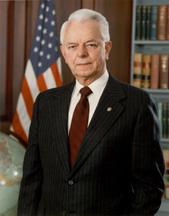
Madam President, first, I thank my esteemed colleague and dear friend, Senator Ted Stevens, for his characteristic courtesy, and for his friendship, and for the cooperation he has shown to me over…
Madam President, first, I thank my esteemed colleague and dear
friend, Senator Ted Stevens, for his characteristic courtesy, and for his friendship, and for the cooperation he has shown to me over many years of working together.
I thank him for joining with me, last year, in reporting out of our committee all appropriations bills before the close of July.
I thank all of the Republican members as well as the Democratic members of my committee who voted unanimously to report those 13 bills out of the Appropriations Committee, without a single vote cast against those bills.
I am sorry that the situation has developed, as it has, when I must oppose the distinguished Senator's amendment. I always do whatever I have to do to meet my own conscience and to deal with requirements that are incumbent upon me as the chairman of the committee or as the ranking member of the committee, whichever is my role at the particular time.
I do not like to be in a position of differing with my friend from Alaska, but there are times when we do have to differ. In this case, I find myself at odds with him, but I want to say here that it is only for the purposes of advancing this bill. It certainly does not cut across our friendship, as far as I am concerned, when I have to differ with Senator Stevens, and differ with him vigorously. He is still my friend.
I understand what he has to do, as he sees his responsibilities. And I have to do what I have to do as I see my responsibilities. Our friendship is unaffected. I want to assure him of that, as far as I am concerned.
Last July, almost 6 months ago, the Senate Appropriations Committee completed action on all 13 of our appropriations bills, each on a bipartisan unanimous vote. These bills restored essential funding for programs that the President proposed to cut.
We provided $1.1 billion more than the President requested for veterans medical care. We restored the $8.6 billion cut proposed by the President in highway funding. The President proposed only a 1 percent increase for education programs. He would have turned the No Child Left Behind bill into another unfunded mandate. Our bill provided a 6 percent increase for education, including key funding to reduce class size.
We included sufficient funding to keep Amtrak operating. We restored over $1 billion of cuts that the President proposed for State and local law enforcement programs.
We fully funded the President's proposed increases for homeland security programs, but we provided the funds through existing programs that our Nation's fire and police organizations support. We provided a significant increase for the Securities and Exchange Commission in order to investigate corporate fraud. We provided $400 million for election reform.
Now this White House believes that these increases represent wasteful and unnecessary spending. Last year this White House worked with the House Republican leadership to slow the appropriations process down. The House has not passed a regular appropriations bill in nearly 6 months.
Let me repeat that. The House of Representatives has not passed a regular appropriations bill in nearly 6 months.
The domestic agencies of the Government are now operating under the sixth--the sixth--continuing resolution, which expires on Friday, January 31.
My friend, Senator Ted Stevens--who is the very able ranking minority member of the Appropriations Committee, who will soon succeed me as chairman of the Senate Appropriations Committee, and who has already succeeded me as President pro tempore of the Senate--and I worked together to produce those 13 bi-partisan bills last summer. Each of those 13 appropriations bills was reported by the Senate Appropriations Committee with a unanimous vote--not a single vote cast against any one of the 13 appropriations bills.
After the election, however, the President indicated his determination to limit discretionary spending to the arbitrary figure of $751.3 billion. This level will necessitate cuts of $9.8 billion from 11 of the bills approved last July. After providing for modest increases for homeland security programs, the substitute that Senator Stevens is forced to offer provides for a virtual freeze in all other domestic spending.
I oppose the $9.8 billion cut that is contained in the substitute. The needs of the American people for homeland security, for education, for transportation, for veterans, for public health, and for other programs have not gone away. The needs are still there as plain as ever.
I am not being critical of my colleague, Senator Stevens. I am not being critical of the chairman of the House Appropriations Committee, Mr. Young of Florida. However, the President has now thrown down the gauntlet and is insisting on a $9.8 billion reduction, resulting in cuts in priority programs designed for what? Designed to defend our homeland, to educate our children, to improve our transportation systems, and strengthen our law enforcement programs.
I am extremely disappointed, not with Senator Stevens or the other members of the Senate Appropriations Committee or my friend, the chairman of the House Appropriations Committee, Mr. Young, or his ranking member, Mr. Obey, but with this administration, with this White House and its lack of vision and knowledge regarding the needs of the people of this country.
With great fanfare, the President signed numerous authorization bills this year that would increase spending demands for many of these same important programs. Last January he signed the No Child Left Behind Act with great fanfare. The President signed the No Child Left Behind Act which had passed the Senate 87 to 10 and which endorsed additional resources in important education programs for our children. Last May, the President, Mr. Bush, signed a border security bill with great fanfare, which had passed the Senate 97 to nothing, which authorized strengthening glaring and dangerous weaknesses in our border security. Last July, President Bush signed the Sarbanes-Oxley Act which had passed the Senate 89 to nothing, and which addressed shameful corporate fraud that bilks innocent people. In October, Mr. Bush signed the election reform bill with great fanfare which had passed the Senate 92 to 2 to help State governments overhaul the Nation's outdated and corruptible electoral system. In November, President Bush signed legislation which had passed the Senate 95 to nothing to improve security at our ports.
Yet in order to reduce our bills by $9.8 billion, the omnibus legislation that we will consider this week will cut education by $1.5 billion. It will cut homeland security programs by $1 billion, including cuts of $627 million for border security, $23 million from port security and $132 million from first responder funds. It will cut Securities and Exchange Commission funding below the levels in Senator Hollings' bill by $94 million.
This omnibus legislation will reduce Head Start funding by $202 million. It will reduce job training by $534 million. It will reduce low income home energy assistance by $300 million.
The new omnibus bill will cut Amtrak funding by $374 million, a level that will result, I am told, in the termination of Amtrak service.
In addition, the bill includes 1.6 percent across the board cut on all domestic programs. This represents a $435 million cut in the National Institutes of Health. It represents a $182 million cut to Education for the Disadvantaged. It represents a $372 million cut in Veterans Medical Care. On top of these cuts, every homeland security initiative in this package is reduced by 1.6 percent. This is no way to govern. We must move forward on this legislation. As much as I chafe about these mindless cuts, we cannot allow the domestic agencies of our government to continue operating on automatic pilot for the rest of the fiscal year. The people elected us to make choices about how we invest their tax dollars. There will be amendments offered in the coming days to restore some of the cuts contained in the substitute to be offered by Senator Stevens for homeland security, for education, and for other worthy programs. I urge Members to consider these amendments carefully and to ponder the impact of the reductions in this bill.
These should not be up or down party-line votes. When the Congress
passed, with broad bi-partisan votes, and President Bush signed, authorization bills for homeland security, for port security, for border security, for investigating corporate fraud, and for No Child Left Behind, we all recognized that these programs required adequate resources. We did not vote to address these critical problems with rhetoric alone. We have heard plenty of rhetoric. We collectively decided that these were real problems that needed real solutions. To solve these problems requires resources, not empty promises. I urge every Member to reflect on their support of these authorization bills as they decide how to vote on amendments that will be offered in the coming days. Let's make the rhetoric match the resolve.
While I oppose the $9.8 billion in cuts which are being required by the administration as the price to move these bills, I recognize that an even worse alternative is to fail in our duty to enact appropriation bills and allow the United States Government to operate without sufficient funding for the remainder of this fiscal year. I believe my colleague, Senator Stevens, is of a similar frame of mind. He is doing what he sees as his duty. He is a good soldier. He has my profound empathy.
This is the U.S. Senate. We are 100 Senators who have taken an oath of office to protect and defend the Constitution of the United States. We serve with Presidents. We don't serve under any President, I have served with 11 Presidents, not under any President. The votes that we will take on this important legislation, especially those relating to the defense of our homeland and the education of our children, are not about politics. They are about doing what is right and what was promised to the people of this country.
I ask unanimous consent that a summary of the $9.8 billion of cuts contained in the substitute compared to the fiscal year 2003 bills reported last July by unanimous vote in the full Appropriations Committee, be printed in the Record.
Mr. President, I send to the desk an amendment.
Mr. President, I ask unanimous consent that further reading of the amendment be dispensed with.
Mr. President, this Nation faces a turning point as we are challenged once again by the threat of attack on our shores. We know that terrorists live among us. Yet we do not know where they will strike, or when, or how they will strike. With endless warnings in mind, and with a clear realization of our many homeland security gaps, it is time that Congress invest the necessary resources in homeland security to match its rhetoric and to match the rhetoric of this administration. So I have offered an amendment that would accomplish three goals:
First, it would restore the $1 billion in reductions in homeland security initiatives made from the original committee-passed appropriations bills and for which every member of the Appropriations Committee voted--every member, 29 members of the Appropriations Committee, with 15 Democrats and 14 Republicans.
Second, it would restore much of the $2.5 billion in emergency homeland security funds that passed this Congress overwhelmingly in the summer of last year, but which was rejected by this White House.
Finally, this amendment would fund the priorities that Congress has found so necessary and that President Bush has signed into law. This amendment would fund the Airport Security Act that created the Transportation Security Administration and placed rigorous, new safety standards on the Nation's airports. This amendment would fund the border security authorization bill that passed the Senate by a vote of 97 to 0 and that President Bush signed into law last May. This amendment would fund the port security authorization bill that passed the Senate by a vote of 95 to 0 and that President Bush signed into law last November.
These dollars address our Nation's most critical needs. These funds would help to shore up our Nation's defenses and save lives at home.
The Congress has voted to create the Department of Homeland Security, but that Department is months--if not years--away. I read in the Washington Post today about the slowdown in the fulfillment of that dream, but that Department is months--if not years--away from being a strong defense against terrorist attacks. There are many details to be worked out. We cannot wait to address gaps in our Nation's defenses while this new Department is organized. Terrorists will not wait to attack. We cannot afford delay. I urge my colleagues to support this amendment.
I ask unanimous consent that a summary of the amendment be printed in the Record at this point so that all Senators, members of the press, and the people at large may read on tomorrow the contents of the amendment.
Mr. President, I yield the floor.

Mr. President, on behalf of Senator Reid and myself, I send to the desk an amendment in the nature of a substitute and ask for its immediate consideration. I ask unanimous consent that reading of the…
Mr. President, on behalf of Senator Reid and myself, I send to the desk an amendment in the nature of a substitute and ask for its immediate consideration.
I ask unanimous consent that reading of the amendment be dispensed with.
Mr. President, I rise today to introduce, along with Senator Reid and the majority and Democratic leaders, an amendment to a resolution to reform the Senate's oversight of intelligence and homeland security matters. If enacted, it will mark the most significant changes made in this body since the 1970s relating to the way the Senate operates.
Let me speak for a moment about why we must make significant reforms. The world did not change on September 11, 2001, only our perception of it did. In fact, the world had changed long before that particular clear September day. Frankly, we are nearly a decade late realizing it.
The first clue the world had changed and that a new enemy lurked in the shadows occurred on February 26, 1993, when Islamic terrorists bombed the World Trade Center, killing six and injuring hundreds.
These terrorists had ties to al-Qaida, which was busy then building its army of terrorists in the Sudan.
Four years later, on August 7, 1998, al-Qaida attacked two U.S. embassies in Kenya and Tanzania, killing hundreds and injuring thousands.
And on October 12, 2000--nearly 4 years ago today--these same al- Qaida terrorists attacked the USS Cole while it was in port in Yemen. These terrorists killed 17 soldiers and injured 40 more.
And yet it took the carnage of September 11 to awaken America, the Congress, our governmental institutions, and our CIA analysts to the magnitude of the threat that Islamic terrorism poses to the American people.
It took September 11 to show us how much the world had changed since the days of the Cold War.
In the wake of those attacks, Congress and the President swung into action--and brought the fight to the enemy.
We in Congress passed the PATRIOT Act, which reformed the FBI and provided our law enforcement agencies with greater tools to combat terrorism. We fast-tracked the procurement of specialized equipment such as the Predator unmanned aerial vehicle for our military forces in Afghanistan.
Congress created the Department of Homeland Security to consolidate and coordinate Government activities that protect America, and to solve some of the problems that contributed to the failure to anticipate September 11.
The administration has issued important executive orders reforming the intelligence community in a way that facilitates coordination of essential information.
Today, the Senate passed the Intelligence Reform Act of 2004, which dramatically reforms our intelligence agencies. These reforms will improve the collection, analysis, and integration of our Nation's most vital intelligence, assuring that red flags are no longer ignored.
What we have not done, however, is reform ourselves.
Congress, as did our intelligence agencies, failed to appreciate the threat prior to September 11. We certainly appreciate it now. And I hope we can reform this institution in a way that allows us to better monitor and influence the executive agencies tasked with keeping America safe.
It is time to put our own house in order.
In August, Senator Frist and Senator Daschle--in response to the 9/11 Commission recommendations--asked the Senate to do just that. They created a working group of 22 senior Members of the Senate, and asked Senator Reid and me to chair it.
We worked closely with these Members to discuss the advantages and disadvantages of the 9/11 Commission recommendations, and also to brainstorm new ideas and improvements to our oversight of the intelligence community and Department of Homeland Security.
I want to thank these Members for their many good ideas and for their patience and willingness to work on a bipartisan basis to do something that is very difficult but also very worthwhile.
After convening a number of meetings with our Members, Senator Reid and I met frequently to hammer out a list of recommendations that broadly reflects the consensus or majority views of our group.
Not every Senator will be happy with each and every recommendation. But such is the nature of compromise. We have endeavored to be honest brokers, and I hope we have achieved that goal.
Some Members will complain this reform goes too far. Others will complain it does not go far enough.
I hope most Members will agree with me that it is an appropriate balance of reform that improves our ability to conduct oversight of intelligence and homeland security during a very serious time for our country.
Neither Senator Reid, nor I, nor the 20 other members of our working group have a monopoly on wisdom. And were our recommendations part of the New Testament, they would not be written in red ink.
The resolution before us today is not a final product. It is a work in progress. And we hope Members who want to improve upon this resolution will come to the floor and offer amendments.
We would like to accept non-controversial amendments, and to allow Members to vote on amendments that may be a bit more contentious. We want the Senate to work its will.
But before ceding control of this resolution to the will of the Senate, let me describe the philosophy behind our recommendations, as well as some of the recommendations themselves.
The most sweeping change we recommend is to consolidate Congressional jurisdiction over the Department of Homeland Security. If you don't think this is major reform, ask the roughly 25 Senate committee or subcommittee chairmen who currently have jurisdiction over Homeland Security agencies or programs.
Trust me. They have made sure Senator Reid and I know how significant this reform is.
The current system of homeland security is broken. These 25 different Senate committees or subcomittes can only have a narrow view of part of the department's activities.
Congressional oversight is like a team of blindfolded scientists, each examining a different part of a horse and trying to describe what kind of animal it is. No committee can step back and look at the horse as a whole.
The Department of Homeland Security deserves its own authorization committee. We wouldn't divide jurisdiction over the Department of Defense by creating an Army committee, a Navy/Marine committee, and an Air Force committee. So why have we done so with Homeland Security?
The status quo also hampers the Department's ability to do its primary job: protecting the homeland.
Currently, the department has to report to 88 House and Senate committees or subcommittees.
This year alone, Secretary Ridge or his subordinates have testified at 164 hearings. They have given over 1300 briefings. And the year isn't over yet.
Mr. President, that's almost 40 briefings a week. In fact, there are probably Homeland Security personnel crawling around Capitol Hill right now, when they should be back in their offices working to keep us safe.
We didn't create the Department of Homeland Security so that it can provide us with a gluttony of power point presentations but to keep America safe. We should consolidate jurisdiction so that both Congress and the Department can do their job more effectively, and more efficiently.
To do this, we recommend that jurisdiction over the Department be integrated under the Governmental Affairs Committee, which should be renamed the Homeland Security and Governmental Affairs Committee.
There will be exceptions to this jurisdictional consolidation. And we encourage Members who are concerned about jurisdictional issues to file amendments to work with the chairman and ranking member of Governmental Affairs to reach agreements about appropriate jurisdictional arrangements.
We welcome amendments and debate on these issues.
On Intelligence oversight, the working group believed that our oversight of intelligence must be strengthened.
The task force wanted to work with the committee to help structure it so it was comprised of devoted experts who have the time and expertise in the intelligence field. The members now serving on the committee have done so with great distinction. But they need better tools and fewer competing demands on their time in order to conduct focused and comprehensive oversight.
And so we have recommended the status of the committee be raised from B to A. This may seem like a minor and arcane detail, but it means a great deal. On my side of the aisle, Senators can serve on the committee without having to give up any other assignments. Some Members serve on three or four other committees in addition to intelligence.
Quite simply, they cannot devote the time necessary to conduct effective oversight with so many other obligations.
This elevation in status will require Senators interested in intelligence to make a choice to serve on the committee. But once on the committee, they will not be term limited, and each member of the committee will be able to play an integral role in conducting oversight.
The Intelligence Committee is an important committee, and a popular committee, and I am confident that a good number of members will want to serve on it.
As I have said, we also have removed term limits, in order to allow members to develop the expertise needed to conduct effective oversight. No other Committee in the Senate says after you've spent 8 years becoming an expert that you get the boot. Now the Intelligence Committee won't have to say goodbye to its most experienced members.
We have allowed members to hire personal designated staff, to give them a trusted representative on the committee. There was strong support for this recommendation, which will reinstate previous committee policy.
In addition to the 14 suggested improvements to the Select Committee on Intelligence, we also have recommended the Appropriations Committee create a Subcommittee on Intelligence.
Appropriations jurisdiction over oversight is currently dispersed throughout multiple subcommittees. We propose the creation of an Intelligence Subcommittee of Appropriations that would consolidate the roughly 80 percent of the intelligence budget that will come under the jurisdiction of the national intelligence director.
This subcommittee will improve the Appropriations Committee's ability to live up to its responsibility to exercise oversight over the national intelligence budget. For the same reasons that homeland security jurisdiction should be consolidated, so, too, should intelligence appropriations jurisdiction.
Not all of us agree on this recommendation, and I fully expect that Senators will offer an amendment to implement the 9/11 Commission's recommendation to create a combined authorization and appropriations committee.
These recommendations require us to use a different set of muscles in our oversight. And some of these reforms are not easy. But few things worth doing are.
We have a historic opportunity to reform this Chamber for the better, and I believe we should not shirk our responsibility to do so. We must do it now in order to do all we can to protect the American people from the next major terrorist attack.
This is a partisan body, and we have pointed fingers for 3 years about who was to blame for the failures of our intelligence and homeland security prior to 9/11. Some blamed the Clinton Administration, others blamed the Bush Administration. Some saw fault in the FBI, others in the CIA, and still other in the military's aversion to covert operations. We are good at pointing fingers at others, but we have not pointed them at ourselves.
Just as our CIA analysts failed to piece together the clues about al- Qaida's intention to attack our cities with hijacked airplanes, so, too, did we fail to question their assessments. We failed to question their focus on old threats. We failed to challenge them to take risks. We failed to question the lack of CIA operatives in Iraq, or why our human intelligence capabilities had become so eroded. Despite the numerous attacks on American targets by Islamic radicals, we failed to put more money in the intelligence budget to hire Arabic linguists.
These are not the faults of the Clinton administration or the Bush administration. They are our fault, too, and we have a chance today to correct them.
I say to my colleagues, I believe we have an opportunity to improve our oversight of the arms of Government that keep America safe. Let us not cause some future generation to look back 50 years from this moment and ask the question: Why did they not act?
Now is our opportunity to do just that, and I encourage my fellow Senators to come to the floor and offer amendments so that we can move this package forward as soon as possible.
Mr. President, I yield the floor.
Mr. President, I ask unanimous consent that the order for the quorum call be rescinded. Mr. President, Senator Byrd has offered an amendment. I would like to address that amendment. Senator Byrd has…
Mr. President, I ask unanimous consent that the order for the quorum call be rescinded.
Mr. President, Senator Byrd has offered an amendment. I would like to address that amendment.
Senator Byrd has been an advocate, for many months now, of doing something to properly fund homeland security. One member of our caucus referred to it as hometown security. The Senator from Nebraska, Mr. Nelson, referred to it as hometown security, and that is really what it is. It is to make sure the cities and towns in our States have the protection that is necessary as a result of the terrible events of September 11.
The bill I am interested in is part of S. 11 from the Energy and Water Subcommittee. For the next half hour or so, I will be the chairman of that committee. That will change sometime this evening.
Senator Domenici and I have had a longtime relationship on this subcommittee. I have been chairman; he has been chairman; we really have worked extremely well together. He has been, from my perspective, extremely good to work with. He is an absolute expert on numbers, having been the chairman of the Budget Committee and having been so long with the Appropriations Committee. It has been a pleasure to work with him.
But Senator Domenici, I am sure, recognized that this bill, our bill, should have more money--more money as it relates to homeland security. During last year's consideration of the supplemental spending bill for homeland security, when we were in the majority, we included hundreds of millions of dollars for nuclear security, funding that had been requested by the administration and by the Department of Energy but was rejected by the Office of Management and Budget. During final negotiations on that supplemental, we agreed to provide funding for these activities on a contingency basis. In essence, we provided the money but gave the President the opportunity to accept it or not. He decided not to accept it. I think that is really wrong. I am disappointed and sorry that is the case. I believe it was unreasonable that the President declined to request emergency funding for nuclear security for which his own Department of Energy was screaming. We didn't invent this. This came from his own Department of Energy.
So this evening Senator Byrd has offered it again and is making another effort to give this administration the funds they need to keep nuclear and other deadly material safe and secure in this country. As always, I am grateful to Senator Byrd for his leadership in this area.
The bill Senator Domenici and I have brought to the floor for many years is a big bill, approximately $24- or $25 billion, and it is all discretionary. It is the only subcommittee in which the money is discretionary, all of it. It has many important components. Tonight we are only going to talk about that part relating to nuclear security.
This amendment provides $25 million to enhance the safety and security of nuclear and other materials at the Department of Energy Office of Science Laboratories, nationwide; another $25 million for the National Nuclear Security Administration, to enhance security during the transport of nuclear weapons and materials nationwide; and $35 million for construction and renovation activities of the National Center for Combating Terrorism, again funding that the Department of Energy asked the White House to provide.
Again, we didn't dream it up, saying this would be great for New Mexico because they have a lot of things goings on there, or Nevada, or Idaho, or Mississippi, where a lot of these activities take place. The Department of Energy came forward with this recommendation. Again, the White House refused the recommendation that its own Department brought forward.
We are also requesting $90 million for increased safeguards and security needs throughout the nuclear weapons complex. Funding is provided for explosive detection equipment, protective force support, hardened perimeter barriers, and consolidation of special nuclear materials and complex-wide security improvements. A minimum of $25 million is provided for cybersecurity activities.
Just reading this off should give every person within the sound of my voice pause. Why have we been asked this by the Department of Energy? We have been asked to do this because we need safeguards throughout the nuclear weapons complex that are not now there.
Funding is provided for explosive detection equipment. We don't have that
equipment. I hate to say it here on the Senate floor, but we don't. We are lacking.
Protective force support. That means we don't have enough people making sure the materials are safe, that the facilities are safe.
Hardened perimeter barriers. It seems to me, if we have been told by the Department of Energy that we should have hardened perimeter barriers, that means that what we have now is inadequate.
Consolidation of special nuclear materials, and complex-wide security improvements.
Also, $56 million is provided for the Defense Environmental Administration Restoration and Waste Management Program at the Department of Energy to enhance safeguards and security at nuclear and weapons cleanup sites at Savannah River in South Carolina, Hanford in Washington, Idaho, and in Tennessee.
Mr. President, you, as a new Senator, did not come and say: Senator Domenici, Senator Reid, will you give us some money for Oak Ridge, in Tennessee? You didn't do that. The Department of Energy recognized there were needs at that very important facility, important for this country, and that is why Senator Byrd has stuck in this amendment before this body, $56 million, part of which would go to Oak Ridge to make sure there is enhancement of safeguards and security at nuclear weapons cleanup sites, at this facility and these facilities.
There is $14 million for the Defense Facilities Closure Projects, the program at DOE, to enhance the safeguard and security of these sites nationwide.
The amendment also provides $25 million for the National Infrastructure Simulation and Analysis Center in New Mexico and $25 million for the National Energy Laboratory to conduct critical infrastructure assessments at critical energy supply facilities nationwide.
The funds provided in the Byrd amendment for nuclear safety are critical for ensuring the safety of the American people in the post-9/ 11 era. I don't expect the White House to take my word for it. They should, however, listen to their own Department of Energy. I did, and the nuclear safety language in the Byrd amendment reflects what we were told, what they said was needed.
We also have some new information that has come out. We have a report that has been done, and we know there are some Nuclear Regulatory Commission employees who worry that safety training requirements for the nuclear facilities are outdated and ``leave the security of the nuclear sites . . . vulnerable to sabotage.''
Should we not go forward with this work? Yes, we should. It is extremely important that we provide this money. If there were ever an emergency need in the history of this country, it would be to take care of the nuclear facilities.
They have inadequate security guards. One security company is working at one facility and another, which has the lowest bid, at another facility. It simply is not the way to do business.
All over America we have 101 nuclear powerplants. There are workers who are questioning the safety of these facilities. A recent survey commissioned by the NRC found that a third of its employees question the agency's commitment to safety, and almost one-half say they are afraid to speak up at the NRC. Employees who are designated to protect these plants from terrorists and others are afraid to speak up for fear they will get fired or their jobs will be changed or they will be transferred.
According to the survey conducted by an outside firm, these people complained that the NRC is influenced by the nuclear industry and that its regulatory powers have atrophied. The poll was based on surveys completed by one-half of the agency's employees. The most dramatic findings came up when pollsters sorted responders by rank. Although almost 90 percent of the agency's executive-level employees answered favorably on the questions regarding the Commissions's commitment to safety, less than two-thirds of those in the midlevel ranks answered that they were afraid.
The study said those differences point to the political influence of the nuclear industry. NRC officials declined comment.
We should be very concerned about workers at the NRC who are afraid to come forward and say: We do not have proper safety standards, and we are afraid to come forward and tell our own bosses what is wrong. Why? Because they are so driven by the nuclear power industry.
It has been nearly a year since the President warned us in his last State of the Union Address how vulnerable our nuclear facilities are. But the NRC has still not taken any clear steps to secure the safety and security of our Nation's nuclear powerplants. That is not acceptable.
We know the inspector general of the NRC paints a very bleak picture of their safety and security. A few days ago, the NRC's inspector general released a survey of the employees. I have talked about that to some extent.
This amendment is a very important amendment if we are concerned--I know everyone is concerned--about the safety and security of our nuclear-generating facilities.
Senator Byrd is to be commended for asking us to support him in making sure that we have adequate resources to protect our nuclear facilities.
I repeat what I said earlier when I talked about some of the things that the Department of Energy has said is so important. If we ignore them, and if the administration ignores them, it is simply not right.
This money enhances the safety and security of nuclear and other materials. It will enhance security during the transport of nuclear weapons and materials. There is money for construction and renovation activities of the National Center for Combating Terrorism; for increased safeguards and security needs throughout the nuclear weapons complex. Funding is provided for explosive detection equipment, protective force support, hardened perimeter barriers, consolidation of special nuclear materials, and complex-wide security improvements.
I see the Senator from Washington is on the floor. There is $56 million, as I have mentioned, for the Defense Environmental Restoration and Waste Management Program to enhance safeguards and security at nuclear and weapons cleanup sites, such as the one at Hanford in Washington. I would place it throughout our complex.
There is money for the Defense Facilities Closure Projects Program to enhance safeguards and security at these sites. This is important. If we pass the Byrd amendment for no other reason--and there are lots of other reasons to talk about--money is provided in my subcommittee of appropriations for making our nuclear weapons facilities throughout the country and our nuclear powerplants throughout our country safe and secure. They are not safe and secure now. That should be of concern for every American.
Mr. President, let me initially state I have the highest respect for Pat Roberts, with whom I served for a number of years on the Ethics Committee. I served with him in the House of Representatives.…
Mr. President, let me initially state I have the highest respect for Pat Roberts, with whom I served for a number of years on the Ethics Committee. I served with him in the House of Representatives. I also have the highest respect and the deepest admiration for Jay Rockefeller, a man who has devoted his life to government and who, as I have indicated, I admire greatly.
But the American people must understand this memo that has been talked about was somehow stolen from the offices of Senator Rockefeller and his people who work in the Intelligence Committee. It was purloined--I used the word stolen--and then made public by the majority. I think one of the things we should consider here, in addition to what is in the memo, is how this information was taken. How it was obtained and how that came to be is something the Intelligence Committee should really be concerned about because, as a number of Senators have spoken about this afternoon, the information that is spoken of in the Intelligence Committee, the memos, letters, and other information that is in the Intelligence Committee, has to remain secret. It has to be something that is within the confines of that office.
That wasn't done in this instance. All you need to do is compare the situation where, just a few weeks ago now, information was leaked from somewhere within the confines of the White House to Robert Novak, a distinguished columnist in the Washington area, and that information was obviously leaked in an effort to get even with Ambassador Wilson. How did they intend to get even with Ambassador Wilson for questioning how the war came to be in Iraq? How were they going to get even with him? They were going to disclose the name of his wife who was a CIA agent. By her name being made public, not only could it lead to her physical harm but harm to the people with whom she had intelligence contacts all over the world. Where is the hue and cry about this?
I have been terribly disappointed over the last several days about what is happening in the Senate. There were speeches this afternoon accusing Senators who are not here to defend themselves and who are only trying to do what they think is right for national security--it may not be right, but they think it is--of being unpatriotic. That makes me feel even sadder.
The American people should understand, what we have here is an investigation being conducted by the Intelligence Committee. It is a very important committee. I acknowledge everything that has been said by the Senators here this afternoon. It is very important. But the minority believes the investigation should be more than looking at what the civil servants did; that is, the CIA itself, and should be looking at not only what the civil servants did but what the policymakers did.
I voted for the first gulf war. I voted for the second gulf war. I have no regrets about having done either. But I am very interested in how we got to the situation we are in.
I said we can win the war, but can we win the peace? I want to know about how the policymakers made the statements they did.
I think it is also of note, as my friend, the distinguished Senator from Arizona, indicated, he did file the same views--he and Chairman Roberts. In this report, on page 4 in their views I quote:
Because the fundamental problems that led to 9/11 are
almost certainly rooted in poor policy and inadequate
leadership, the investigation should have delved more deeply
into conflicting interpretations of legal authorities,
including presidential directives, budget allocations,
institutional attitudes, and other key areas. Only
penetrating these areas will tell us how policymakers,
including Congress, contributed to the failures the Report
identifies.
So as I understand this memo, which was stolen from the Intelligence Committee--I don't see anything wrong with their asking for more information and how we should start looking at the policymakers, not just the bureaucrats.
On page 17 of the report, Senators Roberts and Kyl said:
The failures that led to 9/11 occurred not only in the
intelligence community. The [Joint Inquiry] was selective
about what threads of inquiry it was willing to follow beyond
the intelligence community.
So they were asking for what I understand the memo asked for.
Rather than talking about the Intelligence Committee being landlocked, blocked, I think they should just go ahead and do their report, enlarge it, and include this information.
Last night on this floor and earlier today I tried to get permission from the majority to pass military construction. The conference report should have been passed. We are not doing that. We could do it right now. I also tried to pass the Syria Accountability Act. I understand procedurally why on the Syria Accountability Act the majority may want to hold it over. An hour and a half is plenty of time, but the appropriations bill has no time on it. I can't understand why we will not do that.
Talk about political grandstanding, we now learn that starting next
Wednesday at 6 o'clock we will spend 30 hours talking about judges.
I ask unanimous consent that the debate time for discussion on judges, which we have all learned is going to be 60 hours, be divided and controlled equally between the two leaders or their designees.
Mr. President, I withdraw the unanimous consent request and express my appreciation for hearing that at a later time the leader will determine how he feels the time should be allotted. I am glad he is thinking about some allocation of time to the minority.
I also say that my friend from Arizona raised questions and made statements about the 9/11 Commission of which Governor Kean is chairman. Of course, that has a number of people on it, such as Senator Max Cleland. But as we have read from the press accounts, even Governor Kean, a Republican, is concerned about the lack of information.
From the 9/11 Commission, Governor Kean has indicated publicly that he may go to as far as issuing subpoenas to the White House to get the information he hasn't gotten yet.
If we are talking about divulging information, one of the things that we need to talk about is what has gone on in preparing this intelligence report between the White House and the Intelligence Committee which is supposed to be sacrosanct in itself.
Numerous questions have been raised about what the intelligence community told the Bush administration about the threat posed by Saddam Hussein and how administration officials used this information in the days leading up to the war with Iraq.
What was the factual basis for the administration's assertion that Iraq attempted to acquire uranium in Niger?
What was the factual basis for the administration's assertion that there were concrete ties between Saddam Hussein and al-Qaida?
What was the factual basis for the administration's assertion that Iraq posed an imminent danger to the United States?
What was the factual basis for the administration's assertion that if we did not act in Iraq, the so-called smoking gun would be a mushroom cloud?
In all the speeches, not one of my colleagues has suggested that these are not legitimate questions for congressional inquiry. That is because each of us recognizes that we need a strong, independent intelligence community to win the war on terrorism.
In order to answer these questions, we need to understand both what intelligence told the administration about these issues and how the administration used that information.
Both issues have important implications for national security, and both issues should be thoroughly examined by Congress.
Nevertheless, the Intelligence Committee chairman rejected the Armed Services Committee chairman's proposal to conduct a joint investigation.
My friend, the senior Senator from Virginia, asked for a joint inquiry by the Armed Services Committee and Intelligence. But that didn't come to be, even though we all know it was a good idea.
At the same time that he was rejecting these entreaties from members of both parties, press reports indicate that the majority was meeting with the White House, as I have already indicated, to discuss how to proceed on matters that affect the intelligence community.
I don't think it should come as a surprise to anyone who knows these issues that some in this body who are concerned about our national security have seen their pleas ignored by the majority. They have been frustrated.
It is difficult for Members in this position to understand why the majority would refuse to explore the questions that I have outlined only briefly--questions which we all agree need to be answered if we are to succeed in this war on terrorism. We all agree that these are important questions. We all agree the committee has authority to look into these issues.
While we are posing questions for each other here, my question is this: Why isn't the Intelligence Committee looking at both what the intelligence community knew and how the administration used that information?
Again, the memo that is the subject matter of the discussion here today was not leaked by anyone we know. In fact, we believe--and I think there is credible evidence to indicate--that it was stolen, purloined, and then made public. It wouldn't have been made public but for the majority.
Doesn't the minority have a right, in the secret confines of the Intelligence Committee room, to have pieces of paper there that aren't going to be pilfered by the majority? The staff allocation is very unfair. Some say it is about 30 to 3. But in spite of that, those 30 should have better things to do than to pilfer through the records of the minority.
I have the greatest confidence in Senator Roberts and Senator Rockefeller. I think we should get back to the business of this Intelligence Committee. We should get back to it, and I hope they will broaden the investigation. If they decide not to broaden the investigation, as the memo indicated--and I have only read little bits and pieces of it; I haven't studied the memo--then there are things the minority can do to bring this out because the issues that I have raised should be made public.
I hope these two fine Senators--the Senator from Kansas and the Senator from West Virginia--will work together as they have so well and not let this stolen memo hurt the deliberations of this most important committee, the Intelligence Committee.
I apologize to the majority leader. I know he is a busy man. I am sorry I took so long to respond to the remarks made by others here today.
Reserving the right to object, I ask that the consent be modified to allow the statements to be made after the bill passes today. We would pass it today, and people could have more than 20 minutes next week to speak on it all they want. This matter should be passed immediately.
Reserving the right to object, does the leader have the time in mind when he would bring this up?
As I have indicated, I want it passed tonight. People in Nellis Air Force Base and Fallon can do without speeches. It should be passed now. If it will not be passed now, I object.

Mr. President, I rise in opposition to Senator Feinstein's amendment. While I appreciate the efforts by Senator Feinstein to draft a fix to the lone wolf terrorist problem under the Foreign…
Mr. President, I rise in opposition to Senator Feinstein's amendment. While I appreciate the efforts by Senator Feinstein to draft a fix to the lone wolf terrorist problem under the Foreign Intelligence Surveillance Act of 1978, referred to as ``FISA'', the amendment simply will not do the job and will continue to expose our country to great national security risks. I will not and cannot accept such risks.
Let me be more specific as to my concerns. First, as drafted, the amendment would create only a permissive presumption to authorize a court to approve a Foreign Intelligence Surveillance Act, ``FISA'', application when presented with a lone wolf situation. As drafted, the proposal would provide only that the court ``may'' find the existence of a ``presumption'' that a non-U.S. person engaged in sabotage or international terrorism is an agent of a foreign power under FISA.
A permissive presumption creates a significant risk that the FISA court may not be authorized--or may feel constrained to exercise its discretion--to approve a FISA application when presented with a lone wolf terrorist who would otherwise be covered by the Kyl-Schumer-Biden- DeWine approach.
Second, the amendment does not clearly delineate how a permissive presumption would be applied by the FISA court. Assuming that the FISA court exercises its discretion and makes a finding that the presumption applies, the FISA court would then have to consider additional evidence in order to grant the application.
The amendment does not specify beyond the permissive presumption what specific evidence or what other findings would have to be made in order for the FISA court to approve the application.
In sum, by injecting a significant level of uncertainty into the FISA process, the amendment simply creates or even exacerbates the problem which it is intended to fix. We simply cannot take such a risk given the potential devastating consequences posed by the lone wolf terrorist.
I would note here that in a letter dated April 30, 2003, the administration opposed this proposal, citing the fact that the effect of the proposal was unclear and that the proposal did not provide any standards to the FISA court to guide the exercise or its discretion.
In contrast, the Kyl-Schumer-Biden-DeWine proposal creates clear definitions and would minimize uncertainty in an area where ambiguity could have devastating consequences--that is, where we are in danger of a terrorist attack by a lone wolf.
For these reasons, I oppose the Feinstein amendment and urge my colleagues to vote against the Feinstein amendment.
I yield the floor.
Mr. President, I commend Senators Kyl, Schumer, Biden and DeWine for their bipartisan cooperation in supporting S. 113. This bill will provide a critical tool needed by law enforcement and intelligence agencies to fight the war against terrorism. Specifically, S. 113 will address a glaring omission in the Foreign Intelligence Surveillance Act of 1978 referred to as FISA, to authorize the gathering of foreign intelligence information relating to a lone-wolf terrorist, that is, a non-U.S. person who is engaged in international terrorism or preparation thereof. In recognition of the critical need to support law enforcement and intelligence agencies in
the war against terrorism, the Judiciary Committee passed S. 113 by a bipartisan, unanimous vote of 19 to 0.
This bipartisan proposal will enhance the ability of the FBI and intelligence agencies to investigate, detect, and prevent terrorists from carrying out devastating attacks on our country. Specifically, S. 113 will amend the Foreign Intelligence Survelliance Act to include lone-wolf terrorists who engage in international terrorism or activities in preparation thereof without a showing of membership in or affiliation with an international terrorist group. A significant gap in the current statute exists with respect to application of the foreign power requirement to lone-wolf terrorists. S. 113 would authorize FISA surveillance or searches when law enforcement and intelligence agents identify an individual involved in international terrorism but cannot link the terrorist to a specific group.
The administration strongly supports amending FISA to include non- U.S. lone-wolf terrorists. On March 4, 2003, at a Judiciary Committee hearing examining the war on terrorism, both Attorney General Ashcroft and FBI Director Mueller indicated their strong support for fixing this glaring omission in the FISA statute. In fact, Director Mueller testified, both before the Judiciary Committee and previously before the Senate Select Committee on Intelligence, there is an increasing threat of lone extremists who have the motive and ability to carry out devastating attacks against our country.
We need to provide law enforcement and intelligence agencies with the tools needed to protect our country from deadly terrorist attacks. With our recent success in the war against Iraq, the risk of terrorist attacks against our country may well rise. We need to ensure that our country has the ability to investigate and prevent such attacks if carried out by a lone extremist.
While some interest groups that oppose this measure suggest that such a fix is not needed or claim that the FBI failed to properly apply the law in the Moussaoui investigation, that is simply beside the point: The September 11 attack against our country highlighted the need to fill in this gap in the FISA statute.
FISA provides that electronic surveillance or physical searches may be authorized when there is probable cause to believe that the target is either an agent of, or is himself, a ``foreign power''--a term that is currently defined to include only foreign government or international terrorist organizations. Requiring a link to government or international terrorist organizations may have made sense when FISA was enacted in 1978; in that year, the typical FISA target was a Soviet spy or a member of one of the hierarchical, military-style terror groups of that era.
Today the United States faces a much different threat. We are principally confronted not by specific groups or governments, but by a movement of Islamist extremists which does not maintain a fixed structure or membership list, and its adherents do not always advertise their affiliation with this cause. Moreover, in response to our country's efforts to fight terrorism worldwide, terrorists are increasingly operating in a more decentralized manner, far different from the terrorist threat that existed in 1978. The threat posed by a lone terrorist may be very real and may involve devastating consequences, even beyond those suffered by our country on September 11. Given this increasing threat, we have to ensure that intelligence and law enforcement agencies have sufficient tools to meet this new-- and even more dangerous--challenge.
While I support S. 113, as passed by the Judiciary Committee, I wish to note my concerns about the amendment offered by Senator Feingold, which has been agreed to, as part of consideration of this matter.
The Feingold amendment would impose new FISA reporting requirements on the Justice Department, and require: (1) reports on the number of U.S. persons targeted by FISA order, by specific categories of surveillance, for example, electronic surveillance, physical searches, pen registers, and access to records; (2) identification of individuals who ``acted wholly alone;'' (3) disclosure of the number of times FISA material was used in a criminal proceeding; and (4) disclosure of portions of FISA pleadings and orders that deal with significant questions of law ``in a manner consistent with the protection of the national security of the United States.''
As I have indicated on other occasions, I support reporting requirements when necessary for Congress to exercise responsible oversight. We have a duty to conduct meaningful oversight of the FISA process, and I am committed to such oversight and ensuring proper reporting requirements are imposed on the Justice Department.
My concern with the Feingold amendment is that the operation of the amendment is unclear and may create confusion rather than bringing clarity to the issue. I would have preferred that we conduct a more deliberate examination of this issue to ensure that the reporting requirements are not harmful and will not create any significant risk of harm to sensitive law enforcement and intelligence operations against terrorists.
More significantly, I am concerned that the Feingold amendment will alter well-established procedures for Congress's review and handling of classified operational intelligence information, in contrast to Congress's review and handling of ``finished'' intelligence information. For many years, and in fact the reason for the creation of the Senate Select Committee on Intelligence was to establish a professional, dedicated Intelligence Committee staff which would handle sensitive operational intelligence information. Congress did so to minimize the potential risk of harm to foreign counterintelligence operations. The accidental or inadvertent disclosure of such material could have a devastating impact on extremely sensitive CIA or FBI counterintelligence operations.
Further, the Senate Select Committee on Intelligence rejected a similar reporting proposal in 1984 because ``the benefits of such disclosure for public understanding of FISA's impact would not outweigh the damage to FBI foreign counterintelligence capabilities that can be reasonably expected to result.''
The FISA statute already sets forth detailed and specific requirements for the reporting of information to the Intelligence and Judiciary Committees, and there is simply no need to disrupt long- established processes and procedures for FISA reporting between the executive branch and the Intelligence and Judiciary Committees relating to the handling of classified operations intelligence information.
While I have these concerns about the Feingold amendment, on balance, I believe that fixing the FISA statue to address the long-wolf terrorist problem is more important than remedying the deficiencies in the Feingold amendment. The potential harm to our country from a lone- wolf terrorist attack is significant and we must act--and act now by passing A. 113.
Again, I commend Senators Kyl, Schumer, Biden, and DeWine for this important piece of legislation which reflects our bipartisan commitment to ensuring the safety of our country and the need to be vigilant in protecting our country from deadly and devastating terrorist attacks. I urge my colleagues to vote in favor of S. 113.
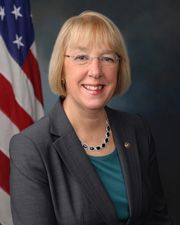
Mr. President, I rise this evening in strong support of the homeland security amendment that was offered earlier this evening by Senator Byrd. I am pleased that I had the opportunity to work closely…
Mr. President, I rise this evening in strong support of the homeland security amendment that was offered earlier this evening by Senator Byrd. I am pleased that I had the opportunity to work closely with Senator Byrd on the details of the amendment because it impacts the security of our transportation system.
Before I start, I wish to align myself with the very thoughtful and important remarks of the Senator from North Dakota made earlier regarding the northern border. Senator Dorgan has brought some real attention to the northern border issues that are so important to my home State of Washington. This work must continue despite the President's cuts to the border security initiative that the Senate previously approved.
This amendment represents months of work on behalf of Senator Byrd and the Appropriations Committee. Senator Byrd, as chairman of the Appropriations Committee, convened a series of hearings last spring to discuss homeland security needs. We heard from numerous Cabinet Secretaries, including Secretary Powell, Secretary Rumsfeld, and Secretary Mineta. Several respective national security experts gave us very valuable testimony. We also heard from several Governors, including Governor Locke from Washington State. Mayors appeared before the Appropriations Committee as did fire chiefs, health department officials, and water and sewer authorities.
Senator Byrd and the Appropriations Committee worked very hard to identify real needs for homeland security. The Byrd homeland security amendment is in large part the result of those hearings and our continued efforts to work with the true first responders.
Homeland security is an enormous task. We all know this. It is going to be enormously expensive. We all know this. Sadly, the administration has not requested adequate funding for homeland security needs throughout our country. The President refused to spend homeland security money previously approved in a bipartisan fashion by this Congress.
The bill before us today, at the President's insistence, makes further cuts in homeland security funding.
Homeland security is about our entire country. However, I must tell you that this issue is tremendously important to Washington State. Already, thanks to an alert Customs agent, we arrested a terrorist suspect crossing into Washington State with explosive materials.
We are an international State with vulnerabilities in our ports, our rail and highway infrastructure, and our international airports.
We are a trade State with an economy that is closely linked to the world. We have significant military assets, nuclear facilities, and many popular tourist-gathering points. My State is aggressively moving forward to protect Washingtonians. We need a partner in the President and the Federal Government. Unfortunately, the underlying bill does not address all of our homeland security needs. Homeland security should not be an unfunded mandate.
As a nation, we are working hard to close the security gaps that still exist. We know the transportation systems are a frequent target of terrorist attack. In fact, when you look at the worldwide statistics, one-third of terrorist attacks that take place around the world target transportation systems, including aircraft, highways, rail systems, subways, commercial ships, and ferries.
As many have observed, our security is only as strong as our weakest link. This amendment offered by Senator Byrd will help strengthen some of our weakest links in port security, aviation, and mass transit.
Let me start with port security. We have a lot of work to do to protect our Nation's ports. As my colleagues will recall, we passed the Maritime Transportation Security Act 95 to 0. That act puts new requirements on our ports. However, effectively no funds have been provided to our Nation's port authorities to implement those new requirements, which will cost billions of dollars.
The underlying bill that we are looking at this evening, provides very little money to enhance port security. So I am really, pleased that the Byrd amendment would dramatically increase the security funds available to our ports.
I ask Senators to reflect for a moment on what a terrorist incident in our Nation's ports would mean to our Nation's economy.
Just look at what happened this past fall, when West Coast dockworkers were locked out of their jobs. It is estimated that the lockout cost our economy $1 billion a day.
A terrorist attack on our ports--or an attack carried out through our cargo container system--would undermine our Nation's confidence in the hundreds of thousands of containers that crisscross our country every single day.
And beyond the human toll--an attack on, or through, our ports would have a dramatic economic impact and could bring the flow of commerce to a dead stop.
It is not enough just to pass an authorization bill saying that we have better secured our ports. We have to actually provide the resources to make our ports more secure.
The Byrd amendment boosts--by almost half a billion dollars--the amount of grant money available to our public port authorities. I commend the Senator for his vision and leadership on this critical challenge.
Another way to secure our ports is through Operation Safe Commerce, an initiative that I started in last year's emergency supplemental appropriations bill. This TSA initiative was launched with the cooperation of the Customs Service. For the first time, it provides us a mechanism to track containers from their point of origin to their point of destination. As a result, we will have much better information about where the container came from, what is in it, and whether or not it requires either x-ray or further inspection.
With the initial funding that we provided for this initiative--and the $30 million that is included in the underlying bill--we have had to limit these grants to the three major container ports in our country. Those three ports take in roughly three-quarters of all the containers entering the United States. With the additional funding provided under Senator Byrd's amendment, we will be able to greatly expand the number of ports that can participate in this important initiative.
Finally, as I talk about port security, I want to talk about the new demands being placed on our Coast Guard. For a long time I have been very concerned that these new homeland security requirements mean the Coast Guard isn't getting adequate resources--or paying adequate attention--to its traditional missions, such as search and rescue, fisheries enforcement, and marine environmental protection.
In order to get the Coast Guard the kind of assets it needs to conduct port security, Senator Byrd's amendment includes sufficient funds to boost the Coast Guard's inventory of coastal patrol boats. These are the ideal platform for the Coast Guard's homeland security mission. Unfortunately the Coast Guard has not been able to buy enough of them, in part because of other major contract obligations that are outstanding.
We cannot continue to burden the Coast Guard with additional missions without providing them with the resources and the tools they need to do their job. I am pleased the Byrd amendment provides these resources.
Another weak link this amendment will address concerns mass transit. I think we should all recognize that the majority of fatalities resulting from transportation terrorist incidents have been in the area of mass transit, specifically from buses.
The challenge in securing our mass transit systems is daunting. By their very nature, transit systems are designed to be open and accessible and to accommodate many people in a very short period of time. It is a real challenge, but we have to address it.
The amendment that Senator Byrd has offered states that we are not going to shrink away from this vulnerability. It says we will better protect the millions of citizens who commute to their jobs every day. The $300 million included in this amendment will make a serious downpayment and get our Nation's transit systems focused on mechanisms that will simultaneously protect their passengers without clogging our transit systems.
I commend Senator Byrd for recognizing this vulnerability and for addressing it.
Finally, I want to talk about aviation security. I commend the Senator for including an additional $250 million for our Nation's airports.
As my colleagues know, the Aviation Transportation Security Act mandated that we check all passengers' checked baggage for explosives. Just a few weeks ago, the Transportation Security Administration met that deadline. But the truth is, there is a huge amount of construction that needs to be done to transition our Nation's airports from the interim explosive detection solutions to more permanent and efficient systems to check all bags for explosives.
From the very first day that this requirement was put into law, the Transportation Security Administration has consistently refused to request adequate funds to compensate the airports for these costs. They have consistently underestimated the true costs to implement these massive retrofits in order to leave our airports ``holding the bag'' for these costs.
The amendment offered by Senator Byrd provides an extra $200 million--over and above the $250 million included in the underlying bill--to more accurately reflect the real cost of this initiative in fiscal year 2003.
We will be paying the cost to implement the Transportation Security Act for many years to come. Our airports do not have easy access to the kind of resources that will be needed to make
these very necessary investments. The airlines--which the airports depend on for rates and charges--are almost uniformly in serious financial difficulty. Many airports have already extended about as many bonds as they can currently afford to pay off. So this amendment would provide very critical support.
I am proud of the progress this amendment makes in adequately funding port security, mass transit, and aviation security. I commend Chairman Byrd for this amendment, and I urge all my colleagues to support it.
We cannot let the protection of the American people be ignored because an OMB director--a few blocks down the road--has said that discretionary spending will not exceed a certain arbitrary figure.
We have serious security needs in this country, and this amendment will help us meet them.
Mr. President, I yield the floor.
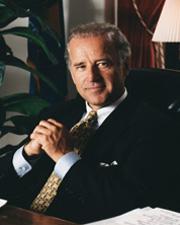
Mr. President, I am pleased to support final passage of S. 113, a bill to amend the Foreign Intelligence Surveillance Act, FISA, to provide needed tools to detect and combat terrorists bent on…
Mr. President, I am pleased to support final passage of S. 113, a bill to amend the Foreign Intelligence Surveillance Act, FISA, to provide needed tools to detect and combat terrorists bent on attacking this Nation and killing our citizens. First, let me commend my colleagues, Senators Kyl and Schumer, for their relentless efforts in bringing this important issue to the floor of the U.S. Senate. Since the tragic events of September 11, all of us have tried to turn a critical eye toward our laws and the workings of government to discern how we might avert such a dreadful attack in the future. That attempt to fix what may be wrong with our existing system of intelligence- gathering and law enforcement is perhaps the greatest tribute we can offer to the victims of that fateful day and their families.
This bill, as amended, is a good example of how we can make basic, common-sense changes to existing law that will have a tremendous impact on our fight against terrorism. I was proud to be one of the authors of FISA in 1978. We worked long and hard to strike the right balance between protecting civil liberties on the one hand and deterring terrorist acts on the other. Since FISA permits the physical and electronic surveillance of suspected foreign agents, in some instances under a more generous standard than that allowed in Title III surveillances, an amendment to FISA should be carefully tailored to maintain its careful balance. I do not take lightly amending FISA, but believe that this bill does so in a manner that is both constitutional and narrowly tailored.
I want to thank the sponsors of this legislation for their willingness to work with me to improve their original bill. I proposed two amendments, both of which were accepted by Senators Kyl and Schumer--and which the Judiciary Committee adopted without a dissenting vote on April 29, 2003. I believe my amendments improve S. 113 in three ways:
First, the original legislation--which would have amended FISA to expand the definition of ``foreign power'' under 50 U.S.C. Sec. 1801(a)(4) to include non-U.S. persons who are engaged in international terrorism--would have allowed the government to extend the initial surveillance order for a period up to 1 year. The 1-year period constitutes the maximum period allowed under the statute and is only invoked under certain circumstances typically limited to groups and entities. More commonly, an order to conduct surveillance of individuals is only extended for a period up to 90 days. Instead, the amendment we offered on April 29, 2003, amended the definition for ``agent of a foreign power'' by creating a new 50 U.S.C. Sec. 1801(b)(1)(C). This amendment would apply the default 90-day period to this new category of surveillance targets, which is far more sensible and consistent with the way we treat other individual targets, as opposed to groups, under the statute.
Second, by amending 50 U.S.C. Sec. 1801(a), the original legislation would have precluded individuals who are improperly subjected to surveillance or about whom surveillance information has been inappropriately disclosed from filing suit. My amendment, on the other hand, allowed aggrieved individuals who are improperly targeted under this new provision to seek redress in the courts and, where appropriate, recover damages. This modification to Senator Kyl's original bill is consistent with the typical and intended treatment of individuals under 18 U.S.C. Sec. 1801(b). See H.R. Rep. No. 95-1283, at pt. 1, 98 (1978) (noting that the only aggrieved persons ``barred from the civil remedy will be primarily those persons who are themselves immune from criminal or civil liability because of their diplomatic status'').
Third, my amendment added a sunset provision to the legislation, forcing Congress to re-visit this issue no later than December 31, 2005. The USA Patriot Act (which the Senate overwhelmingly passed a year and a half ago) includes a similar sunset provision for the FISA provisions contained therein. My amendment simply insures that this body will reevaluate the FISA measure on which we are voting today, in the context of its broader re-consideration of those other FISA provisions. Such a review is consistent with our oversight function and, plainly put, ensures that our actions are thoughtful and informed.
Again, I am pleased that Senators Kyl and Schumer accepted these important revisions to the original text and, on that basis, am happy to support the amended bill that is before the Senate today.
I also would like to commend my colleague, Senator Feinstein, for her efforts to engage this issue responsibly and thoughtfully. She has proposed an alternative, which makes an important contribution to the debate but with which I happen to disagree, for several reasons.
First, my good friend from California asserts that criminal prosecutors will abuse the FISA process by securing FISA surveillance-- with its lower burdens of proof--against garden variety criminal targets, rather than pursuant to Title III. I am simply not persuaded that this will be the case. It should be noted that the new section created in this bill has a very high standard, higher indeed than that required by Title III. That is, the government must show probable cause that the FISA target has engaged in acts of ``international terrorism,'' which the statute defines as acts which (i) are a violation of the criminal law under the laws of the United States or any state; (ii) appear intended to influence our government or intimidate our citizens; and (iii) which occur outside the United States or transcend national boundaries. Thus, I doubt that a prosecutor would ever be able to seek a FISA warrant under this section where he would not also be able to obtain a Title III warrant. Morever, I am not convinced that a prosecutor would seek a FISA warrant where their real interest is, not obtaining foreign intelligence information, but rather the eventual prosecution of the FISA target. Given the strict exclusionary rules FISA imposes, prosecutors would be loathe to ever seek a FISA warrant for a target they seek to prosecute out of fear that the judge would suppress the surveillance in a criminal prosecution which was improperly ``boot-strapped'' from a FISA investigation.
Second, the Feinstein amendment asserts that, under the Kyl-Schumer bill, a judge would be a mere ``rubber-stamp'' for a governmental request for a FISA warrant. The amendment presumes that judges do not now have discretion to refuse the government's request, which is not true. Under current law, the judge still must determine that probable cause exists that the individual is an agent of a foreign power engaged in, or in preparation for, acts of international terrorism. S. 113 does nothing to alter that existing requirement. Rather, it makes it clear that any non-U.S. citizen who engages in terrorism or is preparing to engage in terrorism would fall within the definition of an ``agent of a foreign power.'' Nothing in this bill would curtail a judge's ability to second-guess, or look behind, the assertions advanced by the government in its application for a warrant. If there is no basis to believe that probable cause exists, the application would be properly denied. Indeed, we rely on judges for this very purpose--namely, to ascertain the veracity of the facts presented by the government.
As opposed to clarifying the definition of ``agent of a foreign power,'' as the Kyl-Schumer bill does, the Feinstein amendment would allow--but not require--a judge to ``presume'' that an individual is such an agent, which in my view creates a difference without a real distinction. Rather than afford individual targets any added protections, the Feinstein amendment would inject a considerable amount of murkiness into an otherwise certain process and may result in inconsistent rulings by different judges. Likewise, FISA judges may simply decline to apply the presumption in cases where the government cannot show much, if any, link between the non-U.S. citizen and a foreign power. There has been considerable disagreement over whether the Federal Bureau of Investigation had sufficient evidence to show that Zacarias Moussaoui, the so-called ``20th Hijacker,'' was an agent of a foreign power. Yet, I am concerned that a FISA judge might decline to exercise the ``permissive presumption'' in Senator Feinstein's amendment, and hence deny a FISA warrant, in the case of a true ``lone- wolf'' terrorist who cannot be shown to have any links to a foreign power. As such, the FISA ``loophole'' S. 113 seeks to close would be left open. On that basis, I am forced to vote against the amendment.
That is not to say, however, that there is not much more work to be done in this area. We must search for creative ways to give investigators the tools they need to gather information and seek out terrorists living among us, while at the same time vigilantly protect important civil rights and liberties. Toward that end, I welcome the oversight hearings that my friend Senator Hatch, chairman of the Judiciary Committee, has pledged to convene on the implementation of FISA and offer my continued service.
It is my hope that the Senate's action today will assist our government in its effort to detect and root out foreign terrorists bent on violent acts against this great country. I support this bill and urge my colleagues to vote for it.
Mr. President, in response to the Senator from Utah, it is my intention to offer an amendment. I would like to speak about a subject that is going to prompt the amendment and then discuss with my…
Mr. President, in response to the Senator from Utah, it is my intention to offer an amendment. I would like to speak about a subject that is going to prompt the amendment and then discuss with my colleague, Senator Burns from Montana, who will be joining me with an amendment. There are several ways we might offer this amendment. I would like to have a discussion with Senator Burns and also with Senator Kohl and Senator Bennett about the specific amendment because my hope is we can work things out as this bill is on the floor.
It is my intention to offer an amendment with my colleague, Senator Burns from Montana. I would like to speak about it, and he would probably want to speak as well.
Might I inquire of the Senator from Utah? First of all, I would like to speak for perhaps 5 to 7 minutes initially. I guess the Senator from Montana may want to speak for a
very short time. Following the presentation by Senator Feinstein and perhaps after a meeting I will attend, I will speak at greater length, if I could be recognized--I would be very brief--in order to describe to the Senator from Wisconsin and the Senator from Utah what Senator Burns and I want to try to achieve this afternoon on this piece of legislation.
I think we can introduce that very shortly and then perhaps discuss it at greater length at a later time.
I yield.
Mr. President, as I said, I will speak about this at greater length this afternoon, but I did want to advance the topic Senator Conrad Burns and I wish to advance, an amendment on this bill dealing with something called the Broadband Loan Program.
Let me describe what that is. Let me describe it by telling you I was recently in my hometown, a town of fewer than 300 people, in southwestern North Dakota. I visited a home there. I stopped by to say hello, and there was a woman in that home who had a little device on her counter. It looked different to me. It had a camera mounted on it. It was no bigger than a shoe box. She had a bracelet hanging on a little round projectile on it.
I said: Well, what are you doing there? She said: I am taking a picture of this bracelet. I said: Why are you doing that? She said: I sell on eBay.
Here in my hometown is a woman who sells on eBay, and she takes a picture of those products and puts them on her computer. She told me she has been supplementing her income by doing business on eBay.
It describes the need, even in a town of 300 people, for computer access, the need for broadband, the need for the big pipes in which you can do business on the Internet in a way that does not take you a day to download something others are downloading in 5 minutes.
So the question of the building out of broadband to rural communities all across this country, including rural areas especially, is a very important question. Because if you do not build out broadband capability, then what happens is you leave some parts of the country behind. You have an Internet divide. You have people on the right side of it and you have people on the wrong side. The people on the wrong side will never have any economic development opportunities because when you talk to somebody about building a business in this town, they will ask: Do you have the capability to connect us by computer with some reasonable speed? When you say: No, we don't, they will say: Well, so long. We're going elsewhere. That is why this is so important.
Let me describe quickly what we did. In the farm bill, a group of us--Senator Burns, myself, and others--included a provision that deals with a broadband loan program. It is the first and the only program in this country designed to spur the development of the buildout of broadband capability to rural areas. It was scheduled to use $100 million in direct spending to subsidize $3.5 billion of loans over the 6 years of the farm bill.
Pursuant to that, RUS, down at the Department of Agriculture, put together the first 2 years $40 million, and they announced they would make $1.4 billion in loans available. As a result of that, they set a July 31 deadline. They received $1 billion in loan applications because we have people with interests and businesses really interested in building out this broadband capability to rural areas, very much like the old REA program.
Prior to REA, there was no electricity on America's farms. They were dark. When the Sun went down, you could not plug into anything because no one built electricity infrastructure out to America's farms. We created the Rural Electrification Act, and all of a sudden America's farms got electricity. It created dramatic explosions in productivity on America's farms. That is what this is about: the buildout of the infrastructure for broadband to our small rural communities and to our farms.
So what happened was the USDA put together this program. The loans were requested. We have applications for loans. They came in by July 31. What happened, however, is the language that is included now in this appropriations bill eliminates the broadband section of the farm bill--it eliminates it--and in its place puts a $9.1 billion appropriation, which is less than half the amount that should have been available this year.
If we move down this road, it appears to us the money that has been applied for, for loans will not be at this point continued. They will have to start over. You will have half the money. There is no assurance the additional money will be available in future years because this will be an appropriated amount rather than being in the farm bill which authorized this for 6 years.
This is very important. This is about the haves and have-nots in this country with respect to access to the Internet and with respect to broadband capability. If we decide that access to the Internet, with pipes that are of reasonable circumference so you get some decent speed, does not matter to rural areas, we will have, in my judgment, economic development only in areas of the country where we have broadband, and small towns and rural areas are going to be told: So long, Charlie. Just tough luck. You are not going to be developed because we have a digital divide, and we support that digital divide. That is a terrible message to come from the Congress.
What I would like to do, with my colleague, Senator Burns, is to work with Senator Bennett and Senator Kohl to try to deal with this problem that is created in the appropriations bill. We have two problems. One is a language problem. We need to restore the language that existed in the farm bill that calls for this Broadband Loan Program. We should not kick that out in this appropriations bill, No. 1.
No. 2, we should restore the funding that was there that was promised and upon which applicants now have applied for $1 billion in investment funds to build out broadband capability to rural areas of the country.
I know rural areas are sometimes looked at as kind of the ``back 40.'' Well, it is not the ``back 40.'' It is a wonderful part of this country. It is small towns and good families trying to make a living, often in circumstances where they are losing population. These are places with strong schools, places in which you can raise kids without worrying about their safety, with good neighbors, good places to be. But if we decide, as a country, in the age of information technology and information revolution, that only the big cities are going to have the aggressive, robust buildout of broadband, then we are consigning rural America to a pretty desperate struggle for their future. That is not what we want. That is not what Congress decided.
Congress already made this judgment when it passed the farm bill. It said: Rural America matters as well. Small towns matter, too. That is what the Congress decided. As a result of that decision, it made a specific, deliberate investment to say we are going to fund, through loans, and we are going to encourage, through loans, the buildout of broadband infrastructure to help small towns and family farms in this country.
That promise was well underway, and now what has happened is, in this bill, we have a problem that derails it. We want to fix it. I want to work with my colleagues, Senator Bennett and Senator Kohl, to do that. I will return this afternoon to see if we can do that.
I yield the floor.
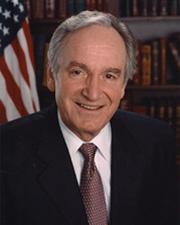
Mr. President, I ask unanimous consent that the order for the quorum call be rescinded. Mr. President, I understand we are now on the Byrd amendment to the appropriations measure before us; is that…
Mr. President, I ask unanimous consent that the order for the quorum call be rescinded.
Mr. President, I understand we are now on the Byrd amendment to the appropriations measure before us; is that correct?
I thank the Presiding Officer.
First, I thank Senator Byrd for offering this important amendment which provides much-needed funding for our homeland security.
Secondly, I thank Senator Byrd for including funding in his amendment to help States implement the President's plan for inoculating our first responders against the smallpox virus. A month ago, on December 13, President Bush announced his policy for vaccinating U.S. citizens against smallpox. He had a tough decision to make, and I support that decision.
That same day, the Government began inoculating 500,000 armed services personnel and other Government officials working overseas, people who are most likely to encounter the smallpox virus.
The second phase involves inoculating on a voluntary basis first responders and health care workers across the United States against smallpox. It is estimated that up to about 10 million Americans may fall into this category. Senator Specter and I have worked with the administration and Senators Byrd and Stevens since the events of September 11 to provide sufficient funds to produce the smallpox vaccine necessary to inoculate every American against smallpox if that becomes necessary. That money has been appropriated, and I understand the production of vaccine is well underway and that sufficient vaccine will be available by the end of the year. That was a good first step.
It is one thing to produce the vaccine, but the administration of the vaccine also costs money. That financial burden will fall on our State and local public health departments. Local public health departments will absorb the costs of the needles and personnel to administer the vaccine. But then again, personnel and equipment and needles only represent a part of the cost to local health departments. That is because the smallpox vaccination is a far more resource-intensive activity than any other type of vaccination activity.
For example, costs include specialized training for the vaccinators. You cannot just have someone off the street doing the vaccinating; they have to be specially trained. And since we have not administered the smallpox vaccine for a number of years, people would have to be trained. There would also have to be prevaccination screening for individuals to make sure you don't have something else that might interfere with the vaccination. It will also include postvaccination monitoring because it is estimated that 1,000 out of every 1 million vaccinated will experience a serious adverse effect. Then you add to those costs the cost of extra security for the vaccine.
I have received estimates from those involved in public health that the cost of administering the vaccine to State and local health departments under the President's plan may be $85 a person, or $850 million to inoculate 10 million first responders and health care personnel.
The amendment before us--the Byrd amendment--includes that $850 million appropriated to HHS for distribution to the States for this first 10 million first responders' vaccination.
When I first saw this figure of $85 a person, I thought that was pretty expensive. I remember when I was a kid and got my smallpox vaccination in school. They lined you up, and the public health nurse gave you your vaccination. I cannot believe it costs, in equivalent dollars, $85 to get that vaccination. So I think we here on the Appropriations Committee and on the Oversight Committee and those at Health and Human Services under Secretary Thompson really need to look at this and to make sure these estimates are valid estimates.
Again, I know that, as I said, there are other things we have to do, such as prescreening and training of inoculators; there has to be postvaccination monitoring and safety. There are other considerations that perhaps we didn't have maybe 50 years ago when I got my smallpox vaccination.
I do think we are going to have to be careful stewards of the public's money to make sure we are getting our money's worth and to make sure every dime is accounted.
Some may say we have already provided significant new funding to State and local health departments since the events of September 11, and that is true. Senator Specter and I and the Appropriations Committees have worked hard to provide those funds, and those funds were sorely needed because we had let our public health departments stagnate over the years.
The money we provided over the last couple of years was just to begin to repair the benign neglect of our public health system, to upgrade public health monitoring, to increase the lab capacity in our State labs to identify possible bioterrorism agents, to improve communications between CDC, the Centers for Disease Control and Prevention, health departments, and other health providers. That was just a few of the needed improvements that, again, had been consigned to benign neglect over the years.
I guess what I am saying is, we should not put a stop to those improvements by forcing our local public health departments to use those funds to administer the smallpox vaccine. We are making strides in this country to bring our public health resources back up to where they should be. We should not be robbing those resources to administer the smallpox vaccine.
Local health departments are concerned that the financial burden of administering the smallpox vaccine will force them to make cuts in other areas. For example, Dr. Floyd Novak, president of the New York State Association of County Health Officials and the commissioner of health of the county that includes Syracuse, said, according to an article in the New York Times:
We have to transfer staff from other functions to do this.
It just cannot be absorbed as business as usual. We need more
resources.
Dr. Novak said his department would conduct 221 fewer screening tests for breast and cervical cancer and 835 fewer pediatric dental examinations, among other lost services, in the 2 months when vaccinations are to be performed. That is why the amendment we have before us is so crucial.
The Byrd amendment we are considering includes funds not only for smallpox vaccinations but also for other important homeland security needs, and it means that Dr. Novak in New York and other county health officials throughout the United States will not have to stop the important functions of breast and cervical cancer screening, pediatric dental examinations, and other functions we sorely need, in order to conduct the smallpox vaccinations.
I urge my colleagues to support this much-needed amendment. Of the $5 billion amendment that Senator Byrd has proposed, $850 million will go to make sure we have the needed resources to inoculate the 10 million estimated first responders--police, fire, emergency personnel, guardsmen, and others who will be our first responders in this country. These resources would, indeed, ensure we can do that without
robbing or stopping the other needed services of our public health departments.
Mr. President, I yield the floor, and I suggest the absence of a quorum.
Mr. President, I ask unanimous consent that the order for the quorum call be rescinded. Mr. President, about an hour ago, the Senate marked a historical moment with the passage of S. 2845, the…
Mr. President, I ask unanimous consent that the order for the quorum call be rescinded.
Mr. President, about an hour ago, the Senate marked a historical moment with the passage of S. 2845, the National Intelligence Reform Act of 2004. Passage of that act was a major milestone--a major milestone--on the road to the most significant overhaul of our intelligence community in over 50 years.
The Senate bill includes nearly all of the recommendations made by the 9/11 Commission as they centered on intelligence reform within the executive branch--39 recommendations.
It is important to note, however, the Commission said that overhauling the executive branch is not enough and, thus, we are now on the Senate resolution to address the final two recommendations of the 9/11 Commission, and that is the overhaul of how we do business in oversight of intelligence functions.
The Democratic leader and I were just talking about how pleased we were in the fulfillment of the process we set out at the end of July where both arms--one being the one we just completed on the Senate floor in the form of the executive branch intelligence jurisdiction, and the second arm being the overhaul of our Senate oversight--has worked so well to date, but we still have that second arm to address, and that is what we are on today.
The Democratic leader and I have come to the floor to outline to our colleagues, A, the importance of completing that oversight function reform in this body but, B, and equally important, to point out we do not have very much time to address this issue with the range and number of other issues we have to address. We have plenty of time to address these issues, but we need to do so in an expeditious way, in a way that allows people to have their amendments considered, to have them debated, and to have them voted upon, but we need to do so in a timely manner.
We ask our colleagues to bring their amendments to the resolution to the managers so they can be considered.
With that, I turn to the Democratic leader, and then I will have further comments on other legislation we have to address before departing.
Mr. President, while the Democratic leader and I are both on the floor, because it reflects the discussions we have had over the course of today, there is other business that we will be conducting over the course of the week. There has been huge progress made today on a bill in conference, the FSC/ETI manufacturing jobs bill. We expect to address that hopefully very soon--I believe the House will be addressing it tomorrow--maybe tomorrow night or late tomorrow afternoon. It is a bill we are both committed to addressing before we leave.
As everyone knows, we had planned to leave on Friday, October 8. It is a bill that also has been handled in an admirable way in conference by Chairman Grassley, and Chairman Thomas from the House, with a very open discussion, open debate, and votes in the conference. We plan on addressing that bill as soon as it is available and the plans will be to complete that as well before we depart.
Homeland Security appropriations is currently in conference and we expect to be able to address that as well.
I mention all of those bills because tonight is Wednesday and we have Thursday and Friday. Although our shared goal is that we leave Friday, if it requires being here Saturday or later, it means that we would have to do just that. It should not. The way these bills have been handled over the last several weeks, it simply should not require going into Saturday, but if necessary, we may just have to do that.
I will comment briefly on the resolution as well because I have not had the opportunity to do so. I know the managers want to be able to proceed directly, but I just wanted to outline that in mid-August Senator Daschle and I did assemble a task force of 22 Members to look at the recommendations proposed by the 9/11 Commission that deal with reform of the Congress. We charged this task force to look at the range of issues and possibilities and to present the Democratic and Republican leaders with a proposal and their recommendations.
To reflect the leadership's commitment to the importance of this issue of congressional reform, we asked our respective assistant leaders, Senator McConnell and Senator Reid, who are managing the bill now, to chair this task force. Over the past several weeks, Senators McConnell and Reid have held a series of meetings, collectively and individually. As Senator Daschle has said and as I have also said, we have had the opportunity to meet as conferences and caucuses to address these issues.
The managers of the bill have also consulted with the 9/11 Commission and others to solicit their ideas and their reflections and recommendations. The product of their efforts is captured in the Senate resolution today and the amendment that has just been introduced.
Right now, as we talk, the amendment may or may not be a perfect product--it is probably not a perfect product--but it is a very good and very solid product. It does reflect the majority view of the task force as they looked at a whole range of options and alternatives, individual items to improve Senate oversight of intelligence, which is the objective, and that is what will be achieved by this resolution.
There are a number of contentious issues that have not been fully addressed, that we expect to be addressed tonight on the Senate floor.
When the Democratic leader said we are reaching out to people to bring those potential amendments forward, that is exactly what we mean. It was Senator McConnell's and Senator Reid's recommendation, rightly I believe, to have the Members decide through debate and through the offering of amendments on the floor how we might make that proposal better. That is about as open and transparent a process as one can have, but it does require Members to come forward and participate in that floor debate.
I will close by saying that I personally thank Senators McConnell and Reid for their efforts and to the other Members of the leadership task force and to all the Members for their cooperation and their participation in, once again, a nonpartisan manner.
I reiterate that it is the leadership's desire on both sides of the aisle to complete this before we depart.
I close where I began, and that is, without Senate reform of the way we conduct oversight of intelligence and homeland security, our efforts to overhaul the executive branch, which we took a major step forward just an hour ago in this body, will be incomplete, inadequate, and really inconsistent with our obligations to the American people.
Bill Text
2 versions available
        [Congressional Bills 108th Congress]
[From the U.S. Government Publishing Office]
[S. Res. 400 Agreed to Senate (ATS)]

108th CONGRESS
2d Session
S. RES. 400

Recognizing the 2004 Congressional Awards Gold Medal Recipients.

_______________________________________________________________________

IN THE SENATE OF THE UNITED STATES

July 7, 2004

Mr. Craig (for himself and Mr. Baucus) submitted the following
resolution; which was referred to the Committee on Governmental Affairs

July 22, 2004

Considered and agreed to

_______________________________________________________________________

RESOLUTION

Recognizing the 2004 Congressional Awards Gold Medal Recipients.

Whereas today's youth are vital to the preservation of our country and will be
the future bearers of the bright torch of democracy;
Whereas youth need positive direction as they transition into adulthood;
Whereas the United States needs increased numbers of community volunteers acting
as positive influences on the Nation's youth;
Whereas the Congressional Awards program is committed to recognizing our
Nation's most valuable asset, our youth, by encouraging them to set and
accomplish goals in the areas of volunteer public service, personal
development, physical fitness, and expedition/exploring;
Whereas more than 14,000 young people have been involved in the Congressional
Awards program this year;
Whereas through the efforts of dedicated advisors across the country this year
176 students earned the Congressional Award Gold Medal; and
Whereas increased awareness of the program's existence will encourage youth
throughout the Nation to become involved with the Congressional Awards:
Now, therefore, be it
Resolved,  That the Senate--
(1) Recognizes the 2004 Congressional Award Gold Medal
recipients: Kori Agin-Batten, Elsbeth Allen, Noah Anderson,
Geoffrey Patrick Arai, Kristyn Amour, Stephen Asker, Benjamin
Jacob Ulrich Banwart, Elizabeth Barker, Robert G. Barnett,
Christopher Belcher, Regina Bennis-Hartman, Samuel B. Blumberg,
Christopher Bosch, Barrett Brandon, Blair Brandon, Brooke
Brandon, Lindsey Buscemi, Adam M. Cain, Daniel Campis, Tina
Cannon, Kent Cheung, Alexander Chun, Madeleine Clark, Sarah
Clark, Michael Clontz, Michelle Coxe, Jeremy Crump, Kimberly
Dahl, Dung Dam, Quoc Dam, Tri Dam, Kaitlin Davis, Deanna M.
DeGregorio, Erin J. DeGroot, Katherine D. DeGroot, John Daniel
DeJarnette, Clifton Michael Der Bing, Joshua W. Detherage,
Christina Dodson, Matthew Doumar, Lindsay Madison Elgart,
Marisa Enrico, Elizabeth Erratt, Julia Evans, Dewan Kazi
Farhana, Amanda Feldman, Sarah Finch, Justin Floyd, Amanda
Flynn, Richard Zachary Freed, Rigoberto Garcia, Yaneth Garcia-
Lopez, Amanda Gersch, Cory Gibson, Anna Gorin, Arielle Gorin,
Gina Marie Gormley, Daniel Grad, Tabitha Grad, Rebecca Marie
Green, Megan Hanson, Nicole Hanson, Ryan Headley, John Baron
Hoff, Jessica Honan, Laura Honan, Lindsey Howard, Harry Kline
Howell III, Dermot Sean Hoyne, Daniel Hults, Manuel Ibarra,
Angeles Jacobo, Jennifer Anne Jasper, Sarah Jennings, Tabitha
Jennings, Tyler Jussel, Atul Kapila, Nikolas Kappy, Megan
Kavanagh, Cristina Kavendek, Abbie Klinghoffer, Alexander J.
Knihnicky, Ross Kozarsky, Jeffrey David Lambin, Andrew
Langfield, Heather R. Leung-Van Hassel, Grace Lichlyter,
Zachary Myles Lindsay, Jessica M. Link, Katherine Victoria
Lugar, Ryan MacCluen, Raul Magdaleno, Raymond Malapero,
Jonathan R. Mason, Rebecca N. Massicotte, Kelly McCormick,
Benjamin McDonough, Alyssa McIntyre, Richelle Milburn, Sri Hari
Miskin, Sarath Mom, Eric Moulton, Kathleen Mullins, Sarah
Mullins, Carolina Munoz, Christine Murray, Kathleen Murray,
Samuel Nassie, Douglas Neder, Matthew Neder, Patrick Novak,
Ricardo Nunez, Maria Fatima Olvera-Santana, Sona Or, Lauren
Pace, Colby Patchin, Emily C. Patchin, Jamin Patel, Elizabeth
Philbin, Daniel R. Philbrick, Lauren Priori, Christy Pugh,
Hannah Qualls, Sarah Raymond, Brett Rendina, Kristen N.
Richter, Margarete Rosenkranz, Erin Rosen-Watson, Julie
Rothfarb, Sarah Ann Rudoff, Maggie Salter, Stacia Scattolon,
Jessinah Schaefer, Rachel Lyn Schmidt, Lindsay Schroeder, Megan
Schroeder, Loni L. Schumacher, Magan Lindsey Scott, Mallory J.
Selzer, Jessica Seppi, Anupriya Singhal, Elyssa Starr Sisko,
Geoffrey Morgan Smith, Kayla Smith, Michael Smyth, Eric Snyder,
Karin Marie Spindler, Georgia Stegall, Charles Strong, Jared
Cameron Sullivan, Danielle Sutter, Creighton Lee Taylor,
Matthew M. Thies, Sarah Tipton, Erick Todd, Elaine Trahan,
Landon Trost, Christine Truesdell, Georgette Tzatzalos, Staff
Sergeant Cornelio Umali, Lacey VanderBoegh, Katherine Warner,
Emily J. Warren, Kate V. Warren, Brian Washakowski, Crystal-Mae
Waugh, Elyse Weissman, Joanna Whitten, Brent Wright, Chantelle
Wright, Trevor John Wright, Christopher Zaehringer, Brian
Zobel, Christopher Zobel, and Matthew Zobel; and
(2) requests that the President issue a proclamation
calling upon the people of the United States and interested
groups to promote awareness of and volunteer involvement in the
Congressional Awards program.
<all>