A resolution encouraging increased involvement in service activities to assist senior citizens.
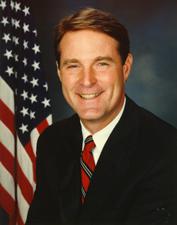 Sen. Evan Bayh (D-IN)
Legislative Activity
Stay on top of the latest movement without scrolling through every action
Resolution agreed to in Senate without amendment and with a preamble by Unanimous Consent. (text: CR S8805-8806)
July 22, 2004
View full timeline
Introduced in Senate
July 20, 2004
Senate Committee on the Judiciary discharged by Unanimous Consent.(consideration: CR S8805-8806)
July 22, 2004
Senate Committee on the Judiciary discharged by Unanimous Consent. (consideration: CR S8805-8806)
July 22, 2004
Resolution agreed to in Senate without amendment and with a preamble by Unanimous Consent. (text: CR S8805-8806)
July 22, 2004
Floor Debate
2 membersWhat members said about S.Res. 409 on the floor

Floor Debate
2 membersWhat members said about S.Res. 409 on the floor
Mr. President, I rise today to submit a resolution on the importance of maintaining the independence and integrity of the Financial Accounting Standards Board (FASB). I am pleased to be joined by my…
I ask unanimous consent that the Judiciary Committee be discharged from further consideration of S. Res. 409 and that the Senate proceed to its immediate consideration. I ask unanimous consent that…
Bill Text
2 versions available
        [Congressional Bills 108th Congress]
[From the U.S. Government Publishing Office]
[S. Res. 409 Agreed to Senate (ATS)]

108th CONGRESS
2d Session
S. RES. 409

Encouraging increased involvement in service activities to assist
senior citizens.

_______________________________________________________________________

IN THE SENATE OF THE UNITED STATES

July 20, 2004

Mr. Bayh (for himself, Mr. Corzine, Ms. Cantwell, Mr. Schumer, Mr.
Breaux, Mr. Nelson of Nebraska, Mr. Lieberman, Mr. Carper, Ms.
Stabenow, Mr. Craig, and Mr. Durbin) submitted the following
resolution; which was referred to the Committee on the Judiciary

July 22, 2004

Committee discharged; considered and agreed to

_______________________________________________________________________

RESOLUTION

Encouraging increased involvement in service activities to assist
senior citizens.

Whereas approximately 13,000,000 individuals in the United States have serious
long-term health conditions that may force them to seek assistance with
daily tasks;
Whereas 56 percent of the individuals in the United States with serious long-
term health conditions are age 65 or older;
Whereas the percentage of the population over the age of 65 is expected to rise
from 13 percent in 2004 to 20 percent in 2020;
Whereas the number of individuals entering the workforce and the number of
health care professionals with geriatric training are not keeping pace
with the changing demographics;
Whereas medicaid paid for 51 percent of total long-term care spending in 2002,
as compared to the 15 percent of total long-term care spending paid by
medicare;
Whereas the long-term care system of the United States, funded largely with
Federal and State dollars, will have difficulty supporting the coming
demographic shift;
Whereas 80 percent of seniors live at home or in community-based settings;
Whereas 3,900,000 people of the United States who are over age 65 receive long-
term care assistance in home and community settings;
Whereas 65 percent of seniors who need long-term care rely exclusively on
friends and family, and another 30 percent rely on a combination of paid
caregivers and friends or family;
Whereas 15 percent of all seniors over the age of 65 suffer from depression;
Whereas studies have suggested that 25 to 50 percent of nursing home residents
are affected by depression;
Whereas approximately 1,450,000 people live in nursing homes in the United
States;
Whereas by 2018 there will be 3,600,000 seniors in need of a nursing home bed,
which will be an increase of more than 2,000,000 from 2004;
Whereas as many as 60 percent of nursing home residents do not have regular
visitors;
Whereas older patients with significant symptoms of depression have
significantly higher health care costs than seniors who are not
depressed;
Whereas people who are depressed tend to be withdrawn from their community,
friends, and family;
Whereas the Corporation for National and Community Service (CNS) Senior Corps
programs currently provide seniors with the opportunity to serve their
communities through the Retired and Senior Volunteer Program, Foster
Grandparent Program, and Senior Companion Program;
Whereas through the Senior Companion Program in particular, in the 2002 to 2003
program year, more than 17,000 low-income seniors volunteered their time
assisting 61,000 frail elderly and homebound individuals who have
difficulty completing daily tasks;
Whereas numerous volunteer organizations across the United States enable
Americans of all ages to participate in similar activities;
Whereas Faith in Action, 1 volunteer organization, brings together 40,000
volunteers of many faiths to serve 60,000 homebound people with long-
term health needs or disabilities across the country, 64 percent of whom
are 65 years of age or older;
Whereas the thousands of volunteers that, through the Senior Companion Program
and volunteer organizations nationwide, provide companionship and
assistance to frail elderly individuals and homebound seniors, deserve
to be commended for their work;
Whereas the demand for these services outstrips the number of volunteers, and
organizations are seeking to enlist more individuals in the United
States in the volunteer effort;
Whereas companionship and assistance programs for seniors with long-term health
needs offer many demonstrated benefits, such as: allowing frail elderly
individuals to remain in their homes; enabling seniors to maintain
independence for as long as possible; providing encouragement and
friendship to lonely seniors; and providing relief to family caregivers;
Whereas regular visitation and assistance is the best way of assuring seniors
that they have not been forgotten, and State and local recognition of
regular visitation programs can call further attention to the importance
of volunteering on an ongoing basis; and
Whereas a month dedicated to service for seniors and recognized across the
United States will call attention to volunteer organizations serving
seniors and provide a platform for recruitment efforts: Now, therefore,
be it
Resolved, That the Senate--
(1) designates September 2004 as ``Service for Seniors
Month'';
(2) recognizes the need for companionship and assistance
with daily tasks among seniors with long-term health conditions
throughout the year, and encourages the people of the United
States to volunteer regularly with homebound frail elderly or
at a nursing home or long-term care facility;
(3) encourages volunteer organizations that offer
companionship and assistance to seniors to incorporate
``Service for Seniors Month'' in their recruitment efforts;
(4) encourages individuals in the United States to
volunteer in these service organizations in order to give back
to a generation that sacrificed so much; and
(5) requests that the President issue a proclamation
calling on the people of the United States and interested
groups to observe ``Service for Seniors Month'' with
appropriate ceremonies and activities that promote awareness
of, and volunteer involvement service for, seniors with long-
term health needs.
<all>