A resolution commemorating and acknowledging the dedication and sacrifice made by the men and women who have lost their lives while serving as law enforcement officers.
Legislative Activity
Stay on top of the latest movement without scrolling through every action
Resolution agreed to in Senate without amendment and with a preamble by Unanimous Consent. (consideration: CR S5691-5692; text as passed Senate: CR S5692)
May 1, 2003
View full timeline
Introduced in Senate
March 5, 2003
Sponsor introductory remarks on measure. (CR S3197)
March 5, 2003
Referred to the Committee on the Judiciary. (text of measure as introduced: CR S3197)
March 5, 2003
Committee on the Judiciary. Ordered to be reported without amendment favorably.
May 1, 2003
Committee on the Judiciary. Reported by Senator Hatch without amendment and with a preamble. Without written report.
May 1, 2003
Placed on Senate Legislative Calendar under General Orders. Calendar No. 82.
May 1, 2003
Resolution agreed to in Senate without amendment and with a preamble by Unanimous Consent. (consideration: CR S5691-5692; text as passed Senate: CR S5692)
May 1, 2003
Floor Debate
15 membersWhat members said about S.Res. 75 on the floor
 TS
TS BLD
BLD RCB
RCB HR
HR PM+10
PM+10
Floor Debate
15 membersWhat members said about S.Res. 75 on the floor
Madam President, because of the circumstances, I really don't have a prepared statement. I wish to outline for the Senate how we intend to proceed. We have been working for some time trying to obtain…
Madam President, because of the circumstances, I really don't have a prepared statement. I wish to outline for the Senate how we intend to proceed. We have been working for some time trying to obtain a process by which we could proceed to act on the 11 appropriations bills for the fiscal year 2003 which were not completed by the end of the last Congress.
I commend my good friend from West Virginia and his staff for assistance in working with us to work out this procedure. These bills that will soon be included in an omnibus amendment to
this continuing resolution are familiar to the Senate. We worked on them throughout the last year. And I wish to say that to the best of my knowledge the components of this bill, except for one portion, were worked on on a bipartisan basis by the staffs of the 11 subcommittees that handled these 11 bills. I can't say that there has been total agreement on the part of anybody as to what we have done, but we have proceeded to reduce the 11 bills that were involved to the amount of the President's request, which was $750.5 billion, plus an amount that is represented by a budget request for the fire items that are included in the bill of $825 million. In doing so, we come down considerably in many of these bills.
But I point out to the Senate that the Government has been operating under the CRs that have been passed since October 1. All of the agencies affected by these bills have been operating on the basis of the 2002 appropriations level--the enacted level of funds for those agencies. If we do not finish these bills now, they will continue to act under the 2002 level until obviously we do something to take us down to the end of this fiscal year.
I have taken the position that the sooner we can enact these 11 bills the better off all the agencies are, and the better off the Congress is because our job is to turn to the requirements of the law to deal with the fiscal year 2004 bills through the budget process and through the consideration of the 13 bills that we have in the Appropriations Committee through the individual subcommittees and get them done this year--God willing--according to the normal schedule and before September 30. We cannot do that if we labor over these bills intensively for a period of time.
I am pleased to say that everyone concerned has been very cooperative, and, above all, the members of the Appropriations Committee on both sides of the aisle have worked hard to get us where we are today.
The amendment that I will soon present contains not only that portion that I mentioned in terms of a series of bills but it contains the Agriculture, Rural Development, Food and Drug Administration, and Related Agencies appropriations for fiscal year 2003. It provides budget authority for Agriculture, rural development, and the nutritional programs.
There is in this bill $670.4 million--more than the President's request--and more than $1.1 billion more than 2002.
I have a whole series of highlights on this bill. I don't want to take the time of the Senate to outline the individual ones. We will do that as we proceed on the bill. There are definitely needs for the programs for each of these items.
The second bill we have is the Commerce, State, Justice and related agencies appropriations bill. Again, this is the recommendation of the subcommittee as adjusted by the process I just outlined. It is approximately $2.5 billion above the 2002 enacted funding level.
These, of course, are a series of highlights. I may later ask to put them all in the Record as part of my opening statement. I want to review these outlines later. I do not make that request now.
We also have the District of Columbia appropriations bill. It makes appropriations for the District of Columbia. It is an item that is substantially higher than the President's request. It is a total of $512 million in discretionary budget authority for the District of Columbia.
We have the energy and water appropriations bill. It recommends $26.164 billion for 2003. It exceeds the President's request by $649 million, and it exceeds the 2002 level by $900 million.
We have the foreign operations bill among the 11 included in this amendment. This bill is $221 million below the President's request. It is also below the fiscal year 2002 level by $73.5 million.
The Department of the Interior bill provides $19.18 billion in total discretionary budget authority--an increase of $641 million over the enacted level of 2002. It is $36 million over the President's budget request for 2003.
The Labor-Health and Human Services bill deals with the President's request, which was $131.9 billion. This bill as recommended by my amendment will be $131.3 billion. The details will be in the items that I will put in the Record.
On the Department of Transportation and related agencies, we recommend $64.6 billion for 2003. This is $9.4 billion more than the President's request of $55.2 billion. I do not have a figure above the 2002 level. I will put it in the Record later.
We have the Treasury and general government appropriations bill. This provision is in the bill at $34.5 billion. The President's request was $34.2 billion, and the 2002 level was $32.8 billion. This is another area where it is above the President's request.
The last section is the section that deals with items that have been added to the 13 bills. One is to fund the election reform bill that was enacted in the last Congress. The maximum authorized level for that program for 12 months for fiscal 2003 was $2.35 billion. For the remainder of the bill, this amendment that I offer will fund election reform at $1.5 billion.
For drought relief, we have set a target of $3.1 billion. The provisions of the bill as presented by the Agriculture Committee and others will adjust the mandatory programs in order to provide relief for the drought that has occurred.
We also have a provision dealing with Medicare adjustments, dealing with physicians' payments and payments for rural hospitals. The total amount would be $1.6 billion. These items would be offset by a 1.6- percent across-the-board cut on the other 11 bills.
We have done our best to present to the Senate--I have, working with the members of the committee and their staffs--a bill to meet the requirements of the administration, to meet the requirements of the agencies, and to present a bill that can be taken to conference and worked out with the House in conference.
Madam President, I point out, the House has not passed any bills. The House has passed this continuing resolution, to give us a House-passed bill, to return this bill to the House for their consideration. We are hopeful that the House will enact its own version and send it to conference. As has been outlined already by the unanimous consent agreement that is in place, we will seek a conference with the House at the earliest possible time.
I urge Senators to consider the problem we face, and that is the problem of catching up with the bills we should have enacted last year. I point no fingers as to reasons we did not. The Senate Appropriations Committee, under the chairmanship of Senator Byrd, did report out all the bills. We were prepared to act, but circumstances at that time made it impossible for us to pass those bills.
Under the circumstances now, we cannot afford the process of passing separate bills, facing vetoes or veto threats, and having bills go back and forth between the Houses. If we are going to catch up and start the process of dealing with the 2004 appropriations, as is our duty in this new Congress, we must put these requests of the past, for the remainder of this fiscal year, in place. We must pass this amendment or something similar to it as soon as is possible, as soon as the Congress can agree and the President will concur with our actions.
I will say, I have discussed this at length with the Office of Management and Budget. I cannot say they approve of what we are doing, but I can say they approve of the fact that we are doing something. So that is what I am asking the Senate to do tonight, to start the process of doing something on these accumulated items that must be faced by this Congress as quickly as possible.
Madam President, I ask unanimous consent to have printed in the Record summaries from which I read partially.
Madam President, again, I thank my friend from West Virginia for his courtesy. I know that while I have been working on these other matters, my friend has had a very erudite statement prepared, and I am prepared to listen to it.
I thank the Chair.
Mr. President, I believe under the unanimous consent request that now is the time for me to offer my amendment.
Amendment No. 1
Mr. President, there is an amendment at the desk.
Mr. President, I ask unanimous consent that further reading of the amendment be dispensed with.
The Senator from West Virginia has an amendment to offer. I thank him for his comments. We are in substantial agreement, except in the conclusion. We both feel that the Government of the United States should not operate under a continuing resolution. What it means is that our agencies are not moving forward in 2003 at the rate actually requested by the President in 2001 for the fiscal year 2002.
Times have changed. They have changed considerably. Each of these agencies are subject to new laws that were passed both in 2001 and 2002 with regard to the programs that they administer. They cannot do those new programs without new money.
As the Senator from West Virginia said, they are currently operating on autopilot. I am an old pilot and autopilot is a wonderful thing to have, but it doesn't know how to change course unless someone turns the dials. Autopilot cannot take you off or land you. It only continues on the course that it is on. It will fly right into a mountain if you don't change the course. There is a mountain ahead of us, which is the mountain of unfulfilled commitments in the Federal Government, which both the President and Congress have made and changes that were made since the President first conceived the budget of 2002.
I do believe that the Senator is right. I would have joined him last year in proceeding as we did with the bill as reported. But it is different now. We are ready to start a new Congress. We, hopefully, will have our organization resolution soon, and we will be working toward complying with the laws that we work under--the Budget Act--and the requirement that we pass 13 appropriations bills for 2004.
We cannot get there if we pass these bills separately. As I said before, we
will face the prospect of disagreement with the House and endless conferences on 11 bills, and possibilities of vetoes and motions to override, and all the time it will take. Mr. President, it will be June before we get down to the business of this Congress if we do not follow the recommendation to proceed that has been made now by me on behalf of the President and on behalf, I believe, of all the members of our committee.
We have differences on what should be in the bill, but the main thing is that we should proceed. I await the offering of the Senator's amendment. I know pretty well what is in it, and I regret that I cannot join him this year in supporting it.
Is the amendment now pending before the Senate, Mr. President?
I yield to the Senator from West Virginia.
Amendment No. 2
Mr. President, I suggest the absence of a quorum.
Mr. President, I ask unanimous consent that the order for the quorum call be rescinded.
Mr. President, the distinguished Senator from West Virginia, Mr. Byrd, presented a chart showing the major elements of the $5 billion homeland security package. Eventually, this homeland security money, since it is money that people involved in that area want, we will address not only this year, in this 2003 bill, not only in the 2004 bill, but out into 2005. This Homeland Security Department has not even formed yet, as we know. There are several components in the existing Government that will be transferred into homeland security, and they have funding in this amendment I have offered.
For instance, Senator Byrd wants to add to this amendment I have offered $1.4 billion for State and local assistance to combat terrorism, but we already have spread throughout the 11 bills $2.2 billion to deal with the same concepts. We have money for first responder radio equipment. We have money for emergency planning and training.
Last year, I supported this money that Senator Byrd wants in his amendment for this bill--in a series of bills, as a matter of fact. The problem we face now is, should we continue to operate at the 2002 level until we can find an agreement with the President as to the amounts Senator Byrd wants to add to the President's request or should we move forward through the way we allocated money in the bill for the various elements of homeland security in the existing Departments? The money we put in the existing Departments will be transferred to Homeland Security as that Department is formed.
Senator Byrd wants to put up an additional $1.8 billion for border security. Again, in the period ahead we will spend money like that, but in these bills already is a total of $4.3 billion, and we are looking at a period of less than 8 months to spend that money.
I have presented the amendment that is before the Senate now because we want to find a way to work with the President to close the books on the 2003 appropriations. We cannot do that if we continue to battle with the administration and try to give them money beyond what they believe is necessary.
At the time we were looking at this last year, we thought the Homeland Security Department would have been created before September 30 of last year. We wanted to put up money so it would be there for the Homeland Security Department to be transferred to start spending in October. This money would be started to be spent in late February or March.
I am trying to make a point. Take airport security; Senator Byrd wants an additional $720 million. We have already appropriated substantial monies that are in the supplemental from last year for airport security. We have tried to fund the needs of the Transportation Security Administration. We already have an additional $374 million in these separate portions of the amendment I have offered.
I am trying to emphasize the fact that we do not need to give this Department of Homeland Security more money beyond what has been asked.
On nuclear and energy security, I do not disagree with the statements that have been made about the needs for additional money. In this amendment I have offered is $1.650 billion for that function. Senator Byrd wants to add another $296 million. I understand he is trying to fully fund the estimated needs of homeland security for the future, which is a laudable goal, but we are trying to stay within some sort of budget constraint.
As I said, let's finish the job of getting the books closed on how much the agencies have to spend in the remainder of fiscal year 2003.
On Federal law enforcement with the FBI, Senator Byrd wants to add $212 million to the $1.2 billion already in the bill. I am urging the Senate to listen in terms of the concepts we have worked out. Stop this battle with the President over how much is needed for the agency that has not even been established yet. The various components of that agency, the Homeland Security Department, will have enough money coming into this new Department to fully fund whatever they can do by the time they get organized as a Department.
I urge the Senate to oppose the amendment offered by the Senator from West Virginia--not because he is not right at estimating the future needs of homeland security--because we believe we are right in saying, let's fund now the money that can be spent before the end of this fiscal year, be spent before September 30. I am confident we have sufficient moneys in this amendment that we have offered in the 11 separate sections which would normally be separate appropriations bills, enough money to deal with the problems of homeland security.
Beyond that, I remind the Senate the President still has some money left from the $20 billion we gave him after 9/11. If there are any defects here, he has more than $5 billion in that account and can allocate it if it is necessary to establish Homeland Security so long as it is working toward establishing the facilities and entities we need to prevent further repetition of the catastrophe of September 11.
I hope the Senate will listen. To adopt the Byrd amendment will be to prolong the conference. If it was in a bill that would go to the President, he would veto it. Then where are we? Maybe I am too pragmatic about this, but it is time to get this job done. The amendment I have offered will get the job done. There will still be some differences with the House. As a matter of fact, there will still be some differences with the administration because we have increased some items that they do not want to see increased and we have decreased some they do not want decreased. But overall, we are within the total limit and parameters of the requests of the President.
I hope tomorrow the Senate will be looking at this. There will be further debate tomorrow morning. The leader will, of course, state what the procedure will be. We expect a vote sometime around noon or soon thereafter on the Byrd amendment. I am hopeful that the Senate will work with us to try and understand my job now is to get this amendment to conference.
As I told the Senate Members, the House has not passed any of these bills. It passed some of them last year. We did not act on them. We passed some last year and they did not act on them. We are trying to restart the 2003 conference and there will be an overall conference on all 11 bills at one time if the Senate will give us the support to pass this bill and take it to conference.
There will be individual differences as far as amendments are concerned. As a matter of fact, there are some things in this amendment I personally would change, but they have been brought here by the work of the subcommittee chairmen and ranking Members of the individual areas covered by these bills. I think it is the best course to follow, to take this amendment to conference, to go to the House and say, let's get these 11 bills finished so the agencies will know for certain the money they have. Even the homeland security bill was not passed when we originally contemplated passing the appropriations to fund it.
I am confident we have done the best we can under the circumstance. Again, I do not criticize Senator Byrd. Eventually, we will spend more than $5 billion in addition to what we have in the amendment before the Senate. However, we do not need it now. I sat through all the hearings that have been mentioned, that Senator Byrd had on the needs for homeland security across the Nation. I remember going to small towns in my State when the mayor told me they needed a new fire truck. They needed a new fire truck? They have never had a fire truck. There is not anyone in the country that does not want some of this homeland security money. The question is, what is needed now to go on with the job and protect the country. I believe our amendment does it.
I send to the desk a statement prepared by the individual subcommittees that goes along with 11 components of this bill. Had we had the meetings of
the separate subcommittees and reported separate bills, we would have prepared 11 reports. Instead, I am submitting for the Record to be printed the overview and summary of each of the components so there will be no question in the future of what is intended by the provisions of the amendment I have offered if it is enacted. I ask unanimous consent it be printed in the Record.
Mr. President, I ask unanimous consent that the order for the quorum call be rescinded. Mr. President, I rise to support the amendment offered by the distinguished chairman, perhaps ranking member,…
Mr. President, I ask unanimous consent that the order for the quorum call be rescinded.
Mr. President, I rise to support the amendment offered by the distinguished chairman, perhaps ranking member, depending on the time of the month in January of this year, of the Senate Appropriations Committee. He has led the fight in the Senate on these issues dealing with homeland security, an extremely important subject for this Senate.
I wish to talk about why his amendment is a very important choice for us to make. This is, after all, about making choices. It is not a case that there is not the money to do one thing or the other; it is a matter of making the choices of what the right things are for this country's future. Emerson once said that common sense is genius dressed in work clothes. Common sense with respect to homeland security to me is to understand that post-9/11, we are in an urgent situation to protect our country at home. We are prosecuting the war against terrorists here and abroad, and we have an urgent requirement to protect our homeland.
The head of the CIA just a couple months ago said to the Nation that we are as vulnerable today to a terrorist attack as we were on September 10, the day before that devastating terrorist attack on our Nation. The head of the CIA said: We are as vulnerable today as we were the day before that devastating attack.
If that is the case, then the question is, What more do we need to do and how soon must we do it to give a measure of assurance to the American people that we are doing everything possible to thwart those terrorists who would attack our country?
I wish to talk about a couple areas of homeland security that my colleague, Senator Byrd, has spoken about previously and spoke about again this evening, and addresses in his amendment. I wish to talk about the security of our country's ports.
I come from a State that does not have any ports. North Dakota is not surrounded by oceans, so we do not have ports. I did recently tour one of our large ports in this country. That follows on the heels of a tour I did several years previous. I was curious as to what kind of security exists in America's ports.
I know we get 5.7 million containers coming into this country every year stacked on container ships. These 5.7 million containers pull up to a dock at 2 miles an hour, then are offloaded on to 18-wheel trucks, and they motor off to the rest of the country. I also know of the 5.7 million containers that come into our country every year, 100,000 of them are inspected, 5.6 million are not.
One asks the question: We spend a lot of money and time talking about an antiballistic missile program or a missile defense system to protect against an incoming ballistic missile or a ballistic missile traveling 10 or 15,000 miles an hour. So we spend $8 billion creating a ballistic missile defense system.
How much money do we spend protecting against the threat of a ship with a container carrying a weapon of mass destruction coming to a dock at 2 miles an hour at one of America's major ports in America's major cities? The answer is we do not spend nearly enough.
I recently, with the Customs Service and others, toured one of our country's major ports. This is a port that gets a great deal of freight and commerce from Asia. I was very impressed with the men and women who worked there. I was very impressed with what they do there. I took a look at their x-ray technology in which they x-ray containers that are on an 18-wheel truck, having been taken from the deck of a ship. This technology is remarkable. What they are doing at the Customs Service is extraordinary, but they are desperately short of funds. They are incapable, in my judgment, of assuring the American people that of these 5.7 million containers reaching America's ports, they are able to inspect a sufficient number to give us a measure of confidence that terrorists will not use these containers with which to attack our country.
We might all remember the story about a fellow who was a suspected terrorist who actually put himself in one of those large containers. In that container, he included a heater, a cot, water supply, a GPS system, a computer--he had all the comforts of home locked with him in a container, shipping himself from the Middle East to Canada, presumably then to go from Canada into the United States.
If someone decides to ship a weapon of mass destruction in a container aimed at this country with only 2 percent of the containers being inspected at our docks, how confident are we that we have the homeland security and homeland protection we need and deserve at this point?
Senator Byrd includes in this amendment the resources that are necessary to add to that measure of confidence, to create more inspections, to provide more security at America's ports, and that is important.
He also in this amendment deals with the issue of border security. I do represent a State that has a long and common border with the country of Canada. Just a couple of months ago, there were concerns across our country about five men, suspected terrorists, who apparently entered the U.S. through Canada. We did not know who they were. We did not know where they entered our country. We did not know what they planned to do. But there was a national manhunt for five men from those parts of the world from which terrorists have originated who entered our country, and we were searching for these individuals. Apparently they were never found.
The point is, they were supposed to have entered our country through Canada. How would one do that? Along the border between the United States and Canada, we have a great many ports of entry where we have very little security, as a matter of fact. Prior to our Appropriations Committee adding some money in the last year and a half, at many ports of entry in North Dakota, when the ports of entry closed because they are open only a certain portion of the day, at the end of the day, at 9 o'clock or 10 o'clock at night, they put up an orange rubber cone, and that was the security to keep terrorists out of this country or to keep out those who are not supposed to enter this country.
The polite ones who enter this country illegally say they would get out of the car, remove the cone, drive into this country, and replace the orange cone. Those not so polite would shred that cone at 60 or 70 miles an hour, with nothing to stop them.
We changed some of that at ports of entry, but we have a 4,000-mile border. There is not a ghost of a chance that the Border Patrol and others who are required to provide the security on this country's northern border can possibly do all that is necessary to keep terrorists from entering our country.
Despite that, we have the Immigration Service, the Customs Service, the Border Patrol, and others doing heroic work, but they need more resources. They are short of money. And that also is included in Senator Byrd's proposal.
Last July in Congress, we on the Appropriations Committee passed by a wide margin a supplemental appropriations bill that included $2.5 billion for homeland defense, port security, as I mentioned, the security of nuclear plants in our country, airport security, cyber security, and training for police and fire personnel, the first responders for any terrorist attack. Yet the President decided he would not use that $2.5 billion. He blocked it, and this amendment restores much of those funds.
I know earlier today we had people come to the Chamber and talk about those who want to spend money. There are those who say this is all about spending money. This is a rather small amount compared to what we did for Defense, for example, in this year.
The President asked for and we agreed to increase Defense spending nearly $45 billion in this year. We face some very significant challenges in Iraq, North Korea, terrorists. We call on young men and women in this country to put on their uniform and, in a moment's notice, be called up, put on a ship or airplane and shipped to the farthest points of the world to protect our country. We increased that spending in a very significant way.
Just a year ago--in fact, a year ago this week--I was in central Asia. I was in Afghanistan and Uzbekistan and toured those areas where our young men and women--American soldiers--were defending our liberty and freedom.
I do not think anyone will ever want to shortchange them in what we do to spend money to protect them, and I commend Senator Byrd, Senator Stevens, and Senator Inouye for their leadership in making certain we make that investment. But it is not only with respect to this Nation's defense that we must make investment. We also must make those investments in our homeland security. If we fail to do that, there will be a time, after some additional national tragedy as a result of a terrorist attack, when we will ask the question: Why did we not plug that hole? Why did we not add those resources? Why did we not have those additional inspections?
We can avoid all of that if we simply make wise and prudent investments in homeland security in this legislation. I prefer we not be required to spend any money on homeland security. I prefer we live in a world in which there is not a terrorist threat, in which those who have evil in their hearts, such as Saddam Hussein and others, would not exist and we would live in peace and harmony and not have to worry about protecting our homeland. But the attacks of 9/11, which killed thousands of innocent Americans, by those holed up in caves in the mountains of Afghanistan plotting the murder of innocent people tell us we can never again be sure that that kind of world will exist.
We must understand that terrorists want to do damage to this country and kill innocent Americans. As a result,
we simply must have adequate homeland security and adequate protection. That is all this amendment offered by Senator Byrd does.
We will have an opportunity to discuss other issues with respect to the omnibus bill. Although I have been talking about homeland security, I fully agree with Senator Stevens and Senator Byrd that we should handle these appropriations bills this way. It is the only way we can solve this issue of getting the eleven bills done, getting to a conference, getting them to the President, and getting them signed. So there is no disagreement about that. Senator Byrd and Senator Stevens are absolutely correct. This is what we should do. We should do it this month and get these priorities funded. But as I say that, the question is: What priorities? What choices?
I have not yet seen the entire amendment or the entire omnibus bill that has been offered. I expect I will be able to review some of it this evening and perhaps tomorrow. But this is significant legislation. I know what part of it is. Chairing one of the subcommittees on appropriations, I know what is in that subcommittee. With Senator Campbell and me working closely together, I know what is in that particular part, but the rest of it I am not aware of, and I think most Members would not be aware of the specific provisions. We need to work together in the coming days to make sure the choices we make in terms of priorities are the right choices.
I will have a lot to say on a couple of other issues, but I want to specifically say to Senator Byrd, I think this amendment makes eminent good sense. It is an important amendment, an urgent amendment, and represents one of our first priorities: Making the right investment for homeland security.
There is a part in this omnibus bill that deals with disaster legislation, drought relief, for farmers. I do not know this for sure, but my understanding is the money for that actually comes out of the agricultural spending base, which in my judgment should not happen. Second, it is only about half the size of what is needed.
By a very wide margin, we passed last year a $5.9 billion disaster relief bill for drought relief for a major part of the country's agricultural producers. That is about what we need. In my judgment, we are going to have to amend this provision.
My understanding also is that in order to get part of this money, there is an across-the-board reduction, and I believe there are certain areas where we cannot do across-the-board reductions. Having said all of that, we need to debate those amendment by amendment. This first amendment is an important amendment. As Senator Byrd said, and let me hasten to say as well because I serve on this committee, the leadership of Senator Stevens is exemplary. I am proud to be on this committee, whether under his leadership or Senator Byrd's. Our differences in choices with respect to both the White House and those who support this amendment are not meant to be disrespectful but are an assertive difference, representing what we believe to be an urgent priority.
There is no greater priority than to make sure we have done what we can do to thwart the efforts of terrorists to attack this country, and in a number of areas we are markedly and substantially deficient in homeland security investment. We have known that for some long while. This is the time to correct it. It is not spending, it is an investment, just as it is an investment in this country when we make the kind of appropriations we need to make for defense. We have done that. Now we need to make the same judgment with respect to homeland security.
I yield the floor, and I suggest the absence of a quorum.
Madam President, first, I thank my esteemed colleague and dear friend, Senator Ted Stevens, for his characteristic courtesy, and for his friendship, and for the cooperation he has shown to me over…
Madam President, first, I thank my esteemed colleague and dear
friend, Senator Ted Stevens, for his characteristic courtesy, and for his friendship, and for the cooperation he has shown to me over many years of working together.
I thank him for joining with me, last year, in reporting out of our committee all appropriations bills before the close of July.
I thank all of the Republican members as well as the Democratic members of my committee who voted unanimously to report those 13 bills out of the Appropriations Committee, without a single vote cast against those bills.
I am sorry that the situation has developed, as it has, when I must oppose the distinguished Senator's amendment. I always do whatever I have to do to meet my own conscience and to deal with requirements that are incumbent upon me as the chairman of the committee or as the ranking member of the committee, whichever is my role at the particular time.
I do not like to be in a position of differing with my friend from Alaska, but there are times when we do have to differ. In this case, I find myself at odds with him, but I want to say here that it is only for the purposes of advancing this bill. It certainly does not cut across our friendship, as far as I am concerned, when I have to differ with Senator Stevens, and differ with him vigorously. He is still my friend.
I understand what he has to do, as he sees his responsibilities. And I have to do what I have to do as I see my responsibilities. Our friendship is unaffected. I want to assure him of that, as far as I am concerned.
Last July, almost 6 months ago, the Senate Appropriations Committee completed action on all 13 of our appropriations bills, each on a bipartisan unanimous vote. These bills restored essential funding for programs that the President proposed to cut.
We provided $1.1 billion more than the President requested for veterans medical care. We restored the $8.6 billion cut proposed by the President in highway funding. The President proposed only a 1 percent increase for education programs. He would have turned the No Child Left Behind bill into another unfunded mandate. Our bill provided a 6 percent increase for education, including key funding to reduce class size.
We included sufficient funding to keep Amtrak operating. We restored over $1 billion of cuts that the President proposed for State and local law enforcement programs.
We fully funded the President's proposed increases for homeland security programs, but we provided the funds through existing programs that our Nation's fire and police organizations support. We provided a significant increase for the Securities and Exchange Commission in order to investigate corporate fraud. We provided $400 million for election reform.
Now this White House believes that these increases represent wasteful and unnecessary spending. Last year this White House worked with the House Republican leadership to slow the appropriations process down. The House has not passed a regular appropriations bill in nearly 6 months.
Let me repeat that. The House of Representatives has not passed a regular appropriations bill in nearly 6 months.
The domestic agencies of the Government are now operating under the sixth--the sixth--continuing resolution, which expires on Friday, January 31.
My friend, Senator Ted Stevens--who is the very able ranking minority member of the Appropriations Committee, who will soon succeed me as chairman of the Senate Appropriations Committee, and who has already succeeded me as President pro tempore of the Senate--and I worked together to produce those 13 bi-partisan bills last summer. Each of those 13 appropriations bills was reported by the Senate Appropriations Committee with a unanimous vote--not a single vote cast against any one of the 13 appropriations bills.
After the election, however, the President indicated his determination to limit discretionary spending to the arbitrary figure of $751.3 billion. This level will necessitate cuts of $9.8 billion from 11 of the bills approved last July. After providing for modest increases for homeland security programs, the substitute that Senator Stevens is forced to offer provides for a virtual freeze in all other domestic spending.
I oppose the $9.8 billion cut that is contained in the substitute. The needs of the American people for homeland security, for education, for transportation, for veterans, for public health, and for other programs have not gone away. The needs are still there as plain as ever.
I am not being critical of my colleague, Senator Stevens. I am not being critical of the chairman of the House Appropriations Committee, Mr. Young of Florida. However, the President has now thrown down the gauntlet and is insisting on a $9.8 billion reduction, resulting in cuts in priority programs designed for what? Designed to defend our homeland, to educate our children, to improve our transportation systems, and strengthen our law enforcement programs.
I am extremely disappointed, not with Senator Stevens or the other members of the Senate Appropriations Committee or my friend, the chairman of the House Appropriations Committee, Mr. Young, or his ranking member, Mr. Obey, but with this administration, with this White House and its lack of vision and knowledge regarding the needs of the people of this country.
With great fanfare, the President signed numerous authorization bills this year that would increase spending demands for many of these same important programs. Last January he signed the No Child Left Behind Act with great fanfare. The President signed the No Child Left Behind Act which had passed the Senate 87 to 10 and which endorsed additional resources in important education programs for our children. Last May, the President, Mr. Bush, signed a border security bill with great fanfare, which had passed the Senate 97 to nothing, which authorized strengthening glaring and dangerous weaknesses in our border security. Last July, President Bush signed the Sarbanes-Oxley Act which had passed the Senate 89 to nothing, and which addressed shameful corporate fraud that bilks innocent people. In October, Mr. Bush signed the election reform bill with great fanfare which had passed the Senate 92 to 2 to help State governments overhaul the Nation's outdated and corruptible electoral system. In November, President Bush signed legislation which had passed the Senate 95 to nothing to improve security at our ports.
Yet in order to reduce our bills by $9.8 billion, the omnibus legislation that we will consider this week will cut education by $1.5 billion. It will cut homeland security programs by $1 billion, including cuts of $627 million for border security, $23 million from port security and $132 million from first responder funds. It will cut Securities and Exchange Commission funding below the levels in Senator Hollings' bill by $94 million.
This omnibus legislation will reduce Head Start funding by $202 million. It will reduce job training by $534 million. It will reduce low income home energy assistance by $300 million.
The new omnibus bill will cut Amtrak funding by $374 million, a level that will result, I am told, in the termination of Amtrak service.
In addition, the bill includes 1.6 percent across the board cut on all domestic programs. This represents a $435 million cut in the National Institutes of Health. It represents a $182 million cut to Education for the Disadvantaged. It represents a $372 million cut in Veterans Medical Care. On top of these cuts, every homeland security initiative in this package is reduced by 1.6 percent. This is no way to govern. We must move forward on this legislation. As much as I chafe about these mindless cuts, we cannot allow the domestic agencies of our government to continue operating on automatic pilot for the rest of the fiscal year. The people elected us to make choices about how we invest their tax dollars. There will be amendments offered in the coming days to restore some of the cuts contained in the substitute to be offered by Senator Stevens for homeland security, for education, and for other worthy programs. I urge Members to consider these amendments carefully and to ponder the impact of the reductions in this bill.
These should not be up or down party-line votes. When the Congress
passed, with broad bi-partisan votes, and President Bush signed, authorization bills for homeland security, for port security, for border security, for investigating corporate fraud, and for No Child Left Behind, we all recognized that these programs required adequate resources. We did not vote to address these critical problems with rhetoric alone. We have heard plenty of rhetoric. We collectively decided that these were real problems that needed real solutions. To solve these problems requires resources, not empty promises. I urge every Member to reflect on their support of these authorization bills as they decide how to vote on amendments that will be offered in the coming days. Let's make the rhetoric match the resolve.
While I oppose the $9.8 billion in cuts which are being required by the administration as the price to move these bills, I recognize that an even worse alternative is to fail in our duty to enact appropriation bills and allow the United States Government to operate without sufficient funding for the remainder of this fiscal year. I believe my colleague, Senator Stevens, is of a similar frame of mind. He is doing what he sees as his duty. He is a good soldier. He has my profound empathy.
This is the U.S. Senate. We are 100 Senators who have taken an oath of office to protect and defend the Constitution of the United States. We serve with Presidents. We don't serve under any President, I have served with 11 Presidents, not under any President. The votes that we will take on this important legislation, especially those relating to the defense of our homeland and the education of our children, are not about politics. They are about doing what is right and what was promised to the people of this country.
I ask unanimous consent that a summary of the $9.8 billion of cuts contained in the substitute compared to the fiscal year 2003 bills reported last July by unanimous vote in the full Appropriations Committee, be printed in the Record.
Mr. President, I send to the desk an amendment.
Mr. President, I ask unanimous consent that further reading of the amendment be dispensed with.
Mr. President, this Nation faces a turning point as we are challenged once again by the threat of attack on our shores. We know that terrorists live among us. Yet we do not know where they will strike, or when, or how they will strike. With endless warnings in mind, and with a clear realization of our many homeland security gaps, it is time that Congress invest the necessary resources in homeland security to match its rhetoric and to match the rhetoric of this administration. So I have offered an amendment that would accomplish three goals:
First, it would restore the $1 billion in reductions in homeland security initiatives made from the original committee-passed appropriations bills and for which every member of the Appropriations Committee voted--every member, 29 members of the Appropriations Committee, with 15 Democrats and 14 Republicans.
Second, it would restore much of the $2.5 billion in emergency homeland security funds that passed this Congress overwhelmingly in the summer of last year, but which was rejected by this White House.
Finally, this amendment would fund the priorities that Congress has found so necessary and that President Bush has signed into law. This amendment would fund the Airport Security Act that created the Transportation Security Administration and placed rigorous, new safety standards on the Nation's airports. This amendment would fund the border security authorization bill that passed the Senate by a vote of 97 to 0 and that President Bush signed into law last May. This amendment would fund the port security authorization bill that passed the Senate by a vote of 95 to 0 and that President Bush signed into law last November.
These dollars address our Nation's most critical needs. These funds would help to shore up our Nation's defenses and save lives at home.
The Congress has voted to create the Department of Homeland Security, but that Department is months--if not years--away. I read in the Washington Post today about the slowdown in the fulfillment of that dream, but that Department is months--if not years--away from being a strong defense against terrorist attacks. There are many details to be worked out. We cannot wait to address gaps in our Nation's defenses while this new Department is organized. Terrorists will not wait to attack. We cannot afford delay. I urge my colleagues to support this amendment.
I ask unanimous consent that a summary of the amendment be printed in the Record at this point so that all Senators, members of the press, and the people at large may read on tomorrow the contents of the amendment.
Mr. President, I yield the floor.
Mr. President, I ask unanimous consent that the order for the quorum call be rescinded. Mr. President, Senator Byrd has offered an amendment. I would like to address that amendment. Senator Byrd has…
Mr. President, I ask unanimous consent that the order for the quorum call be rescinded.
Mr. President, Senator Byrd has offered an amendment. I would like to address that amendment.
Senator Byrd has been an advocate, for many months now, of doing something to properly fund homeland security. One member of our caucus referred to it as hometown security. The Senator from Nebraska, Mr. Nelson, referred to it as hometown security, and that is really what it is. It is to make sure the cities and towns in our States have the protection that is necessary as a result of the terrible events of September 11.
The bill I am interested in is part of S. 11 from the Energy and Water Subcommittee. For the next half hour or so, I will be the chairman of that committee. That will change sometime this evening.
Senator Domenici and I have had a longtime relationship on this subcommittee. I have been chairman; he has been chairman; we really have worked extremely well together. He has been, from my perspective, extremely good to work with. He is an absolute expert on numbers, having been the chairman of the Budget Committee and having been so long with the Appropriations Committee. It has been a pleasure to work with him.
But Senator Domenici, I am sure, recognized that this bill, our bill, should have more money--more money as it relates to homeland security. During last year's consideration of the supplemental spending bill for homeland security, when we were in the majority, we included hundreds of millions of dollars for nuclear security, funding that had been requested by the administration and by the Department of Energy but was rejected by the Office of Management and Budget. During final negotiations on that supplemental, we agreed to provide funding for these activities on a contingency basis. In essence, we provided the money but gave the President the opportunity to accept it or not. He decided not to accept it. I think that is really wrong. I am disappointed and sorry that is the case. I believe it was unreasonable that the President declined to request emergency funding for nuclear security for which his own Department of Energy was screaming. We didn't invent this. This came from his own Department of Energy.
So this evening Senator Byrd has offered it again and is making another effort to give this administration the funds they need to keep nuclear and other deadly material safe and secure in this country. As always, I am grateful to Senator Byrd for his leadership in this area.
The bill Senator Domenici and I have brought to the floor for many years is a big bill, approximately $24- or $25 billion, and it is all discretionary. It is the only subcommittee in which the money is discretionary, all of it. It has many important components. Tonight we are only going to talk about that part relating to nuclear security.
This amendment provides $25 million to enhance the safety and security of nuclear and other materials at the Department of Energy Office of Science Laboratories, nationwide; another $25 million for the National Nuclear Security Administration, to enhance security during the transport of nuclear weapons and materials nationwide; and $35 million for construction and renovation activities of the National Center for Combating Terrorism, again funding that the Department of Energy asked the White House to provide.
Again, we didn't dream it up, saying this would be great for New Mexico because they have a lot of things goings on there, or Nevada, or Idaho, or Mississippi, where a lot of these activities take place. The Department of Energy came forward with this recommendation. Again, the White House refused the recommendation that its own Department brought forward.
We are also requesting $90 million for increased safeguards and security needs throughout the nuclear weapons complex. Funding is provided for explosive detection equipment, protective force support, hardened perimeter barriers, and consolidation of special nuclear materials and complex-wide security improvements. A minimum of $25 million is provided for cybersecurity activities.
Just reading this off should give every person within the sound of my voice pause. Why have we been asked this by the Department of Energy? We have been asked to do this because we need safeguards throughout the nuclear weapons complex that are not now there.
Funding is provided for explosive detection equipment. We don't have that
equipment. I hate to say it here on the Senate floor, but we don't. We are lacking.
Protective force support. That means we don't have enough people making sure the materials are safe, that the facilities are safe.
Hardened perimeter barriers. It seems to me, if we have been told by the Department of Energy that we should have hardened perimeter barriers, that means that what we have now is inadequate.
Consolidation of special nuclear materials, and complex-wide security improvements.
Also, $56 million is provided for the Defense Environmental Administration Restoration and Waste Management Program at the Department of Energy to enhance safeguards and security at nuclear and weapons cleanup sites at Savannah River in South Carolina, Hanford in Washington, Idaho, and in Tennessee.
Mr. President, you, as a new Senator, did not come and say: Senator Domenici, Senator Reid, will you give us some money for Oak Ridge, in Tennessee? You didn't do that. The Department of Energy recognized there were needs at that very important facility, important for this country, and that is why Senator Byrd has stuck in this amendment before this body, $56 million, part of which would go to Oak Ridge to make sure there is enhancement of safeguards and security at nuclear weapons cleanup sites, at this facility and these facilities.
There is $14 million for the Defense Facilities Closure Projects, the program at DOE, to enhance the safeguard and security of these sites nationwide.
The amendment also provides $25 million for the National Infrastructure Simulation and Analysis Center in New Mexico and $25 million for the National Energy Laboratory to conduct critical infrastructure assessments at critical energy supply facilities nationwide.
The funds provided in the Byrd amendment for nuclear safety are critical for ensuring the safety of the American people in the post-9/ 11 era. I don't expect the White House to take my word for it. They should, however, listen to their own Department of Energy. I did, and the nuclear safety language in the Byrd amendment reflects what we were told, what they said was needed.
We also have some new information that has come out. We have a report that has been done, and we know there are some Nuclear Regulatory Commission employees who worry that safety training requirements for the nuclear facilities are outdated and ``leave the security of the nuclear sites . . . vulnerable to sabotage.''
Should we not go forward with this work? Yes, we should. It is extremely important that we provide this money. If there were ever an emergency need in the history of this country, it would be to take care of the nuclear facilities.
They have inadequate security guards. One security company is working at one facility and another, which has the lowest bid, at another facility. It simply is not the way to do business.
All over America we have 101 nuclear powerplants. There are workers who are questioning the safety of these facilities. A recent survey commissioned by the NRC found that a third of its employees question the agency's commitment to safety, and almost one-half say they are afraid to speak up at the NRC. Employees who are designated to protect these plants from terrorists and others are afraid to speak up for fear they will get fired or their jobs will be changed or they will be transferred.
According to the survey conducted by an outside firm, these people complained that the NRC is influenced by the nuclear industry and that its regulatory powers have atrophied. The poll was based on surveys completed by one-half of the agency's employees. The most dramatic findings came up when pollsters sorted responders by rank. Although almost 90 percent of the agency's executive-level employees answered favorably on the questions regarding the Commissions's commitment to safety, less than two-thirds of those in the midlevel ranks answered that they were afraid.
The study said those differences point to the political influence of the nuclear industry. NRC officials declined comment.
We should be very concerned about workers at the NRC who are afraid to come forward and say: We do not have proper safety standards, and we are afraid to come forward and tell our own bosses what is wrong. Why? Because they are so driven by the nuclear power industry.
It has been nearly a year since the President warned us in his last State of the Union Address how vulnerable our nuclear facilities are. But the NRC has still not taken any clear steps to secure the safety and security of our Nation's nuclear powerplants. That is not acceptable.
We know the inspector general of the NRC paints a very bleak picture of their safety and security. A few days ago, the NRC's inspector general released a survey of the employees. I have talked about that to some extent.
This amendment is a very important amendment if we are concerned--I know everyone is concerned--about the safety and security of our nuclear-generating facilities.
Senator Byrd is to be commended for asking us to support him in making sure that we have adequate resources to protect our nuclear facilities.
I repeat what I said earlier when I talked about some of the things that the Department of Energy has said is so important. If we ignore them, and if the administration ignores them, it is simply not right.
This money enhances the safety and security of nuclear and other materials. It will enhance security during the transport of nuclear weapons and materials. There is money for construction and renovation activities of the National Center for Combating Terrorism; for increased safeguards and security needs throughout the nuclear weapons complex. Funding is provided for explosive detection equipment, protective force support, hardened perimeter barriers, consolidation of special nuclear materials, and complex-wide security improvements.
I see the Senator from Washington is on the floor. There is $56 million, as I have mentioned, for the Defense Environmental Restoration and Waste Management Program to enhance safeguards and security at nuclear and weapons cleanup sites, such as the one at Hanford in Washington. I would place it throughout our complex.
There is money for the Defense Facilities Closure Projects Program to enhance safeguards and security at these sites. This is important. If we pass the Byrd amendment for no other reason--and there are lots of other reasons to talk about--money is provided in my subcommittee of appropriations for making our nuclear weapons facilities throughout the country and our nuclear powerplants throughout our country safe and secure. They are not safe and secure now. That should be of concern for every American.
Mr. President, I rise this evening in strong support of the homeland security amendment that was offered earlier this evening by Senator Byrd. I am pleased that I had the opportunity to work closely…
Mr. President, I rise this evening in strong support of the homeland security amendment that was offered earlier this evening by Senator Byrd. I am pleased that I had the opportunity to work closely with Senator Byrd on the details of the amendment because it impacts the security of our transportation system.
Before I start, I wish to align myself with the very thoughtful and important remarks of the Senator from North Dakota made earlier regarding the northern border. Senator Dorgan has brought some real attention to the northern border issues that are so important to my home State of Washington. This work must continue despite the President's cuts to the border security initiative that the Senate previously approved.
This amendment represents months of work on behalf of Senator Byrd and the Appropriations Committee. Senator Byrd, as chairman of the Appropriations Committee, convened a series of hearings last spring to discuss homeland security needs. We heard from numerous Cabinet Secretaries, including Secretary Powell, Secretary Rumsfeld, and Secretary Mineta. Several respective national security experts gave us very valuable testimony. We also heard from several Governors, including Governor Locke from Washington State. Mayors appeared before the Appropriations Committee as did fire chiefs, health department officials, and water and sewer authorities.
Senator Byrd and the Appropriations Committee worked very hard to identify real needs for homeland security. The Byrd homeland security amendment is in large part the result of those hearings and our continued efforts to work with the true first responders.
Homeland security is an enormous task. We all know this. It is going to be enormously expensive. We all know this. Sadly, the administration has not requested adequate funding for homeland security needs throughout our country. The President refused to spend homeland security money previously approved in a bipartisan fashion by this Congress.
The bill before us today, at the President's insistence, makes further cuts in homeland security funding.
Homeland security is about our entire country. However, I must tell you that this issue is tremendously important to Washington State. Already, thanks to an alert Customs agent, we arrested a terrorist suspect crossing into Washington State with explosive materials.
We are an international State with vulnerabilities in our ports, our rail and highway infrastructure, and our international airports.
We are a trade State with an economy that is closely linked to the world. We have significant military assets, nuclear facilities, and many popular tourist-gathering points. My State is aggressively moving forward to protect Washingtonians. We need a partner in the President and the Federal Government. Unfortunately, the underlying bill does not address all of our homeland security needs. Homeland security should not be an unfunded mandate.
As a nation, we are working hard to close the security gaps that still exist. We know the transportation systems are a frequent target of terrorist attack. In fact, when you look at the worldwide statistics, one-third of terrorist attacks that take place around the world target transportation systems, including aircraft, highways, rail systems, subways, commercial ships, and ferries.
As many have observed, our security is only as strong as our weakest link. This amendment offered by Senator Byrd will help strengthen some of our weakest links in port security, aviation, and mass transit.
Let me start with port security. We have a lot of work to do to protect our Nation's ports. As my colleagues will recall, we passed the Maritime Transportation Security Act 95 to 0. That act puts new requirements on our ports. However, effectively no funds have been provided to our Nation's port authorities to implement those new requirements, which will cost billions of dollars.
The underlying bill that we are looking at this evening, provides very little money to enhance port security. So I am really, pleased that the Byrd amendment would dramatically increase the security funds available to our ports.
I ask Senators to reflect for a moment on what a terrorist incident in our Nation's ports would mean to our Nation's economy.
Just look at what happened this past fall, when West Coast dockworkers were locked out of their jobs. It is estimated that the lockout cost our economy $1 billion a day.
A terrorist attack on our ports--or an attack carried out through our cargo container system--would undermine our Nation's confidence in the hundreds of thousands of containers that crisscross our country every single day.
And beyond the human toll--an attack on, or through, our ports would have a dramatic economic impact and could bring the flow of commerce to a dead stop.
It is not enough just to pass an authorization bill saying that we have better secured our ports. We have to actually provide the resources to make our ports more secure.
The Byrd amendment boosts--by almost half a billion dollars--the amount of grant money available to our public port authorities. I commend the Senator for his vision and leadership on this critical challenge.
Another way to secure our ports is through Operation Safe Commerce, an initiative that I started in last year's emergency supplemental appropriations bill. This TSA initiative was launched with the cooperation of the Customs Service. For the first time, it provides us a mechanism to track containers from their point of origin to their point of destination. As a result, we will have much better information about where the container came from, what is in it, and whether or not it requires either x-ray or further inspection.
With the initial funding that we provided for this initiative--and the $30 million that is included in the underlying bill--we have had to limit these grants to the three major container ports in our country. Those three ports take in roughly three-quarters of all the containers entering the United States. With the additional funding provided under Senator Byrd's amendment, we will be able to greatly expand the number of ports that can participate in this important initiative.
Finally, as I talk about port security, I want to talk about the new demands being placed on our Coast Guard. For a long time I have been very concerned that these new homeland security requirements mean the Coast Guard isn't getting adequate resources--or paying adequate attention--to its traditional missions, such as search and rescue, fisheries enforcement, and marine environmental protection.
In order to get the Coast Guard the kind of assets it needs to conduct port security, Senator Byrd's amendment includes sufficient funds to boost the Coast Guard's inventory of coastal patrol boats. These are the ideal platform for the Coast Guard's homeland security mission. Unfortunately the Coast Guard has not been able to buy enough of them, in part because of other major contract obligations that are outstanding.
We cannot continue to burden the Coast Guard with additional missions without providing them with the resources and the tools they need to do their job. I am pleased the Byrd amendment provides these resources.
Another weak link this amendment will address concerns mass transit. I think we should all recognize that the majority of fatalities resulting from transportation terrorist incidents have been in the area of mass transit, specifically from buses.
The challenge in securing our mass transit systems is daunting. By their very nature, transit systems are designed to be open and accessible and to accommodate many people in a very short period of time. It is a real challenge, but we have to address it.
The amendment that Senator Byrd has offered states that we are not going to shrink away from this vulnerability. It says we will better protect the millions of citizens who commute to their jobs every day. The $300 million included in this amendment will make a serious downpayment and get our Nation's transit systems focused on mechanisms that will simultaneously protect their passengers without clogging our transit systems.
I commend Senator Byrd for recognizing this vulnerability and for addressing it.
Finally, I want to talk about aviation security. I commend the Senator for including an additional $250 million for our Nation's airports.
As my colleagues know, the Aviation Transportation Security Act mandated that we check all passengers' checked baggage for explosives. Just a few weeks ago, the Transportation Security Administration met that deadline. But the truth is, there is a huge amount of construction that needs to be done to transition our Nation's airports from the interim explosive detection solutions to more permanent and efficient systems to check all bags for explosives.
From the very first day that this requirement was put into law, the Transportation Security Administration has consistently refused to request adequate funds to compensate the airports for these costs. They have consistently underestimated the true costs to implement these massive retrofits in order to leave our airports ``holding the bag'' for these costs.
The amendment offered by Senator Byrd provides an extra $200 million--over and above the $250 million included in the underlying bill--to more accurately reflect the real cost of this initiative in fiscal year 2003.
We will be paying the cost to implement the Transportation Security Act for many years to come. Our airports do not have easy access to the kind of resources that will be needed to make
these very necessary investments. The airlines--which the airports depend on for rates and charges--are almost uniformly in serious financial difficulty. Many airports have already extended about as many bonds as they can currently afford to pay off. So this amendment would provide very critical support.
I am proud of the progress this amendment makes in adequately funding port security, mass transit, and aviation security. I commend Chairman Byrd for this amendment, and I urge all my colleagues to support it.
We cannot let the protection of the American people be ignored because an OMB director--a few blocks down the road--has said that discretionary spending will not exceed a certain arbitrary figure.
We have serious security needs in this country, and this amendment will help us meet them.
Mr. President, I yield the floor.
Show 8 more
Mr. President, I ask unanimous consent that the order for the quorum call be rescinded. Mr. President, I understand we are now on the Byrd amendment to the appropriations measure before us; is that…
Mr. President, I ask unanimous consent that the order for the quorum call be rescinded.
Mr. President, I understand we are now on the Byrd amendment to the appropriations measure before us; is that correct?
I thank the Presiding Officer.
First, I thank Senator Byrd for offering this important amendment which provides much-needed funding for our homeland security.
Secondly, I thank Senator Byrd for including funding in his amendment to help States implement the President's plan for inoculating our first responders against the smallpox virus. A month ago, on December 13, President Bush announced his policy for vaccinating U.S. citizens against smallpox. He had a tough decision to make, and I support that decision.
That same day, the Government began inoculating 500,000 armed services personnel and other Government officials working overseas, people who are most likely to encounter the smallpox virus.
The second phase involves inoculating on a voluntary basis first responders and health care workers across the United States against smallpox. It is estimated that up to about 10 million Americans may fall into this category. Senator Specter and I have worked with the administration and Senators Byrd and Stevens since the events of September 11 to provide sufficient funds to produce the smallpox vaccine necessary to inoculate every American against smallpox if that becomes necessary. That money has been appropriated, and I understand the production of vaccine is well underway and that sufficient vaccine will be available by the end of the year. That was a good first step.
It is one thing to produce the vaccine, but the administration of the vaccine also costs money. That financial burden will fall on our State and local public health departments. Local public health departments will absorb the costs of the needles and personnel to administer the vaccine. But then again, personnel and equipment and needles only represent a part of the cost to local health departments. That is because the smallpox vaccination is a far more resource-intensive activity than any other type of vaccination activity.
For example, costs include specialized training for the vaccinators. You cannot just have someone off the street doing the vaccinating; they have to be specially trained. And since we have not administered the smallpox vaccine for a number of years, people would have to be trained. There would also have to be prevaccination screening for individuals to make sure you don't have something else that might interfere with the vaccination. It will also include postvaccination monitoring because it is estimated that 1,000 out of every 1 million vaccinated will experience a serious adverse effect. Then you add to those costs the cost of extra security for the vaccine.
I have received estimates from those involved in public health that the cost of administering the vaccine to State and local health departments under the President's plan may be $85 a person, or $850 million to inoculate 10 million first responders and health care personnel.
The amendment before us--the Byrd amendment--includes that $850 million appropriated to HHS for distribution to the States for this first 10 million first responders' vaccination.
When I first saw this figure of $85 a person, I thought that was pretty expensive. I remember when I was a kid and got my smallpox vaccination in school. They lined you up, and the public health nurse gave you your vaccination. I cannot believe it costs, in equivalent dollars, $85 to get that vaccination. So I think we here on the Appropriations Committee and on the Oversight Committee and those at Health and Human Services under Secretary Thompson really need to look at this and to make sure these estimates are valid estimates.
Again, I know that, as I said, there are other things we have to do, such as prescreening and training of inoculators; there has to be postvaccination monitoring and safety. There are other considerations that perhaps we didn't have maybe 50 years ago when I got my smallpox vaccination.
I do think we are going to have to be careful stewards of the public's money to make sure we are getting our money's worth and to make sure every dime is accounted.
Some may say we have already provided significant new funding to State and local health departments since the events of September 11, and that is true. Senator Specter and I and the Appropriations Committees have worked hard to provide those funds, and those funds were sorely needed because we had let our public health departments stagnate over the years.
The money we provided over the last couple of years was just to begin to repair the benign neglect of our public health system, to upgrade public health monitoring, to increase the lab capacity in our State labs to identify possible bioterrorism agents, to improve communications between CDC, the Centers for Disease Control and Prevention, health departments, and other health providers. That was just a few of the needed improvements that, again, had been consigned to benign neglect over the years.
I guess what I am saying is, we should not put a stop to those improvements by forcing our local public health departments to use those funds to administer the smallpox vaccine. We are making strides in this country to bring our public health resources back up to where they should be. We should not be robbing those resources to administer the smallpox vaccine.
Local health departments are concerned that the financial burden of administering the smallpox vaccine will force them to make cuts in other areas. For example, Dr. Floyd Novak, president of the New York State Association of County Health Officials and the commissioner of health of the county that includes Syracuse, said, according to an article in the New York Times:
We have to transfer staff from other functions to do this.
It just cannot be absorbed as business as usual. We need more
resources.
Dr. Novak said his department would conduct 221 fewer screening tests for breast and cervical cancer and 835 fewer pediatric dental examinations, among other lost services, in the 2 months when vaccinations are to be performed. That is why the amendment we have before us is so crucial.
The Byrd amendment we are considering includes funds not only for smallpox vaccinations but also for other important homeland security needs, and it means that Dr. Novak in New York and other county health officials throughout the United States will not have to stop the important functions of breast and cervical cancer screening, pediatric dental examinations, and other functions we sorely need, in order to conduct the smallpox vaccinations.
I urge my colleagues to support this much-needed amendment. Of the $5 billion amendment that Senator Byrd has proposed, $850 million will go to make sure we have the needed resources to inoculate the 10 million estimated first responders--police, fire, emergency personnel, guardsmen, and others who will be our first responders in this country. These resources would, indeed, ensure we can do that without
robbing or stopping the other needed services of our public health departments.
Mr. President, I yield the floor, and I suggest the absence of a quorum.
Mr. President, I rise today to introduce a resolution condemning the recent selection of Libya to chair the 59th session of the United Nations Commission on Human Rights. If it was not so tragic,…
Mr. President, I rise today to introduce a resolution condemning the recent selection of Libya to chair the 59th session of the United Nations Commission on Human Rights. If it was not so tragic, this selection would be a joke. That session begins in just a few days, on March 17.
Joining me as cosponsors are Senators Smith, Kennedy, Feinstein, and Corzine.
The reason I say it would almost be a joke is that it is unconscionable that a human rights abuser such as Libya, and a country that has been the subject of United Nations sanctions because of its links to terrorist activities, would be selected to lead an international human rights organization. Talk about the fox in the chicken coop, this is an exact replication of what that old saw is. Libya has not even complied with the Commission's own recommendations on how to improve its own dismal human rights record.
We are talking about a country that was responsible for downing a passenger airliner and the bombing of a discotheque in Europe.
Libya's selection to the chairmanship undermines the credibility of this Commission and threatens the international community's responsibility to protect human rights. How can the Commission retain any credibility with Libya at the helm?
I want to review Libya's human rights record over the past three decades, which Human Rights Watch characterizes as ``appalling.'' This record includes the abduction, forced disappearance, and assassination of political opponents. In Libya today, hundreds of people remain arbitrarily detained, and some have been so for over a decade. Human rights monitors have registered concern about the use of physical and psychological torture in detainment, leading to the deaths of some detainees.
Additionally, the Libyan Government restricts freedom of speech, press, assembly, association, and religion.
Does a government with such a record merit the chair of a Commission that was established in 1946, in the wake of the atrocities of World War II, specifically to protect the Universal Declaration of Human Rights? Libya should not chair this Commission. If anything, it should be under investigation by it.
In 2000, after years of investigations and appeals, two Libyan intelligence officers were found guilty by Scottish judges in the attack on Pan Am flight 103, which killed 270 people, including 38 from New Jersey and citizens from over 20 other countries.
Just as the international community was finally sentencing the Libyans responsible for this 1988 tragedy, and beginning to bring them to justice, General Qadhafi was planning Libya's ascent to lead the Commission on Human Rights. He gained the African nomination for chair against the wishes of many fellow African leaders, some of whom are making genuine strides toward improving their countries' human rights records.
At the time, a spokeswoman from South Africa's opposition group, the Democratic Alliance, said:
African countries should have supported a candidate of whom
all Africans could be proud.
For the first time in the history of the Commission on Human Rights, the United States--appalled by the African Union's nomination of Libya--called for a vote. On January 20 of this year, only Canada and one other country joined the United States in voting against Libya's chairmanship. Many of the 33 countries that voted in favor of Libya are recipients of United States direct foreign assistance. Imagine, we are giving them aid, and these countries are supporting the chairmanship
of a country that is an abuser of human rights of the first order. Many of our European allies abstained from the vote.
The resolution I am introducing with my colleagues, Senators Smith, Kennedy, Feinstein, and Corzine, condemns Libya's selection as chair. It asserts that the manipulation of the Commission by a gross human rights violator undermines the credibility of the body while legitimizing regimes that continue their oppressive activities.
This resolution calls on countries throughout the world to renew their commitment to human rights. The resolution also calls on the President and the Secretary of State to object strongly to the United Nations' current suspension of its sanctions against Libya. These sanctions should remain in place until Libya complies with the requirements of multiple U.N. resolutions, one of which calls on Libyan leader Muammar Qadhafi to acknowledge responsibility for the 1988 Pan Am terrorism attack--something he has refused to do so far, despite the incontrovertible evidence.
Finally, in this resolution, I call on the Secretary of State to work with other members of the United Nations to reform that Commission and to ensure that governments that violate human rights, sponsor terrorist activities, and are subject to U.N. sanctions cannot be elected to leadership positions in the Commission and other U.N. bodies in the future.
Mr. President, I rise today to join my colleague, Senator Feinstein in introducing a resolution to prohibit employment discrimination in the Senate based on sexual orientation. Senate rules currently…
Mr. President, I rise today to join my colleague, Senator Feinstein in introducing a resolution to prohibit employment discrimination in the Senate based on sexual orientation.
Senate rules currently prohibit employment discrimination based on race, color, religion, sex, national origin, age, or state of physical handicap. I believe that it is time for us to add sexual orientation to that list.
As a cosponsor of the Employment Nondiscrimination Act, I have stood behind the principle that employment discrimination against any person is hurtful to society as a whole, and if I am going to hold the private sector accountable for its actions, I should certainly promote the same principles in the U.S. Senate.
It is important to note that the Senate is lagging behind the rest of the Federal Government in prohibiting employment discrimination based on sexual orientation. Since 1996, 13 Cabinet level agencies and the White House have had anti-discrimination policies, and in 1998, President Clinton issued an executive order prohibiting sexual orientation discrimination in the Federal Executive Branch, including civilians in the military. That executive order now covers 2 million Federal employees, but people who work in the Senate do not enjoy those same protections.
Many of my colleagues already have written policies indicating that sexual orientation is not a factor in their employment decisions, and it is past time that we make this non-discrimination policy a part of the Standing Rules of the Senate. I want to thank my friend and colleague, Senator Feinstein, for her leadership in this issue, and urge my colleagues to support this important resolution.
Mr. President, I rise today to introduce an important resolution on behalf of myself and Mr. Schumer that brings to light pervasive messages of intolerance in Saudi Arabia's education curriculum and the need for reform of that curriculum. We are joined in this effort by Mr. Corzine, Mr. Ensign, Mr. Feingold, Mrs. Murray, Mr. Santorum, Mr. Voinovich, and Mr. Wyden.
There have been recent studies that reveal that school textbooks in Saudi Arabia often foster anti-Semitic, anti-American, and anti-Western views. We might all recall that 15 of the 19 hijackers responsible for the September 11 terrorist attacks were Saudi Arabian nationals. It is absolutely critical that we and others in the United States work to ensure that radical doctrines and messages of hate are not present in any child's education, and that the values taught in Saudi Arabia's schools in particular do not turn innocent children into prime candidates to commit terrorist acts as adults.
There is no question of who is responsible for any messages of hate that might appear in Saudi textbooks. The Saudi Arabian Government controls and regulates all forms of education in
public as well as in private schools. The religious curriculum is written, monitored, and taught by followers of the Wahhabi interpretation of Islam--the only religious doctrine the Government of Saudi Arabia allows to be taught.
Our important resolution calls for Saudi Arabia to thoroughly review its education curriculum and to reform it in a manner that promotes tolerance, develops civil society, and encourages functionality in the global economy. It is in the interest of security and peace that we end any educational malpractice in Saudi Arabia that might lead to more tragedy and terror.
Finally, the resolution also calls upon the United States Representative to UNESCO to urge that the U.N. body take up the textbook issue and monitor reform of the education curriculum in Saudi Arabia.
Mr. President, I also urge my respected colleagues to join us in supporting this important legislation.
Mr. President, today I am joined by the chairman and ranking member of the Senate Judiciary Committee, Senators Hatch and Leahy, along with 16 other Senators, in introducing this resolution to keep…
Mr. President, today I am joined by the chairman and ranking member of the Senate Judiciary Committee, Senators Hatch and Leahy, along with 16 other Senators, in introducing this resolution to keep alive in the memory of all Americans the sacrifice and commitment of those law enforcement officers who lost their lives serving their communities. Specifically, this resolution would designate May 15, 2003, as National Peace Officers Memorial Day.
As a former deputy sheriff, I know first-hand the risks which law enforcement officers face every day on the frontlines protecting our communities. Currently, more than 850,000 men and women who serve this Nation as our guardians of law and order do so at a great risk. Every year, about 1 in 15 officers is assaulted, 1 in 46 officers is injured, and 1 in 5,255 officers is killed in the line of duty somewhere in America every other day. There are few communities in this country that have not been impacted by the words: ``officer down.''
On September 11, 2001, 72 peace officers died at the World Trade Center in New York City as a result of a cowardly act of terrorism. This single act of terrorism resulted in the highest number of peace officers ever killed in a single incident in the history of this country. Before this event, the greatest loss of law enforcement in a single incident occurred in 1917, when nine Milwaukee police officers were killed in a bomb blast at their police station.
In 2002, more than 145 Federal, State, and local law enforcement officers gave their lives in the line of duty, well below the decade- long average of 165 deaths annually, and a major drop from 2001 when a total of 230 officers were killed. A number of factors contributed to this reduction including better equipment and the increased use of bullet-resistant vests, improved training, longer prison terms for violent offenders, and advanced emergency medical care. And, in total, more than 15,000 men and women have made the supreme sacrifice.
The chairman of the National Law Enforcement Officers Memorial Fund, Craig W. Floyd, reminds us that ``a police officer is killed in the line of duty somewhere in America nearly every other day. More than 800,000 officers put their lives at risk each and every day for our safety and protection. National Police Week and Peace Officers Memorial Day provide our Nation with an important opportunity to recognize and honor that extraordinary service and sacrifice.''
On May 15, 2003, more than 15,000 peace officers are expected to gather in our Nation's Capital to join with the families of their fallen comrades who by their faithful and loyal devotion to their responsibilities have rendered a dedicated service to their communities. In doing so, these heroes have established for themselves an enviable and enduring reputation for preserving the rights and security of all citizens. This resolution is a fitting tribute for this special and solemn occasion.
I urge my colleagues to join us in supporting passage of this important resolution.
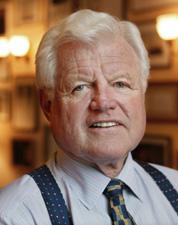
Mr. President, it is a privilege to join with my colleague from New Jersey, Senator Lautenberg in expressing our deepest concern that Libya will chair the next session of the United Nations Human…
Mr. President, it is a privilege to join with my colleague from New Jersey, Senator Lautenberg in expressing our deepest concern that Libya will chair the next session of the United Nations Human Rights Commission.
We know that Libya has supported, trained, and harbored some of the most notorious terrorists in the world. Libya is on the Department of State's list of nations that sponsor terrorism. To allow Libya to chair the UN Human Rights Commission is a serious and shameful mistake.
At this difficult time, the United Nations needs the highest possible credibility as it struggles to deal effectively with so many vital issues affecting nations throughout the world.
In fact, Libya continues to be in violation of multiple United Nations resolutions. It still has not complied with Security Council Resolution 748 to `'accept complete responsibility for the actions of Libyan officials.''
Libya still has not complied with the resolution to ``commit itself definitively to cease all forms of terrorist action and all assistance to terrorist groups and promptly, by concrete actions, demonstrate its renunciation of terrorism.'' We have received nothing concrete renouncing terrorism.
The international community is still waiting for Libya to accept responsibility for the 1988 bombing of Pan Am Flight 103, a bombing that murdered 270 innocent persons, including 89 Americans and 13 from Massachusetts. Until September 11th, the Pan Am bombing had killed more Americans than any other terrorist atrocity in our history.
Clearly, Libya should not have been appointed to chair an international human rights commission. Yet, in a secret ballot, 33 countries voted in favor of Libya, 17 abstained, and only the United States and Canada voted against Libya.
Fourteen years later, the families and the world community are still trying to find justice. We are still trying to hold Libya accountable for this atrocity, and we are still asking Libya to renounce terrorism and pay appropriate compensation to the victims' families.
Colonel Qadhafi still has not acknowledged that he ordered the attack. The victims still have not been compensated. The Libyans are still demanding that international economic sanctions be lifted, and that the Libyan government receive a clean bill of health on terrorism before it provides compensation to the families.
This choice of Libya should be a wakeup call for this administration. It shows the need for our own genuine participation in the UN--not the arrogant attitude the administration so often uses in its relations with other nations. We cannot expect to have good ties, even with our allies, if we do not treat them with respect.
I urge the Senate to support this proposal that requests President Bush and Secretary of State Powell to object strongly to the UN's current suspension of sanctions against Libya and to work with other members of the UN to reform the Human Rights Commission. Terrorism deserves no support from any nation.

Mr. President, I rise today to submit a resolution to prohibit employment discrimination in the Senate based on sexual orientation. I would like to thank the Senator from Oregon, Mr. Smith, as well…
Mr. President, I rise today to submit a resolution to prohibit employment discrimination in the Senate based on sexual orientation.
I would like to thank the Senator from Oregon, Mr. Smith, as well as my other colleagues who join me in introducing this resolution.
The resolution would amend the Standing Rules of the Senate by adding ``sexual orientation'' to ``race, color, religion, sex, national origin, age, or state of physical handicap'' in the antidiscrimination provision of rule 42, which governs the Senate's employment practices.
By amending the current rule, it would forbid any Senate Member, officer, or employee from terminating, refusing to hire, or otherwise discriminating against an individual with respect to promotion, compensation, or any other privilege of employment, on the basis of that individual's sexual orientation.
Senate employees currently have no recourse available to them should they become a victim of this type of employment discrimination.
If the rules are amended, any Senate employee that encountered discrimination based on their sexual orientation would have the option of reporting it to the Senate Ethics Committee. The Ethics Committee could then investigate the claim and recommend discipline for any Senate Member, officer, or employee found to have violated the rule.
Unfortunately, the Senate is already well behind other establishments of the U.S. Government in this area of antidiscrimination.
By 1996, at least 13 Cabinet level agencies, including the Departments of Justice, Agriculture, Transportation, Health and Human Services, Interior, Housing and Urban Development, Labor, and Energy, in addition to the General Accounting Office, General Services Administration, Internal Revenue Service, the Federal Reserve System, Office of Personnel Management, and the White House had already issued policy statements forbidding sexual orientation discrimination.
In 1998, Executive Order 13087 was issued to prohibit sexual orientation discrimination in the Federal executive branch, including civilian employees of the military departments and sundry other governmental entities.
That Executive order now covers approximately 2 million Federal civilian
workers. Yet more than 4 years later, there are still employees of the Senate that are unprotected.
In taking this step toward addressing discrimination, the Senate would join not only the executive branch, but also 308 Fortune 500 companies, 23 State governments and 262 local governments that have already prohibited workplace discrimination based on sexual orientation.
Currently, 65 Senators have already adopted written policies for their congressional offices indicating that sexual orientation is not a factor in their employment decisions.
Now, I urge my colleagues to join me by making this policy universal for the Senate, rather than relying on a patchwork of protection that only covers some of the Senate's employees.
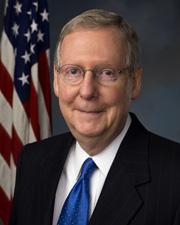
Mr. President, I ask unanimous consent that the Committee on Commerce, Science, and Transportation be authorized to meet on Thursday, May 1, 2003, at 9:30 a.m. in SR-253 on pending committee…
Mr. President, I ask unanimous consent that the Committee on Commerce, Science, and Transportation be authorized to meet on Thursday, May 1, 2003, at 9:30 a.m. in SR-253 on pending committee business.
Mr. President, I ask unanimous consent that the Committee on Commerce, Science, and Transportation be authorized to meet on Thursday, May 1, 2003, at 2:30 p.m. in SR-253 on Nanotechnology.
Mr. President, I ask unanimous consent that the Committee on Energy and Natural Resources be authorized to meet during the session of the Senate, on Thursday, May 1, at 10:00 a.m. to consider Comprehensive Energy Legislation.
Mr. President, I ask unanimous consent that the Committee on Foreign Relations be authorized to meet during the session of the Senate on Thursday, May 1, 2003 at 10:00 a.m. to hold a Nomination Hearing.
Mr. President, I ask unanimous consent that the Committee on Governmental Affairs be authorized to meet on Thursday, May 1, 2003 at 10:00 a.m. for a hearing entitled ``Investing in Homeland Security: Streamlining and Enhancing Homeland Security Grant Programs.''
Mr. President, I ask unanimous consent that the Committee on the Judiciary be authorized to meet to conduct a hearing on ``Judicial Nominations'' on Thursday, May 1, 2003, at 10:30 a.m. in Dirksen Room 226.
I. Nominations: Carolyn B. Kuhl to be US Circuit Judge for the Ninth Circuit, John G. Roberts, Jr. to be US Circuit Judge for the District of Columbia Circuit, J. Leon Holmes to be US District Judge for the Eastern District of Arkansas, and Patricia Head Minaldi to be United States District Judge for the Western District of Louisiana.
II. Bills: S. Res. 75, A resolution commemorating and acknowledging the dedication and sacrifice made by the men and women who have lost their lives while serving as law enforcement officers [Campbell, Leahy, Hatch, Biden, Durbin].
THE PRESIDING OFFICER. Without objection, it is so ordered.
committee on small business and entrepreneurship
Mr. President, I ask unanimous consent that the Committee on Small Business and Entrepreneurship be authorized to meet during the session of the Senate for a roundtable entitled ``SBA Re- Authorization: Credit Programs (Part II)'' and other matters on Thursday, May 1, 2003, beginning at 9:30 a.m. in room 428A of the Russell Senate Office Building.
THE PRESIDING OFFICER. Without objection, it is so ordered.
select committee on intelligence
Mr. President, I ask unanimous consent that the Select Committee on Intelligence be authorized to meet during the session of the Senate on Thursday, May 1, 2003 at 2:30 p.m. to hold a closed mark- up.
THE PRESIDING OFFICER. Without objection, it is so ordered.

Mr. President, I am happy that the Senate is passing S. Res. 75, a resolution that would designate May 15, 2003, as National Peace Officers Memorial Day. Senator Campbell and I introduced this…
Mr. President, I am happy that the Senate is passing S. Res. 75, a resolution that would designate May 15, 2003, as National Peace Officers Memorial Day. Senator Campbell and I introduced this resolution to keep alive in the memory of all Americans the sacrifice and commitment of those law enforcement officers who lost their lives serving their communities. We are joined by 20 cosponsors, including Judiciary Committee Chairman Hatch, and Judiciary Committee members Biden, Durbin, Schumer and Kohl.
I commend Senator Campbell for his leadership in this issue. As a former deputy sheriff, he has experienced first-hand the risks faced by law enforcement officers every day while they protect our communities. I also want to thank each of our nation's brave law enforcement officers for the jobs they do. They are real-life heroes, too many of whom often give the ultimate sacrifice, and they remind us of how important it is to support our state and local police.
Currently, more than 850,000 men and women who serve this Nation as our guardians of law and order do so at a great risk. Each year, 1 in 15 officers is assaulted, 1 in 46 officers is injured, and 1 in 5,255 officers is killed in the line of duty somewhere in America every other day. After the hijacked planes hit the World Trade Center in New York City on September 11, 72 peace officers died while trying to ensure that their fellow citizens in those buildings got to safety. That act of terrorism resulted in the highest number
of peace officers ever killed in a single incident in the history of this country.
In 2002, over 152 law enforcement officers died while serving in the line of duty, well below the decade-long average of 165 deaths annually, and a major drop from 2001 when a total of 237 officers were killed. A number of factors contributed to this reduction including better equipment and the increased use of bullet-resistant vests, improved training, longer prison terms for violent offenders, and advanced emergency medical care. And, in total, more than 16,700 men and women have made the ultimate sacrifice.
National Peace Officers Memorial Day will provide the people of the United States with the opportunity to honor that extraordinary service and sacrifice. More than 15,000 peace officers are expected to gather in Washington to join with the families of their fallen comrades who, by their last full measure of devotion to their responsibilities and the right and security of their fellow citizens, have rendered a dedicated service to our nation. I look forward to passage of this important resolution, a fitting tribute for this special and solemn occasion.
Show 4 more
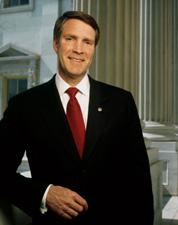
Mr. President, I ask unanimous consent that the Senate proceed to the immediate consideration of S. Res. 480, which was introduced by Senator Frist earlier today. Mr. President, I ask unanimous…
Mr. President, I ask unanimous consent that the Senate proceed to the immediate consideration of S. Res. 480, which was introduced by Senator Frist earlier today.
Mr. President, I ask unanimous consent that the resolution be agreed to, the motion to reconsider be laid upon the table, and that any statements relating to the resolution be printed in the Record.
I ask unanimous consent the resolution be agreed to, the preamble be agreed to, the motion to reconsider be laid upon the table, and any statement related to this matter be printed in the Record.
I ask unanimous consent the resolution be agreed to, the preamble be agreed to, the motion to reconsider be laid upon the table, and any statement related to this matter be printed in the Record.
I ask unanimous consent that the Senate proceed to the immediate consideration of Calendar No. 82, S. Res. 75, which was reported earlier today.
I ask unanimous consent that the Senate proceed to the
immediate consideration of Calendar No. 82, S. Res. 75, which was
reported earlier today.
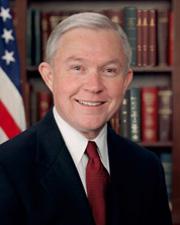
Mr. President, I suggest the absence of a quorum. Mr. President, I ask unanimous consent that the order for the quorum call be rescinded.
Mr. President, I suggest the absence of a quorum.
Mr. President, I ask unanimous consent that the order for the quorum call be rescinded.
Bill Text
3 versions available
        [Congressional Bills 108th Congress]
[From the U.S. Government Publishing Office]
[S. Res. 75 Agreed to Senate (ATS)]

108th CONGRESS
1st Session
S. RES. 75

Commemorating and acknowledging the dedication and sacrifice made by
the men and women who have lost their lives while serving as law
enforcement officers.

_______________________________________________________________________

IN THE SENATE OF THE UNITED STATES

March 5, 2003

Mr. Campbell (for himself, Mr. Leahy, Mr. Hatch, Mr. Allard, Mr. Biden,
Mr. Miller, Mr. Gregg, Mr. Dorgan, Mr. Lott, Mr. Daschle, Mr. Cochran,
Mr. Nickles, Mr. Dayton, Mr. Kerry, Mr. Inhofe, Mr. Jeffords, Mr.
Fitzgerald, Ms. Landrieu, Mr. Durbin, Mr. Sununu, Mr. Schumer, and Mr.
Kohl) submitted the following resolution; which was referred to the
Committee on the Judiciary

May 1, 2003

Reported by Mr. Hatch, without amendment

May 1, 2003

Considered and agreed to

_______________________________________________________________________

RESOLUTION

Commemorating and acknowledging the dedication and sacrifice made by
the men and women who have lost their lives while serving as law
enforcement officers.

Whereas the well-being of all citizens of the United States is preserved and
enhanced as a direct result of the vigilance and dedication of law
enforcement personnel;
Whereas more than 700,000 men and women, at great risk to their personal safety,
presently serve their fellow citizens as guardians of peace;
Whereas peace officers are on the front line in preserving the right of the
children of the United States to receive an education in a crime-free
environment, a right that is all too often threatened by the insidious
fear caused by violence in schools;
Whereas more than 145 peace officers across the Nation were killed in the line
of duty during 2002, well below the decade-long average of 165 deaths
annually, and a major drop from 2001 when 230 officers were killed,
including 72 officers in the September 11th terrorist attacks;
Whereas a number of factors contributed to this reduction in deaths, including
better equipment and the increased use of bullet-resistant vests,
improved training, longer prison terms for violent offenders, and
advanced emergency medical care;
Whereas every year, 1 out of every 9 peace officers is assaulted, 1 out of every
25 peace officers is injured, and 1 out of every 4,400 peace officers is
killed in the line of duty somewhere in America every other day; and
Whereas on May 15, 2003, more than 15,000 peace officers are expected to gather
in Washington, D.C. to join with the families of their recently fallen
comrades to honor those comrades and all others who went before them:
Now, therefore, be it
Resolved, That the Senate--
(1) recognizes May 15, 2003, as Peace Officers Memorial
Day, in honor of Federal, State, and local officers killed or
disabled in the line of duty; and
(2) calls upon the people of the United States to observe
this day with appropriate ceremonies and respect.
<all>