A resolution expressing the sense of the Senate that one of the most grave threats facing the United States is the proliferation of weapons of mass destruction, to underscore the need for a comprehensive strategy for dealing with this threat, and to set forth basic principles that should underpin this strategy.
Legislative Activity
Stay on top of the latest movement without scrolling through every action
Referred to the Committee on Foreign Relations. (text of measure as introduced: CR S3198-3199)
March 5, 2003
View full timeline
Introduced in Senate
March 5, 2003
Referred to the Committee on Foreign Relations. (text of measure as introduced: CR S3198-3199)
March 5, 2003
Floor Debate
21 membersWhat members said about S.Res. 77 on the floor
 CL
CL RGL
RGL JRB
JRB JR
JR JFK+16
Floor Debate
21 membersWhat members said about S.Res. 77 on the floor
Mr. President, I ask unanimous consent that the order for the quorum call be rescinded. Mr. President, in a few moments, I will send an amendment to the desk. Before I do so, I will make some general…
Mr. President, I ask unanimous consent that the order for the quorum call be rescinded.
Mr. President, in a few moments, I will send an amendment to the desk. Before I do so, I will make some general comments on the Moscow Treaty which is before the Senate.
I first wish to congratulate and commend our good friends from Indiana and Delaware for their great work on this treaty. As on so many other issues, they have worked together well in the national interest. The document which is before us, as well as the Resolution of Ratification, represents a lot of significant work on their part. I applaud them for it.
The treaty before us is a modest but a positive step in the United States-Russia relationship. It is particularly important we have this treaty. At some point it was suggested the agreement not be in the form of a treaty. As a matter of fact, the administration finally decided--I think wisely so, and I believe with the support of the chairman and ranking member of the Foreign Relations Committee--that we have a legally binding treaty rather than relying on unilateral steps that are not binding on future administrations and can be easily changed.
Having a treaty ensures that the Senate is going to be able to fulfill its constitutional role, giving due consideration of any treaty and providing advice and consent before ratification.
I view this treaty as a starting point for further nuclear arms reductions and a useful boost to our new and developing and evolving relationship with Russia. There is much more work to be done to continue to improve our mutual security with Russia, and that work includes further reducing our reliance on nuclear weapons, reducing nuclear proliferation dangers, and improving confidence, transparency, and cooperation with Russia on nuclear weapon matters.
This treaty, while important, is also somewhat unusual. Its central obligation is that both nations will reduce their operationally deployed strategic nuclear warheads to a level between
1,700 and 2,200 some 10 years from now. There are no gradual steps. It is just at a moment in time, 10 years from now, that level of between 1,700 and 2,200 must be reached. It could be a reduction in the operationally deployed strategic nuclear warheads for a very brief period, providing 10 years from the date of ratification that level is reached, and then the treaty expires.
Contrary to numerous media reports, this treaty does not require reductions in nuclear warhead stockpiles or delivery systems. In fact, it does not require the elimination of a single warhead. Under this treaty, both sides can simply remove warheads from land-based or submarine-based missiles and from bombers. Both sides are free to keep every warhead so removed and to store these warheads indefinitely for possible redeployment. The only limitations that will bind the United States and Russia are the limitations on nuclear weapon delivery systems under START I, and that is at least until 2009.
After December 5, 2009, when the START I treaty is scheduled to expire, it is not clear what will happen. At least in the case of START I, the delivery systems must be destroyed.
As the Senate fulfills its constitutionally mandated role in the treaty process and considers whether to provide its advice and consent to the ratification of the Moscow Treaty, there are a number of questions about the proper role of the Senate in the treaty-making process. These are questions to which I know our managers--our chairman and ranking member of the Foreign Relations Committee--have given a great deal of time, attention, and thought, and many others in the Senate have as well.
Some of these questions are as follows:
Do we want to agree to ratify a treaty if the executive branch does not clearly commit itself to submitting a substantive change in that treaty as an amendment to the Senate for its advice and consent? And do we want to approve a treaty where there is doubt that the executive branch could extend or withdraw from the treaty without even notifying or consulting with the Senate, without that guarantee, that commitment being written into a Resolution of Ratification?
These are highly significant questions that apply to the treaty- making power and to the advice and consent power of the United States. I want to address those issues in the amendments that I have to offer this afternoon.
The first amendment deals specifically with the question of whether the Resolution of Ratification should provide that the Senate must be notified and consulted prior to the withdrawal from that treaty or the agreement to extend that treaty by the President of the United States.
Article 4, paragraph 2 of the treaty states that this treaty shall remain in force until December 31, 2012, and may be extended by agreement of the parties or superseded earlier by a subsequent agreement.
Paragraph 3 of article 4 states:
Each Party, in exercising its national sovereignty, may
withdraw from this Treaty upon three months written notice to
the other Party.
These are somewhat unusual provisions, as are the administration's statements about them. Previously, extending a treaty was considered something that would require Senate advice and consent.
In the seminal study written in 2001 by the Congressional Research Service for the Foreign Relations Committee called ``Treaties and Other International Agreements: The Role of the United States Senate,'' the issue of extending treaties is clearly presented:
Modifying and extending an international agreement amount
to the making of a new agreement that should be done by the
same method as the original agreement. For treaties, this
means with the advice and the consent of the Senate.
In its article-by-article analysis of the Moscow Treaty, the administration asserts that ``Extension of the Treaty is not automatic and must be done by agreement of the parties.''
The article-by-article analysis continues, with the administration writing:
Since such an extension is authorized by Treaty, it would
constitute an agreement pursuant to the Treaty and would
accordingly not be subject to Senate advice and consent.
That is the extension issue.
On the matter of treaty withdrawal, the administration's article-by- article analysis states:
Unlike some other arms control agreements, this withdrawal
clause is not tied to a party's determination that
extraordinary circumstances jeopardizing its supreme national
interests exist. Rather, the Moscow Treaty includes a more
general formulation that allows greater flexibility for each
party to respond to unforeseen circumstances.
So the withdrawal clause permits either party to withdraw from the treaty for any reason short of a supreme national interest.
The Resolution of Ratification addresses this issue of withdrawal or extension with a declaration numbered 6, which:
Urges the President to consult with the Senate prior to
taking actions relevant to paragraphs 2 or 3 of article IV of
the treaty.
So the resolution before us, and before my amendment is considered, simply urges the President--it is precatory language that says, Mr. President, we urge you, whether it is you or your successor, to consult with the Senate prior to taking the actions relevant to paragraphs 2 or 3, the extension or the withdrawal from a treaty.
The declaration urges the President to consult with the Senate, but it does not protect the interests of the Senate because it is not binding. A President--this President or his successor--could simply decide to extend or withdraw from this treaty without notice or consultation with the Senate.
The U.S. should not either enter into a treaty or withdraw from a treaty lightly and either action--either entering into a treaty, withdrawing from a treaty, or extending a treaty's operations--should be done only with the involvement of the Senate. We have to give our advice and consent to permit ratification in the first place.
We, the Members of this Senate, have the responsibility to assure that involvement. That constitutional responsibility rests in our hands, and we should not leave that constitutional mandate and responsibility up to the discretion of the executive branch. We want the executive branch to consult, and we are going to urge them to consult in a Resolution of Ratification. The question is whether we are going to require that resolution. Barring some circumstances, which I will describe in a minute, we are going to require a chief executive to consult with this body, to give us notice, and to consult, not to seek ratification--that is a second-degree amendment which my friend from Wisconsin will be offering in a moment--but the proposal in my amendment is that we simply require there be notice and consultation of the Senate before there is withdrawal from a treaty which we have ratified, or extension of a treaty which we have ratified. That is the least we can do. That is a middle course, short of saying we have to ratify an extension or withdrawal, which I think is also an appropriate course of action which has been much debated over the years. Short of that, which it seems to me is a matter which is going to be of some debate between the executive and legislative branch, I think a middle course, which we all ought to be able to agree upon, is that a Resolution of Ratification require there be notice to the Senate so we can exercise whatever action we decide to take at that point--no guarantee that we would have to ratify it before it actually occurs but assurance we will be given notice and an opportunity to give our advice, or take whatever action we want, prior to the withdrawal from a treaty or prior to the life of the treaty being extended.
The amendment I am going to be offering is very straightforward. I do not know if this amendment is at the desk. If not, I will send it on behalf of myself, Senator Feingold, and Senator Akaka, and ask for its immediate consideration.
Mr. President, I ask unanimous consent that the reading of the amendment be dispensed with.
I will explain it at this point. This amendment is straightforward. It says that prior to taking any action to extend or withdraw from this treaty, the President shall provide not less than 60 days' notice to the Senate and shall consult with the Senate.
Now, what happens if there is some national security need which prevents the President from providing such notice or consultation? The amendment foresees that possibility and has a waiver provision in case there is some unforeseen national security need that would prevent the President from immediately requiring to notify and consult with the Senate. So there is considerable flexibility given to the President if it is needed for national security reasons.
There has been a lot written about whether or not the Senate must actually ratify a withdrawal from a treaty. There has been much debate on that subject. In a Congressional Research treatise on treaties, written in 1993 and then republished more recently with the same language, this is what the Research Service says about the issue of withdrawal from a treaty and the Senate role in that process, that the U.S. Constitution is silent with respect to the power to terminate treaties. The matter is not discussed in the debates of the Constitutional Convention in Philadelphia. Briefly:
While the Constitution tells us who can make treaties, the
President shall have the power, by and with the advice and
consent of the Senate, to make treaties.
It does not say who can unmake them. As a consequence of the Constitution's silence in this regard, there has been some confusion of doctrine upon this point and a variety in practice.
A little later on in this study, the Congressional Research Service says the same: Whether the President alone can terminate a treaty's domestic effect remains an open question. As a practical matter, however, the President may exercise this power since the courts have held that they are conclusively bound by an executive determination with regard to whether a treaty is still in effect. The same result may apply to a congressional termination, particularly if it is regarded as a declaration of war.
So according to the Congressional Research Service, the issue of whether the President alone can terminate a treaty is an open question. This amendment does not intend to resolve that question. A second- degree amendment, however, will be offered which will address that issue. My amendment does not. My amendment simply says--and it seems to me this is a very modest amount of protection for the Senate's constitutional responsibility in the treaty-making process--unless there is some national security reason why you cannot give notice to the Senate that you are intending to withdraw or extend the treaty, give us 60 days' notice so we can take whatever action we deem is appropriate, so we can give consultation and advice on the question of withdrawal or extension. It does not prevent the administration from extending or withdrawing from the treaty. It does not--``it'' being my amendment--require Senate approval of extension, even though that is the policy and practice to date often as elaborated by that study.
It does not require Senate approval of withdrawal from a treaty. It simply says the President shall notify and consult with the Senate before extending or withdrawing from the treaty.
This amendment is consistent with what the Foreign Relations Committee wrote in its report about the treaty relative to the issue of consultation on arms control treaties. It is a very thorough report. The committee that we have before us, on page 22, says the following:
The Senate and this committee have an institutional
interest in the close observation of arms control
negotiations and the successful implementation of resulting
agreements. Past administrations have recognized that
consultations with the Senate prior to taking actions
relating to assigning, amending, or withdrawing from such
agreements may avert serious disagreements.
On the specific question of withdrawal, the committee report says: Should it become necessary for a party to withdraw from the treaty, article 4 provides for 3 months' notice of such a decision. Events can well occur between submissions of the annual report required in condition 2 that would warrant informing and consulting with the Senate. In any circumstance, the Senate would desire notification and consultation.
So the parties, the two countries involved, must give each other 3 months' notice prior to the withdrawal. But relative to the Senate, the report simply says the Senate would desire notification and consultation.
I could not agree more with that statement: ``desire.'' But it is not enough to say we desire a consultation. If we are going to protect the constitutional responsibilities of this body, we must assure our constitutional responsibility and the operation of treaties is going to be protected and our role under the Constitution is, in fact, honored-- not just honored in the breach but in the actual life of the treaty. I believe this is the minimum we should do.
We should write into our Resolution of Ratification a requirement in the absence of some national security reason that the President, whoever the President might be at the time, do give us the notice and give us the opportunity to take whatever action or consult as we deem might be appropriate relative to the issue of withdrawal or extension of this treaty prior to the administration making that decision giving that notice to the other party to this treaty.
The amendment is consistent with what the administration says it is willing to do. Secretary Powell stated: While it is the President who withdraws from treaties, the administration intends to discuss any need to withdraw from the treaty with the Congress, to include the Senate Foreign Relations Committee, prior to announcing any such action.
That is a welcome statement of intent. We should incorporate that assurance. We should enshrine that assurance. We should embody that assurance. Intentions and administrations change. The obligation of this body to the Constitution endures. It is a solemn responsibility. It does not change. The intention of the President or a new President with new intentions changes. Language of the Constitution, relative to what this body's responsibility is relevant to treaties, is unchanging.
This amendment simply requires notification and consultation which Secretary Powell and the committee indicate they want and would expect would happen. It simply assures that, in fact, in the absence of some national security need, which is unexpected, which would permit a waiver of the notice requiring that a President would notify this body before withdrawal or extension of a treaty would occur.
The committee report concludes that: Declaration (6), while not binding on the President, is a formal request that the executive branch maintain the consultation policy enunciated in the Secretary of State's answer to the question--which I gave above that the administration intends to discuss. That is what the committee report says Declaration (6) provides, which is in the Resolution of Ratification. It is a request to the executive branch. That is not strong enough in terms of our obligations to the Constitution and to our responsibility relative to the treaty-making power.
If we want to really assure what we are requesting is, in fact, part of the operation of this treaty, we should include in this Resolution of Ratification a condition which my amendment offers, which is that the President would
do what the committee said it really wants and really desires and really urges, to use the words of the report, and that is to notify, consult with the Senate prior to taking action to withdraw from or extend a treaty.
I yield the floor.
Let me thank my colleagues for their comments. Some of what they say frankly amazes me and startles me.
How the administration could possibly walk away from this treaty because a Resolution of Ratification contains the requirement that they give us 60 days' notice before withdrawing, when in fact they say they are intending to give us that notice, amazes me. The administration has represented to the Senate by Secretary Powell that it is their intention to discuss any need to withdraw from the treaty with the Congress. That is their intention.
How it can be suggested they are going to walk away from a treaty which simply puts into our ratification resolution and embodies what they intend to do, anyway, is a complete mystery to me. It raises the question, are they serious about that intention? Can't we take them seriously? Can't we assure ourselves that maybe the next administration, because it might not have the same intention, should be bound by us? Do we have to leave this requirement to give notice of withdrawal from a treaty up to the absolute discretion of an executive branch? That is not protecting the constitutional role and requirement and obligation and responsibility of the Senate.
The question was raised by my dear friend from Delaware about what the word ``consult'' means in the amendment. It means the same thing as in the language which the Foreign Relations Committee has given us. In declaration 6 of the resolution, it says the Senate urges the President to consult with the Senate. We define ``consult'' in the way the Foreign Relations Committee defines it.
I am happy to.
That is the important difference. But the word is the same word.
The important fact is it is not binding.
That is what it comes down to. This is not an issue as to who has the power to withdraw from a treaty. Both the Senator from Indiana and the Senator from Delaware make arguments about that issue. That is not resolved in this amendment. Both of their remarks address that issue, as did my remarks. I am the first one to acknowledge that as a matter of fact the Constitution is silent with respect to the power to terminate treaties. That is the quote I used before that came from the Congressional Research Service. The Constitution is silent. There has not been a resolution of this issue.
There is the Goldwater case that can be interpreted as the Senator from Delaware did. We do not resolve that issue in this amendment. This amendment does not remove from the President, nor does it purport to remove from the President, the power to terminate or extend a treaty. That issue is a major constitutional issue.
I cannot believe, and I did not hear that either of our colleagues suggested, that there is a constitutional problem with my amendment because my amendment does not require the President to get the advice and consent of the Senate to withdraw from the treaty. My amendment simply says: Before you exercise your right to withdraw, give 60 days' notice to the Senate. I don't think there is the slightest constitutional infirmity in simply providing what the President says he intends to do and what the committee says is desirable be done in the language of the committee ratification resolution, that we urge a formal request that the executive branch consult with the Senate of the United States.
There is no constitutional issue with my amendment. With the Senator from Wisconsin's second-degree amendment, which has been withdrawn, there was a very serious constitutional issue, one which we could spend days on in the Senate, as to whether or not we can require in a ratification resolution that the President obtain our consent to the withdrawal from a treaty. That is a major, massive constitutional issue. That one has resonated around the country for a couple hundred years. That was not going to be resolved in this Resolution of Ratification. I hope some day it is resolved in a lengthy debate.
But what I am proposing is simply the most modest step to give some protection to the obligation and responsibility of this institution relative to treaty-making power, which is that we just be given notice, 60 days' notice, and consultation prior to a decision of
the President to withdraw from a treaty.
I have not heard today, and I don't believe that there is, a serious argument that my amendment raises constitutional issues. As a matter of fact, almost by definition, it cannot, since the President says he is intending to consult with us and since the committee says it is desirable that he do so.
I have not heard that argument. Again, I don't believe it could be a serious argument, that we could simply not do what this amendment does, which is to require that there be 60 days' notice and consultation.
But how the suggestion could be made that the President would walk away from this treaty if the Resolution of Ratification contains language that embodies what the intention of the administration is to do anyway, and what the committee is urging the administration to do anyway, is a complete mystery to me. That one befuddles me--the idea that this administration, which has proposed and signed this treaty, would walk away from the treaty if the Senate says in a ratification resolution that the administration will give us the same notice that the administration says it intends to give us. That one, it seems to me, is not a credible argument.
So there is going to be disagreement as to whether or not the Senate has the power to put in a ratification resolution a provision that the President must, before extension or withdrawal, get the approval of the Senate. If that were part of my amendment, I could understand why there would be a massive debate over that issue--mainly between the White House, which I think would say no way, and many Members of the Senate would say that is the only way we can protect the constitutional obligation of the Senate. But that is not this amendment. That was the Feingold amendment, which was withdrawn.
This amendment walks a middle road and says we want to get a commitment in this resolution that we be given the notice and consultation which the administration says it intends to give us. It cannot bind future administrations. This administration--I don't have any doubt--intends to do what it says it intends to do. Secretary Powell says he intends to give notice. I take him at his word. He is an honorable man. But administrations come and go and intentions change with future administrations. That is the relevance of this amendment-- to put in our ratification resolution what the committee says is desirable, and what the committee says it urges the administration to do, and what the administration says it intends to do, and about which I have not heard a constitutional argument, for good reason, because here we are not limiting the power of the President to withdraw from a treaty.
The President has the same power to withdraw from a treaty before or after my amendment is defeated or accepted. That power doesn't change. What changes, however, with this amendment, would be to say that the Senate, as part of its treaty obligation and responsibility, wants to be informed prior to the withdrawal from or extension of a treaty that the executive branch enters into.
That is, again, a summary of the amendment. I hope, even though obviously the leaders of the Foreign Relations Committee oppose this for the reasons they give--and I don't think there are two Members of the Senate for whom I have greater respect than these two Members. We have worked together on these issues. Senator Lugar, Senator Biden, and I have worked together on so many issues over the years that I have lost count. My respect and regard for them is boundless. But I think this is an issue of important principle that the Senate should address--whether or not we want to be given notice before a President withdraws from this treaty that we are about to ratify, hopefully.
Mr. President, I yield the floor.
Will the Senator yield for a question?
This is a procedural inquiry. We are trying to determine-- to assist a colleague who has an urgent, unusual need--if we can set a time on this amendment at 4:05; would that be amenable? I hate to interrupt my friend.
That is what is difficult. The earlier we are able to set a time, the earlier we will be able to vote. If we set it 10 minutes from now, it would have to be 4:15 instead of 4:05.
Mr. President, I believe the yeas and nays have not been ordered. I modify my amendment by striking the word ``any'' on line 5 and striking the word ``relevant'' on line 5 and substituting the word ``pursuant'' for the word ``relevant'' on line 5. The modification is at the desk.
I suggest the absence of a quorum.
Madam President, I ask unanimous consent Senator Kennedy be added as a cosponsor to the amendment, and I ask for the yeas and nays.
Mr. President, I expect to take just a few minutes. I will be offering an amendment and then having a colloquy. I send an amendment to the desk on behalf of myself, Senator Daschle, Senator Akaka, and Senator Nelson of Florida.
Mr. President, I ask unanimous consent that further reading of the amendment be dispensed with.
Mr. President, condition 2 of the Resolution of Ratification requires the President to submit to the Committee on Foreign Relations and the Armed Services Committee an annual report that would include, among other things, the following: A, a listing of the strategic nuclear weapons force levels of the United States and a best estimate of the strategic nuclear weapons force levels of the Russian Federation as of December 31 of the preceding calendar year; B, a detailed description, to the extent possible, of strategic offensive reductions planned by each party for the current calendar year.
The purpose of this amendment is to clarify that those elements of the report should include certain important information on operationally deployed strategic nuclear warheads.
I have discussed this matter with Senators Lugar and Biden, and I think we can address the issue satisfactorily with a colloquy between myself and Senators Lugar and Biden.
My question of Senator Lugar is the following: Will the committee urge the administration to include under the annual reporting requirements required by conditions 2(a) and 2(b), that the Committees on Foreign Relations and Armed Services would receive information on the following: During the calendar year of the report, the specific number and type of warheads that are planned to be no longer operationally deployed; secondly, during that current calendar year, the planned total size and makeup of the stockpile of strategic nuclear warheads by number and by type; and as to the past year, the report would then, hopefully, include and be urged to include by Senators Lugar and Biden the total number and type of any warheads that were dismantled during the preceding calendar year?
I thank both Senators for the assurance that they will urge the administration that the reporting provided for under the Resolution of Ratification would hopefully include the information I have just outlined.
Amendment No. 256, Withdrawn
Mr. President, I now withdraw the amendment.
Mr. President, I suggest the absence of a quorum. Mr. President, I rise in opposition to the amendment offered by the distinguished Senator from Michigan. I do so reluctantly because of my high…
Mr. President, I suggest the absence of a quorum.
Mr. President, I rise in opposition to the amendment offered by the distinguished Senator from Michigan. I do so reluctantly because of my high regard for the Senator and his work on arms control, which has been indefatigable. His wisdom I respect.
As a rule, we are on the same side. I, however, wish to oppose the amendment for the reasons I will relate in this testimony. I read, in my opening statement yesterday, words that the Foreign Relations Committee addressed to this issue in the Resolution of Ratification. The Senator has referenced that fact.
It was drafted by us in an attempt to address concerns put forward by the Senator from Michigan, the Senator from Wisconsin, and others regarding the treaty's withdrawal clause contained in article 4.
Our text is based on Secretary Powell's commitment to consult with the Senate should the President consider the utilization of the withdrawal provision.
It is worth repeating, especially in light of the amendment offered today, the answer Secretary Powell submitted for the record on the issue of treaty withdrawal. The Foreign Relations Committee asked the Secretary:
What role will the Congress have in any decision to
withdraw from this treaty?
Will the administration agree to at least consult closely
with this committee--
That is the Foreign Relations Committee--
before making any such decision?
The Secretary responded:
While it is the President who withdraws from treaties, the
administration intends to discuss any need to withdraw from
the treaty with the Congress, to include the Senate Foreign
Relations Committee prior to announcing any such action.
This was a carefully considered answer of Secretary Powell for the record.
Past Senate consideration of this issue has resulted in the view that one of the bases on which a President may terminate a treaty without congressional participation is when a decision to withdraw is taken in conformity with the provisions of the treaty. The Moscow Treaty, as it stands, provides for this.
I am aware of Senators' concerns and arguments about the need to insert the Senate into the process. Many of the arguments we have heard about withdrawal stem from President Bush's decision to withdraw from the ABM Treaty. That decision was taken in full compliance with the terms of the ABM Treaty. The President made no secret about his desire to do so, and Congress held innumerable hearings and public statements about the need to take the action.
I am sympathetic to arguments from Senators regarding the need to maintain Senate prerogatives. The process governing termination and withdrawal is a point of constitutional debate. Although the Constitution assigns a specific role for the Senate in the treaty ratification process, it is silent on the issue of treaty termination. Furthermore, nothing in the Constitution restricts the President from terminating or withdrawing from a treaty on his own authority.
Presidents have consistently terminated advice and consent treaties on their own authority since 1980. Twenty-three of the thirty treaties terminated during this period were bilateral; seven of these treaties were multilateral, all of them terminated by the President.
Prior to 1980, Senator Barry Goldwater of Arizona challenged President Carter's termination of the Mutual Defense Treaty with Taiwan. Senator Goldwater's challenge failed and the treaty was terminated.
The White House legal adviser has long argued that the President is the principal spokesman of the Nation in foreign affairs, and restrictions on that power have been strictly construed. Given the absence of a textual basis conferring the termination power on another branch or an established practice derogating from the President's termination power, it is difficult to envision such a role for the Senate.
Proponents of a senatorial role in this process will often respond by suggesting that the President cannot, on his own authority, terminate a treaty because it is the law of the land. Again, the White House suggests this is a fallacy. A terminated treaty no longer has effect in much the same way that a provision of a law or treaty found by the courts to be unconstitutional no longer has effect. However, in neither case is the law repealed.
Historically, there is evidence of only one instance in which the Senate sought by a resolution of advice and consent to limit the President's constitutional power to terminate a treaty. The first condition to the 1919 proposed resolution of advice and consent to ratification of the Versailles Treaty would have provided:
Notice of withdrawal by the United States may be given by a
concurrent resolution of the Congress of the United States.
On that occasion, the Vice President of the United States, Thomas Marshall, addressing the Senate before the vote, called the condition an unconstitutional limitation on the President's powers, a view with which a number of leading scholars of the day concurred. The resolution failed to receive the required two-thirds vote and the question has remained moot for the better part of a century--I might say, until today.
Beyond the legal issues that underlie this debate, some have expressed concern that article 4 differs from previous arms control agreements in that it only requires 3 months' notice and permits withdrawal based upon issues related to national sovereignty. Critics point out the START treaty allows the parties to withdraw after giving 6 months' notice, and only ``if it decides that extraordinary events related to the subject of this Treaty have jeopardized its supreme interest.''
The withdrawal clause is reflective of the changed nature of our relationship with Russia, not a desire to rob the Senate of its role in the treaty-making process. As the administration's article-by-article analysis sent to the Senate with the treaty states--this is the analysis by the administration as it submits the treaty:
Unlike some other arms control agreements, the withdrawal
clause is not tied to a Party's determination that
extraordinary circumstances jeopardizing its supreme national
interests exist. Rather, the Moscow Treaty includes a more
general formulation that allows greater flexibility for each
Party to respond to unforeseen circumstances.
Indeed, as we have related in this debate, the Moscow Treaty arose from a desire on the part of the United States unilaterally to destroy its nuclear weapons and likewise a similar desire by the Russians. Finding these coincident interests, they have joined in this treaty; nevertheless, there is no timetable. Some critics have pointed out that the nature of this treaty is substantially different. It is one that comes from the volition of the two without specific verification procedures.
I do not view the withdrawal provisions as a weakness in the treaty. Instead, I believe it is another manifestation of the improved U.S.- Russian relationship. It should also be pointed out that our bilateral relationship provides us with some confidence that the time and reasons for withdrawal would not necessarily relate to the agreement. As the Secretary of State told the Committee: ``The Moscow Treaty's formulation for withdrawal reflects the likelihood that a decision to withdraw would be prompted by causes unrelated either to the Treaty or to our bilateral relationship. We believe this formulation more appropriately reflects our much-improved strategic relationship with Russia.''
In sum Mr. President, I was hopeful that our resolution of ratification would have resolved this issue. For the benefit of the Senate let me again read the text of our resolution of ratification.
Given the Senate's continuing interest in the Treaty and in
continuing strategic offensive reductions to the lowest
possible levels consistent with national security
requirements and alliance obligations of the United States,
the Senate urges the President to consult with the Senate
prior to taking actions relevant to paragraphs 2 or 3 or
Article IV of the Treaty.
This text was negotiated closely with Administration officials with the goal of striking a compromise that would preserve Senate prerogatives while not infringing upon the power provided to the President by the Constitution. I believe we succeeded in doing so.
For these reasons, I oppose the amendment, and I urge my colleagues to do so as well.
I yield the floor.
Mr. President, again, I will simply say that in our Resolution of Ratification--and this is what we have before the Senate now:
Given the Senate's continuing interest in the treaty and in
continuing strategic offensive reductions to the lowest
possible levels consistent with national security
requirements and the alliance obligation of the United
States, the Senate urges the President to consult with the
Senate prior to taking action relevant to paragraphs 2 or 3
of article 4 of the treaty.
It seems to me the language is clear. We have spelled it out. In addition, we have had testimony and have queried Secretary Powell regarding his interpretation of the role of the Congress, and he has assured us that there would be consultation.
Yes.
Yes, that would be very satisfactory. In fact, I even will propose a time sooner than that if that is in the realm of the possible.
Let me make a proposal and, in fact, offer a unanimous consent at this time to that effect.
I ask unanimous consent that the vote in relation to the Levin amendment No. 252 occur at 4:05 today, and that the time until then be equally divided in the usual form; further, that no second-degree amendments be in order prior to the vote.
I thank the Senator from Michigan for that suggestion.
I will conclude by indicating that the Senator from Michigan and the Senator from Wisconsin proposed a serious constitutional issue. At the initiation of this debate, I indicated that this is not a settled law. I also argue that this is not the treaty on which to attempt to settle. There has been precedent--at least in terms of activity that both the distinguished Senator from Delaware and I have decided. I pointed out 30 treaties terminated by the President since 1980. This is a lot of treaties. That has been the regular practice.
I referred to a debate on this issue indicated in 1919 on the Versailles Treaty on which the Vice President of the United States addressed the Senate. The Senate did not come up with a two-thirds vote to change the fact that the Constitution is silent.
I accept the fact that the Senator from Michigan pointed out at some point in our history--and I think the Senator from Delaware made the same point--we may want to have this debate, but I hope not on this treaty at this time, given the assurance by the Secretary of State, and likewise by the committee, in our article 4 to this treaty.
For the benefit of Senators, there are about 26 minutes left and, essentially, we will leave it to the Chair how that should be divided.
I yield the floor.
I suggest the absence of a quorum equally divided.
Madam President, I move to reconsider the vote and move to lay that motion on the table.
The motion to lay on the table was agreed to.
Amendment No. 254
Madam President, I thank the distinguished Senator from Hawaii for his very important thoughts about threat reduction and about our mutual quest and support.
I agree with my friend. The CTR and other non- proliferation programs are making progress but face a new set of responsibilities in light of the Moscow Treaty. The Russian Federation intends to reduce, destroy, and account for various weapons systems, materials, and expertise with U.S. assistance under the CTR and other non-proliferation programs. For this reason, the Foreign Relations Committee included Condition One to the Treaty to require the President to submit to Congress an annual report and recommendations on how Cooperative Threat Reduction assistance can best help the Russian Federation implement the Treaty efficiently and maintain the security and accurate accounting of its nuclear weapons and weapons-usable components and material.
Yes, this report is intended to establish the rationale for all U.S. non-proliferation programs insofar as they can be used to help Russia dismantle weapons or assure the security of those weapons and of the fissile material in them. The report also will include the amount of CTR assistance that the Russian Federation will need to meet its obligations under the Treaty.
Yes, I agree that such information is useful. However I believe that this information already is provided as part of the overall CTR annual report to Congress by the Department of Defense and annual reports by other non-proliferation programs. Specifically, the CTR annual report contains funding levels for individual projects as well as five-year cost estimates.
I understand my colleague's concern that this report does not address Treaty-specific programs. The report required in the resolution of ratification could lay the groundwork for future cost and program requirements for non-proliferation that perhaps can be addressed in the Defense authorization bill.
Mr. President, let me respond to the distinguished Senator from Massachusetts by reviewing, once again, the origins of the Moscow Treaty. At the time that President Putin and President Bush met in May of last year, Russia had made the decision that the distinguished Minister of Defense of Russia, Sergei Ivanov, announced that the Russians would be destroying warheads in a matter of course, dismantling them from missiles. President Bush had indicated that as a matter of fact, unilaterally, the United States was prepared to do the same. For a variety of reasons--some economic, some safety--both countries had decided upon a course of action. When the two Presidents came together to formulate their joint announcement, the Moscow Treaty was formed.
As has been pointed out, first it was not clear that a treaty would be formulated, but ultimately both leaders decided that was the best course. That is why the treaty is simple. It, clearly, does not cover all of the objectives of arms control that can be covered in further negotiations, and many of us hope there will be further negotiations, not only in the nuclear area but in the biological area where in the course of this we have pointed out there is still a lack of transparency on the part of the Russians, as we perceive it at certain military facilities.
In the case of the amendment offered by the distinguished Senator from Massachusetts as a way of shoring up a treaty that he has criticized, let me say that the major verification procedure now in place is the Cooperative Threat Reduction Program, very specifically. At Surovatika, Senators and Members of the House have witnessed four missiles coming into that plant each month. They are destroyed. Clearly, the warheads have been separated from the missiles prior to that destruction. That four-a-month situation is going to continue unless for reasons of our own parliamentary procedure we stop the funding.
Clearly, you can verify the missiles. In my last visit to the site, I was accompanied by the governor of the territory, the mayors of various towns and radio stations in Russia. Why? Because this is a jobs issue. Russians employ people destroying missiles. Nothing very secret about it; they are swarming around. A television station from Indianapolis, channel 13, accompanied me on that occasion, took pictures of the entire process and put it on a remarkable documentary on Indianapolis television.
We need to catch up with where verification is in the world. It is on the ground, with Americans working in cooperative threat reduction with Russians.
The missiles that come in are interchangeable SS-17s, SS-18s, and SS- 19s. We visited with plant officials about their further planning on SS-24s and 25s. This is the comprehensive scope of what we are talking about. These are, in fact, the missiles on which the warheads were located and from which they have been separated.
In a future treaty the United States and Russia may decide they wish to go much further with regard to the destruction of the warheads themselves. That point has been made by many Senators that the treaty does not call for the destruction of warheads. But, in fact, warheads are being destroyed by Russia and by the United States.
In terms of both of our countries, we have decided not to have transparency to the point that both nations are inspecting that process, but we are able to verify the results. I point out that the intelligence report that perhaps the Senator is calling for may be covered in large part by the cooperative threat reduction annual report to Congress. This one is for fiscal year 2002, a detailed summary not only of nuclear dismantlement and demolition but, likewise, anything we are doing in chemical and biological, too.
I admit there are areas, as I have said earlier, that we are not into yet, and we wish we were. My hope is we will be successful as two nations in seeing eye to eye on movement in that direction.
When it comes, however, to the verification of this Moscow Treaty, it flows from the fact that both nations of their own will want to destroy the missiles and separate the warheads and thus reduce the viability of these situations. We have indicated at our own time, at our own speed, we will do that. And the linchpin from the beginning, it seems to me, is the fact not only of the START requirements that do expire in 2009 but the Cooperative Threat Reduction Program on the ground which has no expiration unless Congress decides to terminate it. That is a different debate and a different set of decisions.
I am hopeful Senators will understand that. I appreciate the fervent plea for verifiability for all of us. As I say, I admit, I wish we had a better insight into the disposition of all of the warheads, but even here both Russians and Americans indicate in the fullness of time that these warheads have to be destroyed. In large part that is because sometimes the fuel components in them are unstable. They become a danger for the nation that is simply holding them.
This is not a sporting goods situation of inert matter on shelves. These, unfortunately, are far too living, viable, dynamic instruments. This is why we have worked with Russia on the fissile material that comes from the destruction of these warheads; to provide storage for that. It is a whole new set of problems.
Some arms control people have suggested that while the warhead is on the missile, you do not have the problem of fissile material that might get loose and be bought or sold. It is contained. That is still true while it is in the warhead. As it comes out of the warhead, a whole new set of problems is created--
of storage and of accountability. We are working with the Russians through our Department of Energy on these accountability projects, which are intense and vigorous.
For these reasons, I oppose the amendment of the distinguished Senator from Massachusetts. I hope other Senators will oppose it. It appears to me to be unnecessary. I would say, simply, other criticisms of the treaty are certainly a matter of the opinion of the Senator, but it was a modest treaty. It came from the volition and the will of both countries coming together at their own time, at their own speed, and with procedures that seem to me to offer an adequate amount of verifiability, much of it on the site and through the eyes of the Russian press, as well as our own.
I thank the Chair.
Mr. President, I ask unanimous consent the order for the quorum call be rescinded.
Mr. President, I ask unanimous consent that the vote in relation to the Kerry amendment, No. 255, occur at 5:40 today, and the time until then be equally divided in the usual form, provided that no further second-degree amendment be in order to the amendment prior to the vote.
Mr. President, I add one final argument, and that is the actual text of the amendment of the distinguished Senator from Massachusetts requires these intelligence reports on the capability of the United States to monitor the compliance of the Russian Federation to the requirements of the treaty.
The treaty does not require insight into the warhead destruction. That is a desirable aim, and I have indicated in due course we may be able to negotiate that, but that is not a part of this treaty. Therefore, the report that is being asked for really asks for information that is not covered by the treaty.
I repeat, the information that is covered by the treaty, it seems to me, is really adequately monitored by the cooperative threat reduction personnel.
I yield the floor.
I yield to the distinguished Senator from Delaware.
Mr. President, I move to reconsider the vote and I move to lay that motion on the table.
The motion to lay on the table was agreed to.
Mr. President, I am pleased to respond to the distinguished Senator from Michigan. Our report does not require information on those warheads that are not operationally deployed. We would urge the administration to provide this information.
During our hearings on the treaty, a number of witnesses expressed concern about the alert status of U.S. strategic nuclear warheads. As the United States and Russia enter a new era of friendship and cooperation, we must take a close look at what we can do, in a safe and effective manner, to take nuclear weapons off alert status and prevent an accidental nuclear launch due to a false alarm or a miscalculation. I know our friend and former colleague Senator Sam Nunn expressed hope in our hearings that we might address the cold war-era nuclear postures of the United States and Russia as a critical next step following ratification of the Moscow Treaty.
The Senator from Delaware is correct, and while we have not determined precisely how to proceed, I expect that we will want to encourage action by the President before we move on our own. Such a measure could be offered as an amendment to major legislation such as the Department of State authorization bill.
I can say with confidence that Senator Biden and I are agreed that we should continue to pursue this initiative in ways that will provide productive results.
I share the concern voiced by the senior Senator from North Dakota on the potential proliferation threats posed by non- strategic nuclear weapons in Russia. As the Senator knows, the United States has voiced serious concerns about the safety and security of these dangerous weapons stored at multiple locations around Russia. I believe the Russian tactical nuclear weapons arsenal represents an area of concern and needs attention.
I thank the Senator from North Dakota for his work on this important issue and his thoughtful invitation. I would ask that the Senator from North Dakota withhold his amendment with the understanding that the Foreign Relations Committee will make a serious effort to elevate the matter of Russian tactical nuclear weapons to a top priority on our Nation's arms control and threat reduction agenda.
The ranking member and I have plans to hold hearings on the continued proliferation challenges in Russia. Clearly the threat posed by tactical nuclear weapons would be an important topic to be discussed and investigated in that forum. I believe that tactical nuclear warhead reductions should be a top United States priority in our new relationship with Russia.
I thank the Senator for his thoughts. This issue was raised repeatedly during our hearings on the Treaty. I am confident of the administration's efforts to engage Russia on this issue. I would be happy to reinforce the committee's views on these issues with the appropriate Administration officials.
My understanding is the distinguished majority leader has a statement.
Mr. President, I ask for the yeas and nays on the Resolution of Ratification.
I move to reconsider the vote.
Mr. President, I express my appreciation to Senator Biden for his leadership and management of this treaty and to all Members of the Foreign Affairs Committee, including the distinguished occupant of the Chair, and also Senators who contributed constructively to, I believe, a very important achievement.
I specifically mention staff Members who were most supportive and helpful: Tom Moore, Ed Levine, Jofi Joseph, Brian McKenan, Jason Hamm, Ken Myers, Sr., and Kenny Myers, Jr. We are appreciative of staff on both sides of the aisle for a remarkable piece of work.
I yield the floor.
Mr. President, let me begin by saying I agree with the Senator from Michigan as well as my colleague from Wisconsin in that I believe--and, as the old joke goes, I have history to prove it--that the…
Mr. President, let me begin by saying I agree with the Senator from Michigan as well as my colleague from Wisconsin in that I believe--and, as the old joke goes, I have history to prove it--that the Senate has in the treaty power in the treaty clause of the U.S. Constitution an equal responsibility with the President of the United States.
As the old joke goes, if you want to learn a subject, teach it. For the last 10 years, I have been teaching a three-credit course at the Widener University Law School on Saturday mornings on separation of powers issues. In one of
the three parts of the course, ``What is treaty power? And who has what authority under the Constitution?'' I come down clearly on the side that the Senate has the authority to insist that any extension, or withdrawal, for that matter, from a treaty be confirmed by the Senate. We have a right to do that, I believe. But it is an open constitutional question.
I will, unless we are ready to go to a second amendment, be happy to take a few minutes and go through what I believe to be constitutional law and history on this point.
Let me cut through that for a moment and go to the place where I think it is not worth the fight on this particular treaty. I believe this treaty is so open ended and so, in some sense, amorphous and rests so much upon not merely the goodwill--I assume goodwill on the part of the administration--but on the intensity with which the administration believes this treaty should come to fruition that a provision that marginally increases the substance of the possibility of a substantive outcome which I support--which is getting down to 1,700 or below 2,200--that to jeopardize this treaty that rests on an awful lot on good faith over a genuinely serious constitutional fight which I think someday has to be resolved, that it is not worth the candle on this treaty and may in fact in turn, if we were to prevail--and I don't think we have the votes to prevail, but if we did prevail on this-- would be sufficient in my view for this administration to not pursue through the treaty mechanism this agreement.
I want to remind everybody, the administration made it clear from the outset that they did not want a treaty. They did not want to have to come back to us with this treaty.
Because of the steadfastness of Senator Helms, we agreed on the principle that we would insist that any agreement--we knew it was being negotiated in Moscow--be brought back before the Senate.
So my concern is that this agreement, which the administration unilaterally and bilaterally supports--that is, with the Russians or without the Russians, and they don't really much care what we think about it anyway, whether it be in terms of a treaty--that they would be prepared to walk away from this over a genuine, legitimate, significant, constitutional issue and debate.
White House Counsel in this administration and in Democratic administrations who have suggested that Senator Feingold, Senator Levin, and I are wrong about the prerogative of the Senate, I suggest, would be inclined to say to the President: You are going to do this anyway unilaterally--that is, move down to these ranges--you have said you are going to do it anyway; the treaty is so loose, it doesn't bind you much at all anyway; forget the treaty; just proceed on this course, and don't sign onto this principle on this fight.
I was asked by the press how I could not be willing to go to the wall on this issue since I was the guy who went to the wall that resulted in the so-called Biden condition on interpretation of treaties, which was initially added to the INF Treaty in 1988. There was a simple reason. There was a lot more at stake in that treaty in terms of the substantive impact upon the strategic balance and doctrine. We also had a circumstance where the administration very much wanted that treaty. And it was an opportunity to set in law, in principle, the principles of treaty interpretation.
So it was worth the fight, the stakes were high enough, and the administration was not likely to reject the underlying treaty if it passed, which it did. That is the practical distinction I would make.
But let me speak just another 5 minutes or so to the constitutional side of this argument. Although it is not specified in the Constitution, I believe there is a concurrent power both the President and the Senate have; and that is, the power with regard to the termination of a treaty.
Our history for over 200 years of practice is, though, decidedly mixed. At various times in our history, the Congress has directed or authorized the President to terminate a treaty.
On a few occasions, the Senate alone has done that, terminated a treaty. The President has terminated a treaty without prior congressional authorization but then received subsequent approval by the Congress and the Senate. And the President has terminated treaties unilaterally.
For example, Presidents have done so with several commercial treaties in the first half of the 20th century. President Lyndon Johnson gave notice of his intent to have the United States withdraw from a multilateral treaty on international aviation known as the Warsaw Convention. Although this notice was subsequently withdrawn, the Foreign Relations Committee held hearings on the treaty at issue, and did not challenge President Johnson's power to withdraw from it.
More recently, President Carter unilaterally terminated the Mutual Defense Treaty with Taiwan in connection with diplomatic recognition of the People's Republic of China. President Carter also gave notice of the termination of several other treaties, most related to immigration. President Clinton withdrew from multilateral agreements, including our membership in the United Nations's Industrial Development Organization.
The question of who has the power to terminate a treaty has never been definitively resolved by the Supreme Court. President Carter's decision to terminate the Taiwan Treaty was challenged by several of our Republican colleagues, and that case reached the Supreme Court. The Supreme Court decision, though, does not provide much legal precedent, though perhaps it gives us some guidance as to how the Court might rule today.
In Goldwater v. Carter--that was the case about withdrawing from the Taiwan Treaty, when we recognized the People's Republic of China--the Supreme Court vacated a decision of the Court of Appeals of the District of Columbia Circuit, a decision which had affirmed the President's power to unilaterally terminate a treaty.
By vacating the lower court ruling, though, no legal precedent was left to stand. The Supreme Court decision commanded no majority. Four Justices invoked what I know my colleagues on the floor and the Presiding Officer fully understand; they invoked what is called the Political Question Doctrine and thereby decreed the case not a matter for the courts.
The fifth Justice held the case should not be before the Supreme Court because it was not ripe for judicial review.
The only Justice who addressed the merits of the case, Justice Brennan, held for the President's power in that case because he thought termination of the treaty with Taiwan was an act that necessarily flowed from the recognition of the People's Republic of China. He argued further that recognition power is clearly held by the President within the Constitution.
The leading scholarly authority on the subject, the Restatement of Foreign Relations Law, of which the noted scholar, Columbia Law Professor Lou Henkin was a chief reporter, states: ``The President has authority unilaterally to suspend or terminate'' a treaty ``in accordance with its terms, or to make the determination that would justify . . . terminating or suspending an agreement because of its violation by another party or because of supervening events.'' The Restatement concludes that this power of the President is based upon his constitutional power to conduct foreign relations.''
The Restatement concedes, however, that the Senate has concurrent authority, and it could circumscribe the President's power by conditioning its consent--which is what I understood in the withdrawn amendment by my friend from Wisconsin--by conditioning its consent to that treaty on a requirement that the termination clause only be exercised with the consent of the Senate, which I happen to think we have the power to do as well.
But without turning this into a seminar--which all of my colleagues understand this full well; I am not educating anybody on this floor as to something they do not already know--without going into any more of it, I believe the Senate has concurrent power it could exercise.
I believe there will come a treaty which is of such consequence that the Senate will determine it must exercise that power. But whether it is wise to do so as is done in the Levin-Feingold amendment is another matter, in my view.
In closing, I think Senators Levin and Feingold raise important legal and substantive concerns. I think it would prompt, in this case-- because it goes, in a sense, beyond this treaty the precedent we would be establishing--I think it would prompt--and obviously I don't know-- strong executive branch opposition, and all done at this point to make a legal point. No matter how much I agree with it, it is to make a legal point that does not substantively have much impact here. I think it is really better made for a treaty of more substance and consequence than this one.
Let me make it real clear what I mean by that. I do not want to belittle this treaty. I do not mean to imply it is of no value. But I think, quite frankly, if we are to go to the point to take this to the wall, and we were to pass this amendment--and I realize it has been changed now; it is not as consequential as both the Senators would have liked, because the Feingold provision has been withdrawn, and as much as I would like it if we were going to set down a principle here, I think the consequence of its passage, if it resulted in this administration walking away from this treaty, would do much more harm than any possible good could be done by our adopting this amendment.
The point made by the chairman is we are no worse off constitutionally on this unresolved, substantive issue because of the language unanimously added in the committee. So essentially what we are saying here--what I am saying here, and I think the chairman--and I am not suggesting he should associate himself with my remarks as to what the President's and the Senate's power is--but we are basically saying we have agreed to fight this fight another day on another treaty at another time.
How do you define in treaty language what ``consult'' means? In declaration 6, we use the term ``consult,'' but it needs much less specificity there because it is even more vague. So I think you build in confusion, difficult to define, in even adding the Levin language.
This is an uncomfortable position for me to be in, both intellectually and politically, to be not supporting this amendment. I want my colleagues to understand why. I want to make it clear, even though I agreed with the chairman that I would not, as the ranking member, support amendments beyond what we had agreed to in order to get this done, I want to make it clear to my Democratic colleagues, I am not in any way asking anyone to be bound by that. I am not trying to speak for the Democrats on that issue. I am giving my best advice as to how I think, for what it is worth, we can enhance the prospect that we really will, through this treaty, accomplish a momentum that relates to reducing the number of nuclear weapons each side has at its disposal.
And ultimately, hopefully by the provisions we have in some of the declarations, we will not stop at this treaty. We will not stop at this methodology. We will try to move on to everything, including tactical weapons at some point down the road.
That is my reasoning, for what it is worth. I am not going to support even the less constitutionally controversial provision of the Levin- Feingold amendment for the reasons I have stated.
I pledge to my colleagues, assuming I am around and assuming we have the opportunity, God willing, to be able to establish this principle on a really significant agreement that we make, a mutual agreement or multilateral agreement with other parties in the world that promotes everything from arms reduction to our interest, this fight has to be made at some point. I just don't think it is worth the candle on this at this moment.
I yield the floor.
If the Senator will yield.
The difference is the declaration is not binding.
It is the same word, but the need for precision in a nonbinding declaration is a lot less important, in a judicial sense, than it is in a binding provision. That is the only point I was making.
Yes.
Mr. President, I have a minor point, but the Record should be clarified. When I was referring to what my friend from Michigan said about the difference between the declaration and his condition--one being binding, one not--I referred to the word ``consult.'' It goes beyond that. The ambiguous language really is in the declaration. In his proposal is ``any action relevant'' to paragraphs 2 or 3 of article 4 of the treaty, which is the action relevant to the extension or withdrawal--that is the language that was taken by him, properly so, from the declaration, and that is the part that is ambiguous, not the word ``consult.''
At any rate, it is a distinction without a great difference.
I suggest the absence of a quorum.
Madam President, I ask unanimous consent that the order for the quorum call be rescinded.
Mr. President, I will be very brief. Let me, as we say in this body, associate myself with the remarks of my colleague and say it in a slightly different way. The Senator is asking us to have the intelligence community monitor something that there is no capacity to monitor because there is no provision in the treaty requiring the monitoring. It is a little bit like saying we would like the President to report to us, on a yearly basis, the cost of the destruction or dismantling or taking off of alert or removing from a silo every missile that is removed by the Russians.
That would be great, but it is not in the treaty. There is no provision.
Regarding the ultimate criticism, the primary criticism the Senator from Massachusetts makes of the treaty is accurate. There is not much to this treaty. There is not much to it. As I said in my very long opening statement, the administration, when they testified before the committee, said: Look, we were going to do this anyway. We were going to do this anyway. So we told the Russians, in effect paraphrasing the Secretary of State, we told the Russians if you want to come along, come along; if you don't, you don't.
The whole rationale of this administration is the bet that the cold war is over, it is truly and forever behind us. I hope they are right. This treaty affords few protections in the event of a heightened mistrust that develops, or a crisis. It doesn't have any protections. So we are not kidding each other, between now and 2012 the Russians could go out, if they were capable of doing it financially, and build 10,000 more nuclear weapons. They could dig 40,000 more holes for silos, if they had the money. There is nothing in this treaty that prevents that.
I know we are all railing against what the treaty should have been; what, if we personally were negotiating it, we would have done. But, unfortunately, I say to my friend from Massachusetts, he has a tough call the rest of us must make. If you don't like what is in it, and there is a great deal that is not in it that we would like to have in it, vote against it. Vote against it. But you can't fix something that is not broken, in effect--the treaty has no verification. It has no requirement the warheads be destroyed. There is no requirement they be accounted for. There is no requirement that there, in fact, be any progress shown until December 31, 2012.
If you view all of these deficiencies as fatal flaws, then vote no, just flat vote no because you cannot fix them. You cannot fix them. The only way I think we could fix them is if we get the administration and Russia and the United States on a positive track here. We have them on a track. The track is that upon which we have agreed. As Sam Nunn said, this is a good-faith treaty. That is the bottom line.
The reason I am for this treaty is failure to ratify it, I believe, will be read as bad faith. Ratifying it demonstrates good faith, and our hortatory language--the message we have sent personally in terms of each individual Senator speaking to the administration--the language in our declarations and conditions and the amendments on the floor makes it clear to the administration that there is clearly a majority of Members of the Senate who would like to see more done. We are not criticizing what has been done. We just would like more done.
I understand the frustration. Believe me. I understand the frustration. The greatest concern--and I think we have taken care of it--is if, in fact, the Russians do not have the engineering and/or financial capability of meeting the commitment they have made to reduce their deployed forces, we will help them. That is the best thing we can do. That is what we have done.
I suggest we should support this treaty and we should oppose this amendment.
Mr. President, if I may respond to my colleague, I am not sure whether condition 2 requires the executive branch to list force reductions or force levels by warhead types. But I certainly think it is a good idea to do so, and I would urge the administration to do so.
In addition, I think the administration should make a decision on warhead dismantlement. Quite frankly, my support for ratification of this treaty is based in part on the administration's assurance before our committee that at least some warheads removed under the treaty will be destroyed or dismantled, and I fully expect the administration to live up to this. So I think the Senator is making a very valid point.
Mr. President, I think that the new relationship between the United States and Russia can only be improved by taking nuclear weapons off alert status. By giving decision makers more time to react to disturbing information, this would lower the risk of a nuclear war caused by one side's mistaken belief that the other was attacking it. I am especially impressed, moreover, by the fact that Gen. Eugene Habiger, former Commander in Chief of the U.S. Strategic Command feels that the time has come to do this. I would note, however, that General Habiger warned that existing specific de-alerting proposals were often not viable.
The Foreign Relations Committee's report encourages the President to establish a commission of weapon system experts to undertake the review that General Habiger proposed. It adds that if the President does not do so, Congress could usefully act on its own, either to establish such a commission or, perhaps, to commission the National Academy of Sciences to set up such a group.
I agree with the Senator from North Dakota and the Chairman of the Foreign Relations Committee, Senator Lugar. During hearings last year on the Treaty of Moscow now before the Senate, several of our distinguished witnesses mentioned Russia's tactical nuclear stockpile, including former Senator Nunn. The smaller size and greater number of these weapons puts them at higher risk for theft by, or illicit sale to, terror networks such as al-Qaida.
Let me echo the comments on the chairman. After entry into force of the Moscow Treaty, getting a handle on Russian tactical nuclear weapons must be a top arms control and non-proliferation objective of the United States Government. I look forward to joining the chairman in holding hearings on this matter and in writing to the administration with the Senators from Indiana and North Dakota. A comprehensive approach to this problem, as the senior Senator from North Dakota suggests, is sorely needed.
Madam President, I rise to express my support for the Strategic Offensive Reduction Treaty, otherwise known as the Moscow Treaty, which was signed by President Bush and President Putin on May 24,…
Madam President, I rise to express my support for the Strategic Offensive Reduction Treaty, otherwise known as the Moscow Treaty, which
was signed by President Bush and President Putin on May 24, 2002. This treaty is important because it signifies that Russia and the United States are committed to and cooperating on the reduction of nuclear weapons. It carries the weight of law and will remain in force for a decade. It is also important because it binds the United States and the Russian Federation to each reduce the number of operationally deployed strategic weapons to between 1,700 and 2,200 by the end of 2012.
Presently, the United States has approximately 6,000 nuclear weapons and the Russian Federation has almost 5,500 nuclear weapons. The Moscow Treaty is a step forward, reducing the danger of large numbers of operationally deployed nuclear weapons. This treaty is a good step, but it is only a small step. Much more must be done. Russia entered into negotiations seeking a legally binding document that would limit strategic nuclear warheads, and in their words ``provide transparency and predictability'' by containing definitions, and counting and elimination rules that resembled those in the START Treaties. Ultimately, Russia wanted to ensure that this process would be irreversible; in their words, that it would ensure the ``irreversibility of the reduction of nuclear forces.''
This administration, however, had different goals. Russia had to convince the United States to sign a legally binding document rather than a less formal exchange of letters. The United States rejected any limits and counting rules that would have required the elimination of delivery vehicles and warheads, stating that it wanted flexibility to reduce its forces at its own pace and to restore warheads to deployed forces if conditions warranted. So while this treaty changes the status of some operationally deployed warheads, it does not require the dismantling of a single weapon. Once this treaty is fully implemented, the United States will still have approximately 6,000 nuclear weapons. There will just be more weapons in storage. And similarly, the Russians could have approximately 5,500 nuclear weapons, but they would be nonoperational according to the lines of this treaty.
The treaty does not bind either party to any schedule for deactivation. It only requires that cuts be completed by December 31, 2012, the day the treaty expires. This means that either side can stop or even reverse the reduction process over the decade as long as both parties comply by the final date of the treaty.
The treaty does not specifically address the problems of tactical nuclear weapons or MIRV'd ICBMs. The number of Russian tactical nuclear weapons is believed to be between 8,000 and 15,000, while the United States has approximately 2,000. Russian tactical nuclear weapons are subject to fewer safeguards and are more prone to theft and proliferation. These are the proverbial suitcase weapons, often discussed in the press, which are the ones that are most mobile, most difficult to trace and detect. And the treaty does not deal with these weapons at all.
In addition, the Moscow Treaty effectively ends START II, which I will discuss in more detail later, which means that Russia will likely keep its weapons MIRV'd, meaning they will have multiple warheads on their weapons. Since MIRV'd weapons are fewer and more vulnerable, it increases the perceived need for a first strike.
Another shortcoming of the Moscow Treaty is that it includes no verification procedures. START I verification procedures will remain in place until 2009. But there was never agreement between the parties about which, if any, procedures could be used in the Moscow Treaty. Discussion of verification procedures is supposed to continue, but the administration recently stated: We have determined that specific additional transparency measures are not needed and will not be sought at this time.
I also believe the treaty withdrawal provisions are too lax. Parties can withdraw from the Moscow Treaty with 3-months notice without giving any reason. This means a party needs no compelling reason to stop complying with the terms of this treaty.
Finally, the terms of this treaty must be met by December 31, 2012, but that is the day the treaty expires. It is possible that it could be extended, but another agreement would have to be reached to do that. On the other hand, it could also lapse so the parties could raise the numbers of operationally deployed warheads above 2,200 on January 1, 2013. In effect, they could go through the term of the treaty without significant reductions, let the treaty lapse, and nothing would have been affected by the treaty. I hope certainly that doesn't happen.
I commend my colleagues on the Senate Foreign Relations Committee, Senator Lugar and Senator Biden. They have done a remarkable job of adding some detail to the treaty.
The resolution we are considering today contains two important conditions. The first condition requires a report and recommendation on how cooperative threat reduction assistance to the Russian Federation can best contribute to the efficient implementation of the treaty and maintain the security and accurate accounting of Russia's nuclear weapons and materiel. As I will discuss in detail later, the CTR program is the most effective tool to counter proliferation, and we must do all we can to maintain it.
Secondly, the resolution requires an annual implementation report which will include, among other items, a listing of strategic nuclear weapons force levels for both parties, a detailed description on strategic offensive reductions planned by each party for the current year, and how these reductions will be achieved, verification and transparency measures taken or proposed by each party, and actions taken or proposed to improve the implementation and effectiveness of the treaty.
There are also several nonbinding declarations, most of which request reports to Congress and encourage the President to continue to work to reduce nuclear weapons. These conditions and declarations make the treaty more substantial and, I believe, more effective.
I will support this treaty strengthened by this resolution. I want to say to the administration, however, that this is simply not enough. The rise of rogue nations and rogue nonstate actors, has made the threat of proliferation even more urgent. One of the legacies of the cold war is the abundance of nuclear weapons and fissionable material that is no longer under the clear control of the Russian Federation or other former states of the Soviet Union. Moreover, many of these nuclear weapons are housed in nations which are struggling economically and are susceptible to offers from rogue actors to acquire these materials.
As Graham Allison of Harvard, former dean at the Kennedy School, stated:
The single largest threat to American lives and liberties
going forward for the next decade is terrorism, particularly
terrorism with weapons of mass destruction. The one that I
have been most concerned about is loose nukes.
We must do everything possible to counter proliferation through protection, containment, and interdiction. In 1991, former Senator Sam Nunn and Chairman Richard Lugar recognized the risk presented by the proliferation of weapons of mass destruction. They created--history will record this--one of the most important initiatives that has been seen in this Senate, in this country in many years; that is, the counterproliferation program, the cooperative threat reduction program.
The programs they established in the Department of State, the Department of Energy, and the Department of Defense, have had significant success in preventing the proliferation of weapons of mass destruction. Through these programs, the United States has secured tons of nuclear materials in the former Soviet Union; helped deactivate, dismantle, or destroy thousands of Russian nuclear weapons and delivery systems; and helped provide employment for hundreds of Russian scientists and engineers with expertise in building nuclear, chemical, or biological weapons, who otherwise might be tempted to sell their expertise to unfriendly nations or terrorist organizations. This is an extraordinary accomplishment, but so much needs to be done in addition.
Even though only about $1 billion of the $400 billion defense budget is annually allocated to support these programs, they have been among the most successful of all nonproliferation efforts undertaken by this country.
Given the success of the programs, it is difficult to understand why securing adequate funding has been a significant challenge in the Bush administration.
I also want to add my voice to those of my many colleagues who believe the United States and the international community are capable of doing, and must do, much more in this regard. Let me quote once again from the expert, Senator Lugar, who in his article in the December 2002 issue of Arms Control Today, said:
It is critical that the United States lead in establishing
a global coalition capable of exerting pressure on states to
cooperate with the safeguarding, accounting, and (where
possible) destruction of weapons and materials of mass
destruction. Given that a war is being contemplated with Iraq
over the question of their weapons programs, it is reasonable
to ask why more is not being done on a global scale to
control other proliferation risks.
I agree with the chairman. I also agree with his statement:
We must not only accelerate dismantlement efforts in
Russia, we must broaden our capability to address
proliferation risks elsewhere and build a global coalition to
support such efforts.
Clearly, undeniably, there is a lot of work to be done in these programs, not the least of which is to make up for time lost to these programs over the past 2 years.
The Bush administration put most of the nonproliferation programs on hold during fiscal year 2001, in order to conduct a review to determine the validity of the programs. Luckily, most of the programs survived the review, and some were even strengthened; but little progress was made as very little work was done during this yearlong review.
Then, at the completion of the review, the fiscal year 2002, and all previous years, funds for the Nunn-Lugar Cooperative Threat Reduction Program were frozen for over a year because the Bush administration failed to make the required certification to spend the money.
Just recently, these funds have been released as a result of waiver authority included in the fiscal year 2003 Defense Authorization Act. This is waiver authority that the Republicans in the other body wanted to severely restrict and limit to 1 year, but luckily, in the end, the Senate was able to prevail and provide an unrestricted waiver for 3 years.
These two events, the program review and the inability to certify, effectively stopped the Nunn-Lugar programs for approximately 2 years. The effectiveness of some of these programs has clearly been inhibited, if not damaged. The challenge now is to work to regain and then increase their effectiveness.
The sheer magnitude of the problem of proliferation dictates that we must find an international consensus and work through multilateral arrangements.
Despite the bureaucracy and delay that accompanies international cooperation, I believe it is necessary, especially in the area of arms control regimes, to have a multilateral approach.
A report by the Rand Corporation to the then-President-elect Bush pointed out:
Without our democratic allies, many emerging global issues
will likely prove to be beyond our ability to manage, but
together with them, the United States will gain unparalleled
ability to respond to tomorrow's demands and shape the
future.
Regrettably, the Bush administration has demonstrated a distrust of international organizations.
Since President Bush took office, the administration has withdrawn from the ABM Treaty and walked away from meaningful negotiations concerning START II.
Indeed, in the preamble and article 2 of the Moscow Treaty, the first Strategic Arms Reduction Treaty is referred to as START, not START I. START II is evident only in its absence from this treaty.
Assistant Secretary of Defense J. D. Crouch has said:
I think we have sort of moved beyond START II.
Many Russian officials have recognized what appears to be the inevitability of this and indicated they are considering START II dead--meaning that Russia is no longer obligated to eliminate its MIRV'd ICBMs.
We must recognize that in many areas, including arms control, the United States cannot go it alone, and we have to not only encourage but actively work to create an international coalition, particularly with respect to proliferation of these weapons and nuclear materials.
I am also concerned that recent actions by the United States seems to indicate that while we talk about nonproliferation in principle, in practice we seem to be somewhat ambivalent. This is exacerbated when it appears that the U.S. is increasing the importance of nuclear weapons in our defense policy.
While the nonproliferation programs were being held up, the administration was working on a new nuclear posture review that would put more emphasis on nuclear weapons. The December 2001 Nuclear Posture Review laid out a framework which includes maintaining the current size of the nuclear weapons stockpile, not reducing it; blurring the distinction between nuclear offensive strike and conventional offensive strike; introducing the notion that new nuclear weapons might be needed to meet changing security requirements; holding open the possibility of resuming nuclear weapons testing, either to develop nuclear weapons, or to maintain the current stockpile; supporting a robust nuclear weapons complex, not just to implement the stockpile stewardship program, but to manufacture hundreds of new plutonium pits per year, and to be able to design a new weapon if needed; and increase ``test readiness''--the level of readiness to conduct a nuclear weapons test, reducing that time period from 36 months to 18 months, essentially leaning further forward to the possibility of resuming nuclear tests. In addition, the Bush administration sought $15.5 million in its fiscal year 2003 request for a robust nuclear earth penetrator to use against hardened and deeply buried targets. This RNEP would modify an existing nuclear weapon with yields up to a megaton. Despite the fact that the fiscal year 2003 National Defense Authorization Act requires a report of the plan for this weapon before funds are released, there is an additional $15 million requested for this program in the fiscal year 2004 budget, indicating that the administration is still determined to try to develop this new variety of nuclear weapon.
There has also been a renewed interest in the development of small nuclear weapons. Even though there is clearly no military requirement for such a weapon, again in its fiscal year 2004 legislative proposal, the Department of Defense seeks the total repeal of a current ban on research and development that could lead to production of a low-yield nuclear weapon.
DOD states that this law, in their words, ``has negatively affected U.S. Government efforts to support the national strategy to counter weapons of mass destruction and undercuts efforts that could strengthen our ability to deter, or respond to, new or emerging threats.''
Frankly, this adds up to a very disturbing path of legitimizing the use of nuclear weapons in a world in which we are dramatically concerned with the possibility that Iraq is attempting to obtain nuclear weapons, a world in which the North Koreans are beginning to flaunt their ability to produce nuclear weapons, in which India and Pakistan are on the brink of conflict with nuclear weapons. The idea that we are lowering our own threshold to deploy, to use, to consider in our doctrine the use of nuclear weapons is, I think, an unfortunate and very dangerous approach. These continued efforts, both in the posture review, in requests for new weapons, in requests to investigate and do research on new types of nuclear weapons, and this legitimacy for the use of nuclear weapons, will have profound and detrimental consequences throughout the world.
It is extraordinarily difficult, if not impossible, to urge other nations to forswear the development and use of nuclear weapons if we are so routinely talking about the development and use of nuclear weapons. This is a very disturbing development.
We have to look at nonproliferation as part of our overall defense policy. Advocating new or usable nuclear weapons destroys, inhibits, and damages the credibility of the United States as we seek to restrain the development and deployment of nuclear weapons. I hope that message comes through in not only today's discussions, but in this treaty.
I am also concerned with another aspect of the current situation. We are talking about our approach to Iraq as a need to disarm Saddam before he acquires nuclear weapons. Yet we have moved rather gingerly and pushed over to the United Nations the problem of North Korea which is on the verge of beginning to operate its reprocessing facilities, with the capability of building nuclear devices within months, if not weeks.
I think this leads many people, and not just those who follow these policy debates but most ordinary Americans, to wonder what is the difference. Why is the situation in Iraq so compelling, even though there is little evidence that Saddam is on the verge of producing a nuclear weapon, that we engage in a military conflict, while, on the other hand, when there is glaring evidence of the ability of the North Koreans to produce such a weapon, we have moved this along into the category of not a crisis, something the U.N. can handle? That intellectual dilemma is puzzling many people throughout this country.
I believe there is a crisis in North Korea, and I believe it is a crisis that requires the prompt attention of the President. If one looks at the strategic vision we have to embrace, it can perhaps be divided into several major tasks.
The first is to preempt terrorists and, indeed, we saw this week an effective use of our military and intelligence forces and our allies in Pakistan. Then we have to interdict, contain, and stop the proliferation of weapons of mass destruction.
The North Koreans, in my mind, pose a much more difficult challenge to us than the Iraqis at the moment. Not only are they on the verge of producing a nuclear weapon because they have the nuclear material, they also have a history of selling anything to anyone because their major cash crop is selling weapons to anyone who will buy them.
We are here today to conclude a very small but a very important step forward with the support of the Moscow Treaty, but we have much more to do when it comes to particularly supporting efforts by our country in an international coalition to preempt, to interdict, to stop the proliferation of nuclear weapons and weapons of mass destruction, and I think to reexamine carefully and thoroughly the new emphasis we are putting on the development and use of nuclear weapons in our inventory.
I believe we will regret the day we give legitimacy to the potential use of nuclear weapons by any power, including the United States.
I thank the Chair and yield the floor.
Mr. President, I send an amendment to the desk and ask for its immediate consideration. Mr. President, I ask unanimous consent that the reading of the amendment be dispensed with. Mr. President, the…
Mr. President, I send an amendment to the desk and ask for its immediate consideration.
Mr. President, I ask unanimous consent that the reading of the amendment be dispensed with.
Mr. President, the Strategic Offensive Reduction Treaty that has been under consideration for a couple of days, also known as the Moscow Treaty, is, in my judgment, in the 18 years I have been here thinking about arms control and certainly as part of the debate in the Foreign Relations Committee and on the floor in the ratification of treaties, as flimsy a treaty as the Senate has ever considered. I believe its faults are many. At best, its defenders contend that it does no harm, but I find fault even in that assessment, and I find fault ultimately in this treaty.
The Moscow Treaty promises to reduce the deployed offensive weapons of the United States and Russia to a range of between 1,700 to 2,200 each by December 31, 2012. As far as the treaty goes, that is the highlight.
I think, under certain circumstances, one would certainly say that reducing its own number of deployed missiles is a worthy goal and something we want to achieve, but in the world we live in today, simply reducing their deployment, where they are sometimes under better control than they are going to be if they are not deployed, it may, in fact, be taking a dangerous situation and perhaps lending itself to the greater dangers of this particular moment of history.
In my assessment, regrettably, the treaty amounts to little more than a series of missed opportunities. Let me be precise about that point.
It does not mandate a reduction in total warheads. None must be dismantled. The treaty merely requires both parties to reduce the number of warheads in their operationally deployed arsenals. It provides no timetable for the planned reductions in deployed forces prior to the treaty's 2012 target date. It never requires the destruction of a single launcher.
In effect, the treaty allows each side to upload, download, and mix weapons in and out of storage. It contains no verification procedures, and the vast stockpiles of nuclear warheads in this country and in Russia remain unchanged.
Nuclear weapons, as we all know, are the legacy of the cold war, the most pressing single threat that we face today as we contemplate dealing with Saddam Hussein and as we wish we were dealing with North Korea. The most pressing threat, however, is really that nuclear weapons, or their lethal components, might fall into the hands of terrorists or irresponsible governments at the head of rogue regimes. This fact makes the provisions of this treaty even more troubling.
Instead of requiring the dismantlement of warheads or launchers, the treaty simply requires that on one day in 2012, the sides are to have no more than the 1,700 or 2,200 operationally deployed nuclear weapons. The remaining thousands of weapons will be held in reserve, stockpiled for some other unforeseen need, a need, I might say, in the context of the threats we are looking at in the year 2003 that is extraordinarily hard to explain, particularly when those stockpiled weapons become the risk of stolen, bartered, sold, or blackmailed materials. By their continued existence, they present a tempting target for thieves and for terrorists.
It is no secret that there are those who are eager to capitalize on a deadly market for weapons-usable nuclear materials. The GAO has documented numerous failed attempts to smuggle nuclear materials out of Russia. I say to
my colleagues that out of 20 of these incidents over the last decade, the materials involved in 13 of the 20 that we know about, and possibly as many as 15, were traced back to Russian sources.
I will tell my colleagues from my experience as a law enforcement official that if you know you caught 20 and you know you are operating with limited capacities to detect, anyone ought to be asking the question, How many did we miss and how many will we miss in the future?
The great security challenge of our day is to keep nuclear weapons out of the hands of those who would do us harm, but this treaty only expands the stockpile of nondeployed warheads in Russia, and in this country for that matter. It may advance some old cold war calculus for arms control, but it is not a part of a broader comprehensive approach to our nuclear relationship with Russia, particularly in the area of threat reduction, and there I think the treaty runs the risk of increasing the danger of nuclear theft by stockpiling thousands of warheads.
Obviously, it is the task of all of us to try to make the world more secure, not less secure. As I have said previously, we need to revitalize the Cooperative Threat Reduction Program by giving it the sustained leadership, attention, and funding it deserves.
Over the last decade, the United States has spent about $7.5 billion to deactivate 6,000 warheads and destroy thousands of delivery vehicles. Why would we spend $7.5 billion to deactivate and destroy and then bring a treaty to the floor of the Senate which does neither? We have to make good on our pledge of $10 billion over the next 10 years to the G-8 threat reduction partnership, and we need to encourage the good faith participation of our allies. But we know that even those efforts are not going to be enough.
In 2001, the bipartisan Baker-Cutler commission concluded that for our efforts to secure Russia's nuclear weapons materials and expertise to succeed, we will have to spend $30 billion over the next 10 years. That is a challenge we ought to be meeting as a primary goal prior even to the implementation of this treaty.
The treaty's supporters have noted that its brevity is important, as if the length of a treaty somehow constitutes a real accomplishment, and that provisions in it are a reflection of our new relationship with Russia.
My question is, if we are in a new environment with Russia, then why not include verification and transparency measures that reflect that new environment? The treaty does not mandate the dismantlement or destruction of warheads or launchers. Yet the provisions of this treaty turn upon themselves and the very logic underpinning the treaty as argued by its proponents. For instance, they argue, as Secretary Rumsfeld did before the Senate Foreign Relations Committee last summer, that no arms control treaty in the history of our country has ever required the destruction of warheads.
Well, if this treaty is based on the conclusion that we live in a different time, if this treaty is based on the conclusion that the cold war is really over, if this treaty is based on the conclusion that we have a new and better relationship with Russia and that we therefore can look to a new period, why then keep these warheads in storage for another day when the numbers we are reducing to under any SIOP or any warfighting plan we have ever seen are sufficient to destroy the world several times over? It simply does not make sense.
Why expand the stockpiles of stored nuclear warheads and materials when we know to a certainty, as the CIA tells us, we do not have the capacity today to safeguard those materials? Why would we do that when we are prepared to go to war against Iraq to prevent Iraq from illicitly receiving the very kinds of materials that we are about to encourage the capacity for others to seek out in the same way as we have seen others do in those 20 examples I cited a few moments ago?
The logic escapes anybody who stops to really think about what we are doing with this treaty. If we have really entered a new age and a new relationship with Russia--and I believe we have in fact--then neither Russia nor the United States should hedge on a commitment to real and meaningful arms reduction to an agreement that addresses in its very fabric the new and real threat of proliferation by theft or diversion. By doing so, we would send a signal to Saddam Hussein and to the rest of the world that we are not hedging our bets; that, in fact, we are serious and we are setting an example, and that the rest of the world is earning the justification for moving to disarm another nation for moving to nuclearization.
Those same supporters who say we need to hold on to vast stockpiles of nuclear warheads ironically argue that the profoundly changed nature of the relationship with Russia means we need not have negotiated verification regimes for this treaty.
There are still those in this country, as surely there are some in Russia, who continue to view our former cold war adversary with some measure of suspicion and distrust.
This treaty had the potential to deepen Russian-American cooperation and confidence building. If it had included verification measures, the treaty would have silenced skeptics of our new relationship by demonstrating mutual weapons reductions through inspection and verification. But, regrettably, it does not. Both sides understand that each has the potential to redeploy all of these weapons unless we can verify, at a minimum, their location. So by this feature alone, this treaty contains the seeds of future doubt and suspicion.
Verification ought to be a crucial aspect of our effort to secure nuclear weapons and materials, and if we cannot be certain that the numbers of deployed warheads have been reduced, we will not be certain of the magnitude of the challenge of securing those materials.
Since the height of the arms control negotiations, now almost two decades ago, the cry of many of my colleagues on the other side of this aisle--which I remember well for years as we tried to move through various arms control treaties--was appropriately, as Ronald Reagan said, ``trust but verify.''
This treaty exhibits a lot of trust but no verification. Accordingly, I am offering an amendment to help address the critical issue of verification. It is a very simple amendment, and it really ought not to present a problem to colleagues. If we are to have more confidence in this treaty, we should be working with the Russians now to achieve a viable regime to verify that reductions are indeed taking place on both sides and that they are taking place in a way that safeguards those materials. In the absence of any mutually agreed upon verification regime, we are left to rely on national means and methods to determine whether or not Russia is making the reductions promised on a reasonable schedule to meet the December 2012 target date.
My amendment adds a new condition to the Resolution of Ratification requiring an annual report prepared by the intelligence community on our ability to monitor Russia's compliance with the Moscow Treaty. For all those who have worried about trusting, verifying, and knowing what is happening, this is a very simple requirement, that we learn from our own intelligence community about our capacity to safeguard the interests of the United States of America. This national intelligence estimate must also provide an assessment of the ability of the United States to monitor compliance with the SORT treaty through the verification regime of the START I treaty and our ability to monitor compliance after the START I verification regime terminates in 2009.
Perhaps most notably, under my amendment the intelligence community is required to inform us of the mechanisms they need to verify treaty compliance with a high degree of confidence, including consideration of further agreements between the United States and the Russian Federation, mutual data exchanges between the two countries, improvements in the transparency of reductions that are called for in this treaty, technological improvements, and other appropriate mechanisms.
I have long viewed this treaty's lack of verification measures as a source of grave concern. I spoke out in the Foreign Relations Committee on each occasion that this treaty was considered. Last summer, when the Senate Foreign Relations Committee held hearings on
the treaty, I noted the huge contradiction in it, the lack of verification and accountability in the reduction, and the fear that these weapons or materials might fall into the hands of terrorists.
While I understand that we cannot mandate the dismantlement of warheads or the security of nuclear materials without renegotiating this treaty, it is critical we have an understanding, in order to protect the security interests of our country, of our own ability to monitor Russian compliance, where that ability might fall short and to understand a perspective on what we simply do not know. Without meaningful verification, there is a great deal that we will not know. And in this case, what we don't know can, indeed, hurt us in this dangerous world that we live in today.
Last month, I voted in committee to bring the treaty to the full Senate but not without reservation. At that time, I registered my serious concern about the treaty's lack of verification measures, about the lack of milestones or targets other than the 2012 date, and about the peculiarity of a treaty that expires on the very same day that it reaches its intended goal.
The amendment I offer today is intended to drive at the heart of the verification issue. I know several of my colleagues have offered or talked about other important fixes to address the shortcomings of this treaty, and I applaud their efforts, but at its heart this treaty represents a missed opportunity. It almost represents a treaty for the sake of a treaty without regard to the longer term security interests and strategic interests of the United States.
We missed an opportunity to help make the world safer for our children in the long term. We missed an opportunity to eliminate thousands of nuclear weapons for the long term, and not just to reduce deployed weapons for the short term. We missed an opportunity to advance American-Russian relations in a way that, in fact, builds a stronger foundation of trust between our two great countries.
By addressing the verification issue as envisioned in my amendment, I believe we can at least learn from our own intelligence community-- which we ought to be willing to trust--what more needs to be done to provide the transparency and verification so essential to any agreement of this nature. If we are to make America safer, and we must, it will take more than cosmetic treaties that leave Russia's nuclear arsenal in place. As Ronald Reagan told the Nation, ``History has shown that peace will not come, nor will our freedoms be preserved, by good will alone.''
We have work still to be done to meet today's challenges, and I believe one of those challenges is to fix the Moscow Treaty.
I yield the floor.
Mr. President, as the chairman of the committee knows, I have so much respect for him. We rarely have disagreements.
In essence, he sort of made my case just now. I have never argued about the destruction of some of the missiles that are going in. I talked about the warheads and fissionable material. Fissionable material is not in the missile; it is in the warhead. The distinguished chairman just said, I wish we had a better sense of the disposition of those warheads. I wish we had a better sense of the disposition of those warheads.
All I am asking for is that we ask our intelligence communities. Is the Senate scared of asking its own intelligence community for a report on our capacity to know where those materials are and what is happening? That is all I am asking.
On the floor of the Senate, I cannot go into what we have heard in private, in classified sessions. But this amendment is based on my knowledge of what our intelligence community is concerned about and what I believe we ought to be concerned about in this country. So as the chairman says, I wish we had a better sense of what is happening to those warheads.
If we are willing to go to war in Iraq because we think it is dangerous for that man to have nuclear warheads, and we know that 15 out of some 20 efforts to transfer this material has come from Russia, we better be concerned about these warheads. That is what this is about. That is precisely what involves the security of the people of the United States of America, and that is what this amendment is about.
I yield the floor and suggest the absence of a quorum.
Mr. President, I appreciate the comments of the distinguished ranking Member. Let me be very clear. I am not asking for anything to be done here that isn't monitoring of this treaty. If you look on page 2 of my amendment, it says I am looking for ``an estimate, for each strategic nuclear weapons system in the Russian Federation, of the confidence of the United States, whether low, medium, or high, in the capability of the United States to monitor the deployed warheads of such systems.''
I am looking for ``an assessment of the capability of the United States to monitor the compliance of the Russian Federation with the requirements of the Treaty.''
This is to make sure we can see that this treaty, as the minority ranking Member has called it, as limited as it is--I am trying to making sure we can comply and know that we have the ascertainment of our intelligence community with respect thereto.
That is precisely what my amendment does.
I yield my time.
Mr. President, I ask for the yeas and nays.
Show 8 more
Mr. President, yesterday I rose to address this body in support of a Senate resolution on a profoundly nonpartisan issue. As President Bush and the United States government continue their fight to…
Mr. President, yesterday I rose to address this body in support of a Senate resolution on a profoundly nonpartisan issue. As President Bush and the United States government continue their fight to protect the American way of life in the war against terrorism, they have also been fighting another battle to protect American ideals and principles--a battle against human trafficking and slavery. Most Americans would be shocked to learn that the institution of slavery--an institution that hundreds of thousands of Americans shed precious blood to destroy--continues to persist today--not just around the world, but hidden in communities across America. This is a new fight against an old evil. It is the most fundamental civil rights issue of our time.
I was pleased to work with my lead Democrat co-sponsor, Senator Schumer, as well as with Senators Graham of South Carolina, Leahy, and Clinton, to introduce and obtain full Senate approval of Senate Resolution 414. That resolution expressed strong support for the Justice Department's recent efforts to combat human trafficking, under the leadership of the Civil Rights Division. The resolution noted that the Justice Department recently held its first-ever National Conference on Human Trafficking in Tampa, Florida, where it announced a new comprehensive model state anti-trafficking law. The resolution encouraged states to consider adopting such laws where they do not currently exist.
Today, I rise in support of a Senate resolution on another profoundly nonpartisan issue--the preservation of our system of government in the wake of a catastrophic terrorist attack. Just as most Americans would be shocked to learn about the incidence of forced labor and sexual servitude in communities across the country, I believe most Americans would be shocked to learn that our laws are profoundly inadequate to ensure continuity of governmental operations in the wake of a catastrophic terrorist attack.
I have spent a great deal of time and energy this past year on the issue of continuity of government. Last September, I chaired two hearings to examine continuity of government problems in the two political branches of government. On September 9, I chaired a hearing of the Senate Judiciary Committee to examine continuity problems in the Congress, and on September 16, Senator Lott and I co-chaired a joint hearing of the Senate Rules and Judiciary Committees to look at problems in our system of Presidential succession.
These are not partisan issues. These are imminently nonpartisan issues, and so I was pleased to work on those hearings with my distinguished colleagues on the other side of the aisle--Senator Leahy, the ranking member of the Senate Judiciary Committee, and Senator Feingold, the ranking member of the Senate Judiciary Subcommittee on the Constitution, Civil Rights, and Property Rights, which I am honored to chair.
In November, I introduced Senate Joint Resolution 23, a proposed constitutional amendment to ensure continuity of Congress. Constitutional legal experts across the political spectrum have recognized that our current laws are inadequate to ensure continuity of Congressional operations in the wake of a catastrophic terrorist attack, and that only a constitutional amendment can ensure that the American people will never have to suffer under martial law.
The constitutional amendment I introduced implements the recommendations of the bipartisan blue ribbon Continuity of Government Commission, sponsored by the American Enterprise Institute and the Brookings Institution. That commission is led by two of our nation's truly most distinguished American statesmen--its honorary co-chairmen, former Presidents Jimmy Carter and Gerald Ford--as well as by its two distinguished co-chairmen, former Senator Alan Simpson and former White House Counsel Lloyd Cutler. The commission is comprised of former high- ranking government officials of both parties, and ably staffed by Norman Ornstein, John Fortier, and Thomas Mann.
I know that there are sharp divisions in the House over what kinds of continuity measures to adopt--whether
emergency interim appointments are appropriate and necessary, or if expedited special elections alone are sufficient. It is important to recognize that my amendment takes no position in that debate. My amendment would not compel either chamber of Congress to adopt any particular methodology for redressing continuity problems. It would simply empower Congress to adopt legislation to guarantee continuity of Congressional operations--power that Congress does not currently possess. It is modeled after Article II of the Constitution, which empowers Congress to adopt legislation to provide for continuity of the Presidency.
On January 27 of this year, I chaired a hearing of the Senate Judiciary Committee so that legal experts could examine the need for Senate Joint Resolution 23. And on that same day, I introduced implementing legislation (S. 2031), entitled the Continuity of the Senate Act of 2004. Continuity problems affect both the House and the Senate. Indeed, the Senate arguably faces the most dire problem of all--if a majority of Senators are incapacitated, Congress could be disabled for as long as four years, the amount of time it takes to elect a new majority of Senators. The Continuity of the Senate Act of 2004 would implement the constitutional amendment proposed by Senate Joint Resolution 23. It would simply empower each state to adopt continuity measures for their senators in case of incapacity--following the model of the 17th Amendment with respect to Senate vacancies. I am pleased that Senators Dodd and Lott agreed to serve as original co- sponsors of this legislation. After all, they are the ranking Democrat and Republican, respectively, on the Senate Rules Committee--the committee that would have jurisdiction to consider the Continuity of the Senate Act, in the event that the constitutional amendment I have proposed is approved by two-thirds of the Congress and three-fourths of the states.
On May 13, I convened a meeting of the Senate Judiciary Subcommittee on the Constitution, Civil Rights and Property Rights--the subcommittee that possesses jurisdiction over constitutional amendments. I am pleased that the subcommittee approved Senate Joint Resolution 23 on a bipartisan vote. I am particularly pleased that the resolution was supported by my distinguished colleague, the subcommittee's ranking Democrat, Senator Feingold. I know from working with him these past several months that he is no fan of constitutional amendments. And of course, everyone in this chamber agrees that the Constitution should not be amended casually. Yet he recognized--as have constitutional legal experts across the political spectrum--that the only way to ensure continuity of Congressional operations is a constitutional amendment. I look forward to working with Senator Hatch, the chairman of the Senate Judiciary Committee, in coming weeks and months so that the full committee can consider the merits of, and the need for, Senate Joint Resolution 23.
Of course, Congress is not the only institution that faces serious problems of continuity of operations. Our laws are also inadequate with respect to Presidential succession. Article II of the Constitution gives Congress the power to enact laws to address Presidential succession--just as my proposed constitutional amendment would give Congress such power with respect to continuity of Congress. Yet legal experts across the political spectrum have written that the current Presidential succession statute is unconstitutional and unworkable.
Accordingly, I introduced legislation in February, right before President's Day, to reform the Presidential succession statute (S. 2073). That same day, I also introduced a Senate resolution (S. Con. Res. 89) to establish a protocol for ensuring proper transition between an outgoing President and a newly elected President. Both measures were cosponsored by Senator Lott, the chairman of the Rules Committee, which exercises jurisdiction over such matters.
I am pleased to introduce a more robust version of that same resolution today for the Senate's consideration, in the form of a Senate resolution that requires the consent of only this body. It is an important step to ensuring that, no matter what, at a minimum, terrorists will never be able to determine, by launching a terrorist strike, which party controls the White House.
Imagine if you will that it is January 20, the inauguration date for a new incoming President. The sun is shining, and the American people are watching. The new President and Vice President sit on the center platform just steps away from the Capitol Rotunda, joined by American and foreign dignitaries. Leaders of both Houses of Congress sit nearby as well. It is a beautiful day--but as national security and continuity of government experts have long recognized, it is also a window of vulnerability. If terrorists launched a successful strike on Inauguration Day, it could wipe out not only our new President, but also the first three people who are in the line of Presidential succession under our current Presidential succession statute--the Vice President, the Speaker of the House, and the President pro tempore of the Senate.
What happens next?
Well, imagine that the election of the prior year had resulted in a change of political party control of the White House. During previous Presidential transition periods, a new incoming President has had to serve with Cabinet members from the prior administration--including sub-Cabinet officials from the prior administration acting as Cabinet members--for at least some period of time. That means that, in the event of a successful inaugural day attack, the official who could rise to become Acting President, perhaps serving for four full years, could very well be a member of the outgoing administration--indeed, a member of the political party that the American people expelled from office at the most recent election.
The resolution I introduce today would help prevent this from happening. As the resolution acknowledges, members of the Senate, regardless of political party affiliation, agree that the American people deserve a Government that is failsafe and foolproof. We agree that terrorists should never have the ability to disrupt the operations of the Government. We agree that continuity of governmental operations in the wake of a catastrophic terrorist attack remains a pressing issue of national importance before the United States Congress. And we agree that, at a minimum, terrorists should never have the ability, by launching a terrorist attack, to change the political party that is in control of the Government--a principle that applies regardless of which party is in power.
An incoming President, of course, cannot exercise the constitutional powers of the President, in order to ensure a smooth transition of Government, until noon on the 20th day of January, pursuant to the terms of the Twentieth Amendment of the Constitution. Accordingly, cooperation between the incoming and the outgoing President is the only way to ensure a smooth transition of government.
Whenever control of the White House shall change from one political party to another, the outgoing President and the incoming President should work together, and with the Senate to the extent deemed appropriate by the Senate, to ensure a smooth transition of executive power, in the interest of the American people. Accordingly, the resolution establishes a non-binding protocol--a protocol with three parts.
First, the resolution states that an outgoing President should consider submitting the nominations of individuals to the Senate who are selected by the President-elect for offices that fall within the line of succession. Under the current Presidential succession statute (3 U.S.C. Sec. 19), that means the members of the Cabinet, defined as the heads of the statutory executive departments (5 U.S.C. Sec. 101).
Second, the resolution provides that the Senate should consider conducting confirmation proceedings and votes on Cabinet nominations, to the extent deemed appropriate by the Senate, between January 3 and January 20 before the Inauguration. Of course, nothing in the resolution purports to alter the constitutional powers of either the President or the Senate, and indeed, nothing in this resolution could constitutionally do so.
And third, the resolution encourages the outgoing President to consider agreeing to sign and deliver commissions for all approved nominations on January 20 before the Inauguration--all to ensure continuity of government.
I am pleased that this resolution has received such strong support amongst experts in the fields of continuity of government and constitutional law. This is a truly nonpartisan effort, so I am particularly pleased that the resolution is so enthusiastically supported by constitutional legal experts such as Walter Dellinger, Cass Sunstein, Laurence Tribe, Michael Gerhardt, and Howard Wasserman. Rather than repeat their words here, I will simply ask unanimous consent that their letters be included in the Congressional Record at the close of my remarks.
Throughout history, Congress has acted consistently and in a bipartisan fashion to encourage measures to ensure the smooth transition of Executive power from one President to another. I think, for example, of the Presidential Transition Act of 1963, and its subsequent amendments. In that Act, Congress concluded that ``[t]he national interest requires'' that ``the orderly transfer of the executive power in connection with the expiration of the term of office of a President and the inauguration of a new President . . . be accomplished so as to assure continuity in the faithful execution of the laws and in the conduct of the affairs of the Federal Government, both domestic and foreign.'' Congress further concluded that ``[a]ny disruption occasioned by the transfer of the executive power could produce results detrimental to the safety and well-being of the United States and its people.'' Accordingly, Congress expressed its intent ``that appropriate actions be authorized and taken to avoid or minimize any disruption'' and ``that all officers of the Government so conduct the affairs of the Government for which they exercise responsibility and authority as (1) to be mindful of problems occasioned by transitions in the office of President, (2) to take appropriate lawful steps to avoid or minimize disruptions that might be occasioned by the transfer of the executive power, and (3) otherwise to promote orderly transitions in the office of President.''
Close cooperation between an incoming President and an outgoing President is the only way to ensure a smooth transition of government. So this evening, just days away from the first of our nation's two great political conventions, I am pleased to introduce a resolution to ensure continuity of government during a unique window of vulnerability--the Presidential inaugural period. And I look forward to further debate and discussion on other legislation to ensure the continuity of our national government.

Mr. President, it is one of those ironies of history that the U.S. Senate began debate on the ratification of the latest and historic arms control treaty on the day that historians mark as the 50th…
Mr. President, it is one of those ironies of history that the U.S. Senate began debate on the ratification of the latest and historic arms control treaty on the day that historians mark as the 50th anniversary of death of Stalin. Whether, in fact, Stalin died on this day, or whether he had been poisoned a few days before, is a fact that, like so many others of Soviet history, is clouded with uncertainty. But it is a fact that he was one of the most brutal dictators of the 20th century and he died at a time when the Soviet Union was a global foe of the United States.
More interesting for this debate, Stalin's death in 1953 occurred at a time when our nations were just beginning a strategic competition that would see our nuclear stockpile grow to massive and frightening levels before we reached our first accommodations, nearly 20 years after Stalin's death.
Today, while we still have many cultural and political differences with the Russian state, we cooperate on more issues than we compete, and we do not compete under the threat of nuclear annihilation.
A decade ago, the Soviet Union went to the dustbin of history, and with it went an ideological enmity that locked us in a spiral of growing nuclear arsenals and the existential comfort of mutually assured destruction, a comfort that made sense to the strategic thinker, but left of lot of other people all over the world, including in our own societies, feeling quite insecure.
After President Nixon initiated an era of arms control agreements with the first Strategic Arms Limitation Treaty, or SALT, the pendulum began to swing the other way. And, as is often the case with historic pendulums, it far exceeded a sensible point. By the early 1980s, while strategic arms treaties had already reduced the aggregate megatonnage of our combined strategic arsenals, a school of arms control theology had been accepted that, as is often the case with the social science theology of the moment, threatened to overcome all rationale thinking on strategic issues. The answer to all arms control issues was always yet another treaty. Existing treaties were sacrosanct, with the wise old dictum so famously and wisely uttered by Bismarck in the 19th century ignored: ``At the bottom of all treaties is written in invisible ink, rebus sic stantibus''--Until circumstances change.
Circumstances did change. Technologies barely imaginable in the 1960s, when the first strategic treaties were contemplated, became commonplace in the 1980s. An era of self-enforced vulnerability to mutually assured destruction, enshrined in the 1972 Anti-Ballistic Missile Treaty, became anachronistic as physicists and engineers first
imagined missile defense and then a visionary president, Ronald Reagan, grasped its potential to defend societies against missiles armed with weapons of mass destruction. In doing so, President Reagan reflected a very American belief that know-how and new thinking can provide security to those who never felt secure under mutual assured destruction.
What bumpkins and dreamers, the conventional arms control theologians declaimed. Let us dismiss these simpletons and disparage their thinking as ``Star Wars,'' they said; as if the Strategic Defense Initiative had anything to do with stars or wars, but instead a more secure world here on earth.
Today, it would be inaccurate to state that we have developed missile defense to a functionally deployable state. But, we are closer to a functional stage than those who dismissed it out-of-hand ever imagined. They were wrong and, today, our challenges to perfecting missile defense are largely in engineering, no longer scientific. A grateful Nation has President Reagan to thank for being able to transcend the conventional wisdom and believe in American creativity and technology to move us into a new strategic era.
But the arms control lobby would not relent, or even reform, through the 1980s and 1990s. We had some good arms control agreements negotiated, signed and ratified--I supported the START treaties. We had some treaties that I believed did not enhance our security--and I voted against the Comprehensive Test Ban Treaty. While I have generally supported the idea that bilateral and verifiable reductions of the strategic arsenals of Russia and the U.S., preserving necessary strategic arsenals of Russia and the U.S., preserving necessary strategic force structures, was stabilizing and therefore in our interest, I have never believed that this world would be more secure if the U.S. handicapped its nuclear option.
Circumstances changed. Our global foe of 30 years ago is not our primary threat today. The mutual assured destruction doctrine that held the world in nuclear check for nearly 50 years became suspect, an old strategic doctrine of vulnerability. New threats and new, vicious substate actors became the threats that brought us grief and anxiety.
We saw technologies spread to a host of rogue nations, many of which hold explicitly antagonistic postures toward the U.S. In 1998, a congressionally mandated Commission To Assess the Ballistic Missile Threat to the United States, chaired by Donald Rumsfeld, brought to light the fact that, ``concerted effects by a number of overtly or potentially hostile nations to acquire ballistic missiles with biological or nuclear payloads pose a growing threat to the U.S., its deployed forces and its friends and allies.'' Further, the report concluded that ``the threat to the U.S. posed by these emerging capabilities is broader, more mature and evolving more rapidly than has been reported in estimates and reports by the intelligence Community.'' Such clarity in assessment forced us to refocus the efforts of the Intelligence Community, and they responded.
But it also forced us to continued to challenge the conventional wisdom on arms control at the time, and that required that we face up to fact that we needed to proceed with our research and development of a missile defense capability, and that, if we were serious about this, we had to recognize that we would need to abandon the ABM Treaty.
One candidate for the 2000 presidential election shared the vision of President Reagan. He recognized that the ABM Treaty was not sacrosanct. In fact, he had read the test, which plainly allowed for the U.S. to withdraw. I don't know if President Bush knew the doctrine in international law of rebus sic stantibus, but President Bush certainly knew that the strategic situation had changed, and U.S. national security required that we not constrain our security for tomorrow by a concept from yesterday. Such an approach was to guarantee insecurity. And President Bush understood something fundamental about strategic doctrine: insecurity does not sustain stability.
President Bush told us all that the days of the ABM were limited. And the arms control lobby went, to make a bad pun, ballistic. Abandoning the ABM Treaty with Russia would herald a new era of unrestrained nuclear competition, as both sides would try to outbid the other's arsenal with enough weapons to overwhelm, they declared with certainty bread of doctrinaire conviction.
President Bush and his advisers didn't flinch in their thinking. But they did address the question: If the fear is that withdrawing from the ABM Treaty which we did--the U.S. withdrew from the Treaty on December 13, 2001 and the Treaty was effectively terminated 6 months later--then the U.S. will match our withdrawal from the ABM with a new proposal to lower the START II levels to historic new reductions.
And on March 24 of last year, the Russian Federation and the United States concluded the Treaty on Strategic Offensive Reductions, which will now be overwhelmingly passed as this body provides our advice and consent.
This is a historic moment for nuclear arms reduction. It is, more importantly and in my opinion, a historic moment in the evolution of arms control doctrine.
The treaty reduces operationally deployed warheads for both sides to a range of 1,700 to 2,200 by December 31, 2012. Today our arsenals are more than twice that level. The reductions are to be implemented based on the established START I verification regime and mechanism, which will be in place until 2009. The treaty allows for consultation and extension of verification mechanisms beyond that time.
The Treaty allows either party to ``determine for itself the composition and structure of its strategic offensive arms,'' meaning that we will be able to configure our triad according to the evolving needs of our nuclear posture review. The treaty does not link the objectives to our continued Cooperative Threat Reduction program, appropriately known as the Nunn-Lugar programs, recognizing all of the work the current chairman of Foreign Relations Committee and our former Democratic colleague have committed in their careers toward the cause of disarmament. I commend my colleagues on the Foreign Relations and Armed Services committees for engaging the administration in extensive discussions about continued support for this program. I strongly approve the administration's commitment to this program, and I will continue to support their budget for this.
Lord Palmerston said in the 19th century, ``We have no eternal allies and we have no perpetual enemies. Our interests are eternal and perpetual.'' Our interests evolve year-by-year, and the world remains a very hostile place. Russia competes with us geopolitically, but it does so in the Security Council, not in strategic arms.
It is in the interests of the world that our two arsenals be reduced, and it is in the interests of both of our countries that we reduce them with transparency, and flexibility.
These principles are enshrined in the Moscow Treaty. I commend the administration for concluding it with Russian administration, and I urge the Russian Duma to proceed with their own ratification, as I encourage my colleagues today to join me in support of this historic treaty.
Madam President, I have an amendment I send to the desk. Madam President, I ask unanimous consent that further reading of the amendment be dispensed with. Madam President, this amendment is the…
Madam President, I have an amendment I send to the desk.
Madam President, I ask unanimous consent that further reading of the amendment be dispensed with.
Madam President, this amendment is the result of several hearings I chaired in the Governmental Affairs Subcommittee on International Security and Proliferation on the importance of Nunn- Lugar Cooperative Threat Reduction assistance to national security.
The collapse of the Soviet Union left stockpiles of nuclear weapons and materials vulnerable to theft and diversion. The Nunn-Lugar legislative initiative of 1991 established several threat reduction programs in the Departments of Defense and Energy to help dismantle weapons of mass destruction or improve their security. These programs, along with others in the State Department, are critical to preventing the proliferation of weapons of mass destruction or the diversion of material to terrorists.
U.S. nonproliferation activities have accomplished a great deal. With American assistance, all nuclear weapons have been removed from Ukraine, Kazakstan, and Belarus. Our nonproliferation programs also prevent the recruitment by terrorists or other countries of WMD scientists and engineers.
The CTR and other nonproliferation programs are making progress but face a new set of responsibilities in light of the Moscow Treaty. The Russian Federation intends to reduce and destroy various weapons systems with U.S. assistance under the CTR and other nonproliferation programs.
I strongly support language in the Moscow Treaty that directs the President to ``submit to Congress . . . a report and recommendations on how United States Cooperative Threat Reduction assistance to the Russian Federation can best contribute to enabling the Russian Federation to implement the Treaty efficiently. . . .''
In November 2001, President Bush and President Putin met to discuss historic cuts to the nuclear stockpiles in the U.S. and in Russia. This discussion led to the Moscow Treaty before us today.
After the first day of that summit, President Bush remarked that:
[o]ur highest priority is to keep terrorists from acquiring
weapons of mass destruction . . . we will strengthen our
efforts to cut off every possible source of biological,
chemical, and nuclear weapons material and expertise.
The CTR and other nonproliferation programs are the primary means we have to prevent weapons, weapon-usable materials, and expertise in the Russian Federation from falling into the hands of terrorists. Secretary of State Powell said, in testimony before the Senate, that the CTR program will be used to ``make warhead storage facilities more secure. Such U.S. assistance will also increase the security of the Russian warheads made excess as provided in the Moscow Treaty.''
The goals of the CTR and other nonproliferation programs are vital to national security. Getting there will be difficult. We must provide these programs with the funding necessary to
accomplish their important and challenging task.
I have joined my friend and colleague, Senator Lugar, in supporting adequate funding and high-level administration support for these programs for years. For this reason, my amendment would ensure funding estimates are included in this annual report on CTR contributions to Russian implementation of the Moscow Treaty. It is important that Congress know how the CTR and nonproliferation programs can be used to help the Russian Federation with its treaty obligations. It is equally important for Congress to know what these programs require to realize their full potential for enhancing security.
Amendment No. 254, Withdrawn
Madam President, I have had discussions with the distinguished chairman concerning my amendment. He has given me assurances that the intent of my amendment will be covered in the report mentioned in condition 1 and other reports already required by Congress. For this reason, I withdraw my amendment, and Senator Lugar and I will enter into a colloquy on this issue.
I thank my friend, the Senior Senator from Indiana, for this opportunity to discuss with him the Cooperative Threat Reduction and other non-proliferation programs and their importance to effective implementation of the Moscow Treaty.
I have chaired several hearings in the Governmental Affairs Subcommittee on International Security, Proliferation, and Federal Services, and undertaken several studies, on the importance of the Nunn-Lugar Cooperative Threat Reduction. Because of this work it was my intent today to offer an amendment to the Moscow Treaty to expand the report on Cooperative Threat Reduction and non-proliferation programs contained in the recommended resolution of ratification by including funding requirements.
As my colleague knows, the collapse of the Soviet Union left stockpiles of nuclear weapons and materials vulnerable to theft and diversion. The Senate and the Nation have benefited from the Senior Senator's leadership in the Nunn-Lugar legislative initiative of 1991 that established threat reduction programs in the Departments of Defense and Energy to help dismantle weapons of mass destruction or improve their security. These programs, along with others in the State Department, are critical to preventing the proliferation of weapons of mass destruction or the diversion of material to terrorists.
My amendment would amend Condition One in the Resolution of Ratification so that the annual report on non-proliferation programs includes two important pieces of information. First, the report would include an estimate of funding levels necessary for the CTR and other non-proliferation programs relevant to the Treaty to ensure that nuclear weapons, materials, technology, and expertise in the Russian Federation are secure from theft and diversion. Second, the report would include a description of any initiatives proposed by the President for the CTR or other non-proliferation programs that will improve the implementation or effectiveness of the Treaty. I understand through my conversation with the chairman of the Foreign Relations Committee that, while he appreciates my concerns and reasons behind my amendment, it should not be included in the resolution before us.
U.S. non-proliferation activities have accomplished a great deal. With American assistance, all nuclear weapons have been removed from Ukraine, Kazakhstan, and Belarus. Our non-proliferation programs also prevent the recruitment by terrorists or other countries of WMD scientists and engineers.
I strongly support this language. The Committee Report on the Moscow Treaty states that this report will include ``the role of Cooperative Threat Reduction and nonproliferation assistance.'' Am I correct in my interpretation that the annual report will include the contribution of both the Department of Defense CTR program and other programs that are relevant to Treaty implementation and security and accounting of nuclear weapons and materials?
That is good to hear. I have joined with my friend in advocating for adequate funding and high-level administration support for these non-proliferation programs for years. For this reason, I was considering offering an amendment to include funding estimates needed to assist Russia meet its obligations under the Moscow Treaty. It is important that Congress know how the CTR and non-proliferation programs can be used to help the Russian Federation with its Treaty obligations and how best to fund these programs to meet Treaty obligations. Does my colleague believe it would be useful if such information was provided to Congress?
As a member of the Senate Armed Services Committee, I look forward to the opportunity to work with you in defining the amount and extent of information we need to adequately fund and support these important programs. I also understand your desire to keep paperwork and reporting requirements to a minimum for the small but hardworking staff of the CTR program. Accurate and timely reporting of this information is crucial for proper congressional oversight of these programs. It is my hope that the administration understands my concerns.
In November 2001 President Bush remarked that ``[o]ur highest priority is to keep terrorists from acquiring weapons of mass destruction . . . we will strengthen our efforts to cut off every possible source of biological, chemical, and nuclear weapons material and expertise.'' I know my friend shares my respect for the CTR and other non-proliferation programs that are the primary means we have to prevent weapons, weapons-usable materials, and expertise in the Russian Federation from falling into the hands of terrorists.
The goals of the CTR and other non-proliferation programs are vital to national security. Getting there will be difficult. I know that by working together we can provide these programs with the funding necessary to accomplish their important and challenging task.

Mr. President, I wish to ask the Senator from Delaware and the Senator from Indiana some questions about one of the issues that was raised during the hearings conducted by his committee on this…
Mr. President, I wish to ask the Senator from Delaware and the Senator from Indiana some questions about one of the issues that was raised during the hearings conducted by his committee on this treaty, and one of the questions not addressed by this treaty that I believe to be critical to reducing the danger of accidental or unauthorized nuclear war: the alert status of U.S. and Russian nuclear forces.
Like me, I know that they are concerned that the current alert status of
U.S. and Russian nuclear forces leaves open the possibility that, by continuing to maintain those nuclear forces that will not be operationally deployed under the Moscow Treaty on so-called hair trigger alert status, we increase the chances of an accidental or mistaken launch of nuclear weapons or, worse still, provide additional vulnerability to terrorist who might seek to hack into our nuclear command and control system and launch weapons.
I was pleased to note that the report of the Foreign Relations Committee on this treaty addresses the concerns that the alert status issue creates for crisis stability raised by former Senator Nunn, and the suggestion made by Gen. Eugene Habiger, the former Commander in Chief of U.S. Strategic Command that ``We may have to find a way to move more weapons off alert status''.
What are the views of the Senator from Delaware and the Senator from Indiana on this issue, and the desirability of moving nuclear weapons off alert status?
In addition to recommending an ``immediate standdown'' in the alert status of the nuclear forces reduced under this treaty, it is my understanding that in his testimony, General Habiger also suggested that a system to take weapons off alert status in ways that make sense, are transparent, and do not compromise our security be designed by teams by people who actually build the weapons.
Given this commonsense recommendation--and the failure of the treaty to address this question--I would like to ask the Senator what action he would recommend the Senate take to make General Habiger's suggestion a reality? What measures, if any, does he plan to address this issue in an appropriate manner this Congress?
I thank the Senator from the Delaware and the Senator from Indiana for their leadership and hard work on this issue, and I look forward to continuing to work with him, on additional legislation, if need be, to pursue this initiative.
Mr. President, I rise today to express my support for ratification of the Moscow Treaty which will require the United States and Russia to reduce the number of strategic nuclear warheads to 1,700 and 2,200 each by December 31, 2012. This treaty marks an important step forward in the relationship between the United States and Russia and reduces the dangers posed by strategic nuclear weapons. Nevertheless, I am concerned that the treaty does not go far enough and I believe its flaws must be addressed if we truly want to make the threat of nuclear war a thing of the past.
It should be pointed out that at one time the administration did not even want a treaty, preferring to reach a ``gentleman's agreement'' with Russia instead. I am pleased that President Bush changed course and recognized the value in committing the reduction of strategic nuclear warheads to a binding, legal document.
That document now before us is welcome but its brevity--all of three pages--indicates that certain issues were left out or swept aside.
First, the treaty does not actually require the United States or Russia to destroy any nuclear warhead. Either side may comply with the provisions of the treaty simply by ``deactivating'' the warhead and placing it in storage for possible redeployment. And, each side reserves the right to decide what exactly ``deactivation'' means.
This runs counter to the whole point of reducing the dangers of nuclear weapons by eliminating them once and for all. Have we really made a step forward in securing a better world for ourselves and future generations if both sides can re-arm at a moment's notice? And have we really made progress if the actual number of warheads destroyed is rather small?
Russia, for one, simply can not afford to maintain its current number of strategic nuclear warheads. But I am concerned that if we do not actively destroy more of our strategic nuclear warheads, Russia may feel compelled to keep more of its own, thus diverting valuable resources away from more pressing needs. And, I think everyone recognizes that Russia's ability to safely and securely store any warheads is far less than our own and the potential that they may fall into the wrong heads much higher.
Second, the treaty does not contain a detailed verification regime to judge compliance with its provisions. The treaty only mentions the creation of a Bilateral Implementation Commission that will meet twice a year. No more. The START Treaty, in contrast, contained provisions on detailed notifications, regular data exchanges, onsite inspections, and continuous monitoring of select facilities.
President Reagan was found telling his Soviet counterparts that when it came to reducing the number of nuclear weapons, his motto was ``Trust, but verify.'' Though the Soviet Union is no more and Russia and the United States have a new relationship based on friendship and cooperation, I believe President Reagan's words still ring true.
Eliminating nuclear warheads is serious business and it is beneficial and, necessary, even for friends, to closely monitor, and verify, the progress of each side. We will enhance and deepen the trust and cooperation between Russia and the United States by doing so. So, I would urge the administration to use the Bilateral Implementation Commission as a forum for negotiating a detailed verification regime.
Third, there is no timetable for implementation and no mileposts to judge progress before the Treaty expires. The only date and milepost mentioned is the deadline to reach 1,700 to 2,200 strategic nuclear warheads by December 31, 2012.
Thus, over a 10-year period, with no verification regime, we will have no indication on how Russia is achieving the goals of the treaty until the very day it is bound to reach those goals. And then the treaty expires unless both sides agree at some point to extend it.
Again, trust and cooperation are built on verification and openness. I urge the administration to press for detailed timetables and mileposts to ensure that both sides are actively complying with the provisions of the treaty and will reach the final marker at the stated time.
Fourth, the treaty does not address tactical nuclear weapons. As my colleagues know, there is a great deal of uncertainty about the number, location, and secure storage of Russian tactical nuclear weapons. Smaller and more portable than strategic nuclear weapons, they are vulnerable to theft or sale to terrorist groups. Yet, the treaty does not even mention them.
This is a glaring oversight and the dangers posed by tactical nuclear weapons--especially now in the post-September 11 world of global terrorism--warrants the immediate attention and action by both Russia and the United States. I urge the administration to press for an accurate accounting of and adequate safeguards for tactical nuclear warheads and to work towards reducing their number.
Finally, the treaty does not address the alert status of our nuclear forces. I offered, and withdrew, an amendment to address this issue earlier. Suffice to say that I am very concerned that in this era of a new relationship between the United States and Russia, we still keep our nuclear weapons on high alert or hair trigger status. This greatly increases the chances of an accidental or unauthorized launch or miscalculation which would result in unthinkable devastation.
Clearly there are problems with this treaty but I will vote for ratification because it is a step forward towards the goal of reducing the dangers posed by strategic nuclear weapons.
But there is a lot of work to be done to make this Treaty truly worthwhile. As our former colleague Senator Sam Nunn stated in hearing held by the Senate Foreign Relations Committee on the Moscow Treaty:
If [the Treaty] is not followed with other substantive
actions it will become irrelevant at best and
counterproductive at worst.
I hope the administration will take these words to heart and get to work on the important issues left out of the treaty so that we will be able to leave a world for future generations safer from the horror of nuclear war.

I compliment the Senator from Michigan for his tremendous leadership on this issue. I rise today to add my thoughts to the debate on the first arms control treaty between the United States and Russia…
I compliment the Senator from Michigan for his tremendous leadership on this issue.
I rise today to add my thoughts to the debate on the first arms control treaty between the United States and Russia during the 21st century, and to offer an amendment that will reaffirm the role of the Senate in the treaty extension and withdrawal process.
When the Senate adopts this resolution of ratification, as I expect that it will be a wide margin, the Moscow Treaty will be on its way to becoming the law of the land, and the Senate will have fulfilled its constitutional responsibility to provide advice and consent to its ratification.
As a member of the Foreign Relations Committee, I believe that we covered a lot of ground in the series of hearings that the Committee had to examine this brief, 3-page document last year, and that we explored a number of the concerns that I and a number of members of the Committee and of the Senate have regarding the issues of compliance and verification, the lack of a timetable for the reductions required by the treaty, the fact that this treaty does not require that any nuclear warheads actually be destroyed, and a number of other important issues.
I continue to be troubled by the language contained in article IV of the Moscow Treaty regarding the process by which one of the Parties may withdraw from this treaty. I am concerned that either of the Parties would be able to withdraw with only 3 months' written notice and without a reason. And unlike other arms control treaties, the Moscow Treaty does not require that the Parties cite ``supreme national interest'' upon announcing withdrawal. In fact, this concept is not even mentioned in article IV.
As my colleagues may recall, I found the President's decision to unilaterally withdraw the United States from the 1972 Anti-Ballistic Missile Treaty last year troubling on both policy and constitutional grounds. I discussed this issue at some length with Secretaries Powell and Rumsfeld during the Foreign Relations Committee's hearings on this treaty last year, and I am troubled by the administration's contention that consultation with and approval by the Senate would not be required to withdraw from the Moscow Treaty.
I agree with the Senator from Michigan. The Senate has a constitutional role to play in treaty withdrawal, and I am concerned that the administration is not taking seriously our role in this process.
While I recognize that Declaration (6) in the resolution before the Senate today urges the President to consult with this body prior to withdrawing from the Moscow Treaty, I am concerned that there is no specific requirement for such consultation.
So, Mr. President, I send a second-degree amendment to the desk and I ask for its immediate consideration.
I ask unanimous consent that reading of the amendment be dispensed with.
Mr. President, the second-degree amendment that I offer today would add to the underlying Levin amendment a provision that would require the President to obtain the approval of two-thirds of the Senate before withdrawing from or extending this treaty.
Mr. President, Article II, Section 2 of the Constitution states that the President ``shall have the Power, by and with the Advice and Consent of the Senate, to make Treaties, provided that two thirds of the Senators present concur. . . .''
The Senator from Michigan pointed out in his remarks that the Constitution is silent on the process by which the United States can withdraw from a treaty, and the record in the Congress and the executive branch is mixed. However, I believe and I think many others believe the intent of the Framers as explained by Thomas Jefferson is clear. In section 52 of Jefferson's Manual, he writes:
Treaties are legislative acts. A treaty is the law of the
land. It differs from other laws only as it must have the
consent of a foreign nation, being but a contract with
respect to that nation.
Article II, Section 3 of the Constitution states that the President shall:
take Care that the laws be faithfully executed. . . .
Jefferson continues:
Treaties being declared, equally with the laws of the
United States, to be the supreme law of the land, it is
understood that an act of the legislature alone can declare
them infringed and rescinded. This was accordingly the
process adopted in the case of France in 1798.
It is worth noting, that four signers of the Constitution were serving in Congress when this first treaty termination occurred--by an Act of Congress--in 1798, just 11 years after the Constitutional Convention.
It is clear to me, as it was to Thomas Jefferson, that the Senate has a constitutional role to play in terminating treaties. Since the advice and consent of the Senate is required to enter into a treaty, this body should at a minimum be consulted before the President makes the decision to withdraw this country from a treaty, and especially from a treaty of this magnitude.
As Jefferson noted, a treaty is equal with a law. A law cannot be declared to be repealed by the President alone. Only an Act of Congress can repeal a law. Action by the Senate or the Congress should be required to terminate a treaty. Anything less could tip the scale dangerously in favor of the executive branch.
That said, I recognize it is unlikely that my amendment would be adopted, or that the President would agree to move forward with this process if my amendment were included in this resolution of ratification, but I very much thought we ought to make this point on the floor of this body that is charged by the Constitution with this responsibility. It is a responsibility which I believe was intended by the Founders, that we act specifically with a two-thirds vote to withdraw from a treaty.
Amendment No. 253 To Amendment No. 252, Withdrawn
In light of the reality here, I now withdraw my amendment.
Mr. President, I regret that this Treaty will move forward without a requirement for a Senate vote on its abrogation or extension, but I do express my support for the amendment offered by the Senator from Michigan, Mr. Levin, of which I am pleased to be a cosponsor. I also want to thank the Senator for his work on this important issue.
The Levin amendment is consistent with my view that the Senate should--at a minimum--be consulted if the President decides to withdraw from or extend this treaty in the future. I believe that this is a step in the right direction, and I urge my colleagues to support the Levin amendment.
I yield the floor.
Mr. President, I congratulate Senators Lugar and Biden on their efforts on this treaty. In their new roles as chairman and ranking member of the Foreign Relations Committee, they have gotten off to…
Mr. President, I congratulate Senators Lugar and Biden on their efforts on this treaty. In their new roles as chairman and ranking member of the Foreign Relations Committee, they have gotten off to an impressive start.
By holding a series of hearings on pressing foreign policy questions, including the looming war in Iraq, they have helped every Member of this body and every American.
In addition, they have taken the Moscow treaty, a treaty that came to us with perhaps more questions than answers, and added some definition. Their collective labors on behalf of this treaty demonstrate what bipartisanship leadership on the Senate Foreign Relations Committee can accomplish.
This treaty represents a positive step forward by calling on the United States and Russia to reduce their operational strategic nuclear weapons.
But it is a step long overdue. Many in this body felt these kinds of cuts were possible years ago. Unfortunately, despite our best efforts for much of the last decade, Republican opposition prevented us from implementing the kind of cuts this treaty now recommends.
To ensure that we derive the maximum security benefit possible from this treaty, the Administration will have to fill in a number of important holes.
Though the administration has assured us that some nuclear warheads will be dismantled, the treaty itself does not require the destruction of any Russian or American nuclear warheads. At best, the treaty will put warheads out of reach, but, unfortunately, not out of use.
Moreover, the treaty does not include a schedule that spells out when the deactivations must occur. In fact, the treaty language does not require the deactivation of a single weapon until December 31, 2012, the day the Treaty expires.
Finally, the treaty also lacks any concrete commitments on verification, undermining longstanding, commonsense principle of our arms control policy.
In years past during Senate discussion of other arms control treaties, some of my colleagues on the other side of the aisle based their opposition to these treaties on the lack of adequate verification provisions. Evidently, either verification is no longer as important to them or they are more willing to trust rather than verify.
Notwithstanding these shortcomings and inconsistencies, Mr. President, I intend to vote for the Resolution of Ratification, and I do so because it points our country in the right direction.
But at the same time I would like to send a message as loudly and clearly as I can to the administration and to my colleagues here in the Senate: our work to deal with the threat posed by weapons of mass destruction does not--in fact cannot--stop with this vote.
Last fall, the President's National Security Strategy stated that:
The gravest danger our nation faces lies at the crossroads
of radicalism and technology. Our enemies have openly
declared that they are seeking weapons of mass destruction,
and evidence indicates that they are doing so with
determination.
We need look no further than the steadily escalating crisis in North Korea to recognize that the President was right on that point.
You will have to look much harder, however, to ascertain exactly what the administration proposes to do about this crisis, let alone the larger issue of proliferation worldwide.
That is why last night I joined with several of my colleagues, including Senators Lieberman and Biden, to introduce S. Res. 77, a resolution that calls on the administration to devise a comprehensive strategy to confront the threat posed by the proliferation of weapons of mass destruction.
The Bush administration's policy to counter proliferation has suffered from inconsistency. It downplays immediate threats, such as North Korea, while emphasizing others. It puts together a coalition against terrorism, but has ignored allies and undercut international action against proliferation. In sum, the administration's actions have served to weaken the effort to establish a robust coalition against proliferation.
Since taking office, the Administration has been deeply ambivalent about U.S. efforts to secure loose Russian nuclear weapons and materials and unemployed nuclear scientists. While focusing on Iraq, it has ignored looming problems elsewhere, such as North Korea and Iran. And rather than seeking ways to reduce the threat of nuclear weapons, it pursues doctrines that would effectively lower the threshold for the use of nuclear weapons, further compounding the threat of proliferation.
This is too dangerous a situation to ignore any longer. Our resolution calls for a comprehensive strategy--not unhelpful actions or ad hoc reactions--to confront the threat proliferation presents to American citizens.
Among other proposals, we urge the President to begin to build a coalition against proliferation, immediately and directly engage North Korea, vastly increase the funding for U.S. programs that secure loose nuclear weapons, and deliver sufficient homeland security funds to the state, local and tribal governments so they can prepare their first responders to respond against further terrorist attacks.
The administration tells us that the Moscow Treaty represents a new kind of agreement, one that acknowledges we have emerged fully from the cold war era. We join the President in welcoming this new era.
But we must take this opportunity to create a comprehensive strategy that recognizes we have entered a new and potentially dangerous era of proliferation.
To date the administration has failed in that effort. But we cannot afford to delay any longer.
Time is not on our side. The risks to our security mount with each day that passes without an administration strategy.
Mr. President, I support ratification of the Moscow Treaty without any amendments or further conditions set upon it by the Senate. Ratifying this resolution as it was unanimously reported out of the…
Mr. President, I support ratification of the Moscow Treaty without any amendments or further conditions set upon it by the Senate. Ratifying this resolution as it was unanimously reported out of the Committee on Foreign Relations is the right thing to do.
This treaty is a tremendous step forward in the effort to make this world a safer place. This is especially significant in light of all that is going on in the world with our fight against terrorism. It is especially important and
significant to work in this way with the Russian Federation. This treaty and mutual framework helps further align and strengthen the growing relationship between Russia and the United States. We should all be encouraged that Russia's Duma has made no reservations about this treaty and is expected to approve it soon after the Senate approves it.
The Moscow Treaty reduces the aggregate number of operationally deployed strategic nuclear warheads to a range of 1,700 to 2,200 by the end of 2012. This is a tremendous accomplishment that deserves the full support of the Senate and the Russian Duma. President Bush and Russian President Putin hold this as a high priority in getting this treaty ratified in a timely manner.
This treaty was considered in a deliberative and thoughtful manner by the Senate. The Foreign Relations Committee worked in conjunction and cooperatively with the Armed Services Committee and Intelligence Committee. As well, the insights, reservations and recommendations on this issue were solicited and received by Secretary of State Colin Powell, Secretary of Defense Don Rumsfeld, and Chairman of the Joint Chiefs of Staff, Richard Myers.
The Moscow Treaty is unlike any arms control agreement we have participated in with Russia or the former Soviet Union before. Previously, we spent decades with our counterparts in conferences and meetings to negotiate treaties. This agreement was concluded more quickly--with openness, trust, and verification prevailing in a new era of American and Russian relations.
Traditionally, there have always been many objections to treaties such as these which limit our arms and possibly put the United States as risk. Now, we are hearing of some who have said this treaty is not strong enough. And there has been some legitimate debate about the verification system and reduction schedule which I and many of my colleagues share.
But I do not believe these concerns rise to the level to oppose this treaty since it provides a mutual framework for pursuing the continued destruction of weapons and missiles whose sole purpose was to be used against the Untied States. This treaty is too important to oppose. It highlights and emphasizes the vitality of the new relationship between the United States and Russia. And with the ongoing war on terrorism, this is of utmost importance.
Like the chairman and ranking member of the Senate Foreign Relations Committee, I believe our storage procedures are sound and I am thankful for the flexibility within the treaty for our strategic systems. Yet I, like many others, do share some concerns on the Russian side. But these concerns are alleviated since the Treaty has avenues we can pursue which addresses these possible problems to ensure that weapons do not ever slip into the wrong hands. Also, I am thankful Russia is agreeable to work with the United States to ensure that these weapons never fall into the hands of terrorists or rogue states.
Also, one certainly must pay attention to, and demand, a solid verification system for these weapons. Some point out that the treaty has a flawed verification system that must be watched closely. But this criticism has not reached the level of doubt and worry to scrap the treaty. As well, those critics are operating under the guise of a cold war mentality. But things have changed in our relationship with Russia.
Secretary Powell has been upfront on this issue in regards to the verification system in the Treaty. On behalf of the administration, he has clarified the need to keep the verification process the way it is within the treaty. The administration points to the fact that the cold war is over and we must move beyond that thought process. Also, Secretary Powell argues that we are better served with flexibility and not rigidity under the treaty.
I believe the level of verification in this treaty is what is needed. We do know that our American verification experts already have the START Treaty verification procedures underway. These experts and procedures will be around for another decade. So, we do have dismantlement teams and equipment from the United States in Russia. These teams have been and will continue to cooperatively--with verification--dismantle these Russian weapons.
Overall, I believe this treaty is in the national interest of the United States, the Russian Federation, and the world. Of course there are those critics who say this treaty does not go far enough, and some may say it goes too far. The purpose of this treaty is not to put an umbrella over all arms policy for all countries all at once. These objectives and goals can be made through piecemeal approaches, and this is exactly what this treaty does.
We have a new ally with the Russian Federation, and we must move ahead to strengthen our relationship with this new ally and make this world a safer place. I urge my colleagues to support the Moscow Treaty without further conditions being set upon it. It is the right thing to do.

Mr. President, I rise today to introduce a resolution condemning the recent selection of Libya to chair the 59th session of the United Nations Commission on Human Rights. If it was not so tragic,…
Mr. President, I rise today to introduce a resolution condemning the recent selection of Libya to chair the 59th session of the United Nations Commission on Human Rights. If it was not so tragic, this selection would be a joke. That session begins in just a few days, on March 17.
Joining me as cosponsors are Senators Smith, Kennedy, Feinstein, and Corzine.
The reason I say it would almost be a joke is that it is unconscionable that a human rights abuser such as Libya, and a country that has been the subject of United Nations sanctions because of its links to terrorist activities, would be selected to lead an international human rights organization. Talk about the fox in the chicken coop, this is an exact replication of what that old saw is. Libya has not even complied with the Commission's own recommendations on how to improve its own dismal human rights record.
We are talking about a country that was responsible for downing a passenger airliner and the bombing of a discotheque in Europe.
Libya's selection to the chairmanship undermines the credibility of this Commission and threatens the international community's responsibility to protect human rights. How can the Commission retain any credibility with Libya at the helm?
I want to review Libya's human rights record over the past three decades, which Human Rights Watch characterizes as ``appalling.'' This record includes the abduction, forced disappearance, and assassination of political opponents. In Libya today, hundreds of people remain arbitrarily detained, and some have been so for over a decade. Human rights monitors have registered concern about the use of physical and psychological torture in detainment, leading to the deaths of some detainees.
Additionally, the Libyan Government restricts freedom of speech, press, assembly, association, and religion.
Does a government with such a record merit the chair of a Commission that was established in 1946, in the wake of the atrocities of World War II, specifically to protect the Universal Declaration of Human Rights? Libya should not chair this Commission. If anything, it should be under investigation by it.
In 2000, after years of investigations and appeals, two Libyan intelligence officers were found guilty by Scottish judges in the attack on Pan Am flight 103, which killed 270 people, including 38 from New Jersey and citizens from over 20 other countries.
Just as the international community was finally sentencing the Libyans responsible for this 1988 tragedy, and beginning to bring them to justice, General Qadhafi was planning Libya's ascent to lead the Commission on Human Rights. He gained the African nomination for chair against the wishes of many fellow African leaders, some of whom are making genuine strides toward improving their countries' human rights records.
At the time, a spokeswoman from South Africa's opposition group, the Democratic Alliance, said:
African countries should have supported a candidate of whom
all Africans could be proud.
For the first time in the history of the Commission on Human Rights, the United States--appalled by the African Union's nomination of Libya--called for a vote. On January 20 of this year, only Canada and one other country joined the United States in voting against Libya's chairmanship. Many of the 33 countries that voted in favor of Libya are recipients of United States direct foreign assistance. Imagine, we are giving them aid, and these countries are supporting the chairmanship
of a country that is an abuser of human rights of the first order. Many of our European allies abstained from the vote.
The resolution I am introducing with my colleagues, Senators Smith, Kennedy, Feinstein, and Corzine, condemns Libya's selection as chair. It asserts that the manipulation of the Commission by a gross human rights violator undermines the credibility of the body while legitimizing regimes that continue their oppressive activities.
This resolution calls on countries throughout the world to renew their commitment to human rights. The resolution also calls on the President and the Secretary of State to object strongly to the United Nations' current suspension of its sanctions against Libya. These sanctions should remain in place until Libya complies with the requirements of multiple U.N. resolutions, one of which calls on Libyan leader Muammar Qadhafi to acknowledge responsibility for the 1988 Pan Am terrorism attack--something he has refused to do so far, despite the incontrovertible evidence.
Finally, in this resolution, I call on the Secretary of State to work with other members of the United Nations to reform that Commission and to ensure that governments that violate human rights, sponsor terrorist activities, and are subject to U.N. sanctions cannot be elected to leadership positions in the Commission and other U.N. bodies in the future.
Show 11 more
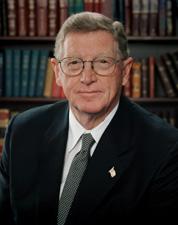
Mr. President, the treaty between the United States of America and the Russian Federation on Strategic Offensive Reductions also known as the ``Moscow Treaty'' obligates each side to reduce the…
Mr. President, the treaty between the United States of America and the Russian Federation on Strategic Offensive Reductions also known as the ``Moscow Treaty'' obligates each side to reduce the number of its strategic offensive nuclear warheads to a range of 1,700 to 2,200 by the end of 2012. This treaty is a good beginning and I congratulate the President for making a complete break with past arms control approaches by placing reliance on deterrence and missile defense. The enemies of American must clearly understand that they cannot attack or threaten us with impunity and that our Nation will have a national missile defense in place as soon as possible.
President Reagan coined the phrase ``trust but verify,'' This phrase could have no greater meaning than when it is applied to the Moscow Treaty.
I recently returned from Moscow where I was deeply impressed by the dramatic transformation underway in that huge country. While there is no doubt that Russia is on the track towards democracy and a free market economy, it is equally clear to me that the Russians are not at the stage where they can be given a blank check to implement the Moscow Treaty. Congress has authorized more then $4.7 billion for U.S. programs aimed at helping Russia and other newly independent states to reduce the threats from their weapons of mass production. The Moscow Treaty does not expressly deal with the Nunn-Lugar Cooperative Threat Reduction program but the objectives of the treaty cannot be achieved without extending this assistance to Russia. The only certainty about future costs to implement this treaty is that the costs are uncertain and that the uncertainty goes toward how much higher costs will be. According to a GAO report issued this week, ``. . . a pilot facility to destroy 14 percent of Russia's chemical weapons over an 11-year period would cost the United States almost $890 million--an increase of about $150 million from the estimate . . .'' Higher program cost uncertainty is compounded by Russia's apparent inability to pay for its agreed-upon share of project costs.
Another problem with an effective reduction of weapons of mass destruction is that Russia is not always willing to provide access to its sensitive national security sites. Access is essential to verify that the Parties are living up to their part of the agreement. According to the same GAO report, U.S. inspectors do not have access to the sites in Russia where 90 percent of the materials used in weapons of mass destruction are stored. Access issues largely revolve around trust, and, frankly, this treaty highlights the need for access; it does not solve the problem.
Despite its obvious incompleteness and inadequacies, the Moscow Treaty is a step in the right direction of reducing and limiting strategic nuclear warheads. Reliance on a START I verification regime as provided in the treaty is not, of course, satisfactory, but it can provide a block in the foundation for good faith implementation through a genuine verification scheme.
President Bush is headed in the right direction in working to build a constructive partnership with Russia. American does not fight wars with democracies. While a reduction in nuclear weapons is an important element on both sides in building the trust and mutual dependence needed for a stable, long-term relationship, I want to stress the importance of maintaining the Nuclear Triad. Our land-base missile systems, in particular, play an essential role in ensuring this Nation's security. With 200 Minuteman III missiles, Malmstrom Air Force Base, in my State of Montana has and will continue to play a critical role in our national security.
The Moscow Treaty deserves the advice and consent of the Senate so long as it is seen as the beginning and not the end of the long path we must follow to rid the earth of weapons of mass destruction and threats to our national security.
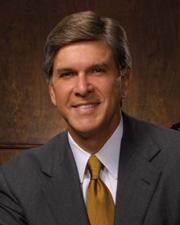
Mr. President, I rise today to join my colleague, Senator Feinstein in introducing a resolution to prohibit employment discrimination in the Senate based on sexual orientation. Senate rules currently…
Mr. President, I rise today to join my colleague, Senator Feinstein in introducing a resolution to prohibit employment discrimination in the Senate based on sexual orientation.
Senate rules currently prohibit employment discrimination based on race, color, religion, sex, national origin, age, or state of physical handicap. I believe that it is time for us to add sexual orientation to that list.
As a cosponsor of the Employment Nondiscrimination Act, I have stood behind the principle that employment discrimination against any person is hurtful to society as a whole, and if I am going to hold the private sector accountable for its actions, I should certainly promote the same principles in the U.S. Senate.
It is important to note that the Senate is lagging behind the rest of the Federal Government in prohibiting employment discrimination based on sexual orientation. Since 1996, 13 Cabinet level agencies and the White House have had anti-discrimination policies, and in 1998, President Clinton issued an executive order prohibiting sexual orientation discrimination in the Federal Executive Branch, including civilians in the military. That executive order now covers 2 million Federal employees, but people who work in the Senate do not enjoy those same protections.
Many of my colleagues already have written policies indicating that sexual orientation is not a factor in their employment decisions, and it is past time that we make this non-discrimination policy a part of the Standing Rules of the Senate. I want to thank my friend and colleague, Senator Feinstein, for her leadership in this issue, and urge my colleagues to support this important resolution.
Mr. President, I rise today to introduce an important resolution on behalf of myself and Mr. Schumer that brings to light pervasive messages of intolerance in Saudi Arabia's education curriculum and the need for reform of that curriculum. We are joined in this effort by Mr. Corzine, Mr. Ensign, Mr. Feingold, Mrs. Murray, Mr. Santorum, Mr. Voinovich, and Mr. Wyden.
There have been recent studies that reveal that school textbooks in Saudi Arabia often foster anti-Semitic, anti-American, and anti-Western views. We might all recall that 15 of the 19 hijackers responsible for the September 11 terrorist attacks were Saudi Arabian nationals. It is absolutely critical that we and others in the United States work to ensure that radical doctrines and messages of hate are not present in any child's education, and that the values taught in Saudi Arabia's schools in particular do not turn innocent children into prime candidates to commit terrorist acts as adults.
There is no question of who is responsible for any messages of hate that might appear in Saudi textbooks. The Saudi Arabian Government controls and regulates all forms of education in
public as well as in private schools. The religious curriculum is written, monitored, and taught by followers of the Wahhabi interpretation of Islam--the only religious doctrine the Government of Saudi Arabia allows to be taught.
Our important resolution calls for Saudi Arabia to thoroughly review its education curriculum and to reform it in a manner that promotes tolerance, develops civil society, and encourages functionality in the global economy. It is in the interest of security and peace that we end any educational malpractice in Saudi Arabia that might lead to more tragedy and terror.
Finally, the resolution also calls upon the United States Representative to UNESCO to urge that the U.N. body take up the textbook issue and monitor reform of the education curriculum in Saudi Arabia.
Mr. President, I also urge my respected colleagues to join us in supporting this important legislation.
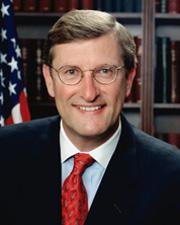
Mr. President, I rise to engage the distinguished leadership of the Foreign Relations Committee in a colloquy. Mr. President, for the past several years I have been increasingly concerned about the…
Mr. President, I rise to engage the distinguished leadership of the Foreign Relations Committee in a colloquy.
Mr. President, for the past several years I have been increasingly concerned about the ``loose nuke'' threat presented by the Russian Federation's arsenal of non-strategic or ``tactical'' nuclear warheads. Unlike strategic nuclear forces, intermediate range nuclear forces, or even conventional forces in Europe, tactical nuclear arms are not covered by any arms control treaty. There are no formal negotiated limits of any kind, no way to hold current and future Russian leaders to the unfulfilled promises of steep reductions made by former Soviet President Gorbachev and former Russian President Yeltsin more than a decade ago. In fact, we do not even have a good estimate of how many tactical warheads Russia has because the United States has no inspection rights. Unclassified estimates of the current Russian stockpile have ranged widely, from 7,000 warheads to 18,000 warheads-- four to eleven times as many as the United States. I am very troubled by the insufficient security at Russian nuclear warhead storage facilities and al Qaida's known interest in acquiring these horrific weapons. Am I right to understand that my colleagues share this concern?
I thank my colleagues, who perhaps remember that in 1998 I authored legislation passed by Congress that identified Russia's tactical nuclear stockpile as a serious proliferation threat and called for United States pressure on Russia for real reductions. I was therefore disappointed that a requirement for Russian tactical warhead dismantlement and United States inspection rights were not part of the Treaty of Moscow. The disconnect between the ability of the United States to maintain current strategic force levels almost indefinitely, and Russia's inevitable strategic nuclear decline due to economic realities, gave our side enormous leverage that I believe we should have used to win Russian concessions on tactical nuclear arms. While I am encouraged that the resolution of ratification before us includes a declaration on accurate accounting and security, it does not mention Russian tactical nuclear reductions. I have prepared a corrective amendment and would welcome the support of the chairman and ranking member of the Foreign Relations Committee.
Would the chairman and ranking member be willing to hold hearings in the coming months focusing on the threats associated with Russia's tactical nuclear stockpile? Furthermore, would the chairman and ranking member be willing to join me in urging the President to develop a comprehensive plan to reduce the Russian tactical threat, including making Russian tactical warhead reductions a priority in our dealings with the Russian Federation?
Would the chairman and ranking member consider sharing their views on the threats posed by the proliferation of tactical nuclear weapons with the administration? Might I propose a letter indicating our shared concerns and our hopes that this issue will be a high priority for the administration in future discussions with Russia?
I thank my colleagues for their concern about this clear and present ``loose nuke'' threat and for their supportive statements today. We cannot afford for this blind spot in our non-proliferation efforts to go uncorrected. With the assurances of the chairman and ranking member, I withdraw my amendment and yield the floor.
Mr. President, I rise today to submit a Senate concurrent resolution which affirms the support of Congress for preserving the image of Alexander Hamilton on the $10 bill. Alexander Hamilton is a…
Mr. President, I rise today to submit a Senate concurrent resolution which affirms the support of Congress for preserving the image of Alexander Hamilton on the $10 bill. Alexander Hamilton is a Founding Father of our Nation. He was a Lieutenant Colonel in the Revolutionary War, a voice in the Continental
Congress, and a delegate to the Constitutional Convention. He authored more than 50 of the 85 ``Federalist Papers.'' He organized the Revenue Marines, known today as the Coast Guard, and played a crucial role in the creation of the U.S. Navy. And Alexander Hamilton is the creator of one of America's first industrial and manufacturing centers, in Paterson, NJ.
Alexander Hamilton was also America's first Secretary of the Treasury and the founder of the first United States Bank. He is responsible for the financial system that our country maintains today. He created the first bank, the first tax system, the first budget, and a strong currency. He had a vision for establishing the economic viability of our fledgling country based on banking, investment, manufacturing, industry, and commerce. We are an economic superpower and a model for the rest of the world in large part because of Alexander Hamilton.
When we look to the Founding Fathers who played significant roles in the formation of America, we see that among them, George Washington has a monument in our Nation's Capital, and his image is on the $1 bill and the quarter deservedly so. Thomas Jefferson also has an impressive memorial in Washington, the main building of the Library of Congress is named after him, and his image is on the $2 bill and the nickel--again, deservedly so. Alexander Hamilton's image is on the $10 bill--and it should remain on the $10 bill. There is perhaps no other American more responsible for the fact that we have a $10 bill.
Of course, Washington and Jefferson were our first and third Presidents. Many of our other Presidents have been or will be appropriately memorialized in some fashion. For instance, our 40th President, Ronald Reagan, has had Washington National Airport and the second largest Federal building in the country, only the Pentagon is bigger, named after him. The headquarters of the Central Intelligence Agency at Langley, VA, has been named after our 41st President, George H. W. Bush. One of the four office buildings for the U.S. House of Representatives has been named after our 38th President, Gerald Ford. And the Old Executive Office Building--right next to the White House-- has been named after our 34th President, Dwight Eisenhower.
We stand in a Senate Chamber steeped in history; in a country quite conscious and proud of its birth. We revere those individuals such as Washington, Jefferson, and Hamilton who were present at the creation of our great Nation and helped to establish the democracy we enjoy as a birthright. It is our duty to uphold their legacy and preserve their image. Alexander Hamilton played an instrumental role in our triumph in the Revolutionary War, the birth of our democracy, and the establishment of our financial system. His image must, at the very least, remain on the $10 bill. There have been many Presidents, and there will be many more. But there will be no more Founding Fathers.
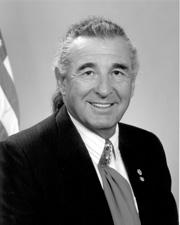
Mr. President, today I am joined by the chairman and ranking member of the Senate Judiciary Committee, Senators Hatch and Leahy, along with 16 other Senators, in introducing this resolution to keep…
Mr. President, today I am joined by the chairman and ranking member of the Senate Judiciary Committee, Senators Hatch and Leahy, along with 16 other Senators, in introducing this resolution to keep alive in the memory of all Americans the sacrifice and commitment of those law enforcement officers who lost their lives serving their communities. Specifically, this resolution would designate May 15, 2003, as National Peace Officers Memorial Day.
As a former deputy sheriff, I know first-hand the risks which law enforcement officers face every day on the frontlines protecting our communities. Currently, more than 850,000 men and women who serve this Nation as our guardians of law and order do so at a great risk. Every year, about 1 in 15 officers is assaulted, 1 in 46 officers is injured, and 1 in 5,255 officers is killed in the line of duty somewhere in America every other day. There are few communities in this country that have not been impacted by the words: ``officer down.''
On September 11, 2001, 72 peace officers died at the World Trade Center in New York City as a result of a cowardly act of terrorism. This single act of terrorism resulted in the highest number of peace officers ever killed in a single incident in the history of this country. Before this event, the greatest loss of law enforcement in a single incident occurred in 1917, when nine Milwaukee police officers were killed in a bomb blast at their police station.
In 2002, more than 145 Federal, State, and local law enforcement officers gave their lives in the line of duty, well below the decade- long average of 165 deaths annually, and a major drop from 2001 when a total of 230 officers were killed. A number of factors contributed to this reduction including better equipment and the increased use of bullet-resistant vests, improved training, longer prison terms for violent offenders, and advanced emergency medical care. And, in total, more than 15,000 men and women have made the supreme sacrifice.
The chairman of the National Law Enforcement Officers Memorial Fund, Craig W. Floyd, reminds us that ``a police officer is killed in the line of duty somewhere in America nearly every other day. More than 800,000 officers put their lives at risk each and every day for our safety and protection. National Police Week and Peace Officers Memorial Day provide our Nation with an important opportunity to recognize and honor that extraordinary service and sacrifice.''
On May 15, 2003, more than 15,000 peace officers are expected to gather in our Nation's Capital to join with the families of their fallen comrades who by their faithful and loyal devotion to their responsibilities have rendered a dedicated service to their communities. In doing so, these heroes have established for themselves an enviable and enduring reputation for preserving the rights and security of all citizens. This resolution is a fitting tribute for this special and solemn occasion.
I urge my colleagues to join us in supporting passage of this important resolution.
Mr. President, it is a privilege to join with my colleague from New Jersey, Senator Lautenberg in expressing our deepest concern that Libya will chair the next session of the United Nations Human…
Mr. President, it is a privilege to join with my colleague from New Jersey, Senator Lautenberg in expressing our deepest concern that Libya will chair the next session of the United Nations Human Rights Commission.
We know that Libya has supported, trained, and harbored some of the most notorious terrorists in the world. Libya is on the Department of State's list of nations that sponsor terrorism. To allow Libya to chair the UN Human Rights Commission is a serious and shameful mistake.
At this difficult time, the United Nations needs the highest possible credibility as it struggles to deal effectively with so many vital issues affecting nations throughout the world.
In fact, Libya continues to be in violation of multiple United Nations resolutions. It still has not complied with Security Council Resolution 748 to `'accept complete responsibility for the actions of Libyan officials.''
Libya still has not complied with the resolution to ``commit itself definitively to cease all forms of terrorist action and all assistance to terrorist groups and promptly, by concrete actions, demonstrate its renunciation of terrorism.'' We have received nothing concrete renouncing terrorism.
The international community is still waiting for Libya to accept responsibility for the 1988 bombing of Pan Am Flight 103, a bombing that murdered 270 innocent persons, including 89 Americans and 13 from Massachusetts. Until September 11th, the Pan Am bombing had killed more Americans than any other terrorist atrocity in our history.
Clearly, Libya should not have been appointed to chair an international human rights commission. Yet, in a secret ballot, 33 countries voted in favor of Libya, 17 abstained, and only the United States and Canada voted against Libya.
Fourteen years later, the families and the world community are still trying to find justice. We are still trying to hold Libya accountable for this atrocity, and we are still asking Libya to renounce terrorism and pay appropriate compensation to the victims' families.
Colonel Qadhafi still has not acknowledged that he ordered the attack. The victims still have not been compensated. The Libyans are still demanding that international economic sanctions be lifted, and that the Libyan government receive a clean bill of health on terrorism before it provides compensation to the families.
This choice of Libya should be a wakeup call for this administration. It shows the need for our own genuine participation in the UN--not the arrogant attitude the administration so often uses in its relations with other nations. We cannot expect to have good ties, even with our allies, if we do not treat them with respect.
I urge the Senate to support this proposal that requests President Bush and Secretary of State Powell to object strongly to the UN's current suspension of sanctions against Libya and to work with other members of the UN to reform the Human Rights Commission. Terrorism deserves no support from any nation.
Mr. President, I rise today to submit a resolution to prohibit employment discrimination in the Senate based on sexual orientation. I would like to thank the Senator from Oregon, Mr. Smith, as well…
Mr. President, I rise today to submit a resolution to prohibit employment discrimination in the Senate based on sexual orientation.
I would like to thank the Senator from Oregon, Mr. Smith, as well as my other colleagues who join me in introducing this resolution.
The resolution would amend the Standing Rules of the Senate by adding ``sexual orientation'' to ``race, color, religion, sex, national origin, age, or state of physical handicap'' in the antidiscrimination provision of rule 42, which governs the Senate's employment practices.
By amending the current rule, it would forbid any Senate Member, officer, or employee from terminating, refusing to hire, or otherwise discriminating against an individual with respect to promotion, compensation, or any other privilege of employment, on the basis of that individual's sexual orientation.
Senate employees currently have no recourse available to them should they become a victim of this type of employment discrimination.
If the rules are amended, any Senate employee that encountered discrimination based on their sexual orientation would have the option of reporting it to the Senate Ethics Committee. The Ethics Committee could then investigate the claim and recommend discipline for any Senate Member, officer, or employee found to have violated the rule.
Unfortunately, the Senate is already well behind other establishments of the U.S. Government in this area of antidiscrimination.
By 1996, at least 13 Cabinet level agencies, including the Departments of Justice, Agriculture, Transportation, Health and Human Services, Interior, Housing and Urban Development, Labor, and Energy, in addition to the General Accounting Office, General Services Administration, Internal Revenue Service, the Federal Reserve System, Office of Personnel Management, and the White House had already issued policy statements forbidding sexual orientation discrimination.
In 1998, Executive Order 13087 was issued to prohibit sexual orientation discrimination in the Federal executive branch, including civilian employees of the military departments and sundry other governmental entities.
That Executive order now covers approximately 2 million Federal civilian
workers. Yet more than 4 years later, there are still employees of the Senate that are unprotected.
In taking this step toward addressing discrimination, the Senate would join not only the executive branch, but also 308 Fortune 500 companies, 23 State governments and 262 local governments that have already prohibited workplace discrimination based on sexual orientation.
Currently, 65 Senators have already adopted written policies for their congressional offices indicating that sexual orientation is not a factor in their employment decisions.
Now, I urge my colleagues to join me by making this policy universal for the Senate, rather than relying on a patchwork of protection that only covers some of the Senate's employees.

Mr. President, I rise in strong support of this resolution of ratification for the Treaty Between the United States of America and the Russian Federation on Strategic Offensive Reductions, otherwise…
Mr. President, I rise in strong support of this resolution of ratification for the Treaty Between the United States of America and the Russian Federation on Strategic Offensive Reductions, otherwise known as the Moscow Treaty.
This treaty is a masterstroke. It represents, and, I am sure, will be sent as ushering in a wholly new approach to arms control for a wholly new era. The simplicity of this treaty is a marvel. It is extremely brief, indeed just three pages long. It is shorn of the tortured benchmarks, sublimits, arcane definitions and monitoring provisions that weighed down past arms control treaties.
This is for a very good reason. The simplicity and brevity of this treaty reflect the simple fact that the US and Russia have moved beyond the enmity of the cold war era. The treaty recognizes this fact. It assumes a degree of trust between nations that are no longer on the precipice of war. Indeed, this treaty is the ultimate confirmation of the fact that arms control does not lead to real peace; rather, real peace--in this case made possible by a democratic transformation in russia--leads to arms control.
The old cold war approach to arms control treaties is clearly outmoded. Can anyone truly believe that a 700-page behemoth like the START I treaty is relevant to today's situation? Clearly, such an approach would not reflect today's radically changed political and strategic environment. As such, it would not serve America's real security needs.
This treaty does. The most important thing to remember about this treaty is that it was negotiated after the United States independently determined the number of strategic warheads that were needed for our security. The outcome of the negotiations with Russia simply ratified our own prior determination. This is in stark contrast to the old approach to arms control, whereby arms control agreements preceded and ultimately drove our military and strategic decisions.
The long lead time for achieving reductions and the lack of sublimits and interim benchmarks in the treaty also serve our interests by preserving much needed flexibility. Looking at the fluid, almost chaotic, situation in the world today, with new threats having arisen in just the past year or so--attacks on our homeland, nuclear weapons developments in North Korea and Iran--one can foresee that circumstances could easily change over the next decade. If circumstances and threats change, so too might our strategic nuclear requirements. Thus, it is only prudent that we not box ourselves in. The drafters of this treaty in the Bush administration were wisely cognizant of that fact.
Mr. President, this treaty--and the forward-looking, post-cold war mindset that serves as its basis--deserves our strongest support. I urge my colleagues to approve this resolution of ratification.
I ask unanimous consent that the Senate proceed to the immediate consideration of S. Res. 415, which was submitted earlier today. Mr. President, from 1999 to 2001, the Permanent Subcommittee on…
I ask unanimous consent that the Senate proceed to the immediate consideration of S. Res. 415, which was submitted earlier today.
Mr. President, from 1999 to 2001, the Permanent Subcommittee on Investigations of the Committee on Governmental Affairs conducted an investigation into money laundering activities in the U.S. financial services sector, including private banking, correspondent banking, and the securities industry.
Following its investigation, the subcommittee received requests from various law enforcement and regulatory agencies, legislative bodies, and court-appointed officers, both here and abroad, for assistance in connection with their pending investigations into the use of correspondent banks for money laundering. By Senate Resolution 77 of the 107th Congress, agreed to on April 26, 2001, the Senate authorized the chairman and ranking member of the subcommittee, acting jointly, to provide investigative records, obtained by the subcommittee in the course of its investigation, in response to these requests.
Last year, the permanent subcommittee initiated a followup to its earlier investigation to evaluate the enforcement and effectiveness of key statutory anti-money laundering provisions, using Riggs Bank of the District of Columbia as a case history. The subcommittee held a hearing on the results of its investigation on July 15 of this year.
The subcommittee is seeking authority, like that granted in the 107th Congress, to respond to requests from law enforcement and other government agencies for access to investigative records obtained by the Subcommittee in the course of its recent investigation. This resolution would accordingly authorize the chairman and ranking member of the subcommittee, acting jointly, to provide copies of its investigative records from the Riggs Bank investigation in response to such requests.
Mr. President, I ask unanimous consent that the resolution be agreed to, the preamble be agreed to, the motion to reconsider be laid upon the table, and any statements relating to this matter be printed in the Record.
I announce that the Senator from New Mexico (Mr. Domenici), the Senator from Kentucky (Mr. McConnell), and the Senator from Oregon (Mr. Smith) are necessarily absent. Mr. President, first of all, I…
I announce that the Senator from New Mexico (Mr. Domenici), the Senator from Kentucky (Mr. McConnell), and the Senator from Oregon (Mr. Smith) are necessarily absent.
Mr. President, first of all, I thank Senators Lugar and Biden for their excellent work over the past 2 days. I appreciate their leadership on this very important Resolution for Ratification of the Moscow Treaty.
The treaty is critically important to making the world a safer place and will lead to dramatic reductions in nuclear arsenals. I commend the chairmen. The next vote on the adoption of the Resolution of Ratification will be the last vote of the evening.
In addition, there will be no rollcall votes during tomorrow's session, although the Senate will be in session to allow Members to speak in morning business. Many will be speaking on Iraq. If any Members are interested, I encourage them to come to the floor to do so tomorrow. The next rollcall vote will be on Monday at 6 p.m.
I thank all Senators for their attention.
Mr. President, I ask unanimous consent that the order for the quorum call be rescinded.
I announce that the Senator from West Virginia (Mr. Byrd), the Senator from Florida (Mr. Graham), and the Senator from Georgia (Mr. Miller), are necessarily absent. I further announce that, if…
I announce that the Senator from West Virginia (Mr. Byrd), the Senator from Florida (Mr. Graham), and the Senator from Georgia (Mr. Miller), are necessarily absent.
I further announce that, if present and voting, the Senator from West Virginia (Mr. Byrd) would vote ``aye''.
I announce that the Senator from Florida (Mr. Graham) and the Senator from Georgia (Mr. Miller) are necessarily absent.
I move to lay that motion on the table.
The motion to lay on the table was agreed to.
I suggest the absence of a quorum.
Bill Text
Latest available legislative text
        [Congressional Bills 108th Congress]
[From the U.S. Government Publishing Office]
[S. Res. 77 Introduced in Senate (IS)]

108th CONGRESS
1st Session
S. RES. 77

Expressing the sense of the Senate that one of the most grave threats
facing the United States is the proliferation of weapons of mass
destruction, to underscore the need for a comprehensive strategy for
dealing with this threat, and to set forth basic principles that should
underpin this strategy.

_______________________________________________________________________

IN THE SENATE OF THE UNITED STATES

March 5, 2003

Mr. Daschle (for himself, Mr. Lieberman, Mr. Biden, Mrs. Feinstein, Mr.
Dodd, Mr. Durbin, Ms. Mikulski, Mr. Edwards, Mr. Reid, Mr. Akaka, Mr.
Dorgan, Mr. Kerry, Mr. Leahy, Mr. Carper, Mr. Feingold, Mr. Lautenberg,
Mr. Reed, Mr. Rockefeller, Ms. Landrieu, Mr. Kennedy, Mrs. Murray, Mr.
Dayton, Mr. Nelson of Nebraska, Mrs. Clinton, Mr. Corzine, Mrs. Boxer,
Mr. Harkin, Mr. Schumer, Mr. Wyden, Mr. Kohl, Mr. Johnson, Mr.
Jeffords, and Ms. Cantwell) submitted the following resolution; which
was referred to the Committee on Foreign Relations

_______________________________________________________________________

RESOLUTION

Expressing the sense of the Senate that one of the most grave threats
facing the United States is the proliferation of weapons of mass
destruction, to underscore the need for a comprehensive strategy for
dealing with this threat, and to set forth basic principles that should
underpin this strategy.

Whereas on September 17, 2002, President Bush stated that ``[t]he gravest danger
our Nation faces lies at the crossroads of radicalism and technology.
Our enemies have openly declared that they are seeking weapons of mass
destruction, and evidence indicates that they are doing so with
determination'';
Whereas on February 11, 2003, before the Select Committee on Intelligence of the
Senate, George Tenet, the Director of Central Intelligence, testified
that ``[w]e've entered a new world of proliferation . . . Additional
countries may decide to seek nuclear weapons as it becomes clear their
neighbors and regional rivals are already doing so. The domino theory of
the 21st century may well be nuclear'';
Whereas Robert S. Mueller, III, the Director of the Federal Bureau of
Investigation, stated on February 11, 2003, that ``[m]y greatest concern
is that our enemies are trying to acquire dangerous new capabilities
with which to harm Americans. Terrorists worldwide have ready access to
information on chemical, biological, radiological, and nuclear weapons
via the internet'';
Whereas the Treaty on Reduction and Limitation of Strategic Offensive Arms, with
Annexes, Protocols, and Memorandum of Understanding, signed at Moscow on
July 31, 1991 (START Treaty) addresses a narrow aspect of the threat
posed by weapons of mass destruction--deployed strategic nuclear
weapons--and fails to address other aspects of the nuclear threat as
well as the threat posed by biological or chemical weapons or materials;
Whereas in a recent bipartisan report, former Senators Warren Rudman and Gary
Hart concluded that ``America remains dangerously unprepared to prevent
and respond to a catastrophic terrorist attack on U.S. soil'';
Whereas the United States Government last month raised the terrorist threat
level and, according to the Director of Central Intelligence, did so in
part ``because of threat reporting from multiple sources with strong al
Qaeda ties . . . and to plots that could include the use of radiological
dispersion devices as well as poisons and chemicals'';
Whereas shortly before the inauguration of President George W. Bush, a
bipartisan task force chaired by former Majority Leader of the Senate
Howard Baker and former White House Counsel Lloyd Cutler reported that
``the most urgent unmet national security threat to the United States
today is the danger that weapons of mass destruction or weapons-usable
material in Russia could be stolen and sold to terrorists or hostile
nation states and used against American troops abroad or citizens at
home'';
Whereas other states of concern continue their drive to acquire a weapons of
mass destruction (WMD) capability as evidenced by the observation of the
Director of Central Intelligence, in testimony before the Select
Committee on Intelligence of the Senate, that the intelligence community
has ``renewed concern over Libya's interest in WMD'';
Whereas the International Atomic Energy Agency (IAEA) has been told by Iran that
it will not accept the strengthened safeguard protocol of the Agency and
is committed to acquiring the ability to independently produce enriched
uranium;
Whereas the Bush Administration has failed to begin direct talks with North
Korea in spite of the assessment of the United States Government that
North Korea may produce sufficient additional nuclear material for six
to eight nuclear weapons within six months and the decision of North
Korea to expel IAEA inspectors from the Yongbyon complex, to restart its
nuclear reactor, to begin moving formerly secure spent nuclear fuel
rods, to leave the Treaty on the Non-Proliferation of Nuclear Weapons,
done at Washington, London, and Moscow, July 1, 1968 (Nuclear
Nonproliferation Treaty or NPT), and to test a new cruise missile;
Whereas the December 2002 National Strategy to Combat Weapons Of Mass
Destruction states that ``[w]eapons of mass destruction represent a
threat not just to the United States, but also to our friends and allies
and the broader international community. For this reason, it is vital
that we work closely with like-minded countries on all elements of our
comprehensive proliferation strategy.'';
Whereas newspaper accounts of the December 2001 Nuclear Posture Review state
that the review concludes the United States might use nuclear weapons to
dissuade adversaries from undertaking military programs or operations
that could threaten United States interests, that nuclear weapons could
be employed against targets able to withstand non-nuclear attack, and
that in setting requirements for nuclear strike capabilities, North
Korea, Iraq, Iran, Syria, and Libya are among the countries that could
be involved in immediate, potential, or unexpected contingencies;
Whereas the September 17, 2002, National Security Strategy of the United States
states that ``[a]s a matter of common sense and self-defense, America
will act against such emerging threats before they are fully formed''
and ``[t]o forestall or prevent such hostile acts by our adversaries,
the United States will, if necessary, act preemptively'';
Whereas General John Shalikashvili, former chairman of the Joint Chiefs of
Staff, has stated that ``[a]ny activities that erode the firebreak
between nuclear and conventional weapons or that encourage the use of
nuclear weapons for purposes that are not strategic and deterrent in
nature would undermine the advantage that we derive from overwhelming
conventional superiority'';
Whereas the Under Secretary of State for Arms Control and International Security
implied the abandonment by the Bush Administration of the so-called
``negative security assurance'' pledge to refrain from using nuclear
weapons against any non-nuclear nation unless that state was allied with
a possessor of nuclear weapons, a policy that had been in place for 25
years and endorsed by successive Republican and Democratic
Administrations;
Whereas documents recently made public from the Stockpile Stewardship Conference
Planning Meeting of the Department of Defense held on January 10, 2003,
indicate that the United States is moving toward expansion of research
and development of new types of nuclear weapons and has sought repeal of
the ban on research and development of new low-yield nuclear weapons;
Whereas the United States remains dangerously vulnerable to future terrorist
attacks, and the Bush Administration has failed to spend homeland
security funds provided by Congress and has repeatedly opposed efforts
to increase funding for such homeland security activities as State and
local first responders, border security, and food and water safety;
Whereas the Bush Administration has repeatedly failed to meet the funding
benchmarks recommended by former Majority Leader of the Senate Howard
Baker and former White House Counsel Lloyd Cutler for the
nonproliferation programs of the Department of Energy;
Whereas notwithstanding the transformation of the strategic environment after
the tragic events of September 11, 2001, a policy that moves toward the
goal of the Nuclear Nonproliferation Treaty, and away from the increased
reliance on and the importance of nuclear weapons, will serve to further
the United States goal of preventing the proliferation of nuclear
weapons; and
Whereas in a discussion of the grave threat posed the United States by weapons
of mass destruction, President Bush has stated that ``[h]istory will
judge harshly those who saw this coming danger but failed to act'': Now,
therefore, be it
Resolved, That it is the sense of the Senate that the grave threat
posed by the proliferation of weapons of mass destruction demands that
the United States develop a comprehensive and robust nonproliferation
strategy, including--
(1) the establishment of a broad international coalition
against proliferation;
(2) the prevention of the theft or diversion of chemical
weapons from existing stockpiles--
(A) by greatly accelerating efforts to destroy such
weapons under the terms of the Chemical Weapons
Convention in the United States, Russia, and other
nations; and
(B) by strengthening and enforcing existing
treaties and agreements on the elimination or
limitation of nuclear, chemical, and biological
weapons;
(3) the termination of the proliferation of weapons of mass
destruction, and the systems to deliver such weapons, by the
reinforcement of the international system of export controls
and by the immediate commencement of negotiations on a protocol
to interdict shipments of such weapons and delivery systems;
(4) an engagement in direct and immediate talks with North
Korea, coordinated with United States regional allies, to
secure the peaceful end to the nuclear programs and long-range
missile programs of North Korea;
(5) the elimination of excess nuclear weapons in Russia,
and the security of nuclear materials in Russia and the states
of the former Soviet Union, by the end of the decade in order
to prevent the theft or sale of such weapons or materials to
terrorist groups or hostile states, including for that
purpose--
(A) the provision of levels of funding for the
nonproliferation programs of the Department of Energy
as called for in the report of former Majority Leader
of the Senate Howard Baker and former White House
Counsel Lloyd Cutler; and
(B) the provision of increased funding for the
Cooperative Threat Reduction (CTR) program of the
Department of Defense;
(6) the expansion of the Cooperative Threat Reduction
program to include additional states willing to engage in
bilateral efforts to reduce their nuclear stockpiles;
(7) the provision of adequate funds for homeland security,
including the provision of funds to State, local, and tribal
governments to hire, equip, and train the first responders
required by such governments; and
(8) the enhancement of the capability of the United States
and other nations to detect nuclear weapons activity by the
pursuit of transparency measures.
<all>