Expressing the sense of the Congress regarding oversight of the Internet Corporation for Assigned Names and Numbers.
Legislative Activity
Stay on top of the latest movement without scrolling through every action
Received in the Senate and referred to the Committee on Commerce, Science, and Transportation.
November 17, 2005
View full timeline
Introduced in House
October 18, 2005
Referred to the House Committee on Energy and Commerce.
October 18, 2005
Referred to the Subcommittee on Telecommunications and the Internet.
November 4, 2005
Mr. Upton moved to suspend the rules and agree to the resolution.
November 16, 2005 • 1:39 PM
Considered under suspension of the rules. (consideration: CR H10332-10336)
November 16, 2005 • 1:40 PM
DEBATE - The House proceeded with forty minutes of debate on H. Con. Res. 268.
November 16, 2005 • 1:40 PM
At the conclusion of debate, the Yeas and Nays were demanded and ordered. Pursuant to the provisions of clause 8, rule XX, the Chair announced that further proceedings on the motion would be postponed.
November 16, 2005 • 2:03 PM
Considered as unfinished business. (consideration: CR H10357)
November 16, 2005 • 5:33 PM
Passed/agreed to in House: On motion to suspend the rules and agree to the resolution Agreed to by the Yeas and Nays: (2/3 required): 423 - 0 (Roll no. 594).(text: CR H10332-10333)
November 16, 2005 • 5:41 PM
On motion to suspend the rules and agree to the resolution Agreed to by the Yeas and Nays: (2/3 required): 423 - 0 (Roll no. 594). (text: CR H10332-10333)
November 16, 2005 • 5:41 PM
Motion to reconsider laid on the table Agreed to without objection.
November 16, 2005 • 5:41 PM
Received in the Senate and referred to the Committee on Commerce, Science, and Transportation.
November 17, 2005
Voting History
1 vote recorded • Roll call available
Floor Debate
18 membersWhat members said about H.Con.Res. 268 on the floor
 JDS
JDS CS
CS CW"
CW" RB
RB CC+13
CC+13
Floor Debate
18 membersWhat members said about H.Con.Res. 268 on the floor
Mr. Chairman, I yield myself as much time as I may consume. I rise in strong support of H.R. 1065, the U.S. Boxing Commission Act, which would establish a national regulatory body for the sport that…
Mr. Chairman, I yield myself as much time as I may consume.
I rise in strong support of H.R. 1065, the U.S. Boxing Commission Act, which would establish a national regulatory body for the sport that has been riddled with corruption, scandals and lax enforcement of regulations, putting the lives of contenders on the line.
I want to thank the chairman of the subcommittee Chairman Stearns with, whom I worked closely on this legislation in a bipartisan way, to produce a product that I hope that our colleagues on both sides of the aisle will readily support.
I want to thank in addition to the bipartisan staff who worked on this legislation, I would like to thank our legislative counsel, Brady Young, for his advice, expertise and the patience that is often required when working with our bipartisan team.
I know that there are some in this body who have just wondered why we are addressing this particular issue of boxing when they argue there are more important issues facing our country. I would respectfully point out that it certainly is not the least important issue that we find time to deal with in this body, and that, in fact, it does deal with the health and the safety of literally thousands of people in our country. So I am happy to be supporting this bill right now.
With the passage of the Professional Boxing Safety Act of 1996 and the Muhammad Ali Act in 2000, minimum Federal standards were set to protect the physical and economic well-being of boxers, and State boxing commissions
were charged with meeting those standards. Some States have strong boxing commissions such as New York, Pennsylvania and Nevada that not only require the Federal standards but set additional regulations beyond the minimum requirements.
I want to point out that nothing in this legislation would prevent those that have stronger regulations from using those. Let me read directly from the legislation on minimum standards: Nothing in this Act prohibits any boxing commission from enforcing local standards and requirements that exceed the minimum standards or requirements promulgated by the commission under this Act.
What we found, however, was that there are too many other States that are ignoring the rules, and boxers are the ones who are paying the price.
Many argue that federally mandated health and safety standards are not being adhered to because no corresponding national regulatory body exists. Let me quote from the letter I received from the College of Sports Medicine, who heavily supports this legislation, when they say that, professional boxing is the only major sport which does not have a governing body to establish and enforce rules and practices. It is the only major sport that does not have that.
When the greatest and prettiest of all times, Muhammad Ali, tells you, ``Boxing reform measures are unlikely to succeed unless a U.S. Boxing Commission is created with authority to oversee a sport that still attracts a disproportionate number of unsavory elements that prey upon the hopes and dreams of young athletes,'' when Muhammad Ali tells you that, as he did to us in our hearing, one listens, and that is what Chairman Stearns and I did with the drafting of H.R. 1065.
Boxing is an enormous enterprise. The sport generates over $500 million in revenues each year. However, because so many parties have a financial stake in each boxing match and because competing interests often run counter to the boxers' well-being and because not every manager is as upright as Clint Eastwood in ``Million Dollar Baby,'' many contenders end up destitute.
In this sense, boxers are like many other kinds of talent or workers. Their gifts and their hard work are others' fortunes, and they are treated as disposable assets.
Boxing is also unlike many other sports in that there are very serious physical repercussions. If health and safety standards are not being met, boxers could die, and they do.
Over the past 50 years, more than 130 fighters have died due to boxing-related injuries in the United States. In 2005, we lost the first woman to boxing, Becky Zerlentes. Dr. Zerlentes, a professor of geography, got her Ph.D. at my alma mater, the University of Illinois at Urbana-Champaign.
I believe that it is our responsibility to ensure that boxers are not being put in the ring without being protected, both physically and economically. We know it is a dangerous sport by its nature, but it is our responsibility to ensure that laws that are already on the books are enforced. That is why I joined Chairman Stearns in drafting H.R. 1065 to establish the United States Boxing Commission. This bill will help to ensure that standards are uniform and enforced and that boxers are protected.
The formation of a national regulatory body is supported by the Association of Boxing Commissioners, the organization of State boxing commissioners. They love their sport, and they want to make sure that the laws that govern it are being enforced, keeping the sport safe and respectable. Our bill also enjoys the support of those who say that boxers' health must come first, the American College of Sports Medicine and the American Association of Professional Ringside Physicians.
Finally, it would be a tribute to the greatest of all times, to Muhammad Ali, who lent his name to the law that is meant to protect boxers from those who see them as just a commodity and is not being enforced as it should be.
We need to pass this bill to do a service to the boxers, to the young athletes who see their dreams and their hopes come to life when they are in the center of that ring and the bell signals the first round.
I urge my colleagues to join in this bipartisan leadership of this legislation and support H.R. 1065.
Mr. Chairman, I reserve the balance of my time.
Mr. Chairman, I yield myself such time as I may consume.
I am aware of some concerns raised by the Governor's office in New Jersey about this legislation, where they are concerned about what they say is the erosion of State authority. So I want to be very clear about this and once again read from the bill and read an additional section from it:
``Section 9, Noninterference with Boxing Commissions. Paragraph a, Noninterference: Nothing in this act prohibits any boxing commission from exercising any of its powers, duties, or functions with respect to the regulation or supervision of professional boxing or professional boxing matches to the extent not inconsistent with the provisions of this act.'' By that we mean anything that has more enforcement powers. We are just setting a floor and the States can exercise all their powers, duties, or functions in addition to that.
And ``b, Minimum Standards: Nothing in this act prohibits any boxing commission from enforcing local standards or requirements that exceed the minimum standards or requirements promulgated by the commission under this act.''
A State like New Jersey that contends that they are doing a good job, we say go ahead and do it. We welcome that. We acknowledge that, and we hope that they will continue to do it. But the fact of the matter is that the vast majority of States, despite the passage of the acts of 1996 and the Muhammad Ali Act in 2000, are not doing that; and that is why most people associated with this sport including State commissioners, including State commissioners have weighed in in support of this legislation and look forward to the Federal Government seeing that boxing alone is not without some kind of national standards, and that is why this commission is so important.
Mr. Chairman, I reserve the balance of my time.
Mr. Chairman, I yield myself such time as I may consume.
I would like to say a special thank you to the gentleman from Illinois (Mr. Rush) for the work he has done on the bill and for his strong support of the legislation.
I would also like to read a statement on behalf of the gentleman from Michigan (Mr. Conyers) who is the ranking Democrat on the Committee on the Judiciary.
He says, ``I rise in strong support of H.R. 1065, the United States Boxing Commission Act, which establishes a Federal commission with oversight responsibilities for professional boxing in the United States. This much-needed commission will establish uniform minimum standards which States must follow. It will also be empowered to issue additional regulations to improve the integrity and safety of the sport.
``Further, the commission will establish a Federal licensing requirement for participation in United States matches for certain boxing personnel, including boxers, managers, promoters, match makers, referees, judges and sanctioning.
``In July 2003, the GAO issued a report on professional boxing and listed elements identified by industry experts as essential to improving the health, safety and economic interests of boxers: medical examinations, monitoring of training injuries, assessments of medical risks, health and life insurance, the presence of appropriate medical personnel and equipment, and enforcement of suspensions for injuries.
``Additionally, the GAO found that industry experts believe additional changes are required in boxing and listed the following needed changes: one, require pension plans for boxers; two, require full disclosure of purses and payments; three, require minimum uniform contractual terms between boxers and promoters; and, four, prohibit conflicts of interest.
``While the Federal law has created requirements for States to follow, these laws are largely being ignored. H.R. 1065 will aid in correcting this injustice.
``Boxers often have little or nothing to show from their match proceeds, despite others earning vast wealth off the boxers' talents. We owe it to our athletes to create laws that protect their interests and to make sure those laws are enforced. I urge my colleagues to support H.R. 1065 and to support professional boxers.''
Mr. Conyers was unable to come down to the floor himself and wanted to make sure that this strong support of the legislation was placed in the Record.
Mr. Chairman, I reserve the balance of my time.
Mr. Chairman, I yield myself the balance of my time.
Mr. Chairman, I want to thank the gentleman from Hawaii (Mr. Abercrombie), who is himself a champion weight lifter, for weighing in on this legislation. I appreciate it very much.
There are literally millions of people who enjoy the sport of boxing, who watch it and follow it and who want to see that there is some integrity in that sport. A lot has been said about the contenders themselves, about the boxers. I would echo what my chairman, Mr. Stearns, has said in response to
the question, why should we care? We should care about these young boxers who are trying to follow their dreams and to help create a sport that does guarantee them some level of standards of health and safety and opportunity. And we should also care because it is a $500 million industry in this country that has been plagued with lots of scandals and irregularities.
So we are not talking about creating a major bureaucracy to oversee this, we are looking at a self-funding body that would now add professional boxing to every other sport that has some national standards and national rules and regulations. I think it is fairly modest in its construction, and I would certainly urge all Members on both sides of the aisle to join us, and thank Members on both sides who came down and supported this regulation.
Mr. Chairman, I yield back the balance of my time.
Mr. Chairman, I ask unanimous consent to claim the time in opposition, although I do not oppose the amendment.
Mr. Chairman, I yield myself such time as I may consume.
I just want to make a few remarks in support of the Stearns amendment. The Stearns amendment would ensure that establishment of the boxing commission would not be a burden to the taxpayers. It would require that the fees collected from the licenses go to offset the cost of running the commission. The amendment is fiscally responsible, and it is consistent with PAYGO principles that helped us achieve budget surpluses in the 1990s.
This amendment was crafted in consultation with the Committee on Appropriations and achieves the stated objective. While I believe that boxing needs to have serious oversight, I also believe it should be paid for by those who profit and promote the ringside event. It is the least they can do for the sport they love, and I urge my colleagues to support this amendment.
Mr. Chairman, I yield back the balance of my time.
Mr. Chairman, as the designee of Mr. Filner of California, I offer an amendment.
Mr. Chairman, this amendment enhances safeguards to protect professional boxers. We all know that boxing is a tough sport with even tougher consequences and it is essential that we protect boxers as much as possible.
Unfortunately, there are varying standards among the States on what type of medical services need to be available during boxing matches. Because appropriate medical care is critical in determining whether the fighter injured in the match will recover, suffer permanent damage or will die, depending on the extent of the injury, this amendment would call on the boxing commission to establish minimum standards and what type of medical services must be available at professional boxing matches.
Additionally, many boxers only have insurance coverage the night of the fight. It is not surprising that many insurance companies do not offer boxers health and life insurance policies at affordable rates for the rest of the time. And not every boxer is a prize fighter taking home a big purse. This amendment would simply encourage the Boxing Commission to establish an insurance fund to cover members of the professional boxing community.
We have all heard of the destitute boxer struggling to get by. This amendment would call on the Boxing Commission to come forward on recommendations regarding the feasibility of the pension system for professional boxing participants. Remember, again, this is asking them to come forward simply with a recommendation regarding the feasibility of a pension system.
Finally, like most other sports, boxing is an international business. As such, I believe it is important for the Boxing Commission to enter into agreements with other foreign boxing entities to set minimum health standards for boxers who fight overseas.
All of these measures are important to improve the sport and to provide additional safeguards to boxing, and I urge support of this amendment.
I yield to the gentleman from Florida.
Mr. Chairman, the gentleman from California (Mr. Filner) named this the Archie Moore Criteria for Rating Boxers. So the reason that he called this amendment the Archie Moore criteria for rating boxers is because Archie Moore, also known as the Old Mongoose, held the light middleweight title for 10 years. By the time of his retirement, after 197 fights, Archie had compiled a truly unassailable sports record of 145 knockouts. All of this is even more remarkable when one considers that he spent a large part of his career, approximately 16 years, traveling to an unending string of boxing honky tonks open to fighters who could not break into the big leagues.
Archie did not get a title shot until he turned 39, a time when most boxers retire. There were many barriers preventing great boxers like Archie from rising through the ranks. One primarily being a broken rating system for boxers.
It is the job of the sanctioning organizations to rate boxers and to designate a champion. Sanctioning organizations make their money by sanctioning champion fights. The higher a fighter is rated, the more likely it will be for him to get high paying fights, especially championship fights.
However, often rankings are not based on objective talent or win-loss records; rather, boxers who belong to certain promoters may be highly ranked regardless of skill and ability. A fighter could be the best in his weight class, but if he is not associated with the right people he may not be ranked and thus lose his chance to further his career.
Previously, Congress passed legislation under the Mohammed Ali act to require all sanctioning organizations to develop credible and consistent ratings criteria. However, there are still problems with the system.
For example, one of the sanctioning organizations had a dead man ranked in the top 10 of a super middle weight division for 4 months. During the 4 months in which the dead man was actually ranked, he moved up in the ratings, going from Number 7 to Number 5.
This is just one incident on a long list of problems associated with the ratings system conducted by boxing sanctioning organizations. Obviously, something is wrong, and something ought to be done.
My amendment will require the Boxing Commission to establish guidelines for rating boxers. These guidelines must be followed by organizations that sanction boxing events. My amendment does not strip boxing sanctioning organizations from ranking boxers; however, it does require them to adhere to a set criteria established by the Boxing Commission.
Boxing will never be the sport it once was until the rating system is made more legitimate and respectable, which is why I am asking you to support my amendment.
Mr. Chairman, I yield to the gentleman from Florida.
Mr. Chairman, I yield myself such time as I may consume. Mr. Chairman, I rise today to express my strong support for H.R. 1065, the United States Boxing Commission Act. This bill will establish for…
Mr. Chairman, I yield myself such time as I may consume.
Mr. Chairman, I rise today to express my strong support for H.R. 1065, the United States Boxing Commission Act.
This bill will establish for the first time the United States Boxing Commission within the Department of Commerce. The USBC will be charged with overseeing licensing and registration of boxers and boxing personnel nationally to improve the current inconsistent and lack of regulation of the sport at the State and also at the local levels.
The sport of boxing with its rich and glorious history is slowly being corroded by corruption and abuse in and outside the ring.
I am no fan of bigger and more intrusive government, but in this case the power and sweep of a Federal regulator can establish a uniform minimum standard for boxing on a national level and will hopefully salvage this great sport and reestablish it as a main
event, not some shady, corrupt business enterprise.
In terms of fiscal impact, there has been a lot of misinformation about this bill, its budgetary impact. But let me be perfectly clear: this bill requires the United States Boxing Commission to be funded through receipts from licensed and registration fees, not from taxpayers' money. The USBC will also sunset in 12 years. Here we have a bill that will sunset. The USBC will not be a drain on government resources. Rather, it will function and operate from revenues derived from its oversight function of licensing and registration.
Later, I intend to offer an amendment to clarify this intent during our consideration. This is an important point to be made and needs to be made crystal clear.
In addition, as I mentioned, professional boxing is suffering today. Boxers are in danger of losing life and limb every day, and likewise, every day, we hear more and more stories about needless injuries and even deaths. We had two boxers die in Nevada just recently.
Boxing obviously is a great American sport, with a rich and glorious tradition, but it is in real danger of becoming marginalized into nothing more than a dangerous and corrupt sideshow. This would be a tragedy.
We have celebrated our Olympic heroes and cheered them when they later fought professionally. I believe that adding a backstop of Federal oversight over the various pockets of inconsistent regulation at the State level will help clean up boxing and honor its positive impact on the lives of young men and women who, despite sometimes difficult financial or social circumstances, achieve greatness through discipline, hard work and simply sheer determination.
One of those obscure fighters that rose to become one of America's most important symbols of athletic and human excellence obviously was Muhammad Ali. He testified at one of our hearings. Unfortunately, he could not testify, so his wife read the speech for him, and this is what he said: ``For all of its difficulties, boxing is still a wonderful sport. It still attracts men and women from all walks of life to reach glory in the ring. For many, it's their first experience with hard work, determination and discipline. For still others, it remains the only way up and out from a life filled with bad choices, failure and worse.''
He went on to say: ``Reform measures are unlikely to succeed unless a U.S. Boxing Commission is created with the authority to oversee a sport that still attracts a disproportionate number of unsavory elements that prey upon the hopes and dreams of young athletes.''
My bill, cosponsored with the gentlewoman from Illinois (Ms. Schakowsky), my colleague and the ranking member of my subcommittee, and the gentleman from Illinois (Mr. Rush), my friend and colleague, will push reform and put the weight of uniform national oversight mechanism behind those reforms to ensure that the United States Boxing Commission is successful and those hopes and those dreams are protected.
Specifically, the manager's amendment I am offering will do the following:
First and foremost, it makes it clear that the United States Boxing Commission will be funded largely through revenues generated by licenses and registrations so that it is essentially self-funding. Specifically, section 5 of the bill has been amended to clarify that fees authorized and collected shall be available to fund the operation of the commission and the administration of the Act. Section 14 of the bill was amended to clarify that offsetting collections are available to the commission subject to appropriations.
The next thing, it empowers the United States Boxing Commission to promulgate uniform standards for professional boxing and oversee all professional boxing in the United States.
It ensures that Federal and State laws applicable to boxing are enforced and requires and issues licenses for all professional boxers and, importantly, boxing personnel.
It allows the United States Boxing Commission to suspend or revoke a license if it finds the holder has violated provisions of this Act.
It requires a study and report on health and safety aspects related to boxing, as well as on the definition of a promoter.
It requires the United States Boxing Commission to provide an annual report to Congress on its activities.
I think Mr. Bruce Spizler, chair of the Legal Committee of the Association of Boxing Commissioners and a former member of the National Association of Attorneys General Task Force on Boxing, in his testimony to our subcommittee, summed up the current situation best when he said: ``The regulation of the sport of professional boxing has been left to those individual States and, more recently, tribal organizations, which, legislatively, have provided for its own boxing commission to regulate the sport in its own particular jurisdiction. Thus, considering that the authority of each regulatory component is restricted by its territorial borders, the effective regulation of the sport of professional boxing in the United States is only as strong as its weakest link; leaving `venue shopping' as an effective tool for those seeking a lighter regulatory `punch.' The glaring absence of regulatory uniformity, together with the difficulty, and varying degrees, of effective enforcement, has lent itself to a perpetuation of the inequities, lack of integrity and, in some instances, non-adherence to health and safety measures for which the inherently dangerous sport of professional boxing, unfortunately,'' by its reputation ``has become known.''
I cannot think of a more powerful argument in favor of a Federal commission, that is sunset, designed to oversee the sport of boxing and ensure uniform minimum standards, especially for those States that do not have programs or have inferior ones. States with mature programs, in my opinion, should be supportive because they are already leading and serving as benchmarks.
In addition to the support of the Association of Boxing Commissioners, this bill has been endorsed by the American College of Sports Medicine and the American Association of Professional Ringside Physicians.
In closing, this is an important opportunity to save a sport that has brought so much pride and glory to the United States. Boxing is suffering from problems that stretch far beyond the boundaries of State regulation. It is a sport worth saving that will need the power of our Federal Government oversight to clean up its act and ensure the safety of all its athletes. All the great champions that have paved the way for the sport should be able to count on us to provide a minimum amount of oversight in this situation.
I urge my colleagues to consider this bill, H.R. 1065, the United States Boxing Commission.
Mr. Chairman, I reserve the balance of my time.
Mr. Chairman, I yield myself such time as I may consume.
Mr. Chairman, I rise just in reply to my colleague who is chairman of the Judiciary Committee who made some points in terms of jurisdiction and also made some points that the bill has minimum impact upon the budget.
I have here a copy of the amendment which is part of the manager's amendment that we have next in place, which takes care of the concerns he has by striking a portion of the bill and in place putting it that the bill is self-sufficient and the money that is appropriated comes from the licensure fees. So I would urge the gentleman to vote for the manager's amendment, which will be coming up shortly. That will take care of his main concern, which appears to be that he is concerned it was $5 million the first year and the GAO audit indicated more money thereafter. But with this manager's amendment, the GAO audit is nullified and we have a self-sufficient bill.
Another point I would like to make is the basic thrust of the bill is a 12-year supervision with three appointees
on the commission from the President of the United States with 3-year duration of tenure. At that point they can be reappointed, or they can continue at the President's request. We have in place something here that is very rare on the House floor, and that is something that is sunsetted. So when people talk about a new Federal bureaucracy, let me be perfectly clear. This is a very, very light, temporary government oversight committee to bring accountability and to bring justice to a great American sport. Everybody in the business who testified wants this type of temporary structure. So I think in a larger sense we have to say to ourselves now is the time to do this and, in so doing, in this way we will do the least amount of harm by making it temporary and at the same time asking them to pick up the ball and run with this as a voluntary organization much like other professional sports do.
So I am glad to rise to point out to my colleague that it is going to be amended so that it is budget neutral; and, two, to point out to him that this is not a new Federal bureaucracy, but instead an oversight board to help guide this sport to its ultimate success.
Mr. Chairman, I reserve the balance of my time.
Mr. Chairman, I yield myself such time as I may consume.
I would point out, as the gentleman from Nebraska did say he offered an amendment to abolish all of boxing, I think in his statement he also made an argument in favor of our bill. When he posed the question why should we care, think about that. Why should we care? That was his question that he asked in the hearing, and it simply came back to him that we should care about these fighters, these young fighters who are starting out, many from very difficult economic situations. We should care. And I think as Members of Congress, I hope they will keep that question in mind when they support the bill and realize that the gentleman from Nebraska really had an amendment to abolish boxing, which is almost in direct counterpoint to the question he posed, Why should we care?
Mr. Chairman, I yield such time as he may consume to the gentleman from Nebraska (Mr. Osborne), the former head coach of the Nebraska Cornhuskers.
Mr. Chairman, I yield such time as he may consume to the gentleman from Hawaii (Mr. Abercrombie).
(Mr. ABERCROMBIE asked and was given permission to revise and extend his remarks.)
Mr. Chairman, I offer an amendment.
Mr. Chairman, I yield myself such time as I may consume.
I am offering today a manager's amendment that will perfect the underlying bill to ensure that H.R. 1065 is a fiscally sound piece of legislation that uses a self-funding mechanism for the United States Boxing Commission established under the act.
Let me be crystal clear to my colleagues, taxpayers are not being forced to pay for the USBC. Boxers, boxing personnel and the sanctioning organization, such as the World Boxing Association, WBA, the International Boxing Federation, IBF, and so on, will provide the funds, through payment of license and other fees, which will be collected by the USBC.
Specifically, my amendment will do the following: Section 5 of the bill will be amended to clarify that fees authorized and collected shall be available to fund the operation of the United States Boxing Commission and administration of this act.
Section 14 of the bill will be amended to clarify that offsetting collections are available to the USBC subject to appropriation. This is a very good amendment. It is bipartisan. The bill itself will save lives, protect vulnerable athletes and help get the sport of boxing back in fighting shape.
First and foremost, it will end the corruption and abuse that has plagued the sport for so long so America will regain its pride in boxing and all of its wonderful champions. Moreover, it will be done in a fiscally responsible way. I urge my colleagues to support this perfecting amendment and support H.R. 1065.
Mr. Chairman, I reserve the balance of my time.
Mr. Chairman, I yield back the balance of my time.
Mr. Chairman, will the gentlewoman yield?
Mr. Chairman, I rise in support of my colleague's amendment, and I think I would accept it. Both our staffs have looked at this. We think it is a good improvement on the bill, and so I commend the gentlewoman for her extra work here on the amendment and the gentleman from California (Mr. Filner) who has also been involved with it.
Mr. Chairman, I thank the gentlewoman from Florida for yielding. I do not rise in opposition. I think this amendment is good. We accept it. I would point out, during the hearing, we had a boxer who died of natural causes and as a result of that he rose in the ranking because of the lack of standards that are set. And so I think, in this case, her amendment would be worthwhile, so that this sort
of anomaly does not occur again in which a boxer dies naturally and he rises in rank in the standing in the overall professional standing. So I rise in support of the amendment.
Mr. Chairman, the gentleman's amendment, I think, improves the bill quite a bit, addresses the fee language to ensure that the fees collected pursuant to the act are credited, as the gentleman mentioned, as offsetting collections only for the purpose of funding the commission. It is important to ensure that any fee collected is used expressly for the purpose intended, namely, the funding of this commission.
User fees are common throughout most industries and are often used to fund activities that, other than the purpose of the fee that is collected. We know that. We see that oftentimes in Congress. But this amendment will ensure that this does not happen. So I think it is very good. And I compliment the gentleman for it. It is a good policy. The insurance commission is the only entity that receives the industry fees that it is collecting from. It has bipartisan support, and I appreciate the gentleman working with me and my staff, and I commend my colleagues to vote and support it.
Mr. Speaker, I object to the vote on the ground that a quorum is not present and make the point of order that a quorum is not present.
Mr. Chairman, some might not know this, but my State of Mississippi has a great history of boxing. Archie Moore, from Benoit, Mississippi, participated in professional boxing for over 27 years,…
Mr. Chairman, some might not know this, but my State of Mississippi has a great history of boxing. Archie Moore, from Benoit, Mississippi, participated in professional boxing for over 27 years, holding the title of light heavyweight champion, and facing the likes of Rocky Marciano and Cassius Clay, during his career. While he went on to train Foreman and Ali, he will probably be best remembered as holding the record for the most knockouts in a career at 141. What I think is more important and that he may not be remembered as much for was his integrity in such a scandalous and corrupt sport during the years he boxed from 1936 to 1963. While we would have hoped boxing would have progressed and reformed over the years, it has not. The sport is still riddled with many problems, not the least is the exploited nature of its athletes. Muhammed Ali once said this: ``I say get an education. Become an electrician, a mechanic, a doctor, a lawyer--anything but a fighter. In this trade, it's the managers that make the money and last the longest.'' This seemingly benign statement illustrates one small problem among the multitude of problems the sport of boxing faces.
Today, many fans are saddened and upset by the lack of integrity they see in professional boxing that has significantly weakened the sport-- the most deplorable problem of which is the treatment of the sport's athletes. Without a doubt, professional boxers are the most exploited athletes in our Nation. While Congress has made efforts to protect professional boxers before, through the Professional Boxing Safety Act of 1996 and the Muhammad Ali Boxing Reform Act of 2000, these are not enough. The real problem today is the ineffective and inconsistent oversight of professional boxing, which has led to continuing scandals, controversies, unethical practices, and unnecessary injuries and deaths in the sport. That is why we are here today.
Mr. Chairman, through the leadership of members of Congress like Senator John McCain, Representative Cliff Stearns and Representative Peter King, Congress is addressing and hopefully rectifying this harrowing situation. In order to better protect boxers and the integrity of professional boxing, we must establish a Federal regulatory entity to oversee professional boxing and set basic uniform standards for certain aspects of the sport. Consider this--professional boxing remains the only major sport in the United States that does not have a strong, centralized association, league, or other regulatory body to establish and enforce uniform rules and practices. And because a powerful few benefit greatly from the current system of patchwork compliance and enforcement of Federal boxing law, a national self- regulating organization--although preferable to Federal government oversight--is not a realistic option.
Mr. Chairman, I was an original co-sponsor to Representative King's bill, ``The Professional Boxing Amendments Act of 2005,'' which would also establish a United States Boxing Commission that perform substantially similar functions. I am very pleased that this idea is finally being considered on the House floor. The troubles that plague the sport of professional boxing undermine its credibility in the eyes of the public and--more importantly--compromise the health and safety of boxers. The creation of a Federal boxing commission would effectively curb these problems. The Senate has passed Senator McCain's boxing bill, S. 148, the Professional Boxing Amendments Act of 2005, and I think it will be a travesty if the House does not do the same. Therefore, Mr. Chairman, I rise in great support of this legislation today and urge my colleagues to swiftly and expeditiously approve this legislation.
House of Representatives, Committee on Education and the
Workforce,
Washington, DC, September 28, 2005.
Hon. Joe Barton,
Chairman, Committee on Energy and Commerce, Rayburn House
Office Building, Washington, DC.
Dear Chairman Barton: I am writing to confirm our mutual
understanding with respect to consideration of H.R. 1065, the
United States Boxing Commission Act, which was referred to
the Committee on Energy and Commerce and in addition the
Committee on Education and the Workforce. The Committee on
Energy and Commerce reported this bill on July 28, 2005.
As you know, provisions within H.R. 1065, directing a
United States Boxing Commission to establish health and
safety standards and a licensing registry for boxing
personnel, fall within the jurisdiction of the Committee on
Education and the Workforce. In addition, section 11 of the
bill requires the Commission to study and report to Congress
on health and safety standards in the boxing industry; this
provision likewise falls within the jurisdiction of the
Committee on Education and the Workforce.
I do not intend to delay consideration of H.R. 1065, nor
will I object to the scheduling of this bill for
consideration in the House of Representatives. However, I do
so only with the understanding that this procedural route
should not be construed to prejudice the Committee on
Education and the Workforce's jurisdictional interest and
prerogatives on these provisions or any other similar
legislation, and will not be considered as precedent for
consideration of matters of jurisdiction to my committee in
the future. Further, this understanding is based on the
agreement reached between our staffs to provide that the
study commissioned in section 11 of the bill is transmitted
to the Committee on Education and the Workforce, as well as
your committee. Finally, we would expect you to support our
request for appointment of conferees on these provisions
should a conference arise with the Senate.
I would ask that you include a copy of our exchange of
letters in the Congressional Record on this bill. Thank you
for your consideration and cooperation in this matter.
Sincerely,
John A. Boehner,
Chairman.
Mr. Speaker, I yield myself 4 minutes. Mr. Speaker, it is my pleasure to partner today with the gentleman from California (Mr. Doolittle) and the gentleman from Virginia (Mr. Goodlatte) with whom I…
Mr. Speaker, I yield myself 4 minutes.
Mr. Speaker, it is my pleasure to partner today with the gentleman from California (Mr. Doolittle) and the gentleman from Virginia (Mr. Goodlatte) with whom I have the privilege of co-chairing the Congressional Internet Caucus in authoring this resolution, which will express our view that the Internet remain open, available for all to use, global and seamless.
It expresses the sense of the Congress that the United States has been a good steward in its management of the root server and the system for Internet domain name assignment.
We carry out this mission by entrusting day-to-day decision making and management to a private nongovernmental, not-for-profit corporation known as ICANN. The Internet address list is kept up to date, new domain names are assigned as they are needed in a fair and an equitable and predictable manner.
No one has demonstrated any problem with the way this system operates. No one has asserted that a needed domain name has been withheld and not assigned. There are no examples of ICANN, or the U.S. Department of Commerce, which has oversight responsibility, having acted in any way inappropriately.
As a result of efficient and even-handed American management, the Internet has become a global pathway of instant communications, which has spurred economic growth, improved the quality of people's lives and strengthened democratic institutions here in this Nation and across the world. Citizens of many nations in the lesser-developed world rightly say that they aspire to better access to computers in their homes or in community centers where computers would be available to all.
They rightly ask that Internet service providers bring the Internet and all that it offers to their localities. They rightly urge that basic dialup services be upgraded to broadband where only the most basic form of Internet access is available today.
None of these legitimate aspirations are related in any way to the manner in which ICANN assigns domain names and updates the global Internet address system. A change in these critical management functions would do nothing to expand Internet availability deeper into the developing world.
Unfortunately, the U.N. Summit on the Information Society, which began in Geneva, as a forum for discussing ways to bring Internet access to developing nations, over time morphed into a forum focusing on Internet governance and specifically focusing on management of the well-functioning domain assignment system and the Internet address management work of ICANN.
Fortunately, in Tunisia yesterday, a sensible outcome was achieved. Any change in Internet management was put aside in favor of the creation of an international forum where other kinds of Internet- related concerns can be discussed, perhaps including ways to bring the Internet to more of the world's population, and to address Internet problems that are common to all Internet users, including viruses, spam and security-related matters.
This outcome is a victory for Internet functionality. It is a validation of the careful role the United States has
played and will continue to play in management of the global address system. It is a reflection of the skill exhibited by our ambassador, David Gross, who led the American team at the summit in negotiating with many who have deep-seated disagreements over aspects of American foreign policy.
I want to congratulate Ambassador Gross for what he has achieved. I congratulate ICANN and the U.S. Department of Commerce on a job well done, which enabled the outcome in Tunisia.
I thank the gentleman from California (Mr. Doolittle) and the gentleman from Virginia (Mr. Goodlatte) for their leadership on this measure which describes the role that our Nation plays in Internet address management and urges that role be maintained.
I urge adoption of the resolution.
Mr. Speaker, I reserve the balance of our time.
Mr. Speaker, I am pleased to yield 3 minutes to the gentleman from Virginia (Mr. Goodlatte), the distinguished chairman of the House Agriculture Committee, who is co-chairman of the Congressional Internet Caucus and one of the coauthors of this resolution.
Mr. Speaker, I reserve the balance of my time.
Mr. Speaker, I yield myself 1 minute.
Mr. Speaker, the outcome in Tunis is a victory for an open, globally, seamless Internet. It is a strong validation of the thoughtful way in which ICANN with oversight from our U.S. Department of Commerce has managed the Internet address system.
In Tunis yesterday, a decision was made to create an international forum that could be a discussion focus for issues relating to the Internet that are common to all Internet users, including matters such as spam, viruses and other security-related concerns. It seems to me that the United States now should seize the opportunity of this new international forum, the first meeting of which will take place in Greece during the middle part of 2006, in order to enlist assistance from other countries and achieve a number of very admirable goals. The first of these is to encourage investment that will extend the Internet into places where an Internet presence is not presently found, and in particular into the developing world.
Secondly, these problems that are coming to all Internet usage can be addressed in a way where we can enlist global participation in helping to find answers. I look forward to working with Ambassador Gross, others within the administration, and my colleagues in the Congress as we undertake that work.
Mr. Speaker, I yield back the balance of my time.
Mr. Speaker, I would like to thank the gentleman from Michigan (Mr. Upton) for his leadership on this issue. I rise today in support of H. Con. Res. 268, which seeks to remind the world of the…
Mr. Speaker, I would like to thank the gentleman from Michigan (Mr. Upton) for his leadership on this issue.
I rise today in support of H. Con. Res. 268, which seeks to remind the world of the obvious: The Internet has revolutionized the way business is done here and throughout the world. It has created new industries, revitalized struggling industries and has helped to open new markets for American goods. It allows a small business in Utah to compete on a global scale by marketing, selling and delivering products anywhere in the world. It has done so with minimal government intrusion.
From my home State of Utah, international trade is our fastest- growing sector, and one of the greatest facilitators of this is the Internet. Nearly three in four of Utah households own a computer, a higher percentage than in any other State, and 63 percent are online. That is about the fifth highest rate of Internet usage in the country.
The Internet has become the greatest ally of our small entrepreneurs. Companies like 1-800-Contacts and Overstock.Com make their home in Utah and are able to sell anywhere in the country and in the world. This empowerment is not just felt in Utah. After $1 trillion of private investment in the Internet, it is no longer just a toy; it is the backbone of the American economy. Today, nearly half a billion dollars in commerce happens every day on the Internet. It is critical infrastructure, and we must do everything in our power to ensure its stability and security.
This resolution has become even more important as the United Nations is considering proposals to radically change the way the Internet is managed. A group of nations, including China, North Korea and Iran, are pushing for a U.N. Security Council-like organization to govern the Internet. This new bureaucratic nightmare would replace the private- public partnership that so successfully manages the Internet infrastructure today through a nonprofit corporation called Internet Corporation for Assigned Names and Number, ICANN.
I am pleased that, last night, delegates at the U.S. summit ignored those calls to turn ICANN over to less-developed nations and ensured for the present, at least, that the United States will control the global Internet. This is just the first battle. The battle and security of our electronic economy can never be left to a tie-breaking vote by Kim Jong-Il.
I urge my colleagues to vote for H. Con. Res. 268. The resolution of the gentleman from California (Mr. Doolittle) sends a strong message to the rest of the world about the importance of free and unfettered Internet to our Nation's businesses and to the proliferation of freedom and to self-determination around the world.
Mr. Speaker, I submit for the Record a letter I wrote in October to Secretary of State Condoleezza Rice urging her to resist this internationalization of the Internet.
Congress of the United States,
House of Representatives,
Washington, DC, October 20, 2005.
Hon. Condoleezza Rice,
Secretary of State, U.S. Department of State, Washington, DC.
Dear Madam Secretary: The final report of the United
Nations Working Group on Internet Government reveals
perfectly why its recommendations should be and will be
rejected. The report demonstrates beyond contradiction that
the Working Group and the United Nations itself is
dangerously disconnected from reality.
You are certainly aware, Madam Secretary, of the on-going
investigations of mismanagement by the United Nations and
rampant corruption in the Oil for Food program. You are
further aware of the fecklessness of United Nations
operations in the last few years. The organization's chaos
and budgetary uncertainties revealed by audit after audit are
a matter of public record.
In contrast, the Internet has flourished in an incredibly
short time into a powerful engine for human growth. Its
potential contributions to economic growth in less developed
countries dwarfs anything the United Nations could
conceivably provide, and even the direct foreign aid that the
United States and other advanced countries can marshal. In
fact, the Internet's proliferation is the direct result of
the hands-off management applied by the United States. There
is no other country on the face of the earth whose government
would have had the restraint to permit the freedom of thought
and action that has produced the present benefits and future
promise of the Internet.
Under the circumstances, it is nothing short of
preposterous to suggest that any aspect of management of this
amazing engine of knowledge and development be turned over to
bureaucrats under the sway and direction of some of the most
brutal and controlling tyrants in the world whose antipathy
to the free flow of information is pathological.
That a United Nations entity could make such a proposal and
expect it to be taken seriously is all the evidence one needs
that the United Nations is not fit to undertake the task.
I have no doubt that my appraisal of the situation
coincides with yours, and I urge you to express our feelings
as strongly as possible. In any event, you may count on my
opposition to any implementation of the Working Group's
report.
Sincerely,
Chris Cannon.
Show 8 more
Mr. Speaker, I move to suspend the rules and agree to the concurrent resolution (H. Con. Res. 268) expressing the sense of the Congress regarding oversight of the Internet Corporation for Assigned…
Mr. Speaker, I move to suspend the rules and agree to the concurrent resolution (H. Con. Res. 268) expressing the sense of the Congress regarding oversight of the Internet Corporation for Assigned Names and Numbers.
Mr. Speaker, I ask unanimous consent that all Members may have 5 legislative days within which to revise and extend their remarks on this legislation and insert extraneous material.
Mr. Speaker, I yield myself such time as I may consume.
Mr. Speaker, I rise in strong support of H. Con. Res. 268. As a cosponsor of this resolution, I want to thank Mr. Doolittle, Mr. Boucher, and Mr. Goodlatte for their bipartisan leadership in introducing it. I also want to thank my chairman, Chairman Barton, and the House leadership for their willingness to expedite the consideration of this resolution on the floor this afternoon.
Today's Internet has resulted in a flow of information and commerce to the farthest reaches of the globe that was not imaginable even a little more than a decade ago. The Internet has evolved into the greatest global communication the world has ever seen, precisely because we have kept it free from the heavy hand of government control.
Currently, a private, nongovernmental, nonprofit organization called the Internet Corporation for Assigned Names and Numbers, or ICANN, regulates and manages the Domain Name System under which IP addresses and registration of top-level domains like ``dot-org,'' ``dot-com,'' and ``dot-gov'' are assigned. ICANN operates under a contract through the Department of Commerce, U.S. Department of Commerce, and this relationship stems from the U.S. Government's original development and funding of what has become the Internet. While not everyone may agree with every decision that ICANN has made over the years, including myself, it is a model for Internet governance that has served the global Internet community quite well.
However, some countries have wanted to radically alter the way in which the Internet is governed. Rather than maintaining the current nongovernmental system and working to improve that successful model, these countries sought to scuttle ICANN and put the U.N. in charge. Putting the U.N.'s international governmental bureaucracy in charge of the Internet would have a disastrous consequence for the functioning and operation of the global free flow of information and commerce.
This resolution expresses the sense of Congress that it is incumbent upon the U.S. and other responsible governments to send clear signals to the marketplace that the current structure of oversight and management of the Internet's domain name and addressing service works and will continue to deliver tangible benefits to Internet users worldwide.
In the future, as well, the authoritative root server should remain physically in the U.S., and the Secretary of Commerce should maintain oversight of ICANN so that ICANN can continue to manage the day-to-day operation of the Internet's domain name and addressing system well and remain responsive to all Internet stakeholders worldwide and otherwise fulfill its core technical mission.
Mr. Speaker, last night I was very pleased to learn that our government's superb team at the World Summit on the Information Society in Tunisia successfully negotiated an agreement which was a complete vindication of the principles embodied in this very resolution before us today and is our government's position.
My understanding is that the agreement was unanimous among the more than 100 countries participating in the process, which means that the global consensus is now consistent with these principles as well. I want to especially commend our Secretary of Commerce, Carlos Gutierrez, originally from Michigan, I might add; Assistant Secretary for Communications and Information, Michael Gallagher; Fiona Alexander, the Office of International Affairs; and many others at the Commerce Department and the NTIA.
I also want to commend our Secretary of State, Condoleezza Rice; State Department Ambassador David Gross; Richard Beaird; Sally Shipman; and many other wonderful, dedicated, hard-working staff members at the Department of State.
Mr. Speaker, to paraphrase from what Winston Churchill once said about democracy, it has been said that ICANN is the worst form of Internet governance, except all the others that have been proposed.
Mr. Speaker, I would urge all my colleagues to support this resolution.
Mr. Speaker, I reserve the balance of my time.
Mr. Speaker, I yield 3 minutes to the gentleman from Utah (Mr. Cannon), cosponsor of the bill.
Mr. Speaker, I yield 3 minutes to the gentleman (Mr. Hayes), a co-sponsor of the bill.
Mr. Speaker, I yield 3 minutes to the gentleman from California (Mr. Doolittle), the author of the bill, the original sponsor.
Mr. Speaker, in closing, I would urge all of my colleagues on both sides of the aisle to support this legislation. Again, it is bipartisan. It is the right thing to do. I would like to think that we will have a very strong vote for it.
Mr. Speaker, I yield back the balance of my time.
Mr. Chairman, I thank Chairman Stearns for yielding me this time. Mr. Chairman, I speak in support of H.R. 1065, the United States Boxing Commission Act. When we think about boxing, we often think…
Mr. Chairman, I thank Chairman Stearns for yielding me this time.
Mr. Chairman, I speak in support of H.R. 1065, the United States Boxing Commission Act.
When we think about boxing, we often think about Jack Dempsey and Gene Tunney, Joe Louis, Max Schmaeling, Muhammad Ali, Sonny Liston. These are all high-profile fights, a lot of press coverage, pretty well attended by trainers and doctors, a lot of money involved. But what we do not see is the low profile, the seamy side of boxing, the mismatches, the dishonesty, the lack of medical attention, sometimes the brain damage, the low pay, the high number of people who leave the sport with absolutely no financial resources and many times in pretty poor shape physically. So sometimes this part of boxing has been called the ``red light district'' of professional sports. And I would have to say from my knowledge of it, somewhat limited, I would agree that that is an apt title.
Professional boxing, as has been mentioned, is the only major U.S. sport that does not have a centralized association or league to establish and enforce uniform rules and practices. In football we have the National Football League; basketball, the National Basketball Association; Major League Baseball; National Collegiate Athletic Association; U.S. Olympic Committee.
So people say, why did boxing not do this? Why would this not be something that would be natural? And the reason is there is a lot more organization in those other sports. NCAA is composed of member institutions. The Olympic Committee has a variety of supporting organizations. Boxing is almost something that one would have to say has total anarchy, and it is spread all over the place. Some of these club fights, obviously, are very low-budget items; and it is almost impossible to get any kind of organization involved.
I have spent most of my life working with young athletes, and some of these
athletes came from backgrounds similar to that of most prizefighters. There is a lot of poverty. There is sometimes very little family support, sometimes poor schools, sometimes gang influence. But with somebody to care and supervise and nurture, many will come out of that environment and do reasonably well. But they need a little bit of guidance. They need a little bit of help. But I would say the exploitation is more often the norm than a good outcome.
So years of corruption and abuse in boxing would indicate that no effective regulation would come from within the sport. We have asked the question, why do they not just take care of it themselves? But how long are we going to wait?
We have had years and years and years of this sport, going back to the 1700s, and we have seen no regulatory body emerge. How many people have to die? How many people have to have their brains scrambled? And how many matches do we have to have with no medical attention before we do something about it? We would not do something like this with animals. We are very much against cockfighting and other kinds of contests, and we regulate, and we make some of those illegal as well.
So H.R. 1065 provides a uniform Federal standard to regulate business practices and safety issues within the boxing world. This is something whose time has come. It establishes the United States Boxing Commission which oversees all boxing matches in the U.S.
This is a good bill. It is a needed bill. I would really like to see the States do this. But States, again, in many cases, have abdicated their responsibility. They are all over the place. What goes in one State does not go in another. Again, the medical supervision is the main thing that I am interested in, and the injury factor and the fact that we are not having adequate supervision.
I urge support of this bill. I realize it does add some government responsibility. Generally, as a Republican, I do not like to see those things, but when health and safety is involved, I think we need to intervene.

Mr. Speaker, I rise today to speak in support of this concurrent resolution, which expresses the sense of Congress that management of IP numbering and addressing should remain in the hands of the…
Mr. Speaker, I rise today to speak in support of this concurrent resolution, which expresses the sense of Congress that management of IP numbering and addressing should remain in the hands of the Internet Corporation for Assigned Names and Numbers, under the oversight of the United States Department of Commerce. This is an important resolution on one of the most pressing issues facing the Internet today.
The Internet has become a truly global medium in no small part due to the ``hands-off'' policies the United States has long followed in the Internet space. By one estimate, there are more than 160 million broadband Internet users worldwide. There are an estimated 1 billion Internet users worldwide, of which the United States, the birthplace of the Internet, constitutes less than one-fourth. More than a third of Internet users live in Asia, and nearly
one third live in Europe. It has been our ``hands-off'' leadership in the United States that has enabled the Internet to grow so dramatically across the world.
The internationalization of the Internet is further evidenced by the widespread availability of IP address allocations, the vast majority of which are outside the United States. For IPv4 addresses, 33% went to the Asia Pacific Region, 32% to North America, 31% to Europe, 3% to South America and 1% to Africa. For IPv6, 56% of addresses went to Europe, 23% to the Asia Pacific Region, 17% to North America, 3% to Latin American and 1% to Africa. These figures clearly show that the current mechanisms for oversight of Internet addressing and numbering have led to an explosion of Internet usage not just in the United States but worldwide.
Far from governing the Internet, the United States has followed what can best be described as a policy of benign neglect. The Department of Commerce plays no role in the internal governance or day-to-day operations of ICANN. Rather, the relationship between the Department of Commerce and ICANN is governed by contract, not regulation. The Department of Commerce provides oversight simply to ensure that ICANN fulfills its responsibilities under that agreement. The true policy- making body here is ICANN, not the Department of Commerce. Moreover, ICANN's role under that agreement is best described as creating an open forum for technical coordination, to ensure the continued stability and openness of the Internet.
What's needed now is not the abandonment of the ICANN's existing management of IP addressing. Rather, what's needed is a continuation of the policies that have made IP address and domain name management stable, secure, efficient and open. At present, participation in ICANN is open to all who share ICANN's mission of technical coordination. ICANN holds public meetings throughout the year, and across the world. ICANN's staff represents seven different countries and its Board represents twelve nationalities. ICANN is already an international body managing IP addressing and numbering--a private-sector, non-profit, non-governmental international body that's been directly responsible for fostering an open, stable, and worldwide Internet.
For all of these reasons, I took great pleasure in reading today that negotiators from more than 100 nations agreed yesterday to leave ICANN, under the oversight of the Department of Commerce, in charge of managing the IP address and domain name systems. This multilateral agreement represents a resounding validation of the role ICANN continues to play, and a resounding validation of the resolution we are considering here today.
I strongly urge my colleagues to support this important resolution, and join me in voting in favor of it.

Mr. Speaker, today I rise in support of H. Con. Res. 268, which expresses the sense of the Congress regarding support for the current oversight structure for the Internet Corporation for Assigned…
Mr. Speaker, today I rise in support of H. Con. Res. 268, which expresses the sense of the Congress regarding support for the current oversight structure for the Internet Corporation for Assigned Names and Numbers (ICANN).
The Internet is the technological wonder of this generation. Established as means for a very select few researchers and scientists to share information, the Internet has developed into a powerful research, business, and recreational tool that shapes the world in which we live.
As lawmakers, we must ensure that we do nothing that will inhibit further development and innovation of this marvelous system that we call the World Wide Web. I fear that efforts to change the way the Internet is governed may do just that. The current structure has been in place for nearly 8 years. That structure includes the important work done by ICANN. Since 1998 the number of Internet users has grown tremendously in size both within the United States and throughout the world.
This legislation affirms ICANN's stewardship during this time of unprecedented technological innovation and change in the way we communicate with friends, conduct business, and learn about the world in which we live. For these reasons and others, I voice my strong support for ICANN and this resolution.
An element of particular interest to my district, Guam, relates to our inclusion in the Asia-Pacific Network Information Centre (APNIC) Regional Internet Registry. Except for Guam, the Commonwealth of the Northern Mariana Islands, and American Samoa, all other U.S. jurisdictions are included in the American Registry for Internet Numbers (ARIN). This distinction in Regional Internet Registry membership has presented several technical challenges for Internet users in Guam. For instance, Internet users in Guam who wish to access and download files from a website registered under ARIN are sometimes restricted from doing so. Some websites have controls built around the Regional Internet Registries to guard against intellectual property rights infractions. In the case of Internet users in Guam, access is restricted to some ARIN registered websites. These restrictions have disrupted Internet commerce and limited participation of U.S. citizens in Guam in Internet-based government services.
The Internet provides Guam with a vital link to the continental United States. The Internet factors heavily in communication between family members living on Guam and in the continental United States. The Internet is also essential for firms on Guam wishing to conduct business with firms located in the continental United States. Furthermore, with the aid of the Internet, Guam's citizens can have better and greater access to the Federal Government. I have written to ICANN regarding the Regional Internet Registry issue and the challenges that APNIC membership has presented for Internet users in Guam. With the attention and oversight of the Department of Commerce, I hope this and other issues affecting protocols for Guam-based servers and Internet users can be resolved in a manner favorable to my constituents. The continuance of Department of Commerce oversight of ICANN management of the Internet presents us the best opportunity to resolve these issues in a manner favorable to Guam. Therefore, I support passage of H. Con. Res. 268.

Mr. Chairman, I yield myself as much time as I may consume. Mr. Chairman, I rise in opposition to H.R. 1065, the United States Boxing Commission Act. This is a big government bill that creates a new…
Mr. Chairman, I yield myself as much time as I may consume.
Mr. Chairman, I rise in opposition to H.R. 1065, the United States Boxing Commission Act. This is a big government bill that creates a new Federal agency that provides for more regulation and is not self- financing as has been intimated.
The top of page 13 of the Energy and Commerce Committee's report uses a CBO estimate that says: ``Assuming appropriation of the necessary amounts, CBO estimates that implementing H.R. 1065 would cost $5 million in 2006 and $26 million over the 2006-2010 period.''
That means that we are adding $26 million to the deficit to regulate one sport. That is not right. The Judiciary Committee received the sequential referral of this bill to consider several provisions within the legislation. The Judiciary Committee has long been involved in issues relating to professional sports, including oversight of the U.S. Olympic Committee, Major League Baseball, and the NCAA.
Many are concerned and have raised serious questions about the commercial and legal aspects within the sport of professional boxing. As a result, some have urged the creation of a Federal boxing commission to regulate this sport. The legislation would accomplish that goal.
Although the creation of the U.S. Boxing Commission itself does not fall within the jurisdiction of the Judiciary Committee, significant provisions relating to title 18 of the U.S. Code, which is the criminal code, and the authority of the Attorney General and the commission's executive director are within the committee's purview.
During the markup of this bill, the Judiciary Committee adopted a technical change to ensure that the use of administrative subpoenas comports with existing title 18 provisions. Additionally, as amended by the committee, the legislation will now allow a designee of the Attorney General to represent the commission in judicial proceedings rather than requiring the Attorney General himself to do so. Finally, the Judiciary Committee amendment removed the authority of the commission's executive director to make unilateral determinations regarding violations of this act or to bring action in Federal court. This means that such determinations will be required to be made by the full commission before action can be taken.
Although these Judiciary Committee amendments improved the legislation, the committee reported the bill with no recommendation, no recommendation, as a result of the concerns of many Members on both sides of the aisle regarding the underlying merits of the legislation. I share these concerns and do not support the goal of the legislation.
Notwithstanding the fact that there are well-founded concerns surrounding the support of boxing, I believe that the creation of a boxing commission is unnecessary and urge my colleagues to oppose this legislation.
Mr. Chairman, I reserve the balance of my time.
Mr. Chairman, I yield such time as he may consume to the gentleman from Nebraska (Mr. Terry).
Mr. Chairman, I yield back the balance of my time.

Mr. Speaker, I thank the gentleman from Virginia (Mr. Boucher) for yielding me time and for his leadership on this issue. I rise in strong support of this bipartisan resolution, which I introduced…
Mr. Speaker, I thank the gentleman from Virginia (Mr. Boucher) for yielding me time and for his leadership on this issue. I rise in strong support of this bipartisan resolution, which I introduced with the gentleman from California (Mr. Doolittle) and the gentleman from Virginia (Mr. Boucher) to express the sense of Congress supporting the current method of administering the Internet.
The Internet's domain name system is administered by the Internet Corporation for Assigned Names and Numbers, or ICANN, a private nonprofit organization based in the United States that works closely with the U.S. Department of Commerce. This privately-operated approach fosters market principles and is the most efficient way to administer the Internet's domain name system and root servers.
However, the United Nations, with the support of countries including China, Iran and Cuba, released a report earlier this year, which included proposals to take control of administration of the Internet from the United States-based ICANN and give it to a bureaucratic U.N. body. The European Union had also signaled that it would support having an international body oversee the Internet.
The more governments and bureaucracies involved in running the Internet's day-to-day operations, the more likely that red tape and overly burdensome regulations will result. However, last night at the World Summit on the Information Society in Tunis, Tunisia, the United States struck a deal with the international community which ensures that, for now, the administration of the Internet's core technical functions remains within the private hands of ICANN with continued oversight by the United States Department of Commerce. This appears to be a big victory for the Internet, for free market principles and for the free flow of information around the world.
While I am optimistic about the agreement that was reached yesterday in Tunis, there is little doubt that some countries will continue to push for more control of the Internet, so the United States must continue to be vigilant. The United States is uniquely positioned to protect the fundamental
principles of free press and free speech upon which the Internet has thrived.
The U.S. Constitution guarantees these basic rights, and to cede control of the Internet with countries, with at best questionable records regarding these rights, would jeopardize the continued success of the Internet and lead to significant restrictions on access to the Internet's wealth of information.
House Concurrent Resolution 268 will send a strong message that the United States is committed to the principles that have made the Internet thrive.
Mr. Speaker, I thank the gentleman from Michigan (Mr. Upton) for his management of this legislation as chairman of an important Energy and Commerce subcommittee. I urge my colleagues to support this important resolution.
Mr. Speaker, I appreciate the gentleman from Michigan (Mr. Upton) yielding me time and I appreciate the co-sponsors of this bill who have spoken for it so forcefully. I first became aware a few…
Mr. Speaker, I appreciate the gentleman from Michigan (Mr. Upton) yielding me time and I appreciate the co-sponsors of this bill who have spoken for it so forcefully.
I first became aware a few months ago that there was going to be an attempt to wrest control of the Internet away from the United States, and I felt very strongly that that would be to the disadvantage of all the users of the Internet.
The United States, beginning back in the 60s, funded the research that led to what is now the Internet as we know it. And it is really one of the remarkable accomplishments, in my opinion, of humanity. It is something that has affected the lives of almost everyone. It is something that has promoted the free exchange of ideas around the world, the free exchange of goods and commerce around the world. It is something very precious to all of us that has really changed the way that we live.
We have an excellent record as the steward of the Internet. There is no one who has offered any evidence of any abuse whatsoever, and it is very disturbing to me some of the nations that are calling for taking this out of our hands are nations who have a poor record of human rights, who desire to regulate significantly what the content of speech can be. It is very troubling to me, for example, that one of the big proponents of getting this into the hands of the U.N. would be China, China which has a terrible record on freedom of speech and the Internet which is imprisoning people for making inquiries that are forbidden on the Internet.
For example, I indeed have an interesting list of forbidden words they have. This is based on research done by U.S. researchers examining China's record. Here are the words that trigger problems for you if you are in China putting into the computer: democracy, Christian, Falun Gong, human rights, multi-party, oppose corruption, underground church, overthrow, Taiwan independence, Tiananmen, and traitor.
Mr. Speaker, it would be a tragedy to let control of the Internet go to the United Nations. We have seen what they have done with the Oil- for-Food program, for example, and the billions of dollars of scandal involved there. There are people who want to tax the Internet. There are people who want to get control of it for their own purposes. The United States should remain the steward, not let the United Nations get its hands on it.
I am encouraged by what happened in Tunis last evening. It is not a guarantee. The United States Congress should vote for this resolution and speak with one voice that we intend to maintain the Internet as it has been governed heretofore, and I ask for support for this resolution.
Mr. Speaker, on that I demand the yeas and nays.
Mr. Chairman, this legislation may seem a bit esoteric to some not only in Congress here but in the public at large. But this issue, and I want to commend you and the ranking member for bringing it…
Mr. Chairman, this legislation may seem a bit esoteric to some not only in Congress here but in the public at large. But this issue, and I want to commend you and the ranking member for bringing it to our attention, this legislation could not be more crucial in terms of what our national responsibilities are.
Boxing and some of the so-called sports that are now associated with physical contact, things called the extreme sports, are interstate in nature, almost by definition. And because they are interstate, without regulation or oversight by the Congress, that means that many of the people associated with, in particular in this instance, the boxers, are in a sense victimized by our failure to take this up as a national question.
The stories may be instructive that are associated with boxing and boxing history. They may be even redemptive in terms of our contemplation of them: People struggling up from the bottom of the economic and social scale, sometimes tragic in nature in terms of those that have succeeded, and then are undone by success. For example, it is well known that the great heavyweight challenger Joe Louis Barrow was considered not only a great champion and a great personality, but was associated in many people's minds symbolically with being able to rise above race to be a symbol for brotherhood, someone who sacrificed financially for the United States by joining the Army during the war. And his reward was to be persecuted by the Internal Revenue Service for not paying taxes on purses and funds that he earned during that period of time. As a result, it had tragic dimensions for him in later life.
These kinds of stories can be replicated over and over again throughout the history of boxing. So what we have right now is the opportunity, Mr. Chairman, for us to put together a commission that will deal with some of the fundamental issues within the purview of the Congress in terms of interstate regulation.
This has to do with health care and the capacity to see to it that anybody engaged in boxing has access to and provision for health care and for pensions for that time when they have to retire. There is no reason why a percentage of every purse cannot be put into some kind of fund that will guarantee a pension and access to a pension for those engaged in boxing.
We have had great champions in Hawaii. Everyone has a story in this regard, Stan Harrington and Bobo Olson, some of the folks that I had an opportunity to know, and some of our champions right now, and potential champions in Hawaii and elsewhere across the country. I ask that everyone give us a chance to move this legislation along so we can complete the opportunity that is before us.
Show 6 more
Mr. Speaker, the Internet is a truly American invention. As such, it is imbued with the American values of openness, freedom and democracy. It enables information and commerce to flow freely across…
Mr. Speaker, the Internet is a truly American invention. As such, it is imbued with the American values of openness, freedom and democracy. It enables information and commerce to flow freely across oceans and political boundaries. The freedom of expression it creates has made censorship and information control futile, forcing governments to sell their ideologies and policies in an open market of ideas.
Because of the freedom embodied by the Internet, it is no surprise that the world's dictatorial regimes would love to control and repress it. Therefore, it is no surprise that representatives from Iran, North Korea and China are conspiring to radically change the way the Internet is run. While they claim to be concerned about the level of control America has over the Internet, their real concern is their own lack of control!
That is why many of these nations had proposed to install a new international government bureaucracy to dictate Internet policy for the world. This new bureaucracy would not only have removed industry and civil society groups from decisions about Internet management, but also threatened the stability of the network and the future of Internet innovation.
But those are unimportant issues to nations that want to rein in dissidents and civil society groups that are using the Internet to spread democracy and freedom in their countries. They don't care about the stability of the Internet; they care about the stability of their morally bankrupt regimes.
Fortunately, our United States negotiators have successfully beat back this lunge for control by the United Nations. But let there be no doubt about it--the desires of these foreign nations and international organizations to control the Internet for their own purposes is still strong, and they will try again and again until they succeed. That is why we must pass H. Con. Res. 268, which reconfirms America's commitment to ensuring the stability and openness of the Internet. It is critically important that the world knows that the United
States Congress stands solidly behind its delegation debating this issue, and behind the freedom of the Internet. More than a billion people rely on the Internet, so we must not compromise on the values of democracy and freedom that have made this engine of information so successful throughout the world. I urge all of my colleagues to vote in favor of this important resolution.
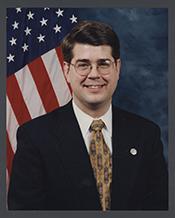
Mr. Chairman, I thank the gentleman from Wisconsin for yielding me this time. I rise in opposition to this bill, and I first want to say that the gentleman from Florida is my chairman. I am a part of…
Mr. Chairman, I thank the gentleman from Wisconsin for yielding me this time.
I rise in opposition to this bill, and I first want to say that the gentleman from Florida is my chairman. I am a part of his subcommittee and really respect and appreciate his efforts on this bill. We have just drawn different conclusions.
I think the fundamental question that we have to ask about this bill is whether or not boxing, professional boxing, and that is what we are here to talk about is professional boxing, is worth creating another bureaucracy within the Department of Commerce. No matter how we cloak this, it is creating a new entity of rules and regulation, enforcement within the Department of Commerce to oversee a professional sport, although I will say ``professional sport'' with quotations around it.
Where we have professional sports, all of the professional sports have their own regulatory body where they themselves have gotten together and formed, like the Mayflower Compact, their own regulatory or government overseeing body with their own rules and regulations within that body. To my knowledge, boxing is the only sport that has come before Congress asking us to save the sport from itself.
We held several hearings on this within our committee and subcommittee. We had several big-name people from the sport, Muhammad Ali, commissioners from around the State, promoters. All testified to the corruptness of professional boxing, and I asked the witnesses before us at one of our panels, I said, if professional boxing wants to eliminate any semblance of legitimacy, make themselves in essence the wrestling of that sport, why should we care? They came back and said, Well, because we have to. We cannot, in essence, get our own act together; and it is for the health of the boxers. That is why if it is for the health of the boxers, I suggested that we should just ban professional boxing. I offered an amendment and withdrew it.
But the issue to me is if the boxing profession wants to make itself irrelevant as a legitimate professional sport, let us give them that opportunity to do so. Let us not create a new Federal bureaucracy to save themselves from themselves.
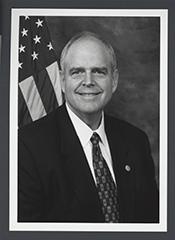
Mr. Speaker, I thank the gentleman from Michigan (Mr. Upton) for his time and for dealing with this issue. Today I rise in strong support of House Concurrent Resolution 268 regarding oversight of the…
Mr. Speaker, I thank the gentleman from Michigan (Mr. Upton) for his time and for dealing with this issue.
Today I rise in strong support of House Concurrent Resolution 268 regarding oversight of the Internet Corporation for Assigned Names and Numbers. With over 1 billion users and counting worldwide, the Internet has quickly become a critical place for individuals, business communities and governments to share and distribute information.
Ranging from middle school students researching a paper, to small business owners like Steve Earwood, running the Rockingham Dragway, and using it to promote his business to Ukrainian bloggers that helped start the Orange Revolution which swept Victor Yushenko into office, the Internet has literally changed the world.
The Internet was developed in large part by U.S. government research funding to develop new communications networks, starting with a network created by the Department of Defense. Today the Internet is run by private sector interests within the United States under the supervision of a nonprofit entity formed by the U.S. Department of Commerce.
Mr. Speaker, there was an initiative to put full control of the Internet into the hands of the United Nations. That is a bad idea.
The freedom of the Internet that exists today will be transferred to the discretion of countries like China, Syria, Cuba and Iran. Beyond the concerns with freedom, there are concerns about the U.N. using its control of the Internet as a means to impose new international taxes.
Yesterday, a favorable agreement was reached at the United Nations world summit on the information society. However, there remains an effort by some to create a global regulator of the Internet.
Mr. Speaker, I support this resolution because we must maintain the integrity of the Internet as this U.S.-developed product has changed the world with its freedom of message and freedom of commerce. To put it in NASCAR terms, if you are the fastest car on the track and leading the race, don't touch it.

Mr. Speaker, I rise today in support of H. Con. Res. 268, regarding oversight of the Internet Corporation for Assigned Names and Numbers. As we have been discussing here today, the foundational…
Mr. Speaker, I rise today in support of H. Con. Res. 268, regarding oversight of the Internet Corporation for Assigned Names and Numbers. As we have been discussing here today, the foundational structure of the Internet is under attack. But this attack is not from cyber terrorists, or high school kids run amok. Rather this attack comes from people who would like to impose the heavy hand of government on a system that is the most powerful example of freedom we may have ever seen.
How powerful? Here are a few statistics: More than 1 billion users worldwide; more than half a trillion annual commercial transactions; more than a trillion dollars in private investment; the largest source of news reporting in the world; and the largest communications backbone in the world.
But this amazingly powerful engine of commerce and freedom is being attacked as not inclusive enough for the rest of the world.
These critics want to replace today's simple system with three new quasi-governmental bodies to oversee the Internet and related public policy issues. Ultimately, these bodies would rule on freedom of speech, privacy, e-commerce, spam, cyber-security, and cyber-crime. They would take the positions of China, Iran and Syria into account when establishing standards for free speech. They would listen to Cuba on questions of eCommerce. They would listen to Congo on questions of cyber-crime.
There are those who have characterized this debate as being the U.S. vs. the world. But in fact, this debate is about freedom from government vs. government intervention.
I think the U.S. has shown great restraint in supporting an ICANN whose functions are limited to just the most technical management functions.
I urge my colleagues to join with me in sending a message to the world that the Internet needs no U.N. ``Governance''. Freedom on the Internet needs a light touch, not a heavy hand. Support H. Con. Res. 268 and support internet freedom from big government.
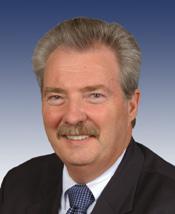
Mr. Chairman, I offer an amendment. Mr. Chairman, I ask unanimous consent that the amendment be modified by the modification at the desk. Mr. Chairman, I yield myself such time as I may consume. Mr.…
Mr. Chairman, I offer an amendment.
Mr. Chairman, I ask unanimous consent that the amendment be modified by the modification at the desk.
Mr. Chairman, I yield myself such time as I may consume.
Mr. Chairman, the sport of boxing is an amusement. It is a luxury often costing participants hundreds of dollars to attend a single prize fight.
In a time when we are searching for ways to fund necessities, we should not expose the taxpayer to a left hook and the possibility of paying millions of dollars to clean up corruption of a highly profitable business that estimates are brings in a billion dollars a year.
I commend the gentleman from Florida for working with me to ensure that taxpayers keep their guard up to prevent them from sharing the burden of paying for this commission.
I am still uncomfortable with the prospect of the Federal Government serving directly as the referee for licensing and regulating commercial sports.
Other professional sports, baseball, football, hockey, basketball all have their own governing body to thwart the problems now faced by the professional boxing industry.
However, if it must be done, then we must ensure that the costs fall on those that have generated the need for regulation and who benefit the most from boxing industry's revenues.
I believe my amendment will ensure this commission will be funded exclusively by licensing fees on the boxing industry participants and not from appropriations of general funds.
I ask my colleagues to support this amendment to hold the boxing industry accountable to pay for its own regulation.
Mr. Chairman, I yield 2 minutes to the gentleman from Florida (Mr. Stearns).
Mr. Chairman, I yield back the balance of my time.
Mr. Speaker, on November 16, I missed the vote H. Con. Res. 268, expressing the sense of the Congress regarding oversight of the Internet Corporation for Assigned Names and Numbers (#594). I intended…
Mr. Speaker, on November 16, I missed the vote H. Con. Res. 268, expressing the sense of the Congress regarding oversight of the Internet Corporation for Assigned Names and Numbers (#594). I intended to vote ``aye.''
Bill Text
3 versions available
        [Congressional Bills 109th Congress]
[From the U.S. Government Publishing Office]
[H. Con. Res. 268 Referred in Senate (RFS)]

109th CONGRESS
1st Session
H. CON. RES. 268

_______________________________________________________________________

IN THE SENATE OF THE UNITED STATES

November 17, 2005

Received and referred to the Committee on Commerce, Science, and
Transportation

_______________________________________________________________________

CONCURRENT RESOLUTION

Expressing the sense of the Congress regarding oversight of the
Internet Corporation for Assigned Names and Numbers.

Whereas the origins of the Internet can be found in United States Government
funding of research to develop packet-switching technology and
communications networks, starting with the ``ARPANET'' network
established by the Department of Defense's Advanced Research Projects
Agency in the 1960s and carried forward by the National Science
Foundation's ``NSFNET'';
Whereas in subsequent years the Internet evolved from a United States Government
research initiative to a global tool for information exchange as in the
1990s it was commercialized by private sector investment, technical
management and coordination;
Whereas since its inception the authoritative root zone server--the file server
system that contains the master list of all top level domain names made
available for routers serving the Internet--has been physically located
in the United States;
Whereas today the Internet is a global communications network of inestimable
value;
Whereas the continued success and dynamism of the Internet is dependent upon
continued private sector leadership and the ability for all users to
participate in its continued evolution;
Whereas in allowing people all around the world freely to exchange information,
communicate with one another, and facilitate economic growth and
democracy, the Internet has enormous potential to enrich and transform
human society;
Whereas existing structures have worked effectively to make the Internet the
highly robust medium that it is today;
Whereas the security and stability of the Internet's underlying infrastructure,
the domain name and addressing system, must be maintained;
Whereas the United States has been committed to the principles of freedom of
expression and the free flow of information, as expressed in Article 19
of the Universal Declaration of Human Rights, and reaffirmed in the
Geneva Declaration of Principles adopted at the first phase of the World
Summit on the Information Society;
Whereas the U.S. Principles on the Internet's Domain Name and Addressing System,
issued on June 30, 2005, represent an appropriate framework for the
coordination of the system at the present time;
Whereas the Internet Corporation for Assigned Names and Numbers popularly known
as ICANN, is the proper organization to coordinate the technical day-to-
day operation of the Internet's domain name and addressing system;
Whereas all stakeholders from around the world, including governments, are
encouraged to advise ICANN in its decision-making;
Whereas ICANN makes significant efforts to ensure that the views of governments
and all Internet stakeholders are reflected in its activities;
Whereas governments have legitimate concerns with respect to the management of
their country code top level domains;
Whereas the United States Government is committed to working successfully with
the international community to address those concerns, bearing in mind
the need for stability and security of the Internet's domain name and
addressing system;
Whereas the topic of Internet governance, as currently being discussed in the
United Nations World Summit on the Information Society is a broad and
complex topic;
Whereas it is appropriate for governments and other stakeholders to discuss
Internet governance, given that the Internet will likely be an
increasingly important part of the world economy and society in the 21st
Century;
Whereas Internet governance discussions in the World Summit should focus on the
real threats to the Internet's growth and stability, and not recommend
changes to the current regime of domain name and addressing system
management and coordination on political grounds unrelated to any
technical need; and
Whereas market-based policies and private sector leadership have allowed this
medium the flexibility to innovate and evolve: Now, therefore, be it
Resolved by the House of Representatives (the Senate concurring),
That it is the sense of Congress that--
(1) it is incumbent upon the United States and other
responsible governments to send clear signals to the
marketplace that the current structure of oversight and
management of the Internet's domain name and addressing service
works, and will continue to deliver tangible benefits to
Internet users worldwide in the future; and
(2) therefore the authoritative root zone server should
remain physically located in the United States and the
Secretary of Commerce should maintain oversight of ICANN so
that ICANN can continue to manage the day-to-day operation of
the Internet's domain name and addressing system well, remain
responsive to all Internet stakeholders worldwide, and
otherwise fulfill its core technical mission.

Passed the House of Representatives November 16, 2005.

Attest:

JEFF TRANDAHL,

Clerk.