H.Con.Res. 60House109th Congress (2005-2007)In Committee
Acknowledging African descendants of the transatlantic slave trade in all of the Americas with an emphasis on descendants in Latin America and the Caribbean, recognizing the injustices suffered by these African descendants, and recommending that the United States and the international community work to improve the situation of Afro-descendant communities in Latin America and the Caribbean.
Sponsored by 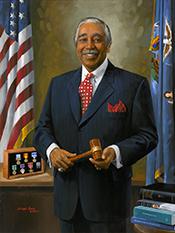 Rep. Charles B. Rangel (D-NY)
Rep. Charles B. Rangel (D-NY)Introduced February 14, 2005
Legislative Activity
Stay on top of the latest movement without scrolling through every action
HouseIntro Referral
Latest Action
Sponsor introductory remarks on measure. (CR E1464-1465)
July 12, 2005
View full timeline
HouseIntro Referral
Introduced in House
February 14, 2005
HouseIntro Referral
Referred to the House Committee on International Relations.
February 14, 2005
HouseCommittee
Referred to the Subcommittee on the Western Hemisphere.
March 17, 2005
HouseIntro Referral
Sponsor introductory remarks on measure. (CR E1464-1465)
July 12, 2005
Bill Text
Latest available legislative text
Introduced in HouseIssued February 14, 2005
        [Congressional Bills 109th Congress]
[From the U.S. Government Publishing Office]
[H. Con. Res. 60 Introduced in House (IH)]

109th CONGRESS
1st Session
H. CON. RES. 60

Acknowledging African descendants of the transatlantic slave trade in
all of the Americas with an emphasis on descendants in Latin America
and the Caribbean, recognizing the injustices suffered by these African
descendants, and recommending that the United States and the
international community work to improve the situation of Afro-
descendant communities in Latin America and the Caribbean.

_______________________________________________________________________

IN THE HOUSE OF REPRESENTATIVES

February 14, 2005

Mr. Rangel submitted the following concurrent resolution; which was
referred to the Committee on International Relations

_______________________________________________________________________

CONCURRENT RESOLUTION

Acknowledging African descendants of the transatlantic slave trade in
all of the Americas with an emphasis on descendants in Latin America
and the Caribbean, recognizing the injustices suffered by these African
descendants, and recommending that the United States and the
international community work to improve the situation of Afro-
descendant communities in Latin America and the Caribbean.

Whereas during Black History Month it is important that we not forget that
African-Americans are not the only survivors of the transatlantic slave
trade;
Whereas like the United States, many European nations benefited greatly from the
colonization of Latin America and the Caribbean and their participation
in the slave trade;
Whereas the story of African descendants in all of the Americas remains untold,
leading them to be forgotten, made invisible, and allowed to suffer
unjustly;
Whereas it is important to acknowledge that as a result of the slave trade and
immigration, approximately 80,000,000 to 150,000,000 persons of African
descent live in Latin America and the Caribbean, making them the largest
population of persons of African descent outside of Africa;
Whereas Afro-descendants are present in most all Latin American countries,
including Argentina, Bolivia, Chile, Ecuador, Guatemala, Honduras,
Mexico, Nicaragua, Panama, Paraguay, Peru, Uruguay, and Venezuela;
Whereas the size of Afro-descendant populations vary in range from less than 1
percent in some countries to as much as 30 percent in Colombia and 46
percent in Brazil and make up the majority in some Spanish speaking
Caribbean nations, such as Cuba and the Dominican Republic;
Whereas Afro-descendant populations have made significant economic, social, and
cultural contributions to their countries and the Western Hemisphere
from their unfortunate involvement in the transatlantic slave trade to
their recent contributions to trade, tourism, and other industries;
Whereas although persons of African descent have made significant achievements
in education, employment, economic, political, and social spheres in
some countries, the vast majority are marginalized--living in
impoverished communities where they are excluded from centers of
education, government, and basic human rights based upon the color of
their skin and ancestry;
Whereas Afro-descendants have shorter life expectancies, higher rates of infant
mortality, higher incidences of HIV/AIDS, higher rates of illiteracy,
and lower incomes than do other populations;
Whereas Afro-descendants encounter problems of access to healthcare, basic
education, potable water, housing, land titles, credit, equal justice
and representation under the law, political representation, and other
economic, political, health, and basic human rights; and
Whereas skin color and ancestry have led African-Americans in the United States
and African descendants in Latin America and the Caribbean to share
similar injustices, leading to economic, social, health, and political
inequalities: Now, therefore, be it
Resolved by the House of Representatives (the Senate concurring),
That Congress--
(1) recognizes and honors African descendants in the
Americas for their contributions to the economic, social, and
cultural fabric of the countries in the Americas, particularly
in Latin American and Caribbean societies;
(2) recognizes that as a result of their skin color and
ancestry, African descendants in the Americas have wrongfully
experienced economic, social, and political injustices;
(3) urges the President to take appropriate measures to
encourage the celebration and remembrance of the achievements
of African descendants in the Americas and a resolution of
injustices suffered by African descendants in the Americas;
(4) encourages the United States and the international
community to work to ensure that extreme poverty is eradicated,
universal education is achieved, quality healthcare is made
available, sustainable environmental resources, including land
where applicable, is provided, and equal access to justice and
representation under the law is granted in Afro-descendant
communities in Latin America and the Caribbean; and
(5) encourages the United States and the international
community to achieve these goals in Latin America and the
Caribbean by--
(A) promoting research that focuses on identifying
and eradicating racial disparities in economic,
political, and social spheres;
(B) promoting, funding, and creating development
programs that focus on Afro-descendant communities;
(C) providing technical support and training to
Afro-descendant advocacy groups that work to uphold
basic human rights in the region;
(D) promoting the creation of an international
working group that focuses on problems of communities
of Afro-descendants in the Americas; and
(E) promoting trade and other bilateral and
multilateral agreements that take into account the
needs of Afro-descendant communities.
<all>