Expressing the sense of Congress that the United States should strongly oppose China's anti-secession legislation with respect to Taiwan.
Legislative Activity
Stay on top of the latest movement without scrolling through every action
Referred to the Subcommittee on Asia and the Pacific.
March 17, 2005
View full timeline
Introduced in House
February 17, 2005
Referred to the House Committee on International Relations.
February 17, 2005
Referred to the Subcommittee on Asia and the Pacific.
March 17, 2005
Floor Debate
24 membersWhat members said about H.Con.Res. 70 on the floor
 TL
TL IR
IR RPF
RPF NP
NP PAD+19
Floor Debate
24 membersWhat members said about H.Con.Res. 70 on the floor
Mr. Speaker, I yield for the purpose of making a unanimous consent request to the gentlewoman from California (Ms. Woolsey). (Ms. WOOLSEY asked and was given permission to revise and extend her…
Mr. Speaker, I yield for the purpose of making a unanimous
consent request to the gentlewoman from California (Ms. Woolsey).
(Ms. WOOLSEY asked and was given permission to revise and extend her remarks.)
Mr. Speaker, I yield for the purpose of making a unanimous consent request to the gentlewoman from California (Ms. Solis).
(Ms. SOLIS asked and was given permission to revise and extend her remarks.)
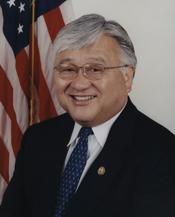
Mr. Speaker, I yield for the purpose of making a unanimous consent request to the gentleman from California (Mr. Honda).
(Mr. HONDA asked and was given permission to revise and extend his remarks.)
Mr. Speaker, I yield for the purpose of making a unanimous consent request to the gentleman from New York (Mr. Hinchey).
(Mr. HINCHEY asked and was given permission to revise and extend his remarks.)
Mr. Speaker, I yield for the purpose of making a unanimous consent request to the gentlewoman from California (Ms. Lee).
(Ms. LEE asked and was given permission to revise and extend her remarks.)
Mr. Speaker, I yield for the purpose of making a unanimous consent request to the gentlewoman from Wisconsin (Ms. Baldwin).
(Ms. BALDWIN asked and was given permission to revise and extend her remarks.)
Mr. Speaker, I yield for the purpose of making a unanimous consent request to the gentlewoman from Michigan (Ms. Kilpatrick).
(Ms. KILPATRICK of Michigan asked and was given permission to revise and extend her remarks.)
Mr. Speaker, I yield for the purpose of making a unanimous consent request to the gentlewoman from Texas (Ms. Eddie Bernice Johnson).
(Ms. EDDIE BERNICE JOHNSON of Texas asked and was given permission to revise and extend her remarks.)
Mr. Speaker, I yield for the purpose of making a unanimous consent request to the gentleman from Massachusetts (Mr. Olver).
(Mr. OLVER asked and was given permission to revise and extend his remarks.)
Mr. Speaker, I yield for the purpose of making a unanimous consent request to the gentlewoman from California (Ms. Watson).
(Ms. WATSON asked and was given permission to revise and extend her remarks.)
Mr. Speaker, I yield for the purpose of making a unanimous consent request to the gentlewoman from Wisconsin (Ms. Moore).
(Ms. MOORE of Wisconsin asked and was given permission to revise and extend her remarks.)
Mr. Speaker, I yield for the purpose of making a unanimous consent request to the gentlewoman from California (Ms. Waters).
(Ms. WATERS asked and was given permission to revise and extend her remarks.)
Announcement By the Speaker Pro Tempore
Mr. Speaker, I yield for the purpose of making a unanimous consent request to the gentlewoman from Ohio (Mrs. Jones).
(Mrs. JONES of Ohio asked and was given permission to revise and extend her remarks.)
Mr. Speaker, I yield for the purpose of making a unanimous consent request to the gentleman from Michigan (Mr. Conyers).
(Mr. CONYERS asked and was given permission to revise and extend his remarks.)
Mr. Speaker, I yield for the purpose of making a unanimous consent request to the gentleman from Illinois (Mr. Gutierrez).
(Mr. GUTIERREZ asked and was given permission to revise and extend his remarks.)
Mr. Speaker, I yield for the purpose of making a unanimous consent request to the gentlewoman from Florida (Ms. Corrine Brown).
(Ms. CORRINE BROWN of Florida asked and was given permission to revise and extend her remarks.)
Mr. Speaker, I yield for the purpose of making a unanimous consent request to the gentleman from New York (Mr. Nadler).
(Mr. NADLER asked and was given permission to revise and extend his remarks.)
Mr. Speaker, I yield for the purpose of making a unanimous consent request to the gentlewoman from Texas (Ms. Jackson- Lee).
(Ms. JACKSON-LEE of Texas asked and was given permission to revise and extend her remarks.)
Mr. Speaker, I yield myself such time as I may consume.
Mr. Speaker, today could have been a day to rejoice and to celebrate in
unity. Yesterday, the people of Iraq asserted their newly won rights, won, it must be said, at a steep cost; and they inspired us all by flocking to the polls at great risk to their lives. This was a peaceful process, an affirmation of all that has been sacrificed in nearly 3 years of valiant struggle. We should be rejoicing, Mr. Speaker.
But it is a sad day, indeed, when the Iraqi people have to teach the United States Congress a lesson in democracy. The majority leadership in this body and in the Rules Committee that acts as its legislative gatekeeper have used authoritarian tactics to bring before us the resolution that we now debate. They have eliminated any real opportunity for nearly half the Members of the House of Representatives to effect the language of this measure, a measure deliberately calculated to be divisive.
Mr. Speaker, look around at this people's House. It was not designed to be an echo chamber. We are not here merely to recycle the administration's rhetoric on Iraq. It is clear that there is a spectrum of views on my side of the aisle on how to deal with the difficult situation in Iraq in the weeks and months ahead. Why should the majority try to force the issue, politicize the war effort and polarize this body further?
This resolution came to us yesterday afternoon. We tried negotiating in good faith and that went nowhere, so last night I introduced an alternative resolution and asked the Rules Committee to make it in order.
My resolution congratulates the Iraqi people on three democratic national elections this year; it encourages all Americans to support the Iraqi people; and commends and congratulates our troops and those of our allies and the Iraqi forces protecting their people at election time. The Democratic leader, Ms. Pelosi, and the Democratic whip, Mr. Hoyer, joined me in advocating this measure.
Mr. Speaker, that is the resolution which should have come before us today. It is a measure that would have won the unanimous support of this body, or nearly so, and would have sent a message of support to the Iraqi people, to our troops, and to the whole world.
But the leadership of this body has approached this entire important matter in a rigid, unbending, and authoritarian fashion. Theirs was a take-it-or-leave-it proposal, not a comma to be changed; and that approach is inappropriate in a democratic legislative body where some of us have been attempting so hard to operate in a bipartisan fashion.
Mr. Speaker, along with several of my Democratic colleagues, I was hosted by the President at the White House 2 days ago. The President said he wanted to explore a bipartisan approach on Iraq. Unfortunately, my colleagues on the other side of the aisle have not gotten that message. Instead, they have made a mockery of it.
The election in Iraq yesterday was truly inspiring. It fills me with hope that Iraq can indeed emerge as a stable, pluralistic, and democratic society. This resolution could have been considerably improved, had there been a process of bipartisan consultation. We could have sent a united and strong message to our troops, to the Iraqi people, and to the global audience.
But whatever my thoughts on the substance of the measure, I profoundly reject the arrogant and undemocratic process that produced it, and for this reason I shall vote ``present'' on this measure.
Mr. Speaker, I reserve the balance of my time.
Mr. Speaker, I am pleased to yield 2 minutes to the gentleman from Ohio (Mr. Kucinich).
Mr. Speaker, I am pleased to yield 3 minutes to the gentleman from Massachusetts (Mr. Delahunt).
Mr. Speaker, I yield 2\1/2\ minutes to the gentleman from North Carolina (Mr. Price).
(Mr. PRICE of North Carolina asked and was given permission to revise and extend his remarks.)
Mr. Speaker, I yield 2 minutes to the gentleman from California (Mr. Schiff).
Mr. Speaker, I yield 2 minutes to the gentleman from Maryland (Mr. Hoyer), the distinguished Democratic whip.
Mr. Speaker, I yield 2\1/2\ minutes to the gentleman from Massachusetts (Mr. Lynch).
Mr. Speaker, I am delighted to yield 1 minute to the gentlewoman from California (Ms. Pelosi), the distinguished Democratic leader.
Mr. Speaker, I am pleased to yield 2 minutes to the gentlewoman from California (Ms. Waters).
Mr. Speaker, I am pleased to yield 2 minutes to the distinguished gentleman from Maryland (Mr. Cardin).
Mr. Speaker, I am delighted to yield 2 minutes to the distinguished gentleman from Texas (Mr. Doggett).
Mr. Speaker, I am very pleased to yield 2 minutes to my distinguished colleague from Texas (Mr. Edwards).
I will use the balance of my time, Mr. Speaker, to read the resolution which was disallowed by the Republican leadership, a resolution congratulating the people of Iraq on three national elections conducted in Iraq in 2005.
Whereas the people of Iraq have consistently and courageously demonstrated their commitment to democracy by participating in three elections in 2005;
Whereas on January 30, 2005, the people of Iraq participated in an election for a transitional national assembly;
Whereas Iraqi society participated in the approval of a new Iraqi constitution through a referendum held on October 15, 2005;
Whereas reports indicate that the people of Iraq voted in unprecedented and overwhelming numbers in the most recent election, held on December 15, 2005, yesterday, for a new national parliament that will serve in accordance with the Iraqi constitution for a 4-year term and that represents the first fully sovereign elected democratic assembly in the history of Iraq;
Whereas this remarkable level of participation by the people of Iraq in the face of dire threats to their very lives has won the admiration of the world;
Whereas the Iraqi elections could not have been conducted without the courage and dedication of the members of the United States Armed Forces and the armed forces of other nations in Iraq, including the members of the security forces of Iraq;
Whereas the December 15, 2005, election in Iraq inspires confidence that a robust pluralistic democracy that will bring stability to Iraqi society is emerging:
Now, therefore, be it resolved, that the House of Representatives congratulates the people of Iraq on three national elections conducted in Iraq in 2005; encourages all Americans to express support for the people of Iraq in their efforts to achieve a free, open, and democratic society; and expresses its thanks and admiration to the members of the United States Armed Forces and the armed forces of other nations in Iraq, including the members of the security forces of Iraq, whose heroism permitted the Iraqi people to vote safely.
This is the resolution that would have received unanimous approval by this body. Instead, we had an ugly, divisive, and unnecessary debate.
Mr. Speaker, I yield back the balance of my time.
Mr. Speaker, pursuant to the rule, I call up the resolution (H. Res. 612) expressing the commitment of the House of Representatives to achieving victory in Iraq, and ask for its immediate…
Mr. Speaker, pursuant to the rule, I call up the resolution (H. Res. 612) expressing the commitment of the House of Representatives to achieving victory in Iraq, and ask for its immediate consideration.
Mr. Speaker, I ask unanimous consent that all Members may have 5 legislative days within which to revise and extend their remarks on House Resolution 612.
Mr. Speaker, I yield myself such time as I may consume.
This resolution before us clearly and explicitly states that this body is committed to achieving victory in Iraq. The United States should not go back on its commitments to confront tyranny and to ``make the world safe for democracy.'' Failure is not a part of the American nature nor of our moral fiber. It is certainly not a concept that is acceptable to our men and women in the Armed Forces.
When we talk about progress in Iraq and concrete benchmarks for measuring success, we need only look back at yesterday's landmark nationwide elections in Iraq. Iraq's Independent Electoral Commission reported that at least 97.5 percent of planned voting centers were opened, monitored by up
to 120,000 observers, including 800 accredited by international observer groups.
The U.N. envoy to Iraq said that the initial signs are very positive, adding that ``anecdotal evidence shows that there has been good turnout, that it was inclusive, and that security was well maintained.''
Are we not in agreement that yesterday's vivid example of democracy taking root in Iraq was a profound victory for the Iraqi people, for our sons and daughters who continue to place themselves in harm's way, and a resounding defeat to the brutal Islamic jihadists? Are we not in agreement that this election empowers the people of the region who have toiled under brutal dictatorships for far too long and that the success of democracy yesterday in Iraq aided our efforts in the global war against terror? Are we not in agreement that these elections could not have been possible without the presence of our men and women in the Armed Forces?
If we are in agreement that these most recent Iraqi elections were a success and were met with very little violence and widespread participation due to the presence of U.S. forces in support of Iraqi security, then we should be in agreement with the totality of the text of the resolution before us. We should not leave the Iraqi people at this most critical juncture. We should not leave before they are fully capable of protecting their own nation, their people, and their incipient democracy from those who seek to destroy what they have been creating because they wish to turn Iraq into a safe haven for Islamic militants and extremist elements like Iran and Syria.
This is not in our nature, Mr. Speaker. This is not what our troops want, and it is not what the Iraqi people want.
References have been made to calls for U.S. withdrawal, but let us review some of those. Iraqi officials have not made such requests to the U.S. Government. The Arab League, for example, their statement says that it was the result of undue political pressure by rogue regimes, particularly Syria and Iran, whose foreign minister was involved in the drafting of the final communique.
We are fully aware that these pariah states have a vested interest in seeing Iraq fail and assisting the foreign fighters who are launching attacks against Iraqis and our U.S. and coalition forces in Iraq. We have achieved significant progress thus far in Iraq. The political and the psychological transformation that has taken place in Iraq will have long-term positive impact on our efforts to curtail the spread of Islamic extremists and jihadist activities.
Saddam Hussein would not be on trial today for his crimes against humanity, and most of the villainous heirs to his legacy would not be neutralized were it not for the critical role played by our U.S. Armed Forces personnel. Without the presence of our forces, the people of Iraq would not have had the opportunity to participate in the January 30, 2005, nationwide elections. They would not have returned to the polls on October 15, again to approve their Constitution and would not have been celebrating their new found democratic freedoms by participating in yesterday's yet another historic election.
Our mission, however, Mr. Speaker, remains only partially accomplished. Iraqi security forces are taking up more of the military burden, and the new coalition for strategy for ``clear, hold, and build'' is denying the insurgents many of their former sanctuaries.
The Iraqi Army and the police forces are growing larger, better trained, more effective. These forces are also becoming increasingly professional. Today, Iraqi security forces are now strong enough to garrison and control cleared areas, as recently illustrated by the resoundingly successful joint U.S. and Iraqi offensive in Tel Afar.
The Iraqi security forces are improving, but they cannot yet stand on their own. To abandon them now would be to leave them at the mercy of the brutal Islamic jihadists and would destroy the progress that we have achieved thus far.
Again, this is not in our nature. As clause 5 of this resolution states: Our presence in Iraq ``will be required only until Iraqi forces can stand up so our forces can stand down and no longer than is required for that purpose.''
Are we not in agreement on this critical point? Is it the contention of those who oppose this resolution that we abandon the Iraqi people after they have displayed immeasurable courage in the face of attacks from Islamic jihadists and their state sponsors? We should not base our strategy on artificial timelines. The criteria governing our eventual withdrawal from Iraq must be performance based, not chronologically based. Victory defined is: ``Final and complete defeat of an enemy in a military encounter. Success in a struggle against . . . an opponent, or an obstacle.''
Who is the enemy, the common enemy of Iraq and coalition forces, the enemy of the American and Iraqi people, of those who want freedom and democracy to flourish in Iraq? They are the Islamic jihadists and the militants who are seeking to destroy what we have helped the Iraqi people accomplish.
And what is our strategy for victory? One developed by our military and policy planners in coordination with our coalition partners and our Iraqi partners. Our military and policy planners track numerous indicators to map our progress and adjust our tactics as necessary to meet our strategic goals.
I would further add, Mr. Speaker, that despite some of the references made to the alleged lack of a clear path to victory, the President has, in fact, articulated our approach in the recent National Strategy for Victory in Iraq. Many of these reports with metrics on our efforts, our strategies, our goals, our accomplishments are readily available not just to us in this Chamber but to the American people. We are not just winning in Iraq, but we stand on the precipice of something far more profound: a decisive shift away from the world of brutal dictatorships which ruin their own societies through a combination of state-sponsored murder and incitement, and toward the emergence of a modern, democratic Middle East that takes its rightful place among free nations.
However, if we leave prematurely, Mr. Speaker, before the Iraqi people are able to stand on their own, we risk endangering all that we have worked so hard for and that some of our brave men and women in our Armed Forces have also sacrificed for. Let us not diminish their sacrifice by leaving their mission incomplete. Let us stand behind them as they seek to bring home a definite victory for us in this war on terror.
In closing, I would ask that we all recall the words of former President Ronald Reagan, who said: ``It is up to us . . . to work together for progress and humanity so that our grandchildren, when they look back at us, can truly say that we not only preserved the flame of freedom but cast its warmth and light further than those who came before us.''
We have prevailed in the struggle against tyranny and fascism after 40 years in a global conflict. We prevailed in the battle of ideas against communism. We will again prevail in defeating Islamic fascism if we fulfill our mission in Iraq and do not heed the nay-saying of defeatists. With freedom on our side, we cannot fail, Mr. Speaker.
I am proud of the service of my stepson, Doug Lehtinen, and his fiancee, Lindsay Nelson, who are marine officers serving in Iraq flying F-18s. They will tell us that setting an artificial deadline for withdrawal would put them in harm's way. They are fully trained military officers who understand that war is difficult; but they believe in their mission, a mission for victory in Iraq, a mission without a surrender statement.
As Joseph Lieberman, the Senator, said just a few days ago a withdrawal, a withdrawal on an artificial timeline would discourage our troops because it seems to be heading for the door. It will encourage the terrorists. It will confuse the Iraqi people.
I agree with Senator Lieberman, and I hope my colleagues do as well today.
Mr. Speaker, I reserve the balance of my time.
Mr. Speaker, I am pleased to yield 1 minute to the gentlewoman from Virginia (Mrs. Drake).
Mr. Speaker, I am pleased to yield 2 minutes to the gentleman from Kentucky (Mr. Davis).
Mr. Speaker, I am pleased to yield 1\1/2\ minutes to my friend, the gentlewoman from Texas (Ms. Granger).
Mr. Speaker, I yield 2 minutes to the gentleman from Texas (Mr. Gohmert).
Mr. Speaker, I yield 2 minutes to the gentleman from Iowa (Mr. King).
Mr. Speaker, I yield 2 minutes to the gentleman from Indiana (Mr. Chocola).
Mr. Speaker, I am pleased to yield 3 minutes to my good friend from Georgia (Mr. Kingston).
Mr. Speaker, I am pleased to yield 2\1/2\ minutes to my fellow Floridian (Mr. Young), the chairman of the Defense appropriations subcommittee.
Mr. Speaker, I am now very pleased to yield the balance of my time to the distinguished gentleman from Texas (Mr. DeLay) for the purpose of closing the debate on the resolution before us.
Mr. Speaker, on that I demand the yeas and nays.
Mr. Speaker, recent newspaper articles, television news reports, debates on the floor of the U.S. House and Senate, and even dinner time conversations this holiday season have been dominated by…
Mr. Speaker, recent newspaper articles, television news reports, debates on the floor of the U.S. House and Senate, and even dinner time conversations this holiday season have been dominated by discussions about the war against terrorism in Iraq.
Two and a half years removed from the beginning of this war, the stakes for victory remain high. It is important for all Americans, whether they support the war or not, to understand the implications of why we went there; what we are there to achieve; and what the consequences would be if we agreed to an artificial timetable to withdraw our troops. Because we continue to face both great difficulties and great opportunities in Iraq, it is even more important that all Americans absolutely recognize what the future of Iraq means to our security here at home and the future of the Middle East!
My current reading of the Iraq debate is that some war critics, who originally supported the war, have lately been trying to revise or rewrite the history of how Iraq became the central front in the war on terrorism. Some of this is genuine, principled opposition to war. Some of it is personal animosity toward the President. Whatever the reason, we need to separate the two. As some have said, ``hate the war, love the warfighter.''
To understand why we are there we do not have to look much further than what some critics said before the war and what they are saying now.
In 1998, House Democratic Leader Nancy Pelosi said ``Saddam Hussein has been engaged in the development of weapons of mass destruction technology.'' Seven years later, she says Saddam's weapons were ``not an imminent threat to the United States or a cause for war.''
In 2002, Senator Hillary Clinton said Saddam ``has also given aid, comfort, and sanctuary to terrorists.'' Now she claims there were ``false assurances, faulty evidence'' for war, but still hesitates to embrace calls for immediate withdrawal.
Even former President Bill Clinton said in 1998 that Saddam's ``ability to produce and deliver weapons of mass destruction poses a grave threat.'' Yet, now he says the war was ``a big mistake,'' but, like his spouse, warns of the danger of a premature withdrawal.
Unlike what Iraqis endured under the tyranny of Saddam Hussein, Americans are afforded the right to voice their concerns and state their opinions just as these elected officials and other citizens have done. However, it is important we understand the facts before more judgments and accusations are made.
Saddam Hussein reigned through terror, sponsored terror, and massacred innocent Iraqis with chemical weapons. He invaded his Kuwaiti neighbors and violated more than a dozen U.N. resolutions. His armed forces shot at U.S. and British pilots for the ten years they patrolled the U.N.-imposed ``No Fly Zones'' as they protected the Iraqi people from his brutality. And in the words of weapons inspector Dr. David Kay: Saddam had the ``intent'' and ``capabilities'' to develop weapons of mass destruction.
I have never regretted voting to give the President the authority to go to war in Iraq and remove Saddam from power. While I agree with Senator John McCain that mistakes have been made and some pre-war intelligence was unintentionally flawed, we cannot overlook positive developments in Iraq. I am convinced, however, that the progress we have made could be lost if we prematurely withdraw our troops before the Iraqi people are fully capable of governing and securing their own country.
The War on Terrorism in Iraq and Afghanistan is the defining challenge of our generation, whether some ``war opponents'' like it or not. Osama Bin Laden's deputy Ayman Al-Zawahiri has declared Iraq to be ``the place for the greatest battle,'' where he hopes to ``expel the Americans'' and then spread ``the jihad wave to the secular countries neighboring Iraq.'' Such statements reaffirm why withdrawing our troops according to an artificial political timetable would be detrimental to the future of Iraq, our own national security, and could actually embolden those who hate our way of life.
Iraq continues to strengthen its security forces, but not all of their military battalions are ready to operate independent of coalition troops. Our troops, and those of our coalition allies, are still needed in Iraq and we need to stand firm in the face of the terrorists. If we
leave prematurely, jihadists and terrorists will interpret our withdrawal as total victory and use that opportunity to turn Iraq into a springboard for future attacks closer to our shores. We know what these terrorists are capable of. Here in New Jersey, we don't need to be reminded of 9/11, nor have we forgotten terrorist attacks in Bali, London, Madrid, Thailand, Bangladesh, Jordan, Israel, and the discovery of cells in Belgium and a host of countries around the world.
We also have a responsibility to 28 million Iraqis who, after decades of abuse and torture by Saddam, yearn to be free and deserve a chance for prosperity and stability. We pledged to guide the Iraqi people through the difficult steps of constituting a new government, strengthening the Iraqi Army, and laying the ground work for free elections. But it would be incredibly dangerous if we allowed threats from Bin Laden, Zawahiri, or any of the insurgency to influence our foreign policy and ``break our promise'' to the Iraqi people. Drawing down our forces in Iraq should be based strictly on the progress being made by the Iraqi government to fully secure their own country and the judgment of our military generals on the ground over there.
For our troops to come home safely, our strategy for victory depends significantly on more Iraqi Security Forces, ISF, being trained, equipped, and ready to ``lead the fight'' for securing their own country. American military leaders in Iraq estimate that 210,400 Iraqi forces are currently fighting to defend Iraq. More than 80 battalions are fighting alongside coalition troops while nearly 40 others, including four in Baghdad, are independently policing and controlling areas of Iraq. Despite that innocent Iraqis continue to be a target of suicide bombers, more than 50,000 Iraqi police have completed basic training courses and ISF recruitment remains high. With all due respect to media reports, most of the insurgency only exists in four of 18 provinces in Iraq, a country the size of California.
Despite continued terrorists attacks, car bombings, beheadings, and kidnappings, the terrorists have not achieved their goals. In fact, 2005 has been a watershed year for democracy in Iraq. In January, the world watched as Iraqis defied terrorist threats by going to the polls and casting their votes for self-determination. Eight million Iraqis went to the voting booth and took a stand against terror by voting for an interim National Assembly. In October, almost 10 million participated in an Iraqi referendum to approve a national constitution that--for the first time ever--guarantees them basic freedoms, rights and protections under law, regardless of their gender, religion, or ethnic origin. And on December 15 even more Iraqis cast their votes for a permanent, full-time government.
In addition to the political and security strategy in Iraq, we must also continue to focus on the economic and reconstruction effort. While at times slow, critical infrastructure in Iraq continues to be restored and rebuilt to meet the increasing demand and need of the country's growing economy. The Army Corps of Engineers and many of our soldiers and Marines, working alongside Iraqis, the USAID and other international agencies, are helping Iraq build schools, modernize water and sewage projects, and open new fire and police stations. Approximately 80,000 children are attending Iraq's 3,400 schools. After years of neglect, more than 15,000 Iraqi homes have been connected to the Baghdad water system. And more Iraqi women are receiving better health care thanks to the construction of a new 260-bed maternity hospital in Mosul.
These are strong signs of progress in Iraq--none of which would have been possible without the service, sacrifice, and strong morale of U.S. and coalition forces. Unfortunately, such stories are not always being told by the media. Iraqis want to be free, and thanks to the support of our service men and women, they are taking steps each and every day to reach their goal.
Mr. Speaker, victory will not be accomplished overnight. On the contrary, the Iraqis still need our help to meet their political and security objectives. Our work in Iraq remains dangerous and difficult but we must meet the challenges of this new kind of war. We must honor the service and sacrifice of our soldiers by doing whatever it takes to protect our nation and prevail in Iraq and Afghanistan.
Mr. Speaker, I rise to commend the gentleman from California (Mr. Lantos), our ranking Democrat on the International Relations Committee, for his leadership to make our country safer, our military…
Mr. Speaker, I rise to commend the gentleman from California (Mr. Lantos), our ranking Democrat on the International Relations Committee, for his leadership to make our country safer, our military stronger, and to bring stability to the region. While we may not always agree on the approach to take, Mr. Lantos strove very hard for a bipartisan resolution, and I want to just read from the resolution that he would put forth in the spirit of congratulating the people of Iraq.
He said: ``Resolved, That the House of Representatives congratulates the people of Iraq on the three national elections conducted in Iraq in 2005.'' Imagine, in January, in October, and now in December, three times courageously they went to the polls, and his resolution spells that out.
His resolution would encourage ``all Americans to express support for the people of Iraq in their efforts to achieve a free, open, and democratic society,'' and again, throughout his resolution he makes that point.
And he expresses ``thanks and admiration to the members of the United States Armed Forces and the armed forces of other nations in Iraq, including the members of the security forces of Iraq, whose heroism permitted the Iraqi people to vote safely.''
That is the spirit of the resolution that we should be voting on today, one that brings us together, that is clear to the Iraqi people that their courage is an example to the world.
But, sadly, this Congress is not an example of democracy to the world when instead of using an occasion to unify, once again, the Republican majority brings to the floor a resolution rejecting the good offers of the gentleman from California (Mr. Lantos) to come together in a bipartisan way and uses what should be a cause for celebration as instead a means to denounce those who disagree, not very democratic, and also to insist that if you want to congratulate the people of Iraq, you must support the status quo.
More of the same in Iraq is not making the American people safer. More of the same in Iraq is not making our military stronger. More of the same in Iraq is not bringing stability to the region.
So I think you will see Democrats united in congratulating the people of Iraq, commending our men and women in the armed services, and supporting
that in a democracy we will have different views and that we will respect them. I have said it before and I will say it again, Senator Taft, who would become the Republican leader of the Senate during World War II, he said disagreement in time of war is essential to a governing democracy, and this was during World War II. Why do the Republicans think that we cannot have disagreement in time of war?
So as we go into this holiday season, I know that we can come together and say to our men and women in harm's way that we honor them for their service; we are grateful to them for their patriotism, their courage and the sacrifice they are willing to make for our country; and in this holiday season, we strive for peace on Earth and goodwill toward man, which would not be possible without our men and women in the armed services.
That should be the spirit in which we go forward, not in the divisive manner the Republicans have put forward. That is really quite sad, but I hope that in the vote that we have today that the Iraqi people will know that on both sides of the aisle we all see them as an example of democracy and hope that they will not be discouraged by this suppression of dissent in the United States.
Mr. Speaker, this marks the second time in a month that House Republicans have gone to extreme lengths to avoid a fair and open debate on the war in Iraq. Last month, after being stung by a resolution introduced by Mr. Murtha calling for the redeployment of U.S. forces in Iraq, Republicans brought to the floor a measure that was an act of deception and an attempt to mischaracterize the Murtha legislation.
Today, under the guise of commending the people of Iraq for yesterday's election, the Republicans present a resolution that spends more time trying to justify the continued presence of U.S. troops in Iraq than congratulating the Iraqis.
If the majority wants to debate the President's Iraq policy then let us do that. A war that is now more than 1,000 days old, has cost the lives of more than 2,150 Americans, and has not made the American people safer or the Middle East more secure, certainly merits debate in this House. But let us do so in a way that does not insult the intelligence of the American people or trivialize an issue of the utmost importance.
We should debate the war in Iraq thoroughly, with full consideration of the points of view of all Members. Sadly, the Republican leadership did not permit that debate today.
Millions of Iraqis voted in Iraq's three national elections this year, and all Americans should salute that fact. They should salute as well the courage of the 160,000 American troops and the courage of the thousands of soldiers from other nations and from Iraq itself, who made the safe conduct of these elections possible. It should appropriately be acknowledged that the elections are hopeful steps toward a more stable Iraq.
Mr. Lantos brought a resolution to the Rules Committee, which would have done those things, but the majority refused to allow it to be considered. It can only be that the majority does not want to let commending the Iraqis get in the way of a tightly controlled tribute to the President's war policies. As we lecture the Iraqis about the need to accommodate differing points of view, let us hope that they do not devote too much attention to the example provided by this Republican House.
The Lantos resolution provides well-deserved recognition to all of the Iraqis who have taken part in their country's political development this year. It recognizes the heroism of the soldiers who strive each day to bring security to Iraq.
Commending them should be our focus today, but Mr. Lantos was not allowed to offer his resolution. It would be unfortunate if the message we sent to the Iraqi people and our troops was that scoring political points is more important in this House than acknowledging their achievements this year.
Mr. Speaker, once again, the House Republican leadership refuses to allow an honest debate over the future of the U.S. military presence in Iraq. The American people, and in particularly our men and…
Mr. Speaker, once again, the House Republican leadership refuses to allow an honest debate over the future of the U.S. military presence in Iraq. The American people, and in particularly our men and women in uniform serving honorably in difficult circumstances in Iraq, deserve more than cheerleading and sloganeering by Congress and the President. Unfortunately, empty gestures are all this Congress provides with this resolution.
Like all of my colleagues in Congress, I was heartened when millions of Iraqis, even at risk of life and limb, voted in late January to establish an interim government and constitutional assembly and again in October in support of a new Constitution. And, the early reporting on yesterday's election for a new four-year parliament in Iraq has been positive. There has been progress in Iraq. I congratulate the Iraqis on the election, and I commend our troops for helping to provide security for the election.
Unfortunately, I cannot support the resolution on the floor today because it contains the blatantly false assertion that negotiating a time line for withdrawal of U.S. forces with the Iraqi government is somehow inconsistent with achieving victory in Iraq. To the contrary, I believe that negotiating a timeline for withdrawal of U.S. forces is a prerequisite for stabilizing Iraq and bringing our troops home with honor beginning early next year.
Announcing the termination of the open-ended U.S. military commitment in Iraq and providing a concrete plan, including a timeline negotiated with the Iraqi government, for withdrawal could well undermine support for insurgents. The majority of insurgent fighters are Iraqi Sunnis who have stoked the wide variety of grievances of ordinary Iraqis arising from the U.S. military presence to generate popular support for their cause. Most importantly, establishing a withdrawal plan and timeline would remove one of the chief causes of instability in Iraq, the U.S. military presence itself, by separating nationalist Iraqi insurgents trying to end the U.S. military presence, both Sunni and Shia, from foreign elements in Iraq for their own reasons. As, the Commander of U.S. forces in Iraq, General George Casey, testified to Congress earlier this year that ``the perception of occupation in Iraq is a major driving force behind the insurgency.'' A specific withdrawal plan, with benchmarks for measuring success in stabilizing Iraq, could turn Iraqis, both Sunni and Shia, against the foreign terrorists operating in Iraq. This could be a key turning point in stabilizing the country.
A time line and withdrawal plan negotiated with the Iraqi government would also boost the Iraqi government's legitimacy and claim to self- rule, and force the Iraqi government to take responsibility for itself and its citizens. Negotiating a withdrawal timeline and strategy with the Iraqi government could, more than possibly anything else, improve the standing of the Iraqi government in the eyes of its own people, a significant achievement in a region in which the standing of rulers and governments is generally low.
Similarly, establishing a firm timeline for withdrawal could accelerate the development of Iraqi security forces and deepen their commitment to defending their own country and their own government. It would eliminate the conflict they now feel by working with what many of them see as an occupying force. It would allow them to defend a sovereign Iraqi government, rather than fight alongside U.S. forces. As long as the U.S. military remains in Iraq, Iraqi politicians and security forces will use it as a crutch and will likely fail to take the necessary steps to settle their differences and establish an effective, inclusive and independent government.
Negotiating a timeline for withdrawal with the newly elected Iraqi government would show that democracy ended the U.S. occupation of Iraq, not terrorist or insurgent violence, and would allow our troops to come home with honor.
Just as importantly, a specific plan and timeline for withdrawal would provide much needed relief to over-burdened military personnel and their families and provide some certainty to U.S. taxpayers regarding the financial burden they'll be forced to bear.
Finally, a plan for withdrawal could also help the United States in our broader fight against Islamic extremists with global ambitions, most notably al-Qaeda, by taking away a recruiting tool and training ground. Porter Goss, the Director of the Central Intelligence Agency, testified to Congress that, ``Islamic extremists are exploiting the Iraqi conflict to recruit new anti-U.S. jihadists. These jihadists who survive will leave Iraq experienced and focused on acts of urban terrorism.'' He went on to say, ``The Iraq conflict, while not a cause of extremism, has become a cause for extremists.''
The House should be debating this important issue and strategies for moving forward in Iraq instead of politically motivated misleading resolutions.
Show 8 more

Mr. Speaker, I strongly object to the procedures under which this resolution is being debated. I voted against those procedures because the House should have been able to have a full and free debate…
Mr. Speaker, I strongly object to the procedures under which this resolution is being debated. I voted against those procedures because the House should have been able to have a full and free debate and to consider possible changes in the resolution.
For example, Representative Lantos proposed that we congratulate the Iraqi people on three national elections conducted in Iraq this year, encourage all Americans to express support for the people of Iraq, and express thanks to the members of the U.S. armed forces whose heroism permitted the Iraqi people to vote safely in yesterday's elections. That would have been something all Members of the House could support, if the Republican leadership had permitted that to be considered.
Still, I will vote for the resolution that is now before us, for several reasons.
First, the resolution calls yesterday's parliamentary elections a ``crucial victory for the Iraqi people and Iraq's new democracy.'' I couldn't agree more.
Reports are still coming in and we won't know the results for some time, but it's clear that the day was a success in terms of high turnout and low levels of violence. To the extent that increased Sunni participation means a greater political role for Sunnis in the new parliament, we could see weakened support for the insurgency. And the Iraqi people should be commended for their courage in coming out to vote--not once, but three times this year.
The resolution then goes on to call for a commitment to victory in Iraq, although it doesn't define ``victory.'' I strongly suspect this language was added, not so much to send a positive message to our soldiers or the Iraqi people so much as it was designed to bolster President Bush's recent speeches in Iraq where the word ``victory'' looms large.
Unlike American success in World War II, ``victory'' in Iraq cannot be measured by military success alone. This was achieved when our troops toppled Saddam Hussein's regime in 2003. What we can hope for in Iraq is that a responsible withdrawal of American forces can be linked to measurable benchmarks of political stability. This means that Iraqi security forces must be capable of providing for the safety of Iraqis. It means that Iraq's cities and infrastructure are rebuilt and its citizens have access to electricity and clean water. A successful withdrawal strategy means that America will no longer bear the brunt of the burden--that the U.N., other international organizations, our allies, and countries in the region will step up to assist with the nation-building mission in Iraq.
A successful outcome in Iraq is essential because failure in this part of the world could lead to wider war, greater terrorism and a disaster for our national security. To be frank, it is not so much ``victory'' that ought to concern us so much as a need to avoid ``failure.''
Unfortunately, whether we can avoid a failure in Iraq is a question that is not completely in our hands because only the Iraqis themselves can find the will necessary to live
alongside each other and to make the compromises necessary to build a functioning government based on an inclusive constitution.
For the record, I opposed the Iraq war resolution, but I have resisted supporting an artificial deadline for withdrawing troops. I believe we need a plan that is designed to bring our troops home and make clear to the Islamic world that we harbor no ambitions for permanent bases, Iraqi oil revenues or any military occupation. But how we withdraw is as important as when we withdraw. This means giving the Iraqis time to form a permanent government and establish the means for international support. We must exercise deep care in the way our country withdraws because leaving a failed state in Iraq will deeply endanger our country.
We were led into war as a divided nation and today we are even more divided. That's why I led a letter last month to Defense Authorization conferees with my colleagues Rep. Tom Osborne (R-NE), Rep. Ellen Tauscher (D-CA), and Rep. Joe Schwarz (R-MI) urging conferees to include language passed overwhelmingly in the Senate urging President Bush to outline his strategy for withdrawal from Iraq and to provide Members of Congress with quarterly reports on the progress of American operations in Iraq. We wrote this letter because we believe that a successful withdrawal from Iraq can only be helped if Congress and the Bush Administration work to bring unity at home.
It is in our national interest to show the greatest amount of unity possible to the American people, to the international community, and to the Iraqi people, who so bravely made their way to polling stations all over Iraq yesterday.
Sending a message of encouragement to the Iraqi people to build stable institutions based on democratic principles is important at this critical time. it is for this fundamental reason that I vote today in support of this resolution.
Mr. Speaker, I thank the gentlewoman for the time and really wanted to stand in support of the resolution and believe that the resolution is a good one and that yesterday in this week's election…
Mr. Speaker, I thank the gentlewoman for the time and really wanted to stand in support of the resolution and believe that the resolution is a good one and that yesterday in this week's election speaks volumes for all the work that we have accomplished.
I want to speak more importantly in memory and honor of Sergeant Daniel Clay, who was killed when the marines were attacked in Fallujah on December 1. His dad, Mr. Bud Clay, wrote the President a letter and said that ``I am writing to tell you how proud and thankful we, his parents and family, are of you and what you are trying to do to protect us all. This was Dan's second tour in Iraq and he knew and said that his being there was to protect us.
``I want to encourage you. I hear in your speeches about `staying the course.' I also know that many'' of you are against this war and you must get weary of fighting to try to do what is right. ``We and many others are praying for you to see this through, as Lincoln said `that these might not have died in vain.'''
I also have the actual letter that Daniel Clay wrote his family to be opened in the event of his death, and I think it would be in his honor to read it. This is of course by a very young man:
``Mom, Dad, Kristie, Jodie, Kimberly, Robert, Katy, Richard, and my Lisa.
``Boy do I love each and every one of you. This letter being read means that I have been deemed worthy of being with Christ. With Mama Jo, Mama Clay, Jennifer, all those we have been without for our time during the race. This is not a bad thing. It is what we hope for. The secret is out. He lives and His promises are real! It is not faith that supports this but fact and I now am part of the promise. Here is notice! Wake up! All that we hope for is real. Not a hope but real.
``But here is something tangible. What we have done in Iraq is worth my sacrifice. Why? Because it was our duty. That sounds simple. But all of us have a duty. Duty is defined as a God-given task. Without duty life is worthless. It holds no type of fulfillment. The simple fact that our bodies are built for work has to lead us to the conclusion that God, who made us, put us together to do His work. His work is different for each of us. Mom, yours was to be the glue of our family, to be a pillar for those women, all women around you. Dad, yours was to train us and build us, like a platoon sergeant, to better serve Him. Kristie, Kim, Katy, you are the fire team leaders who support your squad leaders, Jodie, Robert and Richard. Lisa, you too. You are my XO and you did a hell of a job. You all have your duties. Be thankful that God in His wisdom gives us work. Mine was to ensure that you did not have to experience what it takes to protect what we have as a family. This I am so thankful for. I know what honor is. It is not a word to be thrown around. It has been our honor to protect and serve all of you. I faced death with the secure knowledge that you would not have to. This is as close to Christ-like I can be. That emulation is where all honor lies . . . I thank you for making it worthwhile.
``As a marine this is not the last chapter. I have the privilege of being one who has finished the race. I have been in the company of heroes. I now am counted among them. Never falter! Don't hesitate to honor and support those of us who have the honor of protecting that which is worth protecting.
``Now here are my final wishes. Do not cry! To do so is to not realize what we have placed all our hope and faith in. We should not fear. We should not be sad. Be thankful. Be so thankful. All we hoped for is true. Celebrate! My race is over. My time in the war zone is over. My trials are done. A short time separates all of us from His reality. So laugh. Enjoy the moments and your duty. God is wonderful.
``I love each and every one of you.
``Spread the word. Christ lives and He is real.
``Semper Fidelis.
``Sergeant Daniel Clay.''
Daniel Clay is like so many others who have fought to make yesterday possible, and yesterday is certainly not a conclusion but let us hope a beginning of a new and significant chapter in Iraq where the military sacrifices become smaller and the political engagement becomes greater.
One thing I have learned and loved about this House is the fact that we are using politics as a substitute for civil war. Let us hope that Iraq learns that lesson and that 200 years from now they will look back at yesterday as one of their first most significant days in democracy.

Mr. Speaker, I rise today to congratulate the Iraqi people on their participation in a successful election. The successful vote was a major stride for many Iraqis. Guns, bombs and violence were…
Mr. Speaker, I rise today to congratulate the Iraqi people on their participation in a successful election. The successful vote was a major stride for many Iraqis. Guns, bombs and violence were largely set aside for the day as a large majority of Iraqis went to the polls and exercised their right to vote. It is my sincere hope that with the new government in order, the bloodshed in Iraq will be replaced by an open, democratic debate.
I cannot, however, support this flawed resolution. The resolution focuses more on affirming the President's strategy for a continued military presence in Iraq than actually congratulating the Iraqis. And, while I agree with this resolution that a timeline for a U.S. Armed Forces withdrawal is not the proper course of action at this time, I strongly believe our military effort needs to be exceeded by the diplomatic effort to come. Unfortunately though, this resolution does not express that sense. It is nothing more than another political tactic by the Republican leadership meant to squash a real debate on Iraq in favor of a one-sided avowal of faith in an administration that has proved unfaithful.
We have never had a real debate on Iraq here in the House and this resolution does not offer real deliberation either. I call on my friends in the leadership to allow this House, the greatest legislative body in the world, to have a candid discussion, a full and fair debate, for at least 2 days, on this critical matter.
It is becoming increasingly clear that the United States is not doing enough to ensure that diplomacy will win out over violence. Certainly that is our objective, I do not deny that, but without a clear plan from the administration to achieve this aim I fear that our presence in Iraq could be protracted for much longer than it could or should be. This war will not turn to peace by military means alone. Diplomacy, democracy, and dialogue are the only true ways that Iraq can be a success. After four major speeches on Iraq from the President, I still have not seen an honest appraisal from this administration on the progress that has been made, and more importantly, what we are doing to ensure future progress. This is the type of discussion that we should be having here in the House, not a bogus debate on a hollow political resolution veiled as a congratulatory message to the Iraqi people.
We need a change of course in Iraq. We should hasten the shift of control to the Iraqis and move away from military conflict. Peace in Iraq can only be achieved by the Iraqis themselves. Therefore, there must be more emphasis on finding diplomatic solutions to Iraqi problems; to bringing in more nations to work with the Iraqis to rebuild and restructure their country; and there must be support for Iraqi democracy in all its forms. The Iraqi constitution clearly needs to be revisited and the administration must put pressure on the ruling parties, no matter who emerges victorious from the election, to engage in an honest, open deliberation on the amendment process to ensure that all Iraqis feel that they have a legitimate stake in the future of their country.
We have lost more than 2,000 brave men and women in Iraq. In excess of 100,000 active and reserve soldiers continue to serve in Iraq. We must honor the sacrifices and achievements of our troops, the pain borne by their families, and we must celebrate what they have been able to accomplish in spite of the incompetence and arrogance of this administration. Yesterday's elections give hope to the success of a free Iraq. Let us build on this momentum and show Iraqis and the world that the U.S. is truly committed to a stable and free Iraq achieved through diplomacy, not through military might.
Again, I congratulate the Iraqi people on a successful election yesterday. They showed the world that freedom knows no bounds. And I believe we must give our brave men and women all the support they need to achieve victory. However, I urge my colleagues to vote against this cynical, and frankly, disgracefully political, resolution, and ask that my colleagues seek a debate beyond platitudes in this House and demand more honesty and action from this administration.

Mr. Speaker, I am troubled and disappointed that this particular resolution concerning Iraq is before the House today. It is intentionally divisive, and unnecessarily so. Yesterday, the Iraqi people…
Mr. Speaker, I am troubled and disappointed that this particular resolution concerning Iraq is before the House today. It is intentionally divisive, and unnecessarily so.
Yesterday, the Iraqi people engaged in the most basic civic activity of a true democracy; they voted. I congratulate the millions of Iraqi citizens who bravely went to the polls to elect their parliament. I am greatly encouraged by this significant accomplishment, and I am proud to strongly support the Iraqi people as they struggle to build their own democracy.
I also strongly support our troops on the ground in Iraq. I recognize and honor their service and tremendous sacrifice. I also honor the sacrifices that have been made by their family members over the past 4 years. They have served bravely and skillfully, even when they have not been given the equipment and strategic support they require. As they come home, their Government must live up to its promise and provide the long term support they will need.
Every member of the House would support a resolution celebrating and honoring the Iraqi people and successful elections that occurred yesterday.
Every member of the House would also support a resolution honoring the sacrifice and commitment of our service members who are serving in Iraq.
The ranking minority member of the International Relations Committee introduced a resolution that would have done those things.
Unfortunately, the majority has chosen to play politics with our troops and to use the historic Iraqi elections as an opportunity to try to split us apart.
The resolution before us today fails on two fronts. First it fails for what it is not: Not a strategy for success, no change of course, and nothing to communicate to the American People or our troops that we recognize the facts on the ground and have learned from our past mistakes.
It also fails for what it is: an empty, self-congratulatory statement that the current policy is working, without regard for the facts. There is enough good to recognize--the Iraqi elections, the service of our soldiers--that we should not be waving around our own statements of self-appreciation and manufactured on imaginary good news.
Let us discuss real, solid evidence and real, substantive plans. How do we move towards a more stable, functional Iraq?
It is worth discussing, for a moment, the meaning of victory. I would have hoped that the President and Majority would have learned 3 years ago that saying ``Mission Accomplished'' does not make it so. Giving wishful speeches in front of signs that says ``Victory'' does not make it so. And using the word ``victory'' in the titles of counterproductive resolutions like this brings us no closer to a stable and functional Iraq.
Now that the Iraqi people have a framework for a constitution and have elected a parliament, it is time for the United States to bring our troops home. This will do more to erode support for the insurgency than a continued U.S. military occupation can ever hope to accomplish.
As my colleges know, Congressman John Murtha, a respected defense expert and a decorated Marine veteran, recently introduced H.J. Res. 73, which would bring our troops home from Iraq and bring an end to an occupation that does not serve the interests of the Iraqis or America. This resolution recognizes the ground truth in Iraq and will help to end the insurgency, I am proud to support it, and not this one.
Also, publicly stating that we will not seek to build permanent bases in the country would help to reassure the population of Iraq that we mean what we say when we tell them we have no designs of occupation. That is why I have cosponsored the Iraq Sovereignty Promotion Act, H.R. 3142, which calls for America to make such a public pledge.
Unfortunately, today we are not discussing either of these bills, or any of the many other pieces of legislation that have been introduced by my colleagues on what to do in Iraq. Instead, we have wasted an opportunity to have a substantive debate in favor of yet another divisive hollow resolution.
Mr. Speaker, I rise in strong opposition to this resolution. The Republicans do not want any timetables to end the Iraq war because timetables would force the Bush administration to actually create a…
Mr. Speaker, I rise in strong opposition to this resolution.
The Republicans do not want any timetables to end the Iraq war because timetables would force the Bush administration to actually create a workable strategy to end the war. To cover for their lack of strategy and competence in Iraq, the Republicans are accusing others of creating artificial solutions to the quagmire they created. This is ironic since the Republicans have done nothing but provide artificial facts about the reasons to go to war, the progress of the war and the goals of the war.
Just about everything President Bush and congressional Republicans have said about Iraq has been proven false. Initially, President Bush and congressional Republicans justified the Iraq War on artificial grounds. Here are just a few examples: Iraq had weapons of mass destruction; Iraq bought enriched uranium from Niger; Saddam Hussein and Iraq were involved in 9/11; the intelligence about Iraq was accurate; and Congress had the same intelligence as the President about Iraq.
Then, President Bush and congressional Republicans provided artificial reasons on the progress of the war. Here are just few examples: The cost of the Iraq war would be low; the United States could use Iraq oil to pay for most of Iraq's war costs; the United States would be welcomed as liberators; the United States has enough troops to keep the peace in Iraq; and the Iraqi insurgency is in its last throes.
President Bush and congressional Republicans have consistently created equally artificial landmarks about what defines victory in Iraq. Here are the latest artificial landmarks: Over 2 years ago, President Bush declared ``mission accomplished'' in Iraq on the USS Abraham Lincoln after the defeat of the Iraqi army; the first Iraq election in January 2005; the passing of the Iraq constitution in October 2005; and the second Iraq election held yesterday.
With the passing of these events and the insurgency still going strong, President Bush
and congressional Republicans are now creating another artificial definition of victory to justify the United States continued presence in Iraq. This resolution now defines victory as the United States staying in Iraq until Iraqis can provide their own security.
After 2 years of training Iraqis, nobody can definitively tell the American people when this is going to happen. The GAO, think tanks and the military itself agree that Iraqi troop readiness is low, their loyalty and morale are questionable, there are sharp regional and ethnic divisions among the troop ranks, and their reported numbers overstate the real effectiveness of the troops. Such analysis does not exactly provide confidence that continuing U.S. training efforts will be successful or that our troops will be coming home anytime soon.
I ask my colleagues how many young American men and women have to die for a war fought for artificial reasons and artificial goals? Our soldiers should not have to be killed while President George Bush fumbles around for a face-saving strategy to end the debacle of the Iraq war.
I urge my colleagues to vote against this resolution. It is time for America to end this mistake and bring our troops safely home.

Mr. Speaker, I thank Mr. Lantos for yielding me this time to express what I think just about every speaker has said; that part of this resolution I support, and every Member of this body supports…
Mr. Speaker, I thank Mr. Lantos for yielding me this time to express what I think just about every speaker has said; that part of this resolution I support, and every Member of this body supports congratulating the Iraqis on the election. It was a critical step in developing democratic institutions in that government in its capacity to deal with its own problems. And we certainly all express our appreciation to our soldiers and their families for the sacrifices that they have made.
However, this resolution endorses the policy of this administration which got us into the war in Iraq and has prolonged our presence because of its current policy and unwillingness to change policy, and that I cannot support.
So what should we be doing? I think Mr. Lantos is 100 percent right. We should be having an open debate on this issue. Our soldiers deserve that. The American people deserve that. We should be expressing that our objective in Iraq is to make sure that the Iraqis are capable of defending themselves.
In order to accomplish that, we should be engaging international organizations that are better suited than we in helping to develop democratic institutions in Iraq and in training Iraqi soldiers and security forces so that 2006 can be a year for a substantial number of our troops coming home.
It is our responsibility to ask our President to submit such a plan to Congress and to the American people so that we can accomplish these objectives. Unfortunately, this resolution does not do that, and I regret another missed opportunity.
Mr. Speaker, we can all agree with the parts of this resolution that congratulate the Iraqis for holding a democratic election and commend the sacrifices made by our United States Armed Forces and their families. Unfortunately, this resolution also endorses a failed policy that got us into this war, and has prolonged our presence in Iraq. Therefore, I cannot support H. Res. 612.
It is our responsibility to speak out individually and collectively. I will continue to communicate with the President and urge him to change course in Iraq. In order to achieve the goal of the Iraqis taking charge of their own security needs without the presence of U.S. troops, we must engage international organizations to assume primary responsibility for building democratic institutions including the training of Iraqi security forces. We need a strategy that will permit a substantial number of our troops to return home in 2006. The President should submit a plan to Congress and the American people that carries out these objectives.
As we pass yet another resolution that expresses support for our troops and our desire to achieve ``victory'' in Iraq, I must remind my colleagues that our soldiers have paid the heaviest price in Iraq. Thousands are dead, and tens of thousands are wounded. The American taxpayer has already invested hundreds of billions of dollars. Mr. Speaker, our soldiers deserve better than the resolution we are considering today with 1 hour of debate. The American people deserve serious consideration of how we can safely bring our soldiers home.

Mr. Speaker, I rise in opposition to the resolution. I congratulate the Iraqi people on the completion of their parliamentary election and I request an open debate on Iraq. The parliamentary election…
Mr. Speaker, I rise in opposition to the resolution. I congratulate the Iraqi people on the completion of their parliamentary election and I request an open debate on Iraq.
The parliamentary election concluded yesterday in Iraq is a towering achievement and if this resolution spoke to that achievement I would be happy to vote for it.
But the votes have not even been counted and we cannot yet know whether this parliamentary election will produce elected members proportionately from the many ethnic and religious groups that make up the Iraqi people. That is necessary for the give and take and political compromises that occur in a healthy and mature democracy, to lead to a stable and unified Iraqi nation. I think every member of this House hopes this parliamentary election will lead to a stable free and democratic Iraq for the sake of the Iraqi people and especially the courageous Americans who have died or are now serving in Iraq.
What we do know is the constitution under which this parliamentary election has been held has major flaws. Under the constitution the central government powers are exercised through a weak and perilously divided executive; provisions remain that will further fracture Iraq into smaller regions drawn along religious, ethnic, and tribal lines; and incredibly, the huge revenues from oil, the greatest Iraqi natural and national resource, are reserved solely for the use of the region where the oil is produced. These factors bode extremely poorly for the establishment of a stable, free unified Iraq and the constitution will surely have to be greatly modified.
Given those problems it is at the very least premature to be trumpeting victory in Iraq whatever that victory may ultimately look like. Over a 15 year period America has engaged in two wars in Iraq. President Herbert Walker Bush, with the full support of the United Nations and a broad coalition of participating nations, followed his military commanders' advice by deploying 500,000 troops to liberate Kuwait from the Iraqi invasion. Saddam Hussein was driven out of Kuwait with only 19 American soldiers losing their lives.
In contrast, President George W. Bush, without U.N. support and only a small coalition of the so called ``willing,'' rejected his highest military commanders' advice and deployed only 140,000 troops to overthrow Saddam Hussein, occupy Iraq, and establish a free and stable Iraq. Establishing a free and stable Iraq is a noble goal. Yet after two and a half years of war, occupation, and insurgency, our casualties in this ill-conceived and incompetently managed war in Iraq have now passed 2,155 American soldiers killed.
More than 2,000 of those deaths have occurred since the President George W. Bush declared ``Mission Accomplished'' 30 months ago.
I fervently hope that this resolution, a year from now, will not show this House with as much egg on its face as that ``Mission Accomplished'' declaration produced.
Mr. Speaker, I rise in opposition to H. Res. 612. I honor and support our troops and request an open debate on Iraq on the House floor. Yesterday, millions of Iraqi citizens cast their ballots in…
Mr. Speaker, I rise in opposition to H. Res. 612. I honor and support our troops and request an open debate on Iraq on the House floor.
Yesterday, millions of Iraqi citizens cast their ballots in national elections to constitute the country's first full-term National Assembly since the U.S. invasion. This achievement should be recognized, and I would enthusiastically support a resolution that simply commends the Iraqi people and U.S. troops for their commitment to the democratic process under extraordinary circumstances.
Unfortunately, the Republican leadership, once again, refuses to suspend politics at the water's edge. House Resolution 612 seeks to make yesterday's elections a vindication of President Bush's misguided Iraq policies and a basis for continued military engagement in a country that overwhelmingly desires the withdrawal of U.S. troops.
Accordingly, I rise in opposition to H.R. 612, and I take this opportunity to announce my support for H.J.Res. 73, Congressman John Murtha's plan for the strategic redeployment of U.S. troops.
Those familiar with my record know that I have consistently opposed the President's decision to invade Iraq. The war was always predicated on the false premise that Iraq was in possession of weapons of mass destruction. This Congress was negligent in not demanding more proof of the President and then refusing to hold him accountable for his exaggerated and unfounded claims.
His war strategy was equally flawed. He has failed to provide the resources our men and women in uniform need to be successful, and American lives have been lost as a result. In 2002 and 2003, Army Chief of Staff General Shinseki warned that not enough boots on the ground would lead to a power vacuum that our enemies would exploit. Tragically, his premonitions--ignored by President Bush and his political appointees--have been borne out.
To date, approximately 2,150 brave Americans and an estimated 30,000 Iraqis have been killed in Iraq, and there appears to be no immediate end to the quagmire in Iraq.
As a Member of Congress, I have wrestled with whether this ``war of choice'' has become a ``war of necessity,'' but I am persuaded by developments in Iraq that the presence of U.S. troops is fueling the insurgency, compromising the readiness of our military, undermining respect for the U.S. abroad, and shortchanging domestic priorities, including homeland security.
I, therefore, am announcing my support for H.J.Res. 73, introduced by Representative Murtha, calling on President Bush to immediately redeploy U.S. troops and diplomatically pursue security and stability in Iraq. I am convinced that the withdrawal of U.S. troops will undercut the insurgency, which relies on popular opposition to the U.S. presence.
I remind my colleagues that, if experience has taught us anything, it is that democracy cannot be forced upon a nation by gunpoint.
Show 11 more

Mr. Speaker, today the leadership of this House has failed both the American people and the people of Iraq. Today our country had a tremendous opportunity to stand united and join together in…
Mr. Speaker, today the leadership of this House has failed both the American people and the people of Iraq.
Today our country had a tremendous opportunity to stand united and join together in congratulating the Iraqi people on their elections for the first full-term National Assembly. We had a chance to send a shared message of gratitude to our troops and the families who have sacrificed so much. Instead, the Republican leadership chose the politics of division over unity of purpose. In a reprehensible act of blatant partisanship, they squandered a special opportunity to send a strong message and cynically exploited our troops for political gain.
Today, Congressman Lantos offered us an opportunity to stand together by introducing a resolution that congratulates the people of Iraq on the recent election and expresses our thanks to the men and women of our Armed Forces who are serving there. That resolution would have received a unanimous vote in this House. But the Republican leadership did not want a unanimous vote in support of our troops and the people of Iraq. They denied us the opportunity to cast a vote on the Lantos resolution. The hypocrisy of their action should not be lost on the American people. At a time when we all want to celebrate the right of the Iraqi people to vote in Iraq, the Republican leadership denied this House the right to vote on the unifying resolution offered by Mr. Lantos. And the very people who tell us each day that our Nation should speak with one voice on Iraq crafted a resolution that was deliberately designed to splinter the Members of this House.
The American people can respect genuine differences of opinion on the best way to move forward in Iraq. We should have a healthy debate about the best way to bring our troops home. Questions of war and peace are matters of conscience. When so many American and Iraqi lives hang in the balance, each of us has a responsibility to exercise our best judgment. What is so disappointing about the actions of the Republican leadership today is that it chose to turn an opportunity for bipartisanship into a political ploy. It demonstrated a smallness of mind that placed politics over the national interest.
I have never before voted ``present'' on a resolution in the House. I hope I do not feel compelled to do so again in the future. But there are times we have an obligation to send a message that we reject the politics of cynicism. The Republican resolution is less about achieving victory in Iraq than victory at the polls in 2006. We must refuse to participate in a political charade. There are few things in politics as despicable as using our troops and the democratic aspirations of the people of Iraq as pawns in a political game. Today's action by the Republican leadership has brought shame upon this House. It is time to put the national interest above political posturing.

Mr. Speaker, I rise in opposition to H. Res. 612. I congratulate the Iraqis for the election, and I agree with Barbara Lee: it is time to bring our troops home, and there should be no permanent bases…
Mr. Speaker, I rise in opposition to H. Res. 612. I congratulate the Iraqis for the election, and I agree with Barbara Lee: it is time to bring our troops home, and there should be no permanent bases in Iraq.
Mr. Speaker, I want to thank the gentleman for yielding me this time.
I truly wish democracy for the people of Iraq, and I commend the people of Iraq on yesterday's election. However, to claim success is really premature. Our soldiers are still at great risk. The insurgents are just as dangerous today as they were the day before the election.
This resolution quotes the President saying, ``When the Iraqis stand up, we will stand down.'' Under those terms, our soldiers could be in Iraq indefinitely.
This resolution is merely more rhetoric about how many Iraqi soldiers have been trained. In February 2004, Secretary Rumsfeld claimed there were more than 210,000 Iraqis serving in the security forces. Just 7 months later, Secretary Rumsfeld said 95,000 trained Iraqi troops were taking part in security operations. According to the figures in the President's November 29 speech, there appears to be between 84,000 and 96,000 Iraqis trained.
However, independent experts in a November 30 Christian Science Monitor article said that they believed the President's numbers were much too high. Instead, they said 30,000 was a more accurate figure.
Mr. Speaker, not only are the number of Iraqi soldiers uncertain, their readiness is also in doubt. In September, General George Casey told Congress that the number of Iraqi battalions rated at the highest level of readiness had dropped from three to one, which means the Iraqis have about 800 soldiers which are at the highest level of readiness.
If the President's criteria for concluding our involvement in Iraq is the Iraqi army standing up, it appears we are nowhere near achieving this goal.
Mr. Speaker, nearly everything this administration has said about the war has turned out to be false. There were no weapons of mass destruction. Iraq did not attempt to purchase uranium yellow cake from Niger. There was no relationship between Saddam Hussein and Osama bin Ladin or other al Qaeda leaders. We were not greeted as liberators. Iraq's oil revenues have not paid for reconstruction costs. In fact, it has cost U.S. taxpayers $251 billion so far. The insurgency is not in its last throes. And the war has not made us safer. It has provided an opportunity for al Qaeda and other terrorist organizations to recruit new members, and it has also diverted hundreds of billions of dollars away from efforts to secure our Nation.
Announcement by the Speaker Pro Tempore

Mr. Speaker, I thank the gentleman for yielding me time. Mr. Speaker, I rise in opposition to this so-called victory in Iraq resolution, and I do so for two central reasons. Firstly and procedurally,…
Mr. Speaker, I thank the gentleman for yielding me time.
Mr. Speaker, I rise in opposition to this so-called victory in Iraq resolution, and I do so for two central reasons.
Firstly and procedurally, it is unusual for a resolution which purports to set forth a congressional directive for our military in wartime to be so vague. Notable is the absence of any definition section in this bill. On its face, the resolution commits the Congress and the American people to ``victory in Iraq,'' but no where does it define or attempt to explain what that term means. No where does it set forth the conditions under which an objective observer could determine what number of Iraqi forces must be in place or what functions they must undertake before we begin the withdrawal of U.S. troops which leads me to my second reason for opposing the resolution.
This resolution is essentially a stay-the-course resolution that blindly supports an open-ended commitment to continue to send and keep our sons and daughters in uniform in Iraq and to write a blank check to continue pumping billions of dollars into that country
without requiring anything of the new Iraqi Government.
Moreover, this resolution does not allow us to fulfill the constitutional oversight responsibilities of this Congress. It says we need to stay in until the Iraqis stand up. That is rhetoric. We owe the American people better than this.
I am concerned that this resolution may have been offered to position people on either side of the aisle. I support our troops, as we all do, both sides of the aisle. We share that. We also share the heavy responsibility to ensure that our people do not stay in Iraq one minute longer than is required, and this bill does not allow an objective observer or any Member of this Congress to determine when that point is reached, when that point occurs.
With the Iraqi elections yesterday, an enormous success did occur. We have entered that phase of this war that we must ask how much more can we do for the Iraqi people as an occupying force. We must ask whether our presence in Iraq is undermining the stability we hope to provide. At some point, we all have to stop the politics on this issue.
I agree with the gentleman from Ohio, it is not good for America. It is not good for the best Americans, those men and women who are in uniform in Iraq and for their families who are carrying the heaviest burden for all of us.
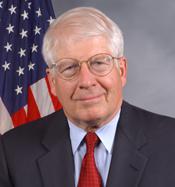
Mr. Speaker, the Republican leadership's resolution turns the Iraqi elections, a historic moment for the Iraqi people by any account, from a point of pride to a point of partisanship. As usual, the…
Mr. Speaker, the Republican leadership's resolution turns the Iraqi elections, a historic moment for the Iraqi people by any account, from a point of pride to a point of partisanship.
As usual, the minority was prohibited from offering a constructive substitute. We could have offered a measure that congratulated the Iraqi people on this successful election. Or we might have put forward a substitute similar to the one that passed resoundingly in the Senate, that would have required the President at last to submit a detailed plan for phasing down the occupation. The leadership refused to let us do either, opting instead for a measure that divides and distracts.
As a statement of policy, this resolution is deeply flawed. It rejects a plan for bringing our troops home. It fails to empower the Iraqis to take charge of their own future. And it blindly adopts the vague formula the President has repeatedly put forth, ``as they stand up, we stand down.''
As we have come to know very well from this ``mission accomplished'' President, catchy slogans do not make effective foreign policy.
Standing up Iraqi troops is a critical step in empowering the Iraqi state, but American national security demands additional priorities: That we maximize Iraq's chance of a successful transition to self-rule while minimizing the possibility of civil war; that we stabilize the region, preventing the terrorists from taking hold; and that we protect America's men and women in uniform.
It is high time we took up a real measure to deal with the situation in Iraq such as H. Con. Res. 70, which I have introduced with Mr. Miller of North Carolina, now co-sponsored by 17 Members. That approach takes into account the Iraqis' recent steps toward sovereignty with two successful elections. It recognizes the valor of our troops. It requires a detailed exit strategy of the President. It calls for an immediate, initial draw down, and it sends a strong signal that we do not intend to occupy Iraq indefinitely.
Why will the House Republican leadership not let us vote on such a measure? Because they fear it would pass, and they fear embarrassing the President by calling him to account.
Mr. Speaker, let us start giving the American people what they are looking for: Honesty, accountability and a serious plan going forward; three things that have been sorely lacking since President Bush launched this war.
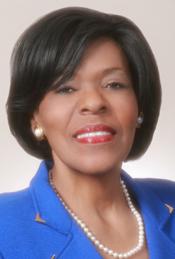
Mr. Speaker, I rise in opposition to the resolution. I honor and support the troops in Iraq and ask that we have an honest, open debate on the Iraq war on the House floor. I rise in opposition to…
Mr. Speaker, I rise in opposition to the resolution. I honor and support the troops in Iraq and ask that we have an honest, open debate on the Iraq war on the House floor.
I rise in opposition to this resolution H. Res. 612. I share in the celebration for the successful parliamentary elections that took place in Iraq yesterday. It is my sincere hope that the event marks an important step toward establishing the long-term political stability in the country and the political legitimacy of its government.
However, this resolution goes beyond congratulating the Iraqi people for their bravery and success in yesterday's election. It pays more homage to the Bush Administration's prosecution of the war in Iraq than it devotes to the bravery of the Iraqi voters. Frankly, I have opposed this Administration's decision to go to war from the beginning and voted against extending the President the authorization to use military force against Iraq. I did so because the war aims of this administration seemed confused and I thought we should allow the U.N. weapons inspection team to complete its mission before embarking on a war footing.
What I resent most about this resolution is that there was no attempt by the majority to work with Members on this side of the aisle to arrive at a consensus resolution that we can all support. I can only conclude that it is interested only in gaining political one upmanship than it is in reaching bipartisan agreement on congratulating the Iraqi people for their progress toward democracy.
Additionally, this resolution sends the message that anyone advocating a draw down of U.S. forces 6 days or 6 hours earlier than the president does is imposing an ``artificial deadline'' and proposing a cut-and-run strategy. I reject that characterization. What I want to see from this administration is a timetable for training a viable Iraqi security force that would allow for an orderly draw down of our troops. After reading this resolution and listening to series of statements by the President on our Iraq strategy, I am truly concerned that we have no orderly way out of our predicament. It is my conclusion that our current course only continues our open-ended obligation.
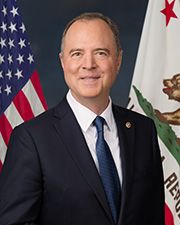
Mr. Speaker, there have been many false dawns in Iraq over the past 2\1/2\ years, times when we hoped we might be seeing a new day, but yesterday was truly remarkable. More than 11 million Iraqis…
Mr. Speaker, there have been many false dawns in Iraq over the past 2\1/2\ years, times when we hoped we might be seeing a new day, but yesterday was truly remarkable. More than 11 million Iraqis went to the polls, many dressed in their finest clothes, to cast their votes for a new parliament and a new future.
Iraqi Sunnis, who boycotted the polling in January, turned out in droves to ensure their voices would be heard in the new legislature.
Perhaps most remarkable was the absence of violence. Across the country, only 52 attacks were recorded, and there were no mass casualty incidents. For this, we have the men and women of the U.S. Armed Forces to thank.
For months, our troops have endured ever more numerous IED attacks and fierce urban combat in order to secure the country for yesterday's vote. They have done everything we have asked of them and more, and we are all, all deeply grateful for their sacrifice.
I want to support this resolution. I have an enormous respect for the chairman of our committee and the chairman of the Mideast Subcommittee, but I am deeply troubled by what is a calculated and transparent attempt to use the unity of the Iraqi vote to cause further disunity here at home.
Two days ago, I was invited to the White House along with Mr. Lantos and a number of our colleagues to meet with the President and senior administration officials on preparations for the elections and the next steps in Iraq. I appreciated the President's efforts to reach across the aisle for unity as we exchanged ideas on how to best move forward in Iraq. Unfortunately, this resolution is not in keeping with the spirit of that meeting.
I hope to have the opportunity to return to Iraq in the near future and visit our troops along with several of our colleagues. We are going, as we have in the past, not as Republicans and Democrats but as Americans and as Members of the Congress of the United States.
It is too early to know if the election will be a turning point that we have all hoped for, but one thing is plain, greater division at home does not further the war effort. This is not the way to honor yesterday's triumph and the sacrifice of so many young Americans.

Mr. Speaker, I very much appreciate this resolution coming to the floor of this Congress. I would say that, Mr. Speaker, as we are holding this debate, our Armed Forces overseas are engaged in the…
Mr. Speaker, I very much appreciate this resolution coming to the floor of this Congress.
I would say that, Mr. Speaker, as we are holding this debate, our Armed Forces overseas are engaged in the active defense of our homeland. Their daily contributions and sacrifices are working to bring democratic stabilization to a country which has never known the freedom it has achieved today.
After decades of tyrannical rule under Saddam Hussein, yesterday, the Iraqi people voted in their third national election this year. They selected a government that will now for the first time establish really true and pure sovereignty for this Nation. And as the Iraqis put together their formal parliament, as they elect themselves a prime minister and are seated at the United Nations, they will be the freest and most representative Arab country in the world.
What a legacy for the United States of America to contribute to? What a noble cause that we are seeing come to fruition today? And I appreciate the tone that I am hearing from over here on the other side of the aisle. It sounds to me like we are coming together in a way we have not in the past, coming together in support and pulling for the Iraqi people and pulling for this common cause of freedom that we all struggled so long for.
When we look back across the history of this country and think about some of the other conflicts this Nation has been involved in, we have always had disagreements about whether to go forward and how to go forward; but look at the legacy of a place that is left in a place like, for example, in 1898 the USS Maine was sunk to the bottom of Havana Harbor. Who said then that the Filipinos would be free today and grateful for a century because of that act of our war against the Spanish at that time?
Who said at the beginning of the Civil War that it was about freeing the slaves? No, it was about saving the Union, but we know it now as the war that freed the slaves.
This will be the war that freed the Iraqi people, the war that established Iraq as the lone star to create a free Arab world which means the elimination of the habitat that breeds terrorists.

Mr. Speaker, I will always support our troops, and I thank them and honor them for their bravery and valor during the difficult task of fighting the insurgents in Iraq. I also commend and admire the…
Mr. Speaker, I will always support our troops, and I thank them and honor them for their bravery and valor during the difficult task of fighting the insurgents in Iraq. I also commend and admire the people of Iraq for their determination and bravery in the historic elections this week. The turnout was impressive--it was a testament to the spirit of the people and it will hopefully lead to a strong democracy.
I hope and pray that we are successful in Iraq--that the violence ends, that the country is stabilized and that our soldiers come home safe, sound and soon. Unfortunately, more than 150,000 of our best and bravest remain in Iraq having been given no real plan to win the peace and no defined terms of victory. Indeed, they were sent to Iraq by an administration that was unaware of the circumstance in Iraq and unprepared to win the peace.
I plan to vote ``present'' on this resolution because it calls for ``complete victory'' without actually defining victory. The administration has set tangible dates for elections and for the creation of a government, but why is it always vague about the terms of ``victory''? We have trained 100,000 Iraqi troops, will ``victory'' be achieved only after we train 100,000 more? Can victory only be won after our troops remain in Iraq in full force for another ten years? Longer than that?
Our military is the best in history, and it can achieve victory in any situation, as long as it is told what victory entails.
Elections are important milestones, but they are not magic pills. In 1967, there was an historic vote in South Vietnam, similar to the elections Iraq is holding now. As we all know, hostilities in Vietnam would continue for 7 years after those elections, with 50,000 more Americans losing their lives.
We continue to wait for the Iraqi forces to be capable of securing Iraq themselves, but the vagueness of our goals and the vagueness of ``victory'' in this war gives them little incentive to take over from our military. We badly need a timetable, but, ``When they stand up, we'll stand down,'' is hardly adequate.

Mr. Speaker, the majority brings to the House floor today a resolution wrapped in a process that is offensive to the very essence of democracy. This resolution provides a dictated take-it-or-…
Mr. Speaker, the majority brings to the House floor today a resolution wrapped in a process that is offensive to the very essence of democracy. This resolution provides a dictated take-it-or- leave-it vote without the opportunity for our side to offer amendments expressing differing views of the elections in Iraq and the U.S. presence there. The substance of this resolution has all the appearance and wording of a campaign slogan.
While applauding the beginnings of democracy in Iraq, the majority has stifled democracy at home by denying Democrats the opportunity to offer our own resolution for consideration and an up-or-down vote on it.
Certainly, Democrats and Republicans congratulate the Iraqi people who drafted and by vote ratified their own constitution, and who voted this week in defiance of radical elements who sought to deter the Iraqi people from voting.
It is appropriate for the House to congratulate the Iraqi people on this step toward democratic governance, and we share the view that this election and the continued training of Iraq's security forces will make it possible for the United States to redeploy our troops and leave Iraqis in charge of their own destiny.
That is as far as this House should go in expressing support for the Iraqi democratic process. However, this resolution goes further. It raises the strawman of ``achieving victory in Iraq'' and it is critical of ``setting an artificial timetable for the withdrawal of U.S. Armed Forces from Iraq, or immediately terminating their deployment in Iraq,'' policies that House Democrats have not proposed. Nor does this resolution define what is meant by ``victory in Iraq.''
I want to express my support for the Iraqi people and this further step toward democracy, but I will oppose this resolution because I find it offensive that the majority has advanced a resolution that pretends to celebrate democracy by adding divisive and partisan language that is clearly designed for use in a domestic political campaign.

Mr. Speaker, I marveled at Mr. Lantos's good comment that this could have been, as I understood the quote, could have been a day for celebration. And I would submit it is a day for celebration. It…
Mr. Speaker, I marveled at Mr. Lantos's good comment that this could have been, as I understood the quote, could have been a day for celebration. And I would submit it is a day for celebration. It should be. It is.
This is a great day. A great thing happened yesterday in the cradle of mankind. They elected permanent leaders. Now, there are those Americans who have said that it was quagmire in Iraq. We had to get out. It was a mistake to be there. Some made these statements out of personal heartache and tragedy, but some were made purely from partisan political motivation.
So when the question is asked, why should the leadership politicize the Iraqi situation, that is exactly the question I have been asking. Why? Why? Why, leading up to this election for the last 6 weeks, the yabbers got more shrill, more hysterical that we have to withdraw? And surely there are some people that are smart enough to know that that risk, the election that people who saw the fliers that said, ``you vote, you die,'' might actually take it more seriously if they thought we were going to withdraw quickly before the ink went off their fingers.
So I say to those who said the freedom, democracy and liberty we were fighting for and the evil that we fought against was not worth it, it is worth it. And the soldiers that have been there know it. That is why the retention among the soldiers that have been to Iraq is way up. I have talked to them.
I have not heard people ask, why are we still in Bosnia where President Clinton said we had to go? One of my best friends from college, we served in the Army in Fort Benning together, he just got sent to Bosnia. Why is not anybody saying, let us get out of there? Why are the same people not saying, we should have gotten out of Germany to President Truman? We should have gotten out of Japan? Because our leadership made good decisions, and we are safer of it.
Thank God for the heroes that have made America better by spreading liberty around the world.
Mr. Speaker, I intend to vote for this resolution because I want to salute the elections in Iraq and our U.S. troops there. And I oppose set time tables for a U.S. withdrawal from Iraq. However, in…
Mr. Speaker, I intend to vote for this resolution because I want to salute the elections in Iraq and our U.S. troops there. And I oppose set time tables for a U.S. withdrawal from Iraq. However, in good conscience, I must say I am deeply offended that, for the second time in 1 month, the House Republican leadership has brought a resolution dealing with the vital issue of war and peace to the floor of this House on a partisan basis without a single committee hearing, without a single witness and less than 24 hours after this resolution was even introduced.
Eight seconds. Eight seconds. That is how much the House leadership and Rules Committee has given each Member of Congress to speak on this vital issue today. How dare the leadership give itself the time to express their views of conscience but deny other Members of Congress the right to express their views of conscience on the issue of when to bring our troops home from harm's way.
We have had time to rename dozens of post offices. Are our troops not worth more than 8 seconds per House Member for debate? I think so. I hope and pray the Iraqi parliament gives its members a greater voice in their democracy than U.S. Members of Congress are being given in ours today.
The Republican leadership could have worked on a bipartisan basis to write a resolution saluting the Iraqi elections and our troops there. We could have had a unanimous vote to send to our troops during the Christmas and holiday season. Instead, the leadership cynically chose to push a partisan resolution that they knew would split the House, would split the American people, and send a mixed message, not a unified message, to our troops in harm's way.
And as someone who has represented over 40,000 soldiers, Army soldiers who have fought in Iraq, I think it is shameful that the House Republican leadership would put its partisan ploys above the interests of supporting and sending a unified message of support to our troops in Iraq.
Bill Text
Latest available legislative text
        [Congressional Bills 109th Congress]
[From the U.S. Government Publishing Office]
[H. Con. Res. 70 Introduced in House (IH)]

109th CONGRESS
1st Session
H. CON. RES. 70

Expressing the sense of Congress that the United States should strongly
oppose China's anti-secession legislation with respect to Taiwan.

_______________________________________________________________________

IN THE HOUSE OF REPRESENTATIVES

February 17, 2005

Mr. Chabot submitted the following concurrent resolution; which was
referred to the Committee on International Relations

_______________________________________________________________________

CONCURRENT RESOLUTION

Expressing the sense of Congress that the United States should strongly
oppose China's anti-secession legislation with respect to Taiwan.

Whereas on December 29, 2004, the standing Committee of the Chinese National
People's Congress (NPC) voted to submit anti-secession legislation with
respect to Taiwan to the full People's Congress, which will convene on
March 5, 2005;
Whereas the People's Republic of China will unilaterally change the status quo
in the Taiwan Strait through the enactment of the anti-secession
legislation;
Whereas it is stated policy of the United States to oppose any unilateral action
by either China or Taiwan to change the status quo in the Taiwan Strait;
Whereas as exemplified by his May 20, 2004, inauguration speech and address to
the National Day rally, President Chen Shui-bian of Taiwan has
repeatedly shown his determination to maintaining peace, stability, and
the status quo across the Taiwan Strait;
Whereas on January 15, 2005, representatives of both Taiwan and the People's
Republic of China reached a consensus through negotiations in Macau on
the arrangement of Lunar New Year cross-Taiwan Strait charter flights,
which could serve as the foundation for the resumption of cross-Strait
negotiations and the starting point for normalized relations between
Taiwan and China;
Whereas since its enactment in 1979, the Taiwan Relations Act (22 U.S.C. 3301 et
seq.), which codified into law the basis for continued commercial,
cultural, and other relations between the United States and Taiwan, has
been instrumental in maintaining peace, security, and stability in the
Taiwan Strait; and
Whereas any attempt to determine Taiwan's future by other than peaceful means
and other than with the express consent of the people of Taiwan would be
considered of grave concern to the United States: Now, therefore, be it
Resolved by the House of Representatives (the Senate concurring),
That it is the sense of Congress that--
(1) the Government of the United States should strongly
oppose the anti-secession legislation of the People's Republic
of China, as it will alter the status quo in the region, and
thus is a grave concern to the United States;
(2) the President of the United States should direct all
appropriate United States Government officials to reflect the
grave concern with which the United States views the enactment
of the anti-secession legislation to their counterpart
officials in the Government of the People's Republic of China;
(3) the Government of the United States should reaffirm its
policy that the future of Taiwan should be resolved by peaceful
means and with the consent of the people of Taiwan; and
(4) the Government of the United States should continue to
encourage dialogue between Taiwan and the People's Republic of
China.
<all>