Making further continuing appropriations for the fiscal year 2006, and for other purposes.

Legislative Activity
Stay on top of the latest movement without scrolling through every action
Became Public Law No: 109-128.
December 18, 2005
View full timeline
Introduced in House
December 17, 2005
Referred to the House Committee on Appropriations.
December 17, 2005
Mr. Lewis (CA) moved to suspend the rules and pass the resolution, as amended.
December 17, 2005 • 6:57 PM
Considered under suspension of the rules. (consideration: CR H1241-12142)
December 17, 2005 • 6:57 PM
DEBATE - The House proceeded with forty minutes of debate on H.J. Res. 75.
December 17, 2005 • 6:57 PM
Passed/agreed to in House: On motion to suspend the rules and pass the resolution, as amended Agreed to by voice vote.(text: CR H12141)
December 17, 2005 • 7:09 PM
On motion to suspend the rules and pass the resolution, as amended Agreed to by voice vote. (text: CR H12141)
December 17, 2005 • 7:09 PM
Motion to reconsider laid on the table Agreed to without objection.
December 17, 2005 • 7:09 PM
Received in the Senate, read twice, considered, read the third time, and passed without amendment by Unanimous Consent. (consideration: CR S13965)
December 17, 2005
Message on Senate action sent to the House.
December 17, 2005
Cleared for White House.
December 17, 2005
Presented to President.
December 17, 2005
Signed by President.
December 18, 2005
Became Public Law No: 109-128.
December 18, 2005
Floor Debate
7 membersWhat members said about H.J.Res. 75 on the floor
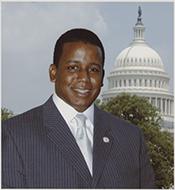 KBM
KBM JMS
JMS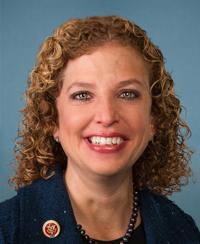 DWS
DWS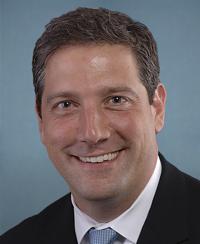 TR
TR DRO+2
DRO+2
Floor Debate
7 membersWhat members said about H.J.Res. 75 on the floor
Mr. Speaker, once again, it is an honor to come before the House, and we would like to thank the Democratic leadership for this opportunity, Democratic Leader Nancy Pelosi; our whip, Mr. Steny Hoyer;…
Mr. Speaker, once again, it is an honor to come before the House, and we would like to thank the Democratic leadership for this opportunity, Democratic Leader Nancy Pelosi; our whip, Mr. Steny Hoyer; and also our chairman, Mr. Bob Menendez; and chairman to be Mr. Jim Clyburn.
As the Members know, Mr. Speaker, we have a 30-Something Working Group that comes to the floor every opportunity we have to talk about the good things that are happening here under the Capitol Dome and also some of the bad things that are happening and the things that are not happening at all that should be happening on behalf of the American people.
Today, as the Members know, Mr. Speaker, there has been quite a bit said in the Capitol, very little done in the first session of this Congress, facing some of the needs that the American people are wanting to be addressed. The American people want to have issues such as health care, veteran affairs, also making sure that we have a strategy in Iraq for success, making sure that we stand up on behalf of those Americans that have been devastated by natural disasters, making sure that we get down to the bottom and get rid of a culture of corruption and cronyism and incompetence under the Capitol Dome, and also making sure that we can expand jobs for Americans and also for small businesses.
But in the last 24 to 48 hours, there have been quite a few strange things that are going on here in the Capitol. There have been bills that Members have tried to put amendments on that are not passable and should not be even honored with the paper that they are printed on, of personal agendas and agendas on behalf of the special interests.
So with that, Mr. Speaker, I would like to share this hour tonight with Mr. Ryan and also Ms. Wasserman Schultz but also with a respected Member this House with whom Mr. Ryan and I serve on the Armed Services Committee with, and he is also the ranking member on the Budget Committee and has been working very hard on a number of pieces of legislation. He is from South Carolina.
I yield to the gentleman from South Carolina (Mr. Spratt).
Mr. Speaker, I am so happy that Mr. Spratt came to the floor tonight to share with the Members what is important in this bill. And this was an authorization bill even before it went to conference that a super majority of the Members voted for because they believe that many of those provisions needed to be enacted on behalf of our security.
And we hear a lot of talk about what needs to happen now, what the troops need, what our Armed Forces need throughout, rank and file, officers, flag officers, individuals who are interested in being a part of our military, and to be able to send a very strong signal that we support them 110 percent. And for it to be held up for political purposes, and I can tell my colleagues for political purposes because in that 527 bill, there are a lot of special interests that would like to have access, more access than they have right now, to this majority. And it is very unfortunate that it is being held up. Of all things, the Defense authorization bill. It is hard to explain with a straight face. And Mr. Ryan was there in committee when we voted this bill out, and he was here on the floor and also Ms. Wasserman-Schultz. For this to be happening now in the closing days of the session and possibly held off in the authorization bill until 2006 is beyond reproach, in my opinion.
Mr. Ryan, I just wanted to say when you talked to that marine, we were actually in Mosul at the time, and I am going to be a third-party validator as it relates to your discussion with them. Also, it was a bipartisan delegation, and we heard it on both sides of the aisle.
One thing that I want to say, even Mr. Spratt as we talk about the authorization bill, as you know, defense seems to be the vehicle to pass all pieces of legislation or thoughts or ideas that the majority has problems in passing under regular order. They have problems passing drilling in the Arctic National Wildlife Refuge in Alaska, so they want to attach that onto a piece of legislation and try to push it through the process.
But I can tell you that this abuse of authority is stepping in the middle of national security at this point, and it is very, very unfortunate. And it is not like coincidence; it is not like something that is blowing through the air conditioner vents here.
I am so glad, sir, once again, that you came down. We are talking about this subject. Many times some Members may not know what is going on. The American people may not know what is going on. That is the reason why we are here, to make sure they do know what is going on.
I just want to ask you a quick question, Mr. Spratt. I think it is important not only for the Members to know, but for everyone to know: How much work has gone into this Defense authorization bill? It just was not something that one meeting took place. I am pretty sure hours and hours of testimony and also committee work.
You never heard of a measure coming before the Armed Services Committee dealing with elections. Maybe absentee ballot access for troops or something, but that is about the extent of it, I am pretty sure.
Well, Mr. Spratt, I want to thank you once again for coming down and bringing clarification to that. But this is just an ongoing issue.
I can tell you, I had the opportunity, I wanted to share with the Members, to be a guest at 8 a.m. this morning on Washington Journal. And Mr. Ryan knows, as Ms. Wasserman Schultz knows, not to put me in charge of an 8 o'clock volunteer breakfast. It is kind of rough for me at 8 in the morning, even though many mornings I am driving my kids to school. But I do not have to speak on the issues that are before the Congress.
It was very strange, like Mr. Spratt mentioned. There are a lot of things that happened just today, today, that do not ordinarily happen here under the Capitol dome.
To be able to have an authorization bill, to try to put some sort of campaign, let us take the roof off the limits, on to a must-pass bill is very, very unfortunate. To have the whole discussion about the Arctic National Wildlife Reserve where we have Senators on the other side of the aisle saying, well, we are not going to vote on the budget. Before we vote, we will vote on the Defense appropriations bill, and we want to put this in because it cannot pass on its own merits. So it is very, very unfortunate.
I always say, I do not fault the special interests for fighting for what they want. That is their job. That is what they are supposed to do. We are sent here to represent the people of the United States of America, and if we allow it, then shame on us.
I can tell you, fighting against this, any Member can come and can file a piece of legislation, and in some cases we have seen legislation filed early one day and passed later on the same day. In this case, for this to come in on the back of national security and Defense is just beyond me.
I think the American people need to know about it, and the Members need to pay close attention to it. When you have a majority that feels that they can do exactly what they want to do it when they want to do it, that is okay when it is a personal decision. We talk about that. If we make a personal decision and there is a mistake, it is on us. When we make a decision affecting the American people, the men and women in uniform, need it be here, we have a number of military bases that this bill helps for those troops that are here and the civilian personnel that is involved with the Defense Department and other measures throughout, even contractors in this bill.
For them to come in and do this to those individuals right now, putting something on the bill, I hope through our efforts and through many efforts and through, hopefully, some of our friends on the other side of the aisle, we can take this off the bill and be able to take care of our business and give our troops what they need.
Let me say, just to back up what you were saying and be a third-party validator on that, I have the facts here. You want to talk about abuse of power? It was printed just this afternoon a story that was posted around 7 p.m. tonight about what is going on in the back Halls of Congress. I mean, we have leaders in the Senate saying that we have an agreement with a said Senator, but I do not want to go into details. That is what our leadership says here in the House.
At the appropriate time when I find the cover sheet to this one story, I will enter that into the Record because I think that needs to go into the Congressional Record so that when folks start backtracking on what happened in the 109th Congress at the closing of the first session of the 109th Congress, I want them to clearly know what the thinking was on behalf of the majority. These are two majority leaders that are talking about this kind of ``we have a deal worked out, but we do not want to go into details,'' meanwhile holding up the Defense authorization bill. Not only that, holding up the Defense appropriations bill. There are other bills that we would like to get through this Congress.
Mr. Ryan talked about abuse of power. Let me take you down memory lane for a moment. October 7, the Republicans held open a 5-minute vote on Gasoline American Security Act. It lasted over 40 minutes to pass an energy bill that does nothing to lower gas prices, and that bill actually passed only by two votes. The Republican leadership, they have bills that even Republicans do not want to vote for.
I think it is important that the American people are made aware of that and also Members that may need to freshen their memory.
November 22 of 2003 in the 108th Congress as it relates to the Medicare Prescription Drug Bill: 3 hours we stood in this Chamber, Mr. Speaker, waiting on this bill, waiting on us to close the board. When we say ``the board,'' we are talking about the voting board. We sat here for 3 hours while the arm twisting went on. Leader Pelosi came to the floor and put forth a resolution in detail talking about some of the activities on that given evening here on this floor that I am speaking on.
I think it is important we go down memory lane to make sure that people understand when folks talk about fairness and inclusion and that Democrats have access to the process, we just need to go down a brief history of what is going on. And that is the purpose of the 30- something Working Group, that the American people understand exactly what is going on here.
You want to talk about arm twisting? Just recently, July 24 and 28, on those two dates the vote was held open for so long. Leaders held the vote open for 1 hour, well past the 15-minute voting time as they rounded up enough votes to pass CAFTA, which was in the final vote 217- 215. Even some Republicans on that side of the aisle could not vote for that piece of legislation because it did not meet the merit to be able to be a sound free trade agreement the American people can embrace. It took an hour for that to happen. Let us go down memory lane once again.
Veterans Affairs, the chairman being pro-veteran, goodness gracious, if you are pro-veteran in the Republican majority, you are going to lose your chairmanship. This is not just our report that we have in the back room here and we said, let us see if we can fabricate something.
January 6, this year, 2005, House Republicans ousted Mr. Chris Smith as chairman of the Committee on Veterans' Affairs for bucking his leadership and being a tireless advocate on behalf of veterans rights. He was not only removed as chairman, which he served on the committee for 24 years, but he was kicked off of the committee, off of the committee.
It is one thing, Mr. Speaker, it is really rough to be removed as chairman and then to be kicked off the committee that you served on for 24 years.
I have a tail end to that statement on this whole abuse of power, and I am glad you have the perspective from the 108th Congress about what actually took place and how you served with this past-chairman and past-member of the Veterans' Affairs Committee.
The change was widely denounced by leaders of several veterans groups. Richard Fuller of the Paralyzed Veterans of America said in response to that, ``The Republican leadership has made a statement that the country is making too much of a commitment to the men and women who have served in uniform.''
This is from the New Jersey Star Ledger. I think it is important that this is a man, this is obviously a man that has served. He is the president, or was the President, at that particular time of the Paralyzed Veterans of America in response to that. And they have made a very strong statement that they are not willing to make the commitment to men and women that have served in uniform.
So when we talk about the abuse of power, we look at this budget that is under consideration right now. We have been talking about the budget now for several weeks. I think if this Republican majority could give millionaires and billionaires a tax break, they would borrow as much money as they have to borrow to make it happen.
Mr. Speaker, this Republican majority is willing to borrow as much money as possible to give millionaires a tax break.
Really, to get to the nitty-gritty of the whole veterans, they instruct the Republican majority, which I must say, when the budget came through this House, Mr. Speaker, not one Democrat voted for the budget. Not one Democrat said, well, maybe I need to vote for this reduction and maybe I just need to do it because of the folks back home; I just do not want to vote against the budget. Not one Democrat voted for the budget that they passed on the backs of the American people, and to come here with a straight face and talk about how we are going to borrow as much money as we have to borrow to give billionaires the majority of the tax breaks of a proposal that we put forward, and these are the very individuals that are standing up with all kinds of markers behind them and charts and everything, fiscal responsibility, ``trust us'' kind of thing, and I can tell you right now, Mr. Speaker, we should have as much trust and confidence within our government. But when we see our leaders act in such a way legislatively, I think it is something that should be quite alarming.
I want to come to the gentleman from Ohio (Mr. Ryan) for a second, but I want to hit this chart since we are talking about being responsible.
If I could, I would like to kind of get a billboard placed probably right where the Members come in to vote, if I could. If I could talk to House Administration to see if I could do that, I think it would be helpful for the financial well-being of every American. So when the Republican majority is driving in here and saying, I want to borrow as much money as I can to make sure that oil companies have the subsidies that they would like to have, even though they are making record profits, we are going to give them more than we are giving to the American people or more than we are giving to Leave No Child Left Behind to improve that Act.
There are going to be 11 States that have filed suit against the Federal Government because it is underfunded, but meanwhile, here we are speaking of, let us borrow as much as we can to give billionaires their tax break, $1.05 trillion this President has borrowed with the Republican majority, in just 4 years, from foreign nations such as China, Saudi Arabia, Japan, you name it. They have a piece of the American pie now because we have borrowed $1.05 trillion. Forty-two Presidents before this President and before this overwhelming so-shall- it-be-written-so-shall-it-be-done Republican majority, 42 Presidents in the past, $1.01 trillion, 42 Presidents, 224 years of a country and trying to be as fiscally responsible as possible. I think it is important that the Members pay very close attention to this chart, and unfortunately, Mr. Speaker, this is continuing to go up and up and up and up and up.
Once again, I just have to point out, and this is going to take me about 10 seconds to do it. They cannot get Republicans in this House to vote for drilling in ANWR. They cannot get them to do it. So I do not blame Republicans, and I do not even blame the Republican Party. I blame the Republican leadership that is leading the Republican side of the aisle and even giving the oil companies and the special interests the thought that they can invade the Defense appropriations bill of all bills. Republicans, their stomach is all messed up over this.
The Republicans need to ask elected Republicans when they go home, why did you change on me? You changed uniforms in the middle of the football game. I am not an advocate for the majority, but I am just saying, there is something fundamentally wrong here. I want to know, what is the problem, and who is whispering in whose ear?
I did find the article, Mr. Speaker, and I would just like to insert it, but it is, Plan to Move ANWR to Defense Bill Moves Budget Deal Forward. That is CQ Today, December 17 article, Mr. Speaker, and I will enter that into the Record at this point.
[From the CQ Today, December 17, 2005]
Plan to Move ANWR to Defense Bill Moves Budget Deal Forward
(By Steven T. Dennis and Liriel Higa)
A conference report on a $45 billion budget savings package
was nearly complete Saturday evening after House leaders
reached an agreement with Senate Defense Appropriations
Chairman Ted Stevens to move a provision allowing drilling in
Alaska's Arctic National Wildlife Refuge (ANWR) out of the
legislation and into the Defense bill.
The agreement on moving ANWR came on a day of negotiations
on multiple fronts. On Saturday night, the House by voice
vote passed a stopgap spending measure (H J Res 75) to
temporarily fund Defense programs and other government
operations after a day-long dispute between Republican
leaders in both chambers over when the measure would expire.
A new stopgap measure must be cleared by Congress and
signed by President Bush by midnight, when an earlier stopgap
spending measure (H J Res 72) expires.
On Sunday, House leaders expect to bring the budget package
(HR 4241, S 1932) to the floor for a vote. And they expect
Stevens, R-Alaska, to sign the budget conference report.
Stevens, a staunch supporter of ANWR energy exploration,
had vowed not to do so until the lawmakers cleared the
Defense spending bill (HR 2863) with drilling provisions
intact. But he later agreed to allow the budget conference to
move forward provided that the House passes the Defense bill
with ANWR attached.
``We have an agreement with Sen. Stevens, but I don't want
to go into all of the details,'' said House Speaker J. Dennis
Hastert, R-Ill.
House Budget Chairman Jim Nussle, R-Iowa, said Saturday
afternoon that his panel was expecting final reports from
authorizing committee chairmen by the evening and that once
the final bill is scored by the Congressional Budget Office,
the budget savings package should come close to the $45
billion goal set by House leaders.
Nussle said that they ``need, want, expect'' Stevens' vote
on the budget bill. He said the House would vote on the
Defense spending bill Sunday before voting on the
reconciliation bill.
The Senate also would likely vote on the Defense bill with
ANWR attached before voting on the budget reconciliation
package according to a senior Senate GOP leadership aide. The
timetable for Senate action is unclear.
It is uncertain if Democrats would attempt to filibuster
the Defense measure. But they were hoping to muster the 51
votes needed to reject attaching ANWR drilling to the
conference report.
The budget savings package is protected from filibuster in
the Senate under special budget reconciliation rules, but the
Defense spending measure has no such protection.
``This language has the potential, in my opinion, to sink
the package once it reaches the Senate.''
The ANWR provision, which was included in the Senate's
version of the budget package but not the House bill, has
been a sticking point in finishing work on the legislation--
especially for House moderates and Democrats. Negotiators
hope that moving the proposal to the must-pass Defense bill
makes the budget legislation easier to pass while making it
harder politically for Democrats to filibuster.
A number of other provisions in the Budget savings bill
opposed by House moderates--including savings in food stamps,
child support enforcement and welfare--would not be in the
final bill either, Nussle said.
But a $3.2 billion House provision shifting trade dumping
penalties to the U.S. Treasury instead of aggrieved companies
was still in the package, Nussle said.
Medicaid and Medicare provisions were still being hashed
out late Saturday afternoon, as negotiators awaited scoring
of the provisions.
The package still needed to go through a so-called ``Byrd
bath,'' to ensure that it does not run afoul of the Byrd
rule. Named for Senator Robert C. Byrd, D-W.Va., the rule
prohibits provisions in budget legislation that would have a
negligible spending impact.
Meanwhile, Republican moderates in the House began to worry
that their victory in stripping ANWR from the House budget
package was becoming a fleeting one.
Representative Sherwood Boehlert, R-N.Y., said he and other
moderates would consider voting against the budget savings
package unless ANWR is removed from the Defense bill. ``The
my way or the highway crowd'' has been winning, and moderates
need to consider changing tactics, he said.
House Appropriations Chairman Jerry Lewis, R-Calif., said
appropriators were close to a deal on additions to the
Defense appropriations bill, including hurricane relief, flu
prevention funding and a 1 percent across-the-board cut that
would apply to Defense but spare veteran's benefits. That cut
would save about $8 billion a year.
Stopgap Funding
Lewis lost in an intraparty dispute Saturday with Senate
leaders over how long to temporarily fund government
operations covered by spending bills have not yet cleared,
including Defense.
Since the fiscal year began on Oct. 1, Congress has twice
enacted such stopgap spending measures. On Saturday, Lewis
introduced a third continuing resolution lasting until Feb.
15, but the Senate insisted that the measure expire sooner,
on Dec. 31.
The continuing resolution would fund programs covered under
the Defense bill and the Labor-HHS-Education appropriations
measure (HR 3010)--the only two spending measures that have
not yet cleared.
Lewis had said he was seeking a Feb. 15 extension because
of concerns that the Senate would not be able to clear the
Labor-HHS spending measure before adjourning.
Lewis rejected a proposal floated Friday by Senator Arlen
Specter, R-Pa., chairman of the Labor-HHS-Education
Appropriations Subcommittee, to tack the bill on to the
Defense Appropriations measure.
Well, first Ms. Wasserman Schultz.
I just want to say to my colleagues here, and Mr. Spratt, who was here earlier, that it has definitely been a great joy and honor to be a part of this group that we have that is working so hard, and also Mr. Delahunt and many other members of the 30- something Working Group. On behalf of all of us, we want to thank not only the Speaker-to-be, hopefully in the next Congress, Leader Pelosi, but also our Democratic whip, Mr. Hoyer. And I want to congratulate Mr. Bob Menendez on being appointed to the Senate in the very near future, and also to Mr. Clyburn.
And, Mr. Speaker, we wish you a Merry Christmas, too, sir.
Mr. Speaker, I thank the gentleman for yielding to me. And I would like to turn to a matter of some significant concern to me and to the gentleman because, as he said, we both serve on the House…
Mr. Speaker, I thank the gentleman for yielding to me.
And I would like to turn to a matter of some significant concern to me and to the gentleman because, as he said, we both serve on the House Armed Services Committee. We both have worked diligently to see a good Defense authorization bill put together this year and finally, we thought, put to bed last week. But here is what is happening, to everybody's dismay, on this side of the line.
On Thursday afternoon, the House appointed conferees on the Defense authorization bill to go to conference with the Senate. Thursday afternoon. Within hours, the conference committee met for the first and only time. We made a cursory review, which is all we had time for, of the conference report which staff and mainly the Republican Members had worked up and put together over the last several weeks. We reviewed it. We reviewed the salient points. We made some objections. And finally, we approved it.
This summary procedure is not my idea or I think the Framers' idea of how we would make law, particularly law that authorizes the expenditure of $440 billion for something as important as the defense of this Nation. This kind of summary procedure should not be repeated. This year, we were late getting started. The Senate was even later getting started. So we had to do it in record time. And I am glad we got it done, but it is not the best procedure.
As bad as that procedure is, the worst was yet to come. After the conference report had been signed, signed by the Democratic conferees, signed by the Republican conferees, signed by the Senate, signed by the House, after it had been signed, the Republican leadership decided it needed a must-pass moving vehicle, some kind of bill to which they could attach legislation that otherwise could not be passed, maybe would not stand the light of day. Reputedly, it dealt with section 527, political advocacy corporations and campaign limits. We suspected it also dealt with a bill known as Pence-Wynn. We do not know yet because we have not seen the conference report that they have tried to amend.
In any event, we know this: These bills are about campaign finance reform. They have absolutely nothing to do with the defense of the United States. This is not a technical change they are trying to make. It is not even about defense. Far from it.
Worse still, it is fundamentally serious major legislation. It is not something minor that you bobtail on or piggyback on another bill. Pence-Wynn, if that is the legislation they are trying to append to this conference report, is a major fundamental revamping of the campaign finance laws of this country, lifting the limits enormously on all kinds of corporations from PACs and individuals, creating virtual carte blanche for the wealthy of this country to contribute to political campaigns.
Our ranking member, Mr. Skelton of Missouri, heard what was happened, to the extent that he could find out anything. He protested and pulled our names on the grounds, the House Democratic names, from the conference report on the grounds that they were amending or seeking to amend that the conference agreement that had been signed and sealed and all but delivered to the House floor for action, amending it after the fact, Members who were not even parties to the agreement trying to change the bill in a significant way without any kind of collegiality, any kind of comity, any kind of consultation with our side. He pulled our names.
In the Senate, the chairman of the Senate Armed Services Committee, Republican, the very distinguished Senator Warner, was so outraged to see this gross violation of the processes of the House, the procedures of the House and the Congress, of fundamental fair play, that he said, if the Republican leadership in the House tried to unilaterally change this agreement after it had been signed, he would vigorously object and pull out the signatories at least on the Republican side. And Mr. Levin, the gentleman from Michigan who is the Democratic Senator who is the ranking member of the Senate Armed Services Committee, said the very same thing.
Now, we ask tonight, what is the status of this bill that has taken months to produce, that addresses our troops deployed all over the world, that contains important personnel provisions that probably will not be overlapped in the appropriations bill? Where is the bill that we have worked and produced, that we signed and had ready to go?
Where is the bill? Where is the Defense authorization bill? Where is it left if we do not take action on it?
It is left in limbo. It is left hanging. It is left unauthorized, unpassed. A hard effort coming to no worthy conclusion.
Representative Pryce, who chairs the Republican conference, is quoted as saying in the CQ Daily that Congress may not even consider this bill before Christmas. Why not? It is ready to go. All we need is 1 hour on the floor. It is written. The conference report is ready to come to the floor. Why would we not consider it before Christmas? And, more importantly, what are the consequences if we do not consider it before Christmas?
Well, let me tell my colleagues just a few of the things that will not be enacted that otherwise might be a nice package to send to our troops in Iraq and Afghanistan and the ramparts around the world where they are standing up for freedom. Let me just mention a few things that are not covered in the appropriation bill and may never come to pass if we do not pass this bill: There is a 3.1 percent pay increase. Not a big increase, but I am sure that every troop will be glad to get it. There is an end-strength increase. We think the ground forces are undersized, so we have called for a couple of years for an increase in the size of the ground forces, Army and Marines, 30,000 in the Army, 4,000 in the Marines, in fiscal year 2006. That will not be done.
There is a death gratuity. The conference report increases the death gratuity for all active and activated servicemembers up to $100,000 retroactive to October 7, 2001. For the 2,100-odd troops who have been killed in Iraq and Afghanistan, in Iraq in particular, I am sure this would be welcomed by their families as some token of appreciation for the ultimate sacrifice they had to pay.
TRICARE: For the first time ever, reservists who agree to continue service in the Selected Reserves will have an opportunity, depending on their status, to buy into the government-subsidized TRICARE standard health program for themselves and their families.
Recruiting: Enlistment bonuses will expire unless we reauthorize it. There is a whole list of things like this.
Life insurance: It was previously increased for servicemen, life insurance, SGLI, to $400,000 in amount. We said in this bill, if they are in Iraq, if they are in Afghanistan, if they are putting their lives on the line in a hazardous duty zone, by golly, as a part of their hazardous duty pay, we will pay that first $150,000. I wanted to pay more of it. But that will be a nice addendum, a nice Christmas present for the troops who are in the field and for their families back home who worry, if our servicemember does not come home, who will provide for us? The least we can do is increase the life insurance.
I could go down the list with other personnel changes. They are numerous. Let me give you just one. This conference report would extend TRICARE coverage also for children of servicemembers killed in the line of duty until they reached the age of 21. This is just a sampling of what will not be done if, for petty, high-handed partisan reasons, the conference report, already finished on the Defense authorization bill, is not brought to the floor.
This is an outrage. It is an outrage. It is sort of inside baseball to some people, hard to explain to the American people because, in the parliamentary sense, it is so complicated. But it is an outrage, and it should not be allowed to happen. This is the one bill we should pass before we go home.
I thank the gentleman for yielding to me.
I have been on the conference committee every year for at least 20 years, and I never seen this happen before. I have never seen the leadership of either party come forth and say, you may have signed it, you may have closed it, you may have signed and sealed and delivered it; but we can still change it and add to it things that are totally out of the scope, out of scope because they are not in the jurisdiction of our committee, and out of scope because they have never been considered by either committee in either House, hearings, markup, on the floor, in the committee, anywhere. Totally out of the blue to come at the 11th hour.
And to impose this on the bill in deference to wealthy contributors who do not want to be encumbered with limits on what they can contribute is outrageous. There is no nicer word for it.
I will guarantee you the people do not know what is going on. Until I got back this afternoon, I had to go home and make a speech and started reading some of these dailies that we get over our fax machines and got some phone calls from others who had found out, pieced it together. I did not know about it, so I am sure the American people do not know about it.
Let me just take a second, if I can, maybe a minute or two, and read from the memo that was given to us as conferees just as to what the personnel provisions of this bill are. For the most part, these will not be backstopped by overlapping provisions in the appropriations bill. It simply will not be done unless and until this bill for 2006 is enacted.
I already mentioned a pay raise of 3.1 percent to all servicemembers. I mentioned the increase in end strength needed for our stretched-out ground forces. The death gratuity is raised substantially to $100,000, but, even more important, provided for retroactively to October 7, 2001. And we remove, and only we can do this, we remove the combat- related requirement for the death gratuity.
TRICARE, I mentioned the changes there. In addition, there are some other changes for TRICARE Reserve Select. It enhances that coverage, not as much as we wanted; but it is better than what we have got.
Enlistment bonuses, the authority for those is increased substantially. We have got recruitment problems. We have retention problems. We need this authority to help our recruiters if they are to keep end strength in.
The enlistment age. There are some folks out there that would like to get back into the service, age 42, still in good physical condition. This would allow persons who have previously served who would like to enlist again to be considered up to the age of 42.
Here is something that everybody has noted, given the condition of many soldiers who are coming back from the Iraqi and Afghanistan theater: the establishment of a mental health task force that will look at how the Department and services can treat better, identify better, and support better mental health needs, particularly including post- traumatic stress disorder.
It enhances programs and policies to improve the transition of servicemembers who are severely wounded or injured back into civilian life.
It provides temporary authority to the Army to set up four innovative recruitment tests to see if it can improve its recruitment.
It increases hardship duty pay to $750.
It allows the establishment of a pilot program that would match enlisted members' contributions to the Thrift Savings Plan.
It provides foreign language pay, which we badly need, given the shortage of Arab-speaking servicemembers, up to $12,000.
It extends TRICARE, as I said earlier, for children of servicemembers killed in the line of duty until they reach 21 years of age, or 23 if they are a full-time student.
These are just the personnel changes, but every one has a particular appeal to them. They were carefully considered in our committee and the Senate committee and put into the conference bill. Much of this will not be done if this bill does not get passed, and it certainly will not be done until it is finally enacted.
As the gentleman knows, we get the budget the second week in February. Our hearings start almost immediately in the authorization committee because we have got all four services, we have procurement, personnel, research and development, all kinds of issues that have to be thrashed out every year.
We do not mark up and bring a bill to the floor typically until May, sometimes until June. Then we wait on the Senate to get their work done; and usually, if we are lucky, they get theirs
done in July. If we are not lucky, theirs gets done in September or October, and we find ourselves playing catch-up, which is what we are doing in the extreme this year.
Nevertheless, it is a year-long process. We carefully sift through all these issues. We go back to what we did the previous year and see if it worked. If it did not, we make adjustments. It is an ongoing, continual process. An immense amount of work goes into this.
You can say the appropriators do the same thing; but their committee is much, much smaller than ours. Therefore, they do not get into all of these elements nearly as deeply as we do. That is why this authorization is so critically important as part of the process.
That is a very good example of something you can spend a lot of time on, but it is important to troops. They are over there fighting for our freedom. We need to make it possible for them to have the fundamental right to vote and make sure their vote will count, make sure it will not be held up somewhere and not get transmitted to be counted. That is not as easy as it seems in some cases. So we have to give a lot of consideration to it.
That is one of the reasons this bill is done annually, every year, because we have to come back and look at what we did last year and see if it is working. If it is not, we make further adjustments and also find out what new problems have cropped up in the past year.
Mr. Ryan, I am the new kid on the block here, and I do not sit on the Armed Services Committee; and I completely agree it is a privilege and honor to have Mr. Spratt join us tonight. But, you know,…
Mr. Ryan, I am the new kid on the block here, and I do not sit on the Armed Services Committee; and I completely agree it is a privilege and honor to have Mr. Spratt join us tonight.
But, you know, Mr. Spratt, my observation being of the shortest tenure among the four of us is, at least since I have been here, we should not be surprised that they would do this, because you start at the beginning of this year, and it was very clear that the leadership here has no regard for the process, no regard for the system of checks and balances, they have no regard for the judiciary.
At the beginning of this year, 10 weeks into my tenure, they put the Terri Schiavo bill on the floor, even though you had months and years of court decisions that made it clear that it was not appropriate for Congress to insert itself into one family's tragedy. Yet to them it was seemingly the right thing to do, to insert the legislative branch of government into an area that was clearly the jurisdiction of the courts.
Now you fast forward to the end of the year, and throughout this year they have had other examples of their lack of regard for the governmental
mechanics and the lack of regard for decency into what the American people support. Adding campaign finance provisions or anything other than the protection and defense of this country to the Defense appropriations bill? I mean, really.
If they were so concerned about campaign finance reform, why are they waiting until less than 24 hours before we are supposed to adjourn here? Really, we were supposed to adjourn weeks ago. I mean, they have so little regard for process that they are not able to get the job done. I mean, we are here, and it is a week before Christmas and Chanukah and the beginning of the holiday season, and we are still here in the Chamber debating things that should have been settled long ago.
So it has just been obvious to me since I began my term that they have no regard for the process, no regard for the American people's priorities, and they just keep setting example after example.
We thank the gentleman from South Carolina so much for joining us. Your expertise is incredibly helpful in terms of us highlighting the problems that we are trying to address in this Chamber.
Do you know how I would analogize the fact that the Republican leadership has now allowed the drilling in the Alaskan National Wildlife Refuge to be added to the Defense appropriations bill, that they have actually agreed to that? I would analogize it this way, and analogize the addition of any extraneous material, campaign finance reform, well, I would say, we almost would have to say ``reverse campaign finance reform,'' because the 527 legislation that they are talking about is more insidious, not being done in a way that would be designed to help add to the public discourse.
But the addition of campaign finance issues or oil drilling in the Alaskan National Wildlife Refuge to the Defense appropriations bill, the way I would analogize it is similar to insurgents in Iraq and in other areas of the world using children as shields. When our troops go into a neighborhood in Iraq and the insurgents put women and children in front of them so that they get killed instead of the insurgents, that is exactly what the Republican leadership is trying to do here. They are trying to put things in that they cannot get passed on their own because they cannot stand on their own merits.
They are putting the Defense appropriations bill, analogous to the women and children in war-torn countries, in front of items that have no merit, that do not have broad bipartisan support, and that cannot pass by themselves and, as a result, causing significant, unnecessary harming to this country. It is just absolutely unconscionable.
It is another circumvention of the process. It is another example of not dealing straight; another example of the incompetence, of the corruption, of the cronyism. Why can they not just be straight?
I serve on a committee where we work together in a bipartisan fashion. We lay our cards on the table in the Financial Services Committee. We agree on some things; we do not agree on others. But there is no clandestine backroom dealing. There is no attempt in that committee to try to stick things in that they can hide what they are really trying to do.
The American people want openness. They want us to vote clearly. I want a clear shot to vote tomorrow. I support defense of this country. Since I have been here, I have taken every opportunity to vote ``yes'' on defending this country to the degree that we need to. But I have serious problems, and so do my constituents, with drilling in the Alaskan National Wildlife Refuge. Quite honestly, we have a raging debate about oil drilling off the coast of Florida. Fortunately, that is not in this bill, but it could have been.
If we are going to continue the debate that we have had on campaign finance reform, then it should be done in the open. It should be done not at the last minute when we are trying to get out of here for the holidays. It should be done in the deliberative fashion, in the appropriate place, in the committees of jurisdiction. But they cannot get it in the honest and straight and fair way. It has to be the back door. It has to be clandestine. And it has to be putting things that they feel like most Members could not vote against in front of, just like insurgents put women and children in front of them so that they can get hurt first.
The American people are going to get hurt first when extraneous material that has nothing to do with the defense of our country is in front of some awful proposals that would never be sustained on their own.
Before you change the subject, I just want to say, on veterans, because if we are going to talk about tails, there is the tail the size of a doberman and one the size of a German shepherd. I want to do the length of a German shepherd on this.
We are not talking about the fact that a chairman here who was wonderful for veterans was removed from the chairmanship and removed from the committee. We can go much further and lengthen the tail and talk about the commitment or severe lack thereof commitment to veterans and their health care and sustaining veterans who have given not just their lives but dedicated their lives to this country and put their lives on the line.
Just 6 months ago, we finally had a culmination of a debate that we had begun where we, as Democrats, have been insisting that the Veterans Affairs had a significant shortfall in their budget, at least $1 billion, and there was denial after denial that that was the case. I was not here. In fact, I was
not a Member of Congress at the beginning of that debate.
Then I joined the Congress, and a few months later, we are on the floor passing a supplemental appropriation because the Republican leadership here had to finally acknowledge that there was a shortfall. We had to come in and pass an emergency appropriation so that our veterans could continue to get health care.
As it is, the Republican administration here makes them wait at least 6 months to get any health care services. Now, in this budget, we are going to be cutting, under the Republican's plan, veterans health care by as much as $600 million, even as we have the number of our veterans growing with the war in Iraq and Afghanistan.
So it is not just what we are doing to veterans by throwing out the Members here on both sides who support them, but we are also totally shortchanging them. I just wanted to add that.
While we are at it, while we are cutting the budget and basically paying for what is going on in the war in Iraq, we are providing billions of dollars in tax cuts for the wealthy, and we are all about third party validators here.
On top of what you just outlined, tax analysts agree, and this is in the New York Times, third party validators, tax analysts agree that the overwhelming bulk of the dividend goes to the top 5 percent of income earners. We just passed a $56 billion tax cut package over 5 years one day last week after we passed another tax cut package that is $39 billion over 5 years. There was no argument, no argument at all that the tax cuts that we have been passing go to the top two-tenths of 1 percent of the wealthiest people in America.
When I go home, I represent a fairly middle class district, working families, not the depths of the poor, working families. When I stand up in town hall meetings, I ask my folks to raise your hand if you have benefited from any of the tax breaks that have been handed down by the Bush administration for the last 6 years. Do you know, maybe one, two hands go up in a roomful of hundreds of people? Who are getting these tax breaks? The Rolls Royce Republicans. That is who are getting these tax breaks. That is what this administration and this leadership is all about, the Rolls Royce Republicans.
We have got to stop thinking about the special interests before we think about the average American because that is really what it boils down to, and those Republicans that you are talking about, I represent a lot of them.
I live in a town that precinct by precinct, 13 precincts in my town, in this city of Weston; every single one of them is majority Republican registration. I cannot walk down the street without interacting with a Republican registered voter, and by the way, I win every one of those precincts with more than 60 percent of the vote. I am certainly not a Republican, and the reason that happens is because it happens to be a community that has some wealth. People stop me in the supermarket, on the soccer field all the time and say: Debbie, keep the darn tax cut. I do not need the tax cut. It does not help me that much. I want my kid to have a good education. I want people to have health care.
They understand. They understand that the economy does not boom because the top two-tenths of 1 percent of Americans get a tax cut. They understand that it is kids who grow up and can get a good education and who sit across the desk from these constituents of mine, most of whom are employers, who are bosses who are interviewing kids who graduate from high school unprepared for the path that they choose in life because we are not adequately funding education because they come to work sick and have to go home early because we have 45 million people who do not have health insurance.
They want to know where this Republican leadership's priorities are, where their Republican party that they have chosen to affiliate themselves with, where their priorities are, because it is not with them. I am not sure what our other colleagues' Republican constituents are saying to them, but that is what mine are saying to me.
I think we have got to stop being the Congress of the special interests and return to being the Congress of the American people. While we are on the subject of the success of this administration, and you talk about how significant that deficit, and the combination of 42 other Presidents combined, had a bigger deficit. The President does like to talk about the success of the economy and how it is experiencing a resurgence and how we are really in real good shape right now. I want to just show you a chart that I had made up. It gives you an example of the economic success of America under the Bush administration.
Let us go down memory lane. Under the administration of Bush 41, the Dow went up 10.1 percent. Under President Clinton's first Presidency, 19.6 percent. Second Clinton Presidency, 12.3 percent. Negative. Three percent under this President's first term; now two-tenth's of 1 percent. Literally, President Clinton's Dow went up 225 percent; and under this President, the Dow has gone up 3 percent. Not exactly a stellar record in terms of improving the economy.
Mr. Speaker, I yield to the gentleman from Ohio.
A joyous holiday season.
I look forward to coming back and joining my colleagues in the 30-something Working Group next year.
We have been on the committee 3 years now, Mr. Spratt has been on the committee a few more years than we have, but when you first get on the committee, I think the leadership on our side has always…
We have been on the committee 3 years now, Mr. Spratt has been on the committee a few more years than we have, but when you first get on the committee, I think the leadership on our side has always told the younger Members who come on, you know, this is a bipartisan committee. This is one of the committees in Congress where we try to do what is best for the men and women in uniform, to do what is best to protect the security of the United States of America. And I think this tradition we have had has really been damaged throughout this whole process. I am sure Mr. Spratt knows a lot better than I do.
We talk a lot on the 30-something group here about how the Republican leadership in this Chamber and the Senate and in the White House right now consistently over the past few years have put their party's interests above the country's interests. We know on Energy and Commerce, you know, you are talking about telecommunications and there are a lot of business interests and labor. There are fights, there are scraps, and it gets very partisan.
For this kind of attitude I think to permeate into the Armed Services Committee during a time of war is outrageous. It really is. And Mr. Spratt, I cannot thank you enough, because we come down every night, and to have someone of your caliber, your experience, your understanding of the issues to come down and share with us means a great deal. But for campaign finance issues to work their way into the Defense bill is just crazy.
We heard a lot in the last few weeks, you know, that you are sending the wrong signal to the troops. You are sending the wrong signal to the troops, when we want to have a discussion about when we are going to actually pull the troops out and end the war and redeploy and how things are going to work and what does it look like and how is this all going to end. You are unpatriotic, you should not have that discussion. You are not allowed to talk about that kind of stuff, you know. The people may find out that maybe things are not going as well as we think they are going, so let us not talk about it because it will affect the morale of the troops.
I have got to tell you, when we went to Iraq, it was probably the first meeting, as soon as we got there in Baghdad, Mr. Meek was in the meeting with the troops and there was about 20 of us sitting there, and I specifically asked one of them, I think we were with the marines, specifically asked, does the debate that we are having now in the United States, that was shortly after Mr. Murtha came out for his redeployment efforts in 6 months and figuring this out, and I asked one of the kids, I said, does this hurt your morale over here? Does this offend you?
The kid said to me, this is why we are here, so the Iraqis can have this kind of discussion. We expect people in Washington to be having a debate in a democracy, in a representative democracy. The great Republic should have these debates. And he just said that is why we are here, so the Iraqis will be able to have this discussion too one day.
Would that not be great, if the Iraqis can have a parliament and get in a squabble and fight without someone saying that that is somehow having a negative effect on the troops.
So we hear that a lot, that this debate may hurt them, which it is not, hurting the morale of the troops, which the troops are telling us it is not, it is okay. But then to try to somehow take the Defense bill and put campaign finance language in it so that the Republican majority can raise more money to further corrupt the institution is an outrage.
There is no question, it is the abuse of power. And we have been given an awesome gift to just be here in the Chamber, to be here as a Member of Congress. To be in the majority is even a greater gift. And to take that and to use the power that
you are given by the American people for the sole purpose of advancing the cause of your own political party, the Republican Party, instead of looking out for what is in the best interest of the United States of America, that is an abuse of power. I think we have seen it here time and time and time again.
We saw it here during the prescription drug bill where we were here until 3 in the morning and it passed by just a couple of votes. We were told as Members of Congress voting on that bill that it was only going to be $400 billion, and then this bill ends up being over 700 almost $800 billion. And the Democrats had two provisions that we wanted to put in that bill: allow for reimportation from Canada to drop the costs of prescription drugs in the United States and, therefore, save the taxpayers' money; and also allow the Secretary of Health and Human Services the opportunity to negotiate down the drug prices and go to America and say, if you want the contract from the Medicare recipients, you have to sit down and we have to negotiate price. Just think how much money we would have saved the taxpayer if we would have done that. Just think about that.
Unbelievable.
I served on that committee my last term in Congress. I sat on the Committee on Veterans' Affairs. And that gentleman that you are speaking about had a relationship with the veterans that was unsurpassed. It was unbelievable. The veterans groups loved Mr. Smith. Loved him. And he advocated for them on their behalf as chairman of the veterans committee.
You do not have to ask me or the 30-something Working Group; you do not have to ask us. Go talk to the head of the disabled veterans groups, go talk to the head of AMVETS, go talk to any single veterans group and they will tell you that they loved them, and he advocated for them, and he disagreed with not fully funding and providing mandatory funding for our veterans health care benefits.
Who are they borrowing it from?
Mr. Speaker, when you are having your Christmas party or your Chanukah party or your Kwanzaa party or your holiday party or whatever you call things these days, because I even get nervous wishing somebody a merry Christmas anymore, when one of the billionaires, one of the millionaires are around the party table in the next week or two and they are holding up their glass, they should say, thank you, Chinese government; thank you, House of Sahd; thank you, Japan, for loaning my country the money to be able to give me a tax cut. Do not thank us. Thank the people we are borrowing the money from. Thank them, because we are borrowing money from the Chinese and the Saudi Arabians and the Japanese to give a tax cut to the wealthiest people in the United States of America.
Not only are we borrowing it, but the money we do take in, look what we are spending it on in Iraq: $1.5 billion a week. Look at these Iraqi projects: Transportation and communication, $508 million. Look what we are cutting over here in the United States: $500 million to our student loan programs. In Iraq: Electricity projects, $4 billion for electricity projects in Iraq. In the United States, we are cutting $4.9 billion from child support to go after deadbeat dads; $1.72 billion in Iraq for oil infrastructure. What are we cutting back here at home? Farm commodity and conservation programs, just about the same number, $1.76 billion, we are cutting here at home.
We are borrowing from China. We are giving that money to the richest people in our country, and then we are putting the cuts that we have to have over here, because this administration and the Republican majority cannot get the economy up and running; we are cutting here child support, student loans, free and reduced lunch. All these things are happening on the backs of the American people.
That is a great point because this is not your father's Republican party. This is not the Richard Nixon Republican party or Abraham Lincoln Republican party. This is a right wing agenda that is coming down the pike here with ANWR drilling coming in. If you are pro-environment and you are with the right wingers, you are in the wrong party because they want to drill. And they do not want to have an alternative energy program.
There is no doubt about it, and here is where not only the Dow is not growing at the clip we need it to, this is where the tax cuts are going.
And I think we have to make this point. We talk about health care and education, and the Democrats have talked about how we have reformed those systems, not talking just throwing money at them, but we need new innovative progressive ways of educating our kids and delivering health care. The Democrats have a plan to do that. These are good investments.
The gentlewoman was talking about the millions of kids who do not have
health insurance and how people in her community are smart enough to know we need to do that. Those kids end up in the emergency room much sicker than they would be if they had some preventive care. What we are advocating for is to make sure we provide this kind of care for those kids, to make sure we save the taxpayer money in the long run.
So as this is probably our last 30-something for 2005, Happy Chanukah, Kwanzaa, Merry Christmas.
Have a very happy, joyous holiday season, because we are all Americans. And I would like to now give the e-mail address here: [email protected]. That is 30, the number, [email protected].
Does the gentleman from Florida have any final words to share with the American people and his colleagues?
And also Mr. Tom Manatos, who keeps us all together down here. Tom, you are the man.
Mr. Speaker, I yield myself 8 minutes. Mr. Speaker, I want Members of the House, at least those who are around, to understand what the controversy has been with respect to this continuing resolution…
Mr. Speaker, I yield myself 8 minutes.
Mr. Speaker, I want Members of the House, at least those who are around, to understand what the controversy has been with respect to this continuing resolution today. Let me back up even further.
As the gentleman has indicated, the House Appropriations Committee was able to pass every bill through the House before we left for the August recess. Despite that fact, for a variety of reasons, most of which have nothing to do with the Appropriations Committee, the fact is that, today, we are 2 months into the fiscal year and the Department of Defense and the Departments of Labor, Health, Education and Social Services still have not received their funding for the year under a regular appropriation bill. That means that about 65 percent of the discretionary spending in the budget still has not been tied down for the coming year.
That is not just a problem in Washington. It means that local people cannot plan. It means that school boards cannot plan. It means that the Pentagon cannot plan. And it discombobulates everybody. This is not the first time it has happened, but it is certainly one of the most troubling episodes that we have had in a long time.
I think we are here with so little of this work finished because I really do believe that the leadership of the House has tried to impose an agenda on the House and on the Senate which is so extreme that even members of their own majority party have rebelled. Example: We take a look at what happened on the PATRIOT Act. Example: We take a look at the inability to pass the labor health bill, first in the House and now in the Senate. It seems to me that a little more flexibility on the part of the House leadership could have resolved a lot of those problems.
Anyway, to bring us up to date, 10 minutes before the House opened today, we were informed on this side of the aisle that the continuing resolution to keep the government functioning for these agencies who have not yet received their funding, we received notice that a decision had been made to change the effective date of the continuing resolution, which meant that it would be extended through February 15 rather than simply to the end of the year.
It is one thing to provide a short extension so that the President has the ability to review legislation passed by the Congress before he signs it. It is quite another to try to leverage one group or another into a severe disadvantage with respect to some of this funding.
The problem with extending the CR to February 15 is that it creates a number of anomalies in both funding for the Defense Department and in the funding for the social service agencies which I do not think this Congress wants to be responsible for.
The problem with allowing the Pentagon, for instance, to continue on a CR, which is what would happen, the problem is that, at the levels under this CR, the military would be expected to run out of money for Iraq operations in January. That could create some significant problems for them. In addition, Pentagon contracts could be significantly delayed. Now, that could be overcome if we do manage to pass the Defense Appropriations Bill, and I hope we do, but we still would have a major problem with funding in the Labor-Health-Education bill.
Example: Everybody knows that, just a few days ago, the majority party restored funding to Rural Health Outreach Grants in order to try to overcome their inability to pass the Labor-Health bill earlier in the week. Guess what? The CR before us today takes out that additional money for Rural Health Outreach Grants, and it again returns us to a funding level which is 73 percent below last year. I do not think people want to do that, but that is the result of the continuing resolution.
The Community Services Block Grant Program, under the funding level in this CR, that program is cut in half from last year. The Low Income Heating Assistance Program, we had all kinds of people talking about adding money for that program, and yet under the funding level in this CR, LIHEAP is cut by $176 million. Under No Child Left Behind, under the funding level in this resolution, No Child Left Behind programs would be cut more than $1.1 billion below last year's level.
We have heard a lot of fulminating on both sides of the aisle about IDEA, about special education. Guess what? The funding level for this continuing resolution would freeze IDEA grants.
The International Labor Affairs Bureau, which protects American workers and wages through its efforts to eradicate child labor around the world, would be cut by 87 percent under the funding level in this continuing resolution. Unemployment help for people who are looking for jobs would be cut by $157 million under this continuing resolution level.
Now, it is one thing to say, all right, we will let that go for a week because it simply is a short-term convenience to the President. It is quite another thing to say that we are going to hold those programs to that level of funding through February 15. When you do that, you ruin some of those programs and you make miserable the lives of a lot of people who depend on those programs, which is why we objected on this side of the aisle.
Now that the majority party has returned to the original understanding that the CR will extend only for a week, time for us to get our work done; now that we are in a position where we are not going to be able to conveniently take a vacation until February 15 while these other programs suffer, I am perfectly happy to withdraw my objection.
So I congratulate the gentleman for talking to whoever he had to talk to in order to bring them to their senses.
Mr. Speaker, I yield back the balance of my time.
Show 2 more
Mr. Speaker, I move to suspend the rules and pass the joint resolution (H.J. Res. 75) making further continuing appropriations for the fiscal year 2006, and for other purposes, as amended. Mr.…
Mr. Speaker, I move to suspend the rules and pass the joint resolution (H.J. Res. 75) making further continuing appropriations for the fiscal year 2006, and for other purposes, as amended.
Mr. Speaker, I yield myself such time as I may consume.
Mr. Speaker, I am bringing to the House a continuing resolution for fiscal year 2006. This CR runs through December 31. It is clean without exception. This CR will fund agencies in our last two remaining bills, the Labor-HHS and Defense bills, at the lowest level possible.
When we passed the last CR, my hope was that it would bring a strong motivation for Congress to complete its work in regular order. I want the body to know that the Committee on Appropriations has been strongly committed to bringing to this floor individual conference reports for each and every bill. The committee does not support an omnibus in any form and has done everything in its power to ensure that that did not happen.
The Appropriations Committee passed each bill of the 11 subcommittee bills off the House floor by June 30, the earliest that has been done in some 18 years. The Appropriations Committee has remained committed to moving these bills individually and within the framework of the budget resolution.
Mr. Speaker, the Appropriations Committee has kept its word. I am convinced that moving bills individually is the only way to get us back to regular order. Lacking regular order, there is a tendency for the remaining bills to become ``Christmas trees,'' if you will,
and for spending to grow out of control. In my view, that is simply not acceptable. I hope that, next year, we do not find ourselves in the position we are in today.
We are presently attempting to work with the Senate to finish a disaster assistance package that would be fully offset. It may include some avian flu preparedness money. Some have suggested that legislative language related to ANWR be included as well. This language has the potential, in my judgment, to sink the entire package once it reaches the Senate.
The underlying bill, the DOD appropriations bill, is the most important of our annual appropriations bills for it funds our national security. Agreements have been reached on all major issues in the DOD portion of the bill. Frankly, we could have passed this bill weeks ago. We are at war, we have troops in harm's way, and we still have not passed this critical legislation. There are funds in this bill to provide body armor for our troops, up-armored Humvees and a military pay raise. Failure to enact this bill in a timely fashion is a disservice to our men and women in uniform.
Mr. Speaker, I urge my colleagues to support this CR and would like to close my remarks by wishing all my friends on both sides of the aisle a Merry Christmas and a Happy New Year. It is great to be with you.
Mr. Speaker, I yield back the balance of my time.
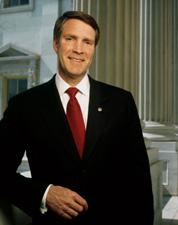
Mr. President, I ask unanimous consent the Senate proceed to H.J. Res. 75, the continuing resolution, which is at the desk; provided further that the resolution be read three times and passed, and…
Mr. President, I ask unanimous consent the Senate proceed to H.J. Res. 75, the continuing resolution, which is at the desk; provided further that the resolution be read three times and passed, and the motion to reconsider be laid on the table.
Bill Text
4 versions available
        [Congressional Bills 109th Congress]
[From the U.S. Government Publishing Office]
[H.J. Res. 75 Enrolled Bill (ENR)]

H.J.Res.75

One Hundred Ninth Congress

of the

United States of America

AT THE FIRST SESSION

Begun and held at the City of Washington on Tuesday,
the fourth day of January, two thousand and five

Joint Resolution

Making further continuing appropriations for the fiscal year 2006, and
for other purposes.

Resolved by the Senate and House of Representatives of the United
States of America in Congress assembled, That Public Law 109-77 is
further amended by striking the date specified in section 106(3) and
inserting the following: ``December 31, 2005''.
Sec. 2. Section 114(b) of Public Law 109-77 is amended by striking
``and December 1, 2005,'' and inserting ``December 1, 2005, and January
1, 2006''.

Speaker of the House of Representatives.

Vice President of the United States and
President of the Senate.