Approving the renewal of import restrictions contained in the Burmese Freedom and Democracy Act of 2003, and for other purposes.

Legislative Activity
Stay on top of the latest movement without scrolling through every action
Became Public Law No: 109-251.
August 1, 2006
View full timeline
Introduced in House
May 19, 2006
Referred to the House Committee on Ways and Means.
May 19, 2006
Mr. Shaw moved to suspend the rules and pass the resolution.
July 11, 2006 • 3:30 PM
Considered under suspension of the rules. (consideration: CR H5010-5012)
July 11, 2006 • 3:30 PM
DEBATE - The House proceeded with forty minutes of debate on H.J. Res. 86.
July 11, 2006 • 3:30 PM
Passed/agreed to in House: On motion to suspend the rules and pass the resolution Agreed to by voice vote.(text: CR H5010)
July 11, 2006 • 3:37 PM
On motion to suspend the rules and pass the resolution Agreed to by voice vote. (text: CR H5010)
July 11, 2006 • 3:37 PM
Motion to reconsider laid on the table Agreed to without objection.
July 11, 2006 • 3:37 PM
Received in the Senate, read twice.
July 12, 2006
Measure laid before Senate by unanimous consent. (consideration: CR S8217-8222)
July 26, 2006
Resolution agreed to in Senate without amendment by Voice Vote.
July 26, 2006
Message on Senate action sent to the House.
July 26, 2006
Presented to President.
July 27, 2006
Signed by President.
August 1, 2006
Became Public Law No: 109-251.
August 1, 2006
Floor Debate
11 membersWhat members said about H.J.Res. 86 on the floor
 MM
MM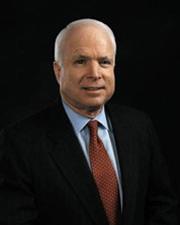 JM
JM DF
DF SJL
SJL MB+6
MB+6
Floor Debate
11 membersWhat members said about H.J.Res. 86 on the floor
Madam President, I ask unanimous consent that the debate from 12:30 to 6:30 this evening on energy security be equally divided between the two leaders or their designees with respect to the motion to…
Madam President, I ask unanimous consent that the debate from 12:30 to 6:30 this evening on energy security be equally divided between the two leaders or their designees with respect to the motion to proceed to S. 3711; provided further that following any opening remarks of the two leaders on Thursday, July 27, the motion to proceed be agreed to, and the Senate then begin the consideration of S. 3711.
Madam President, before speaking on the Burmese Freedom and Democracy Act, I want to make a few comments about the speech of the Prime Minister of Iraq which we just had an opportunity a few moments ago to hear in the joint session over in the House Chamber.
Today we mark a step forward in the war on terror. A mere 3\1/2\ years ago, the dictator, Saddam Hussein, would have addressed his regime's legislature of lackeys. Today, the democratically elected Prime Minister of Iraq addressed a joint meeting of the U.S. Congress.
A mere 3\1/2\ years ago, the dictator, Saddam Hussein, ruled Iraq. He terrorized his own countrymen with murder, torture, and weapons of mass death. He posed a security threat to the entire region and to the United States. The international community decided he had to face serious consequences.
In March of 2003, America, as we all well know, led a multinational coalition of forces to depose the dictator and to liberate Iraq. Since then, the country has made remarkable progress as it throws off the shackles of tyranny and embraces democracy.
Iraqis have held three successful national elections, ratified a constitution, elected a permanent unity government, and formed a cabinet with a strong prime minister at its head: Prime Minister Nouri al-Maliki, whom we had the pleasure of hearing from just an hour or so ago.
It took our country 13 years to go from independence to the implementation of our Constitution. Iraqis have done it in 3--and under the glare of the 24-hour news cycle coverage and the threat of terrorist attacks.
When Prime Minister Maliki ascended to the podium today, it was hard to deny the importance of the moment. His presence in this Capitol represents a victory for democracy. And his country is, and will continue to be, an important ally in the war on terror. Of course, there will be many tough days ahead in Iraq. There is no denying that the security situation represents a real challenge. But America does not avoid challenges, and we do not abandon our allies when the going gets tough.
We are moving forward in Iraq. The country recently realized its highest oil production and export levels since before its liberation, and during the past 3 years, per capita income in Iraq has doubled.
I would also like to call to my colleagues' attention an article titled ``Iraq as a Sovereign Nation'' written by the Prime Minister that appeared in Monday's Wall Street Journal. It points to very tangible proof that Iraq is moving forward.
The Iraqi province of al-Muthanna, located at the southernmost border of that country, has become the first province in which local Iraqi forces have taken full responsibility for law enforcement and security, taking over for our coalition forces. President Bush has frequently said: As Iraqis stand up,
we will stand down. That is exactly what has happened in al-Muthanna, home to over a half million Iraqis.
Local Iraqi police and military have stood up and taken the place of 1,400 coalition troops. The Governor of al-Muthanna has command of the provincial police. Iraqi national police and Iraqi Army troops will operate in the province under the control of the Prime Minister and the National Government.
The transfer of power in al-Muthanna is only the first step. The Prime Minister writes that ``current estimates envision half of Iraqi's provinces transferring security responsibility before the end of 2006''--this year. He and I agree that this process should not be driven by an arbitrary timeline but by the situation on the ground; nevertheless, this is an encouraging sign.
He goes on to write that the decisions for future transfers of power will be made based on the threat assessment in the province, the readiness of the local Iraqi forces, the readiness of the local governmental authorities, and overall coalition force posture.
The historic achievement of local control in al-Muthanna represents an important step forward in our mission in Iraq. As Iraqis stand up, we will stand down, and we will leave behind a proud and free Iraq.
The Prime Minister ends his article by saying:
With God's help, and continued assistance from
the coalition, our regional neighbors and the larger
international community, our people will unite and
prosper. Together, we can and will succeed.
I think we should all commend the Prime Minister for his vision and leadership. America will and must continue to stand by Iraq. None of what has been achieved in the last 3 years there has been at all easy, but we have succeeded and we will continue to succeed because freedom and democracy are stronger than the terrorists' tools of mayhem and fear.
Great credit must go to President Bush for his strong leadership in the war on terror which has enabled us to reach this transfer of power in al-Muthanna, and soon, in other provinces as well. I also commend the Iraqi Government, Iraqi police, and Iraqi security forces for their hard work in promoting stability in the country.
Of course, Madam President, I know our colleagues join me in thanking the men and women of America's Armed Forces for their courage, dedication, and sacrifice.
Stability in Iraq means stability in the region and greater security at home. As the Prime Minister said in his speech just delivered, according to translation:
Do not imagine that this problem [of terrorism] is solely
an Iraqi problem, because the terrorist front represents a
threat to all free countries and free peoples of the world. .
. .The responsibility of facing this challenge lies on the
shoulders of every country and every people that respects and
cherishes freedom.
The Prime Minister is exactly right. For that reason, America must stand firm in the war on terror, and we must stand side by side with our Iraqi allies in their war on the terrorists.
Before I finish, let me say a few words about the current situation in the Middle East regarding Israel and Hezbollah. Israel is America's longstanding friend and an ally in the war on terror. In fact, the horrors of September 11 awoke many in this country to what Israelis face daily and have faced daily for literally years. That country has been and continues to be on the front lines of the war on terror. I, for one, support Israel's efforts during this intense time to do whatever it takes to defend her people and her borders.
Maybe some have forgotten, but the terrorist group, Hezbollah, killed 241 American service men and women in Beirut in 1983. Hezbollah's love of death and destruction is on a par with al-Qaida. They are enemies to every peace-loving, democratic country. They are a threat, and Israel has a right to pursue them wherever they exist.
Now, Madam President, if I may, I would like to turn to speak in support of the Burmese Freedom and Democracy Act, which is the bill before us this afternoon.
This May, along with a number of cosponsors, including my good friends, Senator Feinstein and Senator McCain, I introduced this bill for Senate consideration. Passage of this bill would mean continued sanctions against the illegitimate, dictatorial regime that currently holds Burma literally in its grip--the Orwellian-named State Peace and Development Council, or SPDC. This Senate will be acting on behalf of those in Burma who are being repressed. The Burmese people want these sanctions because they want democracy, justice, and freedom, and we stand with them.
I see my friend, Senator McCain, here to speak on this issue as well. He has actually had the privilege of meeting with Daw Aung San Suu Kyi, the hero of Burmese independence, an opportunity that has been denied to most because she has been essentially under house arrest for 10 of the last 17 years.
The broad, bipartisan coalition in this Chamber for this legislation indicates America's firm resolve to oppose the tyrannical SPDC regime, and America's recognition that Burma, under the SPDC, poses an immediate threat to its region. To put it simply, the allies of the Burmese people have a moral obligation to continue to stand up against the SPDC. I take great pride that we are continuing to do so.
As many of my colleagues are well aware, last year, the extension of sanctions was signed into law by President Bush on July 27, 2005. It enjoyed strong, bipartisan support and passed this body by a vote of 97 to 1. Unfortunately, recent events have reminded us of the need to keep up the pressure on the villainous SPDC regime.
Ibrahim Gambari, the United Nations Under-Secretary-General for Political Affairs, visited Burma in May as a representative of Secretary-General Kofi Annan. He met with the ringleaders with the SPDC as well as Nobel Peace Prize winner, Daw Aung San Suu Kyi, who, as I indicated earlier, is a political prisoner and has been the leader of that country's democracy movement for quite some time. Suu Kyi, as I indicated earlier, has spent 10 of the last 17 years in detention or under house arrest for her efforts to bring freedom and democracy to her people. Many other members of her party, the National League for Democracy--the NLD--have been detained as well.
After returning, U.N. Diplomat Gambari wrote a column for the International Herald-Tribune titled ``A Crack in the Burmese Door.'' After acknowledging the SPDC's years of repression and misrule, Gambari wrote:
Last month, something seemed to change. Burma's locked door
popped open a small crack.
Gambari wrote this based on his discussions with the SPDC. But I think we should judge actions rather than words, and those actions tell an entirely different story. In fact, nothing fundamentally has changed in Burma. Suu Kyi remains under house arrest and the regime continues to engage in outrageous behavior.
I do not share Mr. Gambari's optimistic view that the SPDC is ready to, as he puts it, ``turn a new page.'' In my view, the junta is only interested in deflecting growing pressure from the international community to change its repressive ways--and in avoiding the U.N. Security Council's consideration of a nonpunitive resolution that addresses the threat the SPDC poses to its own people and the entire region.
Shortly after Mr. Gambari's visit, Suu Kyi's house arrest was extended for another year--double the length of the extensions she typically receives, under the regime's perverted concept of a legal process.
Even worse, Suu Kyi's life. was threatened in a state-run newspaper. The New Light of Myanmar, a mouthpiece for the SPDC junta, printed the following in a story on July 6:
The days of Daw Suu Kyi and NLD are numbered. They are
heading for the tragic end . . . Daw Suu Kyi and the National
League for Democracy (NLD) pose the most dangerous threat to
the nation.
That is an ominous threat. And the people who make it have the power to see it carried out.
They have made an attempt on her life before, and are apparently threatening to do so again.
In addition to the immediate danger its misrule poses to the Burmese people, we cannot forget for a single moment that the military regime in Rangoon poses a significant and non-traditional threat to the entire region. Their litany of abuses is well known.
Refugees spill into Thailand, fleeing the SPDC's brutal war against ethnic minorities.
Illegal drugs pour across Burma's borders into China, India, and Thailand, and destroy the lives of the region's youth.
And an unchecked HIV/AIDS virus closely follows drug trafficking routes, leaving disease and human tragedy in its wake.
It is worth noting that the SPDC spent $70,000 in 2004 to combat HIV/ AIDS. This is in stark contrast to the millions of dollars spent on weapons from China and Russia--and, according to recent news reports, North Korea.
This is no time for the international community and multilateral organizations, including the Association of Southeast Asian Nations, ASEAN, to soften its stance on Burma.
I want to emphasize for my colleagues one very important point. This Senate has already done much on behalf of the Burmese people. Now it is time for the U.N. to do its part.
We need less talk and more action at the U.N. in support of democracy, freedom, and justice in Burma. We must keep in mind that the situation is so dire in Burma that the U.N. has already adopted 28 nonbinding resolutions regarding that country. It is now time for the U.N. Security Council to act.
The criteria and justification for bringing a country before the Security Council was outlined in a report commissioned by former Czech President Vaclav Havel and South African Archbishop Desmond Tutu. There is no one in this Chamber who does not applaud their sustained efforts to bring about a peaceful solution to the Burma problem.
In fact, the Senate passed in May a measure that I sponsored calling on the U.N. Security Council to discuss a binding, nonpunitive resolution on Burma that calls for the immediate and unconditional release of Suu Kyi and all other political prisoners in that country; an end to abuses against minorities, including the use of rape as a weapon of war; and the beginning of a meaningful national reconciliation process that includes the unfettered participation of the NLD and ethnic minorities with the SPDC.
It is time for the U.N. Security Council to take such action. It is time for free nations to stand for freedom.
I specifically call on the respective governments of Ghana and the Republic of Congo, current nonpermanent members of the Security Council, to support this resolution.
Ghana, in particular, is a country that values freedom and the rule of law, and support for the resolution would unequivocally demonstrate that they stand on the side of justice in Burma.
I urge our Representative to the United Nations to continue efforts to move toward Security Council consideration of a nonpunitive resolution on Burma. To do any less would be to take a step backward.
Mr. President, the Congress has stood with the people of Burma in their quest for freedom and democracy. It is time for the U.N. Security Council to do the same.
Madam President, I yield the floor.
If I can say to my friend from Arizona before he leaves the floor, it is hard to imagine that the world simply doesn't pay any attention to this outrageous regime. I ask my friend, if they had a weapon of mass destruction, probably we would be paying a little more attention to this pariah regime--does my friend from Arizona not agree?
I thank the Senator as well. He makes a very important point.
The United Nations has not responded to efforts to prod them into moving this item up on the agenda. It could well be because of the lack of enthusiasm, shall I say, of the Chinese and the Russians--two permanent members of the Security Council. Nevertheless, the efforts persist. This U.S. sanctions bill is important, but it is not going to get the job done. We know that. It would require multilateral sanctions of a dramatic basis, such as were imposed against South Africa, to get the job done. At least at this point, the ASEAN countries seem to be more interested in doing business there than they are squeezing the regime.
There was, however, one encouraging sign. Burma was scheduled to host the ASEAN meeting this year. That did, I think, embarrass the members to the extent that they were unwilling to do that. So ASEAN obviously is not meeting in Burma in 2006.
The struggle continues. I thank our colleagues. This is going to pass on a voice vote shortly. I thank our colleagues for their awareness of this issue. I think it is one that will be before us for some time to come.
I don't know if there are other speakers. I see the Democratic leader. Does he wish to speak on this bill?
I yield the floor.
I say to my friend from Nevada, I am not aware of any other speakers on either side.
How much time remains?
I yield the remainder of the time on this side.
Mr. President, I move to reconsider the vote, and I move to lay that motion on the table.
The motion to lay on the table was agreed to.
Madam President, I thank Senator McConnell and Senator Feinstein for their leadership once again in renewing the sanctions contained in the 2003 Burmese Freedom and Democracy Act. I am proud to…
Madam President, I thank Senator McConnell and Senator Feinstein for their leadership once again in renewing the sanctions contained in the 2003 Burmese Freedom and Democracy Act. I am proud to cosponsor and support this resolution.
I again thank the Senator from Kentucky and the Senator from California for their leadership and their advocacy. I thank Senator McConnell for his very strong and inspirational remarks that he completed.
As we renew these sanctions, the situation inside Burma continues to worsen still. The military junta in that country controls the population through a campaign of violence and terror, and the lack of freedom and justice there is simply appalling. The Burmese regime has murdered political opponents, used child soldiers and forced labor, and employed rape as a weapon of war. Political activists remain imprisoned, including elected members of parliament. And that courageous woman, Aung San Suu Kyi, has spent yet another year in captivity.
Aung San Suu Kyi's resolve in the face of tyranny inspires me and, I believe, every individual who holds democracy dear. Because she stands for freedom, this heroic woman has endured attacks, arrest, captivity, and untold suffering at the hands of the regime. Burma's rulers fear Aung San Suu Kyi because of what she represents--peace, freedom and justice for all Burmese people. The thugs who run the country have tried to stifle her voice, but they will never extinguish her moral courage. Her leadership and example shine brightly for the millions of Burmese who hunger for freedom and for those of us outside Burma who seek justice for its people. The work of Aung San Suu Kyi and the members of the National League for Democracy must be the world's work. We must continue to press the junta until it is willing to negotiate an irreversible transition to democratic rule. The Burmese people deserve no less.
And, while we see encouraging signs that the world is no longer content to sit on the sidelines, not everyone has gotten the message. Nine years after Burma joined ASEAN, the Southeast Asian nations remain too passive in the face of Burma's outrages. The European Union has recently announced that it will waive a travel ban on Burma's top leaders so that the Burmese foreign minister can attend the Asia-Europe meeting in Finland this September. It is hard to see what new actions the Burmese junta must commit in order to induce the world to treat the junta like the pariah it wishes to be.
At least there should be no mistaking where the United States stands when it comes to repression in Burma. The U.S. Congress has been in the forefront of efforts to isolate that country, and we stepped up these measures significantly in 2003 with the Burmese Freedom and Democracy Act. In doing so, we took active steps to pressure the military junta, and we sent a signal to the Burmese people that they are not forgotten--that the American people care about their freedom and will stand up for justice in their country. Today's renewal of the import restrictions--sanctions that are supplied by supported by the National League for Democracy--is just one of those steps. I believe that these restrictions must remain in place until Burma embarks on a true path of reconciliation--a process that must include the NLD and Burmese ethnic minorities.
But the import ban must not be the only step. The U.S. has pushed for a resolution at the United Nations Security Council, and this step should garner wide support. The Europeans and ASEAN too should take up the Burma issue and put it on their front burners. Every responsible member of the international community must realize that the desire of people to be free is universal, and it does not stop at the gates of Rangoon. The people of Burma desire freedom and democracy, they have expressed this desire, and they shall one day have it. The question is not ``if'' but ``when.'' We shall help them get there, and we shall never forget their brave struggle.
Again, I thank the Senator from Kentucky and the Senator from California for their leadership on this very important issue.
There are many issues that are before America's attention today and that dominate our television and our newspapers. But this struggle for freedom on the part of the Burmese people has been there before and, unfortunately, will be after. We must be steadfast in our advocacy until they attain the freedom that they deserve under the leadership of this magnificent, Nobel Prize-winning hero for men and women throughout the world.
I yield the floor.
I agree with my friend from Kentucky. Let me respond by referencing, again, this struggle carried out by this magnificent woman. She has endured 17 years of house arrest. When her husband was in England, he was dying of cancer. She has two sons, by the way. He was dying of cancer, and she wanted, of course, to go to be with her husband in his last hours. The
junta said: Yes, you can go, but you can never come back.
Among the incredible sacrifices she has made, she was not even allowed to be with her husband as he died.
One time she was surrounded by these thugs who killed some of her supporters. She was in a car for a week--inside of her car for a week, surrounded by these unspeakable, brutal thugs who were the goons of this regime.
The things she has undergone. Yet, incredibly, whenever she is with these thugs from this junta, she treats them with the utmost courtesy. She serves them tea. She treats them as only a woman of her caliber can treat her mortal enemies.
Her story needs to be told and retold throughout the world, thousands and thousands of times. As a person who is a hero worshiper, an admirer, I believe that heroes have an important place in our Nation and the world. When I see her, she ranks in the first ranks of heroes in the world. It seems to me, with all due respect to the other nations of the world--our European friends, our ASEAN friends, and others--that we should be far more energetic in her advocacy and advocacy of freedom for her people.
I thank the Senator from Kentucky.
Madam President, I rise today in support of legislation to renew the ban on all imports from Burma for another year. The House unanimously passed this bill earlier this month and I urge the Senate to…
Madam President, I rise today in support of legislation to renew the ban on all imports from Burma for another year.
The House unanimously passed this bill earlier this month and I urge the Senate to follow suit today.
This bill amends the original Burmese Freedom and Democracy Act of 2003 to allow the sanctions to be renewed, 1 year at a time, for up to 6 years.
Simply put, the ruling military junta, the State Peace and Development Council has done nothing over the past 3 years to warrant a lifting of the sanctions.
It has failed miserably to make ``substantial and measurable progress'' towards recognition of the 1990 elections--decisively won by Aung San Suu Ky's National League for Democracy--and a full restoration of representative government.
If we vote to lift the sanctions prematurely, we will only reward Rangoon for its rejection of democracy, human rights, and the rule of law.
Let us review the facts.
Aung San Suu Kyi, Nobel Peace Prize recipient and leader of the National League for Democracy, is confined to her home by orders of the military junta. She recently celebrated her 61st birthday under house arrest and on June 9, 2006, her detention was renewed for another year.
She has spent the better part of the past 16 years imprisoned or under house arrest.
The human rights situation in Burma is deplorable and demands a clear, unified response from the international community: 1,300 political prisoners are still in jail; according to a report by the Asian human rights group, Assistance Association for Political Prisoners, 127 democracy activists have been tortured to death since 1988; 70,000 child soldiers have been forcibly recruited; the practice of rape as a form of repression has been sanctioned by the Burmese military; use of forced labor is widespread; human trafficking is rampant; and the government engages in the production and distribution of opium and methamphetamine.
Given this substantial list of abuses, it is no surprise that a recent report by former Czech President Vaclav Havel and retired archbishop Desmond Tutu of South Africa--``Threat to Peace: A Call for the UN Security Council to Act on Burma''--confirms the need for United Nations intervention.
It details how the situation in Burma fulfills each of the criteria used for past intervention by the Security Council: overthrow of an elected government; armed conflicts with ethnic minorities; widespread human right violations; outflow of refugees--over 700,000--and drug production and trafficking and the spread of HIV/AIDS.
The report should be required reading for all members of the United Nations who doubt whether or not the Security Council should take up Burma immediately.
Some may argue that because the sanctions have not achieved their desired goals--the release of Suu Kyi, the restoration of a free and democratic Burma--they should be terminated.
I could not disagree more. First, Aung San Suu Kyi and the democratic opposition continue to support a ban on all imports from Burma.
Second, the international community is coming together to put pressure on Burma: In July 2005, ASEAN forced Burma to forgo its scheduled rotation as chairman of the organization; on December 16, 2005, the U.N. Security Council debated the situation in Burma for the first time.
Last month, the United Nations Under Secretary for Political Affairs briefed members of the Security Council on his meeting with Suu Kyi, her first meeting with a foreigner since 2004; a group of legislators from member countries strongly urged ASEAN last week to take concrete measures to resolve the political situation in Burma; Malaysian Foreign Minister Syed Hamid Albar, whose country currently chairs ASEAN, blasted Burma in an op-ed in the Wall Street Journal this week for undermining the credibility of ASEAN by not moving closer to democracy.
And, finally, I believe we are making progress on having a majority of the United Nations Security Council support adding Burma to the agenda of the Security Council for debate and possible passage of a binding, nonpunitive resolution on Burma.
By taking a leadership role on this issue, the United States has inspired other countries in the United Nations to put pressure on Burma to respect the wishes of its people and the international community to release Suu Kyi and restore a democratic, representative government.
They have begun to recognize that--as the Havel-Tutu report documents--Burma's actions not only represent a threat to the rights and freedoms of the Burmese people, but to the region and international community as a whole.
I strongly urge those members of the Security Council who have not done so to add their names to the growing list of countries who support adding Burma to the council's agenda. Passage of this legislation today will serve as another beacon of hope for the Burmese people and another example of leadership that will bring other countries to their side.
I remind my colleagues that under the provisions of this legislation, we will have the opportunity to debate sanctions on Burma every year. That is how it should be.
Sanctions are not a panacea for every foreign policy dispute. But, when they are backed by a robust international response, they can be effective and they can compel change.
Archbishop Desmond Tutu has rightly said, ``As long as [Suu Kyi] remains under house arrest, not one of us is truly free''.
Today, I urge the SPDC to release Aung San Suu Kyi, recognize the 1990 elections, and engage in a true dialogue with the National League for Democracy.
I urge the United Nations Security Council to debate and pass a binding, nonpunitive resolution on Burma that recognizes the threat the regime poses to the region and calls for Suu Kyi and all prisoners of conscience to be released.
And, finally, I urge the Senate to renew the sanctions on Burma for another year.
Mr. Speaker, I rise today in support of H.J. Res. 86, a bill intended to extend the import restrictions imposed by the Burmese Freedom and Democracy Act of 2003. This act was initially passed in…
Mr. Speaker, I rise today in support of H.J. Res. 86, a bill intended to extend the import restrictions imposed by the Burmese Freedom and Democracy Act of 2003. This act was initially passed in response to the failure of Burma's ruling body to take significant actions to establish a democratic government, and for its reluctance to address violations of human rights and the pervasive drug problems within its borders. The governing body of Burma has yet to take effective corrective action.
Burma is presently under the rule of a military regime, the State Peace and Development Council. This military junta, or one like it, has been in control of the Burmese government for the greater part of Burma's independence since 1948. Democratic rule in Burma ended in 1962 in a coup d'etat. The National League for Democracy, led by Aung San Suu Kyi, won a free election held in 1990, but the ruling military regime, then the SLORC (State Law and Order Restoration Council), voided the election and impeded the formation of a democratic government.
The SLORC has since become the SPDC, and Aung San Suu Kyi has spent the last 17 years in and out of detention and house arrest. She has been offered freedom in exchange for her voluntary exile, but she, with the backing of millions of supporters around the world, continues to stand against an oppressive regime and fight for democracy. She was in detention in 1999 when her husband died from cancer, as authorities would not allow for him to visit or for her to return if she visited him while he was ill. Aung San Suu Kyi has been relentless in her work and advocacy and was the recipient of the 1991 Nobel Peace Prize for her struggle. It will take more men and women of her courage and character to free her country from its oppressors within. Yet the world has yet to respond with the required urgency.
In the year 2004, Burma was the world's second largest producer of illicit opium, with an estimated production of 292 metric tons. Though this number was down 40% from 2003 due to eradication efforts and drought, land cultivation in 2004 was still 30,900 hectares. The government has shown little interest in addressing this problem.
Human rights violations in Burma have been documented for years, and it is generally agreed to that the military regime currently in power is one of the most repressive, violent, and inhumane in the world. The atrocities include forced labor, conscription of children, repression of free speech and political freedom, and the state-sanctioned use of torture and rape as weapons of war.
It is estimated that several hundreds of thousands of men, women, children, and elderly are being forced to work against their will in what the International Labor Organization of the UN calls a ``modern form of slavery.'' Human Rights Watch estimates that some 70,000 of the regime's soldiers are children. A
2004 report by Amnesty International estimates that more than 1,300 people were wrongfully imprisoned between 1989 and 2004; and there were an estimated 1,600 political prisoners in 2005, 38 of which were elected members of Parliament.
The U.S. State Department and two NGOs have confirmed that torture and rape are being used as weapons of war. A report issued in 2002 by The Shan Human Rights Foundation and the Shan Women's Action Network documents 173 cases of rape and sexual violence involving 625 girls and women. The study points out that 61 % were gang-rapes and that 25% of these girls and women died, some of whom were detained and repeatedly raped for up to four months. A report released by Refugees International in April of 2003 also documents cases of rape. These crimes are largely targeted at ethnic minorities, including the Shan, Mon, Karenni, and the Karen.
Testifying before the House Committee on International Relations earlier this year, Human Rights Watch advocacy director Tom Malinowski stated that, ``Government armed forces continue to engage in summary executions, torture, and the rape of women and girls. This campaign can only be described as ethnic cleaning on a very large scale. Hundreds of thousands of people, most of them from ethnic minority groups, live precariously inside Burma as internally displaced people.''
A CBO report estimates that supporting this legislation could cost the U.S. $500,000 in 2006 and $1 million in 2007. It is likely that there will be economic costs on the other end as well, and not just for those in power. So while it is understandable and even necessary to take action in opposition of the current military regime and to condemn their oppressive rule and blatant abuses of human rights, we should explore other methods to express our disapproval and impose sanctions. We must be careful that our actions do not oppress the innocent who are caught up in this ongoing struggle.
So I urge my colleagues to support H.J. Res. 86, but I also ask that we devise additional ways to assist the people of Burma, ways that may not entail economic backlashes. Over the years we have seen situations like this arise and escalate and we have watched with shameful apathy as millions have perished or fallen victims to unspeakable physical, sexual, and emotional violence. And here we are again with another opportunity to act or be apathetic. Let us not squander it under the cover of feigned ignorance. We are all aware now. Let us not get selective amnesia by confining our thoughts to tangential concerns of a lesser gravity, for history will not forget when we stand idly by while these people suffer, scream, and die. Instead, let us free Ms. Aung San Suu Kyi, and free those for which she remains confined.
Madam President, 3 years ago, Burma's military junta arrested democracy advocate Aung San Suu Kyi and returned her to the house arrest that she has endured with only intermittent periods of release…
Madam President, 3 years ago, Burma's military junta arrested democracy advocate Aung San Suu Kyi and returned her to the house arrest that she has endured with only intermittent periods of release since 1989.
Three years ago, Congress enacted the Burmese Freedom and Democracy Act of 2003, and we have renewed the sanctions called for under that legislation every year since then.
That legislation is set to expire this summer, and we are now considering whether to extend its provisions for another 3 years.
Tragically, Burma's human rights record has worsened, rather than improved, in the 3 years since Congress enacted the Burmese Freedom and Democracy Act.
Earlier this year, the detention of Aung San Suu Kyi was extended for another year. More than 1,100 political prisoners languish in jail in Burma, prevented from expressing their aspirations for a democratic government.
The military junta ruling Burma still refuses to enter into a dialog with the opposition National League for Democracy. Its brutal treatment of ethnic minorities and advocates of democracy remains unabated. Forced labor is a widespread problem, and labor activists are regularly imprisoned for trying to combat it.
The failure of Burma's dictators to address the HIV/AIDS and avian influenza situation in the country contributes to the horrific situation of the Burmese people.
And the regime's effects are not confined to Burma's borders. Thousands of refugees have fled to Thailand, Malaysia, India, and Bangladesh. Burma is the world's second largest opium producer, supplying 90 percent of the heroin from Southeast Asia. It is also the single largest producer of methamphetamine in the region.
One year ago, nearly to the day, I stood on the Senate floor and questioned whether these economic sanctions were the most appropriate tool for bringing about the kind of change we need to see in Burma.
The arguments against economic sanctions continue to be quite compelling. First of all, they have a very poor record of success. The kinds of governments that merit this sort of treatment are not sensitive to international opprobrium, nor are they swayed by it to make changes. Second, economic sanctions tend to hurt the people that they are intended to help. Ordinary people lose their jobs, while the military and its leaders are left untouched. Third, severing economic ties shuts off an important avenue of dialog that can promote change.
Those who support the sanctions point out, rightly, that Burma's rulers are not willing to engage in dialog, either at home or with its neighbors. It is plain that Burma's military dictators are not interested in being members of the international community. They have rebuffed the United Nations. And they have refused to allow U.N. Special Rapporteur on Human Rights Paulo Sergio Pinheiro to visit Burma since November 2003.
They are equally uninterested in improving the lives of their people, or participating in the global economy. While more and more nations have turned to freer markets to bolster their growth, Burma has actually worked to dismantle fundamental economic institutions like property rights, contract enforcement, sustainable fiscal policies, and a reliable currency.
It is difficult to imagine an environment less conducive to growth and less attractive to foreign investment. Revenues from oil and gas exports flow to the regime. Businesses and farmers are routinely shaken down. And productive assets are concentrated in the hands of the regime's cronies.
In December of last year, America led the effort that produced the U.N. Security Council's first-ever discussion of the human rights abuses in Burma. I welcome the administration's efforts to increase international pressure on the military dictatorship.
But if we are serious about trying to isolate the junta through sanctions, we cannot act alone. The European Union has also imposed sanctions on Burma, but neighboring countries continue to trade with Burma and to direct investment there.
The administration needs to work with other countries, especially the countries in the region Thailand, China, India--that are still economically engaged with the dictatorship to intensify the pressure on the regime.
The countries in the region have the most to lose from the worsening of the situation in Burma. As the oppression and abuse continue, more refugees will flee across the borders. As the junta focuses on enriching itself and ignoring the needs of its people, more drugs will flow across the border, and the risk of diseases like HIV/AIDS, malaria, antibiotic-resistant tuberculosis, and avian influenzas will increase in the region.
Despite my reservations about the effectiveness of sanctions to effect change, I will support this resolution, extending the Burmese Freedom and Democracy Act for a further 3 years.
This extension adds our voice to the voice of the Burmese people, muffled by the oppressive regime, in calling out for democracy and human rights. It is my hope that our action today will increase the awareness of the worsening human rights situation and bolster international support for democracy in Burma.
Show 7 more
Mr. Speaker, I first want to thank my good friend and colleague, Congressman Ben Cardin, for his leadership on trade and human rights issues. I also want to express my appreciation to Ways and Means…
Mr. Speaker, I first want to thank my good friend and colleague, Congressman Ben Cardin, for his leadership on trade and human rights issues.
I also want to express my appreciation to Ways and Means Committee Chairman Bill Thomas for his strong support, over many years, for import sanctions against Burma, and for moving this legislation to the floor expeditiously. As always, I also remain deeply appreciative of the work of the Ranking Democrat on the Ways and Means Committee, my friend and colleague Charlie Rangel.
Mr. Speaker, former South African Archbishop Desmond Tutu--the winner of the Nobel Peace Prize for his tireless and ultimately successful fight for freedom in South Africa--spoke eloquently about the key role of the international community in helping to free oppressed nations.
He said, ``If you are neutral in situations of injustice, you have chosen the side of the oppressor. If an elephant has its foot on the tail of a mouse and you say that you are neutral, the mouse will not appreciate your neutrality.
Mr. Speaker, with passage of this legislation, Congress will once again signal firmly that the United States is not neutral when it comes to Burma. We are firmly on the side of imprisoned Nobel Laureate Aung San Suu Kyi and all those who are oppressed by Burma's ruling thugs.
Some argue the U.S. sanctions do not help those who suffer the most under Burma's oppressive political and economic system. Again, I would respectfully refer them to Archbishop Tutu, whose homeland of South Africa is free today because the international community refused to remain silent about the brutal system of Apartheid.
By voting to maintain our Nation's tough approach towards Burma, we once again lead the world by example. Step by step, we will move assertively towards a global sanctions regime against Burma involving all of the world's leading economic players.
In fact, Mr. Speaker, there are signs that American leadership on Burma is paying off.
Just a few short months ago, the United Nations Security Council held an unprecedented debate on Burma's horrendous human rights situation and its destabilizing role in Southeast Asia. Further Security Council action against Burma is on the near horizon, particularly since the Burmese leadership thumbed its nose at Kofi Annan's hand-picked special envoy to Burma, and refused to release Aung San Suu Kyi.
The political leadership of the Association of Southeast Asia Nations--ASEAN--has also long maintained that Burma's political situation was an ``internal affair.'' But Singaporean Foreign Minister George Yeo recently said that Southeast Asia may need to ``distance itself'' from Burma if it does not undergo political reform, and the ASEAN leaders refused to let Burma become chairman of the important regional organization in 2006.
The European Union has also firmly resisted the entreaties of the European commercial class--always eager for new trade opportunities with the world's rogue regimes--to reduce sanctions against Burma.
Mr. Speaker, while these are positive developments, we remain a long way from a comprehensive, global sanctions regime. But Mr. Speaker, I am prepared to wait as long as it takes to convince the international community to act properly.
The only hope for promoting far-reaching political change is by making Burma's thug-ocracy pay an economic price for running their nation into the ground. I would welcome a negotiated solution to the crisis in Burma, but I believe firmly that such negotiations will only bear fruit once those pulling the levers of power feel a strong economic pinch.
Today, we will act decisively to renew import sanctions against Burma, and send an unmistakable signal of support for the restoration of democracy and human rights in that impoverished nation.
One day, Aung San Suu Kyi will lead a democratic Burma, and I look forward to being at her inauguration before a throng of her countrymen, all finally free. Until then, we in this country must do what we can to hasten that day.
I urge all of my colleagues to support this important legislation.
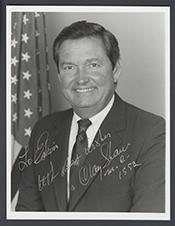
Mr. Speaker, I move to suspend the rules and pass the joint resolution (H.J. Res. 86) approving the renewal of import restrictions contained in the Burmese Freedom and Democracy Act of 2003, and for…
Mr. Speaker, I move to suspend the rules and pass the joint resolution (H.J. Res. 86) approving the renewal of import restrictions contained in the Burmese Freedom and Democracy Act of 2003, and for other purposes.
Mr. Speaker, I yield myself such time as I may consume.
Mr. Speaker, I rise in strong support of H.J. Res. 86. According to the State Department, the Burmese military regime has resisted all international pressure to enact meaningful political reforms and create true democracy. In response, for many years now, the United States has imposed sanctions, including banning all imports from Burma. Additionally, we have prohibited exportation of financial services from the United States to Burma and have targeted the regime itself by freezing certain assets.
Today the passage of this resolution is necessary to extend for 1 year the import restrictions enacted within the Burmese Freedom and Democracy Act of 2003. On February 7, 2006, Assistant Secretary of State for East Asian and Pacific Affairs, Christopher Hill, testified that these sanctions are ``an essential component of our strategy.'' He went on to say that ``they serve as a constant reminder to the regime, and everyone else concerned with Burma, that its behavior is unacceptable, and that regime leaders will remain international pariahs as long as they continue this behavior.''
As chairman of the Ways and Means Subcommittee on Trade, I do not support trade sanctions lightly. However, Burma has not taken the necessary steps to warrant lifting these sanctions. The Burmese regime claims it is implementing its so-called road map to democracy, but in truth it is taking no such steps.
The State Department has found that the delegates charged with creating the constitution that this democracy would be built upon are all hand-picked supporters of the current regime. Additionally, pro- democracy advocates remain imprisoned, and military conflicts continue with internal groups.
Perhaps most disturbing are reports that Burma's human rights record continues to worsen. In 2005, security forces in the country continued to rape and murder Burmese citizens, force them into slave labor, and compel people into serving in militia units to defend the regime that they abhor.
Since enactment of the Burmese Freedom and Democracy Act, the Treasury Department has blocked over $16.8 million in transactions and frozen hundreds of thousands of dollars of assets belonging to the Burmese regime. The vast majority of democratic opposition within Burma supports the continuation of these sanctions and even welcomes additional actions.
It is now incumbent upon all of us to ensure that the ``essential component'' Assistant Secretary Hill referenced remains in place until this murderous regime yields to the desire of its citizens to be free. To back down now would send the wrong message to the military regime in Burma as well as the international community. Most importantly, it would send the wrong message to those pro-democracy advocates within Burma fighting for the freedom of their fellow citizens.
Mr. Speaker, I ask my colleagues to join me today in supporting this important measure and vote ``aye'' on H.J. Res. 86.
Mr. Speaker, I reserve the balance of my time.
Mr. Speaker, I yield back the balance of my time.
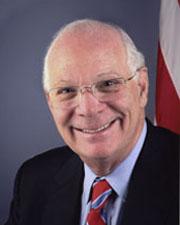
Mr. Speaker, I yield myself such time as I may consume. Mr. Speaker, I rise today in support of H.J. Res. 86, a resolution extending trade sanctions against Burma. It is imperative that the United…
Mr. Speaker, I yield myself such time as I may consume.
Mr. Speaker, I rise today in support of H.J. Res. 86, a resolution extending trade sanctions against Burma.
It is imperative that the United States continue sanctions against Burma so as to maintain pressure on the government of Burma to end its brutal repression against the Burmese people.
The government of Burma's litany of abuses is appalling. According to the U.S. State Department and human rights organizations, the government of Burma has continued to arrest and imprison supporters of democracy for alleged political offenses. Over 1,100 persons remain in jail today for their political beliefs.
Earlier this year, the government of Burma extended the detention of Aung San Suu Kyi, the leader of the National League of Democracy, a pro-democracy party, and her deputy. Aung San Suu Kyi has spent 10 of the last 17 years in confinement.
Burmese security forces regularly monitor the movement and communication of residents, search homes without warrants, and relocate people without compensation or legal recourse. The government of Burma has failed to crack down on trafficking in persons; and, in fact, the government of Burma has sanctioned the use of forced labor. In fact, the government of Burma has supported the use of forced labor for large infrastructure projects, forced children to join the Burmese Army, imprisoned individuals who have communicated with the International Labor Organization on the subject of forced labor.
Further, the Burmese government has destroyed nearly 3,000 villages in its campaign to forcibly relocate minority ethnic groups.
Mr. Speaker, the world simply cannot stand by as Burma continues its brutal policies. I am pleased that the European Union recently acted to renew its sanctions against Burma and that many nations in the world have spoken out against the repression in Burma. It is particularly meaningful that in December 2005 the Association of Southeast Asian Nations, ASEAN, which counts Burma as one of its members, issued a statement calling for the release of political prisoners and democracy reforms in Burma.
Mr. Speaker, the Western world and those who are concerned about human rights are united: Burma cannot be allowed to continue its oppressive actions. The use of sanctions is appropriate, and I urge my colleagues to support this resolution.
Mr. Speaker, I yield back the balance of my time.

Madam President, I rise in support of H.J. Res. 86, which will renew the import ban we first imposed on Burma in 2003. The Burmese Freedom and Democracy Act was our response to the reprehensible…
Madam President, I rise in support of H.J. Res. 86, which will renew the import ban we first imposed on Burma in 2003.
The Burmese Freedom and Democracy Act was our response to the reprehensible attack on the National League for Democracy which occurred on May 30, 2003, and the arrest of many NLD officials, including their leader, Daw Aung San Suu Kyi.
I worked with my colleagues, Senator McConnell and Senator Baucus, to develop and pass that legislation. We authorized a ban on imports from Burma for 3 years, subject to annual renewal by Congress.
Well, the 3 years are about to end, and unfortunately the situation in
Burma has not improved. The latest report from the State Department notes the continuation of killings and rape, use of forced labor, forced conscription, arrests and disappearances of political activists, and other abuses by the ruling military junta. And on May 23, 2006, the ruling junta extended for another year the unjustified house arrest of Daw Aung San Suu Kyi. To renew trade with Burma now would send exactly the wrong signal. We need to renew the import ban as a visible demonstration to the ruling junta that their actions are unacceptable and that they must change their ways.
We also need to encourage other nations to take strong action. The European Union has imposed some sanctions. Canada, Australia, Japan, and Norway also have some restrictions in place. I think they should each join us in doing more. Other nations should be acting as well, in particular, China. I urge the administration to continue engaging our trading partners to join us in strengthening sanctions against the ruling military junta. We need to work together in order to spur meaningful democratic reform in Burma.
For these reasons, I support authorizing the import ban for another 3 years, and I support the outright renewal of the import ban for another year. I, therefore, urge my colleagues to join me in supporting passage of H.J. Res. 86 and getting it to the President's desk for his signature as soon as possible.
Mr. Speaker, I rise today in strong support of the resolution that my good friend from California, Mr. Lantos introduced. I am proud to have my name attached to this resolution as an original…
Mr. Speaker, I rise today in strong support of the resolution that my good friend from California, Mr. Lantos introduced. I am proud to have my name attached to this resolution as an original cosponsor.
Mr. Lantos has been leading the way when it comes to fighting the repressive junta that controls Burma with an iron fist and I would like to commend him for his continued support.
The United States has been a leader in pushing the world to recognize the atrocities the military junta in Burma commits on a daily basis.
Mr. Speaker, because of our country's diplomatic efforts on a multilateral front the military junta is feeling the pressure.
The European Union had joined us in placing sanctions on the regime, a step that shows the unity of the West against the junta's human rights violations. Two weeks ago, for the first time Swiss banks froze all assets of the military regime.
For the first time the ASEAN nations are openly calling for the release of Aung San Suu Kyi and all political prisoners. Countries like Singapore and the Philippines have made strong statements showing that ASEAN has lost its patience with the continued lack of promised reforms from the junta.
The United Nations Security Counsel has met twice over the past seven months to discuss the horrible situation in Burma, a first for the U.N.
Thankfully, the Security Council is currently considering it's first- ever resolution on Burma.
We are at a monumental point in the history of Burma. My hope is that all members of the Security Counsel will support this resolution.
I urge all of my colleagues to continue to support the people of Burma who have suffered under this brutal military junta.

Madam President, the Senator from Kentucky has been working on this matter for years. I appreciate his vigilance and diligence. I also say to my friend from Arizona, for the Senator from Arizona to…
Madam President, the Senator from Kentucky has been working on this matter for years. I appreciate his vigilance and diligence. I also say to my friend from Arizona, for the Senator from Arizona to stand and talk about brutality and suppression means a lot. He understands it. We all know he understands it, having been a victim of that for years when he was a prisoner of war. I appreciate the leadership of these two fine Senators moving this matter forward.
I am going to speak on another issue at this time, Madam President. Are there others from either side who are going to speak on this matter?
Then we should pass it, and I will get the floor and move on.
I yield all of our time.
Mr. Speaker, I ask unanimous consent that all Members may have 5 legislative days in which to revise and extend their remarks and include extraneous materials with regard to H.J. Res. 86.
Mr. Speaker, I ask unanimous consent that all Members may have 5 legislative days in which to revise and extend their remarks and include extraneous materials with regard to H.J. Res. 86.
Bill Text
5 versions available
        [Congressional Bills 109th Congress]
[From the U.S. Government Publishing Office]
[H.J. Res. 86 Enrolled Bill (ENR)]

H.J.Res.86

One Hundred Ninth Congress

of the

United States of America

AT THE SECOND SESSION

Begun and held at the City of Washington on Tuesday,
the third day of January, two thousand and six

Joint Resolution

Approving the renewal of import restrictions contained in the Burmese
Freedom and Democracy Act of 2003, and for other purposes.

Resolved by the Senate and House of Representatives of the United
States of America in Congress assembled,

SECTION 1. AMENDMENT TO BURMESE FREEDOM AND DEMOCRACY ACT OF 2003.

Section 9(b)(3) of the Burmese Freedom and Democracy Act of 2003
(Public Law 108-61; 50 U.S.C. 1701 note) is amended by striking ``three
years'' and inserting ``six years''.

SEC. 2. RENEWAL OF IMPORT RESTRICTIONS UNDER BURMESE FREEDOM AND
DEMOCRACY ACT OF 2003.

(a) In General.--Congress approves the renewal of import
restrictions contained in section 3(a)(1) of the Burmese Freedom and
Democracy Act of 2003.
(b) Rule of Construction.--This joint resolution shall be deemed to
be a ``renewal resolution'' for purposes of section 9 of the Burmese
Freedom and Democracy Act of 2003.

SEC. 3. EFFECTIVE DATE.

This Act and the amendments made by this Act shall take effect on
the date of the enactment of this Act or July 26, 2006, whichever
occurs first.

Speaker of the House of Representatives.

Vice President of the United States and
President of the Senate.