Reserved.

Legislative Activity
Stay on top of the latest movement without scrolling through every action
Introduced in House
January 4, 2005
Floor Debate
24 membersWhat members said about H.R. 1 on the floor
 DD
DD STJ
STJ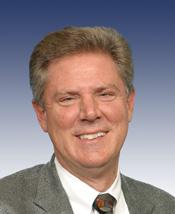 FPJ
FPJ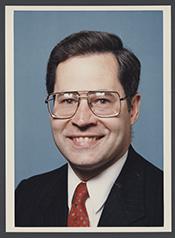 ABM
ABM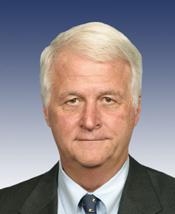 BD+19
BD+19
Floor Debate
24 membersWhat members said about H.R. 1 on the floor
Mr. Speaker, let me respond by saying that the gentleman is absolutely right when he states that the Chair does not rule on questions of constitutionality. I would also like to say that on this…
Mr. Speaker, let me respond by saying that the gentleman is absolutely right when he states that the Chair does not rule on questions of constitutionality.
I would also like to say that on this question that is being brought forward by my friend, it is very clear to me based on statements that have been made by a wide range of constitutional scholars that what we are doing in the rules package that we are about to consider is in fact constitutional. In fact, before the Committee on Rules the very distinguished former Solicitor General Walter Dellinger said the following: ``It is simply inconceivable that a Constitution established to provide for the common defense and promote the general welfare would leave the Nation unable to act in precisely the moment of greatest peril. No constitutional amendment is required to enact the proposed rule change because the Constitution as drafted permits the Congress to ensure the preservation of government.''
Let me further, Mr. Speaker, say that the Committee on Rules intends to conduct further examination of the best way for the House to assure a continuity of government during a national emergency, and it is our hope that as we proceed with this work that further discussions will take place with the members of that very distinguished panel, the Continuity Commission, which included our former colleague, Senator Simpson, and Speakers Foley and Gingrich and former minority leader Bob Michel, Leon Panetta, Kwasi Mfume, and I believe we will have a chance to proceed with this; but I think it would be very appropriate for us to proceed with consideration of the rules package that we have.
Mr. Speaker, I yield myself such time as I may consume.
Mr. Speaker, I thank the gentleman from Texas (Mr. DeLay) for his fine statement and for yielding me the time to discuss this opening-day rules package.
Mr. Speaker, the House is an institution built upon its rules. Accordingly, it is very appropriate that one of the first orders of business for this 109th Congress will be to adopt a rules package which is both true to the traditions and very forward thinking in its outlook for the work of this Congress that lies ahead.
The package we have before us represents the work product of many Members. During the initial stages of compiling this rules package back in November, the Committee on Rules received 40 different proposals from both Democrats and Republicans. In addition to that, our committee staff has actively sought the input of the officers of the House, its committees and its caucuses to get their perspectives on the kinds of changes we can make to facilitate the work of the House.
All of the ideas contained in this resolution reflect the considered judgment of our colleagues and will ultimately improve our ability to carry out our constitutional responsibilities.
Mr. Speaker, I include for the Record at this point detail on each of these changes in a section-by-section analysis.
Section-By-Section Summary of H. Res. 5, Adopting House Rules for the
109th Congress
Mr. Speaker, I yield myself such time as I may consume.
I just want to say to the gentlewoman from Rochester, New York (Ms. Slaughter) that every single Member of this institution, Democrat and Republican alike, is very concerned and focused on the integrity of this institution; and I believe that that is something which is an extraordinarily high priority for all of us. I believe that the package that we have coming before us is one which addresses many of the concerns that frankly were raised by the gentlewoman from New York (Ms. Slaughter).
Mr. Speaker, I yield 2 minutes to the very distinguished gentleman from Miami, Florida (Mr. Lincoln Diaz-Balart), my colleague on the Committee on Rules.
Mr. Speaker, I yield myself such time as I may consume.
Let me say after having heard from two of my Committee on Rules colleagues that I anxiously look forward to working with them in a bipartisan way to try to proceed with the deliberations in consideration of measures of this House.
Mr. Speaker, I yield 5 minutes to the gentleman from Colorado (Mr. Hefley), the distinguished chairman of the Committee on Standards of Official Conduct.
Mr. Speaker, I yield myself such time as I may consume.
I would like to respond to my very good friend from Maryland by saying that I may not be as eloquent today as I was when I was in the minority, but I continue to share my very strong commitment to ensure the integrity and the behavior of Members of this institution. I also will say as my friend said, it is very clear that the gentleman from Colorado (Mr. Hefley), chairman of the Committee on Standards of Official Conduct, has made it clear that he is supportive of this package. I and my colleagues looked at these recommendations, all of which emerged from members and former members of the Committee on Standards of Official Conduct. I also believe that it is very possible for us to maintain the highest ethical standards and to continue to ensure, to now ensure that due process is entitled to Members of this institution as they proceed with matters before that committee.
So I believe that this package is one which should enjoy strong bipartisan support, because when it comes to matters of ethics it will address the concern and the protection of Members of both the minority and the majority, as well as this institution as a whole.
Mr. Speaker, I reserve the balance of my time.
Mr. Speaker, I am very happy to yield 3 minutes to the gentleman from New York (Mr. Boehlert), the very distinguished chairman of the Committee on Science.
(Mr. BOEHLERT asked and was given permission to revise and extend his remarks.)
Mr. Speaker, I yield such time as he may consume to the gentleman from Mississippi (Mr. Taylor) for purposes of a colloquy.
Mr. Speaker, will the gentleman yield?
Mr. Speaker, I will be happy to respond to the gentleman.
Let me say we are in the midst of a discussion about ethics at this point. Obviously, it is our goal to maintain the highest ethical standards. We have a law, which is actually a criminal law, which states that it is a violation of 18 U.S. Code 607 for the solicitation of campaign contributions from Federal property.
The idea behind this change that is included in this rules package is that Members should not be required to carry two separate cell phones with them. This would allow campaign funds to be used for the purchase of a cell phone that might be used for calling your office or other official purposes. But the law which prevents the solicitation of campaign contributions from Federal property in fact is maintained and is one we that feel very strongly about.
In any Federal building whatsoever. On Federal property is what the law says. It is a violation of the law.
Mr. Speaker, I ask unanimous consent that the Chair may reduce to 5 minutes the minimum time for electronic voting on the motion to commit and the vote on the adoption of H. Res. 5 if the votes immediately follow a 15-minute vote, notwithstanding intervening proceedings attending the administration of the oath of office to Members-elect.
Mr. Speaker, I ask unanimous consent that all Members may have 5 legislative days within which to revise and extend their remarks on this rules package.
Mr. Speaker, I yield myself the balance of my time.
Mr. Speaker, we have a great rules package that is coming before us, a rules package which I believe is deserving of bipartisan support. The reason I say it is deserving of bipartisan support is that is the word that has been used by Members on both sides of the aisle to describe exactly what we have been doing here and should be doing here.
Mr. Speaker, this package includes a number of very important provisions. It allows us to deal with the prospect of a horrendous attack on this institution, and it allows us to continue this institution's operations so the American people will understand that this institution stands even at a time of great crisis. This rules package allows for the establishment of a new permanent standing committee on homeland security, as the Speaker outlined in his opening remarks here today. I believe that is something that will allow Democrats and Republicans to spend time working on that issue.
Mr. Speaker, this is a rules package which allows for bipartisan process at the ethics committee level. The Committee on Standards of Official Conduct is the committee which has the responsibility of working to ensure the integrity of all of the Members of this institution. The package we have before us does just that.
I believe that the statement made by the chairman of the Committee on Standards of Official Conduct, the gentleman from Colorado (Mr. Hefley), is very clear. He understands that the provisions included in this package will in fact maintain the integrity of this institution. He was not going to support the earlier package; he is supporting this package. The issue of bipartisanship is important because in this package we ensure that we will not see the politicization of the ethics process which tragically we have seen in the past, because it will require bipartisanship, which all Members are talking about, if we do proceed with the investigatory process.
That is the right thing to do, and I believe this package should in fact enjoy the support of Democrats and Republicans alike because it is designed to protect this institution and its Members.
Mr. Speaker, the House is an institution built upon its rules. Accordingly, it is appropriate that one of the first orders of business of the 109th Congress will be to adopt a rules package which is both true to its traditions and forward-thinking in its outlook.
The package we have before us represents the work product of many Members. During the initial stages of compiling this package, back in November, the Rules Committee received 40 difference proposals form both Democrats and Republicans.
In addition, our committee staff has actively sought the input of the officers of the House, its committees, and its caucuses to get their perspectives on the kinds of changes we can make to facilitate the work of the House.
While not every proposal we received was incorporated into this package, I assure you that each received substantial consideration by the Speaker and the Rules Committee. And, as always, the Rules Committee will continue to review our rules and operations to see where other improvements can be made.
Mr. Speaker, all of the ideals contained in this resolution reflect the considered judgment of our colleagues, and will ultimately improve our ability to carry out our constitutional responsibilities. While I will detail each of these changes in the section-by-section that I will place in the Record, I want to elaborate on just a few of these changes.
The gentlewoman from Virginia (Mrs. Jo Ann Davis) is the author of one important provision directing committees to review matters within their jurisdiction to ferret out duplicative government programs as part of their oversight planning at the beginning of each Congress.
There are a number of instances where we are conforming the rules to reflect current House practice, such as with the designation of leadership members of the Budget Committee and the taking of recesses in committee to allow flexibility on our schedules.
We are also making the ability to consider suspensions on Wednesdays permanent in
this Congress after our successful experiment in the 108th Congress.
The package includes important provisions to allow us to function in situations where large numbers of Members are incapacitated. The ``provisional quorum'' language includes a number of safeguards to ensure that this institution can continue to operate during times of turmoil and democracy will be preserved.
As we search for permanent solutions to the problems facing us in the post-9/11 era, this is an important step in meeting our responsibilities.
We will also eliminate the Corrections Calendar. While this was originally intended to make it easier to consider legislation making corrections to outright errors in law, it turned out to be more cumbersome than other procedures, such as consideration under suspension of the rules.
And yes, Mr. Speaker, in a change guaranteed to draw applause from my colleagues, the House rules will now allow us to make reference to the Senate and its Members, so long as those references are confined to the question under debate and avoid personality. The Senate has long had similar provisions and this new rule merely conforms our rules to theirs.
I know that my colleagues and I share the desire to maintain our traditions of dignity and decorum in proceedings, and will do so even with this rules change.
On another topic, the package makes a series of changes to our ethics rules.
We included two provisions suggested by the chairman and ranking member of the Standards Committee: (1) clarifying the rule on officially connected travel to allow a family member other than a spouse or child to travel with the member at the sponsor's expense, and (2) conforming the rules of the House to current law which allow the use of campaign funds to pay for certain official expenses, such as a cellphone.
We also included provision suggested by the gentleman from Connecticut (Mr. Larson) to conform the rules of the House to current law with regard to the 90-day pre-election limit on franked mail.
The package also includes two other provisions addressing our ethics rules. The first gives Members the same rights to choose their counsel before the Ethics Committee that they would enjoy if they were a respondent in a court case.
The second change addresses an inequity in the Standards Committee process requiring an investigative subcommittee if the chairman and ranking member don't act within 45 days. This change restores the presumption of innocence in our process.
As important as each of those changes are, Mr. Speaker, perhaps the most important change in this resolution will be the creation of a new standing Committee on Homeland Security.
It represents a far-reaching and critically important part of our overall strategic effort to protect the American people. The 9/11 Commission unanimously called for this action. They saw the need, and we believe most Members do, too.
Over the past 3 years, the Congress has asked the American people to accept change in countless ways. We have mandated change at the Federal, State, and local levels. We have asked for change from our allies and forced change upon our enemies.
And we saw the need for change over 2 years ago, and we responded, first with the enactment of the Homeland Security Act of 2002, and then with the formation of the Select Committee on Homeland Security. Their final report, a thorough and complete study of homeland security jurisdiction as it relates to House rules, was transmitted to my committee at the end of last year.
These measures made it clear to me and many other Members that steps need to be taken to further ensure the safety of the American people. The Rules Committee thoroughly reviewed the Select Committee's report and recommended a comprehensive and thoughtful reform effort that mirrors the recommendations of the 9/11 Commission: the formation of a permanent Committee on Homeland Security.
This change in House rule X, which governs the committee and their legislative jurisdictions, is delicately crafted architecture. It draws to the new committee only jurisdiction directly related to our defense against terrorism. Thus, it creates a primary committee while recognizing the other legitimate oversight roles of existing committees. It acknowledges the expertise and experience residing in other committees and leaves with them jurisdiction that may have a homeland security implication but not a direct policy relationship.
The House must have one central point where we, as national legislators, sort out the critical questions of securing our homeland without sacrificing our free society or a stable economy.
However, we envision a system of ``purposeful redundancy.'' By that we mean more than one level of oversight and an atmosphere in which the competition of ideas is encouraged.
With this jurisdiction and the legislative history that I will place in the Record, the Department of Homeland Security will have more certainty as to which committee has the primary responsibility for homeland security. At the same time, the American people will live with the assurance that we are working to prevent anything from falling through the cracks.
Mr. Speaker, the new committee will have jurisdiction over: (1) Overall homeland security policy; (2) the organization and administration of the Department of Homeland Security; and (3) functions of the Department of Homeland Security relating to border and port security (except immigration policy and non-border enforcement), customs (except customs revenue), the integration, analysis, and dissemination of homeland security information, domestic preparedness for and collective response to terrorism, research and development, and transportation security.
By approving this resolution, the House will do what the Speaker and the 9/11 Commission has asked it to do: consolidate jurisdiction of the House in one committee. This committee will be dedicated to setting national homeland security policy and to effectively overseeing that the Department of Homeland Security carries out its mission.
Mr. Speaker, in making these changes, I want to note several points for the record.
First, referrals to the Select Committee on Homeland Security in the 108th Congress will not be considered a precedent for referrals in the 109th Congress.
Second, at the request of Mr. Thomas, I am placing a document into the Record regarding understandings between the Department of Treasury and the Department of Homeland Security.
Third, because the Department continues to evolve, references to a department, agency, bureau, office, or subdivision include a reference to successor entities to the extent that the successor engages in homeland security activities now conducted by the department, agency, bureau, office, or subdivision referred to in the legislative history.
For example, the Homeland Security Act of 2002 transferred the Office of Domestic Preparedness to the Department of Homeland Security, to ``have the primary responsibility within the executive branch of Government for preparedness of the U.S. for acts of terrorism.'' Subsequently, its name has been changed by the Department to ``Office of State and Local Government Coordination and Preparedness (SLGCP)'' although its mission stays the same.
Finally, I welcome questions from my colleagues about jurisdictional matters related to this change. However, I want to caution all Members that referrals are solely within the Speaker's power, and, in my answers, I will not infringe upon the power.
Once again, I appreciate the input from all of you regarding the 109th rules package, and I feel that with your assistance, we will make the rules of the House stronger and make for a safer country.
Mr. Speaker, I am inserting for the Record the following legislative history regarding the changes made by this resolution to Rule X, along with supporting materials.
Legislative History To Accompany Changes to Rule X
rule x and the committee on homeland security
Legislative history
Overall homeland security policy--The jurisdiction of the
Committee on Homeland Security over ``overall homeland
security policy'' is to be interpreted on a government-wide
or multi-agency basis similar to the Committee on Government
Reform's jurisdiction over ``overall economy, efficiency, and
management of government operations and activities. . . .''
Surgical addresses of homeland security policy in sundry
areas of jurisdiction occupied by other committees would not
be referred to the Committee on Homeland Security on the
basis of ``overall'' homeland security policy jurisdiction.
For example, the Committee on Homeland Security shall have
jurisdiction over a bill coordinating the homeland security
efforts by all of the critical infrastructure protection
sectors. Jurisdiction over a bill addressing the protection
of a particular sector would lie with the committee otherwise
having jurisdiction over that sector.
Organization and administration of the Department of
Homeland Security--The jurisdiction of the Committee on
Homeland Security would apply only to organizational or
administrative aspects of the Department where another
committee's jurisdiction did not clearly apply. The
Committee's jurisdiction is to be confined to organizational
and administrative efforts and would not apply to
programmatic efforts within the Department of Homeland
Security within the jurisdiction of other committees.
Homeland Security Oversight--This would vest the Committee
on Homeland Security with oversight jurisdiction over the
homeland security community of the United States. Nothing in
this clause shall be construed as prohibiting or otherwise
restricting the authority of any other committee to study and
review homeland security activities to the extent that such
activity directly affects a matter otherwise within the
jurisdiction of that committee.
Individual committee concerns
Agriculture--The jurisdiction of the Committee on Homeland
Security over ``border and port security'' shall be limited
to agricultural importation and entry inspection activities
of the Department of Homeland Security under section 421 of
the Homeland Security Act of 2002. The Committee on
Agriculture shall retain jurisdiction over animal and
plant disease policy including the authority reserved to
the Department of Agriculture to regulate policy under
section 421 of the Homeland Security Act of 2002, and the
Animal Health Protection Act, the Plant Protection Act,
the Plant Quarantine Act, and the Agriculture Quarantine
Inspection User Fee Account. The Committee on Agriculture
shall retain jurisdiction over the agricultural research
and diagnosis mission at the Plum Island Animal Disease
Center.
Armed Services--The Committee on Armed Services shall
retain jurisdiction over warfighting, the military defense of
the United States, and other military activities, including
any military response to terrorism, pursuant to section 876
of the Homeland Security Act of 2002.
Energy and Commerce--The Committee on Homeland Security
shall have jurisdiction over measures that address the
Department of Homeland Security's activities for domestic
preparedness and collective response to terrorism. The words
``to terrorism'' require a direct relation to terrorism. The
Committee on Homeland Security's jurisdiction over
``collective response to terrorism'' means that it shall
receive referrals of bills addressing the Department of
Homeland Security's responsibilities for, and assistance to,
first responders as a whole. The Committee on Energy and
Commerce (and other relevant committees) shall retain their
jurisdiction over bills addressing the separate entities that
comprise the first responders. For example, the Committee on
Energy and Commerce shall retain its jurisdiction over a bill
directing the Department of Health and Human Services to
train emergency medical personnel.
Financial Services--The Committee on Financial Services
shall retain jurisdiction over the National Flood Insurance
Program and Emergency Food and Shelter Program of FEMA, and
the Defense Production Act. The Committee on Financial
Services shall retain its jurisdiction over the anti-money
laundering, terrorist financing, and anti-counterfeiting
activities within the Department of the Treasury and the
financial regulators.
Government Reform--The Committee on Homeland Security shall
have jurisdiction over ``the organization and administration
of the Department of Homeland Security.'' The Committee on
Government Reform shall retain jurisdiction over federal
civil service, the overall economy, efficiency, and
management of government operations and activities, including
Federal procurement, and federal paperwork reduction. The
Committee on Government Reform shall retain jurisdiction over
government-wide information management efforts including the
Federal Information Security Management Act. The Committee on
Homeland Security shall have jurisdiction over integration,
analysis, and dissemination of homeland security
information by the Department of Homeland Security, and
the Committee on Government Reform shall retain
jurisdiction over measures addressing public information
and records generally including the Privacy Act and the
Freedom of Information Act. The Committee on Government
Reform shall have jurisdiction over the policy
coordination responsibilities of the Office of
Counternarcotics Enforcement.
Intelligence--The Permanent Select Committee on
Intelligence shall retain jurisdiction over the intelligence
and intelligence-related activities of all departments and
agencies of the Federal Government, including the Office of
the Director of National Intelligence and the National
Counterterrorism Center as defined in the Intelligence Reform
and Terrorism Prevention Act of 2004.
Judiciary--The Committee on the Judiciary shall retain
jurisdiction over immigration policy and non-border
enforceme4tn of the immigration laws. Its jurisdiction over
immigration policy shall include matters such as the
immigration and naturalization process, numbers of aliens
(including immigrants and non-immigrants) allowed,
classifications and lengths of allowable stay, the
adjudication of immigration petitions and the requirements
for the same, the domestic adjudication of immigration
petitions and applications submitted to the Department of
Labor or the Department of Homeland Security and setting
policy with regard to visa issuance and acceptance. Its
jurisdiction over non-border enforcement shall be limited to
those aspects of immigration enforcement not associated with
the immediate entry of individuals into the country,
including those aspects of the Bureau of Immigration and
Customs Enforcement. The Committee on Homeland Security shall
have jurisdiction over border and port security including the
immigration responsibilities of inspectors at ports of entry
and the border patrol. As used in the new Rule X(1)(l)(9) and
this legislative history, the word ``immigration'' shall be
construed to include ``naturalization'' and no substantive
change is intended by the new rule's not containing the word
``naturalization.''
Science--The Committee on Science shall retain some
jurisdiction over the research and development activities of
the Department of Homeland Security as such matters are
incidental to the Committee on Science's
existing jurisdiction (except where those activities are in
the jurisdiction of another committee).
Transportation and Infrastructure--The Committee on
Transportation and Infrastructure shall retain jurisdiction
over the Coast Guard. However, the Committee on Homeland
Security has jurisdiction over port security, and some Coast
Guard responsibilities in that area will fall within the
jurisdiction of both committees. Jurisdiction over emergency
preparedness will be split between the Committee
on Transportation and Infrastructure and the Committee on
Homeland Security. The Committee on Transportation and
Infrastructure shall retain its jurisdiction under clause
1(r)(2) over ``federal management of emergencies and
natural disasters.'' This means that the committee retains
its general jurisdiction over the emergency preparedness
and response operations of the Federal Emergency
Management Agency (FEMA). Bills addressing FEMA's general
preparation for disaster from any cause shall be referred
to the Committee on Transportation and Infrastructure. The
Committee on Homeland Security shall have jurisdiction
over the Department of Homeland Security's
responsibilities with regard to emergency preparedness
only as they relate to acts of terrorism. Thus, the
Committee on Homeland Security shall have jurisdiction
over the responsibilities of the Office for Domestic
Preparedness, in accordance with section 430 of the
Homeland Security Act of 2002.
As indicated earlier, the Committee on Homeland Security's
jurisdiction over ``collective response to terrorism'' means
that it would receive referrals of bills addressing the
Department of Homeland Security's responsibilities for, and
assistance to, first responders as a whole and not over
measures addressing first responder communities individually.
The Committee on Homeland Security shall have jurisdiction
over the functions of the Department of Homeland Security
relating to transportation security, while the Committee on
Transportation and Infrastructure shall retain its
jurisdiction over transportation safety. In general, the
Committee on Homeland Security would have jurisdiction over
bills addressing the Transportation Security Administration
and the Committee on Transportation and Infrastructure would
have jurisdiction over bills addressing the various entities
within the Department of Transportation having responsibility
for transportation safety, such as the Federal Aviation
Administration and the Federal Motor Carrier Safety
Administration. The jurisdiction of the Committee on Homeland
Security does not include expenditures from trust funds under
the jurisdiction of other committees, including but not
limited to the Highway Trust Fund, the Airport and Airway
Trust Fund, the Harbor Maintenance Trust Fund, the Federal
Buildings Fund, and the Inland Waterways Trust Fund.
Ways and Means--The jurisdiction of the Committee on Ways
and Means over ``customs revenue'' is intended to include
those functions contemplated in section 412(b)(2) of the
Homeland Security Act of 2002 and includes those functions as
carried out in collection districts and ports of entry and
delivery.
Mr. Speaker, I yield back the balance of my time, and I move the previous question on the resolution.
Madam Speaker, I rise at a perfect opportunity to talk about the deficit. The gentleman from California (Mr. Dreier), my colleague, would have the American public believe that we are in great shape.…
Madam Speaker, I rise at a perfect opportunity to talk about the deficit.
The gentleman from California (Mr. Dreier), my colleague, would have the American public believe that we are in great shape. What he did not tell us was that the deficit currently is $8 trillion; that 20 percent of that deficit is owned by Japan, China and other foreign countries; that 40 percent of that deficit, in fact, is a trade-off between our various agencies in the Federal Government; and that our children and our grandchildren are going to be paying on that deficit. He then wants us to believe that, as a result of the tax cuts, the economy's in great shape, but give me a break. Stop trying to fool the American public.
The reality is, as a result of those tax cuts, this $8 trillion deficit currently exists, and as we continue to throw money after money over to Iraq and rebuild Iraq, give them education, give them health care, rebuild their infrastructure, we are failing to even want to spend time to rebuild the infrastructure of New Orleans, Mississippi and Alabama, and in fact, have not even contemplated how we are going to pay for the Katrina loss. But let me give my colleagues some other news.
It is, in fact, true that the Republicans are proposing to offset the cost of Katrina against people who can least afford to lose dollars, and they are going to use dollars that go to low-income folks, Medicare, Medicaid. They are going to use dollars that go to college education. They are going to use dollars that go towards the HUD department that provides for housing, and the list goes on.
So I do not know how he could stand on the floor of this House and make people of America think that we are doing well. We are really not, and in fact, the trade deficit continues to rise, and people in America are still out of work, while many of the companies are going across the border or across the seas and giving jobs to people in China and other countries.
The gentleman from California (Mr. Dreier) needs a wake-up call so we can begin to tell the people of America the truth.
Energy Bill Vote
Madam Speaker, let me switch horses just for a moment and talk about what just happened on the floor of the House.
We just had a vote on the energy bill, and my colleagues will recall that the vote, when it began, was supposed to be a 5-minute vote. Ultimately, it ended up probably being a 45-minute vote, and again, the Republicans are twisting arms of their colleagues to get them to vote in support of a bill when, in reality, they would not have done that. In fact, there are many times on the floor of the House when the vote should have been called and it was not.
I am going to quote some of my colleagues specifically on this issue. The gentlewoman from New York (Ms. Slaughter), my colleague says, Once again, on an issue of critical importance to the American people, the Republican majority has chosen to trample the democratic process and manipulate the outcome of a vote on the floor of the House of Representatives after the vote was completed. This is unethical subversion of our democracy, and the Republican leadership has brought shame on themselves in the House of Representatives. Unquote.
One would think that this was the first time that the Republican leadership had made a decision to trample on the rights of the people and to engage in shameless conduct by twisting arms on the floor of the House, but let me give my colleagues some background when this has happened previously.
On October 7, 2005, this is the bill we are talking about right now, the Gasoline for America's Security Act. The vote began at 1:57 p.m., a 5-minute vote. It was gaveled down at 2:43 p.m., some 46 minutes later.
On July 27 and 28, the legislative day of July 27, on the CAFTA, the vote started at 11:00 p.m. and went on till 1:20 a.m. Vote 442, it lasted 63 minutes. It originally was supposed to be a 15-minute vote.
In previous Congresses, on July 8, 2004, it was the Sanders amendment on the PATRIOT Act to the fiscal year 2005 Commerce Justice State appropriations bill. That was a 38-minute vote.
On March 30, 2004, on a motion to instruct conferees on PAYGO on the fiscal year 2005 budget resolution, it was a 28-minute vote when it should have been a 5-minute vote.
On November 22, 2003, the final passage of the conference report on H.R. 1, the prescription drug bill, imagine this, a 3-hour vote. During this time frame bribes allegedly offered.
On final passage of H.R. 1, the prescription drug bill, it was 50 minutes.
On March 20, 2003, final passage of the budget resolution, it was 26 minutes long.
On July 12, 2001, the campaign finance bill, this was a timeout to determine what was to occur next on the floor, 13 minutes.
On October 9, 1997, passage of fiscal year 1998 D.C. appropriations bill, 33 minutes.
The longest votes prior to the Republican majority in the House, October 3, 1994, a timeout to accommodate changes in the floor schedule was only 44 minutes.
And the list goes on.
Madam Speaker, this is a specific example of how the Republican leadership has used the floor because they are in the majority to push and shove and make people vote the way they want them to vote instead of the way in which the Member had chosen to vote previously. I call upon the American people to pay attention because as time goes along, it will be revealed what is happening on the floor of this House.
Let me switch veins one more time. Everybody has been talking about Hurricane Katrina and Hurricane Rita. Let
us talk about Hurricane Katrina 1 month later. It has been 1 month since Hurricane Katrina devastated the gulf coast region; yet as of September 27, less than one-tenth of the relief authorized by Congress has reached the 1.2 million households impacted by the storm and thousands of households have received no relief from FEMA at all.
Little wonder, since instead of providing relief to the survivors of the storms the Republicans continue to focus on special interests by appointing political cronies such as Michael Brown and David Safavian, who take jobs they are not qualified for and who unfairly award contracts to their supporters.
Here is a closer look at how the Republican failures are impacting the survivors of Katrina. Health care: Republican red tape leaves hurricane victims without care. Nearly one in four people living at the Houston shelters reported a time since the hurricane hit when they simply could not get the medical care they needed. This administration has failed simply to provide for basic health care needs of the Hurricane Katrina survivors.
Instead, they are pursuing a confusing and limited bureaucratic health care waiver approach that is making it difficult for Hurricane Katrina survivors to know what their health benefits are and which may leave many survivors, such as childless adults or poor parents, without any access to care at all and States without Federal funding to assist evacuees.
Democrats support a bipartisan simple and fair solution to ensure that all victims of the hurricane have temporary access to the basic care they need. They want to cut the red tape by allowing Medicaid to provide temporary health care coverage.
Now, with regard to housing, the Republicans have left thousands without a place to call home. A full 3 weeks after Katrina hit, fewer than 13,000 of the 200,000 families in need of housing assistance have received any help from the administration, even though there are more than one million low-cost rental units available in the South.
First, the administration proposed purchasing 300,000 travel trailers, recreational vehicles and manufactured housing, only to find that some of the orders may take a year to fill and only one-third of the proposed sites for the housing and the necessary infrastructure are in place. Then FEMA chartered cruise ships as temporary shelters, with little understanding that living on a ship at sea would make it difficult to find jobs and schooling. Then the President announced an urban homestead initiative which will provide little more than a lottery of properties held by the Federal Government that will help only a fraction of the affected families.
It was not until nearly 1 month after the disaster struck that the Bush administration finally announced it would begin to provide rent payments to families displaced by the storm.
Democrats have proposed using emergency housing vouchers to meet immediate needs and support funding for construction and repair of affordable housing in the disaster area. Let me take a note from this and say that also Democratic Members of the Congress have proposed various tax initiatives to encourage people to move back to the areas from which they left.
One of the pieces of legislation that I introduced provides specifically a tax credit or a tax incentive for families to go back and build where they lived. It would be like a first-time home buyer program that would allow them to build back in the community where they lived. Because basically it is possible, based on all that we can see, that many of the families who would want to move back to the various areas which have been affected would not be able to afford to move back to those communities.
I also have proposed in a piece of legislation that I have authored that the low-income housing tax credit be doubled in order to encourage developers to build in many of these areas. Currently, it is 1.78. Under the proposal that I have presented, it would be doubled to 3.50 to allow developers to be encouraged to build in those communities.
It is high time that we stop talking about assisting the victims of Katrina and Rita and give them what they need to be successful.
In addition, let us talk about economic security. As many as 400,000 individuals have lost their jobs as a result of Hurricane Katrina; yet the Republicans have proposed no changes to extend unemployment assistance. Unemployment benefits are the lowest in the country in the three impacted States, averaging less than $200 per week, or about 50 percent of the poverty level of a family of four.
Rather than acting to help working families, the Bush administration has cut the wages of workers working on Katrina reconstruction by suspending the Davis-Bacon rules in the gulf region which requires a payment of prevailing wage. Now, if we are going to talk about poor people in the United States of America, and then we are going to pay them below the prevailing wage, how do we expect they are going to be able to take care of their families and to afford health insurance, if that is the case?
It does not make sense at a time when the President says that poverty and racism are actually the outcome of what we see with Katrina and across this country that we would want to pay families at below prevailing wages. Also, in the process of putting in place these economic programs, the President has proposed that affirmative action policies not be put in place. Again, most of the people involved in the Katrina and Rita hurricanes were African Americans. Why would you not want to include in there some chances or opportunities to include affirmative action?
And the list goes on, as we talk about education and the opportunity for these young people to move into school systems or move into other colleges to be successful. We go on to talk about the process that the administration has instead chosen to advance the controversial agenda for education vouchers to private schools.
Some people may want to attend private schools, but many of the children may want to attend the kind of school they were attending before, a public school, where you have a diversity of students in the system. It is a shame that after all that we have gone through, after all the suffering that we have seen as a result of Katrina that we would not have in place a system, some 30-some days later, to support and encourage the people of the particular areas.
I also want to talk about the problem that we see with regard to first responders. They were supposed to, meaning the administration and this Congress, provide dollars to the various areas to support first responders. Instead, they have decided to not meet the needs of the first responders. Additionally, when Hurricane Katrina hit, emergency personnel were on at least five different channels, which was making communications difficult. Instead of fixing the problem for first responders in communicating with each other, the Republicans allowed it to fester.
We all recognized the problem we saw on 9/11, that the first responders had no way of communicating with one another. You would have thought, understanding that, that before another event occurred, such as Katrina or Rita, that we would have put in place a system and dollars for first responders to be able to communicate with one another. But we did not fix that.
One hopes that as the weeks and months go along that this Republican Congress, this majority Republican Congress, would attempt to address the issues that are important to the people of America, such as our first responders; that they will look at a real energy bill, instead of the one they placed on the floor and beat people into submission to vote for; and that they would also look at this culture of cronyism, wherein only their friends have an opportunity to bid on contracts.
Excuse me, they do not even have to bid on the contracts. Only their friends have access to contracts, wherein they have an opportunity to do the work that is created as a result of the disasters in our country.
As I close, Madam Speaker, this afternoon, I would say to the American public that there is a lot for you to take a look at and understand what is happening here on the floor of the House of Representatives, this pushing and arm twisting, the cronyism and the like.
Because, Madam Speaker, in the upcoming weeks we will be involved in a lot of issues that are going to come before this Congress that will be important to the American public, such as additional issues with regard to energy. And this happening at a time when the American public expects that we are going to be operating aboveboard and we are going to be operating in a way in that all of us can stand up and say that we are proud to be Americans; that we are proud to be a part of a Congress of the United States that acts appropriately; and that we are proud to support and help those who are most in need of our help.
Congratulations to Cleveland City Council President, Frank Jackson
Madam Speaker, if you would allow me, on a wholly different issue, I would like to take this opportunity at this time to congratulate the council president of the city of Cleveland, Frank Jackson. Frank Jackson just won the mayoral primary in the city of Cleveland, beating out the current mayor by some 4,000 votes. So this gives me a great opportunity to congratulate him for the work that he has done.
Is the gentleman sure about that? The gentleman looks good. Mr. Speaker, the gentleman is absolutely right. The amazing thing to me when I was listening to the Republicans in the last hour is when…
Is the gentleman sure about that?
The gentleman looks good.
Mr. Speaker, the gentleman is absolutely right. The amazing thing to me when I was listening to the Republicans in the last hour is when they were trying to make the analogy to their households and talking about their kids. And one of the Republican Members talked about how he went down to the candy store and you could only spend what was in your pocket, and that is what we want to do here. And I was saying, these guys on the Republican side of the aisle have been building up deficits ever since President Bush came into office.
How do they have the nerve to even talk about making the analogy with their households and going to the
candy store when from the day that they arrived they have been increasing the deficit?
I know the gentleman says he is older than me and I question that. I know I have been here longer than he. I remember when I first came down in 1988, there were a group of Republicans who would come down and do Special Orders every night, and they had the pages come out with this digital clock that really was the length of this dais here, and every night they would talk about the deficit and how they wanted to cut the deficit and the deficit was climbing too high.
That is just all completely out of the window. All they have done now is increase the deficit.
I have statistics here that this budget resolution which they were going to vote on last week and now they so far cannot get the votes for it, and hopefully they will never get the votes for it that they were talking about, will increase the deficit by more than $100 billion over 5 years. By contrast, the House Democratic budget achieved balance in 2012.
I wanted to respond to one thing the gentleman said because he took us back to the Clinton administration and the last 2 or 3 years when we had a surplus. Not only did we have a surplus because we had a balanced budget but the economy was booming. Jobs were being created left and right. I do not care if you were rich or you were poor, things were getting better. But President Bush comes in and he is elected and he says, the answer to the economy is we are going to cut taxes. And the taxes were cut mostly for wealthy people and corporate interests and special interests that were helping the Republicans with their campaign finance. And that was supposed to be the answer to the economy.
Well, I will say, I have this briefing paper from the Economic Policy Institute, which is a bipartisan group. This is not a Democratic organization. And they are talking about the boom that was not. The economy has little to show for the $860 billion in tax cuts under President Bush. As the gentleman said, we went from a surplus of something like 2 or $300 billion. Now just the opposite, a deficit that is two or three times that.
And they come to the conclusion in this report, I just want to read this one section, it says: ``Almost every broad measure of economic activity, gross domestic product, jobs, personal income, and business investment among others, has fared worse over the last 4 years than in the past cycles. Proponents of this series of major tax cuts since 2001 have projected that gauges such as these would reflect improvements after enactment.''
In fact, the opposite has occurred. Not only have we created a huge deficit under the Bush Republican administration, but all the indicators of economic activity have gone down. So where this Republican philosophy has just created a dynamic that has really ruined the economy, it is not completely ruined, we are getting along, but by every economic indicator things were better in the last few years of the Clinton administration.
Mr. Speaker, I wanted to say one thing, and then I want to lead into the issue of this budget reconciliation that we want to talk about tonight.
I wanted to go back to what my colleague from Massachusetts said about how, since the Bush administration came into office, the fiscal policy benefits wealthy people and is at the expense of the middle class. There is no question that is true.
I would venture to say that the Republican fiscal policy is really stupid for everyone because the bottom line is that in the last few years of the Clinton administration, when we had a surplus and we were balancing the budget, everybody was getting richer. The richer were getting richer, the middle class was doing better, and the poor were doing better.
I do not even think if you are wealthy you are doing better under Bush. You are doing better than the rest of the guys because the rest of the guys are suffering, but the irony of it is, in the last few years of the Clinton administration, the economy was booming so much that everybody was doing better. I do not even care if I were the wealthiest person in the world, I do not see how I benefit under this administration ultimately, because if the economy does not grow the way it did in the boom years of the Clinton administration, nobody benefits. It is true, of course, that it is primarily for the benefit of the wealthy. There is no question about that.
What I wanted to stress tonight, and all that we do is that the Republicans now have gone even further. Now they are saying because they have to pay for Katrina, they want to do this budget reconciliation, which is another sort of round of budget cuts; and those budget cuts are primarily at the expense of poor people and working-class people rather than the wealthy.
What we are seeing is all the programs that might benefit middle- class people, working-class people or poor people, whether it is student loans or it is health care or it is housing, are all being cut; and those cuts directly impact the hurricane victims. Rather than going after wealthy individuals or cutting benefits of programs that might benefit wealthy individuals or corporate interests, they are simply cutting programs for poor people and working people. That is simply not right.
As my colleague from Massachusetts was saying, the irony of it is they are increasing the deficit in order to give more tax breaks for the rich and for the corporate interests. At the same time, they are increasing the deficit by paying for Iraq because none of that is paid for. None of the war reconstruction in Iraq is paid for; and if you look at these charts, as you were saying, you can see that the very cuts that are being proposed in programs here in the United States, in many cases money is being spent in Iraq, deficit spending, to do the same things in Iraq that are being cut here.
I do not want to go through the whole thing, but if you look at health care, $10 billion in Medicaid cuts are proposed by this Republican budget; $252 million in cuts for health care professionals; $94 million in cuts to community health clinics in the U.S. In Iraq, we get 110 primary health care centers built or renovated, 2,000 health educators trained, 32 million children vaccinated. You can go through this whole list.
Mr. Speaker, I could not help but remember within a few days of the hurricane when President Bush gave a speech, I think from New Orleans, and he talked about how they were going to reconstruct the city and provide all of these programs and benefits, and none of it has happened. It sounded like he was doing a reconstruction program like in Iraq, or the Marshall Plan after World War II. Now they are proposing cuts in all of the programs that would actually benefit people.
It is not just poor people. If you look at the things that we are mentioning here for the U.S. versus Iraq, I talked about health care. The Republican budget would cut $9 billion in student loans, $806 million from No Child Left Behind. That is for all Americans. On the other hand in Iraq, they rehabilitated 2,717 schools, and 36,000 teachers and administrators were trained.
Even the environment, everybody breathes the air and drinks the water. In the U.S., the Republican budget has a $200 million cut in clean water State revolving funds, and opens ANWR to oil drilling. In Iraq, we spend $1 billion for safe drinking water, $4 million for marshland restoration. Everybody is drinking the water and benefiting from environmental infrastructure.
It is just really Americans versus Iraqis, and I am not saying that we should not help the Iraqis in some way. I did not support the war, and I still oppose the war, but I do not mind spending some money to help rebuild Iraq, but it is not fair to spend all of this money on Iraq and cut money for Americans.
Look at the infrastructure. In the U.S. under the Republican budget, $336 million is cut from the Army Corps of Engineers, including funding for the levee construction in Louisiana. It is no wonder the levee gave. We did not keep it up. There is a $2.3 million cut from Amtrak; high-speed rail funding is eliminated. In Iraq we are rehabilitating the canal system, including repairs to levees, and rebuilding the Iraq railway line.
The gentleman from Ohio (Mr. Ryan) talked about prevention before in the context of health care. It is not just Iraq versus America, it is the fact that these cuts are plain stupid. We talk about prevention in terms of health care, by eliminating community health centers, people go to emergency centers, and it costs more. An argument could be made if we did not cut funding for the levees in Louisiana, we may not even have had the crisis there.
Mr. Speaker, the budget bill that they want us to vote on, the one we were supposed to vote on last week, cuts funding for levees again, not necessarily the one in New Orleans, but other levees in Louisiana. This is part of the funding cuts. They want to cut levee construction now. This is not the same one that fell in New Orleans.
Mr. Speaker, I used this analogy last week, and I cannot help but repeating it again. Soon after the invasion of Iraq, the U.S. invasion, a couple of our Republican colleagues went over there. Maybe it was within 6 months of the U.S. invasion. It was in September of the year after. They had just come back, the Republican colleagues had just come back from Iraq, and they had been there on the first day of school. I will never forget because I was on the floor waiting to do a Special Order, and three or four of my Republican colleagues, they brought back with them the book bags and the pencils. They had these book bags that were in blue, and they had emblazoned on them the seal of the United States with the eagle. They were so proud of the fact that every Iraqi school child on the opening day of school had received a book bag with
the seal of the U.S., pencils, pads, all kinds of things, free of charge.
I had just come back from approximately the first day of school here in the U.S., and I had just been to a teacher event at one of my local schools, and the teachers were complaining that the pencils and paper were not provided there, and they had to actually go out, the teachers, and buy pencils and paper and pads and crayons for the children because they were not provided at our public school in my district.
The pride that was on the faces of my Republican colleagues for all the wonderful things we were doing in Iraq, and I kept saying that was very nice, but we do not have those things here in my district. It is not right. It is not fair. I am not saying again that we should not be helping the Iraqis, but it is just not fair that they get this help and we do not.
Mr. Speaker, if the gentleman will continue to yield, one of the things that the 30-Something Group has been talking about, and it relates directly to what he said, is this idea that there should be a bipartisan commission in the aftermath of Hurricane Katrina. And it is the same principle that the gentleman from Massachusetts brought up, that they just do not want any kind of investigation of themselves.
The Republicans control the White House, the Senate, the House of Representative. They know there are problems that came out of Hurricane Katrina. They know they are responsible. They do not want any investigation by a bipartisan commission because they do not want an investigation of themselves. They are afraid of what it is going to reveal. And that is the problem around here. They do not want oversight. They do not want accountability. They do not want any kind of effort on a bipartisan basis, which would happen with the gentleman's subcommittee, because it might reveal that they have basically created a lot of problems and screwed up on a lot of things. That is what they are against.
Mr. Speaker, I would like to address the ethics-related provisions that are in this package at the insistence of the Committee on Rules. I had the honor of serving as ranking member of the Committee…
Mr. Speaker, I would like to address the ethics-related provisions that are in this package at the insistence of the Committee on Rules. I had the honor of serving as ranking member of the Committee on Standards of Official Conduct in the last Congress. It was an honor to serve with the gentleman from Colorado (Chairman Hefley), as he always managed to chair the committee in a completely bipartisan manner.
The headlines in this morning's paper say ``GOP Abandons Ethics Changes.'' It turns out that the headline is at best only half right. It is true that the most outrageous ethics undermining provision has been deleted from the rules package, but other provisions, provisions that would make major changes in the way the Committee on Standards of Official Conduct handles enforcements of the rules, they remain.
There should be no misunderstanding that these provisions that remain would seriously undermine the ethics process in the House, both because of the changes they would make in committee procedures, but, and equally important, because of the partisan way in which they are being adopted. If there is to be a meaningful, viable ethics process in the House, it must be a genuinely bipartisan process. That
point should be self-evident. How could there be a legitimate ethics process that is operated on a partisan basis? And to have a bipartisan process, it is absolutely essential that any major changes in the rules be made on a truly bipartisan basis. What is more, because of the importance and the sensitive nature of the ethics rules, it is also essential that any proposed changes be considered in a thoughtful, considered, and open way, with all Members being given the opportunity for input, Democrats and Republicans.
Until today, the House recognized these fundamental points. Until today, the House has not attempted to make major changes in the ethics rules or the Committee on Standards of Official Conduct procedures in a slapdash way, with literally only hours of consideration, and on a party line vote.
It will probably come as no surprise that the materials issued by the Committee on Rules that attempt to justify these amendments are based entirely on misstatements of the current rules. For example, under the benign sounding heading, ``Restore Presumption of Innocence,'' the Committee on Rules memorandum states, ``Currently, if the chairman and ranking minority member take no action on a properly filed complaint within 45 days, the matter automatically goes to an investigative subcommittee.'' Fine. But that statement is incomplete and, therefore, misleading.
The rules that have been in effect since 1997 clearly provide that at any time that a complaint is before the chairman and ranking member for consideration, either one of them may place the complaint on the committee's agenda and when either one of them does that, an investigative committee cannot be established without a majority vote of the committee.
Another example, Mr. Speaker. Under the heading ``Due Process for Members,'' the Committee on Rules memorandum states that, ``Under the current rule, the chairman and ranking member or the committee may take action against a Member without a complaint, notice, or the opportunity to be heard.''
This statement clearly implies that the committee may determine that a Member has committed a violation or impose a sanction without the Member having such rights, and that suggestion, Mr. Speaker, is flatly wrong. The rules are replete with the rights for Members who are accused of any violation.
When you turn to the actual text of the ``due process'' amendments, you find that what these amendments are concerned with is not committee actions that impose sanctions or determine violations, but instead on committee letters or statements that ``reference the official conduct of a Member.'' It may be well that the rules should provide certain rights to a Member whose conduct is going to be discussed in a letter or statement that the committee issues publicly, but what should those rights be? They should be determined through a deliberative, fair, bipartisan process.
But one specific right that this proposed rule provides to those Members is the right to demand an immediate trial in front of an adjudicatory subcommittee of the Committee on Standards of Official Conduct. But in the circumstances that the rule addresses, that trial would take place before the committee has conducted any formal investigation of the matter. No committee that is serious about conducting its business would allow itself to be put in that circumstance. So the effect of this amendment would be that whenever any alleged misconduct is brought to the committee's attention, the committee may be forced to choose between either launching a formal investigation of the matter or dismissing it entirely. Both of these rule changes lack careful consideration and, more seriously, are brought to us today through a partisan process.
I'd like to address the ethics-related provisions that are in this package at the insistence of the Rules Committee. I had the honor of serving as ranking member of the Ethics Committee in the last Congress, and I also served on the committee for 6 years during another time of controversy in the late 1980s. It was an honor to serve during the last 2 years with Chairman Hefley, as he always managed the committee in a completely bipartisan manner.
A headline in this morning's newspaper says, ``GOP abandons ethics changes.'' It turns out that the headline is at best only half right. It's true that the most outrageous ethics-undermining provision has been deleted from the rules package, but other provisions--provisions that would make major changes in the way the Ethics Committee handles enforcement of the rules--remain.
There should be no misunderstanding that these provisions that remain would seriously undermine the ethics process in the House, both because of the changes they would make in committee procedures, and, equally important, because of the partisan way in which they would be adopted.
If there is to be a meaningful, viable ethics process in the House, it must be a genuinely bipartisan process. That point should be self- evident--how could there be a legitimate ethics process that is operated on a partisan basis? And to have a bipartisan process, it's absolutely essential that any major changes in the rules be made on a truly bipartisan basis. What's more, because of the importance, and the sensitive nature of the ethics rules, it's also essential that any proposed changes be considered in a thoughtful, considered, and open way, with all Members being given the opportunity for input--Democrats and Republicans.
Until today, the House recognized these fundamental points. Until today, the House has not attempted to make major changes in the ethics rules or the Ethics Committee procedures in a slapdash way, with literally only hours of consideration, and on a party-line vote.
It will probably come as no surprise that the materials issued by the Rules Committee that attempt to justify these amendments are based entirely on misstatements of the current rules. For example, under the benign-sounding heading, ``Restore Presumption of Innocence,'' the Rules Committee memorandum states, and I quote:
``Currently, if the chairman and ranking minority member take no action on a properly filed complaint within 45 days, the matter automatically goes to an investigative subcommittee.''
That statement is incomplete--and therefore misleading. The rules that have been in effect since 1997 clearly provide that at any time that a complaint is before the chairman and ranking member for consideration, either one of them may place the complaint on the committee's agenda, and when either one of them does that, an investigative subcommittee cannot be established without a majority vote of the committee.
Another example: under the heading, ``Due Process for Members,'' the Rules Committee memorandum states that, and I quote:
``Under the current rule, the chairman and ranking member, or the committee, may take action against a Member without a complaint, notice, or the opportunity to be heard.''
This statement clearly implies that the committee may determine that a Member has committed a violation or impose a sanction without the Member having such rights, and that suggestion is flatly wrong. The rules are replete with rights for Members who are accused of any violation, and because of the bipartisan makeup of the committee, Members are typically accorded rights well beyond those required by the rules.
When you turn to the actual text of the ``due process'' amendments, you find that what these amendments are concerned with is not committee actions that impose sanctions or determine violations, but instead committee letters or statements that ``reference the official conduct of a Member.'' It may well be that the rules should provide certain rights to a Member whose conduct is going to be discussed in a letter or statement that the committee issues publicly, but what should those rights be?
They should be determined through a deliberative, fair, bipartisan process. But one specific right that this proposed rule provides to those Members is the right to demand an immediate trial in front of an adjudicatory subcommittee of the Ethics Committee. But in the circumstances that the rule addresses, that trial would take place before the committee has conducted any formal investigation of the matter. No committee that is serious about conducting its business would allow itself to be put in that circumstance. So the effect of this amendment would be that whenever any alleged misconduct is brought to the committee's attention, the committee may be forced to choose between either launching a formal investigation of the matter, or dismissing it entirely. There would be no chance for an expedited resolution of the case, even in those instances in which the committee believes it already has all the basic facts, and the conduct involved probably does not warrant a formal sanction. Both of these rule changes lack careful consideration and, more seriously, are brought to us today through a partisan process.
But the proposed amendment that raises even more concern is the one that provides for automatic dismissal of any complaint that
is not acted upon within a period as short as 45 days. When the House last considered Ethics Committee procedures, in 1997, it rejected, on a bipartisan vote, an amendment that would have required the automatic dismissal of any complaint that is not acted upon within 180 days.
The reason that amendment was rejected is that it was recognized that such a time limit would encourage deadlock on the committee, and partisanship among the committee members. Under a time limit, if one side or the other is uncomfortable about dealing with a particular complaint, those Members don't have to discuss it or otherwise try to deal with it--by their just doing nothing, the complaint will disappear. Yet now this provision for automatic dismissal has reappeared, and this time it has a far shorter time frame for committee consideration than the nearly identical provision that the House soundly rejected in 1997.
I want to close by asking all Members, including all Members of the leadership on both sides of the Aisle, to give some serious consideration--not just today, but in the weeks and months ahead--to whether you genuinely want to have a meaningful ethics process in the House, and what we as Members, individually and collectively, have to do in order for such a process to exist. As I said at the outset, for this process to exist, it has to be a truly bipartisan one, and it has to be treated with seriousness and respect. It has to be recognized that the basic purpose of the process is to consider and address legitimate ethics concerns, and if Members are successful in using the process for partisan, political purposes, it is going to fail. The approval of these amendments would seriously undermine the process and, for that reason alone, this rules package should be defeated.
Mr. Speaker, I thank my friend from Ohio. Before I begin to comment, let me say that over the past several months I have had a chance to observe the gentleman and the gentleman from Florida (Mr.…
Mr. Speaker, I thank my friend from Ohio. Before I begin to comment, let me say that over the past several months I have had a chance to observe the gentleman and the gentleman from Florida (Mr. Meek) and the gentlewoman from Florida (Ms. Wasserman Schultz). They have done an extraordinary job in reviewing what is happening in America.
It is an honor to join the 30-Something Group. I think in terms of honesty, I would have to disclose that I am a bit over 30. In fact, if you allow me, I am two members of the 30-Something Group because in one body you get 30 times two and maybe a little more.
I see. I know the gentleman from New Jersey (Mr. Pallone). We share the same alma mater, Middlebury College in Vermont. I know that I graduated a decade or so before the gentleman from New Jersey (Mr. Pallone).
I think so.
Because we are here to be honest, because in the previous hour I think what we heard tonight from our friends on the other side an attempt at humor. I do not think that they were being dishonest. I think that they were just demonstrating a great sense of humor because I heard the term ``fiscal responsibility'' as I was watching their conversation, and I really laughed out loud.
I do not know if the gentleman from New Jersey saw it like I did, but if the Republicans in this House and in the other branch and the White House represent fiscal responsibility, we are in serious trouble. Because I remember when the gentleman and I were here during the Clinton administration when President Clinton left. My memory is, and the gentleman can help me because I am a little older, there was a surplus in excess of $5 trillion. And maybe the gentleman can tell us, is there still a surplus after the Republicans have run this government?
What we have today is a single-party state, and what has happened? It certainly is not, in my judgment, and I think we probably share this conclusion, it does not reflect fiscal responsibility. What it does reflect is an appetite to borrow money and then to spend it.
With all due respect to my friend from New Jersey, I do not think that he realizes what they meant. They really meant that they would send their kid down to the candy store with a credit card because that is how they have run this country, on a credit card. It is borrow and borrow and borrow and borrow and you know what? Sooner or later that credit card gets maxed out. And the next thing if you are a family or if you are an individual, you are down at the bankruptcy court. That is why I say when I heard the term or the sentence that ``we are the party of fiscal responsibility,'' then I knew they were joking. I really did. And I started to laugh. That was a great punchline.
It is just another example of a great sense of humor on the part of our colleagues on the other side on the aisle. They gave us and the American people who were watching this evening a real good belly laugh. Fiscal responsibility? Please.
Mr. Speaker, I think when we hear our friends on the other side talk about the economy is growing, well, the economy is growing. The question is who is benefiting from that growth, and the answer is very simple. It is a very small segment of the American community. It is the top 1 percent, the top 5 percent. Their income is going up; but remember this, the median income for a family of four in this country that is directly in the middle, it is not an average, it is directly in the middle, has in fact gone down since the Bush administration came to power. There are today in absolute numbers and percentages more Americans below the poverty line.
So what we have is an economy today that is eroding the middle class and is creating a Nation and a society where a very few, a small segment, is doing quite well and everybody else is slipping behind.
What we have or what our friends would do is, they support ironically a welfare program, a welfare program for pharmaceutical companies; a welfare program for large energy companies; a welfare program, by the way, for Iraq, not for the United States, but for Iraq, because here is what we are doing in Iraq. We are building schools. We are building primary health care centers. We are educating teachers. I see the gentleman from New Jersey (Mr. Pallone) has a chart there that illustrates this.
Mr. Speaker, I think another aspect of this conversation ought to be informing the American people and our colleagues that while we are doing such things as building 6,000 miles of roads in Iraq, constructing 2,500 new schools or rehabilitating existing schools in Iraq, we are not going to see a single dime of those American tax dollars come back because we all were here when the money for those initiatives was appropriated. Democrats stood on this floor and said let us make it a loan; let us allow the American taxpayer to be paid back for these billions of dollars that they are investing in Iraq.
The Republican White House, the Republican majority said no. This is the same party who about an hour earlier was talking about welfare. Tell me, Mr. Speaker, can you imagine this kind of a welfare program being sponsored and promoted by a party that claims to be fiscally responsible?
We talk about welfare reform. This is a giveaway of extraordinary proportion; but you know what, we will not do this in America. We will do it in Iraq.
Guess what happened? There are layoffs occurring, as everyone knows, in Louisiana, in Mississippi, because the tax base for municipalities has been destroyed.
They are laying off firefighters, emergency responders, and teachers. Some school districts that formerly employed 2- or 3,000 educators no longer have schools that are operating. They have layoffs.
So what are these communities doing? They are calling on the Federal Government for help. You know what the Federal Government is saying to them? We cannot give it to you, but we will loan it to you. We will loan it to you. In other words, if you are in Iraq, we are going to give it to you. What a giveaway. But here in America, no, you have to have matching funds if you are a community. The State treasurer down in Louisiana said, we asked for a grant, and they said, no grant, but a loan. But if you are in Iraq, because of the action of the Republican majority and the White House, they said, no, we will just give it away.
The United States taxpayer is rebuilding Iraq, and they will never see a dime come back. If they are serious about Operation Offset, I am sure that we could work out a unanimous consent agreement where we would go back and renegotiate with the Iraqi Government and say, we will give you favorable terms, and we will not charge you an arm and a leg in terms of your interest; but at some point in time, that money has to come back to the coffers of the United States Treasury because we cannot carry you.
Do you remember Paul Wolfowitz saying this will not cost anything? They have those massive oil reserves that will fund the reconstruction of their country. They were wrong on that like they were wrong on the weapons of mass destruction, and like they
were wrong on al Qaeda, and like they have been wrong on so many different issues. But if you want to see welfare, go to Iraq. You will see an American welfare state operating today in Iraq.
Mr. Speaker, why should the American taxpayer be reimbursed? Why should we be carrying that burden? If they are serious about Operation Offset, let us renegotiate. We are the only country, the only major donor country, other than, I think, maybe Japan, that did not insist on providing reconstruction dollars on a loan basis. We are not going to be paid back.
And here we have Donald Rumsfeld in March 2003 saying, When it comes to reconstruction, before we turn to the American taxpayer, we will turn first to the resources of the Iraqi Government and the international community. Hogwash. Hogwash.
Mr. Speaker, I would say to the gentleman from Ohio (Mr. Ryan), you go to Iraq if you are a student and go to school. If you are an Iraqi and you qualify, you get a grant. If you are an American, you have to pay your own way.
Is this Alice in Wonderland, up is down and down is up?
Mr. Speaker, the gentleman from New Jersey (Mr. Pallone) makes a very good point about investment. There was just completed in Iraq, in Mosul, a magnificent dam. From every source that I am aware of, it is purported to be extremely well engineered, and it is a dam that will hopefully serve the Iraqi people well. Good for them. They benefit from the welfare state funded by American taxpayers. But you know what? It was reported in the New Orleans Times Picayune, which is the paper down there, that last year the funding for levees in New Orleans was reduced. In other words, a levee that may have prevented the magnitude of the disaster that befell New Orleans and Louisiana could possibly have been averted, and we would not be looking at a $60 billion bill. But oh, no, the government is the problem.
Well, if the government and the Army Corps of Engineers had the funding, possibly, possibly, those levees and the issues of flood control could have been addressed in a timely fashion. But no, what we hear is government is the problem.
Mr. Speaker, there was a dam up in Taunton, Massachusetts, in a district that is represented by the gentleman from Massachusetts (Mr. Frank) that was on the verge of collapsing and inundating a city of some 50,000 that would have been a disaster. But do not worry if you are in Iraq, particularly if you are in Mosul, you are well protected. You are well protected because you have a brand new dam funded by the American taxpayers. Thank you to the welfare program of the Republican Party for our friends in Iraq.
Mr. Speaker, how about helping our kids? How about helping our elderly? How about helping our disabled? How about protecting our cities? We talk about a strong America. A strong America begins at home. That is really what it is about. Right now, given what is happening to our economy, given all of the problems that are besetting our Nation, it is time that we focused on the United States of America, all of us together. Together we can make America a better place for every citizen.
Mr. Speaker, if the gentleman will continue to yield, can I pick up on the corruption theme. I am the ranking member on a subcommittee of the House Committee on International Relations. Its title is the Oversight and Investigations Subcommittee. We have not held one hearing after repeated requests to exercise our oversight responsibility into an unprecedented level of corruption in Iraq.
In Iraq, billions of dollars are missing. In fact, the defense minister of Iraq made this statement, that this is the greatest robbery of all time. There is in excess of $1 billion missing from that single ministry. I guess there was one contract where they bought some tanks from Poland that were 28 years old, 28 years old, to the tune of $230 million; and they cannot find the contracts. And the current Iraqi defense minister is saying all we have are scraps of paper and scraps of metal.
I found it particularly interesting listening to Fox News where there were two colonels who were very hawkish in their attitudes that described the situation in Iraq in terms of corruption as totally out of control. That is the biggest scandal of all, because here tragically today was memorable in the reality that there have been 2,000 American servicemen killed; and we all, Republicans and Democrats, join our fellow citizens in our sympathy to the families of those 2,000 as well as to the tens of thousands of American service men and women and others including Iraqi civilians and Iraqi members of their defense force that have been wounded and maimed for life.
But to think that this rampant corruption going on under the auspices of the Coalition Provisional Authority is not being reviewed and examined by the subcommittee with jurisdiction is absolutely an abrogation of our responsibility. They are afraid of it. They will not look into it. They will talk about it, but it is absolutely crying out for review.
Show 8 more
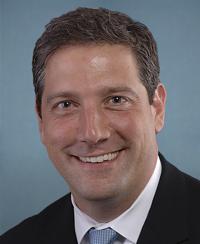
Mr. Speaker, I appreciate the opportunity to address the House again. Unfortunately, we are missing a couple of our standard-bearers who are usually here, our two Members from Florida, the gentleman…
Mr. Speaker, I appreciate the opportunity to address the House again. Unfortunately, we are missing a couple of our standard-bearers who are usually here, our two Members from Florida, the gentleman from Florida (Mr. Meek) and the gentlewoman from Florida (Ms. Wasserman Schultz), who are down dealing with the hurricane and the storm down in Florida. So we want to send out to them our thoughts and our prayers. We are thinking about them and their constituents and all the citizens of Florida at this time. And we are glad they are down there where they should be, with their constituents.
I would also like to say hello briefly, Mr. Speaker, not only to those citizens of Florida but some friends of mine who are paying attention to what is happening here tonight and good friends of mine who are back in Ohio now, Bill and Molly Gales, who are watching us, paying attention, trying to understand some of the issues of the day, and I would like to give a shout out, Mr. Speaker.
But let me say this, Mr. Speaker, we spent the last hour listening to, quite frankly, a lot of rhetoric, a lot of empty rhetoric. And normally the 30-something Group comes out and we talk about and criticize and critique the performance of the Republican majority. And I want the American people to understand this: the Democrats do not have any power in this Chamber.
The Republican Party just spent the last hour blaming the Democrats. Like we had any lever of government to pull. The Republican Party controls the House by a large margin. They control the Senate. And the Republican Party controls the White House. They control every legislative and executive branch of government in the United States of America right now, Federal Government. So to look over here like we are the ones running these huge budget deficits is an absolute joke.
I would like to say, my friends on the other side who were talking about saving money and controlling the deficits that are projected as far as the eye can see, $500 billion, I would like to say to our friends, Mr. Speaker, go to www.Thomas.gov and you can get the votes for two particular votes that I think the American people and Members of this Chamber would be interested in. Go check out H.R. 1, this is www.Thomas.gov, H.R. 1 in the 108th Congress. That is the prescription drug bill. That is a bill that spent 700-plus billion dollars on the Medicare prescription drug program and did absolutely nothing to control the costs of drugs by allowing for reimportation from Canada that would drive the costs down, or allow for the Secretary of Health and Human Services to negotiate with the drug companies on behalf of the Medicare recipients. Both of those provisions were Democratic provisions that went to drive down the costs of the prescription drug bill because we would be able to control the costs.
Now, my friends on the other side who have spent the last hour being so critical, I find their names on the ``aye'' column. There were only 25 Republicans who voted against the prescription drug bill. So the Republicans passed a prescription drug bill full of pork that did not control costs.
Before I yield to the gentleman, let me first give him a formal 30- something welcome. Do not let the gray hair fool you. This guy is 39\1/ 2\. I would be happy to yield to the gentleman from Massachusetts (Mr. Delahunt).
We are going to have to implement the same rule that we had to implement when the gentleman from New Jersey (Mr. Pallone) came. The gentleman is going to have to pay dues twice to the 30-Something Group.
I agree with the gentleman 100 percent. The study that the gentleman just referenced, the Economic Policy Institute, the 30-Something Group is all about third-party validators. This is not the Meek or Ryan or Delahunt or Pallone Institute. This is the Economic Policy Group, a nonpartisan economic study group saying that the tax cuts were bogus.
A couple of our friends on the other side said, well, the projected budget is going to be $100 billion or $80 billion less than what they thought it was going to be because the tax cuts are actually working.
What they fail to tell you is that a loophole has been closed. It sunsetted out last year. So there was a tax put on a small business, people, that raised money to the tune of $80 billion. Do not come in and mislead the American people. It is not the tax cuts that are working. The tax cuts are not working.
Go ask the workers at Delphi if the tax cuts are working. Go ask the workers whose wages have been stagnant the last 30 years if the tax cuts are working. They want to talk about we want to raise taxes. They are spending money on the country's credit card, as my good friend has said.
Real quick, I just want to clean this up. The two bills I want our friends, other Members, to go see, go to Thomas.gov. H.R. 1 in the 108th Congress was the prescription drug bill which we were lied to about the original price, was supposed to be $400 billion. Then they came back months later and said it was $700 billion, no controls on the price. Go to the 108th Congress, H.R. 1. Then go in the 109th Congress, Thomas.gov, H.R. 3893, our energy bill.
Our friends that are so concerned with reining in spending, the Republican House passed a bill that has given billions of dollars to the oil companies, and BP's profits today came out 34 percent higher this quarter.
I mean, give us a break. The rhetoric is done. You try to dust off the rhetoric from the 1980s and put it in today's society, and it just does not work because it just does not make any sense. If you can hear and see and think, you know what they are saying on the other side is not making sense.
What the Democratic proposal is is to balance the budget; is to implement PAYGO, which means if you spend money, you have got to pay for it, one way or the other. Our friends, the Republican majority, that started out with this big Republican revolution that I think has ended up in a Republican devolution, would not pass the PAYGO rules. We have a plan, you go to the House Committee on the Budget, to balance the budget. We retain middle-class tax cuts for working people.
I am not afraid to stand up and say I am going to ask Bill Gates to pay a little more in taxes. I am not afraid to say it. I do not think that is a bold political move, but the wealthiest people are the only ones in this country who have not been asked to sacrifice in some way to pay for the two or three wars that we have going on and the greatest natural and national disaster this country has ever seen.
Mr. Speaker, if the gentleman would yield briefly,
Mr. Speaker, if the gentleman will yield, I just want to make a point.
The money that is getting cut, and we understand that reform needs to take place and our friends on the other side have not been willing to do it, but to cut $94 million in community health care and community health centers, that is preventative medicine. That investment is ultimately going to save our country money and save our health care system money because those people who will not have access to the community health care centers will end up in an emergency room a week or two later.
Instead of going to the community health center with a cold, they are going to go to the emergency room in downtown Youngstown or East Hartford, Connecticut, or wherever they are living, and they are going to walk in with pneumonia; and it is going to cost the taxpayer more money. That is poor management. That is not smart. That is silly. No businessperson would make that investment.
Basically what we are trying to say is that the Republican majority in the House and the Senate are not only spending American, hard-working taxpayer dollars to subsidize the most profitable industries in the country, the oil industry, the pharmaceutical industry and the top agricultural, the megafarms. Not only are they doing that, welfare for corporations, and Democrats are for ending corporate welfare. Not only have they provided a welfare state for Iraq where we are not going to loan them the money and get the money back, welfare to corporations, welfare to Iraq, and then we are cutting the programs that just may lead to economic growth in the United States. We have to jump-start this economy, and we are not going to do it by cutting one of the great investments of high-speed rail. What a great program for United States of America.
When I was in China, I went to Shanghai. They had a magnetic levitation train. It is the only one in the world. It goes almost 280 miles an hour. You are standing up and you are drinking your coffee. Why is that in Shanghai and not in the United States of America?
Look at some of the cuts from the Republican Study Committee. Loans to graduate students, $840 million in cuts; eliminate the National Science Foundation math and science program grants.
And tuition is going to double in 5 years.
Mr. Speaker, how about this for short-sightedness. We are going to cut the Centers for Disease Control. Everybody is talking about the avian flu. We do not know what to do. People are making requests of the administration. I am sorry, but government is the problem, unless somebody needs something. And I am sorry, but the Republican majority has had this House since 1994. They have had the Senate since 2000 or 2001, definitely since 2002, and on and off through the 1990s, and the White House since 2001. They cannot govern.
Mr. Speaker, reclaiming my time, the decisions that we need to make have to be focused on what is best for the country, not what is best for one's political party; and I think that has really been the problem. It seems to me that every decision that is made down here by the Republican majority is what is best for the Republican Party, not what is best for the country. And it is time we start choosing the country over the party if we want to have some success.
And just go through everything that has happened. Everything that has happened with the majority leader has been an attempt to secure power for the party and not do its best for the country. Let us look at the CIA leak and the corruption that is going on. To out a CIA agent because their husband disagreed with them on the war is choosing their party and protecting their party over what is best for the country.
And to make cuts in programs that would invest in the American people and lead to economic growth instead of listening to Cal Thomas, who says cut for the richest people who are getting corporate welfare, they do that because they could then raise money for their party. And if the Republican majority keeps choosing their party over the country, then the country becomes weak; and a strong America starts right here at home.
Mr. Speaker, reclaiming my time, that is another example of the extreme Republican majority in this House choosing their party over the country. They do not want to find out what the truth is, although that would be best for us to fix the problems that we had with Katrina and then be able to respond to the next problem that we may have, whether it is a terrorism attack or another natural disaster. We would then educate ourselves.
But to not give the Democrats subpoena power to try to fix the problem because they hired all of their cronies in the top 8 or 10 positions in FEMA is, again, what is best for their party, not what necessarily is best for the country. And the Democrats are providing, time and time again in committee, on the floor, with amendments, with ideas, whether it is lend the money, whether it is reduce the cost for prescription drugs, whether it is strip the billions of dollars in subsidies that went to the oil companies, the Democrats have always provided an alternative, a change, to take the country in another direction. And that is what the Democrats are for.
Let me real quickly give the e-mail address here: 30somethingdems@mail.house.gov.
I would like to thank our dual Member from Massachusetts and our Member and a half from New Jersey. With that, Mr. Speaker, I say this is not your father's 30-Something Group.

Mr. Speaker, I yield myself such time as I may consume. Mr. Speaker, all over Washington and in the country, people are talking today about the majority's last-minute decision to abandon rules…
Mr. Speaker, I yield myself such time as I may consume.
Mr. Speaker, all over Washington and in the country, people are talking today about the majority's last-minute decision to abandon rules changes that would have eviscerated longstanding ethical guidelines in this House, and, with that, the integrity of the institution. And while in the end the majority was right to withdraw these provisions, they hardly deserve our congratulations. The Republicans simply succumbed to tough criticism from every major ethics group in Washington, several major news organizations and House Democrats. The rules changes in question were so egregious that rank- and-file Republicans would not support their leadership's plan. The proposals were so offensive that the Ethics Committee chairman broke with his own leadership on the issue.
One of the changes would have permitted Members, indicted by a grand jury on felony counts, to continue to hold House leadership positions. The measure was similar to a conference rule the House Republican Conference passed last fall to protect its leadership in the event that one of them is indicted. The fact that they ever considered changing the rules of the House in this disgraceful manner is a sad commentary on the ethical compass of this body's leadership.
They also planned to eliminate a 30-year standing rule that Members of Congress could be disciplined for actions that brought dishonor and discredit on this House, the people's House. This standard is similar to the one that exists for the men and women serving in our military. How could they even think about changing the House rules in this regard when to do so would mean demanding a higher ethical standard from an 18-year-old private in the Army than we who sit in this hallowed Chamber? How could we ask more from our young people than we ask of ourselves?
It is hard to believe that there was a time in the not too distant past when the Republicans touted their high ethical and moral standards. Mr. Speaker, it seems to me that this entire episode has been a violation of the public trust. When Americans enter their voting booths and cast their ballots for Congress, they give us a very precious gift, their trust. American voters expect, and rightly so, that we as Members of Congress will conduct ourselves at the highest ethical standard and uphold democratic principles such as integrity and accountability. How can we as the guardians of democracy spread the values of self-governance across the world if we refuse to govern ourselves right here in this Chamber?
Mr. Speaker, though we should all be relieved that the Republicans were shamed into abandoning the most overtly egregious provisions, the remaining ethics provisions in today's legislation will still destroy the House ethics process. I cannot say it more plainly than that. The ethics process will be destroyed. The tactics have changed, but the end result is the same. The House ethics system will be gutted.
Mr. Speaker, the Committee on Standards of Official Conduct is the only evenly divided committee in the House. As the rule stands today, if the five Republicans and five Democrats on the committee do not reach agreement about the merits of an ethics complaint, it is automatically referred to investigators. This approach was designed to take the partisan politics out of the equation and to ensure that meritorious complaints would be investigated regardless of the political winds of the day. Under the Republican rules package, one- half of the committee will now have the power to bury complaints, even the most meritorious ones. Under the rules package before us today, if the committee is deadlocked,
the ethics complaint dies. This one provision gives the Republicans an enormous amount of control over who is and who is not investigated by the Committee on Standards of Official Conduct.
In practical terms, the Republicans have granted themselves veto power over any complaint it does not deem palatable. Mr. Speaker, this rules package would effectively eliminate the 45-day deadline the Committee on Standards of Official Conduct currently has to act on complaints. The 45-day requirement was designed to prevent ethics complaints from being buried away from public view and to ensure that those Members who should be held accountable for corruption would be. This provision ensures that no ethics complaint will move forward against a Republican without their leadership's consent.
Mr. Speaker, we can be sure that if these rules changes had been in place in the last Congress, no ethics complaints would have seen the light of day. Under the Republicans, the ethical climate in Washington has eroded enormously. When I speak to constituents, I find myself telling them to forget what they learned in school about how a bill becomes a law. In times past, our laws were written to serve the public interest. But today the sad reality is that corporations like Enron write our Nation's policies. The Medicare drug bill that was rammed through Congress in the dead of night stands as a potent example of the ethical erosion of the House of Representatives. When the dust settled on the prescription drug vote, former Representative Billy Tauzin, the key author and then chairman of the Committee on Energy and Commerce, had himself a $2-million-dollar-a-year job lobbying with the drug industry. After the ethical circus surrounding the prescription drug vote, this body should be acting to strengthen the ethics systems in this House, not to destroy it. We were even unable, Mr. Speaker, to ascertain from any official of the Federal Government how much the bill actually cost.
The Republican rules package will reduce this committee to a paper tiger. The American people deserve much better than to have a ``for sale'' sign placed on the United States House of Representatives. They deserve to be able to trust their elected leaders and have faith in the integrity of this institution. They should be able to expect accountability from their government. Unfortunately, the lesson we have here today is if you have the power and you break the rules, you can just change the rules.
Mr. Speaker, I know there are Members on the other side of the aisle, because I know them, who care greatly about the integrity of this Chamber, and I know that there are freshmen Members here today eager to cast their first vote on behalf of the constituents whose trust they hold and the Constitution they love. I challenge those new Members, and any other Republican who values integrity and the sanctity of the democratic process, to stand up for the values of those who trusted you to represent them.
Mr. Speaker, at the close of this debate, I will be asking Members to vote ``no'' on the previous question so I can strike from the rules package language that would allow the Republicans to run out the clock on serious ethics complaints. Immediately following that vote, I will ask for a ``yes'' on a motion to commit the resolution so that we can add two important rules changes. The first would prohibit Members from negotiating lucrative job deals that capitalize on their committee membership. The other would guarantee that Members have at least 3 days to read a House report before voting on it. When bills are rushed to the floor, cobbled together at the last minute, warm from the machine, pages are missing or, worse, outrageous provisions are slipped in by committee staff.
Lest we forget, the provision that opened up private taxpayers' records that was sneaked into last year's omnibus spending bill was by just such a staff member.
Mr. Speaker, I urge my colleagues to vote to strike the egregious ethics changes in this package. We owe it to the constituents we serve, to this institution, and to the Constitution that we adore and revere to restore the ethics and integrity to the people's House.
Mr. Speaker, I reserve the balance of my time.
Mr. Speaker, I yield 5 minutes to the gentleman from Massachusetts (Mr. McGovern).
Mr. Speaker, I am pleased to yield 5 minutes to the gentleman from West Virginia (Mr. Mollohan), the ranking member of the Committee on Standards of Official Conduct.
(Mr. MOLLOHAN asked and was given permission to revise and extend his remarks.)
Mr. Speaker, I yield 2 minutes to the gentleman from Maryland (Mr. Cardin).
Mr. Speaker, I yield for the purpose of making a unanimous consent request to the gentleman from California (Mr. George Miller).
(Mr. GEORGE MILLER of California asked and was given permission to revise and extend his remarks.)
Mr. Speaker, I yield 2 minutes to the gentleman from Massachusetts (Mr. Delahunt).
Mr. Speaker, I yield 1\1/2\ minutes to the gentleman from Texas (Mr. Gene Green), a member of the Committee on Standards of Official Conduct.
Mr. Speaker, I yield 1 minute to the gentlewoman from California (Ms. Lofgren).
Mr. Speaker, I yield 1 minute to the gentlewoman from California (Ms. Pelosi), the minority leader.
Mr. Speaker, I yield for the purpose of making a unanimous consent request to the gentlewoman from Texas (Ms. Jackson- Lee).
(Ms. JACKSON-LEE of Texas asked and was given permission to revise and extend her remarks.)
Mr. Speaker, I yield myself the balance of my time.
I urge every Member of this House to vote no on the previous question. If the previous question is defeated, I will offer an amendment to strike from the proposed rules package a provision that effectively guts our already ailing ethics process. This provision would halt the investigation of properly filed ethics complaints if, after 45 days, the chair and ranking Member of the Committee on Standards of Official Conduct have not set up an investigation committee.
I urge the Members on both sides of the aisle to vote no on this previous question so we can delete this offensive provision.
Mr. Speaker, I ask unanimous consent to insert the text of the amendment in the Record immediately prior to the vote on the previous question.
Mr. Speaker, after the vote on the previous question, I will call for a yes vote on the motion to commit. My motion to commit will prohibit sitting Members of Congress from negotiating for future employment with any person who has a direct interest in the legislation referred to any committee on which that Member serves.
It also includes a rules change that would require a two-thirds vote in the House to waive the requirement in our standing rules that Members must have 3 days to read the committee reports.
Mr. Speaker, I ask unanimous consent to insert a statement as part of that immediately prior to the vote on the motion to commit.
Mr. Speaker, I urge a no vote on the previous question.
I call on all Members of this House, particularly the freshmen casting their first vote, please vote for ethics today. Do not vote against the Constitution. Vote for this House that you will love and revere as all of us do on both sides of the aisle. Please vote no on the previous question and vote yes on the motion to recommit.
Mr. Speaker, I yield back the balance of my time.
Mr. Speaker, on that I demand the yeas and nays.
Mr. Speaker, I offer a motion.
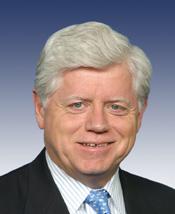
Mr. Speaker, I strongly oppose the radical new provision included in this rules package resolution which would violate the Constitution by allowing the Speaker and a small group of Members to usurp…
Mr. Speaker, I strongly oppose the radical new provision included in this rules package resolution which would violate the Constitution by allowing the Speaker and a small group of Members to usurp the powers of a majority of the House and act with only a ``provisional quorum'' instead of the real thing.
The proposal would deny the plain language of section 5 of article I of the Constitution and create a new category of quorum--a ``provisional quorum''--which the Constitution expressly forbids. It destroys the very idea of the quorum. It would also demolish a 99-year- old precedent, based on the Constitution, that a quorum of the House consists of a majority of the membership chosen, sworn, and living.
For each House Member deprived of the right to exert an impact on the work of the House, either through physical presence in or absence from the Chamber, the approximately 600,000 persons represented by each Member would be deprived of their rights to democratic representation in the legislative body structured to be closest to the American people. This proposal transfers the rights of those ``closest to the people'' to those closest to the House floor.
The proposal takes the guise of a rules change which the House has no power to pass, since the Constitution determines what kind of body the House is, and what it can--and can not--do.
Under this proposal, a majority of Members of the House could be alive and well and fully cognizant, but unable to reach the floor, while the few who are present could usurp their authority and the powers of the House.
Article I, section 5 of the Constitution states that a quorum consists of a majority, and, in the absence of a majority, all that the remaining minority of Members of the House can do is either adjourn from day to day or vote to compel the attendance of absent Members. There are no other options--no matter how inconvenient that fact may be for any faction on the floor of the House during a time of emergency.
The fact that the Constitution authorizes a minority to compel the attendance of the absentees clearly indicates that the absentees are needed to conduct business. The Constitution does not guarantee that a minority of the House will necessarily succeed in compelling the attendance of absent Members to create a constitutional quorum. And such a result could indeed cause a crisis, which H. Res. 5 would do nothing to remedy. Unfortunately, during the last Congress the House refused to make serious progress toward ensuring continuity of government.
Let's consider how the plan before us today actually might operate.
Suppose that, in the aftermath of a catastrophic emergency which caused mass casualties and disrupted transportation and communications nationwide, a presiding officer existed in the House who might either be the Speaker or another Member of the House acting as ``Speaker pro tempore'' from a list of names left by a deceased Speaker.
Suppose that the presiding officer decided, if a quorum of the majority of Members failed to appear within a specified time period, that Members who weren't present on the House floor or any other designated place of meeting ceased to be Members for purposes of determining a quorum.
Suppose the rump minority of Members who had managed to reach the floor wanted to pass major legislation, including a declaration of war or authorization for use of military force, send constitutional amendments to the States for ratification, expel Members from their seats, or elect a new Speaker to become Acting President of the United States, all using a ``provisional quorum'' of one-half of the Members present, plus one.
Could they do these things? The proposed rule says they could. The Constitution says they could not.
The resolution gives the Member presiding the effective power to temporarily define out of existence those Members who don't respond to a specified series of quorum calls. These Members' seats would not be considered vacant, but they would fall into a kind of extra- constitutional limbo until the missing Members--or a majority of the total membership--reappeared in the House. It is even possible that some states might seek to replace Members who do not answer the ``provisional quorum'' call in the House by ordering special elections even though the Members might be known to be alive.
All Members are equal under the Constitution, and the right to membership in this House is not determined by a Speaker, Speaker pro tempore, or a rump of a minority of the body. It is determined by a vote of the people, and only a constitutionally constituted House may exercise the power to determine the qualifications of its Members and whether they have been duly elected.
The Supreme Court has ruled that the House may not add qualifications for membership beyond those expressly stated in the Constitution. If a Member has been duly elected and taken the oath, he remains a Member, and can only be removed through resignation, or through expulsion. There is no constitutional requirement that a Member must appear on the floor to maintain membership, or that House membership can somehow lapse.
It is surprising that some who only last year during debate on the ``Continuity of Representation Act'', H.R. 2844, spoke eloquently about the status of a House consisting only of Members elected by the people are now supporting a proposal to define those elected Members out of existence.
Members who are trapped at an airport because the transportation system is inoperative, for example, do not simply cease to exist, nor can their powers be vested in other Members, willingly or not. Their absence has potential consequences, including the inability of the House to act until the collective body is ``assembled'' again, as the Constitution requires.
The resolution would also do an end run around the issue of ``disability'', a matter not addressed in the Constitution and one which requires a constitutional amendment to resolve, as the 25th Amendment did in the case of the President. Disabled Members--whom we might describe as those either physically injured or mentally incapable so as to be incapable of participating in the work of the House--have the same status as those who are fully functional. The Constitution makes no mention of disabled Members, but it does not give the House the power to pretend they don't exist. The House has never expelled or otherwise attempted to remove a sitting Member on the grounds of disability.
Proponents of the proposal before us today claim to address the problem of incapacitated Members, but only by effectively ignoring it. Under the provisional quorum rule, these Members would presumably not be able to appear on the floor and would be automatically excluded from the provisional quorum. It's a very convenient solution to the disability problem, though blatantly unconstitutional.
The House could adopt the provisional quorum plan as a House rule if the Constitution were amended to authorize it to do so; however, the Constitution does not.
The argument that the House is somehow exercising a constitutional power to make its own rules is also spurious. The House may only make rules which the Constitution permits it to make. The House may not reinvent itself at will as a different kind of legislative body by pretending that it is simply changing its rules.
At the very least, the House should debate the provisional quorum issue as a separate resolution, following hearings by the Rules Committee, with the Speaker in the chair to signal the historic nature of the debate and the radical action proposed to be taken. Burying the issue within this resolution with other controversial rule changes is an outrage.
The 108th Congress proved to be a huge disappointment because of its failure to effectively address many issues involving the stability of our structure of government, deficiencies brought to the forefront by the September 11 attacks, as well as a disturbing tendency to paper over controversies with legislation which fails to substantively address the problem.
For example, the House rejected a constitutional amendment offered by Representative Baird of Washington which would have reconstituted the House quickly through temporary appointments, pending special elections, if a large number of Members were killed. I had introduced a different version of the proposal, H.J. Res. 89. Members opposed to the concept--which is admittedly extremely controversial--refused to allow real hearings and debate. Even though prospects for passage of a constitutional amendment were extremely slim, a substantial debate would have served to educate the Congress and the American people on the importance of these issues, and perhaps provide impetus in a search for alternatives. A major effort like this has to start somewhere.
Instead, the House passed, but the Senate subsequently did not consider, H.R. 2844, the
``Continuity of Representation Act'', which created an unrealistically fast, unfair, undemocratic and unworkable scheme to fill vacant House seats through a mandatory national 45-day special election period. This bill was referred principally to the House Administration Committee, where I was able to make an official record of its many flaws.
Neither House passed simple legislation which would have corrected an oversight in the legislation creating the Department of Homeland Security in 2002, which failed to place the supposedly critical new cabinet officer somewhere--anywhere--in the statutory line of success to the Presidency.
Though hearings were held, neither House addressed significant issues of Presidential succession, such as the role of the Speaker and President pro tempore and lame duck Cabinet members in the succession lineup, and the ability of some officials to ``bump'' others serving as acting president under the current Federal statute.
Mr. Speaker, I plan to urge further action on congressional continuity issues in the new year, to work with my colleagues on the Committee on House Administration to assert our own jurisdiction more effectively and to push other relevant committees to do the same. We need both more effective action, and better internal cooperation, to accomplish these goals.
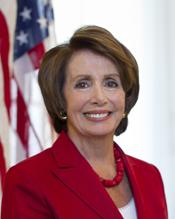
Mr. Speaker, I rise in opposition to what I consider a shameless rules package which will undermine the ethical standards held by this House. After the elections in November, the first thing the…
Mr. Speaker, I rise in opposition to what I consider a shameless rules package which will undermine the ethical standards held by this House.
After the elections in November, the first thing the Republican majority did was to lower the House's ethical standard. In an act of unprecedented shamelessness, they changed the rule of their party to permit an indicted member of their party to remain in a leadership position. Yesterday, in the face of an overwhelming bipartisan and public condemnation they changed their rules back.
This is not shocking. What is shocking is that they ever considered it in the first place. Even more shocking, just if you think you have seen it all, is that the majority considered deleting the most fundamental of ethics rules which says that Members of the House should be held to the highest standards of ethical conduct.
It says a Member shall conduct himself at all times in a manner that should reflect creditably on the House of Representatives.
Dropping this rule is unthinkable. Yet Republicans only decided to keep it last night when the issue became too hot for them to handle.
Thank heavens it became too hot for them to handle, but what is completely apparent to the public and those who follow the Congress is that the Republicans did not leave it at that. They went on to make new mistakes, to undermine the ethical standard of the House.
Instead of a bipartisan effort to strengthen the ethical process, the Republicans have engaged in a completely partisan exercise that should be an affront to every Member on either side of the aisle who has served in this body. The proposed changes which are still in this rules package are destructive, and they are unethical.
Mr. Speaker, I know of what I speak. I served on the Committee on Standards of Official Conduct for 6 years, and then for a seventh year I served as a part of the bipartisan committee to rewrite the ethics rules. It is bipartisan, evenly divided, and we came up with new ethics rules, some of which survived the floor that year in 1997.
The package that was put together was meant to be fair to Members as well as uphold the high ethical standards. It says that Members should be judged by their actions and by the rules of the House and the law. So it was only about what took place, the facts and the law. It was not about rumor. It was not about hearsay. It was about the facts, the rules of the House and the law.
There was a process which was fair to Members because, as I say, as someone who has 7 years on the ethical process, that it is very hard to make judgments about our peers. It is a very, very difficult task, and we want to be fair, but we have a higher responsibility to uphold that ethical standard.
So it was put forth and has been the rules of the House and the Committee on Standards of Official Conduct that in order to cease or dismiss a case, we had to have a majority of the Committee on Standards of Official Conduct. That would be eliminated today. That would be eliminated today.
So, on a partisan basis, there could be no cases that go forward. Either party with half the votes in the committee, evenly split, could cease and desist any complaints from going forward. That is simply not right.
The point of the Committee on Standards of Official Conduct is to have a process in which to deal with ethics complaints against Members. The point of the Committee on Standards of Official Conduct is not to whitewash or to have a system that says nothing will ever move forward.
What could the Republicans be afraid of that they would so fundamentally undermine the ethical process of the House to say we are going to establish a system where nothing will ever go forward? This simply is wrong. We owe it to the public, we owe it to each other to uphold that ethical standard.
So, as I say, on the first day of this new Congress, the Republican majority is publicly demonstrating what has been evident for some time, and that is its arrogance, its pettiness, its shortsighted focus on their political life
rather than to decide how we are each of us fit to govern.
Here is the thing. We have this rules package before us. They did some flash last night so that the press is saying, oh, they blinked. They did blink on a couple of different scores, but the fundamental challenge to the ethical standard of the House being enforced is still in this rules package, and it should be rejected.
Democrats have made two proposals. One of them is to remove this change, and that would be a vote on the previous question, and then on the motion to recommit we address two other abuses of power that should be addressed in this bill.
One is what I will call the Tauzin rule, and the Democratic motion to commit would forbid a Member of Congress to negotiate with an outside entity that has business before his or her committee and before the Congress, in the current Congress or in a previous Congress, called the Tauzin rule because Mr. Tauzin, who managed the Medicare bill, was at the time being courted by the pharmaceutical industry which was to benefit from provisions in the prescription drug bill, a rumored $2 million a year salary for selling America's seniors down the river. That is simply wrong. Has this become an auction house?
The public has to think and believe that when we are here and we are on the public payroll and we are Members of Congress that our accountability is to them and not to our next job. I call that the revolving door, shorthand for the Tauzin rule, and the impact of that is a very, very bad prescription drug bill that put pharmaceutical companies first, seniors last.
In our motion to commit we also address the 3-day rule. As many of my colleagues recall in recent memory, there was occasion on the floor when a huge bill of many thousands of pages, containing nine appropriations bills, seven of which never appeared on the floor of the United States Senate, came before this House where the matter was overnight passed in the Committee on Rules, came to the floor the next morning without any chance of Members being able to read the bill. It came under the martial law rule the Republicans use by which they say we waive the 3-day rule by a simple majority. It should take two- thirds, but by a simple majority we waive the 3-day rule. Well, why was it important? It was important that day because there was a great deal in that bill that Members did not know about that they were voting on and should not they know that, but very specifically in that bill and it was not found out until the bill went to the Senate, who had more time to read the bill because it went over there several hours after it was heard here, and in that bill it said that the chairman of the Committee on Appropriations in the House and the Senate or his or her designee could look at the tax returns of American taxpayers. Where did that come in? It is a total orphan. It is a total orphan. No one was going to take responsibility for that.
Because of the egregiousness of that and the violation of privacy of the American people, I insisted that the Members come back to vote on that rather than just have it be done by unanimous consent to remove that provision from the law. Why did I call Members back? So that the American people will know because of the abuse of power in this House, ignoring of the 3-day rule, that Members cannot even see what they are voting on before they vote on it, and something like looking at your tax returns could be sneaked into the bill, without any safeguards to protect people from that.
That is just one example. Another example is the Medicare prescription drug bill which came to the floor without proper time for review as well. The list goes on and on.
In our motion to commit, we address the abuse of power of a powerful chairman, negotiating for a job while he was a Member of Congress, who had control of the bill over the industry, which was offering him $2 million a year. That is how much it cost to sell the American seniors down the river, and I hope that even if you separate yourself from any of the examples and just say I sent you to Congress to represent me, you do that in what you say there and how you vote, and I expect that you know what you are voting on.
The message to the American people here this afternoon is a vote for the motion to commit, is a vote for Members to be able to read a bill before they vote on it. Is that asking too much? The Republicans say it is. So a yes vote on the motion to commit gives Members the 3 days which under the rules of the House they are entitled to. A vote for the motion to commit stops the unethical process of Members negotiating with people outside, whose bills they are managing inside this Congress, in this Congress or in the previous Congress.
The previous question vote would say no to the Republicans in their evisceration of the ethical process of this House by saying that you do not need a majority to dismiss a case; you can just do it if all the Members of your party on the committee decide to stick with you on it. It is simply not right, and this should not be partisan. That is really what is really sad about it.
Everything that we have done in the ethics process has had some level of respect to the extent that it has because it has been bipartisan, bipartisan in writing the rules, evenly divided committee, cooperation between the chair and ranking member.
Today is a major departure from that, and I guess maybe I have just spent too many long hours for too many long years in the Committee on Standards of Official Conduct room trying to respect the rights of Members and our higher responsibility to uphold an ethical standard. To see the Republicans today run roughshod, rigging the rules, negotiating for jobs, no reading of the bill, it is an outrage. It is an absolute outrage.
So I urge my colleagues to vote yes on the previous question, yes on the motion to commit, and by all means, however you vote on those, no on this very shameful rules package.

Mr. Speaker, I rise in opposition to the rules package. Every House Member should vote to put the House on record against ethical and procedural abuses that contaminate this institution. The stench…
Mr. Speaker, I rise in opposition to the rules package.
Every House Member should vote to put the House on record against ethical and procedural abuses that contaminate this institution.
The stench of special interest corruption is overwhelming Congress, and repulsing the public. It is time the House Rules reflected the ethical standards and common sense of the American people.
I came to this House 30 years ago, and our historic incoming class brought with it one of the strongest tides of reform ever seen: rules were changed, chairmen were replaced, procedures were modernized so that the voice of the people was heard, and respected, in this House of the people.
Ten years ago, the Republicans took control of the House, promising a new era of reform. To read the national newspapers, it is evident to everyone--except themselves--that the Republicans have betrayed their promise of reform. They have tolerated misconduct and enshrined special interests as never before.
Today, we give them, and all Members, an opportunity to restore public trust by voting for
two commonsense amendments to the House rules.
First, no sitting Member should negotiate for a new job with any organization that has had business before his or her committee for a year. That's not hard to understood: no one should be shaping public policy with an eye on a future private sector salary.
Second, no bill should be brought to the House floor unless Members have had 3 days to read it first. That's not hard to understand: we should not be passing bills that are hundreds of pages in length-- sometimes over 1,000 pages--without ever having seen what is in the bill. Ronald Reagan thought it was a bad idea; surely today's House Republicans can agree.
Let's be honest about it: 99 percent of the American people outside the Beltway will agree with both of these principles--no negotiating for new jobs with special interests; Members should know what they are voting on before it becomes law. We shouldn't even have to have a debate. But we do.
Less than a month ago, the Nation was stunned to learn that the committee chairman who had fashioned a blatantly pro-drug industry, anti-senior, anti-consumer prescription drug law was retiring and taking a job with the pharmaceutical industry. In fact, our former colleague assumes his job with PhRMA today, just as we are taking our oaths of office.
Mr. Tauzin will reportedly be earning a salary nearly 13 times what he earned when he wrote that pro-industry bill--one of the best paid lobbyists in Washington.
He earned it. That prescription drug law will enrich him, but it takes billions of dollars out of the pockets of America's senior citizens--by prohibiting them from purchasing cheaper drugs from Canada, and by prohibiting the Federal Government from negotiating with the pharmaceutical industry--his new employer--for lower drug prices. That's worth billions to the drug industry.
While the deal was not announced until last month, the discussions began a year ago, as was widely reported at the time. In fact, a top aide to the Republican leadership was quoted last January 24 on CNN.com as saying that Republican Congressman Tauzin's negotiation with PhARMA ``doesn't look very good.''
It doesn't look ``very good'' today either, as millions of seniors face higher drug prices thanks to the Tauzin bill, and Bill Tauzin takes office to improve the tattered image of the drug industry.
We all know this stinks. And so do our constituents. Let's put an end to it today by barring negotiations for private jobs by Members of Congress. That's what our constituents would want us to do.
And at the same time, let's put an end to the outrageous practice of voting on complex and lengthy bills before Congress has had time to read them--bills like that prescription drug bill Bill Tauzin wrote while he was listening to PhARMA's whispers in his ears.
Isn't it bad enough that Republicans majority writes the bills in secret, without input from the Democrats who represent 48 percent of the country? Without scrutiny by the press? Without review by the public
Must we also vote on secret legislation, without reading it, without knowing the tax breaks and earmarked spending for special interests that have been stuck in without any review?
I urge all Members to put party aside and vote the way your constituents would want you to vote: an end to private job negotiations while serving in public office, and full disclosure of the contents of legislation before we vote.
Mr. Speaker, I also vigorously oppose the proposed rule change that would allow an ethics investigation to end after 45 days of the Ethics Committee of five Democrats and five Republicans remained deadlocked.
Today, the Republicans are once again putting partisan politicians ahead of ethics by moving forward with their plan to shield their embattled majority leader--Tom DeLay--from any further investigation.
The goal of this change is to block the Ethics Committee from considering pending and future matters that could prove to be damaging to their party.
Under the present rules, if the chair and the ranking minority member of the Ethics Committee cannot agree whether to investigate a complaint, the committee begins an initial investigation into the matter.
But, under the Republicans' proposed rule change, the Republican chairman of the Ethics Committee--who is handpicked by the Speaker-- could simply refuse to examine a complaint.
After 45 days, the complaint would be dropped, without even an initial investigation into the matter.
This new rule would allow Republicans to block pending ethics matters and prevent future investigations from moving forward. And the reason is very simple: there are at least two matters currently pending against Republican leaders, including Majority Leader Tom DeLay.
Contrary to this morning's press reports, the Republicans haven't backed away from their attempts to shield DeLay from further investigation, they've simply become a little more deceptive in how they're doing it.
Last year, when the Ethics Committee admonished DeLay three times, it deferred action on another serious charge--his role in funneling illegal soft money into Texas races through his State PAC--until after the investigation against him had been completed.
The rule change now proposed by his Republican colleagues would allow the Republican chairman of the committee to block any further investigation of DeLay's activities, shielding the minority leader from further admonishments even if he is indicted by a grand jury.
Also pending is an investigation of Republican lobbyist, Jack Abramoff, and former DeLay staffer, Michael Scanlon, and their ties to several Republican members. Changing the ethics rules would permit the Republicans to halt any investigation of the Abramoff scandal and the Members who could be implicated in their outrageous looting of Native Americans.
I urge a ``no'' vote on this unbalanced and improper rules package.

Mr. Speaker, I rise in opposition to H. Res. 5, to the Republican rules package. Specifically, I oppose the proposed changes to rule X, which among other things creates a permanent standing Committee…
Mr. Speaker, I rise in opposition to H. Res. 5, to the Republican rules package. Specifically, I oppose the proposed changes to rule X, which among other things creates a permanent standing Committee on Homeland Security and grants legislative jurisdiction to that committee. I am not opposed to the creation of a permanent Homeland Security Committee. Indeed, I believe that the Homeland Security Committee should be made permanent and should be granted jurisdiction over the overall homeland security policy of the Federal Government. Further, I believe that a Homeland Security Committee is needed to oversee the internal administration of such a large Federal agency as the Department of Homeland Security, DHS, which has over 180,000 employees.
Although H. Res. 5 includes these provisions, I oppose its grant of legislative jurisdiction to the new committee of areas that have previously been the jurisdiction of other committees. I oppose this grant of jurisdiction, not because of some desire to protect existing committees' ``turf'', but because transfer of these security issues to a new committee divests from the responsibility for those issues from those Members who have substantial experience and expertise--in some cases developed through decades of work--on them. The existing committees are best equipped to give the full House the benefit of carefully thought out recommendations that provide effective security without unnecessary risks to safety or economic efficiency. It will take years for a new committee to be able to develop the expertise to provide the House and the Nation with reports and recommendations of the quality that existing committees provide.
It is not enough to say that members with particular areas of expertise will have an opportunity to be heard on these issues. The most effective way to influence policy is to be part of the debate and discussion in the early stages of policy formation; simply voting yes or no when legislation makes it to the House floor is generally not sufficient participation to craft policy.
I take this position on the basis of my 30 years of experience in the House, during which time I have given high priority to security, particularly the security of our transportation system.
H. Res. 5 would divest responsibility for DHS' transportation and port security functions from the Transportation and Infrastructure Committee, T&I Committee, and transfer it to the Homeland Security Committee. However, transportation and port security cannot be considered in a vacuum. Developing sound security legislation requires balancing security risks against the economic and safety impacts of such measures on transportation industries and their customers. For example, we would not want to install technology on aircraft to protect against missile attacks if that technology would create disproportionate safety risks.
In addition, security mandates are only one type of requirement imposed on transportation industries. Other requirements include safety, consumer protection, environmental, accessibility, and competitiveness statutory or regulatory mandates. Any security legislation or regulation must be considered in the context of the costs and benefits of all such requirements governing transportation industries.
The Committee on Transportation and Infrastructure has the responsibility and the expertise to broadly consider security risks, weigh all costs and benefits of proposed requirements, and determine the likely effects of such actions on transportation industries, their customers, and the existing framework of other statutory and regulatory requirements. The T&I Committee, time and again, has proven it's capable to ensure that the U.S. transportation system is efficient and safe, as well as secure. In the aftermath of the Pan Am Flight 103 tragedy, the T&I Committee developed the landmark Aviation Security Improvement Act of 1990 (P.L. 101-604), which mandated background checks for airline and airport employees and the deployment of bomb detection equipment for baggage at our Nation's airports. During the 1990s, our committee continued to respond to the changing security needs through oversight and legislation.
In the aftermath of the September 11 attacks, the T&I Committee developed and considered the Aviation and Transportation Security Act of 2001, ATSA. ATSA established a new Transportation Security Administration, TSA, federalized the screening workforce, and required the screening of all checked baggage to protect against terrorist threats. The Aviation Subcommittee alone has held 19 hearings on aviation security issues since September 11. Since September 11, the T&I Committee has also spearheaded important maritime and port security legislation including the Maritime Transportation Security Act of 2002, and the Coast Guard and Maritime Transportation Act of 2004.
The T&I Committee has the member expertise, the staff, and the institutional memory to deal with these issues. I believe that the quality of congressional oversight and legislation on these issues will suffer if these issues are simply transferred wholesale to a new committee. It will take years for the new committee to develop the institutional background and expertise that currently resides in our committee.
Finally, the Republican Conference drafted these changes to rule X in isolation. Democrats were afforded no role in crafting this critical security policy.
I believe the proposed changes to rule X do not further the security of this Nation. Instead, I fear that they will hamper security by divesting from those Members with the experience and institutional knowledge of these issues the direct responsibility to craft security policy.
For all of these reasons, I oppose H. Res. 5.
Mr. Speaker, I thank the chairman for yielding me this time. I am going to support this rules package. I was not. I came here today fully expecting not to support it; but because of the action taken…
Mr. Speaker, I thank the chairman for yielding me this time.
I am going to support this rules package. I was not. I came here today fully expecting not to support it; but because of the action taken last evening where we reconsidered some of the suggestions that had been made, I think we have a package now that we can live with. I think some of the recommendations that are in here are ill conceived, and I would hope to work with the chairman again in a bipartisan way with him and his committee and with the leadership to make some additional changes as we go through the process.
But I want to thank him and thank the Speaker and the leadership for accommodating my concerns about some of the amendments that I thought were the most difficult and the ones that created the biggest problem in trying to implement the Code of Official Conduct.
Each of us, in fact all of us, individually and collectively, have a responsibility to maintain the highest standard of conduct for this House. And changes in the rules, as was said by the previous speaker, should strengthen, not weaken, those standards. As it stands now, I think the previous speaker said we are gutting the ethics committee standards now. We are not as it stands now. I would not be standing up here encouraging people to support the rules package if in any way I thought we were gutting it. We are tweaking it, and as I said earlier, we are tweaking some of it in a way that I wish we were not tweaking it, but it does not gut it. It is something that the rules work pretty well the way they are now, and this does not change that that much.
I have had the privilege of serving on the Committee on Standards of Official Conduct since 1997 and have had an additional responsibility as serving as chairman since 2001. And during that time, I have learned one paramount lesson: ethics must be bipartisan. The ethics process must be bipartisan. Ethics reform must be bipartisan, and the ethics committee must be bipartisan. And I can tell the Members the ethics committee is bipartisan.
I see our ranking member over here. I could not have a better partner in this ethics process than the gentleman from West Virginia (Mr. Mollohan). The ethics committee is a bipartisan committee that follows the evidence wherever the evidence leads. Meaningful ethics reform must be genuinely bipartisan. To have a bipartisan process, any significant change in the ethics rules must be made only after careful, thorough bipartisan consideration, as was done in 1989 and 1997.
In 1989 and 1997, ethics reform came only after a broad consensus developed for change. I have always strongly supported reevaluating the ethics rules and procedures and making changes wherever a need is shown. I think a number of the criticisms of the ethics process that have been made over the past year are well taken and should be looked at. On the other hand, since I joined the committee, almost every significant decision, I believe every significant decision, has been made on a unanimous vote.
Despite the deletion of the amendment that I found the most objectionable to the Code of Conduct, the rules package includes a number of provisions that would make major changes in the ethics- related rules, but as to which neither the Committee on Standards of Official Conduct nor Members outside the rules process were consulted. While I will not vote against the rules package because of these provisions, I urge the leadership to reconsider all the amendments added to the committee's procedural rules without a bipartisan process.
In 1997 the House, through a bipartisan task force, carefully studied the Committee on Standards of Official Conduct's enforcement procedures, made a series of changes. The rules package includes provisions that would significantly alter those procedures. It would be a mistake to reverse these bipartisan determinations without a bipartisan process of our own.
The 45-day thing that has been mentioned, I do not like that. I think that creates a problem in trying to implement a fair and even-handed ethics process. I would like to see that removed.
When in 1997 the Bipartisan Task Force Report was before the House, the House significantly rejected, on a bipartisan vote of 181 to 236, an amendment that would have required automatic dismissal of any complaint after 180 days, not 45 days. The reason for rejection of that amendment, as set out in the floor debate, is that such an artificial time limit on the life of a complaint would serve to encourage deadlock within the committee and partisanship among committee members.
I could go on and on, Mr. Speaker. I think that is something we need to look at. The ranking member and I and
the members of the ethics committee have been considering a group of suggestions that we would like to bring to the full House. We would like to do that, Mr. Speaker, shortly after the new session of Congress convenes, when we are ready for that process. I think that is the way it ought to be done. These are the people that struggle with these issues every day. I think they ought to be concerned about what we think would make the process better. They do not have to follow it, but at least be concerned about it. The process in the House is not perfect. Let us strive to make it perfect. On this one issue, let us act together on a bipartisan basis.
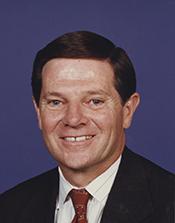
Mr. Speaker, I offer a privileged resolution (H. Res. 5) and ask for its immediate consideration. Mr. Speaker, for the purposes of debate only, I yield the customary 30 minutes to the gentlewoman…
Mr. Speaker, I offer a privileged resolution (H. Res. 5) and ask for its immediate consideration.
Mr. Speaker, for the purposes of debate only, I yield the customary 30 minutes to the gentlewoman from California (Ms. Pelosi) or her designee, pending which I yield myself such time as I may consume. During consideration of the resolution, all time yielded is for the purpose of debate only.
Mr. Speaker, I rise in support of this rules package. I am also rising in support of the historic legislative agenda it will govern, for today marks the beginning of what historians will likely look back upon as the most productive and significant Congress in decades.
The mandate granted the majority, evidenced by our increased majorities in both Houses of Congress and the first Presidential majority in 16 years, is clear. The American people have entrusted the state of their security, prosperity and families to us; and over the course of the next 2 years, that sacred trust will be honored by action.
We will continue to defend our homeland and prosecute the war on terror without retreat, and without excuses. We will provide our military, and their families, with the resources they need to do their heroic work on behalf of the Nation they serve.
We will hold rogue regimes accountable for their mischief, and hold fast to our friends around the world, from defiant democrats in Israel and Taiwan, to longstanding comrades-in-arms like the British and Australians, to our resurgent allies in New Europe.
We will work with our ever-expanding coalition of the willing to secure the fledging democracies in Afghanistan and Iraq, and with every political, economic, diplomatic and military tool at our disposal, see the war on terror through to victory.
Domestically, our agenda will be no less audacious. We will continue the work begun in President Bush's first term to cultivate an opportunity society of economic choice and independence. We will continue to break down the walls, erected by 40 years of liberal policies, between the American people and their dreams. We will continue to provide seniors with access to affordable, quality health care while empowering them with unprecedented retirement security.
We will continue to take on the three-headed monster of over- taxation, over-litigation and over-regulation that cuts the legs out from every sector of our economy.
And while the 109th Congress helps increase our national security and prosperity, we will also help American families raise their children in a society defined by the values that made our Nation secure and prosperous in the first place. We will continue to better protect and educate our children, to protect the institution of marriage, to protect the Constitution from judicial activism, and protect the role of family and faith in the public square.
This rules package before us now will help us do this important work, work the American people have hired us to do.
And yet, rather than laying out a positive vision for the next 2 years, or for that matter even discussing the substance of the rules package itself, some may choose this debate to launch the first of what I imagine will be countless personal attacks against the integrity of the majority and, ultimately, the integrity of this institution.
It is a new year, Mr. Speaker, but an old game, and one to which we cannot afford to stoop. Too much is at stake; too much depends on the success of this historic 109th Congress.
To my friends on the other side of the aisle, I would remind them all that I know what it means to be in the minority, to go into contentious votes certain of defeat, to always react to an agenda set by opponents. But I must also remind them that when Republicans were in the minority, we engaged in the battle of ideas. We developed, and specifically proposed, a substantive vision for the future of our Nation.
In the 10 years since that vision was endorsed by our countrymen, we have been honored to work with all members of the minority on one issue or the other to develop successful legislative coalitions.
With our close partisan margins and 24-hour media culture, we sometimes forget we are opponents, not enemies. We would all do well to remember that, especially given the stakes, the significance and, frankly, the sheer weight of the agenda before us.
So I urge all Members to support the rules package before us so we can immediately get to work on behalf of the men and women who sent us here.
Mr. Speaker, I am honored to once again serve as leader; but even with all of the gratitude I feel toward you, our conference and toward this body, the source of the honor I feel today is not all in this Chamber. The source of the honor each of us rightfully feels today is our friends and families who have given us their love, the American people who have given us their trust, the men and women in uniform who put their lives on the line for us every day, and our heavenly Creator who knitted us together in the womb.
Mr. Speaker, may God bless the work and workers of the 109th Congress, may God bless the cause of justice and freedom around the world, and may God continue to bless the United States of America.
Mr. Speaker, I ask unanimous consent that the balance of the time allocated to me be controlled by the gentleman from California (Mr. Dreier).
Show 11 more

Mr. Speaker, I thank the gentlewoman for yielding me this time. Mr. Speaker, the first day of a new Congress should be a day for hope. It should be a day when all of us look forward with optimism to…
Mr. Speaker, I thank the gentlewoman for yielding me this time.
Mr. Speaker, the first day of a new Congress should be a day for hope. It should be a day when all of us look forward with optimism to the work ahead. But today is not that kind of day. Instead, the leadership of this House is beginning the new year in the worst possible way, by gutting the ethical standards of the United States House of Representatives. Talk about starting off on the wrong foot.
In the rules package before us today, the Republican leadership is sending a very clear message. They are admitting that they are so ethically challenged that they cannot conform to the rules they previously adopted, so they must now relax those rules. What an awful example to the Nation and to the rest of the world. We should be strengthening the ethical standards of this House, not weakening them.
Mr. Speaker, the Republican Party regained a majority of seats in this body in 1994, in part by promising greater accountability and a more honest system in the Nation's capital. Their actions have been anything but honest; and now with this rules package, their rush to the bottom continues. Today is just one more example of the ethical lapses we have seen in this House, a House where major legislation is now written by industry lobbyists, a House where Members are not even given the courtesy of being able to read bills before they are voted on, and a House where bad behavior is not reprimanded, but rewarded.
As Members of Congress, we should be held to the highest possible ethical standards. That means not breaking the law. That means not dancing around the law, and that means conducting ourselves in a manner that reflects credibility on the House at all times.
Facing the possible indictment of a Member of their leadership, the Republicans attempted in secret to change the rules to protect their ethically challenged colleagues. However, in the face of mounting public controversy, the public leadership caved last night and rescinded the change. They blinked and they buckled. But the Speaker's spokesman commented on this flip-flop saying that the issue had become a ``distraction.'' Not wrong, mind you, but just distracting. I am getting whiplash just watching all this stuff.
But, Mr. Speaker, let us be clear that the Republican leadership did not find religion in this issue. If they believed that what they were about to do was truly wrong, they would not have proposed these rule changes in the first place. But while Republicans try to pull a fast one claiming that the majority leader fell on his sword for the good of his party, the truth is that the rules package for the 109th Congress still in a very meaningful way fundamentally weakens the ethics system here in the House of Representatives.
I strongly urge the American people and members of the press and my colleagues to closely examine these rule changes, especially those made to the ethics standards. Under the old rules, a properly filed ethics complaint is automatically investigated if that complaint is not acted upon within 45 days.
Remember, as the gentlewoman from New York stated, that the ethics committee is evenly divided between Democrats and Republicans; and to ensure that partisan politics did not prevail in the ethics process, a tie vote ensures a formal investigation.
But under this proposed rules package, there must be a majority vote to investigate a properly filed ethics complaint; and if that complaint is not acted upon with within 45 days, that ethics complaint dies. In other words, Mr. Speaker, the chairman of the committee, whoever that may be, could stonewall the process, refuse to call for a vote, and ultimately kill any ethics complaint without any action. But this also allows any Member potentially under investigation to run the clock out by stonewalling investigators until the 45 days are up.
The American people deserve better than this from their elected representatives. We serve at the pleasure of our constituents, and we have a responsibility to uphold the highest ethical standards. Over the past decade, the Republican leadership has careened down the pathway of irresponsibility, and now we are at a crossroads. There are those of us who truly believe Members of Congress should be held to a higher standard and who will make a stand and fight for real accountability from our colleagues, and there will be those who blindly follow their leadership, who vote to weaken the rules of this institution, first written by Thomas Jefferson, because they fear the retribution of their leaders.
This should be a place where honesty and integrity are the standard, not a place where the rules are changed merely to protect a powerful few from their own ethical shortcomings.
Mr. Speaker, we can stop this debacle. Let us start over. Let us make this right. Let us make the House of Representatives an example of high standards and ethical decency. I urge my colleagues to vote ``no'' on this rules package.
Mr. Speaker, I yield 5 minutes to the gentleman from Maryland (Mr. Hoyer), the distinguished minority whip.

Mr. Speaker, I thank the gentleman for yielding me this time. I thank the gentleman from Colorado (Mr. Hefley) for his presentation. We were told the President wants to proceed on a bipartisan…
Mr. Speaker, I thank the gentleman for yielding me this time. I thank the gentleman from Colorado (Mr. Hefley) for his presentation.
We were told the President wants to proceed on a bipartisan fashion in the next 4 years to deal with the important issues that confront our Nation.
I think that is appropriate and, hopefully, we will do that. However, on this first day, the rules package is usually a partisan package. It was when Democrats were in charge; it is now when Republicans are in charge. That is understandable. But as the gentleman from Colorado (Mr. Hefley) has so correctly pointed out, there was an exception, and that exception was dealing with the ethics of this institution which, in fact, deals with the confidence that the American public has in this institution.
Mr. Speaker, the opening day of a new Congress should be one in which the interests of this institution are paramount. The body of rules we adopt to govern debate, decorum, and the actions of our Members should reflect that. To be sure, the American people who elected us to this great body can expect to see sharp differences on this floor over the substance of legislation. That is as the framers of the Constitution planned.
But the framers also intended, I believe, and the American people deserve to know, that this House is committed to holding its Members to the highest ethical standards.
Today, as I think has been attested to by the gentleman from Colorado (Mr. Hefley), the House moves in the wrong direction. The rules proposed for the 109th House ignore the fundamental principle of protecting the ethics of this House. The proposed Republican rules before us will seriously weaken the ability of the Committee on Standards of Official Conduct to enforce standards of integrity by providing that no action will be taken on a properly filed ethics complaint after 45 days unless the committee votes by a majority vote to take action. The gentleman from Maryland (Mr. Cardin) will speak, who chaired with Bob Livingston, our former colleague, the amendment of these rules.
Under the current rules, which have functioned well since 1997, a properly filed complaint that has not been addressed by the chair and ranking member or the committee itself automatically goes to an investigative subcommittee. That is as it should be. Inaction ought not to be tantamount to dismissal. That is what this proposal does. The Republican proposal would make it extremely difficult to investigate properly filed complaints.
Under this new rule, either side, either side will be able to guarantee a deadlock when a legitimate, factually strong ethics complaint against a Member is filed, provided the chair or ranking member take no action.
We have been told that the most egregious attempts to weaken the ethics systems have been abandoned. I beg to differ. The most egregious attempt is the one before us now currently remaining in this rule. Let no one miss this distinction: the proposal to protect an indicted leader, a proposal that has been withdrawn by the majority, always was speculative, because we do not know if a leader will be indicted. In sharp contrast, however, the rule before us will have a concrete, demonstrable effect on every ethics complaint filed from this day forward.
Mr. Speaker, the Committee on Standards of Official Conduct is the only mechanism that this institution has to police itself. When we weaken the committee, we weaken the standards that we are all expected to uphold, and we erode public confidence in this institution.
The gentleman from California (Mr. Dreier) spoke eloquently to the maintenance of the status quo when he was in the minority urging us to be vigilant in rooting out unethical behavior in this institution. He was right then. He is not correct now in offering this rule which weakens that process.
The adoption of this rule will substantially weaken our commitment to ensuring ethical conduct. I think the gentleman from Colorado (Mr. Hefley) was right in his letter. I think he had the intellectual honesty and integrity on this floor when he spoke. He is going to vote for the rule because he believes that some offensive aspects of the proposal have been taken out. But I tell my friend that the most egregious, long-lasting, impacting change remains in this package.
Therefore, I urge my colleagues on behalf of the American people, on behalf of the integrity of this institution, on behalf of our commitment to ensure ethical conduct on behalf of the American people, that this not be passed.

Mr. Speaker, I thank the distinguished gentlewoman because ethics equals integrity. I will submit my statement into the Record. Vote a resounding no on the resolution that is on the floor, and I hope…
Mr. Speaker, I thank the distinguished gentlewoman because ethics equals integrity. I will submit my statement into the Record. Vote a resounding no on the resolution that is on the floor, and I hope that we will come before our peers and recognize that ethics equals integrity.
Mr. Speaker, I rise in opposition to the proposed changes to the House Rules under the Privileged Resolution before the committee of the Whole House. Taken together, this package of proposals will gut the House Rules.
Our colleagues on the other side of the aisle would like to completely gut and render ineffective the current Rule XI, which provides that a properly filed ethics complaint that has not been addressed by the Chair and Ranking Member of the Ethics Committee gets referred to an investigative committee. The Republican proposal would provide that, unless the committee votes by majority to take action on a properly filed complaint, no action will be taken after 45 days.
This change to Rule XI would take away an important oversight power and allow partisan politics to kill legitimate and colorable ethics complaints. A change like this would be an embarrassment to what this nation calls a ``democracy.'' Furthermore, by allowing members to intentionally deadlock the vote of the Ethics Committee to kill a claim, we would be acting in contravention of the spirit of the U.S. Constitution that guarantees procedural due process.
We should strengthen the House ethnics rules rather than eviscerate them for the American people whom we represent. Rules so relaxed that Members can negotiate with a corporation, lobbying firm, or trade association that has business before their committee should not be further stripped. The honor that was bestowed upon this House upon its establishment must be maintained. Members must be held accountable for their action.
Moreover, Members should be given adequate time in which to read legislation that will be voted upon. Since the legislation that we pass in this august body affects the entire nation--which includes the Districts represented by Minority Members, it is an injustice that insufficient time has been given for review of legislation.
In the proposal that has been brought before the House does not contain the changes that are needed. It would be irresponsible for this body to accept what is before us.
The proposed Rule X amendment to create a Standing Committee on Homeland Security, on the other hand, is a smart one. It is only appropriate that this Committee be made permanent and be given jurisdiction over ``overall homeland security policy.'' Important organizational and admnistrative aspects of the Department of Homeland Security, DHS, require oversight to ensure effective and efficient operation.
DHS is a conglomeration of 22 federal agencies with more than 180,000 employees and a budget of $36 billion. Because the Department is still in its infancy stages, it is critical that committee oversight be applied to track and quickly eradicate deficiencies.
The Congress has just passed the National Intelligence Reform Act, or S. 2845, that will change the way our intelligence is collected and processed. DHS will be an important partner to our intelligence agencies in order to keep America safe. In addition, with the challenges that we have had with adequately funding first responders, it is very important that Congress retain a close relationship to the Department.
Mr. Speaker, I oppose the rules package that is before this body, and I urge my colleagues to defeat it. I yield the balance of my time. Further, a rules change that changes the quorum for this body without a constitutional change is minimally undermining our constitutional values.
Vote ``no'' on this resolution and ``yea'' on the motion to recommitt.

Mr. Speaker, as has been the case for a number of years, the rules package put forward by my Republican colleagues continues to trample on the rights of the minority. It will do nothing to stop the…
Mr. Speaker, as has been the case for a number of years, the rules package put forward by my Republican colleagues continues to trample on the rights of the minority. It will do nothing to stop the abusive practices in this House such as the 3-hour vote on the Medicare bill in the middle of the night. In fact, it allows the Speaker added discretion to reconsider votes that the Republican majority loses. In addition, the new rules require an affirmative vote by the Ethics Committee before any action can be taken. This, in effect, gives my Republican colleagues the right to block any investigation.
I would like to focus on one portion of the package that will create a permanent Committee on Homeland Security. While I am sure some of my colleagues believe that the new committee will improve our security, unfortunately this new committee will be nothing more than a costly addition to the expenditures of the legislative branch, and it will likely breed a new wave of ``turf warfare'' among the committees of the House. We simply do not need a special committee every time we face a crisis.
The process under which we are being asked to approve this change is particularly troublesome. I call your attention to the last time the House felt compelled to create a new committee. In 1980, some Members of the House believed that it would be wise to create an energy committee. It used a careful process in which a committee on committees was created, consisting of Democrats and Republicans. When that committee reported its recommendations to the House, substitutes were permitted, and the result reflected a thoughtful understanding of how best to achieve the objectives.
In contrast, we are now being asked to consider a proposal which was sent to us just yesterday. It was hatched in secret by our Republican colleagues without the input of any Democrats. While many of my Democratic colleagues may agree with the need for a new committee, the right of the minority to have their views considered and voted upon has been trampled once again.
I also oppose the notion that a new committee is needed. If the main concern is one of oversight, we can use our existing committees to do the job. If Members still believed that a new committee was necessary, it need not have legislative jurisdiction.
I am certain that is such a committee had legislative recommendations of merit, the appropriate committees along with proper actions by respective party leaders would ensure the bill would come to the floor.
Instead, I foresee a new committee that will seek to increase its powers by introducing bills granting all manner of new authorities to the Department of Homeland Security. In addition,
thoughtful bills addressing aspects of homeland security reported by the existing committees will now be delayed as the new committee will seek referrals. And needed responsiveness by the executive branch to the existing committees may be hindered.
While the 9/11 Commission urged a reorganization of congressional committees to deal with homeland security, it is odd that this new committee will have no jurisdiction over the issues that were identified by the Commission that led to the 9/11 tragedy. The new committee will have no jurisdiction over the intelligence community, the law enforcement community, or immigration enforcement.
It is a shame that the first day of this new Congress should be marked by an attempt to authorize a new committee without so much as an open markup to consider its merits. Moreover, it would be extremely unwise to ignore the expertise and experience of existing committees as we address homeland security issues, but we are starting down that path today.

Mr. Speaker, I am pleased that the rules package includes a provision that will make the Homeland Security Committee a permanent committee. More importantly, we will be giving the committee real…
Mr. Speaker, I am pleased that the rules package includes a provision that will make the Homeland Security Committee a permanent committee. More importantly, we will be giving the committee real oversight and legislative jurisdiction. But I am disappointed that the majority has only given shared jurisdiction to the Homeland Security Committee in some areas. This creates the potential for ongoing turf battles that the 9/11 Commission warned against.
I am also discouraged that the majority has decided to add a third day of suspension bills to the legislative calendar each week. An increasing amount of legislation is being passed by the House under a suspension of the Rules. This is unnecessary and keeps us from doing the real business of the House--budgeting, appropriations and oversight.
A perfect example of this is the massive omnibus appropriations bill passed for fiscal year 2005 just a few weeks ago. This bill was rushed to the floor, ignoring the House rule requiring a 3-day review period before voting on conference reports. Only after the House voted on the bill, careful scrutiny of the language uncovered a provision allowing certain Members and staff access to any American's tax return.
Not only was this an embarrassing episode for the House leadership, it continued a troubling trend. In 4 out of the last 5 years, the majority has made a massive omnibus bill the only option to fund the government. This take-it-or-leave-it approach is not acceptable and is fiscally irresponsible.
Congress has also been asleep at the switch when it comes to funding for Iraq and the war on terrorism. This administration continues to fund the war on terrorism by supplemental appropriations. This is not a temporary war. Congress needs to stand up to this White House, stand up for honest budgeting, and require that funding for Iraq and the war on terrorism be made on-budget, and through the regular appropriations process.
By appropriating through omnibus bills and budgeting by supplemental, Congress is surrendering its constitutional duties. The results of this practice are ballooning deficits--the CBO confirmed that the 2004 deficit is the largest in history, $413 billion--a lack of follow- through to determine how appropriated funds are being spent.
Without proper oversight as a backstop, problems in the executive branch can spin out of control. Members are learning about problems for the first time through the newspapers, not as a result of tough oversight hearings. This kind of lax or nonexistent oversight contributes to situations like we saw in Abu Ghraib prison. Now we have learned about secret, permanent detention facilities in the United States where possible terrorists are held indefinitely, without any legal status.
Mr. Speaker, we need to take a hard look at our priorities and get back to doing the business of the House. We should be moving forward with a tough, focused oversight agenda, and a schedule that devotes more time to priority, must-pass legislation and less time to suspension bills. Instead, it appears that we are adopting a rules package today that will bring us more of the same.
Mr. Speaker, I rise in support of the point of order. The Constitution defines a quorum to conduct business as the majority of each House. The question of course before us in this debate is, a…
Mr. Speaker, I rise in support of the point of order. The Constitution defines a quorum to conduct business as the majority of each House.
The question of course before us in this debate is, a majority of what? What is the denominator in that equation?
The precedent holds that the total number of the membership of the House is those Members who are chosen, sworn and living and whose membership has not been terminated by action of the House. Removal by action of the House is also a defined term, expulsion by a vote of two- thirds in article 1, section 5.
The Constitution also gives the House the authority to compel attendance when Members do not answer the call of the Chair in such manner and under such penalties as each House may provide. And, in fact, the Sergeant at Arms has been sent to gather Members by force on prior occasions.
This amendment before us to the rules gives the Speaker nearly unfettered authority to change the number of the Members of the whole House to exclude Members who are chosen, sworn, and living but who do not answer the call of the Chair. This would seem to amount to a constructive expulsion without a two-thirds vote of the whole House.
For example, suppose the House is at its full complement of 435 Members. A quorum would then be 218. Now, suppose only 400 Members answer the Speaker's call for whatever reason. They are still living. They are still chosen. They are still sworn. They have not been expelled. Now a quorum by order of the Speaker would be 200. The House may conduct its business with only 200 Members present. If this is triggered in a time of national emergency, the consequences could be dire.
Mr. Speaker, we heard the distinguished chair, or maybe he is only the presumptive chair, of the Committee on Rules, at this point; but in any event, the gentleman from California (Mr. Dreier) said a moment ago that this proposed rules change is constitutional because the Constitution could not have contemplated that the House could not function. But the Constitution did not contemplate that the majority of the Members of the House might in fact be the victims of an act of mass terrorism. Those things were not contemplated at the time.
The fact is we do need to amend the Constitution to take care of this very serious question; but this provision for the reasons stated by the gentleman from Washington (Mr. Baird), for the reasons that I stated a moment ago, is clearly unconstitutional. Certainly, before we take such a measure, it deserves much more extensive debate and hearings and discussion than it can have by three or four speakers in this context now.
So I urge that Members take careful consideration to the question of constitutionality here. This may provoke court action, and we should not adopt this now in the context of an overall rules change with this very serious amendment to the Constitution, which is what it amounts to; it cannot receive adequate consideration in terms of its constitutionality either in terms of its merit.
Mr. Speaker, I rise in strong support of this balanced rules package. I want to speak particularly to the provisions regarding homeland security. To determine whether a proposed regime to oversee…
Mr. Speaker, I rise in strong support of this balanced rules package. I want to speak particularly to the provisions regarding homeland security. To determine whether a proposed regime to oversee homeland security is appropriate, one cannot just look at a flow chart. The simplest structure is not necessarily the best, nor is one that is unduly complex. One has to look at how a proposed structure will actually function and what it can and cannot accomplish.
The homeland jurisdiction being proposed in this package strikes the right balance between a system that is too centralized and one that is too diffuse. First, I should say that the most important and necessary change regarding governance of the Department of Homeland Security was made 2 years ago when we created a Subcommittee on Homeland Security on the Committee on Appropriations. But having a single committee that can look across the Department of Homeland Security from an authorizing perspective is also a sensible move, and the new committee created in this package will do that.
What would not make sense, however, simple as it might seem, is giving sole authority over all aspects of homeland security to the new committee. Homeland security is too diffuse and important a government activity to rest with one committee. Almost every activity of every Federal agency has some relationship to homeland security, and almost every activity of the Department of Homeland Security impinges on the activities of other agencies.
An appropriate congressional oversight structure has to take account of that basic fact. A structure that overly centralized homeland security oversight would make it harder to evaluate the Department of Homeland Security in the context of the other activities of the Federal Government. An overcentralized structure could also make a congressional committee a captive of the agency that it oversees.
I know that it is very easy to denigrate arguments against a single, centralized Select Committee on Homeland Security as so much turf fighting. But in reality it is simply intellectually lazy to assume that a centralized structure would enable Congress to do its work more effectively.
I found especially ironic a Washington Post editorial that called for a highly centralized structure. The editorial argued that a centralized committee would be more efficient because the Department of Homeland Security would not have to answer questions from a lot of different committees. Well, it would also be more efficient if the Department did not have to respond to questions from a lot of different news outlets, but presumably The Post would argue that there are advantages to forcing the Department to respond to reporters with a variety of areas of expertise and a variety of perspectives.
The Post certainly would not want the only news outlet to be an in- house publication. So I want to applaud the House leadership for doing what it has done, and I stand in strong support of this rules package.

Mr. Speaker, I strongly oppose the changes in the House ethics rules that the Republican majority is seeking to adopt today. The proposed Republican rule changes would cripple the ethics process in…
Mr. Speaker, I strongly oppose the changes in the House ethics rules that the Republican majority is seeking to adopt today. The proposed Republican rule changes would cripple the ethics process in the House and dramatically lower the bar for standards of official conduct.
Late yesterday, the Republican majority in the House released the details of its rules package for the 109th Congress. Some of the newspapers reported this morning that the majority had abandoned its efforts to loosen rules governing Members' ethical conduct, but this is not the case. While the majority backed away from some of its rule changes, the most egregious ethics change remains. This provision would make it much more difficult for the Committee on Standards of Official Conduct to investigate allegations of wrongdoing by Members of the House.
Under current rules, if the Ethics Committee deadlocks on whether or not to pursue an ethics complaint against a Member of the House, the matter automatically goes to an investigative subcommittee. Under the proposed change, a complaint against a Member would be tabled unless a majority votes to take action on it within 45 days. Since the committee is evenly split with five Republicans and five Democrats, either political party could simply block an ethics complaint by stonewalling and running out the clock.
There is no doubt that if the proposed rule change had been in effect during the last Congress, no action would have been taken against the Members of the House who were reprimanded as a result of the Ethics Committee's investigation of bribery allegations raised in connection with the vote on the Medicare Prescription Drug Act of 2003. The committee would have deadlocked and the entire matter swept under the rug 45 days after the complaint was made.
I was listening to the debate on this earlier. The chairman of the Ethics Committee said
that he does not favor this change. He said he would like it removed. Why then is the majority leadership pursuing this change, when it is opposed by the ranking Republican on the Ethics Committee?
At a time when public confidence in Congress is so low and the Nation faces so many challenges, it is inexplicable that the first order of business in the new session is to water down the ethics rules in the House and make it even more difficult to discipline lawmakers who abuse their office.
This should not be a partisan matter. The proposed rule change harms the integrity and credibility of the House as an institution, and that reflects badly on all of us, Republicans and Democrats alike. I urge all my colleagues to join me in opposing this assault on ethics enforcement in the House.
Mr. Speaker, the chairman of the Committee on Standards of Official Conduct is correct when he says that ethics reform must be bipartisan and if the House is to have meaningful bipartisan ethics…
Mr. Speaker, the chairman of the Committee on Standards of Official Conduct is correct when he says that ethics reform must be bipartisan and if the House is to have meaningful bipartisan ethics process, changes of this magnitude can be made, as they were in 1997, only after thoughtful, careful consideration on a bipartisan basis. There has been no effort to look at the rules changes on ethics in a bipartisan manner.
In 1997 when I co-chaired the Committee on Ethics Reform along with Bob Livingston, the changes that we made were done after deliberation, and after Democrats and Republicans, working together, came before the House and we did make major changes. And we instituted the 45-day rule for assigning a proper complaint for investigation; but we changed the rules in 1997. We made it clear that you can move towards an informal investigation without a finding that it merits further inquiry or a resolution of preliminary inquiry because we did not want any matter of guilt or wrongdoing for the committee to be able to get the facts necessary to decide whether to go to formal investigation.
Yet this rules change which would allow after 45 days inaction to dismiss a complaint makes inaction action, and it can be done on a very partisan basis. Now, that is wrong. That is not how it should be.
The rules as they are currently configured in order to move a complaint past the committee, you have to have the bipartisan agreement of the committee because you have to have a vote in the committee. It guarantees a process will move forward in a bipartisan manner and, in fact, the Committee on Standards of Official Conduct has operated in a bipartisan manner because of the way the rules are configured.
If this rule is changed, you are making it much more likely that the Committee on Standards of Official Conduct will act in a very partisan matter because they will be able to delay for 45 days, which does not take a lot of effort to figure out how to delay for 45 days. We have enough lawyers on the Committee on Standards of Official Conduct that will be able to figure out that one. And it will be done on a partisan basis that will leave a cloud on the Member and a cloud on this institution. You should not have that in this rule.
Mr. Speaker, I thank the gentlewoman for yielding me time. The gentlewoman is correct: I currently serve on the Committee on Standards of Official Conduct. And despite what I read in the morning…
Mr. Speaker, I thank the gentlewoman for yielding me time.
The gentlewoman is correct: I currently serve on the Committee on Standards of Official Conduct. And despite what I read in the morning papers, the Republican leadership is eliminating a major traditional ethics standard of the House. While we are relieved that the Republican leadership did not go as far as they wanted to, I do not think we can be happy with the trend that is clearly downwards as it is today.
The new rule means no ethics violations will be investigated of party leaders, whether they be Republican or Democratic, control their members, since a tie vote means a dismissal. The logical result is more partisan political pressure on the committee members.
America was intended to be a city on a hill with the highest standards for the government in the world; and sadly, today we are lowering those standards.
The majority is proud of their political power and their skills at political games, and politics is an important part of our business; but principles must be held above politics because no man can serve two masters, both principles and politics.
When we are guided by only political consideration in the House leadership today, the House abandons its principles and the moral compass.
I do not enjoy serving on the committee. I do know something about legislative ethics, having first been elected to the State house of representatives after a tremendous Sharpstown bank scandal in Texas 1972. Born and raised in Texas, I understand what it means about conservative government, but I cannot begin to explain how
eliminating a traditional ethics standard is conservative in the slightest.
The House leadership can fool some of the people some of the time, like they did today when the papers said they were dropping ethics changes, when they clearly continue to weaken the standards. However, the people recognize this for what it is, a weakening of our government's ethics in pursuit of political parity by one party, be it Democrat or Republican.
Mr. Speaker, I realize that September 11 was a tragic day in America, certainly a wake-up call within the States. I also remind the Members of this body that in the War of 1812 this building was…
Mr. Speaker, I realize that September 11 was a tragic day in America, certainly a wake-up call within the States.
I also remind the Members of this body that in the War of 1812 this building was occupied by a foreign army. So for the gentleman from California (Mr. Dreier) to say that they could not have foreseen these circumstances taking place, what in the heck is he talking about? This building was occupied and set on fire by a foreign army. And yet the Congress at that time did not try to change the rules so that a minority within a minority could govern.
If we are going to amend the Constitution, the gentleman from Washington (Mr. Baird) is exactly right: someone should offer a constitutional amendment. If we are going to change the law, then someone should offer a change to the law; but let us not through the House rules try to rewrite the Constitution of this Nation.
This Nation has been around for a long time. It is going to be around for a long time, but only if we continue to do things as the Founding Fathers would have wanted us to do them and not some backdoor-approach like this.
Mr. Speaker, I thank the gentleman from California (Mr. Dreier) for yielding me time.
Mr. Speaker, my question to the gentleman concerns the change to the rules that would allow Members to use campaign funds to purchase cell phones. As you know, there is a law that prohibits a Member of Congress from using the resources of their office or their office to solicit campaign funds.
It is my hope that allowing campaign cell phones to be used in a congressional office is not in any way a back-door attempt to allow a Member to use a campaign cell phone from their congressional office or any Federal facility to raise funds to get around this prohibition that currently exists in law.
I yield to the gentleman from California.
Just for a clarification, the use of a campaign cell phone in this building?
To solicit campaign funds with a campaign cell phone.
Mr. Speaker, I thank the gentleman.
Bill Text
Legislative text isn't available for this bill yet.