H.R. 1681House109th Congress (2005-2007)In Committee
Quality Education for All Act
Sponsored by 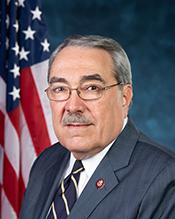 Rep. G. K. Butterfield (D-NC)
Rep. G. K. Butterfield (D-NC)Introduced April 19, 2005
Legislative Activity
Stay on top of the latest movement without scrolling through every action
HouseCommittee
Latest Action
Referred to the Subcommittee on Education Reform.
May 9, 2005
View full timeline
HouseIntro Referral
Introduced in House
April 19, 2005
HouseIntro Referral
Referred to the Committee on Education and the Workforce, and in addition to the Committee on Ways and Means, for a period to be subsequently determined by the Speaker, in each case for consideration of such provisions as fall within the jurisdiction of the committee concerned.
April 19, 2005
HouseCommittee
Referred to the Subcommittee on 21st Century Competitiveness.
May 9, 2005
HouseCommittee
Referred to the Subcommittee on Education Reform.
May 9, 2005
Bill Text
Latest available legislative text
Introduced in HouseIssued April 19, 2005
        [Congressional Bills 109th Congress]
[From the U.S. Government Publishing Office]
[H.R. 1681 Introduced in House (IH)]

109th CONGRESS
1st Session
H. R. 1681

To improve education for all students, and for other purposes.

_______________________________________________________________________

IN THE HOUSE OF REPRESENTATIVES

April 19, 2005

Mr. Butterfield (for himself, Mr. Payne, Ms. Lee, Mrs. Jones of Ohio,
Mr. Owens, Mr. Rush, Mr. Thompson of Mississippi, Mr. Holden, Ms.
Norton, Mr. Berman, Mr. Clay, Mr. Lewis of Georgia, Mr. Ford, Mr.
Wexler, Mr. Conyers, Mr. Cardoza, Mr. Peterson of Minnesota, Mrs.
Tauscher, Mr. Pallone, Mr. Cleaver, and Mr. Clyburn) introduced the
following bill; which was referred to the Committee on Education and
the Workforce, and in addition to the Committee on Ways and Means, for
a period to be subsequently determined by the Speaker, in each case for
consideration of such provisions as fall within the jurisdiction of the
committee concerned

_______________________________________________________________________

A BILL

To improve education for all students, and for other purposes.

Be it enacted by the Senate and House of Representatives of the
United States of America in Congress assembled,

SECTION 1. SHORT TITLE.

This Act may be cited as the ``Quality Education for All Act''.

SEC. 2. TABLE OF CONTENTS.

The table of contents for this Act is as follows:

Sec. 1. Short title.
Sec. 2. Table of contents.
TITLE I--STRENGTHENING HEAD START AND CHILD CARE PROGRAMS

Subtitle A--Increasing Access to Head Start Programs

Sec. 101. Authorization of appropriations.
Sec. 102. Strengthening Indian and migrant and seasonal Head Start
programs.
Sec. 103. Expanding Early Head Start programs.
Sec. 104. Participation in Head Start programs.
Subtitle B--Enhancing the School Readiness of Head Start Children

Sec. 111. School readiness standards.
Sec. 112. Staff.
Subtitle C--Expanding Access to Quality, Affordable Child Care

Sec. 121. Authorization of appropriations.
Subtitle D--Strengthening the Quality of Child Care

Sec. 131. State plan requirements relating to training.
Sec. 132. Strengthening the quality of child care.
TITLE II--PROVIDING SAFE, RELIABLE TRANSPORTATION FOR RURAL SCHOOL
CHILDREN

Sec. 201. Findings and purpose.
Sec. 202. Definitions.
Sec. 203. Grant program.
Sec. 204. Authorization of appropriations.
TITLE III--SENSE OF THE SENATE REGARDING FULLY FUNDING THE INDIVIDUALS
WITH DISABILITIES EDUCATION ACT BY 2011

Sec. 301. Findings.
Sec. 302. Sense of the Senate regarding authorization of
appropriations.
TITLE IV--IMPROVEMENT OF ELEMENTARY AND SECONDARY EDUCATION

Subtitle A--Public School Choice, Supplemental Educational Services,
and Teacher Quality

Sec. 401. Public school choice capacity.
Sec. 402. Supplemental educational services.
Sec. 403. Qualifications for teachers and paraprofessionals.
Subtitle B--Adequate Yearly Progress Determinations

Sec. 421. Review of adequate yearly progress determinations for schools
for the 2002-2003 school year.
Sec. 422. Review of adequate yearly progress determinations for local
educational agencies for the 2002-2003
school year.
Sec. 423. Definitions.
Subtitle C--Technical Assistance

Sec. 451. Technical assistance.
TITLE V--IMPROVING ASSESSMENT AND ACCOUNTABILITY

Sec. 501. Grants for increasing data capacity for purposes of
assessment and accountability.
Sec. 502. Grants for assessment of children with disabilities and
children who are limited English
proficient.
Sec. 503. Reports on student enrollment and graduation rates.
Sec. 504. Civil rights.
TITLE VI--SENSE OF THE SENATE REGARDING FUNDING FOR ELEMENTARY AND
SECONDARY EDUCATION

Sec. 601. Sense of the Senate.
TITLE VII--PROVIDING A ROADMAP FOR FIRST GENERATION COLLEGE FOR
STUDENTS

Sec. 701. Expansion of TRIO and GEARUP.
TITLE VIII--COLLEGE TUITION RELIEF FOR STUDENTS AND THEIR FAMILIES
THROUGH PELL GRANTS

Sec. 801. Pell Grants tax tables hold harmless.
Sec. 802. Sense of the Senate regarding increasing the maximum Pell
Grant.
Sec. 803. Establishment of a Pell demonstration program.
TITLE IX--TUITION FREE COLLEGE FOR MATHEMATICS, SCIENCE, AND SPECIAL
EDUCATION TEACHERS

Sec. 901. Purpose.
Sec. 902. Tuition free college for mathematics, science, and special
education teachers.
Sec. 903. Offset for tuition free college for mathematics, science, and
special education teachers.
TITLE X--MAKING COLLEGE AFFORDABLE FOR ALL STUDENTS

Sec. 1001. Expansion of deduction for higher education expenses.
Sec. 1002. Credit for interest on higher education loans.
Sec. 1003. Hope and Lifetime Learning credits to be refundable.

TITLE I--STRENGTHENING HEAD START AND CHILD CARE PROGRAMS

Subtitle A--Increasing Access to Head Start Programs

SEC. 101. AUTHORIZATION OF APPROPRIATIONS.

Section 639(a) of the Head Start Act (42 U.S.C. 9834(a)) is amended
by striking ``such sums'' and all that follows and inserting the
following: ``$8,570,000,000 for fiscal year 2006, $10,445,000,000 for
fiscal year 2007, $12,384,000,000 for fiscal year 2008, $14,334,000,000
for fiscal year 2009, and $16,332,000,000 for fiscal year 2010.''.

SEC. 102. STRENGTHENING INDIAN AND MIGRANT AND SEASONAL HEAD START
PROGRAMS.

Section 640(a)(2) of the Head Start Act (42 U.S.C. 9835(a)(2)) is
amended by striking subparagraph (A) and inserting the following:
``(A) Indian Head Start programs, services for children
with disabilities, and migrant and seasonal Head Start
programs, except that the Secretary shall reserve for each
fiscal year for use by Indian Head Start and migrant and
seasonal Head Start programs (referred to in this subparagraph
as `covered programs'), on a nationwide basis, a sum that is
the total of not less than 4 percent of the amount appropriated
under section 639(a) for that fiscal year (for Indian Head
Start programs), and not less than 5 percent of that
appropriated amount (for migrant and seasonal Head Start
programs), except that--
``(i) if reserving the specified percentages for
covered programs and would reduce the number of
children served by Head Start programs, relative to the
number of children served on the date of enactment of
the Quality Education for All Act, taking into
consideration an appropriate adjustment for inflation,
the Secretary shall reserve percentages that approach,
as closely as practicable, the specified percentages
and that do not cause such a reduction; and
``(ii) notwithstanding any other provision of this
subparagraph, the Secretary shall reserve for each
fiscal year for use by Indian Head Start programs and
by migrant and seasonal Head Start programs, on a
nationwide basis, not less than the amount that was
obligated for use by Indian Head Start programs and by
migrant and seasonal Head Start programs, respectively,
for the previous fiscal year;''.

SEC. 103. EXPANDING EARLY HEAD START PROGRAMS.

Section 640(a)(6) of the Head Start Act (42 U.S.C. 9835(a)(6)) is
amended--
(1) in subparagraph (A), by striking ``7.5 percent for
fiscal year 1999'' and all that follows and inserting ``12
percent for fiscal year 2006, 14 percent for fiscal year 2007,
16 percent for fiscal year 2008, 18 percent for fiscal year
2009, and 20 percent for fiscal year 2010, of the amount
appropriated pursuant to section 639(a).'';
(2) by striking subparagraph (B); and
(3) by redesignating subparagraph (C) as subparagraph (B).

SEC. 104. PARTICIPATION IN HEAD START PROGRAMS.

Section 645 of the Head Start Act (42 U.S.C. 9840) is amended--
(1) in subsection (a)(1)(A), by inserting ``130 percent
of'' after ``below''; and
(2) by adding at the end the following:
``(e) After demonstrating a need through a community needs
assessment, a Head Start agency may apply to the Secretary to convert
part-day sessions, particularly consecutive part-day sessions, into
full-day sessions.''.

Subtitle B--Enhancing the School Readiness of Head Start Children

SEC. 111. SCHOOL READINESS STANDARDS.

Section 641A(a)(1)(B)(ii) of the Head Start Act (42 U.S.C.
9836(a)(1)(B)(ii)) is amended by striking ``at a minimum'' and all that
follows and inserting the following: ``at a minimum, develop and
demonstrate--
``(I) language skills, including an
expanded use of vocabulary;
``(II) interest in and appreciation of
books, reading, and writing (either alone or
with others), phonological and phonemic
awareness, and varied modes of expression and
communication;
``(III) premathematics knowledge and
skills, including knowledge and skills relating
to aspects of classification, seriation,
numbers, spatial relations, and time;
``(IV) cognitive abilities related to
academic achievement;
``(V) abilities related to social and
emotional development;
``(VI) gross and fine motor skills; and
``(VII) in the case of children with
limited English proficiency, abilities related
to progress toward acquisition of the English
language.''.

SEC. 112. STAFF.

(a) Staff Qualifications and Development.--Section 648A of the Head
Start Act (42 U.S.C. 9843a) is amended--
(1) in subsection (a)(2)--
(A) in subparagraph (A)--
(i) in the matter preceding clause (i), by
striking ``not later than September 30, 2003''
and all that follows through ``programs have''
and inserting ``not later than the date
determined under subparagraph (D) for a Head
Start region, each Head Start agency in the
region with a center-based program shall ensure
that all classrooms in the program have at
least 1 teacher who has'';
(ii) in clause (i), strike ``an associate,
baccalaureate,'' and insert ``a
baccalaureate''; and
(iii) in clause (ii), strike ``an
associate, baccalaureate,'' and insert ``a
baccalaureate''; and
(B) by striking subparagraph (B) and inserting the
following:
``(B) Temporary requirement.--Until the date
determined under subparagraph (D) for a Head Start
region, the Secretary shall ensure that at least 50
percent of all Head Start teachers in the region in
center-based programs have--
``(i) an associate, baccalaureate, or
advanced degree in early childhood education;
or
``(ii) an associate, baccalaureate, or
advanced degree in a field related to early
childhood education, with experience in
teaching preschool children.
``(C) Requirement for new head start teachers.--Not
later than 3 years after the date of enactment of the
Quality Education for All Act, the Secretary shall
require that all teachers hired nationwide in center-
based programs of Head Start agencies following the
date of the requirement--
``(i) have an associate, baccalaureate, or
advanced degree in early childhood education;
``(ii) have an associate, baccalaureate, or
advanced degree in a field related to early
childhood education, with experience in
teaching preschool children; or
``(iii) be enrolled, or enroll not later
than 1 year after the date of hire, in a
program of study leading to an associate degree
in early childhood education.
``(D) Appropriate date.--The Secretary shall
determine an appropriate date for Head Start agencies
in each Head Start region to reach the result described
in subparagraph (A), but in no case shall such a date
be later than 8 years after the date of enactment of
Quality Education for All Act.
``(E) Progress.--
``(i) Requirement.--The Secretary shall
require Head Start agencies with center-based
programs to demonstrate continuing and
consistent progress each year to reach the
results described in subparagraphs (A) and (C).
``(ii) Plan.--Each State shall establish a
plan for the Head Start agencies with center-
based programs in the State to reach the
results described in subparagraphs (A) and (C).
``(iii) Progress.--Each Head Start agency
shall prepare and submit to the Secretary and
the Governor of the State a report indicating
the number and percentage of its teachers in
center-based programs with child development
associate credentials or associate,
baccalaureate, or advanced degrees in early
childhood education or a field related to early
childhood education. The Secretary shall
compile all such reports and submit a summary
of the compiled reports to the Committee on
Health, Education, Labor, and Pensions of the
Senate and the Committee on Education and the
Workforce of the House of Representatives.'';
(2) in subsection (a)(3), by striking ``(2)(A)'' and
inserting ``(2)(B)''; and
(3) by adding at the end the following:
``(f) Pre-Literacy and Language Training.--To support local efforts
to enhance early language and pre-literacy development of children in
Head Start programs, and to provide the children with high-quality oral
language skills and environments that are rich in literature, in which
to acquire early language and pre-literacy skills, each Head Start
agency shall ensure that all of the agency's Head Start teachers
receive ongoing training in language and emergent literacy. Such
training shall also include information regarding appropriate curricula
and assessments to improve instruction and learning. Such training
shall include training in methods to promote phonological and phonemic
awareness and vocabulary development in an age-appropriate and
culturally and linguistically appropriate manner.
``(g) Professional Development Plans.--Each Head Start agency and
center shall create, in consultation with employees of the agency or
center (including family service workers), a professional development
plan for employees who provide direct services to children, including a
plan for teachers, to meet the requirements set forth in subsection
(a).''.
(b) Attracting and Retaining High-Quality Head Start Teachers;
Tribal College or University-Head Start Partnership Program.--
(1) Program.--The Head Start Act is amended by inserting
after section 648A (42 U.S.C. 9843a) the following:

``SEC. 648B. ATTRACTING AND RETAINING HIGH-QUALITY HEAD START TEACHERS.

``(a) In General.--The Secretary shall make grants to eligible Head
Start agencies to enable the agencies to reach the results described in
subparagraphs (A) and (C) of section 648A(a)(2). The Secretary shall
make the grants from allotments determined under subsection (b).
``(b) Allotments.--From the funds made available under section
639(c) for a fiscal year and not reserved under subsection (d), the
Secretary shall allot to each Head Start agency an amount that bears
the same relationship to such funds as the amount received by the
agency under section 640 for that fiscal year bears to the amount
received by all Head Start agencies under section 640 for that fiscal
year.
``(c) Salary Plan.--A Head Start agency that receives a grant under
this section shall develop and carry out a plan to raise the average
salaries of teachers in the agency's Head Start programs. In developing
the plan, the agency shall take into consideration the training, level
of education, and experience of the teachers, and the average salaries
of prekindergarten and kindergarten teachers employed by the local
educational agency for the school district in which the Head Start
agency is located, with similar training, level of education, and
experience.
``(d) Salaries in High-Cost Areas.--The Secretary may reserve and
use a portion of the funds available under section 639(c) to assist
Head Start agencies located in high-cost areas to help reduce the
discrepancy between such average salaries of such teachers and such
average salaries of such prekindergarten and kindergarten teachers.

``SEC. 648C. TRIBAL COLLEGE OR UNIVERSITY-HEAD START PARTNERSHIP
PROGRAM.

``(a) Tribal College or University-Head Start Partnership
Program.--
``(1) Grants.--The Secretary is authorized to award grants,
of not less than 5 years duration, to Tribal Colleges and
Universities to--
``(A) implement education programs that include
tribal culture and language and increase the number of
associate, baccalaureate, and graduate degrees in early
childhood education and related fields that are earned
by Indian Head Start agency staff members, parents of
children served by such an agency, and members of the
tribal community involved;
``(B) develop and implement the programs under
subparagraph (A) in technology-mediated formats; and
``(C) provide technology literacy programs for
Indian Head Start agency staff members and children and
families of children served by such an agency.
``(2) Staffing.--The Secretary shall ensure that the
American Indian Programs Branch of the Head Start Bureau of the
Department of Health and Human Services shall have staffing
sufficient to administer the programs under this section and to
provide appropriate technical assistance to Tribal Colleges and
Universities receiving grants under this section.
``(b) Application.--Each Tribal College or University desiring a
grant under this section shall submit an application to the Secretary,
at such time, in such manner, and containing such information as the
Secretary may require, including a certification that the Tribal
College or University has established a partnership with 1 or more
Indian Head Start agencies for the purpose of conducting the activities
described in subsection (a).
``(c) Definitions.--In this section:
``(1) Institution of higher education.--The term
`institution of higher education' has the meaning given such
term in section 101(a) of the Higher Education Act of 1965 (20
U.S.C. 1001(a)).
``(2) Tribal college or university.--The term `Tribal
College or University' means an institution--
``(A) defined by such term in section 316(b) of the
Higher Education Act of 1965 (20 U.S.C. 1059c(b)); and
``(B) determined to be accredited or a candidate
for accreditation by a nationally recognized
accrediting agency or association.
``(d) Authorization of Appropriations.--There are authorized to be
appropriated to carry out this section, $10,000,000 for fiscal year
2006 and such sums as may be necessary for each of fiscal years 2007
through 2010.''.
(2) Authorization of appropriations.--Section 639 of the
Head Start Act (42 U.S.C. 9834) is amended--
(A) in subsection (a), by inserting ``(other than
section 648B)'' after ``this subchapter''; and
(B) by adding at the end the following:
``(c) There are authorized to be appropriated to carry out section
648B $387,000,000 for fiscal year 2006, $496,000,000 for fiscal year
2007, $608,000,000 for fiscal year 2008, $723,000,000 for fiscal year
2009, and $841,000,000 for fiscal year 2010.''.
(3) Conforming amendments.--Section 640 of the Head Start
Act (42 U.S.C. 9835) is amended--
(A) in subsection (a)--
(i) in paragraph (1), by striking ``section
639'' and inserting ``section 639(a)'';
(ii) in paragraph (2)--
(I) in the matter preceding
subparagraph (A), by inserting
``pursuant to section 639(a)'' after
``appropriated'';
(II) in subparagraph (B), in the
matter following clause (ii), by
inserting ``pursuant to section
639(a)'' after ``appropriated''; and
(III) in subparagraph (C), by
inserting ``pursuant to section
639(a)'' after ``appropriated'' each
place it appears; and
(iii) in paragraph (4), in the matter
preceding subparagraph (A), by inserting
``pursuant to section 639(a)'' after
``appropriated''; and
(B) in subsection (g)(1), by inserting ``pursuant
to section 639(a)'' after ``appropriated'' each place
it appears.

Subtitle C--Expanding Access to Quality, Affordable Child Care

SEC. 121. AUTHORIZATION OF APPROPRIATIONS.

Section 658B of the Child Care and Development Block Grant Act of
1990 (42 U.S.C. 9858) is amended--
(1) by striking ``is'' and inserting ``are''; and
(2) by striking ``subchapter'' and all that follows and
inserting ``subchapter $3,100,000,000 for fiscal year 2006,
$4,100,000,000 for fiscal year 2007, $5,100,000,000 for fiscal
year 2008, $6,100,000,000 for fiscal year 2009, and
$7,100,000,000 for fiscal year 2010.''.

Subtitle D--Strengthening the Quality of Child Care

SEC. 131. STATE PLAN REQUIREMENTS RELATING TO TRAINING.

Section 658E(c) of the Child Care and Development Block Grant Act
of 1990 (42 U.S.C. 9858c(c)) is amended by adding at the end the
following:
``(6) Training in early learning and childhood
development.--The State plan shall describe any training
requirements that are in effect within the State that are
designed to enable child care providers to promote the social,
emotional, physical, and cognitive development of children and
that are applicable to child care providers that provide
services for which assistance is made available under this
subchapter in the State.''.

SEC. 132. STRENGTHENING THE QUALITY OF CHILD CARE.

Section 658G of the Child Care and Development Block Grant Act of
1990 (42 U.S.C. 9858e) is amended to read as follows:

``SEC. 658G. ACTIVITIES TO IMPROVE THE QUALITY OF CHILD CARE.

``(a) In General.--
``(1) Reservation.--Each State that receives funds
appropriated under section 639(a) for a fiscal year shall
reserve and use not less than 6 percent of the funds for
activities provided directly, or through grants or contracts
with resource and referral organizations or other appropriate
entities, that are designed to improve the quality of child
care services.
``(2) Activities.--The funds reserved under paragraph (1)
may only be used to--
``(A) develop and implement voluntary guidelines on
pre-reading and language skills and activities, for
child care programs in the State, that are aligned with
State standards for kindergarten through grade 12 or
the State's general goals for school preparedness;
``(B) support activities and provide technical
assistance in child care settings to enhance early
learning for young children, to promote literacy, and
to foster school preparedness;
``(C) offer training, professional development, and
educational opportunities for child care providers that
relate to the use of developmentally appropriate and
age-appropriate curricula, and early childhood teaching
strategies, that are scientifically based and aligned
with the social, emotional, physical, and cognitive
development of children, including--
``(i) developing and operating distance
learning child care training infrastructures;
``(ii) developing model technology-based
training courses;
``(iii) offering training for caregivers in
informal child care settings; and
``(iv) offering training for child care
providers who care for infants and toddlers and
children with special needs;
``(D) engage in programs designed to increase the
retention and improve the competencies of child care
providers, including wage incentive programs and
initiatives that establish tiered payment rates for
providers that meet or exceed child care services
guidelines, as defined by the State;
``(E) evaluate and assess the quality and
effectiveness of child care programs and services
offered in the State to young children on improving
overall school preparedness; and
``(F) carry out other activities determined by the
State to improve the quality of child care services
provided in the State and for which measurement of
outcomes relating to improved child safety, child well-
being, or school preparedness is possible.
``(b) Certification.--For each fiscal year beginning after
September 30, 2005, the State shall annually submit to the Secretary a
certification in which the State certifies and demonstrates that the
State was in compliance with subsection (a) during the preceding fiscal
year and describes how the State used funds made available to carry out
this subchapter to comply with subsection (a) during that preceding
fiscal year.''.

TITLE II--PROVIDING SAFE, RELIABLE TRANSPORTATION FOR RURAL SCHOOL
CHILDREN

SEC. 201. FINDINGS AND PURPOSE.

(a) Findings.--Congress finds that--
(1) school transportation issues have concerned parents,
local educational agencies, lawmakers, the National Highway
Traffic Safety Administration, the National Transportation
Safety Board, and the Environmental Protection Agency for
years;
(2) millions of children face potential future health
problems because of exposure to noxious fumes emitted from
older school buses;
(3) the Environmental Protection Agency established the
Clean School Bus USA program to replace 129,000 of the oldest
diesel buses that cannot be retrofitted in an effort to help
children and the environment by improving air quality;
(4) unfortunately, many rural local educational agencies
are unable to participate in that program because of the
specialized fuels needed to sustain a clean bus fleet;
(5) many rural local educational agencies are operating
outdated, unsafe school buses that are failing inspections
because of automotive flaws, resulting in the depletion of the
school bus fleets of the local educational agencies; and
(6) many rural local educational agencies are unable to
afford to buy newer, safer buses.
(b) Purpose.--The purpose of this title is to establish within the
Department of Education a Federal cost-sharing program to assist rural
local educational agencies with older, unsafe school bus fleets in
purchasing newer, safer school buses.

SEC. 202. DEFINITIONS.

In this title:
(1) Rural local educational agency.--The term ``rural local
educational agency'' means a local educational agency, as
defined in section 9101 of the Elementary and Secondary
Education Act of 1965 (20 U.S.C. 7801), with respect to which--
(A) each county in which a school served by the
local educational agency is located has a total
population density of fewer than 10 persons per square
mile;
(B) all schools served by the local educational
agency are designated with a school locale code of 7 or
8, as determined by the Secretary; or
(C) all schools served by the local educational
agency have been designated, by official action taken
by the legislature of the State in which the local
educational agency is located, as rural schools for
purposes relating to the provision of educational
services to students in the State.
(2) Secretary.--The term ``Secretary'' means the Secretary
of Education.
(3) School bus.--The term ``school bus'' means a vehicle
the primary purpose of which is to transport students to and
from school or school activities.

SEC. 203. GRANT PROGRAM.

(a) In General.--From amounts appropriated under subsection (e) for
a fiscal year, the Secretary shall provide grants, on a competitive
basis, to rural local educational agencies to pay the Federal share of
the cost of purchasing new school buses.
(b) Application.--
(1) In general.--Each rural local educational agency that
seeks to receive a grant under this title shall submit to the
Secretary for approval an application at such time, in such
manner, and accompanied by such information (in addition to
information required under paragraph (2)) as the Secretary may
require.
(2) Contents.--Each application submitted under paragraph
(1) shall include--
(A) documentation that, of the total number of
school buses operated by the rural local educational
agency, not less than 50 percent of the school buses
are in need of repair or replacement;
(B) documentation of the number of miles that each
school bus operated by the rural local educational
agency traveled in the most recent 9-month academic
year;
(C) documentation that the rural local educational
agency is operating with a reduced fleet of school
buses;
(D) a certification from the rural local
educational agency that--
(i) authorizes the application of the rural
local educational agency for a grant under this
title; and
(ii) describes the dedication of the rural
local educational agency to school bus
replacement programs and school transportation
needs (including the number of new school buses
needed by the rural local educational agency);
and
(E) an assurance that the rural local educational
agency will pay the non-Federal share of the cost of
the purchase of new school buses under this title from
non-Federal sources.
(c) Priority.--In providing grants under this title, the Secretary
shall give priority to rural local educational agencies that, as
determined by the Secretary--
(1) are transporting students in a bus manufactured before
1977;
(2) have a grossly depleted fleet of school buses; or
(3) serve a school that is required, under section
1116(b)(9) of the Elementary and Secondary Education Act of
1965 (20 U.S.C. 6316(b)(9)), to provide transportation to
students to enable the students to transfer to another public
school served by the rural local educational agency.
(d) Use of Funds.--School buses purchased with grant funds awarded
under subsection (a) shall be in compliance with proposed air quality
regulations and standards of the Environmental Protection Agency for
2006.
(e) Payments; Federal Share.--
(1) Payments.--The Secretary shall pay to each rural local
educational agency having an application approved under this
section the Federal share described in paragraph (2) of the
cost of purchasing such number of new school buses as is
specified in the approved application.
(2) Federal share.--The Federal share of the cost of
purchasing a new school bus under this title shall be 75
percent.

SEC. 204. AUTHORIZATION OF APPROPRIATIONS.

There are authorized to be appropriated to carry out this title
$50,000,000 for fiscal year 2006 and such sums as may be necessary for
each of fiscal years 2007 through 2010.

TITLE III--SENSE OF THE SENATE REGARDING FULLY FUNDING THE INDIVIDUALS
WITH DISABILITIES EDUCATION ACT BY 2011

SEC. 301. FINDINGS.

(a) Findings.--The Senate finds the following:
(1) Disability is a natural part of the human experience
and in no way diminishes the right of individuals to
participate in or contribute to society. Improving educational
results for children with disabilities is an essential element
of our national policy of ensuring equality of opportunity,
full participation, independent living, and economic self-
sufficiency for individuals with disabilities.
(2) Before the date of enactment of the Education for All
Handicapped Children Act of 1975 (Public Law 94-142), the
predecessor to the Individuals with Disabilities Education Act
(20 U.S.C. 1400 et seq.), the educational needs of millions of
children with disabilities were not being fully met because--
(A) the children did not receive appropriate
educational services;
(B) the children were excluded entirely from the
public school system and from being educated with their
peers;
(C) undiagnosed disabilities prevented the children
from having a successful educational experience; or
(D) a lack of adequate resources within the public
school system forced such families to find services
outside the public school system.
(3) The Individuals with Disabilities Education Act has
been successful in ensuring children with disabilities and the
families of such children access to a free appropriate public
education and in improving educational results for children
with disabilities.
(4) The implementation of the Individuals with Disabilities
Education Act has been impeded by the Federal Government's
failure to honor the commitment it made 30 years ago to provide
States with 40 percent of the excess costs of special
education.
(5) While States, local educational agencies, and
educational service agencies are primarily responsible for
providing an education for all children with disabilities, it
is in the national interest that the Federal Government have a
supporting role in assisting State and local efforts to educate
children with disabilities in order to improve results for such
children and to ensure equal protection of the law.
(6) Congress passed authorizing language to fully fund the
Individuals with Disabilities Education Act and should
appropriate such sums as authorized.
(7) A more equitable allocation of resources is essential
for the Federal Government to meet its responsibility to
provide an equal educational opportunity for all individuals.

SEC. 302. SENSE OF THE SENATE REGARDING AUTHORIZATION OF
APPROPRIATIONS.

It is the sense of the Senate that for the purpose of carrying out
the Federal Government's commitment to children, parents, and the
States, there should be authorized to be appropriated--
(1) $14,648,647,143 or the maximum amount available for
awarding grants under section 611(a)(2) of the Individuals with
Disabilities Education Act, whichever is lower, for fiscal year
2006, and there should be appropriated $4,058,901,319 for
fiscal year 2006, which should become available for obligation
on July 1, 2006, and should remain available through September
30, 2007, except that if the maximum amount available for
awarding grants under section 611(a)(2) of such Act is less
than $14,648,647,143, then the amount should be reduced by the
difference between $14,648,647,143 and the maximum amount
available for awarding grants under section 611(a)(2) of such
Act;
(2) $16,938,917,714 or the maximum amount available for
awarding grants under section 611(a)(2) of the Individuals with
Disabilities Education Act, whichever is lower, for fiscal year
2007, and there should be appropriated $6,349,171,890 for
fiscal year 2007, which should become available for obligation
on July 1, 2007, and should remain available through September
30, 2008, except that if the maximum amount available for
awarding grants under section 611(a)(2) of such Act is less
than $16,938,917,714, then the amount should be reduced by the
difference between $16,938,917,714 and the maximum amount
available for awarding grants under section 611(a)(2) of such
Act;
(3) $19,229,188,286 or the maximum amount available for
awarding grants under section 611(a)(2) of the Individuals with
Disabilities Education Act, whichever is lower, for fiscal year
2008, and there should be appropriated $8,639,442,462 for
fiscal year 2008, which should become available for obligation
on July 1, 2008, and should remain available through September
30, 2009, except that if the maximum amount available for
awarding grants under section 611(a)(2) of such Act is less
than $19,229,188,286, then the amount should be reduced by the
difference between $19,229,188,286 and the maximum amount
available for awarding grants under section 611(a)(2) of such
Act;
(4) $21,519,458,857 or the maximum amount available for
awarding grants under section 611(a)(2) of the Individuals with
Disabilities Education Act, whichever is lower, for fiscal year
2009, and there should be appropriated $10,929,713,033 for
fiscal year 2009, which should become available for obligation
on July 1, 2009, and should remain available through September
30, 2010, except that if the maximum amount available for
awarding grants under section 611(a)(2) of such Act is less
than $21,519,458,857, then the amount should be reduced by the
difference between $21,519,458,857 and the maximum amount
available for awarding grants under section 611(a)(2) of such
Act;
(5) $23,809,729,429 or the maximum amount available for
awarding grants under section 611(a)(2) of the Individuals with
Disabilities Education Act, whichever is lower, for fiscal year
2010, and there should be appropriated $13,219,983,605 for
fiscal year 2010, which should become available for obligation
on July 1, 2010, and should remain available through September
30, 2011, except that if the maximum amount available for
awarding grants under section 611(a)(2) of such Act is less
than $23,809,729,429, then the amount should be reduced by the
difference between $23,809,729,429 and the maximum amount
available for awarding grants under section 611(a)(2) of such
Act;
(6) $26,100,000,000 or the maximum amount available for
awarding grants under section 611(a)(2) of the Individuals with
Disabilities Education Act, whichever is lower, for fiscal year
2011, and there should be appropriated $15,510,254,176 for
fiscal year 2011, which should become available for obligation
on July 1, 2011, and should remain available through September
30, 2012, except that if the maximum amount available for
awarding grants under section 611(a)(2) of such Act is less
than $26,100,000,000, then the amount should be reduced by the
difference between $26,100,000,000 and the maximum amount
available for awarding grants under section 611(a)(2) of such
Act; and
(7) the maximum amount available for awarding grants under
section 611(a)(2) of the Individuals with Disabilities
Education Act for fiscal year 2012 and each succeeding fiscal
year, and there should be appropriated for each such year an
amount equal to the maximum amount available for awarding
grants under section 611(a)(2) of such Act for the fiscal year
for which the determination is made minus $10,589,745,824,
which should become available for obligation on July 1 of the
fiscal year for which the determination is made and should
remain available through September 30 of the succeeding fiscal
year.

TITLE IV--IMPROVEMENT OF ELEMENTARY AND SECONDARY EDUCATION

Subtitle A--Public School Choice, Supplemental Educational Services,
and Teacher Quality

SEC. 401. PUBLIC SCHOOL CHOICE CAPACITY.

(a) School Capacity.--Section 1116(b)(1)(E) of the Elementary and
Secondary Education Act of 1965 (20 U.S.C. 6316(b)(1)(E)) is amended--
(1) in clause (i), by striking ``In the case'' and
inserting ``Subject to clauses (ii) and (iii), in the case'';
(2) by redesignating clause (ii) as clause (iii);
(3) by inserting after clause (i) the following:
``(ii) School capacity.--The obligation of
a local educational agency to provide the
option to transfer to students under clause (i)
is subject to all applicable State and local
health and safety code requirements regarding
facility capacity.''; and
(4) in clause (iii) (as redesignated by paragraph (2)), by
inserting ``and subject to clause (ii),'' after ``public
school,''.
(b) Grants for School Construction and Renovation.--
(1) In general.--Subpart 1 of part A of title I of the
Elementary and Secondary Education Act of 1965 (20 U.S.C. 6311
et seq.) is amended by adding at the end the following:

``SEC. 1120C. GRANTS FOR SCHOOL CONSTRUCTION AND RENOVATION.

``(a) Program Authorized.--From funds appropriated under subsection
(g), the Secretary is authorized to award grants to local educational
agencies experiencing overcrowding in the schools served by the local
educational agencies, for the construction and renovation of safe,
healthy, high-performance school buildings.
``(b) Application.--Each local educational agency desiring a grant
under this section shall submit an application to the Secretary at such
time, in such manner, and accompanied by such additional information as
the Secretary may require.
``(c) Priority.--In awarding grants under this section, the
Secretary shall give priority to local educational agencies--
``(1) who have documented difficulties in meeting the
public school choice requirements of paragraph (1)(E), (5)(A),
(7)(C)(i), or (8)(A)(i) of section 1116(b), or section
1116(c)(10)(C)(vii); and
``(2) with the highest number of schools at or above
capacity.
``(d) Award Basis.--From funds remaining after awarding grants
under subsection (c), the Secretary shall award grants to local
educational agencies that are experiencing overcrowding in the schools
served by the local educational agencies.
``(e) Prevailing Wages.--Any laborer or mechanic employed by any
contractor or subcontractor in the performance of work on any
construction funded by a grant awarded under this section will be paid
wages at rates not less than those prevailing on similar construction
in the locality as determined by the Secretary of Labor under
subchapter IV of chapter 31 of title 40, United States Code (commonly
referred to as the Davis-Bacon Act).
``(f) Definitions.--In this section:
``(1) At or above capacity.--The term `at or above
capacity', in reference to a school, means a school in which 1
additional student would increase the average class size of the
school above the average class size of all schools in the State
in which the school is located.
``(2) Healthy, high-performance school building.--The term
`healthy, high-performance school building' has the meaning
given such term in section 5586.
``(g) Authorization of Appropriations.--There are authorized to be
appropriated to carry out this section $250,000,000 for fiscal year
2006, and such sums as may be necessary for each of the 2 succeeding
fiscal years.''.
(2) Table of contents.--The table of contents of the
Elementary and Secondary Education Act of 1965 (20 U.S.C.6301
note) is amended by inserting after the item relating to
section 1120B the following:

``Sec. 1120C. Grants for school construction and renovation.''.

SEC. 402. SUPPLEMENTAL EDUCATIONAL SERVICES.

Section 1116(e) of the Elementary and Secondary Education Act of
1965 (20 U.S.C. 6316(e)) is amended--
(1) in paragraph (4)--
(A) in subparagraph (B), by striking the semicolon
and inserting ``, including criteria that--
``(i) ensure that personnel delivering
supplemental educational services to students
have adequate qualifications; and
``(ii) may, at the State's discretion,
ensure that personnel delivering supplemental
educational services to students are teachers
that are highly qualified, as such term is
defined in section 9101;'';
(B) in subparagraph (D), by striking ``and'' after
the semicolon;
(C) in subparagraph (E), by striking the period and
inserting ``; and''; and
(D) by adding at the end the following:
``(F) ensure that the list of approved providers of
supplemental educational services described in
subparagraph (C) includes a choice of providers that
have sufficient capacity to provide effective services
for children who are limited English proficient and
children with disabilities.'';
(2) in paragraph (5)(C)--
(A) by striking ``applicable''; and
(B) by inserting before the period ``, and
acknowledge in writing that, as an approved provider in
the relevant State educational agency program of
providing supplemental educational services, the
provider is deemed to be a recipient of Federal
financial assistance'';
(3) by redesignating paragraphs (6), (7), (8), (9), (10),
(11), and (12) as paragraphs (7), (8), (9), (10), (11), (12),
and (13), respectively;
(4) by inserting after paragraph (5) the following:
``(6) Rule of construction.--Nothing in this section shall
be construed to prohibit a local educational agency from being
considered by a State educational agency as a potential
provider of supplemental educational services under this
subsection, if such local educational agency meets the criteria
adopted by the State educational agency in accordance with
paragraph (5).'';
(5) in paragraph (13) (as redesignated by paragraph (3))--
(A) in subparagraph (B)--
(i) in clause (ii), by striking ``and''
after the semicolon;
(ii) in clause (iii), by striking ``and''
after the semicolon; and
(iii) by adding at the end the following:
``(iv) may employ teachers who are highly
qualified, as such term is defined in section
9101; and
``(v) pursuant to its inclusion on the
relevant State educational agency's list
described in paragraph (4)(C), is deemed to be
a recipient of Federal financial assistance;
and''; and
(B) in subparagraph (C)--
(i) in the matter preceding clause (i), by
striking ``are'';
(ii) in clause (i)--
(I) by inserting ``are'' before
``in addition''; and
(II) by striking ``and'' after the
semicolon;
(iii) in clause (ii), by striking the
period and inserting ``; and''; and
(iv) by adding at the end the following:
``(iii) if provided by providers that are
included on the relevant State educational
agency's list described in paragraph (4)(C),
shall be deemed to be programs or activities of
the relevant State educational agency.''; and
(6) by adding at the end the following:
``(14) Civil rights.--In providing supplemental educational
services under this subsection, no State educational agency or
local educational agency may, directly or through contractual,
licensing, or other arrangements with a provider of
supplemental educational services, engage in any form of
discrimination prohibited by--
``(A) title VI of the Civil Rights Act of 1964;
``(B) title IX of the Education Amendments of 1972;
``(C) section 504 of the Rehabilitation Act of
1973;
``(D) titles II and III of the Americans with
Disabilities Act;
``(E) the Age Discrimination Act of 1975;
``(F) regulations promulgated under the authority
of the laws listed in subparagraphs (A) through (E); or
``(G) other Federal civil rights laws.''.

SEC. 403. QUALIFICATIONS FOR TEACHERS AND PARAPROFESSIONALS.

(a) High Objective Uniform State Standard of Evaluation.--Section
1119 of the Elementary and Secondary Education Act of 1965 (20 U.S.C.
6319) is amended--
(1) in subsection (a)(2)--
(A) by redesignating subparagraphs (A) through (C)
as clauses (i) through (iii), respectively, and
indenting as appropriate;
(B) by striking ``(2) State plan.--As part'' and
inserting the following:
``(2) State plan.--
``(A) In general.--As part''; and
(C) by adding at the end the following:
``(B) Availability of state standards.--Each State
educational agency shall make available to teachers in
the State the high objective uniform State standard of
evaluation, as described in section 9101(23)(C)(ii),
for the purpose of meeting the teacher qualification
requirements established under this section.'';
(2) by redesignating subsections (e), (f), (g), (h), (i),
(j), (k), and (l) as subsections (f), (g), (h), (i), (j), (k),
(l), and (m), respectively;
(3) by inserting after subsection (d) the following:
``(e) State Responsibilities.--Each State educational agency shall
ensure that local educational agencies in the State make available all
options described in subparagraphs (A) through (C) of subsection (c)(1)
to each new or existing paraprofessional for the purpose of
demonstrating the qualifications of the paraprofessional, consistent
with the requirements of this section.''; and
(4) in subsection (l) (as redesignated by paragraph (2)),
by striking ``subsection (l)'' and inserting ``subsection
(m)''.
(b) Definition of Highly Qualified Teachers.--Section
9101(23)(B)(ii) is amended--
(1) in subclause (I), by striking ``or'' after the
semicolon;
(2) in subclause (II), by striking ``and'' after the
semicolon; and
(3) by adding at the end the following:
``(III) in the case of a middle
school teacher, passing a State-
approved middle school generalist exam
when the teacher receives a license to
teach middle school in the State;
``(IV) obtaining a State middle
school or secondary school social
studies certificate that qualifies the
teacher to teach history, geography,
economics, civics, and government in
middle schools or in secondary schools,
respectively, in the State; or
``(V) obtaining a State middle
school or secondary school science
certificate that qualifies the teacher
to teach earth science, biology,
chemistry, and physics in middle
schools or secondary schools,
respectively, in the State; and''.
(c) Ensuring Highly Qualified Teachers.--
(1) Requirement.--The Secretary of Education shall improve
coordination among the teacher quality programs authorized
under the Elementary and Secondary Education Act of 1965 (20
U.S.C. 6301 et seq.), the Individuals with Disabilities
Education Act (20 U.S.C. 1400 et seq.), the Higher Education
Act of 1965 (20 U.S.C. 1001 et seq.), and the Carl D. Perkins
Vocational and Technical Education Act of 1998 (20 U.S.C. 2301
et seq.), to provide a unified effort in strengthening the
American teaching workforce and ensuring highly qualified
teachers.
(2) Report.--Not later than 6 months after the date of
enactment of this Act, the Secretary of Education shall submit
a report to the relevant committees of Congress, that shall be
made available on the website of the Department of Education,
on efforts to coordinate programs pursuant to paragraph (1).

Subtitle B--Adequate Yearly Progress Determinations

SEC. 421. REVIEW OF ADEQUATE YEARLY PROGRESS DETERMINATIONS FOR SCHOOLS
FOR THE 2002-2003 SCHOOL YEAR.

(a) In General.--The Secretary shall require each local educational
agency to provide each school served by the agency with an opportunity
to request a review of a determination by the agency that the school
did not make adequate yearly progress for the 2002-2003 school year.
(b) Final Determination.--Not later than 30 days after receipt of a
request by a school for a review under this section, a local
educational agency shall issue and make publicly available a final
determination on whether the school made adequate yearly progress for
the 2002-2003 school year.
(c) Evidence.--In conducting a review under this section, a local
educational agency shall--
(1) allow the principal of the school involved to submit
evidence on whether the school made adequate yearly progress
for the 2002-2003 school year; and
(2) consider that evidence before making a final
determination under subsection (b).
(d) Standard of Review.--In conducting a review under this section,
a local educational agency shall revise, consistent with the applicable
State plan under section 1111 of the Elementary and Secondary Education
Act of 1965 (20 U.S.C. 6311), the local educational agency's original
determination that a school did not make adequate yearly progress for
the 2002-2003 school year if the agency finds that the school made such
progress, taking into consideration--
(1) the amendments made to part 200 of title 34, Code of
Federal Regulations (68 Fed. Reg. 68698) (relating to
accountability for the academic achievement of students with
the most significant cognitive disabilities); or
(2) any regulation or guidance that, subsequent to the date
of such original determination, was issued by the Secretary
relating to--
(A) the assessment of limited English proficient
children;
(B) the inclusion of limited English proficient
children as part of the subgroup described in section
1111(b)(2)(C)(v)(II)(dd) of the Elementary and
Secondary Education Act of 1965 (20 U.S.C.
6311(b)(2)(C)(v)(II)(dd)) after such children have
obtained English proficiency; or
(C) any requirement under section 1111(b)(2)(I)(ii)
of the Elementary and Secondary Education Act of 1965
(20 U.S.C. 6311(b)(2)(I)(ii)).
(e) Effect of Revised Determination.--
(1) In general.--If pursuant to a review under this section
a local educational agency determines that a school made
adequate yearly progress for the 2002-2003 school year, upon
such determination--
(A) any action by the Secretary, the State
educational agency, or the local educational agency
that was taken because of a prior determination that
the school did not make such progress shall be
terminated; and
(B) any obligations or actions required of the
local educational agency or the school because of the
prior determination shall cease to be required.
(2) Exceptions.--Notwithstanding paragraph (1), a
determination under this section shall not affect any
obligation or action required of a local educational agency or
school under the following:
(A) Section 1116(b)(13) of the Elementary and
Secondary Education Act of 1965 (20 U.S.C. 6316(b)(13))
(requiring a local educational agency to continue to
permit a child who transferred to another school under
such section to remain in that school until completion
of the highest grade in the school).
(B) Section 1116(e)(9) of the Elementary and
Secondary Education Act of 1965 (as redesignated by
section 402(3)) (20 U.S.C. 6316(e)(9)) (requiring a
local educational agency to continue to provide
supplemental educational services under such section
until the end of the school year).
(3) Subsequent determinations.--In determining whether a
school is subject to school improvement, corrective action, or
restructuring as a result of not making adequate yearly
progress, the Secretary, a State educational agency, or a local
educational agency may not take into account a determination
that the school did not make adequate yearly progress for the
2002-2003 school year if such determination was revised under
this section and the school received a final determination of
having made adequate yearly progress for the 2002-2003 school
year.
(f) Notification.--The Secretary--
(1) shall require each State educational agency to notify
each school served by the agency of the school's ability to
request a review under this section; and
(2) not later than 30 days after the date of the enactment
of this section, shall notify the public by means of the
Department of Education's website of the review process
established under this section.

SEC. 422. REVIEW OF ADEQUATE YEARLY PROGRESS DETERMINATIONS FOR LOCAL
EDUCATIONAL AGENCIES FOR THE 2002-2003 SCHOOL YEAR.

(a) In General.--The Secretary shall require each State educational
agency to provide each local educational agency in the State with an
opportunity to request a review of a determination by the State
educational agency that the local educational agency did not make
adequate yearly progress for the 2002-2003 school year.
(b) Application of Certain Provisions.--Except as inconsistent
with, or inapplicable to, this section, the provisions of section 421
shall apply to review by a State educational agency of a determination
described in subsection (a) in the same manner and to the same extent
as such provisions apply to review by a local educational agency of a
determination described in section 421(a).

SEC. 423. DEFINITIONS.

In this subtitle:
(1) The term ``adequate yearly progress'' has the meaning
given to that term in section 1111(b)(2)(C) of the Elementary
and Secondary Education Act of 1965 (20 U.S.C. 6311(b)(2)(C)).
(2) The term ``local educational agency'' means a local
educational agency (as that term is defined in section 9101 of
the Elementary and Secondary Education Act of 1965 (20 U.S.C.
7801)) receiving funds under part A of title I of such Act (20
U.S.C. 6311 et seq.).
(3) The term ``Secretary'' means the Secretary of
Education.
(4) The term ``school'' means an elementary school or a
secondary school (as those terms are defined in section 9101 of
the Elementary and Secondary Education Act of 1965 (20 U.S.C.
7801)) served under part A of title I of such Act (20 U.S.C.
6311 et seq.).
(5) The term ``State educational agency'' means a State
educational agency (as that term is defined in section 9101 of
the Elementary and Secondary Education Act of 1965 (20 U.S.C.
7801)) receiving funds under part A of title I of such Act (20
U.S.C. 6311 et seq.).

Subtitle C--Technical Assistance

SEC. 451. TECHNICAL ASSISTANCE.

(a) In General.--Part F of title IX of the Elementary and Secondary
Education Act of 1965 (20 U.S.C. 7941) is amended--
(1) in the part heading, by inserting ``AND TECHNICAL
ASSISTANCE'' after ``EVALUATIONS''; and
(2) by adding at the end the following:

``SEC. 9602. TECHNICAL ASSISTANCE.

``The Secretary shall ensure that the technical assistance provided
by, and the research developed and disseminated through, the Institute
of Education Sciences and other offices or agencies of the Department
provide educators and parents with the needed information and support
for identifying and using educational strategies, programs, and
practices, including strategies, programs, and practices available
through the clearinghouses supported under the Education Sciences
Reform Act of 2002 (20 U.S.C. 9501 et seq.) and other federally
supported clearinghouses, that have been successful in improving
educational opportunities and achievement for all students.''.
(b) Table of Contents.--The table of contents of the Elementary and
Secondary Education Act of 1965 (20 U.S.C. 6301 note) is amended by
inserting after the item relating to section 9601 the following:

``Sec. 9602. Technical assistance.''.

TITLE V--IMPROVING ASSESSMENT AND ACCOUNTABILITY

SEC. 501. GRANTS FOR INCREASING DATA CAPACITY FOR PURPOSES OF
ASSESSMENT AND ACCOUNTABILITY.

(a) Program Authorized.--From funds appropriated for a fiscal year,
the Secretary may award grants, on a competitive basis, to State
educational agencies--
(1) to enable the State educational agencies to develop or
increase the capacity of data systems for assessment and
accountability purposes, including the collection of graduation
rates; and
(2) to award subgrants to increase the capacity of local
educational agencies to upgrade, create, or manage longitudinal
data systems for the purpose of measuring student academic
progress and achievement.
(b) State Application.--Each State educational agency desiring a
grant under this section shall submit an application to the Secretary
at such time, in such manner, and containing such information as the
Secretary may require.
(c) State Use of Funds.--Each State educational agency that
receives a grant under this section shall use--
(1) not more than 20 percent of the grant funds for the
purpose of--
(A) increasing the capacity of, or creating, State
databases to collect, disaggregate, and report
information related to student achievement, enrollment,
and graduation rates for assessment and accountability
purposes; and
(B) reporting, on an annual basis, for the
elementary schools and secondary schools within the
State, on--
(i) the enrollment data from the beginning
of the academic year;
(ii) the enrollment data from the end of
the academic year; and
(iii) the twelfth grade graduation rates;
and
(2) not less than 80 percent of the grant funds to award
subgrants to local educational agencies within the State to
enable the local educational agencies to carry out the
authorized activities described in subsection (e).
(d) Local Application.--Each local educational agency desiring a
subgrant under this section shall submit an application to the State
educational agency at such time, in such manner, and containing such
information as the State educational agency may require. Each such
application shall include, at a minimum, a demonstration of the local
educational agency's ability to put a longitudinal data system in
place.
(e) Local Authorized Activities.--Each local educational agency
that receives a subgrant under this section shall use the subgrant
funds to increase the capacity of the local educational agency to
upgrade or manage longitudinal data systems consistent with the uses in
subsection (c)(1), by--
(1) purchasing database software or hardware;
(2) hiring additional staff for the purpose of managing
such data;
(3) providing professional development or additional
training for such staff; and
(4) providing professional development or training for
principals and teachers on how to effectively use such data to
implement instructional strategies to improve student
achievement and graduation rates.
(f) Definitions.--In this section:
(1) Graduation rate.--The term ``graduation rate'' means
the percentage that--
(A) the total number of students who--
(i) graduate from a secondary school with a
regular diploma (which shall not include the
recognized equivalent of a secondary school
diploma or an alternative degree) in an
academic year; and
(ii) graduated on time by progressing 1
grade per academic year; represents of
(B) the total number of students who entered the
secondary school in the entry level academic year
applicable to the graduating students.
(2) Secretary.--The term ``Secretary'' means the Secretary
of Education.
(3) State educational agency and local educational
agency.--The terms ``State educational agency'' and ``local
educational agency'' have the meanings given such terms in
section 9101 of the Elementary and Secondary Education Act of
1965 (20 U.S.C. 7801).
(g) Authorization of Appropriations.--There are authorized to be
appropriated to carry out this section $100,000,000 for fiscal year
2006, and such sums as may be necessary for each of the 2 succeeding
fiscal years.

SEC. 502. GRANTS FOR ASSESSMENT OF CHILDREN WITH DISABILITIES AND
CHILDREN WHO ARE LIMITED ENGLISH PROFICIENT.

(a) Grants for Assessment of Children With Disabilities and
Children Who Are Limited English Proficient.--Part E of title I of the
Elementary and Secondary Education Act of 1965 (20 U.S.C. 6491 et seq.)
is amended by adding at the end the following:

``SEC. 1505. GRANTS FOR ASSESSMENT OF CHILDREN WITH DISABILITIES AND
CHILDREN WHO ARE LIMITED ENGLISH PROFICIENT.

``(a) Grants Authorized.--From amounts authorized to be
appropriated under subsection (e) for a fiscal year, the Secretary
shall award grants, on a competitive basis, to State educational
agencies, or to consortia of State educational agencies, to enable the
State educational agencies or consortia to collaborate with
institutions of higher education, research institutions, or other
organizations--
``(1) to design and improve State academic assessments for
students who are limited English proficient and students with
disabilities; and
``(2) to ensure the most accurate, valid, and reliable
means to assess academic content standards and student academic
achievement standards for students who are limited English
proficient and students with disabilities.
``(b) Authorized Activities.--A State educational agency or
consortium that receives a grant under this section shall use the grant
funds to carry out 1 or more of the following activities:
``(1) Developing alternate assessments for students with
disabilities, consistent with section 1111 and the amendments
made on December 9, 2003, to part 200 of title 34, Code of
Federal Regulations (68 Fed. Reg. 68698) (relating to
accountability for the academic achievement of students with
the most significant cognitive disabilities), including--
``(A) the alignment of such assessments, as
appropriate and consistent with such amendments, with--
``(i) State student academic achievement
standards and State academic content standards
for all students; or
``(ii) alternate State student academic
achievement standards that reflect the intended
instructional construct for students with
disabilities;
``(B) activities to ensure that such assessments do
not reflect the disabilities, or associated
characteristics, of the students that are extraneous to
the intent of the measurement;
``(C) the development of an implementation plan for
pilot tests for such assessments, in order to determine
the level of appropriateness and feasibility of full-
scale administration; and
``(D) activities that provide for the retention of
all feasible standardized features in the alternate
assessments.
``(2) Developing alternate assessments that meet the
requirements of section 1111 for students who are limited
English proficient, including--
``(A) the alignment of such assessments with State
student academic achievement standards and State
academic content standards for all students;
``(B) the development of parallel native language
assessments or linguistically modified assessments for
limited English proficient students that meet the
requirements of section 1111(b)(3)(C)(ix)(III);
``(C) the development of an implementation plan for
pilot tests for such assessments, in order to determine
the level of appropriateness and feasibility of full-
scale administration; and
``(D) activities that provide for the retention of
all feasible standardized features in the alternate
assessments.
``(3) Developing, modifying, or revising State policies and
criteria for appropriate accommodations to ensure the full
participation of students who are limited English proficient
and students with disabilities in State academic assessments,
including--
``(A) developing a plan to ensure that assessments
provided with accommodations are fully included and
integrated into the accountability system, for the
purpose of making the determinations of adequate yearly
progress required under section 1116;
``(B) ensuring the validity, reliability, and
appropriateness of such accommodations, such as--
``(i) a modification to the presentation or
format of the assessment;
``(ii) the use of assistive devices;
``(iii) an extension of the time allowed
for testing;
``(iv) an alteration of the test setting or
procedures;
``(v) the administration of portions of the
test in a method appropriate for the level of
language proficiency of the test taker;
``(vi) the use of a glossary or dictionary;
and
``(vii) the use of a linguistically
modified assessment;
``(C) ensuring that State policies and criteria for
appropriate accommodations take into account the form
or program of instruction provided to students,
including the level of difficulty, reliability,
cultural difference, and content equivalence of such
form or program;
``(D) ensuring that such policies are consistent
with the standards prepared by the Joint Committee on
Standards for Educational and Psychological Testing of
the American Educational Research Association, the
American Psychological Association, and the National
Council on Measurement in Education; and
``(E) developing a plan for providing training on
the use of accommodations to school instructional
staff, families, students, and other appropriate
parties.
``(4) Developing universally designed assessments that can
be accessible to all students, including--
``(A) examining test item or test performance for
students with disabilities and students who are limited
English proficient, to determine the extent to which
the test item or test is universally designed;
``(B) using think aloud and cognitive laboratory
procedures, as well as item statistics, to identify
test items that may pose particular problems for
students with disabilities or students who are limited
English proficient;
``(C) developing and implementing a plan to ensure
that developers and reviewers of test items are trained
in the principles of universal design; and
``(D) developing computer-based applications of
universal design principles.
``(c) Application.--Each State educational agency, or consortium of
State educational agencies, desiring to apply for a grant under this
section shall submit an application to the Secretary at such time, in
such manner, and containing such information as the Secretary may
require, including--
``(1) information regarding the institutions of higher
education, research institutions, or other organizations that
are collaborating with the State educational agency or
consortium, in accordance with subsection (a);
``(2) in the case of a consortium of State educational
agencies, the designation of 1 State educational agency as the
fiscal agent for the receipt of grant funds;
``(3) a description of the process and criteria by which
the State educational agency will identify students that are
unable to participate in general State content assessments and
are eligible to take alternate assessments, consistent with the
amendments made to part 200 of title 34, Code of Federal
Regulations (68 Fed. Reg. 68698);
``(4) in the case of a State educational agency or
consortium carrying out the activity described in subsection
(b)(1)(A), a description of how the State educational agency
plans to fulfill the requirement of subsection (b)(1)(A);
``(5) in the case of a State educational agency or
consortium carrying out the activities described in paragraphs
(1), (2), and (4) of subsection (b), information regarding the
proposed techniques for the development of alternate
assessments, including a description of the technical adequacy
of, technical aspects of, and scoring for such assessments;
``(6) a plan for providing training for school
instructional staff, families, students, and other appropriate
parties on the use of alternate assessments; and
``(7) information on how the scores of students
participating in alternate assessments will be reported to the
public and to parents.
``(d) Evaluation and Reporting Requirements.--Each State
educational agency receiving a grant under this section shall submit an
annual report to the Secretary describing the activities carried out
under the grant and the result of such activities, including--
``(1) details on the effectiveness of the activities
supported under this section in helping students with
disabilities, or students who are limited English proficient,
better participate in State assessment programs; and
``(2) information on the change in achievement, if any, of
students with disabilities and students who are limited English
proficient, as a result of a more accurate assessment of such
students.
``(e) Authorization of Appropriations.--There are authorized to be
appropriated to carry out this section $50,000,000 for fiscal year
2006, and such sums as may be necessary for each of the 2 succeeding
fiscal years.''.
(b) Table of Contents.--The table of contents of the Elementary and
Secondary Education Act of 1965 (20 U.S.C. 6301 note) is amended by
inserting after the item relating to section 1504 the following:

``Sec. 1505. Grants for assessment of children with
disabilities and children who are limited
English proficient.''.

SEC. 503. REPORTS ON STUDENT ENROLLMENT AND GRADUATION RATES.

(a) Student Enrollment and Graduation Rates.--Part E of title I of
the Elementary and Secondary Education Act of 1965 (as amended by
section 502) (20 U.S.C. 6491 et seq.) is amended by adding at the end
the following:

``SEC. 1506. REPORTS ON STUDENT ENROLLMENT AND GRADUATION RATES.

``(a) In General.--The Secretary shall collect from each State
educational agency, local educational agency, and school, on an annual
basis, the following data:
``(1) The number of students enrolled in each of grades 7
through 12 at the beginning of the most recent school year.
``(2) The number of students enrolled in each of grades 7
through 12 at the end of the most recent school year.
``(3) The graduation rate for the most recent school year.
``(4) The data described in paragraphs (1) through (3),
disaggregated by the groups of students described in section
1111(b)(2)(C)(v)(II).
``(b) Annual Report.--The Secretary shall report the information
collected under subsection (a) on an annual basis.''.
(b) Table of Contents.--The table of contents of the Elementary and
Secondary Education Act of 1965 (as amended by section 502(b)) (20
U.S.C. 6301 note) is amended by inserting after the item relating to
section 1505 the following:

``Sec. 1506. Reports on student enrollment and graduation
rates.''.

SEC. 504. CIVIL RIGHTS.

Section 9534 of the Elementary and Secondary Education Act of 1965
(20 U.S.C. 7914) is amended--
(1) by redesignating subsections (a) and (b) as subsections
(b) and (c), respectively; and
(2) by inserting before subsection (b) (as redesignated by
paragraph (1)) the following:
``(a) Prohibition of Discrimination.--Discrimination on the basis
of race, color, religion, sex (except as otherwise permitted under
title IX of the Education Amendments of 1972), national origin, or
disability in any program funded under this Act is prohibited.''.

TITLE VI--SENSE OF THE SENATE REGARDING FUNDING FOR ELEMENTARY AND
SECONDARY EDUCATION

SEC. 601. SENSE OF THE SENATE.

(a) Findings.--The Senate finds the following:
(1) Congress enacted, with bipartisan support, and the
President signed into law the No Child Left Behind Act of 2001
(Public Law 107-210; 115 Stat. 1425), that reauthorized the
Elementary and Secondary Education Act of 1965 (20 U.S.C. 6301
et seq.). The new law required States to set high standards for
learning and required schools to implement reforms to help
improve student achievement. In return, Congress and the
President pledged to make sure schools would have resources to
carry out the reforms as called for in the new law.
(2) $22,750,000,000 is needed to fund part A of title I of
the Elementary and Secondary Education Act of 1965 (20 U.S.C.
6311 et seq.) in fiscal year 2006, as promised pursuant to the
No Child Left Behind Act of 2001 (Public Law 107-210; 115 Stat.
1425).
(3) $25,000,000,000 is needed to fund part A of title I of
the Elementary and Secondary Education Act of 1965 (20 U.S.C.
6311 et seq.) in fiscal year 2007, as promised pursuant to the
No Child Left Behind Act of 2001 (Public Law 107-210; 115 Stat.
1425).
(b) Sense of the Senate.--It is the sense of the Senate that--
(1) it is in the best interest of the Nation that all
students have access to a high-quality elementary and secondary
education; and
(2) part A of title I of the Elementary and Secondary
Education Act of 1965 (20 U.S.C. 6311 et seq.) should be funded
as promised pursuant to the No Child Left Behind Act of 2001
(Public Law 107-210; 115 Stat. 1425).

TITLE VII--PROVIDING A ROADMAP FOR FIRST GENERATION COLLEGE FOR
STUDENTS

SEC. 701. EXPANSION OF TRIO AND GEARUP.

The Higher Education Act of 1965 (20 U.S.C. 1001 et seq.) is
amended--
(1) in section 402A(f), by striking ``$700,000,000 for
fiscal year 1999'' and inserting ``$1,000,000,000 for fiscal
year 2006''; and
(2) by striking section 404H and inserting the following:

``SEC. 404H. AUTHORIZATION OF APPROPRIATIONS.

``There are authorized to be appropriated to carry out this chapter
$400,000,000 for fiscal year 2006 and such sums as may be necessary for
each of the 4 succeeding fiscal years.''.

TITLE VIII--COLLEGE TUITION RELIEF FOR STUDENTS AND THEIR FAMILIES
THROUGH PELL GRANTS

SEC. 801. PELL GRANTS TAX TABLES HOLD HARMLESS.

Notwithstanding any other provision of law, the annual updates to
the allowance for State and other taxes in the tables used in the
Federal Need Analysis Methodology to determine a student's expected
family contribution for the award year 2005-2006 under part F of title
IV of the Higher Education Act of 1965 (20 U.S.C. 1087kk et seq.),
published in the Federal Register on Thursday, December 23, 2004 (69
Fed. Reg. 76926), shall not apply to a student to the extent the
updates will reduce the amount of Federal student assistance for which
the student is eligible.

SEC. 802. SENSE OF THE SENATE REGARDING INCREASING THE MAXIMUM PELL
GRANT.

(a) Findings.--The Senate makes the following findings:
(1) Increasing the percentage of individuals who obtain a
postsecondary education has become increasingly important, not
just to the individual beneficiary, but to the Nation as a
whole. The growth and continued expansion of the Nation's
economy is heavily dependent on an educated and highly skilled
workforce.
(2) The opportunity to gain a postsecondary education also
is important to the Nation as a means to help advance the
American ideals of progress and equality.
(3) The Federal Government plays an invaluable role in
making student financial aid available to ensure that qualified
students are able to attend college, regardless of their
financial means. Since the inception of the Pell Grant program
in 1973, nearly 80,000,000 grants have helped low- and middle-
income students go to college, enrich their lives, and become
productive members of society.
(4) Nationwide, almost 63 percent of secondary school
graduates continue on to higher education immediately after
completing secondary school. This degree of college
participation would not exist without the Federal investment in
student aid, especially the Pell Grant program. More than
4,000,000 low- and middle-income students receive Pell Grants;
95 percent of whom have a family income of not more than
$40,000.
(5) In the next 10 years, the number of undergraduate
students enrolled in the Nation's colleges and universities
will increase by 15 percent to more than 15,000,000 students.
Many of these students will be the first in their families to
attend college. The continued investment in the Pell Grant
program is essential if college is to remain an achievable part
of the American dream.
(6) Increasing the maximum Pell Grant to $5,100 would allow
more than 430,000 additional students to benefit from the
program.
(7) Increasing the maximum Pell Grant to $5,100 would
result in 200,000 new Pell Grant recipients.
(8) Pell Grant recipients are more likely to graduate with
student loan debt and to amass more debt than other student
borrowers. Increasing the maximum Pell Grant to $5,100 will
help remedy this disparity.
(b) Sense of the Senate.--It is the sense of the Senate that--
(1) the maximum Pell Grant should be increased to $5,100
during award year 2006-2007; and
(2) the maximum Pell Grant amount set by Congress should be
the amount eligible students receive.

SEC. 803. ESTABLISHMENT OF A PELL DEMONSTRATION PROGRAM.

(a) Findings.--Congress finds that:
(1) A student remains eligible to receive a Federal Pell
Grant as long as the student is income-eligible and has not
received a bachelor's degree.
(2) By encouraging persistence and degree acquisition in a
timely manner, the Federal Government, in effect, saves money--
(A) by reducing the courses that do not lead to a
degree; and
(B) by helping students get the financial benefits
of a college degree as soon as possible.
(b) Pell Demonstration Program.--
(1) Authorization.--The Secretary of Education shall
establish a demonstration program to facilitate the ability of
low-income students to complete the students' degree within 150
percent of the time expected to complete such degree.
(2) Grants.--The Secretary of Education shall award
competitive grants to institutions of higher education to
enable students who are eligible to receive Federal Pell Grants
under subpart 1 of part A of title IV of the Higher Education
Act of 1965 (20 U.S.C. 1070a et seq.) to enroll in courses in
the summer at such institutions to expedite the students'
graduation from the institutions.
(3) Authorization of appropriations.--There is authorized
to be appropriated to carry out this subsection $500,000,000
for the period of fiscal years 2006 through 2008.

TITLE IX--TUITION FREE COLLEGE FOR MATHEMATICS, SCIENCE, AND SPECIAL
EDUCATION TEACHERS

SEC. 901. PURPOSE.

It is the purpose of this title to make public college tuition free
for future mathematics, science, and special education teachers and to
provide additional assistance to students eligible to receive a Federal
Pell Grant under subpart 1 of part A of title IV of the Higher
Education Act of 1965 (20 U.S.C. 1070a et seq.).

SEC. 902. TUITION FREE COLLEGE FOR MATHEMATICS, SCIENCE, AND SPECIAL
EDUCATION TEACHERS.

(a) Additional Amounts for Teachers in Mathematics, Science, and
Special Education.--
(1) FFEL loans.--Section 428J(c)(3) of the Higher Education
Act of 1965 (20 U.S.C. 1078-10(c)(3)) is amended by striking
``$17,500'' and inserting ``$23,000''.
(2) Direct loans.--Section 460(c)(3) of the Higher
Education Act of 1965 (20 U.S.C. 1087j(c)(3)) is amended by
striking ``$17,500'' and inserting ``$23,000''.
(b) Effective Date.--The amendments made by this section shall
apply only with respect to eligible individuals who are new borrowers
on or after October 1, 1998.

SEC. 903. OFFSET FOR TUITION FREE COLLEGE FOR MATHEMATICS, SCIENCE, AND
SPECIAL EDUCATION TEACHERS.

(a) Special Allowances.--
(1) In general.--Section 438(b)(2)(B) of the Higher
Education Act of 1965 (20 U.S.C. 1087-1(b)(2)(B)) is amended--
(A) in clause (iv), by striking ``or refunded after
September 30, 2004, and before January 1, 2006,'' and
inserting ``or refunded on or after the date of
enactment of the Taxpayer-Teacher Protection Act of
2004,''; and
(B) by striking clause (v) and inserting the
following:
``(v) Notwithstanding clauses (i) and (ii),
the quarterly rate of the special allowance
shall be the rate determined under subparagraph
(A), (E), (F), (G), (H), or (I) of this
paragraph, or paragraph (4), as the case may
be, for loans--
``(I) originated, transferred, or
purchased on or after the date of
enactment of the Taxpayer-Teacher
Protection Act of 2004;
``(II) financed by an obligation
that has matured, been retired, or
defeased on or after the date of
enactment of the Taxpayer-Teacher
Protection Act of 2004;
``(III) which the special allowance
was determined under such subparagraphs
or paragraph, as the case may be, on or
after the date of enactment of the
Taxpayer-Teacher Protection Act of
2004;
``(IV) for which the maturity date
of the obligation from which funds were
obtained for such loans was extended on
or after the date of enactment of the
Taxpayer-Teacher Protection Act of
2004; or
``(V) sold or transferred to any
other holder on or after the date of
enactment of the Taxpayer-Teacher
Protection Act of 2004.''.
(2) Rule of construction.--Nothing in the amendment made by
paragraph (1) shall be construed to abrogate a contractual
agreement between the Federal Government and a student loan
provider.
(b) Available Funds From Reduced Expenditures.--
(1) In general.--Any funds available to the Secretary of
Education as a result of reduced expenditures under section 438
of the Higher Education Act of 1965 (20 U.S.C. 1087-1) secured
by the enactment of subsection (a) shall first be used by the
Secretary for loan cancellation and loan forgiveness for
teachers under sections 428J and 460 of the Higher Education
Act of 1965 (20 U.S.C. 1078-10, 1087j), as amended by section
902 of this Act.
(2) Remaining funds.--
(A) In general.--Any such funds remaining after
carrying out paragraph (1) shall be used by the
Secretary of Education to make payments to each
nonprofit lender in an amount that bears the same
relation to the remaining funds as the amount the
nonprofit lender receives for fiscal year 2005 under
section 438(b)(2)(B) of the Higher Education Act of
1965 (20 U.S.C. 1087-1(b)(2)(B)) bears to the total
amount received by nonprofit lenders for fiscal year
2005 under such section.
(B) Definition of nonprofit lender.--In this
paragraph the term ``nonprofit lender'' means an
eligible lender (as defined in section 435(d) of the
Higher Education Act of 1965 (20 U.S.C.1085(d)) that--
(i) is an organization described in section
501(c)(3) of the Internal Revenue Code of 1986;
(ii) is a nonprofit entity as defined by
applicable State law; and
(iii) meets the following requirements:
(I) The nonprofit lender does not
confer a salary or benefits to any
employee of the nonprofit lender in an
amount that is in excess of the salary
and benefits provided to the Secretary
of Education by the Department of
Education.
(II) The nonprofit lender does not
maintain an ongoing relationship
whereby the nonprofit lender passes on
revenue directly or indirectly through
lease, securitization, resale, or any
other financial instrument to a for-
profit entity or to shareholders.
(III) The nonprofit lender does not
offer benefits to a borrower in a
manner directly or indirectly
predicated on such borrower's
participation--
(aa) in a program under
part B or D of title IV of the
Higher Education Act of 1965
(20 U.S.C. 1071 et seq., 1087a
et seq.); or
(bb) with any particular
lender.
(IV) The nonprofit lender certifies
that the nonprofit lender uses the
payment received pursuant to
subparagraph (A) to confer grant or
scholarship benefits to students who
are eligible to receive Federal Pell
Grants under subpart 1 of part A of
title IV of the Higher Education Act of
1965 (20 U.S.C. 1070a et seq.).
(V) The nonprofit lender is subject
to public oversight through either a
State charter, or through not less than
50 percent of the nonprofit lender's
board of directors consisting of State
appointed representatives.
(VI) The nonprofit lender does not
engage in the marketing of the relative
value of programs under part B of title
IV of the Higher Education Act of 1965
as compared to programs under part D of
title IV of the Higher Education Act of
1965, nor does the nonprofit lender
engage in the marketing of loans or
programs offered by for-profit lenders.
This subclause shall not be construed
to prohibit the nonprofit lender from
conferring basic information on lenders
under part B of title IV of the Higher
Education Act of 1965 and the related
benefits offered by such nonprofit
lenders.

TITLE X--MAKING COLLEGE AFFORDABLE FOR ALL STUDENTS

SEC. 1001. EXPANSION OF DEDUCTION FOR HIGHER EDUCATION EXPENSES.

(a) Amount of Deduction.--Subsection (b) of section 222 of the
Internal Revenue Code of 1986 (relating to deduction for qualified
tuition and related expenses) is amended to read as follows:
``(b) Limitations.--
``(1) Dollar limitations.--
``(A) In general.--Except as provided in paragraph
(2), the amount allowed as a deduction under subsection
(a) with respect to the taxpayer for any taxable year
shall not exceed the applicable dollar limit.
``(B) Applicable dollar limit.--The applicable
dollar limit for any taxable year shall be determined
as follows:

Applicable
``Taxable year:                                        dollar amount:
2005 and 2006.......................................... $6,000
2007 and 2008.......................................... $8,000
2009 and 2010..........................................$10,000
2011 and thereafter....................................$12,000.
``(2) Limitation based on modified adjusted gross income.--
``(A) In general.--The amount which would (but for
this paragraph) be taken into account under subsection
(a) shall be reduced (but not below zero) by the amount
determined under subparagraph (B).
``(B) Amount of reduction.--The amount determined
under this subparagraph equals the amount which bears
the same ratio to the amount which would be so taken
into account as--
``(i) the excess of--
``(I) the taxpayer's modified
adjusted gross income for such taxable
year, over
``(II) $65,000 ($130,000 in the
case of a joint return), bears to
``(ii) $15,000 ($30,000 in the case of a
joint return).
``(C) Modified adjusted gross income.--For purposes
of this paragraph, the term `modified adjusted gross
income' means the adjusted gross income of the taxpayer
for the taxable year determined--
``(i) without regard to this section and
sections 199, 911, 931, and 933, and
``(ii) after the application of sections
86, 135, 137, 219, 221, and 469.
For purposes of the sections referred to in clause
(ii), adjusted gross income shall be determined without
regard to the deduction allowed under this section.
``(D) Inflation adjustments.--
``(i) In general.--In the case of any
taxable year beginning in a calendar year after
2005, both of the dollar amounts in
subparagraph (B)(i)(II) shall be increased by
an amount equal to--
``(I) such dollar amount,
multiplied by
``(II) the cost-of-living
adjustment determined under section
1(f)(3) for the calendar year in which
the taxable year begins, by
substituting `calendar year 2004' for
`calendar year 1992' in subparagraph
(B) thereof.
``(ii) Rounding.--If any amount as adjusted
under clause (i) is not a multiple of $50, such
amount shall be rounded to the nearest multiple
of $50.''.
(b) Qualified Tuition and Related Expenses of Eligible Students.--
(1) In general.--Section 222(a) of the Internal Revenue
Code of 1986 (relating to allowance of deduction) is amended by
inserting ``of eligible students'' after ``expenses''.
(2) Definition of eligible student.--Section 222(d) of such
Code (relating to definitions and special rules) is amended by
redesignating paragraphs (2) through (6) as paragraphs (3)
through (7), respectively, and by inserting after paragraph (1)
the following new paragraph:
``(2) Eligible student.--The term `eligible student' has
the meaning given such term by section 36(b)(3).''.
(c) Deduction Made Permanent.--Title IX of the Economic Growth and
Tax Relief Reconciliation Act of 2001 (relating to sunset of provisions
of such Act) shall not apply to the amendments made by section 431 of
such Act.
(d) Effective Date.--The amendments made by this section shall
apply to payments made in taxable years beginning after December 31,
2004.

SEC. 1002. CREDIT FOR INTEREST ON HIGHER EDUCATION LOANS.

(a) In General.--Subpart A of part IV of subchapter A of chapter 1
of the Internal Revenue Code of 1986 (relating to nonrefundable
personal credits) is amended by inserting after section 25B the
following new section:

``SEC. 25C. INTEREST ON HIGHER EDUCATION LOANS.

``(a) Allowance of Credit.--In the case of an individual, there
shall be allowed as a credit against the tax imposed by this chapter
for the taxable year an amount equal to the interest paid by the
taxpayer during the taxable year on any qualified education loan.
``(b) Maximum Credit.--
``(1) In general.--Except as provided in paragraph (2), the
credit allowed by subsection (a) for the taxable year shall not
exceed $1,500.
``(2) Limitation based on modified adjusted gross income.--
``(A) In general.--If the modified adjusted gross
income of the taxpayer for the taxable year exceeds
$50,000 ($100,000 in the case of a joint return), the
amount which would (but for this paragraph) be
allowable as a credit under this section shall be
reduced (but not below zero) by the amount which bears
the same ratio to the amount which would be so
allowable as such excess bears to $20,000 ($40,000 in
the case of a joint return).
``(B) Modified adjusted gross income.--The term
`modified adjusted gross income' means adjusted gross
income determined without regard to sections 199, 222,
911, 931, and 933.
``(C) Inflation adjustment.--In the case of any
taxable year beginning after 2005, the $50,000 and
$100,000 amounts referred to in subparagraph (A) shall
be increased by an amount equal to--
``(i) such dollar amount, multiplied by
``(ii) the cost-of-living adjustment
determined under section 1(f)(3) for the
calendar year in which the taxable year begins,
by substituting `2004' for `1992'.
``(D) Rounding.--If any amount as adjusted under
subparagraph (C) is not a multiple of $50, such amount
shall be rounded to the nearest multiple of $50.
``(c) Dependents Not Eligible for Credit.--No credit shall be
allowed by this section to an individual for the taxable year if a
deduction under section 151 with respect to such individual is allowed
to another taxpayer for the taxable year beginning in the calendar year
in which such individual's taxable year begins.
``(d) Limit on Period Credit Allowed.--A credit shall be allowed
under this section only with respect to interest paid on any qualified
education loan during the first 60 months (whether or not consecutive)
in which interest payments are required. For purposes of this
paragraph, any loan and all refinancings of such loan shall be treated
as 1 loan.
``(e) Definitions.--For purposes of this section--
``(1) Qualified education loan.--The term `qualified
education loan' has the meaning given such term by section
221(d)(1).
``(2) Dependent.--The term `dependent' has the meaning
given such term by section 152.
``(f) Special Rules.--
``(1) Denial of double benefit.--No credit shall be allowed
under this section for any amount taken into account for any
deduction under any other provision of this chapter.
``(2) Married couples must file joint return.--If the
taxpayer is married at the close of the taxable year, the
credit shall be allowed under subsection (a) only if the
taxpayer and the taxpayer's spouse file a joint return for the
taxable year.
``(3) Marital status.--Marital status shall be determined
in accordance with section 7703.''.
(b) Conforming Amendment.--The table of sections for subpart A of
part IV of subchapter A of chapter 1 of the Internal Revenue Code of
1986 is amended by inserting after the item relating to section 25B the
following new item:

``Sec. 25C. Interest on higher education loans.''.
(c) Effective Date.--The amendments made by this section shall
apply to any qualified education loan (as defined in section 25C(e)(1)
of the Internal Revenue Code of 1986, as added by this section)
incurred on, before, or after the date of the enactment of this Act,
but only with respect to any loan interest payment due after December
31, 2004.

SEC. 1003. HOPE AND LIFETIME LEARNING CREDITS TO BE REFUNDABLE.

(a) Credit To Be Refundable.--Section 25A of the Internal Revenue
Code of 1986 (relating to Hope and Lifetime Learning credits) is hereby
moved to subpart C of part IV of subchapter A of chapter 1 of such Code
(relating to refundable credits) and inserted after section 35.
(b) Technical Amendments.--
(1) Section 36 of such Code is redesignated as section 37.
(2) Section 25A of such Code (as moved by subsection (a))
is redesignated as section 36.
(3) Paragraph (1) of section 36(a) of such Code (as
redesignated by paragraph (2)) is amended by striking ``this
chapter'' and inserting ``this subtitle''.
(4) Subparagraph (B) of section 72(t)(7) of such Code is
amended by striking ``section 25A(g)(2)'' and inserting
``section 36(g)(2)''.
(5) Subparagraph (A) of section 135(d)(2) of such Code is
amended by striking ``section 25A'' and inserting ``section
36''.
(6) Section 221(d) of such Code is amended--
(A) by striking ``section 25A(g)(2)'' in paragraph
(2)(B) and inserting ``section 36(g)(2)'',
(B) by striking ``section 25A(f)(2)'' in the matter
following paragraph (2)(B) and inserting ``section
36(f)(2)'', and
(C) by striking ``section 25A(b)(3)'' in paragraph
(3) and inserting ``section 36(b)(3)''.
(7) Section 222 of such Code is amended--
(A) by striking ``section 25A'' in subparagraph (A)
of subsection (c)(2) and inserting ``section 36'',
(B) by striking ``section 25A(f)'' in subsection
(d)(1) and inserting ``section 36(f)'', and
(C) by striking ``section 25A(g)(2)'' in subsection
(d)(1) and inserting ``section 36(g)(2)''.
(8) Section 529 of such Code is amended--
(A) by striking ``section 25A(g)(2)'' in subclause
(I) of subsection (c)(3)(B)(v) and inserting ``section
36(g)(2)'',
(B) by striking ``section 25A'' in subclause (II)
of subsection (c)(3)(B)(v) and inserting ``section
36'', and
(C) by striking ``section 25A(b)(3)'' in clause (i)
of subsection (e)(3)(B) and inserting ``section
36(b)(3)''.
(9) Section 530 of such Code is amended--
(A) by striking ``section 25A(g)(2)'' in subclause
(I) of subsection (d)(2)(C)(i) and inserting ``section
36(g)(2)'',
(B) by striking ``section 25A'' in subclause (II)
of subsection (d)(2)(C)(i) and inserting ``section
36'', and
(C) by striking ``section 25A(g)(2)'' in clause
(iii) of subsection (d)(4)(B) and inserting ``section
36(g)(2)''.
(10) Subsection (e) of section 6050S of such Code is
amended by striking ``section 25A'' and inserting ``section
36''.
(11) Subparagraph (J) of section 6213(g)(2) of such Code is
amended by striking ``section 25A(g)(1)'' and inserting
``section 36(g)(1)''.
(12) Paragraph (2) of section 1324(b) of title 31, United
States Code, is amended by inserting before the period ``or
from section 36 of such Code''.
(13) The table of sections for subpart C of part IV of
subchapter A of chapter 1 of the Internal Revenue Code of 1986
is amended by striking the item relating to section 36 and
inserting the following:

``Sec. 36. Hope and Lifetime Learning credits.
``Sec. 37. Overpayments of tax.''.
(14) The table of sections for subpart A of such part IV is
amended by striking the item relating to section 25A.
(c) Effective Date.--The amendments made by this section shall
apply to taxable years beginning after December 31, 2004.
<all>