







I
109th CONGRESS
1st Session
H. R. 1794
IN THE HOUSE OF REPRESENTATIVES
April 21, 2005
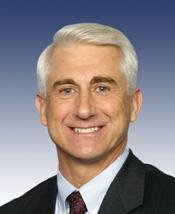
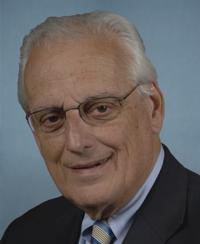
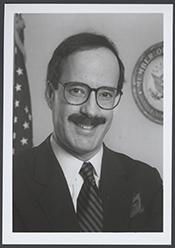
Mrs. Maloney (for herself, Mr. Shays, Mr. Weiner, Mr. Owens, and Mrs. McCarthy) introduced the following bill; which was referred to the Committee on Energy and Commerce
A BILL
To direct the Secretary of Homeland Security to procure the development and provision of improved and up-to-date communications equipment for the New York City Fire Department, including radios.
Short title
This Act may be cited as the 9/11 Can You Hear Me Now Act
.
Findings
The Congress finds the following:
After two terrorist attacks it is time to fix the communications system for the New York City Fire Department.
During its response to the 1993 bombing of the World Trade Center in New York City, the New York City Fire Department's radios did not work in the twin towers of the World Trade Center. The resulting lack of communication complicated operations but did not result in the death of any firefighter.
Eight years later, on September 11, 2001, the World Trade Center was attacked again and the fire department’s radio system failed again.
Soon before the collapse of Tower One of the World Trade Center, fire department officials tried in vain to radio firefighters to evacuate the building.
The firefighters' radio system failed the firefighters in Tower One and as a result many were not able to receive this warning. The failure of the radio system was largely responsible for the death of many of the 343 firefighters who died in the collapse of the World Trade Center twin towers.
Since September 11, 2001, the fire department has taken steps to improve the communications system that failed them. However, many tall buildings in New York City have not installed repeaters that are needed to boost signals, and the signals are often lost in high-rise buildings and underground.
In August 2003, New York City experienced a blackout. During the blackout the fire department’s radio system was again found not to work reliably during emergency situations or in high buildings.
The dispatch system currently used by the New York City Fire Department was acquired in the early 1970s and hampers the ability of the department to fully communicate with its firefighters and provide appropriate detailed information about the buildings and locations to which they respond.
Since the terrorist attacks of September 11, 2001, executive branch officials have repeatedly warned that future terror attacks are not a matter of if, but when. The Secretary of Homeland Security has identified New York City as one of the main terrorist targets.
With New York City remaining a top terrorist target, such communications system should be a national priority.
A new state-of-the-art communications system and upgrades to the critical information dispatch system for the New York City Fire Department should be—
seamless from the receipt of a 911 call to the dispatch of the firefighter; and
interoperable with other public safety offices within the City of New York.
Requirement to procure communications system for New York City Fire Department
In general
The Secretary of Homeland Security shall, by not later than 1 year after the date of the enactment of this Act, procure development and provision of a communications system for the New York City Fire Department, including appropriate radios for the entire department and upgrades to the critical information dispatch system of the department.
Requirements
Radios
Radios procured pursuant to this section must be capable of operating in all locations, and under all conditions, in which firefighters can reasonably be expected to work in responding to an emergency in New York City.
Supplemental communication device
Any communications system procured pursuant to this section must include provision to each firefighter of a supplemental radio communication device that—
allows the firefighter to transmit audio and radio emergency notification warning signals to other firefighters whenever the firefighter is in distress and in immediate need of assistance; and
has the capability to operate automatically in a passive mode by transmitting audio and radio messages that will relay the firefighter's identification and location if the firefighter—
becomes incapacitated and motionless; and
is unable to physically transmit a call for help.
Dispatch system
Upgrades to the critical information dispatch system procured pursuant to this section must—
allow the fire department to communicate with firefighters in all locations, and under all conditions, in which firefighters can reasonably be expected to work in responding to an emergency in New York City;
provide useful, detailed data concerning all likely terrorist target locations in the City of New York; and
be capable of providing to responding firefighters, instantaneously, details about particular buildings and other locations to assist them in making decisions about how to mitigate a terrorist attack and save lives and property.
Testing
Radios, any dispatch system upgrades, and supplemental communication devices procured pursuant to this section must have been tested to ensure they will operate in all locations and under all conditions in which firefighters can reasonably be expected to work in responding to an emergency in New York City.
Coordination
In carrying out this section the Secretary shall coordinate with the City of New York to ensure that the communications system procured under this section is—
compatible with the plans of the City of New York to upgrade its 911 system; and
interoperable with other public safety communications systems.
Progress report
The Secretary shall submit to the Congress a report on progress made in carrying out this section, on—
February 26, 2006; and
September 11, 2006.