Pledge Protection Act of 2005
Legislative Activity
Stay on top of the latest movement without scrolling through every action
Read twice and referred to the Committee on the Judiciary.
August 4, 2006
View full timeline
Introduced in House
May 17, 2005
Referred to the Subcommittee on the Constitution.
June 6, 2005
Committee Failed to Report Measure by the Yeas and Nays: 15 - 15.
June 28, 2006
Rules Committee Resolution H. Res. 920 Reported to House. Rule provides for consideration of H.R. 2389 with 1 hour of general debate. Previous question shall be considered as ordered without intervening motions except motion to recommit with or without instructions. Measure will be considered read. Specified amendments are in order.
July 18, 2006 • 4:23 PM
Rule H. Res. 920 passed House.
July 19, 2006 • 12:23 PM
Considered under the provisions of rule H. Res. 920. (consideration: CR H5397-5419; text of measure as introduced: CR H5414)
July 19, 2006 • 12:23 PM
Rule provides for consideration of H.R. 2389 with 1 hour of general debate. Previous question shall be considered as ordered without intervening motions except motion to recommit with or without instructions. Measure will be considered read. Specified amendments are in order.
July 19, 2006 • 12:23 PM
The Speaker designated the Honorable Steven C. LaTourette to act as Chairman of the Committee.
July 19, 2006 • 12:24 PM
House resolved itself into the Committee of the Whole House on the state of the Union pursuant to H. Res. 920 and Rule XVIII.
July 19, 2006 • 12:24 PM
GENERAL DEBATE - The Committee of the Whole proceeded with one hour of general debate on H.R. 2389.
July 19, 2006 • 12:24 PM
DEBATE - Pursuant to the provisions of H. Res. 920, the Committee of the Whole proceeded with 10 minutes of debate on the Watt amendment.
July 19, 2006 • 1:34 PM
POSTPONED PROCEEDINGS - At the conclusion of debate on the Watt amendment, the Chair put the question on adoption of the amendment and by voice vote, announced that the noes had prevailed. Mr. Watt demanded a recorded vote and the Chair postponed further proceedings on the question of adoption of the amendment until later in the legislative day.
July 19, 2006 • 1:42 PM
DEBATE - Pursuant to the provisions of H. Res. 920, the Committee of the Whole proceeded with 10 minutes of debate on the Jackson-Lee amendment.
July 19, 2006 • 1:43 PM
POSTPONED PROCEEDINGS - At the conclusion of debate on the Jackson-Lee amendment, the Chair put the question on adoption of the amendment and by voice vote, announced that the noes had prevailed. Ms. Jackson-Lee demanded a recorded vote and the Chair postponed further proceedings on the question of adoption of the amendment until later in the legislative day.
July 19, 2006 • 1:52 PM
PROCEEDINGS VITIATED - Ms. Jackson-Lee asked unanimous consent that her request for a recorded vote on her amendment be vitiated, and allow the voice vote to stand. Agreed to without objection.
July 19, 2006 • 1:53 PM
DEBATE - Pursuant to the provisions of H. Res. 920, the Committee of the Whole proceeded with 10 minutes of debate on the Akin amendment.
July 19, 2006 • 1:55 PM
Committee of the Whole House on the state of the Union rises leaving H.R. 2389 as unfinished business.
July 19, 2006 • 2:04 PM
Considered as unfinished business. (consideration: CR H5432-5433)
July 19, 2006 • 3:57 PM
The House resolved into Committee of the Whole House on the state of the Union for further consideration.
July 19, 2006 • 3:57 PM
UNFINISHED BUSINESS - The Chair announced that the unfinished business was the question of adoption of an amendment which had been debated earlier and on which further proceedings had been postponed.
July 19, 2006 • 3:58 PM
The House rose from the Committee of the Whole House on the state of the Union to report H.R. 2389.
July 19, 2006 • 4:22 PM
The previous question was ordered pursuant to the rule. (consideration: CR H5433)
July 19, 2006 • 4:23 PM
The House adopted the amendment as agreed to by the Committee of the Whole House on the state of the Union.
July 19, 2006 • 4:23 PM
Passed/agreed to in House: On passage Passed by recorded vote: 260 - 167 (Roll no. 385).
July 19, 2006 • 4:41 PM
On passage Passed by recorded vote: 260 - 167 (Roll no. 385).
July 19, 2006 • 4:41 PM
Motion to reconsider laid on the table Agreed to without objection.
July 19, 2006 • 4:41 PM
Received in the Senate.
July 20, 2006
Read twice and referred to the Committee on the Judiciary.
August 4, 2006
Voting History
2 votes recorded • Roll call available
Floor Debate
22 membersWhat members said about H.R. 2389 on the floor
 JN
JN SJL
SJL RC"
RC" ALHWTA+17
Floor Debate
22 membersWhat members said about H.R. 2389 on the floor
Mr. Chairman, I yield myself such time as I may consume. Mr. Chairman, I really hate to be an ``I told you so,'' but when, in 2003, we considered legislation to strip the Federal courts of…
Mr. Chairman, I yield myself such time as I may consume.
Mr. Chairman, I really hate to be an ``I told you so,'' but when, in 2003, we considered legislation to strip the Federal courts of jurisdiction, in that case to hear cases challenging the Defense of Marriage Act, I warned that there would be no end to it.
In fact, when we first marked up this bill, I asked my friend, the chairman of the Constitution Subcommittee, whether there would be other court-stripping bills. He assured me that this and the marriage court- stripping bill were the only ones ``so far.'' As we know, he was being, as always, truthful.
Our former colleague Bob Barr, the author of the Defense of Marriage Act, whose legislation Congress was purporting to protect in that case, said, no thanks.
He wrote: ``This bill will needlessly set a dangerous precedent for future Congresses that might want to protect unconstitutional legislation from judicial review. During my time in Congress, I saw many bills introduced that would violate the takings clause, the second amendment, the 10th amendment, and many other constitutional protections. The fundamental protections afforded by the Constitution would be rendered meaningless if others followed the path set by this bill.''
Bob Barr was right. Today it is the turn of the religious minorities.
Once upon a time in this country a student could be expelled from school for refusing to cite the Pledge because it was against his or her religion. In 1943, the Supreme Court in West Virginia Board of Education v. Barnette held that children, in that case Jehovah's Witnesses, had a first amendment right not to be compelled to swear an oath or recite a pledge in violation of their religious beliefs.
This legislation would, of course, strip those families of the right to go to court and to defend their religious liberty. Schools would be able to expel children for acting according to the dictates of their religious faith, and Congress will have slammed the courthouse door in their faces.
As dangerous as this legislation is, even for an election season, it is part of a more general attack on our system of government which includes an independent judiciary whose job it is to interpret the Constitution even if those decisions are unpopular. It is their job to protect individual rights, even if the exercise of those rights in given instances are unpopular.
Sometimes we do not like what the court says. I don't like that the Supreme Court struck down part of the Violence Against Women Act, or that they struck down part of the Gun Free Safe Schools Zones Act, or that they are misapplying, in my opinion, the commerce clause and the 11th amendment in order to gut some of our civil rights laws. I really didn't like it that Republican-appointed justices traversed, perverted justice in order to put someone in the White House who got more than half a million votes less than the other candidate who really won the election.
I don't hear my colleagues on the other side screaming about judicial activism by unelected judges in these cases.
As wrong as I believe the current Supreme Court to be on many issues, I understand that we cannot maintain our system of government and especially our Bill of Rights if the independent judiciary cannot enforce those rights, even if the majority doesn't like it.
Again, I will refer to the Soviet Stalinist Constitution of 1936, which had many rights in it, freedom of speech, freedom of association, freedom of the press, freedom of religious and antireligious propaganda, as they quaintly put it. But, of course, it wasn't worth the paper it was written on because they had no judicial enforcement of it, and if you tried to bring a lawsuit to enforce your right, they shot you before they brought you to court. Any constitutional right without the ability to enforce it in court is no right.
This House appears infected with hostility toward the rule of law. This bill is a perfect example. Even more egregious is the way it has reached the floor. The Judiciary Committee twice voted against reporting this bill to the House. The ``no'' vote was bipartisan. Now the Republican majority is abusing its power to bring it to the floor anyway.
Neither the Parliamentarian nor the Congressional Research Service has been able to find any other case like this. They report, ``We found one instance of a bill, a joint resolution, between the 100th Congress and the current Congress, in which a committee specifically voted not to report a measure that was later considered by the House.'' That measure was a 1996 agriculture bill that was rejected in committee and later folded into a reconciliation bill.
Now the Republican majority exceeds even that arrogance. We are asked to vote on a bill that guts our system of government and guts the protection of our individual rights when the committee tasked with the consideration of this bill rejected it. It must be an election year.
To return to Justice Jackson and the flag salute case, he observed that, and I quote because it is very apposite here, ``The very purpose of the Bill of Rights was to withdraw certain subjects from the vicissitudes of political controversy, to place them beyond the reach of majorities and officials and to establish them as legal principles to be applied by the courts. One's right to life, liberty and property, to free speech, a free press, freedom of worship and assembly and other fundamental rights may not be submitted to vote. They depend on the outcome of no elections.''
But now some would strip the courts of any ability to protect these individual rights against a temporarily intolerant majority.
As to the complaints about unelected judges, I would refer my colleagues back to their high school civics textbooks. We have an independent judiciary precisely to rule against the wishes of the majority, especially when it comes to the rights of unpopular minorities. That is our system of government and it is a good one and we should protect it.
As Alexander Hamilton said in Federalist Number 78, ``The complete independence of the court of justice is peculiarly essential in a limited Constitution. By a limited Constitution, I understand one which contains certain specified exceptions to the legislative authority; such, for instance, as that it shall pass no bills of attainder, no ex post facto laws, and the like. Limitations of this kind can be preserved in practice no other way than through the medium of courts of justice, whose duty it must be to declare all acts contrary to the manifest tenor of the Constitution void. Without this, all reservations of particular rights or privileges would amount to nothing.''
Where would this bill leave religious liberty? The Republicans tell us State courts can protect those rights. What would this mean? It would mean that your rights might be protected in one State, but not in another. I thought the 14th amendment to our Constitution settled that issue.
One of the reasons we have a Supreme Court is so that the Federal
Constitution means the same thing in New York as in California or Mississippi or Minnesota. This country must be one country, not 50 separate countries.
We are really playing with fire here. Do you really hate unpopular religious minorities so much that you are willing to destroy the first amendment? I urge my conservative colleagues especially to shape up and act like conservatives for once. We live in a free society that protects unpopular minorities, even if the majority hates them or hates the expression of their opinion.
If someone doesn't want to recite the Pledge of Allegiance or doesn't feel conscientiously able to recite the words ``under God,'' that is their privilege. Our Constitution protects it, our civil liberties protect it, this country should protect it, and I urge the defeat of this bill.
Mr. Chairman, I reserve the balance of my time.
Mr. Chairman, I yield 7 minutes to the distinguished gentleman from Virginia (Mr. Scott).
Mr. Speaker, the gentleman is commenting and his entire speech was about the desirability or the worth of the words ``under God,'' which I think almost everybody agrees with. The issue in this bill is court-stripping. Do we take away from the courts the right to decide, to protect people's rights?
Mr. Speaker, Mr. Stearns may be right in everything that he is saying, but he does not seem to have the confidence that the courts will agree with him, because if he did, he would not be supporting this legislation.
I yield myself 10 seconds so I can yield to the gentleman from Florida.
To overrule the Supreme Court? Certainly we do not have that.
We have the right, but I do not believe we have the right, given the fact that the Bill of Rights postdates the grant of the jurisdiction-setting authority in the Constitution, I do not think we have the right to take away from the Supreme Court the ability to protect constitutional rights.
Mr. Chairman, I yield 5 seconds to the gentleman from Virginia (Mr. Scott).
Mr. Chairman, I yield 5 minutes to the gentleman from California (Mr. Berman).
Mr. Chairman, I will yield the gentleman 30 seconds, and yield for an answer to how he would have prevented, under this bill, all the States from negating the Supreme Court's Brown v. Board of Education ruling.
Mr. Chairman, I yield 2\1/2\ minutes to the distinguished gentleman from California (Mr. Rohrabacher).
Mr. Chairman, I now yield 3 minutes to the distinguished ranking member of the Judiciary Committee, the gentleman from Michigan (Mr. Conyers).
Mr. Chairman, I yield to the gentleman from Texas for a unanimous consent request.
(Mr. GENE GREEN of Texas asked and was given permission to revise and extend his remarks.)
Mr. Chairman, how much time do I have left?
The other side?
Mr. Chairman, I yield myself the balance of my time.
Mr. Chairman, every word that we have heard uttered on this floor by the majority side has, as Mr. Scott said, increased the likelihood of the courts ordering that the words ``under God'' in the Pledge of Allegiance cannot be recited in a public, in a school situation where there is an imputation of coercion or pressure because the students are, in fact, under the direction of the State agent, namely, the teacher.
As someone who very deeply believes in God, I think it is insulting to say that the words ``under God'' are not important, and yet that is the defense that is offered in court because the Constitution says there should be no establishment of religion. Well, saying that schoolchildren must recite the Pledge of Allegiance with the words ``under God'' is not an establishment of religion. The defense is, no, it is not because this is de minimis; it is not important; it is minor. I do not believe the words ``under God'' are minor or de minimis, unimportant. I think that it is an insult to religion.
But that whole question is for the courts, not for us, and here we are seeing another bill to strip the courts of jurisdiction. We are getting to a point where it is becoming boilerplate in any controversial issue to say the courts shall not have jurisdiction.
Consider this, the Defense of Marriage Act, the Pledge, we passed the bill a few weeks ago on the floor here saying that no funds should be expended to enforce a court order in some court in Indiana because we do not like what the courts do, or we think we might not like what the court will do; we will strip them of jurisdiction.
This is a danger to all our constitutional rights. The only thing that protects our rights as Americans, that
protects our freedom of speech, religion, press, assembly, et cetera, is the ability to go to court and tell the President or the Governor or whoever, you cannot do that, you cannot force them to do that, you cannot put them in jail for not doing it. Without the protection of the court, rights are meaningless.
There is a maxim in law: There is no right without a remedy. What we are doing here is saying to people who are unpopular, to people who may not want to recite the words ``under God,'' they may be wrong and unpopular, but we are saying you cannot go to court to defend yourself and assert your constitutional rights. It is very dangerous. As was pointed out before, if we had done that before, we would still have segregation in this country because in every State we would have stripped the Supreme Court of the ability to declare separate but equal schools unconstitutional. The State courts would have soon said it is fine, and we would still have Jim Crow.
Almost lastly, we should not have a separate law in every State. We should not have the Constitution mean different things in New York and New Jersey. We should be one country. That is why the Supreme Court is vested with jurisdiction to rule on appeals from the State supreme courts.
Finally, this bill is itself unconstitutional. Someone said that the courts have upheld Congress' ability to limit jurisdiction. Sure, they have. Every single case has upheld limitations to jurisdiction, regardless of subject matter, never with regard to constitutional claims, not one case in the history of the Republic.
At a hearing that was held 2 years ago on a similar bill, the majority witness, the Republican witness, professor of constitutional law, said the following: ``The due process clause of the fifth amendment requires that a neutral, independent and competent judicial forum remain available in cases in which the liberty or property interests of an individual or entity are at stake. The constitutional directive of equal protection restricts congressional power to employ its power to restrict jurisdiction in an unconstitutionally discriminatory manner,'' which is what this bill does.
There is no ability, for example, to constitutionally provide that Republicans, but no one else, may have access to the Supreme Court. No one will think Congress could do that. This bill is clearly unconstitutional for the same reason.
Mr. Chairman, I yield back my time.
Mr. Chairman, I claim the time in opposition.
Mr. Chairman, I yield myself such time as I may consume.
Mr. Chairman, we are now down to the heart of the matter. This entire spectacle is aimed at a possible decision by one Court that the directed recitation by school children under the instruction of their teacher of the phrase ``under God'' may violate the first amendment rights of those children.
Let's be clear. Nowhere in the United States is the use of the phrase ``under God'' prohibited in the public schools. In the only two cases in which the Court ruled that the directed recitation of the phrase ``under God'' violated the establishment clause, the Supreme Court vacated one ruling, and has issued a stay preventing the second ruling from interfering with the recitation of the Pledge.
For this we need to take a chain saw to the Constitution? For this we need to endanger the religious liberty of religious minorities like the Jehovah's Witnesses, who were thrown out of school because their religion barred them from saying the Pledge?
Only the Supreme Court protected their rights in violence against Jehovah's Witnesses that ensued.
This bill would not only prevent the Supreme Court from ruling on the constitutionality of directing school children to recite the phrase ``under God,'' it would also overturn the 1943 Supreme Court Jehovah's Witnesses case and allow the punishment or expulsion of school children for refusing to recite a pledge that violates their religion or their conscience.
We may be endowed, Mr. Chairman, by our Creator with certain unalienable rights, but people can, and routinely do, violate and take away those rights. That is why we need a Supreme Court, to protect these rights even when political majorities will not.
Supporters of this bill have candidly said they disagree with the Supreme Court, and that, in their opinion, the Supreme Court has gone beyond its powers, and that we, in effect, should overrule it and prevent them from ruling in these cases. We have heard this before. Look at the notorious ``Southern Manifesto'' against the Supreme Court decision in the Brown v. Board of Education 50 years ago: ``We regard the decisions of the Supreme Court in the school cases as a clear abuse of judicial power. It climaxes a trend in the Federal judiciary undertaking to legislate, in derogation of the authority of Congress, and to encroach upon the reserved rights of the States and the people.''
That is what we hear whenever people disagree with the Supreme Court, in the school desegregation cases and now. And this amendment makes the point of the bill explicit.
The sponsors are afraid of what the Supreme Court may do in a pending case on this subject that may come before them and therefore explicitly strip the Federal courts of jurisdiction even over a pending case. This is Congress saying to a specific plaintiff, we do not approve of your claim of a violation of your constitutional right; so we are going to shut the courthouse door in your face.
This is a dangerous enterprise. I respect my friend's concerns and his right to disagree with the courts, but we must not destroy our Constitution and the one independent bulwark of our liberty. I urge defeat of this bill.
Mr. Chairman, I yield for the purpose of making a unanimous consent request to the distinguished ranking member of the Judiciary Committee, Mr. Conyers.
(Mr. CONYERS asked and was given permission to revise and extend his remarks.)
Mr. Chairman, I will not use the 1\1/2\ minutes. I will simply say that this amendment is dangerous for the same reason that the bill is dangerous. We should not say, in the case of this amendment, to someone who is a plaintiff in a court in a pending case, we are going to shut the courthouse door in your face because we are afraid the Supreme Court might issue a decision. It has not done it yet, but we are afraid the Supreme Court might issue a decision that we disagree with. We do not trust the courts. We do not agree with them. Never mind that George Bush has appointed two new members of the Court. We still do not agree with it, and, therefore, we are going to try to strip them of their jurisdiction.
That way strips the protection of our liberties from us. We need the courts to protect our liberties. Our constitutional rights can only be vindicated by the courts stepping in when the political branches of government violate the rights of unpopular minorities. That is what the courts have done throughout our history, and we need that protection to continue. And that is why this bill is not only subversive of our constitutional rights, but unconstitutional.
The bill ought to be defeated. The amendment ought to be defeated.
Mr. Chairman, I yield back the balance of my time.
Mr. Chairman, I rise in opposition to H.R. 2389, the Pledge Protection Act of 2005. This bill precludes any Federal judicial review of any constitutional challenge to recitation of the Pledge of…
Mr. Chairman, I rise in opposition to H.R. 2389, the Pledge Protection Act of 2005.
This bill precludes any Federal judicial review of any constitutional challenge to recitation of the Pledge of Allegiance--whether it be in the lower Federal courts or in the highest court in the land, the U.S. Supreme Court. Effectively, if passed, this extremely vague legislation will relegate all claimants to State courts to review any challenges to the pledge. This possibility will lead to different constitutional constructions in each of the 50 States.
The only way to make this bill palatable is to adopt the Jackson-Lee amendment, which provides for an exception to the bill's preclusion for cases that involve allegations of coerced or mandatory recitation of the Pledge of Allegiance, including coercion in violation of the First Amendment or the Equal Protection clauses. Opposing the Jackson-Lee amendment is tantamount to endorsing the coercion of children to mandatory recitation of the Pledge of Allegiance.
Closing the doors of the Federal courthouse doors to claimants will actually amount to a
coercion of individuals to recite the pledge and its ``under God'' reference in violation of West Virginia State Board of Education v. Barnette. In Barnette, the Supreme Court struck down a West Virginia law that mandated school children recite the Pledge of Allegiance. Under the West Virginia law, religious minorities faced expulsion from school and could be subject to prosecution and fines, if convicted of violating the statute's provisions. In striking down that statute, Justice Jackson wrote for the Court:
``To believe in patriotism will not flourish if patriotic
ceremonies are voluntary and spontaneous instead of a
compulsory routine is to make an unflattering estimate of the
appeal of our institutions to free minds . . . If there is
any fixed star in our constitutional constellation, it is
that no official, high, or petty can prescribe what shall be
orthodox in politics, nationalism, religion, or other matters
of opinion or force citizens to confess by word or act their
faith therein.''
H.R. 2389 would strip parents of their right to go to court and defend their children's religious liberty. If this legislation is passed, schools could expel children for acting according to the dictates of their faith and Congress will have slammed the courthouse door shut in their faces. When I was a child, I always wondered why, when the rest of the class recited the Pledge of Allegiance, one little girl always sat quietly. Today, I understand that it was because she was of the 7th Day Adventist faith and therefore reciting the ``under God'' provision would force her to undermine her religious faith. If H.R. 2389 were law back then, the school administrators could have forced her to say the pledge and she would have no recourse in the Federal courts.
The problem with this bill is that it does not protect religious minorities, Mr. Chairman.
Article III, Section I of the U.S. Constitution vests ``the Judicial Power of the United States . . . in one supreme court.'' The list of subject matter areas which the Federal courts have the power to hear and decide under section 2 of Article III establishes that, ``The Judicial power shall extend to all cases . . . arising under this Constitution.'' For over 50 years, the Federal courts have played a central role in the interpretation and enforcement of civil rights laws. Bills such as H.R. 2389 and the Federal Marriage Amendment we debated yesterday are bills to prevent the courts from exercising their article III functions and prohibiting discrimination. We cannot allow bad legislation such as this to pass in the House, and thereby eviscerate the Constitution and the values upon which this nation was originally founded. In the 1970s, some Members of Congress unsuccessfully sought to strip the courts of jurisdiction to hear desegregation efforts such as busing, which would have perpetuated racial inequality. We did not allow it then, and we should not allow it now.
H.R. 2389, as drafted, insulates the Pledge of Allegiance as set forth in section 4 of title 4 of the United States Code from constitutional challenge in the Federal court. The Jackson-Lee amendment protects children from being coerced or forced into reciting the Pledge of Allegiance against their will.
However, the statute and the pledge are subject to change by future legislation bodies. This means that if some future Congress decides to insert some religiously offensive or discriminatory language in the Pledge, the matter would be immune to constitutional challenge in the Federal courts.
Mr. Chairman, I ask unanimous consent to place in the Record a copy of a letter dated July 18, 2006 from the American Bar Association which supports my claims.
Mr. Chairman, I ask that my colleagues vote to protect religious minorities, vote to protect judicial review, vote to protect separation of powers, and vote to protect access to the Federal courts. I urge my colleagues to vote against H.R. 2389.
Mr. Chairman, I offer an amendment.
Mr. Chairman, I would imagine that Members across the campus in their offices and maybe even committee rooms are moved by the impassioned pleas by my friends on the other side of the aisle, so I want to make a pledge, and that is that I have stood on the floor of the House and acknowledged the importance of having our schoolchildren and others of America acknowledge and say the Pledge of Allegiance every single day. I stand by that statement.
What bothers me is when Members come to the floor and vote, they will look to the name of the proponent and they will simply vote ``no.'' They will not understand the crux of the debate. They will not understand the sheer quarrel or the sheer amazement that we have with this particular legislation in the first place.
This legislation deals with the idea of protecting the Pledge of Allegiance by denying access to the courthouse. My amendment is simple. It gives real meaning to the Pledge of Allegiance and the patriotism that is felt when it is recited by making it clear that no one can be forced or coerced to recite the Pledge of Allegiance or retaliated against for not reciting it in those cases where doing so violates one's religious beliefs.
What is the hindrance of Members agreeing to allow one to be able to access the courts on the simple ground that it violates one's religious beliefs?
In this way, my amendment ensures that the Pledge of Allegiance is being recited freely, voluntarily and without coercion or fear of retaliation. In this way, a recited Pledge of Allegiance remains sacrosanct, and our national commitment to religious freedom is preserved.
Might I cite for my friends a quote from President Reagan, the great communicator himself, who said in 1983, ``The first amendment of the Constitution was not written to protect the people of this country from religious values, it was written to protect religious values from government tyranny.''
What I would suggest is to close the courthouse door is an example of government tyranny. It means that if my 6-year-old friend by the name of Hazel, who had a religious belief, whose family had a religious belief, who was allowed to sit silently in her seat when all of us stood to say I pledge allegiance, that little girl, if forced by any school system to do so, now has the courthouse door closed to her.
It means that we are ignoring the West Virginia State Board of Education versus Barnett case that mandated that school children recite the Pledge of Allegiance. This was done in West Virginia. Under West Virginia law, persons who on religious grounds refused to recite the Pledge faced expulsion from school. But Justice Jackson wrote, ``To believe patriotism will not flourish if patriotic ceremonies are voluntary and spontaneous instead of a compulsory routine is to make an unflattering estimate of the appeal of our institution to free minds.''
Mr. Chairman, I have said it is good and good news to say the Pledge and to have our school children say the Pledge. This amendment is very clear. It does nothing to this particular legislation, other than to say that if your grounds are religious based, based on religion, based on your defined religious beliefs, why are you denying them the right to go into the courthouse on religious beliefs only?
That is the question that clergy are asking across America. That is the question that the American Bar Association, representing lawyers of all political persuasions, are asking at this time.
And I beg of my colleagues to understand that we are protectors of liberty. We are protectors of the first amendment. We are not to denounce the first amendment. We are not to ignoring the first amendment. We are not to stomp on the first amendment. And I would beg to say that if we call ourselves protecting the flag, the very flag that soldiers in Iraq and Afghanistan are now on the battlefield shedding their blood, veterans, and we would deny Americans the right to utilize the constitutional branch of government created by the Constitution and created by this body.
Shame on us if we cannot accept the entreaty of a little girl named Hazel, who sat next to me in a school a few short years ago, I might add, lonely, unprotected, fearful, sitting isolated while we stood to say the Pledge. I am grateful that I had a teacher that understood that we would not stigmatize her, discriminate against her, and she had her freedom.
This is an important amendment to ensure that all of our freedom is protected. I ask my colleagues for a vote for religious freedom and liberty and to allow the Jackson-Lee amendment to go forward.
Mr. Chairman, I have an amendment at the desk. I thank the members of the Rules Committee for allowing this amendment to go forward.
Mr. Chairman, my amendment gives real meaning to the Pledge of Allegiance and the
patriotism that is felt when it is recited by making it clear that no one can be coerced or forced to recite the Pledge, or retaliated against for not reciting it in those cases where doing so violates one's religious beliefs. In this way, my amendment ensures that the Pledge of Allegiance is being recited freely, voluntarily, and without coercion or fear of retaliation. In this way, a recited Pledge of Allegiance remains sacrosanct and our national commitment to religious freedom is preserved.
Mr. Chairman, my amendment draws inspiration from President Reagan, the Great Communicator himself, who said in 1983:
The First Amendment of the Constitution was not written to
protect the people of this country from religious values; it
was written to protect religious values from government
tyranny.
H.R. 2389 precludes Federal judicial review of any constitutional challenge to recitation of the Pledge of Allegiance--whether it be in the lower Federal courts or the U.S. Supreme Court. My amendment does not disturb this legislative judgment except in the limited instance of cases involving claims of coercion and mandatory recitation. In other words, my amendment is intended to protect religious values from government tyranny. Nothing less, nothing more.
Mr. Chairman, in West Virginia State Board of Education v. Barnett, the Supreme Court struck down a West Virginia law that mandated schoolchildren recite the Pledge of Allegiance. Under West Virginia law, persons who, on religious grounds, refused to recite the Pledge faced expulsion from school and could be prosecuted and fined for violating the statute. In striking down that statute, the great Justice Robert Jackson wrote for the Court:
To believe patriotism will not flourish if patriotic
ceremonies are voluntary and spontaneous instead of a
compulsory routine is to make an unflattering estimate of the
appeal of our institutions to free minds . . . If there is
any fixed star in our constitutional constellation, it is
that no official, high, or petty can prescribe what shall be
orthodox in politics, nationalism, religion, or other matters
of opinion or force citizens to confess by word or act their
faith therein.
Mr. Chairman, my amendment is important for another reason. H.R. 2389, as drafted, insulates the Pledge of Allegiance from constitutional challenge in Federal court.
However, the pledge itself is subject to change by future legislative bodies. This means that if some future Congress decides to revise the Pledge to include religiously offensive or discriminatory language in the Pledge, the authority of the government to compel a person to recite that Pledge could not be challenged in Federal court. None of us would want that to happen. My amendment ensures that it won't.
Mr. Chairman, my amendment protects religious minorities. My amendment protects judicial review. My amendment protects the separation of powers. My amendment strengthens the Pledge by ensuring that it recited voluntarily. My amendment ensures that the Pledge, like the oath all Members of Congress take, is ``given freely, without mental reservation or purpose of evasion.'' I urge all Members to support the Jackson-Lee amendment.
Mr. Chairman, I reserve the balance of my time.
Mr. Chairman, I demand a recorded vote.
Mr. Chairman, in the spirit of reflection of this disastrous bill, I ask unanimous consent to withdraw my rollcall vote only because I believe that we would denigrate the protection of religion even further by subjecting my very good amendment to a rollcall vote. It should be already included in this.
Mr. Chairman, anytime we consider legislation like this, one can be assured that veterans benefits have either just been cut or are about to be cut. Instead of addressing the real issues of…
Mr. Chairman, anytime we consider legislation like this, one can be assured that veterans benefits have either just been cut or are about to be cut. Instead of addressing the real issues of patriotism, such as the adequacy of health care funding for veterans or the fact that the number of veterans waiting for benefit determinations has increased by approximately 80,000 since last year alone, we are going to use this bill to divert attention from those more pressing issues.
Mr. Chairman, this bill is aimed at the Ninth Circuit Court of Appeals case, Newdow v. U.S. Congress, which held that the words ``under God'' in the Pledge are unconstitutional in the context of public school recitations. I happen to disagree with that decision and I agree with the dissent in that case which stated, ``Legal world abstractions and ruminations aside, when all is said and done, the danger that `under God' in our Pledge of Allegiance will tend to bring about a theocracy or suppress someone's belief is so miniscule as to be de minimis. The danger that the phrase represents to our first amendment's freedoms is picayune at best.''
I agree with that language, Mr. Chairman. So as we discuss the constitutionality of ``under God'' in the Pledge, we must recognize that every bill that is introduced, every hearing we have, every vote that we take on the issue enhances the importance of this issue and these actions serve to chip away at the de minimis argument and actually increase the chance that the court will ultimately decide that the Pledge is unconstitutional.
The simple fact is that we need to respect the Constitution and the right of courts to decide whether the Pledge is constitutional or not. But the majority will not do that. H.R. 2389 is a court-stripping bill as the bill does not address the substance of the arguments pro and con, it just prohibits Federal courts, including the Supreme Court, from deciding the case.
This bill is a blatant attempt to prevent the judicial branch from doing its job. The foundation of our democracy rests on the principle of checks and balances of power among three coequal branches, and this bill is a flagrant disregard of that principle. In addition, this bill will result in unprecedented confusion as each State court will decide how to interpret the Federal Constitution.
It also sets a poor precedent that at any time we are considering a bill that might be found unconstitutional by the courts, we might just prohibit the courts from saying so by taking away their right to hear the case.
Mr. Chairman, this bill would strip Federal courts from their ability to hear cases that are clearly within Federal jurisdiction because those cases address Federal constitutional rights and individual liberties guaranteed under the Bill of Rights, and many rights may be involved because the bill is not limited to cases addressing the words ``under God.'' The recitation of the Pledge may in some situations implicate the right of free speech, the right of freedom of association, the right to free exercise of religion, the establishment clause protections, all guaranteed under the first amendment of the Constitution.
The passage of this bill will mean that there will be no Federal law on a Federal constitutional question, not even a supreme law of the land to guide other Federal or State courts on the matter or to definitively state the law when there are inconsistent decisions in different States. So a Federal constitutional right could be applied inconsistently to American citizens simply because they live in different parts of the country.
The need for a Federal review of many different rights that may be involved is not speculative. For example, Mr. Chairman, even before the words ``under God'' were in the Pledge, the Supreme Court in 1943 held in West Virginia Board of Education v. Barnette that a compulsory flag salute and accompanying Pledge were unconstitutional when required of a public school student in violation of the student's religious beliefs.
In that case, the lawsuit was originally filed in Federal Court and was never considered in State court. If this legislation passes, State courts won't even have to follow prior Supreme Court precedents. The reason that State courts are prohibited from ignoring Supreme Court precedent is if they
do so, the Supreme Court is there, ready and willing and able to reverse the State court's decision. But no more under this bill. We may well end up with 50 interpretations and applications of a single Federal constitutional right.
For over 200 years, since Marbury v. Madison in 1803, the Supreme Court has been the final arbiter of what is constitutional and what is not. So while Congress has the power to regulate jurisdiction of Federal courts, the court-stripping language of H.R. 2389 grossly exceeds that power in violation of the principles of separation of powers.
If this court-stripping idea had been around in 1954, Congress could have prohibited the Supreme Court from hearing issues involving student assignment to public schools. We never would have had the decision of Brown v. Board of Education, or it could have passed in the 1960s, and the decision in the Federal court in Loving v. Virginia, to overrule the will of the people of Virginia and require Virginia to recognize racially mixed marriages, might not have ever happened.
The judges in those decisions were described just as judges are described today: liberal, rogue, unelected, life-time appointed activist judges. But they made the right decisions in those cases. The truth is that we rely on Federal courts to determine and enforce our constitutional rights.
America is more politically and religiously diverse than it was in 1943, but instead of embracing that diversity, this bill would jeopardize our fundamental rights. We should instead adhere to the wisdom of the Supreme Court in the Barnette case which said, and I quote, ``The very purpose of a Bill of Rights was to withdraw certain subjects from the vicissitudes of political controversy and place them beyond the reach of majorities and officials, and to establish them as legal principles to be applied by the courts. One's right to life, liberty and property, to free speech, a free press, freedom of worship and assembly, and other fundamental rights may not be submitted to vote; they depend on the outcome of no elections.''
Mr. Chairman, there are numerous legal, civil rights and religious organizations opposed to this legislation, including the American Bar Association, the ACLU, the American Jewish Committee, the Anti- Defamation League, the Baptist Joint Committee, the Constitutional Project, the Leadership Conference on Civil Rights, Legal Momentum, the National Women's Law Center and People for the American Way.
Mr. Chairman, I will ask unanimous consent to insert those letters into the Record at the appropriate time, and there are other organizations, of course, that are opposed to the bill. I urge my colleagues to vote ``no'' on this legislation.
June 14, 2006.
Protect Separation of Powers and Religious Minorities'
Longstanding Constitutional Rights; Oppose Final Passage
of H.R. 2389.
Dear Representative: We, the undersigned religious, civil
rights, and civil liberties organizations, urge you to oppose
H.R. 2389, the ``Pledge Protection Act,'' misguided
legislation that would strip all federal courts, including
the Supreme Court, from hearing First Amendment challenges to
the Pledge of Allegiance and from enforcing longstanding
constitutional rights in federal court.
The signatories to this letter include organizations that
supported the court challenge to the constitutionality of
including ``under God'' in the Pledge of Allegiance,
organizations that opposed that challenge, and organizations
that took no position on the matter. We are united, however,
in believing that H.R. 2389 threatens the separation of
powers that is a fundamental aspect of our constitutional
structure. Beyond this, while the legislation ostensibly
responds to the controversy surrounding ``under God'' in the
Pledge of Allegiance, this legislation sweeps far more
broadly, with potentially severe constitutional implications
for religious minorities who are adversely affected by
government-mandated recitation of the Pledge.
First and foremost, we are opposed to H.R. 2389 because
this legislation, by entirely stripping all federal courts,
including the Supreme Court, of jurisdiction over a
particular class of cases, threatens the separation of powers
established by the Constitution, and undermines the unique
function of the federal courts to interpret constitutional
law. This legislation deprives the federal courts of the
ability to hear cases involving religious and free speech
rights of students, parents, and other individuals. The
denial of a federal forum to plaintiffs to vindicate their
constitutional rights would force plaintiffs out of federal
courts, which are specifically suited for the vindication of
federal interests, and into state courts, which may be
hostile or unsympathetic to these federal claims, and which
may lack expertise and independent safeguards provided to
federal judges under Article III of the Constitution.
In addition, as drafted, the bill would deny access to the
federal courts in cases to enforce existing constitutional
rights for religious minorities. Over sixty years ago, the
Supreme Court decided the case of West Virginia State Board
of Education v. Barnette, 319 U.S. 624 (1943). In Barnette,
the Supreme Court struck down a West Virginia law that
mandated schoolchildren to recite the Pledge of Allegiance.
Under the West Virginia law, religious minorities faced
expulsion from school and could be subject to prosecution and
fined, if convicted of violating the statute's provisions. In
striking down that statute, the Court reasoned: ``To believe
that patriotism will not flourish if patriotic ceremonies are
voluntary and spontaneous instead of a compulsory routine is
to make an unflattering estimate of the appeal of our
institutions to free minds . . . If there is any fixed star
in our constitutional constellation, it is that no official,
high, or petty can prescribe what shall be orthodox in
politics, nationalism, religion, or other matters of
opinion.'' 319 U.S. at 639-40.
Moreover, a panel of the U.S. Court of Appeals for the
Third Circuit, holding unconstitutional two provisions of a
Pennsylvania law mandating recitation of the Pledge, said,
``It may be useful to note our belief that most citizens of
the United States willingly recite the Pledge of Allegiance
and proudly sing the national anthem. But the rights embodied
in the Constitution, most particularly the First Amendment,
protect the minority--those persons who march to their own
drummers. It is they who need the protection afforded by the
Constitution and it is the responsibility of federal judges
to ensure that protection.'' Circle School v. Pappert, 381
F.3d 172, 183 (3d Cir. 2004).
H.R. 2389 would undermine the longstanding constitutional
rights of religious minorities to seek redress in the federal
courts in cases involving mandatory recitation of the Pledge.
As a result, this legislation will seriously harm religious
minorities and the constitutional free speech rights of
countless individuals.
H.R. 2389 also raises serious legal concerns about the
violation of the principles of separation of powers, equal
protection and due process. The bill undermines public
confidence in the federal courts by expressing outright
hostility toward them, threatens the legitimacy of future
congressional action by removing the federal courts as a
neutral arbiter, and rejects the unifying function of the
federal judiciary by denying federal courts the opportunity
to interpret the law. We strongly believe that this
legislation as drafted will have broad, negative implications
on the ability of individuals to seek enforcement of
previously constitutionally protected rights concerning
mandatory recitation of the Pledge. We therefore urge, in the
strongest terms, your rejection of this misguided and unwise
legislation.
Sincerely,
American Civil Liberties Union.
American Humanists Association.
American Jewish Committee.
Americans for Democratic Action.
Americans United for Separation of Church and State.
Anti-Defamation League.
Baptist Joint Committee.
Buddhist Peace Fellowship.
Central Conference of American Rabbis.
Disciples Justice Action Network (Disciples of Christ).
Equal Partners in Faith.
Federation of Jain Associations in North America (JAINA).
Friends Committee on National Legislation.
Human Rights Campaign.
Jewish Council For Public Affairs (JCPA).
Leadership Conference on Civil Rights.
Legal Momentum (formerly NOW Legal Defense and Education
Fund).
National Council of Jewish Women.
National Council of Negro Women, Inc.
National Family Planning and Reproductive Health
Association (NFPRHA).
National Gay and Lesbian Task Force.
People For the American Way.
Secular Coalition for America.
Sikh Coalition.
The Interfaith Alliance.
The Workmen's Circle/ Arbeter Ring.
Union for Reform Judaism.
Unitarian Universalist Association of Congregations.
Woodhull Freedom Federation.
Mr. Chairman, when I listed the organizations opposed to the bill, I inadvertently left off Americans United for Separation of Church and State and the National Council of Negro Women.
Madam Speaker, I thank Dr. Gingrey for the time, and I yield myself such time as I may consume. Madam Speaker, I listened to Dr. Gingrey, and I have the misfortune of reading the paper every now and…
Madam Speaker, I thank Dr. Gingrey for the time, and I yield myself such time as I may consume.
Madam Speaker, I listened to Dr. Gingrey, and I have the misfortune of reading the paper every now and again. Dr. Gingrey, you are quoted as saying yesterday in the discussion with reference to banning gay marriage, the quote says, ``This is probably the best message we can give to the Middle East in regards to the trouble we are having over there right now.''
I say to you, sir, that I find that very confusing in the sense that I don't understand how, with all of the things going on in this country and around the world, that gay marriage, yesterday, was the most important thing that we could contribute to the horror of what is going on in the Middle East.
But I don't intend to use much of my time this morning, frankly. I really am embarrassed for the House of Representatives today. Why? Let's be clear about what the priorities are for the majority and what they are for the rest of the world.
Today, the Federal minimum wage purchases less than it has at any point in the last 50 years. Let me repeat: The Federal minimum wage purchases less than it has at any point in the last 50 years. It hasn't been raised in 9 years, and today the House is going to spend its time protecting something that all of us say every morning in the House of Representatives, the Pledge of Allegiance.
In the last year, 23 percent of all Americans say they or someone in their family have had to stop medical treatment because of the cost, and today the House will spend its time attempting to turn the independent judiciary into an echo chamber of the right wing of this particular majority.
If today is anything like the typical day of the past 3 years, three American soldiers will die in Iraq or Afghanistan, the Taliban will get a little stronger in Afghanistan and the civil war will continue to be enhanced in Iraq. And the American people will watch their Congress do nothing, but listen to a bunch of demagogues who claim a crisis in the United States courts.
The Middle East is literally going up in flames, as is California, and Katrina's problems haven't been solved, and Congress' response is to criticize Federal judges.
Today in America, 110 people will be treated in an emergency room for their wounds from a handgun and there is an epidemic of violence with reference to handguns, particularly by our youth in this country. 1,500 people will die of cancer today in America, and 1,900 people will die of heart disease. And the United States House of Representatives will speechify about patriotism.
Let me tell you something, Madam Speaker: Patriots try to solve real problems and not seek out remedies to perceived problems. Yesterday in this country we had people die of hunger and malnutrition. In some parts of this country, the infant mortality rate rivals that of sub- Saharan Africa. We have a public education system that ranks below that of almost any other Western nation. We have a looming Social Security crisis, and health care costs are spiraling out of control. And what do we do? Speechify about patriotism.
These are some of the problems, just some of the problems, confronting the American people today. And what is the majority's response to this? Today we will make sure that the Pledge of Allegiance is safe from so-called activist judges.
I could go on and on, but I have already taken more time than this deserves. Court-stripping bills such as this are, according to the Chief Justice of the United States of America, John Roberts, and let me quote the Chief Justice of America, they are bad policy.
I hope the American people are paying attention to their priorities, the priorities of the Republican majority.
Madam Speaker, I reserve the balance of my time.
Madam Speaker, I am very pleased at this time to yield 6 minutes to my good friend, the distinguished gentleman from Wisconsin (Mr. Obey), the ranking member of the Appropriations Committee.
Madam Speaker, I yield myself such time as I may consume before yielding to the distinguished minority whip from Maryland, my very good friend, a Member of this body who works tirelessly, tirelessly to alleviate the squeeze on America's middle class.
Madam Speaker, I would like to respond to my friend from Georgia who was responding to my friend from Wisconsin Mr. Obey when he says cheese and crackers go together. And the context, as I understand it, was that you did not vote for the pay raise.
The question is, do you favor and can you push for the minimum wage? Cheese and crackers may very well go together, but they need to be washed down with milk or Coca-Cola. And the fact of the matter is people living on the minimum wage cannot buy cheese, crackers, Coca- Cola or milk, and so somewhere along the line that needs to be understood
Madam Speaker, I yield 3 minutes to the distinguished gentleman from Maryland (Mr. Hoyer), my good friend.
Madam Speaker, I look forward to the day that somebody offers a bill to eliminate the Court. I mean, you talk about Jefferson and Madison. I don't know how many of you have read the Federalist Papers and clearly understand the dynamics of establishing the Federal judiciary and the importance of the separation of powers.
That is what they went to war about or with King George, it was to make sure that we had a separation of powers. I travel in countries all over this world where the leaders of the country dictate to the courts, if they have any.
I don't want to see America in that position, and I believe my good friend from California feels likewise.
Madam Speaker, I yield 3\1/2\ minutes to the distinguished gentleman from California (Mr. George Miller).
Madam Speaker, how much time remains on both sides?
Madam Speaker, a young man whose sensitivities have shown through on this subject of countless others who are less fortunate, I am pleased to yield 2 minutes to my good friend from Rhode Island (Mr. Kennedy).
Madam Speaker, I yield 30 seconds to the gentleman from Rhode Island (Mr. Kennedy) to respond.
Before the gentleman from Georgia goes forward, may I say that we have but one more speaker, and then I will be prepared to close if the gentleman is prepared to close.
Before yielding to the distinguished minority leader whom I believe will cause in November the priorities of this House to change substantially, and to protect not only minimum wage earners, but the middle class of this country better than we have, I would like to come to today's discussion.
I find it difficult to believe that God would want us to strip the courts of their powers to interpret the laws of this land, albeit with the divergent opinions. I shudder that my colleagues do not understand the dynamics of the Federal judiciary.
But let me do something, perhaps not dramatic, perhaps a little melodramatic. Under Madam Speaker are the words ``In God we trust.'' I have been in this body 14 years, and I have had the distinct privilege, as have many other Members of the House of Representatives, of opening these proceedings with other speakers in the chair, at least five times, from my memory.
Every time that I participated in the opening proceedings, we said the Pledge of Allegiance, and we used the term ``God.'' I don't have as many of these as I want, and minimum wage workers don't have this many, and the middle class is suffering immensely in this country. But on our money is ``In God we trust.''
Please understand this. Only once has a court ruled that you cannot say the Pledge of Allegiance in this country, and that law was stricken down. I ask you, please, to listen to the Chief Justice when he says that court-stripping would be bad policy.
You may have the right intention, but you are doing it in the wrong way.
Madam Speaker, I yield 1 minute to the distinguished minority leader, Ms. Pelosi.
Madam Speaker, I yield myself such time as I may consume.
It is hard to correct my friend from Missouri. I said to him last night, earlier yesterday, as it were, in the Rules Committee that he is an engineer and I am a lawyer of 44 years standing, twice a judge as it were, and I understand a little bit about how the Federal judiciary works. I said to him that I do not come into his engineering association to tell them how to construct bridges and tunnels, and not that there is any premium on lawyers or judges having clarity, but he muddies the water on this subject.
I would urge him to understand that it was under President Eisenhower that the words ``under God'' were put in the Pledge of Allegiance. Somehow or another, during World War I and World War II, without the words ``under God,'' we managed to win those wars. Somehow or another we were not a godless society any more than we are not today.
Please understand that the pendulum swings in the Federal judiciary, and there may be a day when things that you envision are important for the Court to undertake constitutionally will allow for some more liberal Congresspersons to come along than you and strip the courts of those powers.
We have a beautiful system of checks and balances in this country. Madam Speaker, I would urge that we do not impinge upon that territory.
I urge all Members to vote ``no'' on the previous question so I can amend the rule and provide this House with yet another chance to vote on legislation to increase the Federal minimum wage.
Madam Speaker, I ask unanimous consent to insert the text of the amendment and extraneous material immediately prior to the vote on the previous question.
My amendment provides that immediately after the House adopts this rule it will bring H.R. 2429, the Miller-Owens minimum wage bill, to the House floor for an up-or-down vote. This bill will gradually increase the minimum wage from the current level of $5.15 an hour to $7.25 an hour after about 2 years.
A footnote right there; I am so proud of my State. By petition, the State of Florida passed a minimum wage with an acceleration clause pegged to the cost of living. Hurrah for Florida.
The bill is identical to language that was included in the Labor-HHS appropriations bill that was blocked by the majority leadership last month. It is also identical to the language that we on the Democratic side have tried to bring to this floor in recent weeks.
Madam Speaker, every day that we fail to bring legislation to the floor to increase the minimum wage is another day we turn our backs on America's low-income and middle-class families who desperately need our help. These workers, as many have said, struggle every day to make ends meet. Many minimum-wage earners work two and three jobs just to get by, and it is unconscionable that we have waited this long to offer even a little relief to those in this Nation who need it most.
There is a statistic that was quoted very recently, but no offense to rich people, but America's corporate executives collectively, when paired down in the first 4 hours of any given year that they worked, they earn in 4 hours more money than a minimum-wage earner makes all year long.
It has been nearly a decade since this House voted to increase the minimum wage. The minimum wage, as I said earlier, is now at its lowest level in 50 years.
A full-time minimum-wage earner makes just $10,700 a year, an amount that is $5,000 below the poverty line for a family of three.
I am going to cut it off right here, Madam Speaker, and go back to my original remarks. We have not done anything about genocide in Darfur; the Middle East is in flames. California is suffering forest fires. We have left the Hurricane Katrina victims by the wayside with more hurricanes looming to come during this hurricane season. The deficit is at an all-time high and accelerating. The national debt is crippling this Nation. And the middle class, we didn't fully fund education to the extent that we left no children behind. We are not putting sufficient police on the streets in order to be able to protect our Nation. Our homeland is vulnerable in more ways than one, including the containers that go on our aircraft and those that are not inspected in our ports. I could go on and on, including the potential for $4-a- gallon gas prices.
And what we are going to do? We are going to strip the courts. We ought to strip some of these people that are in the business of stripping the courts.
Madam Speaker, I object to the vote on the ground that a quorum is not present and make the point of order that a quorum is not present.
Mr. Chairman, I rise to introduce the Pledge Protection Act and just to give a quick and brief history as to why it is important. We have heard some discussion that this is really not necessary, that…
Mr. Chairman, I rise to introduce the Pledge Protection Act and just to give a quick and brief history as to why it is important. We have heard some discussion that this is really not necessary, that we can rest assured that the words of the Pledge of Allegiance will just stand firm forever. Unfortunately, that is not what our recent history shows.
First of all, three judges on the Ninth Circuit Court in California ruled that the words ``under God'' are unconstitutional. They were supported by the entire Ninth Circuit.
The case went to the Supreme Court, and I was there at the hearing at the Supreme Court. The President's attorney there argued that the Supreme Court should kick the case out because the person, Mr. Newdow, bringing the case did not have standing. The response of one of the Judges was, as a Supreme Court we never kick a case out based on standing, because we assume the lower courts have already taken care of that.
Why did the Supreme Court do this? They could easily have ruled that the Pledge is just fine, that it is completely constitutional. Is that their ruling? No. They kicked the case out based on standing.
So we believe that there are not five Judges on the Court, which is what it would take to uphold the Pledge of Allegiance. Hence we use a constitutional authority granted to us from the Founders that wrote the Constitution to protect the Pledge of Allegiance. That constitutional authority is known as Article III, section 2.
What we do is we create a very simple fence around the Federal court system. We say just regarding the Pledge of Allegiance, that no Federal Court has authority to hear a claim that the Pledge is unconstitutional. So we put a fence around the Federal court system.
Well, what does that mean, if somebody really wants to make a claim that the Pledge is unconstitutional? It means that they go to their local State courts, with the ultimate decisions being made in 50 separate supreme courts and a court here in the District of Columbia. So that is the reason for why we need to pass the Pledge Protection Act.
It seems a bit ironic that some people will complain about the fact that we have no respect for the Constitution and that we are eroding the separation of powers, and yet it is the very Constitution that gives Congress the authority and the responsibility to stand up to the Court when they are misusing the Constitution. If you claim you respect the Constitution, part of that is the first amendment, and the first amendment to the Constitution is about free speech. It is not about censorship.
To say that a child cannot say the Pledge of Allegiance is a form of censorship. The Court has already ruled that no child has to say the Pledge. But now the Court wants to go the other step and say no, we are going to use the first amendment about free speech to say that you cannot say the Pledge. We must step in.
Mr. Chairman, as the gentleman made the scenario, let's assume the bill passes that we are discussing now, is signed by the President.
Now is law. What happens then is you are going to a particular State, you are saying West Virginia. And what happens is that a school board or something like that in the State decides to just basically go against what is already established Supreme Court policy.
From 1944, the Supreme Court made the ruling that nobody is required to say the Pledge of Allegiance. We have no interest in changing that. We think that is good policy.
What you are saying is, first of all, you are making, obviously you are taking this to a pretty extreme situation. You are saying a whole series of courts in West Virginia are going to overturn Supreme Court policy on the fact that people have to say the Pledge.
So first of all, they are going completely against what the Federal courts have already established. They then expose themselves to the checks and balances within that State. In at least 45, probably more, of the States, there are provisions where those judges can be removed by the people of that State.
Well, the situation is that you are dependent on this bill with the various checks and balances on the Supreme Courts in the States. That is, those justices could be impeached for violating the Supreme Court.
And the voters of that State. It depends on the State laws.
The bottom line is we have a system of republics. We have a system of federalism. We have 51 established republics, one federated and 50 States.
Mr. Chairman, I would like to start by quoting a person who I believe is the founder, or at least acknowledged as the father, of the Democratic Party, Thomas Jefferson. His words encased in stone on his monument read: ``The God that gave us life gave us liberty.'' It goes on to say: ``Can the liberties of a people be secure if we remove the conviction that those liberties are the gift of God?''
The author of our Declaration well understood that it is impossible to assert that we have inalienable rights and at the same time ignore the person that gave us the inalienable rights, the God that provided those rights itself.
This question goes to the heart of what America has always stood for and always fought for. We believe that there is a God that gives basic rights to all people, and it is the job of the government to protect those rights. If the courts come to the decision that we cannot acknowledge God, then we have ripped the heart out of the logic of what makes America, the fact that our rights come from God Himself, and we have thumbed our nose at Thomas Jefferson and our Declaration and our 300-plus years of history.
Now we have good reason to fear that the Court will not be content to ignore just the fifth amendment and say that you can take private property from people and redistribute it without a public purpose, but that they may also decide to take the first amendment and turn it upside down and use it as a sword of censorship rather than an oasis of free speech.
I am not persuaded by the pious hand-wringing of liberal activists who flinch not at the courts' unfettered march to create some imagined utopia at the expense of the separation of powers in the Constitution itself.
It is time for the Congress to reassert our legislative authority. It is time for the Congress to signal an end to the courts' freewheeling forays of unchecked legislative license.
Mr. Chairman, I rise to claim the time in opposition to the amendment, and I yield 2 minutes to the gentleman from Iowa (Mr. King).
Mr. Chairman, I yield myself the balance of my time.
Essentially what our bill does, if you want to put it in a simple word picture, we are creating a fence. The fence goes around the Federal judiciary. We do that because we don't trust them. We don't trust them because of previous decisions and because of the simple fact that there are not five votes on the Supreme Court to protect our beloved Pledge of Allegiance. And 80 percent to 90 percent of Americans would like to leave the Pledge of Allegiance the way it is.
So what does this amendment do? This amendment simply opens a big hole in the fence. So the gentleman from Iowa was absolutely right: this is a gutting amendment. There is absolutely no reason to pass the bill if this amendment were to pass. We simply allow the Supreme Court to come in whenever they choose, turn the first amendment upside down and simply say to kids, you are not allowed to say the Pledge of Allegiance, and we are going to use the first amendment from now on as a weapon instead of for free speech to censorship on the courts.
So I am not persuaded by the pious hand-wringing of liberal activists who flinch not at the courts' unfettered march to create some imagined utopia at the expense of the separation of powers. It is time for us to do our job as Congressmen. It is time to assert ourselves, that we will not give unchecked legislative authority to the courts. We have been too long rolling
over to them. It is time to stand up and say on the Pledge of Allegiance, enough is enough.
Mr. Chairman, I yield back the balance of my time.
Mr. Chairman, I rise to claim the time in opposition to the amendment.
Mr. Chairman, I yield 3 minutes to my distinguished colleague from Arizona, Trent Franks.
Mr. Chairman, I offer an amendment.
Mr. Chairman, could I just ask, is the other side going to be speaking on the amendment?
That is a good assumption.
Mr. Chairman, the purpose of this amendment and the reason it was added, to some degree in a last-minute nature, was because of the Hamden decision. The Hamden decision, a majority of the Supreme Court on an Article III, section 2 question said that because a particular issue, in this case it was Gitmo, was being considered in the courts, that the article III, section 2 language didn't apply.
Now, this is completely inconsistent with all previous rulings of the Supreme Court. But we thought, just to be safe, that what we would do here would be to add language that makes it clear that not only does this bill consider any future cases that are brought before the court, the Federal courts, but also existing cases, in this case, again, the challenge to the Pledge that is already in the Federal court system and is before the Ninth Circuit out in California and some of the States in the West. So that was the reason for this technical and perfecting amendment, certainly to clarify, just simply to clarify that this bill would apply not only to future legislation but cases that are currently before the Court.
Along those lines, I think it is very important for us to once again affirm the importance of our discussion and our debate here today. It is ultimately the job of the legislative branch and the executive branch to provide some check and balance on the Supreme Court.
There would be no argument from me if the Supreme Court based all of their decisions on the rules, that is the U.S. Constitution. However, the Supreme Court has gone beyond that increasingly, and it is our concern that they will go well beyond the U.S. Constitution in considering this case.
We have every reason to believe that we do not have five Justices that will support the Pledge. We have every reason to believe that the Pledge could easily be struck, and it is for that reason that this bill has been introduced.
Now, some would say that, in fact I believe the minority leader called what is going on on this floor a charade. I think that is a rather harsh way of describing people that have a genuine interest in the Pledge of Allegiance, have a genuine interest in the heart of what this good Nation was based on, the idea that there is, in fact, a God that grants basic inalienable rights to all people, and that the job of government is to protect those basic rights.
Part of that U.S. Constitution includes the first amendment, and the first amendment has to do with free speech. I can understand the use of the first amendment to say to someone, you are not required to give an oath that you don't believe in. But I cannot understand how you can look at free speech as a tool to censor school children across America from saying that they cannot, they are going to censor the Pledge of Allegiance, they cannot say the Pledge of Allegiance.
This is the time for this Congress to stand up, to be strong, and to take notice of the fact that the Court will no longer be making these forays of absolutely unchecked legislative decision-making. And it is time for us to stand up and say no to a Court that is effectively trying to create their own set of rules instead of reading the U.S. Constitution.
Mr. Chairman, I think that there is good evidence from the way that the Court has handled the fifth amendment in allowing the redistribution of private property willy nilly, without a government purpose, I think there is good reason to be concerned as the Court has taken to itself a power to tax, which is unconstitutional. There is good reason for us to be concerned about the Court's overrunning their constitutional bounds.
It is time for us to show the backbone to stand up to the Court. It is time for us to say no to this unregulated, general legislative authority.
Mr. Chairman, I yield back the balance of my time.
Mr. Chairman, I move that the Committee do now rise.
Show 8 more
Madam Speaker, by direction of the Committee on Rules, I call up House Resolution 920 and ask for its immediate consideration. Madam Speaker, for the purpose of debate only, I yield the customary 30…
Madam Speaker, by direction of the Committee on Rules, I call up House Resolution 920 and ask for its immediate consideration.
Madam Speaker, for the purpose of debate only, I yield the customary 30 minutes to the gentleman from Florida (Mr. Hastings), pending which I yield myself such time as I may consume. During consideration of this resolution, all time yielded is for the purpose of debate only.
Madam Speaker, House Resolution 920 is a structured rule, and it provides 1 hour of general debate that is equally divided and controlled by the majority leader and minority leader or their designees. This resolution waives all points of order against consideration of the bill, and it makes in order only those amendments that are printed in the Rules Committee report accompanying the resolution. It provides that the amendments printed in the report may be offered only in the order printed in the report, may be offered only by a Member designated in the report, shall be considered as read, shall be debatable for the time specified in the report equally divided and controlled by the proponent and an opponent, shall not be subject to amendment, and shall not be subject to a demand for division of the question in the House or in the Committee of the Whole. Further, it waives all points of order against the amendments printed in the report, and it provides one motion to recommit with or without instructions.
Madam Speaker, I rise today in support of House Resolution 920 and, of course, the underlying bill, H.R. 2389, the Pledge Protection Act of 2005.
Madam Speaker, I would first like to take this opportunity to thank my friend and colleague from Missouri, Representative Todd Akin, the author and lead sponsor of the underlying bill. As an original cosponsor of H.R. 2389, I am glad to see that we will have the opportunity to set the record straight and defend our traditions against a few activist judges who would supplant the will of the people with their own personal agenda.
Yesterday, this House had the opportunity to debate and vote on an amendment to the Constitution defining marriage as the union between one man and one woman. Unfortunately, the necessary two-thirds vote in support of the amendment simply was not there. While some may characterize yesterday's debate as an act of futility, I
wholeheartedly disagree. Yesterday's vote put each and every Member of this House on record with their constituents and with the American people as to where they stand on defending our culture, on defending our values, against a few activist judges seeking to turn our society upside down.
I make mention of this because I anticipate that the opponents of this underlying bill will attempt to make the same arguments against this bill as they did yesterday against the Marriage Protection Act. And, Madam Speaker, they were wrong yesterday, and they continue to be wrong today.
The Pledge Protection Act, as well as the Marriage Protection Act, represents more than just the underlying issues of our Pledge of Allegiance or the traditional definition of marriage. These bills affirm that it is the American people, not a few activist judges, that have the right to create laws and establish the policies that will shape their lives.
Now, I know that the opponents of this bill will also try to confuse and confound this debate by arguing that there are other more pressing things to consider and that this Congress has passed nothing of importance to the American people. Well, Madam Speaker, I have to ask myself, where were they? Where were these individuals when we passed H.R. 4297, that cut taxes and prevented tax increases for millions of Americans? Where were they when we passed lobbying reform out of this House with bipartisan support? Where were they when we passed out of this House comprehensive border security legislation? Where were they when we passed 10 of 11 appropriations bills that fund the operations of this government? Where were they when we passed legislation to increase oil production through domestic production and refinery capacity to bring down the price of gasoline?
Madam Speaker, I could go on and on, but I believe I have made my point that this House has a proven track record of passing legislation important to the American people and their families, and the Pledge Protection Act simply builds upon that track record.
H.R. 2389 will affirm the ability of Americans across this country to recite the Pledge of Allegiance anytime, anywhere, with or without the phrase ``one Nation under God.'' The point is, the individual will get to choose.
Since the days of colonial America and the founding of this great Nation, the vast majority of our citizenry has celebrated and honored the role of Almighty God in shaping the history of this great land and defending her through many trials and tribulations and in lifting her up as a shining city on a hill.
As our founders set forth in the Declaration of Independence, ``We hold these Truths to be self-evident, that all Men are created equal, that they are endowed by their Creator with certain unalienable Rights, that among these are Life, Liberty, and the Pursuit of Happiness.''
Madam Speaker, the recognition of a higher authority above human law and above temporal law is fundamental to the establishment and preservation of our fundamental rights and liberties. Those who would divorce the recognition of a higher authority from the rights he secures are guilty of throwing the baby out with the bath water.
If our fundamental rights come from human beings, then human beings can take them away. But because our rights are endowed to us by our creator, no man, no woman, no government can take them away. Therefore, we in this Congress have an obligation to uphold the ability of citizens across this great land to recite and pledge their allegiance to the flag of the United States of America, and to the Republic for which it stands, one Nation under God, indivisible, with liberty and justice for all.
Madam Speaker, I reserve the balance of my time
Madam Speaker, I yield myself 20 seconds.
I just wanted to respond to my friend from Florida. I didn't see that quote. I need to grab that newspaper that he was referring to. It sounds like I was either misquoted or my words were taken out of context.
Yesterday I spoke several times, and I mainly was speaking about our value system as a great Nation. We were talking about values yesterday from my perspective and the image that we present to the rest of the world, and particularly at this time to the countries in the troubled Middle East. So I don't know what the exact quote was, but I just want to try to clarify that
Madam Speaker, I am proud to yield 2 minutes to my colleague on the Committee on Rules, the gentlewoman from West Virginia (Mrs. Capito).
Madam Speaker, I yield myself 1 minute just in response to the gentleman from Wisconsin.
Madam Speaker, a couple of weeks ago on another rule that I was managing, this same issue was brought up, had really nothing do with the subject at hand, but was in regard to the minimum wage. I pointed out in a little colloquy with the gentleman from Wisconsin that I did not vote for that congressional pay raise, and he said that he did not either.
I just want to point out, this gentleman from Georgia, to the gentleman from Wisconsin that this just once again proves that cheese and crackers occasionally go good together. So I do not disagree with the gentleman on that particular point.
Madam Speaker, at this time, I yield 4 minutes to the author, the distinguished author, of this bill, the gentleman from Missouri (Mr. Akin).
Madam Speaker, I yield myself such time as I may consume.
We have heard on both sides reference, of course, to our Founding Fathers in this debate. Madam Speaker, deep concern that Federal judges might abuse their power has long been noted by America's most gifted observers, including Thomas Jefferson and Abraham Lincoln.
Thomas Jefferson lamented that, this is the quote, ``the germ of dissolution of our Federal Government is in the constitution of the Federal judiciary; . . . working like gravity by night and by day, gaining a little today and a little tomorrow, and advancing its noiseless step like a thief, over the field of jurisdiction, until all shall be usurped . . . ''
In Jefferson's view, leaving the protection of individuals' rights to Federal judges employed for life was a serious error.
Listen to what Abraham Lincoln said, Madam Speaker, in his first inaugural address in 1861. ``The candid citizen must confess that if the policy of the government upon vital questions affecting the whole people is to be irrevocably fixed by decisions of the Supreme Court, the people will have ceased to be their own rulers, having to that extent practical resigned their Government into the hands of eminent tribunal.''
That is the concern that we express today in this debate, Madam Speaker.
Madam Speaker, I reserve the balance of my time.
Madam Speaker, I yield myself such time as I may consume.
The gentleman from Rhode Island, I greatly respect. The other side, making points about minimum wage or mental health parity and implying that these are the godly things to do, then I think in a way that they are inadvertently making my case.
Let us go along with the wishes outlined in this bill to keep ``under God'' in our Pledge of Allegiance, as we stand up every day and honor our flag. That, indeed is what it is all about. I thank them for helping to make the case for this particular piece of legislation, H.R. 2389.
I do hope that we have a recorded vote on the rule, and obviously on the bill, and I look forward to wide, maybe unanimous, bipartisan support on this issue.
Madam Speaker, I reserve the balance of my time.
Madam Speaker, to my good friend from Florida, at this time I have no additional speakers. I will reserve to close.
Madam Speaker, I yield 3 minutes to the gentleman from Missouri (Mr. Akin), the author of the bill.
Madam Speaker, I yield myself the balance of my time.
Madam Speaker, I rise again in support of this rule and in recognition of the importance of the underlying bill, H.R. 2389, the Pledge Protection Act of 2005.
I want to express my appreciation to my colleagues who participated in the preceding debate on this rule, and I want to ask my colleagues to continue their participation as we move into the general debate.
I also want to again commend Representative Akin, both a friend and a colleague, for leading the charge in defense of not only our Pledge of Allegiance, but also many of our time-honored traditions that are currently under assault by some activist judges, as he just enumerated.
As I stated yesterday, we did not raise these issues; a few activist judges did when they decided to throw out precedent and make new law without one vote cast in either a legislature or at the ballot box. So it is now the responsibility of this Congress to stand up for the will of the American people and sanction our Pledge of Allegiance. Let us affirm this is ``one Nation under God, indivisible, with liberty and justice for all.''
The material previously referred to by Mr. Hastings of Florida is as follows:
Previous Question on H. Res. 920, Rule for H.R. 2389 The Pledge
Protection Act of 2005
At the end of the resolution add the following new section:
``Sec. 2. Immediately upon the adoption of this resolution
it shall be in order without intervention of any point of
order to consider in the House the bill (H.R. 2429) to amend
the Fair Labor Standards Act of 1938 to provide for an
increase in the Federal minimum wage. The bill shall be
considered as read for amendment. The previous question shall
be considered as ordered on the bill to final passage without
intervening motion except: (1) 60 minutes of debate equally
divided and controlled by the chairman and ranking minority
member of the Committee on Education and the Workforce; and
(2) one
motion to recommit with or without instructions.''
Madam Speaker, I yield back the balance of my time, and I move the previous question on the resolution.
Madam Speaker, on that I demand the yeas and nays.

Madam Speaker, we are here today because the Republican leadership has made a stunning decision that it thwart the will, a bipartisan will of the House of Representatives, a bipartisan majority will…
Madam Speaker, we are here today because the Republican leadership has
made a stunning decision that it thwart the will, a bipartisan will of the House of Representatives, a bipartisan majority will of the House of Representatives to increase the minimum wage. They have decided that they are not going to follow the rules of democracy. They are not going to let this body reflect over 80 percent of the American people that believe that the minimum wage that is stuck at 1997 levels should be brought up to date for those workers who work hard every day.
In fact, when the Appropriations Committee spoke on a bipartisan majority, they refused to bring the bill to the floor, because it had an increase in the minimum wage that was put there by Mr. Obey and Mr. Hoyer. We just see last week, 26 Members of the Republican Party of this House wrote the majority leader demanding action before we leave in August.
Two Members of the Republicans voted for our motion on the previous question and we will offer it again today. So what we now understand is there is a majority. If we want to strip somebody of authority, maybe we ought to strip the Republican majority in this House of its authority to block the democratic will of both Members of this House who are duly elected under the Constitution and reflecting the will of the American people to increase the minimum wage. Forget stripping the Court of its authority. Let us strip the Republican leadership.
Just last week the Republican leader, Mr. Boehner, completely misrepresented the record on the minimum wage when he suggested that he had never heard from the Democrats about the minimum wage in an odd- numbered year.
Now, maybe Mr. Boehner doesn't know odd from even. But the fact of the matter is we introduced a minimum wage bill in 1997. I believe that is an odd-numbered year. We introduced a bill in 1999, another odd year; 2001, another odd year; 2005 an odd year.
We wrote to Mr. Boehner, as the chairman of that committee, time and again in 1991, asking for hearings and a markup. We asked again in October of 1999. In March of 2001 we sent Mr. Boehner letters from the members of the committee again asking for actions; in March of 2001 and in July of 2001. There have been numerous events calling upon the majority leader and the Speaker of this House to provide for an increase in the minimum wage.
It goes on and on and on. I have 30 here that I would like to enter into the Record. I suspect there are hundreds where the Democrats have asked time and time again this leadership to provide us an up-or-down vote on the minimum wage. Why do we do that? Because, as Mr. Obey and Mr. Hoyer pointed out, 6 million workers in this country are stuck in a wage that this Congress set in 1997.
No other workers in this country are stuck at that wage except these individuals. These are people who get up every day and go to work at very difficult jobs at the lowest wage you can pay in this country legally, and they go every day and every week and every month. At the end of the year, at the end of the year, they end up poor.
By official action of this Congress, they end up poor. The gas that they buy to go to work is not at 1997 prices. The bread and the milk they buy to bring back to their families is not at 1997 prices. The health care they hope to buy someday for themselves and their family is not at 1997 prices, nor is the housing where they rent homes.
These are people, because of the official action of the Republican leadership of the House of Representatives, these people must continue to be impoverished. Yet we tell them that we value their work.
No, we don't. We ought to strip this Republican leadership so that these people can have economic justice so that they can share in some of the liberties and freedoms that the other side talks about so much. It is very hard to share in liberties and freedom at $5.15 an hour, very difficult to do that. But the Republicans wouldn't understand that, because they just don't understand the plight nor do they care about the plight of these workers. That is why we should raise this minimum wage.
Minimum Wage Legislation Introduced By Democrats in Odd-
Numbered Years
1. 105th Congress 1997: H.R. 2211 ``American Family Fair
Minimum Wage Act of 1997''--Republican-controlled E&W
Committee refused to take action on the bill.
2. 106th Congress 1999: H.R. 325 ``Fair Minimum Wage Act of
1999''
3. 107th Congress 2001: H.R. 665 ``Fair Minimum Wage Act of
2001''
4. 109th Congress 2005: H.R. 2429 ``Fair Minimum Wage Act
of 2005''
Letters to Ed and Workforce Chairman Goodling From Ranking
Democrat William Clay Requesting Action on the Minimum Wage--
in Odd-Numbered Years
5. March 1, 1999, asking for hearing and markup of minimum
wage legislation.
6. October 29, 1999
Letters To Ed and Workforce Chairman Boehner from Senior
Member Miller Requesting Action on the Minimum Wage--in Odd-
Numbered Years
7. March 2, 2001 from all 22 Democratic Members of the
Committee requesting hearings on H.R. 665 to increase the
minimum wage
8. July 16, 2001 from George Miller requesting, among other
things, ``immediate action to increase the minimum wage.''
Press Events/Statements/Reports--in Odd-Numbered Years
9. Ranking Member Clay Makes a Statement in Ed and
Workforce Committee urging passage of the minimum wage,
October 7, 1999.
10. Ranking Member Clay asks unanimous consent in the
Education and Workforce Committee to bring up H.R. 325 to
increase the minimum wage, November 3, 1999.
11. Democrats issue ``A Mid-Term Report Card, the
Republicans Failed Labor Education and Health Care Record''
with section entitled ``Republicans Continue to Block a Fair
Minimum Wage'' and notes no committee action ``[d]espite the
submission to the committee's chairman for repeated written
requests for a markup of minimum wage legislation . . .''
November 29, 1999 (Report).
12. Statement on the Introduction of the Fair Minimum Wage
Act of 2001 (February 7, 2001)
13. Miller Introduces Legislation to Increase the Minimum
Wage, February 27, 2003 (press release)
14. ``Bush Administration Assault on Working Families--
First 100 Days'' calls for Republicans to stop blocking an
increase in the minimum wage. April 26, 2001 (Report)
15. This Christmas, Congress Should Help the Less Fortunate
by Raising Minimum Wage, December 14, 2005. (press release)
16. House Again Refuses to Give Minimum Wage Workers a
Raise, July 12, 2005 (press release)
17. Miller Calls for Minimum Wage Increase, May 18, 2005
(press release)
Sample of Dear Colleagues Sent in Odd-Numbered Years on
Minimum Wage
18. Support a Fair Increase in the Minimum Wage, January 8,
2003 (Miller)
19. Support an Increase in the Minimum Wage, January 31,
2003 (Miller)
20. Co-sponsor the Minimum Wage, February 25, 2003 (Miller)
Sampling of Floor Statements (Congressional Record) on
Minimum Wage by Key Democrats in Odd-Numbered Years
21. Rep. George Miller, October 25, 2005:
``Mr. Speaker, today I rise on behalf of millions of
American working men and women who are in desperate need of a
raise. It has been a disgraceful 8 years since Congress last
voted to raise the national minimum wage which is stuck today
at only $5.15 an hour. A person making the minimum wage today
would have to work for the better part of an hour just to
afford a single gallon of milk or a gallon of gasoline.''
(Congressional Record, Page H9049)
22. Rep. George Miller, May 18, 2005:
``Mr. Speaker, today, together with 100 of my colleagues,
we are introducing legislation to raise the Federal minimum
wage from $5.15 to $7.25 over 2 years. Senator Edward Kennedy
is introducing identical legislation in the Senate. Two
reports that are also being released today, one by the Center
for Economic and Policy Research and one by the Children's
Defense Fund, make obvious the importance of raising the
minimum wage for workers, children, and families.''
(Congressional Record, Page E1024)
23. Rep. George Miller, February 27, 2003:
``Mr. Speaker, today I am honored to be joined by 73 of my
colleagues in introducing legislation to increase the minimum
wage. The legislation that we are introducing today provides
for a $1.50 increase in the minimum wage, in two steps. Our
bill raises the minimum wage from its current level of $5.15
per hour to $5.90 sixty days after enactment and raises it
again to $6.65 one year thereafter. In addition, the
legislation extends the applicability of the minimum wage to
the U.S. Commonwealth of the Northern Mariana Islands. Our
bill is identical to legislation introduced in the other body
by the Democratic Leader, Mr. Daschle, and 34 of his
colleagues.'' (Congressional Record, Page E333)
24. Rep. George Miller on CNMI, July 26, 2001:
``Today, I am joined by more than 40 co-sponsors as we
introduce the ``CNMI Human Dignity Act,'' which would require
that the Americans living in the US/CNMI live under the same
laws as all of our constituents in our home districts. This
legislation would extend U.S. immigration and minimum wage
laws to the US/CNMI.'' (Congressional Record, Page E1442)
25. Rep. Rob Andrews, May 23, 2001:
``That compassion is sorely lacking when there has been a
commitment by the majority not to move a bill to raise the
minimum
wage of many of those parents that we are talking about
today.'' (Congressional Record, Page H2601)
26. Rep. Major Owens, March 7, 2001:
``What we are experiencing today is the beginning of
warfare on a large scale which has a psychological
significance. It is very strategic. After we roll over
ergonomics, it is going to be Davis-Bacon's prevailing wage
act. It is going to be onward marching toward the elimination
of any consideration of any minimum wage from now until this
administration goes out of power.'' (Congressional Record,
Page H664)
27. Rep. George Miller, November 3, 1999:
``Now the Republicans tell us that we cannot afford a
prescription drug benefit for our seniors, that we cannot
afford a Patients' Bill of Rights to protect our families
against managed care and HMOs that deny them care, that we
cannot afford a minimum wage for our low-income workers in
this Nation, and that we cannot extend the fiscal security of
social security by even one day. No, the Republicans still
want to try to pass tax breaks for the wealthiest
individuals, corporations, and special interests in this
country. When in this session, in the last remaining 8 or 10
days of this session, when is it that Republicans are going
to start thinking about our elderly, our children, and the
working families of this Nation?'' (Congressional Record,
Page H11376)
28. Rep. William Clay, June 18, 1997:
``Mr. Speaker, I would like to bring to your attention an
important editorial that appeared in the St. Louis Post-
Dispatch, Monday, June 16, 1997. It brings to light the harsh
reality of a GOP plan that deprives welfare participants of
minimum wage.'' (Congressional Record, Page E1251)
29. Rep. George Miller on CNMI, April 24, 1997:
``Mr. Speaker, today I am introducing legislation to
address the systematic, persistent, and inexcusable
exploitation of men and women in sweatshops in the
Commonwealth of the Northern Mariana Islands, a territory of
the United States of America. . . . This legislation will
increase the minimum wage in the CNMI in stages until it
matches the Federal level.'' (Congressional Record, Page
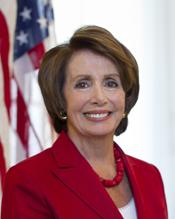
I thank the distinguished gentleman from Florida for his leadership on this important issue, and for his eloquence on it as well. Madam Speaker, my Republican colleagues on the other side of the…
I thank the distinguished gentleman from Florida for his leadership on this important issue, and for his eloquence on it as well.
Madam Speaker, my Republican colleagues on the other side of the aisle, I have really good news for you. The pledge to the flag and the words ``under
God'' are not in trouble. They are very safely ensconced in the Pledge of Allegiance, which, as our colleague mentioned, we pledge every single day that this body comes to order, school children across the country, the beginning of meetings all over our country. The profession of our pledge to the flag, and one Nation under God, is safe and it is sound.
That is why it is hard to understand why you would take up the time of this Congress to bring something to the floor that is so out of touch with the concerns of America's middle class. We are talking about democracy here and the intentions of our Founding Fathers. Essential to a democracy is a strong, thriving and growing middle class.
The policies of this Congress, this Republican Congress, undermined the security and the size of that middle class. That is why, if you are at home with someone who is sick, or a child home from school, and you happen to turn on the TV, and you see the proceedings of Congress, what would an American think? What they are doing is totally irrelevant to my life, totally irrelevant to my life, whether it is the health of my family, the education of my children, the economic security of our family and the safety of my neighborhoods.
Why isn't Congress addressing the concerns of America's great middle class? Why, indeed, are the Republicans taking up the time, day in and day out, with their proposals which have no prospect of success, which have no basis in reality, and which, in fact, undermine the Constitution of the United States which each one of us takes an oath of office to support and defend.
Why, instead of having this conversation, which as Mr. Hastings and others have said, this is not at risk. We all agree. One Nation under God. What a beautiful pledge. We all agree.
So rather than addressing the concerns of the American people, we are making here an all-out assault on the Constitution of the United States, which, thank God, will fail. Court-stripping. Court-stripping.
Fundamental to our democracy is the separation of powers, a system of checks and balances, but this Republican Congress says that Congress should strip the courts of the power to be a check and a balance to the other branches of government.
They have said in their meetings that Marbury v. Madison, which established precedent of judicial review, was wrongly decided. Over 200 years of precedent on judicial review they say was wrongly decided, and therefore, they can strip the courts of the ability to review the constitutionality of an act of Congress. That means by a simple majority, and if the other body were willing and the President were to sign, by a simple majority they can amend the Constitution with bills that are not constitutional but have no court to judge that constitutionality.
It is absolutely wrong, and Justice O'Connor said recently on this subject that this was brought up at the time of desegregation. They tried to use it then. Thank God, thank God, thank you, God, they failed. Thank God they failed.
What we should be talking about today is what is important, the issues that are important to America's middle class. Again, when people ask me what are the three most important issues facing the Congress I say the same thing: our children, our children, our children; their health, their education, the economic security of their families, which includes the pension security of their grandparents, the healthy environment and safety of the neighborhoods in which they live, a world at peace in which they can thrive.
But turn on the television and tune in to C-SPAN and see what is going on in Congress, and what do you see? The politics of divide and distract. It is really sad, as Mr. Kennedy said. It would be almost a joke but it is just really not that funny.
So let us instead vote, when we have a chance to vote on this rule, against the previous question; and that vote will be a vote to increase the minimum wage. That is relevant to the lives of the American people. In fact, it is relevant to the lives of millions of American people, many of them single moms. Many of them single moms.
Right now, minimum wage is $5.15 an hour. If you work full time at the minimum wage you make about $10,000. If you are two wage earners in a family and you both work full time and make the minimum wage, you make $20,000. You are below the poverty line for a family of four. Imagine two wage earners working full time. Is that fair? Is that just? I do not think so.
This Congress had no hesitation to give itself a raise over the past 9 years, $30,000 in raises. That $30,000 would take a minimum wage worker 3 years to earn just the increase in salaries that Congress gave itself. So there is no justice in what we are talking about here.
I quoted another debate on this subject, the recent encyclical of Pope Benedict XVI. This is a quote from Cardinal McCarrick, quoting the Pope quoting a saint. In his encyclical, ``God is Love,'' Pope Benedict talks about the responsibilities of politicians, people in government, and he quotes Saint Augustine who said that unless politicians, people who are in the public domain, are there to promote justice, they are just a bunch of thieves. Saint Augustine said, unless politicians were there in office to promote justice, they were just a gang of thieves. The Pope quoted Saint Augustine and the cardinal quoted the Pope in his farewell address to us.
It is true, it is true, how can we be talking about justice, how can we be talking about our Constitution, how can we be talking about under God if we do not even meet the simple test of fairness to America's middle class, which is central to our democracy? How can we be talking about that here when people are suffering in our country? They do not know how they are going to pay for their health bills, and millions of them do not have health insurance. In fact, 6 million more people in America do not have health insurance since President Bush became President, a 70 percent increase in the cost of health insurance since President Bush and this Republican Congress went to work on the American people.
So the injustices are there. The opportunity is here, and it is being ignored because the priority of the Republicans in Congress is to distract and divide the country. It is time for the politics as usual to end. It is time for this House to be the marketplace of ideas that our Founders intended, where we come to do the work of the American people, where they tell us to make laws to grow our economy, to make our country strong militarily, and then the health and well-being of the American people, make our country strong in the unity and the reputation that we have in the world.
Instead, we have this freak show one day after another of a rollout of distractions and divisions that is unworthy of this House, unworthy of the American people and certainly does not honor the vision of our Founding Fathers, the sacrifices of our men and women in uniform or the aspirations of our children.
So I urge my colleagues to vote ``no'' on the previous question, and that vote will be a vote to increase the minimum wage, which is, again, $5.15 an hour. It has not been increased in 9 years. While the price of gas, food, health care and everything else has gone up, the purchasing power has gone down.
Let us not be a bunch of thieves. Let us be a deliberative body that is here to promote justice. Vote ``no'' on the previous question. Vote ``no'' on this court-stripping bill which dishonors the oath of office that we all take.
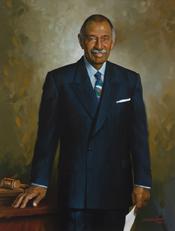
I thank the ranking chairman of the Constitutional Subcommittee, Mr. Nadler, for yielding to me. I commend him for the incredible work that we have done to try to bring understanding to how difficult…
I thank the ranking chairman of the Constitutional Subcommittee, Mr. Nadler, for yielding to me. I commend him for the incredible work that we have done to try to bring understanding to how difficult and unworkable this so-called Pledge Protection Act is.
Mr. Chairman, I hold in my hands this letter that has just come in to the Judiciary Committee from the American Bar Association, their Governmental Affairs Office.
The controlling sentence is this: ``As a matter of policy, Congress should not jettison our foundational principles because of current dissatisfaction with the controversial decision of the Supreme Court or lower Federal courts by permanently stripping the jurisdiction of the Federal courts to hear certain categories of cases. Rather than strengthening its legislative role, Congress, by pressing its own checking power to the extreme, imperils the entire system of separated powers.''
Ladies and gentlemen, this unconstitutional court-stripping bill, and it would be found unconstitutional if enacted, is only the latest attempt by a Congress to force a pluralist society into a one-size- fits-all set of beliefs. This is a remarkable violation of the separation of powers and the establishment clause.
If the act were to become law, it would clearly be held unconstitutional. Only State courts would be able to constitutionally challenge the Pledge, and so we would therefore end up with a 50-State collection of views as to what the free exercise clause, the establishment clause, meant in this context.
In addition, think of what this means to those groups that depend on this provision of our law not to be able to bring their issues to the court. This legislation would strip all Federal courts, including the Supreme Court, from hearing first amendment challenges to the Pledge of Allegiance and from enforcing longstanding constitutional rights in the court, and would slam the Federal courthouse door on religious minorities trying to do nothing more than enforce a fundamental constitutional right that they have had for over 60 years.
Please, let us turn this Pledge Protection Act down this afternoon.
American Bar Association,
Government Affairs Office,
Washington, DC, July 18, 2006.
Re H.R. 2389, the Pledge Protection Act of 2005.
Dear Representative: We understand that the House is
scheduled to consider H.R. 2389 tomorrow. We are writing to
express our opposition to this legislation, which would strip
from all federal courts jurisdiction to hear constitutional
challenges to the interpretation of, or the validity of, the
Pledge of Allegiance.
Our views on H.R. 2389 are informed by our long-standing
opposition to legislative curtailment of the jurisdiction of
the Supreme Court of the United States and the inferior
federal courts for the purpose of effecting changes in
constitutional law. The ABA has taken no position on the
underlying issues regarding recitation of the Pledge of
Allegiance in public schools; instead, our strong opposition
to H.R. 2389 and other pending legislation that would strip
the federal courts of jurisdiction to hear selected types of
constitutional cases is based on our concern for the
integrity of our system of government.
This legislation would authorize Congress to use its
regulatory power over federal jurisdiction to advance a
particular legislative outcome by insulating it from
constitutional scrutiny by the federal judiciary. In addition
to being constitutionally suspect, this legislation would
establish a dangerous precedent if enacted. As a matter of
policy, Congress should not jettison our foundational
principles because of current dissatisfaction with a
controversial decision of the Supreme Court or lower federal
courts by permanently stripping the jurisdiction of the
federal courts to hear certain categories of cases. Rather
than strengthening its legislative role, Congress, by
pressing its own checking power to the extreme, imperils the
entire system of separated powers.
If enacted, H.R. 2389 would restrict the role of the
federal courts in our system of checks and balances and
thereby limit the ability of the federal courts to protect
the constitutional rights of all Americans. Indeed, this
legislation would leave the state courts as
the final arbiters of federal constitutional law, creating
the possibility that some state judges might choose not to
follow Supreme Court precedents. Because the legislation
would nullify the Supremacy Clause in certain classes of
cases, the Constitution could mean something different from
state to state; and, contrary to the expressed intentions of
the Framers, our fundamental rights and the balance of power
among the branches would be subject to evanescent majority
opinion.
At a time when Congress is accusing the federal courts of
overstepping their constitutional role and calling for
judicial restraint, we urge you to likewise exercise
legislative restraint and demonstrate your continued
commitment to the doctrine of separation of powers and a
government composed of separate but coequal branches by
voting to defeat passage of H.R. 2389.
If you have any questions regarding our position, please
have your staff contact Denise Cardman, Deputy Director of
the Governmental Affairs Office.
Sincerely,
Robert D. Evans.
Mr. Chairman, I rise today to oppose this amendment and am against any amendment that would throw out any case currently pending in the Court.
This amendment would add language making it explicit that this already unconstitutional bill is effective immediately and applies to all pending and future litigation. As it currently stands, this bill does nothing to protect religious minorities from being coerced into reciting the Pledge, in violation of their First Amendment right of free speech. This amendment would effectively throw out any case that is currently pending in court in which a child's right to be free from religious persecution is being vindicated, and would slam the courthouse door shut in their faces.
H.R. 2389 as a whole is premature and should not be on our list of priorities.
What I find particularly troubling about this bill, setting aside all of the concerns that I have already stated, is its timing. It seems that my colleagues in the majority have lost sight of our priorities. At a time of record budget deficits and gasoline prices, when we are engaged in a quagmire in Iraq, when more than 45 million people are uninsured in this nation, and every day workers are seeing their pensions and health care benefits jeopardized,
surely we can find better things to do with our time as a congress than bash the courts.
Why then is something as arbitrary as a bill that would strip our Federal courts of their authority to hear an issue that the highest court in our land has never spoke on at the top of our list of ``things to do''? Need I remind my colleagues that the Supreme Court has never, since the inclusion of the words ``under God'' into the Pledge of Allegiance back in 1954, discussed or ruled on its constitutionality? Why then do we need this legislation at all? Why then do we need to offer this legislation now? It is our rights as individuals that are at stake right now--not the sanctity and preservation of the Pledge.
I urge my colleagues to vote ``no'' on this amendment.
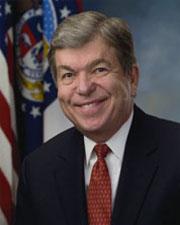
Mr. Chairman, I yield myself such time as I may consume. As we approach this bill today, Mr. Chairman, I want to make the point that clearly the Pledge of Allegiance is well understood by this body…
Mr. Chairman, I yield myself such time as I may consume.
As we approach this bill today, Mr. Chairman, I want to make the point that clearly the Pledge of Allegiance is well understood by this body and the Members of this body. It is repeated here every day. The words of the Pledge are words that we have learned since our childhood:
``I pledge allegiance to the Flag of the United States of America, and to the Republic for which it stands, one nation under God, indivisible, with liberty and justice for all.''
When Congress passed the bill adding the words ``under God,'' Congress stated its belief that those words in no way run contrary to the first amendment, but recognize ``only the guidance of God in our national affairs.''
Two words, ``under God,'' in the Pledge helped define our national heritage as the beneficiaries of a Constitution sent to the States for ratification ``in the year of our Lord,'' as the ratification statement said, 1787, by a founding generation that saw itself as guided by a providential God. These two words were added to the Pledge in the 1950s, and at that time President Eisenhower made the point that in those days of Cold War, those days after World War II, that it was important that we realize that there was something bigger than ourselves and that our country was guided by that.
For decades children have been reciting the Pledge of Allegiance in classrooms across America. The Pledge of Allegiance is an important civic ritual. It binds us together as Americans. But last year that daily ritual was halted in the Ninth Circuit Court of Appeals. The court actually told teachers and children in Alaska and Arizona, in California and Hawaii, in Idaho and Montana, in Nevada, Oregon, and Washington that they could not recite the Pledge of Allegiance as they had for decades in their classrooms.
The Court's reasoning? The words ``under God'' constituted a violation of the establishment clause of the first amendment. According to the court, it was unconstitutional to lead students, even voluntarily, in the Pledge of Allegiance because it included the phrase ``under God.''
Any of the phrases in the Pledge do not need to be subject to this kind of court interpretation. The Pledge of Allegiance, an act of Congress, modified by the Congress in 1950s, still continues to be the Pledge of Allegiance said by school students and Members of this body and others all over the country today. Judges should not be able to rewrite the Pledge. Passing this bill will protect the Pledge from Federal judges and will strike an important blow for self-government.
This legislation, Mr. Chairman, is in the spirit of the first judiciary act, the Judiciary Act of 1789, drafted by individuals who had drafted the Constitution, voted on by Members who had been at the drafting of the Constitution, all willing to define the role of the Federal courts and to narrow the role of the Federal courts, as this bill proposes to do.
I look forward to the debate.
Mr. Chairman, I reserve the balance of my time.
Mr. Chairman, I yield 3 minutes to the principal sponsor of the bill, my colleague from Missouri (Mr. Akin).
Mr. Chairman, yielding myself 15 seconds, I would like to point out that clearly this is in absolute agreement with Marbury v. Madison. Even in that case, the Chief Justice dismissed cases later when the Federal courts had not been granted jurisdiction.
Granting jurisdiction is the constitutional job of this body.
Mr. Chairman, I yield 4\1/2\ minutes to the gentleman from Florida (Mr. Stearns).
(Mr. STEARNS asked and was given permission to revise and extend his remarks.)
If my friend is yielding to me, the principal sponsor of the bill, Mr. Akin, has said he would like to respond to that. If that is appropriate, I would like for that to be our response.
Mr. Chairman, I yield 2 minutes to my neighbor from Arkansas (Mr. Boozman).
Mr. Chairman, I yield 2 minutes to the gentleman from Tennessee (Mr. Wamp).
Mr. Chairman, I yield 2 minutes to the gentleman from Indiana (Mr. Pence).
(Mr. PENCE asked and was given permission to revise and extend his remarks.)
Mr. Chairman, I yield 2 minutes to the gentleman from Iowa (Mr. King).
Mr. Chairman, I yield 2 minutes to the gentleman from Texas (Mr. Hensarling).
Mr. Chairman, I yield 3 minutes to the gentleman from California (Mr. Dreier), the chairman of the Rules Committee.
(Mr. DREIER asked and was given permission to revise and extend his remarks.)
Mr. Chairman, I yield 3 minutes to the gentleman from Texas (Mr. Gohmert).
Mr. Chairman, I yield myself 1\1/2\ minutes just to say that this debate clearly, once again, emphasizes the responsibility of the Congress to decide the jurisdiction of the courts.
It does not decide who has to say the Pledge of Allegiance. It does not decide separate but equal. In fact, separate but equal was decided by the Supreme Court just like the Dred Scott case was decided by the Supreme Court, which is why Abraham Lincoln, in his inaugural address, specifically talked about the danger of the Congress and the country letting the Court be the sole decision of these kinds of issues.
This is an issue that clearly resonates to the heart of what we are about as a country. It is the heart of what we are about as a people. All of our documents, our coins, our institutions, the Constitution, the Declaration of Independence, all have recognized a being superior to ourselves.
We think that protection for that phrase and other phrases in the Pledge is appropriate. Certainly we have not anticipated that State courts, who, by the way, were also recognized by the early Congress as appropriate determiners of some Federal laws, and early congressional determination in an early Supreme Court decision was that Federal laws that have been upheld by the State courts would not be subject to Federal review. This is in line with our responsibilities. It would be a responsibility some would like to suggest is different than it is, but it is our responsibility.
Mr. Chairman, I reserve the balance of my time.
Mr. Chairman, I yield the balance of our time to the gentleman from Missouri (Mr. Akin).
Madam Speaker, I came here to discuss, I thought there would not be much discussion on the rule, because that is what we are supposed to be debating and discussing right now, the rule on the Pledge…
Madam Speaker, I came here to discuss, I thought there would not be much discussion on the rule, because that is what we are supposed to be debating and discussing right now, the rule on the Pledge Protection Act.
Instead, most of the discussion that seems to come from the other side is complaining about priorities. I did not know that this is where we were going to complain about priorities. I suppose there are some connections.
It seems that judging by the comments in the Rules Committee yesterday, that the Democrats have a very hard time understanding the importance of the Pledge or the words ``under God'' or even the first amendment, which is about free speech. They seem to consider that to be a rather minor thing, and that perhaps may fit in with their view of government.
But I would recall that if you were to summarize what America stands for, we have always stood for the idea, the simple principle, that there is a God, even though we disagree as to who He might be, who gives basic inalienable rights to all people, and that it is the job of government to protect those rights.
That is, in a sense, a formula that Americans have gone to war about through the ages. That is why we went to war with King George, that is why
we fought the War of Independence, because we believed in that basic formula.
The Democrats are saying now that formula is not very important, we should not give it time to discuss it or think about it. But if they spent a little more time thinking about it, they would realize that is why we are in the war against these radical Islamists, why we fight the war of terror, why our sons and daughters are overseas.
The reason we fight is because these terrorists take away people's innocent lives and blow them up for political statements. We fight because these terrorists want to terrorize, to take away people's freedom. And the other side, the Democrats, want to cut and run from that fight. They would not want to cut and run if they understood the importance of those basic principles and that inalienable rights are impossible without a recognition of God, and that is why the Pledge bill is important and not irrelevant or trivial.
And so while we hear all of these discussions about, oh, you are not doing this, you are not doing that, you are not doing the other thing, fortunately government can do more than one thing at a time. There are many people at work in government.
The energy bill was brought up. I am surprised that the Democrats would mention the energy bill. It would be an embarrassment to me if I were a Democrat, and the Republicans had brought an energy bill on this floor in 2001, and it was killed by Democrats in the Senate. 2002, we brought an energy bill. That was killed by Democrats in the Senate. 2003, we brought an energy bill. It was killed by the Democrats in the Senate. And 2004, the Democrats killed it again. Finally in 2005, we get an energy bill.
If I were a Democrat, I would not be talking about energy prices after basically filibustering an energy bill for 5 years.
Madam Speaker, the question has been placed: Is there really a need for this legislation? And I think the statement was made, inaccurately, that there was just only one time that the Pledge had been challenged as being unconstitutional.
The words ``under God'' were found by the Ninth Circuit to be unconstitutional. It was not once. It was done first by a three-judge panel there. They came to the conclusion that school kids are not allowed to say the Pledge of Allegiance. They were then backed up by the entire Ninth Circuit that supported that same position.
The case then went to the U.S. Supreme Court. If we could be so assured that the phrase ``one Nation under
God,'' Madam Speaker, that is over your head is safe, if the words ``in God we trust'' on our money is safe, well, then certainly the words ``under God'' in our Pledge should be safe. So the Supreme Court could simply have ruled this is a ridiculous and a silly case that the Ninth Circuit has sent to the Supreme Court; we strike down their decision. They could have ruled that way.
I was there when the case was heard. The President's attorney recommended that the Court dismiss the case based on lack of standing of the person who brought the case. And one of the Supreme Court judges said we consider that the lower courts will take care of whether or not somebody has standing; that is not the kind of issue we consider. And yet on deliberation, instead of striking the Ninth Circuit decision, the Court said, oh, we are going to dismiss it for lack of standing.
That gives many of us very little cause to not be concerned not only with our Pledge, but with the money that says ``in God we trust,'' ``in God we trust'' over the Speaker's chair, and ``one Nation under God'' on our money. So it is a matter of debate whether or not there is a threat here, but this is the same Court who not so long ago made the decision that we could also ignore the fifth amendment and redistribute private property to other people without it being for government use. If they would ignore the fifth amendment, is it possible they might turn the first amendment upside down and use it as a tool of censorship? Certainly, many authorities think so.
This bill has merit, and it needs serious consideration. We take an oath of office to uphold the Constitution. That includes the first amendment, and this is about free speech, not censorship.
Mr. Chairman, I rise today in opposition to H.R. 2389-- the Pledge Protection Act--a bill which does not protect the Pledge of Allegiance, but instead endangers the constitutional balance between the…
Mr. Chairman, I rise today in opposition to H.R. 2389-- the Pledge Protection Act--a bill which does not protect the Pledge of Allegiance, but instead endangers the constitutional balance between the legislative and judicial branches.
I believe in the Pledge of Allegiance. In the wake of the Ninth Circuit Court of Appeals opinion in Newdow v. U.S. Congress in 2002, the House acted swiftly to affirm our support of the Pledge as it has existed since 1954. I voted in favor of a resolution that disagreed with the court's opinion that the words ``under God'' in the Pledge violate the Establishment Clause of the Constitution.
My opinion today remains the same: the Pledge of Alliance is a simple, eloquent statement of American values. Each morning millions of school children pledge allegiance not only to the flag but to the Nation and our values and our principles. This act, like the prayer that opens each session of the House and the call that brings the Supreme Court to order, reminds us all of the greater context of our purpose.
I oppose this legislation, not because I do not support the Pledge of Alliance, but because I know that this legislation does not achieve its goal. This legislation takes a bold step towards a radical concept which undermines the constitutional checks and balances so crucial to our system of Government. We have taken steps to protect the Pledge and we will continue to do so--but this is not the way.
This bill proposes to strip the courts of their just jurisdiction. While the Congress is granted the power to create and establish Federal courts and this jurisdiction, this power has always been used to promote judicial efficiency. It has not, and should not, be used to stifle debate on any issue regarding fundamental rights and liberties.
Since the Supreme Court decided the case of Marbury v. Madison in 1803, the judiciary has performed its unique role of interpreting laws of this country. This bill is unconstitutional because it would fly in the face of 200 years of our constitutional tradition. I cannot imagine our democracy could long endure a system in which the Congress may take from the courts the ability to hear cases regarding the freedom of speech, the freedom of religion, civil rights, or privacy.
The 108th Congress considered this legislation, and the Senate refused to pass this measure. Indeed, in this Congress the House Judiciary Committee refused to favorably report the bill to the full House.
The courts are now properly continuing to review constitutional challenges regarding the Pledge of Allegiance. The Supreme Court has dismissed a case regarding the Pledge, and the Ninth Circuit is again reviewing this matter. Congress has gone on record in support of the Pledge.
It is important that the courts remain as the neutral decision makers in constitutional cases. The Founders wisely enshrined the concept of judicial independence into the Constitution. Federal judges are given lifetime tenure, and Congress is prohibited from reducing their pay during their service in office.
Congress has indeed considered whether to intrude on the province of the Federal courts
throughout the history of this country. Congress wisely rejected President Franklin D. Roosevelt's plan to ``pack the court'' by increasing the size of the Supreme Court. In the 1970s Congress considered, but rejected, effort to strip jurisdiction away from the courts in the areas of civil rights and privacy cases, as a result of Supreme Court decisions of the 1950s and 1960s.
In many ways, this type of legislation is a thinly-veiled attempt to circumvent Article V of the Constitution, which gives Congress the ability to propose an amendment to the Constitution, and therefore overturn a constitutional decision of the Supreme Court. Congress and ultimately the states have the ability to amend the Constitution at their discretion, but under Article III of the Constitution the courts have the obligation to interpret the law and Constitution when ``cases or controversies'' arise in a lawsuit that is properly brought by parties before the court.
This bill would close the door to Federal courts. When there is no court to hear a case, then there is no liberty. A law without a venue for debate is a law without moral force. As the Ranking Member of the Helsinki Commission, I have seen too many countries run by dictators whose first actions are to shut down the independence courts and make them answerable to what the executive and the legislature wanted them to do. We cannot go down this path in the United States, and undermine our citizens' confidence in an independent judiciary that will decide cases without fear or favor.
I urge my colleagues to reject this legislation and attack on the independence of the judiciary, and oppose this legislation.

Mr. Speaker, I ask unanimous consent to speak out of order for 1 minute for the purposes of inquiring of the majority leader the schedule for the week to come. I would be pleased to yield to my…
Mr. Speaker, I ask unanimous consent to speak out of order for 1 minute for the purposes of
inquiring of the majority leader the schedule for the week to come.
I would be pleased to yield to my friend, Mr. Boehner, the majority leader.
Thank you, Mr. Leader, for that information.
Tuesday is the marriage amendment. Would it be fair to believe that these, they are listed relatively in chronological order, therefore, the pledge protection bill would come on Wednesday probably, and then Oman on Thursday probably?
On the veto override, you expect H.R. 810 to pass the Senate and then be vetoed and come back to us at that point in time, which would be either Thursday or Friday, depending upon how quickly we were doing our business?
If it were Wednesday, are you going to try to keep the other two bills that would come over from the Senate with that bill? Are you going to try to do all three of them at the same time, or is that not necessarily the case?
I yield to my friend.
So if you were trying to keep the three bills relatively together at the White House, is that what I am hearing you say?
Then we might pass those earlier in the week?
I thank the gentleman for that information. And I appreciate what you are saying about Friday. That will be dependent upon how quickly we get the work that is before us done. I understand that.
Mr. Leader, we have had some discussions, and we still have pending, as you know, one appropriation bill, the Labor-Health bill which is pending. It has, as you know, attached to it an amendment adopted in a bipartisan fashion on the minimum wage, taking the minimum wage to $7.25 in three increments.
Can you tell me the status of the Labor-Health bill? I know it is not on the calendar, but can you tell me its status?
I yield to my friend.
I thank the gentleman for that information. He anticipated my question, but I noted in the paper that there are some 25 or 25-plus Members on your side of the aisle who have written suggesting that we bring this to the floor. I would think if that is the case that we do have a majority, I would think, who would be for bringing this to the floor and, quite probably, a majority who might vote for a minimum-wage bill, assuming it comes to the floor as a minimum-wage bill.
Mr. Leader, I am very hopeful that that can happen, and it would be wonderful if it could happen before we left here for the August break. But I hear you saying that is still under discussion, and, hopefully, the result will be a positive one from the perspective of having an up- or-down vote on the minimum wage. I thank the gentleman for that information.
Lastly, Mr. Leader, the pension conference, you and I are very concerned about it. Literally millions of people are very concerned about it. But it still languishes in the conference committee. Can you give us any update on where the pension conference is and what expectations there might be for the pension bill to come to the floor?
I yield to my friend.
Hope springs eternal. Let's hope the bill is not eternally, however, in the conference committee.
Mr. Leader, if I could comment as well, you and I had a discussion and I had a discussion with your predecessor on this issue as well and with Mr. Blunt, when he was acting in the capacity you now have, with reference to the bipartisan inclusion of conferees in the decision- making process as to what the pension bill is going to be. In our experience in dealing with you when you were chairman of the committee, you did that. We appreciated that. We think it was the right thing to do. And, frankly, we think it manifested itself in some good products. But, Mr. Leader, I must tell you that the minority members and the ranking member have not been included, in the information I have, in the conferences or deliberations that have been going on with reference to the pension bill.
In light of the fact, as you point out, it is a complicated bill, a difficult bill, we think that would be useful certainly for us; but very frankly, we think it would be appropriate for the process itself.
I yield to my friend in hopes that he will, as he indicated he would, try to prevail on those powers that be to effect that happening, as he indicated he thought ought to happen.
I yield to my friend.
Reclaiming my time, I hope that is the case. And perhaps I will privately discuss with you whom these consultations have been with because on my side of the aisle, they have not talked to me yet. But I thank the gentleman, and I will talk to him privately.
Show 11 more
I thank the majority whip for yielding. I especially thank Mr. Akin for bringing this bill before this Congress. When we first met, he approached me with this bill, and I said, oh yes, Article III,…
I thank the majority whip for yielding. I especially thank Mr. Akin for bringing this bill before this Congress. When we first met, he approached me with this bill, and I said, oh yes, Article III, section 2, I will sign on. Then we got to know each other after that. So it is a proud moment for me to stand here and stand with the gentleman from Missouri and God-fearing and God-loving people across this country.
The question about the constitutionality of court-stripping Article III, section 2, I think Mr. Pence addressed it very well. Black-letter language in the Constitution was such exceptions and under such regulations as the Congress shall make, and those exceptions are legion.
In fact, the landmark case is Ex parte McCardle 1869 where Congress had authorized Federal judges to issues writs of habeas corpus, and they purported to be acting under its authority under Article III, section 2 to make those exceptions.
But in reviewing the statutes the Supreme Court's jurisdiction granted, they were not at liberty to inquire into the motives of the legislature. We can only examine its power under the Constitution. In fact, the majority decision on the Supreme Court said this: ``Without jurisdiction the court cannot proceed at all in any cause. Jurisdiction is power to declare the law, and when it ceases to exist, the only function remaining to the court is that of announcing the fact and dismissing the cause. And this is not less clear upon authority than upon principle.'' Ex parte McCardle, 1869.
And I would point out that Justice Scalia in the Hamdan case so recently wrote in his opinion, albeit in dissent, he said that ``the Court . . . cannot cite a single case in the history of Anglo-American law . . . in which a jurisdiction-stripping . . . was denied immediate effect in pending cases.'' But ``by contrast, the cases granting such immediate effect are legion . . . they repeatedly rely on the plain language of the jurisdictional repeal as an `inflexible trump,' '' and we know in our current experience in Congress, we have done this several times, particularly the Daschle case with Blackhawk Timber.
Mr. Chairman, I thank the gentleman for yielding this time and for his leadership on this issue.
This issue that is in front of us today is an example of congressional restraint, congressional restraint with regard to a court that is out of control.
The Ninth Circuit Court has thrown it back at this Congress time and time again, and the activism that has taken place out there in the ninth circuit brings me to some things that would be more drastic solutions to this than this very careful, very narrow, very gently defined legislation that we have before us. It only deals with the words ``under God'' in the Pledge.
We could do far more. In fact, I voted to split the ninth circuit in half. I would vote to abolish them if they continue this kind of behavior, throwing this into the face of the American people. We are not doing that. We are very carefully, very narrowly addressing something that the American people are asking for, very well within the jurisdiction of the United States Congress. And any Member who votes against this legislation may have their opinions, as Mr. Watt does, that they are either knowingly or inadvertently or perhaps even willfully conceding some power and authority this Congress has to control the courts.
In the end, it is the Congress that controls the courts. It is not three separate but equal branches. In the end, the congressional structure is set up for the Congress to determine the final authority over the judicial branch of government through the pursestrings. For all of our judicial courts and all of our appellate courts, everything is a creature of Congress, except the Supreme Court, which is also a creature of Congress, but established by the directive and the mandate of the Constitution.
Mr. Chairman, we have the authority to do this. It is a very narrowly and carefully defined piece of legislation.
The Watt amendment is a gutting amendment. It kills the bill. It hands this authority over to the Supreme Court, which is our very number one concern. We simply want to, with legislation, reflect the values of the American people, reflect the values of the history and the legacy of our Founding Fathers, and our rights that come from God within this Pledge. I urge we oppose the Watt amendment.
Mr. Chairman, I thank my distinguished colleague from Missouri for yielding me time. The question was posed by the gentleman from New York and others is this Pledge Protection Act, H.R. 2389,…
Mr. Chairman, I thank my distinguished colleague from Missouri for yielding me time.
The question was posed by the gentleman from New York and others is this Pledge Protection Act, H.R. 2389, constitutional? Is the whole concept of ``under God'' part of our Pledge constitutional? I submit this humble penny with Abraham Lincoln's picture on it. Do you know what it says on the side? ``In God We Trust.''
Behind the Speaker's chair, ``In God We Trust.''
At the Supreme Court they pray every day, asking for God's blessing. So Surely when we have a pledge, we should be able to use the word ``under God.'' Throughout our history this concept, as the United States being a providential Nation, has been the cornerstone of our success.
Would our Founding Fathers, if they were here today, decide to take ``under God'' from the Pledge? I do not think so. In fact, let's go and look at what the Founding Fathers talked about. This belief in our Nation being under God is a central part of our heritage. History bears this out.
Even before independence, a central theme among all forefathers was that our liberty flowed from our Creator. Josiah Quincy was one of these leaders. Not a lot of people know who he was. He was a charismatic leader in the American Revolution and outstanding lawyer. He wrote a series of anonymous articles for the Boston Gazette in which he opposed the Stamp Act and other British colonial policies. He, along with John Adams, bravely defended the British soldiers at a trial for the Boston Massacre, to show the world that the colonialists valued the rule of law above all.
In 1774, he was sent as an agent to argue the colonial cause for independence in England. He perished on the journey over. Yet, before he left, these are his immortal words that he uttered: ``For under God, we are determined that wheresoever, whensoever, or howsoever we shall be called to make our exit, we will die free men.''
Our Founding Fathers uttered similar statements time and time again, my colleagues, yet perhaps never more eloquently than the Declaration of Independence when even Thomas Jefferson penned the famous lines that ``we hold these truths to be self-evident: that all men are created equal; that they are endowed by the Creator with certain unalienable rights; that among these are life, liberty and the pursuit of happiness.''
This same man who first wrote about separation of church and state also acknowledged, ``The God who gave us life, gave us liberty at the same time.'' And so over the years our Nation's leaders have freely expressed their beliefs in a higher providence for this country.
In our darkest hour, President Lincoln during the Civil War and later President Kennedy during the civil rights movement reaffirmed that this Nation was founded under God, and that all men and women living here are entitled by God to equal liberty.
Even more recently, in the midst of the Cold War, my colleagues, President Reagan argued that ``freedom prospers when religion is vibrant and the rule of law under God is acknowledged.''
So the whole idea of under God has been passed on from generation to generation. We are blessed by this concept. The Constitution was drafted to guard our liberties, obviously, our God-given liberties, and wisely established a system of checks and balances for our government structure. Mr. Akin pointed these out. The power of Congress to limit jurisdiction of the courts is one of those primary checks on the power of the judiciary. So this is all according to procedures that our Founding Fathers established.
Article III, section 2 grants Congress the power to limit the jurisdiction of Federal courts. So what we are doing today is according to the Constitution.
The Pledge Protection Act invokes the constitutional powers and removes the Pledge from the jurisdiction of Federal courts. I ask you to support this act. I urge my colleagues for future generations to acknowledge our providential point in history.
Mr. Chairman, will the gentleman yield?
Would you agree that we here in Congress can have the right in the separation of powers to overrule the Supreme Court?
Not to overrule, but to pass laws here to check the balance of the Supreme Court?

Madam Speaker, I thank the gentleman for the time. Madam Speaker, for 9 years there has been no increase in the minimum wage. Meanwhile, CEOs of the largest corporations in this country have seen…
Madam Speaker, I thank the gentleman for the time.
Madam Speaker, for 9 years there has been no increase in the minimum wage. Meanwhile, CEOs of the largest corporations in this country have seen their pay rise to record heights, almost 200 times the size of the paycheck for an average worker in this country.
For the last month, we on this side of the aisle have been trying to get the majority party to allow for a simple, straight up or down vote on increasing the minimum wage. We tried over a month ago to attach it to the appropriations bill for the Department of Labor, and we succeeded. When we did, the majority party decided they would not allow that bill to come forward because they didn't like the results.
We are now told, if you read Congress Daily put out by the National Journal, we are now told that the Speaker of the House, Mr. Hastert, is against the minimum wage increase; we are told that the Majority Leader of the House, Mr. Boehner, is against the minimum wage increase. But they don't want to evidently face this issue up or down.
So the article in CQ this morning says, ``It is unlikely that GOP leaders would allow an up-or-down vote on a wage increase. Rather GOP aides say that if they craft a bill, it would likely include so-called sweeteners.''
Madam Speaker, I am proud of the fact that on this side of the aisle, our Members do not have to be maneuvered and cajoled and enticed into voting for a minimum wage increase. I am pleased by the fact that on this side of the aisle, Members do not need sweeteners in order to do what is right on this issue.
So we are trying today to attach the minimum wage increase to this bill. There are those on the other side of the aisle who will say that is inappropriate. Well, the previous speaker just recited part of the Pledge of Allegiance. When we stand on this House floor every day and take that pledge, we pledge to provide liberty and justice for all; not for most, not just for CEOs, not just to the wealthiest 1 percent of people in this country, but for all.
This Congress has provided $50 billion in tax cuts this year for people who make $1 million or more a year, and yet it is steadfastly refusing, on the direction of the top Republican leadership of this House, it is steadfastly refusing to do anything at all on the wage front for people who live life on the underside.
I think it is disgraceful for a Member of Congress, or for this Congress, to allow a pay raise for Members of Congress to go through at the same time that they are trying to block an increase in the minimum wage for the poorest people among us.
We have 15 weeks between now and the election. Do you realize, Madam Speaker, that we are going to spend 4 of those weeks in town here, and 11 weeks we are going to be spending back home campaigning for reelection? Meanwhile we will have taken no action to provide a Manhattan-like project on the energy front so that we are not stuck with $3 and $4 gasoline prices.
This Congress will have taken no action to provide health care for every child in this country. It will have taken no action to guarantee that we provide as much protection for the average worker in a company as we do for the board of directors and the CEO if that company goes bankrupt. We are taking no action to make college more affordable for every family in this country. We are not doing any of that.
Cannot we at least provide a minimal increase in the minimum wage for people who are living on life's edge? That is what we are asking you to do. I am amazed that we are told that we cannot do it.
Oh, you have time to strip a court from jurisdiction, just like you had time to call the Congress back to stick your nose in the family affairs of the Terry Schiavo family, but you do not have time and you do not have the will to provide some decent economic help to people who need it more than virtually anybody else in this society.
Shame on every one of you who will not move on this issue.

Mr. Chairman, I offer an amendment. Mr. Chairman, in many ways my amendment is quite simple. It simply preserves the authority of the United States Supreme Court to do its job. My amendment, however,…
Mr. Chairman, I offer an amendment.
Mr. Chairman, in many ways my amendment is quite simple. It simply preserves the authority of the United States Supreme Court to do its job. My amendment, however, is fundamental in its simplicity because it reflects the cornerstone of our constitutional framework, a framework that recognizes three coequal branches of government, each with its own area of responsibility, each serving as a check and balance on the others.
For over 200 years, the separation of powers doctrine has worked well, vesting the legislative power with the Congress, the executive power with the President, and the judicial power with the Supreme Court and other inferior Federal courts. At the pinnacle of the judiciary is and has been the one Court mandated by the Constitution, the United States Supreme Court.
I have offered this amendment before, and I offer it today because the very idea of Congress unilaterally cutting off all Federal court review of a constitutional issue is both unprecedented and likely unconstitutional, but it is also impractical and imprudent.
Despite the substantial body of scholarship that suggests that Congress does not have the authority to strip the Supreme Court of this appellate jurisdiction in the manner proposed by this bill, let's for the sake of argument concede that it does have that authority, and let me address the imprudence of this bill.
As legislators exercising the legislative power committed to us by the Constitution, the compelling question is: Why would we want to do what this bill would have us do? What could possibly motivate this Congress to adopt this bill as sound public policy? How does this bill do anything to protect the Pledge of Allegiance? What respect does it show for our venerable institutions? How does it unify us as a Nation?
I suggest to you that this bill makes the Pledge far more vulnerable to assorted, distasteful interpretations than the current law that exists at present.
I appeal to our common sense. Under the bill as drafted, the likelihood that different opinions on the Pledge will issue from State, territorial and the District of Columbia courts is either ignored or deliberately sheltered from challenge. Rather than protect the Pledge of Allegiance, this bill invites a patchwork of interpretations from all over the country.
What if your State is the State that determines that your child can no longer recite the words ``under God'' in the Pledge? Will you move to a neighboring State? Move across the country? Wherever you find a friendly State interpretation? But what if there is no Federal constitutional determination, and State legislatures are left to change the law upon acquiring the appropriate majority. Would you become a nomad? Would you move from State to State in search of the right position for your child?
The bill eliminates every single recourse that you have. It establishes a mechanism under which an individual's Federal rights would depend entirely on the happenstance of location. Ultimately coercing children to recite the Pledge without the language ``under God'' may be prohibited in one place but not another. Constitutional protections could be strong in one State and weak or nonexistent in another.
My amendment would restore the obligation of the Supreme Court to exercise its role as the final arbiter of the Constitution. Even if the proponents of this measure believe the Federal, district, and circuit courts of appeal should be removed from the process, the role of the U.S. Supreme Court in establishing uniform standards to apply to all Americans wherever they reside should certainly be protected.
I urge my colleagues to support my amendment.
Mr. Chairman, I reserve the balance of my time.
Mr. Chairman, I demand a recorded vote, and pending that, I make the point of order that a quorum is not present.
Mr. Chairman, I thank the gentleman for yielding me time. As the gentleman pointed out, the gentleman from Florida gave a very compelling argument for why it is appropriate to have ``under God'' in…
Mr. Chairman, I thank the gentleman for yielding me time.
As the gentleman pointed out, the gentleman from Florida gave a very compelling argument for why it is appropriate to have ``under God'' in the Pledge of Allegiance, and therefore concludes that since he thinks that is in jeopardy, based on the court case now moving through the judicial system arguing for stripping away the jurisdiction of the court to decide that issue.
But the bill before us goes far beyond the issue of under God, and that is why I would like to ask if the majority whip, I would like to use my time to make sure that you and I have the same understanding of the purpose of this bill.
Let's say, for example, that a school board in West Virginia decides that every student in the school system must recite the Pledge of Allegiance at the beginning of the school day. And a Jehovah's Witness family goes to court, to State court, after this bill is passed and says, it is a violation of our religious principles to pledge allegiance to anyone other than God. We are prepared to make all kinds of statements with respect to our regard for the country, but we cannot pledge allegiance to anyone but God.
And then that case goes to the State courts, and the West Virginia Supreme Court decides that, no, the school board is right. They have the right to compel every student in that school system to recite the pledge, even if it violates their religious principles. Or maybe it is telling an Orthodox Jewish child that they have to remove their skull cap for the recitation of the Pledge, and they say, no, if the West Virginia school board ruled that way, the individual's right to exercise their religious principles by keeping their skull cap on when they are outside and in this public arena is trumped by the school board's policy.
Should the U.S. Supreme Court be able to take that case on appeal that compels a decision that a State court, that compels the recitation of the Pledge in a way that violates the fundamental free exercise of religion of a student? That is my question.
Mr. Chairman, I yield to the gentleman from Missouri (Mr. Akin) 1 minute of the remaining time I have.
My assumption is this bill is now law.
Mr. Chairman, reclaiming my time. Because under this bill, they can decide to violate that Supreme Court decision, and the West Virginia Supreme Court, now the final arbiter of it, says, we did not like that decision in the first place, and now the Supreme Court cannot take jurisdiction of this case, so they decide to reverse, for West Virginia purposes, the Barnette case that the Supreme Court decided in 1944, and this bill strips away the jurisdiction of the Supreme Court to say, you did not follow our precedent.
Reclaiming my time. If you had stripped away the right of the U.S. Supreme Court, of the Federal courts to decide whether segregated schools, whether the doctrine of separate and equal should stand or whether it violated the 14th amendment of the Constitution, there are many States in this country where every State court would have affirmed that separate is equal, is compliant with the 14th amendment, and in many of those States, the voters in those States would have been quite happy with that decision.
You have eliminated the Supreme Court's ability to review fundamental decisions involving first amendment rights.
And the voters of that State.
The first amendment was to protect the exercise of religion, even if the majority didn't like that religion.
Mr. Chairman, I rise in strong opposition to H.R. 2389. Here we are again considering needless court-stripping legislation that would destroy our constitutional system of checks and balances. This…
Mr. Chairman, I rise in strong opposition to H.R. 2389. Here we are again considering needless court-stripping legislation that would destroy our constitutional system of checks and balances. This time we wrap it in the flag and call it the Pledge Protection Act.
We dealt with this same legislation two years ago, and it failed to become law. I ask my colleagues, why are we bringing this same legislation up for consideration again 2 years later?
Could it be an election year? Could my colleagues in the majority want to rally a certain part of their base? The real question is whether the majority will put election year political concerns ahead of the good of the Nation? Unfortunately, with this action, it looks like the answer is yes.
This is another extraordinary piece of arrogance on the part of the House of Representatives to pass legislation which would strip American citizens of their right to access the Federal courthouse. Can you imagine anything more shameful than telling an American citizen you cannot go into court to have your concerns addressed, heard by the courts of your Nation?
The right for a citizen to access the courts to decide questions of policy is as old as the Magna Carta, and it is important to us as anything else in the Constitution. Here we calmly say, ``You cannot have access to the Federal courts, including the Supreme Court.'' Shame, shame, shame, shame.
This is a precedent which is going to live to curse us, and we are going to live to regret this day's labor because other precedents will be following this, wherein we strip the rights of citizens under the Second Amendment, the thirteenth, fourteenth, and fifteenth amendments.
The Congress has considered these kinds of questions before. It is to be anticipated if this works, we can look to see this kind of abusive legislation considered in this body again. And you can be certain that somebody is sitting out there now thinking of new rights we can strip because we disagree with them.
I do not believe that we should strip the Federal courts of jurisdiction when it comes to issues related to the Equal Protection Clause of the Constitution. It drastically interferes with the separation of powers between the three branches of our government.
While I will always defend the autonomy and the power of the legislative branch, the principle of judicial review that Chief Justice John Marshall set out in the 1803 decision Marbury v. Madison is law. This landmark case established that the Supreme Court has the right to pass on the constitutionality of an act of Congress. To whittle away one of the bedrock powers of the judicial branch is wrong for the Union and wrong for our citizenry.
Tinkering with the foundation of our judicial branch could come back to haunt us. You can be almost certain with the passage of this legislation that there are interests out there deciding what other rights can be stripped of American citizens because we disagree with them. Maybe a future Congress will want to strip court challenges to gun control legislation by gun owners or sportsmen.
Mr. Chairman, we live in one Nation, under God, with liberty and justice for all. If we pass this bill, we begin to hollow out the true meaning of the pledge, the Constitution and what it means to live in this great Nation.
Like I did 2 years ago, I strongly oppose this legislation and urge my colleagues to do the same.
Madam Speaker, I thank the gentleman for yielding me time. The gentleman who just spoke previously on the other side of the aisle was wrong, and he misstates the position of the Democrat Party.…
Madam Speaker, I thank the gentleman for yielding me time.
The gentleman who just spoke previously on the other side of the aisle was wrong, and he misstates the position of the Democrat Party. Indeed, he misstates the need for this bill. There is no court case that is pending that has shunted this aside, of articulation of ``under God.'' In fact, the Supreme Court said the litigant did not have standing.
Madam Speaker, I believe that our Pledge of Allegiance with its use of the phrase ``one Nation under God'' is entirely consistent with our Nation's cultural and historic traditions.
I also believe that the United States District Court in Sacramento, in September of 2005, holding that use of this phrase is unconstitutional is wrong. I want the gentleman to hear me. I believe the decision was wrong.
As a matter of fact, as the gentleman knows, 383 people on the floor of this House, overwhelming numbers of Democrats and Republicans, said it was wrong. The gentleman may recall that resolution.
But this court-stripping bill is not necessary. In fact, the Department of Justice is seeking to overturn the district court's decision. For political reasons, the other side of the aisle does not want to allow the judicial procedure to continue as our Founding Fathers perceived it to be in the best interests of our Nation, a Nation of laws.
Yet today with this radical court-stripping bill, our Republican friends completely overreact to this lone district court decision, which I believe is clearly likely to be overturned.
This legislation would bar a Federal court, including the Supreme Court, from reviewing any claim that challenges the recitation of the Pledge on first amendment grounds. If we are a Nation of laws, we must be committed to allowing courts to decide what the law is.
Let us be clear. This bill is unnecessary and, I believe, probably unconstitutional. It would contradict the principle of Marbury v. Madison, intrude on the principles of separation of powers, degrade our independent Federal judiciary, which, by the way, is a pattern of the majority party that is constantly wanting to undermine the judiciary. It is an end run.
Furthermore, Madam Speaker, the House should not be spending its time today addressing a single Federal court decision that should be overturned on appeal. My goodness, how many bills we would have to have to disagree with every court opinion that comes down.
What we should be doing, Madam Speaker, is taking up legislation providing a long overdue increase in the Federal minimum wage, which has stood at $5.15 per hour since 1997, the longest period of time that we have not raised the minimum wage since Ronald Reagan and George Bush were President of the United States, in which case it was a longer period of time.
An estimated 6.6 million, indeed some estimate as many as 18 million people, are impacted by the minimum wage. Yes, we are raising this issue now because it is the right thing to do whenever you do it, in whatever forum you do it, at whatever time you do it. It is time that we take people working in America every day, playing by the rules, take them out of poverty. Let's do it now. Give us this opportunity. Give them a chance.

Mr. Chairman, I rise in opposition to H.R. 2389, which would strip from the federal courts and the Supreme Court the ability to hear any cases related to the Pledge of Allegiance. This bill…
Mr. Chairman, I rise in opposition to H.R. 2389, which would strip from the federal courts and the Supreme Court the ability to hear any cases related to the Pledge of Allegiance. This bill eliminates the basic principle of judicial review that was established by the Supreme Court in Marbury v. Madison back in 1803.
This bill should not have come to the floor today because it seeks to make a dangerous change to our Nation's system of checks and balances. For that reason, this bill was rejected by the House Judiciary Committee. Yet, the Majority has brought it up today to intentionally divide the House. This is not the first time. We have seen this before. In September two years ago, we had this same vote, and I opposed it then.
The judiciary was designed to be the one branch of the federal government that is insulated from political forces. This independent nature enables the federal judiciary to thoughtfully and objectively review laws to ensure that they are in line with the Constitution. Throughout the development of our Nation, this check has been vital to protecting the rights of minorities.
Although the Constitution gives Congress the power to limit the jurisdiction of the federal judiciary and the appellate jurisdiction of the Supreme Court, I am certain that the founding fathers did not intend for Congress to use this power to shape the jurisdiction of the courts along ideological lines. This legislation will set a dangerous precedent by allowing Congress to avoid judicial review so that it can pass legislation that it thinks may be unconstitutional. This is a clear abuse of Congressional authority and a cynical attempt to question the patriotism of Members of this institution.
Like every Member of this body, I am proud to recite the Pledge of Allegiance as a way to express my loyalty to this Nation and its
founding principles. I make it a point during my town meetings in New Jersey to lead my constituents in reciting the Pledge of Allegiance. I share the view of many Members that the current text of the Pledge of Allegiance is constitutional including the phrase ``under God''. I expressed my support for the Pledge in its current form when I joined many of my colleagues in voting for a resolution that urged the Supreme Court to recognize the constitutional right of children to recite the pledge in school. That resolution was an appropriate way for me, as a Member of Congress, to express my belief in the constitutionality of the Pledge of Allegiance.
Unfortunately, those who support this legislation seek to alter our delicate system of checks and balances and make their own decisions unchallengeable--as if they were infallible. They are attempting to alter the intended framework of our government, which has met the needs of a diverse population and allowed us to remain indivisible in times of crisis for more than 200 years. We should not make this dangerous change to upset the balance of power established by our Founding Fathers and enshrined in the Constitution.
I urge my colleagues to oppose this bill.
I thank my colleague for yielding. Next week, Mr. Speaker, the House will convene on Monday at 12:30 for morning hour and 2 p.m. for legislative business. We will consider several measures under…
I thank my colleague for yielding.
Next week, Mr. Speaker, the House will convene on Monday at 12:30 for morning hour and 2 p.m. for legislative business. We will consider several measures under suspension of the rules. A final list of those bills will be sent to Members' offices later on this afternoon.
On Tuesday, we expect to do House Joint Resolution 88, the marriage amendment.
For the balance of the week, H.R. 2389, the pledge protection bill; H.R. 5684, the United States-Oman Free Trade Agreement Implementation Act.
We do expect that if the Senate acts on the Castle stem cell legislation and several other bills that could be brought over to the House, where the House would consider the other two stem cell bills, and send all three bills to the White House. And then, depending upon what happens at the White House, whether we would vote on a veto override or not is certainly under consideration.
I do expect that we will have votes on Friday at this point. We will continue to work with Members on both sides of the aisle as the schedule develops. But the next two Fridays are scheduled. My hope is that we are able to finish our work, both next week and the following week, by Thursday night so that Members would not have to vote on Friday. But I cannot make that commitment at this point.
Probably.
Yes. It could be Wednesday if you are a real optimist.
I thank my colleague for yielding.
It is expected that the House would take up the other two stem cell bills, pass them, and send them with the Castle bill to the White House, and then be prepared to deal with whatever happens from there.
But I do not expect that they will get here until late Tuesday, and so I think the earliest we could take them up would be Wednesday morning.
I thank my colleague for yielding.
There is that issue and other issues on the bill that are still being discussed. There has been no resolution on those.
But I think I will anticipate the next question with regard to the minimum wage. I have had conversations with Members on both sides of the aisle about the issue. It is clearly under discussion, but there have been no decisions made as to what to do or when to do, whatever.
Clearly, protecting the American people's pensions and ensuring that we get better funding of private pension plans is the goal of this legislation. I can tell the gentleman that I think we are very close. There is some progress. We are close. We have discussed this for months and months here. It is a very difficult bill, as you are well aware, and trying to make sure that there is balance, that we dot the I's and cross the T's, that process is under way. But I am hopeful.
As the gentleman is aware, this conference is being chaired by the Senate. There has been one formal conference meeting. But I can tell you there have been consultations with Members of both parties on both sides of the Capitol with regard to many of the issues that have been agreed to and issues that are yet to be resolved, and I fully expect those conversations will continue.

Mr. Chairman, at best this bill is a mistake. At worst, it is a cynical political stunt. Either way, it should not pass. It seeks to end the ability of Federal courts--including the Supreme…
Mr. Chairman, at best this bill is a mistake. At worst, it is a cynical political stunt. Either way, it should not pass.
It seeks to end the ability of Federal courts--including the Supreme Court--``to hear or decide any question pertaining to the interpretation of, or the validity under the Constitution of, the Pledge of Allegiance'' as the pledge is now worded.
It responds to a 2002 decision of the Court of Appeals for the Ninth Circuit that both the 1954 law that added the words ``under God'' to the pledge and a local school district's policy of daily recitation of the pledge as so worded were unconstitutional. (The ruling later was modified to apply only to the school district's recitation policy.)
The Supreme Court reversed that decision because the plaintiff did not have legal standing to challenge the school district's policy. But the Republican leadership evidently finds the possibility of a similar lawsuit so alarming--or maybe they think it presents such a political opportunity--that they back this bill to keep any Federal court from hearing a lawsuit like that.
I cannot support such legislation.
It mayor may not be constitutional--on that I defer to those with more legal expertise than I can claim. But I have no doubt it is not only unnecessary but even misguided and destructive.
I have no objection to the current wording of the Pledge of Allegiance. After the Ninth Circuit's decision, I voted for a resolution--approved by the House by a vote of 416 to 3--affirming that ``the Pledge of Allegiance and similar expressions are not unconstitutional expressions of religious belief'' and calling for the case to be reheard.
But this bill is a different matter. It may be called the ``Pledge Protection Act,'' but that is inaccurate and even misleading--because it not only fails to protect the pledge but also would undercut the very thing to which those who recite the pledge are expressing their allegiance.
It doesn't protect the pledge because even if it becomes law people who don't like the way the pledge's current wording would still be able to bring lawsuits in state courts. So, even if Colorado's courts upheld the current wording, the courts of other States might not. And the bill says the U.S. Supreme Court could not resolve the matter.
That would mean there would no longer be a single Pledge of Allegiance, but different pledges for different States--and the Constitution's meaning would vary based on State lines. That would directly contradict the very idea of the United States as ``one Nation'' that should remain ``indivisible'' and whose defining characteristics are devotion to ``liberty and justice for all.''
And that would be completely inconsistent with the idea of the Republic (symbolized by the flag) to which we pledge allegiance when we recite what this bill pretends to ``protect.''
How ironic--and how pathetic.
As national legislators, as U.S. Representatives, we can and should do better. We should reject this bill.
Mr. Chairman, may I first remind all of us of words we each spoke not so long ago. ``I do solemnly swear that I will support and defend the Constitution of the United States against all enemies,…
Mr. Chairman, may I first remind all of us of words we each spoke not so long ago.
``I do solemnly swear that I will support and defend the Constitution of the United States against all enemies, foreign or domestic; that I will bear true faith and allegiance to the same; that I take this obligation freely, without any mental reservation or purpose of evasion; and that I will well and faithfully discharge the duties of the office on which I am about to enter, so help me God.''
Mr. Chairman, when we swore this oath, we did not say that we would protect the Constitution from everyone except rogue judges.
The issue that brings us to the floor this day is an act on the part of the Ninth Circuit that ruled that the words ``under God'' in a voluntary Pledge of Allegiance by our school children is unconstitutional.
It astonishes me, Mr. Chairman, that we even have to address such an insane conclusion. I truly believe that if we had lived in the days of the Founding Fathers and accused them of intending to outlaw school children from saying the words ``under God'' in their voluntary Pledge of Allegiance, they would have challenged us to a duel for impugning their honor in such an egregious and outrageous fashion.
Mr. Chairman, when judicial supremacists on the bench desecrate the very Constitution that they are given charge, the sacred charge to defend, those of us in this Congress who have also made an oath to defend the Constitution must respond accordingly.
The Constitution of the United States, Mr. Chairman, does not prohibit school children from saying the words ``under God'' in a voluntary Pledge of Allegiance. It is that fundamentally simple.
Indeed, the Constitution does say that the Congress shall make no law respecting an establishment of religion or prohibiting the free exercise thereof.
Mr. Chairman, when the Ninth Circuit decision said school children cannot voluntarily say the words ``under God'' in their Pledge of Allegiance, these judges, sir, were prohibiting the free exercise thereof.
This legislation would take such a decision away from such rogue judges.
Mr. Chairman, if Congress forsakes their oath and their duty to defend the Constitution and allows this magnificent document to fall prey to activist judges, we relegate this Republic to an arrogant judicial oligarchy. It is an abrogation of our oath of office and it tramples on the blood of our Founding Fathers and the soldiers who died to give us America and her rule of law.
There would be nothing left to us at that point but to board up the windows in this building and go home and quit pretending to be defenders of the United States Constitution or representatives of the greatest Republic in the history of humanity.
Mr. Chairman, it is not too late. I urge this amendment be rejected, and the bill be passed as written.
Bill Text
3 versions available
        [Congressional Bills 109th Congress]
[From the U.S. Government Publishing Office]
[H.R. 2389 Referred in Senate (RFS)]

<DOC>

<DOC>
109th CONGRESS
2d Session
H. R. 2389

_______________________________________________________________________

IN THE SENATE OF THE UNITED STATES

July 20, 2006

Received

August 4 (legislative day, August 3), 2006

Read twice and referred to the Committee on the Judiciary

_______________________________________________________________________

AN ACT

To amend title 28, United States Code, with respect to the jurisdiction
of Federal courts over certain cases and controversies involving the
Pledge of Allegiance.

Be it enacted by the Senate and House of Representatives of the
United States of America in Congress assembled,

SECTION 1. SHORT TITLE.

This Act may be cited as the ``Pledge Protection Act of 2005''.

SEC. 2. LIMITATION ON JURISDICTION.

(a) In General.--Chapter 99 of title 28, United States Code, is
amended by adding at the end the following:
``Sec. 1632. Limitation on jurisdiction
``(a) Except as provided in subsection (b), no court created by Act
of Congress shall have any jurisdiction, and the Supreme Court shall
have no appellate jurisdiction, to hear or decide any question
pertaining to the interpretation of, or the validity under the
Constitution of, the Pledge of Allegiance, as defined in section 4 of
title 4, or its recitation.
``(b) The limitation in subsection (a) does not apply to--
``(1) any court established by Congress under its power to
make needful rules and regulations respecting the territory of
the United States; or
``(2) the Superior Court of the District of Columbia or the
District of Columbia Court of Appeals;''.
(b) Clerical Amendment.--The table of sections at the beginning of
chapter 99 of title 28, United States Code, is amended by adding at the
end the following new item:

``1632. Limitation on jurisdiction.''.

SEC. 3. EFFECTIVE DATE.

This Act and the amendments made by this Act take effect on the
date of the enactment of this Act and apply to any case that--
(1) is pending on such date of enactment; or
(2) is commenced on or after such date of enactment.

Passed the House of Representatives July 19, 2006.

Attest:

KAREN L. HAAS,

Clerk.