Rural Housing Hurricane Relief Act of 2005

Legislative Activity
Stay on top of the latest movement without scrolling through every action
Referred to the Subcommittee on Housing and Community Opportunity.
January 4, 2006
View full timeline
Introduced in House
September 26, 2005
Referred to the House Committee on Financial Services.
September 26, 2005
Mr. Baker moved to suspend the rules and pass the bill, as amended.
October 6, 2005 • 3:50 PM
Considered under suspension of the rules. (consideration: CR H8668-8670)
October 6, 2005 • 3:51 PM
DEBATE - The House proceeded with forty minutes of debate on H.R. 3895.
October 6, 2005 • 3:51 PM
At the conclusion of debate, the Yeas and Nays were demanded and ordered. Pursuant to the provisions of clause 8, rule XX, the Chair announced that further proceedings on the motion would be postponed.
October 6, 2005 • 4:03 PM
Considered as unfinished business. (consideration: CR H8706-8707)
October 6, 2005 • 8:42 PM
Passed/agreed to in House: On motion to suspend the rules and pass the bill, as amended Agreed to by the Yeas and Nays: (2/3 required): 335 - 81 (Roll no. 513).(text: CR H8668-8669)
October 6, 2005 • 8:51 PM
On motion to suspend the rules and pass the bill, as amended Agreed to by the Yeas and Nays: (2/3 required): 335 - 81 (Roll no. 513). (text: CR H8668-8669)
October 6, 2005 • 8:51 PM
Motion to reconsider laid on the table Agreed to without objection.
October 6, 2005 • 8:51 PM
The title of the measure was amended. Agreed to without objection.
October 6, 2005 • 8:51 PM
Received in the Senate.
October 6, 2005
Read twice and referred to the Committee on Banking, Housing, and Urban Affairs.
October 25, 2005
Referred to the Subcommittee on Housing and Community Opportunity.
January 4, 2006
Voting History
1 vote recorded • Roll call available
Floor Debate
24 membersWhat members said about H.R. 3895 on the floor
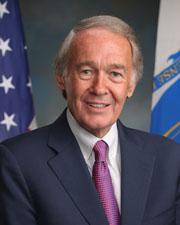 EJM
EJM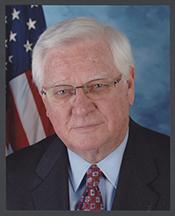 HR
HR SJL
SJL RH
RH MOS+19
Floor Debate
24 membersWhat members said about H.R. 3895 on the floor
Mr. Speaker, I thank the gentleman very much for yielding me this time. It is not so much what is in this bill; it is what is not in this bill. What we have here is a bill which does not, in fact,…
Mr. Speaker, I thank the gentleman very much for yielding me this time.
It is not so much what is in this bill; it is what is not in this bill. What we have here is a bill which does not, in fact, deal with all of the threats which are posed by al Qaeda.
Right now, across our country, it is harder to get into some night clubs in New York City than it is to get into chemical facilities across our country. There are 23 States that have over 100 facilities that could cause injuries or deaths to 1 million people. This bill still does not mandate armed guards at chemical facilities.
The nuclear power industry still does not have a permanent upgrade of the protections which are needed against an al Qaeda attack, even though we know that al Qaeda has nuclear power plants at the top of their terrorist target list.
Public transit. While $18 billion has been spent on airlines, only a small fraction of that has been spent on mass transit to protect against al Qaeda attacks, even though we have been warned in Madrid, warned in London, and even today, New York is in fear that there could be an attack on that city.
LNG: What the Republicans have done this year is they have told mayors they have no say over where LNG facilities would go. Governors have no say. And the Coast Guard has no say. Only the Federal Energy Regulatory Commission, dealing with the wish lists of the oil and gas industry, can decide where they go, but in the City of Boston and in dozens of cities across our country, they are going to have a homeland security nightmare trying to protect if al Qaeda attacked an LNG facility.
When it comes to hazardous material shipments, this majority Republican Party still refuses to have a mandate that there is a rerouting of those dangerous chemicals, the chlorines and the others that, if they were attacked, would cause catastrophic injuries in our country.
And in aviation, still only a small fraction of all of the cargo that goes on passenger planes in our country is inspected. So the people in our country must take off their shoes, put their computer through, their bags go through, all of it is screened, and they are sitting in the passenger section of the plane, and then underneath their feet will come all of this cargo that has not been screened.
This bill has only a very slight increase in its budget, but the budget itself does not determine whether or not we have good homeland security. This Republican majority still refuses to tell the chemical, the nuclear, the LNG, the hazardous material industry, the aviation industry that there is a regulatory black hole through which al Qaeda can come to attack the very list of targets that they put at the top of their terrorist target list. Not enough money and no mandates on the industry.
Mr. Speaker, catastrophe is bred by complacency, and that is what this bill is.
Mr. Speaker, the conference report we are considering today on the House Floor fails to close dangerous homeland security loopholes that continue to put Americans at risk more than 4 years after the 9/11 attacks.
Despite the urgent need to increase protections against terrorists determined to strike our country, serious vulnerabilities persist in a range of major areas:
Chemical plant security: More than 100 facilities in 23 States could threaten 1 million or more people if terrorists attacked the facility. There are no federal security requirements for chemical plants--the industry secures itself if it decides, on its own, to do so. ``60 Minutes'' did a segment where they literally walked right through an open front gate into a chemical plant outside downtown Pittsburgh. At one facility, the reporter climbed up onto a tank containing toxic material and shouted ``hello, I'm on your tank.'' There were no guards and no one tried to stop him. There are nightclubs in New York City that are harder to get into than some of our chemical plants.
Leaks of toxic chemicals can be devastating. In India in 1984, a leak at a chemical plant in Bhopal killed at least 4,000 people and injured hundreds of thousands more.
Transportation of extremely hazardous materials: Shipments of extremely hazardous materials such as chlorine routinely travel through
densely populated areas of our country. These shipments are mobile chemical weapons that often share the same track as urban passenger rail systems and could kill or injure 100,000 people within half an hour.
In a report released by the Teamsters Rail Conference last week that surveyed rail employees, 63 percent of those surveyed indicated that their train or equipment was delayed or left unattended for an extended period of time that day, and of those, 55 percent indicated that there were hazardous materials aboard that train.
LNG Security: One of Millennium Bomb plotters planning to attack Los Angeles International Airport was smuggled into the country on an LNG tanker docking in Everett, MA in my Congressional District. Terrorists may target LNG tankers and terminals, resulting in catastrophic consequences for surrounding communities. In 1979, my bill to require such remote siting was signed into law. But the Bush Administration is trying to undermine it, opening up the possibility an LNG plant would be placed, like a sitting duck, in the middle of an urban area, where an attack or accident would cause incredible devastation. Energy Bill signed into law in August 2005 froze out local officials from site decision-making process, so now convenience for energy companies, rather than security safeguards for surrounding community, will determine where facilities are built. Last month, I offered an amendment to the Coast Guard reauthorization bill to require the involvement of the Coast Guard, which is part of the Homeland Security Department, in siting decisions. My amendment was defeated on the House Floor.
Republicans claim to support local control and the right of states to fend off federal encroachments. But when it comes to LNG siting, Republicans cut out mayors and governors and state homeland security officials from carrying out one of their most important responsibilities--protecting the public.
Aviation: Approximately 22 percent of all cargo transported by air in the United States is carried on passenger planes. This cargo consumes about half of the space in the cargo bay on a typical flight, and almost none of it is ever inspected! In the past, this cargo loophole has been exploited with deadly results, such as when Pan Am Flight 103 was blown up over Lockerbie, Scotland by a bomb hidden in unscreened baggage. I asked Secretary Chertoff if he would support a requirement that 100 percent of the cargo carried on passenger planes be inspected, just as all checked bags, carry-on bags and passengers are currently inspected before boarding? He said ``No.''
Why should the booties of babies be scrutinized for bombs, but no one checks the cargo bound for the belly of a Boeing? The Bush administration says we should trust the shipper. But we must apply the Reagan Doctrine to cargo security--Trust, but verify.
Public transit: The attacks in London and Madrid clearly demonstrated our vulnerability to similar strikes against our transit systems here in the United States. Despite these wake-up calls, this conference report provides only slightly more funding than what is being provided today. Ranking Members Obey and Sabo offered amendments during the conference to increase funding for public transit security, but these amendments were defeated by the unanimous opposition from Republicans on the conference committee.
The American Public Transportation Association has identified $6 billion in transit security needs for U.S. public transportation systems, approximately the same amount of money we're spending each month in Iraq. Since September 11, the Federal Government has spent $18 billion on passenger air security, but only $250 million on transit security. Yet, Americans take public transportation 32 million times a day--16 times more than they fly.
Biological Weapons: Four years after the unsolved anthrax attacks on the Capitol that killed innocent workers, DHS has only completed material threat assessments on four of the biological, chemical and radiological agents that it is required to assess under Project Bioshield. I asked Secretary Chertoff if he would commit to completing the rest of these threat assessments within 60 days. He said ``no.''
Today's conference report does not adequately address these issues. This bill does not:
Require chemical plants to be protected by armed guards trained to prevent attacks by sophisticated, suicidal terrorists or require chemical companies to substitute safer technologies and chemicals in their processes whenever possible, so if terrorists penetrate a plant, damage they could cause would be dramatically reduced.
Require re-routing of extremely hazardous materials whenever possible to reduce the threat of an attack on a chemical shipment in a densely populated area.
Mandate that LNG facilities should be built in remote locations far away from population centers or ensure that security officials, including State and local government representatives are involved in siting process.
Require that all the commercial cargo carried on passenger planes be inspected for bombs, just as all passengers and their luggage are.
Direct the Department of Homeland Security to complete all of the 60 material threat assessments and purchase all of the vaccine doses required under Project Bioshield.
Republicans continue to nickel and dime homeland security while writing a blank check for the war in Iraq. Specifically, the discretionary funding provided in this bill is $1.3 billion, only 4.5 percent more than last year, which is just slightly more than the rate of inflation. When Ranking Members Obey and Sabo attempted to add $1.7 billion for FEMA disaster mitigation programs, emergency management grants, chemical, transit and port security, and other critical security programs such as aviation security and Coast Guard operations, they were defeated by Republicans on a party-line vote.
Hurricane Katrina and Hurricane Rita washed away the illusion that the Federal Government is better prepared to respond to a natural disaster or terrorist attack than it was on 9/11. Not only are we not prepared for a natural or man-made disaster, we are not taking the preventive measures to reduce the risk of these devastating events. This conference report does not provide for qualified, experienced leadership at FEMA, nor does it return FEMA to the staffing levels of the 1990s.
Mr. Speaker, I cannot support this conference report, which fails to address pressing, well-known homeland security weaknesses. I urge a ``no'' vote.
Mr. Speaker, the conference report we are considering today on the House Floor fails to close dangerous homeland security loopholes that continue to put Americans at risk more than four years after the 9/11 attacks.
Despite the urgent need to increase protections against terrorists determined to strike our country, serious vulnerabilities persist in a range of major areas:
Nuclear terrorism: Non-proliferation expert Graham Allison has said that ``more likely than not'' there will be an act of nuclear terrorist attack in our country. Al Qaeda views obtaining nuclear weapons as a religious duty. There are tens of thousands of nuclear weapons-worth of highly enriched uranium in the former Soviet Union, but we do not have the technology that can reliably detect it at our ports of entry.
Chemical plant security: More than 100 facilities in 23 States could threaten 1 million or more people if terrorists attacked the facility. There are no federal security requirements for chemical plants--the industry secures itself if it decides, on its own, to do so. ``60 Minutes'' did a segment where they literally walked right through an open front gate into a chemical plant outside downtown Pittsburgh. At one facility, the reporter climbed up onto a tank containing toxic material and shouted ``hello, I'm on your tank.'' There were no guards and no one tried to stop him. There are nightclubs in New York City that are harder to get into than some of our chemical plants.
Leaks of toxic chemicals can be devastating. In India in 1984, a leak at a chemical plant in Bhopal killed at least 4,000 people and injured hundreds of thousands more.
Transportation of extremely hazardous materials: Shipments of extremely hazardous materials such as chlorine routinely travel through densely populated areas of our country. These shipments are mobile chemical weapons that often share the same track as urban passenger rail systems and could kill or injure 100,000 people within half an hour. In a report released by the Teamsters Rail Conference last week that surveyed rail employees, 63 percent of those surveyed indicated that their train or equipment was delayed or left unattended for an extended period of time that day, and of those, 55 percent indicated that there were hazardous materials aboard the train.
LNG Security: One of Millenium Bomb plotters planning to attack Los Angeles International Airport was smuggled into the country on an LNG tanker docking in Everett, MA in my Congressional District. Terrorists may target LNG tankers and terminals, resulting in catastrophic consequences for surrounding communities. In 1979, my bill to require such remote sitting was signed into law. But the Bush Administration is trying to undermine it, opening up the possibility an LNG plant would be placed, like a sitting duck, in the middle of an urban area, where an attack or accident would cause incredible devastation. Energy Bill signed into law in August 2005 froze out local officials from site decision-making process, so now convenience for energy companies, rather than security safeguards for surrounding community, will determine where facilities are built. Last month, I offered an amendment to the Coast Guard reauthorization bill to require the involvement of the Coast Guard, which is part of the Homeland Security Department, in siting decisions. My amendment was defeated on the House Floor.
Republicans claim to support local control and the right of states to fend off federal encroachments. But when it comes to LNG siting, Republicans cut out mayors and governors and state homeland security officials from carrying out one of their most important responsibilities--protecting the public.
Aviation: Approximately 22 percent of all cargo transported by air in the United States is carried on passenger planes. This cargo consumes about half of the space in the cargo bay on a typical flight, and almost none of it is ever inspected! In the past, this cargo loophole has been exploited with deadly results, such as when Pam Am Flight 103 was blown up over Lockerbie, Scotland by a bomb hidden in unscreened baggage. I asked Secretary Chertoff if he would support a requirement that 100 percent of the cargo carried on passenger planes be inspected, just as all checked bags, carry-on bags and passengers are currently inspected before boarding? He said ``No.''
Why should the booties of babies be scrutinized for bombs, but no one checks the cargo bound for the belly of a Boeing? The Bush Administration says we should trust the shipper. But we must apply the Reagan Doctrine to cargo security--Trust, but verify.
Public transit: The attacks in London and Madrid clearly demonstrated our vulnerability to similar strikes against our transit systems here in the United States. Despite these wake-up calls, this conference report provides only slightly more funding than what is being provided today. Ranking Members Obey and Sabo offered amendments during the conference to increase funding for public transit security, but these amendments were defeated by the unanimous opposition from Republicans on the conference committee.
The American Public Transportation Association has identified $6 billion in transit security needs for U.S. public transportation systems, approximately the same amount of money we're spending each month in Iraq. Since September 11, the federal government has spent $18 billion on passenger air security, but only $250 million on transit security. Yet, Americans take public transportation 32 million times a day--16 times more than they fly.
Biological Weapons: Four years after the unsolved anthrax attacks on the Capitol that killed innocent workers, DHS has only completed material threat assessments on FOUR of the biological, chemical and radiological agents that it is required to assess under Project Bioshield. I asked Secretary Chertoff if he would commit to completing the rest of these threat assessments within 60 days. He said ``No.''
Today's conference report does not adequately address these issues. This bill does not:
Require chemical plants to be protected by armed guards trained to prevent attacks by sophisticated, suicidal terrorists or require chemical companies to substitute safer technologies and chemicals in their processes whenever possible, so if terrorists penetrate a plant, damage they could cause would be dramatically reduced.
Requiring re-routing of extremely hazardous materials whenever possible to reduce the threat of an attack on a chemical shipment in a densely populated area.
Mandate that LNG facilities should be built in remote locations far away from population centers or ensure that security officials, including state and local government representatives are involved in siting process.
Require that all the commercial cargo carried on passenger planes be inspected for bombs, just as all passengers and their luggage are.
Direct the Department of Homeland Security to complete all of the 60 material threat assessments and purchase all of the vaccine doses required under Project Bioshield.
Republicans continue to nickel and dime homeland security while writing a blank check for the war in Iraq. Specifically, the discretionary funding provided in this bill is $1.3 billion, only 4.5 percent more than last year, which is just slightly more than the rate of inflation. When Ranking Members Obey and Sabo attempted to add $1.7 billion for FEMA disaster mitigation programs, emergency management grants, chemical, transit and port security, and other critical security programs such as aviation security and Coast Guard operations, they were defeated by Republicans on a party-line vote.
Hurricane Katrina and Hurricane Rita washed away the illusion that the Federal government is better prepared to respond to a natural disaster or terrorist attack than it was on 9/11. Not only are we not prepared for a natural or man-made disaster such as a dirty bomb, we are not taking the preventive measures to reduce the risk of these devastating events. This conference report does not provide for qualified, experienced leadership at FEMA, nor does it return FEMA to the staffing levels of the 1990s.
Mr. Speaker, I cannot support this conference report, which fails to address pressing, well-known homeland security weaknesses. I urge a ``no'' vote.
Mr. Speaker, pursuant to House Resolution 474, I call up the conference report to accompany the bill (H.R. 2360) making appropriations for the Department of Homeland Security for the fiscal year…
Mr. Speaker, pursuant to House Resolution 474, I call up the conference report to accompany the bill (H.R. 2360) making appropriations for the Department of Homeland Security for the fiscal year ending September 30, 2006, and for other purposes.
Mr. Speaker, I ask unanimous consent that all Members may have 5 legislative days within which to revise and extend their remarks and include extraneous material on the conference report to accompany the bill, H.R. 2360, and that I may include tabular material on the same.
Mr. Speaker, I yield myself such time as I may consume.
Mr. Speaker, we are pleased today to present for consideration the conference agreement on the funding for the Department of Homeland Security. Five weeks ago this Nation experienced perhaps the worst natural disaster in our history.
Ninety thousand square miles were declared a disaster area. Ninety thousand square miles, an area twice the size of my home State of Kentucky. I believe Hurricane Katrina was a wake-up call. It showed us we are not indestructible. Vulnerabilities clearly exist. We were reminded that there are many threats to the homeland security beyond terrorism.
There are obviously many lingering and important questions about Hurricane Katrina, all of which need to be and will be addressed in the upcoming months. We witnessed firsthand in Katrina the immediate response was inadequate. We also saw how responses varied across State lines and at different levels of government.
But while the response to Katrina was plagued by problems, the preparation response to Hurricane Rita was not. We observed a substantially more organized preparation and response, demonstrating how the Department of Homeland Security can and does work
as an effective organization. The fact is for many within the Department, the response to these disasters has been nothing short of remarkable.
For instance, in the week immediately following Katrina, the Coast Guard saved more than 33,000 lives, more than the Coast Guard saved over the past 5 years. Over 4,000 Coast Guard, 12,000 FEMA, 2,500 Federal law enforcement personnel have been sent to support Hurricane Katrina and Rita relief operations, and their work continues even as we speak.
The bill before us supports these efforts and more. It provides the funds the Department needs to prevent, prepare and respond to disasters, both natural and man-made. It provides a balance among Homeland Security programs and ensures the Department has the resources it needs to carry out its missions. This bill maintains a steady course towards keeping our communities safe and making our Nation more secure.
In total, the 2006 conference agreement provides $30.8 billion, $1.4 billion above the current year and $1.3 billion above what the President asked of us. This includes more than $19.1 billion for border protection and immigration enforcement; $3.3 billion for our Nation's first responders; $6.33 billion for transportation security; $1.5 billion for research, development and deployment of innovative technologies; and $625 million for protecting our national critical infrastructure and key assets.
In the interest of time, Mr. Speaker, I would like to highlight just a few of these items that I know are of interest to all the Members.
There is $3.3 billion for our first responders. This agreement strikes a balance between funding high-risk communities and providing support for States and localities to achieve and maintain minimum levels of preparedness. The bill includes $950 million for basic formula and law enforcement terrorism prevention grants and $1.2 billion for security in our urban and most populated areas, including $390 million for transportation and infrastructure security grants. Some people say the amount of money for first responders is below the current level, and it is true. It is. The reason for that is they have got $6.6 billion in the pipeline, not yet allocated; so why add to the reservoir when the river is running full?
The bill provides $19.1 billion for border protection, immigration enforcement and related activities, which is $1.2 billion over the current year and almost a half billion over what the President asked of us. That includes $1.8 billion for border security and control; $3.4 billion for Immigration and Customs Enforcement; $340 million for the US-VISIT program; $2.9 billion for Coast Guard operations; fully funding Deepwater at $933.1 million; and $40 million for the implementation of the REAL ID Act.
So I think the agreement, Mr. Speaker, will go a long way towards improving the integrity of our borders. When we combine what we have in this bill with the 2005 supplemental, we will have 1,500 new Border Patrol agents and 568 Immigration and Customs Enforcement agents across the land to be hired in fiscal year 2006. The bill also supports a total of 20,300 detention beds for housing people who are locked up, having come across the border.
The conference agreement supports security for all modes of transportation, including $6.3 billion for the Transportation Security Administration and the Federal Air Marshals and $150 million in rail security grants.
There is $85 million for air cargo security, which will support the hiring of 100 new air cargo inspectors, the development of new cargo screening technology and the expansion of canine enforcement teams. The bill also continues to provide strong oversight of TSA's progress towards inspecting all cargo that is transported on passenger aircraft.
There is $1.5 billion for science and technology, including $318 million for the Domestic Nuclear Detection Office that will coordinate our Nation's efforts against the smuggling of nuclear materials into our country. This is a brand new agency, and this is brand new funding. We also continue to fully fund research and development for antimissile devices that might be used against commercial aircraft.
Mr. Speaker, the important work of the Department of Homeland Security cannot be emphasized enough. As we continue to watch the recovery efforts in the Gulf States and our hearts go out with our money to those regions, it is clear that the assets we have given the Department over the past 3 years are being put to good use. I believe this conference agreement builds on the Department's progress and substantially furthers the protection of our homeland, and I urge all of my colleagues to support this bill.
Mr. Speaker, I reserve the balance of my time.
Mr. Speaker, I yield such time as he may consume to the gentleman from California (Mr. Lewis), chairman of the Committee on Appropriations, who has been enormously helpful in this bill all the way through.
Mr. Speaker, I yield 2 minutes to the gentleman from Iowa (Mr. Latham), one of the hard-working members of our subcommittee whose work helped make this bill happen.
Mr. Speaker, I yield 2 minutes to the gentleman from Texas (Mr. Carter), another hard-working member of our subcommittee whom I rely upon very much.
Mr. Speaker, I yield 2 minutes to the gentleman from Florida (Mr. Foley).
Mr. Speaker, before I yield back, I think it is important that the gentleman from Minnesota and I express our thanks to staff. They make us look good, because they are the ones who produce these products, the staff that is seated here with me and the staff on the minority side. These people have done yeoman's work day and night for the last year on this bill. I want to thank them for all of the great work that they have done.
I yield to the gentleman from Minnesota.
Mr. Speaker, I urge adoption of the conference report, and I yield back the balance of my time.
Mr. Speaker, let me first of all acknowledge the very hard work of the Chairman and the Ranking Member of the Subcommittee on Homeland Security, and I recognize that this is a difficult challenge. As…
Mr. Speaker, let me first of all acknowledge the very hard work of the Chairman and the Ranking Member of the Subcommittee on Homeland Security, and I recognize that this is a difficult challenge.
As a member of the Select Committee on Homeland Security and now the authorizing committee for two terms, I believe that those of us who have studied the details of the structure of homeland security can speak with a degree of information, if you will, of both the assets of this appropriation but also some elements that are obviously missing.
Spending a lot of time walking through the cots and amongst those who were survivors of Hurricane Katrina, having now in our community almost 125,000, I know the fear and the devastation of the lack of preparedness of this government. So it is to my dismay that the acceptance of Secretary Chertoff's reorganization plan was not put on hold so that we could truly find out what were the funding needs.
I join my colleagues in wanting more dollars for rail security. I have joined my colleagues in offering new legislation today that was articulated by the gentleman from Mississippi (Mr. Thompson). I join my colleagues in the concerns of the limited regulation of chemical plants. But, most of all, I speak to issues that I think would save additional lives.
There are 1,100 persons dead and still counting in the Hurricane Katrina backdrop of Mississippi, Alabama and in New Orleans. We have yet to mourn those who have lost their lives. But certainly the director for preparedness and response is not the answer. FEMA needs to be independent, self-sufficient, well-funded and a separate component to Homeland Security, even to the extent of being its own cabinet.
I realize that Michael Brown has been singled out, and I am delighted that Director Paulson is the Acting Director, but I can assure my colleagues, having been to Beaumont and Port Arthur after Hurricane Katrina, we did not have our act together then. We did not have our time and our organization together, even then. FEMA was not there timely. Generators that were needed were not there. Ice and water was not there. The National Guard did not have orders, and no one knew who was in charge. So, frankly, I believe there is much work to be done.
In the backdrop of the potential epidemic of bird flu, I believe there needs to be more resources and efforts than a chief medical officer. We need to boost up under Homeland Security the public health system. The sense of Congress that Immigration and Customs and border protection should be merged, I
do not know if that is a well-thought-out plan. In fact, we need to investigate some of the failings of these entities before we begin to merge one entity into another.
I am grateful that we have provided dollars for transportation security, but it is not enough. Whistleblower protection is good, but there is not enough funding, if you will, to establish an independent, strong FEMA. That is what we need to be focusing on, and the reorganization plan should not be accepted in the backdrop and the failures of Hurricane Katrina.
Mr. Speaker, I rise in support of this appropriations measure because this Nation desperately needs all the resources it can get. According to the Department of Defense, over 15,000 of our troops have been injured in Iraq and Afghanistan. We have about 18,000 American troops deployed in Afghanistan and about 149,000 in Iraq for the current war effort. During the August recess, 85 American troops were killed in Iraq, and nearly 2,000 have been killed since September. To further exacerbate matters, the price tag for the war has already exceeded $196 billion, broken down to about $5 billion per month. These monies and bodies have been and are being expended on an effort that is not bringing the relief that is currently needed right here on American soil.
With these motions in mind, Mr. Speaker, I will ultimately support the underlying legislation under the Conference Report, but I recognize that it has many shortfalls that will affect this Nation's ability to respond to a new and substantial set of circumstances--namely the aftermath of Katrina and Rita. I speak not only from the standpoint of a Representative of an area that experienced compound effects of both Katrina and Rita, but I speak as a mother, wife, and a person who understands the pains of economic hardship.
I applaud the Conferees for giving agencies such as ICE an appropriation of $3.175 billion--which was a $216 million increase over the FY05 level of $2.95 billion. Furthermore, of the $4.6 billion allocated to TSA, $2.54 billion is allocated to cover the passenger and baggage screener workforce. The number of TSA screeners is capped at 45,000--which will constrain our efforts to compensate for the effects of the two hurricanes. Within this account, privatized screening operations are funded at $140 million. The conferees also extended liability protection to airports with private and TSA screeners for ``any act of negligence, gross negligence, or intentional wrongdoing'' committed by a Federal or private screener--which will be a good element.
While I support many of the allocations set forth in this measure, it is my feeling that, overall, the initiative to implement the departmental facelift called for in the Secretary's Second Stage Review is the wrong focus at this time. Katrina and Rita have created more pressing issues that could be addressed with this bill.
To compound the severe need for resources and administrative services caused by the hurricanes, there are major departmental changes that have been made that could weaken our ability to address those needs. The proposed transfer of all state and local grants and associated activities to the new Preparedness Directorate must be given oversight analysis before it is implemented. After having seen firsthand the cries for ice, potable water, food, and other subsistence items in Baton Rouge, LA and in my own backyard of Port Arthur, I know that this bill does not do all that it can to make us more prepared for incidents similar to Katrina and Rita.
Unfortunately, the underlying bill is not exactly on-point or up-to- date vis-a-vis Hurricane Rita. Many of the problems that we face are new, late breaking, and developing in front of our eyes.
In emergency situations such as occurred in the Gulf States, communications capabilities are essential. Emergency responders must have the equipment that will allow essential communications efforts to continue in case of the major damage to infrastructure we have seen in New Orleans.
Clearly, the Federal Emergency Management Agency needs to change-- from the bottom to the top. We need to look at whether the tasks charged to FEMA are too large to be included with 21 other agencies under the Department. Before some of the very substantial changes set forth in H.R. 2360 are passed into law, we need to seriously consider separating FEMA so that from top to bottom--especially given the recent resignation of former Director, Michael Brown, whose credentials as an emergency manager had been widely questioned.
Funds that we appropriate to FEMA must be prioritized for disaster preparedness, and we need substantial oversight in order to prevent catastrophic aftermaths.
Mr. Speaker, today the House is considering the conference agreement on H.R. 2360, the Homeland Security Appropriations Bill for FY 2006. I am pleased by some of the provisions in this conference…
Mr. Speaker, today the House is considering the conference agreement on H.R. 2360, the Homeland Security Appropriations Bill for FY 2006. I am pleased by some of the provisions in this conference report, but I am also troubled by a number of other provisions.
We had several days to prepare before Hurricane Katrina ravaged the gulf coast--much longer than we will have before a potential terrorist attack. But the administration's incompetence meant that extra time was almost wasted and lives were lost. In April, we had a successful terrorism response exercise in New Jersey called TOPOFF 3, bringing together Federal, State and local authorities to respond to simulated terrorist attacks. What we need are more exercises like these, not fewer; more and better planning, not less. But this conference report cuts pre-disaster mitigation by $50 million over last year and by $100 million from even the administration's request. If we had spent money ahead of time--if we had pre-positioned assets in the gulf coast region before Katrina struck--we could have saved lives and billions of dollars. As our Nation faces a variety of threats, both manmade and natural, we need to think seriously about these cuts.
After watching the Federal Emergency Management Agency seriously mishandle their response to Hurricane Katrina there is a clear need to restructure the Agency. However, we will not be doing that today. This legislation does nothing to reform FEMA--it doesn't improve the leadership, it doesn't return staffing levels to the highs of the 1990s, it doesn't even require that FEMA report directly to the president. FEMA is the Federal Government's first line of defense and response to disasters, and it needs to be reformed. And this bill doesn't provide the money either. This conference report even cuts funding for FEMA by 12 percent from last year's funding level.
It also slashes funding for state and local preparedness grants by $585 million below FY 2005 levels. We know that New Jersey is a target for terrorists. In a bioterrorism attack just after September 11, 2001, postal workers in Hamilton were sickened with anthrax. Last year, the Prudential Plaza building in Newark was named as a target after an Al Qaeda laptop computer containing information on the building was found in Pakistan. And, of course, four of the 9/11 hijackers passed through Newark Liberty International Airport and 700 residents of the State were killed on that terrible day. Funds for State and local preparedness are crucial to keep New Jersey and our Nation safe. The police officers who notice something suspicious, the community leaders who develop evacuation plans, the first responders on the scene immediately after an attack--these people are local authorities, and we need to give them the tools they need to do their jobs.
There have been two major terrorist attacks in the West since September 11, and both have been aimed at mass transit--the March 11, 2004 Madrid bombings, and the July 2005 London bombings. But the President did not request any specific funds for mass transit. Fortunately, the conference agreement adds $150 million dollars for transit security. New Jersey Transit, the Nation's third largest transit authority, with 220 million riders a year, 40 percent inbound to New York City, runs several trains and buses through my district. Princeton Junction, located in my district, is the fourth busiest station in New Jersey Transit's system. We need more funding for mass transit, and this is a start.
This conference report also begins to address one of our greatest vulnerabilities to terrorism, one that the Bush administration continues to ignore. It allocates $30 million for initial programs for better screening of passenger stowed luggage on commercial flights. The conference report also provides for adequate independent oversight of Secure Flight, the next generation of the air passenger prescreening program. This will allow us to balance security and privacy.
It also provides $655 million for fire grants, $155 million more than President Bush requested. As we all know, our local fire departments are the backbone of our first responder network. Fire fighters are some of the first to arrive at disasters, be they natural or man-made. I am glad that the conference report provides much needed funds for fire grants.
New Jersey is home to what terrorism experts call the ``most dangerous two miles'' in America--the chemical plants, highways, and railroads that lie between Newark Liberty International Airport and the Port of Elizabeth. And in a 14-mile radius around the site, there are 12 million people living and working. The House earlier this year voted to increase funding to help secure these sites. But the conference report does not include this desperately needed funding increase. Rather, it contains only $95 million for the necessary chemical countermeasures that would help secure industrial materials, and provide safety and peace of mind to millions of New Jerseyans.
Mr. Speaker, this bill leaves too much undone. Cutting funding for local preparedness and first responders is more than enough justification for New Jerseyans to oppose this bill.
We can do better in planning for disasters, reforming FEMA, and assisting state and local governments. And though the conference report does more for transit and air cargo screening, these efforts are just down-payments on what will be a long-term project.
Mr. Speaker, I yield myself such time as I may consume. When the House passed the 2006 Homeland Security appropriations bill, I said that the bill represented a substantial improvement over the…
Mr. Speaker, I yield myself such time as I may consume.
When the House passed the 2006 Homeland Security appropriations bill, I said that the bill represented a substantial improvement over the President's budget request. The conference report does as well. I said that the bill included better funding for border enforcement, separate programs for transit and port security. This conference report does those same things.
I said that the House bill toughened up air cargo screening, privacy safeguards and the designation of security-sensitive information. This conference report includes these initiatives.
However, I also said that I had reservations about some parts of the House bill, and I continue to have those concerns. I have more reservations because of changes made to the bill in conference.
I am a strong minority who has strong reservations about the shift in distributing State and local grant funds from being based on population to being based on the Department of Homeland Security's assessment of risk and threat. These are funds that flow to State governments to be reallocated, at least 80 percent to local government. Last year, less than 40 percent of these grant funds went out by threat. This year 78 percent of the funding will go out by this threat measurement. I wonder how the DHS risk model and threat model will assess and treat Michigan, a border State, as compared to North Carolina, a hurricane-prone State.
Only two of the Department's 15 threat scenarios are based on natural disasters. As a result, I worry that our Nation may be less prepared for the disasters that we know will occur. My observation of the Department over the last several years leave me with little confidence that they are going to make fair judgments or correct judgments in making their allocation.
I am disappointed that this agreement does not do more to strengthen chemical plant security. In the conference, I offered an amendment, a simple amendment, to give the Homeland Security Secretary the authority he needs to issue requirements for security standards and plans for facilities he determines to present the greatest security risk. We should demand the Department get serious about hardening these chemical facilities. However, my amendment failed on a party-line vote.
I also have reservations about Secretary Chertoff's reorganization proposal, which is rubber stamped by this conference report. This reorganization plan was submitted to Congress barely 3 months ago, and we have not taken the time to evaluate it carefully. This reorganization was developed before the Department's poor Hurricane Katrina performance. It further weakens FEMA by severing its relationship to preparedness programs. I strongly believe that this is a mistake.
So, Mr. Speaker, as in so many bills, there are good things and bad things in this conference report. Members must make their own judgment. On balance, I will vote ``yes.''
Mr. Speaker, I reserve the balance of my time.
Mr. Speaker, I yield 5 minutes to the distinguished gentleman from Wisconsin (Mr. Obey), the ranking member of the Committee on Appropriations.
Mr. Chairman, I yield 2 minutes to the gentleman from Minnesota (Mr. Oberstar), the ranking member of the Committee on Transportation and Infrastructure.
(Mr. OBERSTAR asked and was given permission to revise and extend his remarks.)
Mr. Speaker, I yield 3 minutes to the distinguished gentleman from Mississippi (Mr. Thompson), the ranking member of the Committee on Homeland Security.
Mr. Speaker, I yield such time as she may consume to the gentlewoman from Florida (Ms. Wasserman Schultz).
Mr. Speaker, will the gentlewoman yield?
Mr. Speaker, the Stafford Disaster Relief and Emergency Assistance Act suggests that a number of factors are considered to measure the severity, magnitude and impact of a disaster and authorizes FEMA to provide individual assistance. I would be happy to work with the gentlewoman from Florida to get this corrected within current FEMA statutory authorities and provide equitable assistance to all victims of Hurricane Katrina.
Mr. Speaker, I yield 3 minutes to the distinguished gentleman from Massachusetts (Mr. Markey).
Mr. Speaker, I yield 3 minutes to the gentlewoman from Texas (Ms. Jackson-Lee).
(Ms. JACKSON-LEE of Texas asked and was given permission to revise and extend her remarks.)
Mr. Speaker, I yield for the purpose of making a unanimous consent request to the gentlewoman from New York (Mrs. Maloney).
(Mrs. MALONEY asked and was given permission to revise and extend her remarks.)
Mr. Speaker, I yield back the balance of my time.
Mr. Speaker, will the gentleman yield?
Mr. Speaker, I rise in total agreement.
Show 8 more

Mr. Speaker, I thank the ranking member, my good friend and leader from Minnesota for many years. Mr. Speaker, I am disappointed that the conferees included a provision that would protect from…
Mr. Speaker, I thank the ranking member, my good friend and leader from Minnesota for many years.
Mr. Speaker, I am disappointed that the conferees included a provision that would protect from liability airports that choose to opt out of the Federal screening program, as well as protection from negligent acts committed by private security screeners.
The Aviation and Transportation Security Act, which was the fundamental law, allows airports to opt out of the Federal program and replace Federal employee screeners with screeners employed by a private company under contract with TSA; but the language of that provision was written very carefully to ensure that we would have one level of security for all airports.
A small number of airport operators believe that they will have greater control over security if they opt out of the Federal program, but the Aviation Security Law requires that private screening companies contract directly with TSA and be supervised by TSA to ensure that our Nation's security remains one level and a Federal Government function. The liability provisions of this conference report should not be interpreted to change the reality that
the Federal Government has direct responsibility for airport security.
Furthermore, in my reading of the language, this provision does not relieve an airport operator of liability in a case involving a breach of security for any act or failure to act by the airport operator or its employees which constitutes negligence, gross negligence, or intentional wrongdoing. In a situation where the airport or airport employees knew that a screening company was not doing an adequate job, but failed to take action to notify TSA, or if an airport employee were part of a scheme to commit a terrorist act, then my interpretation of the language in this conference report is that the airport, nonetheless, would be liable.
Since the terrorist attacks on September 11, 2001, the Federal Government has spent billions on aviation security, and little on transit and rail security, even though five times as many people take trains as planes every day.
Over 9.6 billion transit trips are taken annually on all modes of transit service, with people using public transportation vehicles over 32 million times each weekday.
Since September 11th, the transit industry has invested more than $2 billion of its own funds for enhanced security measures. Railroads have also strengthened security. Amtrak has added police and dog units and removed large fixtures from their platforms, but the railroads and the transit industry can't do it alone.
Even with the investments made by transit agencies, the documented transit security needs total more than $6 billion, far more than the $150 million provided in the conference report for rail and transit security grants (the same amount provided in FY2005).
Amtrak alone has requested $100 million in security upgrades and nearly $600 million for fire and life-safety improvements to tunnels on the Northeast Corridor in New York, Maryland, and Washington, D.C.
Transit agencies have requested $2 billion from Congress, yet the conference report provides only $10 million for intercity bus security grants.
Securing our Nation's transit and rail facilities is a formidable task, but Congress must get it done.
The London bombings and the terrorist train bombing in Madrid, Spain in 2004, which killed 191 people and wounded more than 1,800 others, show that there is a clear need--more than ever before--to strengthen transit and rail security.
The London and Madrid bombings were just the latest in a series of attacks on trains worldwide. Between 1998 and 2003, there were 181 attacks worldwide on trains and rail-related targets such as depots, ticket stations, and rail bridges, resulting in an estimated 431 deaths and several thousand injuries.
It is clear that Federal leadership and Federal resources are required to address the needs of a reliable, safe, secure, mass transit network, just as has been used in establishing a secure Federal aviation network. But despite recent attacks, Congress is again shortchanging our transit and rail industries.
One hundred and fifty million dollars for such a vast network isn't enough. It's not enough to protect passengers. It's not enough to secure our most vulnerable infrastructure. The American people deserve better.

Mr. Speaker, I rise in support of the FY 2006 Homeland Security Appropriations conference report. This bill does not fully address our homeland security needs. Still, it provides vital funds to make…
Mr. Speaker, I rise in support of the FY 2006 Homeland Security Appropriations conference report. This bill does not fully address our homeland security needs. Still, it provides vital funds to make our country safer, and so I will support it today.
Total funding in the bill is increased from this year's levels. Specifically, the bill increases funding over the requested levels for immigration and for customs and border protection. The agreement also provides $1.5 billion, 35 percent more than current funding, for science and technology programs.
I am pleased that the conferees adopted an important amendment offered by Representative David Obey that requires the Department of Homeland Security, DHS, to provide details on how money appropriated for responding to Hurricanes Katrina and Rita is spent. I am a cosponsor of H.R. 3737, a bill that would create a Special Inspector General for Hurricane Katrina Recovery who would have oversight over all Federal Hurricane Katrina emergency funding. While the Obey amendment doesn't go as far this legislation, it is a significant step forward.
I am also pleased that the conference report includes funding to help States comply with the REAL ID Act. Estimates are that complying with the Act will cost the States between $100 million and $500 million over the next 4 years. Since the majority saw fit to push the REAL ID provisions through Congress, it is important that Congress also provides funding to do the job.
Still, I'm concerned about shortfalls in the bill. It cuts fire grants by $60 million (8 percent) below FY 2005, even as a recent survey found that fire departments all over the country aren't prepared to respond to a haz-mat incident and lack equipment. The bill also cuts State and local domestic preparedness grants by $585 million, 19 percent, and Urban Area Security Initiative grants by $270 million, 26 percent, below FY 2005 levels. Funding for communications equipment for first responders is cut from the levels in the bill the House passed in May, before Katrina struck--from $27 million to $15 million. The bill does provide additional funding for border patrol, but the number of agents still falls 1,000 short of the 2,000 called for in the Intelligence Reform bill. Since September 11th, just 965 additional border patrol agents have been hired--less than a 10 percent increase in 4 years.
The conference report fails to provide much more than basic funding for the security of rail and public transportation systems because DHS has not yet spent funds it was allocated last year. Despite the fact that passenger rail in the U.S. carries about five times as many passengers each day as do airlines, this bill only includes $36 million for ground transportation security and $150 million for State grants to protect mass transit systems, as compared to $4.6 billion for aviation security. I'm very concerned that crucial security upgrades to our rail and public transportation systems--especially in light of the bombings in Madrid and London--can't move forward more quickly. The bill also underfunds port security and does not include $50 million for chemical plant security that was included in the House-passed bill.
I'm also concerned that this bill includes DHS Secretary Chertoff's proposal to create a new Preparedness Directory and take that responsibility away from FEMA, making FEMA a stand-alone office focused on response and recovery only. Secretary Chertoff's proposal was made in July--before Hurricane Katrina hit--and this bill would move it forward. This administration crippled FEMA by making it just one of many organizational boxes under the Homeland Security Department. Splitting preparedness and response and recovery tasks now would weaken FEMA even further, at a time when we should be focusing on how to learn from the lessons of Katrina.
Instead of making these changes in FEMA, we should remove it from DHS and make it an
independent agency under qualified leadership, as would happen under the bill (H.R. 3816) I introduced last month.
Mr. Speaker, much remains to be done to improve our defenses against terrorism. I do not believe this bill sets the right priorities or provides sufficient resources, but it does fund programs that are critical to our homeland security. The conference report is an important step, and I will vote for it.
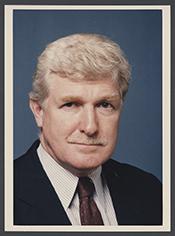
Mr. Speaker, I rise in reluctant support of this appropriations bill. As State and local governments await critical homeland security funding, I do not want to stand in the way of the bill's passage,…
Mr. Speaker, I rise in reluctant support of this appropriations bill.
As State and local governments await critical homeland security funding, I do not want to stand in the way of the bill's passage, particularly as we proceed further into the fiscal year with so few spending bills already law.
I do, however, feel the need to register my concerns with a number of this bill's shortcomings and identify pressing needs that are not being adequately addressed by today's actions.
First, let me start with the obvious; the amount spent to protect our homeland is too little in too many areas.
There are few Americans that would suggest the threats of terrorism or natural disasters have diminished over the past year, yet this agreement cuts funding for several of our most vulnerable weaknesses. Reductions include:
State and local domestic preparedness grants are cut by $585 million (19 percent) below FY 2005;
Firefighter Assistance Grants cut by $60 million (8 percent) below FY 2005;
Pre-disaster mitigation, perhaps our best weapon of preemption, is cut by $50 million below last year; and
Aviation security is reduced by $83 million below the President's request, resulting in 2,000 fewer screeners.
These cuts irresponsibly penetrate the core of our Nation's ability to prepare and respond to national emergencies.
Second, I am concerned about what Congress isn't focused on.
On an average weekday, 32 million people make trips on public transportation, but funding for transit security makes up less than one-half of one percent of the DHS's budget.
The conference agreement includes $4.6 billion for private aviation security, but only $150 million for State grants to improve mass transit security. Transit industry experts estimate we need more than forty times this amount. Put another way we spend $30 on planes for every $1 on transit which carries tens of millions more people.
Furthermore, only $8 million will be available for rail security and $4 million to track hazardous truck traffic even though tons of hazardous material capable of becoming weapons of mass destruction travel our highway and rail lines every day.
While we have made obvious adjustments in our airline security, I ask that we be as proactive in preventing other commercial carriers from being used as weapons against us.
If the concern is that there isn't a sound transit plan or that regional coordination is proving inadequate, we should impel DHS to find solutions that make transit more secure.
It would be a national travesty of tragic proportions if we had to wait until another attack similar to Madrid to occur in the United States in order to commit the resources necessary to properly secure our rail and transit systems.
Third, we haven't exercised sufficient oversight to determine whether the money we've appropriated has been spent appropriately or accomplished its intended objectives.
I am aware of the large unexpended balance the Metropolitan Washington Region may be sitting on.
Admittedly, this unaccounted-for balance is troubling. But what is more disturbing is that we have no consistent explanations: It's red tape and unnecessary Federal bureaucratic procedures, or it's the delay in reaching regional consensus on how it should be spent, or it's a snafu in procurement.
I suspect that this region's experience is not unique. Remaining silent or stubbornly oblivious of these problems abdicates our responsibility to use tax dollars wisely, and we should demand accountability of our spending commitments.
Mr. Speaker, I worry that we may be living on borrowed time.
If there's one thing Katrina showed us it's that emergency response plans that are not rigorously tested and retested won't work in a crisis.
Even worse, public skepticism is growing over whether the Federal Government is now capable of responding effectively to another catastrophic event.
A natural disaster is one thing, but terrorists can strike anytime, anywhere and use our own resources against us.
I urge my colleagues to consider fully funding the needs of securing our homeland, and I challenge us as a body to meet the vital challenge of protecting our Nation.
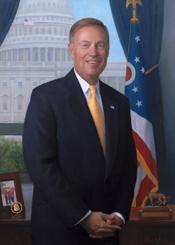
Madam Speaker, I rise in support of this legislation and commend the sponsor of the legislation, the gentleman from Louisiana (Mr. Baker), for his tireless work and dedication for providing housing…
Madam Speaker, I rise in support of this legislation and commend the sponsor of the legislation, the gentleman from Louisiana (Mr. Baker), for his tireless work and dedication for providing housing relief for the victims of Hurricane Katrina and Hurricane Rita.
Residents of the rural gulf region have been especially affected by the devastating impact of Hurricanes Katrina and Rita. While media attention in the aftermath of these catastrophes has been focused on the urban disaster, particularly New Orleans, rural communities in the region, and individuals and families who are assisted by rural housing service programs, face a challenging road.
Rural areas are often plagued by poverty, high numbers of substandard homes, affordable housing shortages, costly development, and inadequate access to mortgage loans. RHS, through its programs, provides direct loans, guaranteed loans and grants to help families obtain and maintain affordable housing in those rural areas. Because so many rural families in the gulf region have left their communities, either because their housing is now in ruins or because they have settled in another community, it is extremely important that RHS has the flexibility to provide assistance to these families who have been displaced from rural gulf communities.
The legislation we are considering today will enable RHS to continue to meet the needs of rural families who have been displaced by the hurricanes. This legislation will temporarily give RHS the necessary funding options it needs to keep families in the program in the wake of this disaster. In short, this important revision will give RHS the ability to convert to vouchers funds tied to a rural housing project that is no longer habitable due to the effects of Hurricane Katrina and Hurricane Rita. RHS will have the authority to reprogram funds in either HUD section 8 vouchers or RHS vouchers authorized under title V of the Housing Act of 1949.
This legislation is designed to provide temporary housing relief for families affected by the hurricanes and upon enactment will be effective for 6 months.
Next, H.R. 3895 will expand the flexibility of RHS by temporarily eliminating the current limitations regarding the number of vouchers that can be issued and where they can be used. Again, this is a temporary suspension, to be in effect for 6 months upon enactment, which reflects the need for timeliness and efficiency in securing housing for rural families under RHS programs.
Finally, this legislation amends the single family housing guaranteed loan program by expanding refinancing to include loans for housing repair and rehabilitation. Currently, repair and rehabilitation costs cannot be financed from refinanced guaranteed loans. This legislation will also allow refinancing of loans from borrowers who are not currently in the USDA single family housing program.
While these authority changes to the single-family housing program are not limited to disaster situations, they will be very helpful in assisting families affected by Hurricanes Katrina and Rita.
H.R. 3895 will help ensure that housing assistance continues to be available to those of the neediest individuals and families in the rural gulf region, who have already suffered greatly in the aftermath of the hurricanes.
I urge my colleagues to support this legislation, and, Madam Speaker, point out that the committee, once again, has worked effectively through these issues, these three suspension calendar votes, in anticipation, as the gentleman from Louisiana pointed out, and my friend from Massachusetts mentioned, with a goal of looking at a long- term solution to this problem that is one that will not go away and will be over a period of years, as the gentleman from Louisiana pointed out.
I want to say to the members of the committee and to the House that this committee stands ready to do what is necessary to bring relief to those regions in a fiscally responsible manner. I have every reason to think we will do exactly that.
Mr. Speaker, I rise in opposition to the Conference report on H.R. 2360, the Department of Homeland Security Appropriations Act for fiscal year 2006 because I am concerned about some of the areas…
Mr. Speaker, I rise in opposition to the Conference report on H.R.
2360, the Department of Homeland Security Appropriations Act for fiscal year 2006 because I am concerned about some of the areas where it falls short, but moreso because I believe it is the wrong vehicle to make the structural changes to the Department of Homeland Security that Secretary Chertoff laid out in his Second Stage Review without the appropriate congressional scrutiny.
As a member of the Homeland Security Committee, I am very disappointed that the Conference Report, even though it provides more funding that the President's original request, makes a number of significant cuts in very important First Responder and Disaster Preparation programs at a time when we can ill afford to. I also see no sign that the deficient public health system on which every and any response will depend received the funding it needs to be brought up to a basic standard in every community in this country.
This Conference Report fails to make Homeland Security the priority it ought to be.
The rob from Peter to pay Paul that we are seeing in the Congress' Katrina/Ophelia/Rita response, continues, and badly needed increases for border security come at the expense of money for such items as first responders, disaster relief and port security. The result is that America will be far less safe than it needs to be.
Mr. Speaker, as someone who represents an area which as seen more than its share of devastating hurricanes, and is home to some sites of critical national infrastructure, I am particular concerned about some of the proposals set forth in Secretary Chertoff's reorganization which would split FEMA's preparedness and response functions and leave FEMA solely as a disaster response agency reporting to the Secretary. It is because of this concern and others why I joined Homeland Security Committee Ranking Member Bennie Thompson and other members of the Committee in introducing the Department of Homeland security Reform Act of 2005 to offer solutions where the administration's reorganization plan creates more problems. I also have grave concerns that what this reorganization does is continue to concentrate power in the White House. We see that in every Department, even at the NIH, and it is a dangerous trend that we as a co-equal branch of government should not let happen.
Our bill would strengthen FEMA creating a strong Directorate of Preparedness and Response that includes an intact, strengthened FEMA with a Director and Deputy Director who must have an extensive background in emergency or disaster-related management.
It will also include a new Assistant Secretary for Preparedness who will head a consolidated version of the Office of State and Local Government Coordination and Preparedness, which is presently an isolated entity located in the Secretary's office. We also establish a military liaison within the Directorate who will assist with the coordination of DOD and DHS preparedness and response efforts.
Mr. Speaker we have seen what can happen to a community which has been impacted by a disaster, as we did with Alabama. Mississippi and Louisiana in the wake of Hurricane Katrina, when there is weakened and ineffective FEMA, and where the Department does not provide leadership or clear lines of authority. This Conference Report does nothing to fix the deficiencies of FEMA that came to light as a result of the Gulf Coast disasters which is the last thing we should be doing.
We could accept this report because it is late in the year, and there are some good parts to it, but the security of each and everyone in this country is at stake, and this is not good enough. I urge my colleagues to oppose this conference report and send it back.
Madam Speaker, let me thank our ranking member for yielding. Also I want to thank the ranking member on the Housing Subcommittee for her leadership and for really trying to make sure that these bills…
Madam Speaker, let me thank our ranking member for yielding. Also I want to thank the ranking member on the Housing Subcommittee for her leadership and for really trying to make sure that these bills before us today have bipartisan support and have become better bills as they move through this process.
People displaced by this horrible disaster deserve clean, safe and decent housing. They should be provided with the opportunity to return home as quickly and as safely as possible. Yet, I do not believe these bills accomplish this goal.
HUD has not received, first of all, nearly enough authority or funding to do what is necessary to provide for the Katrina survivors. First, nowhere do we acknowledge the inadequate response to date of the administration or the Department of Housing and Urban Development to the housing crisis in the gulf.
Secondly, there is no additional funding in any of these bills for the CDBG or emergency housing vouchers for families affected by Hurricane Katrina. There is not enough money at HUD, and we should not redirect funding that is already inadequate in one account, to move it to another account. Indeed, we need more resources to accomplish what we need to accomplish. The bottom line is, there needs to be new money for housing, and we need it now.
Finally, there is not enough thought given to prohibiting the use of substandard housing for Katrina survivors or for the creation of affordable housing construction programs for new, safe and affordable housing. Although these bills waive the pre-inspection process for about 6 months for Katrina survivors in terms of their housing needs, I really worry that people will find themselves living in substandard and dilapidated housing if we do not monitor this very closely.
What I find also very striking about these bills is that there are no measures to ensure that Katrina survivors can return to the gulf region without fear of housing discrimination from landlords or lenders. There are some serious housing policy issues at stake in these bills. There should be more opportunity for debate and thoughtful legislation.
Madam Speaker, the reality is, these bills do very little for the people who are relying on us to help. Having traveled to Houston and having talked to Katrina survivors; I went to the shelters, like many, and I have heard firsthand the needs and seen firsthand their pain. I know very well that housing, providing affordable decent safe housing, is very central to their recovery.
When I think about how much Katrina survivors have lost, compared to what this administration is willing to sacrifice in their misguided budget priorities, it falls way short, I am sorry to say, of what we should be doing. We need to provide housing bills that create new funding for emergency, flexible, section 8 vouchers. We need to increase the funding and authority of HUD to truly help Katrina survivors and also to take steps to eradicate poverty. Effective housing strategies with full funding would help to begin to address these underlying systemic issues which surface during this tragedy.
I would like to thank our housing leaders again, Congressman Barney Frank and Congresswoman Maxine Waters, for attempting to make these bills better. I welcome the opportunity to continue to work with my colleagues to authorize and to fund significant Katrina housing legislation in the near future.

Mr. Speaker, first let me say that there are a number of useful things in this conference report. For 3 years, many of us have been trying to strengthen support for border enforcement and control,…
Mr. Speaker, first let me say that there are a number of useful things in this conference report. For 3 years, many of us have been trying to strengthen support for border enforcement and control, and this bill is $675 million above the President's request. That is good. It also provides some additional funding to beef up transit security and port security, and that is good. It provides $655 million for fire grants, 30 percent more than the Bush request, and that is good. It provides $30 million for three pilot projects to increase the screening of cargo, which is a major terrorism vulnerability that remains unaddressed by the Bush administration recommendations. This bill, therefore, helps to take care of a rather important problem.
But, in my view, there are three big problems that remain which will require me to vote ``no.'' First of all, because of the need to add $675 million more for border programs, the conferees cut funding for other programs substantially below the President's own request. Example: Pre-disaster mitigation programs, $100 million below the Bush request, $50 million below last year. Grants to States and localities to help them prepare for terrorism and other events are cut by over $800 million, or 20 percent from last year; and this occurs on the very day when we have been briefed by the administration warning us about the total incapacity of State and local governments to respond to local problems, such as a pandemic. Aviation security screening is cut by $83 million from the Bush request under this bill.
My second problem with the bill is that it approves a thoughtless reorganization proposal made by Secretary Chertoff. Just 2 weeks ago, members of the majority party told us it was premature to return FEMA to its previously independent status; and yet this legislation embraces a reorganization plan proposed by Secretary Chertoff, the sixth reorganization this agency has had, and that reorganization goes in the wrong direction.
My third objection is that FEMA is not reformed, but it is in fact further deformed by this proposal. We all understand that the response of the Homeland Security agency to the disaster of Katrina was, well, for want of a better word, disastrous; and yet nothing is done in this legislation to provide for a return to independent status for FEMA. It remains buried in the bowels of a dysfunctional bureaucratically layered agency; and, in fact, this bill moves us further in the wrong direction. The fire academy and other training programs are specifically taken away from FEMA.
So there are two ways, I suppose, that Members can deal with this bill. We can squawk about it, if we do not like parts of it, and hold our noses and vote for it because it does have some substantial improvements, and I congratulate the gentleman from Minnesota and the gentleman from Kentucky for those.
But the fact is that there is another choice if we believe that this bill still is not sufficient to meet the national interests, and that is to vote against the bill as a protest; and that is what I feel compelled to do tonight.
Mr. Speaker, I rise in reluctant support of the conference report on H.R. 2360, the Homeland Security Appropriations Act for Fiscal Year 2006. My support is based on the fact that it is the only…
Mr. Speaker, I rise in reluctant support of the conference report on H.R. 2360, the Homeland Security Appropriations Act for Fiscal Year 2006.
My support is based on the fact that it is the only vehicle available at this time to fund critical homeland security efforts.
While this bill makes some progress over last year's funding levels, we are far from where we need to be to adequately respond to a terrorist attack or natural disaster. I am disappointed and concerned that the bill before us falls short of addressing the weakness and lessons learned from September 11, Hurricane Katrina and the terrorist attacks in Madrid and London.
H.R. 2360 unfortunately is a status quo homeland security appropriations bill with only modest improvements over the previous year's bill.
My first concern is that the Republican leadership would not accept a Democratic motion to delay Homeland Security Secretary Michael Chertoffs proposal to reorganize the Homeland Security Department until a thorough investigation of the Federal Emergency Management Agency, FEMA, could be undertaken.
Such an investigation would provide us with the necessary information to determine how best to organize FEMA including the advisability of consolidating FEMA's existing preparedness functions under a new Preparedness Directorate and limiting FEMA's functions solely to recovery and response.
Second, I was disappointed that Republican conferees did not accept the Obey-Sabo-Byrd amendment that would have provided an additional $1.7 billion in investments in emergency
disaster planning, grants to first responders, transit, port and chemical security, and additional border security. These are critical programs that help communities prepare for a disaster and help bring relief following a catastrophe.
Third, I am concerned that the conference report actually cuts funding for several programs that are of particular concern to urban areas such as my Los Angeles district. For example two programs that provide essential funding for first responders, the State Homeland Security Grant Program and the State and Local Grant Program are cut below their current year funding by 50 percent and 20 percent respectively. I am also alarmed that grants for high-threat, highly- populated urban areas will suffer a 15 percent cut and that grants for firefighters to buy needed safety equipment are cut by 8 percent. Lastly, I am troubled that funding for FEMA to perform its limited functions has been reduced by 11.5 percent.
In closing, Mr. Speaker, I will support this bill to provide critical resources to help make our country safer. However, fully addressing our critical national security concerns in light of recent events requires resources that the Administration simply did not support and which the Republican majority did not provide in this bill. While this bill is an improvement over the Administration's request, unfortunately critical homeland security needs will still go unmet despite the probability of disasters lurking in the not so distant future.
Show 11 more
Mr. Speaker, I rise in support of the conference agreement on H.R. 2360, the Department of Homeland Security Appropriations Act for fiscal year 2006. This is not a perfect bill; I believe that we are…
Mr. Speaker, I rise in support of the conference agreement on H.R. 2360, the Department of Homeland Security Appropriations Act for fiscal year 2006. This is not a perfect bill; I believe that we are acquiescing too readily to yet another restructuring plan, allowing the Department to yet again reshuffle boxes on its organizational chart without adequately establishing in hearings that the proposals will actually make this country safer. No amount of structural reform, which inherently muddles missions and produces chaos among employees, can substitute for professionalism, expertise, and strong leadership.
I am also concerned that, given our woefully inadequate 302(b) allocation, we have had to shore up funding for the Department's essential activities at the expense of our support for state and local law enforcement agencies and first responders. State and local governments continue to be on the front lines of any effort to respond to natural disasters and acts of terrorism, and yet we have funded them significantly below both last year's level and the Administration's request. At a time when the Administration is trying to shift blame to state and local governments for the chaotic overall response to Hurricane Katrina, we have not provided them with adequate resources to get the job done.
That said, I believe that this bill does a reasonably good job of addressing our most pressing homeland security needs. I especially want to highlight a provision that directs the Department to allocate the bulk of first responder grants on the basis of threat and risk. While I do not believe that our task in this Congress will be finished until 100 percent of the Department's grant funds are allocated on the basis of risk, this conference report is a noteworthy step in the right direction.
In addition, I am pleased that the conference report includes measures to ensure accountability in the way that the Department spends these appropriations, especially with respect to emergency supplemental funding for Hurricane Katrina. The Department's initial reports to Congress, required by law, have lacked detailed specifics on how the Department has been spending the $60 billion that this Congress has provided since the hurricane first hit. While the American people fully support our commitment to providing relief to the victims of Katrina and Rita, they also expect this Congress to make sure that the Department spends their tax dollars effectively and responsibly.
In closing, I would like to thank subcommittee Chairman Rogers and Ranking Member Sabo for their hard work on this critical bill. We all knew that the creation of the department would create a considerable management challenge, and today, as we pass the third appropriations bill funding the department, I would like to applaud their leadership on this subcommittee for making sure that many of these concerns have been addressed.

Mr. Speaker, I thank the gentleman for yielding me this time and for his critical leadership on this issue. As one who represents New York City, the site of the 9/11 attack, nothing is more important…
Mr. Speaker, I thank the gentleman for yielding me this time and for his critical leadership on this issue.
As one who represents New York City, the site of the 9/11 attack, nothing is more important to New York and, I would say, our country than homeland security. Just this evening the mayor has been working with the FBI and the appropriate agencies with another serious terrorist threat against New York City's mass transit system. This is critical. I am deeply concerned about funding formulas, the lack of attention for the cargo, for the mass transit and many other areas.
Mr. Speaker, it is unbelievable to me that we can slash funding for first responders, do nothing about making sure funding is distributed based on risk and sit here slapping each other on the back.
What are we commending ourselves about?
Is it the $550 million dollar cut to State Homeland Security Grants?
Is it the $120 million dollar cut to the high threat cities?
Is it the fact that we did nothing to require funding to be distributed based on risk?
Is it the overall cut for first responders of $645 million?
Is it the further weakening of FEMA or the cutting of their budget?
Is it the $50 million cut to pre-disaster mitigation loans that could save communities from future disasters?
Is it that we are paving the way to return private screeners at airports and picking up the tab for their liability insurance?
Or is it the fact that we are funding 1,000 fewer border patrol agents, 450 fewer immigration investigators and 6,200 fewer detention beds than we called for when we passed the Intelligence Reform Bill last year?
This bill does not reflect our homeland security needs.
It is good that we, once again, give the Department of Homeland Security complete control over how more than 60 percent state homeland funding will be distributed.
Will this actually be the year they use their authority to distribute it based on risk?
Why do we refuse to listen to the 9/11 Commission and mandate it is distributed based on risk?
What ever happened to the Cox Bill that passed this house 409-10 and would distribute funding based on risk?
Where is the threat reduction that go with these cuts?
We are told to remain vigilant.
The President went on national TV this morning reminding us just how long it will be to defeat terrorism and protect our Nation.
Back home in New York City we are still in a code orange. This is not code orange funding. This is code green funding.
We need to get our priorities straight.
We need to make sure we give our first responders the funding they need. We need to make sure homeland funding is distributed based on risk.
We need to do better than this.
Mr. Speaker, I rise to comment on the fiscal year 2006 Department of Homeland Security appropriations bill. I supported this bill when it passed the House in May, and I will vote in favor of the…
Mr. Speaker, I rise to comment on the fiscal year 2006 Department of Homeland Security appropriations bill. I supported this bill when it passed the House in May, and I will vote in favor of the conference report, but I want to state for the record the serious deficiencies in this legislation.
My home State of North Carolina has been the victim of a number of devastating natural disasters including Hurricanes Floyd and Fran, as well as floods, tornadoes and ice storms. In many cases these natural disasters overwhelmed local and state resources, and the Governor asked for help from the Federal Government which, in most cases, responded appropriately.
The U.S. Congress established the Department of Homeland Security to address all hazards faced by our Nation--both natural and man-made. However, since the creation of the Department, we have seen the focus and funds shift from preparing for and responding to all hazards to a narrow, short-sighted focus on terrorism.
Again and again the administration and Republican leadership have pushed through cuts in pre-disaster mitigation efforts, emergency management performance grants, and even annual funding for the Federal Emergency Management Agency.
Unfortunately, Hurricane Katrina exposed the erosion of our Nation's response capabilities and its horrendous results.
And now, Congress has the responsibility and opportunity to address some of these weaknesses through the appropriations process, but the Republican leadership has produced a piece of legislation that is almost in complete disregard of the Department's weaknesses.
This bill cuts pre-disaster mitigation funds by 67 percent; it cuts state and local domestic preparedness funds by more than a half billion dollars, and it cuts disaster relief funding by $370 million.
Furthermore, this legislation strips the preparedness function from FEMA, further weakening this beleaguered agency. Experienced emergency managers on every level will tell you, as they have told the members of the Homeland Security Committee, that their duties include prevention, protection, response and recovery. You cannot take away one of these four roles and expect the agency to function. Preparation, whether it be to prepare updated flood maps or train personnel to respond to a dirty bomb attack, are all vital to the creation of an effective, sustainable, and practical approach to domestic security.
Mr. Speaker, I will vote for this bill with great reluctance and strong reservations, but it is my fervent hope that my colleagues in the U.S. House will join me in restoring FEMA to its former effectiveness and preparing our nation for all eventualities.
Mr. Speaker, I thank the chairman for yielding me this time and for his hard work in this Herculean task of trying to make this agency better. Thankfully, homeland security has worked. Our Nation is…
Mr. Speaker, I thank the chairman for yielding me this time and for his hard work in this Herculean task of trying to make this agency better.
Thankfully, homeland security has worked. Our Nation is safer. My gripe, though, is FEMA. Four storms hit Florida, and FEMA was ill equipped. In my opinion, it is ill equipped because it resides in an agency that should be focused solely on terrorism and homeland security.
FEMA should be able to respond to the needs of a natural disaster that we have experienced.
Immigration has been mentioned repeatedly. Immigration is out of control. We recently read in the paper that employees of the U.S. Citizenship and Immigration Service are facing misconduct charges ranging from bribery
to exchanging green cards for immigration in return for sexual favors. It is not enough that we have illegal immigrants running around unfettered, we also have them committing serious crimes.
Daniel Rodriguez Mendoza, a 21-year-old illegal alien from Mexico, was recently responsible for killing the mother of two children in a traffic accident in West Palm Beach, Florida. He did not have a driver's license. He had no papers, and four times he had been previously ticketed for driving without a license. Each time, he was let back into the community, even after immigration officials were notified of him, but failed to do anything.
Then there is the 20-year-old young man in my district who was hit by a truck while riding his motorcycle in a small town on Father's Day. He is now hospitalized, paralyzed from the chest down. The illegal alien who paralyzed him was caught, charged with the accident and then, regrettably, released, and now he has disappeared and has not shown up for his trial.
Mr. Speaker, we are debating today money for the Federal department now responsible not only for protecting us from terrorism but also from illegal immigration and for helping in disasters. We need to make sure this money works.
We should not have to be dealing with inept disaster programs and dysfunctional immigration enforcement. And I think most of my colleagues here would agree.
Mr. Speaker, will the gentlewoman yield?
Mr. Speaker, I want to support the gentlewoman's efforts and those of the gentleman from Florida (Mr. Mario Diaz-Balart). We all in south Florida are working. I thank the gentlewoman for highlighting this. Katrina did start in Florida. People have been impacted. They have been hurt, and they deserve the same consideration as our colleagues and neighbors in Louisiana, Alabama and Mississippi.
Mr. Speaker, I thank the ranking member for yielding me time and for allowing me the opportunity to speak. Mr. Speaker, I rise in reluctant support for the conference report on H.R. 2360. It has some…
Mr. Speaker, I thank the ranking member for yielding me time and for allowing me the opportunity to speak.
Mr. Speaker, I rise in reluctant support for the conference report on H.R. 2360. It has some good provisions. For example, I am pleased that the conference report funds transit and rail security grants at $150 million. However, I am concerned that less than 1 percent of the TSA's budget is dedicated to addressing the vulnerabilities in surface transportation. At this rate, maybe we should stop calling it the Transportation Security Administration and call it an ``aviation security administration.''
I am also troubled that the conference report gives blanket airport liability protection to airports that opt out of the Federal screeners program. One of the first things that Congress did after the 9/11 attacks to signal to the American people that it was safe to fly again was to federalize security.
I am pleased that the conferees adopted many of the changes which the Democrats on the Committee on Homeland Security advocated during the Department's authorization process. I commend the conferees for creating the Chief Medical Officer and the Chief Intelligence Officer. We have been calling for such changes to give the Department focus on bio-preparedness and intelligence.
We have also been advocating a quadrennial Department of Homeland Security review and long-term policy planning at the highest levels of the Department. I am pleased that this legislation would also require the Department to do so.
At the same time, I am concerned that the conferees adopted many of the organizational changes that Secretary Chertoff proposed in July, as if Hurricane Katrina never happened. The establishment of a preparedness directorate will not make us any more prepared if we do not have competent people in place.
In response, Mr. Speaker, 13 members of the Committee on Homeland Security introduced legislation today to create a coherent organizational picture for the Department. The Department of Homeland Security Reform Act of 2005 would authorize many of the new offices the administration plans to create and this conference report funds. The logical step for Congress is to consider this bill as it provides direction for some of the new positions the administration planned to create on its own.
Much more needs to be done to make DHS the Federal agency that America deserves. I strongly urge my colleagues in the House to support the Homeland Security Reform Act, legislation that builds upon the conference report.
Madam Speaker, I yield myself such time as I may consume. Madam Speaker, I intend to vote for this bill, as I believe all of us plan to. It is a very reasonable approach. It makes some changes in the…
Madam Speaker, I yield myself such time as I may consume.
Madam Speaker, I intend to vote for this bill, as I believe all of us plan to. It is a very reasonable approach. It makes some changes in the rural housing program which are limited both geographically and chronologically, which is the way to do this short-term approach.
There were some other issues raised, and the majority has agreed with us there are other changes that could be made in this program; and I believe we will be taking them up later to do a more permanent situation.
There is one permanent change here involving the program known as the 502 program which gives some flexibility in financing and I think all who are interested in this favor.
I will take a minute or two to note, this is about rural housing. This is housing built with Federal help, generally public-private cooperation, federally subsidized, assisted housing in rural areas; and I stress that because too often when we talk about Federal housing programs, people think only about the big cities. Here we are not talking just about New Orleans, but the adjacent parishes. As the gentleman from Mississippi (Mr. Taylor) pointed out, we are talking about small communities along the Mississippi coast.
There is a need for housing assistance in various places, and we should stress again this is very important housing that helps people of low- and moderate income in rural areas, sparsely settled areas, to have decent places to live. So it is a reminder that housing programs are not simply big-city programs, but appropriately done are programs that meet needs in various places.
What this does is to give the flexibility during the next 6 months so the rural housing programs and the housing built there in the affected areas, people can respond to that with some flexibility. Money will not be lost; money will be reprogrammed. It is a product of a great deal of thoughtful collaboration on both sides of the aisle, and I intend to vote for this bill.
Madam Speaker, I reserve the balance of my time.
Madam Speaker, I yield 4 minutes to the gentlewoman from California (Ms. Lee), a member of the committee.
Madam Speaker, I yield back the balance of my time.
Madam Speaker, on that I demand the yeas and nays.
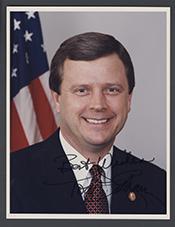
Mr. Speaker, I thank the chairman for yielding me time. Mr. Speaker, I rise in support of this conference agreement and urge my colleagues to all do the same. I want to commend the gentleman from…
Mr. Speaker, I thank the chairman for yielding me time.
Mr. Speaker, I rise in support of this conference agreement and urge my colleagues to all do the same. I want to commend the gentleman from Kentucky (Mr. Rogers), the gentleman from Minnesota (Mr. Sabo), and the great subcommittee staff for their hard work in putting this bill together.
The process of structuring an appropriations bill addressing the operational needs of 22 agencies under the Homeland Security Department has, once again, been very difficult, difficult in part because we are funding a mission that has many dimensions and for which there are few absolutes.
As I participated in this process, I have come to the conclusion that our approach to funding homeland security has been measured and judicious. We have had to make difficult choices. Most importantly, we continue to benefit from the ideas and knowledge of State and local officials from our districts all around the country. That collective wisdom serves us well.
Because of this cooperation, we are beginning to see some of the improvement in the funding processes for first responders. In Iowa, we are working to protect the agriculture community through planning and training, and in fact thousands of people have been trained in our community colleges through federally funded assistance. Iowa and other Midwestern States are doing what is necessary to protect our communities from man-made and natural disasters.
Of course, obstacles remain for our security systems. We have demanded much from our States, and the Federal Government must remain a working partner by providing appropriate funding. We must continue to work closely with local and State officials because they are the people we will look to when disaster occurs.
I am especially pleased in this bill that we have increased the number of border patrol agents by 2,000 and provide more beds to house the people who are coming across the border illegally until we can send them back to their country.
Again, I commend the chairman and the ranking member and urge all Members to support this bill.

Mr. Speaker, there are many good provisions in this conference report, and I intend to support it. I am pleased, for example, with the $110 million appropriated for the SAFER Program--and was proud…
Mr. Speaker, there are many good provisions in this conference report, and I intend to support it.
I am pleased, for example, with the $110 million appropriated for the SAFER Program--and was proud to have worked with Congressmen Weldon and Sabo on an amendment to provide additional SAFER funding.
The President's budget zeroed out this program of hiring grants, which help achieve adequate staffing levels and improve the safety of our firefighters and communities.
I also am pleased that the conference agreement contains $545 million for the Fire Grant Program--representing an increase of $45 million over the President's request.
Nonetheless, even this funding level is $100 million below last year's level.
The Fire Grant Program is authorized at $1 billion, and we must work to increase--not decrease--funding that ensures that firefighters have modern equipment and advanced training.
However, none of us should delude ourselves.
This Republican Congress is simply not doing enough to address our unmet homeland security needs.
The inept Federal response to Hurricane Katrina--almost 4 years to the day after the terrorist attacks of 9/11--has only heightened concern about this Nation's ability to respond to another catastrophe.
Democrats would meet our first responder needs. Yet, this conference report cuts three of the four first responder grant programs.
Democrats would meet our needs for port security. Yet, with this conference report, we have funded only 12 percent of the amount needed for ports to comply with the Maritime Transportation Security Act.
Democrats would meet our needs for rail and transit security. Yet, while an estimated $6 billion is needed to improve rail and transit security, this conference report provides only $150 million for fiscal 2006.
Mr. Speaker, this Republican Congress--despite its proclamations otherwise--simply is not addressing our Homeland Security priorities.
I intend to support this conference report. But its flaws ought to give all of us pause.
Madam Speaker, I move to suspend the rules and pass the bill (H.R. 3895) to amend title V of the Housing Act of 1949 to provide rural housing assistance to families affected by Hurricane Katrina, as…
Madam Speaker, I move to suspend the rules and pass the bill (H.R. 3895) to amend title V of the Housing Act of 1949 to provide rural housing assistance to families affected by Hurricane Katrina, as amended.
Madam Speaker, I yield myself such time as I may consume.
Madam Speaker, H.R. 3895 is important legislation to again provide flexibility to the Rural Housing Authority relative to converting available funds to vouchers to provide additional options for those displaced by Hurricane Katrina and Hurricane Rita. It also provides additional loan flexibility with regard to repairs and remodeling pursuant to storm damage for existing loans now provided by the agency.
I wish to acknowledge the work of the chairman of the subcommittee, the gentleman from Ohio (Mr. Ney), and the gentleman from Ohio (Mr. Oxley), chairman of the Committee on Financial Services, who have been extraordinary in their desire and willingness to help those of us in the gulf coast area with remedies to the identified problems.
This legislation, the second of three to be considered by the House today, is an important step. Not in and of itself a significant remedy, but it does provide significant new flexibility to a historically proven and valuable program. For these reasons, I believe it is highly important for the House to adopt this matter as well as the legislation to follow. In cooperation, all three bills will provide significant and meaningful assistance to those who find themselves without a place to call home.
Madam Speaker, I reserve the balance of my time.
Madam Speaker, I yield such time as he may consume to the gentleman from Ohio (Mr. Oxley), chairman of the Committee on Financial Services, who has been extraordinarily cooperative and is exhibiting great leadership in helping the people of the gulf coast deal with these catastrophes.
Madam Speaker, I yield back the balance of my time.
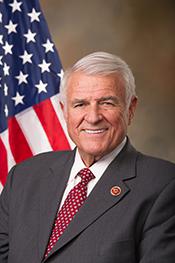
Mr. Speaker, I thank the gentleman from Kentucky (Mr. Rogers) and the gentleman from Minnesota (Mr. Sabo) for their hard work on this conference report. Mr. Speaker, I rise in support of this,…
Mr. Speaker, I thank the gentleman from Kentucky (Mr. Rogers) and the gentleman from Minnesota (Mr. Sabo) for their hard work on this conference report.
Mr. Speaker, I rise in support of this, because I view the world from the State of Texas. I look at the largest single foreign border in the United States in Texas. I look at a port that the Coast Guard told me carries the largest amount of dangerous cargo in the United States, and possibly the largest amount of dangerous cargo on Earth, the port of Houston.
I look at the big spaces we have to cover as we try to secure just the State of Texas. I look at the 68,000 other-than-Mexican immigrants that we have actually caught in the last 8 months crossing the Texas border. These are people from places other than Mexico: Central and South America, Eastern Europe, Russia, the Middle East, Syrians, Iranians, Iraqis, Chinese and Far Easterners, crossing our border across the Rio Grande River.
I view that world, and it is a world that requires a secure homeland.
Mr. Speaker, there has been a lot of hard work done on this bill, and I think this bill goes a long way to start securing the Texas border and the rest of the border between the United States and Mexico and the United States and Canada. We are adding 1,000 border patrol agents by this bill; we are putting on investigators; we are beefing up ICE. We are doing everything we can to say to the world, We are not anti- immigrant; we are anti-people who break the law to enter our country or who are coming in illegally.
Mr. Speaker, this bill will help, so I stand in support of this bill, because it does the right thing for America.

Mr. Speaker, I want to express my deep appreciation to both my chairman from Kentucky and the gentleman from Minnesota for the work they have done on this conference report. At the beginning, as we…
Mr. Speaker, I want to express my deep appreciation to both my chairman from Kentucky and the gentleman from Minnesota for the work they have done on this conference report.
At the beginning, as we brought Homeland Security together, we brought some 22 different agencies together under one maze. A very difficult process. Much of the original bureaucracies remaining in place and yet
struggling to figure out how and where and why they effectively work within the Federal Government. The chairman and ranking member have worked very hard to provide the kind of oversight that is necessary to lead them down this pathway, dealing with very tough issues that relate to America's national security.
Having said that, I want to congratulate the gentlemen for their work and at the same time suggest rather directly that none of us can do anything with that which an act of nature brings upon us. Katrina and Rita were natural disasters. We have not experienced such in my lifetime in public affairs. But, indeed, Americans are attempting as best they can to help the region of this country that is so important not only in terms of our natural resources but to our economy as well.
I very much appreciate the work particularly that was done by the gentlemen in overseeing that work which is the responsibility of the Coast Guard, for, indeed, they have gotten their attention. It is very apparent they are not just responding to the committee but in this very horrid crises did a great bit of response on behalf of America.
So I congratulate both of them for their work. I appreciate very much the job they have done.
Bill Text
3 versions available
        [Congressional Bills 109th Congress]
[From the U.S. Government Publishing Office]
[H.R. 3895 Referred in Senate (RFS)]

109th CONGRESS
1st Session
H. R. 3895

_______________________________________________________________________

IN THE SENATE OF THE UNITED STATES

October 6, 2005

Received

October 25, 2005

Read twice and referred to the Committee on Banking, Housing, and Urban
Affairs

_______________________________________________________________________

AN ACT

To amend title V of the Housing Act of 1949 to provide rural housing
assistance to families affected by Hurricane Katrina or Hurricane Rita.

Be it enacted by the Senate and House of Representatives of the
United States of America in Congress assembled,

SECTION 1. SHORT TITLE.

This Act may be cited as the ``Rural Housing Hurricane Relief Act
of 2005''.

SEC. 2. DISASTER AUTHORITY.

Section 541 of the Housing Act of 1949 (42 U.S.C. 1490q) is amended
to read as follows:

``SEC. 541. DISASTER ASSISTANCE.

``(a) In General.--Notwithstanding any other provision of this
title, the Secretary may exercise any authority described in subsection
(b) with respect to the counties designated as disaster areas pursuant
to the declaration by the President of a major disaster or emergency
under the Robert T. Stafford Disaster Relief and Emergency Assistance
Act (42 U.S.C. 5121 et seq.) in connection with Hurricane Katrina or
Hurricane Rita, and the counties contiguous to such counties, and for
any individuals who resided in such counties at the time of the
disaster.
``(b) Special Authorities.--The authorities described in this
subsection are as follows:
``(1) Conversion of rental assistance.--The Secretary may
convert rental assistance under section 521 allocated for a
property that is not inhabitable because of the disaster into
``(A) housing voucher assistance authorized under
section 8(o) of the United States Housing Act of 1937
(42 U.S.C. 1437f(o)); or
``(B) rural housing vouchers authorized under this
title.
Any conversion and use of rental assistance pursuant to this
paragraph shall apply only for the period described in
subsection (c) or a portion thereof, as determined by the
Secretary.
``(2) Waiver of rural area requirements.--The Secretary
may, for the period described in subsection (c) or any portion
thereof, waive the application of the provisions of section 520
with respect to assistance provided under this section, as the
Secretary considers appropriate.
``(c) Duration of Authority.--The period described in this
subsection is the 6-month period that begins upon the date of the
enactment of this Act.
``(d) Authorization of Appropriations.--In addition to funds
otherwise available to carry out this section, there are authorized to
be appropriated such sums as may be necessary to carry out, during the
period described in subsection (c), this section or any other activity
authorized under this title.''.

SEC. 3. RURAL HOUSING VOUCHER AUTHORITY.

During the 6-month period beginning on the date of the enactment of
this Act, the Secretary of Agriculture may exercise the authority under
section 542 of the Housing Act of 1949 (42 U.S.C. 1490r), except that
in carrying out this section--
(1) notwithstanding the first sentence of subsection (a) of
such section 542, the Secretary may assist low-income families
and persons, but only if--
(A) such family or person
(i) resides or resided, on August 25, 2005,
in any area that is subject to a declaration by
the President of a major disaster or emergency
under the Robert T. Stafford Disaster Relief
and Emergency Assistance Act (42 U.S.C. 5121 et
seq.) in connection with Hurricane Katrina; or
(ii) resides or resided, on September 24,
2005, in any area that is subject to a
declaration by the President of a major
disaster or emergency under the Robert T.
Stafford Disaster Relief and Emergency
Assistance Act (42 U.S.C. 5121 et seq.) in
connection with Hurricane Rita; and
(B) the residence of such family or person became
uninhabitable or inaccessible as result of a major
disaster or emergency referred to in subparagraph (A)
of this paragraph; and
(2) subsection (b) of such section 542 shall not apply.

SEC. 4. GUARANTEED LOANS FOR SINGLE FAMILY HOUSING.

Section 502(h) of the Housing Act of 1949 (42 U.S.C. 1472(h)) is
amended--
(1) in paragraph (4), by striking ``or construct'' and
inserting ``, construct, repair, or rehabilitate''; and
(2) in paragraph (14)(A), by striking ``made under this
section or guaranteed under this subsection'' and inserting
``used to acquire or construct a single-family residence that
meets the requirements of subparagraphs (A), (B), and (C) of
paragraph (4)''.

Passed the House of Representatives October 6, 2005.

Attest:

JEFF TRANDAHL,

Clerk.