QI, TMA, and Abstinence Programs Extension and Hurricane Katrina Unemployment Relief Act of 2005
Legislative Activity
Stay on top of the latest movement without scrolling through every action
Became Public Law No: 109-91.
October 20, 2005
View full timeline
Introduced in House
October 6, 2005
Referred to the Committee on Ways and Means, and in addition to the Committee on Energy and Commerce, for a period to be subsequently determined by the Speaker, in each case for consideration of such provisions as fall within the jurisdiction of the committee concerned.
October 6, 2005
Mr. McCrery moved to suspend the rules and pass the bill.
October 6, 2005 • 4:53 PM
Considered under suspension of the rules. (consideration: CR H8678-8683)
October 6, 2005 • 4:53 PM
DEBATE - The House proceeded with forty minutes of debate on H.R. 3971.
October 6, 2005 • 4:53 PM
Passed/agreed to in House: On motion to suspend the rules and pass the bill Agreed to by voice vote.(text: CR H8678-8679)
October 6, 2005 • 5:30 PM
On motion to suspend the rules and pass the bill Agreed to by voice vote. (text: CR H8678-8679)
October 6, 2005 • 5:30 PM
Motion to reconsider laid on the table Agreed to without objection.
October 6, 2005 • 5:30 PM
Received in the Senate, read twice.
October 6, 2005
Measure laid before Senate by unanimous consent. (consideration: CR S11329-11330)
October 7, 2005
Passed Senate with an amendment by Unanimous Consent.
October 7, 2005
Referred to the Subcommittee on Health, for a period to be subsequently determined by the Chairman.
October 17, 2005
Resolving differences -- House actions: House agreed to Senate amendment with amendments pursuant to H. Res. 501.
October 19, 2005
House agreed to Senate amendment with amendments pursuant to H. Res. 501.
October 19, 2005 • 2:21 PM
Message on House action received in Senate and at desk: House amendments to Senate amendment.
October 19, 2005
Resolving differences -- Senate actions: Senate agreed to the amendments of the House by Unanimous Consent.(consideration: CR S11595; text as Senate agreed to House amendments: CR S11595)
October 19, 2005
Senate agreed to the amendments of the House by Unanimous Consent. (consideration: CR S11595; text as Senate agreed to House amendments: CR S11595)
October 19, 2005
Cleared for White House.
October 19, 2005
Presented to President.
October 20, 2005
Signed by President.
October 20, 2005
Became Public Law No: 109-91.
October 20, 2005
Floor Debate
20 membersWhat members said about H.R. 3971 on the floor
 MLL
MLL CT
CT BLD
BLD JM
JM JM+15
JM+15
Floor Debate
20 membersWhat members said about H.R. 3971 on the floor
Will the Senator yield? I ask the Senator if he has received the latest numbers from the Department of Labor about the number of Americans who have actually lost their jobs because of Katrina and…
Will the Senator yield?
I ask the Senator if he has received the latest numbers from the Department of Labor about the number of Americans who have actually lost their jobs because of Katrina and Rita. We know it was upwards of 450,000 people who have lost their jobs because of the hurricane. Does the Senator know that his remarks are even more compelling based on the numbers of people who must be looking for work, have some skills to offer, and yet under the system the Senator has described they are finding it difficult to work in their own city or parish with their own Federal Government contracts? Did the Senator know that?
I thank the Senator from North Dakota for his great advocacy on behalf of American workers, the fair trade issues, and all of the things we have been debating in this Chamber now for the last couple of years on this subject.
People might ask, Why is the Senator from North Dakota speaking so enthusiastically or fervently on behalf of the citizens of Louisiana? He does not represent the State.
As a Senator, we all represent all of the people of the Nation, and the Senator from North Dakota is this Chamber's leading expert on contracts and contract abuse, not only at home but abroad in Iraq. He has been to this floor more times than I can count and has my great respect and the respect of many in this body for his work in trying to ferret out the great abuse in contracts, whether overseas or at home, so that American tax dollars can be spent well and wisely. He is never ceasing in his advocacy, and I thank him for continuing by calling a hearing not on contractor abuse in Iraq, on which he has conducted many, but contractor abuse and the abuse of Louisiana workers relative to the Katrina/Rita fiasco. So I wish to thank him and add just a few words to what he said and to the information he has laid out and the testimony that has been given because I did attend, along with Senator Harry Reid, Senator Carl Levin, and a few other Senators, a hearing earlier last week on this subject that shed some unbelievable light on this situation and hopefully something we can correct.
I begin by saying that the people of Louisiana, Mississippi, Alabama, and Texas, as I have said so many times on the floor, have really been through an unbelievable devastation of a natural disaster that has no parallel, has no peer. It was not just the two hurricanes that hit within 10 days of each other--the east side of the State first, the west side of the State second, parts of Texas in Rita's path as well-- but the subsequent breaking of not 1 levee, not 2, but 17 levee breaks in the metropolitan area, an urban center, a highly dense center, a large American city, a vibrant and vital region of the Nation, as I have said many times, the Nation's only energy coast.
When those levees broke after the hurricane winds died down, it left a region 10 to 12 feet underwater; tens of thousands of homes, large and small, rich and poor, businesses underwater, businesses that have been making profits for 70, 100 years. We are an old city in an old place. We are proud of the longstanding businesses we have.
When the hurricanes left, the levees broke, and finally, when the flood waters went down, we looked up, and we have 400,000 people who have lost their jobs. These are people who are hard-working Americans, taxpaying citizens. Many of them have never asked for any direct help from the Federal Government other than what everyone gets from their Government: good police, good fire protection, hopefully their streets paved, the potholes are kept to a minimum, schools for their children to go to, basic Government services that are required. Most of these people have not asked for any particular Government help, and yet they find themselves out of work, in a position to start building their city only to find that the Federal system of awarding contracts, because of certain rules, certain actions this administration has taken, and a lack of oversight, has allowed companies to come in from out of State and hire workers who are undocumented while literally pushing aside Louisiana citizens who have the skills to rebuild and the desperate need, the obvious need, for the job itself.
In the case Senator Byron Dorgan has brought to our attention, as the hearing went on last week, about 75 electricians from the area that was affected--many of those electricians had
lost their homes. Their homes had been flooded. Some of them had run businesses on the side that they had lost. Their families had been placed into some safe place somewhere in the region. These men, most of the men--some of them could have been female electricians--came back at the request of a former employer who said, Would you all come back and help us build the barracks, the Navy base, the Belle Chasse base, in their own backyards?
These are residents who could look across the highway, who have worked at Belle Chasse before, who put up the electrical work at Belle Chasse, who were hired by a contractor and brought to work. After a few days, another contractor comes into the base, as the story is told, and basically hands these Louisiana workers a pink slip and says, If you do not mind, could you all please leave the base, and then ushers in 10, 20, 30, 40, 100--who knows what the investigation will show--workers not from Louisiana--and some of the workers are not even eligible to work in the United States of America--to work on an American military base.
Last week, I had the distinct honor of sitting in my Senate office and having two or three electricians, men who are obviously used to a hard day's work--their hands looked pretty tough--with shoulders stooping and almost on the verge of tears looking at me as their Senator saying: Senator, explain this to me. My parish has just been ruined by a hurricane. I have lost my house. I have worked my whole life as an electrician, and on a military base in the United States of America I am asked to leave so that an undocumented worker can take my job? I do not have an answer for them, but we need to find one because nobody in America will believe this is happening. It should not be happening.
I will tell you why it happens--because when nobody is watching the store and there is money being thrown out of this Chamber, $62 billion, people grab for it. The people of Louisiana have been accused of looting. I think maybe the camera needs to focus somewhere else. All we have done as a delegation is asked for help for our ports, our hospitals. This is a city that has lost 75 percent of its revenue. The parish of Plaquemine and the parish of St. Bernard are virtually nonexistent. Every structure--and 100,000 people--has basically been destroyed, and it is uninhabitable. We still have our refineries shut down, our pipelines exposed, and all we get is excuse after excuse.
Our own workers show up and ask for a decent wage. Their wage was $22 an hour. If any Senator on this floor thinks that paying a man or a woman $22 an hour, with some minimum benefits, to work 12 hours a day because the contract said if they want to work, they have to show up and work 12 hours a day, 7 days a week until further notice--so do not tell me these people did not want to work. They had to work without a day off, week after week, for $22 an hour. We are told that it is too much, we cannot afford to hire them, they can go on back and twiddle their thumbs while we have the undocumented workers rebuild this military base. It should not be happening now. It should not be happening in the future.
Today, I sent a letter to the Secretary of Homeland Security and the head of INS and asked them to please enforce the laws that are on the books, please enforce the laws so that the 478,000 people who are unemployed throughout the gulf coast, from Mississippi, Alabama, Louisiana, and Texas, can have the first chance at a good job.
I ask unanimous consent that the letter be printed in the Record.
I know people are going to debate about Davis-Bacon, but I just want to tell the American people this point: When the President issued the order and basically said, right after Katrina, waive all the labor laws that allow people to be paid a fair wage, he said he was doing that to save money. How does one save money on a no- bid contract? If a contract is not being put out for bid, how does one save any money? All that happens is wages of the people who need them the most at a time when they have lost everything are driven down. They are not asking for charity. They are not asking for a handout. They stood up to get a job to work 12 hours a day, 7 days a week, and still were basically under the administrative rules of waiving Davis-Bacon, lack of oversight and lack of focus, and have basically been asked to leave the military base.
So I hope that in the few weeks ahead, we can get these electricians back on the job, back to their homes, back to their neighborhoods to rebuild, and build some support in this Chamber and around America for paying people a decent wage. I do not think $22 is too much. I do not expect people to rebuild Louisiana at a minimum wage or $8 or $9 an hour without benefits.
People have to make a living. That amounts to about $45,000 a year. Is that too much to pay someone working 12 hours a day, 7 days a week, doing hard and sometimes dangerous work? I don't think so. But evidently somebody in Washington thinks that is too much because, instead of holding wages steady--not asking for union wages, but asking for an average wage, between union and nonunion, which seems fair to me--we are undercutting our workers. The Government should not mandate a union wage to be paid, but neither should we undercut our workers. So the prevailing wage is what we have come up with, to say don't pay union, don't pay nonunion, pay something in the middle, the average wage: $18, $20, $22 an hour for skilled labor. That is not too much to ask. But evidently it is.
Even if people can get these jobs back, under the policies of this administration, they will be told: You can work, so be happy and smile that we are going to pay you $9 an hour, on which you cannot even feed your family, invest in your pension, or send your children to school. You should smile and be happy you have a job.
People in Louisiana want more respect than that. They deserve more respect than that. The people along the gulf coast are, as I have said many times, honest, hardworking, and self-reliant. We do not come here asking for charity, but we do come here asking for help out of our National Treasury to which we have contributed so much over 300 years of hard work and toil to build the Nation's only energy coast. We are proud to do it, proud to take the risks associated with that hard work--building a port system, the greatest in the North American Continent, and building commerce that allows every State and every parish and every county in America to flourish. Without this port system, without this energy coast, our Nation would not be what it is today.
Despite all the ridicule we received, despite all of the snide remarks we have heard about public corruption and that we can't do anything for ourselves and we are disorganized, we are going to still hold our heads up, proud, tell our story, and demand to be treated with respect and dignity as every American would want to be treated--Black and White, Asian and Hispanic, young and old, rich and poor.
In conclusion, I thank Senator Dorgan for his focus on this. I will continue to come to the floor and to be at hearings with him, to help him, to hopefully build the kind of system and oversight that will allow us to give out contracts more efficiently, to make sure the work is going to gulf coast contractors, reputable contractors. There are many good contractors who treat their workers beautifully. There are many businesses, despite the fact they have no money coming in the door, that have kept their workers on the payroll, trying to hold heart and soul together and hold our community together while the Federal Government twiddles its thumbs and comes up with excuses about why it cannot help.
Let me be quick to compliment the many good contractors and many good businesses, small and large. But when we see this kind of irresponsible contracting, it makes a tough situation even so much worse. So I hope this letter will be responded to, that actions can be taken by other committees that have oversight so we can make sure we are spending the American taxpayer dollar well, that we are giving the preference, as required in the current law, to those affected by the storms and the unfortunate disaster itself, and then paying people a decent wage when we ask them to do work for their community and for our country.
I yield the floor.
Mr. President, I ask unanimous consent that the order for the quorum call be rescinded. Mr. President, I ask unanimous consent to speak as in morning business. As I told the chairman, if any Members…
Mr. President, I ask unanimous consent that the order for the quorum call be rescinded.
Mr. President, I ask unanimous consent to speak as in morning business.
As I told the chairman, if any Members come and want to proceed with amendments, I will be glad to yield the floor.
Mr. President, there is a subjject that is extremely important. It is important to all. Frankly, having been at home this weekend, as most Members have, I heard more about it probably than any other issue. That is spending, of course; the amount of spending we are taking on, and the Federal Government challenges to do something about the increase in the deficit we are bringing upon ourselves. The challenges make it very difficult.
As Fred Thompson said once: It is like going to heaven; everyone wants to go, but nobody wants to make the changes necessary to get there. That is the way it is with the budget. It is an obligation to do more to control spending and to control the size of the Federal Government. We have that obligation.
We have had some difficult times in the last couple of years which have brought about some necessary spending. We had September 11, the war on terrorism, the gulf now, and other emergencies, all of which require spending. I understand that.
However, we have to treat this as a family or business would when an extraordinary thing happens: We take care of it, but, nevertheless, the costs for the family and business continue. Then we must find a way at some point to offset the costs. That is where we are now.
Things have not all been bad over the past year. We have decreased the deficit by $100 billion. We never hear much discussion in the media about that. The fact is, we have made some progress. We have done some other good things. We passed an energy bill. We passed a highway bill. Through the tax reductions over the years, we have increased the activity in the economy, increased jobs and pay. There are good things.
The fact is, we still have special costs and funding we have to take care of. As I mentioned, as in business, we have costs here, as well. We are going to have a reconciliation bill, hopefully, next week. We will look at the budget we are in now to ensure--and this is our last appropriations bill today in the Senate--we live within the budget in those appropriations. I support the idea that we will seek to reduce it an additional amount, whether it is the $35 billion in the bill the Senate has talked about or whether it is the $50 billion talked about in the House. That is what we necessarily need to be doing and should be doing.
Now, those are short-term issues, short-term changes for this year or the next 3 or 4 years. We should give more attention to the long-term situation. In most things we do here, particularly in spending, particularly regarding the deficit, we ought to think of the long term. We ought to have 20/20 vision and ask, Where do we want to be in 15 or 20 years? What do we want to hand off to the next generation as a vision of where we want to be and where we would like to be, where we think we should be with our families, with our communities, with our Nation, and make the decisions daily, as we have to make them, predicated on accomplishing those visions we have decided we want.
The Washington Times said since the 1950s, around 18 to 20 percent of the gross national product has been the deficit. Deficits are not unusual. It is debt for most everything--businesses and families and so on. If we continue to go this route over the next 50 years, we will be talking more about 30 or 40 percent deficit as a percentage of gross
national product. Deficits and spending go up because gross national product goes up, so as a percentage they go up as well.
However, I don't think we want to find ourselves moving toward larger and larger government with more and more activities without paying for them and have this deficit continue. In order to do that, we will have to look at some reforms. We will have to look at changes that need to occur, looking broader than just the reconciliation bill, which is very important. We need to look beyond that. We need to look at where we are going in the future and make some real changes.
One change will be in the size and scope of the Federal Government and the activities we are involved with in the Federal Government. We have created a culture where if there is anything needed anywhere, from the community on to the Federal Government, we get the Federal Government to pay for it, and we will start a new program. That has become a culture and a custom. Once that program is built in, it becomes political. As programs are started, they get a constituency and they continue. Those are areas we need to look at.
We will have to look at Social Security, for example. That is where most of the money is spent. When we spend $2.5 trillion in a year, only about $800 million is discretionary spending. The rest is Social Security, Medicare, and Medicaid. We need to look at this. Everyone is committed to a well-funded, secure Social Security Program over the years. There are differences of views as to how to get there. We need to look out to the future so the young people here can look forward to Social Security in another 50 or 60 years.
Clearly, we want health care available, but we have to do it in different ways. We need changes. I come from a rural State. The way health care is delivered in rural Wyoming is different from in Washington, DC. We need to get in a position where people have access to care. Maybe we ought to be doing some things where we do not need health care as much. We need long-term changes to get that taken care of. We need to restrain growth in the Federal Government.
I have always advocated policies for reducing the size of government. It is apparent that the government is too big and too broad in its scope. Our phones practically ring off the hook with people wanting more money for this, more money for that. I understand that. However, we have to decide what is appropriate for the Federal Government to pay. Many of the programs should be invested in but at the local or State level.
It seems over time we have created programs for most everyone. There are approximately 1,200 funded Federal programs. We need to look at these for the long term. We have to look at each program and see, in fact, if it is still as needed as when it was put into place, to see if it is as efficient, evaluate it on its merit to decide if the taxpayers are getting their money's worth, then take a broad look, a long-term future look at eliminating programs, reducing the size of government, maintaining programs that are essential, and making them more efficient long term.
I have a bill called Government Reorganization and Program Performance Improvement Act that creates mechanisms to do that. We have an opportunity most any time to create a new program and to fund it. We have a process for that. We do not have a process for evaluating a program that started 10 years ago. Is that reason still there? Have we accomplished the goal? Should it be changed?
We talk about that, I suppose, from time to time, but we do not have a process for doing that. That is partly what we would do.
The bill would create a sunset commission and an individual results commission. The sunset commission would hold the Federal Government accountable for performance with Presidential proposals. The commission could propose to the President whether to retain the program--after it has been there for 10 years; taking a look at it--or to restructure the program, or to end the program.
This would be acted on by assessments, a seven-member, bipartisan commission, appointed by the President, so we would have a process--a process, which we do not have now--to evaluate programs to see if they are, as I said, accomplishing the things they were set up to accomplish or to see if they should be done differently.
The other half of it is an opportunity to evaluate performance, again, having a commission set up to take a look at programs to see if they are operating as efficiently as they might be operating. I think it is fair to say sometimes in the bureaucracy we get things built into programs where they are resistant to change. It is a little different generally than the private sector where the private sector has to change from time to time because of profits or because of a lack of profits, or whatever; where Government programs tend to go on forever pretty much as they are. And I understand that.
So it seems to me there needs to be a way to do some of those kinds of evaluations and make sure that, No. 1, the size of Government can be controlled, and No. 2, we would maintain it as efficiently as can be done, trying to do away with wastefulness and unnecessary and duplicative activities that take place--whether it is within the Federal Government or within State governments or local governments.
We are looking at a way to ensure good government. Everybody wants government. Everybody wants services. But we also want good government; we want efficient government; we want effective government. And we want it to be done as economically and in the least costly way it can be done and still get that accomplished.
That is not an easy project. I understand that. But it seems to me-- as we look at excessive spending; as we look at trying to do something about the budget that is pretty short term, looking at these next couple of years--we ought to be looking at where we are going to be in making some decisions that will help us keep within the budget we would like to have over a longer period of time. Doing that, we would have to make more difficult decisions, perhaps, but they would be more long- term decisions. Now is a good time to do that. What better time would there be to take a look at that than now, when we are as concerned as we are about spending--which we ought to be?
I think this is a good government initiative which we ought to look at. It certainly urges us to bring these bills up and to take a look at them so that, in addition to next year's reductions in spending, we take a look at the overall problem we face by increasing spending because we have found, I think, that is an easy thing to do. I think under these current circumstances, it is a thing that happens pretty much constantly, unless we are doing something about that.
I hope, No. 1, we recognize the importance of controlling spending, we recognize the importance of controlling the size and the role of the Federal Government. I think there should be--there should be--some definitions. We ought to have in our own minds some criteria as to what is the role of the Federal Government, what is the role of the other governments, what is the role of the private sector, so we do not continue to be in this sort of circumstance where everything that needs to be done becomes a role of the Federal Government. And then we wonder why taxes go up; we wonder why spending goes up. It is pretty easy to explain that if you take a look at the size of the Government.
I guess what I am saying is, I hope we can take on the responsibility, as we go about our daily chores, to have some vision for the future, to evaluate with respect to where we are, but also trying to get a notion of where we want to be--how we see it for our families; how we see it for jobs; how we see it for education; how we see it for freedom of choice. That is part of the criteria for this country.
We get in a political situation, which we are kind of in now. All we do is criticize this and that. The real reason for elections is to talk about the issues and to decide where we need to be, to talk about the kinds of issues and decisions that need to be made to get us where we want to be. I think we have gotten so involved with the media picking up on every little controversial issue, and talking about that, that people have forgotten what elections are about. Elections are about direction. Decisions here are about direction. Decisions here are about where we are
going to be, and where we need to be, and where we want to be over time--for our families, for our communities, for our Nation.
We have a great opportunity to do that. I urge we give some consideration to it in every chance we have. And particularly now, as concerned as we are about spending--and properly so--we should be sure we take a look at where we want to be, how we can get there, and what changes have to be made that are more than just for next year, so we can move forward in that direction.
Mr. President, I thank you for the opportunity to speak. I yield the floor and suggest the absence of a quorum.
Mr. President, my colleague, Senator Landrieu from Louisiana, will be on the floor shortly. We want to talk about something that has occurred in the last week. A week ago today, I chaired a hearing…
Mr. President, my colleague, Senator Landrieu from Louisiana, will be on the floor shortly. We want to talk about something that has occurred in the last week. A week ago today, I chaired a hearing of the Policy Committee. The hearing was on the subject of the reconstruction in the Gulf States in the wake of Hurricanes Katrina and Rita. We have held many previous hearings on reconstruction in Iraq. As you know, this Congress has literally spent tens of billions of dollars on reconstruction projects in Iraq, and the waste, fraud, and abuse there is mind-boggling. There is massive money going out the door to contractors, in many cases with large no-bid contracts, and the taxpayers are getting bilked. I will not go into the lengthy stories about it now.
We decided to hold a hearing with respect to contracting in the gulf because this Congress has already approved $60 billion for reconstruction, and we have heard tales and stories that are similar to those we hear with respect to reconstruction in Iraq.
At last Monday's hearing, we heard from a local New Orleans company. The owner of the company and his job foreman originally were hired to provide 75 qualified electricians to work on a project they had begun at the Belle Chase Naval Air Station in Louisiana. The project they were hired for was with Kellogg, Brown & Root, a subsidiary of Halliburton. This company was hired to provide 75 qualified electricians.
Very soon after they started, these qualified Louisiana electricians, many of whom were victimized by the hurricanes and who very much appreciated these jobs, were replaced by others. They were replaced by workers who were not of the same training in electrical skills. In many cases, Bob Knight, the general manager of the New Orleans company that suffered this fate, described the replacement workers as follows:
Almost all of their workers were from out of State, and
most didn't speak English. Few seemed to me to be qualified
electricians. According to the Halliburton subcontractor,
they were being paid [a fraction of the] prevailing hourly
wage, with no benefits. At that time they were living in
small tents on the base.
Here is a photograph of the circumstances of how they were living. This is, of course, a little rough shed with 2 by 4s to frame up some beds. I am guessing most of these are undocumented workers brought in to take the jobs that had belonged to the folks in Louisiana who desperately need these jobs. But because the President said there is no requirement to pay what Davis-Bacon wages, no requirement to pay the prevailing wage in this region, the result is unscrupulous contractors who bring in workers who will work for dirt cheap wages with no benefits and many hours and put them up in circumstances such as this.
And, oh, by the way, some of them were told they could go to work on a crew such as this and get a fraction of what they would have to pay others who are skilled, and they can get free meals at the Red Cross. Unbelievable, isn't it? Here is what is happening to jobs that are supposed to belong to the folks in Louisiana and presumably also Mississippi. People who got hit hard by the hurricane, who lost everything, in many cases, expected perhaps to get an opportunity to get back on their feet with a good job that pays all right as skilled electricians. They put together 75 of them and are told by the contractor: This job is going to last; it is going to be an opportunity for you. And just like that, somebody else is brought in because the President said they do not have to pay prevailing wages.
Guess what. Here is the circumstance, here are the people with the jobs. Most do not speak English. Most were brought, many of them undocumented.
Last Thursday or Friday, following the hearing that I held, there was a raid at this military installation by what is normally called the INS. It is now I guess the ICE, as it has been subsumed into this behemoth organization called Homeland Security.
At any rate, the immigration folks raided, and we are told by people on the ground that they found somewhere around 150 undocumented workers. The immigration folks now say they found 10 that they know of, but they play a little game with us because the more questions we ask, the less information we get from them.
It is pretty clear to me, based on eyewitness accounts on the ground, that they went in after the hearing we did and found undocumented workers on that military installation who had taken the jobs, we believe, from the folks in Louisiana who had been victimized by these hurricanes, the jobs they were working at.
Here is the Washington Post. This was last week after the hearing:
Among the electricians who lost their jobs was Sam Smith,
whose house in the Ninth Ward was destroyed after Katrina
slammed into the Louisiana coast. Smith, 55, returned to the
city because of the promise of $22-an-hour wages, and
guaranteed work for at least a year at the naval base.
By the way, he was a skilled electrician with all the certifications.
He was quickly disappointed, however, and lost his job
within three weeks. ``You would think that the federal
government should be making sure that people who are trying
to restart their lives and are trying to put their city back
together again are out there working,'' Smith said. ``But
that's not the case.''
The New York Times:
The acrid smell inside trailer No. 2 is tough to take for
any length of time. The linoleum floor is filthy and bare,
aside from a few soiled blankets hammed in the corners.
Dishes caked with leftover food are piled high in the sink,
attracting flies. Two portable fans are the only things
stirring the air. But six men are living here. They sleep on
that floor. They swat away those flies and dodge the roaches
at night. They traveled all the way from Guatemala.
They are promised good pay, three meals a day and place to
stay, and some contractors make good on this. But the
Mississippi Immigrants Rights Alliance, an advocacy group,
says many do not.
So it is, without the prospect of paying prevailing wages, the jobs are going to these kinds of folks.
They get $8 an hour and labor 11 hours a day, six days a
week. Subcontractors pulled them together for Belfor USA, an
American subsidiary of a multibillion-dollar international
company specializing in restoration after disasters. Before
New Orleans, they had separately held construction, farm or
factory jobs from Texas to North Carolina, they said.
The point is, there are other stories about workers, workers from elsewhere willing to take substandard wages to help the reconstruction of Louisiana and Mississippi.
We passed $60 billion out of this Chamber in reconstruction money and, guess what. What we now understand is reconstruction is going to others, not the folks from Louisiana, not the people who have a skilled certification as an electrician who lost their homes and who need the job. No, this is about companies that decide to bring in these folks and put them in these conditions--squalid conditions--and pay them a fraction of what should be paid for those jobs.
By the way, the foreman on the job who testified Monday--and my colleague from Louisiana was at that hearing--the foreman said these folks were not qualified. They were just not qualified. By the way, they were putting up 900 tents in metal frames in which our troops will live. And we have electricians not qualified wiring those tents for electricity? What on earth is going on?
It is the same old thing. They are paying a fraction of what they should pay and getting rid of the Louisiana
workers so they can bring in these workers from Guatemala and elsewhere. You saw the stories: Undocumented workers, INS or ICE, they call it, the immigration folks, make a raid on the base.
My colleague from Louisiana will expand on that further, I am sure. They make a raid on the base, and we are told by people who were there that they found many--we heard 150 people. Now they will say there are only 10. At this point, they do not know, they cannot know, they will not tell us. It is the same old tap dance by a big Federal bureaucracy that does not want to get caught.
They ought to do their job, come clean, and tell us what they found on that base. I think I know what they found. I think what they found were contractors bringing in undocumented workers, paying them pennies on the dollar, taking jobs away from the folks in Louisiana. That is what I think they found.
I wonder if there is any Member of the Senate, just one, who wants to stand up and say: Yes, that is what we meant, we meant to shove $60 billion out the door of this Chamber and hope that some contractor would bring in some undocumented workers--and fire some Louisiana folks--to do the work in Louisiana. If there is one Senator willing to stand up and say that, they are not thinking very much. There is not one person in this Chamber who will agree that is what they meant, not in their worst moment.
I take no pleasure in pointing this out. In my judgment, this is a corruption of the process. We know what needs to be done. We know how to do it. There is a right way and a wrong way to do things, and what is happening is we are seeing the wrong way implemented in the reconstruction down in the gulf coast.
My colleague from the State of Louisiana participated in those hearings. I know she has been in touch with the contractors and knows what is happening with respect to that Naval air station as well, but I thank her for the work she has done. I can only imagine if it were my State or some other State of a Senator in this Chamber facing this, we would demand that those for whom those jobs were intended would have those jobs, not that they be fired so we could bring in undocumented workers and pay them pennies on the dollar. That is unbelievable incompetence, and we need to see it stopped right now.
So let me thank my colleague from Louisiana.
Of course. I would be happy to yield.
I was not aware of the number. I know this is devastating, the most significant natural disaster with the greatest consequence in terms of human misery, loss of jobs, loss of homes. It is unbelievable.
I realize that a lot of undocumented workers are just decent people who are trying to make a living. I don't mean to disparage them. My intention is to say, however, there are rules, and there is a right way and a wrong way to do things. We did not spend $60 billion out of this Chamber to give jobs to undocumented workers. We spent that amount of money to help the folks from Louisiana get back on their feet with good jobs for reconstruction, and the same for the folks from Mississippi.
I intend to work with the Senator from Louisiana and others to put a stop to what is going on, to redirect that money. We want reconstruction to move and move quickly, but we want those jobs to go to the victims, those folks who have suffered through all of this as well. We want those workers to be paid good wages. Davis-Bacon ought to be restored. The President ought to stand up today and say: I made a mistake by repealing Davis-Bacon. This Government has a responsibility to pay prevailing wages so we have good wages that pay well and decent jobs for those folks.
I again thank the Senator from Louisiana. I know she wants to make some comments about this as well.
I yield the floor.
Mr. Speaker, I yield myself such time as I may consume. Mr. Speaker, I want to begin by giving a weather report. In the Caribbean there is another hurricane developing called Wilma. It is a stage 5…
Mr. Speaker, I yield myself such time as I may consume.
Mr. Speaker, I want to begin by giving a weather report. In the Caribbean there is another hurricane developing called Wilma. It is a stage 5 and it is headed toward the Florida keys. So I think Members ought to be listening if they live in the State of Florida because 13 days ago we stood right here and called for an appropriate Federal response for the people in the gulf coast.
One that would rise to the same level of responsibility as the waters that rose and flooded the homes, hopes, and communities along the gulf coast. Our response was inadequate then, and it is only worse today. I certainly want to exempt the gentleman from Louisiana from what I say here because I know that this is not a bill that he produced. He is being sent out here by his leadership to put this bill on the floor, and it is not what he would do for the people of Louisiana.
Tens of thousands of Americans are without housing, health coverage, protection of children, and without unemployment benefits or their employment. Tens of thousands are filing for unemployment benefits; benefits are running out for thousands more. The magnitude of the disaster is unmistakable, and the Republican response has been unconscionable. This is a continuing disaster. The storm was weeks ago, but this continues.
In this time of domestic crisis, the Republican survival kit has been to give people in the gulf a teaspoon to empty the ocean out of their lives, and here we are 13 days later doing what we did 2 weeks ago. It is unlucky 13, because the Republicans have redefined the Federal response to a natural disaster to include a legislative disaster, this bill. Republicans wring their hands and they exude political concern for people affected by the hurricane, but they do not walk the talk.
Mr. Speaker, I think you can tell the President he can go to the gulf coast as many times as he wants. He has been there six already. It will not do any good, because all those people down there read the Bible and go to church on Sunday, and they know that Bible verse that says: By your deeds you shall know them. It is not the fact that you go down there and stand around for photo ops; it is what you do when you come back to Washington, D.C.
Now, there is not enough of anything, most especially the strong shoulders of the Federal Government, in this bill. This legislation offers no real relief to jobless disaster victims. It did not 13 days ago, and it does not today. We continue to ignore three major problems:
First of all, 6,000 people have already exhausted unemployment benefits in Alabama, Louisiana, and Mississippi. There is no extension for them. Another 20,000 jobless workers in these States are projected to run out of benefits by Christmas. Nothing is done for them. These workers need a federally funded extension of their benefits while they put their lives back together and search for employment.
Secondly, Mississippi, Alabama, and Louisiana had the three lowest levels of average weekly unemployment benefits in the entire Nation. In all three States, the average benefit is less than $200 a week. That is about half the poverty level for a family of four. Now, ask yourself, is that the best we can do? I mean, after we spent all that money in Iraq, is that the best we can do for the gulf coast, offer people half of poverty? The Federal Government should step in and help people get up on their feet, not down on their knees.
The third problem with this bill is the disaster-affected States are seeing an enormous surge in unemployment claims. In Louisiana alone, new claims for unemployment benefits have surged 10 times the normal level, 10 times the normal level; and State officials expect Katrina- related unemployment benefits to exceed $800 million. That money is supposed to come from a State economy that has been devastated by the loss and dislocation of 70,000 businesses. It just does not work. If you do not have people working paying unemployment insurance, you are not going to have the money to pay benefits.
Under Louisiana law, once their unemployment trust fund slips below a certain level, automatic benefit cuts for jobless workers and tax increases for employers are triggered into effect. This bill does nothing about that. That means people receiving unemployment benefits in Louisiana of less than $200 a week will see their benefits slashed by as much as $37 a week starting in January, the way things are right now.
From the beginning, the Federal response to this national disaster has been bungled, inept, and very suspect. We owe the people of the gulf coast something more than our sympathies. We know the problems, and the Federal Government can solve these problems; but we are not going to do that again today. Instead, again, the Republicans want to pass a bill that sends a lump sum of money to these hard-hit States to bear yet another burden.
The lump sum is not enough, because it covers less than half the cost of regular unemployment claims caused by the disaster. If you are going to do a lump sum, at least do a lump sum that meets what you know is happening. Do not give them half. Where are they supposed to get the other half, give them a tin cup and stand on the corner? There is no money at all to extend expiring benefits or to supplement the meager benefits currently available. With an effort like this, the Republican House is using Michael Brown's FEMA as a model, that is, Way to go, Brownie.
Ask people in the shelters, ask people with no place to call home, ask Americans on any street corner, and they would be embarrassed all over again. We are giving $500 million. It sounds like a lot of money, right? We have $25 billion in the fund that we could use for this purpose. We are out of touch, and the people in Louisiana and Alabama and Mississippi are running out of time.
As things stand, it is really getting worse every day for disadvantaged Americans, and we are making them pay for the folly. The majority will locate the storm directly over the heads of every disadvantaged and disenfranchised American. Fiscal offsets did not concern Republicans when they gave every millionaire a $100,000 tax break or charged the people of the United States $215 billion for an illegal war in Iraq. We could put that on future generations, but not this bill. This one we have to put on the backs of the people. We had to find offsets; we had to cut something to meet the needs of Americans affected by one natural disaster.
Republicans demanded that the disadvantaged pay the price. Their response is to put food on the table of one American family by making it harder on the folks next door. Share the pain? No, no, no. Republicans shift the blame and the pain to the least able to fight back.
Mr. Speaker, President Bush went down and promised that we would do whatever it took to help these people get back on their feet. Well, it takes more than going down and standing in front of a mike and giving a photo op and then coming home and doing nothing. You have to come up here and insist that the Congress respond. The President has not done that. The people in Louisiana, Mississippi, and Alabama are waiting for the President to make good on his promise. My advice to those folks is do not hold your breath.
People across America are watching and hoping for the President to say something other than, Brownie, you have done a heck of a job.
Denial is not an appropriate response to this natural disaster, and that is what this House is doing. Responsibility and relief are what is needed and required by the Federal Government. The Republicans are in charge from top to bottom. It is time they lead with their heart and their head and not their chin. Meager is the only word that I could use here to describe what their response to Hurricane Katrina is, but that is where the Republicans are heading, another meager response.
There is still time to change the course. There is still time for the Federal Government to be an agent of good that it is supposed to be. Mr. Speaker, domestic security includes a roof over your head, a hot meal, and a helping hand to rebuild the life lost through no fault of your own. What the Republicans continue to provide is a tarp and a can and a good luck sign. We do not need thumbs up. We need wheels down, and bring the help.
Mr. Speaker, I reserve the balance of my time.
Mr. Speaker, I yield 4 minutes to the gentleman from Ohio (Mr. Brown).
Mr. Speaker, I yield myself such time as I may consume.
I think the gentleman from Louisiana should hear our comments as being supportive of the problems. It is not that we do not think they have done something. It just needs to be more, and I say it for two reasons.
One is that I think that the people of the gulf coast really are going to need more. I can predict almost without any fear at all that we will be back out here in 3 months or 2 months or 1 month or whatever asking for more money to fill up the problems. I think this paying a little at a time is just not the best way to do it, but if my colleagues have to do it that way, they have to do it that way.
The second reason I stand up here and respond in this way is that I know I come from a place where we have earthquakes, and there are Members on this floor from California who come from earthquake areas. There are places all over this country where tornadoes are a real problem, and I think we have to think of ourselves as a Federal Government that deals with the problems of any part of the United States that needs it. It may be the gulf coast right now, and we can find all kinds of problems with whatever the gulf coast did or did not do, but the people deserve our best effort here in this House.
For that reason, I intend to support this bill, and the gentleman from Ohio (Mr. Brown) will, I am sure, and I think the gentleman has a unanimous vote here, but we took this time because we wanted to say that we thought it was necessary to think much more broadly and comprehensively about this than I think the leadership on the Republican side was willing to look at at this time. They are going to have to face it soon.
Mr. Speaker, I yield back the balance of my time.
Mr. Speaker, I move to suspend the rules and agree to the resolution (H. Res. 501) providing for the concurrence by the House with amendments in the amendment of the Senate to H.R. 3971. Mr. Speaker,…
Mr. Speaker, I move to suspend the rules and agree to the resolution (H. Res. 501) providing for the concurrence by the House with amendments in the amendment of the Senate to H.R. 3971.
Mr. Speaker, I yield myself such time as I may consume.
Mr. Speaker, the bill before us today is a compromise between a bill that the House has previously passed dealing with unemployment insurance benefits for the affected States on the gulf coast that were devastated by Hurricane Katrina and the Senate bill which addressed the same issue.
There were other matters included in one or other of the bills, including the extension of the Transitional Medical Assistance Program, which continues Medicaid for families leaving welfare for work, the Abstinence Education Program, and the QI-1 program through which State Medicaid programs help low-income seniors pay Medicare part B premiums.
Also, this bill is completely paid for, and the pay-for in this bill is the same as it was in the House bill when it passed the House floor a couple of weeks ago, and that is to prohibit Medicare and Medicaid coverage of drugs for treatment of erectile dysfunction.
Mr. Speaker, the compromise bill today includes the very same unemployment insurance benefits that were included in the previously passed House bill. We make a few changes in the effective days of some of the programs I referred to earlier. For example, the QI-1 program in the bill before us today is extended through September 30, 2007, instead of the date of December 2006 which was included in the previously passed House bill.
In addition, the bill before us includes the Senate-passed extension of the Abstinence Education Program which was not included in our earlier-passed version of this bill.
Mr. Speaker, I would urge all Members today to do the same thing they did 2 weeks ago and support this bill and pass it to give badly needed assistance to those States along the gulf coast who are experiencing very much increased unemployment due to Hurricane Katrina.
Mr. Speaker, I reserve the balance of my time.
Mr. Speaker, I yield myself such time as I may consume.
Mr. Speaker, first of all, I want to thank the gentleman from California (Mr. Thomas) and the gentleman from New York (Mr. Rangel), chairman and ranking member of the Ways and Means Committee. I also want to thank the gentleman from Louisiana (Mr. Jefferson) and the gentleman from Washington (Mr. McDermott), my distinguished colleagues on the committee. A lot of people have worked hard on this issue of unemployment insurance. I also want to thank the staff of the Ways and Means Committee on both sides of the aisle, Democrat and Republican, for jumping in very early after Katrina hit to start dealing with all of these issues within our jurisdiction that affect the victims of this disaster. Thanks to the hard work of members of the committee and staff, we have been able to pass already a number of bills that the President has signed to help mitigate the disaster.
This bill before us today is one that I can assure the Members of this House and the gentleman from Washington that my State very badly wants right now; it is very badly needed. They are in fact spending money from their unemployment trust fund at a very fast clip, and their part of this $500 million will give them a badly needed infusion of cash to stop the bleeding in their own unemployment trust fund.
So although the gentleman from Washington may be right in saying that this is not enough to cover everything that the State will lose as a result of this disaster, nonetheless, it is a very, very important infusion of cash right now to my State and to Mississippi and to Alabama to help them in this very bad time shortly after the storm when unemployment is reaching its peak.
So, again, just as I did 2 weeks ago, I would urge the gentleman from Washington and others in this House not to stop this bill from passing. Work with us later to perfect other bills which may be needed when we get more evidence in as to the financial effects on these States because of the effects of the disaster, and we will certainly work with them to provide additional assistance.
Mr. Speaker, I must add that this House and indeed this Congress has passed and the President has signed over $62 billion of relief for the disaster stricken States along the gulf coast. I do not know of anyone who would call that a meager response. That is indeed a very robust response. Yes, we are experiencing some difficulties in getting that money out the door, on the ground, to the purposes for which it was intended; but those are bureaucratic problems that we have with any large government program. But the money has been appropriated, Congress has taken action, the President has signed those bills, and the money is there waiting to be spent. So I do not call that a meager response. I call that a robust response, a very quick response; and today's bill is just another step in providing an immediate response to the problems.
Again, I can assure this House that my State very badly needs the provisions of this bill today and very badly wants this bill to be passed and signed by the President. Then, if there is more needed down the road, we can come back and address that at the appropriate time; but today I believe this is an appropriate response of this House and this Congress to help these States with their immediate unemployment insurance needs to keep the taxes on their employers in those States from going up at the very time when we need to encourage businesses to restart, to reinvest, and to retire employees.
Mr. Speaker, again, I would urge passage of this very badly needed legislation today.
Mr. Speaker, I reserve the balance of my time.
Mr. Speaker, I yield myself so much time as I may consume.
Mr. Speaker, again, I want to thank the gentleman from Ohio for his contributions to perfecting the part of this legislation that concerns the QI program and the extension of that program. His input, as well as many others in this House, were very valuable in allowing us to reach a compromise and get this bill to the floor. So I thank him for that.
With respect to Medicare premiums, we are all concerned about that. The gentleman makes a valid point. He, of course, knows very well that the Medicare premiums are simply a function of the cost of the Medicare part B program and have nothing to do with taxes of any sort in this country. We are all concerned about trying to hold down the increases in medical costs, not only for Medicare beneficiaries but for everybody in our society.
I would urge the gentleman from Ohio and others to join us in trying to attack the root causes of those cost increases, such as medical malpractice reform, which we passed through this House but we cannot quite get through the Senate. Maybe with the gentleman's help, we can get those things passed and get those costs under control so we can control the increases of the Medicare part B premium.
Mr. Speaker, I reserve the balance of my time.
Mr. Speaker, I yield myself so much time as I may consume.
Mr. Speaker, just in closing, again I would like to thank the gentleman from Washington (Mr. McDermott), my colleague on the Committee on Ways and Means, for being so constructive throughout this process. He has tried to offer constructive suggestions for inclusion in this legislation. Unfortunately, we have not been able to accommodate all of his requests, but we have included, for example, the flexibility with the use of this money for the States to increase benefits if they so choose on a temporary basis, to do some of things that the gentleman from Washington (Mr. McDermott) was so rightly concerned about.
So, again, I appreciate his input, as I do the input of other members of the committee on this issue, and urge all of us to continue to work together to try to appropriately respond to this disaster, as well as any others that we unfortunately experience in this country.
With that, Mr. Speaker, I would urge passage of H. Res. 501.
Mr. Speaker, I yield back the balance of my time.
Show 8 more

Mr. President, I made an opening statement on Friday morning and I intend to yield in a moment or two to my distinguished colleague, the ranking member, Senator Harkin. I urge all Senators to come…
Mr. President, I made an opening statement on Friday morning and I intend to yield in a moment or two to my distinguished colleague, the ranking member, Senator Harkin. I urge all Senators to come forward with their amendments. So far staff has contacted every Senator's office to find out if there are amendments which the Senator intends to file. We have been made aware of approximately 15 amendments identified so far where there is an intention to file. We have had a fair number of other comments from staffers of other Senators who do not know what their Members intend to do.
We have a very complicated bill, in excess of $145 billion, three of the most important Departments of the Federal Government: Education, Health and Human Services, and Labor. We are in the closing days of this session. After the passage of this bill, we are going to have to go to conference and resolve many difficult matters. So it is important that this bill be completed as early as possible.
We also have many Members who are involved in this bill who are engaged in the preparation of the confirmation hearings on Ms. Harriet Miers for the Supreme Court of the United States. That is weighing very heavily on my mind, but this is an important bill which comes first. Senator Harkin and I are determined, and Senator Frist, the leader, as well as Senator Reid, the Democratic leader, will back us up. Senator Reid took the initiative to remind Senators about a statement which I initiated last week about going to the 15-minute plus 5, 20 minutes total, vote tally so we do not consume a large amount of time, which has become the practice of the Senate.
Speaking as the manager, and I know Senator Harkin concurs with this--I would ask the Senator if that is correct?
We are going to move to enforce the time limits. The managers intend to press to file a cloture petition tomorrow which will require that all amendments be filed by Wednesday at noon and that we take up only germane amendments.
We think these rules are the ones which should govern the consideration of this bill. If anybody has nongermane amendments, the floor is open this afternoon, and until cloture is invoked, the germane amendments will be open for consideration tomorrow.
I again urge our colleagues to come forward at this time with any amendments which they desire to offer.
The distinguished Senator from Iowa was not present to hear my lavish praise about him on Friday afternoon. He is giving me the waving-on signal. The choice is either to praise him again or relegate him to read the Congressional Record, so I choose to renew the praise.
He has been a steadfast colleague as we have moved the work of this important subcommittee without partisanship. The gavel has changed hands from time to time between Senator Harkin and me. I know that while he has said some good things about my chairmanship, he prefers to be chairman. I do not know why, but he has maintained that position. In the public interest, when the chairmanship is changed, we use the expression ``a seamless exchange of the gavel.''
Now I do not hand him the gavel, but I hand him the floor seamlessly.
Mr. President, I ask unanimous consent that the order for the quorum call be dispensed with.
Mr. President, Senator Harkin just called my attention to the fact that a quorum call has been underway for a protracted period of time. Senator Harkin and I are very much opposed to quorum calls during our watch.
I ask Senator Harkin if it is too early to call for a third reading or final passage.
Would 4:15 be an appropriate time?
If we have third reading, we will not need a cloture motion.
I am persuaded by the eloquence of the Senator's argument.
Mr. President, I thank the Senator from Iowa for his lenient response. I thought it worth noting that a quorum call had been on for a while. Even the generosity of Senator Harkin has its limits on how much of a quorum call he will sustain.
Amendment No. 2197
Mr. President, I send an amendment to the desk.
Mr. President, I ask unanimous consent that reading of the amendment be dispensed with.
Mr. President, this is an amendment which reduces the Federal administrative costs for the Centers for Medicare and Medicaid Services by $15 million. It is a very small reduction which will still leave in that account some $640 million, an increase of $57,570,000 over last year.
The reason for this amendment, which is more in the nature of a technical amendment, is it brings this bill in conformity with the budget resolution. We anticipate savings of $15 million from a certain item in the budget. We have found that the savings noted by Finance for fiscal year 2006 amounts to only $90 million. We are $15 million short. With the astute reading of the staff, this was noted, and we would be subject to a point of order if we were out of kilter. So we are offering this amendment.
I believe this would be the basis for at least one of the 5:30 votes this afternoon. The majority leader talked about other judicial nominees being on the calendar. That is up to him as to whether he will put those on the agenda for votes.
Mr. President, I ask for the yeas and nays on the amendment.
Mr. President, that is the only amendment which this manager has to offer at this time. It is 3:22. We have 2 hours 8 minutes before the 5:30 vote.
There are frequent occurrences on the floor of this Senate where 8 minutes is valuable, and sometimes 2 minutes. Somebody asked unanimous consent on Thursday night for an additional minute, but it was objected to. Objection was withdrawn with 5 minutes to argue about whether we would have a minute. We have a lot of time. We could get some important work done if Senators who are now returning from their home States will come to the floor and offer amendments.
In the absence of any Senator seeking recognition, I suggest the absence of a quorum.
Mr. President, on behalf of the leader, I ask unanimous consent that at 5:30 today, the Senate proceed to executive session and immediately proceed to consecutive votes on the confirmation of Calendar No. 385, Brian Sandoval to be United States District Judge for Nevada, to be followed immediately by a vote on Calendar No. 387, Harry Mattice, Jr., to be United States District Judge for the Eastern District of Tennessee; provided further that there be 2 minutes equally divided for debate prior to each vote.
I thank the Chair.
Again, in the absence of any Senator seeking recognition, I suggest the absence of a quorum.
Mr. Speaker, I yield myself such time as I may consume. Mr. Speaker, our hearts go out to the people in the Southeast. The magnitude of the destruction and distress and the dislocation of the gulf…
Mr. Speaker, I yield myself such time as I may consume.
Mr. Speaker, our hearts go out to the people in the Southeast. The magnitude of the destruction and distress and the dislocation of the gulf coast cries out for a national response that only the Federal Government can meet.
Instead, we continue to see missteps, mismanagement, misinformation, sort of reminiscent of the continuation of the Brown Factor.
Hurricane Katrina left hundreds of thousands of people wet, homeless, and
destitute. And the Federal response is leaving thousands more high and dry.
We have not provided adequate housing for the homeless, health care coverage for the sick, protection for vulnerable children, and unemployment benefits for the jobless.
This bill, in my view, is like throwing a 100-pound sandbag on a ruptured New Orleans levee. There is some relief, but it is totally inadequate.
While suggesting otherwise, this legislation provides almost no real relief to jobless disaster victims, and I must say at this point I feel for the gentleman from Louisiana (Mr. McCrery). I think he would like to do better, but the portions on his side are such that this is what we have.
Those who survived the natural disaster in the gulf now face a man- made disaster in the House of Representatives. There are three major problems we are ignoring.
First, over 6,000 people have already exhausted unemployment benefits in Alabama, Louisiana, and Mississippi. Another 20,000 jobless workers in these States are projected to run out of benefits by Christmas. These workers need a federally funded extension of their benefits while they put their lives back together and search for unemployment.
Secondly, Mississippi, Alabama, and Louisiana have the three lowest levels of average weekly unemployment benefits in the entire country. In all three States, the average benefit is less than $200 a week. That is $800 a month. That is about half the poverty level for a family of four. Such small amounts are difficult to defend during any period of job loss, but these paltry sums we have to remember are unconscionable when a family has lost not only their job but their home, their car, their belongings, the very fabric of their lives; and we give them 40 percent poverty and stand out here as though we are doing something.
The third is that the disaster-affected States are seeing an enormous surge in unemployment claims and bankruptcy claims. In Louisiana alone, new claims for unemployment benefits have surged 10 times above their normal levels, and State officials expect Katrina-related unemployment benefits to exceed $800 million. Now, the money is supposed to come from a State economy that has been devastated by the loss or dislocation of 70,000 businesses, many of which, they estimate less than half of those, are going to go back into business.
Under Louisiana law, once their unemployment trust fund slips below a certain level, benefits are automatically cut for jobless workers and tax increases for employers are triggered into effect. That means that people who get the unemployment benefits in Louisiana can see their benefits being slashed by as much as $37 a week. Remember, they are getting $170 a week. That is the generosity we have already given them, and it started in January. It could easily be cut another $37. That is like Rita hitting after Katrina except that we can control that. We can make it different.
We owe the people of Mississippi, Louisiana, and Alabama a full measure of national compassion.
Instead, in response to these enormous problems, the bill before us simply sends a lump sum of money that forces these hard-hit States to bear another burden. The mayor of New Orleans yesterday laid off 3,000 people. Tell me how that economy is going to come out of it.
What we are sending covers less than half the cost of regular unemployment claims caused by a disaster. There is no money at all for extending expiring benefits or to supplement the meager benefits currently available. Does anybody on this floor really believe this is the best we can do? I know the chairman does not believe that.
Ask the people in the shelters, with no place to call home. Ask Americans on any street corner in any American city. They would be embarrassed all over again if this got on the television.
Perhaps part of the reason this legislation is limited in scope is the sudden demand by the Republican majority to cut spending regardless of the need or consequences.
Fiscal offsets did not concern Republicans when they gave every millionaire a $100,000 tax break or kept charging $215 billion for the Iraq war to future generations. Nobody's talking about offsets there, but we have got to have offsets here. We cannot spend too much on these unemployed people.
But now that it comes time to meet the needs of unemployed Americans, Republicans require that an American get hurt for another American to get help.
Mr. Speaker, President Bush promised that we would do whatever it takes. It takes more than what the President's party has offered today.
People in Louisiana, Alabama, and Mississippi are waiting for the President to make good on his promise. People across the country are watching and hoping the President will say something other than, ``Brownie, you're doing a heck of a job.''
It was not so then, and it is not so now in this legislation. We can and should do better.
Mr. Speaker, I reserve the balance of my time.
Mr. Speaker, I yield 3\1/2\ minutes to the gentleman from Michigan (Mr. Levin).
(Mr. LEVIN asked and was given permission to revise and extend his remarks.)
Mr. Speaker, I yield 2 minutes to the gentleman from Maryland (Mr. Cardin).
Mr. Speaker, I yield 2 minutes to the gentleman from Cleveland, Ohio (Mr. Kucinich).
Mr. Speaker, I yield the balance of my time to the gentleman from Ohio (Mr. Brown), and I ask unanimous consent that he be allowed to distribute the time.
Mr. President, today we are considering the appropriations bill reported by the Senate Appropriations Committee to fund the Department of Labor, Department of Health and Human Services, the…
Mr. President, today we are considering the appropriations bill reported by the Senate Appropriations Committee to fund the Department of Labor, Department of Health and Human Services, the Department of Education, and related agencies for the next fiscal year, 2006. I am especially grateful to the chairman of the subcommittee, the distinguished Senator from Pennsylvania, Mr. Specter, who has guided this legislation through a process of hearings to examine the administration's request, the bill passed by the other body funding these Departments, and requests of Members of the Senate for programs to be funded in this legislation. He and the ranking member of the committee, Senator Harkin, have worked very hard and diligently to bring the Senate a bill that is both responsible but sensitive to the needs of the people who are served by the programs funded in this bill.
An example of the important appropriations provisions is those relating to low-income heating assistance. Over $2 billion of funding is provided in this bill to help those who are going to have difficulties meeting the payments for their heating bills during this winter.
There is an account in the Department of Education to provide assistance to low-income people who are seeking to improve themselves through higher education. Over $14 billion is included in this legislation for education for the disadvantaged account.
There is also money in here for medical research at the Department of Health and Human Services and also for the activities at the National Institutes of Health.
Included in the bill is $29.41 billion for NIH. This is above the level requested by the President, but in my judgment and in the judgment of the other members of this committee, it is needed. It is an important investment to help find new ways of dealing with diseases, to prevent illnesses, to do those things that will make America a healthier and, from an economic standpoint, more effective country.
There are many other provisions in this bill we could mention, but the Senators have already heard the bill described by the distinguished chairman of the subcommittee. There will
be opportunity for discussion of individual amendments, if there are any, and I am sure there will be some for the Senate's consideration. But this is the final appropriations bill that will be considered in the regular appropriations process by the Senate this year. It is important that we notice the House has passed all of its appropriations bills and they did so early in the year. A lot of credit ought to be given to the distinguished gentleman from California, Mr. Lewis, who is chairman of the House Appropriations Committee, in getting that work done and getting it done early in the year so the bills could come over to the Senate and give us an opportunity to review them and carefully consider the legislation.
I also want to point out that our committee works on a bipartisan basis. That is possible because of the cooperation of the distinguished ranking member of the committee, the Senator from West Virginia, Mr. Byrd. He is a former chairman of this committee, with a tremendous amount of knowledge of the legislation, and he has contributed in helping ensure the cooperation of all members of the committee, Democrats working with the Republicans, to report these bills to the Senate. It is a bipartisan effort and I think that is important for us as we complete our consideration of these bills this year.
We have had three bills passed with conference reports approved and they have been signed by the President. There are seven bills that have been passed by the Senate that are in conference with the House. The importance of this effort is to ensure that we can pass these bills on an individual basis and not have to resort to adding them all together, putting them all in one legislative vehicle as an omnibus appropriations bill, as we have seen happen in the past.
One other point that needs to be made is that, were it not for the cooperation of the leadership, we would not have been able to have the bills considered on an individual basis. That has been very important to the success of this enterprise and this effort. So the distinguished majority leader, in cooperation with the minority leader, has ensured that the Appropriations Committee has had time in the Senate to consider these bills on an individual basis, and that has been very important. It is our hope we will be able to complete action on all the bills and get them to the President so there will not be any delay in the planned adjournment of the Senate at Thanksgiving, as has been announced by the distinguished leader. We are hopeful we will be able to have time to reach agreement in conference with our House colleagues and get all of these remaining bills to the President for his signature before we adjourn at Thanksgiving.
Thank you all for the efforts you have made to cooperate with our committee to consider these bills in an orderly process. I think it is going to result in a better product, a more thoughtful approach to the appropriations process, and the people of this country will benefit from this record of achievement by the members of the committees and all of the Members of both bodies.
There are 72 Senators who are not members of the Appropriations Committee. Any one of them has the power to offer any amendment on any bill at any time during the consideration of these individual bills. If we had to group them all as an omnibus bill, it would take away from the opportunity each Senator has to participate in this process. So I thank all 72 Senators who have taken an active role in helping assure the success of this operation this year.
I suggest the absence of a quorum.
Mr. Speaker, I yield 5 minutes to the gentlewoman from Connecticut (Mrs. Johnson), a member of the Committee on Ways and Means. Mr. Speaker, I reserve the balance of my time. Mr. Speaker, I continue…
Mr. Speaker, I yield 5 minutes to the gentlewoman from Connecticut (Mrs. Johnson), a member of the Committee on Ways and Means.
Mr. Speaker, I reserve the balance of my time.
Mr. Speaker, I continue to reserve the balance of my time.
Mr. Speaker, I yield myself such time as I may consume.
Let me go back and sort of summarize what this bill does and does not do. It has been a little confusing, because it is a bill that does basically two things: One is it cuts Federal spending, and then it uses part of the savings from that cut in four different areas and then applies the balance left over from those four areas to reduce the Federal deficit by about $150 million over the next 5 years.
First of all, where does the cut come from? What it does, in order to achieve the savings of some $690 million over 5 years, is to eliminate from Medicare and Medicaid payments for erectile dysfunction drugs. We have heard a couple of speakers who have addressed their dislike of the elimination from Federal taxpayer spending the payment for these drugs.
Well, my people back in North Georgia tell me, and without any hesitation whatsoever, that they do not think their tax dollars ought to be paying for erectile dysfunction drugs for either individuals under Medicare or Medicaid, and they believe that these are not drugs that should be available to convicted sex offenders.
Now, some would say, oh, you mean it is possible a convicted sex offender could get an erectile dysfunction drug that is paid for by taxpayers? Very definitely that is the case. There is no way for a pharmacist who is presented with a Medicare or Medicaid card to have access to the NCIC records to determine if that individual is a pedophile or some other kind of sex offender. That would be the height of embarrassment to this Congress, to discover we are allowing for those kinds of situations to exist.
Now, it is not just a personal opinion of mine. This House has already expressed its opinion on this issue earlier this year. In the consideration of the Labor-HHS appropriation bill, the gentleman from Iowa (Mr. King) had an amendment to that bill that would have eliminated the payment for ED drugs. That amendment received overwhelming support, some 285 to 121 who voted for it. There were many others, like me, who supported the concept but, because we did not think we should cede jurisdiction on legislating on the issue to the Committee on Appropriations, voted against the amendment. In principle, we supported the concept. This is the forum in which we have legislatively addressed it by an
authorizing committee to address this question.
Now, that does not mean that individuals who are under Medicare part D cannot obtain these drugs if they choose to do so. The plans are free to offer them. They simply cannot use Federal taxpayer subsidies to pay for them.
All right, that is where the savings come from, is the elimination of ED drugs from Medicare and Medicaid, some $690 million over 5 years. Now, what are we spending the savings on? Part of it is spent, as we have heard from some speakers, to extend the Medicare Qualified Individual 1, the QI-1 program, for another year. That applies to 150,000 low-income Medicare beneficiaries, to give them assistance in paying their Medicare part B premiums.
A second part goes to transitional medical assistance, TMA. Most Members recall that was an essential ingredient in welfare reform. It provides individuals who are transitioning from welfare to work additional coverage and medical assistance to them during that transitional period.
A third category is it applies and uses money for abstinence education to fund those block grant programs for 3 months. These are programs that States have launched to try to sustain the abstinence approach and it has been a successful program and would fund it for and additional 3 months.
The fourth category, the one we heard a lot of talk about at the beginning of this debate, was that it does provide $500 million to the three States most severely affected by Hurricane Katrina, that is, Louisiana, Alabama and Mississippi, for assistance in paying unemployment compensation. It provides $400 million to Louisiana, $85 million to Mississippi, and $15 million to Alabama. I think that is an appropriate way to spend part of the resources, and we then apply the remaining $150 million to reducing the Federal deficit.
Now, I would remind my colleagues that if they did not like the provisions or did not think the provisions for the unemployment compensation were adequate, our counterpart across the way passed by unanimous consent a bill that addressed these other areas, but had no provisions for unemployment compensation at all in their legislation. We are hopeful they will accept our version of it.
In conclusion, I remind Members who forget, we have appropriated over $60 billion in emergency assistance for hurricane victims, the largest single appropriation for emergency disaster relief that this Congress has ever voted for. Some of the speakers seem to forget we have done that. What we are doing here for unemployment compensation is only a small part of a very, very large package; but it is an essential part of it. We hope that this body, the House as a whole, would do as we have seen the Senate do: they approved their version by unanimous consent. I would urge my colleagues to overwhelmingly support this bill.
Mr. Speaker, I yield back the balance of my time.
Mr. Speaker, I move to suspend the rules and pass the bill (H.R. 3971) to provide assistance to individuals and States affected by Hurricane Katrina. Mr. Speaker, I yield myself such time as I may…
Mr. Speaker, I move to suspend the rules and pass the bill (H.R. 3971) to provide assistance to individuals and States affected by Hurricane Katrina.
Mr. Speaker, I yield myself such time as I may consume.
I rise today in support of the Social Services Emergency Relief and Recovery Act of 2005. In part, this bill will serve as an extension to several important health care programs that already exist to assist low-income families. You will hear more about these programs from later speakers. I want to take this opportunity, though, to talk to you about another part of the bill that will offer immediate assistance to the workers that have lost their jobs due to Hurricane Katrina.
Since Hurricane Katrina roared through my home State and Mississippi and Alabama, more than 150,000 people just in Louisiana alone have filed for unemployment assistance. The infrastructure in New Orleans and surrounding areas has been severely compromised. It is not known when these workers will be able to return to work or if they will have jobs to return to. The circumstances are a little different in Mississippi and Alabama, but assistance is greatly needed in those States as well.
The Social Services Emergency Relief and Recovery Act will help provide assistance by immediately disbursing $500 million from the Unemployment Trust Funds to help these States pay regular unemployment benefits. The funds will be divided among States according to their share of expected increased unemployment benefit payments attributable to Hurricane Katrina.
Additionally, Louisiana and Mississippi may soon trigger the extended benefits program which will give workers in those States an additional 13 weeks of unemployment assistance. The money in this bill may be used by the States to help pay their half of these additional UI benefits. H.R. 3971 also includes the provision to give States flexibility in using their existing Federal unemployment administrative dollars for the purpose of helping displaced workers apply for their unemployment benefits.
Finally, we have included a provision to clarify earlier legislation that gave States flexibility with their TANF dollars. This change will ensure that disaster States may be reimbursed from the current TANF contingency fund or emergency assistance they pay to intrastate evacuees from Hurricane Katrina, just like all States may be reimbursed under the prior legislation for emergency assistance provided to interstate evacuees.
Many of my colleagues will also appreciate that this bill is fully offset and reduces, actually reduces, the deficit by about $100 million over 5 years and $1 billion over 10 years.
Mr. Speaker, the circumstances in Louisiana and Mississippi and Alabama necessitate immediate action on H.R. 3971 by the House. We need to pass this bill this afternoon so that these States and, more importantly, these workers can get relief.
Mr. Speaker, I reserve the balance of my time.
Mr. Speaker, I yield myself such time as I may consume.
First, I want to thank the gentleman from Washington (Mr. McDermott) for working with me and others on not only this bill on unemployment compensation but on others that affect the disaster-stricken States. He has been very constructive with the suggestions and his comments, and I want to tell him how much I appreciate his cooperation.
I do not disagree with him entirely that this package does not meet the full needs probably of the States with respect to unemployment compensation needs and other related needs; but it is a very, very positive first step.
We can always come back later, Mr. Speaker, if we find that the needs of the States are indeed much greater than anticipated by this legislation; but what this bill does today, and I would beg the gentleman from Washington (Mr. McDermott) and my colleagues in the House not to let the perfect be the enemy of the good, this is a good bill.
This gives the States of Louisiana and Mississippi, particularly, the certainty that there are going to be Federal dollars transferred to them to help them with what they would otherwise have to pay out of their own State funds. So, essentially, we are going to be saving the States $500 million that they would have to pay out of their own State funds. That is a big deal. That is a huge help to my State of Louisiana to know that they are going to have that money from the Federal Government, and therefore, they do not have to find it from their own coffers.
If the States that are involved wanted to use that infusion of Federal money to increase their benefits temporarily, they could do that. That is within their rights. They can pass a law to change those benefits on a temporary basis if they wanted to, or a permanent basis, and use this money that is going to be sent to them from the Federal Government for that purpose.
So, again, I appreciate the constructive comments from my colleague on the Committee on Ways and Means and want to encourage him to continue to work with me and others from these affected States to help folks who were disadvantaged tremendously by the effects of the storm.
Mr. Speaker, I yield the balance of my time to the gentleman from Georgia (Mr. Deal), a member of the Committee on Energy and Commerce, which has jurisdiction over part of this legislation; and I ask unanimous consent that he control the remainder of my time.
Mr. Speaker, I was an early and fervent supporter of providing health benefits to families on welfare as they made the difficult transition to work, often to entry-level jobs not providing basic care…
Mr. Speaker, I was an early and fervent supporter of providing health benefits to families on welfare as they made the difficult transition to work, often to entry-level jobs not providing basic care for their children.
So I appreciate the need for this bill for welfare recipients and for premium subsidies for our elderly and disabled citizens on very low incomes, but I do strongly object to the way these benefits are paid for in this bill. I regret
that offsets I suggested were not adopted instead of this flat ban on ED drugs.
Getting Congress involved in medical treatment decisions by limiting the availability of any category of prescription drugs sets a terrible precedent.
Congress has repeatedly recognized that we should not be in the business of developing or defining formularies. Congress tasked the United States Pharmacopoeia with developing the categories and classes of drugs to be covered by the new prescription drug plans, and we specifically tasked the P&T committees in every Medicare drug plan offered to our seniors and disabled citizens with the responsibility of assuring that the formularies were medically correct and not politically correct.
Furthermore, Medicare and Medicaid prescription drug plans have a number of tools at their disposal to ensure that ED drugs are not abused and could be covered only when prescribed for medically appropriate care.
Further, since they are not sold over the counter and must be prescribed by a physician, control is not difficult. Medicare covers many benefits in some situations and not others, and ED drugs would only be another such benefit. As for sex offenders, cross-checking with publicly available lists of these offenders is not difficult and could prohibit ED drugs from going to sex offenders at taxpayers' expense while preserving access to these drugs when medically necessary for all disabled and senior men who are not sex offenders.
Mr. Speaker, ED drugs are covered for Federal employees and Members of Congress. They are covered by the VA, and they are very useful in treating post-traumatic stress disorder. Why would we treat our seniors and people with disabilities worse than we treat all Federal employees and veterans? If my colleagues oppose full access, surely Medicare and Medicaid beneficiaries should at least have access to all medically necessary medications.
Medicare covers breast reconstructive surgery after a mastectomy or accidental injury. Medicare understands ``the importance of post- surgical psychological adjustment'' as women rehabilitate after a damaging cancer treatment or devastating injury.
Are men not entitled to such wholeness after prostate cancer treatment?
ED drugs help men who have lost sexual function as a result of medical conditions like prostate cancer, diabetes, multiple sclerosis, Parkinson's, or spinal cord injuries. Men need these medications not to enhance their lifestyle but to return them to normal, just like women need reconstructive surgery to return as close as possible to normal.
In fact, wholeness is so important that according to a University of Chicago study, 68 percent of men were willing to forego treatments that were more effective in eradicating prostate cancer in order to maintain sexual function. Why would we force men to choose between the most effective medical treatment and wholeness?
I could not agree more that we should ban ED drugs for sex offenders; but a flat ban on ED drugs for all seniors, low-income Americans, people with disabilities who have ED-related diseases or conditions is just plain discriminatory and wrong.
So, Mr. Speaker, while I respect the concerns of those who support a total ban on ED drugs, I hate to see Congress go down this path of political correctness. We must offer our seniors, our poor, and our people with disabilities medically correct health care plans.
The real answer to controlling the cost of Medicare and Medicaid is not micromanaging the programs, but driving forward the adoption of technology that will enable us to manage chronic illnesses proactively, reducing both the cost and suffering of hospitalizations and emergency department visits for our seniors and those disabled amongst us.
That much said, and with the hope that we will allow doctors to determine treatment protocols, I acknowledge our public responsibility to extend access to Medicaid benefits for welfare-dependent families and for premium subsidies for our very lowest-income seniors and people with disabilities and to provide unemployment compensation funding these States so desperately need.
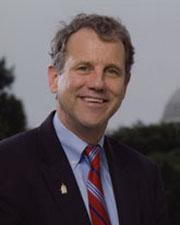
Mr. Speaker, today the House of Representatives is doing the right thing about health care. The QI program helps low- income beneficiaries cover the cost of the Medicare premium. Without this…
Mr. Speaker, today the House of Representatives is doing the right thing about health care. The QI program helps low- income beneficiaries cover the cost of the Medicare premium. Without this program, many elderly Americans would sink below poverty as they attempt to pay for doctors' visits out of pocket. That not only places the elderly at risk; it is wasteful from a fiscal perspective. When Medicare eligibles cannot afford the premium associated with doctors' visits and other outpatient services, Medicaid becomes their insurer of last resort. Absent QI, this program, more elderly Americans and individuals with disabilities would need Federal and State assistance through Medicaid in addition to their Medicare hospital coverage.
Investing in premium assistance now saves both Federal dollars and State dollars.
This bill also extends the Transitional Medical Assistance Program,
TMA. It provides health insurance to families as they move from welfare to the workforce. It is both a public health imperative and a jobs initiative.
Similar to the QI, it is an investment to the Federal budget in the long run, in this case by promoting workforce participation.
Ideally, today's legislation would make QI and TMA programs permanent so that these all-too-frequent reauthorizations would no longer be necessary. I hope we can work on a bipartisan basis to secure a permanent authorization.
At the beginning of my remarks I said today the House of Representatives is doing the right thing about health care. Unfortunately, yesterday they were not, this body was not. The day before this body was not doing the right thing about health care, and week before, week before, week before this they were not doing the right thing about health care.
Now, as we talk about Katrina, paying for this terrible tragedy that happened along the gulf coast, some Republicans want to cut Medicaid by $12 billion, $15 billion cut, cut other kinds of programs, increase Medicare premiums, cut out all kinds of programs that serve the working poor. Other Republicans simply want to add this cost of Katrina, as they add the $1 billion a week for the Iraq War, to the national deficit so that our kids and our grandkids can pay the cost.
Unfortunately, no Republican, to my knowledge, is standing up and saying maybe we ought to cancel the tax cuts that are for the wealthiest 1 percent of Americans. So the choice has become this. My friends on the other side of the aisle say let us give tax cuts to the wealthy, and then we have to cut Medicaid. Then we have to raise Medicare premiums. Medicare premiums already having gone up 50 percent in the last 4 years, 50 percent in the last 4 years. Seniors were just notified they are going to pay almost $90 a month for their Medicare premium, and do my colleagues know why? It is because my friends on the other side of the aisle are slavish devotees to tax cuts for the wealthiest Americans.
So, as wealthy Americans see their incomes go up and up and up, as the minimum wage has stayed flat for 5 years, as wages for 95 percent of the American people have been stagnant, we have got to give tax cuts for the wealthiest people in this country, to the richest people making over $250,000, $300,000 a year, and then we have to cut Medicaid. Then we have to increase Medicare premiums. Then we have to take from the middle class and the working poor.
It is immoral, it is wrong, and my colleagues should listen to what the gentleman from Washington (Mr. McDermott) said when he quoted from the New Testament and talked about we will be judged by our deeds. We also should think about our faith in terms of social justice. We also should think about our faith in doing to the least of these among us.
We ought to think about our faith in making this country a better place, and frankly, my friends on the other side of the aisle have failed miserably on that account.
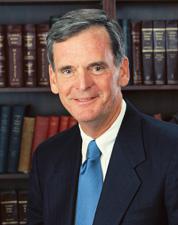
Mr. President, as chairman of the Budget Committee, I regularly comment on appropriations bills that are brought to this Senate for consideration and present the financial comparisons and budgetary…
Mr. President, as chairman of the Budget Committee, I regularly comment on appropriations bills that are brought to this Senate for consideration and present the financial comparisons and budgetary data.
The pending Labor, HHS, Education Appropriations bill provides $141.7 billion in discretionary budget authority and $141.4 billion in discretionary outlays for the Departments of Labor, Health and Human Services, and Education, and related agencies for fiscal year 2006.
Also included in the bill is $405.3 billion in mandatory budget authority and $405.2 billion in mandatory outlays for FY 2006. With outlays from prior-years, amounts declared as an emergency--$300 million for LIHEAP and $19 million for Refugee Assistance--and other completed actions, the Senate bill totals $547.3 billion in budget authority and $546.6 billion in outlays for FY 2006.
These amounts would technically represent a decrease of 0.8 percent in discretionary budget authority and a decrease of 0.2 percent in discretionary outlays from the 2005 enacted levels. However, when taking into account the SSI pay date shift into FY 2007 and emergency appropriations, the bill provides $2.5 billion or a 1.7 percent increase in discretionary funding over the FY 2005 enacted level.
As originally reported, the level of budget authority was precisely at the subcommittee's 302(b) allocation while the outlays amount was $1.1 billion below the subcommittee's 302(b) allocation. However, because the bill assumes erectile dysfunction drug savings--$105 million--that were recently enacted into law by HR 3971 for Katrina related unemployment insurance costs--and the QI and TMA extensions-- this bill is now $15 million over the subcommittee's 302(b) allocation and is subject to a 302(f) point of order.
The committee-reported bill also delays $3.36 billion in SSI payments to elderly and disabled individuals--an amount equivalent to one month's worth of FY 2006 SSI obligations--from fiscal year 2006 into fiscal year 2007. The original purpose of this shift was to allow for $3.4 billion in additional non-defense discretionary spending in FY 2006 that otherwise would put the bill over its 302(b) allocation, thereby exceeding the discretionary spending limit agreed to with the House in this year's budget resolution.
Not only could this action result in a hardship for the elderly and disabled on fixed incomes by delaying their ability to make their monthly rent payments, this accounting gimmick constitutes an advance appropriation that is unauthorized as well as exceeds the total level of allowed advance appropriations for fiscal year 2007 as set out under section 401(b) of the fiscal year 2006 budget resolution. As a result, a point of order lies against this bill for making an unauthorized advanced appropriation; if raised, the point of order may be waived only by an affirmative vote of 60 Members of the Senate.
Mr. President, I ask unanimous consent that a table displaying the Budget Committee scoring of the bill be printed in the Record.
Show 11 more
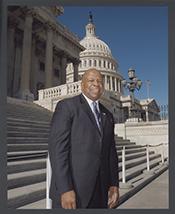
Mr. Speaker, I rise today to support the reauthorization of the Qualified Individual (QI-1) program, which helps over 161,000 low-income elderly and disabled Medicare beneficiaries with incomes…
Mr. Speaker, I rise today to support the reauthorization of the Qualified Individual (QI-1) program, which helps over 161,000 low-income elderly and disabled Medicare beneficiaries with incomes between 120 and 135 percent of poverty to pay their Medicare Part B premiums. This critical program expired on September 30, 2005.
The Qualified Individual program saves eligible participants approximately $1,000 per year. We're talking about individuals who usually pay for most of their living expenses out of checks that range in amount from $1,097 to $1,464 per month. Just to emphasize, that equates to a meager $13,164 to $17,568 in total income per year. Needless to say, this assistance serves as a vital resource for a very vulnerable sector of our population.
Mr. Speaker, both the House and the Senate have passed bills to reinstate the program. Today, I am happy to see that the Social Services Emergency Relief and Recovery Act of 2005, H.R. 3971, a bill designed primarily to provide relief to the Hurricane victims, includes an extension of the QI-1 program, an essential subsidy for some of our neediest Medicare beneficiaries. This program comes with a comparably meager $300 million price tag and the benefit it delivers is priceless. I urge my colleagues to support passage of this bill.
In fact, Mr. Speaker, if Congress does not act soon on reauthorizing the QI program, in
December of this year, over 161,000 beneficiaries will receive a Social Security check that is reduced by a whopping $234.60 for the month. That is why over thirty-five senior organizations, including the AARP, the Gray Panthers, Alliance for Retired Americans, National Caucus and Center on Black Aged, National Council on Aging and the United Jewish Communities to name a few, have contacted Members of Congress urging immediate action on reauthorizing this program.
As many of my colleagues know, the Qualified Individual program has suffered from uncertain reauthorization and funding since it expired in 2002. Since its expiration, it has hobbled along on a series of Continuing Resolutions--falling on the mercies of our oft-hurried appropriations process. I firmly believe that this program is of utmost importance--that costs us so little when we consider its impact. We should reauthorize it with all due speed, not subject it to the hurricane relief tennis match between the House and Senate leadership.
In the alternative, H.R. 3800, a bill introduced last month by Representatives Kucinich and LaTourette, of which I am a cosponsor, is a straightforward bipartisan bill to extend the Qualified Individual program for one year. I applaud these Members for their leadership on its introduction.
If we cannot wrest the QI-1 program out of the political volley surrounding hurricane funding, I urge the House leadership to bring H.R. 3800 to the floor for immediate consideration and passage. We have the power to fix this and I urge my colleagues to reauthorize the QI-1 program now.
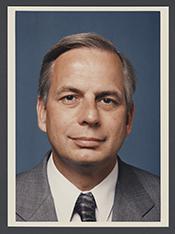
Mr. Speaker, I rise today in support of H. Res. 501, legislation that will extend the important Transitional Medical Assistance and Qualified Individuals programs. Over the past few years, these…
Mr. Speaker, I rise today in support of H. Res. 501, legislation that will extend the important Transitional Medical Assistance and Qualified Individuals programs. Over the past few years, these programs have been reauthorized by short-term extensions that offer low-income beneficiaries of the programs few assurances that they will be able to depend on the benefits in the future. While I support this extension bill, Congress should be acting I today to make these programs permanent.
The TMA program provides an important incentive for low-income individuals to move off of welfare and into employment by ensuring continued access to health care. Health insurance is a critical factor in everyone's employment decisions. Without TMA, many families would have little incentive to move off of welfare and leave behind the Medicaid benefits that TANF beneficiaries often receive. TMA allows for extended health care coverage when low-income families lose traditional Medicaid benefits due to an increase in income. While four months of TMA coverage is assured under current law, the six-to-twelve month extension that families so often need falls under a legislative sunset. While our action today will extend this coverage, we should be making this extension permanent.
Likewise, we should be acting today to make Medicare's QI-1 program permanent. This program is critical for Medicare beneficiaries whose income is between 120% and 135% of the federal poverty level, as it provides these individuals with assistance with their Medicare Part B premiums. Since Qualified Individuals are not otherwise eligible for Medicaid, the QI-1 program is critical in ensuring low-income seniors' access to physician care.
Mr. Speaker, I support the efforts of the bill sponsor to swiftly enact this important legislation. However, I regret that it includes extraneous provisions that would limit Medicaid and Medicare beneficiaries' access to certain classes of prescription drugs. Physicians, not Congress, know best when a prescription drug is medically necessary, and the government should not interject in decisions between a patient and his doctor I about the proper course of treatment.
Despite those reservations, this bill offers important benefits to low-income individuals' access to health care, and I urge my colleagues to join me in supporting it.
Mr. Speaker, I yield myself 2 minutes, and I thank the gentleman from Washington for yielding the balance of his time. I rise in support of this legislation, which reauthorizes the QI program. This…
Mr. Speaker, I yield myself 2 minutes, and I thank the gentleman from Washington for yielding the balance of his time.
I rise in support of this legislation, which reauthorizes the QI program. This program helps low-income Medicare beneficiaries cover the cost of the Medicare premium. Without this, many elderly Americans would sink below poverty as they attempt to pay for doctor visits out of pocket. That not only places individuals at risk, it is inefficient from a fiscal perspective.
For low-income beneficiaries who cannot afford the Medicare premium, Medicaid becomes the insurer of last resort. Absent the QI program, more elderly Americans and individuals with disabilities would need Federal and State assistance through Medicaid in addition to their Medicare coverage. Investing in premium assistance now saves both Federal and State dollars in the future.
And there is untapped potential in the program. Uncertainty surrounding funding for this program has had a dampening effect on enrollment. States are hesitant to reach out to eligible individuals, resulting in artificially low enrollment figures. It is in the public interest to address this problem in the future, but extending QI-1 is a necessary first step, and I am pleased the bill takes that step.
This legislation also extends the transitional Medicaid program, or TMA, and provides health insurance to families as they move from welfare to the workforce. It is a public health initiative and a jobs initiative which I strongly support.
It is my strong preference to make these two programs permanent rather than having Congress repeatedly reauthorize them sometimes multiple times in a year. I hope we can work with the gentleman from Georgia (Mr. Deal) and others on a bipartisan basis to secure a permanent authorization. In the meantime, I am pleased the House is taking up this legislation, and I urge my colleagues to support it.
Mr. Speaker, I yield 2 minutes to the gentleman from Washington (Mr. Inslee), a member of the Committee on Commerce and very knowledgeable about health care issues.
(Mr. INSLEE asked and was given permission to revise and extend his remarks.)
Mr. Speaker, I yield back the balance of my time.
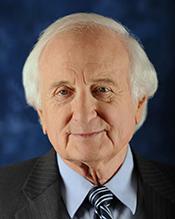
Mr. Speaker, let me just, if I might, illustrate the problem that is faced by unemployed workers in these three States, so that everybody understands that while this bill helps the States, it is…
Mr. Speaker, let me just, if I might, illustrate the problem that is faced by unemployed workers in these three States, so that everybody understands that while this bill helps the States, it is unlikely to help any of the unemployed; and that is too bad.
About 400,000 people became unemployed after Katrina, 6,000 already have exhausted their benefits in these three States since Katrina; and about 20,000 more are likely to exhaust their benefits.
Next, the amounts that are paid in these three States would leave a family of four way below the poverty level, way below the poverty level. So what we Democrats suggested was to provide moneys to the States so that they could cover all of the additional costs. This bill only will provide perhaps half. There should be an extension of unemployment compensation benefits for those people and also we should elevate the amount of money going to people. These are people without fault, who lose unemployment through no fault of their own, a hurricane.
It befuddles me why we have to settle on this floor for such an inadequate response to Katrina. And it is not the fault of the gentleman from Louisiana who spoke. I am sure of that because I think he wanted more. But as I understand it, talks broke down, and the hopes for a bipartisan bill that would indeed meet the needs of the unemployed, those hopes were essentially shelved.
Why? Partly because of this terrible budget crunch that the majority really has brought into operation. I would also guess because they have always opposed in recent times the extension of benefits, and they do not want to do anything to elevate the benefit structure even though it is way below the normal. I say, in a word, we are adding something tragic to tragedy, and we should not be doing that.
The gentleman from Louisiana said it is a first step. When would the second step be? I think there is no plan for a second step. So, essentially, in real terms, we are saying to the unemployed, it is a half a loaf, and it is hard to feed a family on a half a loaf.
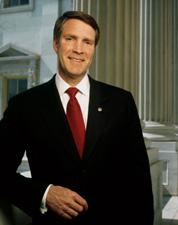
Mr. President, I ask unanimous consent that the order for the quorum call be dispensed with. Mr. President, in a few moments we will begin two rollcall votes. The second of those votes will be on the…
Mr. President, I ask unanimous consent that the order for the quorum call be dispensed with.
Mr. President, in a few moments we will begin two rollcall votes. The second of those votes will be on the nomination of Harry S. ``Sandy'' Mattice, Jr.
I hesitated a little bit because it is Harry S. Mattice, but nobody calls him that. It is Sandy to those of us who are his good friends and admirers.
The nomination is to serve on the United States District Court for the Eastern District of Tennessee.
I have known Sandy for many years and am proud to give him my absolute highest recommendation to serve on the Federal bench.
He is a native of Chattanooga, TN. He has nearly 17 years of experience as a practicing attorney, focusing primarily on business investigations, including securities and tax and white-collar crimes.
He currently serves as U.S. Attorney for the Eastern District of Tennessee, and in that role he manages Federal prosecutions for Tennessee's largest judicial district which encompasses 41 counties and 2.5 million Tennesseans.
Sandy will be an outstanding Federal judge. He is smart, he has a rock-solid work ethic, he respects his colleagues, and in turn has earned their respect and widespread admiration.
Throughout his entire career, Sandy has proved his merit as a skilled attorney and a talented prosecutor.
The American Bar Association gave him its highest possible rating, ``unanimously well-qualified,'' to serve as a Federal judge.
In addition to his many professional qualifications, Sandy is an honest person of the highest integrity. He is devoted to his family and is active in his local community.
I have absolutely no doubt that Sandy will serve with honor on the Federal bench.
As we prepare to vote, I urge my colleagues to support the nomination of this truly outstanding and distinguished Tennessean.
Mr. President, I yield the floor.
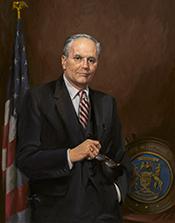
Mr. Speaker, I am pleased to see that the House and Senate have finally worked out their differences to extend two programs that provide important health care assistance for low-income elderly and…
Mr. Speaker, I am pleased to see that the House and Senate have finally worked out their differences to extend two programs that provide important health care assistance for low-income elderly and working families.
The Qualified Individual, QI, program provides assistance with the cost of Medicare premiums for certain low-income individuals. The Transitional Medicaid Program, TMA, provides temporary Medicaid coverage to families moving off of welfare to the workforce.
This legislation considered today merely provides a short-term extension. I continue to believe, however, that these programs should be made permanent. First, they are good programs that provide much needed assistance. Second, we should avoid the situation we find ourselves in now, particularly with respect to the QI program, where States and CMS were unsure whether or how to continue the program as funding expired on September 30.
We must also consider making program improvements to both programs that would simplify enrollment and retention of eligible individuals. I recently reintroduced legislation, H.R. 3980, the Medicare Beneficiary Assistance Improvement Act, to address this matter in the QI program. And I have also included such provisions for the TMA program in H.R. 2071, the Family Care Act of 2005, which I reintroduced earlier this year.
Finally, I have concerns about the provision we are using to pay for these extensions. This provision strikes Medicare and Medicaid coverage of particular drugs that had been previously covered. The provision, in the out years, raises more revenue than is needed for these short-term program extensions. We should have saved the remainder to use for another day. But despite these reservations, there is great urgency in extending the QI and TMA programs, so I am supporting the package.
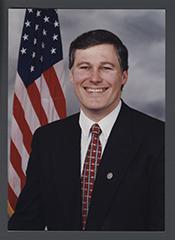
Mr. Speaker, I want to address the offset of this legislation. I obviously applaud the extension of transitional medical assistance, which provides health insurance for people leaving welfare and…
Mr. Speaker, I want to address the offset of this legislation. I obviously applaud the extension of transitional medical assistance, which provides health insurance for people leaving welfare and going back to work. This is obviously a great thing to do. I believe, however, it is dangerous to allow 435 Members of Congress, most of whom lack medical training, to pick and choose among which illnesses and which treatments should be deemed acceptable under those provisions.
There are thousands of physicians across this country that have recognized, for instance, the need for ED medicine, not as a recreational activity but as part of living a normal adult life. We also set up a potentially dangerous precedent by allowing Members to pick and choose individual treatments that they feel do not serve sufficient medicinal purposes.
Today, it is a medicine for ED, but should we choose to go down this road, next year we could be having the same debate about mental health treatments or biologics deemed too expensive. This is not the place for these decisions. This is a conversation for doctors to be having with their patients.
I find it worrisome we are on the verge of using the doctor's office as a setting for interjecting our preferred social policies where they do not belong. Doctors today prescribe ED medicine because it treats a serious medical disease that can lead to divorce and depression. ED is a common side effect of prostate cancer surgery and diabetes, and it affects millions of men nationwide which, in turn, can affect their families. There is not just an issue of men; it is a family issue.
This is an attempt to interject a political viewpoint into a personal decision that should be made by a doctor and a patient, and I hope we respect that personal decision more in the future.
Mr. Speaker, I rise in support of this legislation to reauthorize the Qualified Individual program, or QI. This program helps low-income Medicare beneficiaries who are almost, but not quite, eligible…
Mr. Speaker, I rise in support of this legislation to reauthorize the Qualified Individual program, or QI. This program helps low-income Medicare beneficiaries who are almost, but not quite, eligible for Medicaid assistance, and are still struggling with living and healthcare costs. It pays the cost of the Medicare Part B premium for seniors with incomes of approximately $11,484 to $12,920 a year. This is a good program that helps thousands of low-income seniors each year.
The initial program was a block grant enacted in 1997 and set to expire in 2002. Congress has re-authorized this program a number of times since then. The uncertainty surrounding funding for this program, however, has had a dampening effect on enrollment. States are hesitant to reach out to eligible individuals, resulting in artificially low enrollment figures. I hope my colleagues across the aisle will join me in fixing this problem in the future--but for now, I am pleased that we are passing this stopgap measure.
In addition, I support the extension of the transitional Medicaid program, or TMA. This program is critical for families moving from welfare to the workforce and provides health insurance during this time. TMA provides peace of mind for millions of working Americans so that they can maintain health insurance coverage as they begin working again.
I would note that it is my strong preference to make these two programs permanent, rather than having Congress continually reauthorize them, sometimes multiple times in a year. I thank Senators Grassley and Baucus for their work in the Senate, and Chairman Barton for his work with me, and am pleased that the House is taking up this legislation to extend funding for these programs for the immediate future.
Mr. Speaker, I thank the gentleman for yielding me this time, and I rise to express concern about the legislation we are considering. I heard the gentleman from Louisiana (Mr. McCrery) talk about the…
Mr. Speaker, I thank the gentleman for yielding me this time, and I rise to express concern about the legislation we are considering.
I heard the gentleman from Louisiana (Mr. McCrery) talk about the fact that we would like to do better. But let me just point out that we have $25 billion in a Federal unemployment trust account today. Those funds should be used for emergency circumstances. If there was ever an emergency, what happened to the workers of those three States as a result of Katrina is clearly an emergency. This is the time that we should be releasing unemployment moneys so that we can extend benefits beyond the statutory period that is currently in law.
Through no fault of their own, the victims of Katrina are unable to find employment, and we should be able to provide extended benefits. And the funds are there in the Federal unemployment trust account. So quite frankly, I do not understand what the delay is. The people are hurting. We should be doing everything we can to help, and I would expect that we would have had a stronger bill come out that would protect the workers who cannot find employment.
So, Mr. Speaker, I am disappointed that we have a bill before us that obviously is an important bill to move forward because it provides relief by extension of several programs that are important to the people that are affected by this, but I really do believe that we should be looking at a comprehensive approach to deal with people who have been victimized. Unfortunately, this bill does not really do it for those people who are unemployed, have exhausted their benefits and are looking to the Federal Government for help.
Mr. Speaker, the Qualified Individual, or QI, program pays the monthly Medicare part B premium for low-income beneficiaries. On September 30, 2005, the authorization for QI-1 expired. If it is not…
Mr. Speaker, the Qualified Individual, or QI, program pays the monthly Medicare part B premium for low-income beneficiaries. On September 30, 2005, the authorization for QI-1 expired. If it is not reauthorized within days, over 160,000 low-income seniors and those with disabilities will lose this crucial assistance on which they rely to cover their health care costs. That means that some people who make less than $1,092 a month will lose almost 10 percent of their income.
This is simply unnecessary, since QI's extension has strong and broad support. It is supported by 35 separate health advocacy organizations. In addition, the gentleman from Ohio (Mr. LaTourette) and I have a bill to extend the benefit that has bipartisan cosponsorship. In fact, a similar extension passed the House last year by a voice vote.
This bill before us today will make sure our seniors do not lose their income by extending the benefit for 1 year. In doing so, it builds on a consistent history of temporary extensions in recent years. If this bill becomes law, I urge Congress to turn its attention to a more permanent solution. Every year the benefit has strong support, and more often than not we find ourselves rushing at the last minute to keep it alive. My hope is that before it expires again next year, Congress will pass a permanent reauthorization.

Yes. Mr. President, if the distinguished chairman will yield to allow me to respond to that, I say to my friend from Pennsylvania that I think it may be a bit early. I think there are Senators still…
Yes.
Mr. President, if the distinguished chairman will yield to allow me to respond to that, I say to my friend from Pennsylvania that I think it may be a bit early. I think there are Senators still coming back from their travels in their home States. We want to give them time to get back here.
Someone told me there was a vote on a couple of judges at 5:30. I think after that we have to take a look and see how many amendments there are, if I am not mistaken.
I thought the chairman was going to offer a cloture motion tomorrow. If we have third reading, the chairman can't file a cloture motion.
There may be a point in time when I would agree with the chairman on this. It is Monday, and I know people are working diligently in their States, and they are headed back. There may be a couple of amendments that Members want to offer. I think perhaps 4:15 might be a little early for third reading.
But if the chairman will yield further, I believe the chairman is right. It is Monday. We are in business. Senator Frist, the majority leader, said that
we are going to be doing business today. If Members have amendments, they should come over and offer them. I agree with the chairman. It is ridiculous to sit here in quorum calls when we have an important bill like this and Members have amendments.
Bill Text
7 versions available
        [Congressional Bills 109th Congress]
[From the U.S. Government Publishing Office]
[H.R. 3971 Enrolled Bill (ENR)]

H.R.3971

One Hundred Ninth Congress

of the

United States of America

AT THE FIRST SESSION

Begun and held at the City of Washington on Tuesday,
the fourth day of January, two thousand and five

An Act

To extend medicare cost-sharing for qualifying individuals through
September 2007, to extend transitional medical assistance and the
program for abstinence education through December 2005, to provide
unemployment relief for States and individuals affected by Hurricane
Katrina, and for other purposes.

Be it enacted by the Senate and House of Representatives of the
United States of America in Congress assembled,

SECTION 1. SHORT TITLE.

This Act may be cited as the ``QI, TMA, and Abstinence Programs
Extension and Hurricane Katrina Unemployment Relief Act of 2005''.

TITLE I--HEALTH PROVISIONS

SEC. 101. EXTENSION OF QUALIFIED INDIVIDUAL (QI) PROGRAM.

(a) Through September 2007.--Section 1902(a)(10)(E)(iv) of the
Social Security Act (42 U.S.C. 1396a(a)(10)(E)(iv)) is amended by
striking ``September 2005'' and inserting ``September 2007''.
(b) Extending Total Amount Available for Allocation.--Section
1933(g) of such Act (42 U.S.C. 1396u-3(g)) is amended--
(1) in paragraph (2)--
(A) by striking ``and'' at the end of subparagraph (B);
(B) by striking the period at the end of subparagraph (C)
and inserting a semicolon; and
(C) by adding at the end the following new subparagraphs:
``(D) for the period that begins on October 1, 2005, and
ends on December 31, 2005, the total allocation amount is
$100,000,000;
``(E) for the period that begins on January 1, 2006, and
ends on September 30, 2006, the total allocation amount is
$300,000,000;
``(F) for the period that begins on October 1, 2006, and
ends on December 31, 2006, the total allocation amount is
$100,000,000; and
``(G) for the period that begins on January 1, 2007, and
ends on September 30, 2007, the total allocation amount is
$300,000,000.''; and
(2) in paragraph (3), in the matter preceding subparagraph (A),
by inserting ``, (D), or (F)'' after ``subparagraph (B)''.
(c) Effective Date.--The amendments made by this section shall be
effective as of September 30, 2005.

SEC. 102. EXTENSION OF TRANSITIONAL MEDICAL ASSISTANCE (TMA) AND
ABSTINENCE EDUCATION PROGRAM.

Effective as if enacted on September 30, 2005, activities
authorized by sections 510 and 1925 of the Social Security Act shall
continue through December 31, 2005, in the manner authorized for fiscal
year 2005, notwithstanding section 1902(e)(1)(A) of such Act, and out
of any money in the Treasury of the United States not otherwise
appropriated, there are hereby appropriated such sums as may be
necessary for such purpose. Grants and payments may be made pursuant to
this authority through the first quarter of fiscal year 2006 at the
level provided for such activities through the first quarter of fiscal
year 2005.

SEC. 103. ELIMINATION OF MEDICARE COVERAGE OF DRUGS USED FOR TREATMENT
OF SEXUAL OR ERECTILE DYSFUNCTION.

(a) In General.--Section 1860D-2(e)(2)(A) of the Social Security
Act (42 U.S.C. 1395w-102(e)(2)(A)) is amended--
(1) by striking the period at the end and inserting ``, as such
sections were in effect on the date of the enactment of this
part.''; and
(2) by adding at the end the following: ``Such term also does
not include a drug when used for the treatment of sexual or
erectile dysfunction, unless such drug were used to treat a
condition, other than sexual or erectile dysfunction, for which the
drug has been approved by the Food and Drug Administration.''.
(b) Construction.--Nothing in this section shall be construed as
preventing a prescription drug plan or an MA-PD plan from providing
coverage of drugs for the treatment of sexual or erectile dysfunction
as supplemental prescription drug coverage under section 1860D-
2(a)(2)(A)(ii) of the Social Security Act (42 U.S.C. 1395w-
102(a)(2)(A)(ii)).
(c) Effective Dates.--The amendment made by subsection (a)(1) shall
take effect as if included in the enactment of the Medicare
Prescription Drug, Improvement, and Modernization Act of 2003 (Public
Law 108-173) and the amendment made by subsection (a)(2) shall apply to
coverage for drugs dispensed on or after January 1, 2007.

SEC. 104. ELIMINATION OF MEDICAID COVERAGE OF DRUGS USED FOR TREATMENT
OF SEXUAL OR ERECTILE DYSFUNCTION.

(a) In General.--Section 1927(d)(2) of the Social Security Act (42
U.S.C. 1396r-8(d)(2)) is amended by adding at the end the following new
subparagraph:
``(K) Agents when used for the treatment of sexual or
erectile dysfunction, unless such agents are used to treat a
condition, other than sexual or erectile dysfunction, for which
the agents have been approved by the Food and Drug
Administration.''.
(b) Elimination of Federal Payment Under Medicaid Program.--Section
1903(i) of such Act (42 U.S.C. 1396b(i)) is amended--
(1) by striking ``or'' at the end of paragraph (19);
(2) by striking the period at the end of paragraph (20) and
inserting ``; or''; and
(3) by inserting after paragraph (20) the following new
paragraph:
``(21) with respect to amounts expended for covered outpatient
drugs described in section 1927(d)(2)(K) (relating to drugs when
used for treatment of sexual or erectile dysfunction).''.
(c) Clarification of No Effect on Determination of Base
Expenditures.--Section 1935(c)(3)(B)(ii)(II) of such Act (42 U.S.C.
1396v(c)(3)(B)(ii)(II)) is amended by inserting ``, including drugs
described in subparagraph (K) of section 1927(d)(2)'' after ``1860D-
2(e)''.
(d) Effective Date.--The amendments made by this section shall
apply to drugs dispensed on or after January 1, 2006.

TITLE II--ASSISTANCE RELATING TO UNEMPLOYMENT

SEC. 201. SPECIAL TRANSFER IN FISCAL YEAR 2006.

Section 903 of the Social Security Act (42 U.S.C. 1103) is amended
by adding at the end the following:
``(e) Special Transfer in Fiscal Year 2006.--Not later than 10 days
after the date of the enactment of this subsection, the Secretary of
the Treasury shall transfer from the Federal unemployment account--
``(1) $15,000,000 to the account of Alabama in the Unemployment
Trust Fund;
``(2) $400,000,000 to the account of Louisiana in the
Unemployment Trust Fund; and
``(3) $85,000,000 to the account of Mississippi in the
Unemployment Trust Fund.''.

SEC. 202. FLEXIBILITY IN UNEMPLOYMENT COMPENSATION ADMINISTRATION TO
ADDRESS HURRICANE KATRINA.

Notwithstanding any provision of section 302(a) or 303(a)(8) of the
Social Security Act, any State may, on or after August 28, 2005, use
any amounts received by such State pursuant to title III of the Social
Security Act to assist in the administration of claims for compensation
on behalf of any other State if a major disaster was declared with
respect to such other State or any area within such other State under
the Robert T. Stafford Disaster Relief and Emergency Assistance Act by
reason of Hurricane Katrina.

SEC. 203. REGULATIONS.

The Secretary of Labor may prescribe any operating instructions or
regulations necessary to carry out this title and any amendment made by
this title.

Speaker of the House of Representatives.

Vice President of the United States and
President of the Senate.