Telephone Records and Privacy Protection Act of 2006
 Rep. Lamar Smith (R-TX)
Legislative Activity
Stay on top of the latest movement without scrolling through every action
Became Public Law No: 109-476.
January 12, 2007
View full timeline
Introduced in House
February 8, 2006
Sponsor introductory remarks on measure. (CR E90)
February 8, 2006
Referred to the House Committee on the Judiciary.
February 8, 2006
Reported by the Committee on Judiciary. H. Rept. 109-395.
March 16, 2006
Placed on the Union Calendar, Calendar No. 215.
March 16, 2006
Mr. Sensenbrenner moved to suspend the rules and pass the bill, as amended.
April 25, 2006 • 2:43 PM
Considered under suspension of the rules. (consideration: CR H1690-1694)
April 25, 2006 • 2:44 PM
DEBATE - The House proceeded with forty minutes of debate on H.R. 4709.
April 25, 2006 • 2:44 PM
At the conclusion of debate, the Yeas and Nays were demanded and ordered. Pursuant to the provisions of clause 8, rule XX, the Chair announced that further proceedings on the motion would be postponed.
April 25, 2006 • 2:56 PM
Considered as unfinished business. (consideration: CR H1704-1705)
April 25, 2006 • 6:57 PM
Passed/agreed to in House: On motion to suspend the rules and pass the bill, as amended Agreed to by the Yeas and Nays: (2/3 required): 409 - 0 (Roll no. 101).(text: CR H1690-1691)
April 25, 2006 • 7:14 PM
Motion to reconsider laid on the table Agreed to without objection.
April 25, 2006 • 7:14 PM
On motion to suspend the rules and pass the bill, as amended Agreed to by the Yeas and Nays: (2/3 required): 409 - 0 (Roll no. 101). (text: CR H1690-1691)
April 25, 2006 • 7:14 PM
Received in the Senate and Read twice and referred to the Committee on the Judiciary.
April 26, 2006
Senate Committee on the Judiciary discharged by Unanimous Consent.(consideration: CR S11640)
December 8, 2006
Senate Committee on the Judiciary discharged by Unanimous Consent. (consideration: CR S11640)
December 8, 2006
Passed Senate without amendment by Unanimous Consent.
December 8, 2006
Message on Senate action sent to the House.
December 9, 2006
Presented to President.
January 3, 2007
Signed by President.
January 12, 2007
Became Public Law No: 109-476.
January 12, 2007
Voting History
1 vote recorded • Roll call available
Floor Debate
11 membersWhat members said about H.R. 4709 on the floor



 +6
+6
Floor Debate
11 membersWhat members said about H.R. 4709 on the floor
Madam Speaker, I yield myself such time as I may consume. I rise with great pleasure and enthusiasm as one of the supporters of this legislation, Telephone Records and Privacy Protection Act of 2006,…
Madam Speaker, I move to suspend the rules and pass the bill (H.R. 4709) to amend title 18, United States Code, to strengthen protections for law enforcement officers and the public by providing…
Madam Speaker, since I introduced this legislation, I rise in strong support of the Telephone Records and Privacy Protection Act of 2006, the TRAPP Act. And I want to thank Chairman Sensenbrenner for…
Mr. President, we have recently been reminded of the tremendous threat to consumer privacy posed by what is known as phone pretexting--the use of fraud and deception to acquire consumer phone…
Mr. Speaker, yesterday, I introduced H.R. 664, the Military Sexual Assault Crimes Revision Act of 2005. This bill would repeal Article 120 of the Uniformed Code of Military Justice (UCMJ) and replace…
Show 6 more

Madam Speaker, I rise in strong support of H.R. 4709, the Law Enforcement and Phone Privacy Protection Act. I was pleased to join with Representatives Smith, Conyers and Scott to introduce this…

Madam Speaker, I am pleased to be an original cosponsor of this bill. I believe it provides critical privacy protections to the more than 180 million Americans who use cell phones. It will also…

Madam Speaker, I rise today in support of the Law Enforcement and Phone Privacy Protection Act of 2006. As America continues to prosper, cell phones are becoming increasingly central to our everyday…
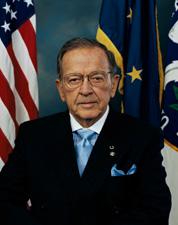
Mr. President, I ask unanimous consent that the Committee on the Judiciary be discharged from further consideration of H.R. 4709 and that the Senate proceed to its immediate consideration. Yes. The…

Mr. President, I know a number of our colleagues are wondering what time bills are going to be arriving from the House. I believe in a little bit, in the next 30 minutes or so, things will pick up…

Mr. Speaker, I was unable to vote during the following rollcall vote. Had I been present, I would have voted as indicated below: Rollcall 101, H.R. 4709, the Telephone Records and Privacy protection…
Bill Text
6 versions available
        [Congressional Bills 109th Congress]
[From the U.S. Government Publishing Office]
[H.R. 4709 Enrolled Bill (ENR)]

H.R.4709

One Hundred Ninth Congress

of the

United States of America

AT THE SECOND SESSION

Begun and held at the City of Washington on Tuesday,
the third day of January, two thousand and six

An Act

To amend title 18, United States Code, to strengthen protections for law
enforcement officers and the public by providing criminal penalties for
the fraudulent acquisition or unauthorized disclosure of phone records.

Be it enacted by the Senate and House of Representatives of the
United States of America in Congress assembled,

SECTION 1. SHORT TITLE.

This Act may be cited as the ``Telephone Records and Privacy
Protection Act of 2006''.

SEC. 2. FINDINGS.

Congress finds that--
(1) telephone records can be of great use to criminals because
the information contained in call logs may include a wealth of
personal data;
(2) call logs may reveal the names of telephone users' doctors,
public and private relationships, business associates, and more;
(3) call logs are typically maintained for the exclusive use of
phone companies, their authorized agents, and authorized consumers;
(4) telephone records have been obtained without the knowledge
or consent of consumers through the use of a number of fraudulent
methods and devices that include--
(A) telephone company employees selling data to
unauthorized data brokers;
(B) ``pretexting'', whereby a data broker or other person
represents that they are an authorized consumer and convinces
an agent of the telephone company to release the data; or
(C) gaining unauthorized Internet access to account data by
improperly activating a consumer's account management features
on a phone company's webpage or contracting with an Internet-
based data broker who trafficks in such records; and
(5) the unauthorized disclosure of telephone records not only
assaults individual privacy but, in some instances, may further
acts of domestic violence or stalking, compromise the personal
safety of law enforcement officers, their families, victims of
crime, witnesses, or confidential informants, and undermine the
integrity of law enforcement investigations.

SEC. 3. FRAUD AND RELATED ACTIVITY IN CONNECTION WITH OBTAINING
CONFIDENTIAL PHONE RECORDS INFORMATION OF A COVERED
ENTITY.

(a) Offense.--Chapter 47 of title 18, United States Code, is
amended by inserting after section 1038 the following:

``Sec. 1039. Fraud and related activity in connection with obtaining
confidential phone records information of a covered entity

``(a) Criminal Violation.--Whoever, in interstate or foreign
commerce, knowingly and intentionally obtains, or attempts to obtain,
confidential phone records information of a covered entity, by--
``(1) making false or fraudulent statements or representations
to an employee of a covered entity;
``(2) making such false or fraudulent statements or
representations to a customer of a covered entity;
``(3) providing a document to a covered entity knowing that
such document is false or fraudulent; or
``(4) accessing customer accounts of a covered entity via the
Internet, or by means of conduct that violates section 1030 of this
title, without prior authorization from the customer to whom such
confidential phone records information relates;
shall be fined under this title, imprisoned for not more than 10 years,
or both.
``(b) Prohibition on Sale or Transfer of Confidential Phone Records
Information.--
``(1) Except as otherwise permitted by applicable law, whoever,
in interstate or foreign commerce, knowingly and intentionally
sells or transfers, or attempts to sell or transfer, confidential
phone records information of a covered entity, without prior
authorization from the customer to whom such confidential phone
records information relates, or knowing or having reason to know
such information was obtained fraudulently, shall be fined under
this title, imprisoned not more than 10 years, or both.
``(2) For purposes of this subsection, the exceptions specified
in section 222(d) of the Communications Act of 1934 shall apply for
the use of confidential phone records information by any covered
entity, as defined in subsection (h).
``(c) Prohibition on Purchase or Receipt of Confidential Phone
Records Information.--
``(1) Except as otherwise permitted by applicable law, whoever,
in interstate or foreign commerce, knowingly and intentionally
purchases or receives, or attempts to purchase or receive,
confidential phone records information of a covered entity, without
prior authorization from the customer to whom such confidential
phone records information relates, or knowing or having reason to
know such information was obtained fraudulently, shall be fined
under this title, imprisoned not more than 10 years, or both.
``(2) For purposes of this subsection, the exceptions specified
in section 222(d) of the Communications Act of 1934 shall apply for
the use of confidential phone records information by any covered
entity, as defined in subsection (h).
``(d) Enhanced Penalties for Aggravated Cases.--Whoever violates,
or attempts to violate, subsection (a), (b), or (c) while violating
another law of the United States or as part of a pattern of any illegal
activity involving more than $100,000, or more than 50 customers of a
covered entity, in a 12-month period shall, in addition to the
penalties provided for in such subsection, be fined twice the amount
provided in subsection (b)(3) or (c)(3) (as the case may be) of section
3571 of this title, imprisoned for not more than 5 years, or both.
``(e) Enhanced Penalties for Use of Information in Furtherance of
Certain Criminal Offenses.--
``(1) Whoever, violates, or attempts to violate, subsection
(a), (b), or (c) knowing that such information may be used in
furtherance of, or with the intent to commit, an offense described
in section 2261, 2261A, 2262, or any other crime of violence shall,
in addition to the penalties provided for in such subsection, be
fined under this title and imprisoned not more than 5 years.
``(2) Whoever, violates, or attempts to violate, subsection
(a), (b), or (c) knowing that such information may be used in
furtherance of, or with the intent to commit, an offense under
section 111, 115, 1114, 1503, 1512, 1513, or to intimidate,
threaten, harass, injure, or kill any Federal, State, or local law
enforcement officer shall, in addition to the penalties provided
for in such subsection, be fined under this title and imprisoned
not more than 5 years.
``(f) Extraterritorial Jurisdiction.--There is extraterritorial
jurisdiction over an offense under this section.
``(g) Nonapplicability to Law Enforcement Agencies.--This section
does not prohibit any lawfully authorized investigative, protective, or
intelligence activity of a law enforcement agency of the United States,
a State, or political subdivision of a State, or of an intelligence
agency of the United States.
``(h) Definitions.--In this section:
``(1) Confidential phone records information.--The term
`confidential phone records information' means information that--
``(A) relates to the quantity, technical configuration,
type, destination, location, or amount of use of a service
offered by a covered entity, subscribed to by any customer of
that covered entity, and kept by or on behalf of that covered
entity solely by virtue of the relationship between that
covered entity and the customer;
``(B) is made available to a covered entity by a customer
solely by virtue of the relationship between that covered
entity and the customer; or
``(C) is contained in any bill, itemization, or account
statement provided to a customer by or on behalf of a covered
entity solely by virtue of the relationship between that
covered entity and the customer.
``(2) Covered entity.--The term `covered entity'--
``(A) has the same meaning given the term
`telecommunications carrier' in section 3 of the Communications
Act of 1934 (47 U.S.C. 153); and
``(B) includes any provider of IP-enabled voice service.
``(3) Customer.--The term `customer' means, with respect to a
covered entity, any individual, partnership, association, joint
stock company, trust, or corporation, or authorized representative
of such customer, to whom the covered entity provides a product or
service.
``(4) IP-enabled voice service.--The term `IP-enabled voice
service' means the provision of real-time voice communications
offered to the public, or such class of users as to be effectively
available to the public, transmitted through customer premises
equipment using TCP/IP protocol, or a successor protocol, (whether
part of a bundle of services or separately) with interconnection
capability such that the service can originate traffic to, or
terminate traffic from, the public switched telephone network, or a
successor network.''.
(b) Chapter Analysis.--The table of sections for chapter 47 of
title 18, United States Code, is amended by adding after the item
relating to section 1038 the following:

``1039. Fraud and related activity in connection with obtaining
confidential phone records information of a covered entity.''.

SEC. 4. SENTENCING GUIDELINES.

(a) Review and Amendment.--Not later than 180 days after the date
of enactment of this Act, the United States Sentencing Commission,
pursuant to its authority under section 994 of title 28, United States
Code, and in accordance with this section, shall review and, if
appropriate, amend the Federal sentencing guidelines and policy
statements applicable to persons convicted of any offense under section
1039 of title 18, United States Code.
(b) Authorization.--The United States Sentencing Commission may
amend the Federal sentencing guidelines in accordance with the
procedures set forth in section 21(a) of the Sentencing Act of 1987 (28
U.S.C. 994 note) as though the authority under that section had not
expired.

Speaker of the House of Representatives.

Vice President of the United States and
President of the Senate.