Mr. Speaker, joined by my Kansas delegation colleagues--Representatives Tiahrt, Ryun and Moran--I recently introduced legislation to designate the United States Postal Service facility located at…
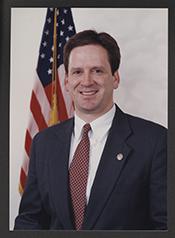
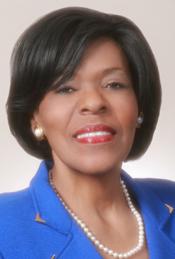
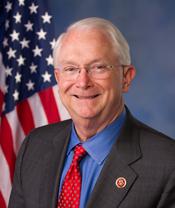
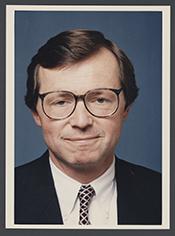
Mr. Speaker, joined by my Kansas delegation colleagues--Representatives Tiahrt, Ryun and Moran--I recently introduced legislation to designate the United States Postal Service facility located at 6029 Broadmoor Street in Mission, Kansas, as the ``Larry Winn, Jr. Post Office Building.'' I am pleased that the House is considering it today and I thank House Government Reform Committee Chairman Tom Davis and Ranking Democratic Member Henry Waxman and their staffs for moving this measure so rapidly through their committee.
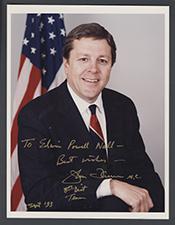
Edward Lawrence ``Larry'' Winn, Jr., represented Kansas' Third Congressional District in the U.S. House from 1967 to 1985. Born in Kansas City, Missouri, in 1919, he was an Eagle Scout who attended public schools and received a B.A. from the University of Kansas in 1941. Becoming an announcer for WHB radio, he later served as public relations director for the local branch of the American Red Cross. Returning to Kansas, he established and became vice president of Winn- Rau Corporation, a private home builder. For 14 years, he served as National Director of the National Association of Home Builders, and also served as President of the Home Builders Association of Kansas City.
In 1962, the incumbent U.S. Representative in the Third District, Robert Ellsworth, asked Winn, who had served as Republican Party chairman in that district, to be his campaign manager; he fulfilled that role in the 1962 and 1964 campaigns. In 1966, when Ellsworth unsuccessfully challenged incumbent U.S. Senator Jim Pearson in the Republican primary, Winn won election as his successor, defeating Overland Park Mayor Marvin Rainey. In later contests, among eight successful re-elections, Winn would defeat Lieutenant Governor James DeCoursey and Dan Watkins, the former chief of staff to Governor John Carlin.
Initially appointed to the House Committees on Space and Aeronautics (later renamed Science and Technology) and the District of Columbia, Winn later was appointed to the Select Committee on Crime, the Veterans' Affairs Committee, and the International Relations Committee, which was later renamed the Foreign Affairs Committee. Described by Congressional Quarterly's Politics in America, 1982 as a ``quiet, unassuming man,'' Winn eventually rose to the ranking Republican seat on the Science and Technology Committee, where he was an active supporter of America's space exploration program. As Politics in America, 1982 noted, he also advocated research into alternative energy sources such as gasohol and solar and wind power, and tax credits for energy efficiency and conservation.
Winn was appointed by President Carter and confirmed by the Senate to serve as a member of the U.S. delegation to the United Nations in 1979. He also was a member of the Canadian Interparliamentary Group and was ranking Republican member of the U.S.-European Interparliamentary Group. Domestically, Winn was a leading advocate of ``value engineering,'' a cost-saving government management system that was implemented in the early 1970s. He also was a leading advocate of a successful proposal maintaining 10 regional Federal office centers in the United States, which preserved Kansas City as a Federal regional office center, rather than transferring those functions to Denver.
Winn also is remembered for his advocacy of a proposed Tallgrass National Prairie Park in Kansas; as a result of his initial efforts, the Kansas Flint Hills are now home to the Tallgrass Prairie National Preserve, a unit of the National Park System managed in partnership with the private National Park Trust dedicated to the rich natural and cultural history of the tallgrass prairie ecosystem.
In their 1972 analysis of Winn's career, the Ralph Nader Congress Project's Citizens Look at Congress review of Winn's activities concluded that: ``Legislatively, Winn shows a good feel for Third District needs and interests. . . . Although Winn has had considerable experience in public speaking and writing, his style is more folksy than polished.'' During his tenure, he taped a weekly radio program on current congressional issues that was distributed to local broadcasters, as well as drafting and circulating weekly newspaper columns and twice-yearly congressional questionnaires that were sent to all in-district postal patrons. He estimated that over 2,000 Third District residents visited his Washington, D.C., office during the first 4 years of his tenure, and bumper stickers proclaiming: ``I visited Congressman Larry Winn in Washington'' were seen frequently across the Kansas City area.
Upon announcing his retirement from the U.S. House in 1984, Representative Winn published a column in the Christian Science Monitor decrying the increase in congressional partisan rancor. Twenty two years later, his words are even more relevant: ``It is important now for both Republicans and Democrats in the House of Representatives to recognize that a continuation of this rancor will undercut the legislative process. Most Americans are neither Republicans nor Democrats but are independents. This expresses a desire for pragmatism over ideology. Members of the House, without abandoning their individual philosophical approaches, should also approach problems pragmatically.''
Mr. Speaker, Larry Winn, Jr., served the Third District of Kansas as its Representative with diligence and decency for eighteen years. It is fitting that we now name a major postal facility in the Third District after him, and I hope the House and the Senate will move swiftly to approve this measure.