Madam Speaker, I move to suspend the rules and pass the bill (H.R. 5589) to direct the Secretary of Homeland Security to transfer to United States Immigration and Customs Enforcement all functions of…
Madam Speaker, I move to suspend the rules and pass the bill (H.R. 5589) to direct the Secretary of Homeland Security to transfer to United States Immigration and Customs Enforcement all functions of the Customs Patrol Officers unit operating on the Tohono O'odham Indian reservation.
Madam Speaker, let me first explain a little bit about who the Shadow Wolves are.
They are a specialized, all-Native American unit of the legacy U.S. Customs Service that were created by an act of Congress in 1972 to patrol the U.S.-Mexican land border within the Tohono O'odham Indian Nation in southern Arizona.
If you kind of visualize the southwest border, California, Arizona, New Mexico and Texas, and then think of Phoenix and Tucson coming straight down, Nogales, and then go towards California going west, that area would be the Tohono O'odham Reservation. It is an artificially defined border with Mexico there, because, in fact, the Tohono O'odham are on both sides of that, and Congressman Hayworth here in Congress has a bill to try to address how they can move inside their reservation, particularly as we tighten our border.
But it is a different challenge because, quite frankly, they were there before Mexico and the United States were there. So it is a different type of a challenge on the southwest border as to how we are going to provide security from terrorism, security from narcotics, from other types of items moving through, as well as illegal immigration.
Now, many people don't necessarily know Tohono O'odham as a name right off the bat; it is the Papago Indian tribe is what we historically called them, both in the north up more towards Phoenix and down in the southwest. But the Tohono O'odham view themselves as that name, and now the Federal Government has recognized them by that.
It is a relatively recent change, just like on our north border up by where the Mohawk reservation was; now they are called the Akwesasne Indian reservation, but we have a similar challenge on that side of the border.
Now, the reason the Shadow Wolves were created is when you have a separate nation inside your Nation, one of the hardest things for our drug agents, for our historic INS agents and others to penetrate is inside an Indian Nation. They are very closed societies. They know who is going to be where inside that Nation. It is not easy to penetrate.
And here we had one of the most successful tracking organizations, the Shadow Wolves have been featured in People Magazine, on television, all sorts of newspapers around the country for years because they combine modern technology with ancient tracking techniques, combined with being members inside that Nation to provide law and order inside that Nation.
They arrested and pursued and identified narcotics smugglers along their 76 miles of border, and 2.8 million acres, and they would seize roughly
100,000 pounds of illegal narcotics every year.
But when we created the Department of Homeland Security, we did something very unwise. We decided by splitting the CBP, the Customs and Border Protection, from the ICE agents, we left several agencies in the lurch. One is the Air and Marine Division that didn't either picket fence on the border or do investigations inside. So we are trying to work that out, which has been easier to do over in the water border on the Gulf of Mexico in the Caribbean Sea, but has been much tougher on the Mexican land border with the United States.
But the other is, what do you do with a group like the Shadow Wolves? They don't fit in an ICE box. They have a border, which is where we try to protect the border, but they also do investigations inside. And the Department of Homeland Security, in trying to figure out how to deal with things that don't quite fit, square pegs in a round hole, jammed them in under CBP, and that meant several things. One is, the Shadow Wolves, a distinct entity, disappeared because they scattered them, along with CBP agents, all over the country because it did not fit the organization structure to say, oh, this is a unique thing on the southwest border, let's create a unique thing.
So now inside the Tohono O'odham reservation, we have CBP agents that do not belong to that Nation. We have ICE agents that are not part of that Nation, and we have got Tohono O'odham Native Americans scattered all over the United States. It makes no sense. Needless to say, it is not working that great.
As we look at Nogales and the traffic pouring through in Arizona and as it moves over to Douglas, as we build more fences, as we put more agents on the border, guess what happens? They move over to the open areas, the Barry Goldwater Air Force Range, Tohono O'odham Indian reservation, and the Fish and Wildlife area to the western part of Arizona. They are overrun now.
Just in one hearing we had several years ago, during the time of the hearing, they had had 1,500 pounds of drugs moved through in the previous 3 months, then 1,500 pounds the previous month. During our hearing, with all of the different agents around, they snared something like 1,800 pounds, five different carloads, another group with seven SUVs going through. They put a Blackhawk on them. This has become a no- man's zone.
You cannot break organizations if you do not have investigations within. Rather than breaking up the Shadow Wolves, we should have been doing a similar thing up in New York State. We need to be looking at similar things in Montana where the Black Feet are not quite on the reservation, but how to work with the tribal groups to create tracking organizations that can do both border and investigations.
Now, this bill is an imperfect solution. It puts them over in ICE. They basically need to do both things, but since the government continues to stick with they have got to be either A or B, better be B than A, because making them scattered along like a picket fence and working with CBP, wherever they assign them, makes no sense. We need them back together. We need them as a tracking unit, more like a historic Customs ICE organization.
What this bill does is transfers them, in fact, back to ICE. It moves their pay scale to be like ICE special agents. It grants the chief officer of the Shadow Wolves a rank equivalent to the resident agent in charge of the ICE investigations and authorizes similar units in areas such in the Akwesasne Reservation in upstate New York. That is the basic thrust of the bill.
We know we need to work with the Appropriations Committee. We addressed this in the Homeland Security appropriations bill, but we just moved the dollars over. In fact, we will have to work out some kind of transition, because ICE agents make more than CBP. These people were trained trackers. Then all of a sudden we put them back on the border. It makes no sense. And we in Congress, who created this, need to make sure that we stand behind this great idea before all of them retire.
Many already took early retirement or quit because they saw no commitment to keeping them together as a Native American organization.
Madam Speaker, I rise in strong support of H.R. 5589, which directs the Secretary of Homeland Security to transfer to United States Immigration and Customs Enforcement all functions of the Customs Patrol Officers unit operating on the Tohono O'odham Indian reservation. This legislation responds to an urgent national priority: regaining control of our borders and stopping the cross-border smuggling of people, narcotics, and other contraband. I'd like to thank Majority Leader Boehner, Mr. Shadegg, and Mr. King of Iowa for their leadership in bringing this joint legislation to the Floor.
The Shadow Wolves are one of the last remaining Customs Patrol Officer (CPO) units in the country. Created by Congress in 1972, the Shadow Wolves operate on the Tohono O'odham Indian Reservation in southern Arizona, which has 76 miles of the U.S.-Mexican border running through it. That reservation has historically been a major conduit for drug smuggling, and the Shadow Wolves--all of them Native Americans who combine modern technology with traditional, Indian tracking techniques--are responsible for stopping the smuggling of drugs, illegal aliens and other contraband between the ports of entry within the 2.8 million acres of the Tohono O'odham Nation. Just since January of this year, the Shadow Wolves have interdicted over 15,000 pounds of illegal drugs that otherwise would have been sold on the streets. The Shadow Wolves have also assisted numerous Federal law enforcement agencies with enforcement issues on the reservation.
Despite being one of our most successful anti-smuggling investigative units, however, the Shadow Wolves are about to disappear altogether. After the formation of the Department of Homeland Security, the Shadow Wolves were taken out of their historic location at the Customs Office of Investigations and arbitrarily assigned to the Tucson Sector of the Border Patrol. This arrangement has been unworkable, because the mission and tactics of the Shadow Wolves (who are more like investigators than patrolmen) simply do not fit the organizational model of the Border Patrol. The Shadow Wolves have already lost nearly a quarter of their personnel due to attrition and to date there have been no qualified replacements.
H.R. 5589 fixes this problem by transferring the Shadow Wolves back to the Office of Investigations, now located within ICE. Once again, the Shadow Wolves will be able to do what they do best: find, follow, and bust major drug and alien smuggling rings, in cooperation with their fellow Immigration and Customs investigators.
I urge my colleagues to support H.R. 5589, and help the Nation take yet another major step in regaining control of our borders.
Madam Speaker, I reserve the balance of my time.
Madam Speaker, I yield myself such time as I may consume.
Madam Speaker, first, let me thank Chairman Pete King of the Homeland Security Committee and the ranking member, Mr. Thompson, for steadily standing behind this and also keeping the pressure on the administration to resolve these types of things, if they will not remix and back off from their determination to artificially divide this agency, at least to accommodate the things that do not quite fit the bureaucratic structure.
I want to thank Chairman Lungren of the subcommittee, as well as Chairman Rogers of the Homeland Security Appropriations Committee for keeping the pressure on in spite of the administration's resistance.
I appreciate the support in ICE of Director Myers, Julie Myers, for her support in trying to work out a compromise and backing off some of the resistance we have had over the last few years. Congressman John Shadegg of Arizona has been a leader on this, along with Congressman Grijalva for a number of years, and his staff has been down there many times.
We have spent much time on the Arizona border. Congressman Steve King has become involved in this, as well, from Iowa. And without the persistence of all of the Members, in addition to the support of the chairman, we would never be at the stage we are tonight of actually recognizing that the Shadow Wolves should exist as a separate unit, of authorizing what we earlier did in the appropriations bill, and see if we cannot finally get this done.
We thank the individual members of the Shadow Wolves who stayed, and their patience as we try to put this back together, because this is important to the reservation. I have talked to tribal leaders there and individual homeowners there, and they are so frustrated with all of the crime that is running through their Indian reservation. They so much want to have their destiny controlled by their own people, to the degree we can work this out.
I appreciate their patience as we have done a very belabored, long conflict over how to do this inside Homeland Security. But I think we are finally nearing the final stages of at least getting them in ICE, holding them together as a unit, working with the administration, with the appropriators, with the authorizers. I thank once again Mr. Thompson, Chairman King and all of the relevant Members for moving this bill forward.
Madam Speaker, I yield back the balance of my time.
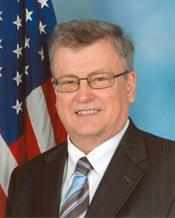 Rep. Mark E. Souder (R-IN)