College Access and Opportunity Act of 2006
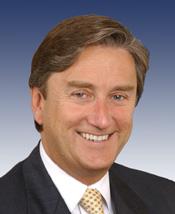
 Rep. John A. Boehner (R-OH)
Legislative Activity
Stay on top of the latest movement without scrolling through every action
Received in the Senate. Read twice. Placed on Senate Legislative Calendar under General Orders. Calendar No. 388.
April 4, 2006
View full timeline
Introduced in House
February 8, 2005
Referred to the House Committee on Education and the Workforce.
February 8, 2005
Referred to the Subcommittee on 21st Century Competitiveness.
April 29, 2005
Referred to the Subcommittee on Select Education.
April 29, 2005
Subcommittee Consideration and Mark-up Session Held.
July 13, 2005
Forwarded by Subcommittee to Full Committee (Amended) by the Yeas and Nays: 18 - 15.
July 14, 2005
Committee Consideration and Mark-up Session Held.
July 20, 2005
Subcommittee on Select Education Discharged.
July 20, 2005
Committee Consideration and Mark-up Session Held.
July 21, 2005
Committee Consideration and Mark-up Session Held.
July 22, 2005
Ordered to be Reported (Amended) by the Yeas and Nays: 27 - 20.
July 22, 2005
Reported (Amended) by the Committee on Education and the Workforce. H. Rept. 109-231.
September 22, 2005
Placed on the Union Calendar, Calendar No. 128.
September 22, 2005
Rules Committee Resolution H. Res. 741 Reported to House. Rule provides for consideration of H.R. 609 with 1 hour of general debate. Previous question shall be considered as ordered without intervening motions. Measure will be considered read. Specified amendments are in order.
March 28, 2006 • 11:52 PM
Rule H. Res. 741 passed House.
March 29, 2006 • 11:57 AM
ORDER OF PROCEDURE - Mr. McKeon asked unanimous consent that, during consideration of H.R. 609 in the Committee of the Whole and pursuant to H. Res. 741, the following amendments may be offered out of the specified order: #'s 9, 12, 14 and 15. Agreed to without objection.
March 29, 2006 • 11:59 AM
Considered under the provisions of rule H. Res. 741. (consideration: CR H1211-1281; text of measure as reported in House: CR H1222-1259)
March 29, 2006 • 11:59 AM
Rule provides for consideration of H.R. 609 with 1 hour of general debate. Previous question shall be considered as ordered without intervening motions. Measure will be considered read. Specified amendments are in order.
March 29, 2006 • 11:59 AM
House resolved itself into the Committee of the Whole House on the state of the Union pursuant to H. Res. 741 and Rule XVIII.
March 29, 2006 • 12:00 PM
The Speaker designated the Honorable Rob Bishop to act as Chairman of the Committee.
March 29, 2006 • 12:00 PM
GENERAL DEBATE - The Committee of the Whole proceeded with one hour of general debate on H.R. 609.
March 29, 2006 • 12:00 PM
DEBATE - Pursuant to the provisions of H. Res. 741, the Committee of the Whole proceeded with 10 minutes of debate on the McKeon amendment.
March 29, 2006 • 1:10 PM
DEBATE - Pursuant to the provisions of H. Res. 741, the Committee of the Whole proceeded with 10 minutes of debate on the Fossella amendment.
March 29, 2006 • 1:15 PM
DEBATE - Pursuant to the provisions of H. Res. 741, the Committee of the Whole proceeded with 10 minutes of debate on the Porter amendment.
March 29, 2006 • 1:18 PM
DEBATE - Pursuant to the provisions of H. Res. 741, the Committee of the Whole proceeded with 10 minutes of debate on the Wilson (NM) amendment.
March 29, 2006 • 1:26 PM
DEBATE - Pursuant to the provisions of H. Res. 471, the Committee of the Whole proceeded with 10 minutes of debate on the Blumenauer amendment.
March 29, 2006 • 1:30 PM
DEBATE - Pursuant to the provisions of H. Res. 109-399, the Committee of the Whole proceeded with 20 minutes of debate on the McMorris amendment.
March 29, 2006 • 1:37 PM
POSTPONED PROCEEDINGS - At the conclusion of debate on the McMorris amendment, the Chair put the question on adoption of the amendment and by voice vote announced that the ayes had prevailed. Ms. McMorris demanded a recorded vote and the Chair postponed further proceedings on the amendment until later in the legislative day.
March 29, 2006 • 1:58 PM
DEBATE - Pursuant to the provisions of H. Res. 741, the Committee of the Whole proceeded with 10 minutes of debate on the Burton amendment.
March 29, 2006 • 1:59 PM
POSTPONED PROCEEDINGS - At the conclusion of debate on the Burton amendment, the Chair put the question on adoption of the amendment and by voice vote announced that the noes had prevailed. Mr. Burton demanded a recorded vote and the Chair postponed further proceedings on the amendment until later in the legislative day.
March 29, 2006 • 2:03 PM
DEBATE - Pursuant to the provisions of H. Res. 741, the Committee of the Whole proceeded with 10 minutes of debate on the Boustany amendment.
March 29, 2006 • 2:04 PM
DEBATE - Pursuant to the provisions of H. Res. 741, the Committee of the Whole proceeded with 10 minutes of debate on the Castle amendment.
March 29, 2006 • 2:18 PM
DEBATE - Pursuant to the provisions of H. Res. 741, the Committee of the Whole proceeded with 10 minutes of debate on the Cuellar amendment.
March 29, 2006 • 2:29 PM
DEBATE - Pursuant to the provisions of H. Res. 741, the Committee of the Whole proceeeded with 10 minutes of debate on the Cuellar amendment.
March 29, 2006 • 2:32 PM
DEBATE - Pursuant to the provisions of H. Res. 741, the Committee of the Whole proceeded with 10 minutes of debate on the Hart amendment.
March 29, 2006 • 2:36 PM
DEBATE - Pursuant to the provisions of H. Res. 741, the Committee of the Whole proceeded with 10 minutes of debate on the Musgrave amendment.
March 29, 2006 • 2:40 PM
DEBATE - Pursuant to the provisions of H. Res. 741, the Committee of the Whole proceeded with 10 minutes of debate on the Sessions amendment.
March 29, 2006 • 2:43 PM
Mr. McKeon moved that the committee rise.
March 29, 2006 • 2:51 PM
On motion that the committee rise Agreed to by voice vote.
March 29, 2006 • 2:52 PM
Committee of the Whole House on the state of the Union rises leaving H.R. 609 as unfinished business.
March 29, 2006 • 2:52 PM
Considered as unfinished business. (consideration: CR H1289-1291)
March 29, 2006 • 5:45 PM
The House resolved into Committee of the Whole House on the state of the Union for further consideration.
March 29, 2006 • 5:45 PM
UNFINISHED BUSINESS - The Chair announced that the unfinished business was the question of adoption of amendments which had been debated earlier and on which further proceedings had been postponed.
March 29, 2006 • 5:45 PM
Rules Committee Resolution H. Res. 742 Reported to House. Rule provides for consideration of H.R. 609. Previous question shall be considered as ordered without intervening motions except motion to recommit with or without instructions. Measure will be considered read. Specified amendments are in order.
March 29, 2006 • 8:33 PM
Rule H. Res. 742 passed House.
March 30, 2006 • 11:42 AM
Considered as unfinished business. (consideration: CR H1335-1363)
March 30, 2006 • 12:06 PM
The House resolved into Committee of the Whole House on the state of the Union for further consideration.
March 30, 2006 • 12:07 PM
DEBATE - Pursuant to the provisions of H. Res. 742, the Committee of the Whole proceeded with 10 minutes of debate on the Biggert amendment.
March 30, 2006 • 12:08 PM
DEBATE - Pursuant to the provisions of H. Res. 742, the Committee of the Whole proceeded with 10 minutes of debate on the Gohmert amendment.
March 30, 2006 • 12:14 PM
POSTPONED PROCEEDINGS - At the conclusion of debate on the Gohmert amendment, the Chair put the question on adoption of the amendment and by voice vote, announced that the ayes had prevailed. Mr. Gohmert demanded a recorded vote and the Chair postponed further proceedings on the question of adoption of the amendment until later in the legislative day.
March 30, 2006 • 12:19 PM
DEBATE - Pursuant to the provisions of H. Res. 742, the Committee of the Whole proceded with 10 minutes of debate on the Kennedy (RI) amendment.
March 30, 2006 • 12:20 PM
POSTPONED PROCEEDINGS - At the conclusion of debate on the Kennedy (RI) amendment, the Chair put the question on adoption of the amendment and by voice vote, announced that the ayes had prevailed. Mr. Kennedy (RI) demanded a recorded vote and the Chair postponed further proceedings on the question of adoption of the amendment until later in the legislative day.
March 30, 2006 • 12:25 PM
DEBATE - Pursuant to the provisions of H. Res. 742, the Committee of the Whole proceeded with 10 minutes of debate on the King (IA) amendment.
March 30, 2006 • 12:26 PM
POSTPONED PROCEEDINGS - At the conclusion of debate on the King (IA) amendment, the Chair put the question on adoption of the amendment and by voice vote, announced that the ayes had prevailed. Mr. George Miller (CA) demanded a recorded vote and the Chair postponed further proceedings on the question of adoption of the amendment until later in the legislative day.
March 30, 2006 • 12:37 PM
DEBATE - Pursuant to the provisions of H. Res. 742, the Committee of the Whole proceeded with 10 minutes of debate on the Larsen (WA) amendment.
March 30, 2006 • 12:39 PM
DEBATE - Pursuant to the provisions of H. Res. 742, the Committee of the Whole proceeded with 10 minutes of debate on the Souder amendment.
March 30, 2006 • 12:43 PM
DEBATE - Pursuant to the provisions of H. Res. 742, the Committee of the Whole proceeded with 30 minutes of debate on the George Miller (CA) amendment.
March 30, 2006 • 12:50 PM
POSTPONED PROCEEDINGS - At the conclusion of debate on the George Miller (CA) amendment in the nature of a substitute the Chair put the question on adoption of the amendment and by voice vote announced that the noes had prevailed. Mr. George Miller (CA) demanded a recorded vote and the Chair postponed further consideration of the amendment until later in the legislative day.
March 30, 2006 • 1:23 PM
PRO FORMA AMENDMENT - Pursuant to the provisions of H. Res. 742, the Committee of the Whole proceeded with a pro forma amendment for the purposes of an additional 10 minutes of debate.
March 30, 2006 • 1:25 PM
UNFINISHED BUSINESS - The Chair announced that the unfinished business was the question of adoption of amendments which had been debated earlier and on which further proceedings had been postponed.
March 30, 2006 • 1:37 PM
The House rose from the Committee of the Whole House on the state of the Union to report H.R. 609.
March 30, 2006 • 2:26 PM
The previous question was ordered pursuant to the rule. (consideration: CR H1363)
March 30, 2006 • 2:26 PM
The House adopted the amendment in the nature of a substitute as agreed to by the Committee of the Whole House on the state of the Union.
March 30, 2006 • 2:26 PM
Passed/agreed to in House: On passage Passed by recorded vote: 221 - 199 (Roll no. 81).
March 30, 2006 • 2:44 PM
On passage Passed by recorded vote: 221 - 199 (Roll no. 81).
March 30, 2006 • 2:44 PM
Motion to reconsider laid on the table Agreed to without objection.
March 30, 2006 • 2:44 PM
Received in the Senate. Read twice. Placed on Senate Legislative Calendar under General Orders. Calendar No. 388.
April 4, 2006
Voting History
7 votes recorded • Roll call available
HOUSE
Roll Call AvailableMarch 30, 2006 at 2:46 PM
On Passage
Majority required: 1/2 (50%)
221 - 199
HOUSE
Roll Call AvailableMarch 30, 2006 at 2:27 PM
On Agreeing to the Amendment
Majority required: 1/2 (50%)
200 - 220
HOUSE
Roll Call AvailableMarch 30, 2006 at 2:19 PM
On Agreeing to the Amendment
Majority required: 1/2 (50%)
83 - 337
Show 4 more votes
HOUSE
Roll Call AvailableMarch 30, 2006 at 2:10 PM
On Agreeing to the Amendment
Majority required: 1/2 (50%)
380 - 38
HOUSE
Roll Call AvailableMarch 30, 2006 at 2:02 PM
On Agreeing to the Amendment
Majority required: 1/2 (50%)
418 - 2
HOUSE
Roll Call AvailableMarch 29, 2006 at 6:26 PM
On Agreeing to the Amendment
Majority required: 1/2 (50%)
120 - 306
HOUSE
Roll Call AvailableMarch 29, 2006 at 6:17 PM
On Agreeing to the Amendment
Majority required: 1/2 (50%)
293 - 134
Floor Debate
21 membersWhat members said about H.R. 609 on the floor

 +16
+16
Floor Debate
21 membersWhat members said about H.R. 609 on the floor
Mr. Chairman, I thank the gentleman for yielding me this time. Mr. Chairman, I reluctantly rise in opposition of the bill, not because I do not appreciate the hard work that has gone on in committee…
Mr. Speaker, by direction of the Committee on Rules, I call up House Resolution 741 and ask for its immediate consideration. Mr. Speaker, for the purpose of debate only, I yield the customary 30…
Mr. Chairman, I yield myself such time as I may consume. I rise in support of this bill to reform, reauthorize and strengthen programs under the Higher Education Act. I want to thank my former…
Madam Speaker, I move to suspend the rules and pass the bill (H.R. 3784) to temporarily extend the programs under the Higher Education Act of 1965, and for other purposes, as amended. Madam Speaker,…
Mr. Chairman, I rise in strong support of H.R. 609, and I want to congratulate Majority Leader Boehner and Chairman McKeon for bringing this important legislation to the floor. H.R. 609 is critical…
Show 8 more

Mr. Chairman, I yield 5 minutes to the gentleman from Michigan (Mr. Kildee). Mr. Chairman, I yield myself 1 minute. The gentleman tells an interesting story on Pell Grants, but the problem is the…
Mr. Speaker, I thank the gentlewoman for yielding me this time. Mr. Speaker, traditionally, the higher education bill has been an opportunity for this Nation to pause and think about the role of…

Mr. Chairman, I ask to claim time in opposition. No, Mr. Chairman. Mr. Chairman, indeed I am not opposing this amendment. In fact, I am joining the gentlewoman in this amendment and working with her,…
Mr. Chairman, I claim the time in opposition to the amendment. Mr. Chairman, I rise to claim the time in opposition, although I am obviously in favor of the amendment. I want to thank the chairman…

Mr. Chairman, I want to express my disappointment that the rule to H.R. 609 does not allow my colleagues the opportunity to consider the Student Aid Reward Amendment that I sought to offer with…

Mr. Speaker, I thank the gentleman from Utah for yielding me this time, and I yield myself such time as I may consume. (Ms. MATSUI asked and was given permission to revise and extend her remarks.)…
Madam Speaker, I yield myself such time as I may consume. Madam Speaker, I rise today to support H.R. 3784, a temporary 3-month extension of the Higher Education Act. This, in essence, extends…
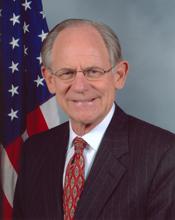
To Chairman McKeon, congratulations on rising to the top of this very significant committee. I would also like to express my accolades to Sally Lovejoy, who has had occasion to straighten me out,…
Show 11 more

Thank you, Mr. Chairman, and I thank the chairman for yielding me time. I rise in support of H.R. 609, the College Access and Opportunity Act. I thank Majority Mr. Leader Boehner and Chairman McKeon…
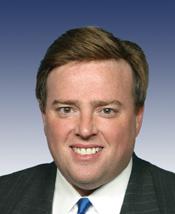
Mr. Chairman, I thank the chairman for yielding me time. Mr. Chairman, I rise to proudly support H.R. 609, the College Access and Opportunity Act, which reauthorizes the Higher Education Act. Don't…

Mr. Chairman, I, too, want to thank the chairman of the committee and the ranking member and the chairman and ranking member of the subcommittee for their work on this important issue. However, I,…
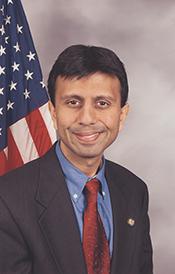
Mr. Speaker, I move to suspend the rules and pass the bill (H.R. 3863) to provide the Secretary of Education with waiver authority for the reallocation rules in the Campus-Based Aid programs, and to…

Mr. Speaker, I want to congratulate my friend, the great history professor, who understands the importance of education and for his stellar service on the Rules Committee and his commitment to…
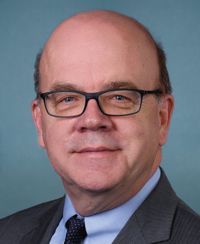
Mr. Speaker, I thank the gentlewoman from California, my colleague, for yielding me this time, and I appreciate the opportunity to speak on this rule and on this bill. Mr. Speaker, scarcely 2 months…

Mr. Speaker, I rise to state my opposition to H.R. 609, a higher education reauthorization bill that is much more than a day late and a dollar short. As a former college chief administrator, I am…
Mr. Speaker, I thank the gentleman for yielding the time, and I appreciate the work he is doing on this rule. Just a little history, Mr. Speaker. You know, we have been working on this higher…
Mr. Speaker, I yield myself such time as I may consume. Mr. Speaker, H.R. 3863 is, in fact, a good bill, and I want to congratulate my colleague for filing this bill and working on it. Obviously, as…
Mr. Speaker, I rise in support of this bill to protect financial aid opportunities for students and schools affected by the recent hurricanes in the gulf coast region. I would like to thank my friend…

Mr. Chairman, I rise today in support of H.R. 609, the College Access and Opportunity Act. This bill recognizes the unprecedented challenges that America is facing from countries like China and India…
Bill Text
4 versions available
        [Congressional Bills 109th Congress]
[From the U.S. Government Publishing Office]
[H.R. 609 Placed on Calendar Senate (PCS)]

Calendar No. 388
109th CONGRESS
2d Session
H. R. 609

_______________________________________________________________________

IN THE SENATE OF THE UNITED STATES

April 4, 2006

Received; read twice and placed on the calendar

_______________________________________________________________________

AN ACT

To amend and extend the Higher Education Act of 1965.

Be it enacted by the Senate and House of Representatives of the
United States of America in Congress assembled,

SECTION 1. SHORT TITLE; TABLE OF CONTENTS.

(a) Short Title.--This Act may be cited as the ``College Access and
Opportunity Act of 2006''.
(b) Table of Contents.--The table of contents for this Act is as
follows:

Sec. 1. Short title; table of contents.
Sec. 2. References; effective date.
TITLE I--GENERAL PROVISIONS

Sec. 101. Definition of institution of higher education.
``Sec. 101. Definition of institution of higher education.
``Sec. 102. Institutions outside the United States.
``Sec. 123. Restrictions on funds for for-profit schools.
Sec. 102. New borrower definition.
Sec. 103. Student speech and association rights.
Sec. 104. National Advisory Committee on Institutional Quality and
Integrity.
Sec. 105. Alcohol and drug abuse prevention.
Sec. 106. Prior rights and obligations.
Sec. 107. Limitation on certain uses of funds.
``Sec. 124. Limitation on certain uses of funds.
Sec. 108. Consumer information and public accountability in higher
education.
``Sec. 131. Consumer information and public accountability in
higher education.
Sec. 109. Databases of student information.
``Sec. 132. Databases of student information prohibited.
Sec. 110. Performance-based organization.
Sec. 111. Treatment of territories and territorial student assistance.
TITLE II--TEACHER PREPARATION

Sec. 201.  Teacher quality enhancement grants.
``Part A--Teacher Quality Enhancement Grants for States and
Partnerships

``Sec. 201. Purposes; definitions.
``Sec. 202. State grants.
``Sec. 203. Partnership grants.
``Sec. 204. Teacher recruitment grants.
``Sec. 205. Administrative provisions.
``Sec. 206. Accountability and evaluation.
``Sec. 207. Accountability for programs that prepare teachers.
``Sec. 208. State functions.
``Sec. 209. General provisions.
``Sec. 210. Authorization of appropriations.
Sec. 202. Preparing tomorrow's teachers to use technology.
Sec. 203. Centers of excellence.
``Part C--Centers of Excellence

``Sec. 231. Purposes; definitions.
``Sec. 232. Centers of excellence.
``Sec. 233. Authorization of appropriations.
Sec. 204. Teacher incentive fund program.
``Part D--Teacher incentive fund program

``Sec. 241. Purpose; definitions.
``Sec. 242. Teacher incentive fund grants.
``Sec. 243. Evaluations.
``Sec. 244. Authorization of appropriations.
Sec. 205. National teacher corps.
``Part E--National Teacher Corps

``Sec. 251. Purposes.
``Sec. 252. Definitions.
``Sec. 253. Grant program authorized.
``Sec. 254. Grant requirements.
``Sec. 255. Authorized activities.
``Sec. 256. Evaluation.
``Sec. 257. Authorization of appropriations.
Sec. 206. Transition.
TITLE III--INSTITUTIONAL AID

Sec. 301. Title III grants for American Indian Tribally Controlled
Colleges and Universities.
Sec. 302. Alaska Native and Native Hawaiian-serving institutions.
Sec. 303. Grants to part B institutions.
Sec. 304. Technical amendments.
Sec. 305. Title III authorizations.
TITLE IV--STUDENT ASSISTANCE

Part A--Grants to Students

Sec. 401. Pell Grants.
``Sec. 401A. Pell Grants Plus: achievement grants for State
scholars.
Sec. 402. TRIO programs.
Sec. 403. TRIO reform.
``Sec. 402G. Staff development activities.
``Sec. 402H. Evaluations.
Sec. 404. GEARUP.
Sec. 405. Federal Supplemental Educational Opportunity Grants.
Sec. 406. LEAP.
Sec. 407. HEP/CAMP program.
Sec. 408.``subpart 6--robert c. byrd honors scholarship program
``Sec. 419A. Robert C. Byrd mathematics and science honors
scholarship program.
``Sec. 419B. Mathematics and science incentive program.
``Sec. 419C. Mathematics and science education coordinating
council grants.
``Sec. 419D. Adjunct teacher corps.
``Sec. 419E. Foreign language partnerships.
``Sec. 419F. Authorization of appropriations.
Sec. 409. Child care access.
Sec. 410. Learning anytime anywhere partnerships.
Part B--Federal Family Education Loan Program

Sec. 421. Loan forgiveness for service in areas of national need.
``Sec. 428K. Loan forgiveness for service in areas of national
need.
Sec. 422. Additional administrative provisions.
Part C--Federal Work-Study Programs

Sec. 441. Authorization of appropriations.
Sec. 442. Community service.
Sec. 443. Allocation of funds.
Sec. 444. Books and supplies.
Sec. 445. Job location and development.
Sec. 446. Work colleges.
Sec. 447. Work assistance for students in comprehensive postsecondary
programs for students with mental
retardation.
``Sec. 449. Work assistance for students in comprehensive
postsecondary programs for students with
mental retardation.
Part D--Federal Direct Loan Program

Sec. 451. Income contingent repayment.
Part E--Federal Perkins Loan Program

Sec. 461. Reauthorization of program.
Sec. 462. Loan terms and conditions.
Sec. 463. Loan cancellation.
Sec. 464. Technical amendments.
Part F--Need Analysis

Sec. 471. Significantly simplifying the student aid application
process.
Sec. 472. Discretion of student financial aid administrators.
Part G--General Provisions Relating to Student Financial Assistance

Sec. 481. Expanding information dissemination regarding eligibility for
Pell Grants.
Sec. 482. Student eligibility.
Sec. 483. Institutional refunds.
Sec. 484. Institutional and financial assistance information for
students.
Sec. 485. Distance education demonstration program.
Sec. 486. College affordability demonstration program.
``Sec. 486A. College affordability demonstration program.
Sec. 487. Program participation agreements.
Sec. 488. Additional technical and conforming amendments.
Sec. 489. Pell grant eligibility provision.
Part H--Program Integrity

Sec. 495. Accreditation.
Sec. 496. Report to Congress on prevention of fraud and abuse in
student financial aid programs.
``Sec. 499. Report to Congress on prevention of fraud and abuse
in student financial aid programs.
Sec. 497. Report to Congress on compliance with the Paperwork Reduction
Act of 1995.
``Sec. 499A. Report to Congress on the Compliance of the
student aid application process with the
requirements of the Paperwork Reduction Act
of 1995.
TITLE V--DEVELOPING INSTITUTIONS

Sec. 501. Definitional changes.
Sec. 502. Assurance of enrollment of needy students.
Sec. 503. Additional amendments.
Sec. 504. Postbaccalaureate opportunities for Hispanic Americans.
``Part B--Promoting Postbaccalaureate Opportunities for Hispanic
Americans

``Sec. 511. Purposes.
``Sec. 512. Program authority and eligibility.
``Sec. 513. Authorized activities.
``Sec. 514. Application and duration.
Sec. 505. Authorization of appropriations.
TITLE VI--TITLE VI AMENDMENTS

Sec. 601. International and foreign language studies.
Sec. 602. Business and international education programs.
Sec. 603. Institute for International Public Policy.
``Sec. 621. Program for foreign service professionals.
Sec. 604. Evaluation, outreach, and dissemination.
``Sec. 632. Evaluation, outreach, and dissemination.
Sec. 605. Advisory Board.
``Sec. 633. International Higher Education Advisory Board.
Sec. 606. Recruiter access to students and student recruiting
information; safety.
``Sec. 634. Recruiter access to students and student recruiting
information.
``Sec. 635. Student safety.
Sec. 607. National study of foreign language heritage communities.
``Sec. 636. National study of foreign language heritage
communities.
TITLE VII--TITLE VII AMENDMENTS

Sec. 701. Javits fellowship program.
Sec. 702. Graduate assistance in areas of national need.
Sec. 703. Thurgood Marshall legal educational opportunity program.
Sec. 704. Fund for the improvement of postsecondary education.
Sec. 705. Urban community service.
Sec. 706. Demonstration projects to ensure students with disabilities
receive a quality higher education.
TITLE VIII--CLERICAL AMENDMENTS

Sec. 801. Clerical amendments.
TITLE IX--AMENDMENTS TO OTHER EDUCATION LAWS

Part A--Education of the Deaf Act of 1986

Sec. 901. Laurent Clerc National Deaf Education Center.
Sec. 902. Agreement with Gallaudet University.
Sec. 903. Authority.
Sec. 903. Agreement for the National Technical Institute for the Deaf.
Sec. 905. Definitions.
Sec. 906. Audit.
Sec. 907. Reports.
Sec. 908. Monitoring, evaluation, and reporting.
Sec. 909. Liaison for educational programs.
Sec. 910. Federal endowment programs for Gallaudet University and the
National Technical Institute for the Deaf.
Sec. 911. Oversight and effect of agreements.
Sec. 913. International students.
Sec. 913. Research priorities.
Sec. 914. Authorization of appropriations.
``Sec. 1.  Short title.
Part B--Additional Education Laws

Sec. 921. Cancellation of student loan indebtedness for survivors of
victims of the September 11, 2001, attacks.
Sec. 922. Amendment to Higher Education Amendments of 1998.
Sec. 923. Tribally Controlled College or University Assistance Act of
1978.
Sec. 924. Navajo Community College Act.
Sec. 925. Education Amendments of 1992.
Sec. 926. Study of student learning outcomes and public accountability.
Sec. 927. Study of minority graduation rates.
Sec. 928. Study of education-related indebtedness of medical school
graduates.
Sec. 929. Study of adult learners.
Sec. 930. Increase in college textbook prices.
Sec. 931. Independent evaluation of distance education programs.
Sec. 932. Study of campus-based program allocation of funds.
Sec. 933. Summit on sustainability.
Sec. 934. Study of residency applications.

SEC. 2. REFERENCES; EFFECTIVE DATE.

(a) References.--Except as otherwise expressly provided, whenever
in this Act an amendment or repeal is expressed in terms of an
amendment to, or repeal of, a section or other provision, the reference
shall be considered to be made to a section or other provision of the
Higher Education Act of 1965 (20 U.S.C. 1001 et seq.).
(b) Effective Date.--Except as otherwise provided in this Act, the
amendments made by this Act shall take effect on the date of enactment
of this Act.

TITLE I--GENERAL PROVISIONS

SEC. 101. DEFINITION OF INSTITUTION OF HIGHER EDUCATION.

(a) Amendment.--Title I is amended by striking sections 101 and 102
(20 U.S.C. 1001, 1002) and inserting the following:

``SEC. 101. DEFINITION OF INSTITUTION OF HIGHER EDUCATION.

``(a) Institution of Higher Education.--For purposes of this Act,
the term `institution of higher education' means an educational
institution in any State that--
``(1) admits as regular students only individuals who--
``(A) meet the requirements of section 484(d)(3),
or have a certificate of graduation from a school
providing secondary education, or the recognized
equivalent of such a certificate;
``(B) are beyond the age of compulsory school
attendance in the State in which the institution is
located; or
``(C) will be dually enrolled in that institution
and a secondary school;
``(2) is legally authorized within such State to provide a
program of education beyond secondary education;
``(3)(A) is accredited by a nationally recognized
accrediting agency or association; or
``(B) if not so accredited, is a public or nonprofit
institution that has been granted preaccreditation status by
such an agency or association that has been recognized by the
Secretary for the granting of preaccreditation status, and the
Secretary has determined that there is satisfactory assurance
that the institution will meet the accreditation standards of
such an agency or association within a reasonable time; and
``(4) meets either of the following criteria:
``(A) is a nonprofit, for-profit, or public
institution that--
``(i) provides an educational program for
which the institution awards a bachelor's,
graduate, or professional degree;
``(ii) provides not less than a 2-year
educational program which is acceptable for
full credit towards such a degree;
``(iii) provides not less than a 1-year
program of training that prepares students for
gainful employment in a recognized occupation;
or
``(iv) awards a degree that is acceptable
for admission to graduate or professional
degree programs, subject to the review and
approval of the Secretary; or
``(B) is a nonprofit, for-profit, or public
institution that provides an eligible program (as
defined in section 481)--
``(i) for which the institution awards a
certificate; and
``(ii) that prepares students for gainful
employment in a recognized occupation.
``(b) Additional Limitations.--
``(1) For-profit postsecondary institutions.--
``(A) Duration of accreditation.--A for-profit
institution shall not be considered to be an
institution of higher education unless such institution
is accredited by a nationally recognized accrediting
agency or association and such institution has been in
existence for at least 2 years.
``(B) Institutional eligibility only for
competitive grants.--For the purposes of any program
providing grants to institutions for use by the
institution (and not for distribution among students),
a for-profit institution shall not be considered to be
an institution of higher education under this section
if such grants are awarded on any basis other than
competition on the merits of the grant proposal or
application.
``(2) Postsecondary vocational institutions.--A nonprofit
or public institution that meets the criteria of subsection
(a)(4)(B) shall not be considered to be an institution of
higher education unless such institution has been in existence
for at least 2 years.
``(3) Limitations based on management.--An institution
shall not be considered to meet the definition of an
institution of higher education in this section if--
``(A) the institution, or an affiliate of the
institution that has the power, by contract or
ownership interest, to direct or cause the direction of
the management or policies of the institution, has
filed for bankruptcy, except that this paragraph shall
not apply to a nonprofit institution, the primary
function of which is to provide health care educational
services (or an affiliate of such an institution that
has the power, by contract or ownership interest, to
direct or cause the direction of the institution's
management or policies) that filed for bankruptcy under
chapter 11 of title 11, United States Code, between
July 1, 1998, and December 1, 1998; or
``(B) the institution, the institution's owner, or
the institution's chief executive officer has been
convicted of, or has pled nolo contendere or guilty to,
a crime involving the acquisition, use, or expenditure
of Federal, State, or local government funds, or has
been judicially determined to have committed a crime
involving the acquisition, use, or expenditure
involving Federal, State, or local government funds.
``(4) Limitation on course of study or enrollment.--An
institution shall not be considered to meet the definition of
an institution of higher education in subsection (a) if such
institution--
``(A) offers more than 50 percent of such
institution's courses by correspondence (excluding
courses offered by telecommunications as defined in
section 484(l)(4)), unless the institution is an
institution that meets the definition in section
3(3)(C) of the Carl D. Perkins Vocational and Technical
Education Act of 1998;
``(B) enrolls 50 percent or more of the
institution's students in correspondence courses
(excluding courses offered by telecommunications as
defined in section 484(l)(4)), unless the institution
is an institution that meets the definition in section
3(3)(C) of the Carl D. Perkins Vocational and Technical
Education Act of 1998, except that the Secretary, at
the request of the institution, may waive the
applicability of this subparagraph to the institution
for good cause, as determined by the Secretary in the
case of an institution of higher education that
provides a 2- or 4-year program of instruction (or
both) for which the institution awards an associate or
baccalaureate degree, respectively;
``(C) has a student enrollment in which more than
25 percent of the students are incarcerated, except
that the Secretary may waive the limitation contained
in this subparagraph for an institution that provides a
2- or 4-year program of instruction (or both) for which
the institution awards a bachelor's degree, or an
associate's degree or a postsecondary certificate,
respectively; or
``(D) has a student enrollment in which more than
50 percent of the students either do not meet the
requirements of section 484(d)(3) or do not have a
secondary school diploma or its recognized equivalent,
and does not provide a 2- or 4-year program of
instruction (or both) for which the institution awards
an associate's degree or a bachelor's degree,
respectively, except that the Secretary may waive the
limitation contained in this subparagraph if an
institution demonstrates to the satisfaction of the
Secretary that the institution exceeds such limitation
because the institution serves, through contracts with
Federal, State, or local government agencies,
significant numbers of students who do not meet the
requirements of section 484(d)(3) or do not have a
secondary school diploma or its recognized equivalent.
``(c) List of Accrediting Agencies.--For purposes of this section,
the Secretary shall publish a list of nationally recognized accrediting
agencies or associations that the Secretary determines, pursuant to
subpart 2 of part H of title IV, to be reliable authority as to the
quality of the education or training offered.
``(d) Certification.--The Secretary shall certify, for the purposes
of participation in title IV, an institution's qualification as an
institution of higher education in accordance with the requirements of
subpart 3 of part H of title IV.
``(e) Loss of Eligibility.--An institution of higher education
shall not be considered to meet the definition of an institution of
higher education in this section for the purposes of participation in
title IV if such institution is removed from eligibility for funds
under title IV as a result of an action pursuant to part H of title IV.

``SEC. 102. INSTITUTIONS OUTSIDE THE UNITED STATES.

``(a) Institutions Outside the United States.--
``(1) In general.--An institution outside the United States
shall be considered to be an institution of higher education
only for purposes of part B of title IV if the institution is
comparable to an institution of higher education, as defined in
section 101, is legally authorized by the education ministry
(or comparable agency) of the country in which the school is
located, and has been approved by the Secretary for purposes of
that part. The Secretary shall establish criteria by regulation
for that approval and that determination of comparability. An
institution may not be so approved or determined to be
comparable unless such institution is a public or nonprofit
institution, except that, subject to paragraph (2)(B), a
graduate medical school or veterinary school located outside
the United States may be a for-profit institution.
``(2) Medical and veterinary school criteria.--In the case
of a graduate medical or veterinary school outside the United
States, such criteria shall include a requirement that a
student attending such school outside the United States is
ineligible for loans made, insured, or guaranteed under part B
of title IV unless--
``(A) in the case of a graduate medical school
located outside the United States--
``(i)(I) at least 60 percent of those
enrolled in, and at least 60 percent of the
graduates of, the graduate medical school
outside the United States were not persons
described in section 484(a)(5) in the year
preceding the year for which a student is
seeking a loan under part B of title IV; and
``(II) at least 60 percent of the
individuals who were students or graduates of
the graduate medical school outside the United
States or Canada (both nationals of the United
States and others) taking the examinations
administered by the Educational Commission for
Foreign Medical Graduates received a passing
score in the year preceding the year for which
a student is seeking a loan under part B of
title IV; or
``(ii) the institution has or had a
clinical training program that was approved by
a State as of January 1, 1992, and continues to
operate a clinical training program in at least
one State, which is approved by that State; or
``(B) in the case of a veterinary school located
outside the United States that is not a public or
nonprofit institution, the institution's students
complete their clinical training at an approved
veterinary school located in the United States.
``(b) Advisory Panel.--
``(1) In general.--For the purpose of qualifying a foreign
medical school as an institution of higher education only for
purposes of part B of title IV, the Secretary shall publish
qualifying criteria by regulation and establish an advisory
panel of medical experts that shall--
``(A) evaluate the standards of accreditation
applied to applicant foreign medical schools; and
``(B) determine the comparability of those
standards to standards for accreditation applied to
United States medical schools.
``(2) Failure to release information.--The failure of an
institution outside the United States to provide, release, or
authorize release to the Secretary of such information as may
be required by subsection (a)(2) shall render such institution
ineligible for the purpose of part B of title IV.''.
(b) Restrictions on Funds for for-Profit Schools.--Part B of title
I is amended by inserting after section 122 (20 U.S.C. 1011k) the
following new section:

``SEC. 123. RESTRICTIONS ON FUNDS FOR FOR-PROFIT SCHOOLS.

``(a) In General.--Notwithstanding any other provision of this Act
authorizing the use of funds by an institution of higher education that
receives funds under this Act, none of the funds made available under
this Act to a for-profit institution of higher education may be used
for--
``(1) construction, maintenance, renovation, repair, or
improvement of classrooms, libraries, laboratories, or other
facilities;
``(2) establishing, improving, or increasing an endowment
fund; or
``(3) establishing or improving an institutional
development office to strengthen or improve contributions from
alumni and the private sector.
``(b) Exception.--Subsection (a) shall not apply to funds received
by the institution from the grant, loan, or work assistance that is
awarded under title IV to the students attending such institution.
``(c) Ineligibility for Certain Programs.--Notwithstanding section
101, a for-profit institution of higher education shall not be
considered an eligible institution for the programs under titles III
and V of this Act.''.
(c) Conforming Amendments.--
(1) Section 114(a) (20 U.S.C. 1011c(a)) is amended by
striking ``(as defined in section 102)''.
(2) Section 435(a)(1) (20 U.S.C. 1085(a)(1)) is amended by
striking ``section 102'' and inserting ``section 101''.
(3) Subsection (d) of section 484 (20 U.S.C. 1091(d)) is
amended by striking the designation and heading of such
subsection and inserting the following:
``(d) Satisfaction of Secondary Education Standards.--''.
(4) Section 486(b)(2) (20 U.S.C. 1093(b)(2)) is amended by
striking ``102(a)(3)(A), 102(a)(3)(B)'' and inserting
``101(b)(4)(A), 101(b)(4)(B)''.
(5) Section 487(c)(1)(A)(iii) (20 U.S.C.
1094(c)(1)(A)(iii)) is amended by striking ``section
102(a)(1)(C)'' and inserting ``section 102''.
(6) Section 487(d) (20 U.S.C. 1094(d)) is amended by
striking ``section 102'' and inserting ``section 101''.
(7) Subsections (j) and (k) of section 496 (20 U.S.C.
1099b(j), (k)) are each amended by striking ``section 102'' and
inserting ``section 101''.
(8) Section 498(g)(3) (20 U.S.C. 1099c(g)(3)) is amended by
striking ``section 102(a)(1)(C)'' and inserting ``section
102''.
(9) Section 498(i)(1) (20 U.S.C. 1099c(i)(1)) is amended by
striking ``section 102'' and inserting ``section 101''.
(10) Section 498(j)(1) (20 U.S.C. 1099c) is amended by
striking ``except that such branch shall not be required to
meet the requirements of sections 102(b)(1)(E) and 102(c)(1)(C)
prior to seeking such certification'' and inserting ``except
that such branch shall not be required to be in existence for
at least 2 years prior to seeking such certification''.
(11) Section 498B(b) (20 U.S.C. 1099c-2(b)) is amended by
striking ``section 102(a)(1)(C)'' and inserting ``section
102''.
(d) Effect on Other Laws.--
(1) Inclusion of for-profit institutions in definition.--
The inclusion of proprietary and for-profit institutions within
the definition of the term ``institution of higher education'''
in section 101 of the Higher Education Act of 1965 (20 U.S.C.
1001) pursuant to the amendment made by subsection (a) of this
section shall not apply to any other provision of law (other
than the Higher Education Act of 1965) enacted before the date
of enactment of this Act that references section 101 of the
Higher Education Act of 1965 (or that term as so defined),
except as expressly provided by an amendment to, or other
revision of the application of, such law enacted after such
date of enactment.
(2) Inclusion of for-profit institutions as title iii or v
eligible institution.--Any reference in any provision of law
other than the Higher Education Act of 1965 to institutions of
higher education that are eligible to participate in programs
under title III or V of such Act (20 U.S.C. 1051 et. seq., 1101
et seq.) shall not be treated, as a consequence of the
amendment to section 101 of the Higher Education Act of 1965
(20 U.S.C. 1001) by subsection (a) of this section, as
including a reference to a for-profit or proprietary
institution of higher education, except as expressly provided
by an amendment to, or other revision of the application of,
such law enacted after such date of enactment.

SEC. 102. NEW BORROWER DEFINITION.

Paragraph (7) of section 103 (20 U.S.C. 1003) is amended to read as
follows:
``(7) New borrower.--The term `new borrower' when used with
respect to any date for any loan under any provision of--
``(A) part B or part D of title IV means an
individual who on that date has no outstanding balance
of principal or interest owing on any loan made,
insured, or guaranteed under either of those parts; and
``(B) part E of title IV means an individual who on
that date has no outstanding balance of principal or
interest owing on any loan made under that part.''.

SEC. 103. STUDENT SPEECH AND ASSOCIATION RIGHTS.

Section 112 (20 U.S.C. 1011a) is amended--
(1) by amending subsection (a) to read as follows:
``(a) Protection of Rights.--
``(1) It is the sense of Congress that no student attending
an institution of higher education on a full- or part-time
basis should, on the basis of participation in protected speech
or protected association, be excluded from participation in, be
denied the benefits of, or be subjected to discrimination or
official sanction under any education program, activity, or
division of the institution directly or indirectly receiving
financial assistance under this Act, whether or not such
program, activity, or division is sponsored or officially
sanctioned by the institution; and
``(2) It is the sense of Congress that--
``(A) the diversity of institutions and educational
missions is one of the key strengths of American higher
education;
``(B) individual colleges and universities have
different missions and each institution should design
its academic program in accordance with its educational
goals;
``(C) within the context of its institutional
mission, a college should promote intellectual
pluralism and facilitate the free and open exchange of
ideas;
``(D) students should not be intimidated, harassed,
discouraged from speaking out, discriminated against,
or subject to official sanction because of their
personal political, ideological, or religious beliefs;
and
``(E) students should be treated equally and
fairly, including evaluation and grading, without
regard to or consideration of their personal political
views or ideological beliefs.
``(3) Nothing in paragraph (2) shall be construed to
modify, change, or infringe upon any constitutionally protected
religious liberty, freedom, expression, or association.''; and
(2) in subsection (b)(1), by inserting after ``higher
education'' the following: ``, if the imposition of such
sanction is done objectively, fairly, and without regard to the
student's personal political, ideological, or religious
beliefs''.

SEC. 104. NATIONAL ADVISORY COMMITTEE ON INSTITUTIONAL QUALITY AND
INTEGRITY.

(a) Membership.--Section 114(b) (20 U.S.C. 1011c(b)) is amended by
adding at the end the following new sentence: ``A member of the
Committee may continue to serve after the expiration of a term until a
successor has been appointed.''.
(b) Extension.--Section 114(g) (20 U.S.C. 1011c(g)) is amended by
striking ``2004'' and inserting ``2013''.

SEC. 105. ALCOHOL AND DRUG ABUSE PREVENTION.

Section 120(e)(5) (20 U.S.C. 1011i(e)(5)) is amended--
(1) by striking ``1999'' and inserting ``2007''; and
(2) by striking ``4 succeeding fiscal years'' and inserting
``5 succeeding fiscal years''.

SEC. 106. PRIOR RIGHTS AND OBLIGATIONS.

Section 121(a) (20 U.S.C. 1011j(a)) is amended by striking ``1999
and for each of the 4'' each place it appears and inserting ``2007 and
for each of the 5''.

SEC. 107. LIMITATION ON CERTAIN USES OF FUNDS.

Part B of title I is further amended by adding after section 123
(as added by section 101(b) of this Act) the following new section:

``SEC. 124. LIMITATION ON CERTAIN USES OF FUNDS.

``No funds made available to carry out this Act may be used--
``(1) for publicity or propaganda purposes not authorized
by the Congress before the date of enactment of the College
Access and Opportunity Act of 2006; or
``(2) unless authorized by law in effect on such date of
enactment, to produce any prepackaged news story intended for
broadcast or distribution unless such story includes a clear a
notification contained within the text or audio of such story
stating that the prepackaged news story was prepared or funded
by the Department of Education.''.

SEC. 108. CONSUMER INFORMATION AND PUBLIC ACCOUNTABILITY IN HIGHER
EDUCATION.

Section 131 (20 U.S.C. 1015) is amended to read as follows:

``SEC. 131. CONSUMER INFORMATION AND PUBLIC ACCOUNTABILITY IN HIGHER
EDUCATION.

``(a) Purpose.--It is the purpose of this section to--
``(1) provide students and families with an easy-to-use,
comprehensive web-based tool for researching and comparing
institutions of higher education;
``(2) increase the transparency of college cost, price, and
financial aid; and
``(3) raise public awareness of information available about
postsecondary education, particularly among low-income
families, non-traditional student populations, and first-
generation college students.
``(b) College Opportunity on-Line (COOL) Website Re-Design
Process.--In carrying out this section, the Commissioner of Education
Statistics--
``(1) shall identify the data elements that are of greatest
importance to prospective students, enrolled students, and
their families, paying particular attention to low-income, non-
traditional student populations, and first-generation college
students;
``(2) shall convene a group of individuals with expertise
in the collection and reporting of data related to institutions
of higher education, the measurement of institutional
compliance costs, consumer use of data related to institutions
of higher education, general consumer marketing, and college
intervention services to--
``(A) determine the relevance of particular data
elements to prospective students, enrolled students,
and families;
``(B) assess the cost-effectiveness of various ways
in which institutions of higher education might produce
the data desired by consumers;
``(C) determine the general comparability of the
data across institutions of higher education;
``(D) make recommendations regarding the inclusion
of specific data items and the most effective and least
burdensome methods of collecting and reporting useful
data from institutions of higher education; and
``(3) shall ensure that the redesigned COOL website--
``(A) uses, to the extent practicable, data
elements currently provided by institutions of higher
education to the Secretary;
``(B) includes clear and uniform information
determined to be relevant to prospective students,
enrolled students, and families;
``(C) provides comparable information, by ensuring
that data are based on accepted criteria and common
definitions;
``(D) includes a sorting function that permits
users to customize their search for and comparison of
institutions of higher education based on the
information identified through the process as
prescribed in paragraph (1) as being of greatest
relevance to choosing an institution of higher
education.
``(c) Data Collection.--
``(1) Data system.--The Commissioner of Education
Statistics shall continue to redesign the relevant parts of the
Integrated Postsecondary Education Data System to include
additional data as required by this section and to continue to
improve the usefulness and timeliness of data collected by such
systems in order to inform consumers about institutions of
higher education.
``(2) College consumer profile.--The Secretary shall
publish, for each academic year and in accordance with standard
definitions developed by the Commissioner of Education
Statistics (including definitions developed under section
131(a)(3)(A) as in effect on the day before the date of
enactment of the College Access and Opportunity Act of 2006),
from at least all institutions of higher education
participating in programs under title IV the following
information:
``(A) The tuition and fees charged for a first-
time, full-time, full-year undergraduate student.
``(B) The room and board charges for a first-time,
full-time, full-year undergraduate student.
``(C) The price of attendance for a first-time,
full-time, full-year undergraduate student, consistent
with the provisions of section 472.
``(D) The average amount of financial assistance
received by a first-year, full-time, full-year
undergraduate student, including--
``(i) each type of assistance or benefits
described in 428(a)(2)(C)(ii);
``(ii) institutional and other assistance;
and
``(iii) Federal loans under parts B, D, and
E of title IV.
``(E) The number of first-time, full-time, full-
year undergraduate students receiving financial
assistance described in each clause of subparagraph
(D).
``(F) The institutional instructional expenditure
per full-time equivalent student.
``(G) Student enrollment information, including
information on the number and percentage of full-time
and part-time students, the number and percentage of
resident and non-resident students.
``(H) Faculty/student ratios.
``(I) Faculty information, including the total
number of faculty and the percentage of faculty who are
full-time employees of the institution and the
percentage who are part-time.
``(J) Completion and graduation rates of
undergraduate students, identifying whether the
completion or graduation rates are from a 2-year or 4-
year program of instruction and, in the case of a 2-
year program of instruction, the percentage of students
who transfer to 4-year institutions prior or subsequent
to completion or graduation.
``(K) A link to the institution of higher education
with information of interest to students including
mission, accreditation, student services (including
services for students with disabilities), transfer of
credit policies and, if appropriate, placement rates
and other measures of success in preparing students for
entry into or advancement in the workforce.
``(L) Any additional information that the Secretary
may require.
``(d) Data Dissemination.--The Commissioner of Education Statistics
shall collect and publish data submitted by each institution pursuant
to this section, including an institution's college affordability index
as calculated in accordance with subsection (e). Such data shall be
selected in accordance with the requirements of section 131(b). Such
data shall be presented in a form that is easily accessible and
understandable and allows parents and students to make informed
decisions based on the prices for typical first-time, full-time, full-
year undergraduate students and the institution's rate of cost
increase. Such data may be presented in combination with forms and
information from the Free Application for Federal Student Aid (FAFSA)
website. The Secretary shall work with public and private entities to
promote broad public awareness, particularly among middle and high
school students and their families, of the information made available
under this section, including by distribution to students who
participate in or receive benefits from Federally funded education
programs and other Federal programs determined by the Secretary.
``(e) College Affordability Index.--
``(1) In general.--The Secretary shall, on the basis of the
data submitted under subsection (a), calculate a college
affordability index for each institution of higher education
submitting such data and shall make the index available in
accordance with subsection (d) as soon as operationally
possible on the Department's college opportunity online Web
site. Such index shall be presented in a manner so that the
index for any institution is stated in a column or cell
immediately adjacent to a column or cell containing the total
tuition and fees of the institution.
``(2) Calculation of index.--The college affordability
index shall be equal to--
``(A) the percentage increase in the tuition and
fees charged for a first-time, full-time, full-year
undergraduate student between the first of the 3 most
recent preceding academic years and the last of those 3
academic years; divided by
``(B) the percentage increase in the Consumer Price
Index--All Urban Consumers (Current Series) from July
of the first of those 3 academic years to July of the
last of those 3 academic years.
``(f) Outcomes and Actions.--
``(1) Response from institution.--Effective on June 30,
2010, an institution that has a college affordability index
that exceeds 2.0 for any 3-year interval ending on or after
that date shall provide a report to the Secretary, in such a
form, at such time, and containing such information as the
Secretary may require. Such report shall include--
``(A) a description of the factors contributing to
the increase in the institution's costs and in the
tuition and fees charged to students; and
``(B) if determinations of tuition and fee
increases are not within the exclusive control of the
institution, a description of the agency or
instrumentality of State government or other entity
that participates in such determinations and the
authority exercised by such agency, instrumentality, or
entity.
``(2) Quality-efficiency task forces.--
``(A) Required.--Each institution subject to
paragraph (1) that has a college affordability index
that is in the highest 5 percent of such indexes of all
institutions subject to paragraph (1) shall establish a
quality-efficiency task force to review the operations
of such institution.
``(B) Membership.--Such task force shall include
administrators and business and civic leaders and may
include faculty, students, trustees, parents of
students, and alumni of such institution.
``(C) Functions.--Such task force shall analyze
institutional operating costs in comparison with such
costs at other institutions within the class of
institutions. Such analysis should identify areas
where, in comparison with other institutions in such
class, the institution operates more expensively to
produce a similar result. Any identified areas should
then be targeted for in-depth analysis for cost
reduction opportunities.
``(D) Report.--The results of the analysis by a
quality-efficiency task force under this paragraph
shall be included in the report to the Secretary under
paragraph (1).
``(3) Consequences for 2-year continuation of failure.--If
the Secretary determines that the institution has failed to
reduce the college affordability index below 2.0 for such 2
academic years, the Secretary shall place the institution on an
affordability alert status and shall make the information
regarding the institution's failure available in accordance
with subsection (d).
``(4) Information to state agencies.--Any institution that
reports under paragraph (1)(A) that an agency or
instrumentality of State government or other entity
participates in the determinations of tuition and fee increases
shall, prior to submitting any information to the Secretary
under this subsection, submit such information to, and request
the comments and input of, such agency, instrumentality, or
entity. With respect to any such institution, the Secretary
shall provide a copy of any communication by the Secretary with
that institution to such agency, instrumentality, or entity.
``(5) Exemptions.--
``(A) Relative price exemption.--The Secretary
shall, for any 3-year interval for which college
affordability indexes are computed under paragraph (1),
determine and publish the dollar amount that, for each
class of institution described in paragraph (6)
represents the maximum tuition and fees charged for a
full-time undergraduate student in the least costly
quartile of institutions within each such class during
the last year of such 3-year interval. An institution
that has a college affordability index computed under
paragraph (1) that exceeds 2.0 for any such 3-year
interval, but that, on average during such 3-year
interval, charges less than such maximum tuition and
fees shall not be subject to the actions required by
paragraph (3), unless such institution, for a
subsequent 3-year interval, charges more than such
maximum tuition and fees.
``(B) Dollar increase exemption.--An institution
that has a college affordability index computed under
paragraph (1) that exceeds 2.0 for any 3-year interval,
but that exceeds such 2.0 by a dollar amount that is
less than $500, shall not be subject to the actions
required by paragraph (3), unless such institution has
a college affordability index for a subsequent 3-year
interval that exceeds 2.0 by more than such dollar
amount.
``(6) Classes of institutions.--For purposes of this
subsection, the classes of institutions shall be those sectors
used by the Integrated Postsecondary Education Data System,
based on whether the institution is public, nonprofit private,
or for-profit private, and whether the institution has a 4-
year, 2-year, or less than 2-year program of instruction.
``(7) Data rejection.--Nothing in this subsection shall be
construed as allowing the Secretary to reject the data
submitted by an individual institution of higher education.
``(g) Information to the Public.--Upon receipt of an institution's
report required under subsection (f), the Secretary shall make the
information in the report available to the public in accordance with
subsection (d) on the COOL website under subsection (b).
``(h) Fines.--In addition to actions authorized in section 487(c),
the Secretary may impose a fine in an amount not to exceed $25,000 on
an institution of higher education for failing to provide the
information required by this section in a timely and accurate manner,
or for failing to otherwise cooperate with the National Center for
Education Statistics regarding efforts to obtain data under subsections
(c) and (j) and pursuant to the program participation agreement entered
into under section 487.
``(i) GAO Study and Report.--
``(1) GAO study.--The Comptroller General shall conduct a
study of the policies and procedures implemented by
institutions in increasing the affordability of postsecondary
education. Such study shall include information with respect
to--
``(A) a list of those institutions that--
``(i) have reduced their college
affordability indexes; or
``(ii) are within the least costly quartile
of institutions within each class described in
subsection (f)(7);
``(B) policies implemented to stem the increase in
tuition and fees and institutional costs;
``(C) the extent to which room and board costs and
prices changed;
``(D) the extent to which other services were
altered to affect tuition and fees;
``(E) the extent to which the institution's
policies affected student body demographics and time to
completion;
``(F) what, if any, operational factors played a
role in reducing tuition and fees;
``(G) the extent to which academic quality was
affected, and how;
``(H) if the institution is a public institution,
the relationship between State and local appropriations
and the institution's tuition and fees;
``(I) the extent to which policies and practices
reducing costs and prices may be replicated from one
institution to another; and
``(J) other information as necessary to determine
best practices in increasing the affordability of
postsecondary education.
``(2) Interim and final reports.--The Comptroller General
shall submit an interim and a final report regarding the
findings of the study required by paragraph (1) to the
appropriate authorizing committees of Congress. The interim
report shall be submitted not later than July 31, 2011, and the
final report shall be submitted not later than July 31, 2013.
``(j) Student Aid Recipient Survey.--
``(1) Survey required.--The Secretary shall conduct a
survey of student aid recipients under title IV on a regular
cycle and State-by-State basis, but not less than once every 4
years--
``(A) to identify the population of students
receiving Federal student aid;
``(B) to describe the income distribution and other
socioeconomic characteristics of federally aided
students;
``(C) to describe the combinations of aid from
State, Federal, and private sources received by
students from all income groups;
``(D) to describe the debt burden of educational
loan recipients and their capacity to repay their
education debts, and the impact of such debt burden on
career choices;
``(E) to describe the role played by the price of
postsecondary education in the determination by
students of what institution to attend; and
``(F) to describe how the increased costs of
textbooks and other instructional materials affects the
costs of postsecondary education to students.
``(2) Survey design.--The survey shall be representative of
full-time and part-time, undergraduate, graduate, and
professional and current and former students in all types of
institutions, and designed and administered in consultation
with the Congress and the postsecondary education community.
``(3) Dissemination.--The Commissioner of Education
Statistics shall disseminate the information resulting from the
survey in both printed and electronic form.
``(k) Regulations.--The Secretary is authorized to issue such
regulations as may be necessary to carry out the provisions of this
section.''.

SEC. 109. DATABASES OF STUDENT INFORMATION.

Part C of title I is further amended by adding at the end the
following new section:

``SEC. 132. DATABASES OF STUDENT INFORMATION PROHIBITED.

``(a) Prohibition.--Except as described in (b), nothing in this Act
shall be construed to authorize the design, development, creation,
implementation, or maintenance of a nationwide database of personally
identifiable information on individuals receiving assistance, attending
institutions receiving assistance, or otherwise involved in any studies
or other collections of data under this Act, including a student unit
record system, an education bar code system, or any other system that
tracks individual students over time.
``(b) Exception.--The provisions of subsection (a) shall not affect
the loan obligation enforcement activities described in section 485B of
this Act.''.

SEC. 110. PERFORMANCE-BASED ORGANIZATION.

Section 141 (20 U.S.C. 1018) is amended--
(1) in subsection (a)(2)(B)--
(A) by inserting ``unit'' after ``to reduce the'';
and
(B) by inserting ``and, to the extent practicable,
the total costs of administering those programs'' after
``those programs'';
(2) in subsection (c)--
(A) in paragraph (1)(A), by striking ``Each year''
and inserting ``Each fiscal year'';
(B) in paragraph (1)(B), by inserting ``secondary
markets, guaranty agencies,'' after ``lenders,''; and
(C) in paragraph (2)(B), by striking ``Chief
Financial Officer Act of 1990 and'' and inserting
``Chief Financial Officers Act of 1990,'' and by
inserting before the period at the end the following:
``, and other relevant statutes''; and
(3) in subsection (f)(3)(A), by striking ``paragraph
(1)(A)'' and inserting ``paragraph (1)''.

SEC. 111. TREATMENT OF TERRITORIES AND TERRITORIAL STUDENT ASSISTANCE.

Section 113 (20 U.S.C. 1011b) is amended--
(1) by striking ``treatment of territories and territorial
student assistance'' in the heading of such section and
inserting ``territorial waiver authority'';
(2) by striking ``(a) Waiver Authority.--''; and
(3) by striking subsection (b).

TITLE II--TEACHER PREPARATION

SEC. 201. TEACHER QUALITY ENHANCEMENT GRANTS.

Part A of title II (20 U.S.C. 1021 et seq.) is amended to read as
follows:

``PART A--TEACHER QUALITY ENHANCEMENT GRANTS FOR STATES AND
PARTNERSHIPS

``SEC. 201. PURPOSES; DEFINITIONS.

``(a) Purposes.--The purposes of this part are to--
``(1) improve student academic achievement;
``(2) improve the quality of the current and future
teaching force by improving the preparation of prospective
teachers and enhancing professional development activities;
``(3) hold institutions of higher education accountable for
preparing highly qualified teachers; and
``(4) recruit qualified individuals, including minorities
and individuals from other occupations, into the teaching
force.
``(b) Definitions.--In this part:
``(1) Arts and sciences.--The term `arts and sciences'
means--
``(A) when referring to an organizational unit of
an institution of higher education, any academic unit
that offers one or more academic majors in disciplines
or content areas corresponding to the academic subject
matter areas in which teachers provide instruction; and
``(B) when referring to a specific academic subject
matter area, the disciplines or content areas in which
academic majors are offered by the arts and science
organizational unit.
``(2) Exemplary teacher.--The term `exemplary teacher' has
the meaning given such term in section 9101 of the Elementary
and Secondary Education Act of 1965 (20 U.S.C. 7801).
``(3) Highly qualified.--The term `highly qualified' when
used with respect to an individual means that the individual is
highly qualified as determined under section 9101 of the
Elementary and Secondary Education Act of 1965 (20 U.S.C. 7801)
or section 602 of the Individuals with Disabilities Education
Act (20 U.S.C. 1401).
``(4) High-need local educational agency.--The term `high-
need local educational agency' means a local educational
agency--
``(A)(i)(I) that serves not fewer than 10,000
children from families with incomes below the poverty
line; or
``(II) for which not less than 25 percent of the
children served by the agency are from families with
incomes below the poverty line;
``(ii) that is among those serving the highest
number or percentage of children from families with
incomes below the poverty line in the State, but this
clause applies only in a State that has no local
educational agency meeting the requirements of clause
(i); or
``(iii) with a total of less than 600 students in
average daily attendance at the schools that are served
by the agency and all of whose schools are designated
with a school locale code of 7, as determined by the
Secretary; and
``(B)(i) for which there is a high percentage of
teachers not teaching in the academic subjects or grade
levels that the teachers were trained to teach; or
``(ii) for which there is a high percentage of
teachers with emergency, provisional, or temporary
certification or licensing.
``(5) Poverty line.--The term `poverty line' means the
poverty line (as defined by the Office of Management and
Budget, and revised annually in accordance with section 673(2)
of the Community Services Block Grant Act (42 U.S.C. 9902(2)))
applicable to a family of the size involved.
``(6) Professional development.--The term `professional
development' has the meaning given such term in section 9101 of
the Elementary and Secondary Education Act of 1965 (20 U.S.C.
7801).
``(7) Scientifically based reading research.--The term
`scientifically based reading research' has the meaning given
such term in section 1208 of the Elementary and Secondary
Education Act of 1965 (20 U.S.C. 6368).
``(8) Scientifically based research.--The term
`scientifically based research' has the meaning given such term
in section 9101 of the Elementary and Secondary Education Act
of 1965 (20 U.S.C. 7801).
``(9) Teaching skills.--The term `teaching skills' means
skills that--
``(A) are based on scientifically based research;
``(B) enable teachers to effectively convey and
explain subject matter content;
``(C) lead to increased student academic
achievement; and
``(D) use strategies that--
``(i) are specific to subject matter;
``(ii) include ongoing assessment of
student learning;
``(iii) focus on identification and
tailoring of academic instruction to students's
specific learning needs; and
``(iv) focus on classroom management.

``SEC. 202. STATE GRANTS.

``(a) In General.--From amounts made available under section 210(1)
for a fiscal year, the Secretary is authorized to award grants under
this section, on a competitive basis, to eligible States to enable the
eligible States to carry out the activities described in subsection
(d).
``(b) Eligible State.--
``(1) Definition.--In this part, the term `eligible State'
means--
``(A) the Governor of a State; or
``(B) in the case of a State for which the
constitution or law of such State designates another
individual, entity, or agency in the State to be
responsible for teacher certification and preparation
activity, such individual, entity, or agency.
``(2) Consultation.--The Governor or the individual,
entity, or agency designated under paragraph (1)(B) shall
consult with the Governor, State board of education, State
educational agency, State agency for higher education, or State
agency responsible for early childhood education and programs,
as appropriate, with respect to the activities assisted under
this section.
``(3) Construction.--Nothing in this subsection shall be
construed to negate or supersede the legal authority under
State law of any State agency, State entity, or State public
official over programs that are under the jurisdiction of the
agency, entity, or official.
``(c) Application.--To be eligible to receive a grant under this
section, an eligible State shall submit an application to the Secretary
that--
``(1) meets the requirement of this section;
``(2) demonstrates that the State is in full compliance
with sections 207 and 208;
``(3) includes a description of how the eligible State
intends to use funds provided under this section;
``(4) includes measurable objectives for the use of the
funds provided under the grant;
``(5) demonstrates the State has submitted and is actively
implementing a plan that meets the requirements of sections
1111(h)(1)(C)(viii) and 1119 of the Elementary and Secondary
Education Act of 1965 (20 U.S.C. 6311(h)(1)(C)(viii) and 6319);
and
``(6) contains such other information and assurances as the
Secretary may require.
``(d) Uses of Funds.--An eligible State that receives a grant under
this section shall use the grant funds to reform teacher preparation
requirements, to coordinate with State activities under section 2113(c)
of the Elementary and Secondary Education Act of 1965 (20 U.S.C.
6613(c)), and to ensure that current and future teachers are highly
qualified, by carrying out one or more of the following activities:
``(1) Reforms.--Ensuring that all teacher preparation
programs in the State are preparing teachers who are highly
qualified, are able to understand scientifically based research
and its applicability, and are able to use advanced technology
effectively in the classroom, including use for instructional
techniques to improve student academic achievement, by
assisting such programs--
``(A) to retrain faculty; and
``(B) to design (or redesign) teacher preparation
programs so they--
``(i) are based on rigorous academic
content, scientifically based research
(including scientifically based reading
research), and challenging State student
academic content standards; and
``(ii) promote strong teaching skills.
``(2) Certification or licensure requirements.--Reforming
teacher certification (including recertification) or licensing
requirements to ensure that--
``(A) teachers have the subject matter knowledge
and teaching skills in the academic subjects that the
teachers teach that are necessary to help students meet
challenging State student academic achievement
standards; and
``(B) such requirements are aligned with
challenging State academic content standards.
``(3) Alternatives to traditional teacher preparation and
state certification.--Providing prospective teachers with
alternative routes to State certification and traditional
preparation to become highly qualified teachers through--
``(A) innovative approaches that reduce unnecessary
barriers to State certification while producing highly
qualified teachers, which may include articulation
agreements between institutions of higher education;
``(B) programs that provide support to teachers
during their initial years in the profession; and
``(C) alternative routes to State certification of
teachers for qualified individuals, including mid-
career professionals from other occupations, former
military personnel, and recent college graduates with
records of academic distinction.
``(4) Innovative programs.--Planning and implementing
innovative programs to enhance the ability of institutions of
higher education to prepare highly qualified teachers, such as
charter colleges of education or university and local
educational agency partnership schools, that--
``(A) permit flexibility in meeting State
requirements as long as graduates, during their initial
years in the profession, increase student academic
achievement;
``(B) provide long-term data gathered from
teachers' performance over multiple years in the
classroom on the ability to increase student academic
achievement;
``(C) ensure high-quality preparation of teachers
from underrepresented groups; and
``(D) create performance measures that can be used
to document the effectiveness of innovative methods for
preparing highly qualified teachers.
``(5) Merit pay.--Developing, or assisting local
educational agencies in developing--
``(A) merit-based performance systems that reward
teachers who increase student academic achievement; and
``(B) strategies that provide differential and
bonus pay in high-need local educational agencies to
retain--
``(i) principals;
``(ii) highly qualified teachers who teach
in high-need academic subjects, such as
reading, mathematics, and science;
``(iii) highly qualified teachers who teach
in schools identified for school improvement
under section 1116(b) of the Elementary and
Secondary Education Act of 1965 (20 U.S.C.
6316(b));
``(iv) special education teachers;
``(v) teachers specializing in teaching
limited English proficient children; and
``(vi) highly qualified teachers in urban
and rural schools or districts.
``(6) Teacher advancement.--Developing, or assisting local
educational agencies in developing, teacher advancement and
retention initiatives that promote professional growth and
emphasize multiple career paths (such as paths to becoming a
highly qualified mentor teacher or exemplary teacher) and pay
differentiation.
``(7) Teacher removal.--Developing and implementing
effective mechanisms to ensure that local educational agencies
and schools are able to remove expeditiously incompetent or
unqualified teachers consistent with procedures to ensure due
process for the teachers.
``(8) Technical assistance.--Providing technical assistance
to low-performing teacher preparation programs within
institutions of higher education identified under section
208(a).
``(9) Teacher effectiveness.--Developing--
``(A) systems to measure the effectiveness of
teacher preparation programs and professional
development programs; and
``(B) strategies to document gains in student
academic achievement or increases in teacher mastery of
the academic subjects the teachers teach as a result of
such programs.
``(10) Teacher recruitment and retention.--Undertaking
activities that--
``(A) develop and implement effective mechanisms to
ensure that local educational agencies and schools are
able effectively to recruit and retain highly qualified
teachers; or
``(B) are described in section 204(d).
``(11) Early childhood educator.--Developing strategies--
``(A) to improve the qualifications of preschool
teachers, which may include State certification for
such teachers;
``(B) to improve and expand preschool teacher
preparation programs; and
``(C) to reduce unnecessary burdens to the
attainment of a bachelor's degree in early childhood
education and increase the number of bilingual early
childhood educators, which may include developing
articulation agreements between institutions of higher
education.
``(12) Gifted and talented students.--Incorporating the
learning needs of gifted and talented students into the
activities described in paragraph (1), (2), or (3) in order to
ensure that new teachers possess the basic knowledge and skills
necessary to meet the educational needs of gifted and talented
students.
``(13) New-teacher mentoring on the needs of gifted and
talented students.--Establishing or expanding new-teacher
mentoring and assessment programs (including induction and
evaluation programs) that are a part of a licensure process
which is designed to demonstrate that new teachers possess
basic knowledge of the classroom indicators of giftedness, are
able to identify student learning differences among gifted
students, and are able to provide instruction to accommodate
such differences.
``(14) Special education, math, and science faculty.--
Supporting the development of new special education, math, and
science faculty positions in institutions of higher education
dedicated to the preparation of highly qualified special
education, math, and science teachers (as defined by section
9101 of the Elementary and Secondary Education Act or section
602 of the Individuals with Disabilities Education Act), with
matching funds from institutions of higher education and a
commitment to continue new faculty positions when Federal
funding ends.
``(15) Subject area evaluation.--Assessing the performance
of teacher preparation programs within institutions of higher
education in the State using an assessment which provides
comparisons across such schools in the State based upon
indicators including teacher candidate knowledge in subject
areas in which such candidate has been prepared to teach. Such
information shall be made publicly available and widely
disseminated.
``(16) Advanced placement.--Implementing strategies to
increase the number of teachers qualified to teach advanced
placement and pre-advanced placement courses in mathematics,
science, and critical foreign languages, and other strategies
to increase the availability of those courses, particularly for
low-income students.
``(e) Evaluation.--
``(1) Evaluation system.--An eligible State that receives a
grant under this section shall develop and utilize a system to
evaluate annually the effectiveness of teacher preparation
programs and professional development activities within the
State in producing gains in--
``(A) the teacher's annual contribution to
improving student academic achievement, as measured by
State academic assessments required under section
1111(b)(3) of the Elementary and Secondary Education
Act of 1965 (20 U.S.C. 6311(b)(3)); and
``(B) teacher mastery of the academic subjects they
teach, as measured by pre- and post-participation tests
of teacher knowledge, as appropriate.
``(2) Use of evaluation system.--Such evaluation system
shall be used by the State to evaluate--
``(A) activities carried out using funds provided
under this section; and
``(B) the quality of its teacher education
programs.
``(3) Public reporting.--The State shall make the
information described in paragraph (1) widely available through
public means, such as posting on the Internet, distribution to
the media, and distribution through public agencies.

``SEC. 203. PARTNERSHIP GRANTS.

``(a) Grants.--From amounts made available under section 210(2) for
a fiscal year, the Secretary is authorized to award grants under this
section, on a competitive basis, to eligible partnerships to enable the
eligible partnerships to carry out the activities described in
subsections (d) and (e).
``(b) Definitions.--
``(1) Eligible partnerships.--In this part, the term
`eligible partnership' means an entity that--
``(A) shall include--
``(i) a partner institution;
``(ii) a school of arts and sciences;
``(iii) a high-need local educational
agency; and
``(iv) a public or private educational
organization; and
``(B) may include a Governor, State educational
agency, the State board of education, the State agency
for higher education, an institution of higher
education not described in subparagraph (A), a public
charter school, a public or private elementary school
or secondary school, a public or private educational
organization, a business, a science-, mathematics-, or
technology-oriented entity, a faith-based or community
organization, a prekindergarten program, a teacher
organization, an education service agency, a consortia
of local educational agencies, or a nonprofit
telecommunications entity.
``(2) Partner institution.--In this section, the term
`partner institution' means an institution of higher education,
the teacher training program of which demonstrates that--
``(A) graduates from the teacher training program
exhibit strong performance on State-determined
qualifying assessments for new teachers through--
``(i) demonstrating that the graduates of
the program who intend to enter the field of
teaching have passed all of the applicable
State qualification assessments for new
teachers, which shall include an assessment of
each prospective teacher's subject matter
knowledge in the content area or areas in which
the teacher intends to teach; or
``(ii) being ranked among the highest-
performing teacher preparation programs in the
State as determined by the State--
``(I) using criteria consistent
with the requirements for the State
report card under section 207(a); and
``(II) using the State report card
on teacher preparation required under
section 207(a); or
``(B) the teacher training program requires all the
students of the program to participate in intensive
clinical experience, to meet high academic standards,
and--
``(i) in the case of secondary school
candidates, to successfully complete an
academic major in the subject area in which the
candidate intends to teach or to demonstrate
competence through a high level of performance
in relevant content areas; and
``(ii) in the case of elementary school
candidates, to successfully complete an
academic major in the arts and sciences or to
demonstrate competence through a high level of
performance in core academic subject areas.
``(c) Application.--Each eligible partnership desiring a grant
under this section shall submit an application to the Secretary at such
time, in such manner, and accompanied by such information as the
Secretary may require. Each such application shall--
``(1) contain a needs assessment of all the partners with
respect to teaching and learning and a description of how the
partnership will coordinate with other teacher training or
professional development programs, and how the activities of
the partnership will be consistent with State, local, and other
education reform activities that promote student academic
achievement;
``(2) contain a resource assessment that describes the
resources available to the partnership, the intended use of the
grant funds, including a description of how the grant funds
will be used in accordance with subsection (f), and the
commitment of the resources of the partnership to the
activities assisted under this part, including financial
support, faculty participation, time commitments, and
continuation of the activities when the grant ends;
``(3) contain a description of--
``(A) how the partnership will meet the purposes of
this part;
``(B) how the partnership will carry out the
activities required under subsection (d) and any
permissible activities under subsection (e);
``(C) the partnership's evaluation plan pursuant to
section 206(b);
``(D) how faculty of the teacher preparation
program at the partner institution will serve, over the
term of the grant, with highly qualified teachers in
the classrooms of the high-need local educational
agency included in the partnership;
``(E) how the partnership will ensure that
teachers, principals, and superintendents in private
elementary and secondary schools located in the
geographic areas served by an eligible partnership
under this section will participate equitably in
accordance with section 9501 of the Elementary and
Secondary Education Act of 1965 (20 U.S.C. 7881);
``(F) how the partnership will design and implement
a clinical program component that includes close
supervision of student teachers by faculty of the
teacher preparation program at the partner institution
and mentor teachers;
``(G) how the partnership will design and implement
an induction program to support all new teachers
through the first 3 years of teaching that includes
mentors who are trained and compensated by the
partnership for their work with new teachers; and
``(H) how the partnership will collect, analyze,
and use data on the retention of all teachers in
schools located in the geographic areas served by the
partnership to evaluate the effectiveness of its
teacher support system; and
``(4) contain a certification from the high-need local
educational agency included in the partnership that it has
reviewed the application and determined that the grant proposed
will comply with subsection (f).
``(d) Required Uses of Funds.--An eligible partnership that
receives a grant under this section shall use the grant funds to reform
teacher preparation requirements, to coordinate with State activities
under section 2113(c) of the Elementary and Secondary Education Act of
1965 (20 U.S.C. 6613(c)), and to ensure that current and future
teachers are highly qualified, by carrying out one or more of the
following activities:
``(1) Reforms.--Implementing reforms within teacher
preparation programs to ensure that such programs are preparing
teachers who are highly qualified, are able to understand
scientifically based research and its applicability, and are
able to use advanced technology effectively in the classroom,
including use for instructional techniques to improve student
academic achievement, by--
``(A) retraining faculty; and
``(B) designing (or redesigning) teacher
preparation programs so they--
``(i) are based on rigorous academic
content, scientifically based research
(including scientifically based reading
research), and challenging State student
academic content standards; and
``(ii) promote strong teaching skills.
``(2) Clinical experience and interaction.--Providing
sustained and high-quality preservice and in-service clinical
experience, including the mentoring of prospective teachers by
exemplary teachers, substantially increasing interaction
between faculty at institutions of higher education and new and
experienced teachers, principals, and other administrators at
elementary schools or secondary schools, and providing support
for teachers, including preparation time and release time, for
such interaction.
``(3) Professional development.--Creating opportunities for
enhanced and ongoing professional development that improves the
academic content knowledge of teachers in the subject areas in
which the teachers are certified to teach or in which the
teachers are working toward certification to teach, and that
promotes strong teaching skills.
``(4) Teacher preparation.--Developing, or assisting local
educational agencies in developing, professional development
activities that--
``(A) provide training in how to teach and address
the needs of students with different learning styles,
particularly students with disabilities, limited
English proficient students, gifted and talented
students, and students with special learning needs; and
``(B) provide training in methods of--
``(i) improving student behavior in the
classroom; and
``(ii) identifying early and appropriate
interventions to help students described in
subparagraph (A) learn.
``(e) Allowable Uses of Funds.--An eligible partnership that
receives a grant under this section may use such funds to carry out the
following activities:
``(1) Alternatives to traditional teacher preparation and
state certification.--Providing prospective teachers with
alternative routes to State certification and traditional
preparation to become highly qualified teachers through--
``(A) innovative approaches that reduce unnecessary
barriers to teacher preparation producing highly
qualified teachers, which may include articulation
agreements between institutions of higher education;
``(B) programs that provide support during a
teacher's initial years in the profession; and
``(C) alternative routes to State certification of
teachers for qualified individuals, including mid-
career professionals from other occupations, former
military personnel, and recent college graduates with
records of academic distinction.
``(2) Dissemination and coordination.--Broadly
disseminating information on effective practices used by the
partnership, and coordinating with the activities of the
Governor, State board of education, State higher education
agency, and State educational agency, as appropriate.
``(3) Managerial and leadership skills.--Developing and
implementing professional development programs for principals
and superintendents that enable them to be effective school
leaders and prepare all students to meet challenging State
academic content and student academic achievement standards.
``(4) Teacher recruitment.--Activities--
``(A) to encourage students to become highly
qualified teachers, such as extracurricular enrichment
activities; and
``(B) activities described in section 204(d).
``(5) Clinical experience in science, mathematics, and
technology.--Creating opportunities for clinical experience and
training, by participation in the business, research, and work
environments with professionals, in areas relating to science,
mathematics, and technology for teachers and prospective
teachers, including opportunities for use of laboratory
equipment, in order for the teacher to return to the classroom
for at least 2 years and provide instruction that will raise
student academic achievement.
``(6) Coordination with community colleges.--Coordinating
with community colleges to implement teacher preparation
programs, including through distance learning or articulation
agreements, for the purposes of allowing prospective teachers--
``(A) to attain a bachelor's degree and State
certification or licensure; and
``(B) to become highly qualified teachers.
``(7) Teacher mentoring.--Establishing or implementing a
teacher mentoring program that--
``(A) includes minimum qualifications for mentors;
``(B) provides training and stipends for mentors;
``(C) provides mentoring programs for teachers in
their first 3 years of teaching;
``(D) provides regular and ongoing opportunities
for mentors and mentees to observe each other's
teaching methods in classroom settings during the
school day;
``(E) establishes an evaluation and accountability
plan for activities conducted under this paragraph that
includes rigorous objectives to measure the impact of
such activities; and
``(F) provides for a report to the Secretary on an
annual basis regarding the partnership's progress in
meeting the objectives described in subparagraph (E).
``(8) Computer software for multilingual education.--
Training teachers to use computer software for multilingual
education to address the needs of limited English proficient
students.
``(9) Gifted and talented students.--Increasing the
knowledge and skills of preservice teachers participating in
activities under subsection (d) in the educational and related
needs of gifted and talented students by, among other
strategies, infusing teacher coursework with units on the
characteristics of high-ability learners, using assessments to
identify preexisting knowledge and skills among students, and
developing teaching strategies that are driven by the learner's
progress.
``(10) Reducing the shortage of highly qualified special
education, math, and science teachers.--Increasing the number
of highly qualified special education, math, and science
teachers (as defined by section 9101 of the Elementary and
Secondary Education Act of 1965 or section 602 of the
Individuals with Disabilities Education Act) through such
activities as recruitment, scholarships for tuition, and new
teacher mentoring.
``(11) Advanced placement.--Implementing strategies to
increase the number of teachers qualified to teach advanced
placement and pre-advanced placement courses in mathematics,
science, and critical foreign languages, and other strategies
to increase the availability of those courses, particularly for
low-income students.
``(f) Special Rule.--At least 50 percent of the funds made
available to an eligible partnership under this section shall be used
directly to benefit the high-need local educational agency included in
the partnership. Any entity described in subsection (b)(1)(A) may be
the fiscal agent under this section.
``(g) Construction.--Nothing in this section shall be construed to
prohibit an eligible partnership from using grant funds to coordinate
with the activities of more than one Governor, State board of
education, State educational agency, local educational agency, or State
agency for higher education.
``(h) Supplement, not Supplant.--Funds made available under this
section shall be used to supplement, and not supplant, other Federal,
State, and local funds that would otherwise be expended to carry out
the purposes of this section.

``SEC. 204. TEACHER RECRUITMENT GRANTS.

``(a) Program Authorized.--From amounts authorized under section
210(3) for a fiscal year, the Secretary is authorized to award grants,
on a competitive basis, to eligible applicants to enable the eligible
applicants to carry out activities described in subsection (d).
``(b) Eligible Applicant Defined.--In this part, the term `eligible
applicant' means--
``(1) an eligible State described in section 202(b); or
``(2) an eligible partnership described in section
203(b)(1).
``(c) Application.--Any eligible applicant desiring to receive a
grant under this section shall submit an application to the Secretary
at such time, in such form, and containing such information as the
Secretary may require, including--
``(1) a description of the assessment that the eligible
applicant, and the other entities with whom the eligible
applicant will carry out the grant activities, have undertaken
to determine the most critical needs of the participating high-
need local educational agencies;
``(2) a description of the activities the eligible
applicant will carry out with the grant, including the extent
to which the applicant will use funds to recruit minority
students to become highly qualified teachers; and
``(3) a description of the eligible applicant's plan for
continuing the activities carried out with the grant, once
Federal funding ceases.
``(d) Uses of Funds.--Each eligible applicant receiving a grant
under this section shall use the grant funds--
``(1)(A) to award scholarships to help students, such as
individuals who have been accepted for their first year, or who
are enrolled in their first or second year, of a program of
undergraduate education at an institution of higher education,
pay the costs of tuition, room, board, and other expenses of
completing a teacher preparation program;
``(B) to provide support services, if needed to enable
scholarship recipients--
``(i) to complete postsecondary education programs;
or
``(ii) to transition from a career outside of the
field of education into a teaching career; and
``(C) for follow up services provided to former scholarship
recipients during the recipients first 3 years of teaching; or
``(2) to develop and implement effective mechanisms to
ensure that high-need local educational agencies and schools
are able effectively to recruit highly qualified teachers.
``(e) Additional Discretionary Uses of Funds.--In addition to the
uses described in subsection (d), each eligible applicant receiving a
grant under this section may use the grant funds--
``(1) to develop and implement effective mechanisms to
recruit into the teaching profession employees from--
``(A) high-demand industries, including technology
industries; and
``(B) the fields of science, mathematics, and
engineering;
``(2) to conduct outreach and coordinate with inner city
and rural secondary schools to encourage students to pursue
teaching as a career;
``(3) to develop and implement dual degree programs that
enable students at institutions of higher education to earn two
undergraduate degrees concurrently, one of such degrees being
in education and the other in the subject matter of the
student's choosing; and
``(4) to recruit high achieving students, bilingual
students, and other qualified candidates into early childhood
education programs.
``(f) Service Requirements.--
``(1) In general.--The Secretary shall establish such
requirements as the Secretary determines necessary to ensure
that recipients of scholarships under this section who complete
teacher education programs--
``(A) subsequently teach in a high-need local
educational agency for a period of time equivalent to--
``(i) one year; increased by
``(ii) the period for which the recipient
received scholarship assistance; or
``(B) repay the amount of the scholarship.
``(2) Use of repayments.--The Secretary may, subject to
appropriations, use any such repayments to carry out additional
activities under this section.
``(g) Priority.--The Secretary shall give priority under this
section to eligible applicants who provide an assurance that they will
recruit a high percentage of minority students to become highly
qualified teachers.

``SEC. 205. ADMINISTRATIVE PROVISIONS.

``(a) Duration; One-Time Awards; Payments.--
``(1) Duration.--
``(A) Eligible states and eligible applicants.--
Grants awarded to eligible States and eligible
applicants under this part shall be awarded for a
period not to exceed 3 years.
``(B) Eligible partnerships.--Grants awarded to
eligible partnerships under this part shall be awarded
for a period of 5 years.
``(2) One-time award.--An eligible partnership may receive
a grant under each of sections 203 and 204, as amended by the
College Access and Opportunity Act of 2006, only once.
``(3) Payments.--The Secretary shall make annual payments
of grant funds awarded under this part.
``(b) Peer Review.--
``(1) Panel.--The Secretary shall provide the applications
submitted under this part to a peer review panel for
evaluation. With respect to each application, the peer review
panel shall initially recommend the application for funding or
for disapproval.
``(2) Priority.--In recommending applications to the
Secretary for funding under this part, the panel shall--
``(A) with respect to grants under section 202,
give priority to eligible States that--
``(i) have initiatives to reform State
teacher certification requirements that are
based on rigorous academic content,
scientifically based research, including
scientifically based reading research, and
challenging State student academic content
standards;
``(ii) have innovative reforms to hold
institutions of higher education with teacher
preparation programs accountable for preparing
teachers who are highly qualified and have
strong teaching skills; or
``(iii) have innovative efforts aimed at
reducing the shortage of highly qualified
teachers in high poverty urban and rural areas;
and
``(B) with respect to grants under section 203--
``(i) give priority to applications from
broad-based eligible partnerships that involve
businesses and community organizations; and
``(ii) take into consideration--
``(I) providing an equitable
geographic distribution of the grants
throughout the United States; and
``(II) the potential of the
proposed activities for creating
improvement and positive change.
``(3) Secretarial selection.--The Secretary shall
determine, based on the peer review process, which application
shall receive funding and the amounts of the grants. In
determining grant amounts, the Secretary shall take into
account the total amount of funds available for all grants
under this part and the types of activities proposed to be
carried out.
``(c) Matching Requirements.--
``(1) State grants.--Each eligible State receiving a grant
under section 202 or 204 shall provide, from non-Federal
sources, an amount equal to 50 percent of the amount of the
grant (in cash or in kind) to carry out the activities
supported by the grant.
``(2) Partnership grants.--Each eligible partnership
receiving a grant under section 203 or 204 shall provide, from
non-Federal sources (in cash or in kind), an amount equal to 25
percent of the grant for the first year of the grant, 35
percent of the grant for the second year of the grant, and 50
percent of the grant for each succeeding year of the grant.
``(d) Limitation on Administrative Expenses.--An eligible State or
eligible partnership that receives a grant under this part may not use
more than 2 percent of the grant funds for purposes of administering
the grant.

``SEC. 206. ACCOUNTABILITY AND EVALUATION.

``(a) State Grant Accountability Report.--An eligible State that
receives a grant under section 202 shall submit an annual
accountability report to the Secretary and the authorizing committees.
Such report shall include a description of the degree to which the
eligible State, in using funds provided under such section, has made
substantial progress in meeting the following goals:
``(1) Percentage of highly qualified teachers.--Increasing
the percentage of highly qualified teachers in the State as
required by section 1119 of the Elementary and Secondary
Education Act of 1965 (20 U.S.C. 6319) and section 602 of the
Individuals with Disabilities Education Act (20 U.S.C. 1401).
``(2) Student academic achievement.--Increasing student
academic achievement for all students, which may be measured
through the use of value-added assessments, as defined by the
eligible State.
``(3) Raising standards.--Raising the State academic
standards required to enter the teaching profession as a highly
qualified teacher.
``(4) Initial certification or licensure.--Increasing
success in the pass rate for initial State teacher
certification or licensure, or increasing the numbers of
qualified individuals being certified or licensed as teachers
through alternative routes to certification and licensure.
``(5) Decreasing teacher shortages.--Decreasing shortages
of highly qualified teachers in poor urban and rural areas.
``(6) Increasing opportunities for research-based
professional development.--Increasing opportunities for
enhanced and ongoing professional development that--
``(A) improves the academic content knowledge of
teachers in the subject areas in which the teachers are
certified or licensed to teach or in which the teachers
are working toward certification or licensure to teach;
and
``(B) promotes strong teaching skills.
``(7) Technology integration.--Increasing the number of
teachers prepared effectively to integrate technology into
curricula and instruction and who use technology to collect,
manage, and analyze data to improve teaching, learning,
decisionmaking, and parental involvement for the purpose of
increasing student academic achievement.
``(b) Eligible Partnership Evaluation.--Each eligible partnership
applying for a grant under section 203 shall establish, and include in
the application submitted under section 203(c), an evaluation plan that
includes strong performance objectives. The plan shall include
objectives and measures for--
``(1) increased student achievement for all students, as
measured by the partnership;
``(2) increased teacher retention in the first 3 years of a
teacher's career;
``(3) increased success in the pass rate for initial State
certification or licensure of teachers;
``(4) increased percentage of highly qualified teachers;
and
``(5) increasing the number of teachers trained effectively
to integrate technology into curricula and instruction and who
use technology to collect, manage, and analyze data to improve
teaching, learning, and decisionmaking for the purpose of
improving student academic achievement.
``(c) Revocation of Grant.--
``(1) Report.--Each eligible State or eligible partnership
receiving a grant under section 202 or 203 shall report
annually on the progress of the eligible State or eligible
partnership toward meeting the purposes of this part and the
goals, objectives, and measures described in subsections (a)
and (b).
``(2) Revocation.--
``(A) Eligible states and eligible applicants.--If
the Secretary determines that an eligible State or
eligible applicant is not making substantial progress
in meeting the purposes, goals, objectives, and
measures, as appropriate, by the end of the second year
of a grant under this part, then the grant payment
shall not be made for the third year of the grant.
``(B) Eligible partnerships.--If the Secretary
determines that an eligible partnership is not making
substantial progress in meeting the purposes, goals,
objectives, and measures, as appropriate, by the end of
the third year of a grant under this part, then the
grant payments shall not be made for any succeeding
year of the grant.
``(d) Evaluation and Dissemination.--The Secretary shall evaluate
the activities funded under this part and report annually the
Secretary's findings regarding the activities to the authorizing
committees. The Secretary shall broadly disseminate successful
practices developed by eligible States and eligible partnerships under
this part, and shall broadly disseminate information regarding such
practices that were found to be ineffective.

``SEC. 207. ACCOUNTABILITY FOR PROGRAMS THAT PREPARE TEACHERS.

``(a) State Report Card on the Quality of Teacher Preparation.--
Each State that receives funds under this Act shall provide to the
Secretary annually, in a uniform and comprehensible manner that
conforms with the definitions and methods established by the Secretary,
a State report card on the quality of teacher preparation in the State,
both for traditional certification or licensure programs and for
alternative certification or licensure programs, which shall include at
least the following:
``(1) A description of the teacher certification and
licensure assessments, and any other certification and
licensure requirements, used by the State.
``(2) The standards and criteria that prospective teachers
must meet in order to attain initial teacher certification or
licensure and to be certified or licensed to teach particular
subjects or in particular grades within the State.
``(3) A description of the extent to which the assessments
and requirements described in paragraph (1) are aligned with
the State's standards and assessments for students.
``(4) The percentage of students who have completed at
least 50 percent of the requirements for a teacher preparation
program at an institution of higher education or alternative
certification program and who have taken and passed each of the
assessments used by the State for teacher certification and
licensure, and the passing score on each assessment that
determines whether a candidate has passed that assessment.
``(5) For students who have completed at least 50 percent
of the requirements for a teacher preparation program at an
institution of higher education or alternative certification
program, and who have taken and passed each of the assessments
used by the State for teacher certification and licensure, each
such institution's and each such program's average raw score,
ranked by teacher preparation program, which shall be made
available widely and publicly.
``(6) A description of each State's alternative routes to
teacher certification, if any, and the number and percentage of
teachers certified through each alternative certification route
who pass State teacher certification or licensure assessments.
``(7) For each State, a description of proposed criteria
for assessing the performance of teacher preparation programs
in the State, including indicators of teacher candidate skills,
academic content knowledge, and evidence of gains in student
academic achievement.
``(8) For each teacher preparation program in the State,
the number of students in the program, the number of minority
students in the program, the average number of hours of
supervised practice teaching required for those in the program,
and the number of full-time equivalent faculty and students in
supervised practice teaching.
``(b) Report of the Secretary on the Quality of Teacher
Preparation.--
``(1) Report card.--The Secretary shall provide to
Congress, and publish and make widely available, a report card
on teacher qualifications and preparation in the United States,
including all the information reported in paragraphs (1)
through (8) of subsection (a). Such report shall identify which
eligible States received a grant under this part, and the
States in which eligible partnerships receiving grants are
located. Such report shall be published and made available
annually.
``(2) Report to congress.--The Secretary shall report to
Congress--
``(A) a comparison of States' efforts to improve
teaching quality; and
``(B) regarding the national mean and median scores
on any standardized test that is used in more than one
State for teacher certification or licensure.
``(3) Special rule.--In the case of programs with fewer
than 10 students who have completed at least 50 percent of the
requirements for a teacher preparation program taking any
single initial teacher certification or licensure assessment
during an academic year, the Secretary shall collect and
publish information with respect to an average pass rate on
State certification or licensure assessments taken over a 3-
year period.
``(c) Coordination.--The Secretary, to the extent practicable,
shall coordinate the information collected and published under this
part among States for individuals who took State teacher certification
or licensure assessments in a State other than the State in which the
individual received the individual's most recent degree.
``(d) Institution and Program Report Cards on Quality of Teacher
Preparation.--
``(1) Report card.--Each institution of higher education or
alternative certification program that conducts a teacher
preparation program that enrolls students receiving Federal
assistance under this Act shall report annually to the State
and the general public, in a uniform and comprehensible manner
that conforms with the definitions and methods established by
the Secretary, both for traditional certification or licensure
programs and for alternative certification or licensure
programs, the following information:
``(A) Pass rate.--(i) For the most recent year for
which the information is available, the pass rate of
each student who has completed at least 50 percent of
the requirements for the teacher preparation program on
the teacher certification or licensure assessments of
the State in which the institution is located, but only
for those students who took those assessments within 3
years of receiving a degree from the institution or
completing the program.
``(ii) A comparison of the institution or program's
pass rate for students who have completed at least 50
percent of the requirements for the teacher preparation
program with the average pass rate for institutions and
programs in the State.
``(iii) A comparison of the institution or
program's average raw score for students who have
completed at least 50 percent of the requirements for
the teacher preparation program with the average raw
scores for institutions and programs in the State.
``(iv) In the case of programs with fewer than 10
students who have completed at least 50 percent of the
requirements for a teacher preparation program taking
any single initial teacher certification or licensure
assessment during an academic year, the institution
shall collect and publish information with respect to
an average pass rate on State certification or
licensure assessments taken over a 3-year period.
``(B) Program information.--The number of students
in the program, the average number of hours of
supervised practice teaching required for those in the
program, and the number of full-time equivalent faculty
and students in supervised practice teaching.
``(C) Statement.--In States that require approval
or accreditation of teacher education programs, a
statement of whether the institution's program is so
approved or accredited, and by whom.
``(D) Designation as low-performing.--Whether the
program has been designated as low-performing by the
State under section 208(a).
``(2) Requirement.--The information described in paragraph
(1) shall be reported through publications such as school
catalogs and promotional materials sent to potential
applicants, secondary school guidance counselors, and
prospective employers of the institution's program graduates,
including materials sent by electronic means.
``(3) Fines.--In addition to the actions authorized in
section 487(c), the Secretary may impose a fine not to exceed
$25,000 on an institution of higher education for failure to
provide the information described in this subsection in a
timely or accurate manner.
``(e) Data Quality.--Either--
``(1) the Governor of the State; or
``(2) in the case of a State for which the constitution or
law of such State designates another individual, entity, or
agency in the State to be responsible for teacher certification
and preparation activity, such individual, entity, or agency;
shall attest annually, in writing, as to the reliability, validity,
integrity, and accuracy of the data submitted pursuant to this section.

``SEC. 208. STATE FUNCTIONS.

``(a) State Assessment.--In order to receive funds under this Act,
a State shall have in place a procedure to identify and assist, through
the provision of technical assistance, low-performing programs of
teacher preparation within institutions of higher education. Such State
shall provide the Secretary an annual list of such low-performing
institutions that includes an identification of those institutions at
risk of being placed on such list. Such levels of performance shall be
determined solely by the State and may include criteria based upon
information collected pursuant to this part. Such assessment shall be
described in the report under section 207(a). A State receiving Federal
funds under this title shall develop plans to close or reconstitute
underperforming programs of teacher preparation within institutions of
higher education.
``(b) Termination of Eligibility.--Any institution of higher
education that offers a program of teacher preparation in which the
State has withdrawn the State's approval or terminated the State's
financial support due to the low performance of the institution's
teacher preparation program based upon the State assessment described
in subsection (a)--
``(1) shall be ineligible for any funding for professional
development activities awarded by the Department of Education;
and
``(2) shall not be permitted to accept or enroll any
student who receives aid under title IV of this Act in the
institution's teacher preparation program.

``SEC. 209. GENERAL PROVISIONS.

``(a) Methods.--In complying with sections 207 and 208, the
Secretary shall ensure that States and institutions of higher education
use fair and equitable methods in reporting and that the reporting
methods do not allow identification of individuals.
``(b) Special Rule.--For each State in which there are no State
certification or licensure assessments, or for States that do not set
minimum performance levels on those assessments--
``(1) the Secretary shall, to the extent practicable,
collect data comparable to the data required under this part
from States, local educational agencies, institutions of higher
education, or other entities that administer such assessments
to teachers or prospective teachers; and
``(2) notwithstanding any other provision of this part, the
Secretary shall use such data to carry out requirements of this
part related to assessments or pass rates.
``(c) Limitations.--
``(1) Federal control prohibited.--Nothing in this part
shall be construed to permit, allow, encourage, or authorize
any Federal control over any aspect of any private, religious,
or home school, whether or not a home school is treated as a
private school or home school under State law. This section
shall not be construed to prohibit private, religious, or home
schools from participation in programs or services under this
part.
``(2) No change in state control encouraged or required.--
Nothing in this part shall be construed to encourage or require
any change in a State's treatment of any private, religious, or
home school, whether or not a home school is treated as a
private school or home school under State law.
``(3) National system of teacher certification
prohibited.--Nothing in this part shall be construed to permit,
allow, encourage, or authorize the Secretary to establish or
support any national system of teacher certification.

``SEC. 210. AUTHORIZATION OF APPROPRIATIONS.

``There are authorized to be appropriated to carry out this part
$300,000,000 for fiscal year 2007 and such sums as may be necessary for
each of the 5 succeeding fiscal years, of which--
``(1) 45 percent shall be available for each fiscal year to
award grants under section 202;
``(2) 45 percent shall be available for each fiscal year to
award grants under section 203; and
``(3) 10 percent shall be available for each fiscal year to
award grants under section 204.''.

SEC. 202. PREPARING TOMORROW'S TEACHERS TO USE TECHNOLOGY.

(a) Eligibility.--Section 222(a)(3)(D) (20 U.S.C. 1042(a)(3)(D)) is
amended by inserting ``nonprofit telecommunications entity,'' after
``community-based organization,''.
(b) Permissible Uses of Funds.--Section 223(b)(1)(E) of the Higher
Education Act of 1965 (20 U.S.C. 1043(b)(1)(E)) is amended to read as
follows:
``(E) to use technology to collect, manage, and
analyze data to improve teaching, learning, and
decisionmaking for the purpose of increasing student
academic achievement.''.
(c) Authorization of Appropriations.--Section 224 (20 U.S.C. 1044)
is amended by striking ``each of fiscal years 2002 and 2003.'' and
inserting ``fiscal year 2007 and each of the 5 succeeding fiscal
years.''.

SEC. 203. CENTERS OF EXCELLENCE.

Title II (20 U.S.C. 1021 et seq.) is amended by adding at the end
the following:

``PART C--CENTERS OF EXCELLENCE

``SEC. 231. PURPOSES; DEFINITIONS.

``(a) Purposes.--The purposes of this part are--
``(1) to help recruit and prepare teachers, including
minority teachers, to meet the national demand for a highly
qualified teacher in every classroom; and
``(2) to increase opportunities for Americans of all
educational, ethnic, class, and geographic backgrounds to
become highly qualified teachers.
``(b) Definitions.--As used in this part:
``(1) Eligible institution.--The term `eligible
institution' means--
``(A) an institution of higher education that has a
teacher preparation program that meets the requirements
of section 203(b)(2) and that is--
``(i) a part B institution (listed in
section 322);
``(ii) a Hispanic-serving institution (as
defined in section 502);
``(iii) a Tribal College or University (as
listed in 316);
``(iv) an Alaska Native-serving institution
(as defined in section 317(b)); or
``(v) a Native Hawaiian-serving institution
(as defined in section 317(b));
``(B) a consortium of institutions described in
subparagraph (A); or
``(C) an institution described in subparagraph (A),
or a consortium described in subparagraph (B), in
partnership with any other institution of higher
education, but only if the center of excellence
established under section 232 is located at an
institution described in subparagraph (A).
``(2) Highly qualified.--The term `highly qualified' when
used with respect to an individual means that the individual is
highly qualified as determined under section 9101 of the
Elementary and Secondary Education Act of 1965 (20 U.S.C. 7801)
or section 602 of the Individuals with Disabilities Education
Act (20 U.S.C. 1401).
``(3) Scientifically based reading research.--The term
`scientifically based reading research' has the meaning given
such term in section 1208 of the Elementary and Secondary
Education Act of 1965 (20 U.S.C. 6368).
``(4) Scientifically based research.--The term
`scientifically based research' has the meaning given such term
in section 9101 of the Elementary and Secondary Education Act
of 1965 (20 U.S.C. 7801).

``SEC. 232. CENTERS OF EXCELLENCE.

``(a) Program Authorized.--From the amounts appropriated to carry
out this part, the Secretary is authorized to award competitive grants
to eligible institutions to establish centers of excellence.
``(b) Use of Funds.--Grants provided by the Secretary under this
part shall be used to ensure that current and future teachers are
highly qualified, by carrying out one or more of the following
activities:
``(1) Implementing reforms within teacher preparation
programs to ensure that such programs are preparing teachers
who are highly qualified, are able to understand scientifically
based research, and are able to use advanced technology
effectively in the classroom, including use for instructional
techniques to improve student academic achievement, by--
``(A) retraining faculty; and
``(B) designing (or redesigning) teacher
preparation programs that--
``(i) prepare teachers to close student
achievement gaps, are based on rigorous
academic content, scientifically based research
(including scientifically based reading
research), and challenging State student
academic content standards; and
``(ii) promote strong teaching skills.
``(2) Providing sustained and high-quality preservice
clinical experience, including the mentoring of prospective
teachers by exemplary teachers, substantially increasing
interaction between faculty at institutions of higher education
and new and experienced teachers, principals, and other
administrators at elementary schools or secondary schools, and
providing support, including preparation time, for such
interaction.
``(3) Developing and implementing initiatives to promote
retention of highly qualified teachers and principals,
including minority teachers and principals, including programs
that provide--
``(A) teacher or principal mentoring from exemplary
teachers or principals; or
``(B) induction and support for teachers and
principals during their first 3 years of employment as
teachers or principals, respectively.
``(4) Awarding scholarships based on financial need to help
students pay the costs of tuition, room, board, and other
expenses of completing a teacher preparation program.
``(5) Disseminating information on effective practices for
teacher preparation and successful teacher certification and
licensure assessment preparation strategies.
``(6) Activities authorized under sections 202, 203, and
204.
``(c) Application.--Any eligible institution desiring a grant under
this section shall submit an application to the Secretary at such a
time, in such a manner, and accompanied by such information the
Secretary may require.
``(d) Minimum Grant Amount.--The minimum amount of each grant under
this part shall be $500,000.
``(e) Limitation on Administrative Expenses.--An eligible
institution that receives a grant under this part may not use more than
2 percent of the grant funds for purposes of administering the grant.
``(f) Regulations.--The Secretary shall prescribe such regulations
as may be necessary to carry out this part.

``SEC. 233. AUTHORIZATION OF APPROPRIATIONS.

``There are authorized to be appropriated to carry out this part
$10,000,000 for fiscal year 2007 and such sums as may be necessary for
each of the 5 succeeding fiscal years.''.

SEC. 204. TEACHER INCENTIVE FUND PROGRAM.

Title II (20 U.S.C. 1021 et seq.), as amended by section 203 of
this Act, is further amended by adding at the end the following:

``PART D--TEACHER INCENTIVE FUND PROGRAM

``SEC. 241. PURPOSE; DEFINITIONS.

``(a) Purpose.--The purpose of this part is to assist States, local
educational agencies, and non-profit or for-profit organizations to
develop and implement, or expand, innovative compensation systems to
provide financial rewards for teachers and principals who raise student
academic achievement and close the achievement gap, especially in the
highest-need local educational agencies.
``(b) Definitions.--For purposes of this part:
``(1) Eligible entity.--The term `eligible entity' means--
``(A) a local educational agency, including a
charter school that is a local educational agency;
``(B) a State educational agency, or other State
agency designated by the chief executive of the State;
or
``(C) a partnership of--
``(i) one or more agencies described in
subparagraph (A) or (B), or both; and
``(ii) at least one non-profit or for-
profit organization.
``(2) High-need local educational agency.--The term `high-
need local educational agency' has the meaning given that term
in section 201.

``SEC. 242. TEACHER INCENTIVE FUND GRANTS.

``(a) Program Authorized.--
``(1) In general.--From the amounts appropriated to carry
out this part, the Secretary is authorized to award competitive
grants of up to 5 years in length to eligible entities to
develop and implement, or expand, a comprehensive performance-
based compensation system for teachers and principals for one
or more local educational agencies.
``(2) Comprehensive performance-based compensation
systems.--A comprehensive performance-based compensation system
developed and implemented, or expanded with funds under this
part--
``(A) shall differentiate levels of compensation
primarily on the basis of increases in student academic
achievement; and
``(B) may--
``(i) differentiate levels of compensation
on the basis of high-quality teachers' and
principals' employment and success in hard-to-
staff schools or high-need subject areas; and
``(ii) recognize teachers' and principals'
skills and knowledge as demonstrated through--
``(I) successful fulfillment of
additional responsibilities or job
functions; and
``(II) evidence of high achievement
and mastery of content knowledge and
teaching skills.
``(b) Use of Funds.--A grantee shall use grant funds provided under
this part only to design and implement, or expand, in collaboration
with teachers, principals, other school administrators, and members of
the public, a compensation system consistent with the requirements of
this part. Authorized activities under this part may include the
following:
``(1) Developing appraisal systems that reflect clear and
fair measures of student academic achievement.
``(2) Conducting outreach within the local educational
agency (or agencies) or the State to gain input on how to
construct the appraisal system and to develop support for it.
``(3) Paying, as part of a comprehensive performance-based
compensation system, bonuses and increased salaries to teachers
and principals who raise student academic achievement, so long
as the grantee uses an increasing share of non-Federal funds to
pay these monetary rewards each year of the grant.
``(4) Paying, as part of a comprehensive performance-based
compensation system, additional bonuses to teachers who both
raise student academic achievement and either teach in high-
poverty schools or teach subjects that are difficult to staff,
or both, so long as the grantee uses an increasing share of
non-Federal funds to pay these monetary rewards each year of
the grant.
``(5) Paying, as part of a comprehensive performance-based
compensation system, additional bonuses to principals who both
raise student academic achievement and serve in high-poverty
schools, so long as the grantee uses an increasing share of
non-Federal funds to pay these monetary rewards each year of
the grant.
``(c) Applications.--To be eligible to receive a grant under this
part, an eligible entity shall submit an application that includes--
``(1) a description of the local educational agency or
local educational agencies to be served by the project,
including such demographic information as the Secretary may
request;
``(2) information on student academic achievement and the
quality of the teachers and principals in the local educational
agency or agencies to be served by the project;
``(3) a description of the performance-based teacher and
principal compensation system that the applicant proposes to
develop and implement or expand;
``(4) a description of how the applicant will use grant
funds under this part in each year of the grant;
``(5) an explanation of how the applicant will meet the
requirement in subsection (b)(3) and how the grantee will
continue its performance-based compensation system after the
grant ends;
``(6) a description of the support and commitment from
teachers, the community or local educational agency or agencies
for the development and implementation, or expansion, of a
performance-based teacher and principal compensation system;
``(7) a description of how teacher, principal and student
performance will be measured and the baseline measurement
units; and
``(8) a description, if applicable, of how the applicant
will define the term `high-quality' for the purposes of
subsection (a)(2)(B)(i), through the use of measurable
indicators, such as effectiveness in raising student academic
achievement, or demonstrated mastery of subject matter
knowledge.
``(d) Priority.--The Secretary shall give priority to applications
for projects that would establish comprehensive performance-based
compensation systems in high-need local educational agencies.

``SEC. 243. EVALUATIONS.

``The Secretary shall conduct an independent evaluation of the
program under this part and may use up to 1 percent of the funds made
available under this part or $1,000,000, whichever is less, for any
fiscal year for the cost of the evaluation.

``SEC. 244. AUTHORIZATION OF APPROPRIATIONS.

``There are authorized to be appropriated to carry out this part
$100,000,000 for fiscal year 2007 and such sums as may be necessary for
each of the 5 succeeding fiscal years.''.

SEC. 205. NATIONAL TEACHER CORPS.

Title II (20 U.S.C. 1021 et seq.), as amended by section 204 of
this Act, is further amended by adding at the end the following:

``PART E--NATIONAL TEACHER CORPS

``SEC. 251. PURPOSES.

``The purposes of this part are--
``(1) to raise the number of highly accomplished recent
college graduates teaching in underserved urban and rural
communities in the United States;
``(2) to increase the number of school districts and
communities served by a nationally recruited corps of
outstanding new teachers; and
``(3) to build a broader pipeline of talented and
experienced future leaders in public education and education
reform.

``SEC. 252. DEFINITIONS.

``In this part:
``(1) In general.--The terms `highly qualified', `local
educational agency', and `Secretary' have the meanings given
the terms in section 9101 of the Elementary and Secondary
Education Act of 1965 (20 U.S.C. 7801).
``(2) High need.--The term `high need', when used with
respect to a local educational agency, means a local
educational agency experiencing a shortage of highly qualified
teachers, as determined by the Secretary.

``SEC. 253. GRANT PROGRAM AUTHORIZED.

``The Secretary is authorized to award a grant to a highly-
selective national teacher corps to implement and expand its program of
recruiting, selecting, training, and supporting new teachers. The
grantee shall be a highly-selective national teacher corps that--
``(1) focuses a national recruitment effort on recent
college graduates from all academic majors;
``(2) trains such graduates through intensive summer
institutes;
``(3) places such graduates as teachers in public schools
in school districts of high need local educational agencies in
urban and rural communities across multiple States; and
``(4) supports and measures the progress of such teachers
through intensive professional development.

``SEC. 254. GRANT REQUIREMENTS.

``In carrying out the grant program under this part, the Secretary
shall enter into an agreement with the grantee under which the grantee
agrees to use the grant funds--
``(1) to provide highly qualified teachers to high need
local educational agencies in urban and rural communities;
``(2) to pay the cost of recruiting, selecting, training,
and supporting new teachers; and
``(3) to serve a substantial number and percentage of
underserved students.

``SEC. 255. AUTHORIZED ACTIVITIES.

``Grant funds provided under this part shall be used by the grantee
to carry out each of the following activities:
``(1) Recruiting and selecting teachers through a highly-
selective national process.
``(2) Providing preservice training to selected teachers
through a rigorous summer institute that includes hands-on
teaching experience and significant exposure to education
coursework and theory.
``(3) Placing selected teachers in schools and positions in
high need local education agencies that serve a high percentage
of low-income students.
``(4) Providing ongoing professional development activities
for the selected teachers in the classroom, including regular
classroom observations and feedback, and ongoing training and
support.

``SEC. 256. EVALUATION.

``(a) Annual Report.--The grantee shall provide to the Secretary an
annual report that includes--
``(1) data on the number and quality of the teachers
provided to local educational agencies through the grant under
this part;
``(2) an externally conducted analysis of the satisfaction
of local educational agencies and principals with the teachers
so provided; and
``(3) comprehensive data on the background of the selected
teachers, the training such teachers received, the placement
sites of the teachers, the professional development of the
teachers, and the retention of the teachers.
``(b) Study.--The Secretary shall provide for a study comparing the
academic achievement of students taught by the teachers selected,
trained, and placed under this part with the academic achievement of
students taught by other teachers in the same schools and positions.
The Secretary shall provide for such a study not less than once every 3
years, and each such study shall include multiple local education
agencies. Each such study shall meet the peer-review standards of the
education research community.

``SEC. 257. AUTHORIZATION OF APPROPRIATIONS.

``There are authorized to be appropriated to carry out this part
$12,000,000 for fiscal year 2007 and such sums as may be necessary for
each succeeding fiscal year.''.

SEC. 206. TRANSITION.

The Secretary of Education shall take such actions as the Secretary
determines to be appropriate to provide for the orderly implementation
of this title.

TITLE III--INSTITUTIONAL AID

SEC. 301. TITLE III GRANTS FOR AMERICAN INDIAN TRIBALLY CONTROLLED
COLLEGES AND UNIVERSITIES.

(a) Eligible Institutions.--Subsection (b) of section 316 (20
U.S.C. 1059c(b)) is amended to read as follows:
``(b) Definitions.--
``(1) Eligible institutions.--For purposes of this section,
Tribal Colleges and Universities are the following:
``(A) any of the following institutions that
qualify for funding under the Tribally Controlled
College or University Assistance Act of 1978 or is
listed in the Equity in Educational Land-Grant Status
Act of 1994 (7 U.S.C. 301 note): Bay Mills Community
College; Blackfeet Community College; Cankdeska Cikana
Community College; Chief Dull Knife College; College of
Menominee Nation; Crownpoint Institute of Technology;
Dine College; D-Q University; Fond du Lac Tribal and
Community College; Fort Belknap College; Fort Berthold
Community College; Fort Peck Community College; Haskell
Indian Nations University; Institute of American Indian
and Alaska Native Culture and Arts Development; Lac
Courte Oreilles Ojibwa Community College; Leech Lake
Tribal College; Little Big Horn College; Little Priest
Tribal College; Nebraska Indian Community College;
Northwest Indian College; Oglala Lakota College;
Saginaw Chippewa Tribal College; Salish Kootenai
College; Si Tanka University--Eagle Butte Campus; Sinte
Gleska University; Sisseton Wahpeton Community College;
Sitting Bull College; Southwestern Indian Polytechnic
Institute; Stone Child College; Tohono O'odham
Community College; Turtle Mountain Community College;
United Tribes Technical College; and White Earth Tribal
and Community College; and
``(B) any other institution of higher education
that meets the definition of tribally controlled
college or university in section 2 of the Tribally
Controlled College or University Assistance Act of
1978, and meets all other requirements of this section.
``(2) Indian.--The term `Indian' has the meaning given the
term in section 2 of the Tribally Controlled College or
University Assistance Act of 1978.''.
(b) Distance Learning.--Subsection (c)(2) of such section is
amended--
(1) by amending subparagraph (B) to read as follows:
``(B) construction, maintenance, renovation, and
improvement in classrooms, libraries, laboratories, and
other instructional facilities, including purchase or
rental of telecommunications technology equipment or
services, and the acquisition of real property adjacent
to the campus of the institution on which to construct
such facilities;'';
(2) in subparagraph (C), by inserting before the semicolon
at the end the following: ``, or advanced degrees in tribal
governance or tribal public policy'';
(3) in subparagraph (D), by inserting before the semicolon
at the end the following: ``, in tribal governance, or in
tribal public policy'';
(4) by striking ``and'' at the end of subparagraph (K);
(5) by redesignating subparagraph (L) as subparagraph (M);
and
(6) by inserting after subparagraph (K) the following new
subparagraph:
``(L) developing or improving facilities for
Internet use or other distance learning academic
instruction capabilities; and''.
(c) Application and Allotment.--Subsection (d) of such section is
amended to read as follows:
``(d) Application and Allotment.--
``(1) Institutional eligibility.--To be eligible to receive
assistance under this section, a Tribal College or University
shall be an eligible institution under section 312(b).
``(2) Application.--Any Tribal College or University
desiring to receive assistance under this section shall submit
an application to the Secretary at such time, and in such
manner, as the Secretary may reasonably require.
``(3) Allotments to institutions.--
``(A) Allotment: pell grant basis.--From the amount
appropriated to carry out this section for any fiscal
year, the Secretary shall allot to each eligible
institution a sum which bears the same ratio to one-
half that amount as the number of Pell Grant recipients
in attendance at such institution at the end of the
award year preceding the beginning of that fiscal year
bears to the total number of Pell Grant recipients at
all eligible institutions.
``(B) Allotment: degree and certificate basis.--
From the amount appropriated to carry out this section
for any fiscal year, the Secretary shall allot to each
eligible institution a sum which bears the same ratio
to one-half that amount as the number of degrees or
certificates awarded by such institution during the
preceding academic year bears to the total number of
degrees or certificates awarded by all eligible
institutions.
``(C) Minimum grant.--Notwithstanding subparagraphs
(A) and (B), the amount allotted to each institution
under this section shall not be less than $500,000.
``(4) Special rules.--
``(A) Concurrent funding.--For the purposes of this
part, no Tribal College or University that is eligible
for and receives funds under this section shall
concurrently receive funds under other provisions of
this part or part B.
``(B) Exemption.--Section 313(d) shall not apply to
institutions that are eligible to receive funds under
this section.''.

SEC. 302. ALASKA NATIVE AND NATIVE HAWAIIAN-SERVING INSTITUTIONS.

(a) Distance Learning.--Section 317(c)(2) (20 U.S.C. 1059d(c)(2))
is amended--
(1) by amending subparagraph (B) to read as follows:
``(B) construction, maintenance, renovation, and
improvement in classrooms, libraries, laboratories, and
other instructional facilities, including purchase or
rental of telecommunications technology equipment or
services, and the acquisition of real property adjacent
to the campus of the institution on which to construct
such facilities;'';
(2) in subparagraph (C), by inserting before the semicolon
at the end the following: ``, or advanced degrees in tribal
governance or tribal public policy'';
(3) in subparagraph (D), by inserting before the semicolon
at the end the following: ``, in tribal governance, or tribal
public policy'';
(4) by striking ``and'' at the end of subparagraph (G);
(5) by striking the period at the end of subparagraph (H)
and inserting a semicolon; and
(6) by inserting after subparagraph (H) the following new
subparagraph:
``(I) development or improvement of facilities for
Internet use or other distance learning academic
instruction capabilities; and''.
(b) Endowment Funds.--Section 317(c) is further amended by adding
at the end the following new paragraph:
``(3) Endowment funds.--
``(A) In general.--An Alaska Native-serving
institution or Native Hawaiian-serving institution may
use not more than 20 percent of the grant funds
provided under this section to establish or increase an
endowment fund at the institution.
``(B) Matching requirement.--In order to be
eligible to use grant funds in accordance with
subparagraph (A), the institution shall provide to the
endowment fund from non-Federal funds an amount equal
to the Federal funds used in accordance with
subparagraph (A), for the establishment or increase of
the endowment fund.
``(C) Applicability of other provisions.--The
provisions of part C regarding the establishment or
increase of an endowment fund, that the Secretary
determines are not inconsistent with this paragraph,
shall apply to funds used under subparagraph (A).''.
(c) Application Process.--Section 317(d)(2) is amended by striking
everything after the first sentence.

SEC. 303. GRANTS TO PART B INSTITUTIONS.

(a) Use of Funds.--
(1) Facilities and equipment.--
(A) Undergraduate institutions.--Paragraph (2) of
section 323(a) (20 U.S.C. 1062(a)) is amended to read
as follows:
``(2) Construction, maintenance, renovation, and
improvement in classrooms, libraries, laboratories, and other
instructional facilities, including development or improvement
of facilities for Internet use or other distance learning
academic instruction capabilities and purchase or rental of
telecommunications technology equipment or services, and the
acquisition of real property adjacent to the campus of the
institution on which to construct such facilities.''.
(B) Graduate and professional schools.--Paragraph
(2) of section 326(c) (20 U.S.C. 1063b(c)) is amended
to read as follows:
``(2) construction, maintenance, renovation, and
improvement in classrooms, libraries, laboratories, and other
instructional facilities, including purchase or rental of
telecommunications technology equipment or services, and the
acquisition of real property adjacent to the campus of the
institution on which to construct such facilities;''.
(2) Outreach and collaboration.--Paragraph (11) of section
323(a) (20 U.S.C. 1062(a)) is amended to read as follows:
``(11) Establishing community outreach programs and
collaborative partnerships between part B institutions and
local elementary or secondary schools. Such partnerships may
include mentoring, tutoring, or other instructional
opportunities that will boost student academic achievement and
assist elementary and secondary school students in developing
the academic skills and the interest to pursue postsecondary
education.''.
(b) Technical Assistance.--Section 323 (20 U.S.C. 1062) is
amended--
(1) by redesignating subsection (c) as subsection (d); and
(2) by inserting after subsection (b) the following new
subsection:
``(c) Technical Assistance.--
``(1) In general.--An institution may not use more than 2
percent of the grant funds provided under this part to secure
technical assistance.
``(2) Technical assistance.--Technical assistance may
include assistance with enrollment management, financial
management, and strategic planning.
``(3) Report.--The institution shall report to the
Secretary on an annual basis, in such form as the Secretary
requires, on the use of funds under this subsection.''.
(c) Minimum Grants.--Section 324(d)(1) (20 U.S.C. 1063(d)(1)) is
amended by inserting before the period at the end the following: ``,
except that, if the amount appropriated to carry out this part for any
fiscal year exceeds the amount needed to provide to each institution an
amount equal to the total amount received by such institution under
subsections (a), (b), and (c) for the preceding fiscal year, then the
amount of such excess appropriation shall first be applied to increase
the minimum allotment under this subsection to $750,000''.
(d) Eligible Graduate or Professional Schools.--
(1) General authority.--Section 326(a)(1) (20 U.S.C.
1063b(a)(1)) is amended--
(A) by inserting ``(A)'' after ``subsection (e)
that''; and
(B) by inserting before the period at the end the
following: ``, (B) is accredited by a nationally
recognized accrediting agency or association determined
by the Secretary to be a reliable authority as to the
quality of training offered, and (C) according to such
an agency or association, is in good standing''.
(2) Eligible institutions.--Section 326(e)(1) (20 U.S.C.
1063b(e)(1)) is amended--
(A) by striking ``and'' at the end of subparagraph
(Q);
(B) by striking the period at the end of
subparagraph (R) and inserting a semicolon; and
(C) by adding at the end the following new
subparagraphs:
``(S) Alabama State University qualified graduate
program;
``(T) Prairie View A & M University qualified
graduate program;
``(U) Coppin State University qualified graduate
program;
``(V) Delaware State University qualified graduate
program;
``(W) Langston University qualified graduate
program;
``(X) West Virginia State University qualified
graduate program; and
``(Y) Fayetteville State University qualified
graduate program.''.
(3) Conforming amendment.--Section 326(e)(3) (20 U.S.C.
1063b(e)(3)) is amended--
(A) by striking ``1998'' and inserting ``2006'';
and
(B) by striking ``(Q) and (R)'' and inserting ``(S)
through (Y)''.
(e) Professional or Graduate Institutions.--Section 326(f) (20
U.S.C. 1063b(f)) is amended--
(1) in paragraph (1)--
(A) by striking ``$26,600,000'' and inserting
``$54,500,000''; and
(B) by striking ``(P)'' and inserting ``(R)'';
(2) in paragraph (2)--
(A) by striking ``$26,600,000, but not in excess of
$28,600,000'' and inserting ``$54,500,000, but not in
excess of $58,500,000''; and
(B) by striking ``subparagraphs (Q) and (R)'' and
inserting ``subparagraphs (S) through (Y)''; and
(3) in paragraph (3)--
(A) by striking ``$28,600,000'' and inserting
``$58,500,000''; and
(B) by striking ``(R)'' and inserting ``(Y)''.
(f) Hold Harmless.--Section 326(g) (20 U.S.C. 1063b(g)) is amended
by striking ``1998'' each place it appears and inserting ``2005''.

SEC. 304. TECHNICAL AMENDMENTS.

(a) Amendments.--Title III is further amended--
(1) in section 311(c) (20 U.S.C. 1057(c))--
(A) by redesignating paragraphs (7) through (12) as
paragraphs (8) through (13), respectively; and
(B) by inserting after paragraph (6) the following:
``(7) Education or counseling services designed to improve
the financial literacy and economic literacy of students and,
as appropriate, their parents.'';
(2) in section 312(b)(1)(A) (20 U.S.C. 1058(b)(1)(A)), by
striking ``subsection (c)'' and inserting ``subsection (d)'';
(3) in section 312(b)(1)(F) (20 U.S.C. 1058(b)(1)(F)), by
inserting ``which is'' before ``located'';
(4) in section 312(b)(1) (20 U.S.C. 1058(b)(1)), by
redesignating subparagraphs (E) and (F) as subparagraphs (F)
and (G), respectively, and by inserting after subparagraph (D)
the following new subparagraph:
``(E) which provides a program that is not less
than a 2-year educational program that is acceptable
for full credit toward a bachelor's degree;'';
(5) in section 316(c)(2) (20 U.S.C. 1059c(c)(2))--
(A) by redesignating subparagraphs (G) through (M)
(as redesignated by section 301(b)(5) of this Act) as
subparagraphs (H) through (N), respectively;
(B) by inserting after subparagraph (F) the
following:
``(G) education or counseling services designed to
improve the financial literacy and economic literacy of
students and, as appropriate, their parents;''; and
(C) in subparagraph (N), as redesignated by
subparagraph (A), by striking ``subparagraphs (A)
through (K)'' and inserting ``subparagraphs (A) through
(M)'';
(6) in section 317(c)(2) (20 U.S.C. 1059d(c)(2)), by
inserting after subparagraph (I) (as added by section 302(a)(6)
of this Act) the following:
``(J) education or counseling services designed to
improve the financial literacy and economic literacy of
students and, as appropriate, their parents.'';
(7) in section 323(a) (20 U.S.C. 1062(a))--
(A) by striking ``section 360(a)(2)'' and inserting
``section 399(a)(2)(A)'';
(B) by redesignating paragraphs (7) through (12) as
paragraphs (8) through (13), respectively; and
(C) by inserting after paragraph (6) the following:
``(7) Education or counseling services designed to improve
the financial literacy and economic literacy of students and,
as appropriate, their parents.'';
(8) in section 324(d)(2) (20 U.S.C. 1063(d)(2)), by
striking ``section 360(a)(2)(A)'' and inserting ``section
399(a)(2)(A)'';
(9) in section 326(e)(1) (20 U.S.C. 1063b(e)(1)), in the
matter preceding subparagraph (A), by inserting a colon after
``the following'';
(10) in section 327(b) (20 U.S.C. 1063c(b)), by striking
``initial'';
(11) in section 342(5)(C) (20 U.S.C. 1066a(5)(C))--
(A) by inserting a comma after ``equipment'' the
first place it appears; and
(B) by striking ``technology,,'' and inserting
``technology,'';
(12) in section 343(e) (20 U.S.C. 1066b(e)), by inserting
after the subsection designation the following: ``Sale of
Qualified Bonds.--'';
(13) in section 351(a) (20 U.S.C. 1067a(a)), by striking
``of 1979'';
(14) in section 391(b)(7)(E) (20 U.S.C. 1068(b)(7)(E)), by
striking ``subparagraph (E)'' and inserting ``subparagraph
(D)''; and
(15) in section 396 (20 U.S.C. 1068e), by striking
``section 360'' and inserting ``section 399''.
(b) Repeal.--Section 1024 (20 U.S.C. 1135b-3), as transferred by
section 301(a)(5) of the Higher Education Amendments of 1998 (Public
Law 105-244; 112 Stat. 1636), is repealed.

SEC. 305. TITLE III AUTHORIZATIONS.

Section 399(a) (20 U.S.C. 1068h(a)) is amended--
(1) by striking ``1999'' each place it appears and
inserting ``2007'';
(2) by striking ``4 succeeding fiscal years'' each place it
appears and inserting ``5 succeeding fiscal years'';
(3) in paragraph (1)--
(A) by striking ``$10,000,000'' in subparagraph (B)
and inserting ``$23,800,000''; and
(B) by striking ``$5,000,000'' in subparagraph (C)
and inserting ``$11,900,000'';
(4) in paragraph (2)--
(A) by striking ``$135,000,000'' in subparagraph
(A) and inserting ``$241,000,000''; and
(B) by striking ``$35,000,000'' in subparagraph (B)
and inserting ``$59,000,000''; and
(5) in paragraph (4), by striking ``$110,000'' and
inserting ``$212,000''.

TITLE IV--STUDENT ASSISTANCE

PART A--GRANTS TO STUDENTS

SEC. 401. PELL GRANTS.

(a) Extension of Authority.--Section 401(a) (20 U.S.C. 1070a(a)) is
amended by striking ``2004'' and inserting ``2013''.
(b) Direct Payment.--Section 401(a) (20 U.S.C. 1070a(a)) is further
amended--
(1) by striking paragraph (2); and
(2) by redesignating paragraph (3) as paragraph (2).
(c) Maximum Pell Grant Increase.--Paragraph (2)(A) of section
401(b) 20 U.S.C. 1070a(b)(2)(A)) is amended to read as follows:
``(2)(A) The amount of the Federal Pell Grant for a student
eligible under this part shall be $6,000 for academic years 2007-2008
through 2013-2014, less an amount equal to the amount determined to be
the expected family contribution with respect to that student for that
year.''.
(d) Tuition Sensitivity.--Section 401(b) is further amended--
(1) by striking paragraph (3); and
(2) by redesignating paragraphs (4) through (8) as
paragraphs (3) through (7), respectively.
(e) Multiple Grants.--Paragraph (5) of section 401(b) (as
redesignated by subsection (d)(2)) is amended to read as follows:
``(5) Year-round pell grants.--
``(A) In general.--The Secretary shall, for
students enrolled full time in a baccalaureate or
associate's degree program of study at an eligible
institution, award such students not more than two Pell
grants during an award year to permit such students to
accelerate progress toward their degree objectives by
enrolling in academic programs for 12 months rather
than 9 months.
``(B) Limitation.--The Secretary shall limit the
awarding of additional Pell grants under this paragraph
to students attending--
``(i) baccalaureate degree granting
institutions that have a graduation rate as
reported by the Integrated Postsecondary
Education Data System for the 4 preceding
academic years of at least 30 percent; or
``(ii) two-year institutions that have a
graduation rate as reported by the Integrated
Postsecondary Education Data Systems, in at
least one of the last 3 years for which data is
available, that is above the average for the
applicable year for the institution's type and
control.
``(C) Evaluation.--The Secretary shall conduct an
evaluation of the program under this paragraph and
submit to the Congress an evaluation report no later
than October 1, 2011.
``(D) Regulations required.--The Secretary shall
promulgate regulations implementing this paragraph.''.
(f) Ineligibility Based on Involuntary Civil Commitment for Sexual
Offenses.--Paragraph (7) of section 401(b) (as redesignated by
subsection (d)(2)) is amended by inserting before the period the
following: ``or who is subject to an involuntary civil commitment upon
completion of a period of incarceration for a forcible or nonforcible
sexual offense (as determined in accordance with the Federal Bureau of
Investigation's Uniform Crime Reporting Program)''.
(g) Pell Grant Eligibility Duration.--Section 401(c) (20 U.S.C.
1070a(c)) is amended--
(1) in paragraph (1)--
(A) by striking ``The period'' and inserting in
lieu thereof ``Subject to paragraph (5), the period'';
and
(B) by striking the period at the end thereof and
inserting ``but shall be subject to the limitation
described in paragraph (5).''; and
(2) by adding at the end the following new paragraph:
``(5) The period during which a student may receive Federal Pell
Grants shall not exceed the equivalent of 18 semesters or 27 quarters
in duration (as determined by the Secretary by regulation), without
regard to whether the student is enrolled on a full-time basis during
any portion of that period, and including any period of time for which
the student received Federal Pell Grants prior to the date of enactment
of the College Access and Opportunity Act of 2006.''.
(h) Eligibility Period.--Section 401(c)(2) (20 U.S.C. 1070a(c)(2))
is amended by inserting ``, for not more than one academic year,''
after ``which are determined by the institution'' in the first
sentence.
(i) Academic Competitiveness Grant Eligibility.--Section 401A(c)(3)
(as added by section 8003 of the Higher Education Reconciliation Act of
2005) is amended by striking ``established by a State or local
educational agency and recognized as such by the Secretary'' each place
it appears and inserting ``beyond the basic graduation requirements and
recognized as such by the designated State official, or with respect to
any private school or home school, the designated school official for
such school''.
(j) Pell Grants Plus: Achievement Grants for State Scholars
Program.--
(1) Amendment.--Subpart 1 of part A of title IV is amended
by inserting after section 401A (as added by section 8003 of
the Higher Education Reconciliation Act of 2005) the following
new section:

``SEC. 401B. PELL GRANTS PLUS: ACHIEVEMENT GRANTS FOR STATE SCHOLARS.

``(a) Grants Authorized.--Beginning in academic award year 2007-
2008, the Secretary is authorized to establish a program to award Pell
Grants Plus to students who--
``(1) have successfully completed a rigorous high school
program of study established by a State or local educational
agency in consultation with a State coalition assisted by the
Center for State Scholars;
``(2) are enrolled full-time in the first academic year of
undergraduate education or a certification program, and have
not been previously enrolled in a program of undergraduate
education after earning a high school diploma or its recognized
equivalent or a certification program; and
``(3) are eligible to receive Federal Pell Grants for the
year in which the grant is awarded.
``(b) Amount of Grants.--
``(1) In general.--Except as provided in paragraph (2), the
amount of the grant awarded under this section shall be $1,000.
``(2) Assistance not to exceed cost of attendance.--A grant
awarded under this section to any student, in combination with
the Federal Pell Grant assistance and estimated financial
assistance not received under this title (as described in
section 480(j)) to such student, may not exceed the student's
cost of attendance.
``(c) Selection of Recipients.--
``(1) Procedures established by regulation.--The Secretary
shall establish by regulation procedures for the determination
of eligibility of students for the grants awarded under this
section. Such procedures shall include measures to ensure that
eligibility is determined in a timely and accurate manner
consistent with the requirements of section 482 and the
submission of the financial aid form required by section 483.
``(2) Required information.--Each eligible student desiring
an award under this section shall submit at such time and in
such manner such information as the Secretary may reasonably
require.
``(3) Continuation of grant requirements.--In order for a
student to continue to be eligible to receive an award under
this section for the second year of undergraduate education,
the eligible student must--
``(A) maintain eligibility to receive a Federal
Pell Grant for that year;
``(B) obtain a grade point average of at least 3.0
(or the equivalent as determined under regulations
prescribed by the Secretary) for the first year of
undergraduate education; and
``(C) be enrolled full-time and fulfill the
requirements for satisfactory progress as determined
under the institution's standards developed in
accordance with regulations prescribed by the
Secretary.
``(d) Evaluation, and Reports.--The Secretary shall monitor the
progress, retention, and completion rates of the students to whom
awards are provided under this section. In doing so, the Secretary
shall evaluate the impact of the Pell Grants Plus Program and report,
not less than biennially, to the authorizing committees of the House of
Representatives and the Senate.
``(e) Authorization of Appropriations.--There are authorized to be
appropriated to carry out this section such sums as may be necessary
for fiscal year 2007 and each of the 5 succeeding fiscal years.''.
(2) Conforming amendment.--Chapter 3 of subpart 2 of part A
of title IV (20 U.S.C. 1070a-31 through 1070a-35) is repealed.
(k) Effective Date.--The amendments made by this section shall be
effective with respect to academic years beginning on or after July 1,
2007.

SEC. 402. TRIO PROGRAMS.

(a) Duration of Grants.--
(1) Amendment.--Section 402A(b)(2) (20 U.S.C. 1070a-
11(b)(2)) is amended to read as follows:
``(2) Duration.--Grants or contracts awarded under this
chapter shall be awarded for a period of 5 years, except that--
``(A) grants under section 402G shall be awarded
for a period of 2 years; and
``(B) grants under section 402H shall be awarded
for a period determined by the Secretary.''.
(2) Transition to synchronous grant periods.--
Notwithstanding section 402A(b)(2) of the Higher Education Act
of 1965 (as in effect both prior to and after the amendment
made by paragraph (1) of this subsection), the Secretary of
Education may continue an award made before the date of
enactment of this Act under section 402B, 402C, 402D, 402E, or
402F of such Act as necessary to permit all the awards made
under such a section to expire at the end of the same fiscal
year, and thereafter to expire at the end of 5 years as
provided in the amendment made by paragraph (1) of this
subsection.
(b) Minimum Grants.--Section 402A(b)(3) (20 U.S.C. 1070a-11(b)(3))
is amended to read as follows:
``(3) Minimum grants.--Unless the institution or agency
requests a smaller amount, individual grants for programs
authorized under this chapter shall be no less than $200,000,
except that individual grants for programs authorized under
section 402G shall be no less than $170,000.''.
(c) Application Status; Foster Care Coordination.--Paragraph (7) of
section 402A(c) (20 U.S.C. 1070a-11(c)(7)) is amended to read as
follows:
``(7) Coordination.--Each applicant for funds under the
programs authorized by this chapter shall identify services to
foster care youth as a permissible service in those programs,
and ensure that such youth receive supportive services,
including mentoring, tutoring, and other services provided by
those programs.''.
(d) Documentation of Status.--Section 402A(e) (20 U.S.C. 1070a-
11(e)) is amended by striking ``(g)(2)'' each place it appears in
paragraphs (1) and (2) and inserting ``(i)(4)''.
(e) Homeless and Unaccompanied Youth.--Section 402A(e) is further
amended by adding at the end the following new paragraph:
``(3) Notwithstanding this subsection and subsection (i)(4),
individuals who are homeless or unaccompanied youth as defined in
section 725 of the McKinney-Vento Homeless Assistance Act shall be
eligible to participate in programs under sections 402B, 402C, 402D,
and 402F of this chapter.''.
(f) Authorization of Appropriations.--Section 402A(f) (20 U.S.C.
1070a-11(f)) is amended by striking ``$700,000,000 for fiscal year
1999, and such sums as may be necessary for each of the 4 succeeding
fiscal years'' and inserting ``$836,500,000 for fiscal year 2007 and
such sums as may be necessary for each of the 5 succeeding fiscal
years''.
(g) Definition.--Section 402A(g) (20 U.S.C. 1070a-11(g)) is
amended--
(1) in paragraph (3), by striking ``by reason of such
individual's age'';
(2) by redesignating paragraphs (1) through (4) as
paragraphs (3) through (6), respectively; and
(3) by inserting before paragraph (3), as redesignated, the
following:
``(1) Different campus.--The term `different campus' means
an institutional site that--
``(A) is geographically apart from the main campus
of the institution;
``(B) is permanent in nature; and
``(C) offers courses in educational programs
leading to a degree, certificate, or other recognized
educational credential.
``(2) Different population.--The term `different
population' means a group of individuals, with respect to whom
an entity seeks to serve through an application for funding
under this chapter, that--
``(A) is separate and distinct from any other
population that the entity seeks to serve through an
application for funding under this chapter; or
``(B) while sharing some of the same needs as
another population that the entity seeks to serve
through an application for funding under this chapter,
has distinct needs for specialized services.''.
(h) Education and Counseling Services.--Chapter 1 of subpart 2 of
part A of title IV is further amended--
(1) in section 402B(b) (20 U.S.C. 1070a-12(b))--
(A) by redesignating paragraphs (3) through (10) as
paragraphs (4) through (11), respectively;
(B) by inserting after paragraph (2) the following:
``(3) education or counseling services designed to improve
the financial literacy and economic literacy of students and,
as appropriate, their parents;''; and
(C) in paragraph (11), as redesignated by
subparagraph (A), by striking ``paragraphs (1) through
(9)'' and inserting ``paragraphs (1) through (10)'';
(2) in section 402C (20 U.S.C. 1070a-13)--
(A) in subsection (b)--
(i) by redesignating paragraphs (2) through
(12) as paragraphs (3) through (13),
respectively;
(ii) by inserting after paragraph (1) the
following:
``(2) education or counseling services designed to improve
the financial literacy and economic literacy of students and,
as appropriate, their parents;'';
(iii) in paragraph (12), as redesignated by
clause (i), by inserting ``, specifically in
the fields of math and science'' after
``postsecondary education''; and
(iv) in paragraph (13), as redesignated by
clause (i), by striking ``paragraphs (1)
through (11)'' and inserting ``paragraphs (1)
through (12)''; and
(B) in subsection (e), by striking ``subsection
(b)(10)'' and inserting ``subsection (b)(11)'';
(3) in section 402D(b) (20 U.S.C. 1070a-14(b))--
(A) by redesignating paragraphs (2) through (10) as
paragraphs (3) through (11), respectively;
(B) by inserting after paragraph (1) the following:
``(2) education or counseling services designed to improve
the financial literacy and economic literacy of students;'';
and
(C) in paragraph (11), as redesignated by
subparagraph (A), by striking ``paragraphs (1) through
(9)'' and inserting ``paragraphs (1) through (10)'';
(4) in section 402E(b) (20 U.S.C. 1070a-15(b))--
(A) by redesignating paragraphs (7) and (8) as
paragraphs (8) and (9), respectively; and
(B) by inserting after paragraph (6) the following:
``(7) education or counseling services designed to improve
the financial literacy and economic literacy of students and,
as appropriate, their parents;''; and
(5) in section 402F(b) (20 U.S.C. 1070a-16(b))--
(A) by redesignating paragraphs (4) through (10) as
paragraphs (5) through (11), respectively;
(B) by inserting after paragraph (3) the following:
``(4) education or counseling services designed to improve
the financial literacy and economic literacy of students and,
as appropriate, their parents;''; and
(C) in paragraph (11), as redesignated by
subparagraph (A), by striking ``paragraphs (1) through
(9)'' and inserting ``paragraphs (1) through (10)''.
(i) Maximum Stipends.--Section 402C(e) (20 U.S.C. 1070a-13(e)) is
amended--
(1) by striking ``$60'' and inserting ``$100''; and
(2) by striking ``$40'' and inserting ``$60''.
(j) Student Support Services.--Section 402D(d)(6) (20 U.S.C. 1070a-
14(d)(6)) is amended--
(1) by striking ``and'' at the end of subparagraph (A);
(2) by striking the period at the end of subparagraph (B)
and inserting ``; and''; and
(3) by inserting after subparagraph (B) the following new
subparagraph:
``(C) working with other entities that serve low-
income working adults to increase access to and
successful progress in postsecondary education by low-
income working adults seeking their first postsecondary
degree or certificate.''.
(k) Postbaccalaureate Achievement Maximum Stipends.--Section
402E(e)(1) (20 U.S.C. 1070a-15(e)(1)) is amended by striking ``$2,800''
and inserting ``$5,000''.
(l) Educational Opportunity Centers: Application Approval.--Section
402F(c) (20 U.S.C. 1070a-16(c)) is amended--
(1) by striking ``and'' at the end of paragraph (2);
(2) by striking the period at the end of paragraph (3) and
inserting ``; and''; and
(3) by inserting after paragraph (3) the following new
paragraph:
``(4) consider the extent to which the proposed project
would provide services to low-income working adults in the
region to be served, in order to increase access to
postsecondary education by low-income working adults.''.
(m) GAO Study of Allocation of Funds.--
(1) Study required.--The Comptroller General shall conduct
a study of the Federal TRIO Programs under chapter 1 of subpart
2 of part A of title IV of the Higher Education Act of 1965 (20
U.S.C. 1070a-11 et seq.) to examine the allocation of funds
procedures for such programs. Such study shall--
(A) examine the consideration of prior experience
of service delivery and its impact on grant applicants
who have prior experience as compared to those who do
not have prior experience; and
(B) examine the impact of the prior experience
consideration in distribution of funds across programs
and the impact of maintaining continuation of older
programs on the success rate of accomplishing the goals
of the program.
(2) Report.--The Comptroller General shall submit a report
on the study required by paragraph (1) within one year of the
date of enactment of this Act to the Committee on Education and
the Workforce of the House of Representatives and the Committee
on Health, Education, Labor, and Pensions of the Senate.

SEC. 403. TRIO REFORM.

(a) Performance Measures.--Section 402A (20 U.S.C. 1070a-11) is
amended--
(1) by redesignating subsections (c), (d), (e), (f), and
(g) as subsections (d), (e), (g), (h), and (i), respectively;
and
(2) by inserting after subsection (b) the following new
subsection:
``(c) Performance Measures.--
``(1) In general.--The Secretary shall establish expected
program outcomes and procedures for measuring, annually and for
longer periods, the quality and effectiveness of programs
operated under this chapter, and the impact of these programs
in supporting the attainment of higher education for students
from disadvantaged backgrounds, particularly low-income
individuals, prospective first-generation college students, and
individuals with disabilities.
``(2) Use of measures.--The performance measures described
in paragraph (1) shall consider demographic and geographic
variation and be used to--
``(A) assess the impact of the specific services
provided by recipients of grants or contracts under
this chapter and, to the extent the Secretary finds
appropriate, administrative and financial management
practices of such programs;
``(B) identify strengths and weaknesses in the
provision of services provided by grantees under this
chapter;
``(C) identify project operations that may require
training and technical assistance resources.
``(3) Additional measures.--In addition to the performance
measures in paragraph (1), each grant recipient may establish
local performance measures.''.
(b) Selection.--Subsection (d) of such section (as redesignated by
subsection (a)(1) of this section) is amended--
(1) by redesignating paragraphs (2) through (6) as
paragraphs (3) through (7), respectively; and
(2) by inserting after paragraph (1) the following new
paragraph:
``(2) Selection.--
``(A) In general.--In awarding grants from among
qualified applicants, the Secretary shall consider the
effectiveness of each applicant in providing services
under this chapter, based on--
``(i) the plan of such applicant to deliver
program services and achieve expected program
outcomes established by the Secretary;
``(ii) the plan of such applicant to
coordinate program services with other programs
for disadvantaged students; and
``(iii) any prior experience of such
applicant in achieving expected program
outcomes under this chapter.
``(B) Additional criteria.--The Secretary may
establish additional selection criteria as necessary to
identify the most qualified applicants.''.
(c) Prior Experience.--Paragraph (3) of such subsection (d)
(redesignated by subsection (b)(1) of this section) is amended--
(1) by striking subparagraph (A) and inserting ``(A) In
making grants under this chapter, the Secretary shall use the
measures described in subsection (c)(1) to evaluate each
applicant's prior experience in achieving expected program
outcomes under the particular program for which funds are
sought.''; and
(2) by adding at the end the following new subparagraph:
``(C) The Secretary shall not give prior experience points
to any current grantee that during the then most recent period
for which funds were provided--
``(i) failed to meet one or more expected program
outcomes based on the performance measures described in
subsection (c); or
``(ii) expended funds for indirect costs in an
amount that exceeded 8 percent of the total grant
award.''.
(d) Order of Awards.--Paragraph (4) of such subsection (d) (as
redesignated by subsection (b)(1) of this section) is amended--
(1) in subparagraph (A)--
(A) by striking ``under paragraph (4)'' and
inserting ``under paragraph (5)''; and
(B) by striking ``with paragraph (2)'' and
inserting ``with paragraph (3)''; and
(2) by amending subparagraph (B) to read as follows:
``(B) The Secretary shall not provide assistance to an
entity if the Secretary has determined that such entity has
involved the fraudulent use of public or private funds.''.
(e) Technical Assistance.--Paragraph (3) of subsection (e) of such
section (as redesignated by subsection (a)(1) of this section) is
amended to read as follows:
``(3) Technical assistance.--The Secretary shall provide
technical assistance to applicants for projects and programs
authorized under this chapter. The Secretary shall give
priority to serving programs and projects that serve geographic
areas and eligible populations which have been underserved by
the programs assisted under this chapter. Technical training
activities shall include the provision of information on
authorizing legislation, goals and objectives of the program,
required activities, eligibility requirements, the application
process and application deadlines, and assistance in the
development of program proposals and the completion of program
applications.''.
(f) Recordkeeping and Reporting.--Section 402A is further amended
by inserting after subsection (e) of such section (as redesignated by
subsection (a)(1) of this section) the following new subsection:
``(f) Recordkeeping and Reporting.--
``(1) In general.--The Secretary shall establish uniform
reporting requirements and require each recipient of funds
under this chapter to submit annually and in electronic form
such information in such manner and form and at such time as
the Secretary may require, except that reporting such
information shall not reveal personally identifiable
information about an individual student.
``(2) Report to congress.--At least once every 2-year
period, the Secretary shall prepare and submit to the
authorizing committees, a report on the services provided to
students that shall include--
``(A) a statement for the then most recently
concluded fiscal year specifying--
``(i) the amount of funds received by
grantees to provide services under this
chapter; and
``(ii) the amount of funds received by new
grantees to provide services under this
chapter;
``(B) a description of the specific services
provided to students;
``(C) a summary of the overall success in achieving
specific program outcomes or progress toward such
outcomes;
``(D) a report of the number of students served by
types of service received;
``(E) information summarizing the types of
organizations that received funds under this chapter;
and
``(F) a summary of the research and evaluation
activities under section 402H, including--
``(i) a status report on ongoing
activities; and
``(ii) results, conclusions, and
recommendations based on the most recent report
available''.
(g) Increased Monitoring.--Subsection (h) of such section (as
redesignated by subsection (a)(1) of this section) is amended by
striking everything after the first sentence and inserting the
following: ``Of the amount appropriated under this chapter, the
Secretary may use no more than one half of 1 percent of such amount to
support the administration of the Federal TRIO programs including to
increase the level of oversight monitoring, to support impact studies,
program assessments and reviews, and to provide technical assistance to
prospective applicants and current grantees.''.
(h) Expected Program Outcomes.--
(1) Section 402B (20 U.S.C. 1070a-12) is amended by adding
at the end the following new subsection:
``(c) Expected Program Outcomes.--For the purposes of assessing an
applicant's performance under section 402A(c)(1), and prior experience
under section 402A(d)(3), the Secretary shall consider--
``(1) the rate of college enrollment of students served by
the program;
``(2) the continued secondary school enrollment of
participating students;
``(3) the graduation of participating students from
secondary school;
``(4) the delivery of services described in the application
approved by the Secretary; and
``(5) other such outcomes the Secretary may require.''.
(2) Section 402C (20 U.S.C. 1070a-12) is amended by adding
at the end the following new subsection:
``(f) Expected Program Outcomes.--For the purposes of assessing an
applicant's performance under section 402A(c)(1), and prior experience
under section 402A(d)(3), the Secretary shall consider--
``(1) the rate of college enrollment of students served by
the program;
``(2) the persistence of students in postsecondary
education;
``(3) the delivery of services described in the application
approved by the Secretary;
``(4) the academic achievement of participating students;
and
``(5) other such outcomes the Secretary may require.''.
(3) Section 402D (20 U.S.C. 1070a-12) is amended by adding
at the end the following new subsection:
``(e) Expected Program Outcomes.--For the purposes of assessing an
applicant's performance under section 402A(c)(1), and prior experience
under section 402A(d)(3), the Secretary shall consider--
``(1) the persistence in postsecondary education of all
students served by the program;
``(2)(A) in the case of a grant recipient that is an
institution of higher education offering a baccalaureate
degree, the number of participating students who completed
degree programs in which such students were enrolled; or
``(B) in the case of a grant recipient that is an
institution of higher education not offering a baccalaureate
degree, the number of participating students who--
``(i) completed degree or certificate programs; and
``(ii) transferred to institutions of higher
education offering baccalaureate degrees;
``(3) the delivery of services described in the application
approved by the Secretary; and
``(4) other such outcomes the Secretary may require.''.
(4) Section 402E (20 U.S.C. 1070a-12) is amended by
striking subsection (f) and inserting the following:
``(f) Expected Program Outcomes.--For the purposes of assessing an
applicant's performance under section 402A(c)(1), and prior experience
under section 402A(d)(3), the Secretary shall consider--
``(1) the rate of graduate school enrollment of
participating students;
``(2) the attainment of doctoral degrees by participating
students;
``(3) the delivery of services described in the application
approved by the Secretary; and
``(4) other such outcomes as required by the Secretary.''.
(5) Section 402F (20 U.S.C. 1070a-12) is amended by adding
at the end the following new subsection:
``(d) Expected Program Outcomes.--For the purposes of assessing an
applicant's performance under section 402A(c)(1), and prior experience
under section 402A(d)(3), the Secretary shall consider--
``(1) the rate of college enrollment of participating
students;
``(2) the provision of assistance to students served by the
program in completing financial aid applications and college
admission applications;
``(3) the delivery of services described in the application
approved by the Secretary; and
``(4) other such outcomes as required by the Secretary.''.
(i) Staff Development.--Section 402G (20 U.S.C. 1070a-17) is
amended to read as follows:

``SEC. 402G. STAFF DEVELOPMENT ACTIVITIES.

``(a) Secretary's Authority.--For the purpose of improving the
operation of the programs and projects authorized by this chapter, the
Secretary is authorized to make grants to institutions of higher
education and other public and private nonprofit institutions and
organizations to provide training and technical assistance for staff
and leadership personnel employed in, participating in, or preparing
for employment in, such programs and projects.
``(b) Contents of Training Programs.--Such training shall be
provided to assist programs and projects in--
``(1) achieving the expected program outcomes stated under
this chapter or additional outcomes identified by individual
programs or projects;
``(2) addressing any identified program weaknesses in the
overall development, conduct, or administration of a grant or
contract;
``(3) improving the quality of services provided to
eligible students; or
``(4) additional areas in need of program improvement as
identified by the Secretary or as requested by grantees in
order to enhance program operations and outcomes.
``(c) Consultation.--Grants for the purposes of this section shall
be made only after consultation with regional and State professional
associations of persons having special knowledge with respect to the
needs and problems of such programs and projects.''.
(j) Evaluations.--Section 402H (20 U.S.C. 1070a-18) is amended to
read as follows:

``SEC. 402H. EVALUATIONS.

``(a) Evaluations.--
``(1) In general.--For the purpose of improving the
effectiveness of the programs and projects assisted under this
chapter, the Secretary shall make grants to or enter into
contracts with one or more organizations to--
``(A) evaluate the effectiveness of the programs
and projects assisted under this chapter; and
``(B) disseminate information on the impact of the
programs in increasing the education level of
participating students, as well as other appropriate
measures.
``(2) Issues to be evaluated.--The evaluations described in
paragraph (1) shall measure the effectiveness of programs under
this chapter in--
``(A) meeting the expected program outcomes stated
under this chapter and all performance measures
identified by the Secretary;
``(B) enhancing the access of low-income
individuals and first-generation college students to
postsecondary education;
``(C) preparing individuals and students for
postsecondary education;
``(D) comparing the level of education completed by
students who participate in the programs funded under
this chapter with the level of education completed by
students of similar backgrounds who do not participate
in such programs;
``(E) comparing the retention rates, dropout rates,
graduation rates, and college admission and completion
rates of students who participate in the programs
funded under this chapter with the rates of students of
similar backgrounds who do not participate in such
programs; and
``(F) such other issues as the Secretary considers
appropriate for inclusion in the evaluation.
``(3) Program methods.--Such evaluations shall also
investigate the effectiveness of alternative and innovative
methods within Federal TRIO programs of increasing access to,
and retention of, students in postsecondary education.
``(b) Results.--The Secretary shall submit to the authorizing
committees--
``(1) an annual interim report on the progress and
preliminary results of the evaluation of each program funded
under this chapter no later than 2 years following the date of
enactment of the College Access and Opportunity Act of 2006;
and
``(2) a final report not later than 3 years following the
date of enactment of such Act.
``(c) Public Availability.--All reports and underlying data
gathered pursuant to this section shall be made available to the public
upon request, in a timely manner following submission of the applicable
reports under subsection (b), except that any personally identifiable
information on students participating in any TRIO program shall not be
disclosed or made available to the public.''.

SEC. 404. GEARUP.

(a) Duration of Awards.--Section 404A(b) (20 U.S.C. 1070a-21(b)) is
amended--
(1) in paragraph (2)(B), by striking ``Higher Education
Amendments of 1998'' and inserting ``College Access and
Opportunity Act of 2006''; and
(2) by adding at the end thereof the following new
paragraph:
``(3) Duration.--An award made by the Secretary under this
chapter to an eligible entity described in paragraph (1) or (2)
of subsection (c) shall be for the period of 6 years.''.
(b) Continuing Eligibility.--Section 404A (20 U.S.C. 1070a-21) is
amended by adding at the end the following new subsection:
``(d) Continuing Eligibility.--An eligible entity shall not cease
to be an eligible entity upon the expiration of any grant under this
chapter (including a continuation award).''.
(c) Foster Care Coordination.--Section 404B(c) (20U.S.C. 1070a-
22(c)) is amended by adding at the end the following new sentence:
``Each applicant for funds under the programs authorized by
this chapter shall identify services to foster care youth as a
permissible service in those programs, and ensure that such
youth receive supportive services, including mentoring,
tutoring, and other services provided by those programs.''.
(d) Continuity of Service.--
(1) Cohort approach.--Section 404B(g)(1)(B) (20 U.S.C.
1070a-22(g)(1)(B)) is amended by inserting ``and provide the
option of continued services through the student's first year
of attendance at an eligible institution of higher education''
after ``grade level''.
(2) Early intervention.--Section 404D (20 U.S.C. 1070a-24)
is amended--
(A) in subsection (b)(2)(A), by inserting ``and
students in the first year of attendance at an eligible
institution of higher education'' after ``grade 12'';
and
(B) in subsection (c), by inserting ``, and may
consider students in their first year of attendance at
an eligible institution,'' after ``grade 12''.
(e) Coordination.--Section 404C(a)(2) (20 U.S.C. 1070a-23(a)(2)) is
amended--
(1) by striking ``and'' at the end of subparagraph (A);
(2) by redesignating subparagraph (B) as subparagraph (C);
and
(3) by inserting after subparagraph (A) the following new
subparagraph:
``(B) describe activities for coordinating,
complementing, and enhancing services under this
chapter provided by other eligible entities in the
State; and''.
(f) Education and Counseling Services.--Section 404D(b)(2)(A)(ii)
(20 U.S.C. 1070a-24(b)(2)(A)(ii)) is amended by striking ``and academic
counseling'' and inserting ``academic counseling, and financial
literacy and economic literacy education or counseling''.
(g) Homeless and Unaccompanied Youth.--Section 404D is further
amended by adding at the end the following new subsection:
``(e) Homeless and Unaccompanied Youth.--Notwithstanding any other
provision of this chapter, individuals who are homeless or
unaccompanied youth as defined in section 725 of the McKinney-Vento
Homeless Assistance Act shall be eligible to participate in programs
under this section.''.
(h) Reauthorization.--Section 404H (20 U.S.C. 1070a-28) is amended
by striking ``$200,000,000 for fiscal year 1999 and such sums as may be
necessary for each of the 4 succeeding fiscal years'' and inserting
``$306,500,000 for fiscal year 2007 and such sums as may be necessary
for each of the 5 succeeding fiscal years''.

SEC. 405. FEDERAL SUPPLEMENTAL EDUCATIONAL OPPORTUNITY GRANTS.

(a) Authorization of Appropriations.--Section 413A(b)(1) (20 U.S.C.
1070b(b)(1)) is amended by striking ``$675,000,000 for fiscal year 1999
and such sums as may be necessary for the 4 succeeding fiscal years''
and inserting ``$779,000,000 for fiscal year 2007 and such sums as may
be necessary for the 5 succeeding fiscal years''.
(b) Priority of Awards.--Paragraph (2) of section 413C(c) (20
U.S.C. 1070b-2(c)(2)) is amended to read as follows:
``(2) In carrying out paragraph (1) of this subsection, each
institution of higher education shall, in the agreement made under
section 487, assure that the selection procedures--
``(A) will give a priority for supplemental grants under
this subpart to students who receive Pell Grants and meet the
requirements of section 484; and
``(B) will award no more than 10 percent of each
institution's allocation received under section 413D to
students who did not receive Federal Pell Grants in a prior
year.''.
(c) Eligibility for Additional Allocations.--Section 413D(a)(4) (20
U.S.C. 1070b-3(a)(4)) is amended by striking subparagraph (B) and
inserting the following:
``(B) An otherwise eligible institution may receive a portion of
the allocation described in subparagraph (A) if--
``(i) not less than 10 percent of the undergraduate,
degree- or certificate-seeking students attending the
institution receive Federal Pell Grants; and
``(ii)(I) in the case of an institution that offers
programs of at least 4 years in duration, if its graduation
rate for Federal Pell Grant recipients attending the
institution and graduating within the period of time equal to
normal duration of the longest undergraduate program offered by
the institution, as measured from the first day of their
enrollment, exceeds the median rate for the class of
institution (as defined in section 131(f)(7)(C)); or
``(II) in the case of an institution that offers programs
of at least 2, but less than 4, years in duration, if its rate
for Federal Pell Grant recipients attending the institution and
graduating or transferring to an institution that offers
programs of at least 4 years in duration within the period of
time equal to the normal duration of the program offered, as
measured from the first day of their enrollment, exceeds the
median rate for the class of institution (as defined in section
131(f)(7)(C)).''.
(d) Books and Supplies.--Section 413D(c)(3)(D) (20 U.S.C. 1070-
3(c)(3)(D)) is amended by striking ``$450'' and inserting ``$600''.

SEC. 406. LEAP.

Section 415A(b)(1) (20 U.S.C. 1070c(b)(1)) is amended--
(1) by striking ``1999'' and inserting ``2007''; and
(2) by striking ``4 succeeding'' and inserting ``5
succeeding''.

SEC. 407. HEP/CAMP PROGRAM.

Section 418A (20 U.S.C. 1070d-2) is amended--
(1) in subsection (b)(1)(B)(i), by inserting ``, or whose
spouse'' after ``themselves'';
(2) in subsection (b)(3)(B), by inserting ``, including
preparation for college entrance exams'' after ``program'';
(3) in subsection (b)(8), by inserting ``, including child
care and transportation'' after ``supportive services'';
(4) by striking ``and'' at the end of subsection (b)(7), by
striking the period at the end of subsection (b)(8) and
inserting ``; and'', and by adding at the end of subsection (b)
the following new paragraph:
``(9) follow-up activity and reporting requirements, except
that not more than 2 percent of the funds provided under this
section may be used for such purposes.'';
(5) in subsection (c)(1)(A), by inserting ``, or whose
spouse'' after ``themselves'';
(6) in subsection (c)(1)(B), by striking clause (i) and
inserting the following:
``(i) personal, academic, career, and economic
education or personal finance counseling as an ongoing
part of the program;'';
(7) in subsection (c)(2)(B), by inserting ``(including
mentoring and guidance of such students)'' after ``services'';
(8) in subsection (c)(2), by striking ``and'' at the end of
subparagraph (A), by striking the period at the end of
subparagraph (B) and inserting ``; and'', and by adding at the
end of subsection (c)(2) the following new subparagraph:
``(C) for students in any program that does not award a
bachelor's degree, encouraging the transfer to, and persistence
in, such a program, and monitoring the rate of such transfer,
persistence, and completion.'';
(9) in subsection (e), by striking ``section 402A(c)(1)''
and inserting ``section 402A(c)(2)'';
(10) in subsection (h)--
(A) in paragraph (1), by striking ``$15,000,000 for
fiscal year 1999 and such sums as may be necessary for
each of the 4 succeeding fiscal years'' and inserting
``$24,000,000 for fiscal year 2007 and such sums as may
be necessary for each of the 5 succeeding fiscal
years''; and
(B) in paragraph (2), by striking ``$5,000,000 for
fiscal year 1999 and such sums as may be necessary for
each of the 4 succeeding fiscal years'' and inserting
``$16,000,000 for fiscal year 2007 and such sums as may
be necessary for each of the 5 succeeding fiscal
years''; and
(11) by redesignating subsection (h) as subsections (i) and
inserting before such subsection the following new subsection:
``(h) Technical Assistance.--The Secretary may reserve up to one-
half of one percent of funds appropriated under subsection (i) for
technical assistance activities for program improvement, including data
collection and evaluation.''.

SEC. 408. ROBERT C. BYRD HONORS SCHOLARSHIP PROGRAM.

Subpart 6 of part A of title IV is amended to read as follows:

``Subpart 6--Robert C. Byrd American Competitiveness Program

``SEC. 419A. ROBERT C. BYRD MATHEMATICS AND SCIENCE HONORS SCHOLARSHIP
PROGRAM.

``(a) Purpose.--The purpose of this section is to award
scholarships to students who are enrolled in studies leading to
baccalaureate and advanced degrees in physical, life, or computer
sciences, mathematics, and engineering.
``(b) Definitions.--As used in this section--
``(1) the term `computer science' means the branch of
knowledge or study of computers, including such fields of
knowledge or study as computer hardware, computer software,
computer engineering, information systems, and robotics;
``(2) the term `eligible student' means a student who--
``(A) is a citizen of the United States;
``(B) is selected by the managing agent to receive
a scholarship;
``(C) is enrolled full-time in an institution of
higher education, other than a United States service
academy; and
``(D) has shown a commitment to and is pursuing a
major in studies leading to a baccalaureate, masters,
or doctoral degree (or a combination thereof) in
physical, life, or computer sciences, mathematics, or
engineering;
``(3) the term `engineering' means the science by which the
properties of matter and the sources of energy in nature are
made useful to humanity in structures, machines, and products,
as in the construction of engines, bridges, buildings, mines,
and chemical plants, including such fields of knowledge or
study as aeronautical engineering, chemical engineering, civil
engineering, electrical engineering, industrial engineering,
materials engineering, manufacturing engineering, and
mechanical engineering;
``(4) the term `life sciences' means the branch of
knowledge or study of living things, including such fields of
knowledge or study as biology, biochemistry, biophysics,
microbiology, genetics, physiology, botany, zoology, ecology,
and behavioral biology, except that the term does not encompass
social psychology or the health professions;
``(5) the term `managing agent' means an entity to which an
award is made under subsection (c) to manage a program of
Mathematics and Science Honors Scholarships;
``(6) the term `mathematics' means the branch of knowledge
or study of numbers and the systematic treatment of magnitude,
relationships between figures and forms, and relations between
quantities expressed symbolically, including such fields of
knowledge or study as statistics, applied mathematics, and
operations research; and
``(7) the term `physical sciences' means the branch of
knowledge or study of the material universe, including such
fields of knowledge or study as astronomy, atmospheric
sciences, chemistry, earth sciences, ocean sciences, physics,
and planetary sciences.
``(c) Award.--
``(1)(A) From funds authorized under section 419F to carry
out this section, the Secretary is authorized, through a grant
or cooperative agreement, to make an award to a private, non-
profit organization, other than an institution of higher
education or system of institutions of higher education, to
manage, through a public and private partnership, a program of
Mathematics and Science Honors Scholarships under this section.
``(B) The award under subparagraph (A) shall be for a five-
year period.
``(2)(A) One hundred percent of the funds awarded under
paragraph (1)(A) for any fiscal year shall be obligated and
expended solely on scholarships to eligible students.
``(B) No Federal funds shall be used to provide more than
50 percent of the cost of any scholarship to an eligible
student.
``(C) The maximum scholarship award shall be the difference
between an eligible student's cost of attendance minus any non-
loan based aid such student receives.
``(3)(A) The secretary may establish--
``(i) eligibility criteria for applicants for
managing agent, including criteria regarding financial
and administrative capability; and
``(ii) operational standards for the managing
agent, including management and performance
requirements, such as audit, recordkeeping, record
retention, and reporting procedures and requirements.
``(B) The Secretary, as necessary, may review and revise
any criteria, standards, and rules established under this
paragraph and, through the agreement with the managing agent,
see that any revisions are implemented.
``(4) If the managing agent fails to meet the requirements
of this section the Secretary may terminate the award to the
managing agent.
``(5) The Secretary shall conduct outreach efforts to help
raise awareness of the Mathematics and Science Honors
Scholarships.
``(d) Duties of the Managing Agent.--The managing agent shall--
``(1) develop criteria to award Mathematics and Science
Honors Scholarships based on established measurements available
to secondary students who wish to pursue degrees in physical,
life, or computer sciences, mathematics, and engineering;
``(2) establish a Mathematics and Science Honors
Scholarship Fund in a separate, named account that clearly
discloses the amount of Federal and non-Federal funds deposited
in the account and used for scholarships under this section;
``(3) solicit funds for scholarships and for the
administration of the program from non-Federal sources;
``(4) solicit applicants for scholarships;
``(5) from the amounts in the Fund, award scholarships to
eligible students and transfer such funds to the institutions
of higher education that they attend;
``(6) annually submit to the Secretary a financial audit
and a report on the progress of the program, and such other
documents as the Secretary may require to determine the
effective management of the program; and
``(7) shall not develop a criteria that discriminates
against a student based on the type of program in which the
student completed his or her secondary education.
``(e) Applications.--
``(1) Any eligible entity that desires to be the managing
agent under this section shall submit an application to the
Secretary, in such form and containing such information, as the
Secretary may require.
``(2) Each application shall include a description of--
``(A) how the applicant meets or will meet
requirements established under subsections (c)(3)(A)
and (d);
``(B) how the applicant will solicit funds for
scholarships and for the administration of the program
from non-Federal sources;
``(C) how the applicant will provide nationwide
outreach to inform students about the program and to
encourage students to pursue degrees in physical, life,
or computer sciences, mathematics, and engineering;
``(D) how the applicant will solicit applications
for scholarships, including how the applicant will
balance efforts in urban and rural areas;
``(E) the selection criteria based on established
measurements available to secondary students the
applicant will use to award scholarships and to renew
those awards;
``(F) how the applicant will inform the institution
of higher education chosen by the recipient of the name
and scholarship amount of the recipient;
``(G) what procedures and assurances the applicant
and the institution of higher education that the
recipient attends will use to verify student
eligibility, attendance, degree progress, and academic
performance and to deliver and account for payments to
such institution;
``(H) the management (including audit and
accounting) procedures the applicant will use for the
program;
``(I) the human, financial, and other resources
that the applicant will need and use to manage the
program;
``(J) how the applicant will evaluate the program
and report to the Secretary annually; and
``(K) a description of how the entity will
coordinate with, complement, and build on similar
public and private mathematics and science programs.
``(f) Scholarship Recipients.--
``(1) A student receiving a scholarship under this section
shall be known as a `Byrd Mathematics and Science Honors
Scholar'.
``(2) Any student desiring to receive a scholarship under
this section shall submit an application to the managing agent
in such form, and containing such information, as the managing
agent may require.
``(3) Any student that receives a scholarship under this
section shall enter into an agreement with the managing agent
to complete 5 consecutive years of service to begin no later
than 12 months following completion of the final degree in a
position related to the field in which the student obtained the
degree.
``(4) If any student that receives a scholarship under this
section fails to earn at least a baccalaureate degree in
physical, life, or computer sciences, mathematics, or
engineering as defined under this section, the student shall
repay to the managing agent the amount of any financial
assistance paid to such student.
``(5) If any student that receives a scholarship under this
section fails to meet the requirements of paragraph (3), the
student shall repay to the managing agent the amount of any
financial assistance paid to such student.
``(6)(A) Scholarships shall be awarded for only one
academic year of study at a time.
``(B)(i) A scholarship shall be renewable on an annual
basis for the established length of the academic program if the
student awarded the scholarship remains eligible.
``(ii) The managing agent may condition renewal of a
scholarship on measures of academic progress and achievement,
with the approval of the Secretary.
``(C)(i) If a student fails to either remain eligible or
meet established measures of academic progress and achievement,
the managing agent shall instruct the student's institution of
higher education to suspend payment of the student's
scholarship.
``(ii) A suspension of payment shall remain in effect until
the student is able to demonstrate to the satisfaction of the
managing agent that he or she is again eligible and meets the
established measures of academic progress and achievement.
``(iii) A student's eligibility for a scholarship shall be
terminated if a suspension period exceeds 12 months.
``(D)(i)(I) A student awarded a scholarship may, in a
manner and under the terms established by, and with the
approval of, the managing agent, postpone or interrupt his or
her enrollment at an institution of higher education for up to
12 months.
``(II) Such a postponement or interruption shall
not be considered a suspension for purposes of
subparagraph (C).
``(ii) Neither a student nor the student's institution of
higher education shall receive the student's scholarship
payments during the period of postponement or interruption, but
such payments shall resume upon enrollment or reenrollment.
``(iii) In exceptional circumstances, such as serious
injury or illness or the necessity to care for family members,
the student's postponement or interruption may, upon
notification and approval of the managing agent, be extended
beyond the 12 month period described in clause (i)(I).
``(g) Responsibilities of Institution of Higher Education.--
``(1) The managing agent shall require any institution of
higher education that enrolls a student who receives a
scholarship under this section to annually provide an
assurance, prior to making any payment, that the student--
``(A) is eligible in accordance with subsection (b)(2); and
``(B) has provided the institution with a written
commitment to attend, or is attending, classes and is
satisfactorily meeting the institution's academic criteria for
enrollment in its program of study.
``(2)(A) The managing agent shall provide the institution
of higher education with payments from the Fund for selected
recipients in at least two installments.
``(B) An institution of higher education shall return
prorated amounts of any scholarship payment to the managing
agent, who shall deposit it in to the Fund, if a recipient
declines a scholarship, does not attend courses, transfers to
another institution of higher education, or becomes ineligible
for a scholarship.

``SEC. 419B. MATHEMATICS AND SCIENCE INCENTIVE PROGRAM.

``(a) Program.--
``(1) In general.--The Secretary is authorized to carry out
a program of assuming the obligation to pay, pursuant to the
provisions of this section, the interest on a loan made,
insured, or guaranteed under part B or D of this title.
``(2) Eligibility.--The Secretary may assume interest
payments under paragraph (1) only for a borrower who--
``(A) has submitted an application in compliance
with subsection (d);
``(B) obtained one or more loans described in
paragraph (1) as an undergraduate student;
``(C) is a new borrower (within the meaning of
section 103(7) of this Act) on or after the date of
enactment of the College Access and Opportunity Act of
2006;
``(D) is a highly qualified teacher (as defined in
section 9101 of the Elementary and Secondary Education
Act of 1965) of science, technology, engineering or
mathematics at an elementary or secondary school in a
high need local educational agency, or is a
mathematics, science, or engineering professional; and
``(E) enters into an agreement with the Secretary
to complete 5 consecutive years of service in a
position described in subparagraph (D), starting on the
date of the agreement.
``(3) Prior interest limitations.--The Secretary shall not
make any payments for interest that--
``(A) accrues prior to the beginning of the
repayment period on a loan in the case of a loan made
under section 428H or a Federal Direct Unsubsidized
Stafford Loan; or
``(B) has accrued prior to the signing of an
agreement under paragraph (2)(E).
``(4) Initial selection.--In selecting participants for the
program under this section, the Secretary--
``(A) shall choose among eligible applicants on the
basis of--
``(i) the national security, homeland
security, and economic security needs of the
United States, as determined by the Secretary,
in consultation with other Federal agencies,
including the Departments of Labor, Defense,
Homeland Security, Commerce, and Energy, the
Central Intelligence Agency, and the National
Science Foundation; and
``(ii) the academic record or job
performance of the applicant; and
``(B) may choose among eligible applicants on the
basis of--
``(i) the likelihood of the applicant to
complete the 5-year service obligation;
``(ii) the likelihood of the applicant to
remain in science, mathematics, or engineering
after the completion of the service
requirement; or
``(iii) other relevant criteria determined
by the Secretary.
``(5) Availability subject to appropriations.--Loan
interest payments under this section shall be subject to the
availability of appropriations. If the amount appropriated for
any fiscal year is not sufficient to provide interest payments
on behalf of all qualified applicants, the Secretary shall give
priority to those individuals on whose behalf interest payments
were made during the preceding fiscal year.
``(6) Regulations.--The Secretary is authorized to
prescribe such regulations as may be necessary to carry out the
provisions of this section.
``(b) Duration and Amount of Interest Payments.--The period during
which the Secretary shall pay interest on behalf of a student borrower
who is selected under subsection (a) is the period that begins on the
effective date of the agreement under subsection (a)(2)(E), continues
after successful completion of the service obligation, and ends on the
earlier of--
``(1) the completion of the repayment period of the loan;
``(2) payment by the Secretary of a total of $5,000 on
behalf of the borrower;
``(3) if the borrower ceases to fulfill the service
obligation under such agreement prior to the end of the 5-year
period, as soon as the borrower is determined to have ceased to
fulfill such obligation in accordance with regulations of the
Secretary; or
``(4) 6 months after the end of any calendar year in which
the borrower's gross income equals or exceeds 4 times the
national per capita disposable personal income (current
dollars) for such calendar year, as determined on the basis of
the National Income and Product Accounts Tables of the Bureau
of Economic Analysis of the Department of Commerce, as
determined in accordance with regulations prescribed by the
Secretary.
``(c) Repayment to Eligible Lenders.--Subject to the regulations
prescribed by the Secretary by regulation under subsection (a)(6), the
Secretary shall pay to each eligible lender or holder for each payment
period the amount of the interest that accrues on a loan of a student
borrower who is selected under subsection (a).
``(d) Application for Repayment.--
``(1) In general.--Each eligible individual desiring loan
interest payment under this section shall submit a complete and
accurate application to the Secretary at such time, in such
manner, and containing such information as the Secretary may
require.
``(2) Failure to complete service agreement.--Such
application shall contain an agreement by the individual that,
if the individual fails to complete the 5 consecutive years of
service required by subsection (a)(2)(E), the individual agrees
to repay the Secretary the amount of any interest paid by the
Secretary on behalf of the individual.
``(e) Treatment of Consolidation Loans.--A consolidation loan made
under section 428C of this Act, or a Federal Direct Consolidation Loan
made under part D of title IV of this Act, may be a qualified loan for
the purpose of this section only to the extent that such loan amount
was used by a borrower who otherwise meets the requirements of this
section to repay--
``(1) a loan made under section 428 or 428H of this Act; or
``(2) a Federal Direct Stafford Loan, or a Federal Direct
Unsubsidized Stafford Loan, made under part D of title IV of
this Act.
``(f) Prevention of Double Benefits.--No borrower may, for the same
service, receive a benefit under both this section and--
``(1) any loan forgiveness program under title IV of this
Act; or
``(2) subtitle D of title I of the National and Community
Service Act of 1990 (42 U.S.C. 12601 et seq.).
``(g) Definitions.--As used in this section--
``(1) the term `high need local educational agency' has the
same meaning given such term in section 201(b)(4); and
``(2) the term `mathematics, science, or engineering
professional' means a person who--
``(A) holds a baccalaureate, masters, or doctoral
degree (or a combination thereof) in science,
mathematics, or engineering; and
``(B) works in a field the Secretary determines is
closely related to that degree, which shall include
working as a professor at a two- or four-year
institution of higher education.

``SEC. 419C. MATHEMATICS AND SCIENCE EDUCATION COORDINATING COUNCIL
GRANTS.

``(a) Purposes.--The purposes of this section include--
``(1) supporting programs that encourage students to enroll
in and successfully complete baccalaureate and advanced degrees
in science, technology, engineering, and mathematics;
``(2) achieving the common objective of organizing,
leading, and implementing State-based reform agendas that
support the continuing improvement of mathematics and science
education;
``(3) improving collaboration in a State among the State
educational agency, 2-year and 4-year institutions of higher
education, and the business community through the development
or improvement of a coordinating council; and
``(4) supporting regional workshops designed to permit the
sharing of successful research-based strategies to improve the
achievement of students in mathematics and science.
``(b) Definitions.--For the purposes of this section:
``(1) the term `eligible State' means--
``(A) the Governor of a State; or
``(B) in the case of a State for which the
constitution or laws of the State designate an
individual, entity, or agency in the State, other than
the Governor, to be responsible for coordination among
segments of the State's educational systems, such
individual, entity, or agency.
``(2) the term `mathematics and science education
coordinating council' means an organization that is charged by
a State with coordinating mathematics and science education in
the State. Such a council shall be composed of education,
business, and community leaders working together to increase
student participation and academic achievement in mathematics
and science.
``(c) State Grants.--From amounts authorized under section 419D for
this section, the Secretary is authorized to use not more than
$5,000,000 to award grants on a competitive basis to eligible States
for the purpose of carrying out activities described in subsection (d).
``(d) Uses of Funds.--An eligible State that receives a grant under
this section is authorized to use grant funds to carry out one or more
of the following activities:
``(1) In a State in which a mathematics and science
education coordinating council does not exist, planning and
establishing such a council.
``(2) In a State in which such a council exists, reforming
or expanding the activities of the council, including
implementing State-based reform agendas that support the
continuing improvement of mathematics and science education,
and support services that lead to better teacher recruitment
and training, increased student academic achievement, and
increased student enrollment and degree attainment in science,
technology, engineering, and mathematics.
``(3) Coordinating with activities under part B of title II
of the Elementary and Secondary Education Act of 1965 and with
title II of this Act, especially pertaining to the recruitment
and preparation of highly qualified mathematics and science
teachers.
``(4) Supporting regional workshops designed to permit
educators, administrators responsible for professional
development and curriculum development, and faculty of teacher
preparation programs to share successful research based
strategies for--
``(A) carrying out the activities described in
section 2202(c) of the Elementary and Secondary
Education Act of 1965 (20 U.S.C. 6662(c)) (as amended
by the No Child Left Behind Act of 2001); and
``(B) otherwise improving student achievement in
mathematics and science instruction in elementary and
secondary schools.
``(e) Application.--To be eligible to receive a grant under this
section, an eligible State shall submit an application to the Secretary
that--
``(1) describes the activities the State will carry out
with the funds, which may include a plan for establishing a
regional working group to conduct regional workshops to share
research-based information and approaches to improving the
achievements of students in mathematics and science;
``(2) contains a plan for continuing such activities once
Federal funding ceases; and
``(3) contains such other information and assurances as the
Secretary may require.
``(f) Consultation.--The Governor of a State, or the individual,
entity, or agency in the State described in subsection (b)(1)(B), shall
consult with the State board of education, State educational agency,
and the State agency for higher education, as appropriate, with respect
to the activities assisted under this section. In the case of an
individual, entity, or agency described in subsection (b)(1)(B), such
consultation shall also include the Governor.
``(g) Construction.--Nothing in this section shall be construed to
negate or supersede the legal authority under State law of any State
agency, State entity, or State public official over programs that are
under the jurisdiction of the agency, entity, or official.
``(h) Administrative Provisions.--
``(1) In general.--
``(A) Grants awarded under this section shall be
awarded for a period not to exceed 5 years.
``(B) A grantee may receive a grant under this part
only once.
``(C) Payments of grant funds under this section
shall be annual.
``(2) Secretarial selections.--The Secretary shall
determine which applications receive funds under this section,
and the amount of the grant. In determining grant amounts, the
Secretary shall take into account the total amount of funds
available for all grants under this section and the nature of
each grant proposal, including whether funds are being sought
to assist in the creation of a new State mathematics and
science education coordinating council or to extend the work of
an existing council. The Secretary shall also take into account
the equitable geographic distribution of grants throughout the
United States.
``(3) Matching requirement.--Each eligible State receiving
a grant under this section shall provide, from non-Federal
sources, an amount equal to 50 percent of the amount of the
grant (in cash or in kind) to carry out the activities
supported by the grant.
``(i) Accountability and Evaluation.--
``(1) State grant accountability report.--An eligible State
that receives a grant under this section shall submit an annual
accountability report to the Secretary. Such report shall
include a description of the degree to which the eligible
State, in using grant funds, has made substantial progress in
meeting its objectives.
``(2) Evaluation and dissemination.--The Secretary shall
evaluate the activities funded under this section and report
the Secretary's findings regarding such activities to the
authorizing committees. The Secretary shall broadly disseminate
successful practices developed by eligible States under this
section, and shall broadly disseminate information regarding
such practices that were found to be ineffective.
``(3) Revocation.--If the Secretary determines that an
eligible State is not making substantial progress in meeting
the purposes, objectives, and measures, as appropriate,
required under this section by the end of the second year of a
grant, then the grant payment shall not be made for the third
year and subsequent years of the grant.

``SEC. 419D. ADJUNCT TEACHER CORPS.

``(a) Purpose.--It is the purpose of this section to create
opportunities for professionals and other individuals with subject-
matter expertise to teach secondary school courses in mathematics,
science, and critical foreign languages, on an adjunct basis.
``(b) Program Authorized.--The Secretary is authorized to award
grants to eligible entities to recruit and place well-qualified
individuals to serve as adjunct teachers in secondary school
mathematics, science, and critical foreign language courses.
``(c) Eligible Entity.--For the purpose of this section, an
eligible entity is--
``(1) a local educational agency;
``(2) a public or private educational organization (which
may be a State educational agency); or
``(3) a partnership consisting of a local educational
agency and a public or private educational organization.
``(d) Duration of Grants.--The Secretary may award grants under
this section for a period of not more than five years.
``(e) Priorities.--In awarding grants under this section, the
Secretary shall give priority to eligible entities that propose to--
``(1) serve local educational agencies that have a large
number or percentage of students performing below grade level
in mathematics, science, and critical foreign language courses;
``(2) serve local educational agencies that have a large
number or percentage of students from families with incomes
below the poverty line; and
``(3) recruit adjunct faculty to serve in schools that have
an insufficient number of teachers in mathematics, science, and
critical foreign languages.
``(f) Applications.--
``(1) Application required.--To be considered for a grant
under this section, an eligible entity shall submit an
application to the Secretary at such time, in such manner, and
containing such information as the Secretary may reasonably
require.
``(2) Contents.--The Application shall, at a minimum,
include a description of--
``(A) the need for, and expected benefits of using,
adjunct teachers in the participating schools, which
may include information on the difficulty participating
schools face in recruiting qualified faculty in
mathematics, science, and critical foreign language
courses;
``(B) measurable objectives for the project,
including the number of adjunct teachers the eligible
entity intends to place in classrooms and gains in
academic achievement intended to be achieved;
``(C) how the eligible entity will recruit
qualified individuals and public or private educational
organizations to participate in the program;
``(D) how the eligible entity will use funds
received under this section, including how the eligible
entity will evaluate the success of its program;
``(E) how the eligible entity will support and
continue the program after the grant has expired,
including how it will seek support from other sources,
such as State and local government, foundations, and
the private sector;
``(F) how the eligible entity will address legal,
contractual, or administrative barriers to employment
of adjunct faculty in the participating State or local
educational agency or agencies; and
``(G) how the eligible entity will provide pre-
service training to selected adjunct teachers,
including the on-going mentoring of such teachers by
highly qualified teachers.
``(g) Uses of Funds.--An eligible entity that receives a grant
under this section is authorized to use grant funds to carry out one or
more of the following activities:
``(1) To develop the capacity of the local educational
agency or the State educational agency, or both, to identify,
recruit, and train qualified individuals outside of the
elementary and secondary education system (including
individuals in business and government, and individuals who
would participate through distance-learning arrangements) to
become adjunct teachers in mathematics, science, and critical
foreign language courses.
``(2) To provide signing bonuses and other financial
incentives to encourage individuals to become adjunct teachers
in mathematics, science, and critical foreign language courses.
``(3) To provide pre-service training to adjunct teachers,
including the on-going mentoring of such teachers by highly
qualified teachers.
``(4) To reimburse outside entities for the costs
associated with allowing an employee to serve as an adjunct
teacher, except that these costs shall not exceed the total
cost of salary and benefits for teachers with comparable
experience or expertise in the local educational agency.
``(h) Matching Requirement.--Each eligible entity that receives a
grant under this section shall provide, from non-Federal sources, an
amount equal to 100 percent of the amount of the grant (in cash or in
kind) to carry out the activities supported by the grant.
``(i) Program Performance.--Each eligible entity receiving a grant
under this section shall prepare and submit to the Secretary a final
report on the results of the project that contains such information as
the Secretary may require including improvements in academic
achievement as a result of instruction from adjunct teachers.
``(j) Evaluation.--The Secretary shall evaluate the activities
funded under this section including the impact of the program on
student academic achievement and shall report the results of the
evaluation to the appropriate Committees of Congress.
``(k) Definitions.--As used in this section:
``(1) Adjunct teacher.--The term `adjunct teacher' means a
teacher who--
``(A) possesses, at a minimum, a bachelor's degree;
``(B) has demonstrated expertise in mathematics,
science, or a critical foreign language by having met
the requirements of section 9101(23)(B)(ii) of the
Elementary and Secondary Education Act of 1965; and
``(C) is not required to meet the other
requirements of section 9101(23) of the Elementary and
Secondary Education Act of 1965.
``(2) Critical foreign language.--The term `critical
foreign language' has the same meaning given such term under
section 428K(h).

``SEC. 419E. FOREIGN LANGUAGE PARTNERSHIPS.

``(a) Purpose.--The purpose of this section is to increase the
number of highly qualified teachers in, and the number of United
States' students who achieve the highest level of proficiency in,
foreign languages critical to the security and competitiveness of the
Nation.
``(b) Program Authorized.--The Secretary is authorized to award
grants to institutions of higher education, in partnership with one or
more local educational agencies, to establish teacher preparation
programs in critical foreign languages, and activities that will enable
successful students to advance from elementary school through college
to achieve proficiency in those languages.
``(c) Applications.--
``(1) Application required.--Any institution of higher
education that desires to receive a grant under this section
shall submit an application to the Secretary at such time, in
such manner, and containing such information as the Secretary
may require.
``(2) Contents.--Each Application shall--
``(A) identify each local educational agency
partner and describe each such partner's
responsibilities (including how they will be involved
in planning and implementing the program, what
resources they will provide, and how they will ensure
continuity of student progress from elementary school
to the postsecondary level); and
``(B) describe how the applicant will support and
continue the program after the grant has expired,
including how it will seek support from other sources,
such as State and local government, foundations, and
the private sector.
``(d) Uses of Funds.--Funds awarded under this section shall be
used to develop and implement programs consistent with the purpose of
this section by carrying out one or more of the following activities:
``(1) To recruit highly qualified teachers in critical
foreign languages and professional development activities for
such teachers at the elementary through high school level.
``(2) To provide innovative opportunities for students that
will allow for critical language learning, such as immersion
environments, intensive study opportunities, internships, and
distance learning.
``(e) Matching Requirement.--Each grantee under this section shall
provide, from non-Federal sources, an amount equal to 100 percent of
the amount of the grant (in cash or in kind) to carry out the
activities supported by the grant.
``(f) Evaluation.--The Secretary shall evaluate the activities
funded under this section and report the results of the evaluation to
the appropriate Committees of Congress.
``(g) Definition.--As used in this section the term `critical
foreign language' has the same meaning given such term under section
428K(h)(2).

``SEC. 419F. AUTHORIZATION OF APPROPRIATIONS.

``There are authorized to be appropriated $41,000,000 for fiscal
year 2007 and such sums as may be necessary for each of the 5
succeeding fiscal years to carry out this subpart.''.

SEC. 409. CHILD CARE ACCESS.

Section 419N(g) (20 U.S.C. 1070e(g)) is amended--
(1) by striking ``1999'' and inserting ``2007''; and
(2) by striking ``4 succeeding'' and inserting ``5
succeeding''.

SEC. 410. LEARNING ANYTIME ANYWHERE PARTNERSHIPS.

(a) Repeal.--Subpart 8 of part A of title IV (20 U.S.C. 1070f--
1070f-6) is repealed.
(b) Conforming Amendment.--Section 400(b) (20 U.S.C. 1070(b)) is
amended by striking ``through 8'' and inserting ``through 7''.

PART B--FEDERAL FAMILY EDUCATION LOAN PROGRAM

SEC. 421. LOAN FORGIVENESS FOR SERVICE IN AREAS OF NATIONAL NEED.

Section 428K (20 U.S.C. 1078-11) is amended to read as follows:

``SEC. 428K. LOAN FORGIVENESS FOR SERVICE IN AREAS OF NATIONAL NEED.

``(a) Purposes.--The purposes of this section are--
``(1) to encourage highly trained individuals to enter and
continue in service in areas of national need; and
``(2) to reduce the burden of student debt for Americans
who dedicate their careers to service in areas of national
need.
``(b) Program Authorized.--
``(1) In general.--The Secretary is authorized to carry out
a program of assuming the obligation to repay, subject to
paragraphs (2) of subsection (c) and subsection (d), a
qualified loan amount for a loan made, insured, or guaranteed
under this part or part D (other than loans made under section
428B and 428C and comparable loans made under part D), for any
new borrower after the date of enactment of the College Access
and Opportunity Act of 2006, who--
``(A) has been employed full-time for at least 5
consecutive complete school, academic, or calendar
years, as appropriate, in an area of national need
described in subsection (c); and
``(B) is not in default on a loan for which the
borrower seeks forgiveness.
``(2) Award basis.--Loan repayment under this section shall
be on a first-come, first-served basis on behalf of borrowers
employed in an area of national need described in subsection
(c) and subject to the availability of appropriations.
``(3) Regulations.--The Secretary is authorized to issue
such regulations as may be necessary to carry out the
provisions of this section.
``(c) Areas of National Need.--
``(1) Statutory categories.--For purposes of this section,
an individual shall be treated as employed in an area of
national need if the individual is employed full time and is
any of the following:
``(A) Early childhood educators.--An individual who
is employed as an early childhood educator in an
eligible preschool program or child care facility in a
low-income community, and who is involved directly in
the care, development and education of infants,
toddlers, or young children through age five.
``(B) Nurses.--An individual who is employed--
``(i) as a nurse in a clinical setting; or
``(ii) as a member of the nursing faculty
at an accredited school of nursing (as those
terms are defined in section 801 of the Public
Health Service Act (42 U.S.C. 296)).
``(C) Foreign language specialists.--An individual
who has obtained a baccalaureate degree in a critical
foreign language and is employed--
``(i) in an elementary or secondary school
as a highly qualified teacher (as such term is
defined in section 9101 of the Elementary and
Secondary Education Act of 1965) of a critical
foreign language; or
``(ii) in an agency of the United States
Government in a position that regularly
requires the use of such critical foreign
language.
``(D) Librarians.--An individual who is employed
full-time as a librarian in--
``(i) a public library that serves a
geographic area within which the public schools
have a combined average of 30 percent or more
of their total student enrollments composed of
children counted under section 1113(a)(5) of
the Elementary and Secondary Education Act of
1965; or
``(ii) an elementary or secondary school
which is in the school district of a local
educational agency which is eligible in such
year for assistance pursuant to title I of the
Elementary and Secondary Education Act of 1965,
and which for the purpose of this paragraph and
for that year has been determined by the
Secretary (pursuant to regulations and after
consultation with the State educational agency
of the State in which the school is located) to
be a school in which the enrollment of children
counted under section 1113(a)(5) of the
Elementary and Secondary Education Act of 1965
exceeds 30 percent of the total enrollment of
that school.
``(E) Highly qualified teachers: bilingual
education and low-income communities.--An individual
who--
``(i) is highly qualified as such term is
defined in section 9101 of the Elementary and
Secondary Education Act of 1965; and
``(ii)(I) is employed as a full-time
teacher of bilingual education; or
``(II) is employed as a teacher for service
in a public or nonprofit private elementary or
secondary school which is in the school
district of a local educational agency which is
eligible in such year for assistance pursuant
to title I of the Elementary and Secondary
Education Act of 1965, and which for the
purpose of this paragraph and for that year has
been determined by the Secretary (pursuant to
regulations and after consultation with the
State educational agency of the State in which
the school is located) to be a school in which
the enrollment of children counted under
section 1113(a)(5) of the Elementary and
Secondary Education Act of 1965 exceeds 40
percent of the total enrollment of that school.
``(F) First responders in low-income communities.--
An individual who--
``(i) is employed as a firefighter, police
officer, or emergency medical technician; and
``(ii) serves as such in a low-income
community.
``(G) Child welfare workers.--An individual who--
``(i) has obtained a degree in social work
or a related field with a focus on serving
children and families; and
``(ii) is employed in public or private
child welfare services.
``(H) Speech-language pathologists.--An individual
who is a speech-language pathologist, who is employed
in an eligible preschool program or an elementary or
secondary school, and who has, at a minimum, a graduate
degree in speech-language pathology, or communication
sciences and disorders.
``(I) Public service employment.--An individual who
is employed full time in by a qualified public service
employer.
``(J) Medical specialists.--An individual who--
``(i) has received his or her degree from
an accredited medical school (as accredited by
the Liaison Committee on Medical Education or
as defined by this title IV); and
``(ii)(I) has been accepted to, or
currently participates in, a graduate medical
education training program or fellowship (or
both) to provide health care services (as
recognized by the Accreditation Council for
Graduate Medical Education); or
``(II) has been accepted into, or currently
participates in, a graduate medical education
program or fellowship (or both) to provide
health care services that--
``(aa) requires more than 5 years
of total graduate medical training; and
``(bb) has fewer United States
medical school graduate applicants than
the total number of training and
fellowship positions available in the
programs specified in subclause (I) of
this clause.
``(K) Child or adolescent mental health
professionals.--An individual who is employed as child
or adolescent mental health professional and is
currently providing a majority of their clinical
services to children or adolescents.
``(L) Additional areas of national need.--An
individual who is employed in an area designated by the
Secretary under paragraph (2) and has completed a
baccalaureate or advanced degree related to such area.
``(2) Designation of areas of national need.--After
consultation with appropriate Federal, State, and community-
based agencies and organizations, the Secretary shall designate
areas of national need. In making such designations, the
Secretary shall take into account the extent to which--
``(A) the national interest in the area is
compelling;
``(B) the area suffers from a critical lack of
qualified personnel; and
``(C) other Federal programs support the area
concerned.
``(d) Qualified Loan Amount.--Subject to subsection (b)(2), the
Secretary shall repay not more than $5,000 in the aggregate of the loan
obligation on a loan made under section 428 or 428H that is outstanding
after the completion of the fifth consecutive school, academic, or
calendar year, as appropriate, described in subsection (b)(1).
``(e) Construction.--Nothing in this section shall be construed to
authorize the refunding of any repayment of a loan made under section
428 or 428H.
``(f) Ineligibility of National Service Award Recipients.--No
student borrower may, for the same service, receive a benefit under
both this section and subtitle D of title I of the National and
Community Service Act of 1990 (42 U.S.C. 12601 et seq.).
``(g) Ineligibility for Double Benefits.--No borrower may receive a
reduction of loan obligations under both this section and section 428J
or 460.
``(h) Definitions.--In this section
``(1) Child care facility.--The term `child care facility'
means a facility, including a home, that--
``(A) provides for the education and care of
children from birth through age 5; and
``(B) meets any applicable State or local
government licensing, certification, approval, or
registration requirements.
``(2) Critical foreign language.--The term `critical
foreign language' includes the languages of Arabic, Korean,
Japanese, Chinese, Pashto, Persian-Farsi, Serbian-Croatian,
Russian, Portuguese, and any other language identified by the
Secretary of Education, in consultation with the Defense
Language Institute, the Foreign Service Institute, and the
National Security Education Program, as a critical foreign
language need.
``(3) Early childhood educator.--The term `early childhood
educator' means an early childhood educator employed in an
eligible preschool program who has completed a baccalaureate or
advanced degree in early childhood development, early childhood
education, or in a field related to early childhood education.
``(4) Eligible preschool program.--The term `eligible
preschool program' means a program that provides for the care,
development, and education of infants, toddlers, or young
children through age 5, meets any applicable State or local
government licensing, certification, approval, and registration
requirements, and is operated by--
``(A) a public or private school that may be
supported, sponsored, supervised, or administered by a
local educational agency;
``(B) a Head Start agency serving as a grantee
designated under the Head Start Act (42 U.S.C. 9831 et
seq.);
``(C) a nonprofit or community based organization;
or
``(D) a child care program, including a home.
``(5) Low-income community.--In this subsection, the term
`low-income community' means a community in which 70 percent of
households earn less than 85 percent of the State median
household income.
``(6) Nurse.--The term `nurse' means a nurse who meets all
of the following:
``(A) The nurse graduated from an accredited school
of nursing (as those terms are defined in section 801
of the Public Health Service Act (42 U.S.C. 296)).''.
``(B) The nurse holds a valid and unrestricted
license to practice nursing in the State in which the
nurse practices in a clinical setting or from an
accredited school of nursing (as those terms are
defined in section 801 of the Public Health Service Act
(42 U.S.C. 296)).
``(C) The nurse holds one or more of the following:
``(i) A graduate degree in nursing, or an
equivalent degree.
``(ii) A nursing degree from a collegiate
school of nursing (as defined in section 801 of
the Public Health Service Act (42 U.S.C. 296)).
``(iii) A nursing degree from an associate
degree school of nursing (as defined in section
801 of the Public Health Service Act (42 U.S.C.
296)).
``(iv) A nursing degree from a diploma
school of nursing (as defined in section 801 of
the Public Health Service Act (42 U.S.C. 296)).
``(7) Public service employment.--The term `qualified
public service employer' means any State, local government,
Federal agency, or other organization (as such terms are
defined by section 3371 of title 5, United States Code), any
other office or entity of the legislative branch, and any
employer that is exempt from taxation under section 501(c)(3)
or section 501(c)(4) of title 26, United States Code.
``(8) Speech-language pathologist.--The term `speech-
language pathologist' means a speech-language pathologist who
meets all of the following:
``(A) the speech-language pathologist has received,
at a minimum, a graduate degree in speech-language
pathology or communication sciences and disorders from
an institution of higher education; and
``(B) the speech-language pathologist meets or
exceeds the qualifications as defined in section
1861(ll) of the Social Security Act (42 U.S.C. 1395x).
``(8) Child or adolescent mental health professional.--The
term `child or adolescent mental health professional' means an
individual who is employed as a psychiatrist, psychologist,
school psychologist, psychiatric nurse, social worker, school
social worker, marriage and family therapist, school counselor,
or professional counselor and holds an advanced degree in one
of the above areas with specialized training in child or
adolescent mental health.
``(9) Specialized training in child or adolescent mental
health.--The term `specialized training in child or adolescent
mental health' means training that--
``(A) is part of or occurs after completion of an
accredited graduate program in the United States for
training mental health service professionals;
``(B) consists of at least 500 hours of training or
clinical experience in treating children or
adolescents; and
``(C) is comprehensive, coordinated,
developmentally appropriate, and of high quality to
address the unique ethnic and cultural diversity of the
United States population.
``(i) Authorization of Appropriations.--There are authorized to be
appropriated to carry out this section such sums as may be necessary
for fiscal year 2007 and such sums as may be necessary for each of the
5 succeeding fiscal years.''.

SEC. 422. ADDITIONAL ADMINISTRATIVE PROVISIONS.

(a) Repayment Plans.--Section 428(b)(9)(A) (20 U.S.C.
1078(b)(9)(A)) is amended by inserting before the semicolon at the end
of clause (ii) the following: ``, and the Secretary may not restrict
the proportions or ratios by which such payments may be graduated with
the informed agreement of the borrower''.
(b) Counting of Consolidation Loans Against Limits.--
(1) Amendment.--Section 428C(a)(3)(B) (20 U.S.C. 1078-
3(a)(3)(B)) is amended by adding at the end the following new
clause:
``(ii) Loans made under this section shall, to the extent
used to pay off the outstanding principal balance on loans made
under this title, excluding capitalized interest, be counted
against the applicable limitations on aggregate indebtedness
contained in sections 425(a)(2), 428(b)(1)(B), 428H(d), 455,
and 464(a)(2)(B).''.
(2) Effective date.--The amendments made by this subsection
shall apply with respect to any loan made, insured, or
guaranteed under part B or part D of title IV of the Higher
Education Act of 1965 for which the first disbursement of
principal is made on or after the date of enactment of this
Act.
(c) Additional Consolidation Loan Changes.--
(1) Additional amendments.--Section 428C(b)(1) (20 U.S.C.
1078-3(b)(1)) is amended--
(A) by striking everything after ``under this
section'' the first place it appears in subparagraph
(A);
(B) by striking ``(i) which'' and all that follows
through ``and (ii)'' in subparagraph (C);
(C) by striking ``and'' at the end of subparagraph
(E);
(D) by redesignating subparagraph (F) as
subparagraph (G); and
(E) by inserting after subparagraph (E) the
following new subparagraph:
``(F) that the lender of the consolidation loan
shall, upon application for such loan, provide the
borrower with a clear and conspicuous notice of at
least the following information:
``(i) the effects of consolidation on total
interest to be paid, fees to be paid, and
length of repayment;
``(ii) the effects of consolidation on a
borrower's underlying loan benefits, including
loan forgiveness, cancellation, deferment, and
reduced interest rates on those underlying
loans;
``(iii) the ability of the borrower to
prepay the loan, pay on a shorter schedule, and
to change repayment plans;
``(iv) that borrower benefit programs may
vary among different loan holders, and a
description of how the borrower benefits may
vary among different loan holders;
``(v) the tax benefits for which borrowers
may be eligible;
``(vi) the consequences of default; and
``(vii) that by making the application the
applicant is not obligated to agree to take the
consolidation loan; and''.
(2) Effective date for single holder amendment.--The
amendment made by paragraph (1)(A) shall apply with respect to
any loan made under section 428C of the Higher Education Act of
1965 (20 U.S.C. 1078-3) for which the application is received
by an eligible lender on or after July 1, 2006.
(d) Voluntary Flexible Agreements.--Section 428A(c) (20 U.S.C.
1078-1(c)) is amended by striking paragraph (3) and inserting the
following:
``(3) Notice to interested parties.--Once the Secretary
reaches a tentative agreement in principle under this section,
the Secretary shall publish in the Federal Register a notice
that invites interested parties to comment on the proposed
agreement. The notice shall state how to obtain a copy of the
tentative agreement in principle and shall give interested
parties no less than 30 days to provide comments. The Secretary
may consider such comments prior to providing the notices
pursuant to paragraph (2).''.
(e) Financial and Economic Literacy.--
(1) Default reduction program.--Section 428F is amended by
adding at the end the following:
``(c) Financial and Economic Literacy.--Where appropriate, each
program described under subsection (b) shall include making available
financial and economic education materials for the borrower.''.
(2) Program assistance for borrowers.--Section 432(k)(1)
(20 U.S.C. 1082(k)(1)) is amended by striking ``and offering''
and all that follows through the period and inserting ``,
offering loan repayment matching provisions as part of employee
benefit packages, and providing employees with financial and
economic education and counseling.''.
(f) Credit Bureau Organization Agreements.--Section 430A(a) (20
U.S.C. 1080a(a)) is amended by striking ``agreements with credit bureau
organizations'' and inserting ``an agreement with each national credit
bureau organization (as described in section 603(p) of the Fair Credit
Reporting Act)''.
(g) Default Reduction Management.--Section 432 is further amended--
(1) by striking subsection (n); and
(2) by redesignating subsections (o) and (p) as subsections
(n) and (o), respectively.
(h) Student Loan Information.--Section 435(m) (20 U.S.C. 1085(m))
is amended by adding at the end the following new paragraph:
``(5) Student loan information.--
``(A) Notwithstanding any other provision of law or
regulation, a lender, secondary market, holder, or
guaranty agency shall provide, free of charge and in a
timely and effective manner, any student loan
information maintained by that entity that is requested
by an institution of higher education and any third-
party servicer (as defined in section 481(c)) working
on behalf of that institution to prevent student loan
defaults.
``(B) An institution and any third-party servicer
obtaining access to information under subparagraph (A)
shall safeguard that information in order to prevent
potential abuses of that information, including
identity theft.
``(C) Any third party servicer that obtains
information under this subparagraph shall only use the
information in a manner directly related to the default
prevention work the servicer is performing on behalf of
the institution of higher education.''.
(i) Disability Determinations.--Section 437(a) (20 U.S.C. 1087(a))
is amended by adding at the end the following new sentence: ``In making
such determination of permanent and total disability, the Secretary
shall provide that a borrower who has been certified as permanently and
totally disabled by the Department of Veterans Affairs or the Social
Security Administration shall not be required to present further
documentation for purposes of this title.''.
(j) Treatment of Falsely Certified Borrowers.--Section 437(c)(1)
(20 U.S.C. 1087(c)(1)) is amended by inserting ``or parent's
eligibility'' after ``such student's eligibility''.
(k) Additional Technical Amendments.--
(1) Section 428(a)(2)(A) (20 U.S.C. 1078(a)(2)(A)) is
amended--
(A) by striking ``and'' at the end of subclause
(II) of clause (i); and
(B) by moving the margin of clause (iii) two ems to
the left.
(2) Section 428G(e) (20 U.S.C. 1078-7(e)) is amended by
striking ``, made to a student to cover the cost of attendance
at an eligible institution outside the United States,''.

PART C--FEDERAL WORK-STUDY PROGRAMS

SEC. 441. AUTHORIZATION OF APPROPRIATIONS.

Section 441(b) (42 U.S.C. 2751(b)) is amended--
(1) by striking ``1999'' and inserting ``2007''; and
(2) by striking ``4 succeeding'' and inserting ``5
succeeding''.

SEC. 442. COMMUNITY SERVICE.

Section 441(c)(1) (42 U.S.C. 2751(c)(1)) is amended by striking
``that are open and accessible to the community''.

SEC. 443. ALLOCATION OF FUNDS.

(a) Eligibility for Additional Allocations.--Section 442(a)(4) (42
U.S.C. 2752(a)(4)) is amended by striking subparagraph (B) and
inserting the following:
``(B) An otherwise eligible institution may receive a portion of
the allocation described in subparagraph (A) if--
``(i) not less than 10 percent of the students attending
the institution receive Federal Pell Grants; and
``(ii)(I) in the case of an institution that offers
programs of at least 4 years in duration, if its graduation
rate for Federal Pell Grant recipients attending the
institution and graduating within the period of time equal to
normal duration of the longest undergraduate program offered by
the institution, as measured from the first day of their
enrollment, exceeds the median rate for the class of
institution (as defined in section 131(f)(7)(C)); or
``(II) in the case of an institution that offers programs
of at least 2, but less than 4, years in duration, if its rate
for Federal Pell Grant recipients attending the institution and
graduating or transferring to an institution that offers
programs of at least 4 years in duration within the period of
time equal to the normal duration of the program offered, as
measured from the first day of their enrollment, exceeds the
median rate for the class of institution (as defined in section
131(f)(7)(C)).''.
(b) Effective Date.--The amendment made by subsection (a) shall
apply with respect to any amounts appropriated under section 441(b) of
the Higher Education Act of 1965 (42 U.S.C. 2751(b)) for fiscal year
2008 or any succeeding fiscal year.

SEC. 444. BOOKS AND SUPPLIES.

Section 442(c)(4)(D) (42 U.S.C. 2752(c)(4)(D)) is amended by
striking ``$450'' and inserting ``$600''.

SEC. 445. JOB LOCATION AND DEVELOPMENT.

Section 446(a)(1) (42 U.S.C. 2756(a)(1)) is amended--
(1) by striking ``10 percent or $50,000'' and inserting
``15 percent or $75,000''; and
(2) by inserting before the period at the end the
following: ``, except that not less than one-third of such
amount shall be specifically allocated to locate and develop
community service jobs''.

SEC. 446. WORK COLLEGES.

Section 448 (42 U.S.C. 2756b) is amended--
(1) by striking ``work-learning'' each place it appears and
inserting ``work-learning-service'';
(2) by amending subparagraph (C) of subsection (e)(1) to
read as follows:
``(C) requires all resident students, including at
least one-half of all students who are enrolled on a
full-time basis, to participate in a comprehensive
work-learning-service program for at least 5 hours each
week, or at least 80 hours during each period of
enrollment, unless the student is engaged in an
institutionally organized or approved study abroad or
externship program; and'';
(3) by amending paragraph (2) of subsection (e) to read as
follows:
``(2) the term `comprehensive student work-learning-service
program'--
``(A) means a student work-learning-service program
that is an integral and stated part of the
institution's educational philosophy and program;
``(B) requires participation of all resident
students for enrollment and graduation;
``(C) includes learning objectives, evaluation, and
a record of work performance as part of the student's
college record;
``(D) provides programmatic leadership by college
personnel at levels comparable to traditional academic
programs;
``(E) recognizes the educational role of work-
learning-service supervisors; and
``(F) includes consequences for nonperformance or
failure in the work-learning-service program similar to
the consequences for failure in the regular academic
program.''; and
(4) in subsection (f), by striking ``1999 and such sums as
may be necessary for each of the 4 succeeding fiscal years''
and inserting ``2007 and such sums as may be necessary for the
5 succeeding fiscal years''.

SEC. 447. WORK ASSISTANCE FOR STUDENTS IN COMPREHENSIVE POSTSECONDARY
PROGRAMS FOR STUDENTS WITH MENTAL RETARDATION.

(a) Amendment.--Part C of title IV (42 U.S.C. 2751 et seq.) is
further amended by adding at the end thereof the following new section:

``SEC. 449. WORK ASSISTANCE FOR STUDENTS IN COMPREHENSIVE POSTSECONDARY
PROGRAMS FOR STUDENTS WITH MENTAL RETARDATION.

``(a) Purpose.--It is the purpose of this section to enable an
institution participating under this part that offers a comprehensive
postsecondary program for students with mental retardation to provide
work assistance to such students enrolled in that program in order to
assist these students with the costs of postsecondary education and
improve their academic and personal skills, independence, and
employability.
``(b) Program Authority.--(1) An institution of higher education
participating under this part may, pursuant to a plan developed in
accordance with subsection (c) and approved by the Secretary, transfer
funds allocated under section 442 for use under this section to award
work assistance to students with mental retardation who are enrolled
and maintaining satisfactory progress in a comprehensive postsecondary
program for students with mental retardation at that institution.
``(2)(A) Notwithstanding any other provisions of this Act, the
following requirements do not apply to students seeking work assistance
under this section:
``(i) Student eligibility requirements relating to
enrollment in a program leading to a recognized education
credential under section 484(a)(1).
``(ii) Satisfactory progress requirements under sections
484(a)(2) and (c).
``(iii) Student eligibility requirements relating to the
satisfaction of secondary education standards under section
484(d).
``(iv) Determination of need in accordance with part F.
``(v) The common financial reporting form developed and
processed pursuant to section 483, and any related aid
processing, disbursement, and delivery requirements as the
Secretary may specify.
``(vi) Any reporting requirements that the Secretary may
specify.
``(B) Notwithstanding any other provisions of this Act, the
requirement that a program lead to a degree or certificate, or meet the
requirements of section 481(b), shall not apply to comprehensive
postsecondary programs for students with mental retardation at
institutions of higher education that are otherwise eligible to
participate under this part.
``(c) Agreement With the Secretary.--An institution of higher
education that wishes to provide work assistance under this section
shall prepare, and submit to the Secretary for approval, a plan
describing how work assistance will be awarded under this section to
students with mental retardation who are enrolled in a comprehensive
postsecondary program for students with mental retardation at that
institution. That plan shall include--
``(1) a description of how the institution will determine
which students in the program will receive work assistance,
including what criteria will be used for determining the
student's financial need for the assistance in lieu of a
determination under part F;
``(2) a description of the types of jobs in which students
in the program will be employed, at what rates of compensation,
and the number of hours that a student may work;
``(3) the maximum dollar amount of assistance that the
institution may award to a student in the program; and
``(4) a requirement that the Federal share of the
compensation of a student in the program shall not exceed 75
percent.
``(d) Definitions.--For the purpose of this section:
``(1) Comprehensive postsecondary program for students with
mental retardation.--The term `comprehensive postsecondary
program for students with mental retardation' means a degree,
certificate, or nondegree program offered by an institution of
higher education that--
``(A) is designed for students with mental
retardation who seek to continue academic, vocational,
and independent living instruction at the institution
to prepare for gainful employment;
``(B) includes an advising and curriculum
structure; and
``(C) includes enrollment by the student (through
regular enrollment, auditing courses, participation in
internships, or enrollment in noncredit, nondegree
courses) in the equivalent of not less than half-time
enrollment, as defined by the institution.
``(2) Student with mental retardation.--The term `student
with mental retardation' means a student with significantly
subaverage general intellectual functioning, existing
concurrently with deficits in adaptive behavior and manifested
during the developmental period, that adversely affects a
student's educational performance.
``(3) Satisfactory progress.--A student with mental
retardation enrolled in a comprehensive postsecondary program
for students with mental retardation is maintaining
satisfactory progress if--
``(A) the institution at which that student is
enrolled reviews the progress of the student at the end
of each academic year, or its equivalent, as determined
by the institution; and
``(B) the institution determines that the student
is meeting or exceeding the program requirements and
adequately progressing toward program completion.''.
(b) Effective Date.--The amendments made by subsection (a) shall be
effective for academic year 2007-2008 and succeeding academic years.

PART D--FEDERAL DIRECT LOAN PROGRAM

SEC. 451. INCOME CONTINGENT REPAYMENT.

Section 455(e)(2) (20 U.S.C. 1087e(e)(2)) is amended by striking
``and files a Federal income tax return jointly with the borrower's
spouse''.

PART E--FEDERAL PERKINS LOAN PROGRAM

SEC. 461. REAUTHORIZATION OF PROGRAM.

(a) Program Authorization.--
(1) Authorization of appropriations.--Section 461(b) (20
U.S.C. 1087aa(b)) is amended--
(A) in paragraph (1)--
(i) by striking ``1999'' and inserting
``2007''; and
(ii) by striking ``4 succeeding'' and
inserting ``5 succeeding''; and
(B) in paragraph (2), by striking ``2003'' each
place it appears and inserting ``2013''.
(2) Federal capital contribution recovery.--Section 466 (20
U.S.C. 1087ff) is amended--
(A) by striking ``2004'' each place it appears in
subsections (a) and (c) and inserting ``2013'';
(B) by striking ``2003'' each place it appears in
subsections (a) and (b), and inserting ``2012''; and
(C) by striking ``2012'' in subsection (b) and
inserting ``2013''.
(b) Books and Supplies.--Section 462(c)(4)(D) (20 U.S.C.
1087bb(c)(4)(D)) is amended by striking ``$450'' and inserting
``$600''.

SEC. 462. LOAN TERMS AND CONDITIONS.

(a) Loan Limits.--Section 464(a) (20 U.S.C. 1087dd(a)) is amended--
(1) in paragraph (2)(A)--
(A) by striking ``$4,000'' in clause (i) and
inserting ``$5,500''; and
(B) by striking ``$6,000'' in clause (ii) and
inserting ``$8,000''; and
(2) in paragraph (2)(B)--
(A) by striking ``$40,000'' in clause (i) and
inserting ``$60,000'';
(B) by striking ``$20,000'' in clause (ii) and
inserting ``$27,500''; and
(C) by striking ``$8,000'' in clause (iii) and
inserting ``$11,000''.
(b) Forbearance.--Section 464(e) (20 U.S.C. 1087dd(e)) is amended
by striking ``, upon written request,''.
(c) Special Repayment Rule.--Paragraph (2) of section 464(f) is
amended to read as follows:
``(2) No compromise repayment of a defaulted loan as authorized by
paragraph (1) may be made unless agreed to by the Secretary.''.
(d) Rehabilitation.--Section 464(h)(1)(A) (20 U.S.C.
1087dd(h)(1)(A)) is amended by striking ``12 ontime'' and inserting ``9
on-time''.

SEC. 463. LOAN CANCELLATION.

Section 465(a)(3)(A) (20 U.S.C. 1087ee(a)(3)(A)) is amended--
(1) by inserting ``(D),'' after ``subparagraph (A), (C),''
in clause (i);
(2) by inserting ``or'' after the semicolon at the end of
clause (ii);
(3) by striking clause (iii); and
(4) by redesignating clause (iv) as clause (iii).

SEC. 464. TECHNICAL AMENDMENTS.

Part E is further amended as follows:
(1) Section 462(g)(1)(E)(i)(I) (20 U.S.C.
1087bb(g)(1)(E)(i)(I)) is amended by inserting ``monthly''
after ``consecutive''.
(2) Section 464(c)(1)(D) (20 U.S.C. 1087dd(c)(1)(D)) is
amended by redesignating subclauses (I) and (II) as clauses (i)
and (ii), respectively.
(3) Section 465(a)(2) (20 U.S.C. 1087ee(a)(2)) is amended
in subparagraph (A), by striking ``section 111(c)'' and
inserting ``section 1113(a)(5)''.
(4) Section 467(b) (20 U.S.C. 1087gg(b)) is amended by
striking ``(5)(A), (5)(B)(i), or (6)'' and inserting ``(4)(A),
(4)(B), or (5)''.
(5) Section 469(c) (20 U.S.C. 1087ii(c)) is amended--
(A) by striking ``sections 602 and 632'' and
inserting ``sections 602(3) and 632(5)'';
(B) by striking ``qualified professional provider
of early intervention services'' and inserting ``early
intervention services''; and
(C) by striking ``section 672(2)'' and inserting
``section 632(4)''.

PART F--NEED ANALYSIS

SEC. 471. SIGNIFICANTLY SIMPLIFYING THE STUDENT AID APPLICATION
PROCESS.

(a) Improvements to Paper and Electronic Forms.--
(1) Common financial aid form development and processing.--
Section 483(a) (20 U.S.C. 1090(a)) is amended--
(A) by striking paragraphs (1), (2), and (5);
(B) by redesignating paragraphs (3), (4), (6), and
(7), as paragraphs (9), (10), (11), and (12),
respectively;
(C) by inserting before paragraph (9), as
redesignated by subparagraph (B), the following:
``(1) In general.--The Secretary, in cooperation with
representatives of agencies and organizations involved in
student financial assistance, shall produce, distribute, and
process free of charge common financial reporting forms as
described in this subsection to be used for application and
reapplication to determine the need and eligibility of a
student for financial assistance under parts A through E (other
than subpart 4 of part A). These forms shall be made available
to applicants in both paper and electronic formats and shall be
referred to as the `Free Application for Federal Student Aid'
or the `FAFSA'.
``(2) Early estimates.--
``(A) In general.--The Secretary shall permit
applicants to complete such forms as described in this
subsection in the 4 years prior to enrollment in order
to obtain a non-binding estimate of the family
contribution, as defined in section 473. The estimate
shall clearly and conspicuously indicate that it is
only an estimate of family contribution, and may not
reflect the actual family contribution of the applicant
that shall be used to determine the grant, loan, or
work assistance that the applicant may receive under
this title when enrolled in a program of postsecondary
education. Such applicants shall be permitted to update
information submitted on forms described in this
subsection using the process required under paragraph
(5)(A).
``(B) Evaluation.--Two years after the early
estimates are implemented under this paragraph and from
data gathered from the early estimates, the Secretary
shall evaluate the differences between initial, non-
binding early estimates and the final financial aid
award made available under this title.
``(C) Report.--The Secretary shall provide a report
to the authorizing committees on the results of the
evaluation.
``(3) Paper format.--
``(A) In general.--The Secretary shall produce,
distribute, and process common forms in paper format to
meet the requirements of paragraph (1). The Secretary
shall develop a common paper form for applicants who do
not meet the requirements of subparagraph (B).
``(B) Ez fafsa.--
``(i) In general.--The Secretary shall
develop and use a simplified paper application
form, to be known as the `EZ FAFSA', to be used
for applicants meeting the requirements of
section 479(c).
``(ii) Reduced data requirements.--The form
under this subparagraph shall permit an
applicant to submit, for financial assistance
purposes, only the data elements required to
make a determination of whether the applicant
meets the requirements under section 479(c).
``(iii) State data.--The Secretary shall
include on the form under this subparagraph
such data items as may be necessary to award
State financial assistance, as provided under
paragraph (6), except that the Secretary shall
not include a State's data if that State does
not permit its applicants for State assistance
to use the form under this subparagraph.
``(iv) Free availability and processing.--
The provisions of paragraph (7) shall apply to
the form under this subparagraph, and the data
collected by means of the form under this
subparagraph shall be available to institutions
of higher education, guaranty agencies, and
States in accordance with paragraph (9).
``(v) Testing.--The Secretary shall conduct
appropriate field testing on the form under
this subparagraph.
``(C) Promoting the use of electronic fafsa.--
``(i) In general.--The Secretary shall--
``(I) develop a form that uses skip
logic to simplify the application
process for applicants; and
``(II) make all efforts to
encourage applicants to utilize the
electronic forms described in paragraph
(4).
``(ii) Maintenance of the fafsa in a
printable electronic file.--The Secretary shall
maintain a version of the paper forms described
in subparagraphs (A) and (B) in a printable
electronic file that is easily portable. The
printable electronic file will be made easily
accessible and downloadable to students on the
same website used to provide students with the
electronic application forms described in
paragraph (4) of this subsection. The Secretary
shall enable students to submit a form created
under this subparagraph that is downloaded and
printed from an electronic file format in order
to meet the filing requirements of this section
and in order to receive aid from programs under
this title.
``(iii) Reporting requirement.--The
Secretary shall report annually to Congress on
the impact of the digital divide on students
completing applications for title IV aid
described under this paragraph and paragraph
(4). The Secretary will also report on the
steps taken to eliminate the digital divide and
phase out the paper form described in
subparagraph (A) of this paragraph. The
Secretary's report will specifically address
the impact of the digital divide on the
following student populations: dependent
students, independent students without
dependents, and independent students with
dependents other than a spouse.
``(4) Electronic format.--
``(A) In general.--The Secretary shall produce,
distribute, and process common forms in electronic
format to meet the requirements of paragraph (1). The
Secretary shall develop common electronic forms for
applicants who do not meet the requirements of
subparagraph (C) of this paragraph.
``(B) State data.--The Secretary shall include on
the common electronic forms space for information that
needs to be submitted from the applicant to be eligible
for State financial assistance, as provided under
paragraph (6), except the Secretary shall not require
applicants to complete data required by any State other
than the applicant's State of residence.
``(C) Simplified applications: fafsa on the web.--
``(i) In general.--The Secretary shall
develop and use a simplified electronic
application form to be used by applicants
meeting the requirements under subsection (c)
of section 479 and an additional, separate
simplified electronic application form to be
used by applicants meeting the requirements
under subsection (b) of section 479.
``(ii) Reduced data requirements.--The
simplified electronic application forms shall
permit an applicant to submit for financial
assistance purposes, only the data elements
required to make a determination of whether the
applicant meets the requirements under
subsection (b) or (c) of section 479.
``(iii) State data.--The Secretary shall
include on the simplified electronic
application forms such data items as may be
necessary to award state financial assistance,
as provided under paragraph (6), except that
the Secretary shall not require applicants to
complete data required by any State other than
the applicant's State of residence.
``(iv) Availability and processing.--The
data collected by means of the simplified
electronic application forms shall be available
to institutions of higher education, guaranty
agencies, and States in accordance with
paragraph (9).
``(v) Testing.--The Secretary shall conduct
appropriate field testing on the forms
developed under this subparagraph.
``(D) Use of forms.--Nothing in this subsection
shall be construed to prohibit the use of the forms
developed by the Secretary pursuant to this paragraph
by an eligible institution, eligible lender, guaranty
agency, State grant agency, private computer software
provider, a consortium thereof, or such other entities
as the Secretary may designate.
``(E) Privacy.--The Secretary shall ensure that
data collection under this paragraph complies with
section 552a of title 5, United States Code, and that
any entity using the electronic version of the forms
developed by the Secretary pursuant to this paragraph
shall maintain reasonable and appropriate
administrative, technical, and physical safeguards to
ensure the integrity and confidentiality of the
information, and to protect against security threats,
or unauthorized uses or disclosures of the information
provided on the electronic version of the forms. Data
collected by such electronic version of the forms shall
be used only for the application, award, and
administration of aid awarded under this title, State
aid, or aid awarded by eligible institutions or such
entities as the Secretary may designate. No data
collected by such electronic version of the forms shall
be used for making final aid awards under this title
until such data have been processed by the Secretary or
a contractor or designee of the Secretary, and an
expected family contribution has been calculated by the
Secretary, except as may be permitted under this title.
``(F) Signature.--Notwithstanding any other
provision of this Act, the Secretary may permit an
electronic form under this paragraph to be submitted
with an electronic signature.
``(5) Streamlining.--
``(A) Streamlined reapplication process.--
``(i) In general.--The Secretary shall
develop streamlined reapplication forms and
processes, including both paper and electronic
reapplication processes, consistent with the
requirements of this subsection, for an
applicant who applies for financial assistance
under this title--
``(I) in the academic year
succeeding the year in which such
applicant first applied for financial
assistance under this title; or
``(II) in any succeeding academic
years.
``(ii) Mechanisms for reapplication.--The
Secretary shall develop appropriate mechanisms
to support reapplication.
``(iii) Identification of updated data.--
The Secretary shall determine, in cooperation
with States, institutions of higher education,
agencies, and organizations involved in student
financial assistance, the data elements that
can be updated from the previous academic
year's application.
``(iv) Reduced data authorized.--Nothing in
this title shall be construed as limiting the
authority of the Secretary to reduce the number
of data elements required of reapplicants.
``(v) Zero family contribution.--Applicants
determined to have a zero family contribution
pursuant to section 479(c) shall not be
required to provide any financial data in a
reapplication form, except that which is
necessary to determine eligibility under such
section.
``(B) Reduction of data elements.--
``(i) Reduction encouraged.--Of the number
of data elements on the FAFSA on the date of
enactment of the College Access and Opportunity
Act of 2006 (including questions on the FAFSA
for the purposes described in paragraph (6)),
the Secretary, in cooperation with
representatives of agencies and organizations
involved in student financial assistance, shall
continue to reduce the number of such data
elements following the date of enactment.
Reductions of data elements under paragraph
(3)(B), (4)(C), or (5)(A)(iv) shall not be
counted towards the reduction referred to in
this paragraph unless those data elements are
reduced for all applicants.
``(ii) Report.--The Secretary shall
annually report to the House of Representatives
and the Senate on the progress made of reducing
data elements.
``(6) State requirements.--
``(A) In general.--The Secretary shall include on
the forms developed under this subsection, such State-
specific data items as the Secretary determines are
necessary to meet State requirements for State need-
based financial aid under section 415C, except as
provided in paragraphs (3)(B)(iii) and (4)(C)(iii) of
this subsection. Such items shall be selected in
consultation with State agencies in order to assist in
the awarding of State financial assistance in
accordance with the terms of this subsection, except as
provided in paragraphs (3)(B)(iii) and (4)(C)(iii) of
this subsection. The number of such data items shall
not be less than the number included on the form on
October 7, 1998, unless a State notifies the Secretary
that the State no longer requires those data items for
the distribution of State need-based financial aid.
``(B) Annual review.--The Secretary shall conduct
an annual review process to determine which forms and
data items the States require to award State need-based
financial aid and other application requirements that
the States may impose.
``(C) State use of simplified forms.--The Secretary
shall encourage States to take such steps as necessary
to encourage the use of simplified application forms,
including those described in paragraphs (3)(B) and
(4)(C), to meet the requirements under subsection (b)
or (c) of section 479.
``(D) Federal register notice.--The Secretary shall
publish on an annual basis a notice in the Federal
Register requiring State agencies to inform the
Secretary--
``(i) if the State agency is unable to
permit applicants to utilize the simplified
application forms described in paragraphs
(3)(B) and (4)(C); and
``(ii) of the State-specific data that the
State agency requires for delivery of State
need-based financial aid.
``(E) State notification to the secretary.--
``(i) In general.--Each State agency shall
notify the Secretary--
``(I) whether the State permits an
applicant to file a form described in
paragraph (3)(B) or paragraph (4)(C) of
this subsection for purposes of
determining eligibility for State need-
based financial aid; and
``(II) the State-specific data that
the State agency requires for delivery
of State need-based financial aid.
``(ii) Acceptance of forms.--In the event
that a State does not permit an applicant to
file a form described in paragraph (3)(B) or
paragraph (4)(C) of this subsection for
purposes of determining eligibility for State
need-based financial aid--
``(I) the State shall notify the
Secretary if the State is not permitted
to do so because of either State law or
because of agency policy; and
``(II) the notification under
subclause (I) shall include an estimate
of the program cost to permit
applicants to complete simplified
application forms under paragraphs
(3)(B) and paragraph (4)(C) of this
subsection.
``(iii) Lack of notification by the
state.--If a State does not notify the
Secretary pursuant to clause (i), the Secretary
shall--
``(I) permit residents of that
State to complete simplified
application forms under paragraphs
(3)(B) and paragraph (4)(C) of this
subsection; and
``(II) not require any resident of
that State to complete any data
previously required by that State under
this section.
``(7) Charges to students and parents for use of forms
prohibited.--
``(A) Fees prohibited.--The FAFSA, in whatever form
(including the EZ-FAFSA, paper, electronic, simplified,
or reapplication), shall be produced, distributed, and
processed by the Secretary and no parent or student
shall be charged a fee by an entity for the collection,
processing, or delivery of financial aid through the
use of the FAFSA. The need and eligibility of a student
for financial assistance under parts A through E of
this title (other than under subpart 4 of part A) may
only be determined by using the FAFSA developed by the
Secretary pursuant to this subsection. No student may
receive assistance under parts A through E of this
title (other than under subpart 4 of part A), except by
use of the FAFSA developed by the Secretary pursuant to
this subsection. No data collected on a form,
worksheet, or other document for which a fee is charged
shall be used to complete the FAFSA.
``(B) Notice.--Any entity that provides to students
or parents, or charges students or parents for, any
value-added services with respect to or in connection
with the FAFSA, such as completion of the FAFSA,
submission of the FAFSA, or tracking of the FAFSA for a
student, shall provide to students and parents clear
and conspicuous notice that--
``(i) the FAFSA is a free Federal student
aid application;
``(ii) the FAFSA can be completed without
professional assistance; and
``(iii) includes the current Internet
address for the FAFSA on the Department's web
site.
``(8) Application processing cycle.--The Secretary shall
enable students to submit a form created under this subsection
in order to meet the filing requirements of this section and in
order to receive aid from programs under this title and shall
initiate the processing of applications under this subsection
as early as practicable prior to January 1 of the student's
planned year of enrollment.''.
(2) Master calendar.--Section 482(a)(1)(B) (20 U.S.C. 1089)
is amended to read as follows:
``(B) by March 1: proposed modifications, updates,
and notices pursuant to sections 478, 479(c)(2)(C), and
483(a)(6) published in the Federal Register;''.
(b) Increasing Access to Technology.--Section 483 (20 U.S.C. 1090)
is further amended by adding at the end the following:
``(f) Addressing the Digital Divide.--The Secretary shall utilize
savings accrued by moving more applicants to the electronic forms
described in subsection (a)(4) to improve access to the electronic
forms described in subsection (a)(4) for applicants meeting the
requirements of section 479(c).''.
(c) Expanding the Definition of an Independent Student.--Section
480(d) (20 U.S.C.1087vv(d)) is amended by striking paragraph (2) and
inserting the following:
``(2) is an orphan, in foster care, or a ward of the court,
or was in foster care or a ward of the court until the
individual reached the age of 18;''.
(d) Homeless Youth.--Section 480(d) is further amended--
(1) by redesignating paragraphs (6) and (7) as paragraphs
(7) and (8), respectively; and
(2) by inserting after paragraph (5) the following new
paragraph:
``(6) has been verified as both a homeless child or youth
and an unaccompanied youth, as such terms are defined in
section 725 of the McKinney-Vento Homeless Assistance Act (42
U.S.C. 11434a), during the school year in which the application
for financial assistance is submitted, by--
``(A) a local educational agency liaison for
homeless children and youths, as designated under
section 722(g)(1)(J)(ii) of the McKinney-Vento Homeless
Assistance Act (42 U.S.C. 11432(g)(1)(J)(ii));
``(B) a director of a homeless shelter,
transitional shelter, or independent living program; or
``(C) a financial aid administrator;''.

SEC. 472. DISCRETION OF STUDENT FINANCIAL AID ADMINISTRATORS.

Section 479A(a) (20 U.S.C. 1087tt(a)) is amended--
(1) by striking ``(a) In General.--'' and inserting the
following:
``(a) Authority to Make Adjustments.--
``(1) Adjustments for special circumstances.--'';
(2) by inserting before ``Special circumstances may'' the
following:
``(2) Special circumstances defined.--'';
(3) by inserting ``a student's status as a ward of the
court at any time prior to attaining 18 years of age, a
student's status as an individual who was adopted at or after
age 13, a student's status as a homeless or unaccompanied youth
(as defined in section 725 of the McKinney-Vento Homeless
Assistance Act),'' after ``487,'';
(4) by inserting before ``Adequate documentation'' the
following:
``(3) Documentation and use of supplementary information.--
''; and
(5) by inserting before ``No student'' the following:
``(4) Fees for supplementary information prohibited.--''.

PART G--GENERAL PROVISIONS RELATING TO STUDENT FINANCIAL ASSISTANCE

SEC. 481. EXPANDING INFORMATION DISSEMINATION REGARDING ELIGIBILITY FOR
PELL GRANTS.

Section 483(a) (20 U.S.C. 1090(a)) (as amended by section 471(a))
is further amended by adding at the end the following new paragraph:
``(13) Expanding information dissemination regarding
eligibility for pell grants.--The Secretary shall make special
efforts, in conjunction with State efforts, to notify students
and their parents who qualify for a free lunch under the
Richard B. Russell National School Lunch Act (42 U.S.C. 1751 et
seq.), the Food Stamps program, or such other programs as the
Secretary shall determine, of their potential eligibility for a
maximum Pell Grant, and shall disseminate such informational
materials as the Secretary deems appropriate.''.

SEC. 482. STUDENT ELIGIBILITY.

(a) Technical Amendment.--Section 484(b)(5) (20 U.S.C. 1091(b)(5))
is amended by inserting ``or parent (on behalf of a student)'' after
``student''.
(b) Republic of Palau.--Section 484 (20 U.S.C. 1091) is amended--
(1) in subsection (a)--
(A) in paragraph (4), by striking ``the Republic of
the Marshall Islands, the Federated States of
Micronesia, or''; and
(B) in paragraph (5), by striking ``a citizen of
any one of the Freely Associated States'' and inserting
``or, to the extent described in subsection (j), a
citizen of the Republic of Palau''; and
(2) by amending subsection (j) to read as follows:
``(j) Assistance Under Subpart 1 of Part a for Students From
Palau.--Notwithstanding any other provision of law, a student shall be
eligible until September 30, 2007, for assistance under subpart 1 of
part A if the student is otherwise qualified and--
``(1) is a citizen of the Republic of Palau and attends an
institution of higher education in a State or a public or
nonprofit private institution of higher education in the Freely
Associated States; or
``(2) meets the requirements of subsection (a)(5) and
attends a public or nonprofit private institution of higher
education in any one of the Freely Associated States.''.

SEC. 483. INSTITUTIONAL REFUNDS.

Section 484B(a)(1) (20 U.S.C. 1091b(a)(1)) is amended in subsection
(a)(1), by inserting ``subpart 4 of part A or'' after ``received
under''.

SEC. 484. INSTITUTIONAL AND FINANCIAL ASSISTANCE INFORMATION FOR
STUDENTS.

(a) Information Dissemination Activities.--Section 485(a)(1) (20
U.S.C. 1092(a)(1)) is amended--
(1) by amending the second sentence to read as follows:
``The information required by this section shall be produced
and be made publicly available to an enrolled student and to
any prospective student, through appropriate publications,
mailings, electronic media, and the reports required by the
institution's accrediting agency under section 496(c)(9).'';
(2) by amending subparagraph (G) to read as follows:
``(G) the academic programs of the institution, including--
``(i) the current degree programs and other
educational and training programs;
``(ii) the institution's educational mission and
goals;
``(iii) the instructional, laboratory, and other
physical plant facilities which relate to the academic
programs; and
``(iv) the faculty and other instructional
personnel;'';
(3) by striking subparagraph (L) and inserting the
following:
``(L) a summary of student outcomes for full-time
undergraduate students, including--
``(i) the completion or graduation rates of
certificate- or degree-seeking undergraduate students
entering such institutions; and
``(ii) any other student outcome data, qualitative
or quantitative, including data regarding distance
education, deemed by the institution to be appropriate
to its stated educational mission and goals, and, when
applicable, licensing and placement rates for
professional and vocational programs;'';
(4) by inserting before the semicolon at the end of
subparagraph (J) the following: ``, and the process for
students to register complaints with the accrediting agencies
or associations'';
(5) in subparagraph (M), by striking ``guaranteed student
loans under part B of this title or direct student loans under
part E of this title, or both,'' and inserting ``student loans
under part B, D, or E of this title'';
(6) by striking ``and'' at the end of subparagraph (N);
(7) by striking the period at the end of subparagraph (O)
and inserting a semicolon; and
(8) by adding at the end the following new subparagraphs:
``(P) the penalties contained in subsection 484(r)
regarding suspension of eligibility for drug related offenses;
``(Q) the policies of the institution regarding the
acceptance or denial of academic credit earned at another
institution of higher education, which shall include a
statement that such decisions will not be based solely on the
source of accreditation of a sending institution, provided that
the sending institution is accredited by an agency or
association that is recognized by the Secretary pursuant to
section 496 to be a reliable authority as to the quality of the
education or training offered, and except that nothing in this
subparagraph shall be construed to--
``(i) authorize an officer or employee of the
Department to exercise any direction, supervision, or
control over the curriculum, program of instruction,
administration, or personnel of any institution of
higher education, or over any accrediting agency or
association;
``(ii) limit the application of the General
Education Provisions Act; or
``(iii) create any legally enforceable right;
and''.
(b) Additional Amendments.--Section 485(a) is further amended by
striking paragraph (6) and inserting the following:
``(6) Each institution may provide supplemental information to
enrolled and prospective students showing the completion or graduation
rate for students described in paragraph (4). For the purpose of this
paragraph, the definitions provided in the Integrated Postsecondary
Education Data System shall apply.
``(7) Each eligible institution participating in any program under
this title may publicly report to currently enrolled and prospective
students the voluntary information collected by the National Survey of
Student Engagement (NSSE), the Community College Survey of Student
Engagement (CCSSE), or other instruments that provide evidence of
student participation in educationally purposeful activities. The
information shall be produced and made available in a uniform and
comprehensible manner, through appropriate publications, mailings, and
electronic media, and may be included in reports required by the
institution's accrediting agency.''.
(c) Exit Counseling.--Section 485(b) (20 U.S.C. 1092(b)) is amended
by adding at the end the following new paragraph:
``(3) Each eligible institution shall, during the exit interview
required by this subsection, provide to a borrower of a loan made under
part B, D, or E a clear and conspicuous notice describing the effect of
using a consolidation loan to discharge the borrower's student loans,
including--
``(A) the effects of consolidation on total interest to be
paid, fees to be paid, and length of repayment;
``(B) the effects of consolidation on a borrower's
underlying loan benefits, including loan forgiveness,
cancellation, and deferment;
``(C) the ability for the borrower to prepay the loan, pay
on a shorter schedule, and to change repayment plans, and that
borrower benefit programs may vary among different loan
holders;
``(D) the tax benefits for which the borrower may be
eligible; and
``(E) the consequences of default.''.
(d) Campus Crime Information.--Section 485(f)(1) (20 U.S.C.
1092(f)(1)) is amended by inserting ``, other than a foreign
institution of higher education,'' after ``under this title''.
(e) Disclosure of Fire Safety of Campus Buildings.--Section 485 of
the Higher Education Act of 1965 (20 U.S.C. 1092) is further amended--
(1) in subsection (a)(1), by adding after subparagraph (Q)
(as added by subsection (a)(8) of this section) the following
new subparagraph:
``(R) the fire safety report prepared by the institution
pursuant to subsection (h).''; and
(2) by adding at the end the following new subsection:
``(h) Disclosure of Fire Safety Standards and Measures.--
``(1) Annual fire safety reports required.--Each
institution participating in any program under this title
shall, beginning in the first academic year that begins after
the date of enactment of the College Access and Opportunity Act
of 2006, and each year thereafter, prepare, publish, and
distribute, through appropriate publications (including the
Internet) or mailings, to all current students and employees,
and to any applicant for enrollment or employment upon request,
an annual fire safety report. Such reports shall contain at
least the following information with respect to the campus fire
safety practices and standards of that institution:
``(A) A statement that identifies each institution-
owned or controlled student housing facility, and
whether or not such facility is equipped with a fire
sprinkler system or other fire safety system, or has
fire escape planning or protocols.
``(B) Statistics for each such facility concerning
the occurrence of fires and false alarms in such
facility during the 2 preceding calendar years for
which data are available.
``(C) For each such occurrence in each such
facility, a summary of the human injuries or deaths,
structural or property damage, or combination thereof.
``(D) Information regarding rules on portable
electrical appliances, smoking and open flames (such as
candles), regular mandatory supervised fire drills, and
planned and future improvements in fire safety.
``(E) Information about fire safety education and
training provided to students, faculty, and staff.
``(F) Information concerning fire safety at any
housing facility owned or controlled by a fraternity,
sorority, or student group that is recognized by the
institution, including--
``(i) information reported to the
institution under paragraph (4); and
``(ii) a statement concerning whether and
how the institution works with recognized
student fraternities and sororities, and other
recognized student groups owning or controlling
housing facilities, to make each building and
property owned or controlled by such
fraternities, sororities, and groups more fire
safe.
``(2) Fraternities, sororities, and other groups.--Each
institution participating in a program under this title shall
request each fraternity and sorority that is recognized by the
institution, and any other student group that is recognized by
the institution and that owns or controls housing facilities,
to collect and report to the institution the information
described in subparagraphs (A) through (E) of paragraph (1), as
applied to the fraternity, sorority, or recognized student
group, respectively, for each building and property owned or
controlled by the fraternity, sorority, or group, respectively.
``(3) Current information to campus community.--Each
institution participating in any program under this title shall
establish and maintain a log, written in a form that can be
easily understood, recording all on-campus fires, including the
nature, date, time, and general location of each fire and all
false fire alarms. All entries that are required pursuant to
this paragraph shall, except where disclosure of such
information is prohibited by law, be open to public inspection,
and each such institution shall make annual reports to the
campus community on such fires and false fire alarms in a
manner that will aid the prevention of similar occurrences.
``(4) Reports to the secretary.--On an annual basis, each
institution participating in any program under this title shall
submit to the Secretary a copy of the statistics required to be
made available under paragraph (1)(B). The Secretary shall--
``(A) review such statistics;
``(B) make copies of the statistics submitted to
the Secretary available to the public; and
``(C) in coordination with nationally recognized
fire organizations and representatives of institutions
of higher education, identify exemplary fire safety
policies, procedures, and practices and disseminate
information concerning those policies, procedures, and
practices that have proven effective in the reduction
of campus fires.
``(5) Rule of construction.--Nothing in this subsection
shall be construed to authorize the Secretary to require
particular policies, procedures, or practices by institutions
of higher education with respect to fire safety.
``(6) Definitions.--In this subsection, the term `campus'
has the meaning provided in subsection (f)(6).''.

SEC. 485. DISTANCE EDUCATION DEMONSTRATION PROGRAM.

(a) Eligible Applicants.--Section 486(b)(3) (20 U.S.C. 1093(b)(3))
is amended--
(1) in subparagraph (B), by striking ``section
102(a)(1)(C)'' and inserting ``section 102''; and
(2) in subparagraph (C), by striking ``subsection (a) of
section 102, other than the requirement of paragraph (3)(A) or
(3)(B) of such subsection,'' and inserting ``section 101, other
than the requirements of subparagraph (A) or (B) of subsection
(b)(4) of such section''.
(b) Selection.--Section 486(d)(1) (20 U.S.C. 1093(d)(1)) is
amended--
(1) by striking ``the third year'' and inserting
``subsequent years'';
(2) by striking ``35 institutions'' and inserting ``100
institutions''; and
(3) by adding at the end the following new sentence: ``Not
more than 5 of such institutions, systems, or consortia may be
accredited, degree-granting correspondence schools.''.

SEC. 486. COLLEGE AFFORDABILITY DEMONSTRATION PROGRAM.

Part G of title IV is amended by inserting after section 486 (20
U.S.C. 1093) the following new section:

``SEC. 486A. COLLEGE AFFORDABILITY DEMONSTRATION PROGRAM.

``(a) Purpose.--It is the purpose of this section--
``(1) to provide, through a college affordability
demonstration program, for increased innovation in the delivery
of higher education and student financial aid in a manner
resulting in reduced costs for students as well as the
institution by employing one or more strategies including
accelerating degree or program completion, increasing
availability of, and access to, distance components of
education delivery, engaging in collaborative arrangements with
other institutions and organizations, and other alternative
methodologies; and
``(2) to help determine--
``(A) the most effective means of delivering
student financial aid as well as quality education;
``(B) the specific statutory and regulatory
requirements that should be altered to provide for more
efficient and effective delivery of student financial
aid, as well as access to high quality distance
education programs, resulting in a student more
efficiently completing postsecondary education; and
``(C) the most effective methods of obtaining and
managing institutional resources.
``(b) Demonstration Program Authorized.--
``(1) In general.--In accordance with the purposes
described in subsection (a) and the provisions of subsection
(d), the Secretary is authorized to select not more than 100
institutions of higher education, including those applying as
part of systems or consortia of such institutions, for
voluntary participation in the College Affordability
Demonstration Program in order to enable participating
institutions to carry out such purposes by providing programs
of postsecondary education, and making available student
financial assistance under this title to students enrolled in
those programs, in a manner that would not otherwise meet the
requirements of this title.
``(2) Waivers.--The Secretary is authorized to waive for
any institutions of higher education, or any system or
consortia of institutions of higher education, selected for
participation in the College Affordability Demonstration
Program, any requirements of this Act or the regulations
thereunder as deemed necessary by the Secretary to meet the
purpose described in subsection (a)(1), and shall make a
determination that the waiver can reasonably be expected to
result in reduced costs to students or institutions without an
increase in Federal program costs. The Secretary may not waive
under this paragraph the maximum award amounts for an academic
year or loan period.
``(3) Eligible applicants.--
``(A) Eligible institutions.--Except as provided in
subparagraph (B), only an institution of higher
education that is eligible to participate in programs
under this title shall be eligible to participate in
the demonstration program authorized under this
section.
``(B) Prohibition.--An institution of higher
education described in section 102 shall not be
eligible to participate in the demonstration program
authorized under this section.
``(c) Application.--
``(1) In general.--Each institution or system of
institutions desiring to participate in the demonstration
program under this section shall submit an application to the
Secretary at such time and in such manner as the Secretary may
require.
``(2) Contents of applications.--Each application for the
college affordability demonstration program shall include at
least the following:
``(A) a description of the institution or system or
consortium of institutions and what quality assurance
mechanisms are in place to ensure the integrity of the
Federal financial aid programs;
``(B) a description of the innovation or
innovations being proposed and the affected programs
and students, including--
``(i) a description of any collaborative
arrangements with other institutions or
organizations to reduce costs;
``(ii) a description of any expected
economic impact of participation in the program
within the community in which the institution
is located; and
``(iii) a description of any means the
institution will employ to reduce the costs of
instructional materials, such as textbooks;
``(C) a description of each regulatory or statutory
requirement for which waivers are sought, with a reason
for each waiver;
``(D) a description of the expected outcomes of the
program changes proposed, including the estimated
reductions in costs both for the institution and for
students;
``(E) an assurance from each institution in a
system or consortium of a commitment to fulfill its
role as described in the application;
``(F) an assurance that the participating
institution or system of institutions will offer full
cooperation with the ongoing evaluations of the
demonstration program provided for in this section; and
``(G) any other information or assurances the
Secretary may require.
``(d) Selection.--In selecting institutions to participate in the
demonstration program under this section, the Secretary shall take into
account--
``(1) the number and quality of applications received,
determined on the basis of the contents required by subsection
(c)(2);
``(2) the Department's capacity to oversee and monitor each
institution's participation;
``(3) an institution's--
``(A) financial responsibility;
``(B) administrative capability;
``(C) program or programs being offered via
distance education, if applicable;
``(D) student completion rates; and
``(E) student loan default rates; and
``(4) the participation of a diverse group of institutions
with respect to size, mission, and geographic distribution.
``(e) Notification.--The Secretary shall make available to the
public and to the authorizing committees a list of institutions
selected to participate in the demonstration program authorized by this
section. Such notice shall include a listing of the specific statutory
and regulatory requirements being waived for each institution and a
description of the innovations being demonstrated.
``(f) Evaluations and Reports.--
``(1) Evaluation.--The Secretary shall evaluate the
demonstration program authorized under this section on a
biennial basis. Such evaluations specifically shall review--
``(A) the extent to which expected outcomes,
including the estimated reductions in cost, were
achieved;
``(B) the number and types of students
participating in the programs offered, including the
progress of participating students toward recognized
certificates or degrees and the extent to which
participation in such programs increased;
``(C) issues related to student financial
assistance associated with the innovations undertaken;
``(D) effective technologies and alternative
methodologies for delivering student financial
assistance;
``(E) the extent of the cost savings to the
institution, the student, and the Federal Government
resulting from the waivers provided, and an estimate as
to future cost savings for the duration of the
demonstration program;
``(F) the extent to which students saved money by
completing their postsecondary education sooner;
``(G) the extent to which the institution reduced
its tuition and fees and its costs by participating in
the demonstration program;
``(H) the extent to which any collaborative
arrangements with other institutions or organizations
have reduced the participating institution's costs; and
``(I) the extent to which statutory or regulatory
requirements not waived under the demonstration program
present difficulties for students or institutions.
``(2) Policy analysis.--The Secretary shall review current
policies and identify those policies that present impediments
to the implementation of innovations that result in cost
savings and in expanding access to education.
``(3) Reports.--The Secretary shall provide a report to the
authorizing committees on a biennial basis regarding--
``(A) the demonstration program authorized under
this section;
``(B) the results of the evaluations conducted
under paragraph (1);
``(C) the cost savings to the Federal Government by
the demonstration program authorized by this section;
and
``(D) recommendations for changes to increase the
efficiency and effective delivery of financial aid.
``(g) Oversight.--In conducting the demonstration program
authorized under this section, the Secretary shall, on a continuing
basis--
``(1) ensure compliance of institutions or systems of
institutions with the requirements of this title (other than
the sections and regulations that are waived under subsection
(b)(2));
``(2) provide technical assistance to institutions in their
application to and participation in the demonstration program;
``(3) monitor fluctuations in the student population
enrolled in the participating institutions or systems of
institutions;
``(4) monitor changes in financial assistance provided at
the institution; and
``(5) consult with appropriate accrediting agencies or
associations and appropriate State regulatory authorities.
``(h) Termination of Authority.--The authority of the Secretary
under this section shall cease to be effective on October 1, 2012.''.

SEC. 487. PROGRAM PARTICIPATION AGREEMENTS.

(a) Refund Policies.--Section 487(a) (20 U.S.C. 1094(a)) is
amended--
(1) in paragraph (16), by inserting ``or other Federal,
State, or local government funds'' after ``funds under this
title'' each place it appears;
(2) in paragraph (22), by striking ``refund policy'' and
inserting ``policy on the return of title IV funds''; and
(3) in paragraph (23)--
(A) by moving subparagraph (C) 2 em spaces to the
left; and
(B) by adding after such subparagraph the following
new subparagraph:
``(D) An institution shall be considered in compliance with
the requirements of subparagraph (A) with respect to any
student to whom the institution electronically transmits a
message containing a voter registration form acceptable for use
in the State in which the institution is located, or an
Internet address where such a form can be downloaded, provided
such information is in an electronic message devoted to voter
registration.''.
(b) Enforcing the 90/10 Rule.--
(1) Amendment.--Section 487(a) (20 U.S.C. 1094(a)) is
further amended by adding at the end the following new
paragraph:
``(24) The institution will, as calculated in accordance
with subsection (f)(1), have at least 10 percent of its
revenues from sources other than funds provided under this
title, or will be subject to the sanctions described in
subsection (f)(2).''.
(2) Implementation.--Section 487 is further amended by
adding at the end the following new subsection:
``(f) Implementation of Non-Title IV Revenue Requirement.--
``(1) Calculation.--In carrying out subsection (a)(24), an
institution shall use the cash basis of accounting and count
the following funds toward the 10 percent of revenues from
sources of funds other than funds provided under this title:
``(A) funds used by students to pay tuition, fees,
and other institutional charges from sources other than
funds provided under this title as long as the
institution can reasonably demonstrate that such funds
were used for such purposes;
``(B) institutional funds used to satisfy matching-
fund requirements for programs under this title;
``(C) funds from savings plans for educational
expenses established pursuant to the Internal Revenue
Code of 1986;
``(D) funds paid by a student, or on behalf of a
student by a party other than the institution, for an
education or training program that is not eligible for
funds under this title, so long as the program is
approved or licensed by the appropriate State agency or
an accrediting agency recognized by the Secretary; and
``(E) institutional aid, as follows:
``(i) in the case of institutional loans,
only the amount of loan repayments received
during the fiscal year; and
``(ii) in the case of institutional
scholarships, only those provided by the
institution in the form of monetary aid or
tuition discounts based upon the academic
achievements or financial need of students,
disbursed during the fiscal year from an
established restricted account, and only to the
extent that the funds in that account represent
designated funds from an outside source or from
income earned on those funds.
``(2) Sanctions.--An institution that fails to meet the
requirements of subsection (a)(24) for 3 consecutive years
shall become ineligible to participate in the programs
authorized by this title. In addition to such other means of
enforcing the requirements of this title as may be available to
the Secretary, if an institution fails to meet the requirements
of subsection (a)(24) in any year, the Secretary may impose one
or more of the following sanctions on the institution:
``(A) Place the institution on provisional
certification in accordance with section 498(h) until
the institution demonstrates, to the satisfaction of
the Secretary, that it is in compliance with subsection
(a)(24).
``(B) Require such other increased monitoring and
reporting requirements as the Secretary determines
necessary until the institution demonstrates, to the
satisfaction of the Secretary, that it is in compliance
with subsection (a)(24).
``(3) Publication on cool website.--The Secretary shall
identify, on the College Opportunities On-Line website
established pursuant to section 131(b), any institution that
fails to meet the requirements of subsection (a)(24) in any
year as an institution that is failing to meet the minimum non-
Federal source of revenue requirements of that subsection.''.
(c) Reports on Disciplinary Proceedings.--
(1) Amendment.--Section 487(a) (20 U.S.C. 1094(a)) is
further amended by adding after paragraph (24), as added by
subsection (b) of this section, the following new paragraph:
``(25) The institution will disclose to the alleged victim
of any crime of violence (as that term is defined in section 16
of title 18), or a nonforcible sex offense, the final results
of any disciplinary proceeding conducted by such institution
against a student who is the alleged perpetrator of such crime
or offense with respect to such crime or offense. If the
alleged victim of such crime or offense is deceased, the next
of kin of such victim shall be treated as the alleged victim
for purposes of this paragraph.''.
(2) Effective date.--The amendment made by paragraph (1)
shall apply with respect to any disciplinary proceeding
conducted by such institution on or after one year after the
date of enactment of this Act.
(d) Audit Requirements.--Section 487(c)(1)(A)(i) (20 U.S.C.
1094(c)(1)(A)(i)) is amended by inserting before the semicolon at the
end the following: ``, except that the Secretary may modify the
requirements of this clause with respect to institutions of higher
education that are foreign institutions, and may waive such
requirements with respect to a foreign institution whose students
receive less than $500,000 in loans under this title during the award
year preceding the audit period''.

SEC. 488. ADDITIONAL TECHNICAL AND CONFORMING AMENDMENTS.

Part G is further amended as follows:
(1) Section 483(d) (20 U.S.C. 1090(d)) is amended by
striking ``that is authorized under section 685(d)(2)(C)'' and
inserting ``, or another appropriate provider of technical
assistance and information on postsecondary educational
services, that is supported under section 663''.
(2) Section 484 (20 U.S.C. 1091) is amended--
(A) in subsection (a)(4), by striking
``certification,,'' and inserting ``certification,'';
and
(B) in subsection (b)(2)--
(i) in the matter preceding subparagraph
(A), by striking ``section 428A'' and inserting
``section 428H'';
(ii) in subparagraph (A), by inserting
``and'' after the semicolon at the end thereof;
(iii) in subparagraph (B), by striking ``;
and'' and inserting a period; and
(iv) by striking subparagraph (C).
(3) Section 484A(b)(2) (20 U.S.C. 1091a(b)(2)) is amended
by striking ``part B of this title'' and inserting ``part B, D,
or E of this title''.
(4) Section 485B(a) (20 U.S.C. 1092b(a)) is amended--
(A) by redesignating paragraphs (6) through (10) as
paragraphs (7) through (11), respectively;
(B) by redesignating the paragraph (5) (as added by
section 2008 of Public Law 101-239) as paragraph (6);
and
(C) in paragraph (5) (as added by section 204(3) of
the National Community Service Act of 1990 (Public Law
101-610))--
(i) by striking ``(22 U.S.C. 2501 et
seq.)),'' and inserting ``(22 U.S.C. 2501 et
seq.),''; and
(ii) by striking the period at the end
thereof and inserting a semicolon.
(5) Section 487A(b) (20 U.S.C. 1094a(b)) is amended--
(A) in paragraph (1)--
(i) by striking ``Higher Education
Amendments of 1998'' and inserting ``College
Access and Opportunity Act of 2005''; and
(ii) by striking the second sentence;
(B) in paragraph (2)--
(i) by striking ``1993 through 1998'' and
inserting ``1998 through 2004'';
(ii) by striking ``(as such section'' and
all that follows through ``Amendments of
1998)''; and
(iii) by striking ``Higher Education
Amendments of 1998.'' and inserting ``College
Access and Opportunity Act of 2005.''; and
(C) in paragraph (3)(A)--
(i) by striking ``Upon the submission'' and
all that follows through ``limited number of
additional institutions for voluntary
participation'' and inserting ``The Secretary
is authorized to continue the voluntary
participation of institutions participating as
of July 1, 2005,''; and
(ii) by inserting before the period at the
end the following: ``, and shall continue the
participation of any such institution unless
the Secretary determines that such
institution's participation has not been
successful in carrying out the purposes of this
section''.
(6) Section 491(c) (20 U.S.C. 1098(c)) is amended by adding
at the end the following new paragraph:
``(3) The appointment of members under subparagraphs (A) and (B) of
paragraph (1) shall be effective upon publication of the appointment in
the Congressional Record.''.
(7) Section 491(h)(1) (20 U.S.C. 1098(h)(1)) is amended by
striking ``the rate authorized for GS-18 of the General
Schedule'' and inserting ``the maximum rate payable under
section 5376 of such title''.
(8) Section 491(k) (20 U.S.C. 1098(k)) is amended by
striking ``2004'' and inserting ``2012''.
(9) Section 493A (20 U.S.C. 1098c) is repealed.
(10) Section 498 (20 U.S.C. 1099c) is amended--
(A) in subsection (c)(2), by striking ``for
profit,'' and inserting ``for-profit,''; and
(B) in subsection (d)(1)(B), by inserting ``and''
after the semicolon at the end thereof.

SEC. 489. PELL GRANT ELIGIBILITY PROVISION.

Section 484 is amended by adding at the end the following new
subsection:
``(s) Pell Grant Eligibility Provision.--A student who does not
have a certificate of graduation from a school providing secondary
education may be eligible for assistance under subpart 1 of Part A of
this title for no more than two academic years, if such student--
``(1) meets all eligibility requirements for such
assistance (other than not being enrolled in an elementary or
secondary school) and is an academically gifted and talented
student, as defined in section 9101 of the Elementary and
Secondary Education Act;
``(2) is in the junior or senior year of secondary school,
and has not received any assistance under this title;
``(3) is selected for participation and is enrolled full-
time and resides on campus in a residential college gifted
student program for early enrollment, leading to fully
transferable college academic credit;
``(4) does not and will not participate in any secondary
school course work during or after such program; and
``(5) has entered into an agreement that, if the student
fails to complete the entirety of the academic program for
which assistance under subpart 1 of Part A of this title was
received, or participates in secondary school course work after
participating in such program, the student will repay all funds
received under such subpart pursuant to this subsection to the
Federal Government in accordance with regulations promulgated
by the Secretary.''.

PART H--PROGRAM INTEGRITY

SEC. 495. ACCREDITATION.

(a) Standards for Accreditation.--Section 496(a) (20 U.S.C.
1099b(a)) is amended--
(1) in paragraph (2), by striking subparagraph (B) and
inserting the following:
``(B) is a State agency approved by the Secretary
for the purpose described in subparagraph (A) and the
State does not, for purposes of this title, directly or
indirectly--
``(i) require any institution of higher
education to obtain accreditation by such State
agency, rather than another accrediting agency
or association approved by the Secretary for
the purpose described in subparagraph (A); or
``(ii) provide any exemption or other
privilege or benefit to any institution of
higher education by reason of its accreditation
by such State agency rather than another
accrediting agency or association approved by
the Secretary for the purpose described in
subparagraph (A); or'';
(2) in paragraph (4)--
(A) by inserting ``(A)'' after ``(4)'';
(B) by inserting after ``consistently applies and
enforces standards'' the following: ``that consider the
stated mission of the institution of higher education,
including religious missions, and'';
(C) by inserting ``and'' after the semicolon at the
end thereof; and
(D) by adding at the end the following new
subparagraph:
``(B) if such agency or association already has or seeks to
include within its scope of recognition the evaluation of the
quality of institutions or programs offering distance
education, such agency or association shall, in addition to
meeting the other requirements of this subpart, demonstrate to
the Secretary that--
``(i) the accreditation agency's or association's
standards effectively address the quality of an
institution's distance education programs in the areas
identified in paragraph (5) of this subsection, except
that the agency or association shall not be required to
have separate standards, procedures, or policies for
the evaluation of distance education institutions or
programs in order to meet the requirements of this
subparagraph; and
``(ii) the agency or association requires that an
institution that offers distance education programs to
have processes by which it establishes that the student
who registers in a distance education course or program
is the same student who participates, completes
academic work, and receives academic credit;'';
(3) in paragraph (5)--
(A) by amending subparagraph (A) to read as
follows:
``(A) success with respect to student achievement
in relation to the institution's mission, including, as
appropriate, consideration of student academic
achievement as determined by the institution (in
accordance with standards of the accrediting agency or
association), retention, course and program completion,
State licensing examinations, and job placement rates,
and other student performance information selected by
the institution, particularly that information used by
the institution to evaluate or strengthen its
programs;''; and
(B) by amending subparagraph (E) to read as
follows:
``(E) fiscal, administrative capacity, as
appropriate to the specified scale of operations, and,
for an agency or association where its approval for
such institution determines eligibility for student
assistance under this title, board governance, within
the context of the institution's mission;'';
(4) by striking paragraph (6) and inserting the following:
``(6) such an agency or association shall establish and
apply review procedures throughout the accrediting process,
including evaluation and withdrawal proceedings that comply
with due process that provides for--
``(A) adequate specification of requirements and
deficiencies at the institution of higher education or
program being examined;
``(B) an opportunity for a written response by any
such institution to be included in the evaluation and
withdrawal proceedings;
``(C) upon the written request of an institution,
an opportunity for the institution to appeal any
adverse action at a hearing prior to such action
becoming final before an appeals panel that--
``(i) shall not include current members of
the agency or association's underlying
decision-making body that made the adverse
decision; and
``(ii) is subject to a conflict of interest
of policy; and
``(D) the right to representation by counsel for an
such institution;''; and
(5) by striking paragraph (8) and inserting the following:
``(8) such agency or association shall make available to
the public and submit to the Secretary and the State licensing
or authorizing agency, together with the comments of the
affected institution, a summary of agency or association
actions, involving--
``(A) final denial, withdrawal, suspension, or
termination of accreditation; and
``(B) any other final adverse action taken with
respect to an institution.''.
(b) Operating Procedures.--Section 496(c) (20 U.S.C. 1099b(c)) is
amended--
(1) by inserting ``(including those regarding distance
education)'' before the semicolon at the end of paragraph (1);
(2) by striking ``and'' at the end of paragraph (5);
(3) by striking the period at the end of paragraph (6) and
inserting a semicolon; and
(4) by inserting after paragraph (6) the following new
paragraphs:
``(7) ensures that its onsite comprehensive reviews for
accreditation or reaccreditation include evaluation of the
substance of the information required in subparagraph (L) of
section 485(a)(1);
``(8) confirms as a part of its review for accreditation or
reaccreditation that the institution has transfer policies that
are publicly disclosed and specifically state whether the
institution denies a transfer of credit based solely on the
accreditation of the institution at which the credit was
earned;
``(9) develops a brief summary, available to the public, of
final adverse actions in accordance with the requirements of
subsection (a)(8);
``(10) monitors the enrollment growth of distance education
to ensure that an institution experiencing significant growth
has the capacity to serve its students effectively;
``(11) discloses publicly, on the agency's website or
through other similar dissemination--
``(A) a list of the individuals who comprised the
evaluation teams during the prior calendar year for
each agency or association and the title and
institutional affiliation of such individuals, although
such list shall not be required to identify those
individuals who comprised the evaluation team used for
any specific institution;
``(B) a description of the agency's or
association's process for selecting, preparing, and
evaluating such individuals; and
``(C) any statements related to the accreditation
responsibilities of such individuals; and
``(12) reviews the record of student complaints resulting
from the student information process described in section
485(a)(1)(J).''.
(c) Limitation, Suspension, and Termination of Recognition.--
Section 496(l) is amended by adding at the end the following new
paragraph:
``(3) The Secretary shall provide an annual report to Congress on
the status of any agency or association for which the Secretary has
limited, suspended or terminated recognition under this subsection.''.
(d) Program Review and Data.--Section 498A(b) (20 U.S.C. 1099c-
1(b)) is amended--
(1) by striking ``and'' at the end of paragraph (4);
(2) by striking the period at the end of paragraph (5) and
inserting a semicolon; and
(3) by adding at the end the following new paragraphs:
``(6) provide to the institution adequate opportunity to
review and respond to any program review report or audit
finding and underlying materials related thereto before any
final program review or audit determination is reached;
``(7) review and take into consideration the institution's
response in any final program review or audit determination,
and include in the final determination--
``(A) a written statement addressing the
institution's response and stating the basis for such
final determination; and
``(B) a copy of the institution's statement in
response, appropriately redacted to protect
confidential information;
``(8) maintain and preserve at all times the
confidentiality of any program review report or audit finding
until the requirements of paragraphs (6) and (7) are met, and
until a final program review or audit determination has been
issued, except to the extent required to comply with paragraph
(5), provided, however, that the Secretary shall promptly
disclose any and all program review reports and audit findings
to the institution under review; and
``(9) require that the authority to approve or issue any
program review report or audit finding, preliminary or
otherwise, that contains any finding, determination, or
proposed assessment that exceeds or may exceed $500,000 in
liabilities shall not be delegated to any official beyond the
Chief Operating Officer of Federal Student Aid.''.

SEC. 496. REPORT TO CONGRESS ON PREVENTION OF FRAUD AND ABUSE IN
STUDENT FINANCIAL AID PROGRAMS.

Title IV is amended by adding at the end the following new section:

``SEC. 499. REPORT TO CONGRESS ON PREVENTION OF FRAUD AND ABUSE IN
STUDENT FINANCIAL AID PROGRAMS.

``(a) Purpose.--It is the purpose of this section to require the
Secretary to commission a nonpartisan, comprehensive study on the
prevention of fraud and abuse in title IV student financial aid
programs, and to report the results of such study to Congress.
``(b) Scope of Report.--The study under this section shall
thoroughly identify and address the following:
``(1) The impact of fraud and abuse in title IV student
financial aid programs upon students and taxpayers, and the
nature of such fraud and abuse.
``(2) The effectiveness of existing policies and
requirements under this Act that were put in place to prevent
fraud and abuse in title IV student financial aid programs, and
how such policies and requirements should be improved.
``(3) The extent to which existing protections against
fraud and abuse under this Act are adequately enforced, and how
enforcement should be strengthened.
``(4) Areas in which additional information is needed to
assess the effectiveness of current protections and enforcement
against fraud and abuse.
``(5) Existing policies and requirements under this Act
aimed at fraud and abuse that are ineffective, hinder
innovation, or could be eliminated without reducing
effectiveness.
``(6) New policies and enforcement, particularly those
suited for the current higher education marketplace, needed to
protect against fraud and abuse in title IV student financial
aid programs.
``(7) The extent to which States are implementing
regulations to protect students from fraud and abuse, and
whether changes to Federal law will preempt such regulations.
``(c) Report.--Not later than December 31, 2007, the Secretary,
after an opportunity for both the Secretary and the Inspector General
of the Department of Education to review the results of the study,
shall transmit to Congress a report on the study conducted under this
section. Such report shall--
``(1) include clear and specific recommendations for
legislative and regulatory actions that are likely to
significantly reduce the fraud and abuse in title IV student
financial aid programs that were identified pursuant to
subsection (b); and
``(2) include both the Secretary's and the Inspector
General's comments on the report.''.

SEC. 497. REPORT TO CONGRESS ON COMPLIANCE WITH THE PAPERWORK REDUCTION
ACT OF 1995.

Title IV is further amended by adding after section 499, as added
by section 496 of this Act, the following new section:

``SEC. 499A. REPORT TO CONGRESS ON THE COMPLIANCE OF THE STUDENT AID
APPLICATION PROCESS WITH THE REQUIREMENTS OF THE
PAPERWORK REDUCTION ACT OF 1995.

``(a) Study and Report.--The Secretary shall commission a
nonpartisan, comprehensive study on the degree to which the student aid
application process under title IV complies with the requirements of
the Paperwork Reduction Act of 1995 (44 U.S.C. 101 note). Not later one
year after the date of the enactment of the College Access and
Opportunity Act of 2006, the Secretary shall report the results of such
study to the Congress.
``(b) Scope.--The study and report to the Congress under subsection
(a) shall thoroughly identify and address the following:
``(1) The impact of the technical and computer literacy of
prospective college students on the existing electronic
capabilities offered by the student aid application process
under title IV, including the Free Application for Federal
Student Aid System (FAFSA).
``(2) The effectiveness of the policies and requirements of
the FAFSA system that are intended to reduce the need for paper
and ease the application process.
``(3) Areas in which the electronic system can be improved
to help facilitate a `one-stop shopping' goal for students
seeking financial assistance.''.

TITLE V--DEVELOPING INSTITUTIONS

SEC. 501. DEFINITIONAL CHANGES.

Section 502(a) (20 U.S.C. 1101a(a)) is amended--
(1) in paragraph (5)--
(A) by inserting ``and'' after the semicolon at the
end of subparagraph (A);
(B) in subparagraph (B)--
(i) by striking ``at the time of
application,''; and
(ii) by inserting ``at the end of the award
year immediately preceding the date of
application'' after ``Hispanic students'';
(C) by striking ``; and'' at the end of
subparagraph (B) and inserting a period; and
(D) by striking subparagraph (C); and
(2) by striking paragraph (7).

SEC. 502. ASSURANCE OF ENROLLMENT OF NEEDY STUDENTS.

Section 511(c) (20 U.S.C. 1103(c)) is amended--
(1) by striking paragraph (2);
(2) by redesignating paragraphs (3) through (7) as
paragraphs (2) through (6); and
(3) by inserting after paragraph (6) as so redesignated the
following new paragraph:
``(7) contain such assurances as the Secretary may require
that the institution has an enrollment of needy students as
required by section 502(b);''.

SEC. 503. ADDITIONAL AMENDMENTS.

Title V is further amended--
(1) in section 502(a)(2)(A) (20 U.S.C. 1101a(a)(2)(A)), by
redesignating clauses (v) and (vi) as clauses (vi) and (vii),
respectively, and inserting after clause (iv) the following new
clause:
``(v) which provides a program of not less
than 2 years that is acceptable for full credit
toward a bachelor's degree;'';
(2) in section 503(b) (20 U.S.C. 1101b(b))--
(A) by amending paragraph (2) to read as follows:
``(2) Construction, maintenance, renovation, and
improvement in classrooms, libraries, laboratories, and other
instructional facilities, including purchase or rental of
telecommunications technology equipment or services, and the
acquisition of real property adjacent to the campus of the
institution on which to construct such facilities.'';
(B) by amending paragraph (12) to read as follows:
``(12) Establishing community outreach programs and
collaborative partnerships between Hispanic-serving
institutions and local elementary or secondary schools. Such
partnerships may include mentoring, tutoring, or other
instructional opportunities that will boost student academic
achievement and assist elementary and secondary school students
in developing the academic skills and the interest to pursue
postsecondary education.'';
(C) by redesignating paragraphs (5) through (14) as
paragraphs (6) through (15), respectively; and
(D) by inserting after paragraph (4) the following:
``(5) Education or counseling services designed to improve
the financial literacy and economic literacy of students and,
as appropriate, their parents.'';
(3) in section 504(a) (20 U.S.C. 1101c(a))--
(A) by striking the following:
``(a) Award Period.--
``(1) In general.--The Secretary'' and inserting the
following:
``(a) Award Period.--The Secretary''; and
(B) by striking paragraph (2); and
(4) in section 514(c) (20 U.S.C. 1103c(c)), by striking
``section 505'' and inserting ``section 504''.

SEC. 504. POSTBACCALAUREATE OPPORTUNITIES FOR HISPANIC AMERICANS.

(a) Establishment of Program.--Title V is amended--
(1) by redesignating part B as part C;
(2) by redesignating sections 511 through 518 as sections
521 through 528, respectively; and
(3) by inserting after section 505 (20 U.S.C. 1101d) the
following new part:

``PART B--PROMOTING POSTBACCALAUREATE OPPORTUNITIES FOR HISPANIC
AMERICANS

``SEC. 511. PURPOSES.

``The purposes of this part are--
``(1) to expand postbaccalaureate educational opportunities
for, and improve the academic attainment of, Hispanic students;
and
``(2) to expand the postbaccalaureate academic offerings
and enhance the program quality in the institutions that are
educating the majority of Hispanic college students and helping
large numbers of Hispanic and low-income students complete
postsecondary degrees.

``SEC. 512. PROGRAM AUTHORITY AND ELIGIBILITY.

``(a) Program Authorized.--Subject to the availability of funds
appropriated to carry out this part, the Secretary shall award
competitive grants to Hispanic-serving institutions determined by the
Secretary to be making substantive contributions to graduate
educational opportunities for Hispanic students.
``(b) Eligibility.--For the purposes of this part, an `eligible
institution' means an institution of higher education that--
``(1) is an eligible institution under section 502(a)(2);
and
``(2) offers a postbaccalaureate certificate or degree
granting program.

``SEC. 513. AUTHORIZED ACTIVITIES.

``Grants awarded under this part shall be used for one or more of
the following activities:
``(1) Purchase, rental, or lease of scientific or
laboratory equipment for educational purposes, including
instructional and research purposes.
``(2) Construction, maintenance, renovation, and
improvement of classrooms, libraries, laboratories, and other
instructional facilities, including purchase or rental of
telecommunications technology equipment or services.
``(3) Purchase of library books, periodicals, technical and
other scientific journals, microfilm, microfiche, and other
educational materials, including telecommunications program
materials.
``(4) Support for needy postbaccalaureate students
including outreach, academic support services, mentoring,
scholarships, fellowships, and other financial assistance to
permit the enrollment of such students in postbaccalaureate
certificate and degree granting programs.
``(5) Support of faculty exchanges, faculty development,
faculty research, curriculum development, and academic
instruction.
``(6) Creating or improving facilities for Internet or
other distance learning academic instruction capabilities,
including purchase or rental of telecommunications technology
equipment or services.
``(7) Collaboration with other institutions of higher
education to expand postbaccalaureate certificate and degree
offerings.
``(8) Other activities proposed in the application
submitted pursuant to section 514 that--
``(A) contribute to carrying out the purposes of
this part; and
``(B) are approved by the Secretary as part of the
review and acceptance of such application.

``SEC. 514. APPLICATION AND DURATION.

``(a) Application.--Any eligible institution may apply for a grant
under this part by submitting an application to the Secretary at such
time and in such manner as determined by the Secretary. Such
application shall demonstrate how the grant funds will be used to
improve postbaccalaureate education opportunities in programs and
professions in which Hispanic Americans are underrepresented.
``(b) Duration.--Grants under this part shall be awarded for a
period not to exceed 5 years.
``(c) Limitation.--The Secretary shall not award more than one
grant under this part in any fiscal year to any Hispanic-serving
institution.''.
(b) Cooperative Arrangements.--Section 524(a) (as redesignated by
subsection (a)(2)) (20 U.S.C. 1103c(a)) is amended by inserting ``and
section 513'' after ``section 503''.

SEC. 505. AUTHORIZATION OF APPROPRIATIONS.

Subsection (a) of section 528 (as redesignated by section 504(a)(2)
of this Act) (20 U.S.C. 1103g) is amended to read as follows:
``(a) Authorizations.--
``(1) Part a.--There are authorized to be appropriated to
carry out part A and part C of this title $96,000,000 for
fiscal year 2007 and such sums as may be necessary for each of
the 5 succeeding fiscal years.
``(2) Part b.--There are authorized to be appropriated to
carry out part B of this title $59,000,000 for fiscal year 2007
and such sums as may be necessary for each of the 5 succeeding
fiscal years.''.

TITLE VI--TITLE VI AMENDMENTS

SEC. 601. INTERNATIONAL AND FOREIGN LANGUAGE STUDIES.

(a) Findings and Purposes.--Section 601 (20 U.S.C. 1121) is
amended--
(1) in subsection (a)--
(A) by striking ``post-Cold War'' in paragraph (3);
(B) by redesignating paragraphs (4) and (5) as
paragraphs (5) and (6), respectively; and
(C) by inserting after paragraph (3) the following
new paragraph:
``(4) The events and aftermath of September 11, 2001, have
underscored the need for the Nation to strengthen and enhance
American knowledge of international relations, world regions,
and foreign languages. Homeland security and effective United
States engagement abroad depend upon an increased number of
Americans who have received such training and are willing to
serve their Nation.'';
(2) in subsection (b)(1)--
(A) by striking ``; and'' at the end of
subparagraph (D) and inserting ``, including through
linkages overseas with institutions of higher education
and relevant organizations that contribute to the
educational programs assisted under this part;'';
(B) by inserting ``and'' after the semicolon at the
end of subparagraph (E);
(C) by inserting after such subparagraph (E) the
following new subparagraph:
``(F) to assist the national effort to educate and train
citizens to participate in the efforts of homeland security;'';
and
(3) in subsection (b)(3)--
(A) by inserting ``reinforce and'' before
``coordinate''; and
(B) by inserting ``, and international business and
trade competitiveness'' before the period.
(b) Graduate and Undergraduate Language and Area Centers and
Programs.--Section 602(a) (20 U.S.C. 1122(a)) is amended--
(1) in paragraph (1), by striking subparagraph (A) and
inserting the following:
``(A) In general.--The Secretary is authorized to
make grants to institutions of higher education or
consortia of such institutions for the purpose of
establishing, strengthening, and operating--
``(i) comprehensive foreign language and
area or international studies centers and
programs; and
``(ii) a diverse network of undergraduate
foreign language and area or international
studies centers and programs.'';
(2) in paragraph (2)--
(A) by striking ``and'' at the end of subparagraph
(G);
(B) by striking the period at the end of
subparagraph (H) and inserting a semicolon; and
(C) by inserting after subparagraph (H) the
following new subparagraphs:
``(I) supporting instructors of the less commonly
taught languages;
``(J) widely disseminating materials developed by
the center or program to local educational agencies and
public and private elementary and secondary education
schools, and institutions of higher education,
presented from diverse perspectives and reflective of a
wide range of views on the subject matter, except that
no more than 50 percent of funds awarded to an
institution of higher education or consortia of such
institutions for purposes under this title may be
associated with the costs of dissemination; and
``(K) projects that support in students an
understanding of science and technology in coordination
with foreign language proficiency.''; and
(3) in paragraph (4)--
(A) by amending subparagraph (B) to read as
follows:
``(B) Partnerships or programs of linkage and
outreach with 2-year and 4-year colleges and
universities, including colleges of education and
teacher professional development programs.'';
(B) in subparagraph (C), by striking ``Programs of
linkage or outreach'' and inserting ``Partnerships or
programs of linkage and outreach'';
(C) in subparagraph (E)--
(i) by striking ``foreign area'' and
inserting ``area studies'';
(ii) by striking ``of linkage and
outreach''; and
(iii) by striking ``(C), and (D)'' and
inserting ``(D), and (E)'';
(D) by redesignating subparagraphs (C), (D), and
(E) as subparagraphs (D), (E), and (F), respectively;
and
(E) by inserting after subparagraph (B) the
following new subparagraph:
``(C) Partnerships with local educational agencies
and public and private elementary and secondary
education schools that are designed to increase student
academic achievement in foreign language and knowledge
of world regions, and to facilitate the wide
dissemination of materials related to area studies,
foreign languages, and international studies that are
reflective of a wide range of views on the subject
matter.''.
(c) Language Resource Centers.--Section 603(c) (20 U.S.C. 1123(c))
is amended by inserting ``reflect the purposes of this part and'' after
``shall''.
(d) Undergraduate International Studies and Foreign Language
Programs.--Section 604 (20 U.S.C. 1124) is amended--
(1) in subsection (a)(1), by striking ``combinations'' each
place it appears and inserting ``consortia'';
(2) in subsection (a)(2)--
(A) in subparagraph (B)(ii), by striking ``teacher
training'' and inserting ``teacher professional
development'';
(B) by redesignating subparagraphs (I) through (M)
as subparagraphs (J) through (N), respectively;
(C) by inserting after subparagraph (H) the
following new subparagraph:
``(I) the provision of grants for educational
programs abroad that are closely linked to the
program's overall goals and have the purpose of
promoting foreign language fluency and knowledge of
world regions, except that not more than 10 percent of
a grant recipient's funds may be used for this
purpose;''; and
(D) in subparagraph (M)(ii) (as redesignated by
subparagraph (B) of this paragraph), by striking
``elementary and secondary education institutions'' and
inserting ``local educational agencies and public and
private elementary and secondary education schools'';
(3) in subsection (a)(4)(B), by inserting ``that
demonstrates a need for a waiver or reduction'' before the
period at the end;
(4) in subsection (a)(6), by inserting ``reflect the
purposes of this part and'' after ``shall'';
(5) in subsection (a)(8), by striking ``may'' and inserting
``shall''; and
(6) by striking subsection (c).
(e) Research; Studies; Annual Report.--Section 605(a) (20 U.S.C.
1125(a)) is amended by inserting before the period at the end of the
first sentence the following: ``, including the systematic collection,
analysis, and dissemination of data''.
(f) Technological Innovation and Cooperation for Foreign
Information Access.--Section 606 (20 U.S.C. 1126) is amended--
(1) in subsection (a)--
(A) by striking ``or consortia of such institutions
or libraries'' and inserting ``museums, or consortia of
such entities'';
(B) by striking ``new''; and
(C) by inserting ``from foreign sources'' after
``disseminate information'';
(2) in subsection (b)--
(A) by inserting ``acquire and'' before
``facilitate access'' in paragraph (1);
(B) by striking ``new means of'' in paragraph (3)
and inserting ``new means and standards for'';
(C) by striking ``and'' at the end of paragraph
(6);
(D) by striking the period at the end of paragraph
(7) and by inserting a semicolon; and
(E) by inserting after paragraph (7) the following
new paragraphs:
``(8) to establish linkages between grant recipients under
subsection (a) with libraries, museums, organizations, or
institutions of higher education located overseas to facilitate
carrying out the purposes of this section; and
``(9) to carry out other activities deemed by the Secretary
to be consistent with the purposes of this section.''; and
(3) by adding at the end the following new subsection:
``(e) Special Rule.--The Secretary may waive or reduce the required
non-Federal share for institutions that--
``(1) are eligible to receive assistance under part A or B
of title III or under title V; and
``(2) have submitted a grant application under this section
that demonstrates a need for a waiver or reduction.''.
(g) Selection of Grant Recipients.--Section 607(b) (20 U.S.C.
1127(b)) is amended--
(1) by striking ``objectives'' and inserting ``missions'';
and
(2) by adding at the end the following new sentence: ``In
keeping with the purposes of this part, the Secretary shall
take into account the degree to which activities of centers,
programs, and fellowships at institutions of higher education
address national interests, generate and disseminate
information, and foster debate on international issues from
diverse perspectives.''.
(h) Equitable Distribution.--Section 608(a) (20 U.S.C. 1128(a)) is
amended by adding at the end the following new sentence: ``Grants made
under section 602 shall also reflect the purposes of this part.''.
(i) Authorization of Appropriations.--Section 610 (20 U.S.C. 1128b)
is amended--
(1) by striking ``1999'' and inserting ``2007''; and
(2) by striking ``4 succeeding'' and inserting ``5
succeeding''.
(j) Conforming Amendments.--
(1) Sections 603(a), 604(a)(5), and 612 (20 U.S.C. 1123(a),
1124(a)(5), 1130-1) are each amended by striking
``combinations'' each place it appears and inserting
``consortia''.
(2) Section 612 (20 U.S.C. 1130-1) is amended by striking
``combination'' each place it appears and inserting
``consortium''.
(k) Sense of the Congress.--It is the sense of the Congress that
due to the diplomatic, economic, and military importance of China and
the Middle East, international exchange and foreign language education
programs under the Higher Education Act of 1965 should focus on the
learning of Chinese and Arabic language and culture.

SEC. 602. BUSINESS AND INTERNATIONAL EDUCATION PROGRAMS.

(a) Centers for International Business Education.--Section 612 (20
U.S.C. 1130-1) is amended--
(1) in subsection (c)(1)(D), by inserting ``(including
those that are eligible to receive assistance under part A or B
of title III or under title V)'' after ``other institutions of
higher education''; and
(2) in subsection (e), by adding at the end the following
new paragraph:
``(5) Special rule.--The Secretary may waive or reduce the
required non-Federal share for institutions that--
``(A) are eligible to receive assistance under part
A or B of title III or under title V; and
``(B) have submitted a grant application under this
section that demonstrates a need for a waiver or
reduction, as determined by the Secretary.''.
(b) Education and Training Programs.--Section 613 (20 U.S.C. 1130a)
is amended by adding at the end the following new subsection:
``(e) Special Rule.--The Secretary may waive or reduce the required
non-Federal share for institutions that--
``(1) are eligible to receive assistance under part A or B
of title III or under title V; and
``(2) have submitted a grant application under this section
that demonstrates a need for a waiver or reduction, as
determined by the Secretary.''.
(c) Authorization of Appropriations.--Section 614 (20 U.S.C. 1130b)
is amended--
(1) by striking ``1999'' each place it appears and
inserting ``2007''; and
(2) by striking ``4 succeeding'' each place it appears and
inserting ``5 succeeding''.

SEC. 603. INSTITUTE FOR INTERNATIONAL PUBLIC POLICY.

(a) Foreign Service Professional Development.--Section 621 (20
U.S.C. 1131) is amended--
(1) by striking the heading of such section and inserting
the following:

``SEC. 621. PROGRAM FOR FOREIGN SERVICE PROFESSIONALS.'';

(2) by striking the second sentence of subsection (a) and
inserting the following: ``The Institute shall conduct a
program to enhance the international competitiveness of the
United States by increasing the participation of
underrepresented populations in the international service,
including private international voluntary organizations and the
foreign service of the United States.''; and
(3) in subsection (b)(1), by striking subparagraphs (A) and
(B) and inserting the following:
``(A) A Tribally Controlled College or University
or Alaska Native or Native Hawaiian-serving institution
eligible for assistance under title III, an institution
eligible for assistance under part B of title III, or a
Hispanic-serving institution eligible for assistance
under title V.
``(B) An institution of higher education which
serves substantial numbers of underrepresented
students.''.
(b) Institutional Development.--Section 622 (20 U.S.C. 1131-1) is
amended by inserting before the period at the end of subsection (a) the
following: ``and promote collaboration with colleges and universities
that receive funds under this title''.
(c) Study Abroad Program.--Section 623(a) (20 U.S.C. 1131a(a)) is
amended by inserting after ``1978,'' the following: ``Alaska Native-
serving, Native Hawaiian-serving, and Hispanic-serving institutions,''.
(d) Advanced Degree in International Relations.--Section 624 (20
U.S.C. 1131b) is amended--
(1) by striking ``masters'' in the heading of such section
and inserting ``advanced'';
(2) by striking ``a masters degree in international
relations'' and inserting ``an advanced degree in international
relations, international affairs, international economics, or
other academic areas related to the Institute fellow's career
objectives''; and
(3) by striking ``The masters degree program designed by
the consortia'' and inserting ``The advanced degree study
program shall be designed by the consortia, consistent with the
fellow's career objectives, and''.
(e) Internships.--Section 625 (20 U.S.C. 1131c) is amended--
(1) in subsection (a), by inserting after ``1978,'' the
following: ``Alaska Native-serving, Native Hawaiian-serving,
and Hispanic-serving institutions,'';
(2) in subsection (b)--
(A) by inserting ``and'' after the semicolon at the
end of paragraph (2);
(B) by striking ``; and'' at the end of paragraph
(3) and inserting a period; and
(C) by striking paragraph (4); and
(3) by amending subsection (c) to read as follows:
``(c) Ralph J. Bunche Fellows.--In order to assure the recognition
and commitment of individuals from underrepresented student populations
who demonstrate special interest in international affairs and language
study, eligible students who participate in the internship programs
authorized under (a) and (b) shall be known as the `Ralph J. Bunche
Fellows'.''.
(f) Report.--Section 626 (20 U.S.C. 1131d) is amended by striking
``annually prepare a report'' and inserting ``prepare a report
biennially''.
(g) Authorization of Appropriations.--Section 628 (20 U.S.C. 1131f)
is amended--
(1) by striking ``1999'' and inserting ``2007''; and
(2) by striking ``4 succeeding'' and inserting ``5
succeeding''.

SEC. 604. EVALUATION, OUTREACH, AND DISSEMINATION.

Part D of title VI is amended by inserting after section 631 (20
U.S.C. 1132) the following new section:

``SEC. 632. EVALUATION, OUTREACH, AND DISSEMINATION.

``The Secretary may use not more than one percent of the funds made
available for this title for program evaluation, national outreach, and
information dissemination activities.''.

SEC. 605. ADVISORY BOARD.

Part D of title VI is amended by inserting after section 632 (as
added by section 604) the following new section:

``SEC. 633. INTERNATIONAL HIGHER EDUCATION ADVISORY BOARD.

``(a) Establishment and Purpose.--
``(1) Establishment.--There is established in the
Department an independent International Higher Education
Advisory Board (hereafter in this section referred to as the
`International Advisory Board'). The International Advisory
Board shall provide advice, counsel, and recommendations to the
Secretary and the Congress on international education issues
for higher education.
``(2) Purpose.--The purpose of the International Advisory
Board is--
``(A) to provide expertise in the area of national
needs for proficiency in world regions, foreign
languages, international affairs, and international
business;
``(B) to make recommendations that will promote the
excellence of international education programs and
result in the growth and development of such programs
at the postsecondary education level that will reflect
diverse perspectives and a wide range of views on world
regions, foreign language, international affairs, and
international business; and
``(C) to advise the Secretary and the Congress with
respect to needs for expertise in government, the
private sector, and education in order to enhance
America's understanding of, and engagement in, the
world.
``(b) Independence of International Advisory Board.--In the
exercise of its functions, powers, and duties, the International
Advisory Board shall be independent of the Secretary and the other
offices and officers of the Department. Except as provided in this
subsection and subsection (f), the recommendations of the International
Advisory Board shall not be subject to review or approval by any
officer of the Federal Government. Nothing in this title shall be
construed to authorize the International Advisory Board to mandate,
direct, or control an institution of higher education's specific
instructional content, curriculum, or program of instruction or
instructor. The International Advisory Board is authorized to assess a
sample of activities supported under this title, using materials that
have been submitted to the Department of Education by grant recipients
under this title, in order to provide recommendations to the Secretary
and the Congress for the improvement of programs under the title and to
ensure programs meet the purposes of the title to promote the study of
and expertise in foreign language and world regions, especially with
respect to diplomacy, national security, and international business and
trade competitiveness. The recommendations of the International
Advisory Board may address any area in need of improvement, except that
any recommendation of specific legislation to Congress shall be made
only if the President deems it necessary and expedient.
``(c) Membership.--
``(1) Appointment.--The International Advisory Board shall
have 7 members of whom--
``(A) 3 members shall be appointed by the
Secretary;
``(B) 2 members shall be appointed by the Speaker
of the House of Representatives, upon the
recommendation of the Majority Leader and the Minority
Leader; and
``(C) 2 members shall be appointed by the President
pro tempore of the Senate, upon the recommendation of
the Majority Leader and the Minority Leader.
``(2) Representation.--Two of the members appointed by the
Secretary under paragraph (1)(A) shall be appointed to
represent Federal agencies that have diplomacy, national
security, international commerce, or other international
activity responsibilities, after consultation with the heads of
such agencies. The members of the International Advisory Board
shall also include (but not be limited to) persons with
international expertise representing States, institutions of
higher education, cultural organizations, educational
organizations, international business, local education
agencies, students, and private citizens with expertise in
international concerns.
``(3) Qualification.--Members of the International Advisory
Board shall be individuals who have technical qualifications,
professional standing, experience working in international
affairs or foreign service or international business
occupations, or demonstrated knowledge in the fields of higher
education and international education, including foreign
languages, world regions, or international affairs.
``(d) Functions of the International Advisory Board.--
``(1) In general.--The International Advisory Board shall
provide recommendations in accordance with subsection (b)
regarding improvement of programs under this title to the
Secretary and the Congress for their review. The International
Advisory Board may--
``(A) review and comment upon the regulations for
grants under this title;
``(B) assess a sample of activities supported under
this title based on the purposes and objectives of this
title, using materials that have been submitted to the
Department of Education by grant recipients under this
title, in order to provide recommendations for
improvement of the programs under this title;
``(C) make recommendations that will assist the
Secretary and the Congress to improve the programs
under this title to better reflect the national needs
related to foreign languages, world regions, diplomacy,
national security, and international business and trade
competitiveness, including an assessment of the
national needs and the training provided by the
institutions of higher education that receive a grant
under this title for expert and non-expert level
foreign language training;
``(D) make recommendations to the Secretary and the
Congress regarding such studies, surveys, and analyses
of international education that will provide feedback
about the programs under this title and assure that
their relative authorized activities reflect diverse
perspectives and a wide range of views on world
regions, foreign languages, diplomacy, national
security, and international business and trade
competitiveness;
``(E) make recommendations that will strengthen the
partnerships between local educational agencies, public
and private elementary and secondary education schools,
and grant recipients under this title to ensure that
the research and knowledge about world regions, foreign
languages, and international affairs is widely
disseminated to local educational agencies;
``(F) make recommendations on how institutions of
higher education that receive a grant under this title
can encourage students to serve the Nation and meet
national needs in an international affairs,
international business, foreign language, or national
security capacity;
``(G) make recommendations on how linkages between
institutions of higher education and public and private
organizations that are involved in international
education, international business and trade
competitiveness, language training, and international
research capacities may fulfill the manpower and
information needs of United States businesses; and
``(H) make recommendations to the Secretary and the
Congress about opportunities for underrepresented
populations in the areas of foreign language study,
diplomacy, international business and trade
competitiveness, and international economics, in order
to effectively carry out the activities of the
Institute under part C.
``(2) Hearings.--The International Advisory Board shall
provide for public hearing and comment regarding the matter
contained in the recommendations described in paragraph (1),
prior to the submission of those recommendations to the
Secretary and the Congress.
``(e) Operations of the Committee.--
``(1) Terms.--Each member of the International Advisory
Board shall be appointed for a term of 3 years, except that, of
the members first appointed (A) 4 shall be appointed for a term
of 3 years, and (B) 3 shall be appointed for a term of 4 years,
as designated at the time of appointment by the Secretary. A
member of the International Advisory Board may be reappointed
to successive terms on the International Advisory Board.
``(2) Vacancies.--Any member appointed to fill a vacancy
occurring prior to the expiration of the term of a predecessor
shall be appointed only for the remainder of such term. A
member of the International Advisory Board shall, upon the
Secretary's request, continue to serve after the expiration of
a term until a successor has been appointed.
``(3) No governmental members.--Except for the members
appointed by the Secretary under subsection (c)(1)(A), no
officers or full-time employees of the Federal Government shall
serve as members of the International Advisory Board.
``(4) Meetings.--The International Advisory Board shall
meet not less than once each year. The International Advisory
Board shall hold additional meetings at the call of the Chair
or upon the written request of not less than 3 voting members
of the International Advisory Board.
``(5) Quorum.--A majority of the voting members of the
International Advisory Board serving at the time of a meeting
shall constitute a quorum.
``(6) Chair.--The International Advisory Board shall elect
a Chairman or Chairwoman from among the members of the
International Advisory Board.
``(f) Submission to Department for Comment.--The International
Advisory Board shall submit its proposed recommendations to the
Secretary of Education for comment for a period not to exceed 30 days
in each instance.
``(g) Personnel and Resources.--
``(1) Compensation and expense.--Members of the
International Advisory Board shall serve without pay for such
service. Members of the International Advisory Board who are
officers or employees of the United States may not receive
additional pay, allowances, or benefits by reason of their
service on the International Advisory Board. Members of the
International Advisory Board may each receive reimbursement for
travel expenses incident to attending International Advisory
Board meetings, including per diem in lieu of subsistence, as
authorized by section 5703 of title 5, United States Code, for
persons in the Government service employed intermittently.
``(2) Personnel.--The International Advisory Board may
appoint such personnel as may be determined necessary by the
Chairman without regard to the provisions of title 5, United
States Code, governing appointments in the competitive service,
and may be paid without regard to the provisions of chapter 51
and subchapter III of chapter 53 of such title relating to
classification and General Schedule pay rates, but no
individual so appointed shall be paid in excess of the maximum
rate payable under section 5376 of such title. The
International Advisory Board may appoint not more than one
full-time equivalent, nonpermanent, consultant without regard
to the provisions of title 5, United States Code. The
International Advisory Board shall not be required by the
Secretary to reduce personnel to meet agency personnel
reduction goals.
``(3) Consultation.--In carrying out its duties under the
Act, the International Advisory Board shall consult with other
Federal agencies, representatives of State and local
governments, and private organizations to the extent feasible.
``(4) Assistance from other agencies.--
``(A) Information.--The International Advisory
Board is authorized to secure directly from any grantee
under this title, executive department, bureau, agency,
board, commission, office, independent establishment,
or instrumentality information, suggestions, estimates,
and statistics for the purpose of this section and each
such grantee department, bureau, agency, board,
commission, office, independent establishment, or
instrumentality is authorized and directed, to the
extent permitted by law, to furnish such information,
suggestions, estimates, and statistics directly to the
International Advisory Board, upon request made by the
Chairman for the purpose of providing expertise in the
area of national needs for the proficiency in world
regions, foreign languages, and international affairs.
``(B) Services and personnel.--The head of each
Federal agency shall, to the extent not prohibited by
law, consult with the International Advisory Board in
carrying out this section. The International Advisory
Board is authorized to utilize, with their consent, the
services, personnel, information, and facilities of
other Federal, State, local, and private agencies with
or without reimbursement, for the purpose of providing
expertise in the area of national needs for the
proficiency in world regions, foreign languages, and
international affairs.
``(5) Contracts; experts and consultants.--The
International Advisory Board may enter into contracts for the
acquisition of information, suggestions, estimates, and
statistics for the purpose of this section. The International
Advisory Board is authorized to obtain the services of experts
and consultants without regard to section 3109 of title 5,
United States Code and to set pay in accordance with such
section.
``(h) Termination.--Notwithstanding the sunset and charter
provisions of the Federal Advisory Committee Act (5 U.S.C. App. I) or
any other statute or regulation, the International Advisory Board shall
be authorized through September 30, 2012.
``(i) Funds.--The Secretary shall use not more than one-half of the
funds available to the Secretary under section 632 to carry out this
section.''.

SEC. 606. RECRUITER ACCESS TO STUDENTS AND STUDENT RECRUITING
INFORMATION; SAFETY.

Part D of title VI is amended by inserting after section 633 (as
added by section 605) the following new sections:

``SEC. 634. RECRUITER ACCESS TO STUDENTS AND STUDENT RECRUITING
INFORMATION.

``Each institution of higher education that receives a grant under
this title shall assure that--
``(1) recruiters of the United States Government and
agencies thereof are given the same access to students as is
provided generally to other institutions of higher education
and prospective employers of those students for the purpose of
recruiting for graduate opportunities or prospective
employment; and
``(2) no undue restrictions are placed upon students that
seek employment with the United States Government or any agency
thereof.

``SEC. 635. STUDENT SAFETY.

``Applicants seeking funds under this title to support student
travel and study abroad shall submit as part of their grant application
a description of safety policies and procedures for students
participating in the program while abroad.''.

SEC. 607. NATIONAL STUDY OF FOREIGN LANGUAGE HERITAGE COMMUNITIES.

Part D of title VI is further amended by inserting after section
635 (as added by section 606) the following new section:

``SEC. 636. NATIONAL STUDY OF FOREIGN LANGUAGE HERITAGE COMMUNITIES.

``(a) Study.--The Secretary of Education, in consultation with the
International Advisory Board, shall conduct a study to identify foreign
language heritage communities, particularly such communities that
include speakers of languages that are critical to the national
security of the United States.
``(b) Foreign Language Heritage Community.--For purposes of this
section, the term `foreign language heritage community' means a
community of residents or citizens of the United States who are native
speakers of, or who have partial fluency in, a foreign language.
``(c) Report.--Not later than one year after the date of the
enactment of this Act, the Secretary of Education shall submit a report
to the Congress on the results of the study conducted under this
section.''.

TITLE VII--TITLE VII AMENDMENTS

SEC. 701. JAVITS FELLOWSHIP PROGRAM.

(a) Authority and Timing of Awards.--Section 701(a) (20 U.S.C.
1132a(a)) is amended by inserting after the second sentence the
following: ``For purposes of the exception in the preceding sentence, a
master's degree in fine arts shall be considered a terminal degree.''.
(b) Interruptions of Study.--Section 701(c) (20 U.S.C. 1134(c)) is
amended by adding at the end the following new sentence: ``In the case
of other exceptional circumstances, such as active duty military
service or personal or family member illness, the institution of higher
education may also permit the fellowship recipient to interrupt periods
of study for the duration of the tour of duty (in the case of military
service) or not more than 12 months (in any other case), but without
payment of the stipend.''.
(c) Allocation of Fellowships.--Section 702(a)(1) (20 U.S.C.
1134a(a)(1)) is amended--
(1) in the first sentence, by inserting ``from diverse
geographic regions'' after ``higher education''; and
(2) by adding at the end the following new sentence: ``The
Secretary shall also assure that at least one representative
appointed to the Board represents an institution that is
eligible for a grant under title III or V of this Act.''.
(d) Stipends.--Section 703 (20 U.S.C. 1134b(a)) is amended--
(1) in subsection (a)--
(A) by striking ``1999-2000'' and inserting ``2007-
2008'';
(B) by striking ``shall be set'' and inserting
``may be set''; and
(C) by striking ``Foundation graduate fellowships''
and inserting ``Foundation Graduate Research Fellowship
Program on February 1 of such academic year''; and
(2) in subsection (b), by amending paragraph (1)(A) to read
as follows:
``(1) In general.--(A) The Secretary shall (in addition to
stipends paid to individuals under this subpart) pay to the
institution of higher education, for each individual awarded a
fellowship under this subpart at such institution, an
institutional allowance. Except as provided in subparagraph
(B), such allowance shall be, for 2007-2008 and succeeding
academic years, the same amount as the institutional payment
made for 2006-2007 adjusted for 2007-2008 and annually
thereafter in accordance with inflation as determined by the
Department of Labor's Consumer Price Index for All Urban
Consumers for the previous calendar year.''.
(e) Authorization of Appropriations.--Section 705 (20 U.S.C. 1134d)
is amended by striking ``fiscal year 1999 and such sums as may be
necessary for each of the 4 succeeding fiscal years'' and inserting
``fiscal year 2007 and such sums as may be necessary for each of the 5
succeeding fiscal years''.

SEC. 702. GRADUATE ASSISTANCE IN AREAS OF NATIONAL NEED.

(a) Designation of Areas of National Need; Priority.--Section 712
(20 U.S.C. 1135a) is amended--
(1) in the last sentence of subsection (b)--
(A) by striking ``and an assessment'' and inserting
``an assessment''; and
(B) by inserting before the period at the end the
following: ``, and the priority described in subsection
(c) of this section''; and
(2) by adding at the end the following new subsection:
``(c) Priority.--The Secretary shall establish a priority for
grants in order to prepare individuals for the professoriate who will
train highly-qualified elementary and secondary math and science
teachers, special education teachers, and teachers who provide
instruction for limited English proficient individuals. Such grants
shall offer program assistance and graduate fellowships for--
``(1) post-baccalaureate study related to teacher
preparation and pedagogy in math and science for students who
have completed a master's degree or are pursuing a doctorate of
philosophy in math and science;
``(2) post-baccalaureate study related to teacher
preparation and pedagogy in special education and English
language acquisition and academic proficiency for limited
English proficient individuals; and
``(3) support of dissertation research in the fields of
math, science, special education, or second language pedagogy
and second language acquisition.''.
(b) Collaboration Required for Certain Applications.--Section
713(b) (20 U.S.C. 1135b) is amended--
(1) by striking ``and'' at the end of paragraph (9);
(2) by redesignating paragraph (10) as paragraph (11); and
(3) by inserting after paragraph (9) the following new
paragraph:
``(10) in the case of an application from a department,
program, or unit in education or teacher preparation, provide
assurances that such department, program, or unit will
collaborate with departments, programs, or units in all content
areas to ensure a successful combination of training in both
teaching and such content; and''.
(c) Stipends.--Section 714(b) (20 U.S.C. 1135c(b)) is amended--
(1) by striking ``1999-2000'' and inserting ``2007-2008'';
(2) by striking ``shall be set'' and inserting ``may be
set''; and
(3) by striking ``Foundation graduate fellowships'' and
inserting ``Foundation Graduate Research Fellowship Program on
February 1 of such academic year''.
(d) Additional Assistance.--Section 715(a)(1) (20 U.S.C.
1135d(a)(1)) is amended--
(1) by striking ``1999-2000'' and inserting ``2007-2008'';
(2) by striking ``1998-1999'' and inserting ``2006-2007'';
and
(3) by inserting ``for All Urban Consumers'' after ``Price
Index''.
(e) Authorization of Appropriations.--Section 716 (20 U.S.C. 1135e)
is amended by striking ``fiscal year 1999 and such sums as may be
necessary for each of the 4 succeeding fiscal years'' and inserting
``fiscal year 2007 and such sums as may be necessary for each of the 5
succeeding fiscal years''.
(f) Technical Amendments.--Section 714(c) (20 U.S.C. 1135c(c)) is
amended--
(1) by striking ``section 716(a)'' and inserting ``section
715(a)''; and
(2) by striking ``section 714(b)(2)'' and inserting
``section 713(b)(2)''.

SEC. 703. THURGOOD MARSHALL LEGAL EDUCATIONAL OPPORTUNITY PROGRAM.

(a) Contract and Grant Purposes.--Section 721(c) (20 U.S.C.
1136(c)) is amended--
(1) by amending paragraph (2) to read as follows:
``(2) to prepare such students for study at accredited law
schools and assist them with the development of analytical
skills and study methods to enhance their success and promote
completion of law school;'';
(2) by striking ``and'' at the end of paragraph (4);
(3) by striking the period at the end of paragraph (5) and
inserting ``; and''; and
(4) by adding at the end the following new paragraph:
``(6) to award Thurgood Marshall Fellowships to eligible
law school students--
``(A) who participated in summer institutes
authorized by subsection (d) and who are enrolled in an
accredited law school; or
``(B) who are eligible law school students who have
successfully completed a comparable summer institute
program certified by the Council on Legal Educational
Opportunity.''.
(b) Services Provided.--Section 721(d)(1)(D) (20 U.S.C.
1136(d)(1)(D)) is amended by inserting ``in analytical skills and study
methods'' after ``courses''.
(c) Authorization of Appropriations.--Section 721(h) (20 U.S.C.
1136(h)) is amended by striking ``1999 and each of the 4 succeeding
fiscal years'' and inserting ``2007 and each of the 5 succeeding fiscal
years''.
(d) General Provisions.--Subsection (e) of section 731 (20 U.S.C.
1137(e)) is repealed.

SEC. 704. FUND FOR THE IMPROVEMENT OF POSTSECONDARY EDUCATION.

(a) Contract and Grant Purposes.--Section 741(a) (20 U.S.C.
1138(a)) is amended--
(1) by amending paragraph (1) to read as follows:
``(1) the encouragement of the reform and improvement of,
and innovation in, postsecondary education and the provision of
educational opportunity for all, especially for the non-
traditional student populations;'';
(2) in paragraph (2), by inserting before the semicolon at
the end the following: ``for postsecondary students, especially
institutions, programs, and joint efforts that provide academic
credit for programs'';
(3) by amending paragraph (3) to read as follows:
``(3) the establishment of institutions and programs based
on the technology of communications, including delivery by
distance education;'';
(4) by amending paragraph (6) to read as follows:
``(6) the introduction of institutional reforms designed to
expand individual opportunities for entering and reentering
postsecondary institutions and pursuing programs of
postsecondary study tailored to individual needs;'';
(5) by striking ``and'' at the end of paragraph (7);
(6) by striking the period at the end of paragraph (8) and
inserting a semicolon; and
(7) by adding at the end the following new paragraphs:
``(9) the provision of support and assistance to programs
implementing integrated education reform services in order to
improve secondary school graduation and college attendance and
completion rates for disadvantaged students, and to programs
that reduce postsecondary remediation rates, and improve degree
attainment rates, for low-income students and former high
school dropouts;
``(10) the assessment, in partnership with a public or
private nonprofit institution or agency, of the performance of
teacher preparation programs within institutions of higher
education in a State, using an assessment which provides
comparisons across such schools within the State based upon
indicators including teacher candidate knowledge in subject
areas in which such candidate has been prepared to teach;
``(11) supporting efforts to establish pilot programs and
initiatives to help college campuses to reduce illegal
downloading of copyrighted content, in order to improve the
security and integrity of campus computer networks and save
bandwidth costs.'';
``(12) support increased fire safety in student housing--
``(A) by establishing a demonstration incentive
program for qualified student housing in institutions
of higher education;
``(B) by making grants for the purpose of
installing fire alarm detection, prevention, and
protection technologies in student housing,
dormitories, and other buildings controlled by such
entities; and
``(C) by requiring, as a condition of such grants--
``(i) that such technologies be installed
professionally to technical standards of the
National Fire Protection Association; and
``(ii) that the recipient shall provide
non-Federal matching funds in an amount equal
to the amount of the grant; and
``(13) establishing and operating pregnant and parenting
student services offices that--
``(A) will serve students who are pregnant or
parenting, prospective parenting students who are
anticipating a birth or adoption, and students who are
placing or have placed a child for adoption; and
``(B) will help students with locating and
utilizing child care, family housing, flexible academic
scheduling such as telecommuting programs, parenting
classes and programs, and post-partum counseling and
support groups.''.
(b) Prohibition.--Section 741 (20 U.S.C. 1138) is further amended
by adding at the end the following new subsection:
``(c) Prohibition.--No funds made available under this part may be
used to provide financial assistance to students who do not meet the
requirements of section 484(a)(5).''.
(c) Areas of National Need.--Section 744(c) (20 U.S.C. 1138c(c)) is
amended--
(1) by amending paragraph (2) to read as follows:
``(2)(A) Development of partnerships between local
educational agencies and institutions of higher education to
establish or expand existing dual enrollment programs at
institutions of higher education that allow high school
students to earn high school and transferable college credit.
``(B) Development of consortia of institutions of higher
education to create dual enrollment programs including academic
and student support agreements and comprehensive articulation
agreements that would allow for the seamless and timely
acquisition of college credits and the transfer of
postsecondary academic credits between such institutions,
particularly from 2-year to 4-year institutions of higher
education.''; and
(2) by striking paragraph (4) and inserting the following:
``(4) International cooperation, partnerships, or student
exchange among postsecondary educational institutions in the
United States and abroad.
``(5) Establishment of academic programs including graduate
and undergraduate courses, seminars and lectures, support of
research, and development of teaching materials for the purpose
of supporting faculty and academic programs that teach
traditional American history (including significant
constitutional, political, intellectual, economic, diplomatic,
and foreign policy trends, issues, and documents; the history,
nature, and development of democratic institutions of which
American democracy is a part; and significant events and
individuals in the history of the United States).
``(6) Support for planning, applied research, training,
resource exchanges or technology transfers, the delivery of
services, or other activities the purpose of which is to design
and implement programs to enable institutions of higher
education to work with private and civic organizations to
assist communities to meet and address their pressing and
severe problems, including economic development, community
infrastructure and housing, crime prevention, education,
healthcare, self-sufficiency, and workforce preparation. Such
activities may include support for the development of
coordinated curriculum and internship opportunities for
students in disadvantaged communities.''.
(d) Authorization of Appropriations.--Section 745 (20 U.S.C. 1138d)
is amended by striking ``$30,000,000 for fiscal year 1999 and such sums
as may be necessary for each of the 4 succeeding fiscal years'' and
inserting ``$40,000,000 for fiscal year 2007 and such sums as may be
necessary for each of the 5 succeeding fiscal years''.

SEC. 705. URBAN COMMUNITY SERVICE.

Part C of title VII (20 U.S.C. 1139 et seq.) is repealed.

SEC. 706. DEMONSTRATION PROJECTS TO ENSURE STUDENTS WITH DISABILITIES
RECEIVE A QUALITY HIGHER EDUCATION.

(a) Serving All Students With Disabilities.--Section 762(a) (20
U.S.C. 1140a(a)) is amended by striking ``students with learning
disabilities'' and inserting ``students with disabilities''.
(b) Authorized Activities.--
(1) Amendment.--Section 762(b)(2) is amended--
(A) in subparagraph (A), by inserting ``in order to
improve retention and completion'' after
``disabilities'';
(B) by redesignating subparagraphs (B) and (C) as
subparagraphs (C) and (E), respectively;
(C) by inserting after subparagraph (A) the
following new subparagraph:
``(B) Effective transition practices.--The
development of innovative, effective, and efficient
teaching methods and strategies to ensure the smooth
transition of students with disabilities from high
school to postsecondary education.''; and
(D) by inserting after subparagraph (C) (as
redesignated by subparagraph (B) of this paragraph) the
following new subparagraph:
``(D) Distance learning.--The development of
innovative, effective, and efficient teaching methods
and strategies to provide faculty and administrators
with the ability to provide accessible distance
education programs or classes that would enhance access
of students with disabilities to higher education,
including the use of electronic communication for
instruction and advisement.''.
(2) Conforming amendment.--Section 762(b)(3) is amended by
striking ``subparagraphs (A) through (C)'' and inserting
``subparagraphs (A) through (E)''.
(c) Applications.--Section 763 (20 U.S.C. 1140b) is amended--
(1) by amending paragraph (1) to read as follows:
``(1) a description of how such institution plans to
address the activities allowed under this part;'';
(2) by striking ``and'' at the end of paragraph (2);
(3) by striking the period at the end of paragraph (3) and
inserting ``; and''; and
(4) by adding at the end the following new paragraph:
``(4) a description of the extent to which an institution
will work to replicate the best practices of institutions of
higher education with demonstrated success in serving students
with disabilities.''.
(d) Authorization of Appropriations.--Section 765 (20 U.S.C. 1140d)
is amended by striking ``fiscal year 1999 and such sums as may be
necessary for each of the 4 succeeding fiscal years'' and inserting
``fiscal year 2007 and such sums as may be necessary for each of the 5
succeeding fiscal years''.

TITLE VIII--CLERICAL AMENDMENTS

SEC. 801. CLERICAL AMENDMENTS.

(a) Definition.--Section 103 (20 U.S.C. 1003) (as amended by
section 102) is further amended--
(1) by redesignating paragraphs (1) through (16) as
paragraphs (2) through (17), respectively; and
(2) by inserting before paragraph (2) (as so redesignated)
the following new paragraph:
``(1) Authorizing committees.--The term `authorizing
committees' means the Committee on Health, Education, Labor,
and Pensions of the Senate and the Committee on Education and
the Workforce of the House of Representatives.''.
(b) Committees.--
(1) The following provisions are each amended by striking
``Committee on Labor and Human Resources of the Senate and the
Committee on Education and the Workforce of the House of
Representatives'' and inserting ``authorizing committees'':
(A) Section 428(g) (20 U.S.C. 1078(g)).
(B) Section 428A(c)(2) (20 U.S.C. 1078-1(c)(2)).
(C) Section 428A(c)(5) (20 U.S.C. 1078-1(c)(5)).
(D) Section 455(b)(7)(B) (20 U.S.C.
1087e(b)(7)(B)), as redesignated by section 423(b)(3).
(E) Section 483(c) (20 U.S.C. 1090(c)).
(F) Section 486(e) (20 U.S.C. 1093(e)).
(G) Section 486(f)(3)(A) (20 U.S.C. 1093(f)(3)(A)).
(H) Section 486(f)(3)(B) (20 U.S.C. 1093(f)(3)(B)).
(I) Section 487A(a)(5) (20 U.S.C. 1094a(a)(5)).
(J) Section 487A(b)(2) (20 U.S.C. 1094a(b)(2)).
(K) Section 487A(b)(3)(B) (20 U.S.C.
1094a(b)(3)(B)).
(L) Section 498B(d)(1) (20 U.S.C. 1099c-2(d)(1)).
(M) Section 498B(d)(2) (20 U.S.C. 1099c-2(d)(2)).
(2) The following provisions are each amended by striking
``Committee on Education and the Workforce of the House of
Representatives and the Committee on Labor and Human Resources
of the Senate'' and inserting ``authorizing committees'':
(A) Section 141(d)(4)(B) (20 U.S.C. 1018(d)(4)(B)).
(B) Section 428(n)(4) (20 U.S.C. 1078(n)(4)).
(C) Section 437(c)(1) (20 U.S.C. 1087(c)(1)).
(D) Section 485(f)(5)(A) (20 U.S.C. 1092(f)(5)(A)).
(E) Section 485(g)(4)(B) (20 U.S.C. 1092(g)(4)(B)).
(3) Section 401(f)(3) (20 U.S.C. 1070a(f)(3)) is amended by
striking ``Committee on Appropriations and the Committee on
Labor and Human Resources of the Senate and the Committee on
Appropriations and the Committee on Education and the Workforce
of the House of Representatives'' and inserting ``Committees on
Appropriations of the Senate and House of Representatives and
the authorizing committees''.
(4) Section 428(c)(9)(K) (20 U.S.C. 1078(c)(9)(K)) is
amended by striking ``House Committee on Education and the
Workforce and the Senate Committee on Labor and Human
Resources'' and inserting ``authorizing committees''.
(5) Section 432(f)(1)(C) (20 U.S.C. 1082(f)(1)(C)) is
amended by striking ``Committee on Education and the Workforce
of the House of Representatives or the Committee on Labor and
Human Resources of the Senate'' and inserting ``either of the
authorizing committees''.
(6) Section 439(d)(1)(E)(iii) (20 U.S.C. 1087-
2(d)(1)(E)(iii)) is amended by striking ``Chairman and the
Ranking Member on the Committee on Labor and Human Resources of
the Senate and the Chairman and the Ranking Member of the
Committee on Education and Labor of the House of
Representatives'' and inserting ``chairpersons and ranking
minority members of the authorizing committees''.
(7) Paragraphs (3) and (8)(C) of section 439(r) (20 U.S.C.
1087-2(r)) are each amended by striking ``Chairman and ranking
minority member of the Committee on Labor and Human Resources
of the Senate, the Chairman and ranking minority member of the
Committee on Education and Labor of the House of
Representatives,'' and inserting ``chairpersons and ranking
minority members of the authorizing committees''.
(8) Paragraphs (5)(B) and (10) of section 439(r) (20 U.S.C.
1087-2(r)) are each amended by striking ``Chairman and ranking
minority member of the Senate Committee on Labor and Human
Resources and to the Chairman and ranking minority member of
the House Committee on Education and Labor'' and inserting
``chairpersons and ranking minority members of the authorizing
committees''.
(9) Section 439(r)(6)(B) (20 U.S.C. 1087-2(r)(6)(B)) is
amended by striking ``Chairman and ranking minority member of
the Committee on Labor and Human Resources of the Senate and to
the Chairman and ranking minority member of the Committee on
Education and Labor of the House of Representatives'' and
inserting ``chairpersons and ranking minority members of the
authorizing committees''.
(10) Section 439(s)(2)(A) (20 U.S.C. 1087-2(s)(2)(A)) is
amended by striking ``Chairman and Ranking Member of the
Committee on Labor and Human Resources of the Senate and the
Chairman and Ranking Member of the Committee on Economic and
Educational Opportunities of the House of Representatives'' and
inserting ``chairpersons and ranking minority members of the
authorizing committees''.
(11) Section 439(s)(2)(B) (20 U.S.C. 1087-2(s)(2)(B)) is
amended by striking ``Chairman and Ranking Minority Member of
the Committee on Labor and Human Resources of the Senate and
Chairman and Ranking Minority Member of the Committee on
Economic and Educational Opportunities of the House of
Representatives'' and inserting ``chairpersons and ranking
minority members of the authorizing committees''.
(12) Section 482(d) (20 U.S.C. 1089(d)) is amended by
striking ``Committee on Labor and Human Resources of the Senate
and the Committee on Education and Labor of the House of
Representatives'' and inserting ``authorizing committees''.
(c) Additional Clerical Amendments.--
(1) Clauses (i) and (ii) of section 425(a)(2)(A) (20 U.S.C.
1075(a)(2)(A)) are each amended by striking ``428A or 428B''
and inserting ``428B or 428H''.
(2) Section 428(a)(2)(E) (20 U.S.C. 1078(a)(2)(E)) is
amended by striking ``428A or''.
(3) Clauses (i) and (ii) of section 428(b)(1)(B) (20 U.S.C.
1078(b)(1)(B)) are each amended by striking ``428A or 428B''
and inserting ``428B or 428H''.
(4) Section 428(b)(1)(Q) (20 U.S.C. 1078(b)(1)(Q)) is
amended by striking ``sections 428A and 428B'' and inserting
``section 428B or 428H''.
(5) Section 428(b)(7)(C) (20 U.S.C. 1078(b)(7)(C)) is
amended by striking ``428A, 428B,'' and inserting ``428B''.
(6) Section 428G(c)(2) (20 U.S.C. 1078-7(c)(2)) is amended
by striking ``428A'' and inserting ``428H''.
(7) The heading for section 433(e) (20 U.S.C. 1083(e)) is
amended by striking ``SLS Loans And''.
(8) Section 433(e) (20 U.S.C. 1083(e)) is amended by
striking ``428A, 428B,'' and inserting ``428B''.
(9) Section 435(a)(3) (20 U.S.C. 1085(a)(3)) is amended--
(A) by inserting ``or'' at the end of subparagraph
(A);
(B) by striking subparagraph (B); and
(C) by redesignating subparagraph (C) as
subparagraph (B).
(10) Section 435(d)(1)(G) (20 U.S.C. 1085(d)(1)(G)) is
amended by striking ``428A(d), 428B(d), 428C,'' and inserting
``428B(d), 428C, 428H,''.
(11) Section 435(m) (20 U.S.C. 1085(m)) is amended--
(A) in paragraph (1)(A), by striking ``, 428A,'';
and
(B) in paragraph (2)(D), by striking ``428A'' each
place it appears and inserting ``428H''.
(12) Section 438(b)(2)(D)(ii) (20 U.S.C. 1087-
1(b)(2)(D)(ii)) is amended by striking ``division (i) of this
subparagraph'' and inserting ``clause (i) of this
subparagraph''.
(13) Section 438(c)(6) (20 U.S.C. 1087-1(c)(6)) is
amended--
(A) by striking ``Sls and plus'' in the heading and
inserting ``Plus''; and
(B) by striking ``428A or''.
(14) Section 438(c)(7) (20 U.S.C. 1087-1(c)(7)) is amended
by striking ``428A or''.
(15) Nothing in the amendments made by this subsection
shall be construed to alter the terms, conditions, and benefits
applicable to Federal supplemental loans for students (``SLS
loans'') under section 428A as in effect prior to July 1, 1994
(20 U.S.C. 1078-1).

TITLE IX--AMENDMENTS TO OTHER EDUCATION LAWS

PART A--EDUCATION OF THE DEAF ACT OF 1986

SEC. 901. LAURENT CLERC NATIONAL DEAF EDUCATION CENTER.

(a) General Authority.--Section 104(a)(1)(A) of the Education of
the Deaf Act of 1986 (20 U.S.C. 4304(a)(1)(A)) is amended by inserting
after ``maintain and operate'' the following: ``, at the Laurent Clerc
National Deaf Education Center,''.
(b) Administrative Requirements.--
(1) In general.--Section 104(b) of the Education of the
Deaf Act of 1986 (20 U.S.C. 4304(b)) is amended--
(A) in the matter preceding subparagraph (A) of
paragraph (1), by striking ``elementary and secondary
education programs'' and inserting ``Laurent Clerc
National Deaf Education Center'';
(B) in paragraph (2), by striking ``elementary and
secondary education programs'' and inserting ``Laurent
Clerc National Deaf Education Center''; and
(C) in paragraph (4)(C)--
(i) in clause (i), by striking ``(6)'' and
inserting ``(8)''; and
(ii) in clause (vi), by striking ``(m)''
and inserting ``(o)''.
(2) Academic content standards, achievement standards, and
assessments.--Section 104(b) of the Education of the Deaf Act
of 1986 (20 U.S.C. 4304(b)) is amended by adding at the end the
following new paragraph:
``(5) The University, in consultation with the Secretary and
consistent with the mission of the elementary and secondary programs
operated at the Laurent Clerc National Deaf Education Center, shall--
``(A) not later than the beginning of the 2007-2008 school
year, adopt and implement academic content standards, academic
achievement standards, and academic assessments as described in
paragraphs (1) and (3) of section 1111(b) of the Elementary and
Secondary Education Act of 1965 for such Center;
``(B) develop adequate yearly progress standards for such
Center as described in section 1111(b)(2)(C) of such Act; and
``(C) publicly report the results of such assessments,
except in such case in which such reporting would not yield
statistically reliable information or would reveal personally
identifiable information about an individual student.''.

SEC. 902. AGREEMENT WITH GALLAUDET UNIVERSITY.

Section 105(b)(4) of the Education of the Deaf Act of 1986 (20
U.S.C. 4305) is amended--
(1) by striking ``the Act of March 3, 1931 (40 U.S.C. 276a-
276a-5)'' and inserting ``sections 3141 through 3148 of title
40, United States Code,''; and
(2) by striking ``section 2 of the Act of June 13, 1934 (40
U.S.C. 276c)'' and inserting ``section 3145 of title 40, United
States Code''.

SEC. 903. AUTHORITY.

Section 111 of the Education of the Deaf Act of 1986 (20 U.S.C.
4331) is amended by striking ``the institution of higher education with
which the Secretary has an agreement under this part'' and inserting
``the Rochester Institute of Technology''.

SEC. 904. AGREEMENT FOR THE NATIONAL TECHNICAL INSTITUTE FOR THE DEAF.

(a) General Authority.--Section 112(a) of the Education of the Deaf
Act of 1986 (20 U.S.C. 4332(a)) is amended--
(1) in paragraph (1)--
(A) in the first sentence--
(i) by striking ``an institution of higher
education'' and inserting ``the Rochester
Institute of Technology, Rochester, New
York,''; and
(ii) by striking ``of a'' and inserting
``of the''; and
(B) by striking the second sentence; and
(2) in paragraph (2)--
(A) in the matter preceding subparagraph (A), by
striking ``the institution of higher education with
which the Secretary has an agreement under this
section'' and inserting ``the Rochester Institute of
Technology''; and
(B) in subparagraph (B), by striking ``the
institution'' and inserting ``the Rochester Institute
of Technology''.
(b) Provisions of Agreement.--Section 112(b) of the Education of
the Deaf Act of 1986 (20 U.S.C. 4332(b)) is amended--
(1) in paragraph (2), by striking ``or other governing body
of the institution'' and inserting ``of the Rochester Institute
of Technology'';
(2) in paragraph (3)--
(A) by striking ``or other governing body of the
institution'' and inserting ``of the Rochester
Institute of Technology'';
(B) by striking ``the institution of higher
education under the agreement with the Secretary'' and
inserting ``the Rochester Institute of Technology by
the National Technical Institute for the Deaf''; and
(C) by striking ``Committee on Education and Labor
of the House of Representatives and to the Committee on
Labor and Human Resources of the Senate'' and inserting
``Committee on Education and the Workforce of the House
of Representatives and to the Committee on Health,
Education, Labor, and Pensions of the Senate; and
(3) in paragraph (5)--
(A) by striking ``the Act of March 3, 1931 (40
U.S.C. 276a-276a-5)'' and inserting ``sections 3141
through 3148 of title 40, United States Code,''; and
(B) by striking ``section 2 of the Act of June 13,
1934 (40 U.S.C. 276c)'' and inserting ``section 3145 of
title 40, United States Code,''.
(c) Limitation.--Section 112(c) of the Education of the Deaf Act of
1986 (20 U.S.C. 4332(c)) is amended--
(1) in paragraphs (1) and (2), by striking ``institution''
each place it appears and inserting ``Rochester Institute of
Technology''; and
(2) in the matter following paragraph (2), by striking
``the applicant'' and inserting ``RIT''.

SEC. 905. DEFINITIONS.

Section 201 of the Education of the Deaf Act of 1986 (20 U.S.C.
4351) is amended--
(1) by striking paragraph (3);
(2) by redesignating paragraphs (4) through (7) as
paragraphs (3) through (6), respectively; and
(3) by adding at the end the following new paragraph:
``(7) The term `RIT' means the Rochester Institute of
Technology.''.

SEC. 906. AUDIT.

(a) Government Accountability Office Authority.--Section 203(a) of
the Education of the Deaf Act of 1986 (20 U.S.C. 4353(a)) is amended--
(1) in the heading, by striking ``General Accounting
Office'' and inserting ``Government Accountability Office'';
and
(2) in the matter following paragraph (2), by striking
``General Accounting Office'' and inserting ``Government
Accountability Office''.
(b) Independent Financial and Compliance Audit.--Section 203(b)(1)
of the Education of the Deaf Act of 1986 (20 U.S.C. 4353(b)(1)) is
amended by striking the second sentence and inserting the following:
``NTID shall have an annual independent financial and compliance audit
made of RIT programs and activities, including NTID programs and
activities.''.
(c) Compliance.--Section 203(b)(2) of the Education of the Deaf Act
of 1986 (20 U.S.C. 4353(b)(2)) is amended by striking ``sections'' and
all that follows and inserting ``sections 102(b), 105(b)(4), 112(b)(5),
203(c), 207(b)(2), subsections (c) through (f) of section 207, and
subsections (a), (b), and (c) of section 209.''.
(d) Submission of Audits.--Section 203(b)(3) of the Education of
the Deaf Act of 1986 (20 U.S.C. 4353(b)(3)) is amended--
(1) by inserting after ``Secretary'' the following: ``and
the Committee on Education and the Workforce of the House of
Representatives and the Committee on Health, Education, Labor,
and Pensions of the Senate''; and
(2) by striking ``or the institution authorized to
establish and operate the NTID under section 112(a)'' and
inserting ``or RIT''.
(e) Limitations Regarding Expenditure of Funds.--Section
203(c)(2)(A) of the Education of the Deaf Act of 1986 (20 U.S.C.
4353(c)(2)(A)) is amended in the fifth sentence by striking ``the
Committee on Education and Labor of the House of Representatives and
the Committee on Labor and Human Resources of the Senate'' and
inserting ``the Committee on Education and the Workforce of the House
of Representatives and the Committee on Health, Education, Labor, and
Pensions of the Senate''.

SEC. 907. REPORTS.

(a) Technical Amendments.--Section 204 of the Education of the Deaf
Act of 1986 (20 U.S.C. 4354) is amended in the matter preceding
paragraph (1)--
(1) by striking ``or other governing body of the
institution of higher education with which the Secretary has an
agreement under section 112'' and inserting ``of RIT''; and
(2) by striking ``Committee on Education and Labor of the
House of Representatives and the Committee on Labor and Human
Resources of the Senate'' and inserting ``Committee on
Education and the Workforce of the House of Representatives and
the Committee on Health, Education, Labor, and Pensions of the
Senate''.
(b) Contents of Report.--Section 204 of the Education of the Deaf
Act of 1986 (20 U.S.C. 4354) is amended--
(1) in paragraph (1), by striking ``preparatory,'';
(2) in paragraph (2)(C), by striking ``upon graduation/
completion'' and inserting ``within one year of graduation/
completion''; and
(3) in paragraph (3)(B), by striking ``of the institution
of higher education with which the Secretary has an agreement
under section 112, including specific schedules and analyses
for all NTID funds, as required under section 203'' and
inserting ``of RIT programs and activities''.

SEC. 908. MONITORING, EVALUATION, AND REPORTING.

Section 205(a) of the Education of the Deaf Act of 1986 (20 U.S.C.
4305) is amended in the first sentence by striking ``preparatory,''.

SEC. 909. LIAISON FOR EDUCATIONAL PROGRAMS.

Section 206(a) of the Education of the Deaf Act of 1986 (20 U.S.C.
4356(a)) is amended by striking ``Not later than 30 days after the date
of enactment of this Act, the'' and inserting ``The''.

SEC. 910. FEDERAL ENDOWMENT PROGRAMS FOR GALLAUDET UNIVERSITY AND THE
NATIONAL TECHNICAL INSTITUTE FOR THE DEAF.

Section 207(a)(2) of the Education of the Deaf Act of 1986 (20
U.S.C. 4357(a)(2)) is amended by striking ``or other governing body of
the institution of higher education with which the Secretary has an
agreement under section 112'' and inserting ``of RIT''.

SEC. 911. OVERSIGHT AND EFFECT OF AGREEMENTS.

Section 208(a) of the Education of the Deaf Act of 1986 (20 U.S.C.
4359(a)) is amended--
(1) by striking ``the institution of higher education with
which the Secretary has an agreement under part B of title I''
and inserting ``RIT''; and
(2) by striking ``Committee on Labor and Human Resources of
the Senate and the Committee on Education and the Workforce of
the House of Representatives'' and inserting ``Committee on
Education and the Workforce of the House of Representatives and
the Committee on Health, Education, Labor, and Pensions of the
Senate''.

SEC. 912. INTERNATIONAL STUDENTS.

(a) Enrollment.--Section 209(a) of the Education of the Deaf Act of
1986 (20 U.S.C. 4359a(a)) is amended by striking ``preparatory,
undergraduate,'' and inserting ``undergraduate''.
(b) Tuition Surcharge.--Section 209(b) of the Education of the Deaf
Act of 1986 (20 U.S.C. 4359a(b)) is amended by striking ``preparatory,
undergraduate'' and inserting ``undergraduate''.
(c) Definition.--Section 209(d) of the Education of the Deaf Act of
1986 (20 U.S.C. 4359a(d)) is amended by striking ``1990 per capita
income'' and all that follows and inserting ``per-capita income of not
more than $5,125, measured in 2002 United States dollars and adjusted
by the Secretary to reflect inflation since 2002.''.

SEC. 913. RESEARCH PRIORITIES.

Section 210(b) of the Education of the Deaf Act of 1986 (20 U.S.C.
4359b(b)) is amended by striking ``Committee on Labor and Human
Resources'' and inserting ``Committee on Health, Education, Labor, and
Pensions''.

SEC. 914. AUTHORIZATION OF APPROPRIATIONS.

(a) Monitoring and Evaluation Activities.--Section 205(c) of the
Education of the Deaf Act of 1986 (20 U.S.C. 4355(c)) is amended by
striking ``fiscal years 1998 through 2003'' and inserting ``fiscal
years 2007 through 2012''.
(b) Federal Endowment Programs for Gallaudet University and the
National Technical Institute for the Deaf.--Section 207(h) of the
Education of the Deaf Act of 1986 (20 U.S.C. 4357(h)) is amended in
paragraphs (1) and (2) by striking ``fiscal years 1998 through 2003''
each place it appears and inserting ``fiscal years 2007 through 2012''.
(c) General Authorization of Appropriations.--Section 212 of the
Education of the Deaf Act of 1986 (20 U.S.C. 4360a) is amended--
(1) in the matter preceding paragraph (1) in subsection
(a), by striking ``fiscal years 1998 through 2003'' and
inserting ``fiscal years 2007 through 2012''; and
(2) in subsection (b), by striking ``fiscal years 1998
through 2003'' and inserting ``fiscal years 2007 through
2012''.
(d) Short Title.--
(1) In general.--The Education of the Deaf Act of 1986 (20
U.S.C. 4301 note) is amended by striking the matter preceding
title I and inserting the following:

``SEC. 1. SHORT TITLE.

``This Act may be cited as the `Gallaudet University and National
Technical Institute for the Deaf Act'.''.
(2) Other references.--Any reference in a law, regulation,
document, or other record of the United States to the Education
of the Deaf Act of 1986 shall be deemed to be a reference to
the Gallaudet University and National Technical Institute for
the Deaf Act.

PART B--ADDITIONAL EDUCATION LAWS

SEC. 921. CANCELLATION OF STUDENT LOAN INDEBTEDNESS FOR SURVIVORS OF
VICTIMS OF THE SEPTEMBER 11, 2001, ATTACKS.

(a) Definitions.--For purposes of this section:
(1) Eligible public servant.--The term ``eligible public
servant'' means an individual who, as determined in accordance
with regulations of the Secretary--
(A) served as a police officer, firefighter, other
safety or rescue personnel, or as a member of the Armed
Forces; and
(B) died (or dies) or became (or becomes)
permanently and totally disabled due to injuries
suffered in the terrorist attack on September 11, 2001.
(2) Eligible victim.--The term ``eligible victim'' means an
individual who, as determined in accordance with regulations of
the Secretary, died (or dies) or became (or becomes)
permanently and totally disabled due to injuries suffered in
the terrorist attack on September 11, 2001.
(3) Eligible parent.--The term ``eligible parent'' means
the parent of an eligible victim if--
(A) the parent owes a Federal student loan that is
a consolidation loan that was used to repay a PLUS loan
incurred on behalf of such eligible victim; or
(B) the parent owes a Federal student loan that is
a PLUS loan incurred on behalf of an eligible victim.
(4) Secretary.--The term ``Secretary'' means the Secretary
of Education.
(5) Federal student loan.--The term ``Federal student
loan'' means any loan made, insured, or guaranteed under part
B, D, or E of title IV of the Higher Education Act of 1965.
(b) Relief From Indebtedness.--
(1) In general.--The Secretary shall provide for the
discharge or cancellation of--
(A) the Federal student loan indebtedness of the
spouse of an eligible public servant, as determined in
accordance with regulations of the Secretary, including
any consolidation loan that was used jointly by the
eligible public servant and his or her spouse to repay
the Federal student loans of the spouse and the
eligible public servant;
(B) the portion incurred on behalf of the eligible
victim (other than an eligible public servant), of a
Federal student loan that is a consolidation loan that
was used jointly by the eligible victim and his or her
spouse, as determined in accordance with regulations of
the Secretary, to repay the Federal student loans of
the eligible victim and his or her spouse;
(C) the portion of the consolidation loan
indebtedness of an eligible parent that was incurred on
behalf of an eligible victim; and
(D) the PLUS loan indebtedness of an eligible
parent that was incurred on behalf of an eligible
victim.
(2) Method of discharge or cancellation.--A loan required
to be discharged or canceled under paragraph (1) shall be
discharged or canceled by the method used under section 437(a),
455(a)(1), or 464(c)(1)(F) of the Higher Education Act of 1965
(20 U.S.C. 1087(a), 1087e(a)(1), 1087dd(c)(1)(F)), whichever is
applicable to such loan.
(c) Facilitation of Claims.--The Secretary shall--
(1) establish procedures for the filing of applications for
discharge or cancellation under this section by regulations
that shall be prescribed and published within 90 days after the
date of enactment of this Act and without regard to the
requirements of section 553 of title 5, United States Code; and
(2) take such actions as may be necessary to publicize the
availability of discharge or cancellation of Federal student
loan indebtedness under this section.
(d) Availability of Funds for Payments.--Funds available for the
purposes of making payments to lenders in accordance with section
437(a) for the discharge of indebtedness of deceased or disabled
individuals shall be available for making payments under section 437(a)
to lenders of loans as required by this section.
(e) Applicable to Outstanding Debt.--The provisions of this section
shall be applied to discharge or cancel only Federal student loans
(including consolidation loans) on which amounts were owed on September
11, 2001. Nothing in this section shall be construed to authorize any
refunding of any repayment of a loan.

SEC. 922. AMENDMENT TO HIGHER EDUCATION AMENDMENTS OF 1998.

(a) Repeals of Expired and Executed Provisions.--The following
provisions of the Higher Education Amendments of 1998 are repealed:
(1) Study of market mechanisms in federal student loan
programs.--Section 801 (20 U.S.C. 1018 note).
(2) Study of feasibility of alternate financial instruments
for determining lender yields.--Section 802.
(3) Student related debt study.--Section 803 (20 U.S.C.
1015 note).
(4) Community scholarship mobilization.--Part C of title
VIII (20 U.S.C. 1070 note).
(5) Incarcerated youth.--Part D of title VIII (20 U.S.C.
1151).
(6) Improving united states understanding of science,
engineering, and technology in east asia.--Part F of title VIII
(42 U.S.C. 1862 note).
(7) Web-based education commission.--Part J of title VIII.
(b) Extensions of Authorizations and Studies.--
(1) Transfer of credit.--Section 804(b) of such Act (20
U.S.C. 1099b note) is amended--
(A) by striking ``one year after the date of
enactment of this Act'' and inserting ``September 30,
2007''; and
(B) by inserting ``and policies of institutions of
higher education'' after ``agencies or associations''.
(2) Cohort default rate study.--Section 806 of such Act is
amended--
(A) in subsection (a), by striking ``higher
education at which less'' and inserting ``higher
education. The study shall also review the effect of
cohort default rates specifically on institutions of
higher education at which less''; and
(B) in subsection (c), by striking ``September 30,
1999,'' and inserting ``September 30, 2007,''.
(3) Underground railroad.--Subsection (c) of section 841
(20 U.S.C. 1153(c)) is amended to read as follows:
``(c) Authorization of Appropriations.--There are authorized to be
appropriated to carry out this section $3,000,000 for fiscal year 2007
and such sums as may be necessary for each of the 5 succeeding fiscal
years.''.

SEC. 923. TRIBALLY CONTROLLED COLLEGE OR UNIVERSITY ASSISTANCE ACT OF
1978.

(a) Title I Authorization.--Section 110(a) of the Tribally
Controlled Community College or University Assistance Act of 1978 (25
U.S.C. 1810(a)) is amended--
(1) by striking ``1999'' each place it appears and
inserting ``2007''; and
(2) by striking ``4 succeeding'' each place it appears and
inserting ``5 succeeding''.
(b) Title III Reauthorization.--Section 306(a) of the Tribally
Controlled Community College or University Assistance Act of 1978 (25
U.S.C. 1836(a)) is amended--
(1) by striking ``1999'' and inserting ``2007''; and
(2) by striking ``4 succeeding'' and inserting ``5
succeeding''.
(c) Title IV Reauthorization.--Section 403 of the Tribal Economic
Development and Technology Related Education Assistance Act of 1990 (25
U.S.C. 1852) is amended--
(1) by striking ``1999'' and inserting ``2007''; and
(2) by striking ``4 succeeding'' and inserting ``5
succeeding''.
(d) Additional Amendments.--The Tribally Controlled Community
College or University Assistance Act of 1978 is further amended--
(1) in section 2(a)(6) (25 U.S.C. 1801(a)(6)), by striking
``in the field of Indian education'' and inserting ``in the
field of Tribal Colleges and Universities and Indian higher
education'';
(2) in section 2(b), by striking paragraph (5) and
inserting the following:
``(5) Eligible credits earned in a continuing education
program shall be determined as one credit for every 10 contact
hours for institutions on a quarter system, and 15 contact
hours for institutions on a semester system, of participation
in an organized continuing education experience under
responsible sponsorship, capable direction, and qualified
instruction, as described in the criteria established by the
International Association for Continuing Education and
Training, and may not exceed 20 percent of an institution's
total Indian student count.''; and
(3) in section 103 (25 U.S.C. 1804), by striking ``and'' at
the end of paragraph (2), by striking the period at the end of
paragraph (3) and inserting ``; and'', and by inserting after
paragraph (3) the following new paragraph:
``(4) has been accredited by a nationally recognized
accrediting agency or association determined by the Secretary
of Education to be a reliable authority as to the quality of
training offered, or is, according to such an agency or
association, making reasonable progress toward
accreditation.''.

SEC. 924. NAVAJO COMMUNITY COLLEGE ACT.

Section 5(a)(1) of the Navajo Community College Act (25 U.S.C.
640c-1(a)(1)) is amended--
(1) by striking ``1999'' and inserting ``2007''; and
(2) by striking ``4 succeeding'' and inserting ``5
succeeding''.

SEC. 925. EDUCATION AMENDMENTS OF 1992.

Section 1543(d) of the Education Amendments of 1992 (20 U.S.C. 1070
note) is amended--
(1) by striking ``1999'' and inserting ``2007''; and
(2) by striking ``4 succeeding'' and inserting ``5
succeeding''.

SEC. 926. STUDY OF STUDENT LEARNING OUTCOMES AND PUBLIC ACCOUNTABILITY.

(a) Study Required.--The Secretary shall provide for the conduct a
study of the best practices of States in assessing undergraduate
postsecondary student learning, particularly as such practices relate
to public accountability systems.
(b) Characteristics of the Association.--Such study shall be
conducted by an association or organization with specific expertise and
knowledge in state practices and access to necessary state officials
(in this section referred to as the ``association''). The association
responsible for the study under this section shall be a national, non-
partisan or bi-partisan entity representing States or State officials
with expertise in evaluative and qualitative policy research for best
practice models, the capacity to convene experts, and to formulate
policy recommendations.
(c) Required Subjects of Study.--In performing the study, the
association shall, at a minimum, examine the following:
(1) The current status of institutional and state efforts
to embed student learning assessments into the state-level
public accountability frameworks.
(2) The extent to which there is commonality among
educators and accrediting agencies on learning standards for
the associates and bachelors degrees.
(3) The reliability, rigor, and generalizability of
available instruments to assess general education at the
undergraduate level.
(4) Roles and responsibilities for public accountability
for student learning.
(d) Consultation.--
(1) National committee.--The association shall establish
and consult with a national committee. The committee shall meet
not less than twice a year to review the research, identify
best practice models, and review recommendations.
(2) Membership.--The national advisory committee shall
consist of a representative of the Secretary of Education and
individuals with expertise in--
(A) State accountability systems;
(B) student learning assessments;
(C) student flow data;
(D) transitions between K-12 and higher education;
and
(E) Federal higher education policy.
(3) Additional expertise.--The association may augment this
committee with other expertise, as appropriate.
(e) Congressional Consultation.--The association shall consult on a
regular basis with the Committee on Education and the Workforce of the
House of Representatives and the Committee on Health Education Labor
and Pensions of the Senate in carrying out the study required by this
section.
(f) Report.--The association shall, not later than two years after
the date of enactment of this Act, prepare and submit a report on the
study required by this section to the Committee on Education and the
Workforce of the House of Representatives and the Committee on Health,
Education, Labor, and Pensions of the Senate.

SEC. 927. STUDY OF MINORITY GRADUATION RATES.

(a) Study Required.--The Secretary of Education shall--
(1) commission a national study on the decreasing numbers
of underrepresented minority males, particularly African
American males, entering and graduating from colleges and
universities; and
(2) make specific recommendations to the Congress on new
approaches to increase minority male graduation rates and the
number of minority males going into careers where the
population is underrepresented.
(b) Submission of Report.--Not later than one year after the date
of the enactment this Act, the Secretary shall submit a report on the
study required by subsection (a)(1), together with the recommendations
required by subsection (a)(2), to the Committee on Health, Education,
Labor and Pensions of the Senate and the Committee on Education and the
Workforce of the House of Representatives.

SEC. 928. STUDY OF EDUCATION-RELATED INDEBTEDNESS OF MEDICAL SCHOOL
GRADUATES.

(a) Study Required.--The Secretary of Education shall conduct a
study to evaluate the higher education-related indebtedness of medical
school graduates in the United States at the time of graduation.
(b) Deadline.--Not later than one year after the date of enactment
of this Act, the Secretary shall submit a report on the study required
by subsection (a) to the Committee on Education and the Workforce of
the House of Representatives and the Committee on Health, Education,
Labor and Pensions of the Senate, and shall make the report widely
available to the public. Additional reports may be periodically
prepared and released as necessary.

SEC. 929. STUDY OF ADULT LEARNERS.

The Secretary of Education shall conduct a study of the developing
trends in older adult learners attending college and how institutions
of higher education are addressing the needs of this specific
population in terms of outreach, accessibility, financing, and student
support services, including online education. The Secretary shall
submit a report on the study to the Committee on Education and the
Workforce of the House of Representatives that includes recommendations
on measures the Federal Government can take to address the needs in
regards to education and job training for the aging population and the
changing demographics of our country.

SEC. 930. INCREASE IN COLLEGE TEXTBOOK PRICES.

(a) Findings.--The Committee on Education and the Workforce of the
House of Representatives makes the following findings:
(1) The rising costs of higher education are making a
postsecondary education inaccessible for many individuals.
(2) The rise in college textbook pricing contributes to the
overall costs of higher education, and many factors have
contributed to the rise in textbook pricing.
(b) Sense of the Committee on Education and the Workforce.--It is
the sense of the Committee on Education and the Workforce of the House
of Representatives that in order to make a higher education more
accessible for all students, the following should occur to make college
textbooks more affordable for students:
(1) The Congress encourages textbook publishers to provide
students with the option of buying materials such as textbooks,
CD-ROMs, access to websites, and workbooks, ``a la carte'' or
``unbundled''.
(2) Textbook publishers should work with faculty to
understand the cost to students of purchasing the recommended
textbooks.
(3) College bookstores should work with faculty to review
timelines and processes for ordering and stocking selected
textbooks, and disclose textbook costs to faculty and students.
(4) Colleges and universities should be encouraged to
implement numerous options to address textbook affordability.

SEC. 931. INDEPENDENT EVALUATION OF DISTANCE EDUCATION PROGRAMS.

(a) Independent Evaluation.--The Secretary of Education shall enter
into an agreement with the National Academy of Sciences to conduct a
scientifically correct and statistically valid evaluation of the
quality of distance education programs, as compared to campus-based
education programs, at institutions of higher education. Such
evaluation shall include--
(1) identification of the elements by which the quality of
distance education, as compared to campus-based education, can
be assessed, including elements such as subject matter,
interactivity, and student outcomes;
(2) identification of distance and campus-based education
program success, with respect to student achievement, in
relation to the mission of the institution of higher education;
and
(3) identification of the types of students (including
classification of types of students based on student age) who
most benefit from distance education programs, the types of
students who most benefit from campus-based education programs,
and the types of students who do not benefit from distance
education programs, by assessing elements including access to
higher education, job placement rates, undergraduate graduation
rates, and graduate and professional degree attainment rates.
(b) Scope.--The National Academy of Sciences shall select for
participation in the evaluation under subsection (a) a diverse group of
institutions of higher education with respect to size, mission, and
geographic distribution.
(c) Interim and Final Reports.--The agreement under subsection (a)
shall require that the National Academy of Sciences submit to the
Secretary of Education, the Committee on Health, Education, Labor and
Pensions of the Senate, and the Committee on Education and the
Workforce of the House of Representatives--
(1) an interim report regarding the evaluation under
subsection (a) not later than December 31, 2007; and
(2) a final report regarding such evaluation not later than
December 31, 2009.

SEC. 932. STUDY OF CAMPUS-BASED PROGRAM ALLOCATION OF FUNDS.

(a) Study Required.--The Comptroller General shall conduct a study
of the Federal Supplemental Educational Opportunity Grant program, the
Federal Work-Study program, and the Federal Perkins Loan program
(authorized by subpart 3 of part A, and parts C and E, respectively, of
title IV of the Higher Education Act of 1965)--
(1) to examine the procedure for allocating funds to
institutions;
(2) to compare among participating institutions the amount
of funds allocated and the amount of aid awarded to students on
a per-student basis under these programs; and
(3) to suggest any modifications to the allocation
procedures to ensure appropriate distribution of funds under
these programs
(b) Report.--The Comptroller General shall submit a report on the
study required by subsection (a)within one year of the date of
enactment of this Act to the Committee on Education and the Workforce
of the House of Representatives and the Committee on Health, Education,
Labor, and Pensions of the Senate.

SEC. 933. SUMMIT ON SUSTAINABILITY.

No later than May 2007, the Secretary of Education shall convene a
summit of higher education experts working in the area of sustainable
operations and programs, representatives from the agencies of the
Federal Government, and business and industry leaders to focus on
efforts of national distinction that--
(1) encourage faculty, staff, and students at institutions
of higher education to establish both administrative and
educational sustainability programs on campus;
(2) enhance research by faculty and students at
institutions of higher education in sustainability practices
and innovations that assist and improve sustainability;
(3) encourage institutions of higher education to work with
community partners from the business, government, and nonprofit
sectors to design and implement sustainability programs for
application in the community and workplace; and
(4) identify opportunities for partnerships involving
higher education institutions and the Federal Government to
expand sustainable operations and academic programs focused on
environmental and economic sustainability.

SEC. 934. STUDY OF RESIDENCY APPLICATIONS.

(a) GAO Study Required.--The Comptroller General shall conduct a
study to evaluate the decline, and any causes thereof, in the number of
individuals who have been accepted into, or currently participate in, a
graduate medical education program or fellowship (or both) to provide
health care services that--
(1) requires more than 5 years of total graduate medical
training; and
(2) has fewer United States medical school graduate
applicants than total number of training and fellowship
positions.
(b) Deadline.--Not later than one year after the date of enactment
of this Act, the Comptroller General shall submit a report on the study
required by subsection (a) to the Committee on Education and the
Workforce of the House of Representatives and the Committee on Health,
Education, Labor, and Pensions of the Senate, and shall make the report
widely available to the public. Additional reports may be periodically
prepared and released as necessary.

Passed the House of Representatives March 30, 2006.

Attest:

KAREN L. HAAS,

Clerk.
Calendar No. 388

109th CONGRESS

2d Session

H. R. 609

_______________________________________________________________________

AN ACT

To amend and extend the Higher Education Act of 1965.

_______________________________________________________________________

April 4, 2006

Read twice and placed on the calendar