Mr. Speaker, by direction of the Committee on Rules, I call up House Resolution 379 and ask for its immediate consideration. Mr. Speaker, for the purpose of debate only, I yield the customary 30…
Mr. Speaker, by direction of the Committee on Rules, I call up House Resolution 379 and ask for its immediate consideration.
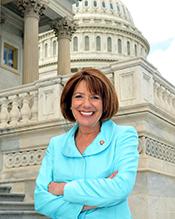
Mr. Speaker, for the purpose of debate only, I yield the customary 30 minutes to the gentlewoman from California (Ms. Matsui), pending which I yield myself such time as I may consume. During consideration of this resolution, all time yielded is for the purpose of debate only.
This resolution provides for a structured rule and provides for 1 hour of debate equally divided between the chairman and ranking minority member of Committee on Education and the Workforce, waives all points of order against consideration of the bill, and makes in order an amendment in the nature of a substitute offered by the minority. This is a good and a fair rule. It allows the House to focus the debate and the vote upon two different approaches aimed at helping America's small businesses to offer health coverage to its employees, and to debate and examine the proper role of the Federal Government in the health care arena.
Amendments not made in order were offered and discussed by the committee, so it is appropriate, I think, not to duplicate that committee action here on the floor.
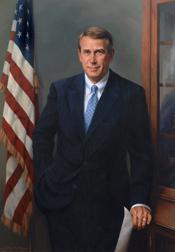
H.R. 525 is the Small Business Health Fairness Act of 2005, sponsored by the distinguished gentleman from Texas (Mr. Sam Johnson), and is virtually identical to legislation passed in the 108th Congress, then H.R. 660, which passed this House by a 90-vote margin of 252 to 162. So I commend the subcommittee chairman, the gentleman from Texas (Mr. Sam Johnson); the chairman of the full committee, the gentleman from Ohio (Mr. Boehner), for once again moving this bill through the committee process.
Mr. Speaker, H.R. 525 is a modest bill. It does not seek to address every aspect of health care in America. It does not seek to mandate Federal control into every aspect of medical treatments. To the chagrin of some of my friends on both sides of the aisle, it does not move our country in the direction of government control and taxpayer-funded universal health care.
What it does do, and this is really the bottom line, is make health insurance more affordable to small business and thereby increase the total number of Americans and families that are insured.
H.R. 525, if enacted, will result in more Americans and more American families being covered by private health insurance, and that is a worthy goal that we should all be working to achieve.
Mr. Speaker, I would like to point out that large corporations and unions already enjoy, many through ERISA, the same insurance-risk pooling features and already enjoy the cost efficiencies built into this health coverage package for their workers and their members. This bill, therefore, is about achieving a measure of fairness towards small business, an effort for the mom and pop businesses and industries to be treated the same way as giant corporations and union organizations.
The small guy will have nothing the large guy does not already have, with specific regulations placed in the bill to ensure against unfair pooling practices. It has bipartisan support from a wide range of groups, from the U.S. Chamber of Commerce, the National Federation of American Business, the American Farming Bureau, Associated Builders and Contractors, the Latino Coalition, the National Black Chamber of Commerce, the National Association of Women Business Owners and the National Restaurant Association, as well as many others.
In the course of this debate, Mr. Speaker, there will be many who will be giving facts and figures. I do not wish to go into those right now. But I wish to make sure that this is part of a larger picture.
As politicians, we oftentimes talk about the Nation or issues being at a crossroads. We do that a lot because it is a very dramatic phrase, and it makes us seem more important because we are in the middle of it. But I do believe in the issue of health care and insurance we are as a Nation in the crossroads. We can take one direction which would be to have greater government control, especially on the Federal level which ultimately would lead to a single-payer Federal program where decisions, right or wrong, would be made here.
Indeed, I think the substitute that will be ordered is illustrative not in topic but in spirit of this, where there is greater government control, greater regulations being put in there so that one wonders if the issue is really health insurance or if the issue is control.
The other approach that we are in the crossroads of and could take would be an approach to try and add market forces into the system to try and move some type of reforms along the way. This bill is not a panacea for all of our health care issues; but it is a step for certain groups who are currently excluded, often by well-intended decisions of the government.
I clearly understand both sides of these particular issues. I was a State legislator who did both while I was down there. There were requirements in health care which I thought were good at the time, which I also knew were costly at the time; and I also realize in hindsight, in helping one group of very vulnerable people, we actually hurt a different group of very vulnerable people.
For example, in my State, family health care is covered for everyone until the age of 25. When I joined this august body, all of the sudden the limitation was now at age 22, not 25; and I immediately realized I had three sons who had no health insurance whatsoever. I still have two sons who are out there in that risky group with no health insurance whatsoever.
I clearly realized from personal experience that all the mandates of coverage of health care systems are useless to those who cannot get or cannot afford insurance in the first place.
My oldest son finally got a job with a large corporation. I was very relieved that now he has insurance until a couple of weeks ago when he came and talked to me about joining a friend in an entrepreneurial enterprise, in which case they would start their own business. I should have been excited about his attitude; but the first question out of my mouth was, Well, what about your insurance?
We make decisions here that have far-reaching effects in creating a society of limitations instead of visions as they should be. With all sorts of good intentions, government also has helped create people whose options are shut to them when all they want really is hope and the freedom to choose some kind of options. Sometimes it is a matter of control of those options, which is frightening for any government level to try and give up.
This bill does not try to create mandatory efforts. It tries to create options. It tries to create options from which people can choose. People who are not now covered have a chance to be covered in some way with insurance. Regardless of how one votes on this issue in the past or in the future, this is a fair rule. With that, I urge my colleagues to support this rule.
Mr. Speaker, I reserve the balance of my time.
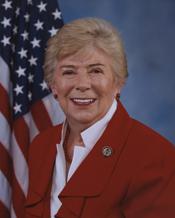
Mr. Speaker, I yield 2 minutes to the gentlewoman from West Virginia (Mrs. Capito).
Mr. Speaker, I am pleased to yield 3 minutes to the distinguished gentleman from Ohio (Mr. Boehner), the chairman of the Committee on Education and the Workforce.
Mr. Speaker, I yield 1\1/2\ minutes to the gentleman from Nebraska (Mr. Osborne).
Mr. Speaker, I yield 2 minutes to the gentleman from Florida (Mr. Keller), a member of the committee who has gone through this discussion many times.
Mr. Speaker, I yield 2 minutes to the gentlewoman from Tennessee (Mrs. Blackburn).
Mr. Speaker, I yield 2 minutes to the gentleman from Texas (Mr. Hensarling).
Mr. Speaker, I yield myself such time as I may consume.
I must admit that much of the opposition gloom-and-doom predictions are based on assumptions of what people and companies will choose to do and, therefore, the government should make those mandates. I am pleased that this particular piece of legislation is based on the assumption that people have the ability to make good choices for themselves without the assistance of the heavy hand of government.
Mr. Speaker, I am pleased to yield 2 minutes to the gentleman from Texas (Mr. Sam Johnson), the sponsor of this bill.
Mr. Speaker, I am pleased to yield 3 minutes to the gentleman from Georgia (Mr. Gingrey).
Mr. Speaker, I yield myself the balance of my time.
I appreciate those who have spoken on the bill today. I appreciate the gentleman from Georgia (Mr. Gingrey), a member of the medical profession, who so eloquently talked about some of the realities of this particular bill and what we are looking at. And I appreciate the gentlewoman from California and her wonderful and kind way in which she handled the rule on the minority side.
Just as a means of criteria of what we are going through as far as the rule itself, every amendment that was proposed for this particular rule was discussed thoroughly and voted upon in the committee, with the exception of obviously the motion to recommit. With the debate we have had in previous years, every element of this bill has been thoroughly debated both on the floor and in committee, this year as well as in years past.
I have to admit, Mr. Speaker, my favorite Senator, even though I am not supposed to have one, is the junior Senator from Kentucky who is the only one to have won 100 games in both the American and the National League. Because of that, I have his baseball cards. I hope he does very well over there because if they continue to rise in value, that may be the only way I pay for my health care in the future.
I was reading on the airplane coming back yesterday of a story of Senator Bunning when he was a pitcher for the Detroit Tigers and he was facing the Yankees. The Yankees sent out Bob Turley to be the first base coach because he was great at picking off signals. Sure enough, he knew what the signals were. His signal would be every time a fastball was coming, he would whistle at the batter. Hank Bauer is the first batter up there. Fastball, he whistled, Bauer hit a screamer into left field. The second batter is Tony Kubek. Fastball, whistle, he hit what would have been extra bases into right field except the second baseman caught the ball in self-defense.
The third hitter up is Mickey Mantle. By this time the pitcher is upset with what is going on and takes a couple of steps to Turley and says, ``Next time you whistle, I'm going to drill the batter.'' He takes a couple of steps to the batter and tells him the same thing. Sure enough, a fastball, the whistle, Mantle does not swing. The next pitch is a slider which hits Mantle right in the legs. He is upset, takes a couple of steps towards the mound, but the catcher and the umpire direct him to first base.
The next batter up is Yogi Berra. Once again, fastball, the whistle comes, Yogi does not take it, but then remembering what happened, he steps out of the batter's box, cups his hands and yells back at Senator Bunning who is the pitcher at this time and says, ``He may be whistling, but I ain't listening.''
Mr. Speaker, there are a lot of people who have been whistling at us on this particular issue. Every time I go to a town hall meeting, I face people who want some kind of relief in the ability of getting insurance. I get letters from them all the time. When small businesspeople come to my office, they are talking repeatedly about this particular issue. They are all whistling, asking for some kind of relief.
I realize I talked about my three sons who did not have insurance. My two that still do not will not have it under this bill because the provisions do not allow them to participate. But my next-door neighbor who is trying to make a living in a shop down on Main Street that does not have insurance could under the provisions of this bill. Those are real-life people who need this kind of assistance and help, and they cannot get it any other way. The status quo does not offer this kind of assistance. This is one of those few rays of hope that they will have. These people are truly whistling at us. Our job as Congress is to finally listen.
Mr. Speaker, I urge support of the rule on the underlying bill, H.R. 525.
Mr. Speaker, I yield back the balance of my time, and I move the previous question on the resolution.
The previous question was ordered.