Presidential $1 Coin Act of 2005
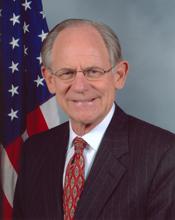 Rep. Michael N. Castle (R-DE)
Legislative Activity
Stay on top of the latest movement without scrolling through every action
Received in the Senate and Read twice and referred to the Committee on Banking, Housing, and Urban Affairs.
April 28, 2005
View full timeline
Introduced in House
February 17, 2005
Referred to the House Committee on Financial Services.
February 17, 2005
Committee Consideration and Mark-up Session Held.
March 16, 2005
Ordered to be Reported (Amended) by Voice Vote.
March 16, 2005
Reported (Amended) by the Committee on Financial Services. H. Rept. 109-39.
April 13, 2005
Placed on the Union Calendar, Calendar No. 20.
April 13, 2005
Mr. Castle moved to suspend the rules and pass the bill, as amended.
April 26, 2005 • 3:37 PM
Considered under suspension of the rules. (consideration: CR H2495-2500)
April 26, 2005 • 3:37 PM
DEBATE - The House proceeded with forty minutes of debate on H.R. 902.
April 26, 2005 • 3:37 PM
At the conclusion of debate, the Yeas and Nays were demanded and ordered. Pursuant to the provisions of clause 8, rule XX, the Chair announced that further proceedings on the motion would be postponed.
April 26, 2005 • 3:54 PM
Considered as unfinished business. (consideration: CR H2577)
April 27, 2005 • 1:19 PM
Passed/agreed to in House: On motion to suspend the rules and pass the bill, as amended Agreed to by the Yeas and Nays: (2/3 required): 422 - 6 (Roll no. 136).(text: CR 4/26/2005 H2495-2498)
April 27, 2005 • 1:38 PM
On motion to suspend the rules and pass the bill, as amended Agreed to by the Yeas and Nays: (2/3 required): 422 - 6 (Roll no. 136). (text: CR 4/26/2005 H2495-2498)
April 27, 2005 • 1:38 PM
Motion to reconsider laid on the table Agreed to without objection.
April 27, 2005 • 1:38 PM
The title of the measure was amended. Agreed to without objection.
April 27, 2005 • 1:38 PM
Received in the Senate and Read twice and referred to the Committee on Banking, Housing, and Urban Affairs.
April 28, 2005
Voting History
1 vote recorded • Roll call available
Floor Debate
6 membersWhat members said about H.R. 902 on the floor

 +1
+1
Floor Debate
6 membersWhat members said about H.R. 902 on the floor
Mr. Speaker, I move to suspend the rules and pass the Senate bill (S. 1047) to require the Secretary of the Treasury to mint coins in commemoration of each of the Nation's past Presidents and their…
Mr. Speaker, I move to suspend the rules and pass the bill (H.R. 902) to improve circulation of the $1 coin, create a new bullion coin, and for other purposes, as amended. Mr. Speaker, I ask…
Mr. Speaker, I yield myself such time as I may consume. Mr. Speaker, I am delighted that the House is taking up this bill that Congressman Castle and I initiated, and I truly believe it is a win-win…
Mr. Speaker, I thank the chairman for yielding me time. Mr. Speaker, I am delighted to be able to speak to this bill. Let me just start by thanking you, Mr. Chairman, for expediting this. Sometimes…
Mr. Speaker, I yield myself such time as I may consume. Mr. Speaker, I rise in support of the bill that the gentleman from Delaware (Mr. Castle) and I have offered that is a win-win for taxpayers and…
Show 5 more
Mr. Speaker, I thank the gentlewoman for yielding me time, and I am rising today in support of H.R. 902. I congratulate the gentleman from Delaware and the gentlewoman from New York (Mrs. Maloney)…
Mr. Speaker, I am delighted to be able to participate in this discussion. I want to thank the gentlewoman for yielding. I also thank the gentlewoman for struggling with the Hidatsa pronunciation of…
Mr. Speaker, I rise today in strong support of H.R. 902, the ``Presidential $1 Coin Act of 2005,'' that the gentleman from Delaware, Mr. Castle, has written. The dollar coin has the potential to save…
Mr. Speaker, I rise today in support of S. 1047. I have the privilege of representing the West Point Mint, the home of our nation's bullion coin programs. Since 1986 the mint and its employees have…
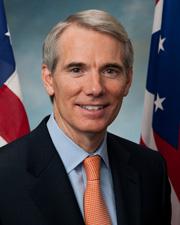
Mr. Speaker, earlier today, I was absent attending a meeting at the White House and missed the recorded votes on rollcall No. 136, on H.R. 902, the Presidential One Dollar Coin Act; rollcall No. 137,…
Bill Text
4 versions available
        [Congressional Bills 109th Congress]
[From the U.S. Government Publishing Office]
[H.R. 902 Referred in Senate (RFS)]

1st Session
H. R. 902

_______________________________________________________________________

IN THE SENATE OF THE UNITED STATES

April 28, 2005

Received; read twice and referred to the Committee on Banking, Housing,
and Urban Affairs

_______________________________________________________________________

AN ACT

To improve circulation of the $1 coin, create a new bullion coin,
provide for the redesign of the reverse of the Lincoln 1-cent coin in
2009 in commemoration of the 200th anniversary of the birth of
President Abraham Lincoln, and for other purposes.

Be it enacted by the Senate and House of Representatives of the
United States of America in Congress assembled,

SECTION 1. SHORT TITLE.

This Act may be cited as the ``Presidential $1 Coin Act of 2005''.

TITLE I--PRESIDENTIAL $1 COINS

SEC. 101. FINDINGS.

The Congress finds as follows:
(1) There are sectors of the United States economy,
including public transportation, parking meters, vending
machines and low-dollar value transactions, in which the use of
a $1 coin is both useful and desirable for keeping costs and
prices down.
(2) For a variety of reasons, the new $1 coin introduced in
2000 has not been widely sought-after by the public, leading to
higher costs for merchants and thus higher prices for
consumers.
(3) The success of the 50 States Commemorative Coin Program
for circulating quarter dollars shows that a design on a United
States circulating coin that is regularly changed in a manner
similar to the systematic change in designs in such Program
radically increases demand for the coin, rapidly pulling it
through the economy.
(4) The 50 States Commemorative Coin Program also has been
an educational tool, teaching both Americans and visitors
something about each State for which a quarter has been issued.
(5) A national survey and study by the Government
Accountability Office has indicated that many Americans who do
not seek, or who reject, the new $1 coin for use in commerce
would actively seek the coin if an attractive, educational
rotating design were to be struck on the coin.
(6) The President is the leader of our tripartite
government and the President's spouse has often set the social
tone for the White House while spearheading and highlighting
important issues for the country.
(7) Sacagawea, as currently represented on the new $1 coin,
is an important symbol of American history.
(8) Many people cannot name all of the Presidents, and
fewer can name the spouses, nor can many people accurately
place each President in the proper time period of American
history.
(9) First Spouses have not generally been recognized on
American coinage.
(10) In order to revitalize the design of United States
coinage and return circulating coinage to its position as not
only a necessary means of exchange in commerce but also as an
object of aesthetic beauty in its own right, it is appropriate
to move many of the mottos and emblems, the inscription of the
year, and the so-called ``mint marks'' that currently appear on
the 2 faces of each circulating coin to the edge of the coin,
which would allow larger and more dramatic artwork on the coins
reminiscent of the so-called ``Golden Age of Coinage'' in the
United States, at the beginning of the Twentieth Century,
initiated by President Theodore Roosevelt, with the assistance
of noted sculptors and medallic artists James Earle Fraser and
Augustus Saint-Gaudens.
(11) Placing inscriptions on the edge of coins, known as
edge-incusing, is a hallmark of modern coinage and is common in
large-volume production of coinage elsewhere in the world, such
as the 2,700,000,000 2-Euro coins in circulation, but it has
not been done on a large scale in United States coinage in
recent years.
(12) Although the Congress has authorized the Secretary of
the Treasury to issue gold coins with a purity of 99.99
percent, the Secretary has not done so.
(13) Bullion coins are a valuable tool for the investor
and, in some cases, an important aspect of coin collecting.

SEC. 102. PRESIDENTIAL $1 COIN PROGRAM.

Section 5112 of title 31, United States Code, is amended by
inserting after subsection (m) the following new subsection:
``(n) Redesign and Issuance of Circulating $1 Coins Honoring Each
of the Presidents of the United States.--
``(1) Redesign beginning in 2007.--
``(A) In general.--Notwithstanding subsection (d)
and in accordance with the provisions of this
subsection, $1 coins issued during the period beginning
January 1, 2007, and ending upon the termination of the
program under paragraph (6) shall have designs on the
obverse selected in accordance with paragraph (2)(B)
which are emblematic of the Presidents of the United
States and a design on the reverse selected in
accordance with paragraph (2)(A).
``(B) Continuity provision.--Notwithstanding
subparagraph (A), the Secretary shall continue to mint
and issue $1 coins which bear the design on $1 coins
being minted and issued before the issuance of coins as
required under this subsection.
``(2) Design requirements.--The $1 coins issued in
accordance with paragraph (1)(A) shall meet the following
design requirements:
``(A) Coin reverse.--The design on the reverse
shall bear--
``(i) a likeness of the Statue of Liberty
extending to the rim of the coin and large
enough to provide a dramatic representation of
Liberty while not being large enough to create
the impression of a `2-headed' coin;
``(ii) the inscription `$1' ; and
``(iii) the inscription `United States of
America'.
``(B) Coin obverse.--The design on the obverse
shall contain the name and likeness of a President of
the United States and basic information about the
President, including the dates or years of the term of
office of such President and a number indicating the
order of the period of service in which the President
served.
``(C) Edge-incused inscriptions.--
``(i) In general.--The inscription of the
year of minting or issuance of the coin and the
inscriptions `E Pluribus Unum' and `In God We
Trust' shall be edge-incused into the coin.
``(ii) Preservation of distinctive edge.--
The edge-incusing of the inscriptions under
clause (i) on coins issued under this
subsection shall be done in a manner that
preserves the distinctive edge of the coin so
that the denomination of the coin is readily
discernible, including by individuals who are
blind or visually impaired.
``(D) Inscriptions of `liberty'.--Notwithstanding
the 2d sentence of subsection (d)(1), because the use
of a design bearing the likeness of the Statue of
Liberty on the reverse of the coins issued under this
subsection adequately conveys the concept of Liberty,
the inscription of `Liberty' shall not appear on the
coins.
``(E) Prohibition on sitting president in series.--
No coin issued under this subsection may bear the image
of a President who, at the time of issuance, is
currently serving as President.
``(3) Issuance of coins commemorating presidents.--
``(A) Order of issuance.--The coins issued under
this subsection commemorating Presidents of the United
States shall be issued in the order of the period of
service of each President, beginning with President
George Washington.
``(B) Treatment of period of service.--
``(i) In general.--Subject to clause (ii),
only 1 coin design shall be issued for a period
of service for any President, no matter how
many consecutive terms of office the President
served.
``(ii) Nonconsecutive terms.--If a
President has served during 2 or more
nonconsecutive periods of service, a coin shall
be issued under this subsection for each such
nonconsecutive period of service.
``(4) Issuance of coins commemorating 4 presidents during
each year of the period.--
``(A) In general.--The designs for the $1 coins
issued during each year of the period referred to in
paragraph (1) shall be emblematic of 4 Presidents until
each President has been so honored, subject to
paragraph (2)(E).
``(B) Number of 4 circulating coin designs in each
year.--The Secretary shall prescribe, on the basis of
such factors as the Secretary determines to be
appropriate, the number of $1 coins that shall be
issued with each of the designs selected for each year
of the period referred to in paragraph (1).
``(5) Issuance of numismatic coins.--The Secretary may mint
and issue such number of $1 coins of each design selected under
this subsection in uncirculated and proof qualities as the
Secretary determines to be appropriate.
``(6) Termination of program.--The issuance of coins under
this subsection shall terminate when each President has been so
honored, subject to paragraph (2)(E), and may not be resumed
except by an Act of Congress.
``(7) Reversion to preceding design.--Upon the termination
of the issuance of coins under this subsection, the design of
all $1 coins shall revert to the the so-called `Sacagawea-
design' $1 coins.''.

SEC. 103. FIRST SPOUSE BULLION COIN PROGRAM.

Section 5112 of title 31, United States Code, is amended by
inserting after subsection (n) (as added by the preceding section of
this title) the following new subsection:
``(o) First Spouse Bullion Coin Program.--
``(1) In general.--During the same period in which the $1
coins are issued under subsection (n) which are emblematic of
the Presidents of the United States, the Secretary of the
Treasury shall issue bullion coins under this subsection that
are emblematic of the spouse of each such President.
``(2) Specifications.--The coins issued under this
subsection shall--
``(A) have the same diameter as the $1 coins
described in subsection (n);
``(B) weigh 0.5 ounce; and
``(C) contain 99.99 percent pure gold.
``(3) Design requirements.--
``(A) Coin obverse.--The design on the obverse of
each coin issued under this subsection shall contain--
``(i) the name and likeness of a person who
was a spouse of a President during the
President's period of service;
``(ii) an inscription of the years during
which such person was the spouse of a President
during the President's period of service; and
``(iii) the number indicating the order of
the period of service in which such President
served.
``(B) Coin reverse.--The design on the reverse of
each coin issued under this subsection shall bear--
``(i) images emblematic of the life and
work of the First Spouse whose image is borne
on the obverse; and
``(ii) the inscription `United States of
America'.
``(C) Designated denomination.--Each coin issued
under this subsection shall bear, on the reverse, an
inscription of the nominal denomination of the coin
which shall be `$10'.
``(D) Design in case of no first spouse.--In the
case of any President who served without a spouse--
``(i) the image on the obverse of the
bullion coin corresponding to the $1 coin
relating to such President shall be an image
emblematic of the concept of `Liberty'--
``(I) as represented on a United
States coin issued during the period of
service of such President; or
``(II) as represented, in the case
of President Chester Alan Arthur, by a
design incorporating the name and
likeness of Alice Paul, a leading
strategist in the suffrage movement,
who was instrumental in gaining women
the right to vote upon the adoption of
the 19th amendment and thus participate
in the election of future Presidents,
and who was born on January 11, 1885,
during the term of President Arthur;
and
``(ii) the reverse of such bullion coin
shall be of a design representative of themes
of such President, except that in the case of
the bullion coin referred to in clause (i)(II)
the reverse of such coin shall be
representative of the suffrage movement.
``(E) Design and coin for each spouse.--A separate
coin shall be designed and issued under this section
for each person who was the spouse of a President
during any portion of a term of office of such
President.
``(F) Inscriptions.--Each bullion coin issued under
this subsection shall bear the inscription of the year
of minting or issuance of the coin and such other
inscriptions as the Secretary may determine to be
appropriate.
``(4) Sale of bullion coins.--Each bullion coin issued
under this subsection shall be sold for an amount the Secretary
of the Treasury determines to be appropriate that is equal to
or greater than the sum of--
``(A) the face value of the coins; and
``(B) the cost of designing and issuing the coins
(including labor, materials, dies, use of machinery,
overhead expenses, marketing, and shipping).
``(5) Issuance of coins commemorating first spouses.--
``(A) In general.--The bullion coins issued under
this subsection with respect to any spouse of a
President shall be issued on the same schedule as the
$1 coin issued under subsection (n) with respect to
such President.
``(B) Maximum number of bullion coins for each
design.--The Secretary shall--
``(i) prescribe, on the basis of such
factors as the Secretary determines to be
appropriate, the maximum number of bullion
coins that shall be issued with each of the
designs selected under this subsection; and
``(ii) announce, before the issuance of the
bullion coins of each such design, the maximum
number of bullion coins of that design that
will be issued.
``(C) Termination of program.--No bullion coin may
be issued under this subsection after the termination,
in accordance with subsection (n)(6), of the $1 coin
program established under subsection (n).
``(6) Quality of coins.--The bullion coins shall be issued
in both proof and uncirculated qualities.
``(7) Source of gold bullion.--The Secretary shall acquire
gold for the coins issued under this subsection by purchase of
gold mined from natural deposits in the United States, or in a
territory or possession of the United States, within 1 year
after the month in which the ore from which it is derived was
mined. The Secretary shall pay not more than the average world
price for the gold.
``(8) Bronze medals.--The Secretary may strike and sell
bronze medals that bear the likeness of the bullion coins
authorized under this subsection, at a price, size, and weight,
and with such inscriptions, as the Secretary determines to be
appropriate.''.

SEC. 104. SENSE OF THE CONGRESS.

It is the sense of the Congress that--
(1) the enactment of this Act will serve to increase the
use of $1 coins generally, which will increase the circulation
of the so-called ``Sacagawea-design'' $1 coins that have been
and will continue to be minted and issued;
(2) the continued minting and issuance of the so-called
``Sacagawea-design'' $1 coins will serve as a lasting tribute
to the role of women and Native Americans in the history of the
United States;
(3) while the American tradition of not issuing a coin with
the image of a living person has served the country well and
deserves to be continued as a general practice, in a series of
coins commemorating former Presidents, all former Presidents
should be so honored notwithstanding such tradition;
(4) the full circulation potential and cost-savings benefit
projections for the $1 coins are not likely to be achieved
unless the coins are delivered in ways useful to ordinary
commerce;
(5) in order for the circulation of $1 coins to achieve
maximum potential--
(A) the coins should be as attractive as possible;
and
(B) the Director of the United States Mint should
take all reasonable steps to ensure that all $1 coins
minted and issued remain tarnish-free for as long as
possible without incurring undue expense;
(6) if the Secretary of the Treasury determines to include
on any $1 coin minted under section 5112(n) of title 31, United
States Code (as added by section 102 of this Act) a mark
denoting the United States Mint facility at which the coin was
struck, such mark should be edge-incused;
(7) at such time as the Secretary of Treasury determines to
be appropriate, and after consultation with the Board of
Governors of the Federal Reserve System and the submission of
notice to the Congress, the Secretary should declare to be
obsolete any circulating $1 coin that bears the design of the
$1 coins being issued immediately before the issuance of coins
with the design referred to in section 5112(n)(7) of title 31,
United States Code;
(8) in connection with the introduction of the $1 coins
under the Presidential $1 Coin Program--
(A) the coins should not be introduced with an
overly expensive taxpayer-funded public relations
campaign; and
(B) the Director of the United States Mint, a
bureau in the Department of the Treasury, should work
with consumer groups, media outlets, and schools to
ensure an adequate amount of news coverage about the
start of the coin program so consumers will know of the
availability of the coins;
(9) the Board of Governors of the Federal Reserve System
and the Secretary of the Treasury should take steps to ensure
that an adequate supply of $1 coins are available for commerce
and collectors at such places and in such quantities as are
appropriate by--
(A) meeting, from time to time but no less
frequently than quarterly, with a coin users group that
includes representatives of merchants who would benefit
from the increased usage of $1 coins, vending machine
and other coin acceptor manufacturers, vending machine
owners and operators, transit officials, municipal
parking officials, depository institutions, coin and
currency handlers, armored-car operators, car wash
operators, and coin collectors and dealers to
accurately gauge demand for coins and to anticipate and
eliminate obstacles to the easy and efficient
distribution and circulation of $1 coins as well as all
other circulating coins;
(B) submitting a semiannual report to the Congress
containing an assessment of the remaining obstacles to
the efficient and timely circulation of coins, and
particularly $1 coins, together with such
recommendations for legislative action the Board and
the Secretary may determine to be appropriate;
(C) consulting with industry representatives to
encourage operators of vending machines and other
automated coin-accepting devices in the United States
to accept coins issued under the Presidential $1 Coin
Program and the so-called ``Sacagawea-design'' $1
coins, and to include notices on the machines and
devices of such acceptability;
(D) ensuring that during an introductory period,
all institutions that want unmixed supplies of each
newly-issued design of $1 coins are able to obtain such
unmixed supplies; and
(E) consulting with representatives of depository
institutions and armored-car operators to support the
availability of $1 coins in packaging of sizes and
types appropriate for and useful to ordinary commerce,
including rolled coins; and
(10) the Director of the United States Mint should take all
steps necessary to expand the marketplace for bullion coins,
and reduce barriers to the sale of bullion coins, by ensuring
that--
(A) the greatest number possible of reputable,
reliable, and responsible dealers are qualified to
offer for sale all bullion coins struck and issued by
the United States Mint; and
(B) all such dealers and their customers have equal
and timely access to all new issues of such bullion
coins.

TITLE II--ABRAHAM LINCOLN BICENTENNIAL 1-CENT COIN REDESIGN

SEC. 201. FINDINGS.

The Congress finds as follows:
(1) Abraham Lincoln, the 16th President, was one of the
Nation's greatest leaders, demonstrating true courage during
the Civil War, one of the greatest crises in the Nation's
history.
(2) Born of humble roots in Hardin County (present-day
LaRue County), Kentucky, on February 12, 1809, Abraham Lincoln
rose to the Presidency through a combination of honesty,
integrity, intelligence, and commitment to the United States.
(3) With the belief that all men are created equal, Abraham
Lincoln led the effort to free all slaves in the United States.
(4) Abraham Lincoln had a generous heart, with malice
toward none and with charity for all.
(5) Abraham Lincoln gave the ultimate sacrifice for the
country he loved, dying from an assassin's bullet on April 15,
1865.
(6) All Americans could benefit from studying the life of
Abraham Lincoln, for Lincoln's life is a model for
accomplishing the ``American dream'' through honesty,
integrity, loyalty, and a lifetime of education.
(7) The year 2009 will be the bicentennial anniversary of
the birth of Abraham Lincoln.
(8) Abraham Lincoln was born in Kentucky, grew to adulthood
in Indiana, achieved fame in Illinois, and led the nation in
Washington, D.C.
(9) The so-called ``Lincoln cent'' was introduced in 1909
on the 100th anniversary of Lincoln's birth, making the obverse
design the most enduring on the nation's coinage.
(10) President Theodore Roosevelt was so impressed by the
talent of Victor David Brenner that the sculptor was chosen to
design the likeness of President Lincoln for the coin, adapting
a design from a plaque Brenner had prepared earlier.
(11) In the nearly 100 years of production of the ``Lincoln
cent'', there have been only 2 designs on the reverse: the
original, featuring 2 wheat-heads in memorial style enclosing
mottoes, and the current representation of the Lincoln Memorial
in Washington, D.C.
(12) On the occasion of the bicentennial of President
Lincoln's birth and the 100th anniversary of the production of
the Lincoln cent, it is entirely fitting to issue a series of
1-cent coins with designs on the reverse that are emblematic of
the 4 major periods of President Lincoln's life.

SEC. 202. REDESIGN OF LINCOLN CENT FOR 2009.

(a) In General.--During the year 2009, the Secretary of the
Treasury shall issue 1-cent coins in accordance with the following
design specifications:
(1) Obverse.--The obverse of the 1-cent coin shall continue
to bear the Victor David Brenner likeness of President Abraham
Lincoln.
(2) Reverse.--The reverse of the coins shall bear 4
different designs each representing a different aspect of the
life of Abraham Lincoln, such as--
(A) his birth and early childhood in Kentucky;
(B) his formative years in Indiana;
(C) his professional life in Illinois; and
(D) his presidency, in Washington, D.C.
(b) Issuance of Redesigned Lincoln Cents in 2009.--
(1) Order.--The 1-cent coins to which this section applies
shall be issued with 1 of the 4 designs referred to in
subsection (a)(2) beginning at the start of each calendar
quarter of 2009.
(2) Number.--The Secretary shall prescribe, on the basis of
such factors as the Secretary determines to be appropriate, the
number of 1-cent coins that shall be issued with each of the
designs selected for each calendar quarter of 2009.
(c) Design Selection.--The designs for the coins specified in this
section shall be chosen by the Secretary--
(1) after consultation with the Abraham Lincoln
Bicentennial Commission and the Commission of Fine Arts; and
(2) after review by the Citizens Coinage Advisory
Committee.

SEC. 203. REDESIGN OF REVERSE OF 1-CENT COINS AFTER 2009.

The design on the reverse of the 1-cent coins issued after December
31, 2009, shall bear an image emblematic of President Lincoln's
preservation of the United States of America as a single and united
country.

SEC. 204. NUMISMATIC PENNIES WITH THE SAME METALLIC CONTENT AS THE 1909
PENNY.

The Secretary of the Treasury shall issue 1-cent coins in 2009 with
the exact metallic content as the 1-cent coin contained in 1909 in such
number as the Secretary determines to be appropriate for numismatic
purposes.

SEC. 205. SENSE OF THE CONGRESS.

It is the sense of the Congress that the original Victor David
Brenner design for the 1-cent coin was a dramatic departure from
previous American coinage that should be reproduced, using the original
form and relief of the likeness of Abraham Lincoln, on the 1-cent coins
issued in 2009.

Passed the House of Representatives April 27, 2005.

Attest:

JEFF TRANDAHL,

Clerk.