Humanitarian Assistance Code of Conduct Act of 2005
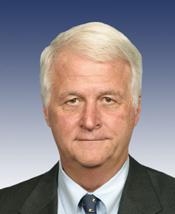 Rep. Bill Delahunt (D-MA)
Legislative Activity
Stay on top of the latest movement without scrolling through every action
Received in the Senate and Read twice and referred to the Committee on Foreign Relations.
March 3, 2005
View full timeline
Introduced in House
February 17, 2005
Referred to the House Committee on International Relations.
February 17, 2005
Mr. Smith (NJ) moved to suspend the rules and pass the bill.
March 2, 2005 • 10:21 AM
Considered under suspension of the rules. (consideration: CR H854-859)
March 2, 2005 • 10:21 AM
DEBATE - The House proceeded with forty minutes of debate on H.R. 912.
March 2, 2005 • 10:21 AM
At the conclusion of debate, the Yeas and Nays were demanded and ordered. Pursuant to the provisions of clause 8, rule XX, the Chair announced that further proceedings on the motion would be postponed.
March 2, 2005 • 10:54 AM
Considered as unfinished business. (consideration: CR H867-868)
March 2, 2005 • 3:44 PM
Passed/agreed to in House: On motion to suspend the rules and pass the bill Agreed to by the Yeas and Nays: (2/3 required): 416 - 0, 1 Present (Roll no. 43).(text: CR H854)
March 2, 2005 • 3:54 PM
Motion to reconsider laid on the table Agreed to without objection.
March 2, 2005 • 3:54 PM
On motion to suspend the rules and pass the bill Agreed to by the Yeas and Nays: (2/3 required): 416 - 0, 1 Present (Roll no. 43). (text: CR H854)
March 2, 2005 • 3:54 PM
Received in the Senate and Read twice and referred to the Committee on Foreign Relations.
March 3, 2005
Voting History
1 vote recorded • Roll call available
Floor Debate
6 membersWhat members said about H.R. 912 on the floor

 +1
+1
Floor Debate
6 membersWhat members said about H.R. 912 on the floor
Mr. Speaker, I thank the ranking member and appreciate his encouragement and support in this particular effort along with his leadership on the full Committee on International Relations on the House…
Mr. Speaker, I move to suspend the rules and pass the bill (H.R. 912) to ensure the protection of beneficiaries of United States humanitarian assistance. Mr. Speaker, I ask unanimous consent that all…
Mr. Speaker, I yield myself such time as I may consume. Mr. Speaker, I rise in strong support of this legislation. I would first like to thank my good friend and distinguished colleague, the ranking…
Mr. Speaker, I thank the gentleman for yielding me the time, and I really thank the gentleman from Massachusetts (Mr. Delahunt) for bringing this bill to the floor and particularly the gentleman from…
Mr. Speaker, I appreciate the gentleman yielding me time, and I just want to rise in strong support for the gentleman from Massachusetts' (Mr. Delahunt) bill and a bill supported by the gentleman…
Show 1 more

Mr. Speaker, I rise today in support of H.R. 912, the Humanitarian Assistance Code of Conduct Act. I'd like to first thank Majority Leader DeLay and the gentleman from Massachusetts, Mr. Delahunt,…
Bill Text
3 versions available
        [Congressional Bills 109th Congress]
[From the U.S. Government Publishing Office]
[H.R. 912 Referred in Senate (RFS)]

1st Session
H. R. 912

_______________________________________________________________________

IN THE SENATE OF THE UNITED STATES

March 3, 2005

Received; read twice and referred to the Committee on Foreign Relations

_______________________________________________________________________

AN ACT

To ensure the protection of beneficiaries of United States humanitarian
assistance.

Be it enacted by the Senate and House of Representatives of the
United States of America in Congress assembled,

SECTION 1. SHORT TITLE.

This Act may be cited as the ``Humanitarian Assistance Code of
Conduct Act of 2005''.

SEC. 2. CODE OF CONDUCT FOR THE PROTECTION OF BENEFICIARIES OF
HUMANITARIAN ASSISTANCE.

(a) Prohibition.--None of the funds made available for foreign
operations, export financing, and related programs under the headings
``Migration and Refugee Assistance'', ``United States Emergency Refugee
and Migration Assistance Fund'', ``International Disaster and Famine
Assistance'', or ``Transition Initiatives'' may be obligated to an
organization that fails to adopt a code of conduct that provides for
the protection of beneficiaries of assistance under any such heading
from sexual exploitation and abuse in humanitarian relief operations.
(b) Six Core Principles.--The code of conduct referred to in
subsection (a) shall, to the maximum extent practicable, be consistent
with the following six core principles of the United Nations Inter-
Agency Standing Committee Task Force on Protection From Sexual
Exploitation and Abuse in Humanitarian Crises:
(1) ``Sexual exploitation and abuse by humanitarian workers
constitute acts of gross misconduct and are therefore grounds
for termination of employment.''.
(2) ``Sexual activity with children (persons under the age
of 18) is prohibited regardless of the age of majority or age
of consent locally. Mistaken belief regarding the age of a
child is not a defense.''.
(3) ``Exchange of money, employment, goods, or services for
sex, including sexual favors or other forms of humiliating,
degrading or exploitative behavior, is prohibited. This
includes exchange of assistance that is due to
beneficiaries.''.
(4) ``Sexual relationships between humanitarian workers and
beneficiaries are strongly discouraged since they are based on
inherently unequal power dynamics. Such relationships undermine
the credibility and integrity of humanitarian aid work.''.
(5) ``Where a humanitarian worker develops concerns or
suspicions regarding sexual abuse or exploitation by a fellow
worker, whether in the same agency or not, he or she must
report such concerns via established agency reporting
mechanisms.''.
(6) ``Humanitarian agencies are obliged to create and
maintain an environment which prevents sexual exploitation and
abuse and promotes the implementation of their code of conduct.
Managers at all levels have particular responsibilities to
support and develop systems which maintain this environment.''.

SEC. 3. REPORT.

Not later than 180 days after the date of the enactment of this
Act, and not later than one year after the date of the enactment of
this Act, the President shall transmit to the Committee on
Appropriations and the Committee on International Relations of the
House of Representatives and the Committee on Appropriations and the
Committee on Foreign Relations of the Senate a detailed report on the
implementation of this Act.

SEC. 4. EFFECTIVE DATE; APPLICABILITY.

This Act--
(1) takes effect 60 days after the date of the enactment of
this Act; and
(2) applies to funds obligated after the effective date
referred to in paragraph (1)--
(A) for fiscal year 2005; and
(B) any subsequent fiscal year.

Passed the House of Representatives March 2, 2005.

Attest:

JEFF TRANDAHL,

Clerk.