SERVE Act of 2005
Legislative Activity
Stay on top of the latest movement without scrolling through every action
Referred to the House Committee on Ways and Means.
February 17, 2005
View full timeline
Introduced in House
February 17, 2005
Referred to the House Committee on Ways and Means.
February 17, 2005
Floor Debate
9 membersWhat members said about H.R. 934 on the floor
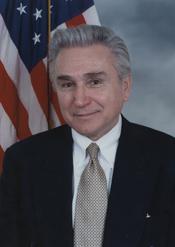
 OGH
OGH PJL
PJL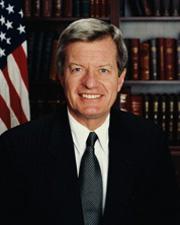 MB
MB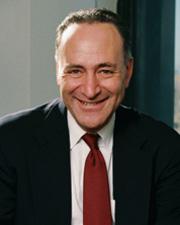 CES
CES CJD+4
CJD+4
Floor Debate
9 membersWhat members said about H.R. 934 on the floor
Mr. President, I rise today to introduce the Paiute Indian Tribe Land Conveyance Act of 2005. This bill would authorize the Secretary of the Interior to convey or transfer four small Paiute trust…
Mr. President, I rise today to introduce the Paiute Indian Tribe Land Conveyance Act of 2005.
This bill would authorize the Secretary of the Interior to convey or transfer four small Paiute trust land parcels to the city of Richfield.
The Paiute Indian Tribe Land Conveyance Act of 2005 would allow the Secretary of the Interior to transfer three acres of land held in trust for the Paiute Indian Tribe of Utah to the city of Richfield, UT. The city of Richfield would provide fair market value compensation directly to the tribe, and pay any costs incurred in this transaction. This land transfer would allow expansion of the Richfield Municipal Airport and provide the Tribe with proceeds to purchase land that has economic development potential. This bill passed the House last year and I introduced it in the Senate, but the Senate bill did not make it through the legislative process prior the end of the 108th Congress.
This proposal has support from all sides. The city of Richfield approached the Tribe about acquiring this parcel of land adjacent to the airport runway. The Tribe agreed and the Paiute Tribal Council passed Resolution 01-36, unanimously agreeing to the conveyance of this parcel of land to the City. The land in question has not been used by the Tribe for more than 20 years. It is not contiguous to the Paiute's Reservation and for nearly 30 years now has had no economic development potential. The tribal resolution expresses the Paiute's desire to accept the city's offer to purchase the land at fair market value and serves as the request to the Secretary of the Interior to convey the trust land. However, only an act of Congress may authorize this land conveyance.
The Paiute Indian Tribe Land Conveyance Act of 2005 would also transfer three trust land parcels, each an acre or less in size, from the Tribe to its Kanosh and Shivwits Bands. All parcels would remain in trust status. The first parcel of one acre would be transferred from land held in trust by the United States for the Paiute Tribe to land held in trust for the Kanosh Band. This parcel is surrounded by 279 acres of land that is either owned by the Kanosh Band or held in trust for the Kanosh Band. For more than twenty years, the sole use of this land has been for the Kanosh Band Community Center. The second parcel, two-thirds of an acre in size, would also be transferred from the Tribe to the Kanosh Band. The land has been used exclusively by the Kanosh Band. It was originally intended that the land be taken in trust for the Kanosh Band in 1981 under the Paiute Indian Tribe of Utah Restoration Act. However, through an administrative error, the land was mistakenly placed in trust for the Tribe. By way of several Band resolutions, the Kanosh Band has formally requested correction of this error.
The third parcel of land, less than an acre in size, would be transferred from the Tribe to be held in trust for the Shivwits Band. The land already is surrounded by several thousand acres of land held in trust for the Shivwits band, and its sole use has been for the Shivwits Band Community Center.
Finally, the bill would eliminate the word ``City'' from the current official name of the ``Cedar City Band of Paiute Indians,'' a name which has never been used by the Band of residents of southwestern Utah. Thus, the bill makes clear that any reference in a law, map, regulation, document, paper, or other record, of the United States to the ``Cedar City Band of Paiute Indians'' shall be deemed to be reference to the ``Cedar Band of Paiute Indians.''
I would like to make some clarifications as part of the record. This bill has language that would allow the city of Richfield to purchase land from the Tribe and provide payment directly to the Tribe without the funds being funneled through the Department of the Interior. I support that provision. The bill also has a provision that would make lands which were acquired by the United States in trust for the Tribe, after February 17, 1984 and prior to the date of the enactment of this legislation, a part of the reservation. this clarifies the intent that lands already in possession of the tribe should be part of the reservation. I would also like to clarify that nothing in this legislation authorizes the Secretary of the Interior to make land conveyances for any tribe or band without their official consent to such a conveyance.
This bill will cost U.S. taxpayers nothing, but it will solve the dilemma that the city of Richfield faces as it works to make its airport meet the needs of the citizens of southwestern Utah. Equally important is the fact that this bill will allow the Paiute Tribe to use the proceeds from the land sale to acquire land with economic development potential to facilitate the well-being of the Tribe. The bill also takes care of non-controversial land adjustments and technical corrections. The bill is supported by the Paiute Tribe, its Bands, and the people of southwestern Utah residing nearby. That is why I am introducing this legislation that would convey or transfer small Paiute trust land parcels.
I thank the Senate for the opportunity to address this issue today, and I urge my colleagues to support the passage of the Paiute Indian Tribe Land Conveyance Act of 2005.
Mr. President, I am very pleased to join with my friend and colleague Senator Baucus and several of our Finance Committee colleagues
from both sides of the aisle today in introducing legislation that would permanently extend and improve the research tax credit.
Extending the research credit is an important step for the future economic growth of the United States. A permanent credit can help our economy develop the new technologies that will enhance existing capital inputs and make workers more productive. The result will be a stronger economy at home, and a more competitive nation abroad. As many of our colleagues are aware, the current research credit is set to expire on December 31, 2005.
I believe that if we allow the research credit to expire, we will see the negative effects manifest in lower economic growth, fewer jobs created, fewer innovative products, and lost opportunities as research activities move to other countries with more attractive incentives. We should never forget that our Nation's future economic health is dependent on the innovations of today.
In assessing the health of our economy, we find an important correlation between economic growth and inflationary pressures. One sure way to have strong economic growth without the pain of inflation is to increase productivity. And most productivity gains are derived from technological advances, which reduce the cost of producing goods and services, and thereby help maintain low consumer prices.
An additional benefit of productivity growth is a corresponding increase in corporate profits. Such increases lead to higher returns on savings and investment, and higher wages for workers. I believe the greatest benefit of increased R&D is productivity growth, which in turn forms the foundation of higher living standards.
Productivity growth also largely determines our society's long-term economic welfare. Our ability to deal with budgetary challenges, such as Social Security, Medicare, and other entitlements, depends critically on the future direction of our productivity.
From 1995 through 2003, average annual productivity growth was three percent, double the 1.5 percent growth rate that prevailed between 1973 and 1995. According to economists, this surge in productivity is the result of businesses beginning to efficiently integrate computer and information technology into day-to-day operations. We need a strong and permanent research credit in order to continue these gains in productivity growth.
My home State of Utah is a good example of how State economies currently benefit from the research credit. Utah is home to various firms that invest a high percentage of their revenue in R&D. There are thousands of employees working in Utah's technology based companies, with thousands more working in other sectors that engage in R&D. Approximately 5 percent of the State's non-agricultural workforce is employed in research-intensive, high technology sectors.
Moreover, high technology jobs pay substantially more than the Utah average. In 2004, high technology payrolls accounted for 9.2 percent of Utah's total payrolls. This is a significant proportion considering technology jobs make up only 5 percent of the workforce.
Utah's largest technology segment is in computer systems design, which accounts for more than 20 percent of the State's technology employment with approximately 10,700 workers. Furthermore, this sector is Utah's second highest exporter of merchandise. This is a prime example of an industry group contributing directly to the productivity expansion I mentioned earlier.
The medical equipment manufacturing industry makes up another substantial R&D industry group employing nearly 8,000 Utahns. This industry has been an important and relatively stable component of the technology sector for many years.
Utah profits from, and also imparts, many ``spill-over'' benefits from the innovations developed both within and outside of the state. To give one example, more than 7,000 people work in Utah's chemical industry. This industry is the State's fourth-largest exporter. It benefits greatly from R&D taking place in Utah and throughout the country, and it shares the benefits with its trade partners. Research and development is clearly the lifeblood of Utah's economy.
Since 1981, when the research credit was first enacted, the Federal Government has joined in partnership with large and small businesses to ensure that research expenditures are made in the United States. This enhances domestic job creation, and helps the United States to internalize more of the economic benefits from the research credit.
It seems clear that to grow our economy we must enhance our position as the world leader in technological advances. Consequently, robust R&D spending should permeate our economy. We simply must continue to invest in research and development, and the Federal Government needs to reaffirm its role as a partner with the private sector. To achieve this, I have long advocated a permanent credit, and this body is overwhelmingly on record in favor of that proposition. During the Senate's debate on the 2001 tax cut bill, I offered, and the Senate adopted, an amendment to provide for such a permanent credit. Unfortunately, that provision was dropped in conference and we lost a great opportunity.
Once again, I want to ask my colleagues to make this credit permanent. I think we all know that this credit is going to be extended, again and again, every few years. It takes time and energy for my colleagues to revisit this issue every few years. Can we not just, once and for all, make this provision permanent? We know this is good policy, and it is one of the most effective tax incentives in the code. Even under today's permanently temporary credit, every dollar of tax credit is estimated to increase R&D spending by one dollar in the short run and by up to two dollars in the long run. And if we make this permanent, those incentives will only improve.
While the research credit has proven to be a powerful incentive for companies to increase research and development activities, it unfortunately does not work perfectly. One reason is that the credit is incremental, and was designed to reward additional research efforts, not just what a company might have done otherwise. From a tax policy perspective, I believe this is the best way to provide an incentive tax credit. Nevertheless, it is difficult to craft an incremental credit that works flawlessly in every case.
While the credit works well for many companies, it does not help some firms that still incur significant research expenditures. This is because the credit's base period of 1984 through 1988 is growing more distant and some firms' business models have changed.
To address this problem, we have added a third way to qualify for the credit, an elective ``alternative simplified credit.'' We propose to base this new alternative credit on how much a company has increased its R&D spending compared to the last three years. Companies will average their R&D spending over the previous three years, and cut that number in half. For every dollar they spend over that amount, they get a 12 percent tax credit. If they spend less than that amount, they get no credit at all. This is why this credit is so effective--it gives benefits to companies that do more, and gives no benefits to companies that do less. That is good tax policy, and good growth policy.
The United States needs to continue to be the world's leader in innovation. We cannot afford to allow other countries to lure away the research that has always been done here. We cannot afford to have the lapses in the research pipeline that would result if we do not take care of extending this credit before it expires on December 31.
In conclusion, making the research tax credit permanent will increase the growth rate of our economy. It will mean more and better jobs for American workers. Making the tax credit permanent will speed economic growth. And new technology resulting from American research and development will continue to improve the standard of living for every person in the U.S. and around the world. I look forward to working with my colleagues to create a permanent, improved research credit.
I ask unanimous consent that the text of the bill be printed in the Record.
Mr. President, this week marks the first national ``Sunshine Week.'' The centerpiece of this week is Freedom of Information Day, which falls on March 16, the anniversary of James Madison's birthday.…
Mr. President, this week marks the first national ``Sunshine Week.'' The centerpiece of this week is Freedom of Information Day, which falls on March 16, the anniversary of James Madison's birthday. A firm believer in the need for open and accountable government, Madison said, ``A popular government, without popular information, or the means of acquiring it, is but a prologue to a farce or tragedy or perhaps both.'' Each generation of Americans should heed James Madison's warning, and it is fitting and proper that today's generations of Americans use this week to revisit the potentially damaging limitations placed on access to government information in just the last few years.
The Freedom of Information Act (FOIA) has been the centerpiece of open government for the 38 years since it came into force in 1967. It enables citizens to obtain information on how their government is protecting the Nation, spending their tax dollars, and implementing the laws their officeholders enact. FOIA helps hold our government accountable. It was through FOIA requests that the St. Petersburg Times uncovered information showing that since the 1991 Gulf War, and due in part to lax security at military bases, thousands of pounds of weapons have been lost or stolen from U.S. stockpiles, and some remains unaccounted for. The Bremerton Sun newspaper in Washington State used FOIA to confirm the mishandling of a nuclear missile at a Navy submarine facility. These are examples of the day-to-day importance of FOIA in helping Americans safeguard our security infrastructure. There are countless other examples of FOIA enabling citizens to obtain information relating to health and safety concerns in their cities and neighborhoods.
In 2002, when I voted to support passage of the Homeland Security Act (HSA), I voiced concerns about several flaws in the legislation. I called for the Administration and my colleagues on both sides of the aisle to monitor implementation of the new law and to craft corrective legislation. One of my chief concerns with the HSA was a subtitle of the act that granted an extraordinarily broad exemption to FOIA in exchange for the cooperation of private companies in sharing information with the government regarding vulnerabilities in the nation's critical infrastructure.
Unfortunately, the law that was enacted undermines Federal and State sunshine laws permitting the American people to know what their government is doing. Rather than increasing security by encouraging private sector disclosure to the government, it guts FOIA at the expense of our national security and the safety and health of the American people.
Today, with my distinguished colleagues Senators Levin, Feingold, and Lieberman I reintroduce legislation to restore the integrity of FOIA. I thank my colleagues for working with me on this important issue of public oversight. We first offered this bill, which we call the Restoration of Freedom of Information Act, or ``Restore FOIA,'' in the 108th Congress.
``Restore FOIA'' protects Americans' right to know while simultaneously providing security to those in the private sector who voluntarily submit critical infrastructure records to the Department of Homeland Security (DHS).
Encouraging cooperation between the private sector and the government to keep our critical infrastructure systems safe from terrorist attacks is a goal we all support. But the appropriate way to meet this goal is a source of great debate a debate that has been all but ignored since the enactment of the HSA.
The HSA created a new FOIA exemption for ``critical infrastructure information.'' That broadly defined term applies to information covering a wide variety of facilities such as privately operated power plants, bridges, dams, ports, or chemical plants that might be targeted for a terrorist attack. In HSA negotiations in 2002, House Republicans and the Administration promoted language that they described as necessary to encourage owners of such facilities to identify vulnerabilities in their operations and share that information with DHS. The stated goal was to ensure that steps could be taken to ensure the facilities' protection and proper functioning.
In fact, such descriptions of the legislation were disingenuous. These provisions, which were eventually enacted in the HSA, shield from FOIA almost any voluntarily submitted document stamped by the facility owner as ``critical infrastructure.'' This is true no matter how tangential the content of that document may be to the actual security of a facility. The law effectively allows companies to hide information about public health and safety from the American people even from neighbors of such a facility in its local community--simply by submitting it to DHS. The enacted provisions were called ``deeply flawed'' by Mark Tapscott of the Heritage Foundation in a November 20, 2002, Washington Post op-ed. He argued that the ``loophole'' created by the law ``could be manipulated by clever corporate and government operators to hide endless varieties of potentially embarrassing and/or criminal information from public view.''
In addition, under the HSA, disclosure by private facilities to DHS neither obligates the private company to address the vulnerability, nor requires DHS to fix the problem. For example, in the case of a chemical spill, the law bars the government from disclosing information without the written consent of the company that caused the pollution. As the Washington Post pointed out in an editorial on February 10, 2003, ``A company might preempt environmental regulators by 'voluntarily' divulging incriminating material, thereby making it unavailable to anyone else.''
The law also 1. shields the companies from lawsuits to compel disclosure, 2. criminalizes otherwise legitimate whistleblower activity by DHS employees, and 3. preempts any state or local disclosure laws.
Finally, the HSA requires no reporting whatsoever to the Congress or the public on critical infrastructure submissions to DHS. As a result, it is nearly impossible for the public to learn whether this law is being followed in good faith, whether it is being manipulated by submitters, and whether DHS is conducting due diligence on submissions. It also places hurdles before those of us in Congress who believe in effective oversight.
In an effort to obtain some basic data on the treatment of ``critical infrastructure information'' at DHS, two organizations filed a FOIA request in 2004. OMB Watch and the Electronic Privacy Information Center sought public release of the number of submissions and rejections under the law, and of any communications between DHS and submitters. They also requested the Department's program procedures for handling information. DHS did not provide answers. The groups filed a complaint, and the D.C. District Court ordered DHS to respond. We learned that as of February 2005, the critical infrastructure program received 29 submissions and rejected seven of those. We know nothing of the substance of the accepted submissions, what vulnerabilities they may describe, or what is being done to address them.
Most businesses are good citizens and take seriously their obligations to the government and the public, but this ``disclose-and- immunize'' provision is subject to abuse by those businesses that want to exploit legal technicalities to avoid regulatory guidelines that are designed to protect the public's health and safety. The HSA lays out the perfect blueprint to avoid legal liability: funnel damaging information into this voluntary disclosure system and preempt the government or others harmed by the company's actions from being able to use it against the company. This is not the kind of two-way public- private cooperation that serves the public interest.
The HSA FOIA exemption goes so far in exempting such a large amount of material from FOIA's disclosure requirements that it undermines government openness without making any real gains in safety for families in Vermont and across America. We do not keep America safer by chilling federal officials from warning the public about threats to their health and safety. We do not ensure our nation's security by refusing to tell the American people whether or not their federal agencies are doing their jobs, or whether their government is spending their hard-earned tax dollars wisely. We do not encourage real cooperation by giving companies protection from civil liability when they break the law. We do not respect the spirit of our democracy when we cloak in secrecy the workings of our government from the public we are elected to serve.
The Restore FOIA bill I introduce today with Senators Levin, Feingold and Lieberman is identical to language I negotiated with Senators Levin and Bennett in the summer of 2002 when the HSA charter was debated by the Governmental Affairs Committee. Senator Bennett stated in the Committee's July 25, 2002, markup that the Administration had endorsed the compromise. He also said that industry groups had reported to him that the compromise language would make it possible for them to share information with the government without fear of the information being released to competitors or to other agencies that might accidentally reveal it. The Governmental Affairs Committee reported out the compromise language that day. Unfortunately, much more restrictive House language was eventually signed into law.
The Restore FOIA bill would correct the problems in the HSA in several ways. First, it limits the FOIA exemption to relevant ``records'' submitted by the private sector, such that only those that actually pertain to critical infrastructure safety are protected. ``Records'' is the standard category referred to in FOIA. This corrects the effective free pass given to regulated industries by the HSA for any information it labels ``critical infrastructure.''
Second, unlike the HSA, the Restore FOIA bill allows for government oversight, including the ability to use and share the records within and between agencies. It does not limit the use of such information by the government, except to prohibit public disclosure where such information is appropriately exempted under FOIA.
Third, it protects the actions of legitimate whistleblowers rather than criminalizing their acts.
Fourth, it does not provide civil immunity to companies that voluntarily submit information. This corrects a flaw in the current law, which would prohibit such information from being used directly in civil suits by government or private parties.
Fifth, unlike the HSA, the Restore FOIA bill allows local authorities to apply their own sunshine laws. The Restore FOIA bill does not preempt any state or local disclosure laws for information obtained outside the Department of Homeland Security. It also does not restrict the use of such information by state agencies.
Finally, the Restore FOIA bill does not restrict congressional use or disclosure of voluntarily submitted critical infrastructure information.
These changes to the HSA would accomplish the stated goals of the critical infrastructure provisions in the HSA--without tying the hands of the government in its efforts to protect Americans and without cutting the public out of the loop.
Restore FOIA is supported by the American Library Association, Common Cause, the Freedom of Information Center, OMB Watch, Association of Research Libraries, the Project on Government Oversight, and OpenTheGovernment.org, among other leading open government organizations.
The argument over the scope of the FOIA and unilateral Executive power to shield matters from public scrutiny goes to the heart of our fundamental right to be an educated electorate aware of what our government is doing. The Rutland Herald got it right in a November 26, 2002, editorial that explained: ``The battle was not over the right of the government to hold sensitive, classified information secret. The government has that right. Rather, the battle was over whether the government would be required to release anything it sought to withhold.''
We need to fix this troubling restriction on public accountability. James Madison's warning is a clear warning to us, and it is our generation's duty to heed it. I urge my colleagues to support the Restoration of Freedom of Information Act of 2005.
I ask unanimous consent that the text of the bill and a sectional analysis be printed in the Record.
Mr. President, I am pleased to again join with my friend, Senator Hatch, in introducing legislation to make a permanent commitment to research-intensive businesses in the United States. This…
Mr. President, I am pleased to again join with my friend, Senator Hatch, in introducing legislation to make a permanent commitment to research-intensive businesses in the United States. This legislation is bipartisan and bicameral. A companion bill will be introduced in the House of Representatives by Congresswoman Nancy Johnson and Congressman Ben Cardin.
Every morning we hear news of some new product or discovery that promises to make our jobs easier or our lives better. Many of these innovations started with a business decision to hire needed researchers and finance the expensive and long process of research and experimentation. Since 1981, when the R&D tax credit was first enacted, the Federal Government was a partner in that business endeavor because of the potential spillover benefits to society overall from additional research spending.
Research has shown that a tax credit is a cost-effective way to promote R&D. The Government Accountability Office, the Bureau of Labor Statistics, the National Bureau of Economic Research, and others have all found significant evidence that a tax credit stimulates additional domestic R&D spending by U.S. companies. A report by the Congressional Research Service, CRS, indicates that economists generally agree that, without government support, firm investment in R&D would fall short of the socially optimal amount and thus CRS advocates government policies to boost private sector R&D.
R&D is linked to broader economic and labor benefits. R&D lays the foundation for technological innovation, which, in turn, is an important driving force in long-term economic growth--mainly through its impact on the productivity of capital and labor. We have many times heard testimony from economists, including Federal Reserve Board Chairman Alan Greenspan, that the reason our economy grew at such breakneck speed during the 1990s stemmed from the productivity growth we realized thanks to technological innovations.
There has been a belief that companies would continue to increase their research spending and that the benefits of these investments on the economy and labor markets would continue without end. Unfortunately, that is not the case. According to Battelle's 2005 funding forecast, industrial R&D spending will increase only 1.9 percent above last year, to an estimated $191 billion, which is less than the expected rate of inflation of 2.5 percent. For the fifth year in a row, industrial R&D spending growth has been essentially flat.
Over recent years, industry-financed R&D declined from 1.88 percent to 1.65 percent of GDP in the United States between 2000 and 2003, while R&D performed by the business sector declined from 2.04 percent to 1.81 percent of GDP. Japan, in contrast, saw a steep increase in business-performed R&D--from 2.12 percent to 2.32 percent of GDP between 2000 and 2002--and modest gains were posted in the EU.
Moreover, just last week, the World Economic Forum released its annual Global Information Technology Report. The rankings, which measure the propensity for countries to exploit the opportunities offered by information and communications technology, ICT, revealed that Singapore has displaced the United States as the top economy in information technology competitiveness. As a matter of fact, the United States has dropped from first to fifth place in this ranking. Iceland, Finland and Denmark are the countries ranked two, three and four out of the 104 countries surveyed. Iceland moved up from tenth last year.
These numbers should be a wake up call for all of us. As research spending falls, so too will the level of future economic growth.
It is also important to recognize that many of our foreign competitors are offering permanent and generous incentives to firms that attract research dollars to those countries. A 2001 study by the Organization of Economic Cooperation and Development, OECD, ranked the U.S. ninth behind other nations in terms of its incentives for business R&D spending. Countries that provide more generous R&D incentives include Spain, Canada, Portugal, Austria, Australia, Netherlands, France, and Korea. The United Kingdom was added to this list in 2002 when it further expanded its existing R&D incentives program. The continued absence of a long-term U.S. government R&D policy that encourages U.S.-based R&D will undermine the ability of American companies to remain competitive in U.S. and foreign markets. This disparity could limit U.S. competitiveness relative to its trading partners in the long-run.
Also, U.S. workers who are engaged in R&D activities currently benefit from some of the most intellectually stimulating, high-paying, high-skilled
jobs in the economy. My own State of Montana is an excellent example of this economic activity. During the 1990s, about 400 establishments provided high-technology services, at an average wage of about $35,000 per year. These jobs paid nearly 80 percent more than the average private sector wage of less than $20,000 per year during the same year. Many of these jobs would never have been created without the assistance of the R&D credit. While there may not be an immediate rush to move all projects and jobs offshore, there has been movement at the margins on those projects that are most cost-sensitive. Once those projects and jobs are gone, it will be many years before companies will have any incentive to bring them back to the United States.
We continue to grapple with the need to stimulate economic growth and advance policies that represent solid long-term investments that will reap benefits for many years to come. Senator Hatch and I repeatedly have pointed to the R&D tax credit as a measure that gives us a good ``bang for our buck.'' I hope this year we can enact a permanent tax credit that is effective and more widely available. I encourage my colleagues to join us in this effort.
As we have in years past, our proposal would make the current research and experimentation tax credit permanent and increase the Alternative Incremental Research Credit, AIRC, rates. And, in this legislation we take one additional but necessary step.
We propose a new alternative simplified credit that will allow taxpayers to elect to calculate the R&D credit under new computational rules that will eliminate the present-law distortions caused by gross receipts. This revised and improved R&D credit did pass the Senate last year on a 93-0 vote, but a straight short-term extension of current law was enacted instead.
There is no good policy reason to make research more expensive for some industries than for others. While the regular R&D tax credit works very well for many companies, as the credit's base period recedes and business cycles change, the current credit is out of reach for some other firms that still incur significant research expenditures. To help solve part of this problem Congress enacted the AIRC in 1996 and now we propose a way to address the rest of that problem.
Under current law, both the regular credit and the AIRC are calculated by reference to a taxpayer's gross receipts, a benchmark that can produce inequities and anomalous results. For example, many taxpayers are no longer able to qualify for the regular credit, despite substantial R&D investments, because their R&D spending relative to gross receipts has not kept pace with the ratio set in the 1984-88 base period, which governs calculation of the regular credit. This can happen, for example, simply where a company's sales increase significantly in the intervening years, where a company enters into an additional line of business that generates additional gross receipts but involves little R&D, or where a company becomes more efficient in its R&D processes.
Our proposal would correct this by allowing taxpayers a straightforward alternative research credit election. Taxpayers could elect, in lieu of the regular credit or the AIRC, a credit that would equal 12 percent of the excess of the taxpayer's current year qualified research expenditures, QREs, over 50 percent of the taxpayer's average QREs for the 3 preceding years. Unlike the regular credit and the AIRC, this credit calculation does not involve gross receipts.
The R&D tax credit has proven it can be an effective incentive. We need to act to make it a permanent part of the tax code that U.S. businesses can rely on. The best thing we can do for our long-term economic well-being is to stoke the engine of growth--technology, high- wage jobs and productivity. I look forward to working with Senator Hatch and all my colleagues on this important issue.
I urge my colleagues to support this important piece of legislation.
Mr. President, I am pleased to come to the floor today and introduce legislation that would allow a $1,000 refundable tax credit for the true heroes in our society: those brave and dedicated…
Mr. President, I am pleased to come to the floor today and introduce legislation that would allow a $1,000 refundable tax credit for the true heroes in our society: those brave and dedicated Americans who serve as volunteer firefighters and volunteer emergency medical service personnel.
I am introducing today a companion bill to H.R. 934, a bill introduced in the House of Representatives by a fellow New Yorker, Congressman Maurice Hinchey. His bill is cosponsored by six other New York Members of Congress: Tim Bishop, Steve Israel, Nita Lowey, Mike McNulty, Jerrold Nadler, and Major Owens.
Many communities around New York State rely on volunteer firefighters and EMTs for much-needed public services, but it is getting harder and harder to find people to fill the slots because middle-class families have increasing demands on their time, or financial concerns that preclude their participation. This bill is designed to offer an additional incentive for people to get involved in their communities in this vitally important way.
In 1736, Benjamin Franklin organized the Union Fire Brigade in Philadelphia, PA, and ever since, thousands of American municipalities have depended on civilians to protect lives and property from the ravages of fire. The ``volunteer firefighter'' is a true American invention, and its tremendous success for over 200 years has been rooted in the spirit of volunteerism that Alexis de Tocqueville was so taken with when he visited this country in the 1800s.
That spirit is still alive today, yet it is becoming increasingly hard for municipalities to recruit and retain enough volunteer firefighters. Many people simply have less time to devote to community service. Families in which both parents work have become commonplace, and what little free time is left is often spent on organized activities such as youth sports and school functions. At the same time, the science of firefighting has evolved, and the mission of fire departments has diversified. This has caused the amount of required training to increase exponentially. While this is good for safety, it greatly increases the overall time commitment that volunteer firefighters must make. Twenty-five years ago, a volunteer could join and respond to a call in the same day. Today, that same volunteer must complete months of training before they can truly participate at an emergency.
The situation has reached a crisis stage in many of our communities. According to the Fireman's Association of the State of New York, fewer young people are joining the ranks. Many departments are having a hard time filling crews, especially during the day when most people are working. All across the country, fire departments are depending on ``mutual aid'' from neighboring departments to supplement their own crews. This leads to increased response time, which in turn, places further risk on life and property.
While many local governments understand the need for a recruitment incentive, most simply do not have the resources to implement one. At the same time, we all understand that our firefighters are often on the front lines of the War on Terror, and essential to
our homeland security. Moreover, every single day we rely on volunteer firefighters to save residential and commercial property, and to clean up accidents and reopen our highways, all of which protects the economic prosperity of many of our communities.
Let me offer a few examples from my State of how difficult the problems of recruitment and retention have become.
In Duchess County, former fire chief Harold Ramsey is a current member of the volunteer corps. His company is 100 percent volunteer, with about 30 to 35 current members. When Mr. Ramsey joined the department in the mid 1980s, there were 60 to 75 members. They have significant suffered a loss of members in the past five years. He believes that a tax credit would be a major incentive to younger members and would help to recruit new members.
In Orange County, Jeff Hunt is the President of Dikeman Engine and Hose Company in Goshen. His company currently has 55 active members. They are getting a new member next month, which will be their first new member in five years. In an effort to improve their numbers, they have been visiting area schools to recruit, with little success. The company has also looked into working with the Boy Scouts of America to increase enrollment. Membership is a major concern; during the day shift Mr. Hunt says he is lucky to get four or five members to respond to calls. That is not even enough to get all of the trucks and equipment out. He believes that the $1,000 tax credit would be a ``great start in the right direction'' to attract new members.
In Westchester County, in the town of Lewisboro, Joe Posadas is the Chief of the South Salem Fire Department. His department also has severe recruitment and retention issues. In next six months, he expects to lose three of his top responders. Members of the company are moving out of Westchester because they can no longer afford to live there--an ongoing problem.
The company has approximately 35 members on paper, but for daytime calls, only four members are typically able to respond. For night calls, 10 to 15 can respond. The property tax deduction approved by the state is so small that it provides little benefit or incentive for recruitment, so Mr. Posadas believes that the $1,000 federal tax credit would help. ``Anything we get helps attract new members,'' he said.
Steve Mann is a member of my staff and a 17-year veteran of a volunteer firefighter squad. He is Captain of Engine 4 in Rensselaer, NY. His father and uncle are firefighters as well, and I guess you'd say it's ``in his blood.'' He devotes most of his spare time to the fire department--but with a young family and a demanding job, it's not always easy. He tells me that it is becoming harder and harder to find people who are willing to devote the necessary time to the fire department.
These are just a few examples.
Therefore, I believe it is appropriate for the federal government to take an active role in fixing this problem. This tax credit would give municipalities and fire departments an important tool in attracting new volunteers, and just as important, in retaining current members. The volunteer firefighters are just as important to this country today as they were in Benjamin Franklin's day, and we must do all that we can to preserve this legacy of service.
Mr. President, I rise with our colleague, Senator Lieberman, to reintroduce two pieces of legislation intended to improve the process by which the Federal Government considers petitions of American…
Mr. President, I rise with our colleague, Senator Lieberman, to reintroduce two pieces of legislation intended to improve the process by which the Federal Government considers petitions of American Indians and their tribal governments for Federal recognition. The first bill is called the Tribal Recognition and Indian Bureau Enhancement Act, or the TRIBE Act. The second bill is a bill to provide assistance grants to financially needy tribal groups and municipalities so that those groups and towns can more fully and fairly participate in certain decision-making processes at the Bureau of Indian Affairs, BIA. I offer these bills with a sense of hope and with the expectation that they will contribute to the larger national conversation about how the Federal Government can best fulfill its obligations to America's native peoples, and uphold the principles of fairness and openness in our laws.
The persistent problems that plague the current tribal recognition process have been well-documented and widely acknowledged. A General Accounting Office report concluded in November, 2001 that ``weaknesses in the process create uncertainty about the basis for recognition decisions, and the amount of time it takes to make those decisions impedes the process of fulfilling its promise as a uniform approach to tribal recognition.'' This conclusion has been shared by many tribal and non-tribal governments. The Chairwoman of the Duwamish Tribe of Washington State has testified that she and her people ``have known and felt the effects of 20 years of administrative inaccuracies, delays and the blase approach in . . . handling and . . . processing the Duwamish petitions.'' And it has even been shared by the BIA itself, when in 2001, the Assistant Secretary for Indian Affairs admitted that ``. . . it is time for Congress to consider an alternative process.'' Clearly, tribes, municipalities, and others interested in the recognition process have been ill-served over the years by a broken system. I believe that we have an obligation to restore public confidence in the recognition process.
The TRIBE Act would improve the recognition process in several ways. First, it would authorize $10 million per year to better enable the Bureau of Indian Affairs to consider petitions in a thorough, fair, and timely manner. Currently, there is an enormous backlog of tribal recognition petitions pending at the BIA. At current rates of progress, it takes many years for a petition to be considered. It seems to me that is an unacceptably long amount of time. Indeed, I can think of no other area of law where Americans must wait as long to have their rights adjudicated and vindicated. Second, the TRIBE Act would provide for improved notice of a petition to key parties who may have an interest in a petition, including the governor and attorney general of the State where a tribe seeks recognition, other tribes, and elected leaders of municipalities that are adjacent to the land of a tribe seeking recognition. Third, it would require that a petitioner meets each of the seven mandatory criteria for Federal recognition spelled out in the current Code of Federal Regulations. Unfortunately, in a number of highly controversial decisions, it appears that these criteria have not been applied in a uniform and consistent manner. Fourth, it would require that a decision on a petition be published in the Federal Register, and include a detailed explanation of the findings of fact and of law with respect to each of the seven mandatory criteria for recognition.
I want to emphasize what this legislation would not do. It would not revoke or in any way alter the status of tribes whose petitions for Federal recognition have already been granted. It would not restrict in any way the existing prerogatives and privileges of such tribes. Tribes would retain their right to self-determination consistent with their sovereign status. Finally, and perhaps most importantly, the TRIBE Act would not dictate outcomes nor would it tie the hands of the BIA. It would simply create a uniform recognition process that is equal and fair to all.
My second bill would provide grants to allow poor tribes and municipalities an opportunity to participate fully in important decision-making processes pertaining to recognition. Consequently, these grants would enable these communities to provide to the BIA more relevant information and resources from which to make a fair and fully- informed decision on tribal recognition. When the Federal Government, through the BIA, makes decisions that will have an enormous impact on a variety of communities--both tribal and non-tribal--it is only right that the Government should provide a meaningful opportunity for those communities to be heard.
I believe that every tribal organization that is entitled to recognition ought to be recognized and ought to be recognized in an appropriately speedy process. At the same time, we must make sure that the BIA's decisions are accurate and fair. Every recognition decision carries with it a legal significance that should endure forever. Each recognition decision made by the BIA is a foundation upon which relationships between tribes and States, tribes and municipalities, Indians and non-Indians will be built for generations to come. We need to make sure that the foundation upon which these lasting decisions are built is sound and will withstand the test of time. We cannot afford to build relationships between sovereigns on the shifting sands of a broken bureaucratic procedure.
Show 4 more
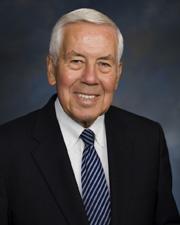
Mr. President, I rise today to introduce the Health Promotion FIRST, Funding Integrated Research, Synthesis and Training, Act, legislation to provide the foundation for solid planning and a…
Mr. President, I rise today to introduce the Health Promotion FIRST, Funding Integrated Research, Synthesis and Training, Act, legislation to provide the foundation for solid planning and a scientific base for health promotion.
Between one half and two-thirds of premature deaths in the United States and much of our health care costs are caused by just three risk factors: poor diet, physical inactivity, and tobacco. Recent news reports have highlighted the alarming increase in obesity across the Nation. In the last 10 years, obesity rates have increased by more than 60 percent among adults--with approximately 59 million adults considered obese today.
We also know that medical costs are directly related to lifestyle risk factors. The September 2000 issue of the American Journal of Health Promotion reported that approximately 25 percent of all employer medical costs are caused by lifestyle factors. Emerging research is showing the value may be closer to 50 percent today.
Medical care costs are reaching crisis levels. Some major employers are actively exploring discontinuing medical insurance coverage if costs are not controlled. The Federal Government has the same cost problems with its own employees, and the cost to Medicare of lifestyle- related diseases will only increase as Baby Boomers retire, and more and more beneficiaries are diagnosed with lifestyle-related illnesses.
An obvious first step to addressing our health and medical cost problems is to help people stay healthy.
The good news is that both the public and private sectors are starting to do more in the area of health prevention and health promotion. For instance, the Medicare Modernization Act of 2003 included several new prevention initiatives for Medicare beneficiaries.
Also in recent years Congress and the Administration have worked together to pass numerous pieces of legislation to establish grants to provide health services for improved nutrition, increased physical activity, and obesity prevention.
However, despite the success of many health promotion programs, there is a quality gap between the best programs and typical programs. This occurs because most professionals are not aware of the best practice methods. Furthermore, even the best programs reach a small percentage of the population and do poorly in creating lasting change.
The Health Promotion FIRST Act will build the foundation for a stable coordinated strategy to develop the basic and applied science of health promotion, synthesize research results and disseminate findings to researchers, practitioners and policy makers.
The bill directs the Department of Health and Human Services to develop strategic plans focusing on the following: how to develop the basic and applied science of health promotion; how to best utilize the authority and resources of the Department of Health and Human Services and other Federal agencies to integrate health promotion concepts into health care and other elements of society; how to synthesize health promotion research into practical guidelines that can be easily disseminated and; how to foster a strong health workforce for health promotion activities.
Additional funding is also provided for the Centers for Disease Control and the National Institutes of Health to augment current activities related to health promotion research and dissemination.
We have made a good start, at the Federal level, in addressing the needs of health promotion. However, we need to go further. I believe this legislation will serve as a good basis for Congress and the administration to take the next step in developing health promotion programs for the next decade.

Mr. President, today, Senators Murray, Cantwell, Corzine, Kerry, Lieberman, Sarbanes, Mikulski, Boxer, Lautenberg, Durbin, Schumer, Levin, Feinstein, Harkin, Dodd and I are re- introducing the Equal…
Mr. President, today, Senators Murray, Cantwell, Corzine, Kerry, Lieberman, Sarbanes, Mikulski, Boxer, Lautenberg, Durbin, Schumer, Levin, Feinstein, Harkin, Dodd and I are re- introducing the Equal Rights Amendment to the Constitution. In doing so, we reaffirm our strong commitment to equal rights for men and women.
Adoption of the ERA is essential to guarantee that the freedoms protected by our Constitution apply equally to men and women. From the beginning of our history as a nation, women have had to wage a constant, long and difficult battle to win the same basic rights granted to men. It was not until 1920 that the Constitution was amended to guarantee women the right to vote, and still today discrimination continues in other ways. Statutory prohibitions against discrimination have clearly failed to give women the assurance of full equality they deserve.
Despite passage of the Equal Pay Act and the Civil Rights Act in the 1960s, discrimination against women continues to permeate the workforce and many areas of the economy. Today, women earn less than 76 cents for each dollar earned by men, and the gap is even greater for women of color. In the year 2000, African American women earned just 64 percent of the earnings of white men, and Hispanic women earned only 54 percent.
Women with college and professional degrees have achieved advances in a number of professional and managerial occupations in recent years-- yet more than 60 percent of working women are still clustered in a narrow range of traditionally female, traditionally low-paying occupations, and female-headed households continue to dominate the bottom rungs of the economic ladder.
The routine discrimination that so many women still face today makes clear that the Equal Rights Amendment is needed now more than ever. Passage of the ERA by Congress will reaffirm our strong commitment to genuine equality for all women in this new century.
A bolder effort is clearly needed to enable Congress and the States to live up to our commitment of full equality. The ERA alone cannot remedy all discrimination, but it will clearly strengthen the ongoing efforts of women across the country to obtain equal treatment.
We know from the failed ratification experiences of the past that including the ERA in the Constitution will not
be easy to achieve. But its extraordinary significance requires us to continue the battle. I urge my colleagues to approve the ERA in this Congress, and join the battle for ratification in the states. Women have waited too long for full recognition of their equal rights by the Constitution.
I ask unanimous consent that the text of our joint resolution be printed in the Record.
Mr. President, I rise today to introduce legislation to make permanent the 15-year depreciation period for leasehold improvements that was enacted on a temporary basis as part of the American Jobs…
Mr. President, I rise today to introduce legislation to make permanent the 15-year depreciation period for leasehold improvements that was enacted on a temporary basis as part of the American Jobs Creation Act of 2004. I am pleased to be joined in this effort by my Finance Committee colleague, Senator Kyl.
Leasehold improvements are the alterations to leased space made by a building owner as part of the lease agreement with a tenant. In actual commercial use, leasehold improvements typically last as long as the lease--an average of less than 10 years.
However, until last year, the Internal Revenue Code required leasehold improvements to be depreciated over 39 years--the life of the building itself.
Economically, this made no sense. The owner received taxable income over the life of the lease, yet could only recover the costs of the improvements associated with that lease over 39 years. This mismatch of income and expenses was alleviated somewhat by our action last year in reducing the recovery period to 15 years.
A shorter recovery period more closely aligns the expenses incurred to construct improvements with the income they generate over the term of the lease. By reducing the cost recovery period, the expense of making these improvements has fallen more into line with the economics of a commercial lease transaction. One of the most important goals of this change is to encourage building owners to adapt their buildings to fit the needs of today's business tenant.
It is good for the economy to keep existing buildings commercially viable. When older buildings can serve tenants who need modern, efficient commercial space, there is less pressure for developing greenfields in outlying areas. Americans are concerned about preserving open space, natural resources, and a sense of neighborhood.
Unfortunately, the recovery period reduction enacted last year is effective only through the end of 2005. If Congress fails to act before the end of this year, the recovery period for leasehold improvements placed in service beginning in 2006 would again be 39 years.
I urge all Senators to join us in supporting this legislation to provide rational depreciation treatment for leasehold improvements for the long term.
I ask unanimous consent that the text of the bill be printed in the Record.

Mr. President, today I am introducing two Senate Joint Resolutions appointing citizen regents to the Board of Regents of the Smithsonian Institution. I am pleased that my fellow Smithsonian…
Mr. President, today I am introducing two Senate Joint Resolutions appointing citizen regents to the Board of Regents of the Smithsonian Institution. I am pleased that my fellow Smithsonian Institution Regent, Senators Frist and Leahy, are cosponsors.
The Smithsonian Institution Board of Regents recently recommended the following distinguished individuals for appointment to six year terms on the Board; Robert P. Kogod of Washington, D.C., and Shirley Ann Jackson of New York.
I ask unanimous consent that a copy of their biographies and the text of the joint resolutions by printed in the Record.
Bill Text
Latest available legislative text
        [Congressional Bills 109th Congress]
[From the U.S. Government Publishing Office]
[H.R. 934 Introduced in House (IH)]

109th CONGRESS
1st Session
H. R. 934

To amend the Internal Revenue Code of 1986 to allow a $1,000 refundable
credit for individuals who are bona fide volunteer members of volunteer
firefighting and emergency medical service organizations.

_______________________________________________________________________

IN THE HOUSE OF REPRESENTATIVES

February 17, 2005

Mr. Hinchey (for himself, Mr. Kildee, Mr. Goode, Mr. Owens, Mr.
McNulty, Mr. Evans, Ms. Woolsey, Mr. Kennedy of Rhode Island, and Mr.
Bishop of New York) introduced the following bill; which was referred
to the Committee on Ways and Means

_______________________________________________________________________

A BILL

To amend the Internal Revenue Code of 1986 to allow a $1,000 refundable
credit for individuals who are bona fide volunteer members of volunteer
firefighting and emergency medical service organizations.

Be it enacted by the Senate and House of Representatives of the
United States of America in Congress assembled,

SECTION 1. SHORT TITLE.

This Act may be cited as the ``Supporting Emergency Responders
Volunteer Efforts Act of 2005'' or the ``SERVE Act of 2005''.

SEC. 2. REFUNDABLE CREDIT FOR BONA FIDE VOLUNTEER MEMBERS OF VOLUNTEER
FIREFIGHTING AND EMERGENCY MEDICAL SERVICE ORGANIZATIONS.

(a) In General.--Subpart C of part IV of subchapter A of chapter 1
of the Internal Revenue Code of 1986 (relating to refundable credits)
is amended by redesignating section 36 as section 37 and by inserting
after section 35 the following new section:

``SEC. 36. BONA FIDE VOLUNTEER MEMBERS OF VOLUNTEER FIREFIGHTING AND
EMERGENCY MEDICAL SERVICE ORGANIZATIONS.

``(a) In General.--In the case of an individual who at any time
during the taxable year is a bona fide volunteer member of a qualified
volunteer fire department, there shall be allowed as a credit against
the tax imposed by this subtitle the amount of $1,000.
``(b) Part-Year Active Members.--In the case of an individual who
is a bona fide volunteer member of a qualified volunteer fire
department for only a portion of a taxable year, the amount of the
credit under subsection (a) for such taxable year shall be an amount
which bears the same ratio to $1,000 as such portion bears to the
entire taxable year.
``(c) Definitions.--For purposes of this section--
``(1) Bona fide volunteer member of a qualified volunteer
fire department.--
``(A) In general.--An individual shall be treated
as a bona fide volunteer of a qualified volunteer fire
department for purposes of this section if--
``(i) the only compensation received by
such individual for performing qualified
services is in the form of--
``(I) reimbursement for (or a
reasonable allowance for) reasonable
expenses incurred in the performance of
such services, or
``(II) reasonable benefits
(including length of service awards),
and nominal fees for such services,
customarily paid by eligible employers
in connection with the performance of
such services by volunteers, and
``(ii) the aggregate amount of such
compensation for the taxable year for providing
qualified services does not exceed an amount
equal to the annual limitation.
``(B) Annual limitation.--For purposes of
subparagraph (A), the annual limitation is an amount
equal to the product of--
``(i) the minimum wage in effect under
section 6(a)(1) of the Fair Labor Standards Act
of 1938 (29 U.S.C. 206(a)(1)) on the first day
of the calendar year beginning in the taxable
year, multiplied by
``(ii) 2,080 hours.
``(2) Qualified services.--For purposes of this paragraph,
the term `qualified services' means fire fighting and
prevention services, emergency medical services, and ambulance
services.
``(3) Qualified volunteer fire department.--The term
`qualified volunteer fire department' has the meaning given
such term by section 150(e).''.
(b) Conforming Amendments.--
(1) Paragraph (2) of section 1324(b) of title 31, United
States Code, is amended by inserting ``or 36'' after ``section
35''.
(2) The table of sections for subpart C of part IV of
subchapter A of chapter 1 of the Internal Revenue Code of 1986
is amended by redesignating the item relating to section 36 as
an item relating to section 37 and by inserting before the item
relating to section 37 the following new item:

``Sec. 36. Bona fide volunteer members of volunteer firefighting and
emergency medical service organizations.''.
(c) Effective Date.--The amendments made by this section shall
apply to taxable years beginning after the date of the enactment of
this Act.
<all>