Mr. Speaker, by direction of the Committee on Rules, I call up House Resolution 1003 and ask for its immediate consideration. Mr. Speaker, for the purpose of debate only, I yield the customary 30…
Mr. Speaker, by direction of the Committee on Rules, I call up House Resolution 1003 and ask for its immediate consideration.
Mr. Speaker, for the purpose of debate only, I yield the customary 30 minutes to the gentlewoman from New York (Ms. Slaughter), pending which I yield myself such time as I may consume. During consideration of this resolution, all time yielded is for the purpose of debate only.
Mr. Speaker, today we are considering a very important reform that is a bipartisan reform. It is bipartisan because it is an issue that I am happy to say, as we have moved down the road towards reform, has enjoyed strong bipartisan support. In fact, it was a key provision in the House-passed Lobbying Accountability and Transparency Act, which did enjoy bipartisan support, not as strong as I would have liked, but it did enjoy bipartisan support.
Specifically, Mr. Speaker, with this new rule, Member-directed spending to projects in their district, or earmarks, will no longer be anonymous. It is very simple.
We all know, as it stands now, there are no disclosure requirements in appropriations, tax bills or authorizing legislation. Earmarks can be buried in the text of bills that often number into the thousands of pages. There is no easy way to account for how many earmarks are in a bill or who is sponsoring them.
This new rule requires sponsors of earmarks to be listed in committee reports. Conference reports must also have a list of earmarks that are ``air-dropped'' or brought into an agreement in the conference report itself. It is just that simple.
We are blowing away the fog of anonymity so the public can have a clear picture of what the projects are, how much they cost, and who is sponsoring them. It is just a very simple case of transparency.
Mr. Speaker, this is a victory for fiscal responsibility and a victory for spending taxpayer dollars more wisely.
As an enforcement mechanism, this new rule also provides for a question of consideration when a bill or conference report does not contain a list of earmarks. The question of consideration is debatable for 30 minutes, 15 minutes equally divided.
Mr. Speaker, if a Member feels strongly enough about a proposed earmark, they will have to attach their name to it. That is all we are asking. And they need to be prepared to make their case in full view of their colleagues, their constituents, and the American people as a whole.
Mr. Speaker, the earmark reform bill will build on the reforms that have already been implemented by the Appropriations Committee, and I take my hat off to the Appropriations Committee for the very bold and dynamic reforms that they have made. They have reduced the number of earmarks already by 37 percent. Overall spending on Member projects was reduced by $7.8 billion below last year's level.
Over the last 2 years, Member project spending has decreased by over $10 million, and I want to especially express my appreciation to my very dear friend, Jerry Lewis, who has so ably chaired the Appropriations Committee and has stepped up to the plate and taken on this issue of reform and done it with great success because of the fact that he has been able to rein in Federal spending. It doesn't get a lot of attention, but he has been very successful in doing that.
Mr. Speaker, I also want to make very clear that our focus is not solely on appropriations. This was one of the requests that Chairman Lewis made of us as we were proceeding with this work.
For this reform to be effective, it must be comprehensive, and that was the commitment that the Speaker of the House and our leadership team made to our Members. So let me point out that this earmark reform applies across the board. It doesn't just apply to some committees. It covers all committees, all appropriations, all tax, all authorizing legislation, anything that moves through this House through regular order.
Mr. Speaker, we have taken great care to clearly and precisely state what constitutes a tax, an appropriation, or an authorizing earmark. And the good news is that there is more agreement than disagreement on those definitions. Yet clearly there is no magic bullet. There is not going to be one definition that will be perfect and please everybody. But at the end of the day, we have to come together. We have to come together, Mr. Speaker, and move this process forward. If there is an earmark in a bill, it belongs on a list. It is just that simple.
If there is an earmark, we need to see it. Now, is this new disclosure going to completely end the practice of earmarking? I certainly hope not. I don't want it to, because I believe that earmarking is part of our constitutional responsibility. But it will shine a spotlight on earmarks without grinding the legislative process to a halt.
Let me make very clear that the larger goal of this new rule is to make a profound and lasting change in how this institution handles earmarks and spends taxpayer dollars. The goal is to increase transparency, disclosure and accountability, and the goal is to pull back the curtain on earmarks for the public, because I believe, Mr. Speaker, that they have a right to know.
For this earmark reform to be both meaningful and lasting, everyone, from committee chairmen on down, must make a good-faith effort to comply with the spirit of the new rule. Our leadership, and certainly the Rules Committee, has made such a commitment, and we are determined to make this work.
Mr. Speaker, I would also like to point out that while this is an important milestone in the path toward reform, we have not reached the goal
line. In fact, I don't believe that we will ever reach the absolute goal line because reform is a continuous process. It gains momentum from Members who never let up and never settle for the status quo.
Mr. Speaker, I urge my colleagues to vote ``yes'' for reforming earmarks, and ``yes'' to setting the stage for more reforms that we will face down the road.
Mr. Speaker, I reserve the balance of my time.
Mr. Speaker, I yield myself 30 seconds to say in response to my good friend from New York once again, this is a bipartisan effort. I know that the Democratic Caucus has talked about the need to implement this reform. We hope very much, when we come back to majority status in January of next year, to renew and build on this kind of reform.
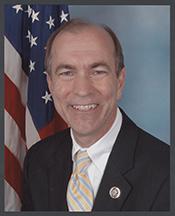
Mr. Speaker, I yield 2 minutes to my very good friend, a hardworking member of the Commerce Committee, the
gentleman from Phoenix, Arizona (Mr. Shadegg).
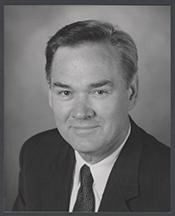
Mr. Speaker, I am happy to yield 2 minutes to a very hardworking member of the Committee on Rules, my very, very good friend from Marietta, Georgia, Dr. Gingrey.
Mr. Speaker, at this time I am very happy to yield 1 minute to the very distinguished majority leader, who has been a great champion of earmark reform for many, many years, my friend, the gentleman from Ohio (Mr. Boehner).
Mr. Speaker, will the gentleman yield?
I thank my friend for yielding.
Mr. Speaker, I would simply say that the gentleman has some very interesting, creative ideas. As I said in my opening remarks, the reform process is an ongoing thing that we are dealing with, and I am more than happy to look at the proposals that the gentleman has, especially as we look at our opening day rules package for January of next year.
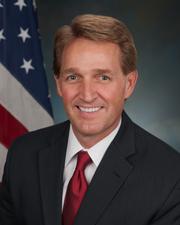
Mr. Speaker, I am very happy to yield 2 minutes to a strong proponent of the issue of earmark reform, our friend from Mesa, Arizona (Mr. Flake).
Mr. Speaker, I yield myself such time as I may consume.
Mr. Speaker, the majority leader, and I, in my role as chairman of the Committee on Rules, have made a commitment not only to the appropriators but to all Members of this body that we will enforce this rule with respect to unreported measures and amendments, including managers' amendments, submitted to the Rules Committee. If the House considers a bill that has not been reported by a committee, the committee of jurisdiction must comply with the earmark rule and provide a list of earmarks along with the name of the Member who requested the earmark. If the House considers a manager's amendment on a bill, the committee must comply with the earmark rule and provide a list of earmarks along with the name of the Member who requested the earmark. By adopting this new rule, we as a body are not only making the commitment to live under its provisions, but every Member must make a commitment to adhere to the spirit of this new rule. This is more than just adding a new rule. It is making a commitment to change the culture of this institution.
I am happy to yield to my friend from Wisconsin.
Yes. If I could reclaim my time, the agreement that we have for implementaton of this rule means that if there is anything that has a so-called airdrop provision in it, this rule will apply to--
So this rule will be implemented immediately.
Mr. Speaker, if I could reclaim my time, I will tell you this. I know full well that the United States Senate is watching this debate very, very closely and they very much are interested in seeing us comply with this.
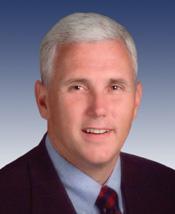
Mr. Speaker, at this point I would be happy to yield 2 minutes to my very good friend from Columbus, Indiana, the chairman of the Republican Study Committee, Mr. Pence.
Mr. Speaker, I yield myself such time as I may consume.
Well, Mr. Speaker, I guess it is pretty obvious that we are 54 days away from an election. I listened to that speech, and the only thing that I can say is that we have seen a challenge here, both political parties in this institution, and we have stepped up to the plate, and we believe that accountability, transparency, and disclosure will provide an opportunity to address the understandable concerns that have existed, and I believe that we have a great opportunity with this legislation to bring about that change.
Let me just respond to Mr. Obey's concern briefly, before I yield to my colleague, on the issue of bringing back the defense conference report. When we implement this rule, we will clearly be placing onto the shoulders of whoever is chairing that conference from the House side the responsibility of bringing back a conference report that includes a full listing, full transparency and full disclosure of all earmarks that were not in that measure when it was passed through either the House or the Senate. So for that reason we in the House would not be able to bring up and pass a report that did not have that full list that we are looking for.
Mr. Speaker, I yield 2 minutes to the gentleman from Dallas, our good friend who has worked very hard on this issue, Mr. Hensarling.
Would the gentleman yield?
If I could yield myself 10 seconds out of my time.
I was just going to say that there was no amendment offered in the Rules Committee whatsoever, so nothing was rejected.
No, there wasn't. I chair the committee, and I will tell you that there was not an amendment that was offered in the Rules Committee.
It wasn't offered in the Rules Committee.
Mr. Speaker, I yield myself 45 seconds to say to my friend that to call increasing transparency, accountability, and disclosure as pretend is absolutely outrageous.
There is bipartisan concern about this problem, as stated from my friend from Wisconsin and from other Members on both sides of the aisle, and I believe that this measure will allow us to do that.
The proposal that the gentleman is talking about may have been listed upstairs, but it wasn't offered on the Committee on Rules for us to consider. And in looking at it, Mr. Speaker, I have got to tell you that we found that it was the most impractical thing imaginable.
Mr. Speaker, I yield 2 minutes to my very good friend from Newport Beach, Mr. Campbell.
Mr. Speaker, I yield 1\1/2\ minutes to the gentleman from Austin, Texas (Mr. McCaul).
Mr. Speaker, at this time I am happy to yield 2 minutes to the gentleman from Wantage, New Jersey (Mr. Garrett).
Mr. Speaker, I yield myself the balance of the time.
Mr. Speaker, under the very able leadership of my California colleague Jerry Lewis we have seen a 37 percent reduction in the number of earmarks. We have seen either a flat line or real cuts in the appropriations bills with the exception of our priorities of national defense and homeland security, and we have seen a very strong commitment to institutional reform. I take my hat off to Jerry Lewis for the fine work that he has done.
Mr. Speaker, we are constantly looking at more reform. The Speaker of the House, the majority leader, I believe that Members on both sides of the aisle believe that we should pursue greater transparency, greater disclosure and greater accountability. I have heard Democrats and Republicans alike say that over the past hour. We have an opportunity to do just that right now.
We, I am very happy to say, have put into place bold economic policies that have led to a $58 billion reduction in the deficit over last year's number.
We today have the lowest unemployment rate on the face of the earth. There is no other country in the world with an unemployment rate as low as our unemployment rate, and yet we need to continue to do everything that we can to try and rein in Federal spending.
I, as a Republican, believe that the reach of government not only costs money, but it impinges on individual initiative and opportunity. I believe that as we focus on this kind of reform we will be in a position where we will be able to improve the quality of life and the standard of living for our constituents.
Mr. Speaker, vote ``yes'' on the previous question and ``yes'' on this rule.
Mr. Speaker, I am inserting in the Record a list of additional Members who would like to be considered as cosponsors of H. Res. 1000.
Additional Members include: Mark Green, John Linder, and Charles Bass.
The material previously referred by Ms. Slaughter is as follows:
Previous Question on H. Res. 1003 Rule providing for consideration of
H. Res. 1000
At the end of the resolution add the following new
sections:
``Sec. 2. Immediately upon the adoption of this resolution
it shall be in order without intervention of any point of
order to consider in the House a bill consisting of the text
specified in Section 3. The bill shall be considered as read
for amendment. The previous question shall be considered as
ordered on the bill to final passage without intervening
motion except: (1) 60 minutes of debate equally divided and
controlled by the chairman and ranking minority member of the
Committee on Rules; and (2) one motion to recommit with or
without instructions.''
Sec. 3. The text referred to in section 2 is as follows:
Mr. Speaker, I yield back the balance of my time, and I move the previous question on the resolution.